menu

Duel Decks: Garruk vs Liliana!

Are you a Quiet Speculation member?

If not, now is a perfect time to join up! Our powerful tools, breaking-news analysis, and exclusive Discord channel will make sure you stay up to date and ahead of the curve.

In the immortal words of Michael Buffer, let's get ready to rumble! Always striving to one-up themselves, WotC has announced today that Garruk and Liliana will be going to to toe in the latest edition of Duel Decks. The deck will cost about 20 bucks USD, and considering Liliana's book value is 10 and Garruk's book value is 15+, it seems like a good deal. It's likely that Lilly's value won't change much as a result, but Garruk might take a small hit due to the surge of alternate art foils on the market. Remember that BOTH will be in M10, so they won't rotate out with the rest of Lorwyn. As a matter of fact, the release date of the Duel Deck coincides nicely with the rotation of the set. The release of the Duel Deck didn't do much to Jace Beleren's price, and he actually saw an increase in price that correlated with an increase in tournament usage. Garruk is already expensive, so it seems unlikely that he'll move much in either direction.

Kelly Reid

Founder & Product Manager

View More By Kelly Reid

Posted in Uncategorized1 Comment on Duel Decks: Garruk vs Liliana!

Have you joined the Quiet Speculation Discord?

If you haven't, you're leaving value on the table! Join our community of experts, enthusiasts, entertainers, and educators and enjoy exclusive podcasts, questions asked and answered, trades, sales, and everything else Discord has to offer.

Want to create content with Quiet Speculation?

All you need to succeed is a passion for Magic: The Gathering, and the ability to write coherently. Share your knowledge of MTG and how you leverage it to win games, get value from your cards – or even turn a profit.

Booster Pack Challenge!

Are you a Quiet Speculation member?

If not, now is a perfect time to join up! Our powerful tools, breaking-news analysis, and exclusive Discord channel will make sure you stay up to date and ahead of the curve.

Think you can swim with the sharks? Grab a booster pack and bust it open. That's right - I'm giving you permission. I know it hurts, but trust me, we'll be getting our money's worth. Take every card in that pack - the land, the tip card or token, and the rest of it, and put it in a special section in your binder. Do not mix them with any other cards.

What's with all the separation? Well, we're going to pretend you're new to this whole Magic game. You've got one booster pack of Alara Reborn to your name and damn it, you've got to make that booster pack last. Any trade is fair game as long as there's no collusion. You can't tell someone to give you a better deal because you're in some contest. If anyone asks, you can tell them whatever you want but you can't ask for a better deal just to win. You can sell the cards and buy more packs, you can trade cards for packs, you can trade cards for cards. Heck, if you wanted to trade your Alara Reborn pack for another pack, go ahead and do so at your own risk.

Here's what you do to participate: Get an Alara Reborn booster pack. Then you should probably open it, but if you'd like to trade it for another pack I suppose it's alright too. Then document what cards you open. Name, Rarity, Quantity if more than 1. Note if anything is foil, or of there are any other noteworthy factors like a crease, a misprint, or anything else. Then go trade!

Every time you make a deal, make note of it. Use the info you recorded above and note what you got in return. To make things interesting, I'll give you ONE "mulligan". If you crack a pack and don't like it, you take a mulligan by opening another one. If you open a second one, you MUST use that one.

I'll start it off. I hate to say it, but I have it really easy. I got the 2nd most valuable rare, one of the #1 uncommons, and the most valuable common. Regardless, this puts a lot of pressure on me to make big deals. Here's my list:

[R] Meddling Mage
[U] Anathemancer
[U] Skyclaw Thrash
[U] Demonspine Whip
[C] Grizzled Leotau
Trace of Abundance
Brainbite
Vectis Dominator
Jhessian Zombies
Cerodon Yearling
Leonin Armorguard
Terminate
Bant Sureblade
Glassdust Hulk

Post your pack as a comment on this article. I'll be posting periodic update articles in which you, the reader can also update your list as well. Happy trading, and good luck!

Kelly Reid

Founder & Product Manager

View More By Kelly Reid

Posted in Uncategorized2 Comments on Booster Pack Challenge!

Have you joined the Quiet Speculation Discord?

If you haven't, you're leaving value on the table! Join our community of experts, enthusiasts, entertainers, and educators and enjoy exclusive podcasts, questions asked and answered, trades, sales, and everything else Discord has to offer.

Want to create content with Quiet Speculation?

All you need to succeed is a passion for Magic: The Gathering, and the ability to write coherently. Share your knowledge of MTG and how you leverage it to win games, get value from your cards – or even turn a profit.

Updating Prices!

Are you a Quiet Speculation member?

If not, now is a perfect time to join up! Our powerful tools, breaking-news analysis, and exclusive Discord channel will make sure you stay up to date and ahead of the curve.

Star City's updated some prices. Here they are, with commentary:

Maelstrom Pulse: $25. This is warranted - the card is as good as advertised. It fits in so many good decks and works well against the ones it doesn't fit into. I was actually going to write about Pulse last night and suggest picking them up, but now that SCG's upped its price, it goes without saying.

Zealous Persecution: $1.50 Starting to creep up to the 2 dollars I predicted. Totally warranted as well.

Lord of Extinction: $12.50. 15 bucks was stupid for this heavy hitter, and he should settle in the 8 dollar range until someone breaks him. There are just better things to do in B/G with 5 mana.

Eternal Siege ARB Theme Deck: $15. This one just keeps rising. Dauntless Escort is good, I guess, but his price hasn't moved from 6 dollars recently.

Sygg, River Cutthroat: See the last few posts but the short version is that he's gone from $2 to $4 in the last 24 hours. I blame Patrick Chapin and friends - 5C Blood is a great deck.

Swans of Bryn Argoll: $7.50. This is getting ridiculous!

Seismic Assault: $4.00. Up a dollar from 3, it probably won't go too much higher.

Some Heads-Up: Everyone's favorite 0/5, Doran the Siege Tower, is due for a rise in popularity. Yann Massicard played Doran Aggro to a win in Seattle and hasn't gotten enough press for his victory. He was also running Gaddock Teeg and Knotvine Paladin, cards that aren't too expensive right now. I hadn't had Wilt-Leaf Liege on my radar lately, but last I saw it was around 8 bucks. Today, it's at $12.50! Wow. The deck also runs Kitchen Finks, which will cost you a frankly obscene 6 dollars each. Talk about Super Uncommons.

Anyway, that's all for now. I hope you picked up your playset of Maelstrom Pulses already, because this card is the real deal. It's almost an automatic 4-of in decks that can run it, and will be strong for years to come. Once again, if you have a good story about how you got a great deal, made a good trade, or anything like that, leave a comment and I'll feature it in a future article!

Kelly Reid

Founder & Product Manager

View More By Kelly Reid

Posted in UncategorizedLeave a Comment on Updating Prices!

Have you joined the Quiet Speculation Discord?

If you haven't, you're leaving value on the table! Join our community of experts, enthusiasts, entertainers, and educators and enjoy exclusive podcasts, questions asked and answered, trades, sales, and everything else Discord has to offer.

Want to create content with Quiet Speculation?

All you need to succeed is a passion for Magic: The Gathering, and the ability to write coherently. Share your knowledge of MTG and how you leverage it to win games, get value from your cards – or even turn a profit.

Sygg Up Another Dollar

Are you a Quiet Speculation member?

If not, now is a perfect time to join up! Our powerful tools, breaking-news analysis, and exclusive Discord channel will make sure you stay up to date and ahead of the curve.

Looks like Star City found a couple Sygg, River Cutthroats, and are now selling them for 4 dollars each. Ebay's slowly coming around too, but not as quickly as it did for Swans. Big ups to StarCity for the quick pricing change!

Kelly Reid

Founder & Product Manager

View More By Kelly Reid

Posted in UncategorizedLeave a Comment on Sygg Up Another Dollar

Have you joined the Quiet Speculation Discord?

If you haven't, you're leaving value on the table! Join our community of experts, enthusiasts, entertainers, and educators and enjoy exclusive podcasts, questions asked and answered, trades, sales, and everything else Discord has to offer.

Want to create content with Quiet Speculation?

All you need to succeed is a passion for Magic: The Gathering, and the ability to write coherently. Share your knowledge of MTG and how you leverage it to win games, get value from your cards – or even turn a profit.

Sygg, River Cutthroat, again.

Are you a Quiet Speculation member?

If not, now is a perfect time to join up! Our powerful tools, breaking-news analysis, and exclusive Discord channel will make sure you stay up to date and ahead of the curve.

Quick Update - Chapin is calling this the card that 5 Color Blood cannot live without. I'd found a site that was selling them for 75 cents a piece on Sunday afternoon. I put 12 in my cart. I came back not 20 minutes after the final results came in from Seattle. Sold out. Star City's raised their price a buck today as well. I'm not sure if it's going to see a big price spike but if you can get 'em at bulk rare rates, do so. The chance won't last long.

Why you should never open another booster again…

Are you a Quiet Speculation member?

If not, now is a perfect time to join up! Our powerful tools, breaking-news analysis, and exclusive Discord channel will make sure you stay up to date and ahead of the curve.


...unless you hate math. Most Magic players, despite being really nerdy and loving math, never stop to think about the crime against statistics they're perpetrating when they bust open booster packs. Instead, they tear into their cardboard bounty like starving dogs tearing apart a piece of steak. They fall prey to the human condition - remembering fondly the time that they opened a Thoughtseize and a FOIL Thoughtseize in the same booster pack without any regard to the ridiculous improbability that just occured. They forget all the worthless packs they open, opting to believe in "good luck" and other such things that no good Magic player dares believe. What is it about the allure of the unknown that makes us so apt to throw our good sense to the wind? Magic players, like Poker players, are usually very talented at statistics yet we go nuts at the slight crinkling of a sealed pack's wrapper. Get a grip, people! You don't expect to topdeck your best card in your hundred-card EDH deck because you're not a moron - you know that the odds are 1 in however many cards are left in your deck! You wouldn't plan your entire game of EDH on the odds of 75::1, would you? Duh, of course not.

But you've probably opened a booster pack recently, haven't you? Shame. On. You. Let's find out just how bad things are. Using prices from findmagiccards.com (used for their neat sorting of set, rarity and price), I put all the cards from Alara Reborn into a spreadsheet. Here are some base numbers:

Average Common: $0.11
Average Uncommon: $0.31
Average Rare: $1.65
Average Mythic: $4.29

Those are simple averages without any regard to the actual ability to resell a given card. I'll touch on that aspect shortly. Now, there are 10 Commons in a pack, 3 Uncommons, 1 Rare -or- 1 Mythic (1 in 8 rares will upgrade to Mythic). To account for that, I simply weighted each number accordingly - Commons x10, Uncommons x3, Rares x.875, Mythics x.125. I did not account for Foils, since I'm honestly unsure about how they're seeded beyond the 1 in 67 cards statistic on the wrapper. I also did not take any steps to account for print runs or anything else beyond the simple average prices as of the writing of this article. The more mathematically inclined readers of this site will already realize something very impressive: the average expected value of a pack is almost exactly it's retail price! To be precise, a pack retails for $3.99 plus tax, whereas the average value ended up at $4.01. Pretty cool.

There's a problem, though. Actually, there are a few. First of all, if you know a place where you can reliably and repeatedly sell any 10 commons for a dollar, please do share it with the rest of us! The same issue is true for most of the uncommons, rares and mythics that see print. The fact of the matter is that most low-priced cards are effectively worthless. There's a massive disparity between the "book" value and real value of low-end cards. Referring to the Tier System in A Trader's Guide I, commons are an extreme version of the devaluation of tier 5 rares.

We can therefore remove all of the commons from our list. Even the best ones like Putrid Leech can be found littering the floor after a draft, so their value is an absolute $0.00. The only commons in Alara Reborn of any significant value are Qasali Pridemage and Terminate, and even those can be had with little to no effort. The same is true for all but a handful of Uncommons. Leaving only the uncommons that have a value above 50 cents or so, and/or see constructed play, the average uncommon value falls to $0.17. Remember, we're treating every other uncommon as a $0.00 value because the chances to convert them to cash money are almost nil. By the same logic, I weeded out the rares that booked at under a dollar - such hits as Unscythe, Killer of Kings. Some of the rares at $1.07 are frankly garbage rares that no one would ever pay money for, but I'll leave them in to be...generous.

That puts our average rare price at $1.26. Looking at the Mythics, it's hard to say which ones are truly worthless. Mythics have Little Kid Appeal, which means they're easy to trade away to get cards you care about. Again being generous, I'm only going to zero away Maelstrom Nexus, Thraximundar and Defiler of Souls. That puts the average mythic price at $3.67.

Redoing the calculations with those numbers, you'll see why the average pack is really not worth it's retail price at all: the new reference price is an anemic $2.07. Just losing the dollar from the commons was 25% of the overall value. So now that it's clear your cards are on average only going to be worth half of what you pay for them, let's tackle the second reason you shouldn't open that pack that's tempting you right now.

Variance. You hear poker players bandy around this term a lot and I hear Patrick Chapin's not a big fan of it. [An aside - go find out what Zero Variance Magic is and find someone who will play it with you. You haven't known pain until you try to figure out the perfect play using every Magic card ever printed.] In simple terms, variance is just a fancy way of saying that the fewer packs you open, the worse the chance is that probability is being represented accurately.

Think about it, if you pop open a pack and find a 20 dollar rare, that's not indicative of the "average" value of the set! Not that you're complaining, but your scientific brain should at least say "hey, not every rare is worth 20 bucks!" Let's say you open another. Your pull? The worst crap rare of all time. You toss it into the fireplace and enjoy the 10 milliseconds of heat it provides you before being incinerated. Now your average pack is worth around 10 dollars. Still not anywhere near indicative of the actual underlying probabilities. This is why large sample sizes are important - statistics are only meaningful when the "experiment" is repeated a great number of times. If you're opening many cases of booster boxes, you'll start to see the numbers even out. You might even be working in such quantity that you can sell 4x sets of Commons and Uncommons - units that are meaningful, efficient and valuable to lazy Magic players.

The bottom line is that it's just not cost-effective to open packs. It's better to draft them, trade them, sell them, or just save them in a drawer somewhere for a while. Opening a pack is fun for about 11 seconds and every so often you get the rush of opening an uber-rare, but if your main goal is being smart about your Magic finances, keep your pack sealed. If you absolutely must open sealed product, see if you can exchange it for a different set. Many retail stores will let you substitute your prize packs so do your research before you accept the most current set. While I haven't crunched the numbers for all of Standard, a short bit of work should reveal the sets with the highest expected value.

Until next time, remember that every set has it's Pale Moons.

PS: I did the figures for Lorwyn, and although it is a larger set than Alara Reborn, it's got 50 cents a
pack on ARB. At 2.57, it's starting to reach the point where buying the cards in large bulk and opening them could be a break-even endeavor. I wonder what Future Sight's prices upon release would look like. If you simply change Cryptic Command's price to reflect what Tarmogoyf might have looked like (~40 dollars), the average pack value shoots up to 2.85! At that level of EV for a pack, it's easy to see why dealers decided Future Sight was worth more opened than sealed. When you open as much product as large dealers do, you minimize variance and also accumulate enough of the zero value commons and uncommons to sell in Playsets.

What features would you like to see on Quiet Spec?

Are you a Quiet Speculation member?

If not, now is a perfect time to join up! Our powerful tools, breaking-news analysis, and exclusive Discord channel will make sure you stay up to date and ahead of the curve.


As the readership of Quiet Speculation grows, so must the site. I plan to continue improving the site as long as there are people reading it, so I'd like to hear suggestions from everyone - what would you like to see more of? What would you like to see less of? What new features would you like added? Are there any features you'd like to see expanded? Removed? I'm working with Ross, the brains behind BlackLotusProject, to include graphed data and an embedded search, but the sky's the limit! Leave a comment or two with your ideas, and I'll implement it if at all possible!

1st Look at GP Seattle

Are you a Quiet Speculation member?

If not, now is a perfect time to join up! Our powerful tools, breaking-news analysis, and exclusive Discord channel will make sure you stay up to date and ahead of the curve.

The first metagame data from Grand Prix Seattle is starting to trickle in! The European players have put their faith in the deck that took 3 top 8 slots in last weekend's Grand Prix, but American players are leaning more towards 5 Color Cascade fueled by the ugly Merfolk legend to your immediate left. Star City's selling them at 2 dollars, and it seems they're either out of stock or are withholding supply. Ebay's price on the Legend is negligible. If you've got a couple bucks spare in your paypal account, grab a few in case he sees a price spike. His natural synergy with Bloodbraid Elf and Anathemancer make him a very valuable commodity in the deck and his 3 toughness makes him safe from Fallout. While Sygg isn't the breakout card of the century, it's the first time he's been mentioned in a high-level deck in a long time so any increase in demand is likely to bring him out of the bargain bin.

Kelly Reid

Founder & Product Manager

View More By Kelly Reid

Posted in Uncategorized1 Comment on 1st Look at GP Seattle

Have you joined the Quiet Speculation Discord?

If you haven't, you're leaving value on the table! Join our community of experts, enthusiasts, entertainers, and educators and enjoy exclusive podcasts, questions asked and answered, trades, sales, and everything else Discord has to offer.

Want to create content with Quiet Speculation?

All you need to succeed is a passion for Magic: The Gathering, and the ability to write coherently. Share your knowledge of MTG and how you leverage it to win games, get value from your cards – or even turn a profit.

GP Seatlle-Tacoma is Underway!

Are you a Quiet Speculation member?

If not, now is a perfect time to join up! Our powerful tools, breaking-news analysis, and exclusive Discord channel will make sure you stay up to date and ahead of the curve.

Round 2 just started, and I just wanted remind everyone to keep an eye on Quiet Spec and my Twitter page throughout the weekend. I'll be updating as often as I can with GP Seattle news with a financial spin! The link to follow us on Twitter is on the right. Good luck to everyone playing, and keep checking back for more updates!

SwanWatch ’09 – Price Update

Are you a Quiet Speculation member?

If not, now is a perfect time to join up! Our powerful tools, breaking-news analysis, and exclusive Discord channel will make sure you stay up to date and ahead of the curve.

Swans of Bryn Argoll

Ebay: $32/set
StarCityGames.com: $24/set

Seismic Assault

Ebay: Fluctuating between $12 and $22 a set....
StarCityGames.com: $12/set

Countryside Crusher

Ebay: $12/set
StarCityGames.com: $20/set

We'll see what happens after Grand Prix: Seattle this weekend. Keep checking back for updates as the coverage from the GP progresses.

On Bulk Rare Boxes, Unsorted Cards, and Buying Collections

Are you a Quiet Speculation member?

If not, now is a perfect time to join up! Our powerful tools, breaking-news analysis, and exclusive Discord channel will make sure you stay up to date and ahead of the curve.

See the goofy-looking drake to your left? What do you suppose he's worth? I'll tell you this much information: He's an Uncommon, from Portal: Second Age (Portal 2). Fifty cents? A buck?

What if I told you he'd been used in successful Legacy/Vintage decks because the Portal wording has been eratta'ed to say "return two target lands to your hand"? Does that change your guess any? Most Eternal players will know that he's worth a fair bit more than the price of a couple White Castle hamburgers, but the rest of you will be absolutely shocked at this little guy's price.

He's worth over $40. Why? Well, he's a 4-power flying 3-drop in Blue. His drawback, with the errata, is so far from relevant that it's funny. If you stack his trigger, targeting 2 Islands and then use said Islands to pay the alternate cost of Gush...well, let's just say that if Mulldrifter is good, Sea Drake + Gush is better.

The lesson here is not that you should play more Eternal - although you should because it will teach you lessons that are applicable in every format you'll ever play. The lesson is that there are extremely valuable cards that most people don't even know exists. Ever heard of Guru lands? They're one of the earliest promo sets of basic lands with gorgeous art by Terese Nielsen. You can ID them by a leafed gold expansion symbol. They're worth anywhere between 20 and 60 dollars depending on which one you can find.

These are both examples of cards I've found in unsorted, bulk rare, or junk boxes. Gaining incremental advantage here and there via trading is great, but sometimes you just need to hit the mother lode and find a hundred dollars worth of cards for a dollar. You know those big 5-row, 5000 count boxes filled with cards at your local game store? I can almost assure you that unless someone like me has scoured the box twice, you'll find something of value in there. Did you know that Priest of Titania, an Urza's Saga COMMON, is priced at 4 dollars? Bet you can find those for a nickel or so in most stores.

If the first rule of thumb is that there's ALWAYS a mistake in bulk boxes, the second rule of thumb is that you're always going to miss something the first time through. I know I missed a 20 dollar Portal rare in a bulk box (Cruel Bargain) because I got lazy and didn't price check it on my handheld device. So, don't be lazy, check your prices on the fly, and always dig twice. I believe that someone came in the next day and bought it, because when I came in the Bargain was gone. That leads me to your third rule of thumb: keep your mouth shut about your sources! You did the hard work to find a good stash of cards, so why tell everyone about it? Loose lips sink ships, and they also ruin potential goldmines for Magic bargains.

The same thing applies to buying collections. Many people selling out of the game will give you a huge discount on their cards just to make a quick sale, so follow the advice in the Trader's Guide and always have some money around to buy out a collection. Be smart and realize that 99.5% of the stuff in someone's collection isn't going to be worth the cardboard it occupies, but you can usually find deals.

So, head to your local FNM tomorrow and ask your store if they have a Dollar Rare box, a box of unsorted older cards that you could buy at a bulk rate, or any other stuff like that. Leave a comment if you find any bargains, and keep an eye on the front page for Part 2 of A Trader's Guide.

Happy scrounging!

Magic, The Recession and You – A Trader’s Guide: Part 1

Are you a Quiet Speculation member?

If not, now is a perfect time to join up! Our powerful tools, breaking-news analysis, and exclusive Discord channel will make sure you stay up to date and ahead of the curve.


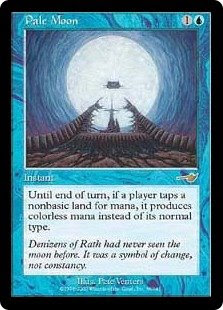
So we're in the middle of a recession! Your stock portfolio's starting to look like your collection of Pale Moons. You might have lost your job, or just graduated from college and are having trouble getting that first career started. Your wallet's seeming lighter than it's been in a while, so it's time to tighten the belt, sell your collection and move on with your life, right?

Come on. No gamer worth his cardboard quits his game because of what happens on Wall St. If we here at Quiet Spec have anything to say about it, you'll keep gaming until your portfolio starts looking more like a Vintage deck than a stack of Magic's worst rare. Let's take a look at what you can do to keep your Cabal Coffers stocked to the brim and ensure that you're seeing more green in your pocket than you did at Pro Tour: Berlin.

Just like building a deck, there are many ways to structure your Magic playing and buying habits to ensure that you spend the least money while getting the most game for your dollar. Smart trading, good money management skills and social networking are the pillars of playing Magic on a budget, so let's jump right in!

Cash is the most important resource because cash can get you anything. That makes it very powerful, so therefore, Cash is king. Use your cash sparingly! Money is different than cash. Cash is money you have access to right now. The guy at FNM with a spare Cryptic might not need anything from your binder, but he can probably find a use for a 20 dollar bill. It's also likely that he doesn't have a place to swipe a debit card (and even if he did, would you really want to?)

The only place a Magic player is forced to spend cash is when he enters a tournament. TOs don't accept much of anything else so when prepping for a big tournament, ensure you set aside cash for the entry fee. Without that, your big trip is over in a hurry. Cards can be traded for, sealed product can be won, but tournaments almost always require a crisp 20 dollar bill.

You want to have cash on hand at all times, because everyone need it. Why? Because they didn't set aside their 20 bucks to pay their fee! People who need money will often give you better value on their cards because they have an immediate need. Remember - if you're at a tournament, follow the rules that the TO sets. If they say no buying or selling to other players in the tournament hall, don't do it! You might get away with it, but there's plenty of room in the parking lot or your hotel room to transact business. Abide by the rules and you'll be following another important rule regarding networking, which will be fully covered later.

Now that you understand the value of the almighty Benjamin (not Bleiweiss, the other one: Franklin), let's talk trading. The best way to get value out of your trading is to understand that everyone has their own value systems when it comes to pricing out their cards. It's your job to understand and respect them all. This is one of the single most important lessons to take away from this series, so here it is again: Everyone has different systems of valuation in Magic. It is your job to understand and respect them all. Beyond the nebulous concept of "doing the right thing", understanding your trading partner's value system is extremely profitable. Finding the disparities between your value system and theirs is what enables profit. Trade with people who have cards you value highly and want cards you do not value highly. Seems pretty straightforward, but the hard part comes from the derivation of these values. Before we can capitalize on discrepancies in personal value, we need to have our own value system.

This pricing model uses a system of tiers so you can easily figure out where your card belongs. Think of it like a caste system for cardboard. Remember, no card is ever confined to its starting tier. Many of the best deals you'll make will come from a card jumping up in tiers. Check out Swans of Bryn Argoll for an example of this. This tier system is for Standard cards, just to get you started. A later edition of this series will cover things like Legacy Power Commons, which is actually the best source of income in Magic, period. Check back in later for more on that topic.

Tier 1: A card that can be resold quickly, easily, and for a significant sum of money. These are your Elspeths, Crpytic Commands, and Maelstrom Pulses. They usually fetch 20 dollars and above, and maintain their price for the duration of their legality in Standard.

Tier 2: T2 cards are still easily resold, but not for as much money as T1 cards. These are the Banefires and most of the dual lands that see play in Standard. They're usually worth about 10 dollars a piece and there's always a market for them. You can usually trade them 2-to-1 for Tier 1 stuff. Sometimes you'll see this stuff jump up to Tier 1, but it's rare. Noble Hierarch just did it, but it remains to be seen if it can maintain its Tier 1 status.

Tier 3: Or, where cards like Howling Mine and Broodmate Dragon live. These cards aren't played in as many decks, nor are they automatic 4-ofs when they're played. They're in popular decks but they don't have the imperative that the Tier 1 cards have, nor the power that Tier 2 cards have. They range from 5 to 7 dollars, and when a Tier 3 card surpasses 7 dollars, try to understand why. It might make the jump to T2!

Tier 4: The Quasi-Crap Rare. Tier 4 cards would be bargain bin fodder if there wasn't a sideboard using two of them, or a Timmy player that loves them. The current poster child for Tier 4 is Telemin Performance. The card has limited, but useful, applications in the current Standard metagame, and casual players just go bonkers for it. While they're not expensive, it's easy to trade this to the right player at Tier 3 value. Usually, they book around 2 bucks. Good uncommons are usually worth a little bit more than Tier 4 rares, but only rarely do they make it up to Tier 3. If you can trade a T4 rare for a top-notch Uncommon, you ought to.

Tier 5: The Crap Rare! You can see an example of this at the top of the post. These are cards that no one wants, no one uses, and are total garbage. You can get them for under a buck a playset online, and usually get them as throw-ins in trade. Most people don't want them in their binder at all. Any value you get from a Tier 5 card is good value. It's good to keep these in a drawer somewhere because cards like Flash and Lion's Eye Diamond used to be way down here. It costs nothing to accumulate these cards, and when you manage to get value from them, it's like finding money on the street.

In summary, the ratios break down like this:

5 to 4 - 4::1
4 to 3 - 4::1 and 2::1 depending on the card
3 to 2 - 2::1
2 to 1 - 2::1.

Hopefully this will give you a rough idea of how to value things. Now, the tiers really only apply in card-for-card trading.
When dealing with cash, cards below Tier 2 lose a TON of value so always try to "trade up" to ensure liquidity of your assets. It may seem like trading 4 rares for 1 is losing value, but think of it like "buying" a quarter for four nickels. Do it ten times and you make a buck. Re-invest that dollar intelligently and the value will compound itself. Remember the first lesson, which is that you should always have cash handy? It's pretty easy to figure out what cards will liquidate quickly and profitably by comparing a few prices around the 'net. The harder a card is to sell, the less likely it is that you'll have the cash you need when you need it. So now that you've got an idea how to structure your trading, how do you figure the prices? Here's a quick guide.

1 - Look it up on your favorite gaming site. StarCityGames.com comes highly recommended because they've got a very generous buy list. Find out their buy price and their sell price. Their buy price is your fail-safe option. You can be sure that the card you're getting can be turned into cash without fuss. Their sell price should help you determine in which tier a card is placed.

2 - Look it up on Ebay. You'll need an Ebay account for this because you'll be using the "Completed Auctions" feature. Look at what a card has sold for in the last week or two. Use data from 4x card lots (ie Playsets). Selling in playsets moves cards faster and at higher prices because most Magic players are lazy. Lazy people are going to make you rich.

3 - Compare Ebay and Retail prices. Ebay is almost always cheaper than a retail outlet or online store due to the perceived hassle of auctions. When a card is cheaper on Ebay, that's normal. Just make sure Ebay puts it in the same Tier as you do. When Ebay is at parity with Retail, that shows market support for the card. These are cards you should acquire as you come across them. Although rare, when a card is more expensive on Ebay than on retail sites, you should expect vendors to raise their prices. Last Sunday, Swans of Bryn Argoll were more expensive on Ebay than on every major Magic site. As of Monday morning, every site had adjusted their prices or sold out. Kudos to those who bought out the sites before they upped their prices. When you see a card selling for more on Ebay than on any Magic retail site, you
drop what you're doing and go find as many copies as you can.

4 - Remember the three values for every card. The first number is its trade value. That's the number you'll see when you look it up on Star City. The second is it's expected resale value - how much cash you'll get when you Ebay the cards. The 3rd is it's failsafe value - how much you'll get if you vendor it at a tournament. Using these three numbers, you can calculate your expected value on each trade and figure out what's profitable and what's not. You need to have these three numbers at the ready when you're looking through someone's trade book, so get cracking!

Now you've got an idea of what cards will trade for, what they'll sell for, and how easily they'll sell. You've mastered this section when you can easily quote an accurate price for a card and make smart trades to get the cards that liquidate most easily. Your end goal should be to acquire the cards that function like currency and rid yourself of the ones that do not. Experience has shown that Tier 2 cards are the best for this, since Tier 1 cards usually demand nothing but cash itself. Tier 2 cards are worth less, but are still widely used and can easily be traded for other things.

That's all for Part 1 of Magic, The Recession and You - A Trader's Guide! Part 2 will focus less on the numbers and more on the finer aspects of building and maintaining good trade routes. We'll cover trade etiquette, helpful mannerisms and other social skills to help you "pull the heist". Until next time, Quiet Spec reminds you: trade to trade, not to keep!


Magic, The Recession and You – A Trader's Guide: Part 1

Are you a Quiet Speculation member?

If not, now is a perfect time to join up! Our powerful tools, breaking-news analysis, and exclusive Discord channel will make sure you stay up to date and ahead of the curve.


So we're in the middle of a recession! Your stock portfolio's starting to look like your collection of Pale Moons. You might have lost your job, or just graduated from college and are having trouble getting that first career started. Your wallet's seeming lighter than it's been in a while, so it's time to tighten the belt, sell your collection and move on with your life, right?

Come on. No gamer worth his cardboard quits his game because of what happens on Wall St. If we here at Quiet Spec have anything to say about it, you'll keep gaming until your portfolio starts looking more like a Vintage deck than a stack of Magic's worst rare. Let's take a look at what you can do to keep your Cabal Coffers stocked to the brim and ensure that you're seeing more green in your pocket than you did at Pro Tour: Berlin.

Just like building a deck, there are many ways to structure your Magic playing and buying habits to ensure that you spend the least money while getting the most game for your dollar. Smart trading, good money management skills and social networking are the pillars of playing Magic on a budget, so let's jump right in!

Cash is the most important resource because cash can get you anything. That makes it very powerful, so therefore, Cash is king. Use your cash sparingly! Money is different than cash. Cash is money you have access to right now. The guy at FNM with a spare Cryptic might not need anything from your binder, but he can probably find a use for a 20 dollar bill. It's also likely that he doesn't have a place to swipe a debit card (and even if he did, would you really want to?)

The only place a Magic player is forced to spend cash is when he enters a tournament. TOs don't accept much of anything else so when prepping for a big tournament, ensure you set aside cash for the entry fee. Without that, your big trip is over in a hurry. Cards can be traded for, sealed product can be won, but tournaments almost always require a crisp 20 dollar bill.

You want to have cash on hand at all times, because everyone need it. Why? Because they didn't set aside their 20 bucks to pay their fee! People who need money will often give you better value on their cards because they have an immediate need. Remember - if you're at a tournament, follow the rules that the TO sets. If they say no buying or selling to other players in the tournament hall, don't do it! You might get away with it, but there's plenty of room in the parking lot or your hotel room to transact business. Abide by the rules and you'll be following another important rule regarding networking, which will be fully covered later.

Now that you understand the value of the almighty Benjamin (not Bleiweiss, the other one: Franklin), let's talk trading. The best way to get value out of your trading is to understand that everyone has their own value systems when it comes to pricing out their cards. It's your job to understand and respect them all. This is one of the single most important lessons to take away from this series, so here it is again: Everyone has different systems of valuation in Magic. It is your job to understand and respect them all. Beyond the nebulous concept of "doing the right thing", understanding your trading partner's value system is extremely profitable. Finding the disparities between your value system and theirs is what enables profit. Trade with people who have cards you value highly and want cards you do not value highly. Seems pretty straightforward, but the hard part comes from the derivation of these values. Before we can capitalize on discrepancies in personal value, we need to have our own value system.

This pricing model uses a system of tiers so you can easily figure out where your card belongs. Think of it like a caste system for cardboard. Remember, no card is ever confined to its starting tier. Many of the best deals you'll make will come from a card jumping up in tiers. Check out Swans of Bryn Argoll for an example of this. This tier system is for Standard cards, just to get you started. A later edition of this series will cover things like Legacy Power Commons, which is actually the best source of income in Magic, period. Check back in later for more on that topic.

Tier 1: A card that can be resold quickly, easily, and for a significant sum of money. These are your Elspeths, Crpytic Commands, and Maelstrom Pulses. They usually fetch 20 dollars and above, and maintain their price for the duration of their legality in Standard.

Tier 2: T2 cards are still easily resold, but not for as much money as T1 cards. These are the Banefires and most of the dual lands that see play in Standard. They're usually worth about 10 dollars a piece and there's always a market for them. You can usually trade them 2-to-1 for Tier 1 stuff. Sometimes you'll see this stuff jump up to Tier 1, but it's rare. Noble Hierarch just did it, but it remains to be seen if it can maintain its Tier 1 status.

Tier 3: Or, where cards like Howling Mine and Broodmate Dragon live. These cards aren't played in as many decks, nor are they automatic 4-ofs when they're played. They're in popular decks but they don't have the imperative that the Tier 1 cards have, nor the power that Tier 2 cards have. They range from 5 to 7 dollars, and when a Tier 3 card surpasses 7 dollars, try to understand why. It might make the jump to T2!

Tier 4: The Quasi-Crap Rare. Tier 4 cards would be bargain bin fodder if there wasn't a sideboard using two of them, or a Timmy player that loves them. The current poster child for Tier 4 is Telemin Performance. The card has limited, but useful, applications in the current Standard metagame, and casual players just go bonkers for it. While they're not expensive, it's easy to trade this to the right player at Tier 3 value. Usually, they book around 2 bucks. Good uncommons are usually worth a little bit more than Tier 4 rares, but only rarely do they make it up to Tier 3. If you can trade a T4 rare for a top-notch Uncommon, you ought to.

Tier 5: The Crap Rare! You can see an example of this at the top of the post. These are cards that no one wants, no one uses, and are total garbage. You can get them for under a buck a playset online, and usually get them as throw-ins in trade. Most people don't want them in their binder at all. Any value you get from a Tier 5 card is good value. It's good to keep these in a drawer somewhere because cards like Flash and Lion's Eye Diamond used to be way down here. It costs nothing to accumulate these cards, and when you manage to get value from them, it's like finding money on the street.

In summary, the ratios break down like this:

5 to 4 - 4::1
4 to 3 - 4::1 and 2::1 depending on the card
3 to 2 - 2::1
2 to 1 - 2::1.

Hopefully this will give you a rough idea of how to value things. Now, the tiers really only apply in card-for-card trading.
When dealing with cash, cards below Tier 2 lose a TON of value so always try to "trade up" to ensure liquidity of your assets. It may seem like trading 4 rares for 1 is losing value, but think of it like "buying" a quarter for four nickels. Do it ten times and you make a buck. Re-invest that dollar intelligently and the value will compound itself. Remember the first lesson, which is that you should always have cash handy? It's pretty easy to figure out what cards will liquidate quickly and profitably by comparing a few prices around the 'net. The harder a card is to sell, the less likely it is that you'll have the cash you need when you need it. So now that you've got an idea how to structure your trading, how do you figure the prices? Here's a quick guide.

1 - Look it up on your favorite gaming site. StarCityGames.com comes highly recommended because they've got a very generous buy list. Find out their buy price and their sell price. Their buy price is your fail-safe option. You can be sure that the card you're getting can be turned into cash without fuss. Their sell price should help you determine in which tier a card is placed.

2 - Look it up on Ebay. You'll need an Ebay account for this because you'll be using the "Completed Auctions" feature. Look at what a card has sold for in the last week or two. Use data from 4x card lots (ie Playsets). Selling in playsets moves cards faster and at higher prices because most Magic players are lazy. Lazy people are going to make you rich.

3 - Compare Ebay and Retail prices. Ebay is almost always cheaper than a retail outlet or online store due to the perceived hassle of auctions. When a card is cheaper on Ebay, that's normal. Just make sure Ebay puts it in the same Tier as you do. When Ebay is at parity with Retail, that shows market support for the card. These are cards you should acquire as you come across them. Although rare, when a card is more expensive on Ebay than on retail sites, you should expect vendors to raise their prices. Last Sunday, Swans of Bryn Argoll were more expensive on Ebay than on every major Magic site. As of Monday morning, every site had adjusted their prices or sold out. Kudos to those who bought out the sites before they upped their prices. When you see a card selling for more on Ebay than on any Magic retail site, you
drop what you're doing and go find as many copies as you can.

4 - Remember the three values for every card. The first number is its trade value. That's the number you'll see when you look it up on Star City. The second is it's expected resale value - how much cash you'll get when you Ebay the cards. The 3rd is it's failsafe value - how much you'll get if you vendor it at a tournament. Using these three numbers, you can calculate your expected value on each trade and figure out what's profitable and what's not. You need to have these three numbers at the ready when you're looking through someone's trade book, so get cracking!

Now you've got an idea of what cards will trade for, what they'll sell for, and how easily they'll sell. You've mastered this section when you can easily quote an accurate price for a card and make smart trades to get the cards that liquidate most easily. Your end goal should be to acquire the cards that function like currency and rid yourself of the ones that do not. Experience has shown that Tier 2 cards are the best for this, since Tier 1 cards usually demand nothing but cash itself. Tier 2 cards are worth less, but are still widely used and can easily be traded for other things.

That's all for Part 1 of Magic, The Recession and You - A Trader's Guide! Part 2 will focus less on the numbers and more on the finer aspects of building and maintaining good trade routes. We'll cover trade etiquette, helpful mannerisms and other social skills to help you "pull the heist". Until next time, Quiet Spec reminds you: trade to trade, not to keep!

Want Prices?

Browse thousands of prices with the first and most comprehensive MTG Finance tool around.


Trader Tools lists both buylist and retail prices for every MTG card, going back a decade.

Quiet Speculation