menu

Dream Cache – Pruning the Collection

Are you a Quiet Speculation member?

If not, now is a perfect time to join up! Our powerful tools, breaking-news analysis, and exclusive Discord channel will make sure you stay up to date and ahead of the curve.

It's that time of year again, when I go through my stack of cards and pull out ones that I just need to get rid of. Some come from price enforcing local stores and I have not come around to selling them for a small profit. Others, cards I have held onto for a long time and I do not need anymore. This week, I'll take you through the modest stack and how I am disposing of the cards. My goal is to turn the cards into raw cash; it's time for more Magic investing, buying beermaking supplies and getting some new fall fashion. I would trade them, but honestly, my glory days of trading are long gone because I was never an opportunity trader, just someone out to get what I needed for my decks. That said, here we go!

Mind Over Matter

The ship has sailed on MoM for me; it will do nothing significant with Temple Bell and I have two that I no longer need. I picked them up from the local store at $2 each last month. No lies, that was a steal then and it still is now. Checking Ebay, the card tends to sell for $5 shipped.

First, I would like to use Buy It Now (BIN) on these. There are many BIN copies online and MoM cannot generate the hype of bidding wars that other magic cards can. Similarly, people are unlikely to need two copies; many people are after either one or four. I cannot generate the bidding war for a duo of cards in a way that I could if I had a whole set. I could sell these individually, but I want to get rid of both of them at the same time to save on time and shipping hassles.

End Result: Listed on Ebay, 8.95 BIN with $1 shipping.

Survival of the Fittest

I told you why Survival was a good bet recently, and I still think it is. I have my set of four for play and they are likely to keep their great price tag (and to think, I was going to sell them for $9 awhile ago!). I price enforced a pristine one at $20 recently; as they go for around $23 on Ebay, I can make at least a few bucks from the card for just holding it and reselling it. You'll note that I am not being greedy and trying to get a lot of cash here; if I can clear $3 at the end of the day with this card, I'll be happy. I have only put in about a minute of my time on it by the time I resell it, which works out to a great wage per hour!

Why am I not holding this card? I would love to, especially if SOTF climbs. However, that is a long-term wager. If it stays at $23 forever, the best time to sell it is today, if you remember back to my article on the time value of money. I sunk $20 into the SOTF, and I'd like that money back so I can turn it into barley and pants! I'm putting it up on BIN on Ebay, and I've done my homework. Auctions usually close for about $22, so I can go for a modest premium here. The cheapest on Ebay right now is $23. I expect that will go quickly, so I don't need to undercut that person. I will list mine at $23.75 (and get some back-end profit with a $2 shipping fee).

End result: Listed on Ebay, BIN $23.75 with $2 shipping

(Update: check the feedback comments for my final result on this one!)

Sneak Attack

Thanks to Sneak Attack's awesome interactions with Eldrazi, as well as its recent success at GP: Columbus, the card is in demand. I cleared a set of mine awhile ago for a $16 profit, and I'd like to see what I can get for these. The problem? They are foreign, and not the wacky strange characters foreign! We're talking French, Italian, Portuguese here. Some people, like me, love those kinds of cards, but a lot of people want English, a lot want Asian of some flavor, but few want Euro cards. I opted against taking a picture of them, since it would look no different from English ones at a distance. I made it very clear in my auction that these were foreign and I knew which languages I was talking about, too. One EN set recently sold for $80, and the only set on right now is $110. I could try to compete with that $110 price, but someone will click on ā€œCompleted Listingsā€ and see a Japanese set recently went for that. If it were me, I would say ā€œheck, I could easily get Japanese cards for that price!ā€ and walk away from it.

The conclusion I reached was to put these guys up for auction. They are a little weird, which is good, and they are highly desirable. I would like to turn a $9 profit on each of these cards, which would go a long way to moving inventory and buying more goodies.

End result: Auction Listed on Ebay

Bulk Clearouts

I picked up a lot of these cards out of dollar boxes, and I need to turn them into those $2.50 sales that are my bread and butter. For example, I have two great-looking Fluctuators. They enable fun combo decks and people like the artifact. However, nobody new seems to know about them! How they would power up your Living Death decks, guys! I checked Ebay, and absolutely zero have sold recently. This is a cold, dead card. I need to sell it off to a store.

Similarly, I have two Hatreds. Hatred goes for a little bit on Ebay; this is a tough call. If I go through Ebay, I lose at least 9% of what I would make and I have to compare that number to store buylists. On the auction site, these usually get $2,50, which is what stores buy them at. Since I don't take that 9% hit, I would rather sell them to a store, especially if that's where my Fluctuators will go.

The same story goes for that Shallow Grave, the Cold-Eyed Selkie and my Squirrel Nest. I have a Buried Alive, but maybe I'll hold onto that for EDH purposes... it's a little mangled anyway!

End Result: Sold to store buylists

Force of Will and The Abyss

I wanted to point out two cards that I did not clear out. I have a fifth Force of Will that I got recently, but I do not want to clear out the spare just yet. Force of Will is to a Magic collection what eggs are in a refrigerator: you can make a lot of good things happen with them that are impossible otherwise. Since I have a fifth, I would just get rid of my shabbiest-looking copy to minorly trade up. I could easily clear $30 on the card, but I am not yet ready to move it out... maybe next week.

I also have an Italian The Abyss. Though it hasn't seen the love that Moat has gotten, The Abyss is still plenty powerful. I got mine at $40 and it has since climbed a few dollars. I have occasionally used it in Legacy decks, and it is currently parked in my EDH for griefing purposes. The price that it sits at currently is with zero play; with any action, I could see it picking up. Like the Force of Will, I am probably a little emotionally attached to it at the moment and I need to find good reasons (good prices) for me to get rid of them.

End Result: Hold

I have set those Sneak Attacks to go up at 10:10 on Tuesday night, so the most people get to see them and bid on them in the final hours. They are where I am really staking my profit, so we'll see if I cover bases or hit a home run here. As a side note, I also put up for auction a pair of A.P.C. New Cure jeans (French, designer, etc.) that I don't wear anymore because I am done with skinny jeans. We'll see how they compete with my Magic cards – I think I'll get a good lesson in resale value in this experiment!

Douglas Linn

Doug Linn has been playing Magic since 1996 and has had a keen interest in Legacy and Modern. By keeping up closely with emerging trends in the field, Doug is able to predict what cards to buy and when to sell them for a substantial profit. Since the Eternal market follows a routine boom-bust cycle, the time to buy and sell short-term speculative investments is often a narrow window. Because Eternal cards often spike in value once people know why they are good, it is essential for a trader to be connected to the format to get great buys before anyone else. Outside of Magic, Doug is an attorney in the state of Ohio.  Doug is a founding member of Quiet Speculation, and brings with him a tremendous amount of business savvy.

View More By Douglas Linn

Posted in Feature, FinanceTagged , , , , , , , , , , , , 6 Comments on Dream Cache – Pruning the Collection

Have you joined the Quiet Speculation Discord?

If you haven't, you're leaving value on the table! Join our community of experts, enthusiasts, entertainers, and educators and enjoy exclusive podcasts, questions asked and answered, trades, sales, and everything else Discord has to offer.

Want to create content with Quiet Speculation?

All you need to succeed is a passion for Magic: The Gathering, and the ability to write coherently. Share your knowledge of MTG and how you leverage it to win games, get value from your cards – or even turn a profit.

Whinston’s Whisdom – Examining Digital Trading

Are you a Quiet Speculation member?

If not, now is a perfect time to join up! Our powerful tools, breaking-news analysis, and exclusive Discord channel will make sure you stay up to date and ahead of the curve.

We’re back with another installment of Whinston’s Whisdom. From now on, I want to start taking this column in a different direction. Now that Russel Tassicker is no longer writing, I decided to take over his MTGO-centric column. In today’s article, I’m going to kick things off by covering the basics of MTGO trading, as well as the pros and cons of trading online compared to trading physical cards.

MTGO Trading Interface

For those of you unfamiliar with the MTGO interface, trading is centered in a ā€œMarketplaceā€, which is basically a message board where people post buying and selling advertisements. Because of the high number of people trading there, it’s often necessary to filter your results by typing specific things into the search window. Out of those accounts active on the Marketplace, at least half of them are ā€œbotsā€, automated programs that dealers use to buy and sell cards, without having to be constantly online themselves, but I’ll talk more about bots later in the article.

MTGO Price Variance

The prices on MTGO vary much more than those in the paper world. This is especially visible during the Prerelease and Release events of a new set. During the Prerelease, single prices are astoundingly high, because of the low supply of cards compared to the high demand. The fact that cards are legal for tournament use on MTGO on the day of the prerelease means that there is a whole section of the MTGO populace, those who don’t play Limited, that has no access to these new cards without buying them from vendors. But just a few weeks later during the Release Events, the prices on these new cards drop way down because of the much larger quantity of cards being injected into the system. To exploit this variance, it’s important, as both a dealer and a player, to not be stuck buying cards during the prerelease period, and instead wait until the Release events to pick up your singles. During the Prerelease might be the only time where it is profitable to buy and open sealed Boosters, simply because the prices of the cards are so high.

Ā 

Press Button, Get Magic Cards!

Bots

As I explained above, bots are an integral part of the MTGO trading structure, and knowing how to deal with them is important if you want to make a significant profit online. Bots effectively allow dealers to be constantly online, day and night, never losing an hour of making profit. When buying cards, bots’ prices are usually one or tickets higher, but they are almost guaranteed to have the cards you need, reducing the amount of time you need to search through collections to find singles. Also, bots are very slow to respond to price changes. For example, when the changes to the Extended format were announced a few months ago, I was able to buy up many New Extended staples from bots for much less than they were worth, because the bots were still selling them at their previous, cheaper prices. For selling however, Bots are not usually a great option. Their buy prices are so depressed that is nearly impossible to make a profit if you try and offload your cards to bots. It may even be worth your while to rent or buy bot software and set up your own automated store. This allows you to both have a good selling outlet, while also buying cards from drafters who need to sell their collection in order to hit the queues again.

Should you be trading on MTGO?

Aside from what I’ve already talked about, there is much more than must be taken into consideration before deciding whether to focus your resources on digital or physical cards.

Pros of MTGO

24/7 online activity: one of the problems with physical trading is that it can only take place at events, which essentially means once or twice a week not including larger, multi-day events. But on MTGO there are always active users looking to buy and sell cards. As an extension of this, trading is also much faster. You don’t have to flip through binders; you can just search for the specific cards you need.

Bot Credits

Physical trades will sometimes fall through because of a difference in value of the two sides. When trading with online bots, instead of trying to plug that hole, the difference is simply saved as credit with that bot. If I buy $1.50 worth of cards from a bot, I’ll pay $2 and save $.50 worth of credit on that bot to be used later. This is useful when looking to pick up staple commons later. I’ve turned bot credits into the entire common and uncommon part of a Valakut deck, without having to ever spend a ticket.

Fewer transaction costs

especially when selling physical cards over the internet, online fees can eat up a large percentage of your profit margin. Especially over Ebay, Ebay and Paypal fees will cost about 15% of the cost of the cards you sell. In addition to this, shipping costs can take around $2.00 from every order you ship out. On MTGO, there are no such costs, because the cards are digital, eliminating website fees and shipping costs.

Cons of MTGO

Differing currency: Buying and selling on MTGO involves using the MTGO currency, Event Tickets. The problem with this is that to convert from dollars to tickets and back you lose a few cents on every dollar simply to the cost of this transfer. Basically, you can buy tickets for about 94 cents each, and sell them for about 88 cents, leading to a 6% loss. While this is much less than shipping costs and website fees in the physical world, it is still important to take this loss into consideration

No Digital Equivalent =(

Larger card supply: Because of the larger number of packs opened on MTGO, the supply of cards is higher, leading to an artificial deflation in the costs of some cards. The M10 duals in the physical world are between 3 and 7 dollars, but online, not a one of them breaks 2 tickets apiece. This is also apparent when looking at bulk prices, as bulk mythic and bulk rares online are bought at roughly 25-40% of their physical prices. While this doesn’t have a huge effect on a dealer, it does decrease the value of simply opening product.

No booster boxes or cases: In physical trading, dealers will increase their supply of new singles by opening product. However, they can buy this product for a much cheaper price because they buy in bulk (buying a case of booster boxes pretty much gives you a full box for free). But online, the only way to buy product is $4 to the booster, no bulk discounts. This makes it impossible for dealers to make profit by just opening product, so you will have to rely on Limited players to sell you singles.

That’s it for my first MTGO article, and I hope it helped those of you new or thinking about moving to MTGO. And for the tip of the week…

Tip of the Week: Valakut, the Molten Pinnacle

G/R Valakut with Primeval Titan has been picking up speed online recently. Though Valakut has already experienced a price jump of about 60%, it has sunk back down a bit, and I expect it to pop back up again soon. Just like the RUG Titan Ramp deck I talked about last week, Valakut will still be around in the next Standard format. Also, while it may be a bit of a stretch, if R/G Aggro Scapeshift becomes the new ā€œdeck to beatā€ in Extended, the additional home for Valakut will only make it a better buy. Also, like Destructive Force, Valakut is cheap enough to pick up multiple copies, maximizing your value out of a price jump.

Well, that’s it for this week. Let me know in the comments if you like this new direction, and your own experiences of using MTGO as a financial tool. Until my next installment, keep your enemies close, and your Magic cards closer.

--Noah Whinston

The Revenue Review – Top 10 post-Alara uncommons

Are you a Quiet Speculation member?

If not, now is a perfect time to join up! Our powerful tools, breaking-news analysis, and exclusive Discord channel will make sure you stay up to date and ahead of the curve.

If you read my article last week about the power of uncommons, then you know how important having these in your collection can be. The ability to pick up sweet uncommons that many players don’t care about can be a boon to you in your trading. Last week I introduced the concept, and this week I’m going to give you guys a list (in video form!) of the ten uncommons I think are worth picking up for the post-Alara Standard world.

With the Zendikar block largely already out of draft rotation, and M11 going the same way when Scars of Mirrodin comes around in October, now is the time to pick up these uncommons that are either valuable to casual or EDH players or poised to see play after the rotation. Most of these cards make for much better trade bait than anything else. Dealers might not want to buy these from you at a good price, but players in need will certainly make you very favorable trades to pick these up.

Without further ado – the countdown!

Thanks for watching, let me know if you guys enjoy the video presentation or prefer written articles.

Thanks,

Corbin Hosler

@Chosler88 on Twitter

Avatar photo

Corbin Hosler

Corbin Hosler is a journalist living in Norman, Oklahoma (also known as the hotbed of Magic). He started playing in Shadowmoor and chased the Pro Tour dream for a few years, culminating in a Star City Games Legacy Open finals appearance in 2011 before deciding to turn to trading and speculation full-time. He writes weekly at QuietSpeculation.com and biweekly for LegitMTG. He also cohosts Brainstorm Brewery, the only financial podcast on the net. He can best be reached @Chosler88 on Twitter.

View More By Corbin Hosler

Posted in Feature, Finance17 Comments on The Revenue Review – Top 10 post-Alara uncommons

Have you joined the Quiet Speculation Discord?

If you haven't, you're leaving value on the table! Join our community of experts, enthusiasts, entertainers, and educators and enjoy exclusive podcasts, questions asked and answered, trades, sales, and everything else Discord has to offer.

Want to create content with Quiet Speculation?

All you need to succeed is a passion for Magic: The Gathering, and the ability to write coherently. Share your knowledge of MTG and how you leverage it to win games, get value from your cards – or even turn a profit.

The Nutt Draw: Why I hate Mythics

Are you a Quiet Speculation member?

If not, now is a perfect time to join up! Our powerful tools, breaking-news analysis, and exclusive Discord channel will make sure you stay up to date and ahead of the curve.

Actually, I don’t hate Mythics. I just thought it was a catchy title. We’ve lived with Mythic cards for almost two years now and it seems that for better or worse they are here to stay. At this time I’d like to share my thoughts and comments that were previously only available in a limited edition spoken word version that I’d willingly rant to anyone who’d listen.

Back in the day we weren’t pampered with rarity symbols on the cards. We’d open our packs of white bordered cards and have to guess at the rarity by analyzing the play value, in the snow, uphill, both ways. Serra Angel and Sengir Vampire were only bested by a Shivan Dragon. Will-o'-the-Wisp was a bomb and Moxes were $50. We’d anxiously await the next edition of Scrye magazine to discover what cards might be worth and what their rarities really were. A guy named Roach that came to the Buzzard’s Reach weekly events above Sharkey’s Bar in Sumner, Washington had developed a pricing system that defied Scrye, forgoing dollars for ā€œpoints.ā€ We had no such luxuries like different colored set symbols to use to divine card values. With nary a foil in sight there were many subtle levels to the rarity. Sometimes on the weekdays we would make our way to the Wizards of the Coast main offices in Renton, Washington for a tour of the facilities. The guided trespass through a sea of Nerf weaponry was filled with awe and wonder. We spent our stay dodging air propelled munitions from said Nerf guns, talking to artists, trying to figure out what went on in the guarded central offices on the main floor, and it all ended with the gift of a starter deck.

1st Highest Priced

This is taxing my memory a bit, but I think that there were 2 levels of common and uncommon, and 3 of rare (those numbers might be reversed). I’d confirm that but I can’t seem to locate my copy of Scrye from 1996 with the Borg Queen on the cover. This all came down to how the cards are printed on big sheets filled with Magical goodness (I used to have an Antiquities one laying around somewhere). C1 and C2 were simply the reference to how many of each card were printed on each sheet. It might be different now, but back then there were 121 cards per sheet (11x11) and the numbers don’t divide evenly so some cards were printed more often than others on the same sheets. An R1 has fewer copies on an uncut sheet then an R2 for example. Some publications listed out the number as a direct association to how many times a card appeared on a sheet. I’m not sure when this started happening, but I know that some of the Uncommons in Alliances were printed on the Rare sheet (2 of each rare, 6 of the uncommon) and some of the Commons were printed on the Uncommon sheet.

2nd Highest Price

I’ve long contended that the Mythic class rarity is nothing more than the new rarity color slapped into the R1 slot. This would make sense for a few reasons…

  • The Mythics take up the slot of once rare cards.
  • Holding extra print runs and card sorting for the new rarity wouldn’t be necessary
  • Semi random distribution of 1 in 8 packs would be a natural byproduct
  • This would preserve the ratio of rarity as 2-1, rare to mythic.
  • In short, it doesn’t cost Wizards anything extra to produce them this way. WotC being a corporation makes them subject to the kind of bureaucracy that would normally strip them of the ability to make such wise decisions, but I still think it’s likely. The overall distribution of Mythic cards, about 2 of each per case of product, suggests that these R1 values are rarer then the previous R1s, but this is likely not much more than an effort to sell more packs.

    3rd Highest Priced

    All of the above is meant to suggest that the massive divide in cost between Mythics and Rares is a consumer driven phenomenon and not really based on card rarity. The Mythics certainly feel more rare then they are a little but it’s a line in the sand. It’s starting to feel as though some of the Mythics aren’t guaranteed to be $10+ and Rares aren’t doomed to being $5- but we’re not there yet.

    The lines drawn between the Mythic and Rare cards in the Shards block were a catalyst to short cutting the pricing variances. Over time we have learned that with an expanded player base, the market demand for certain cards can bear the weight of a $50 or even an $80 price tag and these lines mean that only a Mythic will get such a value (while ā€œin printā€). The non-theoretical existence of these prices promotes the notion of a higher ceiling on card values and virtually guarantees that it will continue. With such a large disparity in card values with identical allocation we’re going to get an equally large disparity in personal gains and losses due to correct or incorrect speculation (good thing you have Quiet Speculation huh?).

    4th Highest Price

    So what do I really think about Mythics? I think that things will settle down eventually, but that the new rarity colored symbol will continue to polarize pricing and act as a short cut to the cards we need to watch more closely. All in all, I’m fine with them.

    Should WotC care about the prices cards are getting to? I don’t think they should at all, but they seem to at least a little. I have no real data on this, but it seems like Baneslayer Angels are way more available in M11 then they were in M10… adding one more to the sheet as a knee jerk response to its meteoric rise in price after the release of M10 certainly feels like something a concerned company might do. In reality, Wizards sees no direct income from the singles market, so they need to find ways to move more packs. One could argue that there is a certain symbiosis with singles sales since we often buy singles where we buy packs.Ā  Most Magic retailers live and die by singles sales so higher values and more in demand cards helps out Wizards main line income source. Higher valued cards also means that our favorite places to play will stay in business.

    5th Highest Priced

    So far, I would say that the decision to introduce the Mythic rarity has probably worked out much better then Wizards of the Coast or anyone else could have predicted.

    [iframe https://spreadsheets.google.com/pub?key=0AukC5EWiTvOpdE1fQjE4bFdmMHJ5ZE84d2tNbjhsN2c&single=true&gid=9&output=html 600 300]

    Chris McNutt

    Born in Seattle, Washington, Chris McNutt has been playing and collecting Magic: The Gathering since Unlimited Edition. As an active player, tournament organizer and judge he regularly scrubs out of Pro Tour Qualifiers but inexplicably cleans up at the local draft tables. When not net decking Chris is either busy working as an Information Technology Sales Rep or spending time with his family. Other non-magical pastimes include playing guitar and an unhealthy number of video games. Cursed with an undying love of generating spreadsheets purely for “funĆ¢ā‚¬Ā, he’ll be crunching the numbers each week in order to serve up delicious data burritos to the salivating, hungry readers of Quiet Speculation.

    View More By Chris McNutt

    Posted in FinanceTagged , , , , 13 Comments on The Nutt Draw: Why I hate Mythics

    Have you joined the Quiet Speculation Discord?

    If you haven't, you're leaving value on the table! Join our community of experts, enthusiasts, entertainers, and educators and enjoy exclusive podcasts, questions asked and answered, trades, sales, and everything else Discord has to offer.

    Want to create content with Quiet Speculation?

    All you need to succeed is a passion for Magic: The Gathering, and the ability to write coherently. Share your knowledge of MTG and how you leverage it to win games, get value from your cards – or even turn a profit.

    Dream Cache – Business Concepts

    Are you a Quiet Speculation member?

    If not, now is a perfect time to join up! Our powerful tools, breaking-news analysis, and exclusive Discord channel will make sure you stay up to date and ahead of the curve.

    One of the prime mantras of Quiet Speculation is that you should treat your trading like a business. It can obviously be a great pastime and hobby in addition to actually casting magical spells, but you should apply some rigor to your work to get good results. There are three business concepts that I will be telling you about today. These are the concepts of ā€œtime-value,ā€ business costs, and efficient pricing. Knowing these three ideas will help you trade and invest effectively.

    See the friggin' problem here?

    The concept of time-value breaks down into a simple idea: it’s better to have a dollar today than that same dollar tomorrow. The reason is this – your dollar gains value every day. In the finance world, this means that you are drawing interest on that dollar every day you have it. That interest makes money on interest, and your pot of money grows exponentially instead of just linearly. We can expand our view out, both in scale and in time. It’s definitely better to have $10,000 today than a year from now. Earning it today and investing it with a 4% interest rate would give you an extra $400 at the end of the year.

    Understanding time-value helps us understand and manage our greed as investors. If we are looking at a card with a basically flat value, then it is better to get rid of it today than to hold onto it for later. If you’re stockpiling those Formations on the off chance that Banding will heat up, you’re better off cashing them out, since they won’t ever appreciate in value. The money you have tied up in those cards can work for you in better ways.
    You can apply this principle to your greater collection. Do you have cards that have sat around, unused? Are they worth something, and is the value not increasing (at least above inflationary prices)? It’s time to get rid of those today and turn the money you get from them into a resource that will actually gain more resources. For example, about seven years ago, I bought an Island of Wak-Wak because it is very silly and I wanted to own a ā€œreally oldā€ card. I bought it, beat, for $15, which was a lot of money at the time. I never played it in a single deck and it did not bring me a whole lot of pleasure sitting in my binder. I finally decided to cash in on it because it was not going to show any real gains. I sold it, five years after buying it, for… fifteen dollars. I got my money back at least, right? Wrong. That $15 actually lost money, because it was subject to inflation and it could have been earning me money by being a more upwardly-mobile card (looking at you, Tundra). Simply putting it in the bank would have earned $3.25 for parking it there. Take a look at your cards and get rid of the ones that are neither useful, nor steadily gaining in price.

    The next concept we will look at is the cost of doing business. This is that hidden premium you have to attach to all of your transactions to see if they are really valuable. For example, we bought a collection from a good friend and we want to sell it. There are some money cards that we will sell on Ebay. Then we’re going to ship the rest to a store online and bulk it out. We have to deduct at least 12% from our Ebay profits for listing fees and PayPal fees. When we sell off the rest of the collection, we’ll be out at least $15 for shipping the collection. Now, we’re looking at a mathematical formula where our profits are .88x + y  – 15, where x was our Ebay sales and y is our bulk sales. You can see how you can get rocked on the cost of just ā€œkeeping the lights onā€ when it comes to selling cards. You can take this to the extreme Ā - the cost of gas to drive to the post office, the electricity used listing those cards, etc., but it is a waste of time at that level of scrutiny.

    Knowing how much you have to spend to even start to make money lets you evaluate whether or not to take on a project. If I told you I would sell you bulk commons and uncommons at $4/thousand, and you knew you could make a profit of $5 per thousand uncommons, just by going through and sorting them, would you do it? What if they were all old uncommons that you had to look up? If it took you roughly an hour per thousand cards, you might find 300 uncommons – now you’re earning a kingly $1.66 per hour! Out of that pile, you must deduct the cost of shipping those bulked cards off to a buyer, and you realize that you would have to have some pretty special circumstances to take me up on my offer (and yes, I do realize that after a certain point, you would have all the uncommons memorized!).

    Wait, VISA takes payment in Vengevines?

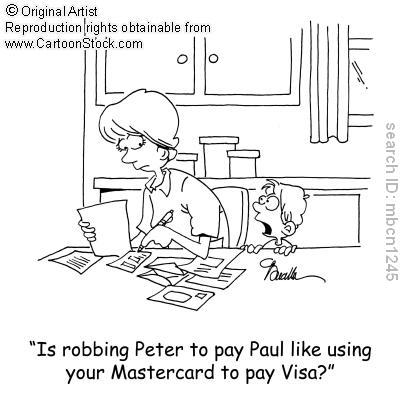
    The last concept we’ll look at is efficient pricing. A card is priced efficiently when everyone is buying and selling it at the same price. If people aren’t in agreement, you have opportunities for arbitrage. Arbitrage is essentially buying the Vengevine from Peter for $25 and selling it to Paul for $30. Peter and Paul don’t know that each other has a different buy/sell price. In financial markets, fortunes can be made just by realizing that one person is buying an item for more than (or less than) someone else is selling it for.

    One of your goals as a trader and seller is to sell to the people who will give you the best profit. Consequently, you’ve got your buylists from websites that you check to see who has the best prices on cards. However, did you know that you can make money without first having the cards? I found one website awhile back that was buying Hatred at $2.50. That’s a good price, and I checked around and found another site selling the card for $1.77! I could make 73 cents per card, just by knowing something that the buyer and seller did not. This is the way to really profit from information in Magic. In my situation, the seller only had three available, meaning that I would stand to make only $2.31 for my troubles. Like we looked at above, it was not worth doing the cost of business for me at that price. However, when you can find larger discrepancies, or you can move larger volumes of cards, you can exploit arbitrage. Perhaps the best place to do this is on MODO, where you can buy and sell with very low overhead costs. Though bots are a bit more calibrated as far as buylists go, you can still make small margins, over and over, if you look hard enough.

    When you internalize the ideas of efficiency, hidden costs and time-value, you can make better trades and smarter online purchases and sales. Know that your big box of bulk commons and uncommons might not be worth sorting, and that your Guardian Beast is better when it is transformed into a stack of dollar bills. Over time, you will get better at blending these three ideas together, and you will make more money from Magic.

    Douglas Linn

    Doug Linn has been playing Magic since 1996 and has had a keen interest in Legacy and Modern. By keeping up closely with emerging trends in the field, Doug is able to predict what cards to buy and when to sell them for a substantial profit. Since the Eternal market follows a routine boom-bust cycle, the time to buy and sell short-term speculative investments is often a narrow window. Because Eternal cards often spike in value once people know why they are good, it is essential for a trader to be connected to the format to get great buys before anyone else. Outside of Magic, Doug is an attorney in the state of Ohio.  Doug is a founding member of Quiet Speculation, and brings with him a tremendous amount of business savvy.

    View More By Douglas Linn

    Posted in Feature, FinanceTagged , , , , , 3 Comments on Dream Cache – Business Concepts

    Have you joined the Quiet Speculation Discord?

    If you haven't, you're leaving value on the table! Join our community of experts, enthusiasts, entertainers, and educators and enjoy exclusive podcasts, questions asked and answered, trades, sales, and everything else Discord has to offer.

    Want to create content with Quiet Speculation?

    All you need to succeed is a passion for Magic: The Gathering, and the ability to write coherently. Share your knowledge of MTG and how you leverage it to win games, get value from your cards – or even turn a profit.

    Whinston’s Whisdom – Customer Service

    Are you a Quiet Speculation member?

    If not, now is a perfect time to join up! Our powerful tools, breaking-news analysis, and exclusive Discord channel will make sure you stay up to date and ahead of the curve.

    Hi everyone, and welcome to Whinston’s Whisdom. I hope you all enjoyed my last article on Quiet Speculation, and I’m glad to be back writing again. While last week’s prediction about Aluren becoming the runaway success story of Columbus wasn’t on the mark, it still put up a solid showing, so I wouldn’t be selling off those Alurens just yet. Today, however, I want to discuss a different issue, still central to increasing your profit margin.

    One of the most overlooked tools in a seller’s inventory is the ability to use good customer service to encourage repeat buying. Improving your customer support network will give customers an incentive to buy from you again, increasing both your number of customers, and profits. So today we’re going to look at some ways to build a better customer service network.

    Don't be cryptic; reply to emails!

    Be easy to contact:The first rule of a good customer service network: make sure your customers can find you. Whether through Facebook, AIM, phone or even Ebay feedback, if your customers can’t contact you, here’s a problem. A lack of contact between seller and buyer can lead to many problems, such as one party or the other suspecting a shady deal or scam. If there’s a delay in payment or a late shipment, it’s critical to communicate this to your counterpart, avoiding a messy disagreement. Communication between buyer and seller is also important in order to give your counterpart feedback. By receiving feedback, a seller is able to know how to improve their customers’ experience, and increase the likelihood that these customers will purchase from them again. When selling over Ebay, one feedback I received asked me to wrap the cards inside my letter rather than having them in an envelope side by side. While this is such a small issue, correcting it in my future orders helped me retain this buyer, and increase the size of my market.

    Be friendly: Nothing turns a buyer off more than a sharp or mean vendor. When selling, treat every customer like they are your only one, and create a friendly and peaceful environment for them. This is harder to do when dealing online as the connection is much less personal, but it is still very possible. Don’t rush a buyer for payment, don’t badger them about shipping details if they haven’t given you any yet, and generally, treat them as you would want to be treated. Whenever I am berated by a seller for late payment or some similar offence, I know I don’t want to be dealing with this person anymore. But when I deal with a seller that deals with hitches in a graceful way, and treats me with respect, I am infinitely more likely to buy from them again.

    Be responsible and accountable: One of the ways to build up a loyal buying base is to conduct yourself in a responsible and accountable way during your transactions. There are several ways to do this. First, ensure that every item you ship will arrive in the best condition possible. Use hard plastic sleeves to prevent cards from being bent, and padded envelopes to further protect the contents. This will make sure you can maximize your profits, as you will be paid for all the cards you ship out, which won’t happen if they are consistently damaged. On the other hand, if a card is damaged in transit you must take responsibility for that. If the buyer can demonstrate acceptable proof that the cards arrived damaged, while it is not necessary to cancel the entire sale, a discount for the customer can go a long way to preserving good relations. When I ordered a playset of Great Sable Stags from Ebay just after the release of M2010, they arrived bent. I talked to the seller and he took off about 40% of the cost from my order. This seller recognized that your reputation is far more important than the money you would have to return in a refund. Another critical way to conduct yourself well as a seller is to be entirely honest in your practices. Too many times, I have placed large orders with sellers, and then when the value of those cards increases, the cards have mysteriously ā€œgone missingā€, or the inventory ā€œhad not been updatedā€ when my order was placed. In these cases, the sellers placed a short term profit over their reputations, and this will hurt them in the long run. When a seller cannot reliably deliver the promised goods, buyers are less likely to buy from them again. Instead of simply not delivering orders, it would be a wiser strategy to limit orders from a single source to only 4 copies of a card. This gives you a way out of this situation without defaulting on an order. [Dear sellers: cancel orders, and you will get a bad, bad, bad reputation.Ā  I promise. --kbr]

    You don't have to have a retail presence to create a community!

    Create a community: Currently, the biggest online card stores have been quite adept at creating communities of buyers that return to the same stores time and time again out of loyalty. Brand loyalty is a surprisingly powerful force, that when tapped into, will help you maintain a larger market of buyers. Creating a community requires manipulating several intangibles within a buyer’s subconscious. To start, it is very advantageous to have your own website to sell from, instead of using Ebay, Bid Wicket, or some similar selling source. Creating your own website gives you control over the appearance and content therein. Once you have your own website, an effective way to build up a community is to get buyers more involved in the website and your store as a whole. Whether through posting community articles, having a monthly raffle, or a rewards program (see below), buyers should have a good reason to come back to your site multiple times.

    Reward repeat buyers: While this could be seen a s a subset of the ā€œcreate a communityā€ section, I feel like this is important enough that it should stand on its own. One of the things the average Magic player likes the most is free stuff. Creating a rewards program that scales upward for repeat buyers encourages more people to purchase from you. There are several ways to implement this rewards program however. The simplest is to simply include free cards with every order, with more cards for larger orders. While this doesn’t necessarily encourage multiple orders, because the free cards to scale up with each order, it does promote larger ones. A more effective strategy, I feel, is to use a points based system, giving away rewards once a buyer reaches a certain level of points. Prizes can be anything from product, to store discounts, to raffle tickets. Whatever the reward given out, buyers will recognize the value that you place on their business, and so be encouraged to continue buying from your store. That’s all I’ve got on this particular topic for today. I hope this has helped you recognize the necessity of an effective customer service network, and the importance of good customer relations. If implemented correctly, the strategies above will help to both increase the size of your buying market and the number of buyers who return to you over other dealers. And now…

    But Titans have 6 toughness! Wait a minute...

    of the week: Destructive Force

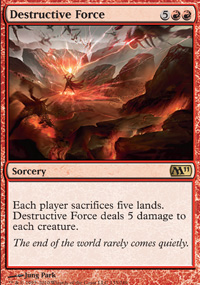
    While currently the Standard metagame is scattered, with no one archetype reigning supreme, one of the many decks that have done well at Amsterdam PTQs has been RUG mana ramp, using Primeval Titan alongside Wildfire 2.0 to decimate an opponent’s mana and board, while keeping its own resources intact. While at the moment this deck is not even close to the best or most popular, let’s take a moment to think about Standard after Alara block rotates out. We’ll be able to bid farewell to Jund, Naya, and a host of other competitive decks which lose too much in the rotation to stick around. RUG Ramp, on the other hand, looks like it will be sticking around. At Pro Tour San Juan, several writers from Channelfirebal.com made top 8 with Zendikar Block Constructed versions of RUG Ramp, and it is more than possible to port this archetype into the Zendikar-M2011-Scars of Mirrodin Standard format. Given this, Destructive Force could prove invaluable to this archetype. While it’s companion, Primeval Titan also looks to be a powerful force in this new format, it’s high cost at the moment means that it is harder to pick up multiple copies, making it less likely to make a large profit. But if you can buy up 100 Destructive Forces at their current level, then if the price goes up by $1, you’ve made $100 of profit. Because of its value in a new Standard format, as well its low price, which generates easy access to a large number of copies, Destructive Force is the card I would recommend to pick up this week. Well, that’s all for this edition of Whinston’s Whisdom. I’ll be back next week with more ways to improve your financial tactics, and recommend a new card for your consideration. Until then,

    --Noah Whinston

    The Revenue Review – The power of uncommons

    Are you a Quiet Speculation member?

    If not, now is a perfect time to join up! Our powerful tools, breaking-news analysis, and exclusive Discord channel will make sure you stay up to date and ahead of the curve.

    Quick quiz – Name the three most expensive cards from the following list:

    • Lavaclaw Reaches
    • Sensei's Divining Top
    • Spell Snare
    • Malakir Bloodwitch
    • Aether Vial
    • Sunpetal Grove
    • Mistbind Clique
    • Celestial Purge
    • Destructive Force
    • Siege-Gang Commander

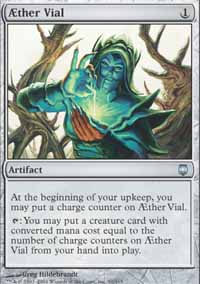
    All right, finished? An astute trader would immediately recognize that the three most valuable cards on the list are Sensei's Divining Top ($8), Spell Snare ($6) and Aether Vial ($14!). None of the others run more than $5. The other thing distinction our top three cards all share? They are uncommons, not rares.

    What this example is meant to demonstrate is the value that uncommons can hold. Mythics take all the hype and a Birds of Paradise will still run you about $5, but that doesn’t mean there isn’t money to be made in uncommons, without even getting into older uncommons like Imperial Recruiter, which are upwards of $150.

    If you didn’t catch the uncommons right away, don’t worry, I’m here to help.

    An uncommon that's worth more than almost every card in Standard!

    The real value to trading for uncommons is that most people just don’t realize the potential and importance of these cards. Most players don’t include them in their trade binder, even when some of these uncommons outprice many of their rares! If you learn some of the money uncommons of each format, you can gain a lot of ground a little at a time.

    Looking at Standard, the few uncommons that stick out are Path to Exile, Bloodbraid Elf and Tectonic Edge. These cards aren’t something you want to actively trade for (in most cases), but they are a great way to fill out trades. If your trading partner isn’t willing to pony up a few extra rares to satisfy your requests, and he has a pile of uncommons on him, it’s usually worth your time to thumb through it. You aren’t going to become rich picking up cards like Merrow Reejerey ($3), but it’s a lot better than having a rare like Hoarding Dragon ($.75) thrown in.

    It’s habit for a lot of players to leave their commons and uncommons on tables after they draft, and I look at these piles as lottery tickets. You might waste five minutes of your life digging through them, but you might also snag a few Celestial Purges ($.80), Voltaic Keys ($1) or even a few Mana Leaks ($.75).

    But how to profit on these marginal pickups? There are a few easy ways. First, and usually the most profitable, is to make them available in your trade binder, particularly at events such as PTQs and Grand Prixs. There’s nothing quite as frustrating as being one or two uncommons short of completing a deck list for events like these.

    Trust me, if a player is looking for another Celestial Purge for their sideboard, you are going to be glad you took the time to dig through that pile of ā€œtrashā€ after last week’s draft. I suggest aiming for a $2-3 dollar rare in these type of trades, particularly something with casual appeal such as Archive Trap. It’s possible that you’ll be able to flip that Trap into something like a Stoneforge Mystic later on down the road, and the process of trading up continues from there, originating from a dollar uncommon you got thrown in a trade.

    Another way to liquidate these cards is to a dealer. Power uncommons carry a higher buy price than their bulk counterparts. This isn’t likely to be very profitable, but getting another five dollars in dealer credit for a pile of uncommons isn’t the worst, especially when it’s required such little of your time and effort.

    Though this is by no means a definitive list, here are some other semi-recent uncommons to be on the lookout for.

    -Ā Ā Ā Ā Ā Ā  Eternal Witness ($6)

    -Ā Ā Ā Ā Ā Ā  Lightning Helix ($3)

    -Ā Ā Ā Ā Ā Ā  Knight of Meadowgrain ($2)

    -Ā Ā Ā Ā Ā Ā  Remand ($3)

    -Ā Ā Ā Ā Ā Ā  Hellspark Elemental ($2)

    This list barely scratches the surface of the uncommons worth trading for. It’s more of a jumping off point to demonstrate the possibilities that are there for the shrewd trader. Please post your additions to this list, and note any cards you think I missed!

    I’ve got some more trades to share with you this week. Let’s start with the largest trade of my career!

    His: Grave Titan ($33)
    Fauna Shaman ($13)

    2x Linvala, Keeper of Silence ($16)

    Ball Lightning ($4)

    Raging Ravine ($4)

    Destructive Force ($3)

    Stoneforge Mystic ($4.50)

    Prerelease Sun Titan ($8)

    Great Sable Stag ($2.50)

    Steel Overseer ($5)

    Total: $90

    Mine: 2x Hellkite Charger ($2)

    2x Malakir Bloodwitch ($10)

    2x Gelatinous Genesis ($1)

    Bloodghast ($7)

    2x Promo Elvish Visionary ($6)

    2x Mordant Dragon ($2)

    2x Disaster Radius ($2)

    2x Blood Tribute ($2)

    Quest for the Nihil Stone ($1)

    2x Abyssal Persecutor ($26)

    Celestial Mantle ($1)

    Oracle of Mul Daya ($4)

    Total: $64
    Net: $26

    This was a great trade for me. I made off with the better end of it value-wise and also traded off a number of cards that I’m unlikely to use (though seeing off the Persecutors hurt a bit).

    Besides the obvious big-ticket items in the Grave Titan and the Fauna Shaman, there are some other pieces here that really made this trade attractive. The Ball Lightning will be gone in a week or two, and with value – I think it’s safe to say Red Deck Wins cards are traded easier than a pack of cigarettes at the local penitentiary. The Steel Overseer, Destructive Force and Great Sable Stag are cards with some nice upside as well, making this trade potentially even more lucrative in six months than it is today.

    His: 2x Elvish Archdruid ($9)
    Joraga Warcaller ($2)

    Eldrazi Monument ($10)

    Reflecting Pool ($8)

    Sensei's Divining Top ($8)

    Foil Lavaclaw Reaches ($5)

    Total: $42

    Mine: 2x Master of Etherium ($6)

    Swans of Bryn Argoll ($3.50)

    Kinsbaile Cavalier ($1)

    Knight Exemplar ($7.50)

    Verdant Catacombs ($12)

    Total: $30
    Net: $12

    And here we are trading for one of the uncommons we discussed, the Sensei's Divining Top. A good deal of my profit in this trade came from the fact that my partner valued it at just a few dollars, an easy mistake for even veteran traders to make. It’s pretty difficult to keep track of the price of uncommons in addition to your normal assortment of rares, but it can pay off when you do.

    I’ve traded for upwards of 10 Reflecting Pools in the last few months, and I cannot wait for Extended season to roll around. In addition to being my favorite format, I’m ready for the price of my Extended collection to start tracking north so I can realize some of the income I’ve gained in these trades.

    Most of the cards in this trade are pretty cut-and-dry, and unlikely to move much in price, though the fetch will likely slowly appreciate. The only possibilities for me are the Joraga Warcaller and the Eldrazi Monument. The Monument has seen a decent amount of play and will probably continue to do so after rotation, but it’s too niche to move much past $15.

    I’m only mentioning the Warcaller because it is currently so low. If the Extended Elves deck becomes a reality and uses the Elf to call his brethren to war it could tick up a few dollars, but it’s not really going to make many waves financially. On the other hand, Elves are always great trade bait and I’ll probably be able to find him a nice home eventually.

    Thanks for reading!

    Corbin Hosler

    @Chosler88 on Twitter

    Flash of Hindsight – An Introduction to Abundance Trading

    Are you a Quiet Speculation member?

    If not, now is a perfect time to join up! Our powerful tools, breaking-news analysis, and exclusive Discord channel will make sure you stay up to date and ahead of the curve.

    An Introduction to Abundance Trading

    So, while there’s nothing really epic to talk about in the "pick it up now" department, I promise I’m going to dedicate a little bit of our budget today by the end of the column, if only to sate everyone with a hole burning in their pockets.

    First things first. I know this is going to sound arrogant. This is going to change the way you trade Magic cards forever. That is, if you have some balls. This might change the way everyone trades Magic cards forever, and I intend this to be reflective of the kind of game-changing content you can expect from QS premium once premium content goes live next month.Ā  [We're aiming for the 1st week of September! -kbr]

    This kind of article is the reason you want to (or maybe the reason you won’t want to) tell all your friends about QS, and the reason it will be worthwhile to get a premium account. I don’t know what we’re gonna charge, but it’s not enough. [The price to get the articles will be competitive with the going rate online -kbr]

    And he didn't crack it in a ZEN pack.

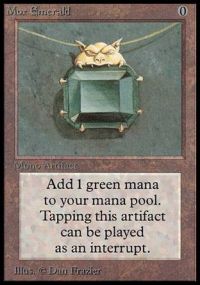
    I have been observing a friend of mine and he trades like a mo-fo. He’s a passable player, but he is a GOD when it comes to trading. He just recently came back to Magic, with literally no formal budget, and is already in possession of a Mox Emerald. One thing I’ve noticed him do, that very few other Magic traders do: bulking.

    I like to call it ā€œAbundance Trading.ā€ Maybe you’ve seen dealers offer some preposterously low price on ā€œbulk rares.ā€ Rares they don’t really want, they’re willing to take off your hands for the paltry price of usually $0.10. Ā As you I’m sure have experienced, you ā€œcan’tā€ (read: really, really shouldn’t) buy and sell cards at most shops unless you’re buying from or selling to the shop. This doesn’t mean you can’t conduct business like one.

    The other day, at the local Sunday tournament, I was trading with an acquaintance of mine, and he wanted to pick up a Ranger of Eos. I was fairly shocked to hear it had fallen to $5.00. There was no five dollar card I was really interested in in my friend’s binder, but there was a lot of janky rares.

    ā€œI’ll bulk it to you,ā€ I said, almost asking.

    ā€œSure,ā€ he replied. I proceeded to remove 50 rares that he didn’t want from his binder, pointing and asking as I did.

    ā€œThis, this and this?ā€

    ā€œDefinitely.ā€

    ā€œThis and this?ā€

    ā€œNot that, but that, sure.ā€

    This went on for about three or four minutes as I took cards which were rotating, or just worthless for a dime each.

    Why would I do this? There are stores online that will buy bulk rares for $0.10 cash – often $0.12 in store credit.Ā  At big events, the dealers are excited to sort through your crappy longbox of rares for varying prices – you see the guys there who sit for 40 minutes to an hour just sorting cards into piles of $0.10 and up. There’s no real accounting for what a dealer will pay for cards at a big event (see my last column ). So consider the following:

    Rush sucks but it was a good pun, Dave.

    You have a Gideon Jura. He’s worth somewhere in the neighborhood of $30. There isn’t a dealer on the planet who is buying Giddy Lee for more than $15 right now. Even if they are, what are the odds that you got it on the downturn?

    Jed Moutainbilly needs a Gideon, and he’s willing to trade for Mr. Lee at $40. Jed has some good cards, but in all likelihood, you’ve still come in at a significant loss or break-even at best; because let’s assume in a best-case scenario, you squeeze three Lotus Cobras outta Jed, you can still only sell those for like $12 each. $36 cash for $30 in cards isn’t horrible, but considering Gideon’s relatively recent $50 price tag, it’s very, very low EV. Unless…

    Unless you bulk him to Jed. ā€œI’ll give you Gideon for bulk rares – at $0.10 per rare.ā€ 400 Well of Discovery, Fountain Watch, Angelheart Vial, and Baneful Omens later, you’ve got a metric ton of dimes. ā€œBut what do I do with all those rares?ā€ That’s the simple part – Sell them to a dealer. Congrats – you’ve just found a way to sell your cards for dealer prices (or better) to dealers.

    I shouldn’t even need to detail the sickness of what happens when you ship a Jace the Mind Sculptor, but I will: 800 rares – traded in to dealer @ $0.12 each (because you don’t want the cash, you want store credit) – the dealer has Jace for $70 so now you have another Jace and $26 in store credit – by my estimation, that’s nearly a Baneslayer Angel for your troubles.

    I’m certain I’ve explained how Abundance Trading is an insane way to get maximum (actually maximum + value) from your singles, but it’s exponentially increased when you trade for non-rotating Standard rares. Why? Because there’s always an overlooked card or two from the non-rotating block that shoot up a couple weeks after rotation, and it’s likely you can pick them up cheap-as-free before they do.Ā  [When you buy everything, you're sure to get a few hits.Ā  I endorse this practice. -kbr]

    Okay, so I promised some cards to pick up, so here they are.Ā  For the record, here is your current portfolio:

    Current Portfolio: 7x Mind Over Matter, 2x Lim Duls Vault, $65.00

    Current Performance: Static.

    Recommended Pickups: Stoneforge Mystic ($3.25), Goblin Guide ($3.50), Armament Master ($0.25)

    Lemme hit you up with some rationale: In the wake of post M10/Shards, the value of linear strategies in Standard in the early weeks is not to be understated. Especially since we’ve seen Stoneforge at a lot higher than she is now, she is an enabler as well; you never need more than one of an equipment to almost guarantee you see it if you have four-of her, not to mention:

    10 cents for a lottery ticket. Trust us.

    Scars of Mirrodin. Yeah, we already know about Sword of Body and Mind which, while probably garbage, suggests at least two more swords in this block as the lower-limit for playable equipment. Couple that with high potential for playable non-sword equipment (I mean, we saw Loxodon Warhammer, Grafted Wargear, Lightning Greaves, et al in Mirrodin Block 1.0, we can safely anticipate some cool equipment in this next iteration as well, I believe) and you have something with high potential for abuse.

    Goblin Guide is at $3 and change right now. Again, it’s in line with a fairly linear strategy, and it’s, for my money (preparing for hate) the best red creature ever printed – I know Grim Lavamancer and Goblin Lackey would like to have a word with me, but I won’t share a word with either of them because I honestly would almost 99% of the time rather play the Guide. It’s always a card people are looking to pick up one or two of at the constructed PTQs and in an environment with no real Zoo, and no Tarmogoyf (Double Standard), this could be even hotter during the early PTQ season next year.

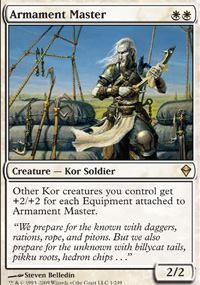
    The final card, Armament Master is a little riskier for return, but probably worth it. The mighty Kor lord is included in a pre-con, but he just seems to be too cheap right now, and gives a huge bonus at +2/+2 for each equipment attached. Picking them up for dirt right now, especially if you can Abundance Trade for them, just seems high value – what’s the worst that could happen? They can only go up, or lateral, and lateral means you can still sell ā€˜em for a dime.

    Let’s pick up about 4 Stoneforge Mystics ($13), 4 Goblin Guides ($14), and 12 Armament Masters ($1)… these prices should be even lower on eBay, but YMMV.

    Current Portfolio: Ā 4x Stoneforge Mystics , 4x Goblin Guides, and 12x Armament Masters, 2x Lim Duls Vault, $37.00. You should have some Mind Over Matters for sale for about $16-$20, we’ll account for that next time.

    Current Performance: Static, which is a bit disappointing. Will someone on mtgthesource.com please break Mind Over Matter? PLEEEASE?

    Just for my own personal vindication.

    Until next time, may your favorite color be green. And abundant.

    The Nutt Draw – The Worth Matrix

    Are you a Quiet Speculation member?

    If not, now is a perfect time to join up! Our powerful tools, breaking-news analysis, and exclusive Discord channel will make sure you stay up to date and ahead of the curve.

    If you've been reading my articles, you'll see that I’ve taken in a lot of data, smashed it, shook it, baked it in Excel, and it’s given us some perspective on the prices and demand of various cards. There is still a lot more to learn, and I hope, more data to be had. There is another very valid way to evaluate cards. Buy Lists are perhaps an even truer value of the worth of a card versus the "price" or "cost".

    Before we go further, I should make a note about that last sentence. To many of you, it might seem as though I used a thesaurus to spit out the pricing equivalent of ā€œme, myself, and Iā€ but there are some pretty distinct differences in my mind. Though the term ā€œcostā€ can get pretty overloaded with meaning.Ā  Here is how I (with the aid of neither Merriam nor Webster) would define each as in relation to the topics herein.

  • Price – this is the amount of money something is sold for.
  • Cost – this is the amount of money that a store (or individual) would pay for acquire the item with an intent to sell it at a different ā€œprice.ā€
  • Worth - this is a more nebulous value that could be related to anything from money to play value, but I’ll use to mean a less ephemeral or more solid value then price.
  • As with the ongoing development of the Demand Index values these Worth Matrix values are going to take some time to work out, and more data is going to be needed in order to lock them down to something we can really rely on.

    The concept of the Worth Matrix is similar to the Demand Matrix in that it should give us some indication of the real worth of cards in an ever changing landscape. A few of the major differences are that we can establish a Demand Index value for any card in a given subset of cards, but in the Worth Matrix, we can only highlight the cards that are specifically in demand by the indexed sellers or the changes in those lists over time. Some of the cards that are on buy lists are there because their inventory has fun low, or because the cards are forecasted to become hot in the future. I would imagine that many of the cards are only needed regionally, and that different stores might have different needs. Some of these irregularities can be overcome by aggregating more information, some by looking at the values over time. As with the Demand Index values, more data will mean more accuracy. Another difference is that these results are going to be more directly related to their price. The Demand Matrix looks at the relative interest a card is generating and I hope that the proportional values extracted from the Worth Matrix might give us a baseline for establishing and predicting the pricing of certain cards.

    This week I’ll show you some of the results from aggregating and sorting a few of the more accessible online buy lists. The lists currently being crunched are Star City Games, Cool Stuff Inc, Troll and Toad, BlackBorder and AdventuresOn. I’ll probably be adding more (please list out your favorites below) but am somewhat limited as to which I can automatically pull data from, so please bear with me. As I add and compile more and more buy lists and cross these values with sales history and pricing fluctuations, I think that not only will we be left with another potentially useful value (Worth Matrix), but we will also see stronger relational information between all the values.

    Below we have some of the more straight forward information. These three lists are sorted according to the highest average buy price as listed in the above online stores published buy lists.

    [iframe https://spreadsheets.google.com/pub?key=0AukC5EWiTvOpdE1fQjE4bFdmMHJ5ZE84d2tNbjhsN2c&single=true&gid=3&output=html&widget=true 100% 600px]

    This list seems about right with the possible noted absence of Jace, The Mind Sculptor.

    [iframe https://spreadsheets.google.com/pub?key=0AukC5EWiTvOpdE1fQjE4bFdmMHJ5ZE84d2tNbjhsN2c&single=true&gid=4&output=html&widget=true 100% 600px]

    Star City Games and Cool Stuff Inc don’t seem to buy a whole lot that is strictly in the Extended block at this time.

    [iframe https://spreadsheets.google.com/pub?key=0AukC5EWiTvOpdE1fQjE4bFdmMHJ5ZE84d2tNbjhsN2c&single=true&gid=5&output=html&widget=true 100% 600px]

    The Legacy and Vintage list is mostly useless in this format but fun to look at. With Standard and Extended I can get down to the $1.50 card mark in about the top 50. For Legacy it’s almost the top 750 to get down to $1.50 and a list that large isn’t as easy to produce due to some of the limitations of Google Docs. I’ll come up with a better way to display the Legacy values soon though.

    For a bit of a taste as to what the Demand Index values can do for us, the following list is a comparison between the cards that are specifically sought by the stores but whom have the lowest demand. In other words, the stores may want them more then you do, so now is a good time to sell them either on their own, or add them into the shipment you have going out.

    [iframe https://spreadsheets.google.com/pub?key=0AukC5EWiTvOpdE1fQjE4bFdmMHJ5ZE84d2tNbjhsN2c&single=true&gid=2&output=html&widget=true 100% 600px]

    As you can see some of the stores are buying some cards that might seem a bit surprising. These are all cards that have virtually no demand (Demand Index values) behind them, so they should be either lying about in your sorting boxes or perhaps the stores know something we don’t. I’m anxious to add Channel Fireball to the list of stores searched since they do so much speculative pricing and buying. As of right now their online buy list isn’t practical enough to access, but I hope that gets better in time. This list will get better as I refine the sorting parameters. For example, right now I’m only looking at cards that are at least $1 on average, but other thresholds and lists (perhaps a $5 min?) are something I’m considering.

    As always, please comment as to what other information and results you’d like to see.

    Chris McNutt

    Born in Seattle, Washington, Chris McNutt has been playing and collecting Magic: The Gathering since Unlimited Edition. As an active player, tournament organizer and judge he regularly scrubs out of Pro Tour Qualifiers but inexplicably cleans up at the local draft tables. When not net decking Chris is either busy working as an Information Technology Sales Rep or spending time with his family. Other non-magical pastimes include playing guitar and an unhealthy number of video games. Cursed with an undying love of generating spreadsheets purely for “funĆ¢ā‚¬Ā, he’ll be crunching the numbers each week in order to serve up delicious data burritos to the salivating, hungry readers of Quiet Speculation.

    View More By Chris McNutt

    Posted in Feature, FinanceTagged 17 Comments on The Nutt Draw – The Worth Matrix

    Have you joined the Quiet Speculation Discord?

    If you haven't, you're leaving value on the table! Join our community of experts, enthusiasts, entertainers, and educators and enjoy exclusive podcasts, questions asked and answered, trades, sales, and everything else Discord has to offer.

    Want to create content with Quiet Speculation?

    All you need to succeed is a passion for Magic: The Gathering, and the ability to write coherently. Share your knowledge of MTG and how you leverage it to win games, get value from your cards – or even turn a profit.

    Dream Cache – Survival of the Fittest

    Are you a Quiet Speculation member?

    If not, now is a perfect time to join up! Our powerful tools, breaking-news analysis, and exclusive Discord channel will make sure you stay up to date and ahead of the curve.

    This week, we are looking at Survival of the Fittest, one of the most recent gainers in Legacy. We'll talk about why the card has gone up in value and how to take that information from the specific to the general to benefit you when you are considering cards to invest in.

    Why Survival Started To Climb

    Survival has been a $12 card for many years. It saw a small price jump when Bant Survival started to heat up.Ā  That's a Legacy deck that used Loyal Retainers to power out Iona, Shield of Emeria or Emrakul, the Aeons Torn. The real jump, however, happened recently, at Grand Prix: Columbus, as a result of two things.

    English? I thought you were Australian...

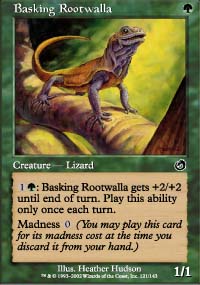
    First, Caleb Durward performed very well with a Survival Madness deck at the Grand Prix. The deck utilizes Vengevine and Basking Rootwalla to produce free shrubbery and lizards.Ā  That adds a combo finish to an otherwise-fair aggro-control deck. The deck is very strong and it will see a good deal of play. The card is integral to that deck and, being fifteen years old, is hard to find.

    The other thing that happened was that Patrick Chapin ran a Survival deck with a full-on toolbox, featuring the Loyal Retainers combination. Any time Pat plays a deck, the cards get a little boost. He is a very popular deckbuilder/player and people follow what he does. His ideas often pan out to be smart deck choices that reflect what his readers want in a deck – something clever and rewarding for skillful players. His list is very hard to play optimally, but I expect many people to pick it up and run with it. This will also create demand for the card.

    Where Survival is Going

    A few weeks ago, my teammate Kevin Cron asked me what I thought a card like Survival would climb to if it saw a lot of tournament play. The issue with pricing Legacy cards is that we really have no benchmarks. I was shocked as hell when Entomb jumped to $40 after the GP: Spain win recently. Odyssey was not printed that long ago, and the card was only $5 when it was banned in the format. We saw a huge run on the card because of its success. Similarly, Karakas could be had for $7 – I know because I got two at that price! After we realized it was a counter to Iona, the card's value shot up. I predicted on Twitter in May that you would be happy to have bought your Karakas for $20 when GP: Columbus rolled around, and they are at $30 right now. It is typical to see already-pricey cards jump up when they are enshrouded in Legacy hype.

    Did'ya know that "Eureka" is Greek for "I have found it"?

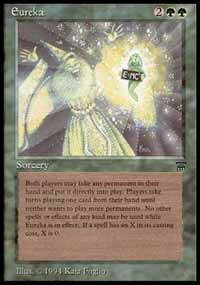
    The card is old, it's hard to find, people do not like to trade the copies that they have, and the judge foils have not impacted the market very much. I would expect a card like Survival to climb easily to $35 with another large tournament success. With that in mind, you should do what I told Kelly Reid to do at GP: Columbus and buy as many as you can find at $20. We don't have a great example of a $20 card that climbed to big heights, only cards near it and far above it already (like Eureka).

    How To Identify Trendy Cards Like Survival

    There is a little mental checklist I make when I think about whether a card is going to spike up in value. The more factors present, the more likely it will see a big increase. It looks a little something like this:

    • Is it part of a very good combo? (Entomb, Grindstone)
    • Does it haveĀ  casual value already? (Sneak Attack)
    • Is the card easy to play and easy to splash into decks?
    • Is the card playable in decks with Force of Will?
    • Is the card older than Masques Block, when print runs were lower?
    • Did the card appear in a deck that has performed well, or is it part of a newly-discovered interaction?

    More of these factors means more of a chance that a card will spike. Some cards rocket up, only to fall down to much lower levels when people realize that the card isn't as amazing as they thought it was. A prime, and rare, example of this is Helm of Obedience and its interaction with Leyline of the Void. The premise was simple: Helm would completely mill an opponent if you also had them under the Leyline, and the combo potentially cost only five mana. However, slotting the combo into decks was very hard, and five mana is a lot to assemble, and nine, to cast the Leyline as well, is even more challenging. The Helm fell from a high of at least $10 down to about $2.

    Cards lose value much more slowly and infrequently as compared to how quickly they can shoot up. Grindstone has fallen to about $15 right now, from a $25 high, because there are too few decks that play the card alongside Painter's Servant. Other cards tend to stay at those values, especially when they see some casual play as well. Survival is perfectly suited to stay where it is. The Survival Madness deck is strong and will remain strong, thanks to using Force of Will and a host of good blue cards. People will continue to want to play it, and if decks like Chapin's see more play, the card will stay up in demand. On top of that, other speculators will probably drive the price of Survival of the Fittest beyond its current $20 price. It's a factor of the market, which in stocks is called ā€œnoise trading,ā€ where a stock is popular...because it is popular. Some of Survival's value will be based on noise, but a lot of it comes from being central to a great deck that people will want to try out. If you see Survival show up in another big event this year, and especially if it wins one, the value will go up even more. This is the correct time to stock up on the card.

    When To Sell Trendy Cards

    There is a question of when to hold a card and when to be greedy and hold out for more. Magic cards can go up in value exponentially, and there is a temptation to hold it until ā€œjust after this next big event.ā€ This is where having a good sense of how much you want to profit can come in. If you buy Survivals at $20 and then resell for $28, you have made a great turnover. However, you might be tempted to hold them and see if they go up to $35. The risk is low, since I think $28 is a reasonable price for the card and you can likely get it for that cost even when the noise settles down. I would hold onto them and resell at $30, but you should adjust this to your own risk preferences. If you got rid of your Entombs at $18, you would have been kicking yourself!

    Quick Recap On Survival

    • Big events and influential players can affect a card price
    • Some cards can jump in value more than others, based on playability
    • Cards can be expected to drop slightly in value, but many will still command huge gains
    • You should liquidate cards when you have made a healthy, but not greedy, profit on them to avoid tying up your cash for too long

    Write to Reid – Weekly Q&A

    Are you a Quiet Speculation member?

    If not, now is a perfect time to join up! Our powerful tools, breaking-news analysis, and exclusive Discord channel will make sure you stay up to date and ahead of the curve.

    Welcome to another mailbag on Quiet Speculation.Ā  These have proved so popular that I intend to keep doing them on a weekly basis as long as there are questions that need answering.Ā  Keep an eye on my Twitter feed, @kellyreid, for when I put out the call for questions. If I like yours and think others could learn from the answer, I'll reply here in my column.

    @kellyreid Is Tarmogoyf still a good investment, or will it keep dropping in price?Ā Ā  --@gcroucher

    No, Tarmogoyf is a poor investment right now.Ā  The only way that it will take off again is the "over-extended" format becomes a reality.Ā  Even if it does, the demand will not change since this new format would potentially replace Legacy.Ā  On a related note, there is an unsubstantiated rumor going around that there are big changes coming to formats at the first of the year.Ā  I can confirm nothing, but I'd be hedging my bets just in case over-extended becomes real.

    @kellyreid Do you think Mass Polymorph can grow in price after Nationals and Worlds?Ā  --thebeme

    As of right now, the card is still a 25-cent rare.Ā  There are just so many on the market and the set is too new.Ā  If the deck were really, really good and really, really popular, I would say perhaps, but as it stands right now there are just better decks out there.Ā  It's a card to get as a throw-in to make up lost value in a trade, but frankly I don't see it passing a buck or two.

    @kellyreid Has Primeval Titan settled down or does it truly carry the potential of Jace 2.0 or Baneslayer of last year?Ā  --@the_stybs

    Primeval Titan is amazingly popular right now.Ā  It's hard to classify a mythic rare that goes up to such lofty heights, but $50 seems a comfortable place for the card.Ā  Dealers at GenCon are even asking $55 right now and no one is really balking.Ā  It's really hard to predict how high a card like this can go, but if Jace is any example, then the Titan could have room to grow.Ā  I never speculate on big mythics, and neither should you.

    @kellyreid What do you think is the best way to get started in a card buying/selling business?

    You should start by floor trading at large events like Grand Prix and GenCon and PTQs.Ā  If you can't double the value of your trade stock in a weekend, you've no business starting a business.Ā  That's what I did, on a smaller scale.Ā  When you do this, you will develop a network of people, learn a lot about trading, grow your net worth and most importantly, develop a keen sense of business.Ā  Once you've done that for a while and you have a great stock of cards, then you can start scouting a retail location and bankrolling an actual storefront.Ā  The rest of the question was -

    @kellyreid e.g. initial capital? shopfront, website, ebay, or all of them? start with Standard or go for everything?

    If it is profitable, do it.Ā  Jon Medina turned a Bear Umbra into God-knows-what in about 20 man-hours of trading, so just start making good trades.Ā  I always tell people that transactions are more important than the raw margin you make on a trade, so that they get the idea.Ā  You just want to be turning over inventory at a ridiculous rate.Ā  When you get started you don't really want to have to meet the overhead demands of an online store or a retail store.Ā  Just put together a binder or two, make tons of good trades, and keep trading up.Ā  You can sell cards for startup capital if you want to do a retail store, but I assure you that if you really become a good trader, you'll encounter people who will consider bankrolling you in exchange for company ownership.

    @kellyreid In today's standard environment what is a good way to get a new player started in constructed without a mortgage being involved? --@thephoenix5

    I really don't know the answer to this on a deck-specific level, but you can look at Top 8 lists and see what's cheap and what's winning.Ā  MonoĀ  Red decks are often a great price-power compromise.Ā  I would honestly tell most players to start with Limited so they learn the skills of the game while acquiring cards.Ā  Then they can use those cards to begin the trade-up process.

    @kellyreid Is show and tell a card to look into or has it hit a ceiling on it's price already -- @zach5000

    Show and Tell has already had one big price spike happen to it, so my first reaction is to say that it is around its ceiling.Ā  There were a few decks at GP Columbus that really used the card to great effect, so it could have a few more percentage points to gain.Ā  I wouldn't worry about it one way or another.Ā  You're not going to make enough money to warrant having so much in a single card.

    I pulled an expensive foil in one of my MTGO drafts. Should I try my hand on one of the bots, eBay it or other? --mtgcolorpie

    Check out MTGO Library. That site is an incomplete but useful aggregator of a number of MTGO bots.Ā  Remember that Tix are liquid, and almost as good as cash.Ā  I know that they can be sold for about 90 cents on the dollar in general, so consider that when ebaying a card.Ā  I'd turn it into tix, and set aside a portion of your tix each time you make them.Ā  Use that to speculate and start turning a profit.

    Will Jace, TMS stay at the 60-70 plateau for the next 3 yrs? Considering Standard into Extended rotations? --@bottsthoughts

    Three years is a long time to be predicting.Ā  I'll say this; if Jace stays as a Worldwake-only printing and Islands don't get banned, I see him settling around $100.Ā  That being said, there is another unsubstantiated rumor traveling the TCG hall at GenCon that might see Jace, The Mind Sculptor reprinted in a Sony video game at the end of this year.Ā  Once again, I can neither confirm nor deny this.Ā  I am only parrotting what I hear on the winds.Ā  If this happens, his value will fall.Ā  The severity of the fall will depend on the size of the print run.

    Do you think the possibility of split packs in Scars of Mirrodin will effect the pricing of individual cards? --@thebeme

    For those who don't know, he's actually referring to the rumor that the second set in the Scars of Mirrodin block will contain two miniature sets to represent two warring factions.Ā  Cards will be packaged in faction-specific packs if this rumor is true.Ā  This will surely be interesting if it proves to be the case.Ā  I can see a problem occuring if one side of the "war" has a bomb-tastic mythic and the other doesn't.Ā  If one side sells faster than the other because of this, it could be seriously bad news.Ā  I would keep a close eye on secondary market prices and I'm sure Chris McNutt will have a bunch of fancy charts to tell us which side has better EV.Ā  Remember, this is yet another unsubstantiated rumor that I am just musing about.Ā  I really have no idea if there's any validity to it

    That'll do it for today!Ā  If I didn't get to your question, don't be sad.Ā  I get a lot of them, so shoot another one my way next week.Ā  Catch you guys in a few!

    Flash of Hindsight – Flipping Out

    Are you a Quiet Speculation member?

    If not, now is a perfect time to join up! Our powerful tools, breaking-news analysis, and exclusive Discord channel will make sure you stay up to date and ahead of the curve.

    So, it’s Friday, the day before Grand Prix: Columbus, and we arrive around 5:10am. We pull up to two or three of the hotels on the Columbus Convention Center campus, no vacancy.

    Courtyard Marriot, which I’m more than willing to give a plug here, has a vacancy for Friday and Saturday; but we’ve just been driving for six hours, it’s kinda hot outside, and we really, really need some sleep.
    Enter Trey, the friendly and inviting front-desk man who offers us the following deal:

    • A room for Friday
    • A bigger room for Saturday
    • A pair of ā€œnickelodeon your stayā€ bags featuring a cool wristband, a papercraft Spongebob sculpture, a coloring book, and a sweet Spongebob drawstring backpack.
    • A room for Friday – I know I already said that – where we can check-in now.

    Now, if we were the type to plan stuff way in advance, we would’ve ended up Ā with probably Ā a little more confidence in having a ā€œplace to stayā€ but would’ve paid for an extra night (to ensure a place to crash in the morning) and wouldn’t have got the sweet Spongebob stuff. These nickelodeon ā€œupgradesā€ are supposed to cost like $10 each, a small victory, but a victory nonetheless. Something to remember when traveling (which if you’re reading this, in all likelihood means ā€œtraveling on a budgetā€) is that people in the service industry have a lot of flexibility. A LOT of flexibility. A lot of it is just asking. We wanted some sweet bags, and we got them. Parents never ask for that sorta thing, but they pay for it. Dumb little extras and upgrades can be had on the cheap, because to the people at the desk it is completely immaterial, and often means a tip.

    That’s not to say you have to shower these people in money. Being nice and a dollar or two is often enough. Just remember, classy folks pay a little extra for quality service, and that often ends up costing them a little less.
    On to the meat and potatoes of today’s article. Friday, noonish. The dealers at Grand Prix Columbus are on a mezzanine level of the convention center, overlooking the action like so many spectators in the coliseum. Here’s where it gets interactive, folks. I’m going to show you a buylist. You’re going to tell me which cards on here scream ā€œabuse the buy priceā€:
    Dealer X:

    • Jace the Mind Sculptor: $55
    • Temple Bell: $2
    • Lightning Bolt:$0.10
    • Survival of the Fittest: $14
    • Staff of Domination: $7.50
    • Iona Shield of Emeria: $5

    Take some time. Here’s a hint: it’s Staff of Domination. Seriously? This type of scenario happens at almost every event where there are three or more dealers and a lot of backstock. Dealers only casually look at other dealers buylists, and don’t usually spend a lot of time moving cards dealer-to-dealer. Especially when there’s a non-national dealer at a national event, the big guys tend to glaze over him. The small dealers, however, are not only mistakenly not unloading all of their bulk to other dealers, they also aren’t buying for the environment – they’re buying for their customers at home.

    Why is this card $7? It is a mystery!

    This means if a card like Staff of Domination is huge at their store, they buy it for roughly $Mistake.99. A lot Ā of money. I was able to, for $20.00 pay for my tournament entry fee to the GP, and have money left over to spend on the weekend – how? Flipping the cards.

    Staff of Domination was recently banned in EDH. This isn’t terribly important but it means that while before dealers had an excuse to display it, they now do not. I went up to another dealer and asked if he had Staves on hand. He did, but it was under some clutter and he didn’t want to look for it, because he was busy doing nothing. Not even joking. I went in search of the dominant staff and found a gentleman with about 10. After consulting with Dealer X, I found he only needed about 5 or 6. The gentleman with 10 wanted $5 each.
    ā€œIf I buy 6 of them, will you give ā€˜em to me for like $20?ā€ I ask.
    ā€œYup,ā€ he said.

    I trot back to Dealer X and make some dollars. Ā It’s pretty insane. Everyone else is looking for cards they need for the weekend, and I’m able to play the sidelines by taking advantage of a card that almost no one gives a damn about on site. It’s important to know your audience. This also speaks to the benefit of being prepared when you get to a big tournament. This way, you can spend your downtime not scrabbling all over the place for your last Underground Sea, but instead, leisurely looking for quick turnarounds on buylists.
    The quick and dirty way to do this is the following:

    • Look for a card on the list that is one that almost no one at the tournament is going to care about.
    • Buy them from the other dealers en masse
    • ???
    • PROFIT!!!

    The ā€œ???ā€ here are translated from Southparkese to ā€œsell them to dealer x for even a couple bucks more than you bought them.ā€

    If it seems too easy, it’s because enough people simply aren’t doing it.
    I, admittedly, don’t have anything exciting for your portfolios on the pickup front right now. I do have a hard sell for you though. Unfortunately, our Mind Over Matters weren’t the breakout I was hoping for, I honestly don’t think anyone was playing a deck featuring the combo at GP Columbus. Remarkably, they haven’t really tanked too hard, and playsets on eBay are still $15-20. Ship ā€˜em off now, while you can, unless you’re really comfortable riding that train on until daybreak.

    It's lonely at the top.

    I’ll let any aspiring deckbuilders in on a little secret though: If you want to build the Temple Bell/ Mind Over Matter deck – the key card is probably Solitary Confinement. Just Sayin’.
    As far as cards to pick up, the only really hot picks I have right now probably aren’t too secret anymore, but you can still Dusty Old Store them if you’re lucky. They are Survival of the Fittest, and Loyal Retainers. The latter is probably a little obscure, but if you can get one at $70, you’re in for a good flip. The Survivals however, can be picked up for $10-$20 and are selling right now for like $25-$28. A nice, quick little flip that can make you a couple bucks. Another pickup that’s probably fine, but not super-high-dollar is the Blue and Red Titans of M11. Ā Frost Titan and Inferno Titan are still pretty fairly low-dollar cards (for playable mythics) and have a pretty big upside. I wish I had something more for you this week, but this is the nature of the beast.
    It will probably be til Scars of Mirrodin spoiler season before we see anything else in the ā€œinterestingā€ column for speculation, but again, that’s how the game goes. I do plan on being at the forefront of that season, so I’ll certainly keep you posted when I’m on to something.

    Until next time, may your favorite color be green.

    The Revenue Review – Aug 6th 2010

    Are you a Quiet Speculation member?

    If not, now is a perfect time to join up! Our powerful tools, breaking-news analysis, and exclusive Discord channel will make sure you stay up to date and ahead of the curve.

    This week’s column has a bit of required reading before we jump in. I’ll give you a few minutes to read (it’s short). Today I’ll be referring liberally to topics discussed in this article.

    All right, finished? Glad you’re back.

    Just like Magic R&D designs cards for the different psychographics, you must learn to trade with each type of player. Ā Not everyone approaches trading in the same way, and while breaking down traders into their respective psychographics is not a bulletproof method of securing trades, it is helpful for you to know what you are getting into when you open up their binder.

    I’m going to give a brief description of how the typical Timmy, Johnny and Spike enter into trades and what they are looking for, and I have some tips to maximize your time with each group.

    Thoughtseize sucks! Trade me that Dragon!

    Timmy, Power Gamer

    Timmy is pretty easy to trade with because he is not as concerned with pricing out every card. This saves a lot of time when you don’t have to look everything up on an iPhone. Timmy is typically a casual or EDH player, and therefore will likely be looking for cards you don’t mind getting rid of, such as Terastodon. Timmy is going to trade you for your Emrakul, the Aeons Torn, and he’s going to hardcast it. He’s also going to make every Planeswalker in the game go ultimate at least once.

    When trading, make sure Timmy sees your huge monsters, and, if the urge strikes you, don’t be afraid to regale him with tales of casting Ulamog, the Infinite Gyre and Kozilek, Butcher of Truth in the same game. Chances are Timmy is going to want creatures that aren’t too vital to your decks, so give him the run of your binder and point out interesting cards like Mayael's Aria. In return, you’re likely to be able to pick some decent cards. Pro tip:Ā  go for the blue. Timmies hate Counterspells.

    Quick story. I promised the Predator Dragon / Thoughtseize trade would return, and here’s the tale in all of it’s glory.

    About 18 months ago, during the height of the Faerie plague in Standard, I was playing over a friend’s house when a player, who had been playing since Revised, came by.Ā  He was also an extreme Timmy. I asked if I could look through his cards for trades, and he obliged. I immediately fixated on his Thoughtseize, knowing that it was a $15-20 card. After looking through my meager collection, his face lit up when he hit my Predator Dragon. The entire trade conversation went like this:

    Me: I really want this Thoughtseize.

    Him: How about for your Predator Dragon?

    Me: That’s fine with me, but I’m just letting you know this trade isn’t really fair. Thoughtseize is worth like $15 dollars.

    Him: But I love Dragons!

    Me: You sure?

    Him: I have an awesome Dragonstorm deck! I love Dragons!

    The point is that people value cards differently. The Thoughtseize was worth nothing to him – he hated black. I’ve said it before, and I’ll repeat it here: If both players walk away from a trade happy, then that trade was a success for everyone.

    Ad Nauseam and Death's Shadow. Now that's REAL Magic.

    Johnny, Combo Player

    The consummate combo player. You can find him at your local tournament slinging some Pyromancer Ascension. Though calling Johnny strictly a combo player obviously stereotypes it a bit, it’s what most players think of when they think ā€œJohnny.ā€

    There are varying levels of Johnny, and what you need to find out up front is this: Does this trader care about making competitive combo decks or does he just want to win a game off of Felidar Sovereign?Ā  This is important while trading with him.Ā  If all he wants to do is make Sanguine Bond and Blood Tribute work, then by all means trade him those cards.

    But there is a group of Johnnies that want to win with their combos. They are likely to want counterspells and board wipe from you, which can lead to an increased ante on these trades. At this point you aren’t just taking some low-dollar rares of theirs, but should be actively looking for staples if they want to trade for your Day of Judgments. I’m assuming in this situation you are conducting trades that are at least somewhat balanced, and you are considering values when trading.

    Another important thing to remember when trading with a Johnny is to not dismiss their combo ideas as bad. This will turn them off very quickly. Make sure to talk it through with them and even suggest other cards that might help. I know that I, for one, love a good combo deck, and love to talk about them. Just remember to make yourself a decent trade while you’re doing it. Pro tip: Don’t trade away all your Swans of Bryn Argoll right before they take a tournament by storm.

    Conley Woods, what big teeth you have!

    Spike, Tournament Player

    Ah, Spike. You are often the most frustrating player to trade with. All you ever want are those really cool Vengevines I have. You never want to talk or discuss deck ideas. You flaunt statistics like it’s your job, even if you have no idea where they came from. Why do you take one look at my binder and laugh and say ā€œLike you would have anything I want.ā€

    Obviously I’m stereotyping again, but we’ve all had this experience. But just because some Spikes are extremely difficult to deal with doesn’t mean we can’t still make trades work in our favor.

    Trading with Spikes, who often check or claim to know the price of every card, can be weary. There’s haggling over prices and people don’t understand that you, as a trader without an immediate need for a particular card, need to make a margin on the trade to justify it.Ā  Last week, I covered one of the ways to make these deals work for you last week (trading for cards out of season), and another way to make these work for you is to speculate on cards.Ā  You want to make sure you know exactly what you’re doing when you make trades like this. For every Tarmogoyf, there’s also Sarkhan Vol. Hype can make or break a card’s price early, and you need to be able to capitalize on this.Ā  Luckily, some of the other writers on this site are very good at helping you do this.

    For instance, when I first heard that Zendikar was going to be a ā€œlands matterā€ block, I immediately went looking for Knight of the Reliquary, which at the time was about a $3 card. I picked up my playset in a trade with a Spike by giving him an M10 dual. The prices on the cards matched up at the time, but clearly I got the better end of this trade. Of course you can’t always win, and as a result of the risk you’re taking you need to demand some leverage from your trader partner.

    You’re taking a risk in making this trade, and that risk needs to be priced in. This method helps you complete trades with Spikes that work for both of you. You buy yourself a possible reward, and he gets his Thoughtseize. Pro tip: Pick up Steel Overseer. Most people don’t realize this is already a $4-5 card, and there’s not telling how broken it could be once Mirrodin returns (and possibly brings Modular back with it).

    Speaking of Thoughtseize, let’s get back to our story. After trading my Predator Dragon away, I took the ā€˜seize back to my local store, where it was immediately pounced on by Spike. I knew I had something good on my hands, and in one of my first high-dollar trades, I unloaded it for about 15 Treefolk cards, including a few Doran, the Siege Tower. I’m unlikely to ever play the cards I got in a tournament, but the same was true for the Thoughtseize.

    What I did do in this trade was round out a really fun kitchen table deck. This is a trade I would never advocate for value (since trading many small cards for a big-ticket card is a mistake), but it neatly accomplished my goal at the time. This is another example of how a player can get ā€œripped offā€ in a trade and still come away happy. I knew the cards I got from him weren’t a good financial pickup, but I’ve gotten much more use out of them than I would have the Thoughtseize.

    Hopefully this piece has given you a heads-up on what to look for out of your trade partners. It really gives a leg up going into a trade if you know what the other player is looking for. It saves you time, and ultimately increases your profits.

    Before I go, I’ve got a few trades from last week to break down!

    His: Twilight Mire ($4.50)
    Mystic Gate ($5.50)
    Gaddock Teeg ($4)
    Rite of Replication ($1)
    Total: $15

    Mine: Ad Nauseam ($1)
    Kozilek, Butcher of Truth ($10)
    Total: $11
    Net: $4

    Here you can see I continue my trend of picking up Extended cards. I’ve unloaded some pretty playable stuff in my quest to pick the new Extended manabase, so I’m really hoping this pays off. There aren’t many Extended players in my area, but I’m planning on going to GP: Nashville, and I’ll need to flip these there to make it worth my time. All these lands will rotate after the next Extended season, so I’m going to be facing some pressure around that time to unload these.

    That said, this was a nice little trade with a pretty nice upside. Ad Nauseam is pretty important to Legacy players and useless otherwise (the Magic League Ad Nauseam/Conflagrate deck notwithstanding. The lands should all tick up a bit as we enter Extended season and the Gaddock Teeg has a chance to really go nuts if he again becomes the G/W answer to control.

    His: Groundbreaker ($2)
    Trinisphere ($3.50)
    Coralhelm Commander ($3.50)
    Phylactery Lich ($5)
    Ulamog, the Infinite Gyre ($9)
    Nivenyrral's Disk Ā ($5)
    Total: $28

    Mine: 2xBirds of Paradise ($5)
    Sorin Markov ($8)
    Total: $18
    Net: $10

    There are a few interesting things going on with this trade. First of all, I rarely trade for white-bordered cards. I leave Legacy/Vintage up to the masters (like QS’s own Doug Linn). I don’t know much about the format (yet). I had no idea if the disk was worth $2 or $20. I priced it at $3 during our trade. It’s good to see I was in the ballpark. I don’t know how much of a market there is for it in my area, but it was worth a shot.

    Likewise, I didn’t know the Trinisphere or the Groundbreaker were more than $1 rares. I had some vague memory of the Sphere being good in Vintage, but I didn’t have a price figure to back that up. We priced it and the Green Ball Lightning at a dollar. The Groundbreaker is a pickup for a friend who is looking to make the 8-Ball Lightning deck.
    The Commander looks like an especially good pickup since it was a 4-of in Saito’s GP-winning Merfolk Legacy deck, and the Lich is pretty speculative at the moment, despite its $5 price tag.

    I don’t know how much I’ll be able to do with this trade, since I have a feeling some of it is going to sit in my binder for a while. Meanwhile, the Sorin was pretty sentimental, after having cast it on Turn 4 in both games of the finals at the Zendikar Prerelease. Hopefully I’ll find some Vintage players interested in the older cards. All in all, a solid trade for me.

    That’s it for this week, next week I delve into the power of Uncommons! Until then, you can follow me @Chosler88 on Twitter and check back here for updates from our other authors.

    Until next time,
    Corbin Hosler

    Want Prices?

    Browse thousands of prices with the first and most comprehensive MTG Finance tool around.


    Trader Tools lists both buylist and retail prices for every MTG card, going back a decade.

    Quiet Speculation