menu

A Revisão dos Lucros – Análise de Trocas

Are you a Quiet Speculation member?

If not, now is a perfect time to join up! Our powerful tools, breaking-news analysis, and exclusive Discord channel will make sure you stay up to date and ahead of the curve.

A Revisão dos Lucros - Análise de Trocas

Se você é como eu, você ama Magic. Mais especificamente, você ama trocar cartas de Magic. A emoção da troca é tão empolgante quanto ganhar um FNM ou abrir seu primeiro Baneslayer Angel.

Se você estiver lendo este site, então você já deve ter visto alguns dos grandes conselhos dos outros escritores aqui e talvez até tenha botado alguns deles em prática. Mas e se você não pode passar horas vasculhando a caixa de cartas baratas da sua loja pra achar o tão falado Lim-Dûl's Vault? E se você não tem tempo, energia e recursos para monitorar mudanças súbitas de demandas ou estar sempre comprando e vendendo cartas no Ebay?

Só porque você não consegue acompanhar as mudanças constantes do mercado secundário de Magic, não significa que você não quer fazer sua pasta de trocas valer mais. Eu estou aqui pra te ajudar com isso.  Primeiro, um pouco sobre mim. Sou um estudante de jornalismo na Universidade da Cidade de Oklahoma. Eu jogo Magic desde Shadowmoor, e jogo quase que exclusivamente FNMs. Apenas há 6 meses eu comecei a jogar em campeonatos de níveis mais elevados, e desde então tenho conseguido alguns resultados decentes, mas não espetaculares (Rating total de 1925; segundo lugar num PTQ de Extended; 6-3 no GP de Houston).

Como você pode ver, eu não sou nenhum prodígio de Magic, mas eu entendo como fazer uma troca favorável pra mim e mesmo assim deixar ambas as partes felizes. A capacidade de fazer trocas astutas tornou Magic um hobby muito acessível pra mim, pois posso usar crédito de loja e trocas para montar os decks que quero jogar. Se isso é algo que te interessa, continue lendo.

A primeira coisa que preciso deixar claro pra você é que trocar em FNMs é algo completamente diferente de trocar com veteranos num PTQ. Os "guerreiros" de sexta-feira não querem saber se seu Vengevine custa US$35; mesmo assim eles não acham certo trocar 6 cartas por só uma sua. Jogar e trocar Magic não tem nada a ver com cifrões pra eles; tem a ver com emoção. Eles não querem que você pegue aquela Elspeth que eles abriram em seu primeiro booster, não importa o que você ofereça. Isto pode ser frustrante às vezes, mas você pode aprender a fazer com que isso seja bom pra você.

Então como você, esse dealer "malandro" que você é, deve negociar com esses jogadores pra ganhar valor na sua pasta? Tenho algumas dicas para você começar e depois vou recapitular algumas trocas que fiz no último FNM para você poder ver esses princípios em ação.

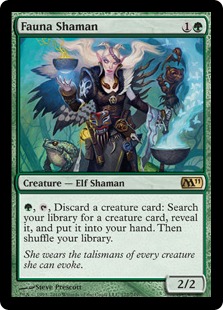
É sobre a construir amizades, e não igualar valores.  A pessoa com quem você vai trocar não quer ser seu melhor amigo, mas também não quer um oponente frio e calculista fuçando nas cartas dele. Conte pra ele o motivo de você querer certas cartas, dos decks que você tá construindo, sobre derrotas absurdas que você sofreu. Eu sei que isso pode parecer trivial e uma perda de tempo, mas os relacionamentos que você criar com jogadores vão durar muito mais tempo do que o Fauna Shaman que você está pegando deles
Não troque só quando você precisa de alguma coisa.

Ouviu seu vizinho falar que precisa de um Goblin Guide durante um draft? Vá falar com ele depois do draft e ofereça de trocar um Goblin Guide com ele pra que ele termine o deck. Se ele perguntar o que você precisa, deixe claro que você não está procurando por nada específico, mas que está só querendo ajudar. Isso faz a diferença. É claro que, em troca de sua ajuda, você vai lucrar consideravelmente com a troca.

Não tenha medo de pedir mais do que você dá.  Claro, você sabe que seu Leyline of Punishment vale cerca de US$ 3 e o Knight of the White Orchid que você está recebendo em troca vale uns US$ 4. Você pode aceitar a troca e ficar feliz com a seu lucro, mas não mata ninguém pedir aquele Leyline of Anticipation também.  Você ficaria surpreso quantos jogadores ficariam felizes de te dar esses "extras" só porque não precisa deles. Você não vai montar sua pasta só com trocas que te lucram alguns reais por vez. Seja ousado.

Respeite suas ideias de decks.  Se você se considera um jogador decente de Magic competitivo, é fácil zombar de alguém quando alguém te conta sobre aquele deck foda de Quest for Ula's Temple dele. Esta é uma maneira infalível de acabar com a troca. Em vez de dizer que o deck dele é horroroso, sugira algo que possa ser bom no deck dele. Pergunte se ele viu aquele Stormtide Leviathan maneiro de M11 que seria muito legal no deck.  Se você começando a notar um tema, você vai notar que o modo como você troca com outros é mais importante do que o que você está trocando com eles.
Não envolva preços nas trocas a não ser que eles queiram.

Certamente não há nada de errado em usar guias de preços para completar trocas, mas nem todo mundo se sente confortável com esse método de trocas. Por exemplo, eles podem não querer ouvir que sua carta mítica favorita vale apenas alguns dólares, ou talvez eles não confiem em sua fonte.
Outro assunto comum entre jogadores que você possa encontrar em um FNM é que eles simplesmente não se importam com preços. Eles não precisam daquele Thoughtseize de US$20, mas eles simplesmente PRECISAM daquele Predator Dragon de US$2 (obviamente voltarei pra essa história no futuro). Mas o que importa é o que o Jonathan Medina já explicou anteriormente: o valor de uma carta é quanto as pessoas trocando determinam que é - nada mais importa.

Espero que vocês tenham achado essas sugestões úteis, e eu os encorajo a aplicá-las nos seus próximos campeonatos. Para demonstrar alguns desses princípios, eu anotei as minhas trocas do FNM do dia 23 de Julho.

Dele: Fauna Shaman (US$ 14)
Meu: Abyssal Persecutor(US$ 14)
Diferença: US$ 0

Como já foi discutido interminavelmente online, Fauna Shaman é pra valer, e já está vendo muito jogo. Talvez eu tenha tecnicamente empatado na troca, mas o Shaman vai sair das minhas mãos muito mais rápido.  Eu preciso dos Shamans pros meus próprios decks Standard, e é pra onde eles vão.

Dele: Fauna Shaman (US$ 14)
Meu: 2x Bloodghast (US$ 12)
Diferença: US$ 2

Mesma coisa. Qual deles é mais provável de ser trocado se eu precisar? Praticamente todo mundo que quer Bloodghasts já os tem agora. E se um desses vai subir, vai ser o Shaman.

Dele: Fauna Shaman (US$ 14)
Meu: Time Reversal (US$ 12)
Diferença: US$ 2

O Time Reversal tá caindo rapidamente, e eu não acho que vai chegar nem perto de US$ 12 de novo, então eu me livrei desse que eu peguei num draft o mais rápido possível. Essa carta foi descartada pela maioria dos Spikes, mas seu efeito grita "Me jogue em jogos casuais!"

Dele: Noble Hierarch (US$ 14)
Meu: Stoneforge Mystic (US$ 4,50)
Diferença: US$ 9,50

Essa é uma daquelas trocas que é muito mais fácil de fazer com jogadores casuais do que com competidores de campeonatos. Tudo que o Noble Hierarch faz é gerar mana - eles têm suas Birds of Paradise de Quinta Edição para isso. O deck Mythic pode buscar aquela nova Sword of Vengeance que eles draftaram ontem! Isso não é, de forma alguma, degradar seus motivos para a troca. Eles têm seus motivos para fazê-la, e eu tenho os meus.

Dele: 3x Obstinate Baloth (US$ 21)
Meu: Sarkhan the Mad (US$ 17)
Diferença: US$ 4

Algo que você deve saber pra quando estiver trocando com jogadores casuais é que eles avaliam até os piores dos Planeswalkers como incrivelmente valiosos. Isso tem seus prós e contras. Aqui eu o convenci a pegar o Sarkhan mesmo ele não precisando de um. Eu estava ansioso para fazer esta troca porque outro jogador tinha mencionado que estava ativamente procurando por Baloths.

Sarkhan certamente é uma carta boa para campeonatos, mas ele está deixando de ser importante. Ainda não se sabe como ele vai se portar no metagame pós-M11, e seu único lar (Jund) roda em alguns meses. Os Baloths devem continuar sendo bons contra Red Deck Wins por um bom tempo.
Aí é que as trocas começam a ficar boas. Como eu disse, eu sabia que um jogador estava procurando por Obstinate Baloths, e eu não deixaria fácil pra ele.

Dele: Temple Bell (US$ 1,50), All is Dust (US$ 17), Ulamog, the Infinite Gyre (US$ 9), Leyline of Sanctity (US$ 6), Sword of Vengeance Foil (US$ 8) Total: US$ 41,50
Meu: 3x Obstinate Baloth (US$ 21)
Diferença: US$ 20,50

No começo, ele queria resumir a troca ao Ulamog e ao All is Dust, mas eu falei que não podia fazer isso, especialmente porque eu tinha pego os Baloths só para ajudá-lo. Ele relutou inicialmente, mas ficou feliz no final porque pegou as cartas que ele precisava pra montar seu deck.
Fiquei feliz em pegar umas cartas ótimas para trocas e uma espada foil, que tem potencial para decolar.  Ela até fez uma aparição em um deck invicto num PTQ japonês.
Esta próxima "troca" é algo que acontece basicamente com jogadores casuais. Um cara com quem eu jogo na minha loja local mas não conheço muito bem ficou feliz em me dar uma pilha de cartas na condição de nós lembrarmos da troca e eu emprestar cartas pra ele no futuro, quando ele encontrar um deck pra montar. Eu aceitei isso de bom grado por vários motivos, alguns deles particularmente pertinentes a alguns conceitos já discutidos aqui.
Primeiro, eu sabia que alguém estava procurando por Bituminous Blast e Kargan Dragonlord, e eu queria me livrar deles o mais rapidamente possível.
Em segundo lugar, e mais importante, quando você está focado em trocar com uma audiência pequena e, na maior parte, casual, você precisa desenvolver relacionamentos bons com essas pessoas. Eu nunca teria sido capaz fazer essa "troca" se eu não tivesse feito questão de conhecer o cara e ajudá-lo com seus decks de limited e teoria de Magic. Resumindo, vale a pena ser amigo de seus parceiros de troca, porque você nunca sabe quando você vai precisar do favor de volta.

Esta prática é uma das únicas razões de eu conseguir competir em nível de PTQ. Já que eu não compro caixas ou boosters, e aceito crédito de loja no lugar de premiação, meus decks se formam a partir de uma combinação de elaboração, negociação e empréstimos. A menos que você tenha centenas de reais para gastar em decks, isso é algo que a maioria dos jogadores, mesmo os profissionais, têm que fazer. Construir relacionamentos através de interações como esta te fornecem essa oportunidade.

Dele: Kargan Dragonlord (US$ 14), Mystifying Maze (US$ 3,50), Glacial Fortress (US$ 6,50), Destructive Force (US$ 2,50), Kozilek, Butcher of Truth (US$ 10), Textless Bituminous Blast (US$ 2,50) Total: US$ 39
Meu: Uma promessa de emprestar cartas no futuro
Diferença: Infinita

Quando você está negociando a este nível, a sua reputação é tudo. Se você enganar um cara numa troca assim, você está destruindo suas chances de troca com ele para sempre, sem contar que você vai ter sua reputação estilhaçada, e merecidamente. Eu tenho toda a intenção de ajudar este cara no futuro, porque ele é um bom rapaz que estava disposto a me ajudar.
Dele: Birds of Paradise (US$ 4,50), Steel Overseer (US$ 5), Leyline of the Void (US$ 4), Grave Titan (US$ 35) Total: US$ 48,50
Meu: Leyline of Sanctity (US$ 6), Kargan Dragonlord (US$ 14), 2x Textless Bituminous Blast (US$ 5) Total: US$ 25
Diferença: US$ 23,50

Este cara se mantém atualizado em preços de cartas, então eu deixei ele definir o valor das cartas envolvidas. Ele avaliou o Dragonlord em US$ 15 e Grave Titan em US$ 15. O Steel Overseer foi considerado um extra, e eu nem percebi que ele estava custando US$ 5. É um card que eu acho que vale a pena pegar barato porque tem a possibilidade de se tornar muito poderoso quando sair Scars of Mirrodin.
Eu definitivamente senti como se estivesse numa maré de boas trocas após conseguir o Grave Titan tão barato. Eu queria manter o ritmo, então eu cheguei num jogador que eu não conhecia que tinha acabado de terminar um jogo de Limited. Ele é um jogador novo na minha loja e eu nunca tinha trocado com ele antes. Ele gostava de colecionar artefatos, independente do que eles faziam. Quando você tá numa maré, às vezes você tem só que aproveitar.
Seu: Dragonskull Summit (US$ 7), Creeping Tar Pit (US$ 4), Consuming Vapors (US$ 7,50), Leyline of Sanctity (US$ 6), Fauna Shaman (US$ 14) Total: US$ 38,50
Meu: Eternity Vessel (US$ 1), Platinum Angel de Mirrodin (US$ 4,50), Temple Bell (US$ 1,50), Keening Stone (US$ 1), Lodestone Golem (US$ 1,50) Total: US$ 9,50
Diferença: US$ 29

Minha última troca da noite foi sensacional, e o cara com quem eu tava trocando insistiu bastante em pegar algumas cartas valiosas de mim. Eu realmente queria ficar com o Hierarca já que 2 dos meus 4 que uso no Standard estão emprestados, mas no final eu acabei passando pra ele mesmo assim. Ele sempre esteve disposto a trocar comigo pelo que eu precisava, então até que foi uma boa maneira de retribuir o favor.

Dele: Promo Ajani Vengeant (US$ 5,50), Goblin Guide (US$ 7), Goblin Guide Foil (US$ 10), Coralhelm Commander (US$ 3,50), Nicol Bolas, Planeswalker (US$ 10), Time Reversal (US$ 12), Oracle of Mul Daya (US$ 3,50), Consuming Vapors (US$ 7,50), Mass Polymorph (US$ 1), Call to Mind (US$ 0,50) 2x Tome Scour (US$ 0,50) Total: US$ 61

Meu: 2x Master of Etherium (US$ 7), 2x Sharding Sphinx (US$ 2), 2x Quest for Ula's Temple (US$ 1), Noble Hierarch (US$ 14), Elvish Archdruid (US$ 6) Total: US$ 30

Diferença: US$ 31

Lucro final da sexta-feira: US$ 121,50. Peguei as comuns e incomuns para dar a um jogador com quem eu tinha trocado mais cedo e tinha me falado que seu amigo precisava delas. Mais uma vez, ser uma boa pessoa te leva muito mais longe em trocas do que saber de cor um guia de preços.
Neste ponto, espero que vocês estejam começando a entender como trocas são feitas com pessoas que não acompanham cada mudança de preços da CoolStuffInc.com, por exemplo. Isto é extremamente importante se este é o seu público de negociação.  Neste exemplo, meu parceiro de trocas precisava das cartas verdes pro seu deck monogreen de Standard, as criaturas-artefato para seu deck casual de artefatos, e ele achou que Quest for Ula's Temple seria legal de se construir ao redor. Se ele não se importa dos preços não baterem, então não é meu trabalho fazer isso. Pelo que resultou dessa troca, nós dois saímos da mesa felizes, e temos a foto pra comprovar!  Isso é tudo o que você querer depois de uma troca, né?

Isso é tudo por hoje. Lembre-se de dar uma lida no resto do ótimo conteúdo de Doubling Season, e siga @DoublingSeason e @Chosler88 no Twitter!  Boa sorte em suas trocas, e deixem um comentário abaixo sobre o que acharam do artigo.  Vocês preferem teoria, ou análise de trocas?
Whinston’s Whisdom – Forces of Influence

Are you a Quiet Speculation member?

If not, now is a perfect time to join up! Our powerful tools, breaking-news analysis, and exclusive Discord channel will make sure you stay up to date and ahead of the curve.

Hey everyone! I am extremely excited to be making my debut on Quiet Speculation. I think it’s only appropriate to start with an introduction for those of you who don’t know me.  From my QS Bio:

Noah Whinston is a Chicagoland Magic player who’s been in the game for 5 years.  He jumped right into competitive play, working his way up to the Top 8 in the last Extended PTQ season.  He produces podcasts for BlackBorder.com, TCGPlayer.com, Pure MTGO and has guest posted on many blogs.

While I may seem like the stereotypical competitive Magic player, my connection with this game runs deeper than that. Unlike many Spikes, I recognize that Magic is more than a game. Instead, it is truly a community, a way of life. Because of this, I have made it my most recent mission to become involved in the financial side of Magic, buying up cardstock in paper and on MTGO. While I cannot claim to have the same kind of experience that the other writers on this site do when it comes to financial matters, I can only hope that my more player-centric viewpoint will provide a fresh look at the Magic card market.
For my first article, I wanted to start out with something simple. The force that determines the price of a card is the most important thing to know when trying to make a profit. By realizing the factors that influence a card’s price, you will be able to predict trends ahead of time, based on fluctuations in those forces. My goal for the end of thiarticle is to have everyone up to speed on these forces, and to know examples of them in the current market.

Casual Appeal

The Casual Appeal of a card is one of the simplest and most straightforward forces that influence price. However, the effect of Casual Appeal varies wildly from card to card. Imagine a set of axes, where the X axis represents the price of a card, and the Y axis represents the amount of influence that Casual Appeal exerts on the price of a card. The graph would look like a curve that eventually flattened out to a slop of almost zero. Essentially, Casual Appeal influences cards with lower prices more than cards with higher costs.

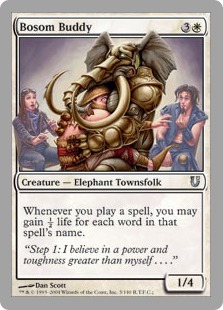
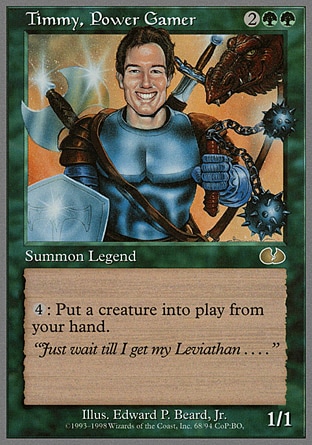
Just wait till I get my Dreadnought!

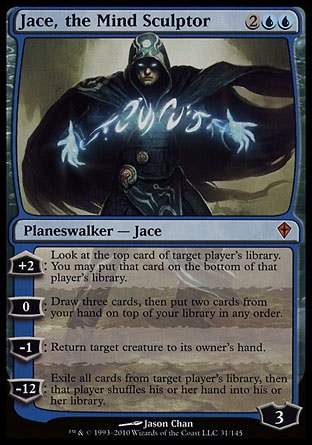
The reasoning for this has to do with the mindset of the casual market. Most casual players are unable to afford the latest tournament tech (Big Jace) so instead use substitutes that can be obtained for a cheaper price (Baby Jace). This increased demand inflates the price of the card. The phenomenon of Casual Appeal explains the relatively high costs of the less playable mythics. For instance, no matter the tournament playability of it, Planeswalkers tend to be worth at least $5-10 because there will always be casual players who want to buy it. While this is applicable to tournament playable cards (Baneslayer Angel, Avenger of Zendikar), the influence is less pronounced, because the higher costs of these cards reduces the amount of casual demand.

Cards that generate Casual Appeal usually share similar characteristics. Because the majority of the casual player demographic are “Timmy” players, powerful effects are prioritized. While Big Fatty Boom-Boom Creatures make up most of this, game breaking spells like the Ultimatums or Commands also should be taken into consideration.

Predicting Casual Appeal is quite an easy process, because it almost never changes. The mindset of the Casual community is very consistent, and this demand isn’t vastly changed by fluctuations in a certain metagame. Unfortunately, because of this consistency, it is very difficult to take advantage of casual appeal and turn a profit through it. Most cards whose prices are increased by casual appeal are already marked up at vendors, and so difficult to arbitrage between a store and your local play group. Also, there is no way to try and play the market. Imagine a stock market where the value of the stocks never changed. That’s effectively what Casual Appeal is, because of the eternal consistency of its effect.

EDH

Elder Dragon Highlander is different in its ability to glorify uniqueness. No other format places such a need to “pimp out” a deck. EDH players are often on the lookout for these unique cards, ranging from Japanese Foils, to cards altered and signed by the artist. This means that the influence of EDH on a card’s price can’t really be graphed, because of the huge discrepancies between the demand for certain cards in EDH. If you are forced to deal with a primarily EDH playing market, certain advantages and disadvantages arise.

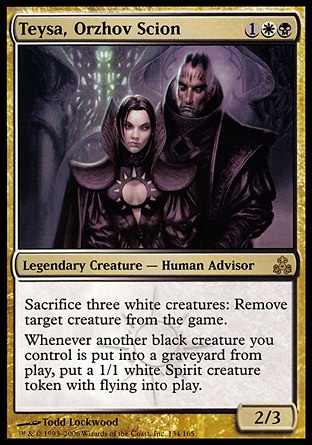
Anyone with a -foil Russian- Teysa, let Kelly know.

One of the problems with trying to turn a profit off of EDH is the age of the format. Like Vintage and Legacy, EDH uses all Magic sets ever printed, leading to some truly broken decks. However, this means that newer cards are very rarely put into EDH decks, and even if they are, it is only a single copy as per Highlander rules. As such, cracking packs of M2011 is not likely to yield you any cards that are in high demand for EDH. Instead, you must deal in older cards, whose values are much more stagnant, making it harder to squeeze a few dollars of profit out of trades.

The advantages of dealing with EDH players are high. First, many cards that are good in EDH are downright unplayable in the other eternal formats. Many Standard players will criminally undervalue EDH staples, simply because they don’t see play in the competitive formats. Exploiting this requires having a larger community, one that can support both Standard and EDH players. This does work the other way around as well, in that EDH players tend to undervalue Standard staples, making it possible to play the two sides off one another. In addition, EDH players give you a way to sell off your more unique cards. Have a Japanese Foil Pernicious Deed (lifted from Doug Linn’s article)? I’ll bet that the average Legacy player looking for Pernicious Deeds for his sideboard won’t be willing to spend extra for that bling. But chances are that that EDH player can’t wait to get his hands on it.

Much like Casual Appeal, the effect that EDH has on a card’s price is fairly constant because of the lack of a true metagame in the format, so trying to eke out small profit margins trading between EDH players is not an effective use of time or resources. Instead, by playing the Standard and EDH groups off of each other, you are more able to exploit the differences in valuing a card.

Competitive Use

The use of a card in a competitive context is the factor that has most impact on its value. This can be explained quite easily. In more casual formats, the game is played for its sake alone. However in tournaments, there is much more on the line. Tournament players are willing to spend more on cards they need, because they see it as an investment that will pay for itself rather than a simple expenditure. Obviously they are often wrong, but that’s not really the point. Look at the most expensive cards in a format. They are always the most heavily played.

Bulk Mythic.

The easiest competitive format to work within is Standard, for several reasons. Standard is a relatively young format, meaning that there is a higher density of expensive cards. Standard rotates on a regular and fairly quick basis, insuring a constant creation of more expensive staples. And finally, Standard is the most popular of the constructed formats, providing a larger pool of consumers.

Predicting how Competitive Use will impact a card’s value is as easy as predicting shifts in the metagame. If a deck in which the card plays a key role becomes more popular, the price of the card will go up. It is simply demand.

Because the Competitive Use of a card has the most impact on it’s price, it is critical to stay on top of the current metagame in which the card is playable. If you think a certain deck will start to do well, buy up the cards in it, then turn them over later for a profit. This segment actually leads me to something that I want to call my “Tip of the week”. In it, I will implement my predictions about a given format, and recommend that everyone pick up a certain card.

Tip of the Week: Aluren

Looking to Legacy, Grand Prix: Columbus just passed, and many of the pros are looking at new options for the format. One of these options already covered by writers on this site is the Mind Over Matter-Temple Bell combo. However, there is another combo that, while it may not have gained any new pieces, has been overlooked for too long. Aluren is back. “But Noah” you say, “how do you know this, given that you aren’t a pro?”

Well reader, one of the ways to predict the popularity of a deck is to look at how the cards in it have been selling. One of the key parts of the Aluren combo is Imperial Recruiter, a $150 creature from Portal: Three Kingdoms. It’s exorbitantly high cost means that it is usually not in high demand. But despite this, many dealers have sold their whole inventory of them. This surge of orders for Imperial Recruiter, as well as an increase in the number of Aluren decks being played online, foreshadows a large number of Aluren decks being played at the GP. Because most of us, myself included, don’t have the bankroll to buy up Imperial Recruiters, I would suggest buying as many copies of Aluren as possible. In just the past 2-3 weeks, Aluren has gone from 7 to 12 tickets on MTGO, an increase of 70%, and it’s paper counterpart will do the same if Aluren makes a strong showing in Columbus.  [Though Aluren didn’t Top 8 the GP, at least a few copies made Day 2 --KBR]

That’s all for this week. For my next article, my plan is to examine the Standard format in detail, pointing out the underrated and undervalued cards within the metagame.  See you next time!

Dream Cache – Reselling Collections

Are you a Quiet Speculation member?

If not, now is a perfect time to join up! Our powerful tools, breaking-news analysis, and exclusive Discord channel will make sure you stay up to date and ahead of the curve.

You are at a party and casually mention to a friend that you are going out of town to play in a Magic card tournament next week. “Oh, Magic! I had a slivers deck back in high school!” he says, and asks you if his cards are worth anything. Being a good friend and a savvy trader, you offer to look at his collection and make him an offer.

Four days later, you have a collection of cards in boxes. They are unsorted. Some are pristine and others, beat to hell. Included is a binder full of black Ice Age uncommons. How do you break it down to resell?

This week, we're going to look at how you break down a collection of Magic cards that you have purchased. In a sense, I am putting the cart before the horse, because I am assuming that you already have a collection to dispose of. Fear not, we'll talk about how to make collections come your way in the near future. Tearing through a collection has all the thrill of a treasure hunt and can be loaded with disappointment when you realize that your friend collected in the “dead zone” of Fallen Empires. Let's look at how to go through this, step-by-step. I just got a modest collection from a friend recently, so I will be liberally using examples from that deal.

Preliminary Research

It is essential to know what you are looking for when you are going through these collections. While most bulk rares are worth between ten and fifteen cents from a dealer, there are some that are worth a little more. Even commons and uncommons can be worth a slight premium if they are desirable. I looked at the buylists on trollandtoad.com and coolstuffinc.com to get an idea of what I should keep an eye out for. As you break down more collections, you will develop a better sense of what has a casual market appeal and thus, a premium.

The First Look

You've got a collection before you and you may not have even looked through it yet. You need to maximize the return on the time you put into this stack of cards. Remember that dealers will pay $4 per 1000 cards, sight unseen, so you are just looking to add value to that number. Your first step is to go through and pull out the cards that you recognize as playable or rare cards.

In my collection, I was dismayed to find that, indeed, my friend collected during the “dead zone.” He had many 4th Edition cards, Fallen Empires and Ice Age, up through some Weatherlight cards. None of the potential money cards from Tempest. This is an awful span of cards to go through. Even the cards themselves are depressing – is Irini Sengir playable in your wildest imagination?

I did find some nice staples going through the first time. I located two Tormod's Crypts, a set of Counterspells and some Dark Rituals. I put aside Hymn to Tourachs because, even as a common, I knew they were worth more than most bulk rares. I also found what would be the critical elements of any return on profit – a Force of Will and a Natural Order. Dealers are paying $20 cash for both of these cards, so I could reclaim some amount of any investment I put into this collection. Unfortunately, there were no dual lands to be had and the rest of the pickings were slim. I would have to put a lot of effort into getting value from this collection!

The Bulk Rare Sweep

Much of the value you will get from reselling a collection will come from bulk rares. The players who had all the tournament chase rares and left the game knew enough to sell their cards before they got out. You will mostly be buying collections from the Elf Deck Guy, so you have to know how to make up that value from their lackluster cards.

This is the next step where you do your research. You must know all the rares in all the sets represented to you so that you can sweep through the whole stack of cards once or twice and get almost every card. To do this, go to Gatherer and make an advanced search, by rarity, for all the sets you are looking at that do not have rarities marked on the card. Take a look, three sets at a time, so you visually know what to pull out. I find that this is far more effective than printing out a list or sitting by my computer and looking them up, because I have a good visual recollection of cards. I pull anything I think will be a rare and then look it up later. Know that there were absolutely terrible rares printed for most of Magic. Don't worry, though! They are still worth at least a dime to any dealer you find. Take a look at this list, rollover with your mouse to see the picture, and try and identify all the rares on the list:

Mind Whip

Orcish Librarian

Heart Wolf

Aegis of the Meek

Ironclaw Curse

Mercenaries

Blizzard

Misfortune

Narwhal

Mystic Might

I'll let you know the answer in a moment. In a collection with two thousand cards, you might find 150 or more bulk rares. At fifteen cents apiece, that is $22.50 for about twenty minutes of sorting. That can cover the cost of shipping the cards to a dealer or making up a shortfall if you spent too much on the collection. By the way, every last card up there, even Mind Whip, is a rare. See what I mean about awful cards?!?

In the collection I bought, I pulled out 159 cards that I knew were rares. My friend spent $11 to ship his collection to me and I would probably have to spend a similar amount to sell this to a dealer in the mail, so the bulk rares made up a substantial portion of the overhead that I would have to bear.

Pruning The Bulk Rares

After you have a pile of rares, the next step is to mine them for more value. At this point, you should review those buylists again so you can stick card names in the sets you have in your head. Some cards command a significant premium over a bulk rare, just because they have a casual appeal. For example, Anvil of Bogardan is worth at least $1.25 from dealers. Identifying a few of these dollar rares will improve the value of your stack. When you find these “money” cards, put them in piles with similarly priced cards, so you can easily pack them together and add up what you expect to get from the collection.

In my collection, I found cards like Tithe, Blanket of Night, and Teferi's Puzzle Box, all of which command a small premium. In collection purchasing, this is where you can make your money, even with collections full of clunkers. My stack of bulk rares dropped to about 110 cards, with the remainder going into slightly more valuable piles. I picked a buylist that would give me the most value for selling these; I prefer to sell to one dealer instead of split across two if the difference is less than the cost of shipping and my time.

At this point in your sorting, you should have a pile of bulk commons and uncommons. Put these aside and only go through them again if you have absolutely nothing better to do. Mining this stack for gems results in rapidly diminishing returns. Focus on getting more value out of those bulk rares!

Optional Step: Sorting Uncommons

There is one last step that can get you about $9 or so per hour of work, if you are willing to put in the effort. Larger dealers will buy sorted uncommons, sometimes for $10-$15 per 1000. Pre-Exodus cards (as in, before rarities appeared on the card) are intensely hard to sort into uncommons. You have to look up a huge pile of cards, and the return rate is low- many cards that you think are uncommons are actually commons.

However, if you are dealing with a lot of post-Exodus cards, pulling out the uncommons is simple. I suggest doing this final step with larger collections, since you can probably find one thousand uncommons in your hunt. It's a way of making added value and since you are just looking for a grey expansion symbol, it goes quickly. I recruit my organizationally-minded girlfriend to help with this, even though she doesn't recognize any Magic cards, because it is simple to go through a stack by looking at the expansion symbols.

The collection I was sorting had no rarity-marked cards. As it was less than 2,000 cards total, I omitted this step.

Selling Everything

Like the Native Americans hunting  buffalo, every Magic card can be used for some purpose. Collect everything that can be worth more than a bulk common and sort them out according to a preferred buylist. Next, count up your bulk rares and then, finally, your commons (which you can do by weight or height per 1,000).

Know that shipping cards to a dealer can suck huge amounts of your profit. You can look at $20 or more for sending a decently-sized collection. If you can possibly get to a large event soon, contact the dealer you wish to sell to and ask if they will honor their buylist prices for the event coming up soon. Otherwise, organize your cards, put them in box and send them parcel-post. Regarding insurance, you should insure if the package is worth more than $100 in cards. Some unscrupulous dealers (that are no longer in business) would claim that any uninsured package sent to them was lost in the mail. They would take the cards out, resell and not pay the sender. Insurance is cheap and counters this piracy.

The Final Tally

When you get your check for the cards, put in a little reflection on how much you made versus how much time you spent on the collection. I made roughly $75, having spent 3 hours on the collection and $40 for the bulk. That works out to roughly $11 per hour profit to sort through Magic cards and look at some hilariously awful old cards. My rate for doing any sort of Magic-related work is $10/hr, so this was a profitable venture (but just barely). You can see how, absent that Natural Order, I would have had to struggle to make any decent profit on cracking apart this collection.

You can, instead of trying to make a profit, just sell enough cards to cover your costs. If I needed that spare Force of Will, I could have held onto it and some other choice cards and just sold enough that I could have some “free” cards for my time. It can be tempting to sell those Dual Lands for a big profit, but if you need them, you can be content with just selling enough cards to match your expenses.

Collection Breadown Recap

  • Do your homework on buylists so you know what to set aside.
  • Your preliminary scan should be for anything worth money.
  • Knowing bulk rares from old sets will greatly increase the value from sorting.
  • Sort out uncommons only when it is genuinely profitable
  • Consider alternate ways of shipping your cards to save on overhead expenses

Post in the feedback to this article with your favorite collection breakdown story and share your own tips for shredding through cards for resale.

Happy trading!

The Nut Draw – The Demand Matrix, Part 2

Are you a Quiet Speculation member?

If not, now is a perfect time to join up! Our powerful tools, breaking-news analysis, and exclusive Discord channel will make sure you stay up to date and ahead of the curve.

This week I’m going to take some more time to update you on the progress of the Demand Matrix and expand on what we’ve gone over in the past.

I’ve re-written and expanded the source data that feeds into the matrix and laid the ground work for expanding it to be able to cover Extended, Legacy and Vintage. I’m a ways away from having all the code together to calculate the demand trends in Legacy and Vintage, but Extended should be added before too long. I’m now using three primary time frames for referencing and establishing demand of the cards in standard. Since there is an easily accessible collection of data summing up the last month, week, and 2-15 days as groups, I’m crunching those and comparing the results to establish some bite sized results.

[iframe https://spreadsheets.google.com/pub?key=0AukC5EWiTvOpdE1fQjE4bFdmMHJ5ZE84d2tNbjhsN2c&single=true&gid=10&output=html 100% 635px]

I’m very happy to reveal that the hypotheses seem to be bearing out. For the first time since I’ve been recording and watching these figures dance around a new leader has been crowned as the most “in-demand” card. As you can see above, Primeval Titan has upset Jace, the Mind Scupltor for the most purchased card (by overall cumulative sales volume). It’s also interesting to note that Baneslayer Angel has appeared to be making a comeback and I would guess this is because of the recently falling price of said Angel. All my Magic brethren out there who are finally completing play sets can thank the more interesting cardboard in the Titan cycle as well as Fauna Shaman for the bargain. Also new to the Demand Matrix this week are the columns for "DI Change" and "Cards of Note."

The values in DI Change (Demand Index Change) represent the difference between the most stable of the calculations, those boiling down a month’s worth of data, and the most volatile, figures only from the last full day. There are a number of pretty interesting Index movements in addition to the cards listed above. Obstinate Baloth has jumped up 14 spots, Verdant Catacombs up 7 spots while Arid Mesa is down 7, and quite surprisingly to me, little baby Jace Beleren is up 7 spots in rank. I’ll leave the reasons for this up to the strategists, but the individual reasons could be anything from coincidental purchases to every player in Texas deciding on a U/W Control build with original recipe Jace’s for extra crispy Jace removal.

Also new on the chart with week is the Cards of Note column along with its defining value. I’ve rather arbitrarily chosen to indicate the top 6 cards according to the largest numerical jump in Demand Index values from the weekly results versus the daily results. I would use the monthly figures instead of the weekly figures but they tend to create some false positives on newer cards since they haven’t been around for a full month. This week the cards leaping up and demanding some attention are Baneslayer Angel, Vengevine, Gideon Jura, Grave Titan, Fauna Shaman, and Obstinate Baloth in that order. Some of you might wonder why Vengevine and Gideon Jura are both down in rank for the week as well as some of the cards that are showing the most overall individual increases in the Index. This is because they’ve gone down in relation to some other cards rather meteoric rises, but still have notable increases compared to their own records and we’ll no doubt see more apparent contradictions. Once I am able to solely rely on my own data (I’m learning Python!) I’ll be able to specifically present some cards that are falling in demand as well, hopefully as a precursor to a price drop, but I’m sure that you can agree with me that this is a place where we don’t want false positives.

I’m also continuing to build in some more calculations to give us a bit of a heads up about what cards I should possibly be paying special attention to outside of the most valuable cards. There’s a lot more to come with the Demand Matrix.

When we last looked at the Demand Matrix I mentioned a few other aspects we still could still explore, one of which is a practical implementation for this information. I envision that once I have the calculations, formation of the data and organization of the data fully automated, with all the details disclosed for independent auditing, we’ll have a new system that we can really rely on. In my grandest delusions I can see where an online store who is particularly fond of us or the system might tack on the Index number to some of the more valuable cards. For example, perhaps instead of charging $37.99 for a Baneslayer Angel and $84.99 for a Jace, the Mind Sculptor, CoolStuffInc.com might instead charge $37.83 and $84.90 to indicate those cards Demand Indexes of 83 and 90. As I fall farther into my delusions I see how some stores might even donate their sales data to the cause in order to make the Indexes more accurate. I could be dreaming a bit too big on that one, but I really hope that it becomes a tool that people other than myself use. I also really hope that you can see the same potential in it that I do.

And lastly for this week, in the spirit of giving you information you can use in real life I leave you with the Set EV spreadsheet and the following request. If there is something you’d like explained or other data you’d like to see, please sound off in the comments or drop me an email.

[iframe https://spreadsheets.google.com/pub?key=0AukC5EWiTvOpdE1fQjE4bFdmMHJ5ZE84d2tNbjhsN2c&single=true&gid=9&output=html 600 300]

Chris McNutt

Born in Seattle, Washington, Chris McNutt has been playing and collecting Magic: The Gathering since Unlimited Edition. As an active player, tournament organizer and judge he regularly scrubs out of Pro Tour Qualifiers but inexplicably cleans up at the local draft tables. When not net decking Chris is either busy working as an Information Technology Sales Rep or spending time with his family. Other non-magical pastimes include playing guitar and an unhealthy number of video games. Cursed with an undying love of generating spreadsheets purely for “fun”, he’ll be crunching the numbers each week in order to serve up delicious data burritos to the salivating, hungry readers of Quiet Speculation.

View More By Chris McNutt

Posted in FinanceTagged , , , , , , , , , , , 8 Comments on The Nut Draw – The Demand Matrix, Part 2

Have you joined the Quiet Speculation Discord?

If you haven't, you're leaving value on the table! Join our community of experts, enthusiasts, entertainers, and educators and enjoy exclusive podcasts, questions asked and answered, trades, sales, and everything else Discord has to offer.

Want to create content with Quiet Speculation?

All you need to succeed is a passion for Magic: The Gathering, and the ability to write coherently. Share your knowledge of MTG and how you leverage it to win games, get value from your cards – or even turn a profit.

Doubling Season Press Release 07/29/10

Are you a Quiet Speculation member?

If not, now is a perfect time to join up! Our powerful tools, breaking-news analysis, and exclusive Discord channel will make sure you stay up to date and ahead of the curve.

Dear Doubling Season Readers,

This is Doug Linn from Doubling Season. First, we would like to thank you for demonstrating amazing loyalty in your readership of our start-up site. We are constantly motivated by the great feedback we get and we love to deliver content that you want to devour.

As you may have heard, Jonathan Medina is now a featured writer for Star City Games. We would like to congratulate Jonathan on his move to StarCityGames.com as a premium writer. He has earned his position and we wish him well in his future there. Due to potential conflicts of interest, however, we are unable to continue working together at this time.  We plan to proceed without his valuable contributions to our project, both with writing and substantial “back of the house” web design. If you liked the look of Doubling Season, Jon was the man responsible for it looking so slick.  Unfortunately in light of Jon's new arrangement, which will preclude him from writing elsewhere, we were unable to come to an agreement that would allow us to retain the Doubling Season site and name. Since QuietSpeculation.com had such a warm and loyal following, it was the logical place to start the next phase of our project. Kelly has graciously offered the website's name, hosting and brand to the project, though it will no longer be his blog.  It will instead be your home for great Magic writing from all of the Quiet Speculation staff.

We are asking you to make a change - a small change; a change to your bookmarks tab, to be specific. We are moving all content from DoublingSeason.com to QuietSpeculation.com, the former home of co-founder Kelly’s blog, and where many of you originally read about our project. We will continue to bring you the same great writers, content, and even the weekend coverage.  The only change will be to the name of the site.

We are still committed to producing the best online journalism about Magic: The Gathering's secondary markets. At Quiet Speculation, we assure you that you will continue to receive novel and helpful tips to make you a better trader and secure the best deals you can, every day. We are working quickly on rolling out our premium content model, so readers can get a true edge on the competition, one trade at a time.

What should you look forward to in the future for Quiet Speculation? We will continue serve you as a dynamic editorial staff that is eager to create a grassroots community within this burgeoning area of Magic: The Gathering. Expect to see content and technology requests implemented, get Twitter and email responses from our excellent authors and staff, and participate in live meet-ups at major events where you can meet us and we can meet you!  We also have plans to host live web chats where you can get your questions answered in real-time and pick the brains of the best in the business.  We also have a pages-long list of features we'll be implementing as we grow.  It is our goal to make Quiet Speculation more than just a collection of the best writers on our subject; we aim to grow the site into a robust toolkit for anyone who's interested in making better trades and purchases.  While we will keep these features under wraps until they are close to launch, believe me when I say that you will most assuredly have access to top-level information and tools unavailable anywhere else.

On behalf of the editors and writers at Quiet Speculation, we welcome you to our new site and we thank you for following us in this transition. This change was unplanned and unexpected, but we will do our best to ensure a smooth transition.  The current theme of the site will be upgraded shortly, however our top priority is ensuring that there is no interruption of content and that our readers continue to receive the best financial information we can provide.  Thank you for your patience and continued loyalty.

Doug Linn

Co-Founder, Quiet Speculation

Douglas Linn

Doug Linn has been playing Magic since 1996 and has had a keen interest in Legacy and Modern. By keeping up closely with emerging trends in the field, Doug is able to predict what cards to buy and when to sell them for a substantial profit. Since the Eternal market follows a routine boom-bust cycle, the time to buy and sell short-term speculative investments is often a narrow window. Because Eternal cards often spike in value once people know why they are good, it is essential for a trader to be connected to the format to get great buys before anyone else. Outside of Magic, Doug is an attorney in the state of Ohio.  Doug is a founding member of Quiet Speculation, and brings with him a tremendous amount of business savvy.

View More By Douglas Linn

Posted in Feature, FinanceLeave a Comment on Doubling Season Press Release 07/29/10

Have you joined the Quiet Speculation Discord?

If you haven't, you're leaving value on the table! Join our community of experts, enthusiasts, entertainers, and educators and enjoy exclusive podcasts, questions asked and answered, trades, sales, and everything else Discord has to offer.

Want to create content with Quiet Speculation?

All you need to succeed is a passion for Magic: The Gathering, and the ability to write coherently. Share your knowledge of MTG and how you leverage it to win games, get value from your cards – or even turn a profit.

Quiet Speculation – Write to Reid

Are you a Quiet Speculation member?

If not, now is a perfect time to join up! Our powerful tools, breaking-news analysis, and exclusive Discord channel will make sure you stay up to date and ahead of the curve.

Sometimes you have a great idea for a 4000 word whopper of an article.  Sometimes a new theory grabs ahold of you and you set out to prove it or at least discuss it and bring it before your peers.  Sometimes a Flash of Insight takes hold and a brilliant new deck list appears in your brain, and sometimes, you've just got a lot of small, disparate thoughts on the secondary market of Magic: The Gathering that all lack the depth to explore in a full length article.  Although I vastly prefer the former options because of how in-depth it allows me to think about the game and the markets, sometimes it's just Mailbag Day.  But first, some musings.

What's Gonna Happen Next?

As much as I hate to say it, it's that time again.  The days are still hot and humid here in the great American midwest.  The days are long, the PTQs are far away, and getting fewer and fewer in number.  That summer PTQ season, the one you promised yourself you'd play, because it was for Amsterdam, and everyone wants to go hang out there?  It's almost over.  And you probably didn't qualify.

But the news gets worse.  It'll be fall soon.  You have to go back to school.  Work stops being "easy" since the bosses are all back in town.  Then it'll be Halloween and you won't know what to wear for a costume, then it's winter-time again.  The cycle of the seasons marches on, and as sure as the sun comes up each day, so does Magic's cyclical life continue.  At this time last year, as many of the same thoughts were fleeting through your mind, you probably forgot to start snapping up the right cards and selling the wrong ones.  So, which are which, and how do you tell?  Well, look back on the same time last year.  The same feelings you had.  The same types of cards that took a dump on you and left you holding a playset of Cryptic Commands that you still haven't moved a year later.

"Later" is "Now".

You know all those cards that people say will "be good after the rotation?"  Yeah.  That's "now" as far as you're concerned.  Scars of Mirrodin will be out in 2 months, and there's not much Standard to be played before then, at least on a competitive level.  The big staples from Shards of Alara block have taken huge hits in value, as was discussed in previous articles by this author.  You still have a chance to make this work.  Think about all those cards that "might be good" when the rotation happens.  What?  What cards?  Well, these!

His nickname is "The Mailman". Get it?

Lotus Cobra, Oracle of Mul Daya, Sun Titan, Avenger of Zendikar,Stoneforge Mystic, Steel Overseer, Vengevine... you know, all of "those" cards.  Also, the fetch lands are going to be crucial, but they're not as common as they used to be.  I'm going out on a limb here, but I would absolutely be hoarding fetch lands right now.  I'm going to attempt to leave Grand Prix: Columbus with 20+ of each, at minimum.  Misty Rainforest is my guess for the best one, as the decks with Jace and Lotus Cobra seem like they'll be the best.

Call Me Karl Malone...

Here are some awesome questions from Twitter.  While the Mail Bag is traditionally the lazy writer's way of saying "I have nothing worth talking about", I prefer to think about it as an important way of interacting with our readers.  Whatever lets me sleep at night, I guess.  Anyway, onwards:

@BenFrenchman asks:  Do you play the stock market? No: Why not? Yes: What are some sim. and diff. between stocks and MTG cards?

Great question, Ben.  Yes, I did play the stock market.  I did not do it for long, focused on tech stocks, and made a quarterly profit of around 4%.  Although I am not a registered securities dealer,  I have sat for and passed the NASD Series 7 and Series 66 exams.  I was sponsored by a firm but chose not to accept the position for personal reasons.  I do not currently do so, as growing my business is more important, and small investors do not have a lot of advantages in the stock market, whereas a small-budget Magic player can still make a huge difference.  Besides, Magic writing is much, much more fun and less stress.

There are almost no similarities, to be honest.  The margins on Magic cards are an order of magnitude higher, there's almost no regulation, there are circumstances where news leaks to select parties before others, and there are people who are transacting cards for reasons other than profit.  Thus, it is actually a poor analogue for the Stock Market.  There is one truism that holds true between the two:  Buy on Rumor, Sell on News.  That's another topic entirely, but we'll save it for another day.

@vrazix asks: advice for someone looking to invest in an eternal format with none of the eternal cards? best way to acquire duals, etc. thanks

That's not such an easy answer.  Basically, read every article I've ever written, every article on here, and then some.  You need to find people with Eternal cards that need Standard cards.  Eternal cards don't move much, but when they do, they shoot up dramatically.  Standard cards fluctuate more frequently and less dramatically.  Thus, you can build a lot of value with Standard cards in a short time, and then you can use that value to offset the fact that most people with Duals, etc won't want to trade down.  Basically, you need to trade your non-Eternal stock so tightly that you don't mind losing dollar value on a trade-up for Duals, Force of Will, or so on.  Otherwise, you'll just have to drop the cash, and no one wants to do that.

@YoMtgTaps asks:Now that Sun Titan is officially "Le Nuts" where do you see it's price ending up? Prerelease foil - higher or lower than regular?

Given that it showed up in the winning deck list from French Nationals, I would feel comfortable calling [call]Sun Titan[/card] by such a moniker.  I've been thinking that Sun Titan is probably the best one, even more so than Primeval Titan, but I am still not sure.  However, if they're even close, and Primeval Titan is a $50 card, then surely Sun Titan is $20, with the pre-release foil lagging slowly behind.  Especially next year, when pre-release foils are in much shorter supply, we could see Vampire Nocturnus pricing.

@ToxicFungus asks: is primeval Titan the real deal? $50, $30, less, more?

Yes, very much so.  The body is huge, the ramp is for real, and the tutor effect is amazing considering the wide array of lands in the format worth fetching.  His synergy with Lotus Cobra is nauseatingly good.  $50 is good for now, but if the deck doesn't turn out to be the utter stoneblade, I could see it slipping closer to $30.  It's hard to really tell anyone to buy or sell at this point, since emotions run high when there are $50 cards in the discussion, but you're not crazy if you want to  trade these 1-to-4 on Sun Titans.

@Stan_Grunder asks: where do you sell off product, like some soon to be valuable frost titans and/or destructive force and how do you price vs others

Wherever I can.  I have a lot of sources and I just get the best deal I can.  Sometimes that's MTGO, Ebay, dealers, or just to customers in my store.  It all depends if I have immediate need to liquidate or I am just trying to take profits.  Basically, know the marketplaces you can work with and know when to use each.  As far as pricing is concerned, I like to take an aggregate of the major online dealers and consider Ebay pricing as well.  I also factor in the probability that a card will sell in my retail store when setting a buy price, and will often pay more for something when my stock is running low.  By the way, I love Destructive Force and feel it could be an important card in the emerging metagame.  I'm buying them aggressively.

That's about all I have time for this week, but please let me know how you feel about these mailbag-style columns.  I have been considering doing one of these that would encompass all our writers as a regular thing, since I value reader interactivity above everything else.  Leave a comment and let me know what you think!

The Revenue Review – Trade Analysis

Are you a Quiet Speculation member?

If not, now is a perfect time to join up! Our powerful tools, breaking-news analysis, and exclusive Discord channel will make sure you stay up to date and ahead of the curve.

If you’re anything like me, you love Magic. More specifically, you love trading Magic cards. The thrill of the trade is just as exciting as winning FNM or cracking that first Baneslayer Angel.

If you’re reading this site, then I’m sure you’ve seen some of the great advice of the other writers here and maybe you’ve even acted on some of it. But what if you can’t spend hours scouring a store’s dollar bin to find that elusive Lim-Dul's Vault? What if you don’t have the time, energy or resources to track minute shifts in demand or constantly buy and sell cards on Ebay?

Just because you can’t keep up with the demands of tracking the ever-shifting Magic secondary market doesn’t mean you don’t want to build value in your trader binder. I’m here to help you with that.  First, a little about myself. I’m a Journalism student at Oklahoma City University. I’ve played Magic since Shadowmoor, and I primarily play at FNM. I didn’t make the jump to higher levels of competition until about 6 months ago and in that time I’ve posted some okay, but not spectacular, finishes (~1925 Total rating; 2nd at an Extended PTQ; 6-3 record at GP: Houston).

As you can see, I’m no Magic prodigy, but I understand how to make a trade work in my favor and make both parties happy. The ability to make astute trades has made Magic a very affordable hobby for me, as I can play on store credit and trade for the decks I want to play. If this sounds like something you’re interested in, stick with me.

His name is Robert Paulson...

The first thing I need to impress upon you is that trading at the FNM level is a vastly different ballgame than trading with seasoned vets at a PTQ. The Friday night warriors don’t care that your Vengevine sells for $35; they still don’t feel comfortable trading six cards for your one. Playing and trading Magic is not about dollar signs to them; it’s all emotion. They don’t want you to get that Elspeth they opened in their very first booster pack, no matter what you throw at them. This can be frustrating at times, but you can learn to make it work for you.

So how do you, the shrewd trader that you are, work with these players to build value in your binder? I have a few tips to get you started and then I’ll recap the trades I made at my most recent FNM so you can see these principles in action.

It’s about building friendships, not matching dollar signs.

Your typical trade partner isn’t looking to be your best friend, but they don’t want a cold and calculating opponent picking through their cards. Talk to them about why you want certain cards, tell them about the decks you’re building, share bad beat stories. I know this may sound trivial and like a waste of time, but the relationships you make with your fellow players will last far longer than the Fauna Shaman you’re getting from them.

Don’t just trade when you need something.

Hear your neighbor talking about needing a Goblin Guide while you’re drafting? Get with them after the draft and offer to trade them a Goblin Guide so they can finish their deck. If they ask you what you need, make sure to let them know you’re not looking for anything in particular, but you want to help them out. This will go a long way. Of course, in return for your help, you’ll make a nice margin on the trade.

Don’t be afraid to ask for more than you give.

Sure, you know your Leyline of Punishment goes for about $3 and the Knight of the White Orchid you’re getting in return is worth about $4. You can take the trade and be happy with your margin, but it’s never killed anyone to ask for that Leyline of Anticipationas well.  You’d be surprised how many players are happy to give you these “throw-ins” because they simply don’t need them. You aren’t going to build your binder through trades that only make you a few dollars a time. Be bold.

Respect their deck ideas.

If you consider yourself a decent competitive Magic player, it’s easy to scoff at someone when they tell you about their sick Quest for Ula's Temple deck. This is a surefire way to kill a trade. Rather than tell them how jank their deck is, suggest something that might be good in it. Ask them if they’ve seen that sweet Stormtide Leviathan in M11 that would be awesome in that deck.  If you’re starting to notice a theme, you'll notice that how you trade with others is more important than what you trade them.

Don’t apply prices to trades unless they want to

There is certainly nothing wrong with using price guides to complete trades, but not everyone is comfortable with this method of trading. For instance, they may not want to hear that their favorite mythic rare is only worth a few dollars, or maybe they don’t trust your source.

Another common thread among the traders you’re likely to encounter at FNM is that they simply don’t care about prices. They don’t need that $20 Thoughtseize, but they sure love themselves some $2 Predator Dragon (Rest assured this story will return in the future). The point is one Jonathan Medina has made before, and it bears repeating here: a card’s value is what the people trading decide it is – nothing else matters.

Hopefully you found those suggestions helpful, and I encourage you to apply them at your next tournament. For the purpose of demonstrating some of these principles, I recorded my trades at the July 23 FNM.

His: Fauna Shaman ($14)

Mine: Abyssal Persecutor ($14)

Net: $0

As has been discussed endlessly online, Fauna Shaman is the real deal, and is already seeing a ton of play. I may have technically come out even on the trade, but the Shaman is going to be much, much easier to move.  I need the Shamans for my own Standard decks, which is where they're headed.

His: Fauna Shaman ($14)

Mine: 2x Bloodghast ($12)

Net: $2

Same thing as above. Which of these are more likely to move if I need it to? Everyone who wants Bloodghasts pretty much has them at this point. And if either of these is going up, it’s going to be the Shaman.

His: Fauna Shaman ($14)

Mine: Time Reversal ($12)

Net: $2

The Time Reversal is dropping fast, and I don’t think we’ll see its price come close to $12 again, so I unloaded this one I picked up drafting as quickly as possible. This card has been mostly dismissed by Spikes, but its effect just screams “Play me at your kitchen table!”

His: Noble Hierarch ($14)

Mine: Stoneforge Mystic ($4.50)

Net: $9.50

This is one of those trades that you can make much easier with casual players than you can with tournament sharks. All Noble Hierarch does is make mana – they have their fifth edition Birds of Paradise for that. The Mythic deck can fetch that fancy new Sword of Vengeance they drafted last night! This is in no way degrading their reasoning for the trade. They have their reasons for making it, and I have mine.

His: 3x Obstinate Baloth ($21)

Mine: Sarkhan the Mad ($17)

Net: $4

Something you must know when trading with casual players is that they value even the lowliest Planeswalkers exorbitantly high. This has both pros and cons. Here I got him to take the Sarkhan even though he didn’t really need it. I was anxious to make this trade because another player had mentioned he was actively looking for Baloths.

Sarkhan is certainly a good tournament card, but he’s on the way out. It remains to be seen how he fares in the post-M11 metagame, and his only home (Jund) rotates in a few months. The Baloths should hold some value against RDW for a while to come.

Now this is where the trades start to really pick up. As I said, I knew a player was looking for the Obstinate Baloths, and I wasn’t going to let him off easy.

His: Temple Bell ($1.50), All is Dust ($17), Ulamog, the Infinite Gyre ($9), Leyline of Sanctity ($6), Foil Sword of Vengeance ($8) Total: $41.50

Mine: 3x Obstinate Baloth ($21)

Net: $20.50

Hereafter Known as Fauna Sauna

At first he wanted to keep this trade to the Ulamog and All is Dust, but I told him I just couldn’t do that, especially since I had traded for the Baloths to help him out. He was initially reluctant, but was happy in the end because he got the cards he needed to build his deck.

I was happy to pick up some great trade fodder and a foil Sword, which really has the potential to take off.  It even made an appearance in an undefeated Japanese PTQ deck.

This next “trade” is something that primarily happens with casual players. A guy I play with at my local shop but don’t know very well was content to simply give me a stack of cards on the condition that we record the trade and I loan him cards in the future when he finds a deck to build. I gladly accepted this for a few reasons, some of which are particularly germane to some of the concepts we discussed.

First, I knew someone was looking for the Bituminous Blast and Kargan Dragonlord, and I wanted to flip them as quickly as possible.

Secondly, and more importantly, when you are focusing on trading with a small and mostly casual audience, you need to develop good relationships with those people. I would never have been able to pull this off if I hadn’t put in the time to get to know the guy and help him with his limited decks and Magic theory. In short, it pays to be a friend to your trading partners, because you never know when you’ll need the favor returned.

This practice is one of the only reasons I am able to compete at a PTQ level. Since I don’t buy boxes or boosters and accept store credit instead of winnings, my decks come together through a combination of drafting, trading and borrowing. Unless you have hundreds of dollars to spend to put together decks, this is something most players, even pros, have to do. Building relationships through interactions such as this provide you that opportunity.

His: Kargan Dragonlord ($14), Mystifying Maze ($3.50), Glacial Fortress ($6.50), Destructive Force ($2.50), Kozilek, Butcher of Truth ($10), Textless Bituminous Blast ($2.50) Total: $39

Mine: A promise to loan future cards

Net: Infinite

When you are trading at this level, your reputation is everything. If you rip a guy on a deal like this, you are destroying your chances at dealing with him ever again, not to mention you will have your name dragged through the mud, and deservedly so. I have every intention of helping this man out in the future, because he’s a good guy who was willing to help me.

His: Birds of Paradise ($4.50), Steel Overseer ($5), Leyline of the Void ($4), Grave Titan ($35) Total: $48.50

Mine: Leyline of Sanctity ($6), Kargan Dragonlord ($14), 2x Textless Bituminous Blast ($5), Total: $25

Net: $23.50

This trader mostly keeps up on card prices and I let him set the values on the cards involved. He valued the Dragonlord at $15 and the Grave Titan at $15. The Steel Overseer was considered a throw-in, and I didn’t even realize it was selling at $5. It’s a card I think is definitely worth picking up on the cheap because it has the possibility to be totally broken when Scars of Mirrodin releases.

I definitely felt like I was on a streak after getting the Grave Titan on the cheap. I wanted to keep up the momentum, so I approached a player I didn’t know as he finished up his limited game. He is a newer player at my store and I haven’t traded with him before. His thing was collecting artifacts, regardless of what they did. When you’re running hot, sometimes you just have to go with it.

His: Dragonskull Summit ($7), Creeping Tar Pit ($4), Consuming Vapors ($7.50), Leyline of Sanctity ($6), Fauna Shaman ($14) Total: $38.50

Mine: Eternity Vessel ($1), Mirrodin Platinum Angel ($4.50), Temple Bell ($1.50), Keening Stone ($1), Lodestone Golem ($1.50) Total: $9.50

Net: $29

My last trade of the night was a dandy, and the guy I was trading was insistent about getting some valuable cards out of me. I was really looking to hold on to the Hierarch since 2 of the 4 I’m running in Standard are borrowed, but in the end I didn’t mind passing it along to him. He’s always been willing to trade me what I need, so I can think of worse ways to return the favor.

His: Promo Ajani Vengeant ($5.50), Goblin Guide ($7), Foil Goblin Guide ($10), Coralhelm Commander ($3.50), Nicol Bolas, Planeswalker ($10), Time Reversal ($12), Oracle of Mul Daya ($3.50), Consuming Vapors ($7.50), Mass Polymorph ($1), Call to Mind ($0.50) 2x Tome Scour ($0.50) Total: $61

Mine: 2x Master of Etherium ($7), 2x Sharding Sphinx ($2), 2x Quest for Ula’s Temple ($1), Noble Hierarch ($14), Elvish Archdruid ($6) Total: $30

Net: $31

Total Friday Night Net: $121.50. I picked up the commons and uncommon to give to a player I had traded with earlier who had told me his friend was looking for them. Again, being a good neighbor gets you a lot farther in trading than being able to quote a price guide.

By this point, hopefully you’re starting to understand the way trades are conducted by people who aren’t tracking daily price updates on CoolStuffInc.com. This is vitally important if this is your trading audience.  In this example, my trade partner needed the green cards for his mono-green standard deck, the artifact creatures for his casual artifact deck, and he thought the Ula’s Temple would be cool to build around. If he doesn’t care that the prices don’t match up, then it’s not my job to make him. As this trade turned out, we both left the table happy, and have the picture to prove it!  That’s all you can really ask for after trading, isn’t it?

That’s all I have for today. Remember to check out the other great content on Quiet Speculation and @Chosler88 on Twitter!  Good luck trading, and leave a comment below to let me know how you liked this article.  Do you prefer theory, or the trade analysis more?

Flash of Hindsight – Making the Rounds

Are you a Quiet Speculation member?

If not, now is a perfect time to join up! Our powerful tools, breaking-news analysis, and exclusive Discord channel will make sure you stay up to date and ahead of the curve.

In my last column, I discussed some of the resources you should have to being making short-swing trades on cards, using the power of real-time social media instead of the snail's pace of "real life". Today, I’m going to discuss how to identify the stores that may have advantageous pricing, and how to "make the rounds" as effectively as possible.  Today, I plan to arm you with the proper way to make the rounds and put other people’s pricing apathy to work for you.

Finding the Dusty Old Store

$15 for Aladdin's Lamp? What the hell, man?

The “Dusty Old Store” is the most important resource that you have access to on a local level. In my last article I described it as a card store where they price cards via an old issue of InQuest or Scrye, though it could just be any store that’s been in business for five plus years and doesn’t cater to a Legacy or Extended crowd. These formats not being accommodated as much as Standard means that pricing updates are less likely. Basically, you’re looking for a place that prices with stickers. For example, the store in Baltimore that used to be the best store for regular tournaments doesn’t have a lot of Legacy regulars. It hosts a Legacy playtest group every Monday, but they have a box behind the counter filled with cool stuff like Beta Red Elemental Blasts and (formerly) Grim Monoliths. It’s a goldmine to know they have what they consider to be a bulk-box but the only reason I know this is because I have a close friendship with an ex-employee.

For those of you who are Dusty Old Store challenged, the strategy to find this store is pretty touch and go. I like to use Google, because it's Google. One of the ways I recommend, is to google "[insert your city/town here] comic book shops." Call them ahead of time to make sure they stock singles, and then pin them into your drivearound maps. The other great tool is  actually the only reasonable use for the otherwise terribly-designed Store & Event Locator. The site sucks on ice, but you can use it to find FNMs which are a premium place to trade, and often occur at stores which have an average of attendance of just enough to sanction. These places are great to use as a marketplace, but prepare to get max-pointed if you play and manage to lose.

Make Nice with the Help

One of the key components of benefiting from the Dusty Old Store, especially if there’s only one or two in your region, is to be nice, be charming and cultivate relationships with someone who doesn’t have any skin in the game (note: “skin in the game” is a finance term we use. It means “to have a stake in,” or “to be emotionally or fiscally invested.”). These persons are often employees who have been working for the shop-owner for a little while (seasonal employees) who don’t get benefits other than their employee discount. If you help them out – give them a ride here and there, hang out with them, just be genuinely social and nice, they’ll help you out. They don’t have anything to lose by buying some old card at cost and then selling it to you immediately for a couple-dollar markup, nor will they be reprimanded if they get rid of the stack of Metalworkers sitting around for $3 a piece because “This guy offered to buy all 15 if we did them for three bucks, and we haven’t sold one since 2001!” He’ll make excuses for you because he’s your friend and the shop-owner isn’t. [Many Dusty Old Shops just "have" Magic cards, and to them, turning them into cash is more important than getting up-to-the-minute accurate value for them.  They mainly traffick in other goods and will appreciate your polite willingness to take everything if they're not "into" Magic. -KBR]

Know your Enemy

Required reading, 'nuff said.

I want to make it clear that I’m not bashing the people who own or work at shops, but what did I say in my first column? Everyone has more money than you, and everyone is out to screw you over. Meet “Everyone.” Your friendly neighborhood shop owner and his right-hand man. This isn’t your home-base shop (99% of the time).  It's important to think about ways to capitalize on every relationship in order to maximize profitability; but these people can be an impediment to your progress. The key is to try to befriend them, but don't give up your tech! This is key. If you cannot befriend them (this is a process, but use your best judgment), then the best way to picture them is someone who would passively stand in your way. They won't go out of their way to make things difficult for you, but if they suspect you'll pay more for a card, they'll try to charge you more. In light of this, telling them you suspect Isochron Scepter to skyrocket because they're reprinting it as a Mythic is a bad idea. When you scour decklists for a hot mythic that is common throughout the top 8 decks, you have an opportunity, one that you fiercely diminish by telling anyone else, let alone the person selling you the cards.

They'll often ask things like "So what're you building?" and it's cool to say "Oh, a Legacy deck," I personally like to go on the defensive and say it's for EDH.

Setting up your Drivearound

So now we have our location(s) and we know who we need to talk to. Let’s set up the drivearound day. The drivearound day for me is usually the day of or after finding out about a spike. This can occur before a spike in price, but if we’re using the day-trading method I discussed last week, then we won’t likely have the heads up on a given card until the very last minute. Often, this heads up will be after the last minute (if you’re using the system to it’s utmost efficacy).

Directional sense not required.

I like to go out with a pile of cash (my bankroll) and commit to only buying cards I want for my portfolio with the rare exception that they have a dumb-low price on a Standard staple (like Jace the Mind Sculptor for $40, I’m gonna pick that up and add the cash back into the bankroll after the drivearound; don’t miss opportunities!). Don’t buy your EDH stuff on the same day, dammit, I ensure you, when looking through these older binders you’re going to find weird stuff that you’ve never seen before or never considered the synergy of with your Experiment Kraj deck (Anthroplasm, anyone?) but don’t do it. Don’t be your own downfall.

I like to find out where I’m going to go, based on trajectory from my house. So If I’m in the center of a map, I’ll either spiral outward OR jet out to the furthest point and then spiral back in. The requirements for these sort of excursions are often a couple hours, so it’s obviously an added bonus if you’re in a line of work with flexible scheduling, or you’re living home with mom and can just do whatever, because you don’t have a job anyway and why can’t you be more like your brother Andy? Andy has a job, and a house, and a nice girlfriend who he’s going to marry. Why don’t you go out and meet a nice girl?

Andy’s perfect life notwithstanding, I like to make sure I know the shops I’m going to are open. This may seem trivial, but honestly, a lot of these stores are closed on Mondays or some random weekday. Most often they use this time to just do inventory and maybe get comic subscriptions put together, but in the case of Mondays, it’s often the kitschy vanity thing the shop-owner does because he wants to fully assert that “I’m my own boss, and I don’t like Mondays, so I gave myself the day off, haha!” You get the point [Actually, we do it because Monday is usually a dead day because everyone's tired from school or work, and just spent all weekend at the shop.  Just like us shopkeepers.  --KBR]

Once you know their hours, an additional important note in prepping your drivearound is to not call ahead. I know this was an issue for a commenter, Tyler who said:

"One of them also had four Lim-Dul’s Vaults. I was calling ahead so that I wouldn’t have to drive to no avail. They said they had the four priced at $1. By the time I got there the person behind the counter had spoken to someone else about its recent price jump and said that he could sell them for $7…."

I know you don’t want to waste gas or time, which is why it is advantageous to have several Dusty Old Stores, but sometimes, you have to swing and miss. If the store has been open long enough, they’ll have the cards 7-8 times out of 10. If you call ahead to ask them to hold them for you, only the most bumbling and apathetic employee won’t look them up. If he’s not already your friend, there is virtually no excuse for this, with the only exception I can think of being that the store is 40+ miles away and the only store in the region and you just don’t have the time/gas to go out there for nothing, but in that scenario, you should be buying this stuff online, and probably only making in-person pickups at conventions and tournaments.

My associate, Mr. Linn, was kind enough to point out an occasion when calling ahead is more than appropriate: when it's a new store. He used the following example, which I'll reproduce here, because it's just so spot on:

"I just got back into Magic after getting out awhile ago and I'm looking for some old cards to make some decks I liked to play. Do you guys have Fallen Empires or Invasions (say Invasions) or things like that?"

If the Dusty Old Store is actually a Dusty New Store, Doug's strategy is certainly the right move. Not just the right move, but a magic arrow in a quiver where staying sharp means you stay on top.

Wrapping it up

I’m a little upset  that I don’t really have anything to offer you in the way of pickups, but here’s a couple pieces to chew on (Note: these are not portfolio pickups, just some thoughts).

Voltaic Key: If you have access to Vintage  tournaments or players, then I’d recommend picking up a couple foil Keys if you can get them at $6 or less. I’d hold on to one or two, but ship the rest to players not dealers. Dealers won’t likely pay a high enough premium to show a profit on these, but you can probably trade them to people who want to pimp their Vintage decks (Vintage players are the most guilty of the pimping infraction, our own Jonathan Medina is a recovering pimpaholic, and Kelly wrote a fabulous piece on why not to pimp) at no less than $10. In a couple years (especially if Key isn’t re-reprinted) these could go as high as $20-30 each in foil, so that’s why I’d hold a couple.

Crystal Ball : Is a card I wouldn’t be uncomfortable having several of, foil or otherwise. It’s an excitingly underrated card in M11, and I have a sneaking suspicion it could be the chase uncommon of M11, a la Bloodbraid Elf or Path to Exile. No promises, but if you can get them as throw-ins, do.

The one recommendation I’m going to make today is a big commitment, so if you’re not comfortable with it, probably not a huge deal.

If you can preorder FROM THE VAULT: RELICS (at retail) do it. They’re like $34.99 at MSRP, and include the following (of note):

Did you know that Nevinyrral is "Larry Niven" backwards?

Mox Diamond, Sol Ring, Aether Vial, Nevinyrral's Disk. They either aren’t available in foil currently, or are pretty high-priced if you can get them. For FTV: Exiled, StarCityGames was buying them for almost $100.  I’d crack one of these if you can get two, and sell it whole if you can only get one. They are exceedingly limited in supply (if the last two FTV sets are any indication) and you will find a buyer (this is why you want an eBay account).

The Mox Diamond alone should put this over the top, but get as many as you can, especially if you can preorder them. I’m not even joking when I say I plan on sitting outside of stores that get them the day of for probably about an hour before they open, just to ensure I can get four of these. If they let you preorder and prepay, do it. It’s the quickest flip from $35 to $70 I can even think of, just make sure you move it.

Current Portfolio: At the end of today, you still have only obtained about 7 Mind Over Matters and 1-2 Lim Duls Vaults. your bankroll is about  $65, approximately (closer to $30 if you have preordered and prepaid for a FTV: Relics).

Current Performance: Slightly up; there has been a run, inspired I’m sure by advice from this site (from Jonathan and myself) on MOMa in the last several days, the eBay median price for sold is up to about $4.50, but is still very wax/wane (several have sold for sub $4.50), so still hold these, don’t get nervous.

Guys, I loved the comments on the last column, keep it up!

Leave a comment below, or email me at DAVE at 02DROP dot COM.

Until next time, may your favorite color be Green!

Site-Specific Binder Building for GP: Columbus

Are you a Quiet Speculation member?

If not, now is a perfect time to join up! Our powerful tools, breaking-news analysis, and exclusive Discord channel will make sure you stay up to date and ahead of the curve.

If you are going to Grand Prix: Columbus with an eye for subsidizing your trip by trading, put an eye on how you can build a binder that any Legacy player will flip over. There is a specific attribute of the Legacy format that makes binder assembly simple, and that is the standardization of sideboard cards. More than any other format, you can predict to see the same cards, over and over, in sideboards across decks. You can benefit by making a binder just for people to complete their sideboard with, and then advertising that you have a specific binder for it. Consider these two scenarios:

Spike Player: "Do you have any Extirpates?"

You: "Umm, yes I do, I think they're in my black binder over here. Let me get that out... okay, here it is."

versus:

Spike Player: "Do you have Extirpate?"

You: "sure, they're in this binder. I put all the sideboard graveyard hate in one area in this, so flip through and see if there's anything else you need, too. I've got a lot of interesting options in it, you might get some inspiration."

Spike Player: "Okay, here are the Extirpates... maybe I need these Tormod's Crypts, too... oh, and how much do you value this Perish at"

By putting relevant cards near your trade fodder, you make it more attractive for the player looking to round out their deck to get what they need. They see other cards that are attractive and are more inclined to jump on them. Also, they don't have to look around multiple binders for cards that they require. This method is geared toward clearing out low-value, highly desired cards like Relic of Progenitus rather than getting the wheeling-and-dealing trades that you usually make, where both people are just browsing around for a variety of cards that interest them.

You also have an advantage as a trader because you can capitalize on site-specific needs of players. They want a card, and they cannot play without it. They may have realized on the drive up or in the hotel room the night before that they have to rework what they will be boarding. If they need an uncommon for their sideboard, they are unlikely to have packed it or find it in a trader's binder. So now, our player in search of, say, Krosan Grip, has to either pay $5 from a dealer for one or go without it if they cannot trade from someone. Few people will have those Grips in their binder (even though they are worth more than three pages of junk rares). Then they will find you, who will happily trade them for $5 in value to them. They're happy because they don't have to blow real money on cards, and you can make a healthy margin by having those uncommons.

Let's look at what cards are good to have in that binder. I strongly suggest organizing by theme (graveyard hate, creature kill, etc.) instead of by color. If I am looking for Deathmark, I might decide that I needPath to Exile instead, and I will probably only realize this when I see them sitting next to each other in your binder. The following list, then, is organized by theme and not color.

Graveyard Hate Cards

Graveyard hate is almost universal in Legacy, so you can always find ways to get rid of these cards. You can also use this part of your binder to trade four-packs of cards like Relic of Progenitus that are usually not worth the effort of trading. Another almost-universal theme of Legacy sideboards is that they rarely pack enough graveyard hate. Why not suggest to the person you are trading with that they consider adding in a Ravenous Trap or another Tormod's Crypt? The latter, especially, can be found for $1 in online stores, but can command $3-4 in trader cases at an event like the Grand Prix. It is not out of the question to buy large quantities of the Crypt expressly for trading value at the Grand Prix. Here is a list of suggested cards to sleeve up in this section:

Tormod's Crypt

Relic of Progenitus

Extirpate

Leyline of the Void

Planar Void

Morningtide

Ravenous Trap

Artifact and Enchantment Hate

Leading the pack in this category is Krosan Grip, the most widely-played sideboard card in Legacy. Beyond The Kung-fu Grip, though, is a multitude of other good hate cards that you can stock in your binder. A combination deck might want a blue bounce spell instead of a green instant, so it pays to have a wide variety of these on hand. Here's my suggested list:

Krosan Grip

Ancient Grudge

Qasali Pridemage

Ray of Revelation

Reverent Silence

Pithing Needle

Null Rod

Wipe Away

Chain of Vapor

Do you see how many of these are commons and uncommons? Remember, location is on your side!

Nonbasic Land Hate

Players often neglect cards like Blood Moon in their sideboard, and you can remind them how good it is. Many decks can run nonbasic hate, and there are three primary cards (aside from Wasteland that accomplish it. They are:

Back to Basics

Magus of the Moon]

Blood Moon

You can also use this opportunity to suggest cards likeTsabo's Web to players. If you have junk rares like the Web, this is a good way and a good time to dispose of them.

Creature Hate

Many decks that aim to win through attacking will pack in blowout cards in the sideboard to make their match better. Creature hate is also popular in slower decks like the UW Thopters deck, intending to use them to stall for time. Consider that the cards are almost always sweepers and not one-for-ones, since the cardpool is so deep that you can run hyperefficient answers. I won't include Umezawa's Jitte in this list because it is the GP promo and everyone will be eager to trade them.  Here's my go-to list:

Propaganda

Perish

Firespout

Sower of Temptation

Engineered Explosives

Humility

Path to Exile

Reprisal

Again, note how many of these are uncommons or even commons! You can trade them at a dollar or more to people who are in need at the time.

Combo Hate

And, believe it or not, combination decks are not dead, even though Mystical Tutor is. There is a broad range of options for combo hate and you can offer a good selection to people. Consider adding in the following:

Ethersworn Canonist

Gaddock Teeg

Mindbreak Trap

Arcane Laboratory

Rule of Law

Trinisphere

Sphere of Resistance

Chalice of the Void

Meddling Mage

A Special Word on Null Rod

Null Rod cancels all sorts of things - graveyard hating artifacts, Thopter Foundry, Sensei's Divining Top, equipment activations and more. They are currently going for around $7-10 and I expect them to be the "it" card for sideboards at the Grand Prix. If you have any for trade, make sure they are visible and let folks know you have them. You can command a healthy margin on them at the event site.

Pulling it Together

While this is intended for a Legacy tournament, you can apply the principles to New Extended or Standard tournaments, especially when there are valuable sideboard cards to be had. It is a lot harder to make your margins when you are trading small change, in print commons for people, though. You can profit most when there are uncommons that people want, cards like Propaganda, that are not in binders because they are not rare. Make sure you know where everything is in your sideboard binder; the guy who is poring through your collection might ask if you randomly have a Back to Basics and you'll need to know where it is.

Quick Recap:

  • Assemble a special binder of sideboard cards
  • Include older uncommons and commons that dealers will charge too much for
  • Advertise to players that you have a sideboard binder, telling them they might get inspiration just flipping through it
  • Organize the binder by genre of card, not by color
  • Know where you moved cards from so you can quickly move them back after the event

Happy trading!

Admiring the Landscape

Are you a Quiet Speculation member?

If not, now is a perfect time to join up! Our powerful tools, breaking-news analysis, and exclusive Discord channel will make sure you stay up to date and ahead of the curve.

This week I’m going to take a short break from the Demand Matrix concept while I work on some refinements to the calculations and add in some additional data points. I’m going to focus in on some of the other results I’ve gleaned from my obsessive collection of sales and pricing data. Why do I do all this? It’s all for you. For which I’m thankful. Because before you, I was just a geek obsessed with numbers but now I’m a contributing member of society.

Continue reading "Admiring the Landscape"

Chris McNutt

Born in Seattle, Washington, Chris McNutt has been playing and collecting Magic: The Gathering since Unlimited Edition. As an active player, tournament organizer and judge he regularly scrubs out of Pro Tour Qualifiers but inexplicably cleans up at the local draft tables. When not net decking Chris is either busy working as an Information Technology Sales Rep or spending time with his family. Other non-magical pastimes include playing guitar and an unhealthy number of video games. Cursed with an undying love of generating spreadsheets purely for “fun”, he’ll be crunching the numbers each week in order to serve up delicious data burritos to the salivating, hungry readers of Quiet Speculation.

View More By Chris McNutt

Posted in FinanceTagged 4 Comments on Admiring the Landscape

Have you joined the Quiet Speculation Discord?

If you haven't, you're leaving value on the table! Join our community of experts, enthusiasts, entertainers, and educators and enjoy exclusive podcasts, questions asked and answered, trades, sales, and everything else Discord has to offer.

Want to create content with Quiet Speculation?

All you need to succeed is a passion for Magic: The Gathering, and the ability to write coherently. Share your knowledge of MTG and how you leverage it to win games, get value from your cards – or even turn a profit.

Grand Prix: Columbus City Guide!

Are you a Quiet Speculation member?

If not, now is a perfect time to join up! Our powerful tools, breaking-news analysis, and exclusive Discord channel will make sure you stay up to date and ahead of the curve.

Grand Prix: Columbus is in two weeks and now is the time to plan out how to have a great time in my home city. It will be a weekend filled with cards, but first, you have to figure out how to get there, where to stay and what to eat! Columbus is full of fun and helpful Midwesterners; I look forward to sharing a fun city with lots of fellow Magicians. Almost every place that I talk about has the address listed, so you can print out this article and bring it with you and just program in addresses into your GPS when you are ready to stop by. I've got all the bases covered in this week's article, so let's jump in!

The Lay of the Land

Columbus is at the crossroads of Ohio. Nearly every major highway crosses through it, which makes it an ideal place for the event. The highway system includes an outer belt, I-270, that runs all the way around Columbus. To get into the main part of the city and close to the convention center, you will probably be taking 670, which generally goes East-to-West through town. You can also take I-70/I-71, which has a very confusing interchange in the middle of the city – it's called Dysfunction Junction for a reason. Running North-South is Rt. 23, also known as High Street, which stretches from downtown, all the way to the exburbs in the adjoining county and beyond. If you don't mind traffic lights, you can get just about anywhere on High Street.


Taking High Street north from downtown, the first neighborhood you will encounter is the Short North. It is a revitalized area, full of galleries, coffee shops and interesting restaurants. The Short North is the gem of downtown Columbus and it's worth a visit. It runs five blocks, up to 5th street (the American Apparel marks the boundary waters) and then turns into a buffer neighborhood between the Short North and the campus area.

The Ohio State University campus is a huge fixture of northern Columbus, and its local economy is geared toward college students and young adults who want cheap beer, good entertainment, dancing and late-night food. If you are hungry after a long night of playing cards, you are sure to find a place still open along High Street late at night, slinging burritos or burgers. Students are gone for the summer, which means that most of the bars will have manageable crowds. You also won't have to put up with much rabid Buckeye fandom from students of The Ohio State University (the “The” coming from losing a lawsuit against Ohio University, instead of the reasons OSU fans claim). More on the university district in the food and drinks section!

Southeast of the Convention Center is the Arena District and Brewery District. While metro Columbus is emptying out of residents and nightlife, these two areas are recent and enjoyable additions to the sights of the town and are in walking distance of the Grand Prix. Though the Columbus Blue Jackets are not playing hockey that weekend, the Arena Grand theater is nearby if you want to take in a film.

How To Get There

Because Columbus is laid out on a spoke-and-hub highway system, it is simple to drive into. If you want to fly in, Port Columbus International Airport lies on the east side. It is sufficiently far away that you will need to rent a car or endure an expensive cab ride to get to your hotel; however, some hotels, particularly downtown ones, will run a shuttle to the airport, or can arrange to pick you up. Port Columbus tickets can be expensive, which is why I suggest you shop around with your flight if you are going to be traveling cross-country. The Dayton International Airport is about an hour away from Columbus, and you can save $50 or more by flying into there – if you are splitting the cost of a rental car with friends, it's a dynamite way to bring costs down.

Another option that I strongly suggest is taking Megabus. If you are coming in from Chicago or Indianapolis, it is simply the best way to travel into Columbus. Currently, fares are $50 for a round-trip ticket that drops you off in the middle of downtown Columbus. The buses are clean, filled with college students and they have free Wi-Fi. Think about it- MODO drafting on the way to the event! Once in Columbus, you will need to take a taxi or a bus to get to your destination (we have terrible public transit), but it saves you the trouble of driving downtown.

Where To Stay

Though staying in the attached hotel with the Convention Center is the best option, many readers might want a more economical place to stay. Since Columbus has a good highway system, you can look at a map and figure out good spots all along I-270 that will lead to the Grand Prix. Your considerations should include how long it will take to drive in the morning and evening, what level of comfort you want, and what your budget will be. One underutilized hotel area is at the intersection of I-270 and Rt. 23 on the north side of the city. There are at least five hotels there, with some budget options at $45-55 per night and nice restaurants and bars nearby (the best sushi in town is at Sushi-ko at the plaza there). The drive from the north side is about twenty-five minutes to the convention center on the weekends. Employ caution and read lots of online reviews before booking hotels along certain portions of the outer belt, including the northeast side and the south side; “dodgy” is charitable description of some of the lodgings.

What To Do

Daytime

Columbus offers nice attractions to see during the day, if you arrive a few days early and are looking for diversions. The Columbus Museum of Art (480 East Broad Street) is small but dense; it has deep collections of impressionists and several works by Edward Hopper (a personal favorite) and Roy Lichtenstein, a Columbus native. If you go to the art museum, check out the Canzani Center on Cleveland Ave north of the museum. It is a free gallery of the world-renowned Columbus College of Art and Design and displays art, sculpture and fabricated arts on the cutting edge of design.

If book-hunting is more your thing, check out the Book Loft (631 South 3rd Street) in nearby German Village. With over twenty-six rooms of books, this firetrap of a store is incredible for hours of browsing for specialty titles. If you want to get out and about in the city, check out Franklin Park Conservatory (1777 E. Broad St) for incredible greenhouses and composed outdoor gardens.

Nighttime

This is the section we're really concerned with, right? While there are no really close-by gaming stores, there are plenty of places to sling cards and chill out. For the under-21 crowd (or the do-not-enjoy-bars crowd), the Shi-Sha Lounge (2369 North High Street) is a hookah bar on the north end of campus that is open until at least 3am most days and has ample space and a good atmosphere for playing Magic. They serve Middle Eastern food and drink, as well as plenty of hookah flavors. Ohio has a state-wide no smoking law, so hookah bars are basically the only place that you can light up indoors.

Across the street from the Convention Center is Vine Street, home of several trendy Columbus bars. If you want to hit the clubs with Chapin and Kibler, they will probably be along this stretch. From Gaswerks to Lodge Bar, there are several places to hear loud hip-hop and dance music and meet the, ahem, local attractions.

If dive bars are more your angle, then the Campus area is rife with them. Local favorites include The Library, Little Bar, and my personal favorite, The Thirsty Scholar (home of $1 PBR tallboys!). If you are looking for merriment on Saturday night, park yourself on High Street and start walking; you're bound to find somewhere that looks good.

Columbus is also home to the Columbus Clippers, a minor-league baseball team. Take in a game on Friday at Huntington Park (330 Huntington Park Lane), an all-new stadium located in the Arena District and near many nearby restaurants and attractions. The Clippers will be playing Buffalo on the Friday before the Grand Prix, and taking in a baseball game before the big event sounds like a perfect way to get your mind off of the cards for a bit.

Food and Drink

The first place to mention is definitely North Market, which is across from the Convention Center and home to many local food stalls. Get ethnic foods or hometown favorites at a very convenient location. If you go, you must try Jeni's Ice Cream, which is at the North Market as well as 714 N. High St. Jeni's has exploded in notoriety in Columbus in the past three years. It has some of the best artisan ice cream in the country, and on any day, you might find Thai peanut butter chili ice cream, vodka-cucumber granita, bourbon butter-pecan or lavender and wild berries. Jeni's sources locally and I cannot speak highly enough of what they do.

In the Arena Distict is Buca Di Beppo, a small chain Italian eatery that specializes in large-table plates and dining. They are happy to accommodate tables of eight or more, but I suggest calling ahead if you are going with a large group. Nearby, on 295 Marconi Boulevard is BD's Mongolian Grill, a favorite with Magic players who come to Columbus for events. BD's has a large buffet with raw meat, veggies, sauces and spices, and diners assemble plates and take them to a large grill, where staff members cook up meals in front of you. If you go, get the unlimited plates deal, so you can make many combinations of stir-fry.

If you are on the north side, check out the Blue Danube (2439 North High Street). The 'Dube is a Columbus institution, open very late with an extensive bar, plenty of fried awesomeness and hand-decorated ceiling tiles. They have a great jukebox with actual records and the atmosphere is quiet and laid-back, perfect after a night at a loud venue.

Do you want to crush another buffet, but you've already been to BD's? I invite you to Schmidt's Sausage Haus (240 East Kossuth Street) in (you guessed it) German Village. Featured on Man vs. Food and inventor of the Bahama Mama sausage, Schmidt's serves up an unlimited buffet of sausages, all German-style and all delicious. There's sauerkraut and mustard, if you're into diversifying the sausage experience, and giant cream puffs for dessert. While you're there, get a Spaten lager from one of the cute waitresses in dirndls; go big and get the 1-Liter krug!

If Jeni's is the best ice cream in town, then Pistachia Vera (541 South Third Street) is the best dessert maker in Columbus. This little shop in German Village makes world-class pastries and sweets. Check out their website and start planning what you want! They are open daily at 7am, which means you can pop by for breakfast before the gaming starts for a homemade croissant or tart.

If delicate European morsels are not your thing, take a trip out to Thurman's (183 Thurman Avenue) on the south side. Here, you can get a beer and all-American pub food. Thurman's is a local after-tournament establishment, since they are open late and serve great, greasy food. If you eat the signature Thurman burger (¾ lb of beef, with ham, cheese, bacon and onion rings), you have the honor of being able to put a signed dollar on their wall. Eat the off-menu Thurmanator (double [!] the Thurman burger) and you get to sign your name directly on the wall. There's no reservations at Thurman's and the locals rightly pack the place. You might have to wait if you are in a large group, but the delay is completely worth it.

If you are tired of road food and caloriffic restaurant food, there's a Giant Eagle (777 Neil Avenue )supermarket near the convention center. Stock up on water bottles and grab a lunch for the tournament at the store so you can be prepared for a long weekend of gaming. You can also buy beer and wine there, but Ohio is weird about hard liquor sales. Supermarkets can only sell diluted spirits, and you need to seek out a State Store to get high-octane beverages. This has perennially been a problem for gamers who have come in for Origins or the many Columbus tournaments and want to relax (or get nutz) after the event. The closest State Store is Mid-America State Liquor Agency (200 E 5th Ave), which is a tiny and mildly-scary store. Because of Ohio's blue laws, they cannot sell liquor on Sundays (but stores can sell beer and wine), so plan ahead if you are interested in that.

Quick Hits and Side Attractions

If you are traveling with a significant other who is not interested in spending all of their time with gamers, they might have fun:

-Shopping at Easton Town Center (160 Easton Town Center), a large, outdoor mall on the east side with trendy shopping, a movie theater and fine dining.

-Going to the Columbus Zoo (9990 Riverside Dr., Powell OH) and the attached Zoombezi Bay water park for a day of fun.

-Photographing heirloom roses at the Park of Roses at Whetstone Park (3923 N High St.)

-rounding up kids for an excuse to go to COSI (333 West Broad Street), the Science Center aimed at teaching young people how awesome science is. COSI is still way cool even if you're an adult.

-renting a boat, canoe or kayak on Hoover Reservoir or Alum Creek Reservoir for a day of boating.

Getting Your Final Preparations Ready

In the lead-up to the Grand Prix, you should have your route planned, your lodgings figured out and a rough idea of where you want to eat. You should already have your deck and sideboard mostly picked out and tested by now.  If you plan to change decks at the last minute, be sure to bring a stock of extra cards, as most dealers are not often equipped with some of the more obscure Legacy sideboard options. There are a few stores in the Columbus suburbs, but you have to travel a distance to all of them and you are not guaranteed to find what you are looking for.

I look forward to seeing people at the Grand Prix! If you have questions or comments on what to do in Columbus, email me, find me on Twitter (@legacysallure) or reply in the comments below!

Douglas Linn

Doug Linn has been playing Magic since 1996 and has had a keen interest in Legacy and Modern. By keeping up closely with emerging trends in the field, Doug is able to predict what cards to buy and when to sell them for a substantial profit. Since the Eternal market follows a routine boom-bust cycle, the time to buy and sell short-term speculative investments is often a narrow window. Because Eternal cards often spike in value once people know why they are good, it is essential for a trader to be connected to the format to get great buys before anyone else. Outside of Magic, Doug is an attorney in the state of Ohio.  Doug is a founding member of Quiet Speculation, and brings with him a tremendous amount of business savvy.

View More By Douglas Linn

Posted in Feature, Finance7 Comments on Grand Prix: Columbus City Guide!

Have you joined the Quiet Speculation Discord?

If you haven't, you're leaving value on the table! Join our community of experts, enthusiasts, entertainers, and educators and enjoy exclusive podcasts, questions asked and answered, trades, sales, and everything else Discord has to offer.

Want to create content with Quiet Speculation?

All you need to succeed is a passion for Magic: The Gathering, and the ability to write coherently. Share your knowledge of MTG and how you leverage it to win games, get value from your cards – or even turn a profit.

Creating Your Portfolio

Are you a Quiet Speculation member?

If not, now is a perfect time to join up! Our powerful tools, breaking-news analysis, and exclusive Discord channel will make sure you stay up to date and ahead of the curve.

In lieu of Russell Tassicker's weekly column, which has been postponed due to illness, Dave Heilker of 02drop.com brings us a fantastic piece of financial writing that'll surely be required reading for everyone new to this site!  Let Dave know in the comments below how you liked his first piece on DS! [KBR]

I’m Dave Heilker, "Dave Rockstar" to the great majority of people who know me, and I run the site 02drop.com.  Before we start talking about the meat of how to create your portfolio, here are some things you're going to need. Continue reading "Creating Your Portfolio"

Implements of Destruction – M11 Artifacts and Uncommons

Are you a Quiet Speculation member?

If not, now is a perfect time to join up! Our powerful tools, breaking-news analysis, and exclusive Discord channel will make sure you stay up to date and ahead of the curve.

We're almost done!  After the 5 colors of rares, a whole article on the mythic rares, and almost a week straight of reviewing the 2011 Core Set, we finally conclude the review series with a discussion of artifacts and some choice uncommons.  Considering Scars of Mirrodin is on the horizon, the artifacts are sure to cause a lot of buzz! Continue reading "Implements of Destruction – M11 Artifacts and Uncommons"

Want Prices?

Browse thousands of prices with the first and most comprehensive MTG Finance tool around.


Trader Tools lists both buylist and retail prices for every MTG card, going back a decade.

Quiet Speculation