menu

Insider: QS Cast #93: The New ABUGames with Gabe Wilson

Are you a Quiet Speculation member?

If not, now is a perfect time to join up! Our powerful tools, breaking-news analysis, and exclusive Discord channel will make sure you stay up to date and ahead of the curve.

Play

[editor's note]: Issues with the first part of the Podcast has been resolved and updated.

The QS Cast returns! Chaz, and Tarkan come together as the new panel – and in this episode they discuss the following:

  • ABU CEO Gabe Wilson joins the Podcast to discuss the new and improved www.abugames.com
  • New features
  • How this new re-design boosts their visibility/sales.


Avatar photo

Chaz V

Started playing during Invasion block at the age of 13. Always a competitive person by nature, he continues playing to this day. Got into the financial aspect of the game as a method to pay for the hobby and now writes, Podcasts, and covers all aspects of the game, always trying to contribute to the community and create great content for readers and listeners.

View More By Chaz V

Posted in Free Insider, QS CastLeave a Comment on Insider: QS Cast #93: The New ABUGames with Gabe Wilson

Have you joined the Quiet Speculation Discord?

If you haven't, you're leaving value on the table! Join our community of experts, enthusiasts, entertainers, and educators and enjoy exclusive podcasts, questions asked and answered, trades, sales, and everything else Discord has to offer.

Want to create content with Quiet Speculation?

All you need to succeed is a passion for Magic: The Gathering, and the ability to write coherently. Share your knowledge of MTG and how you leverage it to win games, get value from your cards – or even turn a profit.

Daily Stock Watch – Faithless Looting

Are you a Quiet Speculation member?

If not, now is a perfect time to join up! Our powerful tools, breaking-news analysis, and exclusive Discord channel will make sure you stay up to date and ahead of the curve.

Hello, readers and welcome to a new edition of the Daily Stock Watch! Standard is in full swing lately because of Dominaria and the market there is a bit unpredictable for speculating. It's been a while since a Standard set has produced more than five $15 and above cards, so I'm expecting that prices would continue to fluctuate until the Pro Tour has concluded. With that in mind, let's continue our expedition of gold by targeting cheap specs that could help us pad our collection. Our featured card for today is actually a common that has been printed more than five times in previous years, but is still a prized possession if you happen to have lots of it.

There was an error retrieving a chart for Faithless Looting

It has been a common occurrence in Magic lately that there are uncommons at above $10, but commons above $1 isn't really a thing the last time I checked. Faithless Looting is a $2 common for obvious reasons (if you're into Modern, that is) and continues to stay in demand as more players are leaning towards playing BR Hollow One. In case you need a refresher, here's how it looks like:

BR Hollow One

Creatures

4 Bloodghast
4 Flameblade Adept
3 Flamewake Phoenix
4 Gurmag Angler
4 Hollow One
4 Street Wraith

Other Spells

4 Burning Inquiry
1 Call to the Netherworld
1 Cathartic Reunion
3 Edge of Autumn
4 Faithless Looting
2 Goblin Lore
4 Lightning Bolt

Lands

2 Blackcleave Cliffs
3 Blood Crypt
4 Bloodstained Mire
3 Mountain
1 Stomping Ground
1 Swamp
4 Wooded Foothills

Sideboard

2 Ancient Grudge
2 Big Game Hunter
2 Blood Moon
1 Engineered Explosives
2 Fatal Push
1 Lightning Axe
3 Nihil Spellbomb
2 Thoughtseize

Faithless Looting, Burning Inquiry and Goblin Lore are the gasoline providers that keep the engine of this deck running. This deck has blazed countless tournaments with its explosive starts that's always initiated by some looting action. It continues to apply pressure all throughout the game with the help of a flashback from Faithless Looting, allowing it to filter the user's hand at any point of the game, while disposing unwanted (or graveyard loving crits like Flamewake Phoenix and Bloodghast) cards at the same time. I've always thought that the power level of cards like these, especially in red, is a bit too much which is pretty much evident as to why Goblin Lore is a $40 card at the moment (outside of the other obvious factor that the supply is low for that card).

Other Red Draw and Discard Spells

There are actually other cards that we could include on this list but I tried to stay as close as possible to the reality of seeing some gains if these cards ever get exposed to the limelight. Control of the Court would have easily been a $20 card if it was Modern legal, and Goblin Lore wouldn't have been this expensive. Timing has always been the key when cashing out on our specs, and I believe that now is the best time for you to dig your bins for copies of Faithless Looting.

At the moment, you could still find lots of copies of Faithless Looting from online stores such as StarCityGames, ChannelFireball, Card Kingdom and TCGPlayer for anywhere between $1.33 up to $2.99. Foil copies of this card has been solid at above $10, so it would be great if you could pick them up via trade. It's also a good idea to sell your copies for up to $7 per playset, especially if you have lots of it sitting in your commons bin from cracking boxes of older sets. There shouldn't be a problem in having continuous supplies of this card in the foreseeable future, so make profit out of it while it's hot.

And that’s it for today's edition of the Daily Stock Watch! See you again tomorrow, as we check out a new card that should be on the go, or good enough for speculating. As always, feel free to share your opinion in the comments section below. And if you want to keep up with all the market movement, be sure to check in with the QS Discord Channel for real time market information, and stay ahead of the hottest specs!

Insider: An Intriguing Observation at GP Columbus

Are you a Quiet Speculation member?

If not, now is a perfect time to join up! Our powerful tools, breaking-news analysis, and exclusive Discord channel will make sure you stay up to date and ahead of the curve.

Let me describe something that happened to me at Grand Prix Columbus this past weekend. The experience may give us a glimpse into what is going on with all these Reserved List buyouts.

I arrived on site first thing Friday morning, fifteen minutes before the doors opened. The motivation for being so punctual was simple: first in the doors gets dibs on anything priced incorrectly at the dealer booths. With the multitude of price fluctuations these past few weeks, there were bound to be some hidden gems in the event hall.

Surprisingly, things weren’t really that attractive. Vendors had mostly kept up with the new price spikes—Gaea's Cradles were tempting but still not a slam dunk; Mishra's Factory was priced competitively but not grossly under the market price; a $25 Yavimaya Hollow caught my eye, but upon closer inspection I discovered its condition was well under par. Pass.

The only card I ended up buying Friday was a Moderately Played Winter Mishra's Factory for $150.

An underwhelming Friday. But things were about to get even more interesting the next day.

Mox Diamond Spike

Saturday morning I can’t sleep in, and I’m up and showering before my alarm was set to go off. As usual, I checked MTG Stocks’s Interests page first thing to see what happened the night before. Not surprisingly, nonfoil copies of Mox Diamond had spiked, following their foil counterparts.

There was an error retrieving a chart for Mox Diamond

This was a perfect sequence of events. I remembered seeing plenty of played copies in the $175 range and suddenly these copies would be more attractively priced than the day before. With any luck, I’d be able to grab a copy or two, list them on eBay right in the event hall, and have myself a $20 profit before even getting home from the tournament.

Once again I arrived at the venue before the doors opened. With renewed excitement, I waited patiently for my chance to get back to the vendor booths and browse for the new cards. It didn’t take long before I found a stack of Mox Diamonds priced at $175. They looked Moderately Played, but whereas the day before this was a hard pass, suddenly this seemed like a solid pickup. I immediately asked to review the stack (they had 8-10 copies in a penny sleeve).

Much to my chagrin, the vendor’s reply to my inquiry implied a repricing was imminent before I could review the copies. Perhaps I should have expected this outcome, but what really made an impression was two specific aspects of this interchange. First, the agility of the vendors is really unprecedented—clearly they had a read on MTG Stocks as well and noticed the price correction. This is probably a permanent fixture of live events now, so we should adjust our strategies accordingly.

The second, and more shocking, observation was that the vendor was so reluctant to sell their cards. Just ten minutes beforehand this same vendor was commenting on how slow buying and selling was throughout the day Friday; they were struggling to break even on the event. They had a stack of $175 Mox Diamonds, which they surely paid much less for, sitting in their case. They could have sold for slightly higher, maybe around $190, to move these copies and recoup a reasonable chunk of their booth investment. Instead, they reprice their stack for $250 each!

By the end of the day, they hadn’t sold a single copy.

Buyouts: The Dealer’s Speculation Angle

This experience yielded a bit of insight that I wanted to emphasize this week. Speculators are running amok, scooping up Reserved List cards without much discrimination. There is no doubt about this.

But what I realized through this Mox Diamond discussion is that vendors are contributing to these price spikes in their own indirect way. When they aren’t moving copies of a card, and then they increase their prices in tandem with buyouts, they are accelerating the price action taking place. In the case of Mox Diamond, this vendor had enough copies to supply the demand of most the room if they were willing to accept their (still-profitable) price of $175. But instead, they chased the price higher.

The result: even though the demand wasn’t there at $175, the vendors still increased their prices because of a buyout on TCGplayer. I understand their thought process—why sell at $175 if the cheapest online price is $300?—but there’s a miss somewhere here. The supply/demand curve goes out of whack. The price jumps too high, the demand curve doesn’t adjust, and you are essentially left with an artificial price floor that creates a surplus. This is basic economics 101.

Mox Diamond isn’t the only instance of this from last weekend, either. That $25 Yavimaya Hollow I mentioned earlier was repriced at $30 on Saturday. Again, I understand what the vendors are doing, but don’t they want to actually sell their cards? I bet you that MP card is still in their case sitting there, whereas at $25 it probably would have sold.

The other egregious price adjustment throughout the weekend was on Gaea's Cradle. I saw a couple played copies across the ten or so vendor booths in the $275 range. These seemed well-priced, and I nearly pulled the trigger on one myself. But being strapped for cash, I passed. Simply put, the copies were too played and there was no immediate out to flip for profit.

There was an error retrieving a chart for Gaea's Cradle

The next day, I walk along the vendor booths and discover one vendor has a near-$300 buy price on Cradle. Hmm…that’s a large increase relative to the start of the weekend. I browsed each vendor booth again and found most of the Gaea's Cradles still in stock. Only this time, prices were all over $300 with some repricing as high as $400.

Again, this baffled me. Don’t these vendors want to sell their cards? If they are profitable at $275, why would they reprice so much higher? I thought the purpose of running a booth at a Grand Prix was to buy and sell in volume in order to cover the booth charge. Jacking up prices on high-end cards seems counter to this purpose.

A Rampant Issue

Today as I check Card Kingdom’s website I see their buy price on Gaea's Cradle is now $350. So those $300 MP copies on site at the GP are probably worth buying now. Except if I had to guess, I’d predict their prices were now set to $350+. They seem to be chasing prices higher, but doing so in a way that is inefficient for this market.

This phenomenon manifests itself online as well. At one point Card Kingdom was aggressively buying Juzám Djinn—their Near Mint buy price was $980! I thought about cashing out at that moment, but decided I would hold off. Quickly, Card Kingdom got a ton of copies in and they adjusted their buy price all the way down to $715. Today they have 12 copies in stock that they're having a difficult time moving at the “new price.” Did they have to buy so aggressively? I would wager they went too far with their buy price and a number around $800 would have been a better balance.

There was an error retrieving a chart for Juzám Djinn

But now they are in a situation where their buy-in is high, their asking price is a bit above the market, and they are stuck with $14,000 in Juzám inventory. Because there’s something of a floor in price, the market now sees a surplus at this website. Demand is robust for this Old School staple, but demand at Card Kingdom’s price is still a bit weak.

Shahrazad is another example: their price is too high on the card, and so they are sitting on 18 copies of inventory. If I had to guess, I’d say they would prefer not to have so many copies of a card that sees minimal play. Other than collectibility and the occasional Old School player, the demand for this Reserved List card is very thin. Charging above going prices in an attempt to chase the market will result in this inventory surplus. It’s the Mox Diamond scenario all over again.

Wrapping It Up

The key takeaway here is that vendors are also participating in the hype that is affecting Reserved List prices day in and day out. They may react to varying degrees, but in the heat of the moment the reflex is to move prices higher in tandem with MTG Stocks.

This action creates an unintended consequence: it creates an approximation of a price floor, which basic economic theory predicts will lead to a market surplus. That is, there are more goods out there at the higher price than there are buyers who want to pay that price. I’m not sure this is a healthy place for the market to operate. In the short term it is probably fine, but the long-term impact could hurt companies with large inventories. There’s a loss in operating efficiency within the market: a deadweight loss.

What should we be doing about it as speculators? Well, for one, I’m going to approach these crazy buyouts with a touch of skepticism. Whereas before I may have chased all of these Reserved List buyouts with vigor, now I am holding my MTG funds a bit closer to my chest. I want to see vendor supply dropping in tandem with market supply in order to believe in a card’s higher price.

One example of this is Chaos Orb. That card has skyrocketed these past few weeks and decent copies now sell in excess of $600.

There was an error retrieving a chart for Chaos Orb

This move is 100% real. Why? Two data points. First, I didn’t see a single copy in vendor booths at Grand Prix Columbus. No Alpha, no Beta, no Unlimited, no Collectors’ Edition. None. One vendor had a $600 buy price on the card—I bet you they acquired zero over the weekend.

Second, vendors are sold out online while auctions end at higher and higher prices. See the difference here? When Mox Diamond spiked, vendors with a dozen copies just upped their price. But with Chaos Orb, there are minimal copies in the hands of vendors. Thus there’s no surplus—the higher price is real.

Other cards with surprisingly low stock in Columbus were Serendib Efreet from Arabian Nights, Mirror Universe, and Eureka. I didn’t see many of those. Nor Guardian Beast for that matter. I saw a bunch of Juzám Djinns at the new price, which tells me the price is going to be stagnant for a while.

But some of these other cards that haven’t spiked quiet yet—these may be on the move imminently. That’s where I want to be putting money to work. Not in the cards that are spiking today, but in the cards with low stock that could spike tomorrow without much vendor inventory to create a surplus.

This is my major takeaway from the weekend. The observations were insightful, and they give me better confidence in my investing strategy going forward.

…

Sigbits

  • After last week’s spike, Card Kingdom adjusted their buy price on foil Mox Diamond from $130 to $210. This is a large increase, but merited given the market’s current price. Still, I would watch that buy price closely. If it starts to drop, it means they’re getting bites. They could rapidly acquire a dozen copies and then sit on inventory until the market truly catches up to the higher price.
  • One disappointment from GP Columbus were vendors’ underwhelming buy prices on dual lands. I really thought these would be much higher given the run on them these past few months. I couldn’t move them profitably, despite the fact that TCG low continues to rise steadily and Card Kigndom’s buy price has risen right alongside. $200 for Tropical Island, $185 for Tundra, and $170 for Bayou all catch my eye, and I don’t think the increases are done just yet.
  • Let’s talk about a random Legends card for a moment: Angus Mackenzie. Being the most expensive Legends legend, I have been watching this buy price at Card Kingdom for a while now. Recently it jumped from $100 to $140—a 40% increase! Keep an eye on all these Legends creatures because some haven’t risen much recently and are due for a bump. Use Card Kingdom’s stock and TCGplayer listings as a guide to identify which have potential to pop.

Unlocked: The Brawl Format and Brewing with Kambal

Are you a Quiet Speculation member?

If not, now is a perfect time to join up! Our powerful tools, breaking-news analysis, and exclusive Discord channel will make sure you stay up to date and ahead of the curve.

Hello, Magic players, and welcome back!

Today, I will be shifting gears and diving into another area of Magic. We have a new format in our midst, one that is both casual and competitive levels of friendly: Brawl!

Brawl is a format similar to Commander, except with only Standard-legal cards. A 60-card deck is formed, 59 cards in the library plus the legendary creature or planeswalker, which is a change from traditional Commander. Players start at 30 life, as opposed to 40 life in Commander, and only singletons of any non-basic land are permitted in the deck.

Similar to Commander, this format allows a player who enjoys a specific legendary creature or planeswalker that they were lucky enough to obtain to build a deck around their card. It is an incredibly casual-friendly format, as oftentimes new players will open packs or other products and have their “best card,” which they want the opportunity to play with.

How is the future looking for the Brawl format? Let’s dive right in!

Financial Implications

The initial financial changes that could occur from Brawl increasing in popularity center around the cheaper legendary creatures and planeswalkers, particularly in the $0.50-$5 range.

Cards will often get printed with inherent power and a place in the occasional sideboard or rogue deck, but their prices will not increase due to their overall lack of play throughout formats. An example of this in the past is Ruric Thar, the Unbowed, which has never been above a dollar despite being a nearly-unanswerable card for combo decks in eternal formats and having seen fringe play in Legacy sideboards. Of course, Ruric Thar, the Unbowed is no longer Standard-legal and will never get to see Brawl, but it would have been quite a popular general in the Brawl format.

We have a number of cards with the possibility of play that could see increases from their low (or even bulk) rates as the format progresses. Depala, Pilot Exemplar is less than a quarter apiece; Samut, Voice of Dissent is a mythic rare with great value and several positive keywords that is under a dollar apiece; and Saheeli Rai was part of a banned Standard combo that also sees Modern play, and is under four dollars apiece. All of these cards could see potential increases and have powerful possibilities in the Brawl format.

There was an error retrieving a chart for Saheeli Rai

Demand from players building Brawl decks could cause pricier uncommons to appreciate as well. Standard staples like Abrade or Field of Ruin could easily cost far more than the general of their own decks. Field of Ruin and Unclaimed Territory are seeing ample Modern play as well, so any reason for these cards to have more demand potentially causes an increase in price.

Rarity Influence

Commander has already shown that a commander that only sees play in the casual-centric format can still maintain a higher price tag. Brawl creates the same potential, and mythic rares are always larger targets. The aforementioned Samut, Voice of Dissent, as well as Admiral Beckett Brass, are strong cards with unrealized potential that maintain small price tags.

Lately, we have seen a stronger influx of legendary creatures between Rivals of Ixalan and Dominaria. As mythic rares go, Multani, Yavimaya's Avatar is the cheapest mythic rare in Dominaria as of prerelease weekend, but easily has a home in Brawl as it has deck construction implications similar to any Commander deck. Since Brawl is new and fresh, it could cause an increase in the cheaper mythic rares upon release alongside any amount of Standard play, should play be seen.

Other rares are generally cheaper upon release day due to being overshadowed by cards in older Standard sets (in this case, Kaladesh and Aether Revolt). Aryel, Knight of Windgrace seems excellent in Brawl with the ability to generate several tokens and force multiple removal spells out of the opponent’s hand because of its own ability to remove creatures every turn. But in Standard, the WB Tokens decks are already quite well established and do not currently need a four-drop creature with an additional turn of setup. Over time, this is an example of a card to look at between both Brawl and Standard.

Constructing a Brawl Deck

Similar to Commander, it is difficult to create a consistent deck within a singleton format. However, there are routes to take when constructing these decks, and the best place to start is with the commander.

I’m going to look at a deck concept that was introduced to me by one of Quiet Speculation’s owners, Kelly Reid. The deck, built around Kambal, Consul of Allocation, has been christened by Kelly with the awesome name of Kambrawl.

There was an error retrieving a chart for Kambal, Consul of Allocation

When discussing the construction of a Brawl or Commander deck, every deck will be unique because of the options granted by any given format. The knowledge that stays the same is the overall math on any mana curve. This will usually fall between 18-21 lands for an aggressive deck, or up to 26-27 lands maximum for a hard control deck, and the vast majority of decks fall somewhere in between, like a bell curve. For Kambal, Consul of Allocation as a three-drop, this deck will likely fall in the 23-25 land range.

Kambal, Consul of Allocation gives this deck a white-black base. It helps put pressure on any opponents not playing creature-based decks, but the other 59 cards can meld very well together.

There are two powerful possibilities for white-black in current Standard: WB Tokens, and WB Control. Given the context of the general, WB Control makes more sense, as it punishes any opposing planeswalker commanders and can produce multiple removal spells for any creature commanders.

The list of must-include cards for removal options would be these:

  • Fatal Push
  • Vraska's Contempt
  • Thopter Arrest
  • Profane Procession
  • Cast Out
  • Fumigate
  • Settle the Wreckage
  • Ixalan's Binding
  • Baffling End

While there are several possibilities still within Standard today, these are the cards that are strong and efficient enough to see play consistently. Brawl is a format where you have to find additional options beyond the first few spells, but this is a good beginning point.

One thing to keep in mind is that Brawl games will often go a little bit longer than the average Standard game, but currently have fewer combo options than Commander games, so it is important to look at every available card in the Standard pool when making a Brawl deck. Cards that would usually be sideboard cards such as Authority of the Consuls, Lost Legacy, and Fragmentize would likely make their way into the 60-card main deck for some additional versatility.

Beyond the general, there needs to be additional possible ways to win the game that the opponent cannot consistently prepare for. WB Control has some unique options beyond some of the more obvious auto-includes in the deck, such as Liliana, Death's Majesty and Elenda, the Dusk Rose. Cards that are overlooked like Gideon, Martial Paragon can combo well with Gideon of the Trials as a sub-theme, and other strong Vampires like Legion Lieutenant go well with Elenda, the Dusk Rose.

One of the most overlooked things to do in these casual formats is to have some options that are low to the ground. Cards like Legion's Landing are inherently strong and are often included in these scenarios, but other cards that appear weaker such as Night Market Lookout can chunk large amounts of damage while the opponent is getting their feet on the ground. Even a control deck can apply tempo pressure in a singleton format.

For this particular deck, one of the nicest pieces is the life gain that comes as part of Kambal’s ability. Being able to place cards such as Arguel's Blood Fast and Orazca Relic can create a strong late-game influx of card draw that opponents will have difficulty playing around or suppressing. 30 life is a lot to begin with. Without insane combinations of early-game cards, the life gain can be too much to overcome over time, especially with an efficiently-costed general like Kambal.

Lastly, if you want to add some inexpensive cards to a list like this in lieu of some of the more expensive planeswalkers or removal spells, there are plenty of options since we are in a seven-set Standard. Deadeye Harpooner kills creatures situationally; Saving Grace can make your commander much more difficult to deal with; Grind // Dust works in the Brawl setting given the additional time; and even Cruel Finality can help get the deck to late game when options are limited.

Here is a sample decklist for a Kambal, Consul of Allocation deck:

Kambrawl

General

1 Kambal, Consul of Allocation

Creatures

1 Aerial Responder
1 Angel of Invention
1 Crested Sunmare
1 Dreamstealer
1 Fairgrounds Warden
1 Gifted Aetherborn
1 Glory-Bound Initiate
1 Gonti, Lord of Luxury
1 Lyra Dawnbringer
1 Night Market Lookout

Spells

1 Aethersphere Harvester
1 Arguel's Blood Fast
1 Arterial Flow
1 Authority of the Consuls
1 Baffling End
1 Bontu's Last Reckoning
1 Cast Out
1 Doomfall
1 Duress
1 Dusk // Dawn
1 Essence Extraction
1 Fatal Push
1 Forsake the Worldly
1 Fragmentize
1 Fumigate
1 Grind // Dust
1 History of Benalia
1 Hour of Revelation
1 Ixalan's Binding
1 Never // Return
1 Orazca Relic
1 Profane Procession
1 Seal Away
1 Settle the Wreckage
1 Thopter Arrest
1 Vraska's Contempt
1 Walk the Plank

Lands

1 Concealed Courtyard
1 Forsaken Sanctuary
1 Ifnir Deadlands
6 Plains
1 Isolated Chapel
1 Scavenger Grounds
1 Shefet Dunes
11 Swamp

Get Ready to Brawl

These are only a few possibilities out of hundreds, and with Dominaria just now joining the fray, this example is only one possibility out of dozens of archetypes. Brawl is in its infancy, and has a lot of potential across the board, so keep an eye on it.

Do you have a Brawl deck idea that you would like me to write about next week? Let me know in the comments!

As always, thanks for reading!

Pete

@smash_pacman on Twitter

Just a Phase, Pt. 2: Combat

Are you a Quiet Speculation member?

If not, now is a perfect time to join up! Our powerful tools, breaking-news analysis, and exclusive Discord channel will make sure you stay up to date and ahead of the curve.

Combat is one of Magic's densest and most misunderstood areas. After all, the combat phase alone contains five separate steps! While much of what makes players "bad" at combat has to do with role analysis, game state awareness, board management, and simple arithmetic, understanding how combat functions on a technical level is also critical to navigating the phase gracefully.

Just a Phase focuses on the nuances of priority and phase manipulation in Modern. Last week's episode dealt with the upkeep and draw phases. This article tackles the five steps of combat (start of combat, declare attackers step, declare blockers step, damage step, and end of combat step), emphasizing which player is likeliest to act first in each step and detailing the reasons players act in them at all.

Acting in Start of Combat

The start of combat step contains no turn-based actions: players simply agree to enter it, receive a round of priority, and then move on to the declare attackers step. The defending player is more likely to have plays in this step, rendering it a solicitous speed-bump for the turn player.

Defender: Tapping Creatures; Skirting Triggers

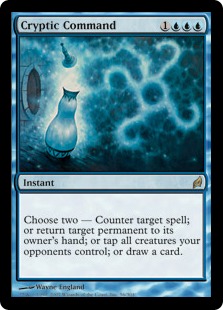
Even with Pestermite and Deceiver Exarch relegated to the sidelines, Modern is famous among non-rotating constructed formats for its start of combat antics. Today, those duties are largely fulfilled by Cryptic Command. The best time to tap someone's team is at start of combat, since they've already committed to the combat step at that point and can't elect to cast a hasty beater.

Avoiding triggers is another reason defending players act here. Some creatures activate their abilities when they attack, like Signal Pest and Smuggler's Copter. These should be snapped off before they get the chance to.

Lastly, some effects require creatures to attack. Ghor-Clan Rampager is the big one here. It feels pretty bad to Lightning Bolt a Wild Nacatl only to have it become 7/7 via Ghor-Clan Rampager. Or to Fatal Push a lone Insectile Aberration only for its grinning pilot to slam a "kicked" Chart a Course. Start of combat is the phase to play around these cards.

Attacker: Baiting Interaction; Activating Relevant Triggers/Abilities

Most of the instant-speed plays the turn player could make in this step are better suited to the main phase, which gives them more options with their fresh round of priority should opponents react (specifically, sorcery-speed options). So players looking to enter combat are probably game to jump straight into attacks. That makes the start of combat step something of a minefield navigation, most eloquently encapsulated by the tentative, Twin-era proposal of "combat?"

While "combat?" once meant "attacks?", it now means, "may we leave the main phase and enter combat?" Then, active players are likely to ask opponents if they're prepared to go all the way to attacks. This particular question is the one that elicits moves like Cryptic tap-draws and pre-attack removal spells.

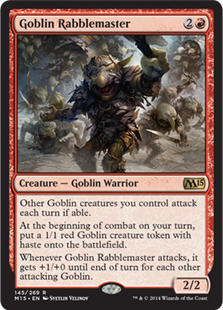
Of course, the primary stated purpose of this rules change was to give active players an easy way to activate triggers and abilities during start of combat with their priority. Think crewing last turn's Smuggler's Copter with a fresh Goblin Rabblemaster token. As of yet, though, these cases don't surface much in Modern, and attackers generally use this phase to bait interaction. Combat-relevant activations such as turning on Mutavault are likelier to occur either in the precombat main phase or after opponents make a move in start of combat.

Acting in Attacks

In the declare attackers step, the active player declares their attacks, and then both players receive priority. Since the active player makes the first move in this step by declaring attackers, priority is usually passed to the defender right away, with active players opting to act only after seeing how opponents choose to navigate the rest of combat.

Defender: Scouting for Information

Defensive actions in attacks are quite common. This step is the first in which defenders can make plays after opponents have locked themselves into certain attacks. The biggest reason they'd remove creatures or take other actions here, and not later, is to harvest information, usually about how to block. If the attacking player has blue mana up and cards in hand, defenders might be worried about permission, and want to test the waters with removal spells before deciding on blocks. Otherwise, they may block the wrong creature, or with the wrong creature.

Attacker: Locking In Attacks

The active player also receives an opportunity to act in this step before opponents do, but will rarely want to. It's not exactly common in Modern for players to slam Keep Watch after swinging in hopes of drawing removal for blockers. Still, that's the kind of niche scenario such actions demand.

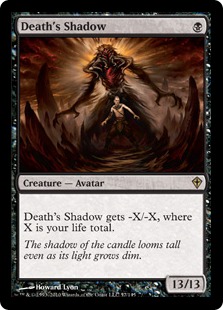
A frequent use for active actions in attacks would be to lock in attacks against opponents with tap effects before revealing additional information. For example, against this silly Grixis Shadow build, Jund pilots might pass priority up to attacks to bait a Cryptic Command tap-draw in start of combat. If that doesn't occur, perhaps because Grixis is already holding down the ground with a huge Death's Shadow, the active player can declare two Tarmogoyfs as attackers and then Abrupt Decay the Shadow before blocks, all but guaranteeing a Goyf hit.

Acting in Blocks

With blocks determined, players receive what could be the last chance to make a move before damage is dealt—should the attacker pass priority in this step, and their opponent choose to do the same, damage will occur.

Attacker: Reacting to Blocks

Active players are the likeliest to act in this step. They can leverage complete knowledge of all battling creatures for the first time, and are first to receive priority with that information available. Removing single potential blockers is usually a task reserved for earlier in the turn, such as during attacks or in the main phase; otherwise, those creatures get to block!

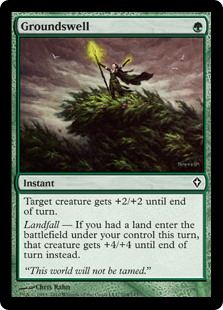
But removal spells still fly during blocks, especially to punish greedy double-blocks. Killing one creature with Fatal Push usually enables a heavy-hitter to chew through the other. Gunning down creatures set up in front of trampling attackers is equally viable, as trample damage goes through regardless of whether an attacker is marked as blocked. Lastly, attackers may want to sling pump spells with blocks established, loading up the lone unblocked creature with Groundswells or +1/+1 counters from an Arcbound Ravager. Ghor-Clan Rampager and Temur Battle Rage also improve drastically when cast in this step.

Defender: Locking In Blocks

As with active player actions in attacks, defensive players rarely initiate action in this step. After all, attackers receive priority first, so they may well choose to act before defenders even get a chance. But again, the most common reason for defending players to act in blocks is guaranteeing blocks prior to making moves that might persuade opponents to interact with their blockers.

For example, say the defending player plans to block a 5/5 Gurmag Angler with their 3/4 Tarmogoyf, but is holding Mutagenic Growth. The line is to block Angler, and then Grow Goyf; if Goyf is grown first, opponents can kill it before it ever jumps in front of the fish, meaning the defender takes 5 damage for nothing and also loses a card to poor sequencing (such situations are often called "blowouts").

Acting in Damage and End of Combat

In the damage step, two turn-based actions occur before players receive priority: the attacking player assigns damage to blockers and players, and then damage is dealt. Afterwards, players receive priority, and do so again in the redundant end of combat step.

Defender: Altering Game State Before Main 2

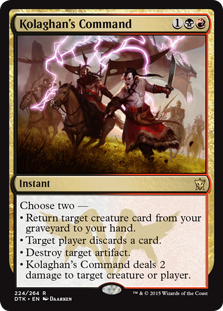
With damage out of the way and new creatures in the graveyard, the turn's next step is the postcombat main phase. Before that, though, players can act. The nonactive player must act at instant speed for the duration of their opponent's turn, and so is incentivized to alter the game state now; once the turn has moved into main 2, the active player has priority to play cards at sorcery speed. Using Kolaghan's Command to discard their final card before they get a chance to cast it is a good example of a strong damage step play.

For a more concrete example, take a game I piloted recently against Counter-Cat (now back on Mutaganic Growth over Disrupting Shoal, for those curious) with Colorless Eldrazi Stompy. Thought-Knot Seer traded with an attacking Hooting Mandrills, and I cracked Relic of Progenitus in response to my creature's leaves-the-battlefield trigger. This way, should my opponent draw another Hooting Mandrills off the Seer, they won't be able to cast it in main 2; should they draw Snapcaster Mage, there won't be any targets in the graveyard. I definitely wanted the draw from Relic that turn anyway, so it made sense to crack it at the moment where it was most likely to disrupt my opponent.

Attacker: Manipulating Triggers

The active player probably wants to get out of the combat step and act in main 2, where their opponent has fewer options than them. But they may still act in the damage step depending on triggers that occur in the main phase. For instance, after swinging with Geist of Saint Traft, the active player might want to fire off a ferocious spell like Feed the Clan; by main 2, their 4/4 Angel will have vanished.

Addressing End of Combat

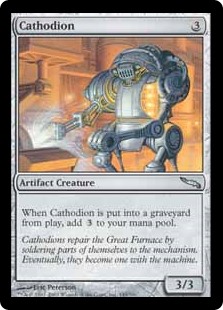
Unlike the supremely useful start of combat step, the end of combat step is mostly superfluous. Since no turn-based actions occur in this step, it exists solely to give players one last round of priority before the postcombat main phase. But actions players might want to take in this step could also be taken during the damage step. The most obvious use, at least on paper, for moving to end for an action is to empty an opponent's mana pool that somehow filled up during damage (say, by trading their Cathodion for a Wild Nacatl). That said, if opponents have something to do with 3 mana, they also have little reason to wait until end of combat to make that play rather than just firing it off in damage.

End of Combat Phase Article

In my experience, anyone from game newcomers to Magic veterans can stand to benefit from a little more phase-related awareness, and combat is the richest phase of them all. In the third and final installment of Just a Phase, we'll cover main 1 and 2 and the end step. Until then, if you can think of a practical use for the end of combat step in Modern, drop me a line in the comments.

Jordan Boisvert

Jordan is Assistant Director of Content at Quiet Speculation and a longtime contributor to Modern Nexus. Best known for his innovations in Temur Delver and Colorless Eldrazi, Jordan favors highly reversible aggro-control decks and is always striving to embrace his biases when playing or brewing.

View More By Jordan Boisvert

Posted in Modern, TechTagged , , , , , , , 12 Comments on Just a Phase, Pt. 2: Combat

Have you joined the Quiet Speculation Discord?

If you haven't, you're leaving value on the table! Join our community of experts, enthusiasts, entertainers, and educators and enjoy exclusive podcasts, questions asked and answered, trades, sales, and everything else Discord has to offer.

Want to create content with Quiet Speculation?

All you need to succeed is a passion for Magic: The Gathering, and the ability to write coherently. Share your knowledge of MTG and how you leverage it to win games, get value from your cards – or even turn a profit.

Insider: Standard Standouts After Dominaria

Are you a Quiet Speculation member?

If not, now is a perfect time to join up! Our powerful tools, breaking-news analysis, and exclusive Discord channel will make sure you stay up to date and ahead of the curve.

Dominaria has been legal on Magic Online for a week now, and it’s having a big impact on Standard. Today I’m going to go over what new cards are excelling and how they’re impacting demand for other cards.

There was an error retrieving a chart for History of Benalia

One of the very best cards in Dominaria is History of Benalia, which has revitalized white aggressive decks but is also an important piece of a new White-Blue Historic Flash deck, which uses it alongside Raff Capashen and other instant-speed cards. It resembles the White-Blue Flash deck from the days of Smuggler's Copter, and it’s having a big impact on the metagame and the market.

History of Benalia has risen to nearly $20, but I could see it hitting $25 to $30 like Gideon, Ally of Zendikar did when it was white’s staple four-of mythic that saw play in multiple archetypes.

There was an error retrieving a chart for Lyra Dawnbringer

The breakout mythic of Dominaria so far is Lyra Dawnbringer, which is another card being used in nearly every archetype that can cast it. It’s a key part of the White-Blue Flash deck and is used in more traditional White-Blue Control decks as well. It’s also seeing play in aggressive white decks, including Mardu Vehicles and White-Red and White-Black Midrange decks, and it's part of a White-Green aggro deck, some which use it alongside Mox Amber. It pre-sold for around $15, and is now at $17 and heading towards $20 or higher, but even with so much playability, I don’t think it can maintain a higher price for long.

There was an error retrieving a chart for Teferi, Hero of Dominaria

Another part of the White-Blue Flash deck is Teferi, Hero of Dominaria, and it’s used in White-Blue and three-color control decks. It also pre-sold for around $15 and is heading towards $20, but it’s rarely a four-of and limited in its use, so I see it falling.

There was an error retrieving a chart for Settle the Wreckage

A card from the Flash deck that I could see making big gains is Settle the Wreckage, which online has moved from under 3 tix a couple weeks ago to over 9 tix. White-Blue Flash looks to be a real deck, and White-Blue Control is also having a comeback, so I don’t see why the paper price of Settle the Wreckage couldn’t spike towards the price of a staple like Vraska's Contempt. Hitting $14 is a long way to go from $6, but $10 seems realistic if online popularity transfers over to paper.

There was an error retrieving a chart for Aethersphere Harvester

Another huge online gainer this week is Aethersphere Harvester, which is up to nearly 10 tix from under 5 last week. It has always been a Standard staple, but it’s seeing more play than ever as the format becomes more aggressive, and it’s used in essentially every creature deck. It’s also a beneficiary of Karn, Scion of Urza and is being used alongside it in high numbers in Black-Red Vehicles, which was one of the top decks before Dominaria and looks cemented in its position now. Aethersphere Harvester’s paper price has been falling and is down to $2 from a high of $3, which makes sense since it rotates later this year, but I could see the price seeing a brief turnaround or at least stabilizing.

There was an error retrieving a chart for Irrigated Farmland

One of the best ways to take advantage of the rise of White-Blue is Irrigated Farmland, a true staple of the deck and of any White-Blue deck that will be in Standard for over a year to come. It has seen a massive rise this week, up to over 5 tix from under 2, but the paper price has sagged down to $3 from a high of $5. Unlike Aethersphere Harvester, it doesn’t rotate out this year, so there’s really no reason for the price to be falling, so I see it as a great bargain with a high potential payoff compared to the downside.

There was an error retrieving a chart for Gideon of the Trials

Another card riding the wave of white cards in Dominaria is Gideon of the Trials, up from just over 5 tix last week to over 9 now. It has uses in all sorts of Standard decks, from aggro to control, and it sees Modern play as well, so it’s the sort of card that should maintain value even as it rotates out of the format next year. Its price bottomed out above $9 in February and has climbed to $11, and I see it heading back to $15 and potentially towards its previous high of $20.

There was an error retrieving a chart for Scavenger Grounds

Scavenger Grounds is one of Standard’s true staples and is accessible to all colors of decks. Its price has grown steadily since it was printed and has recently accelerated to its all-time high around $4.50. The online price has rocketed even higher to over 9 tix, and I see the paper price on the same trajectory towards $10 as long as God-Pharaoh's Gift remains in the top-tier of the metagame – and I expect it to for the duration of its run in Standard.

There was an error retrieving a chart for Tendershoot Dryad

A card to watch is Tendershoot Dryad, which is being used in a Black-Green Saproling deck that has earned multiple 5-0 trophies in leagues. The deck looks like the real deal, which is huge for the price of a card that previously hasn’t been competitive, and could bring its price from a dollar to a few of them

There was an error retrieving a chart for Rowdy Crew

Rowdy Crew was used as a four-of in a Mono-Red God-Pharaoh's Gift deck that 5-0ed a league, the beneficiary of the printing of Goblin Chainwhirler, Siege-Gang Commander and Skirk Prospector. Rowdy Crew is perfect fit in the deck, which could take market share from the popular Blue-Red version, and its especially interesting financially because it’s a mythic rare that hasn’t been used competitively, so the potential is tremendous if the deck becomes popularized. Combat Celebrant went from being practically a bulk Mythic to double-digits overnight, and Rowdy Crew could have a similar trajectory. Online it’s up to over a ticket from under half, and the paper price is under a dollar, so there’s a ton of upside.

Insider: The Mystery of Vraska and Carnage Tyrant

Are you a Quiet Speculation member?

If not, now is a perfect time to join up! Our powerful tools, breaking-news analysis, and exclusive Discord channel will make sure you stay up to date and ahead of the curve.

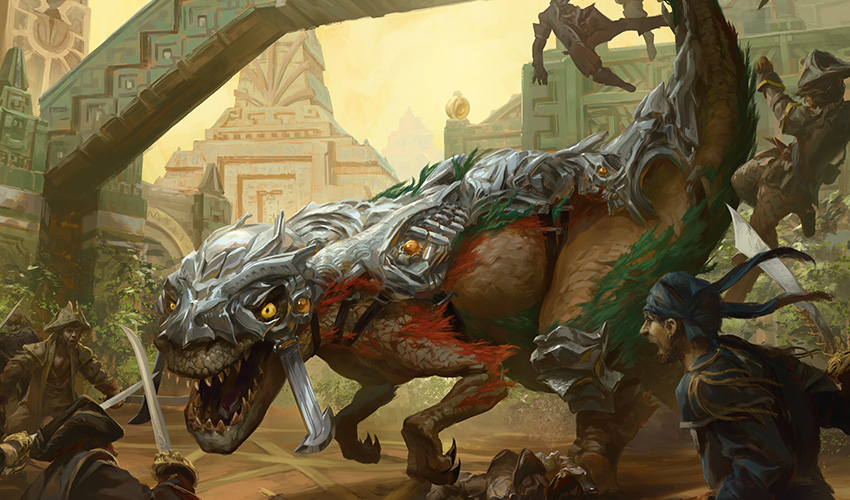
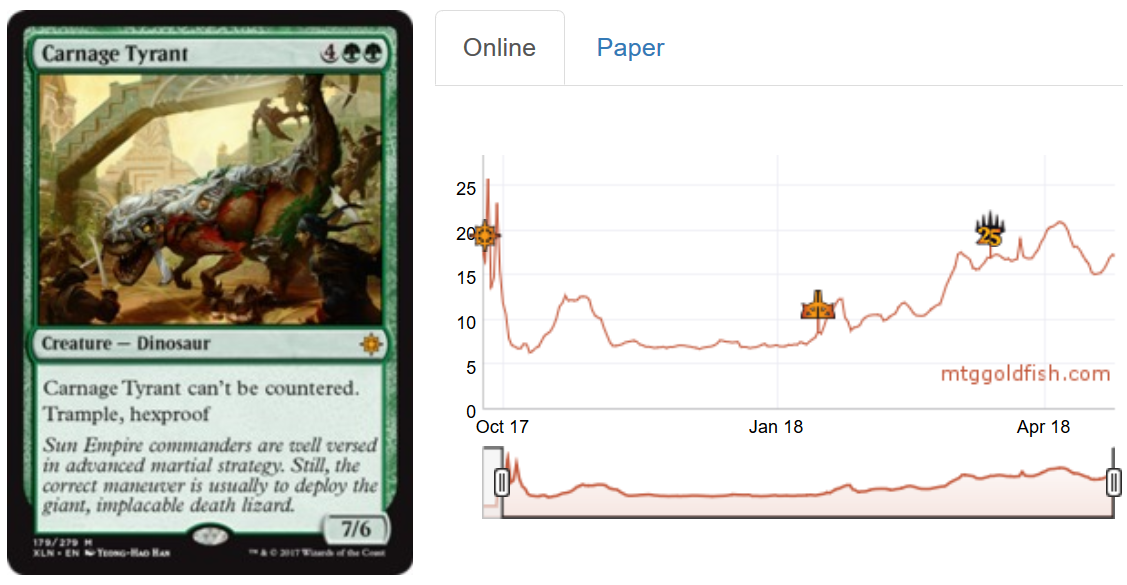
As many readers of my weekly column know, I have expressed consternation at the ability of six-mana mythics Carnage Tyrant and Vraska, Relic Seeker to sustain exceedingly high prices. In a recent weekly video on the state of MTGO finance, Chas Andres made mention of the same phenomenon, claiming that Carnage Tyrant simply hasn't been seeing the amount of play to be justifying its price tag.  What my readers don't know is that I've read every Sir Arthur Conan Doyle story and novel covering the adventures of Sherlock Holmes, and this week we are going to level up our speculation skills as we investigate the mystery of this Ixalan duo in light of historical trends.

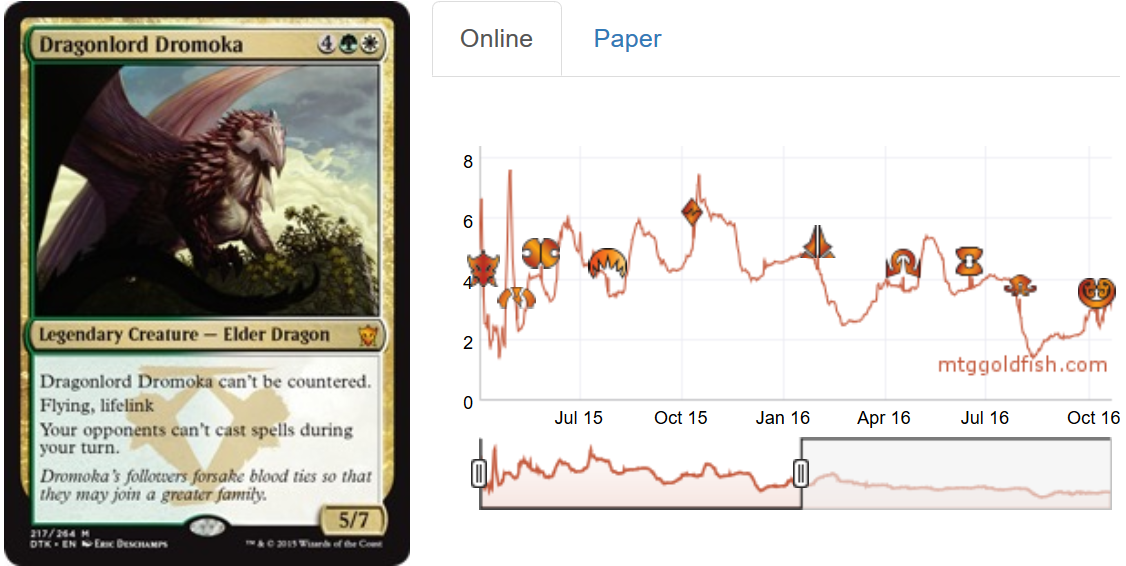
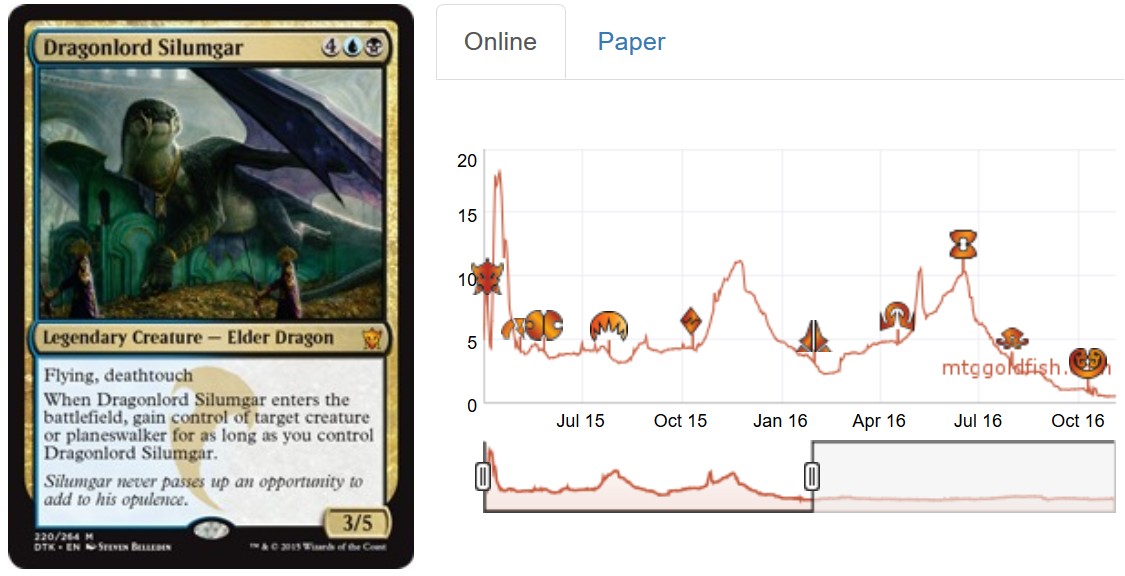
A higher baseline and median price for six-mana mythics seems to have continued with The Immortal Sun, and I wonder whether we are entering a new era for six-mana mythics. Carnage Tyrant has not seen an exponentially higher amount of play than did Dragonlord Dromoka or Dragonlord Silumgar, yet look at its price history in comparison to comparable six-mana mythics from yesteryear.

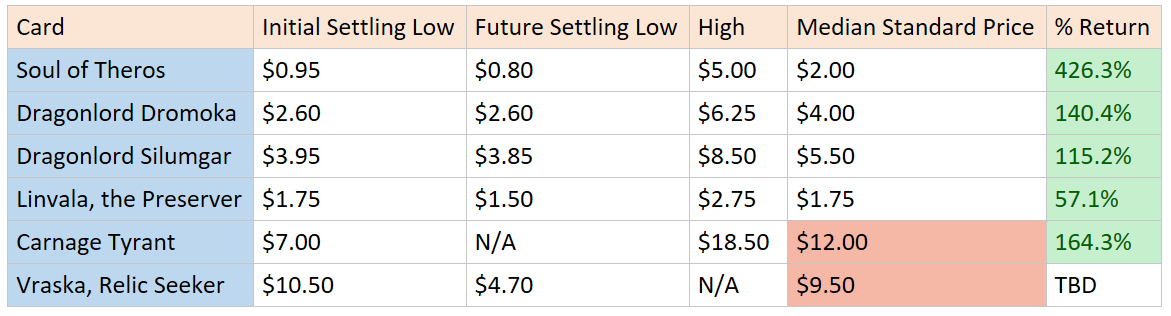
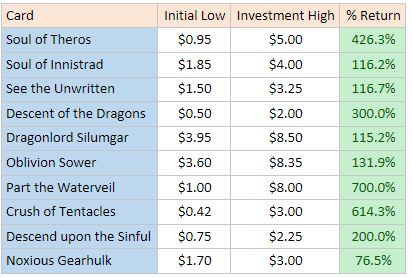
The table above contains the cards most similar in function to Carnage Tyrant and Vraska, Relic Seeker over the past five years, and what immediately strikes us is that they are commanding prices double or triple what we would have expected them to just a few years ago. Historically these sorts of cards have commanded an average price between 2.00 and 5.00 tix during their time in Standard, but our Ixalan duo thus far has more than doubled that, clocking in north of 10.00 tix.

What say ye, Dr. Watson?

(I) Carnage Tyrant is behaving more like the only two elite six-mana mythics of the past five years.

It's exceedingly rare for six-mana cards to define Standard, and these are the only two that have done so since I recommenced playing Magic back in 2013.

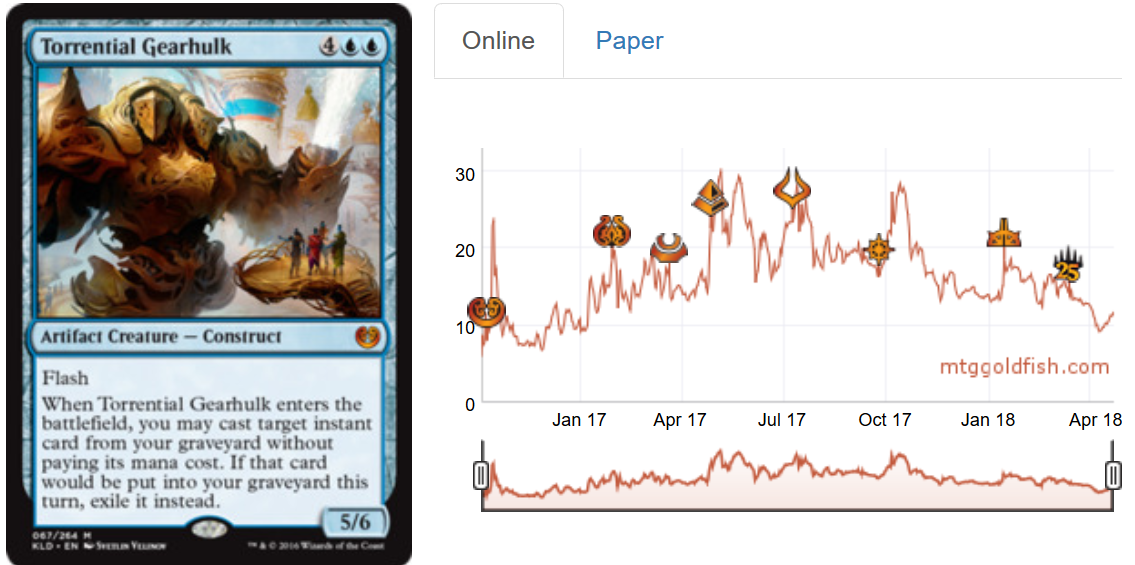
Carnage Tyrant doesn't shape Standard like either Torrential Gearhulk nor Elspeth, Sun's Champion, yet its price trajectory and median price resemble those of those two powerhouses. Going forward, I am going to be elevating my expected price floors for Standard-playable cards like The Immortal Sun and Carnage Tyrant. This will be especially true if Brawl picks up steam.

(II) Mythics perceived as being unplayable in Standard are acting in line with historical trends.

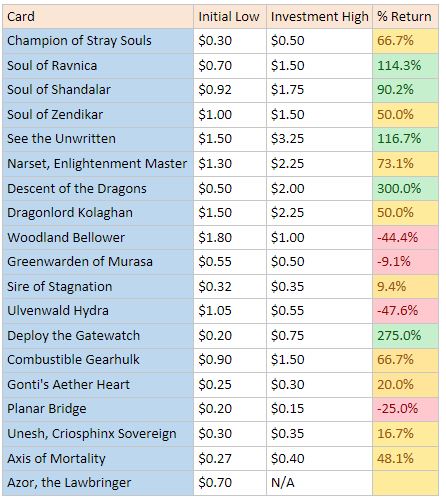
In the above data table, we see that there has been no discernable change in how junk mythics behave. Much like the junk mythics in the converted four- and five-mana category, these junk mythics are not worth your time investing in. While some prove to be okay investments, the average rate of growth on these cards is a meager 65-percent, meaning you'd likely see a 30- or 40-percent rate of return on your investment. There are better investment opportunities and strategies to pursue.

(III) Six-Mana Mythics have fewer price spikes. Compare the price graphs below carefully.

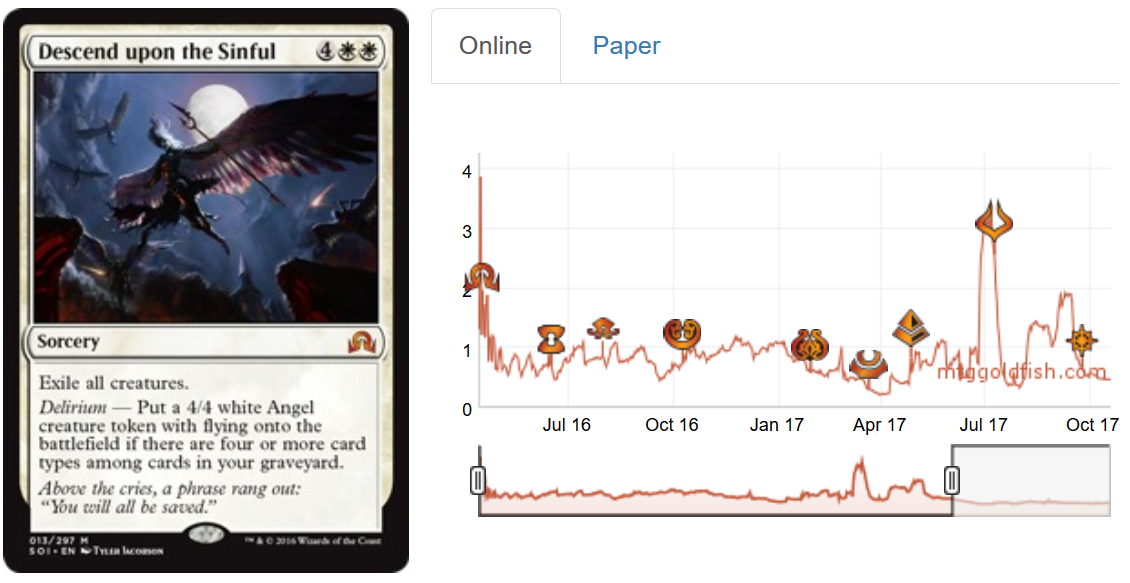
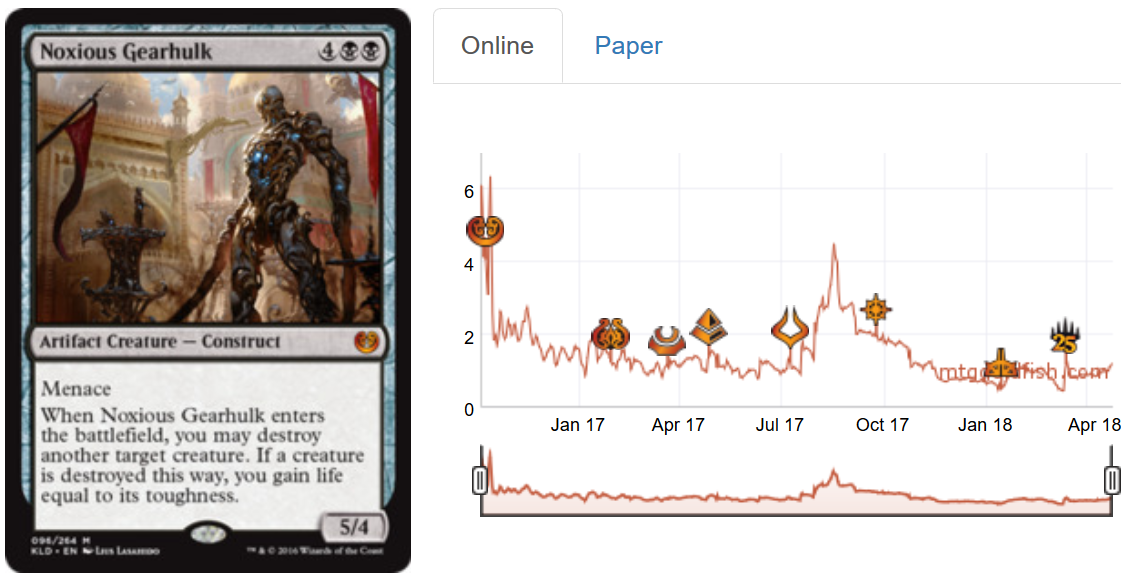
Torrential Gearhulk and Elspeth, Sun's Champion's price graphs resemble the price graphs of mythics that cost between one and five mana and are the outliers that prove the rule. As I was doing the research for this article, I quickly began noticing how few in number the price spikes on these cards were. Descend upon the Sinful and Noxious Gearhulk were typical – both saw one significant price spike. While the percentage gains in value on many cards in this category were roughly equivalent to that of mythics at lower converted mana costs, what was true is that the windows were narrower, and the opportunities to unload them at a profit were fewer. This makes sense – cards at this mana cost tend to have more niche roles, and thus their place in the metagame is undeniably more precarious. This leads me to three recommendations:

1. Invest in no more than 20 to 25 copies of cards in this class "worse" than Carnage Tyrant.

2. Do not hesitate to invest in Standard-playable cards like Descend upon the Sinful. They can be a good source of profit for you and a good way to diversify your portfolio.

3. Once a card in this class has experienced a major price spike, avoid the temptation to invest in it after it has crashed. History says that it likely won't experience another rebound.

(IV) What have been the best mythics of this class?

These are the sorts of cards that I think are worthy of your consideration in the future. None were cards that were guaranteed to make waves in Standard, meaning that you could have gotten in on the ground floor.

There are two types of cards here. On the one hand, we have the powerful unique effects, ones prone to being Saffron Olive favorites – these are your Descent of the Dragons, Part the Waterveil, See the Unwritten, and Oblivion Sower. On the other hand, we have enhanced versions of other (value) cards that have unique wrinkles pushing them up to six mana – your Soul of Theros, Noxious Gearhulk, Descend upon the Sinful, and Dragonlord Silumgar.

I would pay close attention to this list because the power level of these cards is generally the power level that you can expect to make money off of with this class of card. The Immortal Sun and Vraska, Relic Seeker fall in here, whereas I think that Demonlord Belzenlok falls just outside it.

(V) Signing Off: Resolving the Mystery?

My personal hunch is that the elevated price of six-mana mythics we've seen in Ixalan block has to do with a change in how often Standard limited environments are drafted. I think that Ixalan block was drafted less than usual, leading to a higher price premium on cards in demand, even if that demand wasn't all that high. Importantly, though, I think this has less to do with Ixalan being a bad draft format and more with the increasing frequency of other drafting opportunities Magic Online is offering its players. We should thus monitor closely whether this trend continues. I expect it to.

Another possibility to consider is that, since redemption now closes much earlier, it is possible that stores and vendors are cramming all of their redeeming into the shortened time window, leading to a higher percentage of mythic rares leaving the marketplace in the first half of their Standard life cycles.

Anywho, I hope you enjoyed today's article, and I hope you are enjoying Dominaria. Also, check out my article from last week. Although several of the cards I suggested speculating on have since spiked, cards like Heart of Kiran and Vraska, Relic Seeker, others like Ifnir Deadlands are lagging behind and would still make for quality pickups. A copy of my portfolio can be found here.

Leave your comments and questions down below and I will be sure to get back to you. Thanks for reading 🙂

Insider: QS Cast #92: Every card will be $5

Are you a Quiet Speculation member?

If not, now is a perfect time to join up! Our powerful tools, breaking-news analysis, and exclusive Discord channel will make sure you stay up to date and ahead of the curve.

Play

[editor’s note]: This Podcast was recorded on 4/16/2018

The QS Cast returns! Chaz, and Tarkan come together as the new panel – and in this episode they discuss the following:

  • Normal structure Cast!
  • Interests
  • Brawl?

Cards We Discussed

Avatar photo

Chaz V

Started playing during Invasion block at the age of 13. Always a competitive person by nature, he continues playing to this day. Got into the financial aspect of the game as a method to pay for the hobby and now writes, Podcasts, and covers all aspects of the game, always trying to contribute to the community and create great content for readers and listeners.

View More By Chaz V

Posted in Free Insider, QS CastTagged , , , , Leave a Comment on Insider: QS Cast #92: Every card will be $5

Have you joined the Quiet Speculation Discord?

If you haven't, you're leaving value on the table! Join our community of experts, enthusiasts, entertainers, and educators and enjoy exclusive podcasts, questions asked and answered, trades, sales, and everything else Discord has to offer.

Want to create content with Quiet Speculation?

All you need to succeed is a passion for Magic: The Gathering, and the ability to write coherently. Share your knowledge of MTG and how you leverage it to win games, get value from your cards – or even turn a profit.

Insider: Speculating on Brawl

Are you a Quiet Speculation member?

If not, now is a perfect time to join up! Our powerful tools, breaking-news analysis, and exclusive Discord channel will make sure you stay up to date and ahead of the curve.

Hello, all! Last weekend at the Dominaria prerelease, I was able to experience not only the new cards but also the MTG Brawl format for the first time. Brawl is a relatively new addition to the MTG format arsenal. It is essentially a 60-card version of Commander that restricts deck building to only Standard-legal cards.

Deckbuilders choose a Standard Legal legendary creature or planeswalker to determine the deck’s color attributes. Each player starts at 30 life. It's pretty straightforward stuff.

There was an error retrieving a chart for Samut, Voice of Dissent

All things considered, I greatly enjoyed playing games of this new format. It was like Standard, except players were required to include more cards from the available card pool. The addition of a Commander is also a neat spin on playing Standard, as the format forces the player to vary the cards in their deck, while still maintaining a sense of redundancy by virtue of always having the option to play their Commander.

Why Speculating on this Format Could Pay Off

Most importantly, the format doesn’t suck. I enjoyed myself enough while slinging a few games with a friend’s decks that I went home and brewed up some lists.

In general, there are varying scales of "stayability" for casual formats. Obviously, Frontier is gone with the wind. I have a high expectation that Pauper will continue to thrive. So what gives Brawl an edge?

There was an error retrieving a chart for Gideon of the Trials

Most importantly, the format has Wizards of the Coast’s stamp of approval. In fact, the format was announced by WOTC toward the end of Dominaria spoiler season. Having the backing of the company that prints the card leads me to believe that Brawl has a bright future ahead of it.

What's the Best Way to Invest in Brawl?

In my estimation, the way to make a few bucks speculating on Brawl is simply to know which cards that didn’t have a buyer now have potential suitors. One thing I noticed when I was brewing Brawl decks was that there were certain staples that seemed to go into every deck that met the color identity requirement.

There was an error retrieving a chart for The Scarab God

When we build Standard decks, there are certain marquee staples that take up big chunks of the metagame. For instance, a card like Glint-Sleeve Siphoner makes it very difficult for other two-drops to earn a spot in most black creature decks. Every deck starts with four Glint-Sleeve before it even considers a fifth two-drop creature. In Brawl, on the other hand, there is a lot more flexibility at each slot in the curve since players can’t just choose the best two or three cards and play four copies of each.

For the most part, if a card appears in a Standard deck, it will be a Brawl staple. It is possible that Brawl creates more demand for Standard staples and the prices could go up, but I’m convinced the real value will come from identifying Brawl staples that are not currently Standard staples. I noticed when I was brewing decks that there were other Brawl staples that extended beyond Standard. These were cards that made nearly every Brawl deck that could play them but were often only fringe players in actual Standard decks.

A good example is Gonti, Lord of Luxury:

There was an error retrieving a chart for Gonti, Lord of Luxury

Gonti doesn’t always make the cut in a Standard deck but will slot nicely into nearly every Brawl deck that plays black. The card is just good enough that it doesn’t matter whether your deck is aggressive or controlling, Gonti is just a great card.

It is also worth noting that there is an emphasis on card advantage in Brawl, since it is highly encouraged to be a multiplayer format. People will obviously build Brawl decks focused on multiplayer or one-on-one specifically, but we should always be thinking about the multiplayer factor.

Finally, in a format where you get 30 life, control decks are obviously extremely good, so I decided to start by building a bunch of "not blue decks." I built BG (Hapatra), BW Kambal, and GW (Shanna). I noticed that I was playing a lot of the same cards between decks. With all of that being said, here are a few more cards that fit my qualifications of "Brawl staple":

There was an error retrieving a chart for Hour of Promise

I'm pretty sure every deck playing green will make use of this powerful sorcery. Even though it is kind of a niche thing in Standard, it is a full-on Brawl staple.

There was an error retrieving a chart for Twilight Prophet

It doesn't really matter what your black deck is doing. The Prophet will likely make the cut.

There was an error retrieving a chart for Vizier of the Menagerie

This is a great beater with some built-in card advantage. It's likely good enough in any kind of creature-heavy deck to be worth inclusion.

There was an error retrieving a chart for Rhonas the Indomitable

The card is quite powerful and hard to deal with. The same idea applies here: basically, any green creature deck would play a monster like this.

There was an error retrieving a chart for Lifecrafter's Bestiary

Obviously, some amount of the deck-building process is to include cards that are good with one's commander, but a lot of building decks comes down to just playing good cards. I'm confident that betting on the "good cards" for Brawl will have significant upside as the format continues to impress players.

Daily Stock Watch – Fecundity

Are you a Quiet Speculation member?

If not, now is a perfect time to join up! Our powerful tools, breaking-news analysis, and exclusive Discord channel will make sure you stay up to date and ahead of the curve.

Hello, everyone and welcome to a new edition of the Daily Stock Watch! There has been lots of market movement for Legacy cards lately and much to my chagrin and disbelief, a friend who is into the format has jokingly told me that it's because people who are having a midlife crisis would rather invest in Magic cards rather than Corvettes. Ofcourse, this should be taken with a grain of salt and some seriousness if you're into speculating -- and it just so happened that we love speculating! Our preview card for today is one of those cards that have stayed under the radar for the past few years, and is actually peeking just now due to buyouts and Commander purposes.

There was an error retrieving a chart for Fecundity

Merely a bulk card for the past decade or so, Fecundity is now at its all-time high of $5.64 even though it barely sees competitive play. The last time that I remember seeing this in a Modern deck was actually in a table top list that kinda looked like this:

Fecundity Combo

Creatures

1 Goblin Chieftain
4 Lotus Cobra
4 Mogg War Marshal
2 Siege-Gang Commander
4 Thermopod

Instants and Sorceries

1 Banefire
4 Empty the Warrens
4 Fecundity
2 Grapeshot
4 Green Sun's Zenith
4 Rite of Flame
4 Seething Song

Lands

2 Arid Mesa
4 Dryad Arbor
1 Forest
3 Mountain
4 Rootbound Crag
4 Stomping Ground
4 Verdant Catacombs

The list above is like a frustrated UR Storm combo that aims to create a chain of spells that produces creatures and tokens that would be sacrificed to Fecundity for more gasoline, and later on resulting to multiple resolution of Empty the Warrens which could easily be sacrificed to Siege-Gang Commander if you have enough mana to do so. There's no denying that it is a good idea to have a low cost draw-enabler in this card, and the times have changed enough for players to realize that cards which help you gain more cards are pretty good inclusions in your deck. Although this could backfire eventually since it allows both players to refill their hands with every creature that dies, building a concept that abuses its use will always work to your advantage. After all, don't you think that everyone loves drawing cards?

Green Enchantments that let you draw

I'm not saying that these three other cards would shoot up like Fecundity did, but it's a good idea to keep some of them if you are a believer. I like cards that are cheap and has the potential to shoot up in value over time, so we might be headed somewhere good here with these low budget specs. As for our featured card, I think that it's time to start moving it if you've got buyers. It's seeing these gains because of supply exhaustion, and not because of demand.

At the moment, online stores such as StarCityGames, Card Kingdom, and ChannelFireball are all out of stock of Fecundity, and should be restocking soon at the same value as that of how much they are up for grabs via TCGPlayer. You could still find a variety of different expansions of the card via TCGPlayer for anywhere between $2-$5, but I'm not really a fan of the card so just try selling off for now. Foils are not actually good pickups but if you could find real cheap trades or have the chance to pick them up from bulk bins, then fire away.

** EXTRA NOTES **

I've been with Quiet Speculation for more than half a year now, and I'd like to thank everyone who reads this segment and gives me some extra heads up if I miss any detail, criticism if they think I'm looking highly at a card, and just about any other thing that you share in the comments section. I'm not leaving the company, but I'm actually celebrating my birthday today (which explains this cheesy part of the segment). I look forward to more previews and speculations with everyone in the future!

And that’s it for today's edition of the Daily Stock Watch! See you again next time, as we continue to speculate on cards that might be on the rise, or try to get rid of the ones that are at risk of losing value. As always, feel free to share your opinion in the comments section below. And if you want to keep up with all the market movement, be sure to check in with the QS Discord Channel for real time market information, and stay ahead of the hottest specs!

One Step Ahead: Avoiding Being Metagamed

Are you a Quiet Speculation member?

If not, now is a perfect time to join up! Our powerful tools, breaking-news analysis, and exclusive Discord channel will make sure you stay up to date and ahead of the curve.

As Magic tournaments are held and results gathered, certain decks establish themselves as the top contenders, and attract attention from anyone seeking an edge. The format then shifts to combat these best decks as players "metagame" against them. This phenomenon occurs in competitive gaming scenes ranging from small-scale FNMs to Grand Prix and Pro Tours. Correctly anticipating which decks will be the hunted, and preparing accordingly, is a vital tool in any competitive player's arsenal.

This article covers the basics on how to identify when the metagame is shifting against a given deck, and the countermeasures pilots of that deck can take to evade enemy crosshairs.

Identifying Metagame Shifts

The most important piece of information we need for this analysis are the most recent results from major tournaments. Because of Wizards' current policy on releasing Magic Online league data, league 5-0s are longer representative of what decks are doing well. Instead, we must rely on paper tournaments such as SCG Opens, SCG Classics, and Grand Prix, along with non-curated Magic Online events such as the format challenges. While these tournaments alone are too infrequent to detect gradual metagame shifts, they provide a valuable snapshot of the decks doing well at a given point in time.

Consider this summary of the archetypes that placed highly more than once between the Milwaukee SCG Open, the Milwaukee SCG Classic, Grand Prix Hartford, and the latest Modern challenge, with general descriptions in line with Jordan's comprehensive treatise on the archetype distinction.

DeckGeneral DescriptionTop Results
5c HumansFish tempo11
AffinitySynergy aggro-combo (artifacts)6
BurnCritical mass aggro-combo5
Eldrazi TronAggro-combo-control (big mana)5
Hollow OneSynergy aggro-combo (graveyard)5
BoglesPump aggro-combo (enchantments)4
KCI ComboPermanent-based combo (artifacts, graveyard)4
JundRock midrange (graveyard)4
Mardu PyromancerRock midrange (graveyard)4
Living EndSpell-based combo (graveyard)4
ElvesSynergy aggro-combo (tribal)3
Gifts StormSpell-based combo (graveyard)3
Amulet TitanLand-based combo2
Blue MoonWeissman control (graveyard)2
Gx TronLand-based combo (artifacts)2
Grixis ShadowRock midrange (graveyard)2
Jeskai ControlWeissman control (graveyard)2
MerfolkFish tempo2
TitanshiftLand-based combo2
Ux TurnsSpell-based combo-control2

This list paints an interesting picture. Humans is the clear top dog, followed by a variety of different archetypes, many of which rely on artifact or graveyard synergies. The clearest angle of attacking such a metagame are to operate on an axis Humans finds difficult to deal with, which typically takes the form of an attrition-based deck heavy on spot removal and targeted discard, or a fast strategy that operates on an axis Humans finds difficult to disrupt due to its lightness on mainboard removal.

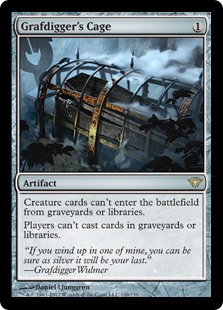
If these options are not feasible for your deck, gearing up to face the rest of the field by packing hosers for artifacts or graveyards is also a strong choices. Conversely, if you favor the Humans, you should prize cards such as Kataki, War's Wage, Reclamation Sage, and Grafdigger's Cage, as they will help you keep the synergies favored by most of the field under control.

Keeping it Local

In the case of local metagames, gathering information often requires a bit more legwork than taking a peek at the latest major tournament results. Local metagames operate in relative isolation; while the metagame at large can influence some players' deck choice, the dynamics of relative positioning won't necessarily follow larger scenes to the letter. Some tournaments from local stores post the decklists of the top performers, which makes gathering information relatively straightforward. However, it's more likely that you'll have to browse the room and take notes on what you see in addition to what you face. Repeating this process over a few weeks should give you a good feeling of who the regulars are, and what decks they favor. From there, you can devise angles of attack against them, and anticipate how they'll adjust to you.

Tweaking the Deck

Once you have gathered the appropriate information on what you expect to face, you should take stock of your deck and what adjustments, if any, are available to you from Modern's card pool. Let's say you were on a decklist similar to the Hollow One deck that made Top 8 at Grand Prix Hartford.

Hollow One, by Max McVety (8th Place, Grand Prix Hartford)

Creatures

4 Hollow One
4 Bloodghast
4 Flameblade Adept
4 Flamewake Phoenix
3 Gurmag Angler
4 Street Wraith
1 Tasigur, the Golden Fang

Instants

1 Fatal Push
4 Lightning Bolt

Sorceries

4 Burning Inquiry
1 Collective Brutality
4 Faithless Looting
4 Goblin Lore

Lands

3 Blackcleave Cliffs
3 Blood Crypt
4 Bloodstained Mire
2 Mountain
2 Scalding Tarn
1 Stomping Ground
1 Swamp
2 Wooded Foothills

Sideboard

2 Ancient Grudge
1 Collective Brutality
1 Engineered Explosives
1 Fatal Push
2 Grim Lavamancer
3 Leyline of the Void
2 Terminate
3 Thoughtseize

There are two major ways to attack Hollow One. One is to disrupt the graveyard in order to shut down its recursive threats (and possibly prevent its delve threats from coming down), or disrupt its ability to pressure using undercosted fatties. This can be accomplished by outright denying them their engine spells with permission, using effects such as Meddling Mage to strand them in hand, or dealing with them efficiently via bounce spells or exiling removal.

Another is to pressure Hollow One with evasive attackers. Flamewake Phoenix is the deck's only flyer, and while it does apply consistent pressure, Phoenix makes for a poor blocker thanks to its compulsive attack clause. Overall, I would say decks like Humans and Affinity do the best job at picking at Hollow One's weaknesses, with an honorable mention going to any deck capable of accommodating a playset of Relic of Progenitus in its 75.

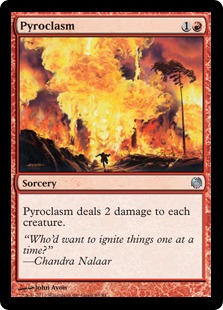
Let's start with the latter scenario, wherein players looking for an edge in the metagame flock to decks inherently decent against Hollow One. To fight back against a field of Reflector Mages and Vault Skirges, Hollow One pilots must identify what makes these adversaries tick, and try to answer in kind. Humans and Affinity rely on synergistic creatures to pressure opponents and close out the game, so loading up on spot removal like Fatal Push, Grim Lavamancer, and Terminate can break up attempts at disruption or buy time in the race. They are particularly weak to sweepers, so cards like Sweltering Suns or even Pyroclasm may also be a consideration.

If the task at hand is fighting through specific hate cards, such as Relic of Progenitus, Rest in Peace, and Grafdigger's Cage, the best approach is to employ counter-hate for artifacts and enchantments, the permanent types most commonly associated with graveyard hate. Hollow One's reliance on red and black make its enchantment removal options rather limited, but given that, the deck could do a lot worse than Engineered Explosives. When it comes to artifacts, on the other hand, the options get significantly broader. Ultimately, Max opted for the powerful value of Ancient Grudge's flashback effect for this purpose, and I think it's a savvy plan that only requires one green-producing shockland to be implemented.

Backup Plan

The strategies discussed above assume that the deck in question can fight back against metagaming, which is not true of every deck in the format. Let's take Matt Nass's Grand Prix-winning KCI combo list.

KCI Combo, by Matt Nass (1st Place, Grand Prix Hartford)

Creatures

4 Scrap Trawler
2 Myr Retriever

Artifacts

3 Chromatic Sphere
4 Chromatic Star
3 Engineered Explosives
4 Ichor Wellspring
4 Krark-Clan Ironworks
4 Mind Stone
4 Mox Opal
2 Pyrite Spellbomb
4 Terrarion

Sorceries

4 Ancient Stirrings

Lands

2 Aether Hub
3 Buried Ruin
4 Darksteel Citadel
2 Forest
4 Grove of the Burnwillows
3 Inventors' Fair

Sideboard

2 Defense Grid
3 Galvanic Blast
2 Ghirapur Aether Grid
2 Guttural Response
4 Nature's Claim
2 Wurmcoil Engine

Though it features some enchantment hate and Ghirapur Aether Grid in its sideboard, this deck is painfully vulnerable to Stony Silence and similar artifact hosers, which demand an answer if the KCI pilot is to have their deck perform as intended. Graveyard hate cards are also very effective against KCI, especially those that eliminate cards from that zone altogether.

It is likely just time to move on to a new deck if hate cards that address KCI so efficiently reach a certain level of prominence. This strategy is far from uncommon for decks so invested in a linear gameplan; Affinity's owes much of its staying power at the top of the format to its ability to squeak out wins in spite of hate, which KCI Combo has yet to replicate.

When choosing a deck to switch to when your primary deck is poorly positioned, one consideration is to find a deck with a diametrically opposed matchup profile. For example, if KCI Combo is flopping at my FNM metagame, I'd be looking to jam a deck like the RG Eldrazi list that won Milwaukee's SCG Open.

RG Eldrazi, by Vincenzo Balistreri (1st Place, SCG Open Milwaukee)

Creatures

4 Bloodbraid Elf
4 Eldrazi Obligator
4 Matter Reshaper
4 Noble Hierarch
4 Reality Smasher
4 Thought-Knot Seer
1 Thragtusk

Artifacts

1 Batterskull
2 Mind Stone

Instants

2 Dismember
4 Lightning Bolt

Sorceries

4 Ancient Stirrings

Lands

3 Cavern of Souls
4 Eldrazi Temple
2 Forest
4 Grove of the Burnwillows
4 Karplusan Forest
1 Kessig Wolf Run
1 Mountain
1 Stomping Ground
2 Wooded Foothills

Sideboard

2 Ancient Grudge
1 All is Dust
1 Chalice of the Void
2 Grafdigger's Cage
2 Kitchen Finks
1 Kozilek's Return
2 Natural State
1 Ratchet Bomb
2 Relic of Progenitus
1 Warping Wail

This deck barely uses artifacts, is highly aggressive and creature-based, and never touches its graveyard. That means that any FNM rivals expecting Darksteel Citadel into Chromatic Sphere are in for a big surprise. Because local metagames can sometimes warp in extreme fashion to take down the current king of the hill (including the use of cards that are poor against the field but specifically good against the deck they're trying to beat), throwing opponents this type of curveball can keep them on their toes, and make a primary deck more viable by virtue of spooking them off over-hedging for it.

End of the Line

Extreme hate cards can also surface at higher levels in warped or fresh metagames. The Grixis Shadow wave that preceded the current metagame prompted players to pack hosers such as Chameleon Colossus and Mirran Crusader in their 75s, which they were handsomely rewarded for—Lightning Bolt also became a common tech in Grixis to counteract Crusaders.

Proper metagaming, and preparation for it, sometimes means the difference between bowing out early and coming home with a prize. If you have any angles of attack you'd like to share for tackling the current winner's metagame, or any stories on how you've used metagaming to gain a leg up on the competition, drop me a line in the comments.

Insider: MTGO Market Report for April 25th, 2018

Are you a Quiet Speculation member?

If not, now is a perfect time to join up! Our powerful tools, breaking-news analysis, and exclusive Discord channel will make sure you stay up to date and ahead of the curve.

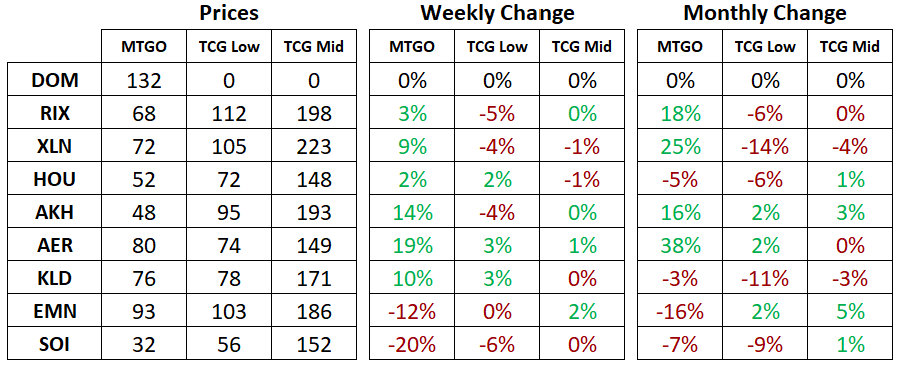
Welcome to the MTGO Market Report as compiled by Matthew Lewis. The report will cover a range of topics, including a summary of set prices and price changes for redeemable sets, a look at the major trends in various Constructed formats and a "Trade of the Week" section that highlights a particular speculative strategy with an example and accompanying explanation.

As always, speculators should take into account their own budgets, risk tolerances and current portfolios before buying or selling any digital objects. Please send questions via private message or post below in the article comments.

Redemption

Below are the total set prices for all redeemable sets on MTGO. All prices are current as of April 24, 2018. The TCGplayer low and TCGplayer mid prices are the sum of each set's individual card prices on TCGplayer, either the low or mid price respectively.

All MTGO set prices this week are taken from GoatBot's website, and all weekly changes are now calculated relative to GoatBot's "full set" prices from the previous week. All monthly changes are also relative to the previous month's prices, taken from GoatBot's website at that time. Occasionally, full set prices are not available, and so estimated set prices are used instead. Although Hour of Devastation (HOU), Amonkhet (AKH), Aether Revolt (AER), and Kaladesh (KLD) are no longer available for redemption, their prices will continue to be tracked while they are in Standard.

Standard

There was a hiccup with Dominaria (DOM) foils this weekend, as a subset of legendary creatures were not being generated in boosters, including of mythic rarity. By Monday, that was corrected, so I anticipate being able to buy sets of foil mythic rares later this week when there is a readier supply available for purchase.

There was an error retrieving a chart for Heart of Kiran

Standard prices are up across the board as brewers and players alike dive into DOM Standard as well as the new Brawl format. Heart of Kiran got up over 9 tix this weekend which helped Aether Revolt (AER) see a whopping 19-percent increase.  As a result, the small set from Kaladesh (KLD) block is priced higher than the large set for the first time ever. I think Heart of Kiran will find a price peak over 10 tix within the next six weeks. The portfolio has a few playsets of this card in it, and I will be holding until the new Standard format develops further.

There was an error retrieving a chart for Steel Leaf Champion

One of the new decks featuring this vehicle is an aggressive Mono Green build which, to no one's surprise, is using Lanowar Elves to help power out cards like Steel Leaf Champion on turn two. Ghalta, Primal Hunger rounds out the top end and Blossoming Defense helps keep the huge monsters on the battlefield. Seeing a deck like this have success out of the gates is normal. Eventually, a balance will be struck in the format as the right tools for control to deal with aggression become evident.

Modern

Modern prices have taken a dip this week with the emphasis on Standard coinciding with the release of DOM. In particular, Eldritch Moon (EMN) and Shadows over Innistrad (SOI) are no longer available for redemption, so some price weakness in the components of the set is expected. Collective Brutality is the poster child for this weakness as it is off 15 tix in the last week.

There was an error retrieving a chart for Collective Brutality

Not to be outdone, other parts of the B/R Hollow One archetype have fallen off with Blackcleave Cliffs back into single digits and Goblin Lore more than fifty percent off of its peak of 8 tix.

Noted Merfolk enthusiast Nikachu has posted a 5-0 list in the Modern leagues that includes the new Merfolk Trickster. He is a big fan of the card as evidenced by the following tweet.

It's certainly a flexible and situationally powerful addition to the Merfolk tribe, but I don't expect a surge in demand for components of the deck as a result. Like a lot of Modern decks, familiarity with the format and how particular matchups play out goes a long way to determining success or failure. As speculators, we are more interested in large swings in the format generated by shifts in the tier-one decks and Merfolk typically only approaches tier-ocombo-heavy heavy formats. The current balance in the Modern format relegates speculative opportunities from Merfolk to the bench for the time being.

Standard Boosters

A draft set of two RIX boosters and one XLN booster has dipped below 5 tix this week, which is excellent value for players and speculators alike. A price of 5 tix means that drafting XLN block using secondary market boosters has a 5 tix discount relative to the tix-only entry fee. That is substantial and will not last. As players get their fill of triple DOM draftm there will be a few that favor a format with pirates and dinosaurs. The low price will help encourage this as players look to stretch their tix.

There was an error retrieving a chart for Carnage Tyrant

DOM boosters stayed above 3.3 tix on release weekend, so demand for these has been strong, even without drafting being available initially. There was no good opportunity to speculate on these. The next big opportunity to be a buyer of DOM boosters will be when the core set is released in the summer and DOM is no longer the newest draft format.

Trade of the Week

For a complete look at my recent trades, please check out the portfolio. Over the weekend I was a heavy buyer of XLN block draft sets as the price sought a bottom. After crashing through 6 tix on Saturday the price has continued lower, going lower than the 5 tix level by Sunday where it remains today.

There was an error retrieving a chart for Vraska, Relic Seeker

Being a buyer while the price is falling is challenging. It's always nice to perfectly time the bottom and in this case, it's clear that I did not do that after I bought a substantial amount of draft sets for around 6 tix. This price has been a profitable entry point in the past on trades like this, but clearly, something else is going on this time with abundant supply available at the 5 tix level.

One explanation is that the bots that normally trade boosters have abandoned the trade as prices have collapsed. If I go to MTGOLibrary and search for RIX boosters, the lowest sell price is 3 tix, more than double the current sell price at GoatBots. Buy prices are much more realistic, but the lack of available supply on the MTGOLibrary website suggests something strange has happened.

If there are not a lot of market participants and GoatBots is the only game in town for buying and selling boosters, then price swings can be large and persistent. Once the market settles down and bots start to buy and sell boosters again, prices will normalize.

There was an error retrieving a chart for The Immortal Sun

Another key point to consider in this trade is that the end of the two-set block era means that the drafting window for any given block will be much shorter. DOM will be drafted for a few months prior to the release of the core set in July, which means XLN block will only have a few months in the draft queues. In the past, it would have been available for draft right up until the fall set release, but it's not clear if that will be the case this time around.

Insider: Dominaria Commander Picks (White & Black)

Are you a Quiet Speculation member?

If not, now is a perfect time to join up! Our powerful tools, breaking-news analysis, and exclusive Discord channel will make sure you stay up to date and ahead of the curve.

Welcome back, readers!

If it seems I've been stuck on Commander picks from Dominaria recently…well, you'd be right. This set is just chock full of goodness when it comes to the Commander format. If you missed my previous two articles covering the gold cards from the set, you can find them here and here.

If you had read those articles and decided to jump in on some of my suggestions, I think I did pretty well on my picks. So far, I still think the big winner will be Boundless Realms, but a few have already jumped.

There was an error retrieving a chart for Elvish Farmer
There was an error retrieving a chart for Saproling Symbiosis

Today's article will focus on the white and black legends from the set.

White

Danitha Capashen, Paragon

There was an error retrieving a chart for Danitha Capashen, Paragon

This actually looks like a very viable general. While she doesn't have built-in protection like, say, Uril, the Miststalker, making your equipment and auras cheaper means she can be a very aggressive voltron commander. Her keyword abilities are all extremely good in an aggro shell.

As for speculation, the biggest problem is that while white has plenty of auras throughout its history, many have been Pacifism-type effects. These may benefit from the cost reduction but don't play into a voltron style of deck. There are some good pump auras, but not that many at rare or mythic.

Specs:

There was an error retrieving a chart for Celestial Mantle
There was an error retrieving a chart for Daybreak Coronet

Should Danitha become a popular commander, we'd likely see gains in cards like Celestial Mantle and Daybreak Coronet, the latter which has already jumped considerably within the last six months.

Evra, Halcyon Witness

There was an error retrieving a chart for Evra, Halcyon Witness

This looks like a very interesting option as a commander. The ability can be done at instant speed, which is fantastic when your opponents have no way to react to her, as she can easily one-shot someone and gain you a boatload of life. Unfortunately, if your opponents can react and kill her, you could very well have drained yourself down to 4 life.

This is an extremely high-risk/high-reward style general. The biggest downside is a complete lack of evasion, though I am considering this one as a general for a lifegain themed deck, simply because it would be fun to one-shot players when they have their shields down.

Specs:

There was an error retrieving a chart for Grand Abolisher

My only real spec suggestion with this card is Grand Abolisher, which will help make sure you don't get blown out.

Kwende, Pride of Femeref

There was an error retrieving a chart for Kwende, Pride of Femeref

First strike is an evergreen mechanic that has existed since the days of Alpha. Thus there are a lot of creatures in Magic's history with this particular keyword. Luckily, it also happened to be extremely prevalent in white so there are lots of creatures to choose from. This seems like a general that would inspire a "first strikers" type deck, which could be fun to play, though I don't know if that's enough to be competitive.

Lyra Dawnbringer

There was an error retrieving a chart for Lyra Dawnbringer

This looks like an awesome Angel-themed commander. The best comparison is to Baneslayer Angel, which was a house when it was in Standard and at one time could be traded straight across for a Jace, the Mind Sculptor. I think she will prove to be quite powerful in Standard, even if her Angel-pumping ability doesn't get utilized much.

As for Commander, the problem is that most Angels in Magic's history cost four-plus mana, which means if you cast her on curve you aren't likely to have a very commanding presence on the battlefield. I think she's far more likely to be utilized in something like a Gisela, Blade of Goldnight or Aurelia, the Warleader deck than to lead her own.

Shalai, Voice of Plenty

There was an error retrieving a chart for Shalai, Voice of Plenty

Here is a commander I can get behind. Not only because she allows you to play green and white (so yeah, I guess I should have covered her in one of the gold articles), but she gives you, your planeswalkers, and all of your other creatures hexproof. That is extremely powerful—especially for a four-drop—and her second ability seems like a fantastic late-game mana sink in a "go wide" strategy.

One of my favorite things about Shalai is that she provides protection from a fair number of your opponents' potential win conditions, all while protecting your own.

Specs:

There was an error retrieving a chart for Platinum Angel

The biggest weakness for Platinum Angel has always been targeted removal. Thanks to Shalai, they'll need mass removal.

There was an error retrieving a chart for Gaddock Teeg

Teeg has been moving upwards recently as he's finding a home in more and more Modern sideboards. Giving him hexproof seems like solid synergy. Sadly his current price means that significant gains are unlikely.

Teshar, Ancestor's Apostle

There was an error retrieving a chart for Teshar, Ancestor's Apostle

Here is another commander I think could be very powerful in the right type of deck. The key thing here is that all artifacts count as historic. So if you build a deck with a lot of artifacts and creatures that can sacrifice for effects, you can generate a lot of advantage. I think the following might be good inclusions in this type of deck.

Specs:

There was an error retrieving a chart for Haazda Shield Mate

Haazda Shield Mate is a rare from Dissension with a powerful ability that can be used repeatedly. You can choose not to pay the upkeep cost and simply cast a historic spell to return it to the battlefield. Not to mention it's likely to get targeted with removal because of its ability, so recurring it seems like a strong play.

There was an error retrieving a chart for Lieutenant Kirtar

Not only is Kirtar a fellow bird, but repeatedly being able to exile attacking creatures seems like a powerful effect that's worth a spot in the deck (and likely an auto-include).

There was an error retrieving a chart for Loyal Retainers

This is a pretty obvious one—being able to recur other legends seems potent, especially when you can do it repeatedly.

There was an error retrieving a chart for Peacekeeper

This is my biggest call for this particular general. Peacekeeper is on the Reserved List and an occasional Legacy playable. Now it has this combo in Commander, where you can sacrifice it, attack, and then cast a historic spell to return it to play—rinse and repeat. Extremely powerful effect and definitely an auto-include in a deck built around this general.

There was an error retrieving a chart for Selfless Spirit

This seems like a fantastic card to pair with the commander, allowing you to protect Teshar over and over.

There was an error retrieving a chart for Sustaining Spirit

Here's another card I am amazed doesn't see more play in Commander. It's a Reserved List rare that has a Worship attached. Similar to Peacekeeper, you can choose not to pay the upkeep cost and keep recurring it if need be (or just recur it in response to opponents trying to kill you).

Black

Demonlord Belzenlok

There was an error retrieving a chart for Demonlord Belzenlok

When I first read this card, I swore it said "four or less" and I thought it was busted in half... Sadly it's "four or greater," and a whole lot less broken. Still, it does serve as a commander that can generate some solid card advantage, and a 6/6 with flying and trample is nothing to sneeze at.

I still think there is some potential with him as a general (likely utilizing a lot of cards that cost more than four). Note his ability is not a "may," so if you don't run enough cheap cards you could easily kill yourself upon resolution. It combos somewhat with Sickening Dreams, but only if you have a lot of life (or a way to prevent you from taking damage).

Josu Vess, Lich Knight

There was an error retrieving a chart for Josu Vess, Lich Knight

Black gets an "army in a can" general that looks fun but honestly doesn't seem all that broken. Commander is a format defined by large "battlecruiser" cards, and while this general is cool in that it makes targeted removal pretty useless, I just don't think it's powerful enough on its own. Currently there isn't a single decklist on EDH REC for this commander, so I feel like the rest of the playerbase agrees with me on this one.

Kazarov, Sengir Pureblood

There was an error retrieving a chart for Kazarov, Sengir Pureblood

The best comparison for this one currently is probably Olivia Voldaren. I almost wrote this one off until I re-read the first ability, which triggers whenever any creature an opponent controls takes any damage. This means that cards like Pestilence can make Kazarov grow huge extremely quickly.

Magic has had this style of card a lot throughout its history, so for speculation targets we'll focus on rare options (ideally ones with only a single printing that are also older).

Specs:

There was an error retrieving a chart for Thrashing Wumpus

Not only is it fun to say "Wumpus," but here we have Pestilence on a body. Granted it is only a 3/3, but it's a single-print Mercadian Masques rare that's currently at bulk status. If Kazarov takes off as a general, this is easily a $3 card.

There was an error retrieving a chart for Last Laugh

Here's another single-print rare (this time from Torment) that doesn't even require mana be sunk into it. Thanks to Kazarov's ability, he'll keep growing, and thus never die to it.

Torgaar, Famine Incarnate

There was an error retrieving a chart for Torgaar, Famine Incarnate

Torgaar looks like a very powerful commander. There are several dimensions to look at here. 1) He provides an extremely powerful enters-the-battlefield ability that can cause one player to lose a lot of life; 2) He provides an uncounterable sacrifice outlet, as it's part of the cost reduction and can't be responded to; and 3) His cost reduction is worded in such a way that instead of paying the "commander tax," you can in fact sacrifice additional creatures.

My speculation target for this card is a bit zany, but I'll explain.

There was an error retrieving a chart for Infernal Genesis

Black doesn't typically get a lot of repeat token generation. Infernal Genesis provides a potential stream of creatures to sacrifice in order to keep recasting Torgaar (likely targeting different players each time), which means you could potentially drain your opponents very quickly.

It's also a single-print rare from Prophecy. The most expensive Prophecy card is a common, and the set wasn't particularly loved by players (outside of good ol' Avatar of Woe). It's definitely not a "slam dunk" spec, but I know I'll be keeping an eye out for any I see in binders and trying to get them as throw-ins to balance out trades.

Urgoros, the Empty One

There was an error retrieving a chart for Urgoros, the Empty One

While definitely a powerful card in Limited, this legend falls short of the "wow" factor we typically expect from actual commanders. It is the only legendary Specter in existence, but I imagine the number of players who want to build a Specter-themed deck are few and far between. No speculation targets for this one.

Whisper, Blood Liturgist

There was an error retrieving a chart for Whisper, Blood Liturgist

We have plenty of reanimator-style commanders already (with Karador, Ghost Chieftain being arguably the best), but what's interesting about Whisper is that this commander would provide a sacrifice outlet to get creatures into the yard as well as a way to return them. This opens up some interesting deck-building opportunities to utilize black ETB creatures (since we can't have Recurring Nightmare).

Because we are limited to only black creatures with Whisper as a general, I actually think we'll see this card show up more as a support card in other reanimator style decks then as the general.

Specs:

There was an error retrieving a chart for Sepulchral Primordial

This primordial provides an excellent body and, more importantly, your opponents' best creatures from their graveyards. You can then use those creatures as sacrifice fodder the next turn to bring something else back.

Yargle, Glutton of Urborg

There was an error retrieving a chart for Yargle, Glutton of Urborg

I know some people want to play this card as a commander simply because it's a legendary Frog... Those people forgot we already have one of those—The Gitrog Monster—which has a lot more cool interactions and isn't just a vanilla 9/3. I have no speculation targets for this card.

Conclusion

Hopefully nobody is getting sick of all these Commander reviews of Dominaria because I still have to cover red, green, blue, and artifacts. So far I'm loving this set, and while I only got to play in one Two-Headed Giant prerelease, my partner and I did go 3-1. For those who plan on playing in any other 2HG sealed events, Slimefoot, the Stowaway is bonkers and if you pull any you must play them.

Got any other suggestions for spec targets from either the black or white legendary creatures from this set? Let me know either in the comments below or in the discord chat.


Want Prices?

Browse thousands of prices with the first and most comprehensive MTG Finance tool around.


Trader Tools lists both buylist and retail prices for every MTG card, going back a decade.

Quiet Speculation