Are you a Quiet Speculation member?
If not, now is a perfect time to join up! Our powerful tools, breaking-news analysis, and exclusive Discord channel will make sure you stay up to date and ahead of the curve.
For a long time, control decks in Modern have struggled to gain some inkling of viability. Considering the huge breadth and diversity of Modern, a deck composed of all answers has be tuned just right for the current metagame. While this is already quite the lofty task, the next step is near impossible—getting pairings to match that expected metagame. Modern does have a relatively established list of Tier 1 decks that are consistently performing better than the other options. However, time and time again, people will play what they want to play in Modern, which has implications for the control deck.
Whether it be because they love their deck, don't have the ability to switch, or don't follow the metagame closely enough, some people will always play their Modern deck, no matter the circumstances. While the degree to which this is the case varies, you will encounter it whether you are attending a local event, an SCG Open, or a GP. Having some number of byes at a large event can somewhat change the equation. When metagaming, earlier rounds in any given tournament are more likely to contain matchups you aren't prepared for. However, having byes doesn't give you a ticket to avoiding the outliers; even in round 3, 4, or beyond, you can easily be playing against something far outside the expected metagame. This makes it quite difficult to construct a good control deck in Modern — you never really know what you are going to be seated across from in any given tournament.
Even through all of this, control archetypes have persisted through the last few years, largely due to the same tenet I just described—people will play what they want. In recent months however, the place of control in the meta has solidified somewhat, with decks like UW Control and Jeskai rising closer to the top (if not the top itself). Given these circumstances I wanted to take the opportunity to explore the different control options in the format and why I may prefer one over the others (spoiler alert: it's still UW).
The Outliers
Esper Control is certainly a fan favorite. When people think of "true" control, this is likely where their mind might wander. Tons of instant-speed options, often threat-light and answer-heavy. Frankly, who doesn't love casting an Esper Charm? Often these lists will sit back, eventually cast a Sphinx's Revelation at the end of their opponent's turn, and finally finish them off with something like a Secure the Wastes. All in all, a true "draw-go" game plan.
Esper Control, by lejonss0n (5-0, MTGO Competitive League)
Creatures
3 Snapcaster Mage
Instants
4 Cryptic Command
4 Esper Charm
3 Fatal Push
3 Logic Knot
2 Path to Exile
1 Negate
1 Secure the Wastes
2 Sphinx's Revelation
4 Think Twice
Sorceries
4 Serum Visions
4 Supreme Verdict
Lands
3 Celestial Colonnade
3 Drowned Catacomb
4 Flooded Strand
3 Glacial Fortress
2 Hallowed Fountain
3 Island
1 Plains
4 Polluted Delta
1 Swamp
1 Watery Grave
Sideboard
3 Engineered Explosives
1 Elspeth, Sun's Champion
1 Gideon Jura
2 Negate
1 Path to Exile
1 Runed Halo
3 Timely Reinforcements
3 Thoughtseize
This type of list struggles the most with the issues that I have laid out already. Being that it is almost entirely composed of answers, you can easily find yourself in a matchup that you aren't really prepared for. Traditionally, decklists like these can have a difficult time against some combo decks and especially the big-mana decks. As always, you can tune your list to help in any given matchup, but those styles will be the ones Esper will flail against, even with some specific tuning.
Out of all of the available control decks in Modern, Esper is my least favorite. While I enjoy playing draw-go, Modern is not the right format to be metagaming to answer every threat that every opponent will present for 15+ rounds. Certainly it is still viable, but I believe it will struggle more than the other available archetypes.
The "Strictly" Worse
Grixis Control has largely faded into the background of late due to the popularity and similarity of Grixis Death Shadow. It has the same package of Tasigur, the Golden Fang/Gurmag Angler (the split varies) and a removal suite including Fatal Push and Terminate. Obviously the biggest difference (and the easiest place to draw the line between the two archetypes) is the inclusion of Cryptic Command, and the exclusion of Death's Shadow.
Grixis Control, by Billy McCurdy (1st, SCG Modern IQ Glassboro)
Creatures
3 Tasigur, the Golden Fang
4 Snapcaster Mage
Instants
4 Cryptic Command
1 Go For the Throat
3 Kolaghan's Command
4 Lightning Bolt
2 Negate
2 Spell Snare
3 Terminate
4 Thought Scour
Sorceries
4 Ancestral Vision
4 Serum Visions
Lands
1 Blood Crypt
3 Creeping Tar Pit
3 Island
1 Mountain
4 Polluted Delta
4 Scalding Tarn
2 Steam Vents
1 Sulfur Falls
1 Swamp
2 Watery Grave
Sideboard
1 Collective Brutality
2 Damnation
1 Dispel
2 Dragon's Claw
3 Fulminator Mage
2 Nihil Spellbomb
1 Sun Droplet
2 Surgical Extraction
1 Terminate
I'll be blunt—I don't think there is much reason to play Grixis Control over the Death Shadow variant at the moment. Removing some proactive elements from the well-oiled machine that is GDS to add reactive cards like Cryptic Command or Spell Snare weakens the strategy overall in most situations. It is possible that this change may benefit the archetype in particular matchups. That said, I can honestly not think of a matchup where that would be the case. Fortunately, Modern is a pretty wide format, so there has to be at least one... right?
When comparing Grixis Control to Epser, I do like the presence of delve threats that Grixis lists often employ, especially alongside Snapcaster Mage and Lightning Bolt. It can close games out more quickly and has an easier time being proactive when necessary. I think it may be slightly better than Esper, but not by a significant margin. If I ever feel tempted to sleeve up some Kolaghan's Commands, I'm sticking with Death's Shadow.
The Frontrunners
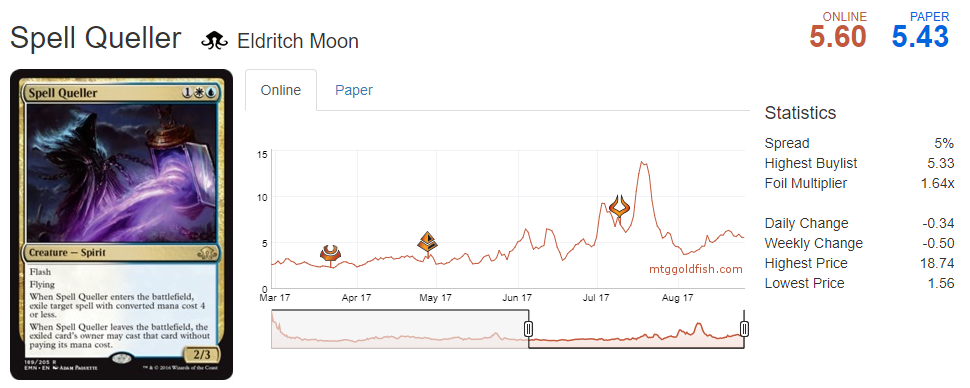
Jeskai Control is perhaps the least "controlling" deck on the list. These decks often employ more tempo elements than control elements, although it can vary. The addition of red to a UW shell gives access to many burn-based removal spells in Lightning Bolt, Lighting Helix, and Electrolyze. Add Snapcaster, Spell Quller, and even potentially Geist of Saint Traft to the mix, and suddenly it is very easy to turn the corner in any given game. Control elements are still present but they are almost entirely instant-speed. These lists will typically have fewer Supreme Verdicts and instead lean on additional counterspells, as well as their ability to quickly close out games.
Jeskai Control, by Jonathan Rosum (5th, SCG Modern Open Richmond)
Creatures
4 Spell Queller
3 Geist of Saint Traft
4 Snapcaster Mage
Instants
4 Cryptic Command
3 Electrolyze
4 Lightning Bolt
3 Lightning Helix
3 Logic Knot
4 Path to Exile
Sorceries
4 Serum Visions
Lands
4 Celestial Colonnade
4 Flooded Strand
2 Hallowed Fountain
3 Island
1 Mountain
1 Plains
1 Sacred Foundry
4 Scalding Tarn
2 Spirebluff Canal
2 Steam Vents
Sideboard
1 Anger of the Gods
1 Celestial Purge
2 Ceremonious Rejection
1 Disdainful Stroke
1 Dispel
1 Elspeth, Sun's Champion
2 Relic of Progenitus
1 Rest in Peace
2 Stony Silence
1 Supreme Verdict
1 Vendilion Clique
1 Wear // Tear
I really like the construction of this list. Similar to Esper lists, Jeskai's ability to play almost entirely at instant speed is a huge advantage. It makes your counterspells that much better when you rarely are doing much of anything on your own mainphase. Tapping out for things like Supreme Verdict or a planeswalker can easily get you in trouble when your opponent untaps with your shields down. Jeskai makes up for its lack of additional Verdicts with its ability to close games with Queller, Snapcaster, and a flurry of burn. Since being printed, Queller has been a wonderful addition to the archetype, giving access to another pseudo-counterspell that also functions as a tempo threat. In that regard, it fills a similar role to Snapcaster Mage.
I think Jeskai is a very reasonable choice in Modern. Having a proactive plan that you can rely on against nearly every deck in the format is a huge advantage. What better plan than throwing a bunch of burn in your opponent's direction? In my opinion, that is what makes it more viable than both Grixis and Esper: it's buttery-smooth instant-speed game plan coupled with the ability to turn on a dime against any strategy. The versatility of this game plan and the fluid nature of Jeskai's role assessment are phenomenal assets when played well.
The Favorite
Ah, I've saved the best for last (at least for me): UW Control. UW is closer to Esper than the others in the regard that it is a "true" control deck. It is playing for the late, late, LATE game and rarely looking to pressure the opponent early. However, while similar in that regard, the two decks are quite different overall. UW trades an instant-speed game plan for what is largely a tap-out control plan. You'll see UW lists playing fewer Cryptics and Snapcasters than other control archetypes. They will instead be replaced with things like more planeswalkers and sorcery-speed cantrips.
UW Control, by Ryland Taliaferro (34th, SCG Modern Open)
Creatures
2 Wall of Omens
2 Snapcaster Mage
Enchantments
2 Detention Sphere
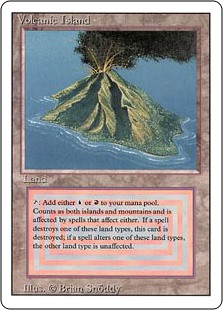
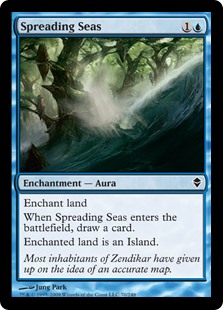
4 Spreading Seas
Instants
3 Cryptic Command
2 Mana Leak
1 Negate
4 Path to Exile
1 Sphinx's Revelation
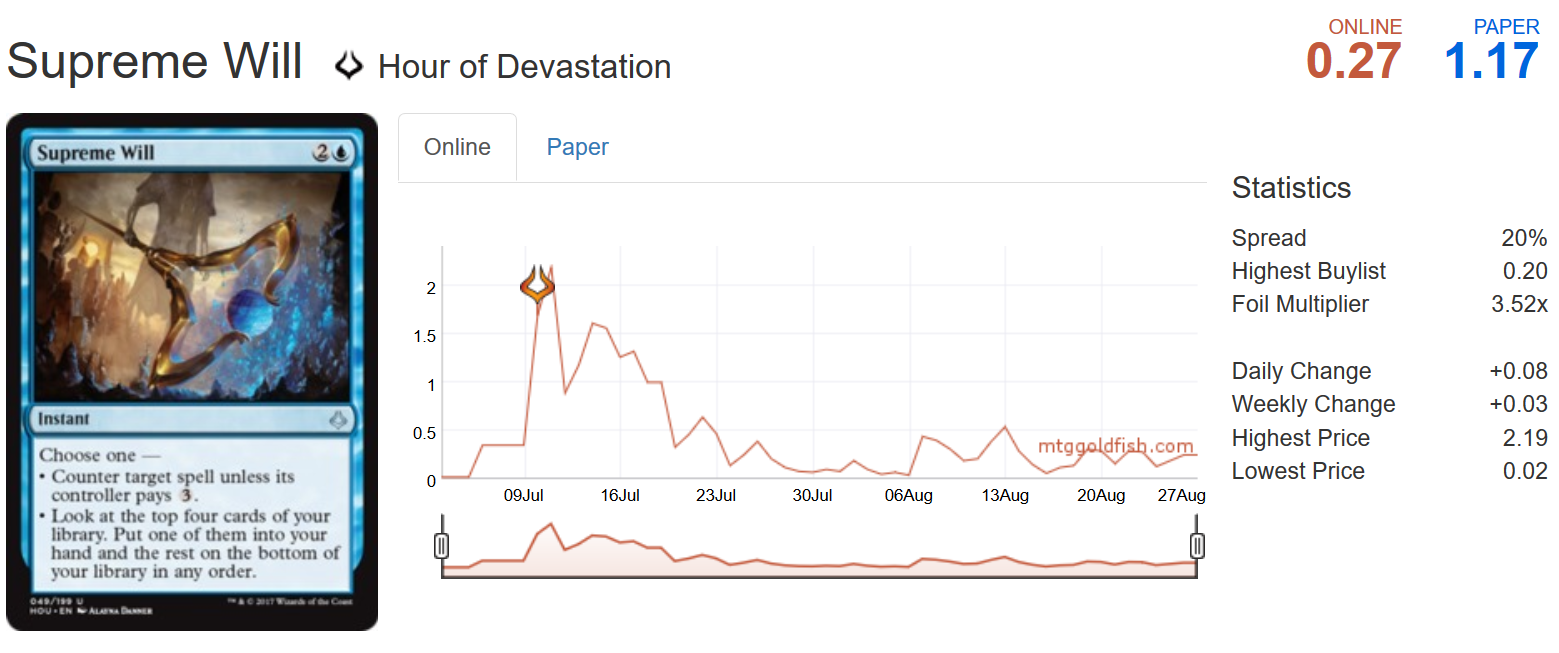
1 Supreme Will
1 Think Twice
Planeswalkers
1 Gideon Jura
2 Gideon of the Trials
1 Jace, Architect of Thought
Sorceries
4 Serum Visions
3 Supreme Verdict
Lands
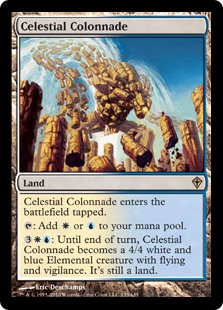
4 Celestial Colonnade
4 Flooded Strand
2 Ghost Quarter
3 Glacial Fortress
1 Hallowed Fountain
1 Irrigated Farmland
5 Island
3 Plains
2 Tectonic Edge
1 Temple of Enlightenment
Sideboard
1 Blessed Alliance
2 Dispel
1 Elspeth, Sun's Champion
1 Geist of Saint Traft
1 Grafdigger's Cage
2 Negate
2 Rest in Peace
2 Stony Silence
1 Supreme Verdict
1 Timely Reinforcements
1 Vendilion Clique
Now I'm a little biased towards this particular list but this deck is an absolute delight to play. It is far more proactive than traditional control strategies. As such, it has better game against big-mana decks than any other control deck I have ever played in Modern. The coupling of Spreading Seas with Ghost Quarter and Tectonic Edge can help an outstanding amount against any Valakut, the Molten Pinnacle strategy or Tron deck.
Why UW?
Truly I do not want to undersell this point: the land destruction package showcased here is the true power of this archetype. Ghost Quarter is often a Strip Mine without much effort, and don't get me started on Spreading Seas. Not only does it cantrip, but it has good targets in nearly every matchup. Take the most extreme example: the mono-colored decks. Mono-White Death and Taxes is playing Horizon Canopy, Tectonic Edge, Ghost Quarter, and Cavern of Souls; all of which are situationally good targets. Even Merfolk has troublesome Mutavaults! I'm forced to admit that there are places Spreading Seas isn't great, UR Storm being the best example. However, that is rare and even in those cases all you are stuck with is a mildly awkward cantrip.
Speaking of cantrips—this deck has a lot of them. Most of the cards are either lands (love those) or cards that have some (ir)relevant text that ends or begins in draw a card (love that part). I often joke with my viewers that all I ever want to do when playing this deck is hit land drops and draw cards; there is some real truth to that. This deck has some incredible consistency and the obscene number of cantrips is a big part of pulling it all together. The sheer number of cards you go through allows you to mulligan very infrequently, which is a huge boon to consistency in and of itself. Most hands that have between 2-5 lands are keepable partially because of those cantrips.
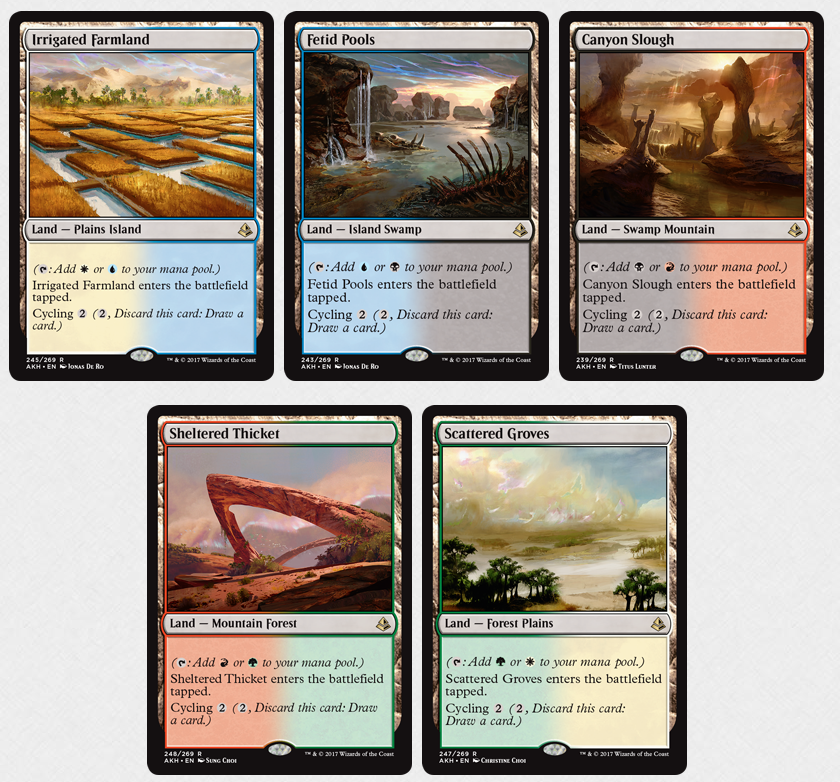
 On a related note, the manabase contributes to that consistency as well. Being a two-color deck opens up a world of advantages. You take far less damage from your manabase than any of the three-color counterparts, which can lend you percentage points against Burn. In addition, the basic lands help insulate you somewhat from Blood Moon. I've already mentioned the ability of the utility lands to disrupt the opponent's gameplan, but have yet to explore how it smooths out our own. Twenty-six-land decks may be prone to flooding, but this deck plays well with flood. Ghost Quarter and Tec Edge are often better than a spell and will function as such. On top of that you have Temple of Enlightenment and Irrigated Farmland to help mitigate flooding. Even if you do find yourself flooding, you have Celestial Colonnade to give you something to do with all that mana! At first glance, a five-land opener may look unkeepable, but on second inspection you may realize you have a GQ, a Colonnade, and a Farmland. Suddenly, that hand doesn't sound so bad! Whether or not such a hand would actually be a keep is dependent on a lot of factors, but the point remains that the utility lands provide access to a wider range of keepable hands.
Moving Forward
In case it somehow wasn't abundantly clear, UW is the pick for me. I certainly wouldn't fault anyone for choosing Jeskai over it—I think both are reasonable decks. They both have access to a somewhat proactive game plan when required, land destruction for UW and the burn plan for Jeskai. These plans have game against nearly every deck in the format because they attack one of two primary game concepts: mana or life total. In most cases, you won't win the game if you can't cast your spells, and uh, well, you aren't going to win the game if you're at 0! (But Phyrexian Unlife and Gideon of the Trials! Yeah, sure... you got me.)
The place where I fall in love with UW over Jeskai is in the consistency department. In my experience UW mulligans less often, especially below six, and struggles less after mulliganing. Draws are often less clunky than Jeskai and your cards generate more value on average. I think some amount of my bias can be chalked up to personal preference, but frankly I don't dislike how Jeskai plays.
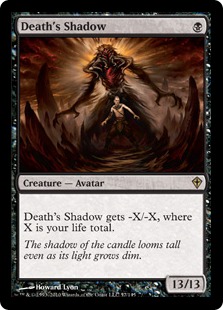
It is definitely important to mention, however, that the meta has shifted in a way that is not ideal for UW. Some of the worst matchups are getting more popular, namely Storm, and some of the best matchups are fading a bit, particularly Death's Shadow. Even with that said, if I'm sleeving up a control strategy any time soon, I'm likely to stick with UW.




 Instead, I’ve begun to branch out into different styles of writing, as I’m sure you’ve noticed. My bread and butter will always be trend-spotting and sideboard tuning, as my roots are heavily ingrained in the Gerry Thompson school of thought. I’ve seen the comments from some readers remarking on the lack of statistical data analysis, and I understand that desire, but that has never been my area of expertise. Two years ago I was brought on to Nexus by Sheridan as an author that could provide a fresh perspective. I was streaming Magic almost daily back then, and I believe my contributions were valuable because they had personality. In my attempts to provide valuable strategic content and insights, I lost a little of that personality along the way.
 I’m not the most skilled player in Magic. I’m not even close. I’m good, and probably only playing at half my potential, but nevertheless, my biggest takeaway from my Pro Tour experience was that I had peaked. I grinded day after day for hours to perfect my RPTQ list and lines, and that work paid off. It got me on the Pro Tour. I kept at it, played tight, and finished 8-8. I went 50% against the best players in the world, working alone for the most part. I showed myself, and others, that I was capable of holding my own against the best of the best. I also showed myself that I couldn’t do any better without serious life changes.


 The key to this decision is Wizards' information monopoly. Now, Wizards has always had an information advantage over players. They make the game and run MTGO and the DCI. They can see any and all data they want about any metagame at any time, and have said several times that's exactly what they do. And this is fine—they need that data to make the game better. It is also fine that they don't make all that data public. Trade secrets are a real thing, as is fear of data mining killing formats. Arguably, the ultimate problem with the last few Standards was they got solved too quickly. What makes it annoying is that they know better than we do if the format is actually healthy.
 Eldrazi Tron closed out the finals at
 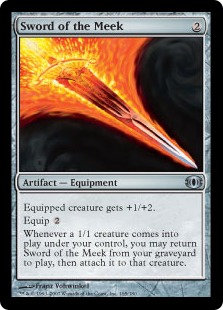 I know that players will point to the successful unbannings of Bitterblossom and Sword of the Meek as reasons to unban more cards. I will counter that unbanning Golgari Grave-Troll was a mistake, and should have been a predictable one for Wizards. They knew what was coming in Shadows over Innistrad and Kaladesh and should have seen what they would do to Dredge (I have no proof, but I strongly believe that the unbanning was a marketing move to show off the new cards in Modern). However, that's rather dismissive. My real question is "Are you sure?"
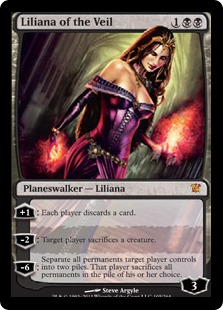 Right now you can only have one planeswalker of any type under your control. Planeswalker type is the walker's first name. Most of the time this is irrelevant, especially in the older formats. Planeswalkers consistently define Standard, but most make no impression on Modern, and only JtMS and Liliana of the Veil see wide play in Legacy and beyond. As a result, you really didn't have any reason to play more than one version of a planeswalker, so this special version of the legendary rule never came up.
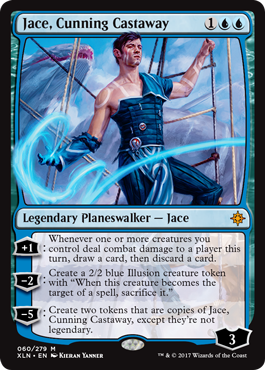
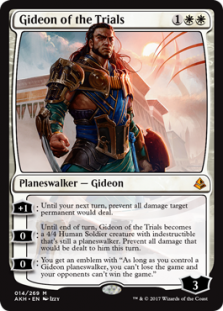 actually can curve Trials into Ally into Jura. Then presumably win by attacking for 15 after clearing out blockers with Jura's +2 ability. Will this actually be good? I don't know, but I do know that at the PPTQ where I played UW Control there were games I could have won if I could have had Jura and Trials on board together. This will be significant.