menu

Get Schooled: TCGPlayer States Report (2nd)

Are you a Quiet Speculation member?

If not, now is a perfect time to join up! Our powerful tools, breaking-news analysis, and exclusive Discord channel will make sure you stay up to date and ahead of the curve.

It's been a while, but it's time for another tournament report! TCGPlayer States was last weekend and I never miss the chance to prove my skill in front of the as much of the community that didn't attend the Standard LCQ. It's annoying that Star City has cut States entirely, but it's actually a nice throwback to when Wizards ran States. Having two States meant that you had several champions trying to out-brag each other. With only one again, there is no competition. Everyone knows where you stand.

As you have undoubtedly deduced from the title, this tournament went much better than the RPTQ. Some of this is due to metagame changes and a few tweaks I made to my deck, but I have to be honest that a lot of credit goes to the Random Numbers God. I ran very, very well and definitely won some matches that, had variance not favored me, I would have lost. As BBD said about his run to the World Championship, the best strategy is to hope to dodge and get lucky. This is especially true because I had not played my deck extensively prior to the tournament.

[wp_ad_camp_1]

Prelude: Brews That Just Aren't There Yet

For the past few months I have been avoiding Merfolk. Part of this was irrationally blaming the deck for my poor performance and partially because everyone needs a change once in a while. I'd also had some new ideas and inspiration to brew, especially since Aether Revolt was spoiled. I've always loved control decks and seeing Fatal Push inspired me to bring out my old Mentor deck. More cheap spells should make Monastery Mentor work. Right? Well, no, I still cannot recommend playing Mentor in Modern because all those old problems linger on. However, if you take out Mentor then you have a very strong control deck. As in actually really viable. Even more than SCG Columbus led us to believe. Between Grixis and Esper, control mages are finally making a play in the format.
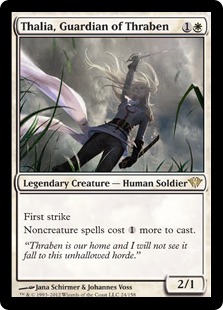
I also wanted to put some more work into making Death and Taxes work in Modern. Some of my favorite cards of all time are in that deck and I really wanted to sleeve them up again. Craig Wescoe also gave me a push with his MOCS result. I've been experimenting with the deck in various configurations and permutations for quite some time and it seemed like a good time to try again. And it was! I've had a great deal of success with DnT in weekly tournaments around here, helped along by a favorable metagame. For some reason, my LGS has been overrun by Tron and Burn for months, and DnT naturally has great matchups. It initially looked like I'd be running the deck for States.

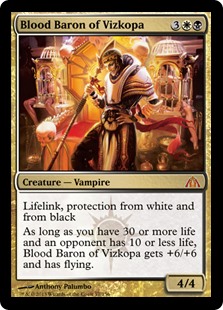
However, both decks shared a problem. They could disrupt the opponent easily. They could both establish impressive leads, both in board position, card advantage, and tempo. But turning those advantages into actual wins proved elusive. The problem was closing speed. Unless you possess some kind of hard lock you cannot just wait around and expect to win the game. Esper easily stifled creature decks and ground hard against everything not named Tron, but as the game progressed things just gradually slipped out of your control. You'd spend time durdling in the mid-to-late game while your opponent built up removal or protection in their hand. You don't have many win conditions or ways to protect them, so if I didn't find one fast enough, regardless of what I was running, I ended up being unable to win too often for my taste. I feel like what the deck is missing is a five mana, hexproof finisher. Blood Baron of Vizkopa is close, but the lack of flying really hurts. I'm still working on the problem.
As for DnT, the problem is that both Wescoe's deck and the version I'm working on are very good at disrupting Tron, grinding with midrange, and clogging the board against aggro. The problem is that your disruptive hands are just slightly too slow. Right now their clocks are roughly a half turn slow and Tron recovers more often than it should, and this is a common problem across matches. This is not to say that the deck is a bad choice by any stretch. To put it in MTGO League terms, DnT is a 3.5 deck. You can expect to win 3-4 games every league you play in, but you're unlikely to win the event. And that wasn't good enough.

Returning to Form

This meant I was defaulting to Merfolk for the event. Merfolk is tried and proven and I don't ever show up just to play. I enter tournaments to win. The only question was my final configuration. Colorado is traditionally Burn-heavy, and with a recent spike in Tron I didn't expect much BGx, though Grixis would be a factor. After about a week of retooling, I settled on this list:

UW Merfolk, by David Ernenwein (2nd, Colorado TCG States)

Creatures

4 Cursecatcher
4 Silvergill Adept
4 Lord of Atlantis
4 Master of the Pearl Trident
3 Harbinger of the Tides
3 Merrow Reejerey
2 Kira, Great Glass-Spinner
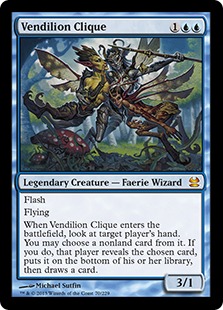
1 Vendilion Clique
3 Master of Waves

Artifacts

4 Aether Vial

Enchantments

4 Spreading Seas

Instants

4 Path to Exile

Lands

8 Island
4 Wanderwine Hub
4 Seachrome Coast
4 Mutavault

Sideboard

4 Unified Will
3 Rest in Peace
3 Stony Silence
2 Hurkyl's Recall
1 Kira, Great Glass-Spinner
2 Tectonic Edge

I've stopped running Echoing Truth. I had no reason to expect a lot of token strategies and the grindy fair matches where I liked Truth as a defensive measure appeared to be in decline. I was completely cold to a resolved Worship now, but the odds of seeing that card are pretty low, so I didn't care. In their place I added back the fourth Path and a Clique. I've played Clique Merfolk before and having a proactive answer seemed necessary when I'm removing catchall answers. I still needed ways to deal with Ensnaring Bridge, which I expected to be a significant player, so I kept in the Recalls and maximized my Wills. Affinity has been in decline but Recall and Stony Silence are so good elsewhere they still merit inclusion. Will is also an all-star against Tron so it was an easy card to max out on. This also meant that I could remove Meddling Mage, which isn't in a great place right now. Combo hasn't made that much of an impact around here so his utility is limited. Couple this with Colorado's reputation as a Burn-centric meta and I wanted the counters. The demise of other Spreading Seas decks removed the need for Deprive.
The other notable change is moving Tectonic Edge from my maindeck to the sideboard. It is worse against Tron than you might think, but the real decision was that BGx had been declining in the LGS metas for months, and Edge was at its best there. I suspect the uptick in Tron was behind this phenomenon. As a result I needed less mana denial and so went for more resilience with an extra Island and Mutavault. I kept the two in the board so that in matchups where I was boarding out my Vials I had some extra lands.

The Tournament

States was being held in northern Denver, at a location that I know often has very limited parking. The previous year's TCG States had been pretty small so I didn't think it would be a problem, but I made sure to preregister and get there early just in case. This was fortuitous. The event had been capped at 72 due to the size of the space. They hit that, and then had a flood of additional players, some from quite far away, attempt to enter. After much consternation, and an hour delay, 84 players were crammed into the place. A venue that had expected only 30 or so. And only had one judge on hand (who did an amazing job considering the workload). Still, with the loss of SCG States, I cannot imagine why they thought turnout would be so low. Hopefully, lesson learned.

Looking around the room, many of the usual suspects are absent. The local RPTQ was that weekend so I presume that many of them were at the LCQ. This makes the room a little softer than I was expecting, but I know better than to get complacent. Seven rounds of Swiss is a lot of opportunity for things to go wrong, especially when I'm looking for five wins and a draw.

Round 1 vs. Bant Eldrazi (W, 2-0)

Game 1  (Play, 6-6)

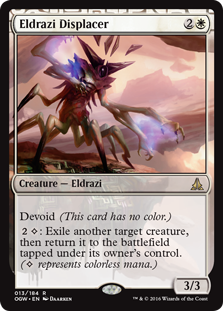
I know my round one opponent as an infrequent player at my LGS, which isn't helpful. He plays decks from all over the spectrum, so I don't know what to expect. It turns out he's on Bant Eldrazi, though that isn't immediately apparent. He has a turn-one Noble Hierarch and then an escalated Blessed Alliance to slow my assault, but the only spaghetti monsters he deploys are Eldrazi Displacers so I just run him over.
Sideboarding:

-1 Vendilion Clique

+1 Kira, Great Glass-Spinner

Game 2 (Draw, 6-7)

My opponent kept a very slow hand with a lot of removal, which is a losing strategy against Kira. I'm really flooded, but it takes forever for my opponent to draw creatures to actually pressure me so I have time to play my Seas out and cantrip into lords. On my last attack my opponent has a chance to get back into the game thanks to Displacer and a Drowner of Hope. He blinks, then Paths, Kira. He has the option to blink his Drowner to survive my attack and start taking over the game with tokens, but he doesn't see the line and I kill him.

Round 2 vs. Grixis Control (W, 2-0)

Game 1 (Draw, 6-5)

I have a very good start with Aether Vial and Silvergill Adept. My opponent has Ancestral Vision turn one, but he started so far behind on resources that despite a second Vision several turns later he never comes close to stabilizing. Mutavaults and a lord eventually kill him.

Sideboarding:

-3 Harbinger of the Tides
-4 Spreading Seas
-1 Path to Exile

+4 Unified Will
+3 Rest in Peace
+1 Kira, Great Glass-Spinner

Game 2 (Draw, 7-7)

My opponent comes out quickly with Serum Visions into a turn three Tasigur. I have a Vial and hold off playing anything into his counterspell (later revealed to be Logic Knot). After he taps out, I Path Tasigur and then slam RiP. My opponent hangs on for a while, but Master of Waves proves to be too much. He actually uses Cryptic Command twice to bounce him, and after the second time he has the removal for all my other creatures. Still, I land an attack for 10 using two Mutavaults and and he concedes.

Round 3 vs. Bant Eldrazi (W, 2-1)

My opponent is another familiar face, and again I have no idea what he's playing. He used to be on Death's Shadow but I know he hasn't for a while.

Game 1 (Play, 7-6)

I continue to be unaware of what he's playing because he misses his first land drop with a laugh. I have a good curve and quickly win, having discovered why he kept a no-lander when he plays multiple Hierarchs into Reality Smasher much too late to matter. On the draw with a scry he was hoping to get lucky and ramp out his monsters, which is by far the best way for Eldrazi to beat Merfolk.

Sideboarding:

-1 Vendilion Clique

+1 Kira, Great Glass-Spinner
Game 2 (Draw, 7-7)

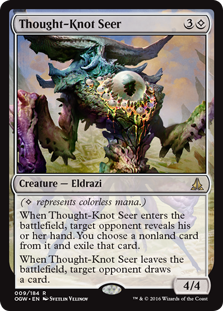
My hand is good if a little slow, and becomes unfortunate when he has back-to-back accelerated Thought-Knot Seers to shred it. He wins very easily from there.

Game 3 (Win, 6-7)

My hand is mediocre, but after a turn-three Seer, he doesn't play another spell until a turn-six Engineered Explosives on two. Not because he had nothing to do but because I Spread his only colorless source. He has several Hierarchs and beats away at me with Seer while I build my board around Explosives. By the time he pops Explosives and finds colorless mana I'm back into the game and drop a big Master of Waves to smash through his very late monsters.

Round 4 vs. BG Rock (W, 2-1)

Erg. Rock is one of my worst matchups. Too many threats, too many answers. I expect this is going to suck.

Game 1 (Play, 7-7)

My hand is fine, but his removal flies fast and thick from turn one. Despite this I still get him to 6 before Thrun, the Last Troll and Tarmogoyf shut down my offense, until he finds the removal to safely attack. I often wonder if I should choose to draw in this matchup. The tempo advantage is only occasionally relevant while card advantage is usually critical. Testing has so far proved inconclusive.

Sideboarding:

-1 Harbinger of the Tides
-4 Aether Vial

+1 Kira, Great Glass-Spinner
+2 Tectonic Edge
+2 Rest in Peace

Game 2 (Play, 7-7)
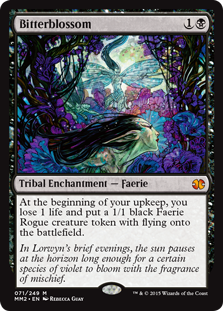
We have a lengthy, back-and-forth attrition fight until he plays Bitterblossom at 9 life. I don't really have a way to attack though Tarmogoyf, but then I draw Kira into RiP and suddenly the entire game has changed. Where he was once comfortably able to build an airforce and attack, now I can freely eat his Faeries and he can't attack with Goyf. I start building my ground force while hiding behind Kira and he can never attack me or risk dying on the swingback. I never have an opening to attack, but Bitterblossom finishes him anyway. I comment on this and my opponent explains that he specifically plays cards to remove Blossom for this exact scenario but never saw them.

Game 3 (Draw, 7-7)

This starts as an attrition fight, but things stall out for both of us. I have no lords, but I neuter his Goyfs with RiP. I need to use Spreading Seas to find action, but his Ghost Quarter says otherwise. I wait to play Seas and am rewarded with Tectonic Edge. I use Edge on his Quarter, he kills my Mutavault in response, and I use the floating colorless and my new Island to play Seas and draw a lord to break through for a turn. He has removal and Bitterblossom next turn at 12 life. I don't get Kira this time, but I draw running lords, including Reejerey. That allows me to wipe his tokens with a Path, a Harbinger, and an attack. He has to use his last removal spell, Abrupt Decay, on his Blossom to buy a turn, but draws nothing relevant. One more win and I'm in!

Round 5 vs. Grixis Faeries (W, 2-1)

This round gets embarrassing when my opponent next-levels me with his odd deck choice. I incorrectly identify it as Grixis Control game one, which punishes me hard when I go to sideboard.

Game 1 (Play, 7-6)

I have a great curve of Vial into lords while my opponent just has Blood Crypt and Mountain. He casts some expected removal spells and follows up with a Mutavault. When he tries block with it, I cast Path, which finds him an Island. Based on all this, I conclude that I'm against Grixis Control again, which is reinforced by a Snapcaster Mage. A Master of Waves for 4 kills him.

Sideboarding:

-3 Harbinger of the Tides
-4 Spreading Seas
-1 Path to Exile

+4 Unified Will
+3 Rest in Peace
+1 Kira, Great Glass-Spinner

Game 2 (Draw, 7-7)
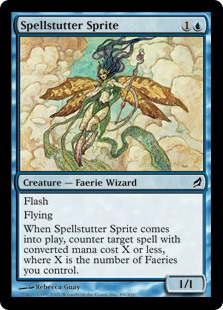
I have a good curve beginning on Cursecatcher, while he plays a turn-two Bitterblossom. An odd card for control to run, I think. I just play Lord of Atlantis and attempt to land Kira when he responds with Spellstutter Sprite! That's not Grixis Control, that's not Grixis Control at all! I'm against Grixis Faeries with a hand full of Rest in Peace and Unified Will. He plays Sower of Temptation on Lord of Atlantis not realizing that my team still gets the bonus, but it's okay for him since so do his Mutavaults. He wins the race at 2 life. I need to re-sideboard!

Sideboarding:

-2 Rest in Peace
-4 Unified Will

+3 Harbinger of Tides
+2 Tectonic Edge
+1 Path to Exile

Game 3 (Play, 7-7)

I have a fast curve while he plays an early Sprite. I assume it's meant as a blocker but it turns out he needed to facilitate a Ninja of the Deep Hours strike. Deep respect man, that is a spicy deck. All the spice in the world isn't enough as I just keep slamming down lords and he just dies.

At this point there are only three undefeated players. Once I confirm I'm not the pair-down, my opponent and I draw round six and go get food. I draw again round seven to lock in my spot. I end up third seed as we don't have a clean cut, and two 18-pointers get in, including my round-one Bant Eldrazi opponent. The Top 8 consists of two Bant Eldrazi decks, me on Merfolk, the Grixis Faeries player, UB Faeries, GW Tron, Abzan Company, and Jeskai Midrange.

Quarterfinals vs. GW Tron (W, 2-0)

Game 1 (Play 7-7)

I'm on the play and have a very fast hand with a Seas to crush my stumbling opponent. Thirteen damage on turn four is too hard to overcome.
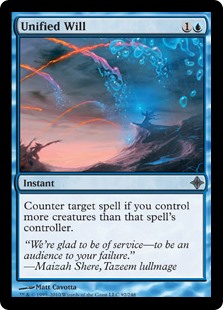
Sideboarding:

-2 Aether Vial
-2 Kira, Great Glass-Spinner
-3 Harbinger of Tides

+2 Tectonic Edge
+1 Stony Silence
+4 Unified Will

On the draw I only bring in one Silence because Tron's baubles can't be caught like on the play. On the play I take out all the Vials for all the Silences.

Game 2 (Draw, 7-5)

I have a good hand of Cursecatcher into Seas and Reejerey while my opponent struggles to find Tron. On turn four, with another Catcher and lots of lords in hand, I draw a second Reejerey. This lets me dump my entire hand into play and swing for 16 with a Mutavault, leaving my opponent at one with no outs. He does have the final piece and Oblivion Stone, but those don't hit Mutavaults.

Semifinals vs. Abzan Company (W, 2-1)

I'm paired against the second seed, against a player that used to be exclusively on Burn but recently switched to Company. This is not a great match because I know he is on the multiple-combo version.

Game 1 (Draw, 7-6)

My opponent forgets to scry off his mulligan, but it doesn't matter. He has a great curve with accelerants, Company, and Knight of the Reliquary, which finds Gavony Township. I concede when my draw step isn't a miracle.

Sideboarding:

-1 Rest in Peace
-1 Cursecatcher

+2 Rest in Peace

Game 2 (Play, 7-6)

I slip in some damage, complemented by his mana base, until he's at ten and we're more or less stalemated. He has the Saffi Eriksdotter/Renegade Rallier combo out but can't use it because of Rest in Peace. At this point I drop Master of Waves for a lot and finally break through for lethal.

Game 3 (Draw, 7-6)
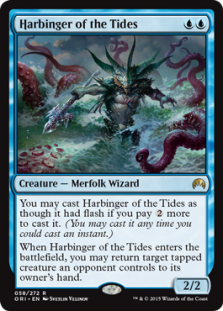
This game is stupid and I should not have won. I keep a one-lander with two Vials and fail twice to draw lands. My opponent destroys my first Vial, then Tidehollow Scullers the other. I draw another Island to play Harbinger and Lord of Atlantis, while he has multiple Scullers to take Master of the Pearl Tridents. I play cantrips looking for more lands, which brick, while he cannot attack or draw business. Eventually I find a white source, play RiP and then go nuts with a Reejerey, dropping multiple spells a turn. Had my opponent drawn reasonably I would have lost handily. Because he drew abysmally I won. Afterwards we joke that he shouldn't have scryed in games two and three, it worked out poorly for him compared to game one.

Finals vs. Bant Eldrazi (L, 1-2)

The other Bant Eldrazi player beat my round-one opponent to make it here. He was also a Star City States Champion from last year, so he's looking to defend his "title."

Game 1 (Play, 6-7)

My hand is really mediocre, made horrible by turn-three Thought-Knot Seer, turn-four Reality Smasher. The lands I draw are no help here.

Sideboarding:

-1 Vendilion Clique

+1 Kira, Great Glass-Spinner

Game 2 (Play 7-7)

I start out slow, but disruptive. Eventually I get out two Reejereys and dump my hand again. He doesn't really have anything despite early Displacers and Thought-Knot.

Game 3 (Draw 7-7)
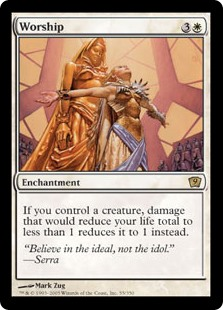
My opponent has an early Smasher but Harbinger stifles that attack. Despite Thought-Knot beats, I manage my life total and stabilize, and am setting up for a lethal attack when my opponent drops Worship into play. I am now on a one-outer. Within the next couple turns I have to Path his Thought-Knot, draw another Path off the trigger, then draw a third Path or Harbinger on my draw step to clear his three creatures and attack for the win. This all assumes he bricks off. I don't get the chance as he has Displacer with three Eldrazi Temples to crush my chances. And that's the game. The tournament started at 1:00, and we finish the finals at 10:30. It's been an unexpectedly exhausting day.

So Close...

It's always disappointing to get so close and still not win, but I got very lucky to get that far in the first place. I hit good matchups and ran well. I'm a little conflicted about my lack of Echoing Truth—it wasn't relevant for the most part but it could have saved me in the finals. I also never cast Clique, so I don't know how good it is. Still, for those able to make SCG Dallas, I do recommend my list. It served me well.

Also, just a heads-up I have finished data collection for Jace the Mind Sculptor. The data analysis is in the works but it's a lot to pore though. Just looking at the raw data is interesting and has some suggestive implications, but I need to get a little deeper before I'm ready to report. Look for it soon!

Insider: A Five-Year Lookback at Modern Masters

Are you a Quiet Speculation member?

If not, now is a perfect time to join up! Our powerful tools, breaking-news analysis, and exclusive Discord channel will make sure you stay up to date and ahead of the curve.

Well, it took four years but it may finally happen. At last. Just as I expected, although I didn’t think it would take this long.

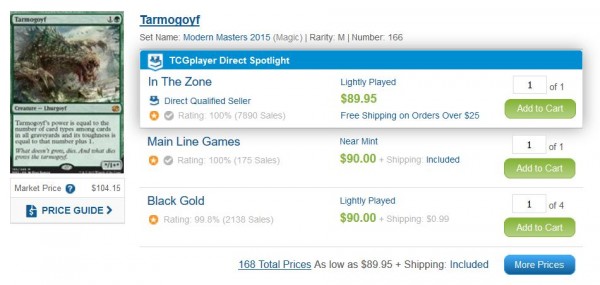
Goyfs

I had many doubts if my plan would work. In the back of my head I had this haunting feeling that I was making a terrible mistake. If this was the wrong decision, it could have had a profound impact on how I played Magic, with possibly irreversible consequences.

But let me rewind this story before getting into the details. It all started on October 22, 2012…

Announcing…

On October 22, 2012 Wizards of the Coast published their website announcement for the coming of a brand new type of product: a Modern Masters set filled with reprints at limited print run. The card they chose to spoil alongside the announcement was none other than Tarmogoyf.

There was an error retrieving a chart for Tarmogoyf

This announcement had the most significant impact on how I viewed MTG finance since I started the speculation game. Up until this announcement, MTG finance consisted of trading out of Standard cards and acquiring any and all Modern or Legacy cards. The older cards that were staples in non-rotating formats were nearly guaranteed to appreciate in value as supply dwindled. Additionally, Modern was a booming format at this time and rampant growth was on the horizon.

But when it became apparent Wizards would be reprinting to resupply older cards into the market, I had to make a choice. Was I to hold my Legacy and Modern staples that were vulnerable to this reprint, or was it time to cash out? What would the price drop to? Was I sitting on a ticking time bomb in my portfolio?

Ultimately I made the tough decision to bail. This probably doesn’t come as a surprise to my loyal readers because I have a tendency to get cold feet when it comes to MTG investing. After all, I’m “gambling” with my son’s college education fund, so my inclination is to keep risk under control. 2012 was no different from today, and I proceeded to list, and promptly sell, my personal copies of four key staples:

  • Tarmogoyf (sold for about $100 each)
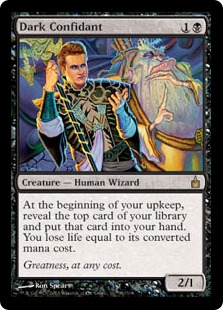
  • Dark Confidant (sold for about $40 each)
  • Thoughtseize (sold for about $30 each)
  • Vendilion Clique (sold for around $30 each)

My logic at the time was that these Modern staples had all increased in price dramatically throughout 2011-2012 and I was happy to cash out. Then after their inevitable reprints, I’d be able to repurchase these cards to end my temporary hiatus from using them in Legacy/Modern.

Let’s look at how this played out.

Price Trends

Looking strictly at the numbers, it would appear that I made a financially correct decision. All the cards I sold I can now reacquire for less money (albeit with different art). But I question whether or not this was the right decision holistically speaking.

For example, let’s look at Vendilion Clique’s chart.

There was an error retrieving a chart for Vendilion Clique

I sold my copies in late 2012 at a price in the low $30s. Then the card was spoiled in Modern Masters. Surely, this was going to be the “I-told-you-so” moment, right? Apparently not. The card increased to nearly $50 when it was reprinted at mythic rare in MMA. Its price did taper down, but then it spiked hard in 2014, peaking in the $70 range! A second reprint came in Modern Masters 2015 and still the card was worth more than where I sold.

In the end, it took a major shift in Legacy and Modern as formats in order to move the price of Vendilion Clique downward. Now in 2017, four and a half years later, I can finally purchase the card for around $25.

Let’s shift gears to Dark Confidant next.

There was an error retrieving a chart for Dark Confidant

This was another card I sold when Modern Masters was announced because I anticipated a reprint. I was 100% correct in my prediction. In fact just like with Clique, we got reprints of Bob in both MMA and MM2. After selling copies for $40 in 2012, the card was reprinted at mythic rare and again spiked to $70. Then in 2014 Modern exploded and copies peaked over $80! Finally they came tumbling down through 2016 and 2017 and copies can now be bought for around $36.

Let’s look at Tarmogoyf next. The story will be very similar.

There was an error retrieving a chart for Tarmogoyf

Once again we see the spike upon reprinting, another larger jump (to $200!) in 2014-2015, another reprint in MM2, and finally a taper downward. The thing with Tarmogoyf is, this card would have still been more expensive than where I sold if it weren’t for the third reprinting in MM3. It took that many reprints to get the card back under $100.

The only card I sold that really helped me avoid a sizable loss was Thoughtseize. That’s because this reprint didn’t come in MMA or MM2. Instead, it came in a large Standard set: Theros.

There was an error retrieving a chart for Thoughtseize

After spiking to over $60 in 2013, the card tanked hard through 2014 after its reprint in Standard. It is worth pointing out that the original printing did maintain more value than what Theros copies sold for.

A Five-Year Lookback

Hindsight is 20-20. Had I known Modern would have been so successful upon printing of Modern Masters, I would have surely kept all the cards I sold in anticipation of the set. In my mind, an increase in supply should cause a drop in prices, but many of the reprints drove such interest in Modern that prices increased. Even a second printing in Modern Masters 2015 wasn’t enough to hurt prices significantly. It took threat of a third reprint—along with a stagnating Modern format—to finally drive prices below their 2012 levels.

As I look back, I ask myself whether or not it was worth cashing out. On the plus side, I avoided a great deal of risk that I perceived in the market at that time. I also freed up cash for speculation on other cards, so it’s not like I kept cash idle throughout those five years. And when you look at overall ROI, selling in 2012 would have been a mathematically superior decision to selling in March 2017.

But there were multiple negatives to my decision as well. For one, I completely missed selling at peaks on these cards. My itchy finger caused me to sell well below 2014 prices, when demand was at an all-time high. I also forwent my ability to play these cards which had nonzero intangible value. (Although this was just seven months after my son was born, so I wasn’t playing much Magic anyway).

Perhaps the worst part is that I had to pay so much in eBay and PayPal fees that I still probably can’t reacquire most of these sold cards for less than what I netted back in 2012. Not to mention the effort involved in selling and shipping out the cards in the first place.

While I have no regrets about the decisions I made, I can confidently conclude that selling out in anticipation of the MMA reprints was a suboptimal choice. Holding onto the staples would have been a superior move—both in terms of enjoyment as well as financially. I could have pretty much sold any time between 2013 and 2016 and netted more cash than what I received in 2012.

Wrapping It Up & Looking Ahead

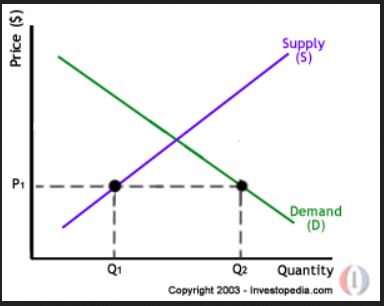
This experience has taught me a valuable lesson worth summarizing. I made a gut decision to sell out of cards due to fear of price impact of reprints. What I neglected to consider was the hype around Modern as a format during that time frame. I focused solely on the supply side of the classic supply-demand economic curve.

Curve

I completely overlooked the demand portion of the curve. So when I heard “reprints,” I assumed the supply curve would shift right and the point of intersection between supply and demand would result in a lower price. But this reprint set drove so much Modern hype that the demand curve moved up far more than the supply curve, resulting in even higher prices as the new supply was rapidly soaked up in the market.

So as I look ahead, I need to consider both the micro (what’s being reprinted) as well as the macro (the state of the format and the game as a whole) before making big decisions. Had I seen the signs of Modern’s explosive growth in 2012 I surely would not have cashed out.

You may ask me what I’d do today. Let’s say I had those same cards now in 2017 and were faced with a Modern Masters 2017 reprint. You know what I’d say? I’d probably say “sell” despite all the lessons I learned from five years ago. My reasoning is fairly simple: this new set is coming out during a time when Modern is fully matured as a format. Growth in the format is slow or nonexistent and Wizards of the Coast cut support for the format at the professional level. Therefore I believe the increase in supply will overcome demand, and prices will drop significantly throughout the year.

I could be wrong again. But I’m fairly confident in this call because I’m considering the macroeconomic environment for Modern this time. That was the missing piece in my decision-making process, and I don’t plan on making this error again. When I consider this part of the equation, it makes for a fairly bearish outlook on Modern prices of cards reprinted in MM3. I have no clue where prices will be five years from now, but I believe it’s extremely unlikely that selling now will be worse than selling in 2018. Without that exponential Modern growth, I just can’t see these prices taking off like they did in 2013-2014.

Once again, time will tell. Since I no longer own the cards, my decision this time is much easier. I can buy in now in the hopes of another substantial jump in Modern popularity. Or I can hold off and wait for prices to tumble lower. I pick the latter.

…

Sigbits

  • We already saw Eidolon of the Great Revel spike when it became apparent that Modern Burn decks were about to become much cheaper. But I also have my eye on Mana Confluence, which is currently sold out at SCG with a $6.99 price tag. This isn’t really a Modern staple, but I do see utility in Commander and even Vintage. I expect slow growth for this one as long as it dodges reprint for a while longer.
  • Aura Shards is an Invasion uncommon that was reprinted in a 2011 Commander deck. Apparently the two printings haven’t created enough supply as copies hit all-time highs. SCG is sold out of the Commander printing ($9.99) and they have just a few SP Invasion copies in stock at $6.79.
  • Speaking of expensive enchantments, Aura Shards has nothing on Rhystic Study. The blue card from Prophecy has been a Commander staple for years. Despite being a common, the card still retails for $7.99! At least there are plenty in stock at Star City Games, so I don’t think the price will jump higher in the near term.

Death’s Shadow: Analysis, Implications, Potential

Are you a Quiet Speculation member?

If not, now is a perfect time to join up! Our powerful tools, breaking-news analysis, and exclusive Discord channel will make sure you stay up to date and ahead of the curve.

The verdict's all but in: new kid on the block Death's Shadow Jund is Modern's new deck to beat. Death's Shadow's ascent to boogeyman status carries metagame-wide implications and emphasizes some of Modern's quirks. Today, we'll explore why Death's Shadow Jund is so good, what the deck means for the format, and whether other decks should recruit the massive Avatar for their own purposes.

Breaking Down Death's Shadow

Death's Shadow itself has rarely seen Modern play outside of all-in aggro-combo decks. That changed near the end of Probe's Modern lifespan, when interactive Death's Shadow decks started putting up results online. Why is Death's Shadow suddenly seeing play in aggro-control decks, and what does it do for those decks? Let's find out!

[wp_ad_camp_1]

Tempo-Terrific

I've written before about how Modern is a format that rewards tempo and laughs at card advantage. To summarize, players put up far better results in the format when they throw their cards away to kill opponents than when they durdle around sniffing out two-for-ones. Some examples: Esper Charm can't manage to put up results despite the printing of Fatal Push, Collective Brutality continues to excel in black decks of all flavors, and Simian Spirit Guide even sees play in Zoo decks these days.

Our most recent example: Dark Confidant doesn't hold a candle to Death's Shadow. Why draw a bunch of cards when you can just kill your opponent? Modern's most persistent question proves as relevant as ever in this Death's Shadow metagame. Trading extra cards for extra damage is exactly what decks want to do in this format, and since the rediscovery of Death's Shadow, Modern's most powerful and interactive strategy gets to do just that.

Perfectly Proactive

In Three's Company: Exploring Metagame Parameters, I discussed the three factors Modern decks need to succeed: proactivity, interactivity, and consistency. Many Modern strategies specialize in two components and all but ignore the third, such as Ad Nauseam (highly proactive and consistent, but totally uninteractive). Others still find themselves enacting each component to a degree, but specializing in none, such as Merfolk.

Modern's winningest legal decks tend to share a key feature. From Three's Company:

Jund is a highly interactive, relatively proactive, relatively consistent deck. Bant Eldrazi is a highly proactive, relatively interactive, relatively consistent deck. These two decks specialize in a component each (respectively, interaction and proactivity), but don’t do so at the cost of giving up too much of the other two. The ability to maintain all components while perfecting one makes them some of the best decks in the format.

Death's Shadow makes Jund highly proactive. The combination of Street Wraith, Mishra's Bauble, Traverse the Ulvenwald, and incredible redundancy also make it highly consistent. It's no wonder Death's Shadow Jund puts up enviable numbers—the deck excels at all three components!
I'm not one to incite any ban mania, but I will say that the other holy trinity decks (at once highly proactive, interactive, and consistent) Modern has seen are now gone from the format. Treasure Cruise Delver, Eye of Ugin Eldrazi, and Deathrite/Bloodbraid Jund all qualify. Only time will tell if Modern manages to police Death's Shadow strategies of its own accord, but the deck is certainly very strong, and in my opinion far and away the best deck in the format.

Metagame Impacts

The arrival of a holy trinity deck to Modern obviously implies some metagame changes. Here are the ones I expect we'll see the soonest.

The Death of Jund

...Or, of Jund as we know it—gone are the days of 4 Confidant, 4 Liliana and a spattering of flavorful four-drops. In adopting Death's Shadow, Jund gives up some points against midrange (on paper, at least) for a huge edge in all linear matchups by swinging toward the aggro dot on the metagame spectrum. The biggest win here for Jund lies in the big-mana department; slugging through pushed colorless bombs has always been Jund's bane against decks like Tron, but Death's Shadow helps it kill quickly and reliably before those bombs come online.

As for giving up points against midrange, I mean that Death's Shadow Jund has fewer threats to work with. Removal-heavy matchups might be annoying for a deck without Raging Ravine or value-generating top-end threats. As logical as this point may sound, the issue has not bothered Death's Shadow Jund thus far. Bullets like Ranger of Eos and sideboard plans like 4 Lingering Souls (for which splashing is trivial) effectively "draw" tons of cards against the correct decks, and that's assuming Death Shadow Jund's hyper-consistent discard-into-enormous-threat plan falls through. All those Inquisitions add up fast in the Fatal Push mirror.

About those eight discard spells: the Jund decks of old tended to max out at eight discard spells, often favoring a 4 Inquisition/2 Thoughtseize split. Discard is awesome early, but loses relevance once the game progresses to the late-game state Jund aspires to. Since Death's Shadow Jund kills opponents so quickly, it aspires to no such late-game, and can benefit from the full discard suite without suffering drawbacks.

Despite Jund decreasing in metagame presence, some BGx players will undoubtedly stick to their midrange guns. Those players are likely to play Abzan. Lingering Souls, Path to Exile, Liliana of the Veil, and Fatal Push all match up well against Death's Shadow Jund, while Lightning Bolt does... well, nothing. The arguments for playing Abzan Midrange over Death's Shadow Jund seem clear enough, but I'm not sure they justify playing what's still, in essence, a worse BGx deck against Modern's wide-open field.

The Waning of Big Mana

The main draw to big mana in Modern is its great midrange matchup. Decks like Titan Shift and GR Tron go way over the top of synergy-smashing goodstuff decks like Jund, which has historically commanded ample shares in Modern.
Until recently, BGx decks only scraped by against big mana when they managed to land enough early threats to close out games before Wurmcoils and Ugins started hitting the board. With Death's Shadow speeding Jund up enough that it can reliably kill big mana fast enough, Urza's Tower and friends are likely to lose some footing in the coming metagame.

The Rise of Bant Eldrazi

Big-mana decks, especially Valakut-based ones, decimate Bant Eldrazi. Those decks are sure to drop in share, and Bant Eldrazi happens to boast a defensible Death's Shadow matchup thanks to Drowner of Hope, Eldrazi Displacer, Path to Exile, and Engineered Explosives (not to mention hosers like Rest in Peace from the sideboard).

We saw Bant Eldrazi beat Death's Shadow Jund to a pulp on stream last weekend. Now standing to lose a primary predator, Bant Eldrazi looks better than ever.

Removal Shifts

With any metagame change, a format's blue-chip removal spells change. This has not happened a lot in Modern, where Bolt and Path have historically been way stronger than any other option (although we have seen some push-pull between the red and white instants depending on the season). With Fatal Push in the mix, and the top creature deck happening to dodge Modern's best card, things get more interesting.

Less Bolt

Splinter Twin has been gone for over a year. During that time, Jund has reigned supreme as Modern's premier Lightning Bolt deck, and by extension, its anti-aggro-combo policeman. While Death's Shadow Jund flies that policeman banner proud, it doesn't actually play Lightning Bolt, opting instead for a removal suite of Fatal Push and Tarfire (I never thought we'd see the day!). And Bolt itself happens to be uniquely terrible against Death's Shadow Jund.

Modern's premier Bolt decks become, then, Grixis Control and Grixis Delver (and, presumably, Grixis Shadow). These Grixis decks combine for a miserable metagame share compared to that of Death's Shadow Jund, meaning we may soon enter a Modern era much kinder to x/3s than those before it. The three-toughness creatures most likely to enjoy a boost in viability are those that are already Modern-playable, namely Smuggler's Copter, Wild Nacatl, Eldrazi Displacer, Winding Constrictor, Spell Queller, and perhaps even Reflector Mage, an interesting candidate in a metagame full of decks with only two actual threats.
That said, this is still Modern, and you never know what you'll encounter. Lightning Bolt has a ton of random applications, such as killing a Scavenging Ooze with one counter or a planeswalker with three loyalty. Sometimes, one extra point of damage makes all the difference.

More Push

Not only is Fatal Push the easiest removal spell for Death's Shadow decks to employ—it's flexible, cheap, nearly unconditional, and on-color—it's the best removal spell against Death's Shadow Jund, killing every creature in the deck without revolt. Since Death's Shadow's speed encourages players to run creatures efficient enough to make it to the battlefield in the first place, Push also becomes better against Modern's other creature decks.

Creatures that cost five or more mana, of course, are totally immune to Fatal Push. The biggest winners in the coming metagame will avoid both Push and Tarfire (Reality Smasher, Hooting Mandrills, Tasigur, the Golden Fang, Zealous Conscripts) , and the biggest losers will die to both cards at a parity loss (Steel Overseer, Lord of Atlantis, Leonin Arbiter, Dark Confidant).

Brewing Sultai Shadow

I'm convinced that Death's Shadow has applications outside of the Jund decks we've seen thus far. Half a year ago, I proposed a Sultai list leveraging the disruptive efficacy of Thoughtseize, Dismember, and Stubborn Denial alongside the heavy-hitting threat suite of Death's Shadow, Tarmogoyf, and Grim Flayer.

At the time, there was little reason to play an interactive Death's Shadow deck instead of the combo-focused Kiln Fiend or Become Immense versions, which Gitaxian Probe enabled admirably. Currently, the opposite is true, as interactive Death's Shadow decks proudly sit atop the format. With Fatal Push now available, as well as new knowledge about the strength of eight discard spells in a deck with huge beaters, I decided to revisit Sultai Shadow.

Sultai Shadow, by Jordan Boisvert

Creatures

4 Death's Shadow
4 Tarmogoyf
3 Snapcaster Mage
4 Street Wraith

Planeswalkers

1 Liliana, the Last Hope

Artifacts

4 Mishra's Bauble

Instants

4 Fatal Push
3 Stubborn Denial
1 Dismember
1 Abrupt Decay

Sorceries

4 Traverse the Ulvenwald
4 Thoughtseize
4 Inquisition of Kozilek

Lands

4 Polluted Delta
4 Misty Rainforest
4 Verdant Catacombs
2 Watery Grave
1 Overgrown Tomb
1 Breeding Pool
1 Island
1 Swamp
1 Forest

Sideboard

3 Fulminator Mage
1 Liliana, the Last Hope
1 Illness in the Ranks
3 Surgical Extraction
2 Abrupt Decay
1 Invasive Surgery
1 Ceremonious Rejection
1 Stubborn Denial
1 Collective Brutality
1 Bojuka Bog

In With the New

This deck for the most part sticks to the tried-and-true Death's Shadow Jund core, but becomes even more focused. It trades utility cards like Temur Battle Rage, Kolaghan's Command, Ghor-Clan Rampager, and Liliana of the Veil for Snapcaster Mage and Stubborn Denial. These changes aim to shore up Death's Shadow Jund's worst matchups.

Snapcaster pulls double duty in this deck, adding resilience against removal-heavy strategies and disruption against other creature decks and linear decks. Since Snapcaster can flash back Traverse the Ulvenwald, it's essentially an extra threat in midrange matchups, fulfilling a role similar to that of Kolaghan's Command. No Tarfire means maxing out on Fatal Push, which works to our benefit in the pseudo-mirror. Here, Snapcaster combines with our four Pushes to keep enemy Goyfs and Shadows off the table forever.

Finally, Snapcaster Mage is a Traverse-searchable counterspell, flashing back Stubborn Denial to halt game-winning plays. Denial takes Death's Shadow's combo matchups from okay to fantastic, as well as pulling weight in the mirror (by countering Push, Thoughtseize, or Traverse) and against midrange (by countering planeswalkers, permission, lock pieces, or removal). I've posted a positive win rate so far against supposed Death's Shadow slayer RW Prison with this build, in no small part thanks to Snap-Deny.

Out With the Old

As for the cuts, ramping up on Push compensates for Tarfire's absence, as 5/6 is about as big as we need Tarmogoyf in this format anyway. Losing Temur Battle Rage is actually the most impactful of the changes, since half the Death's Shadow Jund decks don't even play Ghor-Clan Rampager.

The least subtle aspect of Temur Battle Rage: it allows Death's Shadow Jund to close games out faster against linear decks, especially of the big-mana and combo varieties. Sultai Shadow compensates for lacking this plan with Stubborn Denial, which punishes those decks for building gameplans around expensive noncreature spells.

Emma Handy noted this week that the combo element of Temur Battle Rage allows Death's Shadow Jund to leverage a tempo advantage on fear, like Splinter Twin could. That advantage is indeed powerful when realized, and aggro-combo-control has historically succeeded in Modern because of it. But Handy also concedes that towards the end of Twin's Modern reign, players realized how to negate it: to ignore the threat of the combo more often.

It's only a matter of time before they learn this about Temur Battle Rage, and the card loses its luster in the deck. The costs of including Rage in Death's Shadow Jund are very real: it's unsearchable and therefore unreliable, it plays badly from behind, and it doesn't directly contribute to the board state. On the other hand, perhaps enough Death's Shadow decks will hold onto Rage that red-featuring builds without it can still benefit from threatening the combo, as with Blood Moon in blue-red decks that fetch a lot of basics.

"Almost Dead:" The New "Alive and Kicking"

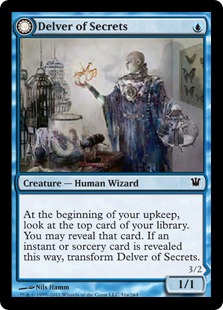
It seems to me so far like Death's Shadow may be the Delver of Secrets Modern has always wanted, as it combines well with the best disruption in the format (Thoughtseize, Fatal Push) and doesn't die to literally everything, an important quality in such a removal-loaded format. Shadow slots into disruptive, consistent shells that players can adjust for specific metagames, either by adding more removal, more permission, more threats, or even more cantrips—I couldn't fit Grim Flayer or Serum Visions into this Sultai build, but those cards may have a place in the archetype somewhere.

The Jund build does seem excellent to me, and appears to have the tools to deal with most everything. I still expect to see other Death's Shadow strategies crop up in Modern, including one optimized deck in blue given Snap-Push's strength in the mirror. We've seen Grixis Shadow make some waves so far, and Ryan Overturf placed 4th in a Star City Games Classic last weekend with a set of Shadows in his Grixis Delver deck.

Considering how simple it is to splash a fourth color in fetch-heavy decks, we may observe a veritable rainbow of Death's Shadow diversity in the coming weeks. I know I'll be watching closely. It's an exciting time to be at 3 life!

Insider: Modern Market Trends and Specs in the Wake of Modern Masters 2017

Are you a Quiet Speculation member?

If not, now is a perfect time to join up! Our powerful tools, breaking-news analysis, and exclusive Discord channel will make sure you stay up to date and ahead of the curve.

Modern has become the central interest of the Magic community with the current flood of Modern Masters 2017 spoilers and the set's imminent release. This is shaping up to be the best Modern Masters set yet, maybe the single best set of all time, and the hype is real.

Modern is going to see a general rise in popularity, with tons of new players entering, and players that were already invested doubling down.

Compared to past releases of Modern Masters, it’s said that Modern Masters 2017 is print-to-order like a normal set and won’t be a limited release, so large print runs should mean that Modern Masters 2017 will get cards into the hands of the players, and a fiasco like the first Modern Masters actually increasing prices of many staples won’t happen again. What I do expect to see is price increases in cards that aren’t being reprinted, perhaps unprecedented increases. It’s hard to make bets on those cards yet without the full spoiler, but once we have the full set, I’d make quick moves to acquire staples that escaped reprinting.

There was an error retrieving a chart for Death's Shadow

As far as the current state of the Modern metagame, Death's Shadow Aggro proved it’s fantastic, and we’ve seen increases in its cards. Death's Shadow itself has spiked, but news of its reprinting will bring the price back down. Mishra's Bauble saw massive growth this week: it was sitting at $20 at the beginning of the week, grew to over $30 by Wednesday, and as of Thursday night is sitting at $40. I expect much of this is due to anticipation that it won’t be reprinted, and upon the full spoiler being released we’ll see it increase even further, but a reprint would put the price into a freefall.

Abzan has proven to be a great foil to Death's Shadow decks, and Bant Eldrazi with its Engineered Explosives and Drowner of Hope is great in the matchup. I like the Eldrazi creatures as buys generally, especially with the emergence of Eldrazi Tron as a competitive strategy.

There was an error retrieving a chart for Karn Liberated

The price of Karn Liberated continues to rise on the strength of various Tron strategies, including the emergence of Eldrazi Tron, and it will keep moving up if not reprinted. It was slowly rising above $50, but a spike on Thursday sent it up to $75 on anticipation that it won’t be reprinted. I wouldn’t be surprised if this rose to a Liliana of the Veil-like level approaching $100, and it could even go higher.

There was an error retrieving a chart for Eidolon of the Great Revel

Eidolon of the Great Revel nearly doubled in price over the last week due to speculation on a renewed demand for Burn on the logic that the reprinting of Goblin Guide makes the deck more accessible. At $12, it’s now nearly matched its all-time high, but I expect at this point it has nowhere to go but up as Modern gains new players.

There was an error retrieving a chart for Goryo's Vengeance
There was an error retrieving a chart for Through the Breach

There are no Arcane spells spoiled yet in MMA3 (which could explain the recent price increase of Kodama's Reach), so there’s no indication we’ll see Goryo's Vengeance or Through the Breach reprinted. This alone is reason for their prices to increase, but also consider the combo of Kari Zev's Expertise and Breaking // Entering added to this strategy finished in the top four of last weekend’s SCG Modern Classic, apparently making this deck more powerful and consistent than ever, which will surely increase demand for its cards.

There was an error retrieving a chart for Gemstone Mine

The price of Gemstone Mine has spiked by over 50 percent over the past two weeks, partly due to the renewed interest in the Amulet Combo deck, and also because it’s unlikely to be reprinted in MMA3. The paper prices of both printings sit under $8, which seems like a bargain relative to the high prices of many format staples, so I’d expect this price to move upwards significantly if Gemstone Mine starts seeing more play.

There was an error retrieving a chart for City of Brass

The price of the various printings of City of Brass have seen minor gains since MMA3 began being spoiled, which leads me to believe it won’t be reprinted and will start to appreciate, so they look like great buys.

There was an error retrieving a chart for Mana Confluence

I like Mana Confluence as a spec for the same reason I like City of Brass and Gemstone Mine: that it is a versatile five-color land with applications in various decks and lot of future potential. It has been slowly growing in price since leaving Standard, and it’s Modern applications plus casual appeal makes it a strong blue-chip spec for the future.

There was an error retrieving a chart for Rite of Passage

Rite of Passage has found meaning with the printing of Walking Ballista, as the pair combines with Hardened Scales to create a combo generating infinite +1/+1 counters that immediately kills the opponent. It took a while for the community to actually figure out the combo and react, but the card spiked to astronomical levels this week, going from $0.40 to a high over $8, and has since fallen back to around $6. This has a high hurdle to become a legitimate Modern combo, but it’s surely going to be a casual favorite and Commander staple. This is likely to keep falling down a little bit more, but in the long term I see this appreciating.

There have also been some notable non-Modern price movements.

There was an error retrieving a chart for Tainted Pact

Take note that Tainted Pact has spiked in price, nearly tripling from under $2 up to over $5. I’m not certain why the spike has occurred, but as it’s not a Legacy staple I assume it’s primarily coming from casual demand. It seems to be a price correction that we won’t see fall below $5 again.

There was an error retrieving a chart for Carpet of Flowers

Carpet of Flowers has suddenly spiked from a couple dollars up to $10. This staple of Legacy sideboards has been seeing increasing play lately, but this massive spike is unexpected. A weird buyout target, this reminds me of the price spike in Choke at the end of 2014, and seems like a price correction that we won’t see tumble back down too far, so I’d expect this is the new price tag for a while.

What are your plans for making the most of Modern Masters 2017?

--Adam

Insider: QS Cast #55: MM2017 Shatters Expectations

Are you a Quiet Speculation member?

If not, now is a perfect time to join up! Our powerful tools, breaking-news analysis, and exclusive Discord channel will make sure you stay up to date and ahead of the curve.

Play

The QS Cast has returned: Chaz Volpe, and Tarkan Dospil continue on with where the cast left off and in this episode they discuss the following:

  • Interests
  • Modern Masters 2017 Previews continue
  • Modern Masters 2017 Sealed Product

Cards we discussed: Praetor Cycle & Cards that won't be reprinted.

As always, please comment and leave questions for us to address on the next cast! We will be making QS Insider questions a priority, and we want to know what you want covered.

Enjoy! We’re glad to be back.

Find us on Twitter: @ChazVMTG  @the_tark

Avatar photo

Chaz V

Started playing during Invasion block at the age of 13. Always a competitive person by nature, he continues playing to this day. Got into the financial aspect of the game as a method to pay for the hobby and now writes, Podcasts, and covers all aspects of the game, always trying to contribute to the community and create great content for readers and listeners.

View More By Chaz V

Posted in Free Insider, QS CastTagged , , , , , 2 Comments on Insider: QS Cast #55: MM2017 Shatters Expectations

Have you joined the Quiet Speculation Discord?

If you haven't, you're leaving value on the table! Join our community of experts, enthusiasts, entertainers, and educators and enjoy exclusive podcasts, questions asked and answered, trades, sales, and everything else Discord has to offer.

Want to create content with Quiet Speculation?

All you need to succeed is a passion for Magic: The Gathering, and the ability to write coherently. Share your knowledge of MTG and how you leverage it to win games, get value from your cards – or even turn a profit.

Insider: Organizing Almost Every Unique Card in Magic

Are you a Quiet Speculation member?

If not, now is a perfect time to join up! Our powerful tools, breaking-news analysis, and exclusive Discord channel will make sure you stay up to date and ahead of the curve.

My article today is inspired by our editor Danny who, after reading my articles, asked me how I keep such a large collection organized.

I own roughly 100k cards, down from about 200k half a year ago when I made a big trade, but still a huge amount for most. Of those 100k there are about 61k cards in my collection and the rest is a whole bunch of basic lands, trade stock, bulk, decks and other extra's. More than most online stores I know in The Netherlands and a better selection too. I can find any card in my main collection in under 20 seconds, a little more if it's in a deck or in one of a few special boxes.

(My apologies for some of the crappier pictures: I have to work with whatever I have from that time when a picture can't be retaken).

History

Early days

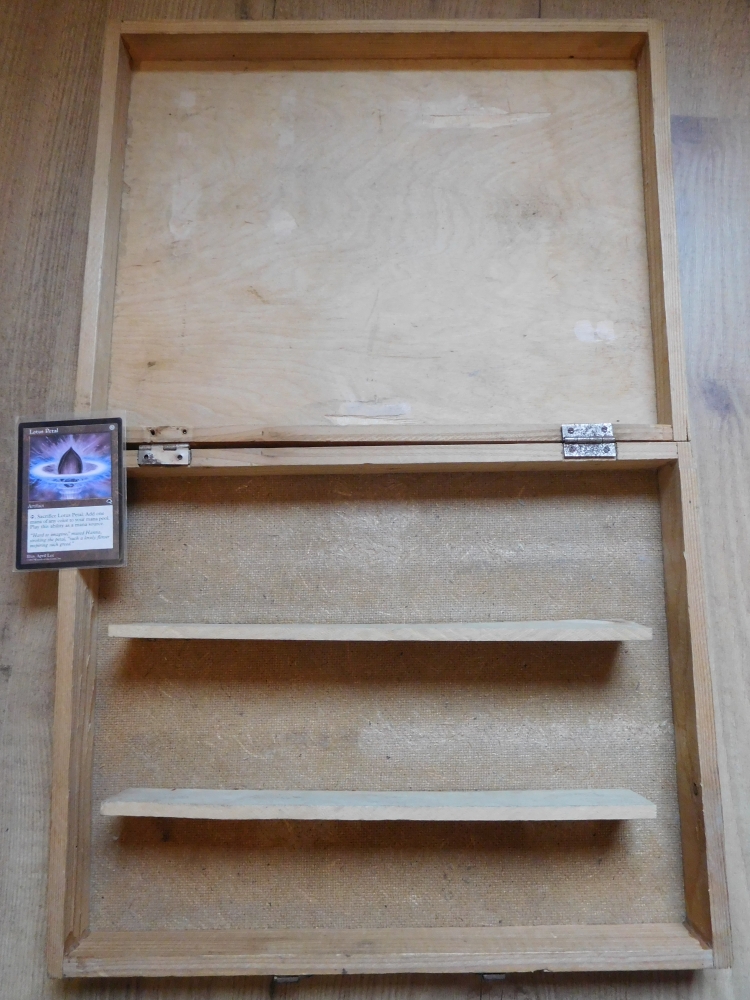
My collection once fit into a tiny box, but that of course didn't last long. Some pictures of boxes I used along the way:

Ultra Pro Box

DSCN2621

DSCN2623

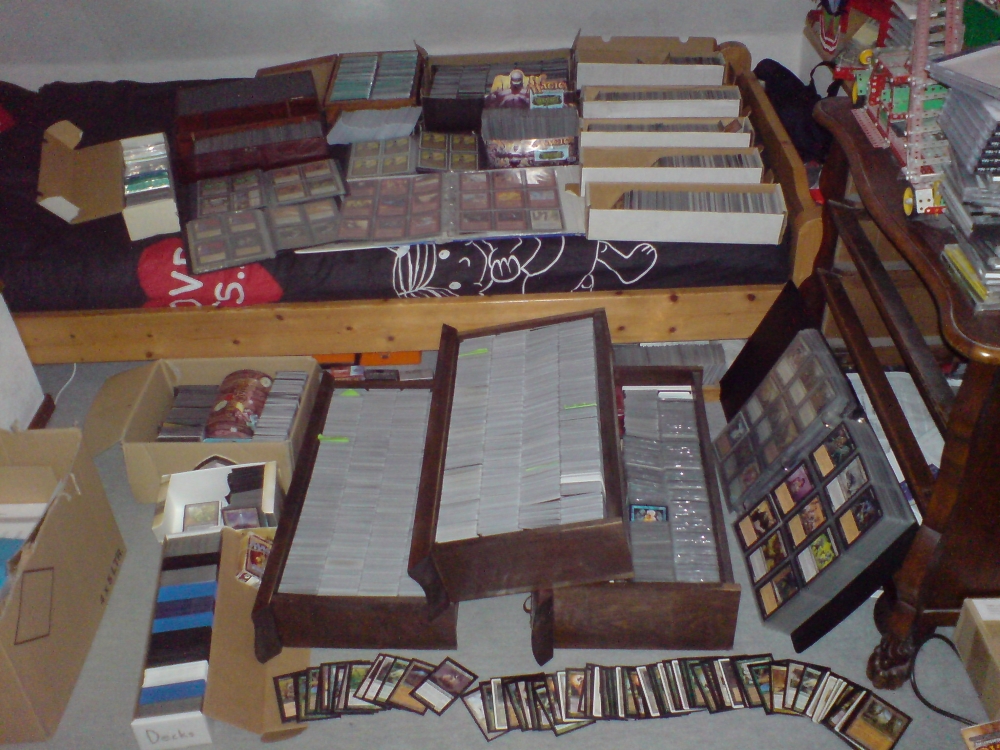
Ten years ago this was my collection (notice all of the above-pictured boxes still being present at this stage):

2007 collection

As you can see, there are many different boxes, several binders and the drawers from the cabinet on the right. The collection remained this way for a long time, but eventually I reached the stage where this became unmanageable. This is when I decided that I needed to overhaul my process. At this time, I was sorting cards by rarity, color and alphabet. For lower volumes, this works quite decently and you can quickly find cards. Unfortunately, when you are mostly adding cards when a new set is released, and you then need to go through all your red commons to sort in the red cards from the new set each and every time, it gets very tedious.

Recent times

As you might have guessed, I decided I needed another level of sorting: by set. Paradoxically, because cards naturally come sorted by set when you get them from a box, it was easy to add this sorting level. Of course, this did require that I re-sort what by then amounted to about twenty to thirty thousand commons. A month or two of sporadically sorting cards later, I had a stack of commons divided by set. I added them back into my cabinet, and it became easier to add new sets.

I always knew that I wanted to do the uncommons and rares too, but as those were in smaller numbers it was less of a priority. Of course, after a few years, the uncommons started to become challenging too, so I did the same for them and finally the rares as well. This all happened before mythics came around, and I have always sorted them with the rares in any case.

Intermission

Life was good until I had the opportunity to pick up a large collection. I estimate at least 100k cards, fortunately largely sorted by set. I got a great deal, but now I somehow had to figure out what I wanted to do with these. I decided at this point that going for a full playset of Magic would make for a good challenge, but that I would need to figure out how to merge with this new collection and then figure out exactly what I have. I always want to keep the best looking copies per card too. A daunting task.

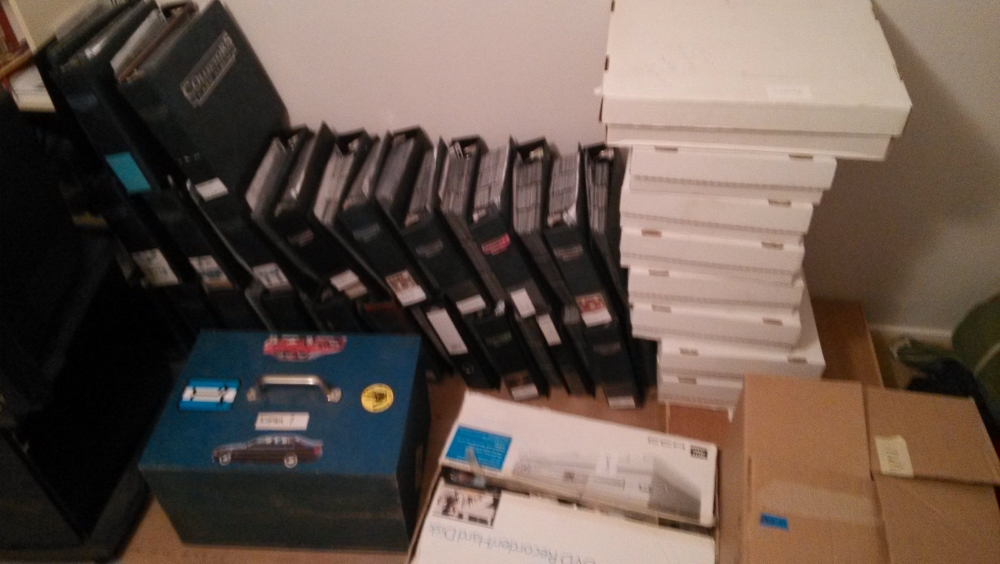
A picture of the collection I bought:

Collection

That's 42 binders for sets and all boxes in the picture are filled with bulk.

Overhaul

The bulk of this collection was also roughly sorted by set (and often even by color and alphabet), so what I would do was go through the bulk, get out everything from the set's binder and merge with the bulk. After that, I would take out the best looking cards for a playset and sort the rest of the cards by rarity and value. I would then stack them on my (big) table with the sets sorted in chronological order. When I was done with this I took the sorted cards from my own collection, added those best looking cards from the other collection, filtered out the best looking copies per card and penny sleeved them. Finally I sorted the results by rarity and added the cards to a 800-card box per set. When I was done it looked like this:

After sorting

During my sorting and filtering, I also updated a spreadsheet with the cards I own. I spent almost three weeks of vacation time on this and creating my spreadsheet...

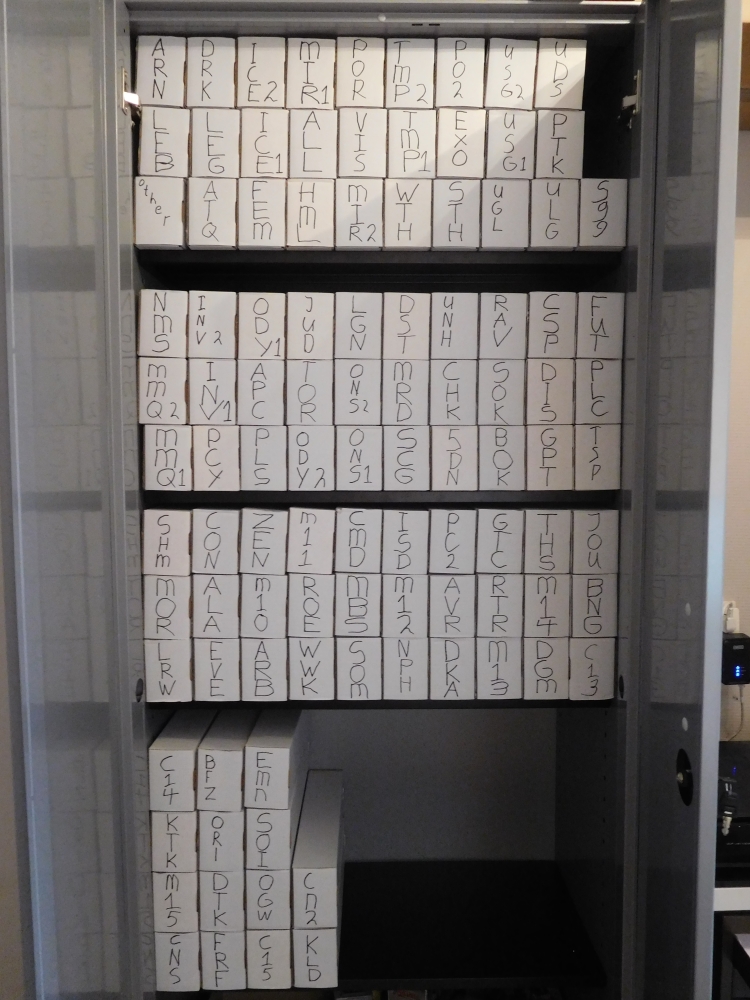
From here, these boxes moved into a filing cabinet, as shown here:

Some sets don't fit in a single box. Other is anything not from the first printing with normal corners.
Other is anything not from the first printing with normal corners.

Current situation

If I have a single card come in for a set, it gets tedious to pull out a box and add it. I often have large volumes come in at once, but split across many sets, so that gets very tedious. What I do is keep a 5000-count box with dividers for every set, available for storage of incoming cards. Whenever the box overflows I take the largest few sets and sort those into their boxes. This ensures that whenever I am adding cards to the main collection I add a decent number per box while only pulling out a few boxes. I'll also sort away any set that is complete; however, so far I have no complete playsets of any normal set (I do have them for sets like the more recent Commander and Conspiracy releases that I simply traded for as playsets). I'm closest for Antiquities; help would be appreciated.

5000-count box
Staging area.

Lessons Learned

The way I store my collection keeps changing. I am pretty happy with my current setup. However, there's a chance that I will come up with something better in the future. Right now, there's a lot of wasted space in the set boxes for smaller sets like, for example, Starter '99. Perhaps ultimately someone comes up with an automated storage solution that sorts away and retrieves cards for you. Basically, my main lesson is that there's always room for improvement and that until an automated solution is devised, it will always remain tedious work.

I'm curious to hear how you manage your collection or stock and whether you do anything different from what I do. Leave a comment with your system below.

Avatar photo

Niels Rietkerk

Niels currently lives in Amsterdam, The Netherlands and has been collecting, playing and trading since '97. A casual player at heart, his first official tournament was the Unhinged prerelease. You can most commonly find him playing multiplayer Commander, probably trying to talk his way to a win. He has always been passionate about trading, but these days leaves the more volatile markets to people with more time, instead focusing primarily on bulk and collections. As he's one of the most prolific forum members it should come as no surprise that Niels loves to discuss. Feel free to comment or reach out to him on the forums or through Twitter.

View More By Niels Rietkerk

Posted in Collecting, Finance, Free Insider, ION Academy, Timeless Info4 Comments on Insider: Organizing Almost Every Unique Card in Magic

Have you joined the Quiet Speculation Discord?

If you haven't, you're leaving value on the table! Join our community of experts, enthusiasts, entertainers, and educators and enjoy exclusive podcasts, questions asked and answered, trades, sales, and everything else Discord has to offer.

Want to create content with Quiet Speculation?

All you need to succeed is a passion for Magic: The Gathering, and the ability to write coherently. Share your knowledge of MTG and how you leverage it to win games, get value from your cards – or even turn a profit.

The New Fad: Conversations on Grixis Control

Are you a Quiet Speculation member?

If not, now is a perfect time to join up! Our powerful tools, breaking-news analysis, and exclusive Discord channel will make sure you stay up to date and ahead of the curve.

Grixis Control has received a surprising amount of attention recently, due in large part to Corey Burkhart’s continued work on the archetype, and Shaheen Soorani’s recent adoption of the strategy. For those wondering about Richie Sledz’s 4th-place finish at the SCG Open in Indianapolis, look no further. His deck was almost a direct copy of the version Shaheen and Burkhart have been proposing, with a few notable differences. With the Modern metagame relatively known at this point (though some decks continue to surprise) it’s time to start getting down to what I love the most about Magic: tuning.

This week, I’ll be giving my thoughts on the format, as well as the Grixis Control list I personally believe is the best for the current Modern environment. In some ways, this article can be viewed as a response to the points made by Soorani in his recent Star City Games article, so feel free to give that a read if you’d like. Mostly, I intend this article to be an exercise in format evaluation, with Grixis Control acting as the recipient of my conclusions. Hopefully, those not interested in Grixis Control can still take some conclusions from this article and apply it to their archetype(s) of choice. Let’s get to it!

[wp_ad_camp_1]

Part 1 - Finding the Stock List

If we’re talking about Grixis Control in 2017, the best place to start would be Corey Burkhart’s list that he’s been playing for what seems like forever now.

Grixis Control, by Corey Burkhart (19th, GP Vancouver 2017)

Creatures

4 Snapcaster Mage
3 Tasigur, the Golden Fang

Artifacts

1 Engineered Explosives

Instants

3 Terminate
4 Thought Scour
3 Kolaghan's Command
4 Lightning Bolt
1 Logic Knot
1 Countersquall
2 Spell Snare
4 Cryptic Command

Sorceries

4 Ancestral Vision
4 Serum Visions

Lands

2 Creeping Tar Pit
1 Blood Crypt
1 Flooded Strand
3 Island
1 Mountain
4 Polluted Delta
4 Scalding Tarn
2 Steam Vents
1 Sulfur Falls
1 Swamp
2 Watery Grave

Sideboard

1 Anger of the Gods
1 Countersquall
1 Damnation
2 Dispel
1 Engineered Explosives
3 Fulminator Mage
1 Izzet Staticaster
1 Jace, Architect of Thought
1 Negate
3 Surgical Extraction

There’s a ton of documentation out there to back up this version of Grixis Control, and a strong pedigree of finishes in its past as well. 19th at Grand Prix Vancouver two weeks ago, 2nd at GP Dallas in November, 8th at GP Los Angeles last May, and who could forget the MOCS—Corey has been putting up results while almost nobody else has, with pretty much the same version each time. Let’s dig into the list.

In his deck tech and match walkthrough from his MOCS victory, Corey talks briefly about his list and gives an explanation for some of his picks and numbers. Sleeving up four Cryptic Command along with four copies each of Serum Visions, Thought Scour, and Ancestral Vision sends a pretty strong statement about how he feels regarding the format at large. Abzan, Tron and Scapeshift are called out as primary enemies in the deck tech, and the numbers in this list reflect that. Countersquall and a playset of Cryptic Command are great against combo strategies and decks that let you hit five mana, but are more than awkward against Death’s Shadow Aggro and Revolt Zoo.

Don’t get me wrong—the deck does a lot of things right, and by now it has more than enough results to back up its claims. Tasigur, the Golden Fang as a one-mana win condition and the only sorcery-speed spell in the deck (besides cantrips) gives us a lot of freedom and consistency with how we sequence our spells. At heart, this archetype is fundamentally just looking to get to four mana, cast Cryptic Command, and then chain Snapcaster Mage and Kolaghan's Command until our opponents give up. I called Tasigur, the Golden Fang a win condition, but really he’s just a cheap, powerful blocker that can threaten our opponent or generate material advantage if we’re in the market. The old adage holds true here: it’s not the first Cryptic Command that kills them, but the second.

Still, on the surface at least, it looks like the archetype could use some tuning to adjust to the current Modern landscape. Midrange strategies like Abzan and Jund are present, as are big-mana decks like Scapeshift and Tron, but Death’s Shadow, Affinity, Burn, and Naya Revolt are a significant part of the format as well. With Merfolk making waves (heh) and Lantern Control shining a light on Modern’s dark corners (I’ll stop) we are far from a settled format, and it’s my opinion that our Grixis list should be positioned to reflect that.

Part 2 - The Conversation

In his write-up on SCG, Shaheen Soorani gives his thoughts on Corey’s list, along with some changes he would suggest moving forward. I’ve decided that the best way to structure my own thoughts on Grixis is to “respond” to Shaheen’s, but don’t read into this as anything more than an intellectual disagreement. Not only would my father disown me, (the biggest Soorani fan in the world), but many denizens of the Internet would be quick to comment on my lack of impressive tournament performances. Still, I’ve been playing Grixis Control continuously in Modern for the better part of two years now, so I feel I can speak on the archetype with at least some authority.

“[M]ost Modern decks are very aggressive, which typically deters use of hand disruption.”

We’ll start with a point of agreement: against the aggressive half of the format, the life loss from Thoughtseize is not where we want to be. Still, this is only surface-level analysis; Modern has remained at relatively the same levels of aggression for years, yet Thoughtseize comes and goes, popping up in Grixis lists throughout time. Aggression as a defining format characteristic is actually a reason for discard, in my mind, rather than against, for a couple of reasons. Disrupting curve for a single mana can often offer returns much greater than the initial mana investment. Taking our opponent’s three-drop and forcing them to waste mana by playing inefficiently is one of the interactions that’s integral to Grixis Control’s success as an archetype. It’s not enough to just trade one-for-one and hope our answers align perfectly with their strengths; true victory is attained when we can maximize value in critical situations and force our opponent to stumble at an important juncture.
Most aggressive decks are actually highly linear combo decks in a sense, and even the most redundant archetypes have critical pieces that outperform their neighbors. Think Cranial Plating in Affinity, Death's Shadow in Death’s Shadow, Eidolon of the Great Revel in Burn, Burning-Tree Emissary/Hidden Herbalists in Revolt. Every aggressive deck worth playing in Modern has a plan for Lightning Bolt; each of these archetypes finds a way to take our best removal spell and either blank it entirely or reduce its value to less than a card. For this reason, discard is, in some ways, a necessity. Our identity as a reactive strategy is controlled entirely by the enemies we expect to face. Were Kira, Great Glass-Spinner and Etched Champion seeing success week-to-week, playing discard would be a given. Look not to aggression, but to context.

“When Ancestral Vision resolves, the cards that follow must be immediately useful to threats already on the battlefield.”

Again, I agree, but that isn’t the whole story. Otherwise we wouldn’t be playing eight other cantrips alongside Ancestral Vision. Vision is at its best in grindy metagames, obviously, but it's also a strong “endgame” to play towards in aggressive matchups as well. Opening on Ancestral Vision, trade with everything, run them out of cards, refill and win. It’s a simple strategy, but when it works (read: when you have Ancestral Vision in your opener) Vision can feel pretty powerful.
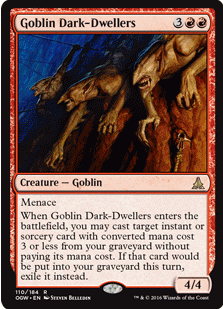
The downsides, of course, are widely known at this point. Without Jace, Vryn's Prodigy or Goblin Dark-Dwellers, Ancestral Vision can feel a little out of place, especially when we draw it late. Taking our first turn to suspend it often puts us behind on board, which can snowball into absolutely needing to hit when it comes off suspend. Hence the bad feelings when we draw four and hit cantrip, cantrip, land, counterspell. Still, its presence in our list gives us a strong endgame to play towards. Stay alive, be consistent with our interaction, and eventually our card advantage will take over. Assuming we reach that point.

The main point here is that the power of Ancestral Vision in our list depends entirely on the matchups we plan on facing first and foremost. Deck composition is important, but playing Ancestral Vision is not in and of itself a reason against playing discard as well. Just as I said before regarding aggressive matchups and discard, playing Ancestral Vision can often be a reason for discard, and not against. When our opponent knows we have it, the fight over Vision, whether through counterspells or discard or some other measure, can often be a sub-game itself. Assuming our opponent isn’t of the mind to just play the same postboard regardless of opponent, they have two options: slow down to try and grind through it, or speed up to try and go under it. In both cases, discard can be helpful; interrupt their curve, disrupt their answer.

"Fatal Push is the black Swords to Plowshares, and I don't think I could ignore it completely in a field that is dominated by little creatures."
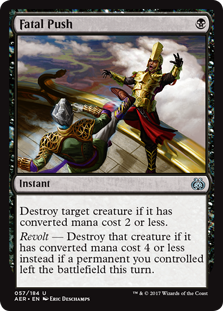
Shaheen argues for Fatal Push’s inclusion, and I agree. When we’re playing twelve cantrips, getting a “free mana” that would have been spent on Terminate to filter through our deck earlier is hidden value that should not be ignored, especially in an archetype as focused on mana efficiency as ours. The resurgence of token strategies that Burkhart predicted as a result of Fatal Push’s printing has yet to happen on a wide scale, though Lingering Souls is seeing an increase in play. There will be decks that position themselves to present strength against our new removal tool, but an argument can be made that we would have been just as disadvantaged in those matchups were we still playing Terminate. For now, Fatal Push seems clearly better than Terminate. Play it.

Part 3 - Moving Forward

Were I headed to a big event tomorrow, this is what I would be playing:

Grixis Control, by Trevor Holmes

Creatures

2 Jace, Vryn's Prodigy
4 Snapcaster Mage
3 Tasigur, the Golden Fang

Instants

2 Fatal Push
3 Kolaghan's Command
4 Lightning Bolt
1 Logic Knot
3 Cryptic Command
3 Terminate
4 Thought Scour
2 Spell Snare

Sorceries

4 Serum Visions
2 Inquisition of Kozilek
1 Anger of the Gods

Lands

4 Polluted Delta
4 Scalding Tarn
2 Steam Vents
1 Sulfur Falls
2 Darkslick Shores
2 Creeping Tar Pit
3 Island
2 Watery Grave
1 Mountain
1 Swamp

Sideboard

1 Anger of the Gods
1 Countersquall
1 Damnation
2 Dispel
3 Fulminator Mage
2 Engineered Explosives
1 Izzet Staticaster
1 Jace, Architect of Thought
2 Ancestral Vision
1 Thoughtseize

Integral to the composition of this list are my feelings regarding Ancestral Vision in the format. Were the format “grindier,” with Abzan, Scapeshift, control mirrors and others putting up large numbers, I would be more interested in playing it in large numbers. As things stand today, however, there is just too much aggro in the field for me to justify playing twelve blue cantrips. My thoughts regarding Ancestral Vision in an aggressive field remain the same—I don’t have an issue playing the card in an aggressive format. I just think twelve cantrips is a bit too many, and Thought Scour appears to be the better spell, for now. Tasigur, the Golden Fang as a one-mana roadblock is exactly where I want to be against Revolt Zoo, who literally cannot kill the card. Playing a 4/5 on turn three (and sometimes turn two) against Tron and combo is a solid plan, especially when backed up with disruption and burn.

Discard is strong, and can be made stronger when played alongside Tasigur. For those who are familiar with Grixis history, the old versions that played Tasigur and Gurmag Angler were excellent at applying pressure and putting opponents in "the squeeze." Keeping Path to Exile in after board? Thanks for the latent card advantage, and welcome to the world of Dispel. I know we’re giving up Ancestral Vision and a strong(er) lategame, but with Cryptic Command and Tasigur to play to, along with Kolaghan's Command and Snapcaster Mage, what we really need to do is survive in the early turns.

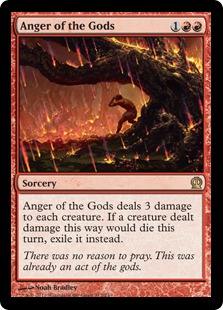
With that in mind, Anger of the Gods is absolutely essential to this strategy in the current metagame. Burn, Merfolk, Affinity, Zoo, Lingering Souls… Anger of the Gods works in tandem with Tasigur to shore up our main weakness out of creature decks: multiple, small threats. Be it tokens, or a fast double- or triple-spell turn out of Affinity and Revolt, Anger of the Gods is the best option we have to fight creature strategies intent on blanking our Fatal Push and Lightning Bolt. Engineered Explosives is strong, but a little inconsistent, and rarely a card I'm happy to cast in any situation.


Jace, Vryn's Prodigy is back. He could be something else, but I’m just really partial to the card in Tasigur, the Golden Fang configurations. He improves virtually all aspects of our deck, and makes most of our cards better by providing virtual extra copies of what we need most. Thought Scour to power his flip, discard to make sure he survives, Tasigur, the Golden Fang to capitalize on situations when he doesn’t, Kolaghan's Command to get him back. We aren’t playing cheap counterspells in large numbers (no Mana Leak/Remand here) so the main drawback against his inclusion doesn’t apply. Against Death’s Shadow Zoo, shrinking Tarmogoyf lets our Tasigur do some actual blocking, and against small creature decks his high loyalty can gain us a lot of life. The amount of things the card can do for two mana is just insane. That doesn't mean he belongs in every metagame, but right now I think the conditions are favorable.

Conclusion

Corey Burkhart has found large success with the version of Grixis Control that fits his playstyle most closely. You could probably pick up that list and do just fine in your next event. Shaheen Soorani is now on the deck as well, and I wish him luck. There’s nothing I want more than to see Grixis Control (finally) take down a large event.

For me, this is the version that aligns closest with how I play the deck. Vendilion Clique barely missed the cut, and for now, Surgical Extraction is back on the practice squad, but either could make the final roster depending on how things shake out in the coming weeks. Let me know what you think in the comments below, and good luck!

Trevor Holmes

Insider: Lessons from a Lotus

Are you a Quiet Speculation member?

If not, now is a perfect time to join up! Our powerful tools, breaking-news analysis, and exclusive Discord channel will make sure you stay up to date and ahead of the curve.

Yes, I know there are Modern Masters 2017 previews. Do I care about them? Eh, kinda. The set is jam-packed full of value, and a whole lot of the cards in the set  are going to crash. Thankfully, your QS Insider sub gives you access to a whole pile of excellent writers who are going to write about that instead of me.

There was an error retrieving a chart for Opportunity

Instead, I'm going to spend this week updating you all on that Black Lotus from before, if you couldn't guess from the title. I wanted to go with something about Yawgmoth's Will and re-casting the Lotus because this is the second article about it, but I couldn't pull it together. I'll probably write a third article in a month or so to complete the trilogy, but we'll worry about that when we get there.

An Informative Phone Call

Remember the old school guru I mentioned in my last article, Dave Smith? I got to spend about an hour on the phone with him this past weekend, and he really helped me break down what I need to know about sending in this flower to get it appraised by the folks at BGS.

We talked the benefits of choosing BGS over PSA, about the costs associated with shipping and of course the how of shipping a $5,000 card to make sure it doesn't have the slightest possibility of getting damaged. The most expensive card(s) I've shipped prior to this deal was probably a half dozen Revised dual lands totaling $1,000, so I am quickly scaling up into a world I'd never ventured into here.

Thankfully, Dave's knowledge and kindness were essential to explaining what the process would look like. After carefully sealing away the card to make sure it would take the folks at BGS at least a half-hour to look at, and an $80 post office bill, the card is officially in the aether.

There was an error retrieving a chart for Black Lotus

Comparing Grading Services

Let's break down some of the things I've learned.

I mentioned last week that there were two well-known companies who grade cards. BGS (Beckett Grading Services) and PSA (Professional Sports Authenticators). I really didn't know what the difference between these two was, so Dave used small words to explain it to me. Based on our conversation, I learned that BGS was far and away the more reliable place to get my stuff graded. The cases they use to seal cards in are stronger, and require significantly more effort to crack open if you really want to release your Lotus back into the world of sleeve-playable cards. The plastic cases that PSA uses are supposedly pretty flimsy, and "I could probably snap it open between my fingers," said Dave. As for the BGS cases: they're hermetically sealed (that means airtight), and require pliers and a screwdriver to open. That's definitely what I'm looking for. If BGS is the more respected option between the two when selling multi-thousand dollar cards, then that's where I'll go. I think I'll trust the guy who's had dozens of references and who has been doing this longer than I've been alive.

Okay, so I picked BGS. Based on the photos I sent him of the card and my own analysis about the condition, we figured it would be getting at least an 8.5, maybe a 9. I'll repeat from last week that I'm not an expert when it comes to grading centering or knowing the exact decimal point a card should get. However, we agreed that it would definitely be worth the costs of shipping it there and waiting to see what it gets. I'm not in need of an emergency quick flip for cash, so it's worth it to spend a single-digit percentage of the total value of the Lotus if it ends up increasing the value by 10 or 15 percent when I'm trying to sell it.

What It Costs for Grading

So where do those couple hundred dollars in costs come from? How much exactly does it cost to get a card graded by the folks in Texas at BGS? Well, I'll let you look at my packing slip first.

20170226_125704

Dave was really patient and helped me out with the entire process step-by-step, and I hope that this article will help you to do the same if you happen to come across this as a first-time buyer of Power or are looking for answers as to how to get your valuable NM card locked away in plastic.

You'll notice that the actual "grading fee" is only $15, which seems really cheap considering the actual value of the card. And it is.

However, the real costs to you are shipping. Both ways. If you're moving something this expensive, you want to make sure it is air-freaking-tight. Waterproof. Hailproof. Bulletproof. You want to be completely at ease, and reduce the chance of getting that dreaded email or phone call saying, "Oops we lost/damaged your package" to Z E R O.

If you just happen to have a bunch of Lotuses or Beta Power lying around, I'll drop the link to Beckett's online submission form. You'll have to make an account first, but that only takes a few minutes. They'll ask you how you want it shipped back, how much insurance you want on it, and how quickly you want to expedite the service. The services range from 2 business days to 45 business days, but Dave explained that the 45 day service really ends up being closer to 90 after all the days in transit and non-business days that go by. While it's by far the cheapest option at around $10, it only costs a few more dollars to expedite to 10 days. Seems fine with me.  With the FedEx cost of shipping ($28), insurance ($50), and the grading itself ($15), my total came to $93.

Insurance costs $10 for every thousand dollars you want to value your package at. Some of you probably already knew that from your day jobs or shipping non-Magic stuff, but I didn't, so I'm putting that bit of information in. While I'd be happy selling this Lotus for $4,500 or even just a quick flip at $4,000, I really want to see if I can leech as much value out of it as I can. Even if I have to wait a while to find a buyer on the High End Facebook group (the best place Dave recommended to sell this kind of thing), it'll certainly be an achievement to turn a single piece of cardboard into a semester of grad school tuition plus my trip to GP Vegas. After the $93 here and the $80 shipping bill at USPS, I'm looking at around $170. I could have cut that down a little bit by using a smaller flat rate box or bringing my own bubble wrap, but c'est la vie. Live and learn. You know how it goes.

In the above picture, you can see a few of the packing elements that went into shipping the card. You've got your standard penny sleeve and toploader, and we added a piece of paper across the top before adding any tape. After that, I put the card in a team bag and sealed that, followed by an actual ZipLock bag, for waterproofing. That's what you see above, but I wasn't done. I complemented that by sandwiching the card in between two more toploaders, and wrapping that in some actual shipping tape for security.

After this, the armored lotus went into one of those smaller BCW white boxes; the ones that only hold 200-400 cards. I filled that BCW box with paper and stuffing before giving it a mummification in shipping tape, and then brought my parcel to the post-office to load into a medium flat rate box. After buying some overpriced bubble wrap and using the entire roll on that medium flat-rate box, we had our finished product.

End Step

Part three will come when I get the Lotus back from its trip to Texas and check out the grade. I'll be happy with an 8.5, but ecstatic with a 9. Even if Dave and I missed something crucial and it only gets a 7.5 or 8, there's still the value that comes with the card being authenticated and proven to be real.

I've learned a lot about Power in the past couple of months, and the resources and connections I've grown friends with across various social media platforms have helped immensely in doing so. If you ever want to chat up Dave about Old School Magic or Vintage, feel free to hit him up; he was an absolute pleasure to talk to, and I'm hoping to write more about high-end stuff when it comes my way, however rare that may be.

Even if these articles don't help the majority of my readerbase turn bulk rares into collection empires, I like to think that I was able to afford the Lotus because of all the bulk rares I've sold throughout my life at 25 cents a piece. Keep it in mind. Thanks for reading!

Insider: MMA17 Finance

Are you a Quiet Speculation member?

If not, now is a perfect time to join up! Our powerful tools, breaking-news analysis, and exclusive Discord channel will make sure you stay up to date and ahead of the curve.

Over the past few weeks, I’ve advocated minimizing your Modern collection due to the reprint schedule for Modern cards. You should not be highly invested in the format unless you play it all the time. By all means, keep a deck or even multiple decks, but don’t invest in the format as a long-term plan. I’ve lived by this recently, and I detailed a lot of that in my article Grand Prix Pittsburgh Tournament Finance Report.

One of the key elements of that selling spree was unloading all of my extra fetchlands. I had a ton of Khans fetches that I moved, but that was only due to insane buy prices for them. More importantly, I sold my extra Zendikar fetches, because I was pretty certain we would get them reprinted in Modern Masters 2017 or in Amonkhet.

If you haven’t heard, the Zendikar fetchlands' inclusion are a huge part of why MMA17 is flying off the internet’s shelves. Local shops are preselling tons of boxes, as are all the online retailers, and the set keeps getting better and better as more spoilers are revealed. The fetchlands will be a huge part of this set's success, but they're not the only part players are looking forward to.

There was an error retrieving a chart for Scalding Tarn

Last week, I detailed my predictions for possible inclusions for the mythic rare slot. If you’re into sports, I’d compare this process to something like filling out your bracket for March Madness or a Super Bowl pool. These are just fun theoretical process to enjoy with friends. It’s so exciting to go through spoiler season with your predictions set. Every spoiler is another possible cheering moment. So, let’s see how it’s going.

1. Linvala, Keeper of Silence: Yes
2. Idyllic Tutor: No
3. Snapcaster Mage: Yes
4. Consecrated Sphinx: No
5. Griselbrand: Yes
6. Liliana of the Veil: Yes
7. Goblin Guide: Yes and no
8. Koth of the Hammer: No
9. Tarmogoyf: ?
10. Oracle of Muldaya: No
11. Domri Rade: Yes
12. Blightsteel Colossus: No
13. Crucible of Worlds: No
14. Inkmoth Nexus: No
15. Horizon Canopy: No
16. Grove of the Burnwillows: No

Miracles being in this set really threw off the dynamic of the mythics. It also gave us a lot of unfavorable slots in our packs as well. The highest among the three spoiled so far is $6 or $7, and that's not the kind of card we're looking to open. I'm pumped about Linvala, Keeper of Silence, Snapcaster Mage and Liliana of the Veil being confirmed. Damnation and Goblin Guide as rares are going to be great pulls as well. Between those two and the fetches, many of the rares are better cards to open than the mythics. This set is shaping up to be great for everyone. Store owners are pumped because sales of this set are going to be great for business, the possibilities in this set are great for players, and the Modern format should be growing due to the influx of cards available again as well as prices coming down.

The 'Goyf Problem

There was an error retrieving a chart for Tarmogoyf

As of this writing, Tarmogoyf is yet to be spoiled as a card in the set. I think the inclusion of this format staple is essential to the value of the set. With another high-profile mythic like Tarmogoyf in the set, players will be cracking packs all day long. If Liliana of the Veil is the best we have to open, though, I think the mythics might seem a bit lackluster. Many customers are just looking for their lottery ticket in the form of a foil Tarmogoyf. I see this all the time at my store, and I'm sure it's the same elsewhere.

Additionally, we still have the other mythic slots to fill. You'll notice I gave myself a no on the infect guys as well as the lands and artifacts. There is a possibility we still get those, but with the multicolored theme coming to light, I think its more likely we get different cards than I chose. The direction I thought Wizards would have gone with this set is clearly different than their decision. So far it looks like a rehashing of Shards of Alara, which is great for me because that's one of my favorite blocks of all time. The fetches and the plethora of dual lands in the set will help us play whatever color combination we want as well, so that should be a ton of fun.

What Should We Do with the Reprints We Own?

There was an error retrieving a chart for Snapcaster Mage

If you're like me, you already have some or all of these cards being reprinted. Even with selling a ton of Modern staples, I still have copies of a lot of these cards. My advice is to not panic and and don't have a fire sale on all of your cards from the set. Many players are doing that right now. The prices will fall because this is happening. Therefore, you should wait it out until the supply dwindles down.

One interesting phenomenon that's happened with both releases of Modern Masters thus far is that one or more of the cards in the set increases after release. This was the case with Tarmogoyf when the first Modern Masters was released. My theory about the increase even in the face of reprints was an increase in demand higher than the increase in supply.

Wizards goal is to use this product line to not only keep prices down in the format, but also to increase availability and interest in the format. So, when Tarmogoyf was first reprinted, I think players who opened one were just as likely to keep it and try to get three more as to sell it. This could very likely happen with Liliana of the Veil and Snapcaster Mage or maybe other cards in the set as well. Typically I'd think for a card to not only hold its price in the face of a big reprint, but also increase in value, it would have to be a flagship card of a deck or in the format. These two cards are exactly that. Tons of players want both of these cards and wide variety of decks play them.

What Should We Do with Extras We Open?

I've thought about this quite a bit. Normally, I get boxes of every set from my store. Modern Masters 2017 is looking quite lucrative, so I'll probably have some fun cracking packs too. Since I just sold a ton of Modern cards, this set will help replace many of the cards I've sold, but it looks like I'll be out of luck on Goryo's Vengeance, Through the Breach and Ad Nauseum. I think, though, the best time to sell the majority of this set will be about a year from now, so I'm contemplating holding the cards from this set for a year and then writing a follow-up article to see where everything has fallen. What do you think? Is that something you'd be interested in reading? Let me know in the comments.

As far as what you should do, I think selling or trading immediately after release isn't a great way to maximize your profits unless you get sick deals from dealers buying aggressively. The prices of these cards will bounce back, so hold off until you can get the most out of your investment. Players will always need these cards, except for maybe the miracles, so don't be in a rush to liquidate your prime stock.

That's all for me this week. I can't wait to see what they spoil next!

Until next time,
Unleash the Finance Force!

Mike Lanigan
MtgJedi on Twitter

Insider: The ROI Mindset

Are you a Quiet Speculation member?

If not, now is a perfect time to join up! Our powerful tools, breaking-news analysis, and exclusive Discord channel will make sure you stay up to date and ahead of the curve.

Welcome back, readers!

Today's article is one I've been meaning to write for a long time. It discusses something I've noticed about myself, which perhaps applies to many of you as well: the tendency to think constantly in terms of return on investment (ROI).

Most QS readers are likely unwilling to trade Legacy cards for Standard cards straight across. At the most basic level, we all understand that Standard cards will lose most of their value at rotation. It's not worth it to trade a $20 card that has held its value for years for another $20 card that didn't exist last year, and which will likely be worth $5 in another year.

It's just a bad trade at any point in time other than now. So we don't make that trade because we understand that the future value of the card will be less than its current value.

The next level of thinking is when you have something less obvious—say a proposed trade of Modern staples for other Modern staples. Here the whole issue of the obvious expected drop in value is out of the equation. That doesn't mean, however, that the concept of comparing likely future values shouldn't take place.

For example, when you have a high-dollar Modern staple like, say Liliana of the Veil, there is a high likelihood of her getting a reprint soon simply because a large number of Modern players are clamoring for WoTC to reprint it. Many of us (myself included) believe she will be in Modern Masters 2017; if so, we would expect her price to drop (likely in the neighborhood of 20-25%).

There was an error retrieving a chart for Liliana of the Veil

If we can trade our copy at her current value of around $95 towards cards that we know won't be in Modern Masters 2017 (like, say, Khans fetchlands), we can "lock in" her current value. We might even be able to get a premium for "trading down," though currently so many players expect her in MM17 that it may be difficult to find someone willing to make this hypothetical trade.

Either way, the cards we acquire in this trade aren't likely to be reprinted in the near future, and may steadily go up until their next reprint.

The ROI Mindset

This mindset of comparing future expected values is what I refer to as "return on investment thinking." Normally when we discuss return on investment it's more in the realm of stocks and bonds, where we (as stock or bond holders) expect to see some amount of gains (returns) on whatever money we invest. I borrow this terminology because when I trade I consider each of my cards' current values as my "investment," and I'll only trade for cards that I feel will grow in value at a faster rate than the ones I'm trading away.

One word of caution: because this thinking focuses on future values, there is obviously some risk associated with it. If we trade away our Liliana of the Veil and she's not in Modern Masters 2017, she'll likely jump by 20-25% and we may end up losing out big time.

Also remember that WoTC has complete control over what they print or reprint—thus, unlike with most other stocks/bonds, one decision by them can greatly affect the value. We as speculators have no control over this. There's always the possibility of them printing an even better option than the current ones (say, tri-color fetchlands) that would greatly hurt the values of the current ones.

This doesn't mean that they will reprint everything valuable all willy-nilly (they haven't in the past). It just means that we have to accept that sometimes we may end up very wrong.

Similar things do happen with stocks and bonds, so it's not like we're the only ones taking these types of risks. History is littered with companies that showed a lot of promise and ended up making one (or more) poor decisions which bankrupted them and ruined their investors.

lehman

Taking It Too Far

There is one other danger to this mindset: when it seeps too much into other aspects of your life.

Of course, it's perfectly fine to look at some non-Magic things with this mindset. For example, if you're looking to buy a house, you'll likely notice there are many factors determining the value of the house, and it's never set in stone. In one neighborhood you might find that a 1200 sq. ft. home costs the same as 2000 sq. ft. home in another neighborhood; different houses have different amenities, different school districts, etc. You'll also be given lots of options when it comes to how you want to pay for your home: 15-year mortgage, 30-year mortgage, some other set time frame.

I can say from personal experience that I looked at well over 20 houses before finding the one I currently live in. I had to decide early on what kind of investment I wanted to make (i.e. how much did I want to spend). I was given a nice range of potential mortgage options and kinds of houses I could afford to purchase right off the bat.

It was important to me that my house payments be low enough that I didn't have to stretch my budget just to pay them (it also helps that I'm not the type who wants a grandiose house). I opted for a lower investment, because the risk of not being able to pay my mortgage was one I wasn't willing to make.

In other financial decisions, then, the ROI mindset can be enormously helpful. However, there are instances when this mindset can have negative consequences on your life. For example, when the happiness of loved ones suffers because of your unwillingness to spend money.

The number one cause of marital strife is related to finances. When your significant other wants to go on an expensive getaway and you immediately think of what other things you could spend that money on, it's easy to jump to diminishing the other persons wants or desires as a poor return on investment, compared to other things that could be purchased. Obviously this is a scenario where trying to "maximize value" will cause many more problems than it solves.

Now this isn't to say one should always bend to the will of your significant other, as that too will lead down a very unfortunate path. But it's important to be able to separate expenses into "investment" and "non-investment" categories. The more focused you become on the "investment" side, the easier it is to start viewing all things from that mindset.

If you constantly view your expenses as investments, you'll find there are a whole lot that seem poor, but you'll also watch as your happiness goes down the drain and you turn into an Ebeneezer Scrooge of sorts.

Striking a Balance

I realize that this article doesn't focus solely on the Magic finance realm, but I've been wanting to write it for a while. I've seen my own joy from the game of Magic diminished because of this mindset.

I don't play in major tournaments because I think the entry cost vs. prize is a bad return on investment, and I'll often skip out on local tournaments that I might have enjoyed greatly because they too seemed like bad ROIs. I've also caught myself wanting to trade a lot less (which used to be my main reason for attending FNMs), simply because I've become laser-focused on trading only for value, which has taken much of the fun out of it.

The key is to strike a balance. It may seem like you'd always want to maximize your ROI, but you have to leave room for living life as well. Just be careful about how you define the "I."

Avatar photo

David Schumann

David started playing Magic in the days of Fifth Edition, with a hiatus between Judgment to Shards. He's been playing Commander since 2009 and Legacy since 2010.

View More By David Schumann

Posted in Finance, Free InsiderTagged 1 Comment on Insider: The ROI Mindset

Have you joined the Quiet Speculation Discord?

If you haven't, you're leaving value on the table! Join our community of experts, enthusiasts, entertainers, and educators and enjoy exclusive podcasts, questions asked and answered, trades, sales, and everything else Discord has to offer.

Want to create content with Quiet Speculation?

All you need to succeed is a passion for Magic: The Gathering, and the ability to write coherently. Share your knowledge of MTG and how you leverage it to win games, get value from your cards – or even turn a profit.

Insider: MTGO Market Report for March 1st, 2017

Are you a Quiet Speculation member?

If not, now is a perfect time to join up! Our powerful tools, breaking-news analysis, and exclusive Discord channel will make sure you stay up to date and ahead of the curve.

Welcome to the MTGO Market Report as compiled by Matthew Lewis. The report will cover a range of topics, including a summary of set prices and price changes for redeemable sets, a look at the major trends in various Constructed formats and a "Trade of the Week" section that highlights a particular speculative strategy with an example and accompanying explanation.

As always, speculators should take into account their own budgets, risk tolerance and current portfolios before buying or selling any digital objects. Please send questions via private message or post below in the article comments.

Redemption

Below are the total set prices for all redeemable sets on MTGO. All prices are current as of March 1, 2017. The TCGplayer low and TCGplayer mid prices are the sum of each set's individual card prices on TCGplayer, either the low price or the mid price respectively.

All MTGO set prices this week are taken from GoatBot's website, and all weekly changes are now calculated relative to GoatBot's "full set" prices from the previous week. All monthly changes are also relative to the previous month's prices, taken from GoatBot's website at that time. Occasionally, full set prices are not available, and so estimated set prices are used instead.

mar1

Paper prices were almost all down this week for redeemable sets. Clearly the market is anticipating the pending release of Modern Masters 2017 (MM3) and is getting liquid in advance. On MTGO, prices were more in flux, but Khans of Tarkir (KTK) took a tumble this week after flashback Draft leagues were opened in the wake of the failure of the throwback Standard gauntlet. Players looking for cheap sets to redeem would do well to take advantage of this short-term discount. Elsewhere, Aether Revolt (AER) continues its downward march to the 60-tix threshold.

Modern Masters 2017

Spoiler season for the Modern Masters 2017 (MM3) kicked off with a bang this week as WotC revealed the opposing-color fetchlands will be reprinted. This is a big shift from past sets Modern Masters (MMA) and Modern Masters 2015 (MM2) and will dictate how speculators and players alike should approach holding the Zendikar (ZEN) fetchlands. For the moment, though, I'll discuss the near-term ramifications of this news.

There was an error retrieving a chart for Scalding Tarn

Regular readers will know that I have been holding the ZEN fetchlands in the Market Report Portfolio. This was a strategy predicated on the notion that MM3 would sell itself and that WotC would hold reprinting these cards for a Standard set. Now that this hypothesis has to be discarded, the question is how to move forward with a segment of my portfolio facing a pending reprint.

To begin with, immediately selling these on Monday after the start of spoilers would have been a mistake. Prices dropped by about 50 percent, with Scalding Tarn falling to 12 tix and Marsh Flats briefly dipping below 4 tix. These are prices that haven't been seen in years and represented an extreme, knee-jerk reaction from the MTGO market. As of today, the prices on these two lands have recovered to 17 tix and 6 tix respectively. The other three rares in the cycle have seen similar price gyrations.

This week's price action represents the market losing its mind and then coming to its senses. It's not hard to see why the market would lose its mind as this shift in reprinting practices by WotC was unexpected. To figure out why prices have subsequently rebounded, we'll have to analyze what the release of MM3 means to the MTGO economy.

First of all, we've already had substantial reprints of the ZEN fetchlands in the past year. Back in August, there were two weeks of discounted flashback drafts from ZEN block that released a substantial amount of these cards onto the market. And then there was another week of triple ZEN drafts in January, this time without a discount. On top of that, there's been a slow drip of the fetchlands entering the market through the Treasure Chests. Of each of these, the discounted flashback drafts are the most illuminating for comparison.

MM3 will not be a discounted draft format. It will be priced at a premium and available for only three weeks. Although it will be a popular format due to its novelty, the higher price will quickly become a barrier as players burn through their tix. In paper, players will have a chance to open high-value cards like Scalding Tarn or Snapcaster Mage. The ratio of the cost of a booster to these cards is in the 1:7 and 1:4, while on MTGO the current ratio is about 2:5 and 2:3 for these cards respectively.

There was an error retrieving a chart for Snapcaster Mage

What this means is that players will be much less likely to "pay for their draft" on MTGO than in paper. The amount of repeat drafting that players will be able to do as a result of opening high-value cards will be small.

A premium price combined with the modest value of the opened cards will make the three weeks of this sets availability less impactful than feared. The best buying opportunity for the ZEN fetchlands might have already come and gone with the panic selloff on Monday, but I anticipate that prices will recover over the coming months. September is typically a peak for interest in non-Standard Constructed formats, and I expect to see the price of Scalding Tarn recover to over 20 tix by that time.

Trade of the Week

For a complete look at my recent purchases, please check out the portfolio. This week I was away on vacation, but I tuned into the fireworks on Monday. Even though I was away from my computer, I was able to fire up MTGOTraders on my smart phone and place an order for the ZEN fetchlands, save Verdant Catacombs. The extreme reaction had me in a buying mood even though the portfolio already had underwater positions in these cards.

When deciding on what to do, a good speculator has to take into account all current information. This means ignoring the price of what I had paid for a card like Scalding Tarn in the past. The current information available looked like the market was expecting a massive reprint on these cards, but after doing some thinking about it, I thought the actual quantity of reprints would be smaller. Hence, the buy decision.

I avoided buying Verdant Catacombs because the card had come up substantially in recent weeks on the success of the Death's Shadow Jund deck. At the time of purchase, the G/B fetchland was priced at around 13 tix which I felt was too high. The rest of the fetchlands were offering a much more substantial discount on their recent prices.

I'll be looking to see how the prices of the ZEN fetchlands evolve once MM3 is available on MTGO. There is going to be another buying opportunity on these at some point during the release window. As for the opportunity to sell these, I would be looking to the summer as the next good time to sell. The new fall set and the rotation of Standard will capture most of the attention of Magic players everywhere, so you'll want to have sold your positions in advance of this event, including your Modern positions.

Financial Deck Tech: Gifts Storm

Are you a Quiet Speculation member?

If not, now is a perfect time to join up! Our powerful tools, breaking-news analysis, and exclusive Discord channel will make sure you stay up to date and ahead of the curve.

This week is spoiler week for Modern Masters 2017. I'm pretty confident that my deck for today won't see many of its pieces reprinted, but the few that could be would bring it to a rock-bottom price! Ideally this also means this article won't be outdated once you read it, but you never know. This past weekend we saw Death's Shadow continue to dominate at the top tables, but another deck that got a few feature matches was the the new Gifts Ungiven Storm deck piloted by Caleb Scherer. Given the fact that Caleb's Invitational token is a storm counter, I'd say if he's playing the deck it has probably improved!

Overview

This deck is relatively new to the paper scene but has been showing up consistently on Magic Online. The sideboard choices are definitely the biggest variations I've seen with the deck thus far. As such, it really doesn't matter that much which decklist you use, but I will use Caleb's from last weekend as a base.

[wp_ad_camp_1]

Gifts Storm, by Caleb Scherer (36th, SCG Indianapolis Open)

Creatures

4 Baral, Chief of Compliance
3 Goblin Electromancer

Instants

4 Desperate Ritual
4 Pyretic Ritual
4 Manamorphose
4 Gifts Ungiven
3 Remand
3 Thought Scour

Sorceries

4 Serum Visions
4 Sleight of Hand
2 Past in Flames
2 Grapeshot
1 Empty the Warrens

Lands

4 Spirebluff Canal
4 Scalding Tarn
2 Steam Vents
1 Shivan Reef
3 Island
1 Mountain
1 Flooded Strand
1 Misty Rainforest
1 Polluted Delta

Sideboard

3 Blood Moon
3 Dispel
2 Echoing Truth
4 Lightning Bolt
1 Repeal
2 Empty the Warrens

Who Is Gifts Storm for?

Storm historically has been a mechanically intensive puzzle deck that takes even the most seasoned players a few practice games to truly grasp. This storm deck is actually one of the most straightforward and least punishing versions of the deck to play. Gifts Ungiven makes the play patterns pretty forgiving, as resolving one with a few spells in your hand is almost a guaranteed win. As with most combo decks, the mulligan decisions are among the easiest to get wrong and are learned mostly over time playing with the deck.

Storm is a relatively uninteractive deck, so if you're not a person with the time to put in to learn every matchup, it might be a good choice. Outside of the small subset of hate cards that hose spells (i.e. Eidolon of the Great Revel, Ethersworn Canonist, and Eidolon of Rhetoric); cards that hate on the graveyard (Grafdigger's Cage, Relic of Progenitus, Rest in Peace); and cards that stop Gifts Ungiven (Leyline of Sanctity, Leonin Arbiter), there aren't a ton of cards that you have to care about. I'd say this is a good deck for someone who likes to play Modern but doesn't have a ton of time to keep up with all the reactive cards that the more interactive decks need to stay competitive.

The Future of Storm

Unlike my last deck tech on Cheeri0s, Storm really doesn't play any cards that are risky. When Wizards decided to ban Seething Song, I became skeptical that there would ever be a time when it was reasonable to play but not overly powerful. Dredge has a similar problem where it's basically unplayable or totally busted. This version of Storm might have finally found the middle ground that will keep it relevant without making it public enemy #1. A lot of this has to do with the fact that its main engine revolves around creatures and not the spells themselves. Having a hand full of rituals doesn't really get you anywhere without a Baral or an Electromancer to give you a discount. Since both creatures are fairly frail, it's not terribly difficult to interact with this Storm deck even without dedicated hate cards, and especially in game one.
That being said, I don't think there is a particularly large amount of growth potential for the deck. The win conditions (Empty the Warrens and Grapeshot) will probably continue to be the only storm cards available in Modern for basically forever. Storm is a mechanic (like dredge) that Mark Rosewater has consistently said will not return to Standard. Given the fact that only Standard sets can feed new cards into Modern, it's unlikely you will get any reprints of other storm cards that are not currently legal (Brain Freeze or Tendrils of Agony, for example), or any new ones to give you more flexibility. What I'm trying to say is you had better like grapeshotting people to death and have a favorite Goblin token that you can buy in bulk.

I'm also not really sure what supporting cast of spells you can add to this deck that would make it better. There may be some marginal upgrades for Serum Visions, Sleight of Hand, or Thought Scour, but they wouldn't radically change the deck. For the most part, this is a deck that won't change very much and will require minimal upkeep to play.

The Core

Normally, the core of a deck is all of the cards that aren't replaceable—the absolutely necessary components that make it tick. Given how tight the Storm deck actually is, I'd say everything but the lands is basically irreplaceable. The consistency and power of the deck come from just playing the best card in every slot.

Which Purchases to Prioritize

Even though you really don't have a lot of places where you can make substitutions, there are definitely some important cards I would recommend purchasing before the others. I was actually just starting to build this deck myself, and the first thing I made sure to do was to get myself 4 Gifts Ungiven. Gifts is the card most likely to have supply problems if the Storm deck gets more popular, and of the expensive cards in the deck it's the least likely to get reprinted. The next card I suggest you invest in might surprise you a little. I think Steam Vents is finally poised to see some steeper increases because the most expensive blue staples and support cards are getting reprinted. At some point, shocklands are going to be the oldest cards without a reprint and will start to have some serious budget implications. So if you don't own Steam Vents yet, do yourself a favor and pick up a few.

After those two cards, you can just work on the cheaper stuff. Manamorphose is something I might wait until the end of this week to buy (to see if it's in Modern Masters 2017), but the rest of the commons and uncommons are pretty cheap. The total cost of the non-rare cards in the main deck is about $60. After that you can work on the few rares that are also pretty cheap. In fact, most of this deck's value is actually in the Scalding Tarns and sideboard Blood Moons. You can probably get a full working copy of the main deck for $200-300.
The last few cards you should work on are in the sideboard. Assuming you're starting today, by that point it will probably be long past the release of Modern Masters 2017 so you will know if Blood Moon got reprinted. I don't yet, so I'm going to suggest you work on that card first. It's definitely the most high-impact card you can bring out of your sideboard. A lot of decks can just be cold to a turn-two Blood Moon (via a ritual) and you still have Manamorphose to make blue mana.

Subsequent Upgrades

The mana is really the only compromise you can make while building Gifts Storm at this point. I'm not sure that it will even be worth the compromise after the fetchland reprint, but basically you can use any blue fetch instead of Scalding Tarn if you have them handy. There is only 1 basic Mountain in the deck and I've played probably 100 games with the deck and only fetched it a handful of times.

After Assembling the First 60

Due to the newness of this deck, it's really hard to predict what kind of sideboard cards you will need. What I know is that the common thread between the decklists I've seen is Blood Moon, Lightning Bolt, and Echoing Truth. Those three cards are most of what you'll need in a lot of matchups but there are definitely a few other cards that I've seen make splashes in sideboards.
If you play against a lot of aggro decks like Burn or Affinity at your local game store, then there are some sweet sideboard packages that you might want to consider. Some decks change a maindeck Island to a Hallowed Fountain to play an Unburial Rites package in the sideboard with Elesh Norn, Grand Cenobite and Iona, Shield of Emeria. Another transformational plan is Madcap Experiment plus Platinum Emperion, which eats up more sideboard space but is faster overall.

Past those cards, there is a lot up in the air. You can play whatever cards are most appropriate for your local meta. Shattering Spree is great against Chalice of the Void, Anger of the Gods against Zoo and Dredge, Shatterstorm against Affinity, etc.

Modern Masters Spoilers

Well I'm sure by the time you read this they will have spoiled something else unbelievable. It's clear thus far that MM3 is much more like the original Modern Masters than Modern Masters 2015. The set is going to be great to draft and great to open. The pack value will be pretty high because the rares in the set so far are actually quite good.

The main problem with the last Masters set was the real lack of quality uncommons. At the time, Eldrazi Temple wasn't very good or worth much of anything. Right now, the four most expensive uncommons in Modern Masters 2015 are Eldrazi Temple, Remand, Lightning Bolt, and Expedition Map. So far the new set has Molten Rain, Harmonize, Terminate, Inquisition of Kozilek, Path to Exile, and Might of Old Krosa, many of which are worth more than $5.


If you have any sealed product preordered you will likely enjoy it. If you haven't, I wouldn't bother. The opened product will fall quickly and you'll probably have two good weekends to buy in. Keep an eye on TCGPlayer on release weekend and the weekend after. That is likely to be the lowest point in the near future for everything in the set. It's too early to give a good estimate of the ball park of where cards may end up but I think it will slash cards prices in half at the very least.

Final Thoughts

If you're looking to buy into a new Modern deck or finish one you've already started, you need to keep track of what cards are spoiled for those decks. The Arid Mesa and Goblin Guide reprints have sent Eidolon of the Great Revel soaring because it's not eligible for reprint this time. If Tarmogoyf isn't in the set this time, or they don't reprint Noble Hierarch again, those too could see price increases due to the availability of new cards.

This week also saw Rite of Passage trending up quickly because of its infinite combo with Hardened Scales plus Walking Ballista. It's probably not going to be a real thing, so I would recommend selling any copies you own. Also, if you purchased any reprinted cards from Coolstuff Inc or Channel Fireball, they are offering a full refund on those cards in store credit if you're interesting in purchasing something else.

Hopefully whatever card you need to finish your deck gets spoiled soon! The full spoiler for Modern Masters 2017 will be up Friday—next week I'll talk about its implications.

QS Cast #54.5: Insider Only – Let MM2017 Begin!

Are you a Quiet Speculation member?

If not, now is a perfect time to join up! Our powerful tools, breaking-news analysis, and exclusive Discord channel will make sure you stay up to date and ahead of the curve.

Play

The QS Cast has returned: Chaz Volpe, and Tarkan Dospil continue on with where the cast left off and in this episode they discuss the following:

[Note] Guest fell through this week. We recorded another Insider Only cast to make up for it!

Like before this won't be edited like a normal cast. Raw audio.

  • Modern Masters 2017 Previews have started!
  • What we feel is the best way to approach Modern Masters 2017.
  • Specific cards we're looking at that are reprinted, or won't be reprinted.
  • Modern Masters 2017 Sealed Product
  • How this set is different than previous Masters sets. Hype and design leading to more sales - more opportunities.
  • Question possible X factors in "surprise" waves similar to Eternal Masters.

Specific cards we discussed:

As always, please comment and leave questions for us to address on the next cast! We will be making QS Insider questions a priority, and we want to know what you want covered.

Enjoy! We’re glad to be back.

Find us on Twitter: @ChazVMTG  @the_tark

Avatar photo

Chaz V

Started playing during Invasion block at the age of 13. Always a competitive person by nature, he continues playing to this day. Got into the financial aspect of the game as a method to pay for the hobby and now writes, Podcasts, and covers all aspects of the game, always trying to contribute to the community and create great content for readers and listeners.

View More By Chaz V

Posted in Free Insider, QS CastTagged , , , , 1 Comment on QS Cast #54.5: Insider Only – Let MM2017 Begin!

Have you joined the Quiet Speculation Discord?

If you haven't, you're leaving value on the table! Join our community of experts, enthusiasts, entertainers, and educators and enjoy exclusive podcasts, questions asked and answered, trades, sales, and everything else Discord has to offer.

Want to create content with Quiet Speculation?

All you need to succeed is a passion for Magic: The Gathering, and the ability to write coherently. Share your knowledge of MTG and how you leverage it to win games, get value from your cards – or even turn a profit.

Want Prices?

Browse thousands of prices with the first and most comprehensive MTG Finance tool around.


Trader Tools lists both buylist and retail prices for every MTG card, going back a decade.

Quiet Speculation