menu

Insider: Old-School Magic Money

Are you a Quiet Speculation member?

If not, now is a perfect time to join up! Our powerful tools, breaking-news analysis, and exclusive Discord channel will make sure you stay up to date and ahead of the curve.

One of the biggest trends over the past few weeks has been a surge in price on high-end Vintage staples such as Mishra's Workshop, Bazaar of Baghdad, and Time Vault. These are all cards that are not quite on the top tier of Power Nine but on the very next rung down.

It makes sense that after Power jumped up over the winter that the next batch of good cards wouldn't be too far behind in playing catch-up. The interesting thing is that I don't actually believe this price jump has much to do with people wanting the cards for Vintage, but simply that people are hoarding these cards up as collector's items. Sure, they are Vintage-playable--but it doesn't seem like the majority of the people buying these cards have any real intention to sleeve them up anytime soon.

If it is the case that cards like P9 and high-end Alpha, Beta, Unlimited, Arabian Nights, and Antiquities cards are going up simply because they are "old and rare" and not because they are Eternal staples, I think that makes investing in basically any iconic, collectible card a pretty safe place to get our money in.

Let's face it, the old cards are really cool to look at. Many have gorgeous and iconic artwork, and to own these cards is to literally own a piece of history.

More Rare With Time

The cards from the first few sets of Magic were difficult to get a hold of even when they were new. Back in 1994 there was not sufficient supply to satisfy the demand even at the time. Now think about the fact that there are millions more players than there were back then.

I think it's safe to say that these cards are sufficiently rare, which accounts for how an individual card like Black Lotus can command a $6,000 price tag.

There was an error retrieving a chart for Black Lotus

Obviously, there is a huge demand for Black Lotus as it is the best card ever printed and the most iconic card in the history of the game, which accounts for the astronomical price tag.

However, I would also argue that if the next tier of great old cards has just nearly doubled in price due to their rarity and age, then more cards are soon to follow. I think the key here is to whether or not you buy the idea that these old cards are attaining such high value not because they are ever going to be played with but because collectors and investors want them simply to have.

The category of card that I'm talking about are more than 20 years old now, which is pretty darn old for a collectible. I played against a kid at a Magic Origins prerelease yesterday who asked me how long I've been playing Magic for. I said, "20 years." He was like, "Wow, that's four years older than I am." It is not that uncommon to play against opponents who were not even born when Magic started.

To some 16-year-old kid a Black Lotus might as well be Grecian urn or a Mickey Mantle RC. It is a relic that exists from a time before him. It is a really expensive, highly desirable, rare, old object.

My argument here is that basically any "old" Magic card that is desirable is going to be able to cash in on this phenomenon in the future and that simply collecting cool old cards may have a very high payoff in the not-so-distant future.

Old-School Magic

I don't know how many of you have noticed, but the "Old-School Magic" or "1995 Magic" format has been picking up a lot of steam lately.

The basic premise of the format is that players can only use old cards to build their decks. There are lots of different banned and restricted lists and disagreement about which sets exactly should be legal depending upon geographic region. Some groups won't allow players to use Revised versions of cards (meaning that you have to get at least Unlimited dual lands), some groups allow Alliances and Fallen Empires, and some groups even allow Collector and International Edition cards.

So, if you've been confused by all of the pics of Juzam Djinn and beta Juggernaut in your friend's Twitter feed--this format is the reason why.

I also think that the type of card that is good in a format like Old-School is exactly the type of card that would be likely to go up in value next.

Most of the "iconic" cards are iconic for good reason--they used to be really, really good at some point in the history of Magic.

I'll give a few examples of the kind of card that is from an old set, iconic, and could be poised for a price jump in the future.

There was an error retrieving a chart for Icy Manipulator

With Unlimited copies in the $10-20 range I'm pretty sure this card cannot possibly ever be worth less than it is right now.

Icy Manipulator has been printed a ton of times which has kept its value relatively low over time. However, I remember when I was a kid this card was the absolute bees knees. Before it got reprinted in Ice Age, "Icy" was believed to be one of the best cards in the game. Unlimited versions of this card were like $30-40 each which was a lot considering it was an uncommon and Moxen were only like $60.

The card also has fantastic, iconic art. It looks great in a binder.

Also, it is extremely good in Old-School Magic. Some versions don't allow Ice Age cards which means that this is the only legal version of this popular staple. And let's be honest, anybody who is going to play Old-School is going to pay the extra money to get a sweet Icy.

There was an error retrieving a chart for Mishra's Factory

Mishra's Factory has seen a ton of reprints over the years but honestly the only "cool" versions of this card are the ones from Antiquities.

The laws of supply and demand have long kept the price of the old version of this card in a relative limbo stasis. Since it has been reprinted so many times anybody who wants to acquire a copy or four of the card to play with can do so with relative ease. This has obviously affected the price of the original versions.

However, if we begin to operate under my hypothesis assumption that prices of old cards no longer necessarily need to correlate to player's demand maybe it is time for this card to see a jump in price.

The card is already straight-up iconic. It is one of the most played cards of all time. It is a staple card for multiple decks in Vintage and Legacy and don't even get me started on how good this card is in Old-School. Basically, every deck wants to field this card and 4th Edition versions are not legal.

The Winter Factory is about $100 which is a lot. However, all of the other versions are substantially less right now with the cheapest version being only about $20. The price on this card has held solid for a pretty long time now and I wouldn't be surprised to see the price go up at some point in the near future.

There is also the possibility that changes to the B&R Legacy list could see Mishra's Factory getting more play next year which would also further demand.

There was an error retrieving a chart for Transmute Artifact

Transmute Artifact is a really weird Magic card with even weirder artwork. Nonetheless, it is a staple card in one of the best decks in Old-School and a card that sees fringe play in both Vintage and Legacy. However, a future printing could really push this card over the top at some point in real Eternal play.

I also like the fact that this card has some pretty serious applications in Commander. It is a cheap and powerful tutor effect and very strong in artifact-themed decks. Obviously, the card suffers from the "bad Tinker" hype. I would argue that since Tinker is basically banned from everything that it benefits from being a "legal card similar to Tinker."

It is also the original Tinker which adds to the iconic historical attribute of the card. At $50 I feel like this card is really undervalued.

There was an error retrieving a chart for Kird Ape

I don't actually know how this is only a $5 card. I have a pretty big stack of them that I've traded for over the years because I basically can't help myself. The card is so cool looking that I'm always willing to trade something to pick up another copy of this monkey.

It is an Arabian Nights card that is one of the most iconic creatures in the history of the game. Taiga plus Kird Ape was the great combo of the every man for a long, long time. And to be fair, Stomping Ground, Kird Ape is still a very real line in current Modern. Personally, I find Arabian Nights Apes way cooler than foil ones.

Arabian Nights Kird Ape is simply an iconic Magic card that once again seems too cheap to ever go down in value.

There was an error retrieving a chart for Old Man of the Sea

Another awesome old Arabian Nights card that will command a higher price at some point in the not-too-distant future.

The card is really cool, has fantastic artwork, and is actually a very good Magic card. I have sleeved this card up in Vintage and Legacy on more than one occasion in my life. It is also worth noting that this card is absolutely insane in Tiny Leaders.

It goes without saying that this card is pretty excellent in Old-School Magic as well. I picked up a couple recently for my sideboard.

Mostly, the card has that epic "coolness factor" that I think is one of the big intangibles driving the prices of many old cards way up.

~

As you can see there are a lot of different ways to qualify old cards that are likely good investments. In general, I think that pretty much any old card that you can get your hands on is worth holding onto at this point in time.

However, I don't think that it is actually crazy to be targeting "mediocre" old cards as items to actively pick up. Just because an old card isn't a Mox or a Moat doesn't mean it isn't worth having. There is a lot of collecting going on right now that revolves primarily around what is rare and what looks really cool.

Just because nobody is actually casting Elder Dragon Legends, Two-Headed Giant of Foriys or Hazezon Tamar doesn't mean that demand for these cards (simply because they are old, rare, beautiful and cool) isn't rising.

Insider: Foiling Your Deck

Are you a Quiet Speculation member?

If not, now is a perfect time to join up! Our powerful tools, breaking-news analysis, and exclusive Discord channel will make sure you stay up to date and ahead of the curve.

I love foils. I slowly foil out my cards even when I tell myself I won't, and I know tons of others who have finished foiling their decks out completely. It is a great accomplishment when you get that final card, and can say you have a 75-card foil deck.

Now, some people might just go out and buy the entire deck in foil. I think I'll go out on a limb, and say those people are the minority. Most of us slowly trade for or buy pieces as we find deals, or see them in trade binders and dealer cases. Picking the deck up slowly allows us to get everything for the best price.

Often, I see people picking up the cards in that fashion--and they always go either for cards in trade binders, or they start buying the cheapest card first. I am here to tell you that there is a better way.

Obviously, this is much different from getting an entire deck in non-foil--you pick up as much as you can, at the best prices, and usually you have a deadline (that GP in June, or that Open in August). However, some of these strategies could be used to initially pick up a deck.

For this article, I will use Modern Jund as an example, as that is a deck I know well.

Categorize

First, you should split all of the cards you need into a few categories.

  • Core deck cards: These are the cards that everyone who plays your deck will absolutely run, in every list.

  • Semi-Core Cards: These are the cards that are probably run, but which not every list contains.

  • Optional Cards: These are the cards that make it into some lists, but not particularly the majority.

  • Sideboard Cards: The cards in your 15-card sideboard--the most likely place for your list to change.

Ideally, you'll want to pick up cards in that order. Core cards first, then semi-core cards, followed by the optional and sideboard cards. This prevents you from picking up random meta-call cards (I'm looking at you, Darkblast) and not needing them a week later.

Making the most popular cards the highest priority not only keeps the purchases within reach, but it gives you the highest gains should the cards spike in the future. Future Sight Tarmogoyf foils are now $850, and I won't be buying them anytime soon.

Know the Market, and the Cards

Let's look at a recent spike: Terminate.

There was an error retrieving a chart for Terminate

The card itself went from 75 cents to a whopping 4 dollars--but the Planeshift foil did much more. It went from about $4 up to its current mid of $60. Even the Alara Reborn foil--despite being in foil Alara block packs--is at $13.

This was a hard one to predict but it was creeping up slowly for a while. You could buy them at a fifth of their current price even right before the spike, but days after we already knew it would happen. If you watch your cards through a list of foils on a system like QS's Trader Tools, you will know when your cards are moving, and hopefully will have time to pick them up.

Watch if a nonfoil is moving as well--if the foil is slowly reducing in available copies, it will increase or spike soon. Many of you use this process daily to profit on spikes, but this is more about saving money.

Keeping an eye out on event coverage is important as well. Knowing that your deck is popular at an event can be key to predicting spikes on your cards. At Origins this year, during the Saturday Open, I asked every dealer if they had foil Blackcleave Cliffs. They all were sold out of even nonfoils. I managed to pick up a foil Olivia and a few other cards during the tournament and the day before, securing those cards at a far lower price.

If the card is trending upward, figure out a way to get it now.

Look for Deals

This one sounds self explanatory, but there are a few tricks you can use to find the foils on the cheap, or get them in trades.

  • Post on Facebook groups and pages.
  • Set up eBay alerts on the mobile app for specific search terms (Future Sight Tarmogoyf +foil).
  • Post in the QS forums, in the Exchange.
  • Show off the deck, and list to everyone the foils you need--someone will eventually tell another player to contact you about a card.
  • Watch TCG Low - Some people list cards to move; make sure they move to you.

Are any of you trying to foil a complete deck? Feel free to brag in the comments. I'm sure many of your purchases are better than my $19 foil Olivia Voldaren.

Insider: Macro Market Trends

Are you a Quiet Speculation member?

If not, now is a perfect time to join up! Our powerful tools, breaking-news analysis, and exclusive Discord channel will make sure you stay up to date and ahead of the curve.

Beyond Power Nine

Last fall, the price of Power 9 cards like Black Lotus spiked to new heights. This signaled the beginning of a greater trend of the oldest and rarest cards in Magic demanding a premium in the marketplace.

Reserved list cards, which are immune from potential paper reprints, define this category, and are especially sought-after. These cards are looked at as an extension of the Power 9, because these cards are just as powerful, and just as component to Vintage Magic.

These cards are a store of value without the same risks associated with non-reserved list cards, so in a world of increasing volatility, investors are buying into these safe investments. The prices of these cards are continuing to rise, and are poised to continue to do so.

There was an error retrieving a chart for Bazaar of Baghdad

Bazaar of Baghdad nearly doubled in price this past week, and is now up to $600 retail. $350 was a bargain, and with cheap copies drying up, $500+ is the new price going forward, and it will continue to grow.

There was an error retrieving a chart for Mishra's Workshop

Mishra's Workshop, which could be had for around $600 in May, rose towards $700 in June, before spiking at the end of the month towards $1000. Now these can't be had cheaper than $900, and I expect the price will keep rising.

There was an error retrieving a chart for Time Vault

The price of Unlimited Time Vault has been rising steadily since the second week of June, where it sat around $325, and now it's well over $400. This price doesn't seem to be based on any buyout, but rather a steady increase in demand, so the appreciation could continue at this pace.

There was an error retrieving a chart for Library of Alexandria

Library of Alexandria was over $350 at the near year, but it started falling steadily to just over $200 in April. The price remained stagnant into June, spiked to over $420 by July, and has now settled at $400.

Given the earlier price decline, I would be cautious going forward, but I expect its worst days are behind it, and that Library of Alexandria has some more room for upward growth going forward.

There was an error retrieving a chart for Grim Tutor

Grim Tutor has been growing steadily all year, but this past week the rate accelerated. As copies dry up from the market, look for this price to grow higher. This one isn't on the reserved list, but the fact that it seems Vintage play means it's highly desirable nonetheless.

Modern Spike

Modern Masters 2015 has attracted significant market attention to Modern. It has driven new Modern players to buy into the format, and it has thus driven up prices of staple cards that weren't reprinted in Modern Masters 2015. With imminent reprint unlikely, we have seen significant price increases across a large swath of staple cards, with more growth expected. Some cards of note include:

There was an error retrieving a chart for Blackcleave Cliffs

The Scars of Mirrodin lands are attractive. Blackcleave Cliffs continues to rise over $15, with no signs of slowing. Darkslick Shores seems to have leveled off just under $7, where it should remain. Razorverge Thicket has grown past $9, but I expect it has reached its peak. Seachrome Coast is beginning to rise in price, but still at just $4, it's a great buy.

There was an error retrieving a chart for Creeping Tar Pit

Manland Creeping Tar Pit is growing steadily, now past $23, while Raging Ravine has leveled off under $10 after a spike. I'd look towards Lavaclaw Reaches, a relative bargain, as a spec.

There was an error retrieving a chart for Twilight Mire

Filter lands like Twilight Mire are primed for growth. Mystic Gate has been slowly falling for over a year, but consistent Magic Online growth leads me to believe that paper growth is imminent.

There was an error retrieving a chart for Horizon Canopy

We have also seen tremendous growth in mana-fixing utility lands, like Horizon Canopy and Grove of the Burnwillows. Both of these lands spiked to nearly double their price, and have since fallen to more reasonable levels around 50% higher than the pre-spike price.

This is the new price floor, and look for the prices to rise going forward. Other utility lands, like Oboro, Palace in the Clouds and Okina, Temple to the Grandfathers, have seen significant price increases. In this financial environment, any Modern land has potential to spike.

There was an error retrieving a chart for Auntie's Hovel

Tribal lands have seen a massive spike based around a variety of factors. The recent success of Modern Merfolk has impacted the price of Wanderwine Hub. The price surge of Auntie's Hovel is based on the reprint of Goblin Piledriver in Magic Origins providing a huge boon to the archetype's chances in Modern. Gilt-Leaf Palace has also been bolstered by Magic Origins, with the introduction of Shaman of the Pack as a very attractive splash in the Modern combo deck.

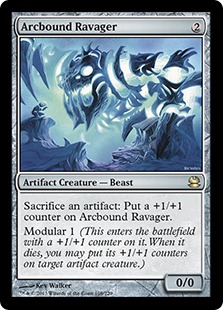
There was an error retrieving a chart for Arcbound Ravager

Affinity Staples, notably Glimmervoid and Arcbound Ravager, have spiked. I'd look towards other Affinity staples as potential buys, especially Steel Overseer, which over the last month has tripled in price on Magic Online.

There was an error retrieving a chart for Terminate

We've also seen the rise of common and uncommon staples, like Eternal Witness, Lightning Helix, Qasali Pridemage, and Terminate. Modern prices are increasing across the board, and many commons and uncommons are finally seeing a significant price increase. We are in a world where any card that's played in Modern demands a premium, and old cards are in short supply.

With Standard rotation pending, and the release of Battle for Zendikar just a few months away, Theros block and M15 Standard cards are bottoming out in price. The time to move these is behind us, and in fact the next few months will provide early opportunity to pick up longer-term specs at their lows.

Khans of Tarkir block cards will define the future Standard format, so they are on the rise. Fetchlands have been steadily growing and will continue to do so, so now is opportunity to acquire these cards and other staples.

Keep eyes towards SCG Chicago as an initial barometer of the Standard format. Results from this event will drive the metagame and the market in its immediate wake.

-Adam

Magic: Origins Cheatsheets are here!

Are you a Quiet Speculation member?

If not, now is a perfect time to join up! Our powerful tools, breaking-news analysis, and exclusive Discord channel will make sure you stay up to date and ahead of the curve.

If you want to know the cards worth trading for in Origins, check out our spoiler cheatsheets here. Print off a few to take to the game store and be a hero to your friends. Everything on the list is $1 or more. There's plenty of good money cards in here, but I doubt something like Archangel of Tithes is going to stay as expensive as it is. Be the judge for yourself and let me know what you think!


Alphabetically Sorted Sheet


Price Sorted Sheet

Douglas Linn

Doug Linn has been playing Magic since 1996 and has had a keen interest in Legacy and Modern. By keeping up closely with emerging trends in the field, Doug is able to predict what cards to buy and when to sell them for a substantial profit. Since the Eternal market follows a routine boom-bust cycle, the time to buy and sell short-term speculative investments is often a narrow window. Because Eternal cards often spike in value once people know why they are good, it is essential for a trader to be connected to the format to get great buys before anyone else. Outside of Magic, Doug is an attorney in the state of Ohio.  Doug is a founding member of Quiet Speculation, and brings with him a tremendous amount of business savvy.

View More By Douglas Linn

Posted in Free, Magic Origins, Magic Origins Spoiler CoverageLeave a Comment on Magic: Origins Cheatsheets are here!

Have you joined the Quiet Speculation Discord?

If you haven't, you're leaving value on the table! Join our community of experts, enthusiasts, entertainers, and educators and enjoy exclusive podcasts, questions asked and answered, trades, sales, and everything else Discord has to offer.

Want to create content with Quiet Speculation?

All you need to succeed is a passion for Magic: The Gathering, and the ability to write coherently. Share your knowledge of MTG and how you leverage it to win games, get value from your cards – or even turn a profit.

The Perfect Format: Modern Sleepers (Part 1)

Are you a Quiet Speculation member?

If not, now is a perfect time to join up! Our powerful tools, breaking-news analysis, and exclusive Discord channel will make sure you stay up to date and ahead of the curve.

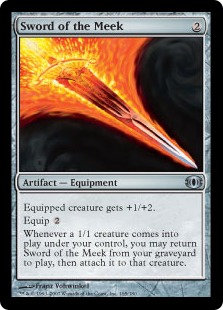
Modern players love discussing ways to improve the format. I constantly hear suggestions from forum users and locals alike to unban more cards (Jace, the Mind Sculptor, Sword of the Meek), reprint older ones (mostly Counterspell), or print new ones, often with specific agendas in mind. Different players want different things. But for a format to truly appeal to me, it needs to get five things right:

Faithless Looting Art

  • Design space. A “solved” format offers few brewing opportunities. Big innovations take the form of small tweaks, whereas I like when entirely new decks explode onto the scene. Legacy and Vintage are examples of formats with little design space, while Standard has it in spades.

[wp_ad_camp_1]

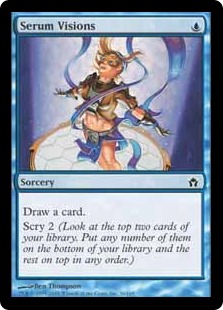
  • Skill intensity. Players should be able to play skill-intensive decks if they want to, or to avoid Serum Visionsthem if they don't. In Standard, they don’t have much choice; as far as I can tell, most of the decks are linear aggro strategies (Devotion to Green, Monsters, Mono Red, etc.) and midrange decks, which have rarely busted anyone’s brain (cast your powerful spells on-curve and hope for the best). Non-mirror aggro matchups frequently devolve into “who can go bigger.” It’s no coincidence that the most skill-intensive format, Legacy, is the only one that allows players to stuff their decks with so many Brainstorms. Library manipulation is one of the most skill-testing dimensions of Magic since it gives pilots so many choices. Serum Visions, while much worse than its banned cousins Ponder and Preordain, gives Modern just enough of this “cantrip factor” to retain a passable amount of skill intensity. Today’s Standard, followed by Vintage ( ** see note below), has the lowest in-game skill intensity of any format.
  • Archetype diversity. Back to “who can go bigger” – or sometimes, “who’s a turn faster.” In unenjoyable metagames, every match boils down to these questions. Some like linearity, and others prefer interaction. But every player should be able to play his archetype of choice. Wizards’ recent design obviously caters to aggro, control, and midrange, while mostly excluding tempo and combo players; as a result, Standard becomes hostile to players like myself. My ideal format contains top-tier decks of all five archetypes, as the ensuing metagame becomes much more nuanced.
  • Format stability. I’ve heard many players refer to this Standard as “the best Standard ever” on account of its incredible deck diversity. Indeed, it seems that every week brings a new top-tier option to the table. While this format initially appears to reward clever deckbuilding and meta analysis above all else, it’s impossible to “attack” such an open metagame. Winning a Standard event in today’s environment largely comes down to pairings and draws, which isn’t the kind of Magic I like to play. Legacy is the king of format stability, but it’s a little too solved for my liking. My dream format falls somewhere between the two.
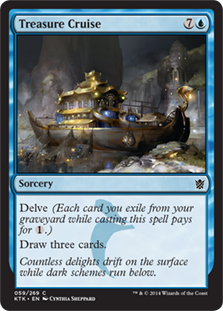
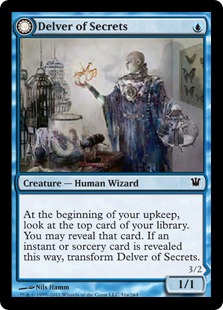
  • Treasure CruiseFun cards. I probably can’t find a more objective word than “fun,” so for now we’ll define it as “cards I enjoy playing with.” I like casting Treasure Cruise as much as the next tempo enthusiast, but attacking with the three-mana Mantis Rider and removing threats with the two-mana Lightning Strike sounds about as fun to me as getting mana flooded in a 17-land deck. Pauper, for all its balance issues, holds so much initial appeal to players because it lets them play with their favorite cards; Lightning Bolt, Delver of Secrets, Gush, and Rancor are best-of-breed staples that have defined even eternal formats since print. Generally, powerful cards are the most fun to cast, so I’d rank Standard last and Vintage first on this metric.

Modern succeeds on each of these counts. While it may lack a “pure control” deck (an archetype I don’t think even exists in Magic anymore, but that’s an article for another day), the format has impressive archetype diversity. Combo, tempo, midrange, aggro, and control decks all put up results, and many hybrid strategies exist (Temur Twin, Grixis Delver, etc.). In terms of skill intensity, decks like Twin and Delver confront pilots with an array of choices each turn. Finally, top-tier decks are clearly established, and the Modern card pool has plenty of fan-favortes. I’ve heard Modern referred to as “stale” many times, but I couldn’t disagree more with this assessment today – the format greatly rewards players patient enough to create their own metagame assassins. Take, for instance, my own Monkey Grow deck, a less-than-optimal version of which recently reached the GP Singapore Top 8 in the hands of Joshua Yang. Blue Moon and Abzan Liege also showcase this principle at work.

For today’s article, I’ll focus on the intersecting first and fifth elements of an enjoyable format: design space and fun cards. Part of what makes the format so brew-friendly is its enormous card pool. As Jeff Kiki JikiHoogland points out on his Kiki-Chord primer from this week, “Modern is a format that is still full of unexplored territory. It seems like every other major event a new deck breaks out powered by cards that have been legal in the format for years.” As a general rule, the larger a format’s card pool, the fewer its competitive options. Lightning Bolt, for example, makes Wild Slash and Lightning Strike unplayable; since the two do slightly different things, they battle for slots in Standard lists that would always play Lightning Bolt if it were allowed. In Legacy, a host of powerful effects just aren’t good enough for the format (think Unearth and Dualcaster Mage). I think Modern perfectly hits the mark when it comes to card viability, still boasting a huge amount of strong spells that haven’t yet made it to the top tables. Both Unearth and Dualcaster, for example, would likely make a splash in Modern without invalidating other available options. In today’s article, I’ll point out a few of these underplayed gems.

[su_spoiler title=" ** Note on Vintage and skill intensity" style="fancy" icon="arrow"]In the interest of not Brainstormoffending more experienced Vintage veterans, and especially of not sounding ignorant about Vintage dynamics, I’ll add that I do play and occasionally enjoy the format. My brief analysis of Vintage: with Brainstorm and Ponder restricted, decks don’t offer much in the way of consistency. Such is probably for the best, since the format’s other restricted cards are definitively broken and Wizards apparently doesn’t want a metagame in which players just find and cast those cards with maximal frequency. Unfortunately, Vintage games do frequently play out that way, and the restricted list itself gives Vintage games an unbearable (at least for me) amount of variance. This is in contrast to a simple banlist, which, aside from the elephant-in-the-room strength of Brainstorm decks, allows Legacy to be so diverse (and I do understand that the very appeal of Vintage is its lack of a real ban list, but I’m just iterating my personal gripes with the format).

TrinisphereThe consistency generated by blue cantrips increases skill diversity, so it stands to reason that variance lowers it. If you pull Library of Alexandria in your opener against the blue mirror, you just win. If you have Mishra's Workshop into Trinisphere and your opponent doesn’t have Force of Will, you just win. It strikes me as ironic given their power level discrepancy, but Vintage operates in the same way as Standard in that openers matter immensely. Sometimes you draw the unbeatable nut, and sometimes your opponent draws it, and often, nobody can interact with deez nuts. Skill-intensive games do occur, but infrequently, and only in specific matchups (i.e. blue mirrors) which still end up revolving around resolving more “big cards” (like Time Walk, Ancestral Recall, and Black Lotus, all of which both players have in their decks). If my description of Vintage reminds you of Traditional Yu-Gi-Oh!, you’ve successfully grasped the perhaps limited understanding of the format I’ve cultivated by watching coverage and playing in weekly casual events over the last few years.[/su_spoiler]

Five Modern Sleepers

The following five cards are ones I’ve found powerful enough in my testing to at least consider whenever I brew a deck. While each of them see limited play in one or two existing decks, I believe their versatility and effect-for-cost ratio entitles them to a good amount more.

1. Faithless Looting

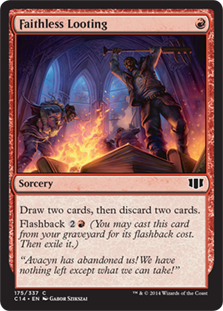
Faithless Looting sees play in a few graveyard decks and nowhere else. Naturally, two cards for a single mana is a great deal, but for some reason, Modern players have convinced themselves that Looting’s drawback restricts it only to decks that do interact with the graveyard, such as Loam Pox and Dredgevine. But Faithless Looting can be built around effectively without graveyard synergies.

Faithless LootingOne hotly debated issue with Modern is its lack of playable consistency tools. Brainstorm, Gamble, and Sylvan Library were never printed in Modern-legal sets, and Ponder, Preordain, and Green Sun's Zenith have all been extricated from the format. The viable consistency tools that remain are much worse than those just mentioned, and few in number. They include Serum Visions, Ancient Stirrings, and Faithless Looting, which sees virtually no play compared with the other two. Because Modern offers so little in the way of consistency, deckbuilders can never expect to find a single copy of a sideboard hate card every game they need it for. They need to run two or three copies to have a reliable plan. Doing so achieves consistency via redundancy (as opposed to the consistency via manipulation offered by blue cantrips).

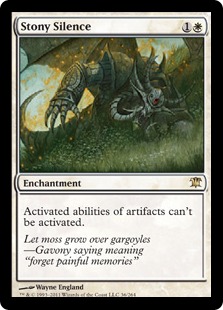
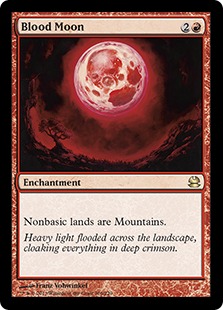
stony silenceUnfortunately, many of Modern’s best hate cards are bad in multiples. In the cases of Blood Moon, Rest in Peace, and Stony Silence, for example, each copy beyond the first proves infinitely less valuable. Faithless Looting “solves” this issue by giving players a way to cycle redundant pieces. Its uses aren’t even restricted to hate cards. Birds of Paradise and Mana Leak shine in the early game but lose value once players have made a few land drops. Looting simply cycles them into business. The card’s best attribute is its flashback clause. By the time Looting gets cast from the graveyard, the 2R cost shouldn’t overtax players, and just having Looting in their decks gives pilots a compelling reason to slow-roll extra lands. In this way, the card adds an additional dimension to Modern gameplay, just as Brainstorm does in Legacy.

Fits into:

  • Decks that abuse graveyard synergies.
  • Decks that rely on redundancy for consistency, especially when multiples of one piece do little or nothing or only have applications in the early game.
  • Decks that don’t mind missing land drops after they’ve reached a certain amount of available mana per turn.

2. Disrupting Shoal

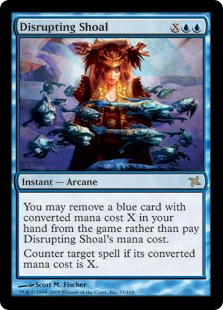
Disrupting ShoalModern countermagic leaves a lot to be desired. Our “Counterspell” forces a Daze-style drawback, and without Force Spike, we lack cards that fill Daze’s role of hard-countering any early-game spell for less than two mana. Here’s where Shoal shines. In a turn four format, most of the best cards cost one or two. It’s no wonder Spell Snare finds its way into so many winning blue decks, and we never even got to play with Mental Misstep. Snare lets us reliably interact with two-mana spells on the stack, while Mana Leak and Remand let us reliably interact with anything that costs more. But Disrupting Shoal is the only Modern-legal counterspell that prevents first-turn plays. Shoal even has something over Daze and Force Spike: if games do go long, it does a fine Spell Burst impression, countering one- and two-drops better than Syncopate effects.

Fits into:

  • Tempo decks like Temur and UR Delver that want to spend their first couple turns casting threats without giving opponents windows to take advantage of their tapped lands.
  • Combo decks like Twin, Storm, and Ad Nauseam that lose to a few specific answers (respectively Path to Exile, Remand, and Dispel) and run a high density of blue cards. Shoal seems better to me than Pact of Negation in these decks, since it has the ability to interact with linear decks before the “fundamental turn.”

3. Utopia Sprawl

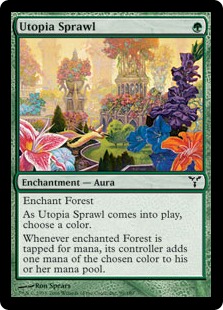
utopia sprawlLike Birthing Pod before it, Collected Company has shown us the sheer power of starting the game a turn ahead on mana. The rise of Jund, congruent with the printing of Collected Company, gives new credence to the old “Bolt the Bird” adage. But what if you can’t Bolt the Bird? Utopia Sprawl only makes one color, and it doesn’t give attackers exalted. It still accelerates into any color a deck needs for one mana. And unlike most mana dorks, if played after the first turn, it basically has haste. Turn two Forest paying for Sprawl to enchant a turn one Forest lets us tap that first land for a Voice of Resurgence, Remand, or Abrupt Decay on the same turn. We would also find ourselves a turn ahead on mana for the rest of the game.

Fits into:

  • Mana-ramp strategies that don’t rely on “big lands” like Urzatron, Amulet, or Valakut.
  • Midrange decks that benefit from early acceleration and are otherwise impervious to Lightning Bolt.
  • Aggro decks that want to ramp costly (read: three-drop) hate pieces into play early to back up their threats.

4. Isochron Scepter

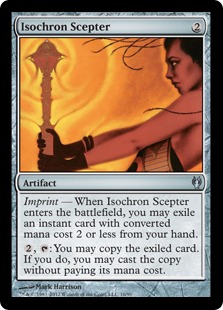
Isochron ScepterEven with Kolaghan's Command and Abrupt Decay running around, Isochron Scepter makes a great sideboard plan for a deck with lots of targets, especially against opponents looking to grind after game one. Batterskull and Vedalken Shackles gave Modern players headaches for years, but Mana Leak at least answers both of them favorably. Scepter comes down as early as turn two, making it hard to interact with on the stack, and then generates cards until dealt with, if ever. An Isochron Scepter with a powerful instant attached – Lightning Helix, Boros Charm, Lightning Bolt, and even Remand – often wins games on its own. Many opponents simply cannot remove an artifact.

Fits into:

  • Decks that run strong one- and two-cost instants and that don’t prompt opponents to sideboard in artifact hate for other reasons.

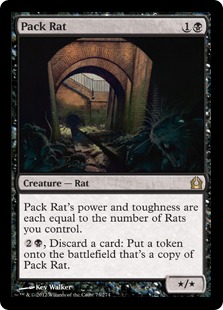
5. Pack Rat

Pack RatAnother late-game engine, Pack Rat has stunned me not just with its performance in my testing, but with the tiny amount of play it sees, even as a sideboard plan. It crushes fair decks and devastates any BGx or Grixis mirror. Like Dark Confidant, Pack Rat can resolve as early as the second turn and promises to take over games if unremoved. But Confidant can be Bolted any time after resolution, whereas the window to Bolt Pack Rat is exactly one turn wide. Additionally, if the Rat comes down later, removing it proves close to impossible.


Fits into:

  • Basically any deck with black.
  • Besides slotting effortlessly into Jund, Abzan, Grixis Twin, Grixis Control, Grixis Delver, 8Rack, Abzan Company, UBx Tezz, UBx Faeries, and others, Pack Rat gives an interesting plan B to linear decks looking to attack from a new angle post-board. On-color, that includes Ad Nauseam and Grishoalbrand, but if a deck can splash black, it can run Pack Rat. Adam Fronsee astutely ran a pair in his sideboard over Huntmaster of the Fells at the SCG Columbus Invitational, where he piloted a BUG tweak of Monkey Grow to a 12th place finish.

Other Sleepers?

There are plenty of untouched Modern playables I haven’t mentioned in this article, and surely a bunch I’m not even aware of. In the coming weeks, I’ll go over some more, and in the meantime, I look forward to hearing about your favorites in the comments.

Jordan Boisvert

Jordan is Assistant Director of Content at Quiet Speculation and a longtime contributor to Modern Nexus. Best known for his innovations in Temur Delver and Colorless Eldrazi, Jordan favors highly reversible aggro-control decks and is always striving to embrace his biases when playing or brewing.

View More By Jordan Boisvert

Posted in Modern, TechTagged , 19 Comments on The Perfect Format: Modern Sleepers (Part 1)

Have you joined the Quiet Speculation Discord?

If you haven't, you're leaving value on the table! Join our community of experts, enthusiasts, entertainers, and educators and enjoy exclusive podcasts, questions asked and answered, trades, sales, and everything else Discord has to offer.

Want to create content with Quiet Speculation?

All you need to succeed is a passion for Magic: The Gathering, and the ability to write coherently. Share your knowledge of MTG and how you leverage it to win games, get value from your cards – or even turn a profit.

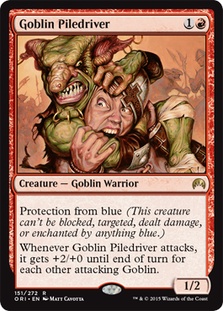
The Future of Goblin Piledriver

Are you a Quiet Speculation member?

If not, now is a perfect time to join up! Our powerful tools, breaking-news analysis, and exclusive Discord channel will make sure you stay up to date and ahead of the curve.

When a card is reprinted as a regular rare in Standard, one expects the price on that card to drop. We certainly saw this when Thoughtseize and the Onslaught fetchlands were reprinted, though when the painlands were reprinted in Magic 2015 we saw Battlefield Forge go as high as $9 due to the increase in demand.

There was an error retrieving a chart for Battlefield Forge

Goblin Piledriver has observed a price spike since the announcement of its reprinting, which could likely be primarily attributed to people looking to flip them quickly before the supply increases and the price drops. Alternatively, it could be that the card is expected to be very good in both Standard and Modern, causing it to demand a high price tag. It's also possible that buyers were expecting Origins to be a relatively unpopular set, opening up the possibility for a regular rare to command a high price tag.

There was an error retrieving a chart for Goblin Piledriver

I personally don't buy the Modern hype, and do believe in Origins as a set. The Modern Goblins deck just doesn't offer anything that looks better than Affinity in the same vein of decks or even anything that looks favorable against a deck with Lightning Bolts. Meanwhile, Origins has all kinds of interesting cards and a cycle of exciting Planeswalkers, leaving plenty of reasons for many to open packs. As such, I would imagine that we'll see Goblin Piledriver lose significant value in the coming weeks, even with significant Standard play.

Insider: Investing in Magic Origins – Part 2 (Mythics)

Are you a Quiet Speculation member?

If not, now is a perfect time to join up! Our powerful tools, breaking-news analysis, and exclusive Discord channel will make sure you stay up to date and ahead of the curve.

In the last part of my series, I highlighted a couple of cards of interest and provided my first overall impression of the set. This section will be much more in depth--I took the liberty to break down the entire set into a tiered list, focusing on the mythic rares. Now a few of these cards I may be a little biased on, but still feel that they will end up being the most viable investment opportunities in the set.

The methodology of breaking down the cards into a tiered list makes it easier for me to look at what will hold the majority of the value in the set. I will most likely use this methodology going forward in evaluating future sets. I also wanted to do it this way because I don't feel like attaching a future value to any of these cards. I feel like that method is a little inefficient and doesn't take into account future printings that could potentially make these cards better.

So I wouldn't want to attach a low value to a card that's potentially powerful like I have in the past. The truth is while a card may look terrible right now, we don't know the future and how this card could interact with future cards. So as an avid player of fighting games this method makes most sense to me, since it also allows for cards to move around in the tiered list which undoubtedly will happen as time goes on. Which happens all the time in many of the fighting games in their life cycles.

This is my explanation for each tier in the list:

  • Top Tier is reserved for the cards that will most likely hold the majority of the value in the set. Or most commonly known as the “chase cards”.
  • Middle Tier is reserved for the cards that aren't necessarily bad but may be overshadowed at this current point. These could easily jump to top tier in the future, or vise versa.
  • Low Tier is reserved for the cards that will most likely be near bulk. Like Middle Tier these cards could easily jump up to higher tiers but the road traveled will most likely be harder. Again, I don't think these cards are necessarily bad but my analysis is that these will be the cheapest cards in the set.

Mythic Breakdown

Top Tier

Liliana, Heretical Healer
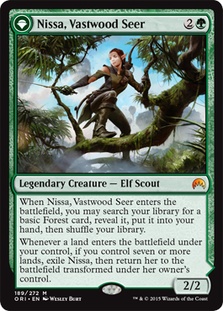
Nissa, Vastwood Seer

**Just Above Mid-Tier** (Added because of the flip-walkers)

Chandra, Fire of Kaladesh
Jace, Vryn's Prodigy
Kytheon, Hero of Akros

Middle Tier

Archangel of Tithes
Avaricious Dragon
Day's Undoing
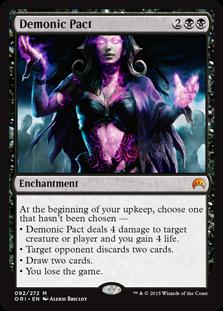
Demonic Pact
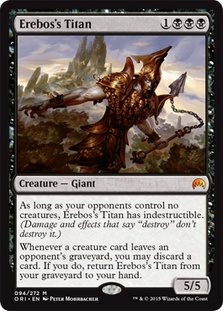
Erebos's Titan
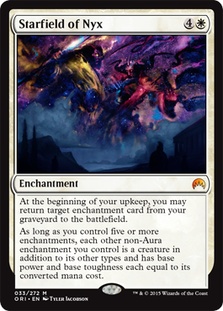
Starfield of Nyx
Woodland Bellower

Low Tier

Alhammarret's Archive
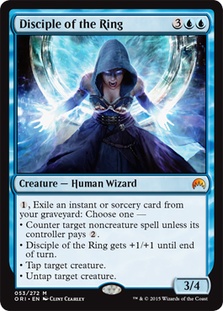
Disciple of the Ring
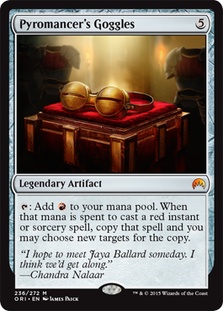
Pyromancer's Goggles
The Great Aurora

Rare Breakdown

Top Tier

Abbot of Keral Keep
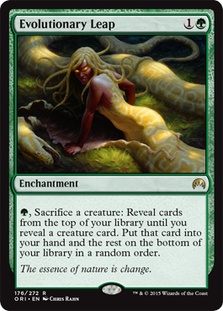
Evolutionary Leap
Goblin Piledriver
Languish

Middle Tier

Animist's Awakening
Exquisite Firecraft
Gilt-Leaf Winnower
Graveblade Marauder
Hallowed Moonlight
Hangarback Walker
Harbinger of the Tides
Herald of the Pantheon
Infinite Obliteration
Knight of the White Orchid
Molten Vortex
Painlands
Relic Seeker
Scab-Clan Berserker
Tainted Remedy
Vryn Wingmare

Low Tier

Chandra's Ignition
Dark Petition
Despoiler of Souls
Displacement Wave
Dwynen, Gilt-Leaf Daen
Embermaw Hellion
Flameshadow Conjuring
Gaea's Revenge
Gideon's Phalanx
Helm of the Gods
Hixus, Prison Warden
Honored Hierarch
Jace's Sanctum
Kothophed, Soul Hoarder
Kytheon's Irregulars
Mage-Ring Responder
Managorger Hydra
Mizzium Meddler
Nissa's Revelation
Orbs of Warding
Outland Colossus
Pia and Kiran Nalaar
Priest of the Blood Rite
Sigil of the Empty Throne
Soulblade Djinn
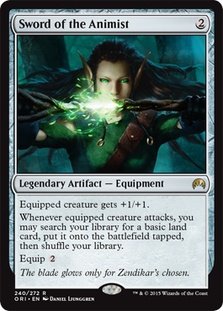
Sword of the Animist
Talent of the Telepath
Thopter Spy Network
Tragic Arrogance
Willbreaker

So now that you have the entire list I wanted to discuss these cards individually and and why I decided to place them in each individual tier. Let's start with the mythics, shall we?

Top Tier Mythics

There was an error retrieving a chart for Nissa, Vastwood Seer

Nissa, Vastwood Seer will most likely be the best card in the set. Now, I could well be completely biased in my analysis and have already been transparent about being invested in this card.

As I've mentioned in my previous Origins investment article I feel like this card will have the highest impact on the current metagame. Now having the full set in front of me I feel more confident in my assessment. It seems that pro players are in agreement that this card could be included in multiple archetypes.

Well I don't think this will carry over to different formats, being popular in Standard is more than enough to buoy a high price tag. Not to mention when evaluating this side by side with most of the other cards in the set, it's not hard for me to want to favor Nissa.

DANNISSA

Nissa's pre-order prices have fluctuated a fair amount during the pre-order period, and for almost the entire time she's been sold out on the biggest platform, Star City Games. Green-based strategies are just too popular in Standard to ignore the fact that Nissa will bring a lot to the table. At first glance the EV of the set looks rather normal but if this card is extremely popular in the coming months, it’s probable we see an increase from the price tag it’s currently set at, with the other cards undoubtedly losing value.

Pre-order Price: 25$

Liliana, Heretical Healer

Since this card has been spoiled for a long while before the set, there’s not much else I can really say about it. Other than the fact that I think it’s tied for best of the flip-walkers. It also has the best outside shot of being played in Modern, which none of the other flip walkers I think could boast. I found this to be one of the easier cards to evaluate in the set.

Pre-order price: 19$

**Just Above Mid-Tier**

I decided to add this tier only for the purposes of the flip walkers in this set. It occurred to me that I probably shouldn’t lump these in with the rest of the cards, simply because they're novel and never-before-seen card types. Jace, Kytheon, and Chandra should be respected in that regard. Even if I don’t think they’re as good as Liliana and Nissa. Kytheon has the better chance out of these three to have success in a constructed format.

While the others could potentially be good in their own right, I think they will require a lot more work. Maybe that extra deck-building prowess will pay off, but I'm leaning to these just not performing as well. Expected EV is fairly normal in this set, so expect these to drop considerable amounts without a viable inclusion in decklists. I’m not qualified to comment on the Commander/Tiny Leaders/casual demand some time down the line, but that conversation will undoubtedly come up.

Pre-order prices: 14$ (Kytheon) 11.50$ (Jace) 9.50$ (Chandra)

Mid-Tier

Erebos's Titan

Erebos's Titan is certainly interesting, and I think deserving of the “mythic” tag. It’s efficient, albeit limited in the decks that could include it. There are many rumblings and buzz going around about the possibility of Devotion to Blue, and Devotion to Black could be a factor going into the Summer metagame. I think if Devotion does well, there could be some initial hype to drive up prices of this card.

Sitting at a hefty pre-order price of 8-11$, I’m not super optimistic about it. Even with the hype, it’s still just Summer Magic--Players are looking to offload Theros stuff, not buy into it. Evaluating this card with a financial scope, there’s just too many stipulations to urge myself to get in as a “buy and stash”.

With a restrictive mana cost and weird stipulations on its indestructible and reanimation clauses alike, I think there are better places to invest. After evaluation, I feel this deserves a slot in Middle Tier.

Pre-order price: 9$

Archangel of Tithes/Demonic Pact

I already touched on these cards in Part 1. I’m still inclined to purchase either when prices come down drastically. Which I think will happen. As powerful and flavorful as these cards could be, there really is a restrictive mountain to climb to make either of these four-of staples in an archetype. As it is, I put these in the middle tier because they aren’t bad cards, and certainly better than some of the other mythics as an investment opportunity.

Pre-order price: 12.99$

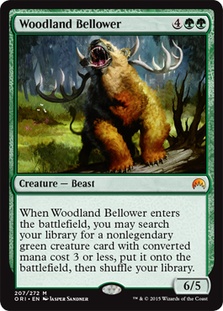
Woodland Bellower

This is one of those creatures that I think will fly under the radar for a while, until the worthy 3CMC creature is printed for this to fetch. As it is, I don’t know if Woodland Bellower is going to be inserted into a vast majority of decklists, and when evaluating this card--is it better than a Dragonlord?

If this creature can provide enough value fetching a card like Savage Knuckleblade, then maybe there’s a bright future ahead for it. As is I’m not very excited, and outside of Standard this is largely irrelevant.

Pre-order price: 6.50$

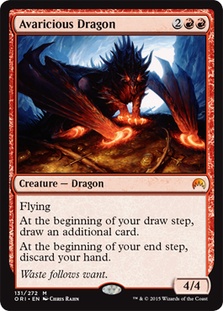
Avaricious Dragon

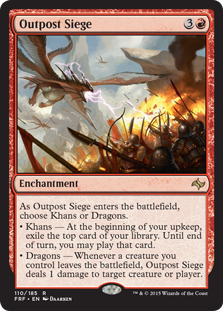
Avaricious Dragon is hard to evaluate; I don't actually know if this is any better than Outpost Siege. Right now it's competing with Thunderbreak Regent, and I don't know if it's going to earn any 4CMC slots over it. Even with the card having four power attached to an Outpost Siege, I just don't think waiting an entire turn to draw a card and losing your hand is where red wants to be.

The pre-order prices have already trended down significantly on this card; maybe with a newfound interest it could improve its chances. I’m doubtful though--Thunderbreak Regent is extremely valuable as it is. Perhaps this could be a fringe player, that doesn’t seem outside the realm of possibility.

Wizards has been pushing red card advantage in this form more recently, and I’m not discounting an ability like this. For the reasons stated, I just think there are better places to put one’s money.

Pre-order price: 4.99$

Starfield of Nyx

Here's another one of the "build around me" cards that have come out time and again. While many of these cards over the past few sets have come out, few of them end up becoming extremely successful. Just look at Collected Company for comparison.

This card is by no means CoCo, but it is unique and powerful in its own right. I just don't know if that directly translates into financial viability. I really enjoy this card, and I think best case scenario this could create some cool archetypes over the Summer while Theros block is still around. As we know though, Summer Magic really isn't the time people are investing heavily into old blocks, and rarely do the cards drastically increase in price because of it. I think that's where Starfield is at the moment.

Now, if there are extremely potent and viable enchantments in the October block, then all bets are off and this card instantly becomes part of the conversation again. Its long-term viability is vested in Battle for Zendikar and with any luck gets included in Modern "Pillow Fort" decklists that have been floating around out there. While it's a fun card and I do like it, there has to be an extremely compelling argument for this to be a staple 4X in archetypes and command premium prices. I will hold off for now.

Pre-order price: 4.75$

Low Tier Mythics

I don't think I'm qualified to talk about these cards' viability in EDH. Because of that I am just going to put them all in the low tier mythics section, because I don't think these cards have any significant Constructed applications.

There could be an outside shot of either Alhammarret's Archive or Pyromancer's Goggles seeing play in a Standard deck but I wouldn’t hold my breath. As it is, I think these will be the bulk mythics of the set. When looking at potential investment for EDH/casual purposes (mainly foils) I think there’s plenty of time to acquire these. Again, that would even be based on the assumption any of these are good in those formats. From what I’ve gathered The Great Aurora is looking good for EDH in particular, so take from that what you will.

So there you have the breakdown for the mythics of the set, in addition to my tiered list of all the rares and mythics in Magic Origins. I left a few of them out, as I have touched on them in Part 1 and largely my opinions haven’t changed.

Overall there’s nothing glaring to me about this set; the EV is quite normal and in the mythic section there doesn’t seem to be the “Dragons of Tarkir effect." There are going to be some losses across the board as the set gets opened and as I mentioned there will be a select few that hold or increase. Seems many of the vendors were cautious this time around, but there were still some slam dunk purchasing in the pre-order period at the first go around of opening prices (mainly on Star City Games). Such cards have been talked about by writers, and mostly discussed on Insider forums.

Up next, Rares! There are certainly a few I like going forward.

Questions? Comments? Concerns? Feel free to comment or message me via social media. Hopefully this list is helpful to determine what's worth trading for or buying at the pre-release and beyond.

Insider: Analyzing Origins Pre-order Prices

Are you a Quiet Speculation member?

If not, now is a perfect time to join up! Our powerful tools, breaking-news analysis, and exclusive Discord channel will make sure you stay up to date and ahead of the curve.

It's time once again to take a look at the cards from the new set and evaluate how close the pre-order prices are to fair. Origins is an awesome set, and it seems like every time I look the set over I notice a new card worth exploring. There are quite a few cards with medium-heavy pre-order prices, so let's dive right into things.

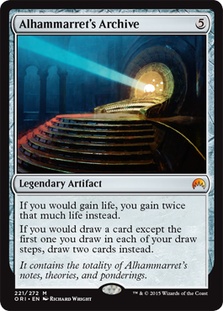
Alhammarret's Archive

Alhammarret's Archive

SCG has these guys listed at $8, which is surely too high. TCGPLayer has them listed closer to $4. As a five-mana legendary artifact with no immediate impact on the game, this card already doesn't cut the mustard in Modern, Legacy or Vintage. At that, Standard playability is speculative here. If we give it the benefit of the doubt though, a Standard deck would only need one or two copies, and an EDH deck will only need one copy.

This card is probably worth a couple bucks long-term for casual appeal, but it's going to go down really fast upon set release. The time to buy here is likely after it rotates out of Standard.

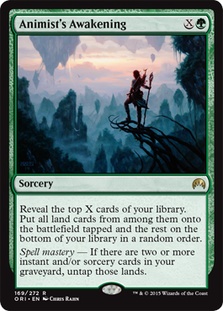
Animist's Awakening

AnimistsAwakening

I would have been pretty excited with a Rampant Growth reprint in this set to pair with the new Nissa. Alas, we get this. Some people seem pretty excited about this card, but don't believe the hype. It's not unfathomable that you can spend three mana on this card and just do nothing, and once we're paying four mana, why would we not just want Explosive Vegetation? I'm not the guy to tell you how much casual appeal a card like this has, but out of the gates I can guarantee it's less than $3 worth.

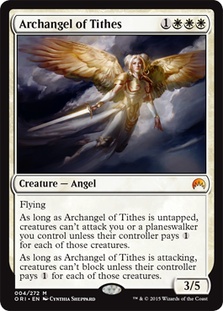
Archangel of Tithes

ArchangelOfTithes

Now we're talking. $15 is steep for a Magic card, but this card would fit the bill in either an aggressive or midrange white deck. Kytheon and Archangel are pretty likely to be players in a real Standard deck, and the fact that Archangel is non-legendary and scales well leads me to believe the card will be a four-of. In particular, if we want to abuse Nykthos and Mastery of the Unseen.

That all said, I can't imagine this card realistically going above $30, barring multiple Top 8s or a win at PT Origins. There's a chance that you can double up on this card, but I think it's a long shot. I wouldn't feel bad investing in a set at $15 if I was planning on playing it anytime in the next several months though.

Avaricious Dragon

AvariciousDragon

This card has serious downside, and Languish is a new maindeckable problem for Mono-Red. There's a high risk to casting Avaricious Dragon unless you're already out of gas, and only having four toughness isn't a desirable spot. Expect this card to be bulk before long.

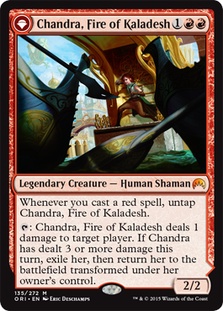
Chandra, Fire of Kaladesh

ChandraFireOfKaladesh

I've laid claim to Chandra being the worst of the new flip walkers. Perhaps the comparison to Goblin Rabblemaster and the fact that Hordeling Outburst plays way better than Chandra with Stoke the Flames are contextual unfair standards, but those comparisons are relevant in the world we live in. The aforementioned Languish also just makes three drops less desirable in red decks.

Chandra has some very serious barriers to constructed success. She's not terrible, but terrible is how I would feel spending $10 on her.

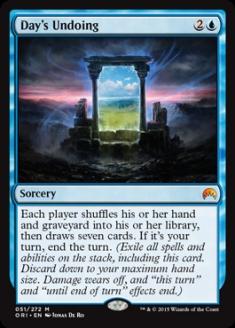
Day's Undoing

DAcpJdprACmqnPPG

I'm not seeing this card for Standard, but the potential for Modern playability is real. I'm still cautious here though, because there's a real risk when looking at a card like this for Modern. If it's only okay, then this card shouldn't be worth any more, and if it's very good it's entirely possible that this card is broken and ban-worthy.

Affinity has been posited as the most likely Modern deck to pick this one up, which I find believable. Beyond that though, it seems like there are a lot of situations where the card is medium or even disadvantageous to the caster in decks that aren't great at dumping their hands.

Either way, I don't like buying in at $15 here. Once again, buy it if you're going to play it. Expect it to go down short-term, or if it goes up by much, move off them quickly because this will likely be associated with circumstances leading to its ban.

Demonic Pact

Demonic Pact

There are a couple ways to bounce this card, and people are excited about the interaction with Dromoka's Command. I'm skeptical though, because these interactions are there so you don't just outright lose the game.

In the meantime, the value granted off of Demonic Pact is slow, if powerful. The sum of the parts resemble of a mini-Cruel Ultimatum, but none of the effects happen immediately and the others happen over the course of three turns. This card is worth exploring, but is it really better than just playing Siege Rhino on turn four?

This card immediately reminds me of Abyssal Persecutor. The key difference is that cards that remove Abyssal Persecutor from play are generally very much worth having in your maindeck in abundance. Cards that remove Demonic Pact from play are scarce, and decline in value very quickly after Dromoka's Command.

As a regular rare, $5 is a pretty steep buy-in, and the card goes in one or two decks if it's even good.

Disciple of the Ring

DiscipleOfTheRing

This card is really cool. That said, it only goes in decks that want a bunch of Dig Through Time, and this card pretty obviously compares poorly against Dig while trying to use the same resource. I'm going to make a point to remember this card when Dig rotates, but for now I'm going to stay away.

Erebos's Titan

ErebossTitan

This card is very good. A four-mana 5/5 in black is already nothing to scoff at, and on top of that it has two abilities with some real potential. There aren't a lot of ways to recur Erebos's Titan by your own volition, but the interaction with the flip-side of Liliana is worth exploring. I'm pretty sad that there was a reprint of Crypt Creeper in recent memory that isn't Standard legal, otherwise that would be a sweet deck.

Black Devotion, heavy black aggro, and even heavy black control decks want this card. You won't be able to have it survive Crux of Fate on non-dragons, but it notably survives Languish. I could see this card hitting $20-$30 in the near future, and I'd target it aggressively leading up to PT Origins and reevaluate once those results are in.

Evolutionary Leap

EvolutionaryLeap

I haven't figure this card out yet. I don't know if it's a great engine, or just too random and slow. Either way, the price tag is already high here. I'd be surprised if the ceiling was above $10, and I'd also be surprised if the price trajectory was even positive. I might be missing something here, but this one feels like a trap.

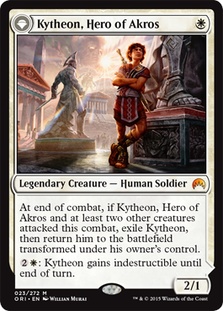
Kytheon, Hero of Akros

KytheonHeroOfAkros

Kytheon is obviously good. What we have to evaluate is how reasonable spending $25 on this card is. If you're really into white aggressive decks and/or think it cuts the mustard in white midrange decks, then you probably won't be able to get Kytheons for much under $15 in the immediate future. Even with Kytheon, I'm having a hard time believing that there's enough incentive to play white-weenie over mono-red aggro. Red just has so much great reach and creatures that aren't notably worse than other color's creatures on the low end of the curve.

Kytheon is a terrible position as an investment in my opinion, but I wouldn't fault anybody for picking up a set with the intention of playing them.

Goblin Piledriver

GoblinPiledriver

I feel like people are being blinded by the price history of Goblin Rabblemaster when they preorder Piledriver. This isn't even necessarily the best two-drop in red decks right now, and a $15 pre-order on a card being reprinted at regular rare is obscene.

Piledriver will see Standard play. It might see Modern play. Even still, a bunch are about to enter the market, and the idea of it maintaining its current price point even in the short term is crazy.

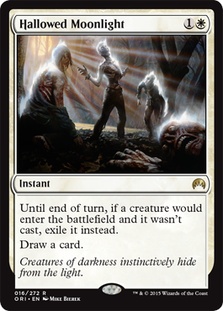
Hallowed Moonlight

HallowedMoonlight

This card has awesome applications in multiple formats, but it's not exactly the kind of card that you maindeck four of. I could definitely see UWx control decks in Standard playing some of these, but $5 is a lot to ask for a fringe regular rare. I'd wait on this both to see short-term price drops and even to see how many you would want to play, if any.

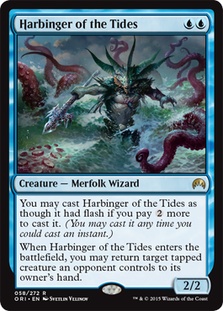
Harbinger of the Tides

HarbingerOfTheTides

Cut and dry, this card is great. There will be decks playing this at the Pro Tour, and they won't necessarily just be Blue Devotion decks. The interaction with both Ojutai's Command and Collected Company is great.

I wouldn't be bothered paying $4 a piece to get up to a set, and I would be very happy picking these up in trades. It's not great against every deck, but a flash body and an amazing ability in racing situations is a lot of upside.

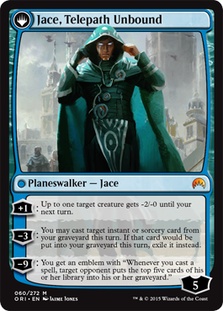
Jace, Telepath Unbound

JaceTelepathUnbound

My initial thoughts on Jace were that it plays great with Commune with the Gods and Treasure Cruise. After trying to make it work a couple different ways, Jeskai Ascendancy Combo was the most appropriate shell that I could come up with.

After my initial excitement, I've come down a long way on Jace. In particular, the return of Goblin Piledriver leads me to believe that more Wild Slashes and Bile Blights will be showing up immediately in Standard, and playing Jace on two and having it die or just playing it after turn two aren't terribly exciting scenarios.

I liked Jace initially; I still think there's potential here, but mostly I know that $20 is too much to pay out of the gates.

Languish

Languish

Languish will see play in Abzan and blue control decks alike. $7-8 is a fine price to pay to pick up your set, but I don't think there's much room to grow here. If it happens that Languish makes the idea of playing an aggressive deck embarrassing, then I could see a $10-12 price tag happening, but I don't believe that will happen, and I don't see Languish as a good card to invest money in. It's a great pickup if you're able to trade a couple cheaper cards for a Languish though.

Liliana, Defiant Necromancer

LilianaDefiantNecromancer

Liliana is great, and I've already seen a number of lists posted with 3-4 copies of here. I'd expect her to hold most of her $20 pre-order price tag for some time, and could even see her hitting $30-35 during her time in Standard. Buy her as soon as you want to play her, and if she drops in price consider speculation on a few copies. If they print any cheap creatures that sacrifice themselves or other creatures while she's in Standard then expect there to be a deck there.

Nissa, Vastwood Seer

NissaVastwoodSeer

Nissa is definitely great. I'm not sure where the price of a Borderland Ranger with upside and downside will settle, but Nissa looks like a $10-15 card to me. She will see play, and will be good--probably in multiple decks. This is another one to buy as many as you want to play as soon as you want to play them with little upside in investing.

Pyromancer's Goggles

PyromancersGoggles

I've seen buzz about this card in Modern, and I'm not going to pretend like I don't want to cast two Cruel Ultimatums. I just can't believe that this is what we're supposed to be doing. Kolaghan's Command is hot in Modern, and the Goggles make much less sense with the spells in Standard. And no matter if it's determined to be playable or not, you'll only want one to two in any deck.

I don't like buying any copies of the Goggles for more than a buck or two, though I am intrigued by foils. They're already too rich to immediately invest in at $15 though.

Starfield of Nyx

StarfieldOfNyx

I don't know if this card is great or terrible, but at $5 with an effect that is casual gold I don't think you can miss by much. If this card is deemed not good enough for Standard play, then expect it fall to the $1-3 range, but from there the card has so much long-term potential.

If Constellation is a thing, then this card will easily at least double in price, if not triple. I'd snipe any copies of these that local players aren't too attached to.

Sword of the Animist

SwordOfTheAnimist

This card being Standard-playable isn't completely out of the question, but it's not exactly on my short list. The card is very reminiscent of Journeyer's Kite, so foils could be worth a few bucks long-term, but otherwise there's nothing to see here.

Woodland Bellower

WoodlandBellower

This might be a real card. If you consider a 6/5 to be worth six mana, then this card gives you nine mana of value. Realistically, it's closer to eight mana of value. Notably, the non-legendary clause means you can't find Nissa or Anafenza, but finding Deathmist Raptor is some strong.

I'm not sure why this couldn't be a cast trigger instead of a comes into play trigger, and if it were a cast trigger I'd be huge on this card. As is, I think it's more of a watch than a buy, but if there's a deck that wants this it wants four, and if that deck is real then this will easily double in price.

~

While Origins appears to be a very strong set, most of the cards seem pretty appropriate priced. The two cards with the most immediate potential to spike that I see are Erebos's Titan and Woodland Bellower. If Abbot of Keral Keep was only a buck I'd mention it as a good pickup, but there's not a ton of upside on picking them up for $2.50.

Thanks for reading.

-Ryan Overturf
@RyanOverdrive on Twitter

Shifting Roles: The Intricacies of Grixis Control

Are you a Quiet Speculation member?

If not, now is a perfect time to join up! Our powerful tools, breaking-news analysis, and exclusive Discord channel will make sure you stay up to date and ahead of the curve.

With the recent high-profile events of GP Charlotte and GP Copenhagen in the books, along with the corresponding MTGO Modern Festival and MOCS Championship both featuring Modern, Modern players (and grateful writers) have experienced no shortage of tech and storylines to discuss over the past few weeks. Now, the world’s attention turns to Magic Origins and the upcoming Pro Tour in Vancouver, which promises a huge impact to Standard play, but not much in the way of nonrotating formats. While many are disappointed by the apparent lack of Modern “shake-ups” in the new set, I have not been upset. Magic Origins seems like an excellent send-off for our vanishing Core Sets, and besides, I have a Standard Pro Tour to prepare for.

Spell Snare Art

Where does this leave us for Modern though? While I will shortly be focusing all of my attention on testing Limited and Standard for Vancouver, today I thought I would provide some in-depth discussion on my deck of choice for the entirety of this Modern season: Grixis Control. As is customary for my column, we’ll begin by taking a broad look at one aspect of Magic theory, analyze some history examples, and then dive into the deck discussion. Let’s get to it!

[wp_ad_camp_1]

Shifting Roles

Arcbound RavagerAll decks, regardless of tier, classification, or format are built and designed with a specific role in mind. Linear decks are most often aggressive, and are built in such a way to gain the initiative and hold it as long as possible. As we all know by now, these decks are characterized by cheap, efficient threats and general, all-purpose answers. Linear decks operate under the principle that their strategy is constructed in such a way that their threats are cheaper and more numerous than the opponent’s answers, which pushes them into a focused role of aggression as they seek to capitalize on this principle and keep the opponent on the back foot. We see this all the time, regardless of format: White Weenie aggro decks in Standard across time, and most notably Affinity and Zoo decks in current Modern. These strategies have shown time again the power that comes with a large, redundant threat base and the ability to deploy those threats quickly and efficiently.

On the opposite side of the spectrum, control decks (often) exist as the antithesis to linear strategies. Designed with one goal in mind (stay alive), control decks almost unanimously are characterized by cheap removal to fight early aggression and gain initiative in the early game, general answers (counterspells) to stop a wide array of threats in the midgame, and unbeatable trumps to close the door in the lategame. Control decks are built under the principle that the longer the game goes, the better things get for them.

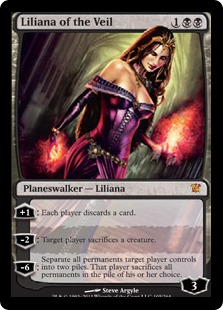
Liliana of the VeilThis concept of “shifting roles” is often seen in midrange decks, where the line (and tools available) between linear decks and control decks becomes blurred. Built to be larger and slightly less “focused” than linear strategies without attempting to control every aspect of the game like control decks, midrange strategies often ride the line between both and as a result, contain elements of each. Slower than linear strategies while less powerful than control decks, midrange strategies are often characterized by elements that generate some sort of advantage that can be leveraged against both, be it life, cards, or board presence. Midrange decks more than any other strategy are the most well-equipped to shift roles depending on who they are facing, be they quick, aggressive decks or slow, plodding strategies.

One example of this in practice was Naya Midrange, as many played in the 2013 Standard season.

Naya Midrange, by Eric Rill (SCG Open, Cincinnati 2013)

Creatures

4 Thragtusk
4 Boros Reckoner
2 Aurelia, the Warleader
2 Thundermaw Hellkite
4 Restoration Angel
4 Huntmaster of the Fells
4 Avacyn's Pilgrim

Sorceries

4 Bonfire of the Damned
4 Farseek

Planeswalkers

2 Garruk Relentless

Enchantments

2 Oblivion Ring

Lands:

3 Clifftop Retreat
1 Kessig Wolf Run
3 Sunpetal Grove
4 Rootbound Crag
2 Cavern of Souls
4 Stomping Ground
4 Temple Garden
3 Sacred Foundry

Sideboard

3 Mizzium Mortars
1 Angel of Serenity
4 Centaur Healer
2 Rest in Peace
1 Cavern of Souls
1 Triumph of Ferocity
1 Zealous Conscripts
2 Garruk, Primal Hunter

Built to create a fast board presence and then start generating advantages, Naya relied on the infamous Thragtusk as the lynchpin of its strategy against both aggro and control. The life gain and board presence provided by Thragtusk worked to give linear strategies headaches, while the card advantage generated by free creatures worked to stress control’s answers. It’s no surprise that the oft-maligned Thragtusk was widely considered the best card in the format while it was in Standard; the flexibility offered by an undercosted threat that was strong against both aggressive and controlling strategies defined Standard and exhibited the power of midrange strategies built to adapt to each matchup.

Let’s take a step back for a second. We’ve talked about midrange strategies that are built to shift roles, depending on matchup, and we’ve given a cute refresher on macro-archetypes in Magic. How does this Outpost Siegerelate to Grixis Control? To begin to answer this, we have to remember one major concept present in all games of Magic: variance. All decks are built with a plan in mind, but often these plans just serve as a framework for how to approach a matchup from a macro-level; everything changes in game. Linear strategies can stumble, or not draw removal for opposing creatures, and need to find some way to “shift roles” in order to find victory. This is why cheap red creatures backed up with burn is such a solid strategy. Red’s burn spells serve dual purpose; removal to clear the way for creatures to keep attacking, and direct damage to close the game out once the enemy has found a way to stop the initial onslaught. Control decks can find themselves suddenly facing a threat that challenges them from a new dimension (Outpost Siege in Standard) and must close the game out quickly before they get grinded out themselves. This is even more relevant in Modern, where strategies are so broad and numerous, and combo is so prevalent, that control strategies can’t hope to answer everything.

Roles and Grixis Control

One of my favorite color combinations in Magic is blue-white-red, or Jeskai. Jeskai Control exists as a tier 2 deck (in my opinion) in Modern, and seeks to control the game with plentiful, cheap removal spells and card advantage until the point that it wins through sheer inevitability or manlands. Where Jeskai Control suffers is its inability to shift roles, or “turn the corner”. Against a mana-deprived opponent, Jeskai can’t do anything except make land drops, as there is no way for it to win until the very lategame. Often, this lets the opponent draw out of his mana-screw, and start deploying threat after threat that Jeskai is forced to answer, or it will just die anyways.

In its current form, Grixis Control solves this fundamental flaw and (in my opinion) pushes it into the conversation for “best deck” in Modern.

Grixis Control, by Trevor Holmes

Creatures

2 Tasigur, the Golden Fang
3 Gurmag Angler
4 Snapcaster Mage

Sorceries

4 Serum Visions
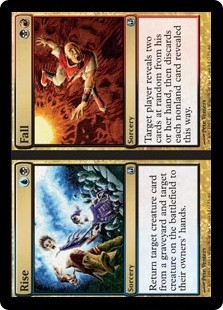
1 Rise // Fall

Instants

3 Kolaghan's Command
4 Thought Scour
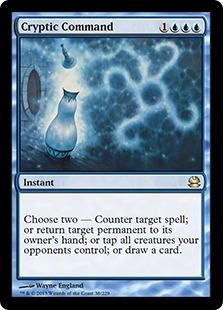
3 Cryptic Command
4 Terminate
4 Lightning Bolt
1 Electrolyze
2 Mana Leak
2 Spell Snare
1 Deprive

Lands

2 Creeping Tar Pit
3 Scalding Tarn
2 Steam Vents
2 Watery Grave
1 Bloodstained Mire
4 Polluted Delta
4 Island
1 Mountain
1 Swamp
1 Sulfur Falls
1 Ghost Quarter

Sideboard

3 Dispel
1 Deathmark
1 Bitterblossom
1 Damnation
1 Duress
1 Vandalblast
4 Fulminator Mage
1 Anger of the Gods
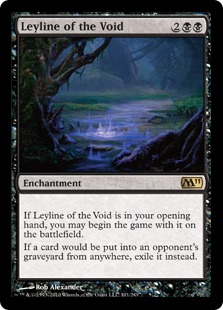
2 Leyline of the Void

For those unfamiliar with this strategy, I suggest reading my first article about Grixis Control here. After playing match after match with this deck both in real life and on stream, I’ve arrived at what I feel is close Cryptic Commandto an optimal list for the current metagame. For those unaware, Gurmag Angler and Tasigur, the Golden Fang provide an incredible amount of play to this strategy that would probably be unplayable without them. Unlike any control deck I’ve played before, Grixis is able to shift roles whenever necessary, be it “turning the corner” against aggressive strategies, or providing quick pressure against combo decks. Opponents are constantly forced to play into our removal and counterspells, while at the same time diluting their deck with answers to our cheap delve creatures. This allows us to generate virtual card advantage while our opponent sits with Path to Exiles and Dismembers in hand instead of threats, while we stock up on removal spells and Cryptic Commands. Eventually, we can deploy our delve creatures when ready, only to recur them with Kolaghan's Command when our opponent does kill them, all while generating value. It is truly sickening.

Against combo decks like Scapeshift and Living End, Thought Scour functions as a passable Black Lotus, letting us power out six and seven mana delve creatures as early as turn two and three to pressure our opponent while we seek to disrupt their combo with counterspells. Creeping Tar Pit and Lightning Bolt/Snapcaster Mage speed up our clock considerably, and the fetch/shock nature of Modern means we usually only need to do 15-17 damage to kill our opponent. With random damage from Bolt and Kolaghan's Command, we often only need to hit twice with Tasigur or Angler before our opponent is at a life total low enough to finish with burn. This deck, (yes, this control deck) kills on turns 5-7 with a surprising consistency.

Some notes about card choices and play:

  • Rise FallRise // Fall popped up in a few lists for a couple weeks leading up to the Modern Festival. LSV popularized it on ChannelFireball but the tech has been floating around for weeks. In this list, this card does similar things to Shadow of Doubt; an interesting, unexpected effect that can oftentimes be dead and clunky, but can also just be insane. Rise // Fall can often be used as a supercharged fourth Kolaghan's Command, bouncing a delve creature our opponent has killed and a Snapcaster of our own back to our hand. Even the “worst case” scenario where we have no creature on board can be solved. Bouncing an opposing creature is fine, and I’ve even used it to bounce an on-board Loxodon Smiter and a Noble Hierarch in my opponent’s graveyard to hand in the midgame to buy time. Then, of course, there are the situations where we are casting Hymn to Tourarch in Modern. I don’t think I need to elaborate on why that’s good.
  • Leyline of the VoidLeyline of the Void was a last minute inclusion right before the Modern Festival Finals. A viewer suggested it in my first Grixis article but it seemed out of place in a metagame full of Affinity and big-mana decks. Now, Grixis decks are everywhere online, as well as Living End, Grishoalbrand, Storm, Dredgevine, and numerous other strategies seeking to use the graveyard for value. The format is also pretty hostile to artifacts because of Kolaghan's Command, and weak to enchantments in general, so Leyline currently has a greater chance than normal of sticking around the battlefield.
  • Why this over Delver? I’m probably asked this question more than any other on stream (except maybe “why aren’t you partnered Delveryet”) so I figured I’d answer here in writing. We talked about this a bit in my previous Grixis article, but I will say it again: cutting Delver of Secrets allows us to play a more reactive game and gain points against aggressive strategies like Affinity and Burn. Delver of Secrets pushes us into playing Gitaxian Probe, which wants us to also play Young Pyromancer. This strategy is great, but we end up having to do a little too much damage to ourselves to win a game of Magic, which is not where I want to be against a bunch of aggressive decks. Cutting these cards lets us play a higher land count (not a bad thing, as we gain Creeping Tar Pit), as well as powerful spells such as Cryptic Command and more copies of Kolaghan's Command. In a format full of big mana decks and combo, Delver might be better, but as it is now I like where Grixis Control lines up.
  • BitterblossomBitterblossom is still awesome. We can’t afford to play it against Grixis Delver, as they have finally wised up to sticking to their role in the matchup and are no longer boarding out their Delvers. For a while, Grixis Delver players were attempting to play the same game as us and the matchup was a breeze, as we were both playing a control game but they had 18 lands and no Cryptic Commands vs. our “control as Plan A” strategy. As a result, I’ve trimmed down to one copy of Bitterblossom, but could definitely go back to two if Twin and control get popular again.

The hardest part about this deck, in my opinion, is determining when to expend resources protecting our delve creatures, and when to let them Gurmag Anglerdie. Between 3 Kolaghan's Command and 5 delve creatures, it’s rarely hard to find a second or third copy, which brings up an interesting dilemma when our opponent is struggling to remove our huge creature from the field. On the one hand, Gurmag Angler is often single-handedly holding back Tarmogoyfs and Loxodon Smiters (or killing our opponent) and we would like to keep it around, on the other hand, our resources might be better spent just countering “stuff”. I’ve come to the conclusion that more often than not, it comes down to mana-efficiency and reading the opponent (as best as you can when playing online). If spending resources to protect our creature means that our opponent needs to devote a turn to kill it (by spending more mana on removal instead of threats), or if saving our creature means we make our opponent skip combat for a turn or two it’s probably worth it. The decision trees that Gurmag and Tasigur create are very interesting and definitely worth exploring, as they lead to great lines and fun, close games.

Roleshifting in Practice

TerminateI’ll close on an anecdote; in the Modern Festival finals we played against a Jund deck on stream. Our opponent led with discard into no two-drop creature; a relatively slow start. We were able to land a quick Gurmag Angler and protect it from Liliana of the Veil with a Mana Leak, leaving us with a Spell Snare, Terminate, Terminate #2, and lands in hand against an opponent with a few cards in hand but no board. Our opponent drew for his turn five and passed, letting us get in a Gurmag hit. His next turn he played Scavenging Ooze and passed again, which we answered with Terminate. The turn after he played Tarmogoyf, which we answered with our last Terminate. This raised the question of Terminate vs. Spell Snare on the Tarmogoyf, which I considered interesting enough to discuss.

Spell SnareAt that point, we were flooding out and had nothing but lands and the Snare/Terminate, while our opponent still had 3-4 cards in hand (all spells, as he was stuck on four lands for a turn or two). It seemed obvious at that point that our opponent had at least Lightning Bolt, and possibly Terminate as well in hand. The Bolt I was almost 100% sure of, as he led with Scavenging Ooze before Tarmogoyf, signaling his intentions to possibly chump and finish off the Gurmag with Bolt. It seemed like he was playing around Leak as well, since he passed on turn five and didn’t play Ooze until hitting his fifth land. This suggested to me that he also had Terminate, which I would need to save my Gurmag from if I had any hope at winning that game (I had no action to my opponents’ multiple cards in hand + Raging Ravine on board). Eventually he went for Terminate on the Gurmag, and I was able to protect it with Spell Snare and win the game. More than anything, this game showed me our deck’s capability to shift roles: without Gurmag Angler to pressure our opponent’s relatively slow draw, we would have just flooded out and died.

All in all, I’ve loved playing with my Grixis Control deck this Modern season. I Day 2’d GP Charlotte and went 7-3 in the Modern Festival, losing a weird one to Lantern Control, a match against Tron where my opponent got very lucky, and one match to Affinity where my opponent also got very lucky but I might have had the tools to win. The deck is great, has a ton of play to it and is a lot of fun! What do you think about the deck? Any questions or important interactions you think I missed? What should I write about next week? Let me know!

Trevor Holmes
The_Architect on MTGO
Twitch.tv/Architect_Gaming
Twitter.com/7he4rchitect

[MTGO] 1 Year, 100 Tix – June Report, 6 Month Summary

Are you a Quiet Speculation member?

If not, now is a perfect time to join up! Our powerful tools, breaking-news analysis, and exclusive Discord channel will make sure you stay up to date and ahead of the curve.

Here we are, half way through this project. At this point, and as far as I’m concerned, things are slightly better than my expectations in January. Hopefully this will continue through the second part of the year.

Today, along with uncovering the value of the account after six months, we’ll also reveal the winner of the contest for the six-month guess.

In this article I will summarize with graphs and data what has been going on during the first half of the project. I will then discuss my projections for the second part of the year. Usually, a lot of opportunities are available for online speculators during the summer/fall transition. This is mostly a buying season with the benefits being collected from October through December.

Before getting into more details, the next unlocked article from the Nine Months of Portfolio Management series is Part 7—Opportunity Cost and Opportunity Benefit.

More information about the 100 Tix 1 Year project can be found here:

June - Six Months Later

May was a great month, and so was June. Two months of successful Modern specs coupled with a handful of quick and juicy Pauper positions is what pushed the account comfortably over the 300 Tix mark after the first six months of the 100 Tix 1 Year project.

This result is clearly above my initial expectations. Doubling was a decent goal to me. Tripling is really good considering the time spent on this and considering that February, March and April were mostly flat. The only thing that was expected and intended was that cyclical positions, Modern positions most exclusively, would be the main driver of this account.

Winner of the Six-Month Contest

With a guess of 342 Tix, Zach Bart (@zbrt) is our winner for the six-month guess. Here is the top five and their guesses:

Congratulations Zach! As a QS insider your prize is a DDF draft set.

Summary of the First Six Months

State of the Account

With the end of Modern Masters 2015 drafts I ended June by picking up a large amount of MM2 positions that had dropped significantly since the release of the set. I should have been a little more liquid here and should I have kept more free Tix on the account for the incoming release of Magic Origins (ORI). Nevertheless I still have three to four weeks to sell cards before the first buying opportunities from ORI.

Six Months in Numbers and Graphs

During these six months I speculated on 87 different positions, sometimes twice on the same cards (Spell Snare and Temple of Enlightenment for instance, which were counted as two distinct specs). These 87 specs exclude quickflips and short sells. 34 of these 87 specs are still open while 53 have been closed.

As expected, and as desired too, cyclical (Modern and Pauper) represented the largest part of my specs. Standard will represent a bigger part in the next six months with Magic Origins coming up and the Tarkir block becoming the older Standard block in October.

Of the 53 closed positions, 84.9% of them (45/53) ended up winners and 15.1% (8/53) ended up losers. Overall, ~85% of specs generating profit is a rather high percentage. The relative short-term nature of this project and the small size of the initial bankroll favored positive results, with high variations on cheap cards, for example. With a bigger bankroll and more long-term oriented investments the rate of positive specs would more likely fall between 70% and 80%.

The average percentage gain per spec (of the 53 closed positions) was +100.5%, with the average percentage gain for the 45 winners being +123.7% and the average percentage loss for the 8 losers being -37.1%.

Since all positions are not equal in size and in Tix invested, another way to look at percentages is to compare Tix invested to Tix generated. Making +500% out of a 2 Tix penny card position doesn't generate as much as Tix as making +65% off a 20 Tix position.

Among the 53 closed positions, the average gain per Tix invested was of +76.6%.

Together, these numbers are very decent and seem quite high when compared to the +65% gain reported for the Buy and Sell Recommendations of our weekly insider MTGO Market Report during the same six-month period.

However, as your bankroll gets bigger it becomes impossible to sustain such a growth rate. Especially because specs on cheap cards and quickflips don't impact a big bankroll the same way they impact a small bankroll. Making 2 Tix is a small but significant gain for a 100 Tix bankroll. The same gain becomes negligible for a 1000 Tix bankroll.

The Next Six Months

Modern

The account is currently mostly filled with Modern positions, many of them from Modern Masters 2015. With the release of Magic Origins approaching, the peak for many Modern prices is probably now. I might be looking to exit positions such as Threads of Disloyalty, Mindbreak Trap and Obstinate Baloth, even if the two first ones didn't yield a good profit.

The alternative is to wait until October and the release of Battle for Zendikar. I expect most of my MM2 picks to have risen by that time. It will be a good opportunity to sell my Modern positions and to turn to more Standard specs for the last three months of the year. However, if any Modern staples get really low in October-November I'll probably buy some and will try to land some profit before December 31st. Remember, these guys are cyclical, whatever goes down will go up again.

Magic Origins

Core sets are always one of the best sources of speculative opportunities on MTGO. During the first three to six weeks prices go really low as players massively draft the new core set and rise quickly in October when the new fall set kicks in. The supply of core sets dries up and prices rise more or less sharply according to the metagame.

My plan will be to free as many Tix as possible for September and invest in almost anything that is cheap and has a shot in Standard. My target number one even knowing nothing about BFZ: the shocklands. Another reprint of these will likely push the prices low, but guess what, nothing is more certain to be played and in demand than lands in Magic.

Tarkir Block

Now is also the time to collect some Tarkir block cards that have a high chance to be part of the next Standard environment after Theros block rotates out. I have already bought some (Monastery Siege, Monastery Mentor, Dragon Whisperer), and will try to buy more during ORI release events when the last price drop before a steady rise is expected.

Theros Block Rotation

These might be marginal specs as it usually takes more than a couple of months to yield profit, and I have to close this account by the end of the year. Picking up Modern-, but also Legacy- and Vintage-playable cards from a block rotating out of Standard may be slow and low-profit, but it's a very safe bet.

The lowest prices are likely to occur around and during the release of the fall set. Mana Confluence, Thoughtseize, Master of Waves, Searing Blood and Eidolon of the Great Revel are as many potential great targets.

~

Thank you for following me through this project and its first six months. I hope you are enjoying it as much as I do and let's hope my specs will yield similar results for the second half of the year.

Sylvain Lehoux

What’s Your MTG Hall of Fame Ballot?

Are you a Quiet Speculation member?

If not, now is a perfect time to join up! Our powerful tools, breaking-news analysis, and exclusive Discord channel will make sure you stay up to date and ahead of the curve.

For as long as there has been an MTG Hall of Fame, there have been tons of articles published about the ballots submitted by members of the voting committee. I've browsed some of the articles, but for the most part they were never terribly interesting to me, as the call was somebody else's to make and slam dunk candidates like Jon Finkel, Kai Budde, and LSV have all made it in without fail, so if the system was ever bad it wasn't by much.

Thinks are slightly different this year though, as WotC has added a community ballot to the Hall of Fame vote. Prior to this, I had no idea the range of players who were eligible for the Hall. For example, did you know that Quiet Speculation's own Adam Yurchick is an eligible candidate?

Samuel Black
Nico Bohny
Marcio Carvalho
Paul Cheon
Stanislav Cifka
Andrew Cuneo
Willy Edel
Gerard Fabiano
Chris Fennell
Ivan Floch
Eric Froehlich
Justin Gary
Mark Herberholz
Tsuyoshi Ikeda
Michael Jacob
Scott Johns
Martin Juza
Tomohiro Kaji
Tzu-Ching Kuo
Shingou Kurihara
Osyp Lebedowicz
Marijn Lybaert
Tom Martell
Kazuya Mitamura
Kenny Ă–berg
David Ochoa
Jamie Parke
Brock Parker
Neil Reeves
Tomoharu Saito
David Sharfman
Matthew Sperling
Yuta Takahashi
Sebastian Thaler
Robert Van Medevoort
Craig Wescoe
David Williams
Shota Yasooka
Adam Yurchick
Matej Zatlkaj

I had no idea that there were so many eligible candidates! Unfortunately for many of them, the vast majority of voters don't consider players with fewer than three PT Top 8s for induction, and even "only" having three PT Top 8s is considered somewhat below the bare minimum for most. There's a Wikipedia page listing Magic pros by accolade which is helpful for breaking this list down. If we remove the players with fewer than three PT Top 8s, we're left with this list:

Willy Edel (4)
Eric Froehlich (4)
Justin Gary (3)
Mark Herberholz (4)
Tsuyoshi Ikeda (4)
Scott Johns (5)
Tomohiro Kaji (3)
Osyp Lebedowicz (3)
Marijn Lybaert (4)
Kazuya Mitamura (3)
Jamie Parke (3)
Tomoharu Saito (5)
Craig Wescoe (3)

Unsurprisingly, this makes our list a lot smaller. What makes somebody Hall of Fame material goes beyond numbers and is going to have some subjective elements, but this is a decent baseline for who is on the list of people actually in the conversation. Here's who I'm voting for:

Willy Edel

Everybody is talking about Willy's huge contributions to Brazilian Magic right now, and that couples with four PT Top 8s makes him something of a lock. He's not somebody who stands out in my mind as a person I would consider a great, but it's important to consider the perspective of others, and his community contributions in Brazil are huge.

Justin Gary

Everything that you need to know about Justin Gary, you can find here. His name is so freaking generic, but it's still one that is iconic to the game of Magic. Gary's passion is hard to come by, and the stories that Sullivan shares are exactly what makes a person Hall of Fame material.

Mark Herberholz

Back when I first started paying attention to the Pro Tour, Mark Herberholz was winning the Pro Tour. Four PT Top 8s is a phenomenal number, but the reason that I like voting for Herberholz is that he has a huge personality. This is the Hall of Fame after all, and characters like him add a ton of entertainment value to the game.

Shota Yasooka

Numbers aren't everything. While Yasooka only has two PT Top 8s, he has a ton of PT Top 16s and is somebody who I love to snipe in PT fantasy drafts. The greatest thing about Yasooka, is that he does all of his preparation by himself, and he always has a sweet deck. He's always really fun to watch.

Tomoharu Saito

The reason that Saito isn't already in the HoF, is his shady past. He has been suspended from the game, and that stains your reputation. It's hard to talk about a player's numbers when you have reason to believe that they were ill-gotten. At the end of the day though, Saito is one of the game's most brilliant deck builders, and you can't fake that. Strong technical play and good deck-building rarely go hand in hand. He's also great for the Japanese Magic community. I won't be surprised if a lot of people don't want to vote for Saito, but the fact that he's so obviously great despite the shady elements of his history make him an easy pick for me.

What does your ballot look like?

Avatar photo

Ryan Overturf

Ryan has been playing Magic since Legions and playing competitively since Lorwyn. While he fancies himself a Legacy specialist, you'll always find him with strong opinions on every constructed format.

View More By Ryan Overturf

Posted in Free14 Comments on What’s Your MTG Hall of Fame Ballot?

Have you joined the Quiet Speculation Discord?

If you haven't, you're leaving value on the table! Join our community of experts, enthusiasts, entertainers, and educators and enjoy exclusive podcasts, questions asked and answered, trades, sales, and everything else Discord has to offer.

Want to create content with Quiet Speculation?

All you need to succeed is a passion for Magic: The Gathering, and the ability to write coherently. Share your knowledge of MTG and how you leverage it to win games, get value from your cards – or even turn a profit.

Insider: Magic Origins Top 10!

Are you a Quiet Speculation member?

If not, now is a perfect time to join up! Our powerful tools, breaking-news analysis, and exclusive Discord channel will make sure you stay up to date and ahead of the curve.

Magic Origins looks like it will be one of, if not the, best core sets in Magic history. Let’s dive right in!

Honorable Mention

In truth, so many cards in the set deserve to be listed in this section. Over the past couple weeks, I’ve talked about many cards in the set, so if you missed them, take some time and check them out. If you take one thing away from those articles, what you should focus on is that there are so many playables, you’d have trouble fitting them all in a bag of holding.

We see this sometimes with sets over the past couple years. Instead of having a bunch of filler, much of that filler has playable applications. To put it in perspective, there probably isn’t much difference between the top 10 and top 20 in this set. We are going to focus on the top 10 today, but before we get to that, let’s take a look at some cards I haven’t discussed yet.

Erebos's Titan

Erebos's Titan, just like many other cards in Magic Origins, suffers from wrong-place-wrong-time syndrome. Had he been printed in Theros block, there is no doubt in my mind he would have seen a ton of play in Mono-Black Devotion. The question is now, will that strategy be good enough that he will have a home. My initial reaction is no.

There is no question that he is a good card. We used to have to deal with awful creatures like Yukora, the Prisoner and Plague Sliver. Now, our four-mana 5/5’s have huge upsides like this.

Some insight into my hesitancy might be necessary. Polukranos, World Eater is legal for play in Standard and that card is $3 now because it sees no play. I view Erebos's Titan as a similar card, so I don’t think it will see much play. It’s not that it’s not good, of course it is, but we play in an era when a card has to not only be good, but have a home and be better than the other cards in the format. I don’t think this new mythic meets those requirements.

We have the payoff for playing black devotion in Gray Merchant of Asphodel but since I had to re-look up the spelling, that tells you how often I’ve written about it in the last year. The problem is that there are not other good enablers worth playing. I think we’ve all had enough of Mono-Black Devotion anyway, but maybe this card is enough to revitalize the archetype.

Renowned

The renowned mechanic, like so many before it, suffers from its effect not taking place immediately. When you need your creature to deal damage to a player before its effect works, generally that’s not a good thing. At least three of the cards with this mechanic might be good enough though. Relic Seeker, Scab-Clan Berserker and Honored Hierarch might be better than they seem at first glance.

Take Honored Hierarch, for example. We are losing Elvish Mystic when M15 rotates out of the format. That happens when Battle for Zendikar is added into the format. If no mana creatures are printed, then this will be our only option (at one mana) and if it’s our only option, its stock goes way up.

My opinion of Relic Seeker became more positive once I saw how many pieces of equipment were printed in this set. There are a lot of options right now and we could see even more printed in the next couple of sets as well. With Relic Seeker having solid initial stats, this could lead to him seeing some play.

Finally, Scab-Clan Berserker seems like it could be pretty good as well. I’m not sure if it’s better than Acolyte of the Inferno or Goblin Glory Chaser but these red renowned creatures provide decent starting stats along with good payoff for connecting once.

The problem with any of these cards is that they aren’t really good enough without dealing damage and triggering their ability. That means that when you are ahead, they are great and when you’re behind, you can never catch up.

Hallowed Moonlight

Hallowed Moonlight is amazing and epic at what it does. I truly wish that Containment Priest was printed instead of this instant, but Hallowed Moonlight is a fine second place. There are not many reasons you would want to cast this spell in Standard but there are a couple green cards worth countering.

Basking in the Moonlight in Modern should be a common thing to do though. It seems like one of the best sideboard cards in the format. Hallowed Moonlight could even see play in Legacy as extra copies of Containment Priest.

Strong eternal sideboard cards are not what I’m looking for on the top 10 though, so it didn’t quite make the list. There are so many cards like this in the set. Magic Origins is filled with a diverse assortment of interesting cards that are difficult to analyze.

Depending on how the metagame takes shape, these cards could lose or gain value so keep your eyes open for profit possibilities. This is the type of set that people are going to make a lot of money on because in two months, the value of this set seems like it is going to shift dramatically.

Infinite Obliteration

Infinite Obliteration fits into the same category as well. We have never seen this effect for three mana and honestly cutting a mana from this spell changes everything.

First we had Cranial Extraction and that money rare saw tons of play back then. We’ve had many other cards similar to this one, but none caught my interest until Stain the Mind was printed in M15. Stain the Mind broke that four-mana precedent, assuming you were playing early creatures to turn on convoke.

Then they go and print Infinite Obliteration. This isn’t quite the same card though because you are limited to choosing a creature. If it hit any spell, I would have this highly rated in the top 10 and as is, it was one of the last cuts I made from the list.

Many of the decks you will be facing in Standard and Modern utilize creatures as their win conditions and even if they have multiple finishers, stripping one of them can provide an easy win for you. For example, taking Dragonlord Ojutai against Esper Dragons won’t necessarily win you the game, but it may make winning the game extremely difficult for your opponent. This can be applied to a variety of decks in many formats. The restriction to creatures only is a huge disadvantage, but it doesn’t negate its potency against certain decks.

Top Ten

Now that we’ve discussed some cards that were not quite good enough, let’s move on to the best cards in the set!

10. Pia and Kiran Nalaar

As you may know, this is one of my favorite cards in the set. I’ve spent a lot of time talking about a theoretical U/R Artifact deck and this card should be a huge part of making that deck work. I thought about choosing Thopter Spy Network for the 10 spot, but I think our red token maker has wider applications than its blue counterpart. Although these two cards go together like C-3PO and R2-D2, sometimes they go on missions without each other and the same will likely be said of these two new cards.

9. Harbinger of the Tides

Merfolk are a beloved tribe that don’t get much love from the new sets being printed. When a card comes along that does impact these vicious water warriors, act quickly. Trade for every copy of this card at every opportunity.

This may only be selling for $4 right now, but this isn’t a card that will lose you money. Harbinger of the Tides is the perfect example of a card that will hold and gain value due to its play in multiple formats. This is a four-of, auto-include in Legacy and Modern Merfolk, but not only that, it may be the piece of the puzzle we were missing in Standard as well.

It seems like every set that’s released the Magic writing community has been focused on revitalizing the original Theros block archetypes Mono-Blue and Mono-Black Devotion. In the last set, Shorecrasher Elemental seemed like the savior of the archetype and if the format were set up differently it may have been just that. It turned out that crashing the shores didn’t quite make the deck viable so its second run at the top was halted rather abruptly.

This timeline can be visibly seen in the price trajectory of Shorecrasher Elemental. I think that card is an amazing spec right now and I paused writing this article so I could order multiple playsets for myself. I’d get them now before players start snapping them up to try Mono-Blue Devotion again for themselves.

What makes this creature so potent is the ability to play it as an instant. Four mana isn’t that much, but in all these formats, the decks are already set up to take advantage of playing their creatures at instant speed. For Modern and Legacy, players utilize Aether Vial, which has seen a lot of price growth lately. In Standard, we have the still not fully explored Collected Company. So, not only can you cast it for four mana at instant speed, but you can also cheat it into play in whatever deck you want to play it in. This makes the card much more potent.

8. Exquisite Firecraft

At number seven we have a card that has started a slow burn in the hearts of players. Not much discussion has transpired on this particular fire-filled spell, which goes to show how jaded we have become about the relative power level of cards.

Flashing back to the printing of Char, players went crazy about how overpowered that card was. Most of the time Char was paired with Lightning Helix in Zoo style decks that put on a ton of early pressure and then finished their opponents off with a flash of burning rage.

Exquisite Firecraft is all of what Char was plus some sweet bonus throw-ins. Sure it’s a sorcery, but that certainly won't hold this card back from seeing play. Right now we have a dwarven forge’s worth of burn spells stacked up in the corner waiting to set players aflame. Between our new red card, Stoke the Flames, and Jeskai Charm, there may be a critical mass of burn spells to make burning players out a viable path to victory.

Even if a dedicated burn deck isn’t a tier 1 strategy, this card is going to be a mainstay in decks for the duration of its legality. As one of the many $4 cards in the set, it’s a good investment, especially if you are going to play it. The card may dip in value once the market is saturated with copies and if so, take that time to make some money.

7. Shaman of the Pack

When I saw a couple elves being spoiled in Magic Origins I was the skeptic, as I tend to be, but the more elves were spoiled, the more I warmed up to the idea. Don’t get me wrong, I like a walk through the forest as much as the next guy, but just because we love green doesn’t mean they will impact competitive play.

Then they showed us Shaman of the Pack. Not only does that card impact the playablity of the tribe in Standard, but it will likely overhaul what the tribe looks like in the older formats as well. Instead of building up your mana like a typical elf ball strategy, you now have access to another line of play as part of your tribe. Not only that, but we have seen past success with pairing black with elves back in Lorwyn block, so there is precedent.

If you are looking to build a Standard elf deck, don’t waste your time doing a gatherer search of available elven tools because there are a measly four to choose from. Elvish Mystic is the only one of them that is an auto-inclusion so we need to rely on Magic Origins if the deck will be immediately viable. Thankfully, Wizards was able to view the future and gave us all the tools we need in this one set.

There is no certainty that the deck will be good enough, but at least there are enough playables to give it a shot. Take a look at a first version of the deck.

G/B Elves by Mike Lanigan

Creatures

4 Elvish Mystic
4 Gnarlroot Trapper
4 Thornbow Archer
4 Elvish Visionary
4 Dwynen's Elite
4 Shaman of the Pack
2 Nissa, Vastwood Seer
3 Dwynen, Gilt-Leaf Daen
2 Sylvan Messenger
2 Gilt-Leaf Winnower

Spells

3 Hero's Downfall
4 Collected Company

Lands

4 Llanowar Wastes
4 Temple of Malady
6 Forest
6 Swamp

As you can see, the majority of these cards are from Magic Origins. This is just a first draft, but if the deck is playable, it will likely look something like this. We have eight one-drop mana accelerants, card advantage, and synergistic interactions. I’m excited to try this deck out and I know many other players will be as well.

6. Sigil of the Empty Throne

While the push for an enchantment matters deck is welcome, it may be too little too late. Or rather, this may be a flash in the pan strategy that will only be viable due to the number of sets legal in the format currently. Regardless, with the long list of playable enchantments we’ve collected thus far plus the intriguing new ones in Origins, Wizards has provided all the tools we need for this archetype. I think we should nickname this set archetype enabler because this set has brought tools for a diverse assortment of decks.

Focusing on the point, Sigil of the Empty Throne is the missing piece of the puzzle. This is the ultimate payoff we’ve been looking for. Sure we have various ways to gain card advantage and gain more resources than our opponent, but we were missing a good way to close the game. Starfield of Nyx looked to be what we needed for this role, but with Sigil being reprinted, it can be our back up. The Starfield can be Robin and we can let Sigil of the Empty Throne be Batman and lead this mission.

There are many combinations of viable cards that could lead us to victory, but lots of testing and theorizing will need to occur before we finalize the best version of this strategy. You can be sure that enchantments will become a regular part of the metagame though, so sideboard appropriately.

5. Magmatic Insight

Reducing the mana cost on playable cards is not usually a good idea, but I love the direction Wizards is heading by giving more card draw to the red mages of the world.

Although this spell does not provide card advantage, because you are using two cards to gain two more cards, exchanging unused resources for more options is always a good thing.

This spell also has applications in multiple formats, and costing a single red is a big part of that. Snapcaster Mage and Young Pyromancer just found a new BFF, so beware. This means that foil copies should be quite valuable as well so snap those up quickly. Star City’s sold out price of $8 looks to be the only data I could gather, but that gives us a good starting point.

4. Languish

Like many other cards in this set, we are forging a new path with this card. This super Drown in Sorrow is certain to see play in Standard, but just how much and if it will be maindeck remains a concept firmly situated in the future.

The current state of the format isn’t one of rush strategies being dominant. Certainly Atarka Red is a deck to be feared, but it’s definitely not winning every tournament. Other than that, most other decks fall into the category of midrange. Although it’s one of the more aggressive decks in the format, even Abzan Aggro has a midrange feel to it.

Languish will flourish in a format filled with aggressive strategies, but that is unlikely to happen because Languish is legal. So, no matter how much game time this card actually sees, it is a major constraint on the format. It’s the only four-mana pseudo wrath spell we have access to at the moment but it will never rid you of the plethora of five-toughness creatures that are rampaging around the format.

3. Nissa, Vastwood Seer

As you may have noticed, Nissa, Vastwood Seer is the first planeswalker to crack the top 10 and she does so all the way at number three on the list. I mentioned the possibility of a top 20 with this set and if I outlined those as well, the other planeswalkers would likely all be in that list. Liliana, Heretical Healer nearly made her way onto the list, but her viability relies on other cards in the format that I don’t think exist just yet.

Nissa, Vastwood Seer on the other hand, will start seeing play immediately. I’ve seen her in action in some different midrange strategies and I’ve been impressed every time. No one wants to kill a Borderland Ranger, but if your opponent doesn’t spend resources to remove her, then she will turn into a real threat as the game progresses. I love the fact that her initial ability helps you build to her flip ability as well. This combination is certain to lead to her seeing play in a variety of strategies.

Although Nissa is unlikely to hold her nearly $30 price tag for long, she is still a good investment. I think a stabilizing price of $20-25 is completely reasonable and she may hit $40 depending on how many players decide they need her right away. These are things that cannot be said of many other planeswalkers which makes her an easy number three on this list.

2. Day's Undoing

It may surprise you to see this blue mythic rare on my list here, but I definitely have a high opinion of the card. Most of my thoughts about this Power 9-esque printing focus on older formats, but we may see Standard impacted as well. It’s no secret that this type of card screams combo and I’m not hiding that fact either. This card exists to help combo strategies.

In Standard, we have a couple different Jeskai Ascendancy combo decks that have done reasonably well from time to time. Day's Undoing could definitely help these decks become more consistent. Even the Temur Ascendancy combo deck could utilize this refueling spell. I mentioned a dedicated Burn deck earlier in the article and drawing cards in that strategy would be a deadly combination for any opponent.

Even if this draw-seven doesn’t end up seeing significant play in Standard, I believe it to be completely overpowered in Modern. Just like Treasure Cruise, Day's Undoing looks like it will be too powerful for the Modern format. I’ve been testing it in Affinity and it’s completely bonkers. There are plenty of other Modern decks that would love this card as well. Many decks are relying on their graveyard right now as well and a hidden benefit of this spell is that it shuffles everyone’s graveyards back into their libraries.

There are so many possibilities with this card and while they are exciting to theorize about, I believe this card will not stay legal in Modern for long. So, take advantage of its legality early and have a ton of fun drawing all the cards.

1. Goblin Piledriver

Drum roll please. Finally on our list, we have a card that some players called a mistake to have been printed the first time around. At number one on our list we have Goblin Piledriver!

This efficient, cheap threat comes ready to rumble with other mates in his tribe. To give it to the blue mages real good, he also has a seemingly random protection from blue ability. Piledriver has seen play in every format he’s been legal in with varying success. He was a part of Goblin Bidding, a tier 1 strategy back in Onslaught block Standard, and is still a major cog in the Legacy Goblins deck.

While it’s likely going to impact Standard, its printing has already impacted prices in Modern. Both Goblin Chieftain and Legion Loyalist have seen significant gains since Piledriver was announced. Even Auntie's Hovel rose in price! I expect Modern Goblins to make a big splash in the format and success is all but certain.

As a player who has cast Goblin Piledriver in a variety of formats, take it from me. Don’t underestimate the power of this card. In combination with any number of other goblins, this creature will punch a hole through your life total so quickly you won’t know what to do. Even if you are playing bigger creatures, Piledriver will always trade for the same or more mana investment from your opponent’s side of the board. No matter how big your blocker is, Piledriver can get big enough to trade with it.

Although many other spots on this list took some effort to determine, Goblin Piledriver was always at the top of my list. What do you think though? Did I get the list right? What would you change? What’s your top 10 list look like? Share your thoughts in the comments and as always,

Until next time,
Unleash the Origins Force!

Mike Lanigan
MtgJedi on Twitter
Jedicouncilman23@gmail.com

Modern Banlist Predictions for July 13

Are you a Quiet Speculation member?

If not, now is a perfect time to join up! Our powerful tools, breaking-news analysis, and exclusive Discord channel will make sure you stay up to date and ahead of the curve.

The most frustrating part about the Modern banlist isn't always the bans themselves. In fact, I haven't really disagreed with a ban since Seething Song/Bloodbraid Elf bit the dust back in January 2013. For me, the most frustrating part can be lack of player understanding about Wizards' banning criteria, and Wizards' lack of transparency in how they discuss those criteria. With a banlist announcement scheduled for July 13 (scroll down in that linked article), the Modern community is going crazy around a bunch of cards that should be banned and Wizards is characteristically silent. Why couldn't summer just be about the awesome GPs we just finished?

Summer Bloom Art
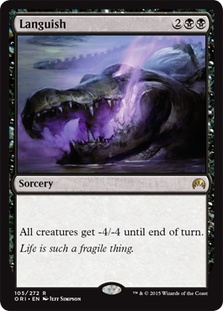
Instead of jumping on that ban-mania train, I want to drill down on the ban criteria themselves and then make some predictions based on both those criteria and Wizards' history of bans. If you were looking for an article about a new cutoff for the Modern format, banning a half-dozen cards to supposedly fulfill the turn four rule, or unbanning Jace, the Mind Sculptor and Stoneforge Mystic to enable control in Modern, then this article will be a little disappointing. But if you want to keep some perspective on the banlist and situate possible (un)bans in the broader Modern context, then hopefully this article will help you think through the Modern banlist announcement coming up on July 13.

[wp_ad_camp_1]

Banning Criteria Review

In my last banlist prediction article, I went over four rules we have seen used as ban criteria in the past. This included both the rules themselves and the supporting quotes from a variety of Wizards articles and ban announcements. It's important to understand these criteria before launching into banlist predictions; misunderstandings about the criteria are probably the main reason we see such wild ideas about what should be banned and unbanned in Modern. Here are the rules that, if broken, will lead to cards getting banned in Modern:
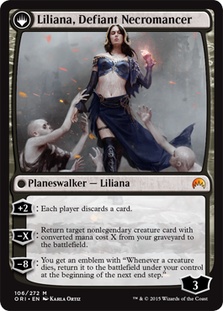
  • THE TURN FOUR RULE
    Top-tier decks can’t consistently win the game before turn four.
  • DECK DIVERSITY
    No deck can be greater than a certain percentage of the metagame for a sustained period of time. No deck can push out other decks below a certain percentage.
  • CARD DIVERSITY
    No card can be so strong that you must play that card if you are playing its colors.
  • TOURNAMENT LOGISTICS
    Decks can’t cause rounds to go to time.

Again, the March 23 banlist prediction article went over all the evidence and sources supporting these rules. To some readers and Modern players, it probably feels a little pedantic to go over these criteria again (and again, and again...). But one reason it's so important is that I see all sorts of ban suggestions Blood Moonthat are either related to these rules only in the most tangential sense, or just totally unrelated in every sense. For instance, I've heard some players advocate for a Blood Moon banning. Where exactly does that fall with respect to these criteria? It's not too fast, doesn't fit into an inordinate share of decks, isn't required in those colors, and doesn't screw with tournament logistics. I guess it's "not fun" to be under a Moon, but "not fun" isn't a banning rule, even if many Modern players believe it is. The only card to ever be banned under some variation of that rule was Golgari Grave-Troll (to eliminate the dredge subgame). But Troll has since been unbanned, and the only card from dredge still on the list is Dread Return, not because it isn't fun but because it's a turn 4 rule violator. The point here is that we can't just invent rules because they feel right to us when we are mad at one deck or the other. We need to always return to the criteria Wizards laid out because, in many cases, this was Wizards' way of operationalizing the arbitrary and subjective "not fun" feeling.

Analysis of the "Turn Four Rule"

Looking ahead to July 13, most of the ban discussion I see revolves around the turn four rule. This is certainly true of stuff like Amulet of Vigor, Summer Bloom, Become Immense, Griselbrand, and a dozen other cards I'll touch on later in the article. Because this rule is so central to the upcoming ban announcement, or at least the community's dialogue around it, I want to break it down here. This can help us gain a better understanding of how the rule has worked out in practice and where we might see it again. After all, the rule is actually much more complicated than it seems at first glance.

  • "Before turn four"
    It's easy to forget Wizards' process in choosing turn four instead of turn three or turn five. As Tom LaPille explained in the seminal "Welcome to the Modern World" article, "... we have a rule of Invigoratethumb about Legacy that we don't like consistent turn-two combination decks, but that turn-three combination decks are okay. We modified that rule for Modern by adding a turn to each side." This seems reasonable at first glance, but makes a lot less sense in the context of Legacy, where decks like Invigorate and Berserk-fueled Infect are perfectly acceptable. Part of this is the higher quality of police cards in Legacy (e.g. Force of Will) which allow faster decks to exist: contrary to popular belief, the average Legacy game is actually slower than the average Modern one in many cases. But this interplay between police cards/policing decks and broken/fast ones is lost in the translation of Legacy's so-called turn three rule and Modern's turn four one. Of course, we're stuck with the rule for now, but it's interesting to see how the rule's origin was itself framed so ambiguously.
  • "Win the game"
    At first glance, this seems like the most obvious part of the rule. How unclear can "win the game" really be? As with many aspects of Modern ban policy, the answer is "way less clear than you expect". First, there are cards that actually win the game Blazing Shoallike Blazing Shoal and Blighted Agent. But there are also cards that virtually win the game. A possible example of this is something like turn three Iona, Shield of Emeria off Dread Return. Or a turn two Primeval Titan with six lands in play. Or, returning to an example I made fun of earlier, a turn two Blood Moon. This issue was complicated further in a recent Sam Stoddard article, "Development Risks in Modern", where he wrote "[this is] not the sort of game play that we want to encourage in Modern. Turn one: make a huge play. If you can beat it, you win; if not, I win." The problem here is that "huge play" is much more open than "smack opponent for ten poison on turn two". For me, the key to understanding the degrees of "win the game" is in assessing an opponent's options once the "win" is in play. Obviously, the ten poison win doesn't leave you a whole lot of outs once they are there. But Moon does. So does Titan. The longer the game goes on after a "win" is in place, the less this is really just a guaranteed "win". This is one helpful way to understand the distinction.
  • "Consistently"
    This is at once the most refreshing metric of the turn four rule and also the most frustrating. On the one hand, "consistently" suggests there is a defined cutoff Wizards looks for when assessing decks. If a deck wins on turn three or earlier more than N% of the time, it is in violation of this Seething Songmetric. This was certainly suggested (everything but the value of N itself) in the Seething Song ban in January 2013: "Looking at the results of games, turn-three wins are frequent for Storm, contrary to the DCI's stated goals for the format." So in the case of Song, there really was a cutoff the deck violated, even if we don't know what that cutoff is. In many respects, it's heartening to know there is some N% out there that Wizards defers to. But this, of course, brings us right to the frustrating piece: the community doesn't actually know what N% is. I fully appreciate Wizards' unwillingness to share this number because a) it is probably arbitrary and would just incite argument in the community and b) it limits their flexibility and discretion as ban agents. But I also wish Wizards was more open in its communication so as to limit ban-mania and misapplied ban predictions. From Stoddard's article, we also know that interactivity is a part of this, which is also to say that Wizards doesn't care about win percentages in goldfishes: "Most of the super-fast combo decks in Modern that can win before turn three on a regular basis tend to do so in a way that we can expect most decks to easily interact with." This complicates the issue further because it suggests both an N% cutoff Ii.e. the "regular basis"), but also a kind of deck (e.g. one that isn't "interactive"). The best way out of this is to compare new potential offenders of the turn four rule to decks that have already been found to be safe. Infect is the big one here, because it has dodged bans for years and Stoddard even mentions it in that above article.
  • "Top-tier decks"
    Back at the dawn of Modern, Wizards defined the turn four rule in absolute terms: "we are going to allow turn-four combination decks, but not decks that consistently win the game on turn three." The problem with this rule, which Wizards probably realized, is that this includes way too many Goblin Electromancerfringe decks that aren't actually competitive. Do we have to ban Immolating Souleater and/or Assault Strobe because it CAN win the game on turn three in a goldfish setting? Or a small event? Because of this, and because of the format's evolution after PT Philadelphia in 2011, Wizards revised the rule to include the top-tier qualifier: "With the results of the Pro Tour in, we are tweaking that goal to not having top-tier decks that consistently win on turn three (or earlier)". On the one hand, this redefinition was quite welcome because it suggests an objective standard. On the other hand, as with the "consistently" metric, we don't really know how Wizards qualifies a top-tier deck. We know that Storm was considered top-tier with an 11.42% MTGO metagame share, but we have no idea if that's an upper-end of being top-tier or a lower-end. Would 10% cut it? 8%? The only way to tell is to triangulate the cutoff based on what is and is not banned, but even this is tricky because it's unclear whether a deck avoids banning because it isn't consistent or because it isn't top-tier.

If this analysis of the turn four rule has left you with more questions than answers then congratulations! You are now appreciating the complexity of analyzing Wizards' ban decisions and predicting their next moves. This is the level of detail and depth we need to go to if we are to understand how Wizards gets things done around the banlist. Of course, it's possible that Wizards just throws darts at a board and doesn't go through this kind of calculus, but I suspect it's much more nuanced than the Unglued card suggests. Given that Wizards has been incredibly conservative with their application of the turn four rule (the only card to be banned for it since PT Philly has been Seething Song, I bet they really do think through this issue seriously and touch on all these points we looked at here.

Modern Banlist Prediction for July 13

GP Charlotte was my favorite Modern GP since GP Richmond, but man oh man did I hate those questions the commentators asked players in front of the camera. Between the Amulet Bloom ban interrogation and the "what would you ban in Modern" line, it was a really unfortunate way to frame the format. It was especially unfortunate given how healthy the format is looking right now: see my recent 6/1 - 7/1 metagame breakdown for more information on this. This is the metagame context we are working from, and we need to consider these datapoints, the criteria discussed earlier in this article (especially around the turn four rule), and our general qualitative and experience-based understanding of the format. Based on all this, here is the single banlist scenario I expect for July 13.

BANLIST ANNOUNCEMENT
No changes

If you read my metagame breakdown article yesterday, you already knew this was my big prediction going into Monday and that's still true now. The format is looking extremely healthy by almost every Twinmetric, or at least every metric Wizards has cited in past ban decisions. No single deck has a metagame share over 11%, let alone the 15%-20% shares we saw during Treasure Cruise's and Birthing Pod's reign over the format. We also aren't seeing any polarizing decks in individual Modern settings, whether the SCG IQs, MTGO, the GPs, etc. We entered June with some question marks around a few decks. Splinter Twin combo was looking pretty strong, and although both Grixis Twin and UR Twin put up respectable numbers at the GPs, they just aren't even close to the prevalence we would expect of a bannable deck. At one point, UR Twin alone was about 12% of the metagame. Today, you need to combine all three Twin archetypes to get to 12%-13%, and those are just metagame-wide numbers. It's not like Twin is preventing other combo decks from thriving (Ad frikkin Nauseam got Top 8 at Charlotte!), or even other blue-based control (Grixis Control is here to stay). So from a pure diversity perspective, it's not like the format's big URx threat is nearly as big as people made it out to be.

Speaking of big threats, what happened to decks like Amulet Bloom and Grishoalbrand? Quite simply, Goryo's Vengeancethey aren't even close to top-tier status by any indicator Wizards has used in the past. Looking to the Song ban, our most succinct explanation of the turn four rule in action, we see Storm was classified as top-tier based on a 11%+ MTGO share and a few T8 performances at GPs. Although combo decks like Amulet do make some random Top 8 and Top 16 appearances from time to time, they are nowhere close to the Song-style metagame shares we saw in January 2013. Amulet is just under 5% of the MTGO metagame. Grishoalbrand is under 3% of every metagame, and under 1% of paper. These are just not the numbers you expect to see of "top-tier" decks. I would be surprised, stunned, and honestly appalled if Wizards spun a story about any of these decks meeting top-tier criteria with these kinds of numbers. If they do then ladies and gentlemen, all bets are off as to how Wizards perceives this format and how they understand our metagame. But because Wizards has been so rational in the past, I don't think we need to worry about this. Level heads will prevail and find that no deck violates any of the format's rules, least of all the turn four rule.

The metagame data in the 6/1 - 7/1 article also strongly suggests there will be no unbans in this period. When no single deck makes up more than 10% of the format even after a month with three GPs, you swordknow we are talking about an open metagame. Those are the numbers we would expect during an offseason, not one where players are clamoring to find the best deck with GPs and pro points on the line. Because the format is so stable, we are unlikely to see any unbans that might shake it up it. Sword of the Meek? Not when Burn and Affinity are both under 10% of the metagame. Bloodbraid Elf? Jund is the most-played deck in the format. Why on earth would you think a Bloodbraid unbanning is timely? Ancestral Vision? Grixis Control just proved that blue-based control can succeed in Modern without any additional help, and Wizards is unlikely to want to power that up further (sorry, Jace). When you add to this the recent release of Origins and the potential impact of cards there and in Battle For Zendikar, it becomes even clearer that we are unlikely to see any unbans in such a diverse moment of Modern. For unbans to occur, we would need a stagnant and/or solved metagame, and we are very far from that now. We could also see unbans if Wizards felt a particular deck was too strong and an unban could be targeted to address it. That's the Sword case in a nutshell, but we just aren't seeing an aggro hegemony to justify it right now. Maybe that changes after Day's Undoing hits Burn and Affinity in the next few weeks, but the current data does not suggest aggro needs any reining in.

Fingers Crossed for Monday

If we see bans on Monday, it will signal a huge paradigm shift in how Wizards views the format. We will have to redefine all our expectations around metagame diversity, and all our understanding of how decks are considered "top-tier" in the eyes of Wizards. Right now, most players and Modern stakeholders (this site and I included) have a certain conception of what it means for a deck to be "top-tier" and what it means for metagames to be "diverse", "open", and "healthy". Bans on Monday would undercut all the research and results we have gathered from the format so far. We would have to reassess not just our knowledge of Modern, but also Wizards' treatment of it.

Thankfully, I am confident that nothing like this will happen once the announcement goes live at 10:00 AM CST on Monday. Modern looks very healthy by most metrics, and I can't wait to get past the 13th and back to playing decks, brewing lists, and analyzing the metagame results of the next few PPTQs. Any other thoughts on bans or unbans? How Wizards applies the ban criteria? Any predictions of your own? Let me know in the comments and definitely check back in here on Monday when we launch a quick piece reflecting on the Modern banlist announcement.

Want Prices?

Browse thousands of prices with the first and most comprehensive MTG Finance tool around.


Trader Tools lists both buylist and retail prices for every MTG card, going back a decade.

Quiet Speculation