Are you a Quiet Speculation member?
If not, now is a perfect time to join up! Our powerful tools, breaking-news analysis, and exclusive Discord channel will make sure you stay up to date and ahead of the curve.
Everyone is fixated on Grixis Shadow. And rightly so—the deck is very powerful and has been sitting at the top of every metagame chart since April. And I think this is incorrect. I have some reason to believe that Shadow is a symptom of the metagame, not the cause. The Modern PPTQ season starts at the month, and players need to be ready to confront the real power in the format, Eldrazi Tron.
After playing many paper tournaments, sifting through extensive MTGO results, talking with other players, and some personal meditation, I've come to the conclusion that Eldrazi Tron is facilitating the current atypical metagame. It is responsible for midrange Jund's disappearance, and with that the rise of decks that Jund would normally hold in check. Death's Shadow has directly benefited and used this to ascend the metagame. This dual system is currently self-perpetuating, but I don't think it will last. The question is not if it will fall but when. Allow me to explain.
Bipolar Metagame
Go ahead, get the jokes about bipolar disorder out of your system. I'll wait.
Good now? Can we pretend to be adults now? Alright, in a bipolar metagame you have two top decks that dictate what decks see success. A recent example of this was the Standard metagame before the January bannings. GB Delirium and UW Flash sat at the top of the metagame because they complimented each other. Delirium was the best midrange deck, preying on the fast creature swarms and go-big midrange decks that beat Flash. Meanwhile Flash was strong against combo, grindy midrange, and control strategies that beat Delirium. 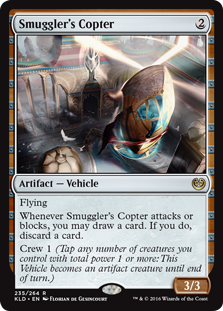 Consensus was that they were 50-50 against each other, but in my opinion as a Flash player Delirium was advantaged. This allowed the two decks to effectively split the metagame.
Compare this to unipolar where one deck dominates. Eldrazi Winter is an ur-example: you either played the top deck or your deck targeted the best deck. This is quite clearly unhealthy since a targeted deck should fall to all the hate but in a truly unipolar metagame the top deck is so much better it doesn't matter. When the top deck does fall to being targeted, then it's not unipolar at all but multipolar. There are a number of different decks that could be the top deck with no real advantage over the others. The top slot depends not on the decks themselves but the rest of the metagame. This is what we saw last summer, where the members of Tier 1 didn't change much but the positioning of the decks within the Tier did, constantly. This is generally held to be a very healthy metagame.
Whether a bipolar metagame is healthy depends on a number of factors. The problem the aforementioned Standard had was the lack of answers or counterstrategies to challenge the top decks. This is not a problem for Modern and its vast cardpool. The question instead is whether the bipolarity keeps out too many decks and harms diversity.
Where's the Jund?
I came to my realization because I wondered why Jund has so thoroughly disappeared. It has been reduced to a blip at best in metagame rankings. Even Abzan is hurting, when it normally assumes Jund's position when Jund itself falls. This is my clue to the truth of the metagame, because on paper the meta is filled with decks that Jund should feast upon. Collected Company decks and Affinity are good matchups, and both are doing very well. There are lots of fragile combo decks, brews, and control decks that lose to Liliana of the Veil. Death and Taxes won the invitational and Jund crushes DnT. With all this food around, something must be keeping Jund out.
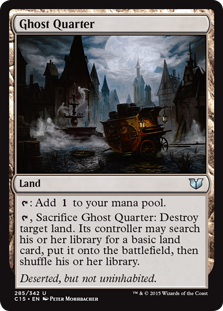
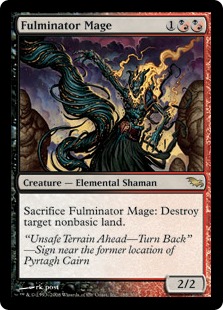 That something is Eldrazi Tron. Traditional Gx Tron was a very bad matchup but it was winnable. The Fulminator Mage into Surgical Extraction plan that emerged at the end of last year did a lot to beat Tron. However, it doesn't work against Eldrazi Tron and the matchup is naturally worse besides. Gx Tron has to hit Tron to do anything but in Eldrazi Tron it's a perk. Furthermore, removing four lands from Gx Tron is deceptively powerful. Despite being the poster child of big-mana decks, Tron is land-light. It runs 20 lands, at most, relying on all its cantrips and Sylvan Scrying to cheat the land count. Reducing that further can mean they never hit six mana even in a long game. Eldrazi doesn't cheat on lands and also has Mind Stone. Land destruction is not a good answer to spaghetti monsters.
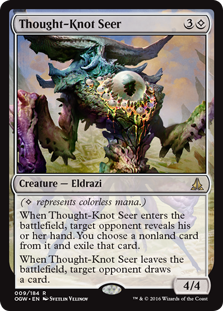
Furthermore, the Eldrazi are simply phenomenal against Jund regardless of the shell. Bant Eldrazi was Jund's foil until Etron took over. Jund was good because Lightning Bolt and Inquisition of Kozilek hit everything in Modern. Thought-Knot Seer and Reality Smasher broke the rules and invalidated Jund's removal. Without its removal, Jund is nothing. Etron holds this advantage, which coupled with its more stable mana allowed it to supplant the Bant version.
The Shadow Effect
This trend was reinforced by the rise of Grixis Shadow. Bolt hits exactly Snapcaster Mage and Bolting a Shadow player is a dicey strategy. Inquistion is decent, but all the delve creatures hurt. This resistance is one explanation for Grixis topping Jund Shadow. The bottom line is that with two very good decks having a natural advantage over it, there was little chance for 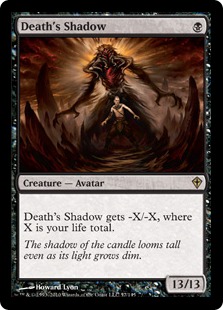 Jund to hold onto its traditional place in Tier 1. Abzan has done better but Etron is still a bad matchup. This is good for Shadow decks because Jund grinds well thanks to Terminate, Scavenging Ooze, and Kalitas, Traitor of Ghet, which gave it an edge on Shadow.
Shadow has also been scratching Etron's back. Gx Tron, in my experience, has the advantage on Etron and Shadow is very good against Gx Tron. Traditional Tron hits Tron more often and sooner than Etron, which allows it to power out its big threats more quickly. Etron's removal is also irrelevant against Tron, while Oblivion Stone is excellent against Etron. Winning the race to bomb-land is good in a matchup that's all about the bombs. Shadow has hand disruption, a quick clock, and counterspells which combine into a nightmare for Gx Tron. Etron has a more favorable matchup thanks to redundancy and Chalice of the Void. As a result Shadow has driven Tron out of Tier 1.
Ancillary Effects
The ending of GBx's reign has allowed previously suppressed decks to rise. I won't go into every deck because this article would go on forever, and instead will focus on more well known decks. Do note that GBx's fall does not pertain to Burn's or Affinity's rise—these decks benefit more from reduced attention than changes to other decks. Play too loose with your life total, Burn gets you. Fail to pack hate for Affinity, it gets you. Jund's demise is minor in comparison.
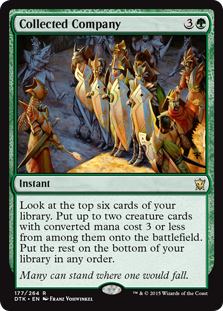
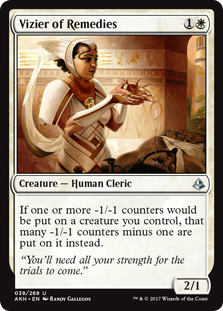 First and foremost is the rise of Counters Company. Jund preyed on Abzan's little creatures and lack of removal for Scavenging Ooze, which nearly drove the archetype to extinction. Between Jund's suppression and the new Vizier of Remedies combo, the deck is ascendant for the first time in over a year. In addition to these factors Counters is a very fast combo deck, winning turn three frequently unless disrupted. This makes it a good choice in the metagame. Etron doesn't have much interaction except for Chalice, and setting that to one accomplishes little against Company. They're also redundant enough to overcome Shadow's discard and Fatal Push. Eternal Witness and Collected Company are a huge beating in attrition matchups.
UW Control has also benefited from Etron and Shadow. UW has the advantage against both decks, though it's less than you'd think. Discard and Chalice in quantity are beatings. The story of UW's return to the upper tiers is Gx Tron's demise. Beating control decks with planeswalkers was Tron's thing and it was good at that thing. Spreading Seas and the banning of Eye of Ugin helped but it was still bad. Instead of being ~30% to win, UW is more like ~40%. However, Etron is all creatures, which UW beats up on. Again, without the predator, the prey rises. Jund's disappearance also helped. The matchup was 50-50; hard to win but easy to lose. With a hard matchup gone, the deck sees more good matchups and it rises in the rankings.
 I said above that Jund preyed on fragile combo decks and brews. It would follow that decks like that would rise now. This is not happening. As I'm finding out in my banlist testing with Storm, Grixis Shadow and Etron are both good at taking Jund's place against the fringe. Chalice is crippling for combo decks, as is disruption and a clock. Even Ad Nauseam, long the most reliable and potent combo deck, is falling off. Not a great time to be a polite euphemism.
Finally, we have DnT. I have been working on this deck for a long time and it is finally good. Not because the deck itself is good (The only substantial change in over a year is the addition of Thraben Inspector) but because of Shadow and Etron. Yes, the deck has very good matchups against both, but the big change was Jund's death. I spent a lot of time trying to make the Jund matchup acceptable and eventually gave up. Jund was built to take apart small creature decks and that's DnT in a nutshell. With the apex predator gone and prey abundant, the midlevel predator moves into apex territory.
Is This a Problem?
I don't think this bipolarity of Shadow and Etron will last, and so it won't be a problem. The answer decks are already seeing play and loosening the top dog's hold on Modern. Things will not return to the way they were before Death's Shadow became a thing, but we will see the old dynamism return and the healthy multipolar meta reemerge.
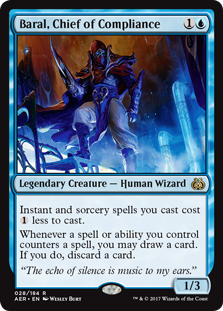
 The bipolar meta was bad for Standard because it could not be broken. There was no going over Emrakul, the Promised End, wide against Ishkanah, Grafwidow, under Reflector Mage, or long against Smuggler's Copter. Those were the best cards in that Standard and the two top decks made the best use of those cards. Answers or counterstrategies simply didn't exist in the cardpool thanks to Wizards' design decisions. There's only so much you can do in Standard and unexpected problems won't have answers.
That problem does not exist in Modern. The format's vast cardpool ensures that for any problem a solution exists. It may not be obvious, but it does exist. It is only when a deck is obscenely broken (Eldrazi Winter) that the process of discovery and adaptation fails. This process is going on right now and ensures that the bipolarity will not hold. Exactly what the new meta will look like is unclear yet, but I suspect some Lightning Bolt deck will rise to feast on the Company decks and DnT.
End of an Era
The other thing that will contribute is the change in MTGO results reporting. If you didn't know, Wizards is reducing the number of 5-0 decklists they report each day from ten to five. They will also all be different decks since each deck has to be at least ten cards different from the others. Their stated goal is to foster creativity and innovation (it's the last line of the third paragraph). The unstated goal is to further reduce data mining in Magic, making it harder to solve formats and trying to prevent the diversity problems that plagued Standard.
 As someone who does a lot of stats analysis (heck, that's what this site was founded on) this change seems harmful. Less data means less data to analyze, which means a smaller sample size, which means a worse modeling of reality, etc., etc., Statisticians Lament. But then that's the whole point. Wizards has been concerned about data mining being used to solve formats too quickly and thereby "ruining" them. It's why back in 2015 they asked MTGGoldfish to stop using bots to "watch" replays to gather more data than Wizards published. As far as Wizards is concerned, less data published means less opportunity to solve Standard, meaning Standard stays interesting longer
I get their reasoning, even if I don't agree with the decision. A lot of the problems that this change is trying to solve come from how Wizards has designed sets over the past several years. On the other hand, with so many eyes looking at sets and tinkering with Standard these days, it is far more likely that everything will be found in even the most complicated set. Makes our job harder, but it will make Standard look unsolved and open longer. Thus, for now, the impact is ambiguous.
What is not ambiguous is how it will affect perceptions of the metagame. The direct impact will be MTGO losing value as a data source. This will give more weight to paper results, which tend to be more diverse than MTGO. This will make it harder to identify which deck is actually "the best," and fewer players will choose to play that deck. While data analysis and data mining are very useful tools to identify trends and explain the world, they can also become self-fulfilling prophecies. It's complicated, but in short identifying what the statistically "best thing" is will draw attention to it. With increased attention comes more utilization, which in turn biases the data toward the thing. Thus with lessened MTGO data, players will be less likely to see the current "best deck," and those who always try to play the "best deck" will be less likely to identify it correctly. This will also help break up bipolar metagames due to increased chaos in the deck selection process.
In summation, the metagame may have shifted into a less diverse state, but not a stable state. Between Modern's natural tendency to self-correct over time and Wizards new policy, the instability will increase. This will break the top decks' hold on the format and soon the old dynamism will return. Did I miss something or confuse you? I'll be in the comments.