menu

Magic 30: Overview and General Impressions

Are you a Quiet Speculation member?

If not, now is a perfect time to join up! Our powerful tools, breaking-news analysis, and exclusive Discord channel will make sure you stay up to date and ahead of the curve.

There are many different ways for fans to appreciate the game of Magic. Some like to play lengthy, elaborate multiplayer games of Commander. Others like to buy, sell, and trade cards to try and grind out that little bit of extra value. Some appreciate the artistic side of the game, along with an extensive storyline. Then there are the cosplayers, artists, accessory collectors… the list goes on and on.

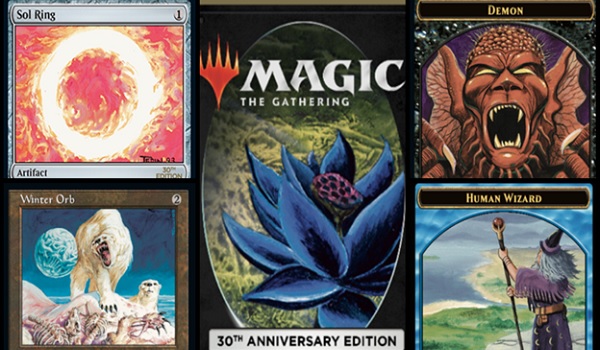
There were all of these options and more available for fans to enjoy at the Magic 30 anniversary celebration in Las Vegas last weekend. Simply put, there was something for everybody.

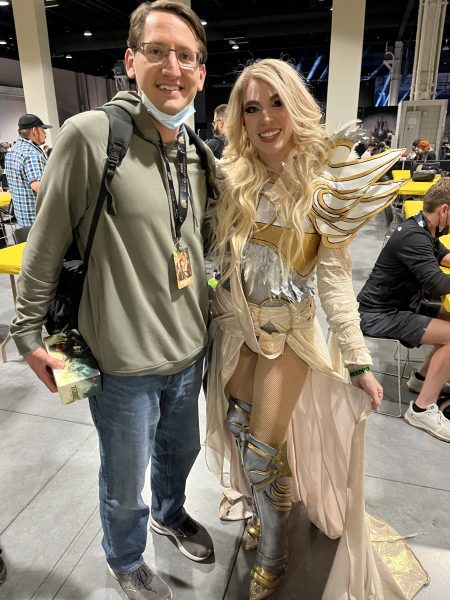
Want to spend the weekend taking selfies with numerous talented cosplayers (including my personal favorite, @Zbexx)? There were plenty to meet!

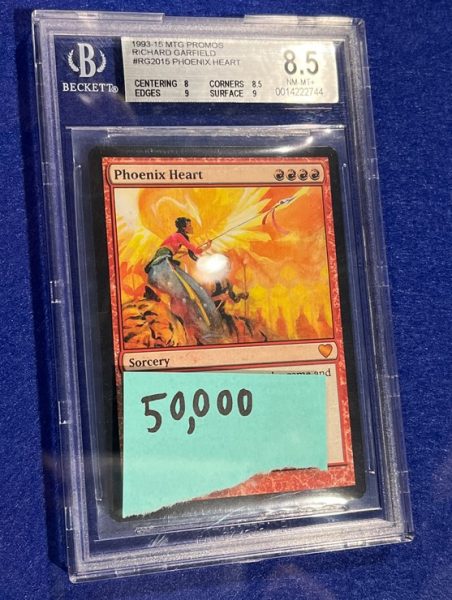
What about shopping for cards? Whether inexpensive rares for Commander, or highly graded Power 9, numerous vendors were there for the browsing with an endless variety of singles! What if seeing Brothers’ War spoilers and experiencing the rich thirty-year history this game has to offer was more the priority? The schedule for guest speakers and interviews was jam-packed. Of course, if you were hoping to jam games of Magic, there were nonstop side events and access to tables for casual and Commander games galore.

At the end of the day, there was so much to do that one person could not realistically experience every facet Magic 30 had to offer.

My Magic 30 Shopping Experience

At the highest level, I had an absolute blast participating in this once-in-a-lifetime Magic event. I went in with a specific plan, so it was critical to prioritize the activities I wanted to complete. I understood that lower-priority items simply wouldn’t make my to-do list.

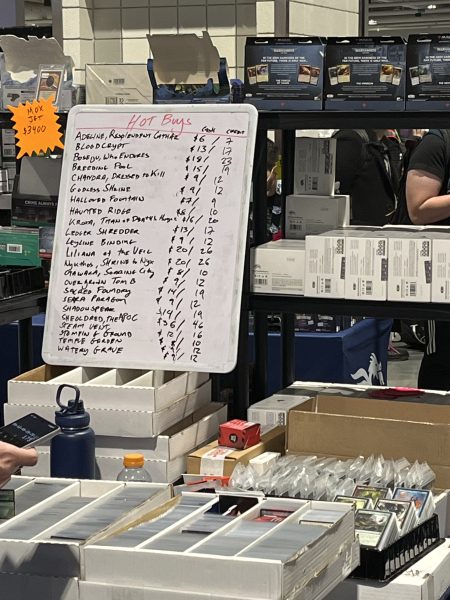
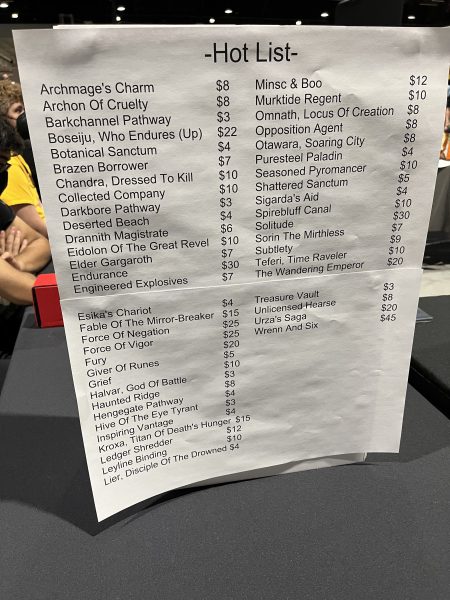
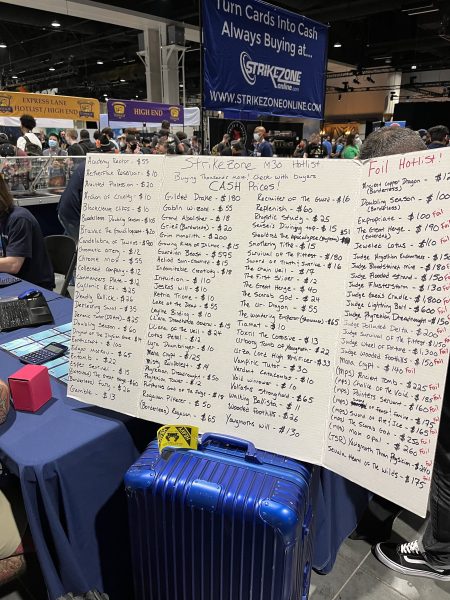
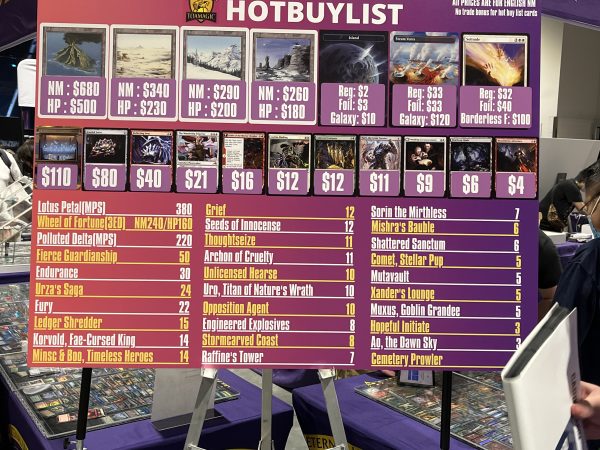
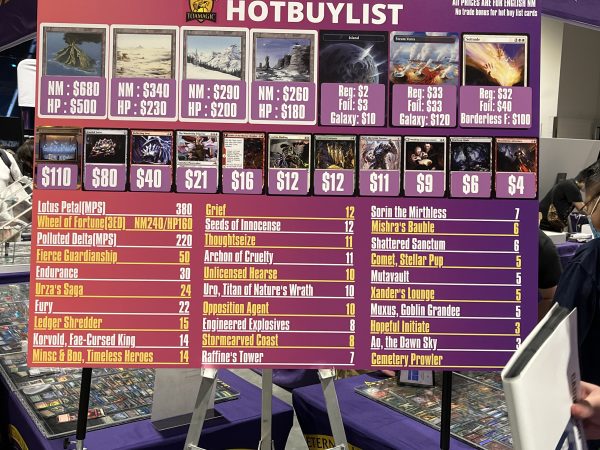
Being so closely tied to Magic finance, while also being an avid Old School collector, I spent the vast majority of my weekend exploring the wares of each vendor booth, examining their hot lists, and scoping out who may be paying the best prices for the cards I had to sell. Interestingly, not many vendors had older cards on their hotlist—more on that later.

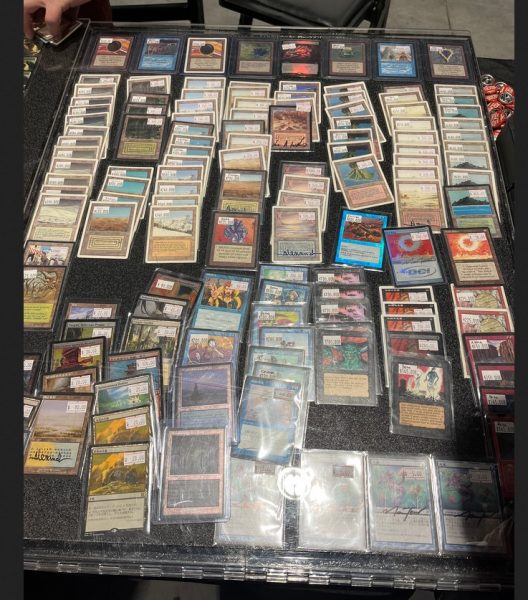
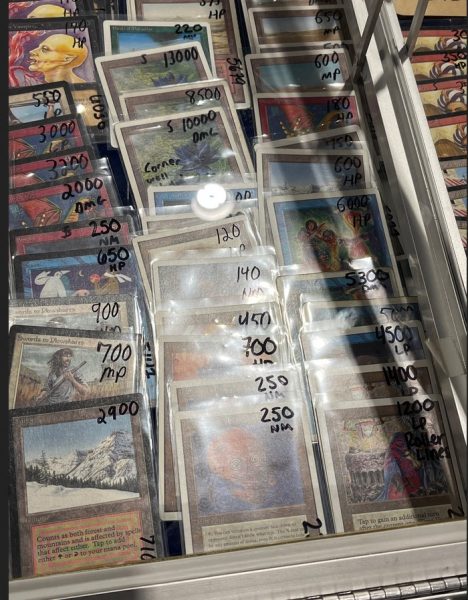
When I wasn’t sitting down with a buyer selling cardboard, I was browsing vendor inventories to see what the market supply looked like that weekend. Every vendor had a smattering of interesting cards including Power 9, Dual Lands, and foils galore. However, only a handful of vendors really impressed me—those that did impress me did so for very different reasons.

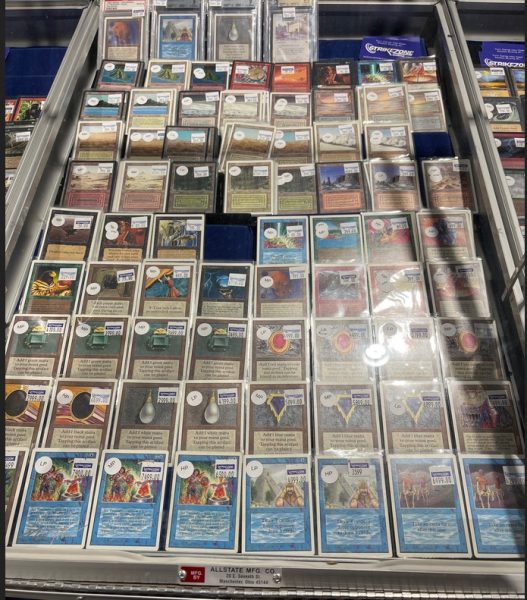
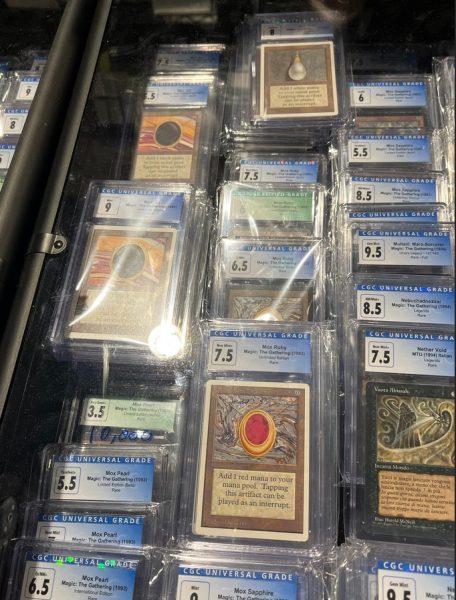
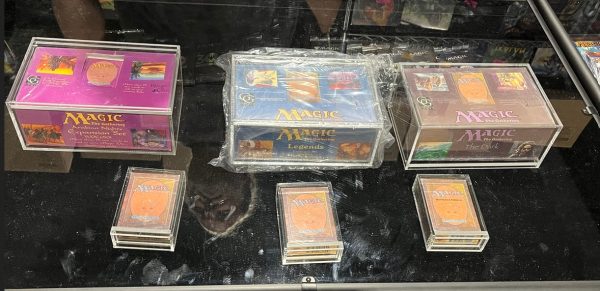
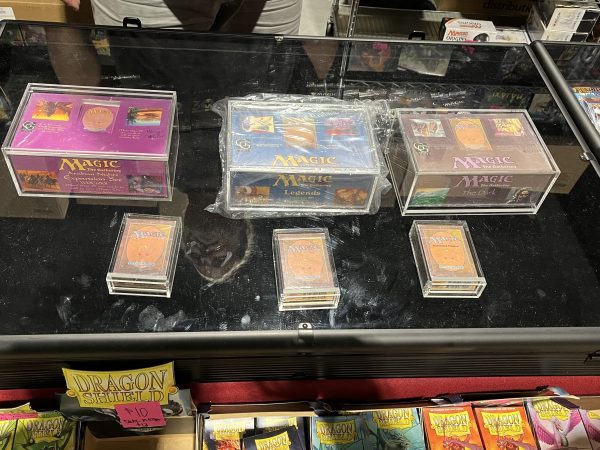
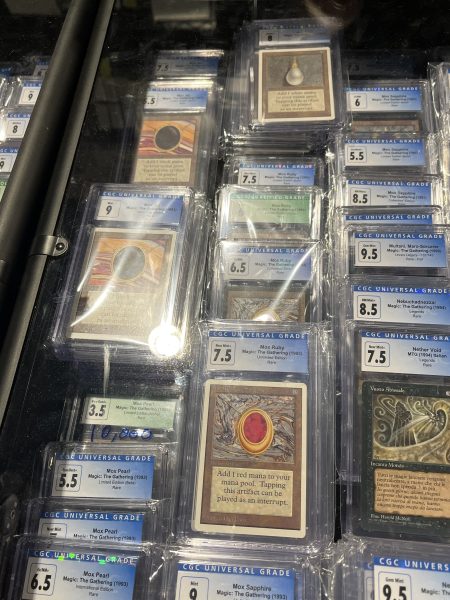
One Wisconsin-based vendor, in particular, Chimera Hobby Shop Inc., had an impressive selection of CGC-graded cards (including over 100 pieces of Power) and some exceptionally rare sealed product. This included a sealed booster box of Arabian Nights! It was likely the only one in the room, sitting right alongside sealed boxes of Legends and The Dark, as well as Alpha, Beta, and Unlimited starters.

It was incredible seeing the magnitude of graded cards this vendor had on display. Each one of these cards was CGC graded and encased in a protective sleeve with a reflective-blue label. I’m not sure if CGC has the same pedigree as BGS in the Magic: the Gathering world, but I must say the display at this booth would indicate they are certainly making a significant push. I was even convinced to purchase a card (CGC 8 Shahrazad) because this vendor’s price, $600, was pretty reasonable. I had not seen any graded copies of this condition sell for this low over the past few years.

The other vendor that really caught my attention throughout the weekend was Michael Caffrey’s Tales of Adventure. Not only was their booth run with the efficiency of a well-oiled machine, but the sheer magnitude of cardboard they processed throughout the weekend was nothing shy of impressive. On Saturday morning, as soon as the doors were opened, I made my way to the Tales of Adventure booth to sell some cards… only to find that there was already a line ten people deep! It never seemed to trim down, either. One person after another was looking to peddle their cards to this booth in particular.

I was afraid they may run out of cash early in the weekend with all that buying, but even Saturday evening they seemed to be running strong. They also had some of the best buy prices in the entire room, with some attractively competitive sell prices to match. One buy price that really caught my eye was their $500 offer on heavily played Volcanic Island from Revised. On the sell side, they had a played Shahrazad for $400, which I was able to pick up using a 20% trade-in bonus to the booth (notice a trend with cards I acquired, here?).

Their staff was professional, efficient, and very easy to work with, not to mention many of them are well-known Twitter personalities in the Magic community.

I also would be remiss if I didn’t give a shout-out to ManaLeak.com. The head buyer at this booth was Josh from Journey’s End Games, and he was exceptionally accommodating in our interactions. He was so flexible that he agreed to buy some cards from me while still allowing me to play with them in a Friday side event. In addition, he was willing to meet with me Friday morning before the event started, which is above and beyond what I think most vendors would be willing to do.

There was an error retrieving a chart for Shahrazad

Other Activities

In addition to talking with all the vendors at the event, I also managed to partake in a couple of other activities throughout the weekend. Notably, I managed to play in one side event each on Friday and Saturday. Friday I battled in Vintage, a truly apropos way of celebrating thirty years of Magic. By contrast, I played in a Kamigawa: Neon Dynasty sealed event on Saturday. I’ll provide more details on these events in another Magic 30 recap article in the near future.

While I really didn’t have much time to play casual games of Magic, I did manage to meet a few people I knew from online networking. A couple of new friends from Discord and Twitter managed to connect with me throughout the weekend, and I also met up with a co-worker, whom I didn’t realize would be at the event until just a couple of days before. I already mentioned the exciting opportunity I had to meet Zbexx, but I also should mention the serendipitous run-in I had with former Major League Baseball player Hunter Pence.

Lastly, the most iconic Magic personality I met throughout the weekend has to be Mark Rosewater himself, during a signing session on the 16th floor of one of the Expo Center buildings.

I hadn’t come to the event prepared with something cool for Mark to sign, but someone in line in front of me proffered their playmat for him to sign. I followed suit, and now have a playmat I’ll cherish for life.

Outside of these meet and greets and the two side events, I really had almost no extracurricular time to experience the event. There was simply too much to do and not enough time to do it all.

A Deeper Look at Finance

If you’re an avid reader of my articles, you likely have some finance questions running through your mind related to the event. Rest assured, I’ll go into far more detail in this space, but it’ll have to be in a subsequent article from what will become a multi-article series on Magic 30.

Before wrapping up, though, let me share a few tidbits to whet everyone’s appetites. Here are a few observations I made throughout the weekend, which I’ll elaborate upon more in upcoming articles:

  • Card Kingdom, one of the most prominent online vendors and my personal favorite vendor to sell cards to online, had a tiny booth and basically did minimal buying all weekend. What was their motivation for being there?
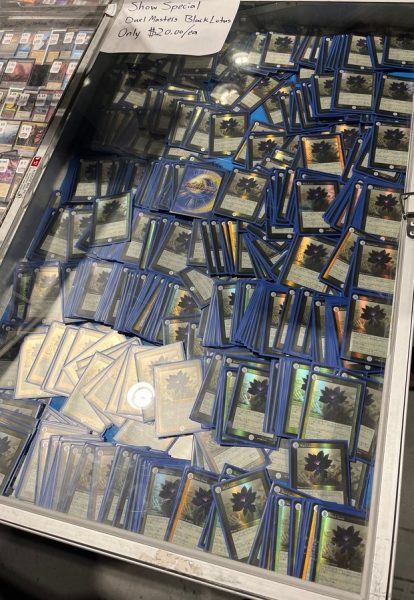
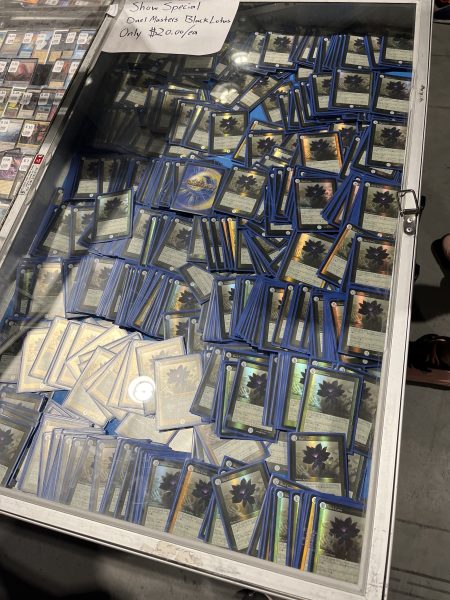
  • Star City Games was only buying with store credit all weekend. The head buyer, Ben Bleiweiss, told me that Magic 30 was a selling event for the store. Before the event, they blasted a mysterious tweet advertising 1,001 Black Lotuses in stock. What was that about?
  • Which vendors wanted nothing to do with Old School cards? Which vendors were specifically interested in Old School cards?
  • Many vendors wouldn’t touch Magic 30 singles. On the other hand, a handful of vendors were buying up sealed Magic 30 booster packs. What was the rationale for this dichotomy?
  • I could see some softness in certain card prices, but other Old School cards were still expensive despite broader market weakness. What were the stand-outs?

Beyond the Magic finance section, I also hope to talk about the overall sentiment of the event—the energy of the atmosphere, the overall sentiment of the attendees, etc. There is no shortage of topics to cover, and I suspect this will take a few articles over the coming weeks to fully cover everything relevant that took place in Las Vegas.

Wrapping It Up

Magic 30 was a convention like no other. Throughout the jam-packed three-day weekend, the available activities were seemingly endless; it was not possible to thoroughly enjoy every facet of the event. For this reason, it was critical to prioritize those activities most important for any given individual.

For me, that meant spending most of my available time at the vendor booths. In between peddling my collection in an attempt to downsize, I spoke with various vendors to learn about their attitudes towards the event and the broader Magic secondary market. This yielded multiple insights, which I intend to dive more deeply into in a follow-up article. I also intend to cover my experiences playing in Vintage and Neon Dynasty sealed side events, as well as my experiences meeting people all weekend.

Until then, I leave you with my overall sentiment about the event: it was amazing. Was everything executed flawlessly? Of course not. In an event of this magnitude, one can’t expect things to run 100% perfectly. There was insufficient seating for casual play, for one, and the side events didn’t proceed without issues (at one point, two tournaments were meant to take place in the same space at the same time).

Overall, though, I was pleased with the experience. I was never bored and I found the event thoroughly enjoyable. I only hope I won’t have to wait another thirty years to do it again.

More In-depth Magic 30 Coverage:

Magic 30: Vendors, and the State of Magic Finance

Magic 30: Tournament Reports

Magic 30: The Networking Aspect

How I Got the Warhammer 40k Commander Decks for Free (And Why You Don’t Want To)

Are you a Quiet Speculation member?

If not, now is a perfect time to join up! Our powerful tools, breaking-news analysis, and exclusive Discord channel will make sure you stay up to date and ahead of the curve.

This is not a clickbait title, I promise! I paid absolutely zero dollars and zero cents to acquire one of each Warhammer 40k Commander decks from eBay. However, this "strategy" (if you can even call it that) is not for the faint of heart or timid of constitution. No, it's for people willing to take risks, and you cannot score a homerun if you don't strike out too.

How It All Started

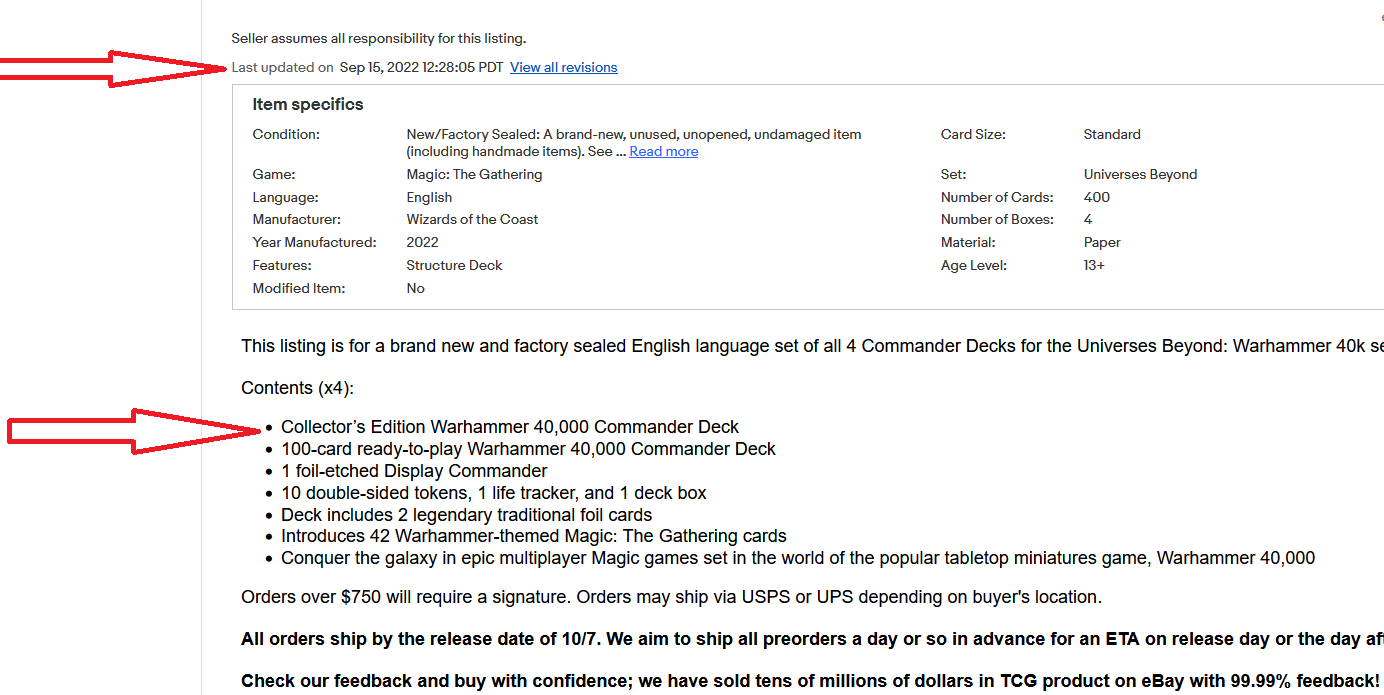
Bingo

Sure, it says "Collector's Edition;" anyone can see that, big deal. It's September, so this is a pre-order. What made this exceptional was the price tag: $200 plus tax and shipping. Yes, $200 for "Contents X4." A reasonable person might conclude that either they meant to sell four regular decks or they are selling one Collector's Edition deck, right? Not according to the auction! The description says I get four, and they are all Collector's Edition.

And the seller's claim? "Check our feedback and buy with confidence....99.99% feedback!" They did not realize how confident that made me. Of course, if something is "too good to be true," it probably is. Buyer beware, right? No, buyer prepare.

99.99%? Not Exactly...

Well, alright, the seller did have 99.98% positive feedback over not thousands, but tens of thousands of transactions. In all honesty, there are bound to be some issues and negative feedback over that many sales; otherwise, it's fake.

There was an error retrieving a chart for Feedback

The number one complaint? Slow shipping. To save almost $800, I could wait a few extra days. None of the other problems described made me wary, and overall they painted a picture of a legitimate seller. But my due diligence did not stop there!

Who You Gonna Call? Customer Service

I called eBay customer service multiple times and ran them through the auction. Eventually, I found not one, but two different agents that had experience with Pokemon and Yu-Gi-Oh! who were based in the US. Those agents looked through the auction and told me it was legitimate, and if I got anything other than a Collector's Edition set, eBay would hold the seller to their auction. Double confirmation! But, just in case, I took screenshots of everything and even saved the webpage contents to my PC as well. Just. In. Case.

Four Weeks Later

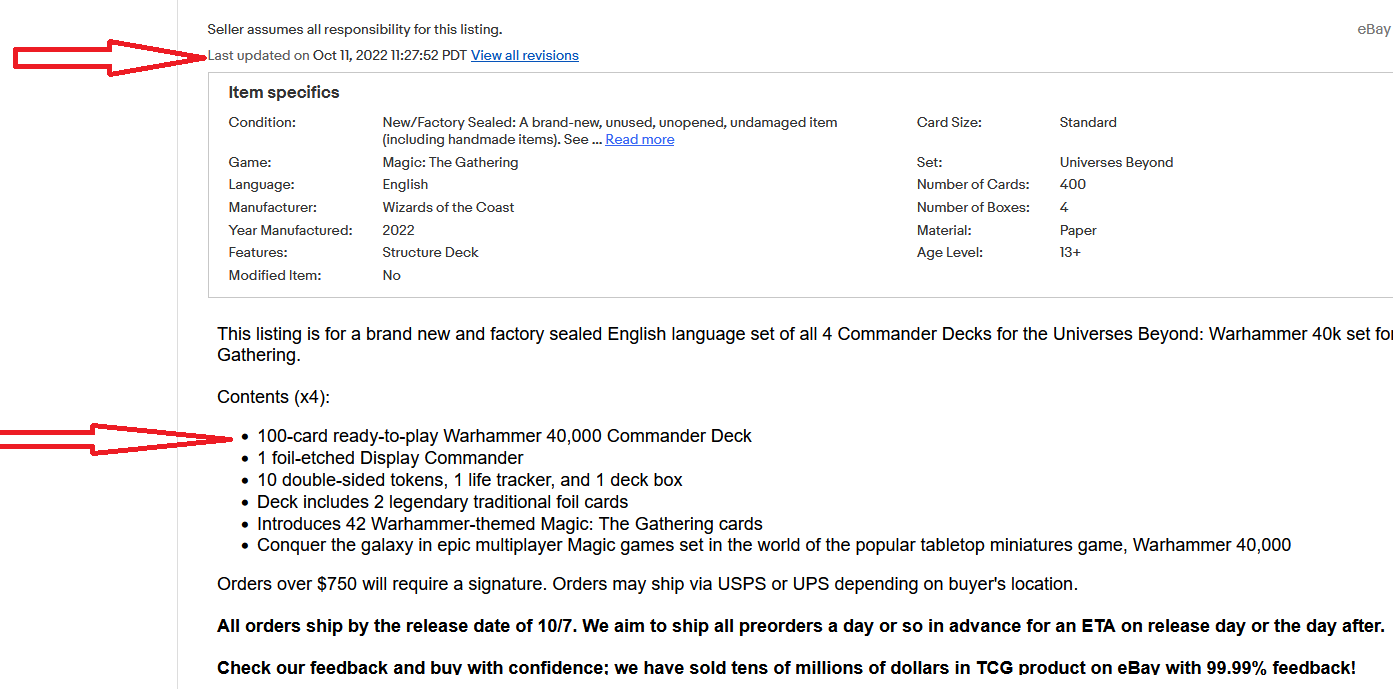
Notice Anything Different?

Full stop. The item was shipped out that day and, suddenly, the auction had a new description. Call it whatever you want. Bait and switch; obvious scam; clerical error. Not my fault, not my problem. I ordered this a month ago; I bought with confidence, remember? Changing the item description the moment it ships is obviously sketchy as all get out.

So yes, it did ship late; the negative feedback was well warranted. However, the fact that they made this alteration was far from ordinary. I informed eBay and, again, they said I would be fine and to wait for the item to be received before starting any kind of dispute. Alright, I'll wait...

Surprise! It Wasn't Fine

The mail carrier dropped off a sealed Wizard's box proudly proclaiming one set of "Regular" Warhammer 40k decks. I instantly started the dispute process with eBay and... suddenly, they changed their tune. eBay would neither hold the seller to their word nor refund my purchase. They wanted me to return the product for a refund, which did not make me whole.

After several calls back and forth, everything they had told me previously was essentially a lie. They would not hold the seller to their word and were siding with them because…? They never actually answered me, but it's obvious.

eBay Does Side with Buyers... Unless You're a Huge Seller

In this case, eBay knows who makes them a lot more money, and won't really enforce anything. However, I had not even begun to fight. PayPal to the rescue. (Or so I hoped!) Wouldn't you know it? There was more than one new instance of negative feedback describing exactly what was happening to me. What we have here is a pattern, ladies and gentlemen. A pattern of fraud. The end result? Even though it took another two weeks, I now have the decks and my money. Thanks PayPal!

There was an error retrieving a chart for Training Grounds

What Have We Learned?

It just goes to show that you have to be extremely careful when using eBay as a platform on either end of the equation. I've been lucky to dodge scams and work with legitimate sellers who will make good on their mistakes. Unfortunately, this is the first time in a long time that I almost was had. Almost. I will keep shopping on eBay but will continue to be completely, utterly, and justifiably paranoid during the experience. But I want to talk about the seller's point of view.

Either you're a legitimate seller or you're not. Does a legitimate seller change their auction details the day they ship their pre-orders? As an aside, they actually did update their listing once more before the shipping date to clarify shipping rules; it still said Collector's Edition at that time. To not offer a full refund for your own mistake is telling. Additionally, let's say there was truly some kind of "issue" outside of their control. I'm not going to offer hypotheticals as to exactly what issue, but let's say it interferes with orders significantly. In that case, why was something (in this case the wrong something) shipped at all? Well, I have a theory.

The Airlines of the Magic World

Based on the feedback from this vendor, they sell more units of product than they own, much like the airlines potentially overselling each seat on a flight. Invariably, some people will cancel their pre-orders, return the product for a refund, etc. Furthermore, by reading some of the negative feedback, this company might purchase returned product from another source; so, they were counting on getting enough "new/open box" decks from returns to fulfill their pre-orders. This explains some of their other common negative feedback of items "damaged in shipping." Claiming to sell brand-new product while instead sending open-box returns a few days later is shady. Of course, this is just a theory.

The fact of the matter is that the seller could have worked with me to resolve the issue. Instead, they told me I had ordered a regular edition, when we all know that's simply a lie. If the vendor instead owned their mistake and approached the situation accordingly this could have been avoided. But they doubled down, which resulted in me doubling down as well.

I'll Just Shop on TCGPlayer!

Yeah, about that. Now that eBay owns TCGplayer, you sort of don't have a choice. One way or another, you are going to interact with the eBay ecosystem, so be on your guard. Unfortunately, I have already had many unlucky experiences with TCGplayer for years so it's no safe harbor in my experience.

"Free" Commander Decks!

So yes, that's all you have to do to score some free Commander decks. Step one, find a bad-faith vendor. Step two, deal with a bad-faith marketplace. Finally, over six weeks, hope and pray that the people who control the actual exchange of currency between all parties agrees with your version of reality more than any of theirs.

Of course, having evidence helps, but in the end you will deal with a human being who likely does not understand the nuances of this product. In that case, focus on the simple things, and keep trying customer service until you get the result you want. With patience, things will probably work out around 99.98% of the time.

Is Pre-Ordering a Bad Idea?

Honestly? It is somewhat more risky nowadays. Depending on just how early you pre-order, the product description might lack significant details because, well, there aren't any, and they make so much product now it's easy to get confused as either a buyer or a seller.

Prices can fluctuate, and wildly. Sometimes, vendors deliberately try to pass off one item as another. Right now I'm considering a pretty substantial pre-order for The Brothers' War. I can save $30 going with eBay, or I can shop with a massively reputable seller that has their own marketplace and reputation on the line. Put like that, a $30 insurance policy sounds like a steal!

What's the biggest issue you have had with pre-order vendors? Let me know how you handled it in the comments.

Avatar photo

Joe Mauri

Joe has been an avid MTG player and collector since the summer of 1994 when he started his collection with a booster box of Revised. Millions of cards later he still enjoys tapping lands and slinging spells at the kitchen table, LGS, or digital Arena. Commander followed by Draft are his favorite formats, but, he absolutely loves tournaments with unique build restrictions and alternate rules. A lover of all things feline, he currently resides with no less than five majestic creatures who are never allowed anywhere near his cards. When not Gathering the Magic, Joe loves streaming a variety of games on Twitch(https://www.twitch.tv/beardymagics) both card and other.

View More By Joe Mauri

Posted in FreeTagged , Leave a Comment on How I Got the Warhammer 40k Commander Decks for Free (And Why You Don’t Want To)

Have you joined the Quiet Speculation Discord?

If you haven't, you're leaving value on the table! Join our community of experts, enthusiasts, entertainers, and educators and enjoy exclusive podcasts, questions asked and answered, trades, sales, and everything else Discord has to offer.

Want to create content with Quiet Speculation?

All you need to succeed is a passion for Magic: The Gathering, and the ability to write coherently. Share your knowledge of MTG and how you leverage it to win games, get value from your cards – or even turn a profit.

Cubin’ with Schumann: Triomes, Nostalgia, and Oko

Are you a Quiet Speculation member?

If not, now is a perfect time to join up! Our powerful tools, breaking-news analysis, and exclusive Discord channel will make sure you stay up to date and ahead of the curve.

For those who have never drafted a cube, the premise is pretty simple. You typically gather 360+ cards and redraft them over and over. You randomize the pool and remake packs each time, with a pile of basic lands available for everyone to build a deck with.

The Basics of Cubing

I have recently fallen back in love with cubing. I actually built a cube about 5 years ago after playing another friend's cube and having a lot of fun. Sadly, he pieced it out and sold a lot of the more valuable cards. Thus, my playgroup switched our focus to Modern, Legacy, and Commander and let our limited skills deteriorate.

But just as Magic as a whole has a tendency to pull people back in who step away, the same phenomenon seems to occur with individual formats. Recently, I had a new coworker join our design team and he mentioned that he enjoyed playing Yu-Gi-Oh! and Magic. I mentioned it to my playgroup and we invited him to come play some Commander. After a couple weeks he mentioned how much he missed his friend's cube, which reminded me of my own. So began my rekindled love of an old flame.

My Cube

I grew up playing an Elf lifegain deck of my own design for my first 2 years of casual tabletop games. My favorite creature was Serra Avatar. My favorite standard environment was Return to Ravnica/Innistrad block, which was full of battlecruiser-style Jund decks.

So my cube plays a lot of ramp and big creatures. One can build an aggro deck, but it may struggle if you don't draw really well against an average midrange deck. This is actually one complaint I have had: my love of big spells has led to a lot of slow games where less play skill is required and more "my creature is bigger than yours" happens.

There was an error retrieving a chart for Serra Avatar

Admittedly, another problem I have run into is "trimming" my cube back. The Magic: the Gathering card pool increases by over 1000 cards per year, and undoubtedly at least some of those will be cube-worthy. I have a tendency to add more cards than I remove, and thus my cube gets bloated and cumbersome to carry around.

A Cube Is an Extension of Yourself

While personal preferences can and should play a role in what deck(s) are chosen to play in any given format, if one expects to do well in a tournament, concessions must be made to the metagame. A cube is different in that it is the entire card pool for the format, and can therefore include anything. That being said, a good cube owner knows that balance is critical for a fun cubing experience.

My playgroup brought up an issue with my cube in that I included cards to make a strong reanimator deck, but lacked good answers to that particular strategy. So my newest additions are Tormod's Crypt, Relic of Progenitus, Soul-Guide Lantern, Scavenging Ooze, and Containment Priest. As these are all powerful solutions that can serve to balance the format.

There was an error retrieving a chart for Containment Priest

Another issue that was brought up was a lack of good planeswalker answers. This is an even bigger issue because unchecked planeswalkers can often take over a game quickly. White and black tend to already have decent answers with cards like Oblivion Ring and Hero's Downfall. Red can use burn damage to kill them, but it may require multiple spells to deal with a planeswalker when their loyalty gets high. The biggest challenge was for green and blue, as neither has a lot of cards that can directly deal with planeswalkers. Green does have cards like Beast Within and even Desert Twister. Blue is more likely forced to bounce them or counter them on the way down.

The last issue my playgroup has found is one I'm not really willing to adjust. I dislike games that end with one player color-screwed, so my cube includes a copy of all 10 dual lands, all 10 fetch lands, all 10 shocklands, and now all 10 triomes. Ironically, it's the triomes that seem to cause the biggest concern, as the combination of fetch and triome is so powerful that splashing has virtually no cost, and it's very easy to play a four- or even five-color deck by grabbing a few fetches and a single triome. That being said, I love having them in the cube, and currently have no desire to remove them.

Making your own cube forces you to think like a Magic set designer, making sure you have not just powerful cards, but answers to them. It also reminds you that people enjoy different playstyles and archetypes, and a good cube caters to as many of these as possible. Picking cards that fit into multiple archetypes or playstyles is key.

Financial Opportunities

Cubists actually have more effect on card values than one might initially think. While they typically only need a single copy of any given card, this typically inspires many to get the coolest version of the card. This leaves some financial opportunities when Standard rotation occurs. The cards that were powerful enough to dominate in Standard but lack the power needed to jump to Modern and don't find a home in Commander are where you may find your diamonds in the rough.

There was an error retrieving a chart for Questing Beast

Questing Beast is a good example of a fantastic cube card that is snubbed by Commander and Modern. Indeed, it is a card I need to add to my own cube, as it is a fantastic answer to planeswalkers in green.

There was an error retrieving a chart for Oko, Thief of Crowns

Not surprisingly, Oko proved to be a problem in most formats and was subsequently banned from Standard, Modern, Legacy, and Pioneer. One would expect a card banned in most formats and not on the reserved list would be worth very little; however, that is obviously not the case. While Oko can be found in some Commander builds, he is far from an auto-include in green/blue decks. But he remains a major Cube powerhouse and typically lands in the top 25 first-pickable cards.

There was an error retrieving a chart for Lurrus of the Dream-Den

In a similar vein to Oko, we have Lurrus, who also found himself smashed by the banhammer in most formats and yet maintains a price far from bulk. Lurrus is nowhere near a top Cube pick, though, so his value is far lower than Oko's.

A Doorway to the Past

I have been playing Magic since 1997. I was lucky enough to play with some of Magic's iconic cards while they were still in Type II, the format now known as Standard. I have found cubing to be a good way to relive some of that joy from my youth and let others experience cards they never knew existed. I can honestly say that brings a different, but equally powerful, joy with it. I will continue to curate and improve my cube, waiting for the day I get to include my son in a draft and watch his face light up when he sees so many cards that are older than him.

There was an error retrieving a chart for Door of Destinies

I hope that those who have read this article enjoyed it. I know that a lot of people love playing in drafts and other Limited formats. I hope that those who have never cubed before consider trying it. And for those of you who do, what's your number one cube card?

Creatureland Conundrum: A Colorless Problem

Are you a Quiet Speculation member?

If not, now is a perfect time to join up! Our powerful tools, breaking-news analysis, and exclusive Discord channel will make sure you stay up to date and ahead of the curve.

Is Faceless Haven a good card? It was powerful enough to be banned in Standard, but I keep being frustrated playing it in Pioneer.

In the first Pioneer RCQ I played over the summer, a lot of my mulligans were because Haven was my only land. Last week, having Haven as my second land severely hurt my chances in the match against Bant Spirits. If Haven had been another Island, I would have been able to play enough creatures to be in the game rather than completely blown out. I may still have lost thanks to mana screw, but I'd have been in a much better position.

There was an error retrieving a chart for Faceless Haven

I'm not the only one who's had this problem, judging by published decklists. Though it started out as a four-of, Spirits players across the board are trimming Haven. It is absolutely critical for Mono-Blue Spirits to be able to play a threat turn one and then follow it up either with Curious Obsession and protection, or multiple creatures on the following turns. Haven makes either of those plans more difficult. This is offset by Haven being quite strong in the mid-game both on offense and defense but can make the early game feel extremely bad.

Today, we'll look at the trend of aggro decks cutting manlands in depth.

What About Mutavault?

On a related subject, I haven't been playing Mutavault at all in my Modern UW Merfolk deck. Initially, this was just because I didn't remember where they were and was in a hurry, but even after finding them again, I'm still not running Mutavaults. The extra color-producing lands I'm running instead have made curving out easier and enabled me to run more color-intensive sideboard cards.

There was an error retrieving a chart for Mutavault

I've been doing pretty well with this 'Vaultless Merfolk deck over the past month. It might make sense that not playing Mutavault would hurt my win percentage, but I haven't seen that happen. Having all colored sources has meant that I never need to worry about casting my double-color spells. This means that as long as I have two lands I can cast anything. This has meant that I've curved out more consistently. It would appear that whatever match percentage I've lost by removing 'Vault has been made up for with this greater consistency.

A Memory...

This reminds me of my Modern PTQ win in 2014. I was playing UW Merfolk then too, splashing for maindeck Path to Exile, and sideboard cards. I only played three Mutavault then. I also played fewer double-blue spells. The main reason was that I was running an extra land so that I could maindeck two Tectonic Edge. I even ran two more Edges in the sideboard for the Tron and Jund matchups. The former because obviously, and the latter because I always boarded out my Aether Vials and needed the extra lands. I don't remember running Cavern of Souls, but I was definitely running more truly colorless lands then than I am now.

There was an error retrieving a chart for Tectonic Edge

...Triggers a Thought

That further reminds me that as I'm doing October's data for the Metagame Update, I'm seeing an uptick in Merfolk decks. Which is pretty awesome. However, some decklists I'm seeing are cutting on 'Vault. It's usually only one being cut and only occasionally, but it is definitely happening. The decks that are cutting are frequently splashing for other colors as I am, but others are just running other utility lands. That is a new development. I was the only Merfolk player who ever trimmed on Mutavault back in the day.

There was an error retrieving a chart for Vodalian Hexcatcher

Now that I'm thinking, I don't think I've ever seen Mutavault in other tribal decks in Modern. Is Mutavault a Merfolk-only card? What I found when I checked was surprising. It shows up in fringe decks occasionally, but other than that, it's just Merfolk. Never in Goblins, interestingly enough.

Speaking Of...

A new version of Mishra's Factory is coming in The Brothers' War. Mishra's Foundry is strictly worse than Factory, but that's fine. Factory was the first creature land in Magic and even in its day was considered overpowered. So much so that nothing even approached its power level until Mutavault. I recall that it was a huge deal to older Magic players that there was finally something that could compete with Factory after so long.

There was an error retrieving a chart for Mishra's Factory

Today though, Factory is now Modern legal thanks to Modern Horizons 2, but barely sees play. That's weird considering that on the raw rate it's still much better than other creature lands. Costing one colorless to activate and being a 3/3 on defense with no help is quite good. Factory has also been in Legacy forever but sees even less play there. What gives?

Putting it Together

Faceless Haven was bannably good in Standard but is frustrating and being trimmed in Pioneer. Mutavault used to be a requirement in Merfolk, but that isn't entirely true anymore. What's more surprising is that more tribal decks don't run Mutavault at all. Additionally, the card that set the standard for creature lands isn't seeing real play period. That all seems to be really counterintuitive based on typical theory and doctrine.

There was an error retrieving a chart for Lord of Atlantis

Then there's Mishra's Foundry. It will never see play in older formats, the rate isn't good enough, and/or they have access to the strictly better version. However, it will likely see a lot of play in Standard. Colorless creature lands always do because in Standard players have to work with a more limited set of tools. Formats with more choice will never pick an unequivocally weaker card. However, they're not playing the stronger version either. Why's that?

...are the colorless creature lands just kinda bad?

The Counterpoint

Except, that can't be the case because one of the best decks in Pioneer is a Mutavault deck. Mono-White Humans always runs a full set, and MTGGoldfish places Humans as the fourth-best deck in Pioneer. And it's not like Mutavault underperforms or is actively bad in Merfolk, my build just operates better with more colored sources. Power isn't the problem. Wait, power isn't the problem.

There was an error retrieving a chart for Hopeful Initiate

The Insight

After considerable thought, I don't think that there's anything wrong with any of the colorless creature lands in terms of power. Factory and Mutavault are as powerful now as they ever were. What has changed is the Magic ecosystem around them. The way that Wizards has been pushing the game has changed the opportunity cost of colorless lands considerably. Where Mutavault was a cheap include in tribal decks it is becoming more expensive. If things continue on this trajectory, there may be a day when non-Tron decks can't afford to run colorless lands at all.

An Economics Lesson

In economics, we say that the true cost of everything is not just the price paid for it, but the value of the next best option sacrificed. This is the concept of opportunity cost, and all things have an opportunity cost. There are no free lunches because there is no way to have everything at all times. For everything, there is a choice. The choice to forgo one option for another makes that forgone option the opportunity cost. Congratulations everyone, that's a condensed week of Econ 101.

There was an error retrieving a chart for Celestial Colonnade

This is relevant to today's topic because by playing colorless creature lands, players are giving up the opportunity to play a different utility land or a source of colored mana. In the past when Wizards was more cautious with power levels and tempo wasn't as all-consuming as it currently is (in Modern, anyway) the opportunity cost was relatively low. There were fewer options to discount. These days, Wizards is continuously printing new and increasingly better utility lands as well as pushing power, so the cost is rising.

Consider Just Utility

To go back to my previous example, my 2014 UW Merfolk deck played three Mutavaults, two Tectonic Edges, full sets of Seachrome Coast, and Wanderwine Hub, and some Islands. The available utility lands that I didn't play were Cavern of Souls (I think, anyway. I really don't remember), Minamo, School at Water's Edge, and Oboro, Palace in the Clouds (which didn't do anything other than protect against Choke back then), additional copies of Mutavault and Edge maindeck, Ghost Quarter, and Faerie Conclave. That's neither a lot of power being given up nor much flexibility. It isn't zero, so there was an opportunity cost. It just wasn't particularly high.

There was an error retrieving a chart for Waterlogged Grove

These days, choosing Mutavault means giving up on all the previous cards plus all of the new ones. These include but are not limited to Waterlogged Grove, Otawara, Soaring City, Hall of Storm Giants, Field of Ruin, and Castle Vantress. Obviously, some of those are far more desirable in Merfolk than others, but the point is that there are more options and therefore more choices to make. More choices mean higher opportunity costs.

Consider Mana Requirements

In addition, the pressure to produce colored mana has increased. Back in 2014, Merfolk spells with two blue pips in the corner were limited to the eight Islandwalk lords and Kira, Great Glass-Spinner, which was a two-of maindeck. These days I'm running those lords plus full sets of Merfolk Trickster and Svyelun of Sea and Sky plus three Unsettled Mariner. Many other Merfolk decks are also running maindeck Subtlety. That's at least double the color requirements.

There was an error retrieving a chart for Svyelun of Sea and Sky

The math of this situation is well known. The more colored pips on spells, the more colored sources are needed to consistently cast said spells. Double-colored spells that cost two mana are particularly demanding of a mana base and require far more colored sources than more expensive spells to avoid stumbling. Thus, there's room for colorless utility lands, but given the increase in color requirements, that room is clearly shrinking.

Consider Tempo

On the subject of stumbling, having colorless lands in a color-hungry deck is going to lead to more stumbles out of the gate, as my Pioneer experience clearly shows. This didn't use to be such a problem because mana bases were worse and there were no free spells in Modern. Wizards was also anti-cantrip, so all decks were more inconsistent. Tripping on colored mana was less punishing because it was more likely that the opponent would stumble as well.

There was an error retrieving a chart for Fury

Today, any early game stumble is magnified more than in earlier eras. The evoke elementals in Modern give any mana-screwed player the ability to get back in and the deluge of cheap interaction and threats means that missing a turn of board development makes getting back in much harder as the game goes on. Thus, the tempo risk of being unable to cast spells because of color problems is higher than before. For example, Mono-White Humans is ok adding any threat to the board and most of its threats cost a single white mana. Spirits wants to cast multiple blue spells a turn, and suffers when it can't.

Time To Reevaluate

I'm not saying that Mutavault and company are bad cards. That clearly isn't the case. What I am saying is that they're far more costly than they used to be. Players need to be aware of this as Magic continues to evolve and to take this changing landscape into account. It may not be appropriate or optimal to run colorless lands in mono-colored decks. Should Wizards continue to push creature lands, there may come a day when even tribal synergies aren't enough to run Mutavault over an aggressively priced on-color creature land.

Adam Plays Magic: Five-Color Incarnation

Are you a Quiet Speculation member?

If not, now is a perfect time to join up! Our powerful tools, breaking-news analysis, and exclusive Discord channel will make sure you stay up to date and ahead of the curve.

This week on Adam Plays Magic, we're busting out the toolbox with Five-Color Enigmatic Incarnation. Its namesake card is a throwback to Birthing Pod, which allows the player to move up the curve each turn, tutoring the exact value piece or silver bullet needed for any given situation. Incarnation functions slightly differently by turning enchantments into creatures, but value is value.

A slew of enters-the-battlefield effects will generate card advantage no matter the card type, and Fires of Invention offers the deck a huge speed boost by playing upwards of eight mana of spells per turn as early as turn four. Let's not forget to top it off with Yorion, Sky Nomad both as a companion and a tutor target to rebuy everything whenever you want.

What I Like

There's a lot to love in a toolbox-style deck, mainly due to how customizable it is. The key cards are, of course, maxed out at four copies each, but everything else is fair game and can be tailored to whatever the expected metagame is.

One-ofs like Deputy of Detention can clear out tokens, while Callous Bloodmage can shoot down a graveyard or provide multiple bodies to stabilize the board. Reidane, God of the Worthy can grind control decks to a halt. The Scarab God can beat just about any fair matchup while also foiling reanimator strategies.

But these aren't all the toolbox cards available. Future incarnations of the deck (pun intended) might want a copy of Elite Spellbinder or maybe Aether Channeler. There are so many cards that could be in the deck, it's hard for the opponent to predict what they'll see.

Fires of Invention is a big boon for the deck as it both acts as a mana doubler and fuel for Enigmatic Incarnation. Power out multiple big spells in the early turns, then toss it in the bin for Yorion or The Scarab God once mana is no longer scarce.

While Incarnation decks have been around for quite some time, Leyline Binding has been the biggest upgrade. Thanks to tri lands like Ziatora's Proving Ground, it's fairly easy to cast Binding for as little as one or two mana. Even though it's being cast for almost nothing, it's still a six-mana value card that can be upgraded into a game-winning seven-drop creature like Titan of Industry. Not only does Binding provide the deck with S-tier removal it previously lacked, but it also opens up new lines to go bigger than every other deck.

What I Don't Like

Five-Color Incarnation does a great job of value-grinding the opponent, but the deck doesn't win fast and struggles to interact on the opponent's turn. Many of its lands enter tapped so aggro and fast combo decks like Mono-Red or Abzan Greasefang, Okiba Boss can go underneath it. With that said, there's room to adjust in order to beat these. Rest in Peace in the sideboard and Charming Prince in the main deck can act as hedges against these archetypes.

Given that Fires leaves the player's mana untouched after its initial investment, Colossal Skyturtle may be a nice speedbump for fast decks while acting as a recursive tool for high-value toolbox pieces.

In my initial run with the deck, I found that Reidane wasn't a card I needed often, but Renegade Rallier was an important tutor target when sacrificing Trial of Ambition and Omen of the Sea to Incarnation. It's possible that a second copy of Rallier is a more important resource than Reidane for future builds.

The Deck

5C Enigmatic Incarnation

Companion

1 Yorion, Sky Nomad

Creatures

1 Agent of Treachery
1 Archon of Sun's Grace
1 Callous Bloodmage
1 Deputy of Detention
1 Glasspool Mimic
1 Gloomshrieker
1 Knight of Autumn
1 Reidane, God of the Worthy
1 Renegade Rallier
1 Skyclave Apparition
1 The Scarab God
1 Titan of Industry
1 Tolsimir, Friend to Wolves
1 Yorion, Sky Nomad
1 Zur, Eternal Schemer

Enchantments

4 Enigmatic Incarnation
4 Fable of the Mirror-Breaker
4 Fires of Invention
4 Leyline Binding
4 Omen of the Sea
4 Trial of Ambition
4 Urban Utopia

Artifacts

4 Portable Hole

Lands

1 Breeding Pool
1 Darkbore Pathway
1 Drowned Catacomb
1 Forest
1 Glacial Fortress
1 Hallowed Fountain
1 Hengegate Pathway
1 Hinterland Harbor
1 Indatha Triome
1 Island
1 Isolated Chapel
1 Jetmir's Garden
1 Ketria Triome
1 Overgrown Tomb
1 Raffine's Tower
1 Raugrin Triome
2 Sacred Foundry
1 Savai Triome
2 Spara's Headquarters
2 Stomping Ground
2 Sunpetal Grove
1 Swamp
2 Temple Garden
1 Watery Grave
1 Woodland Cemetery
1 Xander's Lounge
1 Zagoth Triome
1 Ziatora's Proving Ground

Sideboard

1 Archon of Emeria
4 Destiny Spinner
3 Fatal Push
2 Fry
2 Mystical Dispute
1 Reidane, God of the Worthy
1 Skyclave Apparition

End Step

And that's a wrap for another week! I do think that the Enigmatic Incarnation is a real contender in Explorer, mainly on the back of Leyline Binding which has proven to be a multi-format all-star. As The Brothers' War spoilers start to trickle in, I'm looking with a keen eye for potential additions and upgrades to this deck. Keep your eyes peeled for updates on Twitter or catch me streaming on Twitch for the latest and greatest builds. See you all next week!

The Great Negate Debate

Are you a Quiet Speculation member?

If not, now is a perfect time to join up! Our powerful tools, breaking-news analysis, and exclusive Discord channel will make sure you stay up to date and ahead of the curve.

Magic is full of situational cards, and in Limited, we usually want to avoid them. We want to fill our decks with reliable cards to enact a consistent game plan. However, there are exceptions to this rule. Sometimes we build our decks in such a way as to optimize certain effects. Heroic Charge isn't good on most board states, but if we build our deck to go wide, we get a lot of value from it. Sometimes the format dictates the importance of a fringe card. For instance, Fade into Antiquity was an excellent answer to the powerful sagas in Kamigawa Neon Dynasty.

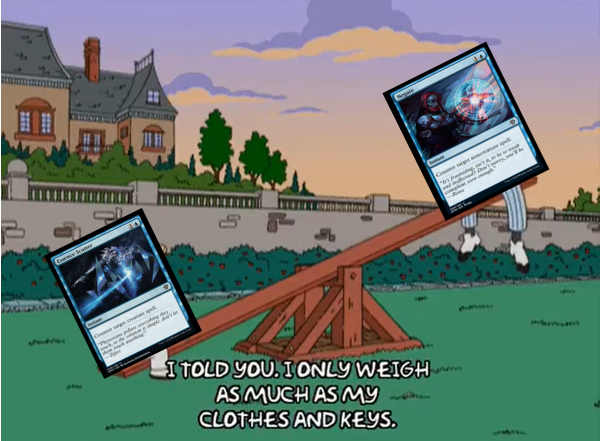
Negate appears frequently in Magic: the Gathering sets. Usually, we ignore it. In some situations though, it is the best card we can have. It's a nice trick to have access to in the sideboard for when our opponents have a non-creature bomb for which we have zero outs. There are formats where the card thrives, and more importantly, there are decks in an array of formats that actively want it. What sort of decks are those? This week, we'll be doing a deep dive, examining when we want this situational counterspell.

Aggressive Decks Do Not Want Negate

This might be an obvious one to some, but it bears repeating:

Aggressive decks do not want Negate.

What aggressive decks do want, is to set the pace with creatures. They want cards that push damage. While protecting a creature may be tempting, forcing yourself to leave two mana up slows down your offensive assault. A card like Shore Up on the other hand, is a far more valuable tool in these decks. Also, if you're worried about running out of creatures, might I recommend using that slot on another creature?

While we might consider boarding in a Negate against a powerful effect like Wrath of God, we should never start one in the main.

Essence Scatter Is Not an Apt Comparison

Creatures are the currency of Limited games. They trade off, force damage, pressure opponents, and defend your life total. As a result, removal goes early, and Disenchants are relegated to sideboards. Your opponent will always have creatures in their deck and a couple will be very good. Being able to answer a threat, on the stack, for two mana, is a powerful and reliable play. As a result, Essence Scatter is almost always a premium common. Negate will rarely be as desirable of an option.

Negate Doesn't Work If You Can't Answer Creatures

Negate has a lot of good targets in Dominaria United (DMU). Urborg Repossession and Phyrexian Espionage are cards that threaten to win a value game and control decks are often vulnerable on this axis. However, if we counter the Divination, but still take six damage from creatures on board, we're not really getting ahead.

Negate helps us on the stack, but like all counters, if we're losing the game on the battlefield, the counter doesn't matter. The best homes for Negate can manage the board, be it with their own creatures or removal spells.

Control Decks Are the Best Homes for Negate

This Domain deck is very good at answering creatures and generating value. Once we have those two bases covered, Negate becomes a card we actively want. A deck like this is designed to stabilize and grind out a win. However, there are threats to our stable board. Maybe it's a Heroic Charge or a Lightning Strike to the face or just a combat trick for lethal.

Once we get to a stable board, the card we most want to draw is Negate. However, it can also help us get to the board states we want. Countering a removal spell can keep our blockers safe and provide more options down the road. Formats like War of the Spark have non-creature threats we need to answer. Negate has extra versatility in formats like that.

Managing Situational Spell Count

Earlier we commented on the downside of situational spells. These cards are a luxury to include in our deck and we can rarely afford too many of them. In some formats, we might want a Shatter, some graveyard interaction, or even a Broken Wings variant. What we don't want is all three. When our deck has too many situational cards, we have less reliable action. There will be too many situations where we can't do anything. In other situations, we'll lose agency because we're forced to just cast these spells on any legitimate target.

However, our decks can be built to minimize the downside of these situational spells. The more card draw we have, the lesser the downside of a "dead card". If our hand is full of gas, and one card is situational, we have the luxury of waiting for that situation.

Additionally, cards like Thrill of Possibility become more interesting when we know we have a card that might be a dud in certain match-ups. Usually, we want to save the counter, but if we can't afford to hold it, we have to take action.

Threats at Common

I've heard new players justify a maindeck Negate with the assumption that "it will probably hit something". They're probably right. Holding a spell and waiting for a valid target to turn it on though, has a real cost. First of all, timing matters in Magic. We want to use our mana every turn and play our early-game spells in the early game. Proactive spells help us set up our game plan. Reactive spells need something to react to. Because so many game plans are built on synergy. If your opponent enacts their game plan, it theoretically makes the cards in their deck better. If we're waiting to use our cards, we're falling behind.

To evaluate this counter, there needs to be a high likelihood that it will interfere with our opponent's game plan. In DMU, there are some juicy targets.

The Juicy Targets

These cards are all common and represent the endgame for the format's pillars. At uncommon the power level rises, including a number of powerful kicker spells, some devastating sagas, and removal spells. All can be answered cleanly by a well-timed Negate.

End Step

In DMU we should look to include a Negate when we know what it is doing for our deck, and when we can afford to do so. UB Spells decks and Big Domain decks, for example, will want it if they can reliably cast it. As long as we're playing a slower strategy, are capable of generating value, and are good at dealing with creatures, Negate can be a good situational card that outshines expectations.

Generational Magic: Experiencing Vintage on a Budget

Are you a Quiet Speculation member?

If not, now is a perfect time to join up! Our powerful tools, breaking-news analysis, and exclusive Discord channel will make sure you stay up to date and ahead of the curve.

In my travels to the various stores in the area I had the opportunity to sit down with Corey Kafka, the owner of Jester's Cards and Games in Milford, Ohio. Corey and Travis, one of his employees, talked about one of their popular formats: Cheapo Supremo! Or, in layman's terms, Budget Vintage.

Stores that offer the format cap the maximum differently, but here, your deck needs to cost $30 or less. At the end of our conversation I mentioned I'd stop by and try it out, even though I had no familiarity with the format or any idea what to play. Of course, that didn't stop me!

Fortunately, what deck to play was remedied by Michael J. Flores himself in this article, highlighting a cycling deck in the Pre-Modern format.

Cheapo Supremo Fluctuator

Creatures

4 Barkhide Mauler
4 Cloud of Faeries
4 Keeneye Aven
4 Disciple of Grace
4 Disciple of Law
4 Disciple of Malice
4 Vile Manifestation
4 Viscera Dragger

Spells

1 Drain Life
1 Haunting Misery
1 Songs of the Damned
4 Fluctuator

Lands

4 Blasted Landscape
4 Polluted Mire
4 Remote Isle
4 Slippery Karst
4 Drifting Meadow
1 Dromar's Cavern

Sideboard

2 Angelsong
2 Lull
2 Miscalculation
3 Rapid Decay
3 Wilt
3 Gilded Light

The deck piqued my interest, so I wondered if I could translate it into their Cheapo Supremo format. The only card that I wouldn't be able to use is Lotus Petal, because it takes up two-thirds of the budget. I know losing a turn can be huge, but was hopeful a potential turn-three win would still be possible, So I replaced the Petal with another cycling card.

Since I wasn't tied into just pre-Modern cards, I cut a few cards for Vile Manifestation and Viscera Dragger to allow for slightly different avenues of attack. I knew the deck was sort of a one-trick pony, so if my opponents had early disruption or graveyard hate, I was in trouble. I sleeved up and was ready to dive headfirst into the fun of Cheapo Supremo.

Give Me Some of the Cheap Stuff!

There were a couple of RCQs going on in the area, so attendance was down a little. Including me, we had ten players ready to go. One of the more interesting notes was that everyone at the event was playing a different deck. Only two decks were somewhat similar, with one White Weenie deck one Mono-White Soldiers deck.

Round 1: Doug, Oath of Druids

How long have you played Cheapo Supremo?
Since they started, back around 2016-2017.

What do you enjoy about Cheapo Supremo?
I like that it has a very deep card pool and that you aren't able to buy your way to victory. For example, I wanted to use Holistic Wisdom, but it's now a $6.00 card, so I wasn't able to play it. I feel that's generally a good thing.

There was an error retrieving a chart for Holistic Wisdom

I do take joy in the fact that I get to play Vintage cards and not break the bank. The format keeps me looking at new sets as well. It breeds creativity and I get to enjoy the game as a whole.

What other decks do you have experience with in this format?
I enjoy just about any deck with blue in it; Thopter Sword, Cephalid Breakfast, etc. My focus has mainly been on Vintage over the years, so funnily enough, I'm not very adept at combat. I do keep trying to make Tron and Cloudpost decks work though.

Has the constant deluge of Magic products affected your relationship with the game?
It can be difficult to keep track of everything. The fact that there is a Legacy-legal "Cosmic Pup Planeswalker" is very odd for me as well. It's definitely not the Magic I grew up with, but that's alright.

It is nice when cards are reprinted though. That usually ends up with the price dropping to make that card more accessible for this format.

Do you buy any Magic products for this format?
Other than the occasional single on the secondary market, no.

Match Details (0-2)

Doug did enjoy my deck and what I was attempting, but I lost hard. In the first game I mulled to five and wasn't able to attempt the critical Fluctuator until a few turns in. He had the easy counter for that and the next one I played, while he beat me down with a Hooting Mandrills.

Game 2, I was able to get down an early Fluctuator, but Doug always kept up Counterspell mana. When I tried to cast Songs of the Damned, he flashed the counter and that was that.

Round 2: Andrew, Thopter Sword

How long have you played Cheapo Supremo?
I've played Magic in general for about five or six years, but this format for only the past six months.

What do you enjoy about Cheapo Supremo?
I love building decks. You can find anything to build around in this format. I have probably 10 to 20 different lists I'm developing and working on. Figuring out how to get them under the $30 mark is the puzzle.

What other decks do you have experience with in this format?
Along with Thopter Sword, I enjoy UW Ensoul Artifact, and Cauldron Familiar-Witch's Oven. I'm working on a UB Reanimator deck that isn't great, but is a lot of fun.

Has the constant deluge of Magic products affected your relationship with the game?
Not really. I've always just bought the singles that I need at that time. I've never been a fan of cracking packs.

Do you buy any Magic products for this format?
Every so often I will buy a Commander pre-con and have some fun tweaking it. I did buy a box of Modern Horizons 2 once. There's just such good value in that set.

Match Details (0-2)

Here was the first moment I felt close to winning, but was still so far away. I was able to get a Fluctuator in play on turn two and Songs of the Damned on turn three, but with his one island and three artifacts out, Andrew cast Metallic Rebuke and ended the dream.

The second game wasn't even a game. I mulled to six, had only one land for seven turns, and died to many Thopter tokens.

Round 3: Bye; Discussion with Everett

Being on the bottom is never fun, but getting a bye at this point meant a moment to sit back, relax, and wait. Fortunately Everett, the person who organizes Jester's Cheapo Supremo events, finished his match early, so we were able to chat.

How did Cheapo Supremo start at Jester’s?
The previous owner started it up about five or six years ago. There was a large Commander and Modern community here and he wanted to provide something that had an easier entry and was new-player-friendly. He provided a box of the latest Standard set for the first event's prize, and it kept going from there.

Before the pandemic, we would run Cheapo Supremo twice a month, and regularly have 20-30 players. After the pandemic, it took some time to get it going again. Nick, another event coordinator here at Jester's, and I started the initial legwork to get the in-person tournaments back up. We've gotten good interest in it and have many people brewing decks.

When do you normally have Cheapo Supremo?
Every Saturday except one, when we have a bunch of Commander games going on.

Do you allow proxies?
Absolutely. We're a very proxy-friendly store. Even though Cheapo Supremo is only $30 or less, sometimes you want to test it out. It's nice to be able to proxy it up and see if you like it beforehand.

What's your favorite Cheapo Supremo deck?
My favorite is my Mono-White Soldiers deck that I've been playing since the beginning of the format. I do like Cephalid Breakfast as well. It's fun, but kind of the boogeyman of the format here.

It can be hard to choose because there is such a variety of options. Doug for example has Browse in his deck. Who plays that card? No one, except in this format.

Has the constant deluge of Magic products affected your relationship with the game?
Absolutely. Not only due to being a player and keeping up with the cards, but more so as an event coordinator and Magic judge, it can be exhausting at times, but it's part of my job. There will be some new odd mechanic that you'll need to be aware of, so it takes time to absorb it all.

Round 4: Chris, Crashing Footfalls

How long have you played Cheapo Supremo?
I've been playing for a little over a month.

What do you enjoy about Cheapo Supremo?
I am a deck brewer at heart, and there's a lot of room to brew. The format is so different, because of the card pool and power level. Again, it's a brewer's paradise.

What's different between the version you're playing and the Modern version of this deck?
I get to play Simian Spirit Guide to increase the deck speed. It also plays Laelia, the Blade Reforged, which is very synergistic with cascade when the cards are exiled.

What other decks do you have experience with in this format?
I've been tinkering with a UB Flash deck headlined by Slitherwisp. The deck is only instants, cards with flash, and lands.

Has the constant deluge of Magic products affected your relationship with the game?
Not really. I don't purchase a lot sealed product. I believe the last time I bought a pack was back during Khans of Tarkir.

Do you buy any Magic products for this format?
Yea, just a few singles here and there.

Match Details (0-2)

Chris, like everyone else, was ready to pick apart my deck. Game one I got the turn-two Fluctuator and again smelled victory. I was ready to go off on turn four, but during my upkeep, he tapped my Polluted Mire with a Fire // Ice. On his turn, he cast Bloodbraid Elf, exiled 14 cards to put 14 counters on the Laelia, the Blade Reforged he had in play, and swung for lethal.

I had no chance in the second game due to him having two Ravenous Traps in his starting hand. I did have the turn-two Fluctuator, but Chris exiled my graveyard halfway through my cycling and showed me the second copy. Scoop time.

At Least the Deck Didn't Cost a Lot, Right?!

Even though I didn't win a single game, it was still great to get out, try out a different format, and meet new people. Along with the decks I played against there was also: Mono-B Discard, Mono-U Walls, and the eventual winner, Mono-W Angel life gain.

Jester's official mascot and record keeper, Jango Fetch

If you've never tried Vintage on a budget, I would highly recommend giving it a shot. There's a plethora of decks available and even if you end up not doing well or liking your deck, you at least know it didn't cost you an arm and a leg to build it. Have you played any new and interesting formats lately? Tell us about it in the comments or on Twitter.

Should You Buy the New Starter Commander Decks?

Are you a Quiet Speculation member?

If not, now is a perfect time to join up! Our powerful tools, breaking-news analysis, and exclusive Discord channel will make sure you stay up to date and ahead of the curve.

Who remembers Starter Magic?

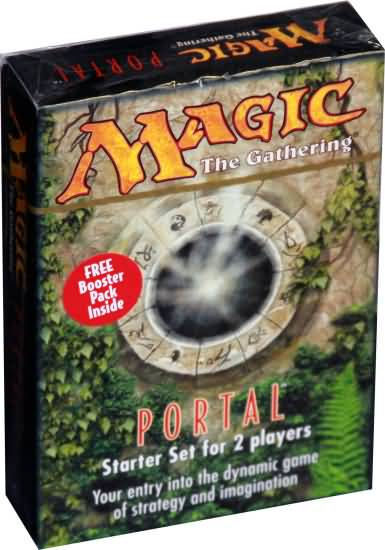
Trying to get new players into Magic has always been a goal for Wizards. Way back in '97 and '99 they released two products, Portal and Starter. Here's a couple of quick primers.

A Blast From the Ancient Past

Given the success of the Commander format, it's obvious that a product should exist for brand-new players. The Starter Commander Decks are Wizards's attempt at providing this product. That being said, do they make sense to buy? Let's find out!

Talk About Simple...

Mix a generous amount of EDREC Top 10 cards with a completely formulaic ratio of card types, like one planeswalker per deck; choose exactly two colors; shuffle thoroughly; and... you have the Starter Commander Decks. Unimaginative is one term, bog standard another. Deliberately simple, because... that is the point! On the other hand...

The Baldur's Gate Commander Decks are excellent. Each deck contains dozens of different keywords spanning the history of Magic, powerful new cards, and some intricate play mechanics. For example, Exit From Exile has three "different" exile zones. Another example is Draconic Dissent's powerful multiplayer schtick of goading which, to a new player, may not immediately make sense. Finally, even a deck like Party Time has cards like Black Market Connections. It can be a challenge to convince a new player that the way to get the most out of it is to deliberately lose six life every turn. In short, for an absolutely new player to Magic, I can see these decks being a little unfriendly.

What About Value?

Again, this is where someone who owns zero Magic cards is going to benefit greatly. For the price, they will have a functional Commander deck, and can start playing immediately! While it's definitely possible to pick up other decks for a great deal, they may be more complicated to play, partially upgraded, or missing cards. A veteran player can manage, but it's less than ideal for someone new.

Next, we'll look at the decks themselves and see if they're worth the price tag. My metrics are threefold: automated pricing, cards of value, and after reprints.

By using the deck pricing tool at MTGGoldfish and doing a quick copy-paste with minor editing, I got an "automated" figure based on prices researched by the tool. This is a good estimator, and it's helpful to find cards of value. Essentially, anything $1 or more counts towards this figure, which lets us quickly check which cards have basic value.

Finally, based on other Commander decks I've purchased in the past, I can get a sense for how strong a long-term outlook is for a deck's value. Most Commander decks settle at $30-$40. However, while a few increase in value from there, many end up heavily discounted and can be picked up for $10-$20 just a few months later. Hence the "after reprints" value of what a deck will likely be worth once prices have cooled.

First Flight

There was an error retrieving a chart for Isperia, Supreme Judge

Automated: $57.65
Cards of value: $38.22
After reprints: $10

There's no way that Gravitational Shift and Talisman of Progress won't go down after this reprint. Still, there are plenty of $1-$3 cards here that command some value on the Commander market.

Grave Danger Values

There was an error retrieving a chart for Gisa and Geralf

Automated: $47.66
Cards of value: $20.85
After reprints: $5

A lone Liliana, Untouched by Death is not enough to give this deck significant dollar value. Too many of the cards are reprints of reprints and practically all bulk. The absolute least valuable deck of the five.

Chaos Incarnate Values

There was an error retrieving a chart for Kardur, Doomscourge

Automated: $59.54
Cards of value: $33.04
After reprints: $10

Lightning Greaves is the top value card. This deck is full of solid, playable Commander cards that have been reprinted dozens of times and have little value.

Draconic Destruction Values

There was an error retrieving a chart for Atarka, World Render

Automated: $74.13
Cards of value: $54.25
After reprints: $20

While pretty much all of the Dragons in this deck will plummet to extra bulk rare status, enough of them should still be about a dollar even after a reprint. Obviously Dragon Tempest is the card that gives the deck a little boost in value but, again, the reprint will severely reduce it. Still, this deck has enough to be worth around break-even, making it the most valuable of the five.

Token Triumph Values

There was an error retrieving a chart for Emmara, Soul of the Accord

Automated: $62.41
Cards of value: $38.32
After reprints: $10

The only card of much note is Citanul Hierophants. This card was printed in Urza's Saga, and that printing is now under $6 near mint. Reprinting this card has consequently lowered the value on the original, and the reprint is certainly not worth the same price.

Methodology

First, I entered the deck lists into different pricing sites to come up with raw dollar figures. Then, I checked only cards worth $1 or more. Finally, I compared that value to the rest of the Commander market. Overall, these are not valuable decks, nor are they intended to be. However, I really do wonder if they are even a deal at all, especially because I buy deals all the time.

I'm no stranger to buying cheap Commander decks. I've purchased numerous open-box, used, or custom Commander decks at very affordable prices. There are budget Commander decks readily available, so why even look at these? This brings us full circle to who really will benefit from these Starter Decks.

Completely, Brand-New to Magic Players

If this is you, then you're going to be pretty happy. Not only will you get a variety of cards that would be costly to purchase individually, but you will also not be getting too many complicated cards. This is a great thing for beginners, although I wonder why two-color decks and not mono? Still, a very decent deal, all told.

Investors, Resellers

No, heavens no! Avoid! No, really, don't buy. Sure, right now the decks break down into more than they cost. But the second these things hit the market, every card in them is going to tank. Furthermore, there are not many valuable ones here to start.

Make no mistake: these are terrible long-term investments that will eat up capital and shelf space for meagre returns. Meanwhile, there are plenty of other attractive Magic products. The 30th Anniversary Count Down Secret Lair looks amazing, especially as a sealed product. Even so, if these Starters get marked down, I might buy some as gifts, maybe.

Competitive/Casual Commander Players

How about for competitive Commander players? Again, no. There's nothing here you want or don't already have. Maybe if there were new cards to chase, that would be one thing. But there is nothing new here.

Competitive is the opposite of casual; therefore, these must be good for casual, right? I argue that these decks offer pretty low value to casual players as well. Someone who already plays Commander probably has the staple cards included in these decks. There are tons of other precons that offer a great experience right out of the box. Virtually all of them are going to be stronger, and offer either a better depth of gameplay, new cards, or something more than the basic minimum needed to play.

So, That's the Point

Wizards has succeeded in making a product that isn't for you or me, but for everyone else. And that is a wonderful thing! Magic has always at least tried to make beginner-friendly products, and Commander itself is a relatively complicated format. This is a step in the right direction, and I do applaud Wizards for having this ready for the holiday season, even if I'm not going to buy it. There are definitely future Commander players whose very first deck will be one of these Starter Decks, and I hope to play Magic with them soon.

Do you want a Starter Deck for the holidays? Let me know which one in the comments... and why!

Magical Creatures: Phyrexian

Are you a Quiet Speculation member?

If not, now is a perfect time to join up! Our powerful tools, breaking-news analysis, and exclusive Discord channel will make sure you stay up to date and ahead of the curve.

Hello everybody, and welcome back (for the last time) to Magical Creatures! As you probably know already, this series was aimed to spot and discuss all the creature types created specifically for Magic. Doing so has helped us further expand on Magic's more artistic side after my last series on real-world quotations. In last week's instalment, we discussed Aetherborn and a few other creatures, while today we'll wrap things up with the last subtype: Phyrexian.

Last week, we managed to cover Magic's history until Strixhaven (April 2021). Today, we're going to move a step back, just a couple of months, and talk about Kaldheim (February 2021). It's an exception in this series, but for a good reason: Phyrexian is a rather peculiar creature type with a curious history, and it felt like the right way to close the series.

Kaldheim, or How It All Changed

Inspired by Norse mythology, Kaldheim brought back the snow mechanic (including snow lands), although that was not expected at first. More importantly, it introduced the Phyrexian creature type for the first time in Magic's history, on Vorinclex, Monstrous Raider.

So, what's the big deal? We saw new creature types introduced in every single piece of this series, that's the whole point of it. Well, it's not that common for such an old creature type to only be formally recognized this late.

The fact is that phyrexian creatures were a thing from the very beginning of this game. Or at least from Antiquities, which means March 1994! To give an example, consider Phyrexian Gremlins. It has "Phyrexian" in its very name, but back in 1994, it used to only bear the creature type Gremlin (well, technically Gremlins). Add to this peculiarity that Phyrexian is possibly the most famous type typically associated to Magic, and you have the recipe for something truly special.

The Case of Thalakos and Soltari

In the first years of this game, it was common practice to name a creature after its subtype. Or to invent a subtype simply by copying the name of the first creature with those traits. We saw that time and again over the course of this series: Atog, Lhurgoyf, Masticore and so on. But it was just as common to leave something implicit. Which explains why creature types such as Thalakos and Soltari did not have those subtypes for many years.

When Tempest came out, cards such as Soltari Priest and Thalakos Sentry didn't feature the relevant subtype. Everybody could tell they were a Soltari or a Thalakos... I mean, it was in their name! But still, it took almost ten years to fix, when the release of Time Spiral retroactively added those subtypes to older cards.

Phyrexians Before Phyrexian

Something similar happened with Phyrexian, but it was even bigger a surprise: it took not 10 years, but 27! A good moment to introduce it would have been New Phyrexia (2011), since it introduced "Phyrexian mana." Such cards were good enough to frequently receive bans across all competitive formats. Mental Misstep, Gitaxian Probe, Birthing Pod... the list of staples goes on. If only tribal hadn't been such a failure; these spells might have been the first official Phyrexians!

However, Wizards decided to postpone the change for 10 more years, until the realease of Kaldheim. In fact, Mark Rosewater once declared that "there are characters that are Phyrexian by flavor (but not by appearance)." Eventually, when that happened, it was one of the most important shifts in Magic's history. Unlike the famous Grand creature type update (2007), it only influenced one specific subtype, but it was a huge one. And that change had been expected for a very long time, too!

What Is a Phyrexian?

Today, no less than 251 cards exist with this subtype, making it one of the most widespread types ever. Still very distant from the overwhelming 2,000+ Humans, but a big number nonetheless. That being said, it's hard to define this creature type with precision. We may start by saying that the Phyrexian faction is probably the best villain in Magic.

Their goal is to overrun and take control of everything, by "compleating" everyone they might find on their way. Scary! Their history goes on for so many years, and is so pervasive in Magic's lore that it would be vain to try and sum it up. Let's just say Phyrexians had something to do in many of the most important events of this game's lore, from the invasion of Dominaria to the infection of Mirrodin.

So, back to the original question: Phyrexian is a race, and not a class. That is why many creatures that are now Phyrexian were once raceless (Suture Priest, Tormentor Exarch). As Doug Beyer explained back in 2011, in its series Savor the Flavor, "What you do to advance the civilization of Phyrexia is much more important than what vat-grown or slag-harvested materials you're made from." For this reason, they weren't ready to make Phyrexian an actual creature type; it was just too vague.

Phyrexians are a mixture of organic matter and metal, which means they can assume an enormous number of different forms. Some of the most typical traits, however, are "dripping ichor, eyelessness, cysts, pustules, or the expulsion of noxious gases." And of course, once they are mature, they are compleated, meaning they have replaced every organic part of their body with artificial parts.

Notable Mentions

Some of the most important creatures of this game now bear the Phyrexian subtype: Phyrexian Dreadnought and Phyrexian Negator are just some examples from the older cards. As for more recents ones, there are the Infect staples Glistener Elf and Blighted Agent. And as we saw earlier, many other cards are obviously Phyrexian, but haven't received the type because they are not creatures.

Tribal subtype erratas are pretty much never going to happen. So, let's just mention a couple heavy-hitters like Yawgmoth's Will and Yawgmoth's Bargain and dream of them getting the subtype they deserve.

Wrapping Up Magical Creatures

This was a journey I really enjoyed, as it brought me back to the beginning of Magic and to its last few years, too. Since I was mostly active in the years between Mirrodin (2004) and Innistrad (2011), the first and the last ten years are the ones I knew the least about. Researching for this series gave me a chance to learn something more about these periods, during which I either only played Limited if at all.

I think it's time for a final Top 8; one that depends entirely on my personal taste! You'll find a link to the relevant article on each creature type, in case you missed some of them or are in the mood for revisiting.

  1. Kithkin: I played a Kithkin deck at my first GP in 2008 (Grand Prix Rimini). Funny story: in the end Emanuele Giusti won with almost the same deck. Kithkin will always remain my favorite creature, at least among those unique to Magic... otherwise I'd say Elves.
  2. Myr: I just loved the five "mana Myr" in the old Mirrodin, which was my first set. And I also used two of them (Gold Myr and Iron Myr) in my first Top 8 at a Scars of Mirrodin limited PTQ.
  3. Saproling: If you ask me, it's among the best creature types ever. I just adore tokens, and how these are created by Thallid creatures. Also, I'll always remember (with terror) Sprout Swarm during Time Spiral - Planar Chaos - Future Sight drafts.
  4. Atog: I played it in my first competitive deck (Affinity), before Modern replaced Extended.
  5. Thrull: I pulled a particularly awful Thrull in my first booster pack from Fallen Empires and fell for this race. Can you guess which one?
  6. Spellshaper: I just like how varied they are, and how they were used to quote and reference so many other cards from the past in the Time Spiral block. Spellshapers helped make that block so nostalgic.
  7. Phyrexian: I'm not a huge fan of any one of these creatures, but I had to either play with or play against many spells that are Phyrexian by lore, so I still have a relationship to this race.
  8. Kavu: when I first learned how to play, I was 10, and somehow a friend of mine managed to persuade us all that Thunderscape Familiar was able to get +25/+25 by discarding a card or something. That obviously worked only before 1) the card was not in Italian or English, and 2) we had no access to the internet. Yay for memories!

That's my personal list... yours may differ! Drop your own Top 8 in the comments or on Twitter, and thanks for following this series until the end. Stay tuned, as I'll be back soon with more insight on Magic's lore and IP!

Top 10 Picks for Explorer Anthology II

Are you a Quiet Speculation member?

If not, now is a perfect time to join up! Our powerful tools, breaking-news analysis, and exclusive Discord channel will make sure you stay up to date and ahead of the curve.

Earlier this month, Wizards of the Coast announced expansions for Arena intended to support the Explorer and Historic formats, Explorer Anthology II and Shadows Over Innistrad Remastered. I could not be more HYPED. Explorer was created as an Arena-only analog to Pioneer and will eventually be replaced by Pioneer once Wizards backfills enough format staples into the client. These updates bring us one giant step closer to that end goal.

Presumably, the remastered set will include most major hits from Shadows Over Innistrad and Eldritch Moon like Thing in the Ice and Emrakul, the Promised End. While these are among my most anticipated cards, I'm leaving anything likely for this product off my list. Fret not, I'll put out my top 10 for that product as we get closer to its release date in early 2023.

With that out of the way, let's get into my top 10 cards I want to see in Explorer Anthology II!

10. Springleaf Drum

Springleaf Drum is a bit of an innocuous role player, but it's often an MVP. As a cheap artifact, it supports artifact-matters archetypes which need a critical mass of low-cost game pieces. For example, Springleaf Drum combined with Ornithopter, allows a player to cast Emry, Lurker of the Loch as early as turn one. Kinnan, Bonder Prodigy can use the Drum to tap for 2 mana, meaning a Drum on turn one and Kinnan on turn two leaves up mana to play additional spells or hold up countermagic.

As it stands, there is a fringe combo deck in Pioneer focused around these cards as well as Meria, Scholar of Antiquity and Paradox Engine that's just waiting to bust loose. I'm hopeful we'll have a chance to see it in action in the lower-powered Explorer format.

9. Day's Undoing

Day's Undoing is a nerfed version of the Power Nine spell, Timetwister. The Power Nine is a select set of overwhelming powerhouse cards from the earliest days of Magic. Spoiler alert, even a weakened version of Timetwister is still exceptionally powerful and it's not the only Power Nine variant on this list.

On its face Day's Undoing is symmetrical. It gives both players a full redraw to seven cards and even gives the opponent the first crack at using them. In reality, the card is rarely fair. Day's Undoing combines with Narset, Parter of Veils to give the player a fresh hand of seven, while the opponent loses their hand and gets just one measly card. It's been putting up some recent numbers in Modern in various UW Control lists, so I'm excited to see what that innovation would bring to Explorer.

8. Jace, Vryn's Prodigy

Back in 2015, Jace, Vryn's Prodigy was a scourge in Standard, reaching upwards of $100 per card. It was the centerpiece of nearly every deck in the format thanks to its high power and easy casting cost. Today, the power level of the game has increased drastically, and Jace doesn't see quite as much play, but with The Brothers' War confirmed to have Unearth as a returning mechanic, a cheap looting planeswalker seems like it might be just what the planeswalker ordered.

Presumably, Jace wouldn't be the only flip-walker included either. Kytheon Iora currently sees some play in Pioneer MonoW Aggro. The others, Liliana, Heretical Healer, Chandra, Fire of Kaladesh, and Nissa, Vastwood Seer, would all be welcome additions to Historic Brawl and Arena Cube.

7. Monastery Mentor

Earlier this month, Rei Zhang brought a brilliant Jeskai Mentor list to the 2022 Season 2 Magic Online Championship Showcase (MOCS), an invitation-only event more exclusive than a Pro Tour. The center focus of the deck was Monastery Mentor supported by cheap removal and card draw. Given the right shell, Mentor decks can go tall and wide, and can shift seamlessly between aggro, tempo, and control. Although Rei's deck was Jeskai-based, I would not be shocked to see some sort of Esper version with Sedgemoor Witch and Can't Stay Away put up some numbers.

6. Removal

We've gotten some great removal in recent sets. Leyline Binding, March of Otherworldly Light, and Portable Hole all come to mind. However, we're still missing some of the classics. Dreadbore in particular is a staple of the RB Midrange deck at the top of the Pioneer leaderboard. The flexibility of unconditional creature and planeswalker removal at that low of a cost is hard to come by. The next best options, Bedevil and Baleful Mastery just don't hit the same.

Abrupt Decay is a similarly flexible removal spell that can be substituted by Assassin's Trophy, but that's not a substitution I'm happy about in the early game. With the rise of Ward, the uncounterability clause has only gotten more relevant.

Finally, Chained to the Rocks is an oldie but a goodie. As a white spell that needs a Mountain to play, it used to struggle due to the fetch land-less environment. Thanks to the full cycle of tri lands like Raugrin Triome and the recent support for Domain, it's become a free inclusion for decks already attempting to support Leyline Binding.

5. Oath of Nissa

Alright, alright, I know we got Elvish Mystic in the first Explorer Anthology and I shouldn't be greedy, but I'm going to be. Oath of Nissa is a critical piece of the Mono-Green Ramp deck dominating Pioneer. Not only does it help dig for the right lands and action spells while fueling devotion, but it also allows the player to cast off-color planeswalkers in their deck. Some builds have chosen Nicol Bolas, Dragon God, and others have included Teferi, Who Slows the Sunset.

I'm not going to litigate whether or not casting five pip Grixis cards in your green deck is a healthy choice for the color pie, but I will agree that it's cool. I have no doubt if we get Oath, it will certainly see heavy play.

4. Monastery Swiftspear

I was surprised we didn't get Monastery Swiftspear in Explorer Anthology I. It's a heavily played common with two evergreen keywords that are already programmed into Arena. There's no heavy lifting from a developer standpoint, and filling out a bundle with commons instead of rares and mythics is good for Wizards' bottom line.

We did, however, receive Favored Hoplite which slots into the RW Heroic deck where Swiftspear also sees play. It's possible Wizards did this with the intention of fleshing out the archetype more before just handing over Swiftspear. In a way, it's saving the best for last. I'm hoping all the Magic-playing Swifties get to celebrate more than just the release of Midnights this season.

3. Brave the Elements

Brave the Elements is a card that really hits above its weight. It's a one-mana counterspell and Overrun, allowing a Mono-White deck the flexibility to defend itself or close out a board stall from nowhere. While upgrading to the next best Savannah Lions variant is always helpful for Mono-White Aggro, this is the missing piece for it to be the player in Explorer that it is in Pioneer.

2. Delve Spells

The Delve mechanic is a pillar of the Pioneer format, mainly because it's been banned everywhere else. Treasure Cruise and Dig Through Time are powerful card draw spells that singlehandedly enable spell-slinger playstyles. It's the main reason to play UR Arclight Phoenix, or any non-tribal blue deck in the format. Explorer missing these spells is one of the major dividing lines between it and Pioneer. If the goal for Explorer is to eventually merge into its paper counterpart, these deserve to be at the top of the priority list.

I've also included Temporal Trespass in this batch. Although it's weaker than the other two, it's a major support piece for the above-mentioned Phoenix deck. Thanks to Galvanic Iteration, Trespass can become a five-mana Time Stretch, which is more than often enough to win a game from even the worst position.

1. Nykthos, Shrine to Nyx

No surprise here, my top hope for Explorer Anthology II is Nykthos, Shrine to Nyx. Nykthos is the backbone of the Mono-Green Ramp deck that also features Oath of Nissa as mentioned above. A fixed Gaea's Cradle of sorts, this land is capable of generating absurd amounts of mana. Thanks to untappers like Kiora, Behemoth Beckoner, the mana train can just keep on running.

Nykthos certainly sits at the top end of the power level of Pioneer, and I understand others may not want it in Explorer quite yet, but there's so much more to explore! (Pardon the pun.) There have been interesting builds of Mono-Blue Devotion here and there that feature Gadwick, the Wizened, Leyline of Anticipation, and Thassa's Oracle, all of which culminate into a fascinating and refreshing play pattern.

While Nykthos may have a bad reputation and deservingly so, it offers a major payoff for mono-color decks that we simply don't have otherwise. I'm curious about what builds may spring up with it as a motivator.

End Step

That's a wrap for another week! I'm super excited for something to shake up Explorer and bring some of Pioneer's heavy hitters into the upper echelons of the metagame. Once the official list drops, feel free to shoot me some spicy decklists. They might just end up on a future Adam Plays Magic!

In the meantime, you can keep up with me on Twitter and Twitch, or leave a comment below. See you next time.

Living With Misfortune: Pioneer RCQ Report

Are you a Quiet Speculation member?

If not, now is a perfect time to join up! Our powerful tools, breaking-news analysis, and exclusive Discord channel will make sure you stay up to date and ahead of the curve.

Welcome to another season of Regional Championship Qualifiers. That feels like a statement that should have an exclamation point at the end. Yet, I'm sticking with a period. I just...struggle to feel about RCQ's the way I felt about the PPTQ or PTQ system. It might be that the years between the later systems and now were too great. It might be that a lot of RCQs use Pioneer and I'm lukewarm on the format at best. It could also be that DreamHack doesn't act like it has the passion for the system as Wizards once had. I'll still play in them and did over the weekend. I'm just not as engaged.

Pre-RCQ Preparations

This RCQ was at my local game store (LGS), Mythic Games. This was really convenient because it meant I had no problems getting the details for the event and registering. I did so well in advance because the store only has 48 seats at the moment. It's set to expand sometime next year, which will be nice. I find having breathing room advantageous.

There was an error retrieving a chart for Nykthos, Shrine to Nyx

The format was Pioneer, which I wasn't thrilled about. I've been struggling to understand, much less enjoy Pioneer. However, it made perfect sense. The Store Championship the week before was also Pioneer. That was intentional to allow players a chance to practice for the bigger event. I wasn't able to attend the Store Championship, but I was told that Mono-Green Devotion not only won but was the most popular deck there. This gave me confidence in my own deck, Mono-Blue Spirits.

There was an error retrieving a chart for Curious Obsession

I was only ever going to play Mono-Blue Spirits for the RCQ. It's the only deck I actually want to play in Pioneer. Mono-White Humans does have some appeal since I've played lots of Humans in the past. However, Spirits eats Devotion like candy while Humans merely has a good matchup. Had there been any actual decision to make, the fact that the field was expected to be Devotion-heavy sealed the deal.

Tournament Day

Being my LGS, I knew exactly when to leave and what to expect. Funny how that works. I also knew that I wanted to be there exactly 40 minutes before the event started. This was right after the first wave had arrived and settled in but before the stream of players arrives to fill the venue. The perfect window to register your deck in peace and have all the time to scout the field. Of course, I always adjust my deck based on scouting, so I didn't register the sideboard or the final flex slots until the last second.

Scouting Report

There were a handful of dedicated control players there. The overwhelming majority of players I scouted, however, were playing Spirits, Devotion, or Izzet Phoenix. There were also quite a few Humans players. I entered the day with my deck in an anti-control configuration because I play against UW a lot in weekly tournaments. However, given the field, I needed to adjust. I always carry around all the cards I might want for this very reason. After a quick swap-out, I registered the following deck:

Mono-Blue Spirits, David Ernenwein (RCQ deck)

Creatures

4 Ascendant Spirit
4 Mausoleum Wanderer
4 Spectral Sailor
4 Rattlechains
4 Shacklegeist
4 Supreme Phantom
3 Brazen Borrower

Instants

3 Lofty Denial
4 Geistlight Snare

Enchantments

4 Curious Obsession

Lands (22)

3 Faceless Haven
18 Snow-Covered Island
1 Otawara, Soaring City

Sideboard

3 Slip Out the Back
2 Unlicensed Hearse
2 Disdainful Stroke
3 Witness Protection
3 Mystical Dispute
2 March of Swirling Mist

I would later overhear that there were 11 Devotion players, 9 Humans players, and 7 Spirits at this RCQ, so my scouting was on the nose.

The maindeck doesn't look like it's changed since the last Pioneer RCQ I played. However, that is deceptive. In normal weekly play Slip Out the Back is maindeck and I don't play Lofty Denial. With scouting determining the field was heavy Devotion, I made these subtle changes. The matchup hasn't measurably changed in the intervening months otherwise.

Reading the Room

Mono-Blue Spirits is strong against Devotion because it presents a fast clock and has disruption. I enforce this with extra maindeck counters and Disdainful Stroke from the sideboard. Slip is great against any removal deck. Mystical Dispute is mostly in the sideboard for the mirror and for Izzet decks. Witness Protection is the only real removal available in mono blue. This leaves Spirits quite weak to creature-based aggro. They'll have actual removal, we have Protection and tempo tricks. Normally I play Cerulean Drake, but I didn't see any red decks.

There was an error retrieving a chart for March of Swirling Mist

March of Swirling Mist looks odd, but I think that Spirits players need to give this card serious consideration. I initially chose it because it's the only card in blue that cheaply protects a board against Supreme Verdict. However, I've found it to be shockingly versatile. It's a huge tempo play to fog an opponent's attack and clear out blockers for an alpha strike. Against creature decks, it's the closest thing I have to a sweeper to get back into a race. I've also used March to render Nykthos, Shrine to Nyx worthless by phasing all the creatures in upkeep. I encourage Spirits players to try out March.

The Tournament

Due to limited seating restrictions, the RCQ was capped at 48. The event sold out, but only 44 players actually showed up for the six rounds of Swiss. There's never a lunch round at Mythic Games. Partially, that's because they've got deals with the various restaurants in the area for delivery and mostly because the head judge wants to leave at a reasonable time.

There was an error retrieving a chart for Karn, the Great Creator

I was disheartened to see that both Matt Nass and Andrew Baeckstrom were in attendance. I've never played Andrew, but he was a high-level pro in the old system. I've played Matt before and never beaten him. This didn't bode well for me. I overheard that Luis Scott-Vargas was going to attend too, but ultimately couldn't. While that would have increased the competition significantly, I always seem to do better at events he attends, so that was disappointing.

Round 1: Atarka Red

I was on the play for game one and curved out pretty close to perfect. I went Wanderer into Curious Obsession with Geistlight Snare protection, followed by two Supreme Phantoms and Spectral Sailor to seal the game. This is fortunate because my opponent was on Atarka Red, and I don't have Drakes anymore. The matchup is quite bad but countering his Burning-Tree Emissary is basically game-winning.

Sideboarding:

-2 Ascendant Spirit -3 Curious Obsession

+2 March of Swirling Mist +3 Witness Protection

In game two it was my opponent's turn for a great curve-out. He had Phoenix Chick into double Emissary and Reckless Bushwacker. Legion Loyalist sealed my fate.

For game three I countered his Emissary on turns two and three, but I developed slowly. Thankfully, Shacklegeist stalled his attacks enough for me to win the race. My opponent very helpfully flooded out.

There was an error retrieving a chart for Shacklegeist

I was not punished for my metagaming and got quite lucky. You need both to do well.

Record: 1-0

Round 2: Bant Spirits

Games one and three played out the same way. My opponent never missed a land drop and I'm stuck on Island, Faceless Haven. I couldn't possibly keep up. My opponent successfully tricked me in game one by sequencing his first two lands so I thought he was UW Control and took a more conservative line. It didn't ultimately matter, but still. Great bluff.

There was an error retrieving a chart for Empyrean Eagle

Game two was actually interesting. I won thanks to March fogging a big attack and clearing the way to Protection an unphased lord and get in my own big attack. This kept my opponent on the back foot and forced him to repeatedly trade creatures. Ultimately, I won the Shacklegeist competition to open up enough sky to win through.

Sideboarding:

Game Two: -4 Rattlechains -3 Lofty Denial -1 Spectral Sailor

Game Two: +2 March of Swirling Mist +3 Witness Protection +3 Mystical Denial

Game Three: -4 Curious Obsession -1 Spectral Sailor -3 Lofty Denial

Game Three: +2 March of Swirling Mist +3 Witness Protection +3 Mystical Denial

On the play, I wanted to keep in Obsession because the tempo and card advantage is key. Getting the opponent to waste removal or Shacklegeist activations on a 1/1 is huge. On the draw, that plan won't work out.

Bad variance ensured that I had no real chance in two of three games. Sucks, but that's Magic.

Record: 1-1

Round 3: Fires of Invention

I know my opponent is typically on UW Control, but he also has Devotion. I kept a hand that's good against either deck. Unfortunately, he's actually on Fires of Invention and I can't counter the namesake card and just fell behind and died. I might have gotten there but for Omnath, Locus of Creation triggers. He wasn't paying attention and missed several, but I still lost badly.

Sideboarding:

-4 Shacklegeist

+2 Disdainful Stroke +2 March

In game two I mulliganed into a one-lander with one-drop and Obsession. If I draw a land I'm cruising. I didn't, and the opponent has Bonecrusher Giant // Stomp and I could never catch up.

At this point, I'm most likely dead for Top 8 but there are prizes for Top 16, making it worth it to stay.

Record: 1-2

Round 4: Abzan Greasefang

My opponent has a turn three Parhelion II. I have Shacklegeist. I counter my opponent's attempt to Thoughtseize himself to get another chance at Parhelion. I win after playing Supreme Phantom. This is a very easy matchup for me when they don't go off on turn two.

Sideboarding:

-2 Ascendant Spirit -3 Curious Obsession

+2 Unlicensed Hearse +3 Witness Protection

In game two I mulligan and I thought my opponent should have too. He had enablers but didn't hit, then cast Can't Stay Away twice looking for action, and missed. My clock was anemic as I kept a counter-heavy hand, but I gradually pulled ahead. Eventually, my opponent milled a piece of equipment, played Greasefang, Okiba Boss, and had Parhelion bounced. I placed Greasefang in Witness Protection, and countered a follow-up Greasefang.

There was an error retrieving a chart for Greasefang, Okiba Boss

I was still alive for prizes, and suddenly more. There was an unintentional draw at a top table, and suddenly there was room for X-2's to hope on getting in.

Round 5: Enigmatic Incarnation

Initially, I thought my opponent was on Fires or possibly Niv to Light. I wasn't sure what to think when instead he played Enigmatic Incarnation and sacrificed his Leyline Binding to find Titan of Industry. After I bounced Titan I won with little effort. He commented that Titan is a shockingly bad card. I'm inclined to agree.

Sideboarding:

-2 Ascendant Spirit

+2 Disdainful Stroke

We both mulliganed for game two. I won because my opponent did actual nothing all game. He kept a hand of red spells with no red source.

There was an error retrieving a chart for Enigmatic Incarnation

Still alive.

Record: 3-2

Standings went up and the math said that it was possible for up to two X-2's to make Top 8. It required tables three and four to play and both X-1-1's to lose, but it was possible. Even if I lost, two X-3's will make Top 16. Now I just needed a favorable matchup to get there.

Round 6: Mono-White Humans

Whelp. This is Spirits' worst matchup, and I'm on the draw. I was just doomed. He had a perfect curve with two Thalia's Lieutenant and I had no chance whatsoever.

Sideboarding:

-3 Lofty Denial -4 Curious Obsession

+2 March of Swirling Mist +3 Witness Protection +2 Slip Out the Back

For game two he had a removal-heavy hand and I couldn't fight through. His creatures are naturally larger and he drew more of them. I was never really in the game.

Final Record: 3-3

Thanks to tiebreakers, I made the Top 16 and got 15 Dominaria United set boosters. Not a total loss.

The Top 8 consisted of two Humans decks, Grixis Phoenix, Mono-Green Devotion, UW Control, Bant Spirits, Rakdos Midrange, and my Round 1 opponent. Andrew Baeckstrom on Mono-White Humans won.

After-Action Report

While my record leaves much to be desired, I feel like my play was satisfactory. I made a number of mistakes this tournament, but none of my mistakes were fatal. I was pretty dead in every case (confirmed by opponents after the match) and I would have improved my position by making better plays only marginally, at best.

There was an error retrieving a chart for Supreme Phantom

This didn't even count how seeing the correct number of lands in a game continues to be a problem for me, but that's down to variance. I've said it before, to win a tournament requires being both lucky and good. I'm playing well enough but didn't catch as many breaks as I needed. I used up the good variance in round one by winning a matchup I frequently lose. I needed to not get stuck on lands as often as I did.

There was an error retrieving a chart for Hopeful Initiate

If Humans is going to continue to be a major player in the metagame going forward, I'll need to find a different deck. Mono-Blue Spirits is a complete dog to Humans. Bant is better thanks to Skyclave Apparition and Collected Company, but still not great. I may have to just buy Hopeful Initiates.

Luck Is A Factor

The new season is proceeding and there will be more RCQs. I can only hope that the variance problems I've suffered work themselves out so that I can stop blaming them for my results. I'd rather lose to bad decisions than just being a little unlucky.

Scoping Out Magic 30 Vendors

Are you a Quiet Speculation member?

If not, now is a perfect time to join up! Our powerful tools, breaking-news analysis, and exclusive Discord channel will make sure you stay up to date and ahead of the curve.

Here we are. Just a few short days away from the big Magic 30 celebration in Las Vegas. I experienced a moment of excitement when I initially signed up to attend the event. Jumping in the Discord and on Twitter, I “shouted from the rooftops” that I would be attending in the hopes I’d receive a slew of responses. To my surprise, the response I received was anti-climactic. Sadly, only a couple of people even acknowledged the announcement. Engagement regarding the event since then has—at best—only trickled in. This left me wondering whether the event will be all that it’s chalked up to be.

Now that it’s just over the horizon, my anticipation is starting to rebound in a major way. I’m seeing more interaction on Twitter and Discord, and my confidence in a rewarding and entertaining experience has been restored. While my declaration didn’t receive as much engagement as I had hoped, I have seen other Twitter personalities recently announce their participation. I recognize that I’m a very small fish in the Magic community pond, but I still hope to get to meet some of these awesome people!

Since this is a finance column, I want to spend some time highlighting some interesting observations I’ve made (along with the input of others) about the selling opportunities—a major priority for my time in Las Vegas.

Finding the Vendor List

I could be convinced without much effort that the vendor list at Magic 30 may not be Wizards of the Coast’s priority. They’re so focused on the professional-level tournament scheduled to take place, the array of side events, the artists and cosplayers scheduled to be onsite, and the special guests slated to attend in person.

Perhaps that is why finding the actual vendor list—the list of Magic shops that will be on-site buying cards from attendees—has been so elusive. For example, I started with a simple Google search: “Magic 30 Las Vegas Vendors.”

You can see from the purple lettering how much I’ve already surfed around the interwebs looking for this information, to no avail. It seems any search I enter that includes “Magic 30” yields the same hits above. I don’t want to buy tickets and the event details links don’t contain an obvious link to the vendor list. What gives?

I tried adjusting my search for “Magic 30 Las Vegas Exhibitors.” The top hit is some sort of spam website that has nothing to do with the event. The second hit: a Reddit post!

It turns out Reddit is the best source for the information I’m looking for. I clicked the four-day-old link and it brought me right to a Reddit post containing a link to the vendor list!

Breaking Down the Vendor List

Now that I found the vendor list, it’s time to scan it for prospective buyers. In total, I count 29 vendors listed on the site. That sounds like a ton, but how many of these are actually going to be buying Magic cards? Additionally, I’m looking to sell a smattering of Old School cards—that is, primarily cards from Beta, Arabian Nights, Legends, and Antiquities. Not every vendor is going to be paying aggressively for such cards because of their local game scene. It takes a certain kind of player group to move these kinds of cards.

With that backdrop in mind, I glanced at every vendor on the list and counted how many I think might be a buyer of at least some of the cards in my collection.

I can rule out a handful of them off the bat:

  • Brain Dead is a creative collective of artists and designers; not likely to be buying
  • CGC is a grading service
  • Coalesce Apparel + Design is likely to be selling some apparel, I’d guess
  • Extra Life is a fundraising program
  • Heritage Auctions is a commissioning service to auction high-end cards (not interested)
  • Judge Academy is an educational institution to train judges
  • RockLove Jewelry will be selling beautiful jewelry (seriously, some of it looks really cool)
  • Ryan Pancoast is an illustrator, so I don’t think he’ll be buying
  • Ultra PRO sells sleeves, binders, and supplies

Out of the 29 vendors, 9 of them, nearly one-third, won’t really be engaging in singles at all.

That’s OK, there are still twenty other potential vendors to sell to, right? Maybe.

Likely Buyers

Taking a closer look at the remaining 20 vendors, those who may be buying cards while in Las Vegas, I’m not sure I’ve heard of a good number of them. Granted I’m not the most well-traveled Magic player, but you start to recognize some of the most common vendors at these events. Some of them are certainly on there, including Star City Games, CoolStuffInc, Tales of Adventure, Mana Leak, Pink Bunny Games, Strike Zone, and Card Kingdom.

Others, I think, are smaller-scale shops local to a given region in the United States. I’m not going to call out a vendor in particular—take a look at the list yourself, and you’ll see what I mean.

I fully expect all of these shops to be buying while in Las Vegas, but I don’t know what kind of resources they’ll have on hand to make purchases. I haven’t been to a large event in years, but I remember in 2015 many vendors onsite at Grand Prix Las Vegas ran out of cash before the weekend was out. This event could be even larger and there will be fewer vendors present buying cards.

In the spirit of Las Vegas, I'm betting that most vendors will run out of cash before the weekend is done. Because of this consideration, will these vendors be particularly interested in buying my Alpha Northern Paladin or Beta Lord of the Pit?

There was an error retrieving a chart for Northern Paladin
There was an error retrieving a chart for Lord of the Pit

Expensive cards like these are awfully niche—they’re valuable because of their rarity and iconic nature, but they don’t fly out of vendors’ binders. I wonder if many vendors in attendance will instead be focusing on more liquid acquisitions, such as Commander staples, Fetch Lands, and Dual Lands. Which do you think is more likely to fly off the shelf?

This may lead to some vendors offering lower numbers than what online shops offer. Others may be inclined to pass on my collection altogether. I guess if Star City Games is there, I’m guaranteed to find at least one prospective buyer. Unfortunately, Star City Games (along with Card Kingdom) don’t pay as aggressively on Old School cards these days. This means I may have to either settle for lower numbers or else find an alternate means of selling cards.

There was an error retrieving a chart for Pixie Queen

Maintaining Optimism

The more I write in this week’s article, the easier it is to become pessimistic about my selling prospects in Las Vegas. Attendance is likely to be unprecedented (despite being capped), the number of large- and mega-cap vendors may be smaller than previous events of this magnitude, and on top of all that the economy is not the healthiest.

These factors all contribute to a buyers’ market. Perhaps it’s not the best event to be a net seller?

I’m not going that far! In fact, I’m still highly optimistic about a successful (and potentially lucrative) event. The sheer size of the event itself tells me how healthy the game of Magic remains. What’s more, vendors are going to restock their inventory in a big way; there will be plenty of buying! While I don’t expect to see many Arabian Nights or Beta cards on vendor hotlists in Las Vegas, I can confidently say my collection will not mirror that of many others. While vendors are staring down at the umpteenth binder containing Fetch Lands and Commander cards, mine will at least stand out for its unique contents.

There was an error retrieving a chart for Nightmare

Will that interest many vendors there? Definitely not. But in previous events, I’ve always managed to find one or two vendors who are interested in picking up Old School staples. Why should this year be any different? If these vendors run out of cash, I’m also open-minded to trade-ins. While I’m cutting down significantly on my collection, I’m certainly not abandoning the game altogether. There will certainly be cards on my want list while I’m cruising all these vendors' booths this weekend.

Wrapping It Up

The name of the game for this weekend will be flexibility, prioritization, and opportunity. As I shop my collection around to the various dealer booths, I will maintain these three ideas in mind:

  1. I will be flexible in my willingness to trade cards if vendors are out of cash but still offer attractive numbers on my cards.
  2. I will prioritize what I want to sell, and to which vendor before heading to the event, so that I can hopefully maximize my chances of selling cards for solid numbers and for cash.
  3. I will keep in mind that it is awfully convenient to sell cards in person for cash—especially when those cards’ values are highly condition-dependent. The ability to sell a card immediately for cash without worrying about shipping it, fearing downgrade penalties, and risking a package getting lost means I should be more willing to accept slightly lower numbers than what I would receive online.

Of course, I’ll do my best to negotiate while on site; when progress is being made, I enjoy the dance. However, I will be especially pragmatic at this event because I recognize the dynamic of the current market environment (recent softness in prices), the magnitude of the event, and the value of convenience.

With this mindset and my game plan going in, I hope to have a successful trip to Las Vegas. If you’re also looking to sell there, first of all, please reach out to me so we can meet up in person while there! Secondly, I hope you can apply some of this same mentality to ensure your own success.  

Avatar photo

Sigmund Ausfresser

Sigmund first started playing Magic when Visions was the newest set, back in 1997. Things were simpler back then. After playing casual Magic for about ten years, he tried his hand at competitive play. It took about two years before Sigmund starting taking down drafts. Since then, he moved his focus towards Legacy and MTG finance. Now that he's married and works full-time, Sigmund enjoys the game by reading up on trends and using this knowledge in buying/selling cards.

View More By Sigmund Ausfresser

Posted in Alpha, Beta, Finance, GP Vegas, Magic 30, Old School Magic, SellingTagged , , , 2 Comments on Scoping Out Magic 30 Vendors

Have you joined the Quiet Speculation Discord?

If you haven't, you're leaving value on the table! Join our community of experts, enthusiasts, entertainers, and educators and enjoy exclusive podcasts, questions asked and answered, trades, sales, and everything else Discord has to offer.

Want to create content with Quiet Speculation?

All you need to succeed is a passion for Magic: The Gathering, and the ability to write coherently. Share your knowledge of MTG and how you leverage it to win games, get value from your cards – or even turn a profit.

The Best of DMU: Lists, Rankings, and Made-Up Trophies

Are you a Quiet Speculation member?

If not, now is a perfect time to join up! Our powerful tools, breaking-news analysis, and exclusive Discord channel will make sure you stay up to date and ahead of the curve.

As the sun begins to set on Dominaria United (DMU), and all eyes drift towards the upcoming The Brothers' War (BRO), it is time to celebrate the past format the same way we show respect to so many things: and that is, of course, with a bunch of lists and meaningless awards.

Archetype Power Rankings

We discussed the format through the lens of pillars. The decks that emerge from those pillars, however, are a little more nuanced.

  1. UR Spells & UB Spells - These two archetypes play a little differently, but they get the most out of the best commons in the set. As a result, these decks offer a powerful shell of cards that are both individually powerful and synergize with one another. Tolarian Geyser, Tolarian Terror, Essence Scatter, Impulse, and Shore Up are all cards worthy of consideration early in packs. The red version offers a more proactive strategy while the UB Spells decks play a more controlling angle. Both represent enviable endpoints for any draft.
  2. Big Domain - The difference between the Big Domain decks and the Aggressive Domain decks is better represented on a spectrum than as two binary points on a line (which is often the case in Magic). If our deck wants combat tricks, it is an Aggressive Domain deck. If our deck wants access to kicker spells for card advantage, it leans toward the Big Domain decks.
  3. Grindy Creature-Based White Decks - These are typically the WB and WU Creature-Based decks. They utilize the effects of Gibbering Barricade and Tolarian Geyser to support their suite of creatures. Argivian Cavalier and Benalish Sleeper provide meaningful synergies while the best cards in the Esper wedge support their general strategy.
  4. Aggressive Domain decks - Sunbathing Rootwall, Nishoba Brawler, and a flurry of pump spells can kill out of nowhere.
  5. Aggressive Creature-Based White decks - Most commonly RW, these are the true go-wide decks of the format. They use many of the same pieces as their grindier brethren but are more reliant on uncommons, because of the low power level of the two-drops in the format.

The Uncommon Common

When the public recognized the power of this card, it transformed the format. It pulled the meta away from the Domain piles towards more streamlined strategies. In my opinion, this marked the most significant change in the format.

Beyond being transformational, Tolarian Terror is still one of the best reasons to be blue and one of the main reasons why the Blue Spells decks share the top spot on the above list. While many decks are happy with it as a four mana 5/5, the ability for it to be one or two mana, allowing players to cast multiple in a turn (my record is four, with a fifth in hand), makes this card an absolute beating.

It makes every piece of the blue decks better. Impulse and Timely Interference provide more value when you're drawing into this serpent. It plays exceptionally well with Shore Up, which can feel like a Power Sink after opponents pay the ward tax. Its sizing makes it a great threat and a cheap way to stabilize while holding up mana. Gone are the days of drafting four plus, but they're still the most important part of the Blue decks.

The Gust-Walker Trophy

For the second straight standard set, we will be awarding the Gust-Walker Trophy for "Most Outstanding Performance by a Common Two-Drop".

Before announcing the winner, I'd like to give an honorable mention to the Izzet table setters: Ghitu Amplifier and Haunting Figment. These two two-drops help provide the best aggressive deck with its consistent tempo. However, there can only be one winner:

This card does a lot. The threat of activation allows it to get in free damage. It can help stabilize and turn the corner in Big Domain decks, and it's an essential piece to the Domain Aggro decks.

Common Removal Power Rankings

Good removal goes early. While context is everything in DMU, these ratings define which spell we should prioritize pack one pick one. These rankings are extremely close. Of note, Tolarian Geyser is left off the list from a categorical standpoint. If it was included, it would have been #1 overall.

  1. Destroy Evil - This card is a mana-efficient answer to the cost-reducing creatures, and one of the best ways to kill Tolarian Terror. It's a great trump to the green-based pump spells, embarrasses Phyrexian Warhorse, and can free creatures from enchantment-based removal at instant speed. It's also a potent splash, as its best targets are late-game threats.
  2. Tribute to Urborg - This feels wrong. I'm not sure it is. This is a cheap removal spell that helps slower decks from falling behind. That means Big Domain and UB Spells are going to use it best. Those are also two powerful archetypes, and both of them are great at kicking it.
  3. Essence Scatter - Personal preference convinced me to put this over Extinguish, and that may be controversial. Being a blue spell is valuable. Countering any creature for two is excellent. The way it plays with Impulse is great. This is a key piece to the Blue Spells decks.
  4. Extinguish the Light - Double black can be difficult, but this is still the premier point-and-click removal. It hits everything and gives you value when it would otherwise be inefficient. Four mana is more than we want to pay for an answer, but it does the job.
  5. Lightning Strike - Two mana for three damage to any target at instant speed is still good. Red is a support color in the format, which hurt its rating.

Scourge of the Format

Every format has a looming threat casting its shadow over every round. Sometimes we see it immediately. Sometimes it reveals itself at a pivotal juncture. The scourge of this format is Wingmantle Chaplain.

This card has a shockingly high win rate of 62.4%. Perhaps more impressive, it boosts the win rate of Shield-Wall Sentinel to 59.9%. When the Sentinel enters the battlefield, we know what's up. When Phyrexian Reposession brings it back, frustration sets in anew. Some runs just end when we have the unfortunate luck of running into back-to-back Wingmantle Chaplain decks.

Format Grade

Overall, DMU has been an incredible format. From its incredible selection of gold Legends, the cycle of cost-reduction creatures, and the overall balance, this format has been skill-testing and fun. It gets an A+ in my book and may go down as the greatest format of all time.

While we look forward to The Brothers' War, the bar has been set high. Here's to hoping that we get another classic.

Want Prices?

Browse thousands of prices with the first and most comprehensive MTG Finance tool around.


Trader Tools lists both buylist and retail prices for every MTG card, going back a decade.

Quiet Speculation