Are you a Quiet Speculation member?
If not, now is a perfect time to join up! Our powerful tools, breaking-news analysis, and exclusive Discord channel will make sure you stay up to date and ahead of the curve.
The October 17 banlist announcement came and went, and no changes were made to Modern. But that doesn't mean there's nothing to glean. Wizards dropped some juicy information this announcement, and today we'll deduce which cards the company has their eye on unbanning.
Wizards's latest "No changes" gave us some valuable insight into how they're planning to manage Modern's banlist in the coming months. From the October 17 announcement:
The competitive balances of all the major formats are in healthy places at this point, so we are making no changes.
In the course of discussing options for this announcement, we did discuss unbanning in Modern. However, given the current healthy state of the format and the upcoming Modern Pro Tour, we plan to wait for the results of Pro Tour Rivals of Ixalan to evaluate any potential changes for the format. We anticipate making an announcement in February after the results from that tournament come in.
Speaking of which, we do not anticipate making any changes to Modern with the January 15 announcement. We're sensitive to the timing of that announcement relative to the Pro Tour, and only would make a change if it were very clearly needed. Given the current state of the format, we believe that will be extremely unlikely.
Some key takeaways:
 Wizards considers this metagame "healthy." That's in line with my own assessment, and it provides a relatively solid benchmark with which to measure the health of future formats. Still, it would be nice to have more hard data to put to the "healthy" name.
- Wizards is considering Modern unbans. I think this is an exciting sign overall and applaud Wizards both for their restraint with this announcement and for keeping us in the loop.
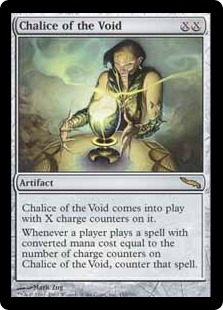
- Wizards won't ban anything until after the Pro Tour. The best news of the announcement, for a couple reasons. First, players spooked by community doomsaying can confidently invest in cards they were afraid of losing to the banlist (looking at you, Chalice of the Void). Second, it seems Wizards plans to make good on its promise not to use bans as a way to shake up the Pro Tour format, a strategy which led to enough public unrest for the company to suspend the Modern Pro Tour last time around.
If It Ain't Broke...
The banlist's primary goal is to address format issues. Wizards bans cards in Modern for one of two reasons: offenders lower format diversity, or they violate the Turn-Four Rule. The only exceptions to this rule are cards that were banned from the format's outset, because of a belief they would fall into one of those two categories (Mental Misstep, Jace, the Mind Sculptor, Chrome Mox, the artifact lands) and cards that make too many games go to time (Sensei's Divining Top, Second Sunrise).
 It stands to reason, then, that if the format has no issues, nothing should be banned. Whether cards should be unbanned in such a scenario proves a divisive topic, with some arguing that healthy metagames should be milked with minimal interference, and others preferring a slimmer list or exciting new additions to the card pool. The latest announcement tells us Wizards is leaning toward the latter side of the debate.
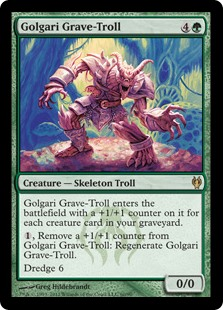
Wizards has always been conservative when it comes to unbanning cards in Modern, and Golgari Grave-Troll's brief reign of terror reveals why. Despite the occurrence of "successful" unbans, as when Bitterblossom and Ancestral Vision came off the banlist and did close to nothing, I think gaffes like the Troll unban are likely to scare Wizards into pushing the envelope even more cautiously. After all, the public backlash resulting from a hasty mistake naturally dwarfs that resulting from inaction during times of peace.
The Bottom Line
In terms of format health, the name of the game when it comes to Modern management has always been diversity. That's why the bulk of Modern bans have referenced metagame share and win percentage. If unbanning a card stands to increase diversity, the card becomes a potential unban candidate.
The Unban Candidates
Ranked likeliest to unlikeliest, here are the five cards I think have the best shot at being unbanned in Modern. My arguments for each card are based on their past performance and the current metagame, so it's possible something deeply alters Modern in the next however-many months that influences the views presented here.
1. Stoneforge Mystic
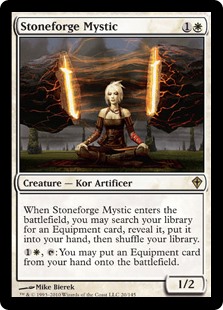 Stoneforge Mystic has never been legal in Modern, and I'm interested in seeing what she can do. She certainly passes the level-one test of not fitting straight into an existing top-tier archetype. I hold my position from June that Stoneforge is safe for Modern.
Modern Nexus's own tests with the card cautioned against an unban, with David concluding in 2016 that the Kor mainly punished fair aggro decks (something he considers a net negative). But I'm not sure she still does. Death's Shadow has driven many linear aggro-combo strategies out of the format, with only Affinity and Burn remaining to helm the archetype. That means fewer linear options that ignore Mystic altogether. As for fair aggro, the decks that exist and perform don't want Stoneforge anyway. Those in Modern's bottom rung might be able to actually use her.
A speedy Batterskull puts in work against two of the format's top decks, Eldrazi Tron and Grixis Shadow, and the card advantage Mystic provides shines in matchups traditionally more difficult for creature-based aggro strategies, such as Jeskai Tempo. Since these aggro decks make up a small portion of the metagame, a Stoneforge unban might make increase diversity by encouraging, say, Hatebear decks. I can also see Stoneforge buffing or nuancing other strategies, like BW Tokens, Abzan Rock, UW Control, and Jeskai Tempo.
Unbanning Mystic doesn't have many cons. I doubt she homogenizes midrange decks in the way Siege Rhino or Bloodbraid Elf have in the past, as nonwhite rock decks still offer tangible incentives (3-4 Ghost Quarter and solid mana for BG; red utility spells and Raging Ravine for Jund). As for the raw power level of cheating out Batterskull on turn three, I'm not sure it's even on par with that of casting Thought-Knot Seer, Collected Company, or Shadow-Stubborn on that same turn. To top it off, Stoneforge is easier to kill now than ever thanks to Fatal Push, Collective Brutality, and of course Kolaghan's Command.
Verdict: Unban
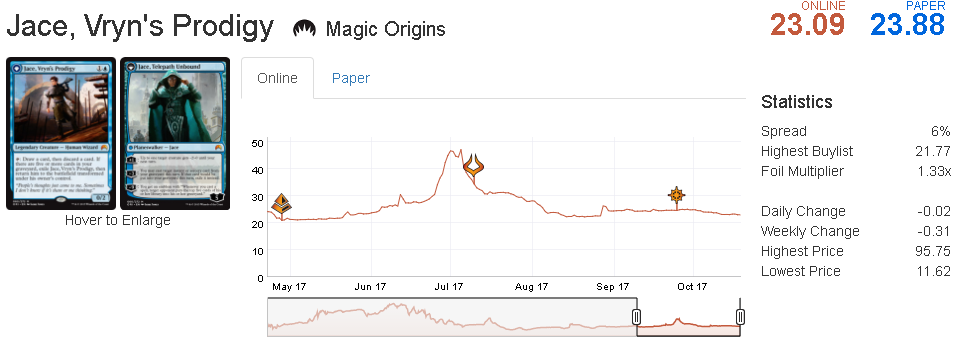
2. Jace, the Mind Sculptor
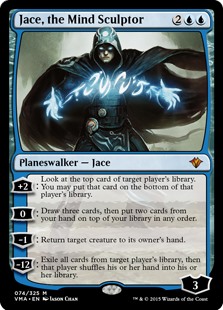 Another card to never have seen the light of Modern, Jace, the Mind Sculptor is one of the most polarizing cards on the banlist.
Let's again refer to David's testing, which unsurprisingly found that Jace helps control decks beat fair decks and doesn't help them beat unfair ones. While David argues the results signify a Jace unban making Modern less fair overall, it's important to remember that Jace himself would exclusively see play in fair decks. It's also relevant that the format's best-performing fair deck, Grixis Shadow, is too strapped for mana to run Jace itself, suggesting that Jace's arrival to Modern would in fact diversify blue midrange strategies.
On to the card's power: Jace, the Mind Sculptor is the best planeswalker ever printed. But he wouldn't be the best one in Modern—Liliana of the Veil would keep that title. Modern is the most tempo-centric of all constructed Magic formats, which bodes badly for Jace. The blue walker hardly affects the board when he comes down, and resolves a full turn later than his sister-in-crime. Liliana also has utility in nearly every matchup, whether she's removing threats against midrange or choking resources against combo. "Drawing more cards" is also powerful in every matchup, but Jace's prohibitive costs—both his CMC and his double blue requirement—make him less attractive against many decks, especially of the combo variety (including aggro-combo and big mana). Even Jace's color works against him; black, not blue, has the strongest tools for surviving to turn four.
Consider tapping out for Jace against each of Modern's top decks. Shadow can Stubborn Denial him; Jeskai can Logic Knot him; Eldrazi can resolve Reality Smasher and kill him; Tron can stick Karn and exile him; Company can chain a couple copies of its namesake and go off; Valakut, Storm, Burn, and Affinity can outright kill you. The only currently-performing deck I'd want to cast Jace against is BGx Rock, which isn't even performing very well.
Verdict: Optimistic
As an aside, I've seen people suggest unbanning Jace and Bloodbraid Elf together. I think this suggestion is a little silly. For starters, the latter does not do a particularly great job of policing the former. But the implications of recklessly unbanning two untested bombs at once are massive.
3. Bloodbraid Elf
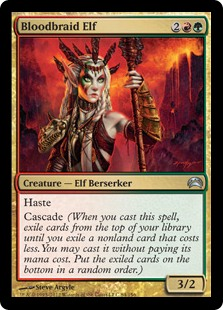
Speaking of Bloodbraid Elf, here's a card David took a hard no on. Granted, that too was in 2016, when Jund was a top-tier competitor. Nowadays, Jund is far from advantaged in the way it used to be. Red's wealth of utility spells (Bolt, Grudge, Command) doesn't seem worth trading away the flexibility of Path to Exile and Lingering Souls, making Abzan the BGx Rock deck of choice for many Modern players—that is, when BGx Rock is played at all. The consensus is that the higher-reversability Grixis Shadow has functionally replaced these decks in the metagame.
Bloodbraid Elf is impactful enough that I would expect Jund to immediately bounce back if it were unbanned. That's reason enough to be wary of the card, as Jund has dominated Modern for, well, ever; I don't know about you, but I'm happy with BGx Rock being a Tier 2 option for once. With that said, I doubt Elf-wielding Jund boasts a better matchup spread than Grixis Shadow does, and even with Elf, it doesn't just start beating Eldrazi Tron and other big mana decks with any semblance of consistency.
The first problem with an Elf unban is that it challenges Standard cards to hit a higher bar to see play in Modern. Tireless Tracker, Kalitas, Traitor of Ghet, Grim Flayer, and other creatures have gradually trickled into BGx Rock decks from new expansions since Elf's banning. I would expect that trend to slow to a crawl with Elf available as a frequently superior option to anything reasonable to print in Standard, which undermines Wizards's goals for Modern. Jace, the Mind Sculptor kind of runs into this problem too, but playable blue planeswalkers are rare enough in Modern to make that more of a corner case. Creatures, however, are plentiful, and most Modern shake-ups come from new midrange creatures entering the format.
A second problem lies with fairness: not the convoluted fair-unfair Magic theory continuum, but the more traditional sense of the word. Jund sat atop Modern for years while Ancestral Vision, Sword of the Meek, and Bitterblossom, cards that represented a chance to help struggling lower-tier strategies, rotted forgotten on the banlist. Why should Jund get its favorite toy back as soon as it's relegated to Tier 2? No one deck "deserves" to be Tier 1 in every metagame.
On the surface, this fairness argument has little to do with Wizards's vision of the format. But I think it can be linked to the company's conservatism with unbans. If they're that scared to let off Wild Nacatl, what are Bloodbraid Elf's odds?
Verdict: Pessimistic
4. Splinter Twin
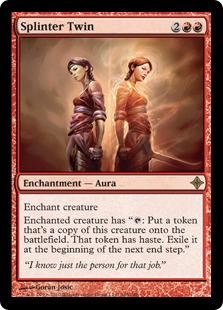
Ah, the actual most polarizing card on the banlist. It seems to me that players who want Splinter Twin back don't understand how the deck warped Modern during its legality. But Modern has changed, as it always does, and the card's as deserving of a second look as any.
Modern is stronger now, making Twin relatively weaker than it was while legal. Death's Shadow and Thought-Knot Seer in particular seem to line up very well against Twin. Fatal Push has also graced the format, giving black mages a cheaper option than Terminate and Abrupt Decay to hold up mana for—representing two mana each turn was devastating for BGx rock decks in the matchup. But Push still prevents players from cracking their fetchland. And that's just the first and smallest of many strikes against Splinter Twin.
In an otherwise phenomenal article from this week, Modern: The Best It's Ever Been?, Shaun McLaren posed an ill-conceived query:
UR Gifts Storm is a bit of a problem. The problem isn't necessarily the deck itself; it's more "why does this get to survive and Splinter Twin doesn't?"
Answering this question in depth illuminates Twin's many strengths, especially considering Storm is currently one of the best-performing decks in Modern.
- Without a mana bear, Storm is a turn-five or -six combo deck. With one, it's a turn-three or -four combo deck. But the bears can often be killed on an opponent's main phase. Twin forces players to run instant-speed creature interaction, and it always threatens a kill once it has three lands.
- Twin has a solid Plan B—an aggro-control plan in fact so solid, it's secretly the deck's Plan A. Contrarily, Storm cannot attack from multiple angles.
- Storm folds to graveyard hate. Besides finding and casting Echoing Truth without exiling too many resources, the deck's out to a Rest in Peace is to resolve a big Empty the Warrens. This plan gives opponents time to draw a sweeper or just win on their own terms. For its part, the Twin combo does not use the graveyard at all, allowing the deck to gracefully toe the fine line between using the powerful graveyard tools at its disposal and becoming overly reliant on them.
- Twin is harder to hate out than Storm for other reasons—in addition to graveyard hate, cards like Thalia, Guardian of Thraben, Chalice of the Void, Eidolon of Rhetoric, and Eidolon of the Great Revel all greatly hinder the deck. Anti-Splinter Twin hosers (i.e. Torpor Orb, Illness in the Ranks) tend to be more narrow and less splashable, and fail to address Twin's primary fair gameplan in the first place.
- UR Twin was banned in part for homogenizing URx decks. Grixis Shadow and Jeskai Tempo prove Storm does not commit the same crime.
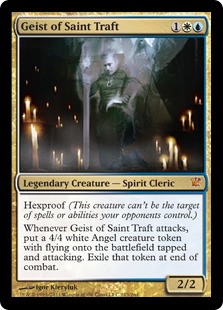
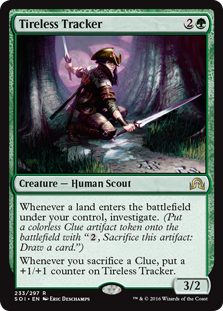 Twin's two biggest offenses are how it hinders turn-three plays and abuses the Turn-Four Rule. Cards like Tireless Tracker, Course of Kruphix, and Geist of Saint Traft would go the way of the dodo if Twin were legal, as slamming them on-curve necessitates that pilots relinquish their interaction mana on Twin's combo turn.
I'm also of the opinion that decks with a consistent turn-four combo have no business also being premier fair decks. Why play any aggro-combo, aggro-control, or combo-control deck when you could play Twin instead? Company would prove the biggest loser if Twin came back, as it functions as a worse version of midrange-plus-combo, loves tapping out for three-drops, and runs limited removal. Losing Company ensures a significant net diversity loss, as Collected Company helms multiple decks, including Bant Humans, Four-Color Humans, Bant Spirits, Slivers, Elves, Naya Company, Abzan Company, Kiki-Chord, and Counters Company.
Much of what I wrote when Twin was banned is still true today, and Twin coming off the list would surely shake Modern to its core. Given that Wizards likes where the format is at right now, there's no way Twin comes off any time soon.
Verdict: Remain banned
5. Preordain
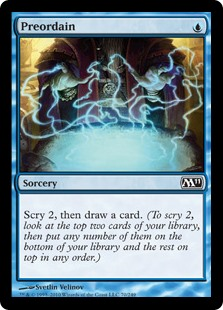
Serum Visions is one of the most played cards in Modern, and for good reason—it rocks! While Preordain fulfills a slightly different function; it's a strict upgrade to the already-played Sleight of Hand, and miles better than Opt. Never mind that it slots right into the format's leading fair deck; unbanning Preordain would at least kill cantrip diversity.
I touted Preordain as a possible solution to the broken Dredge-Infect metagame last year. But without those decks at full power, the format looks a lot more reasonable, and I don't think releasing this busted cantrip will do anybody any favors. Wizards will continue banning degenerate decks as they emerge, rather than try to unban cards of similar power level to combat them with, and let Modern's power level steadily rise over time. Doing so allows cards to cross over from Standard.
Of course, it's theoretically possible Modern eventually reaches a power level where Preordain is fine. That stage would likely involve Serum Visions becoming unplayable, since if there's a top-tier Serum Visions deck, Preordain is bound to stay on the banlist regardless. But considering Wizards is done printing efficient blue filtering in Standard, and that sort of effect will always have a home in any constructed format, I wouldn't count on Visions ever being unplayable in Modern. Regardless of how strong Preordain is in a vacuum, it's stuck on the banlist for good.
Verdict: Remain banned
I'm With the Banned
 Outside of these five cards, I don't think it's responsible to entertain arguments for anything else on the Modern banlist to come off. Those I've heard in favor of some of the other cards vary from suggesting unprecedented and unjustified "swap bans" (i.e. artifact lands for Cranial Plating) to helping control become a Tier 1 strategy for no apparent reason (i.e. "free Sensei's Divining Top so we can play Miracles!") to betraying a gross misunderstanding of a particular card's warping effects (i.e. Umezawa's Jitte; Punishing Fire).
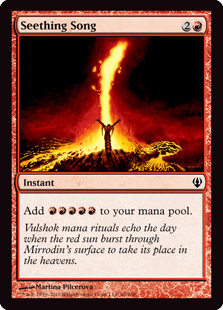
My stance on this last point might change as Modern evolves. For instance, I can see Seething Song coming off in a Modern that has banned Past in Flames and perhaps even Manamorphose for future offenses (both cards, to be absolutely clear, are completely safe at this stage).
In any case, right now I couldn't be happier with Wizards's management of Modern and with the format as a whole. Do you agree or disagree with my banlist takes? Let me know in the comments!


 Buying on MCM is about as time-consuming as it is on TCGplayer, which means it's usually not very time-consuming. The thing you should remember is that you have some extra work to account for when you're a third-party in one of these transactions. You will grade, repack and ship cards if all goes well, but also handle issue resolution if things go badly. Particularly the latter scenario can be very time-consuming.
 Obviously, you're wondering why this question has two parts. There are two different angles when it comes to the compensation: on one side, there's the compensation that we just covered, but on the other side, there's the time needed. These are intertwined, but often a buyer would want a set amount, while the third-party would prefer something that reflects the time spent and possibly something that reflects the size of the deal (because, after all, if I do well for you, it would be fair for you to pass some of that on to me).
 As the final step I have to consider: wouldn't I rather have this purchase go to myself? I can sell to buylists in the US too, I've got plenty contacts who I could ask to help me sell in the US, and my usual out, who is located closer to me, pays me a percentage of US prices in any case. Basically, if you can make a profit, then I could too (though it might be too much effort for my taste).
 It wasn’t until later, when Gatecrash brought in Frontline Medic, Boros Elite, Burning-Tree Emissary, and Experiment One, that Humans finally got its time in the spotlight…and by God did it shine.
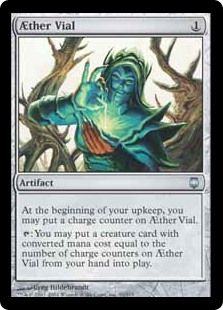 Identity is something important to keep in mind here, as it informs decisions like Champion of the Parish/Aether Vial on turn one. I haven’t played all the matchups or scenarios yet, but it’s Vial, not even close. With nineteen two-drops, Vial is at its best on two, though Reflector Mage at instant speed is an excellent payoff for ticking it up to three as well.
 As is always the case in Modern, decks have dual identities, in the sense that they need to be "good" in the abstract, but more importantly need to be good in the context of the surrounding metagame. Here’s what some of the other decks in Modern are doing currently:
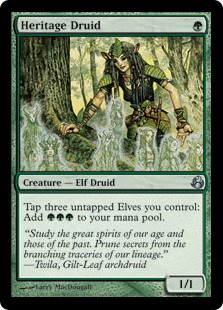
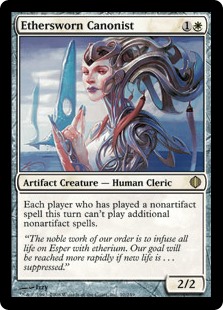 I can’t leave without talking about the sideboard, which is an absolute deckbuilding masterpiece. Fifteen creatures, all Humans, all toolbox, all the time. Ethersworn Canonist for Storm, Vithian Renegades for Affinity, Anafenza, the Foremost for graveyard shenanigans, and a ton of value creatures for removal of all types. Were it not for Aether Vial, this deck wouldn’t have a Stubborn Denial target in the 75.


 Scrolling down a bit, we see Storm has a strong showing, as does Elves and Infect. Elves is interesting because it was also present in the same numbers back in Charlotte, but did not make the Top 16. It would appear that it's very good at cutting through random decks, but once things get more focused it fails. The deck is extremely explosive, but not like Affinity. It has plenty of combo kills, but they're not as fast or reliable as Counters or Storm. It's a lot of different strategies meshed together and it's not quite good enough.
 Despite the good showing, Storm did not win again this weekend—this should come as no surprise if you look at the
  The data is also what you'd expect given the online chatter and the actual strengths of the decks. Affinity and Storm are on top followed by Jeskai. After that there is a steep drop off, with lots of three- and two-ofs. This suggests two things. The first is that players who have stuck by their decks (Affinity) are, as everyone always bangs on about, advantaged. Which makes sense, and is validating for all the times I've said it. We also have unfair combo doing well, for the first time in a while. It is too early to tell whether this is a new normal or a function of slow adjustment. It therefore follows that a deck that interacts favorably with both is in third place. That's how we'd expect it to work in a healthy metagame in an adjustment period.