menu

How to Win When the Table Unites Against One Player… You!

Are you a Quiet Speculation member?

If not, now is a perfect time to join up! Our powerful tools, breaking-news analysis, and exclusive Discord channel will make sure you stay up to date and ahead of the curve.

Whether you play casually or love competitive games, there will be times Commander will not be a free-for-all. The entire table knows you're ahead, and you're in their sights. How do you win this game? Turns out it may be easier than you think... at least, if you're clever about it!

It's Helpful to Not Start out as the Archenemy

"What is the Archenemy?" you ask. This is different than being the King. The King is merely the player who currently has the most control of the game. The Archenemy, however, is vastly ahead of the table, has unimaginable board presence or is about to combo off and win the game. It's also a term from a particular variant of Magic intended to be a one-versus-many format. When you are the Archenemy, the entire table is doing everything they can to stop you from winning.

Why Are You the Archenemy?

There was an error retrieving a chart for Nicol Bolas

Pre-game, maybe you won the previous game, have a history of winning often, or are one of the better players in your group. This can have an adverse affect, making you the target of group hatred before the game even starts. It would always be better, and easier, to not have that happen. What about during the game? If you've taken a huge lead or are about to win, you have likely become the Archenemy.

A small part of the many reasons I advocate for playing more casual decks is precisely this reason. Playing only to win in casual games hurts your chances of winning by making you a target.

Are You Telling Me to Throw Games?

No, not at all. But I am telling you to consider other factors than "W" and "L." Ultimately, your ability to simply enjoy games of Commander without winning can boost your wins overall and should not be discounted from your general strategy. If anything, it helps when your opponents think you are a "casual Andy" for trying to pull off hard wincons, for example. A table that is in awe of your Triskaidekaphobia win probably won't hold it against you or feel like you "stole" a game off them. However, if you ever win on turn two or three, you will likely be targeted for many games to come.

Switch Decks Often

Some players tend to play the same deck because it is their "best" deck. This can create a situation where other players switch their decks specifically to fight you. Win with the same deck too often and you will see groups and tables start to target you more. Variety is not just the spice of life, but also a winning strategy. If others make meta build decisions around your deck, playing something else ruins their plan.

Perception Is Reality

There was an error retrieving a chart for Sleight of Hand

This is the most classic trick possible, but simply talk about something else. Don't talk about winning last game or how often you've won. Talk about the weather, sports, your favorite boats... anything but the game. If someone else points out that you have taken control of the current game, point out how it's nothing compared to a movie you just saw this weekend, enter synopsis mode, and hope no one notices. There is a significant difference between true board state and player perception of the board state. Since perception is reality, use this to your advantage.

You may well be the Archenemy and, from a table perspective, they should be uniting against you if they want to win. However, just because you notice that it does not mean the entire table does. Don't do anything to ruin their (mis)perception.

Know When to Fight

There was an error retrieving a chart for Fight With Fire

When you get targeted by removal, quickly accept it and move on. Don't struggle, don't question. This appears to be pure psychology. If you "fight back," that means you're a threat. If you're a threat, they were right to destroy your thing, so, you're still likely a threat. But if you accept it and don't fight back, that shows submission. If you submit, it means you're no longer a threat.

Alternatively, if there is a significantly better target that is not yours, you do need to fight. Why? Because you can make a compelling case the other player might agree with. If a player can kill your thing or they can kill another thing someone else controls and draw a card, a third party can claim it's a better move. Getting other players to act on your behalf obfuscates your intentions.

Of course, you likely will reach a point where it's no longer a secret that you are, in fact, the Archenemy and the table is completely united against you. Or are they?

Alliances Are Meant to Be Broken

There was an error retrieving a chart for Memory Lapse

This is when you get to play one of my favorite Magic mini games, "Remember when?"

"Remember when they killed your commander? Remember when I gave you an extra draw?" Decks that are lacking on the diplomacy side will have a tougher time here, which is another reason diplomacy matters a lot in a primarily multiplayer format like Commander.

Even when you don't have a diplomacy angle to work, you can resort to history both recent and ancient. There's also good ol' fashioned lying. Freely recount the fact that player A won the last game, player B will betray the table the second you're dead, or player C is about to combo off, whether any of that is true or not! You don't need to convince the entire table to stop fighting you. Just one fewer player trying to kill you is usually enough to yield a fighting chance.

A Brief Story About a Mind Flail

There was an error retrieving a chart for Arvinox, the mind flail

I finally got a chance to bring this card to a casual Commander night, and it was amazing. I played a fully degenerate version with only Swamps and mana rocks. It was slow, but grindy. Then the moment every theft-based deck dreams of happened. One of my opponents was playing a Tasha, the Witch Queen deck that was full of theft effects, and I had just hit their Gonti, Lord of Luxury. On the following turn, I played their Gonti and hit Praetor's Grasp.

Play the Cards Right...

I could have searched for Demonic Tutor to end the game, but instead audibled to Diluvian Primordial. The most important card that I had access to was from the Tasha player's graveyard, Talent of the Telepath, and I used it to mill them into a Siphon Insight. Siphon then found King Narfi's Betrayal, which could potentially start the chain once again. That's six theft effects chained back-to-back-to-back. Talk about a heist! We all lost three turns later by getting attacked by lots of Spirits, but had a great time. The lesson? I made the right choice.

Everyone will remember my crazy combo. Everyone will remember the insane value I got from doing all the shenanigans. However, I will make sure to also remind them that I didn't win that game. In defeat, I will seek victory another time! When I next reveal Arvinox, it will be a very different version which I hope gives me a much higher chance of winning.

...and Play the Right Cards

There was an error retrieving a chart for Counterspell

When your back is against the wall, the final resort is to have the right cards to solve the situation. Here's where strategy gets a little tricky. If you always play the "best cards," you are training your opponents to correctly evaluate card and deck potential. If you jam EDREC top 100 cards into every deck, you are reinforcing threat recognition against you. It's hard to mislead or surprise other players if you are training them so effectively.

On top of that, playing against someone who usually brings casual, weird decks is completely different than playing against them when they are bringing their best. I know firsthand that it throws players off and that is mostly intentional.

Try not to load your deck for bear all the time. When you do bring your best, it will be a surprise to the table, which helps you win!

It's All in the Timing

It's very difficult to fend off three fully committed players who are working towards your defeat. It is far easier to avoid getting into that situation in the first place. If you do find yourself fighting the entire table at once, hopefully you are far enough ahead that you can quickly end the game. This is the most important concept when moving into an obviously strong position. Typically, the time to execute this kind of power shift is after a board wipe or when the rest of the table is tapped out. In either case, your master stroke generally cannot be stopped.

There was an error retrieving a chart for Court of Cunning

If this fails, however, the table tends to assess you as the biggest threat, and your days can be numbered. Your out at this time? Appeal to one of the players. Offer to be a Kingmaker. If you can convince them to let you live, you might be able to stage a sneaky comeback.

Who to Kingmake?

The player who would be in the lead if you were beaten is the most obvious choice. The alternative is the player who would be the one to finish you off, as only they can grant you that one extra turn. Diplomacy is, of course, the best move here.

This strategy can get you to go from eliminated to second place. Depending on the tournament environment, second place standing can be great, and is always a heck of a lot better than last. Simply not being killed off by the entire table is a victory in itself.

If You Can't Beat Them

Defeat in either case, however, may be inevitable. If you have already effectively lost, you might as well work towards winning the next game. Helping other players in your last desperate moments can be the boost you need to secure their help in the next one.

There was an error retrieving a chart for saving grace

Alternatively...

Well, it may be time to actually play the Archenemy format and deck build specifically for that game instead of regular Commander. The schemes are a really cool mechanic, and the one versus many nature of the format is very fun!

In closing, the number one tip to fight the entire table is very simple. Don't!

Magical Creatures: Kavu, Volver, and Cephalid

Are you a Quiet Speculation member?

If not, now is a perfect time to join up! Our powerful tools, breaking-news analysis, and exclusive Discord channel will make sure you stay up to date and ahead of the curve.

Hello everyone, and welcome back to Magical Creatures. For the past couple of months, every week I've been analyzing some creature types that were invented specifically for Magic. We started with Atog from Antiquities, and recently discussed Spellshaper from the Masques block (one of the most interesting types, if you ask me).

Last article focused on the interesting fact that Spellshaper and Monger are classes and not races. Today, we are going to discuss three new creature types: Kavu, Volver and Cephalid. But first, as usual, let's take a look at the passing of blocks and expansions, and see what happened during those months.

Magic After Masques

Mercadian Masques was the first set of the Masques block, in 1999, which was completed the following year with the arrival of Nemesis and Prophecy. In 2000, two special sets were created: Starter 2000 and Beatdown. Needless to say neither of them contained any new creature types. More importantly, in October it was time for Invasion, opening a new block.

The Invasion block, composed of Invasion, Planeshift and Apocalypse, was released between 2000 and 2001, and was centered on multicolored cards. Two of the subtypes we'll see today come from this block, while the last one comes from the forthcoming Odyssey block. Let's start with the first two, though, and see what they brought to the game.

Kavu from Invasion

We don't know much about kavus, but then again, isn't this the case with most creatures from this series? After all, they are weird, living beings; creatures that don't come directly from the fantasy world, but rather from the R&D of Magic: The Gathering. That being said, we know kavus are reptiles, and we know they are carnivorous. No less than 46 Kavu creatures exist! Surprised? They all come from just three blocks: Invasion, Time Spiral, and Dominaria (excluding Territorial Kavu from Modern Horizons 2).

Kavus of all shapes and sizes

Apart from that, they come in all sizes and shapes. They can be small as dogs or big as elephants, and possess four to six legs. According to the novel Invasion, the term "kavu" means "carved from stone," or "ever watchful." Not that this helps much in understanding their nature, but we should still cherish such rare and specific information.

They're an ancient species, that's for sure, and it's normal to confuse them with a similar creature type in Dinosaur. The latter is clearly not a good fit for our series, but it's still an interesting tribe, and we might get back to them in the future. They, too, have a unique story: the Dinosaur subtype was created at the time of Ice Age, dropped with the Grand Creature Type Update, and brought back with Ixalan. Maybe we'll delve deeper into that another time!

The most pacific of kavus (or Kavu Aggressor)

As for their competitiveness, the only Kavu I could name is Flametongue Kavu. It would never be played today, but in its prime, it had a more-than-decent enters-the-battlefield ability. Removal on a body proved good enough even for decks like Red-Splash Psychatog.

Volver from Apocalypse

What about Volver? Can you name any creature with this subtype? I personally wouldn't find it easy, in part because only five of them exist. All from Apocalypse, the second set in the Invasion block. And since there are five, of course they form a cycle. It's a curious cycle, I must admit that, if not a very powerful one.

The curious cycle of Volver

This cycle of rares is meant to show the weird alliances that became necessary during the Phyrexian Invasion of Dominaria. Nowadays it doesn't seem much, but at that time it was strange to see creatures combining three colors (two allied and one opposite).

Wizards managed to mix these colors via the kicker mechanic. Each creature had two separate kicker costs, or one for each of its enemy colors. You could decide to pay one, both, or none of the kicker costs, and each of them grants the creature +1/+1 counters and abilities typical for that color.

It doesn't surprise us that they didn't see play. This kind of experiment only rarely produces great creatures, and Volver is no exception. Here's why we haven't seen any more Volver, and why we'll most probably never see them again.

The Arrival of Odyssey

We're already done with the Invasion block, and even the Odyssey block won't keep us busy that long. In fact, only one new creature arrived that is interesting for our purposes... Cephalid! It's probably the most renowned creature type from today's piece, mostly thanks to tournament history. But first, let's start from the origins. Have you ever wondered what need was there for Cephalid, when we already had Merfolk? Mark Rosewater (who else?) explains it in this funny article from 2002. In short, "the point" of Odyssey was to specifically not print any Merfolk.

Cephalid

So, what are cephalids, apart from non-merfolk people? Designed for the Odyssey block, they are anthropomorphic creatures similar to the octopus, with tentacles and a flexible body. They are mostly aligned with blue, which is obvious if you take a look at any of them. There are few creatures that close to the blue's color philosophy. Most Cephalids manipulate either the library or the hand, and others interfere with non-flying creatures.

Definitely not merfolks

They are also among the creature types that have been set aside for the longest time before returning. Before the arrival of Streets of New Capenna, in fact, no one saw a new Cephalid for 19 years! Since we are mentioning New Capenna, though, it's worth noting that it contained some black Cephalids as well. Naturally, they are affiliated with the Obscura.

And what about competitive play? I told you this was the only subtype from today's article with some creatures showing up in tournaments. The first we need to mention is Cephalid Illusionist, one of the central pieces of a strong combo deck, back in the days of Extended. I'll add this Cephalid was so central that the name of the deck was Cephalid Breakfast. Shuhei Nakamura famously played it in 2005 at Grand Prix Seattle.

The other one worth mentioning is Llawan, Cephalid Empress, a typical sideboard card used to gain an edge in blue mirrors. Consider how powerful this card is against blue decks. And how important it is to get her into play before the opponent manages to!

A New Era

We're getting really close to one of the most important shifts in Magic history: the layout change occurring with Eighth Edition and Mirrodin. In fact, although there's still a full block to pass first, Onslaught and its two expansion had no new creatures unique to Magic. So next time we'll pass right to the first set with the new layout and unveil its many new creatures.

For now, how do you like these three? Have you ever played any Cephalid? I'm not going to ask about Kavu or Volver, but feel free to post your experiences in the comments or on Twitter, and stay tuned for next week!

August ’22 Metagame Update: Izzet Still Going?

Are you a Quiet Speculation member?

If not, now is a perfect time to join up! Our powerful tools, breaking-news analysis, and exclusive Discord channel will make sure you stay up to date and ahead of the curve.

Since I restarted my Modern metagame updates series, August has typically been a weird month. It's the end of summer, AND right before the fall release. For many players it's the last hoorah before returning to school and/or their deck is invalidated or updated. I've gotten used to seeing oddities, but this year's data has just generally been odd, so that's really nothing new.

It Continues

By this, I mean that the outlier issue that I've mentioned in every update since March continues unabated. Given that the nexus of said problem has primarily been that players just really want to play Izzet Murktide rather than it being an actually superior deck on win-rate, I expect it to continue continuing for the foreseeable future.

There was an error retrieving a chart for Murktide Regent

That said, the scale of the problem is changing. Izzet Murktide is an outlier in both paper and Magic: Online (MTGO) and the margin is absurd on MTGO. However, it is narrowing in paper. Murktide was on track for outlier status pretty much from the start of August on MTGO, it wasn't until August 20th and the large events that weekend that Murktide finally pulled away in paper. Whether that is indicative of a shift in player attitudes or pure chance is unknown, but it is something.

There was an error retrieving a chart for Colossus Hammer

Meanwhile, Hammer Time continues to be an outlier on MTGO but not in paper. I've never been clear why it's so popular online, though its turn three wins have been suspected. Hammer Time usually does perform better than Murktide, so it makes more sense. However, the divergence between paper and MTGO indicates that, again, it's mostly due to personal preference than an actual metagame advantage.

As always, the outliers are excluded from the actual statistical analysis. They’re reported in their correct place on the metagame chart

August Population Metagame

To make the tier list, a given deck has to beat the overall average population for the month. The average is my estimate for how many results a given deck “should” produce in a given month. Being a tiered deck requires being better than “good enough.” Every deck that posts at least the average number of results is "good enough" and makes the tier list. Then we go one standard deviation (STdev) above average to set the limit of Tier 3 and cutoff for Tier 2. This mathematically defines Tier 3 as those decks clustered near the average. Tier 2 goes from the cutoff to the next standard deviation. These are decks that perform well above average. Tier 1 consists of those decks at least 2 standard deviations above the mean result, encompassing the truly exceptional performing decks. 

The MTGO Population Data

In August the adjusted average population was 5.81 setting the Tier 3 cutoff at 6 decks. The average is down relative to previous months. Tier 3, therefore, begins with decks posting 6 results. The STdev was 8.00, which means that Tier 3 runs to 14 results. Again, it's the starting point to the cutoff, then the next whole number for the next Tier. The STdev wasn't exactly 8.00, but it rounded down to that. Therefore Tier 2 starts with 15 results and runs to 23. Subsequently, to make Tier 1, 24 decks are required.

There was an error retrieving a chart for Omnath, Locus of Creation

To recap, January had 502 decks, February had 436 decks, March only hit 356, April was up to 437, May had 419, June had 481, and July was 478 decks. Based on what I've seen in other years, I didn't expect January's total to be surpassed until late fall. Thus, I was quite surprised when August's total decks came out to 507. This was accompanied by an increase in total decks to 64. Which is still down from June but significantly up from July. This was thanks to more non-Wizards events and very large Preliminaries. Of those 64 decks, 18 made the population tier. Which is again, up from July but down from June.

Deck NameTotal #Total %
Tier 1
UR Murktide9618.93
Hammer Time5110.06
Living End305.92
Rakdos Rock275.32
Burn275.32
Tier 2
Temur Creativity234.54
Yawgmoth224.34
Mono-Green Tron224.34
4-Color Control214.14
Amulet Titan214.14
UW Control203.94
Grixis Shadow173.35
Tier 3
4-Color Blink101.97
UW Urza81.58
4-Color Creativity81.58
Glimpse Combo71.38
Belcher61.18
Mill61.18

Murktide and Hammer Time's numbers are statistically tied with July's, indicating no real change for the top decks. However, the rest of Tier 1 has been severely shaken, with only Living End making it between months. It even has the exact same population, which is very strange.

Even stranger is how full Tier 2 is. Because of the way I set the tiers, Tier 2 is rarely more than three decks. This time, MTGO has seven. This is thanks to the decks being tightly clumped together. This indicates that Modern is fairly even, power-wise, which is good. If only the outliers were under control, then I could say Modern is statistically healthy.

The Paper Population Data

The paper tiers are calculated the same way as the MTGO tiers, just with different data. More paper events are reported each month, but they rarely report more than the Top 8 (sometimes less). However, that doesn't mean that the overall population is lower. Indeed, paper Modern is far more popular than online, or at least that was true in previous months. July had 783 decks, while June had 640, but August only recorded 594. This decline can be heavily attributed to many of the larger events being team events that have never counted. There's no way to know if an individual deck actually performed or was backpacked through the event by teammates.

Consequently, the number of unique decks is also down. There were 105 unique decks in July, but August only managed 83. There are still lots of paper events, but team events crowded out individual Modern events.

Deck NameTotal #Total %
Tier 1
UR Murktide7712.96
Hammer Time498.25
Burn427.07
Cascade Crashers366.06
Amulet Titan335.55
Living End315.22
4-Color Blink294.88
Tier 2
4-Color Control223.70
Temur Creativity213.53
Yawgmoth203.37
Tier 3
Grixis Shadow172.86
UW Control152.53
Rakdos Rock132.19
Glimpse Combo101.68
Merfolk101.68
Mono-Green Tron91.52
4-Color Vivien Combo81.35
Hardened Scales71.18
Death and Taxes71.18
Jund71.18

Just as in July, the overall picture is better in paper concerning Murktide's outlier status. The gap is much smaller and has actually shrunk over the past month. There's still a weird polarization between Tiers 1 and 3 which crowds out Tier 2, but that is typical of the whole system.

August Power Metagame

Tracking the metagame in terms of population is standard practice. But how do results actually factor in? Better decks should also have better results. In an effort to measure this, I use a power ranking system in addition to the prevalence list. By doing so, I measure the relative strengths of each deck within the metagame. The population method gives a deck that consistently just squeaks into the Top 32 the same weight as one that Top 8's. Using a power ranking rewards good results and moves the winningest decks to the top of the pile and better reflects their metagame potential. 

The MTGO Power Tiers

For the MTGO data, points are awarded based on the population of the event. Preliminaries award points based on record (1 for 3 wins, 2 for 4 wins, 3 for 5), and Challenges are scored 3 points for Top 8, 2 for Top 16, and 1 for Top 32. If I can find them, non-Wizards events will be awarded points the same as Challenges or Preliminaries depending on what the event in question reports/behaves like. Super Qualifiers and similar higher-level events get an extra point and so do other events if they’re over 200 players, with a fifth point for going over 400 players. No events crossed the threshold to earn four points in August.

There was an error retrieving a chart for Eidolon of the Great Revel

That said, total points are only down slightly, to 831 from 871. The adjusted average points were 9.55. Therefore 10 points makes Tier 3. The STDev was 13.44, which is a bit low, but understandable in context. Thus add 14 to the starting point and Tier 3 runs to 24 points. Tier 2 starts with 25 points and runs to 39. Tier 1 requires at least 40 points.

Belcher and Mill failed to make the power tier. They were replaced by Grixis Creativity and Izzet Breach Combo, keeping the total MTGO tiered decks at 18.

Deck NameTotal PointsTotal %
Tier 1
UR Murktide14917.93
Hammer Time9010.83
Living End485.78
Rakdos Rock475.66
Burn414.93
Temur Creativity414.93
Yawgmoth414.93
Tier 2
4-Color Control384.57
Mono-Green Tron364.33
Amulet Titan344.09
Grixis Shadow273.25
UW Control263.13
Tier 3
4-Color Blink202.41
UW Urza172.05
Grixis Creativity141.68
4-Color Creativity121.44
Glimpse Combo101.20
Izzet Breach Combo101.20

The gap between the two outliers improved slightly, but the gap from the outliers to normal decks got slightly worse. This is probably statistical noise, but it does speak to Murktide's relatively average power compared to Hammer Time's explosive potential.

The Paper Power Tiers

Unlike with population, the paper power data works differently than the equivalent MTGO data. The data reported is usually limited to Top 8 lists, even for big events. Not that I know how big most events are, that number doesn't always get reported. In other cases, decks are missing. Applying the MTGO point system just doesn't work when I don't know how many points to award and there are data gaps. 

There was an error retrieving a chart for Living End

Thus, I award points based on the size of the tournament rather than placement. That way I'm being internally consistent with the paper results. Based on what I've seen actually reported and what I can expect to be reported in the foreseeable future, I'm updating how points are awarded. For events that don't report their starting populations or are under 50 players, I'm giving out 1 point. 51-300 players get 2 points. 301 and above will get 3 points. I chose these levels based on the rarity of events over 300 compared to 100-200 and the fact that events under 300 tend to be local events in large cities. It feels like it should be 300 for truly unique events, despite there being no Grand Prix yet. I am open to reevaluating the point awards as paper Magic play evolves.

There were a huge number of events awarding 2 points in July and several 3-point events as well. Altogether August has a total of 861 points, which is considerably down from July. Again, there were a lot of uncounted team events.

The adjusted average points were 9.08. This sets the cutoff at 9 decks. I do not round up to the next number for averages with decimals less than .20—though it's technically correct to do so—because the feel of it for the really small decimals is off and can be deceptive. The STDev was 14.97, thus adding 15 to the starting point and Tier 3 runs to 24 points. Tier 2 starts with 25 points and runs to 40. Tier 1 requires at least 41 points. These totals are more in line with previous months compared to July. The total decks are up from population to 21, with Death and Taxes failing to make the power tier. Grixis and 4-Color Creativity replaced it along with Esper Reanimator and Primeval Titan Creativity.

Deck NameTotal PointsTotal %
Tier 1
UR Murktide11613.47
Hammer Time799.17
Burn617.08
Cascade Crashers495.69
Amulet Titan465.34
4-Color Blink455.23
Living End445.11
Tier 2
4-Color Control374.30
Yawgmoth323.72
Temur Creativity283.25
Tier 3
Grixis Shadow222.55
UW Control212.44
Rakdos Rock212.44
Glimpse Combo182.09
Merfolk141.63
4-Color Vivien Combo141.63
Mono-Green Tron121.39
Hardened Scales91.04
Jund91.04
Grixis Creativity91.04
4-Color Creativity91.04
Esper Reanimator91.04
Creativity Titan91.04

Average Power Rankings

Finally, we come to the average power rankings. These are found by taking the total points earned and dividing it by total decks, to measure points per deck. I use this to measure strength vs. popularity. Measuring deck strength is hard. There is no Wins-Above-Replacement metric for Magic, and I'm not certain that one could be credibly devised. The game is too complex, and even then, power is very contextual. Using the power rankings certainly helps and serves to show how justified a deck’s popularity is. However, more popular decks will still necessarily earn a lot of points. Which tracks, but also means that the top tier doesn't move much between population and power, and obscures whether they really earned their position. 

There was an error retrieving a chart for Crashing Footfalls

This is where the averaging comes in. Decks that earn a lot of points because they get a lot of results will do worse than decks that win more events, indicating which deck actually performs better. A higher average indicates lots of high finishes, whereas low averages result from mediocre performances and a high population. Lower-tier decks typically do very well here, likely due to their pilots being enthusiasts. Bear this in mind, and be careful about reading too much into these results. However, as a general rule, decks which place above the baseline average are overperforming and vice versa. How far above or below that average determines how "justified" a deck's position is on the power tiers. Decks well above baseline are therefore undervalued while decks well below baseline are very popular but aren't necessarily good. 

The Real Story

When considering the average points, the key is looking at how far-off a deck is from the Baseline stat (the overall average of points/population). The closer a deck’s performance to the Baseline, the more likely it is to be performing close to its “true” potential. A deck that is exactly average would therefore perform exactly as well as expected. The greater the deviation from average, the more a deck under or over-performs. On the low end, a deck’s placing was mainly due to population rather than power, which suggests it’s overrated. A high-scoring deck is the opposite of this. 

I'll begin with the average for MTGO

Deck NameAverage PointsPower Tier
Grixis Creativity2.803
UW Urza2.133
4-Color Blink2.003
Izzet Breach Combo2.003
Yawgmoth1.861
4-Color Control1.812
Temur Creativity1.781
Hammer Time1.761
Rakdos Rock1.741
Mono-Green Tron1.642
Amulet Titan1.622
Living End1.601
Grixis Shadow1.592
Baseline1.57
UR Murktide1.551
Burn1.521
4-Color Creativity1.503
Glimpse Combo1.433
UW Control1.302

Yawgmoth has emerged as the best-performing Tier 1 deck for the second month in a row, likely thanks to its good Murktide matchup. Worth noting that Murktide was just below the Baseline.

Then the average for paper:

Deck NameAverage PointsPower Tier
Creativity Titan2.253
Glimpse Combo1.803
Esper Reanimator1.803
4-Color Vivien Combo1.753
4-Color Control1.682
Hammer Time1.611
Rakdos Rock1.613
Yawgmoth1.602
4-Color Blink1.551
UR Murktide1.511
Grixis Creativity1.503
4-Color Creativity1.503
Burn1.451
Living End1.421
UW Control1.403
Merfolk1.403
Amulet Titan1.391
Cascade Crashers1.361
Baseline1.36
Temur Creativity1.332
Mono-Green Tron1.333
Grixis Shadow1.293
Hardened Scales1.293
Jund1.293

Hammer Time is paper's deck of the month. Murktide performed far better in paper than online, interestingly enough.

Composite Metagame

That's a lot of data, but what does it all mean? When Modern Nexus first started, we had a statistical method to combine the MTGO and paper data, but the math of that system doesn't work without big paper events. I tried. So, I'm using an averaging system to combine the data. I take the MTGO results and average the tier, then separately average the paper results, then average the paper and MTGO results together for final tier placement. 

There was an error retrieving a chart for Indomitable Creativity

This generates a lot of partial Tiers. That's not a bug; it's a feature. The nuance separates the solidly Tiered decks from the more flexible ones and shows the true relative power differences between the decks. Every deck in the paper and MTGO results is on the table, and when they don't appear in a given category they're marked N/A. This is treated as a 4 for averaging purposes. 

Deck NameMTGO Population TierMTGO Population TierMTGO Average TierPaper Population TierPaper Power TierPaper Average TierComposite Tier
Hammer Time1111111.00
UR Murktide1111111.00
Burn1111111.00
Living End1111111.00
Amulet Titan2221111.50
Yawgmoth211.52221.75
Temur Creativity211.52221.75
Rakdos Rock1113332.00
4-Color Control2222222.00
4-Color Blink3331112.00
UW Control2223332.50
Mono-Green Tron2223332.50
Grixis Shadow2223332.50
Cascade CrashersN/AN/AN/A1112.50
Glimpse Combo3333333.00
4-Color Creativity333N/A33.53.25
UW Urza333N/AN/AN/A3.50
4-Color Vivien ComboN/AN/AN/A3333.50
MerfolkN/AN/AN/A3333.50
Hardened ScalesN/AN/AN/A3333.50
JundN/AN/AN/A3333.50
Grixis CreativityN/A33.50N/A33.53.50
Belcher3N/A3.5N/AN/AN/A3.75
Mill3N/A3.5N/AN/AN/A3.75
Death and TaxesN/AN/AN/A3N/A3.53.75
Creativity TitanN/AN/AN/AN/A33.53.75
Esper ReanimatorN/AN/AN/AN/A33.53.75
Izzet Breach ComboN/A33.50N/AN/AN/A3.75

There's some actual movement in August, with Yawgmoth falling out of pure Tier 1 and being replaced by Burn. It is also worth noting that there were far more and far more disparate, divergences between paper and online performances than in other months, with Cascade Crashers being the widest.

A Possible Shakeup?

Modern has been remarkably stable since February. Dominaria United enters the format in September bringing cards certain to find homes in the format. It's possible this will cause sufficient churn to disturb the status quo. However, we will all have to wait and see.

QS Insiders can tune in this Friday when I unpack some of this month's data and share my thoughts on its implications. If you're not an Insider, consider subscribing today!

Five Decks to Expect for New Standard

Are you a Quiet Speculation member?

If not, now is a perfect time to join up! Our powerful tools, breaking-news analysis, and exclusive Discord channel will make sure you stay up to date and ahead of the curve.

Buckle in gamers! I'm back from the pre-release with more on Dominaria United. Last week I touched on my Top 10 Constructed cards from the set, though my list focused mostly on Modern and Pioneer. This week I'll be focusing on the new, post-rotation Standard metagame and the archetypes I think are poised for success.

1. Grixis Vampires

Grixis Vampires is likely the deck that stands to gain the most post-rotation. The vampire package from Innistrad: Crimson Vow stays in Standard in its entirety, providing a strong core to build from. This is supplemented by removal spells like Infernal Grasp and Voltage Surge. The rest of the deck is filled in by midrange value cards like Fable of the Mirror-Breaker // Reflection of Kiki-Jiki and Kaito Shizuki. Even with the pathway lands rotating out of the format, access to Xander's Lounge, slow lands, and now both Sulfurous Springs and Shivan Reef, gives the mana base more than enough to support three full colors.

As with frankly all black decks of the format, gaining Liliana of the Veil will be a helpful tool to grind out any deck that struggles to commit to the board. Ultimately, the archetype provides a perfect blend of disruption, card advantage, and threats for just about any situation.

Standard Vampires by ANDYAWKWARD

Planeswalkers

2 Kaito Shizuki
3 Liliana of the Veil
1 Sorin the Mirthless

Creatures

4 Bloodtithe Harvester
4 Corpse Appraiser
2 Evelyn, the Covetous
4 Tenacious Underdog

Spells

2 Duress
1 Soul Transfer
2 Infernal Grasp
4 Voltage Surge

Enchantments

4 Fable of the Mirror-Breaker // Reflection of Kiki-Jiki
2 The Meathook Massacre

Lands

4 Haunted Ridge
1 Mountain
4 Shipwreck Marsh
1 Sokenzan, Crucible of Defiance
4 Stormcarved Coast
3 Sulfurous Springs
3 Swamp
1 Takenuma, Abandoned Mire
4 Xander's Lounge

Sideboard

2 Duress
1 Infernal Grasp
1 Sorin the Mirthless
1 The Meathook Massacre
1 Abrade
2 Disdainful Stroke
1 Invoke Despair
1 Negate
3 Parasitic Grasp
2 Reckoner Bankbuster

2. Jeskai Control

Jeskai Control on the other end of the spectrum picks up several powerful cards including two wraths in the form of Temporal Firestorm and Temporary Lockdown. Two copies of Witness the Future serve as win conditions as the first can shuffle the second back into the deck. Eventually, the opponent will deck out from the game going too long while you loop the second copy of Witness and some number of permission spells.

Teferi, Who Slows the Sunset plays exceptionally well with the new mana rock, Timeless Lotus, jumping from five mana, to upwards of 10 or 15. With an absurd amount of mana at your disposal, Silver Scrutiny will be able to draw more cards than you'll know what to do with, and Light up the Night can be a one-shot fireball to the opponent's face.

Untitled Deck

Planeswalkers

4 Teferi, Who Slows the Sunset
4 The Wandering Emperor

Spells

1 Negate
1 Light Up the Night
1 Ertai's Scorn
4 Temporal Firestorm
2 Witness the Future
3 Impulse
2 Farewell
1 March of Otherworldly Light
3 Silver Scrutiny
1 Memory Deluge

Artifacts

2 Timeless Lotus
2 The Celestus

Enchantments

3 Temporary Lockdown

Lands

1 Eiganjo, Seat of the Empire
4 Shivan Reef
4 Adarkar Wastes
4 Sundown Pass
4 Stormcarved Coast
4 Deserted Beach
1 Otawara, Soaring City
1 Mountain
1 Island
2 Plains

Sideboard

4 Reckoner Bankbuster
3 Negate
1 Temporary Lockdown
1 Unlicensed Hearse
1 Disdainful Stroke
2 Hullbreaker Horror
1 Fateful Absence
1 Farewell
1 Anointed Peacekeeper

3. Mono-Black Midrange

In lieu of a fancy mana base, Mono-Black Midrange keeps things basic with 21 Swamps, four Field of Ruin, and a Takenuma, Abandoned Mire. The primary goal here is to land sticky threats like Graveyard Trespasser and Tenacious Underdog while taxing the opponent's resources with Liliana of the Veil. Sorin the Mirthless, Invoke Despair and the new Evolved Sleeper are all sources of card draw that helps break parity with Liliana's discard. What sets the deck apart is its strong curve, which is where most decks tend to struggle in small post-rotation Standard environments.

Mono-Black Midrange is very straightforward in what it wants to do and is very successful in doing it. Magic: Online user Mogged took down the first Standard Challenge of the format with the list below:

Mono-Black Midrange by Mogged

Planeswalkers

3 Liliana of the Veil
2 Sorin the Mirthless

Creatures

2 Concealing Curtains
4 Graveyard Trespasser
4 Tenacious Underdog
4 Evolved Sleeper
2 Sheoldred, The Apocalypse

Spells

4 Invoke Despair
3 Infernal Grasp
2 Cut Down

Artifacts

1 Reckoner Bankbuster

Enchantments

3 The Meathook Massacre

Lands

21 Swamp
4 Field of Ruin
1 Takenuma, Abandoned Mire

Sideboard

1 Cut Down
1 Infernal Grasp
2 Reckoner Bankbuster
1 Sorin the Mirthless
1 The Meathook Massacre
4 Duress
1 Junji, the Midnight Sky
1 Malicious Malfunction
2 Parasitic Grasp
1 Pithing Needle

4. Mono-Red Aggro

The more things change, the more they stay the same. The perennial Standard deck of red-based aggro is back with plenty of new toys to play with. New mainstays like Radha's Firebrand and Squee, Dubious Monarch, give the deck a lot of aggressive tools to choose from, almost all of which offer some sort of late-game support. Thanks to Firebrand's pump effect, Squee's recursion, and old favorites like Bloodthirsty Adversary buying back burn spells from the graveyard, there's a lot to love for red mages even if the game isn't over quickly.

Reading between the lines, red aggro also seems well-positioned in this Standard thanks to the reliance on pain lands. If our opponents are so kind as to deal damage to themselves, we might as well finish the job for them. The highest placed burn deck placed 30th in Saturday's challenge (with every deck ahead of it on some form of Bx midrange plan), but I expect to see many more Lightning Strikes at the top tables in the coming weeks.

Mono-Red Aggro by _SHATUN_

Planeswalkers

2 Jaya, Fiery Negotiator

Creatures

2 Defiler of Instinct
4 Phoenix Chick
4 Radha's Firebrand
2 Squee, Dubious Monarch
3 Bloodthirsty Adversary
3 Reckless Stormseeker

Spells

1 Strangle
4 Lightning Strike
4 Play with Fire

Enchantments

4 Kumano Faces Kakkazan // Etching of Kumano
3 Fable of the Mirror-Breaker // Reflection of Kiki-Jiki

Lands

22 Mountain
2 Sokenzan, Crucible of Defiance

Sideboard

1 Bloodthirsty Adversary
1 Fable of the Mirror-Breaker
2 Jaya, Fiery Negotiator
3 Strangle
3 Abrade
3 Chandra, Dressed to Kill
2 Kami's Flare

5. UR Delver

The last time we were on Dominaria, Adeliz, the Cinder Wind was the fresh hotness, essentially giving prowess to each wizard you control. Balmor, Battlemage Tactician is Adeliz, but better in almost every conceivable way. While lacking haste, Balmor costs a full mana less and pumps all creatures you control, not just wizards. He also gives your creatures trample to push through all that extra damage.

Doubling down on the UR spells archetype, we have eternal format all-stars Ledger Shredder and Delver of Secrets // Insectile Aberration providing aggressive and evasive clocks. Squee, Dubious Monarch also makes an appearance as the deck does a great job of fueling the graveyard for his inevitable return. Moreover, Balmor with instant speed spells like Consider can buff the token Squee makes into a very real threat.

UR Spells is an archetype near and dear to my heart, and I hope to see it flourish in this new Standard.

UR Spells by _AGAINST_

Creatures

4 Delver of Secrets
4 Ledger Shredder
4 Balmor, Battlemage Captain
4 Electrostatic Infantry
2 Squee, Dubious Monarch

Spells

4 Ancestral Anger
1 Inspired Idea
2 Strangle
4 Consider
2 Fading Hope
4 Play with Fire
2 Slip Out the Back
2 Spell Pierce

Lands

6 Island
3 Mountain
1 Otawara, Soaring City
4 Shivan Reef
1 Sokenzan, Crucible of Defiance
4 Stormcarved Coast
2 Thran Portal

Sideboard

1 Squee, Dubious Monarch
1 Inspired Idea
1 Spell Pierce
1 Strangle
1 Abrade
2 Essence Scatter
1 Negate
1 Out of the Way
2 Reservoir Kraken
2 Suspicious Stowaway
2 Vampires' Vengeance

End Step

This Standard is shaping up to be a lot of fun, and I'm excited to dive into it. While it seems black decks are the best option for week one, it looks like there's plenty of depth to explore more. I'm interested to see what new archetypes emerge as players get their hands on these new cards and new strategies. Don't worry, if anything absolutely wild shows up, you can count on me to cover it in a future article.

If you want to keep up with me, you can follow me on Twitter at @AdamECohen That's all for now, and I'll see you all next week!

Legends of the Fall: Ranking Dominaria’s Signpost Uncommons

Are you a Quiet Speculation member?

If not, now is a perfect time to join up! Our powerful tools, breaking-news analysis, and exclusive Discord channel will make sure you stay up to date and ahead of the curve.

The signpost uncommons of Magic's Autumn set, Dominaria United (DMU) come in the form of twenty legends, but they're not all created equally. After analyzing 17Lands data, a number of popular Twitch streams, personal experience, and some collegial discourse around these twenty cards, I've developed the official, way-too-soon, Power Rankings of these legends and am excited to share them with you today. While all of them (except one) are strong additions to their archetypes, they've been evaluated based on overall power level, value to their archetype, and flexibility. Which ones are worthy of being a pack one, pick one? Read on to find out!

20. Rulik the Runt

So my Hill Giant gets menace and I maybe get a land out of the deal? Rulik Mons, Warren Chief requires a lot of work to become an engine, and its size and evasion are not impressive. This is by far the least exciting of the legends, and it's the only one I would look to cut from most of my decks. It has very little synergy within the format, it's undersized, overcosted, and outperformed by most commons. Pass.

19-17. The Pretenders

Rona, Sheoldred's Faithful is a paradox. The sizing is good against the aggressive creatures, though the tricky mana requirements mean she won't often come down on time. Her pings can tick away as an offensive threat, but they're extremely slow. We can recast her from your graveyard by pitching two lands, but it's usually going to eat our whole turn. Since she doesn't stabilize or pressure particularly well, it's hard to figure out what we're doing with her.

Najal, the Storm Runner can do powerful things, but the Blue-Red deck wants more aggression than this card offers. Typically we're double-spelling before the elemental hits the battlefield, which complicates Najal's setup. I can imagine scenarios where we're able to double Lightning Strike or get a lot of value from Timely Interference, but I haven't seen it yet. Ultimately, this card ends up too low on my pick order when I'm in Blue-Red. I would play in it most Blue-Red decks, but ideally, I'm taking it later in the pack. The one card that really excites me with it is Tolarian Geyser.

Tori D'Avenant, Fury Rider performs well in strong decks but doesn't move the needle on their own. It doesn't pump itself or have haste, so we really need to have our opponent on the back foot to capitalize on its attack triggers. The Red-White deck uses a lot of cheap interaction and combat tricks, all of which play well with the knight. Unlike a lot of the aggro finishers in the format, this card really incentivizes ending the game on the spot. I'm happy to play it, but it's not a reason to be Red-White.

16-15. You're Asking For A Lot...

So with this card, I have to keep my little creatures alive long enough for them to attack with a five drop, that also wants me to be building out my domain? It seems like if I'm going wide, I'm going to be trading bodies for damage. If I'm reaching out into three-plus colors, I'm probably playing more individually powerful cards than a go-wide strategy implies. Despite its limitations, Zar Ojanen, Scion of Efrava aka "The Tiger King" is a major enlist payoff. We need to be cognizant of how we're building our deck with Zar. If we maximize his potential, he can be an engine. It just takes a lot of work.

It might work out, but...

This one hurts.

I really want this card to be great, but based on what I've seen and the early 17lands data, Aron, Benalia's Ruin doesn't have the goods. Sacrifice outlets are great when they're free, but the fact that Aron's costs two mana hurts the flexibility of his ability. You're losing two mana, you're losing a creature, and worst of all, if Aron attacks, you lose the threat of activation. While I'm happy it's a 3/3, they're not doing us any favors with the color requirements of its casting cost and activated ability.

On some boards, I'm sure he can dominate. The entire black-white archetype is seemingly built around him. He has synergy with Captain's Call, Phyrexian Warhorse, and Argivian Cavalier just to name a few. I'm not giving up on Aron, but so far I'm disappointed.

14. The Other Red-Green Legend

Sorry Gruul

In my guide to the format, I mentioned the limitations of the enlist keyword. This card is a major exception. Enlisting Radha, Coalition Warlord will lead to an overwhelming advantage for your attackers.

In combat, Radha wants to be protected by combat tricks. The body doesn't survive many attacks on its own and her trigger can't target herself. While the format doesn't have an overwhelming amount of removal, it does feature a lot of crowded boards. Similar to Zar Ojanen, Scion of Efrava, you want to enlist Radha to create powerful attacks.

13-12. Strong When They're Strong

"Dies to removal" is rarely a fair criticism, but man, have I seen Tura Kennerud, Skyknight eat a ton of kill spells.

They're a good finisher in the Blue-White decks. If we're ahead when we cast the five drop, it's hard for our opponent to pressure us back. Our interaction starts netting chump blockers and the 3/3 flyer is a meaningful clock. However, if we're under pressure, this card lines up pretty poorly with a lot of the attackers and the interaction in the format.

I've been winning most of my games through the air and with card advantage. Nael, Avizoa Aeronaut delivers on both fronts. For four-mana, the rate is not outstanding, but this is a strong role-player in any Domain deck. This is one of the most difficult cards to play optimally. It's tempting to try and set up domain for her draw clause, but often times I find that I just want to set up a powerful game piece for the next turn.

It's extremely punishing to put the missing Geothermal Bog on top of our library, only to see Nael brick walled or Citizen's Arrested before she can do damage again. We can't be afraid to take our time at that impasse. Those triggers are meaningful decisions.

11-9. From Good to Good-Plus

The Queen of Clubs is bigger than it looks. The huge green creatures have impressed, and Queen Allenal of Ruadach can outgrow all of them. If we follow this up with Argivian Cavalier, Captain's Call, or Resolute Reinforcements, we're going to be putting a ton of pressure on our opponent. It's not great on its own, but it doesn't take much work to make this very threatening. If we're making any number of tokens, the queen is going to get huge fast.

Garna, Bloodfist of Keld is a strong card, but her archetype isn't well-supported. Red-Black needed a premium two-drop in either legend. Garna wants to be playing with sacrifice outlets, so we need to grab Phyrexian Warhorse if we can. Garna also wants to force trades, but forcing our opponents into that position requires some work. It plays very well with the other BR legend, Lagomos, Hand of Hatred.

As I mentioned in my DMU Preview, the aggressive decks have great tools to end the game, but if we're initiating pressure with Goblin Picker and Splatter Goblin we're destined for inconsistent performances.

In theory, Baird, Argivian Recruiter works great with enlist. However, since enlist does not help creatures survive, it makes it very difficult to trigger his ability and get your 1/1. The real combo with this card is Take Up the Shield. Granting a creature indestructible ensures it will survive to the end step, and because the counter remains on the creature, it can trigger Baird each turn the two remain in play.

The biggest thing Baird has going for it is being a two-drop. It attacks surprisingly well because it plays so well with combat tricks, which often leave behind a free token at the end of your turn.

8-7. Solid Role Players

Raff, Weatherlight Stalwart is slow, but seems like a bomb in the walls deck, or any slower, spell-heavy deck. It only needs one more creature in play before it can start generating value, and the 1/3 body gets in the way of most of the format's two drops. Essence Scatter and Take up the Shield are already very strong in this format. Drawing a card off of them is backbreaking. The activated ability feels tossed on, but it helps it turn the corners in the Go Wide decks. This card wants a high spell count and cheap, defensive creatures.

I've complained about the lack of aggressive two-drops in the format and playing Lagomos, Hand of Hatred on turn three essentially gifts you an extra one for free. I'm not sure if the tutor effect is viable, but I love having an extra attacker every turn. Additionally those bodies can be used for Bone Splinters, Gibbering Barricade, and they trigger Phyrexian Vivisector. The last thing aggressive players want is a stable board, and this card does a nice job initiating action every turn.

6-5. Splashable Role-Players

This Gravedigger means business. Bortuk Bonerattle plays to the nature of the format. It's a little slow, but the body is relevant. Whether we get the Raise Dead or Zombify effect matters, but the important thing is that we have high-value targets in the graveyard. This card is very easy to splash and plays well in many of the format's multi-color piles.

This fish has me hooked. When Vohar, Vodalian Desecrator comes down on turn two it can sculpt our hand for the rest of the game. The drain ability is a nice way to finish off opponents, but more often the incidental triggers feel like a free bonus. The real value comes from its second ability. I've ended multiple games by casting Vohar, sacrificing it, and flashing back a removal spell from the graveyard to push lethal damage. The fact that this card can become our best spell in the late game is extremely powerful and makes this a very versatile card.

4. The Build-Around You Should Build Around

The Birds from the Hitchcock movie did less damage than this ornery owl. Balmor, Battlemage Captain is a two-drop fulfilling the dreams of Adeliz the Cinder Wind. It's cheaper, easier to set up, and just as potent on offense. The best Blue-Red decks are aggressive, spell-based decks with Haunting Figment, Ghitu Amplifier, and plenty of cheap interaction. When the Battlemage comes down, damage stacks up.

While this card does require some support in deck-building, its optimal form is one of the scariest legends in the cycle. It does a lot of damage really fast. If our opponent is stumbling, trying to hit their splash mana for kicker or domain, Balmor, Battlemage Captain will punish them dearly for it. The Battlemage wants to be aggressive, so we need to keep that in mind when drafting and building our deck.

Balmor is the first legend on this list I'd be happy first-picking. This owl is a real hoot.

3-2. Living Up to the Legend

Don't be fooled by the stats. Uurg, Spawn of Turg is a lot more than just a beater.

The surveil trigger will pressure our opponents early, helping to shape our draws, and the life gain swings races. Five toughness makes it a formidable blocker in the early stages of the game. This is a creature that wants to be in slower, grindier decks—which are amongst the best in the format.

The lack of evasion limits how powerful Uurg is on offense, and it will often trade in combat, but when it enters the red zone it's usually attacking alongside the likes of Yavimaya Sojourner and Writhing Necromass. The card is deceptively powerful and fits into the slow nature of the format. It stabilizes early and helps turn the corner late.

The pilgrim is pushed. Elas il-Kor, Sadistic Pilgrim provides a cheap body with deathtouch. This can be a part of an aggressive start, but as the domain players start to stabilize with their plentiful card advantage and powerful kicker spells, each of our chump attacks continues to pressure their life total. The Black-White deck has a glut of three and four drops, but this is a premium two, which are hard to come by in this format.

Even when drawn late, Elas buffers your life total and can turn undersized creatures into points of damage. This card is good at all stages of the game and the longer it stays alive the harder it is to lose.

1. Broken

Tatyova, Benthic Druid was one of the most sought-after cards in the original Dominaria Draft, and her new incarnation lives up to the former's reputation. This format can lead to very cluttered boards. The army of 3/3 flyers Tatyova, Steward of Tides is capable of producing can quickly cut through that. Note that the lands stay creatures even after Tatyova is removed. While it doesn't activate until the late game, this is a powerful inclusion to any Domain deck and is worth splashing.

Stretching our mana for this powerhouse should be easy as it's in two domain-aligned colors. Furthermore, Urborg Repossession or Bortuk Bonerattle move way up my pick order if I have the upside of buying back my Tatyova. This card is the real deal. Sometimes it feels like a three-mana Nissa, Who Shakes The World, which dominated Standard and that didn't even give creatures flying.

Draft Chaff

While the format is still developing, this is the order in which I'd rank the signposts uncommons at this juncture. I prioritize win conditions for the grindy decks that can fight through the mirrors and two-drops for the aggressive decks because they're at such a premium. While almost all of the cards on this list (sorry Rulik!) are strong additions to your deck, it's always a little riskier to select a gold card, especially those tied to the inherent synergies of one color pair. Some are worth the risk early, some are a great payoff late.

Let me know how these rankings stack up to your own experiences. Which have overperformed and which have let you down? Which have been so exciting you're thinking about building EDH decks around them? Tell me about them in the comments!

A Flashback to Childhood: Part 1

Are you a Quiet Speculation member?

If not, now is a perfect time to join up! Our powerful tools, breaking-news analysis, and exclusive Discord channel will make sure you stay up to date and ahead of the curve.

One of my favorite podcasts to listen to is Limited Resources, featuring Marshall Sutcliff and Luis Scott-Vargas. I was listening to their latest episode the other day and my jaw dropped when I heard they were on episode number 665! I knew the show had been on for a long time, but that’s a lot of episodes for a Magic podcast.

Then a new realization set in—even though I don’t include in my articles any counter, I save all my article files locally on my computer with a number denoting their place in history. I’m sure a couple have fallen into the abyss over the years, but according to my count, this is article 561. I’m about 100 behind Limited Resources, but this number is still fairly impressive. This fall I will celebrate my 11th anniversary of writing articles, mostly for Quiet Speculation.

Perhaps the only thing I’ve done longer than writing for Quiet Speculation is playing Magic! A random player I bumped into at Target the other day had casually asked me how long I’ve been playing. Nothing makes me feel older than answering truthfully: since 1997. Magic was a different game back then…

A Stroll Down Memory Lane

I began my Magic journey when my father remarried in the mid-1990s. My new stepbrother was a Magic player, and I remember paging through his binders amazed by the art and different abilities (of which I knew nothing about) on the cards. After this brief exploration, my mind was made up. I wanted to learn how to play Magic!

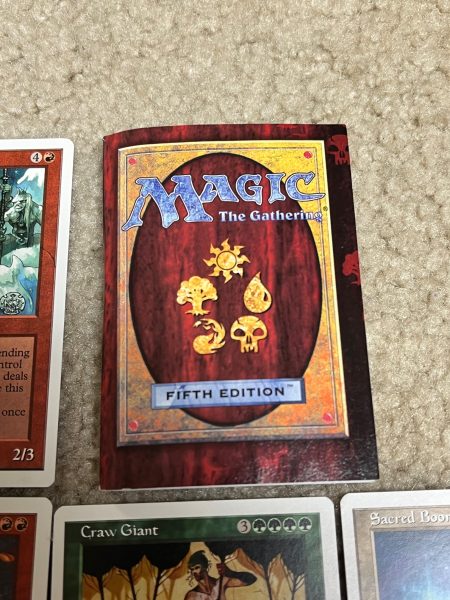
To get me started, my father purchased me a Fifth Edition starter deck and a booster pack of Visions. I don’t remember what my first deck looked like, but I do remember my first two powerful rares because my stepbrother tried ardently to trade for them. They were Desertion and City of Brass.

There was an error retrieving a chart for Desertion
There was an error retrieving a chart for City of Brass

Unfortunately, since my stepbrother lived hundreds of miles away in western Pennsylvania while I was still living in New Jersey, I had to find another way to learn. No one would teach me, and I didn’t have many friends back then. Thus, my best option was to read the little instruction manual that came with the starter deck. I read that thing cover to cover.

After completing the booklet, I was ready to battle! The next time I visited my father, one of the first things I did was challenge my stepbrother to a duel. I remember it clearly because I won! Not because of my savvy play or competitive deck, mind you, but simply because my stepbrother was mana screwed. Still, I’ll take it!

From that point on, I was hooked. Even though Fifth Edition and Visions were the first products I opened, I quickly fell in love with Mirage for its flavor, artwork, powerful cards, and discounted prices. That’s right. At my local hobby shop in New Jersey, Mirage starter decks were cheaper than the others, marked down to $7.50 from $8.95. That was cheaper than purchasing three booster packs, and you opened three rares in the decks (plus the basic lands and deck box were a huge help as a new player). This is often where I put my money, and Mirage quickly became my favorite set.

Experiencing My Childhood Anew

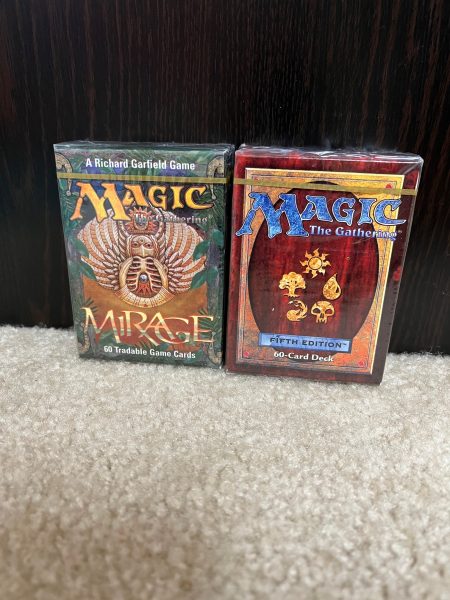
Fast forward to 2022. I recently received a (very generous) gift from another Magic player and long-time friend. After reminiscing with me about the days when I first learned to play Magic, he sent me a sealed Fifth Edition and Mirage starter deck.

Nowadays, these are far from the $7.50 or $8.95 price marked on the back of these boxes. At retail, the Fifth Edition starter sells for $199.99, and the Mirage starter for $299.99. The agreement with my friend was that I would open these decks and build something with them, writing articles describing my emotions and the process.

Let me tell you, this was quite the stroll down memory lane, in many ways more than one! First and foremost, examining the artwork on these starter deck boxes really brings me back to my youth. As I unwrapped the plastic, I could feel my anticipation build—what would I open? Would I see anything valuable? Powerful? Nostalgic?

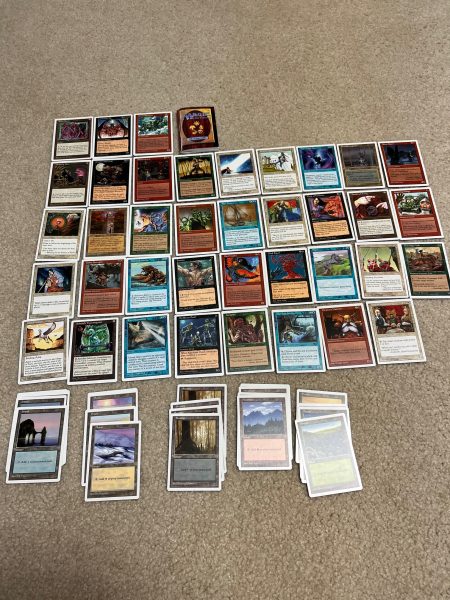
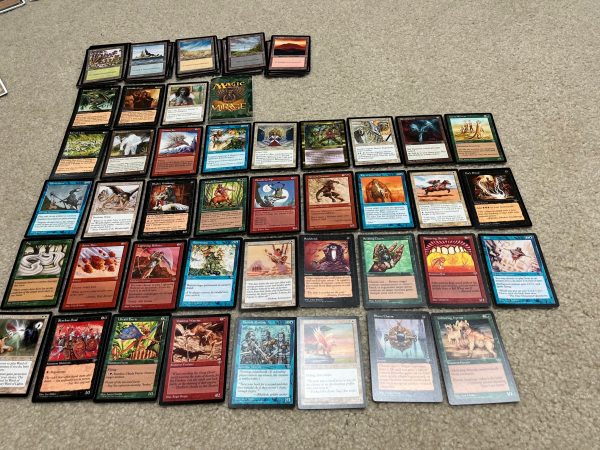
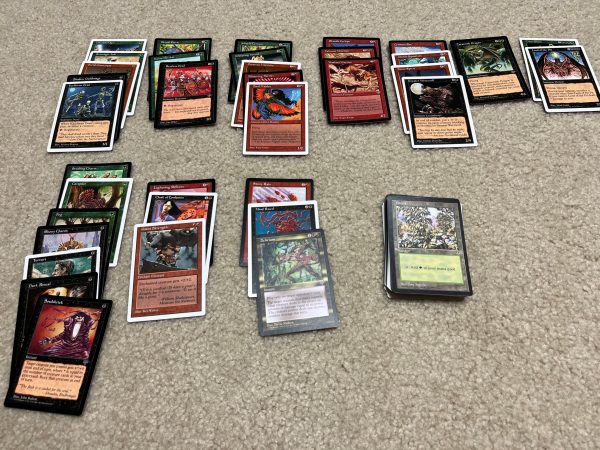
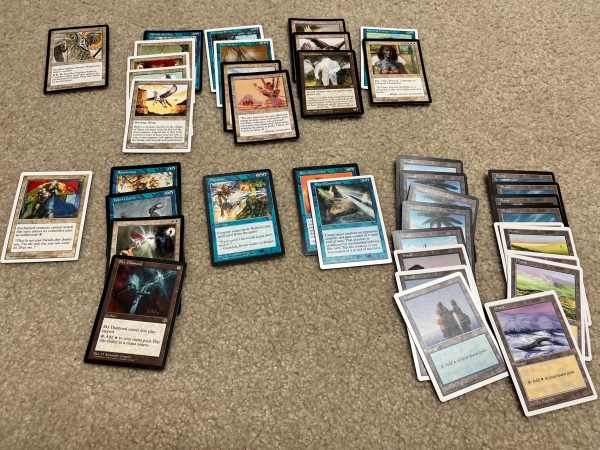
I opened the decks one after the other and laid out their contents. Below are photos of the two opened decks.

This is a lot to take in all at once. Perhaps a couple of cards leap out at you right off the bat. It’s amazing how, just looking at the pictures of the Mirage cards, I remember what a good 80% of them do just by seeing the artwork.

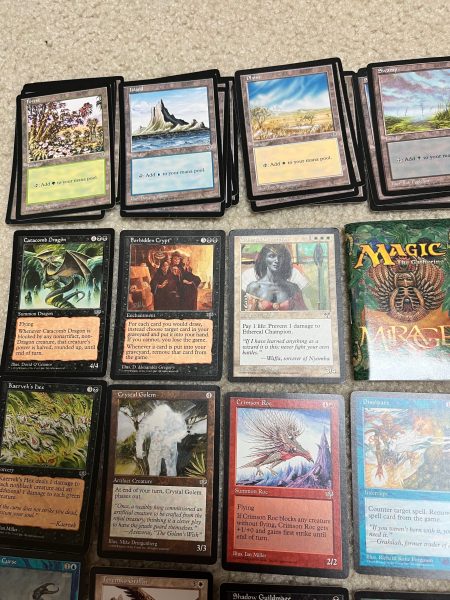
Being a finance website, I would be remiss if I didn’t zoom in on the rares so you all can see the value of my spoils. Sadly, no Lion's Eye Diamond for me.

For the Mirage deck, I pulled a Catacomb Dragon, Forbidden Crypt, and Ethereal Champion. These are all worth very little. The dragon will be powerful in my deck, at least, and I have fond memories of Ethereal Champion as a kid—it was a rare card in my best friend’s trade binder for years, so seeing it here reminds me of this friend.

In the Fifth Edition deck, I opened an Elkin Bottle and an Orcish Squatters, two Ice Age reprints not worth writing home about. Disappointing.

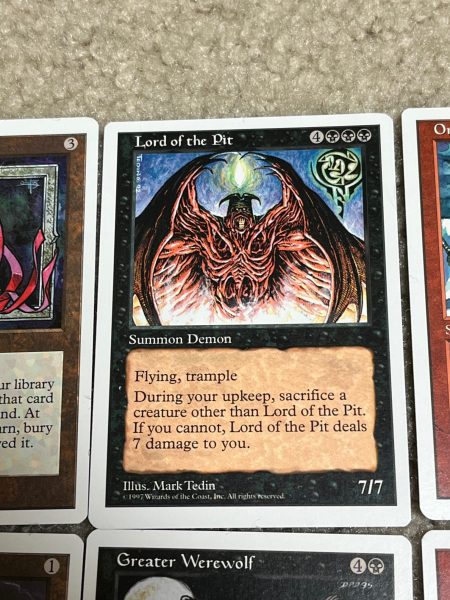
Fortunately, the third rare was sweet, and the highlight of my sealed pool:

Oh yeah! A Lord of the Pit! This was a powerhouse among my friends back in the day. I used to combine this card with Breeding Pit so I could feed the lord indefinitely, giving me a powerful 7/7 flying, trample attacker. Since it’s black, it also dodged the only removal my friends and I really had access to back then, Terror and Dark Banishing.

There was an error retrieving a chart for Lord of the Pit

Nowadays of course, Lord of the Pit is an unplayable card in most competitive formats. Seven mana for a 7/7 flying, trample with a steep upkeep cost just isn’t enough to keep up with power creep fueled creatures of modern-day Magic. As I moved to the deckbuilding phase of my assignment, I began to see why bigger creatures were so important back in the day.

Deckbuilding Time

As I sifted through my cards, I tried to imagine myself back in 1997, building a deck for the first time with these as the only cards I owned. The first thing I realized was, that I would basically have to play nearly every single card I opened if I wanted to make two decks from these. Even if I wanted to build just one deck, it would likely have to be three colors in order to make playables.

I started off with a 60-card red, black, and green deck. I figured black was going to be my most powerful color since I opened Lord of the Pit and Catacomb Dragon, plus some regenerating creatures. I added red next, but quickly realized I’d need a third color to round out the deck. Enter green.

This is where I netted out:

Red, Black, and Green Deck

1 Delirium
1 Catacomb Dragon
1 Shadow Guildmage
1 Kjeldoran Dead
1 Orcish Conscripts
1 Scavenger Folk
1 Ghazban Ogre
1 Restless Dead
1 Karoo Meerkat
1 Uktabi Faerie
1 Bird Maiden
1 Blistering Barrier
1 Dwarven Warrior
1 Gibbering Hyenas
1 Jolrael's Centaur
1 Viashino Warrior
1 Talruum Minotaur
1 Ekundu Cyclops
1 Greater Werewolf
1 Stone Spirit
1 Orcish Squatters
1 Crimson Roc
1 Lord of the Pit
1 Craw Giant
1 Soulshriek
1 Dark Ritual
1 Torture
1 Ebony Charm
1 Fog
1 Carapace
1 Seedling Charm
1 Giant Strength
1 Cloak of Confusion
1 Lightning Reflexes
1 Mind Ravel
1 Stone Rain
8 Forest
8 Mountain
1 Ebon Stronghold
7 Swamp

The cards are sorted left to right by converted mana cost, the creatures are at the top and spells are below. The next thing I realized was that creatures are such a premium when your collection is tiny! I basically had to play every single creature I opened just to make sure I’d consistently have bodies on the battlefield in any game. I even had to play the overcosted creatures and the wall I opened. This was especially critical if I intended to keep Lord of the Pit fed long enough for him to win me a game.

As I was assembling this deck, two memories about the game came back to me in a flash. First, I now see why we valued Terror and Dark Banishing so highly. These removal spells were traded at a premium among my playgroup because they could handle 80% of the threats we faced. Fireball and Lightning Bolt were also valued highly for their utility in killing creatures. I remember valuing each of these cards at about $1 in trade (even though of course these were commons and worth far less).

The second thing I remembered is just how important powerful creatures were back then. Another card we valued highly was Craw Wurm simply because a 6/4 creature was a major house! If you didn’t have removal, it was very difficult to deal with such a large creature, especially when most of the other creatures we were forced to play out of necessity were measly 2/2’s and 3/3’s.

Reading Lord of the Pit, it’s no wonder we worshipped this creature, along with powerhouses like Shivan Dragon and Force of Nature back then. There was simply no easy way to deal with such large creatures! I once owned a Polar Kraken and won multiple games attacking with the 11/11 trampler. If my friends didn’t draw their Terror or Dark Banishing immediately, they were toast.

There was an error retrieving a chart for Polar Kraken

So many other cards back then were just… filler. Cards we had to play because we needed a 60-card deck.

For kicks (and because I wanted to maximize nostalgia), I also built a 40-card white and blue deck with the remnants of my pool. Here’s the end result for that one—once again, I basically had to play every creature I opened. I am excited about the double Ray of Command, though, and I may be able to make this a viable control deck.

Untitled Deck

2 Ray of Command
1 Dissipate
1 Sky Diamond
1 Ward of Lights
1 Teferi's Curse
1 Boomerang
1 Brainwash
1 Ekundu Griffin
1 Ethereal Champion
1 Homarid Warrior
1 Crystal Golem
1 Teremko Griffin
1 Femeref Scouts
1 Femeref Knight
1 Reef Pirates
1 Krovikan Sorcerer
1 Mesa Pegasus
1 White Knight
1 Aysen Bureaucrats
1 Pikemen
1 Merfolk Raiders
1 Vigilant Martyr
9 Plains
8 Island

Brainwash is a pitiful, but necessary removal spell in this list, along with Teferi's Curse. Something tells me Ethereal Champion won’t be much of a win condition unless I can stick a Ward of Lights on it and ride that to victory.

There was an error retrieving a chart for Ward of Lights

My intent is to play these two decks against a friend of mine with a comparable sealed pool in the coming week. Stay tuned, as I intend to share more nostalgia via game state pictures and stories next time!

Wrapping It Up

I almost wrote this entire article without mentioning the basic lands! Have you seen the Mirage basics? They are absolutely beautiful! I had forgotten how much I like them, but now that I’ve opened some, these are likely to become my basics of choice for any new decks I build (admittedly, this is infrequent).

I am also in love with the old Richard Kane Furgeson cards Dissipate and Boomerang. His art style was always so unique—you could identify a card he had painted from ten feet away.

There was an error retrieving a chart for Dissipate
There was an error retrieving a chart for Boomerang

All in all, this was a tremendous experience so far, and I’m very grateful to my friend for this gift. Was I disappointed that I didn’t open anything worth more than two bucks? A little bit, yes. That’s the MTG finance person in me—I can’t mute that person completely. However I am able to turn down the volume of that voice, temporarily, so I can get super excited about slamming down the Lord of the Pit against my unsuspecting friend. This creature is likely to steal a win or two for me, just like it did back in 1997. What more can I ask for?

Generational Magic: Store Spotlight—Book Rack / Hero’s Hearth

Are you a Quiet Speculation member?

If not, now is a perfect time to join up! Our powerful tools, breaking-news analysis, and exclusive Discord channel will make sure you stay up to date and ahead of the curve.

Along with sharing my own Magic: the Gathering journey, I want to share what's going on with others in the community. Not just the players, but the people that provide a place to gather. The Greater Cincinnati/Dayton area is fortunate to have a lot of options when it comes to Magic and gaming in general. Here's a glimpse into one of them.

Come On Down!

What are your names, the name of your place, and where you're located?
We're Scott Hughes and Nick Milligan. We're two of the owner's of Hero's Hearth and Cincy Book Rack in Cincinnati, OH. We're located on the southeast side in Anderson Township.

Scott and Nick

Two of the owners? How many owners do you have?
Scott: Between the two stores we have four owners. We all help in the day-to-day, but we each have our specialty. Nick oversees the gaming side with support from Tiffany, our "Dice Queen." She's a jack-of-all-trades and takes care of the store in many ways. She has a soft spot for D&D and is a large part of its success here. Our fourth owner focuses on the book store and I, of course, support all facets of the business.

I see, a group effort! So, how did it all begin?
Scott: My wife was the impetus. Around 2017, she got tired of teaching and wanted to do something different, such as owning a flower shop or bookstore. This location was originally part of a chain of used bookstores since the '70s and was up for sale. After some discussion, we went for it.

The store was pretty rough. Very reminiscent of an indoor flea market. They took any and all books, no matter the condition or type, and sold them on these old 1" by 4" wooden shelves. We had a small staff of little old ladies and for about a year, it went as you might expect. Until my wife decided to return to teaching. She took a position at a new school and absolutely loved it. Enough that she didn't want to run the bookstore anymore, but we kept it and I took up the mantle.

About three years ago, we finally decided to update those shelves. I tell you, it looked like a hurricane had blown through; the place was a mess. During the rebuild, Nick and his family stopped in, and while browsing, he offered to help with the shelves. I replied with an "Oh, YES! Please and thank you!" From that point, Nick continued to help and be involved with the store, and eventually become a co-owner.

What drove you to open up Hero's Hearth?
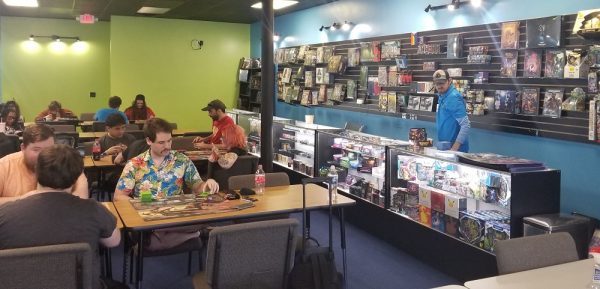
Scott: Shortly before the pandemic hit, we started offering Dungeons & Dragons and along with that, Magic: the Gathering. We didn't have a lot of room, and had to either use the back room, which is very small, or pull the tables out into the bookstore, which wasn't great either.

As we got more involved in gaming and more players started attending, we just needed more room. Fortunately, in February 2021, the kickboxing place right beside us left, and that gave us the opportunity to expand.

When are you open?
Scott: Both storefronts are open every day except for major holidays.

Book Rack

So, How do you reach out and connect to your customers?
Nick: We reach out through our Facebook pages and the Cincy Book Rack website, but word of mouth is gigantic for us. I enjoy reaching out in that fashion, personally. I used to work in the restaurant industry, and that was the main way we connected with the customers. I try to carry over the same type of service to our customers here. If you provide a great experience, people will not only come back, they'll tell others.

We also have a Discord account for our customers, and you can find us on TikTok!

Scott: We have Twitter and Instagram pages as well, but they focus more on the books. We update them periodically, but the best way to get the most recent information or to touch base is through Facebook or Discord.

What gaming experiences do you offer?
Nick: We support Magic five days a week; Wednesday through Sunday. We have events for Commander, Draft, Modern and Pauper. We also have Warhammer and five or six different RPGs. On Saturdays we have a Family Game Night! We provide board game demos and offer discounts for the game of the night, along with hosting a Modern event.

We have a popular Commander league event on Wednesdays. The way it works is players can take one of the $40 pre-constructed Commander decks, add in one pack from the latest set, like Double Masters 2022, and battle! It's a nice event to keep everyone on even footing as well as something fresh for the enfranchised Commander players.

Our D&D night on Monday's is huge. We have a great need for DMs [Dungeon Masters], so if you know anyone interested in leading a campaign, send them our way!

Do you host events like pre-releases or have plans for larger tournaments?
Nick: We would love to, but currently aren't in the Wizards Premium Network. We submitted our application and are hopeful we'll hear back from Wizards soon. Another item that we're missing is an in-house judge, and we feel that's essential. I've considered becoming a Magic judge, but I'm hesitant to take on that role myself, since we are both pretty new to the process. We want to do it right.

Scott: We have discussed hosting a larger event, like a 1K tournament, sometime late 2022 or early 2023. It's still in the planning stages though.

So, with all that, what have been your most popular formats?
Nick: Commander, but I would say, believe it or not, Pauper. I love Pauper because of the ability to brew these crazy, hair-brained decks. It's like a weird Modern or Legacy format. You can play cards that would be terrible to play in any other format, but in Pauper, they're great!

Scott: Our most consistent has been Draft, though. That's how we started, was with Sunday afternoon drafts. It wasn't every Sunday in the beginning, but now, we fire every week.

Nick: Yea, on second thought, I would agree. Commander, Draft, then Pauper.

Scott: Pauper would be our most popular, by attendance, but our longest running event has been Draft.

When do you play Pauper?
Nick: Our Pauper event is on Thursdays.

What have been some of your hot sellers lately?
Nick: Double Masters 2022, Modern Horizons 2, and lately Strixhaven. I believe people are chasing some of those Mystical Archive cards. People around here are always looking for staples, like shocks and fetches, but we've been seeing consistent interest in the Eldrazi Titans and Tron lands.

Scott: Mind you, we don't sell singles currently. We want to, but honestly, we're somewhat tentative about it. We know if you provide that service, you can't just dip your toes in. You've got to jump in and it's a large investment to consider.

Nick, to Scott: Well then, I've got a proposal for you after we're done here.

So, what makes the Book Rack and Hero's Hearth special to the community?
Scott: The whole idea is that we want to provide an alternative to screen time. Online gaming and other computer-type activities have their place, but we want to help people exercise their critical thinking and social skills. Whether it's immersing yourself in a book, a board game, or a card game. With my wife, Nick's wife, and I coming from teaching backgrounds, it is something we work to promote.

Nick: Scott shared his philosophy with me early on and I latched onto it wholeheartedly. We want to be that place you think of to go and have fun. We work hard to provide excellent customer service and a pleasant atmosphere. From the positive feedback we've received so far, we believe that we're proceeding in the right direction, and we're happy to do it. We want our players and customers to look forward to being here.

Scott: I'd like to jump in on that. One, we the employees work well together. Two, I feel we are very fortunate to have great customers. For the most part, everyone is laid back, very welcoming, and they make their own effort to invite others in. That says that we're doing something right. I also want to say a lot of it starts with Nick, and his welcoming personality.

Nick: Well, thank you Scott, I appreciate that.

Hero's Hearth

So, what are a few things each of you have learned from being a part of this adventure?
Scott: I've been involved with books and games for a long time; I won't tell you how long that's been, though! My interest started in eighth grade with D&D. I didn't get into Magic when it initially came out, but still appreciated it. I admit I had a little hubris at times, where I felt I've forgotten more about these things then most everyone I know.

What I have come to discover is that I'm humbled by meeting new people who might know more about a topic or something different than what I perceived. To be able to see the creativeness of our customers, it's exciting. I've come to see that it doesn't detract from my contribution, it adds to it.

We want to apply this effort in our relationships with similar stores in the area. We want to support the overall community. There are a lot of great game stores to play at, so we're here to not only promote our own store, but our LGS community.

Nick: One of the big things I learned from working here was how to play Magic! I've always been interested in the game, since when I was about twelve with my brother, but we never got too serious about it. Working here has lit that fire again. I do wish we still had those cards though.

Working here has helped me to meet many different people from many walks of life. When I bartended and managed restaurants, you have the same thing, but you typically get more repeat customers at a restaurant, which give it a different feel. I've learned about the retail side of business quite a bit more, which has been great.

On a related note, I briefly attended a culinary school to expand myself and have been able to cross over some of that knowledge into the store. I know making a poached egg doesn't help with running an LGS very well, but some of the behind-the-scenes responsibilities, like ordering supplies, has helped me improve in a more general sense.

Do you play Magic, Scott?
Scott: I do not. I've sat in for players from time to time, but I don't have the personal bandwidth to get into it.

I can understand that. I'm sure you keep pretty busy with everything else.

Nick: I've seen him play in a draft!

Nick, since you are more immersed in Magic, what specific formats or decks do you enjoy?

Nick: Along with Pauper, I really enjoy Modern. I currently have four decks, Boros Burn, Storm, UR Murktide, and Esper Control. My first love is Boros Burn. Playing a Burn deck scratches my competitive itch. It's a quick I win or I don't. After playing Burn for a while, I moved into the Esper Control deck for a more interactive strategy, and it's now my current love.

Modern Esper Control

Creatures

3 Snapcaster Mage
3 Solitude

Instants

3 Archmage's Charm
4 Counterspell
3 Esper Charm
2 Fatal Push
4 Opt
2 Kaya's Guile

Planeswalkers

2 Teferi, Hero of Dominaria
2 Teferi, Time Raveler
1 The Wandering Emperor

Sorceries

4 Prismatic Ending
2 Supreme Verdict

Land

2 Castle Vantress
4 Flooded Strand
1 Hall of Storm Giants
2 Hallowed Fountain
4 Island
3 Mystic Gate
1 Plains
4 Polluted Delta
1 Raffine's Tower
2 Watery Grave

Sideboard

3 Aether Gust
2 Dovin's Veto
2 Dress Down
1 Emrakul, the Promised End
2 Engineered Explosives
1 Kaya's Guile
2 Mystical Dispute
1 Relic of Progenitus
1 Teferi, Time Raveler

What are a couple of your favorite Magic cards?

Nick: Jace, the Mind Sculptor, Cryptic Command, and Unholy Heat are up there, but my all-time favorite is Lightning Bolt.

There was an error retrieving a chart for Lightning Bolt

Scott, do you have any favorite Magic cards or something about them you like?

Scott: I don't know if I'm qualified to provide an answer and it might sound trite, but I do like the lands.

Not at all, Scott. Many people enjoy various aspects of the lands, even the basic lands.

Scott: Tangential to that, I do enjoy hearing the player base talk about the "meta." Hearing the back-and-forth on which cards are better or testing out something new. I'm not up on the cards themselves, but I find those discussions very interesting.

To finish up, is there anything else either of you would like to share?
Scott: Nick mentioned we want to be that place people want to come to. To be good corporate citizens and play well with others. We want to continue being here for the long term and have a great gaming community as well.

We try to do our best to think ahead. We've discussed about starting up Day Camps, where we can introduce Magic as well as other types of gaming. Having after-school events, things to encourage gameplay. Kind of going off the reservation here, but as an extra note, I would absolutely love to see a bunch of people out in the nearby parks LARPing.

Nick: I do have something to add to that. When we were talking about being responsible stewards with our customers. I have a close friend that's trying to save for a house. He came in one time thinking about buying a box of cards. Even though we're trying to make money, I reminded him about saving for that home. He still bought the box, but I enjoy getting to know and help our customers with more than just books and cards.

My relationship with our customers has been amazing. They are so great and help me personally on a day-to-day basis. Getting to know the people here and making those relationships is very special for me. One customer even bought my daughter a birthday present!

Scott: Definitely. Nick is a large part of why our business is thriving. He makes a point to get to know everyone and help everyone feel comfortable. Back in 2017, Half Price Books opened a mile down the road and we were very concerned. We then realized that they're focused on transactions: how much can we sell? We're looking to build a community and relationships through that community.

LGS Is Where the Heart Is

I want to thank Scott and Nick for providing us a glimpse into Hero's Hearth and the Book Rack. I hope you enjoyed the visit and look forward to the next! Do you know the story behind your own LGS? Feel free to share in the comments. And if not, maybe now's a good time to get up to speed...

Is Dominaria United Good for Commander?

Are you a Quiet Speculation member?

If not, now is a perfect time to join up! Our powerful tools, breaking-news analysis, and exclusive Discord channel will make sure you stay up to date and ahead of the curve.

Dominaria United has been fully spoiled and the set looks... nice. As far as Commander is concerned, some cards look great, but are they format-defining? Will they go in every deck, or just a few? But first, a proviso or two!

One Minor Caveat

United has a lot of cards that, while they are not strictly multi-color, have a color identity that is more than one color. On top of that, there are some cards that will certainly see play in specific decks, but will absolutely not see play outside of those decks. Here are a few examples.

Powerful, But Narrow

These are good cards for their respective decks. Obviously, tribal Goblin or Merfolk will love these cards, but few other Commander decks will care. Elves are a bit more common, and this Visionary could see play in green decks that coincidentally have a ton of Elves. Visionary will be an auto-include in every pure Elf tribal deck. Then there is Leyline Binding, which is an excellent removal card so long as you are a five-color deck.

What Counts Here

I'm looking for cards that can fit into at least three archetypes and are not very color-restricted. The cards that will fit into the most decks of any given color are the ones I'm primarily reviewing. There are some amazing five-color cards that will be great in five color decks. They just cannot be played outside of them. The same is true of almost all the domain cards, which offer tremendous value at five but are terrible at one or two and only medium at three or four. On EDREC, five-color decks are the second largest deck population. In short, all the five-color cards in Dominaria United are really good; play them if you can!

White: Back Again

Noteworthy for giving white more recursion, the Paragon also has a good creature type and flying, all for a reasonable mana cost. It's very flexible and can go into many, many decks. Consider a lifegain deck, which is a common white archetype. Simply replaying an Evolving Wilds or any fetch land and cracking it gains you two life, which triggers your life gain abilities. Of course, most decks have life loops that can go infinite, and the Paragon lets you replay anything that gets killed early to combo out.

Welcome to Oblivion

White has piles of enchantment-based removal, like the classic Oblivion Ring which gets huge mileage if replayed. Since this card in particular has the older wording, it is also abusable. Once you have destroyed your own O-ring in response, permanently exiled a thing, and then recast the Ring to exile another permanent, you will grasp the extra value of Paragon.

Blue: Wipe Out

This card is being talked about heavily. It is a blue board wipe, although Cyclonic Rift is better for more mana.

Read Ahead or Value?

While I do think a lot of players are focused on the read ahead aspect of PoZ, it's worth noting that those two turns of phasing a permanent can be very powerful. Additionally, you can use this to save your own permanents, which conveniently comes back after phasing kills everything. Imagine this scenario with an Elesh Norn you have phased out... truly disgusting!

Black: Holy Heck!

While not offering the same power and frustration level as the original Braids, she is still very powerful. One of the interesting things to note about the ability is that permanents with multiple types are excellent. I see this card having heavy synergy in a Golgari deck, sacrificing nontoken creatures that are also lands with Ashaya, Soul of the Wild to make others lose lands or get you cards. There's also great synergy with Dryad Arbor and Ramunap Excavator to do the same thing.

You can also sacrifice token creatures with Grave Pact or Dictate of Erebos in play to clear the board. Either way, you get massive value and your opponents get hosed. Strong long-term implications.

What About The Short Term?

She only costs three mana! As a commander you could turn one Dark Ritual or Jeweled Lotus and potentially play another permanent. Talk about a living Smokestack. A mono-black "Stax-like" effect is pretty amazing, especially if you can access it from the command zone. Obviously in the first few turns your opponents won't sacrifice a land, and you will get to draw two or three cards. Modern Commander relies on players setting up value-based board states, and Braids either stalls out the buildup or accelerates you faster than the other players.

Did You Forget New Sheoldred?

No, I did not. Moving on... okay, let me take a moment to assess the hype. Good card, no downside, I might add it to my deathtouch deck. Singularly great with "draw cards and die" archetypes like Nekusar, the Mindrazer. Outside of that? This won't be your commander for a mono-black deck. You will pick another, better choice.

But What About...

Yes, yes, I know. It's bonkers with, say, Windfall! What isn't? Seriously. I've seen Windfall combo out people a significant number of times because that card is amazing. If no one can interact and you're doing two things for seven total mana, you're likely to gain huge advantage or just plain win. That is not uncommon anymore.

As for Sheoldred, there is very little flexibility for this card, and it does not solve much. It has no built in protection, isn't inexpensive, is unlikely to be your commander, and does not have haste or an ETB ability. Call me unimpressed.

Red: Overwhelming Value

For mono-red, the Flamesage is extremely solid because of the new enlist ability. This card turns creatures and pump spells into mana, card draw, and damage simultaneously. The Flamesage will be at home in a variety of Izzet, Grixis, Gruul, Boros, and mono-red decks, and should see a large amount of play. It solves the "one third" problem by turning what you have into what you need.

Green: What Were They Thinking?

The World Spell is a bonkers card. It's essentially Tooth and Nail. Let's start there. I'm firmly in the camp that Spell is much stronger. First, let's go over Tooth's advantages.

Advantages

If you have nine mana to pay the entwine cost, Tooth is likely a game ender. If not? Well, if you coincidentally have two great creatures in hand, it does the same thing as Spell, so it's not better or worse in that case. It gives the another option of searching your deck for answers for only seven. This gives you the ability to get Emrakul, the Promised End and then cast it to get the cast trigger, potentially solving some tricky situations.

The Reality

Spell lets you use any two permanents, as long as they are not Sagas. Furthermore, if you just want insane value, you can let the Saga run its course and filter through 14 different cards to get the two best permanents before getting them into play for free, while keeping all your mana open for responses.

The amount of combinations of game-ending permanents is far greater than only creatures. The singular best permanent for general situations is Omniscience, as it is effectively a one-card combo. However, in a live game, you might already have pieces on the board to win at seven mana, and any given permanent could be a wincon.

The Conclusion

Spell can end the game for seven mana more often than Tooth. If the board state has complications, Spell gives you access to more options to solve them. For nine mana, Tooth wins games, but it's nine mana. In the one or two turns it would take to get that extra mana, would Spell have been better? I think it would be almost every time. Furthermore, a slowly ticking Spell lets you keep mana open to protect your play whereas Tooth is a bit more all-in.

This is the best of the five Defilers, effectively granting you green Phrexian mana. Getting a 6/6 trample body that gives +1/+1 counters to all your creatures puts this Defiler over the top. This goes into a large amount of decks that feature counters, is a huge threat and a synergistic combo piece, and provides mana ramp. It's all the things for all the decks all at once. More so than every other color, green has plenty of one-mana permanent spells like Birds and Elves. Defiler likely gets you from five mana to seven or eight mana, which puts you into position to end the game.

Extremely close to but clearly different from Gifts Ungiven, this card is still busted. It allows you to tutor for combo pieces, answers, threats, or something that is all of those things. Even though it does not have the same graveyard interaction that Gifts has, it's still possible to get Eternal Witness to retrieve other cards. Or you can get Reclamation Sage to answer many situations. If mana isn't an option, you can get Eldrazi. Getting good cards with Clones is another option.

Multicolor

A cool ability on an intelligently-designed card. Good job, Wizards! This potential commander does a bunch of different things. On top of that, there's a sort of disincentive for your opponents to do anything about it, because they will eventually get Sol'Kanar under their control. Of course, there are so many different ways to deal with the "drawback" that it no longer becomes a drawback. A card bursting with this much flavor is rare and nice to see. Last but not least, it has two great creature types that are underserved for the color combinations Sol'Kanar represents. I love this concept.

Not only is this the new "equipment guy," it's also the best vehicle commander in the game. Surely it's significantly better than Kotori, Pilot Prodigy. Astor solves many scenarios and is functionally a four and six mana spell that sets up your entire Boros equipment deck but also gives the option of vehicles as well. It's certainly a heck of a lot better than Wyleth, Soul of Steel, which failed at this idea.

Lands

These are great, and at common rarity, represent a boon to players new and old. Totally functional and great synergy with anything that references land types. Budget lands with synergy are not bad!

I was a big fan of Zhalfirin Void, but it did not see very much play. Crystal Grotto is strictly better and allows you to run both. Untapped lands that give a free scry are not bad at all. Grotto adding the ability to mana filter makes it just that much better. Bear in mind that there are some potent synergies with cards like Elminster to effectively make these lands tap for two mana on the turn they are played and cards that let you name the top card of your library for an extra benefit.

Artifact

What a cool card! It can be used to trigger ETB abilities again, which is good in any deck and exceptional in blink/flicker-style decks. The other great ability is to crew it with every creature you have, attack, and then board wipe, getting everything back at end of turn, minus the Argosy of course. It's also a boat!

Wow, a card that truly hates on taking extra turns which also has a solid activated ability. If your local meta features many extra turn cards, this is a silver bullet at only one mana with flash. It's far from useless even if your meta lacks Time Walks. Consider the massive upside when paired with Emrakul, the Promised End because they simply do not get their extra turn. Finally, it's a colorless counter to board wipes, which is useful for any deck.

I Have Gripes…

Why does this card not say "escape"? Please, Wizards, stop making new keywords and then a few months later act like they no longer exist... only to print functionally equivalent abilities on cards. Magic is a more complex game than others and that is a strength, not a weakness. Any new card that says "when something escapes, draw a card…" will not work with Squee, Dubious Monarch. Why? Why remove interaction from your own game?

Surely, You Must Be Kidding...

"Legendary Cascade." I'm fine with the function of the card, it's cool! But please. Use. Existing. Keywords! Consider that this has no synergy with Averna, the Chaos Bloom and question why Wizards makes players sad when things don't have any synergy or interaction by merely using a keyword instead of a block of functionally identical text.

Yea or Nay? Yea, of Course!

Minor gripes aside, there are plenty of decent cards in Dominaria United to look forward to, and some overtly powerful cards. However, are there lots of format-defining, must-play cards for Commander? I'd say not really. There are a few I expect to see. But the vast majority of new cards will see play in a few narrow decks. That's not a bad thing, of course. If you're building those decks, you are going to be very happy!

What are you looking forward to in Dominaria United? Am I completely wrong about Sheoldred? Let me know in the comments.

Life Lessons on Collectibles, Pt. 3 (2012-2022)

Are you a Quiet Speculation member?

If not, now is a perfect time to join up! Our powerful tools, breaking-news analysis, and exclusive Discord channel will make sure you stay up to date and ahead of the curve.

Hi, and welcome back to Life Lessons on Collectibles, a series detailing my personal history collecting and trading cards. Today's is the final installment in this series. If you would like to read the first two parts, you can find them here and here.

I started writing for Quiet Speculation at the very tale end of 2012. A friend of mine and another local player was also a writer and he introduced me to QS and here I am still writing ten years later. This new path caused me to rethink how I spent money on Magic. I had already learned it was smarter to buy singles than boxes, but I had always purchased cards from stores. I began to branch out and look for local collections.

Lesson learned: The best way to build a collection is to buy other collections.

There was an error retrieving a chart for Dark Confidant

I started playing Legacy back in 2012 when a friend of mine sent me a Dark Confidant as a congratulations card for finding a new job. I fell in love with the format and started picking up all the staples. I got my 40 dual lands buying on eBay, shopping the SCG heavy play section at various GPs, and trading bulk rares to a gentlemen based out of Atlanta. I was blown away that I could trade him all these bad cards for dual lands. However, what I failed to realize was that I was essentially trading my cards at their cash value for his duals at his sell value. I am sure I also gave him cards worth more than bulk without knowing it.

After trading at multiple venues, I finally started investigating bulk rates and realized that I would rather be the one picking up bulk rather than trading it off. I became the "bulk guy" in our area and people come to me when they want to sell off bulk. A large portion of my online store's inventory is cards I picked out of bulk and ones that used to be bulk but rose up in price.

Lesson learned: Trading cards for bulk is a great way to build up a store inventory.

There was an error retrieving a chart for Knight of the Reliquary

I began my foray into the Legacy format with GW Maverick as Savannah was the cheapest dual land and most of the deck was pretty cheap back then. I loved the deck, but it did feel like an uphill battle against any unfair decks. Once Griselbrand was printed, I felt like every opponent was playing either UB Reanimator or Sneak and Show, and I got tired of losing so I joined them. I built UB Reanimator and played that almost exclusively for a good bit.

Then I was introduced to the UW Miracles deck and truly fell in love. The deck just felt like it had a good matchup against every top tier deck and required a good bit of skill to pilot. I was rewarded for practicing a lot, and managed to take down a 40+ person Legacy event with the deck.

I began picking up every other Legacy staple with a goal of being able to build any deck I wanted. This was a pretty aggressive goal and I put a lot of time and effort into trading for these staples. My biggest pickup was an Italian The Tabernacle at Pendrell Vale so that I could play the Lands deck if I wanted to. I was really excited to get the last piece of the deck and built it in one night to play against friends the next day. I ended up hating the deck, and took it apart that night.

There was an error retrieving a chart for The Tabernacle at Pendrell Vale

Lesson learned : Before investing heavily into a deck, make sure you enjoy it.

For about a year of my life, I was playing Magic every night of the week except Mondays. I played Modern, Legacy, Standard, and Commander (then called EDH). I look back on those times with a lot of nostalgia, but even then I knew there was still more to life than Magic. One might even say I was addicted to playing Magic during that time. I would listen to old Pro Tour coverage while at work and be thinking of deck ideas when I should have been paying attention to friends and family.

It's a phenomenal game that I will always love and it has done a lot for me, but I can also say it doesn't hold a candle to spending time with close ones. You won't remember the results from every FNM, but your family will remember all the Fridays you weren't around.

Lesson learned: enjoy your hobbies, but don't get consumed by them.

There was an error retrieving a chart for Collective Blessing

When TCGPlayer began to allow non brick and mortar stores to sell on their platform I opened up a store. I had a fair number of specs that had gone up considerably in value since I had acquired them, but buylists were often barely above my buy-in price, which meant that my efforts would prove fruitless. This was honestly a game-changer and caused me to start creating my own buylists, posting them in Facebook groups, letting local players know I could offer competitive prices on many cards that would beat all the game stores in the area, though admittedly much of that has to do with how poorly most of our LGS's paid for cards at the time.

I was very successful initially. However, as others in the area began to realize that it was a profitable business, my competition began to heat up, and I found people buying collections posted on local groups in a matter of hours instead of days. I reduced my profit margins by upping my buy prices some, but I built up a spread sheet to help me establish buy prices, and I know what I'll actually get from selling a card after all fees and shipping costs are taken into account. I am very open with potential sellers about this, which has let me build up a small group of people who choose to sell to me over others.

Lesson learned: There is a lot of competition in Magic selling, so establish a system and act with good morals and you'll do fine.

There was an error retrieving a chart for Take Inventory

This last lesson is one I had to come to terms with recently. I had seen my sales begin to decline in the past few months, and chalked it up to the typical summer doldrums. However, I had added a fair amount of typically liquid cards back in May, and almost none had sold.

Anyone who sells on TCGPlayer can see their current "Inventory Total," or the number of cards you have listed on the site. It is easy to fall into the belief that having a larger inventory will automatically mean more sales. My inventory size had grown since January, but sales had dropped, which is when I began to run the "Price Differential Report" (which you can find under the Reports Tab) and found that a great deal of my inventory was priced 20%+ higher than the going rate.

Lesson learned: Your actual sellable inventory is heavily tied to your prices. Cards that aren't priced aggressively aren't going to sell, as price is the key decision factor for most people.

Wrap Up

Wrapping up this series is a bit bittersweet. I realize it was only 3 articles, but looking back on so many memories has allowed me to wax nostalgic, which is something I have truly enjoyed doing. Hopefully, that some of my life lessons were helpful to you. I believe the best mistakes to learn from are those made by others, as it saves you the pain of making them yourself. If you have any life lessons related to Magic, please feel free to share them in the comments below.

Magical Creatures: Monger and Spellshaper

Are you a Quiet Speculation member?

If not, now is a perfect time to join up! Our powerful tools, breaking-news analysis, and exclusive Discord channel will make sure you stay up to date and ahead of the curve.

Hello everyone, and welcome to a new chapter in the Magical Creatures series! Over the past few weeks, I have analyzed all the creature types that were created specifically for Magic. You can find the introductory piece here, in case you missed it. As for the latest, it dealt with creatures such as Beeble, Masticore and Metathran, all coming from Urza block. What's next, then?

We left the series with Urza's Destiny, from 1999, a year packed with new sets. Apart from closing off the Urza block with its second and third expansion sets, it also saw the arrival of Sixth Edition, commonly known as "Classic." And that's just the beginning! In 1999, starter-level set Portal Three Kingdoms saw print (check this piece out, if you haven't yet). And so did another starter set, this time Starter 1999, as well as the "box set" Battle Royal, a compilation of four decks aimed to support multiplayer.

As you all know by now, none of these sets introduced any new cards at all, let alone new creature types unique to Magic: The Gathering. And yet, we have one last set from that year, heralding a new block: Mercadian Masques. Let's take a look at that before checking out the new creatures it introduced.

Mercadian Masques

Released in October 1999, Mercadian Masques was the first set in the Masques block, which would continue the following year with Nemesis and Prophecy. It wasn't as full of overpowered cards as Urza's Saga, since the designers were rather cautious this time. Nonetheless, it had a great deal of good spells, as you can see below. And that's if we only consider new cards, since many great reprints were also featured, including Brainstorm, Dark Ritual and Counterspell.

Highlights from Mercadian Masques

Mercadian Masques was also the first set to introduce "fat packs" (today known as bundles). And the first set to include premium (i.e. foil) basic lands. Foil cards were first inserted in booster packs with Urza's Legacy, but this was the first time players could find basic lands, too. As such, foil basics from this set are now quite sought after, and keep an interesting price tag.

Now, back to creature types, of which Mercadian Masques introduced four: Mercenary, Monger, Rebel, and Spellshaper. Mercenary and Rebel are obviously not unique subtypes, so let's take a look at the other two in more detail.

Monger

Can you name any creatures with the subtype Monger? Slim odds, if you ask me. The only creature I thought I knew with this creature type was Spiritmonger, except that one is actually a Beast. Just a case of homonymy; sorry about that!

Only five creatures exist with this subtype, and all are from Mercadian Masques. As you may have imagined, it's a cycle: one creature for each color, and each bearing similar features. They all cost four mana (three generic and one colored), they are all 3/3, and they all have an activated ability costing two generic mana. Any player can activate these abilities, and not just the controller.

A Matter of Class

There's something more interesting than these abilities, though. And that's the reason why including Monger in this series might look like a bit of a stretch. Whereas all the other unique creature types we discussed were races, this one is a class. And when it comes to classes, it's not that easy to judge whether it's "unique to Magic" or not. I mean, anyone would agree that Atog, Phelddagrif, and Sliver were invented for this game. But since a monger is just a dealer of or trader in a certain commodity, things get more confusing.

And there's more: since Monger is just the class, those creatures still needed a race, right? After all, as we have seen time and again, that was one of the main goals of the Grand Creature Type Update. And that's why most of them got an additional subtype, this time with respect to the race. The subtypes are Boar, Human, Minotaur and Unicorn (in alphabetical order, but it's easy to tell who's who just by looking at the art). What about the fifth Monger? Well, Squallmonger didn't receive a race at all!

Squallmonger, or the only raceless Monger

The point is the art, again. Squallmonger's illustration is just too different from that of any other race in Magic. As such, they decided to leave it with just the class, in spite of the concern of an attentive player who ruffled by such an injustice.

Besides allowing multiple players to activate their abilities, the type carries little relevance from a gameplay perspective. Perhaps Warmonger and Squallmonger could be decent cards in booster draft, but apart from that there's little to discuss. And even in that case, remember that cards with this kind of two-sided ability are always risky.

Spellshaper

What about Spellshaper? Can you think of some examples? The chances might be a little higher this time, since no less than 56 cards with this subtype exist. They are not that widespread, though. In fact, they are mostly concentrated in the Masques block and in the Time Spiral block. The first thing you should know is that, once more, this is a class rather than a race. They are "Spellcasters who devote themselves to perfecting a single spell or selection of spells," as stated on MTGwiki. What is most interesting about this creature type is its very concept. Long before the arrival of Planeswalkers, this was the first attempt at creating creatures that could "cast spells" (so to say) by themselves.

In fact, all Spellshapers have an activated ability that requires some amount of mana, tapping that creature and discarding a card. I really like this subtype, although once more it didn't offer any particularly remarkable card. The point is this creature type allows so many combinations, as you can see from the gallery below. Just by matching the subtype Spellshaper with other subtypes (this time race-wise), it's possible to create an enormous amount of interesting creatures.

Personal favorites

Time Spiral and all its References

This allows for many crossovers, such as Llanowar Mentor referencing Llanowar Elves, or Sliversmith mentioning Metallic Sliver. And even Dreamscape Artist, a blue creature that offers you a typically green effect (that of Harrow)! Or, above all, the absolute star of this weird group of creatures: Ridged Kusite, among my all-time favorites. Wait, did you think this is was a random creature with no references at all? Kusite actually quotes Guided Strike! And it even features the same monster, at least if you look at the Weatherlight version.

As for competitive play, the most interesting Masques creature was probably Waterfront Bouncer. It was included in several decklists, both in Standard and Extended, as it served as cheap and reliable removal for blue. Check out this classic U/G Madness list which in 2003 ended up in the Top 8 of GP New Orleans. By the way, did you know that in 2007, Bouncer became a Merfolk? That's right. It doesn't look like a merfolk at all, but apparently Saprazzan merfolks "were able to bisect their fins to function as legs." The more you know...

If you think about it, Spellshaper might be one of the coolest subtypes in Magic, and it's too bad we haven't seen any new ones in a while. Let's stay hopeful, though, since they may return in a supplemental set!

Class Over Race

In today's piece, we discussed two creature types unique to Magic. No big deal, since the whole series builds on that concept. The kicker, however, is that this time we dealt with subtypes that are classes rather than races. Monger may not have led to much, but Spellshaper certainly did!

What do you think? Do you have a favorite Spellshaper? Not a favorite Monger?! Let me know on Twitter or in the comments, and stay tuned for next installment. Next week, we'll move to a new block altogether, the first from the new century!

Tribes Reemergent: Dominaria United Lords

Are you a Quiet Speculation member?

If not, now is a perfect time to join up! Our powerful tools, breaking-news analysis, and exclusive Discord channel will make sure you stay up to date and ahead of the curve.

The whole of Dominaria United has been spoiled, and it's looking to be a solid set. I'm not damning it with faint praise, I'm being serious. Nothing looks too powerful, nor is the set particularly weak. A good solid power level with interesting but not overwhelming cards. Just like our last trip to Dominaria. Of course, that was quickly followed by a series of severe design mistakes. I hope that won't be the case this time.

In terms of Modern pickups, the story is similar. There are a number of solid role players but nothing stands out as format-redefining. A number of decks will receive interesting alternative tools and there are plenty of almost-there tools to consider. Then there are the tribal lords. This cycle of two-mana lords will actually have a substantial impact on Modern. How substantial and sustained is unknown, but they'll absolutely see play in the immediate future.

The Other Guys

Well, most of them will, anyway. The black and white lords will not see play in Modern. Being lords for less-supported tribes is a huge strike against them. Valiant Veteran is close since most of the best humans are also soldiers, but not close enough. If Enlistment Officer were legal it'd be another story. The extra power and toughness are nice, but the five-mana activated abilities are the final straw. There are cheaper and faster ways to do what they're doing. However, the other colors' lords are absolutely playable.

Rundvelt Hordemaster

Of them, the most obviously good lord is for goblins. Naturally, Rundvelt Hordemaster has generated considerable interest already, so I won't reiterate others' points. Hordemaster is (potentially) a huge pickup for goblins and as a card advantage engine, it could get quite busted alongside Skirk Prospector.

There was an error retrieving a chart for Rundvelt Hordemaster

However, one thing I haven't seen others discuss is whether or not Hordemaster actually adds anything to current Goblins lists. It's just assumed that it does because obviously. To which I ask, "is it actually obvious?" Modern Goblins is primarily a combo deck. Most versions intend to win via Conspicuous Snoop and Bogart Harbinger. They're already using Goblin Matron and Goblin Ringleader to make it happen, and Hordemaster needs four goblins to die to hit like Ringleader. At that point, it isn't actually card advantage.

There was an error retrieving a chart for Conspicuous Snoop

I'm not saying Hordemaster is unplayable. Rather, I don't think just slotting it into existing decks will work. They're not looking to make use of the +1/+1 part because they're not meant to win via beatdown. They have the tools to dig for the combo already. To really make use of Hordemaster will require some retooling. A Food Chain that sacrifices being printed would also work.

Leaf-Crowned Visionary

The green lord hasn't been getting much press, but it is quite similar to Hordemaster. Leaf-Crowned Visionary is another lordly card advantage engine. However, this time it's a mana payment on freshly cast creatures. This means that the new Visionary is the closest Modern Elves has to the banned Glimpse of Nature, an incredibly busted card.

There was an error retrieving a chart for Leaf-Crowned Visionary

Modern Elves has suffered more than other tribal decks in recent years. The problem is that the individual elves in the deck aren't very impressive. Despite contributing to a Legacy-defining mana engine, the individual elves are so dorky that the whole deck can be derailed with a few removal spells. Legacy Elves gets around this with better tutors and also Glimpse to combo-win more consistently. It also has Gaea's Cradle where Modern must make do with Elvish Archdruid.

There was an error retrieving a chart for Glimpse of Nature

While Visionary is inefficient compared to Glimpse, it's still quite strong. The Nettle Sentinel/Heritage Druid duo is in Modern and can generate the mana needed to draw through the deck. With an active Archdruid or just enough cheap elves making extra mana, the Craterhoof Behemoth kill is much more plausible than ever before. Which might be good enough.

The Card I Care About

All that's perfectly fine and everything. However, it's the blue lord that I'm actually excited about. It's a merfolk lord, and I have a history. Yes, for the first time since Merfolk Trickster, a Standard-legal set has printed a Modern-playable merfolk. Vodalian Hexcatcher is quite the card. Hopefully, it will lead Merfolk to the glory that I and many other fishionados have said it deserves over the years, but it will definitely bring many players into the school.

There was an error retrieving a chart for Vodalian Hexcatcher

While Merfolk already has many lords, another one is always A Big Deal because Merfolk is the lords deck. The Humans deck uses counters, not lordly buffs, and I've covered Goblins and Elves. Spirits is the only other deck with lords, but their best one is three mana. Merfolk is all about the two mana lords, and the new one adds to the overall strategy while protecting against a major antagonist.

Calming Fury

The biggest problem cited for the fall of tribal decks over the past year is Fury. A maindeck sweeper is always going to be difficult for tribal decks to overcome, especially when attached to a creature. This is partially true, but not for the expected reasons. Fury is rarely more than a two-for-two against smart tribal players, which isn't great. The problem is that evoking Fury is a huge tempo gain, and that's usually the devastating part. Clear my threats and add to your own strategy, great turn, gg no re.

There was an error retrieving a chart for Fury

Hexcatcher stands to make that a much harder sequence. Flash means that Hexcatcher can save the creatures targeted by Fury without an Aether Vial, unlike the other lords. This can require the opponent to play additional removal (or Ephemerate) to finish the job, which takes away the tempo gain. Add in that Hexcatcher can sacrifice the merfolk that would die and potentially counter the removal, and suddenly the matchup looks pretty solid.

Adding to the Package

That last point is also more generally salient. Merfolk was the original disruptive aggro deck. In recent years that crown has been taken up by Humans and Spirits, thanks to cards like Kitesail Freebooter, Mausoleum Wanderer, and Spell Queller. Prior to Hexcatcher, the best new disruptive merfolk has been...Tide Shaper, I guess? Hexcatcher turns every merfolk into a better Cursecatcher, which is a considerable upgrade.

I also just realized Hexcatcher is a direct callback to Cursecatcher. Neat.

There was an error retrieving a chart for Cursecatcher

Force Spikeing every non-creature, non-Supreme Verdict card in Modern is quite good, but there is an additional benefit. Even if Hexcatcher fails to counter it, Hexcatcher is still answering Living End. So much of the value of Living End is in sweeping the board, but Hexcatcher fills the graveyard. Countering the current Living End and, as a bonus, ensuring that a later one isn't devastating is quite good. Remember, Hexcatcher has flash and should be used as a surprise.

Making it Fit

Vodalian Hexcatcher is 100% Modern playable. The question is how to make it fit. Most Merfolk players have settled onto a common maindeck strategy, and I've been going along with the trends. I mostly play Burn these days due to metagame considerations, so I just follow what the more dedicated players have determined when I want to get my fins wet.

However, after weeks of mediocre FNM performances and tuning the deck to be an anti-cascade specialist, I have problems with some of the mainstream card choices.

Glasspool Mimic

There have been times when Phantasmal Image was an integral piece of Merfolk. Copying lords is good, and sometimes copying opposing creatures is better. That pedigree helped Glasspool Mimic gain traction, especially since it's been used to skimp on actual lands.

There was an error retrieving a chart for Glasspool Mimic

However, I've been consistently frustrated by Mimic. I've had to mulligan an alarming number of hands thanks to Mimic being my only creature. Drawing it late game with no creatures out (remember: Mimic can only copy your own creatures) is often devastating. However, Mimic is kind of necessary thanks to the other two cards on my list.

Force of Negation

I know it sounds weird, but I've really soured on Force of Negation. Free interaction is quite good. However, Force of Negation is no Force of Will. Non-creature spells are seeing less play thanks to the evoke-elementals, especially the interactive spells that Merfolk actually wants to counter. Worse, Force is quite bad at countering a particular group of non-creature spells.

There was an error retrieving a chart for Force of Negation

I've lost to cascade decks many times because Force cannot be cast for free on my own turn. Violent Outburst is quite the card and getting cascaded on in my upkeep turn three hurts. It's why I've started running Cursecatchers again. Pitching to Force is, admittedly, a good use of Mimic, but it's such a feel bad that I'm looking for alternatives.

Subtlety

Force's limitations may be why Subtlety has been adopted. It isn't limited by turn and hits what Force misses. I will admit that when Subtlety is good, it's very good. However, it is only good in very specific situations. The primary one is against other evoked elementals. There's something viscerally satisfying in making an opponent exile two cards and spend a draw step to Fury your board. The other is against Amulet Titan. Hitting Primeval Titan is good, but I've also won by using Subtlety on Azusa, Lost but Seeking after my opponent Summoner's Pacted for her with only two lands.

There was an error retrieving a chart for Subtlety

However, in every other circumstance, evoking Subtlety is mediocre. If I'm feeling generous, anyway. A 3/3 for four flyer isn't a good rate. Using Subtlety on more normal creatures or planeswalkers is just kicking the can down the road. Yes, hitting Murktide Regent is good, but drawing Subtlety after it comes down is terrible. The floor is so low it really doesn't justify the ceiling in my experience.

What I'd Do

With those complaints, off my chest, when Vodalian Hexcatcher is legal, I will be playing this maindeck, which I'm currently testing:

Modern Merfolk

Creatures

4 Tide Shaper
4 Rishadan Dockhand
4 Lord of Atlantis
4 Master of the Pearl Trident
4 Merfolk Trickster
4 Silvergill Adept
4 Svyelun of Sea and Sky
4 Vodalian Hexcatcher

Artifacts

4 Aether Vial

Artifacts

4 Chalice of the Void

Lands

4 Cavern of Souls
10 Island
4 Mutavault
2 Otawara, Soaring City

I'm going to replace the Forces with Hexcatcher, which do effectively the same job without ever being a dead or frustrating-to-cast card. Subtlety is getting dropped too, and right now I'm testing the never-was Rishadan Dockhand. Tide Shaper completely stole Dockhand's thunder, and I've never really tried it out. I have frequently wanted more disruption and one-drops, so Dockhand is a good fit. It hasn't been terrible in testing so far.

There was an error retrieving a chart for Chalice of the Void

With the pitch cards gone, I can cut the Mimics and just run lands instead. In particular, I'm going to a full set of Cavern of Souls. Again, removing the pitch spells makes this a better choice than before. More importantly, it plays well with the full set of Chalice I'm running. I've been doing that now and been quite happy, so I expect it to still be a good option in the new Modern. The sideboard will depend on what's doing well once the new cards come in.

Fish Swim Together

I'm looking forward to getting back into Merfolk again. Whether I'm able to justify staying in the school will depend on how the metagame shakes out and whether Hexcatcher works out as well as I expect. I'm hopeful but experienced enough to temper those expectations. We'll all see soon.

Top 10 Constructed Cards from Dominaria United

Are you a Quiet Speculation member?

If not, now is a perfect time to join up! Our powerful tools, breaking-news analysis, and exclusive Discord channel will make sure you stay up to date and ahead of the curve.

After four long months, a new premiere set release is upon us, Dominaria United. With it comes a slew of new and interesting cards with constructed implications. While the set brings an incredible 41 new legendary creatures that are sure to bring smiles to my Commander-inclined colleagues, my primary focus will be on Modern and Pioneer. With that disclaimer out of the way, let's get into it!

10. Llanowar Loamspeaker

There was an error retrieving a chart for Llanowar Loamspeaker

Llanowar Loamspeaker does a lot of things we've seen before like with Nissa, Who Shakes the World and Avalanche Caller, but never all in one and at this mana value. I normally wouldn't be jumping out of my skin for a two-drop mana dork, except this one is especially abusable with Jeskai Ascendancy.

Jeskai Ascendancy is the centerpiece of the titular combo deck that sees on and off success in Pioneer. It utilizes Sylvan Awakening to turn lands into creatures that then untap and grow whenever its controller casts a spell. Since most of the spells of the deck are one or two mana, each cast nets mana if there are more mana dorks (or creature lands) than the cost of the spell.

Loamspeaker is a mana dork itself and can turn lands into additional dorks with each untap from Ascendancy, providing an additional avenue for the combo without Sylvan Awakening. This redundancy may bring the Ascendancy deck back in a big way.

9. Impulse

There was an error retrieving a chart for Impulse

Impulse has been a part of Magic since Visions was released in 1997, and still sees occasional Legacy play in the OmniTell deck. Over the years, we've seen countless weaker imitations like Anticipate, Shimmer of Possibility, and Silundi Vision // Silundi Isle, each either reducing the number of cards the player digs, converting it to sorcery speed, upping the mana cost, or limiting hits by card type.

Impulse itself was always deemed too powerful for Standard, and these nerfed versions still hold some amount of competitive viability. Shimmer of Possibility, for example, sees play in the Lotus Field combo deck in Pioneer. At the very least, Lotus Field players will look forward to their upgrade, but I wouldn't be surprised if we saw Modern Storm adopt Impulse into their spell suite. I'd be on the lookout for UW Control adding in a copy or two to help dig for some of their higher impact one-ofs.

8. Relic of Legends/Plaza of Heroes

There was an error retrieving a chart for Relic of Legends
There was an error retrieving a chart for Plaza of Heroes

Magic players love value, and I'm no exception. Number eight on my list goes to both Relic of Legends and Plaza of Heroes, mostly for the same reason. Both add much-needed support for the fringe Bard Class "storm" archetype. This deck utilizes Bard Class along with low-cost legendary creatures and planeswalkers to draw additional cards and net additional mana, then win with a haste enabler like Goro-Goro, Disciple of Ryusei.

The deck is incredibly mana hungry and utilizes cards like Birgi, God of Storytelling // Harnfel, Horn of Bounty and Mox Amber to keep things going. Relic of Legends turns each legendary creature into a "hasty" mana dork akin to Heritage Druid, allowing additional ways to go mana positive off each spell. This can help level up Bard Class or generate mana when casting redundant copies of legends.

Plaza of Heroes is a fantastic addition as it acts as a RG land for any creature or planeswalker. Additionally, with any creature or planeswalker in play, it can still provide colored mana to cast or level up Bard Class.

Of course, Plaza is also an excellent pick-up for the Niv-Mizzet Reborn five-color "good stuff" decks in Pioneer. It's a painless, untapped land that can cast any of the deck's various planeswalkers, value creatures like Omnath, Locus of Creation, or incidentally legendary spells like Oath of Kaya. And, of course, it reliably casts the namesake Niv-Mizzet. For a deck that's reliant on tri lands, shock lands, and Mana Confluence, this effect is at a premium.

7. Temporary Lockdown

There was an error retrieving a chart for Temporary Lockdown

Next up is a surprisingly powerful Banishing Light variant that's more akin to a board wipe, Temporary Lockdown. At three mana, this spells bad news for the aggressive decks of a format. It comes down a full turn earlier than traditional "turn four" Wrath of God variants. Not only does it eat up creatures, but all nonland permanents, so cards like Kumano Faces Kakkazan // Etching of Kumano get hit as well.

This is perhaps the most brutal answer to the Modern Colossus Hammer deck as it deploys its hand early and every important card gets hit by the spell.

Lockdown is also a cheap, clean answer to tokens out of Oni-Cult Anvil and Urza's Saga decks. It's not often we get powerful answers like this, and the potential metagame implications of just existing are very noteworthy.

6. Aether Channeler

There was an error retrieving a chart for Aether Channeler

"What does it do?"

"Yes."

Aether Channeler is the latest addition to the three-mode 2/1 creature supercycle, preceded by Knight of Autumn and Callous Bloodmage. These designs combine multiple common abilities found on Limited creatures into single cards, allowing niche effects to make their way into Constructed due to their flexibility.

Each of Aether Channeler's modes is enticing and provides some form of card or tempo advantage. It notably also boasts two very important creature types: human and wizard. Human tribal decks have already proven their viability in both Modern and Pioneer and Wizards are an up-and-coming archetype, improving their creature suite with every set. The spell suite of Wizard's Lightning and Wizard's Retort are very powerful effects and the only thing holding them back is the reliability of their discounted costs. More powerful wizards like this can only help.

Notably, Channeler's flexibility and mana cost make it a perfect candidate for Collected Company decks. Perhaps a Bant Company list featuring Soulherder and Ephemerate could be a worthwhile home for it?

5. The Lords

There was an error retrieving a chart for Vodalian Hexcatcher
There was an error retrieving a chart for Rundvelt Hordemaster
There was an error retrieving a chart for Leaf-Crowned Visionary

Dominaria United features a cycle of lords (creatures that give buffs to a certain type of creature). Three of these seem to be a cut above the others.

Vodalian Hexcatcher critically provides another lord to the Merfolk archetype which has fallen out of favor in recent years. Natively having flash rather than needing to rely on Aether Vial is helpful in pushing through damage and winning combat as a surprise trick. Hexcatcher also turns each merfolk into a Cursecatcher, which can be game-winning against cascade decks like Living End or the Indomitable Creativity combo decks.

Rundvelt Hordemaster is a long overdue upgrade to the Goblins archetype which currently sits on the fringes of Modern. Currently, the only goblin lords are at three and four mana. Hordemaster boosts the deck's aggressive capabilities and can work with Skirk Prospector to create a powerful card draw engine.

Unlike most tribal aggro decks, Goblins has a combo involving Conspicuous Snoop, Boggart Harbinger, and Kiki-Jiki, Mirror Breaker. Hordemaster providing both aggro support and card draw to more reliably achieve the combo makes it my pick for the strongest addition from this cycle.

While not quite as powerful as Hordemaster, Leaf-Crowned Visionary is no slouch. It's only the second two-drop Elf lord and comes with a Lifecrafter's Bestiary stapled to it. Glimpse of Nature is banned in Modern due to Elves abusing it, and it's a critical component to the Legacy version of the archetype. Having a similar effect attached to a creature you're already incentivized to play is a big upgrade. Since Nettle Sentinel, Heritage Druid, and Elvish Archdruid are all auto-includes in Modern Elves, spare mana to cantrip each creature is easy to come by.

4. Liliana of the Veil

There was an error retrieving a chart for Liliana of the Veil

They did it! They actually did it! Liliana of the Veil is coming to Pioneer and it's going to be...probably fine? Once the scourge of Modern and the centerpiece of Boomer Jund, Liliana has mostly fallen from grace in Modern. She is at her best when card advantage is hard to come by. In Modern though, cards like Expressive Iteration and the many cantrips out of 4C Omnath have made card draw plentiful.

While Pioneer has banned Expressive Iteration, it has access to powerful draw spells like Treasure Cruise and Dig Through Time, both of which are bad news for discard strategies.

My expectation is that Liliana will perform well against decks like White Weenie and will be yet another three-drop in RB Midrange. It'll be strong in some matchups but the cut against decks like UR Phoenix.

3. The Pain lands

There was an error retrieving a chart for Adarkar Wastes
There was an error retrieving a chart for Sulfurous Springs
There was an error retrieving a chart for Karplusan Forest

For the longest time, Magic sets would include half-cycles for their rare lands. This was often due to pushes toward certain factions or Limited archetypes. We accumulated quite a few incomplete cycles like the battle lands (Prairie Stream) and cycling duals (Fetid Pools). Some completed cycles like the pain lands had their half-cycle reprints on opposite sides of the Pioneer cut-off. This means that for the lifespan of Pioneer, only enemy color pain lands like Llanowar Wastes have been legal, creating uneven mana bases.

With Dominaria United, we get three of the allied pain lands added to Pioneer (with the remaining two confirmed for The Brothers War). Gaining access to untapped duals cannot be understated. Of course, this will improve the mana base for decks like RB Midrange and the Bard Class deck mentioned above, but it will also unlock more aggressive decks for the format, allowing for more pip-intensive cards. Between pain lands and pathways, red decks will be able to splash for cards like Atarka's Command or Destructive Revelry, expanding access to their spell suite.

Keep in mind these duals act as "tri lands" for Oath of the Gatewatch's colorless-specific spells. Thought-Knot Seer, Reality Smasher, Warping Wail, and even Eldrazi Displacer have the potential to see a resurgence in viability now that the mana can support them.

2. Leyline Binding

There was an error retrieving a chart for Leyline Binding

In what seems to be a recurring theme of this set, Leyline Binding is a Banishing Light variant that answers a single nonland permanent at instant speed, no questions asked. The removal spell is discounted by up to five, based on the number of basic land types you control, for a potential cost of a single white mana. Between tri lands and shock lands in a Modern fetch land mana base, achieving this is trivial.

One major benefit of the card is that at six mana, it cannot be removed by Prismatic Ending, and it's going to be extremely difficult for March of Otherwordly Light to do the job in a reasonable time frame. That leaves Boseiju, Who Endures as the only commonly played piece of enchantment removal that can reasonably (and permanently) deal with it.

The second big draw to Leyline Binding is that it's compliant with Cascade's deckbuilding restrictions. Rhinos in particular can splash white for Teferi, Time Raveler, and even Omnath, Locus of Creation for additional lines of attack. The full five discount isn't a necessity either. Binding is still an excellent removal spell when cast for two mana (in this case, without a black source).

Expect this card to see a substantial amount of Modern play.

1. Karn's Sylex

There was an error retrieving a chart for Karn's Sylex

I've read this card a dozen times, and I'm still not sure it's real. Karn's Sylex is the best prison card we've gotten in a long time. At three mana, this artifact does a solid Blood Moon impression by completely shutting down fetch lands. Incidentally, it also shuts off Force of Will in eternal formats thanks to the life requirement.

For fetch-heavy decks like 4c Omnath and Grixis Death's Shadow, this can be absolutely backbreaking. On top of that, it functions as a slow Pernicious Deed available in (theoretically) any color.

The likelihood is that Tron will adopt this card as part of the Karn, the Great Creator "wishboard". To add insult to injury, Sylex exiles itself after activating, which allows Karn to find it again from exile. Though I expect most players will want this for its static ability, not the activated ability.

End Step

With all of the powerhouse cards in the set, please keep in mind that this list is far from exhaustive. If you think I've missed the next Ledger Shredder of the set, leave a comment below! Don't forget to use Quiet Speculation's Trader Tools to price out your haul from your local prerelease and pre-orders. Good luck gamers, and I'll see you all next week!

Big Picture and Little Details in Dominaria United

Are you a Quiet Speculation member?

If not, now is a perfect time to join up! Our powerful tools, breaking-news analysis, and exclusive Discord channel will make sure you stay up to date and ahead of the curve.

It's finally here. Dominaria United (DMU) prereleases begin the weekend of September 2nd and run until the set is released on September 9th. As always, a new set will have unpredictable interactions, hidden synergies, and its own distinct landscape.

The Jumpstart Model

Instead of traditional archetypes, DMU offers five different lanes for each of its colors.

  • Green - Domain
  • White - Go Wide
  • Red - Aggressive
  • Blue - Spells
  • Black - Graveyard Matters

Whereas in traditional sets each color pair is labeled with a more specific synergy (think GW Enchantments or RW Samurai in Kamigawa Neon Dynasty), DMU embraces a mix-and-match approach, similar to the Jumpstart products. Ergo, RW is Go Wide-Aggro. GU is, theoretically, Domain-Spells.

Aggressive Keywords and the Hellbent Problem

DMU introduces several new mechanics. The most aggressive of them is enlist. Enlist allows you to tap a non-attacking creature to boost the power of an attacker. While this can lead to powerful attacks, I feel this mechanic has something of a hellbent problem. Hellbent, a mechanic from the original Ravnica block, incentivized having no cards in hand. The problem with this is that you very often want to have cards in your hand. Similar to hellbent, I fear that enlist is asking aggro decks to do something that is not in their best interest. Typically, in aggressive decks, you want to swing with all available attackers.

Enlist Today!

Some enlist cards will be strong, some will be middling. This is a nice option to have, but I don't imagine it will be an overpowering aggressive tool like mentor or blitz. It will help trade up in combat, but the toughness of the creature stays the same. A 3/2 Hexbane Tortoise dies just as fast as the 6/2 version.

Coalition Skyknight and Linebreaker Baloth have forms of evasion and will make better use of the ability than most other creatures. Samite Herbalist gives this ability a little more juice, offering value every time it's enlisted.

The best aggressive mechanic might be stun counters, which can keep a creature tapped down long enough for an aggressive deck to close out the match. Impede Momentum is a removal spell if your deck is aggressive enough, though it's unclear if blue is best suited to be aggressive.

Slowing Down the Format with Domain and Kicker

Domain and kicker return and both these keywords incentivize the long game. Domain cards get better with the more basic land types you have in play. Kicker spells get bigger and more powerful the more mana you can put into them. Every single kicker spell in the format has an off-color mana kicker, making fixing a priority. Thankfully, A new 10-card cycle of common "enters the battlefield tapped" dual lands, with basic land types, turbo-charges the Domain decks, and enables these off-color kickers.

Domain will be a great place to start off in this format, especially if the rest of the draft pod opts for more streamlined strategies. It's worth remembering that the kicker cards will likely be available later in the draft, as they play more like gold cards than mono-colored ones. Furthermore, the power level of DMU is stacked at uncommon. Having reliable access to a multitude of colors means having access to significantly more power.

However, ignoring those aggressive decks would be a mistake. With that in mind, I expect DMU to be a fairly balanced format. Cards like Vineshaper Prodigy and Sunbathing Rootwalla can trade off early while providing an advantage in the late game. Cheap interaction will be at a premium in this deck. Green will be the critical color for domain, as it has access to fixing and reasonable creatures. Blue and Black should also make strong starting points, as they lean more controlling and want to play to the long game.

Let's Talk Two Drops

Two-drops often define a limited format. Your aggressive decks will need them, and as a result, the slower decks will also want them. When building an aggressive deck, we typically want an abundance of aggressively slanted two-drops. In DMU, it will be difficult to assemble a critical mass.

The most interesting two drops have off-colored kickers. Juniper Order Rootweaver, Benalish Sleeper, and Ghitu Amplifier all fit in an aggressive deck, but they're significantly worse if those decks aren't able to activate the kicker. This puts two color requirements on the aggressive decks, which don't typically want to splash.

Haunted Figment gives the aggressive Red Blue decks an exciting attacker to pair with Ghitu Amplifier. Green White decks also have aggressive tools in Sunbathing Rootwalla, Benalish Faithbonder, and Samite Herbalist, as well as the Rootweaver. Of course, this assortment can be upgraded at higher rarities, but the common twos are mostly pedestrian.

Similarly, I'm concerned about the card quality of Splatter Goblin and Toxic Abomination. These are designed to push the aggressive decks, but both seem underwhelming. I have the same fear for Yavimaya Steelcrusher, however, its activated ability offers meaningful utility.

It's a Top 3 Common

Conversely, most twos lead us to a more controlling path. Goblin Picker, Phyrexian Vivisector, Floriferous Vinewall, and Vineshaper Prodigy all offer card selection and presumably perform best in slower decks. Snarespinner returns in this format as a defensive piece against the aggressive decks. These all strike me as primarily defensive, as does Volshe Tideturner which can help slower blue decks. Be wary, though. The 1/3s don't line up well against enlist creatures.

Second-Wind Stompy

This format won't be dominated by aggressive decks, but I expect them to make a showing. The uncommons in this set are very powerful and some of them are very aggressive.

Bringing the Heat

If your table isn't drafting aggro you will see cards like these in higher quantities. In formats like Alchemy Baldur's Gate, you could build a strong aggressive deck just from commons. That doesn't look to be the case here. Also, remember that most limited decks are versions of midrange. Yes, they may skew aggressive, but that doesn't mean you're all one, two, and three drops. Some of the uncommons in this set like Warhost's Frenzy, Balduvian Bersker, and Garna, Bloodfist of Keld help you power through the late game. You don't have to be all-in to be aggressive.

Aggro at Common

The best aggressive cards at common cost more than one might expect. These aggressive decks still need to pressure the opponent early, but they have access to many options to finish them off in the mid to late game. The two drops might be mediocre, but backing them up with powerful spells makes it hard for opponents to recover. It is very easy to die on a stable board to a Heroic Charge or In Thrall to the Pit. These cards will encourage the aggressive decks to dip into a third color, albeit conservatively.

So, What Should I do?

As I start thinking about my first draft in the format, I'm leaning towards Domain. Ideally, I would like to start off in a green-blue shell. I want to splash powerful cards, I'm not overly scared of the aggressive decks, and the plethora of gold cards and off-color kickers all lead me towards a multi-colored midrange deck. Additionally, I don't want to pass Vineshaper Prodigy or Talas Lookout. Blue Green has access to two Organ Hoarders! I want cheap removal to interact early and access to the powerful multi-colored spells later on to out-muscle my opponent.

Moreover, Domain provides a good vantage point to survey the open lane. If I have a couple of good white and blue cards, it might not make sense to keep the green base. In that case, I may want to splash one or two off-color cards, but if I see power, I'll follow it. This set has a lot of absurdly powerful uncommons. Seeing them, means I'm probably in the right lane.

Ranking the Commons

No preview article would be complete without a speculative list of the top five commons. Today, we're going ten deep. While I have the Organ Hoarders at the top of my list, things got more complicated after that.

Top 5 Commons

  1. Talas Lookout - It's an Organ Hoarder that flies. I think this is the best common in the set by a good margin. It has to die for you to get the Sleight of Hand effect, but it's also a 3/2 flyer for four, which is not bad on offense or defense.
  2. Vineshaper Prodigy - Also an Organ Hoarder. The flexibility is nice. Buying time with this early, and then using Urborg Reposession to get it back and grind out opponents is a very real play pattern.
  3. Extinguish the Light - Four mana is a lot, but this is an instant speed answer to any creature with potential upside. The fact that this card really punishes creatures with kicker, especially those in the aggressive decks, makes it a strong answer despite the casting cost.
  4. Lightning Strike - Aggressive decks can use this to clear the way or go to the dome, and if you're playing a slower game then this becomes a valuable answer at only two mana. Versatile and effective.
  5. Keldon Strike Team- You have a 3/1 for three if you need it. Not great. But hastening it in with two 1/1s can add a lot to the combat math of an individual game. White has a lot of pay-offs for going wide, and I considered Heroic Charge in this spot, I was far more excited for this hasty army-in-a-can. Its versatility gives it the edge

The Next, More Interesting Top 5

Those cards seemed pretty obvious to me. They're all two-for-ones or versatile removal spells good in any deck that can cast them. This list features cards that might be more narrow, but will shine in the right deck. While I'm more interested in the synergy packages each card represents, and what they mean for deck-building, I suspect they're all extremely strong.

  1. Ghitu Amplifier - Impede Momentum and Timely Interference will play very nicely with this two drop. I'm not sure that it's better than its running mate Haunting Figment but the two will carry one of the format's best aggro decks.
  2. Tribute to Urborg - Instant-speed cheap removal that scales up. Perfect in Blue Black, but might be a strong incentive elsewhere
  3. Eerie Soultender - I like what this card does. It helps enable some graveyard payoffs like Urborg Repossession, Writhing Necromass, and Tribute to Urborg, while trading nicely on defense and providing some late-game value. Four mana might be too much for the 3/1, but I think it all adds up to a strong card.
  4. Citizen's Arrest - This is a versatile removal spell, but it's hard to splash. White looks aggressive, so while the deck will be interested in this card, I'm not sure it will be a priority.
  5. Sunbathing Rootwalla - This card is going to do a lot of work in this format. In stompy decks, the threat of activation will help it get through in the early game. In slower decks, it's a body early that becomes a powerful threat once you've built up your domain.

Honorable Mention: Phyrexian Rager, Essence Scatter, Argivian Cavalier. These three cards all seem reliable pieces to help a deck work. Though they're less exciting than the aforementioned commons.

It All Starts This Weekend

Exploring a new format is always a blast, and there is no better time to do so than prerelease weekend. Are you the hero Dominaria needs? Find out this Friday, while testing out the new cards, exploring new decks, and winning new packs.

Want Prices?

Browse thousands of prices with the first and most comprehensive MTG Finance tool around.


Trader Tools lists both buylist and retail prices for every MTG card, going back a decade.

Quiet Speculation