Are you a Quiet Speculation member?
If not, now is a perfect time to join up! Our powerful tools, breaking-news analysis, and exclusive Discord channel will make sure you stay up to date and ahead of the curve.
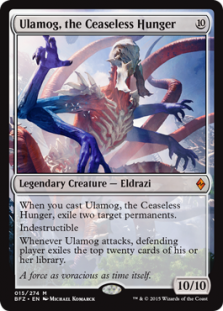
Last week, you read my article either in the hours before the big Eldritch Moon reveal, or right when it was hot of the presses. I know some players and story buffs were disappointed to see the Eldrazi back so soon, but as I wrote about on the Nexus, I was a pretty happy camper. A cool new Emrakul is still a cool new Emrakul, and my recently built R/G Tron deck will be happy to try out a few copies in the Ulamog, the Ceaseless Hunger slot.
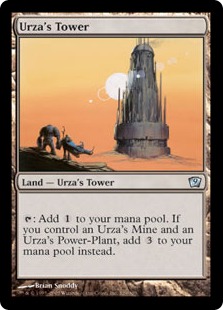
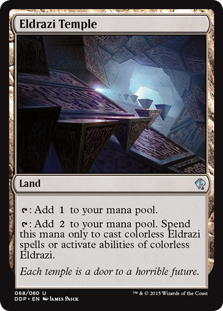
Today, you'll again be reading this article either right before some official previews hit the web, or immediately after. Oh, the trials and tribulations of a Monday author! Thankfully, this time around we have a full week of scattered spoilers to get excited about. Doubly excited if you're sleeving up Urza's lands and Eldrazi Temples.
Big mana on tap for Eldritch Moon
Between three official previews and two unofficial spoilers, we're at a promising start (Emrakul pun intended) to the Moon season. I'll assess all of them for Modern playability and financial outlook, making this one of the few weeks we can do a Modern breakdown of each and every reveal for the five-day period.
Preview season is a prime time to get ahead of impending spikes and invest around newly minted technology. Although no one gets excited about Wizards' nth attempt failure to update Clone variants, there are at least two cards in last week's Eldritch Moon batch that have me interested.
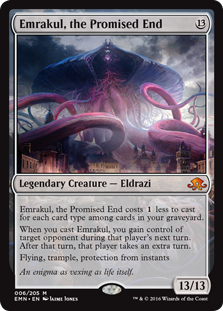
Emrakul, the Promised End
Eldritch Moon's inaugural reveal didn't disappoint. Bitter #TeamMaritLage or #NoMoreEldrazi fanatics should put down the torches and enjoy this dangerous new monster coming to Modern tables near you. Modern players historically complain about the lack of format playables in new sets (and then complain again when the playables don't meet their opaque expectations), and Emrakul is the rare set poster-child that is both flavorful and powerful.
Then again, if you hated playing against the Tron strategies before Moon, you're going to hate them even more after.
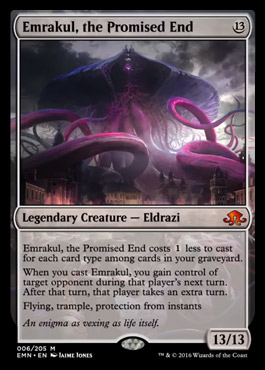
As I mentioned earlier, I posted my full Emrakul, the Promised End analysis last Wednesday on Modern Nexus, which I encourage you to (re-)read for the analytical steps I took in testing out the biggest, baddest new legend in the format. In summary, I stuck Emrakul into a stock R/G Tron list and then tested her, comparing her performance in every boardstate to Ulamog, the Ceaseless Hunger's performance in those same situations. I also evaluated her on her own merits.
Testing showed that Emrakul was at least as strong as Ulamog in the vast majority of tested scenarios, with significant upsides when she was stronger. Further testing since Wednesday has only confirmed these points, which I'll lay out here to summarize the pro-Emrakul case:
- Emrakul and Ulamog frequently land on the same turn. Her cost is not an issue with the cost reduction, particularly in lists packing Lightning Bolt.
- Emrakul's Mindslaver imitation almost always meets or exceeds Ulamog's double-exile, averaging four cards removed. Note this is up from the 3.5 I calculated in my sample on Wednesday.
- The ceiling to Emrakul's on-cast trigger is very high, sometimes ending the game on the spot with 6+ card blowouts.
- As a flier, Emrakul gives you a critical defender against Infect and Affinity players looking to close out a game. Ulamog cannot do this on certain boardstates where opponents have three or more critical threats.
Taken collectively, those are strong selling points for a hyped new mythic and a great starting point for Emrakul.
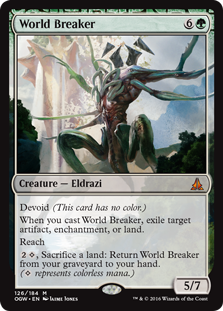
Because R/G Tron typically plays only 6-8 creatures, with many slots already committed to threats like Wurmcoil Engine and World Breaker, Emrakul competes directly for Ulamog as the curve-topper. Post-Eldrich Moon, my testing suggests Emrakul will take at least one of those slots in most metagames, either splitting 1-1 with Ulamog or edging him out completely.
Of course, it's also possible Emrkaul finds a home in other Tron or Eldrazi decks. Blue-based Tron, for example, plays more instants and can use discard outlets to reliably fill graveyards. Emrakul could certainly have a home here, although I generally shy away from the old "This card will make my Tier 3 deck Tier 2!" arguments; they rarely pan out in Modern. Even so, keep these blue decks in mind as you consider Emrakul's prospects.
Blue Tron and Emrakul
If Ulamog does fall out of fashion in favor of Emrakul, or if Emrakul starts sharing deckspace with Ulamog, then Emrakul's price tag is all but guaranteed to settle around Ulamog's. Post-Moon Emrakul would see about as much Modern play as Ulamog sees now, not to mention enjoying additional demand from Standard and casual formats (where she will also assuredly see play).
This means she's over-valued at $19.99 when Ulamog is down in the $12-$14 range, but a good pickup once she drops down to where Ulamog is today. It's very unlikely she'll be worth much more than Ulamog (given that Ulamog's prevalence should be largely predictive of her prevalence), but I could see her creeping a bit higher due to her Nahiri synergy in Standard. If so, that would still put a ceiling around where she is today. Invest accordingly.
Coax from the Blind Eternities
Emrakul is clearly the big early winner in Eldritch Moon, but another Eldrazi-themed storypoint also shows some preliminary Modern potential. And unlike Emrakul, who caters more to mainstream R/G Tron players than other Urza's variants, Coax is all blue, all the time.
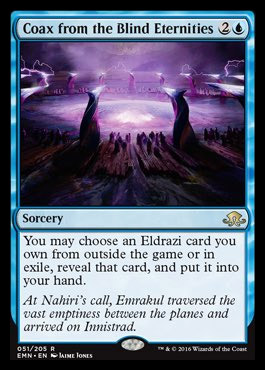
Mechanically, Coax gives the different blue-based Tron strategies a number of edges. It lets all of them run an Eldrazi wishboard to tutor answers and outs to various situations. Against combo, it grabs Thought-Knot Seer. If you need to race, Reality Smasher is on the way. For midrange grindfests, Drowner of Hope is there for value. You can also get either Ulamog or Emrakul to seal the game instead.
As an added bonus pointed out by one of my MTGSalvation forumgoers, Coax also synergizes very well with the seldom-played U/R Through the Breach Tron strategies. I don't know if this kind of untiered deck can push into Tier 3 or higher, but Coax would certainly help.
All those upsides aside, Coax has one big problem that has felled many other Modern tutors: a three-mana casting cost. Idyllic Tutor, Fabricate, most of the transmute cards (except Tolaria West in old Amulet Bloom), and other three-mana, sorcery-speed tutors see essentially zero play in competitive Modern. At three mana, Coax seems likely to follow in their forgotten footsteps.
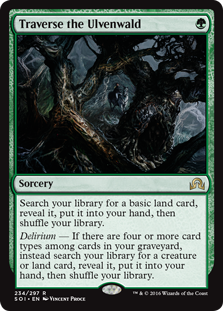
Even one-mana Traverse the Ulvenwald, despite a lot of initial promise and buzz from many players including myself, couldn't cut it!
Failed tutors in Modern
That said, there are a few two-mana tutors which do make the Modern cut. Sylvan Scrying is the Tron mainstay, with Glittering Wish seeing occasional play depending on the metagame. We also know Tron decks push up the curve to make otherwise unplayable cards (Karn Liberated, Ugin, the Spirit Dragon) into virtual three- or four-drops.
If those two principles can be combined, we might see Coax shine in blue-based Tron decks as a "virtual" two-mana tutor. Once Tron is assembled, Island plus Mine/Power Plant gives you all the otherworldly Coaxing power you could want. It does limit you to a turn four play (you'd need four lands on the battlefield), but that turn four Coax into Thought-Knot Seer or Reality Smasher can be very strong.
Despite these strategic possibilities, it seems very unlikely that the sorcery will coax anything more than a $2-$3 price tag once the set is released. Niche rares from widely-opened sets rarely get more, and Coax is unlikely to break the mold. Standard demand could definitely drive this higher (see Standard all-stars like Thalia's Lieutenant and Hangarback Walker with occasional Modern relevance), but I wouldn't bet on it and wouldn't buy too aggressively.
Thalia, Heretic Cathar
I've been putting in lots of Ad Nauseam reps on MTGO, and evil Thalia, Guardian of Thraben has cost me more than a few games and League finishes. Thalia is a name synonymous with "Death and Taxes" in all formats, and those are big shoes for her newest version to fill.
Wizards seems to have identified Thalia's competitive role, trying to keep her new design true to the Death and Taxes history while also sporting new abilities.
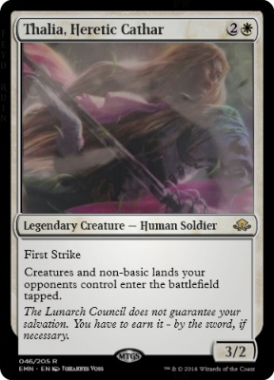
I haven't tested Thalia the same way I tested Emrakul, but it's hard to evaluate this card favorably in Modern. As a three-mana 3/2 with no immediate board impact, Thalia is already failing two of the key "Bolt Test" metrics on the spot.
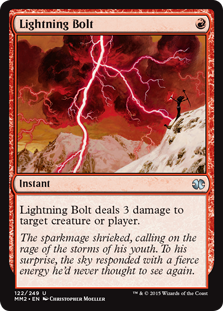
For review, the Bolt Test is not "Does this card die to Bolt?" Wild Nacatl dies to Bolt. Dark Confidant dies to Bolt. Blighted Agent dies to Bolt. The Bolt test is clearly much more than just the act of dying to the red staple. Specifically, it encompasses a few qualities:
- Does this card die to Bolt at parity? If not, what's the resource difference?
- Does this card have an immediate impact even if it gets Bolted? If so, is that impact consistent and relevant?
- Does this card protect itself from Bolt in any way?
- Does this card take over the game if it is not Bolted? If so, how decisive and reliable is that effect?
Something like Nacatl doesn't exactly take over the game if it lives, nor does it do anything if it dies immediately. It does, however, only cost one mana, which means it trades one-for-one with Bolt. Or, to quote one of my favorite apocryphal Modern phrases, your creature didn't die to Bolt. Bolt died to your creature.
By a similar token, Tidehollow Sculler dies to Bolt but can also remove a Bolt to stay safe. Old Thalia, Guardian of Thraben made Bolt cost two mana, making a resource trade at parity with Bolt. Flickerwisp, a D&T three-drop mainstay, always exiles even if it dies. And then there's Eldrazi Displacer which does die to Bolt but also completely shuts down opposing removal and gameplay (in tandem with Flickerwisp) if unanswered.
Passing the real Bolt Test in D&T
Unfortunately, new Thalia doesn't cut it here. She's one-for-four on our Bolt Test standards, with her only upside being an ability to run away with the game's tempo if she isn't immediately answered. A one-sided Kismet-lite is very hard for a lot of Modern decks to deal with, particularly if pressured by attacks or other D&T creatures.
Thalia's problem is that at three mana, she can't hit play early enough for the tapdown to be effective. Another problem is that the lockdown effect is only effective in the midrange and control matchups, with most aggro decks (except potentially Gruul Zoo and its hasted creatures) running right over her early.
That said, the dream scenario of a turn one Noble Hierarch into turn two Thalia on the play is very tantalizing. Few fair decks can overcome that play, although it does gear Thalia more towards Hatebears than Death and Taxes (don't know the difference? Hatebears is the one with all the "enters-the-battlefield" effects).
Overall, these strategic assessments suggest Thalia is unlikely to make it in Modern. She's also a promotional card (potentially the Buy-a-Box promo), which will further devalue her. I do think she's much better in Legacy, where she decisively shuts down Elves and screws with Sneak and Show Emrakuls, but that doesn't put an inspiring ceiling on her price. Expect this to be around the $2-$3 range at best.
Ulrich of the Krallenhorde
Three early previews down, two to go! Unfortunately, these closing cards don't live up to the buzz of the first three, even if Commander players everywhere are happy to finally get the long-awaited legendary werewolf.
Now, if only the Modern werewolf fans can get their long-awaited format playable.
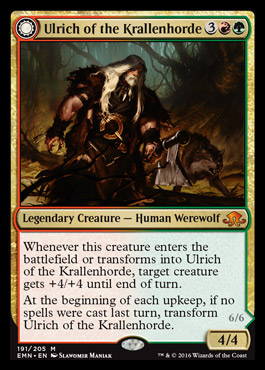
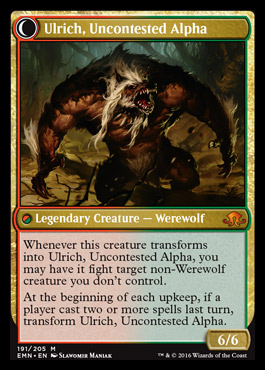
Huntmaster of the Fells is disappointed in his boss. Despite passing the Bolt test and even dodging Abrupt Decay, Ulrich just doesn't meet the standards for a Modern playable.
His immediate impact is purely offensive, with no interactive applications outside of a massive ten-damage fight trigger if he does flip. I'm not complaining about the fighting; Huntmaster had a similar effect and was eminently playable. Ulrich just falls flat because his on-enter trigger is too low-impact.
Too bad Wizards didn't reverse the triggers, even if it wouldn't make much flavor sense. That would have at least given Ulrich a fighting chance.
In all honesty, I had low hopes for a long-awaited legendary werewolf---with expectations and design constraints like that, it's hard to hope for a Modern playable. I do think this will be Standard-playable in the right strategy, and I assume the Commander crowd can find a home for him, so the current $7-$9 price tag seems about right. Of course, if you scent any Modern playability, however unlikely that is, this price could get even higher.
Identity Supplanter
We close out the official pre-preview week with a real doozy of a Modern card. Did you think Clone variants were bad? Did you think Thalia was bad for failing the Bolt Test? Well, with Identity Supplanter (or "Identity Thief," depending on the final translation), Wizards hits it out of the park with a bad Clone variant that also fails the Bolt Test.
And I thought I was annoyed with the abysmal Altered Ego!
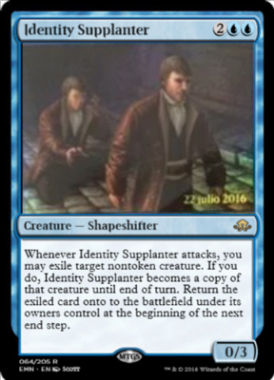
The newest shapeshifter is the bulkiest of the bulk rares. I saw some talk about this at least being Legacy-playable in Sneak and Show scenarios, but a) the trigger wouldn't activate Emrakul's annihilator even if you exiled her, and b) it couldn't even snipe off an opposing Marit Lage. I guess it pitches to Force of Will?
Let's just say I'm happy previews are starting in earnest this week.
Eldritch Moon Inbound!
I really can't leave you on that last note, so let's actually end with a real monster of an Eldrazi packed with power and flavor. Or rather, half of the monster because the other side (or sides) haven't yet been released.
Hanweir, the Writhing Township
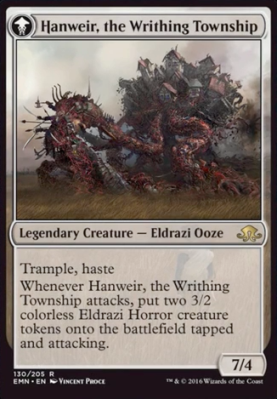
If you had asked me about Hanweir last week, I would have assumed it had some red or green enchantment on the other side. It fit the number crunch on new cards, and the only other hasted double-faced card was off the non-creature Westvale Abbey from Shadows.
Thankfully, as I was writing this I stumbled across the MTGSalvation post discussing a new Eldritch Moon mechanic: meld. Citing Reddit sources, the post points to a (bizarrely) new way double-faced cards will interact and I'd bet my entire Ad Nauseam deck that Hanweir will fit that new mechanic. That makes Hanweir less likely to be Modern-playable (it's hard to keep small, synergistic creatures around in a removal-packed format), but doesn't detract from the card being awesome.
However it turns out, don't buy Hanweirs for anything less than $1-$2 until you see its meld conditions.
~
Thanks for joining me today as we took a brief tour of the Eldritch Moon previews up through today. Join me next week as we review more Eldritch action and see how those crazy new mechanics are going. Got questions about these cards or other investment opportunities? Let me know in the comments and I'll see you soon.

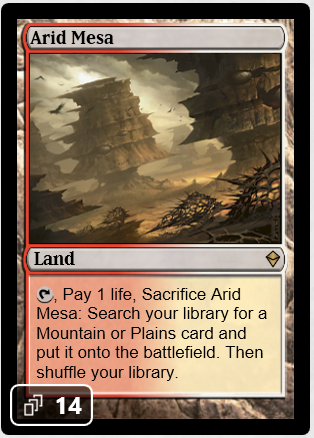
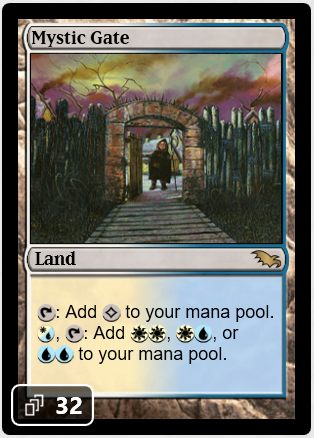


 Staples, in my mind, are unquestionably powerful spells that are considered auto-inclusions in certain archetypes (and powerful elsewhere) or enable whole archetypes by themselves. Lightning Bolt needs no explanation, as it is ever-present in the format and many archetypes stretch to red just to play Bolt, but almost everything else can be argued as stronger or worse than another option. The line between staple and strong option here is very blurred.
 If we start including every narrow card that archetypes use in Modern, the list will grow to twice its size and, in my opinion, loses its value.
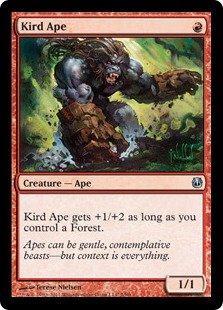
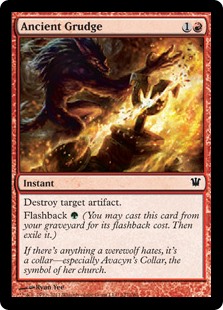
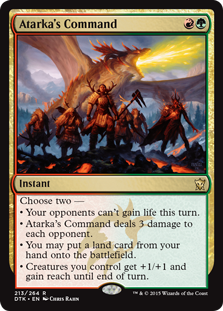 For those that have been under a rock for a while, most Burn decks nowadays stretch to fully embrace green for the Kird Ape upgrade in Wild Nacatl, and the Skullcrack upgrade in Atarka's Command. We were already playing green anyway for Destructive Revelry/Ancient Grudge in the board, and having that 12th strong one-drop is so essential to this archetype's strategy.
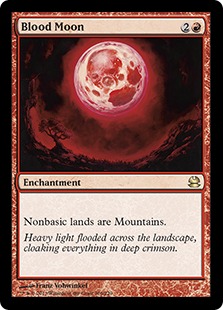 Land destruction in Modern benefits from a deep pool of powerful options that include “old-school” powerhouses and “new-school” strong additions. At the top of the list is undoubtedly Blood Moon, which remains one of the strongest alternate angles of attack in Modern and can be built to taken advantage of without too much trouble. We could talk about the effects of Blood Moon in Modern for a whole article, but for now, I’ll just remark on its strength keeping Tron strategies in check, while also keeping the format honest. In a fetch/shock format it can be relatively easy to stretch to three or even four colors without too much trouble (and the Gifts Ungiven decks do this quite well). Blood Moon exists to keep these monstrosities in check, punishing them (along with the aggressive side of red) for their slow, greedy manabases.
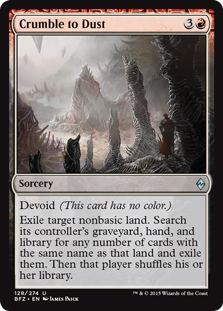 Crumble to Dust works well when a bigger effect is desired and is strong against Tron specifically, but can be quite awkward against Scapeshift. The intricacies of which land destruction spells to use in Modern can be quite complicated, but the tools exist to fight big mana as long as access to red is obtained.
 Lists that use Shatterstorm over Vandalblast either can’t hit five mana reliably, or plan on having access to four mana on turn three through a turn two ramp spell, where they can take advantage of the four CMC spell much more smoothly. Finally, as if Burn needed any more help, Smash to Smithereens provides utility that advances Plan A at the same time.
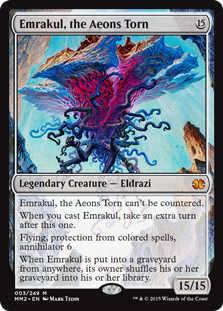
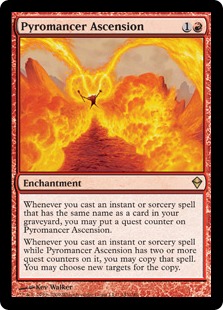 Through the Breach, alongside ramp spells, sneaks Primeval Titan and Emrakul, the Aeons Torn onto the battlefield quickly (and very unfairly, if you ask me). Pyromancer Ascension epitomizes the “quirky red enchantment” and can be absolutely devastating on the right weekend in Storm. Finally, while not necessarily a combo per se, the various red draw spells like Burning Inquiry, Goblin Lore, Faithless Looting, and Tormenting Voice enable multiple graveyard-based combos and value-generating effects out of Dredge, Grishoalbrand, and Mardu strategies.
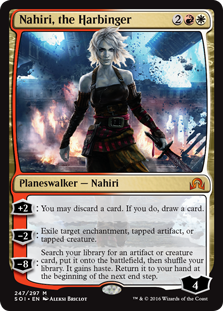
 Instead, WR Control seeks to kill creatures, buy time, and draw cards with Wall of Omens and Nahiri, the Harbinger, all while building towards a Nahiri ultimate that puts Emrakul, the Aeons Torn into play. The deck is solid, reliable, and surprisingly powerful considering it lacks many of the “no-brainer” cards other archetypes play in Modern.
 LD strategies can’t afford to play 20+ destruction spells, so in the long run they will always lose out.
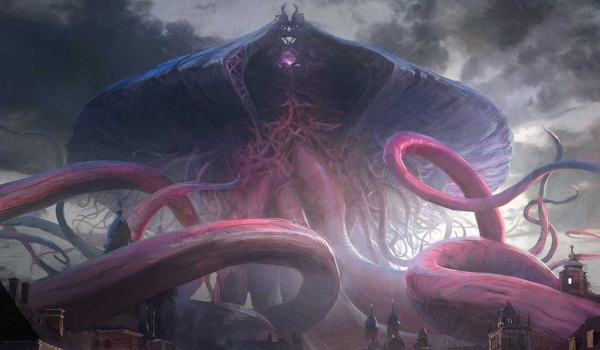
 Between Emrakul on Monday morning,
  RG Tron is a consistent Tier 1 Modern player, and has been taking top slots from late 2015 through
  If you're lucky, evaluators include some context with their evaluations: a decklist, a matchup, a metagame perspective, etc. If you're very lucky, you get a handful of tests to actually back up the theoretical claims. And if you've got Norin the Wary fortune, you'll get more extensive testing across a few matchups. That's how you stumble on the Colorless Eldrazis of the format. You don't discover format-defining tech by posting one-liner put-downs on Reddit.
 Thankfully for Eldritch Moon's villain, Emrakul comes with a cost reduction mechanic I've heard described as "delirium affinity." That's an accurate, flavorful, and helpful way of thinking about her mechanic, and it fits well with the Tron plan. You're virtually guaranteed to have at least an artifact and a sorcery in your graveyard by the time you could cast Emrakul anyway, even with Relic of Progenitus anti-synergy. This means she's really an 11-drop, not 13. In Lossett's build, Lightning Bolt gets her down to 10---notably, you can even Bolt and Emrakul in the same turn and it will cost 11 mana either way. Just don't cast Emrakul first!
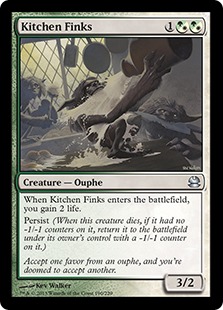 Despite lacking keyworded evasion, Ulamog does have a critical pseudo-evasion in his library exiling trigger. Even when chumped, Ulamog wins most games in three swings, and may even prompt a concession before if a critical combo piece or bullet gets exiled as part of the 20-card feast. This is particularly relevant against Abzan Company players, who may have reached stratospheric life totals off an earlier Kitchen Finks combo only to be devoured by Ulamog triggers later. You'll also see the exiles wreck decks like Scapeshift and Ad Nauseam which rely on specific cards remaining in their libraries. In the face of lifegain (e.g. Affinity's Vault Skirge, Kitchen Finks, or chump blockers soaking up damage), Emrakul might not win on that third swing. Ulamog always gets it done.
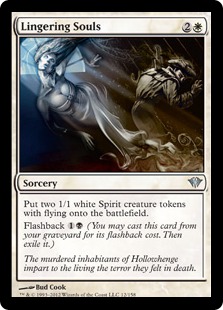 Here's one that's all Emrakul, all the time. Ulamog doesn't even have corresponding keywords to call his own, and flying plus trample are a dangerous package. Old Emrakul always had the problem of getting blocked by a spare Birds of Paradise or Thopter token, nuking much of the board but not actually affecting life-totals. The Promised End retains Emrakul 1.0's flying but adds trample, which is great for busting through flocks of obnoxious Lingering Souls tokens and other aerial obstacles. This is a categorical edge over Ulamog, who rarely wins in a damage race for lack of trample or flying (let alone both).
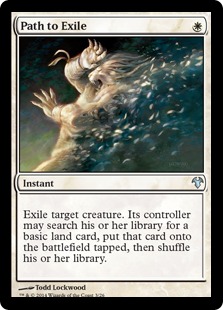 After Lightning Bolt, Path is the most-played removal spell in Modern and it's not even close. Indeed, Path is even more prevalent today with Jeskai Control back in Tier 1 and Kiki Chord just behind in Tier 2. Both strategies tend to pack the full playset. By contrast, you're seeing Jund players on a 1/1 or 2/0 split between Pulse and Dreadbore, and Wrath of God effects relegated to the sideboard. That's a serious knock against Ulamog, who gets a taste of his own exiling medicine down the barrel of a Path.
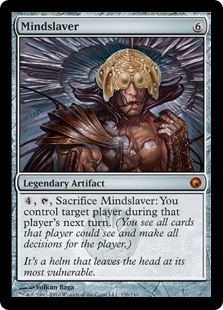 I've read a lot of back-of-the-napkin Emrakul analysis since her Monday release, and the mini-Mindslaving ability is by far the most misevaluated element of the card. I believe this arises from players analyzing in a vacuum and not thinking about the expected value of both triggers in real games. That is, how much removal-value can we expect to get when we cast Ulamog vs. when we cast Emrakul? For Ulamog, that's an easy one: we'll always exile two permanents, whether a bomb like Nahiri and a Restoration Angel, or just a pair of lands to take an opponent off a color. For Emrakul, it's significantly harder to translate a Mindslaver activation into removal-value without any context. It's even harder when it's not a true Mindslaver and gives the opponent a post-madness turn to recover and find answers. That's where testing helps in a big way.
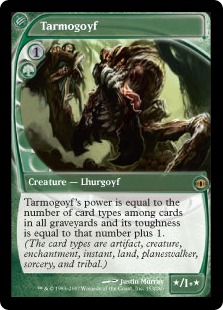
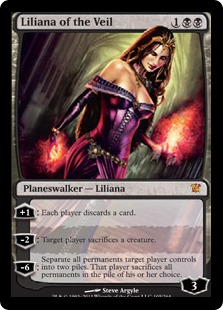
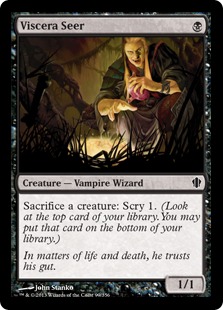 Emrakul gets really crazy when you add things like Spellskite, Arcound Ravager, Viscera Seer, Kolaghan's Command, Snapcaster Mage, and other cards that allow for devastating two-for-ones or worse. In one line against Abzan Company, my opponent drew Chord on their enslaved turn. I played the two Hierarchs in their hand, convoked everything for Seer, and then sacrificed their entire board of five creatures to scry a Temple Garden to the top of their deck. In another, I attacked Tarmogoyf into Emrakul, -2'd a Liliana to kill the opponent's lone Confidant, and then Kolaghan's Commanded the two-loyalty Lily while also using Command to discard a Pulse. As I said earlier: brutal.
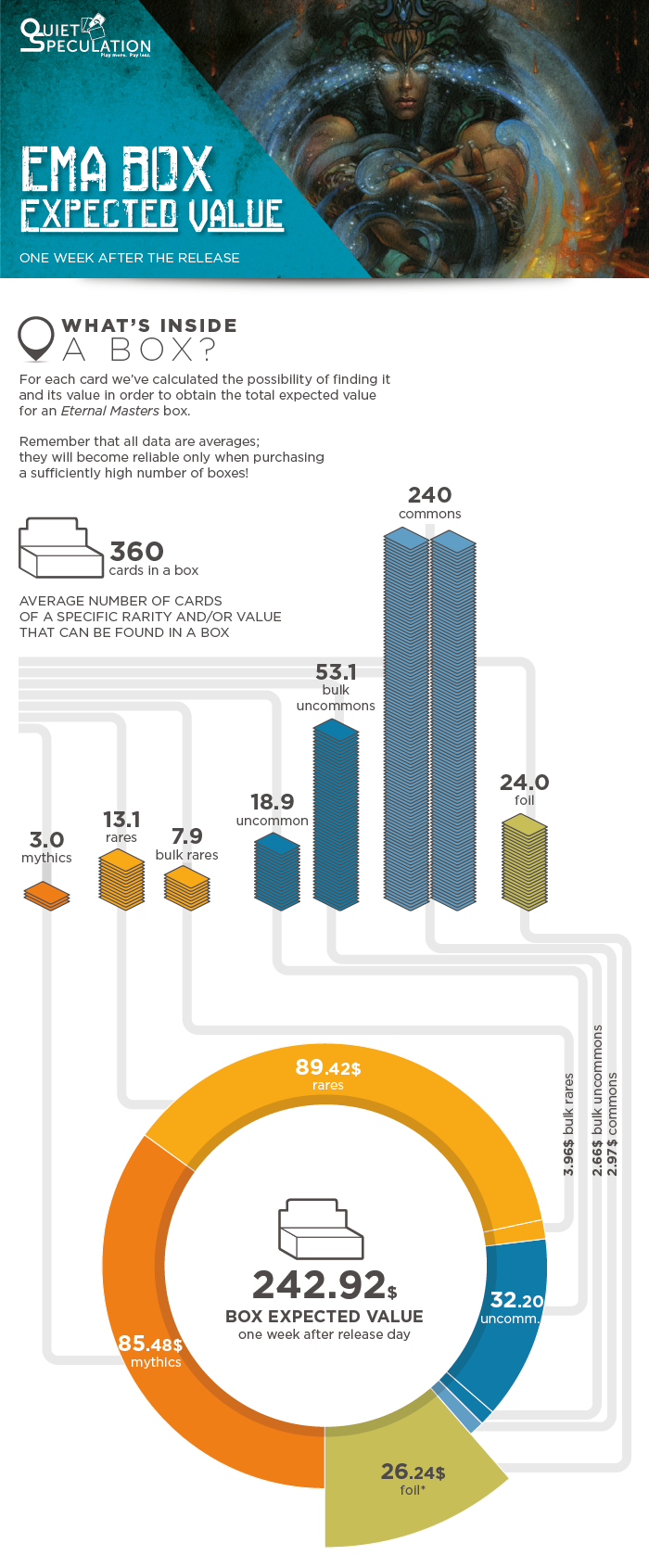
![Insider: Expected Value of an EMA Box [UPDATE]](https://www.quietspeculation.com/wp-content/uploads/2016/06/Featuredimage-012.jpg)




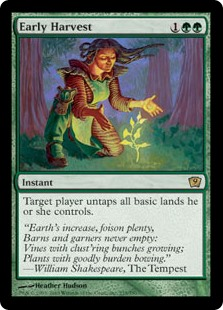 Early Harvest
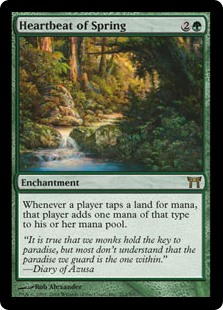 Early Harvest's greatest success was in the successor to the Sapphire Medallion version of Desire,
 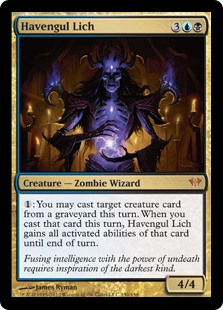 Havengul Lich
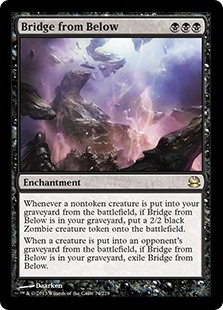 have had a dredge engine and Bridge from Below.
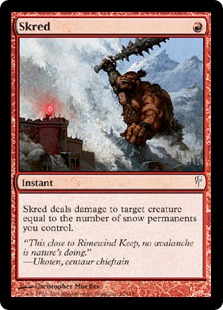 Skred
Skred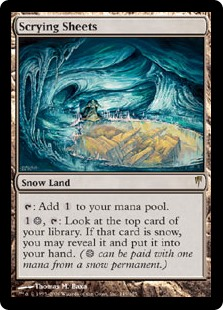 I realize a card draw engine that works around 50% of the time and requires considerable deckbuilding constraints doesn't seem very good. However, consider this: Sheets is a land. For the same mana investment per turn you could use Jushi Apprentice and leave your draw engine vulnerable to Bolt. Sheets provides colorless mana and is only vulnerable to Ghost Quarter or Tectonic Edge, and it is less likely that your opponent will Quarter a Scrying Sheets than a Desolate Lighthouse. Couple that with Serum Visions and you are looking at a reasonable way to hit the right mix of land drops and spells in a long game.