menu

Insider: QS Cast #96: Surprise Cartel Guest!

Are you a Quiet Speculation member?

If not, now is a perfect time to join up! Our powerful tools, breaking-news analysis, and exclusive Discord channel will make sure you stay up to date and ahead of the curve.

Play

The QS Cast returns! Chaz, and Tarkan come together as the new panel – and in this episode they discuss the following:


Cards We Discussed


Insider: Has Card Value Shifted from Playability to Collectability?

Are you a Quiet Speculation member?

If not, now is a perfect time to join up! Our powerful tools, breaking-news analysis, and exclusive Discord channel will make sure you stay up to date and ahead of the curve.

The finance game has changed dramatically in the past few years. I feel like I write sentences like that often here on QuietSpeculation.com, but the shift has been so dynamic and significant that acknowledging that simple fact is important to nearly every facet of collecting, buying, selling, and playing Magic: The Gathering.

The two biggest factors in influencing the market have been:

  1. Wizards has embraced frequent reprints in the Modern and Commander sector. If it isn't on the Reserved List, bet on seeing it again in a booster pack or preconstructed product.
  2. Investors and collectors going hard on Reserved List cards with the mentality that if Wizards is going to churn out reprints of every good card that they can, the best investment is obviously the cards that cannot be reprinted.

In the past, the best formula for investing in cards was to primarily acquire copies of fantastic tournament staples. There is always a high demand for cards that people will need to play the game. Not so much anymore. In fact, things have changed so much that I now believe if a card is good enough to be a long-term format staple, it will see multiple reprints down the road, which makes it a bad investment.

Basically, if your plan is to buy-in on Magic cards as collectible investments, the only "safe" move is to straight-up attack the Reserved List.

There was an error retrieving a chart for Mox Diamond

The Reserve List is a strange mish-mash of cards that includes many of the most iconic cards, the most powerful cards, and the most nostalgic cards. There are plenty of cards on the Reserve List that are staples in Eternal formats: The Power Nine in Vintage, the dual lands, and archetype-defining Legacy cards such as Lions Eye Diamond, Mox Diamond, and The Tabernacle at Pendrell Vale.

There is clearly a correlation between collectibility, playability and the price of a card. In the past, I would have described an equation that tends to be an accurate predictor of value as looking something like this: collectability accounts for 25 percent of a card's value and actual playability accounts for 75 percent of the value.

These numbers are clearly not verifiable and they are not specifically important for understanding the concept that I'm proposing. The important part of the concept is simply that cards that generated value and became expensive tended to do so based around demand from players building decks.

There was an error retrieving a chart for Underground Sea

Let's hop in the QS Time Machine so we can take a look at exactly what I'm describing:

It was a simpler time: Modern Masters was just a glimmer in WOTC's eye, The President of the United States didn't get into Twitter flame wars with athletes, and Jace, the Mind Sculptors ran roughshod over every format in Magic.

Standard-legal Jace was $150, which was in the same ballpark as many of the most desirable collectible Reserved List cards: Moxen, blue duals, Tabernacle, etc. The demand for legitimate tournament staples was closely linked to how many players were looking to pick up the card for play and much less so from people who viewed cards as collectible items. The collectible aspect of the game manifested less prominently than the utility a card provided in tournament Magic.

Masters sets have dramatically changed the value associated with utility or playability in the Modern marketplace. If a card is playable, and not also highly collectible (i.e., on the Reserved List) we can pretty much predict it will be reprinted to meet tournament player's demand.

I would actually argue that the loose equation I proposed earlier, where utility was the dominant predictor of value and collectibility the afterthought, has flipped in the other direction.

There was an error retrieving a chart for Scalding Tarn

Here's a thought exercise:

If somebody gave me $1000.00 with the stipulation that I had to spend it on either Alpha Webs or Scalding Tarns, I'd choose Webs. I feel like that is a pretty fair indicator of a pure utility card versus a pure collectible card. Tarn is one of the most-played Magic cards throughout the non-rotating formats and Web is quite bad and has been reprinted in the Modern era as an uncommon. It's literally not even a Reserved List card.

And yet, my prediction would be that the Webs would generate more profit over the course of several years than the Tarns. Collectibility is king.

There was an error retrieving a chart for Web

It's also a reason that I question the effectiveness of the Reserved List in general to accomplish what it was designed to do. Would reprinting Sedge Troll in a Standard-legal set have any impact on the value of Alpha, Beta, or Revised Sedge Trolls? Obviously, I'm spitballing ideas and have no way to prove or disprove the consequences made in my bizarro world, but I predict the value of the older editions would actually go up.

The addition of Llanowar Elves into Standaquadrupledled the value of the Beta editions. It isn't an apples-to-apples comparison, since Llanorwar Elves isn't on the Reserved List. However, I would argue that the "collectibility" factor of Beta cards is a fairly static statistic linked to scarcity and little else.

There was an error retrieving a chart for Llanowar Elves

It is interesting to me exactly how the Reserved List plays into collectibility. Obviously, a card earmarked with a "never again" clause is more valuable than one that isn't. I believe that buyouts on Reserved List cards (AKA old cards) in a world of Masters and other reprint sets sparked the movement toward collecting old cards. However, I'm beginning to wonder if such a shift toward collectibility would have simply happened anyways, even without a Reserved List. Is it possible that we would have ended up in the same place even if the Reserved List didn't exist?

Really, I'm inclined to say yes, but probably at a less frantic pace. Even assuming that any card can be reprinted, in a world where anything can be reprinted, and cards tend to be reprinted based on demand (in particular, tournament demand), what cards would you want to invest in?

I wouldn't want to stock up on Scalding Tarns because they will get reprinted a zillion times. I'd still want Alpha Web.

The types of cards I would want in a Masters edition era with no Reserved List would still be copies of old-school tournament playable staples: Moxen, duals, Alpha cards, etc. The early, short printed editions would still be the most desirable and collectible cards in the game.

I don't mean to go too deep on the Reserved List, I'm merely bringing it up to illustrate a point: the value of Magic cards has shifted toward collectibility rather than playability. We live in a bizarro world where good cards equal bad long-term value. Up is down and down is up. Dogs and cats are living together. Mass Hysteria. Okay, that is maybe a slight exaggeration.

The fact remains, though, that old cards (Reserved List, but also other nice cards) are the most collectible cards in a game where Lion's Eye Diamond's value is derrived more from collectibility than playability. How have you shifted your card-acquisition strategy in the last few years?

Daily Stock Watch – Champion’s Helm

Are you a Quiet Speculation member?

If not, now is a perfect time to join up! Our powerful tools, breaking-news analysis, and exclusive Discord channel will make sure you stay up to date and ahead of the curve.

Hello, everyone and welcome to a new edition of the Daily Stock Watch! The crazy market movement for cards across the board is probably on one of its finer stretches in recent memory, thanks largely to the influx of information from people who are into #mtgfinance, and the willingness of some finance junkies to go all out on certain cards that they feel are worthy of getting the push. If you're into this kind of thing, I suggest that you check out Sigmund Ausfresser's most recent article about certain market trends for more information. Over this side of the fence, we're more focused on the immediate impact of some card spikes (or drops) on a daily basis from different formats, and how we could earn (or save ourselves) off it. Today's card is one that has just reached its all-time high after not getting reprinted in Commander Anthologies Vol. II, and it's looking good for the coming months until WotC decides that its time to make a new print run of it.

There was an error retrieving a chart for Champion's Helm

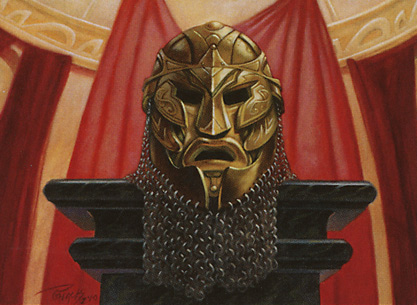
Champion's Helm is a fine Commander card as it allows combat savvy generals to lead their EDH decks to victory via the battlefield. It makes a relatively bad Commander look really good with the help of its hexproof clause, while also helping protect the fragile ones that need some cover to make its power level rise. Its power is evident in this Kemba, Kha Regent deck whose general loves to wear every equipment at its disposal to overpower the opposition. I've listed the whole deck down in alphabetical order just so you could see how many swords (and body gear) this cat cleric is willing to wear to victory.

Kemba, Kha Regent

Commander

1 Kemba, Kha Regent

Deck Contents

1 Argentum Armor
1 Baneslayer Angel
1 Basilisk Collar
1 Batterskull
1 Bloodforged Battle-Axe
1 Bonesplitter
1 Caged Sun
1 Champion's Helm
1 Chariot of Victory
1 Darksteel Plate
1 Elesh Norn, Grand Cenobite
1 Emeria Shepherd
1 Emeria, the Sky Ruin
1 Enlightened Tutor
1 Extraplanar Lens
1 Gauntlet of Power
1 Godsend
1 Grand Abolisher
1 Hammer of Nazahn
1 Helm of Kaldra
1 Hero of Bladehold
1 Infiltration Lens
1 Inkmoth Nexus
1 Kemba, Kha Regent
1 Knight of the White Orchid
1 Konda's Banner
1 Kor Haven
1 Kor Outfitter
1 Leonin Abunas
1 Leonin Shikari
1 Lightning Greaves
1 Loxodon Warhammer
1 Mask of Avacyn
1 Masterwork of Ingenuity
1 Mirran Crusader
1 Mox Opal
1 Myriad Landscape
1 Oblation
1 Open the Armory
1 Open the Vaults
1 Puresteel Paladin
1 Quietus Spike
1 Rogue's Passage
1 Sensei's Divining Top
1 Serra Ascendant
1 Shield of Kaldra
1 Sigarda's Aid
31 Snow-Covered Plains
1 Sol Ring
1 Solemn Simulacrum
1 Sram, Senior Edificer
1 Steelshaper's Gift
1 Stone Haven Outfitter
1 Stoneforge Masterwork
1 Stoneforge Mystic
1 Stonehewer Giant
1 Strata Scythe
1 Sun Titan
1 Swiftfoot Boots
1 Sword of Body and Mind
1 Sword of Feast and Famine
1 Sword of Fire and Ice
1 Sword of Kaldra
1 Sword of Light and Shadow
1 Sword of the Animist
1 Sword of Vengeance
1 Sword of War and Peace
1 Trailblazer's Boots
1 Umezawa's Jitte
1 Whispersilk Cloak

If you're a fan of Voltron, then this is the deck for you. The addition of Champion's Helm on this list is just gravy, but it is very much searchable with the help of Steelshaper's Gift, Enlightened Tutor, and Stoneforge Mystic. Decks that specialize on the use of powerful artifacts such as this one have a distinct advantage over ones that rely on chance to draw the card, and only sees it as an extra option in keeping your Commander alive and functional at some points of the game. Nonetheless, this card is very powerful, although its current price tag might be deceiving because it has dodged a reprint (thanks in part as well to it being part of the Kaladesh Inventions series) and there aren't too many copies of it running around the market.

At the moment, you could still get copies of Champion's Helm via ChannelFireball, Card Kingdom, and TCGPlayer for anywhere between $14.99 up to $18.99. StarCityGames is out of stock of English copies, but they still have foreign copies of the card under $15 up for grabs. Do note that there are no normal foil copies of the card, and that's one of the reasons why I believe that this is still due for a reprint in the coming Commander products. I would recommend buying it now if you'll use it, but I wouldn't be too keen on getting them for spec purposes despite of the possible spikes that it might incur. I'm not really high on cards that aren't too chased in the market, especially with the risk of it being included in any product runs for the near future.

And that’s it for today's edition of the Daily Stock Watch! See you again next time, as we check out a new card that should be on the go, or good enough for speculating. As always, feel free to share your opinion in the comments section below. And if you want to keep up with all the market movement, be sure to check in with the QS Discord Channel for real time market information, and stay ahead of the hottest specs!

Video Series with Ryland: Infect

Are you a Quiet Speculation member?

If not, now is a perfect time to join up! Our powerful tools, breaking-news analysis, and exclusive Discord channel will make sure you stay up to date and ahead of the curve.

Aaron Barich took down the Invitational this past weekend infecting the competition in the Top 8. He is no stranger to the deck, but his performance is a good reminder that the deck is by no means dead. The loss of Gitaxian Probe over a year ago now was followed by a steep decrease in the deck's metagame share. However, the deck clearly still has the tools to get the job done, Probe or no Probe.

Infect has always been one of the faster decks in the format, with the potential for the turn-two kill—although unlikely—and the not too uncommon turn-three kill. It best capitalizes on matchups that are light on interaction. Big mana decks, for example, often struggle against Infect; the deck is too quick and far too good at stopping a single piece of interaction.

Barich's list was pretty standard as far as the maindeck was concerned; 5-0s have been posted previously in the past few months with 59/60 cards present, the exception being the singleton Temple Garden. A white splash? In Infect? When you see a white splash in Modern that is present only for the sideboard, generally you're going to be looking for some powerful hate cards. Stony Silence, Rest in Peace, Gaddock Teeg, Worship, and the like.

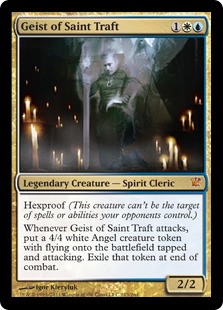
What's that? Geist of Saint Traft? That was unexpected. If I'm being honest, I'm totally buying into this tech. It seems great for the heavy and cheap interaction matchups like Mardu or Jeskai. People often completely disrespect their life totals against Infect, and pump spells can do a great job of protecting Geist in combat. Yes, having two very different plans in a matchup can be suboptimal, but I think it's powerful enough in the respective matchups to warrant the anti-synergy. Without any reps with the plan myself, I can only speculate, but I'm very sold on giving Geist a fair shot in the Infect board.

Many people have already asked me if I expect Infect to gain some meta-share after Barich's performance this past weekend. The short answer to a question like this is almost always, "yes...a bit." I don't expect Infect to jump up in meta-share so much that suddenly it's the deck to beat and you see it everywhere—but anytime you have a deck like this come back with a strong performance at a relevant event, some people will pick it up again. That said, at the end of the day if you are determined to beat Infect, you are likely to be able to do so with relative ease. It struggles with frequent and cheap interaction, something that is not particularly hard to come by in Modern if you are looking for it. With this in mind, it's hard to imagine Infect becomes an epidemic rather than seeing a small, and likely temporary, increase in its meta-share.

I hope you enjoy the matches and as usual, I'm interested to hear what kind of content you'd like to see moving forward, so I can continue to evolve and improve my videos. Let me know what you would like to see! If you want similar content, check out my Twitch channel for some more live Modern.

[youtube https://www.youtube.com/playlist?list=PL261kJ_cAQC9KF7gbQe2nEWGJvF3sX85y]

Infect, by Aaron Barich

Creatures

4 Blighted Agent
1 Dryad Arbor
4 Glistener Elf
4 Noble Hierarch
1 Spellskite

Instants

1 Apostle's Blessing
4 Blossoming Defense
3 Become Immense
1 Dismember
2 Groundswell
4 Might of Old Krosa
4 Mutagenic Growth
2 Spell Pierce
4 Vines of Vastwood

Sorceries

1 Distortion Strike

Lands

2 Breeding Pool
2 Forest
4 Inkmoth Nexus
2 Misty Rainforest
2 Pendelhaven
1 Temple Garden
3 Verdant Catacombs
2 Windswept Heath
2 Wooded Foothills

Sideboard

1 Dismember
2 Dissenter's Deliverance
4 Geist of Saint Traft
1 Grafdigger's Cage
2 Nature's Claim
2 Relic of Progenitus
2 Shapers' Sanctuary
1 Spell Pierce

Unlocked: MTGO Market Report for June 13th, 2018

Are you a Quiet Speculation member?

If not, now is a perfect time to join up! Our powerful tools, breaking-news analysis, and exclusive Discord channel will make sure you stay up to date and ahead of the curve.

Welcome to the MTGO Market Report as compiled by Matthew Lewis. The report will cover a range of topics, including a summary of set prices and price changes for redeemable sets, a look at the major trends in various Constructed formats and a "Trade of the Week" section that highlights a particular speculative strategy with an example and accompanying explanation.

As always, speculators should take into account their own budgets, risk tolerances and current portfolios before buying or selling any digital objects. Please send questions via private message or post below in the article comments.

Redemption

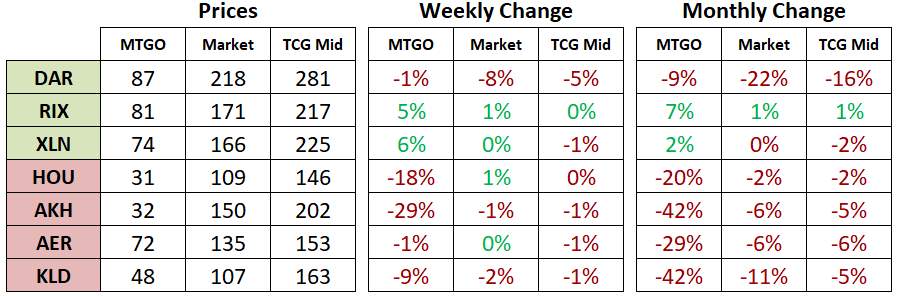
Below are the total set prices for all redeemable sets on MTGO. All prices are current as of June 11, 2018. The TCGplayer market and TCGplayer mid prices are the sum of each set's individual card prices on TCGplayer, either the market price or mid price respectively.

All MTGO set prices this week are taken from GoatBot's website, and all weekly changes are now calculated relative to GoatBot's "full set" prices from the previous week. All monthly changes are also relative to the previous month's prices, taken from GoatBot's website at that time. Occasionally, full set prices are not available, and so estimated set prices are used instead. Although Hour of Devastation (HOU), Amonkhet (AKH), Aether Revolt (AER), and Kaladesh (KLD) are no longer available for redemption, their prices will continue to be tracked while they are in Standard.

Redeemable sets are highlighted in green and sets not available for redemption are highlighted in red.

Standard

Amonkhet (AKH) dropped by over 10 tix this week, corresponding to a nearly 30-percent decline, while Hour of Devastation (HOU) saw a close to 20-percent retrenchment. All the sets rotating out of Standard in the fall showed some weakness, while the three sets sticking around did relatively well. The reprinted redemption sets for Ixalan (XLN) and Rivals of Ixalan (RIX) have not yet hit the store.

There was an error retrieving a chart for Gideon of the Trials

Dominaria (DAR) is still being opened in Draft and will continue to decline until the release of Core Set 2019 (M19) in early July. It's a fine time to be a buyer of select cards from DAR, but it's still a little early to be thinking about full sets. Check out the trade of the week below for a long-term DAR spec.

On the results front, some diversity crept into the top eight of the Star City Games Standard Classic in Roanoke this past weekend. This wasn't the recent red-dominated Pro Tour top eight. Blue and black made a strong push, putting six U/B Control or Esper variants into the top sixteen. Actionable advice based on these results seems short-sighted, though I am interested to see an evolution of the format.

Modern

Perusing the latest metagame results from MTGGoldfish, I noticed that Jeskai Control has quietly slipped into second place. What's making the difference for the deck is Teferi, Hero of Dominaria, giving the deck a flexible way to generate an advantage, but more importantly, the untapping of two lands gives a way to protect Teferi that plays into the deck strength, instant-speed removal and counterspells.

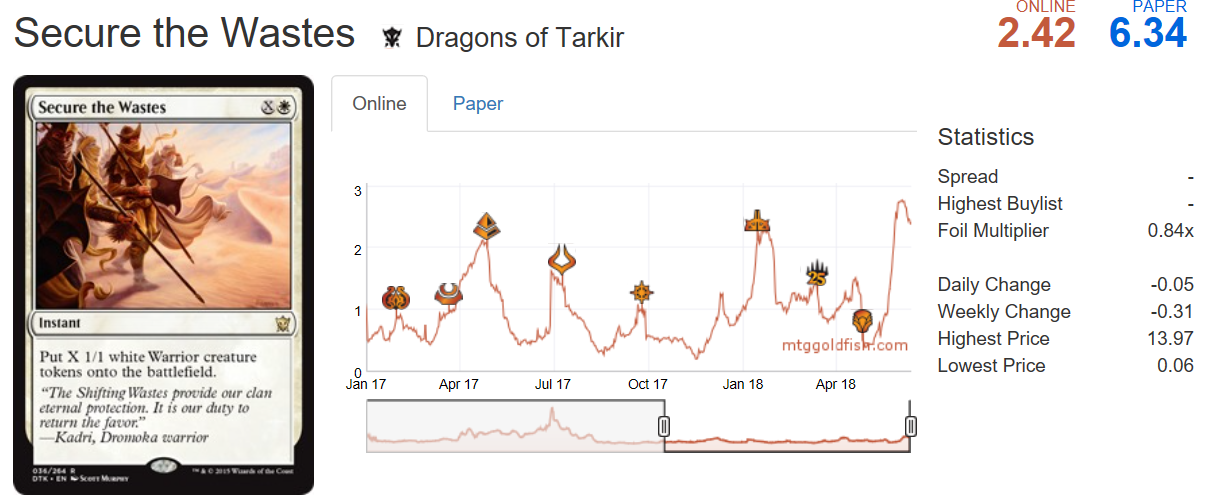
Another interesting twist is the inclusion of  Secure the Wastes. Have a look at the chart below, courtesy of MTGGoldfish.

The cycling up and down has been happening on a regular basis, so it will be time to start watching this card when it cycles down to 1 tix or less. I think a price in the 0.5 to 0.7 tix range will be a great time to be a heavy buyer of this card. The big advantage of speculating on this card in particular is that it's not currently on the curated card list from Treasure Chests. The next time the curated list is updated, keep an eye out to make sure this one dodges the list, and then speculators should move in heavily on the right price.

Standard  Boosters

Two RIX boosters and one XLN booster hit 6 tix this week as players recognize the value in a cheap draft and as the appeal of triple DAR draft starts to wane. I've been selling XLN block draft sets from the portfolio as the window to draft these two sets only extends until the release of Core Set 2019 (M19) in early July. At that time M19 will become the current draft format with triple DAR draft the secondary option and XLN block draft getting pushed out of the queues completely. When they leave the queues, the price of XLN and RIX boosters will drop, so be sure to sell down any excess boosters you have over the coming weeks.

That being said, they won't be dropping to zero as they will still be valued based off of their contents. If you do end up with some excess XLN and RIX boosters, and their prices have dipped to 1 tix or so, don't be in a rush to sell. Amonkhet (AKH) dipped as low as 0.7 tix after DAR was released, and it has since recovered to over 1 tix. Hour of Devastation (HOU) was dropping from a much higher price, but it's maintained a price of 1.4 tix or so over the last six weeks.

AKH gives a good guide for what XLN could do in the coming weeks, so if XLN boosters drop below 1 tix, it will time to consider being a buyer. On the other hand, using HOU as a guide for RIX boosters suggests they are a strong sell above 2 tix and are unlikely to drop into a buying range in the near term.

Trade of the Week

For a complete look at my recent trades, please check out the portfolio. This week I employ a classic strategy of buying a complete cycle of cards. The idea behind this strategy is to hedge your bets around a playable cycle of cards, with the hope that shifts in Standard will bring different parts of the cycle to the forefront of the metagame at different times.

There was an error retrieving a chart for Goblin Chainwhirler

The cycle in question already has two components of it played in Standard already with Goblin Chainwhirler and Steel Leaf Champion. The rest of the cycle is comprised of Dread Shade, Tempest Djinn, and Benalish Marshall. All told, I paid a little under 8 tix for a playset of each.

For this spec to pay off, I'm going to want to be able to sell two playsets to cover the initial cost of 8 tix. If nothing changes in Standard, then Steel Leaf Champion and Goblin Chainwhirler will see a natural appreciation in price after DAR draft ends. They also see a spike in demand in the fall and into the winter as players come back to MTGO. It's not hard to envision being able to recoup the initial investment with these two cards alone, as long as I'm looking to the long term.

There was an error retrieving a chart for Tempest Djinn

The strategy is not without its risks though. Chainwhirler could be banned; we've already seen a red three-drop banned in Standard this year, so it's not hard to extend that reasoning to this one. There could also be a big push into gold cards and multicolour decks.  Both of these events would hurt the outlook for this spec, although in different ways. Having Chainwhirler banned in Standard would immediately drop the value of the card, but it might open up room in the metagame for other parts of the cycle to shine. A shift to multicolour decks in Standard would be a much tougher turn of events and would require a close reckoning of the future potential of this position.

Anticipating the GP Las Vegas Metagame

Are you a Quiet Speculation member?

If not, now is a perfect time to join up! Our powerful tools, breaking-news analysis, and exclusive Discord channel will make sure you stay up to date and ahead of the curve.

At last, GP Las Vegas is upon us. Unfortunately, work-related complications mean I will not be going. But that won't stop me from examining the latest Modern results to anticipate the metagame. While these results are not entirely unexpected, interpreting the data with care ensures a more accurate metagame read.

The data from the past few weeks tells a very clear story about the metagame. Humans is believed to be, and may actually be, the most powerful deck in Modern, but that doesn't make it the actual best choice for a given field. Players expect that to be true and, consequently, for Humans to be widely played. This reaction is what will actually determine the GP's metagame which in turn will inform which decks players "should" be playing if they want an edge on the competition.

Regionals Data

Normally, I aggregate the data and present it in chart form, but that's not necessary here. I'm late to the party this time, so others have done the work already. The thing that struck me first was the Hollow One spike when the New Jersey results were added to the sample. However, as I looked through the decklists, this became less surprising. I will discuss why in the next section.

What stands out is how, for lack of a better term, ordinary the Regionals results are. Nothing unusual stands out. There's not even much innovation in the decklists, as Jordan pointed out. In fact, it's almost exactly what one would expect just looking at the overall metagame.

This metagame has been stable for some time, and nothing groundbreaking was printed in Dominaria. Even if there is actually something impressive lurking in the cardpool (as there often is), Humans is quite the gatekeeper.

The Complications

All that being said, I'm leery of reading even that much into these data. The problem is twofold: first, there's no indication of what the overall metagame at each of the events looked like (for example, it was apparently very weird in New Jersey) and population can determine representation. The overall data may look reasonably representative, but that doesn't mean that each event was, which can skew the results.

The second problem is clustering. I've highlighted the cluster of Hollow One decks already, but that also happened for Jeskai Control, Humans, Grixis Death's Shadow, and others. When a result is reported consistently across the test geography, it indicates that it is reflective of reality. Clustered results indicate local distortions, which is great for finding new research topics, but weakens a metagame conclusion. While the top decks did perform well across the board, their numbers came from many clustered results.

Consider this: Humans and Hollow One had the highest total representation in Regionals Top 8s. However, Humans only appeared in 6/14, or 43%, of them; that's a rate shared by Jeskai Control and Affinity. Similarly, Grixis Death's Shadow had six total appearances, but only appeared in four Top 8s, for 28%. Hollow One did well with 8/14, for 57%, because it was only clustered in New Jersey. If the starting metagame population for each event was known, and there was a relatively even distribution, the clustering would not matter. Lacking that, I must assume that outliers and distortions are factors in these data.

The Takeaway

I can't cleanly conclude that there is a clear front runner from the Regionals data. When considering the clustered results, it becomes increasingly unlikely that any one deck actually stood out from the pack two weeks ago. Therefore, the lesson of Regionals is not how well-positioned a given deck is, but how open the metagame is. Anything can do well, indicating that having a solid gameplan currently trumps deck positioning.

The Invitational

While most of the discussion about SCG Con will invariably be about No Banned List Modern and/or the Pauper Classic, I was focused on the Modern Classic. The Classic was the only all-Modern part of the event, and suffers from none of these issues, so it was the only tournament truly relevant to this article.

Invitationals and invite-only events in general aren't indicative of the metagame. The population is small, non-random, usually known, and heavily metagamed. This means that the sample is not statistically valid. When the guest list is known beforehand, it's not hard to find out which decks players gravitate toward and plan accordingly.

Furthermore, this was a multi-format event. As such, it was possible to be mediocre in Modern but excel in Standard and still Top 8; it worked for Gerard Fabiano, and may explain the Green Devotion deck. This time around, though, the Invitational did yield some interesting data.

Day 2 Metagame

The Invitational's Day 2 Modern metagame was stunningly warped. Jeskai Control dominated by a wide margin, doubling the population of Humans and Affinity. Whether this is a function of the starting population or an actual competitive success story is unknown (though I'm inclined to the latter, since Jeskai Control is the only deck with multiple copies at 7-1 or better), but it says a lot about player expectations. As mentioned, Humans is known to be the most successful deck in Modern right now. Given the population of Jeskai decks and that Mardu Pyromancer is in fourth place, and that both decks are known to have favorable Humans and Affinity matchups, it is certain that the Invitational players expected aggro decks to be very popular.

My usual cautionary tale about reading into player intentions and decisions from results doesn't apply to Invitationals. The players who attend the events write about their intentions and how they're metagaming the event; it's a reasonable extrapolation. The Invitational clearly had an unusual Modern metagame, and given how much discussion there's been about Humans being the best deck, players choose to game against Humans. What is surprising is how few took the next step and tried to play Tron to get an edge over the anti-Humans decks. Perhaps the poor Affinity matchup scared them off?

The Classic

Anyway, onto the valid data. The Classic Top 16 decks are an eclectic bunch and really speak to the diversity of Modern. Humans has two copies in the Top 16, but so do Burn and Storm. The rest is a mix of known Tiered decks and Grishoalbrand.  There isn't a common thread that I can latch onto to explain these data or draw a greater conclusion. It just reflects Modern's diversity and ability to reward deck mastery.

What Does it Mean?

After more than a month of pouring over data and making predictions, my conclusion is rather underwhelming. I cannot cull a deeper insight than Humans being the expected best deck in Modern. However, what I've realized is that while Humans does have a lot of staying power, it's not exceptional. The provable reality of the past month has been that Humans is good, and may be the center of gravity for the metagame, but that doesn't make it the winningest deck. It hasn't had significantly better results than any other deck, and in some ways it's been performing poorly. Jeskai has risen to feed on this metagame, allowing for decks that Humans otherwise suppresses.

Furthermore players expect Humans to be the best deck. This was very clearly shown at the Invitational. Therefore, even if Humans isn't actually a factor at a given tournament, it will exert influence over deck choice. Players are going to avoid decks that are weak against Humans if they have the option. Given this information, the logical conclusion is to play a deck strong against the anti-Humans decks and cruise to victory, right?

The Trick

Well, no. Standard and Legacy are reasonably stable and predictable, but not Modern. Looking back at the aggregate metagame data, no deck represents more than 10% of the meta. Therefore, odds are players will face a different deck every round during the GP. This is a format where trying to game the system too hard is self-defeating. Instead, be aware of your chosen deck's strengths, play to them, and make sure you have a good plan against the known decks.

Don't Level Yourself

The main thing to take away is to not overthink deck selection this weekend. It is very easy to get hopelessly lost in a metagaming cycle, decide on a strategy that only makes sense inside that loop, and end up playing Scion of the Ur-Dragon in Modern. The wiser strategy is to be fully ready for the expected metagame and have the flexibility to answer metagamers. This is Modern, and it's impossible to prepare for everything. Instead, players are challenged to register a powerful and well-constructed maindeck while having a flexible enough sideboard to answer the unexpected.

Chef's Choice

If I were going to Las Vegas, I would play Jeskai Tempo. I've been very impressed and successful with that maindeck, and would not change a thing. I wanted another Geist maindeck initially, but I started pairing with Humans and Elves again, and Electrolyze rejustified its presence.

For the sideboard, given the proliferation of Jeskai Control decks and the diversification of aggro decks, I would have cut a Negate for another Dispel, switched a Verdict for Wrath of God, and cut the Cliques for the fourth Geist and a second Anger. These modifications support my primary plan of riding Geist to victory against slower decks and combo while expanding and diversifying my answers to aggro.

Modern tends to reward small tweaks based on adjusting primary gameplans, as aggressively metagaming is more likely to miss.

Plan Ahead

I have found no reason to doubt my initial impression of this metagame. The evidence of Humans dictating the meta has grown stronger over the past month. Many players have picked up on this and are reacting, but this doesn't mean that it is correct to react to the reaction. There is no evidence that such a strategy has paid off so far, and many players appear to be actively playing into this reaction and winning anyway.

Rather than go crazy trying to find the solution to the format, play what you know. Mastery is, as always, the key to Modern success. Failing that, it is acceptable to just play Humans. The deck is straightforward enough that, given no better option, players should be able to audible to it and still do well.

Unlocked: Identifying Important Market Trends

Are you a Quiet Speculation member?

If not, now is a perfect time to join up! Our powerful tools, breaking-news analysis, and exclusive Discord channel will make sure you stay up to date and ahead of the curve.

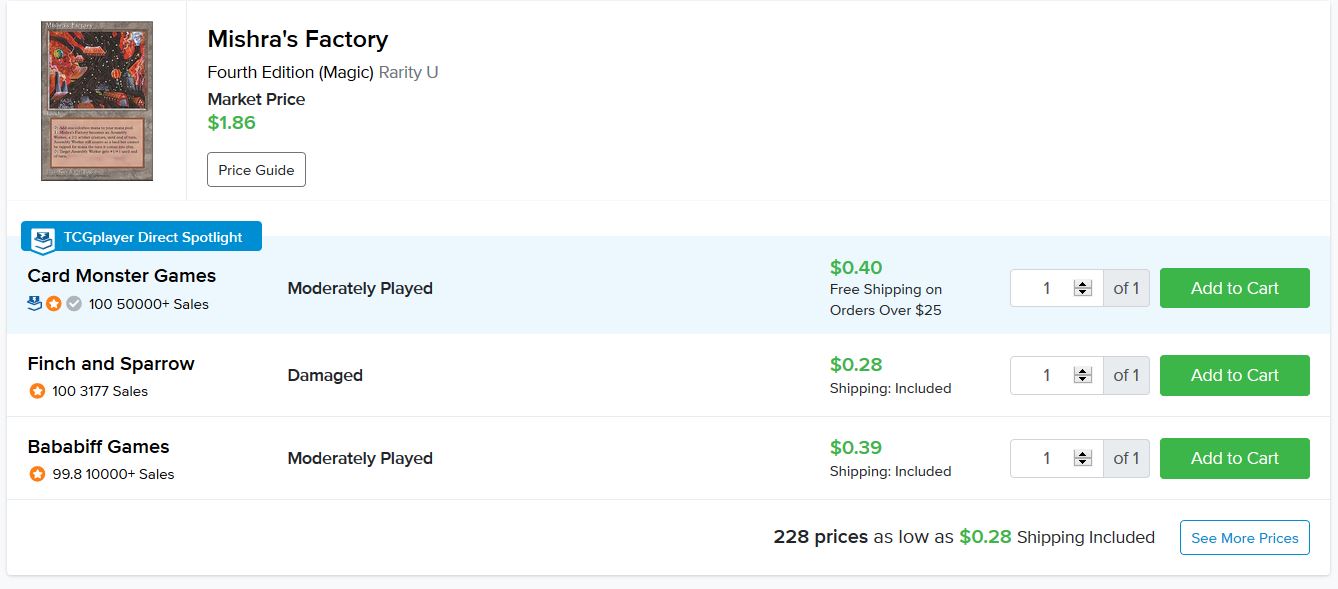
Last week I talked about a classic Magic set that doesn’t get the appreciation it deserves, given the rising value of numerous cards in the set. The set was Fourth Edition, and I noted that the best-selling card from the set on TCGplayer was Mishra's Factory.

There was an error retrieving a chart for Mishra's Factory

Since writing the article, the card doubled from about $1.50 to over $3. Was this a coincidence, or did “greedy speculators” target the card after reading about it in my article? Am I to blame for the sudden increase in the Old School staple?

Or how about the crazy-high asking prices now being listed on Revised Royal Assassin? I wrote about Revised cards too, and now TCG Mid on the card is $47! That makes little sense given Unlimited copies are cheaper, but this price manipulation can only occur when stock of a card gets very low on TCGplayer. Did I catalyze the Revised buyouts as well?

Shifting My Perspective

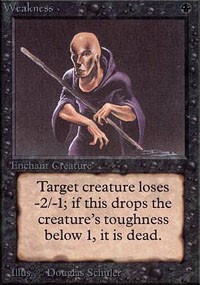
When I first bought into cards from Magic’s first two years, I did so with two primary motivations. First, I was eager to try out the budding '93/'94 format. Second, I had an appreciation for the older cards and wanted to own some to appreciate in my collection. Even now a few years later, I leaf through my Old School binder and admire the unique artwork, the dark images, the giant font, and the amusing wording on some of the first-printed cards. Weakness is still one of my favorites.

Wait a second. This is a double negative. If you lose -2/-1, aren’t you effectively gaining +2/+1? The card also contains the first version of a "reminder text," telling you your creature is dead if its toughness drops below 1. Funny enough, Wizards decided to revisit the “dying” terminology as opposed to “creature going to the graveyard,” so in a way this card was ahead of its time!

Anyway, people who got into these older cards over the past three years have seen tremendous returns on their investments. For a while, the price appreciation felt organic as new players expressed interest in the Old School format. But recently, this has gotten far out of hand. Market manipulation has gone beyond just buying a few extra copies for a potential future deck. Instead, investors with deep pockets are buying up dozens or hundreds of copies of preciously rare cards, causing prices to enter the stratosphere.

There was an error retrieving a chart for Jihad

This newfound demand doesn’t feel organic. It is a small population of people buying up all copies they can, leaving behind only the most egregiously overpriced copies, causing price charts like the one for Jihad above.

Did my writings create these buyouts? I doubt it. These heavy investors saw an opportunity—low print runs, Reserved List, highly collectible cards—and they acted accordingly. I always advocated the best time to buy an Old School card for a deck was yesterday. But I never suggested buying out copies and going deep. This behavior makes the Old School format prohibitively expensive, strangling the healthy growth it was experiencing artificially. The format’s growth is self-limited, of course, but that limitation has been tightened artificially by these market manipulators.

Now that I find myself locked out of some of the coolest cards in the game, my attitude towards these manipulators has soured. While I used to dismiss their behavior with an arm-wave, citing capitalism, I now feel it’s a true shame these amazing cards can’t be appreciated by players alongside collectors and investors. Instead, those with excess disposable income are scooping up copies, locking out players like myself who would only want one or two copies. I know this is a controversial topic, but I wanted my new stance well-known to this community.

Causation or Correlation?

“But Sig, every time you write about an Old School card, we see these buyouts occur. Aren’t you just as much to blame for encouraging people to buy into preciously rare cards?”

The above question is very fair to ask. It’s easy for me to observe a market trend and flag it, thereby adding fuel to the buyout fire and exacerbating a price spike. But I would argue that my writings are merely correlated to buyouts rather than causal. In fact, the same can be said for many other MTG finance communications and publications. Most of us are merely messengers. Allow me to explain further.

When I flag trends in the MTG finance world, I’m not creating a brand new catalyst to spike markets. Most often I’m alerting people to market movements that are already in process. For example, when I identified Fourth Edition Mishra's Factory as a card on the move, it was already the number one seller of the set. People were already buying the card aggressively before my article went public.

Now, it’s certainly plausible that after my article went live, a few people followed my advice and grabbed a personal playset or two for future use. But since there weren’t many Near Mint copies on TCGplayer to begin with, we were already one perturbation away from the tipping point for this card. Don’t forget, though, that there are hundreds of played copies still available for purchase. People could be targeting the LP and NM copies in an attempt to manipulate MTG Stocks. Don’t take the bait.

(Click to expand.)

Those who grabbed a few copies managed to acquire them most cheaply, and hopefully those who didn’t pull the trigger don’t care about the card. It should be that simple.

If I started driving up hype on some obscure, low print-run Arabian Nights card—especially one with little or no utility—my actions would certainly merit more scrutiny. Identifying cards that are already on the move may accelerate trends slightly, but for the most part I’m merely a messenger of what’s already taking place in the market.

Other Market Trends

Now that I’ve established my stance on this market manipulation, I wanted to flag a few more trends that are worth your attention. These aren’t cards to buyout, but if you want copies for personal use or for your collection, you may want to consider picking up copies soon. I say that not to drive hype or to catalyze manic buying, but to help collectors and players get a couple cards they’ve been wanting before they are forced to pay twice as much.

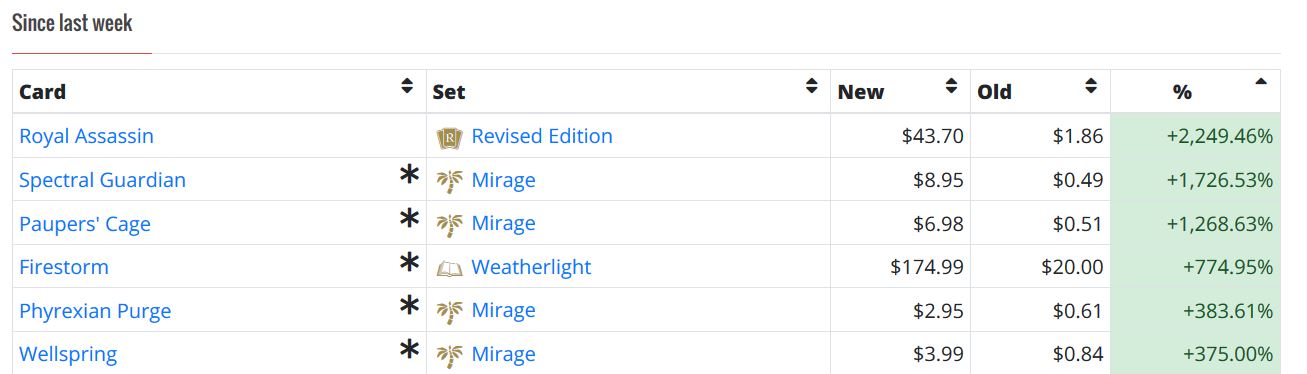
First, Mirage Reserved List cards are on the move. This is evidenced by the recent spikes on MTG Stocks.

(Click to expand.)

Once again, this is speculative buying and manipulation—there’s no way organic demand for these cards support such prices. Most people probably don’t even know what a card like Wellspring does!

There was an error retrieving a chart for Wellspring

Yet the supposed price of the card is $4 now. Sad thing is, given that this is a Reserved List card I could easily see this price stick. Card Kingdom is already paying $0.80 for Near Mint copies, and if they remain out of stock for too long they’ll increase that number. Those who got copies for under a buck will be rewarded. This is the crazy market environment we’re dealing with.

My advice is to acquire some near-bulk Reserved List Mirage rares while you’re shopping on TCGplayer. You could even sort by best-selling from the set to see what’s likely to pop next. You could also look to Visions and Weatherlight—the other two sets in the block—for viable targets that likely have even smaller print runs. If you’re buying for $0.30-$0.75 and you’re just picking up a few copies, you won’t break the bank and you’ll have a shot at making a few quick bucks.

Another trend popping up on MTG Stocks again and again involves Arabian Nights commons and uncommons. No matter how terrible the card is, copies in nice condition are selling out. I don’t know if this is driven by collectors scrambling to finish sets or more market manipulation (probably the latter) but nice copies of War Elephant are actually drying up. I suppose as people reach deeper into the well, these are practical targets. Since I try to stick to cards I may actually use, I will probably ignore this trend myself.

Lastly, I can’t ignore the recent movement on dual lands across the board.

There was an error retrieving a chart for Volcanic Island

There has be an end to this upward trend eventually. In the stock market, hype tends to cause a stock’s price to overextend beyond fair value before retracting. I anticipate this will happen with dual land prices as well. I just don’t know where the peak is. My advice is to trim your position as we approach GP Las Vegas and the team Pro Tour, but to keep a core position in case the retraction is negligibly small.

Wrapping It Up

Some MTG personalities do deserve blame for market manipulation. They advocate hype while trying to sell cards and product at elevated prices.

However this behavior is not characteristic of your typical MTG finance person. I would contend that my writings may be correlated to market movement, but there’s not causation beyond a small spurt in interest. Most frequently I write about trends that are already in process; a few people may latch onto an idea after reading my content, but these people were likely to be buyers of said cards anyway and they were merely prioritizing differently.

Looking forward, I will continue to flag trends I come across, even at the risk of backlash should my articles create temporary tailwinds for these trends. It’s impossible to write about something and have zero impact, and I refuse to ignore market trends out of fear of accelerating them a tad. It’s worth it to ensure my readers are aware of these trends so they can acquire copies they want for their decks/collections before prices jump.

With that established, I wanted to raise awareness of three recent trends I’ve noticed: Mirage Reserved List buyouts, rising prices of Near Mint Arabian Nights commons and uncommons, and the (admittedly more obvious) steady increase in dual land prices. The first I recommend buying into, the second I’d ignore unless you’re a collector, and the third I’d recommend trimming your position.

It’ll be interesting to see how the market evolves as we enter a traditionally slow season for MTG finance: the summer. Will students ignore the game over the summer? Will players find outdoor activities to appreciate, eschewing their card game hobbies for the time being? Will we see a drop in prices? Only time will tell if things will unfold that way. But if you’re collecting these older cards and enjoying them in Old School or other casual formats, it really doesn’t matter in the short run. I still see a long-term trajectory that’s upwards and to the right.

…

Sigbits

  • I noticed a few new all-time high buy prices at Card Kingdom last weekend. Tundra and Volcanic Island are two dual lands now buylisting at their highs: $270 and $420, respectively. In general other dual lands are on the rise too, but Card Kingdom has a tendency to spike their buy prices in order to get copies in stock, and then drop it down again as sellers come in. Expect to see this trend continuing into next week.
  • Legends legends are also on the rise. Angus Mackenzie remains the most valuable, with a Card Kingdom buy price of $175. Hazezon Tamar is next most expensive with a $140 buy price. Gwendlyn Di Corci is the third most expensive with a buy price of $125. These are all at highs.
  • One trend that has surprised me is the steady decrease in Mirror Universe’s buy price. Card Kingdom had gotten pretty high on the card at one point, but now their buylist for the classic card is $190. I thought this card would have momentum to hit $500 this year, but now that Card Kingdom has 13 copies in stock (and counting), I suspect they’ve gone tepid on the Legends.

Daily Stock Watch – Mizzix of the Izmagnus

Are you a Quiet Speculation member?

If not, now is a perfect time to join up! Our powerful tools, breaking-news analysis, and exclusive Discord channel will make sure you stay up to date and ahead of the curve.

Hello, everyone and welcome to a new edition of the Daily Stock Watch! The rise of cards from the Reserved List hasn't slowed down one bit, and this will most likely be the trend for the whole year until everything has been dried up, and people lose interest in buying anything from it. This makes it harder for the prices of other cards to increase, in my opinion, as people are focused more in joining the fray of these RL buyouts. To avoid the mishap going on there, I will probably stay away from featuring cards from that class, and focus more on the ones where we could gain more leverage financially. My card for today was hot on my list since last week, but I waited out a bit to see if this was just some hype brought about by the Commander Anthology Volume II release. It turns out that it was able to hold its ground, and dodging the reprint will only help its cause in the long run.

There was an error retrieving a chart for Mizzix of the Izmagnus

Commander players love a good combo inside their 100, but wouldn't it be sweeter if your 100 focused on different combos around your general? This is the type of card that Mizzix of the Izmagnus is, as it just hit its all-time high of $8.49 a week ago, before dropping to a respectable $7.45 as of today. This is still a far cry from its bottom mark of $1.01 just a year ago when people failed to make something out of it since it was printed in Commander 2015. I was browsing a pretty neat list from one player who made his own list, and pretty much had a detailed explanation of how he plays with this card as his leader. Do note that this deck is almost creatureless! Here's the deck list that I'm talking about:

Mizzix of the Izmagnus

Commander

1 Mizzix of the Izmagnus

Ramp Spells

1 Chromatic Lantern
1 Commander's Sphere
1 Izzet Signet
1 Pyretic Ritual
1 Seething Song
1 Sol Ring
1 Thought Vessel

Mizzix Protection

1 Darksteel Plate
1 Lightning Greaves
1 Swiftfoot Boots

Tutor Spells

1 Firemind's Foresight
1 Merchant Scroll
1 Mystical Tutor

Control Spells

1 Capsize
1 Condescend
1 Crawlspace
1 Crush of Tentacles
1 Cyclonic Rift
1 Evacuation
1 Force of Will
1 Fuel for the Cause
1 Meekstone
1 Misdirection
1 Mystic Confluence
1 Pact of Negation
1 Power Sink
1 Spell Burst
1 Temporal Fissure
1 Turnabout

Other Spells

1 Beacon of Tomorrows
1 Expropriate
1 Leyline of Anticipation
1 Mystic Retrieval
1 Past in Flames
1 Reset
1 Snapcaster Mage
1 Time Warp
1 Increasing Vengeance
1 Primal Amulet Flip
1 Reiterate
1 Reverberate
1 Twincast
1 Blue Sun's Zenith
1 Braingeyser
1 Brainstorm
1 Ponder
1 Preordain
1 Stroke of Genius
1 Tezzeret's Gambit
1 Time Spiral
1 Treasure Cruise
1 Banefire
1 Comet Storm
1 Fall of the Titans
1 Fanning the Flames
1 Ignite Memories
1 Jaya's Immolating Inferno
1 Lightning Bolt
1 All Is Dust
1 Blasphemous Act
1 Scour from Existence
1 Shattering Pulse
1 Vandalblast

Lands

1 Arcane Lighthouse
1 Boseiju, Who Shelters All
1 Cascade Bluffs
1 Command Beacon
1 Command Tower
12 Island
8 Mountain
1 Reflecting Pool
1 Reliquary Tower
1 Riptide Laboratory
1 Scalding Tarn
1 Shivan Reef
1 Spirebluff Canal
1 Steam Vents
1 Strip Mine
1 Sulfur Falls
1 Temple of Epiphany
1 Tolaria West

The deck was pretty much built on a budget, but you can tell right off the bat that a lot of time was allotted by the creator in trying to make it work. Some upgrade for the lands and this deck is actually pretty decent if you ask me. I'm not saying that this well-thought list was the reason for the price jump, but the influx of more cards from recent sets are only bound to make these unique cards from Commander sets more powerful over time until they get reprinted. I think that the Mizzix is still a year or two removed from seeing another print run, so we could still make a profit out of it while it's hot.

At the moment, you can still get Mizzix of the Izmagnus from TCGPlayer for anywhere between $6.41 to $7.45, but other stores such as Card Kingdom, StarCityGames, and ChannelFireball are all out of stock, and are expected to restock at the same price range as the ones that the TCGPlayer vendors are selling it for. I'm cool with picking up a few copies of the card for this price range, as there's only one way but up for it in the coming months. Just make sure that you get them for the right price.

And that’s it for today's edition of the Daily Stock Watch! See you again next time, as we check out a new card that should be on the go, or good enough for speculating. As always, feel free to share your opinion in the comments section below. And if you want to keep up with all the market movement, be sure to check in with the QS Discord Channel for real time market information, and stay ahead of the hottest specs!

Insider: The Dominaria Power Rankings: Mythic Edition

Are you a Quiet Speculation member?

If not, now is a perfect time to join up! Our powerful tools, breaking-news analysis, and exclusive Discord channel will make sure you stay up to date and ahead of the curve.

Dominaria prices are finally going down, and you know what that means! It's time to begin thinking about investing in Dominaria, and I'm here to help you do just that.

Dominaria is the most valuable set since the redemption tax increase from $5 to $25 back in 2013. With only a month to go before the release of Core 2019, a singleton digital set of Dominaria is going for $95, about $20 more than what we have come to expect from sets without masterpieces. I expect prices to continue to dip, perhaps down to $85, so exercise patience. For reference, Shadows Over Innistrad settled around $75, and Ixalan settled around $60. The ideal window to invest in Dominaria will extend through July, so you have plenty of time.

I'm excited to introduce a new format for this article series. I'll be ranking every Dominaria mythic rare in this article, providing a score for risk and reward, and ultimately a final grade. We'll start from the bottom and work our way up...where do your favorite cards land? Find out below!

15. Muldrotha, the Gravetide

Grade: F
Risk: Moderate
Potential: Limited

A six-drop that requires you to untap to net value from it? And that requires three colors? And from a large set? Heck no. This card is more likely to fall to 0.25 tix than reach 1.00 tix ever again.

14. Darigaaz Reincarnated

Grade: D
Risk: Minimal
Potential: Limited

Darigaaz is currently priced at 0.18 tix, which I feel is exactly where it should be. It's possible that it will see fringe play in a future deck and spike to about 0.50 tix, but that sell window will be small and I don't think it's worth your time.

13. Weatherlight

Grade: D
Risk: Minimal
Potential: Limited

The card just isn't good. Yes, it's colorless, but it's a four-drop that doesn't affect the battlefield without help. It has to hit players to have a chance to net card advantage, and it lacks confidence in itself (it doesn't even call itself "The Weatherlight"...come on now!). At 0.42 tix, it's a hard pass from me. Don't invest in this thing unless it dips below 0.20 tix.

12. Demonlord Belzenlok

Grade: D
Risk: Minimal
Potential: Limited

I think Belzenlok sits just beneath the threshold for what is Standard-playable. It replaces itself, but we need more than that from a six-drop. It is just outclassed by Vraska, Relic Seeker and Carnage Tyrant. This card right now is valued at 0.60 tix, and it feels like a 0.50 tix card. I don't expect this card's price to do much of anything for the foreseeable future.

11. Multani, Yavimaya's Avatar

Grade: D+
Risk: High
Potential: Limited-Moderate
Recommended Buy Price: 0.50 tix

In the first draft of this article, Multani was #7. His fall is a result of his recent spike from .50 tix to 1.35 tix. I think Multani will make for a good spec (he was my first Dominaria spec actually, a singleton copy for 0.50 tix from an MTGO Library chain), but wait for its price to return to around .50 tix. Yes, it competes with Carnage Tyrant, but the combination of reach and trample on a massive recursive body is a unique tool that some strategies will be happy to take advantage of.

10. Karn, Scion of Urza

Grade: C-
Risk: High
Potential: Moderate

I would treat Karn like a rotating card – I suspect its value is going to plummet at rotation. Without Heart of Kiran and Walking Ballista as enablers for its minus ability, I can't see Karn being the dominant force it has been since its release. I suspect the appropriate time to invest in Karn will be in the Fall. It might spike up to 35 tix a few times in the interim, so feel free to try to capitalize on that, but I'll be avoiding it for the time being. I think there's a good chance he'll dip below 15 tix post-rotation, and I'll consider investing in him at that time.

9. Mox Amber

Grade: D+
Risk: Moderate-High
Potential: Moderate
Recommended Buy Price: 1.25-1.75 tix

Mox Amber is a definitive wildcard, and also the first card on this list that I'm interested in speculating on. Probably most similar to Relentless Dead, a cheaper spring-set mythic with unmistakable power but which needs the right cards printed to enable it. I'm not willing to invest at the present 3.50 tix, but this is one that I think will continue declining in value over the coming month or two. I could see this card being valued between 0.50 tix to 8.00 tix in the next year or two, so there will be a lot of risk involved if you spec on it.

8. Phyrexian Scriptures

Grade: C-
Risk: Moderate
Potential: Moderate
Recommended Buy Price: 0.50-0.75 tix

It's definitely clunky, and if it can't see play in the same format as Srapheap Scrounger, Karn, Scion of Urza, Verdurous Gearhulk, and Walking Ballista, what sorts of cards need to be printed for this to see more play? I can see this card surprising us and climbing above 3.00 tix, but I remain skeptical. Like Mox Amber, its price needs to go down significantly before I'm excited to invest in it.

7. Jaya Ballard

Grade: C
Risk: Minimal
Potential: Moderate
Recommended Buy Price: 0.50-0.75 tix

Jaya is underrated right now. Like Teferi, Hero of Dominaria and Chandra, Torch of Defiance, she really costs two mana if your deck is constructed with her in mind. Like Karn, Scion of Urza, she has a high starting loyalty which guarantees that she'll be on the battlefield for more than one turn.

The question will be whether the Standard card-pool will provide us with a good shell for her. Like Mox Amber and Relentless Dead, it's a definite uncertainty. I'd give it a 25-percent chance. That may seem low, but her value is so low now that you won't be risking much to invest in her. If Dovin Baan can maintain a value between 0.50 and 1.00 tix while seeing no play, then so can she.

6. Naru Meha, Master Wizard

Grade: C+
Risk: Minimal-Moderate
Potential: Moderate
Recommended Buy Price: 0.35-0.50 tix

I was surprised that several of the creature-type mythics from Ixalan block maintained their value and even increased their value despite seeing no play (cards like Gishath, Tishana and Vona), and that bodes well for Naru Meha. I like, too, that a good Wizards shell already exists, this piloted in a fun video by Saffron Olive. This is the first card in the rankings I'm more likely than not going to invest in.

5. Verix Bladewing

Grade: C+
Risk: Minimal
Potential: Moderate
Recommended Buy Price: 0.50 tix

Verix is the card on this list that will benefit the most from rotation. While there is always a risk that Wizards will randomly throw in a Rekindling Phoenix into any given set, I think there's a good chance that Verix will double or triple in price after Hazoret, Glorybringer, and Chandra exeunt in laevum.

4. History of Benalia

Grade: B+
Risk: Minimal-Moderate
Potential: Moderate-High
Recommended Buy Price: 6.00-8.00 tix

The reason History of Benalia gets the nod over Naru Meha is that History of Benalia will definitely see tier-one play going forward. The question is: how low can we get it, and how high will we be able to sell it?

I think the ceiling on this card is quite high – I could see it rise above 20.00 tix if used in aggressive, midrange, and control strategies. I could also see it peak around 15.00 tix. I think buying under 8.25 tix is completely safe, and anything under 10 tix is reasonable.

3. Jhoira, Weatherlight Captain

Grade: B+
Risk: Minimal
Potential: High
Recommended Buy Price: 0.50-0.75 tix

The nice thing about Dominaria is that it offers several excellent specs suited for different people with different budgets and different risk tolerances. Cards ranked #1 through #6 on this list are all excellent specs, but certain ones will be better for some people than for others. Jhoira offers a prime opportunity for someone with a low budget to take a free spin of the roulette wheel. Jhoira will not dip below 0.50 tix during the next nine to twelve months, and she has the potential to be a 4.00 to 5.00 tix card (she wears Mox Amber better than anyone else). Multani, in contrast, which can be bought for roughly the same as Jhoira, has a ceiling closer to 3.00 tix. Both will be good specs.

2. Lyra Dawnbringer

Grade: A-
Risk: Minimal
Potential: Moderate
Recommended Buy Price: 5.00-7.00 tix

She's the Carnage Tyrant of this set. She'll rise and fall with the metagame, and the task of the speculator is simple: buy low, sell high. That'll be a piece of cake with Lyra. I expect 100-percent returns with Lyra.

1. Teferi, Hero of Dominaria

Grade: A
Risk: Minimal
Potential: Moderate-High
Recommended Buy Price: 20.00-22.50 tix

Buttressed by Legacy and Modern play, Teferi is an iconic planeswalker that will be worth above 40.00 tix at least once over the next twelve months. Honestly, this is one I could see rise to 50.00 tix. I'm just having trouble discerning what the appropriate buy price is, and when it will manifest itself. I could see this go as low as 15.00 tix after rotation, but my gut tells me that it won't dip below 20.00. The past year of Standard has taught us to invest in cards like this, to not get squeamish about the buy price, and this time I will likely heed that instruction and invest in Teferi.

While the returns as a percentage will not be as high as a few other cards on this list, the benefit of investing in expensive cards like this is that they take less work and time to make the same amount of money. The larger your portfolio, the more important it is to invest in cards like Teferi.


Insider: Back to Basics – Buylisting

Are you a Quiet Speculation member?

If not, now is a perfect time to join up! Our powerful tools, breaking-news analysis, and exclusive Discord channel will make sure you stay up to date and ahead of the curve.

I’ve become more active than normal in Magic finance over the past few months, and central to it has been buylisting cards to stores. I’ve learned a lot in the process, and felt compelled to write about it today, so I’m going to share some thoughts on how to make the most of buylisting. There’s a lot to cover, but I think a good way to approach it from the basics is to start with the basics, the who, what, where, when, and why of buylisting.

There was an error retrieving a chart for Back to Basics

Why Buylist?

Buylisting is a convenient and seamless way to turn cards into cash. There are countless stores with a buylist, and the internet puts many of them at your fingertips. With some clicks, card sorting, and sending out a package, you can turn your cards into cash in a few days. The internet also provides incredible ability to compare prices of different retailers, and Trader Tools makes that especially easy, so you can get the full value from your cards. Traditionally, buylisting is seen as earning less money for your cards than selling yourself on a platform like eBay or TCGplayer, but that’s often not the case on some cards, especially after fees are taken into account. There’s also the value of speed, allowing cards to be sold instantly rather than waiting for a retail buyer, so they bring high liquidity to Magic cards.

Another reason to buylist is to trade into other cards. Most buylists offer the option to take trade credit in lieu of cash, and typically with a significant bonus, in the range of 20%-30% extra value. This puts you at the whims of their prices, which might be higher than normal, but the bonus will often bring buy prices accordingly high. With some careful selection of cards to trade and cards to trade for, you have the ability to find great deals and get what you want at a bargain. It’s a particularly efficient way to acquire cards you want compared to selling cards and then buying them. The liquidity buylists provide goes both ways, and they are a seamless way to acquire cards compared to tracking down a card at a local shop or from a floor trader and then haggling over a trade for it.

When Buylist?

The liquidity that buylists give Magic cards comes because they can be used anytime from anywhere, for any card. They are always available, so a key question is when to use them. The basic answer to when to buylist is whenever you need cash or want to trade into other cards. On the other side of the coin, it’s a good time to buylist when you want to get rid of a card.

There was an error retrieving a chart for Cryptic Command

One such time might be after a card has spiked in price, and when you can fetch a premium for it, before it beings the natural process of starting to fall in price as others sell. I’ve personally been using buylists to minimize reprint risk. I’ve held a massive Modern collection for years, but reprints have plagued it by frequently devaluing cards. I’ve liked the ability to play any deck, but rarely actually exercised it, and I ultimately decide the opportunity cost of holding cards and being exposed to reprint risk was not worth it, so I’ve turned to buylists to help me get out of my positions.

Another time to buylist is when you find a good deal! By frequently checking buylist prices and staying on top of the market, you can find good opportunities when they arise and cash in for maximum value. This is amplified when trading-in, because carefully watching inventories will allow you to take advantage of bargains when they appear and squeeze even more value out of your cards.

Where to Buylist?

The simple answer to this question of where to buylist is whoever is paying the most. It gets more complicated when considering trading in, because you also have to consider the price of what you’re buying. In practice, the answer to the question will vary in different situations and from card to card. Making the most of buylists means keeping your options open and checking various places for their buy prices and inventory, and then making decisions accordingly. Again, Trader Tools is a quick and easy way to compare buylist prices across some of the key players in the marketplace.

What to Buylist?

One of the best parts of buylisting is that the answer to what to buylist is almost endless. There are a few things that buylists typically avoid, specifically foreign cards, and damaged, signed, and stamped cards, but pretty much everything else is fair game. Buylisting to a person at an event probably means them picking and choosing what they want, but online buylists allow you to move anything you want. For me, it has been a great way to move played cards, especially heavily played staples I’ve used in decks for years, because buylists want them, and I know exactly what I’ll get for them based on the condition pay grades they use. On the flip side, they can also be excellent ways to move near-mint cards, because stores can pay a retail premium for them and often will pay you a premium in return, especially on higher-end cards.

There was an error retrieving a chart for Tradewind Rider

On the other hand, buylists are a particularly great place to trade in small stuff. Not only will they take all variety of small cards, like the random above bulk cards and beyond, but they take it indiscriminately. I’ve taken advantage of this fact to trade-up, meaning trading-in my many low-value cards for higher-end cards. Trading for cards like dual lands and the Power Nine in person might subject you to your trade partner devaluing your low-cards, but making a trade online eliminates any such disparity.

Who Should Buylist?

Everyone can benefit from buylists, but there are some cases that bring them to mind as especially valuable. As I mentioned earlier, they are a great option for anyone who wants to trade their cards into other cards. They are a great way to cash out for traders, who can even use buylist prices as their own price guide and trade accordingly, making money by trading for cards they can buylist at a premium compared to what they are trading away.

They are also a great outlet for cards obtained from buying collections, as they take nearly all variety of the cards one might acquire in a collection, and can quickly convert theoretical profit into cash to be used on the next buy. They’re even a great option for stores and dealers, which can use them to help manage their inventory by getting rid of what they don’t need, and maybe trading-in to get more of what they do.

What, where, when, and why do you buylist?

–Adam

Avatar photo

Adam Yurchick

Adam started playing Magic in 1999 at age 12, and soon afterwards he was working his trade binder at school, the mall food court, FNM, and the Junior Super Series circuit. He's a long-time Pro Tour gravy-trainer who has competed in 26 Pro Tours, a former US National Team member, Grand Prix champion, and magic.tcgplayer.com columnist. Follow him at: http://twitter.com/adamyurchick

View More By Adam Yurchick

Posted in Buylist, Finance, Trading3 Comments on Insider: Back to Basics – Buylisting

Have you joined the Quiet Speculation Discord?

If you haven't, you're leaving value on the table! Join our community of experts, enthusiasts, entertainers, and educators and enjoy exclusive podcasts, questions asked and answered, trades, sales, and everything else Discord has to offer.

Want to create content with Quiet Speculation?

All you need to succeed is a passion for Magic: The Gathering, and the ability to write coherently. Share your knowledge of MTG and how you leverage it to win games, get value from your cards – or even turn a profit.

Regionals at a Glance and Invitational Insights

Are you a Quiet Speculation member?

If not, now is a perfect time to join up! Our powerful tools, breaking-news analysis, and exclusive Discord channel will make sure you stay up to date and ahead of the curve.

Another SCG Regionals is in the books, and SCG Con is just days away. It's an exciting time to be a Modern player, or at least a Modern data hound. Today, we'll look at some of the cooler lists from Regionals, and I'll give my thoughts both on the recent success of Colorless Eldrazi Stompy and the upcoming Invitational.

Creeping Innovation

My previous Regionals coverage articles focused on the wealth of creative deckbuilding routinely on display at these events. But whether tournament-goers felt like playing it safe this year or Modern's just more solved than usual, this batch of Top 8 lists offers little in the way of eyebrow raises. Still, a few lists did impress me.

Shaun Raj's Sultai Rock

Modern players and pundits alike have unendingly clamored for Sultai Rock to be viable since the format's baptism. Instead, the shard has continued to show up once a year or two in some incarnation and then fall back off. Well, that's still happening!

Sultai Rock, by Shaun Raj (8th, Baltimore Regionals)

Creatures

4 Tarmogoyf
4 Dark Confidant
2 Scavenging Ooze
2 Snapcaster Mage

Planeswalkers

2 Jace, the Mind Sculptor
3 Liliana of the Veil
1 Liliana, the Last Hope

Instants

2 Abrupt Decay
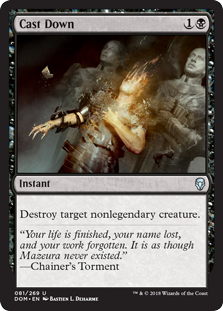
2 Cast Down
1 Dismember
3 Fatal Push

Sorceries

4 Serum Visions
3 Inquisition of Kozilek
2 Thoughtseize
1 Maelstrom Pulse

Lands

4 Polluted Delta
3 Verdant Catacombs
1 Misty Rainforest
2 Overgrown Tomb
1 Watery Grave
1 Breeding Pool
2 Blooming Marsh
1 Darkslick Shores
3 Creeping Tar Pit
1 Treetop Village
2 Forest
2 Swamp
1 Island

Sideboard

2 Engineered Explosives
1 Grafdigger's Cage
1 Nihil Spellbomb
2 Fulminator Mage
1 Kitchen Finks
2 Disdainful Stroke
2 Surgical Extraction
1 Liliana, the Last Hope
2 Collective Brutality
1 Damnation

This deck isn't just BG Rock deck with a minor blue splash. Rather, Sultai Rock takes after Jund, and comes complete with functional analogs to the midrange poster-boy's own cards. Snapcaster Mage provides tempo and value in the mid-game, like Bloodbraid Elf; Fatal Push fills in for Bolt; Jace, the Mind Sculptor cuts into Liliana shares; Creeping Tar Pit trades raw closing power for evasion over Raging Ravine.

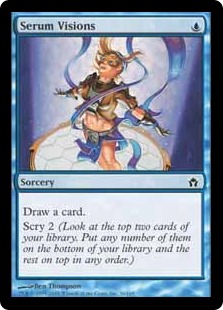
The biggest changes from Jund, then, are consistency-related. Trading Elf for Snap removes Jund's randomness element from the picture entirely, instead giving pilots a sort of mid-game toolbox based on the spells they've seen so far. And they've seen plenty thanks to the full set of Serum Visions, a card I think Jund has always secretly wanted to play—whether its pilots know it or not. Visions represents the most efficient and splashable card filtering in Modern, and in my eyes gives Sultai an edge over Jund more than any other card here.
To be clear, I don't think this deck will disappear again because of some arbitrary vendetta against Sultai. I think it will disappear again because of the state of BGx in general. The super-archetype is currently too fair for Modern, and needs some way to cheat on mana as do the other aggro decks—right now, Bloodbraid Elf is the closest it gets.

Tarmogoyf's days as format watchdog are numbered not just because of Fatal Push, but because many other decks now have access to archetype-specific Goyfs—Hollow One, Gurmag Angler and Thought-Knot Seer, to name a few. BGx decks now stretch themselves thin covering all the bases while also fending off larger creatures.

Harlan Firer's UR Wizards

Who could have guessed we'd one day see a build of UR Prowess where Soul-Scar Mage was actually better than Monastery Swiftspear a good chunk of the time? Mage owes its five minutes of fame to Dominaria newcomer Wizard's Lightning, which lets UR Wizards double up on Bolts—or, with Snapcaster in the picture, triple up.

UR Wizards, by Harlan Firer (3rd, Baltimore Regionals)

Creatures

4 Soul-Scar Mage
4 Monastery Swiftspear
4 Stormchaser Mage
2 Grim Lavamancer
4 Snapcaster Mage

Instants

4 Lightning Bolt
4 Wizard's Lightning
4 Opt

Sorceries

4 Serum Visions
4 Sleight of Hand
3 Faithless Looting
1 Forked Bolt

Lands

4 Scalding Tarn
2 Flooded Strand
2 Wooded Foothills
3 Steam Vents
3 Spirebluff Canal
2 Island
2 Mountain

Sideboard

2 Young Pyromancer
2 Blood Moon
1 Dismember
1 Dispel
1 Magma Spray
2 Spell Pierce
2 Unified Will
1 Flame Slash
1 Roast
2 Shattering Spree

In my own recent experiments with Wizards, I tried integrating both Wizard's Lightning and Wizard's Retort, and was impressed with both cards. It goes without saying, though, that Lightning is the better of the two, and it also happens to be a card that slots admirably into UR Prowess.

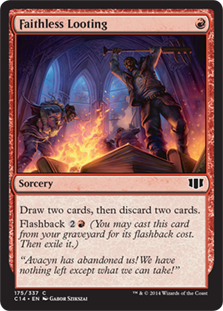
Harlan slyly chooses to ramp up the Faithless Lootings without reaching into Bedlam Reveler, understanding that Prowess requires high levels of velocity to function. While Reveler's a fine late-game plan for the deck and an attractive option against midrange, Snapcaster Mage is much more flexible, and stronger in the face of graveyard hate. Its added synergy as a Wizard makes it the clear favorite for this deck.
Notably, Harlan's build omits Vapor Snag entirely. I can imagine he doesn't want to sit down in front of a Tarmogoyf, but with Goyf on the decline, cutting the blue instant is brilliant. Besides, all those burn spells and Soul-Scar Mage at least ensure the deck isn't just auto-dead to a green guy.

Dave Shiels's Blue Moon

Blue Moon enjoyed quite a showing last weekend, with multiple builds rearing their heads. But Dave Shiels's version takes the cake as the most intriguing. He favors a full set of Opt over Serum Visions... and splashes black for a control-crushing recursion package.

Blue Moon, by Dave Shiels (2nd, Acton Regionals)

Creatures

2 Keranos, God of Storms
4 Snapcaster Mage
3 Thing in the Ice
2 Vendilion Clique

Planeswalkers

1 Jace, the Mind Sculptor

Enchantments

3 Blood Moon

Instants

4 Lightning Bolt
1 Harvest Pyre
1 Cast Down
3 Cryptic Command
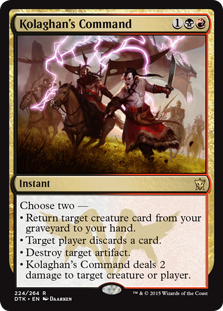
3 Kolaghan's Command
1 Logic Knot
4 Opt
4 Remand
2 Spell Snare

Sorceries

3 Serum Visions

Lands

4 Scalding Tarn
4 Polluted Delta
2 Flooded Strand
2 Steam Vents
1 Watery Grave
7 Island
1 Mountain
1 Swamp

Sideboard

2 Ceremonious Rejection
2 Dispel
2 Surgical Extraction
2 Anger of the Gods
2 Collective Brutality
2 Dreadbore

There's more black stuff in the side. Dreadbore teams up with Cast Down to take care of nasty creatures, while Collective Brutality gives the deck some much-needed points against spell-at-premium aggro-combo decks like Company and Burn. But I'm still struggling to understand Cast Down at all—why not Terminate? Isn't it fun to kill Thalia, Guardian of Thraben sometimes? Or Baral? Or, like, Shalai? Cast Down is a cleaner turn two play after leading off an Island, but with just a single copy in the mainboard, I don't see that coming up more often than the extra utility from Terminate.
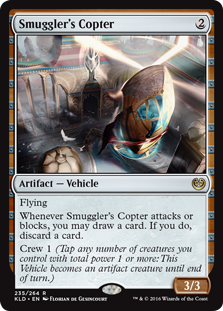
Those nitpicks skirt the point of this build, though, which is to annihilate attrition decks. Discarding Keranos, God of Storms with Thoughtseize does very little thanks to Kolaghan's Command, and when the God sticks against something like Jeskai or Jund, he all but ends the game. Brutality is an excellent sideboard pick for such a strategy, since it offsets the clunkiness of three colors and God cards by functionally generating mana with its escalate cost.

No Dirge for Scourge

I also attended Regionals, but you won't see my name in the Top 8 lists. While I may have limped out of my first Competitive REL event since the Worcester Classic at an ignominious 3-3, my deck had an excellent weekend. In fact, Colorless Eldrazi Stompy was the most-represented Eldrazi deck in the combined Regionals Top 8 metagame, boasting three copies to the two each from BW and Tron.

No real surprises there, at least not to me—sure, I've got all the bias in the world, but Stompy's also been racking up 5-0s with impressive steadiness ever since my Classic win. The numbers from last weekend speak further to its viability in this metagame, especially since it remains relatively fringe.

Unfortunately, I won't be able to make it to Roanoke and repeat my Invitational success with CES this weekend. I would have played this:

Colorless Eldrazi Stompy, by Jordan Boisvert

Creatures

4 Eldrazi Mimic
4 Eternal Scourge
4 Matter Reshaper
4 Thought-Knot Seer
4 Reality Smasher
4 Simian Spirit Guide

Artifacts

4 Serum Powder
4 Chalice of the Void
2 Smuggler's Copter

Instants

4 Dismember

Lands

4 Eldrazi Temple
2 Gemstone Caverns
4 Zhalfirin Void
3 Blinkmoth Nexus
2 Mutavault
3 Ghost Quarter
2 Scavenger Grounds
2 Wastes

Sideboard

3 Ratchet Bomb
2 Sorcerous Spyglass
4 Relic of Progenitus
1 Surgical Extraction
3 Spatial Contortion
1 Gut Shot
1 Gemstone Caverns

That's the exact list I played at Regionals, but with a second Spyglass over a Gut Shot. Shot has been phenomenal against Humans (the deck I perceived as Level 0 last weekend), but I'm more concerned with beating Jeskai right now (the Level 1). The deck gains tons of staying power with Teferi, Hero of Dominaria and Search for Azcanta in the picture, and Elspeth, Sun's Champion has always and continues to end the game for us on the spot.

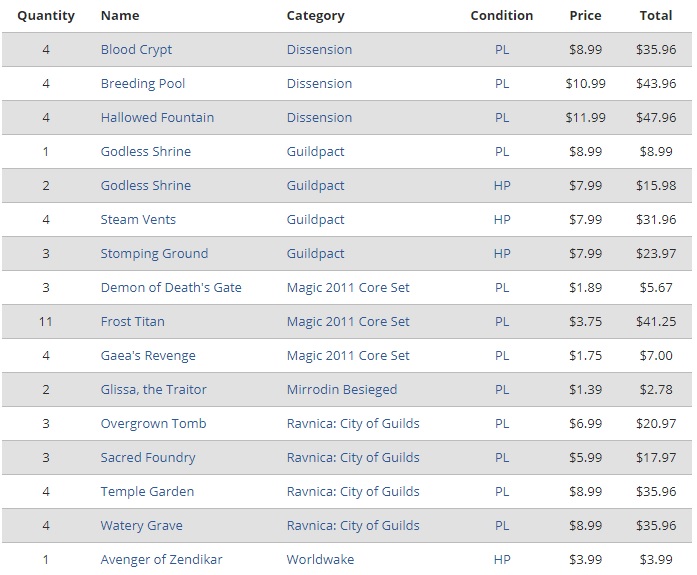
Spyglass is also great against Tron, which I expect to show up in some counterspell-hosing configuration to combat Jeskai (the new Level 0) and especially Mardu (the new Level 1 that also beats Humans, and the deck I pegged as the savviest choice in Acton for that reason). I doubt Mardu is quite as good at the Invitational, since players will have it in their crosshairs after Regionals.

Speaking of Humans, I shaved the fourth Blinkmoth to accommodate a second Copter as a hedge in that matchup. Zhalfirin Void helps us make land drops in-game if we need them, but until recently, I haven't had anything I wanted to play over one of our lands. Copter's utility against planeswalkers and the random combo decks showing up in Modern (including Valakut) made me eager to try another one. So far, it hasn't disappointed, and powering out the vehicle on turn one makes early mana decisions very challenging for opponents slinging kill spells.

Looking to the Invitational

As SCG Con approaches, I'm increasingly noticing buzz surrounding the No Banned List Modern Open or various Pauper tournaments. But my eyes are fixed squarely on the Invitational itself as I excitedly await the inevitable new Modern developments. How do you think the tournament will shake out?

Insider: Future Demand & Envisioning Market Shifts

Are you a Quiet Speculation member?

If not, now is a perfect time to join up! Our powerful tools, breaking-news analysis, and exclusive Discord channel will make sure you stay up to date and ahead of the curve.

Welcome back readers!

Today I'd like to start with a stroll down memory lane. Back in 2004, I was a freshman at Clemson University (Go Tigers!) when my friend Luke mentioned this website called "Facebook." In comparison to Myspace, it was a cleaner social networking site, and also exclusive (you needed a .edu email address in order to establish an account). Everyone on campus was creating accounts and adding as many friends as possible.

Obviously, it blew up. However, what's important to consider is that at the time, a lot of people didn't know whether or not it was needed—after all, we already had Myspace. Everyone already had a Myspace account at the time, so this was just the "new upstart."

Then Facebook decided to go public and a lot of people had no idea how to value it. After all, they sold advertisement space and the internet had tons of competition in that realm.

The company was initially valued at $104 billion (it now stands somewhere shy of $500 billion). Many people thought that initial valuation was way overpriced. It was difficult to see what possible money could be made from this social media endeavor. And it seemed like Facebook would be competing for the same clientele as Myspace, and thus simply stealing from their share of the pie. Nobody realized how much they would grow the pie itself.

When New Demand Arises

What does this have to do with Magic? The point I want to make is that demand for a new product or innovation is often difficult—if not nearly impossible—to see from the outset. While you can definitely make money by speculating on individual cards, you can make a ton more money if you see the market demand early on.

In late May 2011, WotC held their Magic Online Community Cup, where they debuted a new format called Modern. I placed the following order on June 5th, 2011 from Star City Games:

I had read up about the new format from the Community Cup. At the time, I saw several things going for it.

  1. It was WotC-driven. This is important because they have the financial resources, advertising reach, and control over the game to make sure that formats they promote succeed.
  2. It was different. At the time the major formats were Standard, Legacy, Extended, Vintage, and EDH (WotC would create the Commander name later). Modern presented a large card pool, but was drastically different from the other formats, and deck brewers had a field day coming up with the archetypes.
  3. It was cheap. It's easy to forget that before Modern became a format, many of its staples were forgotten or relegated to casual decks. The larger the card pool, the more we see the cream rise to the top—only the best of the best become Legacy or Vintage staples. When those cards aren't legal in the format, other cards are given the opportunity to take their place.

At the time of the Community Cup, a lot of people viewed Modern as an interesting concept but didn't take it too seriously. After all, WotC made its money on Standard, and players seemed to enjoy Legacy enough to scratch any eternal itch they might have—many wondered whether there was a need for Modern. Admittedly, despite seeing the promise of this new format, even I clearly underestimated it, as you can tell based on the fact that I only bought a playset (or less) of each original shockland.

There was an error retrieving a chart for

Unfortunately, the Trader Tools pricing data only goes back to 2013, which is after Return to Ravnica came out. However, I distinctly remember when Modern first blew up as a format shocklands skyrocketed in price, with the Guildpact and Dissension ones being the most expensive thanks to being drafted less. One could even trade two Dissension Hallowed Fountain's for a Tundra straight across.

If we can notice these shifts in demand early on, we can make sure to get in on the ground floor. This is why QS sends floor reporters to Pro Tours. The Pro Tour gets so much coverage and hype that when a card has a lot of success on the Pro Tour, we always see its value rise, sometimes dramatically. The best opportunities for profits (and for actually getting your orders filled) occurs when you're ahead of the game.

The New Kid: Pauper

In December 2017, Channel Fireball announced they would be running Pauper events at Grand Prixs. They doubled down on that promise in March, scheduling more events. Pauper has always been pretty popular on MTGO, but it hadn't taken off in paper yet. The announcement caused a spike in a lot of random Pauper staples, and created demand for cards that were previously relegated to bulk bins.

We have cards like Oubliette that are now worth $40-plus, despite being a reprintable common (though many argue that the wording on the card would make it difficult to reprint). And there are so many other good options on this front.

There was an error retrieving a chart for Oubliette

Many of my fellow writers and I on QS have discussed some of these targets in the past. There are likely tons of copies still sitting in long white boxes gathering dust at game stores all around the world, forgotten. The worst part is that the value is very time-dependent—as soon as they are reprinted again, they are likely to lose any value they had stored up.

We are seeing Pauper staples grow in value. However, due to their more common nature, their price ceiling is typically pretty low. That means that a lot of people are unlikely to be willing to "dig for dimes" in bulk. Those who do will likely find a treasure trove of nickles, dimes, and quarter sifting through bulk that was previously ignored.

Predictions for the Future

Finally, here are some of my thoughts on how I see the big-picture trends in Magic shaping up.

Prediction #1

I believe we're going to see bulk become "tiered." The current system of purchasing bulk assumes that it's all basically worthless, and the lowest common denominator price is paid for all of it (around $3 per 1000 C/U mixed). This is actually fantastic if you purchase bulk, because your risk is basically nothing. If there's nothing good in it you can always ship it off to someone else. Your profit is whatever good stuff you pull out of it.

When I write articles about selling at GPs (and what different vendors are buying) almost my entire stock comes from bulk I've picked. I've gotten pretty good at it—if you read those articles you'll note that I've made a fair amount of money doing this. Admittedly I put a ton of time into sorting, though I actually enjoy it, so it's not so much work as it is relaxing.

I'm always happiest picking up older bulk rather than newer. I have a lot more bulk commons and uncommons from Innistrad forward. If I felt confident that the bulk I was looking to buy was pre-Innistrad, I would be willing to pay above the standard going rate, simply because I think there's a lot of promise in it.

I have paid more than $5 per 1000 when I knew the seller hadn't picked through it (as they didn't know anything about Magic cards). I expect this concept to spread, as demand for Pauper and Commander grows, and random older commons and uncommons continue to jump in price.

Prediction #2

We will likely see WotC continue to push formats to break into existing unknown demand. We can see this with the release of Battlebond as a Two-Headed Giant style format (which has existed for a while but hasn't been specifically catered to by WotC).

Listening to our latest QScast, it seems that I'm in agreement with Chaz on this one. WotC did a fantastic job with the set. I won't be surprised to see them continue to create product and cards specifically for specialty formats (as they did with the original Commander decks), and grow the formats that show a strong demand.

Smart speculators will want to look at other WotC-created formats and see if there's potential for any sort of supplemental product that caters to them. If you find one and can purchase the staples extremely cheaply, then it does offer a lot of opportunity for profit (though as always there's an equal amount of risk). I emphasize WotC-created because we've seen how quickly non-sanctioned formats can flame up and then sputter out (see Tiny Leaders and Frontier).

Prediction #3

Unfortunately, it's not all sunshine and roses. We have seen unprecedented growth in the Magic player community, evidenced by the growing print runs and event attendance. However, every person doesn't find enjoyment the same way, which can create conflicts. Some people are griefers who enjoy building Commander decks that blow up everyone's lands. Some enjoy control, some aggro, some want to play Commander ultra-competitively, and some want to play a three-hour game in which nobody really wins (but nobody really loses either).

One of the beauties of this game is that it's open-ended enough that people can find what makes them happy. But there is a downside, which is that if what makes you happy makes others unhappy, then you will find yourself unwelcome to play with certain people.

I see this locally (especially with Commander) between the casuals and the griefers. I expect we'll see Commander become the first format to form a schism and split into competitive and casual.

Yes, I know there are people who already refer to competitive Commander as cEDH, but currently WotC doesn't recognize this difference. There are stores that have house rules associated with Commander and/or point systems to try and keep everyone on the same page, but these are band-aids that simply cover over the issue.

If and when we see a split between Commander formats, there will be financial repercussions. Likely the less popular griefer cards will be the first to drop, as as players won't want to be excommunicated from play groups. On the other hand, if one-vs-one Commander received some kind of actual tournament support from WotC, that could cause its staples to jump.

Insider: All the Other Old Cards Are Spiking, so Why Not the Power Nine?

Are you a Quiet Speculation member?

If not, now is a perfect time to join up! Our powerful tools, breaking-news analysis, and exclusive Discord channel will make sure you stay up to date and ahead of the curve.

I hope you weren't actually expecting me to answer that question in this article, because I'm basically sitting here twiddling my thumbs with all questions / few answers... Nonetheless, it is a good question and one that more people should be contemplating. While we're at it, let's throw out some other good questions:

  • "If a tree falls in the woods and nobody is around to hear it - does it make a sound?"
  • "What is the meaning of life?"
  • "Who's more foolish, the fool or the fool who follows him?"

All solid, and basically unfathomable and unknowable. But not nearly as perplexing to me as the Power Nine staying roughly the same price while fringe Legends and Arabian Nights rares soar into the thousands-of-dollars range.

There was an error retrieving a chart for The Abyss
There was an error retrieving a chart for Mox Ruby

How are these things roughly equal? Are they roughly equal?

With Everything Going Up, Why Is Power Comparatively Stagnant?

Here is the basic premise behind my theory: As Reserved List cards have continued to skyrocket in value, it seems that the Power Nine has been largely left behind when it comes to spikes. Power does steadily trend upward – it clearly isn't going down – but it hasn't spiked in the same fashion as basically every other Reserved List card.

I sort of lied in the introduction. While I don't understand the current bizarro world where Mox Ruby equals The Abyss, I have some theories about how we arrived in this place.

The first theory is that all $1300.00 cards are not equal. People can ask whatever they want for cards, but it doesn't mean they are going to sell with a high frequency. It is possible that a $1300 Ruby is a more sellable item than a $1300 Abyss.

It could be a situation where Mox Ruby frequently sells for the posted price and The Abyss is a much slower seller at that price. Perhaps a lot of copies of The Abyss being sold by dealers are not hitting that peak online asking price. I don't know, I'm spitballing, but it doesn't feel right to me.

Why Doesn't Power Spike?

It is harder to spike the price of something that is already ridiculously expensive. If a $50 card doubles in value, that is a huge percentage spike. If a $1500 card goes up by $50, it's a smaller percentage. It's possible that people simply won't pay $2500 for Power. Yet I look at cards like this:

There was an error retrieving a chart for The Tabernacle at Pendrell Vale

It is crazy to me that a card like The Tabernacle at Pendrell Vale is more expensive than a non-Lotus piece of Power. It's true that Power isn't legal in Legacy, but Tabernacle isn't some ubiquitous Legacy card like dual lands or Force of Will that is spread across the format. It's a card in one deck.

Sure, it's an awesome card, but still, The Tabernacle at Pendrell Vale doesn't have the iconic, nostalgic appeal of Power Nine. It isn't nearly as recognizable or famous. It's not as cool.

My theory for why Power has remained relatively stable while other cards have gone buck wild is that Power started so high. It's a lot easier to buy out a ton of $20 cards and mark them up to $200 than it is to buy out a bunch of $1000 cards and mark them up to $2000.

The investment cost on a Power Nine buyout is much higher and would require a tremendous investment of capital to pull off. I would argue that the significant investment is likely linked to the fact that we have not seen a buyout and subsequent spike on Power Nine.

There was an error retrieving a chart for Black Lotus

The other side of the coin is that perhaps the price on Power is real and the price on the other stuff isn't as real, which means it's inflated. It is certainly possible that the Reserved List spikes could settle and come back down to earth a little bit as time goes on. I'll admit, a lot of what's going on is speculative, and some of the trends may not be sustainable on random, unplayable, old cards.

I'm not saying that the price increases are "fool's gold." We are never going back to the days of $75 The Abyss. But maybe when the hype and the excitement dies down, the actual demand for niche old cards like The Abyss, Drop of Honey and Nether Void allows them to settle into a price point that is more like 50 to 75 percent of the spike price. I don't know how that will play out, but what I can tell you is that I am very skeptical that The Abyss and Mox Ruby will settle into the same price point over time.

So... Will Power Ever Spike?

Which brings me to my final point, and I believe the answer is yes.

The reason being that Moxen and other Power are not equal to random Legends and Arabian Nights chase cards. They have never been before and I don't think enough has changed in the past year that would cause me to presume they would now.

There was an error retrieving a chart for Underground Sea

In a world where Revised Underground Sea is well over $600, how can there be so little separation between the high-end staples and Power? It feels like only a matter of time before the market corrects itself. When has two Underground Seas ever been equal to a Mox? There's like a zillion times more Seas than Moxen.

I don't have a crystal ball, but I've collected Magic cards for a really long time. It seems strange to me that in a world where Reserved List cards are going crazy that the most epic of all the Reserved List cards, the Power Nine, have made among the smallest gains. How can that be?

  • Power isn't as good as it used to be? False.
  • Power isn't as cool as it used to be? False.
  • Power isn't as desirable as it used to be? False.

I don't think this market trend is related to Power's status. It's still great.

So if it isn't related to the Power Nine itself, it has to be related to something else. The relationship between prices among Power and other Reserved List cards dictates that one of the following is likely true:

  • The other spiked Reserved List cards got more valuable, while the value of the  Power Nine hasn't.
  • The value of other spiked Reserved List cards is real and sustainable and the Power Nine hasn't caught up yet because it's harder to spike the prices of things that are already so inherently expensive.
  • The spikes on other Reserved List cards are not sustainable, whereas the price of the Power Nine is at its current market price. The other Reserved List cards will settle down while power continues to creep up slowly.

I don't know which of these is the truest. However, I would suggest that if owning the Power Nine is one of your bucket-list things to do, that you might want to get on that sooner rather than later.

Want Prices?

Browse thousands of prices with the first and most comprehensive MTG Finance tool around.


Trader Tools lists both buylist and retail prices for every MTG card, going back a decade.

Quiet Speculation