menu

Insider: QS Cast #66: In Response!

Are you a Quiet Speculation member?

If not, now is a perfect time to join up! Our powerful tools, breaking-news analysis, and exclusive Discord channel will make sure you stay up to date and ahead of the curve.

Play

The QS Cast has returned: Chaz Volpe, and Tarkan Dospil continue on with where the cast left off and in this episode they discuss the following:

  • Youtube Content Creators Jake & Joel fill in for Tarkan! You can find their Youtube Channel here!
  • Commander Anthology - Meren is a clear winner here already (as we predicted).
  • Some tidbits from announcement week - Standard changing via Marvel Banning.
  • Interests and more!

Cards we discussed:

Enjoy! We’re glad to be back.

Find us on Twitter: @ChazVMTG  @the_tark @jakejoelmtg

Avatar photo

Chaz V

Started playing during Invasion block at the age of 13. Always a competitive person by nature, he continues playing to this day. Got into the financial aspect of the game as a method to pay for the hobby and now writes, Podcasts, and covers all aspects of the game, always trying to contribute to the community and create great content for readers and listeners.

View More By Chaz V

Posted in Free Insider, QS CastTagged , , Leave a Comment on Insider: QS Cast #66: In Response!

Have you joined the Quiet Speculation Discord?

If you haven't, you're leaving value on the table! Join our community of experts, enthusiasts, entertainers, and educators and enjoy exclusive podcasts, questions asked and answered, trades, sales, and everything else Discord has to offer.

Want to create content with Quiet Speculation?

All you need to succeed is a passion for Magic: The Gathering, and the ability to write coherently. Share your knowledge of MTG and how you leverage it to win games, get value from your cards – or even turn a profit.

This Deck Is Busted: SCG Charlotte Tournament Report

Are you a Quiet Speculation member?

If not, now is a perfect time to join up! Our powerful tools, breaking-news analysis, and exclusive Discord channel will make sure you stay up to date and ahead of the curve.

Make no mistake: Grixis Death’s Shadow is by far the best deck in Modern. Last week, I was able to attend SCG Charlotte, and I saw firsthand the levels of devastation and permeation Grixis Death’s Shadow has brought upon the format. While the last match on camera was the Eldrazi Tron/Living End final, don’t think for one second that the answer to Grixis has been found. I’ve returned from the front lines to give my scouting report. Ignore it at your own peril. This is my SCG Charlotte tournament report.

Preparation

“This deck is busted.” – Cedric Phillips, on Grixis Death’s Shadow

It seems like forever ago that I was busy grinding matches and drawing up format diagrams in preparation for SCG Baltimore. While it’s only been a few weeks, so much has changed in that time, both in Magic and in real life. I went from being locked to attend both Baltimore and Charlotte, to most definitely not going, back to attending Charlotte, all in the span of a couple of days. Long story short, I found out I could play in the event on Friday morning, and the next 24 hours became a rushed attempt not only to brainstorm what I was going to play, but somehow to bring the cards together to do it.

Unsurprisingly, I settled on Grixis Death’s Shadow. I already had a list in mind that I would have taken to Baltimore, and a lot happened that weekend to confirm in my mind the preconceptions I had about the format. I knew that a lot had changed in a week as well, though, and I couldn’t sleeve up my now-outdated list and hope to make a significant impact on Saturday. How quickly things change.

The biggest change, of course, was that Grixis Death’s Shadow was now on everyone’s radar. The “window” was still open, as it had taken over the format just a few days before, but the opportunity to surprise the field was over, in a huge way. Sleeving up Grixis Death’s Shadow came with a clear understanding that I was putting the biggest target on my head by doing so. To pilot the deck was in itself a testament to its power to handle the hate.

This is the list I settled on for Saturday:

Grixis Death’s Shadow, by Trevor Holmes (SCG Charlotte)

Creatures

4 Death's Shadow
4 Street Wraith
4 Snapcaster Mage
2 Tasigur, the Golden Fang
2 Gurmag Angler

Instants

4 Thought Scour
3 Fatal Push
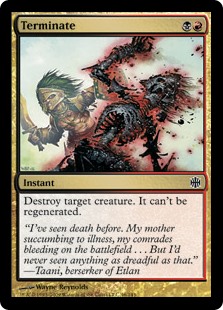
1 Terminate
2 Lightning Bolt
2 Kolaghan's Command

Planeswalkers

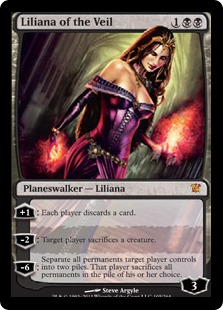
1 Liliana of the Veil

Sorceries

3 Thoughtseize
3 Inquisition of Kozilek
4 Serum Visions

Lands

4 Polluted Delta
4 Scalding Tarn
4 Bloodstained Mire
2 Blood Crypt
2 Watery Grave
1 Steam Vents
1 Island
1 Swamp

Sideboard

3 Ceremonious Rejection
2 Stubborn Denial
2 Surgical Extraction
2 Collective Brutality
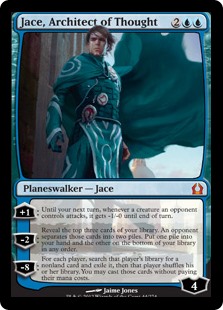
1 Jace, Architect of Thought
1 Nihil Spellbomb
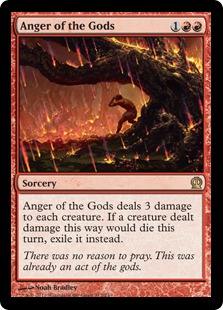
1 Anger of the Gods
1 Terminate
1 Liliana, the Last Hope
1 Kolaghan's Command

My main change from the “stock version” was the adoption of Liliana of the Veil in the maindeck and Jace, Architect of Thought in the sideboard to complement the already present Liliana, the Last Hope. The mirror is skill-intensive, to be sure, but it is also extremely luck-based, and it can be difficult to come back from lopsided draws. While I was comfortable with my experience level with the deck (I’ve been piloting Death's Shadow for months by the way, way before it was cool), I hadn’t had enough time to test the mirror beforehand. I knew going in to the event that any serious competitor sleeving up Grixis Death’s Shadow would be worried primarily about Eldrazi Tron and the mirror, and I wanted an edge against the best deck in the field, just like everyone else.

See, I knew firsthand from playing the deck that it does incredibly scary things, but has a few glaring weaknesses as well. Death's Shadow is an incredible creature, but for all its strengths, it doesn’t attack well through tokens, and it lacks haste. The deck has access to Snapcaster Mage to make things interesting, but for the most part it plans on dropping one large, cheap creature and getting to work. What does well against one large creature? Liliana of the Veil. The fact that Grixis Death’s Shadow players trimmed Lightning Bolt across the board (a move I heavily considered, but eventually didn’t make) only helps Liliana’s chances of sticking. Her only weakness (once she hits the battlefield) is Kolaghan's Command, assuming I drop her and immediately Diabolic Edict. It helps that Kolaghan's Command is usually the best card to choose with Inquisition of Kozilek/Thoughtseize anyway, so my sideboard strategy doesn’t push me off of my main plan.

To make room for Liliana of the Veil, I trimmed a Terminate, but I should definitely have cut a Lightning Bolt instead. Not that it excuses my mistake, but I did agonize over both options for a while before submitting my list. My thinking was that Liliana of the Veil accomplishes similar objectives to Terminate in the sense that I would hopefully be using it to kill larger creatures that Fatal Push and Lightning Bolt couldn’t, and by doing so, I could retain Lightning Bolt to help against the faster matchups. In addition, I was planning on keeping the second copy of Terminate in the sideboard and knew I could side it in when necessary. In reality, I ended up using it in almost every matchup, as I wanted it against Tron for sure and played the mirror multiple times during the day. Lightning Bolt came out often, and while I didn’t drop a match in the mirror, having the extra Terminate definitely would have made things easier.

As for the sideboard, I was expecting a lot of Tron and Dredge, with the possibility of Living End or Tokens making an appearance. Jund/Abzan remained noticeably absent from the field thanks to Eldrazi Tron, but if they were ever to make an appearance, this weekend was their time. Scavenging Ooze and Lingering Souls are both great right now, as evidenced by Grixis’ renewed use of Izzet Staticaster in the sideboard. Thus, I was cautiously optimistic that I could cut Izzet Staticaster for another option that could help in the matchups that I knew I would face, and as long as I didn’t open myself up too much to Tokens, I would be able to get by.

Jace, Architect of Thought fit my needs perfectly. I knew I wanted a third planeswalker for the mirror and against control, as well as a second planeswalker against Eldrazi Tron to power through the mid-game. Jace fit the bill, and even covered my bases against Lingering Souls by assuring I wouldn’t die to a swarm of fliers. Obviously it’s not as great against tokens as killing them outright, as Izzet Staticaster would, but by still being serviceable against them while providing a ton of value in other matchups I felt confident in the choice.

About ten minutes before decklist submission I talked myself into a third Kolaghan's Command in the board over the second Nihil Spellbomb. This was very, very wrong, and probably this decision alone cost me Day 2 at least (I finished 5-3). In my opinion, this decision was a classic case of talking myself into a narrative and “going too far down the rabbit hole," as it were. The narrative I had crafted for myself was that graveyard hate would be prevalent (which it was) and that I should be prepared to have an edge in the mirror (which I should). Basically, I convinced myself that Dredge would be a poor choice on the weekend, as it would catch secondhand graveyard hate from opponents looking to target Grixis Death’s Shadow. This also was true, but I neglected to think about whether I could beat Dredge with the sideboard spells that I had should I wind up facing it (which I did).

In the end, Kolaghan's Command and Nihil Spellbomb are both serviceable in the mirror, and outside of Affinity (which was nowhere thanks to Ceremonious Rejection) and some extra value against Eldrazi Tron, there is little benefit to Kolaghan's Command over Nihil Spellbomb against the field. Basically, I traded an important card that was great against one of my worst matchups for an okay card that wasn’t necessary against anything, and I was punished accordingly.

Tournament Report

Round 1 began with a matchup against Elves and a prompt 0-2 beating. It’s comical in a sense how true the cliché “make it out of the early rounds” rings true. When Counters Company is strictly the better deck, when removal is so prevalent that small creature decks are kept from serious consideration, when one of the best decks in the field is one of your worst matchups, still, someone chooses to show up with Elves. I don’t mean to dismiss anybody’s deck choice, and there are numerous cases where playing the exact deck everyone expects to be horrible is the right move. Still, it’s frustrating to lose to a deck that I “should” beat to start the day, when that deck wasn’t on my radar and I drew poorly.

Rounds 2 and 3 went much better, and I climbed to 2-1 after beating the mirror twice. I don’t have much to say about these games other than that a combination of archetype experience, a strong plan, and a little bit of luck contributed to solid wins. Liliana of the Veil in the mainboard performed as expected, giving me a solid alternate angle of attack. Meanwhile, boarding into planeswalkers and removal while boarding out Street Wraith and Lightning Bolt made my Death's Shadow worse than theirs, but gave me plenty of alternative angles of attack while they were busy trying to deny me my graveyard.

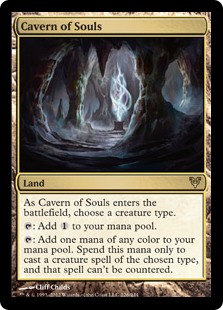
Round 4 saw me defeat Eldrazi Tron with a solid combination of discard, aggression, and Kolaghan's Command on Chalice of the Void. I’m not at the point where I feel comfortable boarding out a delve creature, but I won't argue with anyone who chooses to go that route. While I didn’t see any of these changes in my Tron opponent’s list, I will say in this section that Todd Steven’s adoption of Cavern of Souls and Wurmcoil Engine are both solid options for fighting Grixis Death’s Shadow. I was worried about running into Cavern of Souls throughout the day, as they don’t have to play four thanks to Expedition Map. In any case, my opponent failed to play it and I failed to draw Ceremonious Rejection in our match, so it ended up not mattering. As a final note, Street Wraith is, in my opinion, the best card in this matchup, as it gets our Death's Shadow down quickly and grows it larger than Reality Smasher/Thought-Knot Seer while digging us into sideboard spells as fast as possible.

Rounds 5 and 6 yielded a win against an interesting Jeskai Burn list. While I’m sure that Serum Visions/Snapcaster Mage/Mantis Rider provide something of value to the archetype, I found the matchup easy, as I could aggressively approach Death's Shadow levels without having to worry about dying quickly to three burn spells over a one-turn sequence (one end of my turn, two on his). My opponent traded efficiency for longevity, when really what I think he needs to do in the matchup is race.

In Round 6, against classic Death’s Shadow Jund, my planeswalkers again pulled their weight; when the dust settled after trading threats and answers, the extra value was able to grind my opponent down.

Round 7 broke my five-win streak, as I ran into a Charlotte local, Joel Sukhram, piloting Jeskai Control. This match was weird, as I felt I had prepared adequately for grindy matchups, yet still found myself coming up short. If I remember correctly, Restoration Angel and Celestial Colonnade were able to deal with my Liliana of the Veil in game one, as I saw no Fatal Push. In game three, I lost to Elspeth as I drew two early Fatal Pushes and few threats. I had him on Kiki Jiki, Mirror-Breaker, which was part of the reason why I kept Push after board, and while I was correct, I never saw the combo.

I definitely feel like the Restoration Angel build of UWx Control is best against me, as it has enough removal to deal with my initial attack unless I find both an early discard spell and Stubborn Denial (which did not happen here). Fliers are a great response to my planeswalker angle of attack, and keeping in Fatal Push in a control matchup reminds me too much of my time spent playing old Grixis Control, when opponents were forced to keep in Path to Exile against me.

Round 8 marked the end of the road for me when I fell to Ben Friedman playing Dredge. I thought Anger of the Gods, Nihil Spellbomb, and two copies of Surgical Extraction would be enough here, but Ben played around Anger perfectly and Leyline of the Void shut down the one copy of Surgical Extraction I could find. I died in unspectacular fashion to Scourge Devil and Conflagrate in games two and three respectively. 4 Leyline of the Void is a beating. If that trend continues, Grixis Death’s Shadow might have to drop Surgical Extraction for Grafdigger's Cage, as one Nihil Spellbomb is often not enough.

I dropped with one round left, hitting the road early to attend a family event. 5-3 is an underwhelming record, but I found my losses encouraging in a certain sense. Two were to decks that I did not expect to see (Elves and Jeskai Control), both of which I feel confident I could beat given another chance. The third loss was to Dredge, which I deserved after skimping on sideboard hate. The fact that only one Dredge deck cracked the Top 30 reassures me that it wasn’t the best choice for the weekend, so all in all I feel like my analysis of the weekend was correct, even though my results don’t show it.

In conclusion, I feel like I made correct choices on the weekend for the most part, and can’t point to any play mistakes that cost me the matches I lost. My area of improvement is most definitely in deck composition, as my maindeck was off by a card and my sideboard was off by at least two. Still, I can’t help but wonder what could have been had I not drawn poorly against Elves, and was able to put up more of a fight against Jeskai. Against the decks I was worried about (Death’s Shadow, Burn, and Eldrazi Tron) I finished 5-0, but if we could pick our opponents, we would all go undefeated.

Thanks for reading,

Trevor Holmes

Insider: Breaking Down Everything from Announcement Week: News, Spoilers, and Leaks

Are you a Quiet Speculation member?

If not, now is a perfect time to join up! Our powerful tools, breaking-news analysis, and exclusive Discord channel will make sure you stay up to date and ahead of the curve.

This has been quite an eventful week in Magic, and that’s ignoring the massive three-Grand-Prix-in-a-week experiment occurring in Las Vegas, which has transformed the typical Grand Prix weekend into a full-fledged convention. On June 9, Wizards issued a statement that each day of the next week would have an important announcement or other item of news about the game.

No More Blocks

On Monday, Mark Rosewater announced that the set “block” concept that has been around through most of Magic’s history – usually three sets to a block but more recently two sets – is being eliminated. Future sets will each be standalone blocks with their own mechanics. The reason given is that the block system put too much strain on the storytelling of Magic worlds, and now they will have the freedom to visit a world for just one set or stretch it to multiple sets when it makes sense. This change also means that future Limited formats will all be self-contained in one set, which will make it much easier for Wizards to design fun and interesting Draft and Sealed environments. There’s a precedent for the best Limited formats being one set, so it has been widely lauded as a positive change.

There was an error retrieving a chart for Burning Vengeance

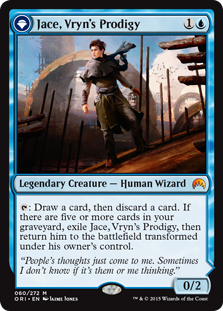
It was also announced that the three standalone sets each year will be supplemented by a new core set. Its vision has changed to that of a friendly set for new players, which was the original intent of core sets but was lost over the years, which reached a fever pitch during Magic Origins and cards like Jace, Vryn's Prodigy that were anything but simple. The intent of the core set is to offer greater integration with supplemental and introductory products like sample decks, planeswalker decks, and the Deckbuilder’s Toolkit. Sets will be half new cards and half reprints, and there will be cards designed for Standard play, but it’s clear the set will be treated very differently than the typical expert-level expansion. It’s not clear what this means for finance, but if history is any indication, Standard staples that do make it into these sets will demand a premium due to the set being under-opened and under-drafted, especially given that MaRo explicitly said that they are designed to be mastered more quickly and aren’t designed to be intensively drafted by the expert player.

MaRo also announced that the Masterpiece cards will no longer be included in every set, and instead saved for special occasions when they can make a big impact. The next block, Ixalan, for example, will contain no Masterpieces. When they were first released there was finance discussion that these cards were good for players because they took up a large percentage of value in the set relative to the purchase cost of packs, and thus pushed down the price of Standard staples, so we are likely to see an increase in the price of new Standard cards in sets without them.

Aetherworks Marvel Banned

On Tuesday we saw the banned list update, which dropped the bombshell that Aetherworks Marvel was being banned. Waiting a few months until the rotation of Ulamog, the Ceaseless Hunger would help fix the problem, but it wouldn’t solve the problem of Marvel being legal for another year, so they nipped it in the bud. Now the current Standard has been many possibilities, and the future is promising. Initial reports from those playing Standard online is that the metagame has been opened up and the format looks very interesting, so it seems the change was positive at least in the short term and will prevent metagames warping around Marvel in the future.

There was an error retrieving a chart for Aetherworks Marvel

As far as the current metagame, the online price of staples in non-Marvel decks shot up, like Torrential Gearhulk, Gideon, Ally of Zendikar, Relentless Dead, and even Walking Ballista. A very interesting increase was the nearly doubling in price of Bristling Hydra, which is being used as a staple in the non-Marvel Temur Energy deck. This was a player in the metagame even with Marvel around, and it has certainly been elevated to a higher status now without that competition. Playing many of the same core staples as the Marvel deck, this deck also represents a place for Marvel players to go after the banning, which further increases demand.

Magic Digital Next

Wizards also made made an announcement about Magic Digital Next. From the sound of it, the program will be an umbrella for all online Magic games – think Blizzard’s Battle.net, rather than the next generation of Magic: The Gathering Online, which seems likely to remain as-is.

There was an error retrieving a chart for Old Man of the Sea

What was real news, and what helps to cement the Battle.net theory, is the announcement of a new massive-multiplayer-online game, or MMO, set in the Magic universe. This is being designed in partnership with a digital firm responsible for other MMOs, and going further, Wizards will partner with other digital groups for other products.

Given the very troubled history of Magic Online, which was designed by the studio Leaping Lizards before Wizards took the helm, this seems like a doomed approach that ignored the lessons learned almost 20 years ago with MTGO, but hopefully time has changed the industry landscape and made this sort of collaboration more feasible. Wizards is also terminating support for Magic Duels, which drawn the ire of fans due to its abrupt nature, but hopefully this represents a shift in resources to Magic Online.

New Releases

On Wednesday, a ton of new product releases were announced, including the release date for Ixalan on September 29 and Rivals of Ixalan on January 19. There will be a Duel Decks: Merfolk vs Goblins release in November, as well as a new From the Vault set called Transform, which is expected to be filled with double-faced cards.

There are some potential reprints of note in the Duel Deck and box set, but the real reprint news is the announcement of a 25th Anniversary Masters set, which is likely to be a mix of Eternal Masters and Modern Masters with some strong flavor added.

And last, but certainly not least, there will be a return to Un-sets with Unstable! I expect we’ll see the same cool basic lands these sets are known for, and that the foils will see an especially high demand. This isn’t a normal set and will thus be opened far less than normal, so it’s going to be interesting to see how it plays out.

Hour of Devastation Spoilers

These official announcements have been completely dwarfed by the spoilers followed by leaks that occurred this week. A few Hour of Devastation cards were accidentally spoiled late last week when shown in promotional video on their French-language page. These were followed by a leak this week of images of two more cards, followed by images of what look like Game Day promos.

There’s not a whole lot of information to glean from these, but we do have confirmation of two new mechanics, afflict, which punishes blocking, and eternalize, which was spoiled via a full-art Game Day promo which offered no reminder text. There has been a lot of speculation on what it does, but assume that the ability functions like Embalm, except that it instead acts as an aura that gives a creature a bonus – in the case of Adorned Pouncer, +1/+1 and double strike.

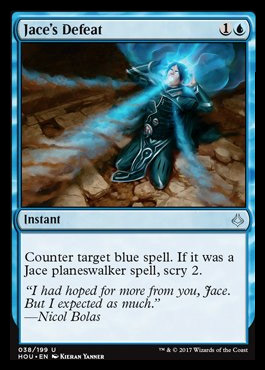
There have also been spoilers of new color hosers, a Gainsay reprint which punishes Jace planeswalkers a little extra, and Nissa’s Defeat, which can destroy a Forest, a green enchantment or a green planeswalker. We can almost certainly look forward to one more in each color, and potentially a planeswalker to go with it.

Ixalan Leaks

No announcement this week compared to the massive Ixalan leaks, which started with a trickle and a partial image of an uncut sheet of cards, but quickly escalated with the image of the full rare sheet of the set , which is an absolutely massive spoiler, especially for a pirates- and dinosaur-themed block that had a lot of potential to build hype and grow the fan base.

Wizards is undoubtedly furious, and there will be action taken. This is a real wake-up call about the security of the printing process, and there will be steps taken to prevent this in the future. It’s difficult, given that printing is contracted out, so a solution could mean purchasing their own printing operation, or more drastically, stop printing cards altogether and focus on digitizing the game. While this would still not prevent internal leaks, it seems that these leaks are occurring from outside parties acting opportunistically.

I was going to delve deep into the implications of these leaked cards, but there’s so much to talk about and that discussion could fill multiple articles by itself. What we do know is that the revealed planeswalkers have the subtype legendary, which is being theorized to represent a change in the rules surrounding planeswalkers, of which each player can currently only control one of each planeswalker name type. This may change to the legend rule that applies to other permanents, including retroactively errata-ing each existing planeswalker to this legend type, which will allow for plays like Jace Beleren into Jace, the Mind Sculptor – without having to choose one to keep.

If this is true, there could be massive financial implications, with one example being an increase in value for a card like Reki, the History of Kamigawa, which would trigger for every planeswalker.

What do you make of these leaks and the announcements this week?

–Adam

What Are You? Innovation in Charlotte

Are you a Quiet Speculation member?

If not, now is a perfect time to join up! Our powerful tools, breaking-news analysis, and exclusive Discord channel will make sure you stay up to date and ahead of the curve.

SCG Charlotte is in the books. Grixis Shadow and Eldrazi Tron were the tournament's clear winners, both in terms of representation and apparent power. But while everyone was distracted by that onslaught of under-costed threats, a smaller tournament was underway. Despite being won by Grixis Shadow, the Charlotte Classic yielded a few especially sweet brews, which we'll explore today.

Foreward: A Note on Unbans

I may have defended a Stoneforge Mystic unban last week, but I'm fine with the "no changes" announcement we received instead. Like I said in that article, Modern is in a great spot right now.

I think after Grixis Shadow's impressive performance at SCG Charlotte, Wizards wants to wait longer to see if Modern shakes itself out. Should Shadow continue putting up these kinds of Top 8 numbers, a ban might be in order, but I really don't think that's going to happen. Either way, if there's anything to learn from previous unbans, it's that Wizards always wants to be sure the format is in a safe place before making another one.

Charlotte Classic Standouts

I know, I know. "It's a Classic, not a GP. Of course freaky decks are going to squeeze through the cracks! But those decks will never succeed in a room full of strong players on strong decks."

This argument (in case anyone was planning on making it---ha-ha, 8 Mile'd!) seems as old as 8 Mile itself by now, and I'm still not convinced. "Freaky decks" are the lifeblood of this format. Even Death's Shadow was a freaky deck, until it wasn't. Not to say any of these decks are the next Death's Shadow---they almost certainly aren't. But players do see these lists and pick the decks up, and then, suddenly, people are playing them. Rogue finishes in documented events do increase the format's diversity, even if only marginally; at worst, they serve as consummate advertisements for Modern's limitless possibility, potentially drawing new players in. But most importantly, at least for the purposes of this article: they are really fun to look at!

Ye Oldest; Ye Faithfulest

Sol Malka clawed his way into 2nd with an updated take on The Rock, the BGx midrange deck to his name whose iterations have policed Modern with a spiky fist since the format's humble beginnings. At a time where those usual suspects, Jund and Abzan Rock, have all but been replaced by Death's Shadow decks, Sol's "pure" Rock list provides a welcome blast-from-the-super-past.

BG Rock, by Sol Malka (2nd, SCG Charlotte)

Creatures

4 Dark Confidant
4 Tarmogoyf
3 Scavenging Ooze
1 Eternal Witness
1 Tireless Tracker
2 Kalitas, Traitor of Ghet

Planeswalkers

3 Liliana of the Veil

Instants

2 Fatal Push
4 Abrupt Decay

Sorceries

4 Inquisition of Kozilek
2 Thoughtseize
2 Collective Brutality
2 Maelstrom Pulse
1 Traverse the Ulvenwald

Artifacts

2 Mishra's Bauble

Lands

4 Blooming Marsh
2 Forest
3 Ghost Quarter
3 Hissing Quagmire
2 Marsh Flats
2 Overgrown Tomb
2 Swamp
4 Verdant Catacombs
1 Windswept Heath

Sideboard

1 Ghost Quarter
1 Slaughter Pact
2 Duress
1 Illness in the Ranks
2 Surgical Extraction
1 Golgari Charm
1 Shadow of Doubt
1 Unravel the Aether
1 Flaying Tendrils
1 Liliana, the Last Hope
1 Maelstrom Pulse
1 Tireless Tracker
1 Kalitas, Traitor of Ghet

Lightning Bolt and Path to Exile are appealing spells, to be sure. But Bolt hasn't broken many hearts in Modern's most recent era. Path's absence is the real head-scratcher here: why give up the best removal spell in Modern and Lingering Souls?

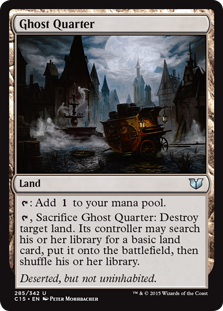
Simple: Ghost Quarter. I identified Quarter as one of Modern's top five utility cards early in the Shadow format, and with the rise of Eldrazi Tron, the card has become even more relevant (Collective Brutality and Surgical Extraction, two more of my picks, also make the cut in Sol's list). BGx Rock decks have always struggled against big mana strategies like Eldrazi and Tron. A few mainboard copies of Quarter---especially backed up by the fourth in the side---is an elegant answer to Modern's new darling deck, itself a mash-up of both archetypes.

Quarter also becomes attractive when decks push their manabases to logical extremes, as do the Shadow decks. Once those particular strategies plant two basics on the table, it's Strip Mine season.

Graveyard hate hurts the Shadow decks, too, and Sol runs three copies of Scavenging Ooze with which to get his munch on. Ooze is a natural foil to Dredge, another proven deck in this metagame, and to Company, a favorite going into the weekend. Neglecting a splash helps sate three Oozes, as Raging Ravine and Lingering Souls aren't around to eat up that mana.

Excluding Shadow, the only Rock deck currently showing promise in Modern is Willy Edel's Abzan Traverse, a deck that wasted no time in wooing BGx lovers trapped in the Shadow Realm (it even put another player into the Classic Top 8). Abzan Traverse is essentially a Shadow-less Abzan Shadow, preserving the deck's graveyard-stocking dimension but skipping out on its one-mana 12/12. BG Rock borrows many elements from this dumbed-down Shadow deck, including the Baubles---but its delirium package proves far less involved. Sol runs the ancient Dark Confidant over Grim Flayer, and only plays a single Traverse the Ulvenwald in his 75!

I assume the justification for these modifications is to hedge against grave hate. Shadow, Dredge, and Company were all big names going into the tournament, and ones with big targets on their heads. Sol must have tested against Rest in Peace, Nihil Spellbomb, and similar cards, and decided that while Traverse is powerful, he didn't want to sleeve up a 75 so soft to hosers. Kalitas, Traitor of Ghet then fills out the creature suite, providing some of the late-game oomph ceded to a slimmer delirium package.

My Go, My Go, My Go

Up next, we have Ali Aintrazi's Bant Turns, easily the most scattered-looking deck in Top 8. But Ali's success story isn't a particularly rare one in Modern---the man just plays what he likes. In an article published just over two years ago, the brewer wrote, "I usually don't play Modern, but when I do...I play a sweet Time Warp deck! And there's nothing better than taking an extra turn with a planeswalker or four in play." Keep on truckin', Ali.

Bant Turns, by Ali Aintrazi (8th, SCG Charlotte)

Creatures

4 Courser of Kruphix
4 Noble Hierarch
3 Jace, Vryn's Prodigy

Planeswalkers

2 Nissa, Steward of Elements
2 Jace Beleren
2 Garruk Wildspeaker
2 Narset Transcendent

Instants

3 Cryptic Command
1 Sphinx's Revelation

Sorceries

2 Serum Visions
1 Fog
1 Seasons Past
4 Time Warp
3 Walk the Aeons

Enchantments

4 Utopia Sprawl

Lands

4 Misty Rainforest
2 Flooded Strand
3 Breeding Pool
1 Hallowed Fountain
1 Temple Garden
1 Mikokoro, Center of the Sea
1 Faerie Conclave
1 Treetop Village
4 Forest
4 Island

Sideboard

1 Fog
1 Gigadrowse
1 Grafdigger's Cage
1 Celestial Purge
1 Rest in Peace
3 Spreading Seas
2 Stony Silence
2 Ensnaring Bridge
3 Rule of Law

Some testing with the deck reveals there's more to it than initially meets the eye. Turns has existed in Modern since 2013, and it's always been pretty miserable. The deck's first iterations combined Howling Mine with Jace Beleren to chain together Time Warps until a win condition presented itself. It saw a resurgence (in as much as a deck this fringe can resurge) after the release of Journey into Nyx, which offered the more expensive but slightly less symmetrical Dictate of Kruphix (flashing Dictate in on an opponent's end step denies them the first extra draw).

Of the strategy's glaring problems, its most obvious are a lack of speed and the unfortunate symmetry of its card advantage engines. In the most recent port of his Standard deck to Modern, Ali Aintrazi addresses both of these issues.

Noble Hierarch and Utopia Sprawl jump-start Turns into its Time Walk-phase, while Jace, Vryn's Prodigy increases early-game velocity with its looting ability. The biggest innovation here, though, is Ali's abandonment of the situational Temporal Mastery and the double-edged Mine effects. He replaces these cards with planeswalkers, who play double-duty as incremental card advantage engines and as engine grease for the combo. Planeswalkers also act as targets for opponents and otherwise interact using their abilities, giving them even more over the deck's previously-accepted, critical-mass-of-'Walks core.

The aforementioned Jace, Vryn's Prodigy transforms for the mid-game into Jace, Telepath Unbound, a faux-Snapcaster Mage that flashes back Time Warp multiple times over the course of the turn-spanning combo. Similarly, Narset Transcendent's -2 gives Time Warp rebound while helping draw through the deck with her plus.

OG 'walker Garruk Wildspeaker and newcomer Nissa, Steward of Elements round out the planeswalker suite. The former combos with Utopia Sprawl to generate massive amounts of mana and compliments Faerie Conclave and Treetop Village in presenting a respectable clock. For her part, Nissa serves a multitude of roles---she Coiling Oracle-trips into lands, casts spells on top of the library, and smooths out draws for a whole game.

Holding everything together is Courser of Kruphix, a creature that digs through the deck at worst, and boasts a number of interesting micro-synergies at best. Between Nissa, Narset, either Jace, and even Serum Visions, Courser does a good deal more here than simply act as a Narset Transcendent for lands (although that's nice, too). And all that on a hard-to-Push, 2/4, life-netting body! Bant Turns is truly a Courser deck, in the same way that Todd Stevens's GW Company from a few months ago was truly a Courser deck. That's right---Death's Shadow is the best creature in Modern and we're seeing Courser decks.

Before we move on, talk about hosers in the sideboard. Why "oops, I win" when you can "oops, you lose?"

Rising to the Challenge

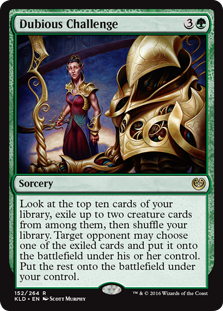
Last but not least, we have John Middlebrook's 15th-place exercise in breaking goofy Kaladesh cards. True to name, Challenge Breach uses Dubious Challenge and Through the Breach to cheat fatties into play and assumes a win from there.

Challenge Breach, by John Middlebrook (15th, SCG Charlotte)

Creatures

4 Glimmerpoint Stag
4 Flickerwisp
4 Birds of Paradise
2 Noble Hierarch
4 Emrakul, the Aeons Torn
3 Griselbrand
1 Elesh Norn, Grand Cenobite
1 Platinum Emperion
4 Simian Spirit Guide

Instants

3 Path to Exile
3 Through the Breach

Sorceries

4 Dubious Challenge

Lands

4 Windswept Heath
3 Flooded Strand
1 Arid Mesa
3 Temple Garden
2 Hallowed Fountain
2 Overgrown Tomb
1 Sacred Foundry
1 Steam Vents
1 Breeding Pool
1 Stomping Ground
1 Boseiju, Who Shelters All
1 Plains
1 Swamp
1 Forest

Sideboard

2 Ceremonious Rejection
1 Dispel
1 Celestial Purge
2 Rest in Peace
2 Stony Silence
1 Anger of the Gods
3 Leyline of Sanctity
2 Madcap Experiment
1 Slaughter Games

Challenge Breach is one of those decks that has me immediately excited as I first gloss over the list, and severely bored by the time I've finished reading it. It plays similarly to RG Valakut, which gets my vote for dullest deck in Modern: ramp up, cast Sneak Attack analog, hopefully win with ensuing boss monster---either go way over the top of fair decks and beat them, or succumb to the combo deck's fundamental turn. This idea for a Dubious Challenge deck has actually been kicked around since last year, but John's Classic finish marks the strategy's first competitive outing (and enjoys a much-improved backup plan in Through the Breach).

Dubious Challenge works as follows: the pilot casts Challenge, finds a fatty (preferably Emrakul, but Griselbrand or lesser options like Elesh Norn will do in a pinch) and a blinker (Flickerwisp or Glimmerpoint Stag), and passes the creatures to their opponent. That opponent chooses whether to take the fatty, which gets blinked and returns to its owner's side of the field at the next end step, or the blinker, which presumably will blink nothing. From there, the opponent has all of one turn to win around the fatty before said fatty attacks and kills them. Through the Breach exists as a back-up plan for fatties drawn naturally, as well as something to do with all those extra Griselbrand cards.

Luckily for John, "boring" does not always equal "bad." In fact, the deck looked positively awesome when it dismantled Brad Nelson's Grixis Shadow two games to zero on camera.

The main thing Challenge Breach has going for it over Valakut is speed. With plenty of dorks, 4 Simian Spirit Guide, and four quasi-win conditions that cost only four mana, the deck is capable of very consistent turn three combos and some turn two combos. Challenge Breach pays for this speed increase by trading away Valakut's inevitability---given a few turns, the Primeval Titan deck will kill you, even if it does so by simply ramping into Lightning Bolts (er, Mountains). Conversely, Challenge Breach can be crippled in a number of ways (most effectively via Stubborn Denial or Grafdigger's Cage, but can we please print Containment Priest for Modern already), and it doesn't exactly get to play a fair game in the meantime (depending on how you view paying 2WW for a 3/3 vigilance).

Just Another Day in the Sun

Novel decks popping up and experiencing ephemeral success is standard fare in Modern, and it's nice to know that tradition isn't going the way of the dodo in the Death's Shadow-Eldrazi Tron metagame. Here's to hoping GP Las Vegas brings us more cool brews, and please post any I may have missed in the comments.

Insider: How to “Ogre” Your Sales Boxes More Effectively

Are you a Quiet Speculation member?

If not, now is a perfect time to join up! Our powerful tools, breaking-news analysis, and exclusive Discord channel will make sure you stay up to date and ahead of the curve.

I get that a "Swan Song" generally refers to "the end of something" or "the finale," but that's not why I picked the art for Swan Song as the thumbnail for this article. I'm not going anywhere (other than Vegas this week), but I really just picked it because Swan Song is another good old "everyone else thinks this is a bulk rare, but I know I can buylist it for a dollar" card. That's a lot of quotation marks for an introduction, so let's "get on with it."

I'm in an interesting spot this week. I mean, by the time you read this on Thursday, I'll be standing behind the Hareruya booth at Grand Prix Las Vegas. If you're reading this on Friday, I might be in the middle of getting married. This is also Announcement Week, where we'll be getting blasted with a new piece of world-shaping Magic news every day starting tomorrow. Normally, I pound out my article Tuesday night or Wednesday morning so that it goes live on Thursday, but I'm writing to you from the past (Sunday) because of how busy I'll be with Vegas prep tomorrow.

Therefore, nothing today will have anything to do with announcement week, nor will I be covering anything that gets announced during announcement week. C'est la vie. Thankfully, most of the time my column is time insensitive. You can look at bulk rares or close-to-bulk rares and the finance strategies about them pretty much whenever; some cards rotate and become bulk, but that's pretty much it.

So let's cover another timeless topic. Today, I want go over over what it means to "ogre" a box, because it's a core concept to know if you're planning on attending this (or any) Grand Prix to sell a large amount of lower valued cards. I also want to go over a few things that people do wrong when trying to ogre.

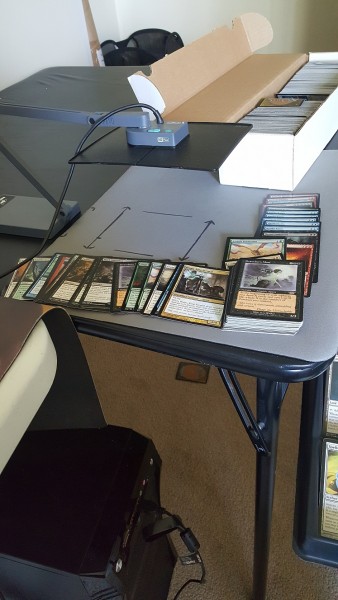
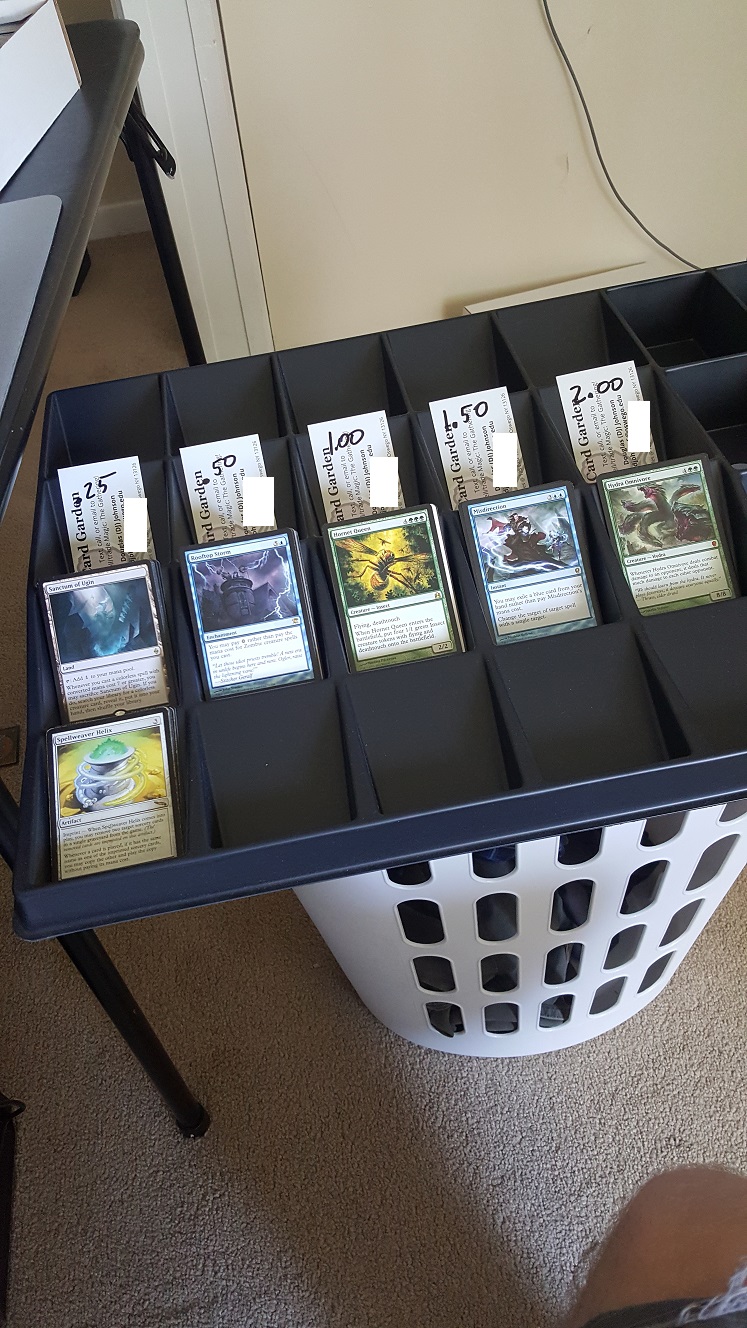
At its core, to "ogre" a box of cards means to divide cards into different groups that are valued at fixed prices for each group. When at an event, you take your ogred box around to dealers, who will select the cards that they are willing to buy at the prices you have set. It's quick and easy for everyone at the event – it's setting up that takes the time.

20170611_134901

Common Mistake: Asking Too Much

quietspec

One of the mistakes I've seen other people make while ogreing (and one that I used to make myself a few years ago) is trying to convince a vendor to match the highest buylist price you can find on the internet. It's tempting to try and make the argument, "Well, X store can pay this, can you match it?" and that will work in some cases. Maybe you're trying to offload a stack of, well, Swan Songs for fifty cents a piece, and the vendor across the table wants to offer quarters on each. At that point, pulling up Card Kingdom's eighty cent offer makes a more compelling argument to just meet you in the middle at your asking price, because they're probably going to resell for around a dollar anyway.

What you want to avoid is haggling over every single nickel and dime, trying to get 80 percent of retail on the kind of cards we discuss in these articles. Will there be vendors paying 90 percent of retail on Modern staples there? Absolutely. If you ever listen to the Cartel Aristocrats podcast, it's one of the strategies that Edward Nguyen talks about a lot as an employee of Kirwan's Game Store. They're not looking to make an insane percentage margin on staples – they just want to turn over thousands of transactions each week at a smaller margin per card, because those staples are constantly in demand by more competitive players.

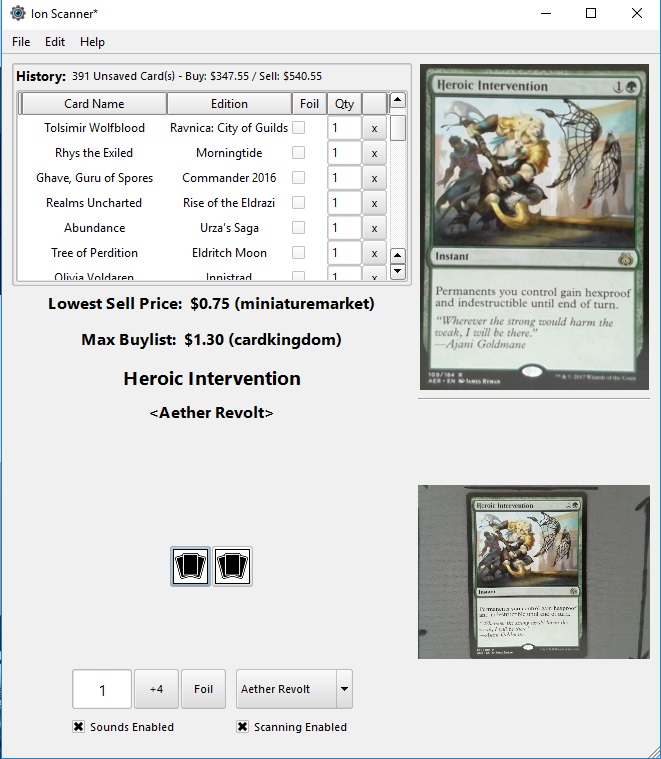
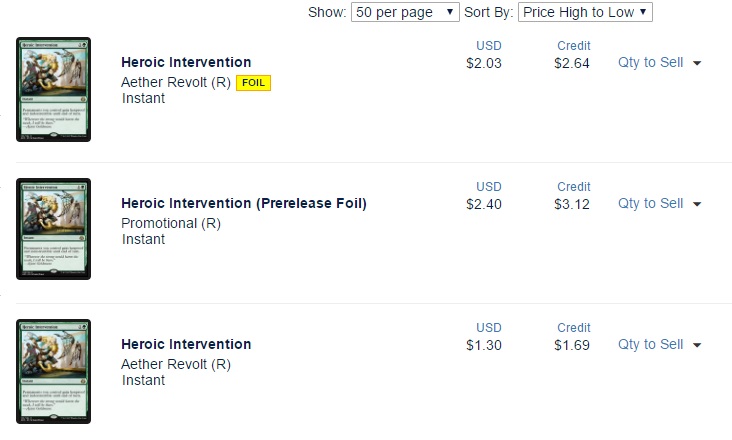
However, that tactic doesn't scale down to the lower-valued cards for all stores in all cases. While the ION Core scanner basically said that Heroic Intervention had a spread of negative 100 percent, that's not super realistic. Most stores aren't constantly selling out of this near-bulk rare from Aether Revolt to the point where they have to aggressively target it on a buylist, so you'll just get a head shake instead of a handshake if you throw it in the $1.00 or $1.50 section of your ogre box. If you follow the strategies in this article, you picked the card up for bulk or a quarter. Just throw all of them in the 50-cent section and call it a day.

intervent

intervent

Common Mistake: Spending Too Much Time On This Stuff

If I had to paint a broad stroke and give every card in my ogre box a label (with even more quotation marks), it would be "stuff that I haven't been able to sell at the shop at full retail."

While Deflecting Palm is a hot card to pull out of a stack of bulk rares, there are only so many burn sideboards in the upstate NY area that I can fill up before I start to have excess product that's not moving as quickly as I want it to. This is just stuff I want to make a decent margin on (or cut my losses on) and move on, allowing me to actually enjoy a large percentage of my time at the Grand Prix.

I've seen grinders worry so much about maxing the max amount from their ogre boxes that they only sell a couple dozen cards per vendor, and end up making their rounds through the entire room. I once asked a friend if he wanted to have lunch while at the GP, and he was still ogreing his box four hours later after we had lunch without him. The EV just isn't there.

20170611_134848

Common Mistake: Clumsiness

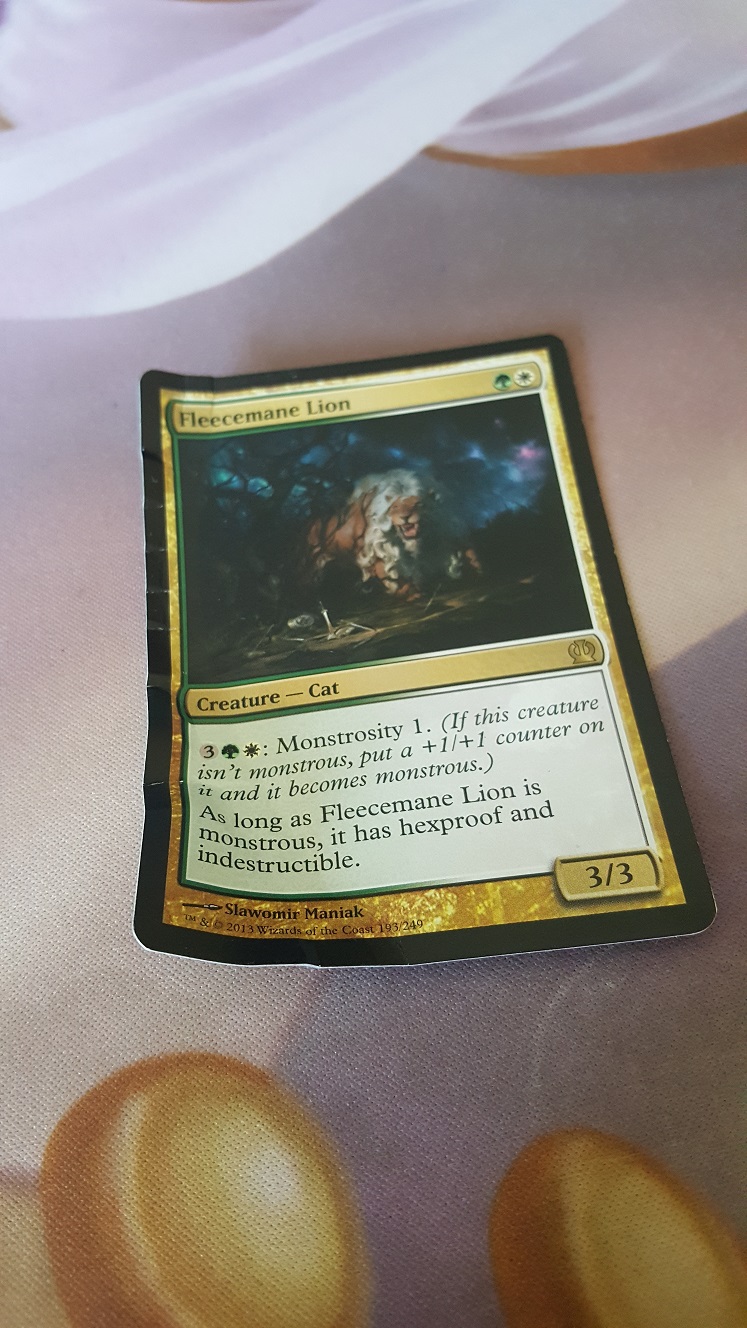
Sometimes you have to make sacrifices while sorting and ogreing cards. This little buddy didn't get to five mana fast enough, and wasn't indestructible when I accidentally ran it over with my chair. He wasn't a bulk rare before, but he's certainly one now. So here's another thing that can technically go wrong while you're at home preparing the ogre boxes, but it's pretty easy to avoid. Just don't be an idiot like I was.

20170611_151212

Finished Product

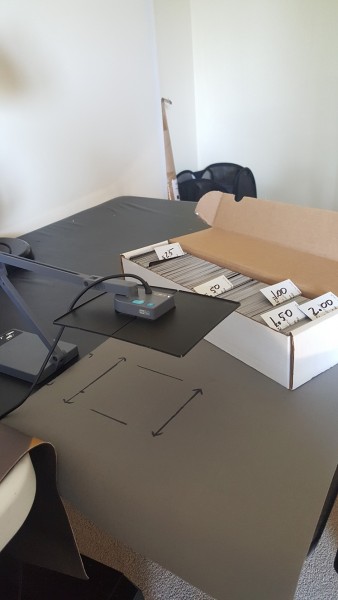
Here's what my complete ogred box looks like:

20170611_160123

Hopefully you can see how this is so much easier for a vendor on the other side of the table, rather than flipping through binder pages and asking you whether you're okay with prices for each individual card.

Trust me, I've been on the other side of that table, and it can get a bit tedious. It took me around two hours to price sort this entire 1,000-count box with the ION scanner, and that was while rewatching Sherlock on Netflix. With your box ogred, the friendly staff over at Tales of Adventure and MTGDeals can simply do a quick flip through of each pre-priced section and give a quick yes/no on sight, saving you both a huge amount of time.

With some luck, you might even get paid a little bit higher than you otherwise would on certain cards. If we go back to our example with Swan Song, maybe you'll choose to put them in your $1.00 section instead of fifty cents. You'll probably get less bites from vendors overall, but you might find one vendor who thinks "we normally pay $.80 on this, would you take that?", as opposed to theoretically losing money by putting them in the fifty-cent pile.

End Step

Here's some really peasant-tier #mtgfinance advice. If this year's main event(s) are handled similarly to two years ago, all of the swag (playmats, sleeves, deckboxes, promos) will be handed out via BCW 800 count boxes. The same exact box that I pictured earlier in this article.

If you're in the market for extra space to hold your collection, these boxes can get kind of pricey if you don't have access to a distributor. Sometimes they're upwards of 80 cents a piece, even when you buy 300-plus and factor in free shipping. Personally, I'm flying in from upstate NY and won't have the space to leave with a ton of those boxes. If I were driving, though? I saw massive trash bins of empty 1,000-count boxes being wheeled out the door last year, and it kind of made me wish I was more local. That's a lot of free storage space being given away....

Cleanup Step

I'll be at the Hareruya booth on Thursday pretty much all day. Come stop by and say hi! I'll also be giving away Brainstorm Brewery tokens throughout the weekend, along with Jason Alt and Corbin Hosler from the podcast. Hope to see you all there!

Insider: Top 10 Cards to Watch After the Marvel Ban

Are you a Quiet Speculation member?

If not, now is a perfect time to join up! Our powerful tools, breaking-news analysis, and exclusive Discord channel will make sure you stay up to date and ahead of the curve.

Honestly, were you surprised when Wizards announced Aetherworks Marvel is banned in Standard? I certainly wasn’t. Ulamog, the Ceaseless Hunger and Marvel weren’t even meant to be in the same format like this for very long. The change in rotation, and further changes to set structure, will have a ripple effect well into the future of the game. I support changes like this, not only because they keep the format fresh, but they also help frustrated players come back with a refreshed sense of possibilities.

What cards are really affected by this ban? I think the only two that will negatively be impacted a ton are the two marquee cards from the deck that I’ve already mentioned: Ulamog and Marvel will ceaselessly drop in value over the next week or two. Never fear, though – Marvel is banned but your finance isn't. Typically changes like these make more opportunities for entrepreneurs like us. So let’s look at the possible big gainers from this banning.

10. Bristling Hydra

There was an error retrieving a chart for Bristling Hydra

Since Bristling Hydra was released, I’ve been trying to pile them up at my store. This green four-drop is deceptively powerful and hard to deal with. Not only that, but players can easily port their Marvel decks into Red-Green Energy. Basically a bulk rare, Bristling Hydra is a good pick up particularly because it’s a low-risk acquisition.

9. Glorybringer

There was an error retrieving a chart for Glorybringer

Once players start jumping on board with Red-Green Energy, the next card they will need is Glorybringer. As a pseudo-Flametongue Kavu, Glorybringer starts out as basically a removal spell and burn spell wrapped into one neat creature package. There’s a lot of legality left in this dragon as well, and it will be around for multiple iterations of the Standard format moving forward.

8. Chandra, Torch of Defiance

There was an error retrieving a chart for Chandra, Torch of Defiance

If you’ve read many of my articles, you know I love Chandra, Torch of Defiance. She is great in nearly every circumstance and affects the game on multiple fronts. Most players won’t be rocking my sweet Mardu Planeswalkers deck, but the best version of Chandra so far can fit in many different strategies. She’s already one of the most expensive cards in Standard, but that doesn’t mean she can’t pop up and make you a little money. I think it’s more likely that Marvel players will swap over to a more controlling strategy, and for that, they’ll need Chandra to help them.

7. Rishkar, Peema Renegade

There was an error retrieving a chart for Rishkar, Peema Renegade

I think it’s about time that black-green makes a comeback in Standard, and Rishkar, Peema Renegade is the perfect captain for the team. He fits in multiple black-green builds, and with fewer roadblocks, this archetype should resurface in a big way. His price tag is as low as it's ever been, so there’s a lot of price memory to recoup on this versatile green dude.

6. Vizier of the Menagerie

There was an error retrieving a chart for Vizier of the Menagerie

I think Vizier of the Menagerie actually deserves to switch spots with Rishkar, but I wanted to talk about it after, so the Vizier got an honorary bump up the list.

First of all, this is one of the best long-term buys in Amonkhet. Basically anytime you can get copies cheaply, I’d advise it. It may take a year or two, but this one’s going to be great for the bank account.

In terms of Standard, though, I think this is a strong sleeper. We haven’t had the opportunity to see the power of this guy in action because the format has been so brutally fast. The aggressive decks haven’t gotten any worse, but there’s a lot less pressure now that Marvel is gone. I think we could see Vizier of the Menagerie dominate midrange games. I’d like to see how it does in some type of green-black deck. Most of the cards in that deck are cheap, and you could even run Evolving Wilds so you have a way to shuffle your deck to try to find more action.

5. Walking Ballista

There was an error retrieving a chart for Walking Ballista

The reasons I like Walking Ballista are the same reasons I've liked it before. It’s an artifact so it can fit in any strategy. The mana cost allows it to be versatile and meet the needs of any situation. Best of all, this creature can be great in aggressive, midrange, or control strategies. Ballista should definitely see a tick up in price.

4. Gideon, Ally of Zendikar

There was an error retrieving a chart for Gideon, Ally of Zendikar

With Marvel gone, midrange decks will be viable once more. Gideon, Ally of Zendikar is a perfect example of the type of card that should make a huge comeback. Previously, you couldn’t count on having time for Gideon to impact the game. Standard should resume its normal pace, which means Gideon should resume his dominance.

3. Kalitas, Traitor of Ghet

There was an error retrieving a chart for Kalitas, Traitor of Ghet

Kalitas, Traitor of Ghet is probably going to be a controversial pick for this list, but I think it’s his time to shine once more. I’d love to see a blue-black control deck tearing it up with Kalitas (and spoiler – our next pick on this list is Torrential Gearhulk). That’s a lot of advantage from your win conditions. Don’t forget about Kalitas; he’s still a house.

2. Torrential Gearhulk

There was an error retrieving a chart for Torrential Gearhulk

Speaking of Torrential Gearhulk, I see a $30 price tag in its future. The best Gearhulk fits in every control strategy – because they all run blue! There are plenty of great options to flash back and there’s a lot of room to innovate with possible control strategies.

1. Heart of Kiran

There was an error retrieving a chart for Heart of Kiran

Last, but most important with all the powerhouse cards banned, is the broken card Heart of Kiran. I thought Heart should have been banned in Standard alongside any of these previous revisions to the format. This vehicle puts tremendous pressure on the format's deck constraints. You must run removal that can kill this artifact, otherwise you’ll likely lose to it. This is different from running removal to deal with aggressive decks, because there are only a few specific cards that will remove Heart.

I think Wizards believes that printing this new Abrade card will loosen the grasp that Heart of Kiran has on the format. I hope they’re right about that, but I fear even this dedicated, yet versatile, hate card won’t be enough. A strict Shatter upgrade is no joke, though, and I like that direction. This is a power creep that’s needed to happen for a while now. The full art looks sweet and should fit into most cubes too.

Wrap Up

I hope my insights into the flow of the format will prove helpful to your wallet as well as your win percentage. What cards do you think will be impacted most by this latest banning? Let me know in the comments.

Until next time,
Unleash the Force!

Mike Lanigan
MtgJedi on Twitter
MtgJedi on YouTube

Insider: Pulling Future Money from Bulk

Are you a Quiet Speculation member?

If not, now is a perfect time to join up! Our powerful tools, breaking-news analysis, and exclusive Discord channel will make sure you stay up to date and ahead of the curve.

Welcome back readers!

Today's article will focus on commons and uncommons. I always enjoy DJ's articles on pulling cards from bulk—my methods are a bit more complicated than his, so I'll give you a look into my sorting procedure. Then I'll cover some of my favorite specs right now on "not quite bulk" commons and uncommons.

Pulling the Less Obvious from Bulk

One thing you will learn when sorting through bulk is that, like most endeavors, practice really does make perfect. You could hand identical stacks of 1000 random cards to 10 different store owners and they would all likely have slightly different "not bulk" piles. The reason is because the more you deal with players and buylists, the more random cards you may learn are worth more than bulk.

With a lot of experience and information it's likely that an experienced picker would find all the cards that buylist for more than $0.50. They might even find everything that buylists for more than $0.25, or if they are really good, $0.1.

But there's another thing to consider. What about cards that are currently bulk but might eventually become not-bulk. The challenge here is that this metric is not well defined. Potential one person sees could easily be dismissed by another. However, we can look for patterns in cards that have gone from bulk to not-bulk and see what types of factors we should look at.

In an ideal situation we'd have a sort of algorithm we would use to determine a card's potential. Unfortunately, I don't have one available (yet, as it's something I might work on if I ever find myself with a plethora of free time). But for now I'll at least leave you with the factors I do consider at this time when looking at potential future not-bulk.

Color

Obviously, blue is the most powerful color in Magic. For some reason that color got Counterspell and Ancestral Recall. So because of blue's prevalence in eternal formats (except maybe Modern) I always give a bit more thought to blue cards.

Converted Mana Cost

Again, when we look at eternal formats, we often focus on converted mana cost first. No matter the power level of a card, if it comes at too high of a cost it won't see play (save finding ways to cheat on said cost). One would typically give order of preference in descending order (i.e. zero is at the top, then one, then two, etc.).

Typically, I ignore anything that costs more than four mana for Legacy/Vintage playability, and five mana for Modern playability.

Commander playability is a bit different as most of those games do go longer, so CMC is less of a concern (though still relevant). For Commander I put more emphasis on "power level." Would you want to play this at its cost if you knew you'd survive another turn? There are no guarantees, of course, but you're more likely to live longer in Commander games than in Legacy/Vintage.

Tribes

If it's a creature, is the type a heavily supported tribe? This one more often than not focuses on Elves, Zombies, Angels, Vampires, and Dragons because they seem to be the tribes most popular to collect. For instance, how many of you knew that Scattershot Archer is not a bulk card?

The point is, there are a lot of oddball cards worth more than bulk because there are a ton of casual players out there who still get excited searching Gatherer for cards that will defeat their friends at the next kitchen-table throw-down. These are the types of players who look at a card and ask themselves, "Will it fit in my deck?" If the answer is yes, they'll buy or trade for it regardless of its competitive pedigree in constructed formats.

One additional caveat (especially for Elves) is whether the creature taps for mana. As Magic grew as a card game, people realized that casting your spells ahead of the expected turn (when one relies solely on lands for mana) allows you to do more powerful things faster. Mana dorks serve as a great way to do this, so I always pull creatures that make mana out of true bulk and set them aside.

Ramp

Does it ramp your mana? While this often gets attributed to green and artifacts, that isn't always the case. Remember Generator Servant? While that card is still bulk currently, I always pull them out when sorting because without a reprint that card just seems "not bulky" to me. It ramps you into bigger creatures and can even provide haste—two great abilities.

As I mentioned this is typically attributed to green and artifacts, so I also pull green cards that mana-ramp you. Even the low-level cards of this type often tend to be good additions to a Commander deck when players want to add some fixing or speed.

Card Draw

Does it draw cards? Card drawing is another extremely powerful ability (typically attributed to blue). Since Magic's early days it has proven to be a good way to win games—he/she who has more cards typically has more options and resources. So I'm careful to look at cards that provide some form of card advantage (typically via drawing cards).

Foil Multiplier

What is the foil multiplier? This refers to the percentage difference between a regular copy of a card and a foil. Standard staples typically have around a 2x multiplier, so if a Standard staple is worth $5 then its foil might be $10. Eternal foils, however, can have much larger multipliers.

For example, look at Predict. While the price has jumped recently from bulk to $5-$6, the foil is worth more like $40—over seven times the value of the regular version. So it's important to see which commons/uncommons have high foil multipliers, as that may prove a decent lead for recognizing the ones primed for a price increase.

Rarity

The card's rarity can also play a pretty significant role in its potential. With the explosion in the playerbase starting around Zendikar block, there are just so many more packs opened now. That makes older uncommons in some cases rarer than new rares (and some may well be rarer than the latest mythics). So I do have a tendency to favor uncommons because they themselves are rarer than commons.

"Not Quite Bulk" Picks

In a nutshell those are the factors I look at when trying to determine if a bulk card has potential to move out of bulk status. This list isn't all-conclusive, and I'm sure there are other factors you might think up (if you do I'd love to hear them in the comments), but I think it covers a lot of the bases.

So I've shown you the factors I use when filtering through bulk. Now let's look at some "not quite bulk" picks.

There was an error retrieving a chart for Throne of Geth

Throne of Geth is a single-printing uncommon from Scars of Mirrodin (which came out while the playerbase was still expanding). It did not show up in any supplementary products like Contagion Clasp did. Proliferate is a very powerful mechanic, as it scales upward with larger board states, and the ability to proliferate repeatedly is powerful.

Foils of this card are already pushing $5-$6, while regular copies are under $0.25. It has a low CMC and being an artifact can go into any deck. I always pull these out of any bulk I ship off to stores.

There was an error retrieving a chart for Simic Charm

Buylists on Simic Charm have been as high as $0.3 before and all the Return to Ravnica block charms have some potential. What I like the most about Simic Charm is that despite Simic being the guild for both an event deck and an intro deck, no Simic Charms were included. So the only way for any to have entered supply was via packs.

I have seen it occasionally used in sideboards in some Modern Temur decks as it can protect any permanents from targeted removal, pump creatures, or act like an Unsummon. Foils only have a 4-5x mutliplier currently, which is still decently high but nowhere near what it could be.

There was an error retrieving a chart for Crumble to Dust

This is a more recent card (from Battle for Zendikar) and copies are sitting under $0.25. That's typical for an uncommon, but the foil multiplier is over 15x (foils are almost $4.00).

Before Crumble to Dust was printed, I buylisted a lot of Sowing Salts for over $1.50 each. This effect was already in high enough demand in Modern for a double-red solution to be worth nearly $3, despite two printings (Urza's Destiny and Betrayers of Kamigawa).

Crumble to Dust is a strict upgrade as it's easier to cast and more splashable. Tron decks are still very good in Modern right now, so powerful hoser cards are always something to give a second look at when filtering through bulk.

Conclusion

I do a lot of sorting and filtering through cards, and my "not quite bulk" factors have allowed me to buylist a lot of cards for far more than bulk. It's simply a matter of sitting on them and waiting for their time to shine. If you have other interesting picks or additional factors to suggest, I'd love to hear them in the comments.

Insider: Stock Watch – Black Sun’s Zenith

Are you a Quiet Speculation member?

If not, now is a perfect time to join up! Our powerful tools, breaking-news analysis, and exclusive Discord channel will make sure you stay up to date and ahead of the curve.

Hello, Insiders!

Chaz here, and I'll be taking over a familiar segment presented formerly by Ryan Overturf. I wanted to bring these updates back on a semi-regular basis and quickly update Insiders about market movement and specific card choices - and explore why!

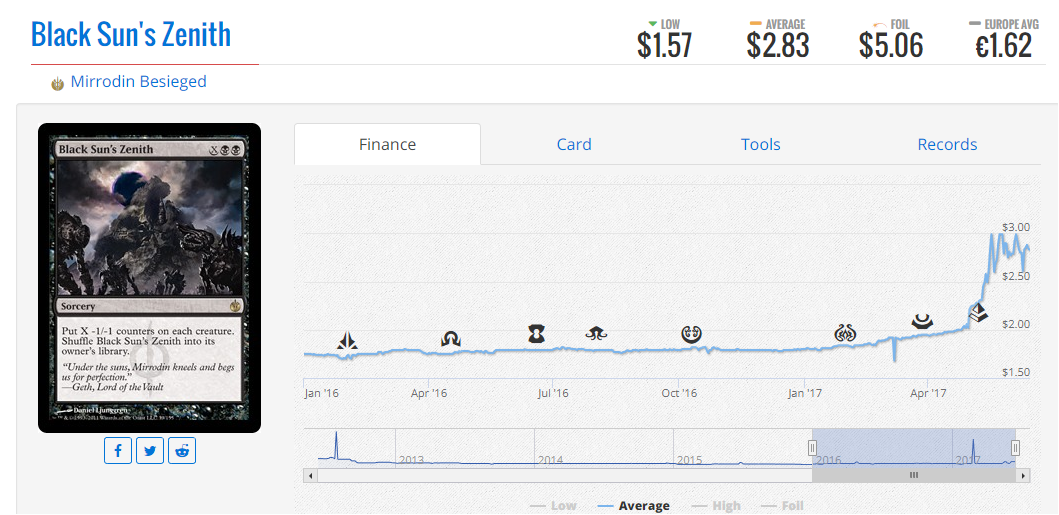
For this update, I'll be focusing on Black Sun's Zenith. A card which has shown steady growth over the last month - and likely had to do with Hapatra, Vizier of Poisons great reception by the Commander/EDH community. While that certainly had a lot to do with it - I do think the card is a bonafide staple in this format and a great analytics tool in Edhrec.com backs that up. While the number of decks that recorded is just shy of 9,000 out of a total 150,000 decks, the number of Commanders this card works well with is vast.

There could be a case for including this card into almost every deck playing the color black. Most of the generals reported, are among the highest built Commanders (again according to Edhrec).

Let's also look at the trend via MTGStocks:

Blacksun

There's been a steady trend right after Amonkhet's release, and the subsequent Hapatra hype. It also recently dodged a Commander Anthology reprint - so the outlook looks promising as a continued trend. With one foil pack printing (Mirrodin Besieged), and one full art printing (Game Day) the overall supply has generally dwindled in that regard. We can look back to an increase in foil/full art versions as far back as during the Tiny Leaders craze - and while the pack/pack foil printings settled, the Game Day Promo generally stayed in the $15 range.

Looking at the supply through the internet - it seems the overall copies have been steadily decreasing (not just foils) in the United States. There seems to be more supply elsewhere, with a huge disparity in price. It's something to keep an eye on, especially for the Game Day Promo version. I do think there's still time to purchase in - but the window for much upside is likely closing as this continues to record increases almost daily.

Insider: MTGO Market Report for June 14th, 2017

Are you a Quiet Speculation member?

If not, now is a perfect time to join up! Our powerful tools, breaking-news analysis, and exclusive Discord channel will make sure you stay up to date and ahead of the curve.

Welcome to the MTGO Market Report as compiled by Matthew Lewis. The report will cover a range of topics, including a summary of set prices and price changes for redeemable sets, a look at the major trends in various Constructed formats and a "Trade of the Week" section that highlights a particular speculative strategy with an example and accompanying explanation.

As always, speculators should take into account their own budgets, risk tolerances and current portfolios before buying or selling any digital objects. Please send questions via private message or post below in the article comments.

Redemption

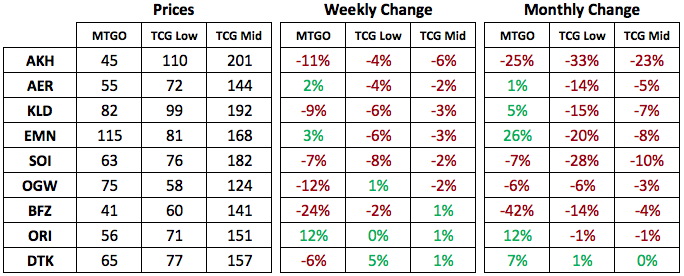
Below are the total set prices for all redeemable sets on MTGO. All prices are current as of June 13, 2017. The TCGplayer low and TCGplayer mid prices are the sum of each set's individual card prices on TCGplayer, either the low price or the mid price respectively.

All MTGO set prices this week are taken from GoatBot's website, and all weekly changes are now calculated relative to GoatBot's "full set" prices from the previous week. All monthly changes are also relative to the previous month's prices, taken from GoatBot's website at that time. Occasionally, full set prices are not available, and so estimated set prices are used instead. Although both Aether Revolt (AER) and Kaladesh (KLD) are no longer available for redemption, their prices will continue to be tracked while they are in Standard.

Screenshot 2017-06-13 18.58.26

Metamorphosis 2.0

Mark Rosewater laid out a large course correction for the game of Magic in his Mothership article this week. Anytime there are structural changes to how the game of Magic is published, those interested in the economics of Magic must pay attention. The changes will have an impact on how MTGO speculators should think about their strategies.

Right off the top, the return of the core set is notable. These sets have historically been a very fertile ground for speculators. The last core set, Magic Origins (ORI) contained the most expensive Standard card in recent memory, namely Jace, Vryn's Prodigy. Seven months after the release of ORI, Jace breached the 90-tix level as a format flagship while the Khans of Tarkir (KTK) fetchlands powered up Standard. This is an outlier to be sure, but the combination of being released in the summer and a set designed with less depth designed for newer players will ensure that Core sets maintain a price premium once Standard refreshes in the fall.

There was an error retrieving a chart for Jace, Vryn's Prodigy

With a reprint ratio pegged at about half the set, there will be some risk of holding onto Modern staples into the summer. We'll have to see how this works out in practice; if it's just the odd valuable reprint, then it's a risk that speculators will bear without trouble. If a number of Modern cards get included every year, then speculators will have to reassess whether its worthwhile to carry this extra risk. Further study will be required when the first rebooted core set is released in 2018.

The next big change is the removal of small sets and the simplification of drafting to one large set per draft format. This completely simplifies how speculators should approach both booster and full set strategies. Timing the precise bottom on large sets will no longer be complicated by the draft structure of the format; boosters and sets will find a price bottom near the end of the draft format.

Although the buying window is clear, the selling window is complicated by the end of redemption under this new system. We don't yet have precise information on how redemption for large sets will work in the future, but I suspect this will be another shortening of the redemption window. In other words, I expect that redemption will end in the weeks after the set is no longer the newest draft set.

Regardless of the timing of the end of redemption, there will be a short-term opportunity on large-set speculation similar to how small set prices move. Buy full sets near the end of the drafting, then hold for a few weeks and sell prior to the end of redemption, when redeemers are looking to get the last bit of value out of their digital objects. Returns will not be dramatic, but in the 10 percent to 20 percent range seems reasonable based on my experience with AER.

The simplified booster strategy is basically identical to the old one, but with slightly different timing. Boosters from the prior draft set typically bottom during the week that the new set is released, and with only one set to choose from, there will be no choice about which set to buy boosters from. The holding window will be until the month before the next set is released, or when the price of three boosters reaches equilibrium with tix-only draft entry. This will be another low-risk, low-reward strategy that will yield steady returns four times a year.

The last basket-type strategy which I employ revolves around foil mythic rares. I've had success with AER foil mythic rares, and I expect that AKH will yield similar results down the road. It's not clear to me whether or not foil mythic rares will be a viable strategy for speculators going forward, but I'll be keen to test it out. There's no doubt in my mind it will still be suitable for players who want to use the new cards without suffering declining value. But for speculators, the buy-sell spread on foils and the potential of a four-month redemption window means the margin for error is narrow. I will be experimenting with this strategy going forward, and I will continue to report my results as it unfolds.

Standard

Not to be outdone by Mark Rosewater, Aaron Forsythe dropped another Standard ban in our laps this week with the removal of Aetherworks Marvel from the format. This is a great boon to Standard speculators that have been a little slow to sell off their cards heading into the summer lull. Marginal cards and strategies will get a second look, bolstering buying interest in these cards, while Ulamog, the Ceaseless Hunger and Marvel itself will both see declines in prices.

There was an error retrieving a chart for Ulamog, the Ceaseless Hunger

Interestingly enough, the announcement included the tidbit that their will be no banned and restricted announcement associated with the release of Hour of Devastation (HOU). It's not clear whether or not this is a permanent change, but going back down to four announcements per year would be welcome.

The original motivation of the set release announcement slot was to provide a way for Wizards to shake up the Modern metagame in advance of the Pro Tour. With no more Modern Pro Tour events to be concerned about, it's correct to make this change and reduce the frequency of these announcements. Standard is coming through a nearly unprecedented period of upheaval in this domain, so a return to infrequent announcements and lowered expectations around banning a card is a good move.

Trade of the Week

For a complete look at my recent trades, please check out the portfolio. There have been no trades this week, as I am on vacation.

Insider: Predictions for Vegas

Are you a Quiet Speculation member?

If not, now is a perfect time to join up! Our powerful tools, breaking-news analysis, and exclusive Discord channel will make sure you stay up to date and ahead of the curve.

Grand Prix Las Vegas has become a summertime Magic institution over the course of the past few years, and this year's event might well top them all! Three Grand Prix, back-to-back-to-back? That is a ton of Magic.

In particular, there are two constructed events that may well have an impact on MTG finance as we move into the summer season: Modern and Legacy. The thing that separates Modern and Legacy finance from, say, Standard, is that the cards have more long-term staying power. In Standard cards can spike often, but they are always eventually trending towards the bulk bin—that is, unless they are able to find a steady day job in Modern or Legacy.

Between gigantic turnout and tremendous coverage, I believe these events will get a ton of views and have a big impact on the way people view the formats and metagames. In particular, Grand Prix Las Vegas is the first and biggest major Legacy event since the banning of Sensei's Divining Top. It will go a long way towards shaping the look of the format in both online and local events moving forward.

So let's talk about which decks (and cards) are primed to have breakout performances in both Legacy and Modern.

Legacy Specs for Vegas

The best deck-to-beat going into Grand Prix Vegas is Grixis Delver. The deck has been on a tear on MTGO and looks to be one of the best and most consistent decks in the format.

There are a couple of cards from Grixis Delver that I could see slowly beginning to tick upward in the future:

There was an error retrieving a chart for Deathrite Shaman

Deathrite Shaman has been beaten back, not only by its banning in Modern, but also by an Eternal Masters reprint. The price is currently very low. However, outside of the big blue spells (Force of Will, Brainstorm, etc.) DRS is easily one of the most played spells in Legacy. It is format-defining and a big part of the metagame.

The current price feels very low for one of the most played cards of Legacy, even if it has had a reprint. I've been picking up more copies of this card in hope that it does begin to pick up steam in the future.

There was an error retrieving a chart for Gurmag Angler

Brian Braun-Duin tweeted out something that got me thinking last week:

His point was that it's the single card in the most "best decks" between both Modern and Legacy. Obviously, there are other great creatures in Legacy (for instance, DRS) but most are also banned in Modern. Gurmag Angler is one of the few that is elite in both formats.

It's also a common and has never been reprinted (yet). It seems like the kind of common that could easily double, triple, or quadruple without anybody batting an eye.

Deathrite Shaman isn't just a Grixis card, of course; it's in tons of decks. I'm also a big fan of the 4-Color Stoneblade deck (which I wrote about on Channel Fireball this week). It's a good stuff deck that's kind of a cross between Esper Stoneblade and Reid Duke's Sultai Midrange deck from the GP he won.

I've written about True-Name Nemesis the past three weeks in a row, and it looks like it doubled in price this week. Hopefully some of you got in on that action!

There was an error retrieving a chart for Stoneforge Mystic

Another card that could be flying under the radar is Stoneforge Mystic.

Obviously, the card has been printed as a Grand Prix promo which means there are a lot of them. I do believe the card will become a huge player in the current metagame. Miracles has always been the natural predator of blue midrange decks and without those decks to check SFM, the card is going to be hot, hot, hot.

I don't know how much the promo will suppress the Stoneforge's ceiling, but I think the card is going to become much more popular than it has been moving forward. I expect Stoneforge Mystic to have a big weekend in Vegas. I will almost certainly be packing four in my deck. It's also a Death and Taxes staple. It's literally the lynchpin of two of the best decks in the format!

There was an error retrieving a chart for Phyrexian Revoker

Speaking of Death and Taxes, how is this card less than a buck? It's so good and it sees play not only in Legacy, but in Vintage Workshops. I think Revoker is a pretty smart pick-up just based on how cheap it is and how good and versatile it is.

There was an error retrieving a chart for Containment Priest
There was an error retrieving a chart for Ethersworn Canonist

Here are a couple of sideboard cards that also seem to find their way into every deck that can make white mana. Both are seeing a ton of play because they are great against unfair decks and have a lot of crossover utility. They're good not only against Storm or Reanimator, but also against decks like Elves, Sneak and Show, etc.

Containment Priest is particularly hard to get ahold of because it was from a Commander deck. I'm also kind of surprised the Masterpiece version isn't a little bit more, considering it is the only premium version of the card currently available.

There was an error retrieving a chart for Thespian's Stage

I feel like it is inevitable that Thespian's Stage will eventually make some gains. It's a combo with Dark Depths in the Lands deck, which is one of the best decks in the format. It's also just a fantastic Commander staple. Those two things combined make it a great Magic card with a very modest price tag. I expect to see this one trickle upward—that is, if it doesn't just spike at some point.

Lots of cool things to think about with Legacy but these are just some of the more mainstream decks that are likely to emerge at the top of the heap in Vegas.

Modern Specs for Vegas

There is also a lot going on in Modern at the moment and I think there could be some big metagame shake-ups about to happen. The biggest one revolves around the Devoted Druid/Vizier of Remedies combo decks. They are the real deal. Obviously, Devoted Druid has already spiked.

There was an error retrieving a chart for Collected Company

It's only a matter of time before we see a Collected Company spike. The card is too good and CoCo is looking like it is about to emerge as the best deck with a dagger.

There are various flavors of Collected Company with Vizier of Remedies, but it feels like the deck is pretty much the best deck in the format at the moment. Collected Company is the flagship card. I just don't see any combination of things happening that don't lead to Company continuing to gain in popularity in Modern. It's too good!

There was an error retrieving a chart for Eternal Witness

Another card that is seeing a ton more play because of the Collected Company uprising. Witness is truly a great Magic card. They literally cannot make a card like this anymore because it is just too powerful! With that being said, it's a staple and beloved by casual players everywhere. It's a good card to have copies of right now!

There was an error retrieving a chart for Harsh Mentor

Another sleeper pick, Harsh Mentor is exceptionally good against the Collected Combo decks. You can't go off with Vizier of Remedies or Viscera Seer with this little critter in play. It's also a great sideboard card against Affinity. A very solid sideboard card that is bound to become much more popular in the future with Company being so good. It's dirt-cheap right now, so you might want to think about picking up a few copies.

There was an error retrieving a chart for Collective Brutality

I know this card is already expensive, but it just keeps getting better and better in Modern. Collective Brutality is great against CoCo because you can kill their mana creature and Duress the Company or Chord of Calling out of their hand. It's super good. It's also a staple of the BGx, Grixis, and Dredge decks in Modern. It's just a very strong card that is wildly flexible across multiple match-ups.

There was an error retrieving a chart for Anger of the Gods

Finally for today, Anger of the Gods is the best sideboard card available against the Collected Company deck. It wipes out all of the mana dorks and leaves no Kitchen Finks persisted behind. It's very solid there. I could see the number of this card being played in Modern increasing a lot after Vegas.

~

Well, I'm looking forward to Vegas. Hopefully, I'll see many of you around at the venue! Be sure to say hello. Also, be sure to keep your eyes peeled for good deals on some of these cards because they look primed for gains! Viva Las Vegas!

Enemy Sighted: GP Vegas Metagame

Are you a Quiet Speculation member?

If not, now is a perfect time to join up! Our powerful tools, breaking-news analysis, and exclusive Discord channel will make sure you stay up to date and ahead of the curve.

I originally planned for this article to be about planning for a tournament in an open metagame. The results from the Kobe and Copenhagen GPs and from the SCG Baltimore Classic indicated that the metagame was very open and unpredictable. Results from MTGO confirmed this, although Death's Shadow decks, particularly the Grixis version, were clearly at the top of the metagame. Then I saw the metagame breakdown for the Charlotte Open and the four Grixis Shadow decks in the Top 8. Now I'm worried. I'm going to watch the Top 8 now, and see how this shakes out. I hope I'm overreacting.
Okay, we're good. Grixis did not take down the Open. In fact, it didn't even make the final (although the bracketing helped). Todd Stevens and Eldrazi Tron won on the back of amazingly good openings against Living End. Seriously, Chalice of the Void and Relic of Progenitus on turn one? It would have taken some effort on Todd's part to lose. Skimming the rest of the Top 32 shows another Grixis list. 5 out of 13 on the decklist page for Grixis is not a bad result.

Now, to look at the Classic results. Huh, Grixis Shadow won. With two more sitting just outside Top 8. With a Jund Shadow list at fourth. Well done, Ryland! Hard to extrapolate anything else without additional data. However, when you consider everything together, there's really only one conclusion: Death's Shadow is the card in Modern right now, and the best shell is Grixis. Why this is and what it means for GP Las Vegas will be my focus today.

The Inevitable Derailment

I have to start with a reminder not to use these data as an excuse to start calls for bannings. I've been over this before. While Wizards has elaborated about their methodology since I wrote that article, the point still stands. We cannot be certain what will happen, and doing so has poisonous effects on the community. Until there is clear evidence for the need for a ban, I will not speculate on bans, and neither should you. It is far more productive to focus on the metagame as it currently exists and learn what the data has to teach us. Furthermore, any bannings announced today would have had no effect on Vegas, as the changes won't take effect until the 19th. Let's focus on the now, not on the future.

Addressing the Data

The GP and Star City results point to Grixis Shadow as the most successful deck in Modern. The deck won two events and put up strong numbers in most of the others. Death's Shadow decks of other iterations also put up good numbers. Taking into account only the Top 8 (to make the table understandable), we clearly see the this play out.

Deck NameTotal #
Death's Shadow Variants10
Eldrazi Tron3
Living End3
Dredge3
Collected Company Variants3
Burn3
Jeskai Control2
Affinity2
Storm2
BG Rock1
Four Color Control1
Abzan1
Turns1
Lantern1
Titan Shift1
BW Eldrazi1
Ad Nauseam1
Esper Control1

Talk about a run away victory for Death's Shadow. This pattern of results continues into the Top 16 results, but the table gets too large and unwieldy to be useful. Focusing in on the Shadow results, Grixis emerges the clear winner.

Deck TypeTotal #
Grixis7
Jund2
Abzan1

These data are not the whole story, but they do tell a tale. The only reasonable conclusions are that Death's Shadow is the most successful deck at high-profile tournaments, and that Grixis is the most successful version of that deck. Taking into consideration other data sources, specifically the aforementioned MTGO results, solidifies this conclusion. There are many viable and successful decks behind Shadow, but it's clearly—nevermind, the pun is too obvious to actually write. You're big readers now; you can do it yourself.

Why Death's Shadow?

The first question is, why now? Death's Shadow has been legal for Modern's whole life, as have its enablers (fetch/shocklands, Street Wraith, Thoughtseize). However, the first time I remember seeing anyone pilot the deck was early last year, and as an all-in combo deck with Become Immense and Gitaxian Probe---a forerunner of the Death's Shadow Zoo decks of last PPTQ season. Every time I saw that deck it lost to creature decks that went wide, or to Burn. Yet the deck picked up steam thanks to its ability to consistently kill on turn three, which strongly contributed to Probe's banning. I and everyone else assumed that without Probe, the deck was finished. It was certainly true of Infect and the Kiln Fiend, so why not Shadow?
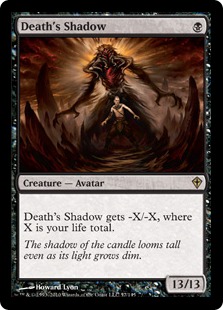
I believe the problem is that nobody really understood Death's Shadow until last summer. When it was spoiled in Worldwake, the evaluation was, "Yeah it can be a massive creature, but it takes so long to get low enough for it to be worthwhile. By the time that happens your opponent will just kill you, or kill it then you." I remember many players trying to make the deck work, but the Avatar was just a removal target to control players, and aggro players simply swarmed around it. You had to rely on your opponent too much to make Shadow work. However, in Modern, you can lower your own life total by choice, and play Shadow early enough for it to matter. Early enough that your opponent may not have answers.

I suspect this all started when a Zoo player ran across Shadow while rummaging through their bulk box and recognized its potential with Probe. With this technological breakthrough, Shadow simply became the most efficient creature in Modern. Yes, you were very vulnerable to Burn, but they had to outright kill you or risk dying on the backswing. Burn also took a hit when the enemy fastlands were printed. With the logical counterstrategy diminished, players were free to wield Magic's best creature however they see fit.

Why Grixis?

Honestly, I think it's convenience. Grixis decks naturally did a lot of damage to themselves before Death's Shadow was a thing. Grixis Shadow is just Grixis Control with Street Wraith and Death's Shadow. Just look at Trevor's or Ryan Overturf's Grixis lists from the past year, then look at the lists from Charlotte. They're all very similar. Compare this to the Jund version, which warps its lists to accommodate both Shadow and Traverse the Ulvenwald. The Grixis shard has less work to do.
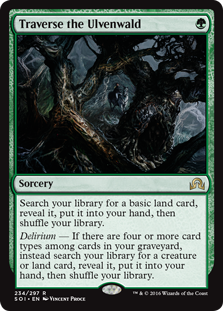
There is another factor: the mana base. Stubborn Denial is extremely powerful alongside Shadow. I don't know of any other deck that can have better-Negate online as often as Grixis Shadow. The Jund decks were stretching to play the card, but it fits into Grixis naturally. Grixis also has the best enablers for the delve threats, which play nicely with Denial and Shadow, and even resist Fatal Push. While other versions may be better at utilizing Shadow thanks to Traverse and other cards, Grixis offers the most streamlined package.

The Ugly Corollary

There a final factor at work here. The big-name authors on the big sites have extolled the New Testament of Grixis Shadow since Copenhagen; some, for months. With all that attention, it was inevitable for more players to pick up the deck. The bandwagon effect is very powerful. More players means more results. As a result, without data on the Day One metagame for the SCG events, it is impossible to tell if Grixis' success is the result of it actually being the best deck or of it being played in overwhelming numbers. The Law of Large Numbers guarantees that if enough players play a deck, it will win. Squeaky wheel gets the grease, hyped deck gets the numbers, and numbers ensure a win. I will proceed on the assumption that the "real" power of Grixis is lower than our data indicate for this reason.

Also, the deck plays a lot like a Legacy deck. Players enjoy Legacy, even though many can't afford the format, so I'd guess some are living the "Legacy experience" vicariously with Grixis Shadow. The deck is also attracting Legacy players, boosting the numbers and results.

The Other Players
Despite Shadow's surge, Modern still looks like it's in a good place. My table has 18 different decks; 21, if you break up the Shadow and Collected Company decks. Shadow may be on top, but it is by no means unbeatable. Todd Stevens proved that this weekend. Shadow decks may make up a quarter of the Top 8, but again, looking around the web, it commands at most 10% of the meta. As I'm going to explain, Shadow decks are very powerful when they get ahead of opponents, but they do struggle with playing from behind, and sometimes simply fail. This dimension doesn't appeal to every player, and every player won't get the memo on the "best deck." So you cannot focus exclusively on Shadow decks if you want to win. You need to be ready for a very open metagame.

How to Approach Vegas

First and foremost, you need to have a plan for Shadow decks. It is the top deck, and plenty of people will play it; perhaps even more than do now, if trends continue. Grixis Shadow should be your priority, but have some idea of how Jund operates as well. After that, you should plan on facing those decks with three wins on my table. They correspond with numerous websites' Tier 1 rankings. Once that is done, have a plan for the two-win decks, even if you don't have time to test the matchups. They're good decks that are Tier 1-2 depending on where you look. Finally, make sure that your deck is simply a solid deck. There will be a lot of randomness, as there always is at GP's. Powering through is your best bet.

Facing Grixis

While every deck has its own quirks and modifications, there are a number of constants across all Shadow lists, particularly the Grixis versions. First, they're all streamlined and low-to-the-ground. Shadow lists are built to be as efficient as possible. Everything is cast for one mana except for Snapcaster Mage, Kolaghan's Command, Terminate, and sometimes Liliana. This is extremely important because all these decks have incredibly low land counts. Grixis lists only have 19 lands and Jund lists run 18, of which 12 are fetchlands. They're guaranteed their colors, but not without a price---these lists are vulnerable to mana disruption... though not as much as you may think. I'll talk about why in a minute, but Shadow decks are very good at defending themselves. Couple this fact with their efficiency, and you cannot risk your own gameplan for the sake of disrupting theirs.
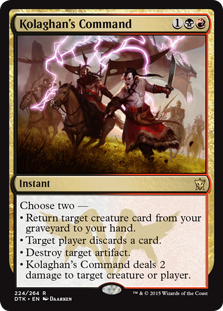
You would think that lock pieces, particularly Chalice of the Void, would be game over for Shadow decks, but that's not normally the case. They play a full set of Thoughtseizes and some Inquisition of Kozileks, so there is a good chance you'll never get to cast your card; even if you do, they have Stubborn Denial. After Chalice resolves, Grixis can power through with delve creatures and/or K-Command. The Jund decks even have Abrupt Decay. Lock pieces are not particularly effective against Shadow decks, and I would look at them as speed bumps. They'll buy you time to execute your own plan, and time is what you need.

The best way to deal with the Shadow decks is to survive them. Their strategy is based around picking yours apart with discard then dropping a threat you can't answer. It's very tempo-like in that they want to force you onto the back foot and leave you there until they win. Without a threat of their own, they don't have the answer density to effectively play on the back foot. To attack the Shadow decks, you need to be undisruptable.

Attack Plan

I am convinced that the key to beating Shadow lies in deck construction. Their strategy is built around shooting holes in yours and exploiting the gaps. If the holes aren't big enough, the whole thing falls apart. A typical Grixis list runs 6 discard spells, 6 removal spells, 2 Denial, and 2 K-Command. It wins with 4 delve creatures, 4 Shadow, 4 Snapcaster Mage, and sometimes Street Wraith. If you play a threat- or answer-dense deck, Grixis Shadow lacks the means to effectively answer you. The deck is stretched very thin. It sometimes exacerbates this problem with Thought Scour.
Against Grixis, I expect my opening hand to be crippled before I can react. I've found that the best counter is to make the top of my deck as good as possible. Shadow decks don't have many reserves after the opening salvo. They have cantrips, but they're not drawing to much.

I'm told that BW Tokens is good against Shadow for the above reasons. I have no idea if that's true, but they're not putting up results. This may be because of bad positioning against the rest of the meta, or my source may be wrong. I've also seen some players try Leyline of Sanctity against Shadow. I'm skeptical, since Shadow is more likely to open discard than you are a Leyline, but if your plan is weak to discard already, it may be your best option. Assembling an unassailable fortress is a decent strategy; just make sure you win or create a hard-lock before the monsters smash down the door.

Facing the Rest

The other decks are fairly well known and you should have decent plans already, but I want to highlight Eldrazi Tron. The best way to attack Gx Tron has always been land destruction, but Eldrazi Tron plays so many lands that you're unlikely to make a dent. However, you can give them major problems just by playing permission. Eldrazi Tron can't play as many Cavern of Souls as Bant Eldrazi, nor does it have Ancient Stirrings to smooth out its draws. If you don't lose to the deck's opening hand or can answer its threats, the deck struggles to regain momentum. It can reliably get all the mana in the world, but it can't always use it.
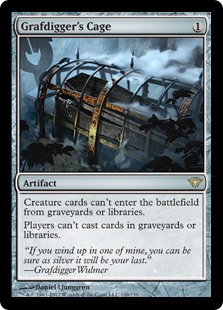
A final note on the Company decks: I find the Vizier builds less frightening than the older versions. Nowadays, Company is very combo-focused, while last year it was more value-based, and actually played removal. I've found the newer versions to be more explosive but more fragile, and Company has become essential to their gameplan where it was once a bonus. This means, for the first time, I recommend Grafdigger's Cage. It does a number on Company, Dredge, Storm, and Grixis decks. With Affinity losing metagame share (and respect, if you listen to many commentators), artifact hate is on the decline. Just don't forget to pack another, harder piece of hate for Dredge. It sucks to lose to Dredge.

Roll the Dice, Intelligently

The metagame remains far too open for you to prepare for everything, so you'll need to accept losing to fringe decks. No matter how good you think your deck is, there is a deck out there that crushes you, and somebody will play it, even if it is bad in a vacuum. Just accept that and move on. Prepare for what you know. I'll see you next week, hopefully triumphantly.


Unlocked Insider: How Play Points Have Changed MTGO Drafting

Are you a Quiet Speculation member?

If not, now is a perfect time to join up! Our powerful tools, breaking-news analysis, and exclusive Discord channel will make sure you stay up to date and ahead of the curve.

Enjoy this peek behind the veil into the fine Insider content posted every week on QuietSpeculation.com. For information on signing up for your owner Insider membership, go here.


Quiet Speculation is excited to have Kyle Rusciano providing MTGO financial content! If you have questions, comments, or requests for topics to cover regarding MTGO, let him know in the comment section below. While this article was written before the release of Amonkhet, the content and data is still quite relevant today.  Enjoy!

A couple years ago, I wrote an article for MTGGoldfish discussing the impact that Play Points (PPs) might have on the MTGO economy.  Today, I want to take a look back and examine the way that this change – introduced during Origins – as well as other, more recent changes, have affected the Limited experience on MTGO.

In short, drafting has become a more costly experience.  While many of y’all undoubtedly have felt this to be the case (I certainly did before gathering the hard data), I wanted to show in more quantitative terms the impact that recent changes have had on Limited players.  About three months ago, Lee Sharpe announced new changes that have affected Limited and Constructed players alike.  Let's examine the direction that MTGO has taken towards Limited play over the past few years before the implementation of these changes.

I have analyzed every large set from Theros through Kaladesh; namely, Theros, Khans of Tarkir, Battle for Zendikar, Shadows over Innistrad, and Kaladesh.  For the sake of consistency, I’ve stuck to the first set of every block; all but Shadows over Innistrad were fall sets.  To get a good handle on the information I’m going to present, it is important to keep in mind that Theros and Khans go together (pre-PP changes), BFZ and SOI go together (post-PP changes), and KLD stands alone (post-PP changes plus the $2 reduction in Draft price plus no Masterpieces).

Boosters Cost More Yet Contain Less Value

The first new reality about our changed landscape is that you pay more for boosters and get less value out of them.  I’ve created a helpful chart that shows how much value is contained inside a booster as a percentage of the booster’s cost:

graph1

Prior to the introduction of PPs during Origins, the cards contained inside a booster were worth roughly 35 to 40 percent of the booster’s cost. Back in that era, the predominant determinant and guarantor of card and pack price was redemption. Once PPs were introduced with the explicit purpose of artificially making boosters more scarce, the booster prices rose without a corresponding increase in the value of the cards contained therein.

Thus, whereas in the past the cost of drafting decreased significantly and proportionally as card prices decreased, that simply was no longer true once BFZ was released. Just one month into BFZ’s release, the average booster contained cards worth only 96¢, yet the booster still cost a whopping $4.05.

Had the MTGO PP changes not yet been implemented, your typical triple-BFZ draft would have cost about $10.25. Instead, it cost the full $14. The new equilibrium for the card-value to booster-price ratio was now below 25 percent, whereas prior to the changes it was above 35 percent.

The reason for the slight improvement during Kaladesh was the hard cap placed upon the cost of a draft at $12.  This kept Kaladesh booster packs from rising above $3.33, which created a bit of protection against the very worst of the new lower equilibrium point.  This cap benefits the player most during the first few weeks of a fall set’s release, because that is when card prices in the post-PP world would otherwise dictate a booster price of $4 or more.

I had thought this effect would have been helpful for longer, but just one month after release (when this data was pulled), the EV percentage was still far closer to that during BFZ/SOI (24 percent) than during Theros/KTK (37 percent).  It proved even less helpful once Aether Revolt was released, as the individual booster prices themselves are not capped, only the draft as a whole.  This allowed Aether Revolt boosters to cost $4 for their first three weeks on the market, and in fact these boosters did not dip below $3.33 until MM3 went live.  We can expect the same sort of pattern to continue into the future.

The Increased Cost of Drafting – Higher Profits for Wizards

One conclusion you might draw from the above section is that drafting has become more expensive.  The data bears this out in important ways, but in other ways it is more mixed.  Per draft, Wizards makes more money now than it did a few years ago.

graph2

This chart shows the amount of money lost per player for any given draft.  I have accounted for all prizes, card values (including foils), and format.  I’ve chosen to display the “competitive” (8-4) drafts, but the story is the same among the “beginner” drafts (Swiss) and the “intermediate” drafts (4-3-2-2 to 6-2-2-2 to Intermediate League).  As you can see, there was a clear increase in losses after the Origins PP change.  The average real cost of a draft, once roughly $3 per person, now became $4.50 or even $5 per person.  Before, every person added about $3 to a draft that would disappear (or feed the MTGO Behemoth); afterwards, every person added $4.50 to $5.  That is quite an increase!

When we look at rakes (the amount of money that feeds the MTGO Behemoth as a percentage of the cost of a draft), things look better, albeit only for the competitive side.  This is one way to view the Competitive League structural changes positively, as it restored Wizards’s rake to the rakes of the 8-4 queues of Khans.

graph3

Although Wizards now makes more money per draft, at least the percentage they take in decreased back closer to pre-PP levels. The rake, 37 percent during BFZ and SOI, dropped back to 32 percent upon the arrival of KLD.

I'll note that this still feels high to me, but at least it was somewhat a return to before.  I say “somewhat” because few players benefit from the Limited order of Kaladesh in comparison to the pre-PP order of Theros and Khans.  Factoring in both variables we’ve been talking about – the sunk value lost per draft and the rake – the only players who have benefited from the changes are those who win more than about 63 percent of their matches (the break-even point has fluctuated between 62.5 and 64 percent during KLD-AER).  Those who win between 60 and 63 percent of their matches will not have seen much of a financial outcome difference between Khans and Kaladesh Drafts.  But those who win below 60 percent of their matches will have noticed a major difference.  As someone who tends to have a Draft win percentage between 55 and 60 percent, I have had to drastically cut down on the amount of drafting I’ve done, and I’m sure I’m not alone. Those who win 50 percent of their matches have lost, on average, the amount shown in the figure above each draft.

The tale of the non-competitive drafts is even more grim, more Shadowmoor than Lorwyn.

graph4

The rakes on non-competitive queues remain high, still hovering around 37 percent.  They dipped to 35 percent during Kaladesh because of the $12 draft hard-cap, but as I mentioned before, this cap matters less the longer a set is out, especially once the second set of the block releases. Aether Revolt restored the rake to 37 percent. For some added perspective, consider that Wizards’s rake for 4-3-2-2 events during Khans was 35.7 percent.

The conclusive TLDR of this section: the cost of drafting has gone up.  Whereas before the introduction of PPs all players put in about $3 per draft – value that would not come back out either as prizes or opened card value – that number has jumped to between $4 and $5 across all competitive and intermediate leagues/queues.  Wizards’s rake from competitive draft events is 32 percent, while its rake for intermediate draft events remains even higher at 37 percent.

Potential Solutions

The first and most important thing is that people have to care enough about this to make their voices heard and their displeasure known.  I hope that some of the data I have presented will make more of the MTGO community aware that there is a serious problem with the prize support for Limited, especially for Draft.

There are many ways to skin this cat, but here are a few that I find elegant and/or illuminating:

1) Bring the Draft payout levels up to those of Friendly Sealed

This is not my preferred solution, but I posit it predominantly to highlight the stark discrepancy in prize support offered across MTGO’s various Limited events.  Believe it or not, Friendly Sealed right now offers the best value of any Limited offering on the market. And that is true no matter how many booster packs you add to your pool. To illustrate this, I’ve generated a graph depicting the amount of prize support as a percentage of that event’s cost MTGO offers for its different Limited offerings today.  For example, if MTGO charges 25 tickets per person for an event and pays out 15 tickets per person in prize support, the event’s percentage would be 60 percent.  This graph was generated using AER-KLD data, and the percentages will remain roughly the same for Amonkhet.

graph5

This chart is illuminating because we see that MTGO "gives back" over 60 percent of what it takes in via Friendly Sealed, whereas it gives back about 50 percent in Competitive Draft and Sealed and 40 percent in Intermediate Draft. (Of course, saying that Wizards “gives back” this amount in prize support is inaccurate – they do not give real money out in prizes like a casino, they just generate boosters and PPs out of thin air.)

What would altering draft payouts look like?  Let’s consider the Competitive Draft League with the following improved payout structure:

  • 1st: 150 PP + 6 Boosters
  • 2nd: 150 PP + 3 Boosters
  • 3rd/4th: 50 PP

Under this scenario, which adds $10 to the prize pool by giving the third- and fourth-place players the event ticket portion of their entry fees back in PPs, then Wizards would be giving back 59 percent - still not as good as the Sealed Friendly, but pretty close.  How about the Intermediate Draft League?  This one needs a more drastic improvement, perhaps something like:

  • 1st: 50 PP + 6 Boosters
  • 2nd-4th: 50 PP + 2 Boosters

This prize payout structure would mean that Wizards was giving back 63 percent of the entry fee in prize support, identical to the prize support of the Friendly Sealed.

The major takeaway is that Wizards is charging a premium to draft.  Seventy-five percent of the Magic I’ve been playing for the past several months is Sealed Friendly, because there the payouts feel much more fair and I am therefore able to enjoy the game without stressing out about needing to win every single match.

2) Sell Boosters for $3.33 or $3.50 in the Online Store Instead of at Full Retail of $3.99

Once it was announced that Masterpieces would not be in MTGO booster packs and Wizards simultaneously reduced the cost to draft by a few dollars, I presumed that boosters would be sold at the new price of $3.33.  I didn’t even think about it until Aether Revolt rolled around and it then hit me that the cap was only really efficacious for the first month or two of the first set of every block’s release.  Aether Revolt was going for $4 because only the total draft was capped, not the individual booster prices themselves.  This problem could be mitigated by selling booster packs for $3.33 in the store (or by allowing Masterpieces to be found in boosters).  Either fix would help soften the increased financial burden of drafting.

3)  Allow for the “Dusting” of Draft Chafe

A beloved feature of Hearthstone and a much-needed way to maintain a manageable card collection online, allowing you to “dust” your cards into tickets or PPs or Treasure Chests or anything would be yet another way to lessen the financial burden of drafting.

This is my preferred solution, because it is most in keeping with what I sense is a goal of Wizards to reduce the amount of product that gets redeemed on MTGO.  The increase in the redemption fee from $5 to $25, coupled with the now-decreasing time frame within which to redeem cards, strongly suggests that Wizards believes that too much paper product is getting released into the wild.

Coupled with excessively high print runs since Theros block, Wizards might worry that an oversaturation of the market might reduce the need for future Masters sets, or they might worry that redemption reduces the amount Standard-legal product being bought. Whatever the motivation, the intention is clear, and so is this solution.  Dusting cards would put floors on the value of cards of all rarities, thereby increasing the cost of redeeming sets, and thereby reducing the number of sets redeemed.  This solution is much cleaner than the current model of cutting off redemption in the middle of a set’s Standard life.

I would propose allowing the dusting of Standard-legal common cards at a rate of 100 to 1 ticket or 10 PP, 50 uncommons to 1 ticket or 10 PP, 25 rares to 1 ticket or 10 PP, or 10 mythics to 1 ticket or 10 PP. On average, this would add a significant 60¢ to the EV of the cards you open in draft, amounting to a roughly 9-percent increase in prize payouts, which is about in the ballpark of what is needed.

Conclusion

Sometimes changes are hard to notice unless we quantify them or lay them out visually before our eyes.  I know I learned a lot doing research for this article, and I hope that the MTGO community will find this data helpful and will be inspired to press for change.  PPs have not been kind to the MTGO Limited player.

I look forward to reading the comments below, and don’t hesitate to get in touch.

Avatar photo

Kyle Rusciano

Kyle started playing Magic with his little brother when they saw some other kids at a baseball camp playing. His grandma bought them some Portal: Second Age decks, and a hobby was born. Kyle played from Weatherlight through Invasion, then took a lengthy break until 2013. Now a PhD student in the humanities, the Greek mythology component of Theros compelled Kyle to return to the game. He enjoys playing Pauper and Limited as well as focusing on MTGO finance and card design. Follow him on Twitter at @KangaMage!

View More By Kyle Rusciano

Posted in Drafting, Finance, Free, MTGO, MTGO Drafts9 Comments on Unlocked Insider: How Play Points Have Changed MTGO Drafting

Have you joined the Quiet Speculation Discord?

If you haven't, you're leaving value on the table! Join our community of experts, enthusiasts, entertainers, and educators and enjoy exclusive podcasts, questions asked and answered, trades, sales, and everything else Discord has to offer.

Want to create content with Quiet Speculation?

All you need to succeed is a passion for Magic: The Gathering, and the ability to write coherently. Share your knowledge of MTG and how you leverage it to win games, get value from your cards – or even turn a profit.

Video Series with Ryland: Death’s Shadow Jund

Are you a Quiet Speculation member?

If not, now is a perfect time to join up! Our powerful tools, breaking-news analysis, and exclusive Discord channel will make sure you stay up to date and ahead of the curve.

Hey, everybody! I'm back again with some more video content with Modern Nexus! There have been many Modern events of late, and as such I've been testing with a lot of decks that I intend to play in those events, tuning them to the best of my ability. Considering the meta at the moment, that basically means I've been playing each and every different variant of Death's Shadow.

The deck for today's Modern league is my current front-runner out of those different lists. I've enjoyed my time with Jund Death's Shadow quite a bit and I feel like it is still the most powerful and consistent out of the options. For this league (and for the current foreseeable future) I've opted to splash white instead of the more common blue splash for Stubborn Denial. While Denial is certainly powerful (see Grixis Shadow), white gives impactful options for grinding such as Lingering Souls and Ranger of Eos. On top of that, you get some potentially game-ending sideboard bullets in Kataki, War's Wage and Eidolon of Rhetoric. After these videos were recorded, I continued to test and explore the different variants of Shadow (Grixis, 4-Color, Sultai, Jund) during the week leading up to SCG Charlotte, but Jund splashing white remained my favorite.

As such, this is the exact list I brought to the Modern Open. Unfortunately I missed Day 2 at 6-3. Preparing for the Modern Classic on Sunday, I swapped a Liliana, the Last Hope for an additional Liliana of the Veil, and a Surgical Extraction for a Nihil Spellbomb, both in an attempt to improve my Grixis Shadow match-up. I took that slightly updated list to a 4th place finish at the Classic. I intend to continue tuning the list, likely in a similar direction.

As I said last time, I'm interested to hear what kind of content you'd like to see moving forward, so I can continue to evolve and improve my videos. Please let me know your thoughts, and any improvements you would like to see concerning formatting, presentation, or whatever else strikes your fancy. And if you'd like to see similar content, check out my Twitch channel for some more live Modern!

[youtube https://www.youtube.com/playlist?list=PL261kJ_cAQC9clFrbS6JphuDvep_2iM_z]

Death's Shadow Jund, by Ryland Taliaferro

Creatures

4 Death's Shadow
4 Tarmogoyf
4 Street Wraith

Artifacts

4 Mishra's Bauble

Instants

3 Fatal Push
2 Tarfire
2 Kolaghan's Command
2 Temur Battle Rage
1 Terminate
1 Abrupt Decay

Planeswalkers

2 Liliana, the Last Hope
1 Liliana of the Veil

Sorceries

4 Traverse the Ulvenwald
4 Thoughtseize
4 Inquisition of Kozilek

Lands

4 Verdant Catacombs
4 Polluted Delta
4 Bloodstained Mire
2 Overgrown Tomb
1 Blood Crypt
1 Stomping Ground
1 Godless Shrine
1 Swamp

Sideboard

3 Lingering Souls
1 Ranger of Eos
1 Eidolon of Rhetoric
1 Kataki, War's Wage
2 Collective Brutality
2 Surgical Extraction
1 Fatal Push
3 Fulminator Mage
1 Nihil Spellbomb

Want Prices?

Browse thousands of prices with the first and most comprehensive MTG Finance tool around.


Trader Tools lists both buylist and retail prices for every MTG card, going back a decade.

Quiet Speculation