menu

Insider: MTG Stocks – Evaluating Recent Gains

Are you a Quiet Speculation member?

If not, now is a perfect time to join up! Our powerful tools, breaking-news analysis, and exclusive Discord channel will make sure you stay up to date and ahead of the curve.

Welcome back, readers! I used to do a semi-regular series reviewing the cards that had gone up on MTG Stocks. Then I had a bit of an epiphany that telling everyone what had already gone up is akin to telling you what stocks were great pickups a week ago. Sure, it might be informative, but it isn't all that useful.

So this time we're going to try a new idea. Not only will we review the cards that have seen the most growth recently, but we will look at cards that likely belong in the same type of deck. When one card spikes, it often creates demand for another card that goes in the same deck (especially if they are combo pieces).

This also means that the information is a bit more time-sensitive, so I will be mentioning the date of review for each pick. All are from the last week or so.

There was an error retrieving a chart for Enchantress's Presence

Date: 5/24/17

Here we have a solid Commander card that also sees some Legacy play. Looking at EDHREC, it appears the card has jumped considerably as of recently. Two of the top commanders that play this card are from the 2016 Commander decks: Atraxa, Praetors' Voice and Kynaios and Tiro of Meletis, though it looks like the main driving force is Karametra, God of Harvests.

This is a single-printing rare from Onslaught and there are only 19 nonfoil copies listed on TCGplayer as I type this up. This card sat at $5 for a long time and I rarely found people willing to trade it, so I picked up a few extra copies from the heavily-played section at a GP last year. What I like most about this card is that it's part of an engine based off Verduran Enchantress (which has been printed into oblivion, so she's not the best target).

Instead, I like Argothian Enchantress which ends up in about 75% of the decks that play Enchantress's Presence. It's original printing is even older (Urza's Saga) and its only major reprint is from Eternal Masters at mythic. The Eternal Masters foils are particularly interesting as you can buy them for less than two times the regular version, and again it's a foil mythic (I picked up two myself for under $9 each).

The other card I could see moving is foil Starfield of Nyx, which is a gorgeous foil and a mythic from Origins.

There was an error retrieving a chart for Grand Architect

Date: 5/24/17

The movement on this card is a lot less than that of Enchantress's Presence, but it is up almost 7% (6.72% to be exact). Corbin Hosler highlighted a Modern deck using Grand Architect and some other cheap blue creatures to quickly power out artifacts and dump your hand. While this deck hasn't proven itself on any big stages, there are a lot of cheap cards in it that would likely see significant increases should the deck actually break out.

If you want to bet on that happening, my top choices are Chief Engineer and Lodestone Golem, both of which are played as four-ofs in the Grand Architect deck.

Engineer is a bulk rare with only the M15 and Commander 2016 printings (though personally if I was going to spec on this one, I'd aim for the Game Day promos which are sitting under $2 and look really cool). Lodestone Golem was printed in Worldwake, Modern Masters 2015, and Archenemy and despite being strong enough for Vintage Shops decks, is basically a bulk rare currently.

There was an error retrieving a chart for Crackdown

Date: 5/24/17

Here we have another older rare (from Mercadian Masques) yet to be reprinted that provides a very powerful static ability. One thing I really like about this card is that I haven't seen many players use it despite the power level. To me that hints that a lot of players aren't aware of it.

One of the commanders mentioned on EDHREC with this card was Sram, Senior Edificer, which sounds like an interesting build-around-me commander.

However, the most popular general for this card is Daxos the Returned (which unsurprisingly got a bump with the printing of Anointed Procession). For Daxos decks I like foil Extinguish All Hope. The card is currently played in 57% of the decks, has strong synergy, and is from a third set (Journey into Nyx).

There was an error retrieving a chart for Harbinger of Night

Date: 5/28/17

This is clearly a spec based on expected demand for Hapatra, Vizier of Poisons and it is a Reserved List rare. We've seen quite a few -1/-1 counter cards spike recently, and this is just the next in line. While this card sees play in some of the Hapatra decks, it's currently sitting at only 30% of decks submitted so it doesn't seem to be an auto-include.

The ability is powerful and I think the fact that it's on the Reserved List helps a lot. However, it does kill Hapatra after two turns (barring some way to remove the counters from her). Having built this deck myself, I can say you really want to keep her on the field.

I actually like Midnight Banshee as a spec a lot more. Thanks to its recent reprinting in Modern Masters 2015, you can pick up foils for under $1 (especially when the Shadowmoor foils are four times as much).

There was an error retrieving a chart for Zirilan of the Claw

Date: 5/28/17

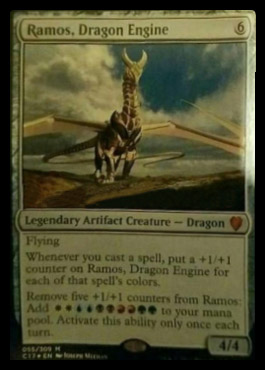
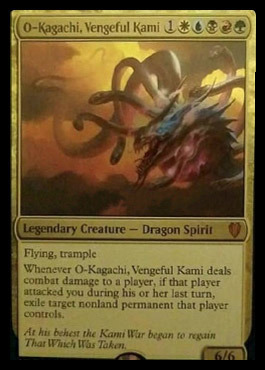
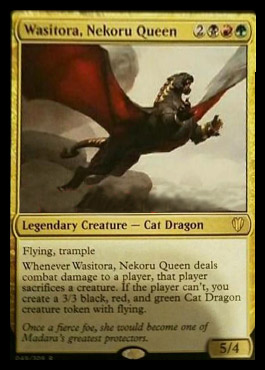
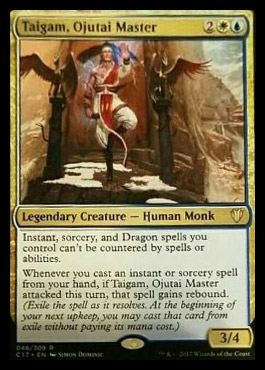
This spike occurred because of the unconfirmed spoiling of cards people think are in the new Commander 2017 decks, specifically all the Dragon-themed cards. As of writing these spoilers are still not confirmed, but that didn't stop people from speculating on them being real. If they are, then we are likely to see a resurgence in demand for Dragon-themed cards as players look to build around the new cards.

Zirilan of the Claw is on the Reserved List and has a powerful ability in Commander (tutoring is always powerful; repeated tutoring is even better). However, note that we've had a good five-color Dragon commander (Scion of the Ur-Dragon) for quite some time now, and Zirilan of the Claw often does not make the cut in the 99.

Because of this I believe this is a hype-driver buyout. I expect the price to drop back down as players realize they don't really want it in their decks (barring some ridiculous Dragon being spoiled that changes the value of Zirilan).

There are two challenges associated with speculating around these leaks from Commander 2017. First, we don't know for sure if the cards are legitimate.

Second, assuming they are, the Twitter account that leaked them also included photos of a lot of other Dragons (though photographs with the new set symbol were not included). This implies a large number of Dragons could get reprinted, making speculation on other good Dragon cards risky. Should your target(s) be reprinted, you may be stuck with a bunch of cards worth less than they were when you bought them.

The one silver lining is that so far the Commander decks have not been printed in all foil, so foils do seem to be a safe way to go. One of the top cards in the existing Scion decks, which has a cheap foil and fits well into Dragon-themed Commander decks, is Crucible of Fire. The Shards of Alara foil is under $3 and the Magic 2015 foil can be had for around $2.

If you want a slightly more expensive spec (with a good bit of upside), how about foil Dragonlord Kolaghan? For a mythic from Dragons of Tarkir that gives all your creatures haste (which is huge in a Dragon deck), the 3x foil multiplier feels low. Though it is important to note that Dragons of Tarkir as a set had a lot of good eternal cards (thanks to the Commands). So it's likely that a lot of foil sets were redeemed off of MTGO, which might play a role in the price ceiling.

Conclusion

Hopefully you enjoyed this newer version of the MTG stocks review article. I feel like this style might provide more value to readers and give them ideas for decent speculation opportunities. As always, I appreciate all feedback (both positive and negative) as long as it's constructive. Thanks for reading.
Grixis on Top: Modern Weekend Recap

Are you a Quiet Speculation member?

If not, now is a perfect time to join up! Our powerful tools, breaking-news analysis, and exclusive Discord channel will make sure you stay up to date and ahead of the curve.

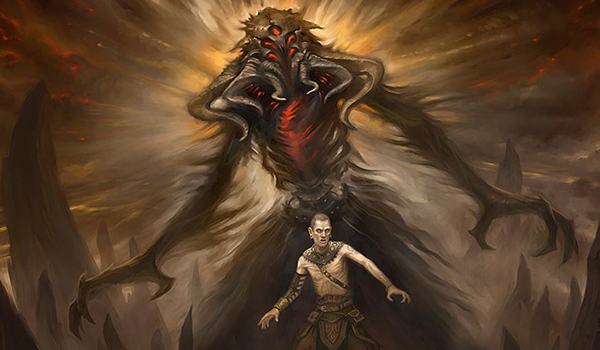
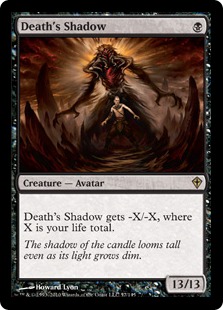
I'm trying very hard not to say, "I told you so." Grixis Death’s Shadow, days after I touted it as the best deck to play heading into the competitive weekend, took down the SCG Open in Baltimore that I hoped on attending, crushed the field at GP Copenhagen, and took third place at Grand Prix Kobe. Out of the four events that happened last weekend (the above three, and Baltimore’s Sunday Modern Classic), Grixis Death’s Shadow won two events and took third in another. It probably would have crushed the Classic as well, but most of it’s pilots were probably still deep in the main event. For a writer, besides actually sitting down and doing well physically, results like these provide the next best thing: the sweet, sweet nectar of validation.

Today, we’re going to dive into the weekend’s events, with a focus on Grixis Death’s Shadow—why it did so well and where to go from here.

The Events

Rather than the traditional approach of analyzing each event individually, I think there’s enough data to look at each event as part of a whole. Usually, simultaneous events have different enough metagames and format characteristics that lumping them together would prove to be a mistake, but here, the results themselves tell a different story. What do I mean by that?

Take two hypothetical events, running side by side in different locations on the same weekend. One event might have two copies of a combo deck in the Top 8, with another in the Top 16, while the other might have just one copy in the Top 16, or none at all. It’s entirely possible that in the first event said deck just “got lucky,” and was able to convert a couple extra Top 16 positions into strong Top 8 finishes. More likely, however, is that Event A presented more favorable conditions for said combo deck to succeed, while Event B presented a more hostile field, potentially with more consistent hate.

So, with that in mind, what initial broad conclusions can we draw from the weekend’s results? The goal here, of course, is somewhere around equal parts figuring out "what happened” and “what other people will take away from the results." How the format reacts could fall anywhere on the spectrum, like when people panic after Skred spikes an event, or they see a major archetype shut out of the Top 8. As is always the case, analysis is a murky business.

Takeaways

Grixis Death’s Shadow dominated. It won Copenhagen, and put another in the Top 16. Kobe had one take 3rd, with another in the Top 16. Baltimore had one win the Open, another in the Top 8, and one more in the Top 16. No copies in the Classic, but again, I read that as a positive, as many of those players were probably still playing in the Open on Sunday.
We talked last week about removal being good again, and alluded to Vizier Company as a deck that appeared to take advantage of an apparent lack of removal in the format, thus necessitating its return. In that regard, Grixis Death’s Shadow clearly delivered. Burn was absent from Copenhagen, Kobe, and the Baltimore Open Top 8s, and Affinity was absent from Copenhagen and Baltimore. Players came ready to kill creatures, I'm guessing due in large part to these deck’s successes leading up to the event and Vizier Company’s perceived strength on the eve of the tournaments. While most players were busy targeting small, cheap threats, Grixis Death’s Shadow found itself positioned excellently to join in on attacking the top decks, while dodging the hate itself.

Further evidence that reactive strategies filled with removal were a strong choice last weekend was present in the form of control decks. Basically non-existent before this weekend’s events, control came back in a big way. Jeskai Control and Four-Color Control split the finals of the Classic, but more importantly, control put up strong numbers at Kobe as well. In a true example of a rock-paper-scissors metagame, control capitalized on the plentiful midrange decks that showed up as well. Without midrange decks to beat up on, control wouldn’t have done well this weekend. We saw this before the event, as midrange found its numbers disappearing thanks to Eldrazi Tron. And, of course, midrange wouldn’t have found success without plentiful targets for its removal on Saturday. As is clearly shown here, it’s often a good idea to play a deck that beats the “best decks,” but playing a deck that beats those decks can be a strong option as well.
The New Standard?

Taking a look at the highest-finishing lists, we see a convergence of card choices for Death's Shadow, which appears to have reached a new consensus build. Here's the deck Mattia Rizzi used to take down GP Copenhagen, just one to two cards off of Brad Nelson's winning list from SCG Baltimore.

Grixis Death's Shadow, by Mattia Rizzi (1st, GP Copenhagen 2017)

Creatures

2 Tasigur, the Golden Fang
4 Death's Shadow
2 Gurmag Angler
4 Snapcaster Mage
4 Street Wraith

Instants

3 Fatal Push
2 Kolaghan's Command
2 Lightning Bolt
2 Stubborn Denial
2 Terminate
4 Thought Scour

Sorceries

2 Inquisition of Kozilek
4 Serum Visions
4 Thoughtseize

Lands

2 Blood Crypt
4 Bloodstained Mire
4 Flooded Strand
1 Island
4 Polluted Delta
1 Steam Vents
1 Swamp
2 Watery Grave

Sideboard

2 Stubborn Denial
1 Anger of the Gods
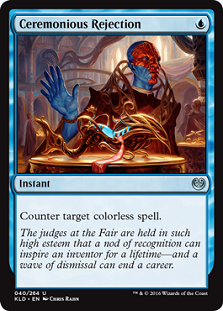
3 Ceremonious Rejection
2 Collective Brutality
1 Engineered Explosives
1 Grafdigger's Cage
1 Izzet Staticaster
1 Liliana, the Last Hope
1 Nihil Spellbomb
2 Surgical Extraction

I knew going into the event that my maindeck would be several cards off the accepted standard in Grixis Death's Shadow builds. We talked last week about paper events lagging behind MTGO results—that’s often true to an extent with metagames, but even more so with decklists. Usually (but not always), top performing decks are often the same 60-card prototypes those of us familiar with online lists have seen before, with a few correct sideboard changes rounding things out.

That, of course, is exactly what we’re seeing here. Grixis Death’s Shadow is already set when it comes to taking down creature decks, and with Ceremonious Rejection, Collective Brutality and Surgical Extraction in the sideboard to handle Eldrazi Tron, Burn, and Dredge, respectively, the deck has a ton of options to fight most of the top decks in post-board games. Stubborn Denial does double duty against spell-based combo decks, control strategies, and removal on our threats, and is a strict upgrade to Dispel (an already excellent blue sideboard card) if we play our cards right.
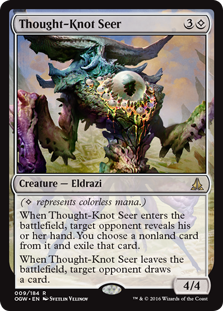
When you take into account that Grixis Death’s Shadow’s representation could have been even higher, had its pilots not been split among Jund (and even a couple Abzan) builds, it’s clear to see that the stars aligned for the archetype this weekend. Vizier Company’s timely success clearly helped out the archetype, as it’s easy to believe that some players chose to pick up the deck, which played right into Grixis’ plans.

There were plenty of targets on people’s minds going into the weekend, but thanks to that representation split across the various color combinations, it's clear that Death’s Shadow was not one of them. No, the primary enemies in everyone’s minds were small creatures, Dredge, Storm, and Eldrazi Tron. A proactive, consistent, powerful maindeck, with excellent sideboard spells for dedicated matchups all worked together to help propel Death's Shadow into the prime spot to take this past weekend by storm, but it couldn’t have done anything without the format playing along.
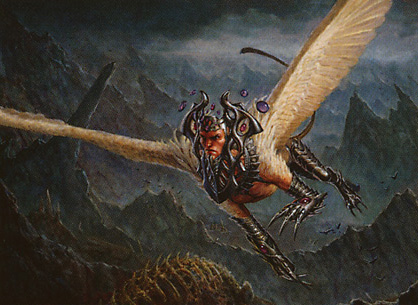

Moving forward, Death’s Shadow will be back on everyone’s radar, but how will the format choose to react? Before, midrange and control decks devolved into an arms race of value to fight Death’s Shadow’s multiple angles of attack, and fast linear strategies pounced on the opportunity. Will the format react accordingly, learn from the past mistakes, and take a different turn? Or will we find ourselves in a circle of metagame iterations, chasing our own tail? It’s too early to tell, but for now, I know what I’ll be playing.

Thanks for reading!

Insider: Hidden Value in C14 and C15 “Bulk Rares”

Are you a Quiet Speculation member?

If not, now is a perfect time to join up! Our powerful tools, breaking-news analysis, and exclusive Discord channel will make sure you stay up to date and ahead of the curve.

Hey there!

I've been digging through some bulk rares recently, because it's been at least a couple of months since I dug through some of these boxes. I sell bulk rares for 25 cents a piece out of the LGS where I have a consignment arrangement, and I've accumulated close to around 30,000 of them in the past few years. It helps that no other store in the area is willing to take bulk like I am, of course, but there's obviously a double-edged sword here: that's a lot of bulk to dig through.

When these dime rares sometimes spike (e.g., Dark Salvation) or creep upwards over years (e.g., Magister Sphinx), it can be hard for me to keep a finger on the pulse of every single bulk rare that doesn't belong in that box. I don't have the manpower or income to pay someone to constantly sift through bulk rares and pull out $2 cards that I'll buylist for 75 cents.

There was an error retrieving a chart for Dark Salvation

That being said, sometimes I do miss out on spikes, but it's all gravy when you factor in the fact that you've been buying or trading for these at close to (or exactly) a dime. With that being said, I think it's been at least a year or two since I've done an article on exactly how to go about buying or trading for bulk rares. Let me know in the comments section or on Twitter if that's something you're interested in!

There was an error retrieving a chart for Magister Sphinx

So let's assume you've got a bunch of bulk rares. Most of us do. While I was picking through these boxes that I created, I noticed a whole bunch of cards that had trended upwards in price. Some of these are pretty obvious, like the Dark Salvation I mentioned previously. We all saw that card tearing up the spotlight on camera, and I'm happy to ship them out at $1 each even if I missed getting out at peak demand. I even found a couple of Cryptolith Rites that I had tossed in there; apparently I had given up on that card at some point, when none of the online buylists were fighting over it six months ago.

I'm sure that several of my customers were able to capitalize on some of my mistakes, and I'm glad that they were able to do so. Customers getting awesome deals equals happy customers, and that means that they'll come back to the store again and again.

There was an error retrieving a chart for Arms Dealer

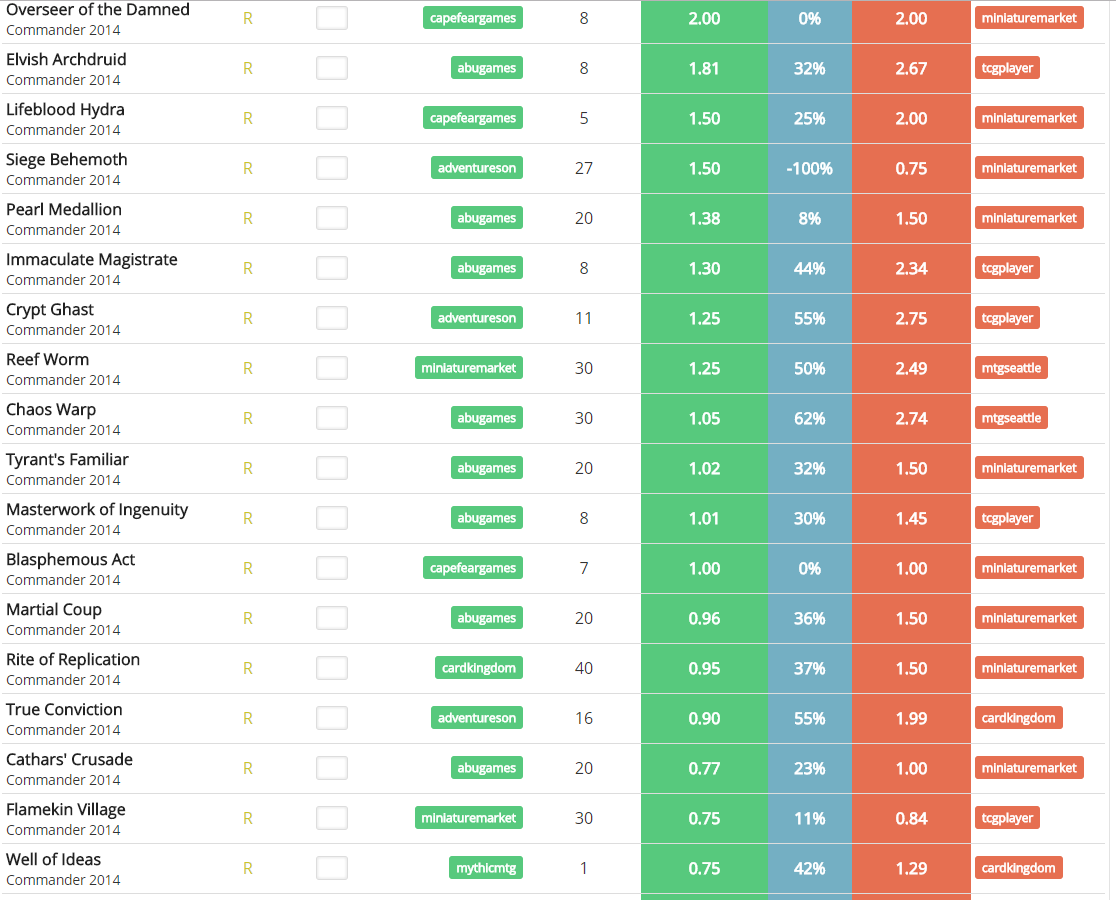
Some of the bulk rares that crept up like Magister Sphinx were less obvious. These aren't the staples of the Commander series that Wizards has been pumping out every year without fail, but they've found love in the homes of less competitive players' decks all the same. Did you know that Siege Behemoth is worth $1 to $1.50 on buylists right now? What about Thunderfoot Baloth?

Did you even know what either of those two cards did? I certainly thought they were jank green rares numbers 449 and 450, but I was wrong. Behemoth was a recent spike, and Baloth was growing to approach $1 until it got slapped with a C16 logo. Even then, you can double up on it if you're adding it to a package for Card Kingdom.

There was an error retrieving a chart for Siege Behemoth

We're seeing a lot of Commander 2016 stuff go haywire right now, and we're all trying to be the prophet that calls the tribes and cards in Commander 2017, but I'm really interested in C14 and C15 rares at the moment, because that's where I'm finding several Breaking Bulk picks. Here's a few that have really interested me in the past week or so, especially because their creature types don't exactly line up with what I'd call "popular and interesting tribes."

There was an error retrieving a chart for Reef Worm

If you listen to Brainstorm Brewery, you'll know that Corbin, Jason and I are big fans of U-shaped graphs. Reef Worm is a great example of a card that started out at $5 at release, and immediately plummeted to $1. I had thought it went to true bulk, which is why it was sitting in my quarter box.

I'm not sure how many I already sold at 25 cents before I dug through and picked them out myself. I went to EDHREC.com to check out the data and see where the card is seeing play and left feeling a bit confused. It sees play in approximately 10 percent of Marchesa, the Black Rose decks as the most popular Commander for it, and I even have a Marchesa deck myself. While the interaction is cute, there are a lot more important four-drops that I think you want in that slot, like Glen Elendra Archmage for one.

Deckbuilding advice aside, even the second-most popular deck that it finds a home in is Jalira, Master Polymorphist: ...not exactly super high on the popularity scale. Maybe that means the card is finding a home in more casual Fish/Kraken tribal decks; the kind that play four Quest for Ula's Temple? I'm not sure. Let me know if you have an answer for this little 0/1's price tag.

There was an error retrieving a chart for Splendid Reclamation

Here's another one that I missed the boat on. While I managed to unload a couple $10 playsets after the initial spike in response to the spoiling of Amonkhet cycle lands, I still found several chunks of these littering my bulk rares this past week. Unfortunate.

Thankfully, I can still manage to score a profit by shipping them off to Adventures On for 75 cents a piece as of Wednesday morning, so not all of the hype is lost yet. Maybe they'll get a bit more visibility in my $1-each EDH boxes at the shop, as opposed to being lost in the shuffle in a mountain of bulk rares. There's definitely at least a couple of Omnath and Titania players at our weekly Commander league, and I'm not sure if they've read this card.

There was an error retrieving a chart for Well of Ideas

Here's a good example of a card I should have paid more attention to. We've seen Howling Mine effects on both ends of the spectrum; some end up being worth nothing (Temple Bell) and some end up being great bulk pickups (Dictate of Kruphix).

I assumed this was the former, but it ended up being the latter. While it doesn't see play in a huge percentage of Nekusar, the Mindrazer decks on EDHREC, we see this kind of effect grow in non-Commander casual decks as well. Kami of the Crescent Moon was a great casual pickup before the Conspiracy reprint, and this appears to end up in the same category. Oh, I also forgot to add that it provides an immediate card advantage, and then successively growing card advantage over multiple turns. Yeah, that probably makes it better than a Temple Bell....

C14

I've also finally been able to use my ION scanner on a more regular basis, now that I have an actual set-up in my own townhouse where I can sort bulk. Prior to moving, I was living on the fourth floor of student housing with no elevator, so it didn't really make sense for me to keep lugging bulk up and down multiple flights of stairs. Now I have an entire office space and can easily just slide cards that I'm curious about underneath the scanner before tossing them into a buylist pile. I certainly don't check every bulk rare, especially when I'm confident enough about most pricing to swiftly go through multiple 1,000-count boxes in an hour. However, there are some cards where I think, "Hmm... Maybe this is 80 cents now that it's gone two years without a reprint," and then I get that sweet eight-times multiplier that Standard players mostly just dream of.

Here's another couple "bulk rares" that surprised even me during the past couple of weeks.

There was an error retrieving a chart for Sorin's Vengeance

Considering M12 wasn't exactly drafted a whole ton, I don't find these in bulk rares all that often. Maybe that's why it managed to sneak under my radar as a pick for so long, until a customer at the shop specifically requested the card. Pulling off a combo that involves a six-mana planeswalker (Sorin Markov) into a seven-mana sorcery is just the kind of Magic I like to support, and I can see why stores like Card Kingdom and ABU have this on their radar. I'd be wary of a reprint and move these quickly when possible, but I'd also avoid just throwing it into the good old quarter box when you can get four times that.

There was an error retrieving a chart for Assault Formation

Let's round out the picks with another casual all-star. This is probably easy to print in an ancillary product, but boy did I find a chunk of these clustered together in a box of forgotten bulk rares. I probably only sold a playset or two in the store at most, but that doesn't mean demand has slowed on this card. Our friends at Card Kingdom are willing to pay over the TCG market price to acquire copies of these, because they sell it at $2.50. Yeah. If you have a store with a 25- or 50-cent rare box, this is something you need to keep your eye on. Doran, the Siege Tower is a wonderful mix of Johnny and Timmy, and the two-mana single-color enchantment version will only continue to creep up until it hits a reprint wall.

End Step

I'm glad I got some positive feedback concerning the bulk picking videos! I'll look deeper into that in the coming week, so be on the lookout for some very special bulk-picking content from me. I don't have much (any) experience with editing videos, so it might take a little while to smooth out all the wrinkles. I hope I was able to make you all some money this week, on cards you either didn't know were worth money or that you'll be on the lookout for in the future. Thanks for reading!

Insider: The Financial Impacts of the Shift in the Modern Metagame

Are you a Quiet Speculation member?

If not, now is a perfect time to join up! Our powerful tools, breaking-news analysis, and exclusive Discord channel will make sure you stay up to date and ahead of the curve.

If you’ve looked at any Modern results or played in an event recently, you know that Modern looks quite a bit different than it did last year.

Step one of this shift was the dominance of the Death's Shadow deck and the refining of that list. To counter that, Burn became truly viable in the format because of how great the matchup was against Death's Shadow.

There was an error retrieving a chart for Death's Shadow

The second spark that fueled this shift was the bannings of Gitaxian Probe and Golgari Grave-Troll. Banning these two cards shifted down the power of a number of archetypes to bring balance back to the force.

This past weekend really showcased the new format with all its diversity. There were three big events across the world that showed off this format in all its glory: Grand Prix Copenhagen, Grand Prix Kobe and SCG Baltimore. (Each of those links will take you to the top deck lists from each event as provided by MTGGoldfish.)

The main thing I want to highlight from those three events is the diversity of strategies available right now. Between the top eights of those events, there were a whopping fifteen different decks represented! If you look deeper down the results, you will see even more diversity. Modern has always been a robust format, but its current state seems open for any type of deck you’d like to play.

There was an error retrieving a chart for Break Open

There were only two decks that had more than one entry in the three top eights. Those two strategies were six Death's Shadow and three Dredge decks. Other than that, every other spot was held by a different deck! Now that’s diversity.

Despite being the best deck right now, the price of Death's Shadow itself isn’t moving much from the Modern Masters reprint price point. Cards like Chalice of the Void, Living End and Ancestral Vision are seeing continued growth, though. With so many viable strategies, other archetypes are growing more than the best deck. This makes it hard to spec on Modern cards, but if you guess the next trend correctly, you stand to make a lot of money. Also, investing in Modern cards post Modern Masters is always a great idea, because it will normally be at least two years before they are reprinted again.

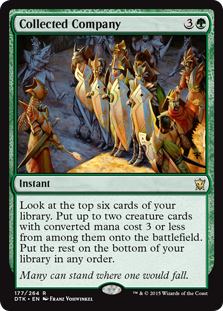
The main deck I want to focus on this week is a new Collected Company deck going by the name of Counters Company. Here’s the list that made top eight at GP Copenhagen. This deck also did well at the other two events, but didn’t quite manage to crack either top eight.

Counters Company

Creatures

4 Birds of Paradise
2 Noble Hierarch
2 Viscera Seer
4 Vizier of Remedies
4 Devoted Druid
3 Duskwatch Recruiter
4 Kitchen Finks
2 Eternal Witness
1 Scavenging Ooze
1 Qasali Pridemage
1 Fiend Hunter
1 Tireless Tracker
1 Rhonas the Indomitable

Spells

4 Chord of Calling
4 Collected Company

Lands

4 Windswept Heath
4 Verdant Catacombs
1 Marsh Flats
2 Temple Garden
2 Overgrown Tomb
1 Godless Shrine
2 Gavony Township
2 Horizon Canopy
2 Forest
1 Plains
1 Swamp

Sideboard

1 Anafenza, the Foremost
1 Eidolon of Rhetoric
2 Fatal Push
1 Kataki, War's Wage
1 Linvala, Keeper of Silence
1 Maelstrom Pulse
1 Orzhov Pontiff
1 Path to Exile
1 Reclamation Sage
1 Selfless Spirit
1 Sin Collector
2 Tidehollow Sculler
1 Tireless Tracker

If you glance over this list, you may think this is a normal Collected Company/Chord of Calling deck. After all, it has Birds of Paradise, Viscera Seer and Kitchen Finks. The shell of the deck is quite similar to that which you’ve seen before. The difference is that the win conditions are completely different.

There was an error retrieving a chart for Devoted Druid

First up is a card you should be scouring your bulk for. I still have to check and see if I have any extra Devoted Druids myself. I have loved this card for a while, so I’m hoping I have some stashed away somewhere. This mana accelerant is great in Commander and Cube as well as now being a central part of this new Company variant.

The great thing about Devoted Druid is that instead of utilizing Wall of Roots as just a mana source, you can now have your mana be a combo piece as well. It stinks that you won’t be able to block as well and that this mana dork dies to every removal spell, but there will be pros and cons to every new version.

There was an error retrieving a chart for Vizier of Remedies

Okay, so here’s the combo. With Vizier of Remedies and Devoted Druid in play together, you now have infinite mana. There are tons of options for you to utilize that mana, but getting those two in play together is the key to this deck. This is also a $5 foil, so keep your eyes peeled for any cheap copies.

There was an error retrieving a chart for Duskwatch Recruiter

Once you have infinite mana, it seems like a good idea to draw your whole deck, play Rhonas, the Indomitable and make one creature big enough to trample over and kill your opponent. If you have infinite mana, though, you can cast everything in your hand to find Duskwatch Recruiter and continue going off. Scrounge as many of these as you can from bulk. I know this has been a card we can barely keep in stock at my shop and now that it’s seeing play in Modern, that trend should continue.

There was an error retrieving a chart for Melira, Sylvok Outcast

At first, it seems like we could easily include Melira, Sylvok Outcast in this strategy and add another combo to our win conditions list, but beware, because with Melira in play, you actually can’t untap Devoted Druid.

There was an error retrieving a chart for Collected Company

This may be obvious, but Collected Company is amazing. Company just gets better and better because with every new set release there are more possible cards to combine together. With no foreseeable reprint anytime soon, I’d expect a price bump if this deck keeps doing well.

There was an error retrieving a chart for Anafenza, the Foremost

I love Anafenza, the Foremost in Modern right now. It’s great against Dredge as well as helps out against any other deck trying to use creatures in the graveyard to their benefit. At $2, this is a great investment.

There was an error retrieving a chart for Selfless Spirit

Lastly, I wanted to mention Selfless Spirit. This may be a one-of in the sideboard, but I’ve seen this flyer more and more recently. At $3, I think this is a great long-term investment. At the very least, holding onto a playset for yourself seems like a great idea. This is a very reprintable card, though, so I wouldn’t go too deep, but if they hold off for a while you could make a little money.

Wrapping Up

The great thing about this new version of Coco is that it’s going to be easier to assemble than the Melira combo was. With this version, you only need two cards instead of three. Granted, you need something to spend your infinite mana on, but you can also win a turn sooner than Melira did. Being able to win on turn three is no joke.

What’s your favorite strategy in Modern? Do you like the new options or would you rather stick to tried and true strategies you’ve been playing for a while? Let me know in the comments.

Until next time,
Unleash the Company Force!

Mike Lanigan
MtgJedi on Twitter
MtgJedi on YouTube

Insider: Legacy Specs for the Summer

Are you a Quiet Speculation member?

If not, now is a perfect time to join up! Our powerful tools, breaking-news analysis, and exclusive Discord channel will make sure you stay up to date and ahead of the curve.

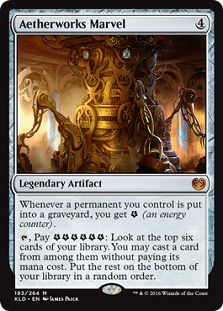
There has been a lot of talk about Standard and Modern over the past few weeks but let's not forget about eternal Magic! Much of the hot-topic talk has surrounded the new Standard metagame and whether or not Aetherworks Marvel should have been banned. Modern, for its part, is always big news.

But Legacy may be the most interesting Magic happening at the moment, and we've barely heard a peep about it over the past few weeks. The Pro Tour and Grand Prix circuits obviously give the other formats more coverage, but as far as shake-ups and interesting changes go, Legacy is in a very interesting period in its history.

The banning of Sensei's Divining Top has drastically shaken up the format over the past month—not that most people would actually know, because there haven't been many high-profile events to review. Yet, with summer coming there will be lots of Legacy to be played in high-profile events. It seems like getting ahead of the Legacy train and looking for value could be a very nice play right now.

Legacy has the obvious advantage of never rotating and having Reserved List cards. Let's take a look at some of my picks for Legacy and my thoughts behind them.

There was an error retrieving a chart for True-Name Nemesis

Miracles being ousted from the Legacy landscape has opened up a ton of room for creature and midrange decks to do their thing. Miracles has traditionally been extremely efficient at punishing slower, grindier decks because it simply has the ability to grind harder and longer.

Without Top in the format there is now a place for midrange decks, and True-Name Nemesis really takes the cake in these builds. I've noticed from reviewing MTGO league results that there has been a dramatic uptick in the number of TNNs seeing play in Legacy. Regardless of whether people are playing Delver, Sultai Midrange, or Stoneblade it is consistent that most lists feature between 2-4 copies of TNN.

It is possible that once the hive mind catches up to the trend of playing more TNN that the demand will sharply spike and the price could go on the rise. Nemesis is just a great card in the general sense, it's very powerful, and increased play could easily increase its current value.

There was an error retrieving a chart for Delver of Secrets

Another trend that I've stumbled upon in reviewing Legacy results is that Delver has dramatically increased its market share. As far as league results go, Delver is the obvious tier-one strategy almost regardless of what color combination it slots into. UR, Grixis, Sultai, RUG and Esper are all viable options and they all make use of the Delver of Secrets.

Delver doesn't see a ton of Modern play at the moment but that could also change in the future, especially if Wizards eventually clamps down on Death's Shadow.

All things considered, Delver has never been reprinted in a supplementary set which means there is a limited supply available. Obviously Delver is a common, but look at what happened with Ancient Stirrings! Delver is obviously a more iconic card than Stirrings. A treasure trove of extra Delvers could prove to be a nice little nest egg for the future.

If Delver becomes the default "best" strategy in Legacy (as the results suggest might end up happening), there is a good chance we will see upward movement on the card. It makes sense.

There was an error retrieving a chart for Sanctum Prelate
There was an error retrieving a chart for Recruiter of the Guard

I would be shocked if these two staple cards didn't see significant movement by the end of the summer. In fact, I recently moved in and picked up a personal playset of both cards just to make sure I'm not behind the curve!

If the default best deck is likely to be Delver, that means that Death and Taxes could be a very strong Legacy deck. To be fair, Death and Taxes has always been a good deck but it seems that perhaps it becomes even better positioned with Miracles out of the metagame. Miracles was always a bad match-up for Death and Taxes, and as a Miracles player I can vouch for that fact.

Lands is still a rough match up for D&T but the deck is fairly decent against many of the combo decks. I'm seriously considering taking up the Death and Taxes mantle in the coming weeks. The deck is very good.

I really like the Conspiracy: Take the Crown cards as speculative targets because most people don't own these cards. They are fairly uncommon because Conspiracy wasn't widely opened or drafted by most players. In fact, I had to buy them online because none of my local game stores had them in stock! If Death and Taxes becomes more popular it makes sense that a lot of people will be looking for these cards on the net at the same time, which could move the needle on the price tag.

There was an error retrieving a chart for Umezawa's Jitte

Jitte, what a card...

One thing I've noticed about Legacy is that Jitte is in the 75 of nearly every deck that wins with creatures. It's like a default, "put it in your deck" Legacy card. It is so incredibly efficient at grinding out creature-based wars of attrition. It's great in the Stoneforge Mystic-based Stoneblade and Death and Taxes decks.

It's also a necessary sideboard card against strategies like Elves where recurring removal is a must.

There is also the looming possibility that Jitte could eventually get unbanned in Modern and if that ever happens? Much dollar signs.

Despite the fact that Jitte is better in Legacy than it ever has been, the price is at a long-time low. It feels like a great time to stock up and hold onto Umezawa's Jitte. Jitte sword fights are going to be a big part of Legacy this summer, so don't be late to the party!

There was an error retrieving a chart for Rishadan Port

Rishadan Port is a four-of in two of the best decks in Legacy, Lands and Death and Taxes. The card is extremely hard to get ahold of and with Miracles off the map, a bunch of people will likely be looking to transition decks in the summertime when eternal MTG traditionally starts to heat up.

Port is a tough card to get ahold of and it isn't going to get any easier until a reprint comes around. Even when Port is potentially reprinted it likely won't hurt the value too much, since it will be a mythic rare and the old card face is so sick!

I could see this card rising a significant percent as we get a clearer picture of the Legacy metagame and Port-based decks are among the best decks. It is also worth noting that I've heard rumblings of tribal aggro Goblin decks making a comeback and these decks take advantage of Port. Also, some builds of Dragon Stompy are known to Port as well.

It's just a great card that slots into a wide range of playable, awesome Legacy decks!

There was an error retrieving a chart for Standstill

Standstill is a pretty outside-the-box pick to round out the article, but I think the card has a lot of potential. I've played my fair share of Stoneforge Mystic/Standstill decks over the years and there is a chance that kind of deck could be pretty sweet moving forward.

Standstill has only seen one reprint (as a book promo) and is basically dirt cheap for a Legacy/Vintage staple from such an old set. It's also a fairly iconic spell.

Standstill probably can't be much cheaper than it is now which makes it a great spec target. The upside seems pretty high. There is a good chance that I brew up some Legacy Landstill decks in the coming weeks to play in tournaments. It's a powerful enchantment!

Happy Hunting

Legacy season is approaching. Summer has always been the hotbed for eternal play. Keep your ear to the ground and start thinking about Legacy cards before everybody is looking to pick up staples for their new summer decks. Don't wait until its too late!

Finance 101: Hype, Spike & Creep – Three Causes of Price Changes

Are you a Quiet Speculation member?

If not, now is a perfect time to join up! Our powerful tools, breaking-news analysis, and exclusive Discord channel will make sure you stay up to date and ahead of the curve.

The price of cards is a mysterious concept to a lot of people. To many, trying to predict them is about as accurate as soothsaying. I'm not entirely sure that it isn't, but there are definitely some patterns and trends you can use to increase the accuracy of your predictions. Many players ask, "Why is this card going up?" or, "Why is this card going down?" A lot of the time, a little research can easily point you in the right direction. Today I intend to provide a basic framework that can help you answer those questions for yourself.

I like to divide all price changes into three different categories: hype, spike, or creep. This is an imperfect system, but it does a nice job of covering the major reasons why a card may be on the move. Depending on which of these factors is driving the price change, you can expect differing outcomes. For each type I'll discuss why it affects prices, how to recognize it, and what kind of future movement it typically indicates.

Hype

Hype is one of the most important factors behind changes in price. It can come in many different forms, but the most common is during spoiler season for a new set. New cards often receive the most hype going into a set release but it's also important to consider what other cards it can affect.

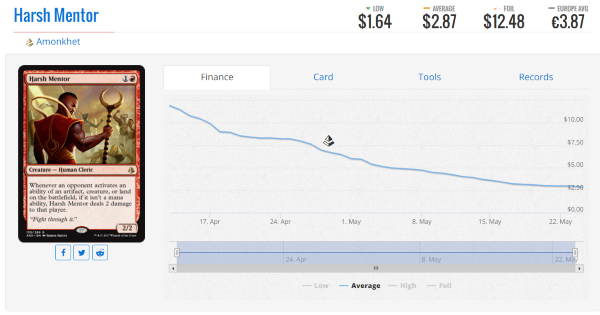
In my last article, I wrote about how Harsh Mentor could reinvigorate Burn, but I had no data to support this claim. I realized while talking with my editor that what I meant and what I wrote were not exactly the same. While I had no concrete data to support the claim that Harsh Mentor would make Burn a better deck, I had a strong reason to believe it would make the deck more desirable to play. This is the classic hype scenario.

As you can see on this graph, Harsh Mentor was pre-ordering for as much as $12 with no tournament results. That's the biggest red flag in my mind that this is a hype-based price. Most hype-based prices quickly dissipate as people get less excited when the card fails to put up great tournament results. I generally advocate avoiding pre-ordering new cards because they quickly fall victim to hype pricing and rather to invest in the other cards you will need for whatever deck you're building.

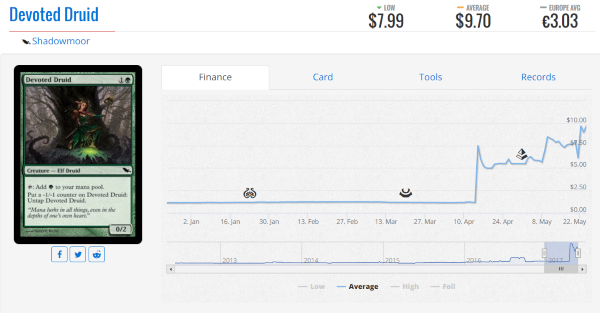
With that in mind, not every hype card ends up being a bust. Devoted Druid is a good example of a card that is actually living up to the hype. When Vizier of Remedies was spoiled, people quickly caught on to the infinite green mana combo that you can make with Devoted Druid. On hype alone, Devoted Druid jumped from $1 to $7—but after the SCG Team Open last weekend put up a 2nd place finish with the deck, it exploded again! Is the price still hype or is it something else now? It's hard to say at this point. One tournament doesn't make a deck, but it is certainly looking like it's going to transition into a spike.

The best way to figure out if something is a hype price increase or a spike price increase is to check tournament results. Devoted Druid and Harsh Mentor both started as hype increases but eventually Devoted Druid put up some results to elevate it further. Generally speaking, hype dissipates and the card's price goes with it. If you are interested in buying into a card or a deck that has been hyped but hasn't put up results, the worst thing to do is to impulse-buy it. Many people get the idea, "It might keep going up!" and rush to buy a card, which makes it go up even more. That self-fulfilling prophecy is one of the most dangerous scenarios for a buyer—as the price increase isn't based on real demand, it will almost inevitably fall back down.

Many people will point at Devoted Druid and wonder what to do about it. My personal plan for this type of card is just to test it directly in games. Proxy some decks, play with friends, figure out if it's actually good. Maybe you won't find the most perfect version of the deck, but if something is there you will probably be able to figure it out. If you tested the deck right after the first price jump, you would have had a few weeks to buy it for $5-$6 before it spiked to $10. Ultimately, waiting will save you more money than buying early.

Spike

Spike is a common term used to describe any card that rapidly increased in price. I don't really like using it to explain all of those situations because a lot of the time there are a lot of nuances that get lost in translation. Spikes are caused by an increase in demand or a drought of supply. Sometimes there is a third option, which is a buyout. This is when a speculator attempts to buy up every copy of the card on the open market, in an attempt to artificially drive up prices. At this point, it's very difficult to successfully buy out any Modern-legal card because there are just so many copies of almost all of them. Malicious buyouts happen almost exclusively on Reserved List cards (all of which are not Modern-legal).

Spikes initially will look a lot like a hype increase on price charts, but where they differ greatly is that spikes are driven by tournament-results. If you aren't paying attention you might miss some exciting decks making Top 8 or Top 16 of a tournament and really pushing demand for the card in the short term. Sometimes people don't wait for the end of the tournament to buy in and that causes the most problems. Once again, my piece of advice is to avoid buying in immediately if you see the price has gone up a lot. Spikes usually aren't sustained for long and will eventually go down as people list new copies on the internet.

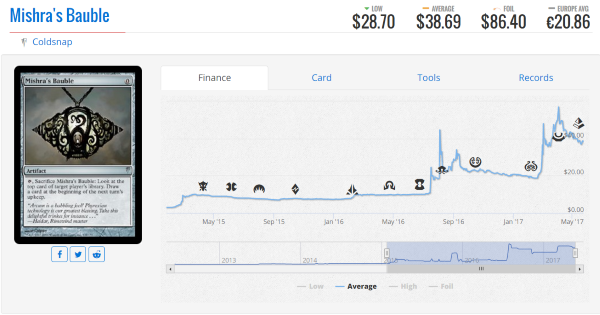
Mishra's Bauble is one of the better and newer examples of a spike that is driven partially because of its rarity and partially because of its performance. Right now, Death's Shadow in its various forms is one of the best decks in Modern and the demand for this card is outrageous. Good showings on weekends propel it up, and then it kind of "takes a week off" before spiking again. This is the kind of behavior I expect in the future of this card until it gets reprinted or people figure out a deck that consistently beats Death's Shadow and it falls out of favor. Right now it looks like it's on a downward swing, so if you wanted to buy them for a deck then now is a reasonable time. Just don't buy them during the weekend when it's doing well at a Grand Prix.

The biggest difference between hype and spike is seen when you look at the buylist price of a card. If there is real demand from players and not just speculators, you will see stores adjust their buylist price to reflect the new price of the card. If it's just hype, they may still adjust the buylist price of the card but it will take a lot longer. Maybe weeks or a month instead of a few days.

Creep

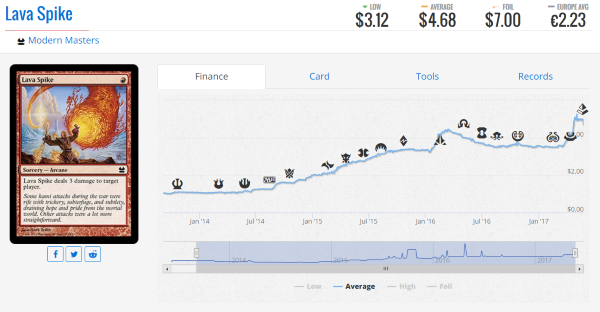
Creep is by far the least noticed type of price change, but also one of the most impactful over long periods of time. If I asked you to tell me the price of Lava Spike without looking it up, what would you guess? It's probably a few dollars, right? Maybe $2 each?

Nope, they're $4.50 each! When did that happen, you ask? Well, over the course of three years it went from $1 to $4.50, maybe $0.10 to $0.15 at a time. It doesn't look flashy and it doesn't show up on interests pages like MTGStocks.com. This is creep. It's slow and continuous and it catches you by surprise when you least expect it.

Creep is eternal and it is due to constant demand or constant lack of demand. Players want Lava Spike a lot. They might not play Modern and they might not buy 16 copies at once, but they slowly purchase available copies over time and buylists rise to attempt to keep them in stock. What can happen sometimes, however, is cards that creep can suddenly explode into hype or spike. If Burn puts 4 decks in the Top 8 of a Grand Prix, maybe Lava Spike becomes $10 for the weekend. Or maybe some key cards get reprinted in the Burn deck and suddenly there are a lot more people that need Lava Spikes.

While it's hard to say with 100% certainty, I'd guess that the reprint of Goblin Guide and Arid Mesa has propped up Lava Spike a bit recently because it made the Burn deck cheaper to buy. Many people focus on Eidolon of the Great Revel because it went from $6 to $12, but Lava Spike is also a card that has seen considerable price increases since then. If you read my Burn Financial Deck Tech that I wrote in January, I suggested buying Eidolon and waiting to see if Lava Spike was in MM3. Unfortunately, I failed to suggest that you quickly buy it if it wasn't. You could have saved a few dollars if you needed them.

Cards that creep usually continue to creep until new cards are printed or they have a really big breakout performance. While that seems pretty self-explanatory, you can see that for the most part they just continue to creep.

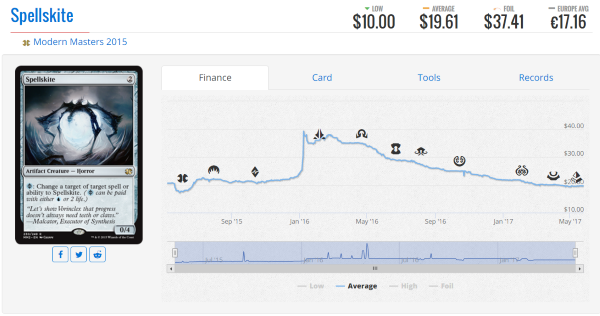
Some cards creep down. Spellskite was really popular when Splinter Twin was legal. The banning of Twin had an immediate impact and then threw it into a slow creep down. Infect not being as popular as it once was also lessens the demand on this once-$40 rare to the point where you can buy it for one fourth of that price 17 months later. I'm not expecting Spellskite to see any real movement up in the near future unless something changes. There's no reason for players to need the card for now. It might plateau at $10 and start increasing in a year or two but it's still too far away to tell.

Ultimately, cards that are creeping are the safest to buy, whether now or later. While you can save a lot of money waiting on hype cards or potentially save some money on spike cards, creep cards are unlikely to really cost or save you a lot of money unless you're waiting for a specific event. In the case of Lava Spike, I would have waited for the full spoiler of Modern Masters 2017 and then purchased them when it was confirmed they were not in. With Spellskite, the next qualifying event is likely to be a rogue deck or unbanning that causes them to become popular again. I would keep an eye on the MTGO Modern League decklists to see if Spellskite is becoming more favored.

Wrapping It All Up

Identifying cards you wish to buy and figuring out if they're currently in hype, spike, or creep can help you make much more informed purchase decisions. Because card prices are not an exact science that can be predicted, it's still possible you could make the best educated guess and be wrong. That's the unfortunate part of card prices and why soothsayers like myself try to keep everyone up to date!

Insider: MTGO Market Report for May 31st, 2017

Are you a Quiet Speculation member?

If not, now is a perfect time to join up! Our powerful tools, breaking-news analysis, and exclusive Discord channel will make sure you stay up to date and ahead of the curve.

Welcome to the MTGO Market Report as compiled by Matthew Lewis. The report will cover a range of topics, including a summary of set prices and price changes for redeemable sets, a look at the major trends in various Constructed formats and a "Trade of the Week" section that highlights a particular speculative strategy with an example and accompanying explanation.

As always, speculators should take into account their own budgets, risk tolerances and current portfolios before buying or selling any digital objects. Please send questions via private message or post below in the article comments.

Redemption

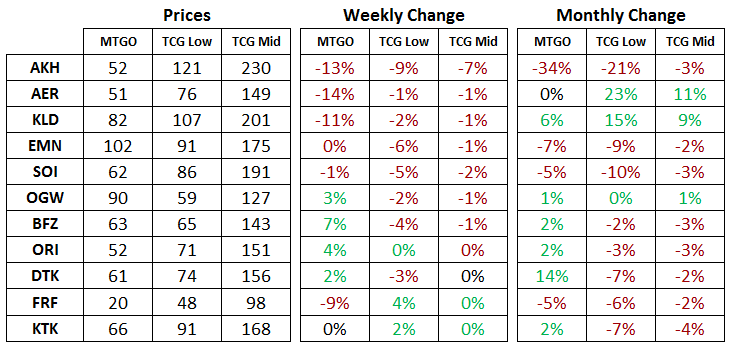
Below are the total set prices for all redeemable sets on MTGO. All prices are current as of May 29, 2017. The TCGplayer low and TCGplayer mid prices are the sum of each set's individual card prices on TCGplayer, either the low price or the mid price respectively.

All MTGO set prices this week are taken from GoatBot's website, and all weekly changes are now calculated relative to GoatBot's "full set" prices from the previous week. All monthly changes are also relative to the previous month's prices, taken from GoatBot's website at that time. Occasionally, full set prices are not available, and so estimated set prices are used instead.

may29

Standard

Looking at the price of Standard sets at the moment, Amonkhet (AKH) at 52 tix is very close to being the cheapest one. There's no doubt the Limited format has been popular, and this has helped to push down the price of all AKH cards. For speculators, the question is whether the the market is making a mistake and pricing AKH too low or not? In other words, are sets of AKH good value at the moment?

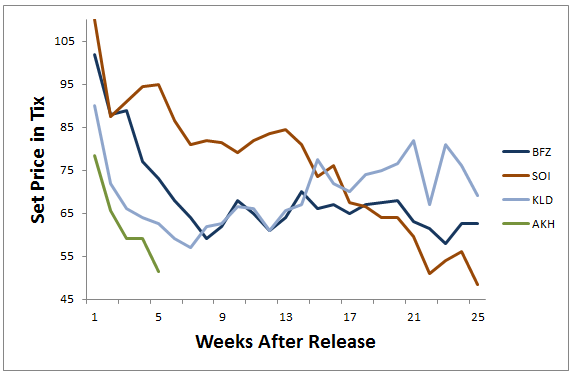
In order to help answer this question, it's always good practice to consider what has come before. The chart below plots out the price of the last four large-set releases relative to their release week on MTGO. AKH has been available for five weeks now and it's already cheaper than Battle for Zendikar (BFZ), Shadows Over Innistrad (SOI) and Kaladesh (KLD) at this point in its release window.

AKH

Although SOI is the best comparison in terms of a large set that is drafted over the summer, SOI did not have Masterpieces, so that makes it a poor comparison due to the redemption link. Paper prices on sets are depressed when there are Masterpieces present; thus, digital sets have a lower price floor than they otherwise would have.

KLD and BFZ are better comparisons, but as fall sets they get the tailwind of being in demand during the winter. Nevertheless, the price pattern of these two sets indicate a near-term bottom in the seventh to ninth week after release. Based off of this, I'll be a cautious buyer of AKH sets at some point over the next month.

There was an error retrieving a chart for Gideon of the Trials

Both Kaladesh (KLD) and Aether Revolt (AER) will be going offline for redemption in the next two weeks. June 7 will be the last day to redeem these sets. This is the first time in recent years that the redemption of Standard legal sets has gone offline, so it will be interesting to watch how their prices evolve in the next week.

Foil mythic prices in particular could get particularly strange; at the moment, GoatBots has a buy price of 34 tix on foil Exquisite Archangel and is out of stock. If you want to calculate the foil multiplier in this case, the regular version goes for 0.07 tix at the moment.

There was an error retrieving a chart for Exquisite Archangel

This type of price action adds a new wrinkle to the foil mythic rare strategy. There appears to be excess value accruing to some of the AER foil mythic rares in their final month of being redeemable. It certainly will encourage me to hold onto some of the AKH foils I have purchased recently for longer than I might have otherwise.

Modern

Triple Mirrodin (MRD) flashback drafts just wrapped up, so it's an excellent time to be targeting cards from this set. Chalice of the Void is down from over 40 tix, and while not a screaming buy at the current price of 33 tix, players should take advantage of this fresh injection of supply.

There was an error retrieving a chart for Great Furnace

Better long-term targets for both players and speculators would be the artifact lands. Although banned in Modern, these are staples of Pauper. Great Furnace in particular has regularly been priced at 2 tix or higher and can currently be purchased for under 1 tix.

As of today, Khans of Tarkir (KTK) and Fate Refored (FRF) are no longer available for redemption. Cards that are played in Modern will continue to hold value, but there will no longer be the backstop of value provided by redemption. They will be removed from the MTGO Market Report price tracker next week.

Standard Boosters

On the booster front, the price of AER boosters has bounced up and down between 3.0 tix and 3.14 tix in the last few weeks. KLD boosters have seen a more stable uptrend and now sit at over 1.5 tix. The cost of a draft set has risen from 7.0 tix to 7.8 tix in the last month. Buying draft sets in the release week for AKH has been a profitable strategy, but there's further gains to be made.

The AER-KLD draft queues continue to fire at a steady rate, which means the market is working through the available supply. With four months left as the alternative Standard draft format, there is plenty of time to work through the available supply of boosters.

Trade of the Week

For a complete look at my recent trades, please check out the portfolio. This week I took advantage of the 60 tix price that complete AER sets reached and sold off my sets. I did not sell them off as complete sets, but went to my regular bots in order to sell off singles. Between selling to MTGOtraders Hot List and their regular buy bots, I managed to get 55 tix per set on the first eight sets. The last two sets I sold on the weekend for 50 tix.

There was an error retrieving a chart for Heart of Kiran

Overall, this was an excellent profit of 90 tix or 22 percent in a little over two months. That even accounts for my early purchase of four sets at the 50 tix level, which turned out to be a premature move. The complete position was rounded out when I picked up the rest of the sets at a little over 40 tix in late March. Catching the precise bottom is only clear in hindsight, but I am happy with how things worked out.

The basis of this strategy was to identify peak supply and to be a buyer of complete sets in and around that time. Peak supply is fairly easy to identify, as the drafting of AER only occurred for a few months, and it was always drafted two boosters at a time. Interest in Standard also matters, as any extra demand from Constructed players would eat up some of the supply and drive prices higher. Thus, peak supply for a given set will occur while it is still being drafted, but before interest in Standard ramps up with spoilers from the new set. AKH came out at the end of April and for the month prior, the price on a set of AER was in the low 40-tix range.

The exit point of this strategy would be in the weeks prior to the end of redemption. Redemption would backstop the value of the complete set, even when shifts in the Standard metagame triggers price fluctuations in individual cards. Holding sets past the end of AER redemption on June 7 would introduce extra risk, so the exit window was also clearly defined.

There was an error retrieving a chart for Nicol Bolas

This strategy will be repeatable for Hour of Devestation (HOU). Based on how things worked out for AER, the end of August and into early September will be an excellent time to buy complete sets of HOU. Shopping around and watching out for price dips will add extra returns to this strategy. AKH and HOU will go offline for redemption in early November, so the selling window will be the second half of October.

One open question about this strategy is whether or not sets of KLD would have been a good target as well. Due to the turmoil in the Standard metagame with the printing of Felidar Guardian and the two rounds of bans, drawing a conclusion from how KLD evolved in price is impossible. At this point, I can only say that it's very easy to pin down peak supply of the small set in a given block, but the large set is ambiguous. Observing how the set price of AKH evolves will be necessary before anything definitive could be said from the available data.

Beginner’s Guide: Managing Deck Complexity

Are you a Quiet Speculation member?

If not, now is a perfect time to join up! Our powerful tools, breaking-news analysis, and exclusive Discord channel will make sure you stay up to date and ahead of the curve.

Welcome back to the Beginner's Guide. Once again, it is time for some general advice for those making the transition from Standard to Modern. As always, my intention is to provide a foundation for newer players to build on. Once this is established, only then are you ready to talk about all the nuance that aficionados appreciate. That complexity is, in a certain sense, one of the hallmark attributes of the Modern format itself.

It has been some time since my last entry in this series, mostly because I had covered everything that I initially intended to. However, watching some new Modern converts struggle has inspired me to take to the keyboard and set them straight. I think too many new players are playing decks that are too difficult. To be clear, I am not calling them bad Magic players—many of them do very well in Limited or Standard. But Modern is an entirely different beast which they lack the tools to tame.

Its vast cardpool makes the format hard to comprehend, and the corner-case interactions of older cards can easily confuse rookies. It is critical for new Modern players to have realistic views of their abilities, and to not pick a deck just because a streamer made it look cool and easy. I am not saying that you should never challenge yourself, or that you should only play Little Kid Abzan. I simply mean that Magic is a very complicated game, and you don't want to bite off more than you can chew.

Defining Complexity

You don't want to play too complicated a deck too quickly. This generally isn't a problem for Standard players. Magic is a game with a lot of moving pieces, and Wizards tries to limit how complicated Standard decks and card interactions can be. Anyone who follows Mark Rosewater knows how worried he is about complexity overwhelming newer players. Wizards normally does a good job of ferreting out overly complicated interactions in order to make the game easier for new players to understand. This translates into Standard decks being fairly straightforward and easy to understand. If I show you decks like Mardu Vehicles or Temur Marvel and you know anything about Magic, you know what they do. That isn't always true in Modern, and it's a great way to have zero fun playing the game.
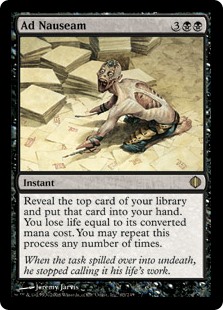
Merriam-Webster defines complicated as "consisting of parts intricately combined," or as "hard to understand or analyze." This definition provides an acceptable starting point, but it isn't really useful for Magic. Consider the universal fundamentals of constructed Magic: to play the game, each player needs to have at least 60 cards in a deck, of which you cannot have more than four of any one card (except for basic lands), and each deck is unique to the player. That's already a lot of intricately combined parts, which makes it hard to understand or analyze the game. Saying one deck is "more complicated" than another is tricky when they all start out complicated.

I find that a better measure of deck complexity is how easy it is play. Assume that I hand you a deck you've never seen before, without any explanation. Just leafing through the deck, how hard will it be for you—and I do mean you, this is a subjective test—to pilot the deck adequately? Depending on your answer, the deck may be too difficult to pick up blind. I'll break the tasks required to pilot a deck competently into three categories: understanding what the deck does, winning with the deck, and recovering from mistakes. Let's look at each of these in turn.

1. Understand the Deck

If I hand you a deck that you have never seen before, how likely is it that you will know what you are supposed to be doing? How likely is it that a completely inexperienced player misreads the deck and uses the wrong strategy? Or simply has no idea what that strategy is? Consider the aforementioned Little Kid Abzan. One look at the deck, and you know that it casts big beaters and attacks with them. Is that all there is to it? No, of course not. But you will have a general idea of what to do.

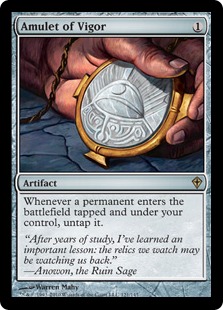
Now consider Ad Nauseam. There is no guarantee that a new player will see that the deck combines Angel's Grace and Ad Nauseam to draw the whole deck and then kill with Lightning Storm. In fact, they might think that Ad Naus is just a draw spell and you're trying to build up lands in hand the normal way to win via Storm while the Graces simply keep you from dying. Similarly, is there any hope that newbies understand how Amulet of Vigor combines with Simic Growth Chamber? Complicated decks are harder to understand.

Another thing to consider is card choice. Certain cards might make perfect sense to an experienced player, but bewilder a new player. It took a long time for Mishra's Bauble to catch on because its roles in Death's Shadow decks are far from intuitive. Similarly, new players might dismiss Tarfire as a bad Lightning Bolt, missing the vital function it plays. Not to mention, say, the function of the bullets in a Kiki-Chord deck. Non-obvious card choices are made for non-obvious interactions, and tend to increase a deck's complexity.

2. Win With the Deck

It is very easy to lose a game of Magic: just do nothing until your life total hits zero. Winning a game against non-goldfish opponents is already hard. They're trying to win too, and probably also trying to stop you winning first. How much harder does your deck make winning? In other words, if an average player with no experience of the deck picks it up, can they win a game against a player of equal skill? The less likely winning in that scenario, the more complicated the deck.

Consider Little Kid Abzan vs. Amulet Titan. As previously mentioned, a basic knowledge of Magic will tell you to attack with Loxodon Smiter until your opponent loses. Nothing special. While a new player may understand that the goal of Amulet is to ramp into Primeval Titan, how is not exactly obvious---or in any way normal Magic. Add in all the triggers, odd rules interactions, and mana counting, and it becomes very easy to be overwhelmed. Therefore, it is unlikely that they will play well enough on purpose to win, making Amulet a very complicated deck.

The other thing is whether players understand how to win with the deck. Sometimes, the actual playstyle necessary for a deck to succeed is deceptive. Modern Collected Company-based decks look a lot like aggressive creature decks. However, playing them like that is less than optimal, since their threats aren't particularly impressive, nor are their clocks that fast. Both versions should be regarded as combo decks first and foremost and played as such, which might not be apparent to an outsider. Similarly, Standard control decks take far more passive lines than their Modern counterparts, and attempting to play the latter like the former is a recipe for failure.

3. Know What to Do When Something Goes Wrong

If the game isn't going as expected, how hard is it to recover? Put another way, can a new player understand when they are losing? Whether they can actually save the situation is not related to complexity. As I've said, Magic is hard. So hard that sometimes things can be going very badly for you without you realizing it. It is also possible to play badly but think you played well. Complex decks often find themselves in situations where they have fallen far behind but it isn't obvious.

It is very apparent when a creature deck like Little Kid or Merfolk is behind or outright losing: they're not the ones attacking their opponent and/or they have no cards against an opponent with many cards. On the other hand, Storm can more easily be losing a game to control and not realize it. The deck requires specific combinations of cards in hand and in the graveyard to win, but it also needs to actually resolve those spells. You may miss the window where resolving key spells is possible against UW Control---in practice, you cannot push through all their counterspells where you could have earlier. Such scenarios can prove easy to miss. This increases complexity and the difficulty of the deck.
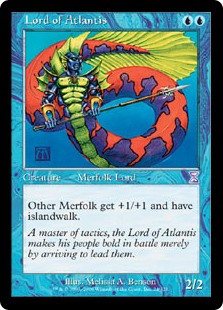
Play mistakes account for a related aspect. Complicated decks tend to be far less forgiving of mistakes. You can make sequencing errors or miss damage in Little Kid, and it may not matter because Siege Rhino forgives many sins. Conversely, tapping the wrong land for a spell can prove fatal in Amulet Titan. Simpler decks are generally more forgiving of missteps, while extremely complicated decks rarely win without tight play.

"Easy to Play, Hard to Master" ≠ Complexity

The section heading says it all. Just because it takes awhile to really get good with a deck does not make the deck complicated. The path to achieving mastery may be complicated, and the play patterns necessary might be unintuitive, but those factors are irrelevant to complexity as outlined in this article. Merfolk rates very low on my complexity scale because it is easy to understand the deck. However, it contains plenty of non-intuitive interactions and sequencing decisions that make it a hard deck to pilot expertly. These quirks don't matter to a beginner, because they will still play well enough with the deck to win. Therefore, a deck with multiple expert-level interactions is not by itself complicated.
Most players think of matchups as immutable numbers that reflect the "reality" of the games; Tron is "favored" against Jund, Infect "crushes" Ad Naus, Abzan Company is "good against" Burn. These phrases may be true, but they don't tell the whole story. I think of all decks having win percentages as a range. There is a base win percentage that reflects how often an average player with general knowledge of the deck will win. Then there is the low bound, reflecting that of a complete newbie, and an upper bound for master-class players. Most decks will have a fairly big gap between their average and master levels; skill does that to win percentages. Decks with large gaps to the lower bound are more complicated, reflecting how unintuitive they are for new players. For this reason, it doesn't matter how much "play" a deck has once you "git gud" with it. What matters is how easy it is to play blind.

Why Complexity Matters

I see many new players playing decks that they do not fully understand, and as a result, they languish on the low end of their win percentage. Again, not because they are bad at Magic, but because there is far more to consider when playing a Modern deck than a Standard one. A lot of Modern decks are not newbie-friendly, particularly if said newbies want to play a deck that is considerably different from what they previously played.

Players need to be honest with themselves and evaluate their abilities and the deck they have selected. That's why I left the above criteria subjective: it will vary player to player. If you look at deck and are confused by what it does, how it wins, why it has certain cards, or what you need to be aware of, you should probably put the deck down. The purpose of the game, for many players, is to have fun. It's tough to have fun when you're confused and frustrated, no matter how many other players say your deck is great.

An Object Lesson

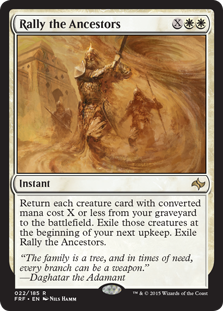
Consider a combo player switching from Standard to Modern. In Standard they played Rally the Ancestors combo. The deck has a lot of moving parts and plenty of different angles of attack at its disposal, but actually assembling the combo and winning is reasonably straightforward. There's very little uncertainty about it; once you start going off, you can't really fizzle. Even if the deck failed to outright kill in one turn, that failure didn't use up all your resources, so you can try again later. You might not even have to actually combo. Just flooding the battlefield with creatures and winning via combat is a legitimate gameplan. Rally boasts lots of power, flexibility, and forgivingness.

Assume that they took those skills and tried to play Modern Storm. Storm has no forgivingness, no backup plan, and no room to maneuver. You either successfully combo or you die. The deck is utterly alien to this player. Their Standard combo skills will be wasted on this deck. Spell-based combo is difficult even for experienced players, so what hope does a new player have? That player should try a Modern Company deck, since it will be more familiar.

As a less-extreme example, take a Standard New Perspectives combo player. Perspectives does nothing until it resolves its namesake and then draws its whole deck. While superficially similar to Storm decks, once it starts going off, there is no chance of fizzling barring opponent interference. Storm does fail mid-combo sometimes, and knowing how to manage those situations is critical to success with the deck. A Perspectives player might also find Storm too hard, if not as much as the previous player. In this case, an adjustment towards Ad Nauseam would be better. The decks are more similar and the skills translate more directly.

Keep it Simple

We play Magic because it's fun. Many players find complicated decks fun. However, this doesn't mean that you should jump right into complicated Modern decks. To avoid frustration, players should honestly assess themselves before jumping into their first tournaments. When playing a new deck, you must ask if you really understand what you are doing. Sometimes you'll be piloting a deck that makes perfect sense to you without any practice. Other times, you should hold off on sleeving up that new hotness until you have more practice. After all, confusion is not fun.

Insider: Winners and Losers in the Market

Are you a Quiet Speculation member?

If not, now is a perfect time to join up! Our powerful tools, breaking-news analysis, and exclusive Discord channel will make sure you stay up to date and ahead of the curve.

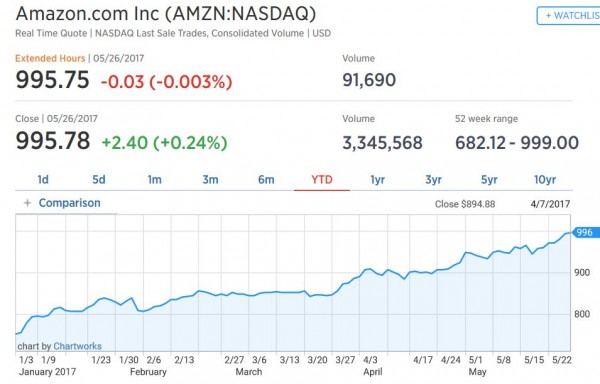
Last Friday the S&P 500 and NASDAQ hit all-time highs. The former closed 0.03% higher to close at a record 2415.82 while the latter moved 0.08% higher to close at 6210.19. Both of these indices have had incredible runs over any timeframe you care to look at.

To an outsider unfamiliar with Wall Street, this would appear as though economic outlook for the U.S. was the greatest it has ever been. You may even go so far as to deduce that major blue chip stocks must be soaring as consumer confidence grows.

This is only partly true. In fact, when you peel back a few layers of the onion you will immediately find that underneath, the structural integrity of this rally isn’t as robust as it would appear at first glance. It would seem that much of it is buoyed by a few concentrated names, such as Apple, Google, Facebook, and Amazon.

AMZN

Meanwhile, there are many household names that have sat out of this rally—some have even sold off despite of the run to all-time highs. Examples include Ford, IBM, and General Electric.

GE

It seems there is a real split between the haves and have-nots in the world of stock investing. Thus one of the toughest investing question arises: “Do we stick with what’s working or do we cash out of the winners and buy into the losers?”

The MTG Finance Parallel

Sometimes I temporarily forget that I’m writing for a Magic: The Gathering site and not a general finance site. I focus heavily on Wall Street, so it’s easy to get sidetracked. In this case, however, I do have a parallel to draw. It won’t be perfect, but it will end up at the same final position.

Consider this: Magic finance may seem robust to an outsider. If someone had taken an index of key relevant cards to track across the entire game, I suspect the graph would largely go from bottom left to top right. It would be bumpy and imperfect, but I genuinely believe a non-weighted index would be rising over the years.

Like stocks, however, should one lift open the cover of this index to glimpse the details within, I believe the rhetoric would have to alter. Since 2015, this index would be buoyed in much the same way by powerhouses such as Black Lotus, The Tabernacle at Pendrell Vale, and Juzám Djinn.

There was an error retrieving a chart for Juzám Djinn

Power, dual lands, Old School cards, Reserved List staples, and Commander foils would all show strong signs of growth over recent history. Imagine if you had bought one foil copy each of every card in the Atraxa Commander 2016 deck—I’m sure you would have made out quite well!

There was an error retrieving a chart for Doubling Season

A basket of these cards would have led to tremendous gains.

On the other hand, there are some noteworthy areas of weakness that would also come to light under sufficient scrutiny. Just look at Gideon, Ally of Zendikar for example—it’s one of the most played cards in Standard (fifteenth most in fact) and it is the most played mythic rare in the format. Historically, the most played mythic would be worth $30-$50; in the days of Jace, the Mind Sculptor and Baneslayer Angel this could climb as high as $100. Yet once enough supply hit the market post-release, Gideon struggled to crack the $30 mark.

There was an error retrieving a chart for Gideon, Ally of Zendikar

Similarly, Force of Will, the most played card in Vintage and second most played card in Legacy, has seen a dramatic sell-off over the past year due to its reprinting in Eternal Masters.

There was an error retrieving a chart for Force of Will

The same would hold true for the likes of Jace, the Mind Sculptor, Zendikar fetches, Deathrite Shaman, and Abrupt Decay. Even some duals have struggled to climb higher despite their ubiquity.

With this dichotomy, it leads me to ask myself: where is a better place to park new money if I want to invest in Magic? Clearly Standard has some systemic issues that I won’t delve into, but there could be merit to a strategy of buying into beaten and battered Modern and Legacy staples after they bottom in price from a reprint. Would this be a more sound strategy than, say, pursuing already-expensive Old School staples and Commander foils?

The Million Dollar Question

Just like in the stock market, this same debate of trash vs. treasure can be had in MTG finance. Of course the fundamentals differ completely between the two, so the comparison stops here. The answer to this question in the stock market could be very different from the answer in MTG. Then again, there really isn’t an obvious answer for either and I could see compelling arguments made on both sides. However I will do my best to share thoughts on where I stand today when it comes to Magic.

Magic is in a strange place right now that leaves me somewhat uncomfortable. There is a very obvious effort by Wizards of the Coast to increase sales—the player base isn’t growing like it once was, yet corporate leaders still want to see improvements to the top and bottom line. Therefore Wizards of the Coast was left with finding alternate means of tapping the market:

  • Commander products tap the Commander market.
  • Conspiracy products tap the draft market while also accessing the secondary market (reprints).
  • The Masters sets tap the Modern and Legacy secondary markets.
  • The Masterpieces tap the Standard market by taxing Standard players further via reducing the value of their cards.

In a way, Wizards has cleverly accessed profits from the secondary market without ever mentioning it directly. This, of course, is helping their sales in the short term, but it could have unfavorable consequences in the future. As players continuously get burned by reprints, they may be less inclined to actively pursue chase cards. They may abandon competitive play in favor of the much cheaper casual scene. And even though it’s amazing what the Commander products have done for their target format, Wizards can’t really market more products to that audience more frequently than they already do.

These trends have made me uneasy, and it’s why I have concentrated my MTG positions in “safer” positions like Power, Old School, and Commander cards. However many other people are doing the same exact thing, which is making this trade a bit overcrowded. It feels secure now to hold a card like Beta Mind Twist, but it may be greedy sitting on something that has done nothing but go up over the years.

There was an error retrieving a chart for Mind Twist

Much like Amazon stock, a compelling case could be made that these staples are overpriced and should be sold. On the other hand, the only thing that is outpacing Amazon’s sales growth is the growth in the Old School player base.

I know I’ve made general bearish comments about Magic in the past, and it’s not my intent to do so again here. I maintain positions in Old School and Vintage cards because I believe in their long-term trajectory. However there is something to be said of the stagnation of many Old School staples after their initial hype. A similar trend happened with Legacy and Modern, although on a much longer time scale. Once the player base growth tapers off, we see a flattening of prices. This remains the norm until the next growth spurt occurs…if it occurs.

In the meantime, I will focus on three strategies:

  1. Continue to hold a core selection of Old School and Reserved List cards as the backbone of my collection.
  2. Add to positions in Commander foils based on metagame shifts according to EDH REC—the release of Commander 2017 will likely open up tremendous opportunity as new tribal theme decks are launched. Keep a close watch as there will definitely be money made.
  3. Churn and burn other cards with short-term potential (Pro Tour hype, low TCGPlayer stock, arbitrage). The intent here is to hold these cards for no more than a couple of weeks.

This strategy will keep me in the game for the long haul, generate some short-term profits (hopefully), and offer some mid-term potential for spikes. It covers all my bases without overexposing me to some of the greatest risks associated with the game right now: reprints, player base stagnation, and Standard exhaustion.

Wrapping It Up

Do I stick with the winners or do I move into “value” by seeking some of the underperformers of the market? This is an age-old question that comes up time and again on Wall Street. While fundamentals differ greatly in Magic, the same question can be asked.

While it’s impossible to answer this question with guaranteed success, I believe sticking with what’s working is the right move in Magic. This includes Old School staples, Reserved List cards, and Commander foils. Meanwhile some of the weaker performers—Standard cards and Modern/Legacy reprints—should be avoided. They may present a seemingly attractive opportunity on the surface, but peeling back a few layers I think there’s risk here that’s not worth taking. Especially when there are so many other opportunities on the horizon that won’t carry that same risk level.

Lastly, I want to add one word of caution around speculating on Commander foils. Sometimes the stock on these cards is extremely low. That’s great for triggering price spikes, but it can also lead to some emotional buying and lost money. Just because something jumps 200% on MTG Stocks doesn’t mean the card is truly selling at the new price. This is always the case, but it’s especially true with rarer Commander cards. Make sure you evaluate the card’s utility for yourself before deciding where to make your purchases, and never follow the hive mind that is “MTG finance.”

There was an error retrieving a chart for Zirilan of the Claw

Thinking for yourself will be your greatest ally going forward!

Sigbits

  • In the past when a Legends card spiked, the Italian version followed suit; not in the same magnitude, but at least the same direction. Lately Winds of Change jumped in price and Star City Games is sold out at $9.99. I wonder if the Italian version will get some love as a budget option going forward. SCG has just under a dozen copies in stock with NM listed at $1.99—let’s see if those move or not.
  • Not long ago I spoke negatively about Predict, citing its recent price run as nearly complete. I need to double back now and alter my stance. With the banning of Top in Legacy, this card may become more relevant as Miracles players seek out alternatives. Star City Games is sold out of nonfoils at $2.99 and foils at $24.99. With just the singular printing, this card can definitely go higher.
  • Portent has become an attractive target to pull out of bulk as another alternative for Legacy Miracles. SCG is sold out of these too (albeit with a $0.15 price tag). I guarantee this gets restocked at a higher price. Especially given that Card Kingdom is paying $0.21 on their buylist!

Insider: QS Cast #64: Leaked Dragon Commanders?

Are you a Quiet Speculation member?

If not, now is a perfect time to join up! Our powerful tools, breaking-news analysis, and exclusive Discord channel will make sure you stay up to date and ahead of the curve.

Play

The QS Cast has returned: Chaz Volpe, and Tarkan Dospil continue on with where the cast left off and in this episode they discuss the following:

  • Leaked Commander 2017 cards.
  • Reactionary cards, as well as looking towards the summer sets.
  • When certain cards are worthwhile, and when it's scraping the bottom.
  • AMA Announcement for Insiders, QS Cast Info-graphics, and more!

Cards we discussed:

Enjoy! We’re glad to be back.

Find us on Twitter: @ChazVMTG  @the_tark

Avatar photo

Chaz V

Started playing during Invasion block at the age of 13. Always a competitive person by nature, he continues playing to this day. Got into the financial aspect of the game as a method to pay for the hobby and now writes, Podcasts, and covers all aspects of the game, always trying to contribute to the community and create great content for readers and listeners.

View More By Chaz V

Posted in Free Insider, QS CastTagged , , , Leave a Comment on Insider: QS Cast #64: Leaked Dragon Commanders?

Have you joined the Quiet Speculation Discord?

If you haven't, you're leaving value on the table! Join our community of experts, enthusiasts, entertainers, and educators and enjoy exclusive podcasts, questions asked and answered, trades, sales, and everything else Discord has to offer.

Want to create content with Quiet Speculation?

All you need to succeed is a passion for Magic: The Gathering, and the ability to write coherently. Share your knowledge of MTG and how you leverage it to win games, get value from your cards – or even turn a profit.

QS Cast #63: Insider Unlocked Rewind – SaffronOlive joins for PTAKH!

Are you a Quiet Speculation member?

If not, now is a perfect time to join up! Our powerful tools, breaking-news analysis, and exclusive Discord channel will make sure you stay up to date and ahead of the curve.

Play

The QS Cast has returned: Chaz Volpe, and Tarkan Dospil continue on with where the cast left off and in this episode they discuss the following:

[editor note]: Due to illness this cast has been heavily delayed. We appreciate Seth joining the cast - and apologize for the delay in posting!

  • Chaz is joined by Seth "Probably Known as SaffronOlive" on an exclusive Episode!
  • Seth and Chaz discuss various topics, and discussed pre-PTAKH predictions. Basically called the event dead on!
  • Answered Listener questions - many different topics were covered. Thanks for the questions!
  • Find Seth's work via Youtube and MTGGoldfish.com!

Huge thank you to Seth for joining the QS Cast! We appreciate the time and discussions - we had a great time, and look forward to next time!

Cards discussed pre-PTAKH:

Seth and Chaz make bold predictions about New Perspectives!
Mardu Vehicles, Torrential Gearhulk decks, and could Zombies be real?

Enjoy! We’re glad to be back.

Find us on Twitter: @ChazVMTG  @the_tark @SaffronOlive

Avatar photo

Chaz V

Started playing during Invasion block at the age of 13. Always a competitive person by nature, he continues playing to this day. Got into the financial aspect of the game as a method to pay for the hobby and now writes, Podcasts, and covers all aspects of the game, always trying to contribute to the community and create great content for readers and listeners.

View More By Chaz V

Posted in Free, QS Cast, UnlockedTagged Leave a Comment on QS Cast #63: Insider Unlocked Rewind – SaffronOlive joins for PTAKH!

Have you joined the Quiet Speculation Discord?

If you haven't, you're leaving value on the table! Join our community of experts, enthusiasts, entertainers, and educators and enjoy exclusive podcasts, questions asked and answered, trades, sales, and everything else Discord has to offer.

Want to create content with Quiet Speculation?

All you need to succeed is a passion for Magic: The Gathering, and the ability to write coherently. Share your knowledge of MTG and how you leverage it to win games, get value from your cards – or even turn a profit.

Insider: Select Lessons from Failed Specs

Are you a Quiet Speculation member?

If not, now is a perfect time to join up! Our powerful tools, breaking-news analysis, and exclusive Discord channel will make sure you stay up to date and ahead of the curve.

Welcome back, readers!

As speculators we are often focused on what's ahead in the Magic finance realm—after all, that's where the gains and losses will occur. However, as the old adage goes, "those who don't know history are destined to repeat it." A critical part of any speculator's job is to evaluate their past specs. This is particularly important for the failed ones.

So with that in mind, let's look at some of my bigger specs from the last few years that didn't pan out. For each of these I purchased multiple copies at retail prices, in the expectation that they would go up. Some were a bigger flop than others, but each has valuable lessons to impart.

Dictate of Erebos

There was an error retrieving a chart for Dictate of Erebos

I purchased 62 copies of Dictate of Erebos, at an average price of $1.7, on April 26th and April 27th 2014 (so a little over three years ago). I wrote about this spec here. For those who don't want to read the whole article, the relevant bits about this spec (at the time) were:

1. It's black. Currently, black is one of the most powerful colors in Standard right now. It can fit into a mono-black build and provide two devotion.

2. It's an enchantment. This means it's difficult to get rid of (maindeck) for many other decks.

3. It's a new Grave Pact. Many people don't remember the last time Grave Pact was Standard-legal but it makes a lot of kill spells into 1-for-2's, which is terrible for the opponent. It also plays really well with instant-speed sacrifice affects. Just as important; Grave Pact is currently a $9 card despite being reprinted six times. The triple-black of Grave Pact may be good for some EDH decks (ones that are mono-black or focus on devotion), but the slightly easier mana cost (2 black and 3 colorless) for Dictate might make it easier to play than Grave Pact.

4. It has flash. This allows people to flash it in in response to kill spells or what looks like "bad" attack math.

Now obviously the Standard applications (i.e. when Mono-Black Devotion was king) aren't really relevant anymore, however the last three bullet points are (especially the third one). If we look at the card's price now we might say that I made a great pick and move on, but it's not that simple.

I bought into the card at $1.70 thinking it would see play in Standard. It did not. If we look at the price curve carefully, we'll see that I purchased it before it started to plummet. Between the months of November 2014 all the way through April 2015, it was under $0.75.

Lesson Learned

Jumping the gun can cost you a lot of money when it comes to trying to pick out eternal targets. One can argue that because this spec was for both Standard and Eternal it made sense to buy in early (as any Standard play might have caused the value to triple up or more). However, had I waited, I could have saved almost 62 dollars and would have had a much healthier profit margin.

To make matters worse, after having spent $1.70 per copy and seeing it drop to under $0.75, I shied away from going any deeper. At the time, I believed that I might have over-extended and was concerned with being able to out a large number of copies, as that typically requires buylisting them.

The current buylist price is $2 and there is no quantity limit. So had I not backed off and gone deeper, I could have easily made 200% or more in profit on any copies purchased in that six-month window. As of right now I would only make a modest 18% profit (minus shipping costs) on the copies I do have. Given the spread is currently around 43% (and I prefer 35% or lower when I buylist), I will hang on to the copies I still have.

Ertai, Wizard Adept

There was an error retrieving a chart for Ertai, Wizard Adept

January 29-30th of 2015 I decided to speculate on Ertai, Wizard Adept as a potential Reserved List spec as well as a Tiny Leaders card. I purchased 29 copies (ranging from HP-NM) at an average cost of $4.35. I wrote about it here. My reasoning at the time:

"Ertai has quite a few things going for him. He's mono-colored and a legend which means he can both be a general and can fit in the largest number of decks. He is a Wizard which is a tribe that has a lot of options and support throughout Magic's history. His ability is quite powerful, he's blue, and most importantly, he's on the Reserved List, so as long as that stands there won't be any more of him printed."

Since then the price has remained virtually the same.

Lesson Learned

This one can carry a few lessons. One, I speculated on a new format (Tiny Leaders) and it didn't pan out. There was some excitement about it initially—I built two different decks myself, and we had a few players locally who were always happy to play. However, it didn't stick, and since then all the players around here have taken apart their decks and moved on. I learned from this particular lesson and avoided speculating on the Frontier format for fear of getting burned again.

Another lesson I learned is that a card may have a lot going for it, but it's very easy to get tunnel vision regarding a speculation target. Looking over my reasoning I only focused on the positives and failed to take into account the negatives. For example, without outside help Ertai's ability can only be used once per turn, and it's relatively expensive too. I also may have had a bit of hubris and thought that I had indeed found the next big Reserved List target.

It's important to remember with any old cards is that their current price is set by an open market, and the older the card is the longer the market has had to adjust if there was any strong demand increases. Now that isn't to say we won't see sudden jumps in demand (as that's where a lot of us make our money when it comes to speculating), but a price spike needs a catalyst. Sometimes it's one person trying to corner a market, and sometimes it's real demand from the multitudes. But if you get focused on all the positives you may bypass that and assume a catalyst is on its way when it's not.

Moving forward I tend to prefer to speculate on older EDH cards that play well with newer commanders. The reason is that so far I've seen a lull in between some new hot commander's spoiling and when we see cards that play well with it spike. During this lull one can buy up the best opportunities relatively cheap, though it's important to note that we are likely to see this lull shorten as more speculators enter the marketplace.

As a fun aside, my real winning spec from that particular article was my call on Engineered Explosives as it was sitting right around $7.50 at the time.

Temple of Mystery

There was an error retrieving a chart for Temple of Mystery

In December of 2013 I went on a bit of a buying spree on Theros block temples (with emphasis on the ones from the Theros set because they were cheapest). I had done really well buying into both the Scars block fast lands (Darkslick Shores) and the Innistrad check lands (Clifftop Retreat).

I simply followed the same pattern and bought into the rare mana-fixing lands of Standard that were cheap right before the next block hit. At that time Theros block drafts would greatly diminish in number, and demand for its lands would increase. I decided to go a lot bigger than I had previously, so I stockpiled a ton of these temples and waited and waited.

Then we started nearing rotation and they still hadn't moved, but selling out then would have been at a pretty big loss. I stood my ground and hoped for one last price bump that never came. I still have a ton of these temples sitting in a binder together.

Lesson Learned

There are two good lessons from this one. Just because we notice a pattern doesn't mean it's guaranteed to repeat. It's not that difficult to find patterns when you really look (which is how ridiculous conspiracy theories get started). What is difficult is figuring out if the pattern is legitimate or not.

In this case the pattern was legitimate, but it had ended. The Magic playerbase had been growing by leaps and bounds in recent years, but seemed to have plateaued with Theros. This is an issue because while there was a lot of player demand there was likely a lot more product opened which allowed for demand to be met and prices to remain stagnant.

The other lesson to learn is that letting your pride dictate whether you sell a losing position is a great way to lose a lot of money. The temples are worth even less now than they were when I looked sadly at my giant stack and realized they weren't going to go up anymore.

Conclusion

So there are some of my bigger specs and the lessons I learned from each. I hope by sharing them with you all, you may avoid making the same mistakes I did. I feel like this is a subject we don't touch upon a lot because as humans we tend to avoid the negatives and focus solely on the positives, but the smartest people are the ones who learn from their mistakes.

Any speculation mistakes you want to share? Please feel free to do so in the comments (hopefully along with any lessons you learned along the way).

Assessing the Commander 2017 Leaks

Are you a Quiet Speculation member?

If not, now is a perfect time to join up! Our powerful tools, breaking-news analysis, and exclusive Discord channel will make sure you stay up to date and ahead of the curve.

On Wednesday and Thursday, an Instagram account named “Turn1Thoughtseize” leaked images of new cards from the Commander 2017 decks slated to be released on August 25, 2017. Whether or not you agree with the leaks on a moral or ethical level, having access to this knowledge three months ahead of time means there is likely some money to be made by staying ahead of the market.

The main theme of the leaks is Dragons, with four new legendary Dragons and potential commanders being revealed, along with reprints. It’s presumed that all of these Dragons are included in the same Dragon deck, headlined by its commander: The Ur-Dragon.

The Ur-Dragon

theurdragon

The Ur-Dragon brings a new ability to the command zone, eminence, which in this card's case reduces the cost of all other Dragons played by one. This five-color Dragon will be a fantastic commander for Dragon decks and a replacement for Scion of the Ur-Dragon, which has seen its god finally arrive. Once in play, it’s a huge threat with a triggered ability that creates a massive advantage between the card draw and putting permanents into play for free. Some have noted that decks including it need not play all five colors – it would be a functional but uncastable commander for a Dragon deck with fewer colors simply because its eminence ability will be so useful.

Ramos, Dragon Engine

ramosdragonengine

Also included in the deck is Ramos, Dragon Engine, which offers a potent five-color ability that both grows its size and generates mana. It’s a fitting homage to Mercadian Masques block, which included a cycle of mana-producing artifacts made of this Dragon's body parts, like Eye of Ramos. Growing after every spell is quite powerful and will lead to wins, but I expect even more useful will be the mana ability, which will generate a significant advantage and help to cast the next spell, which will generate mana for the next spell the following turn, and so on, allowing one to deploy threats much more quickly than normal.

It’s also the sort of effect that looks like it could become degenerate and create an endless amount of mana with the right combination of cards. EDIT: It has been pointed out that the text "use this ability only once per turn" ensures the card can't go infinite.

O-Kagachi, Vengeful Kami

okagachivengefulkami

Another new five-color Dragon is O-Kagachi, Vengeful Kami, which beyond its large size comes with the ability to exile a permanent from a player if they attacked you on their last turn. It certainly adds a fun dynamic to multiplayer games and is definitely a powerful effect. It’s also a Spirit, which gives it fun interactions with cards from Champions of Kamigawa block and Innistrad block.

Wasitora, Nekoru Queen

wasitoranekoruqueen (1)

Wasitora, Nekoru Queen is a Jund-colored dragon with a very Jund-like ability which either kills an opponent's creature or puts one into play on your side. It’s accompanied by a Cat Dragon token, which has the internet very excited. The dragon itself is also a Cat, so there are fun tribal implications here.

All of these new Dragons are sure to increase demand for the full range of Dragon cards in Magic’s history, and identifying the right ones could lead to profit.

That said, the deck is also going to include reprints of many dragons, some likely iconic, so tread carefully. The leaks contain a look at some of these previous dragons that are slated to be reprinted.

The spoilers also show a Sandsteppe Citadel, which could mean the rest of the the Khans of Tarkir wedge lands will be reprinted too.

Taigam, Ojutai Master

taigamojutaimaster

Another leak features a potential new commander in Taigam, Ojutai Master. This Monk comes with the very powerful ability of giving rebound to a spell – if Taigam attacked that turn. The possibilities are endless, and it’s certainly extremely powerful with Time Warp-style effects that will lead to extra turns, more attacks and even more rebounded spells. The card also comes with a passive ability that prevents said instants and sorceries, along with Dragons, from being countered.

There are applications here for any spell-heavy white-blue deck, but the Dragon clause is certainly very interesting and sheds some light onto what the rest of this summer’s Commander product has in store. It’s possible it is included in the Dragon deck, but it’s much more likely the Commander of its own deck, which may have some Dragons included. It’s possible this paves the way for other Dragon-themed commanders being released alongside it.

On Leaks

The reality of leaks like these is that on they are bad for Magic. Leaks undermine WotC’s official spoiler process and marketing plan. This also eliminates the ability for websites and content producers to share preview pieces. Leaks serve as a blemish on the credibility of WotC and Magic, and this sort of negative press erodes confidence. Being a good Magic citizen means not widely sharing and perpetuating these leaks. That said, it’s simply our human nature to be drawn to new things, especially illicit things we weren’t supposed to see or know about. Secrets are alluring, and so can be sharing them. As long as someone can claim their moment by leaking cards, it will happen, and players are going to flock to them to get a look for themselves. On the bright side, new cards are always going to generate excitement and buzz in the community, even if it wasn’t according to WotC's schedule.

The market simply doesn’t care if leaks are right or wrong, so if you are invested into Magic’s financial world, it’s important to be informed of them so you can assess the information and potentially take action. The leaker is reported to have said they will continue to release more cards, but they have since closed their social media accounts, likely in fear of prosecution after the community went into an uproar. There may be more cards coming, but the leaks are likely to have ceased for now.

There was an error retrieving a chart for Zirilan of the Claw

The market is already reacting to these leaks. Zirilan of the Claw has seen a spike from $3 to $9 in anticipation of a further increase in demand, and likely a price correction for a unique reserved list card that seemed very undervalued.

What do you make of these leaks and their impact on Commander and the market?

--Adam

Want Prices?

Browse thousands of prices with the first and most comprehensive MTG Finance tool around.


Trader Tools lists both buylist and retail prices for every MTG card, going back a decade.

Quiet Speculation