
Are you a Quiet Speculation member?
If not, now is a perfect time to join up! Our powerful tools, breaking-news analysis, and exclusive Discord channel will make sure you stay up to date and ahead of the curve.
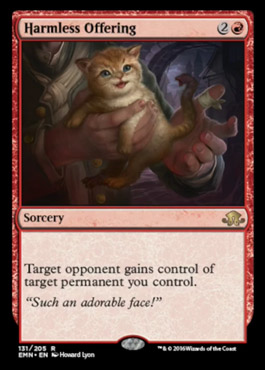
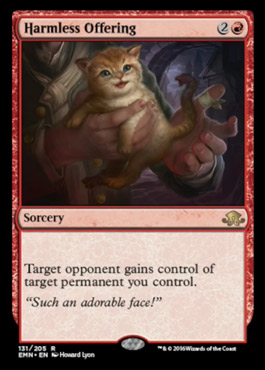
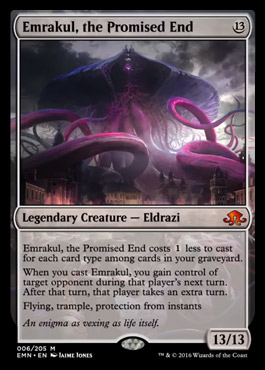
We're one week into Eldritch Moon previews, and we're already seeing a number of Modern potentials. Emrakul, the Promised End may become an R/G Tron bullet for grindier metagames. Lone Rider looks to up the Soul Sisters game. Gnarlwood Dryad assists various green-based tempo strategies, and there's gotta be something fun to do with Modern's Donate reprint in Harmless Offering.
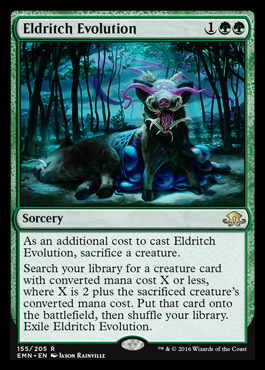
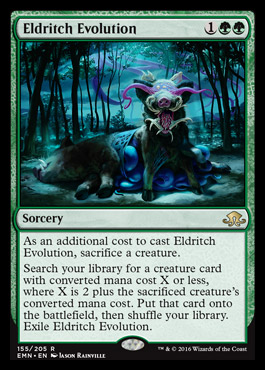
We'll need to wait and see how Moon plays out in Modern, but if I had to place money on any card spoiled so far, it would be the powerful, Birthing Pod throwback of Eldritch Evolution.
Eldritch Evolution
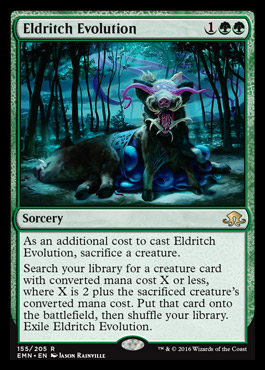
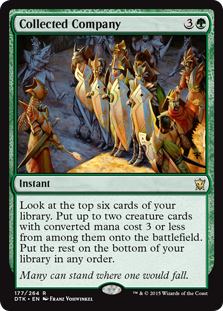
It's cards like this that make me convinced Wizards deliberately throws Modern players a bone every set. Cheating creatures into play ahead of the curve has historically been excellent in Modern. See Pod and Green Sun's Zenith. Even the "fairer" effects of Chord of Calling and Collected Company are format-defining staples in multiple top-tier strategies.
With Eldritch Evolution, Modern gains a one-shot Natural Order effect that has high potential to make major format impact. The card has already caused at least one absurd spike (more on that soon), and brewers are hard at work giving the sorcery a Modern home. These cards are preselling in the $11-$13 range online, and our goal today is to see if the Eldritch hype is worth it, both for the card itself and for the cards it synergizes with.
To figure out if Evolution is the real deal, or if it's another Thing in the Ice presale flop, we'll unpack a few strategies and cards that pair with the Moon rare. This will not only help you invest in Evolutions themselves, but also to see if you want to buy or sell into other spikes around the card.
Eldritch Evolution Core Strategy
I'm a major proponent of the "test first, invest later" approach to previews. Although this sometimes produces busts (I was optimistic about Thing in the Ice even with some initial testing), it also gives us some clarity around how cards actually perform in real metagames. In preparation for this article, I did some casual Eldritch Evolution testing in a number of shells.
Early results are very promising, and it all starts with the mana dork core which has been the backbone of so many other powerful Modern strategies such as Abzan Company, Kiki Chord, Abzan Liege and others.
The Modern dork core
You can add Llanowar Elves (not that newfangled Elvish Mystic) and Lightning Bolt-proof Utopia Sprawl to the roster as well. In my four different attempts at making Evolution meet the Modern cut, this acceleration package was the most successful framework. This makes historical sense---the best Chord and Company decks use a similar setup, and there's no reason to fix what isn't broken.
This is the first sign that Evolution is on the right track: it slots nicely into an existing Tier 1 and Tier 2 configuration. It might not go directly into Abzan Company or Kiki Chord themselves, but the concept behind those decks is so established that I'm comfortable supporting a new deck if it's grounded in such an old foundation. That's good news if you're investing in the card now or plan on doing so later.
Once we settle on the dork core, we need to figure out where we're going from there. If Kiki Chord and Abzan Company are any indication, we'll want a combination of toolbox, combo, and even straight-up midrange value (following from the Birthing Pod and Siege Rhino examples of Winter 2014). That means the versatile Finks has a new home.
Even if we don't draw Evolution, turn two Finks is still a powerful play off Hierarch or Birds. It gets much better when we morph the Finks up the chain for value, especially into Rhino in our best Value Pod imitation.
Of course, because we're running Evolution and probably running Chord alongside it for additional tutor capabilities, we have the entire Modern toolbox at our fingertips. Spellskite, Magus of the Moon, Voice of Resurgence, Fulminator Mage, and a range of other powerful creatures are all waiting to be plucked from the library with Evolution. Voice is especially nasty, as you can evolve it into the turn three Rhino even if your dork gets Bolted on turn one.
All of these cards form a solid groundwork for your Evolution exploits. Again, because these synergies have already passed Tier 1 and Tier 2 muster, I'm confident Evolution will be able to ride them into top-tier success itself. This means the pre-release price in the $11-$13 range isn't half bad (especially if Collected Company is any indication), although I wouldn't be surprised if high volume sinks it to the $8-$10 range.
When building and playing Evolution strategies, beware countermagic. Remand in particular is the exact kind of cantripping two-for-one which ruins your entire game. Thankfully, because you aren't playing Company to restrict your library creature count, you can easily maindeck some number of Thoughtseizes and/or Inquisition of Kozileks to shore up your countermagic game and pick up percentage points in matchups where grindy Finks lines don't hold water.
Indeed, because Evolution's deckbuilding parameters are much leaner than Company's, you can return to the old Melira Pod interaction package which was so feared in late 2014.
Abzan catchalls
You won't want to dive too deeply into these cards, lest you have fewer slots for the toolbox and fewer creatures to consistently fire off Evolutions (and Chords, if you're running them), but it's important to consider them as part of the Eldritch package.
With the core established and Eldritch Evolution meeting plenty of preliminary Modern benchmarks, let's look at three different ways to build the deck. Following from the Melira and Rhino Pod history, we'll examine a more fragile and explosive version first, before turning to the toolbox and value-midrange configurations in the closing section.
The Dinosaur in the Room
Perhaps more than any other format, Modern is known for creating buyouts. That can be hype from a new Grand Prix finisher, buzz around a previewed card, or even the absence of a certain card in a set. Eldritch Moon brought that category two new-card-buzz in a big way on Friday morning, when Evolution got previewed and an obscure Coldsnap rare rocketed from dollar-bin dregs to top-dollar gem.
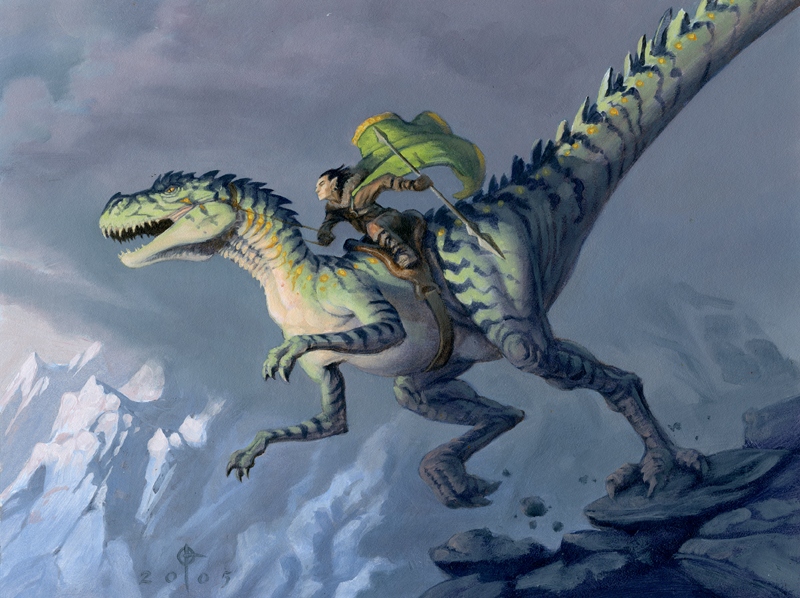
I'm not sure if this combo is the real deal, but Allosaurus Rider's jump from $.50 to $8.00 certainly is.
If you're not sure what all the fuss is about, here's the general play-line that saw Rider explode last week:
- Turn 1: Land, Noble Hierarch.
- Turn 2: Land, Allosaurus Rider pitching two green cards.
Eldritch Evolution, sacrificing Rider and fetching Iona, Shield of Emeria/Elesh Norn, Grand Cenobite/any < 9 CMC fatty of your choice.
This is about as theoretical and "Christmasland" as an opening line can get, but I'd be lying if I said it wasn't interesting. I've played my fair share of high-risk, high-reward Modern strategies (notably Grishoalbrand and Titan Shift), and there's considerable merit to these kinds of glass-cannon openers. Indeed, Modern is (in)famous for rewarding these kinds of plays, with only Thoughtseize to reliably police them and no Force of Wills in sight.
In evaluating the Eldritch Rider combo, we need to think in terms of consistency and impact. Impact is a no-brainer; the turn two super-fatty is incredibly decisive in Modern. Iona, Elesh Norn, Griselbrand, or even just something unkillable in certain matchups like Sigarda, Host of Herons---all of these cards are game-ending haymakers many decks cannot answer.
Evolving into eldritch fatties
Impact? Check. What about consistency? This is clearly where the Evolution/Rider combo is weakest, but it's not quite as fragile as it seems.
Assuming 8 Hierarchs/Birds, 4 Riders, 4 Evolutions, and the requisite package of green exile-bait and lands, you have about an 8% chance of opening with the combo on turn one, inching up to roughly 11% by turn two if you're on the play (or 15% if on the draw). Going up to 12 dorks instead of 8 bumps the percentages to 10% for turn one, 14% for turn two, or 18% for turn two on the draw. You're firing the combo in about 25% of games no matter what by turn three.
Of course, opposing interaction can dramatically alter these percentages. Lightning Bolt sets you back by a turn, or longer if you can't draw a replacement to sacrifice for Evolution. Discard magic can rip the Evolution out of your hand, leaving you with a relatively useless Rider who can't even tangle with Tarmogoyf until at least turn five.
Countermagic is significantly worse. A Remanded Evolution is already a two-for-one. A Remanded Evolution with a Rider under it is a literal four-for one, or a four-for-zero given that your opponent spends no cards on the cantripped counterspell.
Remand and the other countermagic effects are certainly scary, but they aren't in and of themselves reasons to not play the combo. Modern strategies sometimes fold to certain other interactions and that's okay. In all the other matchups where you aren't seeing Remand, a resolved Rider Evolution should seal the game. I'm willing to gamble on those odds, so long as the combo isn't the deck's primary gameplan.
If we subscribe to the Rider option as just one synergy of many in the deck, then I'm much more on-board with the strategy. If we're dedicating the deck to Rider, then count me out. I assume most Modern players will fall on similar lines, which puts a definite ceiling on Rider's price. $8 seems very high for this kind of niche roleplayer, even with a limited print run. Expect this to stabilize even lower in the sub $5 range. I'd sell these now while they are still high; you can always buy in again after the eventual fall and probably still turn a profit.
Toolbox and Midrange Evolution
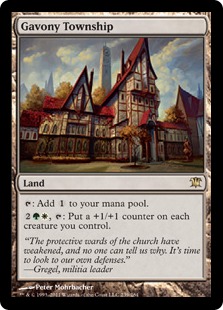
Rider may be more bark than bomb, but that doesn't mean the rest of the Evolution package is going to follow his example. In fact, even if Rider eventually finds a home here, the deck's power won't be based on the combo. Like the old Rhino Pod example from 2014, an Evolution deck would likely use the combo threat as a Plan B (or even Plan C) to the value-midrange and Township swarm strategy which was a Birthing Pod hallmark.
If this is the direction you're turning, then Evolution has some real potential.
My own lists were far too unrefined to warrant publication, and I made small adjustments in between games to adjust ratios. This resulted in a somewhat unscientific testing approach, but one that still gave considerable data about how the deck might perform. If you want a general sense of the build, it was effectively Erik Peters' Pod strategy from Grand Prix Omaha 2015. Just swap out Pods for Evolutions, trim some ratios to squeeze in 3-4 Chords, and add a few bombs like Sigarda up the curve.
Value Evolution in Modern
I piloted these Evolution variants against a few top-tier Modern standouts: Infect, Burn, Tron, and Jeskai Control. I only played three total matches against each strategy, less to calculate exact match-win percentages and more to identify overall gameplay themes. Instead of discussing toolbox and midrange cards individually, I'll use the matchups to highlight some all-stars:
- Infect: 2-1 (5-3 in games)
Melira Pod is a Modern legend. Kiki Chord and Abzan Company are current format big-shots. Despite these decks' strengths, none of them can do what Evolution can do in the Infect matchup: a reliable turn two Spellskite. Or Melira, Sylvok Outcast if you want to keep the combo or add an Evolution bullet in games 2-3. Spellskite might not be a total game-ender after sideboarding, but as long as you're still pumping out threats and playing Magic, Evolution has a nice edge in this contest.
Busting Burn
- Burn: 3-0 (6-2)
This is a really nasty one for Burn. They're already facing an uphill battle against Finks, Spellskite, and the usual life-gain suspects like Kiki Chord's Lone Missionary. But the turn two Kor Firewalker is a real nightmare for even the most prepared Burn strategies. Again, Evolution picks up a noteworthy edge over the Company and Chord decks in its ability to get a major roleplayer out on turn two or three.
Evolving past ramp decks
- R/G Tron: 1-2 (3-5)
Kiki Chord and Abzan Company can struggle with the over-the-top Tron strategies, particularly if you don't get Stony Silence active early to shut down Maps and Spheres/Stars. Evolution offers a huge variety of different ways to combat big-mana decks. Remember the turn two Evolution line? Or the consistent turn three tutor? Company and Chord can't do it, but Evolution can get that Mindcensor or Fulminator online more consistently and faster than any other deck. I didn't get to experiment with Naya versions of the deck too much, but I imagine a Magus has a similar knockout effect when backed up by pressure.
- Jeskai Control: 1-2 (4-6)
We didn't win this one, but we came darn close. Voice was a huge player here, with the Evolution deck already packing a playset just for value, and those Voices coming down frequently in the turn 2-4 range. Evolution is bad against countermagic, like we already discussed, but much better when you have an active Voice on the field and are Evolving a different creature. A countered Evolution gives you a big Elemental to finish the job, which is a small price to pay for a sacrificed dork.
All of this testing suggests Evolution does have a Modern home. As we noted before, this bodes well both for Evolution investors, and also for those buying into some of the staples and toolbox all-stars we identified above.
For instance, Voice of Resurgence is at a 2016 low in the $25-$30 range. Don't expect that to hold if Evolution is the real deal; turn two Voice into turn three Evolution would be a format hallmark if the sorcery pans out. Similarly, the $10-$12 Aven Mindcensor will be much better as a one-of bullet in a deck that can reliably land it by turn three, when it is at its most effective.
Evolving Modern Metagames
Taken as a whole, Eldritch Evolution has a great starting profile in Modern, and I am very encouraged by my early gameplay with the card. This really does seem like the real deal, and I encourage players to invest as-needed in Evolution and its synergistic creatures.
On top of the limited testing I conducted, there are plenty of other directions to take Evolution. All of these options point to the card's broader viability. Options include both delve creatures like Tasigur, the Golden Fang and Hooting Mandrills, Phyrexian mana artifacts such as Thundering Tanadon, and even suspend monsters like the underrated Nihilith or Greater Gargadon.
Other paths to Evolution
Let me know in the comments if you have any Evolution brews you're working on. It's a ready-made Modern gem, and I would be shocked if it didn't make it in the top-tier big leagues. See you all next week with more previews and, until then, keep on Evolving your decks with new Eldritch Moon previews!
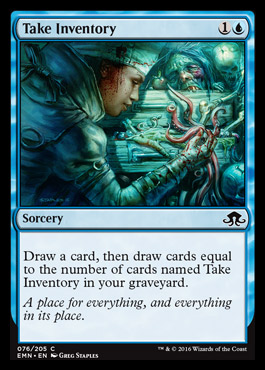
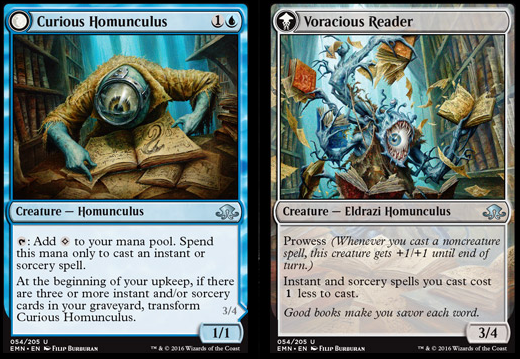
 that can run over opponents with prowess (growing past Awoken Horror on the crucial attacking turn), and his Goblin Electromancer ability played very well with another card I included in fours: [tippy title="Take Inventory" width="330" height="330"]
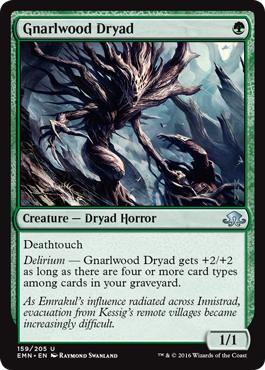
 Mutagenic Growth helps us push our creatures past enemy fatties and Lightning Bolts, and Traverse the Ulvenwald usually ends the game by searching up the lone Ghor-Clan Rampager for an alpha strike. (Side note: Ghor-Clan has sweet synergy with [tippy title="Gnarlwood Dryad" width="330" height="330"]
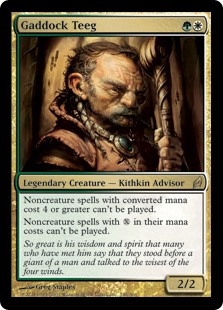
 Teeg keeps them from casting planeswalkers.
 Tempo plan (race):
 Tempo plan (race):
 Our only answer to Goyf in Game 1 is Goyf + Mutagenic, or a lucky Ghor-Clan attack. We're basically a Burn deck that gives up Lava Spikes for always-sticking Vexing Devils; against Jund, that means handing our opponent more opportunities to trade with us one-for-one.
 In it, I framed the context of cards that see play in Modern around tiers, organized by converted mana cost. For one mana, you get an answer, for two you get a threat, for three you get card advantage, for four you win the game. This principle guides and controls interaction in the format, based around the relative “fairness” that comes from both players having access to the same amount of mana at different points in the game.
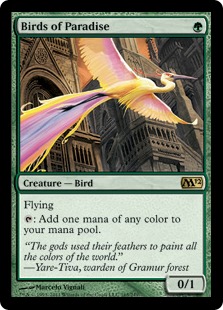
 In this way, a Birds of Paradise can generate continuous mana, pushing that advantage as far as it can go. When viewing Modern as a format based primarily around exchanges (mana exchanges, card exchanges, positioning) gaining even one free mana can often be worth the card investment. While we’re playing three-drops (generating advantages from spells like Kitchen Finks and Eternal Witness) our opponent is behind, playing one dimensional two-drops and taking time off of development to react to our board advantage.
 has remained at or near the top tier in the format for as long as Modern has existed.
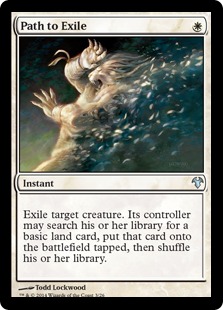
 This point is essential to grasp, as Abzan Company exhibits one of the primary weaknesses of green strategies: non-interaction (at least in the maindeck). Since it must focus on maximizing the power of Chord of Calling and Collected Company, Abzan Company cannot afford to play interactive elements like Path to Exile in the maindeck.
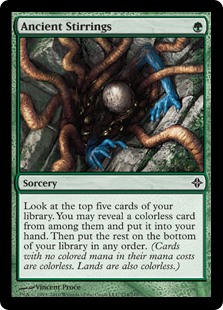 In Tron, Ancient Stirrings is a one-mana look at the top five cards of our library, with 85% of our deck as hits. That is truly insane, and in Tron, Ancient Stirrings is miles better than Ponder or Preordain ever were. It remains unbanned only because just a few archetypes can take advantage of it. While there are other ways to assemble Tron (due primarily to Expedition map being colorless), RG is the fastest, smoothest, most natural way to solve the puzzle, thanks mostly to Ancient Stirrings.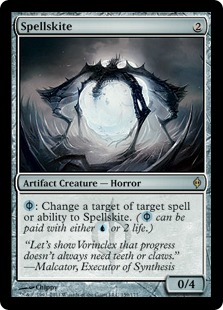
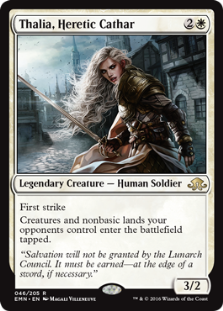
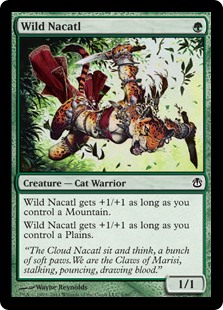
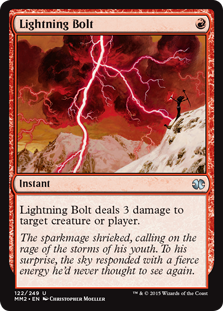 Better Wikipedia logicians than I can point to the logical and argumentative fallacies in this kind of definition, but I'll just let the results speak for themselves. The popular Bolt Test definition does not withstand even the slightest scrutiny. In aggressive decks, Goblin Guide, Wild Nacatl, and Steel Overseer (to name a few) die to Bolt and still see widespread Tier 1 and/or Tier 2 play. In slower midrange strategies, you still see Dark Confidant get maindeck honors, with plenty of lightning-rod dorks like Birds of Paradise accompanying more toolbox-oriented builds. Infect uses Blighted Agent. Death and Taxes use Thalia, Guardian of Thraben. In all those cases, we see frequent top-tier appearances by creatures that clearly die to Bolt. This means either the Bolt Test isn't real, or that we've misdefined it from the beginning.
 Dying at parity and resources
 Impact even if bolted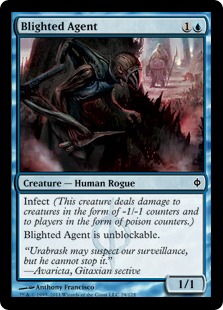
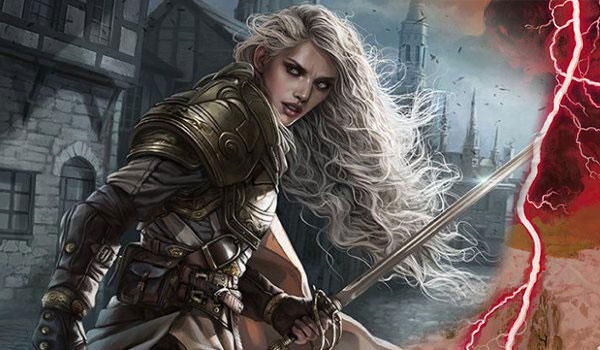
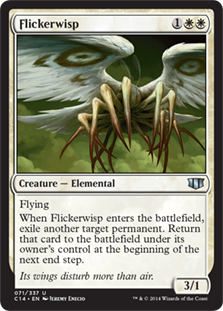
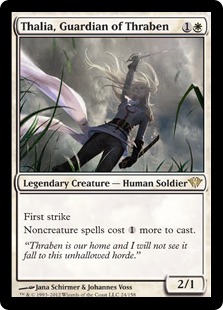 New Thalia gets off to a bad start by being at the topmost mana-cost end of creatures that do die to Bolt. It turns out spending your third turn to exclusively drop Thalia isn't very good if your opponent spent their third turn casting Tarmogoyf and holding up Bolt mana. Or just dropping Lava Spike on the draw with Bolt waiting in the wings. That two-mana resource difference can decide a game on the spot if you're behind or even on cards, and if you're already ahead then Thalia's ability is as win-more as it often gets.
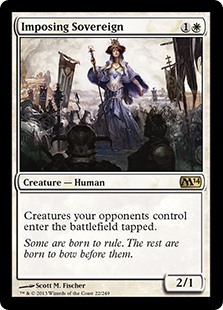 Eldritch Moon's spikey legend takes another hit off her game impact, which is neither particularly valuable nor reliable if she immediately eats the removal spell. In terms of value, if Thalia dies to Bolt, it will typically be before an opponent has cast a creature or played a land. Two notable exceptions to this include Thalia off Chord of Calling or Aether Vial (or any other instant-speed deployment mechanism), where you might catch a fetchland off-guard before Thalia gets zapped. Same goes for temporarily removing a new creature from the blocker list. That said, unless you're shutting down a creature with haste (bonus flavor points for Reality Smasher or, in Legacy, a hasty Emrakul), there's nothing too valuable about tapping down a potential blocker. Imposing Sovereign wasn't really shredding Modern until Thalia came along.
 You didn't think we'd get much more than 2,000 words into the article without at least a few Thalia praises? Although the Cathar drops the ball in the first two Bolt Test qualifications, she earns much higher marks in her ability to out-tempo and dominate opponents. An early Thalia is devastating at slowing board development, forcing opponents to either sacrifice tempo to kill her off-curve, or to get mired in her taxation effect. Keyword in that sentence: early. The quicker Thalia hits play, the more powerful her effect becomes. This is in contrast to the older Thalia, which gummed up opposing plans at all phases of the game, even if her taxing was certainly better in early turns. New Thalia can't do much to tax a well-developed board, but if played before lands start dropping, she's downright oppressive. Fetchlands become absolutely unusable with Thalia out, and with many of Modern's grindier strategies relying on a fetch/shock manabase, Thalia is well-positioned to wreak havoc.
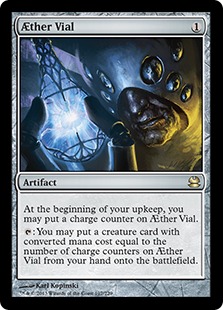 I've become more generous towards Thalia in the past few days, and that's largely because I've stopped thinking about her as a Death and Taxes roleplayer and started thinking about her dork synergy. Aether Vial has never been a bigger trap in Modern. Although Thalia's name is virtually synonymous with "Death and Taxes," her newest iteration is just plain bad with the Vial. At earliest, Modern D&T will land a Thalia on turn three with no potential for the turn two lockdown. At latest, you topdeck Thalia in the mid-game where she has no impact other than to provide an efficient blocker for Nacatls and stymie blockers. Along the way, Vial does not accelerate her into play until turn four at earliest. No thank you. Sure, Flickerwisp/Eldrazi Displacer and Thalia is kind of cute, but Thalia isn't in the cute business. She's a Game of Thrones-style woman of action.
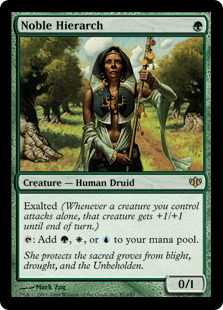 Of course, that moves us right back to mana dorks and the decks that use them. If you're using Noble Hierarch, Birds of Paradise and/or any other one-drop mana guy, you will want to try out [tippy title="Thalia, Heretic Cathar" width="330" height="330"]
 None of this applies today because I know exactly who I'm playing and their skill level, but you should practice like you compete and since I do this at Competitive REL events, I do it for test games. Elliot has also just finished putting new sleeves on his deck so there's really no information to gain. We sit down and start shuffling. I only do Rock, Paper, Scissors for the play since I caught someone using loaded dice, but since we're testing Elliot's deck they get to go first.
 One problem is that players will often remember to hide strength or weakness on the initial seven, but drop the act afterwards. I will often act weak or dispirited when I go below six so that my opponent will get some confirmation bias (when you mulligan a lot, the opponent expects that you'll keep marginal hands) and will try to play accordingly, but don't always succeed. This is why I normally try to be as neutral as possible. I always take about five seconds on the play to make my mulligan announcement and wait a few seconds after my opponent makes theirs on the draw to hide as much as I can about my hand's actual strength. My hand is good, but there's no reason to deviate from my normal procedure.
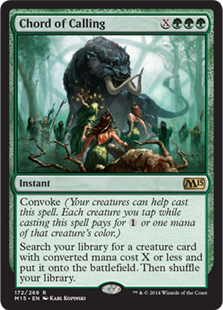 While I still have no idea what deck I'm against, I now know quite a bit about Elliot's hand. It has nothing proactive that costs three mana and there are no reactive spells that cost one or two that Elliot is willing to play next turn. The fact that Birds attacked for one indicates a desire to race, which points to something aggressive. Given this information, Elliot is playing a threat-heavy deck but has threats that cost four or more in hand. This could be a number of decks but given what I've seen I'm leaning towards a Chord of Calling deck. Those need a lot of mana birds, don't play much interaction and have many plays that need a lot of mana. I put Elliot on having multiple costly creatures and/or Chord in hand. I need to find some interaction and get a board together in a hurry.
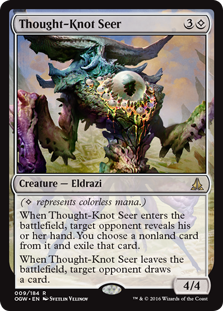 Elliot draws and slams the freshly drawn Brushland down, which allows Thought-Knot Seer to come down. Guess my read was off; this is Bant Eldrazi. Once I'm actually targeted by the ability I flip my hand over, revealing Lord, Master, Hub, Adept, and Path. Elliot thinks for a while before taking the Path. It's hard to say whether this was a case of actually being unsure of what to take or if Elliot was deciding whether to play the control deck and remove a creature, or protect their only threat from my removal. BoP then flies over for another point.
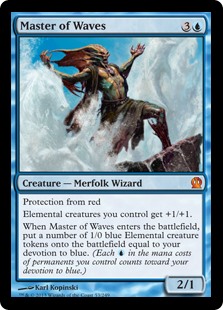 I now have the mana to play Master of Waves, and if I'm going to do that I want to maximize my token generation, so I need to Vial in Adept. Playing another Vial at this point is worthless. I cannot attack with Mutavault and Eldrazi does not maindeck sweepers, so I'll definitely play the Master here.
 There's no reason to play the Cursecatcher pre-combat, so I won't be doing that. I think for quite a while before making my attack. With the Lord in my hand my islandwalkers are lethal. If I'm wrong about Elliot's hand then attacking only with Merfolk gets me blown out. I don't think Elliot has removal, but I decide to play as though I'm wrong, which means maximizing Elliot's need to block and attack with the tokens as well. At worst this will put Elliot to four when the unblocked tokens get through, with only Thought-Knot and potentially an unknown card on the battlefield while I'll have some number of Adepts left.
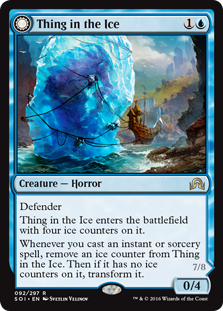 As a kind of alternate win condition, it suffers from the problems of attacking on a different axis from the rest of the deck, and doesn't combine well with other creatures like Delver of Secrets or Tarmogoyf that it risks bouncing on the critical turn. The fact that the remove-a-counter trigger is mandatory makes things especially awkward, as you might inadvertently trigger your Thing when you're trying to protect one of your other threats, remove a blocker, or cantrip into more business. It still combos well with the old Bolt-Snap-Bolt to nug them for 6 damage (and rebuy your Snapcaster Mage trigger), but in practice this has all proven to be more cute than powerful.
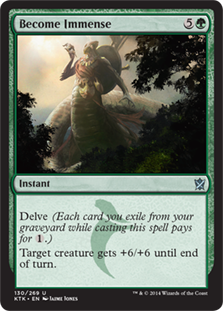
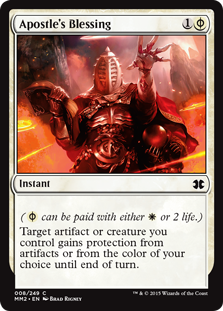 Infect even has maindeck protection for Thing in the Ice naturally built in with Apostle's Blessing and Vines of Vastwood. You'll also note that Become Immense plus any four-point pump spell (Vines, Might of Old Krosa, Groundswell) on a Thing adds up conveniently to the magic number of 17... often just what the doctor ordered in a fetch-shock format.
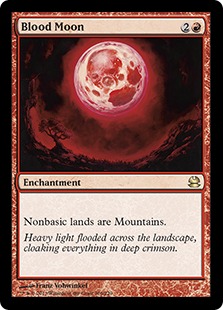 Notably, Thing was also featured in
 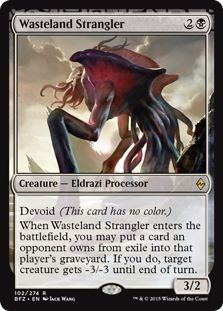 Flanked by the unlikely maindeck Relic of Progenitus and Scrabbling Claws, Strangler granted its early adopters a cheap Shriekmaw effect that could capitalize on the other tribal synergies of the Eldrazi. By the time Pro Tour Oath came around, the
 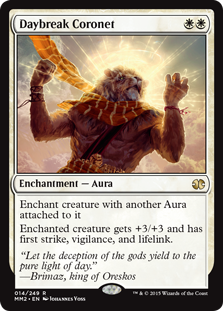 But it also opens up a mini-toolbox tutor package, allowing the Bogles pilot to find umbras for wrath and removal protection, Unflinching Courage for the Burn matchup, or Spirit Mantle to cheerfully waltz past chump-blockers. Even Gryff's Boon makes an appearance here, as one more way to grant evasion (and potentially mitigate the nightmare scenario where your bogle actually hits the bin). It doesn't seem beyond the realm of possibility for something even spicier to make its way into the deck, like a one-of Gelid Shackles or, dare I say, Pacifism.
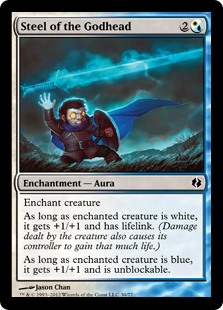 As Austin explains in the deck tech, Geist of Saint Traft provides the deck a much faster avenue to accomplish all this, and is the preferable target for Steel of the Godhead. You'll notice there's very little "cute" in this build, and Austin has opted for the leanest enchantment package necessary to get the job done, ensuring fewer randomly bad topdecks. This is further augmented by Jace, which can loot away superfluous enchantments or redundant copies of Zur himself that decide to show up at an inopportune time.