menu

Teaching Magic: The Gathering With The Feynman Technique

Are you a Quiet Speculation member?

If not, now is a perfect time to join up! Our powerful tools, breaking-news analysis, and exclusive Discord channel will make sure you stay up to date and ahead of the curve.

Friends, Family, and Feynman

Richard Feynman was a Nobel-prize-winning physicist. He was recruited to work on the Manhattan Project (the team of scientists developing the first atomic bombs) while still in his early 20s. His groundbreaking work in theoretical physics included advances in quantum mechanics, particle physics, and quantum electrodynamics. It was in the field of quantum electrodynamics for which he was jointly awarded his Nobel prize. While best known for his scientific work, Feynman also pioneered an approach to learning and teaching: The Feynman Technique. What does all this have to do with Magic: The Gathering?

Richard Feynman, Nobel Prize Photo

With the holidays upon us, many will be spending time with family and friends. Perhaps you have a child, a niece, or a sibling who will ask, "What's the deal with this Magic game you're always playing?" or "How do you play?" More likely, you'll have arm-twisted a friend or relative into learning Magic. However it happens, at some point, you will sit down and teach someone to play Magic: The Gathering. The Feynman Technique is here to make that process as straightforward as possible.

What is The Feynman Technique?

The Feynman Technique is a style of learning that can be applied to any concept. Its goal is more than just learning surface knowledge of a subject, but of helping the student achieve a deep understanding. While primarily used for learning, it can also be used for teaching. The Feynman Technique can be broken down into a series of steps:

  1. Choose a subject or concept you wish to learn
  2. Write down as simply as possible everything you know on the subject
  3. Read it out loud as though teaching it to a child, like a fifth or sixth-grader
  4. Identify gaps in your explanation
  5. Refine and simplify your explanation
  6. Repeat steps 2-5 as needed until you achieve mastery of the subject

What's great about the Feynman Technique is it can be used as a course of self-study to understand any topic. This can be anything from particle physics, to English literature, to Trading Card Games (TCGs). The Feynman Technique can also be used as a teaching tool. So how do we use it to teach a game as complex as Magic?

Teaching Magic With the Feynman Technique

To start teaching anyone Magic, it is helpful to have done some advanced preparation. Before we even discuss the decks we will use, it is important for us to establish a basic understanding of the game, and how it is played. To use the Feynman Technique, start by writing down everything you know about Magic needed to explain a simple game to someone. This can include everything from the steps and phases of a turn, to what it means to "tap" something, to the costs to play spells. Whatever you think is important to play the game, write it down.

Once it's written down, you'll want to organize the material. The sheet you've written will serve as a reference guide while you are teaching. Keep it simple, keep it neat. Try to limit it to one 8.5"x11" piece of paper. Once it's written down, read it to a friend who already knows Magic. Is there anything missing? Did you adequately lay out the steps of a turn? What about priority? The stack? Fill in as many of the gaps as you can, and repeat this process until you have a one-page written guide to playing Magic that anyone could pick up, read, and muddle through a game with a minimal amount of guidance by you.

The Teaching Process

With your teaching guide in hand, you are ready to start teaching using the Feynman Technique. I recommend explaining as little as possible at the start. Cover costs of spells, tapping, and outline the steps of a turn. However much you need to get the new player into running a sample game with exposed hands. Follow steps three through five of the learning principles we've discussed, taking the new player through each step of a turn, and through several turns of a game with hands exposed until they feel comfortable navigating the turn sequence.

As you go, your friend or family member may have questions about how things work. Utilizing either your own knowledge, your cheat sheet, or another source, answer each of these questions as they come up. Answering these questions will fill in gaps in the knowledge of the learner (step four), and may reveal additional content to add to your cheat sheet. Continue this process through a few sample games (with hands revealed or hidden) until the new player feels comfortable playing with a minimal amount of questions. At that point, you'll have successfully taught them Magic! So what decks should you use to aid in the learning process?

What Decks Should You Use?

While it's possible to teach someone with full Commander decks or tournament-caliber Modern decks, custom teaching decks or a purpose-built product like Magic sample decks or JumpStart packs is recommended. The advantage of preexisting sample decks or JumpStart packs, if you have either, is that they are ready-to-go products that require no prior planning other than your teaching materials. Simply shuffle them up and start teaching. If you do not have access to those products or prefer to build custom teaching decks, there are a number of factors to consider when deckbuilding.
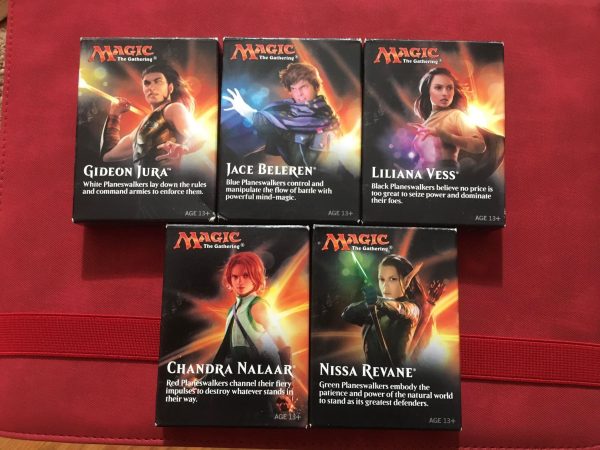
Magic Origins-era Sample Decks

Building Custom Teaching Decks

If building custom teaching decks, I recommend building a set of five complementary decks, one for each color of magic. Each deck should contain the same number of cards, so they may easily be shuffled together to make a larger two-color constructed deck. I recommend either 20-card or 30-card teaching decks. In addition to each of the five decks containing the same number of cards, I recommend each teaching deck contain the following:

  • 10-13 creatures, depending on color
  • At least one enchantment (aura or non-aura)
  • At least one artifact
  • 1-5 instant or sorcery spells depending on color
  • 9-13 basic lands depending on deck size
  • At least one non-basic land that does more than just produce mana

Additionally, each deck should not contain more than one rare/mythic, or more than four or five uncommons. This limitation is intentional. By building decks mostly around common cards, the cards will be less technically complex, and more likely to include reminder text on keywords. This will aid in the teaching process before introducing players to more complex cards, and make the rares that appear in these decks that much more exciting.

Lessons Learned

The Feynman Technique is only one of the many possible methods to aid your teaching of Magic. What teaching strategies have worked for you in the past? How did you learn to play the game? Let me know in the comments, or on Twitter. For more on the life and work of Richard Feynman, check out his autobiography "Surely You're Joking, Mr. Feynman!": Adventures of a Curious Character.
Avatar photo

Paul Comeau

Paul is Quiet Speculation's Director of Content. He first started playing Magic in 1994 when he cracked open his first Revised packs. He got interested in Magic Finance in 2000 after being swindled on a trade. As a budget-minded competitive player, he's always looking to improve his knowledge of the metagame and the market to stay competitive and to share that knowledge with those around him so we can all make better decisions. An avid Limited player, his favorite Cube card is Shahrazad. A freelance content creator by day, he is currently writing a book on the ‘90s TCG boom. You can find him on Twitter and LinkedIn.

View More By Paul Comeau

Posted in FreeTagged Leave a Comment on Teaching Magic: The Gathering With The Feynman Technique

Have you joined the Quiet Speculation Discord?

If you haven't, you're leaving value on the table! Join our community of experts, enthusiasts, entertainers, and educators and enjoy exclusive podcasts, questions asked and answered, trades, sales, and everything else Discord has to offer.

Want to create content with Quiet Speculation?

All you need to succeed is a passion for Magic: The Gathering, and the ability to write coherently. Share your knowledge of MTG and how you leverage it to win games, get value from your cards – or even turn a profit.

My Latest Fun Deck and How I Made It

Are you a Quiet Speculation member?

If not, now is a perfect time to join up! Our powerful tools, breaking-news analysis, and exclusive Discord channel will make sure you stay up to date and ahead of the curve.

Inspiration has a funny way of happening. The story of how Minsc, Beloved Ranger came to be my next commander project begins with Magic the Gathering: Online.

My good friend and I have played draft on Magic: Online for several years and we are very different players. We have diverse opinions on overall strategy, card power, and play sequencing. Deep into pack two, there is Minsc. We had token synergy, few three drops, and, there was nothing else in the pack. Welcome to the draft deck Minsc!

Through two rounds we never saw this card. In the third round, however, we were 1-1 going into game three. In the final game of the final match we finally had Minsc out and our opponent was one card away from stabilizing. Our draw for the turn was Zealous Conscripts and we got to steal their only blocker and smash for big but non-lethal damage. Then I noticed after combat that if we had activated Minsc for zero, our opponent's stolen creature would just be dead. We promptly made their Young Pyromancer a 0/0 and they conceded on the spot.

A Pleasant Surprise

Even though we made other plays throughout the draft that were much more complicated, we were both laughing hard at the Minsc finish. Capturing that moment in a game of Commander then became my goal.

I took a quick look at what other players were doing with Minsc and it was mostly token-based strategies. If you've read my article on The Heart of Commander you know that one of my goals for casual Commander is to play lots of different cards and really make a color identity and Commander stand out. Playing a token deck with Minsc might make strategic sense but it lacks significantly in the flavor department.

A GIANT Solution for a Giant Problem

Coincidentally, I've been looking at updating my GIANTS deck lead by Ruhan of the Fomori with a bunch of cards from Kaldheim. One of my older Commander decks, Brion Stoutarm, had some cards I would like to move into Ruhan and Disharmony effects would be key in Minsc so the decision was made. I added Brion's GIANTS to Ruhan and color identity distinctiveness to Minsc's; in essence, Brion Stoutarm was assimilated.

Fighting and Stealing and More Fighting

I also decided that the main appeal of Green in this deck would be to facilitate the Fight mechanic. So Red is stealing, Green is fighting, but what about White? Well, White is actually Fighting and Stealing.

This is chef's kiss good — we have absolutely nailed the color identity for the theme. Additionally, I made some build choices based on my Points article as well. This deck does not seek to absolutely maximize points in its current form, but it does score fairly well at a virtual Plus Six Points to start.

Give us a Decklist Already!

Russell Crowe Presents Minsc, Fighting Round the World

Commander

1 Minsc, Beloved Ranger

Stealing

1 Word of Seizing
1 Preacher
1 Evangelize
1 Jeering Instigator
1 Wrangle
1 Harness by Force
1 Hijack
1 Kari Zev's Expertise
1 Traitorous Blood
1 Act of Treason
1 Bloody Betrayal
1 Disharmony
1 Shackles of Treachery
1 Act of Aggression
1 Captivating Crew
1 Portent of Betrayal
1 Traitorous Greed
1 Goatnap
1 Sarkhan Vol
1 Mass Mutiny
1 Coercive Recruiter
1 Zealous Conscripts
1 Conquering Manticore
1 Molten Primordial
1 Mob Rule
1 Insurrection
1 Twist Allegiance

Fighting

1 Inscription of Abundance
1 Mage Duel
1 Blizzard Brawl
1 Dromoka's Command
1 Pit Fight
1 Go for Blood
1 Domri Rade
1 Domri, Anarch of Bolas
1 Ravager Wurm
1 Primal Might
1 Neyith of the Dire Hunt
1 Kogla, the Titan Ape
1 Ulvenwald Tracker
1 Prey Upon
1 Titanic Brawl
1 Pounce
1 Duel for Dominance
1 Voracious Hydra

Mana Rocks

1 Gruul Signet
1 Selesnya Signet
1 Boros Signet
1 Gruul Cluestone
1 Selesnya Cluestone
1 Boros Cluestone
1 Strixhaven Stadium

Draw Cards, Removal

1 Phyrexian Vault
1 Relic Vial
1 Greater Good

ETC

1 Tahngarth, First Mate
1 Restoration Angel
1 Flailing Soldier
1 Humble Defector
1 Bazaar Trader
1 Beast Within
1 Generous Gift

Basic Lands

13 Snow-Covered Forest
14 Snow-Covered Mountain
10 Snow-Covered Plains

Why I'm NOT Playing Certain Cards

Most of the choices made here are based around a very specific theme that has been in Magic since day one; stealing a creature. After I steal it, it's unlikely my opponent is getting it back because I am going to sacrifice it for profit, make it Fight another creature to clear the board, or just turn it into a 0/0 with Minsc; and I get a free attack out of the deal! Furthermore, we're getting Points just for playing a fair, casual, and interactive deck. Perusing EDREC we can check the Top 100 list for the colors we are playing.

In Red, we have to go down to the 70th most played card, Zealous Conscripts. This card is obviously good but it is tremendously on theme and an easy include. In this deck, it is a Talruum Minotaur with Act of Treason tacked on.

In White, well, we're playing very few cards for the same reasons — there are not many on theme. Some additional White cards considered were: Prepare // Fight, Debt of Loyalty, or, Animal Boneyard.

Green is a lot easier as we only have Greater Good which is 75th. We've avoided the "trap" of Green by simply not choosing to ramp, and, we score two Points for not shuffling our deck.

Autoincludes Make Games More Boring

The 500 pound gorilla in the room is NOT Kogla, the Titan Ape, it's Beast Within and Generous Gift. These are both solid cards and in the top 100 for obvious reasons - they deal with *ANYTHING*! However, if our opponents don't have creatures, we can't steal them. The only fair thing to do would be to give them a creature to steal back anyways. I think both cards fit the theme of the deck enough to be included and are extra interactive in this case. Consider it's significantly more interactive than playing Krosan's Grip or Nature's Claim.

Additionally, while Lightning Greeves and Swiftfoot Boots look great to protect Minsc, they are both in the top 30, too common, and seek to remove interaction, which is against the Heart of Commander. Minsc costs three mana — if it gets removed play more Magic and recast it at five mana a turn or two later.

Even Fun Decks Have Power

Sneaking in at 99 out of Top 100 for Red, Insurrection is a potential game-winner by itself. However, you have both Strixhaven Stadium to make your job easier and Minsc to make it a one-sided board wipe after combat. Want to draw cards? Humble Defector not only gives you cards but, also, allows you to give it to another player at the table who should pass it right back to you. If that player no longer respects team Minsc? Steal the Defector back and give it to someone else!

That's a Good Trade

Bazaar Trader is criminally good in these types of decks. Permanently gaining control of anything you steal is great, but, there is a second mode to the Trader that is perfect for diplomacy. Maybe someone needs a land or a mana rock to be able to stop a threat on the table that you cannot stop — Bazaar Trader to the rescue! If the writing is on the wall and someone is going to kill you, try this: give them a land. Act of Treason your own Trader to untap it, then give them another land. Maybe keeping you around another turn is worth it for two lands. Or two creatures. You know it does not matter who controls a creature; if it's on the board it belongs to you!

An Easy Deck to Power Up

Keep in mind much of what has shaped my version of Minsc is for casual play with a Point structure that I am working around. There are auto-include cards like Khalni Ambush // Khalni Territory and Song-Mad Treachery // Song-Mad Ruins, which would cost a Point but take up no room in the deck so those are simple upgrades if Points are not in play. With big mana, Minsc makes any attacker a lethal one and can easily chase a Point for Largest Creature.

The next time I go to my LGS I'm bringing Minsc along — I think I'm going to have some stories when I return!

But What About the Hamster?

Yes there is a Hamster. The Hamster's name is Boo. I think killing a player with a Hamster is pretty humorous but that is not what inspired this deck. If I won an event and got to make a new rule it would be +1 Point for finishing off a player with Boo. The entire deck would be different, but that is another story, one I hope to tell!

Did this decklist inspire you? Have you played Minsc as your Commander? Reply in the comments!

Avatar photo

Joe Mauri

Joe has been an avid MTG player and collector since the summer of 1994 when he started his collection with a booster box of Revised. Millions of cards later he still enjoys tapping lands and slinging spells at the kitchen table, LGS, or digital Arena. Commander followed by Draft are his favorite formats, but, he absolutely loves tournaments with unique build restrictions and alternate rules. A lover of all things feline, he currently resides with no less than five majestic creatures who are never allowed anywhere near his cards. When not Gathering the Magic, Joe loves streaming a variety of games on Twitch(https://www.twitch.tv/beardymagics) both card and other.

View More By Joe Mauri

Posted in Commander, FreeTagged , , , , , , , Leave a Comment on My Latest Fun Deck and How I Made It

Have you joined the Quiet Speculation Discord?

If you haven't, you're leaving value on the table! Join our community of experts, enthusiasts, entertainers, and educators and enjoy exclusive podcasts, questions asked and answered, trades, sales, and everything else Discord has to offer.

Want to create content with Quiet Speculation?

All you need to succeed is a passion for Magic: The Gathering, and the ability to write coherently. Share your knowledge of MTG and how you leverage it to win games, get value from your cards – or even turn a profit.

Rekindling the Fire

Are you a Quiet Speculation member?

If not, now is a perfect time to join up! Our powerful tools, breaking-news analysis, and exclusive Discord channel will make sure you stay up to date and ahead of the curve.

It has been a while since my last article. I would like to say that this delay is due to starting a new job or even the rush of the holiday season. While these have definitely been factors, it is also due to a lackluster passion towards Magic in general and a re-found love affair with Diablo 2 (Resurrected).

I do not know how many others just feel generally overwhelmed by the sheer number of new products Wizards is pumping out, but my entire playgroup has taken a step back as nobody has the time to stay up to date with all the new cards pouring out of Seattle.

There was a time in my life where I was playing Magic every night of the week, except on Mondays. I looked forward to Thursday nights more than any other night as it was designated as EDH night. I definitely went into work a few Fridays with far less sleep than I should have thanks to some epic games.

But that was back when we didn't live in constant spoiler season and one got a breather between sets to delve into fun interactions with the latest cards, rather than having to constantly check what is coming next and ignoring what has already been released.

I no longer get excited about the next fun "build around me" commander because I haven't even started building the deck around the last one.

I don't want this article to maintain the depressing tone it started with, so there is some positivity on the horizon. I have returned to my roots. My favorite color combination has always been Junk, or what is now called Abzhan. You get mana acceleration, removal, and life gain.

I bring all this up because after deciding to build a deck around those concepts, I came across some newer cards with low buy-ins that I believe have a lot of potential. It also looks like the Commander-based cards with extended art found in Collector Boosters can not be foil, which makes these the "rarest version" of these cards. I only bring this up because the buy-in for the extended art versions of these cards is still very low, thus the extended art versions are the variants I like most for speculation.

This search has also helped rekindle my passion for speculation, and the low buy-in means a random reprint in some new product will not lose me a lot of money.

My Most Recent Specs

There was an error retrieving a chart for Blossoming Bogbeast

With no other synergies, this 5 drop gives all your creatures +2/+2 and trample when it attacks. However, given the plethora of cards in Magic's history that provide life this can easily be a much bigger buff. I picked up 10 copies and three extended art copies myself after finding this card. Unfortunately, it has to attack to trigger and doesn't have haste, so it isn't quite the second coming of Craterhoof Behemoth; but given copies are under $1 and it is only in one of the C2021 decks, I feel the risk is minimal and the buy-in is low.

There was an error retrieving a chart for Ezzaroot Channeler

I think this card has a lot more potential than people might initially think and it feels like a sleeper to me. I believe in it enough to have bought up 20 copies myself. The key to this card is that its mana reduction ability is static and unlimited (i.e. there is no "can't reduce the cost to less than 1" clause as we have seen on other cards). This feels like a card that can easily allow you to cast Eldrazi on the cheap, which is especially good since the big ones have on-cast triggers. While I haven't actually drawn it in the few games I have played with this deck, I imagine it will have quite a showing when I do.

There was an error retrieving a chart for Stalwart Pathlighter

While I have been unimpressed with the Coven mechanic in draft, and it hasn't done anything in standard yet, Commander is a format that is still heavily dominated by creatures, so triggering Coven shouldn't be that difficult. Being able to make all your creatures indestructible every combat is exactly what any aggro deck wants to do. It is also critical to note that Stalwart Pathlighter does not have to attack for it to trigger, so you can abuse it the turn you play it. A 3/1 for three isn't spectacular, but it also isn't overcosted to the point of being unplayable, like some cards aimed solely at Commander players.

There was an error retrieving a chart for Veinwitch Coven

My last target is the one I like the most. As a 3/3 with menace for three mana it is at least somewhat aggressively costed. The ability to cast Raise Dead every time you gain life seems like something that can easily be broken and is at the very least a good value engine. Requiring any life gain to trigger allows it to pair well with numerous cards throughout Magic's history. I found that the extended art versions were available for about 30-50% more than the regular versions, yet I have to believe they are far less common and thus I really like this spec and have picked up around eight extended arts. Having a creature type of vampire also adds some potential.

Spec Hits

A few years ago I called out Infernal Genesis as a potential spec thanks to the rare ability for black to make tokens. To any of my readers who took me up on it — it has finally hit. This isn't meant to imply that all my calls end up being big winners, but I like my logic at the time, and it combo's nicely with Toxrill, the Corrosive

Real-world Flavor. Magic Quotations From a Collection of Middle Eastern Folk Tales

Are you a Quiet Speculation member?

If not, now is a perfect time to join up! Our powerful tools, breaking-news analysis, and exclusive Discord channel will make sure you stay up to date and ahead of the curve.

When he reached the entrance of the cavern, he pronounced the words, ‘Open, Sesame!’

Ali Baba and the Forty Thieves

This is one of the most famous quotations from One Thousand and One Nights, a collection of folk tales from the Middle East also known as the Arabian Nights. It is easily among the most renowned magical phrases of all time, nearly at the level of "Abracadabra", and anybody would link it to the poor woodcutter Ali Baba. For Magic players, it is also the flavor text of Ali Baba, from Arabian Nights.

As such, it gives a perfect example of real-world flavor text, and it sounds like the best card to introduce a new setting, that of Middle Eastern folklore. After dealing with Greek and Latin literature the past two articles, in this new installment, we will analyze flavor texts made of excerpts from One Thousand and One Nights.

One Thousand and One Nights

There are six unique cards with flavor text taken from the collection of folk tales One Thousand and One Nights. Interestingly only four of them are from the Arabian Nights expansion. Of the other two, one is very special and exists in just one language. The other is a Junior Super Series promo from 2001.

If we look for real-world quotes in Arabian Nights in general, not just the folk tales, we find that there are seven cards from the set showcasing a real-world quotation. Among those seven, four quotations come from the collection One Thousand and One Nights. Two are excerpts from the Quran, and one is a poem by Andalusian poet Wallada.

Let's keep focused just on the six cards that contain quotations from One Thousand and One Nights. Since they are a sufficiently small number, we will be able to analyze them card by card.

Aladdin's Ring

After these words the magician drew a ring off his finger, and put it on one of Aladdin’s, saying: ‘It is a talisman against all evil, so long as you obey me.’

We mentioned Ali Baba in the introduction, and Aladdin no doubt is the only protagonist able to dethrone him when it comes to popularity. Both characters deserve a dedicated card from Arabian Nights. Aladdin though, has no flavor text at all. Instead, it is Aladdin's Ring which contains this quote. The very expensive artifact is one of the slowest cards ever. It costs eight mana to cast and requires an additional eight mana (and tapping) for every activation. It's not even the most expensive card in Arabian Nights. That honor goes to another of Aladdin's artifacts, Aladdin's Lamp.

Though illustrated by Dan Frazer, the illustrator of the five Moxen, the illustration of Aladdin's Ring is not that impressive. It does show some similarities with the Moxen when you examine the background though, which is nice. The flavor quotation is taken from the Junior Classics translation, as stated on the card. It depicts the crucial scene when the evil magician gives Aladdin his magical ring, whose power consists in evoking a genie. Of course, his true target is the lamp, capable of evoking a much more powerful genie.

The combination of the card and the quotation comes off as a cheap choice. The sentence is famous, and the link between the card and the quotation is obvious. Overall, it's similar to the case of Alluring Siren, a card we discussed in one of the previous installments.

Ali Baba

When he reached the entrance of the cavern, he pronounced the words, ‘Open, Sesame!’

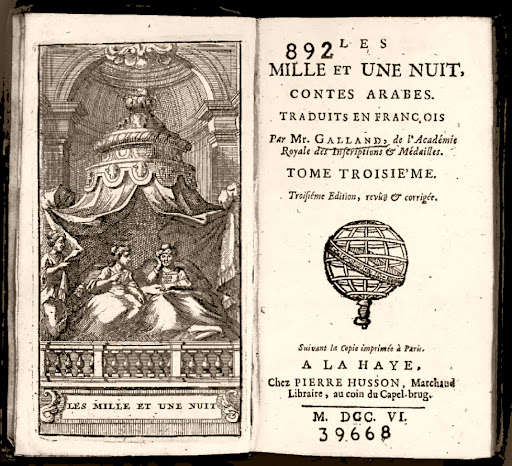
Here comes the text we used as an introduction. This time, it is the very card based on Ali Baba's character the one with a real-world flavor text. We mentioned the fact that Ali Baba and the Forty Thieves is perhaps the most famous tale in the collection, but what many people ignore is that it actually was a later addition. In fact, it was only included in the collection at the beginning of the 18th century, when French orientalist Antoine Galland published its first European translation, with the title of Les mille et une nuits.

As for the effect-flavor combination, there is not much to be said here. Ali Baba is a cheap 1/1 creature for one red mana. It allows you to tap a Wall by paying another red mana. It's not that useful, nor is it particularly striking when it comes to its inventiveness. The entrance to the treasure cavern is considered as a wall, and therefore Ali Baba is able to put Walls out of use. It's acceptable but no less didactic than the previous one.

Bird Maiden

Four things that never meet do here unite
To shed my blood and to ravage my heart,
A radiant brow and tresses that beguile
And rosy cheeks and a glittering smile.

This is by far my favorite card among the six we are analyzing today, both for its general flavor and for the delicate link between illustration and flavor text. Perhaps it's just me, but the very fact that this one is in verses (as compared to the prose of the previous two texts) is a strong plus. Also, the translation is much more recent here, from the 1990's edition translated by Husain Haddawy, which is among the best to date.

Bird Maiden is another perfect example of what usually gets a great flavor text: a common creature, with few or no abilities. It's similar to Scathe Zombies in this regard. Bird Maiden is a 1/2 red flyer for three mana. Its appeal comes mostly from Kaja Foglio's heartwarming illustration, but the old-fashioned type line of "Summon Bird Maiden" also helps out. The quotation describes a girl "who looked as radiant as a brilliant pearl of the shining sun [...], about five feet tall, with a beautiful figure, firm breasts, soft cheeks, and a fair complexion". Not an easy challenge, but Ms. Foglio surely nailed it, creating one of the most joyous Magic arts ever.

Repentant Blacksmith

For my confession they burned me with fire
And found that I was for endurance made.

Another cheap creature, although a rare one, is my second favorite on this list. Once more, what I find most striking about it is the connection between illustration and text. Again, the fact that it comes in verses is a nice addition. Repentant Blacksmith is a 1/2 white Smith Creature with Protection from red, and its illustration shows in beautiful watercolors a smith working in his forge. As simple (and as effective) as that! The illustrator is Drew Tucker, one of the original 25 Magic artists.

If you are curious, the poem would continue with two more lines: "Hence I was borne high on the hands of men / And given to kiss the lips of pretty maids". The edition is the same one we saw earlier, translated by Haddawy. Choosing this particular passage does not really make sense, and yet the quotation is very powerful for the simple reason that it describes a blacksmith capable of resisting fire (i.e., with Protection from red).

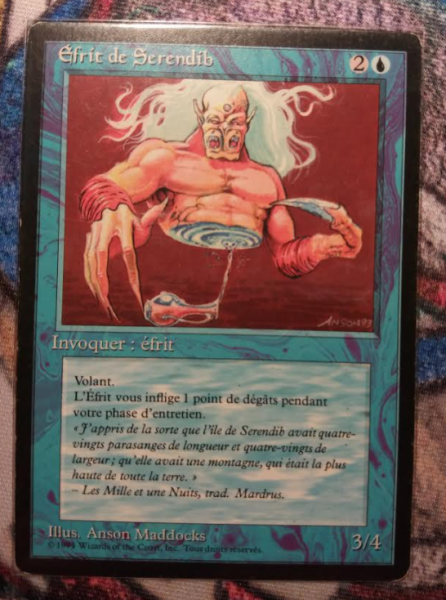
Serendib Efreet

(I learned this way that the island of Serendib is eighty parasangs in length, and as many in breadth; that it had a mountain, which was the highest in the world.)

Serendib Efreet is the most celebrated among these six cards. It's an old school staple like Shivan Dragon and Serra Angel. It first appeared in Arabian Nights but didn't have any flavor text, in that printing. It wasn't until the Foreign Black Bordered printing of Revised (and later in Foreign White Bordered), that it received flavor text. The quote only appears on the French-language version of the card. We don't know the reason behind this choice. The text I have quoted here is the English translation. The original text of the card is from the French translation by Mardrus.

The excerpt comes from the Sixth Voyage of Sindbad, and interestingly, doesn't mention an Efreet at all. Rather, it focuses on the island of Serendib itself. That might be the reason why no other edition (or language) makes use of this quotation. It's a nice one, though, with a strong reminiscence of ancient and fabulous journeys. As such, it makes great flavor text, despite not referencing any actual Efreet.

City of Brass

Enter this palace-gate and ask the news
Of greatness fallen into dust and clay.

Here is another old school staple, and the only card among the six able to rival Serendib Efreet. They have something else in common: both were first printed in Arabian Nights but didn't receive flavor text until their reprinting. In the case of City of Brass, it was as a Junior Super Series Promo that it got flavor text. Of the six cards we're discussing, it's by far the most expensive card, as can be seen in this graph:

There was an error retrieving a chart for City of Brass

As for the flavor text, here we have our final example of flavor text in verse. This time from the Arabian Nights' edition translated by the British explorer Richard Francis Burton and published in 1885. The quoted text is just a couplet of hendecasyllables, but the original poem was a bit longer. It was quoted by the Shaykh to the Emir, leaving him in tears for the emotion. It refers to a "fallen greatness", whereas the image of City of Brass shows a perfectly fine and alive city. We can excuse this inconsistency, as both the text and the illustration are really powerful.

What's Different?

When you compare these six texts with those we analyzed in the past two articles, you'll see some crucial differences. First, all these quotations come from folk tales, not from a pool of various literary genres. As a consequence, the sound is much more consistent. There is no real variation to observe here. Second, these sentences are more about description than reference. They slavishly adhere to the content of the cards on which they appear. We saw some similar cases with Greek and Latin quotations, but this time it's an all-encompassing tendency. Last, there is no chance to extract short, witty sentences like the ones we saw especially on Latin-derived quotes (which is not necessarily a bad thing).

Conclusions

We have seen another group of cards that share the same source of flavor text. As it happened with the classical world, hints, and references to Middle Eastern culture are not limited to these six cards. It would take too long to mention every single card that is indebted in one way or another to that civilization. In the next installment, we shall explore another great culture whose literature has been extensively used in flavor text.

State of Modern: 2021 Edition

Are you a Quiet Speculation member?

If not, now is a perfect time to join up! Our powerful tools, breaking-news analysis, and exclusive Discord channel will make sure you stay up to date and ahead of the curve.

As the year wraps up, the time of self-reflection and empty resolutions begins. My idle mind now wonders if Wizards makes resolutions about card design. I then realize that they design two years ahead, and so if they do make resolutions for the new year, isn't that technically cheating? Or maybe they're focused on using last year's mistakes to improve the design two years from now. And now I'm thinking that I've been hitting the eggnog way harder and earlier than anticipated. So let's wrangle this back on track and reflect on Modern in 2021. In doing so, we'll also turn my eye to what may happen in 2022. Because speculation is always more fun than reflection.

Modern changed significantly in 2021. It began with a disaster that led to the largest ban since Modern's inception. Then Modern Horizons 2 was released, which wasn't busted like MH1, but rather had a very high (though fair) power level. The format is gradually stabilizing but remains in a state of relative flux. And if the trends in December's data continue, the churn won't subside anytime soon. Consequently, 2021 was a mercurial year metagame-wise. There is a lot to like about the current state of Modern. There is also much to dislike. Frequently, they're the same things. It depends on who's being asked. Naturally, since I'm the one writing this article, my own tastes will factor heavily in the "goods" and "bads" discussed here.

The Good

First off, let me be unequivocal: The State of Modern is good. I addressed this back in October, but a format isn't unhealthy just because something's happening that a given player dislikes. There will always be complaints about every metagame in every format. That's just how Magic players do; fish gotta swim, grass gotta grow, Magic players gotta complain about something. Sometimes it's justified criticism of bad design/metagames, sometimes it's just salty whining, and often it's something in between. Players find certain metagames healthy because they're having fun, but a different group that isn't having fun will see it as unhealthy. But it doesn't matter. The existence of objections does not disqualify a metagame from being good. The measure must come from less subjective metrics.
Health by Metrics

The most objective means of evaluating format health are diversity, dynamism, and competitiveness. These are consensus criteria, developed over years of numerous writers working on the question of what makes a format healthy. And while there is certainly room for improvement, the current Modern metagame does quite well by these standards.

  • Diversity: If number of distinct decks is the only measurement, then I don't think it's possible for Modern to be more diverse. The average number of decks I record per month is ~70, with an average of ~17 making the tier lists. While that's great, diversity isn't just the number of decks, but also the variety of strategies. And Modern has also done quite well there. Over the course of the year there have many different midrange, control, aggro, and tempo decks. Modern has consistently lacked combo decks, particularly unfair combo. Fair combos like Heliod Company, 4-Color Indomitable Creativity, and Living End have had their moments, but all fell off. Modern could use more consistency from the fair combo and unfair combos like Ad Nauseam to truly round out the metagame.
  • Dynamism: Modern is doing well in terms of dynamism, but again there's room for improvement. The exact composition of each tier has changed extensively month to month and the decks doing well now are nothing like the decks from March. That's a lot of churn and dynamism, which is good. It means the diversity is meaningful and anything can win. However, Hammer Time has been the #1 deck on my list since July. Sometimes Hammer has just pipped its rivals; sometimes it dominated. Having one deck sitting on top for long stretches isn't great, and it would be better if other decks beat Hammer for the top slot, but everything else looks good.
  • Competitiveness: Every week since March, my data has reflected a wide spread of decks winning both the Preliminaries and the Challenges. Frequently, a deck will have a great weekend and win big in both Challenges only to disappear the next week as rivals show up with the tools to dethrone them. Therefore 2021 Modern was very competitive. This is excellent for maintaining interest in Modern and bolsters the conclusions from dynamism and diversity.
Everything's looking good. It's not perfect, but nothing ever truly is. Modern's healthy: rejoice!

It Finally Happened

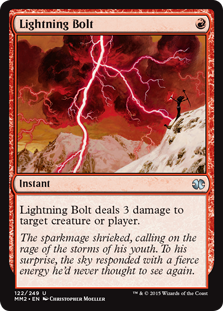
There's also a lot to like qualitatively. Remember how players complained for years that Modern was just ships passing in the night, was far too linear and/or combo driven, or just lacked interaction? That is decidedly not the case anymore. Lightning Bolt and Prismatic Ending, interactive cards, are two of the most played cards in the whole format. In fact, most of the top played spells for the whole year have been interactive. This interactivity has led to an era of fair decks dominating the format. It's harder now than at any point in Modern history to get away with linearity thanks to all the options for interaction, and it shows. This is perfectly fair Modern, at long last!
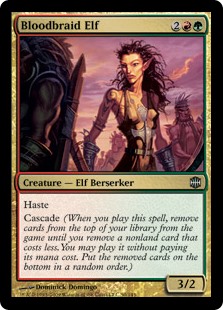
Now, this reality is not without detractors. The loudest grumbling is that it required a glut of free spells to happen. Players wanted interaction and fairness to happen, but not like this, or in this way. What I get from that is that they wanted 2018 Jund-style fair. Not much card advantage; just card quality and tempo to gradually build advantage until victory. While I can sympathize with the nostalgia, that was never in the cards. One, despite Wizards designing with that in mind for years, it just wasn't happening. Two, Wizards has by now moved away from that entire philosophy. They want players to use more of their deck in a game, and when slowing things down didn't work, they moved to expanding velocity. And that's proving to not be intrinsically bad.
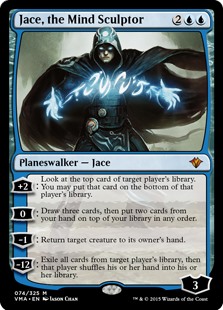
All Are Welcome

As a result, Modern feels quite inclusive. Except for the price tag, but Magic is an intrinsically expensive hobby. Complaining about the price of entry may be valid, but that's how it is for every format these day. The price of success is high demand for product and that will drive up prices. This is the reality for Magic players now.
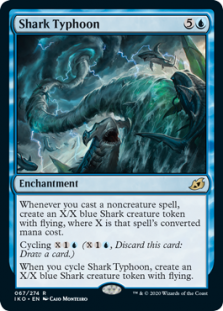
Looking past that issue, it seems Modern has something for everyone. There's a lot of choice and opportunity for every kind of player to find their deck and succeed. Combo is underrepresented in the data, but there are viable combo decks out there. Every FNM, I see different builds of control, midrange, ramp, and aggro, and players are changing their decks week to week and being rewarded. All over the Magic media, players are saying that this is the most fun they've ever had in Modern. They appear to vastly outweigh the doomsayers. And I can think of no better endorsement.

Storm Clouds Brewing

That said, I do see storm clouds on the horizon. The storm isn't guaranteed to make landfall, and it could even dissipate entirely. But I can definitely envision this metagame swerving south into unhealthy territory. And worse, it could do so without help from new cards. There's always a risk that a new card will break everything, and I can't predict that happening. What I can do is look at the current trends and see if there's anything heading in dangerous directions or that may cause problems. And I'm seeing three pressure points in the data which make me very worried.
I should note that this concern does apply more to MTGO than paper. MTGO's player base being much smaller, it lends itself to feedback loops and groupthink which in turn lead to warps in the metagame. With paper coming back I expect the metagame to get far more stable and prone to self-correction rather than over-correction. But we'll all have to wait and see.

The Lurrus Problem

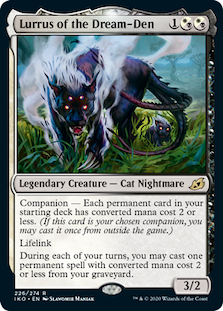
The first problem is that Lurrus of the Dream Den is everywhere. Lurrus is the most played creature in Modern by a decent margin. This is in spite of it seeing vanishingly small amount of maindeck play. Rather, it sees an absurd amount of play as a singleton in sideboards thanks to companion. Last year, Lurrus took Hammer Time, a deck that was fringe playable at best, and gave it the power to hang in with 4-Color Uro Omnath decks. Access to Lurrus every game is a major reason why Hammer Time has managed to hang onto its top slot in Modern alongside Urza's Saga. Lurrus seeing a lot of play isn't a bad thing (opinions on the companion mechanic itself notwithstanding) because it boosts a lot of different decks and creates a lot of space for small creature decks to compete.
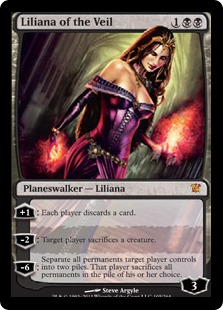
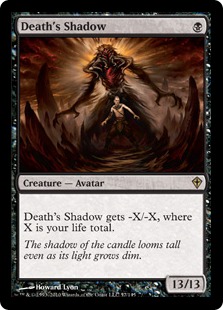
The problem is that Lurrus is crowding out a lot of cards. Permanents costing three-plus mana aren't seeing play in decks where they used to, and that's entirely down to Lurrus. Look at Grixis Death's Shadow and Jund trading in the once non-negotiable maindeck Liliana of the Veil for Lurrus as a companion. Liliana is still a very strong card and useful in many matchups, but the appeal of Lurrus always being available in addition to its interaction with Mishra's Bauble is not something she can match. Consider also that Lurrus is keeping certain answers out of Modern. Fatal Push has been largely abandoned, in no small part thanks to competition from Prismatic Ending and Unholy Heat. However, it had been on the decline even before MH2 thanks to lining up poorly against Lurrus' ability.
And this is all down to Lurrus uniquely. In late October, there was a shift in Hammer Time away from Lurrus and towards a higher curve with Nettlecyst. The idea was to have more threats and dodge some answers. It didn't work. The Lurrus version soundly outperformed the Nettlecyst version in November. I recorded 17 Nettlecyst decks with an average of 1.41 points to 45 Lurrus versions with an average of 1.87 points. This trend has continued this month and is replicated with the Jund and GDS decks.

That Annoying Monkey

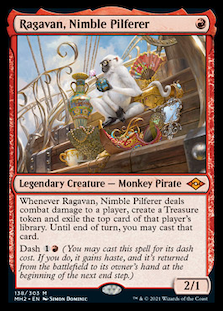
Ragavan, Nimble Pilferer is the second most played creature in Modern (#1 in maindecks) and is quite controversial. There are decent arguments that Ragavan is good for Modern. The primary reason is that it requires decks to have turn 1 interaction or block. It also only benefits fair decks, dies to anything, and has to connect so to do anything. Even if it does connect once or twice, it's not the end of the world.
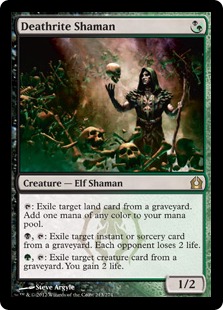
The problem I have is that many of those arguments were made in favor of Splinter Twin and Deathrite Shaman, both banned cards. The problem is that just like Shaman, unanswered Ragavan generates in insurmountable mana advantage. Just like Twin, there's no evidence other than anecdotes that Ragavan actually does force more interaction to happen. Ragavan was printed at the same time that a lot of answers were printed. Modern would be more interactive anyway and the effect Ragavan is having can't be separated from the altered carpool. And that's a problem because Ragavan is starting to appear everywhere, and that's a worry. So far this month I've seen Ragavan in the usual UR Murktide, Jund Saga, and GDS but also in Ponza, Humans, Jeskai Underworld Breach Combo, otherwise tribal Elementals, and 4-Color Omnath Pile to name the memorable few. This is getting to saturation levels.
And that's an additional problem because as much fun as Ragavan is to play, it isn't fun to play against. It is fun beating opponents with their cards; it sucks just as much to lose to your own cards. This is a really big problem in light of the earlier point. Players generally don't like getting hit with Ragavan and if they're not having fun against a card that is now everywhere, are they going to keep playing?

Just More Piling On

However, my biggest worry is the aforementioned 4-Color Omnath Piles. Specifically, they're coalescing. In November, there were several distinct versions of 4-Color Omnath and many different 4-Color decks. There was nothing wrong with this as they represented very different playstyles and strategies. There's also nothing wrong with multicolor piles in general because in a strong way, that is Magic-as-Richard-Garfield-Intended. He never saw the game getting this big and thought that players just playing all the cool cards together in the same deck would be how the game would go. Which is the entire pile strategy.

The problem is that piles tend to push out anything else at the same speed. Why bother trying to do anything else when you can just play the best card at every mana cost? That was a contributing factor in the demise of Frontier. The mana was so good and there was no land hate so there was no reason not to just run all the best cards in the same deck, at which point there was no incentive to run a slow deck that wasn't a 4-Color pile. Some decks would go 5-Color to get an edge, but that was it. The same thing happened with the Uro decks last year. The piles took over all the slow deck space and forced everyone to either go over or under them. It's happening again because UW Control can't compete with 4-Color's raw power and 2-for-1's and is floundering in December.
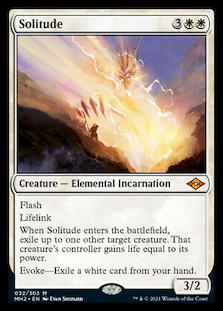
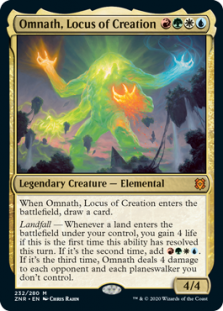
Specifically, all the 4-Color Omnath decks have become 4-Color Blink. Some lean into Ephemerate more than others, but they all intended to gain absurd value from blinking Omnath. They've all got the same core of planeswalkers, Omnath, Solitude, and Prismatic Ending, and all win via attrition. 4-Color Control is just gone, and both 4-Color Creativity and Bring to Light are below the tier cutoff. There's little Tribal Elementals either. And that's a huge threat to diversity.

Three Possible Outcomes

As I said, this storm isn't actually here yet. It's just building. It might not even hit Modern. But we do need to be aware and try to prepare. I foresee three possibilities:

  1. The Near Miss - This is where Modern self-corrects and no intervention is necessary. I would prefer this outcome and believe it possible, but players will need to do the work to make it reality. First, we need more unfair combo decks in Modern. Belcher is a good option, but anything will do. We just need decks that actually don't care about Ragavan hits and go way over the top of anything fair. This will force both the 4-Color decks and the Lurrus decks to diversify their answers and stop focusing on grinding each other out. There will also need to be a better Blood Moon deck to contain and punish 4-Color's manabase. Ponza is too slow and Murktide isn't consistently running Moon.
  2. The Storm Dissipates - There was never a real problem, it was just MTGO being MTGO. Online players just got it in their heads that this is how Modern is to be and ran with it. Paper results start to come in a refute the conclusions of the streamers and grinders and the format opens back up. Players adjust to the new cardpool and discover new strategies that obviate the current trends.
  3. Direct Hit - This plays out just like it did with Uro, Titan of Nature's Wrath. There's just too much power in the 4-Color decks and their mana is too good to overcome in a fair way. This forces other decks to lean more heavily into Ragavan and Lurrus to compete and the format becomes polarized. Many bans ensue.

Outlook: Uncertain

I don't know how this will actually play out. But I'm hoping that we can all learn to deal with Modern as it is and that everything will work itself out. But we have to see. However, next week will consider the third scenario.

Card Kingdom’s Condition Conundrum

Are you a Quiet Speculation member?

If not, now is a perfect time to join up! Our powerful tools, breaking-news analysis, and exclusive Discord channel will make sure you stay up to date and ahead of the curve.

When I first started writing about Magic finance over a decade ago, I frequently referenced Star City Games as the gold standard for pricing—both on the buy-side and the sell-side. In fact, the first buylist that I used on a consistent basis was Star City Games’. I remember typing up my buylist orders in an email, following a very particular format required by the site, waiting for the approval email, and then printing out the approval email to ship along with the cards.

Thank goodness times have changed since then.

They changed so much, in fact, that I consider Card Kingdom’s buylist as best in class now rather than Star City’s. During the last cycle of peak Old School card prices, I shipped numerous trade-in and cash buylist orders to Card Kingdom, taking advantage of their aggressive prices and generous payouts. I haven’t sold a card to Star City Games through their website since March 2016.

Card Kingdom does have one minor shortcoming with their buylist that I wish they’d correct, however. ABUGames and Star City Games already changed their system, irradicating this issue, but Card Kingdom has not addressed it yet. It only impacts three sets, and only cards printed in 1993. I’m talking about their downgrade percentages for Alpha, Beta, and Unlimited cards.

Constant Percentage for Condition Downgrades

When it comes to downgrade percentages, Card Kingdom still uses constant numbers based on the card’s value—the higher the value, the higher percentage of the near mint price you receive for played copies. Foils get their own downgrade scale as do Alpha, Beta, and Unlimited cards. Here’s the simple summary:

When it comes to selling Card Kingdom played cards worth over $100, you’ll often not get a better deal than from Card Kingdom. For example, you can sell a heavily played Library of Alexandria to Card Kingdom for 70% of $1,690, equaling $1,183. Star City Games offers $1,000 and ABUGames $918 (though $1,900 in store credit). In terms of cash value, you’ll get a good bit more from Card Kingdom.

There was an error retrieving a chart for Library of Alexandria

But when you want to sell a played Alpha, Beta, or Unlimited card (abbreviated ABU for short), you’re looking at a different story. Let’s say you have a heavily played Beta Counterspell for sale. How do the three different vendors differ in their buy prices? Well, Card Kingdom pays 40% of $960, which is $384. Meanwhile Star City Games offers $450! ABUGames hasn’t updated their Beta buy prices in a while, so their offer is irrelevant ($240.98).

There was an error retrieving a chart for Armageddon

The bottom line is Card Kingdom loses some of its competitiveness because of their standard downgrade percentage policy. Card Kingdom only pays 40% of their near mint buy price on “Good” (HP) Beta cards. Star City Games has individual pricing for every card—while this may involve more effort, it allows them much more flexibility when dealing with these highly collectible cards. In the case of Armageddon, SCG offers 60% of their near mint price for an HP copy. So even though Card Kingdom pays better on NM copies, SCG pays best on the played stuff.

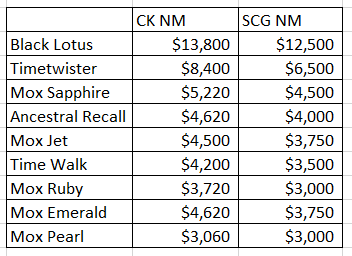
One last example I wanted to highlight was the bucket of Unlimited Power Nine. First, let’s compare Card Kingdom’s and Star City’s near mint buy prices:

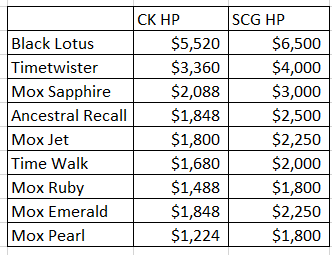
For all nine cards, Card Kingdom pays better than Star City Games. If you have a nice copy of any of these cards and are itching to sell to a store, Card Kingdom would be the way to go. However, what if your copy is heavily played and would be graded as “Good” condition by Card Kingdom? Suddenly, the comparison isn’t so favorable for Card Kingdom:

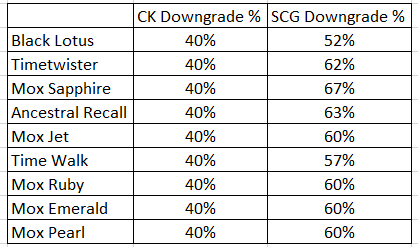
When dealing with played condition, Star City Games pays a good bit better than Card Kingdom on every single piece of Power Nine—a complete reversal from near mint. Why does this happen? It’s because Card Kingdom applies a flat 40% multiplier for Unlimited cards they downgrade to “Good”. SCG’s percentage is variable, customized based on the card. Here’s a quick comparison of the downgrade percentages from near mint to heavily played, for comparison:

The difference is clear: applying a customized downgrade percent for a card (presumably based on market data) means Star City Games can be more competitive with their buy prices than Card Kingdom, who applies a constant percentages.

The Implications

Maybe this doesn’t seem like a big deal—you sell your heavily played ABU cards to Star City Games and the nice condition copies to Card Kingdom. Easy enough, right?

While I agree with this strategy in general, I would argue it creates an imbalance in supply when looking to purchase an ABU card. Namely, Card Kingdom ends up with a bunch of EX and VG copies of ABU cards in stock, but rarely has NM and G copies. While they may not get many NM copies simply because the quantity of NM copies of an ABU card is severely limited, I would argue their constant shortage of G copies stems directly from their buylist practices.

Here’s an example: I filtered to Card Kingdom’s Beta cards for sale and then sorted by price, high to low. They have a smattering of high-end Beta cards in stock, including Black Lotus, Timetwister, Ancestral Recall, a couple Dual Lands, etc. But nearly every card they have in stock is graded either EX or VG.

In fact, as I look at their stock of the 100 most valuable cards in Beta (roughly the top third), they have four cards in stock at G condition and five at NM condition, 4% and 5% respectively. The vast majority of their inventory is either EX or VG condition. Again, the low stock of NM inventory could simply reflect their strict grading practices. It could also indicate that collectors are scooping up NM copies with plans to submit for grading.

But on the low condition side, Card Kingdom doesn’t have many “Good” copies of ABU cards for sale because they don’t pay competitively on them. The corollary to this is that Card Kingdom’s sell prices for HP ABU cards are too low relative to the rest of the market. For example, one of the few G cards Card Kingdom has in stock from Beta is Rock Hydra—their asking price is $220.

There was an error retrieving a chart for Rock Hydra

Compare that to the cheapest copy for sale on TCGplayer, which is $355. EBay’s cheapest listing is $300, also higher than Card Kingdom’s G copy. While CK’s copy is likely in worse condition than these two other listings, the bottom line is Card Kingdom’s HP copy is the cheapest you can find. It wouldn’t surprise me if that copy was scooped up soon, especially since you can regularly obtain Card Kingdom store credit at a rate of 85%, meaning you can bring your cash price on this card down to $187!

My Call for Action to Card Kingdom

Years and years ago, before Old School was a format and before Alpha and Beta cards were so highly regarded for their rarity and collectability, players were disinterested in played stuff from Magic’s earliest sets. Collectors still existed, but they focused on the nicer copies since they were relatively affordable (compared to today’s prices).

Because of this historical trend, it made sense for vendors to pay aggressively for near mint copies—it’s what collectors were after. Meanwhile, a heavily played Beta rare that saw no tournament play would rot in inventory for ages. I believe this is what led to the significant downgrade percentage practice adopted by Card Kingdom.

But times have changed, and I’d make the argument to Card Kingdom (and every other vendor still using a constant percentage downgrade model on ABU cards) that it’s time to customize these percentages to reflect modern day market dynamics. The reality is, there are a bevy of Old School collectors out there who aren’t so picky on condition anymore. Prices have gotten so high that we have begun embracing played and heavily played copies in order to afford cards for our collection. As long as the card isn’t completely damaged and inked, I don’t care if there’s some edge and surface wear on my Alpha and Beta cards—I can still appreciate their nostalgia regardless.

In addition, Old School players want these once-forgotten cards for actual play!

When was the last time you saw a Hypnotic Specter at a tournament table? Due to power creep, the uncommon has become completely outclassed. But the card is a powerhouse and a staple in Old School. The result: HP copies sell for $300 and MP copies for close to $400!

Because these cards are going to be shuffled by players, you may have an easier time selling HP and MP copies of Beta Hypnotic Specter vs. NM copies. Therefore, it makes little sense to offer such a competitive number on near mint copies, but such an abysmal number on the HP copies. The Old School ABU cards that see play demand higher price points for played copies—these are the copies we want to shuffle up in decks!

There was an error retrieving a chart for Hypnotic Specter

Therefore, my call to Card Kingdom is to abolish the standard downgrade percentage practice on ABU cards. I know this will take greater effort, but I know the site already has some sort of proprietary algorithm they use to calculate their buy prices. Perhaps a small upgrade to their algorithm is all they need to implement a more dynamic model for ABU cards.

The hardest part of implementation may not be identifying the algorithm to use (they likely have the data they need already), but updating the website’s code to enable a different interface that showcases the variable downgrade percentages. I’m not a coder, so I don’t know what this may entail. But if Card Kingdom wishes to increase their transactions and improve their inventory on ABU cards, they should consider making this change.

Wrapping It Up

Every time I obtain store credit to Card Kingdom, I try to spend it on a “Good” condition copy of an ABU card. The reason is simple: their prices on these cards are often too low, even discounted relative to the open market. This opportunity stems from their [arguably] antiquated approach to buying ABU cards: a constant downgrade percentage calculation.

Times have changed, Old School players and collectors are content to purchase HP and MP cards to build their decks and fill out their collections. Therefore, I’d argue more favorable downgrade percentages are merited on many ABU cards. This is especially true for Alpha and Beta rares, where supply is so low that I’m willing to grab any affordable copy for my collection. I’ve even been able to quickly sell Alpha and Beta Purelaces with little effort. There is a market for the unplayable rares, simply due to their rarity and collectability.

Star City Games has caught onto this new market dynamic. I hope Card Kingdom will follow suit soon. Otherwise, they can expect to carry an inventory riddled with overpriced EX and VG copies and virtually zero NM and G copies. This trend alone should be a strong indicator to Card Kingdom that their practice could use a little updating.

In the meantime, my recommendation is simple: buy G cards from Card Kingdom if you can catch a restock, sell your NM and EX ABU cards to Card Kingdom to take advantage of their attractive buy prices, and sell your HP cards to Star City Games to get the most for your cards. Actually, if you really want to maximize your ABU collection’s value, you should sell directly to Old School players and collectors—we will gladly purchase your HP Webs and Purelaces, and will likely pay more than any vendor will offer.

It doesn’t matter how unplayable the rares are. When only about 1,100 Alpha and 3,200 Beta copies of a rare exist, grabbing any of them at a good price is an attractive way to own a piece of Magic’s history.

Avatar photo

Sigmund Ausfresser

Sigmund first started playing Magic when Visions was the newest set, back in 1997. Things were simpler back then. After playing casual Magic for about ten years, he tried his hand at competitive play. It took about two years before Sigmund starting taking down drafts. Since then, he moved his focus towards Legacy and MTG finance. Now that he's married and works full-time, Sigmund enjoys the game by reading up on trends and using this knowledge in buying/selling cards.

View More By Sigmund Ausfresser

Posted in Alpha, Beta, Buylist, Card Kingdom, Collecting, Finance, Old School Magic, SCG3 Comments on Card Kingdom’s Condition Conundrum

Have you joined the Quiet Speculation Discord?

If you haven't, you're leaving value on the table! Join our community of experts, enthusiasts, entertainers, and educators and enjoy exclusive podcasts, questions asked and answered, trades, sales, and everything else Discord has to offer.

Want to create content with Quiet Speculation?

All you need to succeed is a passion for Magic: The Gathering, and the ability to write coherently. Share your knowledge of MTG and how you leverage it to win games, get value from your cards – or even turn a profit.

Ten Wild Predictions For Magic in 2022

Are you a Quiet Speculation member?

If not, now is a perfect time to join up! Our powerful tools, breaking-news analysis, and exclusive Discord channel will make sure you stay up to date and ahead of the curve.

All Aboard The Hype Train

From Reddit

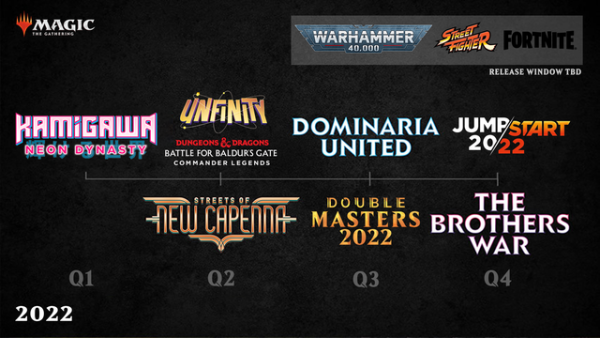
By the time you're reading this, we will already have our first look at spoilers from Kamigawa: Neon Dynasty. There's still a few weeks left of 2021, but the hype train for the plethora of new Magic coming in 2022 is already leaving the station. With that in mind, I thought I'd take a moment to look ahead to what's in store. With next year's release schedule as a guide, I'll make one wild prediction for each of the major Magic sets coming out. But why stop there? In addition to one wild claim per set, I've included a few bonus predictions for everyone who's ready to go full tinfoil hat into the new year.

Prediction 1: At Least One Bladerunner Reference

The cyberpunk world of Kamigawa: Neon Dynasty is territory I never thought Wizards of the Coast would venture into. Now that they've established that we are indeed going there, I can't help but think of all the classic works of cyberpunk movies and literature I've consumed over the years. From the novels of William Gibson and Neal Stephenson to movies like Bladerunner, I'm a huge fan of all things cyberpunk. I imagine the folks at Wizards are as well, or else we wouldn't find ourselves going to Neo Kamigawa. With that in mind, it's my theory that we will see at least one subtle nod to Ridley Scott's movie masterpiece.

Prediction 2: Unfinity Will Have Perpetual-Type Mechanics Using Peels or Stickers

Legacy games, games where you permanently alter or manipulate the board or pieces as part of the gameplay, have been a growing subgenre in games for nearly a decade or more. Magic has played in this design space over the years as well. Back in 1998 Chaos Confetti and Blacker Lotus were both parts of Magic's first silver-bordered set Unglued. The cards required tearing them into pieces as part of their activation costs, making them the first Magic cards utilizing these kinds of mechanics.

For Unfinity, Wizards will go even deeper into this area of design. We've already seen them explore it in digital form with the perpetual mechanic in Jumpstart: Historic Horizons and Alchemy. Unfinity will allow them to explore similar mechanics in paper form. I think they will do this via peels or stickers, similar to what they did with the MSCHF Secret Lair Plains in November. Cards that transform permanently into other cards, or that permanently upgrade after activation are just some of the possibilities. While we might be peeling the foil off our cards come April, we've yet to get truly outlandish in our predictions, as you'll see.

Prediction 3: We Finally Get Fortifications

The very first Fortification was Future Sight's Darksteel Garrison. Since then, there's been no love for this artifact subtype. A Commander-oriented set feels like the perfect place to finally delve into this unexplored design space. Fortifications have the potential to be powerful tools in the right Commander deck, allowing you to power up your lands in interesting ways. Can you imagine a fortification allowing Commanders with static abilities to function in the Command Zone as if they were on the battlefield? Fortifications have as much, if not more design potential than Vehicles or Equipment. I'm surprised we've yet to see them appear in a set, but a Commander product feels like the best place for them.

Prediction 4: Completion of the Triome Cycle

It's already been revealed that Streets of New Capenna will revolve around three-color demon crime families. With that in mind, it's pretty safe to assume Wizards will complete the cycle of Triomes in this set. Based on the rest of the 2022 roster, it's the most natural setting in which to include them. This feels like such a foregone conclusion I'll be surprised if they don't print them.

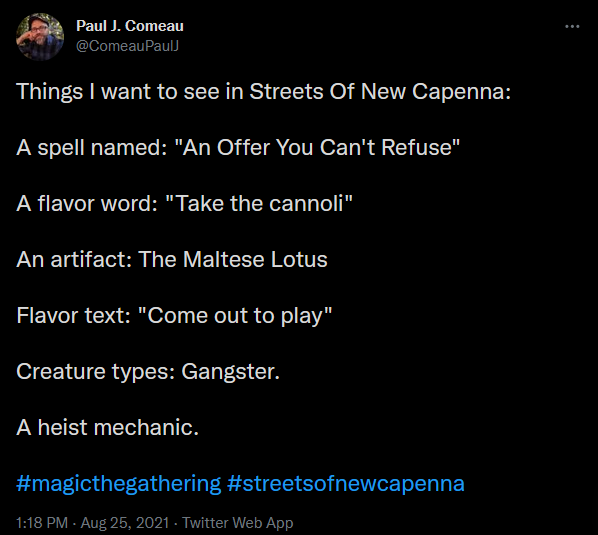
I've already tweeted about some other things I'd like to see in Streets of New Capenna:

Call it a bonus prediction, but I think the only thing from my wishlist we are likely to see is the creature type Gangster.

Prediction 5: The Return of Infect/Poison

Infect/poison has been a divisive mechanic over the years. We've not seen any new cards utilizing the mechanic since New Phyrexia. With the return to Dominaria, and in my mind the almost inevitable return of the Phyrexians, the time is right for Infect/poison to return to Magic. This time around, I anticipate poison having benefits as much as drawbacks. Perhaps it will function similarly to the energy mechanic? Giving rewards and powerups for spending poison counters, or for being poisoned sounds like an interesting twist on the mechanic.

Prediction 6: Serialized Original Dual Lands as Chase Cards

This is where we get to full tin-foil hat crazy mode. Like it or not, serialized limited print run cards are the future of Magic collectibility. The mirror-image Viscera Seers we saw in November are only the beginning. If Wizards really wants to get collectors wild for serialized cards though, they need to do something they've never done before. Another art treatment variant isn't going to send folks scrambling to buy sealed product, even if it's serialized.

Reprinting something they've not reprinted in more than two decades, that's how you make collectors go crazy for a product, especially if it's playable in multiple formats. I think a limited reprint of the original dual lands as serialized chase cards would drive collectors into a buying frenzy. Even if they are only available in the most premium version of the product, the excitement around such an action would be unprecedented.

I know you're already typing a multi-part tweet to me about the Reserved List. I don't think Wizards will ever do away with the Reserved List entirely. That said, I have a theory that within the next ten years we will see dual lands come off the list and get reprinted in some capacity. Will it be with Double Masters 2022? I don't know. I promise you though if something like that does happen, serialized numbering will be part of it. I'll share more on the history of the Reserved List, and my perspective on it at some point in the future.

Prediction 7: JumpStart Replaces Core Sets as the New Gateway to Magic

The original JumpStart was a great success. It offered a fun gameplay experience for existing players by mixing the best elements of limited and constructed. More importantly, it was an excellent teaching tool for bringing new players into the game and a great gateway product. I envision JumpStart 2022 continuing that trend, filling the role Core Sets used to play in the product line going forward.

Prediction 8: Vehicle/Equipment Artifacts

Mystery Booster Convention Edition already gave us this playtest card:

For The Brothers War, based on setting alone, I fully expect to see a variety of hybrid vehicle/equipment artifacts. It's a perfect mechanical execution to represent massive mechs fighting each other.

Prediction 9: A Legendary Creature of Urza That Transforms Into a Planeswalker

We've already seen Urza, Lord High Artificer as a creature from Modern Horizons, and had a comedic Urza reference in Unstable, Urza, Academy Headmaster. The Brother's War is the ideal setting to finally give us an Urza that shows his ascent into a planeswalker.

We've been told that the story of The Brothers War will be related to us through "the lens of Dominaria's locations, characters, and victims of the conflict." This puts a lot of doubt on us seeing either of the brothers or any of the other major characters we already know as cards in the set. While that makes any chance of seeing an Urza planeswalker card slim, I can't think of a more appropriate place to print him.

For our last wild theory, we'll step away from specific Magic sets, and look at the Magic product line more generally.

Prediction 10: Wizards Will Phase Out Draft Boosters Next Year

Wizards is already phasing out Draft Boosters in foreign languages starting with Kamigawa: Neon Dynasty. The logical next step from this is phasing out the sale of draft boosters entirely. As an avid lover of Limited, it's troubling this is even a possibility we're discussing. How will we draft? What will happen with prereleases? I don't have answers to these questions, but the writing is very much on the wall. I've discussed my issues with Set Boosters and Collector Boosters at length here. Of the two products, I don't feel Set Boosters adequately live up to their role. Unless they morph into a draftable product though, I envision a possible future where no draftable product is sold to consumers.

Closing Thoughts

I don't think most of the ideas I've presented today will actually happen. I do think it's an interesting thought exercise though to imagine extreme possibilities for what could happen within the context of the game. It's these kinds of thought exercises that the folks at Wizards do every day as they build exciting new cards and worlds for us to explore. Do you think any of these predictions have a chance at happening? What are some of your wild predictions about Magic in 2022? Let me know in the comments or on Twitter.

Avatar photo

Paul Comeau

Paul is Quiet Speculation's Director of Content. He first started playing Magic in 1994 when he cracked open his first Revised packs. He got interested in Magic Finance in 2000 after being swindled on a trade. As a budget-minded competitive player, he's always looking to improve his knowledge of the metagame and the market to stay competitive and to share that knowledge with those around him so we can all make better decisions. An avid Limited player, his favorite Cube card is Shahrazad. A freelance content creator by day, he is currently writing a book on the ‘90s TCG boom. You can find him on Twitter and LinkedIn.

View More By Paul Comeau

Posted in Free, PredictionsTagged , , , , , 1 Comment on Ten Wild Predictions For Magic in 2022

Have you joined the Quiet Speculation Discord?

If you haven't, you're leaving value on the table! Join our community of experts, enthusiasts, entertainers, and educators and enjoy exclusive podcasts, questions asked and answered, trades, sales, and everything else Discord has to offer.

Want to create content with Quiet Speculation?

All you need to succeed is a passion for Magic: The Gathering, and the ability to write coherently. Share your knowledge of MTG and how you leverage it to win games, get value from your cards – or even turn a profit.

Real-world Flavor. Latin Authors in Magic Cards

Are you a Quiet Speculation member?

If not, now is a perfect time to join up! Our powerful tools, breaking-news analysis, and exclusive Discord channel will make sure you stay up to date and ahead of the curve.

But who is to guard the guards themselves?

Juvenal

Even when taken out of context, this sentence sounds like a rhetorical question. We will see just how much so. For the moment, let's just say the quotation is from Juvenal's Satires, a group of sixteen poems dealing with social matters in a tone that ranges from ironic to furious. Ivory Guardians, the card it appears on, is an uncommon from Fifth Edition. It's one of just six cards featuring a quotation from an ancient, Latin-speaking author.

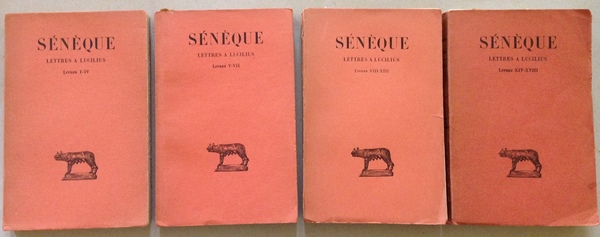
Seneca's Epistles

An Overview on Latin Authors

In our last installment, we discussed the nine examples of Greek authors quoted in Magic flavor text and mentioned there were only six examples from Latin authors. This number looks even smaller when we consider the fact that half of these quotations come from the same author: Seneca. Two are quotes from his Moral Epistles, and one is from his philosophical dialogue known as "On Providence". The remaining three include quotations from Virgil's epic poem Aeneid, Plautus' comedic play Trinummus, and the aforementioned Juvenal's Satires. Here is the full list in order of printing:

  • Hurricane (Fifth Edition) Virgil, The Aeneid I vv. 82-85
  • Ivory Guardians (Fifth Edition) Juvenal, Satires VI 347-348
  • Soltari Priest (FNM) Seneca, On Providence 5, 10
  • Maggot Carrier (Eighth Edition) Seneca, Epistles
  • Mind Stone (Tenth Edition) Plautus, Trinummus II, 2, 88
  • Dark Tutelage (Magic 2011) Seneca, Epistles

That three quotations out of six are from Seneca is symptomatic of a tendency on the part of the creative team towards choosing a specific kind of works to quote as Magic flavor text. Namely, maxims, proverbs, rhetorical questions, and the like. In this regard, Seneca is an excellent author to quote. He is almost synonymous with the concept of sententia, i.e. a sentence which is concise and memorable at the same time. Just what you need for a quote on a card. We will explore this more later in the article. First, let's analyze the six texts card by card.

Hurricane

The card Hurricane has great flavor. First printed in Alpha, and reprinted many times over, it perfectly conveys the idea of a violent storm mechanically, dealing damage to all players and all flying creatures. Part of its charm no doubt comes from its mirroring of Earthquake, a similar card of great flavor which deals damage to all players and non-flying creatures.

Fifth Edition's printing features this quotation from Virgil: "The raging winds 
, settling on the sea, the surges sweep, / Raise liquid mountains, and disclose the deep." Virgil is best known for his epic poem The Aeneid, telling the legendary travels and fights of Aeneas after the fall of Troy. It's a majestic work, packed with action, and also capable of displaying human feelings to the highest level. What we find on this printing of Hurricane though, is something different.

There was an error retrieving a chart for Hurricane

The flavor text is informational, almost to the point of pedantry. The card shows a Hurricane in action, and the flavor text describes that action. It's a weak choice for Magic flavor text, and well below our expectations. It's not that different from the case of Alluring Siren and its Homeric quotation which we looked at in our previous piece on Greek authors. At least in that case the card and flavor were closer to fantasy. With Hurricane, Virgil's words describe a storming sea, and the illustration shows a ship in a storm, making the flavor merely descriptive. Let's see if we can find some more interesting flavor.

Ivory Guardians

"But who is to guard the guards themselves?" is quite a famous question, even though not everyone normally knows where it comes from. In this case, it's also on a card few remember. First printed in Legends, Ivory Guardians received this quotation from Juvenal as its flavor text in Fifth Edition. The card is pretty bad. A 3/3 for six mana, Protection from red, and a potential pump is not very exciting. The flavor text, while famous, is equally unexciting in the context of this card. In our culture generally, the quote is much more interesting and frequently misunderstood.

Essentially, the quotation asks: "Who assures us that those who have positions of responsibility in our society deserve our trust? Who tells us that they don't need someone to control them in turn?" Pop culture made it so famous that many people even know the Latin version: "Quis custodiet ipsos custodes?" It appears in Alan Moore's Watchmen, and the very title of the series comes from that phrase.

The problem in attributing this quotation to Juvenal, is we ignore that he in turn was indirectly quoting Plato's Republic, twisting Plato's original concept with the aim of targeting women (which is the goal of his Sixth Satire). If we read a few lines before and after the quote, we see Juvenal's subject is marital infidelity, a subject less high-minded than Plato's. Also not the most appropriate flavor for a Magic card.

Soltari Priest

Things get better with Soltari Priest. We get our first quote from Seneca: “Fire is the test of gold; adversity of strong men."

There was an error retrieving a chart for Soltari Priest

You see immediately the short, striking sentences we described earlier. This one sounds much like a proverb. The card and the quote are both well known. In this case, the card is also playable as well. Originally printed in Tempest, it's a cheap Cleric with good stats and interesting abilities. The card/text couple is a decent choice since the concept of adversity testing strong men is very White-flavored. It's taken from the work On Providence, a short essay written in the Platonic style of dialogue, and deals with the "problem of evil."

Maggot Carrier

“We do not suddenly fall on death, but advance towards it by slight degrees; we die every day” is another quotation from Seneca, this time from his Moral Epistles. It's another strong sentence that seems almost tailored for being quoted. It appears on the Eighth Edition reprint of Maggot Carrier, a common Zombie with a great illustration by Ron Spencer. While not a particularly powerful card, a cheap creature that makes each player lose one life when entering the battlefield is at least something. As for the quotation, the shift from dialogue to letter does not change the substance. It's another of Seneca's philosophical maxims.

Mind Stone

"Not by age but by capacity is wisdom gained," is a quote from Plautus's Trinummus. It appears on the Tenth Edition printing of Mind Stone, probably the most played card among the six we are analyzing today. Mind Stone sees a lot of action in Commander and has multiple reprints. Originally printed in Weatherlight, without flavor, the Plautus quote appears only on the Tenth Edition printing. The quote and the card are both good. Whether they go well together is another matter. A quote about wisdom is a strange fit for a magical artifact, other than that it has "Mind" in its name.

Dark Tutelage

"It is a rough road that leads to the heights of greatness." Three quotations from Seneca, three wise proverbs. This is the best combination of card and flavor we've seen. It has echoes of Dark Confidant, in both flavor and function. It's ironic when you consider how old this quotation is. The flavor of Dark Confidant, "Greatness, at any cost" feels like a variation of the same concept. Both cards have similar functionality, allowing you to draw cards in exchange for life.

Greek and Latin Quotations in Summary

By considering both Greek and Latin quotations together we see the Classical World appears in flavor from a variety of literary genres. What qualities do all these texts share? They are all obviously short quotations, but more importantly, they are all self-sufficient even when taken out of their context. This doesn't mean their meaning stays the same. On the contrary, the vast majority of these quotations display one meaning when considered on their own, and another meaning when considered in the context of the whole work from which they come. Juvenal's sentence about guards is the clearest evidence of this tendency, as we discussed, but this is true for most of the examples we've looked at.

Missed Opportunities?

I love the fact that 15 unique cards exist with flavor text from Greek and Latin literature. I can't deny though, that several choices are a bit unimpressive, or plainly lame. The grandiosity of excerpts such as Achilles' dream of Patroclus, or the poignancy of reflections about dying a little every day, almost gets lost on Magic cards, which, after all, tend towards levity. This tendency, in my opinion, has grown throughout the course of Magic's history. As a consequence, after a few years, there was no point mixing this kind of literary thought with this kind of entertainment product.

I feel like a different kind of approach was possible, and perhaps might still be possible in the future. The way to go, if you want to sporadically include some real-world quotations in Magic flavor text, is keeping in mind what audience is going to consume them. Greek and Latin literature is not limited to a few witty sentences and some pathetic passages. There is more useful material in that body of literature to take advantage of and give the audience something closer to entertainment and less to an academic lesson.

Cheap Choices

As an example, I believe quoting Seneca is a cheap choice and doesn't pay. Sure, he seems like an almost perfect source of quotes, but that is an illusion. Many passages that would make thrilling quotations don't come as "perfect quotes". You have to search for them, you need to know your Greek and Latin, and not limit the search to what people think that world is. Otherwise, you're going to replicate the same tedious series of quotes that make people run away.

Even when you choose an author who should technically be funny, such as Plautus, there is a high risk of repeating the pattern. Ironically, the very quotation from a comedic genius like Plautus sounds very much like a random maxim by Seneca. That happens for two reasons: first, Trinummus is one of the latest works from Plautus and possibly the most serious and monotonous (not to say dull) among his plays. Second, the sentence has been chosen without considering the context of the card on which it appeared, or the audience. The moralistic tone simply doesn't work.

Some Proposals

If I was on the creative team, I'd make the case for using real-world quotations for flavor once more. As part of my argument, I'd say that some of the best authors to quote for use in Magic flavor have been totally neglected. I'd cite the Greek author Lucian of Samosata as one such example. Lucian was the author of True History, the earliest known work deserving of the definition "science fiction." In True History, we find alien forms of life, interplanetary wars, and travels beyond our world, in addition to beautiful passages concerning dreams and nightmares.

Another example I'd cite is the Latin author Apuleius. Apuleius wrote the first example we have of a novel with his Metamorphoses (also known as Asinus Aureus, or The Golden Ass). In Metamorphoses, we find a protagonist whose curiosity is so stinging that he is willing to do anything to practice magic and unravel the mysteries surrounding him.

One last example I'd cite is the Greek author and historian Herodotus. Often credited as "The Father of History", Herodotus was the first historiographer, that is, the first author to systematically investigate the facts of events of which he wrote. That didn't stop him from including tall tales and legends in his histories though, leading critics to call him "The Father of Lies." Some of his tales might be far-fetched, but they're certainly interesting.

The Future of Magic Flavor

Maybe there will come a time in the future when we will again see texts from Latin and Greek authors in Magic flavor. If that happens, we hope the creative team will take an approach such as what we described above. As we demonstrated in these last two pieces, some of the flavor they've used in the past was not always effective. As for us, we are finished with the classical world. In the next installment, we move on to explore some very different cultures and their appearances in Magic flavor.

All That Remains: An Unban Examination

Are you a Quiet Speculation member?

If not, now is a perfect time to join up! Our powerful tools, breaking-news analysis, and exclusive Discord channel will make sure you stay up to date and ahead of the curve.

As the year comes to an end it's time to reflect on that which has happened and that which may yet be. The former is easy enough. Thanks to the pandemic, nothing happened, and nothing continues to happen. Frustration. The latter is quite fun. And rather cathartic. So I'm going to ignore the nothing that was 2021 and focus on what might happen in 2022. I'd settle for something happening, preferably good. And in terms of Magic, that usually means what will happen in terms of banned cards. Or, in rare circumstances, an unbanning.

The last card to be unbanned in Modern was Stoneforge Mystic in August 2019. Wizards didn't explicitly say so, but everyone saw it as compensation for Hogaak Summer and all the cards that had to be banned then. However, the two subsequent years have seen the most annual bans in Magic's history, and yet nothing has come off. There are good reasons for no unbans. However, that doesn't dissuade players from speculating nor does it mean that unbans are off the table. It does mean that players need to have realistic expectations. A recent MTGO event has reignited discussion and set some unrealistic goals, and I'll be addressing that today.

The Modern Banned Gauntlet

From December 1-8, Wizards ran a special event on MTGO, the Modern Banned Gauntlet. The premise was that every player would select a preconstructed deck and then battle. Said decks were the decks that got the card banned (theoretically) and it was a battle royale of the most broken decks in Modern. The implication in the wording of the announcement was that this was Wizards looking for data on banned cards in advance of an unbanning. However, I stress that it was the implication and was not stated anywhere. Nor is there anything to corroborate it being Wizards' actual intention. However, I saw plenty of commentary online saying that, so clearly players thought of it as such.

Reality Check

Which is unfortunate because if data creation/collection was the intention, this was a terrible method. Don't get me wrong, I appreciate Wizards running this event. In fact, I think that Wizards should do another Gauntlet and more similar events because it's perfect for online play. Something like this would be prohibitive logistically (and possibly financially) in paper, but it's simple on MTGO. I do encourage any Wizards employees reading this to advocate for another Gauntlet and to push for similar events.
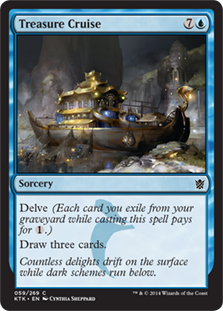
That said, anyone trying to use the results of the gauntlet to prove anything is wrong. Just click the link to the event and look at the decks there, really look at them. Did anyone actually think that a Bant Charm-splashing Zoo deck from 2011 would do well? Never mind hanging with 2019 Hogaak, how does a deck like that answer 2016 Eldrazi or 2015 Splinter Twin? It's just absurd to think that these decks are at all equivalent or that this was a good test of relative strength. As I led with, every deck was chosen from the time when the card was banned. They're tuned for widely disparate metagames and very different cardpools. Had Wizards allowed players to brew with the banned cards there would have been something to the event and the results it generated. But as-is, it was just a gimmick. There are no conclusions to be drawn from the Gauntlet. It was very fun, though.

Players Are Still Talking

Not that it won't stop players from talking. Fortunately, I've mostly seen players being level-headed about the Gauntlet and echoing my sentiments. It was quite a relief watching twitter reactions and seeing players discuss the decks being suboptimal and how they'd rebuild given the option. I was also surprised that the Treasure Cruise deck appeared to do so well. Wizards has not and probably never will release any data about the event, which sucks. I strongly suspect that Hogaak, Risen Necropolis was the clear winner, but without hard evidence I cannot say for certain. Nor can we use the data to extrapolate about the relative strength of any of the cards.

However, the anecdotal evidence suggests I was right. Comments and tweets indicate Hogaak performed best with Treasure Cruise aggro second and UW Eldrazi third. Twin, Pod, and Bloom Titan were pretty good but were most discussed in terms of needing a rebuild. Players were generally perplexed by Oko, Thief of Crowns being highlighted by a Ponza deck. Sunny Side Up was okay at best, if really annoying to play against. Considering that was the experience at the time, I'd say the gauntlet was a success in terms of explaining why Second Sunrise is banned.

However, I reiterate that just because players had certain experiences with the gauntlet, there's no reason to think they apply to current Modern. A lot of new and very powerful cards have entered Modern since Hogaak was banned. It's unlikely that the experience would be the same. Hogaak is still way too good, but we'd have a different experience and hate the gameplay for different reasons today than in 2019. And that's the reality that must be considered when discussing unbans.

What is Unbannable?

There was a time that discussing unbans was simple. When Wizards created Modern a lot of cards were preemptively banned. Wizards wanted a clean break from several less-than-optimal Standard and Extended metagames and so ensured that the best decks from them wouldn't define the new format. Over the years those cards have been gradually unbanned at a rate of roughly one every year, until all that's left from the original list are the absurdly unacceptable cards and all the cards that have earned a ban over Modern's lifetime. Which may explain why there's been no unbans since 2019, the longest streak in Modern's history. Which in turn suggests that Wizards doesn't think anything is unbannable anymore.
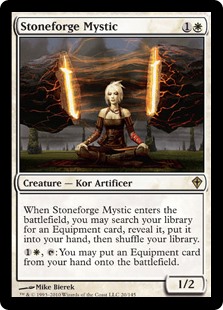
Wizards' Standards

Which is pure speculation because I don't know precisely how Wizards decides on unbans. Over the years, the general thread has simply been "We think this card is fine now." Often (but not always) it's been accompanied by a hope that the unbanned card will enable or enhance an archetype or strategy that is currently or historically struggling in Modern. As mentioned earlier, the unbans have also frequently accompanied major bannings. Golgari Grave-Troll's unban is the only one I recall Wizards explicitly saying that they were doing it then as compensation for the banning cards, but plenty of others have felt that way. All of which is quite ambiguous and leaves a lot of room for speculation on our part and discretion on Wizards' part.

The Problem

None of these observations bode well for the future of unbanning cards. We had the largest single ban since Modern's inception in February, and there were no compensatory unbans. Modern is now quite diverse, with many different strategies doing well. The only lacking strategy is combo and there's reason to think Wizards is fine with that. And given that the pace of unbans has slowed down since Grave-Troll was rebanned, there's reason to think that Wizards simply doesn't think that any cards are sufficiently fine now to take the risk. Once bitten, twice shy, as the saying goes; Wizards really doesn't want a repeat. When Stoneforge Mystic was unbanned they were emphatic about how risky they thought it was precisely to temper expectations in Grave-Troll's wake.
However, even if that wasn't the case, I'd still expect there to be very few unbans at all going forward. Unbanning cards is a great way to shake up a stale or suffering format, and Modern definitely isn't either of those things. I've heard that Modern is replacing Standard as the most played paper format, and just look at the churn evident in my metagame updates. Unbannings are a finite resource, and Wizards isn't going to just unban something to unban something. They need to be strategic and save it for when Modern really needs it, and so long as their current design continues to push lots of cards into Modern every year, they'll never needs to unban something just to shake things up. Thus, the likelihood of unbannings has dropped.

Is Anything Unbannable?

And now to address the big question hanging over everything. Given Wizards' inclinations, Modern's reality, and the cards actually on the Banned and Restricted List, are any unbannable at all? And that is a really good question. I'm on the record thinking that the Mirrodin artifact lands (weird that I need to specify the expansion now) and Second Sunrise could be unbanned, and I still do. However, I've also added caveats that there are risks involved in doing so. They're not clean unbans, and I don't think there are any of those anymore. There may never have been any at all... wait, there was Wild Nacatl. But other than Nacatl there were good reasons to worry about every unbanned card causing problems either in early Modern or down the line. And while time and power creep have made Ancestral Visions and Bitterblossom obsolete, Valakut the Molten Pinnacle continues to be a strong card.
As such, it's important to remember that every unban is a risk vs. reward question. If the risk of overpowering a current deck is higher than the rewards of adding the card, the unban shouldn't occur. However, as Grave-Troll showed, sometimes it's not the current Modern that's the risk but the future. Sword of the Meek did nothing in Modern until Urza, Lord High Artificer was printed. Wizards knows what's actually coming down the pipe and there may well be cards in the near future which might bust a card that seems innocuous. Therefore, we need to be careful about what cards we consider.
Unban Candidates

So, given all the hedging and qualifying I've done this article, what do I think could be unbanned? Frankly, the cards I've already mentioned, Sunrise and Ancient Den's cohort. And for the same reasons I did back in 2019. I'm tempted to just relink that article again and call it a day. However, my word count is not yet acceptable so I will continue. The problem is that there really aren't cards that strike me as low-risk and reasonable reward besides the aforementioned. There are lots of low-reward cards and some that are high-risk, high-reward as far as Modern as a whole is concerned. However, I do have an argument about one, fairly unexpected banned card that could be unbanned if Wizards is feeling adventurous.

Blazing Shoal

Blazing Shoal was banned because it's a turn 2 kill with Glistener Elf and a turn 3 kill with any other infect creature. Back in 2011, the only answers were Lightning Bolt and Path to Exile. Thus, in 2011, Infect killed too early too often and had to be nerfed.

Modern has changed a lot since then, especially in the past year with the evoke elementals and Prismatic Ending. There's enough removal now that the early Infect kill would be harder to accomplish, and the format has moved in a direction that precludes filling a deck with clunky uncastable spells to pitch to Shoal. It might not be good enough anymore.

Or it may still be an unacceptably fast kill made worse because the protection for it has also gotten better. It's not just that there's more removal; Blossoming Defense, Force of Negation, and Veil of Summer exist now to stop said removal. By unbanning Shoal, Wizards would be making a bet that their removal push is sufficient to answer one of Modern's fastest kills and/or their push towards Legacy-style card efficiency ensures that players can't take the risk on the deck.

Which is part of my ulterior motive with this unban suggestion. I want to know how confident Wizards actually is about the format they've designed, and Shoal presents a distinct challenge to that status quo. With a secondary secret motive that if Shoal's gameplay isn't answerable or acceptable, why do we tolerate Ragavan, Nimble Pilferer?

Splinter Twin?

Given my history, some readers may have expected my new unban suggestion to be Splinter Twin. And it isn't. I'm open to Twin being merely okay in Modern as opposed to dominating it as happened in 2015. However, the past two years have seen Izzet decks of varying archetype sit firmly in Tier 1. It seems unwise to give them yet another option. Maybe down the line when UR needs a boost, but certainly not now.

Temper Expectations

That being said, don't expect any unbans in Modern anytime soon. It seems to me that Wizards has better reason to keep cards banned than to unban anything. However, there's no way to know and it's equally possible that the Gauntlet heralds a major change. Just don't let hope overrule reason.

A Twitter Question Worthy of an Article

Are you a Quiet Speculation member?

If not, now is a perfect time to join up! Our powerful tools, breaking-news analysis, and exclusive Discord channel will make sure you stay up to date and ahead of the curve.

Inspiration for my weekly articles can come from the most unexpected places. Sometimes it’s a conversation I have with a co-worker, sometimes it’s a transaction, or sometimes it’s a market trend that’s too strong to ignore.

And sometimes, it’s a simple tweet.

That’s the case for this week—Ryan V (@MtgandFitness) copied me on a tweet recently with a simple-sounding, yet challenging question.

This kind of question is right up my alley as it deals with older cards, a sector of the market I pay close attention to. But it goes beyond just old cards—there are actually a number of cards that are expensive and aren’t on the Reserved List. As such, they should be on everyone’s radar as a potential reprint risk. Let’s take a look at some of the candidates I considered in answering this question.

My First Reaction: The Most Valuable non-RL Card Is


I overlooked the “oldest” qualifier in the question when I first read it. Therefore, I went to Card Kingdom’s website, sorted by value, and went through the list of cards until I found something that is not on the Reserved List and hasn’t been reprinted.

While it is a reprint itself, I made the [admittedly very loose] argument that the Japanese alt-art, Promotional Liliana, Dreadhorde General from War of the Spark was the most valuable non-Reserved List card. Technically, this version with this artwork hasn’t been reprinted since, so that was my qualifier when I shared this result. While you can argue it’s not old and it’s been reprinted, there can be little argument that this is the most valuable non-Reserved List card out there. At least, it’s the most valuable one that was printed in a normal, formally released set, non-misprint set (see how this can grow complex really quickly?).

From a finance standpoint, the price tag on this card makes it extremely vulnerable to reprint. I suppose the promotional printing of this card can never be reprinted—not with the same date stamp, at least. But if (when?) Wizards decides this card needs a reprint with this artwork in some custom product, expect this price to drop. Until then, however, I suppose the sky is the limit. I certainly have no plans to park any of my money in this card.

My Serious Answer: Portal 3 Kingdoms Cards

OK, so my first response was kind of cheating. It’s a reprint, it’s a promotional printing of a card, and it most definitely isn’t “old”. After being rightfully called out on my “cheese” answer, I took another shot at providing a more interesting answer.

That’s when it hit me – Portal: 3 Kingdoms cards would be great candidates for this question! The set came out in 1999, so the set is over 21 years old at this point; it is old enough to drink in the United States! In fact, it is so old that it could arguably have been included as part of WOTC’s reprint policy. The last set to be included in their policy was Urza’s Destiny, which came out a month after Portal: 3 Kingdoms.

Fortunately, Portal cards weren’t included in the Reserved List, so reprints of this set are fair game. To find the most valuable card in the set that hasn’t been reprinted, I simply sorted the set by price (high to low) and voila!

Hold on a second! Imperial Seal has been reprinted. It was a judge foil from 2016. That disqualifies it for the question as it was posed to me. Therefore, the winner must be
Zodiac Dragon!

The overcosted dragon creature card from Portal: 3 Kingdoms is old, has never been reprinted and isn’t on the Reserved List. It certainly is valuable, retailing north of $700. This is my official answer to the Twitter question.

From a finance standpoint, I’m neutral on holding some of these Portal: 3 Kingdoms cards for the long term. They aren’t on the Reserved List, and Wizards of the Coast has reprinted a number of these already. While Imperial Seal’s price didn’t seem to drop very much with a judge promo reprint, a more serious reprint could have more damaging effects.

And it’s hard to quantify the negative effects even a judge promo printing can have on a card. When Capture of Jingzhou was reprinted as a judge promo in 2017, the P3K printing definitely saw some pricing pressure. It took a couple years to recover, and eventually the card got back to its previous highs
but who knows how much higher it could have been, had it not been reprinted.

On the positive side, these cards are very difficult to reprint outside of a one-off thing, like judge promos. Wizards stopped printing cards that are designed off of real-life stories a long time ago, making it highly unlikely we see a new set like this one. I suppose some of these cards can show up in some sort of masters set, but this will happen gradually and likely one or two at a time.

With such a limited print run in English, I give folks the green light to invest here if they wish. I’d personally prefer something that is legitimately on the Reserved List, so I have WOTC’s assurance it won’t be reprinted. But these cards are rare, old, and difficult enough to reprint that they seem like a safe bet. Even when they have been reprinted in the past, they’ve recovered their price sufficiently to limit downside risk. The only challenge may be finding the market for this card—while it’s valuable, I can’t imagine you’d find collectors willing to pay $700 for a Zodiac Dragon every day of the week. An Underground Sea would be far more liquid and offers plenty of upside as well.

Honorable Mentions

While Zodiac Dragon was my official answer to the Twitter question, I continued brainstorming ideas that could have also been reasonable responses.

Before I could respond again, Michael Caffrey of Tales of Adventure offered his best answer:

This is a solid one given its $80 retail price tag. I personally think Zodiac Dragon was a better answer, but the enchantment from Shadowmoor is over 13 years old already and is surprisingly expensive.

There was an error retrieving a chart for Greater Auramancy

Another viable answer to the question was given to me by a Twitter/Discord friend of mine: Ydwen Efreet.

There was an error retrieving a chart for Ydwen Efreet

The red creature with an anagrammed name (“Wendy”) is a rare (U1?) from Arabian Nights, so it has every right to be on the Reserved List. But it isn’t. It also has never seen a reprint. I don’t know why, honestly, but the result is a $100 card. This definitely deserves an honorable mention.

Shevek_mtg (@ShevekMtg) chimed in with another interesting contender: Ice Storm.

There was an error retrieving a chart for Ice Storm

This isn’t the most valuable card on the list, but it is probably the oldest, valuable card that hasn’t been reprinted since Unlimited that isn’t on the Reserved List. It’s rather surprising, in a way, that this card has not been reprinted since 1993. It’s not overpowered, it isn’t hard to understand, and it doesn’t depict some real-life story. I suspect the only reason it hasn’t been reprinted is because it breaks the color pie. Green doesn’t normally destroy lands (though Tsunami and Creeping Mold have seen reprints aplenty).

From a finance standpoint, I’d be nervous about holding these cards. I suppose if they dodged reprint for a decade or two already, there is precedent that suggests WOTC doesn’t plan on reprinting them. But if you’re going to park some money in Magic cards, I see little reason to buy an Ice Storm or a Ydwen Efreet over something comparably priced, comparably aged, and isn’t on the Reserved List. Put that money in a Singing Tree or a Two-Headed Giant of Foriys instead, and you’ll have the same upside without the reprint risk.

Wrapping It Up

This question seemed really simple on its face, but it became a deep investigation into the history of Magic. It inspired me to research cards from a wide array of sets, ranging from Unlimited through War of the Spark! I looked at promotional cards, Portal cards, and everything in between. And my search wasn’t even close to exhaustive.

For example, I could have tried to find a card from Summer Edgar to provide as an answer. I’m not sure if there are any cards in that set that hasn’t been reprinted since, but there are certainly many valuable cards in the set that aren’t on the Reserved List. I could have also called out a specific misprint or unique card as a “cheese” answer.

I’m sure Shichiukujin Dragon would be more expensive than Zodiac Dragon. It’s also older, has never been reprinted, and isn’t on the Reserved List.

But this is probably cheating, right? I just mention this (along with the Richard Garfield proposal card, kid announcement card, etc.) so that people know I did at least consider them.

I’m sure there are other cards I overlooked, however. Do you have a legitimate submission to consider for Ryan V’s question? Feel free to submit them to me on Twitter (@sigfig8). I’m really happy he posed the question to me, and I encourage readers and followers to send me similar questions whenever they’d like. It just may be the inspiration for my next Quiet Speculation article!


How Watching My Wife Play Poker Improved My Approach to Magic

Are you a Quiet Speculation member?

If not, now is a perfect time to join up! Our powerful tools, breaking-news analysis, and exclusive Discord channel will make sure you stay up to date and ahead of the curve.

A Return to Competitive Play

The Store Championships at my Local Game Store (LGS) this past weekend was the first time I've played Modern competitively since before the pandemic. Going into the event, I was short Solitudes, or Ragavan, Nimble Pilferers to play either of my first two deck choices, Control or Grixis Death's Shadow. After an evening of testing to dust off the cobwebs, and with encouragement from friends, I opted to play Burn. I have past experience piloting the deck, and the full 75 sleeved and ready to go in my gauntlet of Modern decks.

I started 2-0 in the event, beating Hammertime and Temur Rhinos without dropping a game. Things fell apart the next two rounds though. With a quick loss to Grixis Death's Shadow in Round Three and an agonizing loss in Game Three of Round Four, I ended up 2-2 going into the last round of Swiss. The higher tables all intentionally drew, mathematically eliminating me from Top 8, so I didn't even stick around to play out the round.

At the casino with my wife that night, I quietly stewed in my anger and disappointment through a concert, and through dinner. It wasn't until watching her methodically crush the house at Caribbean stud poker, and cover a good portion of our expenses for the evening, that I realized my problem. It was not a single play mistake, though there were several, which I'll get to. Instead, it was my entire mental state going into, and throughout the event that sunk my tournament.

Stud Poker and Magic

Doing well at poker of any kind requires discipline and a solid mindset. Magic is no different in this regard. Caribbean stud takes a special kind of discipline, as you're not playing the others at the table. In Caribbean stud, you're only trying to beat the house. Players buy in with a minimum ante to see a five-card hand, with an option to buy into a progressive jackpot.

Each player and the dealer receive five cards, and the dealer turns one of their cards face up and reveals it to the table. After seeing the dealer's card, players have the option to raise or fold. To raise, a player bets twice their ante and loses their ante if they fold. After bets are made, the dealer reveals their cards. For players to play their hands, the dealer must make a minimum hand of Ace & King or better. Most of the strategy is determined by the card revealed by the dealer. You can read the complete rules and strategy of Caribbean stud here.

I've only ever played Texas hold'em. Watching my wife play Caribbean stud, and her approach to the game, made me realize some of the weaknesses in my approach to Magic that contributed to my losses.

Have Confidence in Your Game Plan

Because Caribbean stud is played against the house, the goal of the player is to assess their hand vs. the dealer's revealed card, and decide whether to play or not. With that in mind, my wife's game plan was relatively straightforward. Play the hands she thought the odds were good of beating the dealer and folding the rest.

A game plan in Magic, on the other hand, varies widely depending on format, deck choice, and matchup. Let's look at playing Burn in Modern. The goal of Burn is to deal 20 points of damage to your opponent before they can execute their own game plan. With the exception of Skullcrack and Searing Blaze, there is very little in Burn's main deck that you'd consider interaction. If you're pointing Lightning Bolts at your opponent's creatures and not at their face, you're not sticking to your game plan.

I'm a control player at heart. Even when playing a more proactive deck, my confidence is boosted when I have ways to interact with my opponent and their threats. This preference for interaction, I realize in retrospect, caused me to lack faith in the game plan of my deck. To have a better chance of winning, I either needed the mental awareness to set aside my preferences or have played a deck that suited me better. Confidence in my game plan would have started me out on a better foot, which leads to my next realization.

Have Confidence in Your Abilities

Only one hand at the poker table caused my wife a moment of hesitation. It was an Ace-King hand, with a Jack or Queen as well. It would beat any hand the dealer made that wasn't a pair or better, but the odds were not good. She elected not to play the hand, which turned out to be the right call, as the dealer made a low pair. At the tournament, I lacked the confidence in my own ability that she displayed here at the poker table. This was especially true in Round Three.

My Round Three opponent was Jacob Bard. Jake and I have been friends for nearly 15 years. He's a great guy, and one of the toughest opponents you're likely to find facing you in a tournament. I don't know what my record is against him in constructed, but I know it's not close. Jake was on Grixis Death's Shadow. We knew each other's decks going into the match because he was one of the people I tested with.

I could be wrong, but I feel like Death's Shadow is an even match for Burn. It might even favor the Burn player. Death's Shadow has better interaction, but their game plan also involves getting to a low life total to power out their primary threats. This plays into Burn's plan of killing them through damage.

Knowing the matchup, you'd think I'd have felt good about my chances. Instead, I lost before I even sat down. Why? Because in my head I'd already chalked up the match as a loss. I lacked confidence in my ability to beat Jake in constructed. Would I have felt the same if I were playing a different deck, or if this were a Limited event? Unless my Limited deck was a trainwreck, probably not. I feel good about my Limited game most of the time, though that varies with the format. As for a different constructed deck, I can't say. Having already lost the match mentally though, it was easy for me to walk into the misplays that followed.

In Game One, I decided not to chump block a 4/4 Death's Shadow and a delirious Dragon's Rage Channeler while at 14 life. I died to a flashed in Dressed Down for exactly lethal. In Game Two I took a more reserved approach. I fired off an early spell or two but was top-decking nothing but land. I had four burn spells totaling 13 damage, and a Path to Exile in hand. Jake was at 14, as we played draw-go. I needed to either draw another burn spell or have him damage himself to have enough to burn him out. Instead, he played Kroxa, Titan of Death's Hunger. This leads us to my next breakthrough.

Stop and Assess the Situation Before Deviating From Your Plan

As we discussed, the point of Burn is to chain your cards together to deal lethal damage to your opponent before their game plan comes online. I was at 16 life. Did I care about that Kroxa? I shouldn't have. Sure, the Kroxa was going to take one of the five cards in my hand, but this was its first cast. It would still need to be escaped for me to worry about it on the battlefield.

I went into panic mode though. With Kroxa's enters the battlefield triggers on the stack, I Pathed it and pitched a Lightning Bolt to its discard effect. In retrospect, what I should have done was calmly pitch my Path, and take this as my cue to start pointing all my spells at his face. With five mana I could cast two spells on his end step, and two more on my next turn. Had I taken a deep breath and assessed the situation, I might not have panicked. I might not have won, but at least by executing my game plan I'd have put myself in a position to do so.

When The Dealin's Done

I used to think it was a cliche that attitude meant everything. I'm slowly realizing just how much the right mindset can steer one towards better decision making, and by extension better results. How has a change in mindset improved your game? What changed? What's the biggest obstacle to improving your mindset when it comes to Magic? Let me know in the comments.

Big shout out to my buddy Jake for going on to take down the whole event, and my wife for inspiring this article. If she ever decides to take up competitive Magic, we're all in trouble.

One Simple Trick To Get Better at Magic: Opponents Hate This.

Are you a Quiet Speculation member?

If not, now is a perfect time to join up! Our powerful tools, breaking-news analysis, and exclusive Discord channel will make sure you stay up to date and ahead of the curve.

One Simple Trick

In my view, the skills required to do well in Magic are misunderstood at times. Rather than the idea of taking a singular complex problem and trying to solve it, Magic rewards taking many simple problems and solving them with consistent force. In other words, the singular decisions presented in a game of Magic aren't that difficult. The difficulty is derived from the fact that every turn many decisions will be thrown at you, and you will be punished for any inefficiency in your handling of those situations.

To illustrate further, imagine pulling out a picture of a game state in Magic, maybe from a what’s the play or feature match. I believe the ability to solve for that situation is far removed from what is required to be successful as a Magic player. Of course one needs the ability to be able to make sense of game states and find efficient lines. The skill that will differentiate a top performer though, is the ability to consistently solve for the situations presented to them turn after turn, not just finding a good fix for one specific case.

Learning From Feature Matches

It might be difficult to wrap your head around how every small choice you are given can add up Ă la butterfly effect. Viewing some feature matches throughout the ages, it becomes explicitly clear how every small decision quickly adds up. Watching some of these might inspire one to take more thought on all the small things in their own games.

Ok, so how can I go about trying to improve my microdecisions in Magic?

Slowing Down


One of the easiest ways to give up equity is fumbling through your turns, making decisions too quickly. It’s much better to be a Nassif type and carefully consider every small detail, than running through your turns at a sprint. Taking the time to consider your options in front of you can make it so much easier to see the puzzles presented and try and solve for them.

To get a clearer picture of what I am talking about feel free to check out some of the old gameplay videos from Huey Jensen, Reid Duke, or Paulo Vitor Damo da Rosa. Notice the way they navigate their turns, meticulously pondering the pros and cons of various lines, and then making a play. As I wrote above, It isn’t that the decisions themselves are that difficult, much of the difficulty lies in the ability to consistently behave like this every time you have decisions to make.

Awareness

The overarching idea here is awareness. Awareness of how your decisions can impact external events, and in turn, awareness of how external factors can impact your decision-making. Feeling well physically and mentally is vital. Taking time to reflect on how to be in a good state physically and mentally for Magic events is imperative to be able to achieve a state where you can consistently make good decisions.

Conclusion

Being aware of all this should steer one in the right direction on how to maximize their efficiency for decision-making when playing Magic.

Have You Played Commander for Points? Try These Ideas!

Are you a Quiet Speculation member?

If not, now is a perfect time to join up! Our powerful tools, breaking-news analysis, and exclusive Discord channel will make sure you stay up to date and ahead of the curve.

Magic is a great game that tests players in a variety of ways. It rewards mastery in multiple different areas from deck design to complex rules interactions, from making the most optimal plays to taking calculated gambles. Ultimately, competitive players are looking for the win at the end of their games. However, if you've been reading my articles, hopefully, you can see that when playing in less formal settings there is a value outside of simply winning.

Winner-Takes-All and First-Past-The-Post encourage a particular kind of deck design that rewards efficient players with wins! There are piles of articles that focus on maximizing win chance (coming here soon!) but let's talk about how to reward players for simply playing Magic and worry about winning later. In a word, "Points!"

Playing for Points is not a new idea in Commander and with good reason. It breaks up the monotony of the meta by altering the value of virtually every card and strategy; playing for Points is a deck builder's dream! Maximizing points is a Spike's dream, and, seeking to end the game is usually less important than gaining more points. Rather than heavy-handed house rules like outright bans, reward players with points to guide them to fun!

How to Institute Points

Astute readers will see that I have suggested using a "competitive event" to disburse rules for a casual format, and may think that is sort of weird. Here's the thing; casual players don't need points—competitive players do. Casual players who are just playing for fun are likely already trying to do the things you will award points for; competitive players likely discount things that award points because in many cases they severely damage win chance. However, there is a fairly large difference between having an event called a "tournament" and having a competitive event for significant stakes; especially when what's up for grabs is bragging rights and a big reward—for the next event!

Different Types of Points

Firstly, there are three main point categories: Play Points, Build Points, and Fun Points. All points are added together to determine the overall score of a particular player.

Play Points are simply those you can earn during a game of Commander and various events that happen and game outcomes. Build Points are earned as soon as you present your deck and announce to the table what your starting amount of points is before you even draw your opening hand. Finally, Fun Points are points awarded by the players to the *other players* at their table/pod and this happens after the game is over.

What follows are a variety of different suggestions, some of which you have likely heard of, seen, or used. Feel free to use some, all, or none. Note that with any given point structure there are consequences. These point suggestions do not penalize players—they merely seek to reward *a lot* of suboptimal play so that players can focus on simply sitting down and playing a game of Commander and feel rewarded even if they do not win. In most cases awarding players points for playing more interactive cards is more effective than punishing players for playing "problem cards" or strategies, although I have seen groups try that as well.

Play Points

  • "The Win": 2 Points for the last player standing.
  • First Blood: 1 Point First instance of Combat Damage dealt to a player.
  • First Blood; Part 2: 1 Point First instance of Commander Combat Damage to a player.
  • Even More Firster Blood: 1 Point Dealing the first instance of damage to another player.
  • Commander Classic Win: +1 Point Per player eliminated by 21 points of Commander Damage (Sorry Skithiryx, the Blight Dragon!)
  • Losing Isn't All That Bad: 1 Point if you are the first player eliminated.
  • Pure RNG: 2 Points Unless forced by an opponent, never shuffle your deck.
  • Steroids: 1 Point Make the absolute largest creature of the entire game (combined Power+Toughness)
  • We're Playing Commander, DUH - 1 Point for the first time you cast your Commander
  • It's Good to Be the King/Queen: 2 Points The very first player to become the Monarch. Afterward: 1 Point (All players can achieve this only once!)

Build Points

  • No Sol Ring In Deck: 1 Point
  • Lands in deck are only basic lands: 1 Point
  • Deck contains at least 2 cards with "Banding": 1 Point
  • Deck contains at least 2 cards from Homelands set that are not Blue: 1 Point
  • Deck omits artifacts: 1 Point
  • Deck omits infinite combos: 1 Point
  • Deck omits extra turn cards: 1 Point
  • Deck contains the most "Homarids" at the table: 1 Point
  • Deck contains only cards from 1 single set of Magic: 1 Point

Fun Points

  • Who was the most fun to play with: 1 Point
  • Who had the coolest deck this game: 1 Point

Note that if you have multiple players that all have the same outcome or highest amount or simultaneous events occur, award all of those players the point(s).

What Would a Max Point Deck Even Look Like?

Veteran players will note that many of these suggested points reward extremely aggressive decks with low-cost commanders. The nice thing is low-cost removal is an effective way to force additional interaction and extend the game. When everyone is playing a one or two mana commander that instantly gets killed
 now all commanders cost three and four. Every turn a player is re-casting their formerly low-cost commander is another turn the entire table gets to develop. Goblin Guide is a great way to get First Blood and Even Firster Blood, BUT, it dies to most removal, it has extremely low value as a game goes on, and the best part - it's highly Interactive! Did I mention Flailing Soldier? Sometimes players beg to be the one attacked by Goblin Guide so they can get a land; if that is not the Heart of Commander, I don't know what is!

Playing for Points is More Engaging

When one player is massively ahead a game might feel like it's over; some players mentally clock out of said game. Worse, it can feel like a game is "over" when someone resolves a big spell or you miss a single land drop and fall behind. However, when playing for points, there's always a chance to score another point, help someone else score a point, or prevent another player from scoring. Merely needing one card to become the Monarch can be the difference between a discouraged player and someone who is still invested in the game. Half or more of your points can come from deck building and being a fun, social, player. Just the action of the group sorting out points is quite different from a Winner-Takes-All outcome where once the game is over, it's over. Talking about the scores can keep players engaged and interested because being behind by two or three points is a lot more manageable than having a gigantic "L" on your first-round record.

The Stakes

Winning the event comes with a powerful reward but also a huge responsibility; the ability to institute new points! Now that is playing with power! Because your winner had the most total points it's extremely likely that they have some kind of twist that will be fun and by all rights, they adhered to the Heart of Commander better than any of the other players. Part of embracing a casual environment is to allow the players to "fix" the local meta with their own house rules as I previously mentioned here. Maybe that particular player just does not like Infect, or Creature Tokens, or Enchantments, or feels they are overplayed in the current meta and wants to reward other strategies -/+1 Point for omitting said game element. Some rules will inevitably be popular and become adopted as permanent points, others will last just for a single event.

What Happens if you Tie?

Event management, please make sure you have a great and dramatic solution in the case of a tie! Here are three:

The tied players play 1 more round with their Commander decks. The downside is this takes forever.

The tied players all win in which case they each get to institute a new rule for the next event.

The tied players play a Magic Mini-Game like Booster Blitz, or some variation thereof. This mini-game has existed for years, and works great as a fast and fun tie breaker!

Welcome to Commander, Where the Rules are Made up but the Points Matter!

If your local Commander group is getting a little too competitive and there seems to be a neverending arms race to combo off on turn three or four, try an event with points instead of wins.

Have you played in a Commander event, league, or just casual match that utilized points? Post your favorite ways to earn points in the comments!

Avatar photo

Joe Mauri

Joe has been an avid MTG player and collector since the summer of 1994 when he started his collection with a booster box of Revised. Millions of cards later he still enjoys tapping lands and slinging spells at the kitchen table, LGS, or digital Arena. Commander followed by Draft are his favorite formats, but, he absolutely loves tournaments with unique build restrictions and alternate rules. A lover of all things feline, he currently resides with no less than five majestic creatures who are never allowed anywhere near his cards. When not Gathering the Magic, Joe loves streaming a variety of games on Twitch(https://www.twitch.tv/beardymagics) both card and other.

View More By Joe Mauri

Posted in Commander, FreeTagged , , , Leave a Comment on Have You Played Commander for Points? Try These Ideas!

Have you joined the Quiet Speculation Discord?

If you haven't, you're leaving value on the table! Join our community of experts, enthusiasts, entertainers, and educators and enjoy exclusive podcasts, questions asked and answered, trades, sales, and everything else Discord has to offer.

Want to create content with Quiet Speculation?

All you need to succeed is a passion for Magic: The Gathering, and the ability to write coherently. Share your knowledge of MTG and how you leverage it to win games, get value from your cards – or even turn a profit.

Want Prices?

Browse thousands of prices with the first and most comprehensive MTG Finance tool around.


Trader Tools lists both buylist and retail prices for every MTG card, going back a decade.

Quiet Speculation