menu

Companion of the Week: Metagame Breakdown

Are you a Quiet Speculation member?

If not, now is a perfect time to join up! Our powerful tools, breaking-news analysis, and exclusive Discord channel will make sure you stay up to date and ahead of the curve.

When working with data, scale is everything. Just as an area looks very different when using Google Streetview versus Google Maps, the context, meaning, trends, and ultimately the conclusions reached from the data will depend heavily on the scale it's examined on. This is the reason that economics is split between micro and macro level analysis: the former is a zoomed-in study of individual behavior, while the latter is a zoomed-out study of aggregate behavior. We have explored the macro-level analysis of companions in Modern. This week, we'll dive into the micro story.

At the conclusion of last week's article, I mentioned that I saw possible trends developing, and that I wanted to keep monitoring them. As shown in that data, the metagame has been substantially changed by the addition of companions. However, the nature of that change is continuing to evolve.

Early indications and assumptions were that Lurrus of the Dream-Den would be the companion for Modern. This has largely proven true, but the picture is growing complicated. Looking at the data on a micro level asks a lot of questions about the effect the companions are having on Modern. And the impact is less clear than before.

The Big Picture

Companions hit Modern in a very big way. The old metagame was focused on midrange decks, particularly those built around Uro, Titan of Nature's Wrath. After Ikoria hit MTGO, the non-black midrange decks fell away and were replaced by Lurrus decks. Specifically, Burn, GBx midrange, Prowess, and Toolbox decks were the top four individual decks by a decent margin. All of them ran Lurrus, though Toolbox sometimes had Zirda instead. Burn and GBx had been tier 1 decks prior to Ikoria, while Prowess was low-Tier 2 and Toolbox was effectively untiered. They create a strong argument that Lurrus is affecting deck viability, and the fact that 66% of decks in the sample used a companion indicated that it was better to have companions than to not. Only Amulet Titan never ran a companion and still placed highly.
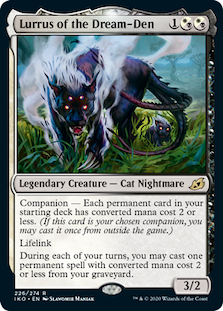
If one was to just look at that picture, it would be easy to conclude that Lurrus has taken over Modern and is too powerful. However, there's a big caveat to that conclusion: the decks that are doing well with Lurrus now are primarily decks that were already good. Therefore, a more detailed examination is required to see what, if anything, is the actual problem.

Week 1: 4/20-4/25

To do this, I'm going to examine the week-by-week metagame data. My source is the official Wizards MTGO decklist posts. I'm using all the non-League data, since Wizards doesn't curate the event lists. Wizards also doesn't reliably post all of the events, so I'm definitely missing a few datapoints. However, there's no guarantee that other sources, namely MTGGoldfish, will have those missing lists, either. The total completeness of the data being slightly less important than source consistency, I'm sticking with Wizards.
Also, as with last week, I have grouped some of the results into Other. There are too many decklists to effectively work with otherwise, and the Other category is a good indicator of rogue deck populations. Because I'm working with smaller individual data sets, the Other bar was moved down. With the hundreds of entries in the macro data, five was a good cutoff. Now that each week has less than 200, the line falls down to three. A deck will be listed individually if it has three or more entries in a week and below that it's an Other.

I'll also remind everyone to focus on the metagame percentages rather than the raw numbers. Each week had different populations so the total numbers aren't comparable. Relative populations are comparable, and so that's what I'll be discussing. Also note that the percentages aren't perfect in all cases due to rounding.

Deck NameTotal #Total %
Other2923.2
Burn2217.6
GBx Midrange1713.6
Toolbox97.2
Grixis Delver86.4
Prowess75.6
Humans75.6
Hardened Scales64.8
Amulet Titan54
Temur Urza32.4
Dredge32.4
Neoform32.4
Bant Snow32.4
UW Control32.4

Week 1 is the starting position. By itself it doesn't really mean much, other than to show where players' heads were at the start of the metagame. And clearly, players were thinking fiery thoughts. Burn is the most-played individual deck by a fairly wide margin. GBx, which is primarily Jund with some Rock, is in second, with Toolbox a distant third. This is notable particularly because Toolbox wasn't a deck before this week. The Other category is very large, indicating a large amount of experimentation.

Companion Stats

However, it's the companions that we're all actually here for. I recorded every companion that was actually played as a companion (Lurrus saw some maindeck play) as I went through the decklists. I'm also including each companion's metagame share, measured by dividing its total population by the total decks in the weekly sample.

CompanionTotal #Total Metagame %
Lurrus6451.2
Jegantha75.6
Yorion32.4
Umori10.8
Zirda10.8

Roughly 60% of decks had a companion, and for most of them, that companion was Lurrus. When one card is present in half the decks in a sample, there's arguably a problem. On the other hand, this was the first week and Lurrus was the obvious card; it's unclear if this saturation is indicative of actual power, or popularity. I'd expect new cards to see heavy play the first week. It's the trends over the subsequent weeks that actually determine power.

Week 2: 4/26-5/2

Which is an excellent segue into Week 2. With more time to refine and experiment, players had a more accurate picture of Ikoria's actual power and began to adapt accordingly. A note on the data: the Other category dropped significantly in Week 2 and stayed down. However, this isn't an indication of metagame narrowing. Rather, more decks started to cross my threshold, likely due to fluctuations in the weekly populations. The metagame was at least as open as Week 1, and possibly more.

Deck NameTotal #Total %
Other2212.9
Burn1810.5
GBx Midrange137.6
Prowess137.6
Bant Snow116.4
Toolbox116.4
Amulet Titan105.8
Ponza105.8
Temur Urza84.7
Humans84.7
Hardened Scales84.7
Ad Nauseam84.7
Eldrazi Tron52.9
Neoform52.9
4C Snow42.3
Niv 2 Light42.3
Gx Valakut42.3
Infect42.3
UB Control31.7
Dredge31.7
Grixis Death's Shadow31.7

While Burn is still the most played deck, its margin has fallen significantly. As the ~7% drop is far greater than Prowess' 2% gain, this change cannot be a function of players switching decks. I conclude that it instead represents an actual change in deck viability. This is further suggested in GBx losing 6% while still holding second place. The metagame was broadening in Week 2.

Companion Stats

This is reinforced by the companion data. In Week 1, Lurrus was the top cat-like thing and it wasn't close. In Week 2, Lurrus was still the big cat, but not quite so big.

Deck NameTotal #Total Metagame %
Lurrus7443.3
Yorion2112.3
Obosh105.8
Zirda42.3
Jegantha31.7
Gyruda21.2

While companions as an overall share of the metagame have increased to ~66.7%, Lurrus' share has fallen by ~8%. The broadening of the metagame on a deck level is reflected in a diversification of companions. It took a week, but the UGx players figured out that they could run Yorion, Sky Nomad just by adding more cantrips, which helps their math problem. Meanwhile, Obosh, Preypiercer was leading a Ponza revival.

Week 3: 5/3-5/9

Week 3 is where trends can actually start to be established. And the general pattern from Week 2 does hold. The metagame continued to broaden relative to Week 1. Other was up by ~3%, though there is one fewer listed deck.

Deck NameTotal #Total %
Other2915.8
Toolbox189.8
GBx168.7
Prowess147.6
Amulet Titan126.1
Bant Snow126.1
Temur Urza126.1
Burn126.1
Ponza84.4
4C Snow73.8
Gx Valakut52.7
Humans52.7
Grixis Death's Shadow52.7
Ad Nauseam52.7
Eldrazi Tron42.2
Hardened Scales42.2
Mono Green Tron42.2
UB Control42.2
Infect42.2
Hammer Time31.6

Burn's descent continues. It's no longer top deck, instead tied for 4th place with resurgent UGx decks and Amulet Titan. In its place, Toolbox shot up 3.4%, the largest increase by any deck. GBx has also stabilized and recovered some ground from Week 2. Prowess too held its ground, both relatively and absolutely. It was third with 7.6% in Week 2, and still third with 7.6% in Week 3.

Companion Stats

As seen in Week 2, the companion picture continued to broaden. Lurrus had lost favor relative to the other companions and continued to do so while the overall companion saturation grew. But only slightly.

Deck NameTotal #Total Metagame %
Lurrus7641.5
Yorion3318.0
Obosh73.8
Jegantha73.8
Zirda21.1
Umori10.5
Lutri10.5

Companions now represent 69.2% of the metagame, with Lurrus in a mere 41.5% of all decks. However, the rate of change has decreased to ~2% in both cases. This indicates that an equilibrium is being reached and confirming that trend was a primary reason I didn't do the micro analysis before. I wanted to see if the trends continued into Week 4.

Week 4: 5/10-5/16

And then everything got weird. Some trends continued as expected, while a number of others went haywire. Far from indicating that the metagame had started to settle, the Week 4 data suggested greater volatility.

Deck NameTotal #Total %
Prowess2615.6
Other2012.0
GBx1911.4
Ponza127.2
Amulet Titan106.0
Burn84.8
Mono G Tron84.8
UW Control74.2
Gx Valakut74.2
Eldrazi Tron74.2
Bogles63.6
UGx Reclamation53.0
4C Snow53.0
Storm53.0
Temur Shfit53.0
Ad Nauseam53.0
Bant Snow42.4
Hardened Scales42.4
Toolbox31.8

While Burn has continued its steady decline, Prowess has shot up to the top of the metagame, gaining 8% in a week. At the same time, Toolbox has crashed, losing 8%. While I have no proof, I can't help feeling that the two are linked. Many Prowess decks run Gut Shot, and Toolbox is full of X/1 creatures it needs to get the ball rolling. Prowess was able to effectively disrupt the top deck and race it. It's a logical conclusion, but I have no evidence to prove it.

Meanwhile, the UGx decks that were looking to recover from their week-one pounding have crashed again, with Temur Urza failing to appear. Some of this may be changing decks. There were a number of Temur Scapeshift decks using Urza to fill out their lists to run Yorion. These lists are strategically distinct from Temur Urza lists, and even if I did count them, their numbers are still far below the previous week's. Some of this could be linked to the rise of Ponza, which had been preying on UGx in the old meta and has gained ~3% in a week.

Companion Stats

The companion picture, meanwhile, is getting more complex.

Companion Total #Total Metagame %
Lurrus7243.1
Yorion1810.8
Obosh127.2
Jegantha84.8
Kaheera21.2
Gyruda10.6
Zirda10.6

The trend appears to have reversed. Lurrus is up 1.6% from the previous week, but companions overall are down by ~1%. This is a very small fluctuation and may represent normal variance rather than a genuine change, but it does still suggest that companions have achieved their maximum saturation. Yorion fell off by ~7% while Obosh surged by ~3%, which suggests that players are continuing to experiment with their decks and the metagame.

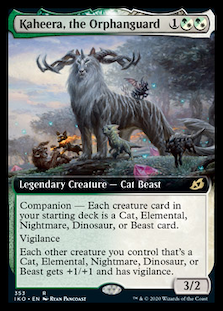
The number of represented companions remains seven, but the composition has changed. Kaheera, the Orphanguard makes its debut, but not as a lord; instead, several UW decks decided to go creatureless so that they always have Kaheera as a threat. I question whether this will be a sustained trend or just a flavor of the week.

Trending Now

It can be daunting to try and deduce anything meaningful from tables of data. To that end, here's the visuals on companion in the Modern meta.
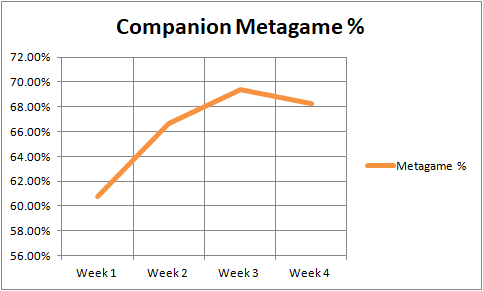
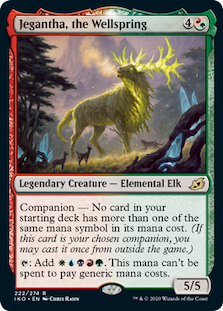
Companion started out with a very high metagame percentage, as Lurrus was expected to be very strong. The set was just out, but only one copy of Lurrus was needed per deck. Thus, once the supply issues were overcome, Lurrus was and has been readily available.

What's significant is that its overall gain has been muted. Companions have gained ~8% metagame share over the sample time, which would be very significant had it started out low. However, when ~51% of the field was running Lurrus from the get go, the increase is less impressive. This is complicated when looking at the individual companions.

Who's My Best Buddy?

Again, Lurrus was billed and expected to be the premier companion. And it has been. However, what that means has changed dramatically. Initially, Lurrus was the companion in Modern, and it looked like it was necessary to have Lurrus specifically to win in Modern. That narrative has weakened, and now it looks like Lurrus is merely the best companion rather than the paragon.
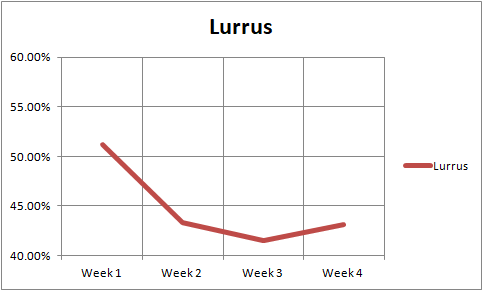
It's no exaggeration to say Lurrus has fallen off. It's down 8.1% from Week 1 despite a small rebound in Week 4. Some of the fall off must be linked to the rise in other companion decks. Part may be that Lurrus isn't quite as impressive as billed for many players. And then there's metagame adaptation.

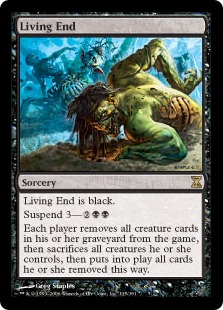
Lurrus being a Modern card was fairly obvious, but the other companions weren't so clear-cut, and now they're rising. The only companion that hasn't shown up in the data so far is Keruga, the Macrosage. This isn't a format where decks can just not play anything for the first few turns. The only way around this restriction is cycling decks, and Living End isn't exactly tearing it up. However, of the other non-Lurrus companions, only some are having a real impact. And the picture that emerges when considering only those decks that consistently show up week-by-week and have appreciable metagame impacts is very cloudy.
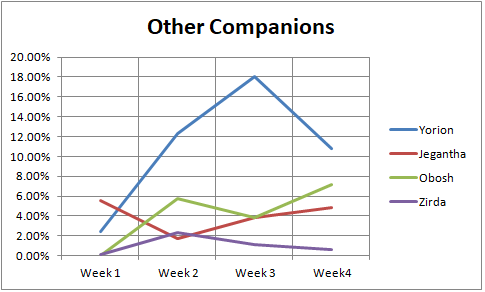
All of the non-Lurrus companions  have gained metagame share since 4/20. However, the only one that isn't down from its peak is Obosh, the Preypiercer. And Zirda is just above its starting position. Yorion fell off significantly last week while Obosh was rising. Again, this may a predator/prey relationship if the old metagame dynamics are to be believed. In any case, it seems that outside Lurrus, players are still figuring out the companions and it isn't clear what, if any, place they have.

Top Tier Evolution

Meanwhile, the actual tier list isn't any clearer. I identified Burn, GBx, Prowess, UGx, Amulet Titan and Ponza as the big decks previously. That picture is obvious when taken all together, but when looked at on an individual level, there's far more happening that I'd anticipated.
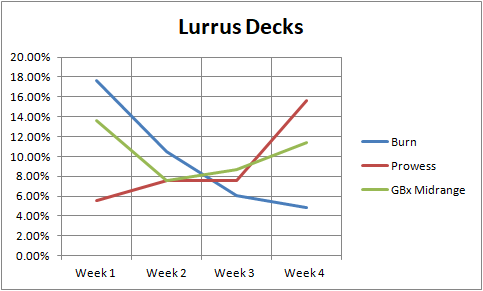
Burn has been on a steep decline since 4/20. GBx has shown a steady recovery since 4/26, while Prowess has skyrocketed into top tier. In other words, there is no consistency in results for the Lurrus decks. Having the companion isn't a predictor of success, and the old metagame forces are still active. This is further demonstrated when considering the non-Lurrus decks.
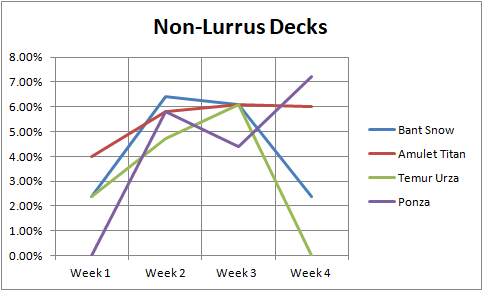
The only companionless deck is Amulet Titan, and it just keeps chugging along. All the other decks show high volatility. Temur Urza has crashed out, Bant Snow is back where it started, and Ponza had a great week. There is little to indicate that the companions themselves are affecting viability. Given the high variance in the high-placing decks (including the Lurrus decks) the question of correlation or causation remains murky.

Companion Viability

To examine that question, I looked at the decks I consider companion-dependent. These are decks with either actually none or no appreciable (>1%) impact on the pre-Ikoria metagame, but did show up in the post-Ikoria data. The argument they make is for correlation, not causation.
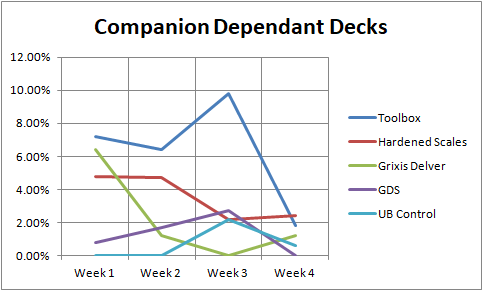
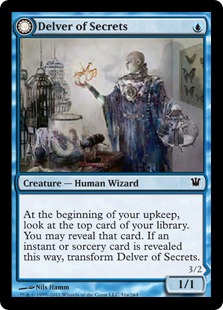
Every single deck is down from its peak. Last week, Toolbox fell precipitously, while Grixis Death's Shadow disappeared. Grixis Delver failed to place Week 3 and just snuck into Week 4. Hardened Scales is sticking around, but the evidence does not support it being a serious contender in the overall metagame.

None of these decks held any sort of metagame share before companions. Adopting companions did make them considerations, but they haven't remained as such. My takeaway from this result is that companion does not change deck viability. A power or consistency boost doesn't necessarily improve a fundamentally weak strategy enough to compete with the proven decks.

A Complicated World
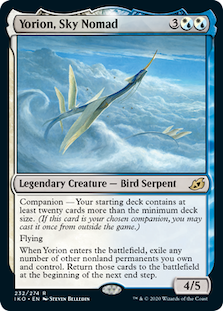
Companions are saturating the Modern metagame. There's early indication that the saturation has peaked. There is evidence that companions are best used in otherwise strong and highly-tiered decks and that they aren't affecting overall metagame diversity. However, the metagame remains highly volatile, and is therefore still developing.

I think this last point is why Wizards hasn't taken action on companions in Modern yet. With all the volatility, I can't point to any one deck, or even conclusively point to Lurrus, as being an actual problem. It's the overall environment that looks unhealthy. By the traditional metrics, Modern is perfectly fine. There's no one deck that is overpowering or warping the format. Diversity is similarly unaffected. The saturation of the companion mechanic is the concern.

Given what was said in the banning announcement, I believe that Wizards is hoping that companion can be salvaged. A lot of effort went into the cards, and as a flagship mechanic, they don't want to simply throw it away. They're looking at the data and seeing the format volatility, and they also have actual win rates, waiting for stronger trends to emerge. The hope is that the data justifies a targeted ban on a single companion or card. I'm growing increasingly skeptical of the possibility in light of my data showing that companion representation is diversifying. I think we're looking at either a sweeping ban or a complete rules reworking in the next month.

Misprints, Signatures, and Crimps

Are you a Quiet Speculation member?

If not, now is a perfect time to join up! Our powerful tools, breaking-news analysis, and exclusive Discord channel will make sure you stay up to date and ahead of the curve.

It’s been a while since I purchased an assortment of cards with the intent of selling them individually and grind a profit. It’s also been a while since I dealt in foreign cards. And I’ve never dealt in printing errors and crimps before.

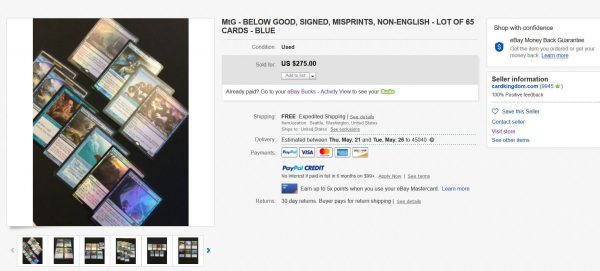
Yet in a world where everyone is staying home most of the time, I saw a recent eBay listing from Card Kingdom that tempted me to roll the dice.

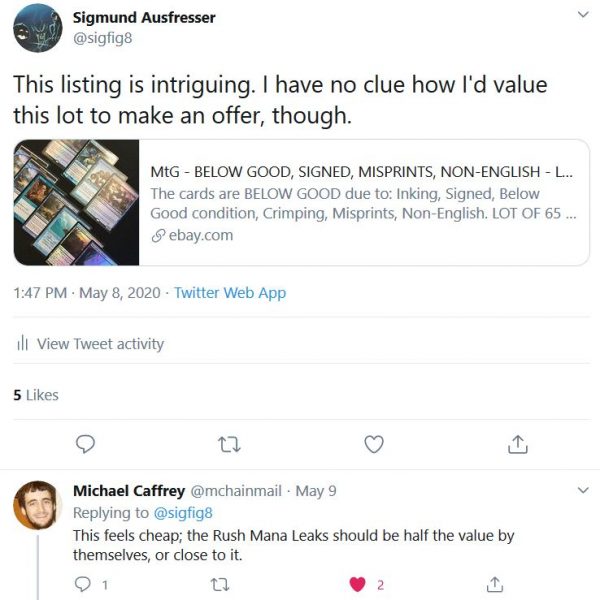
I tweeted this link to the masses, half expecting someone else to jump on the deal. It was Michael Caffrey’s tweet that finally convinced me to pull the trigger.

I had the time to piece this lot out. Being stuck at home, even a modest profit would still be worthwhile. Besides, the Old School player in me noticed that crimped Flying Men. Card Kingdom’s asking price was $275; I offered $252.52 and they accepted minutes before the offer expired. After tax, my cost was $270.20, not accounting for eBay bucks.

The Contents

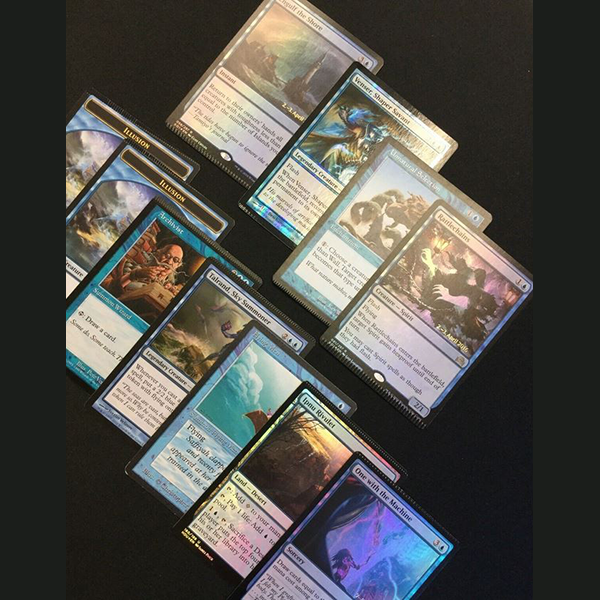
A few days later the cards arrived. Within this lot was an assortment of crimped, misprint, signed, foreign, and damaged cards—some were even foil! It was a really cool collection and for just a brief moment, I considered keeping the lot for use in Commander. But I reminded myself that this was a quest for profit, so I started sorting out the cards.

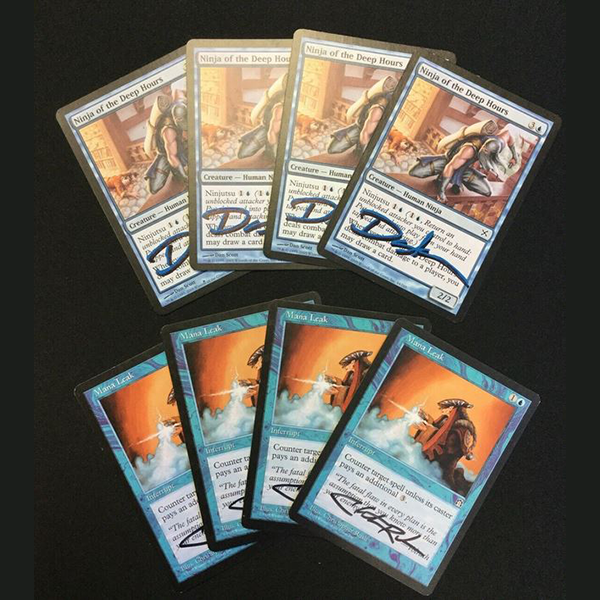
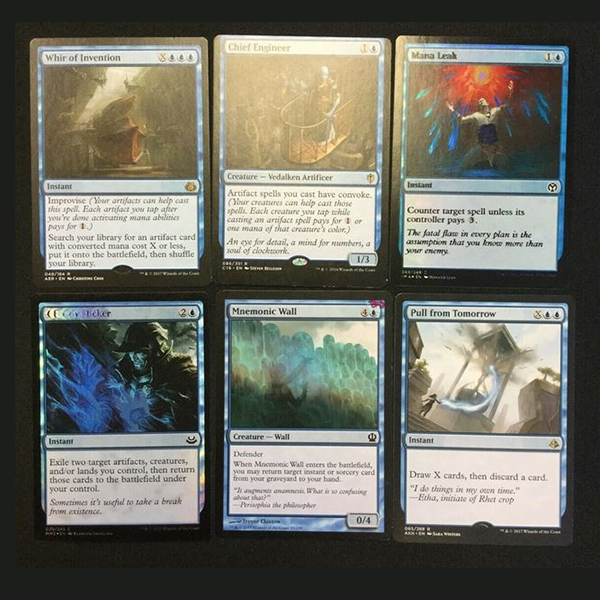
The eBay listing contains photos of all the cards in this lot. Here are a few highlights:

Now I was faced with a couple key questions. First, where could I sell such an interesting assortment of cards? And second, how much should I ask for? It was time for some education!

What Exactly is a Crimped Card Worth?

When I started posting these cards for sale, fellow Quiet Speculation contributor Malcolm Moss (TPBlaster in Discord) told me about the misprint Facebook groups where I could post these. There are groups for minor and major misprints, as well as a group for signed cards. I clicked to join all three and was quickly granted access.

I posted pictures of my wares and started getting PMs within minutes. The crimps were especially popular, and I was surprised that even cards with only modest playability still had demand! The other thing that surprised me was the nearly-zero overlap in what buyers wanted. It may have been luck or just plain coincidence. But it seemed like every new PM inquired about a different card, enabling me to sell more than I anticipated.

This makes it sound like selling crimps and misprints is easy, and that’s only partially true. Finding interested buyers in quality crimps and misprints is easy. Providing prices without leaving a ton of money on the table is a whole different ballgame. This is where I required the most education because I had never dealt in these cards before. You can’t just search for “crimped Rattlechains” on eBay and browse completed listings for pricing. These are often one-in-a-million cards, and pricing really depends on what someone is willing to pay.

There was an error retrieving a chart for Rattlechains

Luckily, one of the interested parties on Facebook provided me with some coaching. He instructed me that any playable (the term is used loosely here) misprint or crimped card should go for at least a few bucks, and as much as $10. If anyone offered less, they were looking for a steal. I applied this rule of thumb, but I didn’t receive many offers that were blatantly poor. In the one or two cases where offers were low, I provided a counter-offer and we found a middle ground.

Selling the Signed Cards

Similar to the crimped and misprint cards, selling the signed cards wasn’t very difficult but pricing was a challenge. Again, I was amazed at the diversity in what folks were inquiring about; it seemed like every PM I received was about a new card, enabling me to sell through this lot fairly quickly.

Pricing, however, was once again a challenge. I could readily look up what a Ertai, Wizard Adept sells for. But does a signed copy merit any premium? I know a couple artists’ signatures fetch a premium, but what about some of these modern-day Magic artists? Are their signatures worth any premium? How about the “shadow signatures” on a couple of these cards?

These were all questions I set out to answer.

In the end, I came up with a simple rule of thumb. Assuming the signature wasn’t particularly rare (more on this in a moment), I took the base value of the card and added a couple bucks for the signature. I figured a small premium was merited here—otherwise, someone wouldn’t be messaging me to make a purchase. This approach held up well, and most interested parties were reasonable in their offers.

In fact, in most cases I didn’t even provide specific pricing. If someone messaged me expressing interest in a card and asking for my price, I would reply with the card’s price on TCGplayer, and ask them to make an offer that made it worth shipping. Usually, this resulted in a $2-$3 premium, and I happily accepted. I had many cards to move, and negotiating over every dollar was not something that interested me.

The last thing I want to touch on here is the gold gem of Card Kingdom’s lot: the Christopher Rush signed Stronghold Mana Leaks.

There was an error retrieving a chart for Mana Leak

There were completed listings on eBay for these: a complete set sold not long ago for $84.99. I hoped to get close to $75 for the set, discounting the eBay fee. Unfortunately, one of the cards had some ink on the back; it likely rubbed off from some other signed card while the ink was still wet. This hurts the value of that one copy significantly.

I received a great deal of interest in this playset, but most prospective buyers balked at either the price or the inking on the back of the one copy. Finally, I found an interested buyer who didn’t fret about the inking and knew these had significant value. We ultimately agreed on a price of $68.50 for the playset—a little lower than I had hoped, but enough to help me recoup a good chunk of my costs.

The Foreign and Damaged Lot

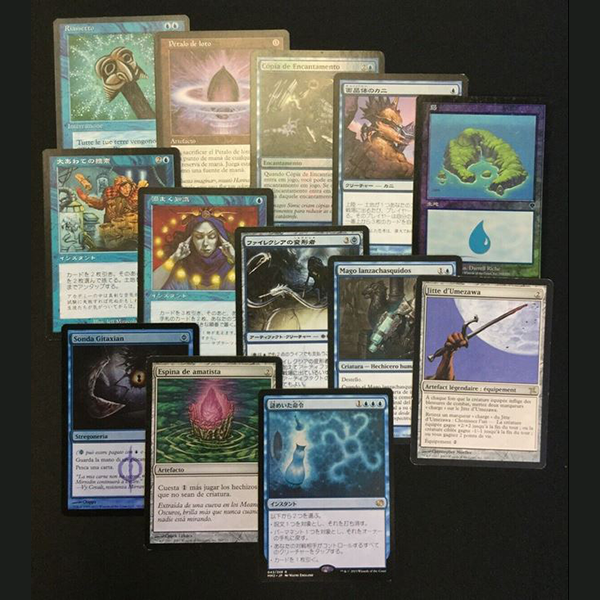
I won’t dwell too long here, as others have written about foreign cards already and damaged cards aren’t particularly exciting. My strategy here was to look up the corresponding English printings on eBay or TCGplayer and applied a 10-20% discount. This helped me sell a few of the foreign cards on Twitter (including a foil Portuguese Copy Enchantment to a collector of Portuguese cards). For others, I tapped into eBay and made a sale or two there.

I was pleasantly surprised to get $18 on eBay for the damaged Pact of Negation—the corner crease was extremely small, and I’ll admit I didn’t even realize the card was still worth so much. The same for the foreign Sakashmia's Student…this card needs a reprint badly!

There was an error retrieving a chart for Sakashima's Student

As for the smaller cards not worth the $0.70 stamp, I decided to keep them for personal use. You can’t have too many Brainstorms and Frantic Searches, after all. And the foil, signed Kami of the Crescent Moon looks great in my blue Commander deck.

Wrapping It Up

I’m sure by now readers are eager to hear whether or not I successfully turned a profit from this collection. I’ll be posting the breakdown of my sales in the Insider Discord. But boiling it all down, sales totaled $323.95 after subtracting eBay and PayPal fees. When I remove shipping costs (mostly a bunch of $0.70 stamps), I end up with $303.49, netting me $33.29 in profit.

That said, I still have auctions posted for the remaining misprints and crimps that didn’t sell individually. There are a few Islands that had ink smudged that I posted, and it already has a $5 bid. I posted the misprint lot and crimped lot with starting bids of $5 and $9 respectively—these have watchers, but no bids yet.

I also still have posted the Japanese Phyrexian Metamorph and Spanish Thorn of Amethyst, which I hope will eventually sell. Assuming they do and the auctions also all receive bids, I’d probably net another $20 or so, bringing total profit up to around $50.

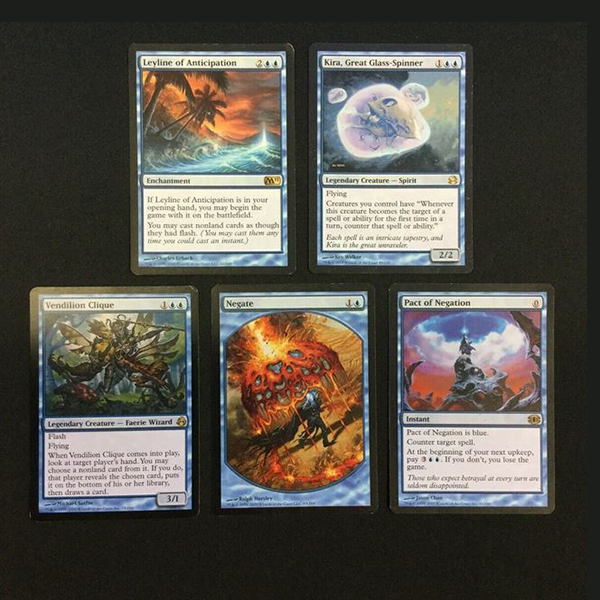
Lastly, there were a few other damaged cards I decided to keep for myself, and these have nonzero values. My Commander deck now contains a damaged (sleeve playable) Kira, Great Glass-Spinner, Vendilion Clique, Leyline of Anticipation, and promo textless Negate.

There was an error retrieving a chart for Leyline of Anticipation

All in all, this was an amazing, educational experience. I learned about crimps and misprints, signed cards, and foreign oddities. The rules of thumb I picked up from this exercise will be valuable should I encounter these in future collections—I hope these tidbits will also help readers if they run into similar cards in a collection.

And if anyone was completely inspired by this article and wants to try this for themselves, Card Kingdom currently has two other lots listed on eBay with a similar assortment: one listing with black cards and one with white cards. Only I advise caution with these—they aren’t priced as attractively. If you do consider making a purchase, I’d recommend offering 20% lower than their listed price in order to try and grind the profit. They may not accept the offer, but I don’t see an easy path to profitability if you pay more.

Arena Article Follow-Up

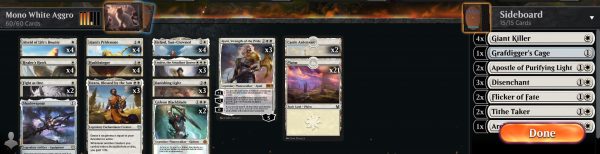
I wanted to provide a quick update to the Arena article I posted a few weeks ago. After making some additional upgrades to my Mono White list, I actually managed to achieve Mythic rank! For a while I was frustrated by the apparent ceiling my deck had, but the recent metagame shift (and a little luck) seems to open up the opportunity to take Mono White Devotion to the next level.

For those interested, here’s a recent iteration of my list.

May ’20 Brew Report, Pt. 1: Comp-repared

Are you a Quiet Speculation member?

If not, now is a perfect time to join up! Our powerful tools, breaking-news analysis, and exclusive Discord channel will make sure you stay up to date and ahead of the curve.

Okay, so companions are everywhere. But looking past that acknowledged reality, I see a Modern bursting with possibilities, and even applying the different companions in brilliant, unpredictable ways. Let’s take a look at what May’s first half has had to offer us in terms of Modern ingenuity!

One Tribe... Or Two

One unexpected (at least, on my end) result of companions being printed is the resurgence of long-forgotten tribal aggro decks. Take this Faeries build pumped up by Yorion, Sky Nomad:

Yorion Faeries, MOMSBASEMENTSTREAMS (5-0)

Creatures

4 Faerie Seer
4 Spellstutter Sprite
4 Stoneforge Mystic
3 Snapcaster Mage
2 Spell Queller
1 Brazen Borrower

Planeswalkers

4 Teferi, Time Raveler

Artifacts

4 Arcum's Astrolabe
2 Batterskull
1 Sword of Feast and Famine

Enchantments

4 Bitterblossom

Instants

4 Cryptic Command
4 Drown in the Loch
2 Fatal Push
3 Force of Negation
3 Path to Exile
3 Thought Scour

Lands

1 Creeping Tar Pit
4 Flooded Strand
1 Godless Shrine
2 Hallowed Fountain
1 Misty Rainforest
1 Mutavault
3 Mystic Sanctuary
4 Polluted Delta
2 Scalding Tarn
5 Snow-Covered Island
1 Snow-Covered Plains
1 Snow-Covered Swamp
2 Watery Grave

Sideboard

1 Fatal Push
1 Path to Exile
3 Aether Gust
2 Collective Brutality
2 Rest in Peace
2 Supreme Verdict
1 Sword of Fire and Ice
2 Timely Reinforcements
1 Yorion, Sky Nomad

Yorion's companion condition raised eyebrows upon spoiling: it requires pilots to actively make their mainboards worse via dilution. Yorion Faeries taps into an elegant way out of the creature's requirement by splashing an extra color. Here, white joins the traditionally blue-black Faerie core. Path to Exile provides extra redundancy and flexibility when it comes to one-mana removal spells, while Stoneforge Mystic gives the deck an offensive edge it had previously lacked.

Then there's Spell Queller, which plays nicely with the Faeries gameplan of instant-speed disruption on bodies, and Teferi, Time Raveler. Teferi pairs well with Queller and Spellstutter by limiting opposing actions on the stack, and with Stoneforge by affording unmolested equip-swings. Critically, Teferi also provides a cantrip upon resolution; packing a deck full of cantrips greatly reduces its redundancy, as evinced by the ubiquity of Arcum's Astrolabe.

BW Zombies, RCMERRIAM (5-0)

Creatures

4 Carrion Feeder
4 Gravecrawler
4 Stitcher's Supplier
4 Bloodghast
2 Tidehollow Sculler

Artifacts

1 Nihil Spellbomb
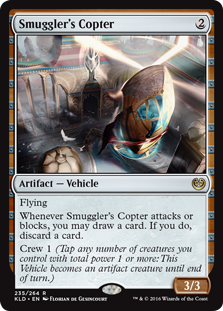
4 Smuggler's Copter

Instants

4 Fatal Push

Sorceries

2 Collective Brutality
3 Inquisition of Kozilek
3 Lingering Souls
2 Thoughtseize
1 Unearth

Lands

1 Bloodstained Mire
4 Concealed Courtyard
2 Godless Shrine
4 Marsh Flats
2 Mutavault
1 Plains
1 Polluted Delta
2 Silent Clearing
3 Swamp
2 Urborg, Tomb of Yawgmoth
60 Cards

Sideboard

1 Collective Brutality
2 Nihil Spellbomb
1 Anguished Unmaking
1 Bitterblossom
2 Burrenton Forge-Tender
3 Damping Sphere
1 Disenchant
1 Lurrus of the Dream Den
3 Path to Exile

Then there's BW Zombies, a strategy that claimed fringe success in Modern on the shoulders of Smuggler's Copter. Recurring Zombies keep a stream of pilots entering the vehicle, which diversifies its attacking plans by soaring over the battlefield and providing pseudo-haste, all while keeping the grave stocked with fresh meat. But the deck proved too low-power to keep up with format shake-ups. Until now, that is; the on-theme Lurrus of the Dream-Den brings even Smuggler's Copter back from the dead, breathing new life into any board state opponents manage to deal with.

This build belongs to Ross Merriam, who went on to place 17th in a Challenge with Zombies shortly after his 5-0 was posted. Whether Zombies proves to be another flash in the pan in the hands of a die-hard or the real deal remains to be seen.

More Disruption, Please!

Tribal aggro decks aren't exactly known for their disruptive capabilities, but decks more firmly walking the aggro-control line are also doing well this month.

Obosh Beatdown, SIGNBLINDMAN (12th, Modern Challenge #12148176)

Creatures

4 Arbor Elf
3 Bonecrusher Giant
2 Burning-Tree Shaman
1 Emrakul, the Aeons Torn
2 Hexdrinker
3 Kitchen Finks
3 Klothys, God of Destiny
4 Magus of the Moon
4 Seasoned Pyromancer

Planeswalkers

4 Lukka, Coppercoat Outcast

Instants

4 Lightning Bolt

Enchantments

2 Seal of Fire
4 Utopia Sprawl

Lands

5 Forest
1 Mountain
4 Stomping Ground
3 Verdant Catacombs
3 Windswept Heath
4 Wooded Foothills

Sideboard

1 Obosh, the Preypiercer
1 Anger of the Gods
3 Choke
2 Life Goes On
2 Nature's Claim
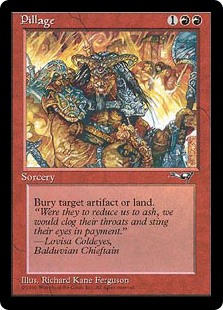
3 Pillage
3 Relic of Progenitus

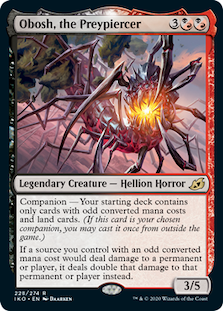
Obosh Beatdown sees the Naya Beatdown decks featured last month are cutting white ,splashed for the two-drop Stoneforge Mystic, in favor of a Gruul constuction and the companion Obosh, the Preypiercer.

A problem these decks can have is that of running out of steam—they can produce plenty of mana when Arbor Elf and Utopia Sprawl line up just right, but without a five-drop to cast, they’ve got nothing to show for it. Enter Obosh, a companion tailor-made for the strategy. Bloodbraid Elf, something the Naya decks were previously using to keep the beats coming, understandably gets the cut with Stoneforge to accomodate Obosh’s companion condition.
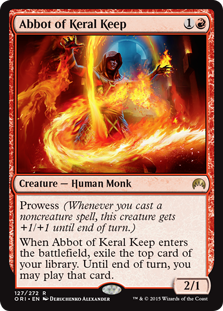

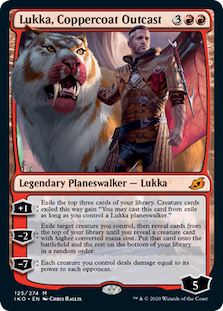
This transition became a trend among GRx beatdown decks. SIGNBLINDMAN also took 22nd in a Qualifier, and a similar deck won a Modern Premier. The strategy’s newest strains are maxing out on Lukka, Coppercoat Outcast and running Emrakul, the Aeons Torn; minusing on Obosh or another five-drop drops the Eldrazi right onto the battlefield. With enough mana available, the plan is only as out of reach as Lukka itself, yielding a one-card combo akin to the now-banned Karn, the Great Creator and Mycosynth Lattice.

Abzan Rock, LILIANAOFTHEVESS (5-0)

Creatures

4 Dark Confidant
4 Tarmogoyf

Artifacts

4 Arcum's Astrolabe
4 Mishra's Bauble
1 Nihil Spellbomb
1 Sunbeam Spellbomb

Enchantments

2 Dead Weight

Instants

3 Abrupt Decay
2 Fatal Push

Sorceries

1 Collective Brutality
4 Inquisition of Kozilek
4 Lingering Souls
2 Thoughtseize
2 Unearth

Lands

2 Godless Shrine
4 Marsh Flats
2 Overgrown Tomb
1 Snow-Covered Forest
1 Snow-Covered Plains
5 Snow-Covered Swamp
1 Urborg, Tomb of Yawgmoth
4 Verdant Catacombs
2 Witch's Cottage

Sideboard

2 Collective Brutality
2 Nihil Spellbomb
1 Sunbeam Spellbomb
2 Assassin's Trophy
2 Damping Sphere
2 Dead of Winter
2 Empty the Pits
1 Lurrus of the Dream Den
1 Maelstrom Pulse

Who remembers Abzan Rock? Between Wrenn and Six, Kroxa, Titan of Death's Hunger, and Bloodbraid Elf all super-powering Jund, the deck can feel more like a childhood nightmare than a Modern contender. But Lurrus has revitalized this archetype, too.

Dead Weight’s appearance as a recurrable, Goyf-growing removal spell isn’t even the hottest tech here—that honor goes to Witch's Cottage, a fetchable way to get Lurrus back for more value plays once the Cat’s been shot down. Nine lives, indeed!

+1/+1 Until End of Turn

It turns out Prowess was due for an update, and these new twists suggest some very alluring directions.

Jund Prowess, GIOVANIMF (5-0)

Creatures

4 Tarmogoyf
4 Monastery Swiftspear
4 Soul-Scar Mage
3 Abbot of Keral Keep

Artifacts

4 Mishra's Bauble

Enchantments

4 Seal of Fire

Sorceries

4 Light Up the Stage
2 Unearth

Instants

4 Lava Dart
4 Lightning Bolt
3 Fatal Push

Lands

1 Arid Mesa
4 Blackcleave Cliffs
2 Blood Crypt
4 Bloodstained Mire
2 Mountain
3 Stomping Ground
4 Wooded Foothills

Sideboard

1 Lurrus of the Dream Den
4 Thoughtseize
2 Collective Brutality
2 Pyrite Spellbomb
2 Seal of Primordium
3 Soul-Guide Lantern
1 Weather the Storm

Last week, I tried my hand at splashing Lurrus into the up-and-coming GR Prowess shell, to not-great results. One of my biggest plaints was how hard it was to cast Lurrus in, you know, a Gruul deck. One now-obvious solution: bite the bullet in the mana department and just splash a color to fit the companion.

That’s the traction-gaining idea behind Jund Prowess, which not only recruits Tarmogoyf to fill Arclight and Bedlam’s shoes, but Abbot of Keral Keep. In a world full of black midrange decks, stapling cantrips to bodies seems like a good idea, so much so that Mono-Red builds are also picking it up. And that holds double when said bodies can be Lurrus’d back from the grave… or just Unearthed! Black’s benefits don’t stop at those two cards: there’s also Fatal Push, the most graceful solution to Gruul’s Goyf problem Modern has ever seen.

BR Prowess, HEYNONGMAN (19th, Modern Challenge #12148176)

Creatures

3 Kroxa, Titan of Death's Hunger
4 Dark Confidant
4 Monastery Swiftspear
4 Abbot of Keral Keep

Artifacts

4 Mishra's Bauble
2 Nihil Spellbomb

Enchantments

1 Seal of Fire

Instants

3 Fatal Push
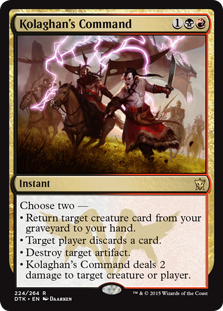
2 Kolaghan's Command
4 Lightning Bolt

Sorceries

2 Dreadbore
3 Inquisition of Kozilek
2 Thoughtseize
2 Unearth

Lands

2 Arid Mesa
4 Blackcleave Cliffs
2 Blood Crypt
4 Bloodstained Mire
3 Marsh Flats
2 Mountain
3 Swamp

Sideboard

1 Fatal Push
2 Bitterblossom
3 Collective Brutality
2 Damping Sphere
2 Engineered Explosives
1 Lurrus of the Dream Den
3 Pillage
1 Tormod's Crypt

BR Prowess looks more like a midrange deck than an aggro one, but it still keeps a lot of the elements that make up the Prowess shell. There’s plenty of overlap, of course; Mishra's Bauble and Seal of Fire are cards common to both Prowess and Lurrus-packing midrange strategies. Then there’s the midrange suite of Kroxa, Confidant, removal, and discard against the Prowess one of Monastery, Abbot, and Bolt.

This build is more proactive than your average Thoughtseize deck, giving it extra strength against the current crop combo. But it can just as well board into a straight-up midrange strategy, and even runs Pillage in the side for when blowing up lands (or artifacts) has a place in the gameplan.

Lutri Control

David mentioned it, so of course we had to delve a bit deeper: oh yes, that's Lutri, the Spellchaser in Modern! But by my count, there are two distinct control shells packing the Otter.

Jeskai Lutri, WOTC_COVERAGE_DAMONA (5-0)

Creatures

1 Yidaro, Wandering Monster
1 Bonecrusher Giant
1 Brazen Borrower
1 Crackling Drake
1 Snapcaster Mage

Planeswalkers

1 Jace, the Mind Sculptor
1 Narset, Parter of Veils
1 Ral, Izzet Viceroy

Artifacts

1 Soul-Guide Lantern

Enchantments

1 Blood Moon

Instants

1 Abrade
1 Archmage's Charm
1 Burst Lightning
1 Censor
1 Condescend
1 Cryptic Command
1 Deprive
1 Electrolyze
1 Fire Prophecy
1 Force of Negation
1 Hieroglyphic Illumination
1 Izzet Charm
1 Lightning Bolt
1 Logic Knot
1 Magma Jet
1 Magmatic Sinkhole
1 Mana Leak
1 Neutralize
1 Opt
1 Remand
1 Sinister Sabotage
1 Spell Pierce
1 Spell Snare

Sorceries

1 Ancestral Vision
1 Forked Bolt
1 Serum Visions
1 Sleight of Hand

Sideboard (15)

1 Aether Gust
1 Anger of the Gods
1 Ashiok, Dream Render
1 Ceremonious Rejection
1 Chandra, Awakened Inferno
1 Dragon's Claw
1 Fry
1 Grafdigger's Cage
1 Kozilek's Return
1 Lutri, the Spellchaser
1 Magus of the Moon
1 Mystical Dispute
1 Relic of Progenitus
1 Teferi, Mage of Zhalfir
1 Tormod's Crypt

Lands

4 Flooded Strand
7 Island
1 Mountain
3 Mystic Sanctuary
4 Scalding Tarn
4 Steam Vents

Feast your eyes on Izzet Lutri, which certainly does "look like an Izzet Commander deck." Does such a highlander pile speak to the power of companion as an ability? Or to this particular pilot's great draws and savvy deckbuilding?

Grixis Lutri, CHERRYXMAN (5-0)

Creatures

1 Kess, Dissident Mage
1 Bonecrusher Giant
1 Brazen Borrower
1 Snapcaster Mage

Planeswalkers

1 Ashiok, Nightmare Muse
1 Jace, the Mind Sculptor
1 Narset, Parter of Veils
1 Ral, Izzet Viceroy
1 The Royal Scions

Artifacts

1 Arcum's Astrolabe

Enchantments

1 Search for Azcanta

Instants

1 Abrade
1 Archmage's Charm
1 Cryptic Command
1 Deprive
1 Drown in the Loch
1 Fact or Fiction
1 Fatal Push
1 Force of Negation
1 Into the Story
1 Kolaghan's Command
1 Lightning Bolt
1 Magma Spray
1 Mana Leak
1 Opt
1 Remand
1 Spell Snare
1 Terminate
1 Thought Scour

Sorceries

1 Angrath's Rampage
1 Damnation
1 Dreadbore
1 Inquisition of Kozilek
1 Serum Visions
1 Sleight of Hand
1 Thoughtseize

Lands

1 Blood Crypt
1 Creeping Tar Pit
3 Mystic Sanctuary
4 Polluted Delta
4 Scalding Tarn
4 Snow-Covered Island
1 Snow-Covered Mountain
1 Snow-Covered Swamp
2 Steam Vents
3 Watery Grave

Sideboard

1 Aether Gust
1 Anger of the Gods
1 Ashiok, Dream Render
1 Cling to Dust
1 Collective Brutality
1 Disdainful Stroke
1 Dragon's Claw
1 Engineered Explosives
1 Fulminator Mage
1 Grafdigger's Cage
1 Kalitas, Traitor of Ghet
1 Lutri, the Spellchaser
1 Mystical Dispute
1 Pillage
1 Plague Engineer

Maybe Grixis Lutri can help us answer that question. Thinking about it, I’d actually like to see Teferi, Time Raveler in this deck. And with it, Path to Exile, Spell Queller, Stoneforge Mystic and a single Batterskull… why not?

For interactive decks, there are plenty of options available, and the “wow” factor of Lutri makes me think we’ll be seeing different builds featuring the Otter pop up here and there for a very long time.

Comp(anion) REL?

The success of these rogue strategies gives some insight into Wizards' potential though process when it comes to companion and Modern. I don't think it's far-fetched to believe the company had some notion of older, power-crept decks benefiting from the different companion restrictions in unforeseen ways. And, indeed, Modern appears extremely diverse when it comes to archetype balance and deck composition. The only homogenizing factor is the sustained presence of the companions, and especially the strongest ones.

If, as with planeswalkers, Wizards plans to continuously introduce companions in their future expansions, it will certainly change competitive Magic, just as planeswalkers did. But I'm not sure that change is for the worse. If, however, companions are more a one-off in Ikoria and won't be revisited in the near future, I feel as though the play patterns generated by its standout entrants introduce too many identical play patterns across too many decks. The more viable companions enter the card pool, the less stale games featuring the card type will feel.

The Companion Effect: Metagame Update

Are you a Quiet Speculation member?

If not, now is a perfect time to join up! Our powerful tools, breaking-news analysis, and exclusive Discord channel will make sure you stay up to date and ahead of the curve.

In the absence of data, speculation and rumor thrive. It's time to correct that problem with a deep data dive. I have been collecting metagame data for the past month, and today I'm going to share my findings. The rhetoric about companions has been flying thick since they were revealed, but their actual impact was hard to measure. My data was collected and analyzed with an eye towards determining the impact of companions on Modern. The data is pretty clear on this point, but also brings up more questions to investigate.

Methodology

To build this data set, I've been collecting every MTGO result that's posted to the official MTGO decklist page since April 20. I picked that day as the starting point because of card availability. While the MTGO release date was April 16, it was in short supply for constructed purposes. This is understandable and typical, because the online sellers have to get their cards the same way everyone else does, unlike real stores that can load up on stock prior to release. All of the new cards weren't consistently available from the big bots until the 20th, so it's reasonable to assume that prior to that day many players that would have used the new cards couldn't, yielding spotty representation. The data would have therefore been unreliable.

I then recorded every deck in every listed premier Modern event. This was not only the challenges, Super Qualifiers, and PTQs, but also the preliminaries. Prelims are actual tournaments, unlike Leagues, and so provide more reliable data. I recorded not only the deck, but which, if any, companion it was running.

I then recorded the same data for the pre-Ikoria metagame, running from March 23 to April 11. The overall timeframe needed to be the same as with the Ikoria metagame so as to compare like-to-like as best as possible. I also wanted to avoid including release week because again, I wasn't sure when the new cards would actually become available, and release week is always a weird time for constructed. Some decks always seem to be overrepresented, and I wanted to avoid any weirdness skewing the data.

Curating the Data

Once I had the data, it was clear that some curation would be necessary. The first problem was scale. The Ikoria metagame included ~77 different decks (It depends on how the line is drawn). The pre-Ikoria metagame had 69. That's too many individual decks to deal with, and the sheer number of rogue decks skewed the data. The first thing I did was combine decks that shared a strategic archetype and play pattern. In practice, this meant I lumped all the creature combo decks together as Toolbox. On a macro level, they're all creature decks that rely on tutors to function and combos to win with creature beatdown as a backup. Similarly, I lumped in Stoneblade decks with their pure control equivalents.

Jund and The Rock are together under BGx. They're essentially the same attrition deck, with the only real distinction being Lightning Bolt and Kolaghan's Command. Sultai decks were listed separately, as the addition of blue significantly changes how the deck plays. For the same reason, both straightforward GR Valakut and the Amulet-less Titan decks are together under Gx Valakut. Not every Valakut deck has red, and the Amulet-less decks play more similarly to Valakut decks than to Amulet Titan.
The list was further narrowed when I lumped the lowest-population decks together under Other. I chose five entries as my lower limit; anything with fewer than five decks in the data was an Other. The choice was arbitrary, as any such cut is going to be. Five just seemed like the place. This pared the data down to a more manageable 32 decks pre-Ikoria. I used those 32 decks as the basis for my comparison between the two eras. I needed to evaluate similar as possible data sets, so I needed to pick one set to be my baseline. I'm evaluating the impact that the companions have had, so comparing the new to the old makes the most sense.

The Pre-Ikoria Metagame

I should also note that I recorded only those events that had been posted as of 11:59 PM on 5/9. The cut off was because I needed to write this article. Subsequently, not every event that actually happened is present in the data. I know with certainty that one Super Qualifier from the third week is missing, and I'd wager there are several other missing events. As every event had an equal chance of not being posted by Wizards in my sampled timeframe, the data is still valid.
811 decks were posted in the Pre-Ikoria timeframe. Some of this may be that all of the events had finally been posted, some of it is definitely several very large preliminaries. This data represents the early part of the pandemic lockdown, and I imagine MTGO was the only thing for many players to do.

Deck NameTotal #% of Total
GR Ponza8510.48
Bant Snow688.38
Other678.26
Burn637.77
Temur Urza546.66
GBx Midrange496.04
Dredge425.18
Humans384.69
Mono-Green Tron384.69
Eldrazi Tron374.56
Amulet Titan374.56
Prowess303.70
Niv to Light242.96
Gx Valakut232.84
Infect222.71
Zoo172.10
Whirza172.10
Storm101.23
Jund Death's Shadow101.23
Toolbox80.99
Ad Nauseam80.99
Neoform80.99
Eldrazi and Taxes70.86
4C Snow60.74
Copycat60.74
Silvers6.74
Mardu Midrange60.74
As Foretold50.62
UW Control50.62
Bogles50.62
Underworld Breach50.62
Temur Snow50.62

The first thing I want to note is that Bant Snow was not the best deck in the old metagame. That honor goes to GR Ponza, and it isn't close. I was always skeptical of Bant Snow, so it's nice to be vindicated. Why Ponza is best isn't clear. Some of that is likely cost. It's very cheap online to make that deck, and I imagine that many paper players like me didn't want to spend money on MTGO. Another may be positioning. Ponza is a turbo Blood Moon deck, unlike the land destruction of old. Moon effects were particularly devastating due to all the 3+ color manabases. Many were snow decks and had many basics, but they were reliant on fetchlands to make it work. Accelerating out a Moon before it all came together is devastating.

The second thing is that this metagame was strategically diverse. It's a bit tilted toward midrange decks, but aggro and ramp are still present.

Current Metagame

As of my cutoff, 479 decks from the Ikoria metagame had been posted. Again, I know some events are missing to explain the different sample size n values. Also, there were no monster prelims pushing up the numbers.

Deck NameTotal #% of Total
Other8317.33
Burn5210.86
GBx Midrange469.60
Toolbox387.93
Prowess296.05
Amulet Titan275.64
Bant Snow245.01
Temur Urza234.80
Humans204.18
GR Ponza193.97
4C Snow153.13
Ad Nauseam142.92
Gx Valakut112.30
Eldrazi Tron102.09
Infect102.09
Neoform91.88
Mono Green Tron81.67
Niv to Light81.67
Dredge61.25
Bogles51.04
UW Control40.83
Storm30.63
Eldrazi and Taxes30.63
Copycat20.42
As Foretold20.42
Jund Death's Shadow20.42
Underworld Breach20.42
Temur Snow20.42
Zoo10.21
Whirza10.21
Silvers00
Mardu Midrange00

The mighty have fallen! Ponza and Bant Snow have been firmly kicked from the top slots. Now, Burn and BGx are king. It is worth noting that both are companion-heavy decks. All the Jund lists and nearly all the Rock decks ran Lurrus of the Dream-Den. Nearly all the Burn decks also had Lurrus. No deck archetype in this data that had companions did so universally. Every Hardened Scales list did have Lurrus, but since there were no Scales lists at all pre-Ikoria, I'm not considering them for analysis (yet).
Worth noting that strategic diversity has increased from pre-Ikoria looking at the Other category. I will attest that the number of off-the-wall rogue decks was much higher in the new meta, meaning more singleton results. There were also a higher number of decks that didn't quite make the cut-off. Modern's diversity is still strong, even in a companion-heavy world.

In Comparison

The metagame has definitely shifted. Dredge was a major player in the old metagame and is just gone now. To quantify that change, here's how the samples metagame shares have changed.

Deck NamePre-Ikoria %Post-Ikoria %Change in %
GR Ponza10.483.97-6.51
Bant Snow8.385.01-3.37
Other8.2617.33+9.07
Burn7.7710.86+3.09
Temur Urza6.664.80-1.86
GBx Midrange6.049.60+3.56
Dredge5.181.25-3.93
Humans4.694.18-0.51
Mono-Green Tron4.691.67-3.02
Eldrazi Tron4.562.09-2.47
Amulet Titan4.565.64+1.08
Prowess3.706.05+2.35
Niv to Light2.961.67-1.29
Gx Valakut2.842.30-0.54
Infect2.712.09-0.62
Zoo2.100.21-1.89
Whirza2.100.21-1.89
Storm1.230.63-0.60
Jund Death's Shadow1.230.41-0.82
Toolbox0.997.93+6.94
Ad Nauseam0.992.92+1.93
Neoform0.991.88+0.89
Eldrazi and Taxes0.860.63-0.23
4C Snow0.743.13+2.39
Copycat0.740.42-0.32
Slivers0.740-0.74
Mardu Midrange0.740-0.74
As Foretold0.620.42-0.20
UW Control0.620.83+0.21
Bogles0.621.04+0.42
Underworld Breach0.620.42-0.20
Temur Snow0.620.42-0.20

Ponza has fallen precipitously, mirrored by Toolbox's rise. The old midrange decks are all suffering to make room for Lurrus decks. It is significant that with the exception of Dredge, all the old good decks are still decent choices in the new metagame. This set doesn't show it, but Ponza was actually making a comeback during the week of 5/3.

The Companions

And now it's the data that everyone's actually here for: the companion data. While recording data, I noted every companion that was being played as a companion. I make this distinction because a few decks had maindeck Lurrus. The companions are far from universal, but they are endemic now.

CompanionTotal #% of Total Population
Lurrus21444.68
Yorion5711.90
Obosh173.55
Jegantha173.55
Zirda71.46
Umori20.41
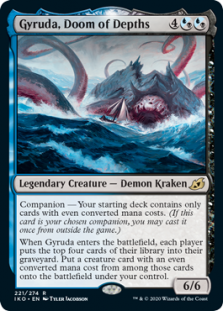
Gyruda20.41
Lutri10.21
Total31766.17

First things first: No, your eyes do not deceive; someone did manage to place using a Lutri, the Spellchaser singleton deck. I don't know how, but it happened. I'm going to assume that's attributable to favorable variance and confused opponents. The deck looked like an Izzet Commander deck, so let no one ever say that the companions didn't do what Wizards wanted them to do.

The Umori, the Collector decks were both mono-creature decks, which makes perfect sense. One was a Toolbox deck and the other was Elves. The Elves deck was unremarkable except for the companion, while the Toolbox deck was an odd mishmash of creature combo decks and GW Hatebears. They were in separate weeks, so I'm chalking them up to luck. Similarly, the Gyruda, Doom of Depths combo decks came from the same event. I wouldn't read too much into them; anything can place once.
Zirda, the Dawnwalker was exclusively played in Toolbox decks, but only occasionally. As I noted in my companion article, it's surprisingly hard to eliminate all the combos that don't use triggered abilities. While it worked, the fact that Zirda only appeared in ~45% of Toolbox decks is telling. Similarly, Obosh, the Preypiercer was only played in Ponza decks. The only notable card that was cut from the older lists was Chandra, Torch of Defiance, so I'm guessing that this is a case of "why not?" more than of Obosh being actively good.

The Big Question

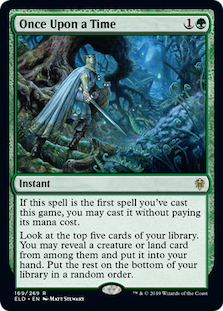
More importantly, decks running companions account for two-thirds of the total decks in the sample. No bones about it: they are saturating Modern. This level of saturation by an individual card is very similar to what happened with Oko, Thief of Crowns and Once Upon a Time. However, the effect is different. Once and Oko were warping the colors of the format towards green and blurring the distinction between decks while companion decks still have distinct identities. Oko pushed decks towards being UGx artifact decks. Once got the otherwise colorless Eldrazi Tron to splash green.
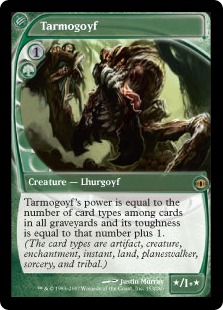
While companions, particularly Yorion and Lurrus, are pushing decks in similar directions, the impact isn't homogenizing archetypes. Yes, a lot of Lurrus decks are running a set of Mishra's Bauble. However, this is only a homogenizing force in the same way that many decks running Lightning Bolt is. Jund, Burn, and Toolbox decks are all still distinct. Compare this to the blurred lines between Bant Snowblade and the various flavors of Urza Oko decks. There's no evidence of harm to overall metagame diversity. The post-Ikoria Other category was largest by far and rivaled pre-Ikoria Ponza for raw numbers. Thus, the banning discussion shouldn't focus on harm to strategic diversity. This is a question of format saturation and power level.

The Dilemma

And those metrics are not clear-cut. The problem is that there's no way to determine if the companions metagame share reflects correlation or causation. Burn and BGx have risen to the top, but they were already very strong decks. Their ascension coincides, and thus correlates, with adoption of Lurrus of the Dream-Den. Lurrus clearly did not cause them to become good decks. There's no way with this data to determine if Lurrus made them the best decks in the metagame. It might be that Burn and BGx are just taking advantage of the fall of Bant Snow and Ponza, and that development may be unrelated to the companions. It's equally possible that companions gave Burn and BGx the power boost they needed to claim the throne. There's no clear answer.

Argument: It's Causal

One argument that there is a causal relationship is made by Toolbox. Before the companions, the collective compendium of creature combos and tutors was a complete non-factor in the metagame. Despite getting a new toy in the form of Heliod, Sun-Crowned, Toolbox just wasn't getting any traction. The archetype could only muster eight results across multiple decks, accounting for only ~1% of the metagame. Previously, this may have been dismissed as "Toolbox can't be played online due to lack of shortcuts and timing out." However, with online being the only venue to play Magic right now, players are forced to make it work.

And clearly they have, as with the companions, Toolbox surged to being the third-best deck with an ~8% metagame share. The vast majority did have a companion, usually Lurrus. Jegantha, Umori, and Zirda were all options. The decks running Lurrus were as evenly distributed as the Zirda ones, which suggests one isn't better than the other in this context. As Toolbox wasn't a deck before companions but became one afterward, and the boost isn't tied to a single companion, the boost could have been the inherent power of the companions themselves. Thus, the companions are boosting decks that have them over decks that don't, and the relationship is causal.

As further proof, look at Prowess. The deck had fallen off significantly from the start of the year and was only 3.7% of the metagame. After adopting Lurrus, it has surged to fourth place and 6.05%, almost double its previous level., Having a companion is strictly better than not.

Argument: It's Casual

Humans was in eighth place pre-Ikoria. Humans is in eighth place post-Ikoria. There is a negligible difference between their metagame shares, indicating that Humans has neither gained nor lost viability in this metagame. The only companion Humans can run is Jegantha, and it does so less than half the time. When Humans does run Jegantha, it doesn't do measurably better than otherwise. The only reason Humans is running Jegantha is for the power boost of having a 5/5 "in hand" at all times, but at this time, there is no indication that this benefit translates to more wins. Similarly, Amulet Titan does not play companions at all, and has moved from eleventh place with 4.56% to fifth with 5.64%. It doesn't take a companion to win, it takes a good deck.

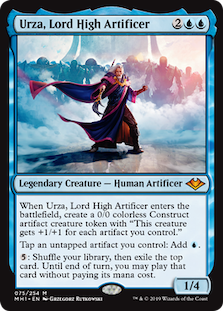
Furthermore, other decks with companions are doing worse now than before. Temur Urza was the fourth-best deck pre-Ikoria with a %6.66 metagame share. It is currently at 4.8% and fell to seventh place. It was an early and near-universal adopter of Yorion, Sky Nomad, and is a very logical and natural home for the card; it's a deck full of cantrip permanents and other enters-the-battlefield effects, and wins via overwhelming value. Emry, Lurker of the Loch plays especially well with Yorion, as the larger deck size means she's less likely to mill over cards like Urza, Lord High Artificer while still digging towards him.

If a deck that fully integrates its companion has not seen its fortunes improve but instead fall, then companions are not intrinsically overpowering. The rise of companion decks in the new meta is a function of popularity and good positioning and not the companions themselves, so it's just correlation.

A World Redone

The bottom line is that companions have had a significant effect on Modern. The top 4 decks are (mostly) companion decks and account for ~52% of the total companion decks in Modern. For better or worse, players must be ready to face companion decks, and odds are it will be a Lurrus deck.

However, the overall metagame shift may not be the companions' fault. The old best decks have fallen off dramatically, and a new order has risen. It is possible that the power boosts from the companions allowed BGx and Burn to dethrone Bant Snow and Ponza. It is equally possible that natural ebbs and flows in the metagame made Modern less favorable for those decks and their decline was the result of losing competitive edge as deck popularity changed and players adapted. There is no other option at the moment that to take the metagame as it is and prepare accordingly.

But Wait!

There's more, but this article is already running long. I've noticed trends in the current metagame based on the weekly data that complicate the impact of the companions. I'm continuing to collect data to see if these trends are sustained, but it appears that as Modern adapts to the companions, the impact and value of certain companions is changing. So come back next week, when I look at the weekly decks and companion prevalence.

Budget-Focused: Board Wipes, Tutors, and Extras

Are you a Quiet Speculation member?

If not, now is a perfect time to join up! Our powerful tools, breaking-news analysis, and exclusive Discord channel will make sure you stay up to date and ahead of the curve.

Hey everyone and welcome to another week of speculating! Today we are looking at four cards I feel we should be keeping an eye on for both Pioneer and Commander: Citywide Bust, Slaughter the Strong, Ritual of Soot, and Call the Gatewatch. Presently, these look to be used more in Commander than Pioneer, but we will look as to how these can fit in both formats.

Utilizing Call the Gatewatch or Other Cheap Tutors

To start off, we will discuss where these fit into Commander. As a budget-minded player, I look at card characteristics that are “staples” or used more heavily in builds. The characteristics we're talking about today are board wipes and tutors. We will start with Call the Gatewatch, as that’s the only card of its kind out of the four. The price of this little gem is a whopping $0.50(TCG Mid) for the non-foil, $1.91 on average for the foil, and the foil promo is coming in at $2.59 on average for people looking into those.

Another thing to consider is the fact that not all Commander players can afford the pricier tutors. This should be drawing more appeal for those looking for tutor options without breaking the bank. One thing to note here is that it is a niche card, but that doesn’t mean it’s a trash heap.

There was an error retrieving a chart for Call the Gatewatch

With a CMC of three, it shouldn’t deter those that look for speedier spells. If anything, it should draw some intrigue as three is not a lot at all, especially in a format like Commander. Just looking at theme alone, there are 4,281 registered decks that are themed as planeswalkers on EDHREC. Each one of these (depending on color) by rights should have one copy of this to fetch a walker the player needs.

As of now, it only looks to be in only 2,238 registered decks, which is just over 50% of the 4,281 themed decks previously stated. The other thing to consider here is that even if you aren’t running a themed deck but need to grab certain walkers, this should be the card to use in addition to the ninety-nine.

Going into Pioneer, this could be a one or two of (mainboard) in any white build that utilizes planeswalkers. Like Commander, a card with a CMC of three is not too rich for the format. Here is a recent top ten (MTGO Pioneer League) UW deck where this could at the very least fit into the sideboard.

UW Control by pff367

Instants and Sorceries

4 Azorius Charm
3 Censor
2 Dig Through Time
1 Commit // Memory
4 Opt
2 Essence Scatter
2 Sinister Sabotage
1 Mystical Dispute
1 Tale's End
4 Supreme Verdict

Enchantments

1 Search for Azcanta

Planeswalkers

4 Narset, Parter of Veils
1 Elspeth, Sun's Nemesis
3 Teferi, Hero of Dominaria
2 Teferi, Time Raveler

Lands

2 Castle Ardenvale
2 Castle Vantress
1 Fabled Passage
2 Field of Ruin
1 Geier Reach Sanitarium
2 Glacial Fortress
4 Hallowed Fountain
3 Irrigated Farmland
6 Island
2 Plains

Sideboard

3 Aether Gust
2 Dovin's Veto
2 Gideon of the Trials
1 Gideon, Ally of Zendikar
3 Mystical Dispute
2 Rest in Peace
1 Settle the Wreckage
1 Surge of Righteousness

Keeping an Eye on Newer Board Wipes

Moving onto our other cards, the theme here is board wipe. All of these should be considered suitors for just about any build looking for wipes on a budget. There are limitations to each, which is very understandable to potential speculators looking at negatives. It should be noted though that two of the three here have a CMC of three, where most others are four-plus.

There was an error retrieving a chart for Citywide Bust

Starting with Citywide Bust, its current price is only $0.35 on average, $0.81 for foils, and $0.76 for the promos. In comparison to its reserved list counterpart Retribution of the Meek ($6.26 average), this is a steal. Understand that Citywide Bust targets toughness rather than power, but this has more upside than some may think. If you are going up against one of the many Arcades, the Strategist styled builds, this will wreck their day, to say the least.

Another thing here is if you run weenies or tokens, you can rid of potential threats you may be worried about. You can also throw this in a deck with Retribution of the Meek to address both power and toughness factors. One may say “Citywide dictates two white, where Retribution dictates one.” To that, I say it shouldn’t affect the price or playability that much. If you're ever hurting for another board wipe to add to your list in Commander, consider grabbing a copy of Citywide Bust!

Going into Pioneer, this should be in consideration for the sideboard at the very least. Knowing enough about the current meta, this will be a defense against those big clunker decks. You could put this in any deck where you are weak against bigger creature threats. White weenie aggro is where this can fit in most optimally. I do have a Selesnya no rares build that you can upgrade and throw this baby in! If you’d like to check it out, click the link here!

There was an error retrieving a chart for Slaughter the Strong

Slaughter the Strong is the next card we are looking at. At three CMC this offers great upside in both Commander and Pioneer. The current price for this is $1.22 for the non-foil, $2.23 for the foil, and $2.25 for the promos. In Commander, this should be an auto-include in any Arcades, the Strategist build, or anything utilizing a lot of low powered creatures. A very strong thing to note here is that it gets around both hexproof and indestructible.

Going into Pioneer, this is again something that can be easily used as a wipe option. With so many decks that utilize creatures as wincons, this can be sideboarded or even mainboarded into control decks.

There was an error retrieving a chart for Ritual of Soot

Ritual of Soot is our last card to be brought up today. This is coming in at $1.00 for non-foils, $1.95 for foils, and $1.97 for the promos. Just like the others, this is a great board wipe. It’s limited like Citywide Bust, but the upside can’t be ignored. In Commander, it can be easily plugged into any deck running black for a wipe option.

Looking at Pioneer is where the growth potential exists. As of right now, I have found 68 decks that are currently running it. I know that doesn’t sound like a lot. But it is showing that the card is in fact being used. As the format continues to figure itself out, this will be one to have on hand.

What to Look for in the Future

I feel this might go without saying, but any new(er) wipes and/or tutors should be in consideration going forward. When it comes to the cards we discussed today, they most definitely have room to grow over time. If you had to ask me which would be my top pick of the ones noted,  I would have to go with Citywide Bust. If you are looking for buy-listing one of these, remember to get the promos! If not, I would totally go in on the non-foils. I will end with this, GET THESE ON THE LOW!

Until next time everyone, thanks for reading, and I hope you enjoyed this week's article!


Investigating the White-Bordered Buyouts

Are you a Quiet Speculation member?

If not, now is a perfect time to join up! Our powerful tools, breaking-news analysis, and exclusive Discord channel will make sure you stay up to date and ahead of the curve.

Pop quiz time! According to MTG Stocks, which printing of Winds of Change is the most expensive? The answer may surprise you...

There was an error retrieving a chart for Winds of Change

If you guessed the black-bordered, original Legends printing, I don’t blame you. That seems like the most logical guess. What isn’t logical is that, if you want to purchase the cheapest English Winds of Change copy on TCGPlayer, you’d be buying a heavily played Legends copy. That’s right, the Legends copies available for sale start at the lowest price.

This trend is bizarre indeed, and there are other cards with similarly surprising pricing differentials. This week I'll explore the latest rounds of buyouts and my thoughts on why we’re seeing certain printings outshine others.

White Border Buyouts

Generally not known for their aesthetics, white-bordered cards are often considered the budget-friendly printings of a given card. This is because the vast majority of cards are black-bordered and players often prefer all the borders in their deck match. Additionally, white-bordered cards come from sets with massive print runs (excluding Unlimited).

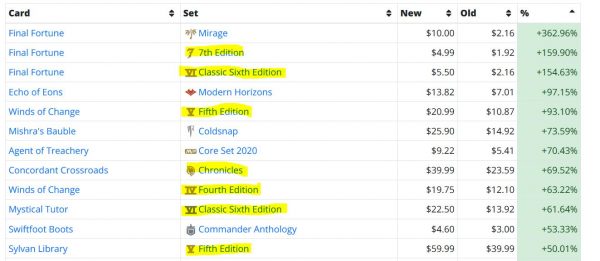
So when I looked up the largest movers on MTG Stocks this week and saw that seven white-bordered cards jumped more than 50% over the past week, I was dumbfounded.

Final Fortune, Winds of Change, Concordant Crossroads, Mystical Tutor, and Sylvan Library are all-powerful cards, don’t get me wrong. I’m sure there are logical explanations for their sudden surge in price. What’s harder to explain is the relative movement of these cards across their various print runs.

It looks like all printings of Final Fortune are on the rise—I don’t know why, but they are—and it’s reassuring to see each printing is up and the black-bordered Mirage printing is the most valuable. This follows the typical assumptions around border colors.

There was an error retrieving a chart for Final Fortune

Winds of Change copies, on the other hand, seems to have spiked most if they were from Fifth Edition or Fourth Edition. Legends copies also jumped but they moved just 47% vs. the 93% and 63% jumps of the two white-bordered printings.

This isn’t a one-card trend, either. Take a look at Concordant Crossroads. The Chronicles printing jumped nearly 70% last week, rising from $23 to $40 on MTG Stocks.

There was an error retrieving a chart for Concordant Crossroads

Before the spike, the Legends printing of this green enchantment was about five times more expensive than its white-bordered counterpart in Chronicles. Now that Chronicles copies are $40 and Legends copies haven’t moved, that ratio is cut in half to just 2.5 times. Suddenly the premium for Legends copies is not so steep.

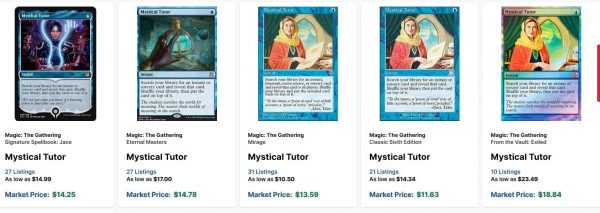
Mystical Tutor is another example of this anomaly. Sixth Edition copies jumped 61% to $22.50 on MTG Stocks this week. Eternal Masters copies also show up on the Interests page, having risen 34% to $20 this week. Mirage copies, the original printing, were up just 15% this week and are now worth $15. If you wish to purchase the cheapest copy available on TCGPlayer, you’d be buying the original, black-bordered Mirage printing.

Lastly, Sylvan Library is also on the move. But the copies that have moved most over the past week aren’t the versions you’d expect. Fifth Edition copies rose the most, jumping from $40 to $60 according to MTG Stocks (50%). Fourth Edition copies rose from about $40 to $50, a roughly 20% increase. Eternal Masters copies rose from $45 to $50, roughly 10%. Legends copies haven’t moved at all.

There was an error retrieving a chart for Sylvan Library

Once again, I’m left scratching my head as I try to figure out why the allegedly least popular printings jumped the most in price. If Fifth Edition copies increased 50%, shouldn’t Legends copies have increased by about that much? Minimally I would have expected Eternal Masters copies to jump proportionally given it’s a newer card with an updated frame and rules wording. Yet now it appears you have to pay a premium for a Fifth Edition copy! What gives?

Some Explanation

While some of these moves are perplexing, I believe to an extent they are explainable.

For instance, it’s logical that a more expensive card wouldn’t jump the same percent as a cheaper printing should there be a market-wide adjustment of price. For one, if there is a sudden surge in demand for a card, it’s not surprising that the cheapest copies sell first. A $10 card only needs to increase by $10 to double in price, whereas a $50 printing of that same card would need to increase five times as much for the same percentage increase.

Since MTG Stocks is reporting growth based on percent, it stands to reason that cards with lower bases can grow the largest percent.

The second explanation involves how MTG Stocks pulls its data from TCGplayer. I believe the pricing is based on an average value of lightly played and/or near mint printings of a card. As the copies with nicer condition sell out, the price appears to spike. This is true even if heavily and moderately played copies are passed over. If we use market price instead of MTG Stocks’ default, we see a trend that makes a little more sense. For instance, the Mystical Tutor printing with the lowest market price is Sixth Edition ($11.63) followed by Mirage ($13.59). In this case, the white-bordered printing is indeed the cheapest.

There was an error retrieving a chart for Mystical Tutor

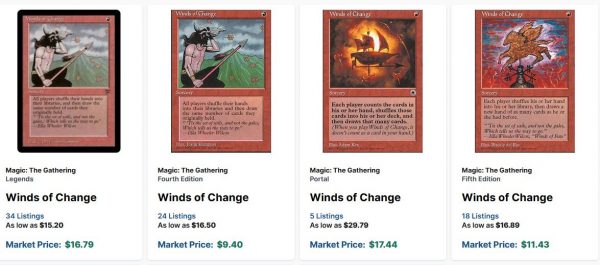
The same trend exists with Winds of Change: the lowest market price by far is the Fourth Edition printing, at $9.40. The Legends printing is nearly twice at, at $16.79. This indicates that while the Fourth Edition printing may have “spiked” the most, actual sold copies are not reflecting the same movement. It’s more likely that sellers are pulling their copies and/or re-listing at a higher price in response to the recent jump in demand, inflating the price reflected on MTG Stocks.

Lastly, we need to consider a card’s rarity from each respective set it was printed in. Sylvan Library was printed as a rare from every set except for its original Legends appearance, where it was an Uncommon. Surely less Legends product was printed than Fifth Edition. But if copies appeared in Legends at three times the rate, that does close the print run gap a decent amount.

I believe this may be the smallest factor, however. After all, there are 58,000 copies of each U1 uncommon printed from Legends. Meanwhile, there are 353,500 copies of each Fourth Edition rare. The numbers aren’t even close despite the disparity in rarity for Sylvan Library.

Wrapping It Up

At a quick glance, it appears certain cards are spiking. That’s nothing new. What’s different this time is that it appears the historically less desirable, white-bordered printings of certain cards are disproportionately rising relative to their black-bordered counterparts.

While MTG Stocks is a valuable resource to check daily, I believe in this case the website is only telling part of the overall story. It’s safe to say Final Fortune, Mystical Tutor, Winds of Change, and Sylvan Library are all on the move. But I’m not about to declare a newfound, white-bordered Renaissance. There’s more to this move.

For starters, a higher starting price means a comparable jump in price is reflected by a lower percentage gain. That’s just basic arithmetic. And while it’s easy to simplify comparisons and argue the more expensive card should jump by that proportionate amount, I believe the newfound demand is for cheaper copies of these cards. Not every Commander player is willing to shell out $100 for a Legends copy of Sylvan Library, after all.

Looking one level deeper, MTG Stocks may be revealing a little bit of (intentional or unintentional) price manipulation on TCGplayer. If sellers are pulling their copies or relisting them at a higher price, it’ll show a jump in price even if copies aren’t actually selling at the new price. That’s how we get such wide spreads between TCGplayer’s standard pricing and its market pricing.

These factors all help explain the perplexing trend. It’s hard to argue that these cards aren’t on the rise—it’s clear they are suddenly in more demand. But it’s much easier to convince ourselves that just because MTG Stocks shows Fifth Edition and Sixth Edition copies are jumping the largest percent doesn’t mean they’re suddenly the most desirable printings. This connection should not be made so readily. There’s much more underlying data that should be inspected before concluding one way or the other.

In these cases, I’ve concluded the cheapest copies are playing some catch-up relative to their most expensive counterparts. But all printings of these cards are rising in demand. Once the dust settles and copies come back into the market, we’ll see the directional trends between printings that we’re used to seeing. This is just a momentary blink, driven by an artifact in how pricing is calculated.

Dream-Den’s Alurr: Lurrus in RG Prowess

Are you a Quiet Speculation member?

If not, now is a perfect time to join up! Our powerful tools, breaking-news analysis, and exclusive Discord channel will make sure you stay up to date and ahead of the curve.

Days before the impact of companion on Modern was impressed upon me, I came across an article over at Good Grief Games by Kenan Diab on his RG Prowess deck. The idea was simple: take the persistently successful Mono-Red Prowess deck and cover for some of its glaring weaknesses by accommodating green creatures, in this case a couple of my own favorites in Tarmogoyf and Hooting Mandrills. Today, I'll give my impressions on the deck and discuss some adaptions it can make to accommodate companion.

For starters, here's Kenan's list and a paragraph about the concept.

RG Prowess, Kenan Diab

Creatures

2 Hooting Mandrills
4 Tarmogoyf
4 Monastery Swiftspear
4 Soul-Scar Mage

Artifacts

4 Mishra's Bauble

Enchantments

4 Seal of Fire

Instants

4 Lava Dart
4 Lightning Bolt
4 Manamorphose
1 Tarfire

Sorceries

4 Light Up the Stage
3 Lava Spike

Lands

4 Scalding Tarn
3 Stomping Ground
4 Bloodstained Mire
3 Copperline Gorge
4 Mountain

Sideboard

3 Alpine Moon
2 Surgical Extraction
2 Eidolon of the Great Revel
1 Deglamer
1 Destructive Revelry
2 Dismember
1 Choke
1 Kari Zev's Expertise
2 Klothys, God of Destiny

Goyf and Mandrills are adequately sized for Modern, and attack opponents from different angles than the rest of the deck. Both also provide effective backup plans should opponents swiftly answer the deck's one-drops, in the same way Arclight Phoenix did while Faithless Looting was legal, and that Bedlam Reveler attempts to in Mono-Red. Some differences between the green threats and Reveler: the former break the pseudo-mirror wide open, likewise prove trumps against Ponza, and more explicitly play to the deck's damage-doling Plan A in the face of removal, whereas Reveler forces pilots into a slower, more card-advantage-centric route.

Right away, the deck set off my pleasure sensors. Here was Hooting Mandrills in a deck without black, not to mention a decisive commitment to fueling Tarmogoyf. And the deck is clearly aggressive with ample board interaction, another direction I favor. But there were a couple elements I didn't like: inflexible reach spells like Lava Spike, for instance, which I'd come to consider an unfortunate reality of running Monastery Swiftspear. So I read the article to see if I could somehow finagle my way out of running Spike.

The Tweaks

It turns out Spike was one of Kenan's least favorite cards in the list, or to use his words, "just filler." He also expressed disdain for bae Tarfire. I was more than happy to trim the Spikes right away, but actually gave one of those slots to another Tarfire---not out of spite, but out of purpose. I want to see Tarfire every game because I'm here to grow Tarmogoyfs!

Filling In the Blanks

The other two spots went to Crash Through and Flame Jab. Crash has been excelling not just in Mono-Red Prowess, where it helps the deck's smaller creatures (and also Bedlam Reveler) penetrate fields of blockers, but in newer iterations of Death's Shadow Zoo (which I motion we all start calling Death's Shadow Prowess; the deck doesn't even play Wild Nacatl anymore!). Swiftspear, Goyf, and Shadow are all prime candidates for making use of the sorcery, and I figured the same held true here, even though Mandrills already features the keyword.
As for Flame Jab, I sometimes would find myself flooding out on lands, something Kenan acknowledged could come up without Reveler in the picture. Jab is a repeatable prowess trigger in those situations and can also gun down weaker creatures as does Lava Spike. Jab replaced what had started as a second Crash.

Laughing Out Lurrus

A couple nights of grinding revealed Modern's current obsession with Lurrus of the Dream-Den, and that's when the FOMO set in. These decks were splashing Mishra's Bauble and Seal of Fire just to extract additional value from the companion, and here I was playing those cards anyway. Perhaps the Nightmare Cat's strongest suitor was Jund, a deck that could regain heaps of value by casting Lurrus and recouping Tarmogoyf. Hey, I ran that card, too!

There was one major reason: Lurrus is black, white, or both, while RG Prowess is... well, RG. And another reason: a big draw to splashing green at all was Hooting Mandrills, which is incompatible with the companion's condition.

Of course, I was able to rationalize my way out of these pitfalls. It wouldn't be prowess without a full set of Manamorphose, and those can cast Lurrus. In some games, this functionality would mean sandbagging Manamorphose until turn three or four; in others, Lurrus would just be an incidental burst of value when Manamorphose was drawn. I figured that Manamorphose would become a split card: on one end, it merely cycled for free, enabling prowess or Tarmogoyf synergies along the way. And later in the game, Manamorphose would become Lurrus and whatever juicy target existed in the graveyard.
The question then became whether imbuing Manamorphose with this additional split-card power was worth cutting Hooting Mandrills. The Ape could still be run in the sideboard and brought in for every Game 2 and 3, but we'd be starting without it. In my mind, this gave us slightly more of a Game 1 advantage against grindy decks at the expense of our linear matchups, which I understood to already be pretty solid given such an aggressive strategy.

Evil Wins Again

Like the rest of Modern's weak-willed meta sheep, I couldn't resist the companion's allure, and elected to at least try it. Here's where I landed:

RG Lurrus Prowess, Jordan Boisvert

Creatures

4 Tarmogoyf
4 Monastery Swiftspear
4 Soul-Scar Mage

Artifacts

4 Mishra's Bauble

Enchantments

4 Seal of Fire

Instants

4 Lava Dart
4 Lightning Bolt
4 Manamorphose
2 Tarfire
2 Mutagenic Growth

Sorceries

4 Light Up the Stage
1 Crash Through
1 Flame Jab

Lands

4 Bloodstained Mire
4 Scalding Tarn
3 Copperline Gorge
3 Stomping Ground
4 Mountain

Sideboard

1 Lurrus of the Dream Den
2 Hooting Mandrills
2 Klothys, God of Destiny
2 Eidolon of the Great Revel
2 Alpine Moon
2 Choke
2 Surgical Extraction
2 Deglamer

Additional Tweaks

Something had to come in for the two Mandrills, and I went for another old favorite: Mutagenic Growth. Growth has a lot of value in Lightning Bolt matchups, where it acts as Mental Misstep if opponents try to shoot our prowess creature. Heck, it even saves Lurrus from the ubiquitous burn spell! Growth also wins Goyf wars and can be especially nasty with Mandrills when the pair exists in a single construction. Finally, Growth improves another of my additions, Crash Through.
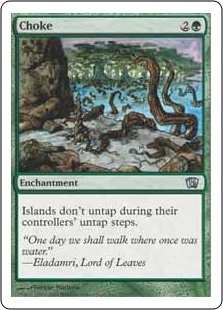
As is always wise to do when taking a refined list and jamming a bunch of your pet cards, I also messed with the sideboard. My first order of business was to add Lurrus and Mandrills; at Kenan's suggestion, gone was Dismember. Kari Zev's Expertise seemed from his article like Kenan's most experimental card, so that also got the axe. But I added one more Choke because I wasn't really trying to not-Choke those Uro decks.
What Lives in the Dream-Den...

...Stays in the Dream-Den. At least, that's how it felt. Even when Lurrus resolved, It rarely won me the game.

For one, it wasn't a cakewalk to cast. Lurrus would have been great in some games, but I found myself going full Yugi at the top of my deck, praying for Manamorphose to show up (it rarely did). Part of what makes companion so great is the creature's sustained presence in every game; we need to draw Manamorphose before ever casting the 3/2. Even though we'll break even on card advantage thanks to the cantrip, losing out on unrestricted access is a major drawback.
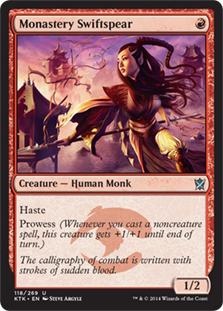
Then there's my impression that Lurrus does not actually improve the grindy matchups I thought it would. A chief reason: those decks are also playing Lurrus---or, if not, Yorion. By building my deck in a way that allowed me to benefit from the companion, I slowed it down somewhat, which gives those decks more opportunities to cast their own. And if there's one thing Prowess does not want to stare down, it's a lifelinker... let alone one that brings back Tarmogoyf. By contrast, Hooting Mandrills laughs in the 3/2's face, critically shrinks opposing Goyfs, and applies immediate pressure rather than vaguely threaten opponents with "I'll draw some more cards, and maybe those will kill you!"

If it's lackluster against grindy removal-spell decks, and clearly bad against faster, linear decks, Lurrus simply doesn't have a role in any matchup for RG Prowess. A difference between the companion here and in a similarly aggro-aligned deck, Burn, is that Burn can just free-roll Lurrus by virtue of already running Inspiring Vantage; we can't. Which brings us to running companions just because.

On Forcing Companions

So Lurrus had my head in the clouds. Given how rarely I ended up casting it, and my certainty that Hooting Mandrills is better in Kenan's finely-crafted deck than uh, Mutagenic Growth, I doubt here is the home for the card. Interestingly enough, before adding Lurrus to the shell, I kept track during my games of how often I reached five mana---I'd wanted to see if Jegantha, the Wellspring merited a slot in the sideboard. Unlike Lurrus, Jegantha was always castable color-wise, and what aggro deck doesn't like a free 5/5? After all, we've all had those games where we happen to have way too many lands and would love something to do with them.

I continued tracking the numbers after adding Lurrus, and ended up reaching five mana in about 8% of my games. In case that number seems like a lot, I'll add that in many of those games, casting a 5/5 from the sideboard would not have done much for my position. Games that go so long for Prowess are ones in which opponents find ways to stabilize.

These takeaways bolster David's proposal that the hubbub about companions (in Modern, that is) may be overblown. It's very possible that players are currently over-forcing them, and that some decks stand to gain more value over the course of a tournament from an extra sideboard bullet than from a too-situational "eighth-card" creature. I'm very excited to see theories develop on the benefits of forcing each companion in decks that strategically don't much care for them, but fear we'll have to wait for more data to come in before we get anything truly juicy.

Dream On

As much as I enjoyed my excursion with RG Prowess, Lurrus and otherwise, the deck doesn't offer exactly what I'm after; it lacks stack interaction, for one, and I always feel like a chump casting Soul-Scar Mage. My search for the perfect Modern deck continues. On the bright side, I've got no shortage of time to devote to this noble cause! Here's hoping you readers are at least holed up in quarantine with a Modern deck you love.

Insider: Capitalizing on the Modern Horizons Flashback

Are you a Quiet Speculation member?

If not, now is a perfect time to join up! Our powerful tools, breaking-news analysis, and exclusive Discord channel will make sure you stay up to date and ahead of the curve.

Welcome back folks.

Over the past few years, Magic Online finance has been quite volatile. There was both a crash and a recovery. Sets get drafted in different amounts based upon what is happening with Magic Arena, which has had haphazard effects on Standard prices.  We've had a global pandemic that has brought more players online. All of this has made investing on Magic Online more difficult than ever before. Magic Online finance has been particularly tricky for those of us who like stability and patterns, and I've begun to think about taking new approaches and finding new ways to recreate some of the stable cyclical investment patterns that I had followed and shared with you in the past.

Perhaps the closest thing we have to a guarantee in this day and age is Modern Horizons. I strongly recommend investing in the set now -- pick up staples you want to play with and consider investing in the set, including some of my speculation suggestions down below. As I mentioned last week, Modern Horizons fell by roughly 50% because it got a small reprint in the form of a flashback draft. The set was valued around $500 earlier this year, and right now it's valued around $300. Even though many cards are on the treasure chest curated list now, we should expect Modern Horizons cards to rise in value (I believe it likely that the set value will be at least $400 by summer's end). The market always overreacts to flashbacks, and we all have the opportunity to capitalize on that now.

II. Mining the Top Tier ($10+)

1. Plague Engineer

Previous High: $25

Plague Engineer is an important card in Legacy and Modern, seeing extensive play across multiple archetypes in both formats. This is the card in this tier that I believe is most likely to double in value. It is a key tool for keeping pesky tribal decks like Humans and Elves down in Modern, and of course, is great counterplay to some key threats like True-Name Nemesis in Legacy. Buying under $13 is reasonable.

2. Urza, Lord High Artificer

Previous High: $34

Urza has proven itself as a Modern staple. Yes, its value will ebb and flow depending on the metagame, but $17.50 is well below what its base valuation should be. Expect Urza to rise to at least $25, with spikes north of $30 or $35 possible.  While I don't think your percent return on investment (ROI) will be as high as that for Plague Engineer, I don't believe this spec will carry much risk despite having a high entry point.

Most of the other cards from Modern Horizons in the $10 to $20 range, cards like Prismatic Vista or Sunbaked Canyon, will likely increase in value, but it's difficult to predict which ones will give you a ROI of at least 50%. Ice-Fang Coatl is the one that has the best chance to really catapult in value, but an $18.25 entry point carries significant risk in my view. Sunbaked Canyon and Prismatic Vista are likely to reach $15 and maybe $20, but I don't expect either card to get much higher than that.

III. Those in the Middle ($4-$10)

1. Fiery Islet

Previous High: $17

Fiery Islet is the second most expensive Canopy Land in Modern Horizons, second to Sunbaked Canyon. Although not used as much as Sunbaked Canyon, I really like its current $8 entry point. It is hard to imagine that Fiery Islet remains mired below $10. I think selling between $12-$15 is smart and something you will likely be able to do. I like Silent Clearing and Waterlogged Grove for similar reasons -- I think all of these are likely to give you a 25-50% ROI.

2. Giver of Runes

Previous High: $13

I'm quite excited about Giver of Runes as a speculation opportunity. Right now Heliod Combo isn't super popular, which has depressed its value. But this card is so powerful in creature-combo decks that, should the metagame shift its way, it could rise north of $10 once again. I personally think it's only a matter of time. This is the best Mother of Runes we're going to get in Modern, and a card with that level of protective power with such little supply can't have a value this low for too long.

IV. The Bottom of the Barrel ($0-$4)

A lot of the best specs will be cheaper cards. Not only did the brief reprint period really hammer the cheap cards, but also very few of them are in treasure chests. Only Yawgmoth, Thran Physician and Silent Clearing are. All of the rest have nowhere to go but up. I have invested in many of these already, and may invest a bit more.

1. Casual Mythics

Previous High: $1.50

The First Sliver has proven to be the most profitable of the bunch thus far, but others like Kess, Dissident Mage and Unbound Flourishing also had been showing signs of growth prior to the flashback. The reason these cards have value is because a lot of people play casually on MTGO. MTGO often has an association with being for hardcore Magic players only, but its base of users is far more diverse than that -- it's for folks who don't have a local LGS; it's for folks who have to travel a lot for work and can't play regularly at their LGS; it's for friend groups to be able to play virtually.

Slivers are a popular tribe, and The First Sliver a popular commander. With no new supply entering the market, expect The First Sliver's price to double or triple. In my view this is a $2.00 card, but you can get it right now for $0.50.

2. Aria of Flame

Previous High: $3

Aria of Flame is a card with quite a bit of upside. It is a key part of Modern Storm's sideboard plan, and we can expect it to rebound north of $2 sometime this summer. Storm isn't the most popular deck right now, but undoubtedly it will be back. This is a solid spec with some risk but with a very high reward.

3. Goblin Engineer

Previous High: $2

Along with Plague Engineer, Goblin Engineer is my favorite speculation opportunity right now from this set. It has native Legacy demand thanks to a variety of Painter decks, and likely some Commander or Casual demand as well. That demand is what led it to skyrocket up to $2 before getting reprinted. Not only should Goblin Engineer rebound in the near term, but this is a card I like as a long term hold. This card has a lot of native power that I think Modern will one day be able to realize.

V. Signing Off

Thanks for reading! I know I did not cover every good spec opportunity from Modern Horizons, and honestly that is instructive. This is a new opportunity to invest in a set that will exhibit a reliably predictive price pattern; in general all boats should lift, so you should feel comfortable investing in the card or cards that you believe will go up in value. What cards are you interested in investing in from Modern Horizons? How do you feel about investing in Theros or Ikoria cards? Let me know in the comments below or on Discord.

On Fire: Lurrus Burn

Are you a Quiet Speculation member?

If not, now is a perfect time to join up! Our powerful tools, breaking-news analysis, and exclusive Discord channel will make sure you stay up to date and ahead of the curve.

Modern is on fire. I've come to expect this declaration every time there's a noticeable shift in the format. Sometimes it's justified. Sometimes it isn't. And sometimes its semi-literal. Burn appears to be dominating Modern at the moment. Red decks have been doing well since Oko, Thief of Crowns was banned, but it was Prowess leading the charge. This trend appears to have reversed, and a resurgent Burn is making up for lost time.

Of course, this may be nothing special. It's expected that Burn will be a top deck right after a significant shakeup. As always, it's a very straightforward deck and it doesn't take much metagame knowledge to do well. The deck thrives in the volatile chaos of a shake-up. A bigger advantage this time was that Burn was a ready home for Lurrus of the Dream-Den. Burn could adopt the companion without any changes, though it wasn't clear that Burn actually would. However, the ease of adopting the new card and the potential payoff of doing so successfully did lead to Lurrus being adopted.

The Starting Point

And it did so quickly. As soon as Ikoria became available online players were jamming it everywhere. The hype was real. When it came to Burn, I expected there to be no significant changes. At most, just a sideboard slot would be sacrificed to the Cat Nightmare because the standard maindeck already met its requirements. Why change anything else? Burn's premise is to be as linearly efficient as possible, and it was already running all the best burn. I thought there was nothing to be gained by shaking up the deck beyond the hard to define advantage of having a tutored 8th card "in hand." Imagine my surprise when the first available results looked like this:

Burn, Coert (League 5-0)

Creatures

2 Grim Lavamancer
4 Goblin Guide
4 Monastery Swiftspear
4 Eidolon of the Great Revel

Enchantments

4 Seal of Fire

Sorceries

4 Lava Spike

Instants

4 Lightning Bolt
4 Boros Charm
4 Lightning Helix
4 Searing Blaze
2 Skullcrack

Lands

4 Inspiring Vantage
4 Sunbaked Canyon
3 Mountain
2 Bloodstained Mire
2 Arid Mesa
2 Wooded Foothills
2 Sacred Foundry
1 Fiery Islet

Sideboard

4 Kor Firewalker
3 Path to Exile
3 Smash to Smithereens
2 Skullcrack
2 Tormod's Crypt
1 Lurrus of the Dream-Den

Coert and other Burn players immediately jumped to feeding Lurrus. Seal of Fire is not a very good Burn card. Typically, if Seal saw play, it was as Tarmogoyf/Traverse the Ulvenwald food or in Prowess decks. A one-time shock is not good enough for regular Burn, especially when Grim Lavamancer is an option. However, Lurrus has a way of making less efficient options more attractive. Seal is still well below par for a typical Burn spell, but with Lurrus in play, it suddenly becomes a source of guaranteed late-game Burn which will eventually overwhelm even the best counterspell wall.
Sacrifices have to be made when making changes to a deck, as nothing is without opportunity cost. In this case, that cost was Skewer the Critics and Rift Bolt. Coert apparently came to the conclusion that instant is greater than sorcery so he kept all his instants. He then concluded that repeatable damage is better than single shots. Thus, he kept Grim Lavamancer maindeck to compliment Lurrus and Seal. While not universal, this line of thinking was largely present in the early results.

An Evolution

That began to change after the initial weekend. I'm not entirely surprised that Seal fell from favor, since it does cost mana to reuse. The enchantment became something of a tempo drag, especially in comparison to previous builds. Instead, Burn jumped on the freebie bandwagon and adopted Mishra's Bauble, as had most other Lurrus decks.

Burn, Gigy (League 5-0)

Creatures

4 Eidolon of the Great Revel
4 Goblin Guide
4 Monastery Swiftspear

Artifacts

4 Mishra's Bauble

Sorceries

4 Lava Spike
4 Rift Bolt
4 Skewer the Critics

Instants

4 Lightning Bolt
4 Lightning Helix
4 Boros Charm

Lands

4 Bloodstained Mire
4 Inspiring Vantage
4 Sunbaked Canyon
3 Sacred Foundry
3 Wooded Foothills
2 Mountain

Sideboard

1 Lurrus of the Dream-Den
4 Skullcrack
3 Searing Blaze
3 Kor Firewalker
2 Smash to Smithereens
2 Tormod's Crypt

Given the trends, I thought this was the logical way to go with Lurrus Burn. Players like drawing cards. Players like free stuff. There's a perception that companions are now required for competitive decks. Combine all of that and Lurrus rebuying Bauble is everything every player has ever wanted. It just made sense.

At least, in a sense. Again, my problem with Lurrus in Burn was always that really making it work would involve taking something away from the central strategy. And I was not alone thinking that. In his primer on Lurrus Burn, Martin Juza noted that Bauble doesn't fit with the central strategy of Burn. It's not a highly efficient source of damage, and by playing it, you're not playing the burn spell that may finish off the opponent. However, in the context of Lurrus, that inefficiency is worthwhile as a source of long-run gas. Rather than being a burn spell itself, the argument went that replayed Baubles represented an investment in multiple burn spells over time.

This argument appeared to be the accepted consensus because for the second week of Ikoria's legality, Bauble Burn was the most common variant. Seal just wasn't good enough compared to Bauble, and it looked like Bauble Burn would be the new default. I personally hoped that this decklist would become the standard version, as it wasn't packing maindeck Searing Blaze, and I exclusively play Humans online. There also isn't room for Searing Blood in the sideboard. This gives Humans a big edge Game 1, and I was doing pretty well in the Leagues.

The End Point...

Then the weekend of April 22 happened. I don't know why, but for some reason that weekend saw a surge of weird decks. Yorion, Sky Nomad appeared to be getting popular, which explained some of it, but even amongst the relatively established decks, there seemed to be a push towards the speculative and janky. I don't know, maybe a change in the winds brought all the brewers out of the woodwork. In any case, Burn in particular saw considerable change over that weekend, starting with this list:

Burn, Sunofnothing (3-2 Modern Prelim 4/22)

Creatures

4 Monastery Swiftspear
4 Goblin Guide

Artifacts

4 Mishra's Bauble

Enchantments

4 Seal of Fire

Sorceries

4 Lava Spike
4 Rift Bolt
4 Skewer the Critics

Instants

4 Lightning Bolt
4 Searing Blaze
4 Boros Charm

Lands

4 Arid Mesa
4 Sunbaked Canyon
4 Inspiring Vantage
3 Mountain
2 Bloodstained Mire
2 Sacred Foundry
1 Fiery Islet

Sideboard

1 Lurrus of the Dream-Den
4 Kor Firewalker
4 Skullcrack
3 Tormod's Crypt
2 Path to Exile
1 Pyrite Spellbomb

Sunofnothing really leaned into Lurrus with this deck. Cutting Eidolon of the Great Revel makes Burn pretty cold to combo, but doing so here was either a clever metagame call or simply necessary. The plan here is to maximize the recursive power of Lurrus, and that means a lot of extra damage off Eidolon which Sunofnothing decided they couldn't afford. Lurrus is guaranteed on turn three, but having something to replay is not. This deck represented a concerted effort to maximize Lurrus, and it seemed like an extreme push to do so. It even has Pyrite Spellbomb sideboard to beat the omnipresent Kor Firewalker.
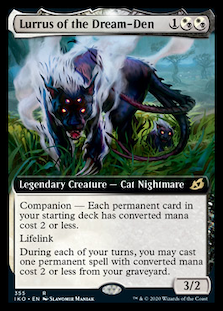
And then I jumped onto MTGO myself. All that weekend, I was seeing bizarre hybrids of Burn and Prowess. And weirder, including a Mardu Pyromancer/Elementals/Burn mashup that I imagine was a pet deck taken to extremes by Lurrus. The relatively normal versions were using the Prowess creature base and Burn's spells. This normally doesn't work because Burn can't just dump its hand or play cantrips to fuel big prowess turns. Recycled Baubles made it plausible, and I certainly lost to them.

...Or Not?

I had planned for that to be the exclamation point on this whole discussion, and then to move on to discussing the merits of deck hybridization as the metagame repositioned. The hybrid Prowess/Burn decks didn't fully displace Bauble Burn as far as I could tell, but it was maintaining position in the metagame and sneaking into the data. It looked like this might be the new way of Burn. Given the narrative on companions in general and Lurrus in particular, it was plausible, and the data appeared to support the observations. After all, it was similar to what had already happened with Jund. I'm drawing attention to this thought process because as I began writing this article, the data started contradicting this conclusion.
While collecting the weekend's data for the upcoming metagame article, I discovered that the previously observed Burn trend had reversed. There were still decks that fully embraced Mishra's Bauble, but they made up a minority of last weekend's results. Most had shifted back toward pre-Ikoria configurations. Some, like my example list, still had something for Lurrus to do, but many were just running Lurrus for the sake of running Lurrus.

Burn, Eresopacaso (4-1 Modern Prelim. 5/1)

Creatures

4 Goblin Guide
4 Monastery Swiftspear
4 Eidolon of the Great Revel

Enchantment

1 Seal of Fire

Sorceries

4 Lava Spike
3 Rift Bolt
4 Skewer the Critics

Instants

4 Lightning Bolt
4 Boros Charm
4 Searing Blaze
2 Lightning Helix
2 Skullcrack

Sideboard

1 Lurrus of the Dream-Den
4 Kor Firewalker
3 Path to Exile
3 Smash to Smithereens
2 Tormod's Crypt
2 Skullcrack

This deck could have plausibly existed before Ikoria. And it may have, as the singleton Seal is the only deviation from typical Burn. Seal isn't even too out of place as a metagame call or utility spell. I've lost to maindeck Shrine of Burning Rage out of Burn before. And Eresopacaso's list is indicative of the overall data from last weekend. For some reason, players generally abandoned Bauble and refused to make concessions for Lurrus. Lurrus was not actually abandoned, as every Burn deck I've seen continues to run the companion, but it's becoming an incidental thing.

The main thing to note is that this is where I expected Burn to start with Lurrus; it makes more sense for a card to see incidental play than be fully integrated and built around. Last weekend showcased the exact opposite effect. This is a much more significant development than even the pushed decks from the weekend before and requires closer investigation.

What Does it Mean?

The latest data as I'm finishing this article generally backs up the weekend results. Bauble Burn is still around, but has lost its presumptive position. The incidental-Lurrus decks are putting up more and generally better results than the older versions. This suggests that Burn is actually moving away from Lurrus as a strategy, though not as a card to play.

I should note that it is possible that this is simply a case of outliers shining through. The metagame is a vast, churning sea of player and decks. Anything can get chucked up to the surface for me to observe. However, when similar decks keep getting churned up over time then it becomes indicative of reality. The data is getting close to that threshold, but is not there yet. So assuming that this latest development is not an outlier, the question is what does it mean? I see two scenarios.

1) A Reevaluation

Last week, I argued that deck that the only reason that Lurrus Jund was doing well was Lurrus itself. In order to play Lurrus as a companion, Jund had to make itself worse compared to its normal configuration. No Jund deck would give up Liliana of the Veil and Bloodbraid Elf for Mishra's Bauble under normal circumstances. However, Lurrus' power is high enough that the efficiency and power loss was made up in aggregate by the extra card advantage. However, this didn't change the fact that the deck itself was bad, and made me question its longevity.
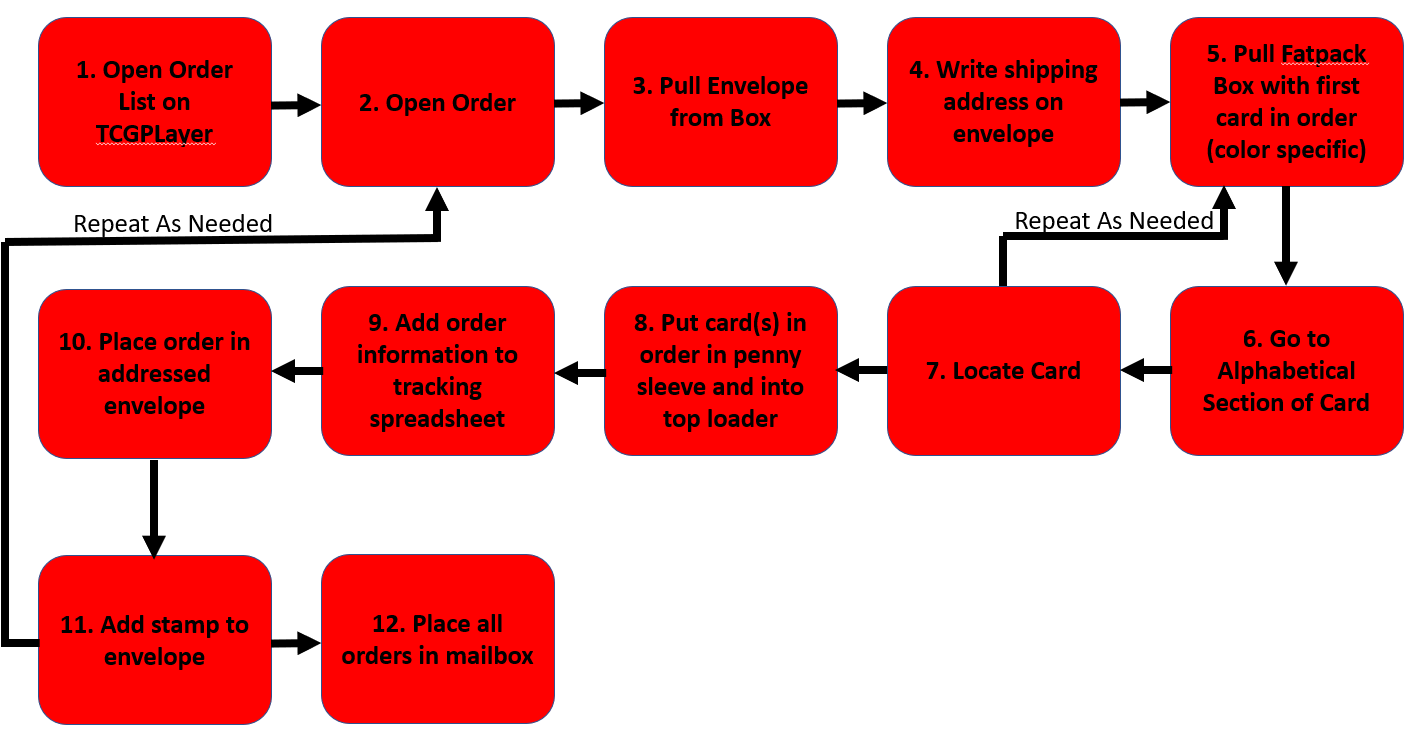
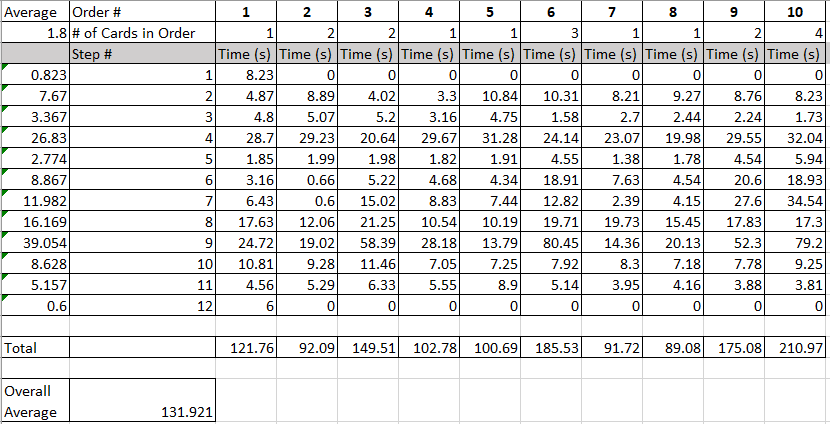
This is what is happening with Burn. The Bauble Burn and hybrid Burn/Prowess decks are worse in a measurable way than normal Burn. The inefficiency relative to baseline has started catching up with pilots, particularly as other players adapt to them. Thus there's no longer time for, nor any advantage to, messing around with Baubles. They're streamlining themselves to regain Burn's normal competitive edge.

2) An Adaptation

Alternatively, this is a response to metagame changes external to Lurrus. Bant Yorion decks are getting more popular, and that presents a challenge for Bauble Burn; there's no winning a long game against a deck full of cantrips and lifegain that has a guaranteed way to flicker all of them. The advantage of recurring Bauble is meaningless against Bant's tsunami of card advantage. Instead, the advantage is shifting towards speed and Skullcrack. Lurrus packages are being cut for space as a result, with Lurrus itself being preserved as incidental value against black midrange decks.

Trust the Data

I don't know which scenario is correct, but the data will tell. Next week, I'll have a comprehensive review of the past month, which should help further shape our understandings what's actually going on with the companions.

Insider: Best Business Practices – Optimizing Fulfillment

Are you a Quiet Speculation member?

If not, now is a perfect time to join up! Our powerful tools, breaking-news analysis, and exclusive Discord channel will make sure you stay up to date and ahead of the curve.

Amazon has spent millions upon millions of dollars optimizing its fulfillment system. I think it's a fair argument to make that they are likely the most optimized at this practice than every other business. They have reached a point that you can order most random things and have it delivered within two days, save during this COVID-19 crisis, or in some instances up to a few hours.

While I won't delve into the costs associated with this speed on the workforce (which are admittedly high) my point is that in order to provide goods that fast, a very organized and planned system of fulfillment must be developed.

Now, thanks to Amazon's resources they have the ability to control the fulfillment from initial order all the way to your doorstep, but none of us have those capabilities. We must still rely on outside delivery companies, but we do control the process from initial order to package handoff to the delivery service.

Map the Process

One thing we've done numerous times at the company I work for is chart out our process. We list every action required to get from the initial state to the final state, chronologically. Consider my 12 step fulfillment process map below:

Establish a Baseline

Before we can improve anything, we need to set a baseline.  This gives us the ability to quantify our improvements and make comparisons. While there are a few potential options of metrics to optimize, I feel the most useful one is likely time as time. We often calculate income based on dollars per hour, so minimizing the time commitment for an order allows us to generate more profit per transaction.

Now that we know our process and that we want to optimize our fulfillment process in regards to time, we can do a time trial for each step in the process. Here's a time trial I did for my process:

Overall, I averaged 132 seconds or 2 minutes 12 seconds per order, which equates to around 27.27 orders per hour.

Other important takeaways were that by far the biggest factor in how long it takes to complete an order is step 9, which is adding information to my tracking sheet. This is likely part of the process that a lot of other people might not do. I type in the name of the card, set, condition, whether it is foil, language, quantity sold, price after fees, purchase price, shipping cost, date, and format it is most likely needed for.

The single card orders were significantly faster averaging just under 100 seconds or 1 minute 40 seconds which is considerably faster than multi-card orders.
While this particular sample size only shows about 1/2 of the orders being single card orders a look at a larger sample size shows that single card orders account for around 85% of my orders.

If we take a weighted average based on the likelihood of order size then we end up with around 109 seconds per order (0.85*99.78 seconds)+ (0.15*164.06 seconds). This means that if the standard number of 1 card orders remains valid than I could package about 33 packages an hour.

Eliminate Waste

There was an error retrieving a chart for Waste Not

While I could stop tracking my orders and eliminate almost 30 seconds on average from my packaging time, I believe that information has enough value to justify taking the time. Tracking this helps me when I buy cards that I can see what sells well or what format is hot at the moment.

The other leader in time required is addressing the envelope. I currently do so by hand, reading off the address line by line and hand-writing it on my envelope. This also takes almost 27 seconds of my 109 second process, thus it takes up almost 25% of the process. In all honesty, I had no idea this process took so long compared to the rest of my overall process until I actually timed myself over the 10 orders tracked. I found that you can print directly on the envelope with most standard printers using Microsoft Word. For details on how to do this please visit here.

My printer can print the address on my envelopes in 10.86 seconds and I eliminate the possibility of human error in the addressing aspect. This represents a savings of around 16 seconds or a 17% time reduction per order. While I rarely mess up an address, I have had two orders go out in which I had transposed a number and have thrown away plenty of envelopes having messed up the address to the point I just started over.

During this process, I also poked around TCGplayer's seller tools and found that if you check your orders on the order sheet and click on the "Export Shipping" information, you can get a file with all the customer names and addresses in one place, rather than having to open each individual file.

Now we have a fast and easy to way to pull all of our order addresses and a way to quickly address envelopes.

The last part of our process I want to discuss today is locating the card(s) for the order. I imagine that for many people this particular step is the most time consuming as the level of difficulty directly correlates to the size of your inventory and how your inventory is laid out. As I only really sell online, my inventory is separated by color and then I created alphabetical spacers to further organize my cards.

Typically, cards that enter my online store inventory don't leave it unless they are sold locally or through other marketplaces. I don't trade cards out of my inventory nor do I display the cards to anyone outside of sending them a link to my storefront. This really works well for me because my inventory typically stays in the 2500-3500 card range. For those with much more substantial inventories or for those who can't keep their inventories centralized a different approach is required. The best way to optimize for inventories like that is to experiment with ideas and test the results against the baseline metrics.

Surprising Value in Old Collectible Card Games

Are you a Quiet Speculation member?

If not, now is a perfect time to join up! Our powerful tools, breaking-news analysis, and exclusive Discord channel will make sure you stay up to date and ahead of the curve.

Have you ever played a Collectible Card Game (CCG) besides Magic: The Gathering? I wonder how the majority of players today would answer that question—it may break down bimodally, by generation. When I started playing Magic back in 1997, there were numerous CCG’s to pick from. In fact, InQuest Magazine used to rank the top 10 CCG’s by popularity each month:

Players who started around this time almost assuredly at least dabbled in another CCG. Newcomers to Magic, however, may not have such experiences, namely because nearly all the CCG’s from the late 90’s are now defunct. The only CCG’s I hear anything about in 2020 are Magic, Pokémon, and Yu-Gi-Oh. Note that in the issue depicted above, the latter two weren’t even invented yet!

An Eye-Opening Moment

Something that surprised me recently is that just because a game is out of print doesn’t mean there are no players of the game. I discovered this recently when I shared a picture of some sealed Star Wars: CCG booster packs on Twitter, asking for opinions on their value. The response was quite strong:

Numerous followers chimed in sharing their fond memories of the game. But a couple replies really surprised me. One person messaged me directly and arranged a deal to purchase ten of these booster packs for $47. I received these packs as a gift a while ago, with the intent to learn the game. The box didn’t contain rules, I didn’t find a friend interested in learning with me, and so the cards were relegated to my hobby display shelf, where it remained untouched for years. The fact I was able to sell less than a third of my boosters for $47 was baffling.

But that sale alone didn’t inspire this week’s article. Instead, it was these replies that opened my eyes to a live-and-well subculture:

What?! The game is still maintained with modern rules and modern cards (Mandalorian cards, even!). I ran a quick Google search for “Star Wars CCG”—the first hit was its Wikipedia page. The second hit was the Star Wars Customizable Card Game Players Committee website.

The site itself has a classic feel to it, but don’t be fooled: this site is actively maintained. Check out the photo below, from the 2020 (that’s right, this year!) championship.

Then there’s the GoFundMe campaign video where Brandon Baity asks for $10,000 of support to create a Star Wars: CCG documentary! Yes, a documentary. When I first saw the video I thought, “No way this takes off.” Then I checked the donation progress…

Yes, a Star Wars: CCG documentary is going to happen. Apparently this card game is still popular and seeing a surge in interest.

The Finance Side

Before I go further, I want to emphasize that this article is not designed to spur a random buyout of Star Wars: CCG cards. I hope my reader’s would know better than to jump head first into purchasing cards they know nothing about. I just mentioned above that I am selling some of my Star Wars: CCG cards. This isn’t about speculation, it’s about awareness and education.

With that aside, I ran a quick search on eBay and sorted by ending price. Apparently, some of the last officially released Star Wars: CCG sets can sell for a hefty sum!

The Endor booster box was an auction with seven bidders, indicating this phenomenon goes beyond just a single individual completing a collection.

In counterintuitive fashion, it seems the older sets are less valuable than the newer ones. I believe this is because the game’s fading popularity meant shorter print runs as the game matured. Therefore, despite being much older, the print runs on some earlier sets are less valuable (but still worth selling).

The key takeaway here: if you run across old Star Wars: CCG cards in a collection—or if you have some buried in a garage at home—I highly encourage you to dig them out.

Looking Beyond Star Wars

My discovery of the out-of-print Star Wars: CCG’s rising value is inspiring. It begs the question: what about other CCG’s that have faded into history? Well, it turns out, there are some pretty compelling collectibles out there. In fact, when I searched for Star Wars: CCG on eBay and browsed completed listings, I found some surprising “matches”. It’s like eBay knew I was doing research for this article!

A booster box of Star Trek CCG sold for $750 plus shipping. A sealed box of Naruto CCG sold for $750. And a partial set (not even complete!) of Middle-Earth CCG sold for over $700 shipped! Sealed boxes of Middle-Earth sell for $600-$900.

Are these games familiar to you? I vaguely recognize them, but I never handled any of their cards. It looks like Middle-Earth was number seven on InQuest’s top 10 list depicted at the beginning of this article. Star Trek: TNG was ninth, and there was no Naruto listed (perhaps it hadn’t come out yet).

I tried browsing completed eBay listings for BattleTech cards, number three on InQuest’s list. Sure enough, sealed product sells for $150 to $600, depending on the set. Random lots of 900 singles have fetched north of $100. Shadowrun (number four) doesn’t appear to fetch much, but a large collection of Legend of the Five Rings cards can sell for over $100 on eBay. I’m sure the list goes on and on.

What Does It All Mean?

Studying these out-of-print and/or defunct games has taught me three things. First, as I mentioned before, it’s definitely worth digging out any old CCG’s you used to play. It looks like there are players for many defunct games still out there—if you’re uninterested in playing yourself, you could probably help the player base out by placing your cards on the market. It increases their supply while also making you some cash.

Second, I learned that there’s still hope for me if I want to learn how to play Star Wars: CCG. I’ve always been a major Star Wars fan and the concept of manning the Millennium Falcon with Han Solo to lead an attack against the Dark Side has always been exciting. With social media (and stay-at-home orders), I’m sure I could find an online playgroup who would be willing to teach me if I wanted to commit the time. Perhaps this stay-at-home order is inspiring folks to do just that, and it’s causing a resurgence in demand as @CCGHistory stated on Twitter.

Third, looking at unsupported CCG’s is one way to study what would happen to Magic should it one day go belly-up. Granted, the magnitude of the game is much larger, so a great deal of extrapolation is required. But I could definitely see a scenario where sealed product climbs steadily in price over time. I don’t think arbitrary collections of random cards would sell as robustly for Magic simply because a) the game has been around for much longer and b) the supply of random Magic bulk is seemingly endless. If Magic were to collapse, I’d want my money in sealed product and the game’s most iconic cards.

Wrapping It Up

I enjoyed this momentary dive into other Collectible Card Games, digging for financial relevance. It turns out I didn’t have to dig very deeply—many now-defunct CCG’s are fetching real dollars at auction on eBay. It seems people are willing to pay up in order to relive their childhood memories—it’s true for Old School MTG, it’s true for vintage video games (I’ve noticed many of my rare Sega Saturn games have shot up in value over the past couple months), and it’s true for obsolete CCG’s.

If you’re sitting on some older CCG’s, now’s the perfect time to dig them out and do some research on eBay. People have more spare time sitting around at home these days, and you never know if a game you used to play has a strong, concentrated following in 2020. If so, you just may be able to sell those dust-gathering cards for real money.

Sigbits

  • The same hotlist cards from last week remain on Card Kingdom’s list this week. Dual Lands and Reserved List cards dominate the top of the list. The most valuable card on the hotlist that’s not on the Reserved List is foil Force of Negation, buylisting for $88.
  • Despite its recent buyout, Revised Wheel of Fortune isn’t worth selling to Card Kingdom’s buylist at the moment. They dropped their buy price to $50—it remains on their hotlist, but half of the market’s price is hardly considered “hot”.
  • I find the price history of Jace, the Mind Sculptor fascinating. It was $50 back in 2012, then spiked to $150 in 2013, slowly drifted down to $65 through 2017, then spiked back to $140 in 2018. From there, it has bounced between $100 and $150 before fading back toward $100 again in 2020. Card Kingdom’s $50 buy price doesn’t give me confidence in its outperformance going forward.


April ’20 Brew Report, Pt. 2: U Laugh, U Lurrus

Are you a Quiet Speculation member?

If not, now is a perfect time to join up! Our powerful tools, breaking-news analysis, and exclusive Discord channel will make sure you stay up to date and ahead of the curve.

Things have certainly changed since the last brew report, which reflected April's decklists pre-companion. Post-, it would appear that Lurrus of the Dream Den is Modern's new poster-boy, and alongside it Mishra's Bauble, which is seeing widespread play in everything from Delver to Rock to UW Control. Today, we'll look at some of the wild new strategies abusing the companion and its colleagues.

Don't Call It a Comeback

Or do, because Delver has been markedly absent from Modern for quite some time now. Lurrus seems to be buoying its return, as resting a gameplan on a fragile flier isn't so bad when you can guaranteed get it back in the mid-game.

Grixis Delver, DM95 (5-0)

Creatures

4 Sprite Dragon
4 Delver of Secrets
2 Snapcaster Mage

Artifacts

4 Mishra's Bauble

Instants

1 Archmage's Charm
1 Cling to Dust
2 Drown in the Loch
4 Force of Negation
3 Lightning Bolt
2 Mana Leak
4 Opt

Sorceries

1 Inquisition of Kozilek
4 Serum Visions
2 Thoughtseize
2 Unearth

Lands

1 Blood Crypt
4 Darkslick Shores
2 Island
4 Polluted Delta
4 Scalding Tarn
1 Spirebluff Canal
2 Steam Vents
2 Watery Grave

Sideboard

3 Collective Brutality
2 Fatal Push
1 Flusterstorm
2 Grim Lavamancer
1 Lurrus of the Dream Den
3 Mystical Dispute
1 Nihil Spellbomb
2 Tormod's Crypt

Grixis Delver is the favorite out of the gate, with the deck going on to enjoy multiple placings in Preliminaries. The deck makes great use of Bauble not only by flipping Delver, but by growing Sprite Dragon the turn it lands, which turns the flier I found lackluster in my own experiments into a potent threat. Like Bauble and Delver, Sprite can be bought back with Lurrus. And so can Snapcaster Mage, which makes for quite a value train!

A critical innovation here is Unearth, which not only revives the deck's threats, but puts Lurrus back onto the battlefield once its companion cast has been completed. Topdecking into a late-game Snapcaster can also generate a ton of value, as Snap can Unearth Lurrus, which then plays another Snap to recur an additional instant or sorcery. Then, Lurrus is left standing to add more value in future turns if opponents can't answer it. This plan is significantly more potent than Grixis Delver's old reliance on Tasigur, the Golden Fang, whose activation requirement was significantly mana-intensive and didn't impact the board at all.

Dimir Delver, TSPJENDREK (3-2, Modern Preliminary #12138075)

Creatures

1 Jace, Vryn's Prodigy
4 Delver of Secrets
3 Snapcaster Mage

Artifacts

4 Mishra's Bauble
1 Nihil Spellbomb

Instants

3 Archmage's Charm
2 Deprive
1 Drown in the Loch
4 Fatal Push
4 Force of Negation
1 Mana Leak
2 Opt
1 Tyrant's Scorn

Sorceries

2 Inquisition of Kozilek
4 Serum Visions
2 Unearth

Lands

3 Darkslick Shores
3 Island
1 Misty Rainforest
2 Mystic Sanctuary
4 Polluted Delta
4 Scalding Tarn
1 Swamp
3 Watery Grave

Sideboard

1 Jace, Vryn's Prodigy
1 Nihil Spellbomb
1 Aether Gust
2 Bitterblossom
2 Collective Brutality
2 Engineered Explosives
1 Lurrus of the Dream Den
2 Mystical Dispute
1 Rain of Tears
2 Tormod's Crypt

Then there's Dimir Delver, which scraps Sprite Dragon and Lightning Bolt in exchange for better mana and access to the versatileArchmage's Charm. We saw Charm support a soft surge of Delver decks when it was first released, but the archetype has since floundered; in any case, there's pedigree for the instant's potency here. Jace, Vryn's Prodigy is another juicy creature for Lurrus to reanimate, and can recur Unearth to reboot the engine.

With its proven early-game and now some serious late-game prowess, not to mention other relatively new toys like Force of Negation and Sprite Dragon, Delver is positioned to be a force in the new metagame.

A Grueling Game

It can feel overwhelming to keep up with new changes after a set drops. For instance, what the heck is going on with Jund? Are they keeping Lurrus, or reverting to their Bloodbraid Elf ways? Maybe David was right and it's simply not an awesome fit in that shell. So some of Modern's storied brewers have decided to build their BGx decks around the Nightmare Cat more decisively.

Golgari Lurrus, EDEL (4-1, Modern Preliminary #12138025)

Creatures

2 Cabal Therapist
4 Grim Flayer
4 Hexdrinker
3 Scavenging Ooze
4 Tarmogoyf

Artifacts

4 Mishra's Bauble
2 Nihil Spellbomb

Instants

4 Assassin's Trophy
4 Fatal Push

Sorceries

4 Inquisition of Kozilek
1 Maelstrom Pulse
2 Thoughtseize
2 Unearth

Lands

2 Bloodstained Mire
4 Blooming Marsh
2 Forest
2 Nurturing Peatland
2 Overgrown Tomb
3 Swamp
1 Twilight Mire
4 Verdant Catacombs

Sideboard

1 Maelstrom Pulse
2 Abrupt Decay
3 Collective Brutality
1 Dead Weight
1 Engineered Explosives
2 Grafdigger's Cage
1 Lurrus of the Dream Den
3 Rain of Tears
1 Tormod's Crypt

You read that right. Willy Edel, or as I know him The Guy That Brought Us Abzan Midrange Splashing Treasure Cruise, running Cabal Therapist in Modern! Therapist was one of the earliest Modern Horizons cards spoiled, and format die-hards were unimpressed with its design. Edel apparently ran Therapist for the Amulet matchup and didn't see them enough to form a great impression, so the jury's still out on that one! Given his record, though, the rest of the core must have treated him well.

Golgari Lurrus, EXOTICHERMAN (4-1, Modern Preliminary #12143003)

Creatures

4 Hexdrinker
4 Grim Flayer
3 Scavenging Ooze
4 Tarmogoyf

Instants

4 Assassin's Trophy
4 Fatal Push

Sorceries

4 Inquisition of Kozilek
1 Maelstrom Pulse
3 Thoughtseize
2 Unearth

Artifacts

4 Mishra's Bauble
2 Nihil Spellbomb

Lands

2 Bloodstained Mire
4 Blooming Marsh
2 Forest
2 Nurturing Peatland
2 Overgrown Tomb
3 Swamp
1 Treetop Village
1 Twilight Mire
4 Verdant Catacombs

Sideboard

1 Nihil Spellbomb
2 Abrupt Decay
3 Collective Brutality
1 Dead Weight
2 Engineered Explosives
1 Lurrus of the Dream Den
3 Rain of Tears
2 Veil of Summer

No Therapist here, but this build of Golgari Lurrus runs with the same concept: aggressive, resilient creatures in black-green backed up by the best disruption in Modern. These builds both seem to lean heavily on Hexdrinker, a potential liability if Jund is running around casting Wrenn and Six (a planeswalker common to both the Lurrus and non-Lurrus versions). With some special sequencing, though, Hex can come down and immediately grow out of range. Golgari is also giving Grim Flayer some time in the sun.

Easy Fits

There are some shells in Modern that require very little change to accomodate Lurrus, or in some cases build a gameplan around it. Both are seeing newfound success.

Abbot Prowess, MHAYASHI (5-0)

Creatures

4 Abbot of Keral Keep
4 Goblin Guide
4 Monastery Swiftspear
4 Soul-Scar Mage

Artifacts

4 Mishra's Bauble

Enchantments

4 Seal of Fire

Instants

4 Burst Lightning
4 Lava Dart
4 Lightning Bolt

Sorceries

4 Light Up the Stage

Lands

2 Fiery Islet
4 Inspiring Vantage
6 Mountain
4 Sacred Foundry
4 Sunbaked Canyon

Sideboard

1 Bloodstained Mire
1 Lurrus of the Dream Den
4 Path to Exile
4 Tormod's Crypt
4 Wear // Tear
1 Wooded Foothills

Abbot Prowess was last seen around the time Abbot of Keral Keep was released. It's always loved Mishra's Bauble, a card that both triggers it and can be cast for free as of turn two. And now it loves Lurrus of the Dream Den, which provides a prowess trigger by recurring a used Bauble, potentially every turn. The upgrade has proved significant for the deck, which posted back-to-back preliminary finishes.
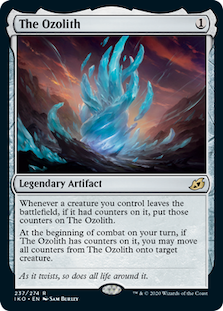
Rather than dip into green or green-black as previous builds have, Abbot Prowess is basically mono-red, splashing white just for Lurrus and some sideboard cards. Another benefit of the second color at all is access to Canopy lands, specifically Sunbaked Canyon. This deck wants to play plenty of those to avoid flooding, and even runs Fiery Islet despite having nothing blue to cast.

Ozolith Scales, ELVIN7 (5-0)

Creatures

4 Arcbound Ravager
4 Arcbound Worker
4 Hangarback Walker
4 Sparring Construct
4 Steel Overseer
4 Walking Ballista

Artifacts

3 The Ozolith
4 Welding Jar

Enchantments

4 Hardened Scales

Instants

3 Manamorphose

Sorceries

4 Ancient Stirrings

Lands

4 Blooming Marsh
5 Forest
4 Inkmoth Nexus
4 Nurturing Peatland
1 Snow-Covered Swamp

Sideboard

3 Damping Sphere
2 Dismember
1 Fatal Push
4 Grafdigger's Cage
1 Lurrus of the Dream Den
4 Veil of Summer

Ozolith Scales marks the return of Hardened Scales, and the deck is back with a vengeance. For one, it's got Lurrus, which re-buys any destroyed artifact or creature sacrificed to its synergies, including the powerful Steel Overseer or Arcbound Ravager. It can even retrieve a copy of Hardened Scales stripped by Inquisition of Kozilek. The deck is usually mono-green, so Manamorphose is employed to cast the companion.

Next, it's got The Ozolith, which serves as an extra Hardened Scales when it comes to sacrificed modular creatures. Sparring Construct then becomes an attractive option.
And finally, Veil of Summer joins the fray, making it frustrating for opponents on blue or black to disrupt the deck's gameplan via discard, removal, or counters. Scales has always been at its worse against swaths of cheap removal spells, and Fatal Push epitomizes those, making Veil a welcome addition to the suite.

All these plusses have benefited the deck greatly, with Scales placing in two preliminaries.

What About Me?

There are, of course, other companions in Ikoria. One such companion made my introductory list, but I didn't feel up to figuring out its combos myself. Thankfully, SMDSTER has me covered!

Zirda Company, SMDSTER (5-0)

Creatures

2 Zirda, the Dawnwaker
4 Birds of Paradise
4 Duskwatch Recruiter
2 Eldrazi Displacer
4 Giver of Runes
4 Heliod, Sun-Crowned
4 Noble Hierarch
4 Ranger-Captain of Eos
4 Spike Feeder
3 Walking Ballista

Instants

4 Collected Company

Lands

4 Brushland
2 Forest
1 Horizon Canopy
1 Plains
3 Razorverge Thicket
2 Temple Garden
4 Windswept Heath
4 Wooded Bastion

Sideboard

1 Zirda, the Dawnwaker
2 Dromoka's Command
4 Path to Exile
3 Qasali Pridemage
2 Relic of Progenitus
3 Veil of Summer

As far as I know, Zirda Company is the first Modern deck to run its companion both in the sideboard (as a companion) and in the main (as a regular-old, I-want-to-draw-this-for-real spell). That's because with this many synergies, it's a great creature to hit with Collected Company. Zirda makes Walking Ballista, Eldrazi Displacer, and Duskwatch Recruiter into powerhouses, helping pilots stabilize the battlefield or dig deeper for the Heliod-Feeder combo. Best of all, since Zirda can be cast from the sideboard at any time, just having one of those creatures in play puts a lot of pressure on opponents.

A Future Accompanied

David may be down on the companions, but I think they are seriously great in Modern and other constructed formats, especially Lurrus. So long as it sticks around, which it definitely will for the time being, the Nightmare Cat should remain a fixture of many a competitive deck. I'm even brewing my own with it! Which companion is by your side?

Insider: MTGO Finance Update: Chests and Ikoria Redemption

Are you a Quiet Speculation member?

If not, now is a perfect time to join up! Our powerful tools, breaking-news analysis, and exclusive Discord channel will make sure you stay up to date and ahead of the curve.

Welcome back folks!

With the release of Ikoria, a lot is going on in the MTGO Finance community. Treasure chests have received a major update, one more significant than any since War of the Spark. And with the paper release of Ikoria delayed due to COVID-19, how is that affecting redemption and the value of Ikoria cards online? Let's dig in!

I. Treasure Chest Update

As always happens, the value of treasure chests has rebounded after the latest update. Today a treasure chest is worth $2.28, up 13% from $2.01 in March. If you have been holding treasure chests from the end of last season, now is the time to sell them. For those who play a lot and would value the playpoints that the chests contain, it is worth it to open them rather than sell, as the EV of a chest is $2.41 if you include playpoints as part of your calculus (one of the changes to the chests over the past year was to include more playpoints, which makes the value of chests more even and reliable, and safer to open).

II. Treasure Update: Modern Horizons

At long last, Modern Horizons has come to the treasure chests! Before the set received a small reprint in the form of a flashback draft in March, Modern Horizons had skyrocketed to $500, up 100% from its $250 price point at the end of last year. Prices have now settled at $300, so there is once again room for growth, and strong consideration should be given to including Modern Horizons cards in your investment portfolios. If you are a player, it is the time to pick up staples from this set that you need now and in the future.

But how will the Treasure Chests affect Modern Horizons prices going forward? As you can see from the table above, nearly every Modern Horizons card of value has made its way onto the Treasure Chest curated list. The most valuable card not included in the chests is the $3.19 Echo of Eons. Before this update, by contrast, only a few Modern Horizons cards were included. The key number to focus on here is 6, as that is the new inclusion frequency for all of these Modern Horizons cards, no matter the current price or rarity. A frequency of 6 for cards legal in Modern is significant but not crushing. This inclusion frequency will exert a modest downward pressure on these cards, more than usual given that Modern Horizons is a set that had a low initial print run.

In practical terms, I expect this to slow the rate of growth on these cards, but the upward pressure of demand and scarcity will still outweigh this supply infusion. Expect Modern Horizons as a set to be worth at least $350 by the end of the summer, and likely north of $400. I will, of course, keep the QS community abreast of further changes, as chest frequencies of 12 or 20 would be a real reason to sell. But for now I am a buyer of Modern Horizons cards; I think these are among the safer speculations available to the MTGO community at this time.

III. Treasure Update: Standard Promos

Wizards has had a new focus on promos and premium versions of cards, a focus I explored in my last article, and these alternate versions of cards have entered the MTGO marketplace exclusively through treasure chests. Now that we have seen how MTGO has handled these versions in Throne of Eldraine, Theros Beyond Death, and Ikoria, we now know what to expect and can use that knowledge to our advantage when making buying decisions. With this update, all of the alternate versions from Throne of Eldraine and Theros Beyond Death have been removed from the chests, and all the alternate premium versions of Ikoria cards have been inserted. We can expect these Ikoria promos to remain in chests until the release of Core 2021, and likewise for future sets.

The existence of these promos inclines me to change my investment behavior in one key way: for cards in the current set with premium versions, unless I'm investing really early on in the set's life cycle with an eye toward selling into the initial redemption rush, it's likely better to wait to invest until a bit closer to the next set's release. This became apparent to me this past cycle with Theros mythics Thassa, Deep-Dwelling, Heliod, Sun-Crowned, and Ox of Agonas.

Instead of investing in late March, I should have waited until April.

It is still too early to tell whether these promos are worth investing in, but expect an article on the subject this summer, analyzing Throne of Eldraine, Theros Beyond Death, and Ikoria promos. Examples like Shadowspear incline me to pay more attention to the promos. I invested in the regular version of Shadowspear (blue line), but the premium borderless version (orange line) would have given me a higher rate of return.

IV. Treasure Update: Important Cards

This treasure update makes many tweaks to the curated list, increasing the frequency of many Pioneer, Modern, Legacy, and Commander staples and decreasing the frequency of others. Most of the miscellaneous changes were relatively small, increasing or decreasing frequencies by 6.

The above list is by no means exhaustive, but it does highlight some of the important changes made in this latest update. There are some cards here that are worth looking into now that their chest frequencies have been lowered. Liliana, the Last Hope in particular looks very appealing. She had been in chests for a long time, including a promo printing as part of the Japanese planeswalker series in War of the Spark. Even though she sees less play than she used to, she still sees extensive play, and now is no longer a curated card. If she continues to dip lower, I might become a buyer.

We also see that Commander has become increasingly popular on MTGO, a trend that has accelerated in response to COVID-19. Sol Ring has spiked on MTGO to about $12, and Commander staples have increased in price more than usual. No doubt this is why Sol Ring is being included in the chests now, and no doubt this is why Deathbellow Warcry has maintained a surprisingly high price. Now that Deathbellow Warcry is no longer in chests, expect its price to rise.

V. Signing Off -- Ikoria and Redemption

In the QS Discord, I expressed joy that Magic Arena was finally getting human drafting. I assumed that less people would draft on Magic Online, keeping card prices high. I was mistaken. It was surprising to see Ikoria drop below $100 so quickly. It took Theros Beyond Death over two months to dip below $100; it took Ikoria one week!

There are probably numerous factors at play here. The pandemic has kept people home. Drafting on MTGO has continued to be a compelling alternative to drafting on Arena, as the league numbers are very healthy and I still see so many of the Limited personalities sharing their MTGO trophy decks on Twitter. Perhaps above all, the disruption to paper Magic caused by the pandemic has likely decreased demand for redemption.

I think that now is the time for paper stores and collectors who redeem sets from MTGO to buy their redemption sets. Ikoria has stabilized and slowly inched back toward $100. And there is great opportunity here -- this will be the first time in Magic's history where MTGO Redemption (May 13th) begins before the paper release (May 15th). Digital sets will thus be redeemable when paper prices are at their peak, giving redeemers a chance to sell physical sets with high margins.

Thanks for reading, and I'll be back next time with my favorite spring speculation picks!

Want Prices?

Browse thousands of prices with the first and most comprehensive MTG Finance tool around.


Trader Tools lists both buylist and retail prices for every MTG card, going back a decade.

Quiet Speculation