Are you a Quiet Speculation member?
If not, now is a perfect time to join up! Our powerful tools, breaking-news analysis, and exclusive Discord channel will make sure you stay up to date and ahead of the curve.
Have you ever played a Collectible Card Game (CCG) besides Magic: The Gathering? I wonder how the majority of players today would answer that question—it may break down bimodally, by generation. When I started playing Magic back in 1997, there were numerous CCG’s to pick from. In fact, InQuest Magazine used to rank the top 10 CCG’s by popularity each month:

Players who started around this time almost assuredly at least dabbled in another CCG. Newcomers to Magic, however, may not have such experiences, namely because nearly all the CCG’s from the late 90’s are now defunct. The only CCG’s I hear anything about in 2020 are Magic, Pokémon, and Yu-Gi-Oh. Note that in the issue depicted above, the latter two weren’t even invented yet!
An Eye-Opening Moment
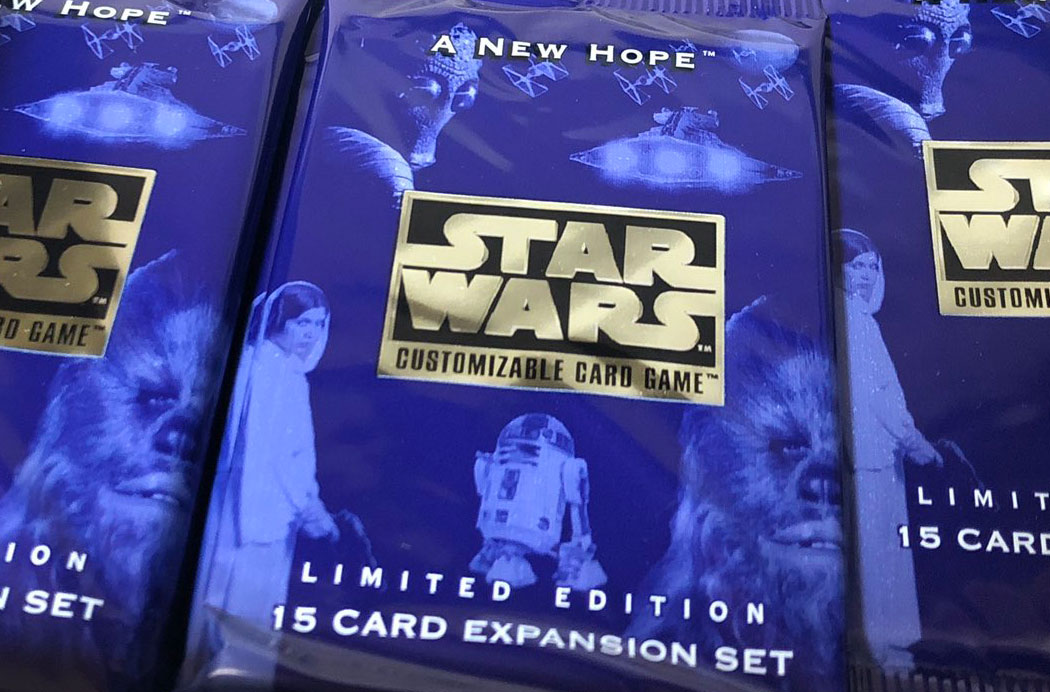
Something that surprised me recently is that just because a game is out of print doesn’t mean there are no players of the game. I discovered this recently when I shared a picture of some sealed Star Wars: CCG booster packs on Twitter, asking for opinions on their value. The response was quite strong:
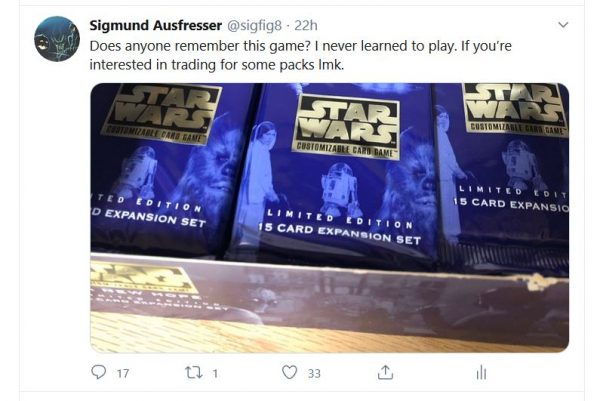
Numerous followers chimed in sharing their fond memories of the game. But a couple replies really surprised me. One person messaged me directly and arranged a deal to purchase ten of these booster packs for $47. I received these packs as a gift a while ago, with the intent to learn the game. The box didn’t contain rules, I didn’t find a friend interested in learning with me, and so the cards were relegated to my hobby display shelf, where it remained untouched for years. The fact I was able to sell less than a third of my boosters for $47 was baffling.
But that sale alone didn’t inspire this week’s article. Instead, it was these replies that opened my eyes to a live-and-well subculture:

What?! The game is still maintained with modern rules and modern cards (Mandalorian cards, even!). I ran a quick Google search for “Star Wars CCG”—the first hit was its Wikipedia page. The second hit was the Star Wars Customizable Card Game Players Committee website.
The site itself has a classic feel to it, but don’t be fooled: this site is actively maintained. Check out the photo below, from the 2020 (that’s right, this year!) championship.

Then there’s the GoFundMe campaign video where Brandon Baity asks for $10,000 of support to create a Star Wars: CCG documentary! Yes, a documentary. When I first saw the video I thought, “No way this takes off.” Then I checked the donation progress…

Yes, a Star Wars: CCG documentary is going to happen. Apparently this card game is still popular and seeing a surge in interest.
The Finance Side
Before I go further, I want to emphasize that this article is not designed to spur a random buyout of Star Wars: CCG cards. I hope my reader’s would know better than to jump head first into purchasing cards they know nothing about. I just mentioned above that I am selling some of my Star Wars: CCG cards. This isn’t about speculation, it’s about awareness and education.
With that aside, I ran a quick search on eBay and sorted by ending price. Apparently, some of the last officially released Star Wars: CCG sets can sell for a hefty sum!

The Endor booster box was an auction with seven bidders, indicating this phenomenon goes beyond just a single individual completing a collection.
In counterintuitive fashion, it seems the older sets are less valuable than the newer ones. I believe this is because the game’s fading popularity meant shorter print runs as the game matured. Therefore, despite being much older, the print runs on some earlier sets are less valuable (but still worth selling).
The key takeaway here: if you run across old Star Wars: CCG cards in a collection—or if you have some buried in a garage at home—I highly encourage you to dig them out.
Looking Beyond Star Wars
My discovery of the out-of-print Star Wars: CCG’s rising value is inspiring. It begs the question: what about other CCG’s that have faded into history? Well, it turns out, there are some pretty compelling collectibles out there. In fact, when I searched for Star Wars: CCG on eBay and browsed completed listings, I found some surprising “matches”. It’s like eBay knew I was doing research for this article!

A booster box of Star Trek CCG sold for $750 plus shipping. A sealed box of Naruto CCG sold for $750. And a partial set (not even complete!) of Middle-Earth CCG sold for over $700 shipped! Sealed boxes of Middle-Earth sell for $600-$900.
Are these games familiar to you? I vaguely recognize them, but I never handled any of their cards. It looks like Middle-Earth was number seven on InQuest’s top 10 list depicted at the beginning of this article. Star Trek: TNG was ninth, and there was no Naruto listed (perhaps it hadn’t come out yet).
I tried browsing completed eBay listings for BattleTech cards, number three on InQuest’s list. Sure enough, sealed product sells for $150 to $600, depending on the set. Random lots of 900 singles have fetched north of $100. Shadowrun (number four) doesn’t appear to fetch much, but a large collection of Legend of the Five Rings cards can sell for over $100 on eBay. I’m sure the list goes on and on.
What Does It All Mean?
Studying these out-of-print and/or defunct games has taught me three things. First, as I mentioned before, it’s definitely worth digging out any old CCG’s you used to play. It looks like there are players for many defunct games still out there—if you’re uninterested in playing yourself, you could probably help the player base out by placing your cards on the market. It increases their supply while also making you some cash.
Second, I learned that there’s still hope for me if I want to learn how to play Star Wars: CCG. I’ve always been a major Star Wars fan and the concept of manning the Millennium Falcon with Han Solo to lead an attack against the Dark Side has always been exciting. With social media (and stay-at-home orders), I’m sure I could find an online playgroup who would be willing to teach me if I wanted to commit the time. Perhaps this stay-at-home order is inspiring folks to do just that, and it’s causing a resurgence in demand as @CCGHistory stated on Twitter.

Third, looking at unsupported CCG’s is one way to study what would happen to Magic should it one day go belly-up. Granted, the magnitude of the game is much larger, so a great deal of extrapolation is required. But I could definitely see a scenario where sealed product climbs steadily in price over time. I don’t think arbitrary collections of random cards would sell as robustly for Magic simply because a) the game has been around for much longer and b) the supply of random Magic bulk is seemingly endless. If Magic were to collapse, I’d want my money in sealed product and the game’s most iconic cards.
Wrapping It Up
I enjoyed this momentary dive into other Collectible Card Games, digging for financial relevance. It turns out I didn’t have to dig very deeply—many now-defunct CCG’s are fetching real dollars at auction on eBay. It seems people are willing to pay up in order to relive their childhood memories—it’s true for Old School MTG, it’s true for vintage video games (I’ve noticed many of my rare Sega Saturn games have shot up in value over the past couple months), and it’s true for obsolete CCG’s.
If you’re sitting on some older CCG’s, now’s the perfect time to dig them out and do some research on eBay. People have more spare time sitting around at home these days, and you never know if a game you used to play has a strong, concentrated following in 2020. If so, you just may be able to sell those dust-gathering cards for real money.
…
Sigbits
- The same hotlist cards from last week remain on Card Kingdom’s list this week. Dual Lands and Reserved List cards dominate the top of the list. The most valuable card on the hotlist that’s not on the Reserved List is foil Force of Negation, buylisting for $88.
- Despite its recent buyout, Revised Wheel of Fortune isn’t worth selling to Card Kingdom’s buylist at the moment. They dropped their buy price to $50—it remains on their hotlist, but half of the market’s price is hardly considered “hot”.
- I find the price history of Jace, the Mind Sculptor fascinating. It was $50 back in 2012, then spiked to $150 in 2013, slowly drifted down to $65 through 2017, then spiked back to $140 in 2018. From there, it has bounced between $100 and $150 before fading back toward $100 again in 2020. Card Kingdom’s $50 buy price doesn’t give me confidence in its outperformance going forward.

 Sprite Dragon the turn it lands, which turns the flier I found lackluster in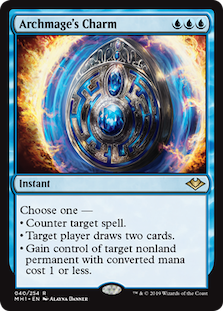
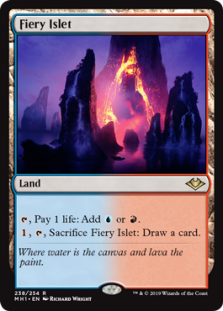 And now it loves Lurrus of the Dream Den, which provides a prowess trigger by recurring a used Bauble, potentially every turn. The upgrade has proved significant for the deck, which posted
 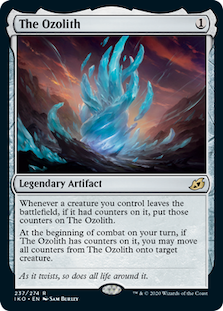 Next, it's got The Ozolith, which serves as an extra Hardened Scales when it comes to sacrificed modular creatures. Sparring Construct then becomes an attractive option.
 As far as I know,

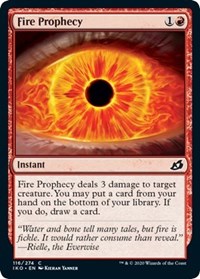
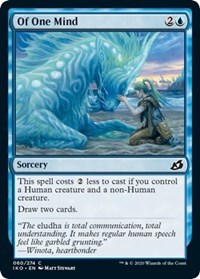

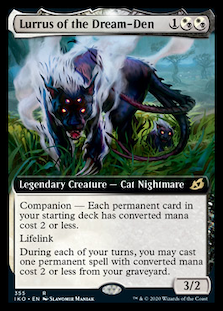 The fact that Lurrus slots into decks with small creatures is
 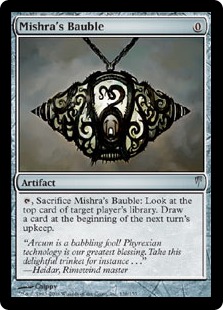 An engine, that I must add, is a single card. That I can't get back if it dies. Trying to fix that weakness actually made the deck clunkier, and ultimately wasn't worthwhile. Lurrus couldn't make a bad deck good.
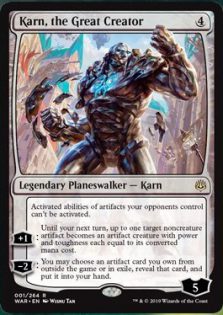 Of course, it's not even necessary to adjust at all. Looking at the raw data is showing that decks with and without companions are doing comparably well. Despite what the most hyperbolic might claim, there's no indication that companions are necessary to win. I'm seeing plenty of decks right now that look the same as they did before Ikoria. And even those decks that have twisted themselves into knots accommodating a companion are recognizable evolutions from their pre-Ikoria counterparts. Or, in a few cases, are the same deck with only a sideboard slot changed.
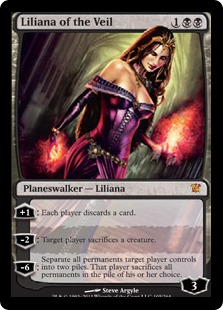 Playing Lurrus in Jund means giving up Liliana of the Veil and Bloodbraid Elf maindeck, and Tireless Tracker out of the sideboard. Liliana can kill creatures and/or deplete hands, which is not only a significant source of card advantage, both real and virtual, but also represents a disruption engine for three mana total. That's a very efficient investment-to-utility ratio. The equivalent system in Lurrus Jund is to rebuy Seal of Fire and Kroxa with Lurrus. This is a far more mana-intensive system than just running Liliana: Lurrus costs three up front, and then each turn, Jund has to pay an additional 1-2 mana. Just to create in aggregate what it had in Liliana. That's not efficient.
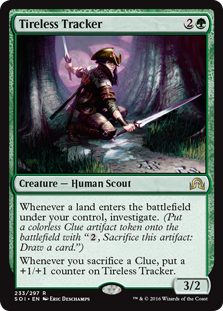 In a similar vein, where previous versions relied on Bloodbraid Elf and sideboard Tireless Tracker as a card advantage boost, the plan here is to recur Mishra's Bauble with Lurrus repeatedly. To play Lurrus, the old engines had to be cut, leaving me to wonder if their absence is worthwhile. Bloodbraid is a source of
 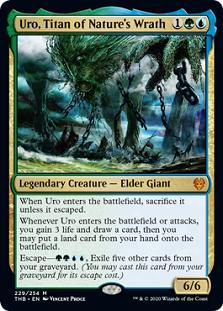 With that out of the way, why might this version of Jund be preferred over the older one? Part of it is certainly the Allure of Shiny New Things.
 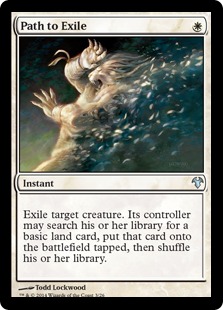 However, this is putting everything on a single point of failure. Without Lurrus in play, the deck is unequivocally worse than normal Jund. Players are aware of this fact, and are playing more Kolaghan's Command to rebuy Lurrus. However, the experience I've had over the past week says that's not enough. Meddling Mage continues to be the most disruptive card in Humans. In offline testing, Path to Exile on Lurrus was devastating. Lurrus can only be cast from outside the game, not exile, and only one Lurrus can be played at all if it's a companion. Thus, there's no redundancy. It is certainly true that right now Lurrus is everywhere, but its ubiquity is creating vulnerabilities that I imagine will be exploited down the line.
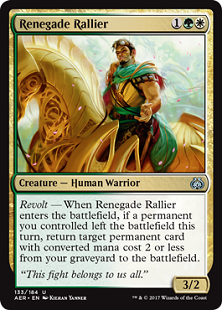 I want to make clear that I don't know if companion is a problem or not. I haven't seen convincing evidence that it is, but I cannot prove that it isn't. That will have to wait on a reasonable data set, which should come together in the next week or two (assuming Wizards actually posts its results).
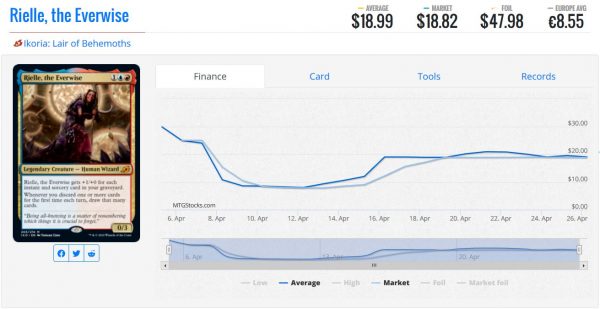
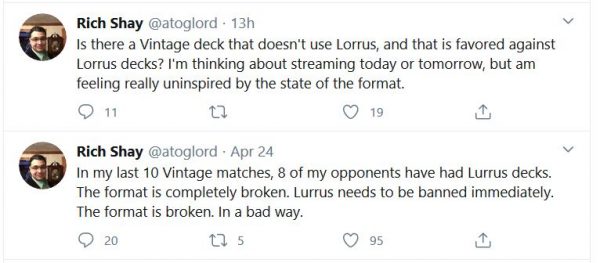
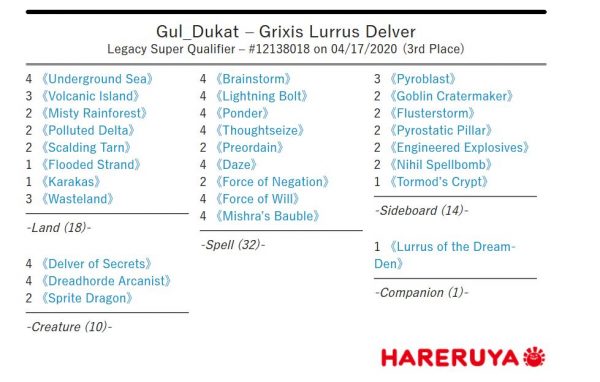
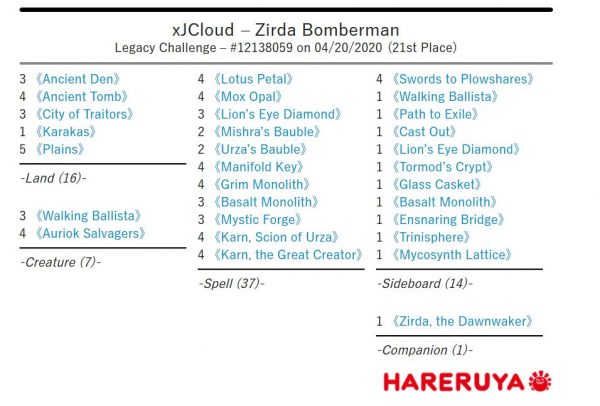
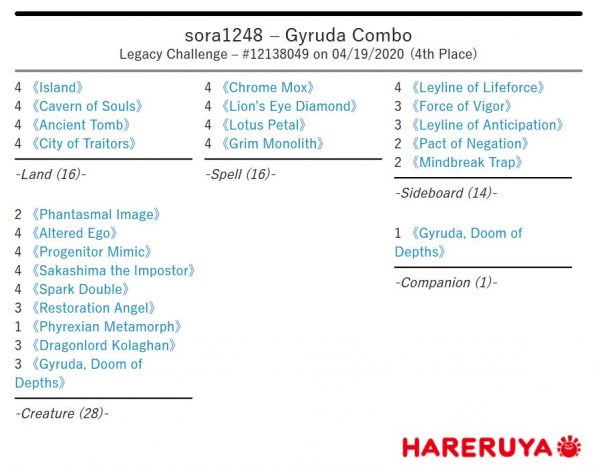

 Normally, the solution to this problem is to fall back on the data. However, the data is very thin. All we have to work with are online results, which Wizards is not great about publishing.
 Part of this may simply be that I am me, and I default to skepticism. I require very clear evidence and tend to focus on the opportunity costs and other hurdles to playability rather than the upside to a card. This is why I
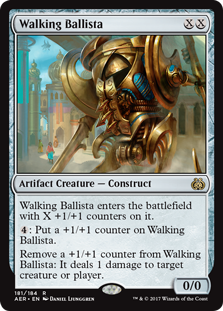
 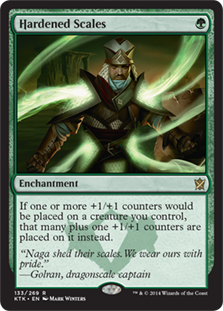 More generally, decks built around Lurrus haven't worked because making the fit is artificial, contrived, and inefficient... or the underlying deck was just bad. The exception has been Hardened Scales. Lurrus recasting Walking Ballista or Hangerback Walker is indeed backbreaking. And that's not considering comboing with The Ozolith or Hardened Scales. The catch is that I have repeatedly punted into my face against this deck. I've done it all, from ruining turns mistapping mana to misclicks and just bad decisions. I don't know what's up, but I just can't play well against this deck. I wouldn't necessarily have won every game if I'd played well, but I could have neutralized Lurrus each time.
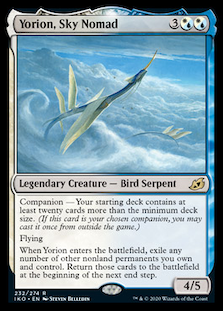 My problem with Yorion, Sky Nomad is not the card itself. Blinking permanents for value is incredibly powerful, and doing so en masse is absurd. Just ask
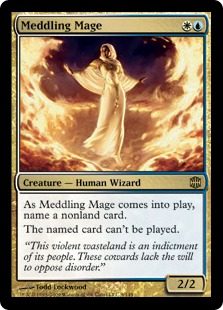
  Of course, that doesn't happen consistently. Most of the time, Yorion has to keep a hand with a payoff or two and some acceleration into Yorion. Humans can spread the board and push through a single instance of value gain. Or worse (for them), I can just name Yorion with Meddling Mage and the deck becomes a literal pile. Humans just does better when I know what to name, and the companions are huge telegraphs. Which will be coming up again down the page.
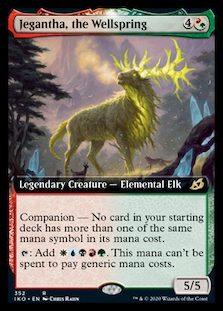 I've seen a number of decks, from Tron to Humans, running Jegantha, the Wellspring. Not because it does anything special for them, but simply because they could. I asked. The fact that they had access to Jegantha didn't matter at all. Generating mana is nice, but all the players who responded flatly told me that it's just a 5/5 for five. And the Humans player was cold on Jegantha, since he couldn't run Auriok Champion. One Tron player said casting Jegantha is a desperation move in attrition matchups.
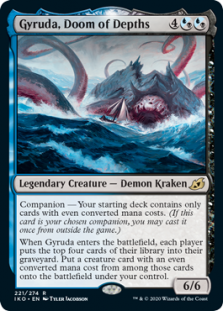 As for Gyruda, I haven't seen the deck actually work in Modern. I've only actually seen it in action three times, but I also haven't heard anyone talking about the deck. Which may be why I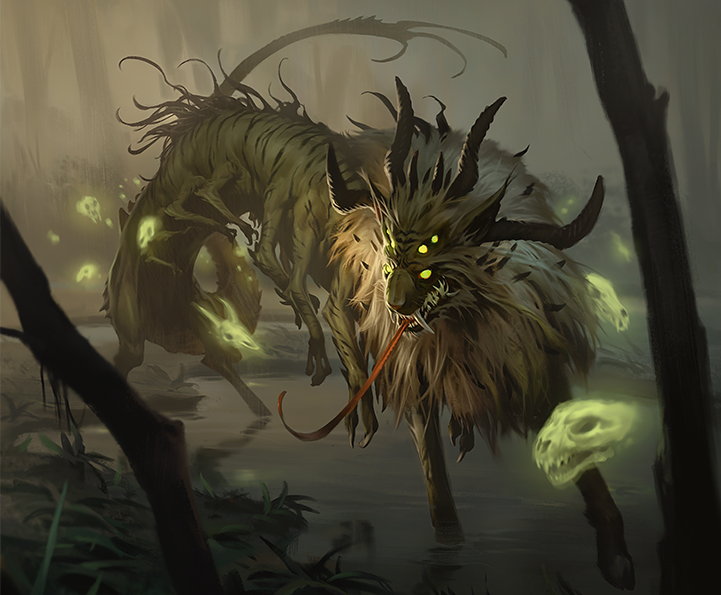
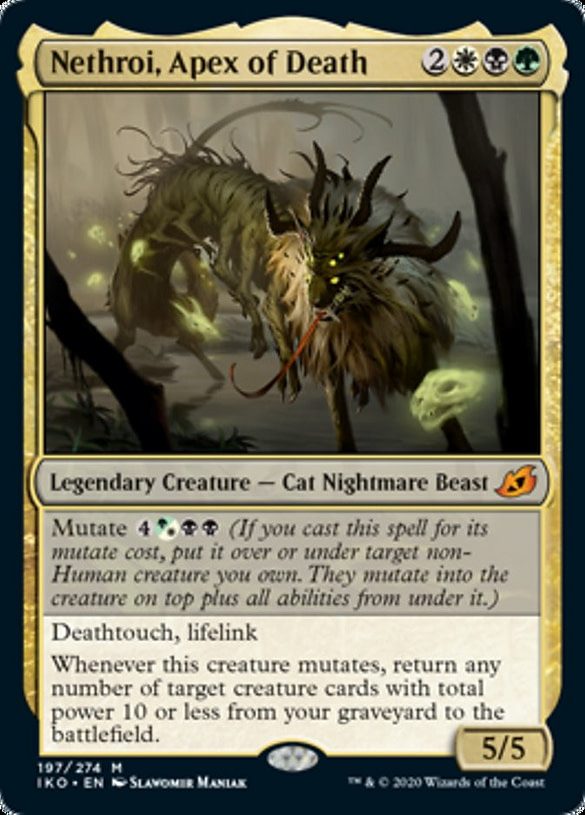
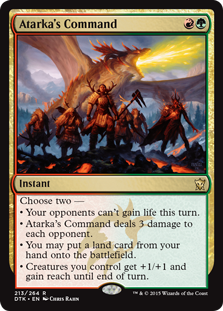
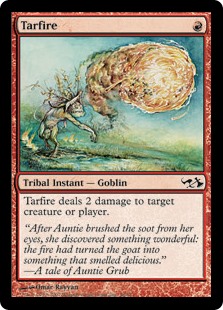 Almost every Bushwhacker build plays 1 Tarfire, an all-but-guaranteed way to grow Tarmogoyf an extra point. Almost no opponents will have tribal cards in their decks, after all! But I'm still surprised the tech is so universally accepted; there are just two Goyfs in the mainboard, and some builds seem to omit the other two even from the sideboard.
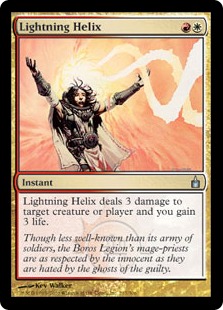 On the more interactive side of things,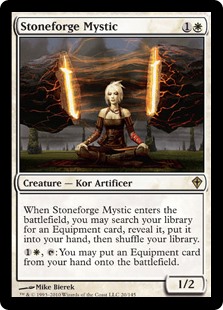
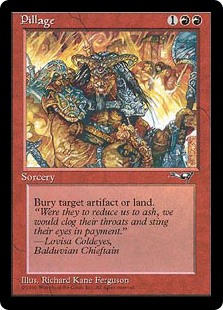 Remember when Ponza was about sticking Blood Moon and casting Stone Rain?
 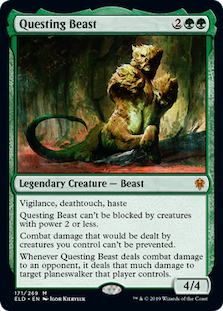 With less of an emphasis on land destruction, but plenty appetite for the mana generated by Arbor-Sprawl,



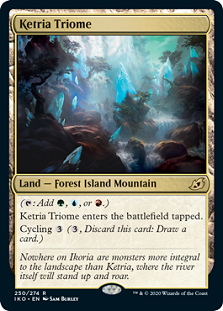 Tarkir shard. Which always come into play tapped, and cycle for three. The only bicycler that has really seen play is Sheltered Thicket thanks to Scapeshift. Given that Modern's manabase has always been built around dual lands which can enter untapped, the bicyclers weren't needed. The tricycles are another story. There's never been a way to fetchably fix three-color mana.
 I don't think that will actually happen. The play patterns of the snow decks don't play to the Triome's strength. Snow decks tend to fetch basics early to play Arcum's Astrolabe and turn on Ice-Fang Coatl. I don't think it's optimal or necessary to break up this pattern for Ketria's sake, which pushes it towards the mid-game, where it's at its worst.
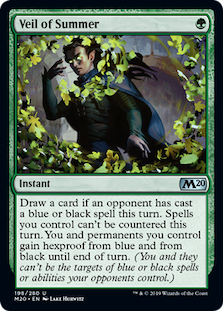 primary threat is recursive and benefits from attrition, they've got a lot of counters for opposing answers, and they certainly don't lack card advantage. It's hard to gain advantage maindeck, and then it gets worse after sideboard, when UGx brings in additional counters and Veil of Summer to defeat the typical anti-control strategy of discard and counters.
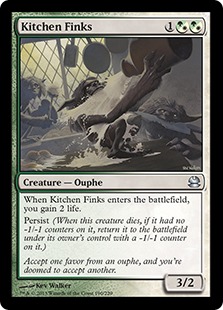 Most Modern decks rely on 3 CMC or greater permanents, from planeswalkers to value engines and combo pieces. To the point that they're not easily replaced, and even when it's possible, it isn't necessarily desirable. My initial thought was that Lurrus fit into Collected Company combo quite competently. Devoted Company was already just mana dorks and two-drops, I thought. It should house Lurrus without any problems and I could write a nice, easy section about giving the fragile combo deck a grinding plan.
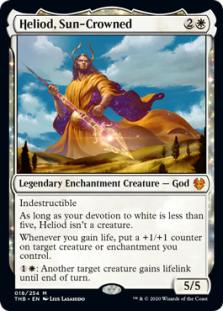 It turned out there had never actually been a time when Company's combos or value creature plan was all two-drops or cheaper. Early
 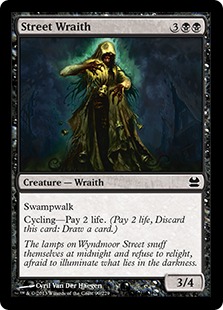 awkward duh moment seeing Street Wraith. Which, despite being used as such, is not actually a Phyrexian mana cantrip but a five-mana creature. And is rather integral to the strategy. Which means Lurrus was out and it was time to move on.