Are you a Quiet Speculation member?
If not, now is a perfect time to join up! Our powerful tools, breaking-news analysis, and exclusive Discord channel will make sure you stay up to date and ahead of the curve.
I’m usually focusing my MTG resources on Old School and Reserved List cards, but every once in a while, a new set is interesting enough to give me the itch. I crave the experience of opening sealed product, wondering what lies within. When the set is brand new, I’m guaranteed to open cards I’ve never owned before. New sets also tend to have inflated EV because enough supply hasn’t hit the market yet.
With this backdrop, I recently opened a couple prerelease packs and one bundle of Ikoria—the product netted me around 20 booster packs. As I tore through all the boosters, I marveled at the alternate arts, the cool companions, and the exciting new mythic rares.
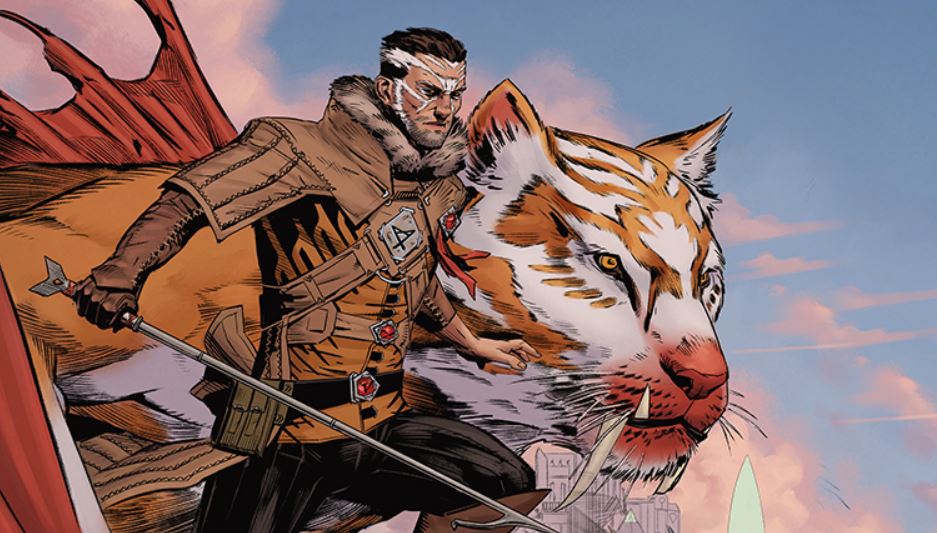
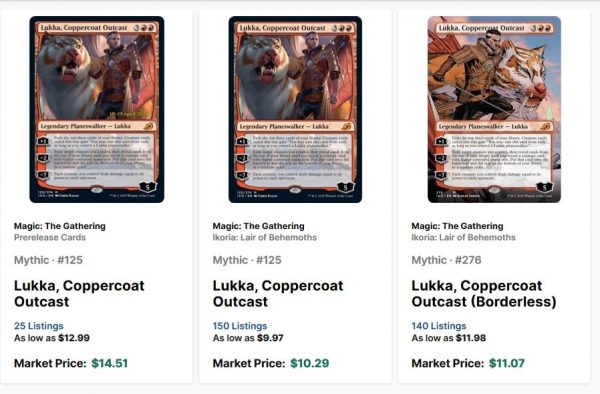
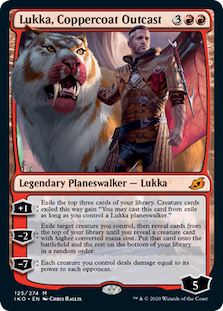
The highlight was definitely the alternate art Lukka, Coppercoat Outcast I opened. I’ve seen that card plague Standard now on Arena, in combination with Yorion, Sky Nomad and Agent of Treachery. Clearly I hit big, right?
These Cards Are Worth How Much?
Card Kingdom is known for paying aggressively on their buylist for hot cards. I opened a 4-of, in alternate art, of a new mythic rare, in the best tier 1 deck in Standard. This thing should have paid for my bundle, right?
I rush to their website and search for the card, only to find that Card Kingdom is paying a measly $6.50 for this card. So much for hot new Planeswalkers selling for $30!
At first, I wondered if this reflected softness at Card Kingdom (they had been dropping their buy prices on many cards due to COVID-19, after all). So I checked TCGplayer and Trader Tools. Nope, this card really is only worth about $11 despite the alternate art.
Disappointed, I checked another awesome card I opened: a foil Umori, the Collector. While not a four-of in any deck, this companion does see Standard play in some tier 2 decks. It has a lot of potential.
A quick search on Card Kingdom’s website and…wait a second. They don’t buy this card? Did they open a bunch or something, what’s going on?
I rush over to Trader Tools and find out it is actually a bulk foil rare—the top buy price is literally $0.10.
Ok, clearly I didn’t do as well as I thought with my pack opening. If these cards are worth so little, what cards are worth opening in this set?!
I revisited Card Kingdom’s buylist for Ikoria cards (focusing on only standard printings for the moment) and sorted by buy price, high to low. Anyone have a guess at the top card as of yesterday morning (May 24th, 2020)?
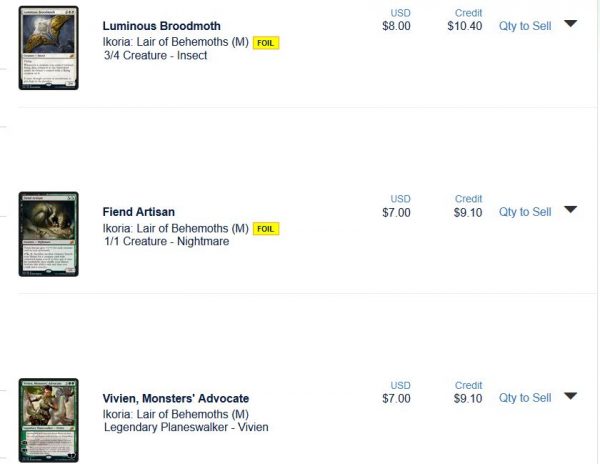
Eight bucks. Eight bucks for the top foil mythic rare in the set! The top nonfoil is just $7.
Now, if I switch over to the alternate art cards, I see Card Kingdom does pay more for some of these rarities. But given just how rare these cards actually are, these prices still seem extremely deflated.
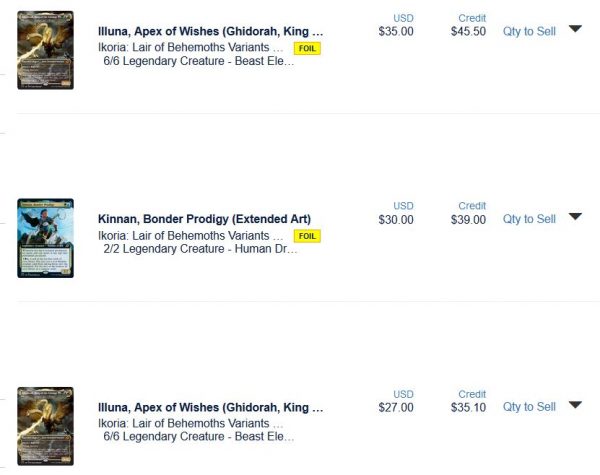
I can’t remember the last time a Standard set had so few cards worth opening from a money standpoint.
Possible Reasons for Ikoria’s Awful EV
Usually when a new set is released, its EV (the estimated value of opening a booster box) is inflated—supply hasn’t adequately emanated throughout the player base yet. Therefore, we see the newest set have a higher EV than previous Standard sets, which have been out long enough to equilibrate.
This trend has inverted with Ikoria. According to Dawnglare, the EV of Ikoria is $68.64.
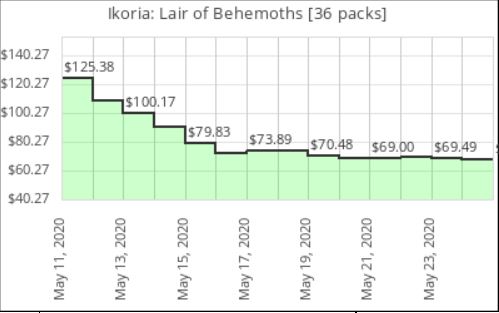
Compare that to the EV of the other Standard-legal sets:
Theros: Beyond Death: $74.33
Throne of Eldraine: $71.33
War of the Spark: $81.66
Ravnica Allegiance: $91.11
Guilds of Ravnica: $84.48
Core Set 2020: $87.62
The newest set is also the worst one to open from a value standpoint, in some cases by a large margin! What gives?
I believe the explanation lies in COVID-19 and the current stay-at-home restrictions in place across the country (and globe). Think about it: the newest set usually shakes up the Standard metagame, and players need to scramble to obtain the newest cards for their next FNM, SCG Open, or MagicFest they want to play. With constrained supply, prices inflate.
But what happens if there is no MagicFest, SCG Open, or weekly Standard event for players to compete? Then there’s no real rush in acquiring the newest cards.
I doubt Hasbro will release precise numbers, but if I had to guess I’d say the number of active Magic Arena players has skyrocketed, just as it has for other online platforms like Zoom, Slack, and Microsoft Teams. Paper Magic, on the other hand, is likely at decade-lows. People can play through webcam, or in very small groups at kitchen tables. But large Standard events, often the bread and butter for Magic tournaments, are practically nonexistent.
This means Ikoria prices may be depressed for some time.
Opportunity Knocking?
When was the last time I wrote an article strictly focused on Standard speculation? I’m sure it has been a long time ago! But with prices so depressed on this very powerful set, I can’t help but see opportunities abound.
First, the disclaimer: I haven’t purchased many Ikoria singles as of the writing of this article. But I have my eye on certain cards—since I play Standard on Arena regularly, I have observed some of the more powerful, in-demand Ikoria singles. This, I feel, gives me enough data to make reasonable recommendations for paper speculation.
First and foremost, there are the Triomes.
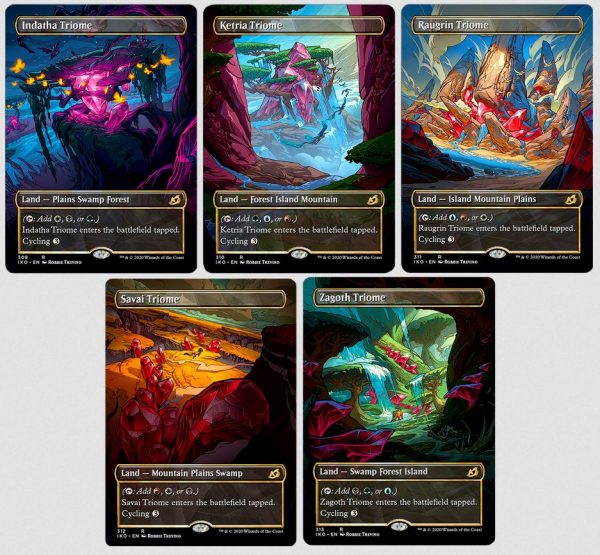
These are absolute staples in the new Standard. I love that they offer three colors, can cycle late in the game, and are fetchable with three land types! They are the first of their kind, and I suspect they’ll be popular in other formats where having lands come into play tapped is acceptable (Pioneer, maybe Modern?). They should also be very popular in Commander.
These are all worth between $5 and $9 currently, making them some of the most valuable non-showcase cards in the set. But what really interests me are the showcase version of these cards. Obviously their supply is much less than their regular counterparts, yet the showcase prices are not that much higher. I bought 1 copy of each so far, with eyes on their prices in case they drop further.
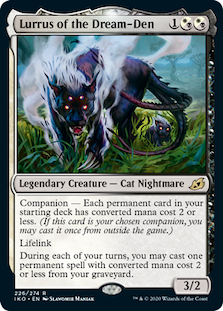
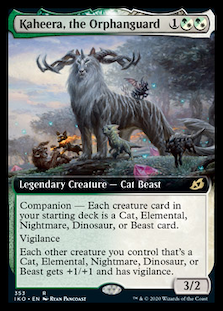
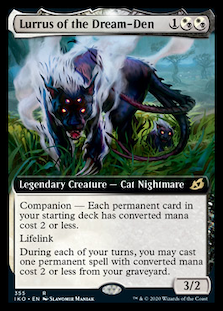
Next on my watch list are the companions—specifically, Umori, the Collector, Obosh, the Preypiercer, Kaheera, the Orphanguard, and Yorion, Sky Nomad. I like these in particular because they see plenty of Standard play, yet are only worth about a buck! Yes yes, it’s true they’re often played as a 1-of. I get that. But Lurrus of the Dream-Den, the most powerful companion in older formats, is worth $6 (extended art is near $10). If Standard play resumes post-COVID, I believe some of these companions could move closer to the $5 range.
If you want more upside, you could pursue the foils (which are also super cheap) or the extended art versions. These are so cheap that it seems like there’s little to lose. Trust me when I saw that Yorion, Sky Nomad is everywhere on Arena’s mythic ladder. Adding 20 cards to a deck is not a huge constraint, so I expect this card to be played throughout its life in standard and into Pioneer and Modern.
The last group of cards I like from Ikoria are the Planeswalkers: Narset of the Ancient Way, Lukka, Coppercoat Outcast, and Vivien, Monsters' Advocate.
I have seen the first two in Standard play many times on Arena. I haven’t seen Vivien as much, but it must see some play because it’s the most valuable of the three! Typically, the best Planeswalkers of a new set retail for $20-$30, yet these are all under $10. What is this, War of the Spark, with its sub-$10 Planeswalkers? These could pop once Standard events begin again and normal demand for paper Magic resumes.
Wrapping It Up
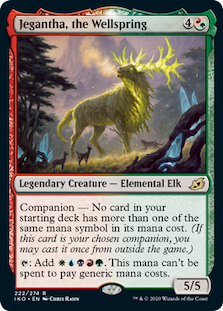
I can’t remember the last time a set’s EV was so poor just a week after its launch. Ikoria does not deserve to be so inexpensive—it’s power level is extremely high! So high, in fact, that one of its cards had to be banned from Vintage for its power level. It’s the first card banned for this reason since the mid 90’s (Mind Twist was the last one). Lurrus of the Dream-Den is on par with Mind Twist…think about that!
Despite its power and its profound impact to Standard, these cards just don’t fetch a lot of money. If you open one of the showcase foils, then you’re in business. But outside of those, you will really struggle to make money cracking boxes of this set. And if stores don’t make money cracking boxes, they won’t crack boxes. And if players aren’t playing paper Magic, prices will continue to soften.
Until they don’t.
I predict that sometime before Ikoria leaves Standard, there will be a vaccine for COVID-19 and large Magic events will return. At this point, though, we’ll already be onto the next sets. Ikoria may be severely underopened as a result, meaning these can have some real growth potential down the line. You don’t even have to look ahead to 5+ years out, either. Even one year could be just long enough for these to suddenly rise in demand without the supply to keep pace.
This is precisely what I’m betting on, and it’s why I’m speculating on Standard cards for the first time in many years.
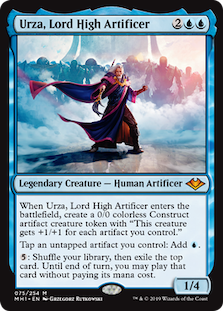
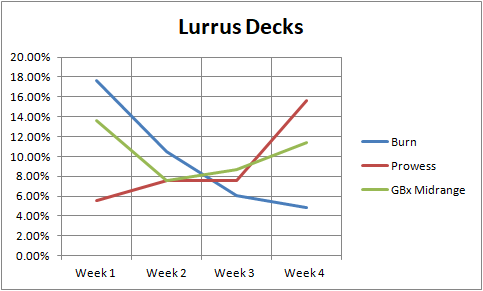
 MTGO, the non-black midrange decks fell away and were replaced by Lurrus decks. Specifically, Burn, GBx midrange, Prowess, and Toolbox decks were the top four individual decks by a decent margin. All of them ran Lurrus, though Toolbox sometimes had Zirda instead. Burn and GBx had been tier 1 decks prior to Ikoria, while Prowess was low-Tier 2 and Toolbox was effectively untiered. They create a strong argument that Lurrus is affecting deck viability, and the fact that 66% of decks in the sample used a companion indicated that it was better to have companions than to not. Only Amulet Titan never ran a companion and still placed highly.
 the event lists. Wizards also doesn't reliably post all of the events, so I'm definitely missing a few datapoints. However, there's no guarantee that other sources, namely
  While Burn has continued its steady decline, Prowess has shot up to the top of the metagame, gaining 8% in a week. At the same time, Toolbox has crashed, losing 8%. While I have no proof, I can't help feeling that the two are linked. Many Prowess decks run Gut Shot, and Toolbox is full of X/1 creatures it needs to get the ball rolling. Prowess was able to effectively disrupt the top deck and race it. It's a logical conclusion, but I have no evidence to prove it.
 The trend appears to have reversed. Lurrus is up 1.6% from the previous week, but companions overall are down by ~1%. This is a very small fluctuation and may represent normal variance rather than a genuine change, but it does still suggest that companions have achieved their maximum saturation. Yorion fell off by ~7% while Obosh surged by ~3%, which suggests that players are continuing to experiment with their decks and the metagame.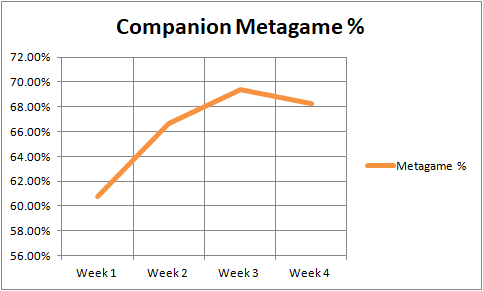
 Companion started out with a very high metagame percentage, as Lurrus was expected to be very strong. The set was just out, but only one copy of Lurrus was needed per deck. Thus, once the supply issues were overcome, Lurrus was and has been readily available.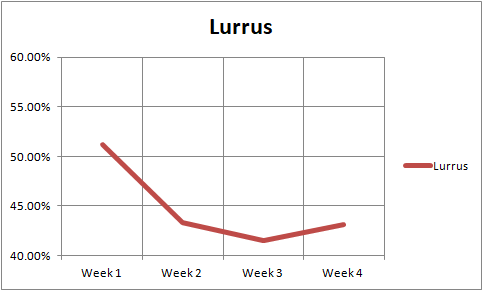
 It's no exaggeration to say Lurrus has fallen off. It's down 8.1% from Week 1 despite a small rebound in Week 4. Some of the fall off must be linked to the rise in other companion decks. Part may be that Lurrus isn't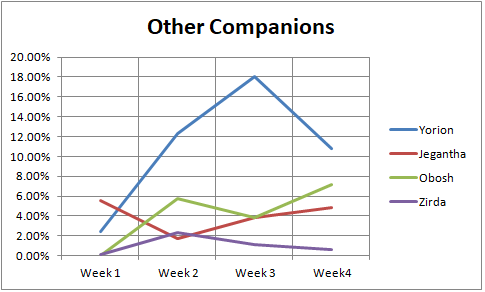
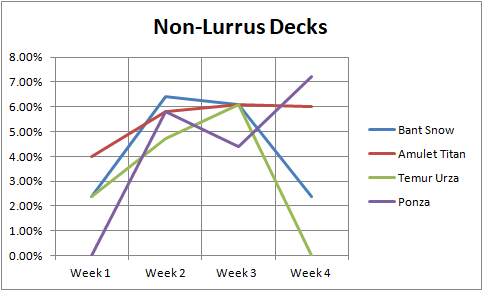
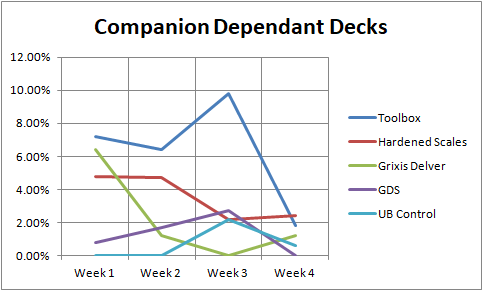
 Every single deck is down from its peak. Last week, Toolbox fell precipitously, while Grixis Death's Shadow disappeared. Grixis Delver failed to place Week 3 and just snuck into Week 4. Hardened Scales is sticking around, but the evidence does not support it being a serious contender in the overall metagame.
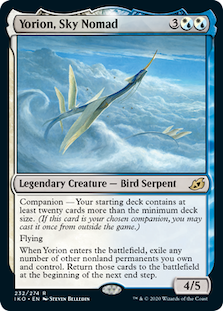 Companions are saturating the Modern metagame. There's early indication that the saturation has peaked. There is evidence that companions are best used in otherwise strong and highly-tiered decks and that they aren't affecting overall metagame diversity. However, the metagame remains highly volatile, and is therefore still developing.
 Then there's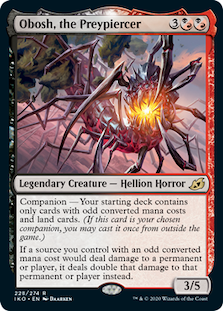
 keep the beats coming, understandably gets the cut with Stoneforge to accomodate Obosh’s companion condition.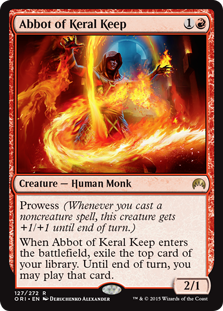
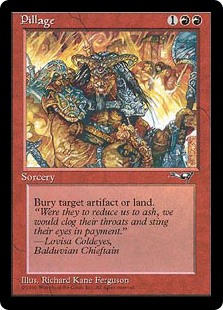
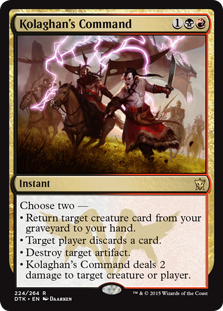 Jund and The Rock are together under BGx. They're essentially the same attrition deck, with the only real distinction being Lightning Bolt and Kolaghan's Command. Sultai decks were listed separately, as the addition of blue significantly changes how the deck plays. For the same reason, both straightforward GR Valakut and the Amulet-less Titan decks are together under Gx Valakut. Not every Valakut deck has red, and the Amulet-less decks play more similarly to Valakut decks than to Amulet Titan.
 I should also note that I recorded only those events that had been posted as of 11:59 PM on 5/9. The cut off was because I needed to write this article. Subsequently, not every event that actually happened is present in the data. I know with certainty that one Super Qualifier from the third week is missing, and I'd wager there are several other missing events. As every event had an equal chance of not being posted by Wizards in my sampled timeframe, the data is still valid.
 The mighty have fallen! Ponza and Bant Snow have been firmly kicked from the top slots. Now, Burn and BGx are king. It is worth noting that both are companion-heavy decks. All the Jund lists and nearly all the Rock decks ran Lurrus of the Dream-Den. Nearly all the Burn decks also had Lurrus. No deck archetype in this data that had companions did so universally. Every Hardened Scales list did have Lurrus, but since there were no Scales lists at all pre-Ikoria, I'm not considering them for analysis (yet).
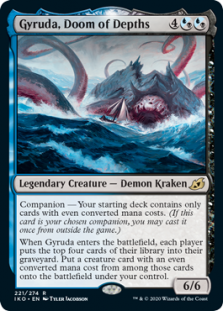 The Umori, the Collector decks were both mono-creature decks, which makes perfect sense. One was a Toolbox deck and the other was Elves. The Elves deck was unremarkable except for the companion, while the Toolbox deck was an odd mishmash of creature combo decks and GW Hatebears. They were in separate weeks, so I'm chalking them up to luck. Similarly, the Gyruda, Doom of Depths combo decks came from the same event. I wouldn't read too much into them; anything can place once.
 towards green and blurring the distinction between decks while companion decks still have distinct identities. Oko pushed decks towards being UGx artifact decks. Once got the otherwise colorless Eldrazi Tron to splash green.
 The bottom line is that companions have had a significant effect on Modern. The top 4 decks are (mostly) companion decks and account for ~52% of the total companion decks in Modern. For better or worse, players must be ready to face companion decks, and odds are it will be a Lurrus deck.
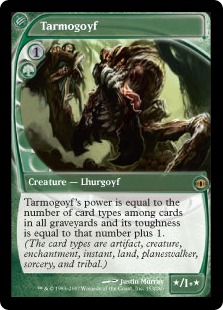
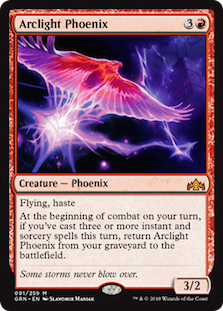 Goyf and Mandrills are
 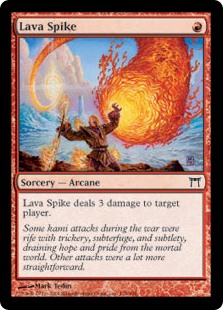 The Tweaks
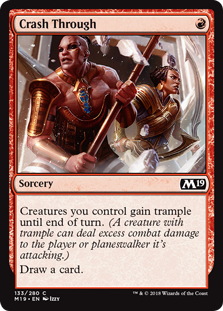 The other two spots went to Crash Through and Flame Jab. Crash has been excelling not just in Mono-Red Prowess, where it helps the deck's smaller creatures (and also Bedlam Reveler) penetrate fields of blockers, but in
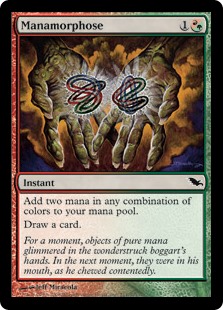 Of course, I was able to rationalize my way out of these pitfalls. It wouldn't be prowess without a full set of Manamorphose, and those can cast Lurrus. In some games, this functionality would mean sandbagging Manamorphose until turn three or four; in others, Lurrus would just be an incidental burst of value when Manamorphose was drawn. I figured that Manamorphose would become a split card: on one end, it merely cycled for free, enabling prowess or Tarmogoyf synergies along the way. And later in the game, Manamorphose would become Lurrus and whatever juicy target existed in the graveyard.
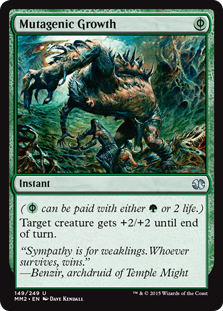 Something had to come in for the two Mandrills, and I went for
 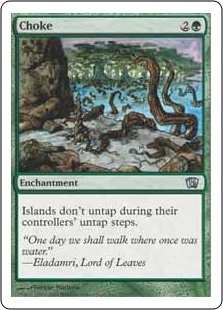 As is always wise to do when taking a refined list and jamming a bunch of your pet cards, I also messed with the sideboard. My first order of business was to add Lurrus and Mandrills; at Kenan's suggestion, gone was Dismember. Kari Zev's Expertise seemed from his article like Kenan's most experimental card, so that also got the axe. But I added one more Choke because I wasn't really trying to not-Choke
  For one, it wasn't a cakewalk to cast. Lurrus would have been great in some games, but I found myself going full Yugi at the top of my deck, praying for Manamorphose to show up (it rarely did). Part of what makes companion so great is the creature's sustained presence in every game; we need to draw Manamorphose before ever casting the 3/2. Even though we'll break even on card advantage thanks to the cantrip, losing out on unrestricted access is a major drawback.
 These takeaways bolster
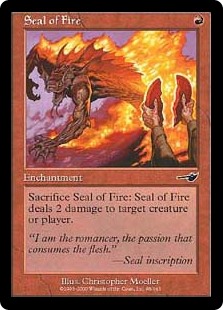 Coert and other Burn players immediately jumped to feeding Lurrus. Seal of Fire is not a very good Burn card. Typically, if Seal saw play, it was as Tarmogoyf/Traverse the Ulvenwald food or in Prowess decks. A one-time shock is not good enough for regular Burn, especially when Grim Lavamancer is an option. However, Lurrus has a way of making
 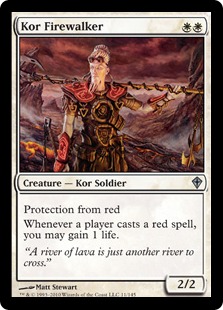 Sunofnothing really leaned into Lurrus with this deck. Cutting Eidolon of the Great Revel makes Burn pretty cold to combo, but doing so here was either a clever metagame call or simply necessary. The plan here is to maximize the recursive power of Lurrus, and that means a lot of extra damage off Eidolon which Sunofnothing decided they couldn't afford. Lurrus is guaranteed on turn three, but having something to replay is not. This deck represented a concerted effort to maximize Lurrus, and it seemed like an extreme push to do so. It even has Pyrite Spellbomb sideboard to beat the omnipresent Kor Firewalker.
 I had planned for that to be the exclamation point on this whole discussion, and then to move on to discussing the merits of deck hybridization as the metagame repositioned. The hybrid Prowess/Burn decks didn't fully displace Bauble Burn as far as I could tell, but it was maintaining position in the metagame and sneaking into the data. It looked like this might be the new way of Burn. Given the
  The
The  normal configuration. No Jund deck would give up Liliana of the Veil and Bloodbraid Elf for Mishra's Bauble under normal circumstances. However, Lurrus' power is high enough that the efficiency and power loss was made up in aggregate by the extra card advantage. However, this didn't change the fact that the deck itself was bad, and made me question its longevity.