
Are you a Quiet Speculation member?
If not, now is a perfect time to join up! Our powerful tools, breaking-news analysis, and exclusive Discord channel will make sure you stay up to date and ahead of the curve.
This past weekend saw an all-virtual, Arena-based Players Tour. The structure is relatively straightforward. There are four qualifier tournaments and players can only play in one. The tournaments take place over the next few weekends. Anyone who makes Day 2 and then finishes a weekend with 33 or more match points will qualify for the 2020 Players Tour Finals, which I assume will also take place over Arena.
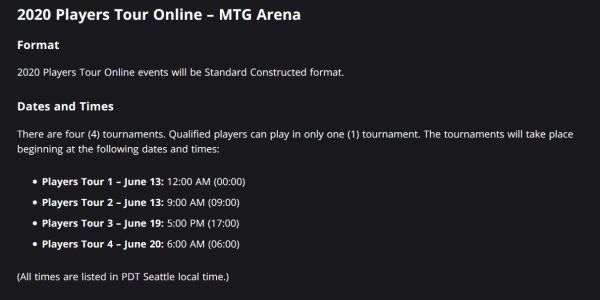
I checked in on coverage now and again throughout the weekend. The commentators did a fantastic job, in my humble opinion, making the best of a tough situation. Everything being virtual, we were still able to monitor feature matches and appreciate professional remarks on player decisions. Even though this was an Arena event, it felt a little special because of the real dollars at stake.
It was also pretty awesome to watch LSV live-stream his own participation in the event. He said multiple times that it felt like a Players Tour because he wasn’t feeling hungry during the event. Truer words never resonated with me.
Welcome to Standard: The All-Digital Format?
As long as large in-person tournaments cannot occur due to COVID-19, Wizards is going to be leaning heavily on the Arena platform. Out of necessity, Standard has rapidly evolved into an all-digital format. Sure, you can still purchase physical cards—but other than perhaps in a small group of friends, where are you going to play them?
With Arena’s success, Wizards has really been pushing the platform hard and for good reason. There’s no way their revenue from paper Magic will be near its usual level, so they need to engage with the community and make money somehow. And in all honesty, they’ve done a fairly good job with this pivot—after all, they got me playing Standard again, something I haven’t done in eight years.
Others have taken notice of these Arena events, and have begun following suit. Star City Games, who used to host their own successful tournament circuit, has begun a season of Arena qualifiers.
The qualifier events appear to be lower stakes than the Players Tour: entry is just $20 and there are just four rounds. Win all four, and you qualify for the SCG Tour Online Championship Qualifier—that’s where the real prize money comes in. The winner of the qualifier makes $1,000. That’s not bad at all for an initial entry fee of $20.
When this pandemic ends, I’ll be wondering a couple things. First, will some amount of Standard tournaments remain on Arena? It’s super convenient, probably cheaper than hosting an in-person event (though perhaps the organizers don’t make as much money?), and the Arena platform makes for a convenient venue for all players. There’s no travel, no excess expense for tournament center food, no lodging, etc. There’s also no cheating. These are some pretty compelling points.
Second, even if there are paper events again, is there room for additional tournament organizers to host event on Arena? Perhaps this will be the beginning of the democratization of Standard tournament circuits. I don’t think just anyone could host successful events, but I have to imagine the activation energy to host these events is lower when on the Arena platform versus starting a circuit of physical events.
It’ll be interesting to watch things unfold, especially after there’s a vaccine and life returns to a semblance of normalcy. Magic—at least Standard Magic—may be changed forever.
Some Finance Implications
COVID-19 caused virtually all major Standard tournaments to cease in paper and move to the Arena platform. Because of this, the demand for paper Standard staples is extremely low. The result: this looks to be one of the cheapest Standard formats I’ve ever seen! With very few exceptions, the mana base is basically the most expensive cards in a tier 1 Standard deck.
Those exceptions include Teferi, Time Raveler and Uro, Titan of Nature's Wrath.
Some of the other dominant cards in Standard are actually not even rares or mythic rares! Every time I tuned into Players Tour coverage last weekend, it seemed there was a Wilderness Reclamation deck on screen. This is a $3 uncommon that already has a reprint in Commander 2020. Another popular deck choice is a R/B sacrifice deck centered around Witch's Oven and Cauldron Familiar, two uncommons worth under a buck.
In the past, supply of the hottest cards from the latest Standard set would be constrained, causing a period of inflated prices. Not this time. Shark Typhoon, from Ikoria, is the third most played card in Standard according to MTG Stocks. This should be a $10-$15 rare; instead, it’s worth under $5. Even Fabled Passage, which goes in almost every tier 1 deck it seems, is worth $7 and change. And now with a reprint in Magic 2021, this land's price is going to drop even lower.
Let’s face it: Standard cards will remain depressed as tournament play shifts away from paper and towards Arena. Speculating on new cards whose sole play lies in Standard is not advisable at this time, no matter how powerful and format-warping that card may be. I'm sure there will be exceptions, but isn't it easier to buy cards where price increases is the rule rather than the exception?
What IS Moving in Price?
Standard cards are dead money, but to extrapolate and say that all Magic cards are floundering would be a grave mistake. In reality, a significant portion of cards are accelerating their price growth throughout this pandemic. This goes back to what I’ve written about in the past regarding the decay in supply due to lack of paper Magic events. Large vendors simply cannot restock the popular, older cards that see extensive play in non-rotating formats such as Commander and Cube.
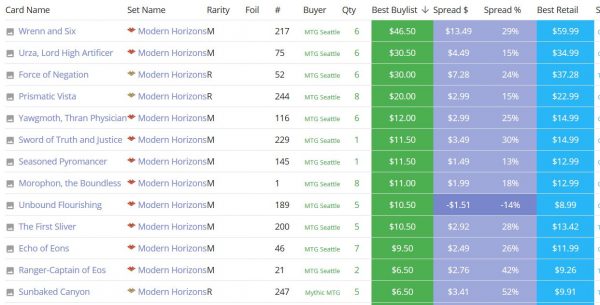
The result: a seemingly random assortment of cards are jumping in value. Here’s a glimpse at the top movers last week: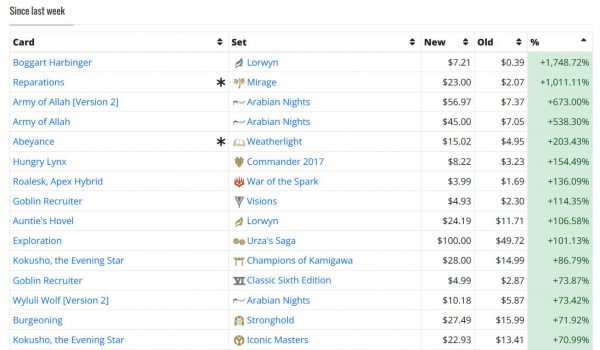
There’s speculation galore on what cards Wizards will ban next. There’s speculation on goblins based on some of the Magic 2021 spoilers. And there’s overall solid pick-ups for Commander play in the list. Personally, I would not have expected to see Exploration hit $100, but that’s probably not a real price (yet).
And these prices are the tip of the iceberg. Not only are certain speculative cards spiking, but overall solid staples are all hitting new highs. Cards like Mana Drain, Wheel of Fortune, Mox Diamond, Vampiric Tutor, Gilded Drake, and Tolarian Academy are all taking off. I’ve also noticed the highest Dual Land buy prices on Card Kingdom’s site in quite some time.

It seems COVID-19 has only made these rare and valuable cards more expensive. If you’re concerned about lack of paper play deflating demand for these cards, you no longer have to worry. These price increases are likely motivating players to rush out and buy cards they need out of FOMO—don’t buy this week, you’ll have to pay more next week! I will admit this has motivated a couple purchases myself: I bought a Mox Diamond and a Eureka for my collection as I saw supply diminish.
Others are likely doing the same, and it only takes a couple dozen players to feel some pressure and make a couple purchases to move the market price.
Throughout the summer I expect this trend to continue. Eventually, things will calm down and prices will drop again. But they probably won’t reach as low as their previous levels, before COVID-19 struck. The most desirable cards will be sticky and maintain a higher price point.
Wrapping It Up
As COVID-19 disrupts the world of Magic, forcing Standard events to migrate to Arena, we’ve seen a real dichotomy in card prices. Newer cards have suppressed demand, keeping card prices lower than I would have expected. Older cards are disappearing from the internet little by little and there are not enough channels for large vendors to restock. This is causing the most popular stapes to climb in price.
If I have the causation correct, then the continuation of these activities will likely mean the divide between new cards and old cards will only strengthen. Standard playability will become less and less important a factor in determining a card’s value. Paper cards from Standard sets may be more influenced by their popularity in Commander than Standard. Older cards that aren’t reprinted will become harder and harder to find, leading to higher prices.
It will be interesting to see if these trends reverse when events start up again post-COVID. If these Arena-based tournament circuits are a huge success, they may become a new norm. I don’t think large paper events will be canceled altogether, but a hybrid of paper events and digital events could be an optimal approach that capitalizes on the positives of each platform. In this case, the future for card prices is muddled and difficult to predict.
Trust me on this: I’ll be watching closely, and will report trends as I see them. COVID-19 may have disrupted paper events, but it hasn’t disrupted paper speculation (as evidenced by MTG Stocks). I’ll keep writing regardless!
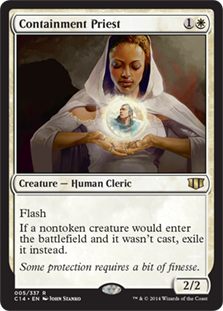 Priest will see play in Modern because it has already seen play in Legacy and Vintage. In both formats, Priest is a huge beating against Dredge and nothing else, leaving decks free to exploit their own graveyards while hosing the most linear of zone abusers. Modern
  Beyond belonging for its cost and creature-type, Priest is also a substantial upgrade for Humans's current options. Rest in Peace is the best graveyard hate option, but it can't fit everywhere. In Humans' case, Surgical Extraction has
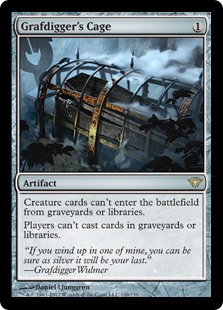
 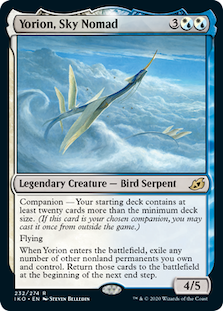 However, those are just the obvious uses. Priest is far more versatile because it doesn't specify zones. Any creature entering the battlefield without being cast will be exiled by Priest. This includes any cheating from hand into play (namely Through the Breach), but also flicker effects. Thus Priest does what Cage cannot and answer Bant Ephemerate and Yorion decks. From experience, Humans struggles against those decks because unending value is hard to beat. It's rather niche since Ephemerate has largely vanished and Yorion decks were
 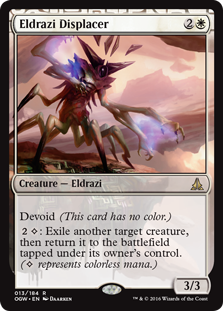 combining Priest with Eldrazi Displacer to snipe every opposing creature. Just never, ever, try to flicker your own creatures (except for Priest).
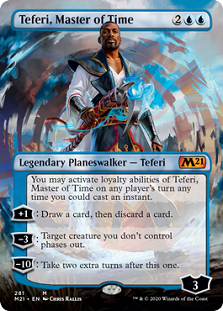 The next contender is yet another Teferi with a static ability. Because everyone just loves Teferi, Time Raveler. In fairness, this new one is not at all as obviously onerous as "T3feri," and was made before Wizards realized their mistake.
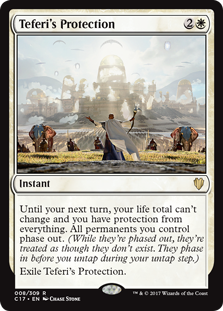 At the start of its controller's untap step, when normally nothing happens and no player has priority, it phases in, unless otherwise specified. It's not entering the battlefield because it never left, so no triggers happen. It simply "exists" again. Wizards is explicitly
 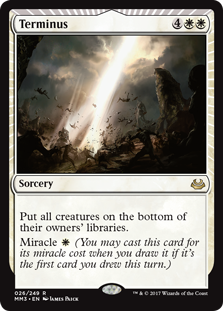 then wiping the board on the opponent's attack step. And that can happen, but I skeptically ask how that's in any way better than just playing Jace, the Mind Sculptor?
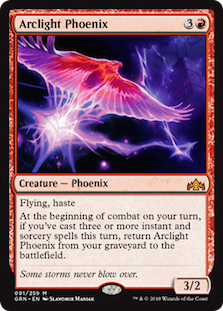 However, outside of control decks, there is real potential. Getting to Careful Study over the course of a turn cycle is still very strong. And doing so gives Te4ri five loyalty to boot. I could easily see a velocity- or tempo-centric deck using Te4ri as a top end engine to help power them through the mid-game. It's nowhere near as good as Faithless Looting and so I don't think that Izzet Phoenix will suddenly return. However, something in a similar vein using Thing in the Ice and Crackling Drake is more plausible.
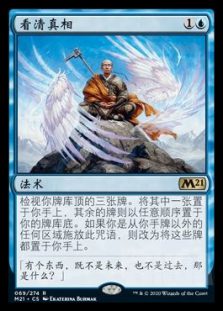 chance. However, See has a second mode. When cast from anywhere other than hand (read: exile, library, or graveyard), it draws three. Ancestral Recall is still a bargain at two mana. The trick is making it happen.
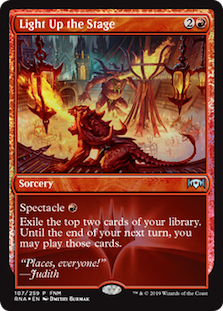 then draw a bunch of fuel. The catch is that flashing back Storm's cantrips are usually enough fuel as is, so I don't think See adds much. It doesn't hurt much either. I'd have to test, but intuitively I think See is too win-more to make an impact on Storm.


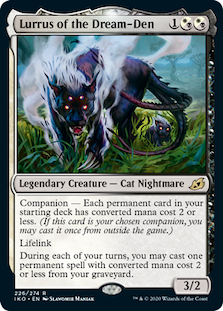 Lurrus's inclusion in Burn represents perhaps the most straightforward path for any companion post-nerf. Just as Burn was able to free-roll the companion with no mainboard changes, I imagine Lurrus will
 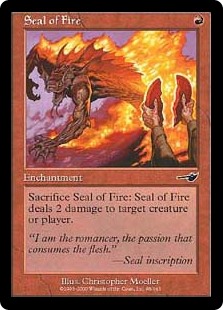 We saw some Burn decks
 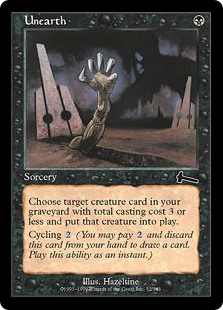 Once opponents dealt with the first Lurrus, BGx would turn to Unearth to give the Nightmare Cat another of its nine lives and keep the value train rolling. This Unearth-Lurrus package is appealing in BGx for the same reason that Snapcaster Mage has always tempted Golgari mages with a blue splash, except that bringing back permanents tends to be more high-impact than recovering instants and sorceries. Without the companion restriction, mainboard Lurrus boasts an even higher ceiling, letting players recast the likes of Bloodbraid and Liliana.
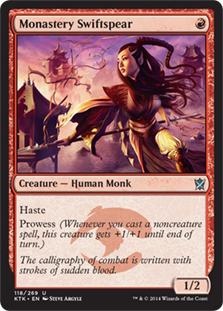 Prowess decks without high-costed permanents will definitely want to run Lurrus in the sideboard, just as the Burn decks will. But there's less of a reason to go that route post-nerf, and Bedlam Reveler should make a compelling comeback in the coming weeks. In any case, while Mono-Red Prowess should remain a top-tier deck, I do believe
 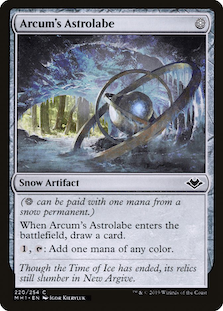 These decks may change very little, but Yorion is nonetheless a less attractive plan than it used to be. As it costs more mana, it's not as flexible as it once was, which should draw some players back to
 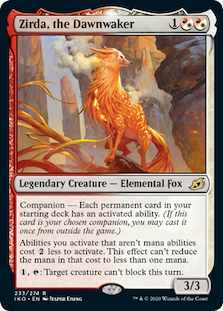 Lurrus and Yorion may have occupied much of the discourse surrounding companions in Modern, but other such creatures were in fact printed! I expect these to suffer varying fates.
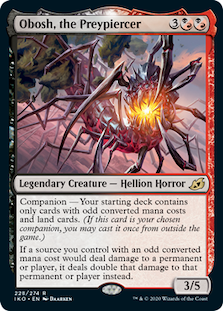 Obosh, the Preypiercer found its way into

 Instead, Wizards issued functional errata as a nerf to companion as a whole. Wizards
  While the move to rework an entire mechanic after release is unprecedented, it wasn't completely out of left-field. As early as
 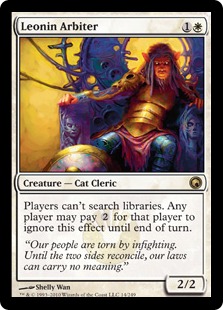 Companion is now a tutoring mechanic. Rather than directly cast a companion from exile, players must tutor it for three mana. Therefore, it's no longer a complete freeroll, and significantly impacts playability.
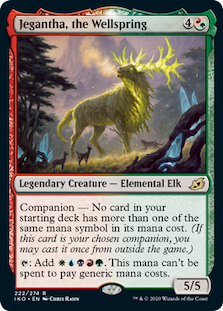 better than not having Lurrus. The only thing Lurrus did for Burn was mitigate flooding out. Lurrus is less efficient now, but it does still give Burn something to do when it has no burn. Therefore, I'd expect Burn decks to soldier on as if nothing's changed. Storm and Humans may keep running Jegantha, the Wellspring for similar reasons. However, Jegantha being so much more expensive than Lurrus makes that outcome less likely, as these decks were casting the 5/5 far less often than Burn would Lurrus.
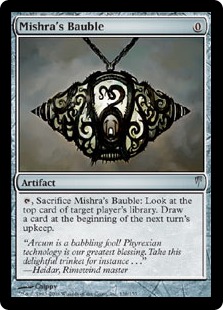 turn thereafter. That cannot happen anymore. For the typical low-land Prowess or GBx decks (Lurrus's primary homes), this means that Lurrus has been delayed by a turn. They can tutor on turn three and play Lurrus on four. Of course, spending turn three tutoring is far from the gameplan of either deck.
 Pros
Pros
 "If you print it, they will built it," or however that old adage goes from Field of Dream-Den. Nowhere does it ring truer than in
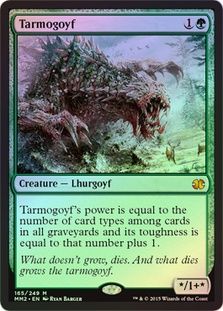 Prowess is accommodating Lurrus at any price; usually, that means splashing black,
 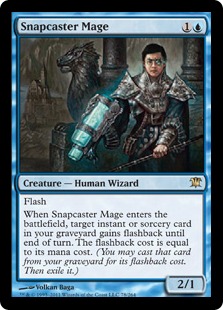 Here to diversify the aggro section is
 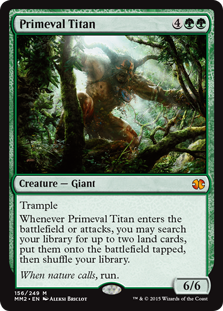 The standard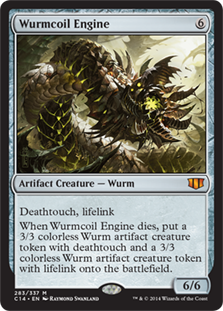

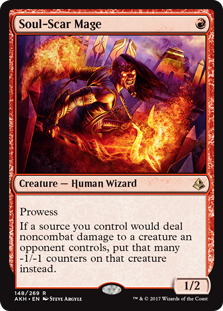 Secondly, the category is somewhat deceptive. The Prowess deck is showing considerable variation, some of which are close to entirely different decks. I've been categorizing decks based on their strategic characteristics and not stressing deck composition variance as long as decks share a recognizable gameplan. This is why Jund and Rock are lumped together as GBx Midrange while Temur Urza and Temur Reclamation are separated. The Prowess decks had been mono-red and distinguished from Burn by Soul-Scar Mage, and I've kept that definition going. The end of week 4 saw divergence as some Prowess decks started running black for discard spells. This week, there was a more even mix of BR and Mono Red, but they're still too strategically similar to separate.
 The numbers are fairly clear. There remains not only deck diversity but strategic diversity. Unlike in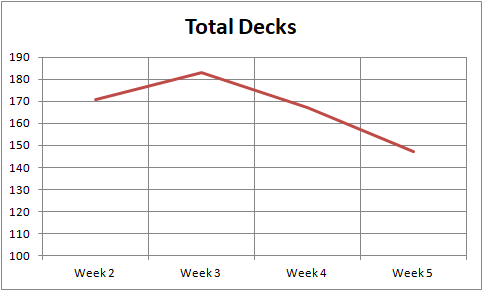
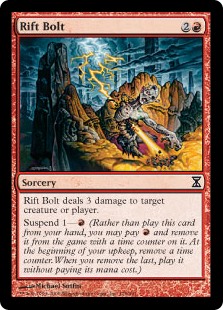 For Magic purposes, consistency this refers to a deck's ability to play out its gameplan reliably. Burn is a very consistent deck because it has many cards that do similar things. It can't play the exact same way every game, but it is able to play one out that is very similar, recognizable, or predictable. Lightning Bolt and Rift Bolt are very different cards, but do close enough to the same job
 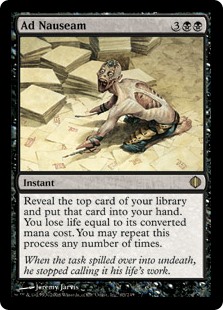 guarantee of seeing any four-of in a deck in a given game. It may never be drawn, and even if tutoring is available, it may be incorrect to choose that card. Thus, certainty has never had a place in constructed, only consistency.
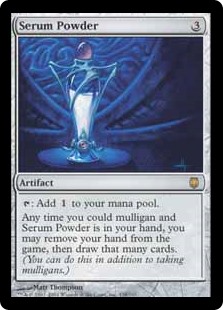 This makes perfect sense if the nature of Commander is considered (and makes me think that Wizards doesn't get why Commander is popular). There is no consistency in Commander. The deck is 100 cards, and every nonbasic land is a singleton. Games can be, and usually are, wildly different from each other for that reason. This is a large part of the appeal. However, this also means that the risk of non-games are higher. Low consistency means high variance and high variance means more risk of non-games. Commander is, more than any other format,
 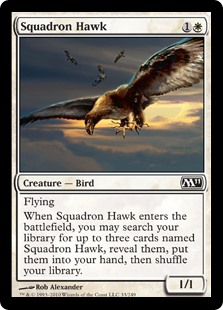 This was
 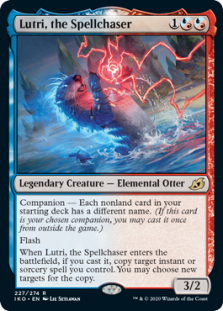 However, it doesn't have to be that way. Players like self-expression, which is a large part of what makes Commander great. Had the companions been made with that in mind, it may have been a success. Compare Lutri, the Spell Chaser to Yorion, Sky Nomad. The former requires considerable sacrifice, turning a consistent constructed deck into an inconsistent Commander deck. In return, there's a certainty boost. This makes Lutri a fun reward for outside-the-box deckbuilding and adds spice and variety to formats.
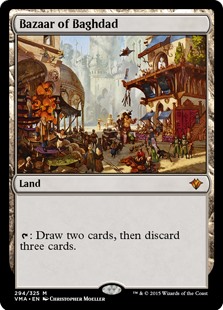 The older the format, the more broken Bridge from Below seems to become. Moden has been unseated as the freshest non-rotating format by now, but I still think its graveyard enablers and payoffs are sparse enough to warrant a return for this enchantment.
 With Hogaak gone, though, Bridge remained on the banlist, even though it was banned to weaken the now-demolished Hogaak deck.
 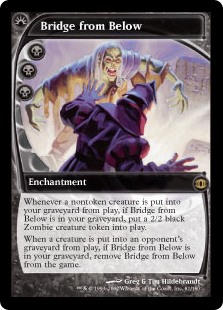 I do think Bridge would see play if unbanned, specifically in Dredge. But I also don't think Dredge would suddenly become broken. The deck was fine pre-Hogaak, and would certainly be fine now; the deck has
 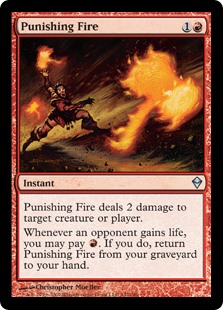 Fire was axed to lend a helping hand to tribal aggro decks featuring stat-buffing lords. In today's Modern world, Humans is the closest analogue, but that deck's main purpose is not to increase board presence using lords; it's to disrupt opponents with powerful enters and static effects.
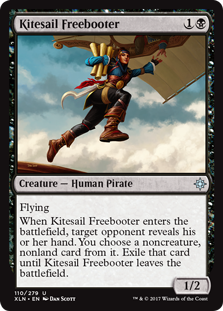 Most other decks with x/1s and x/2s are fast enough to overwhelm the engine, but I can see Fire becoming something of a common tech for midrange mirrors; it keeps Bloodbraid Elf, Dark Confidant, and Lurrus off the table, I supposed. Even then, I expect its applications to prove slim, or far from polarizing.
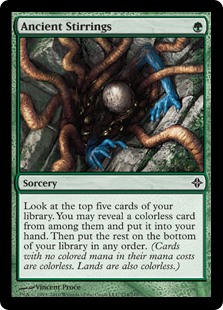
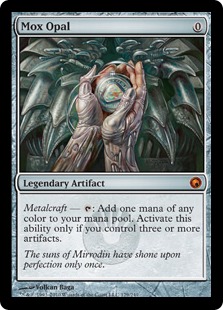 Critically, other cards Wizards considered for the ban were Ancient Stirrings and Mox Opal, the latter of which was the most important to Ironworks Combo---it accelerated the deck by an extra turn, giving it the speed needed to compete in Modern.
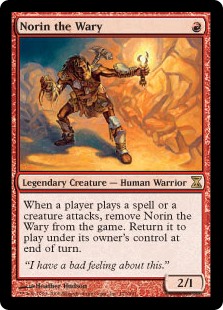 Ironworks would again spearhead its own deck, but that deck would prove extremely fringe; to give a reference point, I think it would wind up in the competitive bracket occupied by Norin Soul Sisters, Doran Rock, and other outdated Modern decks from the format's earlier years. That's just what Ironworks is now, an outdated deck---without Opal giving it the speed it got by on, the strat would be DOA in Modern.
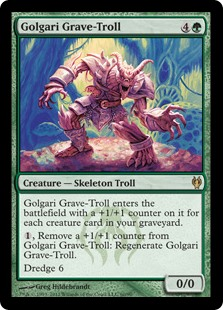 Which brings us to the risk: what if Ironworks did prove problematic? That's the worst-case scenario, but my solution here is simple: just re-ban it.
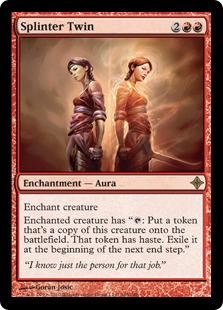 There are other cards on the banlist I think could maybe come back to Modern, or are worth thinking about returning even as a thought experiment. And yes, those cards include Splinter Twin!