menu

Insider: Toxicity and the Bottom Line

Are you a Quiet Speculation member?

If not, now is a perfect time to join up! Our powerful tools, breaking-news analysis, and exclusive Discord channel will make sure you stay up to date and ahead of the curve.

Hello, Magic readers, and welcome back!

Recently I got to spend a wonderful two weeks out of the country, sightseeing other countries and their cultures. Nothing was Magic related, and nothing was “real-life” related. It was a complete disconnect as I had no access to internet for the majority of the trip. Upon returning, I was able to read about some crazy things happening in the world of Magic.

In the niche Magic culture that we're all part of, everything is intertwined. Whether you're a finance specialist, a game store owner, a competitive player, or just a casual observer, the negative actions of a select few have the potential to negatively affect us all.

I’ll be honest; I was considering continuing on with business as usual and not mentioning anything about the issues of bullying and harassment that have been going on in the Magic community. This issue has already been fully evaluated and all the opinions have been given, and Wizards of the Coast themselves have issued their thoughts and statements on the matter.

However, as I already mentioned, these issues can cause problems for everyone. Today I will be looking at how negative community aspects can cause financial rifts, both in the over-arching community and in the smaller, tight-knit community areas of an individual LGS.

The LGS

The local game store itself is the place to begin this evaluation. When something negative happens in a small area, the entity that is affected the most is the LGS. Players of a small community have a tendency to avoid confrontation wherever possible. This includes individuals who may take away from the entertainment value of playing Magic, or worse yet, bully and harass the players directly.

Financially speaking, this automatically means less sales and product influx for the LGS. The bottom line of the store is negatively affected by bullying and harassment every single time that it happens. People generally have less interest in an entertainment outlet if the positive feeling of being entertained is replaced with the negative feeling of a hostile environment. This means less of everything for the loyal customers—less sealed product, less inventory, less social interaction.

The size of an LGS will contribute to how much it's affected. A larger and more established store has more players to interact with, meaning more ways to avoid the toxicity. Their bottom line, while negatively affected, is not hit nearly as hard as a smaller, newer LGS.

In a tight-knit community everyone may know each other, sometimes very closely. If a toxic element causes people to defer to another location, the small LGS is basically left for dead. Their sales percentages will take a massive hit, and they will become unable to provide to their customers…if they are even able to retain any.

For some players and Magic financial investors, such as those in large urban areas, smaller LGS locations are not as important. However, for others in more remote and rural areas, there are not as many options for an LGS. I’ve personally been on both sides of this coin.

My shop in Glenview, Illinois is right outside of the Chicago city limits, and if that store went away, the local customers would simply move to one of the competitors. In fact, many of those regulars already have moved around to various locations based on dislike for individual (and, quite frankly, notorious) members of the community who have created bad experiences for those in their proximity.

On the other hand, my shop in Lakeland, Florida has very few options and is one of the only LGS options within an hour drive. On top of that, the unfortunate infrastructure in the state causes less cash flow overall. Other LGS locations in nearby cities such as Tampa and Orlando have already closed down, some due to extremely toxic community members, others due to lack of cash flow from their customers. If our store did poorly in Lakeland or had to deal with one of these issues, almost every regular customer would be left without another option.

The Marketplace

The local LGS is just the tip of the proverbial iceberg. The entire game suffers from these unfortunate circumstances. Regarding the long-term health of the competitive scene, the continued play of Magic by as many parties as possible makes the product retain a strong market value.

As a community, we have been fortunate to see overall growth over the last decade at an exceptionally strong rate. The number of active players in the community is estimated to have more than tripled between the release of Zendikar and the release of Return to Ravnica, and to have tripled once more in between the releases of Return to Ravnica and Theros. This all happened during an economic recession, when the amount of money the average citizen had to spend on luxury and entertainment items was at its lowest point in twenty years.

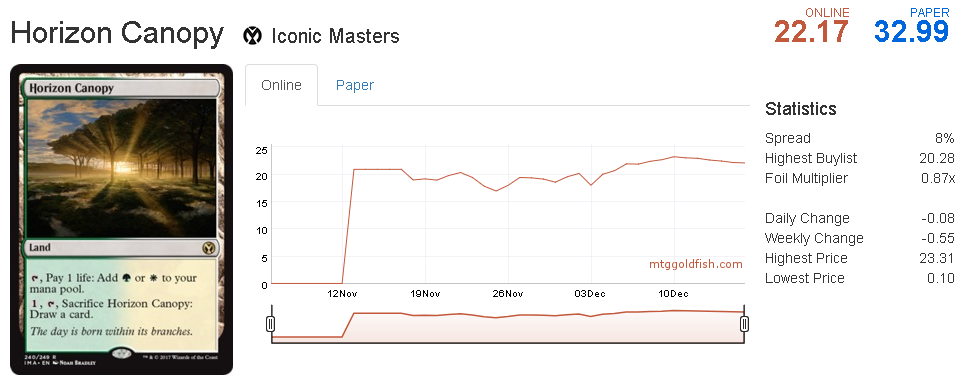
We have become accustomed to the idea that the marketplace will continue to grow for Magic cards. Despite some reprints causing a massive decline in the value of one-off staple cards (see: Iconic Masters, Serra Ascendant, Glimpse the Unthinkable), the market has seen an increase in the value of cards overall. Buyouts, competitive decks adopting new cards (see: Death's Shadow), and for the vintage collectors out there, the passage of time on Alpha/Beta/Unlimited cards, is all it takes for asset value to accrue.

There was an error retrieving a chart for Serra Ascendant

However, for the demand to remain, we need to tread water in our player numbers at minimum, and minimize the number of players who leave the game for any reason. Financially speaking, it is already difficult for players to continue playing any format, with Standard decks rotating every few months and high-level Modern decks sometimes costing more than a used car.

There is still a large casual scene, and the depth of the player base through the casual scene has been a staple of price changes for less competitive cards. Despite the casual scene creating multiple reprints, there are many cards that have seen incredible price spikes, and if players begin to bow out of the game from negative experiences, that creates a black hole of missing financial potential.

The final element of the player base that is largely affected by individual toxicity is the "large tournament" scene. Grand Prix events, Star City Games Opens, and other events that draw possibly thousands of players have all seen increases in entry fees without increases in prize support over the last two years.

This is already a deterrent, and if players do not enjoy their experience, they can easily justify the financial investment to play these events as a reason to stop attending.

Being a Positive Influence

We don't have control over the financial stability of the average player, nor their general interest in the game. We do, however, have some control over whether people leave the scene over bullying and harassment problems.

We can assess what's going on in our communities and prevent negative and toxic elements before they happen. We can be positive influences on our own communities, and fight against toxicity to prevent the demise of a wonderful community within an extremely popular game.

As always, thanks for reading, and don’t forget to be excellent to each other!

Pete
@smash_pacman on Twitter

Jake and Joel Present Friday Nights with Quiet Speculation – The Final Episode

Are you a Quiet Speculation member?

If not, now is a perfect time to join up! Our powerful tools, breaking-news analysis, and exclusive Discord channel will make sure you stay up to date and ahead of the curve.

Colorless Eldrazi Stompy Mini-Primer: Sideboarding

Are you a Quiet Speculation member?

If not, now is a perfect time to join up! Our powerful tools, breaking-news analysis, and exclusive Discord channel will make sure you stay up to date and ahead of the curve.

A couple weeks ago, I wrote a strategic guide to mulliganing with Colorless Eldrazi Stompy, a deck I've championed on Modern Nexus for almost two years now. Today's follow-up piece focuses on the deck's second-most-challenging (and important) aspect: sideboarding.
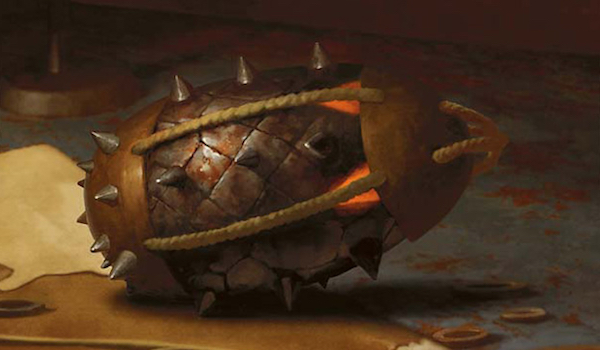
This article covers build variations and possible sideboard includes before jumping into the matchup guide. But first, the list:

Colorless Eldrazi Stompy, by Jordan Boisvert

Creatures

4 Eldrazi Mimic
4 Eternal Scourge
2 Matter Reshaper
2 Endless One
4 Thought-Knot Seer
4 Reality Smasher
4 Simian Spirit Guide

Artifacts

4 Serum Powder
4 Chalice of the Void
1 Smuggler's Copter

Instants

4 Dismember

Lands

4 Eldrazi Temple
3 Gemstone Caverns
4 Ghost Quarter
4 Blinkmoth Nexus
2 Mutavault
2 Sea Gate Wreckage
2 Scavenger Grounds
2 Wastes

Sideboard

3 Spatial Contortion
1 Gut Shot
4 Relic of Progenitus
2 Surgical Extraction
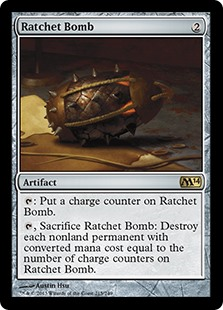
3 Ratchet Bomb
2 Pithing Needle

Build Variations

I've been testing a couple of changes to the sideboard recently, cutting All Is Dust and Grafdigger's Cage for additional copies of Surgical Extraction and Pithing Needle. As we'll see in the next section, there are multiple ways to construct the sideboard, although the bulk of our 15 is locked in. But before deciding on a sideboard configuration, players should tune their mainboard for the decks they want to beat.

Mainboard Flex Spots

Colorless Eldrazi Stompy has five flex spots. In my build, they're currently occupied by 2 Matter Reshaper, 2 Endless One, and 1 Smuggler's Copter. Before we jump into sideboarding, let's cover the merits of each option.
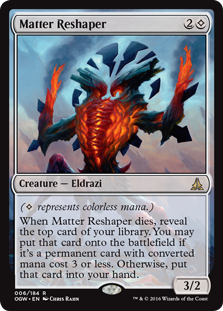
Matter Reshaper: Ideal against highly interactive decks (Jeskai, Shadow), and combat-focused ones that don't love sitting across from a three-power creature (Zoo, Humans). Lackluster against any deck that plans to ignore it (Storm, Tron, RG Valakut).

Endless One: One shines in matchups that demand a lot of pressure very quickly. In those, it's servicable as an additional two-power creature on turn one, but truly excels alongside Eldrazi Mimic itself. The X-costed Eldrazi plugs whatever hole in the curve we need filled to ensure we can continuously apply pressure. Its glaring weakness is Fatal Push, but One's still acceptable against midrange decks thanks to its potentially huge size.

Smuggler's Copter: Looting past dead cards is powerful enough in this deck that opponents basically have to deal with Copter if possible. That makes the Vehicle a Splinter Twin-style tempo play that forces interactive opponents to keep up mana each turn, lest we crew our two-mana consistency engine. It's naturally great against decks that skimp on removal, too, and useful for flying over board stalls generated by Tarmogoyf, Gurmag Angler, or Knight of the Reliquary. Copter's failings become apparent when we fail to find a pilot (rare) or when opponents load up on small removal like Bolt and Push (less rare). The card is also awful in multiples, as we can sometimes draw two Copters and no pilot, and we struggle to consistently crew a pair of them.
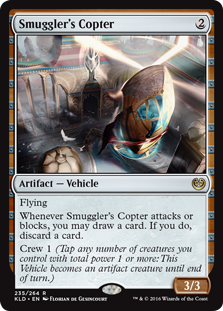
These days I'd advocate for a single Copter in the main in all but the Jundiest of metagames, and advise players to carefully weigh their Reshaper/One split based on the anticipated field. An open metagame calls for a 2/2 split, although I can understand the argument that Modern's variety rewards us for ramping up on proactivity (which would favor Endless One). Still, Reshaper is so nasty against removal spells that I'd be hard-pressed not to include some amount in most of my future lists.

The only other cards I'd consider for flex spots are sideboard options, namely Spatial Contortion and Ratchet Bomb. Both of these picks are highly metagame dependent. As for Relic of Progenitus, I think if you want to run that main at all, it should be at 4, with Chalice of the Void relegated to the sideboard and Simian Spirit Guide replaced by other flex spot options, including one Ghostfire Blade.

Dissecting the Sideboard

Colorless Eldrazi Stompy's sideboard can be neatly divided into three categories: spot removal, grave hate, and utility. Understanding each component and its uses is critical to success with the deck.

Spot Removal
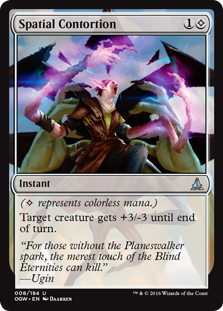
Our sideboard removal package compliments Dismember (or flat-out replaces it against Burn and Jeskai Tempo) to give us ample ways to stomp combos, blow out blocks, and neuter aggression. Boarding in the full removal suite turns us into a Jund-style midrange deck, which is exactly where we want to be in certain matchups. Spatial Contortion is our most flexible removal spell, as it's got Bolt's admirable coverage and doubles as Lava Spike while swinging with a large creature. Gut Shot's best at pinging Dark Confidant, mana dorks, and infect creatures; All Is Dust is an option to combat value-centric Collected Company decks and random stuff like Pillow Fort.

Numbers:

  • 2-4 Spatial Contortion
  • 0-2 Gut Shot
  • 0-1 All Is Dust

Grave Hate

Our baseline grave hate package is 4 Relic of Progenitus, which also serve a unique function with Eternal Scourge. Combined, these cards allow us to "go Dredge" and essentially prevent midrange decks from ever grinding us out. Relic then replaces Bant or Tron's pricey curve-toppers like Drowner of Hope and Karn Liberated when it comes to going over fair decks, in addition to its traditional applications as graveyard hate.

Joining Relic is Surgical Extraction, another card that's nutty with Scourge (becoming a zero-mana "draw 4" once opponents manage to deal with one) and particularly effective against graveyard-based combo cards such as Past in Flames, Kitchen Finks, and Goryo's Vengeance. The floor is so high on a single Surgical that I'd never dip below one, although the second can theoretically rot in hand once all our Scourges have been exiled.

And rounding out the suite is Grafdigger's Cage, a card that provides incidental grave hate while actually owing its inclusion to Chord of Calling and Collected Company. As we'll see, our Counters Company matchup needs no help, but Knight of the Reliquary still annoys us out of the fringe Bant builds.

Numbers:

  • 4 Relic of Progenitus
  • 1-2 Surgical Extraction
  • 0-1 Grafdigger's Cage

Utility

The top dogs as far as utility goes are Ratchet Bomb, which sweeps away wide fields and kills problematic permanents, and Pithing Needle (alternatively, the slower-and-steadier Sorcerous Spyglass), which prevents combos and turns off planeswalkers. Beyond these, a wealth of cards can be ran in utility slots. Listed are those I've found passable for certain fields.

  • 2-4 Ratchet Bomb
  • 1-3 Pithing Needle/Sorcerous Spyglass
  • 0-2 Warping Wail
  • 0-1 Ghostfire Blade
  • 0-1 Damping Matrix
  • 0-1 Crucible of Worlds
  • 0-1 Witchbane Orb
  • 0-1 Endbringer

Tier 1 Sideboarding Guide

This guide covers all nine Tier 1 decks according to Modern Nexus's November metagame update, in descending order of popularity. There may of course be superior plans to the ones I propose here, but know that these are the best I've found so far, and that each has served me well.

Affinity (medium)
+3 Spatial Contortion
+1 Gut Shot
+3 Ratchet Bomb
+2 Pithing Needle

-4 Reality Smasher
-4 Simian Spirit Guide
-1 Gemstone Caverns/Wastes (play/draw)

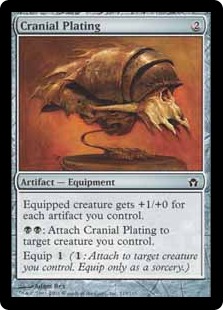
Given some lucky scouting, we can cheese Affinity in Game 1 with a Chalice on 0; otherwise, pre-board Cranial Plating presents an uphill battle. We become favored post-board, when we have plenty of removal to break up their synergies. I like Chalice regardless of play or draw as on 0 it shuts off a large portion of their deck, and in multiples, another on 1 gives Affinity even more dead draws. Since we're counting on one-for-oneing the threats that do stick and playing a tempo game, blanking some number of opposing draw steps comes in handy.

Smasher turns the corner pretty well, and helps us steal Dismember-fueled Game 1 victories. But after siding, we're more interested in beating down with little guys while disrupting. Powders help us get to those interaction-heavy hands while dumping Scourges into exile, helping us go lower looking for hate without giving up our pressure.

Burn (favored)
+3 Spatial Contortion
+2 Ratchet Bomb

-4 Dismember
-1 Smuggler's Copter

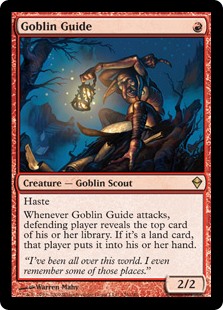
Burn is already quite easy to beat thanks to Chalice of the Void and Thought-Knot Seer. Our many three-drops wall Burn's threats, and Simian Spirit Guide accelerates us into broken openings. Destructive Revelry comes in from their sideboard, but our combat plan will often race them anyway. On that note, it's usually correct to aggressively mull for Temple post-board, and to curve threats into Thought-Knot before slamming Chalice when possible.

Ratchet Bomb is an admittedly weak bring-in, but it beats out Smuggler's Copter and Dismember. To its credit, Bomb helps defeat Burn hands featuring multiple one-drops and provides an out to the stray Ensnaring Bridge.

Humans (medium)
+3 Spatial Contortion
+1 Gut Shot
+1 Relic of Progenitus

+3 Ratchet Bomb

-4 Simian Spirit Guide
-4 Chalice of the Void

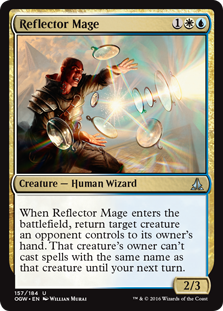
Humans is a lot like Affinity: tough to beat Game 1, and much easier post-board. Their Game 1s are a little worse than Affinity's (no Cranial Plating) and their post-board game is a little better (thanks in large part to Reflector Mage). A key difference is we can remove Affinity's creatures before they have the opportunity to generate value, but Humans's creatures cast spells when they enter the battlefield. Additionally, Chalice of the Void blows against this deck thanks to Aether Vial and Cavern of Souls.

Reshaper is something of a double-edged sword here; while it's likely to trade with some of Humans's creatures to our benefit, the first-striking Thalias both eat it in combat.

Eldrazi Tron (unfavored)
+3 Spatial Contortion
+3 Ratchet Bomb
+2 Pithing Needle

-4 Simian Spirit Guide
-4 Chalice of the Void

The strong Gx Tron matchup is one reason to play Colorless Eldrazi Stompy, but the midrange-slanted Eldrazi Tron gives us problems. Alas, the "go Dredge" plan generally reserved for midrange is of little value against one that still tops out with colorless planeswalkers and Batterskull.

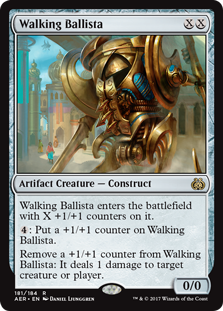
Eldrazi Tron forces us to take a hyper-aggressive role, Powdering into hands with Mimic and Seer and throwing Ghost Quarters on draw steps. Needle effects and Ratchet Bomb are crucial for dealing with Walking Ballista, quietly the deck's strongest card in the matchup---it guns down Mimic and our manlands and keeps Scourge clean off the table. Contortion removes those pesky Reshapers, pushes through damage, and helps kill big Eldrazi in a pinch.

Counters Company (favored)
+ 15

-4 Eldrazi Mimic
-2 Matter Reshaper
-4 Simian Spirit Guide
-4 Chalice of the Void
-1 Smuggler's Copter

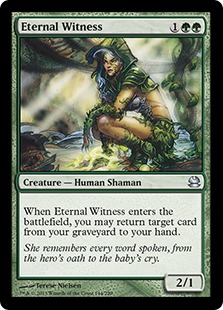
While Counters Company walks all over Eldrazi Tron, our many removal spells ensure we have a great time against the deck. Relic gives us an endless supply of threats while negating Kitchen Finks and Eternal Witness, Needle proactively attacks whatever combo opponents seem to be assembling, and Bomb gives us a functional board wipe.

Storm (favored)
+ 4 Relic of Progenitus
+ 2 Surgical Extraction
+ 3 Ratchet Bomb

-2 Matter Reshaper
-2 Endless One
-4 Reality Smasher
-1 Smuggler's Copter

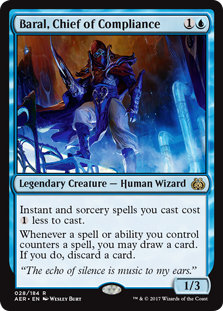
Another good matchup Colorless Eldrazi Stompy has over Eldrazi Tron, Storm simply can't keep up with our combination of pressure and disruption. Between Guide to pop Relic and the phyrexian-costed Surgical Extraction, we threaten many ways to interact with their combo while tapped out. Guide's other uses include rushing out Thought-Knots and Chalice for 2, our preferred number here. We keep Dismember for the mana bears, and Ratchet Bomb gives us an elegant answer to Empty the Warrens. Bomb should be sandbagged in hand until opponents go for some Goblins.

Jeskai Tempo (favored)
+ 3 Spatial Contortion
+ 4 Relic of Progenitus
+ 2 Surgical Extraction
+ 3 Ratchet Bomb

-4 Eldrazi Mimic
-4 Simian Spirit Guide
-1 Smuggler's Copter
-3 Dismember

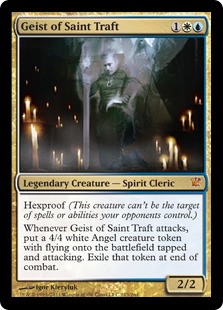
This matchup only gets tricky when opponents slam us with multiple Geists. Otherwise, it's trivial to wall just one. Bomb comes down proactively to start ticking up to three, since Geist is the only shot this deck has at beating us; Ghost Quarter takes care of Colonnade, Chalice on 1 shuts off most of their burn, and Relic again plays double-duty, invalidating their attrition plan with Scourge while nerfing Snapcaster Mage and Logic Knot.

Dismember's a little too costly to keep in at 4, but joins Contortion as a way to snipe Spell Quellers. Relic already hinders Snap, so we don't need the second Surgical as much. Powder can also be cut for more threats to hedge against Stony Silence.

Grixis Shadow (medium)
+ 4 Relic of Progenitus
+ 2 Surgical Extraction
+ 3 Ratchet Bomb

-4 Eldrazi Mimic
-4 Simian Spirit Guide
-1 Smuggler's Copter

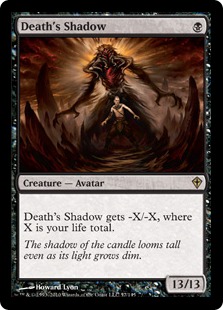
This matchup can really go either way. Sometimes we lock them out handily with a fast Chalice or Relic, and sometimes they strip our good cards, By Force our disruption, and control the field with a huge Shadow. Interestingly, our disruption combines to completely lock down their threat base should we set them up fast enough: Chalice prevents them from casting Shadow (and Bomb keeps it off the table), while Relic prevents them from casting delve threats (with resolved ones handled by Dismember). Grixis Shadow never grinds us out thanks to Eternal Scourge, which here serves as both recurring attacker and chump blocker extraordinaire.

I'd say this matchup is better for us than it is for Shadow, but it's tight enough that I'd call it medium. Some games are close and many end up wildly favoring one player or the other.

RG Valakut (unfavored)
+ 1 Gut Shot
+ 2 Surgical Extraction

-2 Chalice of the Void
-1 Smuggler's Copter

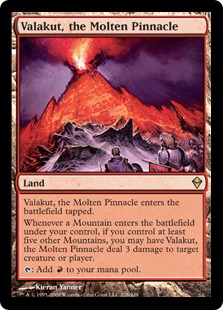
Our plan against Valakut is to race them, which is often a bleak proposition. Thought-Knot Seer's our best spell, closely followed by Eldrazi Mimic; our priority while mulliganing is to find an opener with Eldrazi Temple and one or both of those cards, which puts a lot of strain on our hands. Matter Reshaper almost never triggers here, but we keep him just for the body. Similarly, Gut Shot comes in to remove Sakura-Tribe Elder (a task also regularly executed by Dismember).

Sometimes, we can cheese victories against the deck. Chalice for 2 locks Valakut out of ramping should we land it early enough, and for 0 stops Summoner's Pact. And Surgical Extraction pairs with Ghost Quarter to remove Valakut itself (or with some removal spells to exile all the Titans). We shouldn't count on these scenarios occurring, but one key to navigating this matchup is to always look for windows to make a blowout play.

It's the Bomb

I've been asked numerous times for entry-level strategic content on this deck, and am happy to have finally written some. Between the mulligan guide and this sideboarding guide, players picking up Colorless Eldrazi Stompy for the new year should have plenty to work with to get started on the deck. Good luck to those of you who do, and be sure to let me know how it goes!

Read Part 3 of this article series, “Colorless Eldrazi Stompy Mini-Primer: Play Tips,” here.

Daily Stock Watch: Marionette Master

Are you a Quiet Speculation member?

If not, now is a perfect time to join up! Our powerful tools, breaking-news analysis, and exclusive Discord channel will make sure you stay up to date and ahead of the curve.

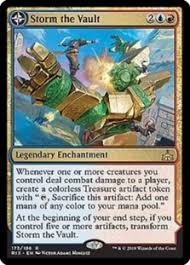
Hello, readers and welcome to the Thursday edition of the Daily Stock Watch! There has been some hype surrounding Storm the Vault, one of the upcoming cards from Rivals of Ixalan, and it's no surprise that different brews are coming out of nowhere to try and exploit its power. Today, we'll take a look at one of the cards that I think will be the beneficiary of this new craze.

There was an error retrieving a chart for Marionette Master

Marionette Master has been one of those cards that players have tried building around since it was printed, but never really found its niche in Standard. Since Storm the Vault was spoiled, people were already thrilled to have a version of Tolarian Academy in Standard as part of a potential combo-shell that could win games using a huge Walking Ballista, or make Tezzeret the Schemer look really good.

Our very own Adam Yurchick has his own take of a "Storm the Marionette Master Combo", and this is how it looks like:

Storm the Marionette Master Combo

Creatures

4 Marionette Master
4 Metallic Mimic
4 Walking Ballista
4 Weaponcraft Enthusiast
4 Tezzeret the Schemer
4 Animation Module
4 Hidden Stockpile
4 Renegade Map
4 Treasure Map

Lands

4 Aether Hub
4 Evolving Wilds
2 Island
1 Mountain
1 Plains
4 Spire of Industry
4 Swamp

Sideboard

3 Bontu's Last Reckoning
4 Fatal Push
4 Herald of Anguish
4 Metallic Rebuke

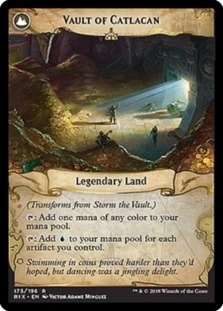
Marionette Master will be one of the win conditions in this artifact-themed deck that aims to flip Storm the Vault as soon as it can, to take advantage of its raw power. Along with Tezzeret the Schemer and Walking Ballista, a flipped Vault of Cataclan could produce lots of mana to allow the deck to operate at will, with games probably ending at the hands of Marionette Master and Hidden Stockpile.


Based on the Utility Checker, Marionette Master hasn't made any appearance in Standard as part of any maindeck or sideboard strategy going into large tournaments. This could all change very soon if the Storm the Vault deck becomes a success, which also somehow hinges on the idea that Aether Hub is still legal in Standard after the next banning announcement. A four-color shell would be hard to maintain without it, and all this hype that's keeping Storm the Vault above $10 would make very little sense if the deck can't be efficiently used to challenge the top tier decks in Standard.

Right now, Marionette Master is simply sitting at bulk territory at around $0.25, so it's not really that painful to keep some playsets of it. You should be able to find lots of it via Star City Games, TCGPlayer, Card Kingdom, and Channel Fireball, or just try looking for it via the nearest LGS from your place. It's a low-risk, high-reward spec that might just be the break that you've been looking for all along.

And that’s it for the Thursday edition of the Daily Stock Watch! See you again tomorrow, as we check out new cards that should be on the go, or good enough for speculating. As always, feel free to share your opinion in the comments section below. And if you want to keep up with all the market movement, be sure to check in with the QS Discord Channel for real time market information, and stay ahead of the hottest specs!

Insider: Does Becoming a Modern Staple Doom a Card?

Are you a Quiet Speculation member?

If not, now is a perfect time to join up! Our powerful tools, breaking-news analysis, and exclusive Discord channel will make sure you stay up to date and ahead of the curve.

Today I'd like to consider a question that has impacted the way I think about Magic finance in a pretty dramatic way. Does becoming a Modern staple doom a card as an investment?

Typically, the assumption has always been that "good cards go up." It makes sense, because these are the cards with the highest demand from the largest percentage of the playerbase.

Demand does drive prices. It has always been a safe strategy to invest in cards that have cemented themselves as format staples in the non-rotating formats like Legacy or Modern.

The problem with the secondary market has become reprints. Obviously, the reprints are nothing new. Modern Masters, Modern Masters Strikes Back, Return of the Modern Masters, The Modern Masters Awakens, The Last Modern Masters... Except there is never really a Last Modern Masters. Like Star Wars, it goes on and on and on because it is an endless money-printing fountain for the company that owns it.

On the one hand, I'm a big fan of the Masters products because they enable more players to afford to compete. On the other hand, on a personal level I hate these sets because they completely waylay the value of my Magic collection. As a tournament player, I own all of these staples and have watched them dramatically diminish in value over the past few years.

It turns out owning the good cards has become the worst thing to do! Up is down. Black is white. Right is wrong. If a card is really, really good—it will be reprinted until it becomes affordable again. One simply cannot invest in these cards because they will always trend down.

They say the only thing you can count on is Death and Taxes... I say, the only thing you can count on is that if Death and Taxes becomes a Tier 1 Modern deck, then all the best cards will get reprinted.

There was an error retrieving a chart for Aether Vial

Hence, The Reserved List

I bring this up for a reason—not just to complain about it. For investing purposes, it makes a lot of sense not to invest in Tier 1 staples. This is awkward because the Tier 1 staples are the kind of cards you want to own because they actually go into competitive decks!

The actual cards to own are the ones that don't go into competitive decks since there is a much lower incentive for Wizards of the Coast to reprint them. Obviously, the "go-to" for air-tight speculating is the Reserved List since those cards are untouchable when it comes to reprints. Look at The Tabernacle at Pendrell Vale:

There was an error retrieving a chart for The Tabernacle at Pendrell Vale

The card has gone absolutely ballistic the past few months. It's now worth more than most Power 9! It's a stupid land that goes into a Legacy deck. The same with Drop of Honey.

There was an error retrieving a chart for Drop of Honey

Obviously, a lot of the value of these cards is derived from the Reserved List clause. However, I also think there is an element of people wanting to invest in tournament staples going on here as well. Think about it. You can't invest in non-Reserved List staples because they are just going to be inevitably reprinted in some Rogue One Masters sets and the price will tank.

However, these Reserved List staple cards don't suffer from that unfortunate side effect. Thus they're really spicy speculation targets because they double-qualify: tournament staple that's immune from reprint. I think the fact that Modern tournament staples have become such useless and failing investments has really helped the surge on these cards.

Playing vs. Investing

I'd also like to point out another potential problem with the current market place. If some aspect of my thinking is true and staples are rapidly becoming an across-the-board losing cause, what does that mean for the marketplace? If we are to assume that once a card becomes a format staple it will be reprinted into oblivion to make it affordable (and to sell Clone Wars Masters packs), why would anybody want to own these cards if they don't need them for a tournament?

What is the point of owning staples (outside of playing with them in a tournament) if the price is always going to trend down? I suppose playing with them is a good reason to own cards. The fact that I play with my cards all the time is the only reason that I didn't sell the vast majority of my Modern collection.

From a play perspective I think the reprints have helped Modern grow as a format. Modern is the best format that Magic has ever had. It is fun. It is dynamic. Basically, everyone and anyone can realistically and affordable buy in and play which is awesome. In contrast, Legacy and Vintage are rapidly becoming left in the dust. Tournament staples that routinely cost hundreds and even thousands of dollars? Be serious. These are only for a niche group of people.

It's unfortunate because I think eternal formats are interesting and skill-intensive, but they are not something that most people are going to play moving forward. Why would they? Modern is actually just a better format. It is more dynamic. It is more affordable. It actually changes and evolves at a non-glacial pace. It has dozens of interesting and dynamic options. Ten flavors of Brainstorm is not ten different flavors.

Conclusion

The point of today's article is that I'm pretty much off ever investing in Modern format staples. I assume that if a card is good and worth some cash that it will be reprinted until it is worth substantially less cash. Therefore, it is not a good investment. It makes investing into a weird game of trying to predict which bad cards are just good enough to have a level of demand just below the need for a reprinting.

On the other hand, the reprints have helped to create the most playable and diverse format that Magic has ever seen. Magic has never been more playable than Modern. Both from an affordability and actual game play experience standpoint.

From the perspective of a collectible I believe Masters are a fail. From the perspective of a game I think they are an overwhelming success.

All I know is that it has made speculating in Magic very strange. Options include:

  • Invest in the same bloated-price-tag Reserved List cards that everybody is on.
  • Invest in non-tournament staples with niche demand.
  • Invest in random old versions of iconic or nostalgic cards.
  • Invest in artwork.

I love that playing Modern isn't playing Standard. I hate that I have a collection of Magic cards I love that will likely end up being worth a fraction of what it once was. Is it worth it to hold onto them?

Deck of the Week: Breach Blue Moon

Are you a Quiet Speculation member?

If not, now is a perfect time to join up! Our powerful tools, breaking-news analysis, and exclusive Discord channel will make sure you stay up to date and ahead of the curve.

Hello, Nexites, and welcome to a new edition of Deck of the Week. The recent Modern meta has continuously shifted from fair decks, to combo decks, to big-mana decks. It says a lot about the diversity of the format, regardless of how other people think about the Top 8 decks at Grand Prix Oklahoma. With all these in mind, it might be time to shift back to an existing archetype that flourishes in a field like this, as it has all the tools to take out contenders from all corners of Modern. I'm talking about Blue Moon.

Blue Moon has been ticking up in popularity in the metagame standings, and recently it took down an Magic Online PTQ in the hands of MTGO user Rooney56. To begin, let's take a look at his list.

Blue Moon, by Rooney56 (1st, MTGO PTQ)

Creatures

3 Emrakul, the Aeons Torn
4 Snapcaster Mage
1 Vendilion Clique

Instants

3 Cryptic Command
2 Electrolyze
4 Lightning Bolt
3 Opt
4 Remand
2 Spell Snare
4 Through the Breach

Sorceries

4 Serum Visions

Enchantments

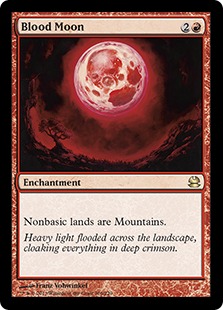
3 Blood Moon

Lands

2 Desolate Lighthouse
2 Flooded Strand
8 Island
1 Mountain
2 Polluted Delta
4 Scalding Tarn
2 Steam Vents
2 Sulfur Falls

Sideboard

4 Abrade
2 Anger of the Gods
2 Disdainful Stroke
2 Dispel
1 Izzet Staticaster
2 Madcap Experiment
2 Platinum Emperion

Blue Moon is a deck that has experienced a ton of variation over the years, most notably in its win conditions. Through the Breach plus Emrakul, the Aeons Torn is the newest addition to this arsenal.

The new face of Blue Moon bears much resemblance to Splinter Twin decks of old (some versions are even running the Kiki-Jiki, Mirror Breaker kill themselves). Rooney56's build is a classic combo-control deck. It's packed with tons of interaction in removal and counterspells, which is augmented by the always reliable power of Blood Moon to restrict your opponent's movements by disrupting their mana base. These controlling elements let you polish your hand until you can breach in an Emrakul for the win. Finally, the old Bolt-Snap-Bolt alternate wincon is on full display here too.

The list runs nine copies of permission spells that are made more potent by the presence of Snapcaster Mage. It also has the usual cantrips of a blue deck, Opt and Serum Visions, which help fix your hand and set up your lethal two-card combo. Noticeably missing in this list's disruption package is Spreading Seas, which has been cut in favor of more redundancy in the other cards. There's also a singleton Vendilion Clique that provides additional utility and much needed information before you decide to go in on a Through the Breach.
The deck's sideboard packs the Platinum Emperion plus Madcap Experiment package, which gives you an additional angle of attack besides Through the Breach and Emrakul. Favorable matchups such as Tron and Eldrazi decks are made better with access to Abrade and Disdainful Stroke. Meanwhile, Izzet Staticaster and Anger of the Gods are very good against Affinity and Humans, the premier aggro decks of the format right now.

There isn't much that's new in this build, but blue seems well placed in the meta right now. Blood Moon is the perfect compliment to this control-esque approach, and Emrakul, the Aeons Torn is an excellent finisher that can steal games in an instant. Blue Moon might just be one of the best decks to bring right now to any Modern tournament!

So that’s it for this edition of “Deck of the Week.” Stay posted for our next feature next week. Until then, happy shuffling and thanks for reading!

Insider: A Christmas Wishlist for an MTGO Speculator

Are you a Quiet Speculation member?

If not, now is a perfect time to join up! Our powerful tools, breaking-news analysis, and exclusive Discord channel will make sure you stay up to date and ahead of the curve.

I flew in to Houston last night and am now fully in the Christmas spirit. Christmas is always my favorite time of year. It's the only time each year I get to see all of my immediate family. It's a time for reflection on my next year's goals. It's the time of Vintage Cube. It's also a time of relative peace and inactivity in competitive Magic, and thus a time of low prices on MTGO. This year, I have a particular set of wishes that should bring a lot of green down my chimney. Three new sets will be released before the next rotation. That will give many old cards a chance to shine, and I sure do hope some of them will! But for this to happen, I'll need some of my wishes answered.

I. A Wishlist for MaRo Santa

(1) Please ban Attune with Aether. I know Mrs. Claus has said that Energy is a fair midrange deck that rewards good gameplay and facilitates interactive Magic. But you and I both know that players have grown bored by a single parasitic mechanic's dominance, and the success of my investments depends on people wanting to play Standard! Nothing will improve the prospects of MTGO speculations across the board quite like a nerf to the Energy decks. We don't want people playing with a bunch of commons and uncommons anyway right...Whirler Virtuoso, Longtusk Cub, Rogue Refiner, and Attune with Aether? This ain't Pauper — make 'em play with rares and mythics for the sake of us speculator folk.

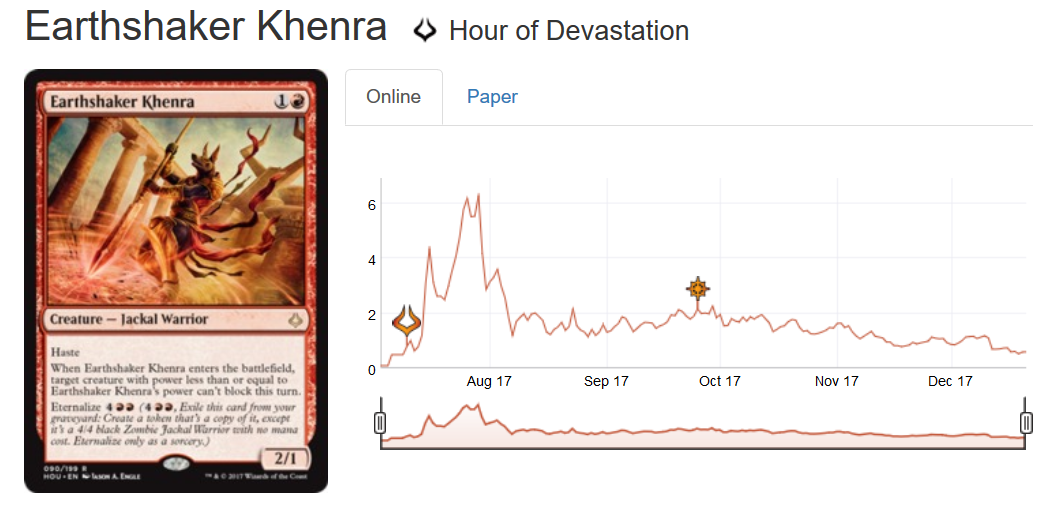
(2) Please give us a new red one-drop with two power! So many red cards are at season lows, and red will need new tools to compete as other strategies get new toys. Hazoret the Fervent (10.5 tix), Earthshaker Khenra (0.60 tix!!!) and Chandra, Torch of Defiance (26.50 tix) haven't been lower in months, and with a little help from you, MaRo Claus, speculating on these and other Ramunap Red cards could pay dividends.

(3) Please give us some new toys for Black Aggro. Perhaps I should be more patient — I know that the larger that the Standard card pool gets, the more support that linear and synergy-driven decks get — but I really want to see my investments in Scrapheap Scrounger and Ruin Raider to succeed. Scrapheap Scrounger (0.26 tix!!), along with fellow Mardu Vehicle all-star Heart of Kiran (6.33 tix) are at all-time lows, and Dread Wanderer (0.26 tix) looks appealing as well as a speculation target.

(4) Please instill some life into tiny-stock cards like Censor and Doomfall. I don't know whether it's Treasure Chests. I don't know whether it's low interest in Standard. But I do know that Censor and Doomfall have not behaved like oft-played uncommons from the past few years. Even Abrade and Harnessed Lightning have had slightly downward trajectories ever since the release of  Ixalan. The good news is that those who missed out on investing in these cards in August have another prime opportunity to do so now.

II. Speculating on Ascend

In case you haven't seen the latest Rivals of Ixalan spoiler — Vona's Hunger introduced us to a new mechanic called ascend, which gives you a reward for having controlled ten or more permanents during the game.

Although I didn't like the mechanic at first glance, in part because it felt win-more, and in part because it felt like it prejudiced one archetype (tokens) above others (midrange) above others (control and linear aggro), I think the mechanic has some hidden potential because it uses the word "permanent" instead of "creatures."

Black, blue and red care about treasures, white cares about servos and vampires, and green cares about lands. Although I would rarely recommend speculating on cards merely due to the introduction of a new mechanic, ascend plays well with several cards that I already consider good speculation opportunities. Hour of Promise has slowly fallen all the way down to 0.34 tix, and I like buying in around that price point.

Sram's Expertise jumped up by 50 percent (from 0.20 tix to 0.30 tix) after the reveal of Vona's Hunger, probably because that is the card in Standard that best enables ascend. I think a modest spec on Sram's Expertise — a small set rare — is well worth the risk, especially if you can get copies below 0.20 tix. Legion's Landing is criminally low right now as well at 1.10 tix, and I imagine you'll be able to sell it for somewhere between 2.00 and 5.00 tix in the future, depending on what Standard looks like in future seasons. The rares and mythics in Improvise/Marionette decks like this could all see price spikes in the future as well should some powerful ascend cards be spoiled. Safest among them is Treasure Map which, as a colorless one-drop, is extremely versatile and capable of finding a place in a variety of decks.

III. Vintage Masters Boosters

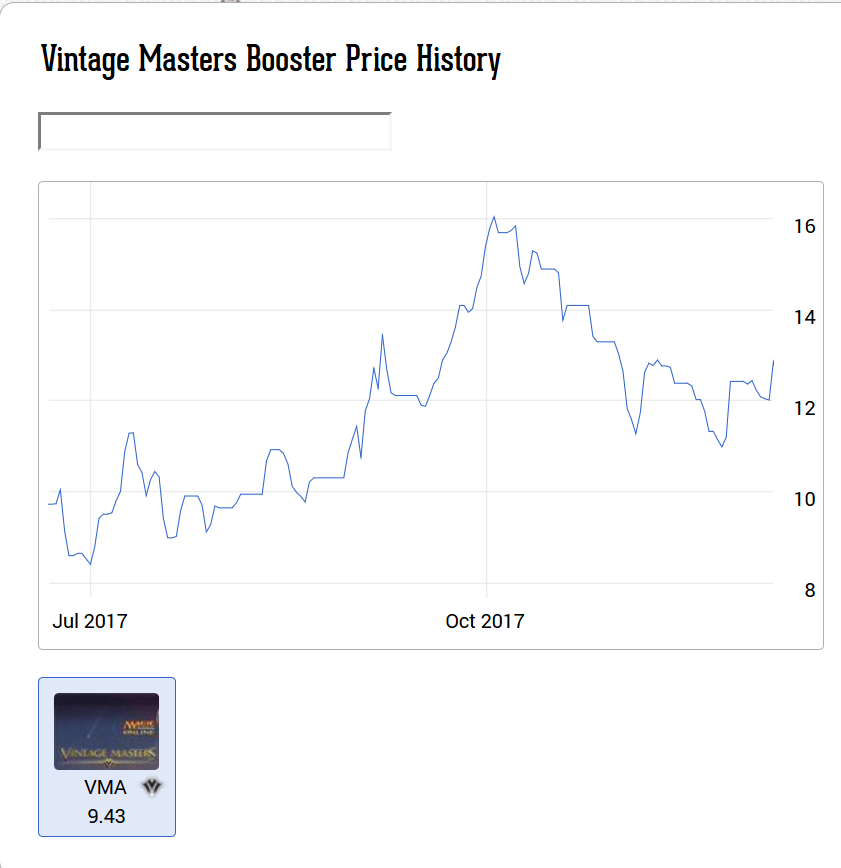
I feel compelled to write about Vintage Masters (VMA) Boosters just in case Matt doesn't mention them in his article — these seem like a snap buy to me. Here is the graph of the booster price chart of the old VMA boosters prior to the VMA flashback announcement.

Right now, those boosters are selling for 9.43 tix on GoatBots. The VMA boosters with the original art Power 9 are currently going for only 5.43 tix! The original art Moxen are all selling for a lot more than the new art Moxen, and so the new VMA boosters with the original art Power 9 are going to eventually be selling for more than the older VMA boosters. Right now they are cheaper because those were the ones being opened during the VMA Flashback this past week, but that should change moving forward. For the past year the old VMA boosters had been selling for somewhere between 9.00 tix and 15.00 tix, and I expect these new VMA boosters to reach that price at some point in the future.

Buy in now. If there's but one present you're going to give yourself this year, let this be it!

IV. Signing Off

Thanks for reading guys, and I hope each of you has a blessed Christmas and a happy New Year. I am open to writing about anything these next couple of weeks, so please let me know in the comments what sort of content you would like to see. May your holidays be merry and your feasting as fun and lighthearted as if done with goblins!


Daily Stock Watch: Lord of the Undead

Are you a Quiet Speculation member?

If not, now is a perfect time to join up! Our powerful tools, breaking-news analysis, and exclusive Discord channel will make sure you stay up to date and ahead of the curve.

Hello, readers and welcome to the Wednesday edition of the Daily Stock Watch! Some crazy trends have led to spikes of some casual and Commander cards, and we'll continue to follow this movements for as long as we can. Today, we'll take a look at another card that just hit its all-time high.

There was an error retrieving a chart for Lord of the Undead

This card has four printings up to date, with the first version coming out in the 8th Edition, followed by the 9th Edition, 10th edition and its last reprint in Planechase. It is one of the better lords that have been printed in Magic, as it stays within the concept of bringing its legion of zombies back to your hand when they die, and the traditional +1/+1 ability that you expect from its kin. It doesn't have that sudden game-changing impact when it enters play in the latter parts of the game, but it helps a lot in powering out strong starts for any aggressive zombie deck.

I'm quite sure that Zombies isn't a thing in Modern or Legacy, but I checked with the Utility Tracker just to make sure that this card isn't seeing play elsewhere. Rightfully so, there are zero copies of Lord of the Undead in any competitive Modern, Legacy, or Commander deck over the past year, both in paper and online tournaments.

But then again, Commander is probably the best bet where you could find this zombie lord. Check out this The Scarab God deck that is filled with zombies from all corners of Magic.

The Scarab God

Commander

Creatures

1 Archaeomancer
1 Cemetery Reaper
1 Cephalid Illusionist
1 Consuming Aberration
1 Crypt Ghast
1 Deadeye Navigator
1 Diregraf Captain
1 Dread Wanderer
1 Duskmantle Guildmage
1 Geth, Lord of the Vault
1 Ghoulcaller Gisa
1 Gisa and Geralf
1 Grave Titan
1 Gravecrawler
1 Laboratory Maniac
1 Lich Lord of Unx
1 Lord of the Undead
1 Magus of the Coffers
1 Massacre Wurm
1 Noosegraf Mob
1 Noxious Ghoul
1 Oracle of Dust
1 Overseer of the Damned
1 Palladium Myr
1 Phenax, God of Deception
1 Phyrexian Delver

Instants and Sorceries

1 Blue Sun's Zenith
1 Cancel
1 Counterspell
1 Empty the Pits
1 Entomb
1 Hinder
1 Pull from Tomorrow
1 Spell Crumple
1 Army of the Damned
1 Buried Alive
1 Dark Petition
1 Diabolic Tutor
1 Dread Summons
1 Exsanguinate
1 Ghoulcaller's Chant
1 Increasing Ambition
1 Increasing Confusion
1 Patriarch's Bidding
1 Tunnel Vision
1 Zombie Apocalypse

Other Spells

1 Jace, Memory Adept
1 Liliana, the Last Hope
1 As Foretold
1 Bloodchief Ascension
1 Compulsion
1 Endless Ranks of the Dead
1 Exquisite Blood
1 Paradox Haze
1 Rooftop Storm
1 Training Grounds
1 Altar of Dementia
1 Ashnod's Altar
1 Coat of Arms
1 Dimir Signet
1 Grimoire of the Dead
1 Lightning Greaves
1 Mesmeric Orb
1 Mindcrank
1 Sword of the Paruns

Lands

1 Ash Barrens
1 Cabal Coffers
1 Darkwater Catacombs
1 Dimir Aqueduct
1 Drowned Catacomb
10 Island
1 Sunken Ruins
16 Swamp
1 Watery Grave

This deck looks like it was built on a budget, but it has combined all the best zombies that you could put in an aggressive concept. Lord of the Undead is a walking Glorious Anthem in this deck, but it has to be one of the more mediocre creatures due to its lean frame, but The Scarab God makes every card in this deck look magnificent.

The Tribal Lords

With the pending return of the Core Sets, any of these guys could be ripe for the picking for a reprint. Lord of the Undead is the primary candidate to be part of any supplemental set, considering how Zombies were a thing during the last Standard season. I'd like to start moving out my copies before the proverbial zombie apocalypse happens.

Right now, Planechase copies of Lord of the Undead are being sold for something north of $11 via Star City Games, Card Kingdom, Channel Fireball and TCGPlayer. This could be a very good trade material for something else that you might need, or you could still wait out a bit and see if this version could hit $15. When that happens, its counterpart from the Core Sets would be of higher value, and should be on the go as well. This card pretty much looks like nothing but a casual favorite for me.

And that’s it for the Wednesday edition of the Daily Stock Watch! See you again tomorrow, as we check out new cards that should be on the go, or good enough for speculating. As always, feel free to share your opinion in the comments section below. And if you want to keep up with all the market movement, be sure to check in with the QS Discord Channel for real time market information, and stay ahead of the hottest specs!

Insider: MTGO Market Report for December 20th, 2017

Are you a Quiet Speculation member?

If not, now is a perfect time to join up! Our powerful tools, breaking-news analysis, and exclusive Discord channel will make sure you stay up to date and ahead of the curve.

Welcome to the MTGO Market Report as compiled by Matthew Lewis. The report will cover a range of topics, including a summary of set prices and price changes for redeemable sets, a look at the major trends in various Constructed formats and a "Trade of the Week" section that highlights a particular speculative strategy with an example and accompanying explanation.

As always, speculators should take into account their own budgets, risk tolerances and current portfolios before buying or selling any digital objects. Please send questions via private message or post below in the article comments.

Redemption

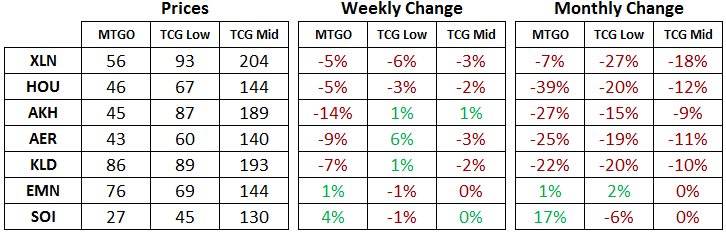
Below are the total set prices for all redeemable sets on MTGO. All prices are current as of December 19, 2017. The TCGplayer low and TCGplayer mid prices are the sum of each set's individual card prices on TCGplayer, either the low price or the mid price respectively.

All MTGO set prices this week are taken from GoatBot's website, and all weekly changes are now calculated relative to GoatBot's "full set" prices from the previous week. All monthly changes are also relative to the previous month's prices, taken from GoatBot's website at that time. Occasionally, full set prices are not available, and so estimated set prices are used instead. Although Hour of Devastation (HOU), Amonkhet (AKH), Aether Revolt (AER) and Kaladesh (KLD) are no longer available for redemption, their prices will continue to be tracked while they are in Standard.

Standard

Digital prices continue to fall for all Standard sets this week, although it's a more mixed bag in paper. Flagship cards of the format like The Scarab God and Chandra, Torch of Defiance are bouncing a couple of tix after falling from over 30 tix. Players who were looking to add these into their collections in order to play with them over the holidays are getting a good price.

There was an error retrieving a chart for Chandra, Torch of Defiance

For speculators, Standard still looks to be a low-churn format, where the metagame is very static, which leads to more rigid card valuations. From a macro perspective this is not a great sand box to play in. With Vintage Cube coming online this week and the Modern Pro Tour event looming large, Standard is simply not a format where I want to be speculating at the moment. Ultimately, low enough prices on Standard staples will encourage me to begin speculating, but I don't think we are quite there yet. Preview cards from Rivals of Ixalan (RIX) also have the potential to shake up card valuations so this will be something to pay attention to over the coming weeks.

Modern

The Human tribe is suffering in the metagame as both Cavern of Souls and Noble Hierach have been coming down in price. Both of these cards can fit into multiple archetypes, so don't look for their prices to continue slumping. Unlike Standard, Modern is a very broad format that sees many different archetypes cycling in and out of the winners brackets. If you have speculative positions in Modern staples that have been disappointing in terms of return, it's almost inevitable that the format will shift towards your cards at some point in the near future. Nevertheless, the selling window is open now and speculators should be monitoring the market closely over the coming weeks before the best selling window closes in advance of Pro Tour Rivals of Ixalan.

Foil Mythic Rares

Since the release of Battle for Zendikar (BFZ), I have been employing the foil mythic rare strategy as a part of the portfolio. I wrote about the strategy in an in-depth three part series that you can read up on here, here and here. After having success with BFZ and Oath of the Gatewatch (OGW), the strategy didn't work for Shadows Over Innistrad (SOI), Eldritch Moon (EMN) and Kaladesh (KLD) due to the nature of the prereleases for those sets. Entering Sealed Deck prerelease events gave you a foil rare or mythic rare as a bonus to your card pool, and this distorted the relative scarcity of foil mythic rares so that uncommons actually turned out to be where the value accrued.

Starting with the release of Aether Revolt (AER) prereleases were officially done away with and the foil mythic rare strategy was back on. For AER, Amonkhet (AKH) and Hour of Devastation (HOU), returns on the foil mythic rare strategy were a net 12 percent, 13 percent and 31 percent. Of course I have continued the strategy with Ixalan (XLN) and so far things are looking good. This time around, though, I avoided buying Carnage Tyrant due to a hunch that it would not be the chase mythic rare of the set. This hunch has turned out to be correct, but I wondered if if there was a way to further optimize the strategy. I love this strategy because is has a strong economic advantage that rewards patience, but there's always room for improvement and further development.

Back testing speculative strategies is one way to gain insight into what has worked and might work again. The way I went about doing was to compile a few data points from GoatBots price charts. They are the most competitive bot on redeemable foil sets since they are trying to always have these in stock. This means that the spread between their buy and sell prices is quite competitive on foil mythic rares at about 10 percent. GoatBots is the bot where I do most of my buying and selling of foil mythic rares.

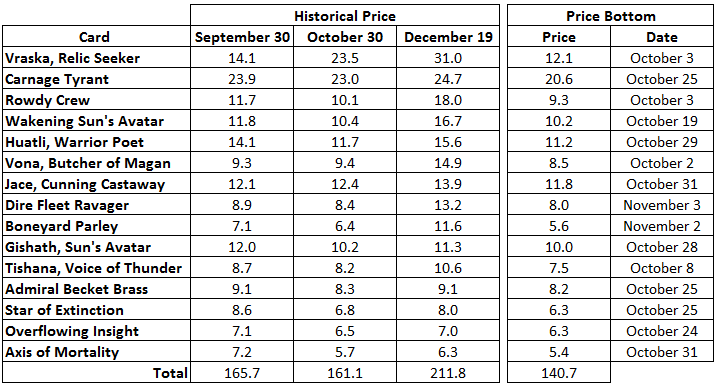
After I compiled the release weekend prices and the current prices my next question was when the lowest price occurred for each card. There were a few cards that bottomed in early October, but most cards saw their lowest price about a month after release, at the end of October and into early November. This coincides neatly with the start of redemption which could explain the timing of the price bottom here. Below is the collected data.

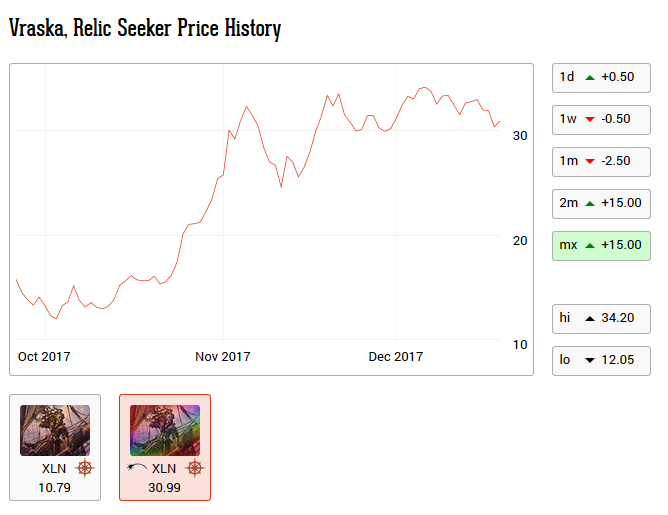
In looking at the table, Vraska, Relic Seeker stands out as the big winner, more than doubling its price since the end of September.

The next tier of cards making gains includes Boneyard Parley, Vona, Butcher of Magan, Rowdy Crew, Wakening Sun's Avatar and Direfleet Ravager. These cards increased in price between 40 and 65 percent since their release.
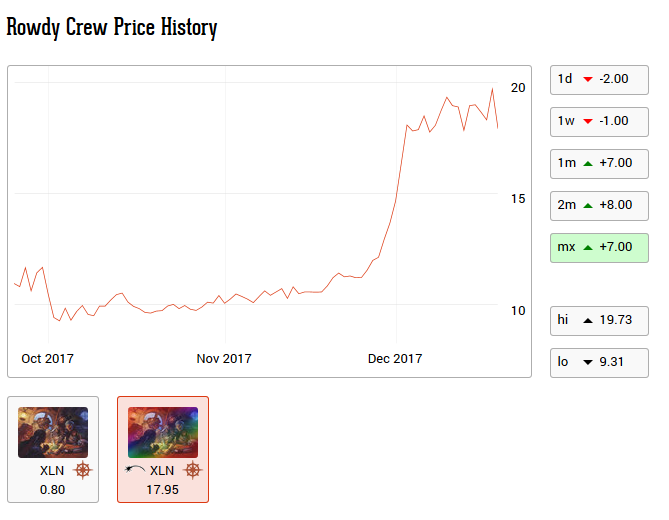

Huatli, Warrior Poet, Jace, Cunning Castaway and Tishana, Voice of Thunder saw gains in the 10 to 20 percent range, while the rest were flat to negative. Interestingly enough all cards see higher prices when comparing prices between October 30 with December 19.

With the data in hand the next step is to specify the strategies that I want to back test, and then compare the results between those strategies for XLN. Here's what I had in mind with their net return calculated after accounting for a flat 10 percent hair cut on transactions, in other words the typical buy/sell spread on the December 19 sell prices.

  1. Buy each of the foil mythic rares on September 30, the Saturday of release weekend, +15%.
  2. Buy each of the foil mythic rares on September 30, except for the most expensive one, in this case Carnage Tyrant, +20%.
  3. Buy each of the foil mythic rares on October 30, one month after release and just prior to redemption starting, +18%.
  4. Buy the cheapest five foil mythic rares on October 30, +17%.
  5. Buy the cheapest ten foil mythic rares on October 30, +24%.
  6. Perfect foresight. Buy each of the foil mythic rares when they hit their price bottom, +36%.

The first strategy is exactly how I described it when I formulated the original foil mythic rare strategy. Just buy them all and don't worry about what happens to the price of individual cards. This is the approach that players can take to make sure they have all the mythic rares to play with and not lose value. A 15-percent return for XLN is nothing to sneeze at and this in line with past sets.

The second strategy is what I employed this time around, and avoiding Carnage Tyrant improves on strategy one, though just marginally. There could be something to just avoiding the most expensive mythic rare, but I don't think it's going to work every time. Sometimes you'll get a set like AER where the most expensive card gets even more expensive like Heart of Kiran did when it went from 15 tix on release weekend to 30 tix a few months later.

The third strategy is to wait a month and it doesn't really affect overall returns. Essentially you miss out on the big gains, but you also avoid the cards that lose value. Speculators might like to know though that they don't have to jump in, buying foil mythic rares on release weekend. As always, opportunity cost is an important consideration.

The fourth and fifth strategies involve buying baskets of the cheapest mythic rares. Buying the five cheapest generates similar returns to other the other strategies, but buying the ten cheapest gives a noticeable bump up into a 24 percent return.

The last strategy, perfect foresight, is obviously impossible but it gives us something to shoot for on the high end.

The takeaways from all of this is that original foil mythic rare strategy (i.e., the first strategy) is intact and still suitable for players with expected positive returns over time. Speculators could improve on their results by trying variations on the strategy although more testing is needed to give a definitive answer. I will definitely be pursuing this strategy in January with RIX and buying at least a playset of each foil mythic rare.

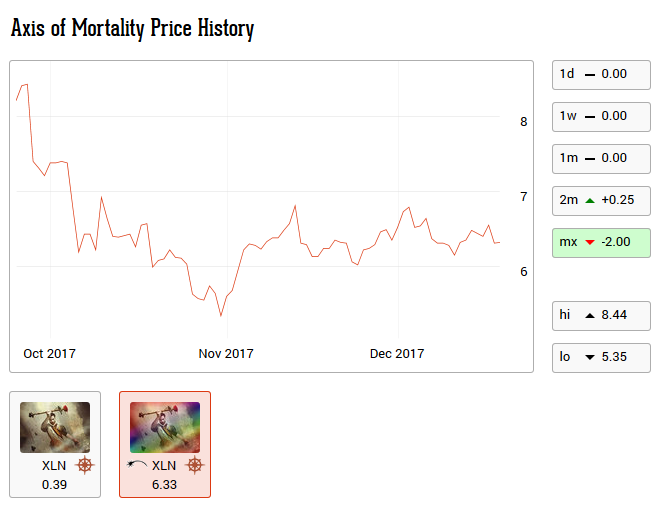
There are some puzzles left for us to think over, though. For example, what makes a card like Boneyard Parley almost double in price while Axis of Mortality and Overflowing Insight moves very little? It's possible there is no solution to this puzzle, but if there is, it could generate further refinement of the strategy and its variations in the future.

Trade of the Week

For a complete look at my recent trades, please check out the portfolio. This week I took to selling down some of my SOI and EMN sets. The first eight sets of SOI have been barely profitable while EMN is proving to be nicely profitable. I think the selling window for these sets is open now, although waiting for a few more weeks might bump up SOI into more profitable territory. Keep in mind that the redemption cutoff date for these two sets is in the spring and they could go out of stock in advance so there is a time risk involved in holding these sets.

Crashing Through: The Rise of Combo-Control

Are you a Quiet Speculation member?

If not, now is a perfect time to join up! Our powerful tools, breaking-news analysis, and exclusive Discord channel will make sure you stay up to date and ahead of the curve.

One of the most interesting trends that has emerged over the last few weeks in the Modern is the resurgence of combo-control. Several decks have seen success with an interactive shell that has some sort of a combo finish. Be it Living End suiting up with Cryptic Commands and Remands instead of its traditional creature-heavy shell, UR Breach buying time until it can put together Through the Breach and Emrakul, or Blue Tron pairing counterspells with a big-mana strategy, combo-control is definitely on the upswing.

This article will examine some of the root causes of this surge, and why some decks that seemingly have similar characteristics have not enjoyed the success of the above examples.

Combo-Control's Renaissance

Combo-control's shiny new standing sharply contrasts its condition a few months ago, when Counters Company and Storm were the go-to options if you wanted to play a combo deck in Modern. While those decks are still successful, the metagame has shifted to allow the hybrid decks mentioned above to join them as playable options. In a sense, this is a return to Modern's roots---combo-control had long maintained a steady presence in the format, thanks to its ability to use interaction to buy time and combo finishes to steal otherwise losing games. However, its share began to erode when bannings eliminated some of its foremost exemplars, and the emergence of powerful, streamlined aggro-combo decks like Infect made the remaining options for this archetype subpar choices.

Background Causes

What causes these decks to succeed? I believe a combination of factors fuels the success of these archetypes: new printings have either enabled or benefited them; their metagame positioning has improved; and the pure combo versions of these decks have been facing stiffer opposition lately in the form of hate cards. This section focuses on how these factors apply to the aforementioned decks, and covers one deck which they do not influence.

New Technology

New cards tend to juice up combo-control decks. The foremost example of this phenomenon is the mono-blue Living End lists that have been doing well online of late:

Living End, by 1310HaZzZaRd (5-0, MTGO Competitive League)

Creatures

4 Street Wraith
4 Curator of Mysteries
4 Striped Riverwinder
3 Architects of Will

Enchantments

4 As Foretold

Instants

3 Cryptic Command
2 Disallow
3 Mana Leak
4 Remand

Sorceries

4 Ancestral Vision
4 Living End

Lands

4 Field of Ruin
1 Ghost Quarter
12 Island
4 Tolaria West

Sideboard

3 Dismember
2 Dispel
2 Hurkyl's Recall
4 Leyline of Sanctity
4 Leyline of the Void

This deck exists thanks to As Foretold, Curator of Mysteries, and Striped Riverwinder in Amonkhet block. The new cards provide a means of casting Living End in a mono-blue deck as well as adequate payoffs for doing so.

While other combo-control decks have not been enabled to this degree by recent printings, useful cards have still come to them over the past few sets. Tron decks in general have benefited greatly from Walking Ballista, and Blue Tron is no exception. In the case of UR Breach, having another quality one-drop cantrip in Opt to help dig into combo pieces or utility has made quite a difference, as demonstrated by the following 8-0 list from a PTQ:

UR Breach, by Rooney56 (8-0, PTQ #11039156)

Creatures

3 Emrakul, the Aeons Torn
4 Snapcaster Mage
1 Vendilion Clique

Enchantments

3 Blood Moon

Instants

3 Cryptic Command
2 Electrolyze
4 Lightning Bolt
3 Opt
4 Remand
2 Spell Snare
4 Through the Breach

Sorceries

4 Serum Visions

Lands

2 Desolate Lighthouse
2 Flooded Strand
8 Island
1 Mountain
2 Polluted Delta
4 Scalding Tarn
2 Steam Vents
2 Sulfur Falls

Sideboard

4 Abrade
2 Anger of the Gods
2 Disdainful Stroke
2 Dispel
1 Izzet Staticaster
2 Madcap Experiment
2 Platinum Emperion

While it’s worth noting that some Blue Moon decks are choosing Kiki-Jiki, Mirror Breaker as a combo finish over Breach, UR Breach is the more popular of the two. Its main selling point: its combo is significantly more difficult to disrupt---not much stops an Emrakul on the battlefield, and not every deck can interact with instants.

Metagame Positioning

Next, let’s examine the position of these decks in the current Modern metagame. The current metagame features a variety of disruptive control and midrange decks at its top end, along with big mana exemplars Titanshift and Gx Tron. All these matchups generally favor combo-control, which can fight back against opposing disruption, and boasts combos that put them far ahead. Furthermore, the midrange and control decks tend to be favored against the fast aggressive decks that punish combo-control strategies for having a slower clock than pure combo and a more limited interaction suite than pure control---the strength of midrange and control then boosts combo-control indirectly, as well. For an example of a deck that benefits from this positioning, let’s take a look at a Blue Tron list from a MTGO competitive league:

Blue Tron, by shoktroopa (5-0, MTGO Competitive League)

Creatures

1 Platinum Angel
1 Snapcaster Mage
1 Sundering Titan
1 Treasure Mage
1 Trinket Mage
1 Walking Ballista
1 Wurmcoil Engine

Artifacts

4 Expedition Map
1 Chalice of the Void
1 Engineered Explosives
2 Mindslaver
1 Oblivion Stone
1 Talisman of Dominance

Instants

4 Condescend
1 Cyclonic Rift
1 Dismember
1 Gifts Ungiven
3 Remand
3 Repeal
1 Supreme Will
4 Thirst for Knowledge

Planeswalkers

1 Ugin, the Spirit Dragon

Lands

1 Academy Ruins
1 Gemstone Caverns
4 Island
1 Oboro, Palace in the Clouds
1 River of Tears
2 Snow-Covered Island
1 Tectonic Edge
1 Tolaria West
4 Urza's Mine
4 Urza's Power Plant
4 Urza's Tower

Sideboard

1 Chalice of the Void
1 Crucible of Worlds
3 Dismember
1 Engineered Explosives
1 Field of Ruin
1 Hurkyl's Recall
1 Spatial Contortion
2 Spreading Seas
3 Surgical Extraction
1 Wurmcoil Engine

A deck that can draw so many cards and produce this much mana is favored in virtually any sort of long game, making life difficult for the midrange and control decks that seek to contain it. Big mana opponents seeking to overwhelm interactive foes with sheer card quality are also in trouble. However, Blue Tron doesn’t boast much in the way of hard removal or permission, which can make its early game dicey. This deck greatly benefits from “fun police” decks keeping the faster stuff at bay. An argument can be made that sister deck Gx Tron is also strong against midrange and control, but Blue Tron being favored against other big mana decks (including in the Tron pseudo-mirror) gives it a viable niche.

UR Breach and mono-blue Living End attack on a similar, but distinct, axis: rather than employing a big-mana aspect for sky-high inevitability, they instead threaten combo finishes that essentially end the game if they resolve. That, plus their capacity to fight back against opposing interaction, means that opponents trying to keep these decks down can’t afford to draw the game out too long.

Hate for Pure Combo

An important step that should be kept in mind when evaluating a combo-control deck is to compare it to a more focused combo strategy. If the “all-in” version of the combo exists and does well, the niche for the combo-control version feels much more precarious. Each of today's covered decks has a similar strategic analog that is significantly more invested in comboing off quickly: mono-blue Living End and the original Living End; UR Breach lines up most neatly with Grishoalbrand; Blue Tron has to withstand comparisons to Gx Tron.

In the case of all of these decks, certain popular hate pieces greatly hinder their respective strategies. The combo-control version of each deck is better built to fight against these cards. Living End has to deal with Relic of Progenitus (currently the 9th-most played card in the format); Gx Tron has to fight through Blood Moon (16th); and Grishoalbrand’s reanimator aspect is shut down by Relic as well as Grafdigger's Cage (27th).

Beating hate cards is easier with more interaction (in the case of mono-blue Living End and Blue Tron), or with a way to find the more robust combo pieces (as with UR Breach). If you’re expecting a lot of hate for your combo deck of choice, dumbing it down might be the way to go.

Why Not Scapeshift?

And now, we come to a bit of a conundrum in our analysis; I’ve glossed over what some might consider Modern's quintessential example of combo-control in Temur Scapeshift. Here’s an example list:

Temur Scapeshift, by teagantime (5-0, MTGO Competitive League)

Creatures

2 Snapcaster Mage
4 Sakura-Tribe Elder

Enchantments

2 Search for Azcanta

Instants

3 Cryptic Command
1 Electrolyze
2 Izzet Charm
4 Lightning Bolt
4 Remand

Sorceries

1 Farseek
4 Search for Tomorrow
4 Scapeshift
4 Serum Visions

Lands

2 Breeding Pool
1 Cinder Glade
1 Flooded Grove
2 Forest
3 Island
4 Misty Rainforest
1 Mountain
1 Scalding Tarn
4 Steam Vents
4 Stomping Ground
2 Valakut, the Molten Pinnacle

Sideboard

2 Abrade
2 Anger of the Gods
2 Dispel
1 Engineered Explosives
2 Nature's Claim
1 Negate
3 Obstinate Baloth
1 Pulse of Murasa
1 Wurmcoil Engine

This deck was a longtime mainstay in Modern up until Splinter Twin’s banning, then seeing its meta share devoured by its all-in cousin, RG Valakut. The deck has since been relegated to fringe status, putting up results here and there, but never coming close to its former glory. Do any of the factors mentioned above bolster the deck’s cause? Could a resurgence in Temur Scapeshift be on the horizon? I'm leaning towards no.

The first category where Temur Scapeshift falls short is in the new technology department. While cards such as Search for Azcanta, Pull from Tomorrow, and Supreme Will have been bandied about as potentially worth testing in the deck, none has managed to make much of an impact. Even if these cards happen to be successful, they represent incremental improvements at best---the guts of the deck have not changed.

Secondly, Temur Scapeshift fails the positioning test when compared to RG Valakut, as demonstrated by this list:

RG Valakut, by zildjian88 (5-2, Modern Challenge #11051396)

Creatures

4 Primeval Titan
4 Sakura-Tribe Elder

Artifacts

2 Relic of Progenitus

Enchantments

2 Prismatic Omen

Instants

3 Lightning Bolt
2 Summoner's Pact

Sorceries

3 Explore
3 Farseek
4 Search for Tomorrow
4 Scapeshift
2 Sweltering Suns

Lands

3 Cinder Glade
2 Forest
7 Mountain
1 Sheltered Thicket
3 Stomping Ground
4 Valakut, the Molten Pinnacle
3 Windswept Heath
4 Wooded Foothills

Sideboard

2 Ancient Grudge
1 Anger of the Gods
2 Beast Within
1 Chandra, Torch of Defiance
1 Engineered Explosives
2 Mwonvuli Acid-Moss
2 Obstinate Baloth
1 Reclamation Sage
1 Relic of Progenitus
2 Tireless Tracker

Valakut is already strong against most midrange and control startegies by virtue of its big-mana plan, so Temur Scapeshift doesn’t pick up many points there.

It's also prepared to face early-game aggression thanks to the combination of maindeck Lightning Bolts (which it shares with Temur Scapeshift) and sweepers (which Temur does not feature). One could argue that Temur Scapeshift’s playset of Remands would help delay opponents on combo gameplans, but looking back at the current top decks reveals that pure combo decks are not only relatively few and far between, but many also feature enough mana production to absorb a single Remand and keep right on going, with Counters Company and Storm being the foremost examples. Remand also feels somewhat inadequate when compared to ramping harder when facing the likes of Affinity, Burn, Humans, and often Shadow (a delve threat, a flashed-back spell, or Kolaghan's Command being the only palatable targets). The only matchups where Temur Scapeshift seems to have an edge are big-mana mirrors, and those are not common enough to reward a pilot for switching.

Last but not least, RG Valakut is arguably just as good at fighting off hate as its combo-control cousin, as it features more copies of Valakut, the Molten Pinnacle (improving its odds against land destruction) and fetchable pieces of artifact/enchantment destruction thanks to Summoner's Pact (a plan for Blood Moon). While Temur Scapeshift does run all of these tools as well, it’s often a turn or two slower than Valakut, meaning it’s heavily diluting its main gameplan for just marginal payoffs. These factors indicate that even if the combo-control renaissance continues, Temur Scapeshift will likely remain a thing of the past, barring future improvements to its card pool.

Going Off

The metagame trends that have brought these combo-control decks to the forefront have shown no signs of abating, so I would expect all of the decks discussed in this article to maintain a presence in the format. If you have any combo-control decks that you think might be poised to make a move in the near future, or know of any combo decks that could potentially be transitioned over into a combo-control variant, I'd love to hear about them in the comments.

Daily Stock Watch: Gideon, Ally of Zendikar

Are you a Quiet Speculation member?

If not, now is a perfect time to join up! Our powerful tools, breaking-news analysis, and exclusive Discord channel will make sure you stay up to date and ahead of the curve.

Hello, everyone and welcome to the Tuesday edition of the Daily Stock Watch! A lot of cards are seeing some movement in the market lately, and this is something that usually happens during this part of the year. We could be in for some really fun stuff this 2018, and the coming weeks should help in giving us hints of what could be the best, and the worst as well, that Magic has in store for us in the coming year.

One particular card that has just rotated out of Standard this year just hit its all-time low of $9.16, and I'm very much interested in the upside of this card. Today, let's talk about Gideon, Ally of Zendikar.

There was an error retrieving a chart for Gideon, Ally of Zendikar

This card made Mardu Vehicles a Standard superstar, and it sat nicely above $20 for the majority of its stay in the format. It only lost steam when people realized that Temur Energy is the best archetype in the field, but it has stayed relevant until it rotated out. We expected the price to drop significantly, considering how planeswalkers that have cost a lot during its Standard prime, were all reduced to the less than $10 as soon as it hit Modern. However, this card here has made some cameos in Legacy decks, specifically in this very popular deck that's considered as tier one in the format:

Miracle Control

Creatures

3 Snapcaster Mage
3 Monastery Mentor
2 Counterspell
2 Predict
4 Brainstorm
4 Swords to Plowshares
4 Force of Will
1 Unexpectedly Absent
4 Terminus
4 Ponder
2 Portent
1 Council's Judgment

Other Spells

2 Counterbalance
1 Soothsaying
1 Engineered Explosives
2 Jace, the Mind Sculptor

Lands

2 Plains
2 Tundra
3 Volcanic Island
4 Scalding Tarn
4 Flooded Strand
4 Island
1 Karakas

Sideboard

1 Wear // Tear
1 Vendilion Clique
1 Sudden Shock
1 Red Elemental Blast
1 Pyroblast
1 Izzet Staticaster
1 Gideon, Ally of Zendikar
3 Flusterstorm
1 Disenchant
2 Containment Priest
2 Blood Moon

It's not everyday that you get to see a four casting cost planeswalker that's not named Jace, the Mind Sculptor in Legacy decks, so making it to the sideboard of a very stable deck is a step in the right direction for Gideon, AoZ. It is also getting some love from other respected Legacy decks such as Blade Control and Maverick, as it is a very potent threat that could dominate games if left unanswered, regardless of the format where it is seeing play.

Multi Format Planeswalker Superstars

Blue, black, and white planeswalkers have always been the most flexible and most powerful ones, in my opinion, across all formats. History dictates that Gideon, AoZ could make it to a lot of decent decks just like how Elspeth, Knight-Errant did it back in the day, although an argument could be made on which one is the better white walker. Elspeth made its appearance in control decks and soon disappeared in popular lists, so the same could be the case for Gideon, AoZ. According to the Utility Checker, a whopping 28% of winning decks have used an average of 3.4 copies of Gideon in 2016, while its usage rate increased further this year before rotating out, as 28.1% of top decks used 3.5 copies of this card to will its way to tournament top 8's. We're not expecting this number to appear in Modern or Legacy anywhere between now or the next ten years, but we could make a case for it to be included in tier one and two sideboards, which will help it stay relevant in the market for the years to come.

Right now,you could find lots of copies of Gideon, AoZ for $8.50 up to $9.99 from Star City Games, TCGPlayer, Card Kingdom, and Channel Fireball. Its price should continue dropping up to the $6 as more owners of the card clear their Standard collection of their copies, and start preparing for Rivals of Ixalan. This might go down to as low as $5, and I think that it would be a good idea to grab copies when it does. Stay away from the foils for now, as the unpredictability of Magic could always result to its inclusion in a possible Duel Deck appearance anytime soon. I have always played against this card in the past and I know how strong it could get. I'd like to think that it will still make sense in the coming years to hold on to copies of this card.

And that’s it for the Monday edition of the Daily Stock Watch! See you again tomorrow, as we check out new cards that should be on the go, or good enough for speculating. As always, feel free to share your opinion in the comments section below. And if you want to keep up with all the market movement, be sure to check in with the QS Discord Channel for real time market information, and stay ahead of the hottest specs!

Insider: Investing in Modern Staples

Are you a Quiet Speculation member?

If not, now is a perfect time to join up! Our powerful tools, breaking-news analysis, and exclusive Discord channel will make sure you stay up to date and ahead of the curve.

Hello, guys.

Last week, I went over how to profitably pick cards from decklists posted online or from streams. Today, I'm going to talk about some Modern singles that used to be expensive but currently lack popularity. Big portion of my speculations are base on cards from this category, so this week, I'm telling you guys how I personally pick these cards.

Modern is a fast-changing format in terms of the metagame. The top-tier decks keep on changing from week to week. This results in certain Modern staples losing popularity, and their prices slowly going down. It's hard to keep track of every single in the format since its so wide. But that difficulty is where the opportunities come from.

Let us start with some value creatures that used to see a lot of play in Modern:

Voice of Resurgence was one of the most annoying creature to play against, especially if you were piloting a blue control deck. Nowadays, Jeskai Tempo is getting popular, and I think Voice is one of the best card to have against Jeskai. In order to deal with this 2/2, the opponent needs a card that exiles creature like Path to Exile or Anger of the Gods. Furthermore, it makes it hard for the control player to counter spells or draw cards without losing massive value. It's true that the reprint of Voice in MM3 increases the supply of this card by a lot, and there's not much demand for it right now in the format, but the price of the card did go somewhere past 13 tickets after the reprint, and I speculate that it can still go higher than 13 if players online use this card to tackle the format.

Courser of Kruphix was one of the best card in Standard while it was legal. Once it rotated, we rarely see players use this Centaur – except in Titan Shift and Green-White value decks. Now that Burn decks are frequently being played online, I think Courser is pretty good to beat those aggressive decks. It helps to gain life and block as well as potentially gaining us card advantage by playing lands off the top of our library. Having said that, if we look at the graph above, its price fluctuates between 3.8 and 1 ticket in a very weird pattern, and its current price can't gain us much profit unless the price goes above 3 tickets at least. I suggest keeping track of Courser's price and grabbing them when the price dips to the 1.5-ticket mark (or below), then starting to sell once you can lock in at least a ticket per card.

Tasigur, the Golden Fang is a very efficient threat in Modern, a format where we can fill up the graveyard very fast. If you notice, Tasigur has a cyclical pattern in its pricing history. Currently, you can see the price is going downwards and will probably hit its bottom soon. Basically, the pricing for this card is very straightforward: as long as Grixis Death's Shadow is still in the format, buy in when they are cheap and sell whenever you can secure a good profit.  Plan to keep track of its price now and act when needed.

Next up, Koth of the Hammer is a four-of in a rogue but powerful deck called Skred Red, and also played in Legacy Big Red. Skred Red is a deck that can occasionally turn up in an event and beat everyone who is unprepared for it. Looking at the graph above, you can see the obvious spikes, and those are when some player won a big event with a deck containing four copies of Koth. At its current price around 3.7 tickets looking like a low point for the last year, buying in seems like a reasonable play moving forward.

Two weeks ago, I talked about a Blue Moon deck that plays various different combos in the entire 75 with the help of Blood Moon. Now we are seeing more players bringing this deck to tournaments. When there are more copies of the same deck in the meta, players that pilot the deck will need cards that can break the mirror. Keranos, God of Storms is a commonly played mirror breaker card in blue-red decks. However, we haven't seen any increase of price for a very long time, and Keranos is usually a one-of card in decks. I think it's worth putting on our watchlists and maybe making a move if it starts seeing some play in a blue-red meta.

The next card is Horizon Canopy, the best green-white land in Modern. Although it was reprinted in Iconic Masters, Canopy's price didn't go very low from 20 tickets. Instead, when the Draft events started, the original Future Sight version went up in price to about 30 tickets, while the Iconic Masters version stayed very steadily between 18 and 23 tickets. Let's see which decks in Modern plays Canopy:

Humans and Counters Company are playing an average of two copies, while Bogles and G/W Company are playing the full four copies of Horizon Canopy in their 75. I'm surprised that this card hasn't gone up in price yet, considering the Company decksare  occupying a big portion of the metagame right now. Meanwhile, Bogles is also gaining popularity, with some of the pro players and streamers making content using the deck lately. I predict that Canopy has good potential to increase in price soon!

Finally, Copperline Gorge and Razorverge Thicket are currently at their respective low points. I think the green-white land is underpriced right now, because as I mentioned earlier, decks that play Horizon Canopy are putting up good results in the metagame, and these decks usually play Razorverge Thickets as well. As for Copperline Gorge, I can see why it's cheap: basically all decks that play it have disappeared from the meta except Dredge (and Dredge is also not having good time currently). Anyway, I do recommend stocking up playsets of these two cards at their current prices, as this cycle of land can easily go up to 3 tickets when there are demands.


Alright, guys, that’s all for this week. Thanks for reading, and I’ll see you all next week!

–Adrian, signing out.

If I Controlled the Banned List

Are you a Quiet Speculation member?

If not, now is a perfect time to join up! Our powerful tools, breaking-news analysis, and exclusive Discord channel will make sure you stay up to date and ahead of the curve.

Everybody fantasizes about what they would do if given the reigns of power. In fact, most discussion around banned and restricted announcements perennially involves players pontificating pointlessly about their banned wishlist. I'm not immune. So that's exactly what I'm going to do today.

I do understand how weird this article is, coming from me. I'm the guy who always stomping on banlist speculation and calling for restraint. I'm making an exception. Part of this is that it's the holidays, so I'm treating myself. But it's also a useful thought experiment to not only state and defend your opinions but justify them. It's important to see if your desires are consistent with your beliefs. Going through the cards that I want to ban and trying to justify my opinions led me to discarding many suggestions as needlessly biased. Here's what withstood my introspection.

Criteria

Hating a card is not a good enough reason. You need to have a good reason; good enough that others would understand if not agree. For the most part, I agree with how Wizards has curated the Banned and Restricted List for Modern. Twin was poorly timed, but the results have been positive enough since then that I would adopt the reasoning. In other words no consistent wins before turn four, no overly oppressive decks, nothing that drags tournaments down, etc. These should be common sense rules.

What I would do differently is how I would apply them. I want the format to be as fun as possible for everyone. I think that everyone should have the opportunity to play the kind of Magic they want, even if I'd rather you do it very, very far away from me, Lantern players! I don't have a problem with decks that purposefully create non-games. What I do have a problem with, and what I will take a more aggressive hand against, are consistent non-games. If decks can consistently lock players out early, that is a problem. I'm fine with prison decks as long as it isn't too easy to spring the trap or it's reasonably possible to escape.
What I won't consider are "justice" bans or unbans. To me, each card deserves to be treated as its own issue. The idea that it isn't fair that Ponder is banned while Ancient Stirrings is free is irrelevant. Ponder's crimes are Ponder's crimes and exile is the punishment. Stirrings is entitled to a separate trial. Speaking of...

Ancient Stirrings

I have previously written at length about why Ancient Stirrings should be banned. Lantern Control and Tron's return to the limelight reignited debate over the card. Interestingly, my reasoning and the current discussion are very similar. Apparently, there's consensus. This is nice, but it really doesn't impact anything. Rather than rehash that old article, let me explain how I would justify such a ban.

By banning Ancient Stirrings, the need to potentially ban other cards diminishes. Stirrings does something for colorless decks that would never be acceptable for any color. Oath of Nissa is as close as it gets for one mana, and that's much more limited than Stirrings. This power is not necessarily a problem, the relative justice of Ponder being banned for being too good as a consistency tool being irrelevant by my own rules. No, I would ban Stirrings so that I don't have to ban anything else from Tron or Lantern Control.
I'll start off with a bold declaration: Tron and Lantern are far better than their metagame shares will ever show. I'd wouldn't say they're the best decks by any means, but they are better than it appears. The main reason they don't see more play is that players don't want to play them. Many players, even pro level players, would rather chew their own arms off than play Tron---or even play Burn! Lantern is in a similar boat. Even its advocates admit it's not a deck anyone can stand to play, both because of how it plays and its difficulty. This bias keeps their numbers down and prevents them from being a problem.
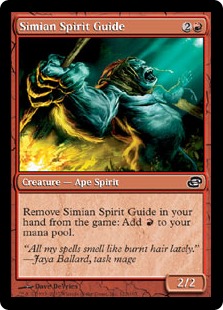
However, attitudes change. If Tron and Lantern ever become more palatable, I think they will become oppressive. Turn three Karn Liberated is a functional lock against many decks, and Lantern can hard lock you at any point in the game. Increased popularity would decrease the fun in the format. Therefore, I would take action against these decks by targeting their consistency tool. Ancient Stirrings hits both decks and some other fringe decks that have degenerate tendencies (mainly Amulet Titan), lowering their consistency just enough that more drastic action is unnecessary. Tron is slightly less likely to have Tron on turn three; Lantern will have to work harder to actually lock the game; the number of early non-games will decrease. A surgical fix.

Simian Spirit Guide

Nothing fair has ever come out of Simian Spirit Guide, nor its predecessor Elvish Spirit Guide, being legal in a format. They have always been used to do very unfair things at no cost. Yes, the mana is temporary, but if you want Guide, you don't care. You're using it to win the game a turn early. Remember Pro Tour Colorless Eldrazi? Its Guide-enabled Chalice of the Voids locked the game on the first turn. Chalice is a fine card as long as there's an opportunity to either play around it or answer it, but turn one is too early. Guide's main use is and will always be to just get players before they can play Magic.

I know that Guide sees some play elsewhere, but those decks don't exactly promote fair Magic, either. Whether it's Colorless Eldrazi Stompy or Breach Titan, you're surprising your opponent with a big play they could never see coming. It's not the kind of Magic that my regime would encourage. The fact that Ad Nauseam combo takes a probably lethal hit is unfortunate, but it was disappearing under Storm anyway. Not much to lose.

Conflagrate

Dredge is not Magic. I don't know what game it is playing, but it's not Magic. This is not by itself a problem. Having weird decks makes the polite euphemisms happy and makes the game more interesting. Hemorrhaging cards into the graveyard is one thing, and the point of the deck. There are plenty of tools to do that and it isn't the worst aspect of the deck. It can be terrifyingly hard, but you can play normal Magic through a horde of recursive zombies. Therefore, I wouldn't ban any of the enablers like Cathartic Reunion.
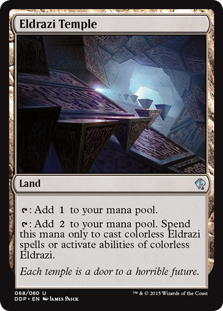
What I do have a problem with is when Dredge oops-es all over its opponent. The problem card that makes Dredge really frustrating is Conflagrate. It can be sweeper or a finisher, but in either case, it repowers the dredge engine by returning cards to the graveyard. Combine with Life from the Loam for ridiculous blowouts. The card just does too much for no real price in a deck that already produces a lot of feel bad games, so it's unacceptable. In the interest of promoting more games of Magic, I'd ban Conflagrate.

Dishonorable Mentions

I want to ban Eldrazi Temple, but I couldn't gracefully justify such a decision. I want it gone because Sol lands are dangerous in a format without Wasteland. Ancient Tomb and City of Traitors are incredibly powerful in Legacy and many decks can use them, but their vulnerability to Wasteland keeps them in check. Temple is the only Sol land in Modern, but Ghost Quarter is not Wasteland. The Eldrazi get to wield an unfair mana advantage that crushes fair decks and leads to non-games. Reality Smasher and Thought-Knot Seer are ridiculously powerful anyway; why do we want them played early? Besides, Temple directly contributes to the decline of non-Death's Shadow midrange and the increase in big mana's share.

Unfortunately, without Temple, I doubt the Eldrazi would see much play. I tried to convince myself that Eldrazi Tron or Bant Eldrazi could survive without Temple and failed. Eldrazi Tron is not Gx Tron, and it doesn't naturally hit Tron on turn three often. When it cannot accelerate out its threats, the deck clunks itself to death. This would increase after a ban to the point that you'd never play it over normal Tron. I'm not supposed to outright kill decks, so I can't justify banning Temple.
I'd like to ban a lot of other cards simply because I hate them, particularly Ensnaring Bridge. However, I don't need to, either because they see negligible play or there are other means to fix the "problem." In Bridge's case, I can hurt it just by banning Stirrings, reducing its chances to hit play so it can't hurt me as much. I still hate it though.

No Unbans

Given the opportunity, I would not unban anything. It seems pointless right now. I'm not saying that there aren't cards could not be unbanned, just that I don't see the value in doing so. I know that many players object to keeping cards banned forever. But I have no problem with this. Time and R&D philosophy changes do not diminish inherent power levels or forgive severe mistakes (*cough*Skullclamp *cough*).

At this point, every card on the list is there because it earned a spot. Most of the list had its time in Modern, was too good, and got axed. The cards that remain from the original banned list were all banned in other formats except for Chrome Mox, Dark Depths, and Umezawa's Jitte. And Hypergenesis doesn't count because it was legal for the proto-Modern Community Cup and was busted.

Most importantly, I see unbans as a resource, and want to be judicious about using them up. I've been over this before, but there are only a small number of cards that are serious considerations in the first place. We should only take this course with good reason, because there will be so few successful unbans. Furthermore, it is very possible that some candidates look fine on paper and won't be in reality. The case of Golgari Grave-Troll is instructive here. Doing something for its own sake is only beneficial when the thing is random personal kindness and generosity, so I won't shrink the banned list without good reason.

...Yet

There is one good reason to unban cards: reinvigorating stale metagames. If the dynamism that we've seen over the last few months breaks down or grows stale, I would be willing to release a card to shake things up. Doing so may or may not have a long-term effect, but it would energize the stagnated brewing scene to get the metagame moving again. Alternatively, if a deck proved problematic before stability set in, I could see unbanning something to try and counter that problem. This option is very risky, though. There's just not much on the list that is inherently predatory. They're mostly banned because they enabled busted decks, and would likely do so again. What I don't want to happen is Australia and the cane toad.

As may be surmised, if I needed to shake things up in a stale metagame, I would unban Stoneforge Mystic. Of the cards I've tested, it is the most tame. If its advocates are right (no evidence one way or another), turn three Batterskull wouldn't even be very good anymore. I have my own doubts of this, but I do know that unbanning Stoneforge would generate excitement and get the juices flowing for brewers. Unlike other banlist residents, Stoneforge doesn't have an obvious forever home in Modern, so it would encourage testing and experimentation. This is the best case scenario that I can foresee for an unban.

It may be surprising that I didn't say Preordain, given my test results. While the most inoffensive card I've tested, I don't think that it would really shake things up as I intend. For the most part, it just replaces Serum Visions, and that's not interesting. Also, we have Opt, which is worse but close enough---especially for diversity's sake. As for Bloodbraid Elf, I'm not saying one way or another. Next month, I'll focus on that card. You'll find out what I think soon enough!

Food for Thought

I thought this list would be longer when I started planning this article. There are a lot of cards and decks I really dislike. However, personal bias isn't a good enough reason to ban something so I've had to let them go. Not that I actually advocate any changes. There's no proof that anything needs to change. But it is fun to speculate. I'm off for the holidays, so everyone have an excellent time and I'll see you for Cascade Month.

Want Prices?

Browse thousands of prices with the first and most comprehensive MTG Finance tool around.


Trader Tools lists both buylist and retail prices for every MTG card, going back a decade.

Quiet Speculation