menu

King of the Hill: Using Your Flex Slots in an Open Meta

Are you a Quiet Speculation member?

If not, now is a perfect time to join up! Our powerful tools, breaking-news analysis, and exclusive Discord channel will make sure you stay up to date and ahead of the curve.

If you’ve been playing Modern over the last few months, you may have noticed an interesting trend in the metagame results: no one deck is top dog. While a familiar cast of characters inhabits the top of the charts, it seems as if any one of them can do well in a given tournament, all while a steady stream of new or left-for-dead archetypes throw their hats into the ring.

This article is the first of a two-part series that breaks down the deckbuilding implications of an open metagame. In this installment, we'll discuss what an open meta encourages pilots to do with the most variable slots in an established deck (hereafter referred to as flex slots). As we'll see, proactive and reactive deck use their space differently.

Measuring Modern’s Diversity

Modern has long prided itself on being a format in which a variety of decks can compete (a rare feat for non-rotating constructed formats), but a field this wide sticks out even here. One way to describe this metagame is “expect the unexpected.” To illustrate Modern’s diversity, I’ve summarized the results of some recent Star City Games (SCG) tournaments and Modern challenges.

EventUnique Archetypes in Top 8Unique Archetypes in Top 32
SCG Classic Washington, DC (Oct. 28)711 (Top 16)
SCG Classic Cincinnati (Oct. 21)612 (Top 16)
SCG Open Cincinnati (Oct. 21-22)821
SCG Classic Charlotte (Oct. 14)612 (Top 16)
SCG Open Charlotte (Oct. 14-15)623
Modern Challenge (Oct. 29)721
Modern Challenge (Oct. 22)722
Modern Challenge (Oct. 15)817

In the Top 8 of the recent SCG Open in Charlotte, a novel Humans deck ran through the event in impressive fashion, and Infect (a deck regarded as unplayable in Modern since the rise of Death’s Shadow) also earned a berth in the Top 8.

These numbers paint an impressive diversity picture, and still don’t entirely capture how wide-open the field is. It seems like every week another deck comes out of the woodwork to crash a tournament; the October 22 Modern Challenge was won by a UB Mill deck nobody’s seen since last year’s Grand Prix Los Angeles.

Bring It On
What does this diverse field mean for you, the player? How do you prepare for a large event, in which you’re liable to see just about anything the format’s vast card pool can offer? The first step is to take objective stock of your deck’s possible proactivity level. For instance, UW Control wouldn’t sideboard cards in the same fashion as Burn, because the two decks require different adjustments based on their respective mainboards’ capabilities.

A proactive deck’s gameplan typically involves more dedication to executing its Plan A, which can be anything from slinging Bolts, to assembling a lethal board state, to simply comboing off. A reactive deck, on the other hand, molds its gameplan around disrupting what its opponent attempts to do. Decks heavy on discard spells, removal, and countermagic typically fit that description best.

Architecture of Aggression: Proactive Decks

In open metagames, the priority for a proactive deck is to double down on its primary gameplan. It’s often tempting to hedge against certain strategies by putting in a card or two to address them, at the expense of points versus the field at large—resist that temptation. Stick to what your deck does well early on, then adjust accordingly depending on the nature of your opponent (and how they can disrupt you). To put this advice into action, let’s look at a couple of examples.

Aggro-Combo: Affinity

Virtually all Affinity players run 2 Memnite in their maindeck, but many rotate through a variety of options for the slot that could be occupied by the third copy of the card, as it is considered flex. I believe that under the current metagame paradigm, a 3rd Memnite is the cog that fits best.

The benefits of such a decision are the slightly higher odds of opening with zero-drop creatures that can switch on metalcraft, tap for Springleaf Drum, wear Cranial Plating, or just chip in with damage here and there when the ground is open. I also currently favor maindecking Master of Etherium, as that card can take over a board state and demand an answer very quickly. Finally, I’d recommend packing the full 4 copies of Galvanic Blast for a similar reason—it gets opponents dead.

Zachary Purgh abided by these principles to place 27th in the Cincinnati Open:

Affinity, by Zachary Purgh (27th, SCG Cincinnati)

Creatures

3 Memnite
4 Ornithopter
4 Signal Pest
4 Vault Skirge
4 Arcbound Ravager
4 Steel Overseer
4 Master of Etherium

Artifacts

4 Mox Opal
4 Springleaf Drum
4 Cranial Plating

Instants

4 Galvanic Blast

Lands

4 Blinkmoth Nexus
4 Darksteel Citadel
2 Glimmervoid
4 Inkmoth Nexus
1 Mountain
2 Spire of Industry

Sideboard

2 Ancient Grudge
1 Blood Moon
1 Dismember
3 Etched Champion
1 Ghirapur Aether Grid
1 Grafdigger's Cage
2 Rest in Peace
1 Stubborn Denial
2 Thoughtseize
1 Whipflare

This list is all-in on proactivity, with Zachary relegating Etched Champion to the sideboard to max out on mainboard copies of Master of Etherium. While Champion is an undeniably powerful card and should form part of every Affinity 75, it shines brightest in the face of interaction, whereas Master of Etherium is the stronger choice when goldfishing fast kills.

Linear Combo: Storm

For another potential application of this philosophy, take Storm’s end-game. Grapeshot is the quintessential Storm payoff card, but some players are fond of a single copy of Empty the Warrens in the maindeck to hedge against disruption.

However, there’s no way of knowing that you’ll face disruption necessitating an Empty the Warrens-fueled finish in game one, so those copies of Empty may be better off in the sideboard. The main cards I would consider to replace them: more Grapeshots. These extra copies increase the chance that you go off successfully without the elements that make reaching a Storm count of 20 a virtual certainty (Gifts Ungiven and a cost reducer).

At the same Open, Scott Simmons streamlined his Storm deck in this way to take 2nd place:

Storm, by Scott Simmons (2nd, SCG Cincinnati)

Creatures

4 Baral, Chief of Compliance
3 Goblin Electromancer

Instants

4 Desperate Ritual
4 Gifts Ungiven
4 Manamorphose
1 Noxious Revival
2 Opt
4 Pyretic Ritual
3 Remand

Sorceries

4 Serum Visions
4 Sleight of Hand
2 Past in Flames
3 Grapeshot

Lands

4 Scalding Tarn
3 Flooded Strand
3 Steam Vents
4 Spirebluff Canal
3 Island
1 Mountain

Sideboard

3 Blood Moon
1 Dismember
2 Dispel
1 Echoing Truth
3 Empty the Warrens
3 Lightning Bolt
2 Shattering Spree

Resist and Bite: Interactive Decks

A different paradigm applies to interactive decks. While being as proactive as possible is usually a boon in Modern, the win conditions in more reactive decks are often too slow to risk ignoring what an opponent is up to altogether. Therefore, a reactive deck must strike a balance between cards that promote its gameplan and ones that disrupt opponents.

Because Modern features decks with various angles of attack, reactive decks in such an open metagame should prize flexible, “catch-all” interactive cards that allow them to affect as many different opponents as possible. Example spells that fit the bill include Cryptic Command, Kolaghan's Command, Liliana of the Veil, and Supreme Verdict. If your colors line up with any of them and you have open deck slots, they usually deserve consideration.

Interactive Aggro: Humans

For an example of this focused maindeck philosophy, look no further than the hot-running 5-Color Humans deck. This deck took down the Cincinnati Open, as well as a Classic in Washington, DC one week later, thanks in no small part to its highly focused mainboard configuration:

Humans, by Matt Ling (1st, SCG Washington DC Classic)

Creatures

4 Champion of the Parish
4 Kitesail Freebooter
4 Mantis Rider
3 Mayor of Avabruck
4 Meddling Mage
4 Noble Hierarch
3 Reflector Mage
4 Thalia's Lieutenant
4 Thalia, Guardian of Thraben
2 Thalia, Heretic Cathar

Artifacts

4 Aether Vial 

Lands

4 Ancient Ziggurat
4 Cavern of Souls
4 Unclaimed Territory
3 Windswept Heath
1 Hallowed Fountain
1 Temple Garden
2 Horizon Canopy
1 Plains

Sideboard

2 Ethersworn Canonist
2 Dark Confidant
2 Fiend Hunter
2 Izzet Staticaster
1 Mirran Crusader
1 Reflector Mage
1 Tireless Tracker
2 Vithian Renegades
2 Xathrid Necromancer

This list is built to do a handful of things at a high level: it reliably pumps out creatures with a variety of color requirements via Aether Vial and rainbow lands, it punishes linear decks with a variety of disruptive creatures, and it provides pump-based payoffs for a go-wide tribal weenie strategy. In all cases, the layers of redundancy built into the list improve its function, and attempting to diversify the maindeck with matchup-specific hedges would likely result in a worse list. In any case, the no-nonsense creature suite featured here has served the deck well over the past few weeks.

Rock Midrange: Grixis Shadow

This advice applies to Modern’s premier interactive strategy, Grixis Shadow, for which Liliana of the Veil is a flex card. Take Michael Kidd’s Top 16 list from the SCG Open in Charlotte:

Grixis Shadow, by Michael Kidd (16th, SCG Charlotte Classic)

Creatures

4 Death's Shadow
4 Snapcaster Mage
2 Gurmag Angler
2 Tasigur, the Golden Fang
4 Street Wraith

Planeswalkers

1 Liliana of the Veil

Instants

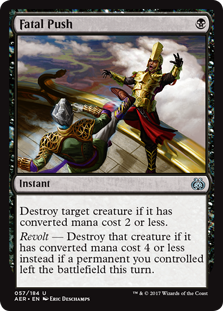
4 Fatal Push
4 Thought Scour
1 Opt
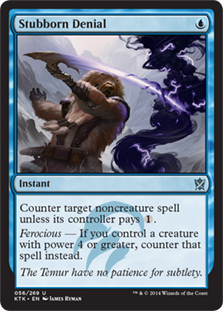
2 Stubborn Denial
2 Terminate
2 Kolaghan's Command

Sorceries

4 Serum Visions
4 Thoughtseize
2 Inquisition of Kozilek

Lands

2 Blood Crypt
4 Bloodstained Mire
1 Island
4 Polluted Delta
3 Scalding Tarn
1 Steam Vents
1 Swamp
2 Watery Grave

Sideboard

1 Anger of the Gods
1 By Force
2 Ceremonious Rejection
2 Collective Brutality
1 Deprive
1 Engineered Explosives
1 Kozilek's Return
1 Liliana of the Veil
1 Liliana, the Last Hope
2 Nihil Spellbomb
1 Stubborn Denial
1 Temur Battle Rage

Kidd dedicates his limited flex slots to Liliana, who boasts utility in aggro, combo, and midrange matchups alike; and to Opt, which helps find the diverse tools needed to take on an open metagame.

Big Mana: Eldrazi Tron

Another such example is Eldrazi Tron, which has typically employed a wide variety of different spells to complement its Eldrazi core. Curve-smoothers like Mind Stone are a little specific to metagames that offer the time to drop a mana rock. In a wider metagame, supplementing the mainboard with extra interactive spells seems to be the correct call, as demonstrated by Thomas Lee’s 3rd place list from the Washington Classic:

Eldrazi Tron, by Thomas Lee (3rd, SCG Washington DC Classic)

Creatures

4 Walking Ballista
1 Wurmcoil Engine
2 Endbringer
4 Matter Reshaper
4 Reality Smasher
4 Thought-Knot Seer
1 Ulamog, the Ceaseless Hunger

Artifacts

1 Basilisk Collar
4 Chalice of the Void
4 Expedition Map
1 Relic of Progenitus

Instants

2 Dismember

Sorceries

2 All is Dust

Planeswalkers

2 Karn Liberated

Lands

3 Wastes
1 Cavern of Souls
4 Eldrazi Temple
3 Ghost Quarter
1 Sea Gate Wreckage
4 Urza's Mine
4 Urza's Power Plant
4 Urza's Tower

Sideboard

2 Grafdigger's Cage
2 Ratchet Bomb
2 Relic of Progenitus
2 Sorcerous Spyglass
1 Witchbane Orb
2 Blight Herder
2 Spatial Contortion
2 Warping Wail

A Relic of Progenitus and a Basilisk Collar may not be what immediately springs to mind when you think “catch-all interaction," but these cards have a surprising amount of relevance against the field. Modern is home to many decks that depend on the graveyard to varying degrees, making Relic a pretty handy card to have in the main. Collar contributes to the cause by hedging against Burn and by making the “ping” effects on Walking Ballista and Endbringer more relevant against creature decks.

While these are far from the only options available for these flex slots, I believe some form of interactive effect is critical in the current metagame, and a diverse field calls for flexible options.

On the Road Again

That does it for mainboard flex slots. Next week, we’ll zone in specifically on sideboarding in open metagames. If you have any thoughts on the deckbuilding philosophy principles I espoused in this article (in agreement or otherwise), please leave them in the comments section below. I look forward to your feedback, and thanks for reading.

Daily Stock Watch – Jace, Vryn’s Prodigy

Are you a Quiet Speculation member?

If not, now is a perfect time to join up! Our powerful tools, breaking-news analysis, and exclusive Discord channel will make sure you stay up to date and ahead of the curve.

Hello, everyone, and welcome to another edition of the Daily Stock Watch! Today, we'll talk about one of the most beloved blue cards (although not lately) in recent history.

There was an error retrieving a chart for Jace, Vryn's Prodigy

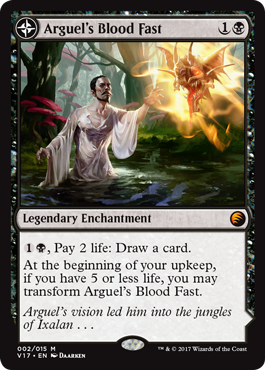
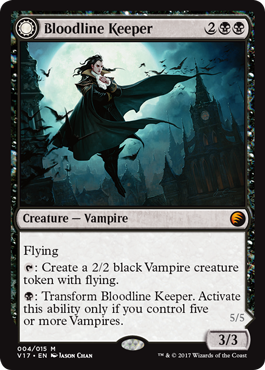
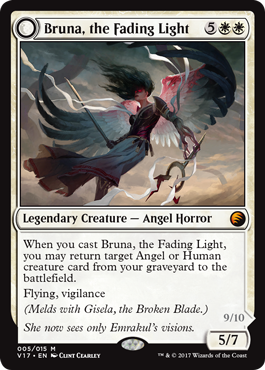
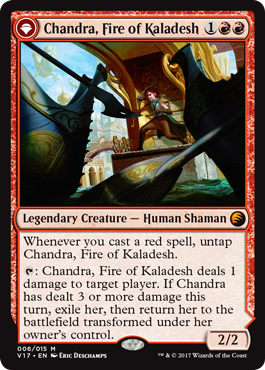
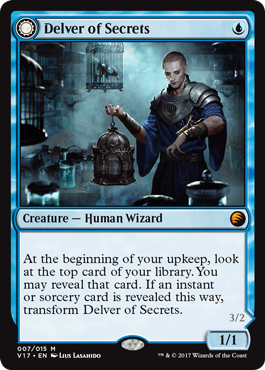
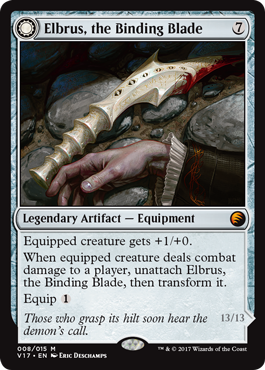
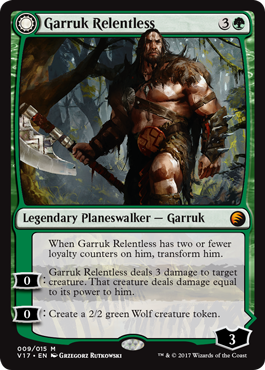
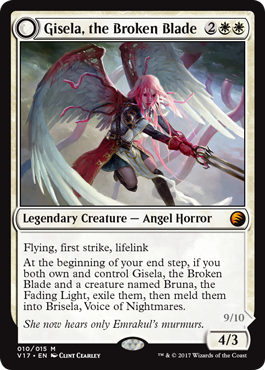
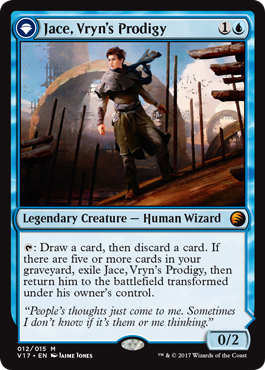
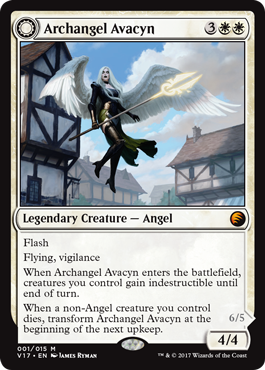
Now you must be wondering, why are we talking about a card that's barely used nowadays in Modern and Legacy? Well, in case you missed it, Magic just spoiled the contents of From the Vault: Transform:

These fifteen flip cards will soon be available in premium foil versions, which also means that there is going to be an increase in their supply and almost certainly, a decrease in their value eventually. However, we'll keep the spotlight on Jace, Vryn's Prodigy for now.

Using the same tool that I use to check out how often a card is used in a top 8 deck (which I will be calling "Utility Checker" from now on), I did some research to check why JVP hit the $90 mark at a certain point in time. What I found out was that a whopping 24.8 percent of decks made the top 8 of Standard tournaments in 2016 using a complete playset of it. If my memory serves me right, the spike was caused by Grand Prix Paris 2016 where these decks slugged it out in the finals:

Grixis Control by Petr Sochurek

Creatures

4 Jace, Vryn's Prodigy
3 Kalitas, Traitor of Ghet

Instants and Sorceries

4 Dig Through Time
2 Disdainful Stroke
2 Duress
3 Fiery Impulse
2 Grasp of Darkness
1 Languish
2 Murderous Cut
2 Painful Truths
2 Roast
2 Ruinous Path
2 Transgress the Mind

Other Spells

2 Chandra, Flamecaller
1 Ob Nixilis Reignited

Lands

4 Bloodstained Mire
1 Flooded Strand
2 Island
2 Mountain
4 Polluted Delta
2 Smoldering Marsh
2 Sunken Hollow
3 Swamp
4 Wandering Fumarole
2 Wooded Foothills

Sideboard

1 Disdainful Stroke
3 Dispel
1 Dragonlord Silumgar
1 Dragonmaster Outcast
1 Infinite Obliteration
1 Languish
1 Negate
1 Painful Truths
3 Radiant Flames
1 Roast
1 Transgress the Mind

Dark Jeskai by Ben Stark

Creatures

4 Jace, Vryn's Prodigy
2 Kalitas, Traitor of Ghet
4 Mantis Rider
3 Soulfire Grand Master

Instants and Sorceries

4 Crackling Doom
2 Dig Through Time
2 Disdainful Stroke
2 Duress
3 Fiery Impulse
1 Murderous Cut
4 Painful Truths
2 Roast

Other Spells

1 Chandra, Flamecaller

Lands

4 Bloodstained Mire
4 Flooded Strand
1 Island
1 Mountain
2 Needle Spires
1 Plains
4 Polluted Delta
2 Prairie Stream
2 Shambling Vent
2 Smoldering Marsh
2 Sunken Hollow
1 Swamp

Sideboard

2 Arashin Cleric
1 Disdainful Stroke
1 Dragonlord Silumgar
1 Duress
1 Exert Influence
1 Fiery Impulse
1 Ob Nixilis Reignited
1 Ojutai's Command
3 Radiant Flames
1 Roast
2 Transgress the Mind

One look at these decks and you could see how strong JVP is once it's flipped. With more than twenty possible spells that could be flashbacked once it becomes Jace, Telepath Unbound, it gave both decks a plethora of options to choose from at any point in the game. Since I'm also a blue mage, I was also one of the players who experienced its overwhelming power and ended up joining the bandwagon.

"This card is so good, it's going to cross over to Modern" was something that I told my friends right after that impressive run.

Upon checking its Modern usage on that same breakout season, it was almost non-existent as only one percent of winning decks have used at least three copies of it. We could build a case for it being a very good Standard card because there were limited tools in the format that could deal with it both as a creature and as a planeswalker. This isn't a problem at all in Modern, as cards such as Lightning Bolt, Path to Exile, and Maelstrom Pulse, just to name a few, could eliminate it with relative ease. Rightfully so, the card was down to $30 in three months after that GP. The hype and demand died eventually, and everyone was suddenly selling their playsets.

But as a finance junkie, you know what this card is capable of doing. Another spike like this could occur when someone breaks the format wide open again, and we'll suddenly find ourselves looking for copies of JVP.

As it stands, you will find non-foil copies of this card in almost every online store at the $21-25 price range. The Magic Origins foil copies might suffer from the reprint, and the current $55-69 price tag it carries will definitely be down before the release of the FTV. The SDCC 2015 foil version becomes rarer due to this reprint, so this might see some slight gain in the future. If normal copies of JVP go down to as low as $12-$15 (this is just my projection, barring any major exposure of the card in any coming tournaments), I'm definitely buying in. But for now, I'd be glad to keep an eye on its market movement. I'm not counting out the possibility of a Standard reprint of this card but I could always be wrong.

Always feel free to share your opinion in the comments section below. And if you want to keep up with all the market movement, be sure to check in with the QS Discord Channel for real time market information, and stay ahead of the hottest specs!

Daily Stock Watch – Vraska, Relic Seeker

Are you a Quiet Speculation member?

If not, now is a perfect time to join up! Our powerful tools, breaking-news analysis, and exclusive Discord channel will make sure you stay up to date and ahead of the curve.

Hello, everyone, and welcome to another week of the Daily Stock Watch! Last week, we focused primarily on some Modern cards that saw some financial movement over the last couple of tournaments. In the aftermath of Pro Tour Ixalan, it's time for the spotlight to shine on Standard.

So for today's segment, we'll focus on one of the weekend's biggest gainers:

There was an error retrieving a chart for Vraska, Relic Seeker

As per MTGStocks, this card was at around $17.58 last Friday before the Pro Tour and now sits in the $25 to $30 range after four copies of the card made it to the top 8 (two each used in Mike Sigrist and Piotr Glogowski's Four-Color Energy decks) . What easily comes to mind for MTG purists is that in a Pro Tour, players are not carried to the top 8 by the strength of their Standard deck alone; you'll also have to factor in their Limited record. Guess what, though?

Sigrist and Glogowski made it to the top 8 on the strength of a combined sixteen wins, three losses and one draw for the Standard portion. All four copies of their Vraska, Relic Seeker were in the main deck, so it certainly didn't slither its way in to the top for the current hefty price tag it carries. But is this tournament enough reason to buy in now?

For reference, let's take a look at Piotr Glogowski's list (8 wins, 1 loss, 1 draw – Swiss record):

4 Color Energy

Creatures

3 Bristling Hydra
4 Longtusk Cub
4 Rogue Refiner
4 Servant of the Conduit
2 The Scarab God
4 Whirler Virtuoso

Instants and Sorceries

3 Abrade
4 Attune with Aether
1 Blossoming Defense
4 Harnessed Lightning
1 Supreme Will

Other Spells

2 Skysovereign, Consul Flagship
2 Vraska, Relic Seeker

Lands

4 Aether Hub
1 Blooming Marsh
4 Botanical Sanctum
4 Forest
1 Island
1 Mountain
2 Rootbound Crag
1 Sheltered Thicket
3 Spirebluff Canal
1 Swamp

Sideboard

1 Appetite for the Unnatural
2 Cartouche of Ambition
1 Chandra's Defeat
1 Confiscation Coup
2 Deathgorge Scavenger
1 Jace's Defeat
3 Negate
2 Nissa, Steward of Elements
2 River's Rebuke

Personally, I like this list better because Skysovereign, Consul Flagship was chosen over Chandra, Torch of Defiance. It interacts very well with Vraska in taking care of creatures (that's not named Hazoret, the Fervent) on the opposing side of the table, and it also allows Vraska to focus more on troublesome enchantment or artifacts. To be honest, I think this is the main reason why it is so good in this deck. It gives you access to sideboard-like card effects while giving your opponent a two-turn clock to work on before they go down to one life. The 2/2 Pirate creatures (with menace!) it creates is also constant pressure if left unanswered, and could definitely win games on its own.

Wait, there were only four copies of Vraska in the top 8. This lady has seven. Why aren't we talking about her instead?

There was an error retrieving a chart for Nissa, Steward of Elements

It is true that both of the 4C Energy decks in the top 8 played two copies of Nissa in their boards, though I'm not sure if its role is to sub in for Vraska or just to add card advantage for certain matchups. However, this card's price hasn't moved an inch despite of the exposure from the Pro Tour top 8. It's probably due to too much supply, or people are just wary that it's a fringe player in an otherwise awesome deck.

At the moment, Star City Games is out of stock on Vraska, and you could expect them to restock at around $30 soon. TCGplayer has some merchants still selling them for $27, but the supply isn't really too high. Channel Fireball is your best bet for getting your own playset, as they still have a trove of it at $28 each. Foil copies are just sitting at $35 once they are restocked, barring any movements from sellers, and could be a good price to buy in for collection or playing purposes.

In general, I think more packs of Ixalan will be opened as there are still upcoming tournaments where they'll be given out as prize packs. Despite the absence of Masterpieces in this set, it has somehow performed better than expected, but still remains below market value (box value for Ixalan is currently at the $65 to $75 range) for the entire set. This could all change very soon if we see more movement from mythics like Vraska and that would only mean that more packs would be cracked by the public.

For now, I'm still skeptic with its value and I'll only buy in for spec purposes at $15 and below. If you'd be using it, getting them at around $20 would be the best price in my opinion. It is a strong card, no doubt, but I'd rather focus on these two for the time being:

Always feel free to voice your opinion in the comments section below. And if you want to keep up with all the market movement, be sure to check in with the QS Discord Channel for real time market information, and stay ahead of the hottest specs!

Insider: Understanding Risk with The Greeks

Are you a Quiet Speculation member?

If not, now is a perfect time to join up! Our powerful tools, breaking-news analysis, and exclusive Discord channel will make sure you stay up to date and ahead of the curve.

In case you missed it, I’d highly recommend checking out my Alpha and Beta article from last week. Why am I emphasizing it? Basically, this has become one of my favorite go-to investment segments.

I'm looking to convert my recent gains in random Reserved List staples into cards with the same upside potential and rarity, but without the inflated prices. There appears to be more natural price appreciation and less market manipulation with these classic cards that have no default presence on MTG Stocks.

Ultimately, when I see that Star City Games pays $8 on any Near Mint Alpha uncommon and $4 for Played, I know that these have a fairly reliable price floor. Card Kingdom’s prices are a bit more volatile (more on volatility later) but you could get lucky and find a buylist for a random Alpha uncommon that goes even higher. The limited downside with great upside is the exact kind of investment I strive to make in MTG finance.

There was an error retrieving a chart for Green Ward

In fact, such assessments of risk and reward remind me of another kind of alpha and beta terms when it comes to investing. Rather than referring to Magic sets, these terms are stock market concepts—though they still may apply to MTG finance. Let’s unwrap these two terms, explore how they are applied on Wall Street, and use these concepts to sharpen our Magic investing approach to make sure we’re making wise decisions when it comes to risk management.

Alpha and Beta: Measurements of Investment Risk

This website provides concise definitions and descriptions of these terms. For convenience, here are the simplified definitions below:

Beta: Historical measure of volatility. Beta measures how an asset moves versus a benchmark (i.e. an index).
Alpha: Historical measure of an asset’s return on investment compared to the risk-adjusted expected return.

In other words, Beta is a measure of how volatile an asset is relative to a benchmark, typically an index. A high positive Beta indicates a more volatile asset relative to the index, and a Beta between 0 and 1 suggests the asset is less volatile than that index. Negative Beta simply implies that the asset and index are inversely correlated: when one goes up the other goes down.

Alpha, on the other hand, is a bit more complicated. This term attempts to quantify an asset’s returns relative to its expected return, given the risk involved. A simple example should better illustrate this concept.

If a stock is extremely volatile and moves dramatically each day, you would want to make disproportionately more profits from that stock to make up for all the risk you’re taking. You should expect to make more money when you’re taking on more risk. Conversely if you buy a stock that hardly moves, you may be okay with smaller gains because you aren’t really risking that much to the downside.

With these concepts introduced, let’s now shift focus towards Magic investments to see if we can analyze different investment options for their Alpha and Beta.

Magic Investing: What is Worth the Risk?

It’ll be difficult for me to calculate precise values of Alpha and Beta for individual cards because there isn't really a solid “benchmark” to compare against. What’s more, I don’t intend on turning this article into an exercise in mathematics. Therefore I will use a more subjective approach to simplify content and deliver what I hope will be a clearer message.

So let’s start somewhere: how about we think about all these recent Reserved List (RL) spikes. What do we think about these with respect to Alpha and Beta?

There was an error retrieving a chart for Lifeblood

No matter what index you compare these RL cards to, I’d argue that for years they had very low Beta. That is, they barely moved relative to the broader MTG market. They were a bit like your slow-and-steady blue chip gainers. As such, we would have been perfectly content sitting on cards like Lifeblood and North Star because we could accept smaller gains given the lower volatility (i.e. the Alpha was acceptable).

But that all changed back in August, and many of these once-steady cards suddenly skyrocketed in price. Then after going way too high, they quickly sold off to a new, albeit higher, equilibrium.

Suddenly these cards had Betas well in excess of one. If you compared these cards to the average basket of cards in Magic, they were moving disproportionately relative to the basket. This is where things lie today: these cards are showing up on MTG Stocks frequently with movements over 10%. They are much more volatile as the market continues to seek what the new equilibrium price should be.

With the higher Beta, we should only want to invest in these cards if we expect higher returns on our investment. But this is a bit backwards now, because the significant return on investment already happened! Thus the volatility was acceptable back in August, but right now I’m not sure if it’s worth holding some of these Reserved List cards. In the short term, they represent a little too much risk for what upside may remain.

With this analysis in mind, I’m still inclined to say that selling your random, unplayable Reserved List cards may be wise. This is what I’ve done lately as I attempted to move profits into an investment with lower Beta.

What About Other Cards?

Let’s take a look next at some Standard cards. The Pro Tour this weekend didn’t create tremendous buying opportunities as it has in the past. Perhaps this is an artifact of the new timeline, where Pro Tours take place over a month after a set’s release. In any event, the biggest gainer as of Sunday morning was Vraska, Relic Seeker. It jumped from $17.50 to $25 over the past few days.

Was this a worthwhile investment? I suppose if you only bought into Vraska, you would be feeling pretty confident about your Pro Tour speculation. But the fact of the matter is, Standard cards move in price with a bit more volatility. Downside potential for a Standard Pro Tour spec is substantial, should the card not appear on camera. Given that, I’m not so sure it was worth your money to bet on something as risky as Vraska when the upside was only about 20% after fees and shipping.

For example, the lack of tribal Dinosaurs at the Pro Tour meant a significant dip in Regisaur Alpha’s price.

There was an error retrieving a chart for Regisaur Alpha

Of course, this assessment is rear-facing. If the Pro Tour ended up containing a Top 8 of all new technology and breakout decks, then there could have been numerous opportunities to make significant profit. This is often why we bet on the Pro Tour to begin with: the potential Alpha is there despite the higher volatility. But lately, I just don’t know if it’s worth the risk.

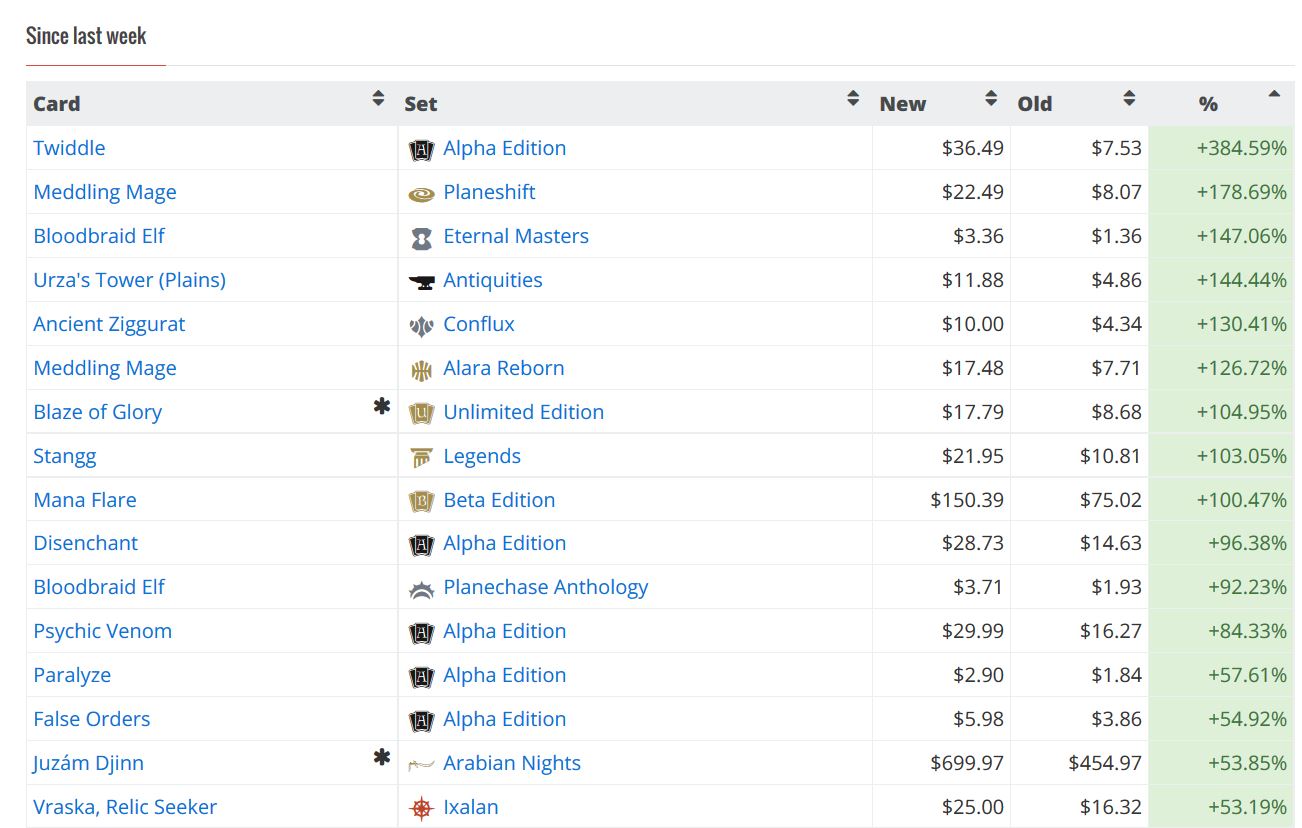
Consider how many cards moved more than Vraska over the same time period:

(Click to expand.)

You can see there were plenty of better investments that yielded superior returns. What’s more, many of these investments would not have carried the same risk that Vraska had.

Now granted, some of these Alpha and Beta cards show more growth than they really experienced simply because supply on TCGplayer is so low. When one card sells or one seller adjusts a price, it moves the market drastically. But I still maintain that there are so few Alpha cards in stock on TCGplayer that these are bound to see a spike. Can you sell an Alpha Twiddle for $36 today? I highly doubt it. But will Near Mint copies be worth more than $7.50 three months from now? I would bet on it.

Besides those, you also have Modern hype around Meddling Mage and Ancient Ziggurat, and unbanning speculation on Bloodbraid Elf.

There was an error retrieving a chart for Ancient Ziggurat

These would also have been better bets than Vraska from a performance standpoint. And when you consider the Alpha—how much upside you’re getting when considering the volatility—I would argue that these other bets would have been even more interesting compared to any Standard speculation.

Vraska has a ton of potential to drop in price over the next year…certainly when you extend to two years and plan for rotation, Vraska’s prospects get even worse. But a Near Mint Alpha card has virtually no downside over the same time frame. So you have less downside and more upside? That’s my kind of investment!

Wrapping It Up

When I sat down to write an article on Alpha and Beta risk in MTG finance, I had not planned on knocking Standard speculation. But no matter how I approach the field, I always net out in the same place: investing in Magic’s more iconic cards from the earliest sets has the least downside and an awful lot of upside. It’s hard to beat that when looking for the right investment strategy.

Other cards in Modern and Legacy can also be worthwhile buys, but you really need to have a catalyst in mind to make the purchase worth the risk. What risk? Risk of reprints, bannings and unbannings, shifts in the metagame, obsolescence with the advent of new cards being released, etc.

These risks just don’t exist with Alpha, Beta, and Old School playables. With those your only risks are systemic risks with Magic as a whole. Of course Magic isn’t impervious to retraction in its player base, but this is a risk I’m far more comfortable taking.

I know I’ve shared this sentiment before, but hopefully adding the Alpha and Beta context to my Alpha and Beta investing underscores my rationale more definitively. We have a ton of investment options in the world of MTG finance, and it’s impossible to buy everything. By using these Wall Street concepts to inform whether or not our buys are worth their risk, we can become more disciplined investors in Magic.

Applying this approach has strengthened my belief that the place to invest now is Alpha and Beta cards, preferably in Near Mint condition. It would take a fairly compelling shift in Standard’s metagame for me to move resources in that direction. It’s not impossible, but the Alpha must be favorable—I need to have significant enough upside potential to counteract the volatility Standard brings. If it’s not there, I’ll stick with what I know!

…

Sigbits

  • Star City Games often has best-in-class buy prices on Alpha and Beta cards (though I would never count Card Kingdom out). One area in particular where SCG really shines is their buy prices on nonblue Alpha. For example they pay $1250 for Near Mint Alpha Plateau (they currently have zero in stock at $1999.99), and the next highest buy price according to Trader Tools is $1150. It’s incredible how few of these are available for sale on the open market!
  • Soon after I completed my playset, Arabian Nights Erhnam Djinn got bought out and shot through the roof. While the $400 price point was far too high to realistically stick, Star City Games’ $249.99 price tag seems more than reasonable given the card’s utility in Old School. Not to mention they only have one copy in stock, played for $199.99.
  • This past weekend I also decided to finish my playset of Arabian Nights Serendib Efreets. It’s painful paying so much for them given they were half the price just two months ago, but I think there may be another leg higher soon if I’m honest. The card spiked over $400 (sound familiar?) only to drop back down to $300. But Star City Games remains sold out at $249.99 and top buy price is $161 and rising. This will never achieve Juzám Djinn status, but this card is one of the most played Arabian Nights creatures in Old School and in my opinion thus deserves a premium.

Insider: Ixalan MTGO Speculation, Part III

Are you a Quiet Speculation member?

If not, now is a perfect time to join up! Our powerful tools, breaking-news analysis, and exclusive Discord channel will make sure you stay up to date and ahead of the curve.

Welcome back to my series on Ixalan investment opportunities. In Part I I covered the mythics. In Part II the uncommons. In this article, we'll tackle some of the rares, saving others for next week. I'm going to focus on cards that are generating financial buzz and intrigue, as well as those about which I've received inquiries. I will not be discussing the rare land cycle – I did so in an earlier article – but suffice to say, I think all of them will make for a good investment, and I would try to buy in as close to the 0.75- to 1.00-tix range as possible, which is the price point at which you could get all of the Kaladesh lands around Christmas last year. I think the optimal time to buy Ixalan cards will extend until Christmas or early January. If I don't discuss a card you would like a second opinion on, please let me know in the comments and I will discuss it in my next article.

(1) Premium Removal: Vraska's Contempt and Settle the Wreckage

Vraska's Contempt is one of just three cards to have held the distinction of Most Expensive Rare in the Set thus far. Functionally similar to Hero's Downfall and Utter End, Hero's Downfall likely shows us some of its positive potential and Utter End its risk. After its release, Hero's Downfall climbed to 10.80 tix after its stellar performance at Pro Tour Theros before spending the remaining two years generally hovering around 2.00 tix, with two somewhat brief spikes to 4.00 and 6.00 tix after the release of Khans of Tarkir and Fate Reforged.

On the other hand, Utter End's price trajectory towards bulk shows what would likely happen to Vraska's Contempt if a better version of this effect were introduced to Standard – once you move beyond one and two mana, you generally can't devote more than four to six slots for unconditional targeted removal effects. And we already have Cast Out and Ixalan's Binding in Standard.

Given the price history of Hero's Downfall and Ruinous Path, I'm definitely wary about investing in Vraska's Contempt at its current price of 3.52 tix, a price tag it has been commanding ever since release. However, I don't think that the card is overvalued – it operates at instant speed, is the cleanest answer to Hazoret the Fervent and The Scarab God, and slots in nicely into a deck with both The Scarab God and Fatal Push. There will also be fewer copies of it entering the market than Hero's Downfall (relatively speaking) , meaning that it has a higher potential ceiling.

With that said, I'm not optimistic that it will ever exceed 8.00 tix, but I think it's a reasonable bet that it will spend some time north of 5.00 or 6.00 tix during its Standard lifetime.  There is definite risk that this card will spend a lot of time between 2.00 and 3.00 tix, though, so I don't think this is yet a slam dunk investment. Keep your eyes peeled and pounce if its price dips for some reason.

[card name = "Vraska's Contempt"]

Settle the Wreckage is an excellent card. It killed more than 40 of my creatures once in a game of Ixalan draft (and after a good hearty laugh, I scooped).  Simply put, Settle the Wreckage is an excellent tool for the control player, forcing your opponent to take leaps of faith if he wishes to leverage his on-board presence to try and finish the game before you can stabilize. And its exile clause is more than meaningful at a time when divinities are dominating the battlefield.

Right now, its price is being held up by its key role in UW Approach, a deck that likely won't disappear any time soon. More so than Vraska's Contempt, I think that Settle the Wreckage is somewhat meta dependent, and that could give us a chance to buy low. I would be surprised if this card didn't play a role in future Standard environments, so this is definitely a card I'm looking to nab if its price gets too low. I anticipate that this card will be able to be sold for somewhere between 4.00 and 6.50 tix sometime in the future. I've set a pretty low target buy price for Settle the Wreckage, but I do think that it will dip that low at some point during the next two to four months.

My target buy price for Vraska's Contempt: 2.00-2.25 tix
My target buy price for Settle the Wreckage: 1.00-1.50 tix

(2) Flip Enchantments

As a class, these constitute some of the more ripe speculation targets in Ixalan. Let's start with the three I like. Search for Azcanta is too powerful a card not to see significant play in Standard, and seems powerful enough to see play in Eternal formats. And at two mana, you know it's going to see play in multiples and in a multitude of blue decks. Search for Azcanta, I think, will command a price between 3.00 and 7.00 tix at minimum throughout its time in Standard, with price spikes between 7.00 and 8.00 tix likely and 10.00 and 15.00 tix possible. I like investing in them below 4.00 tix to minimize risk, though I think investing in them between 4.0 and -4.25 is reasonable. Collective Brutality is a card that comes to mind when I think of the potential price trajectory of this card.

The fate of Legion's Landing is more dependent upon an unknown future than Search for Azcanta, but it is such a powerful turn-one play for a token strategy that it goes a long way toward enabling the deck it wants to be in. Given its native power, I am optimistic that it will see significant time in Standard above 4.00 tix, with potential to shoot upward into the 5.00- to 7.00-tix range depending upon what cards get added to the Standard card pool over the next year.

Arguel's Blood Fast is the third and last of these flip enchantments that captures my fancy as an investor. I was skeptical at first, but playing with it a number of times in Draft has made me a believer. The low down payment and the fact that the ability is instant-speed make this card much better than it reads, and if it can be potent in a fast format like Ixalan Draft, then I know it can be potent as a sideboard card against control in Standard. I think that this is a card you will be able to get for between 0.05 and 0.15 tix if you're patient, and I think it's likely that you will be able to sell it for 0.50 tix per copy in the future at minimum. I'm treating this as a slightly more risky tiny-stock uncommon.

There was an error retrieving a chart for Arguel's Blood Fast

That leaves us with the two I'm less enthusiastic about: Vance's Blasting Cannons and Growing Rites of Itlimoc. I'm especially down on Vance's Blasting Cannons, because I don't think the card is very good – not allowing you to play the lands you exile like Outpost Siege did is a huge downgrade. Currently sitting at 0.22 tix, its price would have to rise to 0.75 tix to make this a worthwhile investment. It very well could get there if it proves better than I think, although it likely wouldn't reach that price tag until Chandra rotates. If its price falls below 0.05 tix, I'll become more interested.

Growing Rites of Itlimoc is a card that is not seeing enough play to justify its current 0.36-tix price. I would happily speculate on this card at 0.01-0.02 tix just for the possibility that it became an engine card similar to Cryptolith Rite in past Standards, but I'd definitely stay away until other speculators lose faith and it becomes bulk.

My target buy price for Search for Azcanta: 3.30-3.75 tix
My target buy price for Legion's Landing: 1.25-1.75 tix
My target buy price for Arguel's Blood Fast: 0.05-0.15 tix
My target buy price for Vance's Blasting Cannons: 0.03-0.05 tix
My target buy price for Growing Rites of Itlamoc: 0.01 tix

(3) Hostage Taker

Hostage Taker is a card that I believe will see significant Standard play until it rotates. I also like that it shares colors with the best card in Standard: The Scarab God. With that said, I'm unsure whether Hostage Taker is going to prove to be one of the hallmark cards of this set – like Angel of Sanctions, it's not quite as good as it looks and requires some amount of care to utilize effectively in a Constructed environment. I'm somewhat torn on whether to invest in this card, and at what price point (I regret having already bought eight copies). I could see this card spending a significant amount of time at 2.00 tix and a significant amount of time at 5.00 tix. I think the ceiling on this card is probably around 7.50 tix if it continues to be a prime midrange option in Standard. If you have faith that it will, then investing at around 2.50 to 3.00 tix seems reasonable. I'd recommend investing at a lower price point, though.

My target buy price for Hostage Taker: 1.50-1.90 tix

Signing Off

My next article will be the fourth and final part of this series. I plan to discuss the rest of the cards I'm interested in (like Treasure Map and Ruin Raider, as well as tackle cards that readers have suggested (like Sunbird Invocation). Also be aware that Iconic Masters comes out on November 17, so get ready for what looks like a really fun Draft format. Until next time, and have fun watching the Pro Tour this weekend!

Daily Stock Watch – Tarmogoyf

Are you a Quiet Speculation member?

If not, now is a perfect time to join up! Our powerful tools, breaking-news analysis, and exclusive Discord channel will make sure you stay up to date and ahead of the curve.

And now the end is near... Or is it?

Today's edition of the Daily Stock Watch is a bit edgy. This card has been on a downward spiral for a while, after spending most of the recent years on top of people's needs and wants list. Considered by many as the best vanilla creature of all-time, it seems that the times have changed so drastically that people aren't even too keen on using it. You won't even find a single copy of the card on any of the top-8 decks of the recently concluded SCG Modern Open and SCG Classic Washington. However, three copies of the card was present in this deck that won Eternal Weekend 2017, and another three on this one that made the top 8 of SCG Legacy Open Washington. That's a bit underwhelming for a card that carries such a high price tag.

Yes, my fellow planeswalkers. We are talking about our favorite green critter:

There was an error retrieving a chart for Tarmogoyf

Have we actually seen the end of Goyf's reign as the king of hand-to-hand combat creatures? I'm not too sold on that idea yet. For two mana, this is still the biggest threat, creature-wise, that you could pull out of nowhere at any point of a game. It has ended games with one massive swing, and has taken down the likes of Griselbrand, Iona, Shield of Emeria, and even lots of Khalni Hydras.

But then again, why aren't people using it that much anymore? Since there would be more Modern tournaments in the coming weeks than that of Legacy, let's stick to that environment for the time being and see what's giving Goyf a hard time.

The Kings of Modern

Based on the results of a tool that computes the creatures that are most used for Modern decks that made the top 8 of recorded events over the last two months, statistics show that these creatures are played more than Goyf. You could make a case that this was actually due to the fact that the meta has shifted over the said period, as around 13.1 percent of Modern decks have used it for the year 2017, but only 8.9 percent of decks over the last 2 months did. It has remained relevant, but it hasn't produced wins for people who chose to pilot a deck that's running it.

Is it fair to blame those creatures for Goyf's demise? Let's have a look at other cards that's giving our hero a hard time surviving:

Tarmogoyf Modern Hosers

One glance at these cards and we could easily make a case that most of these cards could also do the same to the creatures I mentioned above. But why are they being played over Goyf?

The answer is pretty much debatable. Mana dorks help you ramp up to your win cons with relative ease; Snap and Ooze could pretty much cancel out Goyf's effectiveness, given the correct resources; and the rest of the gang could just stand toe-to-toe with it power-wise. Now might be the best time to choose them over it (besides the obvious synergistic purposes). But then again, I could just be overthinking by doing this.

Thanks to pi, Verscott, The Coach, and the rest of our awesome peeps over at the QS Discord channel, I was able to dig some old information about Tarmogoyf's financial background. I wasn't really playing Magic when it was first released in Future Sight, so I had no idea how much it cost back in the day. So based on this article by Star City Games' Ben Bleiweiss, people were able to actually get copies at the pre-selling price of $3 in April of that year, and it hit its peak of $50 as the new year started. In a span of eight months, the value of this card shot to as high as sixteen times more than its original price. Maybe what goes around just really comes around.

At the moment, the Future Sight version could be bought at as low as $69.99, which is a big dip from its price tag a week ago of $75.05. The masters version are all down to as low as $48.95, which is its all-time lowest price. The foil version of the masters also hit rock bottom at $127.50, but the FS version maintained its $899 value due to limited supply.

I'm really on the fence if now is the best time to get your playset or rid yourself of your extra copies. This card is crazy good across all formats, and it could easily skyrocket again given the correct metagame environment. For the meantime, I'd suggest that you keep an eye on it and follow your heart's desire with how you'd like to go about it. I'm also very open to your opinion, so feel free to voice it in the comments section.

We're also covering Pro Tour Ixalan right now, so I suggest that you join us on our QS Discord channel for more realtime updates on anything and everything that's about Magic! The Daily Stock Watch will be back again on Monday for more exciting reviews.

Insider: Looking at Reserved List Judge Foils

Are you a Quiet Speculation member?

If not, now is a perfect time to join up! Our powerful tools, breaking-news analysis, and exclusive Discord channel will make sure you stay up to date and ahead of the curve.

Welcome back, readers!

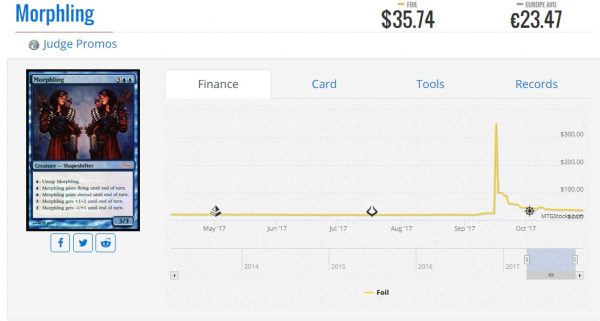
Today's article was inspired by a simple trade request that began online. Someone wanted some extra Ensnaring Bridges of mine. When they showed me their trade binder not much caught my eye, except for a judge foil Morphling.

I have been keeping my eye on this card ever since Mairsil, the Pretender came out. He didn't get as much hype as Kess, Dissident Mage, but he's still a powerful commander with a lot of combo potential. Those are the commanders that tend to attract the competitive players, who in turn are the most likely to pimp out their decks. Giving Mairsil five abilities including the ability to untap and protect himself via shroud is very relevant.

Unfortunately, this judge foil had already jumped considerably between when I first started tracking it (when it was sitting around $20) and its current price of $35. Sadly, the trade didn't really develop, but I did find a cheap foil copy on TCGplayer—and also got the inspiration for this article—so things worked out in the end.

Morphling is one of several judge foil versions of cards on the Reserved List. This is especially important because Wizards decided to restrict themselves after FTV: Relics came out (with Mox Diamond) and no longer do foil reprints of Reserved List cards.

So if anyone is trying to foil out a deck and it includes Reserved List cards, then judge foils are the only option. Back when these were printed the playerbase (and thus judge base) was much smaller, so there are a lot fewer of them out there then you might think.

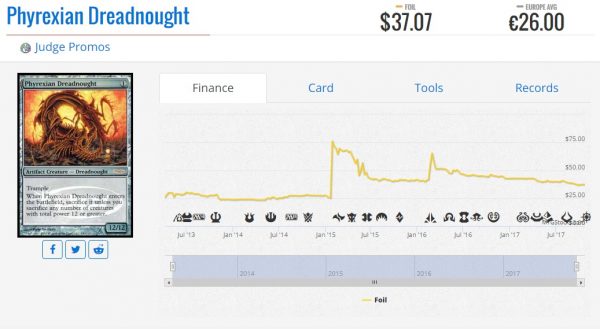
I've gone through all the judge foils of Reserved List cards and compiled this table:

Card Name Judge Foil Year Reserved List Non-Foil Price Judge Foil Price Multiplier
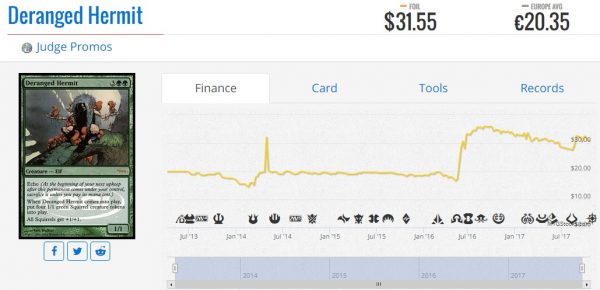
Deranged Hermit 2004 Y $9.51 $31.55 3.3
 Gaea's Cradle 1998 Y $293.61 $944.58 3.2
 Intuition 2003 Y $35.17 $161.99 4.6
 Morphling 2010 Y $9.99 $35.74 3.6
 Phyrexian Dreadnought 2010 Y $15.28 $37.07 2.4
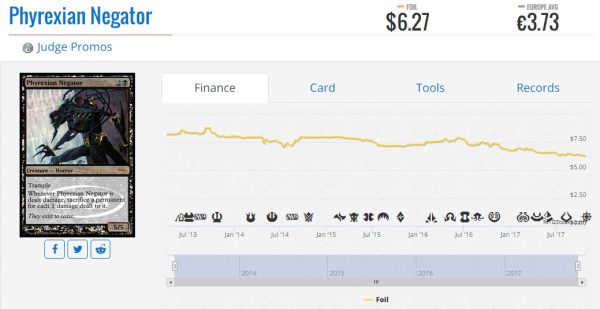
 Phyrexian Negator 2004 Y $0.77 $6.27 8.1
 Survival of the Fittest 2009 Y $44.96 $310.39 6.9
 Thawing Glaciers 2010 Y $9.53 $88.99 9.3
 Wheel of Fortune 2010 Y $88.99 $291.86 3.3
 Yawgmoth's Will 2007 Y $48.59 $212.25 4.4

The multiplier column above is the judge foil price divided by the non-foil price. This metric gives a feel for which ones might have more room to grow (i.e. those with a low multiplier).

Some of these are already extremely expensive. Speculating on the higher-end judge foils would require a great deal of capital, and they may be difficult to unload. Just take a look at that Gaea's Cradle price...

But a few cards on this list might be good trade pickups. Note that both Deranged Hermit and Phyrexian Negator have pack-foil options, which are much more expensive than the judge ones (as they are likely rarer).

Looking at this list there are a few cards that do jump out as decent speculation targets. Phyrexian Dreadnought used to be a Legacy staple played in the Stiflenought deck, and the multiplier is still pretty low (2.4). It's also a four-of in that deck. Now, unfortunately, that deck has fallen out of favor and we don't see it having much success anymore.

Dreadnought was originally printed in Mirage, so the only foil option is the judge foil. It doesn't show up in a lot of Commander decks according to EDH REC, though it is really good in Varolz, the Scar-Striped. Varolz is a fun deck, but not extremely powerful, and thus not favored by the competitive players who are more likely to foil out their deck.

All that said, I don't know if I'm a fan of buying Phyrexian Dreadnoughts with cash (unless the price is really good). I would definitely be happy to trade for them if I see them in binders, though in all the years I've been trading I can probably count on one hand the number of times I've seen this card in a trade binder.

Another one that I see some potential in is Deranged Hermit. This is definitely a casual favorite as he makes Squirrel tokens and serves as a Squirrel lord. From a power level he's a bit sub-par nowadays, but with all the blink effects available now, he can really get out of hand. He also fits extremely well in decks that play creatures out of the yard, as the echo mechanic provides a free sacrifice outlet for the creature.

The pack foils go for closer to $60-$70, so the judge foil is currently a good "cheaper" option for those who want to foil out a deck and save a few bucks. I'm confident enough in this pick that I actually ordered one while writing this article (to have for personal use).

I also like to check the various Facebook trade and buy/sell groups for cards when I consider speculating. When I search multiple groups and find zero copies for sale in the past few months, I make a mental note to keep my eye out for the cards. This one seems to be rare enough that if you want a personal copy I suggest getting it sooner rather than later.

Lastly we have Phyrexian Negator. This one is definitely lower on the pickup list. There was a Duel Deck printing in foil (with new artwork) back in 2010 so there are cheap foil options available for anyone who actually wants to play this card. If you ever wanted to see a card that sees very little Commander play, despite being a powerful Standard card, here's your opportunity. The downside of this card is big and obvious, so it doesn't get much love.

However, what's interesting is that it's an older judge foil of a Reserved List card that can still be purchased for under $7. It is by far the cheapest of the judge foils on this list, and probably one of the cheaper judge foils of all time. The opportunity here is mainly if you are a collector (who also wants all the judge foils) or if you believe that the original artwork will command enough demand from anyone who wants to play it.

If we look at a card like Morphling, the judge foil sat around $10 for over a year before slowly rising to $20 and then spiking with the release of Mairsil, the Pretender. If Wizards ever printed a commander that could turn the Negator's downside into a positive, then this could easily jump to $20-$30.

Now that is a pretty large "if," so I wouldn't go cashing in all your treasury bonds to buy up all the judge foils. But it might be worth considering picking up one or two if you see any in trade binders or have some extra store credit lying around. Especially when you consider that this was a judge promo 13 years ago (back in 2004), so there are likely very few of these around.

Lastly, while it has already jumped up in price a good bit, Morphling still isn't a terrible pickup. Its current (post-spike) price still has a relatively low multiplier when compared to regular copies, and it only gets better as more creatures that copy/steal activated abilities gets printed.

Remember that Morphling is also one of Magic's more iconic cards, serving as a fantastic win condition in the older control decks once all the ridiculous combo decks of Urza's block got hosed.

Conclusion

The list of Reserved List judge foils is actually pretty small, and many have jumped in price already. There are still a few potential ones to keep an eye out for and I know I'll be looking to pick them up if I see them in trade binders.

Judge foils are a deep topic that I hope to cover more another time. Outside of the Reserved List specifically, lots of other judge foils are very expensive (especially thanks to Commander players), and some may have room to grow. In the future I will likely write an article looking at the non-Reserved List judge foils that seem to be underpriced. Let me know your thoughts below.

The Rogue Market by Rogue Deck Builder, QS Style

Are you a Quiet Speculation member?

If not, now is a perfect time to join up! Our powerful tools, breaking-news analysis, and exclusive Discord channel will make sure you stay up to date and ahead of the curve.

Insider: Jake and Joel Present Friday Night with Quiet Speculation!

Are you a Quiet Speculation member?

If not, now is a perfect time to join up! Our powerful tools, breaking-news analysis, and exclusive Discord channel will make sure you stay up to date and ahead of the curve.


Pushing Back: How to Goyf in 2017

Are you a Quiet Speculation member?

If not, now is a perfect time to join up! Our powerful tools, breaking-news analysis, and exclusive Discord channel will make sure you stay up to date and ahead of the curve.

In "What's in a Goyf? Benchmark Creature Playability in Modern," I considered the bar creatures must meet to make the cut in this format. Aether Revolt gave us Fatal Push, and that bar has since changed—but no creature has felt the shift like Tarmogoyf. Today, we'll zone in on Goyf's fall from lofty heights and examine the creature's current applications.

When Push Came to Shove

Creature worth is always measured in the context of a given format's premier removal. Lightning Bolt's long-uncontested reign as Modern's most reliable one-mana kill spell established three as the format's magic number. And it's no coincidence that Jund and UR Twin, Modern's iconic police decks, both employed a full set of Lightning Bolts throughout their heydays.

So of course the printing of Fatal Push remodeled the Modern landscape. Let's compare MTGGoldfish's 50 most-played creatures today to their Top 50 list from May 2016, when I wrote "What's in a Goyf?"

As a reliable one-mana kill spell, Push certainly beats Lightning Bolt, hitting a whopping 86% of the list vs. Bolt's 76% coverage from a year ago. These days, Bolt shoots a statistically similar 78%, so the card isn't worse in a vacuum; it's just been joined by a younger, more specialized partner. Push skirts on Bolt's utility dimensions of interacting with planeswalkers or closing out games, but outperforms Bolt as removal, leading some decks to prefer it, or at least not to splash red (the more flexible card of the two, Bolt still leads Push by 9% in terms of overall representation).

Based on these Goldfish charts and the metagame dynamism we've observed since Aether Revolt, Push's introduction seems to have modified the bar for Modern creature playability in two significant ways:

  1. More three-drops that die to Bolt have become playable (Spell Queller; Tireless Tracker; Thalia, Guardian of Thraben; Goblin Rabblemaster).
  2. Two-drops that don't die to Bolt have become worse (Tarmogoyf; Thing in the Ice; Spellskite; Wall of Roots).

Overall, Push's presence increases diversity among playable Modern creatures. The new three-drops that are soft to Bolt outnumber the tried-and-true, Bolt-resistant two-drops that now lose value.
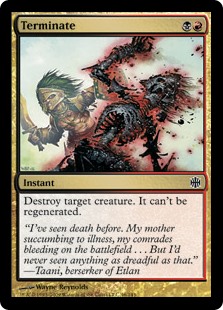
But there weren't many such two-drops in the format to begin with—the scarcity of these creatures made them indispensable in pre-Push Modern. Tarmogoyf, their poster-boy, has almost always been the format's most-played creature. Today, the Lhurgoyf clocks in as the 15th most-played creature. What happened, exactly?

Tarmogoyf: A Retrospect

To understand Goyf's future, we must understand Goyf's past. I've identified five chief draws to Tarmogoyf in pre-Push Modern, all of which contributed to its iron rule. Before Fatal Push, Tarmogoyf:

  • Excelled on offense. Goyf provided more aggression for his cost than any other creature in Modern, and it wasn't close. Even decks with virtually no aggro plan sometimes splashed Tarmogoyf for a reliable way to attack opponents from a new angle.
  • Excelled on defense. The green giant also did a fine job of locking down the battlefield—nothing deters opponents from attacking like a huge body. In terms of board presence, a permissible answer to Tarmogoyf was another Tarmogoyf, leading to "Goyf stalls" eventually broken by Bolts or Hierarchs.
  • Sapped mana from opponents. No mana-positive method to remove Tarmogoyf existed. The exception: Path to Exile, which due to ramping the Goyf player was often inferior to parity-costed options like Terminate and Abrupt Decay. Both of which, mind you, are much tougher to splash. Spell Snare and even Flame Slash enjoyed widespread play for their coveted ability to do in a small window what Fatal Push now does in a wide one: trade with Goyf at a mana gain.
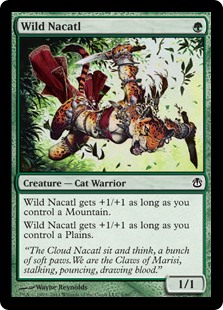
  • Sapped cards from opponents. Decks not in white, BG, or BR had no way to effectively remove Goyf at all. Available solutions ranged from Engineered Explosives to Threads of Disloyalty, which all came at a mana loss and proved too narrow for mainboard inclusion. But tempo aside, these decks were often forced to spend two removal spells (often Lightning Bolts) on a single Goyf, rendering the creature a makeshift card advantage spell in many matchups.
  • Punished opponents for interacting. Naturally, Goyf also rewarded its pilots for interacting, as shown by its tenure in BGx Rock. But this unique punishment aspect even earned the threat some play in linear decks. Whether the fatty buried Birds of Paradise or Glistener Elf, there was no funeral procession like a Tarmogoyf. And who wants to Thoughtseize away a card that actually advances your combo plan when you'd just respond by slamming a one-card win condition?

Who Played It?

I don't want to say everybody, but... well, everybody. Pre-Push, Tarmogoyf was a fixture in the aggro-control decks that policed Modern's linear decks, even finding its way into UR Twin in the form of Patrick Dickmann's groundbreaking Tempo Twin. Goyf was no total stranger to linear or combo strategies, either. Any of them in the market for Goyf's benefits would occasionally shrug and splash the beater themselves, among them Affinity, Infect, Scapeshift, and Birthing Pod.

Your Four Goyfs: Where Are They Now?

With Aether Revolt, everything changed. No longer would Goyf glacialize the battlefield or threaten to steal the game unless opponents sacrificed tempo and cards to remove it. Fatal Push answers Tarmogoyf more unequivocally than any Modern spell ever has (including surgical anti-Goyf tech like Deathmark and Self-Inflicted Wound).
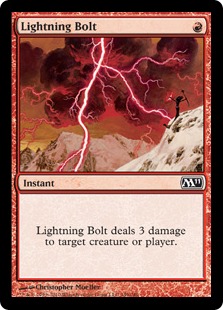
Tarmogoyf remains playable, but it's no longer insane. Think of it as "Wild Nacatl-Plus." Even though Modern now boasts a reasonable answer, Goyf still offers a whole lot of power and toughness for the cost; regardless of which player is attacking, it's likely to command respect on the ground.

Goyfing Today: A Crash Course

Not all decks run Fatal Push, and Tarmogoyf is just as good against the nonblack decks as ever. But facts are facts: Push has single-handedly caused Goyf's shares to plummet, and this era's successful Goyf decks all do one (or more) of three things to hedge against the instant.

This section touches on each of these methods while exploring how non-Goyf decks leverage the same principles.

Method 1: Overload Opposing Answers

Okay, now kill this.

Naya Company, by Casper Schaefer (11th, SCG Charlotte)

Creatures

4 Noble Hierarch
1 Birds of Paradise
4 Wild Nacatl
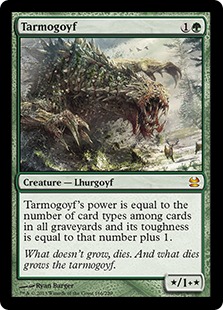
4 Tarmogoyf
3 Voice of Resurgence
2 Qasali Pridemage
2 Scavenging Ooze
4 Knight of the Reliquary
3 Loxodon Smiter
1 Tireless Tracker

Instants

4 Lightning Bolt
4 Path to Exile
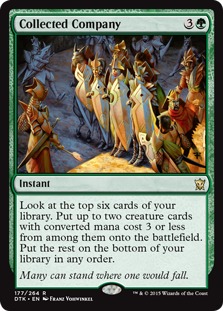
2 Collected Company

Planeswalkers

1 Elspeth, Knight-Errant

Lands

4 Windswept Heath
4 Wooded Foothills
3 Arid Mesa
2 Stomping Ground
1 Sacred Foundry
1 Temple Garden
1 Horizon Canopy
1 Kessig Wolf Run
1 Ghost Quarter
2 Snow-Covered Forest
1 Snow-Covered Plains

Sideboard

2 Engineered Explosives
2 Aven Mindcensor
1 Kor Firewalker
2 Blood Moon
2 Stony Silence
1 Worship
1 Eidolon of Rhetoric
1 Blessed Alliance
1 Kataki, War's Wage
1 Thalia, Guardian of Thraben
1 Fiery Justice

Opponents can't Push your Goyf if they've spent it on something else. Aggressive one-drops and mana dorks are ideal in the role of drawing fire away from Tarmogoyf, since they trade evenly with Push on mana. But must-answer two-drops work in a pinch. BGx Rock can sequence Tarmogoyf, Dark Confidant, and Grim Flayer in an order that sticks the best of the bunch.

In the comments of my June article on Counter-Cat, some readers disagreed with my assessment of Wild Nacatl as a Push magnet, saying opponents would have just Bolted the Cat before Aether Revolt and never had an answer to Goyf. I think this view ignores the shifts decks have made to accommodate Fatal Push. Push replaces copies of Lightning Bolt and Terminate in the decks that ran those, so pairing Goyf with one-drops incentivizes opponents to burn their heavy-duty removal early. They'll have less lightweight removal for little threats at all, as Push cuts into those numbers.

Example decks: Zoo, Company, BGx Rock

Relation to non-Goyf decks: The most obvious deck currently overloading removal spells is Humans, the breakout fish deck from SCG Cincinnati that went undefeated in that tournament before winning the Washington Classic a week later. No matter how much coverage spot removal spells have, threat-heavy decks like these will always barrel through a copy or two. In a way, stronger removal enables these archetypes. By axing narrower role-players like Lightning Bolt and Terminate for a compact suite of reliable Fatal Pushes, defensive decks lose an edge in swarmier matchups, where they'd rather have a critical mass of removal.

Method 2: Proactively Strip Opposing Answers

Seize, targeting Push?

Jund, by Tyler Lutes (3rd, SCG Louisville)

Creatures

4 Dark Confidant
4 Tarmogoyf
3 Scavenging Ooze
1 Kalitas, Traitor of Ghet
1 Olivia Voldaren

Instants

3 Fatal Push
2 Lightning Bolt
3 Terminate
1 Abrupt Decay
2 Kolaghan's Command

Planeswalkers

4 Liliana of the Veil
1 Chandra, Torch of Defiance

Sorceries

3 Inquisition of Kozilek
3 Thoughtseize
1 Maelstrom Pulse

Lands

4 Verdant Catacombs
3 Bloodstained Mire
1 Wooded Foothills
1 Overgrown Tomb
1 Stomping Ground
1 Blood Crypt
4 Raging Ravine
4 Blackcleave Cliffs
1 Blooming Marsh
1 Twilight Mire
2 Swamp
1 Forest

Sideboard

4 Fulminator Mage
3 Kitchen Finks
1 Stormbreath Dragon
2 Leyline of the Void
1 Ancient Grudge
1 Life Goes On
2 Surgical Extraction
1 Collective Brutality

Plucking removal spells from an opponent's hand before casting Tarmogoyf has always performed well in Modern, and the line is more relevant now than ever. Outside of targeted discard, attrition engines like Liliana of the Veil, Smallpox, and Lingering Souls also proactively pressure opponents to dump their Fatal Push.

Why the focus on proactive disruption? Reactive answers lose out to discard because Modern lacks efficient permission. We don't want to trade a two-mana Mana Leak for a one-mana removal spell. The only blue instant we've seen fill this role is Stubborn Denial, a card less reliable and splashable, and one that crucially costs just one mana.
Example decks: BGx Rock, BGx Shadow

Relation to non-Goyf decks: Shadow employs this method to protect their namesake threat—while it admittedly trades with Push at mana parity, Death's Shadow still requires a hefty gameplay investment. Eldrazi Tron also utilizes the strategy. Four-drops are inherently riskier against Fatal Push than three-drops, since they cost more mana but ask opponents to fulfill the same conditions to snipe them. Thought-Knot Seer carries Eldrazi decks for the reason that it protects itself by casting Thoughtseize. Last but not least, Humans applies strip-and-commit with Kitesail Freebooter.

Method 3: Ask Better Questions

AKA grow bigger Goyfs.

5-Color Shadow, by Clay Spicklemire (6th, SCG Louisville)

Creatures

4 Death's Shadow
4 Tarmogoyf
4 Street Wraith

Artifacts

4 Mishra's Bauble

Instants

4 Fatal Push
3 Stubborn Denial
2 Terminate
1 Abrupt Decay
1 Dismember

Planeswalkers

3 Liliana of the Veil

Sorceries

4 Inquisition of Kozilek
4 Thoughtseize
4 Traverse the Ulvenwald

Lands

4 Bloodstained Mire
4 Marsh Flats
4 Verdant Catacombs
2 Overgrown Tomb
1 Stomping Ground
1 Watery Grave
1 Blood Crypt
1 Swamp

Sideboard

1 Nihil Spellbomb
1 Izzet Staticaster
2 Ancient Grudge
3 Disdainful Stroke
1 Kozilek's Return
1 Stubborn Denial
1 Temur Battle Rage
1 Liliana, the Last Hope
3 Lingering Souls
1 Godless Shrine

Playing a boatload of creatures? No thanks. Tempo-negative discard spells? Eh. Incidentally maximizing the potency of my favorite creature? Now here's a Push-proofing method I can get behind! While Clay's deck heavily flexes Method #2, 5-Color Shadow approaches the Push problem from another angle: it breeds 6/7 Tarmogoyfs.

Spell Snare only trades with Goyfs on the stack, while Fatal Push kills them any time after resolution. Still, one Goyf the size of two Goyfs gives opponents half as much time to find that Fatal Push. And even if opponents have the Push, so what? These Goyfs are so great they're worth a lost mana here and there, and their sheer bulk scoops up points ceded to the instant in matchups where bulk matters dearly, like Eldrazi Tron.


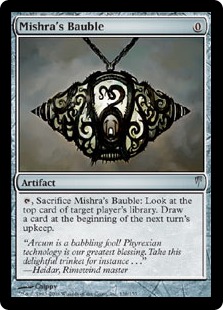
BGx Rock decks all run plenty of copies of Liliana of the Veil, but the fun doesn't stop there for Shadowless Goyf decks. Nihil Spellbomb, Seal of Fire, Mishra's Bauble, and other rare-type spells have seen varying play in rock decks, allowing them to capitalize on Method #3.

Example decks: BGx Rock, BGx Shadow

Relation to non-Goyf decks: While building around Goyf's literal text box is the least popular way to enable it, this method aligns most closely with Modern's identity. Infect, Dredge, Affinity, Burn, Counters Company, Elves, Tron... these top performers prize synergy over raw power, favoring cards that advance their linear gameplans to tried-and-true goodstuff staples.

Tarmo-Boyf

Combat adeptness; unparalleled splashability; large spikes. So long as these constants remain, I don't see Modern ever divorcing this hunky beater. Even as the world's #1 Tarmogoyf fan, I'm happy with how Push affects the format, and the first to admit that Goyf was a tad overpowered before the instant's arrival. Here's hoping Wizards continues to print efficient, generic answers Ă  la Fatal Push that help Modern internally regulate its strongest cards, and that the format remains extremely diverse. In the meantime, may your green guys triumph!

Insider: Potential Specs this Week

Are you a Quiet Speculation member?

If not, now is a perfect time to join up! Our powerful tools, breaking-news analysis, and exclusive Discord channel will make sure you stay up to date and ahead of the curve.

STANDARD

There was an error retrieving a chart for Glint-Sleeve Siphoner

Glint-Sleeve Siphoner has seen a surge in Standard popularity online, where it’s being played in multiple decks beyond the Sultai Energy deck that was its only real home previously. One place where it’s seeing play is in Temur Black lists, some of which are going deeper into the black splash and cutting Longtusk Cub for the card-drawing capabilities of Glint-Sleeve Siphoner. I’ve seen it splashed into Electrostatic Pummeler-based Energy decks. , and the card has also been adopted into some versions of God-Pharoah's Gift decks, where it digs for key cards and plays well with the energy generated by Ministry of Inquiries. The menace creature also sees some play in Mono-Black and Red-Black Aggro decks.

Any of these decks using Glint-Sleeve Siphoner could have a breakout this weekend at Pro Tour Ixalan, and that would mean a price increase. Its price has seen a real spike this week on MTGO, where it grew from 4 tix to nearly 7, which could indicate that its paper price is still a bargain around $2.50, up from the $1 it at at the beginning of October.

There was an error retrieving a chart for Treasure Map

Treasure Map hasn’t received a lot of attention, but its price has quietly more than doubled since its release, up from under $2 to over $4. In the past couple days its increase has accelerated, and it’s now nearly at $5, with higher prices to come if the card breaks out at the Pro Tour. Its ability to generate card advantage is desirable to many decks, and as an artifact it’s accessible to all of them. It has seen the most play in Abzan tokens, where it’s supercharged by Anointed Procession doubling its Treasure output and can be sustained by Treasure from Vraska, Relic Seeker. It’s also seen play in various blue control decks, and I expect it will be played in many more at the PT.

There was an error retrieving a chart for Electrostatic Pummeler

Electrostatic Pummeler has seen a sudden increase in play on Magic Online, so I see a ton of upside potential for what is the most powerful card that uses the best mechanic in the format, energy. It’s awfully cheap at under $0.75, and could easily double or triple if the deck becomes widely played, and its online price doubling from 0.1 tix to 0.2 in the past week could be indication that it’s set to do so in paper too.

There was an error retrieving a chart for Bontu the Glorified

Bontu the Glorified has more than doubled in price online over the past week, from 0.6 tix to 1.4. Some of this increase in demand could be from people redeeming sets, but it seems more likely that such a big movement over a short period would indicate some real increase in demand from people playing it, or perhaps even a buyout from people in the know who are speculating before a Pro Tour breakout. The card seeing play does have precedent, as a team of top pros played a Black-Green Aristocrats-style deck using it at Pro Tour Amonkhet, so it’s clearly on the radar of pros, and they may have found a new way to make the most of the card. Its paper price has reached an all-time low of just $2, so now could be a great time to make a move on it.

MODERN

Modern’s Five-Color Humans deck followed up its Open win in Cincinnati with a Classic win last weekend in D.C. We’ve seen some of its staples spike, notably Ancient Ziggurat and Meddling Mage, but a few cards lagging behind look like they could provide some nice gains.

There was an error retrieving a chart for Mayor of Avabruck

Mayor of Avabruck is an essential piece and a card unlikely to see reprint. Its price had sunk to $2.50 before the deck broke out, and it’s now nearly $3 but looks to have more to gain.

There was an error retrieving a chart for Thalia's Lieutenant

Thalia's Lieutenant had been slowly falling in price until the Humans deck broke out, but its price has come up from $1.30 to $1.50, with plenty of upside in the short and long term.

There was an error retrieving a chart for Mantis Rider

A bargain spec is Mantis Rider, which was $0.50 but has grown to $0.60, and could easily rise to the psychological barrier of $1. It just seems too cheap right now. A good comparison is Siege Rhino, which sees some minor Modern play in Abzan and demands slightly over $1.

There was an error retrieving a chart for Emrakul, the Aeons Torn

The Modern deck built around putting Emrakul, the Aeons Torn into play with Through the Breach with a blue Blood Moon core had a big finish last weekend with a finals appearance at the SCG Modern Classic alongside the Legacy Open in D.C., and it has been gaining in popularity online. The deck had been a minor rogue deck, but the printing of Opt helped make the deck more consistent and has elevated it to a new level. The price of Emrakul, the Aeons Torn has seen a minor price increase online this week, from 7.5 tix to 9 for the original printing, and from 7.5 tix to 8 for the reprint. The paper prices of both versions has been stagnant around $40 for the better part of the year, but if this rogue deck that plays four copies becomes more popular, it could send the price to new highs.

MODERN FOILS

There was an error retrieving a chart for Burning Inquiry

A black-red deck that uses Burning Inquiry to supercharge Hollow One has broken out in Modern, and it brings to my attention the possibility of foil versions of its pieces spiking. Burning Inquiry demands $9, but it’s down from a high of $15, so it could see a spike.

There was an error retrieving a chart for Call to the Netherworld

The deck only plays a copy or two of Call to the Netherworld, but with the foil version from this ten-year-old set at just $1.50, it could be set to spike, especially since it’s now just half of its previous high of $3.

There was an error retrieving a chart for Flameblade Adept

The deck also uses Flameblade Adept, and while it’s a narrow spec, at just $1 there’s the potential for big gains if the deck becomes popular.

Insider: QS Cast #81.5: Insider Only – PTXLN Preparation

Are you a Quiet Speculation member?

If not, now is a perfect time to join up! Our powerful tools, breaking-news analysis, and exclusive Discord channel will make sure you stay up to date and ahead of the curve.

The QS Cast returns! Chaz Volpe, and Tarkan Dospil come together as the new panel – and in this episode they discuss the following:

  • Insider Only Cast - PTXLN Preparations
  • Final Considerations, extracting choices from trends leading into the event.

Cards we discussed:

Enjoy!

Find us on Twitter: @ChazVMTG @the_tark

Daily Stock Watch – Aether Vial

Are you a Quiet Speculation member?

If not, now is a perfect time to join up! Our powerful tools, breaking-news analysis, and exclusive Discord channel will make sure you stay up to date and ahead of the curve.

Welcome to another edition of the Daily Stock Watch! On today's segment, we're going to talk about a card that has been a staple for creature-based decks outside of Standard.

There was an error retrieving a chart for Aether Vial

With a reprint of this card in the upcoming Iconic Masters, people might be expecting a drop in its price due to more supply. However, this card is the only non-creature spell in this suddenly popular Humans deck that won the most recent Star City Games Modern Open, which says a lot about its importance in keeping the band together. It's also present in decklists such as Merfolk, Hatebears and Eldrazi Aggro variants.

For reference purposes, check out this list that Collins Mullen used to take down SCG Cincinnati Modern Open.

Humans

Creatures

4 Champion of the Parish
4 Kitesail Freebooter
4 Mantis Rider
3 Mayor of Avarbuck
4 Meddling Mage
4 Noble Hierarch
3 Reflector Mage
4 Thalia's Lieutenant
4 Thalia, Guardian of Thraben
2 Thalia, Heretic Cathar

Spells

4 Aether Vial

Lands

4 Ancient Ziggurat
2 Horizon Canopy
1 Temple Garden
1 Hallowed Fountain
1 Plains
4 Unclaimed Territory
3 Windswept Heath
4 Cavern of Souls

Sideboard

2 Ethersworn Canonist
2 Fiend Hunter
2 Izzet Staticaster
1 Mirran Crusader
1 Reflector Mage
2 Tireless Tracker
2 Vithian Renegades
2 Xathrid Necromancer
1 Anafenza, the Foremost

With Aether Vial being a four-of in this deck (and the other decks that I've mentioned above), it's quite hard to imagine that its price would dip, especially if the deck starts winning more tournaments. It's also very easy to cast in a deck that has mana issues, making it the more obvious (and potent) choice over these cards:


The presence of the vial gives the deck access to all its creatures without thinking about the mana-fixing part. It also allows you to choose which ones you'd like to play first without having to guess what will come out off the top of your library if you're playing Collected Company. It's also cost-efficient at one mana, and it prevents you from having to worry about counter magic, which is often the case with Chord of Calling. And most importantly, it makes creatures like Kitesail Freebooter, Reflector Mage and our yesterday's Stock Watch spec Meddling Mage seem like they are instant-speed spells.

There are currently five printings of the vial (including that of Iconic Masters), and it's very unlikely that its value will dip in the near future. It might be wise to get a playset within the coming weeks while supplies are at its peak. It's also not a bad idea to hold on to your copies if you think that there's still room for a price spike, but that will eventually depend on how many copies will be produced by the new set, and if the deck will continue to reach the top of tournaments. It would be great to get Iconic Masters copies, primarily for authenticity purposes and supply ratio, but getting your hands on the Masterpiece version, if able, is the best way to go in my opinion.

At the moment, Star City Games is out of stock for the regular copies across all expansions at $44.99, but ChannelFireball still have some copies for the same price. There are other sites that sell the Modern Masters version in the $35 to $40 range, so if you're not really picky, you could just wait for the new set to arrive. It's projected to be in the $30 range once it's out.

As for the foil copies, I'd suggest that you stay away from them unless they're for collection purposes. If you're being practical, you could still get copies of the From the Vaults: Relic version for $40 to $45 via TCGplayer. The price range of the Darksteel foil stretches out a bit based on its condition, as it could be priced from as low as $54.99 (moderately played) up to $98.99 (near mint). Since there will be a new foil printing of it, expect this version to hold its value, along with the Masterpiece Edition: Kaladesh Inventions copies. These pretties are currently sitting at the $130 to $155 price range with fewer and fewer packs of Kaladesh being opened. If by any chance the Humans deck's success stretches out to Legacy (fingers crossed!), this could skyrocket up to north of $200. I'm not counting on it to happen, but it has already happened before.

Format Breakers

If that happens, you'd be so glad that you spun the wheel and bought the vial.

So that's it for today! Want to really keep up with all the market movement? Be sure to check in with the QS Discord channel for real time market information, and stay ahead of the hottest specs!

Want Prices?

Browse thousands of prices with the first and most comprehensive MTG Finance tool around.


Trader Tools lists both buylist and retail prices for every MTG card, going back a decade.

Quiet Speculation