
Are you a Quiet Speculation member?
If not, now is a perfect time to join up! Our powerful tools, breaking-news analysis, and exclusive Discord channel will make sure you stay up to date and ahead of the curve.
To be perfectly honest, I was very surprised to see "No changes" to the B&R list on Monday morning. Furthermore, I think Wizards of the Coast missed a big opportunity to generate interest in Standard by not utilizing a ban on, at the very least, the Copy Cat combo. The last time around, Wizards banned three cards in Standard—Emrakul, the Promised End, Reflector Mage, and Smuggler's Copter—and that decision was met with basically widespread praise by the overwhelming majority of the Magic community.
The two-deck Standard metagame, Mardu vs. Saheeli, is unpopular. Implementing a change now would have revitalized interest in Standard over the next few months before Amonkhet. In reality, by not banning to shake things up, they gave us a few more months of a format people were already tired of.
It is unclear whether or not Wizards is waiting to collect more data before reaching a final consensus stance on Copy Cat in Standard. However, it would be nice to enter into spoiler season knowing whether or not the combo is still in or not. It is less interesting to have to evaluate new spoilers in a context where we can't be completely sure about what the other cards in the format even are!
Anyways, I'm disappointed for a multitude of reasons, but life goes on.
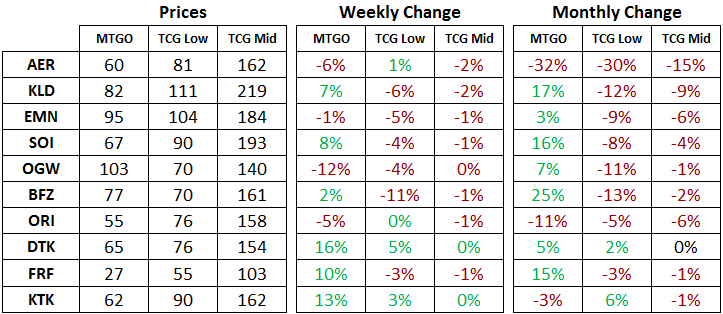
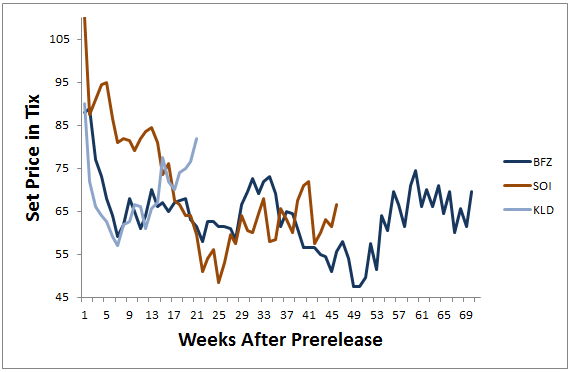
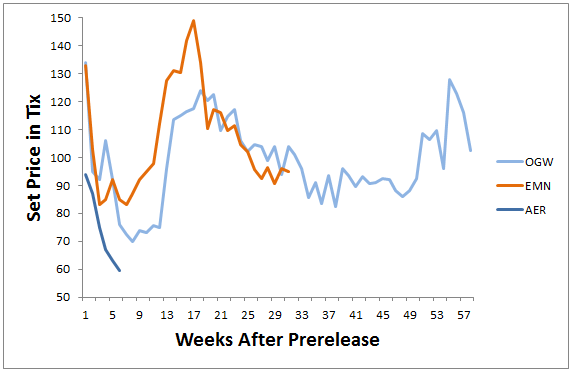
It would also have been a nice moment for avid speculators and financiers, since a new metagame means new demand for cards. Obviously, with no changes we are going to get more of the same when it comes to Standard. This likely means prices on the majority of Standard singles will continue to drop off as we approach spoilers for the next set.
As always, the safest money in Standard is in Modern and Commander playables. Cards that don't fit easily into this mold we should be looking to trade or transform into more lucrative investments.
Modern Masters of the Universe
In other, more exciting news, Modern Masters 2017 drops into stores this weekend. There has been a lot of talk about the set and how absurdly stacked it is. Personally, I'm looking forward to getting a chance to draft it at my LGS this weekend. I love these niche formats full of weird and wonderful cards. Obviously, I'm a huge Danger Room guy and I love being creative when it comes to selecting cards and making unfamiliar plays.
Based on how popular Modern Masters 2017 appears to be, I wouldn't be surprised to see it get drafted a lot. Why just crack packs when you can do a draft too? Amirite?
I've also noticed a lot of talk about the consequences of producing such an absurdly stacked set. I've been warning about the dangers of reprints, literally since I started writing this column, and I think MM17 is going to be a real watershed moment in the history of MTG finance.
I've been in a sell mentality when it comes to Magic for the past six months or so. I'm not getting out of the game or selling off my entire collection or anything—I have all the cards I could ever need to play with, going all the way back to the Power 9, and I hope to continue owning them indefinitely. I'm talking about my "extra" or "investment" cards. Stacks of shocks and fetches that I bundle my trade stock and store credit into. I've been selling it off or bundling it into Reserved List cards.
I worried that the prices on Modern and Standard cards were over-inflated in terms of actual demand. I mean, if there are always literally lines of players three or four deep waiting to sell cards to dealers at Grand Prix for a fraction of the retail price, then why is the retail price so high? Obviously, there is a convenience factor that we pay for when buying from a store or online seller, but there is a disconnect.
One of the biggest factors that has always helped bolster singles prices is the idea that they are an investment. As my cards get older and sit in my trade binder, they appreciate in value because they become more and more scarce. Well, reprints really throw a monkey wrench into thinking about Magic cards in this way.
When I started writing for QS a few years ago, I was much more interested in holding onto cards for three or four years and waiting for their value to bloom. It was a tried and true strategy that had worked for years and years. However, with each subsequent reprint set it becomes more and more obvious that as speculators we need to adjust to the changes.
Since the first Modern Masters, the reprint sets have gotten better and deeper, culminating with MM17. As the average price per pack surges well above the suggested retail price, it is clear that Wizards has recognized a potent formula for selling product. Load it to the teeth with goodies and let the market sort itself out.
One of two things are going to happen when it comes to MM17, and the outcome will heavily influence how MTG looks thereafter.
- The set is so valuable, and demand so great for the product, that the price per pack/box shoots up and stays well over MSRP.
- Players and collectors are less interested in paying a steep premium above MSRP for MM17, and the price of the actual singles drops down into equilibrium with the per price pack.
I know what you're thinking... The price has already risen to correct for how stacked the set is. I agree 100%. However, it is not completely unreasonable for new items that are perceived as scarce or valuable to come out of the game above MSRP. Regardless, the real question is whether the increased price is sustainable one, two, or three months after the set drops.
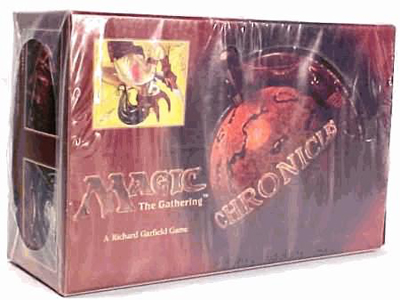
My gut reaction is that, as excitement for cracking packs of "Chronicles II" wears off (assuming supply doesn't completely run out), the price will return to MSRP. In which case, it will mean that the values of the cards in the set will have adjusted to be in keeping with the actual value people are willing to pay per pack.
The other forward-thinking question we should be asking ourselves is whether the stacked nature of MM17 is a one-time gift to players, or the new norm when it comes to reprint sets.
The answer to this question will heavily influence how MTG finance works down the road. If we get a stacked Eternal and/or Modern Masters edition every single time from here on out, it will significantly diminish the market for Modern staples. They become risky, volatile investments with a high probability of seeing a reprint that would drastically affect their value.
So, where do we go from here? Well, in a world where more reprints may be an inevitability, Reserved List cards are looking better and better. Reserved List cards have no chance of a reprinting, which makes them safer investments. This at the same time that every else has become much less safe.
Adapting Our Speculative Strategy
The biggest way I've adapted to this new landscape is to take "long-term hold" largely off the table when it comes to anything not on the Reserved List. I want to focus my portfolio almost exclusively on Reserved List cards or highly unique original pack foils.
Sure, the prices on the cards that weren't included in MM17 spiked up significantly in the past week. These are the kinds of cards that turned into big gainers. However, these are still not safe long-term investments. Just because they dodged a reprint this time around doesn't mean they will be so lucky the next time around!
The other tool that will give you a huge edge up on the rest of the competition in a changing marketplace is recognizing ways to sell into price spikes. Since reprints are inevitable, it is likely that in a majority of scenarios a price spike will always represent a high watermark on a majority of cards. Since I'm advocating moving away from long-term investments on Modern and Standard, I recognize that I want to flip cards at every good opportunity, for either cash or Reserved List investments.
Recognizing price spikes, and having the means and motivation to flip cards quickly when the price goes up, is a big game, and likely one of the best ways to maximize your value.
The other piece of the investing puzzle is to focus more on short gainers than long-term gainers. When I'm trading, I'll want to target cards that have a real chance to see an uptick in Constructed usage in the next few weeks or months, rather than cards that could be potentially useful down the road.
The Upside to the Changes
Lastly, while I'm concerned about possible negative consequences to the singles market in a post-reprint world, I don't specifically think what WoTC is doing is wrong or bad. It isn't WoTC's purpose or job to provide a monetarily lucrative means of revenue for the secondhand market.
There needs to be some amount of faith between collector and manufacturer—which may have been put on shakier ground by some of these moves—but Wizards' biggest responsibility is to the people who actually play the game, not to the people trying to make money off it. Modern needs to be an affordable format that everyone can enjoy without having to sell their blood to play. I'm willing to accept that the game may become more difficult to get value from, but that is okay because it means more people are able to enjoy it.
The best-case scenario is that the game continues to grow to include even more players. More players equals more demand, which equals more opportunity.
Either way, these are the strategies I'm looking at as I devise a plan to stay ahead of the curve and refocus my MTG collection in a way that is most profitable. It's a work in progress, but I think it has a lot of potential. I'm interested to hear what some of you guys think about how to adapt to these changes. Feel free to drop your thoughts into the comments.

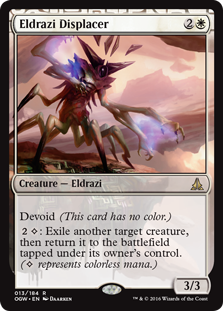
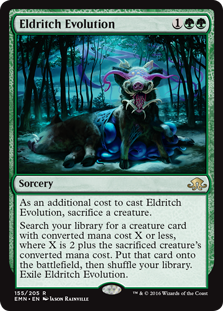 First off, it must be mentioned that this is a flavor win. So far, Eldritch Evolution has been much better acquainted with the likes of Kiki-Jiki and Anafenza than with its on-plane peers who presumably invented the spell in the first place. What better creature to emerge out of some sacrificial fodder than an Eldrazi Displacer or Thought-Knot Seer? Emrakul would be proud.
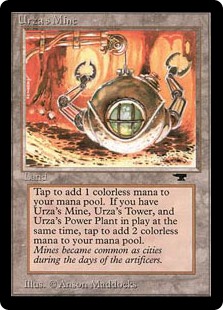 Thinking on a more theoretical level, Eldritch Evolution is in a certain sense well suited to the Eldrazi game plan. The traditional core of Bant Eldrazi is built to maximize the number of opening hands that can accelerate out a ridiculous, undercosted threat. This is accomplished with Noble Hierarch as a replacement for the now-banned Eye of Ugin, but also with Ancient Stirrings, which digs five deep towards a Temple or doubles as a threat. Eldrazi pilots have sought additional ways to accelerate out their threats, including Urzatron lands and Simian Spirit Guide.
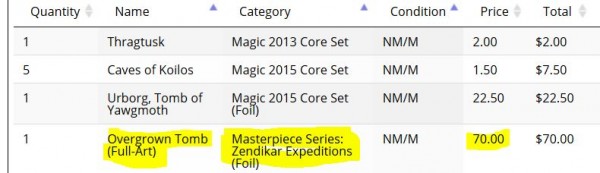
  Of course, the tutor effect isn't to be underestimated. This deck has ready access to Thragtusk against Burn, Thrun, the Last Troll against removal-heavy decks, Acidic Slime to hamper ramp's mana, and Kataki or Eidolon of Rhetoric out of the board.

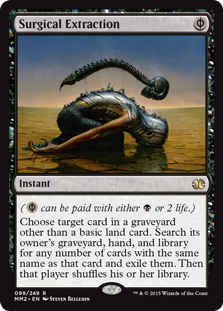 about without blue. As for Kozilek's Return, I found the Affinity matchup to be fine with this build, so Return wasn't a card I ever considered.
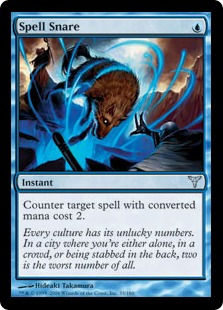 Stack Interaction. Perhaps the most obvious draw to blue is its ability to interact with spells. Access to permission gives the color more built-in protection against linear combo strategies and topdecks.
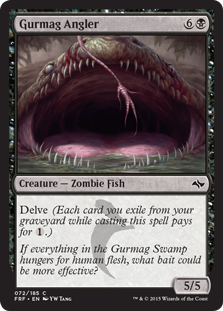 High-maintenance threats. Delver of Secrets imposes significant deckbuilding restrictions on those who choose to play it. Pairing it with Death's Shadow at all is a little challenging, since Shadow all but requires pilots to pack Thoughtseize (a disrupt-then-commit cards at odds with Delver's status as an ideal turn-one play) and Street Wraith (a creature that doesn't flip Delver). But it's Tasigur and Angler who require the most setup to function. Chez Jund, Mishra's Bauble, Street Wraith, and Tarfire all grow Tarmogoyf while impacting the board or the game state, meaning Goyf always represents massive bulk for 1G. Delve threats, on the other hand, have a fluctuating mana cost, and one that forces pilots to pack Thought Scour. Scour is a one-mana cantrip that replaces itself, but doesn't impact the board on its own, making the delve threats both less efficient and more conditional than ol' faithful. It also doesn't help that Tasigur and Angler are always smaller than Tarmogoyf in the pseudo-mirror.
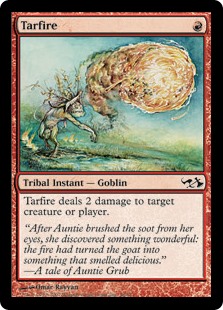 Vs. the mirror: provides early pressure and lets us go wide. Landing plenty of creatures yields powerful alpha-strikes in the mirror and complicates combat for opponents, as we can threaten to chump when we need to and attack for lethal. An improvement over Rampager and Battle Rage, and neutral compared with Abrupt Decay.

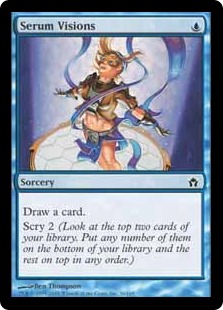 Serum Visions gets us one card for one mana, but almost all of the power comes from the scry 2. Setting up our next draw (or possibly next two draws) is really what sets Serum Visions apart from the crowd, compared to other options like Thought Scour (better for fueling delve/graveyard synergies) and Sleight of Hand (more interested in the quality of that one card). The random draw aspect of Serum Visions is by far the worst part of the cantrip (you know, the cantrip part), but scry 2 for {U} absolutely wouldn’t cut it. So, replacing itself for one {U} is a necessity, but to be “better” than Serum Visions we’re looking for something comparable to the scry 2. Two extra random cards is better than reorganizing the top two by far, but not getting those cards until four turns later is a big deal.
 Of course, there’s also the added value that Serum Visions provides by letting us “cheat” on lands. A playset of Serum Visions usually lets us play one fewer land, and I’ve seen some discussion that the math works out closer to 1.5 to 2 lands. With a one-lander, Seurm Visions lets us dig potentially four cards deep to find the second land (one from the draw, bottoming two, fourth card comes from the natural draw next turn). Cast on an early turn, Serum Visions usually translates into a 36% chance to turn into a land with a free scry two. If we’re talking consistency and smoothing out our land drops, Serum Visions blows Ancestral Vision out of the water.
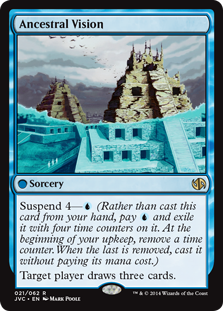 Us, T1: Land, Vision, go. (5 cards)
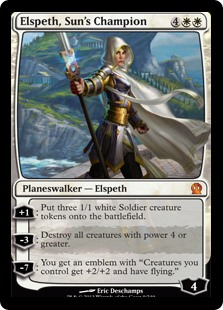 This is why the best control spells replace themselves, or provide more than a card’s worth of value. Snapcaster Mage comes with a free spell attached. Serum Visions finds us exactly what we need, or at least just gas. Elspeth, Sun's Champion can’t be answered with one card (besides Mana Leak). Snapcaster Mage, Kolaghan's Command, Cryptic Command, Liliana of the Veil, Think Twice—the list goes on and on. Ancestral Vision is pure card advantage on a timed fuse.
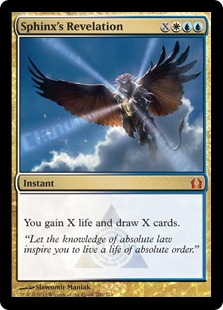 These “win condition” spells are powerful, but also a death sentence at the beginning of the game, as anyone familiar with the concept of curve in Magic knows by now.
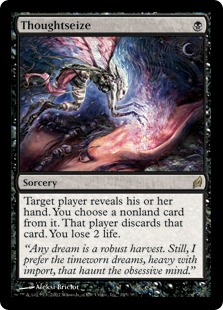 If our goal is to disrupt our opponent's curve, trade resources to run them out of spells, and then turn the corner quickly, Ancestral Vision can serve as a cheap, powerful spell at the top end of our curve to either pull us back from the brink or close the door on our opponent entirely.
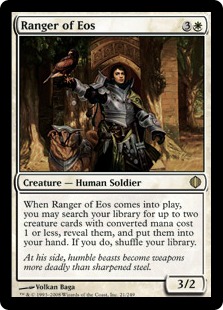 Ranger of Eos, Thoughtseize, and Jace, Architect of Thought can be tough to fight all at once, but Ancestral Vision does a solid job. More cards equals more resources to fight with, and often that’s the best (or only) way to fight against a diverse number of strategies being employed against us.





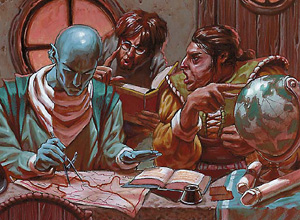

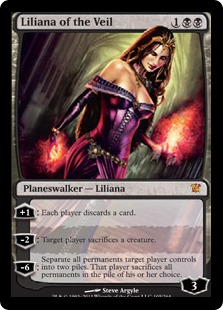 The absolute top-tier Modern staples that will continue to command the highest price tags will likely be Liliana of the Veil and Tarmogoyf. It's difficult to tell how many copies will be opened, but I am moderately optimistic that these two will settle between $50 and $75. It's difficult to gauge what the current pre-order prices look like right now because there is an ongoing problem with TCGPlayer and Crystal Commerce (a popular store inventory platform) but it seems like you can pre-order Tarmogoyf for $85-90 and Liliana for $70. You may be able to find some listings this weekend for up to $20 less than this price, so if you're in a rush to get them, pay attention to prices Friday night and throughout the weekend.
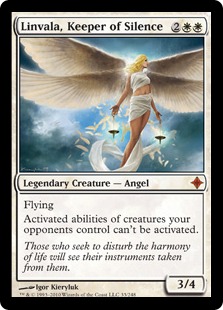 The lowest tier of cards that will still be worth money are a lot of cards that are currently far too expensive in their pre-order period. I think most of these cards will end up between $10 and $20. These include Damnation, Blood Moon, Goblin Guide, and Linvala, Keeper of Silence. Ultimately you can't have too many cards in a set worth more than $10 at rare or lower, because it becomes too profitable to just open the packs. I am currently envisioning a world where the less played cards (like Damnation and Linvala) are still more expensive than they should be because of their price memory. But eventually you will be able to buy a playset of Goblin Guide for probably $40-50. This could be wrong (as any prediction is just that, an educated guess), but I believe the rest of the set will be sub-$5 or bulk.
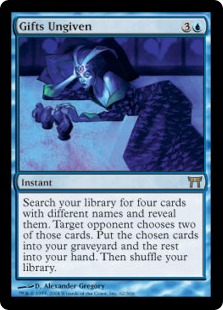
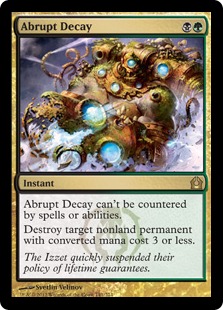 As far as other cards, Abrupt Decay doesn't see enough play to keep it out of bulk rare status. It's in a lot of decks as 1-2 copies but not consistently 4 copies which would drive demand. Gifts Ungiven is a a pretty niche card and really only played in one archetype (I didn't even think it would get reprinted). Grafdigger's Cage has fallen out of favor, due to the nerfing of Dredge and more people realizing that Surgical Extraction and Ravenous Trap are psuedo-colorless. Venser, Shaper Savant doesn't really get played in Modern or Legacy enough to warrant its price tag. Basilisk Collar was primarily a casual card until it saw some adoption in the colorless Eldrazi Tron decks. This set doesn't bring any relief to a particularly expensive deck so I'm not expecting a ton of people to need them for their $600-700 deck that got no reprints. When the dust settles, the rest of the set will probably be close to $1 or less.
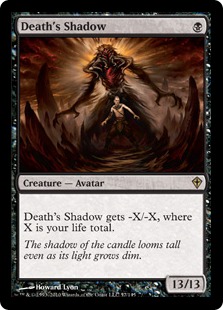
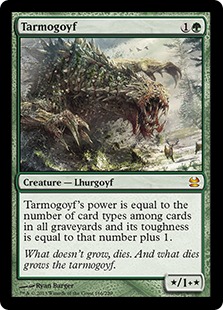 Well, if you wanted to play a black-green deck with Tarmogoyf and Liliana, then I have great news for you! There's basically a starter kit available in Modern Masters 2017 for those players. You can build most of the Death's Shadow deck, Jund, and Abzan with cards exclusively from Modern Masters 2017. The biggest missing cards are mostly lands, or cards that were reprinted in previous Modern Masters sets. If you're thinking about putting together any deck that plays the two set flagship cards I would recommend waiting to pre-order them and instead using your money to fill out the rest of the deck.
 Blackcleave Cliffs and Raging Ravine are both integral parts of the mana base that also haven't been reprinted and are worth picking up early.
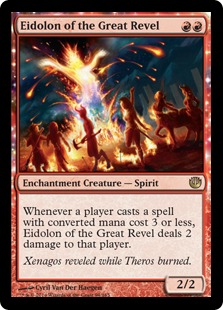 Burn is another deck that has had a lot of help arrive in this set. Most of the cards in the deck weren't actually very expensive outside of Goblin Guide and Arid Mesa, so it's likely to shave a large percentage of the deck's cost off the top. Unfortunately, a lot of players have already realized the next most important choke point for Burn is Eidolon of the Great Revel. This card has seen large increases in the past week as players prepare for their new Goblin Guides. Even with the price increase in Eidolon, the deck is likely to be about $100 to $150 cheaper than it was before the reprints. The next most important cards for Burn that didn't get reprinted are the middle-of-the-road commons and uncommons. Lightning Bolt, Lightning Helix, Lava Spike, Rift Bolt, and Boros Charm are various prices but all more than $2 each at the current time. I could see a world where they continue to dodge reprints and continue to creep up in price, so I would recommend getting those sooner than later.
 The last and probably most ironic deck to get a lot of help from Modern Masters 2017 is the Storm deck I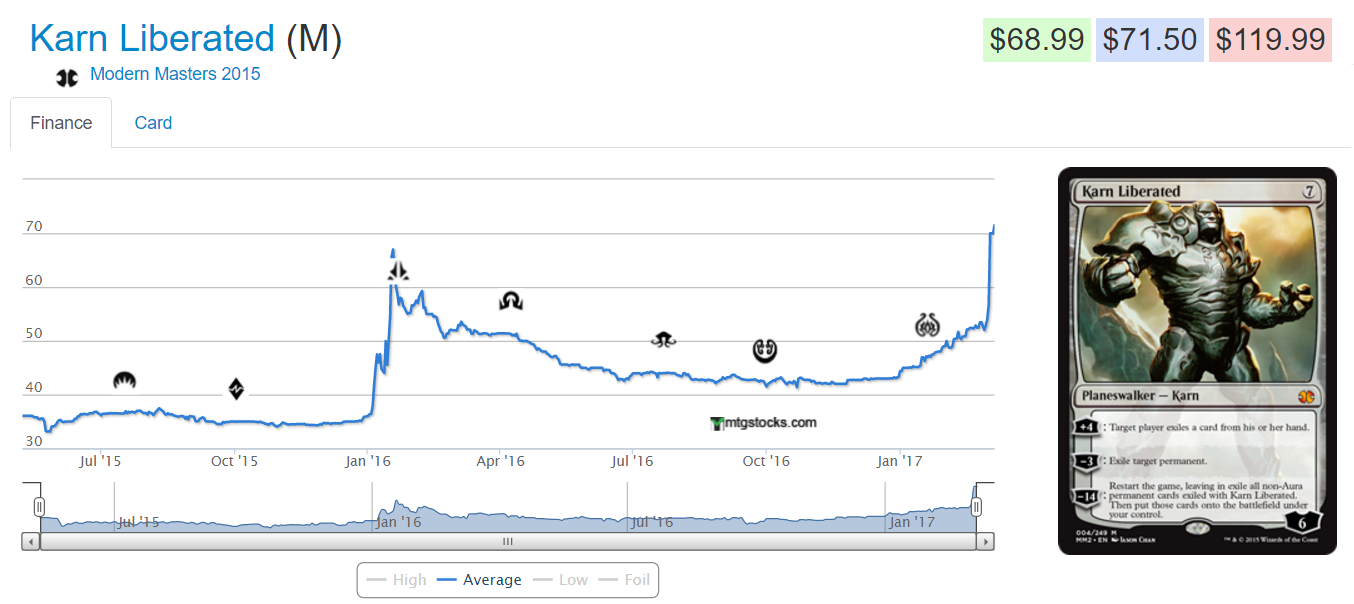
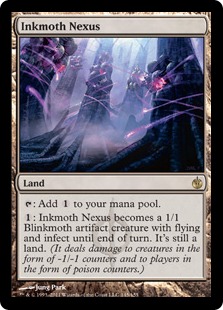 It's not out of the realm of possibility that we see them all gain 25-30% of their value over a week. Affinity also didn't get any love from this set. Arcbound Ravager, Mox Opal, and Inkmoth Nexus continue to comprise more than half the cost of the entire deck. I expect any good Affinity finishes in the near future to really ratchet up the problem.