menu

Unfair Combo: A Beginner’s Guide

Are you a Quiet Speculation member?

If not, now is a perfect time to join up! Our powerful tools, breaking-news analysis, and exclusive Discord channel will make sure you stay up to date and ahead of the curve.

Welcome back to the Beginner's Guide. I've had a bad habit of leaving many week-long breaks between these articles. This is unacceptable and I'm going to finish off the deck-type articles over the next few weeks. This is especially important given that the I'm onto the combo decks, which fall into distinct categories that aren't immediately apparent to new players.

Furthermore, recent metagame developments such as the recent hype over Sram, Senior Edificer in Cheeri0s, and Grishoalbrand's win at SCG Richmond's Classic, indicate that a resurgence of unfair combo may be underway. This may surprise Modern players but will definitely come as a surprise to new arrivals from Standard. Wizards of the Coast doesn't like unfair combo and works hard to keep it out of Standard. There are a number of specific reasons for this, including bad experiences with Combo Winter and Storm, but what it comes down to is fun. For most players, unfair combo is very unfun to play against. If your game is unfun you have no players and the game dies. Wizards would like to avoid that happening to Magic. The closest Standard has had recently was Rally the Ancestors, and that was closer to a fair combo than a truly unfair one.

However, there is a large community of players that really enjoy this style of play. While other Magic decks are playing a game, unfair combo is solving a puzzle. You have all these pieces and limited resources to put together that equal a win. This style of play only happens with really unfair combo.

[wp_ad_camp_1]

What are Unfair Combos?

The unfair combo deck is a deck that is built to break the rules. They generate absurd amounts of mana, draw far too many cards, and pile it all together to generate some (temporary) advantage that they leverage into a win before they "should." These decks are also known as degenerate decks, and not in favorable terms. They're frequently called broken, and they often are, but broken really just means overpowered. Jund has been broken a few times despite not actually being unfair. Unfair decks may or may not be broken, but they always do things that break the rules.

It is important to note that being a combo deck does not make you unfair. As I will detail next week, there are plenty of fair combos. The unfair combos are built around their combo and exploit it. These decks are the inheritors of a lineage stretching back to Prosbloom, the first true combo deck. Unfair combos are built around engines that, when properly fed, produce an overwhelming amount of cards and mana, which the deck channels into a win condition in a single turn. They are similar to the Power Card and Gotcha! decks, in that they consist only of piles of enablers and a few payoff cards, and ask their opponent if they have specific interaction or they lose. The difference is that there is no backup plan if the engine breaks down. You are all-in on the combo, and sometimes it doesn't happen even if your opponent doesn't have the correct interaction.
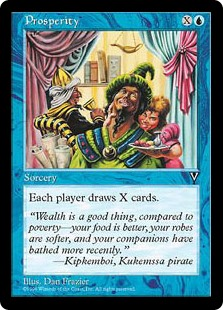
The example most players think of is undoubtedly Storm. A deck filled with rituals and card draw that combine in a single turn to combine into a single win condition, classically Tendrils of Agony. This is the hallmark of the unfair combo deck, though not the only incarnation. Any deck that is exploiting some engine to generate a massive mana or card advantage and win in a single turn falls into this category.

Strengths and Weaknesses

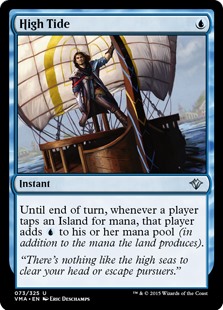
The greatest strength of the unfair combo is its unfairness. I know that's unhelpfully tautological, but it is also true. You are playing a different game than your opponent, and they may not be able to compete. Unfair combos are usually very fast, but can also spend as much time sculpting as they are given. In other words they can win before their opponent, but with time they can set themselves up to win regardless of what the opponent has. I heard a story that back around Combo Winter it was believed that the Draw-Go decks of the day were heavily favored against combo decks until High Tide players realized that Draw-Go could never have more than seven cards in hand and if they just waited until their hand had eight must counter spells they could just end their sequence with a draw-seven and always win. That is the power of unfair combo—the field of battle is always on your own terms.
However, high power and speed do not come risk free. These decks are incredibly fragile. Just like Power Card decks, they have a lot of cards that don't do anything, so answering the cards that actually do something causes the deck to collapse. There is usually no resilience; if they fail to go off once, they may not get another chance. In addition to being disrupted, there is always a chance that the deck just fizzles. You need the right cards at the right time and often in the right order to make your combo work, and that might not always be possible.

The best analogy I have is that unfair combos are F1 racecars, which dovetails nicely with the truck analogy from the fair decks. When properly maintained and piloted, F1 cars make normal cars look comically primordial. However, if anything is a little bit out of place it doesn't work at all. The engine has to be the right temperature, the fuel needs to be mixed exactly correctly, the wheels must be aligned precisely, etc., and if anything during the race interferes with that precision engineering, the car doesn't work. Performance at a price.

Being the Combo Player

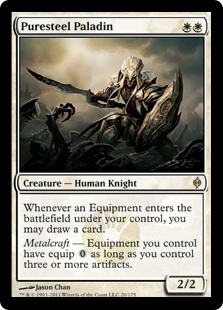
It is only slightly a cheat to say that you become a Johnny/Jenny type player. Combo decks need to assemble their pieces and then wield them in a specific fashion in order to win. The analogy from earlier is correct: every game is a puzzle that needs solving. Thus the players who are attracted to these kinds of decks tend to be a bit off-beat. When these combos are good many other players will gravitate towards them, but the dedicated comboists will play these decks regardless of conventional wisdom. They enjoy the challenge of building and then piloting them more than anything else. As a result, in my experience they are a polite euphemism for weird. But then, you need to be a polite euphemism to see that Puresteel Paladin + Kite Shield = win.

The key to being a successful combo player is to really know your deck. You have to understand how the combo works, not only so you know what you're building to (much like solving a puzzle by looking at the box art) but also so you know what hands to keep. Combo decks often have to mulligan aggressively in Modern. In Legacy there are so many cantrips that you can find what you need, but that is not true of Modern. There will be plenty of hands that look keepable to the uninitiated, but in truth lack some critical resource to win. Ad Nauseam frequently mulligans any hand that lacks either an Angel's Grace or Ad Naus, even if the hand is otherwise fine. You don't have unlimited time to find your pieces, so you need to start the game with a reasonable number. You don't always have to seek the perfect hand, mind you, but it is important to know the difference between hands that look good enough and ones that actually are good enough.
The second critical part of playing combo decks is resource management. My first deck in Extended eons ago was Extended Storm. The hardest part of the deck was cantrip management. You needed to expend your cantrips to find the pieces of your combo, but you also needed enough to keep the combo going once you started going off. It was a difficult balancing act that I never quite mastered. Of course, this was back when you could still play Mind's Desire, so there was a lot of forgiveness.

Your opening hand will rarely have everything you need to win, but often you need to expend critical resources to find even more critical resources to actually start going off. It takes finesse and that takes time to develop. Along with that you need to manage the clock. This can be the actual game clock (Eggs) but more often it's balancing your need to find pieces against your opponent killing you. You need to learn when it is correct to go off half-cocked and just hope you get there. There's a lot of finger-crossing and sweating involved in playing combo decks.
The final piece is sideboarding. I know that I've repeatedly mentioned how important it is to correctly sideboard in Modern but this is a little different. Unfair combo decks tend to be very tightly constructed. Every card that goes into your maindeck is intended to make the combo more consistent or faster. As a result, nearly any sideboarding will dilute your deck's fundamental strengths (its unfairness). This will often be an acceptable trade-off when it improves your resilience or invalidates potential disruption, like Leyline of Sanctity against Jund. Therefore, knowing what to cut and when is critical. Equally important is to know whether or not sideboarding is appropriate at all. Sometimes you just don't need to, or you cannot improve your deck enough to justify slowing it down. It is critical to learn the difference.

Beating Unfair Combo

The most important thing you can do to beat unfair combo is to present a clock. Given unlimited time, they will win. Even if you have all the counters, you will never have more than seven on their turn and they can have eight cards you must answer and force their way though. You have to force them to go off before they're absolutely ready or lose. Control has a hard time here for this reason.
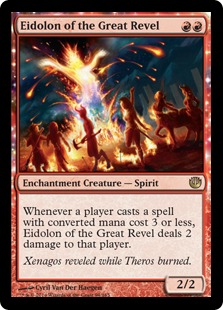
This is not the absolute answer, of course, because combo decks tend to be fast enough that they can win that race. Amulet Bloom frequently won on turn three, well before the aggro decks. Most are non-interactive and built to goldfish faster than other decks. As a result you really need to have some form of disruption. Putting down a clock is good, but actively preventing their combo is better. This can be anything from counterspells to discard, but I recommend using a persistent form if possible. Bloom couldn't beat Blood Moon, Cheeri0s cannot go off in the face of Eidolon of the Great Revel or Thalia, Guardian of Thraben. One-time disruption is fine, but something that sticks in play that has to be answered is better. A Thoughtseize can be effective for slowing them down, but that is just a speed bump. Against Storm Thalia is more like a steep muddy hill. You can get there, but it won't be easy. Or fast.
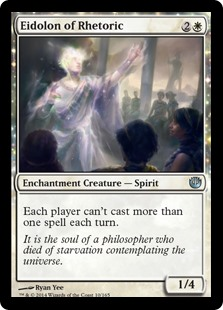
Similarly, resource denial is very effective. Blood Moon and Thalia crimping their mana is good, as is stripping hands with discard. But much like the fair decks, if you can shut off an avenue of resource acquisition or their attack, then they're forced to interact or perish—and unfair decks rarely have interaction. Against Rest in Peace Grishoalbrand's A-game is useless. More potent is cutting them off from the game rules. Magic lets you play as many spells as you have mana for but Rule of Law effects shut this down. This is especially potent because no unfair deck can win playing only one spell a turn.

Finally, if all else fails, just extract their win condition. All the effort that unfair combos put forth is intended to fuel a single kill spell, though there may be several different options. Using Cranial Extraction effects to remove them from the deck might win the game on its own. There is a very real chance that a single Extraction will leave them literally no way to win. You can also remove individual pieces, though this is far less devastating than killing their win condition.

Just Go for It

Many players really dislike unfair combo. It is boring to watch your opponent play Magic for several minutes while you have to sit there and do nothing, waiting to find out if you're dead or they fizzle. However, that is also the appeal of the strategy. It is fun to actually play these decks, doing something weird and cool that falls outside of "normal" Magic. I recommend that you at least try a really unfair deck at some point in your Magic career. It is like nothing you've done before, and you might discover something about yourself. You might have never realized before that you are a polite euphemism.

Insider: One Step Ahead – Key Sources for Information

Are you a Quiet Speculation member?

If not, now is a perfect time to join up! Our powerful tools, breaking-news analysis, and exclusive Discord channel will make sure you stay up to date and ahead of the curve.

Welcome back, readers! Today's article is going to focus on getting you as much information at your fingertips as possible so you can make better decisions with regards to speculating.

It's important to vet the sources of any information you use for your decisions, because you're risking your own money and there's always plenty of bad advice out there. With that said, what follows are some of the MTG finance sources I choose to rely on.

Quiet Speculation

Let's get the easiest one out of the way first. As you're reading this Insider article, you're clearly a member of Quiet Speculation already. However, are you utilizing all of the resources QS offers?

One of my favorite aspects of this site are the forums, where everyone is able to bounce ideas off of each other. You can discuss a card's future promise, alert your fellow speculators when something is on the move, or get an opposing viewpoint if you fear tunnel vision may be making you see only positives.

The forums also offer a place to buy and sell from fellow QS members. The reseller reviews have saved countless people from shipping to, or buying from, shady people or stores that could have cost them dearly. Lastly, the forums offer a place for the leaders of QS to post information straight from the Pro Tour floor (as we often have at least one, if not two, people at the Pro Tour providing up-to-the-minute information from both player and dealer perspectives).

Obviously, another resource QS offers are the articles by us writers. I know all of the writers on here try to be as transparent as possible when it comes to their own speculative purchases (I typically include a note about how many copies I own), and we all stress that you should only speculate on cards that you yourself believe in. But we also have a wealth of experience to draw on when discussing cards in said articles, and we're trying to share that with you.

Last, but certainly not least, you have Trader Tools, which is a fantastic way to convert cards into the maximum amount of cash by comparing buylists from multiple large stores. There's no guarantee that no store out there will pay slightly more on a given card, however, the likelihood on a lot of cards is slim. The stores are also vetted and bad ones are removed (or at least hidden) to prevent you from having a bad experience selling cards.

Another aspect of Trader Tools that I personally use a lot is reviewing the spread (difference between the retail price and the buylist price). Cards with low spreads typically signal a strong demand, as a store is willing to take a lower profit to make sure they have the card in stock.

MTG Salvation

While Salvation is well-read during spoiler season, year-round it also has a wealth of members who are constantly brewing or tweaking decks. I love reading through the forums, especially the Deck Creation and Developing sections for each format.

The important thing to remember is that this day in age information travels faster than ever. The window between seeing a card overperform on camera and buying up the cheap copies of it grows smaller with each passing Pro Tour. As the price rises, there will always be sellers who refuse to ship cards sold right before or at the beginning of a spike, and you can't make a profit on cards you never get. This is why I like to stress being ahead of the game, and these forums are a key tool in doing so.

For example, Nourishing Shoal was a bulk rare until June 14th, 2015. But on the Developing Competitive (Modern) forum, the Grishoalbrand deck was originally posted in March 2015. Now this isn't to say that every developing deck has promise (a lot don't). But for those who tested out the deck and found it had some teeth, there was a three-month window that one could buy Nourishing Shoal for less than $0.5. It subsequently spiked to $15 and settled at $10 (now it's more like $7).

There was an error retrieving a chart for Nourishing Shoal

Now I'll be the first to admit that trying to keep up with every thread is extremely daunting, if not impossible. However, thanks to the fact that most active threads tend to be at the top, you're likely safe skimming through maybe the top 10-15 threads. And you can always read lower ones whenever you have some extra downtime. The point is that when you're ahead of the game you can buy cards pre-spike and have them in hand if and when they do spike.

Another example: While reading through these forums I noticed there's some talk about a cool little interaction between Abundant Growth and Oath of Nissa if you have a Cloudstone Curio in play (allowing you to keep bouncing the Oath and giving green decks some solid card advantage). Cloudstone is a card that has spiked repeatedly and has only a single printing (so here's your card pick of the day).

There was an error retrieving a chart for Cloudstone Curio

MTGTop8

While I always prefer to be far ahead when it comes to speculative choices, you're far more likely to have price spikes caused by actual results than just theoretical potential. One of my favorite resources for results is MTGTop8. This site posts tons of MTG results from across the world every day.

For our purposes, some of the most important of these are the MTGO Competitive League results. MTGO tends to lead the pack when it comes to innovation, as players can tweak and immediately replay a deck in a competitive environment over and over again. In fact we'll often see the MTGO innovations bleed over into real-world events a short time later. The window between picking up the cards when they start to show up heavily on MTGO versus real world MTG is rather small, but it does exist.

This site also offers results from a lot of real-world events as well, and while I enjoy reading over the latest SCG results, in a game of variance more data is always better. I love that they have a "Metagame Breakdown" at the side of each format page, which can drive you towards good hate cards for decks that start showing a strong increase in metagame presence.

Modern Nexus

Our sister site is devoted to the Modern format, and while it's a bit more niche, a lot of good speculation targets have come from the Modern format. As the site is so focused on a singular format, they tend to go a bit deeper on evaluations regarding Modern, which can be the difference between a good speculation target and a bad one. Similar to MTGTop8 above, they also include a metagame breakdown, and they post a lot of articles on brews.

MTG Stocks

MTG Stocks is a price tracking site. Unfortunately, this means cards only tend to get highlighted on here after they've jumped in value, which makes it not great for picking speculation opportunities. However, it is a great and easy way to see what has spiked in a given week.

We all have many different obligations in our lives, and while we all love Magic most of us can't devout our entire lives to it. When you have a very large collection, you typically don't want to price out every card every single week to look for changes.

Thankfully, they have a wonderful interests page which shows the most recent price jumps from both the current and previous weeks. So I often scroll through this page and see if I'm holding anything that has jumped in price, ideally so I can try and sell or trade it to lock in profits.

MTG Goldfish

MTG Goldfish offers many of the same stats that MTGTop8 and Modern Nexus provide, but one of my favorite things they have is their format staples page. This page shows the most commonly played cards in various formats.

Now typically you expect that cards that see a lot of play likely have a lot of demand and thus a higher price, however, there are times when a heavily played card can be underpriced. The other important thing to consider is that when you see a card start to show up a lot, cards that naturally counteract it may have a bright future and can serve as excellent speculation opportunity.

Conclusion

These are definitely not all of the sites one can use to help get a step ahead of your speculation opportunities, but I did want to highlight some of my favorite ones (and ones that I use quite a bit). The key to getting ahead with regards to speculation is to have as much information as possible and to use that information to guide your decisions. I know that sounds obvious, but I've seen so many people with access to the information who choose not to act on it.

If you have any other suggestions for great sources of finance information, feel free to mention them in the comments. I'll try to review each and offer my feedback, and perhaps revisit the topic in a later article if there's interest.

Deck of the Week: Death’s Shadow Jund

Are you a Quiet Speculation member?

If not, now is a perfect time to join up! Our powerful tools, breaking-news analysis, and exclusive Discord channel will make sure you stay up to date and ahead of the curve.

I had initially intended to bring you the January metagame update today, but looking over the data and consulting with Sheridan, we decided to wait a week in order to incorporate more post-banning data, including Star City Games Regionals. Instead, we'll be covering one of the early changes that has resulted from Wizards' recent format shake-up. The banning of Gitaxian Probe was obviously intended to nerf aggressive creature-combo strategies like Death's Shadow Zoo, Infect, and UR Prowess. These decks were undoubtedly struck a blow, but don't expect them to disappear entirely. Adapting to a Probeless world may prove challenging, but Death's Shadow is already exhibiting a shift that seems to account for the new environment.

Enter "Death's Shadow Jund," as I've unilaterally decided to christen it. Right out of the gates, MTGO players seem to have rapidly arrived at a close-to-consensus build for Probeless Death's Shadow. As early as January 11th, the very date the Probe and Grave-Troll bans went into effect on MTGO, the new build appeared in a League finish. Since then it has posted consistent League results throughout the month, and put two pilots into the Top 8 of the MOCS Playoff on the 21st.

The decks in question show relatively little variation in card choice. Oliver_Hart's version from the MOCS Top 8 is typical of the lot.

[wp_ad_camp_1]

Death's Shadow Jund, by Oliver_Hart (5th, Modern MOCS 1/21/17)

Creatures

4 Death's Shadow
4 Street Wraith
4 Tarmogoyf
1 Ghor-Clan Rampager

Artifacts

4 Mishra's Bauble

Instants

4 Tarfire
2 Abrupt Decay
2 Kolaghan's Command
2 Temur Battle Rage
1 Dismember

Planeswalkers

2 Liliana of the Veil

Sorceries

4 Thoughtseize
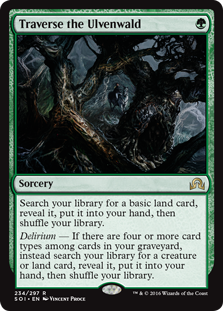
4 Traverse the Ulvenwald
3 Inquisition of Kozilek
2 Collective Brutality

Lands

4 Verdant Catacombs
4 Wooded Foothills
3 Bloodstained Mire
2 Blood Crypt
1 Forest
1 Overgrown Tomb
1 Stomping Ground
1 Swamp

Sideboard

1 Liliana, the Last Hope
3 Fulminator Mage
2 Gnarlwood Dryad
1 Scavenging Ooze
1 Shriekmaw
1 Collective Brutality
3 Anger of the Gods
1 Maelstrom Pulse
2 Surgical Extraction

As you can see, the updated deck goes far beyond mere cosmetic changes or a simple replacement for Gitaxian Probe. The first thing to notice is that Death's Shadow has become a Traverse the Ulvenwald deck. The archetype's pilots have played around with this card before, but rarely included it as a four-of or relied on it so extensively. Now they've cut all of the Steppe Lynxes, Monastery Swiftspears, and Wild Nacatls, relying entirely on the dual sets of Tarmogoyf and Death's Shadow itself to end the game. With just 8 real threats, the creature tutor becomes a critical piece of the game plan. They've borrowed another experimental piece of tech from pre-ban lists in Ghor-Clan Rampager, which acts as a kind of tutorable Temur Battle Rage off of Traverse.

To make sure Traverse is reliable, the deck is packing the full complement of Tarfire and Mishra's Bauble. Tarfire is obviously a pretty big downgrade from Lightning Bolt, but for our efforts here we can expect Goyf to regularly hit the 5/6 mark in the early game, and we get access to the best Green Sun's Zenith impersonation available since the original's banning. Also helping in this regard are the Collective Brutalitys, which can dump an extra card type in the graveyard while disrupting the opponent's plan or proactively protecting your lone threat.
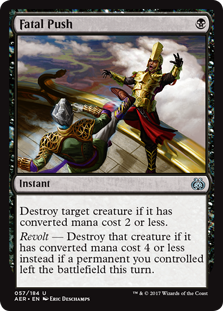
As for Battle Rage, one of the hallmarks of the old Death's Shadow decks, note that it's been pared down to just 2 copies (other builds sometimes run 3). This along with a complete absence of Become Immense. Longtime Death's Shadow players are well aware of how easy it is to reach the requisite 4 power to turn on a fully-powered Battle Rage, and the addition of Tarmogoyf no doubt assists in the quest. But the fact that they're running so few copies of this effect would imply that this version is built to function on a different axis.

This new Death's Shadow Jund has shifted away from the creature-combo Gotcha! dimension towards a more traditional bent somewhere between aggro and midrange. Kolaghan's Command, Collective Brutality, and Liliana of the Veil let the deck take on a control role that old Death's Shadow decks would have been hard-pressed to assume. Grinding into the late game is possible here, if much less natural than in actual Jund decks. But that Gotcha! element remains, and it gives the deck game against the ramp strategies that BGx midrange decks usually fold to. This deck is not very afraid of an opposing Urza's Tower, as absent significant disruption the deck will kill very quickly with a giant Goyf or Death's Shadow.

Aggro-Combo, Alive and Well

As I mentioned, these lists appeared in week one of the post-banning environment—it appears quite clear that the aggro-combo decks targeted by the Gitaxian Probe ban have not died. Their task is complicated further by the arrival of Fatal Push and, strangely, the departure of Golgari Grave-Troll, which until recently was keeping down their traditionally bad matchups. But that said, I doubt we've seen the last of the Gotcha! decks. My own run with Infect this weekend at Regionals was, um... disappointing, to say the least (let's just say after dropping I had time for two entire side drafts). But even Infect will adapt and survive, rest assured.


I would say that the bannings on Wizards' part have done a great job of bringing Modern back into sane territory, with turn-three kills receding ground and interactive decks left room to breathe. Even if my own weapon of choice has been significantly downgraded, I can say that the new Modern seems much more appealing on sum.

Join me next week when I'll go over some more quantitative measures of the post-Probe and -Grave-Troll metagame. I can say from surveying the January data alone (half of which fell before the changes to the banlist) that things have changed dramatically. Until then, keep brewing and let's hope this turn-two Cheeri0s business proves as fragile as its detractors have claimed.

Insider: Selling During the Pro Tour – A Must

Are you a Quiet Speculation member?

If not, now is a perfect time to join up! Our powerful tools, breaking-news analysis, and exclusive Discord channel will make sure you stay up to date and ahead of the curve.

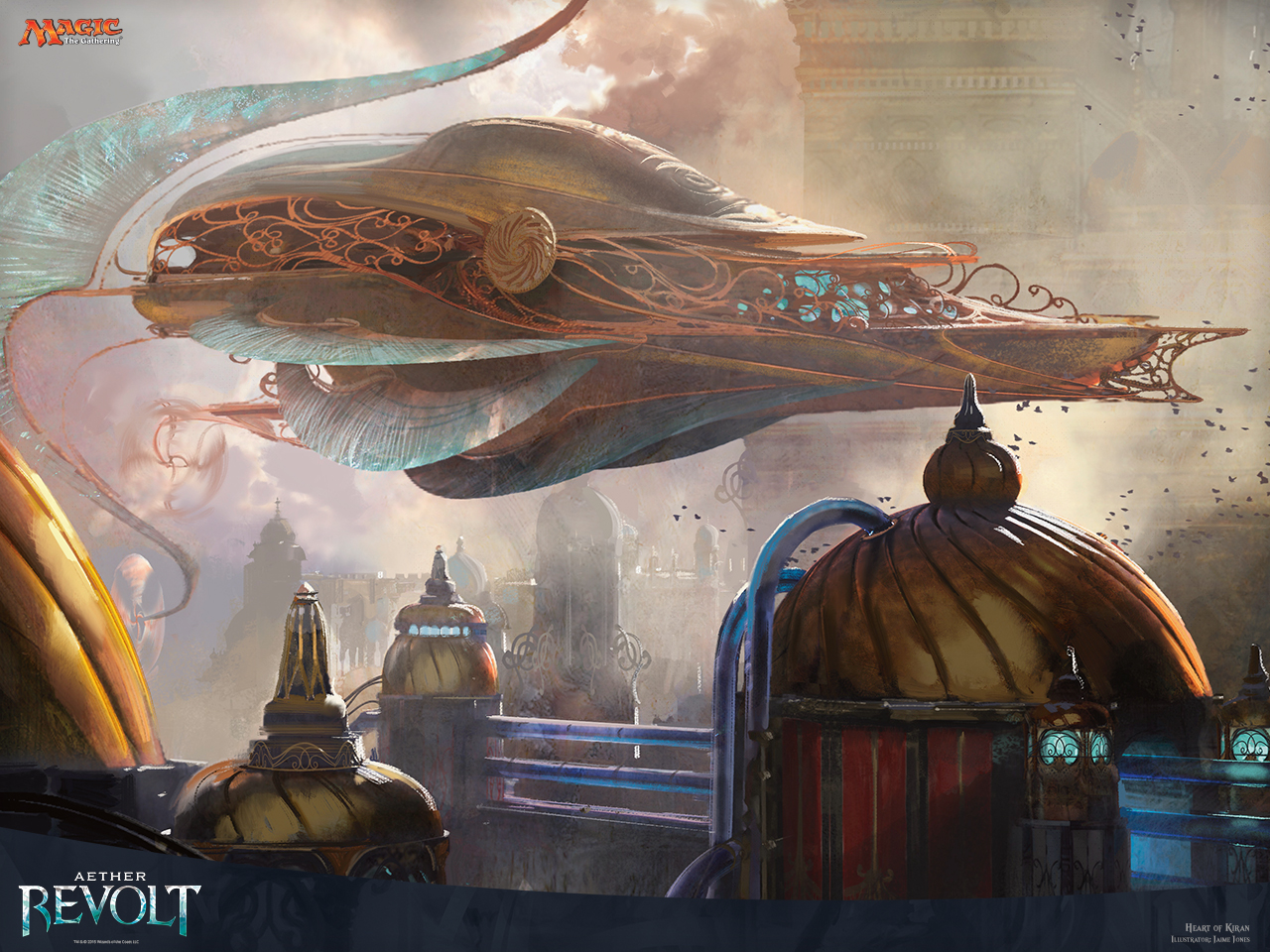
Another Pro Tour in the books. The card of the tournament: Heart of Kiran, enabling six Mardu Vehicles decks in the Top 8.

There was an error retrieving a chart for Heart of Kiran

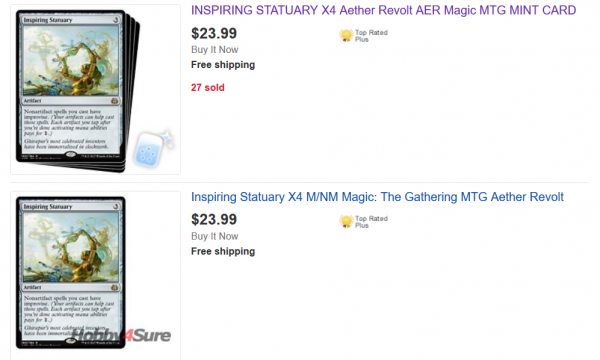
Did you make any profit on this card? I sure didn’t. My bets were on a variety of other potential role players that didn’t quite make the cut: Glint-Sleeve Siphoner and Inspiring Statuary were my primary targets, alongside a modest set of Metalwork Colossus. On the surface, it doesn't look like I did all that great.

However, even though I missed the biggest cards of the weekend, you may be surprised to find out that I about broke even and possibly even made a small bit of profit from this event. How, you may ask? It’s all about timing.

Step 1: Buying

First, you have to have your bets placed. I wrote about this a couple weeks ago. In order to capitalize most on Pro Tour price spikes it is absolutely critical to have cards on order in advance of the event. Ideally you have cards in hand already heading into Friday, but even a few strategic purchases the Wednesday or Thursday before can still be timely enough to help you sell near the peak.

For this step, I merely followed the Twitterverse. People were all over Inspiring Statuary last week. Early on in the week Saffron Olive tweeted that this was his pick for breaking out at the Pro Tour and that’s when I picked up my first set.

Then immediately afterwards I started monitoring sets on eBay to see if they were selling—they were. By Thursday, there was just one playset left under $7 and the rest were $8 and up. I purchased the one sub-$7 set left, making this my second playset. Finally, Thursday night I noticed sets hitting double digits, and I purchased three more sets from Card Shark—an oft-overlooked website—for about $6.40 a playset.

There was an error retrieving a chart for Inspiring Statuary

My other Pro Tour bets were smaller in size, and I had all the cards in my possession by the time the Pro Tour began. I made a promise to myself that I would wait and see how things unfolded during the Pro Tour before selling anything, no matter how the Star City Games Open unfolded the week prior. Thus my bets were placed.

Step 2: Monitoring Markets

As I mentioned above, once I decided to make a bet on Inspiring Statuary, I immediately began watching prices on eBay. I usually do this by “watching” the cheapest two or three playsets, checking my watch list frequently to see if things are selling and at what rate.

Also, here’s a neat little tip: try following the listings that belong to MTG Mint Card and Hobby4Sure. They both price their cards identically and they update their prices very frequently. As in, multiple times per day frequently. It’s clear they have someone watching the market closely, and they aren’t shy about trying to extract as much value as they possibly can.

Stauary

You can see that as of this article’s writing (Saturday at 3:00PM Eastern Time) they were selling their playsets at $23.99. But if I look at their pricing history, I can see all their price changes over the past few days.

Statuary2

Just before the Pro Tour they were priced at $4.39. Then they upped to $7.99, $9.99, and $13.59 all on Thursday alone. This was precisely when I was watching, and it was what tipped me to pick up a few additional copies from Card Shark while they were still cheap.

I did the same thing with Glint-Sleeve Siphoner and Metalwork Colossus.

There was an error retrieving a chart for Glint-Sleeve Siphoner

On these latter two cards, not much changed price-wise over the weekend, since they didn’t get nearly the same amount of hype on social media. This is why Twitter is such a valuable tool in MTG Finance. The site helps you stay on top of what people are speculating on and when. I used it to my full advantage, and it very likely enabled me to stay profitable despite disappointing results from my picks.

Step 3: Selling

Guess how many Standard cards I have left in my inventory coming out of Pro Tour weekend (not counting a few foil Animation Module which I bought for a longer-term play). Answer: zero.

I own zero Standard cards.

Every single card I purchased in time to sell during Pro Tour weekend I made sure to sell during that same weekend. The reason should be fairly obvious: the best time to sell Pro Tour breakouts is almost always Pro Tour weekend. One look at the graph for Metalwork Colossus is all you need.

There was an error retrieving a chart for Metalwork Colossus

Just look at how the card spiked during Pro Tour Kaladesh and then again leading up to Pro Tour Aether Revolt. Then following the spikes, the card’s price drops off fairly rapidly as supply returns to the market. Smuggler's Copter did the exact same thing during Pro Tour Kaladesh. Even though the Vehicle remained dominant in Standard, it never returned to its Pro Tour peak price. The card just listlessly drifted downward up until its banning in Standard, never to return to its $18ish glory again.

The same thing will happen to all the cards that spiked during Pro Tour Aether Revolt. Therefore, I make it a priority to sell everything. It doesn’t matter if a card didn’t break out as planned, it still needs to be sold in order to maximize value. Even though I never really saw it on camera, I still sold my Glint-Sleeve Siphoners over the weekend. No Metalwork Colossus decks in the entire field? Doesn’t matter, I’m selling. Inspiring Statuary showing up at top tables? Sell! Oh, it fell a little short of Top 8? Still sell!

It doesn’t matter what happens, my goal during a Pro Tour is to sell all of my Standard bets. There’s a wise saying on Wall Street: “Never turn a trade into an investment.” I think that quote holds true for Magic as well.

If you plan on speculating on a card for Pro Tour hype, then make sure you follow through on your thesis and sell during the Pro Tour. Don’t convince yourself the card has EDH potential and could break out in Frontier. None of that matters. What matters during Pro Tour weekend is that there are only a set number of copies of a given card in stock over the weekend and it is critical your copies make it during this period of scarcity.

The result of this strategy? Well, I lost a little bit on the Siphoner and the Colossus since they didn’t break out. I think after fees, my net loss on those cards was probably a few bucks. But I guarantee these will become cheaper over the next couple months, so I’m happy to cut my losses when I could.

As for Inspiring Statuary, I’ll let the results do the talking for me. When I search, “4x Inspiring Statuary” on eBay, view Sold Listings, and sort “Price + Shipping: Highest First,” I can see what playsets sold for the most over the past month or so. My playsets sold for the fourth and sixth most out of the all sets sold on eBay over the weekend—and there were a ton sold! I had a set sell for $19 and a set sell for $15 Friday morning. I don’t have to be a fortune teller to predict that sets will be selling for far less by the time this article goes live on Monday.

This didn’t take any sort of particular skill. I had my copies at the ready, I saw the movement, and I listed my copies on eBay. I didn’t try to set an exorbitant price to manipulate the market. I knew my entry price was around $6.20, I knew I wanted to sell the copies that weekend, and I knew anything north of $10 would be a worthwhile sale price. I set a listing and watched it sell within ten minutes. I relisted another set and it sold right away.

The only thing that slowed me from listing my remaining copies was that I purchased them later in the previous week and I didn’t want to sell them so far in advance of their delivery. (These I may not do so well on).

Wrapping It Up

Could Inspiring Statuary have ended up being the breakout card of Pro Tour Aether Revolt? Sure. If that had happened, wouldn’t these have hit $10+ per copy? Probably. Did I still profit regardless? Absolutely.

When you’re dealing with a market that has a fixed supply over the weekend with a dramatic uptick in demand, you have to be ready to take advantage. This isn’t about timing the perfect top or selling the most expensive playset possible. It’s about being opportunistic, taking profits, and not worrying about the precise peak. If I had waited just a few hours to list those copies, they wouldn’t have sold for as much. The deck got zero coverage on camera over the weekend and it never really stood out among the Mardu Vehicles crowd. But still, I was able to profit based purely on the hype.

As for other cards that didn’t receive hype: certainly I didn’t do very well there. But I managed to cash out quickly enough to cut my losses. When you add everything up, I still eked out a small gain on my Aether Revolt bets. Had I sat on my losers even longer, they would have been doomed to drop towards bulk-rare status and I would have walked away with much larger losses. By selling while there was still speculation going on over the weekend, I managed to move copies without any issue.

This is the strategy I apply every Pro Tour, and I really had it down to a science this past weekend. Hopefully by going over this approach, you will find useful tips to apply during the next Pro Tour. Just remember, it’s about economics and not emotions. Don’t try to time tops, don’t buy into hype, and make sure you sell out over the weekend. Following this approach will help you make profits on your winners while minimizing losses on your losers. This is what “day trading” is all about!

…

Sigbits

  • I know I’ve mentioned this one a few times now, but Tezzeret the Seeker has to move in price very soon. Star City Games has just two SP copies in stock from the Duel Deck. They have zero nonfoil English copies between Modern Masters 2015 and Shards of Alara. I noticed they recently upped their buy price from $7 to $8, and I think it can get a little higher. I’m hoping they hit $10 on their buy list, which is where I think it becomes reasonable to start taking profit. That said if you’re in for a longer timeframe, I see little reprint risk on the horizon as long as we can make it past Modern Masters 2017.
  • Bloom Tender is a $30 card. Let that sink in for a moment. I don’t know if this card even sees any play in sixty-card formats! Yet here we are, with Star City Games having just three SP copies in stock at $26.99. I’m going to start nicknaming this card the Damnation Elf, since, like Damnation, it seems this card is just never reprinted.
  • Here’s a sweet Old School one: Winter Orb. Star City Games is completely sold out of Alpha and Beta copies at $399.99 and $299.99 respectively. They do have some SP and MP Unlimited copies in stock, but these are $59.99 and $49.99. Talk about expensive! If you have any of these sitting around, please help them enter circulation so people can get them without sacrificing a kidney!

Brewing with Smuggler’s Copter

Are you a Quiet Speculation member?

If not, now is a perfect time to join up! Our powerful tools, breaking-news analysis, and exclusive Discord channel will make sure you stay up to date and ahead of the curve.

Forbidden fruit tastes the sweetest. No Ban List Modern and even Vintage have a certain allure to many players, myself included, as they promise the opportunity to play with the best cards ever. In Yu-gi-Oh, I spend most of my time playing Traditional Format, the unpopular Vintage analog wherein banned cards are restricted. And even today, I swear by a shell of the infamous Colorless Eldrazi Stompy deck that ruined Modern.

When Wizards banned Emrakul, the Promised End from Standard, I sleeved up my old Lili Traverse deck to take the 13/13 for another joy ride. It was only a matter of time before I tried my hand at brewing with Smuggler's Copter, another card recently banned from Standard, in Modern. This article explores both existing homes for the Copter and the prospect of building decks around it.

[wp_ad_camp_1]

Finding a Home

The first place to start when breaking a card into Modern is to check if it easily slots into existing archetypes. Smuggler's Copter works best in decks that benefit greatly from a recurring loot effect, don't play many other artifacts, and have no shortage of small bodies to pilot it.
Shopping Around

Perhaps the most obvious deck for Copter is UB Faeries. Spellstutter Sprite works exceptionally well with the vehicle, protecting Copter from Lightning Bolt and Fatal Push as well as crewing it herself. For its part, Bitterblossom ensures a constant stream of drivers. Copter's loot effect helps Faeries find the right specific answers at the right time, burn through late-game copies of Ancestral Vision, and pressure faster decks like Tron with something other than 1/1s. Some research showed me that Copter in Faeries was already sort of a thing, and with Fatal Push's admittance into Modern, I think this deck truly has some legs (wings?).

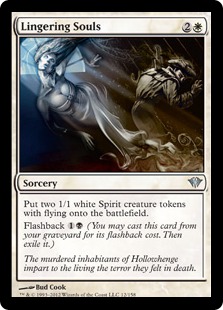
Lingering Souls also pairs happily with Smuggler's Copter. The sorcery produces four willing pilots, and Copter can dump extra Souls straight to the graveyard. I had to brew a silly Esper deck with Jace, Vryn's Prodigy and a couple Heart of Kiran before realizing a powerful Lingering Souls deck already exists in Modern: Abzan Midrange!

Even if Copter dies in Abzan, its artifact type buffs Tarmogoyf and Grim Flayer. Copter also gives Abzan a way to beat evasively without sleeving up the pricey Siege Rhino. Archetype posterchild Wily Edel and others have already weaved the vehicle into their Abzan lists, and I can see the trend continuing into the future, especially if flying becomes more relevant.

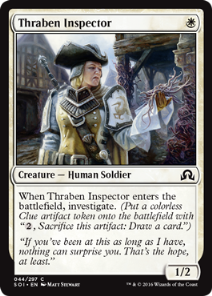
One deck that has yet to employ Smuggler's Copter, but which I believe would benefit from some copies, is Death & Taxes. Hatebear strategies suffer from Thalia, Guardian of Thraben's irrelevance on some board states, and her old college roommate Thraben Inspector seems tailor-made to crew the vehicle. Cycling through doubles of legendary creatures or spare Aether Vials also seems great here.

Copter in Eldrazi Stompy

Noticing Copter's success in some Colorless Eldrazi Stompy lists from Legacy got me pondering the card's viability in my Modern version of the deck. The more I marinated on the concept, the more I liked it.

Smuggler's Copter offers Eldrazi Stompy a host of intriguing micro-synergies. Besides simply digging for key cards, here's some of the magic the vehicle can work:

  • Allow Blinkmoth Nexus, Mutavault, and lonely Mimics to apply significant pressure, break through ground stalls, and dig us into business.
  • Compensate for the unfortunate Scourge-Chalice interaction, which lets opponents use dead Bolts and Paths as Unsummons; we can crew Copter with Scourge before attacks, guaranteeing a hit for three.
  • Wall 2/1 fliers and trade with three-power ones, previously a blind spot for Eldrazi Stompy and the primary reason for a full set of Blinkmoth.
  • Immediately kill Liliana of the Veil or Nahiri, the Harbinger after they resolve and remove our single creature.
  • Be very difficult to actually remove with a Chalice on the board, and impossible to nab at parity, while diverting Terminates and Malestrom Pulses away from more impactful threats like Reality Smasher.
  • Loot through dead copies of Chalice of the Void or clunky Serum Powders.
  • Prevent us from "hand-flooding" on lands so we can keep Sea Gate Wreckage active.
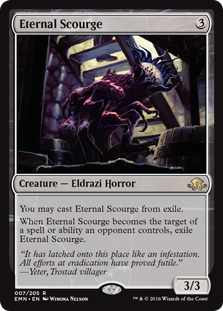
  • Combine with Relic of Progenitus and Eternal Scourge in post-board games to create an incidental card advantage engine.

On to the decklist, which has changed a bit since last time around. The Dredge nerf again makes Chalice plus Guide clear favorites over mainboard Relics, and Fatal Push's introduction to Modern has led me to drop Endless One from the core. I also prefer 23 lands to 24 with Guides in the deck. That gives the deck a total of five flex spots. In my latest build, these spots are occupied by two Endless Ones, two Copters, and a Matter Reshaper.

Colorless Eldrazi Stompy, by Jordan Boisvert

Creatures

4 Simian Spirit Guide
4 Eldrazi Mimic
4 Eternal Scourge
4 Thought-Knot Seer
4 Reality Smasher
2 Endless One
1 Matter Reshaper

Artifacts

4 Chalice of the Void
4 Serum Powder
2 Smuggler's Copter

Instants

4 Dismember

Lands

4 Eldrazi Temple
3 Gemstone Caverns
4 Ghost Quarter
4 Blinkmoth Nexus
2 Mutavault
3 Sea Gate Wreckage
1 Urborg, Tomb of Yawgmoth
2 Wastes

Sideboard

4 Relic of Progenitus
4 Spatial Contortion
3 Ratchet Bomb
2 Pithing Needle
2 Gut Shot

Brewing Around Copter

I'm happy with Copter's performance in Colorless Eldrazi Stompy so far, and am keeping it in the list for now. But it took quite a few games with that deck for Copter to show its worth. I wanted to expedite the process by brewing a whole deck around Smuggler's Copter.

Looking for Recruits

Step one was to find creatures made to fly. One such creature wasn't even so much a creature at all: Dryad Arbor. Arbor can be searched up and put directly into play with any green fetch, crewing Copter during an opponent's attack step to wall Goblin Guide or killing a planeswalker out of nowhere when we untap without any non-vehicle threats. The opportunity cost of playing a single Arbor is quite low, so I assumed I was already in green while looking for other threats.

The aforementioned Thraben Inspector was also high on my list, as was Voice of Resurgence. Voice makes it annoying for opponents to remove Copter with a creature-kill spell while the vehicle takes the offensive, as doing so would net us an Elemental token.

The final white card I considered was Blade Splicer, who could make a 3/3 and then start crewing. Unfortunately, three mana is quite a hefty tag for a deck without Aether Vial, so I decided to leave Splicer to the Death & Taxes decks.

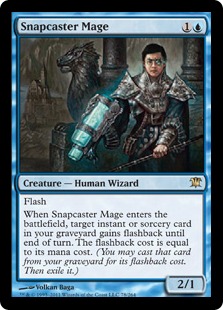
In blue, Spellstutter Sprite and Snapcaster Mage seemed like the strongest options (of any color, actually). We talked about Sprite above, and Snap shares its ability to enter the battlefield, generate value, and crew the Copter from there on out. Snap even improves our mana curve, enabling lines like these:
  • T1: Serum/Push
  • T2: Copter
  • T3: Snap-Serum/Push, crew, attack, loot

Desolate Lighthouse in Twin showed us the power of looting every turn in a deck with Lightning Bolt, so I also checked red for possible pilots. All I found were Grim Lavamancer and Pia and Kiran Nalaar, both unexciting candidates.

Growing Up

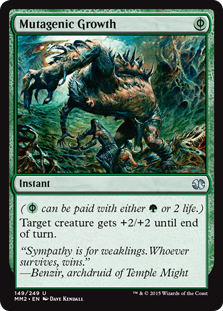
Playing around with x/2s in my early builds made me miss Mutagenic Growth, a card I've long used to beat the Bolt Test. Growth's upside with Copter was not lost on me; we'd crew it on our turn, go to combat, and Growth past a Bolt to hit for five in addition to casting a functional Mental Misstep. The nostalgic pangs led me to peruse the Modern card database for other creatures with those magical two points of toughness, as well as one point of offense to crew Copter with. (Imagine my crestfallen expression when Deathrite Shaman came up.)

I found Prophet of Distortion, an unassuming Eldrazi that drew me lots of cards at the Oath of the Gatewatch prerelease. With a Mutavault in play, Prophet relives his glory days, setting up a cascade of card advantage few decks can handle. When I examined Modern's benchmarks for creature playability, I learned almost any one-drop can see play in the format so long as it offers its deck enough synergy, and Prophet is no exception.
Committing to Mutagenic Growth also opened up Gnarlwood Dryad as a possibility. Early on, Gnarlwood taps to crew Copter and slows down assaults from aggro decks with its deathtouch. But after a few loots, it becomes a menacing 3/3 itself, making it savable by Growth. Like Sprite and Prophet, Dryad lends itself to multiple roles throughout a game.

Including delirium meant no grave hosers, and employing a gameplan dependent on one-drops has always benefited Tarmogoyf. Besides, would you even trust that I brewed this deck if it omitted the Lhurgoyf?

Introducing Sultai Copter

All that left was choosing a color for removal. White came with Thraben Inspector and Path to Exile, while red gave us Lightning Bolt.

I opted for black and Fatal Push because of how impressed I'd been with a package of 4 Push and 4 Snapcaster out of UB Faeries, especially with Copter active to keep the engine greased. Black also gives us more flexible creature (Murderous Cut) and permanent (Abrupt Decay) removal, as well as the excellent Fulminator Mage in the sideboard.

Sultai Copter, by Jordan Boisvert

Creatures

2 Prophet of Distortion
4 Gnarlwood Dryad
4 Tarmogoyf
4 Snapcaster Mage
4 Spellstutter Sprite
1 Dryad Arbor

Artifacts

4 Smuggler's Copter

Instants

4 Mutagenic Growth
4 Fatal Push
1 Abrupt Decay
1 Murderous Cut

Sorceries

4 Serum Visions
1 Life from the Loam

Lands

4 Misty Rainforest
3 Verdant Catacombs
2 Watery Grave
1 Breeding Pool
1 Overgrown Tomb
2 Darkslick Shores
1 Yavimaya Coast
4 Mutavault
2 Island
1 Forest
1 Swamp

Sideboard

2 Engineered Explosives
2 Fulminator Mage
2 Kitchen Finks
2 Ceremonious Rejection
2 Disdainful Stroke
1 Peppersmoke
2 Negate
1 Dispel
1 Dismember

Notes on the Deck

  • Serum Visions is necessary to help us set up against midrange or survive the early turns against aggro. It's also just really good. With Copter, Visions turns into a two-main-phase Preordain.
  • Copter's "downside" of needing a crew every turn is actually a plus in this deck. It allows us to have mana available to protect it with Spellstutter Sprite or Snapcaster Mage-Mutagenic Growth by the time we make it a creature.
  • It's best to hold Prophets in hand until later against midrange decks if we have other ways to crew Copter early. Once opponents have spent resources on Copter and Tarmogoyf, dropping Prophet and immediately drawing a card makes it challenging for grindy decks to come back.
  • Tron isn't that bad of a matchup, thanks in no small part to the six dedicated hate cards in the sideboard. Copter helps us get to Rejection, Stroke, Fulminator, or Snapcaster every turn, making it hard for Tron to resolve bombs before dying to our little beaters.
  • Fulminator Mage can resolve, crew Copter, then pop a land. He even survives Bolt thanks to Mutagenic Growth while beating down!
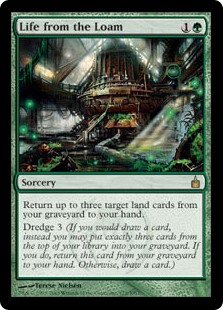
  • Life from the Loam gives us plenty of gas to loot with and helps grind out removal-heavy decks by recurring Mutavault and Dryad Arbor. It's bad against faster decks, though.
  • We can play a single delve spell at close to no cost, despite packing cards with delirium, and I started with Tasigur. Soon, I realized I wanted a removal spell to dig for that could kill creatures that cost more than four, so that slot went to Murderous Cut.
  • Yavimaya Coast is a fifth colorless source for Prophet, which I found ideal with two copies of the Eldrazi main.
  • Even in Sultai or other color combinations without red, Mutagenic Growth provides a reach element that becomes more reliable with Snapcaster Mage in the equation.

Possible Variations

Spellstutter Sprite, Snapcaster Mage, and Dryad Arbor are awesome in conjunction with Smuggler's Copter. But as mentioned above, I don't think the black is necessary in this deck. All I know is we want access to a cheap removal option, so white (Path to Exile, Voice of Resurgence, Thraben Inspector) and red (Fulminator Mage, Lightning Bolt) are also feasible third-color splashes.


I can also see a build without Mutagenic Growth, especially if the metagame shifts away from Lightning Bolt. For now, I've been loving Growth against decks like Grixis and Jund that should beat us on paper, but have a tough time in practice when they don't draw multiple Kolaghan's Commands.

A Loot of Fun

Lately I've started messing around with Copter in Hatebears myself. Mutagenic Growth is great at saving Leonin Arbiter from Bolts, and Life form the Loam to bring back Ghost Quarters can prove backbreaking against plenty of opponents. All the brewing has left me feeling like Copter has a bright future in Modern, despite its time in Standard being cut short.

Insider: The Modern Metagame and the Market

Are you a Quiet Speculation member?

If not, now is a perfect time to join up! Our powerful tools, breaking-news analysis, and exclusive Discord channel will make sure you stay up to date and ahead of the curve.

The Modern metagame has been in motion since the banning of Gitaxian Probe and Golgari-Grave Troll. Then we added Aether Revolt and the printing of Fatal Push, which may now be the single best removal spell in the format, ahead of even Lightning Bolt and Path to Exile. It’s format-defining to be sure, and it has brought about a black renaissance in Modern.

The changes are troublesome for creature decks like Infect and Death's Shadow Zoo, which lost an important card in Probe and now have more efficient removal to fight through. The pressure on creature decks is a boon to combo decks, which struggled to keep up with these aggressive strategies. Midrange and fair strategies also win as they finally have room to breathe with Dredge having been kicked down. There are some trends emerging in the metagame with real market implications, and today I’ll explain what’s happening.

The biggest story in Modern this week has actually been the “Cheerios” combo deck based around Puresteel Paladin and free equipment, which is suddenly mathematically viable because Aether Revolt brought us Sram, Senior Edificer, which functions identically to Puresteel Paladin in its ability to draw cards from equipment. In a goldfish situation, the deck is extremely fast, capable of winning the game on turn two, and early reports are that the deck is a very real force in Modern, and it’s already putting up results online and in paper.

It has meant big things for the prices of its cards, especially Retract and Puresteel Paladin. These have already spiked, and it’s unclear if they will grow further, but there are other cards to watch as well. Paradise Mantle has seen some very real gains on Magic Online, spiking to over a ticket after sitting below a tenth of a ticket for years. The price of the paper version has been suppressed since the Modern Masters reprinting, and I expect there will be nothing but upside in the future of the card unless it is reprinted or the Cheerios deck is banned, both of which I think are unlikely.

There was an error retrieving a chart for Paradise Mantle

Sigil of Distinction can be cast for free and is thus a great inclusion in the Cheerios deck, and its paper price has approximately doubled from $0.4 to $0.7, and I have to imagine it’s headed for $1 or more when Cheerios becomes popular.

There was an error retrieving a chart for Sigil of Distinction

Mox Opal is also a key part of the Cheerios deck, and it has seen some small gains. It’s also part of Affinity, which has been the best performing fast creature deck in a world without Gitaxian Probe. It’s also seeing an increase because it was slightly suppressed before because of its potential to be banned last announcement. It’s on the Modern short list, and now that it’s part of a new combo deck it might more likely to be banned now than ever, so I’d tread cautiously.

There was an error retrieving a chart for Mox Opal

Many of the market changes revolve around black and Fatal Push, like the spike of Esper Charm after a Fatal Push-wielding Esper Control deck finished in ninth place of the 230-plus player SCG Modern Classic.

There was an error retrieving a chart for Esper Charm

Countersquall has risen to unlikely heights on the back of Grixis Control, now sitting at $7. Corey Burkhart has won with the deck for the past year, highlighted by winning the Modern MOCS a couple events ago. Now, the deck has access to Fatal Push and is likely to become a tier-one competitor.

There was an error retrieving a chart for Countersquall

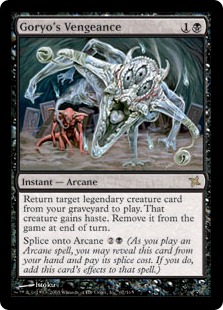
The banning of Golgari-Grave Troll has meant people are cutting back on graveyard hate, and it has created an opening for Goryo's Vengeance decks in the metagame. They have performed very well at the last two SCG Modern Classics, finishing third in Columbus and winning in Richmond, and the prices of the deck's staples have seen an increase online. Besides its namesake, Worldspine Wurm is also on the move, and I’d pay attention to Through the Breach as well.

There was an error retrieving a chart for Worldspine Wurm

Another great graveyard interaction is the new Renegade Rallier and Saffi Eriksdotter, which can go infinite with a sacrifice outlet like Viscera Seer to scry through the deck. The price of Saffi Eriksdotter has seen a huge spike already as the combo is adopted into the Abzan Company deck, but I’d pay attention to the archetype and target its cards in general. A card with big potential is Voice of Resurgence, which has become very attractive as a way to generate value against Fatal Push.

There was an error retrieving a chart for Voice of Resurgence

The push back against Fatal Push has already started, and there is specifically a renewed interest in more expensive threats that avoid it. Thragtusk has been discussed as one of the best five-mana creatures that is strong in general against midrange and control decks. The price spiked online after the bannings before falling back to pre-spike levels, but in the lasts few days it is back on the rise. The paper price has been stagnant for a year and a half, and it’s due to start rising if it sees more Modern play.

There was an error retrieving a chart for Thragtusk

The germ token of Batterskull can be destroyed by Fatal Push, but overall it’s a very robust card that over the long game will beat any amount of removal. It’s also a great tool for control decks that might be using Fatal Push, which could explain its steady rise on MTGO. I’d pay attention to paper copies, which were suppressed after a Grand Prix promo printing a few years ago.

There was an error retrieving a chart for Batterskull

There is also renewed interest in alternative combo decks. The banning of Summer Bloom knocked down the Amulet of Vigor archetype, but it has survived as a rogue deck that could return to the metagame in a world without the fastest aggressive decks. Online, Azusa, Lost but Seeking is now the highest it has been since the banning, and the paper price began increasing this month after months of decline.

There was an error retrieving a chart for Azusa, Lost but Seeking

Keep Temporal Trespass on your radar, It has been increasing all month on MTGO and in paper, where it hit $3 after being $1.50 on New Year’s Day. The Takin’ Turns Modern deck cracked into the top 16 of the SCG Modern Classic in Richmond last weekend, so there’s some proof the deck has become competitive, and any of its staples could be due for a rise.

There was an error retrieving a chart for Temporal Trespass

Breaking // Entering combines with Aether Revolt’s Expertise cycle, which can cast both halves of split cards for free. Its paper price continues to rise, and has now hit $2 with an upward trajectory.

What do you make of the Modern metagame and its market implications? Leave a comment below!

--Adam

Free: Shark Tales – Time Warps and Other Interesting Trades

Are you a Quiet Speculation member?

If not, now is a perfect time to join up! Our powerful tools, breaking-news analysis, and exclusive Discord channel will make sure you stay up to date and ahead of the curve.

This article is the second in my series on sharking. The previous article can be found here.

Quiet Speculation and I do not condone sharking. We have published this article on the free side to make sure it's available for everyone to learn from. If you cannot do well in the market without ripping people off, then you really shouldn't be into MTG finance. I am not proud of my past as a shark and have left it behind me, but I do believe there might be some lessons to be learned from it. I am writing these articles for that reason.

This article will elaborate on some of the topics mentioned in the previous article and introduce a few more things to watch out for to avoid getting sharked.

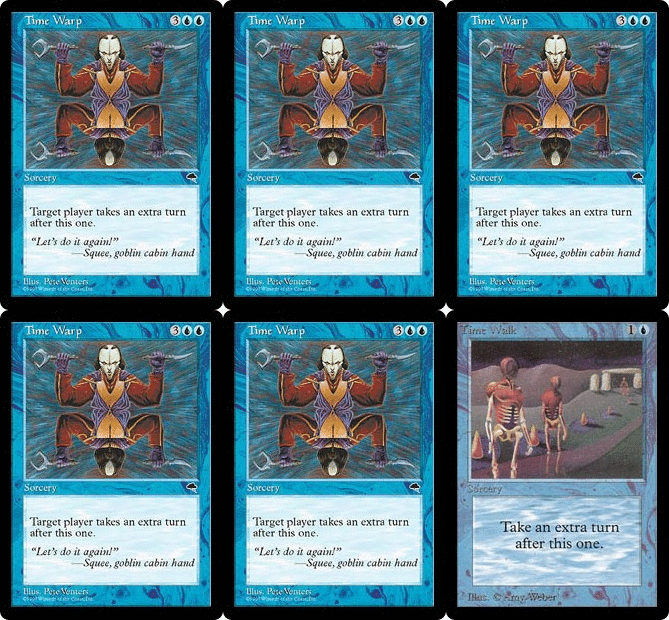
Time Walks Warps

Time Warp - Walk - 3Time Warp - Walk - 2Time Warp - Walk - 1

At the monthly convention in Purmerend, there was this young guy who I would regularly trade with. We were talking about Magic as he was browsing through my binder. He knew I was a fanatical trader who aimed to get ahead. I think he looked up to me as he would often follow me around or watch me trading.

At some point, he came across the three Time Warps in the binder and exclaimed: "WOW! You have three of those?!?"

"Uhm, yeah, I do, as you can see," I replied, somewhat confused. He said that he had heard those are very expensive, and it soon became clear that he thought he was looking at Time Walks. Trading them away as if they are Walks is even beyond how far I would go (and probably beyond what's in his binder in any case), so I explained that he was confusing the cards. I told him they were still quite expensive, but not close to what he has in mind, and he expressed interest in trading for them. I ended up getting about twice their value.

Tactics used:

  • I knew my trading partner well; I knew that he was less knowledgeable than me and was also (subconsciously) aware that he looked up to me.
  • Made casual chit-chat.
  • Took advantage of an obvious mistake in his valuation of my cards.
  • Was his only source of information and overstated how good the cards were.
  • Put together a very good deal for me knowing he would not ask for a second opinion.

I'm sure this guy would have gone with pretty much everything I told him, as that's how our trades had always been. He certainly wasn't going to admit that he knew less than me; it was already bad enough that he had made the mistake of incorrectly identifying the card.

So what could he have done better?

  • Verify: Your trading partner may not have your best interest at heart. Don't believe everything they tell you. I'm sure he knew about checking the various magazines with price guides available at the time.
  • Move in packs: If he would have had his friends with him, it would have been much harder to make this deal. It would have allowed him to get a second opinion or have a friend blurt out that he was getting taken advantage of, and it would have led to me being far more careful to avoid those things.

I was still very young myself when I made this deal. These days I probably wouldn't even trade with someone his age knowing they probably don't know the ins and outs of trading. This doesn't mean that there aren't sharks out there who would and who are trying to make a trade a bit further away from everyone to avoid outside comments as they take advantage of a younger player's ignorance.

There was an error retrieving a chart for Mongrel Pack

Helping a Friend

This trade took place much later, and I wasn't even a participant.

I went to a different local convention with friends. A few were playing some Limited format, but others of us were there hoping to play some Commander. Some guys came up and what a surprise: one of them is someone I knew from the convention in Purmerend (which had stopped operating years ago at this point). We played with them, talked about Magic and had a fun time. I looked at their binders, but there wasn't much I was interested in. We may have made a minor trade; nothing special.

One of the friends I was with did see a few cards he wanted and started working something out. I learned that some of the cards he wanted were shared between two of the other players, so they both had to agree to any trades. I watched but didn't otherwise get involved in the trade, as I knew my friend had a decent idea of values and didn't want to be seen as meddling. The parties couldn't seem to come to an agreement and eventually asked for my input. I couldn't resist and jokingly remarked: "Four cards for four cards; can't get much fairer than that!" They closed the deal as is and my friend got away with a steal.

I know very few traders who would say no to a deal skewed in their favor when proposed to them, and I know my friend certainly isn't one of those few. Afterwards, he told me he couldn't believe they accepted the trade, so he was definitely aware of its skewed nature.

Tactics used:

  • My past reputation: I'm sure the guy recognized me from years ago and probably knew I was a fanatical trader back then.
  • We had some fun together first when we played a couple of games. This sets the stage for easier negotiation later.
  • Joked around: I tend to make scattered jokes while playing, and I am pretty good at keeping a straight face, so they probably didn't realize I was joking when I gave my answer.

They probably figured that if my friend values my thoughts on the deal, then they can probably trust what I say about it too.

So what could they have done better?

  • Stuck to their guns: They were clearly doubting the deal at first, and they shouldn't have let me change their minds on that. Even regardless of prices: if you're unhappy with a deal for any reason, you should walk away.
  • Get a second opinion: There was a dealer present. For just a small deal, I'm sure he would have evaluated both sides for them. They had no reason to trust me as an expert, and I of course wasn't going to screw my friend by pointing out I said it as a joke.

Maybe I should have interfered in the deal, but I know my friend would have then wanted to take revenge and butt in on trades that might be skewed in my favor. That would get annoying pretty quickly, especially as he's not as accurate on grading or prices, so he may very well be wrong but still succeed at making my trading partner have doubts.

There was an error retrieving a chart for Friendly Fire

Deck Building Advice

I've run into this situation several times, and it always plays out similarly. Sometimes it's a beginner, sometimes a more advanced player, but always someone whose skill level is below mine.

I meet a new player and I end up discussing Magic. They are soon impressed by my knowledge of the game. At some point, I'm invited to play and after beating them easily, I'm asked for advice. Of course I provide the requested advice, and what do you know? I just happen to have some cards with me that match my advice. I look through their cards, and often they have quite a few cards I would like to get from them. In fact, what they have for me far exceeds what I have for them, even if I start scraping the barrel. However, my side is almost completely older cards that they didn't know existed, and it's obvious that they won't know how to price them.

Of course, I could at this point only trade for cards from them that are roughly equal in value to mine. I may even make the deal interesting for myself by trading up at no premium and this would still be defensible as fair. If I told them as much, they would probably be absolutely fine with it. It is, however, incredibly tempting to make a skewed proposal at this point, as it's fair to assume they just won't know fair from skewed, and even if they have doubts, they will remember the help I gave them. It's not even that I'm out to make an unfair deal; I'd be happy to make it a fair one by adding more on my side, but there's simply nothing else they'd want or even take.

It takes a strong dedication to being fair when this situation comes up. I would still be tempted by this, especially if I could get some cards I still need for my collection. These days I won't give in to the temptation, but it's hard.

Tactics used:

  • Being nice. Being nice and helpful in one aspect of the game almost always results in them letting their guard down when it comes to other aspects – such as trading.
  • Thinking along. I made suggestions for their deck, and as I appear to be the better player, I give the impression that the cards I suggest must all be very good for their deck.
  • Abusing a knowledge gap. The cards I recommended are likely to be hard-to-move cards, but they won't know prices, so I could tell them anything.

Trust is very easy to abuse.

So what could they have done better?

  • Nothing: I wish I could tell you how to avoid this, but you shouldn't doubt every player being kind to you. You'd be right not to 99.9 percent of the time.
  • Watch for mistakes: Perfectly executed, there really isn't anything you can do as you are trusting this person, but, you may catch the shark on a mistake that gives away his intentions. You'll have to apply all suggestions I've made in this and the previous article and hopefully avoid trading with him altogether. Never think you can outsmart the shark. You'll be trying to beat him at his own game, and he'll be happy to take advantage of that mistake.
  • Read articles like this one: Just being aware that sharks are out there, knowing some of the tactics they use and preparing in advance for trading means that you'll never face a knowledge gap as large as the new player who hasn't even made a trade yet.
There was an error retrieving a chart for Cunning Advisor

Conclusion

In these articles, I've shown you a few ways to avoid being fooled by a trade shark. I share these tactics because I want to help you identify sharks and avoid them. The sharks that can do all the things I've described are a rare breed, making it unlikely that you'll ever run into them in the wild. There are, however, more common variants, and I hope I've at least given you the tools to identify those in time to get out of the water.

If you want to further read on how people might scam you, I highly recommend Simon Lovell's book How to Cheat at Everything.

Avatar photo

Niels Rietkerk

Niels currently lives in Amsterdam, The Netherlands and has been collecting, playing and trading since '97. A casual player at heart, his first official tournament was the Unhinged prerelease. You can most commonly find him playing multiplayer Commander, probably trying to talk his way to a win. He has always been passionate about trading, but these days leaves the more volatile markets to people with more time, instead focusing primarily on bulk and collections. As he's one of the most prolific forum members it should come as no surprise that Niels loves to discuss. Feel free to comment or reach out to him on the forums or through Twitter.

View More By Niels Rietkerk

Posted in Behavior, Cheating, Finance History, Free, Free Insider, Shark Tales, Special, Timeless Info, TradingTagged , 2 Comments on Free: Shark Tales – Time Warps and Other Interesting Trades

Have you joined the Quiet Speculation Discord?

If you haven't, you're leaving value on the table! Join our community of experts, enthusiasts, entertainers, and educators and enjoy exclusive podcasts, questions asked and answered, trades, sales, and everything else Discord has to offer.

Want to create content with Quiet Speculation?

All you need to succeed is a passion for Magic: The Gathering, and the ability to write coherently. Share your knowledge of MTG and how you leverage it to win games, get value from your cards – or even turn a profit.

Insider:QS Cast #52: Morgan, Lodestone, and PTAER!

Are you a Quiet Speculation member?

If not, now is a perfect time to join up! Our powerful tools, breaking-news analysis, and exclusive Discord channel will make sure you stay up to date and ahead of the curve.

Play


The QS Cast has returned: Chaz Volpe, and Tarkan Dospil continue on with where the cast left off and in this episode they discuss the following:

  • Morgan Wentworth, community force, and manager of Lodestone Games joins the panel! @MTGValkyrie @LodestoneCG
  • We discuss the player/manager duality through Morgan’s perspective at an LGS.
  • How a group of players can be advantageous at running a store and deciding how to shape their inventory
  • SCG/Pro Tour Aether Revolt discussions
  • Interests
  • What we’re acquiring

Cards we discussed:


As always, please comment and leave questions for us to address on the next cast! We will be making QS Insider questions a priority, and we want to know what you want covered.

Enjoy! We’re glad to be back.

Find us on Twitter: @ChazVMTG  @the_tark @MTGValkyrie @LodestoneCG

Analyzing our New Modern: SCG Richmond Classic Recap

Are you a Quiet Speculation member?

If not, now is a perfect time to join up! Our powerful tools, breaking-news analysis, and exclusive Discord channel will make sure you stay up to date and ahead of the curve.

With Dredge now officially (re)axed, Infect presumably hindered as well, and a new set in the mix in the form of Aether Revolt, Modern Magic as we know it is primed for a potentially significant change from the norm. The relatively stable Modern landscape we’ve become accustomed to has suddenly transformed into the Wild West, which should excite even the most depressed Magic player. Soon, we will have a clear picture of the new "life as we know it," but until then, we can only speculate, test, and speculate some more. With that, let’s take our first dive into Modern Magic in 2017, by analyzing the SCG Modern Classic results from Richmond last weekend.

As an aside, I was actually in Richmond for a wedding last weekend, but couldn’t break away to attend the event. “But everything as we know it could possibly change!” was unfortunately not a valid excuse to warrant my absence, so I had to miss out. Still, it would be really nice if some brand new archetype rose from the ashes of the previous format giants like some reborn phoenix to prove my point, but I doubt my newly-wed sister-in-law would care. So, there’s my skin in this game. Fingers crossed for Mono-Green Control or something!

[wp_ad_camp_1]

Top 16 Archetypes

  1. Goryo's Vengeance
  2. Burn
  3. Jeskai Control
  4. Naya Company
  5. Jund
  6. RW Prison
  7. Jeskai Control
  8. Abzan Company
  9. Grixis Delver
  10. Burn
  11. Ad Nauseam
  12. Scapeshift
  13. Zoo
  14. Affinity
  15. Jund
  16. Taking Turns

Well, so much for that. For those new to how we do things around here, we’ll break down the individual deck lists shortly, but before that we’ll dive in to the archetype data to get a quick sense of how the metagame looks on a surface level.

Starting at a macro level, the archetype distribution in the Top 16 is fairly diverse, at least compared to some past environments we’ve seen before. A full thirteen different archetypes are present in the Top 16, with only Jund, Burn and Jeskai Control taking two slots in the final tables. This in itself isn’t totally surprising. Besides, this is one of the first events after all the big shakeups, so it makes sense to see players trying a wide range of things. It also makes sense to see a wide range of things performing, before top decks are found, streamlined, and become represented at levels indicative of their power.
Looking only at the Top 8, a full seven archetypes are represented, which for those counting at home is considered a slam-dunk in the circles that value diversity in Modern. It’s hard to pinpoint a top deck (though the final table makes a strong case for one) without seeing a disparity in representation between archetypes, so step one of solving the puzzle of “best deck” is still up in the air at this point.

As a brief aside, it’s important to recognize that a diverse field isn’t necessarily a ubiquitous sign of format health. Twenty different viable archetypes sounds like a great thing for everyone, but can lead to situations where there are too many things to cover and sideboards can feel like they are stretched too thin. Those familiar with the history of Modern can remember a time not too long ago when the format was exactly like this, and archetype selection/deck composition was more a game of "dodge the hate" than anything else. Rock/Paper/Scissors is one thing, but Rock/Paper/Scissors/Chair/Stapler/Spoon/etc./etc. is something entirely different.

Back to the results at hand, the immediately apparent takeaway for me is the return of midrange to the top of the Modern mound. Pre-banning/Aether Revolt release, all non-Jund midrange had been successfully pushed out of the metagame due to a variety of factors (Bant Eldrazi, ever-faster linear archetypes, etc.) but the true culprit was, definitively, Dredge. What can reactive midrange strategies do against the card advantage engine like Life from the Loam plus Bloodghast? Didn’t draw your hate card? Prepare for a loooooong match.
With Dredge out of the way (and Infect kicked down a notch as well), it looks like the stage is set for midrange to return back into the fold, at least based on the results of this event. Sure, it didn’t take home the trophy, but when “bad” decks like RW Prison can put up results, you know the format is aligned strongly in midrange’s favor. It’s worth noting that if this format stays in this midrange mold, one of the best ways to fight a reactive format is with some good old fashioned unfair combo.

Goryo's Vengeance, by Christopher Calhoun (1st, SCG Richmond Classic)

Creatures

4 Simian Spirit Guide
4 Worldspine Wurm
2 Borborygmos Enraged
4 Griselbrand

Instants

2 Desperate Ritual
4 Goryo's Vengeance
1 Manamorphose
4 Nourishing Shoal
4 Through the Breach

Sorceries

4 Cathartic Reunion
4 Faithless Looting
4 Night's Whisper

Lands

2 Mountain
4 Swamp
3 Blackcleave Cliffs
2 Blood Crypt
4 Bloodstained Mire
4 Temple of Malice

Sideboard

1 Engineered Explosives
1 Laboratory Maniac
1 Blood Moon
2 Pact of Negation
2 Sudden Shock
1 Emrakul, the Aeons Torn
1 Anger of the Gods
2 Collective Brutality
1 Pyroclasm
1 Shatterstorm
1 Vandalblast
1 Boseiju, Who Shelters All

One of the most unfair combos left standing after the ban-happy past couple years, Goryo’s Vengeance is a deck still capable of turn-two kills in a turn-four format. On the surface, it seems that of all the decks to benefit the most from the Infect/Dredge demise, Goryo’s Vengeance stands above them all. Infect (and Burn) were the best decks in the format that could challenge Goryo’s Vengeance in terms of speed, and with the apparent downgrading of Infect, Goryo’s Vengeance is left free to beat up on the field. With Dredge gone, most of the graveyard hate in the format went with it, which is the best way to fight this archetype as well. Seriously, Terminate and Kolaghan's Command are not going to get things done.
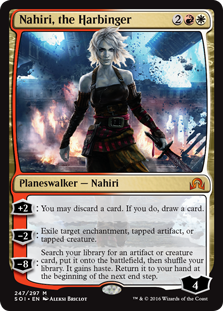
Golgari Grave-Troll might have been the card to get banned, but really it was Cathartic Reunion that pushed the deck (back) over the top. This has created a scenario where the real problem here is Cathartic Reunion, but Grave-Troll took the fall while Goryo's Vengeance still gets to play the problem card. Now, I’m not saying that Wizards should have banned Cathartic Reunion instead. I’m just speaking to the power level of the card and making a point with myself that its inclusion here significantly helps the strategy.

It’s far too early to start talking about Goryo’s Vengeance in terms of "best deck" and "how to beat it," so we’ll stay away from that for now. Instead, I’d like to talk a bit about one of my favorite archetypes...

Jeskai Control, by Matthew Vook (3rd, SCG Richmond Classic)

Creatures

4 Snapcaster Mage
1 Emrakul, the Aeons Torn
1 Vendilion Clique

Instants

1 Cryptic Command
4 Lightning Bolt
2 Lightning Helix
2 Mana Leak
4 Path to Exile
3 Remand
2 Spell Snare

Planeswalkers

4 Nahiri, the Harbinger

Sorceries

3 Ancestral Vision
2 Anger of the Gods
4 Serum Visions

Lands

2 Island
1 Mountain
1 Plains
2 Celestial Colonnade
4 Flooded Strand
1 Ghost Quarter
1 Glacial Fortress
1 Hallowed Fountain
1 Sacred Foundry
4 Scalding Tarn
3 Spirebluff Canal
2 Steam Vents

Sideboard

1 Izzet Staticaster
2 Rest in Peace
1 Stony Silence
2 Blessed Alliance
1 Dispel
2 Negate
3 Geist of Saint Traft
1 Vendilion Clique
1 Keranos, God of Storms
1 Supreme Verdict

Nahiri, the Harbinger is back, baby! The format still is (and always was) soft to a four-mana permanent with lots of loyalty, and finally the stars have aligned again for Nahiri to re-take the top end of the curve. Dreadbore remains the best way to kill this threat, which is bad news for every deck that is not Jund. Nahiri, the Harbinger isn’t great against the entire field by any means, but if a significant percentage of the metagame is midrange (which is to be expected for now, at least) then Nahiri, the Harbinger is exactly what I’d like to be doing.
With that being said, we have to talk about Rewind, as a freaking three-of over Cryptic Command! No, no, we can’t use the “he couldn’t afford Cryptic Commands” argument here; this deck is one of the most expensive to build besides Jund. Matthew played Rewind with purpose, and I’m sitting up and taking notice.

So, what does it do? Yes, I know it counters a spell and untaps lands, but how does it contribute to the deck's plan? We can counter a thing and also Snapcaster Mage another spell for value in the same turn, which definitely puts us ahead in the tempo department. We can counter a thing while also flashing in Vendilion Clique at end of turn for more disruption and to advance our board. It also combos with Blessed Alliance out of the board, in the sense that we get to play two four-cost spells and feel relatively good while doing so.


I don’t know, countering a thing and drawing a card (while also having access to a bunch of other tricks) seems like a much better use for our top-end counterspell of choice, but it’s difficult to argue with the results. One thing I will say is that in many situations where Jeskai Control is living to four mana to cast one of either Rewind or Cryptic Command without immediately dying right after, it should be winning regardless. So, when we are able to cast one of these two spells, it often won't matter much which one we’re casting, as in those situations they both are probably doing similar things to influence the game. This doesn’t help us determine whether one is better than the other, but it does give a possible explanation for why we might be seeing these numbers in the decklist. Now that I’ve said that, watch Rewind become the next big thing that takes over Modern. Crazier things have happened…

Conclusion

This new Modern looks pretty similar to Modern formats of old, at least right out of the gates. This isn’t necessarily a bad thing, as options are fun, especially after such a strict Rock/Paper/Scissors environment in our recent past. We’re just getting started with our exploration of this Wild West, and next week’s results could look vastly different to the ones we’re seeing now. Still, I’m glad to be back analyzing new data, and I’m looking forward to seeing the results start to flow in! What do you think? Let me know in the comments below, and I’ll see you next week!

Trevor Holmes

Insider: Selling on TCGplayer 102 – Advanced Tips & Tricks

Are you a Quiet Speculation member?

If not, now is a perfect time to join up! Our powerful tools, breaking-news analysis, and exclusive Discord channel will make sure you stay up to date and ahead of the curve.

Welcome back!

As most of my regular readers are aware, I sell a decent number of singles on TCGplayer.com. I vastly prefer the customer support and locally-owned business aspect of TCGplayer over eBay (I live an hour away from their headquarters, and it's a pretty sweet place), and I have several close friends who are dedicating their careers to the company. I just hit the 3,000 sales benchmark a few weeks ago, hoping to continue and eventually hit that sweet 5,000 milestone in the next couple years.

3k sales

While I'm not a member of the TCGplayer Direct program, I like to believe that I know a reasonable amount about selling on the program, maximizing the value I get out of my cards when selling, and using the tools that TCGplayer provides to keep sales flowing on a regular basis. It wasn't until I was discussing the selling platform with a couple of friends at the store where I sell singles that I realized some people only utilize the bare-bones of TCGplayer when selling cards. That's all pretty vague, so I'll clarify; for those of you who sell on TCGplayer semi-regularly, how many of you know how to run a price differential or download a pull sheet?

Price Differ-what?

If you're a lower level TCGplayer seller or just live a really busy lifestyle without tons of hours to dedicate to Magic, sometimes you have to "hide" your store temporarily until you know you'll have the time to dedicate to shipping out orders. It happens to me relatively frequently with my grad school plus assistantship schedule; sometimes my store is offline for a few days at a time while I sell cards on Twitter, drop stuff off at the display case in the shop or am just dealing with real life stuff. I'll record all my transactions, then remove the sold cards from my TCGplayer store so I don't accidentally oversell something.

Prices naturally change while I'm away, so sometimes I'm in for a rude awakening when I turn my store back on. I remember over spring break last year, my store was offline for almost two weeks while I was working on a huge inventory and organization project. The banned and restricted list updated while my store was hidden, and I turned my store on later to find that I immediately sold my Tezzeret, Agent of Bolas at 50 percent of market price because of the Thopter Foundry-Sword of the Meek unbanning. Whoops. I don't have time to constantly check every single card in my 5K inventory box for spikes, so it was kind of frustrating to just hope nothing had jumped in price before I had a chance to update my price. Remember, I'm nowhere near the level of Crystal Commerce yet.

In other situations, prices get outdated because of a reprint or downward trend in demand. Maybe I missed the window to sell Phyrexian Arena at $6 before the reprint announcement, but I forgot to update the price or buylist them out. The old Eighth/Ninth/Apocalypse ones will end up sitting in my inventory box doing nothing, forgotten about to the world. In this situation, my non-Conspiracy printings will rot in my box unless I have some way to recognize that they're vastly overpriced. And this is annoying especially when I am willing to take a much lower number on them.

tcg2

Here's a list of all the tabs that TCGplayer provides to all sellers. While I don't have a large spreadsheet or sample size of low-level sellers to work with, my anecdotal evidence suggests that the Inventory, Orders, Messages, Feedback, and Payments tabs were the most used.

I showed my friends my TCG storefront and how to run a price differential, and they were surprised that they could find cards whose prices were horribly outdated with a quick few clicks. Have you ever been searching for a card to buy on TCGplayer, and thought, "Holy crap, why does this person still have Golgari Grave-Troll at $15?" Well, now you can avoid being that seller with the help of a price differential report. By clicking the different metrics at the top of the columns, you can sort things accordingly and manage each listing individually. If you have a huge inventory that's been stagnant for a while, it could take a couple hours to push through. Thankfully, you'll be rewarded by an increase in sales volume once you release your store back out onto the internet for your customers to see your updated prices.

price differential 1 26 positive

Pictured above is my positive price differential report. It's showing all of the cards whose prices are pretty outdated, where my listings are way too high. You can see some pretty obvious inclusions in there that have fallen by the wayside when I forgot to update: Phyrexian Arena got reprinted, Grave-Troll got banned, and foil Painful Truths has lost its Modern luster.

While some of these prices should obviously be updated to reflect current data, it's also important to note where to stand your ground. Marton Stromgald has sold at $3 to $4 before, and someone happened to be randomly undercutting everyone else by a huge percentage at the time of this differential report. Instead of blindly chasing to match every listing to the bottom, I'm happy to wait on this underrated Reserved List EDH card.

price differential 1 26 negative

On the opposite end of the spectrum, here's my negative report; showing all of the cards I currently have listed on TCGplayer that are probably underpriced by some margin or another. My most grievous offender is apparently a German Tamiyo, Field Researcher, where I'm trying to get approximately the English value out of my foreign copy. The next lowest listing is in the $30s, which is probably wildly incorrect. On the other hand, I was about to unhide my store and reveal that I had $11 copies of Primal Vigor, which was my pick of the week recently on Brainstorm Brewery. Hiding my store and running this report lets me listen to and capitalize on my own advice, adjusting the price to the $20 where I'd be more comfortable selling it.

Pull Sheets

In addition to price differentials, I also mentioned something about a pull sheet. This tip might be less helpful for those of you who only carry a few hundreds of cards worth of inventory at a time on TCGplayer, but should be extraordinarily helpful if you're looking to expand your inventory into something similar to what I shared last week. Here's a reminder picture, with 2000 toploaders for scale.

20170125_191236

So let's say you get two dozen orders over the course of a day, and you're getting ready to pull them out of your inventory like I have listed above. The method I used to use (and it's pretty slow) was to look at each order slip from TCGplayer individually, search for the correct set and card, then pull that entire order. Most of my orders are one or two cards a piece, but it can be a real pain to traverse from Innistrad to Mirrodin to Kaladesh across a single order, then end up going through those sets over and over for other orders a few minutes later. It would be so much easier to pull everything from 10th Edition, then 2010 Core Set, and go alphabetically all the way down to Zendikar in one fell swoop. Well if you go to the "Orders" tab in TCGplayer, check off the orders you're currently processing and click the "Pull Sheet" button, you'll download a .csv file that looks kinda like this.

Pull Sheet TCGplayer

Boom. Every card from today's orders, all sorted in a simple-to-access spreadsheet. You can organize this sheet however you please; in my case, I've arranged it alphabetically by set in order to pull all the Conspiracy, then Duel Deck, all the way down to Worldwake. After that, it's a simple matching game of Magic cards to packing slips, saving you some amount of time in the process. It's a really simple trick, but I have a feeling it will help some people because it's not exactly intuitive when you start selling really small volumes on TCGplayer.

If this kind of article helps you improve your selling and listing on TCGplayer, let me know! I'd be interested in writing more about my adventures and knowledge of the site if there's reader interest.

End Step

The Power Hungry Commander 2013 deck is a pretty spicy pickup at $30 if you can still find it sitting on your LGS's shelf. The power card is the previously mentioned Primal Vigor, a half baked Doubling Season that's soaking up most of the deck's MSRP. While there are a few other $2 or $3 cards floating around in the list, it's something you should reasonably expect to crack and flip for a $10 profit if you're lucky. These decks still have some great bulk rares and C/U as well, which can't go ignored.

power hungry

Insider: The Continued Evolution of Aether Revolt Standard

Are you a Quiet Speculation member?

If not, now is a perfect time to join up! Our powerful tools, breaking-news analysis, and exclusive Discord channel will make sure you stay up to date and ahead of the curve.

Today, just like every day, is a great day for Magic. We have new cards to play with from Aether Revolt, strategies to cobble together drafting the set, and a bunch of cool formats we can all enjoy. There are two main topics I want to discuss today. We’ll take a look and see what happened at SCG Richmond this past weekend and then dive into some specific cards that are financially interesting right now.

Star City Richmond Results

This past weekend, we got more Standard results from SCG Richmond to add to what we had from the previous weekend. Reminding us of Lemony Snicket, this is another series of unfortunate events.

My hope from last weekend was that with the metagame narrowed down so much, players would be able to identify a solution to the big two archetypes, Saheeli Combo and Green-Black Aggro.

To start off, I did a metagame breakdown of the top 32 decks.

GB Aggro 12 (38%)
Jeskai Saheeli 7 (22%)
4-Color Saheeli 4 (12%)
Misc Control 5 (16%)
Misc Aggro 4 (12%)

If we compare to last week's standings, we end up with some interesting results. Certainly the percentage of successful green-black decks has gone up significantly. I imagine the top three from last week all being the same colors impacted this dramatically. The percentage of Saheeli Rai decks stayed reasonably similar. Last week the two versions took up 39 percent of the top 64 and this week it dipped down to 34 percent. There were about the same total of miscellaneous decks floating around, but this time they were split about evenly between aggro and control.

There was an error retrieving a chart for Saheeli Rai

The upcoming Pro Tour will hopefully diversify the metagame, but from week one to week two, we’ve already lost two big archetypes. Both the Vehicles archetype as well as GW Tokens were absent from the top decks in Richmond. These exclusions surprised me – I thought tokens would take more of the meta rather than less. Vehicles dropping down seems correct, because although Heart of Kiran is a great card, it’s not as potent as Smuggler's Copter. Heart may have a bigger body, but Copter provided so much utility.

The top eight is the disturbing part about the tournament. There were only three archetypes in the top eight, and two of them were Saheeli combo decks. The top eight had three GB Aggro, one Four-Color Saheeli and four Jeskai Saheeli  decks. This limited metagame diversity is what I was afraid of with this infinite combo running around in Standard. Hopefully it won’t stay this way, so let’s get brewing!

Professional Observations

The next thing I want to discuss today is some financial info that I’ve observed from running my own shop. Let’s take a look at some cards and see what’s going on with them.

There was an error retrieving a chart for Torrential Gearhulk

We all know that Torrential Gearhulk is a big part of the metagame right now. Even though it’s seeing a lot of play, I was still surprised that it increased even more this week. The price of this card just keeps going up. We may have finally hit the peak, but depending on what happens at the Pro Tour, I think it could go up still more. That said, if I were sitting on a bunch of these right now, I’d probably cash out on the Pro Tour hype.

There was an error retrieving a chart for Herald of Anguish

From the time the set was released, I’ve been confused about the price of Herald of Anguish. Maybe casual players just think this giant demon is cool and they like making their Commander table all discard cards. I’m suspicious that in addition to that possibility, there might be some competitive play lurking within Herald just waiting for the right combination of cards. He could slot right into a Tezzeret deck, for example. With a starting price of over $7, if this guy starts shining in the spotlight, I’m sure he will double overnight.

There was an error retrieving a chart for Glint-Sleeve Siphoner

Glint-Sleeve Siphoner is quietly sneaking up the price chain to becoming a financially relevant card. His creature type of human rogue isn’t very helpful, but a 2/1 menace for two mana is a fine investment rate. The real bargain is the card drawing ability. When you play Siphoner, you get an energy. If you’ve gotten any energy before you played him, then the following turn, you can draw an extra card. If you’re getting energy throughout the game, you could make this guy into a pseudo-Phyrexian Arena. He may seem innocent on the surface, but I think this guy just needs to find a home. The price may never be extremely high for this bear, but I don’t think it will bottom out anytime soon.

There was an error retrieving a chart for Aetherwind Basker

Normally, I’d chalk Aetherwind Basker up as a bulk mythic, but its price graph has gone up and down a lot since release. The price hasn’t changed that much, but I’ve lowered it and raised it many times so far. Maybe the fact that it’s a giant lizard is appealing to the casual crowd, or maybe RG Energy has been trying to incorporate a giant fatty to end the game. Either way, Basker’s price shifts have definitely caught my eye. Is there something I’m missing that makes this giant green monster desirable?

There was an error retrieving a chart for Peacewalker Colossus

Peacewalker Colossus is my favorite bulk spec right now. This vehicle screams "break me!" Between Peacewalker and cards like Siege Modification or even Start Your Engines, my gears have been turning toward this strategy. Basically my thought is to abuse Consulate Dreadnought. I’m sure you’ve seen this combo in Sealed or Draft, but I think it might be consistent enough for Standard. Once someone has a reasonable build and it circulates the internet, I think we could see Peacewalker Colossus bump to $2 or more. It wouldn’t hurt anything to have a playset or two on hand, just in case.

There was an error retrieving a chart for Aether Hub

I think the most in-demand card right now overall in my store is Aether Hub. I’m buying this uncommon land at a high percentage and reselling copies almost immediately. I’ve previously stated my love for the land, but I think it bears repeating. Aether Hub is an eternal-playable land that will be played for a long time. We will still be using energy counters long after the mechanic is laid to rest from Standard and set aside from all other formats, and that’s all thanks to Hub. If for some reason you don’t have a playset yet, I’d suggest acquiring some FNM promos that are sure to net you some money in the long term.

There was an error retrieving a chart for Archangel Avacyn

I was prepared to hype Archangel Avacyn a ton this week based on my speculation that GW Tokens would take over a large portion of the metagame. That didn’t happen. In fact, we had basically the opposite thing happen. GW Tokens was completely absent from the successful decks in Richmond.

Despite the lack of presence in Richmond, I still think the combo of Archangel Avacyn plus Walking Ballista to flip her on demand is too good to not find a home in the format somewhere. Maybe we just need a different deck for this combo to really shine. I’ve been toying with my Mardu Planeswalkers deck that I had success with over the past few months. I think a midrange strategy like that would love an interaction like this.

That’s all for me today. What do you think will happen to the format going forward? Are we destined for a two-archetype format? Or will the pros find some new strategies to bust the format wide open? Let me know in the comments.

Until next time,
Unleash the Aether Force!

Mike Lanigan
MtgJedi on Twitter

Insider: MTGO Market Report for February 1st, 2017

Are you a Quiet Speculation member?

If not, now is a perfect time to join up! Our powerful tools, breaking-news analysis, and exclusive Discord channel will make sure you stay up to date and ahead of the curve.

Welcome to the MTGO Market Report as compiled by Matthew Lewis. The report will cover a range of topics, including a summary of set prices and price changes for redeemable sets, a look at the major trends in various Constructed formats and a "Trade of the Week" section that highlights a particular speculative strategy with an example and accompanying explanation.

As always, speculators should take into account their own budgets, risk tolerance and current portfolios before buying or selling any digital objects. Please send questions via private message or post below in the article comments.

Redemption

Below are the total set prices for all redeemable sets on MTGO. All prices are current as of January 30 2017. The TCGplayer low and TCGplayer mid prices are the sum of each set's individual card prices on TCGplayer, either the low price or the mid price respectively.

All MTGO set prices this week are taken from GoatBot's website, and all weekly changes are now calculated relative to GoatBot's "full set" prices from the previous week. All monthly changes are also relative to the previous month's prices, taken from GoatBot's website at that time. Occasionally, full set prices are not available, and so estimated set prices are used instead.

jan30

Aether Revolt (AER) prices were added this week, but note that the MTGO price was input on the morning of January 30. By the afternoon, the price of AER was up to 102 tix.

Standard at Pro Tour Aether Revolt

With AER now in the mix, Standard gets a showcase this weekend in Dublin for Pro Tour Aether Revolt. The pros will be looking to exploit the post-banning metagame that has been established by the Star City Games circuit. For speculators, the weekend represents a short-term opportunity for riding coverage of the new cards and new strategies. Any card from AER that gets featured this weekend will see its price increase as a result.

There was an error retrieving a chart for Torrential Gearhulk

For Pro Tour Kaladesh (KLD), I experimented with buying mythic rares in advance of the start of coverage and it worked out with a short-term profit. I bought four out of the five Gearhulks, eliminating Combustible Gearhulk as being Standard unplayable. Torrential Gearhulk was the winning trade and it more than made up for losses on Noxious Gearhulk and Cataclysmic Gearhulk. I managed a small profit on Verdurous Gearhulk. All trades can be viewed at the Market Report Portfolio spreadsheet.

This time around, I am going to employ a similar strategy where I am looking to capitalize on the coverage of new cards and the relatively supply-constrained MTGO market. I will ignore cards that have low potential and focus on the cards that I deem to be Standard playable.

To start with, let's eliminate Lightning Runner and Aetherwind Basker. Both of these cards generate energy, but the base statistics and abilities are too meager for the cost. At 3RR, Lightning Runner can deliver four damage with haste. In the past, we've seen cards like Thundermaw Hellkite that have flying and have five power on top of haste. What we are getting here in terms of energy does not make up for the weak power level of this card overall.

There was an error retrieving a chart for Aetherwind Basker

Aetherwind Basker has a less interesting take on energy and is costed at a rate that is significantly worse than Verdurous Gearhulk. Aetherwind Basker has zero potential to show up in Standard this weekend, while Lightning Runner only has a slightly better chance. I will not be buying either of these for speculative purposes this week.

Next, Planar Bridge is an easy cut since it costs a total of 14 mana to play out the best card in your deck. In the Standard cardpool, Ulamog, The Ceaseless Hunger is probably the best thing you can get on the battlefield, but even then, you don't get the cast trigger from this Eldrazi. Planar Bridge needs a bigger format with more powerful permanents to cheat out than Standard has at the moment. Indomitable Creativity will surely be broken at some point, but this is another card that would benefit from a larger card pool. Both of these cards are pure bulk for Standard purposes.

Not far behind is another unwieldy artifact in Gonti's Aether Heart. Putting aside the energy this card can generate, it costs six generic mana and eight energy to take an extra turn. For six mana alone, you can take an extra turn with Part The Waterveil, so an extra eight energy to take an extra turn makes this card prohibitively expensive for its primary function. Thumbs down on this one seeing play in Standard.

There was an error retrieving a chart for Mechanized Production

Mechanized Production is a very interesting card that offers two main features. First of all, it is a source of long-term card advantage that doesn't cost any extra mana beyond the initial casting cost of 2UU. Repeatable effects that don't require more mana will deliver inevitability in a game if you can stabilize the board, so this card has got potential right out of the gate. On top of that, it's got a novel win condition as well. Compared to Battle of Wits, this card can actually affect the board in addition to providing that novel win condition, without the deck building constraint of needing more than two hundred cards in your deck. And you get it for one generic mana cheaper! This is an easy buy I will be picking up this week.

There was an error retrieving a chart for Tezzeret the Schemer

Any new planeswalker has to be a threat to see play in Standard, so both Ajani Unyielding and Tezzeret the Schemer are going to be targets. Tezzeret is a little expensive at the moment at over 10 tix, but I'll still be looking to buy some of these just to be diversified. Missing out on that one mythic rare that doubles up this weekend will put a hole in this strategy very quickly, and a little more than 10 tix is not too expensive for a second-set mythic rare.

Herald of Anguish seems like it should see play in Standard. If it didn't have the new mechanic, improvise, a 5/5 flier for 3BB would be almost playable. Tack on the forced discard effect and the ability to convert artifacts into Disfigures for 1B and this card should find a home. I'll be a buyer this week.

Two more artifacts to consider are Heart of Kiran and Paradox Engine. Slotting into decks as a Smuggler's Copter replacement, it's no surprise that Heart of Kiran is the most expensive card in the set at the moment. But as a legendary permanent, it has a natural cap to its upside. At current prices, I am not that enthusiastic about the potential for Heart of Kiran to jump in price, though clearly it will see play in Standard. Paradox Engine looks too juicy a combo piece to ignore, but I'm afraid it's going to be overshadowed by the already successful Saheeli Rai combo decks. Both of these artifacts are interesting, but the potential for them to spike this weekend seems muted. I will not be an enthusiastic buyer, but I'll put a couple of these each into the basket.

There was an error retrieving a chart for Exquisite Archangel

The final mythic rare is the seven-casting cost Exquisite Archangel. The rate on this card is not great. Linvala, the Preserver rarely sees play in Standard, is a mana cheaper for the same stats and it can also have an immediate board impact. If Linvala isn't getting there, the chance of this card doing so is very small. Although it has an interesting effect, it's still a creature that can die and do nothing as a result. At 0.15 tix, this has already reached bulk mythic rare prices on MTGO. I will not be a buyer this week.

I'll be looking to buy the above-mentioned cards before official coverage starts on Friday. Thursday night into Friday morning will be my target buying window. For the cards I am not buying, I have very little reason to expect that to change. For the cards I have highlighted as having potential, I'll take into account current prices before making my final bets. This is a speculative strategy with no guarantees, but applying a little common sense can improve one's chances of success.

Trade of the Week

For a complete look at my recent purchases, please check out the portfolio which is available at this link. This week I've been adding playsets of foil mythic rares from AER, although Heart of Kiran and Planar Bridge feel a little too expensive at the moment. I expect the vehicle to be in a long-term downward trend due to being legendary and the reasonable assumption that the current high price is not going to last. For Planar Bridge, this strikes me as a bulk mythic rare, so I would be more comfortable paying around 6 tix for this rather than the current price of 8 tix. I will look to add these last two cards to my portfolio over time.

There was an error retrieving a chart for Herald of Anguish

The plan with these cards has two aspects. As I discussed in the Standard section, there is the potential for a price spike on mythic rares played at Pro Tour Aether Revolt. Foil mythic rares can participate in this as well, so I will be ready to sell into any hype-driven price spikes this weekend.

In the longer term, the selling window for these will be during the month after the release of Amonkhet in the spring. KLD and AER sets will still be redeemable and I anticipate that prices on a complete set of foil mythic rares will be at least as much as they are today, with some upside potential in the 10 to 20 percent range. It's important to emphasize that the value of a set of foil mythic rares will be largely stable, which means that speculators who seek to pick and choose individual winners will be at the risk of a loss. Buy the basket and forget about them, or better yet, buy the basket and use them to play Standard for the next three months!

Insider: Digging for Specs in Pre-Pro Tour Standard

Are you a Quiet Speculation member?

If not, now is a perfect time to join up! Our powerful tools, breaking-news analysis, and exclusive Discord channel will make sure you stay up to date and ahead of the curve.

I have been playing a metric ton of paper Standard over the past two weeks. After the Emrakul fiasco and three months of criticizing the format for being unplayable, I had almost forgotten how much fun Standard can be. Emphasis on almost.

I can't promise you that what is good will stay good forever. Both time and Pro Tour results are bound to change things by setting them more firmly in stone. Nonetheless, I'm enjoying learning about and playing this new Standard format and have been greatly enjoying the game play.

Coming from me, an individual who has little tolerance for playing unbalanced or uninteresting games, the fact that I am enjoying the format is indeed praise. I like that the DCI took the initiative to ban the problem cards people strongly disliked and give the format a Peter Russo 'Fresh Start.'

First things first, I whiffed on Walking Ballista.

There was an error retrieving a chart for Walking Ballista

The card is better than I gave it credit for and more important in the metagame than I foresaw. It's a threat that breaks up Copy Cat combo, a mucho-valuable commodity these days. It will probably maintain an $8-$10 price tag for a while rather than simmer down into the $5 range like I had anticipated. If it has a big weekend I could even see it creeping up a few bucks. After having gotten a chance to play more extensively with the card, I've been more and more impressed with it.

I've got to own up when I miss and I just did not see this one coming.

The Battle Lines of New Standard

Last week's SCG Open results tell us a lot about the lay of the Standard landscape at present. The Top 8 consisted of:

  • 3 Jeskai Control (3 with Saheeli)
  • 3 Golgari Aggro
  • 1 4-Color Saheeli

I guess this Saheeli Rai/Felidar Guardian infinite combo is strong... Who could have ever seen that coming? Oh, that's right, everybody! In Wizards' write-up after the bannings they said that Reflector Mage got the axe because UW had been too good on MTGO, but I think they saw the Saheeli train coming and decided to get out in front of it with the Mage ban.

It is also worth noting that Wizards changed their B&R list protocol to allow another banning after a PT, which suggest there is potential for a ban of the combo depending which way the wind blows in Dublin. I actually wouldn't be surprised to see Saheeli or Felidar Guardian go if the combo dominates the Pro Tour. I don't think Wizards can afford the bad publicity of another three months of players spewing venom about how terrible Standard is.

All of this is, of course, conjecture that hinges on events that haven't even happened yet. Saheeli would need to dominate, and the perception of the coverage would have to reflect strong dissatisfaction with the format.

I will admit that the table seems set for Saheeli to dominate the format and I do believe that Jeskai Saheeli is currently alone at the top of the mountain as the deck to beat. Is it beatable? Maybe. The real question is: will players be patient with having such a combo be tier one in Standard.

I had strong reservations about investing in a card like Saheeli Rai simply because a ban would literally tank all the value out of the card. Also, how much potential does the card really have to grow? I think now is likely a good time to be getting out of Saheeli rather than buying into it. Anybody who reads my finance column could have easily predicted that I wasn't buying in on Saheeli after the spike—I buy low and sell high. I am rarely interested in buying high and hoping to sell higher.

The other "best deck" is BG Delirium. The current favorite version of the deck is aggressive in nature, based around exploiting synergies between Winding Constrictor and +1/+1 counters. Winding Constrictor is an all-around good Magic card and I'm in favor of picking these up now.

There was an error retrieving a chart for Winding Constrictor

The flavor of this card baffles me. Why does a large snake give my creatures more +1/+1 counters? Is it an allusion to Hardened Scales? Does Winding Constrictor have Hardened Scales? If so, the reference is awfully meta-contextual.

Regardless of what happens to the B&R list, the Constrictor deck is likely to continue to stay playable. It is also more budget-friendly than BG Delirium decks that feature Liliana, the Last Hope. There are people who will gravitate toward aggro and this is likely to be a popular deck choice.

Also, I think the card is in the realm of being Modern-playable or at least decent in Frontier. It is also a card that I see as being an big hit at the kitchen table. I'll likely pick up a stack of these over the next two weeks and hold them until they bring a profit.

There was an error retrieving a chart for Tireless Tracker

Speaking of profitable black-green cards, Star City Games has been sold out of all copies of Tireless Tracker at $7.99 for nearly two weeks straight now. Personally, I think Tireless Tracker is likely the best card in Standard, and anticipate a strong showing from BG Control at the PT. Tracker is the kind of card that a Saheeli Control deck simply cannot handle. The endless stream of card advantage will eventually answer every attempt at comboing and grind through all of their removal and Gearhulks.

I've always been a big fan of the "great card is great" philosophy of card evaluation and finance. I play four copies of this card in my Modern deck. If I could cast it using blue, white, or red mana, I would play it in my Miracles deck in Legacy. It is the real deal in Standard and perhaps even better in Modern with fetches.

There was an error retrieving a chart for Fumigate

This card makes you feel like every opponent is playing a tribal Insects deck...

I love to buy low and sell high, so I'm always looking for cards at the bottom of the heap that I can acquire many copies of and then flip at a nice profit later on. Fumigate feels like it could be one of those cards. First of all, it is one of the best five-drop wraths ever printed.

A wrath that gains a bunch of life is exactly what a control deck wants against opposing creature decks. Take away their board and take it out of reach.

It is also worth noting that the Jeskai Saheeli decks are maindecking multiple copies, and playing additional copies in the sideboard. Fumigate is actually becoming a very important piece of Standard. With that being said, it is basically sitting on the rung above a bulk rare right now.

I also like the fact that even if Saheeli were to get banned, the Jeskai Control deck would continue to be a format mainstay. Let's be honest with ourselves, Saheeli Rai combo is obnoxious to play against, but the real hero of the blue decks is Torrential Gearhulk:

There was an error retrieving a chart for Torrential Gearhulk

Are you sick of losing to Torrential Gearhulk? Well, to quote Yoda: "You will be. You. will. be..."

Torrential Gearhulk is easily the best and most important card in Standard. It is so powerful and so difficult to answer. Let's just put it this way: I don't play Lost Legacy in my Delirium sideboards, but if it could name Gearhulk I would play multiple copies. That is how important Gearhulk is to Jeskai.

The card is already expensive but I could see it ticking up a little after the Pro Tour. It isn't like the card is unlikely to put 16+ copies into Top 8. The card has also been seeing some Modern play. It likely isn't a long-term hold, but I believe it could tick up a bit and hold value for a minute. If you are leaning toward playing with Gearhulks post-PT, you should think about picking them up now rather than later because they won't get cheaper.

There was an error retrieving a chart for To the Slaughter

Not just a traditional Rakdos toast anymore...

To the Slaughter is another card that has proven better and better the more that I play it. One of the biggest problems with Torrential Gearhulk is that it is very difficult for non-blue decks to answer without taking an absolutely devastating beating in the process. To the Slaughter is nice because it is instant-speed and can get the Gearhulk before it can eat a creature on blocks. It also answers both halves of the Copy Cat combo at the same time.

Not to mention that To the Slaughter is just plain good against powerful planeswalkers like Gideon and Nissa. GW Tokens is another very good deck and this spell has it covered.

There was an error retrieving a chart for Dragonmaster Outcast

I'm a big fan of Dragonmaster Outcast and have been for a while now. I have a feeling that it is going to be a big piece of Standard sideboarding moving forward. In a control mirror match, everything is about mana efficiency and getting ahead of things with a threat. A one-mana threat that can easily win the game is a pretty big deal. At the very least it is an absurd distraction. It is cheap to play and can be easily defended.

It seems particularly devastating out of the sideboard of creatureless Jeskai decks without the combo, where opponents are likely to sideboard out removal. Talk about a must-kill threat!

There was an error retrieving a chart for Gonti, Lord of Luxury

"L-U-X-U-R-I-O-U-S..." Finally, a card that Fergie can really embrace.

I'm playing multiple copies of this card in basically all of my decks that play black cards. The format has become increasingly hostile to aggressive decks because outside of the combo and hulk, the Jeskai decks nothing but removal, counters, and card draw. The best decks are just so good at killing things that you need cards that generate card advantage in order to stay above water.

Gonti is the perfect card for midrange decks because he will gain you a great spell from the top of the opponent's deck and leave you with a body. The deathtouch is better than you'd think in this format. Bristling Hydra, Gearhulks, and other fat creatures bite it when they mess with the Luxuirous Lord.

I really want to get my Gonti's altered with Hedonismbot from Futurama on them... Wouldn't that be delightfully absurd? The card is a bulk rare and there is a very real chance it becomes a thing.

Until Later

Enjoy the PT coverage this weekend! I wish I had some crazy technology to share, but Gonti is pretty much the hottest deal I've got at the moment. Tune in next week when we'll get started on analyzing PT results and looking for new trends! Good luck finding value and may it translate to a life of LUXURY.

Want Prices?

Browse thousands of prices with the first and most comprehensive MTG Finance tool around.


Trader Tools lists both buylist and retail prices for every MTG card, going back a decade.

Quiet Speculation