Are you a Quiet Speculation member?
If not, now is a perfect time to join up! Our powerful tools, breaking-news analysis, and exclusive Discord channel will make sure you stay up to date and ahead of the curve.
I see players agonize a lot about what deck they're supposed to be playing in Modern. I get asked questions pertaining to what's good in Modern at the moment, though when it comes to the deck registration sheet, the biggest mistake you can make is not being familiar with the strategy you're bringing to the tournament. Perhaps Death's Shadow or Infect will have better percentages against a given set of pairings, but if the only deck you know is Jeskai Control audibling could be disastrous. Ultimately, experience is going to matter more than proper metagaming.

Several years ago I used to play a lot of Legacy. I knew Temur Delver inside and out, and I was a good judge of what quality technical play in Legacy looked like. Back then, Legacy was referred to as wide open, but for the most part a good pilot with a Brainstorm deck was a solid bet against an unknown opponent. 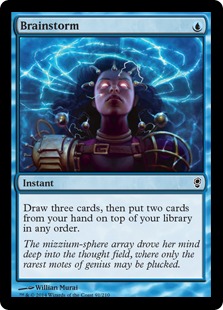 People would tell me time and again after I smashed them how good their deck was against mine, and unless they were jamming a fistful of basic Plains and Aether Vial, they were always wrong. I was intimately familiar with my deck and role in any given matchup, and these players were used to preying on inexperienced Brainstorm pilots, and/or had plans that worked in theory but couldn't actually stand up to Force of Will and Daze.
This is more or less my experience with the Modern format, but with the Brainstorm decks replaced with any coherent Modern strategy. Modern rarely has a best deck, but if you show up to a tournament knowing your position in every matchup while playing a functional deck you'll be just fine. In an abstract sense, Eli Kassis's Retreat to Coralhelm combo deck looks confused and kind of clunky relative to other Modern decks, but he puts up results likely because he understands his role in a given matchup far better than the average opponent.
The major similarity that's really pronounced between Legacy and Modern is that, for the most part, your average opponent is just playing the deck they have access to. Whether it's because of monetary restrictions, or idiots like me who insist on jamming one-mana 1/1s in every tournament, the majority of your opponents aren't making serious metagame adaptations to their deck. 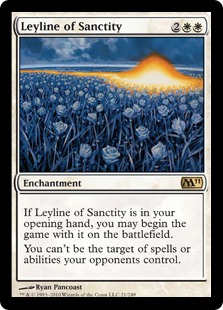 You'll play against Burn people, Affinity people, Merfolk people, RW Prison people... Just a swath of decks that may or may not be best positioned going into the weekend---but that's what these people came to jam with. The more heavily you metagame, the more this behavior will punish you. You can shave your Leyline of Sanctity from your sideboard because Burn isn't in a great position on a given week, but don't complain too much when you lose to it. Or 8-Rack. Realistically, you just want to prepare for the most possible things and make concessions that are generally consistent.
I heard a high-profile player say this week that he was very lost in Modern as of now. Do you know what you're supposed to be doing in Modern right now? The same thing we do every night, Pinky. Playing an abstractly good 75 that we are familiar with and hoping to get lucky.
[wp_ad_camp_1]
Metagaming Too Hard
A very telling example of the danger of over-metagaming in Modern comes from Eldrazi Winter. Many players identified that Painter's Servant did a great job of hosing Eldrazi, though the problem was that the card was otherwise unplayable. There realistically wasn't a deck that wanted it. My friend and fellow Minnesotan Eric Hawkins sleeved the card up for the SCG Louisville Open with a spicy brew:
Abzan Company, by Eric Hawkins (81st, SCG Louisville Open, 2/20/2016)
Eric felt that his Eldrazi matchup was very positive, which I believe to be true. What he learned that weekend, however, was what happens when you don't get paired against the dominant deck every round: you miss Day 2. Some players on this deck faced the bracket they were looking for, though even when the format has a noteworthy boogeyman there is still significant diversity. The mistake Eric made was that his metagame choice involved playing cards that aren't implicitly powerful. 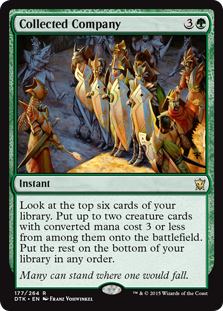 Teysa and Painter's Servant just don't cut it in Modern, and the format is too powerful to water your deck down to try to carve out a metagame position.
Along these lines, when you're trying to prepare for a Modern event, it's a huge mistake to put too much stock in last week's results. If you comb over results from this year's events, you'll come across the Milwaukee Open in late April. This event saw three Abzan Company decks in the Top 8 with one of them winning the whole thing. There was concern then that we might have had a new boogeyman on our hands. A mere two weeks later in Indianapolis we saw a Day 2 breakdown that didn't feature a single copy of the deck. Decks overperform from time to time for a variety of reasons. Sometimes it's simply the fact that the best players decided to sleeve up the deck that week, and sometimes it's just variance. There was a stretch where Temur Delver was just a better deck than Jeskai Delver in Legacy but Jeskai was putting up better results. This was partly because Stoneforge Mystic afforded more free wins than Stifle, but partly because better players were piloting that deck on average. Knowing what happened matters significantly less than knowing why it happened.
Expertise vs. Breadth
Modern has enough viable options that there should be at least one deck that fits your playstyle. For most players, this is their primary deck. Some players branch out by choosing to play what they believe to be well positioned, but when it comes to picking up additional Modern decks, what I recommend is actually immersing yourself in the format from the perspective of that deck. It's not just about beating Jund and Bant Eldrazi. You need to have a plan for Bogles, Lantern Control, Tron, and everything in between. 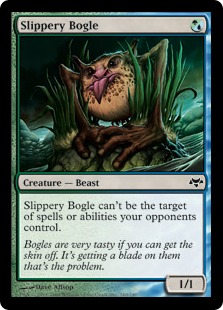 Modern is so wide that any testing done with a specific event in mind will likely not be enough on its own to prepare you for that event. Modern rewards depth of knowledge far more than it rewards breadth. I would be much more confident in the tournament performance of a player who knew one or two decks inside out than that of a player who could pilot five or more decks competently.
I have a friend who pilots Affinity very well. A big tell for a Modern player being great at their deck is that they have a clear plan for sideboard hate and bad matchups. There are some things you can't do anything about though, and my friend will talk at length about how Ancient Grudge and Stony Silence aren't wholly beatable. His weakness is that while he can identify weekends when Affinity isn't a great choice, he doesn't have a second deck that he can play at nearly the same level.
Something that I noticed when speaking to him is that he talks about the decks he's trying to learn very differently than how he talks about Affinity. When I mention a tough matchup or sideboard hoser for Affinity he can speak at length about how to face the problem, though when he tries to pick up a different deck he will often have negative thoughts on the deck very early on. I will certainly grant that some Modern decks are more playable than others, though the difference in speech patterns suggests that he cares more about winning with Affinity than figuring out how to solve the problems with other decks. 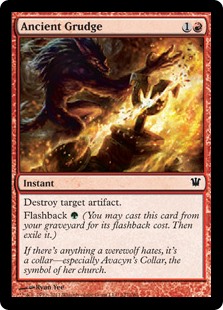 I do think that emotional investment is important for competitive success, so if he's not feeling these decks it makes sense to put them down. But I think he's largely just looking to stumble across a perfect deck that allows him to be optimistically dismissive of the deck's potential problems.
I strongly believe that if you show up to a Modern tournament with a written sideboard guide you'll need to frequently reference during the event, you have low odds of succeeding. Modern rewards fundamental knowledge and experience. Sideboard guides can be helpful for studying and for obscure matchups, though if you show up with a sideboard full of Kor Firewalkers and you aren't even sure where you want them, you're going to be in serious trouble.
Play What You Know
It wasn't long ago that when people asked me what they should play in a particular Modern event that I would suggest Infect due to its resilience, high power level, and high degree of play. As of late, I've been answering the question by asking what they're most familiar with. Right now I think Dredge and Bant Eldrazi are asking new questions you'll need answers to that you didn't before. The most successful players will find these answers by adapting a deck they were already familiar with, not showing up cold to shoot an angle.
Modern rewards experience. Modern demonstrates nuance. If you show me two players, one with a backpack full of statistics and breakdowns of recent results, and one packing Noble Hierarchs with noticeable wear from riffle shuffling, I'm picking the latter to do better in the event every time.
Thanks for reading.
-Ryan Overturf
@RyanOverdrive on Twitter



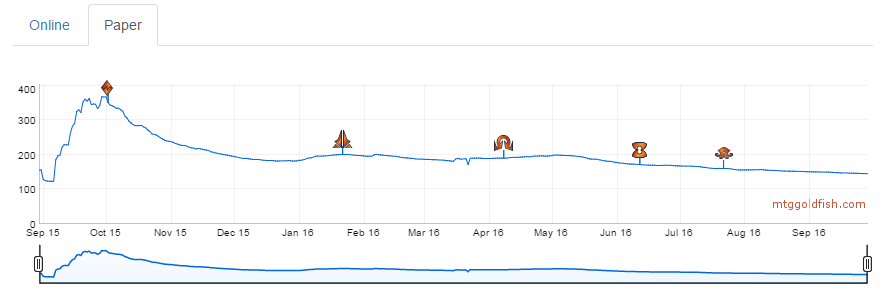
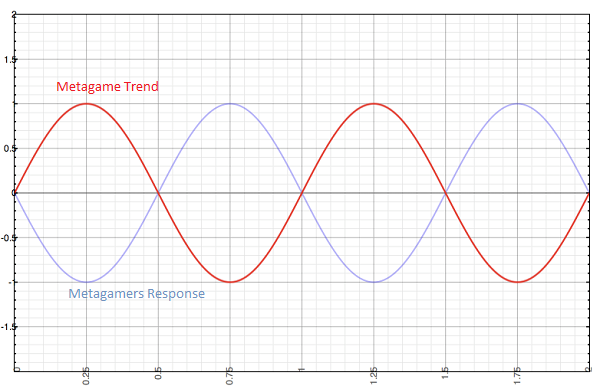 Say the red line represents a given metagame trend. If you are trying to game the trend, you don't want to be anywhere close to the trend. Instead you want to be opposite of the trend. Using the Dredge Cycle example, when the format is at peak hate, you want to play no hate and use the extra sideboard slots to beat everyone else. This obviously takes a great deal of metagame knowledge and skill, but historically the rewards have been great when you succeeded. Of course, if you tried to fight the trend and got it wrong you'd be in for a very rough tournament.
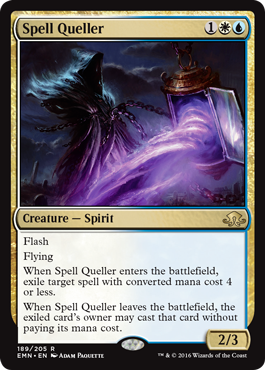


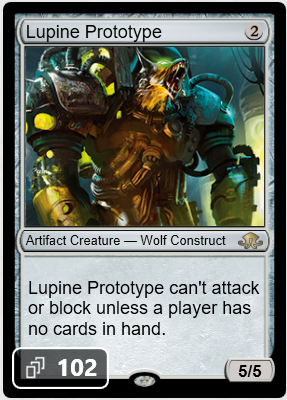
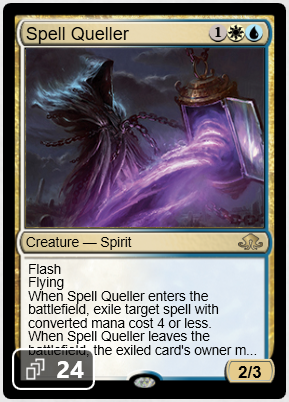
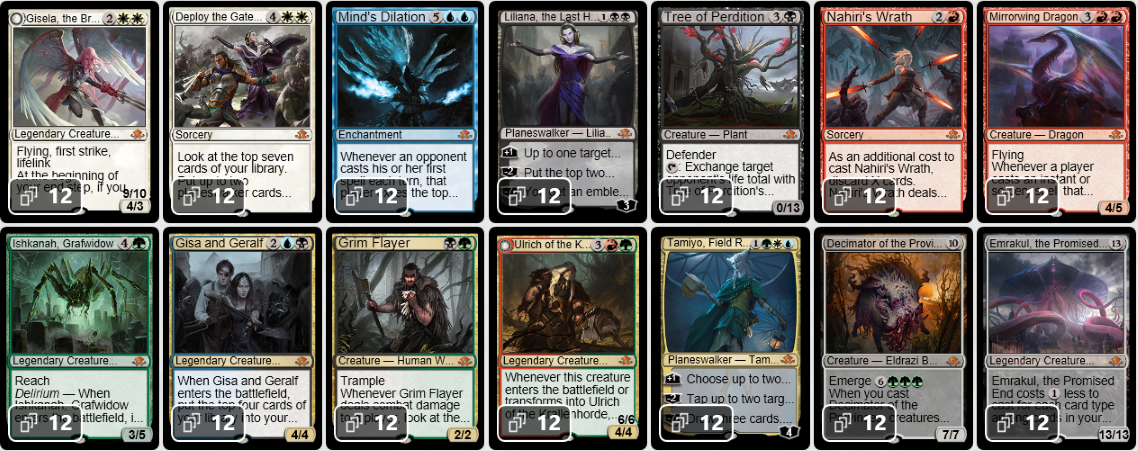

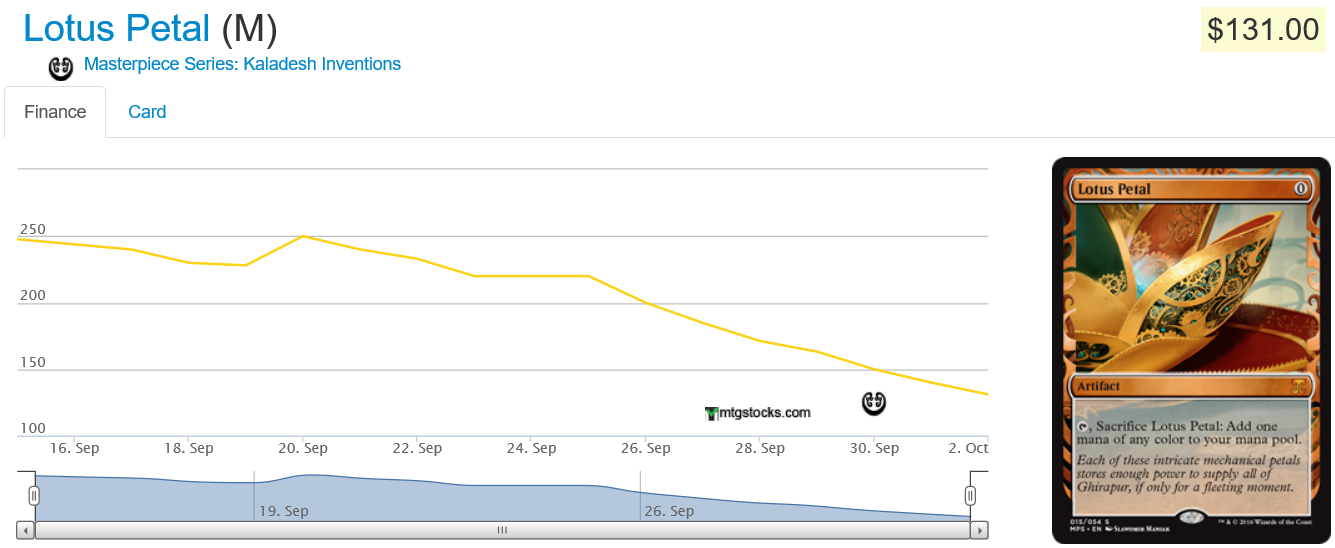
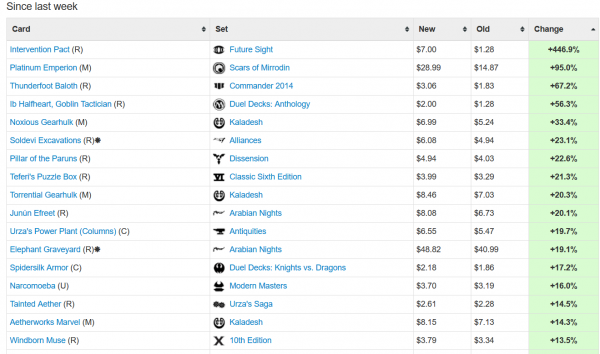
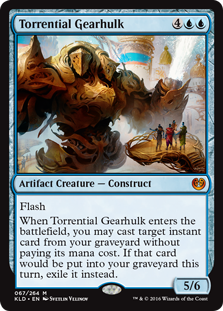 Extra Bolts and Remands are great, but we already have Snapcaster Mage for those. Torrential Gearhulk specifically shines brightest when he flashes back instants with a high converted mana cost. The Construct lacks Goblin Dark-Dweller's limiting "with converted mana cost 3 or less" clause, meaning it can nab anything from Spell Snare to to Opportunity. In my build, I've opted to play expensive spells that can also be cast for cheap, so we don't dead draw too much in games without Gearhulk. I don't like leaning too heavily on flashing back Cryptic Command, a reactive spell; I'd rather capitalize on Gearhulk's ability to get really aggressive, really quickly.
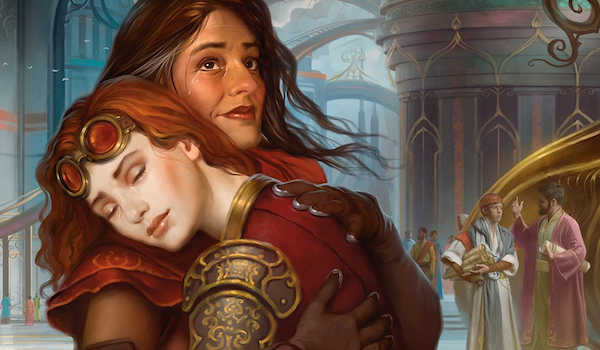
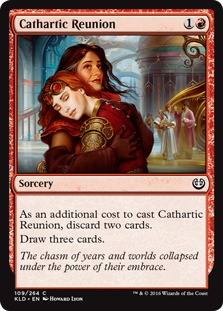 The following UR Delver list, then, is decidedly worse, mostly because it struggles against Burn and red-based sweepers while Monkey Grow avoids these weaknesses. Still, jamming games with it and similar shells has convinced me that Cathartic Reunion will see Modern play in some capacity, even if I don't have a perfect build on my hands. Before talking about the Delver deck specifically, let's take a look at Cathartic Reunion's overall positioning in Modern.
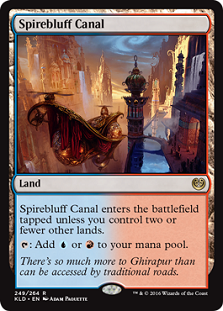 Obviously, Delver decks can manage on just two or even one land. But things are just better when we make multiple land drops. Making our first three land drops in Delver decks allows us to play an incredible game, mostly because we play so few lands in the rest of the deck. That means the majority of what we draw will be spells, and with a few lands in play to cast those spells, we end up doing many more "