menu

Planeswalker Decks Announced

Are you a Quiet Speculation member?

If not, now is a perfect time to join up! Our powerful tools, breaking-news analysis, and exclusive Discord channel will make sure you stay up to date and ahead of the curve.

While it doesn't mean a ton for established players directly, there was a pretty awesome announcement on the Mothership yesterday. A couple of different product lines were announced, as well as a new structure for announcing these products. The most significant element of Monday's announcement was undoubtedly planeswalker decks.

Mark Rosewater's article outlining the new Planeswalker Decks is a good, quick read about the purpose of the product and what exactly each pack will contain. There will be two Planeswalker Decks for every set release starting with Kaladesh, and the decks will prominently feature a mechanic from the new set, along with a planeswalker that can only be obtained from the Planeswalker Deck (not in booster packs) and some cards specifically designed for the deck- all of which will be Standard legal. Here's the bulleted list of the cards that will be in these decks that you won't be able to find in packs:

-One copy of a mythic rare planeswalker
-Two copies of a rare spell that has an effect and also tutors for the specific planeswalker
-Three copies of an uncommon permanent that is enhanced by having the planeswalker on the battlefield
-Four copies of a common flavored to the Planeswalker
-Four copies of an appropriate common dual land

This is a really awesome way to bridge the gap from newer player to FNM goer with relatively complex cards that doesn't rely on forcing the player to build decks and figure everything out. I love the explanation that MaRo gave for the product line, and think that this product will be an awesome way to help newer players better learn the game.

The obvious concern is that there are cards that you can't get in boosters that will be Standard legal, though as MaRo states they will be designed with the idea of not being great Standard options- particularly by having generally higher mana costs. It's not difficult to imagine one accidentally being great, though if they simply use the "supply as demanded" print run used for Commander product then that just means that you'll have a card with a static $15 price tag.

I expect the design to be generally successful with regard to these packs being casual only and not causing a stupid "living card game"-esque element to a real Standard deck, though I am intrigued by this product line as sealed product that can be purchased and sat on. I expect the print runs to be very large on these, so I imagine that if they are to be a good investment as sealed product then the return would take years, though planeswalkers have huge casual appeal and I could see these appreciating in value with age, though they're probably just a worse investment than, say, boxes of Eternal Masters.

Avatar photo

Ryan Overturf

Ryan has been playing Magic since Legions and playing competitively since Lorwyn. While he fancies himself a Legacy specialist, you'll always find him with strong opinions on every constructed format.

View More By Ryan Overturf

Posted in Free2 Comments on Planeswalker Decks Announced

Have you joined the Quiet Speculation Discord?

If you haven't, you're leaving value on the table! Join our community of experts, enthusiasts, entertainers, and educators and enjoy exclusive podcasts, questions asked and answered, trades, sales, and everything else Discord has to offer.

Want to create content with Quiet Speculation?

All you need to succeed is a passion for Magic: The Gathering, and the ability to write coherently. Share your knowledge of MTG and how you leverage it to win games, get value from your cards – or even turn a profit.

Insider: More Specs Before the Modern GP Weekend

Are you a Quiet Speculation member?

If not, now is a perfect time to join up! Our powerful tools, breaking-news analysis, and exclusive Discord channel will make sure you stay up to date and ahead of the curve.

Modern is great. I love the fact that there are a ton of different decks and strategies. I love that you can show up for a tournament and legitimately expect to play against a different archetype every round. I love that I get to play with sweet old cards that were printed like ten years ago when Magic was a very different game.

Do you know who else loves all of these qualities and also loves Modern? About 99.9% of people who play Magic. And that 0.1% person is just complaining for the sake of complaining because that individual also enjoys Modern (albeit, without admitting it).

I got a chance to play last weekend at the Star City Games Open in Indianapolis. I went 6-3 with Abzan Company (one of those rare times when that record doesn't day-two the event because it was huge, because it was Modern, obviously). I was blown away by the diversity of the format. I legitimately played against a different deck each of my nine rounds!

  1. Mono-Red Burn
  2. Jeskai Control
  3. Abzan Company
  4. Kiki Chord
  5. G/R Tron
  6. Mono-Blue Extra Turns
  7. Naya Zoo
  8. Abzan Midrange Control
  9. U/W Planeswalker Control

It also feels like a bunch of stuff is kind of changing and starting to settle in for Modern. I think now could be the right time to pick up a few nice cards to reap the rewards shortly down the road.

The key will be identifying cards that have traditionally been "non-factors" but which could be pieces in new and emerging decks. For instance:

There was an error retrieving a chart for Nahiri, the Harbinger

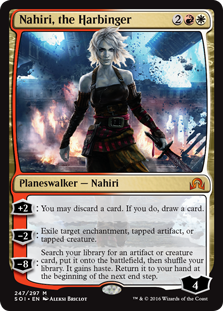
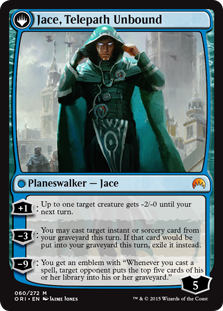
Nahiri has already spiked but this is the kind of card that I'm talking about. The card is crazy-good in Modern control decks because it can deal with all kinds of permanents on the board and if it lives for a couple of turns it suddenly summons Emrakul, the Aeons Torn and ends the game on the spot.

Not a bad control deck finisher!

Potential Modern Hits

Dreadbore

There was an error retrieving a chart for Dreadbore

The ship may have already sailed on Nahiri, the Harbinger but people are going to be looking for ways to cleanly kill her from now until forever.

Dreadbore is a very elegant answer to Nahiri that may start seeing some play soon. It is worth noting that it is pretty impossible to burn her out which makes "destroy target planeswalker" a premium effect right now.

Champion of the Parish

There was an error retrieving a chart for Champion of the Parish

This is another card with a ton of potential that has begun seeing some play in the Mono-White Humans deck.

First of all, Champion is an amazing Magic card. It was great in Standard back in the day and has always teetered on the edge of Modern playability. Shadows over Innistrad has given the Humans archetype some new toys and I think that it really pushes Parish into the realm of being actually good. In particular, Thalia's Lieutenant and Thraben Inspector come to mind.

Yes, it is in a Duel Deck but that is the only thing keeping the price suppressed so low. If it wasn't in a supplemental product the card would likely have already spiked well above $15 by now. I noticed copies of the deck version at less than $1.00 on TCGPlayer, which seems like an insane deal.

Mayor of Avabruck

There was an error retrieving a chart for Mayor of Avabruck

The Mayor is another standout card that has crept up a little in the past month but could see significant gains depending how the Humans thing shakes out. It is also worth noting that Mayor of Avabruck has seen some significant Vintage play, especially in the Bazaar of Moxen tournament. If it plays in Vintage, it plays, period.

Mayor is just a great card no matter how you slice it. Lords that cost two mana have always been way above the curve. Keep in mind too that there is still another Innistrad set yet to come which means that this card could still find some allies to push it over the top. The promo foil version has suppressed the price thus far, but I think both could still make some healthy gains.

Gravecrawler

There was an error retrieving a chart for Gravecrawler

What is this "Night of the Living Promo Suppressing Value?" It boggles my mind how Gravecrawler is still so cheap right now. The card is basically in any Zombie deck from now until forever and zombies are popular. The Walking Dead, much?

Gravecrawler is also a centerpiece of any creature-based graveyard deck moving forward. The card does everything. It is a one-drop and can just continue to come back to life forever.

Don't even get me started on the casual appeal of the card. Yes, there is a buy-a-box promo but the card is great and great cards go up.

Prized Amalgam

There was an error retrieving a chart for Prized Amalgam

Yet another reason to love Gravecrawler, as the printing of this spicy graveyard synergy zombie in Shadows over Innistrad has opened up some room. This one is still priced like bulk.

Not a bad card if you are into the whole "dredge" thing. It is also fantastic that the card triggers off Gravecrawler coming into play and counts as a zombie for the crawler. Maybe not a junk rare for long? Few things that see play in Modern have no value.

Bloodghast

There was an error retrieving a chart for Bloodghast

Bloodghast is a very powerful Magic card. It is also going to be in any deck that ever tries to abuse the dredge mechanic. Especially in Modern, the card is fantastic because there is a lack of things that come back into play for free like Ichorid. I'd watch out for this card and would strongly consider picking up a playset if you don't already have one.

Matter Reshaper

There was an error retrieving a chart for Matter Reshaper

The card seems really cheap considering how good it is in Modern. That isn't even taking into consideration the fact that it is still Standard-legal!

The card is comparable to Kitchen Finks in some ways. A three-drop that generates value. It doesn't "go infinite" like Finks but the upside is actually higher in some situations. Eldrazi Temple is still a thing, even with Eye of Ugin banned.

Various flavors of Eldrazi Temple did very well in Indianapolis and Matter Reshaper was a part of that success. Also, keep in mind that when the Fall set is released we lose Origins and Dragons of Tarkir, which could really help the Eldrazi's chances of being great in Standard. You know if Eldrazi end up being great in Standard the prices will also adjust.

Ulamog, the Ceaseless Hunger

There was an error retrieving a chart for Ulamog, the Ceaseless Hunger

Rumors of my demise have been greatly exaggerated...

You just can't kill R/G Tron. Ban the Eye? Meh, who cares?

The power behind Tron had little to do with Eye of Ugin and lots to do with ridiculous plays like turn three Karn Liberated. With fewer people devoting less space to hardcore land destruction in Modern it really opens up some space for Tron decks to thrive. Ulamog is my pick to represent the archetype because I feel like the card has really dipped off in price as a result of a couple of factors. First, people assuming that Tron sucks (which was false), and second, people assuming that ramp sucks in Standard (also false).

Let's not forget either about the casual appeal of a card like Ulamog, the Ceaseless Hunger, which will be absurdly high in the future. I also really like foil copies of this card as investments for the future for the same reason. Ulamog is a fantastic Commander card for like a zillion reasons.

Galerider Sliver

There was an error retrieving a chart for Galerider Sliver

As everybody looks for new ways to abuse Collected Company that dodge the hate against the Abzan combo versions, new and exciting things are afoot! And yeah, Slivers are a thing...

Galerider is the best one-drop sliver of all time and one of the best cards in the Sliver deck. The ability to grant your whole team evasion for one mana is goofy-good. When it comes down to it, costing one mana is a pretty insane ability for any card that counts as a sliver.

Sliver Hive

There was an error retrieving a chart for Sliver Hive

This land is awesome, and cool. Combine that with the fact that Slivers are actually good in Modern, and you can see why I believe this card could see some gains. It is already pretty hard to keep in stock at local game stores. I've noticed everybody is always sold out, which is a strong sign when it comes to fringe casual-competitive cards. I think this card is a winner.

Elvish Archdruid

There was an error retrieving a chart for Elvish Archdruid

Another Company deck: Elves!

Elves has a faster and more consistent nut draw than Abzan Company, and lots of refueling gas in the form of Collected Company and Lead the Stampede.

I've selected Archdruid as my pick because it feels underpriced based on a couple of factors. First, it is one of the only rares in the deck. Second, it was a random M-set card from like five years ago. And third, because it is also a great casual card. What more can a kitchen-table Elf deck ask for than a creature that is an anthem and makes a bajillion mana?

Alongside CoCo, Archdruid is one of the major lynchpins of the deck. It singlehandedly makes copious amounts of mana to sink into the Overrun effect of Ezuri, Renegade Leader that so frequently ends the game. I love when good cards with upside have those low, low online prices because it makes it so easy to pick up a bunch of copies in a hurry.

Gearing Up for Modern Weekend

Everybody knows Modern is great, and that everybody and their uncle loves to play it. Next weekend there are two Modern GPs in North America. I suggest paying close attention to the hype surrounding potential decks leading into the event. The cards above are ones that I've identified as potential game-changers but there are certainly bound to be more in the wings. Find the new tech and find the money.

Safety Valves and Non-Interaction in Modern

Are you a Quiet Speculation member?

If not, now is a perfect time to join up! Our powerful tools, breaking-news analysis, and exclusive Discord channel will make sure you stay up to date and ahead of the curve.

My friend Chaz has a saying about Modern: "The best games I've ever played were in Modern; and the worst games I've ever played were in Modern." It makes sense. One the one hand we're witnessing what is most likely the single-most diverse Magic format of all time, where every possible archetype and play style is represented by multiple decks. On the other hand games can be over in a matter of precious few turns, and "non-game" hosers like Choke, Blood Moon and Ensnaring Bridge run rampant. Meanwhile people invest countless hours and no small quantity of money into strategies that at a moment's notice can get felled by the banhammer.

Wizards has long been aware of these potential pitfalls in the format. With the establishment of the turn four rule, and more recently their decision to retire Modern from the Pro Tour, Wizards has demonstrated its commitment to keep these problems in check. Many people have suggested other fixes, from 20-card sideboards to the introduction of choice reprints from Magic's past, up to and including Legacy powerhouse and resident policeman Force of Will.

FoW-cropped

I'll start this article by clearly stating that I think Force is too good for Modern (to say nothing of Standard, which it would have to go through first). A direct reprint of Force of Will could well catapult blue to Tier 0 "only-deck" status in Modern, or result in other hideous effects like combo pilots using it to protect their turn one kills. What I want to discuss today is the possibility of a new Force-like card that could occupy the role of fair policeman in Modern. Can such a safety-valve card be designed, and would Modern even benefit from its introduction?

Obligatory disclaimer time: This is just one man's opinion. We're operating in some pretty hypothetical, unproven ground, and my claims are sure to be met with some vigorous and well-reasoned dissenting opinions. Ultimately I'm more interested in starting a conversation than I am in being right; so feel free to sound off in the comments.

[wp_ad_camp_1]

Problems in Modern

First of all, what exactly are we trying to fix in Modern? It's certainly not diversity. Right now Modern is posting one of the most varied metagames ever. We can all agree this is one of the true treasures of the format, something to be cherished and further cultivated. And the attendance numbers show a format bursting with a vibrant community and ever-expanding playerbase. Absurdly high card prices reflect the community's love of the format, and it seems to gain in popularity constantly.

But Modern is not without its problems. Non-interactive games often rule the roost. This has led to both an excessively large banlist and the overtaxing of sideboard space.

The Banlist

Skullclamp

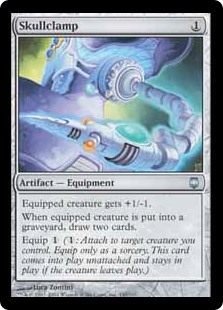
Certain things on the Modern banlist won't give anyone pause. From utter abominations like Skullclamp and Mental Misstep which should frankly have never seen the light of day, to potential format-warping bombs like Stoneforge Mystic or Umezawa's Jitte which can invalidate entire strategies merely by existing, there's plenty on the Modern banlist that merits its spot. But what about Blazing Shoal? Hypergenesis? How about old mainstays Splinter Twin and Birthing Pod? Some of these cards look downright odd to see banned. If they could be released from purgatory without threatening turn four rule violations or format diversity, they might enable new archetypes (or the return of old beloved ones).

Remember, the turn four rule centers around a strategy's dominance, not merely its potential to kill too early. If a free counterspell variant can keep strategies like that in check, they might be able to become a part of the Modern family of decks. Conversely, as the Modern card pool continues to grow and more two-card combos inevitably get introduced, we may see the banlist balloon even further. Since the beginning of the format, more cards have been added to the banlist than removed. We can expect this to continue unless some more natural safety valves can be built into the format.

Sideboard Roulette

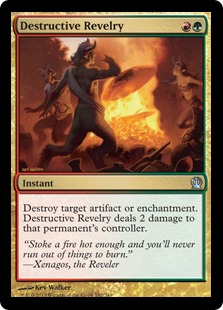
Destructive REvelryModern's wonderful diversity doesn't come without a downside. The preponderance of explosive linear decks puts an enormous strain on sideboard spots. While plenty of general answers exist, from Destructive Revelry, to Negate, to Abrupt Decay, they're not always sufficient to stem the onslaught from decks with such highly-focused and consistent gameplans as Burn, Bogles, or Tron. Punching holes in strategies like these is difficult using "normal" Magic cards because the axes they play on are so specific. The problem becomes even more pronounced when the decks are capable of fast kills, which can render something even as universal as a two-drop kill spell anemic.

As a result, Modern is rife with narrow, silver-bullet type cards that make or break matchups by themselves. We've come to expect the blowout hate card out of nearly every archetype's sideboard. But you can only fit so many Rest in Peaces, Rending Volleys, Fracturing Gusts, Crumble to Dusts, Kor Firewalkers, and Spellskites into your sideboard before you run out of space.

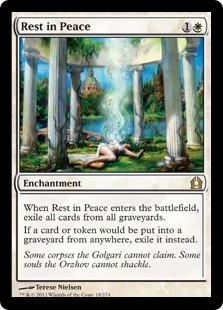
Rest In PeaceThis leads to what I like to call "sideboard roulette"---make a stab in the dark at what you expect to face, jam a pile of one-off answers in your board, and hope the matchup stars align. The problem doesn't even end there though. Once you've successfully predicted your opposing archetype(s) and brought in the knock-out game-winning hoser, you still have to draw it! Entire matches can be predicated on this minigame of who can topdeck or mulligan into the one card that matters---leading to the "worst games ever" so maligned in Chaz's quote above.

This problem was one of the central issues with the Modern format that Paulo Vitor Damo da Rosa tried to address with his suggested 20-card sideboard. Could another solution be the introduction of a truly universal answer to linear strategies modo grosso? Could a Force of Will analog put enough pressure on these "unfair" decks without crushing them completely out of the format?

Force of Will: The Legacy Police

First of all, a clear understanding of Force of Will's role in Legacy is necessary to our discussion. It's a well-known fact that Brainstorm is the defining card in Legacy, around which the entire format is warped. By now countless words have been written about this iconic card, including the effect its hyper-efficient card selection has on format diversity. Make no mistake---Brainstorm is the reason for blue's dominance in Legacy, and the principle obstacle to the success of fair non-blue decks. While Legacy players tend to love their Brainstorms (I should know---I've cast many myself) you could make a strong argument that it's problematic and unhealthy for the format.

The same can't be said for Force of Will. To the eye of the uninitiated, it might seem like a fundamentally broken card that unfairly benefits blue players. To those of us who cut our chops in Legacy, we know it serves a much more noble purpose---keeping broken things at bay. The great thing about Force in Legacy is that it's actively bad against fair strategies. You will frequently side it out against decks like Jund, Miracles or Zoo that aim to play a more "conventional" game of Magic. In the face of a Dark Confidant, or a constant string of individual must-answer threats from the likes of Zoo or Death and Taxes, card disadvantage can be a death knell. Thus the fair, non-blue strategies get a double boost from Force of Will's presence in the format---they get to prey on the blue permission decks, all while relying on them to keep busted nonsense in check.

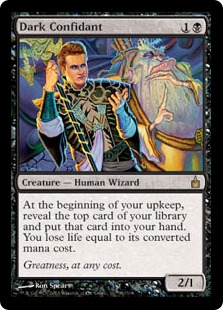
Dark ConfidantThe result is a kind of "rattlesnake" effect on glass-cannon strategies. While highly-linear and non-interactive decks do exist, they tend to perform poorly. Decks like Manaless Dredge and Belcher don't require bannings because their metagame share can never get too large and at any given tournament they will eventually run afoul of the blue policeman who stops their turn-one kill with a turn-zero counterspell.

Because this safety valve is an omnipresent force in the format, other decks don't have to cram their sideboard with narrow, single-purpose answers to an interminable laundry list of broken combos. Even a ridiculously overpowered combo deck like Ad Nauseam (with Dark Ritual, Ponder, and Brainstorm, no less) sometimes suffers from poor metagame positioning. The upshot of all this, generally, is better Magic played and had by all.

That isn't to say problems don't exist in Legacy. Certainly the format has its own issues, and with Modern Wizards has the luxury of tailoring the format from scratch to function the way they want. So far careful bannings and application of the turn four rule have done the trick to keep Modern healthy and diverse. But is there a better way? Could more safety valves like Force of Will be designed to fit the Modern format and keep broken combos down without oppressing fair strategies or making blue the must-play color?

Thoughtseize: The Hero Modern Needs

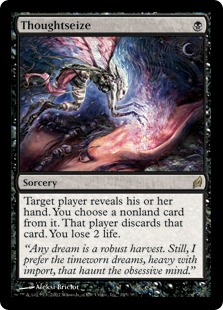
ThoughtseizeIn many ways, we already have our hero. The role that Force of Will occupies in Legacy is largely taken care of by Thoughtseize. It's very good at taking apart linear strategies, especially when paired with Jund's supporting cast of Liliana of the Veil and Inquisition of Kozilek. BGx has long been the de facto policeman in Modern, and there's nothing inherent about the color blue that necessitates that it take on that role. Thoughtseize has a similar dynamic as Force of Will in that it gets worse against fair decks. It often comes out in the mirror, and good-old fashioned aggro decks like Gruul or Merfolk aren't really too concerned about it, what with their replaceable threats.

All that is great, and honestly I think Thoughtseize is doing an excellent job of keeping unfair strategies down in Modern. That being said, there are certain things Thoughtseize just can't accomplish. For one, it can't interact on turn zero. Turn one kills in Modern are obviously rare, but not beyond the realm of possibility out of decks like Amulet Bloom or Grishoalbrand. Again, the mere possibility of such kills isn't sufficient to merit a ban (as Grishoalbrand's continued presence testifies), so if we can keep these strategies relegated to the Tier 3 category, their proponents can still have their fun without ruining it for everyone else. The turn zero counterspell is the gold standard of stopping turn one kills, something Thoughtseize can't boast when you lose the die roll.

1_nahiriSecond of all, and more importantly, Thoughtseize can't stop topdecks. On the one hand, this means that some number of "fair" games will still end with a broken combo piece drawn late-game. On the other hand, it puts weird strains on deckbuilders to have their own unfair combo finishes to close out games after their temporary disruption has bought them time.

This is part of the reason Splinter Twin was ultimately banned---while the desire to shake up the Pro Tour was certainly a factor, another was Twin's annoying tendency to show up in every single blue deck. The blue player generally had to justify not playing it, because it solved the problem of the game-winning topdeck so much better than anything else. More recently, we see this phenomenon in action in Jeskai Control's adoption of Nahiri, the Harbinger. Jeskai has traditionally been hard-pressed to turn the corner fast enough, but with the inclusion of its own busted combo it appears to be on the road to Tier 1 or 2 status for the first time in years. This appears to be the bar in Modern---do something unfair, even if you have to do it "fairly."

Designing a Balanced Safety Valve

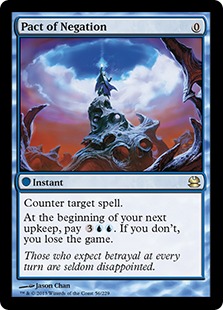
If Thoughtseize is doing good work, and Force of Will is too good for a reprint, could other cards be designed to fill the intervening space? If our aim is to make a turn zero counterspell, there are some pretty huge design hurdles to clear. We have to make sure it's good against combo, but mediocre against fair decks. But it can't be stone awful against fair decks either (looking at you, Mindbreak Trap) lest it see no maindeck play and fall prey to the same sideboard roulette problem of other anti-combo hosers. Finally, it can't be good in the combo decks themselves. Pact of Negation is already a monster in decks like Ad Nauseam, Amulet Bloom and Blazing Shoal Infect (it's no coincidence two of these decks have already been banned) and the idea of a combo deck with eight copies of that effect is positively bone-chilling.

Pact of NegationSo if you want to design a Force variant, your work is certainly cut out for you. I've spent a lot of time thinking about this puzzle, and it's not easy to solve. The best suggestion I've heard so far from my discussion with other people is this:

Force of Willpower
2UUU
Instant
You may pay 1 life and exile a blue card from your hand rather than pay Force of Willpower's mana cost. Counter target spell that doesn't target anything on the stack.

There are certain things this card does well. It provides the critical turn zero answer to a broken combo. It's good enough for maindeck play, but lackluster against fair decks. It's not great at protecting combos from opposing counterspells.

It has serious problems too, though. It can be used to protect any combo piece that needs to sit on the battlefield after it resolves (Nahiri, the Harbinger, for example). It's likely to make control decks a little too good at answering everything, all the time. It creates a "shields-never-down" situation where resolving a spell is never guaranteed and the blue player can deploy things at their leisure. That last issue is one Mark Rosewater has publicly mentioned as bad design on repeated occasions, and by itself probably enough to guarantee a card like this never sees print. This is to say nothing of the brutally warping effect a card like this would have on Standard, a format which Wizards has proclaimed shall be the gateway to all Modern playability.

Wizards hasn't tried to make a free counterspell since Mindbreak Trap in Zendikar (unless you count Mental Misstep---shudder) and there's good reason for that. The potential for format warping and oppressiveness is real. I still think a balanced design might be feasible, but ultimately a safety valve that helps combat linear brokenness doesn't have to be a counterspell at all. Thoughtseize points to other avenues in card design (and colors) that can occupy this space.

My hope is that Wizards will endeavor to create more cards in this vein that can act as generalized stalwarts against the more non-interactive elements of the game. They are, after all, brilliant game designers. If they can manage to find that perfect balance between too good and too narrow, we might finally see the Modern banlist start to shrink.

Thanks for reading,

Jason Schousboe

Jason Schousboe

Jason was introduced to Magic in 1994, and began playing competitively during Time Spiral block. He has enjoyed a few high finishes on the professional scene, including Top 16 at Grand Prix Denver and Top 25 at Pro Tour Honolulu 2012. He specializes in draft formats of all stripes, from Masters Edition to the modern age.

View More By Jason Schousboe

Posted in Modern, Opinion, TheoryTagged , , , , , 29 Comments on Safety Valves and Non-Interaction in Modern

Have you joined the Quiet Speculation Discord?

If you haven't, you're leaving value on the table! Join our community of experts, enthusiasts, entertainers, and educators and enjoy exclusive podcasts, questions asked and answered, trades, sales, and everything else Discord has to offer.

Want to create content with Quiet Speculation?

All you need to succeed is a passion for Magic: The Gathering, and the ability to write coherently. Share your knowledge of MTG and how you leverage it to win games, get value from your cards – or even turn a profit.

Insider: High Stakes MTGO – May 8th to May 14th

Are you a Quiet Speculation member?

If not, now is a perfect time to join up! Our powerful tools, breaking-news analysis, and exclusive Discord channel will make sure you stay up to date and ahead of the curve.

Welcome back for another High Stakes MTGO article!

I haven't been as productive in speculations as I wanted this past week. Nonetheless a few of my positions reached my target selling price and it always feels good to sell a profitable position at the time and price you originally intended. In the meantime I also did something every speculator has to do from time to time---cutting losses.

This week there were more cards on my list of positions to acquire that I didn't get to. Sometimes it's difficult to find the right price given my limited time available for MTGO specs. So I did what I do whenever my time is limited---I bought the most expensive of my targets to invest quickly in the largest number of tix.

The percentage return may not be as big when the time comes to sell, but ultimately I expect to generate more tix from a larger position. Concretely, doubling up on a 100-tix position is not as good as making 30% on a 400-tix position. Especially when the 100-tix position involves 50 copies of a card and the 400-tix position involves 20 copies of a card---what this really means is making more tix in less time.

With a bankroll as large as this one and not all the time in the world to do what I would like, I'm often confronted with this kind of choices. I regularly pass on potential specs because it would take too much time (or too many copies of a card) to build up a 300-tix position.

Buys This Week

SSV

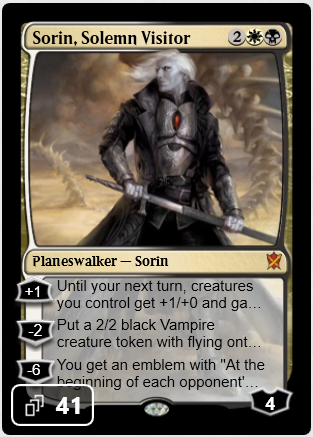
As a spec, this Khans of Tarkir version of Sorin touches on at least two categories---KTK set redemption and Modern. Approaching the Standard rotation last March, Sorin, Solemn Visitor found a floor at 3 tix and quickly rebounded to 6 tix a few weeks later. During Shadows over Innistrad release events Sorin dropped a bit back to 4 tix. This second discount was the opportunity for me to invest in the current top KTK mythic.

Sorin, Solemn Visitor saw some play in Modern last year in B/W Token and Junk decks. These decks are not heavily played currently but with Modern it's only a matter of time before good decks make an appearance once again. Hopefully the combined effect of redemption plus Modern will push Sorin, Solemn Visitor closer to 10 tix.

CB

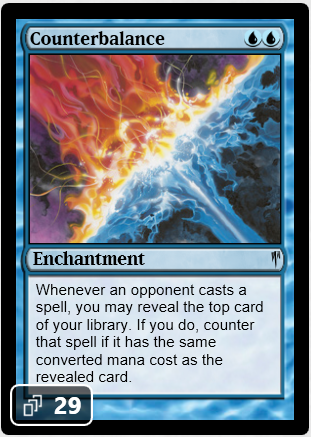
As long as Sensei's Divining Top is legal in Legacy, Counterbalance should see a constant demand. Back to its long-time floor of 8-9 tix in the wake of Coldsnap flashback drafts, this blue enchantment felt like a natural bet. With a record high just below 25 tix and regular price cycles, I'm guessing it won't take long for Counterbalance to rise again, provided Eternal Masters doesn't mess things up here.

Sales This Week

Judging by the current Standard metagame, the blue dragons' era may have come to an end. Both Dragonlord Ojutai and Dragonlord Silumgar were supposed to be short-term bets. Ojutai, which I certainly may have bought too high, never got back to the 25 tix I was hoping for. Silumgar, on the other hand, performed exactly as I was hoping with a nice comeback to its previous record high around 10 tix.

With only one more set to come before the dragonlords rotate out of Standard, it was time to let Ojutai go with some losses and to sell Silumgar with a nice profit and no regrets.

Another quick and successful spec resulting from the Year of Modern Flashback Drafts. Graveyard- and dredge-based strategies seem to be finding favorable winds in the current Modern metagame. Golgari Grave-Troll, Bloodghast, Vengevine and several others have recently risen appreciably. I sold my trolls as they were approaching the 10-12 tix range which almost corresponds to the record high Golgari Grave-Troll topped since it got unbanned in Modern.

A few more copies sold in the painland department. Black and white are still a strong color combination in the current Standard metagame which nicely maintains the price of Caves of Koilos in the 2.5-3 tix range. At this rate Caves of Koilos will become my largest successful spec for a single, with an estimated profit slightly over 1,000 tix.

In the eight months I have held the blue command the spec never really panned out, and although the price had some fluctuations it never went over 10 tix. I was expecting much more from Cryptic Command and now that Lorwyn flashback drafts are only few weeks away I don't see any upsides in the short term. I'd rather sell now than wait for the inevitable temporary plunge in price.

A return to 24-25 tix is the best scenario I could reasonably wish for when I bought my copies of Arid Mesa. This is exactly what happened last week. The decision to sell was therefore very easy. +50% is really what I'm targeting with my Zendikar fetchland specs so I'm totally satisfied with +62% in this case.

On My Radar

As of Saturday 14th I haven't bought any Time Spiral block cards that are currently flashback-drafted. As it happened before I may have been late to the party on these ones but even after the absolute bottom is missed prices might still be interesting. If I get into any Time Spiral or Planar Chaos positions it will definitely be this week.

Another group of cards I have been paying attention to lately are the "misses" from Battle for Zendikar and Oath of the Gatewatch. These cards may not be included in any relevant Standard decks at the moment but nonetheless have potential. Now that the Standard format rotates twice a year that's twice as many opportunities as before for cards to shine.

Red is not a top color these days and I wonder how many red cards are currently undervalued. I'm also considering increasing my positions on BFZ lands, as several of them got even cheaper than they were when I bought them initially. Specs on lands very rarely disappoint so I should accumulate more copies.

Drana, Liberator of Malakir is another example of card that hasn't seen the light of day despite strong potential and I'm likely to add a few playsets to my existing stock.


Thank you for reading,

Sylvain

Insider: Nahiri, the Harbinger’s Rise in Modern

Are you a Quiet Speculation member?

If not, now is a perfect time to join up! Our powerful tools, breaking-news analysis, and exclusive Discord channel will make sure you stay up to date and ahead of the curve.

As we head into mid-May, all eyes are on Modern and the format-shaping events. Last weekend saw Star City Games' Indianapolis Open, along with TCGPlayer's States circuit and a number of broadcasted Modern events including Europe's Magic Card Market Series, Face to Face Games, and others. Next week will bring a pair of Grand Prix, which are sure to shape Modern for months to come.

We've already digested our April metagame update, and it's packed with familiar format standbys: Jund at the top, Burn, Affinity, and Infect trailing, and R/G Tron bringing up the rear. But as we've also seen, blue-based decks are creeping up the metagame standings. This is most noticeable with Jeskai Control, an old-school Modern standby which may be poised to claim Tier 1 status by the end of May.

If Jeskai Control can get there and give blue mages the control deck they've yearned for since Splinter Twin's demise, then Nahiri, the Harbinger is likely to be their leading lady.

There was an error retrieving a chart for Nahiri, the Harbinger

A number of Jeskai aficionados have already highlighted Nahiri's Modern potential as a card-filtering engine, a removal option, and, most famously, an Emrakul, the Aeons Torn clock. I don't know how the Eldritch Moon storyline will resolve, but I'm feeling the Nahiri and Eldrazi flavor already.

Jeff Hoogland has been testing Nahiri in various control shells for weeks; Brian Braun-Duin took her for a spin last week on MTGO. More notably, Pete Ingram just won the SCG Indianapolis Open with his tight Nahiri Jeskai Control list, defeating a host of familiar Modern faces on the way to his commanding victory.

Of course, Nahiri's price has followed her fame into the stratosphere---she's already jumped from the $8-$10 range to over $30 on most major online retailers. Expect her to rise even more now that Ingram has won Indianapolis, to say nothing of her later potential at a Grand Prix.

Today, I'll be breaking down Nahiri's success in Modern and assessing her prospects going forward. Is her price tag all hype, or might it be undervalued given her trajectory? Where is she likely to fall in the metagame? Read on to see if you should invest your money or stay away (hint: sometimes you really do have a card whose bite matches its bark...).

Nahiri in Modern Context

To figure out Nahiri's long-term financial outcomes, we first need to assess her specific relevance to control decks, and her general standing in the metagame. Think of it like a one-two punch of theoretical relevance into practical application: how do we think she will perform in control and then how does she actually play out in practice?

Quick note before we get started: most of this article is going to focus on Nahiri Jeskai Control, but it's not the only place we're seeing the Shadows over Innistrad planeswalker. Kiki Chord, Mardu Control, and Big Naya Zoo/Midrange decks have also made space for the lithomancer, even if these decks haven't enjoyed as much success. We'll touch on those options at the end, but we're keeping Jeskai Control at the forefront of our discussion.

Let's get started with theory and synergy first before moving to metagame standings and results.

Utility, Synergy & Haymaker

Back when Shadows got released and I was testing new staples, I did extensive testing with Nahiri in a (very bad) Shape Anew and Blightsteel Colossus deck. My goal was to abuse the new investigate mechanic, take advantage of Nahiri's powerful abilities, and to find the Splinter Twin successor: a Plan A control deck with a Plan B quick finish.

Testing and failing with Nahiri

My Shape Anew shenanigans never panned out, but I did get some valuable experience about where and why Nahiri was good and where and why she was failing. Her failures were all in my underpowered Blightsteel shell itself. Her successes were all with the standard Jeskai staples which have been proven in Modern for years.

Here are four domains where Nahiri really shined, and why those areas are relevant in Modern.

1) Card-filtering: Reusable filtering is incredibly valuable in Modern. Desolate Lighthouse was a huge force in breaking the Twin grindfest, and Nahiri is even more potent in not having an activation cost.

Jeskai decks are heavy on lands and Nahiri lets you cycle through those to find action. You can also pitch outclassed burn and countermagic spells to draw bigger threats, and/or to reuse them with Snapcaster Mage later. Decks like Jeskai can easily hold the early game before running out of steam later. Nahiri fixes this.

There was an error retrieving a chart for Desolate Lighthouse

2) High loyalty: As anyone who has played Nahiri can attest, the planeswalker has a secret fourth mode: adding two loyalty without discarding a card. Even Modern all-star Liliana of the Veil does not have a mode like this, which can force the BGx player into awkward positions where they are binning good cards to get Lily out of Lightning Bolt range.

Nahiri can immediately get to six loyalty where she is safe from average 4/5 Tarmogoyfs, Snapcaster into Bolt, a lone Galvanic Blast, and much more.

Cards too weak to hurt Nahiri

3) Filling in Jeskai removal gaps: Unlike Grixis decks, with their Terminates, Slaughter Pacts, and discard spells to nuke big-toughness critters before they hit play, Jeskai strategies can really struggle with anything out of Bolt range. Roast and Flame Slash really don't cut it at sorcery speed.

Nahiri augments your existing Path to Exiles with another hard removal option to eliminate major threats. This lets you spread your removal out more efficiently and deal with some of Jeskai's traditional trumps.

Traditional Jeskai blindspots

4) Twin 2.0: the one-hit kill: One of control's biggest deficits after the Twin ban was its inability to quickly close out games on a stable board state. Nahiri largely fixes this, filtering you into better answers while ticking up to her ultimate.

Once you hit 8 loyalty (or 10, if you want to play it safer), you can summon big mama Emrakul to finish on the spot, perhaps with a little help from one of Jeskai's many burn spells. Although Nahiri isn't quite as surprising as the instant-speed Deceiver Exarch/Twin combo, her two-turn clock fills the role nicely while not occupying too many slots.

There was an error retrieving a chart for Emrakul, the Aeons Torn

In addition to these big four themes, Nahiri also offers a competitive mana-cost (three is light to Inquisition of Kozilek and Abrupt Decay, five is too expensive), random upside against artifacts and enchantments, and requiring very few slots to be effective. Ajani Vengeant offers more value in certain matchups, but Nahiri both beats him out in certain areas (higher loyalty, better removal reach), and with a much more decisive ultimate.

It's always smart to start with this kind of theoretical analysis to see if it's even worth deploying Nahiri into the Modern gauntlet. My Shape Anew experiment may have failed, but I gained an appreciation for Nahiri back in those early Shadows days, one that was clearly shared by other Modern players with a better sense for her proper home.

Nahiri's Performance So Far

Going into May, Jeskai Control was already a big performer. My Modern Nexus metagame tracking pinned it at the top of Tier 2 with a 3.8% share. Temur/Bring to Light Scapeshift and Grixis Control/Midrange were scrabbling behind at 3.5% and 2.8% respectively.

Jeskai Control leading the control charge

Moving into the third week, Jeskai Control is up to 4.3%. About 20% of those decks are running Nahiri, the Harbinger in some capacity, although this has increased to about 35%-40% in the last two weeks. Players have been catching on to her power, and the Jeskai shares are reflecting that.

Nahiri's big story is obviously Peter Ingram's list from SCG Indianapolis. His inclusion of a Nahiri playset and a lone Emrakul on top of a standard Jeskai makes this one of the cleanest Nahiri executions we've seen since Shadows' release. Notably, he doesn't use Ancestral Vision at all, preferring Serum Visions to the unbanned gem. Otherwise, this is as generic a Jeskai list as you can get.

There was an error retrieving a chart for Serum Visions

For me, the fact that Ingram is playing such a stock Jeskai + Nahiri list is the biggest testament to her strengths. She took a strategy that hasn't been Tier 1 since 2014 and, with just a playset and +1 Emrakul, took it all the way to the top.

Of course, Ingram wasn't the first to push Nahiri to the top. One of her best performances beforehand was at a major Grand Prix Tokyo Modern side event. Here, Kuota Korseki snagged 4th, pairing 3 Nahiri's with 3 Ancestral Vision and a creature-heavy core of Restoration Angel. This is a less conventional Jeskai list than Ingram's, but it still proved its mettle in a tournament setting.

There was an error retrieving a chart for Ancestral Vision

We also saw Eldrazi-advocate Gerry Thompson bring Nahiri and her big eldritch buddy to the MTGO Championships just last weekend. His Jeskai Control build only took him to a modest 2-2 Modern finish, but it showcased more ways to build the strategy. Thompson leveraged a full playset of both Vision and Visions in his 60, along with maindeck Anger of the Gods and Timely Reinforcements for an expected aggressive field.

Between Jeskai's share, Nahiri's increasing presence, the highlighted lists, and all of Nahiri's theoretical positives, it's increasingly difficult to deny her Modern impact. I'm particularly struck by how Jeskai has roared onto the scene in just a month after years of obscurity.

Just looking at these Jeskai-centric finishes alone would put her in contention for Modern hallmark status. Add in the other Nahiri options, as we'll see in the next section, and it's impossible to doubt her any longer.

Other Homes

We're definitely living in a Jeskai Nahiri world, especially after Ingram's performance at SCG Indianapolis, but that isn't the only place we're going to see the Kor shine in the coming months.

Between Mardu Control, Kiki Chord, Big Naya Midrange/Zoo, and John Pellman's delightful R/W Lockdown prison strategy, Nahiri is going to have plenty of harbinging to do as the new Modern keeps unfolding. I expect many of these to make appearances in the approaching Grand Prix weekend.

New homes for Nahiri

If you're betting on a non-Jeskai Nahiri finish, Kiki Chord is probably where you want to be. Bobby Colegrove's 30th place Kiki Chord didn't even use Emrakul with Nahiri, and still found room for three of the plansewalkers. Here, Colegrove is using her for all the same reasons as Jeskai with Eternal Witness taking the place of Snapcaster Mage, and the Kiki/Angel package replacing Emrakul.

We might see more Nahiri in the future, but these are the places I'm expecting her most. Of course, with her viability spread out across so many different decks (many of which are high-performing), it's no wonder her price tag is where it is. And it will be no wonder when it stays high.

Worth Every Penny

Sometimes, we end a finance article with a hype warning. "Stay away!" "The hype does not match results!" These kinds of cautions are on-point more often than not, and are always a good default bet when a buyout or a spike happens.

Nahiri, the Harbinger is not the hype trap you are looking for. Nahiri is the real deal and a new standard in Modern.

Remember the last time we saw a breakout performance like this over a 1.5 month period leading up to a Grand Prix? That was a combination of Kolaghan's Command, Collected Company, and Tasigur, the Golden Fang last spring and we all know how that turned out. Nahiri is on a similar trajectory and we haven't even hit the Grand Prix weekend yet.

To be clear, Nahiri is not a staple on par with Tarmogoyf, Snapcaster Mage, Liliana of the Veil, and the other A-listers in Modern. She's more on the B+ roster with Cryptic Command and Siege Rhino---critical roleplayers in regular Tier 2 and occasional Tier 1 decks.

These limitations aside, Nahiri has more than enough accolades to her name to suggest she's on her way to the Modern top. You'll want to buy and sell accordingly.

Welcome to the hall of fame

Right now, Nahiri is not seeing much Standard play, although that might change as more people try and get her to work based on her Modern success, and/or she gets some viable ultimate targets out of Eldritch Moon (please, Wizards? More flavor?). If she does take off in Standard, then you're looking at a card with a $50 floor. Even if she doesn't, her current price tag of $30-$35 seems a stable base from which she can only rise.

Don't have Nahiri now but want to play her? There are two scenarios you face. Scenario one: you wait until the end of the Grand Prix weekend and hope she doesn't do as well as she did at Indianapolis. If she doesn't, she'll hold steady in the $30 range. But if she does succeed, then her price will jump even higher and won't crash for months to come. Given her trajectory going into the event, I wouldn't bet against this outcome.

Scenario two: you buy her right now and get in a little late but still before the post-Grand Prix spike. Either of these situations are possible, but the latter is more plausible given her results to this point. Congratulations if you got in early, but if scenario two comes to fruition, you can get in now and still make money.

Personally, I suggest buying now no matter what. The chances that she excels in a week are lower than the chances of her failing, and even a modest performance would lead to spikes. That said, don't get too sucked into the hype. After all, she is from a frequently-opened set and cards like Archangel Avacyn have already fell from their $50 peak to a more humble $35 level.

There was an error retrieving a chart for Archangel Avacyn

The Harbinger Cometh!

Back in early May, I predicted a blue-based control deck would hit Tier 1 and Nahiri looks like she's the woman to fulfill that projection. Jeskai Control is the blue-based control deck Modern has been waiting for since Twin's banning, and if the deck keeps pushing ahead, Nahiri is going to be leading the charge.

Thanks for joining me today as we pored through Nahiri's finishes and the theories underlying her success. I'm excited to see how she plays out next weekend, and how the rest of Modern shapes up at the decisive Grand Prix events. These will be the defining events for most of 2016, so get ready to sit back and tune in to the Modern MAY-hem (I promised that pun would return, and I'm a man who likes to keep a promise). See you all soon!


Delver, With Teeth: Introducing Counter-Cat

Are you a Quiet Speculation member?

If not, now is a perfect time to join up! Our powerful tools, breaking-news analysis, and exclusive Discord channel will make sure you stay up to date and ahead of the curve.

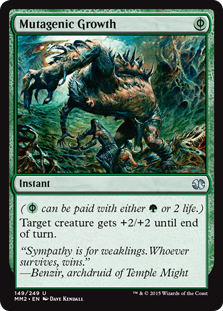
I love to brew, and build upwards of ten Modern decks every week. Most of them aren't very good, which is why I've only written about a few on Modern Nexus; I think brewing is a numbers game, so as long as decks like Temur Delver and GRx Moon emerge from a sea of goofier ideas like Temur Rogues, I'm happy. Like most brewers, my favorite thing about spoiler season is the chance to update my decks with newer cards. But it doesn't always take a fresh expansion to get me de-sleeving and re-sleeving---often enough, existing cards pop into my head unexpectedly, and alter the way I approach my decks. This happened last year with Curiosity, which ended up substantially buffing Temur Delver against what us tempo players call "the BGx menace." Last week, it happened again with Mutagenic Growth, a card that may finally revitalize the deck I played all through Treasure Cruise winter: Counter-Cat.

wild nacatl art crop

I cribbed the name from Josh Utter-Leyton's pre-Innistrad, Green Sun's Zenith-powered Zoo deck. Today's Counter-Cat is a Delver deck slanted towards aggressive starts. Just as Hooting Mandrills allows Temur Delver to play a functional "eight Tarmogoyfs," Counter-Cat employs Wild Nacatl to double down on Delvers. This article explores my history with Counter-Cat, unveils my current build, and ponders the deck's possible future as another viable grow strategy.

[wp_ad_camp_1]

Deck History

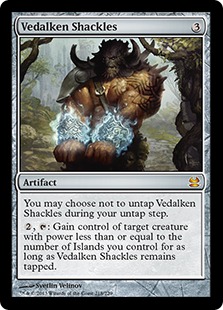
Vedalken Shackles

The February 2014 Wild Nacatl unban inspired me to try a tempo-focused grow shell in Modern for the first time. Until then, I had been playing midrange-y Temur Delver decks. Temur had little choice but to dip into haymakers like Vedalken Shackles thanks to a lack of efficient threats like Hooting Mandrills. Wild Nacatl and Delver of Secrets had never been legal in Modern together, and the idea of a deck with eight hyper-aggressive, turn-one threats I could ride to victory made me giddy. I developed Counter-Cat with some fellow tempo enthusiasts overseas, and played it for almost a year.

My first build ran 3-4 copies of Snapcaster Mage, and played games in two phases. Phase one involved sneaking in damage with Delver of Secrets and Wild Nacatl, and rebounding with Tarmogoyf if a turn-one threat ate Lightning Bolt. Path to Exile helped keep the ground clear for Wild Nacatl, and countermagic kept opponents from setting up blockers. Phase two saw me burn opponents out. If opponents clogged the ground or otherwise answered my attackers, I could switch gears and start throwing burn at their heads, with not just a little help from Tiago. Lightning Helix complimented the set of Bolts when it came time to get doming. I also ran two Boros Charms in this build, since it excelled in both phases, protecting creatures from Abrupt Decay, Oblivion Stone, and Supreme Verdict early on and dealing a whopping four damage later.

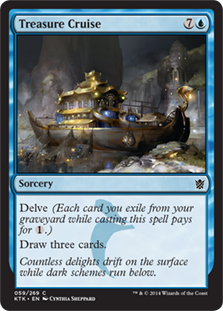
Treasure CruiseThe Hooting Mandrills spoiler excited me greatly, prompting me to preorder about a hundred foil copies and slot a pair into Counter-Cat. A 4/4 for G is just what the doctor ordered in this kind of deck, but I quickly ditched Mandrills for Treasure Cruise and rode the party boat until Wizards shut us down the following January. Counter-Cat performed well in a UR Delver-packed metagame, since it boasted relative immunity to Pyroclasm compared with Young Pyromancer decks and could even pack the sweeper itself.

Post-ban, Counter-Cat featuring Hooting Mandrills never got its time in the sun. I liked the cards enough to try plenty of different builds, including ones with more burn, more countermagic, more creatures, and even Disrupting Shoal. One problem kept surfacing: if our turn-one threat got removed, flooding on Remand and Mana Leak could uncomfortably force us into a midrange role when we’d rather be attacking. Since Delver and Nacatl cost one mana, they needed to survive a one-mana removal spell for us to reliably untap with them and actually get to use those Remands properly. Lightning Bolt was Public Enemy Number One in this case.

Enter Mutagenic Growth. Growth pumps 2/2 Wild Nacatls or flipped Delvers past the ubiquitous instant, buying us enough time to untap with a threat and get the beats rolling. Some preliminary testing indicates Mutagenic Growth might prove to be this deck's Disrupting Shoal---the glue that holds everything together.

My current list:

Counter-Cat, by Jordan Boisvert

Creatures

4 Wild Nacatl
4 Delver of Secrets
4 Tarmogoyf
2 Hooting Mandrills
2 Snapcaster Mage

Instants

4 Mutagenic Growth
4 Path to Exile
4 Lightning Bolt
2 Lightning Helix
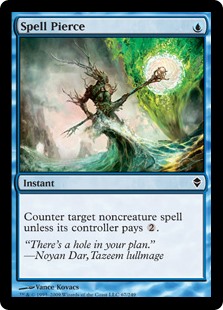
2 Spell Pierce
1 Spell Snare
1 Remand
1 Mana Leak

Sorceries

4 Serum Visions
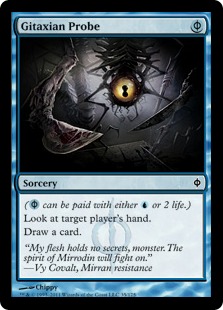
3 Gitaxian Probe

Lands

4 Misty Rainforest
4 Flooded Strand
3 Arid Mesa
1 Wooded Foothills
1 Steam Vents
1 Temple Garden
1 Stomping Ground
1 Hallowed Fountain
1 Island
1 Forest

Sideboard

3 Huntmaster of the Fells
2 Isochron Scepter
2 Pyroclasm
1 Lightning Helix
2 Destructive Revelry
1 Ancient Grudge
2 Negate
2 Boros Charm

Dissecting Counter-Cat

Counter-Cat's cards fall into one of five categories: threats, removal/reach, permission, selection, and mana. Cantrips help us find the piece we need at a given time to make sure we can continuously pile on damage with our creatures.

The Threats

Threats form the basis of any tempo deck. As efficient creatures get printed, brand new tempo decks become viable. Counter-Cat is a deck that could not exist in Modern without its infamous common beaters.

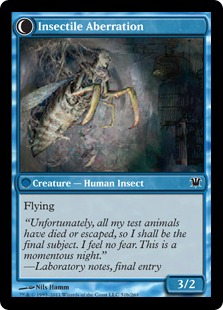
Insectile AberrationNacatl and Delver make this deck tick. When we open two or three one-drops, Counter-Cat plays like a super-Zoo deck, slamming the creatures quickly and overwhelming opponents with their hugeness. Zoo wins some games by leading with Goblin Guide, and following up with Wild Nacatl and Kird Ape. Leading with three Nacatls is another game entirely, especially when some of them fly.

Delver is the better of our two one-drops, since he has evasion and can transform on just one land (Nacatl asks us to make a second land drop before growing to Nimble Mongoose-size). Still, it’s better to lead with Nacatl if we have Mutagenic Growth in hand and expect Lightning Bolts. That way, we can Misstep the Bolt and chase our attack with Delver of Secrets, leaving our Boltless opponent to deal with two great threats instead of one. Nacatl is better than Delver with Mutagenic Growth in general, since he gets to chow down on Siege Rhino and Tasigur with some help with the instant.

Our one-drops terrorize decks that can't remove them, like Ad Nauseam or Eggs. But against decks with removal (i.e. most of them), Tarmogoyf and Hooting Mandrills are our most important creatures. They dodge many removal spells themselves, including Lightning Bolt, and consistently come down for one or two mana to clean up the mess left by Terminates and Decays. Growth also improves these creatures significantly; Goyf doesn’t have to worry about contemporaries across the battlefield anymore, and Mandrills runs over just about everything at 6/6.

Snapcaster Mage isn’t quite a threat, but he provides too much utility in this kind of deck not to run. These four colors grant us access to just about every spell we could want to flash back in Modern, including Bolt, Path, Helix, Remand, and of course, Mutagenic Growth. Since Growth costs Phyrexian mana, Snapcaster casts it for free.

The Removal Suite

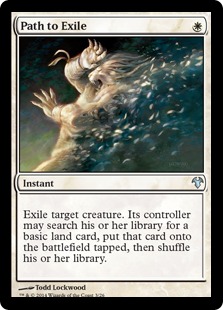
Path to ExileI’ve believed for a while now that Modern has three viable grow decks, each with its own strengths and weaknesses. Thanks to Disrupting Shoal and Stubborn Denial, Temur Delver (specifically, Monkey Grow) shines brightest against linear aggro and combo decks. Blood Moon and Huntmaster of the Fells give that deck enough flexibility to take on most other decks in Modern, too, making it the most robust of the three. I still haven’t forgotten about the Day's Undoing-featuring iGrow, an aggressive Young Pyromancer vessel that preys on hand advantage-based midrange decks like UWx Midrange and Grixis Conrol.

Counter-Cat’s natural white splash gives it Path to Exile, and subsequently, admirable matchups against creature-focused strategies. Path-Snap-Path allows us to easily take on a midrange role in those matchups, and our inclination to apply pressure early puts combo-esque synergy decks like Abzan Chord on a decisive clock. As long as we pace our disruption wisely, Path rarely interferes with taxing counterspells like Spell Pierce and Mana Leak.

Lightning Helix is a must-include in Counter-Cat because of the damage we take from our manabase. With Gitaxian Probe in the mix, it’s not uncommon for us to start games at 12 life. Against linear aggro decks like Burn or Gruul Zoo, we need a way to gain some of that life back while meaningfully disrupting opponents. Helix fits this bill perfectly, and I like a third copy in the sideboard for the matchups it truly works in.

The Counter Package

Older builds of Counter-Cat played 8-10 counterspells, depending on the metagame. Mutagenic Growth takes over some of our counter slots, since it’s functionally Mental Misstep in many scenarios.

Spell PierceSpell Pierce is a counterspell that punishes opponents for not taking their time. If we apply enough pressure, time becomes a luxury opponents can’t afford to spend. With Growth helping ensure the on-board presence of Insectile Aberration or Wild Nacatl, Pierce skyrockets in value. One-mana counterspells are also great at winning stack wars. Spell Snare joins in here, hitting power cards like Snapcaster Mage and Tarmogoyf or just forcing our own key cards through lowly Mana Leaks.

Remand and Mana Leak make the cut as ways to answer big cards. Haymakers like Karn Liberated and Thragtusk can put spokes in any fair deck's gameplan, and these two-mana counterspells answer them as elegantly as anything.

As for numbers, I'm always hesitant to say I've optimized a deck. By now, I swear by the 4/3/3 Shoal/Leak/Denial split in Temur Delver, but this build of Counter-Cat is too fresh for me to make a similar claim. I will say that so far, I’ve enjoyed the versatility of a 2/1/1/1 Pierce/Snare/Remand/Leak split with Snapcaster Mage.

Negate earns some spots in the sideboard for matchups where we want less removal and more countermagic. Most combo decks struggle to remove our threats, preferring to race us instead; countermagic makes it very difficult for them to succeed.

The Cantrips

Serum Visions doesn’t need much of an introduction, but I do want to address my inclusion of Gitaxian Probe. Despite the damage we take from fetching and shocking, I consider Probe integral to this deck’s functionality. The card does a number of things in Counter-Cat, and in UGx grow shells in general:

  • Gitaxian ProbeIt grows an early Tarmogoyf past Lightning Bolt.
  • It fuels delve.
  • It flips Delver of Secrets.
  • It allows us to run fewer lands.
  • It gives us something to do with Snapcaster Mage for zero mana in a draw-go stalemate or an otherwise tight spot.
  • It lets us know whether we should dig for protection like Mutagenic Growth before committing threats to the board.
  • It provides perfect information so we know how to pace Spell Pierce, Spell Snare, Remand, and Mana Leak, as well as whether to hold up permission/removal or to increase our board presence.

On paper, the life we pay to cast Probe mostly matters against damage-intensive decks like Burn, but Counter-Cat already has a favorable Burn matchup. I’m fine with slightly weakening our Game 1s against that deck to reap the benefits of running Probe against everyone else.

The Manabase

One of Counter-Cat’s most daunting aspects is the manabase. This deck frequently operates on just two lands, but has trouble winning on just one. Ideally, it wants to set up “perfect shocks” (Temple Garden + Steam Vents, or Hallowed Fountain + Stomping Ground) as quickly as possible, then supplement the combo with a third land (often basic Island). Garden + Vents is the preferred combo in this build, since every fetchland grabs either half, and that pair casts Destructive Revelry from the sideboard. That said, some openers call for Fountain + Ground.

I don’t like Breeding Pool and Sacred Foundry in this deck, since that pair doesn’t cast Boros spells like Lightning Helix. The benefit of playing Breeding Pool---being able to cast more spells on one land---doesn't appeal to me either, since Wild Nacatl is pretty lackluster with just a Pool in play anyway, and the deck struggles on one land regardless.

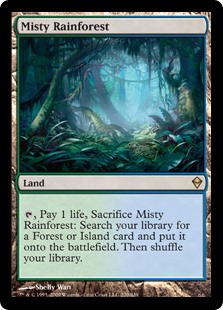
misty rainforestMisty Rainforest is the deck’s best fetchland, grabbing every land in the deck. Arid Mesa gets every shock, but no basics. I like to max out on Flooded Strand, since the blue-white fetch simplifies setting up Garden + Vents (+ Island). Scalding Tarn, a staple in most UGrx tempo decks, doesn’t always cut it in Counter-Cat, as it never finds Temple Garden.

When I take this deck to tournaments, I get more comments on the manabase than anything. As a Blood Moon lover myself, I like to think I know how to control for greed when I build a manabase. Four-color manabases in Modern are only safe if you have a way around Blood Moon, which Counter-Cat does: get under it.

Especially with Mutagenic Growth to protect against Lightning Bolt, we’re thrilled to see opponents tap out on turn three, since it means another attack from our jungle squad. Revelry comes in to deal with Moon against decks we want Path to Exile for, and the rest of the time, it’s fairly easy to fetch out a Forest early and play a wonky Gruul deck. Opponents expect Moon to buy them time, but if we can still deploy Nacatls, Mandrills, Goyfs, Growths, and Bolts, they won't gain much. Revelry can be cast off Forest and any land-turned-Mountain to unlock a hand full of cantrips, and Isochron Scepter gives us a way to cast Helix and Path without a white source.

My advice to anyone taking this deck for a spin: pay close attention to the way you fetch and the ramifications of your choices. Remember to pace the most valuable fetchlands, and keep in mind how the value changes as your lands get fetched out. For example, if you have basic Island in play, Arid Mesa becomes strictly better than Flooded Strand, which doesn’t fetch Stomping Ground.

The Sideboard

Counter-Cat’s sideboard allows the deck to become a “hate machine” for Games 2 and 3. Against creature decks, our Spell Pierces become extra removal spells; against combo, Mutagenic Growth and Path to Exile tag out for Negate and more burn spells. I often approach sideboards in terms of packages. In Counter-Cat, I also pack specific types of cards---counterspells, burn---to improve the reliability of certain plans I want to employ in a given matchup.

  • Huntmaster package: A carry-over from Temur Delver, the Huntmaster package comes in against grindy attrition decks and damage-based creature decks alike. This card does so much work I’m always amazed more decks don’t play him.
  • Revelry package: I favor a 2/1 split because Ancient Grudge is too good against artifact strategies not to run, but Destructive Revelry is usually better in Counter-Cat. The spell answers pesky enchantments like Blood Moon as well as nastier stuff like Choke and Batterskull.
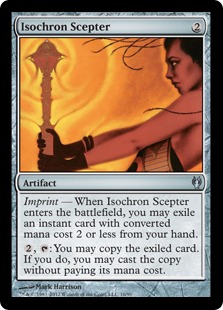
  • Isochron ScepterIsochron Scepter: Counter-Cat can’t play its own Blood Moons for free wins against greedy decks, but Isochron Scepter is almost as good in many matchups. Imprinting Path to Exile or Lightning Helix against a creature deck usually wins the game on its own, and Remand or Negate against spell-based decks keeps opponents from messing with Wild Nacatl or from winning themselves.

I prefer Scepter in the board because we don’t want it against decks with Kolaghan's Command. Game 1 is usually faster than Game 2, meaning we won’t necessarily have enough time to extract full value from the Scepter without dying to linear opponents. Scepter can also go back into the board once opponents have seen it, possibly causing them to bring in now-blanked artifact removal.

  • Negate: It turns out two-mana Stubborn Denial isn’t so bad. Increases our counterspell density against decks like Ad Nauseam that don’t care about Path to Exile. Also stellar against creature decks that rely heavily on noncreature spells, like Collected Company.
  • Boros Charm: An anti-midrange plan that helps us burn opponents out once they clear the ground. Also protects our threats from destruction effects, and the double strike mode can be relevant sometimes—with a 5/6 Tarmogoyf, with a trampling Mandrills, or with Insectile Aberration against a horde of Lingering Souls tokens, for example.

Biting Into Modern

Mutagenic GrowthI've experimented with Mutagenic Growth as a way to counter Lightning Bolt in Modern before. I tried Growth with Mantis Rider, and my last project with the card ran it alongside Goblin Rabblemaster in a ritual-fueled GRx Moon deck. Rider and Rabblemaster don't meet my guidelines for benchmark creature playability by themselves, so it stands to reason that Growth is much more impressive when it supports Boltable creatures good enough to see Modern play on their own merits.

Ten days of grinding with this new build of Counter-Cat seems to confirm this hypothesis, but I'll have more insights in a week or two. Until then, don't be afraid to get brewing yourself, even well before Eldritch Moon spoilers start to surface. Modern continues to amaze me with its vast card pool and wealth of deckbuilding possibilities, and dusting off old favorites is a great way to bite into the format. Your own Disrupting Shoal might be right under your nose!

Jordan Boisvert

Jordan is Assistant Director of Content at Quiet Speculation and a longtime contributor to Modern Nexus. Best known for his innovations in Temur Delver and Colorless Eldrazi, Jordan favors highly reversible aggro-control decks and is always striving to embrace his biases when playing or brewing.

View More By Jordan Boisvert

Posted in Brewing, ModernTagged , , , 14 Comments on Delver, With Teeth: Introducing Counter-Cat

Have you joined the Quiet Speculation Discord?

If you haven't, you're leaving value on the table! Join our community of experts, enthusiasts, entertainers, and educators and enjoy exclusive podcasts, questions asked and answered, trades, sales, and everything else Discord has to offer.

Want to create content with Quiet Speculation?

All you need to succeed is a passion for Magic: The Gathering, and the ability to write coherently. Share your knowledge of MTG and how you leverage it to win games, get value from your cards – or even turn a profit.

Deck Overview- Modern Eldrazi and Taxes

Are you a Quiet Speculation member?

If not, now is a perfect time to join up! Our powerful tools, breaking-news analysis, and exclusive Discord channel will make sure you stay up to date and ahead of the curve.

I hate the name for this deck. I try to have fun with deck names, but man, this one is just the worst. It does make it clear what's in the deck though. If you know what goes into Death and Taxes decks and if you're good at guessing the Eldrazi that fit in. Whatever, here's a 5-0 decklist from an MTGO League:

Eldrazi and Taxes by Benzyne

Creatures

4 Eldrazi Displacer
4 Flickerwisp
4 Leonin Arbiter
2 Reality Smasher
4 Thalia, Guardian of Thraben
4 Thought-Knot Seer
4 Tidehollow Sculler
4 Wasteland Strangler

Spells

4 Path to Exile
4 Aether Vial

Lands

4 Caves of Koilos
4 Eldrazi Temple
4 Ghost Quarter
4 Godless Shrine
3 Plains
2 Shambling Vent
1 Swamp

Sideboard

1 Anguished Unmaking
1 Burrenton Forge-Tender
2 Duress
2 Kor Firewalker
2 Mirran Crusader
2 Pithing Needle
2 Rest in Peace
2 Stony Silence
1 Zealous Persecution

The idea here is to play creatures that make it very difficult for your opponent to play Magic. Leonin Arbiter can often be very frustrated in a format flush with fetchlands- not to mention the interaction with your own Ghost Quarters. Thalia, Guardian of Thraben makes Serum Visions even more embarrassing. Thought-Knot Seer is the Eldrazi that one would expect to make its way into Modern, so it's not surprising to see it here. Both it and Tidehollow Sculler combine with AEther Vial to potentially blank your opponents draw step. Once they're already on the battlefield, Eldrazi Displacer is another way to enable this effect during the opponent's draw step. Flickerwisp has always been played in this style of deck to combine with AEthervial to blink creatures at instant speed, and now you have major redundancy on this ability. The two function in dramatically different ways, though using either to blink a Tidehollow Sculler in response to the enter the battlefield ability will permanently exile a card.

There was an error retrieving a chart for Thought-Knot Seer

Utilizing Sculler and Seer to exile cards from the opponent's hand is powerful on its own, and it also gives the deck a critical mass of ways to exile cards to enable Wasteland Strangler. Wasteland Strangler actually saw play in Modern before Oath of the Gatewatch was even released in a processor oriented deck, and with there being so many Wild Nacatls and Collected Company floating around the card seems quite well-positioned now. It can also just kill itself in a pinch to prevent your opponent from resolving an Ancestral Vision.

There was an error retrieving a chart for Wasteland Strangler

This is the most resilient and powerful Hatebears deck that I've ever seen in Modern. Lightning Bolt proof creatures in Thought-Knot Seer and Reality Smasher are huge upgrades, and I actually believe this deck is a real contender, unlike previous incarnations of the deck which were fringe at best. This deck could be an excellent choice for the Open in Indianapolis this weekend.

A lot of this deck is Standard legal, which means investing in the cards for Modern play doesn't make a ton of sense. Of all of the options, the card that is under-priced from this deck seems to be Thalia, Guardian of Thraben. This is a card that has been identified as a staple in older formats for a long time, and if this deck gains traction then the days of sub-$10 Thalias will be behind us.

There was an error retrieving a chart for Thalia, Guardian of Thraben

High Stakes MTGO – May 1st to May 7th

Are you a Quiet Speculation member?

If not, now is a perfect time to join up! Our powerful tools, breaking-news analysis, and exclusive Discord channel will make sure you stay up to date and ahead of the curve.

Welcome back for another week of High Stakes MTGO! After a small break due to important deadlines in my day job I'm back for fully developed High Stakes MTGO articles.

Although I had very little spare time these past few weeks my account saw a lot of movement. I didn't really have the opportunity to speculate on cards spotlighted during Pro Tour Shadows over Innistrad such as Seasons Past, Dark Petition and Kalitas, Traitor of Ghet (which I can't believe I missed) and I mainly sold a few of my positions according to their new trends, selling out too early in some cases.

Following the end of Shadows over Innistrad release events a lot of prices are currently rebounding. Battle for Zendikar and Oath of the Gatewatch singles are more or less slowly taking off and Modern cards are cycling up for the most part. This is going to be a good period to sell and look for tastes-of-the-day to cash out on, especially in Standard and in BFZ and OGW.

The new Standard rotation structure simply doubled the opportunity for cards to have their moment of fame. We can already see that effect on some Magic Origins and Dragons of Tarkir cards that probably would have not shined in the previous rotation structure.

The latest snapshot of the account is here.

Buys This Week

OoN

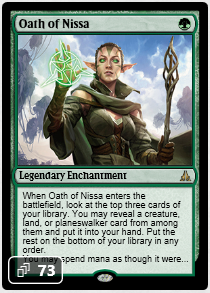
This oath is starting to see play in more and more decks in Standard, Modern and even Legacy. I clearly didn't catch it at its absolute bottom but I think I still have a good margin of progress from my buying price.

Oath of the Gatewatch just stopped being the main set opened from drafts so I would expect the price to slowly creep up if the green oath keeps seeing play across several formats. You can also check Adam Yurchick's article for additional reasons to buy Oath of Nissa.

CCo

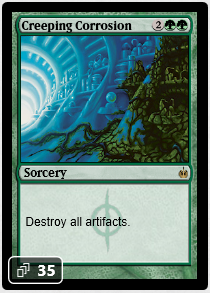
Affinity decks are not as prevalent now as they were a few months ago, which might partially explain why Creeping Corrosion crashed to its one year-low at 1 tix last week. This is part of the usual up and down cycles in Modern that are of interest to speculators. As of writing, the price has already heavily rebounded; I might actually be selling this one very soon.

Sales This Week

After a global dip at the end of April, the price of these Magic Origins painlands are back up. With less and less time before ORI rotates out of Standard I have to intensify my sales of painlands. I have lowered my minimum selling prices at least momentarily to liquidate several hundred copies.

Along with red in general in this current Standard metagame, Shivan Reef and Battlefield Forge are pretty low. Hopefully the metagame will evolve to favor red and these two painlands next. If not, my last chance will be a change brought by Eldritch Moon.

This bulk spec never got anywhere. I took advantage of an unexpected little spike last week and sold about two thirds of my position here. I'll wait a little bit more now that the price is back to its baseline, but I'm only looking to exit this position at this point, with or without further gains.

Legendary Cube Prize Pack

The price of the Legendary Cube Prize Packs keeps fluctuating up and down but the global trend is still up since last December. Sales from speculators surely have affected the trend but I keep selling my stock as soon as the buying price is at 2.8 tix or more.

As I mentioned before, this spec has been a great ride and I don't want to ruin everything by being caught by an unexpected reprint. For this reason I'll be selling more of these packs whenever the opportunity occurs.

The powerful Eldrazi creatures (this along with Thought-Knot Seer) were somehow relegated to the sidelines during PT SOI. Reality Smasher even dropped to 1.4 tix, when I decided to buy it. A week later the Smasher was back in the 3.5-4 tix range, its pre-SOI high. At this point I had more than doubled my spec and I decided to let go with 130 tix in profit in only about a week.

Despite my latest move, I think this guy may have more to offer in the long run. I just felt like this spec had been good enough to me at this very moment to lock in some profits. If Reality Smasher goes below 2 tix again I'll become a buyer once more.

OGW

Never has a full set spec gone this well in such a small period of time. OGW was also strangely disappointing in that it's the only full set spec I couldn't buy as many copies of as I wanted, because the price was moving up too soon, too fast. Anyway, OGW sets are up by more than 50% compared to my buying price. Historically it's very hard to beat a +50% on a full set spec.

Whether OGW will be the exception or not is nothing to worry about any more, as far as I'm concerned. I sold my 11 OGW full sets and got exactly what I was looking for.

From 18 tix on April 25th to 40 tix this past weekend, this is how fast a price can grow with Modern cards, even with a high starting price tag. With Future Sight flashback drafts just around the corner and a price already that high, this was a selling opportunity I didn't really want to miss. Too bad I was so reluctant to buy more copies above 21 tix. Chances are I'll rebuy some copies of the Grove later this month.

On My Radar

While I'll be watching my Modern specs in the new format as the metagame settles, my Standard specs are really the ones I don't want to lose track of. Unlike Modern specs where missing a peak is not the end the world since just about everything is cyclical, Standard specs do not offer that degree of freedom.

Especially for specs from Magic Origins and Dragons of Tarkir, this is the final lap. I tried to sell some of these positions during PT SOI, some of them perhaps a little too prematurely. However my portfolio still holds a lot of specs from these two sets, including mythics, rares, bulk specs and thousands of painlands!

With ORI and DTK positions I clearly can't miss any spike. As I'm writing these lines I'm carefully watching Dragonlord Silumgar making his way to the top again. Good results during the two Standard GPs of this past weekend would mean an extra 2 or 3 tix per copy, but I will have to sell during this spike.

I'm also aware that I will have to suffer some losses here and there. For instance I'm not going to wait until the last minute to sell Woodland Bellower and it looks like 1 tix is the best I can hope for at the moment.

I'll also be watching my BFZ and OGW specs. Although I may have more time with those specs I will nonetheless be selling when my target prices are met. Reality Smasher was the first one down this week for this very reason. I'm happy when my specs have a high turnover and I intend to keep up with the pace with my Standard picks.

Questions & Answers

Q1

These are recurrent questions but my answer is actually evolving so it's totally fine to revisit this. As bot chains are evolving too, I'm using now bots I was not using few months ago.

Adam is assuming correctly that I almost exclusively use bots for my transactions, probably 99.5% of the time. The spread very often favors using bots and with a limited time to dedicate to MTGO, I try complete as many transactions as possible when I'm online. Bots are the fastest mechanism to buy and sell cards.

As you certainly know there's no one bot chain that has the best selling and buying prices for all cards. Even if such a bot chain existed I would need to check other bots anyway to acquire the dozens of playsets I want for each position. These days, whether I'm selling or buying cards, I always put up five websites (in no particular order): MtgoTraders, GoatBots, DojoTrade, MtgoLibrary Bots and Clanteam.

MtgoTraders and GoatBots are two of the largest vendors online and have the advantage of keeping a large stock of just about any card. More importantly, they will let you buy as many copies as you want if you are willing to pay a small increment after each purchase (or accept a smaller price after each sale).

CardHoarder and CardBot are two other large bot chains that use the same pricing as MtgoTraders. I rarely use them since when a price gets too high with MtgoTraders it will get too high as well on these two other stores. By habit I keep using MtgoTraders. GoatBots is also a bot chain of choice for boosters and full sets.

DojoTrade is a bot chain you should consider if you're not using it already. You are limited with buying and selling a playset per 24 hours but they have a decent stock and very competitive prices, often the best buying/selling ones. They also sell sets at great prices which is another advantage.

MtgoLibrary groups together a ton of individual bot chains, big and small. At some point I've probably used about 95% of the regular, decently-priced and -stocked bots, and I must have attained the "speculator" special pricing for some of them. It's easy to compare prices across the various bots, and I simply start with the cheapest when buying or the most expensive when selling. I would strongly recommend respecting the playset limitation some bots have set to avoid being banned. There's more to gain in the long run by respecting these limits.

On their website Clanteam bots advertise boosters, full sets, Standard and recent Modern sets, but actually sell almost everything if you check their bots on MTGO. They rarely have the best prices but are always competitive. They sell full sets and are also one of the very rare chains to buy full sets. One thing that comes handy with Clanteam is that they buy absolutely everything for 0.0001 tix at the lowest.

Besides this I happen to screen the Classifieds from time to time or check alternative bot chains such as Mtgo Academy or TheCardNexus and bots using the same software. And once every blue moon I buy or sell to humans through offers on the Classifieds.


Thank you for reading,

Sylvain

Insider: Going Deeper on Modern Dredge

Are you a Quiet Speculation member?

If not, now is a perfect time to join up! Our powerful tools, breaking-news analysis, and exclusive Discord channel will make sure you stay up to date and ahead of the curve.

I wasn't planning on going to the Star City Games Modern Open in Indianapolis this weekend, as I wasn't looking to take more time off work, though the urge to battle got the better of me. Given the rumblings about Dredge in Modern, I committed a lot of the last week to trying to figure out if such a deck would be a good choice for the Open. I put in a ton of work, and came to the conclusion that there's too much hate for me to feel comfortable playing the deck. That said, the deck is quite consistent and powerful, and a reasonable choice for those who enjoy this type of strategy.

I tried a ton of different configurations for the deck, and ultimately built my list around a couple base premises. The first is that efficiency is the most important thing, and as such finding a way to play a ton of one-mana spells was the best way to actually win with the deck. Your payoff cards have some built-in variance given that you need to mill the right cards, and if all you end up doing is recurring a Prized Amalgam and a Bloodghast then it would be much preferred to do so on turn two than turn three.

The other premise is that creatures were vastly superior to spells. This was true both with regard to triggering Vengevine---the only payoff card that always has haste---and in regard to the sideboard Gnaw to the Bones which are the only way you're realistically beating Burn.

My early lists were base-Jund splashing the ability to actually cast Prized Amalgam or straight Sultai utilizing Ideas Unbound over Faithless Looting. The Jund build just felt off in a way that I can't properly articulate, and the Sultai list heavily felt the absence of Faithless Looting. Ideas Unbound was sweet, though it was blue-mana-hungry, slower than Faithless Looting, and the fact that it doesn't have flashback means that it could leave some Golgari Grave-Trolls stranded in your hand while you just kind of die.

Ultimately I decided to just jam all the best elements of the deck together to see if the mana worked, and I came up with something that pretty consistently did its thing:

Dredge, by Ryan Overturf

Creatures

4 Hedron Crab
4 Gravecrawler
4 Insolent Neonate
4 Bloodghast
1 Rotting Rats
4 Prized Amalgam
4 Vengevine
4 Golgari Grave-Troll
2 Lotleth Troll

Spells

1 Life from the Loam
4 Faithless Looting
2 Gather the Pack

Lands

4 Scalding Tarn
4 Wooded Foothills
3 Bloodstained Mire
2 Steam Vents
1 Blood Crypt
1 Stomping Ground
1 Watery Grave
1 Overgrown Tomb
1 Breeding Pool
1 Island
1 Swamp
1 Forest
1 Mountain

Sideboard

2 Darkblast
2 Thoughtseize
2 Lightning Axe
2 Ancient Grudge
1 Conflagrate
2 Gnaw to the Bone
2 Spellskite
2 Abrupt Decay

I was dismissive of Lotleth Troll last week, and after experimenting with four it was clear that drawing multiples was really bad. Having one copy was decent for applying pressure, but more importantly it's nice to have a discard outlet to pitch Grave-Troll every turn. Playing with four Gather the Pack ended up with spells that cost too much mana to impact the board too little, and four Lotleth Trolls meant there were too many cards that weren't essential engine pieces. The split seems to work well.

The deck matches up excellently against Jund, Abzan, and Grixis Control, holds its own against Abzan Company, and smashes Tron. Infect is close to unwinnable, and Burn is unfavorable. If sideboarding were even, then this is a nice metagame position for a Modern deck. The issue is, your opponents will often be gaining more from their sideboard than you will.

I've beaten plenty of Relic of Progenitus with clever play, though if your opponent has a functional hand featuring Rest in Peace they'll crush you. If they have Leyline of the Void, forget about it. Grafdigger's Cage is beatable if you draw a card that can destroy it, but good luck pegging which of your opponents will have Cage.

I was playing in a league against Burn, and after scraping out a close game two my opponent played a turn two Rest in Peace and I immediately conceded the match, dropped from the league, and hung up the deck. I can deal with my good matchups having great sideboard cards, but when my bad matchups also feel obligated to have hate I can't justify playing the deck. I'm a coward, though I do think that the deck has merit.

The only way to make the deck more appealing to me would be to find a more explosive list, though considering that my deck is streamlined for efficiency I haven't found a way to do that. Streamer Magus of the Moon has an interesting list that he's been streaming with, though I've run out of time and interest to play with it:

Gargadon Dredge, by Magus of the Moon

Creatures

4 Insolent Neonate
4 Narcomoeba
4 Bloodghast
4 Stinkweed Imp
4 Prized Amalgam
4 Golgari Grave-Troll
4 Greater Gargadon

Spells

4 Faithless Looting
4 Burning Inquiry
4 Bridge From Below
1 Rally the Peasants
1 Conflagrate

Lands

1 Blood Crypt
1 Bloodstained Mire
4 Copperline Gorge
3 Dakmor Salvage
3 Snow-Covered Mountain
2 Stomping Ground
4 Wooded Foothills

Burning Inquiry is the most efficient enabler that my list doesn't run, and while I've played it in some of my lists and had it do great things I've also had it be terrible. The Dakmor Salvages help make it so Inquiry doesn't just ruin your hand, though the card is very volatile. Sometimes it randomly wrecks your opponent, other times it wrecks you.

Greater Gargadon seems sweet, though there is a difference between sweet and good. What it does is enables you to sacrifice Bloodghasts and net some zombie tokens with Bridge from Below to generate more power than my list is capable of. The other thing it does is sometimes sit on suspend while you die.

There was an error retrieving a chart for Greater Gargadon

Narcomoeba is a sweet interaction with Prized Amalgam that I eschewed as it doesn't really do enough without Bridge from Below. If you actually cast it when it triggered to enable Vengevine or it was a zombie to enable Gravecrawler it would be a different story, though ultimately this deck and mine have surprisingly wildly varying elements.

Four elements are in every way irreplaceable: Prized Amalgam, Bloodghast, Golgari Grave-Troll, and Faithless Looting. I just don't see a successful Dredge list not running all four of these cards. Greater Gargadon could be a sweet spec, though these four are the most reliable cards.

I already touched on Bloodghast and Grave-Troll last week, and wrote a piece on the free side about Prized Amalgam, though I think we could see foil Faithless Looting really explode soon. There are very few copies on TCGPlayer, most of which are under $7. There are already foil copies of the card selling on eBay for more than that, and SCG has NM foils listed at $15. The card is playable in other decks and other formats, and I feel great 'bout picking up some foils.

There was an error retrieving a chart for Faithless Looting

On the other side of things, graveyard hate is becoming ever more popular in Modern. Rest in Peace and Grafdigger's Cage are both pretty cheap right now, and picking up a few would minimally be great additions to your trade binder. Cage has the advantage of going into any deck and also hosing Collected Company, so I prefer Cage though don't mind investing some into both options.

The issue with Modern Dredge is that if you don't want to lose to it you don't have to. As such, the current builds of the deck only have the potential of being flavor-of-the-week type decks. There aren't many cards in the deck that see play elsewhere, so the plan for any specs from the deck should be to move them quickly if and when Dredge has a strong weekend and builds hype.

The fact that Faithless Looting is playable in other decks and the market data available demonstrate that some people are already willing to pay more are the reason that I like foil Lootings more than any other card in the deck.

I would love to be playing Dredge this weekend, but I just can't bring myself to do it. Just because I won't, though, doesn't mean nobody will, and the deck's power is very real. If a pilot successfully dodges hate this weekend, then we could see some pretty immediate price movement. Get ready to sell into the hype!

Thanks for reading.

-Ryan Overturf
@RyanOverdrive on Twitter

Insider: Virtually Infinite – Last Call on Reserved List

Are you a Quiet Speculation member?

If not, now is a perfect time to join up! Our powerful tools, breaking-news analysis, and exclusive Discord channel will make sure you stay up to date and ahead of the curve.

This series is designed for the player or speculator looking to build their collection, with a particular focus on Eternal Masters (EMA).

We are emerging from the market trough created by the Shadows over Innistrad release. As expected, the Modern and Legacy indexes dropped by about 10% during the liquidity crunch that accompanies all releases. These losses were concentrated in fringe Modern and Legacy playables and in cards pending flashback, including Time Spiral block favorites like Tarmogoyf and Pendelhaven.

Last week we made a few picks to take advantage of depressed prices in Modern staples that are likely to rebound. These have already performed well. We continue to bank on the hypothesis, articulated well by Matthew Lewis, that the Modern metagame will remain diverse and that "eventually every deck will have its day in the sun as the metagame stops preparing for it."

Legacy offers some good pickups too, but I have generally steered clear since the risk of reprint in EMA is much higher.

EMA will soon be here and as cards are announced it will shake up the market. According to Experts on the Internet (Reddit forums, which should be taken with a grain of salt), EMA previews will start May 23. However, it's possible they will preview a card or two during the Magic Online Championship this weekend.

Last Call on Reserved List Staples

As noted in my first article in this series, EMA will create upward pressure on any Legacy staples not reprinted. And we know no Reserved List cards will be reprinted. That was the basis for the first basket we picked, which made nice gains until SOI release set them back.

The good news is that if you missed the train on these the first time around, it's at the station again. You've missed the floor, but there is still good room for growth on cards that lost 10-20% from their pre-SOI peak.

For insight into which cards to buy and why, check these articles here and here.

Gaea's Cradle at 37.5 tix is a solid bet. EMA will contain some toys for the Elves deck, which is a cheap gateway for new players. 50-60 or higher is possible.

Mox Diamond is down a few tix, and could see continued gains as Legacy buzz continues. At 20 tix for a card that is not heavily played it's a bit risky, but this card has very low supply and could hit new highs.

Many of the cards below are a safe buy and should see a 25-40% increase in the next two to six weeks. A basket of these is a good place for your tickets. It's worth noting that the spreads on older cards are large, so it's not worth it if a card goes up 5-10%---it really needs 20-50% gains and up to merit the investment. Fortunately that should be possible on some of the picks below.

Modern Picks

Grim Lavamancer (TOR)

Grim Lavamancer-chart

Current: 3.4 tix
Target: 5-7 tix

Grim Lavamancer is a staple in Legacy and sees play in Modern. Not long ago it hit a peak of 8 tix, but the recent trajectory has been grim. Unless this appears in EMA, which seems unlikely, it should rebound nicely.

Vesuva (TSP)

Vesuva-chart

Current: 2.9 tix
Target: 6-8 tix

Vesuva has been a 5+ tix card for the past year. In fact, it peaked at 11.5 in mid March, perhaps on the hype of the Modern unbannings. It's possible it will duplicate that price, but even if it doesn't a sale at 6 to 9 tix will mean a double- or triple-up.

Pendelhaven (TSP)

Pendelhaven-chart

Current: 7.8 tix
Target: 15 tix

This card, a key part of Modern Infect, has been hit hard, losing half its value in a few weeks. People usually overrate the incoming supply from flashbacks, and about three-quarters of the Time Spiral that will be coming on the market has already been opened. Now is a good time to buy in (this goes for other Time Spiral cards as well.)

Flusterstorm (VMA)

Flusterstorm-chart

Current: 1.7 tix
Target: 3-4 tix

Caution: This will most likely see a reprint in EMA. It's an eternal playable with a high price that is hard to introduce through other means. In fact, I would say odds are better than 50%. That said, a lot of that downside is already baked in. Not everything can be in EMA or the EV would be out of control.

This has been a 3-5 tix card over the past couple years and, even if spoiled, I don't see it going below 1 tix until the set hits the street. If not spoiled, it could grow nicely. If it is spoiled, sell ASAP to recoup your losses, since it will drop to bulk rare status once the set is being drafted.

Griselbrand (PRM)

Griselbrand (PRM)-chart

Current: 21 tix
Target: 30 tix

Everybody's favorite villain. The promo version is 10 tix cheaper than the Avacyn Restored version, and that price gap should eventually narrow. The PRM version has been in the mid 30s, and unless reprinted should return there, yielding a 25-30% return.

However, the market for promos is much less liquid, so don't load up on these---they will be hard to sell back. You might find buyers in the classifieds who don't much care which version they use. Not a top spec, but if you don't have a playset it's a good time to get them. Could take a steady climb if/when he doesn't appear in EMA.

~

That's all I have for you today. Until next time.

-Alexander Carl

@thoughtlaced

Building a Better Sideboard

Are you a Quiet Speculation member?

If not, now is a perfect time to join up! Our powerful tools, breaking-news analysis, and exclusive Discord channel will make sure you stay up to date and ahead of the curve.

Look, I get it. Sideboarding isn’t sexy. Even if I throw numbers at you, like the fact that close to 66% of the games you play involve a post-sideboard 75, you’ll still work to perfect that starting 60, then find 15 cards to “fill in” a sideboard and call it a day. I’m guilty of it, you’re guilty of it, your mother that doesn’t even play Magic is probably guilty of it too. I’ve slowly come to the realization that I’ve been building decks wrong all along, and I’ve decided enough is enough. Like it or not, if you want to get better at Magic, win more, get rich or die tryin’, whatever your goal is, your first step will probably be to build a better sideboard. Let’s get into it.

Burning Inquiry

An Honest Illustration of Preparation

Often writers and players will speak of analysis in broad terms, looking to impart some specific information in the hopes that readers will take said information and apply it generally to fit whatever need they have. End users can extract varying amounts of value out of any given article depending on many factors, including skill level, archetype choice, level of preparation/interest in a metagame, etc. What this basically means is that, like everything else in Magic/life, variables exist. The level of thought and preparation invested in a 75 for FNM, compared to a list prepared for a local SCG Open, compared to a Pro Tour deck, lies on a fairly predictable scale. A player will spend some amount of time working on a deck for FNM compared to some exponentially greater amount of time for a Pro Tour.

Jace UnboundThis is pretty straightforward, but I find it’s worth pointing out for a few reasons. One, as my articles are often loosely-organized semi-coherent ramblings, I find myself stopping partway through and asking myself, “What is the Application?” By that, I mean what is the takeaway for the reader. Every writer does this (consciously or subconsciously) as does every consumer of information, Magic-related or otherwise. News journalism is currently at a hyper-focused takeaway stage; gone are the long-form articles of old, replaced with 500-word mini-articles driven by clickbait taglines.
I’ve found that a delicate balance exists between “general” loose-fitting writing (the style I tend to put forth) and worthless rambling drivel. My goal is to provide information that can then be applied to a variety of situations rather than case-specific data. I use specific examples like my Grixis Control knowledge to frame these discussions with the goal that readers uninterested in Grixis can acquire a takeaway. So what’s the takeaway for these last three paragraphs? Sideboard preparation can range anywhere from basic to extensive, but every good sideboard is built on a few fundamental principles.

[wp_ad_camp_1]

Establishing Context

Gut ShotAs always, Step 1 in any decision in Magic requires an understanding of the surface-level and underlying forces at work. With the assumption that an archetype has already been chosen, and a starting 60 has been completed or is close to completion, the natural starting point for a sideboard is to evaluate basic conditions and determine a few sub-factors. These sub-factors can involve matchup strengths and weaknesses, transformational strategies, and “trump” cards, but all of these are anchored by the overlying format conditions that control their use. An Ensnaring Bridge sideboard plan is pointless if everyone is playing Kolaghan's Command, or if we’re already playing a maindeck artifact combo that's weak to artifact destruction.
I’ve found it’s best to sketch out these ideas visually, using a tree diagram with our archetype at the top. From there, information can be organized on separate branches into archetype strengths/weaknesses, prevalent format conditions, common strategies/combos, etc. This can help us organize information and above all else establish hierarchy. Gut Shot may be an excellent card for a few specific matchups, but if the format’s Level 0 is fast combo, Gut Shot may need to be re-evaluated against other options.

Building a Database

gravetitanOnce I have an organized collection of context to reference, I then produce a separate collection of common sideboard cards and strategies available to my archetype and color combination. Notice that I mention both, as many cards available to my archetype’s colors will still be unplayable due to my archetype’s specific characteristics (looking again to the Ensnaring Bridge example above).
As we live in the digital age, there is no reason why we shouldn’t take advantage of the groundwork other players have done for us. Looking at other players’ lists is one of the best options for quickly finding data to work with. This stage is all-inclusive; meaning Grave Titan goes into our database for our 22-land archetype right alongside Seal of Fire.

Filtering and Rating

Fulminator MageWith these two lists side by side, I then sort cards into subsets based on use. Fulminator Mage, Crumble to Dust, Ghost Quarter and Molten Rain go into one subset, while Vandalblast, Kolaghan's Command, Shatterstorm and Engineered Explosives go into another.
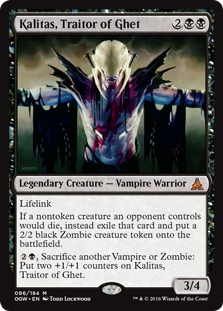
While the cards within a given subset accomplish similar objectives, the relative merits of one versus another can vary wildly depending on multiple factors. If we’re playing Rise // Fall then Fulminator Mage might be a better option. If we’re maximizing Jace, Vryn's Prodigy and Snapcaster Mage then we might instead consider Molten Rain. If we’re looking for high impact from only a few sideboard slots we might choose Crumble to Dust. If the rest of our sideboard is pushing our average CMC higher than normal, we might consider Ghost Quarter to bring in in other matchups and up our land count. All of these decisions come later, but beforehand we must first provide a framework upon which those decisions can be made.

Finding our Role

Kalitas Traitor of GhetAs I said in the introduction, most games will be played post-sideboard. Many players seek to perfect that starting sixty, while in reality the Game 2 and Game 3 sixty is more important. Instead of building the starting 60 and sideboard 15 as separate entities, the two should co-exist, improving and influencing each other.
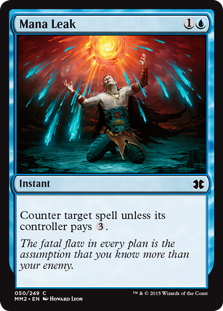
When time is not an issue, and I’m searching for the best list for a large tournament (or “solved” metagame) I will construct multiple lists over the course of a few days, each “post-sideboard” lists tuned for specific matchups. So, my “Grixis_v_Tron” list will have Terminates cut in favor of land destruction spells, while my “Grixis_v_Affinity” list will cut Remands and expensive spells in favor of artifact hate and more removal. Note that we still haven’t built a sideboard yet---these lists contain the best possible options for that matchup. So, the v_Affinity list will have Pia and Kiran Nalaar where the v_Tron list might have Tasigur, the Golden Fang and the v_Jund list might have Kalitas, Traitor of Ghet.

Generating lists in this way will allow us not only to find consistencies (cards that have applications in every matchup) but also to detect under-performers. Consistent contributors are much more likely to make the maindeck, while “niche” cards will be relegated to the sideboard. This gives us a general sense of what our eventual sideboard will look like. This process ensures that we’re optimizing use of our 75 slots by restricting under-performing cards and maximizing variable answers, but it doesn’t tell the whole story.

This process will also help us "gear" our maindeck towards a specific configuration. Let's look at a hypothetical situation, where Pia and Kiran Nalaar is vastly superior to Kalitas, Traitor of Ghet in the Affinity matchup (it really isn't, but assume so for the sake of this example). If we choose to play Pia and Kiran Nalaar over Kalitas, Traitor of Ghet in the maindeck, those extra points toward the Affinity matchup might let us cut a dedicated Affinity sideboard slot in favor of some card that will help another matchup.

You might be familiar with this process (pros call it "tuning") but its intricacies might often go overlooked in normal testing procedures. It might seem like a lot of work, but taking a systematic approach to tuning, treating it more like investigative research, can really push a list from "good" to "great" and beyond. Often, friends will have the "right deck" for a certain event, but end up just a few cards off and never make Day Two. A few changes here and there and they're playing in Top 8 instead of side events on Sunday.

Going further down this rabbit hole for a minute, these types of opportunities are exactly why I tend to play Blue in Modern (and Blue as a color in Magic in general). Cantrip spells like Serum Visions and Thought Scour, while not on the level of Ponder or Preordain, still let you see more of your deck over the course of the game, digging us deeper to those sideboard spells. While almost any archetype can be built to take advantage of certain sideboard spells (Abzan Company using Chord of Calling to tutor up creature bullets, Tron finding colorless sideboard spells with Ancient Stirrings), Blue almost always does this the best. In a format where knockout cards like Rest in Peace, Stony Silence, Blood Moon, and Crumble to Dust exist, the ability to dig deeper through the library to find those spells faster is key.

The Game Within a Game

Mana LeakThe determining factor between a solid sideboard and a great one is the dreaded re-sideboard for Game 3. We’ve all been there, when our opponent assertively scoops up and reaches back for the sideboard while we sheepishly shuffle, or worse, pretend to take a second look when we have no intention of changing a card. “What could they possibly be doing?” we think as they confidently swap cards in and out.
While a certain percentage of the time they’re just wasting time, the truth remains that a well-built sideboard can allow for multiple post-board configurations, even within the same matchup. We’re all aware of the “cut Mana Leak on the draw, bring it back in on the play” strategy, but the leveling goes much deeper than that.

For example, the Grixis vs. Grixis mirror can be focused on the Ancestral Vision fight or the creature removal route. Seeking to capitalize on an opposing hand full of Dispels and the like, a Snapcaster Mage-as-Ambush Viper draw can earn a quick kill against an unprepared opponent. While they are holding a hand full of control cards and Cryptic Commands, we’re beating down with creatures and using Kolaghan's Command to Shock our way to victory. Often I’ve found a strong case can be made for over half my sideboard in that matchup, and I’ll vary from 0-3 Dispel and even bring in Seal of Fire not only to kill opposing Jace’s but also to team up with Lightning Bolt and Kolaghan's Command, to kill Tasigur, the Golden Fang and Kalitas, Traitor of Ghet respectively.

Conclusion

Vendilion CliqueYou will rarely (if ever) see me present a Vendilion Clique in any of my lists. I don’t pass it up because it’s a poor card, on the contrary I find it extremely strong in many situations. In the end, all the analysis in the world pales in comparison to playstyle and pilot familiarity. A Vendilion Clique in my hand will play vastly different from one in the hands of a more experienced pilot.
My specific reasoning for this specific card in the Grixis Control archetype comes down to a desire to limit three-plus-CMC spells, and I don’t consider Vendilion Clique to have a high enough impact to merit the slot often enough. Instead, I’d almost always choose Kolaghan's Command (the third, or even the fourth) for its numerous applications in multiple matchups.

Everyone has pet cards, my own being a singleton Bitterblossom. While I won’t include Bitterblossom in every single Grixis sideboard I make, I will try and find a way to fit it in if possible. Players unfamiliar with the card might get less traction out of it in-game, but I have enough experience with it that I find myself bringing it in for almost every matchup, even where it seems counterintuitive. What I'm trying to say is this: analyze to a point, but remember that when the list is submitted and the opening seven is drawn, even the sloppiest lists can overtake the meticulous. That’s Magic.

Thanks for reading,

Trevor Holmes

The_Architect on MTGO

Twitch.tv/Architect_Gaming

Twitter.com/7he_4rchitect

Insider: Modern Principles & New Archetypes

Are you a Quiet Speculation member?

If not, now is a perfect time to join up! Our powerful tools, breaking-news analysis, and exclusive Discord channel will make sure you stay up to date and ahead of the curve.

The best way to learn about Modern is to actually play Modern. I’ve been hearing from a lot of local players about how much they are intimidated by the format. Until you starting playing with and against decks in the format, you will have a hard time understanding what’s going on.

A friend of mine, for example, didn’t know that Abzan Company was a deck. Now granted he’s new to the format, but as one of the most played decks, this is definitely one you should know about. A lot of players in my area don’t run this deck, but that’s no excuse for ignorance. This was definitely not blissful ignorance either because he got beat three times by this “new” deck at this past States event he went to.

From my perspective, the reason Modern is awesome is because of the vast array of viable strategies. But this feature can also hold players back from joining the format. Price is a factor as well, but players who want to play Modern can usually leverage their collection and resources to buy in if they are motivated enough.

So, if you want to play Modern, do it. Research what deck you want to play and start accumulating the cards for it. Most importantly though, just play the format as much as possible. The more you play the more you will get to know how games play out and what cards players tend to use. You may not know about every deck in the format, but if you generally know what’s going on, you will be in a fine position.

Today I will summarize some major financial principles that go along with obtaining Modern cards. Then I'll look at some of the latest metagame developments and how they can be leveraged financially.

Principles of Modern Finance

1. No matter what you like to play, there is something for every play style. From aggro decks like Affinity and Burn, to pure combo like Ad Nauseam, to combo-midrange hybrids like Abzan Company or Scapeshift, pretty much everything is represented. If you're looking to trade or vend to players, try to have a wide selection of choices available.

If you're speculating, much of the time you will pick up whatever is cheapest or what you can get the best deal on. But if you have choices then don’t put all your eggs in one archetype. Spread out your acquisitions across multiple archetypes. This will also help protect you against the dreaded banhammer.

2. Most players get the cheapest cards first. Getting into Modern is expensive. Players will looking for Boros Charm, Cranial Plating, and Slippery Bogle from your binder first, rather than the expensive staples. Stocking up on any Modern-playable cards is always a solid investment. These archetype-specific commons and uncommons are usually worth a couple bucks, and you never know how long it will be until the next reprint.

3. The list of playables is really large. Metagame changes can shift the specific cards seeing play in a variety of archetypes, or push players towards slightly different versions of established decks. Take the Jund-Abzan divide, for example. Sometimes Lingering Souls is well-positioned; sometimes Lightning Bolt is preferable. Each of these decks has its own set of sideboard answers, spot removal options, threats, etc.

Some of the lesser-known archetypes may use cards you wouldn't expect. Likewise, in a format as enormous as Modern, surprising cards can pop up in maindecks or sideboards. If any of these cards are old or hard to find, you can bet they'll increase in price.

All this means that keeping an eye on the current metagame and builds of major decks is a good idea. Did you know, for example, that Jeskai Control players are starting to adopt Nahiri, the Harbinger? This is a little-played archetype that fell out of favor for several years, but that doesn't mean it can't come back en vogue. And if Nahiri is playable there, she well could get adopted elsewhere down the line.

There was an error retrieving a chart for Nahiri, the Harbinger

4. Modern keeps growing in popularity and that's reflected in prices. Right now it appears that buying into older staples is a can't-lose scenario. Of course there's no guarantee, but with Wizards' recent doubling down of their commitment to the format, it appears the future is bright.

A great way to do this is with the upcoming Eternal Masters release, and Conspiracy 2 later in the Summer. What always happens is that the reprints go down in value due to the new supply, but then as more and more players see the format as accessible, they buy up the supply and the prices go back up.

Another thing we'll often see is cards that pair well with the reprints jumping in price first. Keep this in mind when you’re deciding how to spend your money this Summer.

New Modern Trends

Now I want to dive into some of the new decks that are breaking through in the format. We'll cover four new decks, some of which are variations of old decks and some which are entirely new archetypes. If you are an experienced Modern player, these are the new decks that you need to keep your eye on.

First up, we have two different builds of Zoo that have evolved from earlier versions. The first is Death's Shadow Zoo.

Deaths Shadow Zoo

Death's Shadow Zoo

Creatures

4 Wild Nacatl
4 Steppe Lynx
4 Monastery Swiftspear
4 Death's Shadow
4 Street Wraith

Spells

4 Gitaxian Probe
4 Mutagenic Growth
4 Thoughtseize
3 Lightning Bolt
4 Temur Battle Rage
1 Orzhov Charm
3 Become Immense

Lands

4 Bloodstained Mire
4 Windswept Heath
2 Verdant Catacombs
2 Marsh Flats
1 Blood Crypt
1 Overgrown Tomb
1 Sacred Foundry
1 Stomping Ground
1 Godless Shrine

Sideboard

1 Dismember
1 Forest
1 Inquisition of Kozilek
1 Lightning Bolt
3 Lightning Helix
2 Rest in Peace
2 Spellskite
2 Stony Silence
2 Wear // Tear

The main game plan here is to deal yourself damage to turn on the centerpiece of the deck, Death's Shadow. Managing your life total is crucial as you want to hit the sweet spot where Death's Shadow is huge but your opponent can't kill you. Tools like Thoughtseize and Gitaxian Probe let you accomplish this while disrupting the opponent and gathering information.

At the end of the day, this deck is quite similar to Infect. You are utilizing pump spells to get your creatures big enough to kill your opponent. While this can be a risky deck to pilot, it is fast and effective at dealing twenty points of damage to win the game. Another great aspect of this deck is that it’s great against Burn. Your Burn opponent will be doing your job for you, you just have to make sure that your clock is faster than theirs.

Financial Takeaway: When a new deck is becoming popular, you should try to identify cards to pick up. As lower-tier decks gain more traction, their staples keep increasing in value.

For this strategy, Death's Shadow is the key component. The ideal time to buy was during Pro Tour Oath when the deck was first in the spotlight (assuming you didn't have your order canceled like mine). But now is not a bad time to get some copies either because this isn’t a card that can be reprinted easily.

There was an error retrieving a chart for Death's Shadow

Reckless Zoo

The next deck is often just referred to as Zoo, but a more descriptive name would be Reckless Zoo.

Reckless Zoo

Creatures

4 Wild Nacatl
4 Experiment One
4 Goblin Guide
4 Kird Ape
4 Burning-Tree Emissary
4 Reckless Bushwhacker
4 Tarmogoyf

Spells

4 Lightning Bolt
4 Path to Exile
1 Devastating Summons
3 Atarka's Command

Lands

4 Arid Mesa
4 Windswept Heath
4 Wooded Foothills
2 Sacred Foundry
2 Stomping Ground
1 Temple Garden
1 Dryad Arbor
1 Mountain
1 Forest

Sideboard

2 Ancient Grudge
1 Dromoka's Command
1 Grafdigger's Cage
2 Kitchen Finks
2 Molten Rain
1 Phyrexian Unlife
2 Pyroclasm
1 Relic of Progenitus
1 Scavenging Ooze
2 Stony Silence

Most players know about Zoo because it is the default option for attacking with fast creatures. This Naya-colored deck has always been around thanks to the best one-drop creature, Wild Nacatl. You can combine this previously-banned green beater with a number of other fast creatures to create a fast clock for your opponent.

The most recent addition has been Reckless Bushwhacker. The newest bushwhacker pairs well with other cheap creatures but specifically with Burning-Tree Emissary. These cards together create an excessively fast, but fair game plan that puts any opponent to a serious test.

Many players turn to decks like this as their first Modern deck. What’s great is that this deck shares a lot of cards with Burn, so players may look to start with one deck and then acquire the cards needed to build the other one. These two decks appeal to the same type of player. Because of this overlap these cards generate more demand.

Financial Takeaway: If you can find them cheaply, foil Reckless Bushwhackers are worth a decent bit, but I would focus on the core of this and the previous deck, Wild Nacatl.

While it’s only a common, we are going to see this Modern staple continue to increase as time passes. The foils are relatively low right now and the normal copies are under $3. It never hurts to have a set of these in your trade binder or tucked away in your spec pile.

There was an error retrieving a chart for Wild Nacatl

Eldrazi and Taxes

The Eldrazi menace was dominant enough to earn a ban, and even the powered-down versions are putting up results. Our next deck is one of these more fair descendants.

Eldrazi and Taxes

Creatures

4 Leonin Arbiter
4 Thalia, Guardian of Thraben
4 Tidehollow Sculler
4 Wasteland Strangler
4 Eldrazi Displacer
4 Flickerwisp
4 Thought-Knot Seer
2 Reality Smasher

Spells

4 Aether Vial
4 Path to Exile

Lands

4 Caves of Koilos
4 Godless Shrine
4 Ghost Quarter
4 Eldrazi Temple
2 Shambling Vent
3 Plains
1 Swamp

Sideboard

1 Anguished Unmaking
1 Burrenton Forge-Tender
2 Duress
2 Kor Firewalker
2 Mirran Crusader
2 Pithing Needle
2 Rest in Peace
2 Stony Silence
1 Zealous Persecution

Eldrazi and Taxes is a hybrid of Eldrazi Aggro and Death and Taxes (or disruptive white weenie). This archetype exists in older formats because of cards like Thalia, Guardian of Thraben that stop your opponent from executing their game plan. Like Merfolk, this deck utilizes Aether Vial quite well not only to make your cheap creatures uncounterable but also to play them on your opponent's turn.

Previously I didn’t think Death and Taxes was consistently viable in Modern. The Eldrazi updates have pushed the deck much higher in the standings. Lots of players enjoyed beating down with the cheap Eldrazi creatures and now this is their main opportunity to continue that run.

Financial Takeaway: Trading into cheap Eldrazi creatures while they are in Standard seems like a great long-term investment. Pick up those Thought-Knot Seers and Eldrazi Displacers now while they are near their lowest value and hold onto them after rotation.

There was an error retrieving a chart for Thought-Knot Seer

Thopter-Sword

Finally, the last new deck that I want to highlight is the Thopter Foundry plus Sword of the Meek combo. The funny thing about this deck is that it’s not really a combo deck. Certainly you are combining cards together for an advantage, but this is more like Tron than Storm. Your combo, once assembled, creates constant advantage for you. A true combo deck will win on the spot once the right cards are all cast.

Semantics aside, the hard part about this deck is that there is no clear best version. Players have been tinkering with ideas since Sword of the Meek was unbanned, but no one has found the right combination.

Some players have paired these cards with a control shell, while others have added a Gifts Ungiven package. Whatever version finds its way to the top of the heap, the cards in that deck will go up. What I can tell you is that once that deck is found, Thopter Foundry and Sword of the Meek will both go up. Players want this deck to be good and will rally to its cause once someone finds the right setup.

Financial Takeaway: Get the two parts of the combo now if you can find them for good deals. Keep a close eye on the secondary roleplayers in these decks, like Gifts Ungiven and Thirst for Knowledge. If and when the archetype breaks out, buy in quickly.

There was an error retrieving a chart for Gifts Ungiven

Wrap-Up

One final note. I’ve seen a lot of players trying to make Dredge a deck again in Modern thanks to the printing of Prized Amalgam. If that deck is real and finds success, Bloodghast will go up in price drastically. Amalgam might go up as well, but the Zendikar rare has been steadily climbing to $20 just based on Modern speculation and casual appeal alone. If it becomes a format staple, it will surge past that already-high number.

There was an error retrieving a chart for Bloodghast

That’s all I have for today. Be knowledgeable and acquire these cards whenever you can. Any staple is a good investment because you never know when it will jump in price. To win in Modern, you need to be ahead of the game most of the time.

Until next time,
Unleash the Force!

Mike Lanigan
MtgJedi on Twitter

Stock Watch- Prized Amalgam

Are you a Quiet Speculation member?

If not, now is a perfect time to join up! Our powerful tools, breaking-news analysis, and exclusive Discord channel will make sure you stay up to date and ahead of the curve.

Yesterday I highlighted a piece of graveyard hate that is on the move in Modern, so today it seems fitting to to discuss a key graveyard enabler that is contributing to the rise in hate. If you haven't seen Prized Amalgam in Modern yet, suffice to say that the interactions with Bloodghast, Gravecrawler, and Narcomoeba are all being explored and are demonstrating a consistent graveyard-reliant game plan.

There was an error retrieving a chart for Prized Amalgam

Standard legal cards seeing play in Modern don't typically see much movement due strictly to Modern play unless they are very widely adopted. Given the proper enablers, Amalgam could be a Standard contender, though it's unclear if we'll get that or not in Eldritch Moon. Prized Amalgam could maybe jump to two or three bucks if the Modern deck gets some camera time, though the real place to look is foils.

Currently the price of foil Amalgams is around $4. This is approximately the same price as foil copies of Insolent Neonate. Both of these cards have demand for the same decks, and one is a common while the other is a rare. The prerelease promo certainly adds copies of Prized Amalgam to the market, though I could see foil copies of the rare zombie double or tripling up if this deck gains significant exposure.

It's important to remember that foils have a more narrow market than non-foils, though at $4 a pop you're not risking too much. Don't go crazy, but even as few as a playset for your trade binder could end up paying off for a savvy trader.

Want Prices?

Browse thousands of prices with the first and most comprehensive MTG Finance tool around.


Trader Tools lists both buylist and retail prices for every MTG card, going back a decade.

Quiet Speculation