menu

Trevor Holmes Plays MTGO Ep. 7: Grixis Control!

Are you a Quiet Speculation member?

If not, now is a perfect time to join up! Our powerful tools, breaking-news analysis, and exclusive Discord channel will make sure you stay up to date and ahead of the curve.

What's up guys! Welcome back to my Modern Nexus Video Series, where we take a deck in the format and run it through some matches on Magic Online. This week we have Grixis Control, my one true love, my pride and joy, my constant companion. Grixis Control is my favorite deck in Modern, and I'm surprised it took seven weeks before we featured it! Today we're playing Danny Jessup's 22nd place list from SCG Dallas, I hope you enjoy!

Control_Thumbnail

"Grixis Control, Danny Jessup (22nd Place – SCG Dallas 2015)"

Creatures

4 Jace, Vryn's Prodigy
2 Pia and Kiran Nalaar
2 Tasigur, the Golden Fang
3 Snapcaster Mage
1 Grim Lavamancer

Planeswalkers

1 Liliana of the Veil

Instants

2 Kolaghan's Command
3 Thought Scour
1 Go for the Throat
1 Terminate
2 Mana Leak
4 Lightning Bolt
1 Remand

Sorceries

1 Dreadbore
4 Inquisition of Kozilek
1 Rise // Fall
4 Serum Visions

Lands

1 Mountain
2 Island
1 Swamp
1 Sulfur Falls
2 Blackcleave Cliffs
2 Creeping Tar Pit
4 Scalding Tarn
1 Blood Crypt
2 Steam Vents
1 Watery Grave
4 Polluted Delta
2 Bloodstained Mire

Sideboard

1 Rending Volley
1 Dreadbore
1 Vandalblast
2 Izzet Staticaster
1 Spellskite
1 Nihil Spellbomb
2 Dispel
1 Thoughtseize
1 Rise // Fall
1 Darkblast
3 Molten Rain

[wp_ad_camp_1]

Deck Tech

[youtube https://www.youtube.com/watch?v=3VpnbWJ948M&w=560&h=315]

Round 1

[youtube https://www.youtube.com/watch?v=EaAgyoohAX8&w=560&h=315]

Round 2

[youtube https://www.youtube.com/watch?v=r57lbHFlP0w&w=560&h=315]

Round 3

[youtube https://www.youtube.com/watch?v=XQ_F0fhd9m0&w=560&h=315]

So, our results were pretty average, but I think we had that last round in the bag before our opponent drew really well. Overall I was impressed with the deck, it is full of powerful, synergistic cards that all attack from a different angle. Graveyard hate is definitely relevant against this deck, but not lights out like it is against something like Living End. If you have any comments, feel free to let me know below! I hope you guys enjoyed this week's videos and I'll see you next week for Episode 8!

Trevor Holmes
The_Architect on MTGO
twitch.tv/Architect_Gaming
twitter.com/7he4rchitect

Full Commander 2015 Visual Spoiler Available

Are you a Quiet Speculation member?

If not, now is a perfect time to join up! Our powerful tools, breaking-news analysis, and exclusive Discord channel will make sure you stay up to date and ahead of the curve.

I haven't had the chance to filter through and scope out potential Legacy playables just yet, but the full visual spoiler for Commander 2015 is here.

There was an error retrieving a chart for Eldrazi Monument

There are some relevant reprints that are sure to depreciate in value such as Eldrazi Monument, Phyrexian Arena, Blatant Thievery, Mycoloth, Lightning Greaves, Eternal Witness, and High Market, so dump these positions accordingly.

Insider: GP Seattle Legacy Preview

Are you a Quiet Speculation member?

If not, now is a perfect time to join up! Our powerful tools, breaking-news analysis, and exclusive Discord channel will make sure you stay up to date and ahead of the curve.

Right as Legacy is reeling from the negative publicity of StarCityGames's recent announcement, this weekend brings us Grand Prix Seattle-Tacoma, a high-profile event that will shine a warm spotlight on the eternal format.

The Legacy metagame leading into the GP is undefined, because it was very recently thrown into disarray by the banning of Dig Through Time. The banning toppled the dominant Grixis Pyromancer and OmniTell decks.

Many experts identified Miracles as the obvious best archetype remaining; while Miracles did use Dig Through Time itself, it was a replaceable role-player in Miracles compared to the central role in took in the other archetypes. Early tournament results, particularly the Ovino 10 tournament in Italy, pointed to that being the case.

In the States, a natural reaction to a rise in Miracles and a decline in the disruptive Grixis deck was a move towards Infect, which Tom Ross used to win the SCG Legacy Open at St. Louis.

With OmniTell leaving Legacy’s combo niche unfilled, Storm Combo has found instant success in the new metagame, putting two copies into the Ovino Top 8, winning the 210 player MKM Series Legacy event in Prague, and finishing second in St. Louis.

I expect the metagame will be quite diverse in Seattle, but there are a few specific archetypes that appear to be excellent metagame calls.

Shardless BUG

Shardless BUG is filled with card advantage to fuel outstanding disruption spells and efficient threats, allowing it to prey upon the reactive Miracles deck.

Abrupt Decay stops Counterbalance cold, which Miracles can otherwise rely on surviving against most of the metagame. Without access to its powerful enchantment, Miracles is forced to play a fair control game, which it can’t do against a deck where every individual threat could be lethal.

Shardless BUG does tend to suffer against combo decks, which it lacks enough disruption to actually stop. The sideboard can give it a fighting chance against any specific combo deck, but it can't be built to beat them all.

Jund

Jund shares many of the same threats and disruption spells as Shardless BUG, but it doesn’t have nearly the same ability to generate raw cards. It does contain the Punishing Fire- Grove of the Burnwillows combo, which is extremely effective against creature decks as inexhaustible removal, and against control as a form of inevitability.

Jund is better than Shardless BUG at fighting creatures in general, which gives it a more favorable matchup against decks like Infect, Elves, and Merfolk, but it suffers against combo decks. Assuming Seattle is defined by Miracles and Infect, Jund would be an excellent metagame call.

U/G Post

U/G Cloudpost uses its namesake to generate massive amounts of mana, Glimmerpost to gain massive amounts of life, and Vesuva to add redundancy. They assemble their manabase using land tutors like Modern Urzatron, but Crop Rotation makes the deck much faster than one relying on Sylvan Scrying.

Candelabra of Tawnos adds a degenerate combo element to the archetype, which uses its big mana to power Primeval Titan for more mana and value, and ultimately Eldrazis to win the game. Sensei's Divining Top adds consistency, and Show and Tell allows the deck to get around hate cards like land destruction.

U/G Post slays Miracles decks, and it overpowers and outraces midrange decks like Shardless BUG. It's lacking against faster combo decks like Storm and Sneak 'n Show, and it finds itself on the wrong end of the Infect matchup. Assuming control and midrange define the Seattle metagame, U/G Post will be a great option.

Death and Taxes

With Storm and Sneak 'n Show bringing about a resurgence in combo decks, Death and Taxes is poised to play fun-police with its slew of mana denial and other hateful disruption. The archetype has also recently gained a powerful new tool in Vryn Wingmare, which provides non-legendary redundancy on Thalia, Guardian of Thraben.

Its core game plan is great against Miracles, and it’s equipped to fight a fair game with Shardless BUG, especially when packing Mirran Crusader. Creature decks like Infect and Elves will cause more of a problem, but on the whole Death and Taxes seems very well positioned in Seattle.

There is also a trend of splashing red for Imperial Recruiter, which can find almost any of the creatures already in the deck, another copy of itself to generate card advantage, or Magus of the Moon as an additional dimension to the archetype’s mana denial plan. Lightning Bolt even makes things easier against creature decks.

This evolution was nipped in the bud with the printing of Treasure Cruise. The departure of Dig Through Time brings the format back to where it was before, so I expect this evolution to continue from where it left off.

Legacy Specs

Jace, the Mind Sculptor

There was an error retrieving a chart for Jace, the Mind Sculptor

With Dig Through Time banned, Jace, the Mind Sculptor is now the most powerful blue finisher in Legacy. Make no mistake, Dig Through Time delivered the finishing blow to opponents, regardless of what actually cleaned up the mess.

Miracles decks had previously shaved down on the planeswalker, but now three and four copies will become commonplace again. Jace, the Mind Sculptor is also a key factor in Shardless BUG. With the card in two top-tier archetypes, demand will be high this weekend and beyond.

Candelabra of Tawnos

There was an error retrieving a chart for Candelabra of Tawnos

U/G Post is positioned as a serious contender in the current Legacy metagame, and a big finish at the Grand Prix could send demand for the archetype higher. Candelabra of Tawnos is essential for the deck to function at peak capacity, and as an Antiquities card it is in very short supply.

Over the past couple years we've seen a trend of the oldest, rarest Magic cards increasing in price, going back to the dual land spike after GP Richmond and the Power 9 spike after GP New Jersey and Eternal Weekend. Since then, the prices of many old, iconic cards have also increased.

Candelabra of Tawnos has been unaffected so far, but this will change. I expect there will be more than a few players at the GP attempting to acquire playsets on Friday and Saturday morning.

Flusterstorm

There was an error retrieving a chart for Flusterstorm

The rise of Storm combo is sure to be met by a rise in Flusterstorm, a highly effective hate card that also has applications in other matchups.

The price of this card is already quite high. But its inclusion in the sideboards of Miracles, Shardless BUG, and nearly every other blue deck, combined with the popularity of Storm, means the price is likely to go even higher.

Night of Souls' Betrayal

There was an error retrieving a chart for Night of Souls' Betrayal

Night of Souls' Betrayal is a great sideboard card for Shardless BUG against decks like Infect and Elves, but I really point to the card for its applications in Modern. Players are becoming more savvy about how good this card really is, and it’s seeing more play in the format.

This card was on my mind before I checked any price movement, and I wasn't surprised to see the price trending upwards this week. It’s up to $6.50 from $6 a month ago. Also telling is the fact the MTGO price has grown from 1.7 tix on September 10 to nearly 5 tix today.

GP Pittsburgh at the end of the month has all the makings of a massive East Coast Eternal event, and it’s going to initiate an increased interest in Modern. I’m even more optimistic about the long-term prospects of Night of Souls' Betrayal.

-Adam

On the Rogue Again: Innovation at SCG States, Part II

Are you a Quiet Speculation member?

If not, now is a perfect time to join up! Our powerful tools, breaking-news analysis, and exclusive Discord channel will make sure you stay up to date and ahead of the curve.

With the tournaments now over for more than a week, I'm doing the last of my lazy Gerry Thompson impressions before everyone forgets about SCG States altogether. (Really) old rogue strategies like Blue Moon and Eternal Command saw some success at States, but I'm primarily interested in the tournament's brand-new midrange decks. I've divided the decks in this article into two categories: attrition-based and permanent-based midrange.

obzedat

(This article is the second in a two-part series on rogue Modern decks from SCG States. If you haven’t read part one, check that out first!)

[wp_ad_camp_1]

SCG States: Attrition-Based Midrange

When most people think of midrange in Modern, they imagine lines like Inquisition of Kozilek into Abrupt Decay into Liliana into Tarmogoyf. Jund and Abzan exemplify the disrupt-then-commit approach common among attrition-based midrange decks. These strategies grind opponents to a stump before smashing them with lumbering beaters.

Esper Gifts

The first deck I'm presenting isn't much of a midrange deck, landing closer to control on the spectrum. I first heard about it from Jeff Hoogland, about a month before Matthew Szabo took it to 4th place. It plays like a cross between Esper Control and 4C Gifts, including Goryo's Vengeance as a way to begin looping Obzedat, Ghost Council or to instantly nuke boards with Elesh Norn, Grand Cenobite.

Esper Gifts, by Matthew Szabo

Creatures

2 Obzedat, Ghost Council
2 Snapcaster Mage
1 Elesh Norn, Grand Cenobite
4 Jace, Vryn's Prodigy

Sorceries

3 Inquisition of Kozilek
1 Thoughtseize
1 Duress
3 Lingering Souls
1 Supreme Verdict
1 Damnation
1 Unburial Rite
1 Wrath of God

Instants

4 Thought Scour
1 Murderous Cut
3 Path to Exile
1 Slaughter Pact
1 Go for the Throat
3 Goryo's Vengeance
3 Gifts Ungiven

Enchantments

1 Monastery Siege

Lands

1 Island
1 Plains
1 Swamp
2 Darkslick Shores
1 Fetid Heath
1 Flooded Strand
2 Godless Shrine
1 Hallowed Fountain
2 Isolated Chapel
4 Marsh Flats
3 Polluted Delta
2 Seachrome Coast
1 Watery Grave

Sideboard

1 Engineered Explosives
3 Leyline of Sanctity
3 Stony Silence
1 Celestial Purge
1 Countersquall
1 Darkblast
2 Disenchant
1 Dispel
1 Flashfreeze
1 Negate

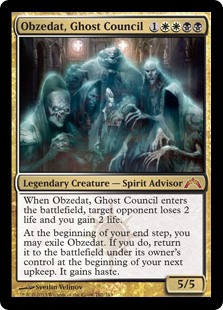
In a deck that can reanimate fatties as devastating as Griselbrand, why does Esper Gifts opt for ghost grandpa? There's his obvious synergy with Goryo's Vengeance - pilots can stack the triggers to get Obzedat back the turn after reanimating him. But beyond that, Obzedat has all the hallmarks of a must-respect Modern threat.

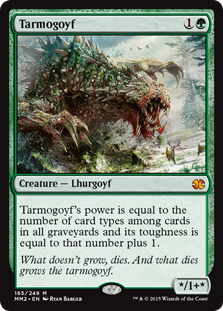
For starters, he's 5/5. These stats beat out Tasigur, the Golden Fang, Siege Rhino, and most Tarmogoyfs. Considering the importance of that extra power point on Gurmag Angler, I think 5/5 will be the new standard for Modern fatties, and Obzedat helps lead that movement.

Then, there's his enters-the-battlefield ability. Siege Rhino taught us the potency of a 187 Lightning Helix, and while three trumps two, Obzedat's four-point swing still impacts both life totals more than a single Lightning Bolt.

Obzedat Ghost CouncilLastly, Obzedat's blinking ability recycles this baby-Helix. A single Siege Rhino trigger can cause massive paradigm shifts in a game, and as soon as Obzedat's blinked once, he's already done better than the Abzan posterbeast. The blinking ability also gives Obzedat some added resiliency, saving him from sorcery-speed removal like Liliana of the Veil and Roast. That limits the Modern playables that can even deal with the ghost to Dismember, Terminate, and Path to Exile, making it even better than Rhino in some ways. In another States Top 8, Chris Magner brought the Spirit Advisor to a 5th-place finish. He played a Bitterblossom-based Abzan Midrange variant that forewent Siege Rhino entirely.

Esper Gifts already includes an unsurprising suite of one-off removal spells and sweepers to complement its namesake instant. Foregoing the "so good!" Esper Charms of years gone by, Szabo's deck greases the engine with a set of Jace, Vryn's Prodigy. The flip-walker finds himself right at home in this shell, looting through the deck for specific answers, then transforming and recycling hits like Thoughtseize. Thought Scour transforms Jace faster while creating a toolbox in the graveyard, and Jace's very presence forces opponents to keep in Lightning Bolt, an otherwise horrible card against Esper strategies that don't play Monastery Mentor. Best of all, Goryo's Vengeance can animate Jace for a quick loot and Telepath flip.

Mono-Black Devotion

Do those six syllables send chills down your spine? This is Modern, not Standard! Those Vampire Nighthawks will never survive an onslaught of Lightning Bolts! Maybe not, but Doug Courtney either dodged the Bolts or ignored them on his soul-crushing ascent to 4th place.

Mono-Black Devotion, by Doug Courtney

Creatures

4 Vampire Nighthawk
4 Demigod of Revenge
2 Gray Merchant of Asphodel
4 Phyrexian Obliterator
4 Brain Maggot

Sorceries

4 Inquisition of Kozilek
4 Thoughtseize
1 Duress
2 Sign in Blood

Instants

2 Dismember
3 Victim of Night

Other

2 Liliana of the Veil
1 Lashwrithe

Lands

23 Swamp

Sideboard

2 Pithing Needle
1 Leyline of the Void
1 Bile Blight
2 Dismember
1 Hero's Downfall
2 Surgical Extraction
1 Victim of Night
2 Duress
2 Mutilate
1 Transgress the Mind

Courtney's Devotion shares a good deal of cards with 8Rack, but drops inconsistent The Rack effects for heavy-duty ground patrol. His creatures shore up 8Rack's weakness to aggro strategies, from the lifelinking Vampire Nighthawk to the horrifying Phyrexian Obliterator.

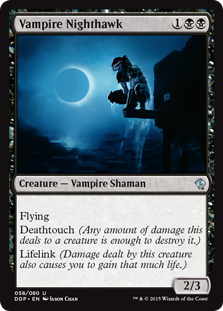
Vampire NighthawkI love when expensive x/3 creatures see play. To Vampire Nighthawk's credit, she does fight with Brain Maggot for those Lightning Bolts. And thanks to Courtney's nine hard discard effects, opponents might have no choice but to shoot the Insect, giving Nighthawk even more room to breathe. She's incredibly versatile on the battlefield, trading up with big creatures, walling little ones, clocking in the air, and constantly netting life. (Imagine Nighthawk with a Lashwrithe!)

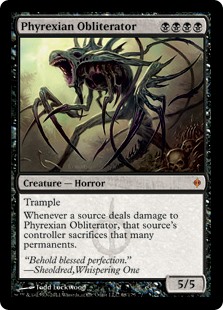
With Path to Exile decks on the decline, and Grixis Control gradually retreating into the shadows, Phyrexian Obliterator finally makes its move. Monoblack Devotion wasn't even the only deck at States to run Phyrexian Obliterator - Daniel Simmons took his B/G Rock deck to 7th place. Obliterator's fantastic against red removal and anyone trying to win on the ground, and it's got that mythical, 5/5 body. Its prohibitive mana cost becomes a non-issue with Courtney's 23 Swamps.

Phyrexian ObliteratorObliterator provides an unshakable defense, but Demigod of Revenge seems like the real killer here. While Mana Leak can muck up Obliterator plays, it doesn't do much against Demigod, who revives his buddies on cast. Still, it never hurts to add in "reach" with Gray Merchant of Asphodel, another Siege Rhino surrogate who deals Corrupt-level damage with Obliterator or Demigod in play.

I think Courney's manabase could use a little work. Some combination of Urborg, Tomb of Yawgmoth and utility lands like Mutavault or Haunted Fengraf might upgrade the deck. I understand Courtney wants to hit that turn-four Obliterator as often as possible, but I'm not sure it's worth drawing so many blanks after five turns, especially with smoothing options like Urborg available.

Mardu Pox

Matthew Currie's 7th-place Pox deck doesn't pull any punches, running only Fulminator Mages as creatures and winning with planeswalkers against resourceless opponents. Currie grinds value out of games by flashing back Lingering Souls, turning useless life points into Faerie tokens, and casting "free" spells off Liliana and Gideon.

Mardu Pox, by Matthew Currie

Creatures

4 Fulminator Mage

Sorceries

4 Smallpox
2 Boom
4 Lingering Souls
1 Damnation
1 Haunting Echoes

Instants

4 Lightning Bolt
4 Lightning Helix
1 Kolaghan's Command

Other

3 Bitterblossom
3 Liliana of the Veil
2 Gideon, Ally of Zendikar

Lands

1 Plains
2 Swamp
3 Arid Mesa
2 Blood Crypt
1 Bloodstained Mire
3 Godless Shrine
3 Lavaclaw Reaches
4 Marsh Flats
2 Sacred Foundry
4 Flagstones of Trokair
2 Urborg, Tomb of Yawgmoth

Sideboard

2 Kitchen Finks
1 Stony Silence
2 Rakdos Charm
1 Wear
2 Anger of the Gods
2 Inquisition of Kozilek
1 Shatterstorm
1 Slaughter Games
2 Thoughtseize
1 Wrath of God

So as not to interfere with his Smallpox plan, Currie leans on noncreature permanents to close out games. Bitterblossom creates a squad of expendable fliers, and Lingering Souls helps out. Gideon, Ally of Zendikar turns into an indestructible 5/5 (again, 5/5!) that reverts to planeswalkerdom in time for next turn's Smallpox. Lavaclaw Reaches supports whichever plan Currie chooses while providing a late-game mana sink.

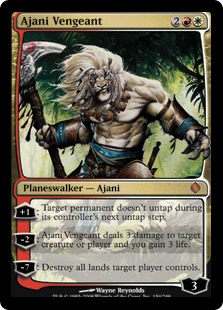
Ajani VengeantI've brewed many Pox decks in Modern and have always included Ajani Vengeant in these colors. He locks down precious lands, kills creatures, gains life, and builds up to a one-sided Armageddon. However, Gideon makes more sense in this slot as an actual threat, since Ajani won't usually win games on his own. I also like Gideon's ability to make blockers, and his ultimate's synergy with Currie's token effects.

The most questionable include is Haunting Echoes, which has the potential to decimate an opponent's deck in the late game. I'm not sure it's better here than another threat. If an opponent's graveyard is full of cards because we've dealt with everything thrown at us, why not just win instead of prolonging the game further? With Echoes already costing five mana, Batterskull and even Obzedat seem like decent options. Both of these cards have myriad applications, whereas Echoes only does one thing. Draw power like more copies of Sign in Blood could also make the cut,

SCG States: Permanent-Based Midrange

I've had some trouble classifying prison decks and ramp decks in my discussion of Modern archetypes, so for this article, I'm grouping them both under the umbrella of permanent-based midrange. Like their attrition-based cousins, these decks find a way to get into their superior late game, either by disrupting opponents with cards like Thoughtseize and Ghostly Prison, or by ramping with Expedition Map and Overgrowth. Unlike those decks, permanent-based ones care less about time, and are content to play games that last 20+ turns. Comparatively, Abzan Midrange might feel uncomfortable going into games that long, since its Siege Rhinos will inevitably by overshadowed by Emrakul, the Aeons Torn. Permanent-based midrange decks in Modern include Tron and Death Cloud Ramp.

W/R Devotion

As with Esper Gifts above, I'll kick this section off with a deck less midrange and more control. One underexplored section of control is prison, an archetype that locks opponents out of the game with proactive, disruptive permanents, and then wins at its leisure. This archetype has never seen much success in Modern. Even with powerful cards like Chalice of the Void and Blood Moon, the format's diversity can often overwhelm these narrow effects. Brian Switzer doesn't care. He built a deck that resists and casts both Chalice and Moon - then, he relegated both hosers to the sideboard and played his way to 4th place.

W/R Devotion, by Brian Switzer

Creatures

1 Heliod, God of the Sun

Sorceries

4 Wrath of God

Other

4 Banishing Light
4 Ghostly Prison
4 Leyline of Sanctity
3 Nevermore
4 Runed Halo
3 Sigil of the Empty Throne
3 Sphere of Safety
4 Suppression Field
1 War's Toll
2 Ajani Vengeant

Lands

13 Plains
4 Clifftop Retreat
4 Temple of Triumph
2 Nykthos, Shrine to Nyx

Sideboard

2 Chalice of the Void
4 Kor Firewalker
3 Blood Moon
2 Greater Auramancy
2 Stony Silence
2 Open the Vaults

Pillow Fort is a mono-white, enchantment-based prison deck. It's not exactly new to Modern, but I find Switzer's build particularly interesting. Splashing is easy when you want scry lands anyway, but the red splash only supports two Ajani Vengeant in the mainboard, and three Blood Moon in the side. That isn't counting War's Toll, which I suppose forces bad combat steps when Switzer starts making angels. To be completely honest, I'm not sure what this card does or why it's here.

In last week's article, I was similarly stumped by Rob Wrisley's R/G Aggro deck. I reached out to Rob and he explained his choices, as well as the source of his deck, in the comments. Before I get in touch with Switzer, I'll ask you readers to decipher the War's Toll mystery.

Switzer's more obvious choices are Suppression Field, which turns off fetchlands, hurts Affinity, and stops Splinter Twin; Runed Halo, which grants "protection from Tarmogoyf" or whatever other beater opponents stick; and Banishing Light, a catch-all answer to problem permanents. Given the possibility of drawing multiple copies of Leyline of Sanctity or Blood Moon, or just of flooding out, I'd like to see some Faithless Lootings in this deck.

Tooth and Nail

Another Standard deck from a bygone era, Christopher Depue's Tooth and Nail is really a green devotion deck splashing blue for Kiora, Master of the Depths.

Tooth and Nail, by Christopher Depue

Creatures

4 Arbor Elf
4 Voyaging Satyr
2 Spellskite
3 Eternal Witness
1 Acidic Slime
1 Emrakul, the Aeons Torn
1 Xenagos, God of Revels

Sorceries

2 Harmonize
3 Primal Command
4 Tooth and Nail

Instants

2 Gifts Ungiven
1 Noxious Revival

Other

4 Utopia Sprawl
4 Overgrowth
3 Kiora, Master of the Depths

Lands

8 Forest
2 Breeding Pool
1 Stomping Ground
4 Windswept Heath
4 Wooded Foothills
2 Boseiju, Who Shelters All

Sideboard

1 Sands of Delirium
1 Glen Elendra Archmage
2 Thragtusk
1 Blood Moon
2 Choke
2 Leyline of Sanctity
2 Ancient Grudge
1 Cyclonic Rift
1 Dispel
1 Echoing Truth
1 Creeping Corrosion

When Kiora, Master of the Depths was spoiled, I predicted she'd have a home in these decks: "Kiora slots into Modern’s Devotion to Green decks, which already sometimes splash blue for Kiora’s Follower, but usually stay GR. The planeswalker’s loyalty effects may push the deck into a preference for blue." Indeed, it seems Kiora shot this Tooth and Nail deck to 6th place, at once untapping lands enchanted by Utopia Sprawl or Overgrowth (or just Nykthos) and an Arbor Elf or Voyaging Satyr to do it all over again.

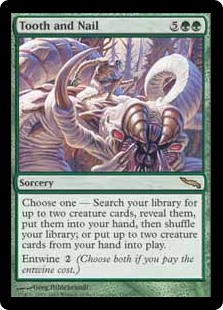
Tooth and NailTooth and Nail generally summons Emrakul, the Aeons Torn and Xenagos, God of Revels. Xenagos gives Emrakul +X/+X and Haste, and the game should end right there. Otherwise (say, thanks to an opponent's start-of-combat Deceiver Exarch to tap down the Eldrazi), the deck's permanents don't go anywhere, and Depue can repeat his assault the following turn.

To complement Tooth and Nail at the top of the curve, Depue runs Harmonize, Gifts Ungiven, and Primal Command. These card advantage tools allow pilots to get way ahead on the board, search the namesake sorcery, and recycle the best spells with Witness.

Like Switzer, Depue includes a small red splash, this time for Blood Moon and Ancient Grudge. Interestingly, Choke shows up in greater sideboard numbers than Moon does, no doubt a nod to Modern's Remand decks. Sands of Delirium takes the cake as my favorite sideboard card of Depue's - sometimes, you just gotta kill 'em some other way!

Places That I've Never Been

All eyes are beginning to turn towards Pittsburgh. I doubt the Grand Prix will showcase the degree of brewing innovation found in the States results, but the format will certainly evolve after the tournament, for better or for worse. Here's to Modern's impressive diversity, and to hoping a rogue deck takes that GP trophy.


Insider: The Value of Liquidity & Its Effect on Sales

Are you a Quiet Speculation member?

If not, now is a perfect time to join up! Our powerful tools, breaking-news analysis, and exclusive Discord channel will make sure you stay up to date and ahead of the curve.

Welcome back, readers!

This article is one I've been planning for some time. It will cover the important concept of liquidity as it relates to Magic sales.

I run across a lot of store owners with an improper understanding of the value of liquidity. As a trader or store owner you obviously love to have cards that are in constant demand. But how do we actually define that value?

Defining Liquidity

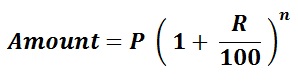
The best way to view liquidity is to look at it like compounding interest.

compound interest

In this equation,

  • Amount = amount of money after sales (future value)
  • P = amount paid for the card (present value)
  • R = profit percentage (the amount of profit you make per transaction)
  • n = number of transactions

Where liquidity comes into play is in regards to the n variable. More liquid items have a higher probability of selling, which means you can complete more transactions over a given time frame.

Let's see if we can modify the equation to better capture this aspect. We'll substitute the n variable with an equation that represents selling turnaround time.

This will obviously vary by store, and may be hard to pin down. To calculate it, you'll have to monitor what cards move the most at your store and track the average time it takes them to move once they come it.

It also might vary by format or even individual card. For example, you might expect Standard staples to move after two weeks, but Modern staples could move a bit slower, perhaps once per month.

As a result, it's important to normalize all the sell times to the same unit, in order for any comparisons to be meaningful. For the examples below, I'll be measuring turnaround time in transactions per month.

So our additional variables are:

  • x = idealized turnaround time
  • y = normalized turnaround time
  • n = x / y

Of course, turnaround time will correspond to your profit percentage and/or pricing strategy. Lower spreads will lead to faster moving merchandise. As we'll see farther down, you can tweak these numbers to try to arrive at the most profitable configuration for your store.

Applying the Equation

Let's illustrate this equation with some real life examples.

Foil Ruinous Path currently sells for $6.67 (TCG Mid), whereas Dragonmaster Outcast sells for $6.51. If you were to buy these from local players using a standard 50% cash option, you'd pay about the same on each ($3.25 - $3.30).

However, these cards are not equally likely to move. Outcast appears in multiples in Jeskai Black, one of the pillars of Standard, while Ruinous Path is relegated to a one-of (if that) in the sideboard of less popular decks.

There was an error retrieving a chart for Dragonmaster Outcast

There was an error retrieving a chart for Ruinous Path

If we expect Dragonmaster Outcast to move every two weeks and Ruinous Path to move once a month, we can run the numbers and see what our profit would be. For this example, we'll assume you sell at TCG Mid and buy at 50% of that, for a constant profit percentage of 100%.

Dragonmaster Outcast

Amount = $3.25 (1 + 100 / 100) ^ (2 / 1) = $13 in a one-month period

Foil Ruinous Path

Amount = $3.30 (1 + 100 / 100) ^ (1 / 1) = $6.60 in a one-month period

This is a pretty simple example, but it illustrates how liquidity can affect the money you make over a given period.

Note that Amount isn't equivalent to profit, but the value of the cards when you sell them. To get profit, you have to subtract what you paid for each card. Assuming values remained stable over the month, your profit on Dragonmaster Outcast is $13 - (2 * 3.25) = $6.5, whereas your profit from Foil Ruinous Path is $6.60 - $3.30 = $3.30.

This example is obvious, of course--I sold one card twice and the other card only once. The reason I wanted to show the equation this way, instead of something simpler, like profit = (sales price - cost) * number sold, is to highlight the profit percentage variable, R.

This allows us to tweak the variables to see what configuration leads to maximum profit. There isn't a perfect equation to do this, so we'll have to tinker with the data and try different things.

Let's say Jack and Diane own an LGS with a vibrant Standard player base. They've noticed that Deathmist Raptors are in extremely high demand. Every week they buy and sell four copies (for this example we'll use the current TCG Mid price of $22.33).

They expect demand to remain just as strong moving forward. They have a few options.

  • Change nothing and enjoy the same profits they're currently reaping.
  • Increase the buy price. This will reduce profit percentage (R) and increase the number of copies (n) they can sell.
  • Increase the sell price. This will increase R but may reduce n.
  • Decrease the sell price. This will reduce R and increase n, assuming they have extras in stock that aren't currently moving.
  • Decrease the buy price. This will increase R, but likely reduce n, as they'll get fewer copies in stock.

That's a lot of choices. To determine the right one, we'll need to gather more data. Thankfully, this is a hypothetical example, and Jack and Diane have done just that.

  1. They increased their buy price from 50% to 60% and got an additional 2 copies in per week.
  2. They increased their sell price from 100% TCG Mid to 110% TCG Mid and sold 1 fewer copy per week.
  3. They decreased their sell price from 100% TCG Mid to 90% TCG Mid and sold 2 additional copies per week.
  4. They decreased their buy price from 50% to 40% and lost an additional 2 copies per week.

Let's throw those numbers into our equation and see what the results are. Remember that profit percentage (R) equals (sell price - buy price) / buy price.

Option P (Purchase Price) Buy Price % R x y Sell Price Amount
1 13.398 60.00% 66.67% 6 1 $22.33 13.94
2 11.165 50.00% 120.00% 3 1 $24.56 11.57
3 11.165 50.00% 80.00% 6 1 $20.09 11.71
4 8.932 40.00% 150.00% 2 1 $22.33 9.20


Since we've normalized the time frame on each option, we can compare different amounts knowing they are valued at a 1:1 ratio. Judging by the numbers, Jack and Diane's best option is to increase their buy price to increase the number of transactions.

The other important thing to keep in mind is that the profit margin shifts differently depending whether you pay 10% more or reduce the cost by 10%.

~

One major takeaway from this experiment is to emphasize that you can make more money by reducing your profit margin, if it leads to more transactions.

This is how a lot of big businesses work. You'd be surprised how low the profit margin is on certain products at the dollar store, but when they sell twice as many of those products because they're at a discount, they generate more total revenue.

Either way, if you can gather a good amount of data on your store's current sales, you can use this equation to optimize your sales.

Insider: Notes on the Standard Metagame & Future of Legacy

Are you a Quiet Speculation member?

If not, now is a perfect time to join up! Our powerful tools, breaking-news analysis, and exclusive Discord channel will make sure you stay up to date and ahead of the curve.

The State of Standard

Several months ago I purged my MTGO account of rotating cards and parked some of those tix into specs. My random acquisition of Temple of Epiphany yielded results that I wasn't anticipating, so I had a good chunk of tix to toss around.

Leading up to Battle for Zendikar's release online I had a feeling that I wanted to play Dark Jeskai. As such, I bought into Jace, Vryn's Prodigy at 40 tix with the intent of picking up Gideons later.

I figured Jace had room to grow from 40, but ultimately I ended up selling when they hit 70. I didn't see that number as sustainable, so instead of going deeper into Dark Jeskai I invested in the true dark side and built myself an Abzan deck. I still needed to pick up Gideons, but they were a freeroll from the Jace buy.

There was an error retrieving a chart for Gideon, Ally of Zendikar

Abzan wouldn't normally be my style, as evidenced by my never playing the deck when it was the actual best deck. The story above wasn't meant to be a brag, so much as an introduction to my foray with Rhinos and current Standard.

My list is pretty close to the deck that won the PT, with the "fanciest" change adding a 27th land in a world of 26. I'm not saying four Shambling Vent is an exciting element of the deck, but I will say that missing land drops with Abzan is terrible and having four manlands helps mitigate flood.

There was an error retrieving a chart for Shambling Vent

The major thing I've learned about Standard since I picked up Abzan is that Ojutai's Command is in every way a defining card of this format. If you don't respect it, you'll allow Jeskai and Esper decks to bury you in card advantage.

Alternatively, if you show up mentally and technologically prepared, you can really burn players intent on just leaving up four mana. Again, Shambling Vent isn't super exciting, but attacking for two is better than getting your creature spell Cryptic Commanded.

The real heroes of Standard though, are Duress and Dispel.

There was an error retrieving a chart for Duress
There was an error retrieving a chart for Dispel

Many decks are splashing blue just to sideboard Dispels, and four copies of Duress is a no-brainer in Abzan sideboards.

Gideon is another natural predator of Ojutai's Command. The combination of manlands, good hate, and Gideons everywhere is what locked Dark Jeskai out of the GP Indianapolis Top 8.

I was amazed at how easy it has been to play around Dark Jeskai's tricks with a stock Abzan deck, and I imagine the deck will need to adapt to survive. Minimally, a strategy that matches up better against planeswalkers will be essential for Jeskai to return to its status as top dog.

Esper was able to top-eight despite being a different Ojutai's Command deck, and a big part of this stems from Esper's commitment to haymakers and catch-alls.

There was an error retrieving a chart for Ugin, the Spirit Dragon

Jeskai was the big story going into the weekend, and LSV even saw a 10-0 start with the deck. But it's looking like Abzan and Esper are putting significant pressure on Jeskai to adapt or die.

SCG and the Future of Legacy

Earlier this week I posted some initial thoughts about Pete Hoefling's announcement regarding Star City Games's Organized Play.

Legacy took a hit with last year's changes, but this year's updates are considerably worse for the format. Legacy has a long way to go before it hits Vintage status, and there will still be demand for dual lands and older staples, but I expect Legacy's impact on card values to drop off significantly going forward.

Without a well-supported circuit and Legacy Invitationals, you simply won't see as many new Legacy players. As such, a significant source of demand for cards like Deathrite Shaman is no longer a factor with regard to the card's price trajectory.

There was an error retrieving a chart for Deathrite Shaman

I'm not here to report that the sky is falling, but rather to provide some food for thought.

Star City Games, for as big as they are, doesn't have the power to raise the price on every Magic card. In order to raise the prices on Standard staples they would need to consistently buy an extremely high volume of cards from a lot of sources at aggressive prices.

That said, they have historically played a significant role in impacting the prices of Legacy staples. This has happened both directly through high buylist prices, and indirectly through holding large Legacy events.

A lot of legwork is involved in buying out every copy of Siege Rhino in the world listed under a certain price, but a stack of money and a high enough buy price will dry up the supply of Tundra pretty quickly.

Individual sellers also have more difficulty entering the dual land market, due in no small part to concern about counterfeiting. I know that I get skeptical when a price is too good and/or a seller too unknown.

For these reasons, it's much easier for a company as large as SCG to impact the Legacy market than the Standard market, and indeed Legacy prices have been impacted by SCG for years.

The good news for owners of Legacy staples is that price memory is a very powerful force. Volcanic Island isn't just going to plummet immediately, partly for this reason. There is also demand for many Legacy cards from EDH and Cubes, but the impact here will be real, and will be felt by anybody trying to sell on the Legacy market.

As a player, I really hope that SCG revises these changes. I was excited to see Dig Through Time banned, and fewer Legacy Opens is the last thing that I wanted to see. I can only hope that Legacy will continue to be supported locally and through the IQ program.

As a vendor and speculator, there's going to be some wait-and-see with these changes, but for now I just can't imagine aggressively chasing Legacy staples.

On the other side of things, I don't see this as a reason to sell out of Legacy by any means. Even if prices dip over the next year, it's not like Vintage prices are sustained by a thriving national tournament circuit. Dual lands aren't as rare as power, but they are rare.

I wouldn't recommend selling in a panic, and I wouldn't mind picking up staples from somebody desperate to sell. It ain't pretty, but this isn't the end.

Thanks for reading.

-Ryan Overturf
@RyanOverdrive on Twitter

Insider: Prepping for an Event – Competitive and Financial Aspects

Are you a Quiet Speculation member?

If not, now is a perfect time to join up! Our powerful tools, breaking-news analysis, and exclusive Discord channel will make sure you stay up to date and ahead of the curve.

There are many aspects to preparing for a big event. Whether it's your first or your fiftieth, everyone needs to get things in order so they can attend the next Grand Prix or SCG Open.

Most players realize all the little details are important but sometimes we don’t analyze each facet. Today that’s exactly what I am going to do.

Metagame Research

These days, hundreds of articles are written daily to help you prepare for the competitive side of an event. If you follow the Pro Tour, you are well aware how much time and effort the pros devote to preparation.

In addition to countless hours spent individually, most teams meet up a week or two ahead of time and devote that chunk of their lives solely to developing the best strategy for the event. If you have that much time to invest, you'll have a higher chance of success than others.

For the majority of us though, we need to rely on data gathered secondhand. Spend some time scouring through deck lists from recent tournaments to get a good foundation of what the field may look like.

Technology today allows us to track event results minute by minute and dissect deck lists immediately. In my case, I am preparing for the next local GP in Pittsburgh. As the tournament is Modern, I am using data from this past weekend’s SCG Open to gather my key facts.

As expected, the typical tier one decks such as Burn, Affinity and Grixis Control placed well. But by going through this process, I also discovered a few off-the-radar decks that look promising.

First off, we have this doozy:

Hulk by Justin Maguire (12th Place SCG Dallas)

Creatures

2 Body Double
1 Mogg Fanatic
4 Protean Hulk
2 Reveillark
2 Viscera Seer

Spells

4 Pentad Prism
3 Izzet Charm
3 Pact of Negation
1 Summoner's Pact
2 Through the Breach
4 Faithless Looting
4 Footsteps of the Goryo
1 Gitaxian Probe
4 Serum Visions
3 Sleight of Hand
2 Taigam's Scheming

Lands

3 Gemstone Mine
4 Polluted Delta
4 Scalding Tarn
2 Steam Vents
1 Watery Grave
2 Island
1 Mountain
1 Swamp

Sideboard

1 Pithing Needle
1 Grave Titan
4 Leyline of Sanctity
1 Echoing Truth
1 Hurkyl's Recall
2 Lightning Axe
1 Swan Song
1 Through the Breach
2 Emrakul, the Aeons Torn
1 Boseiju, Who Shelters All

If you’ve been around for a while you might recognize the core combo in this deck, but it's been a long time gone. Looks like it might have finally made its return.

The basic goal is to cheat Protean Hulk into play and then let it die. Its death trigger lets you tutor up the remaining pieces to kill the opponent. Let’s look at the steps to victory.

1. Cheat Hulk into play.
2. When it dies, search out Body Double and Viscera Seer.
3. Copy Protean Hulk with the first Body Double and sacrifice it to Viscera Seer, searching for Reveillark and Mogg Fanatic. Without these four cards, you cannot complete the combo.
4. Sacrifice Mogg Fanatic to ping the opponent, followed by Reveillark. Lark's death trigger gets back Mogg Fanatic and Body Double, this time copying Reveillark.
5. Now you can execute an infinite loop. Each time you sac the Body Doubled Reveillark, it can get itself back, along with Fanatic. Repeat until the opponent (and all his/her creatures for good measure) is dead.

Finding Easter eggs in the results like this can give you a huge edge. This deck didn't top-eight, so many players may be unaware of its existence. Just like Bant Tokens in Standard recently, that makes this deck a decent choice for an upcoming event.

There were two other decks of note in the Top 32 of the Dallas SCG Open. The first is Scapeshift.

5-Color Scapeshift by Ricky Linn (18th Place SCG Dallas)

Creatures

4 Sakura-Tribe Elder
2 Snapcaster Mage

Spells

3 Anticipate
2 Cryptic Command
3 Izzet Charm
2 Lightning Bolt
4 Remand
1 Terminate
1 Anger of the Gods
3 Bring to Light
1 Damnation
1 Hunting Wilds
3 Scapeshift
4 Search for Tomorrow

Lands

2 Breeding Pool
2 Cinder Glade
1 Misty Rainforest
1 Overgrown Tomb
1 Polluted Delta
1 Scalding Tarn
1 Smoldering Marsh
4 Steam Vents
2 Stomping Ground
1 Sunken Hollow
2 Valakut, the Molten Pinnacle
1 Wooded Foothills
2 Forest
2 Island
2 Mountain
1 Swamp

Sideboard

3 Obstinate Baloth
1 Thragtusk
2 Abrupt Decay
1 Ancient Grudge
1 Back to Nature
1 Echoing Truth
2 Swan Song
1 Teferi, Mage of Zhalfir
1 Anger of the Gods
1 Shatterstorm
1 Boseiju, Who Shelters All

Three Scapeshift decks reached the Top 32 of the event. None of them made it to the Top 8, but more importantly, two of the three decks were built to take advantage of Bring to Light.

This new innovation may have floated right past your attention. Everyone already knows about Scapeshift, and the internet didn’t distinguish between the typical build and the Bring to Light build.

There was an error retrieving a chart for Scapeshift

Bring to Light fills the same role as Dig Through Time and catapults this deck back into playability. As I’ve said before, Bring to Light is akin to a spell-based Birthing Pod, and this deck shows off that definition with flare. Although the champion of the deck, Jeff Hoogland, hasn't succeeded with it, others were able to pick up where he left off.

Finally, our last treat down the Easter egg trail is this little gem.

Allies by David Houghton (30th Place SCG Dallas)

Creatures

4 Akoum Battlesinger
4 Expedition Envoy
1 Firemantle Mage
4 Hada Freeblade
4 Kabira Evangel
4 Kazandu Blademaster
2 Kor Bladewhirl
2 Lantern Scout
4 Oran-Rief Survivalist

Spells

4 Aether Vial
4 Collected Company
1 Return to the Ranks

Lands

4 Ally Encampment
2 Arid Mesa
4 Cavern of Souls
1 Horizon Canopy
1 Sacred Foundry
1 Stomping Ground
2 Temple Garden
4 Windswept Heath
1 Forest
2 Plains

Sideboard

2 Spellskite
1 Chameleon Colossus
1 Firemantle Mage
2 Ondu Cleric
1 Choke
1 Stony Silence
3 Path to Exile
2 Kataki, War's Wage
2 Return to the Ranks

If you caught any live commentary from the event, you know the commentators and the players alike were rooting for this underdog.

Like any other tribe, this deck is built on the intricate synergies of its creature base. Like Slivers, Elves, or Merfolk, this deck also snowballs into an impressive combat phase that most players cannot survive. Watching opponents try to detect the next move from Allies was comical because few of us remember what abilities any of the cards can grant.

There was an error retrieving a chart for Cavern of Souls

Although this deck has a lot of potential, I doubt many players will be picking it up. Make sure you're familiar with all the cards anyway, in case you do have to play against it.

Selecting a Deck

An important part of this research process is choosing what weapon to wield yourself. Will you jump on board with one of these new decks? Or will you bring the deck you currently have built?

Deciding which deck to bring to an event is a crucial decision. While I won’t spend much time on this topic today, my best advice is to choose a deck that plays to your strengths.

For me, I prefer a deck that is aggressive but whose creatures have interesting interactions. In addition though, I need a deck that can interact with my opponent. For a long time, my Modern deck of choice was Birthing Pod. Now that Pod is banned and we don’t have that option any longer, I am still trying to play the same basic strategy but with different cards instead.

Whatever deck you choose, make sure you practice with it. Just like a sports team going over their plays, you need to work through the kinks before the event. Don't show up expecting to learn the ins and outs of your deck the day of the tournament.

Aside from playtesting, one of the best ways to accomplish this is by getting in some tournament time. Players take live events more seriously, and that testing is invaluable.

Specifically, don't skip an FNM to test for your event the next day if they're the same format. Use FNM to test the current version of your deck, or the best candidate for decks you're considering.

Even a small tournament with prizes on the line pushes players to give you their best. Testing is extremely important as well, but don't replace live events with it--make time for both.

Travel Plans

The second major area you need to be concerned about is securing travel plans. Usually each group has one person that coordinates all of these details. Often it’s the driver but not always. Someone needs to take charge though, and if that’s not you, find a friend who doesn’t mind being in charge and who you trust.

It’s important to remember there are additional costs besides the entry fee. You need to pay for gas (or a plane ticket if you are flying), food, and a hotel or other sleeping arrangements.

These things are all important and the sooner you take care of them, the better deals you'll get. Additionally, once these plans are secured, that's one less thing to worry about and you can focus your attention on the event itself.

Most of the time, you know you'll be attending an event months in advance. Take the time to make your travel plans that far ahead as well when possible.

Other Financial Preparations

There are other aspects to your financial preparation as well. Not much attention is given to this topic, so I wanted to shine some light on it today.

Most people tend to see preparation for an event as distinct from speculating, but a lot of the time, I see them as working hand in hand.

For example, when I was looking over the results discussed above, I noted that I didn't have any copies of Footsteps of the Goryo or Protean Hulk. I'm the type of player who likes to have everything available so I'm not constrained on deck choices. As it turned out, I had a hole in my Modern stock I was unaware of.

Hulk Combo is great and it seems capable of gaining traction in the metagame. Take a look at current prices on the aforementioned cards:

There was an error retrieving a chart for Footsteps of the Goryo
There was an error retrieving a chart for Protean Hulk

As of this writing, Protean Hulk is a couple bucks and Footsteps of the Goryo is under a dollar a piece. Being so cheap, I think both are great targets to see some growth.

I decided to order a playset of each for my own collection. While I was at it, I added an extra playset or two and a couple foils to put into my spec box.

When you're considering a card as a possible engine for profit, keep in mind that you may want some copies for your competitive endeavors as well. No reason not to kill two birds with one stone.

Getting Cards

Regardless of what you're bringing to battle, you need to make sure you have all the cards. You can show up to an event a couple cards short and try to obtain them on site, but that doesn’t always work out.

Back before smart phones, when trading was more prevalent, my friends and I used to show up to an event an hour or two early. I would take a list of cards we needed and trade for them all so we could use them that day.

Nowadays that would be much harder to accomplish. It's probably only feasible at a Grand Prix, and only if you start working towards the goal the day before the event. Even then, your success may depend on how many traders have shown up early.

You have a couple of choices then, if trading before the event is not an option. You can either hit up a dealer or you can prepare ahead of time.

If you're using dealers, my suggestion is always to look for ones that offer bonus store credit. Trading with dealers will always lose you some money, but bonus credit will lead to a smaller margin.

Although obtaining your cards on site is sometimes a necessity, I prefer the “be prepared” option. There will always be those times when you think of a great sideboard card or decide on an important maindeck switch on the way to the event. But most of the time, you know what you are playing ahead of time.

Sometimes that starts with preordering product of the upcoming set, but most of the time it revolves around settling on your deck list ahead of time. Then you can trade or find the cheapest price for the cards you’re looking for.

If you are thinking about preorders for the next set already, remember Oath of the Gatewatch will also have Fat Packs that contain all the full art basic lands. That likely means we will see shortages and sold-out preorders for this product. Reserve yours today before your local store runs out.

Zendikar Fetches

There was an error retrieving a chart for Scalding Tarn

One final note I'll finish on. There has been much discussion about when/where the Zendikar fetches will be reprinted.

I was stalwart in my opinion that we'd see them in Battle for Zendikar, but that obviously didn't happen. I feel the possibility they're in Oath is unlikely, and we don't have any indication, positive or negative, that they'll be in Shadows Over Innistrad.

Last weekend, I thought of another likely place they could show up: the soon-to-be-released Commander products. We've seen printings in Commander sets before that had Legacy and Modern implications. I think that might be what's about to happen with these new enemy-colored decks.

I decided to unload some extra fetches I had because of this. Just to reiterate, this is not based on any particular evidence other than what I think will happen.

If these lands are reprinted though, count on them coming way down in price. Then, once they drop, start picking them up again--we all know they'll start increasing in value again at some point.

Thanks for reading. Leave your feedback or suggestions in the comments below. Do you think we will be seeing Zendikar fetches reprinted any time soon?

Until next time,
Unleash the Force on your next big event!

Mike Lanigan
MtgJedi on Twitter
Jedicouncilman23@gmail.com

The Evolution of Grixis Control

Are you a Quiet Speculation member?

If not, now is a perfect time to join up! Our powerful tools, breaking-news analysis, and exclusive Discord channel will make sure you stay up to date and ahead of the curve.

Every once in a while technology appears, not with a flash and a bang, but quietly, calmly, and patiently, waiting to strike from the shadows. Armed with such technology, a prepared competitor could easily leap from these shadows, crushing the field and standing victorious on the mountaintop of his enemies, basking in glory. We saw this in GP Oklahoma City with Zac Elsik’s Lantern Control. We almost saw this in Charlotte with Zach Jesse’s Grishoalbrand. I believe that in the near future, we will see this phenomenon reoccur, this time with Grixis Control. Let us begin.

Pia and Kiran Banner

The Beginning

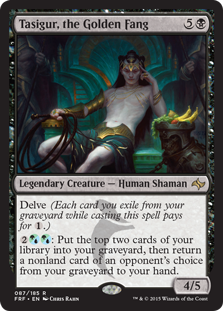
Since the printing of Kolaghan's Command and Tasigur, the Golden Fang, black has become a force to be reckoned with in Modern. TasigurPreviously used primarily for Thoughtseize, Liliana of the Veil, and multi-colored spells like Terminate, Lingering Souls, and Siege Rhino, black finally had the tools and depth to become more than just a splash. Seemingly forever plagued by a shallow, wide field of effects (Night of Souls' Betrayal/Goryo's Vengeance/Leyline of the Void?!) black traditionally finished second-best to Modern’s “better” colors. A victim of circumstance, black’s most powerful creature, Dark Confidant, swayed wildly from unbeatable to unplayable, depending on the context of the format. Phyrexian Obliterator seemed like it might elevate the color, but Path to Exile had other ideas. For a while, this imbalance went unnoticed, due in large part to the relative power of Liliana of the Veil and Thoughtseize compared to the rest of the format.
[wp_ad_camp_1]

Today, we are at a tipping point. The Event Horizon of Modern’s radical transformation is quickly approaching, and weeks from now we will look to this weekend and call it Patient Zero. Behold the new face of Modern:

"Grixis Control, Danny Jessup (22nd Place – SCG Dallas 2015)"

Creatures

4 Jace, Vryn's Prodigy
2 Pia and Kiran Nalaar
2 Tasigur, the Golden Fang
3 Snapcaster Mage
1 Grim Lavamancer

Planeswalkers

1 Liliana of the Veil

Instants

2 Kolaghan's Command
3 Thought Scour
1 Go for the Throat
1 Terminate
2 Mana Leak
4 Lightning Bolt
1 Remand

Sorceries

1 Dreadbore
4 Inquisition of Kozilek
1 Rise // Fall
4 Serum Visions

Lands

1 Mountain
2 Island
1 Swamp
1 Sulfur Falls
2 Blackcleave Cliffs
2 Creeping Tar Pit
4 Scalding Tarn
1 Blood Crypt
2 Steam Vents
1 Watery Grave
4 Polluted Delta
2 Bloodstained Mire

Sideboard

1 Rending Volley
1 Dreadbore
1 Vandalblast
2 Izzet Staticaster
1 Spellskite
1 Nihil Spellbomb
2 Dispel
1 Thoughtseize
1 Rise // Fall
1 Darkblast
3 Molten Rain

We’ll get to this deck in a second, but before we discuss the present and look to the future, we must first familiarize ourselves with the past.

Grixis Control 1.0

Grixis Control's origins can be traced to Grand Prix Charlotte, in the hands of a player of adequate skill named Patrick Chapin.

"Grixis Control, Patrick Chapin (9th – GP Charlotte 2015)"

Creatures

3 Gurmag Angler
4 Snapcaster Mage
2 Tasigur, the Golden Fang

Instants

2 Kolaghan's Command
4 Thought Scour
1 Dispel
4 Cryptic Command
2 Spell Snare
1 Electrolyze
1 Remand
1 Shadow of Doubt
4 Terminate
2 Mana Leak
4 Lightning Bolt

Sorceries

4 Serum Visions

Land

2 Sulfur Falls
2 Creeping Tar Pit
4 Scalding Tarn
2 Steam Vents
2 Watery Grave
4 Polluted Delta
1 Swamp
1 Mountain
3 Island

Sideboard

1 Keranos, God of Storms
1 Izzet Staticaster
1 Spellskite
1 Batterskull
2 Dispel
1 Countersquall
4 Fulminator Mage
1 Shriekmaw
1 Damnation
1 Flashfreeze
1 Slay

Prior to GP Charlotte, Grixis Control had been slowly picking up steam on Magic Online. This deck featured the combination of Kolaghan's Command and Tasigur, the Golden Fang in a blue shell powered by Snapcaster Mage and Thought Scour. At its worst, this deck boasted incredible resiliency to discard (blue’s primary enemy) and could “only” play a 4/5 that draws cards on turn four. At its best, this deck could outgrind Jeskai Control, obliterate Affinity, and got to play Black Lotus. Pat Chapin barely missed Top 8 with this 21 land, four Cryptic Command monstrosity, but the message was clear: this deck is here to stay.

Grixis Control v1.5

Shortly after the release of Magic Origins, I wrote an article discussing the inclusion of Jace, Vryn's Prodigy in Grixis Control. Here's my list from then:

"Grixis Control, Trevor Holmes"

Creatures

4 Snapcaster Mage
2 Tasigur, the Golden Fang
2 Gurmag Angler
3 Jace, Vryn's Prodigy

Instants

4 Lightning Bolt
4 Terminate
4 Thought Scour
4 Serum Visions
2 Cryptic Command
3 Kolaghan's Command
1 Electrolyze
2 Mana Leak
2 Spell Snare
1 Deprive

Lands

4 Polluted Delta
4 Scalding Tarn
4 Island
3 Creeping Tar Pit
2 Steam Vents
2 Watery Grave
1 Sulfur Falls
1 Mountain
1 Swamp

Sideboard

4 Fulminator Mage
3 Dispel
1 Anger of the Gods
1 Damnation
1 Bitterblossom
1 Vandalblast
1 Duress
1 Izzet Staticaster
1 Deathmark
1 Engineered Explosives

Alongside Thought Scour, Jace seemed like a natural fit, enabling crazy plays like turn one Thought Scour, turn two Jace, turn three flip, cast Tasigur, the Golden Fang for one mana and pass. That left you holding up Mana Leak, a 4/5 for B, and a flipped planeswalker on five loyalty. Even when our deck wasn’t operating at high velocity, casting and flipping a Jace normally assured victory, as planeswalkers with high loyalty are incredibly difficult to remove in Modern. With most decks relying on Lightning Bolt, Path to Exile, and Terminate for interaction, flipping a Jace meant we could rely on keeping him around, as spells like Hero's Downfall, Detention Sphere, and Maelstrom Pulse aren’t widely played. Abrupt Decay did see general play, but the rest of our deck was built to make Abrupt Decay actively bad as we were casting Tarmogoyf-sized threats at Tarmogoyf speeds, but with “protection from Abrupt Decay” thrown in for good measure.

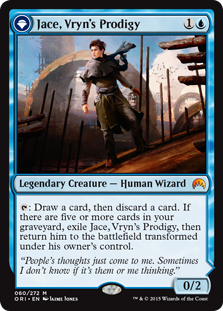
Jace ProdigyUnfortunately, Jace did die. A lot. A 0/2 for two was often awkward, especially alongside expensive delve creatures and weird spells like Cryptic Command and Remand that pushed us in different directions. Many Game 1’s saw us losing our Jace to relatively dead removal that our opponent was more than happy to cast, but even then, these interactions were more often than not favorable for us. Grixis’ best draws were its proactive ones, the draws where we cast Gurmag Angler on turn three and start beating our opponent to death. Tasigur and Gurmag Angler were already warping the metagame around themselves, forcing every deck to pack interaction that could kill an X/5, all the while making Dispel one of the best cards in the format. As the grindy control deck, forcing opponents to keep in situational removal to deal with our fast, gigantic creatures was positioning Jeskai Control could only dream about. Even if our opponents could remove our threats, they were behind on development and card advantage once we cast our Kolaghan's Command.
Using Jace, Vryn's Prodigy as a focal point for our strategy had some interesting effects on deckbuilding as well. Providing a pseudo-Snapcaster Mage effect, albeit at sorcery speed, Jace incentivized unique effects and de-incentivized counterspells. While the comparative merits of Terminate, Go for the Throat, and Dreadbore could be debated, when we were employing Jace it really didn’t matter, as once we had access to more of whatever effect we desired, having multiple options available provided us extra value. Somewhere around this point, the line between “control deck” and “midrange deck that abused the graveyard” started to become blurred, and sideboard cards like Rest in Peace/Relic of Progenitus were no longer a nuisance, but rather an actual disruptive element that punished our strategy. A rift began to grow among Grixis Control pilots, with this imaginary archetype line as a divider in the sand.

"Grixis Control, Michael Majors (5th - SCG Charlotte)"

Planeswalkers

2 Liliana of the Veil

Creatures

4 Snapcaster Mage
4 Jace, Vryn's Prodigy
2 Tasigur, the Golden Fang

Instants

2 Thought Scour
3 Kolaghan's Command
2 Spell Snare
3 Terminate
4 Lightning Bolt
3 Remand

Sorceries

4 Inquisition of Kozilek
4 Serum Visions

Lands

2 Creeping Tar Pit
3 Blackcleave Cliffs
1 Darkslick Shores
3 Scalding Tarn
1 Blood Crypt
1 Steam Vents
1 Watery Grave
4 Polluted Delta
2 Bloodstained Mire
2 Swamp
1 Mountain
2 Island

Sideboard

2 Spellskite
2 Nihil Spellbomb
3 Dispel
1 Thoughtseize
2 Dragon's Claw
3 Molten Rain
2 Pyroclasm

Modeling his Grixis “Control” deck after Jund Midrange, almost all the way down to the manabase, Michael Majors’ struck a major blow for the Grixis Midrange team when he Top 8’d SCG Charlotte with this list. Focusing on proactive elements rather than attempting to reactively control the game with Cryptic Command, Majors sought to overpower opponents with lines like discard into Jace into Liliana into spell flashback spell. Incorporating a playset of Inquisition of Kozilek in the maindeck, with more discard in the sideboard, this deck simultaneously worked to disrupt the opponent, protect its own Jaces and Tasigurs, and even gain an edge in the mirror with both cheap disruption and an increase in threats. Rather than trying to protect its Jaces with counterspells, this list is prepared to let him die, taking advantage of positioning by forcing the opponent to react to its game, rather than the other way around. Besides, with Kolaghan's Command and Snapcaster Mage to continually re-buy creatures, who says Goodbye has to be Forever?

Grixis Control v2.0

This brings us to today.

"Grixis Control, Danny Jessup (22nd Place, SCG Dallas)"

Creatures

2 Pia and Kiran Nalaar
4 Jace, Vryn's Prodigy
2 Tasigur, the Golden Fang
3 Snapcaster Mage
1 Grim Lavamancer

Planeswalkers

1 Liliana of the Veil

Instants

2 Kolaghan's Command
3 Thought Scour
1 Go for the Throat
1 Terminate
2 Mana Leak
4 Lightning Bolt
1 Remand

Sorceries

1 Dreadbore
4 Inquisition of Kozilek
1 Rise // Fall
4 Serum Visions

Lands

1 Mountain
2 Island
1 Swamp
1 Sulfur Falls
2 Blackcleave Cliffs
2 Creeping Tar Pit
4 Scalding Tarn
1 Blood Crypt
2 Steam Vents
1 Watery Grave
4 Polluted Delta
2 Bloodstained Mire

Sideboard

1 Rending Volley
1 Dreadbore
1 Vandalblast
2 Izzet Staticaster
1 Spellskite
1 Nihil Spellbomb
2 Dispel
1 Thoughtseize
1 Rise // Fall
1 Darkblast
3 Molten Rain

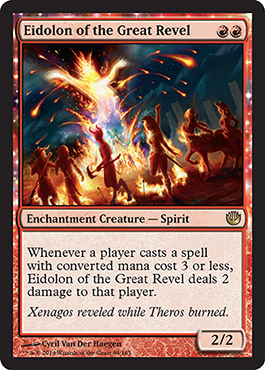
Abandoning Spell Snare, and dropping the counterspell count from 5-7 all the way down to three, Danny Jessup is firmly in the “Grixis Midrange” camp, pushing the tap-out control strategy to the max. The playset of Inquisition of Kozilek remains, and is in my opinion one of the strongest draws to playing this variation of the archetype. Most strategies in Modern focus on executing their own gameplan and play the bare minimum of interaction to get by, meaning a timely Inquisition of Kozilek can steal a Path to Exile from G/W/x, Terminate from Jund, or Roast/Lightning Bolt from Twin. This lets our Jace, Vryn's Prodigy and Tasigur, the Golden Fang hit the field and survive to start taking over. Even when we’re looking to disrupt, and not necessarily to protect, Inquisition is excellent for snagging Eidolon of the Great Revel, Remand, Tarmogoyf, Etched Champion, and countless other spells that give us trouble. Playing discard, into Jace, into flip rebuying discard can be absolutely devastating (right Marshall Sutcliffe?) and access to both Liliana of the Veil and Kolaghan's Command to clean up can end the game in a hurry.

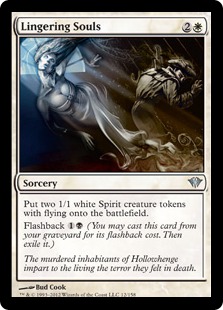
Lingering SoulsThe real technology, however, comes in the form of Pia and Kiran Nalaar and Rise // Fall. Borrowing a page from Jeff Hoogland’s book, Danny Jessup correctly noticed the power of Chandra’s parents in Grixis Control, and its inclusion blurs the line between Grixis Control and Jund Midrange even further. To start, Pia and Kiran Nalaar is four power stretched across three creatures for four mana. This is already comparable to Lingering Souls, and doesn’t force us to splash white. Based purely on rate, Lingering Souls is probably slightly stronger, as the option for “3+2” is better than four up front, and the flashback does synergize well with Thought Scour.
When we add in the Shock ability, however, the tables start to turn. Combining with Lightning Bolt to kill big threats, gunning down opposing small creatures, going to the face for a quick kill, Pia and Kiran Nalaar literally does it all. In our deck, they really seem to be a combination of Huntmaster of the Fells and Olivia Voldaren, proving the “machine-gun” ability of Olivia Voldaren with the “creature buffer” ability of Huntmaster of the Fells. Easily trading with Affinity’s board and diminishing opposing Lingering Souls, Pia and Kiran can even buy us time against an angry Tarmogoyf if we need it to. Mana requirements notwithstanding, the debate between Pia and Kiran Nalaar and Lingering Souls in our deck is close (which really speaks to the power level of the card), except for one fact: Pia and Kiran Nalaar is absolutely amazing with Kolaghan's Command and Rise // Fall!

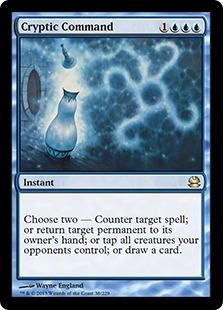
Cryptic CommandWhen looking at the utility of this creature in combination with these spells, our view of Pia and Kiran Nalaar really starts to change. No longer is it a slightly more expensive Lingering Souls that comes with a cool ability attached. When our deck is built with returning creatures from the graveyard in mind, Pia and Kiran Nalaar becomes a legitimate endgame we can build to, similar to Cryptic Command in Chapin’s “old” list. Alongside Tasigur, the Golden Fang and Jace, Vryn's Prodigy, Pia and Kiran Nalaar really puts our opponent in the squeeze, as no removal spell can favorably interact with all of them (sound familiar Delver of Secrets/Geist of Saint Traft/Restoration Angel?).
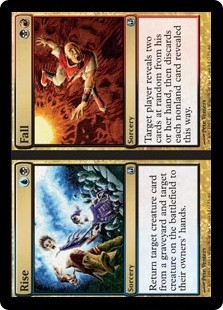
Rise FallIf you haven’t had the pleasure to cast Rise // Fall, you’re missing out. Sometimes, it’s Hymn to Tourach. When it’s not, it’s returning our Jace, Vryn's Prodigy in our graveyard and our Pia and Kiran Nalaar on board to our hand (for two mana), leaving a few Thopters behind for free. The inherent resiliency to discard, and the built-in ability for this deck to grind anyone out, is just off the charts. Besides the discard (and some of the removal), literally every spell in the deck either cantrips or provides some sort of two-for-one to pull us back into the game. Serum Visions sets up our draws, assuring we find action. Kolaghan's Command and Rise // Fall generate effects far beyond their mana cost. All of our threats are both great early and can take over the game single-handedly going late.
Can this deck be hated out? It doesn’t seem likely. Leyline of the Void is definitely a nuisance, as are similar effects like Rest in Peace, Relic of Progenitus, etc. Jace as just a looter isn’t the worst, and we are actually playing fewer delve creatures than we did in the past, reducing the chance that we have 4/5’s for six or 5/5’s for seven mana stuck in our hand. The fourth Snapcaster Mage was cut to fit some of this spice, and both Liliana of the Veil and Pia and Kiran Nalaar don’t care about the graveyard at all. Worst case scenario, graveyard disruption is still a solid plan against us, but we still have discard and counterspells to fight it.

Conclusion

I think we are on the verge of a large metagame shift in Modern. Grixis Control has adapted to adopt a proactive strategy that complements its strengths: controlling the game and generating value with Snapcaster Mage and Kolaghan's Command. This proactive strategy is not necessarily as potent as others in the format (as it is still a Plan B, a “means to an end”) but still powerful enough that other archetypes will be forced to adapt as a result. We’ve already seen this in the widespread adoption of removal to fight the dual roadblocks of Tasigur, the Golden Fang and Gurmag Angler, and the increase in graveyard hate to fight Grixis Controls’ inherent synergies. The shift towards discard and away from counterspells increases Grixis’ weakness to strategies that are resilient to hand disruption. For those looking to fight the evolution of this archetype, that is where I would start. What do you think? Let me know in the comments, and thanks for reading!

Trevor Holmes
The_Architect on MTGO
Twitter.com/7he4rchitect
Twitch.tv/Architect_Gaming

Insider: QS Cast #11 – Where have Jace and Snapcaster Gone?

Are you a Quiet Speculation member?

If not, now is a perfect time to join up! Our powerful tools, breaking-news analysis, and exclusive Discord channel will make sure you stay up to date and ahead of the curve.

Play

Douglas Linn

Doug Linn has been playing Magic since 1996 and has had a keen interest in Legacy and Modern. By keeping up closely with emerging trends in the field, Doug is able to predict what cards to buy and when to sell them for a substantial profit. Since the Eternal market follows a routine boom-bust cycle, the time to buy and sell short-term speculative investments is often a narrow window. Because Eternal cards often spike in value once people know why they are good, it is essential for a trader to be connected to the format to get great buys before anyone else. Outside of Magic, Doug is an attorney in the state of Ohio.  Doug is a founding member of Quiet Speculation, and brings with him a tremendous amount of business savvy.

View More By Douglas Linn

Posted in Free Insider, Podcast, QS Cast2 Comments on Insider: QS Cast #11 – Where have Jace and Snapcaster Gone?

Have you joined the Quiet Speculation Discord?

If you haven't, you're leaving value on the table! Join our community of experts, enthusiasts, entertainers, and educators and enjoy exclusive podcasts, questions asked and answered, trades, sales, and everything else Discord has to offer.

Want to create content with Quiet Speculation?

All you need to succeed is a passion for Magic: The Gathering, and the ability to write coherently. Share your knowledge of MTG and how you leverage it to win games, get value from your cards – or even turn a profit.

Stock Watch- Eidolon of the Great Revel

Are you a Quiet Speculation member?

If not, now is a perfect time to join up! Our powerful tools, breaking-news analysis, and exclusive Discord channel will make sure you stay up to date and ahead of the curve.

I've been combing through Commander spoilers, but with me not being a casual guy I've really only been looking for Legacy playable cards. I haven't come across any yet, but I'll be sure to do a write-up if I do. The other spoilers have been making the Magic Reddit pretty worthless for my purposes, but after some digging I found a nice little financial tip. We all know that Eidolon of the Great Revel is going to be a Modern staple for the foreseeable future, and with eight copies in the most recent Modern GP Top 8, I did some digging to see how close we are to the card's floor.

There was an error retrieving a chart for Eidolon of the Great Revel

The spread is still on the high side, which means that buylist prices aren't phenomenal at the current time, but this is a long term spec. The next thing I checked was comparing the page one listed prices on TCGPlayer versus those on page two. There are a couple copies for $8.50-$9, but as early as page two the listings are at $10. Given the odd nature of Eidolon, a reprint in the near-future seems rather unlikely, and only buying a handful of copies would increase the market price by a full dollar.

It would take a lot more movement for the price to explode from this point, but those $9 copies won't be around for long.

Avatar photo

Ryan Overturf

Ryan has been playing Magic since Legions and playing competitively since Lorwyn. While he fancies himself a Legacy specialist, you'll always find him with strong opinions on every constructed format.

View More By Ryan Overturf

Posted in FreeTagged 2 Comments on Stock Watch- Eidolon of the Great Revel

Have you joined the Quiet Speculation Discord?

If you haven't, you're leaving value on the table! Join our community of experts, enthusiasts, entertainers, and educators and enjoy exclusive podcasts, questions asked and answered, trades, sales, and everything else Discord has to offer.

Want to create content with Quiet Speculation?

All you need to succeed is a passion for Magic: The Gathering, and the ability to write coherently. Share your knowledge of MTG and how you leverage it to win games, get value from your cards – or even turn a profit.

Polish and Improve Your Game

Are you a Quiet Speculation member?

If not, now is a perfect time to join up! Our powerful tools, breaking-news analysis, and exclusive Discord channel will make sure you stay up to date and ahead of the curve.

Playing on the Pro Tour, and doing well, was an incredible experience for me. I went 10-6 at PT Battle for Zendikar, a good enough finish to cash. I've been thinking a lot about the lessons I learned during my preparation for and play during the PT, and today I'm going to do something different and share some of these. While the specifics I gathered really only apply to Standard and the Pro Tour, this is Modern Nexus, and there were a number of general lessons that apply to every format and have helped me to improve my game. I hope they will help you too.

ftl209_training_ground[1]

Analyzing and emulating the behaviors of incredibly skilled players is one of the best tools anyone can use in becoming better. While professional players periodically stream and many release videos weekly for various websites, looking at how they approach tournaments, games, and deck building can benefit players of any skill level. I am writing this article from the perspective of someone who has put in the effort and looked at all of these concepts to try and improve. It certainly has helped me reach a higher level of play skill. That said, this article acts as both a learning exercise to those for whom this is a new concept, and as a reminder to the grizzled veterans that taking time to look over what the best players in the world consistently do is important. I am also taking from my recent experience of flying to bigger tournaments and working to take that next step from grinder to member of the Pro Players Club.

[wp_ad_camp_1]

Pick Your Battles

The best piece of advice I ever received about playing Magic at a higher level is to skip events that you do not feel fully prepared for.Tarmogoyf Events are grueling and often come down to knowing every aspect of your deck or the format at large. In a 15 round event, being able to operate at high levels on autopilot because you have a full understanding of the format is something that will spread the pressures of the event out and allow for intense moments of focus when you need them. The ability to autopilot without major mistakes comes from extensive preparation and repetitions with the deck you are playing and against various major matchups you expect to face. For example, if you have been preparing for a Modern Grand Prix by putting in hundreds of reps with Abzan, you are much more likely to do well with Abzan than any other deck you could audible to right before the tournament. Consequently, consider a Standard Grand Prix just after the Modern event. Given how much preparation it took to do well in the Modern tournament, skipping the Standard GP might yield a similar result to actually playing in it, while also helping fight burn-out from too many events.
That is not to say if you feel prepared in both formats you should skip one. Rather, if you dedicate everything to one event, the next weekend you should look for an event in that format, or consider not playing in a major event. This comes up often with format specialists, or with players looking to qualify for the RPTQ during Standard season but then want to play a Modern Grand Prix. Deciding which event should take your focus and where you should use your finite resources is a very important aspect to doing well at bigger events and goes against the more traditional grind-until-you-make-it mentality that is difficult to maintain.

Knowledge is Power

In a similar vein to skipping events where you do not feel fully prepared, for any format you plan to play a big event in, you should know the general game plan for all tier 1, tier 1.5, and most tier 2 decks that have put up recent results. First, this allows you to know how to counteract their game plan and better understand what cards have value in the matchup. Second, this allows you to operate within the context of who is the aggressor in a matchup better. Understanding this concept is very important, fundamental even, especially in a format like Modern where it is not always straightforward. In the Splinter Twin versus Abzan matchup, the Abzan player is the aggressor until the Twin player’s turn three. Once the game hits Twin’s turn three, the Abzan player has to work with the board presence they developed and take the controlling route, maintaining mana and resources to interact with the potential combo at all times. As the game progresses, the Abzan player can start playing more things so long as it does not leave them vulnerable to an end step Pestermite or Deceiver Exarch.Pestermite With anything less than a detailed understanding of the moments when your role changes in certain matchups, you are leaving yourself open to major mistakes that cost you games and matches you cannot afford to lose at bigger tournaments.

Once you have put in your hours with a deck and understand the format, set goals for the event. Start small and work towards the bigger goals you have for the tournament. This gives you smaller things to focus on while keeping your head in each match. Justin Desai, a very good New England player I was talking to at Grand Prix Quebec City, warned me of the dangers of looking at the big picture at events, as it tends to sap your focus from important decisions and games. If you lose focus for one match, it can be the difference between Top 8 and Top 32, the difference between Day 2 and side events on Sunday. Start with goals like winning your first match of a tournament or hit three wins, something smaller that keeps your focus on the first few rounds of an event. From there, once you meet those goals, try setting more step-by-step goals. For example, if you have one bye at a Grand Prix, make your first goal reaching 3-0. Once you reach 3-0, your new goal is to reach four wins, then five, then to qualify for Day 2 at seven wins. Keep making small goals and always make them positive! Win seven rounds and do not lose three matches mean the same thing for someone with no byes at a Grand Prix, but one is a positive to strive for and the other creates pressure and fosters negativity.

Leveling Up

Now, let us look at in-game things that can really help you reach the next level, ones that pro players consistently do. Take your time while playing. While there are limits to this statement, since draws at bigger events are essentially losses for most purposes, slowing down and considering your plays and even smaller decisions more closely can improve your game greatly. The best way to incorporate this into your arsenal, without also slowing down your overall pace of play, is to think ahead, evaluate your plans on your opponent’s turn, and adjust them based on their plays. With an understanding of the format, there are not many plays that should catch you completely off guard. With that in mind, it is easy to work through your plan and account for most of the plausible things your opponent could be trying to do. This also allows you to speed up parts of the game such as fetching. If you consider what your plan is, what you need to reach it, and how you are winning this game every turn, you can stay constantly focused on the game and close it out by cutting off the most avenues for your opponent to win.

Tighten Up

DamnationAnother big tactic very good players often employ is tight play while ahead. It becomes very easy to loosen up and take your foot off the gas while it looks like you are very far ahead, but this is very dangerous. The easiest way to stay ahead and not allow your opponent to claw back from these situations is to constantly consider how you lose from your current position and how to stop that from happening. For example, if you have a Tarmogoyf and a Scavenging Ooze on board against no creatures from your Jund opponent post-sideboard, how do you lose? One way would be to play out more creatures and play into their potential Damnation. If you consider this option and hold excess creatures, if your opponent plays Damnation, you can deploy more threats and put them in a similar hole.
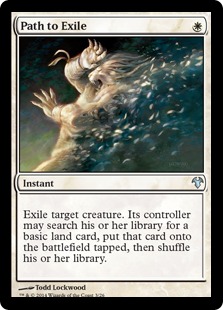
Path to ExileFocus in game is very important, but evaluating how you played after the game is almost more important. During a game, it is difficult to find misplays that are not egregious. Finding the smaller mistakes that slowly give back momentum and allow your opponent to make those comebacks everyone has experienced that start from cannot-possibly-lose and quickly become cannot-possibly-win increases your win percentage drastically. Evaluate decision trees from the game and look at the choices you made and how they affected the game. Using an Abrupt Decay on a Tarmogoyf when you also have Path to Exile can leave you vulnerable to a Liliana of the Veil follow-up. Path lines up poorly against the planeswalker, but Abrupt Decay is the answer you need. Small choices like this can spiral out of control and turn a very close game into a loss.
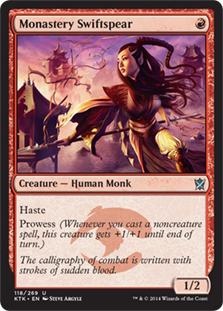
Just Ask

One of the best places to learn from these mistakes or find them is through talking to players that are better than you. I spent half a round talking to my friend and Legacy Champs Semi-Finalist Akash Naidu who helped me see that I had made two major mistakes in two different matches at Grand Prix Indianapolis this past weekend. I had not seen the line in the same way he had. By not seeing the disadvantage of my play, when I drew a card that was an out from his play but not mine, I made a decision that cost me the match. Discuss lines with other players. Understand that in most games where you lose, you made at least a few choices that contributed to that loss. These are major steps in improving and not making those same mistakes again.

monastery swiftspearAnother important concept worth remembering is that your opponent is not an idiot. If they are making a play that seems particularly odd, consider why they would make that choice. There are going to be times when your opponent plays poorly and does something suboptimal without realizing it, but there are times when they are playing in a way that gives you free information if you stop to think about it. If your attacks their Monastery Swiftspear into your 2/3 Tarmogoyf, consider that with Atarka's Command Swiftspear becomes a 3/4. Small considerations like this allow you to make decisions that are more informed. That said, sometimes walking into those obvious tricks is correct. Getting cards out of your opponent’s hand and preventing damage are sometimes worth letting your opponent "get you", in turn increasing your odds of winning the game.

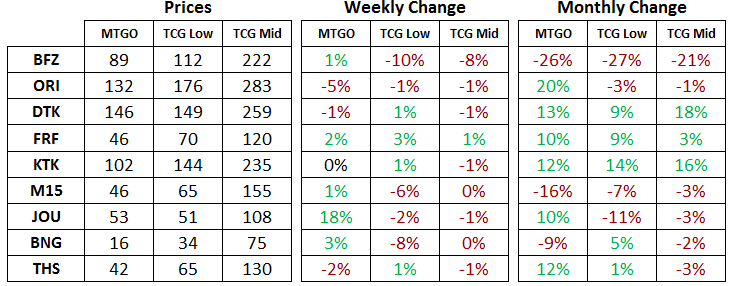

Similarly, never underestimate your opponent based on any factor. Age, sex, gender, and anything at all does not mean your opponent is any less skilled, and you certainly should not make that assumption. As we all saw from the story of Brandon Burton from the Pro Tour, anyone can come to a tournament and crush it. I have seen many players get frustrated from losing to someone younger, or to someone of the other sex or gender, and most the time, those losses stemmed from a disrespectful view of that player’s abilities. Understand that anyone who shows up to an event could be the best player in the room and treating them as anything less is setting yourself up to play worse or give up small edges. When you do that then suddenly, no matter how skilled they are, you have made yourself much worse.

Getting Better

In conclusion, there are many more ways beyond these tips to improve and make yourself a better player, but the biggest thing is to look for that improvement. We all hit points where we feel we have plateaued and we cannot improve, but that point never exists. The greatest players in the history of the game can still improve and so can anyone else willing to look for the places to improve and work at it with sincere effort. Put in the effort to prepare for every event you want to play in, learn the format for those events inside and out, set reasonable goals, look for places where you made mistakes within the game, and put more time into thinking during matches. Taking these few steps will put you that much further ahead of the rest of the room. If you keep looking for ways to get better, you will find your way and break through.


Insider: MTGO Market Report for November 4th, 2015

Are you a Quiet Speculation member?

If not, now is a perfect time to join up! Our powerful tools, breaking-news analysis, and exclusive Discord channel will make sure you stay up to date and ahead of the curve.

Welcome to the MTGO Market Report as compiled by Sylvain Lehoux and Matthew Lewis. The report is loosely broken down into two perspectives.

A broader perspective will be written by Matthew and will focus on recent trends in set prices, taking into account how paper prices and MTGO prices interact. Sylvain will take a closer look at particular opportunities based on various factors such as (but not limited to) set releases, flashback drafts and banned/restricted announcements.

There will be some overlap between the two sections. As always, speculators should take into account their own budget, risk tolerance and current portfolio before taking on any recommended positions.

Redemption

Below are the total set prices for all redeemable sets on MTGO. All prices are current as of November 2nd, 2015. The TCG Low and TCG Mid prices are the sum of each set’s individual card prices on TCG Player, either the low price or the mid price respectively.

All MTGO set prices this week are taken from Goatbot’s website, and all weekly changes are now calculated relative to Goatbot’s ‘Full Set’ prices from the previous week. All monthly changes are also relative to the previous month prices, taken from Goatbot’s website at that time. Occasionally ‘Full Set’ prices are not available, and so estimated set prices are used instead.

Nov2

Theros Block & M15

Although the prices on these sets have bottomed on MTGO, weakness is still evident in paper prices, which usually bottom at the end of November or early December.

Until the bottoming process is complete in paper, there will be next to zero demand from redeemers. This leaves MTGO prices to fluctuate without a firm anchor, particularly for Theros (THS) and Magic 2015 (M15).

Speculators targeting cards from these sets should be cautious at this point. The best prices are behind us now, and gains on junk mythic rares will be uneven and sporadic until paper prices start to firm up.

One of the catalysts of this process will be rising interest in Modern Constructed leading up to Pro Tour Oath of the Gatewatch (OGW). That event will feature Modern for the constructed portion, so speculators should circle the weekend of February 5th to 7th.

There will be price spikes on Modern playables that get featured in coverage and show up in the Top 8 on Sunday. Speculators should be well prepared in advance of that weekend by accumulating Modern staples and playables.

Tarkir Block & Magic Origins

Keep in mind both Khans of Tarkir (KTK) and Fate Reforged (FRF) will be rotating out of Standard in April with the release of the just announced Shadows Over Innistrad (SOI). This has implications for both players and speculators looking to minimize the loss of value tied to rotation.

The trick is to avoid the panic selling period, which usually occurs in September for a Fall rotation. In this case, you will want to avoid selling cards off in March as other players rush to the exit with their KTK and FRF cards.

Target February as the month to sell cards from these two sets, particularly Standard-only cards which will lose the majority of their value after rotation.

ShadowsoverInnistrad

Wingmate Roc is a prime example of a card that will lose most of its value after leaving Standard. Right now it's a staple, but as of April it will be unplayable.

Although this card has not peaked in price, be sure to whittle down your supply over the winter. 10 to 12 tix is a fine selling price, and any price spike beyond that should be considered a great point for exiting the position.

[tt n="Wingmate Roc" a=5]

Out of FRF, Warden of the First Tree in the past month went from 9 tix all the way down to 4 tix, and stabilized at 5 tix. This card is a staple of current Standard, and often appears as a four-of in aggressive Abzan builds and G/W Megamorph.

This type of price movement is indicative of a supply crunch followed by a round of speculative selling. If the majority of speculators have exited their positions, then steady demand will result in steady price increases, and not the whipsaw up and down of the past few weeks.

Look for this card to move up in price into January. Holding out for a price of 8 to 9 tix is defensible with three months left in this iteration of Standard.

[tt n="Warden of the First Tree" a=5]

The other big mover in recent weeks out of FRF is Ugin, the Spirit Dragon. At 15 tix, it seems to have found a stable price for the moment. Similar to Wingmate Roc, any price spike which sends this to 20 tix or higher should be considered an excellent opportunity to sell.

Unlike the white flier though, Ugin's spot in Modern Constructed is assured as a key part of Tron builds. This will be a good card to load up on at the right price around the first ever spring rotation.

Unlike the first two sets of Tarkir block, Dragons of Tarkir (DTK) will stick around in Standard until the Fall. Looking to the long term, this set focused on allied colours could form the backbone of Spring Standard, depending on the quality of mana fixing present in Oath of the Gatewatch (OGW) and SOI.

It's safe to say the current level of mana fixing is an outlier, and the rotation of the KTK fetch lands will result in a narrowing of mana bases. If a shift to mono-colour and allied-colour decks occurs, cards from DTK will be prime beneficiary of that shift.

Magic Origins (ORI) is paired with DTK in the rotation schedule, and it has the honour of featuring the first 60+ tix Standard card in years. A number of factors have combined to push Jace, Vryn's Prodigy to these lofty heights, and it's worth considering how these factors will change in the Spring. ORI is sticking around, but what will happen to Jace?

As others have observed, the loss of the fetch lands from Standard will be a big blow to Jace's power level. First, it will be much harder for decks to splash Jace. Secondly, fetches are an almost costless way to fill the graveyard, allowing for a relatively easy path to flip Jace.

Lastly, although Jace is Modern-playable, it's not clear if it's a staple of that format. All of these factors point to Jace being at or near its price apex. Act accordingly over the coming months.

Battle for Zendikar

The newest set continues to underwhelm with its impact on Standard, and speculators should be biding their time in anticipation of lower prices down the road.

Attempting to speculate on cards from this set is a losing battle at the moment due to the relentless flood of supply from drafters. Any speculation should be short term in nature, usually tied to results from weekend events.

The release of OGW in January will trigger a shift in the draft format from triple Battle for Zendikar (BFZ) to one booster of BFZ and two of OGW. This means speculators should look to OGW release events for the probable bottom on cards from BFZ. Accumulating tix in advance will ensure speculators can acquire cards from BFZ at a good price.

Modern

Innistrad special Halloween drafts end today. ISD prices have lost about 15% of their value on average and bottomed this past Saturday as anticipated. From bulk rares to Liliana of the Veil, all cards suffered a loss in value save for one--Snapcaster Mage.

SM

This is a strong signal of the value players place in Snapcaster. If speculators might have wished for a better buying price after this weekend, Snapcaster Mage remains a strong speculative target and should be stocked up at its current price.

Other ISD positions discussed previously represent great speculative opportunities at this point as well. As Kelly discussed yesterday, buying penny targets can be a very profitable play. Several bulk or near bulk Innistrad cards have just reached their all-time low, with only one direction left to go--up. 

A Sample of ISD Speculative Targets

Although Shadows Over Innistrad was announced for April 2016, speculating on potential reprints is fairly pointless at this time. However, speculators should exercise caution when investing in ISD block positions over the next few months. Especially for Eternal staples, selling this Winter before any potential SOI spoilers will be recommended.

This weekend's Modern GP in Porto Alegre was marked by an aggro-oriented Top 8, featuring four Zoo variants (De Jesus Freitas’s Naya Zoo won it all) and one Hexproof deck. G/R Tron, Splinter Twin and Living End rounded it out.

That being said, this Top 8 doesn’t represent the much more diverse metagame seen on Day 2, which was actually heavy on Jund and Affinity. As usual, a plethora of viable archetypes in Modern gives speculators dozens of potential targets to choose from in this period of relatively low prices.

Finally, while the Modern Total Format Price index remains mostly flat, the MM2 Total set price keeps strengthening, with prices on the rise since the release of BFZ. MM2 positions should certainly be kept for a few more weeks, if not months, for greater profits.

Legacy & Vintage

Season 12 of the MOCS started last week. Although the peak of Legacy demand is expected by the end of the month during the preliminaries, prices of Legacy staples such as Stoneforge Mystic, Wasteland, Deathrite Shaman, Show and Tell and Mox Diamond remain mostly flat.

As Miracles is still a popular deck in the format, Sensei's Divining Top and Counterbalance are among the few Legacy-only staples to be on the rise for more than two weeks.

[tt n="Counterbalance" a=5]

In the Vintage world, the effects of the first Power Nine Challenge are still in full motion, with the VMA Full set, VMA Mythics and P9 indices on the rise again this week. Since finding their floor about two weeks ago, mythics from Vintage Masters have posted gains of more than 25% on average.

For speculators holding Vintage positions, the second P9 Challenge could definitely be the tipping point. Another successful round of this large Vintage event would certainly put Vintage prices on a longer-term upward trend.

Pauper

In Pauper, Mono-U Delver and Familiar decks are back in the top three most successful archetypes this week. Snap, Ninja of the Deep Hours and Spire Golem have rebounded markedly from the floor reached around the BFZ release. They might reach their previous heights this Winter.

Stompy is another popular Pauper deck this week and Nettle Sentinel is now back to 3 Tix after venturing below 1.5 Tix earlier in October.

Another feature of this deck is Rancor, whose price hasn’t rebounded similarly to other cards in popular decks. The green enchantment, only printed in Urza’s Legacy and M13, is lagging in the 0.8-to-1 Tix range.

With applications in several Pauper and Modern decks, Rancor is expected to bounce back to 2 Tix sooner rather than later, and is a speculative opportunity to consider.

Ranco

Targeted Speculative Buying Opportunities

None

Targeted Speculative Selling Opportunities

ORI boosters

Updates to SCG Premier Play

Are you a Quiet Speculation member?

If not, now is a perfect time to join up! Our powerful tools, breaking-news analysis, and exclusive Discord channel will make sure you stay up to date and ahead of the curve.

Yesterday, Pete Hoefling announced changes to SCG Premier Play programs. We knew changes were coming- Open Points had already been announced to not be awarded at IQs anymore- but I don't know that anybody was ready for the full scale of these changes. Here are some cliff notes:

Three Invitationals a year instead of four.
Only Standard and Modern Invitational formats.
All Sunday events at Opens will now award prize wall tickets instead of cash.
Open payout remains the same.
Fewer Legacy Opens.
Very few West Coast events.
Some stuff about squirrel tokens or something.

As a level-headed person looking at a business, it makes sense not to force somebody who qualified for an event by playing Standard to find a Legacy deck. As somebody who is excited that Dig Through Time was finally banned, this upsets me as I will have fewer opportunities to play Legacy. Also, let's be real, I don't want to play for prize tickets. If I wanted to do that, I'd be playing ski-ball. For me personally, this means traveling to fewer Opens and skipping town early on Sunday if my car doesn't day 2, where I would formerly always play the Sunday event.

As for financial impact, this undoubtedly impacts the market for Legacy staples. These cards are still as rare as they ever were, but with less support for the format it's going to get harder to move dual lands and the like. If you've ever tried to sell dual lands for market price, you know that this already was a relatively tall order.

These decisions are being made in the financial best interest of SCG, which is something that I can respect. But I don't have to like them. For my money, I'm going to be paying a lot more attention to the GP schedule going forward.

Avatar photo

Ryan Overturf

Ryan has been playing Magic since Legions and playing competitively since Lorwyn. While he fancies himself a Legacy specialist, you'll always find him with strong opinions on every constructed format.

View More By Ryan Overturf

Posted in FreeTagged 1 Comment on Updates to SCG Premier Play

Have you joined the Quiet Speculation Discord?

If you haven't, you're leaving value on the table! Join our community of experts, enthusiasts, entertainers, and educators and enjoy exclusive podcasts, questions asked and answered, trades, sales, and everything else Discord has to offer.

Want to create content with Quiet Speculation?

All you need to succeed is a passion for Magic: The Gathering, and the ability to write coherently. Share your knowledge of MTG and how you leverage it to win games, get value from your cards – or even turn a profit.

Want Prices?

Browse thousands of prices with the first and most comprehensive MTG Finance tool around.


Trader Tools lists both buylist and retail prices for every MTG card, going back a decade.

Quiet Speculation