menu

Insider: Artful Maneuvers – Plain Old Borders

Are you a Quiet Speculation member?

If not, now is a perfect time to join up! Our powerful tools, breaking-news analysis, and exclusive Discord channel will make sure you stay up to date and ahead of the curve.

If you read my last article and decided to come with me on this artventure, then you should have picked up the items on my list that are necessary to start altering cards.

This week I'll begin a step by step tutorial on altering a land. As this is our first tutorial together, I want to make sure that I don't gloss over anything.

I've been doing this for five years, so it might be easy for me to just power through with all of the shortcuts I've developed over the years, which isn't beneficial for someone who is picking up a paint brush for the first time.

This guide became so long due to the extra details that I've decided to split it into two parts. After this two part tutorial, every altering guide will be completed in one article, with more business related articles sprinkled in between them.

So I'd like to ask all of you financiers to either paint along or hang with me for just a bit! For those of you really looking for a financial bit to chew on over and above increasing the value of a basic land this week, take a peek at Rattleclaw Mystic.

There was an error retrieving a chart for Rattleclaw Mystic

This card has been getting a small amount of buzz as a hot pick up before rotation, as Sylvan Caryatid and other mana dorks rotate. Just watch out for a Birds of Paradise reprint in Magic: Origins.

Also, I'll be painting one of these in a coming article, so it might be wise to pick one up anyway!

Onto the Show

Whiting around the edges...ugh
Whiting around the edges... ugh.

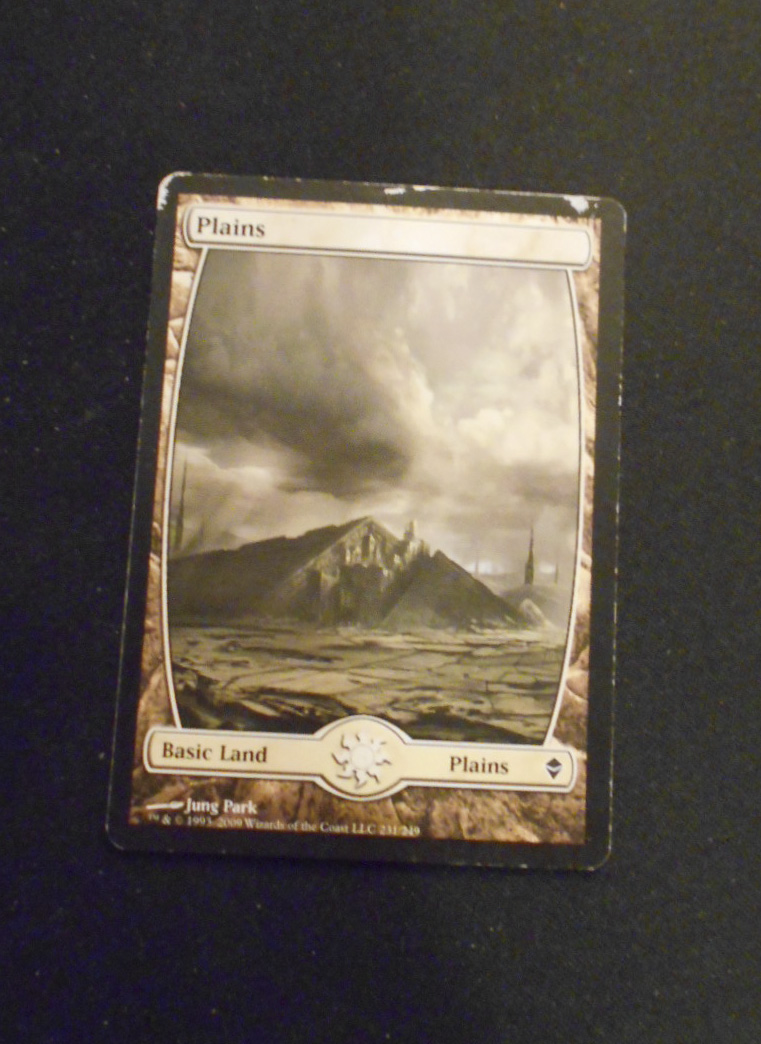
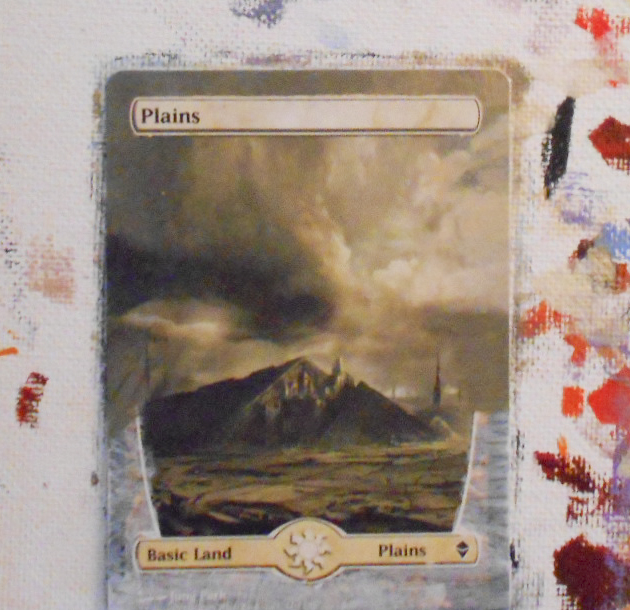
As you can see here, we have a basic Plains from Zendikar.

These are nice pieces to find in bulk lots or throw-ins for a trade, but this one is a bit beaten up, making it almost worthless.

These are prime targets for rehab by altering!

First Thing's First

My work space, it's not much at all actually...

You need to set up a reasonable area to work in. You don't need a lot of space, just enough for a cup of rinse water, a paper towel, your paint palette and whatever you have chosen to mount your card to.

Mount your card on your board with masking tape or scrapbooking tape.

Open up your white paint and put a small drop of paint on your palette. You don't need much. The drop should be smaller than a pea and you won't even use that much.

Take your paint brush and dip it in the water, then wipe it on the paper towel. This is to remove excess water, but you still want a wet brush. The moisture on the brush will help to thin out the paint. This is extremely important, as paint can build up rather quickly, making a card unplayable even in a sleeve.

Use your brush to pick up a small amount of white paint and begin brushing it on to the border of the card. Your stroke should be swift and even. Applying enough pressure to cause the brush hair to bend but not flatten to the surface.

As you work your way around the border of the card, take time to gain confidence in your brush work by experimenting a bit. Notice how the paint spreads. What happens when you add more moisture to the paint? Or less?

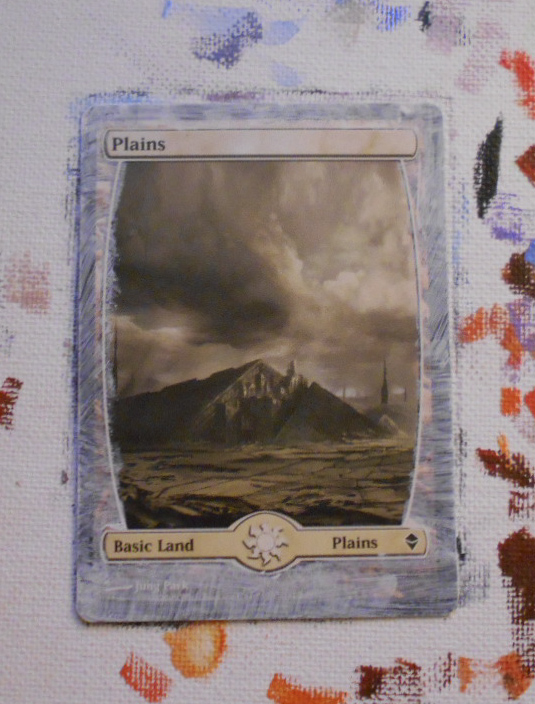
When you've finished, you'll want your card to look roughly like the picture here. The purpose of this priming layer is two-fold. First it allows the next layers of paint a more suitable surface with which to hold onto of the card. Second, it covers the original colors of the card and stops them from showing through and affecting the colors that we are putting down.

Your card should now look like this.

Making the Colors

It is important to note that not every card is the same.

Colors in a copy of our Plains may actually be slightly different. There are small variances in the amount of ink on a card that will change the overall vibrancy of a color and sometimes even change the colors themselves.

Try to picture how your book report looked when your printer started running out of a certain color. This happens to large scale printers as well and serves to make our job more difficult.

The beige and grays that dominate the color palette of this card are all made from three colors right in front of you. Mixing yellow and white, then adding small amount of black will create the different hues that you need.

Mixing paints is by far the hardest part of altering cards, but with some practice you can become proficient. I'll do my best to walk you through it, but a little experimentation and time spent playing in the paint goes a long way here.

Consider all of my instructions about color to have the additional text: Add Black or White to bring the color to the necessary hue to match your card.

Not perfect, just close

I always work back to front, meaning objects in the background are painted before objects in the foreground.

In this case, the farthest most object is the sky. Cloudy skies can be tricky, but if you break them down, they become simple enough.

What we want to do here is start with our lightest color, which, in this case, is the pearl color off to the right. You can create that by adding a dab of yellow to your white paint.

Once you have a mixture that is close in color, apply it all the way around the border until you hit just below the horizon on either side. It does not have to be an exact match, just close enough to be believable.

Once you have done this, rinse your paint brush thoroughly and dry it on the paper towel.

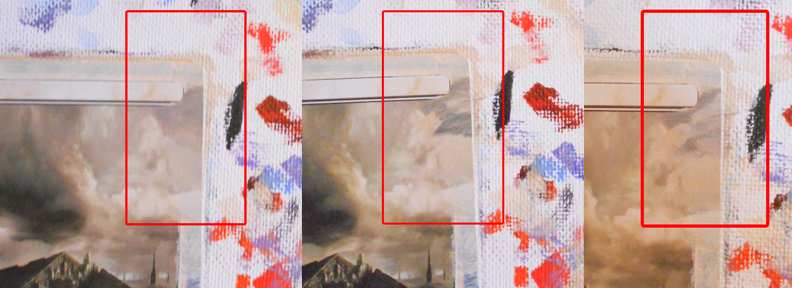
Here is where it gets touchy. Remember to wet your brush before continuing your work on the clouds to the right side (shown in the red box).

We want to achieve about three layers of color here. Attempt to match the clouds' colors. You can do this by using just a touch of black paint to bring the tone of the color you created down, or adding white to bring the tone up.

Be very careful--black paint will make things very dark. Very dark, very quickly. If you find that your mixture is too dark ,you can always add more of the yellow and white to bring the tone back up again.

Once you have a mixture that looks comparable to the color you are aiming for, pick up a small amount of paint with your brush and apply color lightly to the area. You'll want to overlap ever so slightly with your target area on the card so as to help give the illusion of blended colors.

Your brush stroke should be delicate and very short as you are working in a small place. As you go, try to continue the shapes made by the clouds. The artist (in this case, Jung Park) has laid the blueprint for your work--all you have is but to complete it.

Now add black to bring that tone down to match the low lights of the clouds. Those grey areas are very important for showing depth. Use that delicate stroke again to push those areas out from the original work and onto the border.

Do not be afraid to paint over some of your original color. This is an important thing to remember when painting something so nebulous as a cloud. We want to avoid having solid or straight lines. The brush does a lot of this work itself. Paint naturally wants to spread, which is why painting hard lines can be so difficult.

Adding white now and possible some yellow, we need to work out those highlights. This last layer is where your clouds will really start to take shape. Highlights are easy to over represent so start small and build up. As before, take the original shapes in the clouds and simply continue them.

LC123
Three layers, three steps. Base color, low lights, highlights.

On a slightly larger scale, follow this process as you work around the border. The dark clouds on the left have much less form than those on the right, so you should be able to handle a much larger area of them.

As you work, remember to overlap the original artwork here and there. This will help remove the border line that sometimes develops dividing the card and the paint. It also helps to trick your viewer into believing that this is all one piece of artwork and not just paint on a card. Human eyes are easily fooled, as we will discuss in the future.

Once you have completed the entire sky around the border, rinse your paint brush thoroughly and brush it along your paper towel. Continue to do this until the brush leaves no visible streak of color on the towel.

Your paint should be mostly dry on the surface, but it will smear if pressed. Now is the perfect time to use a toothpick to clean the name plate on the card.

Using the pointy end and very mild pressure, scrape the offending paint off little by little. I find this to be as enjoyable as peeling the plastic off of new electronics, but your mileage may vary. Regardless of how much cheap enjoyment you find, you should note that simply having a cleaner edge makes the paint look much better.

This brings me to the most important thing I have ever learned in art.

It Looks Awful Until It Doesn't

Often times you will find yourself painting three or four coats of color and just not feeling like things are coming out properly. "The clouds look a mess!" "That grass looks stupid!" "Ugh! Screw this, I'm going to play outside!"

When you find yourself thinking these things, remember how important it is that you push onward. Remember that the clouds on this card looked like a few layers of mud colored paint before you put the highlights in. How much did those highlights improve your feeling about what you have created?

Once you nailed that particular plume of cloud, did you have a sudden jolt of confidence?

Five years into this hobby, on this very card, I still feel exactly that. If you get too frustrated, then by all means take a break, but don't ever give up.

I'll be back next week to finish this project with you.

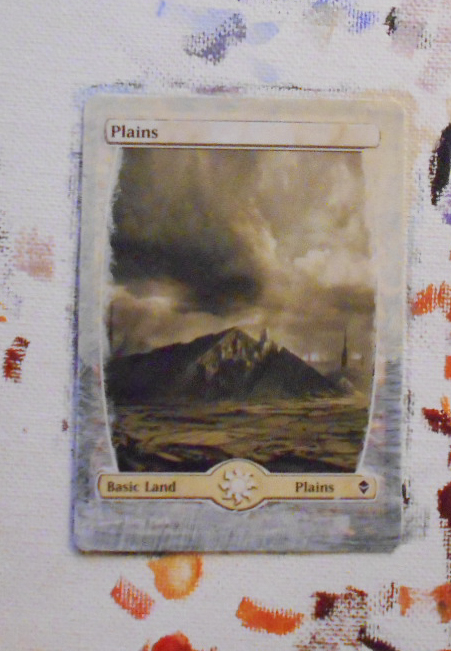
Your card should look something like this for next week.
You should be this far before next week.


Deck Overview: Standard Abzan Reanimator

Are you a Quiet Speculation member?

If not, now is a perfect time to join up! Our powerful tools, breaking-news analysis, and exclusive Discord channel will make sure you stay up to date and ahead of the curve.

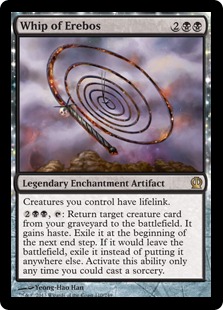
I usually try not to highlight the winning deck for Deck Overviews, as they tend to get a lot of press anyway. That said, Oliver Tamajko's deck from the Providence Open this weekend is really awesome. Whip decks have historically been a little durdly with a lot of role-playing cards that were probably too expensive for what they did. I was never big on Sidisi, Brood Tyrant even in graveyard-centric decks. Alternatively, it's hard to argue with Siege Rhino. Oliver's deck eschews most of the nonsense commonly found in Whip of Erebos decks and instead features most of the things that make Abzan great.

Abzan Reanimator

creatures

2 Den Protector
2 Hornet Queen
1 Reclamation Sage
4 Satyr Wayfinder
4 Siege Rhino
4 Sylvan Caryatid
4 Courser of Kruphix
2 Doomwake Giant
1 Sidisi, Undead Vizier

spells

2 Hero's Downfall
4 Murderous Cut
2 Whip of Erebos
2 Commune with the Gods
2 Thoughtseize

lands

4 Forest
1 Plains
1 Caves of Koilos
4 Llanowar Wastes
4 Sandsteppe Citadel
3 Temple of Malady
2 Temple of Silence
4 Windswept Heath
1 Urborg, Tomb of Yawgmoth

sideboard

2 Arbor Colossus
4 Fleecemane Lion
1 Mastery of the Unseen
2 Bile Blight
2 Ultimate Price
1 Utter End
1 Pharika, God of Affliction
1 Glare of Heresy
1 Thoughtseize

Satyr Wayfinder helps the deck smooth out its mana and also enables four copies of Murderous Cut. This allows the deck to play a removal spell and a threat on the same turn much faster than a deck leaning heavily on Hero's Downfall for removal.

Sidisi, Undead Vizier is great with Whip of Erebos for multiple reasons, and I really like the inclusion here. I'm more skeptical of Den Protector. Den Protector is a great card in its own right, but it's a pretty small creature and while it makes sense with the graveyard theme it is generally less effective than Tasigur, the Golden Fang.

There was an error retrieving a chart for Tasigur, the Golden Fang

The sideboard here is well-built, too, as when you can't afford to durdle around too much you can just bring in Fleecemane Lion and beat down. I'd like to see the full four Thoughtseize, but all things considered this looks like a great new flavor for Abzan.

Modern MTGO Deep Dive: Win Rate Analysis (Part 2)

Are you a Quiet Speculation member?

If not, now is a perfect time to join up! Our powerful tools, breaking-news analysis, and exclusive Discord channel will make sure you stay up to date and ahead of the curve.

In last week's article, we took a deep dive into the world of unpublished MTGO dailies, capturing performance by both the 4-0/3-1 decks and the 2-2 or worse finishers. This dataset gives us a chance to look at a deck's performance throughout an event, not just in the winner's bracket. MTGO statistics in action! We saw the power of Abzan Liege, Amulet Bloom, and RUG Twin. We also broke down the statistical significance of all deck performance in the tier 1 and tier 2 categories, getting a top-level view of how decks stack up against each other.

In this week's article, I want to dig a little deeper and highlight some of the decks that did not make the tier 2 cut. Our Top Decks page gives a list of both the decks and the criteria used to decide on tiering, and none of the decks I'm discussing today managed to meet that tier 2 definition. But as we will see soon, the data suggests they are all formidable contenders. Or, in a few cases, they might be the exact opposite!

Soul Sisters Art

Going back to our test of significance approach, we will break down the match win percentages (MWP) of a variety of decks on the Modern MTGO scene. This analysis will point to decks that are likely overperformers or underperformers online. As with all analysis like this, there will be a number of limitations and qualifications that must underscore our work. But if we are aware of the effect of small sample size and a non/semi-random sample, we can still get a lot of good information from this analysis of Modern MTGO deck performance. If you're like me, you got into Modern to play all the interesting decks existing further down the tiering spectrum, decks like Soul Sisters, Mono U Tron, Esper Mentor, etc. Today, we are going to see how such decks are performing.

Also, a big thanks to the guys at MTGSalvation, especially pizzap, for their work on getting this dataset put together. Without their work, we'd still be stuck on public data from the mothership.

[wp_ad_camp_1]


Dataset Description

We are using the same dataset described in the article from last week. The data covers 11 MTGO events from 3/24 to 4/12. The average event size was about 70 players and there are roughly 750 decks captured, covering thousands of individual matches between those decks. The big difference between this dataset and those we have looked at in the past is the inclusion of 2-2 or worse decks, not just 4-0/3-1 ones.

As awesome as this dataset is, it still has some important limitations we need to keep in mind. For one, this is by no means a complete population of all MTGO events in the time frame. It’s just 11 dailies over a 2-3 week period, which is actually less than an event per day. Although our deck and match Ns are very large, the event N is quite small, so we need to understand that in analyzing the numbers. Perhaps more importantly, it’s not even a random sample. Dailies were just observed whenever my partners and I had time, which is only semi-random at best. These limitations (and others I am sure you can think of; data entry errors are always at play in big, manually recorded datasets) do not undercut the value of what we are doing, but they do force us to consider their effect on our conclusions.

Additionally, there were a few dailies added to the dataset in the last 24 hours that might modify the final numbers when all analysis is said and done. Because those dailies were added so recently, they haven't been fully input into the overall dataset, so it's very possible their addition will alter some of our conclusions by the time we next revisit the numbers. In samples with a small N, the effect of 1-2 events can be quite noticeable.

Finally, as with all other articles of this kind, all statistics and data analysis disclaimers apply!

Overperforming Decks

I don't want to go too in-depth on methods, but here's a quick recap from last week's article. I'm comparing the MWP of a single deck to the overall weighted MWP of all decks in the dataset. The goal is to see if any one deck's MWP is above, below, or within the expected MWP variance for all decks. Just as a fair coin won't always flip 5 heads and 5 tails, so too might an average deck under/over perform in only a few events. The more times a deck appears, the more likely we are to have its "true" MWP. Following this analysis, all decks receive a P value (ranging from 0 to 1) indicating how likely the deck's performance is within expected variance. A high P value suggests it is well-within that variance. A low P value, particularly lower than .1 or .05, suggests it is outside of expected variance and is actually above or below average. Note: a low P value does not necessarily denote an overperforming deck. It just means the deck is probably outside of the expected variance.

Last time I gave some tables for tier 1 and tier 2 decks. Because there are so many more tier 3 or lower decks in the dataset, there isn't a lot of point in looking at all the different entries on that list. Instead, I want to get right to the good stuff and just highlight the overperforming decks. We'll go from least overperforming to most overperforming, building up to the awesome and surprising winner.

Grixis Twin (N = 7 ; MWP = 60% ; P = .285)
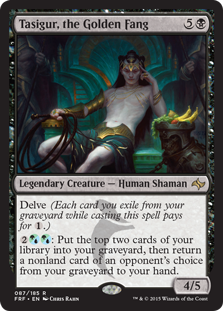
TasigurThe Tasigur, the Golden Fang-powered version of Temur Twin hasn't enjoyed the same success as another Grixis deck on MTGO, but it has still seen some play and some strong performances. Whether packing Tasigur in the main or shipping him to the board to rely on Terminate and company in the maindeck, Grixis Twin has a promising trajectory. No, it hasn't reached a significant P value yet. No, its N isn't as large as we would like it. And no, it isn't doing quite as well as Temur Twin, which has just as many entries in the dataset but a higher MWP (66.67%) and P value (.085). But there is enough overlap between the two decks that I am willing to consider this as a promising riser.
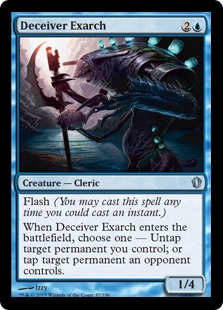
Deceiver ExarchIn essence, both decks are running the Twin/Deceiver Exarch combo alongside a tempo-oriented backup plan. This was good enough for Temur Twin to give it a pretty sizable MWP lead over other decks, as well as one of the largest P values in the dataset. This suggests we aren't totally off our rockers in thinking Grixis Twin could enjoy similar success with a similar gameplan. We also know the Grixis color pairing is enjoying lots of success on MTGO right now elsewhere (go, go Delver of Secrets!), which further suggests another Grixis deck could be successful for similar reasons. All of this points to us viewing the Grixis Twin MWP and P value more favorably than we might otherwise, because it is situated in a context where both Grixis colors and Tempo Twin builds are successful.

One reason I believe Grixis Twin is enjoying less success than Temur Twin is deck maturity. Temur Twin is a well established deck with considerable historical success. Grixis Twin had a few appearances at PT Fate Reforged but otherwise doesn't have the same kind of established foundation we see with Temur Twin. This is evidenced in the decklists themselves, which vary between Tas in the main and Tas in the board, as well as different black card ratios throughout the whole 75. So although I think there is something promising in Grixis Twin, we aren't quite there yet.

Esper Mentor Midrange (N = 5 ; MWP = 70% ; P = .107)
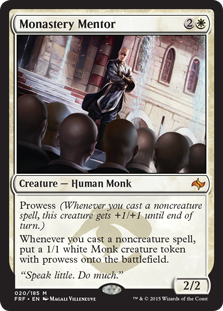
Monastery Mentor CardIf you caught my article back at the end of March, it's no secret I love Esper Mentor Midrange. The deck is cool even without a statistically significant win rate, so imagine my happy surprise when I saw it would make this list. Let's get that small N out of the way before we go any further. N = 5 is not what we want to see to make a firm conclusion about a deck's performance. So this is definitely something we need to revisit with more data. The big reason I am not as worried about the N = 5 value is the deck's past performance in other events. Between its finishes in Japan, in past weeks on MTGO, or even its T8 appearance at SCG Providence just this weekend, we know this deck has legs. It would be a different story if our analysis identified some low-N deck like Zombies, Five Color Humans, or Tooth and Nail as a high performer. But it's something else entirely when we already have datapoints suggesting the deck is good. This just confirms it.
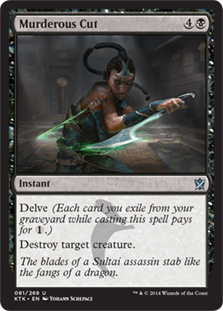
Murderous CutWe can take a closer look at the Esper Mentor matchups to get a sense as to why this deck might be a true MWP overperformer and not just sneaking in off a small N. Esper Mentor had a pretty typical distribution of wins and losses against different decks, but one matchup stood out over the rest: UR Twin. The deck was 5-0 against UR Twin, going 2-1 in three matches and 2-0 in two more. Any deck batting a 5-0 against UR Twin should catch our attention. Although it's possible the Esper Mentor players were just facing the five worst Twin player on MTGO, this isn't suggested by the data. Three of those UR Twin matchups came in round 3 of the daily, against opponents who would themselves go on to 3-1 finishes. So it wasn't as if Esper Mentor just played against inexperienced Twin players. Of course, five matches isn't exactly the kind of statistically commanding sample we want to see, but it's enough that we should look at the deck to see if anything might explain the wins.

And honestly, the 5-0 Twin win rate makes sense. Esper Mentor packs a number of efficient clocks Twin can't reliably burn to death. It also has as many as 8 hard removal spells (between Path, Murderous Cut, and Slaughter Pact), along with countermagic and hand disruption. That's exactly the sort of nightmare anti-Twin package we would expect of a deck beating Twin. All of this suggests the deck is actually an overperformer, and we would only confirm this with more datapoints, not challenge it. And a lot of this is probably on the back of the deck's Twin performance.

Soul Sisters (N = 14 ; MWP = 62.5% ; P = .036)
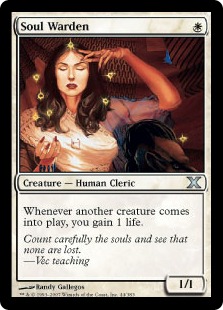
Soul WardenIt's weird enough Soul Sisters is one of the highest performing decks in the entire dataset. It's way weirder that it's actually THE HIGHEST performing deck in the entire dataset, beating out Amulet Bloom, Abzan Liege, Infect, and a huge range of other decks we would expect to rock in Modern. Astute MTGO players might have some suspicions about why this is the case (hint: it's about matchups, not about statistics), but we'll turn to that in a moment. For now, let's just relish the fact that this budget, Goyf-less, fetch-less, Twin-less deck is such a rockstar. It's not just the deck's high win percentage with a respectable N. It's that it is the only deck in the entire dataset to clear the magical .05 cutoff for statistical significance. As you might remember in your high school/college stat classes, the 95% confidence level is a sort of magical (and, admittedly, semi-arbitrary) point all P values aspire to cross. Soul Sisters is the only deck in Modern MTGO to do this, at least with the data we have so far.
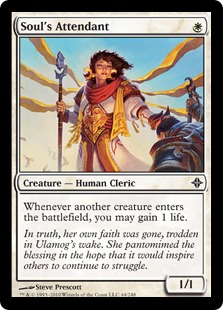
Soul's AttendantThe painfully obvious reason for Soul Sisters' success is its Burn matchup. Surprising absolutely no one, Soul Sisters tore it up against Burn on the MTGO scene. We saw Soul Sisters battle Burn in 7 different matches, going 7-0 overall split with five 2-1 finishes and two at 2-0. Some pros and Modern experts have observed Soul Sisters doesn't always have the strongest Burn matchup, and although that might be the case at a high level event like a PT, it is definitely not the case on MTGO. Against your average MTGO Burn player or grinder, Soul Sisters is just as dominant as we would think. But as you might expect, Soul Sisters would never be able to get to a 62.5% MWP off of the Burn matchup alone. By even the most generous assessment, Burn is only about 10-12% of the MTGO metagame, so you can't bank on beating Burn alone. So how did Soul Sisters do it?
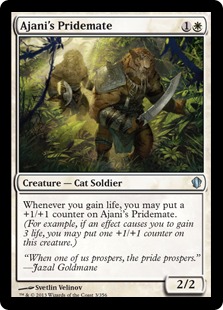
Ajani's PridemateIn my last metagame update, I talked about two rising decks: Affinity and Grixis Delver. I predicted Affinity would actually surpass Burn as a the format's premier aggro deck, and I guessed Delver would keep rising. Both of these predictions are more or less coming true, and that's the best possible news for Soul Sisters, which has an awesome matchup in both contests. In the dataset, Soul Sisters was 6-0 against Affinity (two at 2-0, four at 2-1) and 4-0 against Grixis Delver (two at 2-0, two at 2-1). You probably can't climb to a significant MWP on the back of just the Burn matchup, but if you are also succeeding against Affinity and Grixis Delver, that's a much safer gamble. Those three decks collectively make up about 25%+ of MTGO, and the data suggests Soul Sisters is strongly favored in all three. Who cares if the deck is bad against Amulet Bloom (0-4) and not great against Twin (2-4)? When you have a 100% match win rate against three of the biggest decks in the format, even if only in this small sample size, that's suggestive of a very well positioned deck.

Underperforming Decks

With the exception of Scapeshift, none of the decks in last week's tier 1 and tier 2 MWP analysis were even close to significantly lower than the MTGO average. Scapeshift was pushing it, with an average MWP of 39.33%, but it wasn't significant at any noteworthy level (p=.635). But once we push down the tierings, we start to see some underperforming decks, not just overperformers. This doesn't mean these are bad decks! It just means there are some factors preventing these decks from succeeding right now. Part of this might just be low card/deck quality, but it is more likely a combination of other factors such as pilot bias, hostile metagame, etc. So just because a deck shows up here, it doesn't mean you need to abandon ship on it if you thought it was decent.

Storm (N = 14 ; MWP = 38.1% ; P = .273)
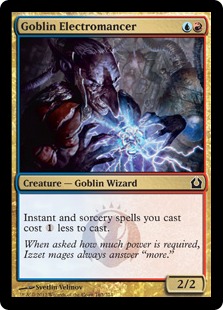
Goblin ElectromancerPoor Storm. First it loses Seething Song and it all but disappears for a year. Then it comes back after DRS follows Song, to prompt cries for a Manamorphose banning (a top 5 contender for "worst ban suggestions in Modern actually made"). Then it starts to come back again during the TC era, only to drop back to the bottom in recent months. Storm players have been trying to get this deck to work for years. When it works, it's as if it works too well and Wizards hates it. When it doesn't work, it really doesn't work, and that's the trend we are seeing right now on MTGO. In defense of Storm and Storm players, it's not like our N is large enough to unconditionally condemn the deck. Nor is the P value low enough to prove the deck is "bad". But these are not the kind of numbers we want to see of a successful deck, so we need to look at them and ask what's going on. It would be one thing if we were finding these numbers for a deck that otherwise appears to be doing fine. But when we find these numbers for a deck that appears to be struggling on other counts, we need to pay attention.
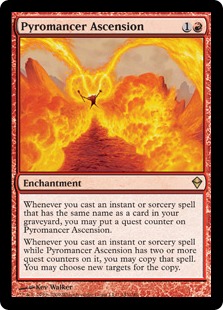
Pyromancer AscensionLooking at the different Storm matchups in the dataset, we don't see a lot to explain Storm's lower performance. It's 1-2 against Affinity, 2-3 against UR Twin, 2-3 against Burn, and has similar sub-50% MWPs against most other decks in the format. Which is to say, it's not like Storm has some bad matchups bringing it down. Rather, Storm isn't matching up well against a lot of decks. Grixis Delver appears to be even worse than the average, with Storm falling 1-5 to Delver deck over the 11 events. So that might be a legitimately bad matchup, which makes sense given Storm's gameplan. But otherwise, it looks like Storm is generally struggling, not struggling because of some specific metagame context. I'm not even sure this is attributable to pilots, because only one pilot has actually returned to Storm in our dataset. Otherwise, it's 14 appearances with 13 unique players. I'm not willing to go so far as to say Storm is a bad deck. After all, it has about a 1.7% overall metagame share, which it couldn't get if it was just terrible. It probably just has a high skill cap, and perhaps many MTGO players who can master Storm might be trying their luck elsewhere.

Mono U Tron (N = 13 ; MWP = 35.71% ; P = .172)
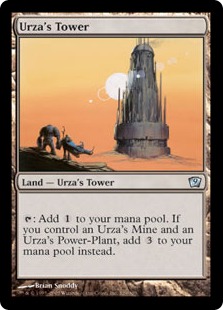
Urza's TowerBut but but, isn't Mono U Tron supposed to be "MTGO's Best Deck"? Didn't it have the highest GWP in that public dataset, even if the results weren't statistically significant? I still believe Mono U Tron is a great deck rewarding tight play and experienced pilots. But Mono U Tron, like Storm, has a pretty questionable (at best) performance record on MTGO right now. Also like Storm, it doesn't appear as if any single matchup is bringing the deck down. It's just suffering from poor performance across the board. But unlike Storm, it actually has a smaller metagame share, which suggests it might be even worse overall. Not only is the MWP analysis suggesting a low-performing deck, but so too is its overall metagame share. That could be a bad sign for pilots who rely on one of Modern's more traditional control decks.
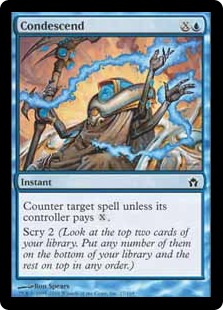
condescendAs I see it, the key difference between Storm and Mono U Tron is deck presentation. Storm is presented as a tricky combo deck with a high skill cap. It is also often presented as a deck hammered by bannings and hated by Wizards. All of these qualitative factors influence the type of player picking up Storm. Mono U Tron is very different. It is often presented as the budget deck to get into MTGO. Its cheap, relatively competitive, doesn't require fetchlands/Goyfs/Hierarchs/Commands/etc., and has the rogue feeling to it that still makes you seem like you are playing a neat Modern deck. These are all highly subjective classifications, but I think they match nicely with most MTGO players' sense of this deck. This suggests players who pilot Mono U Tron might be new to the client and/or the format, people who want to get into Modern but want to make a smaller investment before going too crazy. If so, these players might be less experienced and less prepared for the format, which would definitely explain the deck's lower win rate. Indeed, this is supported in the data, where we see regulars like shoktroopa still racking up a number of 4-0/3-1 finishes, but a lot of one-time players dropping to 2-2 or worse. So in the case of Mono U Tron, I don't think we are looking at a bad deck. We are just looking at a deck that appeals to less experienced and newer players, particularly for budget reasons.

Next Steps
bloomAs with any dataset like this, the most important next step is to keep updating the dataset and keep revisiting past conclusions. Small N datasets can be necessary evils in in-depth data analysis, especially with the sheer quantity of information you can glean from just one MTGO daily. Adding events might change our earlier findings. For instance, maybe Amulet takes a big performance fall in 1-2 events. That would definitely bring down its overall MWP and probably raise its P value well outside the range of statistical significance. Or maybe a deck pushing the upper end of average variance (say, Infect) enjoys a string of daily successes. That could get it into the significant range. So we are going to need to revisit all of the past articles on this topic as the dataset evolves.

Perhaps more importantly, we need to check these quantitative findings against our qualitative experience with the decks. Because the dataset only encompasses 11 events (13+ after it is updated) in a 2-3 week period, it is very much just a snapshot of the metagame. The best way to shore up such a snapshot, apart from adding more datapoints, is to compare our quantitative-based conclusions to our personal experience in events. This can either confirm or challenge a finding.

In a few weeks, with some more events added to the dataset, I'll come back to all of the findings in both part 1 and part 2 of this article and see how they are holding up. And if anything new has emerged, we'll take the time to look at that too. So get on out there with your favorite deck, take down those dailies, and rack up some wins to boost up those MWPs!


Sphere of Resistance: Finding Equilibrium Using the Golden Rule of Spikes

Are you a Quiet Speculation member?

If not, now is a perfect time to join up! Our powerful tools, breaking-news analysis, and exclusive Discord channel will make sure you stay up to date and ahead of the curve.

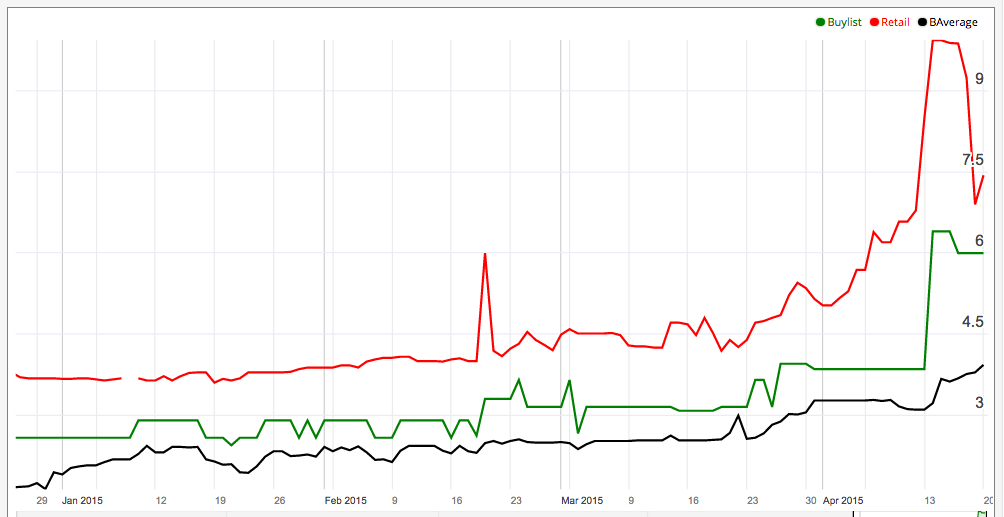
Last week, we saw a giant sell-side spike on Sphere of Resistance.  We all kind of knew that the $10 price it hit wasn't "real", but we also knew that it was unlikely to return to its previous $4 level.

With these kinds of sell-side spikes, there has been a consistent trend of equilibrium;  the sell price tends to settle at the approximate mean between the pre-spike price and the spike maximum.  As you can see on today's chart, that is almost precisely what happened: (5.03+9.94) / 2 = 7.49, while today's price is 7.44.  This rough formula for predicting how spikes will settle managed to indicate the price within 5 cents.  Not bad for a rule of thumb!

Screen Shot 2015-04-20 at 8.57.36 AM

The kicker is that the buy price has rocketed up to meet the sell price, with a spread of 19% at time of publishing.  If you're new to QS, MTG Finance, or the idea of "spread", here's why this matters:  the spread represents how much less money you'll make when you sell to a buy list, versus selling at retail.  Generally speaking, spreads less than 30% are worth paying attention to.  Spreads less than 20% are probably worth acting on, and spreads less than 10% are very rare indeed.  So, a 20% spread on a card that many think is just baseless hype is probably worth considering.

There was an error retrieving a chart for Sphere of Resistance

The merchant who's willing to pay this premium is likely to get a lot of orders filled due to this narrow spread.  It's a great decision, because those who bought their spheres at the old retail price of $5 or less will now be eager to cash out.  It's a perfect time to bolster stock of an old, powerful card that might have a long-term future.


Insider: Standard Price Trends This Week

Are you a Quiet Speculation member?

If not, now is a perfect time to join up! Our powerful tools, breaking-news analysis, and exclusive Discord channel will make sure you stay up to date and ahead of the curve.

Today I’ll share my analysis of market and metagame trends over the past week, and incorporate tournament results from this past weekend to predict price movements into the near future.

There was an error retrieving a chart for Dragonlord Ojutai

Over the course of the week, the MTGO price of Dragonlord Ojutai has grown from 24 tickets last Monday to 31 tickets today. It’s clear that the Esper Dragons deck from PT: KTK was not only the best performing deck of that tournament, but it’s also the best deck in Standard. This past weekend the archetype dominated GP Krakow, putting five copies into the Top 8 and ultimately hoisting the crown.

Dragonlord Ojutai plays a key role in the archetype, which is sure to gain scores of followers this week. Dragonlord Ojutai is seeing play in another competitive archetype, Craig Wescoe’s Ojutai Bant, which Sam Pardee played to the Top 8 of the GP. In the future, deckbuilders will incorporate the legend into other archetypes. While the MTGO price is likely peaked, it is sustainable given its ubiquity and strength in the metagame.

The paper price of Dragonlord Ojutai has ticked up $2 over the week, from 18 to 20. I wouldn’t be surprised if the price continued to grow a few dollars over the week, based on increased demand from the Grand Prix win last weekend.

There was an error retrieving a chart for Dragonlord Atarka

The paper price of Dragonlord Atarka remained stable over the week, at $19, and it will likely dip a few dollars towards $15 now that the hype has began to die down.

Online, where metagame and market reactions to information comes more quickly, the price is already in decline. It peaked at 13.5 tix the Saturday before last, then fell to 8.5 on Monday and remained relatively stable over the week, sitting at 8.5 at last Friday, before falling down to 7.3 on Sunday night.

There was an error retrieving a chart for Dragonlord Silumgar

It’s time to sell any paper copies of Dragonlord Silumgar. The paper price remained stagnant over the past week, at $14, and there is nowhere to go but down. Esper Dragons is the clear best Dragon deck going foward, where two copies sit in the sideboard. Shota’s U/B version, which played two copies maindeck, was a one-tournament deck.

One copy of U/B Dragons did in fact make the Top 8 of Krakow, but played zero copies in the 75. Much like Dragonlord Atarka, the price is already in decline, down to 16.2 tickets Monday from a high of 18.3 on Friday.

There was an error retrieving a chart for Eidolon of the Great Revel

Eidolon of the Great Revel continues its steady gain, up half a dollar over the week to $8.5, while the online price spiked over the week, from 15 tix last Monday to over 18 today. This price gain comes primarily from the strength of Mono-Red in Standard, but demand is also derived from Modern, especially in preparation of the coming Modern Masters 2015 release.

This is the sort of card that holds value after it leaves Standard, so the paper price will easily top $10 this summer, and continue to grow from there. I’m not optimistic that the online price can sustain any more growth, and the price will level off if not pull back slightly.

There was an error retrieving a chart for Den Protector

In the sea of UBx decks at GP Krakow, Den Protector and Deathmist Raptor scored a small victory with a Top 8 berth. These cards are the real deal and will form the core of many a successful green-based deck going forward.

Den Protector is a premium green creature moving forward and should be respected as such. Therefore, I’m optimistic about the strength of the price. The paper price of Den Protector sits stable at $4.5, and there’s no reason to think it will fall below $4, but rather, a weekend of strong performance could see the price moving upwards 20%. Online, Den Protector sat at just 2 tix last Monday, but it sits at 4.5 tix today. It’s unlikely to sustain much growth beyond 5 tix, but again, like the paper price, it’s not at risk of crashing.

There was an error retrieving a chart for Deathmist Raptor

On MTGO, Deathmist Raptor has doubled in price over the course of the week, from a price bottom of under 10 tix last Sunday, to a high of nearly 20 tix today. I expect the market can’t sustain the price going any higher, so the price will level before slowly sliding down to the high teens over the next couple of weeks, perhaps mirroring the paper price, which now sits under $18 and will likely remain stable over the coming week.

There was an error retrieving a chart for Atarka's Command

Atarka's Command is the most notable paper gainer from last week. Upward price momentum began the weekend before last, where it started moving upwards from $5 to $6 by Monday and $7 by Tuesday. It now sits at just under $8. The price seems high, but it’s still under the $9.5 commanded by Dromoka's Command, so it’s very possible that Atarka's Command continues its growth to meet or even exceed that price.

After all, Atarka's Command is a four-of maindeck in its respective archetype, while Dromoka's Command is often played as a two- or three-of. Currently Mono-Red splash green is just slightly less popular than Abzan Aggro, but Dromoka's Command's greater flexibility and applicability in other archetypes, like Ojutai Bant, may be behind its higher price.

Online, Atarka's Command actually fell nearly 50% over the week, from just under 4 tix last Monday to just over 2 tix today. Consider that the price was 2.4 before spiking after the Pro Tour, so I consider the fall this week a price correction after an initial spike from hype and demand from the Pro Tour.

Given Dromoka's Command price of over 6 tix, I have every reason to believe that Atarka's Command can sustain a higher price, and will likely rise slowly going forward. On the other hand, this might also be evidence that the price of Dromoka's Command is inflated, and will likely slowly fall in the near term.

~

-Adam

Insider: Weekend Recap – Dragons over Krakow

Are you a Quiet Speculation member?

If not, now is a perfect time to join up! Our powerful tools, breaking-news analysis, and exclusive Discord channel will make sure you stay up to date and ahead of the curve.

If you had any doubts of whether we'd see more Dragons after the Pro Tour, check out GP: KrakĂłw:

  • Esper Dragons
  • Esper Dragons
  • Esper Dragons
  • Esper Dragons
  • Esper Dragons
  • U/B Dragons
  • Jeskai Tokens (No Dragonlord Ojutai, but Sarkhan, the Dragonspeaker)
  • Bant with Ojutai

(Note: this weekend's SCG event turned out much differently, do not despair! You'll find it later in this article.)

That's a Lot of Dragons

U/B/x Dragon control is one of the three critical pillars of the format right now. You should expect to see those massive flying dragons all summer long.

This is going to do interesting things to prices of rotating cards, by the way. Though the core of the deck is its creature base combined with Silumgar's Scorn, the flesh around that core is made of Theros block cards. Thoughtseize, Bile Blight and Hero's Downfall are all essential cards, for example.

Another factor is that the deck plays a full 27 lands, made possible by the excellent filtering from Temples. Losing eight Temples will remove a great deal of consistency from the deck. Unless we get some solid lands in Magic: Origins and the fall set, I don't expect this deck to continue past rotation.

That said, this will remain the deck to beat for a long time. That will keep the price of Thoughtseize and Hero's Downfall up for the time being. For the former, that's fine--it's the best discard spell printed, so it'll still have a home in Modern. Hero's Downfall, on the other hand, is a clunker and it'll plummet at rotation. I do not want to be stuck with these cards in September.

We may see interesting/awful sideboard strategies for the mirror, too. Here's three, in order from most to least reasonable.

  1. First, what many players already do involves siding in Tasigur, the Golden Fang for cheap beats and Dragonlord's Prerogative for uncountered draw.
  2. Second, we're seeing a few copies of Ashiok, Nightmare Weaver show up. I'm not hot on these because it makes Hero's Downfall live more often post-board, but it can get in early under counterspells.
  3. Finally, truly rogue players might end up with something along the lines of Frost Walker in the vein of very old control decks that would side in Phyrexian Negator. A turn two Frost Walker against a deck full of Dragonlords can do heaps of damage.

Actions: Pick whether you want to play this deck or beat it. If you're going to play it, hold onto your staples. But if you want to angle against it, shed your Downfalls so you aren't stuck with them.

It's Surprising That Even One Tokens Deck Made T8

We all saw Mono-Red shredding up UB Dragons last weekend, so it's no surprise that these control players came loaded to fight Dragon Fodder.

Look at those sideboards and you'll see the common theme of 3-4 Drown in Sorrow to pad out the full four Bile Blight after sideboarding. That's eight sweepers to deal with Soldiers and Goblins.

This does not feel like the right time to be playing these decks, especially since the sweepers deal damage in the form of toughness reduction and not damage, so giving your team invulnerability is no sufficient counter. The results show it, too: 20% of the Day Two field was red aggro and none of it managed a T16 slot.

I think instead that the pivot shifts to Bant Heroic, like what Tom Ross played a few weeks ago. In fact, one list showed up in ninth place.

So why do I love this deck instead? Well, it's got a heck of a good tempo angle to it against the Dragon deck and the sweepers don't do as much. A Dromoka's Command will boost most of your guys out of Bile Blight range and Gods Willing can give protection from all the spot removal floating around.

In fact, this deck reminds me a bit of Merfolk in Modern--its guys are unimpressive when you cast them, but two or three turns of on-board interaction and they get huge. That combines with a good scrying engine to amp up the deck. From there, a 4-power guy is often available to make Stubborn Denial seriously hard.

Actions: Lay low on the tokens right now, since there's nothing that'll stop UB Control's sweepers from wrecking you. Until they start shaving Drown in Sorrow from their board to beat the mirror, you've got a target on yourself. I still like Dromoka's Command as a pickup, but remember that this Theros-packed deck has a very short shelf life. It's fortunate that so many components are cheap.

Meanwhile In America, No Dragons To Be Found

Take a comparison look to Starcity's Top 25 performers this weekend and look for Dragons. There is but a solitary Esper Dragons deck in 16th place, that's it! It's as if these two events happened in mirror worlds where all the Dragon players ended up at one and people slinging Sandsteppe Citadel went to the other.

Abzan still feels like an amazing foil to Dragons, too. It can play the same sort of control role with Elspeth and it's got Whip, a problematic enchantment, to harass Dragon players. People are still working out whether they want to be full aggro or go with reanimation, but there's a strategy to be had for any enthusiast.

Abzan Aggro And Control Remain Steady

SCG's Day Two metagame shows 16 Esper Dragon decks at the top of the most common archetypes.

Nonetheless, Abzan waltzed past it. The deck has a great combination of cards that evade the common removal from U/B/x, including Fleecemane Lion at the forefront.

There was an error retrieving a chart for Fleecemane Lion

This little kitty avoids Ultimate Price and threatens a Monstrous activation in response to Hero's Downfall or Bile Blight.

I'm not telling you anything new here, but be mindful that even the control lists are playing it. This is a true 4-of along with Siege Rhino, no matter whether you're running out a Rakshasa Deathdealer or ramping up for Garruk, Apex Hunter.

Actions: SCG is sold out of Fleecemane Lion right now at $2.99 and that's a good sign of the immediate demand on the card. Pick them up soon and enjoy them throughout the summer. This will tank on rotation, so get your thrills with it now and flip if you can. The likely replacement for them is Rakshasa Deathdealer come fall, if people still want to be tapping for Siege Rhinos. And I bet they will.

Quick Hits

  • Jeskai Aggro isn't being talked about much because it doesn't fit the narrative of Dragons vs. Red vs. Abzan, but don't count the deck out. Mantis Rider was well populated in the T25 of the SCG event and at $1.15 right now I really like picking up a few sets.
  • Thunderbreak Regent has held its price, even with the Event Deck printing. As likely to see play with Jeskai as an Elvish Mystic at this point and a real threat of damage against UB Dragons. I reiterate: keep and hold these guys.
  • If you're playing in an SCG Circuit, plan for much more aggro than Dragons--that seems to be a recurring motif.
  • I favor Abzan with Abzan Charms, since the "Draw 2" mode provides good ammunition against control lists.
  • Foul-Tongue Invocation sure did a lot of work this weekend, yeah?
  • It seems that people are hot and cold with Dragonlord Ojutai in Dragons. It's a decent attacker for the mirror, but I think the real reason we're seeing it is that the UB manabase is so bad that you gain nothing by staying UB and can at least gain four more relevant Temples if you go Esper.
  • We've only seen a little of Den Protector and Deathmist Raptor. This may be a potent combo when Theros rotates but it's not doing much right now.
  • Whip of Erebos is the lynchpin that allows Abzan to go long against control and gain life back against aggressive lists.
  • Let's not rule out Nykthos-powered lists, either. Our memories are short, but Genesis Hydra and Mistcutter Hydra still hit tremendously hard.

That's it! See you next week with more excellent events to discuss.

-Doug

The New Present of Narset

Are you a Quiet Speculation member?

If not, now is a perfect time to join up! Our powerful tools, breaking-news analysis, and exclusive Discord channel will make sure you stay up to date and ahead of the curve.

I mean present as in, not the past or future. Like, right now. Because the set's about time travel...

What was I saying?

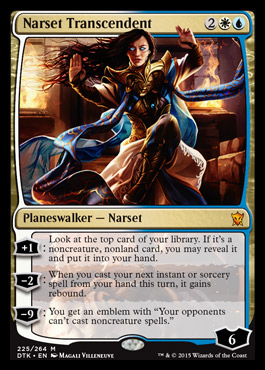
Oh, right. Narset Transcendent was widely hailed as one of, if not the best card out of Dragons of Tarkir. It was even pre-ordering at around $50. At the time, I referred to this price as completely outrageous, because even if it's just the best card that price in and of itself is an absurdity.

There was an error retrieving a chart for Narset Transcendent

As you can see, the current price has dropped significantly from the pre-order price, and is even trending further downwards. The strongest case against holding on to copies of Narset is that control had an exceptional showing at the Pro Tour, and the best versions all eschewed her.

Andrew Cuneo, being one of the world's foremost authorities on control decks, wrote on Channel Fireball that he really didn't like Narset while testing for the Pro Tour. I would contend that Cuneo's list looks worse than the blue/black version, but the fact remains that neither have adopted the new Planeswalker.

This really shouldn't be too surprising, as an honest evaluation of the card does and always has shown that it just doesn't do much on its own. "Not much" is a very poor thing for a control deck to invest a turn and a card into. The high pre-order price and current steady decline were inevitable, with the pre-order price likely driven by "Jace syndrome".

The question is, how many planeswalkers do we need to overpay for before we stop worrying about missing the next Jace?

Avatar photo

Ryan Overturf

Ryan has been playing Magic since Legions and playing competitively since Lorwyn. While he fancies himself a Legacy specialist, you'll always find him with strong opinions on every constructed format.

View More By Ryan Overturf

Posted in FreeTagged 4 Comments on The New Present of Narset

Have you joined the Quiet Speculation Discord?

If you haven't, you're leaving value on the table! Join our community of experts, enthusiasts, entertainers, and educators and enjoy exclusive podcasts, questions asked and answered, trades, sales, and everything else Discord has to offer.

Want to create content with Quiet Speculation?

All you need to succeed is a passion for Magic: The Gathering, and the ability to write coherently. Share your knowledge of MTG and how you leverage it to win games, get value from your cards – or even turn a profit.

Insider: Staying the Course with Standard Soulmanticore

Are you a Quiet Speculation member?

If not, now is a perfect time to join up! Our powerful tools, breaking-news analysis, and exclusive Discord channel will make sure you stay up to date and ahead of the curve.

It's been a while since I talked about the deck, but I'm still on Soulflayer in Standard. During Pro Tour Dragons of Tarkir, Jamie Parke was featured on camera playing a Soulflayer brew, which got me pretty excited. The more I saw of his deck, though, the less excited I was. I feel like the Pantheon got caught up doing things that are powerful in other decks but incoherent with the Soulflayer shell as well as playing cards that are only okay in the Soulflayer shell.

There was an error retrieving a chart for Soulflayer

Zvi did a write-up on the Pantheon's build on Channel Fireball, which you can find here.

Pantheon Chromanticore

creatures

4 Sylvan Caryatid
4 Satyr Wayfinder
4 Soulflayer
4 Chromanticore
3 Sidisi, Brood Tyrant
2 Silumgar, the Drifting Death
3 Den Protector
4 Deathmist Raptor
2 Pharika, God of Affliction

spells

3 Murderous Cut
4 Commune with the Gods

lands

4 Mana Confluence
2 Urborg, Tomb of Yawgmoth
3 Polluted Delta
2 Swamp
1 Island
3 Temple of Malady
2 Temple of Mystery
1 Temple of Plenty
1 Temple of Abandon
1 Frontier Bivouac
1 Sandsteppe Citadel
1 Yavimaya Coast
1 Llanowar Wastes

sideboard

4 Thoughtsieze
1 Torrent Elemental
1 Murderous Cut
1 Heros Downfall
2 Sultai Charm
1 Erebos, God of the Dead
3 Drown in Sorrow
1 Negate
1 Disdainful Stroke

Compare this to the list that I won a PPTQ with:

Chromanticore Delve

creatures

3 Tasigur, the Golden Fang
4 Satyr Wayfinder
4 Soulflayer
4 Sylvan Caryatid
4 Chromanticore
4 Sagu Mauler

spells

4 Murderous Cut
4 Commune with the Gods
4 Tormenting Voice
1 Scout the Borders

lands

2 Forest
2 Mountain
2 Swamp
3 Bloodstained Mire
4 Mana Confluence
4 Opulent Palace
2 Sandsteppe Citadel
4 Wooded Foothills
1 Urborg, Tomb of Yawgmoth

sideboard

4 Thoughtseize
4 Drown in Sorrow
1 Debilitating Injury
1 Reclamation Sage
2 Flamewake Phoenix
2 Phyrexian Revoker
1 Torrent Elemental

My experience with the deck has led me to a manabase consisting of tri-lands and untapped lands that provides all the colors of the rainbow consistently, untapped on crucial turns. The Pantheon build has a ton of Temples, which are fine if you're not planning on casting Chromanticore, but are much less good if producing a ton of different colors quickly is your end goal. They definitely have the four Mana Confluence right, but I like my manabase more in every other regard.

The card that looks kind of crappy in my list but I would never cut is Tormenting Voice. You have an extremely good late game and you just need to be doing something before turn three. You have to live long enough to get to your endgame, and Tormenting Voice does more work than you'd think, including mising the occasional game where you mill a Chromanticore or hexproof creature with a different enabler, then discard the other and a Soulflayer on turn four. Hexproof Chromanticores on turn 3/4 are your primary source of wins, so maximizing this potential is just smart.

The other thing my deck does better is that its Plan B and Plan A are much more seamless. Milling yourself and finding a Deathmist Raptor is neat. It's powerful incremental value, but it's nothing like the deck's primary gameplan of a giant fatty, and you'll often find yourself investing resources into a battle that you don't care about fighting when your plans don't mesh well.

Sagu Mauler is, in many ways, the glue of my build.

There was an error retrieving a chart for Sagu Mauler

It's great to mill and it's the best thing to bestow a Chromanticore onto. It can also show up as a morph in a pinch, which is huge upside over Silumgar. Not to mention that playing four is relatively low cost, especially by comparison.

Pharika is very, very close to a do-nothing on its own and Sidisi is too slow for this type of strategy without having the proper support to slowly take over a game that is available in a Whip of Erebos deck. Silumgar is only okay here, Den Protector is better suited to a deck more interested in attrition, and I find the lack of Tasigur disturbing.

Isn't Your List a Little Dated, Though?

It's true that a new set has launched since I've updated my list, and it's also true that the set in question has proven to be very impactful in Standard. That said, I don't believeDragon's of Tarkir has produced anything that the Soulflayer deck wants, nor did it make any of the Soulflayer deck's matchups worse.

Deathmist Raptor is interesting, but it ultimately takes up too much space and adds too little value. I tried out having it as a sideboard card against control and Abzan, and it was okay but bringing it in meant cutting too many enablers and/or "combo" pieces, which ended up being too high of a cost.

If you cut enablers then Deathmist Raptor looks more like Trained Armodon, and if you cut your payoff spells, you're left just being a Deathmist Raptor deck, which is ultimately pretty low power without things like Whisperwood Elemental.

There was an error retrieving a chart for Deathmist Raptor

I do like having access to some number of Ultimate Price on the sideboard, but the relevant addition I've made to the deck since last I wrote about it actually came from the past. Or... an alternate version of the present? Khans. It came from Khans.

There was an error retrieving a chart for Sultai Charm

Sultai Charm had shown up in other people's builds of the deck before, but I never liked it with the mana in my list, nor did I see reason to play it as an enabler when it paled in comparison to Scout the Borders. Then people started playing green devotion and I both wanted more answers to kill Whisperwood Elemental and ways to handle the myriad enchantments that were showing up in Standard.

In order to reliably cast Sultai Charm, I had to change the manabase slightly. Seeing as I was happy with where the manabase was, the change I saw as being most true to the original build while supporting Sultai Charm was to remove two Bloodstained Mires for an Island and a Polluted Delta.

The change makes the list look more than ever like it has terrible mana, buthaving access to Island and more diversified fetches has resulted in being able to cast more turn 4/5 Chromanticores.

There was an error retrieving a chart for Polluted Delta

My current build looks like this:

Chromanticore Delve

creatures

2 Tasigur, the Golden Fang
4 Satyr Wayfinder
4 Soulflayer
4 Sylvan Caryatid
4 Chromanticore
4 Sagu Mauler

spells

4 Murderous Cut
4 Commune with the Gods
4 Tormenting Voice
2 Sultai Charm

lands

2 Forest
2 Mountain
2 Swamp
1 Island
1 Polluted Delta
1 Bloodstained Mire
4 Mana Confluence
4 Opulent Palace
2 Sandsteppe Citadel
4 Wooded Foothills
1 Urborg, Tomb of Yawgmoth

sideboard

4 Thoughtseize
4 Drown in Sorrow
1 Bile Blight
2 Ultimate Price
3 Flamewake Phoenix
1 Torrent Elemental

The financials of the deck haven't changed at all. These are the cards I've held onto from Theros block, and this deck keeps winning me more and more fractions of tickets on MTGO. I can't imagine playing anything else for the RPTQ, and I feel very good about the deck's position in the metagame.

I believe my list functions better than the Pantheon's list, and it also enables you to let Deathmist Raptor's price drop a bit before you have to pick them up. It's still a card that is high on my list for great cards post-rotation, but there's plenty of time before that happens.

If you're into Chromanticore, then I wish you good luck in your ventures and hope that your Communes and Wayfiners are good to you.

If you're not on board, I strongly recommend trying this deck--both because it's complete gas to play and because it's actually very good.

Thanks for reading.

-Ryan Overturf
@RyanOverdrive on Twitter

Insider: A Day in the Life – My MTG Finance Guidelines

Are you a Quiet Speculation member?

If not, now is a perfect time to join up! Our powerful tools, breaking-news analysis, and exclusive Discord channel will make sure you stay up to date and ahead of the curve.

Hello and welcome, fellow financiers.

I’m Chaz, and I’m very humbled to be writing for Quiet Speculation and to have the chance to write for you all.

When I first started in the finance side of this game, I really never knew how it would end up. All I did know is that I’ve always tried to be a contributing member to our great community, no matter how small.

At the same time, I started delving into the financial side more as a way for the hobby to pay for itself. If anyone has not seen my prior works, feel free to poke around for my literature. I am ecstatic to write and discuss finance with you all.

My first article here on Quite Speculation will be somewhat of an “Finance 101” piece, ending with some talk about my recent findings, utilizing some of the research I have done, day in and day out.

I want to use this article as a way to give financers (new and experienced) an actual look into what I specifically do on a routine basis when it comes to MTG Finance--introducing myself and my methods.

First, we'll start with defining who I am as a financier and some of the habits I like to abide by.

My MTG Finance Guidelines:

  1. Don’t chase good money with bad. Since I started delving into the financial aspect of the game, I started removing myself from chasing the white rabbit down that dark hole. I found that chasing speculative cards almost always ends up with holes in my pockets--other than those extenuating circumstances where one can find a card “pre-spike”. On the contrary, I tend to now invest my money into “safe” and “proven” cards. I won’t lie to you all: it’s not flashy, it’s not that exciting. But, for me, it has paid off the most. I’m sure most of you who ended up stashing away copies of Snapcaster Mage agree.
  2. Keep emotions at the door. This is a big one for me. It’s very easy to get caught up in the hype, and frantically pushing the “purchase” button. Results are really the determining factor, time and again. When I say this, I’m not always talking about tournament results. Do a little more research before letting emotions guide your hand.
  3. Defining a research methodology. Defining a method for yourself can be an arduous task, but looking behind the numbers is invaluable information. While it looks fantastic to see a “+350%” on a certain card on the surface, underneath it could be leaving you stuck with a spiked card that won’t move from inventory. Analyze decklists, look at “top EDH cards” lists, and scour the internet to get a feel on supply. All of these could take some time, but it’s well worth the effort. Don’t blindly spend money on cards that aren’t worth your time or effort. Really evaluate the Opportunity Cost of every card that is purchased (or not.) For every failed “speculative” card, could that money be better spent elsewhere?
  4. Utilizing all resources. For a while I “didn’t do the Reddit thing.” Don’t “not do the Reddit thing”, utilizing every tool around you will keep you highly informed. Twitter, Reddit, Facebook, QS, Trader Tools. “With your powers combined, I am…” Well, maybe not Captian Planet, but you get the idea. I can’t count how many times picking the brains of other well versed financial minds have driven to or away from specific cards. In the end, we’re all students, always trying to learn. I don’t think anyone is above asking a question and learning.
  5. What is your goal? Funding school? Keeping your store going? Pocket money? All of these questions you should be asking yourself, letting it define the actions (and budget) you take within this market. This may also help calculate an ROI you’re willing to live with on a card by card basis.

An MTG Finance Day:

On an average day, I usually wake up anywhere between 7-8AM.

The very first thing I do, aside from heading to the bathroom, is check the daily stocks lists. They’re typically posted around 4-5AM. I check both the normal stocks and foils.

Let’s take a look shall we?

FirstArticle2 FirstArticle

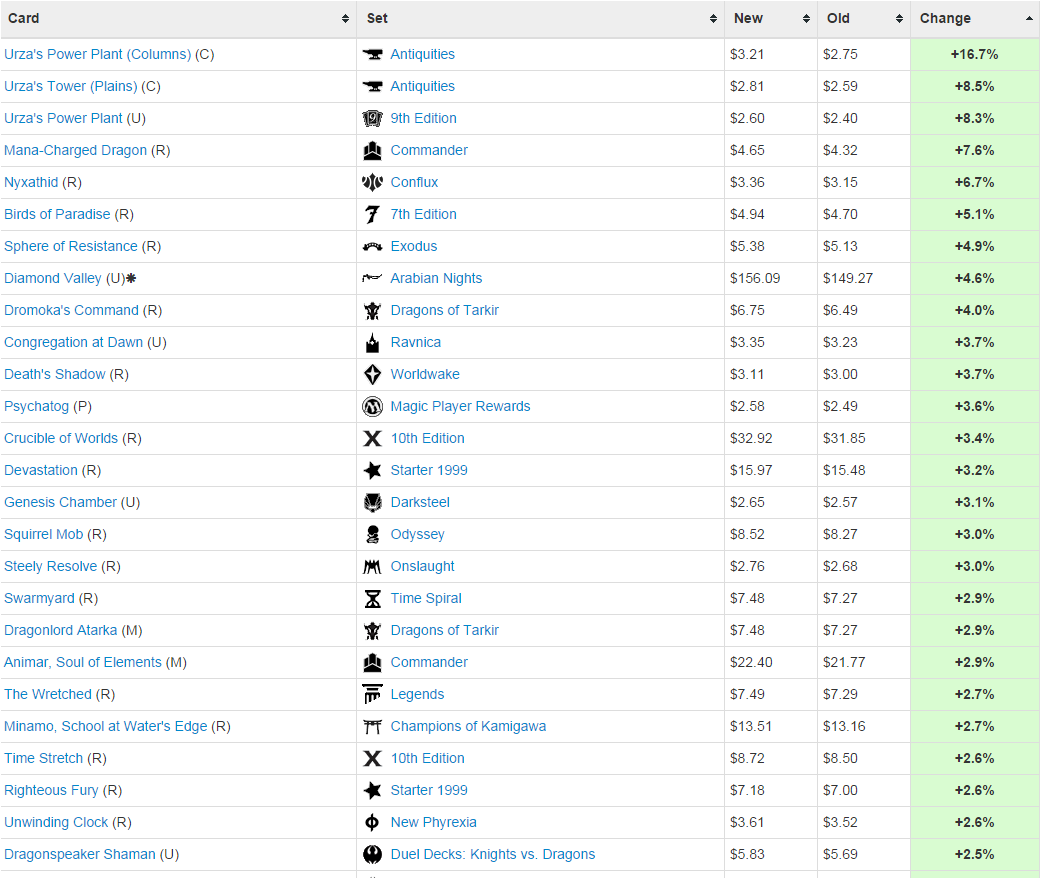
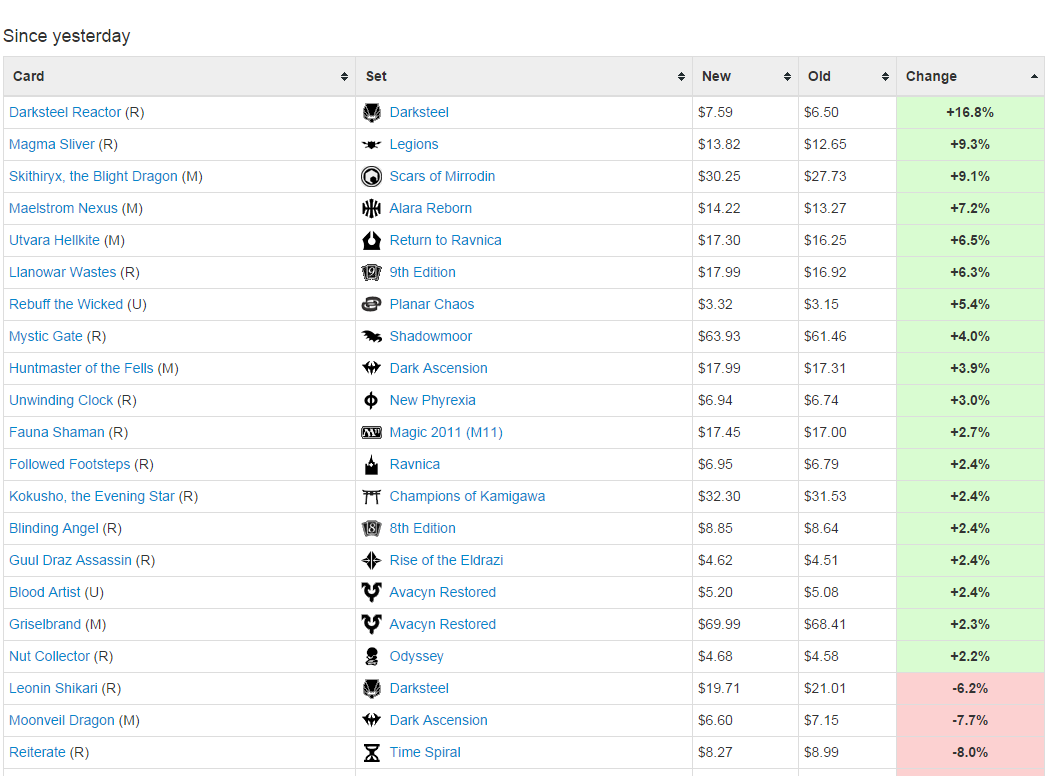
So, the way I start interpreting this information is that cards gaining the most percentage (and, in some cases, extreme percentages) up at the top are generally the cards that have spiked and/or in the process of a spike/buy-out.

At this point, it’s usually not a good idea to purchase unless you can somehow get in before the pre-spike prices. For me, I tend to notice the smaller gains on cards, because you will, more likely than not, find a card gaining slowly before finally ending up in the top percentage change. Should these cards show up multiple times over the course of days (or weeks), that’s when flags should start going up.

Blood Artist foils, for example. The card has been steadily moving from $4.51 on March 25 to $5.20 as of April 6th. A 15% increase in that time period--that’s already a solid increase. These increases aren’t the most flashy, but they are happening before they finally spike to the top of the charts.

There was an error retrieving a chart for Blood Artist

Unless there was a coordinated buy-out, it’s impossible to have seen the card on charts, and you can verify this by cross-checking with the graph and you will notice the direct vertical spike.

There are other factors that coincide with these trends, but I would classify these as either a “buy-out” or buying a card that already had severely low supply. While it isn’t the best feeling in the world to be left on the sidelines and miss potential profits, it’s always better to show restraint. Again, one has to leave the emotion out of these manufactured price spikes.

What do we do now?

Well, this is how I analyze these lists--a step by step process coming after looking through the numbers.

  1. I refer to some daily notes. Has there been a card I have been watching? I will check to see if said card has shown up before this morning. Exactly how many times did it show up, and what was the percentages during those times? After looking through my notes, I decide to see if a card is worth purchasing, since it has been showing up multiple days. Before waiting until it shows up at the top of the charts (which is usually too late to invest), I want to get in as close to the floor as possible.
  2. Was there a recent decklist with this card? How successful is the deck with said card in it? I check through various results on different websites to cross reference.
  3. Our last stop are the Quiet Speculation forums. What are other financiers saying about a specific card? Is there a forum post about it already? If not, start a new one. Outline the various research that’s been done on the specific card you’ve chosen to try and purchase.
  4. If, for whatever reason, I feel I need more information about a specific card, I would just ask the financiers I know. It’s an invaluable way to learn every scrap of information possible about what’s going on in the market. I’ve met and befriended some remarkable people with brilliant minds and value their opinion. All you have to do is ask!

After that’s all done, I tend to do the following:

  1. Sort any incoming cards that have arrived.
  2. Begin listing outgoing cards. Setting price points I feel comfortable with, which will be different for everyone, and leaving the emotion at the door. I calculate the ROI I’m fine with and let the card get listed. I don’t get caught up in getting every last penny of profit. I take what is fine for me and move on to the next card. I always say “there’s always another card just around the corner.” Unless this great game of Magic: The Gathering dies tomorrow, you’d be hard pressed to prove me wrong.
  3. Writing personal notes to be shipped with cards, for networking reasons.
  4. Ask local gaming store owner about updated buylists (if needed).
  5. Check Trader Tools on price fluctuations in the cards I have listed there. The Tool is just invaluable in showing me the bare-minimum out to any card. If you’re ever purchasing a card, you really need to be checking how the buylist prices fluctuate on said card. They set the bottom.

Utilizing Every Resource - Not Just Online Vendors

I can’t truly convey enough how important networking in any industry is.

Knowing people and creating beneficial connections is how one can really succeed, and not only in MTG Finance.

Establishing a good relationship with local gaming stores and store owners is really key. We all know shipping time could very well ruin a large margin of profits, which could be minimized by taking a drive to a local store and purchasing copies of a card that is about to be or is spiking.

Watching coverage at a high EV event? Instead of clamoring to grab copies online, one could easily find a deal just by having a great connection to a local store--saving valuable time waiting for the cards to be shipped, or worse, canceled.

I’m not saying purchasing online is wrong, by any means. It is usually the best way to go about things. I’m merely making the point that sometimes it’s best to utilize all the tools around you, and that’s amplified by establishing connections in the industry.

Putting it All Together: So, How About Some Sweet Tips?

Recently, when I analyze these stocks, I have noticed some very interesting trends.

They tend to happen in the foil section and I have been cluing into (and sometimes investing in) some of these foils. They pop up on stocks infrequently, and when they do, I cross check them and figure out why. The supply is so low on some of these in online vendors that, when copies are purchased, it’s effectively wiping out a large percentage of the total supply.

Here are a few cards I have noticed lately. They have very attractive foil multipliers, and the non-foil versions have been steadily increasing these past few months. As always, I like to include full disclosure.

I have purchased: Foil Rune-Scarred Demon, Foil Dragonmaster Outcast, Foil Scrying Sheets.

There was an error retrieving a chart for Eye of Ugin

I’m not going to try and give a full explanation as to why these multipliers are so very odd, though Eye of Ugin non-foils have been increasing quite a bit over the past few months, while the foil version has remained the same.

Between the dates of March 24th and March 30th, the card increased 7$. While it settled down a bit to 15$, the foil graph remains mostly unchanged, with most copies sitting in the 25$ range. The card is played in Modern Tron lists and has high appeal to the upcoming Battle for Zendikar block. This has shown up a few times in the stocks in the past weeks. It’s still sitting under a "normal" 2-4x multiplier. The only hesitation is a possible reprint in Modern Masters 2015.

There was an error retrieving a chart for Scrying Sheets

This card is in short supply--for foils, that is.

Most online vendors don't even have them in stock. I have recently been seeing this in Modern MODO Dailies and in versions of the deck “Skred Red”. You could find these results on various sites.

I know a few financiers who have liked non-foils of this card for EDH purposes, and for other formats such as Tiny Leaders. With such scarcity in supply, and with the increasing value of non-foils, the foil multiplier is not what it normally should be. Normal copies sitting in the 5-6$ range, and the foil version sitting at 12$.

Another foil the keep an eye out for would be Blood Artist. It has been steadily increasing on the stock pages, and, without a foil reprint in sight, these could suddenly become very scarce and generate quite the demand. As I mentioned, it’s been up 15% and could end up being incorporated into these Collected Company decklists. A casual favorite, as well.

~

I’m happy to discuss anything in the article and I’m very interested in what you have to say about this weird phenomenon of such low foil multipliers, so please leave a comment.

Have you all found similar findings? Why would normal copies increase so much but the foil copies stay the same? Some interesting trends indeed.

That’s all for this time! I am looking forward to things to come here on QS.
Enjoy!

-Chaz

Dragons in Standard: A Quick Value Survey

Are you a Quiet Speculation member?

If not, now is a perfect time to join up! Our powerful tools, breaking-news analysis, and exclusive Discord channel will make sure you stay up to date and ahead of the curve.

Certainly the defining theme of Dragons of Tarkir is, you guessed it, dragons.

Dragons today are an ordinary thing in MTG--in Standard alone, we have no less then forty-two.

But there was a day when dragons were a rare sight and dragon tribal decks were a tough and often mousy build. From Alpha through the Tempest block, there were only 20 total dragons in circulation--most of which were "unplayable".

There was an error retrieving a chart for Shivan Dragon

So sought after was the big red beast, Shivan Dragon, that dual lands, such as Savannah, were readily traded for them, often, I might add, with delight.

Those days are long past, but the theme of the dragon is iconic. And while they excite our sentimental love of high fantasy, are they going to cut it competitively or economically?

Of the total list of dragons in Standard, the top most valued are Dragonlord Dromoka, Dragonlord Silumgar, Dragonlord Atarka, Dragonlord Ojutai, Thunderbreak Regent, and Stormbreath Dragon.

My question is: will any of these make an impact or keep value?

First off, the Dragonlords. I was shocked that Card Kingdom sold Ojutai for more than fifteen. Typically, cards with the effect "deals combat damage to a player" seem good, but fail to hit the mark in practice . Think of Prophetic Flamespeaker, which debuted with promise. Initially selling for $10, it now barely fetches $2.

As for Atarka -- Last week he was worth about $10 and now we find him at $20.  This doubling is undoubtedly due to the fact that he's now featured in a winning Standard deck. Clearly, he's the favored replacement for Polukranos, World Eater in R/G midrange.  Although to be honest, I wonder if he is truly a big game changer in the long run.

There was an error retrieving a chart for Dragonlord Atarka

Keep your eye on him as he will likely cap out in the next week or so.  But in the long run, I feel that he will fall out of favor. My feeling is, he hasn't the dynamic for Modern and thus in rotation or before he will drop in value.

Like Atarka, Silumgar saw his price nearly double over the past week.  He was featured in B/BU control deck that placed second at the recent Pro Tour.

I will give a passing note on Dromoka, who could see some EDH play. His uncounterable ability is really nice, and it's nice to have a guard up in a multiplayer game, but he's otherwise underwhelming. I think its value will hover or drop below $3 soon.

One interesting note: the foils of these dragonlords are unexpectedly high due to there being the presence a promo version of them only attainable at the pre-release. These are nearly three times the value of the normal card.  Compare the disparity in promo foil and regular foil price with Wurmcoil Engine.

There was an error retrieving a chart for Thunderbreak Regent

Thunderbreak Regent is an honorable card.  It's being bought for a relatively high amount, with a 35% spread in Standard, and it has seen his value increase in recent weeks.

It backs up Stormbreath Dragon and curves well with other dragons, and a 4/4 flyer for four is never a bad thing.

And, most of all, any reactions to your dragons results in a pleasant bolt to the face--damage that could put control decks into a bind.

With that said, I think his role is somewhat limited since he is tribal and has a $11 buy price right now. It could be a good time to turn him into a shock or fetch land.

Finally, as a closing thought, has anyone else noticed that the dragons look a little like puppies? Especially, Atarka, World Render with his cute little forearms. They lack do the elegance that other tribal contingency: Avacyn, Angel of Hope and her sisters, Gisela, Blade of Goldnight and Sigarda, Host of Herons, which have held their value nicely.

~

So which dragons do you like the most? Whether strictly for competition or purely tribal affinity, what are the dragons you want the most?

Modern Rotisserie Draft

Are you a Quiet Speculation member?

If not, now is a perfect time to join up! Our powerful tools, breaking-news analysis, and exclusive Discord channel will make sure you stay up to date and ahead of the curve.

With the Vintage Super League and Standard Super League, it's clear that efforts are being made to promote the production of more video content to promote Magic as a game. A really cool promotional event that was held last night was a Modern Rotisserie draft featuring Marshal Sutcliffe, Chris Pikula, Randy Buehler, Adam Prosak, Aaron Forsythe, Rashad Miller, Sam Black, and Brian David Marshall.

If you're not familiar with Rotisserie Draft, it's a format in which cards are drafted from a giant card pool rather than specific packs. That is to say that the first drafter starts by picking any card legal in Modern to potentially play as a one-of in his/her draft deck. A pick order is determined, and players draft first-last, then last-first over and over until an agreed upon number of cards have been drafted by all players. When drafting out of card pools we see a feature called "the wheel", in which the last drafter starting with his/her first pick and the first drafter starting with his/her second pick take two cards per round to both make sure that everybody is getting the same number of cards per round and also to balance the fact that picking last is rather poor.

The picks for this draft can be found here. There's a lot of picks worth discussing in this draft, but one that had me raising my eyebrow was Marshall's first pick Batterskull.

There was an error retrieving a chart for Batterskull

There's a good argument to be made in that pretty much any deck will probably want this card, but it's definitely not the first pick in terms of just picking something with raw power. If you just want to pick the strongest card, then the pick may very well be Snapcaster Mage.

There was an error retrieving a chart for Snapcaster Mage

This is not to say that Marshall's pick was wrong. That's a ludicrous notion in a format played for fun. It's also worth noting that Marshall ultimately won the draft. I just think that it's interesting that Marshall first picked a card that probably wouldn't be in my personal top 20 for options to first pick in the format.

All of the matches for this draft were broadcast on the drafter's respective Twitch channels. At this point in time, Randy Buehler has uploaded his videos to YouTube, which I hope that other drafters follow suit on.

As a conversation starter, what would be your first pick in a Modern Rotisserie Draft?

Avatar photo

Ryan Overturf

Ryan has been playing Magic since Legions and playing competitively since Lorwyn. While he fancies himself a Legacy specialist, you'll always find him with strong opinions on every constructed format.

View More By Ryan Overturf

Posted in Drafting, FreeTagged , 9 Comments on Modern Rotisserie Draft

Have you joined the Quiet Speculation Discord?

If you haven't, you're leaving value on the table! Join our community of experts, enthusiasts, entertainers, and educators and enjoy exclusive podcasts, questions asked and answered, trades, sales, and everything else Discord has to offer.

Want to create content with Quiet Speculation?

All you need to succeed is a passion for Magic: The Gathering, and the ability to write coherently. Share your knowledge of MTG and how you leverage it to win games, get value from your cards – or even turn a profit.

M15 Urborg, Tomb of Yawgmoth Quietly Reaching All-Time High

Are you a Quiet Speculation member?

If not, now is a perfect time to join up! Our powerful tools, breaking-news analysis, and exclusive Discord channel will make sure you stay up to date and ahead of the curve.

Well, this is a nice contrast to these kooky sell-side spikes.  This is the kind of MTG Finance game I like to play.  I chose this chart because it represents a few interesting things.

First, you'll notice that in advance of the January 2015 run-up, Urborg, Tomb of Yawgmoth had remained basically stable on the sell side, but there was a lot of action on the buy side, with both the average price and the top price moving quite a bit under the surface.  Signals of a potential increase showed in early November, late December and early January.

The nature of buylists is such that these quick run-ups followed by a flat-line happen when a merchant ratchets up their offer to fill inventory, and then removes or greatly reduces their offer once they have filled their stock. Seeing this happen three times in as many months was probably a good signal that there were things to come.

Urborg, Tomb of Yawgmoth, Apr 15th 2015
Magic 2015 Urborg, Tomb of Yawgmoth Apr 15th 2015

Second, the sell side surge was matched proportionally by a buylist increase.  Of course, it's never truly 1::1; buylists tend to be a little more docile in their movement than retail (because we all know retail pricing is a guessing game of wishful thinking).  Regardless, if you bought in at around $5 retail, you'd already be in the black by about a buck by now.  Chances are you didn't pay retail for them, though (and if you did, maybe you want to think about a QS Insider sub).

Third, take a look at the rather substantial buy side bump in the last couple of days, despite the lack of retail movement.  It looks like the sell side is starting to wiggle a little, so it remains to be seen if it will keep up.  As we've discussed, a buy increase often predicts a sell increase, but it's not 100%.  We shall see!

I'm curious to see what everyone thinks also because I have no clue I this one. If the price were based on sales from my store the card would be half the price, not steadily increasing. Could it just be the low supply of m15?

-- Mike Lanigan

Urborg's growth is likely due to several factors. Being an M15 rare, there will be far fewer of them compared to rares from most of the other standard legal sets on the back of the fact that core set sales tend to usually fall below that of regular block set sales. Compound this with the fact that it was a $30-$35 card prior to the M15 printing so it has a very high price memory and clearly had a lot of casual demand. Lastly, we look at the strength of black as a color in the current standard environment.

Of the top tier decks in standard currently, (Abzan Aggro, Abzan Control, Abzan Midrange, U/B Control, Esper Control) about 70% are playing black (the exceptions being G/R Dragons and Mono-red/Atarka Red), Urborg turns all non-swamp basics into their respective dual lands, it turns non-black temples into tri-lands with upside, and it even turns fetchlands into mana sources (for those times when you run out of basics to fetch with them). All 3 reasons are likely contributing to it's continual rise. I know I have run at least 1 copy in every standard deck with black in it that I've played since M15's release (though I did not run mono-black devotion as it would have been pointless in that one).

-- David Schumann


There was an error retrieving a chart for Urborg, Tomb of Yawgmoth

Miracles in Modern

Are you a Quiet Speculation member?

If not, now is a perfect time to join up! Our powerful tools, breaking-news analysis, and exclusive Discord channel will make sure you stay up to date and ahead of the curve.

sf191_039zcav4h5

Dean Tolmachoff took 5th place at an SCG States tournament this week running Miracles, of all things.

Miracles was a deck in Standard when the sometimes-busted Entreat the Angels and Terminus were format legal and netted then tournament newbie Alexander Hayne a 1st place win (beating down Jon Finkel in the finals, no less). The deck also transferred well to Legacy thanks to broken library manipulation in the form of Brainstorm and Sensei's Divining Top, and the natural fit powerhouse that is Counterbalance. It remains a format pillar there to this day.

[wp_ad_camp_1]


Sadly, the deck has never found a home in Modern. While the inconsistency of the miracle mechanic was fine for a low power format like Standard, it tends to not be for a high power format like Modern, and the closest thing Modern has to Brainstorm and Top is Serum Visions and Crystal Ball -- not extremely inspiring.

Nevertheless, Tolmachoff went against the odds and built the Miracles list below, which eschews the use of Ball and similar effects but goes all in on Visions and includes Entreat and Terminus. The rest of it is your typical Modern U/W Control shell, apart perhaps from maindeck Azorius Charm and Batterskull. Between those and the sideboard Kor Firewalker and Timely Reinforcements, I'll take a wild guess and say Burn is a tough matchup (or would be without all of these accommodations).

Miracles by Dean Tolmachoff

Creatures

4 Snapcaster Mage

Spells

2 Batterskull
3 Azorius Charm
4 Cryptic Command
4 Path to Exile
4 Remand
2 Spell Pierce
3 Think Twice
3 Entreat the Angels
4 Serum Visions
4 Terminus

Lands

4 Island
3 Plains
4 Celestial Colonnade
4 Flooded Strand
4 Hallowed Fountain
4 Seachrome Coast

Sideboard

1 Torpor Orb
4 Kor Firewalker
2 Stony Silence
2 Wipe Away
3 Kataki, War's Wage
3 Timely Reinforcements

I do have to wonder with all the lifelink love if Ojutai's Command shouldn't be in the deck somewhere, despite its downsides versus Cryptic. I'd also be curious to see Ball and Darksteel Pendant tested (separately), even if only used as a 1-of. My instinct is none are good enough, but you never know until you test.

If you have or find any unique tournament winning brews, be sure to let us know so we can highlight them in future articles!

Want Prices?

Browse thousands of prices with the first and most comprehensive MTG Finance tool around.


Trader Tools lists both buylist and retail prices for every MTG card, going back a decade.

Quiet Speculation