
menu

Real-world Flavor. Chinese Quotations from Philosophy and War Treatises

Are you a Quiet Speculation member?

If not, now is a perfect time to join up! Our powerful tools, breaking-news analysis, and exclusive Discord channel will make sure you stay up to date and ahead of the curve.

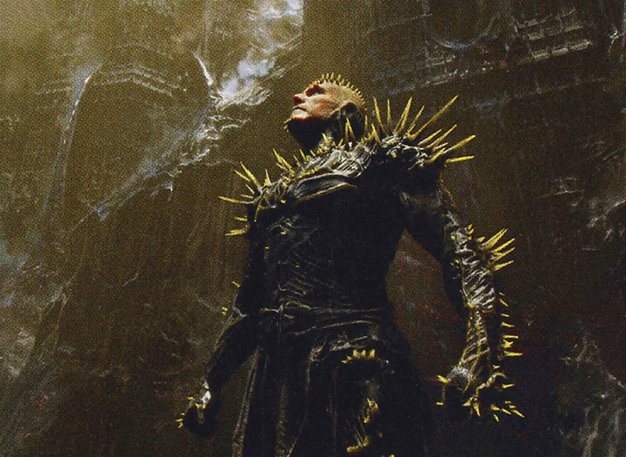
Thorn bushes spring up wherever the army has passed. Lean years follow in the wake of a great war.

Lao Tzu

In the last article, we started dealing with Portal Three Kingdoms. It’s the first Magic expansion conceived with the intention of being published exclusively in the Asian market. It’s full of references to Chinese culture and literature. Of the 52 cards ever printed with a Chinese quotation as flavor text, 50 come from this set.

Last time, we analyzed the flavor text of Greed and Zodiac Dragon and looked at three other cards with Confucius quotes. Now, let’s move to three different authors: Mencius, Lao Tzu, and Sun Tzu. We’ll leave Luo Guanzhong, the most represented author, for an article all to himself.

Mencius

Mencius

Let’s start with the least represented author. Mencius lived in the fourth century BC and left us a philosophical text known as Mencius. Only one Magic card displays a quotation from Mencius, and that is the beautiful Three Visits.

Three Visits

Trying to meet a worthy man in the wrong way is as bad as closing the door on an invited guest.

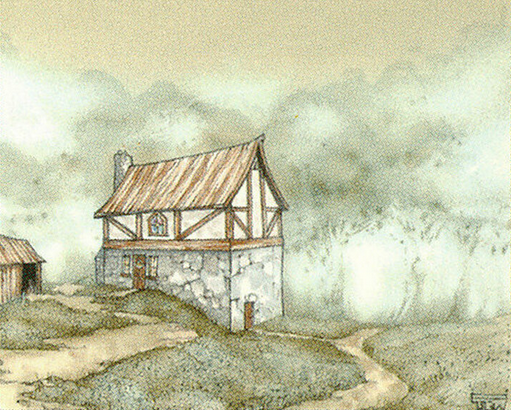
Three Visits is a common green sorcery. For the cost of two mana, it lets you fetch a forest card out of your library and put it onto the battlefield. It’s not limited to basic Forests, and the land enters the battlefield untapped. I really like the concept and the art: it looks like an episode from an ancient tale, but I’m not sure I get the link with the flavor text. It’s obviously a saying, a proverb, as it gives general advice on how to behave in everyday life. Perhaps, it advises not to show up empty-handed?

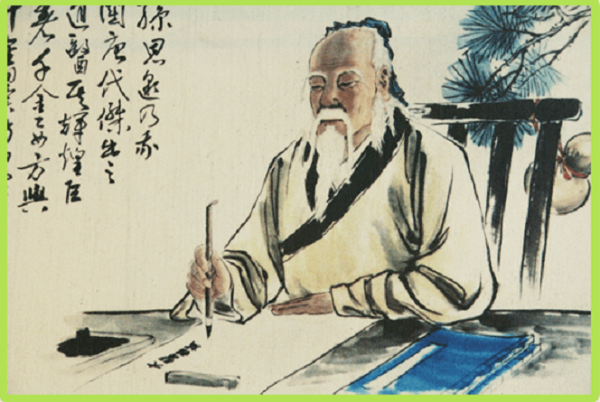
Lao Tzu

Lao Tzu is also the author of a philosophical text, from roughly 200 years earlier, in the sixth century BC. his work the Tao Te Ching, is among the most influential pieces in world literature and has been widely translated. Staying within the philosophical realm for our source material has particular implications when it comes to Magic flavor texts. In Magic flavor, “philosophy” normally means “proverbs”. There are three cards featuring quotations from Lao Tzu’s works. We dealt with the first one, Greed, in the last installment. It was the only card with a Chinese quotation printed before Portal Three Kingdoms. Today we will explore the other two.

Lao Tzu

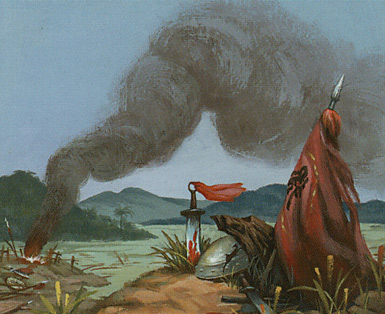
Ravages of War

Thorn bushes spring up wherever the army has passed. Lean years follow in the wake of a great war.

Ravages of War is among the most famous cards from this set, together with Zodiac Dragon and Imperial Seal. It’s a functional reprint of Armageddon, with a funny bit of reminder rules text for new players: “This includes your lands.” The flavor text is great, as it shows what stays behind after a battle: that is, famine and poverty.

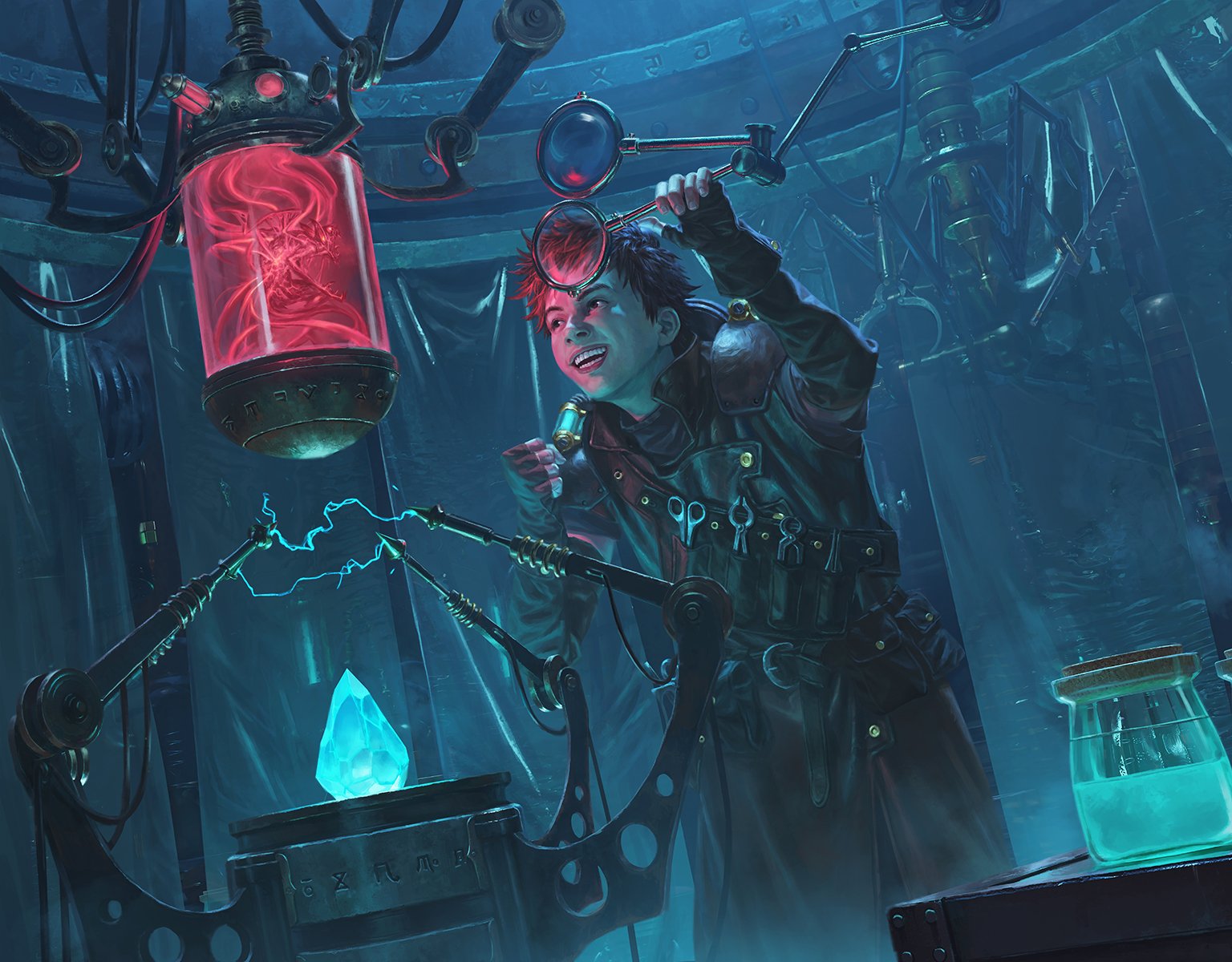
Sage’s Knowledge

Those who know do not talk. Those who talk do not know.

This blue sorcery lets you get another sorcery from your graveyard back into your hand. Very blue. And the flavor text is also pretty consistent with the card and with the color. Together with the art, it gives me some sort of Meditate vibes, since that card also mentions silence and calm.

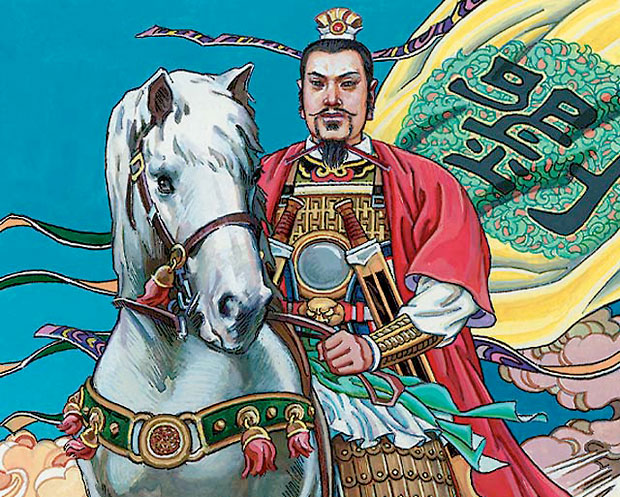
Sun Tzu

Things get a bit different when we move to Sun Tzu. With five cards, he is one of the most quoted authors in Magic. As we saw in the first article of this series, he would deserve fifth place in a hypothetical Top Eight, right after Luo Guanzhong, Shakespeare, Coleridge, and Poe. Sun Tzu was a Chinese general, strategist, and philosopher who lived in the fifth century BC. His most famous work is The Art of War, which is still taught in military schools and studied all around the world. Does a change in the genre of the source material mean a change in the nature of the flavor quotes pulled from it? Let's find out.

Burning Fields

In raiding and plundering, be like fire, in immovability like a mountain.

Burning Fields is a classic Red Sorcery, dealing five damages to your opponent for five mana, just as Lava Axe. As you can see, not much has changed, even if the work this comes from is technically a war treatise. This sentence still sounds like a maxim, a general norm that you should follow. I can see why it mentions fire, but as for the mountain it’s not totally clear.

False Defeat

All warfare is based on deception.

Now, this is an interesting, white Zombify. People must have fallen victim to it many times since it can't be expected. The flavor text is a bit out of focus, for deception in Magic is mostly a quality of the color blue, rather than white. Still, in my opinion, it’s a nice choice with great art.

Slashing Tiger

Unless you enter the tiger’s lair, you cannot get hold of the tiger’s cubs.

A creature, finally, after all those sorceries. Slashing Tiger gets +2/+2 until the end of turn whenever it gets blocked. This is a very common ability for green, but I believe it would have been more spot-on if it got pumped when it blocked. After all, the flavor text talks about a tiger protecting her cubs.

Wei Scout

He will win who, prepared himself, waits to take the enemy unprepared.

Here comes another creature, this time a 1/1 black soldier for two mana with horsemanship. Horsemanship is an evasive ability that acts as a variation of flying, and only appears in Portal Three Kingdoms. The quotation is not very impressive, simply suggesting that the winner of any duel will be the one who is more prepared.

Zephyr Charge

All armies prefer high ground to low and sunny places to dark.

The last card we are analyzing today is a very special one. In fact, we addressed Zephyr Charge in the first installment of this series. Portal Three Kingdoms came out in 1999. It wasn't until 2013, fourteen years later, that this blue enchantment saw print in Magic 2014. Not only was this Sun Tzu's last appearance in flavor text, but this was also the last card ever printed with real-world flavor text.

It’s funny to see how things haven’t changed in almost fifteen years: bad cards are often those getting the most interesting flavor texts. Zephyr Charge is mostly unplayable, even in limited. It allows you to give creatures flying in exchange for two mana, and that’s it. As for the art, it represents a knight charging in mid-air, thanks to what looks like a gentle breeze.

The quotation is dangerously close to obvious, and I believe this was the case even when it was first written. Armies prefer the high ground, and the creative team decided to match this cheap consideration with a knight flying over the enemies. Who are we to complain, though? Perhaps, this really was the time to stop using real-world quotations as Magic flavor text?

Conclusions

We have expanded our overview of Chinese literary sources in Magic flavor text into Portal Three Kingdoms. Now, only flavor text from Luo Guanzhong is missing. What did we learn? First, we now have a better understanding of how different flavor texts are depending on their provenance. The quotations we saw in the past installment came from philosophical texts, as well as the first three we analyzed today. The last five, all from Sun Tuz, come from a war treatise.

Surprisingly, they don’t seem to differ that much. I would go as far as to say that it’s almost impossible to recognize the source genre of a quotation. In the end, they all sound like proverbs or generic maxims.

The most noticeable difference between those coming from The Art of War versus the rest, is they deal a bit more with warfare scenarios and a bit less with everyday life. In the next article, we will dive deep into the work of Luo Guanzhong, and try to answer this question with his contributions added to the mix.

Circling Around: December ’21 Modern Metagame Update

Are you a Quiet Speculation member?

If not, now is a perfect time to join up! Our powerful tools, breaking-news analysis, and exclusive Discord channel will make sure you stay up to date and ahead of the curve.

The calendar may have rolled over to 2022, but 2021 isn't truly over yet. Sorry to crush everyone's souls, but there's business still unfinished from the previous year. And we'll need to move quickly to get it all taken care of before the next set releases. It's not like we can just put off spoiler season. Therefore, let's refocus on the end of last year with the December 2021 metagame update.

December’s metagame is an unfortunate continuation of trends observed back in November. Which is surprising under the circumstances The number of events was slightly lower thanks to reported non-Wizards events on MTGMelee and fewer Wizards Premier events, as usually happens in December; it's the end of the year and the holidays, who wants to run extra events? In the past that reality led to a decline in population for December's metagame. However, 2021 is an exception. The overall population is slightly above November's at 514, with 528. This in spite of the lack of events seems incongruous, but it makes sense on my end. December had a number of very large Preliminaries. School's out so more players were playing more events is my take on why.

An Announcement

With the new year, I'm planning on changing how these updates work. Specifically, I am hoping that this is the last metagame update whose data comes entirely from MTGO.  I wanted to keep my data consistent during 2021 and stuck to just MTGO data despite paper kinda coming back in March. In truth, even if I had included the paper results, it wouldn't have changed anything until recently. There haven't been many paper events over the past year, but the number has been increasing, so I'm going to start tracking those too. And hoping that there are enough to balance the MTGO data.
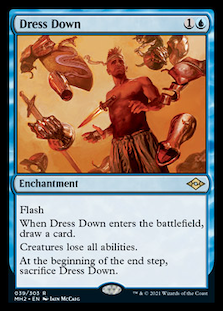
What this actually means for how the updates and analysis work I don't yet know. I haven't been scrutinizing paper results too closely, so I'm not sure what has been there nor what will be there. I'll figure it out as I see what I have to work with. I may have to go back to the old system, I may be able to make the current one work; I don't know. Right now, the only source I have for said paper events is MTGTop8, but I'm looking for more sources... and am open to suggestions!

December Metagame

To make the tier list, a given deck has to beat the overall average population for the month. The average is my estimate for how many results a given deck “should” produce on MTGO. Being a tiered deck requires being better than “good enough;” in December the average population was 8.95 setting the Tier 3 cutoff at 9 decks. This is the highest the cutoff has been in months and is a mark we haven't hit since September 2020. The reason this happened will be clear once you're looking at the data.
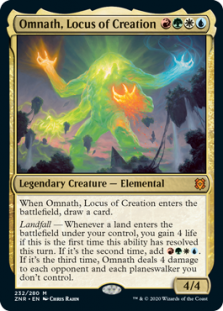
Tier 3 begins with decks posting 9 results. Then we go one standard deviation above average to set the limit of Tier 3 and cutoff for Tier 2. The STdev was 15.70, which means that means Tier 3 runs to 25 results. Again, it's the starting point to the cutoff, then one above for the next Tier. The STdev was really high this month and so the tier ranges are enormous. Again, it makes sense given the data. Therefore Tier 2 starts with 26 results and runs to 42. Subsequently, to make Tier 1, 43 decks are required. Which is a very high cutoff point, especially in context for this year.

The Tier Data

While the total population is slightly up from November, the number of unique decks fell significantly. Where 67 unique decks were recorded in November, I only have 59 for October. The number of decks actually making the tier list also fell significantly, from 19 in November to 13 for December.

Now, some of that is thanks to me accounting for outliers in November, which lowered the threshold.  I didn't remove Hammer Time as an outlier from the data in December, though it's really borderline. Several tests showed it clearly being an outlier, while several said it was right on the line. The decision came down to whether removing Hammer Time from the data changed anything, and the answer was no. Accounting for outliers would have added one deck to the population tier and slightly altered placement, which tells me that the data is fundamentally skewed and therefore the outlier isn't really meaningful.

Deck NameTotal # Total %
Tier 1
Hammer Time7814.77
4-Color Blink6412.12
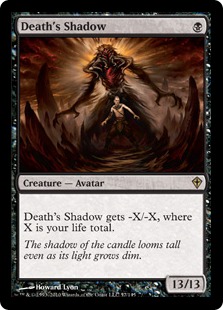
Grixis Death's Shadow5710.80
UR Murktide468.71
Tier 2
UW Control264.92
Cascade Crashers264.92
Tier 3
Burn193.60
Yawgmoth193.60
Amulet Titan183.41
Jund Saga152.84
Rakdos Rock112.08
Blue Living End91.70
Grixis Control91.70

And that's because of how incredibly top-heavy the data is. There have been big gaps in the data before, but they've never been as big as this. 20 results separate the bottom of Tier 1 and all of Tier 2, a tier that just barely has any decks at all, since UW Control and Cascade Crashers are right on the cutoff. That's absurd and unprecedented. And again, accounting for outliers wouldn't have helped. since the Tier 2 cutoff without Hammer Time in the analysis was 20, meaning the tier composition wouldn't change. Another reason not to bother removing Hammer Time from the data analysis.

The Trend Continues

Back in November, I expressed concern over Hammer Time's continued dominance of the tier list and the rise of 4-Color Blink piles. The former is bad since one deck sitting atop the metagame has a chilling effect, especially when it happens by such a wide margin. The latter is bad because if forces out alternatives. A pile of the best cards just overpowers more distinct decks and homogonizes the format. I hoped that something would happen in December to stall or reverse this trend, but as the data shows, it didn't happen. Which was the concern hanging over my mind when I was making the Banning Watchlist.
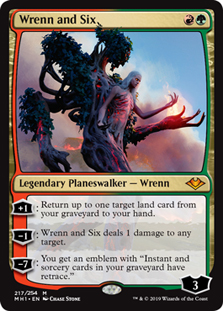
It's always tempting throw everything back to the situation with Uro, Titan of Nature's Wrath. Certainly, the data from December 2020 and January 2021showed a similar trend toward 4-Color decks pushing out other midrange decks. However, there was more internal homogenization with Uro: the decks started looking the same. Right now, there is considerable diversity within the Omnath blink decks, which possibly means that there is no single build that is best (an oppressive situation) but rather the deck can be built to win in any metagame. That's still not great because there'd be no way to beat Omnath consistently, but it does mean that deckbuilding and player agency matter, and might delay any bannings for a while. Still, I'm quite worried.

Power Rankings

Tracking the metagame in terms of population is standard practice. But how do results actually factor in? Better decks should also have better results. In an effort to measure this, I use a power ranking system in addition to the prevalence list. By doing so, I measure the relative strengths of each deck within the metagame. The population method gives a deck that consistently just squeaks into Top 32 the same weight as one that Top 8’s. Using a power ranking rewards good results and moves the winningest decks to the top of the pile and better reflects its metagame potential.
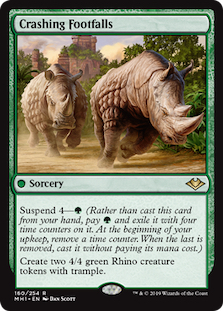
Points are awarded based on the population of the event. Preliminaries award points for record (1 for 3 wins, 2 for 4 wins, 3 for 5) and Challenges are scored 3 points for Top 8, 2 for Top 16, 1 for Top 32. If I can find them, non-Wizards events will be awarded points the same as Challenges or Preliminaries are depending on what the event in question reports/behaves like. Super Qualifiers and similar higher-level events get an extra point and so do other events if they’re over 200 players, with a fifth point for going over 400 players. There were two 4 points events in October and no 5 pointers.

The Power Tiers

Unlike with population, the total points were down slightly in November. There are 889 total points in November compared to October's 927. There being fewer events overall and fewer premier events specifically, the lower total makes sense. It also means that the data is even more skewed towards Tier 1 than it was for population.

The average points were 15.07. Since that's so close to 15 rather than 16, I'm rounding down to have 15 points be the starting point. Therefore 15 points makes Tier 3. The STDev was 28.21, which is enormous just like with population. And again, given the skew it makes statistical sense. Thus add 29 to the starting point and Tier 3 runs to 44 points. Tier 2 starts with 45 points and runs to 74. Tier 1 requires at least 75 points. Had I removed Hammer Time as an outlier, there would have been more five more decks on the power tier. As is, the number fell from 13 to 11.

Deck NameTotal Points Total %
Tier 1
Hammer Time13715.41
4-Color Blink11312.71
Grixis Death's Shadow11012.37
UR Murktide788.77
Tier 2
UW Control485.40
Tier 3
Cascade Crashers394.39
Yawgmoth394.39
Jund Saga303.37
Burn293.26
Amulet Titan252.81
Rakdos Rock182.02

I've never had a power update featuring three decks over 100 points. Again, it reinforces what I said earlier that this metagame is significantly top-heavy. Hammer Time, 4-Color Omnath, and Grixis Death's Shadow account for a staggering 40% of the total points earned in December. And there's a 32-point gap from GDS to UR Murktide. No wonder the number of decks were down, the month appears to be a three-horse race! How is anything else going to compete?

Removing Hammer Time as an outlier would have improved the data's look as mentioned. However, I don't think that it changes the feel. UW Control would have been joined by Cascade Crashers and Yawgmoth in Tier 2 and a few more decks would have snuck onto the bottom of Tier 3. But it doesn't change the fact that the data was heavily skewed. And that's the real story of December.

What Happened?

Obviously, I can't say with certainty "This is what happened" to cause this warp. It is a continuation of trends from December, but it's also very extreme. And would seem to fly in the face of expectation given the higher population. What I can do is propose plausible scenarios and discuss what they suggest about the metagame:

  1. It's happening: No mistakes, no warps: the metagame is naturally pushing in this direction and players are picking up on it. I'd consider this a worst-case scenario, as it implies that Modern is solved.
  2. Sampling bias: This is just one data point. That data point came from a month where outside pressures created odd wrinkles in player behavior. It was the holidays, so presumably, players had more time to play and just chose what they thought were the best decks. If this is the case, the warp should disappear in January.
  3. Player Bias: The warp isn't a fluke, but it doesn't mean anything. Grixis Death's Shadow is a deck lots of players bought into in 2017. Now that it appears to be viable again, those players are flocking back. The pressure from that deck is pushing out alternatives. Once the shine wears off, there will be an exodus from GDS and the format will open up more.

Average Power Rankings

Finally, we come to the average power rankings. These are found by taking total points earned and dividing it by total decks, which measures points per deck. I use this to measure strength vs. popularity. Measuring deck strength is hard. There is no Wins-Above-Replacement metric for Magic, and I'm not certain that one could be credibly devised. The game is too complex, and even then, power is very contextual. Using the power rankings certainly helps and serves to show how justified a deck’s popularity is. However, more popular decks will still necessarily earn a lot of points. Which tracks, but also means that the top tier doesn't move much between population and power, and obscures whether they really earned their position.
This is where the averaging comes in. Decks that earn a lot of points because they get a lot of results will do worse than decks that win more events, indicating which deck actually performs better. A higher average indicates lots of high finishes, where low averages result from mediocre performances and high population. Lower-tier decks typically do very well here, likely due to their pilots being enthusiasts. So be careful about reading too much into the results. However, as a general rule decks which place above the baseline average are overperforming and vice versa. How far above or below that average determines how "justified" a decks position on the power tiers are. Decks well above baseline are therefore undervalued while decks well below baseline are very popular but necessarily especially good.

The Real Story

When considering the average points, the key is looking at how far-off a deck is from the Baseline stat (the overall average of points/population). The closer a deck’s performance to the Baseline, the more likely it is to be performing close to its “true” potential. A deck that is exactly average would therefore perform exactly as well as expected. The further away the greater the deviation from average, the more a deck under- or over-performs. On the low end, the deck’s placing was mainly due to population rather than power, which suggests it’s overrated. A high-scoring deck is the opposite.

Deck NameTotal Points Power Tier
Yawgmoth2.053
Jund Saga2.003
Grixis Death's Shadow1.931
UW Control1.852
4-Color Blink1.761
Hammer Time1.751
UR Murktide1.701
Rakdos Rock1.643
Burn1.533
Cascade Crashers1.503
Baseline1.50
Amulet Titan1.393

I've never had the baseline be this low before. 1.50 is extremely low and really highlights just how poorly positioned Amulet Titan was to be the only deck below the baseline. However, given again how high the STdev's were thanks to the huge number of singletons versus the Big Three, it does make sense. It's just unfortunate. In any case, here's your headline: as the Tier 1 deck with the highest average points, Grixis Death's Shadow was the top deck of December 2021!
The End Is... Not Yet

And that's the metagame update for December 2021. But don't rejoice yet! Next week I will actually conclude 2021 with the overall data for the entire year. And it wasn't quite what I expected, so perhaps you'll share my surprise.

My Top 10 Modern Cards of 2021

Are you a Quiet Speculation member?

If not, now is a perfect time to join up! Our powerful tools, breaking-news analysis, and exclusive Discord channel will make sure you stay up to date and ahead of the curve.

This week, I’m feeling nostalgic for all the wonderful additions that Modern Horizons 2 2021 brought to the Modern format. I made a list of 20 or so of my favorites, then painstakingly narrowed it down to my top 10. You can look forward to the cards that didn’t quite make the cut in next week’s article, including new-to-Modern reprints which I’ve intentionally kept off this list, so stay tuned.

10. Esper Sentinel

Coming in 10th place is Esper Sentinel, a creature that players quickly identified as a Modern staple. Sentinel is a one-drop that threatens to snowball card advantage while boasting the human creature type. This made it an auto-include in Thalia, Guardian of Thraben-based white decks like Death and Taxes and Humans, both archetypes that have fallen off the radar in recent years.

While not enough to push these decks back into prominence, it remains a four-of in the Hammer Time combo deck. As a cheap creature that trades favorably with removal and holds equipment well, Sentinel’s artifact supertype provides synergy to the Urza's Saga and Puresteel Paladin deck adding to its critical mass of low-cost artifacts. While Esper Sentinel has quite a lot of positives going for it, it’s not necessarily a critical component to the decks that feature it, thus earning a lower spot on my list.

9. Murktide Regent

What a difference a color shift and 14 years of power creep can make! Murktide Regent is ostensibly a blue Tombstalker in that they are both flying delve creatures castable for two colored pips. However, unlike Tombstalker, Murktide pitches to Force of Negation and comes with a larger stat block. Its special combination of Delve, +1/+1 counters and sheer size allows it to dodge several common removal spells in the format. Cards like Fatal Push, Prismatic Ending, Heartless Act, Lightning Bolt, and Unholy Heat cannot kill this massive dragon.

At the time of Murktide’s printing, Heartless Act saw significant play as Modern’s least conditional black removal spell. However, the dragon pushed it entirely out of playability. In the early weeks of Modern Horizons 2 Modern, deck builders struggled to identify unilateral ways of dealing with large threats like Murktide, while also having low-cost answers to Ragavan, Nimble Pilferer and Dragon's Rage Channeler. The combination of threats needing disparate removal meant the UR decks could steal games they had no business winning.

Eventually, deckbuilding converged on bounce spells like Dead // Gone, pre-emptive answers like Endurance, and unconditional removal such as Terminate. Because of this, Murktide was downgraded from a near-unanswerable threat to simply a strong one. Even still, its effects on Modern are apparent and it’s a key component to blue-based tempo decks, placing it in a respectable ninth place.

8. Tasha's Hideous Laughter

The first non-Modern Horizons 2 card on my list, Tasha's Hideous Laughter, is a new staple in the Mill archetype. Laughter was underestimated at first as players didn't quite do the math on how many cards 20 mana actually translated into or how low the curve in Modern has become.

For example, decks featuring Lurrus of the Dream-Den as a companion account for 35% of the metagame and have a low curve by definition. Hammer Time in particular is wildly susceptible to the spell, with a total pip count of roughly 40 depending on the build. Tasha’s Hideous Laughter will exile a median of 35 cards out of Hammer Time. That's the mill equivalent of a three-mana burn spell dealing 13 damage! Similarly, Death’s Shadow decks feature roughly 50 pips which translates to a median of 23 cards. This is the burn equivalent of roughly eight damage from a single spell.

Laughter is also potent against the fan-favorite Amulet Titan. Amulet has 35 cards with a mana value of zero, and an additional nine cards have a mana value of one. This almost ensures Laughter exiles multiple key cards needed to assemble your win.

While potent against several popular archetypes, Laughter suffers against decks with high average mana values like Cascade, Tron, Belcher, and Yorion Pile. While not perfect in all matchups, Tasha’s Hideous Laughter has earned its spot and can be sideboarded out when needed.

7. Reanimator

Ok, I know this is cheating, but it’s my list and I make the rules. Coming in seventh place is the Modern Horizons 2 reanimator package. This includes Persist and Unmarked Grave, as well as the newly introduced creatures they cheat in, Archon of Cruelty and Serra's Emissary. Unmarked Grave and Persist are fixed versions of Entomb and Reanimate and are unable to hit legendary creatures. This drawback naturally precludes traditional reanimator targets like Griselbrand, Iona, Shield of Emeria, and Elesh Norn, Grand Cenobite. Archon of Cruelty and Serra’s Emissary are powerful, yet reasonable alternatives for these legendary powerhouses.

While powerful enough to close a game out in short order, these new threats still allow your opponents the chance to answer them and have a potential path to victory rather than the immediate lights-out nature of those pushed legends. At two mana value per spell, the combo can only be initiated by turn three at the earliest. This gives your opponents the time to find disruption and creates an engaging back and forth. This incentivizes novel combo-control builds over the type of all-in combo style typically found in Legacy Reanimator.

6. Expressive Iteration

Expressive Iteration is the standout addition from Strixhaven and one of the strongest card draw spells of the past several years. At two mana, Iteration compares favorably to Chart a Course and Night's Whisper, offering both card advantage and card selection. Iteration incentivizes playing with low curves, which makes it a perfect compliment to cards like Dragon's Rage Channeler. The combination of these cards sifts through your deck with unparalleled velocity, helping you to always find the right card at the right time.

5. Prismatic Ending/Unholy Heat

Revolutionizing the Modern removal suite are Prismatic Ending and Unholy Heat. Ending acts as a mainboardable Engineered Explosives, providing an on-curve answer to early threats and killing hard-to-remove permanent types like artifacts and enchantments. It pushed Aether Vial decks out of the format altogether, and offers decks a rebuttal to permanent-based hate pieces like Chalice of the Void. Ending was further bolstered by the Triome lands, which bring Converge up to three or four at almost no deckbuilding cost.

Unholy Heat on the other hand requires minimal setup to be a near-unconditional one-mana removal spell. Red previously struggled to answer threats that beat the “bolt test”, killing creatures with more than three toughness. Primeval Titan and Eldrazi decks could exploit red-based matchups with overstatted creatures as Magmatic Sinkhole and Flame Slash were the primary non-Lightning Bolt alternatives. With Unholy Heat, these other cards are no longer necessary and big creatures lose their inherent advantage against red.

4. Modern Horizons 2 Elementals

Another group entry, but this time out of necessity. Nearly all of the Modern Horizons 2 elementals would be deserving of a spot on this list individually. Endurance, Fury, and Solitude are the fourth, fifth, and sixth most played creature spells in Modern and it’s clear to see why.

Fury and Solitude are free removal spells that can also become Flametongue Kavus. Endurance is a well-statted threat that lines up nicely against some of the most played cards of the format. It has the added benefit of an “in case of emergency, break glass” option against graveyard decks. Grief is a free, unconditional discard spell that punishes mulligans and can force resource-light games. Even the weakest of the cycle, Subtlety, sees some sideboard play in blue-based Living End and Murktide sideboards.

Perhaps most notable with this cycle is how well these cards synergize with blink effects like Ephemerate. By casting the creatures for free, you can resolve their powerful enters-the-battlefield triggers twice, then keep the body for free. You then have the potential to get a third use of the card on your next upkeep. This can influence your opponent's plays as well knowing another discard or removal spell is coming up next turn. These free disruptive spells push you into the late game, allowing future copies to be “hard cast” and open up opportunities to play midrange powerhouses like Omnath, Locus of Creation. Incidentally, Omnath is also a wild card to pitch to the non-Grief elementals.

3. Urza's Saga

One of the most unique additions to Modern is Urza's Saga, the enchantment land that does it all. On its own, Saga creates two uncounterable 3/3s, and tutors almost anything you need. Saga can find hate pieces likePithing Needle or removal like Pyrite Spellbomb. You can grab combo pieces like Amulet of Vigor or acceleration via Springleaf Drum. Saga even offers lifegain from Shadowspear, and additional Urza's Sagas via Expedition Map. It’s a Swiss Army knife that can do nearly anything you need for relatively little deckbuilding cost. As if that were not enough, its power scales up the more you lean into its other synergies.

2. Ragavan, Nimble Pilferer/Dragon's Rage Channeler

Edging out Saga is everyone’s favorite money monkey, Ragavan, Nimble Pilferer and its partner in crime, Dragon's Rage Channeler. These aggressive red creatures have redefined the Modern threat suite. At one mana, they will always trade equally or favorably with removal and if left alone, will quickly snowball. Ragavan has the potential to accelerate your mana and draw cards. Meanwhile, Channeler provides unparalleled card selection while also being an evasive threat. At one mana, these tempo threats can be paired with discard, removal, or countermagic ensuring efficient use of mana each turn.

1. Valki God of Lies

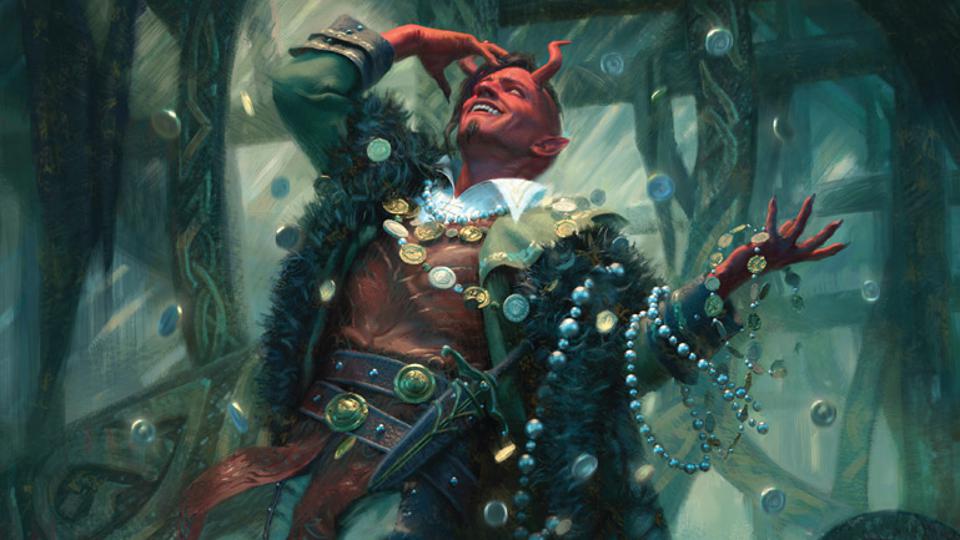
Taking the top spot is the handsome devil himself, Tibalt. For those unfamiliar, Valki, God of Lies // Tibalt, Cosmic Impostor is a modal double-faced card. On the front side is a two-mana creature and on the back, a powerful seven-mana planeswalker. The cascade spells Violent Outburst and Ardent Plea exile cards from the top of your deck until you find one that costs less than (in this case) three mana, then casts that spell. Thanks to a handful of split cards and Adventure creatures rounding out your deck, that leaves just Valki as the only cascadable hit, which can then be cast for free on either side.

This three-mana, one-card combo let players cast their game-winning planeswalker by turn three, and potentially as early as turn one. The interaction was so powerful that Wizards of the Coast had to change the 11-year-old cascade mechanic to stop the nonsense. The updated rules text meant players could cast the backside of modal double-faced cards only if the mana value was less than that of the cascade spell. This was an elegant fix that would have otherwise necessitated a ban.

As the errata only affected cascade, Valki continues to see Modern play in Bring to Light decks which still offers a discounted Tibalt, albeit at five mana rather than three. The fact that a card was so format-warping that it required Wizards to change a mechanic solely to stop it earns Valki, God of Lies my number one spot.

End Step

What are your thoughts on my top 10, and how does it stack up to yours? If you think I missed anything, feel free to leave a comment or tweet at me at @AdamECohen. Be on the lookout for my honorable mentions next week. Your favorites just might be there.

Finding Value in the Commons & Uncommons

Are you a Quiet Speculation member?

If not, now is a perfect time to join up! Our powerful tools, breaking-news analysis, and exclusive Discord channel will make sure you stay up to date and ahead of the curve.

First and foremost, I’d like to wish all my readers a very Happy New Year! In a paradoxical way, 2021 was both gruelingly long and terribly short. Either way you cut it, the year was filled with challenges as we attempt to adjust to a “new normal”, co-existing with the COVID-19 virus.

But you’ve heard enough about that from other news outlets and social media. No need to dwell on what everybody already experiences day in and day out.

Instead, I want to talk this week about something most people probably don’t know. Or at least, they may have an inkling but not the full picture. Because over the past few months, as people embraced the holiday season and 2021 winded down, a handful of particular cards were quietly bought in volume, driving price spikes that may have been overlooked if not paid close attention.

The kicker: not a single one of the cards I’m about to mention is on the Reserved List!

You Don’t Have to Be Rare to Spike

For a few years now, the headlines in my writing have been about increasing prices across Magic’s earliest sets. Alpha, Beta, Arabian Nights, Antiquities, Legends, and The Dark are of particular interest. Not a day has passed since I got into Old School back in 2015 where I have regretted this decision. The nostalgic cards have both kept me interested in a game that has otherwise escaped my fancy, and have doubled as spectacular investments for the college fund.

But up until recently, I’ve solely been focusing on the Reserved List cards—rares and uncommons from these early sets that will never be reprinted. Recently, I’ve noticed a trend I had not anticipated: some commons and uncommons that aren’t on the Reserved List have also appreciated significantly in price!

I suppose even a Legends C1 common has a relatively low print run compared to modern-day cards: about 212,000 printed. The U2 uncommon has a print run of about 116,000, which is on par with Arabian Nights C4 commons, at 124,000. While these numbers dwarf the quantities of cards printed at rare from these same sets, I suspect the relative print run to any modern-day rare and mythic rare is relatively small. On top of that, add in the fact that these cards are pushing 30 years old, and you have the recipe for some value growth!

But it’s not all natural growth, so we need to approach these cards cautiously. Allow me to provide a few examples to illustrate my point.

Desert Nomads

There was an error retrieving a chart for Desert Nomads

This common from Arabian Nights has never seen a reprint, and perhaps never will, given the card's unique ability “Desertwalk.” In fact, if we were ever to see a reprint of Desert Nomads, it would have been the last time Deserts were printed. There was a big desert theme in the Amonkhet block, yet no Desert Nomads. Then in Commander 2020, Hostile Desert was reprinted and this could have been another opportunity to bring Desert Nomads back. No such luck.

Even as recently as 2021, we had a Desert reprint in Commander: Adventures of the Forgotten Realms. Yet despite all these chances, we have yet to see the 2/2 creature with Desertwalk and immunity to damage done by Deserts resurface. At this stage, you have to wonder if they’re destined never to be reprinted.

Back in September, someone must have believed just that—or else they were speculating on the desert Commander theme taking off. Either way, this card spiked hard before settling back down in the $15 to $20 range. You can find played copies for less than $10, but this is a far cry from the $3 card this was back at the beginning of 2021.

Adventurers' Guildhouse (and company)

There was an error retrieving a chart for Adventurers' Guildhouse

This land is part of a cycle of five uncommon lands in Legends. The others include:

Impressive lands, eh? Hardly.

These lands are extremely narrow in their utility. Add on top of that the fact that they don’t tap for mana, and you have lands that have almost never seen any play. Even in Old School, I’m not sure anyone’s found much use for these lands. They don’t grant your legendary creatures (aka “Legends”) banding…they gain “bands with other legends”. There’s a difference, that’s all I know.

Despite their complete unplayability, these lands have a couple of things going for them from a financial perspective. They’ve never been reprinted. Given their antiquated reference to banding and their low power level, they never will be reprinted. They have nice artwork. As they are uncommons from Legends their print run is relatively small.

Someone caught onto these lands in the early stages of 2021, and these cards spiked from a few bucks up towards $20-$30. While they didn’t maintain their peak pricing, it’s interesting to see how sticky the higher price has been. These now sell for $10-$20.

I honestly wouldn’t recommend picking these particular lands up, unless you’re planning to flip them to an aggressive buylist. These lands saw their spike, and I don’t see another one on the horizon. But you should be aware of how expensive these are now.

Raging Bull

There was an error retrieving a chart for Raging Bull

Even Legends commons are worth a closer look. If they haven’t been reprinted, chances are low they will see a reprint anytime soon. This makes them prime targets for buyouts. The most recent one which may have experienced such buyout treatment is Raging Bull.

Raging Bull is literally a functional reprint of Gray Ogre, a three mana vanilla 2/2 creature, from Limited Edition Alpha. Gray Ogre was reprinted up through Fourth Edition. Raging Bull, on the other hand, was only printed in Legends. They're both terrible cards. Despite how bad they are, someone decided to buy up copies of Raging Bull recently, sending its price north of $10.

This spike is so fresh, there may still be arbitrage opportunities out there for profit. I found a TCGplayer seller with 12 lightly played copies listed in the $5.25 range. Card Kingdom was paying $8 on their buylist (it was $7.50 as of this article’s writing). I purchased the 12 copies and immediately submitted a buylist to Card Kingdom for a modest profit. It's likely there are more copies of this card at the “old price” floating around at local card shops.

I could go on and on. The bottom line is Magic speculators and investors have looked past the rares in the game’s oldest expansions and have moved into commons and uncommons. I highlighted a few cards that caught my attention lately, but the list of random commons and uncommons from Legends, Arabian Nights, The Dark, and Antiquities that are worth a surprising amount of money gets longer every month.

Commons and Uncommons of Value

Here’s a more extensive list of commons and uncommons with values that may surprise you, for quick reference. It's worth noting that some of these cards have been reprinted multiple times. Despite that, the original printings are still worth over $10!

Legends: Winds of Change, Spirit Link, Darkness, Kismet, Presence of the Master, Arboria, Storm Seeker, Blood Lust, Fallen Angel, Azure Drake, Relic Barrier, Whirling Dervish

Arabian Nights: Jeweled Bird, Desert Twister, Oasis, Eye for an Eye, Rukh Egg, Ali Baba, Flying Carpet, Army of Allah, Magnetic Mountain, Flying Men

Antiquities: The Rack, Ivory Tower, Tron Lands (all artworks), Energy Flux, Millstone, Armageddon Clock

The Dark: Elves of Deep Shadow, Fellwar Stone, Tormod's Crypt, Dark Sphere, Dust to Dust, Gaea's Touch

Wrapping it Up

Of course, the list gets larger depending on where you draw the line. More cards join it all the time. At this point, any common or uncommon from these four sets that stand out are worth holding onto. Next time you’re rounding out a shopping order, perhaps in search of a few small cards to earn free shipping, browse through some of these cards for possibilities. The ones I listed above have already seen a good bit of price appreciation. There will likely be more.

Remember, these cards are turning 28 or 29 this year—they’re not getting any easier to find, and they won’t get much cheaper as a result. Cards that recently spiked (e.g. Raging Bull) will see a pullback, so avoid these until that happens. If you’re looking at a particular card and see that it hasn’t spiked in the past year, you may have something worth grabbing.

You almost can’t go wrong at this point.

Avatar photo

Sigmund Ausfresser

Sigmund first started playing Magic when Visions was the newest set, back in 1997. Things were simpler back then. After playing casual Magic for about ten years, he tried his hand at competitive play. It took about two years before Sigmund starting taking down drafts. Since then, he moved his focus towards Legacy and MTG finance. Now that he's married and works full-time, Sigmund enjoys the game by reading up on trends and using this knowledge in buying/selling cards.

View More By Sigmund Ausfresser

Posted in Arbitrage, Buying, Buylist, Buyout, Commons, Finance, Old School Magic, UncommonsLeave a Comment on Finding Value in the Commons & Uncommons

Have you joined the Quiet Speculation Discord?

If you haven't, you're leaving value on the table! Join our community of experts, enthusiasts, entertainers, and educators and enjoy exclusive podcasts, questions asked and answered, trades, sales, and everything else Discord has to offer.

Want to create content with Quiet Speculation?

All you need to succeed is a passion for Magic: The Gathering, and the ability to write coherently. Share your knowledge of MTG and how you leverage it to win games, get value from your cards – or even turn a profit.

Five Old Kamigawa Things I’d Like To See in Neon Dynasty

Are you a Quiet Speculation member?

If not, now is a perfect time to join up! Our powerful tools, breaking-news analysis, and exclusive Discord channel will make sure you stay up to date and ahead of the curve.

Revisiting the Past

Kamigawa: Neon Dynasty previews are just on the horizon. Before we jump into Kamigawa's cyberized future, I'd like to look back at some things from the original Kamigawa Block that I'd like to see either reprinted or have modern takes on. Straight reprints of these things may not be possible due to the passage of time in the storyline or modern design sensibilities, but they are all things that made the original Kamigawa great in my mind. I'd love to see them get another chance to shine.

Sakura-Tribe Elder aka "Steve"

I love a lot of the cards from Kamigawa block. There are so many powerful cards still making waves in multiple formats. No card has quite the special place in my heart as Sakura-Tribe Elder, aka "Steve." Steve does almost everything you'd want a two-mana green creature to do. He attacks on an open board, he blocks, and he ramps. Other than Sensi's Divining Top, I don't think there is any card from all of Kamigawa Block that I've played with as much as Steve. He was a Standard all-star back in his day and an auto-include in almost every green deck I play in Commander. If reprinted, he'd easily find a home in Standard, Historic, and Pioneer.

There's only one problem. Two-mana ramp spells are rarely printed these days due to current Magic design sensibilities. Not counting extra land play spells like Growth Spiral, the only true two-mana ramp spell we've seen in about the last decade is Emergent Sequence. As much as I'd like to see Steve getting some fresh life, I'll have to be content with him in Commander for now.

Shrines

Kamigawa is the original home of the enchantment subtype shrine. The original shrine cycle, the Hondens, was so much fun in Champions of Kamigawa Limited, they were reprinted in Eternal Masters. A new cycle of Shrines was printed in Core Set 2021 and was again well-received. Shrines are not only fun in Limited. By design, they scream "build around me." This inspires deck builders to harness their power in multiple formats.

Enchantment-based decks are interesting because they work on a different axis from typical Magic. In typical Magic, creatures, and occasionally Planeswalkers, are the powerful offensive and defensive weapons of choice. The reprinting of Solitary Confinement in Modern Horizons 2, demonstrates that Wizards is okay with enchantment decks in Modern. Whether they're okay with them in Standard, Historic, or Pioneer, is another question. Either way though, a new cycle of shrine-type enchantments could go a long way in making enchantments viable in multiple formats.

Splice

This might be my most controversial callback to the old Kamigawa block, but I enjoyed the splice mechanic, particularly in Limited. Dampen Thought was an interesting card that made Limited at the time more than just slugging it out with creatures. Glacial Ray was another interesting card that in the right deck could act as a powerful removal spell, or as a way to kill the opponent after repeated use.

Limiting splice to only working on arcane subtype cards was the major downfall of this mechanic in the original Kamigawa block. It made the mechanic parasitic and only playable within the block. Modern Horizons 1 introduced an updated splice ability on two cards. The MH1 splice ability is open-ended allowing it to be tacked onto any instant or sorcery.

Neither Everdream nor Splicer's Skill were particularly exciting. They both saw some play in Limited but didn't really shake things up in any way. If there's a premier set to introduce this updated version of the splice mechanic in a big way, that set is Kamigawa: Neon Dynasty. Who knows, a Dampen Thought variant not dependant on arcane cards could even be constructed playable.

Kitsune

The Kitsune, a race of fox-humanoids were an interesting change from the typical high fantasy elves and etc. which Magic usually leans on for sentient non-human beings. Adapted from the kitsune of Japanese folklore, The Kitsune are supernatural creatures, stand-ins for Magic's usual angels, and often sages or guardians. In the folklore, the more tails a kitsune had, the more powerful they were. This is reflected in cards like Eight-and-a-Half-Tails.

While entirely in the color white in original Kamigawa, some Japanese folklore speaks of kitsune as tricksters, which could be represented by them appearing in other colors in Neon Dynasty. I'd like to see them possibly show up in black or red to reflect this aspect of their folklore origins.

Zubera Spirits

Champions of Kamigawa introduced a cycle of spirits with a unique subtype: Zubera. The Zubera all had an effect when they and any number of other spirits died. This played well with a pair of commons in the set, Devouring Greed and Devouring Rage. The Devouring cards allowed you to sacrifice any number of spirits to achieve a larger effect for each spirit sacrificed.

Devouring Greed in particular made it possible to draft a sort of spirits tribal deck with a potential combo-kill finish. Play lots of spirit cards, especially Zubera which all have effects upon dying, battle with creatures until you draw your combo piece to sacrifice your board and kill the opponent. I don't remember how powerful the deck was, but it was my favorite thing to do in Champions limited.

Neon Future

The original Kamigawa block is beloved by many, but it was not without its faults. I've focused here on the things I enjoyed most about the block and would like to see more of. While I'm not sure if any of these old Kamigawa cards, mechanics, or creature types have a place in the futuristic world of Kamigawa: Neon Dynasty, they are the things I think of most when I look back on old Kamigawa.

What did you like about the original Kamigawa block? What would you like to see return in Neon Dynasty? Let me know in the comments or on Twitter.

Directly Proving That Life Is A Resource In Commander

Are you a Quiet Speculation member?

If not, now is a perfect time to join up! Our powerful tools, breaking-news analysis, and exclusive Discord channel will make sure you stay up to date and ahead of the curve.

Welcome to Phyrexia

Mental Misstep. Gitaxian Probe. These cards were mistakes and, while a powerful mechanic, Phyrexian Mana was definitely not tuned properly. The question then, is, should you bring Phyrexian Mana into your Commander pool? Answer these questions:

Like going to one life? Enjoy risking the entire game on some sequencing ability with a healthy twist of RNG? Love Phyrexian mana? Well, have I got a commander for you!

My local venue is going to have a Two-Headed Giant (2HG) Commander event and I believe this will be the right time to try my K'rrik, Son of Yawgmoth deck.

A Blast From the Commander 2019 Past

K'rrik is definitely not a remotely fair card. He turns your life total quite directly into roughly 16 black mana. K'rrik asks a very direct question: Can you win the game with 16 plus mana on turn four? Yes, it's entirely possible. The trick is to go from possible to probable and I've slowly improved the deck to get much of the way there. I think you'll find my version of K'rrik a little different than most other versions. This is partly because of the Two-Headed Giant twist for this event. The other part is how all-in this version of the deck is compared to most others I have seen.

Best Cards in the Deck

The Gameplan

Part of the allure of K'rrik is having huge turns and figuring out how to win, on the spot, from any board state or mana count. The amount of plays possible is mindboggling if we don't have our go-to win: Doomsday.

I usually get Dark Ritual, Cabal Ritual, Aetherflux Reservoir, Leshrac's Sigil as four of the five with the last card being either some form of insurance like Conjurer's Bauble or a draw spell like Infernal Contract or Cruel Bargain. Once you Doomsday then draw, you mana ramp with your rituals, cast Aetherflux, and finally Leshrac's Sigil. Your "storm count" at this time is at least five and now you can activate Leshrac's Sigil to bounce it back to your hand and cast it - now you are gaining at least six life. With K'rrik in play, you can pay four life to recast the Sigil, gain life, pay life to bounce the sigil, re-cast it to gain life… Once you are gaining eight or more life you have effectively gone infinite. With infinite life, you can kill an arbitrary amount of opponents with Aetherflux. Casting infinite black spells also puts infinite +1/+1 tokens on K'rrik so you can attack someone for lethal commander damage. Sometimes it's important to do as much as you can first *and then* attack with K'rrik; his Lifelink can be just enough to power a win on that turn!

It's not Blackmail It's Extortion

My version of this deck has some tech for Two-Headed Giant. If Doomsday is not possible, the deck has a surprisingly strong backup win condition: Extort creatures. The beauty of Extort with two or more opponents is that you can pay to Extort for two life with K'rrik - you get that life right back while your opponents get drained for free! Chaining off several spells per turn is very easy with the amount of draw in the deck. In a multiplayer game with three opponents, you actually net one extra life every time you Extort using K'rrik mana! You can also sometimes "Oops" into Relentless Dead or Gravecrawler, a sacrifice outlet, an Extort creature, and another Zombie to turn every black mana and life point into more drain damage.

Some Unexpected Cards

With K'rrik, Blood Celebrant allows you to pay three total life for one mana you can use for anything; this card is extremely good here! This bad Channel generates some mana or becomes an Extort body with a Pontiff of Blight in play.

It's not Much of a Sacrifice

I love playing cards that literally defined a mechanic in Magic. Sacrifice is exactly that. Much of the time it's another Dark Ritual or better. An interesting trick is to just Sacrifice K'rrik straight up. As long as this is the first time he has died, bringing him back costs six colorless and three black Phyrexian mana, aka six life. Sacrifice on K'rrik generates seven black mana - but with K'rrik out, it's only another two life - thus this generates one extra black mana and K'rrik for the price of K'rrik and 8 life - a bargain! Sometimes that extra "storm" count and single bonus black mana are exactly what you need. If you're not willing to potentially pay eight life for one mana K'rrik is not the kind of deck you will enjoy playing.

Lurching Rotbeast, AKA Streetwraith

There's a story here, one I am happy to tell. During the "Magic Arena" beta I played a particularly grueling game versus a Dimir control deck and it came down to me with Lurching Rotbeast (I just started playing and had a limited collection) versus my opponent who finally was out of resources. On that day that I made a bold promise, "Lurching Rotbeast," I said "If you win me this game, I will forever include you in every black deck I ever play." With the oath made, Lurching Rotbeast smashed in turn after turn bringing my opponent to near death. Just one more combat step would immortalize the Rotbeast but it was not meant to be. My zombie was brought down by removal.

While I did eventually grind out that win, I never forgot about the Rotbeast that almost was. Additionally, K'rrik allows you to pay for Cycling costs that contain black mana by just paying life thus I have a huge number of cards that turn into Street Wraith. If Streetwraith is Modern and Legacy playable, then Lurching Rotbeast under the command of K'rrik becomes just as powerful. It is also a zombie for Gravecrawler shenanigans.

Turn One Win?

Is it possible to win with this deck on turn one? The answer is yes! Here's what you need:

Turn One Win Hand

  • Jeweled Lotus
  • Bolas's Citadel
  • Blood Celebrant
  • Dark Ritual
  • Cabal Ritual
  • Doomsday
  • Swamp

Get mana, cast K'rrik, cast Bolas' Citadel, cast Doomsday, Citadel the cards into play to win. Is this a reliable turn one win? No, definitely not. However, it is important to familiarize yourself with the sequence of cards because you can win from surprising angles and many different board states. Simply casting Peer Into the Abyss at virtually any time results in a pile that wins 99.99% of the time (I've clearly done the math, trust me!)

Aren't You Afraid of Big Blue?

Never live in fear of Counterspell. Force your opponents to have the answer or lose, right now. Additionally, if you're absolutely sure the table is packing counterspells switch gears to the Extort plan and just drain the table slowly; no one will think you are the primary threat if you slow down. Furthermore, this version of K'rrik is one I am going to bring to a Two-Headed Giant Commander event - I'm going to have a teammate with counterspells!

A Combo Deck But So Much More

K'rrik does not begin and end at Aetherflux+Sigil or Gravecrawler, Phrexian Altar, and Ayara, First of Locthwain. It's about thinking on your feet, seeing the correct line, and knowing when to go all in. Unfortunately, no plan survives first contact with the enemy. That's why the deck has an Extort backup plan.

Here's the Decklist

2HG Commander Deck

Commander

1 K'rrik, Son of Yawgmoth

Extort and Similar Effects

1 Cauldron Familiar
1 Crypt Ghast
1 Basilica Screecher
1 Pontiff of Blight
1 Syndicate Enforcer
1 Thrull Parasite
1 Ayara, First of Locthwain

Fast Mana

1 Blood Celebrant
1 Dark Ritual
1 Cabal Ritual
1 Lotus Petal
1 Ashnod's Altar
1 Sol Ring
1 Mana Crypt
1 Jeweled Lotus
1 Sacrifice
1 Blood Pet
1 Phyrexian Altar
1 Bog Witch
1 Culling the Weak
1 Mana Vault
1 Rain of Filth
1 Bubbling Muck

Card Draw

1 Dredge
1 Sign in Blood
1 Sensei's Divining Top
1 Bolas's Citadel
1 Cling to Dust
1 Cremate
1 Cryptbreaker
1 Nighthaze
1 Fade from Memory
1 Scarab Feast
1 Horror of the Broken Lands
1 Street Wraith
1 Razaketh's Rite
1 Barren Moor
1 Lurching Rotbeast
1 Dark Deal
1 Necropotence
1 Cruel Bargain
1 Infernal Contract
1 Peer into the Abyss
1 Greed
1 Deadly Dispute
1 Night's Whisper
1 Mind Stone
1 Ichor Wellspring
1 Nihil Spellbomb
1 Conjurer's Bauble
1 Chromatic Star
1 Chromatic Sphere

Life Gain

1 Witch's Oven
1 Diamond Mare
1 Prism Ring

Tutors

1 Scheming Symmetry
1 Doomsday
1 Demonic Tutor
1 Dimir Machinations

Misc

1 Aetherflux Reservoir
1 Leshrac's Sigil
1 Gravecrawler
1 Carrion Feeder
1 Relentless Dead
1 Viscera Seer
1 Malakir Rebirth // Malakir Mire
1 Zombie Infestation
1 Yawgmoth's Will

Land

31 Snow-Covered Swamp

Why Are You NOT Playing X Card?

The most likely reason is that I'm trying this deck out for 2HG and I know the venue fairly well. While there will be competitive decks, I do think that I stand a fair chance with my partner deck stalling the opponents and/or protecting my combo. I am strongly confident that even without an ideal hand, K'rrik can "go off" without very much warning and I do not want my opponents to see what is coming. Convincing my opponents that I am about to combo off and that they need to keep mana open for counters and removal every turn while I just play a bunch of creatures with Extort and one mana artifacts feels like a sneaky way to throw them off. The second they tap out I can go for the win.

Additionally, many cards are just too slow for what I am doing - this is why Basic Swamp is the only land in the deck (alright I run 1Barren Moor because it cycles for two life) - I cannot afford an enters play tapped land or something that is not doubled by Bubbling Muck and Rain of Filth. Another card I really want to play is Triskaidekaphobia but I cannot make room for it.

Adapting This Deck for Multiplayer

If I were retooling K'rrik for a regular multiplayer experience I would add a little more disruption, a few more permanents, and a bit more recursion at the cost of speed. For example, Ashnod's Altar and Phyrexian Altar are close enough to the same card to where I do not care which card I get. I run two to improve the chances of drawing one. In a multiplayer version, I'd probably cut Ashnod's to free room for other cards. It's unlikely I would run both Cruel Bargain and Infernal Contract for multiplayer; I might add in Temporal Extortion, one of my favorites, instead.

Additionally, there are cards like Scheming Symmetry that are an absolute slam dunk for Two-Headed Giant. They would turn into a variety of other tutors outside of 2HG. Another card I should be playing is Font of Agonies because of the incredible synergy but it is not part of my combo kill or my backup plan.

What Does EDHREC Say?

K'rrik has gotten really popular lately on EDHREC and has more decklists than any other mono-black commander.

The top combo listed for the deck is the classic Sanguine Bond+Exquisite Blood. This is a solid combo and is definitely a game-ender, but, I feel like it's really slow at ten total mana and telegraphs what is going on, and, either piece can be removed to stop it. My biggest gripe with this combo is that it barely utilizes your commander - these are five mana enchantments with only one or two black mana in the casting cost!

With K'rrik, I'm either playing 15 cards in a turn, ending the game, or just playing a mana rock and passing. It's an extremely unpredictable deck, and, it has multiple different ways to win that have nothing to do with one another; a single Basilica Screecher can get there and that does not fold to a single Disenchant.

Win, Lose, It Doesn't Matter

I've wanted to play my version of K'rrik ever since I saw the card and now is my chance. I know for a fact that players are going to reach across the table and look at Fade From Memory or Dredge or Lurching Rotbeastand they are going to let their guard down. I'm going to smile; then I'm probably going to combo off.

Avatar photo

Joe Mauri

Joe has been an avid MTG player and collector since the summer of 1994 when he started his collection with a booster box of Revised. Millions of cards later he still enjoys tapping lands and slinging spells at the kitchen table, LGS, or digital Arena. Commander followed by Draft are his favorite formats, but, he absolutely loves tournaments with unique build restrictions and alternate rules. A lover of all things feline, he currently resides with no less than five majestic creatures who are never allowed anywhere near his cards. When not Gathering the Magic, Joe loves streaming a variety of games on Twitch(https://www.twitch.tv/beardymagics) both card and other.

View More By Joe Mauri

Posted in Commander, FreeTagged , , , , , , 2 Comments on Directly Proving That Life Is A Resource In Commander

Have you joined the Quiet Speculation Discord?

If you haven't, you're leaving value on the table! Join our community of experts, enthusiasts, entertainers, and educators and enjoy exclusive podcasts, questions asked and answered, trades, sales, and everything else Discord has to offer.

Want to create content with Quiet Speculation?

All you need to succeed is a passion for Magic: The Gathering, and the ability to write coherently. Share your knowledge of MTG and how you leverage it to win games, get value from your cards – or even turn a profit.

2021 Yearly Review

Are you a Quiet Speculation member?

If not, now is a perfect time to join up! Our powerful tools, breaking-news analysis, and exclusive Discord channel will make sure you stay up to date and ahead of the curve.

Meticulous Record Keeping

Since starting my TCGPlayer store back in 2019, I have been pretty meticulous with my record keeping. I believe there is a lot of value in my sales data and by tracking every sale I can get a good picture of how to move forward with my operation. One of the big challenges with larger amounts of data is how one utilizes it. This is one reason I like to do these articles. It forces me to comb through my data and learn from it. You can learn a good bit about your customer base by taking a 10,000-foot view of your overall yearly sales. However, I will be the first to admit that some data can be subject to one's own confirmation bias, which I will discuss in due time.

There was an error retrieving a chart for Brine Comber // Brinebound Gift

Year by Year Comparison

2020 was a banner year for sales. It isn't all that surprising given the fact that here in the US, many people were stuck at home for a good part of it. In addition, there was a period of time in which all the major retailers were closed, thus people who wanted cards flocked to TCGPlayer and orders poured in. This isn't to say I nor anyone else was glad about a pandemic, definitely the opposite, but circumstances still brought card sales to a new high for many of us. That being said, I did not expect 2021 to even come close in overall sales, and yet, as of me writing this, I am within 1% of matching 2020. Both years are a good 40% above 2019. I think overall sales can be misleading though. If one also had a lot of expenditures, the overall profits could be worse. For that reason, I divided my expenditures by sales to get an idea of what sort of inventory costs I had in the past three years.

2019- 56.8%
2020- 21.1%
2021- 13.2%

This is a great trend as it implies my overall Magic expenses are heavily trending downward while sales have trended up. It is important to note that in early 2019 I was buying up a lot of Ultimate Masters reprints that were Commander and Modern staples as speculation targets. The Commander ones like Phyrexian Altar were big winners, but the modern ones like Noble Hierarch, Through the Breach, and Goryo's Vengeance have all lost value. I believe some of that loss is heavily influenced by a lack of in-person modern events, and once those start up again demand will likely drive prices up somewhat.

There was an error retrieving a chart for Noble Hierarch

2021 Itself

Whenever I sell a card I include the format it is most likely being purchased for. This allows me to gauge what formats have been most successful to me sales-wise. That said, there is a danger of confirmation bias as I do tend to shift purchases towards the formats that are proving to be bigger sellers, thus potentially skewing the future sales data towards those formats. I have also had to step back from playing the more competitive formats so I shifted my inventory towards Commander, as it is the format I play the most now. My sales percentage by formats were:

Commander -71%
Modern - 20%
Standard - 2%
Legacy -4%
Pioneer -1%
Old School -2%

If I compare those percentages to 2020

Commander - -4%
Modern - + 10%
Standard - -1%
Legacy - + 1%
Pioneer - -7%
Old School -  +1%

I was quite surprised to see that Commander sales percentage was down and Modern was actually up significantly. Stores opening up and offering tournaments again could explain the Modern growth. The collapse of Pioneer sales is likely due to waning interest. Many of my sales from 2020 were prior to the lockdowns, while the format itself was still in its infancy, thus interest was high and people were buying lots of staples to establish a card pool.

Looking at the data trends themselves, I will likely avoid buying any more Legacy or Pioneer staples in the near future. They just haven't been selling for me. I only have so much money to sink into inventory. One can only afford a small percentage of "stagnant" inventory, which I define as both cards that aren't selling, and cards I do not want to sell at this time, such as speculation targets.

There was an error retrieving a chart for Legacy Weapon

Older Inventory

Another important note is that much of my sales in 2021 were of cards purchased in other years. Normally when I buy a collection, I list the majority of it near TCGPlayer Low to try to recoup my investment. I know the typical profit margin I will make on any given card so I can comfortably say that a lot of this year's sales were of cards purchased in previous years since I only had four collection buys this year.

Future Outlook and Conclusion

Sales for the year were good, though I have burned through a lot of older inventory and have not been able to acquire as much this year. This implies that unless I can get a more steady stream of new inventory, sales may be down for 2022.

Overall, 2021 has been a good year for me. I finally found a job I love, am enjoying a much shorter commute, and get to spend more time with my family. I hope that all of you get to enjoy your holidays and get to relax a bit after what is often a very stressful season in all of our lives. As of my submission of this article, I am $5 shy of matching last year's total sales and I expect I will make and exceed that in the last remaining days of 2021. I look forward to 2022 and the new opportunities it will bring.

Real-world Flavor. Confucius and the Romance of the Three Kingdoms

Are you a Quiet Speculation member?

If not, now is a perfect time to join up! Our powerful tools, breaking-news analysis, and exclusive Discord channel will make sure you stay up to date and ahead of the curve.

There is no calamity greater than lavish desires.
There is no greater guilt than discontentment.
And there is no greater disaster than greed.

Lao Tzu, Tao Te Ching 46

Did you really think we were done dealing with short didactic sentences? The last one we saw was an excerpt from Seneca, at the end of the article on Latin quotations. Analyzing a collection of Middle-Eastern folk tales last week temporarily relieved us of that kind of witty sentence. One Thousand and One Nights has no room for hasty generalizations. As you can see, however, we're back to dealing with phrases that sound like proverbs.

What I like about this quotation from Lao Tzu is the fact that it's built as a climax. It's not necessarily what the author intended when he wrote it down, but it's for sure what happens when we read it on a Magic card. The card in question is called Greed, a black enchantment from Legends. It is one of only two cases of Magic cards with Chinese flavor text outside of Portal Three Kingdoms.

The text itself is a very typical case of tricolons, where three sentences with increasing relevance follow each other. We start with the greatest calamity, then pass to the greatest guilt, and finally arrive at the greatest disaster, which is exactly what gives name to the card: greed.

Portal Three Kingdoms

So, Greed is the first card in Magic to receive flavor text consisting of a quotation from a Chinese author. It was printed in Legends, and it surely must have been quite a novelty at that time. No other cards with this kind of reference were printed for five years. Then, in 1999 came the third starter-level set, Portal Three Kingdoms.

We mostly know Portal Three Kingdoms because it contains precious cards such as Imperial Seal and Ravages of War, but it was also a big thing if you consider flavor. In fact, it was the first set since Legends to reference specific people, places, and events from the real world. So, what about the other cards?

An Overview on Authors and Genres

There are five Chinese authors quoted in Magic: The Gathering. Let's take a look, in order of importance:

  • Luo Guanzhong (40)
  • Sun Tzu (5)
  • Lao Tzu (3)
  • Confucius (3)
  • Mencius (1)

When it comes to literary genres, the variety is not the same as we saw with classical authors. Neither is it as low as the one from Arabian Nights. It's somewhere in the middle. Luo Guanzhong’s quotes all come from his prose historical fiction, Romance of the Three Kingdoms, and thus mostly deal with warfare. Sun Tzu wrote a famous military treatise called The Art of War. The other three are closer to philosophical texts. Lao Tzu wrote a text called Tao Te Ching, and Confucius wrote the Analects. We also have a lone card referencing Mencius, from his homonymous work Mencius, another philosophical text.

Portal Three Kingdoms alone has 50 different cards with a real-world quotation, which is a record. And it gets even more impressive when you consider the fact that it’s quite a small set, with only 180 total cards. More than one in four cards contains a real-world quotation from an ancient Chinese author, either dealing with war or with philosophy. Now, let’s try and go into more detail, as far as the vastness of the corpus allows us.

The Chinese Zodiac

Let’s start with the most famous cycle, the one known as the “Chinese Zodiac”. There are twelve creatures, each representing one of the twelve animals from the Chinese Zodiac: Rat, Ox, Tiger, Rabbit, Dragon, Snake, Horse, Goat, Monkey, Rooster, Dog, and Pig. They are all infamously mediocre creatures, typically with a land walk ability but unimpressive stats.

The most famous and expensive is Zodiac Dragon. It's also the only one without landwalk, and probably the most unplayable nowadays. It costs nine mana and is a quasi-vanilla 8/8. Its only ability is its chance to come back to your hand every time it dies.

What I find truly spot-on about this non-flying dragon, though, is the flavor text. "The kingdoms three are now the stuff of dream, / for men to ponder past all praise or blame". It's a couple of hendecasyllabic verses, a line of 11 syllables. It's also the ending of the whole poem. Endings are always meaningful, and coupling this creature with this quotation is a strong move.

I know this dragon is actually a bad card when it comes to its power level. However, Dragons are a huge thing in Magic (and fantasy in general), which is why I consider this choice favorably. Again, it's not about power level, but rather about lore and feeling.

Breaking Down the Corpus

Back to the full corpus, the first distinction I’d like to make is between quotations from a military context and those from a philosophical context. Romance of the Three Kingdoms is culturally significant the same way the Homeric poems are for western culture. As for the philosophical treatises, they are similar to western authors such as Plato or Seneca.

The Art of War by Sun Tzu is somewhere between a military book and a philosophical treatise. It certainly deals with matters of war, but at the same time, often sounds like a didactic book, a work of philosophy again. I consider it similar to The Prince by Machiavelli. Now, let's examine a triplet from Confucius’ Analects.

Confucius' Analects

Ambition's Cost

The first card is Ambition's Cost, a black sorcery that makes you draw cards in exchange for life. The text goes: “When you give offense to heaven, to whom can you pray?” Not that impressive. It’s just the usual stuff about black being the color of ambition (remember: “Greatness at any cost”), willing to pay anything for more knowledge and power. As for the quotation, it’s a plain rhetorical question, but still not bad in my opinion.

Barbarian General

The second is Barbarian General, a red creature whose text says: “Barbarian tribes with their rulers are inferior to Chinese states without them”. A 3/2 warrior for five mana, with the only plus being the ability Horsemanship. Not exactly a bargain, but still coherent with the average power level of this set, which was designed specifically for new players.

In this case, however, the card being so weak is actually a plus, since it's exactly what the text is saying. The card depicts a barbarian general, and the flavor text says he’s not impressive, which is true when you look at its stats and abilities. Good design.

Young Wei Recruits

The last one is Young Wei Recruits, a 2/2 black Soldier for two mana which is unable to block. The text explains how throwing young people into war without training is no different than sending them to slaughter: “To send the common people to war untrained is to throw them away”. A message that is quite easy to agree with, and it also goes well with a clearly untrained young soldier. He is unable to block and thus is probably going to die soon. Sad, but again a nice choice.

Conclusions

There are 52 cards with Chinese quotations as the flavor text. This article was mostly an overview of them. It might be too early to draw conclusions, but based on our overview of the cards, and the specific ones we analyzed in this installment, I'd say that most of the flavor quotes are close to the genre of maxim and proverb. The only exception we've looked at so far was the flavor text from Zodiac Dragon. We'll see in the course of the next installments whether this is because of its origin (a historical novel) or for other reasons.

In my opinion, this shows how the division of genres in any culture is largely geographical. There might be differences from one to the other, and there might be a particular tendency towards a genre or another. Nevertheless, in the end, we can expect to find pretty much the same stuff, no matter the culture we are looking at. We'll see in the next articles if this holds true.

Modern Banlist Watch List: 2022 Edition

Are you a Quiet Speculation member?

If not, now is a perfect time to join up! Our powerful tools, breaking-news analysis, and exclusive Discord channel will make sure you stay up to date and ahead of the curve.

And so, another mediocre-at-best year comes to a close. Here's hoping that we finally see an upswing in 2022. Or at very least more large Modern paper events, seeing how Not-GP Las Vegas was successful. Aside from lack of coverage. Wizards has repeatedly claimed that there will be paper events and something approximating the Pro Tour again, so there's hope. But in the meantime, it's time to wrap the year in customary fashion by updating the Definitive Banning Watch list. Why is it definitive? Well, this is the fourth iteration of this list, which is more consistency than any other content creator. I haven't even seen another list put out this year. A default win!

Standard Disclaimer: I am not claiming that anything actually will be banned next year. Modern is quite healthy at the moment. There's really no emergency or urgency for any action. Of course, that doesn't mean anything can't happen, either. Wizards has a habit of surprising us with both the timing and scope of their bans. And there are reasons to be concerned for the direction the metagame is heading. Who really knows what's going to happen in 2022? However, based on what is actually happening right now, there are a few cards that could be axed in the forseeable future. And a couple others that might need to go in the more distant future.

2021 Recap

2021 was an unusual year ban-wise. It contained the highest number of bans in a very long time, but in a singular event. The same number of cards were banned in 2020, but it happened over the course of a year. The Uro ban was additionally unique in that a number of cards were banned that nobody really saw coming. The only card that was banned that made the 2021 watch list was Uro. I considered both Mythic Sanctuary and Field of the Dead, but given Wizards' usual strategy of banning the known problem then waiting and watching, I thought they were safe as long as Uro remained. Clearly, I was wrong.

I wasn't actually expecting Urza, Lord High Artificer to get banned. As noted then, it would take new printings to make Urza ban-worthy, and there were none. I am genuinely surprised that Lurrus of the Dream-Den survived. The gameplay and metagame considerations from last year have been joined by a prevalence problem.

The Criteria

There's no way to know exactly what, if anything, will get banned in 2022. Where once it was a simple case of violating the Turn 4 rule or general brokenness, Wizards has vastly expanded its scope and now bans more actively and for more reasons. I can't know what new cards will be printed, or if a new deck will finally be discovered. Furthermore, Wizards' exact criteria for banning a card is not known. They've never specifically said anything about how they consider banning a card, and with every ban, the exact reason changes. Over the past two years, the only consistent criteria has been a 55% non-mirror win rate. Which may or may not be an actual red line for banning, but even if it is, only Wizards has the data to make such a determination. Thus, players can't know if a ban is coming, making it the perfect metric to cite.
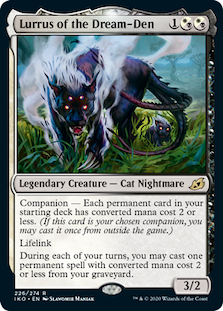
As a result, any speculation about what could get banned will necessarily be guesswork. The key: to turn the guesswork into an educated guesstimate. To that end, I have gone back through the Wizards announcements to see how they've justified their bans. There's always a primary reason, but it's often (not always) couched by ancillary reasons. The most common ones with examples are:

  1. Generally broken. (Hogaak, Arisen Necropolis)
  2. Enables brokenness. (Mox Opal, Bridge from Below)
  3. Harms deck diversity. (Splinter Twin)
  4. Homogenizes deck construction. (Oko, Thief of Crowns, Deathrite Shaman)
  5. Creates problematic play patterns. Subcategorized between:
    1. Encourages repetitive gameplay/gamestates. (Once Upon a Time)
    2. Encourages unfun gameplay. (Mycosynth Lattice)
    3. Metagame-warping. (Treasure Cruise, Arcum's Astrolabe
  6. Complicates tournament logistics. (Sensei's Divining Top)
  7. Constrains/threatens future design. (Birthing Pod)
  8. Achieves a 55% non-mirror win rate. (Arcum's Astrolabe)

As the last one is impossible for me to know, I won't consider it. These are the most often cited reasons and should not be viewed as a comprehensive list.

My Approach

I'll be using the Wizards-stated reasons to inform my watch list. However, there will necessarily be a lot of intuition and speculation. I can't know how the future will play out, nor if Wizards will actually take action. Wizards certainly could have gone after Izzet Phoenix in 2019 for several of the listed reasons, but they never specifically targeted it. The best I or anyone can do is to see what the metagame data says about the format then look for key pressure points and gameplay trends and try to intuit how things could break.

Some key things to remember:

  1. Wizards prefers to ban enablers or engines over payoffs
  2. Bans should target the actual problem, not the symptoms of the problem
  3. There is no hard threshold for what constitutes a problem
  4. There is no way of knowing how decisively Wizards wants to intervene

The last point is new for this year and it's all thanks to the February ban. Wizards has historically preferred highly targeted bans for minimal format disruption. They dropped a bomb back in February, and that may or may not signal a policy change. There's no way to know, but it must be considered.

With the disclaimers out of the way, I see three potential fracturing points in the current meta which could be banned on their own merits. There are also two cards that might break if the right card(s) are printed in 2022.

Lurrus of the Dream-Den

Offenses: homogenizes deck construction; creates problematic play patterns (repetitive gameplay); constrains/threatens future design

I covered the broad issues with all the bannable cards last week. Lurrus is the most widely played creature in Modern despite seeing almost no maindeck play. In fact, the limited evidence available indicates that if Lurrus could only be played maindeck it would be a solid but not widely played card. It's the companion mechanic that's an actual problem. I think that if Wizards simply declared "No companions in Constructed" there'd be no need for bannings, but that's not how Wizards operates. And errata that extreme might create more problems than it solves.
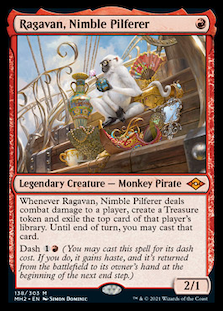
Why Lurrus Won't Be Banned

Wizards was happy with Lurrus' gameplay in 2020 and 2021. They must be, or it would have been banned already. The only thing that's changing is how frequently it comes up. And there is a lot to like about Lurrus enabling grindy gameplay for low-curve decks, especially when Wizards does want players to play longer games.

How Lurrus Could Be Banned

There is also a lot to dislike about Lurrus forcing decks to keep their curve low and how constantly recurring threats leads to boring gameplay. The percentage of decks playing Lurrus may be down from its peak, but it remains higher than any other flagship card. Players grumble about Lurrus at roughly the same rate they praise it. Eventually, a tipping point may be reached where Wizards decides that based on player satisfaction, format prevalence, and/or win percentage, enough is enough and it's time for Lurrus to go.

Likelihood: Medium

I'd be surprised if Lurrus lasts another year in Modern. It's steadily overtaking alternative decks and is the key to Hammer Time (2021's best performing deck) remaining a metagame force. At some point, either the format must move away from this same gameplay being viable or Wizards will need to intervene. There's no immediate need, but I can easily see it happening. Especially given the next card.

Omnath, Locus of Creation

Offenses: General brokenness; harms deck diversity

I think that saying "A 4-Color Pile" card is more accurate, but I require myself to take a stand. It isn't that Omnath itself is the problem. The problem is that 4-Color Blink is absorbing all the space for midrange decks and even, increasingly, control. That's not exactly the fault of Omnath, but if anything should be targeted, it's the card that's been banned in other formats. Banning Wrenn and Six or Teferi, Time Raveler won't hurt enough to prevent a theoretical 4-Color takeover. Omnath is at once the glue holding Blink together, the grease that makes it work, and the primary incentive for being four whole colors in the first place. Solitude and Fury are much worse without Omnath around. And Omnath's abilities are just absurd on their own.

Why Omnath Won't Be Banned

It is way too early to definitively say that a problem exists. I'm nervous based on how the Uro, Titan of Nature's Wrath played out. Uro homogonized all the midrange decks to be Uro decks, and towards the end they were all built around Uro, Field of the Dead, and Mystic Sanctuary. There are echoes of that in the 4-Color shell of Wrenn, Teferi, Omnath, and Prismatic Ending serving as a strong template for many decks.

However, December is the first month where any sign of convergence happened. December is always a weird month data-wise, and this could easily be an illusion or an MTGO quirk. Even if it is real, decks will naturally push towards certain directions and there's insufficient evidence that 4-Color is uniquely pushing anything out of viability. We need to wait and see. There's also the issue that Omnath has a lot of fans and playing all the good cards together is quite fun for many players.

How Omnath Could Be Banned

I could be right that Omnath decks are homogenizing Modern midrange. However, even if I am wrong, Omnath might get banned for an entirely separate reason: Wizards is just done with him. Much like with Faithless Looting, the subtext in the Uro ban was that Wizards was simply over that type of gameplay. That was why Field and Sanctuary had to go. Wizards could easily decide that Omnath is just too good everywhere and it needs to go, and/or the type of games it enables is not desirable.

Likelihood: Low to High

On its own merits, I think that 4-Color is fine and could stick around provided that it doesn't take too much metagame space, thus the low rating. However, if Wizards is looking for a major shakeup or an Uro-style intervention, Omnath wears a huge target. Big enough that there's little chance Omnath escapes, hence the high rating. It's easier to ban an already frequently-banned card than anything else. Such a ban would likely include Lurrus too for metagame balance. I could see Teferi, Time Raveler and possibly Wrenn and Six too, but neither has a chance on their own. Wizards would have to be looking for a hard reset of Modern. Certainly, a lot of players would be overjoyed to see the Time Raveler go.

Ragavan, Nimble Pilferer

Offenses: homogenizes deck construction; problematic play patterns (unfun gameplay)

As I mentioned last week, Ragavan, Nimble Pilferer gets a lot of praise and also blame for the direction Modern is heading. It isn't clear if said direction is good or bad nor is it clear if Ragavan is uniquely behind the changes. There's so much going on at the same time that separating the causal and corollary impacts of given cards is impossible. If the direction Modern's heading is good, nothing needs to happen. If it's bad and Ragavan actually is at fault, it needs to go.

Why Ragavan Won't Be Banned

Is the problem Ragavan, or Lurrus recurring Ragavan? The only deck that consistently plays Ragavan and not Lurrus is UR Murktide, a deck I've never heard complaints about. I do hear complaints about the Lurrus decks that are also playing Ragavan simply because they're never out of the woods. Beyond that, Ragavan is so easily answered that it seems laughable to ban the card.

How Ragavan Could Be Banned

While weaker in basically every way than Deathrite Shaman, Ragavan does put pressure on decks and the format in a similar way. Specifically, it demands: answer me quickly or the game slips away. Then there's the issue that losing to your own cards isn't fun and the fact that Ragavan shows up in weird places.

Likelihood: Low

I would not support Ragavan being banned alongside anything else. Again, it isn't clear that it's at fault for anything that's going on. I'd rather ban Lurrus and then see. If UR is the only viable home for Rags, then there's no problem. However, if he continues to spread throughout the metagame, then action will need to be taken.

Urza, Lord High Artificer/Urza's Saga

Offenses: generally broken; enables brokenness

These two are purely speculative, and as I'll be detailing below, require the right new cards to spell trouble. But the possibility is foreseeable, so I'm including them. I've gone into detail on Urza twice now, and he remains a threat for all the same reasons. He was the third power card in 2019's Snowoko decks and survived where Uro and Oko, Thief of Crowns fell thanks to support cards being banned instead.
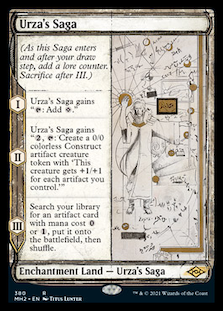
Meanwhile, Saga provides an insane amount of value from a land. While it can be answered a number of ways, lands are generally harder to answer than any other permanent type. And an unmolested Saga will produce two 3/3 constructs and a 0 or 1 cost artifact. It is a very strong card for grinding and has shown up in a large number of decks this year.

Why Both Won't Be Banned

Neither card is actually dangerous in Modern right now. Urza barely sees play and Saga's metagame presence has been declining. There's a huge deckbuilding cost to playing colorless lands in the first place, and Saga has a time limit. Plus, in order to get the most out of Saga decks have to clear space for 0 or 1 cost artifacts they wouldn't play at all or at least maindeck under normal circumstances. As such, non-Hammer Time Saga decks have been declining for several months now. And the trend will continue to next week's metagame update. Neither card will be banned as things stand.
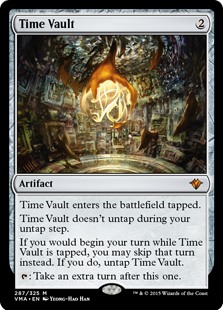
How Both Could Be Banned

However, there is an entire year of cards ahead which would contain the missing piece for Urza to reclaim his glory and/or break Saga. Or something could be broken by Saga. I'm specifically looking to next fall and The Brother's War. For those unfamiliar with Magic's deep lore, that was the event that launched the entire Magic story universe and the first plotline. It's a war between artificers and the marketing blurb specifically mentions giant mechs. This almost certainly means that it's an artifact set and Wizards has a history with those. All it takes is the right replacement for Mox Opal and/or Arcum's Astrolabe for Urza to dominate again. And that same card might bust Saga.

Likelihood: Very Low

Wizards will need to make a mistake for either card to become remotely banworthy. Design has taken a pounding over the past several years and appears to have learned, judging by the past year's Standard. However, anything is possible when designing around artifacts.
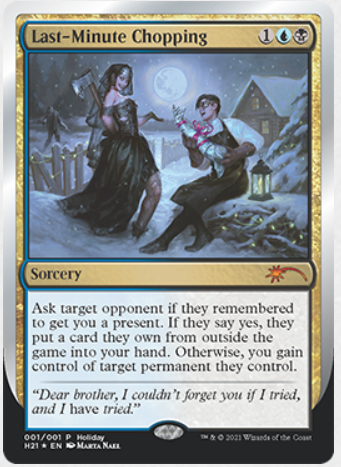
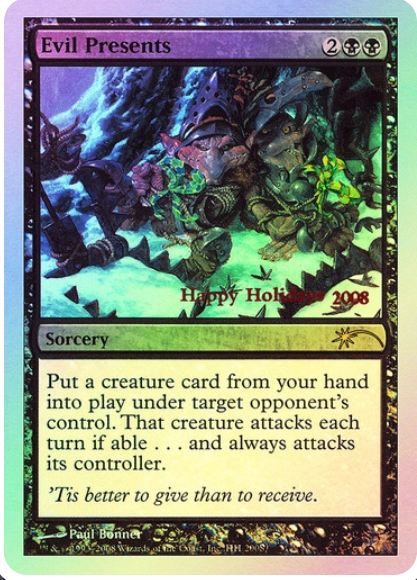
Wait and See

And now we wait. Modern is in a good place, so I don't expect anything to happen in the near future. However, the mind of Wizards of the Coast is a strange and mercurial thing. Who knows what it intends or what is coming which will require action? We just have to play the waiting game.

The Top 5 Most Valuable Holiday Promos

Are you a Quiet Speculation member?

If not, now is a perfect time to join up! Our powerful tools, breaking-news analysis, and exclusive Discord channel will make sure you stay up to date and ahead of the curve.

Last Thursday I received a festive email from TCGplayer describing the author’s opinion on “The 5 Strongest Holiday WOTC Cards.” The email explains a brief background:

“Since 2006, Wizards of the Coast has celebrated every holiday season by printing a special promotional card for internal team members and business partners. These silver-bordered holiday cards aren’t really meant to see play, they’re just a fun excuse to indulge in puns and references to old cards.”

Peter proceeds to rank his top five choices:

#5 Mishra's Toy Workshop
#4 Decorated Knight // Present Arms
#3 Stocking Tiger
#2 Topdeck the Halls
#1 Evil Presents

The email describes the rationale for this choice of ranking. It was a cute and entertaining read for the holiday weekend.

In the meantime, I’ve been seeing my Twitter feed rife with jealousy-inducing pictures of content creators and Wizards partners receiving the 2021 holiday promo:

While I regrettably don’t receive these gifted holiday promos, I still like to track them for their rarity and value! This is a Magic finance column, after all, so let’s dive into the top 5 most valuable holiday promo cards!


#5 Evil Presents ~ $160

It’s fitting that arguably the most powerful holiday promo card is also one of the most valuable. I assume the most popular application for this card (should it see play) is in combination with Phage the Untouchable for an instant win. While not instantaneous, Blightsteel Colossus is another fun one to combine with Evil Presents. That self-attacking clause is really what makes this card so versatile.

Perhaps playability is the factor that drives this card’s value. Currently, the card sells for around $160 on TCGplayer for a lightly played copy. I think its age also plays a role since this was the holiday card from 2008—that’s 13 years ago!

#4 Season’s Beatings ~ $190

The fourth most valuable holiday promo is also one of the older ones, from 2009. The artwork is pretty entertaining on this one, along with the gothic, holiday-themed flavor text. The random nature of the card’s effect would make this one pretty annoying to resolve in a game of Magic, but you can’t argue with its power. I’m not sure if it’s the artwork, the age, the power level, or a combination of the three that makes this card worth nearly $200.

#3 Snow Mercy ~ $250

This is the newest holiday promo in the top five, printed in 2010. Still, the card is eleven years old and I’m definitely seeing a theme here. The older holiday promos are also the most valuable! So while power level and flavor may play a small role in driving value, the most significant factor is surely age.

Here’s a fun fact about Snow Mercy: this is one of the few holiday promos I’ve ever owned. I forget the context, but I think I picked up a copy through some store credit arbitrage or something along those lines—this is my guess because I don’t remember owning the card for very long. Now that I see the card is no longer worth $70 and is now worth about $250, I of course regret flipping the card so quickly. I also love the ability because it effectively has you shake the card back and forth, reminiscent of shaking a snow globe!

The flavor text is a bit over-the-top in my opinion. I guess the intent is to indicate that shaking the snow globe is effectively shaking an actual world. In any event, the snow enchantment (why isn’t it a snow artifact?) comes in as the third most valuable Wizards holiday promo.

#2 Fruitcake Elemental ~ $300

The second most valuable holiday promo card happens to be the very first one Wizards of the Coast created, back in 2006. Can you believe they’ve been printing these holiday promos for 15 years now?

I vaguely remember reading about this card when it first came out, thinking it was pretty strange that Wizards made a promotional, holiday-themed, silver-bordered card to give away. I found the artwork disturbing, and I largely ignored the concept at the time. Now in hindsight, I wish I had scooped up a bunch of these given how valuable they’ve become, nearing $300!

The flavor of the card is pretty spot-on. The running holiday joke that fruitcakes never expire and are frequently re-gifted syncs up perfectly with this card’s abilities: indestructible, harmful to the controller, and easily “giftable” to a different player! The flavor text does a great job describing what a fruitcake elemental would be like in real life. The longer Wizards does these holiday promos, the more valuable this one will become, being the original.

#1 Gifts Given ~ $400

If you want to purchase a copy of Gifts Given, the most valuable holiday promo card, you’re looking at over $370 for a moderately played copy. A nicer condition copy will cost you north of $400…currently, the cheapest LP copy available on TCGplayer is $499 (though no copies have sold for that much yet).

What makes this card so valuable? First off, we need to acknowledge that it’s the second oldest holiday promo in existence, printed back in 2007. We’ve already established that the older holiday promos (certainly the first five printed from 2006-2010) are the most expensive. But I believe this card’s value is derived from a couple of additional factors.

First, the artwork is a fun spoof of the Champions of Kamigawa card, Gifts Ungiven.

There was an error retrieving a chart for Gifts Ungiven

Not many tournament legal Magic cards directly mention gifts in them, so this was a natural card to model off of when creating a holiday promo. The artwork is really cute, depicting the same character as the one on Gifts Ungiven wrapping presents that look very similar to those being wrapped in Gifts Ungiven. The parallels are numerous and very well done.

While this card didn’t show up in Peter’s top five most powerful holiday promos, I have heard stories about Gifts Given seeing some fun play in casual Commander games. As long as you’re playing amongst friends, this is a fun card that isn’t necessarily overpowered. Perhaps this playability is another driving force for this card’s value?

Lastly, I just want to mention that this is the only holiday promo that I currently own. I loved the parallel to Gifts Ungiven so much, that I picked this card up many years ago. It remains in my binder as a card I’ll possibly never sell—how could I sell it? After all, it was a gift (how fitting!).

Wrapping It Up

The holiday promos have been a Wizards tradition for 15 years now! While it started as a fun, festive way to thank staff and content creators, I have to admit that these have become pretty valuable cards in their own right. Some may even be worth investing in—there has been no precedent for reprints of these cards, so perhaps they are effectively on a “Reserved List” of sorts.

In that context, I don’t hate picking up any copies of these for a personal collection. I wouldn’t necessarily go out and purchase a dozen copies of Last-Minute Chopping—I can’t imagine these cards sell all that rapidly, and your opportunity cost would be steep. But if you like any of the previous holiday promos, I wouldn’t suggest waiting. It would be best to prioritize these since they seem to appreciate over time.

The cheapest promo currently is 2017’s Some Disassembly Required, which you can currently pick up for $35 or so. If you’re looking for a low-cost way of getting exposure to this space, this seems like a budget-friendly pickup. Though I’ll admit that this one’s ability is underwhelming. I’d rather go for the second cheapest, Goblin Sleigh Ride, which has a Chaos Orb type effect with physical dexterity being required.

Whichever way you decide to go, these fun and festive cards are sure to get your play group’s attention. If played right, they’ll also give you some laughs and help you get into the holiday spirit. Even if making money isn’t your primary angle, I’d definitely recommend adding a couple of these promos to your collection.

Avatar photo

Sigmund Ausfresser

Sigmund first started playing Magic when Visions was the newest set, back in 1997. Things were simpler back then. After playing casual Magic for about ten years, he tried his hand at competitive play. It took about two years before Sigmund starting taking down drafts. Since then, he moved his focus towards Legacy and MTG finance. Now that he's married and works full-time, Sigmund enjoys the game by reading up on trends and using this knowledge in buying/selling cards.

View More By Sigmund Ausfresser

Posted in Casual, Finance, Holidays, PromosLeave a Comment on The Top 5 Most Valuable Holiday Promos

Have you joined the Quiet Speculation Discord?

If you haven't, you're leaving value on the table! Join our community of experts, enthusiasts, entertainers, and educators and enjoy exclusive podcasts, questions asked and answered, trades, sales, and everything else Discord has to offer.

Want to create content with Quiet Speculation?

All you need to succeed is a passion for Magic: The Gathering, and the ability to write coherently. Share your knowledge of MTG and how you leverage it to win games, get value from your cards – or even turn a profit.

Teaching Magic: The Gathering With The Feynman Technique

Are you a Quiet Speculation member?

If not, now is a perfect time to join up! Our powerful tools, breaking-news analysis, and exclusive Discord channel will make sure you stay up to date and ahead of the curve.

Friends, Family, and Feynman

Richard Feynman was a Nobel-prize-winning physicist. He was recruited to work on the Manhattan Project (the team of scientists developing the first atomic bombs) while still in his early 20s. His groundbreaking work in theoretical physics included advances in quantum mechanics, particle physics, and quantum electrodynamics. It was in the field of quantum electrodynamics for which he was jointly awarded his Nobel prize. While best known for his scientific work, Feynman also pioneered an approach to learning and teaching: The Feynman Technique. What does all this have to do with Magic: The Gathering?

Richard Feynman, Nobel Prize Photo

With the holidays upon us, many will be spending time with family and friends. Perhaps you have a child, a niece, or a sibling who will ask, "What's the deal with this Magic game you're always playing?" or "How do you play?" More likely, you'll have arm-twisted a friend or relative into learning Magic. However it happens, at some point, you will sit down and teach someone to play Magic: The Gathering. The Feynman Technique is here to make that process as straightforward as possible.

What is The Feynman Technique?

The Feynman Technique is a style of learning that can be applied to any concept. Its goal is more than just learning surface knowledge of a subject, but of helping the student achieve a deep understanding. While primarily used for learning, it can also be used for teaching. The Feynman Technique can be broken down into a series of steps:

  1. Choose a subject or concept you wish to learn
  2. Write down as simply as possible everything you know on the subject
  3. Read it out loud as though teaching it to a child, like a fifth or sixth-grader
  4. Identify gaps in your explanation
  5. Refine and simplify your explanation
  6. Repeat steps 2-5 as needed until you achieve mastery of the subject

What's great about the Feynman Technique is it can be used as a course of self-study to understand any topic. This can be anything from particle physics, to English literature, to Trading Card Games (TCGs). The Feynman Technique can also be used as a teaching tool. So how do we use it to teach a game as complex as Magic?

Teaching Magic With the Feynman Technique

To start teaching anyone Magic, it is helpful to have done some advanced preparation. Before we even discuss the decks we will use, it is important for us to establish a basic understanding of the game, and how it is played. To use the Feynman Technique, start by writing down everything you know about Magic needed to explain a simple game to someone. This can include everything from the steps and phases of a turn, to what it means to "tap" something, to the costs to play spells. Whatever you think is important to play the game, write it down.

Once it's written down, you'll want to organize the material. The sheet you've written will serve as a reference guide while you are teaching. Keep it simple, keep it neat. Try to limit it to one 8.5"x11" piece of paper. Once it's written down, read it to a friend who already knows Magic. Is there anything missing? Did you adequately lay out the steps of a turn? What about priority? The stack? Fill in as many of the gaps as you can, and repeat this process until you have a one-page written guide to playing Magic that anyone could pick up, read, and muddle through a game with a minimal amount of guidance by you.

The Teaching Process

With your teaching guide in hand, you are ready to start teaching using the Feynman Technique. I recommend explaining as little as possible at the start. Cover costs of spells, tapping, and outline the steps of a turn. However much you need to get the new player into running a sample game with exposed hands. Follow steps three through five of the learning principles we've discussed, taking the new player through each step of a turn, and through several turns of a game with hands exposed until they feel comfortable navigating the turn sequence.

As you go, your friend or family member may have questions about how things work. Utilizing either your own knowledge, your cheat sheet, or another source, answer each of these questions as they come up. Answering these questions will fill in gaps in the knowledge of the learner (step four), and may reveal additional content to add to your cheat sheet. Continue this process through a few sample games (with hands revealed or hidden) until the new player feels comfortable playing with a minimal amount of questions. At that point, you'll have successfully taught them Magic! So what decks should you use to aid in the learning process?

What Decks Should You Use?

While it's possible to teach someone with full Commander decks or tournament-caliber Modern decks, custom teaching decks or a purpose-built product like Magic sample decks or JumpStart packs is recommended. The advantage of preexisting sample decks or JumpStart packs, if you have either, is that they are ready-to-go products that require no prior planning other than your teaching materials. Simply shuffle them up and start teaching. If you do not have access to those products or prefer to build custom teaching decks, there are a number of factors to consider when deckbuilding.

Magic Origins-era Sample Decks

Building Custom Teaching Decks

If building custom teaching decks, I recommend building a set of five complementary decks, one for each color of magic. Each deck should contain the same number of cards, so they may easily be shuffled together to make a larger two-color constructed deck. I recommend either 20-card or 30-card teaching decks. In addition to each of the five decks containing the same number of cards, I recommend each teaching deck contain the following:

  • 10-13 creatures, depending on color
  • At least one enchantment (aura or non-aura)
  • At least one artifact
  • 1-5 instant or sorcery spells depending on color
  • 9-13 basic lands depending on deck size
  • At least one non-basic land that does more than just produce mana

Additionally, each deck should not contain more than one rare/mythic, or more than four or five uncommons. This limitation is intentional. By building decks mostly around common cards, the cards will be less technically complex, and more likely to include reminder text on keywords. This will aid in the teaching process before introducing players to more complex cards, and make the rares that appear in these decks that much more exciting.

Lessons Learned

The Feynman Technique is only one of the many possible methods to aid your teaching of Magic. What teaching strategies have worked for you in the past? How did you learn to play the game? Let me know in the comments, or on Twitter. For more on the life and work of Richard Feynman, check out his autobiography "Surely You're Joking, Mr. Feynman!": Adventures of a Curious Character.

Avatar photo

Paul Comeau

Paul is Quiet Speculation's Director of Content. He first started playing Magic in 1994 when he cracked open his first Revised packs. He got interested in Magic Finance in 2000 after being swindled on a trade. As a budget-minded competitive player, he's always looking to improve his knowledge of the metagame and the market to stay competitive and to share that knowledge with those around him so we can all make better decisions. An avid Limited player, his favorite Cube card is Shahrazad. A freelance content creator by day, he is currently writing a book on the ‘90s TCG boom. You can find him on Twitter and LinkedIn.

View More By Paul Comeau

Posted in FreeTagged Leave a Comment on Teaching Magic: The Gathering With The Feynman Technique

Have you joined the Quiet Speculation Discord?

If you haven't, you're leaving value on the table! Join our community of experts, enthusiasts, entertainers, and educators and enjoy exclusive podcasts, questions asked and answered, trades, sales, and everything else Discord has to offer.

Want to create content with Quiet Speculation?

All you need to succeed is a passion for Magic: The Gathering, and the ability to write coherently. Share your knowledge of MTG and how you leverage it to win games, get value from your cards – or even turn a profit.

My Latest Fun Deck and How I Made It

Are you a Quiet Speculation member?

If not, now is a perfect time to join up! Our powerful tools, breaking-news analysis, and exclusive Discord channel will make sure you stay up to date and ahead of the curve.

Inspiration has a funny way of happening. The story of how Minsc, Beloved Ranger came to be my next commander project begins with Magic the Gathering: Online.

My good friend and I have played draft on Magic: Online for several years and we are very different players. We have diverse opinions on overall strategy, card power, and play sequencing. Deep into pack two, there is Minsc. We had token synergy, few three drops, and, there was nothing else in the pack. Welcome to the draft deck Minsc!

Through two rounds we never saw this card. In the third round, however, we were 1-1 going into game three. In the final game of the final match we finally had Minsc out and our opponent was one card away from stabilizing. Our draw for the turn was Zealous Conscripts and we got to steal their only blocker and smash for big but non-lethal damage. Then I noticed after combat that if we had activated Minsc for zero, our opponent's stolen creature would just be dead. We promptly made their Young Pyromancer a 0/0 and they conceded on the spot.

A Pleasant Surprise

Even though we made other plays throughout the draft that were much more complicated, we were both laughing hard at the Minsc finish. Capturing that moment in a game of Commander then became my goal.

I took a quick look at what other players were doing with Minsc and it was mostly token-based strategies. If you've read my article on The Heart of Commander you know that one of my goals for casual Commander is to play lots of different cards and really make a color identity and Commander stand out. Playing a token deck with Minsc might make strategic sense but it lacks significantly in the flavor department.

A GIANT Solution for a Giant Problem

Coincidentally, I've been looking at updating my GIANTS deck lead by Ruhan of the Fomori with a bunch of cards from Kaldheim. One of my older Commander decks, Brion Stoutarm, had some cards I would like to move into Ruhan and Disharmony effects would be key in Minsc so the decision was made. I added Brion's GIANTS to Ruhan and color identity distinctiveness to Minsc's; in essence, Brion Stoutarm was assimilated.

Fighting and Stealing and More Fighting

I also decided that the main appeal of Green in this deck would be to facilitate the Fight mechanic. So Red is stealing, Green is fighting, but what about White? Well, White is actually Fighting and Stealing.

This is chef's kiss good — we have absolutely nailed the color identity for the theme. Additionally, I made some build choices based on my Points article as well. This deck does not seek to absolutely maximize points in its current form, but it does score fairly well at a virtual Plus Six Points to start.

Give us a Decklist Already!

Russell Crowe Presents Minsc, Fighting Round the World

Commander

1 Minsc, Beloved Ranger

Stealing

1 Word of Seizing
1 Preacher
1 Evangelize
1 Jeering Instigator
1 Wrangle
1 Harness by Force
1 Hijack
1 Kari Zev's Expertise
1 Traitorous Blood
1 Act of Treason
1 Bloody Betrayal
1 Disharmony
1 Shackles of Treachery
1 Act of Aggression
1 Captivating Crew
1 Portent of Betrayal
1 Traitorous Greed
1 Goatnap
1 Sarkhan Vol
1 Mass Mutiny
1 Coercive Recruiter
1 Zealous Conscripts
1 Conquering Manticore
1 Molten Primordial
1 Mob Rule
1 Insurrection
1 Twist Allegiance

Fighting

1 Inscription of Abundance
1 Mage Duel
1 Blizzard Brawl
1 Dromoka's Command
1 Pit Fight
1 Go for Blood
1 Domri Rade
1 Domri, Anarch of Bolas
1 Ravager Wurm
1 Primal Might
1 Neyith of the Dire Hunt
1 Kogla, the Titan Ape
1 Ulvenwald Tracker
1 Prey Upon
1 Titanic Brawl
1 Pounce
1 Duel for Dominance
1 Voracious Hydra

Mana Rocks

1 Gruul Signet
1 Selesnya Signet
1 Boros Signet
1 Gruul Cluestone
1 Selesnya Cluestone
1 Boros Cluestone
1 Strixhaven Stadium

Draw Cards, Removal

1 Phyrexian Vault
1 Relic Vial
1 Greater Good

ETC

1 Tahngarth, First Mate
1 Restoration Angel
1 Flailing Soldier
1 Humble Defector
1 Bazaar Trader
1 Beast Within
1 Generous Gift

Basic Lands

13 Snow-Covered Forest
14 Snow-Covered Mountain
10 Snow-Covered Plains

Why I'm NOT Playing Certain Cards

Most of the choices made here are based around a very specific theme that has been in Magic since day one; stealing a creature. After I steal it, it's unlikely my opponent is getting it back because I am going to sacrifice it for profit, make it Fight another creature to clear the board, or just turn it into a 0/0 with Minsc; and I get a free attack out of the deal! Furthermore, we're getting Points just for playing a fair, casual, and interactive deck. Perusing EDREC we can check the Top 100 list for the colors we are playing.

In Red, we have to go down to the 70th most played card, Zealous Conscripts. This card is obviously good but it is tremendously on theme and an easy include. In this deck, it is a Talruum Minotaur with Act of Treason tacked on.

In White, well, we're playing very few cards for the same reasons — there are not many on theme. Some additional White cards considered were: Prepare // Fight, Debt of Loyalty, or, Animal Boneyard.

Green is a lot easier as we only have Greater Good which is 75th. We've avoided the "trap" of Green by simply not choosing to ramp, and, we score two Points for not shuffling our deck.

Autoincludes Make Games More Boring

The 500 pound gorilla in the room is NOT Kogla, the Titan Ape, it's Beast Within and Generous Gift. These are both solid cards and in the top 100 for obvious reasons - they deal with *ANYTHING*! However, if our opponents don't have creatures, we can't steal them. The only fair thing to do would be to give them a creature to steal back anyways. I think both cards fit the theme of the deck enough to be included and are extra interactive in this case. Consider it's significantly more interactive than playing Krosan's Grip or Nature's Claim.

Additionally, while Lightning Greeves and Swiftfoot Boots look great to protect Minsc, they are both in the top 30, too common, and seek to remove interaction, which is against the Heart of Commander. Minsc costs three mana — if it gets removed play more Magic and recast it at five mana a turn or two later.

Even Fun Decks Have Power

Sneaking in at 99 out of Top 100 for Red, Insurrection is a potential game-winner by itself. However, you have both Strixhaven Stadium to make your job easier and Minsc to make it a one-sided board wipe after combat. Want to draw cards? Humble Defector not only gives you cards but, also, allows you to give it to another player at the table who should pass it right back to you. If that player no longer respects team Minsc? Steal the Defector back and give it to someone else!

That's a Good Trade

Bazaar Trader is criminally good in these types of decks. Permanently gaining control of anything you steal is great, but, there is a second mode to the Trader that is perfect for diplomacy. Maybe someone needs a land or a mana rock to be able to stop a threat on the table that you cannot stop — Bazaar Trader to the rescue! If the writing is on the wall and someone is going to kill you, try this: give them a land. Act of Treason your own Trader to untap it, then give them another land. Maybe keeping you around another turn is worth it for two lands. Or two creatures. You know it does not matter who controls a creature; if it's on the board it belongs to you!

An Easy Deck to Power Up

Keep in mind much of what has shaped my version of Minsc is for casual play with a Point structure that I am working around. There are auto-include cards like Khalni Ambush // Khalni Territory and Song-Mad Treachery // Song-Mad Ruins, which would cost a Point but take up no room in the deck so those are simple upgrades if Points are not in play. With big mana, Minsc makes any attacker a lethal one and can easily chase a Point for Largest Creature.

The next time I go to my LGS I'm bringing Minsc along — I think I'm going to have some stories when I return!

But What About the Hamster?

Yes there is a Hamster. The Hamster's name is Boo. I think killing a player with a Hamster is pretty humorous but that is not what inspired this deck. If I won an event and got to make a new rule it would be +1 Point for finishing off a player with Boo. The entire deck would be different, but that is another story, one I hope to tell!

Did this decklist inspire you? Have you played Minsc as your Commander? Reply in the comments!

Avatar photo

Joe Mauri

Joe has been an avid MTG player and collector since the summer of 1994 when he started his collection with a booster box of Revised. Millions of cards later he still enjoys tapping lands and slinging spells at the kitchen table, LGS, or digital Arena. Commander followed by Draft are his favorite formats, but, he absolutely loves tournaments with unique build restrictions and alternate rules. A lover of all things feline, he currently resides with no less than five majestic creatures who are never allowed anywhere near his cards. When not Gathering the Magic, Joe loves streaming a variety of games on Twitch(https://www.twitch.tv/beardymagics) both card and other.

View More By Joe Mauri

Posted in Commander, FreeTagged , , , , , , , Leave a Comment on My Latest Fun Deck and How I Made It

Have you joined the Quiet Speculation Discord?

If you haven't, you're leaving value on the table! Join our community of experts, enthusiasts, entertainers, and educators and enjoy exclusive podcasts, questions asked and answered, trades, sales, and everything else Discord has to offer.

Want to create content with Quiet Speculation?

All you need to succeed is a passion for Magic: The Gathering, and the ability to write coherently. Share your knowledge of MTG and how you leverage it to win games, get value from your cards – or even turn a profit.

Rekindling the Fire

Are you a Quiet Speculation member?

If not, now is a perfect time to join up! Our powerful tools, breaking-news analysis, and exclusive Discord channel will make sure you stay up to date and ahead of the curve.

It has been a while since my last article. I would like to say that this delay is due to starting a new job or even the rush of the holiday season. While these have definitely been factors, it is also due to a lackluster passion towards Magic in general and a re-found love affair with Diablo 2 (Resurrected).

I do not know how many others just feel generally overwhelmed by the sheer number of new products Wizards is pumping out, but my entire playgroup has taken a step back as nobody has the time to stay up to date with all the new cards pouring out of Seattle.

There was a time in my life where I was playing Magic every night of the week, except on Mondays. I looked forward to Thursday nights more than any other night as it was designated as EDH night. I definitely went into work a few Fridays with far less sleep than I should have thanks to some epic games.

But that was back when we didn't live in constant spoiler season and one got a breather between sets to delve into fun interactions with the latest cards, rather than having to constantly check what is coming next and ignoring what has already been released.

I no longer get excited about the next fun "build around me" commander because I haven't even started building the deck around the last one.

I don't want this article to maintain the depressing tone it started with, so there is some positivity on the horizon. I have returned to my roots. My favorite color combination has always been Junk, or what is now called Abzhan. You get mana acceleration, removal, and life gain.

I bring all this up because after deciding to build a deck around those concepts, I came across some newer cards with low buy-ins that I believe have a lot of potential. It also looks like the Commander-based cards with extended art found in Collector Boosters can not be foil, which makes these the "rarest version" of these cards. I only bring this up because the buy-in for the extended art versions of these cards is still very low, thus the extended art versions are the variants I like most for speculation.

This search has also helped rekindle my passion for speculation, and the low buy-in means a random reprint in some new product will not lose me a lot of money.

My Most Recent Specs

There was an error retrieving a chart for Blossoming Bogbeast

With no other synergies, this 5 drop gives all your creatures +2/+2 and trample when it attacks. However, given the plethora of cards in Magic's history that provide life this can easily be a much bigger buff. I picked up 10 copies and three extended art copies myself after finding this card. Unfortunately, it has to attack to trigger and doesn't have haste, so it isn't quite the second coming of Craterhoof Behemoth; but given copies are under $1 and it is only in one of the C2021 decks, I feel the risk is minimal and the buy-in is low.

There was an error retrieving a chart for Ezzaroot Channeler

I think this card has a lot more potential than people might initially think and it feels like a sleeper to me. I believe in it enough to have bought up 20 copies myself. The key to this card is that its mana reduction ability is static and unlimited (i.e. there is no "can't reduce the cost to less than 1" clause as we have seen on other cards). This feels like a card that can easily allow you to cast Eldrazi on the cheap, which is especially good since the big ones have on-cast triggers. While I haven't actually drawn it in the few games I have played with this deck, I imagine it will have quite a showing when I do.

There was an error retrieving a chart for Stalwart Pathlighter

While I have been unimpressed with the Coven mechanic in draft, and it hasn't done anything in standard yet, Commander is a format that is still heavily dominated by creatures, so triggering Coven shouldn't be that difficult. Being able to make all your creatures indestructible every combat is exactly what any aggro deck wants to do. It is also critical to note that Stalwart Pathlighter does not have to attack for it to trigger, so you can abuse it the turn you play it. A 3/1 for three isn't spectacular, but it also isn't overcosted to the point of being unplayable, like some cards aimed solely at Commander players.

There was an error retrieving a chart for Veinwitch Coven

My last target is the one I like the most. As a 3/3 with menace for three mana it is at least somewhat aggressively costed. The ability to cast Raise Dead every time you gain life seems like something that can easily be broken and is at the very least a good value engine. Requiring any life gain to trigger allows it to pair well with numerous cards throughout Magic's history. I found that the extended art versions were available for about 30-50% more than the regular versions, yet I have to believe they are far less common and thus I really like this spec and have picked up around eight extended arts. Having a creature type of vampire also adds some potential.

Spec Hits

A few years ago I called out Infernal Genesis as a potential spec thanks to the rare ability for black to make tokens. To any of my readers who took me up on it — it has finally hit. This isn't meant to imply that all my calls end up being big winners, but I like my logic at the time, and it combo's nicely with Toxrill, the Corrosive

Want Prices?

Browse thousands of prices with the first and most comprehensive MTG Finance tool around.


Trader Tools lists both buylist and retail prices for every MTG card, going back a decade.

Quiet Speculation