If not, now is a perfect time to join up! Our powerful tools, breaking-news analysis, and exclusive Discord channel will make sure you stay up to date and ahead of the curve.
Some of you may call this game we play “Magic.” I call it, “The most successful global market in the history of human existence.” Tall order, huh?
Not so fast, consider the “Matth.” What global economy has ever experienced seventeen years of economic prosperity without a single recession, widespread market downturn, or “market-sized” bubble bursting? I’m not talking about the microbubble that popped when your Chameleon Colossi’s value evaporated. When has the Legacy market crashed? Never, not when it was “type 1.5,” not when it became Legacy, and never since.
I hope you’ll take a moment with me to consider how incredible this is. I first ventured into Magic at the tender age of eight. Lost in my world of elder dragons, I had no idea I was investing in my first market. I continued playing Magic casually throughout my childhood, breaking for about two years and missing most of Odyssey and Judgment blocks. Thankfully, I elected not to sell my collection. When I returned, I hungered for more, and began to consider the game competitively. Although it started costing more, it also began to pay off. As of today, I estimate my total investment in the game to be roughly $6,000 (tournament fees included but travel expenses not). Despite all the bad trades, years of wear, and cards lost/stolen/ruined by giant containers of orange juice, I can say only one meaningful thing about my collection: It’s worth more than that.
Don’t worry, I’m not here to talk about my collection. Consider instead your Legacy staples--your Force of Wills, your dual lands, your Survival of the Fittests, etc. A 300% increase in value (appreciation) over the last ten to thirteen years is the baseline for many of these cards; others, like Wasteland and Underground Sea, have seen closer to 400-500% appreciation over the same period. Imagine the card Wasteland as the awesomest share of stock ever (in case you didn’t know, most stock certificates can’t destroy any nonbasic land). If you invested $1,000 into Wasteland during its reign in standard, you could have picked up approximately 250 shares of Wasteland at ~$4 per share--pricey for an uncommon. If you simply held those shares of Wasteland for ten years, your investment would have appreciated 500%. By dividing this percentage by the ten year duration, we see an APR (annual percentage rate) yield averaging at 50%. To put this in perspective: The Clinton Administration presided over the most profitable economic period in the U.S. stock market’s history. Many claim that the recession that came a few years later was the product of arrogance on the part of investors--who could believe that we could possibly maintain an 8% APR yield for investors throughout a period of this length without endangering the market’s future?
So an 8% APR in the stock market is impossible to maintain over eight years without disastrous implications (and usually a huge loss of said profits), yet we Magic players have enjoyed sustained yields of 20-50% APR for fifteen years from our investments without even trying? Do you really think that Matth at ages 8-15 had the market expertise of a hedge fund manager? Let’s not be absurd. The answer is that we’ve stumbled across something of a Magic[al] market (sorry, just couldn’t help myself). And 20-50% APR on these cards is assuming we make no moves. There are long-term traders and there are day traders. Why not be both? If we (investors) become better at predicting and exploiting price spikes in this market, there is even more money to be made in the margins. Now, a lot of cards have lost value as well; no market is without risk. But, given its stability and unbelievable yields over the last seventeen years, the Magic market has been, quite literally, an unbeatable investment sector.
This is the moment I would like to thank Richard Garfield and Wizards of the Coast for their brilliance, and Hasbro, Inc. for their wisdom and temperance in allowing WOTC to remain a mostly independent arm, and therefore an endless ATM for revenue. We’ve lost a lot of great things to corporate expansion. Thankfully, the most successful global market in modernity was not one of them.
So, accolades aside, why am I writing this article? To invite you to regard the Magic market as I do. We’ll begin with some terms:
● Market Capitalization (Market Cap): A publicly traded company’s net worth, as determined by multiplying its stock value by the number of shares of the stock on the market. You have probably heard from someone, “Bill gates is worth $___ billion,” or perhaps, “Microsoft is worth $___billion.” The amount is determined by the applicable stock’s market cap. Bill gates owns 51% of Microsoft, which has a market cap of $224.1B. (.51)*(224.1B) = $114.29B; Bill Gates’ net worth. Must be nice. There are three categories of stocks when defined in terms of market capitalization: “Large cap,” “small cap,” and “micro cap.”
● Large Cap investments: These are your Apples, your Googles, your Microsofts and Citigroups. Everyone has heard of these guys; high share value, tons of shares constantly trading hands. In the Magic market, these are your Jace, The Mind Sculptors, your Primeval Titans, your Force of Wills, and your dual lands. These are high value, low risk, moderate yield investments. We should always remain mindful of set rotation, however, as it’s one variable not easily relatable to other markets.
● Small Cap investments: These are the smaller “established” companies trading on the market. Because they lack the giant capital and widespread investment of your Microsofts (or Jaces), you haven’t heard of many of them, but action still happens. If you’re lucky enough to catch a small cap investment expanding to large cap status, you can make a bunch of money. A current “small cap” card with a bullish trend is Memoricide. One that just moved from “small cap” to “large cap” is Frost Titan.
● Micro-Cap investments: Your tiniest startups and companies, with feeble value but a big heart. These are commonly known as “penny stocks.” You can get them for almost free, because they usually go nowhere. But when they do, you stand to make more money here than anywhere else in the market. These are your Grindstones, your Dark Depths, your Flash, or in different terms, your Thada Adel, Acquisitor. Big dreams, small successes. So far.
● Bullish trend: Something that’s trending up.
● Bearish trend: Something that’s trending down.
● CDs: Certificates of Deposit. You can buy these at any bank. You “lock in” X dollars at Y interest rate for Z amount of time. When you cash them in, you’re guaranteed to make a little money. This is the lowest-rung of the ladder in terms of investment risk, because there is none. Therefore, yields are low. Although there are no real CDs in Magic, I consider investing in power to fall into this category. An Ancestral Recall bought today for $400 will probably be worth $450 in a few years. We know this, but we also know that we can probably make much more money elsewhere.
I hate to leave you hanging, but I hope I’ve piqued your interest. I started thinking about Magic in this way just after the 2008 recession started, when it dawned on me that my most stable investment in life has been Magic. If I had a million dollars today, I would invest it in Magic before I invested it in the stock market, real estate, or “the next big film.” Those investments ultimately fall into the hands of others to use or abuse. In Magic, the investment is in your hands. You’re your own broker. Better still, you’re a broker with the power to explode your own investment with a tech deck you build.
The Magic market is one that has never crashed, and although it could, it has remained stable for seventeen years at extraordinary yields, something no other investment sector in the world can boast. In my next installment, I will examine small and micro-cap card trends and suggest how you, too, can find yourself profiting from the next Frost Titan. After all, investing in any market is Simply Matthematics.
If not, now is a perfect time to join up! Our powerful tools, breaking-news analysis, and exclusive Discord channel will make sure you stay up to date and ahead of the curve.
In this week’s article, I am going to take a page from my favorite sportswriter, ESPN’s Bill Simmons.
Near the beginning and middle of each major sports season, Bill always writes an article “power ranking” each team from worst to best. This acts as a handy way to get a feel for the relative power level of the entire league. It’s also fun to see how your favorite team stacks up against the competition.
I have decided to do an article power ranking all of the mythic rares in standard.
Since Wizards began printing Mythics back in Shards, the speculation game has changed considerably. While the odd Knight of the Reliquary and Ranger of Eos can make you money, the only way you’re going to buy a $2 card today and sell it for $15 tomorrow is if you ‘hit’ on a mythic that is the Next Big Thing.
Avenger of Zendikar, Eldrazi Monument, and now Frost Titan are the poster children for paying close attention to mythics at all times. The jump happens quickly, and you need to be ready.
While monetary value doesn’t directly correlate with placement on this list, standard playability is the primary force that drives up the price of a mythic. This list is a good place to start if you want to find the next big thing.
Please note that my rankings are flawed. There will be picks that you disagree with. I will rank some cards very high when you would have ranked them lower. I’ve manipulated the list considering raw power, position in tier-1 decks, longevity as a power card in standard, and hype. (And also some artistic license!)
So keep in mind that this is designed to be a discussion piece, not a complete who’s who of standard. So if you disagree with one of my rankings and that leads to us discovering the next financial sleeper, then we’ve all won.
Anyway, without further rambling, let’s get to the rankings:
The “Plan 9 From Outer Space” Division
For criminally insane robots. I mean, unplayable mythics.
70. Demon of Death's Gate
This card is fringe playable in a world where Squadron Hawk is black and costs 0. In our world, however, it’s the worst mythic rare in standard.
69. Kalitas, Bloodchief of Ghet
I think the reason that Kalitas’ back is turned to us in the card art is that he’s embarrassed by how terrible he is.
Worst mythic in standard? Check. Worst card period? Maybe not quite...maybe.
68. Eternity Vessel
67. Platinum Angel
66. Felidar Sovereign
If you want to do weird things with your life total, go play EDH. It’s really fun!
65. Cast Through Time
64. Quicksilver Gargantuan
63. Lorthos, the Tidemaker
At least Lorthos wins the game if you get him into play and can attack with him and not have him die to a piece of removal. Quicksilver Gargantuan is just a really expensive Clone and Cast Through Time literally does nothing.
62. Liege of the Tangle
The reason Avenger of Zendikar is good is that he can create an army the turn he enters the battlefield. While the Liege’s army is much bigger, he needs to connect before you get any extra men at all. Oh - and he costs one more to play than the Avenger. If the liege is not seeing any action right now when ramp is a tier 1 strategy, I doubt his day will ever come.
61. Novablast Wurm
This wurm may have a fine ability, but he sure does have a difficult casting cost. Most decks don’t want to play seven drops, and those that do aren’t going to want to wrath the rest of their team when their great big space wurm attacks. People aren’t even playing Day of Judgment right now – I doubt this guy is ready to shine.
The “Van Down By the River” Division
These guys don’t have a home. They probably never will.
60. Time Reversal
I don’t know what anyone ever expected this card to do that made it worth $40 when it came out. I suppose if the next block were a functional reprint of Urza’s Saga, we could talk. Seriously, though. What would this card need to make it good? Does anyone know?
59. Platinum Emperion
Raise your hands if you bought this for $40.
58. Hellcarver Demon
57. Nirkana Revenant
Powerful abilities, cost-prohibitive bodies.
56. Lighthouse Chronologist
55. Transcendent Master
So much for the level up mechanic in standard. Apparently having a mana sink is good in limited, but in constructed you need to spend your turn playing spells. Who knew?
54. Khalni Hydra
53. Omnath, Locus of Mana
Green has better things to do. Like Vengevine. And Primeval Titan. And Lotus Cobra. And playing Jace cards off a double Cobra activation.
52. Dragonmaster Outcast
If this didn’t see play when Ranger of Eos was legal, I doubt he’ll find a home now.
51. Obsidian Fireheart
This guy actually saw some fringe play as a finisher in Devastating Red pre-rotation. I somehow doubt that sharing a casting cost with Koth is doing him any favors now.
50. Geth, Lord of the Vault
In a titan-driven world, Geth has the look of a bulk mythic. He does have evasion and a useful ability, though, so I would expect him to hang around the fringes and find his way into a few sideboards if a metalcraft deck hits tier-1.
Also, I think I had a dream last night where someone told me this guy was good. So, uh, if you believe in premonitions I guess you could pick some up.
The “Sleepers, but Snoring Loudly” Division
The best ‘sleepers’ usually stir. These guys are intriguing, but right now they’re sound asleep.
49. Chandra Ablaze
The first planeswalker on the list! Big Chandra is too expensive for a burn deck, and she doesn’t quite do what the “big red” decks want to do. (Compared to, say, Inferno Titan.) Still, this is the first mythic we’ve seen so far that I would consider investing in, as she’ll come roaring up in value if she sees ANY play. Remember: she’s a planeswalker that was only printed once. That’s good for a couple bucks right now.
Looking for the "Ob" job in any deck he can, he's even partnering with Genesis Wave nowadays.
48. Ob Nixilis, the Fallen
Ob is certainly powerful if you can get him into play with a couple of fetchlands for backup. Considering that he only costs 5, has seen marginal play before, and black is making a comeback as a standard constructed color, Ob’s future is not set in stone as a bulk mythic. If you can pick these for next to nothing, I would.
47. [card]Wrexial, the Risen Deep[card]
A bulk mythic by most accounts, I like Wrexial as a deep sleeper. Blue/black control is a hot deck right now, and this old cephalopod could create some intriguing tech. It’s great against the mirror, unblockable against any deck running blue, might give you some card advantage, and can’t be doom bladed. For 6 mana, it’s a threat that has to be answered. Wrexial won’t wre-define the format or anything, but I can see interest in him start to pick up if things break correctly.
46. Admonition Angel
In my eyes, Admonition Angel is basically a seven drop that kills something until your opponent blasts away at your fragile card with his removal spell. Pass.
Of course, Zvi has been singing this angel’s praises for months, and he’s a pretty good innovator…
And Chapin wrote an article this week saying that Admonition Angel is “completely underrated right now.” So, uh, take note of that. You can pick her up at bulk mythic prices, so even if Chapin isn’t on to something you haven’t lost much.
The “Failed Prospect” Division
You know exactly what I mean if you pre-ordered either of the next two cards when they were first spoiled.
45. Mindbreak Trap
First strike damage, drop a chieftan. Second strike drop...another Chieftan...sigh...
Maybe you’ll get someone to throw a bunch of Summoning Traps at you and this will be a cute answer.
Regardless, I have trouble ranking this card any lower than 54th since it’s still a mythic counterspell. Just like that kid who threw 98 in high school with an ERA of 1.04, part of me will always think this card has got a chance to make it in the majors, even though all play experience is pointing in the opposite direction.
44. Warren Instigator
This card is and perhaps always will be just a couple goblins short of being awesome. Keep an eye on the spoilers, and if you see a 3-mana Siege-Gang Commander or a new Piledriver or something, start hoarding these.
The “El Bencho” Division
You don’t want to count on these guys, but they’ll occasionally come through in a pinch.
43. Sorin Markov
42. Liliana Vess
The two black planeswalkers. Powerful. Expensive. With black on the rise, these guys should not be entirely dismissed. But with Sorin already trading at $8-$10 and Liliana being reprinted more times than a fake concert ticket, I doubt they have much room to grow.
41. Comet Storm
I guess “strictly better Fireball” just isn’t good enough anymore. I would rate this card higher if it wasn’t a prerelease foil, but as is the price won’t go up unless it starts seeing play in a deck that everyone wants to build. For a fringe card at best, there are just too many copies floating around for it to be worthwhile.
In order to keep with the tradition of planeswalker's getting more powerful the second time around, Wizard's has errated the storyline so this is the older version.
40. Rampaging Baloths
These guys are on-again off-again in ramp decks, creating tons of beasts on their better days and dying to doom blades on their lousy ones. Flashy? No. But as long as ramp decks are still a dominant force, these Baloths should be reasonably effective and at least warrant a “consider” by big mana deckbuilders.
39. Chandra Nalaar
If the right proliferate cards get printed, I can see original flavor Chandra seeing some real play. Her abilities are all useful and powerful, but her color and casting cost do her no favors.
She probably won’t go up too much, but I can see her ticking up a few bucks if people decide that she’s what they want to go big for.
Of course, she’s had since Lorwyn to make a splash and it hasn’t happened yet…
The “18 And Moving Out” Division
These cards are getting kicked out of their home and being told to find a real job. Will they end up running Google, or living in that van down by the river?
38. Indomitable Archangel
A solid role player without a role. 4/4 flyers for 4 just aren’t what they used to be, but her ability could be strong if the right deck came along. A possible sleeper.
37. Mindslaver
The angry helmet made no ripples in standard last time due to, well, affinity.
Most people have easily dismissed Mindslaver this time around because it seems like a known quantity, but aren’t we living in a different world? I don’t *think* this card is a top mythic, but would you be shocked if someone built a good, fun deck designed to abuse it? Not tier one, probably, but good enough to see a small jump in price.
The Lux of the draw.
36. Sword of Body and Mind
Speaking of comparisons to original flavor Mirrodin, everyone forgets that Sword of Fire and Ice and Sword of Light and Shadow were not top constructed cards while they were legal.
This sword is markedly worse than those.
‘course, we don’t have Loxodon Warhammer, Lightning Greaves, Bonesplitter, or Skullclamp now, so the sword is one of the best pieces of equipment around. As a 1 or 2 of in just a couple decks, I doubt it is going to be hitting the top 5 mythics any time soon.
35. Lux Cannon
Patrick Chapin wrote up a cool “big red machine” deck list that had Lux Cannons, Voltaic Keys, Koths, and other fun combo pieces designed to machine gun permanents with surprising inevitability….and then I never saw anyone ever play the deck.
At 4 mana, Lux Cannon is tempting. But is it too slow, even with the key? Probably. Of course, if this card *does* end up being good, the price will go way up since it’s the sort of card people will by dying to play with. Keep it on your radar.
The “William Shatner” Division
Once a handsome space captain. Now a grumpy old man. Do these former Standard stars have a shot in the new environment?
34. Ajani Goldmane
In the era of Bitterblossom and Spectral Procession, Ajani Goldmane was a superstar.
Then he got printed twice more and all of his favorite partners rotated.
Can this venerable old cat find a new home, perhaps in conjunction with the new Elspeth? He is clearly a powerful planeswalker with a top-tier standard upside, but he hasn’t been seen anywhere near a game of constructed Magic in a year and a half.
I think the ship has sailed on this guy, at least until a token block is released sometime in the future. (And Wizards keeps reprinting Ajani!)
33. Sun Titan
I'm too old for this...stuff.
32. Gideon Jura
During different pre-rotation iterations of U/W, these two cards were featured prominently as the “big white threat” that came out after Jace started working his magic. Since white is no longer the default color to be paired with blue, will either of these cards make an impact any time soon? I expect Gideon’s value to go right back up if he starts making any appearances, while the Sun Titan will need a strong run of dominance to hit $10 thanks to being the prerelease card.
31. Iona, Shield of Emeria
Iona is probably going to be an eternal staple for years, but I doubt she’ll be terrorizing standard players again soon unless new reanimation or polymorph effects are forthcoming. Ramp decks, of course, have Eldrazi to mess with.
30. Nissa Revane
29. Sarkhan the Mad
Both of these planeswalkers have been good in constructed, and I see no reason to think they won’t be again. Funny enough, I actually think Nissa is better now than she was when Eldrazi Green first hit the scene – the deck just didn’t have enough pieces then. She is much easier to protect now and can start generating card advantage or monument fodder much more quickly.
Angry Sarkhan was one of the best cards in the strongest iteration of Jund, and provided either a strong board presence or a mediocre answer to an otherwise impossible to deal with threat. I can easily imagine a new deck coming along to take advantage of his power.
The “Garfunkel” Division
They won’t write Graceland, but they’ll help out on Sounds of Silence.
28. Inferno Titan
Red rarely gets good “dragons” for constructed, and while this guy is no Demigod of Revenge he is still a possible 4 for 1 when he hits the battlefield.
Now that Frosty is a superstar, expect his fiery cousin to take up the mantle of “most underrated titan.” Pay close attention to this guy and start buying if he shows up in some winning lists.
27. Grave Titan
Apparently 10 points of power for 6 mana isn't quite good enough at the moment.
After the releases of M11, the dying giant Jund adopted this “Thrinax Titan” as a way to get bigger in the face of so many new threats. Grave Titan’s price shot up, but then cratered just as quickly – apparently a 5 for 1 (after an attack) is not worth 4BB. He really didn’t see any play outside of a couple Jund builds, and has been more smoke than fire to this point.
Of course, his raw power is off the charts. I imagine most decks that run heavy black are going to at least take a look at this guy. Once the game of “my Frost Titan trumps your singleton giant threat” starts wearing thin, this plus-sized zombie might start looking more attractive.
26. Gaea's Revenge
Hyped up in recent days as an excellent answer to blue decks, the Revenge is possibly the next card to make “the leap.” I am writing this sentience on Friday, October 29th – almost a week until this will be published – and right now the price on this card is $3.96 on Channel Fireball.
This card’s bottom price is around $4, but it will go up to $8-$10 if it starts seeing play. Pick these up if your trading partners value them low, because right now it’s all upside.
Sometimes hype is good enough to make a quick profit.
25. Linvala, Keeper of Silence
Linvala’s popularity should fluctuate based on Fauna Shaman’s popularity. Right now, the Night Elf Druid is on a bit of a downswing, so Linvala is sitting in more binders than sideboards. If you start to see Elf/Vengevine start to get dominant again, start picking up Linvalas like they’re going out of style.
The “18 and Going to College” Division
These are the elite prospects. Even if they don’t pan out, they won’t end up under a bridge –they’ll probably just settle in to a quiet life as a claims adjustor. But if they do succeed? Top 10 potential.
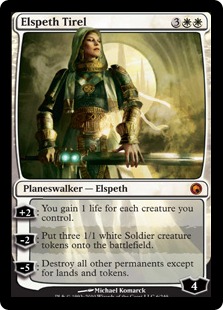
24. Elspeth Tirel
At first blush, this Elspeth doesn’t hold much of a candle to the “good” one from Shards, especially considering her higher casting cost. Of course, her abilities are quite powerful, and she can protect herself, which is a necessary quality for a top-tier planeswalker.
I expect her to end up closer to Gideon Jura than Jace, the Mind Sculptor in the end – a powerful woman without a tier 1 home.
23. Skithryx, the Blight Dragon
All the poison cards are really popular right now as casual players want to try a new way to kill their opponent. As the best poison creature yet printed, ol’ Skittles should hold his value well – and look out if poison becomes tier-1 without obsoleting this guy! Skithryx’s price should depend a lot on whether or
To quote Stephen Menendian: Mox Opal is the best Mox since Alpha.
not poison gets better going forward, (it will) and whether or not he is going to be a tier-1 card in that deck. (he should).
22. Mox Opal
The marquee card for Scars’ other major theme, the Opal’s only draw back is that you need to play about a billion artifacts for it to be good.
Since we’re getting two more sets of presumably sweet artifacts, expect this tiny stone to live up to its long, venerable pedigree.
That said, is there any room for the value on this one to go up? Only if it is a 4-of in the best deck. Otherwise, it’s probably just a safe hold.
21. Venser, the Sojurner
Unlike Elspeth, Venser has shown up in some very good decks and has started to prove his worth as a powerful planeswalker. His biggest weakness, though, is that he is very narrow and specific in his uses – much like all of the cards in this tier. Will the Venser deck be strong this season? Or the Mox Opal deck? Or the Skithryx deck? Or all three? Pay close attention and buy accordingly.
The “Sink or Swim” Division
Failed prospect, or future sensation?
20. Abyssal Persecutor
Alright, Abyssal Persecutor. It’s time to show the world what you’ve got.
First you teased us with enormous potential in the face of a not-that-overwhelming drawback. Heck, I’m sure more than one person traded a Jace, The Mind Sculptor for you at the Worldwake prerelease. You were the next big thing – a “platinum demon” that could start the beats on turn 5 with no assistance.
Then you disappeared. For months and months.
And now you’re back? Being hailed as the “four drop titan” like some kind of savior? You’re like Superman in “Superman Returns.” Does the world really want you anymore?
(Yes. Yes we do.)
In the interest of full disclosure, I just bought two playsets of these on eBay. Gerry T. said this was the next Frost Titan, and I expect people will listen to him and drive the price up regardless of whether or not he’s right.
The “Space Cthulu” Division
You gotta give ‘em their due.
19. Eye of Ugin
18. Kozilek, Butcher of Truth
See how many games you lose where you get to untap with this guy.
17. Ulamog, the Infinite Gyre
16. Emrakul, the Aeons Torn
Together, these four mythics help make up the core of what is possibly standard’s best deck. While there may not be more than 1 or 2 of each in there, all of them work together to provide diverse, consistent, and proven threats. All the Eldrazi should hold their value as long as the deck is still good, though I can’t see them going up much.
Long term, I think Emrakul is one of the safest cards to invest in. He’s the Best Fatty Alive right now, and casual players for years to come are going to want him. Think Doubling Season and pre-reprint Darksteel Colossus.
Eye of Ugin, interestingly enough, was much more valuable before it saw any play. Now that it’s in a good deck, you can get ‘em for 3 bucks.
Call it the Jace affect, and remember it when you speculate on any cards from Worldwake.
The “Samwise Gamgee” Division
Scottie Pippen. William Riker. Robin. Everyone needs a good #2.
15. All is Dust
While I suppose I could have put this card in the previous division, I remain unconvinced that its only place is in the Eldrazi ramp deck where it is currently featured.
Many Magic pundits worried that All is Dust would see less play once more people started playing with artifacts, but so far that dominant Scars-based deck hasn’t yet emerged.
All is Dust won’t be taking down opposing Molten-Tails any time soon, but this colorless Plague Wind is one of the most powerful spells available in the current standard.
14. Kargan Dragonlord
Figure of Destiny? Not quite. In fact, one of the reasons I gave up playing red in standard is that in all of my playtest games I don’t think I leveled this guy all the way even once.
Of course, that’s a very small sample size, and the truth is that the Dragonlord is a very powerful 2-drop in any agressive mono red deck.
13. Garuuk Wildspeaker
Garruk has actually never stopped being good since first being printed in Lorwyn block.
Why haven't we seen another non-tribal green walker? Because they got it so right the first time.
Oh, sure, there are times when he’s awesome and others when he’s merely ok, but the truth is that he does everything a green ‘walker needs to do. If you need bodies, he’ll give you some. If you need to break through the combat step, he’ll do that. If you need to accelerate, he’ll even help you there.
In fact, I would argue that Koth is the red Garruk more than the red Jace. They are very similar in terms of scope, reach, and power level.
I doubt this guy is going up in value anytime soon, since he is in his third printing, but I can’t think of a green mythic that’s more essential for all green mages to have. I’d trade my set of cobras long before I’d trade my Garruks.
12. Avenger of Zendikar
Avenger of Zendikar is very much a product of its time.
In any other part of Magic’s history, I doubt this guy would have been played in anything but a couple of awesome Timmy EDH decks. But the fact that fetches and oracle and landfall and Primeval Titan and Lotus Cobra are all around make the Avenger a truly potent finisher.
Look for this card to drop like a rock when ramp falls out of favor, but until then this beast is going to keep building armies and winning games.
11. Jace Beleren
“Baby Jace” pretty much proves that it’s impossible for the original ‘walkers to break $6-$8 anymore, because I doubt any of them are going to be better than he is right now.
At three mana, this dirt-cheap planeswalker is still great value for a blue deck. Some control builds are even running 7 or 8 Jaces total.
(Just don’t play more than one at a time…)
10. Molten-Tail Masticore
This masticore might not be just a top-10 mythic. He might be in the top 5.
The best masticore ever printed, this guy is a very fast clock that can hold down the ground while still acting as a finisher. If you resolve this early and stick it, you don’t need a second threat. All the card advantage in the world won’t save your opponent from becoming a big pile of molten slag.
While arguably more powerful than several of the mythics I ranked higher, the masticore hasn’t quite put up enough results to climb past #10 - - yet. If you see that changing, you might want to start picking these up at the $20 or so in trade they’re currently valued at.
9. Wurmcoil Engine
Which card from Scars saw the most play at states by an absolutely overwhelming margin?
Not Koth. Not Mox Opal. Not Dross Hopper.
This guy.
Granted, with everyone planning for Titan v. Titan battles right now, the engine isn’t quite at its best. But it’s still a super powerful card that everyone has access to.
Actually, the fact that it’s doing so well when it isn’t that well positioned should tell you something about the card.
What, you don’t think people will be running this card a year from now when the titans are gone?
8. Frost Titan
Turns out, a hard to kill guy who trumps all the other titans (and most other creatures, and Mimic Vat, and a ton of other stuff) is actually a pretty good card. Who knew?
Not me.
If you go back and read my Pack to Power blog, you will see me specifically tell people NOT to trade for this card. Why? Because until very recently, he wasn’t in ANY decks. People kept saying he was underrated, but that didn’t mean they were actually going to play him or anything.
Then Gerry T. and others actually found homes for the guy, and proved that he was, in fact, a top-level mythic.
The lesson, as always: I don’t know anything. Why are you still reading this?
7. Lotus Cobra
Lotus Cobra is like that kid you knew in high school. He had a 4.0 GPA, scored 30 points a game on the Varsity Basketball team, and dated the girl you wanted more than anything. Then he went to college, majored in something funky, and ended up putzing around Europe for 5 or 6 years to the bewilderment of everyone who knew him.
“What happened to that boy?” his relatives would say around the table at Christmas. “He had so much promise!”
And then he came back and got a $350,000 a year job at a software company and went on to invent the self-inflating tire.
The point? Powerful enough cards eventually find a home. (See also: Titan, Frost)
The “Falling Star” Division
She needs to find another agent – and soon.
6. Baneslayer Angel
How the mighty have fallen.
For a year, all anyone could talk about is how “Walletslayer Angel” ruined standard by being laughably better than any other creature.
Cheer up old girl. You're still the prettiest angel in the top 10 mythics.
It’s amazing, now, to see how many commonly played threats and answers she dies to. It’s almost like Wizards heard our pleas and decided to only print cards that beat her in a fight.
- Frost Titan taps her down forever.
- Primeval Titan fetches Mystifying Maze, which exiles her.
- Abyssal Persecutor doesn't die to her in combat (though it can never finisher her off).
- Wurmcoil Engine straight up beats her in combat.
- And anything in play when you have an Eldrazi Monument.
- Jace, TMS bounces her.
- All is Dust kills her.
- So does Ulamog.
- Fauna Shaman goes and gets something that will kill her.
- Even Trinket Mage comes with a built-in Baneslayer answer in the form of Brittle Effigy.
Couple her sudden vulnerability with being re-printed, and that formerly $50 angel is cratering down toward $15.
So why is she still here at mythic slot #6?
Well, she did spent a year basically tearing through standard. And she is still a 5/5 with stacks of awesome abilities for just 5 mana. And with M11 no longer being drafted, I’m not sure too many more Baneslayers are going to be opened anytime soon.
This is a card with a reasonable pedigree and a ton of demand among those who are willing to shell out for standard decks but might not always be after the latest and greatest tech. I recommend picking these up if you can get ‘em close to the $15 price point, because I doubt she’s ever going to fall much lower.
The “Flagship” Division
Cards that spawn decks all their own.
5. Koth of the Hammer
Overrated? Underrated? The jury is still somewhat out on Koth.
True, his raw power is off the charts. Of course, he hasn’t shown up in a truly tier-1 deck yet. (Unless you count him as a 2-of in some builds of RUG ramp.)
He is #5 on this list because I am confident he will find a home where he is the king of the castle. He gives quick decks a whole lot of things that they really want, and as long as people are playing red, this guy will be leading the charge.
Something that Wizards seems to have done lately is to make sure each color has a marquee card – a flagship mythic that defines what it does best. This one is clearly THE card for red.
Remember Koth’s placement on this list if he starts to hit that post-prospect value slump. This is often the best time to pick up cards. There were weeks, if not months, were Lotus Cobras, Eldrazi Monuments, and Abyssal Persecutors were $8 each. Mark my words: Koth WILL be a part of a good deck. And until he isn’t, enough people are going to want to brew with him that he’ll stay in steady demand. A fine pickup at the right price.
4. Eldrazi Monument
Starting out as a bulk mythic when Zendikar was released, I started to pay the monument slight attention when Kyle Sanchez started putting one or two of them in every deck he designed.
I also decided that I wanted one for pretty much every EDH deck ever, but I figured I could pick them up later. Oops.
Then that Eldrazi Green deck made a splash at the SCG 5k, and everyone jumped on the card. It was the first truly innovative deck of the new season, and it didn’t matter that it was kind of a mediocre build. People wanted to play it anyway.
The monument is even better now, as the entire elves strategy has gotten a pretty huge lift with the addition of Scars and the rotation of Jund. Even if Elves disappears, I expect this giant space rock to be a tier-1 card to build around for months to come.
3. Vengevine
Ironic, isn’t it, that this card has actually been a bigger part of Legacy in recent months than Standard?
While there are certainly cards that seem designed more for older formats, the ‘vine is not one of them. He bashes really hard, there are tons of ways to cheat him out, and the fact that Fauna/Vine decks don’t seem to be at the top of standard this week doesn’t make me want to rate this guy any lower. The
Why shouldn't green get the best creature in the best creature cycle ever printed?
right card or combination will be found, and Vengevine will be at the top of the heap again sooner rather than later.
If you can find someone who will trade you their set on the cheap because they’ve moved on, you should jump on the opportunity.
2. Primeval Titan
Fueling standard’s most powerful archetype, Primeval Titan is proving to the world that a 6-drop accelerant is truly a worthwhile threat.
Wizards wanted the entire cycle of titans to make the same sort of constructed splash that Baneslayer Angel did the previous year, and they really hit it out of the park. Primeval is the best creature in the best cycle of creatures ever printed. If your deck cannot beat this guy, don’t take it to battle. And since neither Leonin Arbiter nor Tunnel Ignus has slowed this guy down, I doubt his deck is going away any time soon.
The “Best Card In Standard” Division
If you expected a different #1, I don’t know what planet you’re living on.
1. Jace, the Mind Sculptor
What more is there to say about this guy? He’s a very, very safe buy and his value is likely to be stable for the rest of his run in standard. He will probably drop to $50 post rotation, and if he’s not reprinted he’ll likely slowly rise over the next few years as he continues to warp the eternal formats around him as well.
There simply hasn’t been a more powerful card than Jace printed since, uh…what? Tarmogoyf? Umezawa's Jitte? Fact or fiction? Survival of the Fittest?
Jace is just one of those cards you need a set of if you want to play the best decks in all formats for years to come.
And why shouldn't blue have the best card in standard?
***
And that’s it! I am excited for a bevy of posts disagreeing with my rankings, as well as some interesting discussion about which of these cards is going to skyrocket over the next few months. Chances are, at least one of them will.
Stay tuned next week for a shorter article than this one. Breaking 4,500 words last week and 5,500 this week was a bit much.
If not, now is a perfect time to join up! Our powerful tools, breaking-news analysis, and exclusive Discord channel will make sure you stay up to date and ahead of the curve.
Welcome back to the Revenue Review, where this week we will actually be reviewing some revenue. School and work have conspired to keep me from trading as often as I’d like, but I made it out to Game Day on Saturday to move some cards.
Playing-wise, I ended up 3-1, losing to mono-black control and my infinite flow of lands. But the highlight of the day definitely was casting Genesis Wave for 13 on Turn 5, which earned a scoop on the spot. I finished in third place, netting a couple of dollars of store credit after the entry fee and the snacks I purchased.
In an effort to align our trade prices with what you’re likely to find on Ebay (the baseline for sell prices), I wanted to begin using card prices from the Black Lotus Project, which tracks sales from Ebay. The problem is that neither they nor MOTL have added Scars to the price guides yet, so I’ll be using Coolstuffinc.com until I figure out a workaround. I’m not an expert on MOTL, so if there is a list there I can reference for future articles, please let me know.
The tournament scene at my local store is filled with very casual players who care infinitely more about their personal value when trading than they do card prices. In only one trade were prices even brought up, and my trade partner decided that, in the end, he didn’t care so long as he got the cards he wanted.
His: Copperline Gorge ($2.50)
Blackcleave Cliffs ($3)
Hand of the Praetors ($8)
Total: $13.50
Mine: Lodestone Golem ($4)
Leyline of Sanctity ($4.50)
Total: $8.50
Net: $5
Since I’ve been working on Friday nights and don’t play MTGO, I haven’t yet drafted Scars, so I was more than happy to pick up the lands. The real pickup is the Hand, which is a card with insane amounts of casual appeal. My philosophy is that Poison cards are like Ball Lightnings – they won’t stay in the trade binder long. My partner originally wanted a second Lodestone Golem in the trade, but when I told him that wasn’t a trade I was comfortable making because I needed to gain something from the trade, he had no problem dropping it to one in order to facilitate our deal.
His: 2x Razorverge Thicket ($2.50)
Total: $5
Mine: 2x Nantuko Shade ($2)
Total: $4
Net: $1
I know this trade doesn’t look like much, but it’s actually a trade I like quite a bit. It’s safe to say the majority of people who want Nantuko Shade, have it. It’s a niche card that’s been around forever and reprinted into oblivion. The lands, while also niche, are new, opening up a much larger audience who are looking for them. This could change if the Shade appears in some winning decklists, but I don’t have high hopes for mono-black control.
It’s much more likely that I’ll find someone building a G/W deck and in need of cards than I will someone in need of Shades. The takeaway from this is, when you have a chance to move cards that have gone stagnant in your binder, you should jump on it to keep your binder fresh, which in turn opens more doors with those who’ve seen your binder already.
His: 2x Gideon Jura ($27)
Total: $54
Mine: 2x Cryptic Command ($15)
Total: $30
Net: $24
My partner valued his Gideons at about $20-25 apiece and Commands at $15. Before forging ahead and trying to close the deal, I took some time to find out why he wanted the Commands. Turns out he is really interested in playing control but doesn’t have the requisite Jace, the Mind Sculptors. He said he is gearing up to play some sort of control deck in Extended. We talked about how nuts Cryptic Command is (very) and I told him I expected the price to jump up come Extended season. That, and the fact I was the only player at the store to own Cryptics, was enough for him to accept the difference in prices.
His: Celestial Colonnade ($4)
Total: $4
Mine: Brittle Effigy ($3)
Total: $3
Net: $1
Truth is, I probably shouldn’t have made this trade. Same logic as Nantuko Shade applies here. Those who want to play Colonnades already have them, whereas Effigy is just beginning to see tournament play. But I love lands, so what can I say?
His: Iona, Shield of Emeria ($7)
Total: $7
Mine: Razorverge Thicket ($2.50)
Total: $2.50
Net: $4.50
Remember that player building G/W I talked about? Found him. To him, Iona was just another fatty in his binder, whereas the land contributed to something he needed NOW, which is a great incentive to lose value in a trade.
His: Ball Lightning ($5)
2x Regal Force ($3.50)
Darkslick Shores ($3)
Total: $15
Mine: Sword of Vengeance ($3.50)
Total: $3.50
Net: $11.50
This trade was made with the same trader as the last one. I told him the values were heavily in my favor, but in the end, he just said there was nothing else he wanted from my binder and didn’t care about the Green fatties. As I said before, the traders at this store are very casual-oriented, and this type of attitude is typical of this type of player. While this case was a bit extreme, the bottom line is he wanted certain cards for his new deck, and didn’t care about older cards he had no use for.
His: Frost Titan ($15)
Promo Wurmcoil Engine ($15)
Promo Figure of Destiny ($8)
Total: $38
Mine: foil, full-art Tempered Steel ($14)
Total: $14
Net: $24
I made this trade with the leader of a small group at my store who have combined cards. Some of them hate “netdeckers,” if that gives you any indication of the type of players they are. They are good people and the guy who handles the collection is tricky to trade with. I once had a trade pulled out from underneath me because I wanted fair value on my fifth and sixth copies of a card. He couldn’t understand why I wouldn’t trade them to him at a heavily discounted rate since they were just extras.
Anyway, I certainly wouldn’t trust my collection to him to trade, but to each his own. In this case, with the tournament ending, he desperately wanted to complete their collection of the full-art promo.
It hurt a little to see it go, because I really like full-art cards, but I handed him my binder and went to work on his. I pulled out the three cards I was interested in picking up, and told him to pull whatever he wanted. He pulled out only the Tempered Steel and said “I’m cool with doing this three-for-one.” In most cases, I would feel the need to point out the difference, but I know he generally knows the prices on these cards. In any case, I made the trade very quickly.
That’s all for this week. Check back next week for more analysis!
If not, now is a perfect time to join up! Our powerful tools, breaking-news analysis, and exclusive Discord channel will make sure you stay up to date and ahead of the curve.
"Greed, for lack of a better word, is good." -Gordon Gekko
So, you’re dominating your markets by this point. You walk in dressed sharp, and ready to trade. Last week you showed people your awesome new trade folders, gave away a bunch of free cards, and made a healthy profit line. Cards flow into and out of your binder freely, and you’re starting to see some income from recording your activities in your trade journals/ledgers. Keep up the amazing work, keep people happy, and your trade journal will continue to show you in the black.
Last week, we had an explosion of articles that touched on Peter Jahn's segment about trading, and his idea of playing nice in the sand box. Here's what I'm saying this week: "Greed, for lack of a better word, is good."
In the original Wall Street movie, a conversation between the two main characters takes place where Bud asks Gordon "How much is enough?" at which point Gordon tells him in a lot of words, "More". Interesting answer to his question isn’t it? Keep the answer he gave in mind. Can you say that you feel the same way? If you have 8 Jace, the Mind Sculptor, would you pass on the opportunity to get a ninth? I know I wouldn’t, since a Jace TMS is almost as good as cash, and in some deals even better.
But what happens when we can’t find cards we want? What happens when during the winter months less people show up on a constant schedule? The holidays tend to shift weekend priorities as colleges and other schools take their winter breaks. This can lead to a lower turnout at events, and a lower turnout in your trading week to week. So how do you survive the winter? You go look for more.
More can come from a number of different sources. If you’re visiting family for the holidays, look in your local area for card shops. If you’re only in town for a weekend or two, take a couple hours for yourself and go expand your network even further. The mail system is rather decent, and if they don’t mind waiting a couple of days for mail this is another excellent chance for you to create a larger trading network.
Having touched on the subject of distance and how the mail system can shorten it brings up more possibilities for us. A few weeks ago I mentioned Magic Online Trading League or MOTL as many of us know it. While I don’t have a trading post there for people to browse, I do go through other peoples and see what they want and what they have. If I see an opportunity there I will message them and see if some deal can be worked out. The biggest thing I’ve noticed is that people tend to try and make a deal as close to “even money” as possible, with each side throwing things in to try and even out the value. This can make it extremely hard to make a profit unless you know the system they are using to value trades. Once you know the system, target cards that the specific system they use has undervalued, and shoot for those. This may seem underhanded or immoral to some. I say remember that you’re reading an article on a site that is all about making profits from Magic.
A quick note that I feel must be said here. Online trading is as different from in person table trading as night and day. At the tables, I suggest you practice the theories from my previous four articles since you will work with these people on a constant basis, and your reputation is much easier to damage in person and much harder to repair. Online trading is a completely different beast, and people are looking at the value side more than the personal desire side. Rarely will you find the person willing to take a difference of more than 5 dollars in your favor on paper, that’s why it’s important to know what they use to price cards.
Another option for online trading is the marketplace at www.mtgsalvation.com. To have access to that you must have an account with them, but it’s free and the market there is alive and well. What I previously stated still applies and is made simpler by the fact that many people post the pricing method they use on their trading page.
Hey Steve! I’ve got tons of cards and made lots of profits on paper, but now I want to turn my on-paper profits into real paper profits. Have any suggestions?
In fact, yes I do. Your options are many when it comes to unloading your ninth Jace, the Mind Sculptor. You can take the easy money and vendor it at a large event. I don’t suggest this unless you’re in a tight spot and need the cash right then, since usually they will only give you 40-60% value on higher end cards. E-bay is an option, and if you choose to take that route I suggest you read up on E-bay selling strategies presented by our own Douglas Linn so you can make the most money out of it. This is the option I prefer for anything of real value, since it has the highest profit potential.
More like It That Rewards a savvy investor
On the subject of dealers, I think there is a time and a place to sell to them. At GP Portland, many dealers were buying cards that many players considered worthless for decent prices. I sold multiple Chandra Ablaze for $4 apiece, Serra Ascendant for $2.50 apiece, Vampire Nighthawk for $1, Echo Mage for $0.50, and It that Betrays for $0.50. While none of these prices seem amazing, Chandra Ablaze and Serra Ascendant would now cost me what I sold them for to buy back. Vampire Nighthawk would cost me far less than a dollar each in trade to acquire again, and It that Betrays is almost given away.
I stocked up for three weeks on low value rares that many considered bulk that I knew the dealers were buying at the event. I went for anything that was being bought for 50 cents or more each, and many times I got them at bulk rate in trades, which is 10 cents. That’s at least a guaranteed four times return on my investment! It may not seem like 40 cents is much of a profit, but the weekend cost me about $350 in total and I paid for most of it selling off those 50 cent – 2 dollar rares. Scope out the buy lists for big events you’re attending, and instead of trading for Jace, the Mind Sculptor to vendor off, trade for multiple It that Betrays at a much lower price, for much higher return percentages. It won’t take much more time but in the end you’re going to get what we’re all looking for profit wise – More.
If not, now is a perfect time to join up! Our powerful tools, breaking-news analysis, and exclusive Discord channel will make sure you stay up to date and ahead of the curve.
Last week I ended by talking about some things to look for when comparing prices across different sites. By keeping an eye out for prices that generally remain the same across sites and others that vary significantly you can set up trades that will net you some value even if they appear even according to a particular price guide.
That brings me to my first topic for this week: never stick to a single price guide. I see this more often online than in person but by saying something like "I only use MOTL for my prices" you are setting yourself up to lose value. Let's take a specific example, Frost Titan, and try to determine the price. I traded for a Frost Titan on 10/26 and according to MOTL it was worth $6.74. Apathyhouse had it at $5.74 and the mid price on magiccards.info was $20.86. This is a pretty broad range but when I checked ebay for the most recent prices you would be lucky to find one for $12 with $13-15 being the most common range. So if you stuck to one price site you could have lost nearly half of the value of the card by trading it away.
The reason for the dramatic shift in price across sites has to do with the surge in popularity of Frost Titan. Stores are able to quickly change their prices so a site that looks at stores will also be able to quickly reflect the change. On the other hand, sites that look at auction sites and takes the average price over a period of a month will take some time to catch up because while it is seeing the new, higher, prices it still takes into consideration the old prices. As I write this now, on 10/31, MOTL is listing Frost Titan at 7.91 but looking at completed auctions on eBay they are still going for about $12.
While I think that you shouldn't get stuck on using a site for pricing I believe even more is true. You should not use any site for pricing. No site is going to be able to answer the question, "How much do you value Frost Titan at?" Price guides will tell you how much people are willing to pay on eBay for a card or how much certain stores buy/sell a card for but none of them can tell you how much you are willing to part with for a card. How much is your Ancestral Recall worth to you? Would you pay the same for a second?
Most of the time when a card is played in constructed we generally include multiple copies of that card in our decks. In those cases the fourth copy of the card is worth nearly the same as the first copy. My fourth Jace is just as valuable as my first. My fourth Iona, however, is almost worthless to me. I would not trade nearly as high for the fourth copy as I would for my first.
As a trader you need to keep these things in mind when trading for a card. How popular is that card? Do I know people that are looking for it? How much play does it see? Is it a casual-friendly card? How long do I think it will take me to trade it away? How much do I think I can get for it? Do I think its prices will change soon? These are just a few of the questions I ask myself when trading. Let's look back at the Frost Titan and figure out how much it is worth to me.
It is a very popular card right now and I know people who are going to want to start building decks with it since it was in seven of the top eight decks from the SCG 5k in Charlotte. I'm pretty sure I could trade it away pretty fast since I am attending the SCG 5k in Boston the following weekend. On the other hand I feel like it is an easy card to beat. Most of us didn't give it much thought when it came out because it wasn't great against the decks at the time. Now that people are playing decks that are not threat-heavy and that win by swinging with big guys, Frost Titan becomes more dominant, especially when we can ramp into it on turn 3-4 very easily. I don't think that people will have a difficult time finding ways to win against Frosty though so I think he will start to see less play as he shares the load with other cards. Still I think I can move it before that happens. Maybe I can get $20 for it but I would count on getting $15. In that case it is worth no more than $10 to me. I would trade for it at $12 if I was able to get a cheap throw-in.
That is how I value cards. I certainly use the price guides when determining the value but I don't just blindly use a certain site to tell me how much I should trade for a card or for how much I should trade it away. One other thing to consider that I think most people skip over is how expensive the other cards in the deck are. For example Frost Titan almost exclusively sees play in decks running 3-4 Jace the Mind Sculptor. Players who don't already have those may not be as interested in playing blue and therefore not really interested in your Frost Titan.
Chas Andres wrote an interesting article here about buying collections over Craigslist. I've picked up a few collections in the past but never over the internet so it was a fun read.
I want to briefly mention two collections I bought and especially how I found them. The first one I bought from one of my college professors back in 2006 and the other from a neighbor. Both of these acquisitions happened just because I mentioned in a conversation that I played Magic.
Every time something in Magic changes you always hear people talking about how it will ruin the game and how they are quitting. Most of this is nonsense but there are thousands of people who have played Magic at one time and quit. Most of these people now have careers and just have their old cards lying around somewhere. They probably wouldn't have thought about them if you didn't mention Magic. The collection I bought from my neighbor was small but had a Scrubland and a bunch of $10 Legacy rares in it. My college professor's collection, on the other hand was massive. It took me and a friend the better part of a day to go through everything. It was all early magic stuff and included an Unlimited Black Lotus, but no other power. This was in 2006 so cards weren't quite as expensive as they are today but it was still pretty sizable. He knew the Black Lotus was worth a bit but he didn't really care about the other cards. Going through the trouble of looking everything up and selling it just wasn't worth it to him. I ended up buying the entire collection for $1100. $600 for the Lotus and $500 for the rest. Before buying everything I already had someone willing to pay me $800 just for the Lotus. I sold off some of the collection to dealers to recover the rest of my money then kept some and shipped the rest to dealers for trade credit and got stuff I actually needed. None of this would have happened though if I had not mentioned Magic at some point. You never know when you will find someone who would love to get rid of some trash for your cash.
More recently I have noticed some local players who used to play Magic a couple of years ago and now that they see there is a vibrant community they want to come back into it. I've spent a good deal of time going through their older stuff in order to trade them cards from more recent sets. The main thing I always seem to hear from them is how big their collection is and how old it is. Then it usually turns out to be about 5000 cards from Time Spiral block or something.
There are still usually some gems to be found though but avoid the temptation to point out that their collection is neither old nor big.
Pretty much every author here will tell you how important reputation is if you want to be a successful trader. At Game Day I had two situations come up where my reputation could have been affected. The first was easy to handle. While trading a small kid, probably no more than 10-11, came by and noticed I had a foil Tezzeret from the duel deck and instantly offered me all his rares for it. He handed me a stack of maybe 30 cards and I figured he would have a bunch of bargain rares and uncommons and that I would take out a couple of things and just hook him up with the Tezzeret. I was surprised to find a bunch of money rares and if I had to guess the stack was worth at least $60. I told him I would love to make that trade but I couldn't do it and just traded him the Tezzeret for a Ratchet Bomb. If you are the kind of trader who would have made such a trade and justified it with, "Well he offered me the trade," please do everyone a favor and just stop trading.
Later on I made the following trade: my 4x Plague Stinger promo for his Summoning Trap and Necrotic Ooze. This wasn't even a great trade for me but I know some people looking for both of those cards and he really wanted the promos for his infect deck. Immediately after the trade his friend comes in talking about what a terrible deal he made and the guy starts looking through my binder again. At this point I was a little annoyed because I already knew the original trade wasn't even in my favor. I could have argued my case and even pulled up eBay but is it really worth arguing over essentially nothing? I let the guy pull out a Tunnel Ignus and in the long run handling the situation this way will probably work to my benefit. Keeping people happy even when they are wrong is one of the best ways to keep them coming back.
Next week I will talk about how trading went at the SCG 5k in Boston and discuss some of the interesting dilemmas that come up by being both a trader and a collector. If there is any topic in particular you are interested in please let me know in the comments or email me at mattsedlak at gmail. Also please try to fill out the Reader Poll here: https://www.quietspeculation.com/qs-reader-poll/ if you get a chance. Someone will win a Mox Opal just for filling it out! Until next week...
If not, now is a perfect time to join up! Our powerful tools, breaking-news analysis, and exclusive Discord channel will make sure you stay up to date and ahead of the curve.
While last week, my article was pretty focused, today is going to be a bit more widespread in regards to topics. A lot of stuff has crossed my path over the past week, so I’ll do my best to talk to you about all of it.
First off I’d like to just put in some brief thoughts about Pete Jahn’s article. This one has been getting a ton of feedback across the internet, and at least from the sites I’ve been reading, mainly negative. However, I feel Pete Jahn makes the same argument against traders that kitchen table players do against PTQ grinders or Pro Players. Essentially, Pete Jahn feels like traders don’t interact with the game in the “right” way. From my point of view, though, there is no “right” way to play or enjoy Magic. In fact, I’d say the only “wrong” way is cheating. Other than that, I couldn’t care less about how often you play, or your level of commitment to the game, so long as you have fun and Magic continues to prosper. Every so often, one of these articles surfaces bashing another play group (and to be fair it’s sometimes competitive players bashing those who play casually), and it always strikes a bad note with me. As I type this, I’m watching Jon Stewart’s Rally to Restore Sanity (and/or Fear), and I think that’s something the Magic community needs to come together about, just like the Rally: no more prejudice.
While we’re on the topic of articles over the past week, I read an excellent article here on Quiet Speculation about buying up collections. It was a bit of a coincidence, since the day before it was posted I had just started buying up collections from Craigslist and other sites, but the article was a massive help to me, and I would assume others who would like to get started in the business. Over just the first week or so of looking, let’s see what I was able to find:
2 Foil Jace, the Mind Sculptor
2 non foil Jace TMS
1 foil Venser, the Sojourner
2 Mint Force of Will
1 Tropical Island (rv)
1 Underground Sea (rv)
1 Volcanic Island (rv)
1 Tundra (rv)
…for a total of $430. This was my first find, and it really hooked me into this. Just look at this collection! No matter what pricing system you use, from Ebay, to MOTL, to Starcity, this ends up with a minimum of $150 in profit, without even scouting for a better deal. I didn’t end things there though. I was also able to pick up a mint complete set of Revised for $450, which on MOTL, the low end of the pricing spectrum, can fetch $580. Ahhh the joys of Craigslist. I recommend starting to do this (unless you live in Chicago. ‘Cuz that’s MY turf. MINE, ya’ hear? :D) if you’re interested in making some money, though always be sure to check what you’re getting without buying up a 1000+ cards from Homelands for $300.
Moving swiftly on, I’m also going to encourage everyone to vote for Quiet Speculation in British Airways’ Face of Opportunity contest. You can vote once per day, and if it wins, QS will be getting a free trip to go do financial coverage at an event, which will help everyone, including me, out when looking for financial trends before everyone else has the chance to figure them out. There’s no downside to voting, so take just a few seconds of your time, and you may end up with a little extra money as a direct result of it.
Finally, we’ve got some updates on Standard from the SCG 5K in Charlotte. I’m writing this as the finals are being played out, so the decklists from the event are not publicly available yet. But I know Nick Spagnolo managed ANOTHER top 8, bringing him to 3 consecutive high level event top 8s with the same deck, though he did lose in the top 4. GerryT was also competing, sporting a hot new build of U/B with Abyssal Persecutors and Mimic Vat. I had already brought up Abyssal Persecutor’s last week, so hopefully you managed to get some, and Mimic Vat is another card you could be looking at. Gerry’s deck tries to maximize value from it with Gatekeeper of Malakir and Sea Gate Oracle, which lead to some crazy interactions. Playing his version, I’ve Gatekeeper my own Persecutor with my opponent on 20, just to get it on the Vat sooner. I’ve Gatekeepered my Sea Gate Oracle against an almost creatureless control deck to get my self a Howling Mine. And, what I think is the best one, my opponent played an Avenger of Zendikar, I stole it with Volition Reins, Gatekeepered it, and imprinted it on the Vat to pump out 7+ tokens per turn. While I like the Vat list a lot, my current numbers are pretty rough and almost certainly wrong, so I’m not going to try and comment on an exact build until Gerry’s is public, as he is probably a better deckbuilder than I will ever be.
R/U/G ramp also put up a strong showing at the 5k with 2 copies in the top 8. I’ve played against it a few times online (and it’s the deck I got the sick Avenger+Vat play against) and it always seemed good, but not great. While control mirrors are all about qauntities of mana, and so on paper RUG should easily win, I’ve found that the matchup is closer than it seems. Sure, if your opponent goes, T2 Cobra, T3 Cobra, fetch, Oracle, fetch, Jace, then you will probably lose. But RUG doesn’t have the same kind of card adavantage or threat density that U/B has. Because it has no small Jaces, RUG just doesn’t draw as many cards (though it is easier to answer opposing ‘walkers because of it’s variety of 2 power creatures). It’s mana base is less consistent. And it doesn’t have nearly as many threats as U/B (my list had 3 Titans, 3 Persecutor, 4 Jaces, 2 Vats, and 4 Tar Pits, compared to RUGs 4 Jaces, 3 Frost Titans, and 3 Avengers) and doesn’t have the same level of countermagic to back it up. Finally, it also doesn’t have as much removal, which leads to almost autolosses against most aggro decks. I wouldn’t recommend RUG unless your local metagame is packed to the gills with control, and only then if you know how to properly pilot the deck, as that is also massively important, especially for this archetype.
No new MTGO news for this week. Price changes were mainly just U/B staples continuing to rise, which is kind of ridiculous. Frost Titan’s up to around 16, about a 550% rise over 2 weeks, Persecutor went up 40%, Tar Pit went up to about 5 tix, but the train has already left the station on those staples, so if you want to continue to invest in U/B cards, I would look for niche cards (like Mimic Vat) that haven’t been fully utilized yet. So that’s it for this weekend, but I’ll be joining you all in just 7 days for more Magic financial advice. Until then, be sure to check out all these other great articles on Quiet Speculation. I can tell you, even as a writer, that I have easily tripled my knowledge about Magic’s financial world EVERY week that I read the site, just because of the massive amount of information that’s available for consumption.
If not, now is a perfect time to join up! Our powerful tools, breaking-news analysis, and exclusive Discord channel will make sure you stay up to date and ahead of the curve.
Welcome, speculators and speculatorettes! My name is Chas Andres, and I am proud to announce myself as the new Friday writer here on Quiet Speculation. Before the content, I want to tell you a little about myself. If you want, please comment and tell me about yourself, too. If you’re reading this article, I would love to know who you are and what you want to read. Let me know!
At any rate, I’m 25 years old and I live in Studio City, California. I currently work for a major broadcast television network, which is a pretty sweet deal. I am an aspiring TV writer, and I play Magic every Friday night and most weekends. I have a deep love for the financial side of the game mostly because it reminds me of a youth I spent searching for antiques and collectables at flea markets and yard sales in Massachusetts and New Hampshire.
While I have never made the top 8 of a GP or PTQ, I did manage use Magic: The Gathering to pay for nearly all of my living expenses for 8 months when I first moved to California. While I no longer buy and sell cards full time, I still manage to use trading to put together any constructed decks I want as well as to fuel the continued pimping of my cube. My goal as a trader is to go infinite in constructed and EDH as well as to own a foil copy of every interesting and relevant card in the history of Magic.
Late One Wednesday Night in February, 2009…
After sitting in a Glendale Starbucks from 9 PM until close, I finally drove home.
I was miffed. The guy must’ve gotten cold feet or found another buyer. I understood his reluctance, but he could have at least called me and given me a heads-up. I had left him over a dozen phone messages with no response. I guess I shouldn’t have been too shocked. The listing had been up on Craigslist for several hours at this point, and while I knew that I was the first person to inquire, I doubt I was the last.
It had been months since my last major score, and frustration was mounting. I could only paw through piles of three dollar Thorn Thallids so many times before despair set in.
My phone rang as I turned onto my street. I pulled over and answered it.
“Hey,” said the voice on the other end. “Sorry about that. A cop pulled me over on my way to meet you, and I didn’t have my license. Jerk took his time writing me a ticket, and then I had to drive all the way home. I know it’s late, but do you still want to meet?"
“Sure!” I replied. “Starbucks is closed now, though. Got somewhere else in mind?”
An hour later I found myself driving through the deserted town of Eagle Rock looking for an Asian market called “99 Ranch.” Why he settled on meeting me there, I had no idea. The market was closed – everything in town was. Perhaps the parking lot had especially bright lights?
After waiting in the parking lot for about fifteen minutes, a battered SUV drove up with three guys stuffed in the cab. It pulled up next to my car, and the driver swung out of the door and walked over to where I was standing.
“You must be Chas,” he said. “Let me get the cards for you. They’re in the back.”
My heart was pounding as I heaved the 5,000 count flat row onto my hood and picked up the first stack. The box was about ¾ full and organized by set. I started with the tab marked “The Dark.”
Giant Shark, Giant Shark, Giant Shark, Elves of Deep Shadow, Maze of Ith, Maze of Ith…
I pulled the Mazes out and looked at them in the yellow glow of the parking lot’s dim illumination. They were flawless. I put them aside and kept going.
Half an hour later, I had a stack of about a hundred and fifty cards pulled aside. There were five Mazes of Ith, a couple Sol Rings, three or four revised dual lands, some weird old gold Legends rares, some Antiquities Strip Mines and Mishra’s Factories, and a whole stack of Antiquities Urza-tron lands. After a couple of twenty dollar bills changed hands, I was back on the road heading home.
The cards I got that night would end up covering half my rent that month, no small matter for a guy who had been unemployed for six months and counting.
The Undiscovered Country
If you want to provide a positive benefit for the Magic community while making an absolute killing, you may want to consider spending some time buying old collections.
One of the major concerns about the health of Legacy is that there are a finite number of certain staple cards. Thanks to the reserved list, Wizards can not and will not ever print another original dual land. The number of Tundras that exist now is the maximum number of Tundras that will ever exist, and anyone who knows about coin circulation will tell you that this number is likely to shrink as cards get damaged or destroyed.
However, until the day that a group of highly motivated eternal players swarm the WOTC printing press and put an end to the reserved list themselves, there is another way to increase the number of duals that can be used: mining the collections of long-inactive players.
O HAY, just been sitting in this Nike box for thirteen years...
When Revised was first printed, tournament magic was in its infancy. For every pack opened by a kid that is still playing the game, a thousand were opened by people who haven’t thought about their cards in years. Every dual land plucked from a dusty closet shoebox or basement drawer is one more card with the potential to be in an active player’s deck
And the best part? If you want a true treasure hunt – if you want to really feel the rush that you get while trading – searching out these collections is the best way to do it!
There’s only so much value that can be gained on a trade before it starts to weigh on your soul or threaten to harm your reputation, but there’s no limit to the score you might find once you start searching for Magic cards in the Muggle world.
Ever dream about picking up a Black Lotus with a 50 cent price tag?
The Craigslist Equation
In the search for collections, the first place to turn is Craigslist.
Of course, I guarantee that you are not the only one looking for Magic cards on the web’s largest catalogue of classified ads. Often, only minutes will pass between a collection being posted and the first offer from a hungry buyer.
Once, I responded to a post about the sale of a complete, mint set of Revised only ten minutes after it had been listed. The seller had already been offered $20 each by someone for the dual lands. (Just slightly under fair market value at the time.). I was able to buy the set by offering slightly more for the rest of the cards, as well as agreeing to make the drive down to his house in Santa Monica immediately, but if I hadn’t been as on top of things as I was, I would have missed that deal entirely.
There are hundreds of other collections that I was just moments too late on, as well as thousands I never saw at all.
Constant Vigilance
If you are going to play the Craigslist game, timing is everything.
RSS feeds are particularly helpful if you don’t want to constantly refresh browser windows. If you don’t currently have these set up, I recommend them. I use netvibes.com, where I have a page set up that shows my latest emails, eBay auctions, weather, YouTube channels, new articles on my favorite sites, and whatever Craigslist search parameters I want to use. RSS or not, you’ll want to manually search Craigslist as often as you can. I use the terms “Magic Cards” and “Magic Gathering”, as some listings will contain one of the two words but not both.
Be prepared for lots and lots of people selling Magic Johnson basketball cards, as well as YuGiOh collections full of cards with ridiculous sounding names.
Patience is also crucial. When I was searching for collections on Craigslist full time, I would still only make a reasonable score about once a month. And for each collection I bought, I drove to and passed on three or four.
If you are truly serious about tracking down cards via Craigslist, I would keep half a tank of gas in your car and $500 cash in a drawer at all times. Many times, the seller will send you an email saying something like, “whoever gets here first can have the cards.” If you are the one who is prepared, then a winner will be you.
Safety First (or at Least Second)
I have no doubt that some of you who read my story were waiting for it to turn into a mugging. I know I sort of was.
The best place to meet for deals like this are in public places with lots of other people nearby. Starbucks is probably the best, followed by fast food restaurants. I have gone to people’s houses, and I have met in darkened parking lots, but never when I was dealing with amounts of cash over $50.
Never invite people you don’t know into your house.
For transactions that involve more than $100, I lock all of my money in my glove compartment and only pull it out once the cards are physically in my possession and a deal has been reached. A strong or smart thief could still find a way to get it, though, so I don’t recommend buying collections at all unless you generally trust humans to behave like reasonable people. If you are perpetually afraid of being robbed, it isn’t worth the risk.
How to Know When to Go
Before embarking on your new quest toward purchasing collections, you need to figure out what sort of profit margin
Rare and old! (and weird)
you need to be making for it to be worth it to you to start driving all over town.Are you only interested in turning forty bucks into several hundred? Are you willing to put in the time to turn $20 into $35? Or $300 into $400? Do you just want to re-stock your trade binders at below-eBay prices?
The big scores are usually going to be obvious, and you’re going to have to jump on them fast. The cards I got in the above story came from a listing that advertised a box of 4,000 Magic cards from Legends, Revised, the Dark, and Antiquities for $80. It also said that the lot contained “a lot of the rare (gold) ones.” Since I knew that cards from that era lacked a gold expansion symbol, I asked the seller about that over the phone. After a few seconds, I quickly realized that he believed that his multicolored cards were his rares! This told me that he had not played in a very long time and probably did not have a full grasp on values.
I knew from that moment that this collection had a chance to be special.
If you want to start increasing your intake with lower-profit acquisitions, then I would inquire into most collections offered on Craigslist that don’t look immediately terrible. Keep in mind, though, that -
Craigslist Sucks
A good 95-99% of Craigslist collections are pure garbage. For example, most lots will look something like this:
Magic: The Grathering Lot - $300 (Culver City) - This a huge collection on cards! It whopping 850 card big. Kamiwaga through Scrag! Cash only – no other than cash.
Included with the listing will be a few tiny pictures showing different angles of a stack of cards. On top will be a fourth edition Island completely covering everything else.
Where to begin? While 850 cards may seem like a ton of cards to someone unfamiliar with the game, it is a miniscule number of cards to anyone who knows about Magic. Assuming this collection contains no basic lands and all of the cards were purchased in sealed packs, we’re looking at a total of 56 rares.
Of course, the assumptions I just made were horrible. Without even talking to this person, I would guess at least 100 of the cards are basic land and another 200 are crappy commons that came from a store’s bulk bin or a friends’ forgotten collection. How do I know this? I’ve looked through a thousand collections. It’s always true.
You also have to hope that among the rares, there is a reasonable distribution of awesome eternal staples. While some players knew the value of their cards or kept their fetchlands tucked away, for the most part you’re looking at the collections of casual players who have long since cashed in their high-value cards for playsets of Elvish Hoedown.
And this is just one of the exciting hurdles you’ll run in to when purchasing collections from ex-players!
Standard Shall Rise Again
Many players only invested in a real standard deck once. As such, they believe that all of their cards still hold the same value they did when Anurid Brushhopper was a chase rare. Did you know that other than Stifle, there’s not a single card Star City Games will buy from Scourge for over $1.00? Or that Akroma’s $2.00 buy list price tag makes her the only card in all of Time Spiral worth more than $1.00? Try telling this to the guy who thinks his Flagstones of Trokair are worth their weight in gold.
A sad corollary to this is the fact that most staples aren’t what they used to be. Birds of Paradise and Wrath of God used to be the peanut butter & jelly of collection purchasing; you could always count on them to be easy to find and easy to trade. Unfortunately, due to years of reprints and power creep, there’s just no desire for these cards anymore.
Fifteen Cents Adds Up
There is a site out there that calculates the value of your Magic card collection via the aggregate listing prices of eBay auctions.
No – not sale prices like Magic Traders – the listing price.
While this might help you determine that your Force of Will is worth somewhere between $30 and $50, it really does a number on commons and uncommons.
Entering a pile of 500 bulk cards into this program will give you a VERY false sense of what your collection is worth. Some cards, like Lightning Bolt, may include values from Beta or foil listings. Some weird commons and uncommons might show up as being worth $15 because some nut listed a copy for $15 once and no one else has ever bothered listing a card that no one will buy. Even without these outliers, this site will determine the value of each common between $0.08 and $0.20.
This adds up – fast.
The guy looking to unload his cards enters them into this site and checks what they're worth. In the end, our jubilant collection owner is left with a spreadsheet detailing 1,200 cards with a total “value” of $540, even though there are maybe 5 playable rares in the whole collection.
But don’t worry, they don’t want book value – they’ll take $350 for the lot. That way you can still make money too!
The Uncanny Valley
If you buy a collection of cards from Revised, you will probably end up with some useful staples. Dual lands, Sol Rings, Demonic Tutors, Swords to Plowshares, Fork, and Wheel of Fortune are all in Revised, and the uncommons have the chance to be present in plentiful numbers. I once bought a collection that came with 10 free Sol Rings. 10! Of course, Revised was old news when Magic was at peak popularity. Ice Age was the new kid in town, and everyone wanted to open that sweet new Jester’s Cap.
You do not ever want to see this in the stack of cards you just bought.
Between the duals in Revised and the printing of Force of Will in Alliances, there were three Magic sets – Homelands, Ice Age, and Fallen Empires – that don’t have a single good card between them. You could literally buy a collection of 5,000 Magic cards from this era and not end up with a single money rare.
I have answered many promising ads for large collections, only to get to the seller’s house and learn that 95% of their collection was from this era. Since so many cards from this time period were sold, most old collections span these unfortunate sets.
So watch what you purchase from the valley between Duals and Force. While having an extra playset of Ice Age Brainstorms is cool, paying $150 for seventeen extra playsets of Ice Age Brainstorms along with 8,000 useless cards is not a smart decision.
Have I dissuaded you enough from buying collections yet? No? Then let’s examine some actual ads from Craigslist and see if anything looks promising.
box full of magic the gathering cards good condition if interested contact me
Underneath is a picture of a box of cards with no indication of quality or age. About half of them are in sleeves.
I would say this is actually a fairly promising lot. While there are very few details here, and a reasonable chance that nothing in this box is worth even close to $50, all it takes is one Underground Sea for this to be a great score. Who knows? The sleeved-up decks could have Sinkholes, Forces, Natural Orders, and City of Traitors.
Sleeved cards are a good thing. People rarely trade out of decks they build, and a box full of decks might mean playsets of staples as opposed to bulk commons. Were I to pursue this collection, I would first respond by asking for a little more detail. Could they provide you any information about who bought the cards and when they were purchased? Do they know if there are any rares? Are there any more pictures available, or at the very least could they send you a list of 9-10 cards so you can gauge which era they’re from?
I would only go to see these cards if the responses were positive. Unless they’re from the pre-Masques era, the chance of that box containing $50 worth of cards is very small.
I have a huge collection of magic the gathering cards ( couple thousand). I am selling them for various prices about $20 for 500 but will negotaite depending on what u want (mana, sets, decks, common, rare etc email me with questions. I DO NOT SELL SINGLE CARDS SO DO NOT ASK ME FOR A LIST OF MY GOOD CARDS AND PRICES
This is another semi-promising lead, despite the vitriol at the end of the listing.
$20 for 500 cards is an amazing deal if you’re getting his good stuff, and since we SHOULD NOT ASK HIM FOR A LIST OF HIS GOOD CARDS AND PRICES, that means that we can meet him, paw through his cards, and find his good cards without having to discuss prices! I would note that this person is probably crazy, though, so I would call him up and try to find out as much information as I could before heading over.
misc 4th edition and up urzas saga 5th edtion worth alot more than $350.00 its a entire pop corn tin full of cards
I would probably not pay this collection a visit, even though “its a entire pop corn tin full of cards.” 4th edition and up precludes any truly valuable singles – no duals or forces here. 4th and 5th edition cards are usually just as bad as Fallen Empires, honestly. With Wrath and Birds no longer being worth anything, these sets are gigantic dead zones in the history of Magic. Even a couple hits from Saga, like Exploration, won’t be enough to get even 10% of the way to the $350.00 asking price.
Also, the presence of the popcorn tin tells me that this collection is owned by the most casual of players. They probably didn’t seek out expensive tournament rares, and I would wager that many of these cards are in awful shape.
This lot is a pass for me.
Negotiation Tactics
So let’s say you find a collection seems interesting. You set up a rendezvous, meet the seller, and find some cards you want. What now? Unlike active Magic players, former players often have very unique opinions of what comprises the value of their cards.
To many players, the “good” cards are only worth slightly more than the “bad” ones – it’s the volume that makes up the value. If they’re asking $200 for their 1,000 card collection, there’s a shot you can snag the ten best cards for $20 or less. Other players will assign a flat value to all of their rares. This also allows you to cherry pick their collections a bit, passing over Mudholes in favor of Sinkholes.
Still others might want Star City (or higher) prices for each of their rares, but will sell you any uncommon for twenty-five or fifty cents. This is where you can dig for a few minutes and come up with Aether Vials, Sensei’s Divining Tops, Standstills, and maybe even a Wasteland.
If buying the whole collection is cost prohibitive, I will ask the seller if I can just buy the cards I want for a reduced amount. If I offer them, say, half of their total asking price for a small handful of cards, they can still sell the bulk of their collection to a casual player and make a reasonable amount of money. If you do this, though, please make sure to leave a couple of good rares so that their collection isn’t totally unsalable. And be honest with the buyer that you are going to be purchasing most of their valuable cards. They’ll still make the deal with you 9 times out of 10.
The Ethics of Winning
I imagine that there might be a few complaints in the forums from people who think that this is an even bigger rip off than making lopsided trades. After all, I am suggesting that you go out and buy a pile of Aether Vials for 50 cents each! Unlike trading, where you are both sitting in a safe, warm card shop with stocked binders, you must make a profit when you are buying collections. If not, then you are losing time and money.
In order to make even minimum wage buying collections, you need to be making even more of a profit than stores do when they buy up people’s unwanted cards. After all, those collections walk in their door, and then they can sell all the cards at retail.
You? First you have to spend a ton of time tracking down collections, writing emails to sellers, and identifying the promising lots. Then you have to spend gas and time driving to those collections, and not all of them are going to be winners. Then you have to find a good way to sell them in order to make a profit. (This will be a subject of a future article of mine.)
So remember: the ethics of buying collections are more similar to looking for bargains at a yard sale than pulling out a binder at a game shop.
Conclusions
In between the hundreds of posts advertising MANNY RARES! Ajan Goldman! Elspiathe! I have had some real successes on Craigslist.
My best purchase ever saw me hand over $1,100 cash in the parking lot of a Van Nuys Costco in order to get a collection that came with the full Power 9 and eventually netted me over $3,500 in profit.
And really, it’s about the adventure as much as it is about the cash.
My favorite story is from when I purchased a collection that came with a burnt, blackened piece of the card Chain Lightning. When I asked the seller what happened to the card, he told me (as though I should know) that it had been used in a game of “real Magic.”
I asked him what that was, and he told me it was a variation of the game where you had to pretend that the spells were real. Apparently this involves lighting your burn spells on fire and dumping water on your hydroblasts or something.
At any rate, if you are looking for an easy, painless way to increase the value of your collection, look elsewhere.
If, however, you are looking to go on an awesome treasure hunt with the possibility of a major score, searching for collections online may be your new weekend activity.
If not, now is a perfect time to join up! Our powerful tools, breaking-news analysis, and exclusive Discord channel will make sure you stay up to date and ahead of the curve.
Hey Everyone, I'm going to steal a bit of Kelly's thunder here to give you a bit of information. My name is David Conrad, current Editor here at Quiet Speculation. I'm the guy behind the scenes making sure all of the articles get out. When I started to realize the theme of Peter Jahn's article showing up in all of our writer's articles this week, I asked Kelly if we could syndicate his article from Mana Nation, and they graciously allowed us to so long as I made sure to let you know it came from there first. So here is the article, redone in all its glory to further this discussion in regards to an article that sparked a fire within the trading communities.
This is being written in response to Peter Jahn’s article regarding the ethics of trading. This is a loaded topic, and one that hits close to home for me. In addition, Jon Medina is a friend of mine and his Pack to Power project was published right here on ManaNation, which is why I’m choosing this as my forum through which to reply to his article. I’ve read Peter’s articles for years and I respect the guy as a writer, but I just don’t agree with most of what he’s saying. I will do my best to address it respectfully, and would encourage anyone who disagrees to do the same.
Magic: The Gathering is a Collectible Card Game. A game is a contest, with rules, to determine a winner. Most people view Magic as a card game whose pieces are collectible. I view Magic as a game of financials wherein I can then use the pieces I acquire to play a fun card game with my friends. I need to make it clear to everyone that I don’t play Magic because I like the game. I play Magic because I love to deal. I was trading baseball cards on the playground in 4th grade, I was altering server-wide economies in World of Warcraft, I’ve sat for and passed the Series 7 exam and I’ve successfully traded stock for a net gain. It’s clear to me that the game of Magic is ancillary to the art of the deal. That’s not likely to change any time soon.
The best part about Magic is that people can play the game on any level they choose to. There is no “value judgment” between someone who plays on the Pro Tour and someone who plays kitchen table casual. It’s your game. Play it the way you want to play it. And don’t let anyone else tell you not to. For me, my concept of “fun” is simple. I enjoy learning the rules of a game, finding out what the basic assumptions are, and then I figure out which of those basic assumptions are poorly-founded.
I hate rules. I really hate them. Most of them are written by morons who don’t know the goals they’re trying to achieve. Magic’s rulebook, however, is one of the better sets of rules I’ve seen. I like their rules, and I enjoy playing by them. When it comes to competition, I am a stickler about rules, be it in Magic, athletics, or any other area of competition. The rules exist to define the set of legal actions one can take to achieve victory. If there were no rules, people would just kill each other in every game. Thankfully, laws (which are rules) prevent this.
You know what I hate more than rules? Unwritten or unspoken rules. Earmuffs, children – unspoken rules are bullshit. When it comes to competition, you play by the rules or you don’t. If you don’t play by the rules, you are cheating and you get disqualified. I cannot stand it when someone follows the rules and then an onlooker or another participant references an unwritten rule and cries foul. My favorite example – watching college kids play Street Fighter. There’s always some character or another that’s considered “cheap”, and everyone gets upset when a player wins with said character. What a load of crap. There’s no honor in 2nd place, just a consolation prize. You know why it’s called a consolation prize? To make you feel better about the fact that you’re Loser Prime. No, it’s not a value judgment of you, as a human being, but if the object of the game is to win, and you didn’t win, then guess what? You lost! You weren’t smart enough, fast enough, strong enough or whatever enough, and you lost.
I am a firm believer that a player (that is, a participant in a game) can, and should, do everything in his power to win the game he is playing without violating any rules. We have officials in Magic just like we have officials in Baseball, but when it comes to the secondary market, no such rules really exist. The DCI floor rules are quite intentionally mum on the subject, and considering that WotC specifically does not acknowledge the secondary market beyond recognizing its existence with the Reserved List, I am not surprised.
Furthermore, there is no regulatory body that governs Magic trading, buying and selling. You are often constrained by the rules of your marketplace. I cannot buy or sell cards to persons not registered as dealers at events, just as my customers are not permitted to buy or sell cards in my store unless I am involved in the transaction*. Those are written rules. The former is a policy I see at every major event, and the latter is a policy I maintain in my store at all times. If you sell on eBay, you follow their rules. Same goes for MOTL, or when selling to a dealer.
I want to reiterate that concept. The only rules to trading are the ones that are set by your marketplace. I want to highlight that I have not used the word “ethics” yet. I hate that word too. It’s a loaded term with all sorts of value judgments included. I’m going to avoid using the term “ethics” because it ignores the crux of my argument, which I posit to be correct. I argue that, in a game where profit is possible, it can always be considered to be in a player’s best interests to make a profit. For systems whose goal is solely the creation of capital (the stock market, for example), it is assumed that everyone is playing the game towards that end.
In a game like Magic’s secondary market, most people are not playing towards the endgame of maxing out profit. People trade to finish decks, finish sets, make a cube, or any number of other reasons. I trade because I want to make money. If you read my works and like what I say, you are probably in the same boat. When it comes to turning a profit, your thinking must become bottom-line-centric. If ripping off little kids is profitable, why don’t I do it? Well, I’m going to put aside the concept of ethics for a minute, because there are all kinds of problems with calling a trade unethical. I don’t work with ethics. You’d better ask a philosopher if you want to talk ethics. I don’t rip off little kids in trades or in my store because it’s awful business. I defy you to find someone who legitimately thinks of me as a rip-off artist. I often double up on trades, yet I’ve never been called a rip-off artist. Perhaps this game’s economy is not as zero-sum as Peter Jahn would have you believe.
Zero-Sum means that the ‘size’ of the game does not change. Zero-Sum means that, if I have 10 apples and you have 10 apples, and we are not allowed to eat them, discard them, or give them to anyone but eachother and only in an apples-for-apples like kind exchange, then the game is zero sum. No matter how many apples we each have, we’ll have 20 between the two of us. It’ll be hard for me to convince you to part with your apples at better than a 1::1 ratio, right? Let’s step into that situation for a second to illustrate the ways that a zero-sum game can still be profitable.
On what axis can I leverage my apples? I clearly cannot leverage market scarcity because you have as many as I do. I must leverage a quality instead. Perhaps my apples are fresher, or from a better source. Perhaps mine have been kept free from pesticides. Maybe I have knowledge, or a hunch, about a change in the apple market coming in the future and I’ll write you an options contract to sell your apples or buy mine. Now we have apple derivatives! What a mess. How about if I decide to make apple sauce and then barter my sauce by measuring it in a manner that does not indicate the quantity of apples actually used? See how a zero sum game is still perfectly fine to play? You’ve just got to think a little orthogonally, but you can usually figure out a way to make a profit.
Magic’s secondary market is not such a game. First of all, the concept of a card having one specific price is absolute garbage. If that was true, why are there different prices on different websites for the same damned card? Until we have computer software that performs a weighted average of all online prices, please don’t talk to me about a card’s “price”. It’s garbage.
The Tragedy of the Commons
This is a thought experiment I learned about in college. Here’s the gist. When you give a group of people a shared resource and leave them to act in their own best interests, what is good for the individual is rarely good for the group as a whole. That’s what the Magic secondary market is – a shared resource (cards) with many players acting on their own best interests. In a system where profit is possible, I do not ever expect a person to act altruistically unless their goal is not to profit.
We can all agree that ripping off little kids in trades is bad for the game. That kid could have gone on to become an avid player and refer many friends, which in turn keeps the game popular and keeps WotC paid, so they can keep making great cards. That’s not up for debate. The problem comes when you expect people to act in the best interests of anyone besides themselves. When I choose to execute my trades in a fair and transparent manner, I do so because it is the best business decision. I do not argue that being ethical is usually the best business choice, but it is unreasonable to expect everyone to act ethically, especially when it is contrary to their own benefit. Thus, any discussion that predicates its conclusions on people acting ethically is bunk.
The Value of Information
Since there is no rule against insider trading in Magic, then I see no reason not to leverage every piece of information one has access to. It may be unethical to trade on information that others do not have, but since there is no rule against doing so, I must assume that other traders are doing it. Since there is no penalty, and thus, no risk, involved, I believe that to be a safe assumption. This is business; this is not the care bare school of financial management.
This is an especially big dillemma for people who run major sites and get preview cards. That’s about as “insider” as it gets. I can safely say I have never traded on information I have gleaned from getting a preview card, but the situation has not come up. What if I got a preview card that suddenly made an existing trash rare into a format staple? What about if I had gotten the Vampire Hexmage exclusive preview? Would I be scum for buying every $1 Dark Depths on the internet? I’m clearly at an advantage here – no one else capable of executing this trade. Literally, no one. Just me. What would my competitors do? How about if the transactions were made by other parties on my behalf to mitigate my risk?
There are all kinds of sticky problems there. I can easily operate within the rules of the non-disclosure agreement that states that I’m not to disseminate any information about my preview card until the agreed-upon date. But anyone who’s seen Wall Street and it’s surprisingly good sequel** understands what I mean. It’s really easy for me to call 20 of my closes friends to tell them “Blue Horseshoe lovesDark Depths“. They know that I have info, but I can’t give them that info. If they make this trade, and they make money, they’ll return the favor somehow. Everyone is operating within the rules of the game.
Have I ever done this? No. I’m a writer and a businessman, which means that my reputation is worth more than a one time profit. However, were I just some unknown guy in a room in the middle of nowhere with a laptop and a healthy dose of greed, why not? There’s no penalty for doing so, and if my reputation is protected or irrelevant, then there is no legitimate reason not to conduct the trade. It sucks to say it, but the tragedy of the commons is in full swing in our secondary market. There’s no reason for dealers to charge less than $85 for Jace, The Mind Sculptor, because people are willing to pay it. Are they colluding by doing so? No! They’re simply using the market’s reactions to price their assets, and people are complicit in paying $85 for that card. They bitch and whine and piss and moan, but then they pay the $85. Incidentally, its cards like Jace, The Mind Sculptor that necessitate players having to trade like sharks. When a Standard deck costs more than your monthly rent, you have got to be tight with your trades.
Why Carpentry Sucks
OK, carpentry doesn’t really suck. I like having stuff made of wood, and I admire people who perform it because it is a difficult and admirable task. When it comes to a choice of trade, I think I’ll look elsewhere. I don’t like businesses that have scalar costs. After you buy your tools and stuff, you still have a fixed cost, more or less, per unit sold. You can get discounts buying in bulk, but your costs will still scale on a more-or-less linear scale. Want to make another table? Buy more wood and screws and put in the time to do so. Yuck. It’s a great hobby, but a poor example of a good business. I like finance because the costs don’t scale with the profits. If I have a model that has proven to return $X with a predictable rate of variance, all I have to do is invest more money into the model to get a larger rate of return. It’s not quite that simple, but it’s close enough. Here’s a quote that demonstrates Jahn’s basic lack of understanding of the value of information:
Cards involved in trades do not gain this sort of added value. I recently traded for an Obstinate Baloth. Despite having been traded around a bit, that Baloth does not cost any less, does not beat any harder, and does not have any additional features it did not have when it first came out of the pack, or when it was first spoiled. It’s retail and wholesale prices may have changed, but the card itself is not improved in any way. It still plays exactly the same way it did at the prerelease. No value was added.
Obstinate Baloth‘s printed text has not changed, nor will it likely ever. It’s context, however, has shifted dramatically since it was printed. Try telling me Obstinate Baloth does the same thing today as compared to what it did over the Summer. Why? Context. Blightning is not in Standard anymore. The crux of value trading without ripping people off is making good guesses as to what changes will occur in either reality or the “hive mind” perception thereof. Often times, reality is dictated by what the “hive mind” thinks, so in many cases, the groupthink becomes reality. Either way, we can all understand that a card’s value can change without the underlying card changing. That’s not a hard sell. Want to disagree? Look at this chart, which is based solely on people buying and selling the card on eBay. A P2P trader can easily leverage this knowledge and make smart predictions to generate value. No value changes hands in the moment, but by trading the card at $6 when he predicts that it will fall below $3 is just as good as making $3 as far as I am concerned.
Here’s another assertion I think is incorrect:
Simply put, they make sure their trading partners lose a little bit of money on every trade – and by making those small loses add up
Here’s another subsequent and relevant excerpt that I fundamentally disagree with:
Here’s another set of gray lines. Suppose we make a trade that involves some cards that are of nearly identical value. For example, assume I trade you a (Vampire Nocturnis) and a Defiler of Souls for a Frost Titan. At the moment, that’s pretty close to even. However, I strongly expect – I could almost say know – that the value of Frost Titan is going to go up after the results from the2010s (a/k/a States), while the value of the others is going down. If I think you don’t understand that, and I don’t tell you, am I trading ethically? If I were in this particular trade, I’d explain, and I’d probably throw in some additional cards. Again, YMMV.
So? Isn’t this exactly what good traders do? First of all, small losses are rarely even noticible to the party taking the loss. If I give someone 9.50 on a 10.00 card, it’s not like I’m taking them to the cleaners! I’m making a modest 5% profit on paper. Do that enough, however, and you get a big profit. In most cases, the difference in each trade is negligible, and often times it is not even clear. Who’s to say that either party’s price was accurate? Maybe he’s going off Star City retail prices and I’m focusing on cards that SCG sells below the average market value. It’s not my job to ensure the accuracy of his information. When you play a CCG, trading is optional. You can either do a lot of work to get information, or you can pay a bit of a premium to someone else who does that.
I make a point to memorize or have easy access to dealer buy lists, since those represent a good baseline of what I could do to cash-out after a day of trading. These are public documents – you can see that CoolStuffInc has their buy list posted online for all to see. I spend hours every week looking at those sheets and making sure that I have the info in my head. This is a lot of work, and not pleasant. I have no problem leveraging my access to superior information to make a profit on a trade. If I have better access to the same public information than you do, why should you benefit from my hard work? I spend hours building spreadsheets, models and formulae, verifying sources, charting trends, and generally slaving away in front of a computer in order to make my living. The better access to information I have, the more money I make. Why, then, should I disclose to you all that I know? Do your own damned homework.
I will never lie to you when I am trading. That is outside the scope of the rules that I play under. If you want to lie to me, fine, but expect word to get around that you’re a liar. Lying is bad business. However, when you tell me that Dealer X is selling a card for $Y, I might or might not care. When you ask me what Dealer X is selling Card Z for, I won’t lie and say “I don’t know”, nor will I knowingly quote you an incorrect price. If I am genuinely misinformed one way or the other, too bad. I once bought an obscure yet expensive card from someone for like $3, when I should have at least given him $8 for it. I was genuinely unaware that the card had risen in price recently. Too bad for him. My information was bad, and his was even worse. This happens the other way around. I will sometimes buy a card for too much because my information is inaccurate or outdated. It’s just a risk of doing business. The point is, if you ask me what a given dealer is selling a card for, I will probably just not answer because the answer doesn’t matter to me and I’m not in the business of giving away information. You want to know what a card sells for? Go look it up or memorize it like I do. Am I a jerk for offering someone X for a card when I know I can sell it to someone else for $2x? No way.
I recently wrote a piece on why Magic cards act much like stocks on a stock exchange, and the crux of the piece was that the knowledge of a transaction’s possibility or existence is often as valuable as the transaction’s execution. Let’s go back to apples for a moment to draw an example. Let’s say you, the reader, own an orchard which produces apples. Your time and skillset revolves around producing apples. Let’s then say that the Chicago Apple Sauce Company (which is not publicly traded) just lost their #1 apple distributor and are now buying apples at $X each, which represents a much higher-than-normal price for apples. I am a businessperson with some spare capital lying around, and both you (the reader) and the Chicago Apple Sauce Company are my contacts but you two do not know each other. Here’s the situation.
You sell apples at $0.25X. They buy apples at $X.00. Why has this transaction not ocurred? Because the two parties have not been introduced. There is almost no chance of a negotiation falling through at this point since the prices are so agreeable. Thus, all the value is contained in the knowledge of the transaction. My knowledge of this transaction’s potential is worth approximately $0.75X per apple, since I can then take all the capital I can spare, buy your apples, and flip them for more. In this case, would you just tell one of the two parties, “Hey, you know they’re selling apples for way less than $X each!” or would you just go buy some damned apples and pad the coffers for a few months? I know what I would do. The same is true with speculation – it’s just a question of who’s got the best information. He with the best information and the best predictions makes the best profit.
The last piece of the puzzle is the issue of hoarding. MTGO is the only viable way to do this, and it can be a problem. The problem with calling hoarding a “problem” is that it’s totally legal and within the scope of the game to do so. While I find that hoarding is a brute force method of making money as compared to setting up a profitable retail model or being a quick speculator, I’m not one to pass judgment. I don’t do it, but I can’t fault any of my competitors for doing so. After all, my basic premise is that, in a system where the potential for profit exists, one must assume that all reasonable parties can and will be acting in their own best interests. If I have the finances to successfully hoard/flood and I know it will make me money, why wouldn’t I do it (beyond the risk of my reputation, which can be ameliorated by using many anonymous accounts or any number of other techniques to “launder” the cards).
I want to once again reiterate that I still respect Peter Jahn’s position he took, and would like to applaud him for writing a thoughtful, if perhaps partially inaccurate article. It is a great discussion topic and, though I do not agree with all that he has said, he represents a valid point of view that many other people undoubtedly share. I always strive to be honest in my writings, so while this piece may have come off more vitriolic than some of my usual work, I hope it has at least given perspective on how I think about business. I have my own code of ethics that I do not care to introduce into the discussion (though it would likely make me look much less Machiavellian).
The reason I do not discuss ethics is because there are no really good assumptions. What is ethical to me may not be ethical to you, and vice versa. There are cultures in which murder is considered ethical in some cases. I do not subscribe to that point of view because I believe every life is sacred and important, but it is not my place to judge their ethics, as it is not their place to judge mine. I want to close by reminding everyone that there is a huge difference between being ethical and playing by the rules. One does not predicate the other. It is my belief that a business’s most valuable asset is its reputation for integrity, which is why I conduct my store in an ethical and honest manner. I encourage everyone in business to do the same. A wise man named Seth Godin once explained that a business that flourishes with its customers will always beat out a business that flourishes when its customers flounder. I am in firm accord, and would like to ask everyone to mind their bottom line conscientiously.
——-
* – On customers transacting cash between themselves in my store: I’ve been toying with the idea of permitting this as long as I can somehow get a cut of the transaction. If I can serve my customer’s best interests, while still making a few bucks, I see no reason not to do so. If I am selling a card at $X and a customer is willing to sell it at $.75x, why should another customer pay my higher price? It is unreasonable to ask him to do this, and he is well within his right to “step outside” to complete the transaction. I have long been a fan of the idea of building a business model that enforces “good behavior” by making bad behavior unprofitable. If we define a given action, P, as an action considered “bad” for the business or the game, we will often spend many resources diverting people away from doing P. We will also spend money to get them to take the action ~P (the opposite of P). Why force someone to do ~P (when their nature, best interests, or otherwise tells them to do P) when you can figure out ways to benefit from their doing P instead? If my customer can make a better deal even after I get a small cut, isn’t everyone winning? Sure I make “less” money, but I conduct a transaction that literally costs me nothing.
** – On Wall Street 2 – Hedge Fund Boogaloo: The love interest was tepid, forced, and detracted from what could have been one hell of a corporate thriller. Oliver Stone should be ashamed of himself for ruining a good movie. The female character was one-dimensional and frankly an insult to most women, as well as a horrible characterization of what a startup looks like. Nice Manhattan office space with brand new Apple computers. Most start-ups don’t have that kind of money, especially not leftie news blogs.
If not, now is a perfect time to join up! Our powerful tools, breaking-news analysis, and exclusive Discord channel will make sure you stay up to date and ahead of the curve.
What’s up guys? How have you all been? It’s been over a month since my last article and there have been a few reasons for it. The first is I am starting a company and have been spending a lot of time working the finances and getting a plan into place. The second reason has to do with my rededication to making a ton of money trading/buying/selling cards. I try to hit up a store 4-5 nights a week and trying to have a normal social life eats into my free time to write up an article. The last reason is that there have been a ton of articles on trading recently and I wanted to make sure what I was saying was relevant and not going off of what someone else was saying. So on to what I want to say.
I suppose I will start with the giant elephant in the room and talk about Pete Jahn’s article. He basically makes the argument that Pack to Power traders are stealing by not adding any additional value to the end product. He also claims that one of the reasons for this is that the people doing the trading don’t have the inventory to warrant this additional value obtained by providing people with any card they want in an instant.
Pete Jahn’s Article
Now, I have to agree with a part of his article. The part I agree with stems from my perception of P2P and how I feel like it has bred a new kind of trader and not a good kind either. P2P is about the endgame and getting to that power no matter how quickly, and at this point I have turned away many people trying to trade with me for P2P. These traders don’t care about the individual or setting up a dialogue for future trading with the person they are trading with, they only care about the profit margin. Actually, in all honesty, if you analyze these trader’s actual trades, they are downright bad traders. That guy on ChannelFireball had some of the most awkward trades I have ever seen. It actually hurt to read some of them. These people are also borderline irritating. One guy wanted to trade with me so badly and wouldn't leave me alone, I didn't feel bad when I took him for at least $25 of value from his P2P binder and told him about it after wards.
You have people rushing head first into trading and a lot of what trading is is experience more than just reading some articles and thinking you know stuff. I did another trade before states for Frost Titan with a local shark, got a playset from him for a Molten-Tail Masticore plus something else small. At the time it was in his favor, however, this past week they spiked up to at least $12 apiece. The trader came into the store bitching at me because I got him on the trade and I told him at the time it was fair, why is he upset? He said I knew they would spike up. And I said "yep" and laughed. The rest of the night was a bitch-fest from him.
GerryT
Now, I only get to talk to Gerry everyone once in awhile since we both are very busy with different things, but these days, if he has something to say, people financially invested in this game should be listening. Back before States this year, Gerry announced on Facebook that “Frost Titan is the most underrated card in Standard.” Five jumps and a skip later and this card is basically the hottest thing in Standard at the moment (Do not mistake Hotness for High Price). Last week he mentions Gaea's Revenge and this card jumps up huge percentage points this past week. If he says something is good, even if it turns out to be a bit questionable in the end, the short term affect on the prices of these cards should be enticing for people that can get large quantities quickly and then turn them over just as fast.
Speculating Properly
The last point kind of leads into this one; everyone is telling you all of these cards to speculate on, and at this point, you might as well just buy a 100 of each card in standard and you will cover every writer on the net. The one underlying similarity is that most of these people are telling you to invest in Rares. Everything from Blade of the Bloodchief to Training Grounds are being recommended. I think this is 100% wrong these days. How many rares have ever gone from small time to being $10+ guys? Very few at this point. To make any money on rares, you will need to pick up 100s of a rare. Pyromancer Ascension for example, went from $0.50 at the start, then up to $2. $1.50 profit is made if getting the card before the spike, and to even make any noticeable profit, you need at least 40 of these things, if you are like me, I would want to make over $100 on getting a card to expect a spike on or it just isn’t worth my time. Instead of rares, I would by focusing on mythics. The examples should speak for themselves. Frost Titan and Gaea's Revenge all have gone up and would have continued to spike in real life if Standard was going to be more relevant in the coming months. Unfortunately, Sealed and Extended come first so you will have to wait till Spring time to make a move on them. MTGO is another story and I would expect both to continue to go up.
GP Schedule
Beyond being thrilled to no end about a GP in Pittsburgh and 3 minutes from my house, there is a very interesting fact about the schedule: The formats are spread out throughout the year. This past year, the first half were all constructed until Columbus when the formats switched over to Limited. This coming year, you have all sorts of formats spread through the year. This might do some interesting things to card prices. There are not many Standard events that are large throughout the Fall except States. Cards might have bigger spikes or maintain price momentum longer. Should be exciting to see!
Changes to WPN Format
This has also caused an uproar; however, I think this is a great move by WoTC. They are protecting the store owners that bring in the most new players. People learn the game from their local LGS, not from some random magic club at a Denny’s or a local university. They cannot regulate the legitimacy of the events and I think that is better covered at a LGS. The large lawsuit issued in Alabama about hundreds of fake tournaments over a few years is a prime example as to why this is a good thing. An indirect event due to this change was the closure of Deckcheck.net. I have gone on the record saying the owner copped out by blaming Wizards for his reasons for closing. I think he is hurting the Magic community more than he is hurting Wizards. If he just said he didn’t want to do it anymore, he could have passed it off instead of straight closing it. This will have a negative impact on speculation of magic cards. So much tournament data will now be missing it might be harder to find a card that has done something significant in different parts of the world.
That’s all I really have to say, hope you enjoyed it and at this point, I might make this more of a monthly series. That way I can cover several points at once and not run articles full of fluff and random trades.
Buying High:
Chuck- How awesome is this show?!
Water- Put the soda down for a month, and notice how much weight you will lose from just stopping this.
GP Schedule- Gotta love having one in my backyard as well as 2 more Legacy events
Vintage Cards- Have a feeling that another spike is primed to happen due to the popularity boom
Family Feud on Facebook- So addictive these days
Selling Low:
Maurice Jones-Drew/Ray Rice- You guys are killing me, ruining my fantasy teams. Ugh
Junk Food- Just so bad for you these days
New York Yankees Pitching Staff- Ugh, things need to change for next year if the Yanks are to get that 28th title.
If not, now is a perfect time to join up! Our powerful tools, breaking-news analysis, and exclusive Discord channel will make sure you stay up to date and ahead of the curve.
As many of you may know my contributions to Quiet Speculation are a work in progress. I can’t tell you the hours I spend each week crunching down this data, mostly because I don’t keep track. I had originally intended a different topic for this week, but due to the complexity involved there wasn't enough time to fully complete it so it will be saved for another week.
So far it seems that the most popular topics have been the Buy Lists and prerelease pricing for Scars and so my back office development has tended to go in that direction a bit more than into the theoretical. This week I’ll give you some more data that is Demand Matrix focused as I prepare the spreadsheets to kick out some more gold.
My source data (www.magictraders.com fed by eBay) has still yet to add in the Scars of Mirrodin cards so I’ve have to do that manually and it’s a massive pain. I’m working on an alternate source of data but it’s going to take some time. Adding to this, the latest data from them is just plain wrong and I can’t reliably use it to feed into my spread sheets. So as I work on fixing these issues and creating more lists and tools for you, the listener, I’m faced with the task of posting something interesting and inviting. The interesting part will hopefully sort itself out and I invite you to read on and help me shape the nature of my soap box.
Over these last months I have presented The Demand Matrix, Set EV analysis, Buy Lists, prerelease data and a guide to GP Portland. I’ve read the comments and suggestions and so will be adding more sources for the buy lists, and working on some more interactive tools for you to use. The plans for these and other additions are pretty vast and I think you’re all going to like them quite a bit. By now there should be enough regular followers who know the kinds of things I’m capable of, some dreamers who overestimate me and some trolls who are out to prove me wrong. Whatever category you place yourself in, I need your help.
I have few very interesting bits of data to present this week that I can trust, so I’ve created the following poll. In addition to this fishing expedition which will shape what I present in the future I would ask you to make comments with suggestions and ideas that might not be covered. We’re a financially focused web site, but making sense of lots of numbers isn’t all I can do for you. Please let me know anything that you’d like me to work on. The fact is that if you are a long time reader of mine (3 months on Quiet Speculation and a few more months on The Starkington Post) then you are actually a life time reader. I’m pretty new on the presenting side of this one-way communication medium.
In case you’d like to reference it for the purposes of these few questions, here is The Nutt Draw Primer. The Nutt Draw: Primers and Glossary
All the questions are optional, but please answer those you feel you can.
And just in case anyone wants to see how the poll in progressing, I've worked up a live results page. (Refresh this page to see the results with your contributions).
If not, now is a perfect time to join up! Our powerful tools, breaking-news analysis, and exclusive Discord channel will make sure you stay up to date and ahead of the curve.
Magic Online promos. Do you love them or hate them? I must confess. Personally I get obsessed over them sometimes. Should I? Probably not. But there’s just something about their shiny, MTGO symbol underlay-ed, alternate art awesomeness that draws me in. It doesn’t help that it’s normally the first thing you see in your trade partner’s digital binder. You know what? Let’s go ahead and look at a couple right now just to prime this article up right!
What I want to do this week is delve into how promos fair financially on Magic Online. That is, should you be trading for them? How high should you value them? Are they going to maintain value? I hope to answer all of these questions and more. Welcome to this week’s edition of E-valuations.
Where do they come from?
By now you all know I love sharing information, especially when I can insert a link. Well, here’s my link for you to check out this week. It will lead you to a Wizard’s of the Coast wiki page dedicated to listing all promos that were given out on MTGO and for which event they were distributed. There’s a ton of information there, and when I first stumbled upon this page I probably spent the better part of an hour looking over it. So if you ever wondered where that sweet Hazezon Tamar promo came from that is staring back at you during a trade, now you’ll know. Note: A quick tip to search the page for a certain card is to hit Ctrl > F and submit your query.
Spreadsheet Data
Now, let’s get into some raw data after you have looked over the page and said to yourself,
“Wow, I didn’t know there were that many promo cards online!”
The following is a spreadsheet I whipped up that lists the promos we will be looking at today. Note that I included only Mythic Rares and Rares for space reasons. This should still give us a good idea of what to look out for, and if we should really put significant value and effort into these things. I’m also using MTGO Traders pricing for all cards, and narrowing down our data to which promos are actually in stock. The reason I’ve done this is because the price listed for something that isn’t in stock normally isn’t as accurate as if it were. MTGO Traders is on the top of a long list of MTGO retailers, and I often use their prices when considering trades and purchases. All prices are as current as the time of writing. You’ll note that I’ve separated the spreadsheet into three categories: those for Standard, Extended, and Legacy types. Some cards are only available in promo type online, so they were not included. Regarding reprints, I’ve used the pricing for “regular“ as either the newest printing, or the printing that has the same art as the promo itself. Onward!
Standard Promos
Extended Promos
Legacy Promos
Price Value
You might be surprised when looking at promo prices versus regular prices. One would expect all promos to be quite a bit pricier than the regulars; for the most part this is not the case. Although they are generally a bit more expensive most of them are within a couple dollars. Some are priced even less. Cards regarded as “crap rares” will likely not yield higher differences in price either. However, cards that are novelties or ones that see significant play in tournament level decks seem to have a higher price variation.
The most important thing to remember here is that you’ll need to take into consideration the availability of not only the promo itself, but the set it was originally printed in as well. If a card had a limited online “print run” in the first place, there’s a good chance that both the regular and promo version will hover around the same price. We can see that promos from Urza’s Saga and Urza’s Legacy, the last two vintage sets released online, are nearly all within .50 from the regular versions.
Promos themselves originate from different venues, as you saw from the link above. The number of promos that are available will depend on which event Wizards gave it away for. Basic land promos, for instance, may be some of the easiest to pick up considering the nature in which they are distributed. The Magic Online Player Rewards program is a little shout out to everyone that plays online. As such it’s not hard to be eligible for tier one giveaways, which are normally alternate art lands. On the other hand if you were trying to track down a foil Exalted Angel promo you’d need to realize that it was only given away to the top 32 finishers of the Magic Online Championship Series Season 4. We can deduce from this information that its supply is extremely low, hence the $30 difference in promo to regular.
Personal Value
What I’d like to touch on here is how players value their cards personally, rather than cut and dry price-wise. When you play in a tournament online and even more so when you do well, you’ll probably have fond memories of it. As such players may have their promos available for trade but value them a bit differently considering they have some sentimental attachment. Alternately, some players may feel little to no attachment to promos that they were given for free. I’ve been in numerous trades where I’ve asked my trade partner if they wanted to get rid of their promos and they’ve pretty much told me “Sure, I don’t care. I didn’t buy them or trade for them in the first place.” Such is the way some of the MOPR cards I mentioned above are treated.
I’m in no way telling you to troll people’s binders for cards they don’t want and try to get value out of them. But not all MTGO users have a special place in their heart for promos. However there are players out there that will search high and low to obtain a playset of each. What I’m getting at here is that when trading, especially if you do a fair amount of it, keep in mind that partner you traded with last week who wanted every promo card you had. You want to be the guy online that has a little something that everyone needs. This way your trading will continue to be fruitful.
Summary & Example
So, should you be trading for promo cards? If you can pick a playset of promos up in a short amount of time then go for it. I think you’ll have far more luck in trading away cards in this manner. Most users that are trying to pick up cards for their constructed deck enjoy having all 4 cards of the same type. It’s a possibility that they think it’s unprofessional to have some promo and the rest regular. As I said earlier, if you’ve been trading on client for some time chances are you have an acquaintance that seeks out promos on a regular basis. Don’t be afraid to pick up cards you know they’ll be interested in. Use a reputable retailer’s price list in conjunction with the link I’ve given above to determine what you should value a promo’s worth in trade value. Be on the lookout for good deals on promos and if it’s a possibility, take advantage of them. In my experience it is a little harder to trade away these shiny cards in everyday situations, but when you can strike a good deal you can enjoy a healthy profit.
I'm going to share with you an outstanding example that I recently came upon. I must confess though, I was AFK for the day when I received a comment about how low Wurmcoil Engine promos were going for. The tip came from one of my Twitter followers @Carmenbarrasso. Two articles ago I explained how to take advantage of Prerelease and Release events. It just so happened that when Scars of Mirrodin Pereleases were drawing down, players were trying to dump off the promos they received in order to scrape up some tickets to enter another event. Once I logged on and saw what was going on, the promos could be bought for anywhere around 1 to 1.5 tickets – foils around 2 tickets. Now, at the time of writing, these very promos are going for 2.5 and 3.75 tickets respectively. If you were able to get in on this and can now turn your purchases over you’re looking at a nice profit. These are the kind of things we live for here a Quiet Speculation, and considering it was a promo I felt it was a great addition to this article. Thanks Carmen!
As always, thanks for reading my column. You can follow me on twitter @Skeletoy, and be sure to follow @QuietSpec as well!
If not, now is a perfect time to join up! Our powerful tools, breaking-news analysis, and exclusive Discord channel will make sure you stay up to date and ahead of the curve.
(Note: This is written in response to this article by Peter Jahn)
Dear Mr. Jahn,
Let me first begin by saying that I enjoyed your articles on Star City Games, despite the fact that I wasn’t necessarily the target audience. I really enjoyed the UST you were running even though I didn’t play when 90 percent of the decks were in Standard. I respect your opinion on a number of topics.
But you are dead wrong when it comes to trading.
I understand you don’t know me, so I’ll describe my situation to you, lest you think I’m some card shark who regularly preys on children and handicapped people.
I’m 22 years old and about as broke of a college student as you can be. When I began playing Magic with the release of Shadowmoor I thought Faerie Trickery was awesome because “no one plays Faeries.” As I began to delve more into the competitive aspect of the game I quickly became aware of how oppressive the prices can be for someone in my position. Trust me when I say that trading a Bitterblossom to the store owner for $20 store credit was the highlight of Magic career to that point. I remember maybe two matches from those first few months, but I’ll always remember that trade.
As my skill and knowledge increased, I began to take store credit for prize winnings (my store owner generously gives $4/pack in credit). This allowed me to continue playing at a reasonable price, and more importantly, my hobby paid for itself!
This strategy worked gloriously for drafting, where I can reasonably expect to make my store credit back every time I sit down, but then came the next stage in my development as a player – Constructed. I couldn’t justify (nor afford) dropping $20 on a land, no matter how good Reflecting Pool was (which is almost humorous now with Jace, the Mind Sculptor on the market). But I had the fire – I wanted to take my game to new heights, and that meant breaking into the Constructed game with a tiny card collection.
As many players do, I started with budget decks. My first constructed tournament I played a Red/Green elementals/Bloodbraid Elf deck and won a few games. Then the $50 dollar Baneslayer Angels started hitting the table and I found out how much of a disadvantage going budget can be. What was I supposed to do now to compete?
Enter trading.
I’ve always been a financially conservative person and I like to save money more than I like to spend it. I don’t play MTGO because I can’t afford it and I can’t take those cards to play Planechase with my friends.
As I grew accustomed to treating Magic cards as dollar bills (easy to do when you lose to Walletslayers) I started to see my opportunity. I could leverage my cards into actual decks without spending hundreds of dollars! The more I traded, the more I loved it. The rush I got from making a trade was equal to that I got from winning a game. My collection began to grow, and suddenly those Reflecting Pools didn’t seem so out of reach.
I’ve put hundreds of hours into trading, and I can unequivocally tell you that trading is not a zero-sum game. I feel like a great deal of your argument is based on this principle, when in fact it is just indefensible from a logical standpoint. Taken literally, if this were true there wouldn’t be a dozen different prices attributed to any single card.
But there is much more to it than that. If you’ve read anything I’ve ever written on this site, the Number One thing I advocate is to develop relationships with your trading partners because doing so is more important than any single trade you could ever make with them. We’re all in this Magic: the Gathering thing together, and we are a tiny community in the big scope of things.
When I trade with someone, I am not deceiving him or her in any way, and I have never intentionally “ripped someone off.” The only cost any Magic card truly has is the pennies that were spent to produce it. Anything else attributed to it by the secondary market is impossible to definitely quantify, as demonstrated by the fact that I can buy Primeval Titan at dozens of different prices at this very moment. Your argument of a zero-sum game breaks down here, even strictly looking at prices. Where it truly falls apart, however, is in the nebulous area of “value,” which you incorrectly use interchangeably with “price” in your article.
The first definition for value in the dictionary is “relative worth, merit, or importance”
You say you have no problem trading off a fifth Baneslayer Angel because you have no need for it and would trade it off for spares. Tell me, is the price of that fifth Angel the same as your fourth? What about the value? You admit that the “relative worth, merit or importance” of the fifth is lower to you than that of the first four. But how can this be true, if trading is a zero-sum game, as you say? Seemingly every week I remind readers that value is relative, and I’m not doing it because I like to type the phrase. It is vital to understanding how to trade, and build the Magic community while doing so.
You say that Magic is a game with a winner and a loser. While superficially true, is this really the intellectual level you want to have such a discussion? Tell me, when a group of friends sit down at their kitchen table and sling some cards for a few hours, having a blast doing so, and everyone walks happy at the end of the night, who lost? If a player cheats to win a match, did he truly win? The answer, like everything in life, is relative.
Applying this principle to trading, you claim that it is unethical to trade $15 in cards for $21 in cards. To quote:
“Let's look at a trade. The trader is offering a Verdant Catacombs, a Vampire Nocturnus, three Captivating Vampires and an Obstinate Baloth for a Null Rod. We have all seen or heard of trades like this. Six cards for one may look good, but based on MTGOTraders prices at the moment the trader is giving away $15.60 worth of cards and getting a $21.00 card. If both players have knowledge of the market values of these cards, that trade never happens.”
This is just blatantly false. These trades happen daily, by players with full knowledge of SCG and MTGOTraders prices. Why? Because value is relative. For players not planning to sell their cards online (and most don’t), price guides are nothing more than that – a guide.
If a player has had that Null Rod in his binder for years and never had a use for it, then it likely has a relatively low value for him, despite what a price guide says. Likewise, if he really wants to finish his girlfriend’s Vampire deck (She loves Twilight, after all), then those Captivating Vampires have a pretty high value. If his partner is a “value trader” and is offering less than $20 in cards so he can make a profit, does our player searching for Vampires care about that last few dollars? The answer, as demonstrated time and time again in gaming stores across the world, is an emphatic no. Matching up to some arbitrary price guide means a lot less than accomplishing his goal of rounding up all the Vampires his girlfriend can handle.
The type of player I described above exists in every Magic market there is. Is it wrong for a P2P trader to trade up through these players until they achieve a piece of Power? If done without lying or deceiving players, then there is nothing wrong with such a goal. You seem to assert that the only way to go from a Beta Mountain to Power is to rip off others, when that is far from the truth.
While every player has their own limits as to what they can accept (mine is at a 100 percent profit margin), no one can be faulted for making profitable trades, as long as there is equal knowledge on both sides, nor can you fault a player for losing out monetarily in a trade as long as there is sufficient value for him in the deal. For many players, this just means getting a particular card. For others, knowing they helped someone on their quest to Power adds that value.
The same goes for signed cards. I took my Jonathan Medina signed P2P cards and put them in my binder, despite the fact they are commons. Why? Because they have added value to me, despite the price of the card not having changed.
Many serious traders start conversation with “what do you value card X at?” for a reason. Is their partner using Ebay or SCG pricing? Do they place an arbitrarily high value on a card because it was their first-ever rare? Do they even know prices?
If the answer to the last question is “no,” I won’t deny that there are plenty of unscrupulous traders who would take advantage of that fact, but that is not everyone. Even if that is the only type of trader you’ve experienced (which I doubt), then I am politely extending you an invitation to read my work on this website, where I have constantly discouraged this type of behavior. By choosing to make such obtuse generalities, you are offending an entire population of players who trade for value without “ripping off” their partners. As I’ve said numerous times, if both players walk away from a trade happy, then it was a successful trade (so long as no deceit was involved).
Mr. Jahn, I share your disdain for those who give traders a bad name, and I’ll give you the benefit of the doubt in this case, since apparently this is the only experience with traders you have had. I suggest you get to know the rest of us. You might find out we’re not so bad.
If not, now is a perfect time to join up! Our powerful tools, breaking-news analysis, and exclusive Discord channel will make sure you stay up to date and ahead of the curve.
This last week there were two rather interesting articles brought to my attention. The first by Peter Jahn here and the second, a response by our own Kelly Reid. Both articles raise interesting points and the discussion of Jahn's article was a good read as well.
So why is it ok for me to knowingly gain value while trading? My own reasoning is: because you don't have anything I need. I already own a playset of every card legal in Standard with the exception of a few Scars cards that see no play and that I will pick up in time. On the other hand I have some cards that you actually do want. But why should I trade my cards if you have nothing I want?
Before I continue I should point out that there are in fact some cards I want. Currently I am trying to complete a playset of every promo card, and more specifically the textless player rewards cards. If you have one that I am looking for I am willing to give you a very good deal on it indeed. I'll often give Starcity prices for them, or at the very least offer a dollar whereas otherwise they are only useful to me as throw-ins. The odds are good, however, that you don't have the cards I want.
In this situation I believe it is perfectly acceptable for me to get some value off the cards I am trading away. I am providing a service, in a sense, by allowing them to get the cards they want without directly spending any money. In a short time I've already become the go to guy for cards because even if I don't have it, they know I can get it.
Quick aside: This is one of the biggest benefits to trading over the internet in addition to offline trading. Furthermore, because I already own the card (even though it isn't in my trade binder), once I know that I have a replacement incoming I can just pull the card from my collection and trade it away. This prevents me from having to wait about a week for the card only to find out that the other person already received or no longer wants the card. This technique won't work for everyone of course but if you are a collector and a trader give it a shot.
In a way I am offering the same services as a dealer although I won't take nearly the same margin that they would. If you want something from me I will try my hardest to make sure you can get it despite the quality of cards you have, although for doing that I expect to get something out of it because otherwise it isn't worth my time.
At the same time you have to avoid seeming like a dealer. Most players don't want their trading to feel like a business transaction. Everyone that I trade with on a regular basis knows that I am looking to get something extra out of the trade yet they are still willing to trade with me and in many cases they are the ones asking to look at my binder rather than the other way around. So how do I keep from getting the negative reputation of a 'business trader'?
The first answer is to be friendly. I am a Spike and when someone asks me what they can do to make their infect (or insert random keyword) deck better my first thought is to say, “by playing a different deck.” This isn't going to endear you to many players though so instead I look through the deck, discuss their choices and genuinely try to make it better if I can. While I may play Magic competitively not everyone does. They still want to win though but they want to win their way and not just any way. When playing against them don't be a jerk. If they make a bad play and want to take it back let them even if it ends up costing you the game. Does it really matter that bad if you win a casual game?
The second thing I do is take good care of them card-wise. I'm a TO so I make it a point to try and organize some non-competitive events for the more casual-minded players and I am always getting people to sign up for the Player Rewards program. In addition I give out the promos like candy. I know some TO's who hoard them and while I do keep a playset for myself I make sure that everybody gets at least one and often more. Whenever a new set is released I order a case for myself. This leaves me with tons of commons and uncommons that I will never need so I generally bring in about 2-3 boxes worth of these cards and just put them on a table for everyone to have. I wouldn't recommend doing this at a store though since the owner might not appreciate it.
The key is just to be a nice person. So many competitive players in this game act like jerks. Whenever I attend a bigger event I find that I enjoy the earlier rounds much more than the later ones. If you can avoid getting a reputation as one of those kinds of Spikes you will make more friends which in turn makes trading easier anyway.
Now I want to spend some time talking about ways to use card pricing to your advantage, both over the internet and in person. The first thing that I recommend is to not use just one particular site for all of your pricing. If someone is more comfortable using a different site you should go along with it. Generally, while one site might have higher prices than another the trades still work out the same in the end. Although the value of your lot might be $20 more on one site than another, their lot is probably inflated just as much. There are some exceptions that are worthy to note. For one example, if we look at the price of Gideon Jura on starcitygames.com it is going for $19.99 while MOTL lists them at $21.39. Essentially though what we have here is a case where SCG is selling a card for the same price as it is on eBay.
So how can we use this information to our advantage? A while back I was browsing eBay and I saw a Maze of Ith about to end so I bid and won it at $10. This is a little lower than they normally go for even on there but more importantly I know that on magiccards.info they have the mid price listed at about $26. I generally hate to spend cash on a card but when there is an opportunity to make a good profit like this I will jump on it. The thing to keep in mind though is that while the opportunity is there if you just trade it at $26 you may not actually make anything on the trade. The card(s) you get for it may still only have cost you the initial $10 you spent if you had purchased them on eBay originally instead of the Maze of Ith. Being aware of cards that generally go for the same price across multiple levels of pricing is one way to make sure that you gain value.
In this specific example the trade occurred some time ago before I was writing and keeping track of trades. I don't remember the exact trade but I know I traded away the Maze of Ith along with four Pyromancer Ascension and a bunch of the commons/uncommons that went in that deck. This was back when it was first getting popular and Time Warp was still legal. Anyway, I know that as part of the trade I received an Umezawa's Jitte. Using MOTL pricing the Umezawa's Jitte is worth about $14 by itself. So using that pricing the Jitte for the Maze would have nearly been even. Looking at the price of the Jitte on starcity we see that they match up just as they did in the example of Gideon. However the price of the Maze of Ith is $25 on SCG so in this case it is like I bought the Jitte off eBay then got an extra $10.
The best price guide to use for cards though is...none of them. I'll explain what I mean next week. Before I go here is a situation that occurred the other day. I was at school and someone came by and offered his Elspeth Tirel if someone bought him lunch. I jumped on it and picked up the Elspeth for $5. The person knows what Elspeth is currently selling for so my question to you all is: would you have done the same thing?
Want Prices?
Browse thousands of prices with the first and most comprehensive MTG Finance tool around.
Trader Tools lists both buylist and retail prices for every MTG card, going back a decade.


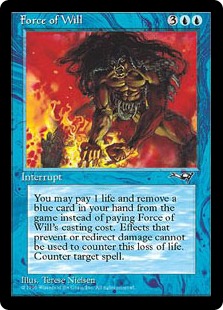
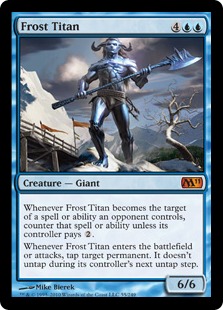 you’re guaranteed to make a little money. This is the lowest-rung of the ladder in terms of investment risk, because there is none. Therefore, yields are low. Although there are no real CDs in Magic, I consider investing in power to fall into this category. An Ancestral Recall bought today for $400 will probably be worth $450 in a few years. We know this, but we also know that we can probably make much more money elsewhere.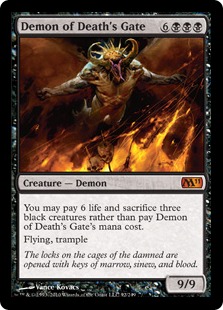
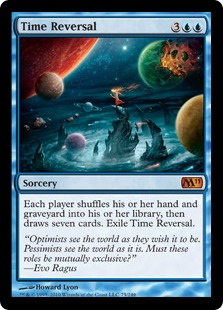
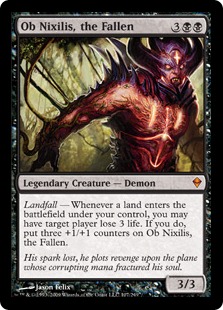
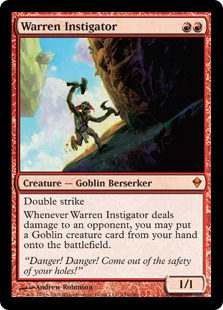
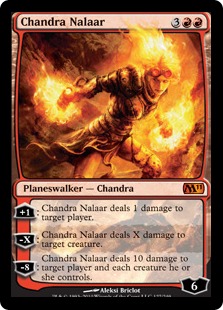
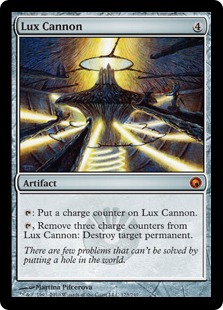
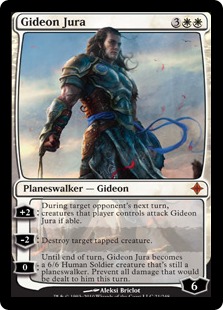
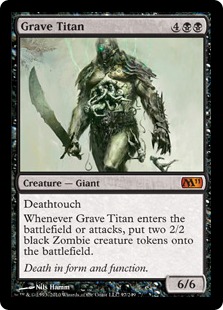
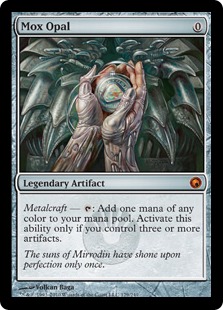
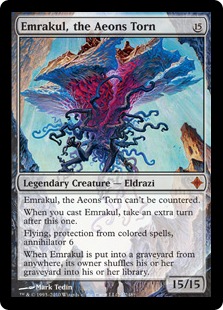
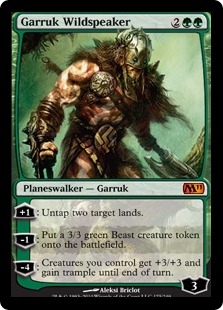
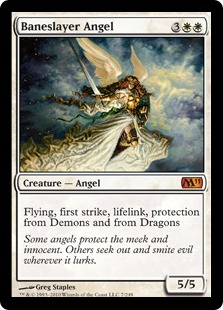
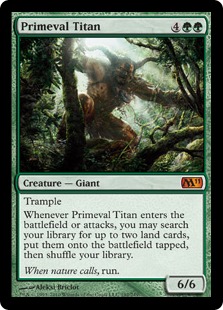
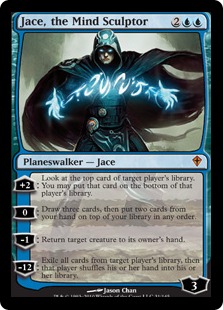
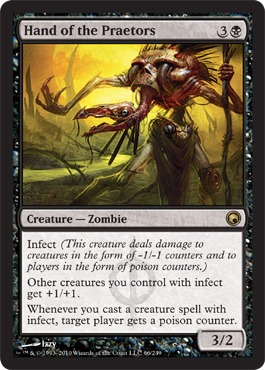
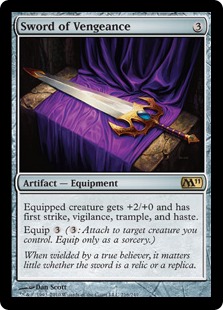

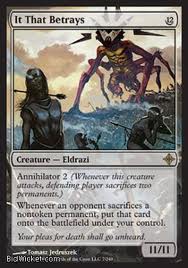
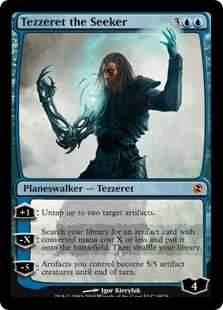
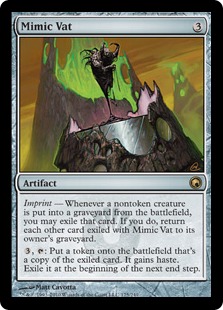
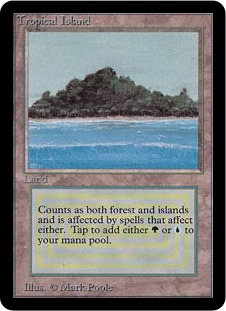

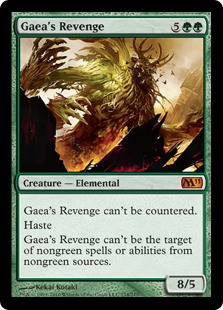
 t!
t!