menu

Gen Con 2019 Legacy Cube Tournament Report

Are you a Quiet Speculation member?

If not, now is a perfect time to join up! Our powerful tools, breaking-news analysis, and exclusive Discord channel will make sure you stay up to date and ahead of the curve.

Gen Con was a wild ride. The weekend did not at all play out the way I thought it would, but I had an amazing time and I think the story of the weekend is one worth telling. For those of you who were unaware, Gen Con did something spectacular this year. Each winner from eight different qualifier events across Standard, Modern, and Limited got to play in a Legacy Cube draft where all participants get to keep the cards they draft.

This was already insane, but to make it more insane, the winner gets an invite to the Mythic Championship and a booster box of Legends. These are listed on eBay right now at $20,000. I think it would be fairly trivial to get about $12,000 for one. That’s a big chunk of cheddar! A veritable Windfall!

Our adventure began Thursday, the first day of the convention. Joslyn slept in and we both packed slowly, so we were out the gates considerably later than we had planned. We finally left around 1:30 pm. Unfortunately, we had not eaten, had a half tank of gas, and 4 hours of driving separated us from the first Modern qualifier event. I had resolved to only attempt to qualify via Modern, as I disliked Core Set 2020 sealed and was not actively playing Standard or Modern Horizons limited at the time. Joslyn and I both wanted to play the event, because of course we did. Who wouldn’t? It’s just awesome and the prize support for the qualifier events is good enough to justify playing in them even if we don’t make it.

A Race Against the Clock

As we approached Indianapolis with some food in our stomachs and our vehicle on empty, we began to suspect we were not going to make it in time for the Modern qualifier. We were set to make it there at 6:20PM for an event that starts at 7PM, and that is assuming we don’t stop to get gas. We also chose to pick up our badges through will-call, and Gen Con lines are notoriously long. We shrugged our shoulders and decided to try and push our luck. We elected to not stop for gas and try to make it with what we had.

I dropped Joslyn at the convention center at 6:20 and drove off to find parking. All the parking lots within two blocks of the convention center were full. I parked in a Sheraton Hotel parking garage, knowing I was gonna eat a hefty tab for my unwillingness to look for parking farther away. That said, I was not close. I was about 5 blocks from the convention center.

A single Bird scooter was resting directly outside the parking structure. I had downloaded the Bird app at the last event I attended for funsies and already had funds added. Based on the distribution of these scooters in Indianapolis, it appeared to have been a 50/50 shot to be the correct brand. What a stroke of luck! I jumped on the scooter with Joslyn and my backpacks strapped around my chest, looking full-on ninja turtle.

With a look of determination as stoic as a person wearing a Hamtaro backpack on their chest can possibly appear, I swiftly strode through downtown Indianapolis to my destination. Upon arriving, I ditched the Bird and snapped a picture of it in the app. (I did not have cell phone service, so Bird decided to translate that to meaning I was taking an extremely long and expensive joy ride and took the liberty of auto-adding funds to my account to bankroll it. Thanks!) Joslyn had, by some miracle, already managed to snag both of our passes. We bolted through the convention center and to the registration line for Magic events. We arrived two minutes prior to the registration cutoff.

The Qualifier

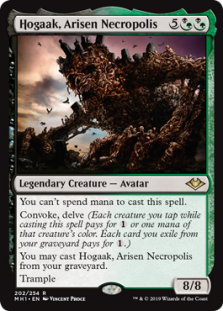
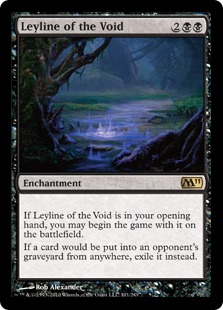
I borrowed and bought some Leyline of the Voids and registered my deck just in time for round 1. I won’t go into too much detail about my Modern matches. I played Aggro Hogaak. I gaak’d on some fools. It was only a 4-round event with about 30 or 40 entrants. I intentionally drew into 6th seed after a 3-0 for top 8 and played against the person I drew with. His name was Will, and he was everything you could want from another Hogaak pilot.

He and I goofily mulliganed to hands consisting of Leylines, cards that destroy leylines, and whatever else we could cobble together. Game 3 I drew the nutty one and slew him. Next round I got to be on the play against Ryan Overturf. His deck did not do the thing and my deck did. At the end of Game 2, his heart was visibly heavy as the three dopey Mountains in his hand stared back at him. Had one of them been a Lightning Bolt (or presumably any of several other spells) he would have had me. But had me he did not.

Ryan's dopey boys

Onto the finals, at 12:30 in the morning, I played against Big Tron. My opponent was friendly enough for a person who says “Turn 1 Relic of Progenitus, Turn 2 Relic of Progenitus ” on the play Game 1, but Force of Vigor is a hell of a card. The price growth on that card is real and has only begun. I will never sell my set.

There was an error retrieving a chart for Force of Vigor

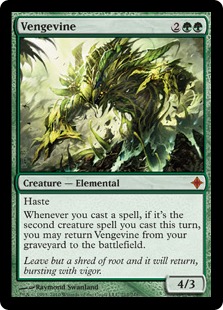
Game 3 came down to a simple decision made before I took my first turn. My opponent started with two Leyline of the Voids, which I destroyed with Force. I correctly chose to pitch Vengevine over Assassin's Trophy. I was rewarded many turns later, as I didn’t have an immediate path to Vengevine recursion but did get to destroy Ensnaring Bridge to win the game. Wow! I won! I got to play in the Legacy Cube draft on Sunday! Joslyn and I got refunds for the rest of the Modern events and partied hard all weekend until the promised day.

As I’m writing this, I'm still amazed I got to do this draft. This was the coolest thing I have ever done and the most fun I have ever had playing or interacting with Magic. Meeting my girlfriend through the Star City Games Invitational does not count.

The Morning of the Draft

The draft itself was scheduled to start at 8 am, so I went to bed early and got an appropriate amount of sleep. The morning of, we went to the convention hall, mingled with the judges, Wizards employees, and other players for a little bit, then began the draft around 9 am. What a fun draft! We drafted the entirety of the cube, fifteen cards at a time. There was no time set aside for pool review; only a brief 30 seconds allotted to reviewing the cards on the table. I imagine this was somewhat overwhelming for 3 or 4 of the drafters, who were playing their very first cube drafts. I think I picked very well and only made one glaring objectively wrong pick, but with so little time, my attention was largely devoted to my own pool rather than figuring out the nitty-gritty of everyone else’s decks.

I knew that my opponent had Grixis value cards and a smattering of combo pieces across reanimator and splinter twin, but didn’t get enough of anything, in particular, to enable a singular strategy, from what I saw. Aside from that, I saw that Jacob Baugh was assembling a very powerful ramp deck, and the player to the left of me took Mana Tithe (I hate getting got). I didn’t notice the Mono Red player stoically assembling a pile of angry bois heckbent on sending him to the finals, although I didn’t make it through my bracket to face him anyway.

My strategy was to stay as wide open as possible since we're drafting 75 cards each, and just pick the most powerful cards possible. I figured with the way the picks would fall, it would be too easy to hate-draft against any particular strategy, and to some extent I was right. I think there are a lot of strategies you could choose from in that format and see success, since 75 cards meant everyone's deck will be reasonably powerful. I didn’t prioritize value that fact highly enough, although I think I had a chance to pick a judge promo Ravages of War early and didn’t because I forgot that card is expensive. Oh well! I scooped a Badlands and a Gaea's Cradle, which is about as good as you can ask for from the Legacy Cube.

The Deck

By the end of the draft, each of us had an assortment of 75 of the most powerful Magic cards ever printed. Blue and White were my deepest colors, with Red being my weakest. I had assembled a large number of powerful control/value cards across the Esper shard. I had enough pieces for a Sneak and Show package (3 enablers and 7 bomb payoffs, including multiple Eldrazi titans).

I also had what looked like a strong green value package, although I think I’m personally just too fond of Whisperwood Elemental. While I’m on the subject, can you believe that card is still under a dollar? It’s an awesome card, and the new Sultai Commander deck has a morph theme. It’s really fun to play with too! Hopefully, it hasn’t spiked by the time this article is published, so I can seem smart.

There was an error retrieving a chart for Whisperwood Elemental

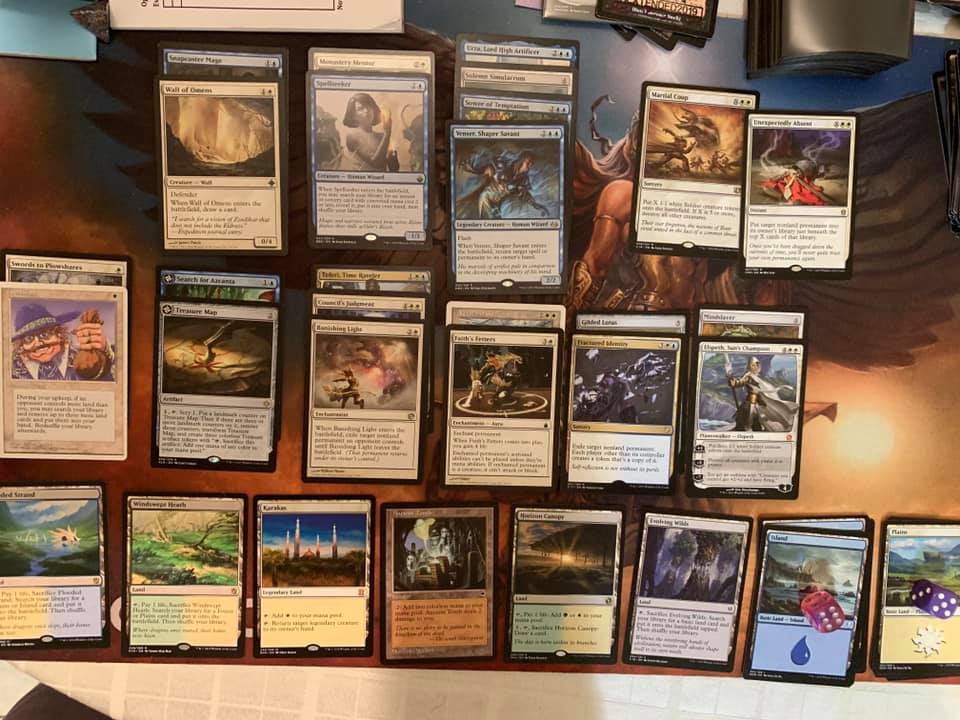
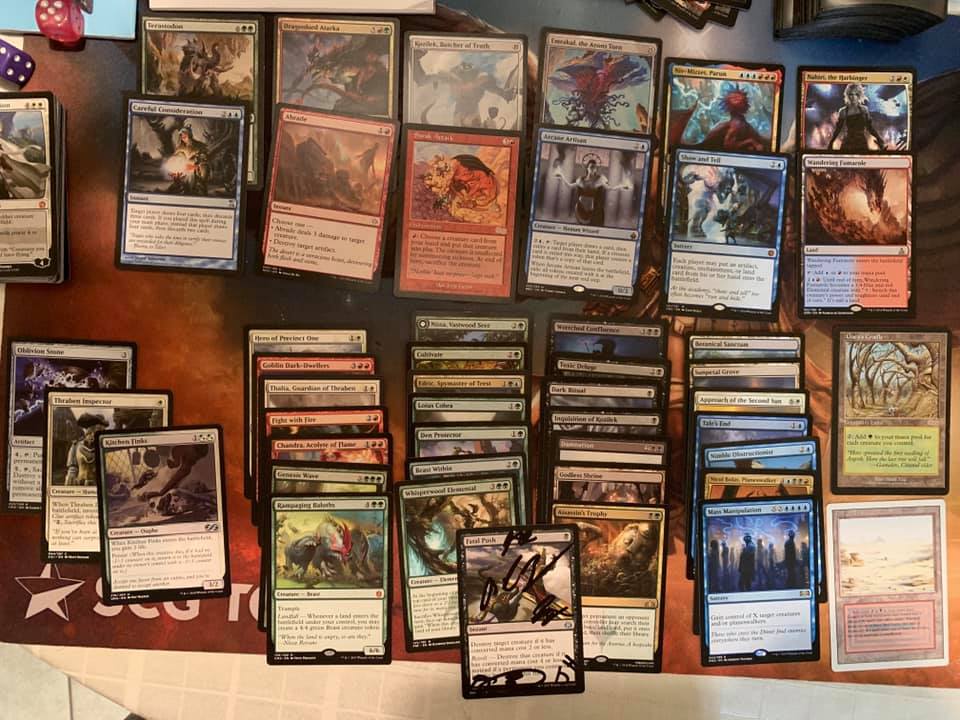
I registered UW Control as my maindeck and planned to sideboard into Jeskai Sneak and Show when my opponents had faster gameplans than my deck could interact with. My maindeck was ridiculously powerful and streamlined. I had potent catchalls such as Venser, Shaper Savant and Unexpectedly Absent, cards that are more powerful but more narrow, such as Sower of Temptation and Martial Coup, and cards that are not fair at all in cube such as Fractured Identity and Mindslaver.

My deck had broken things to do and good sideboard cards for Mono Red. I was basically Glen Elendra Archmage and Force of Will away from the perfect UW deck! Behold:
The Fight

Round one, I played against Grixis Magic cards. They were playing a combination of Kiki-Jiki, Mirror Breaker combo and reanimator, with some control elements to hold it together. Game 1, he binned a Kiki, then turn 4 Cast Pestermite, untapped a land, cast Exhume. Sneak and Show it is!

A long and grueling game 2 that ended with the power of two Terastodon triggers. Turned out Fractured Identity is very good against Hostage Taker! Game 3, I got the honor of playing the coolest game of Magic I have ever played. And most of it was on stream! Check it out here, starting at the 58-minute mark (warning: the game goes for about 40 minutes past this point). Too much happened for me to accurately summarize, but I wriggled my way out of seemingly unwinnable corners three or four times. You love to see it!

In the semifinals, I played against known insane Magic player Jacob Baugh. Jacob had an insanely powerful GW deck with lots of dorks, Natural Order and Craterhoof Behemoth. That’s all ya need! Game 1 I had a massive Martial Coup produce 7 handsome soldiers for me, but foolishly attacked with them and dead to the mighty Hoof. I would have just barely survived had I held them back, although of course there’s no way to know if I could have converted that into a win.

I sideboarded incorrectly for this match. I boarded into Jeskai Sneak again, which managed to produce a turn 3 Kozilek, Butcher of Truth Game 2 to win, but I lost Game 3 to a mulligan to five where I didn’t draw lands. I should have been more confident in my control elements and boarded into the Esper shard. I had excellent fixing for that color combination, and adding Fatal Push, Damnation and Toxic Deluge to my deck certainly could have been enough to stem the flow of value creatures from the opposing side and make Craterhoof an ineffective win condition.

I’m upset at myself for not seeing this until the match was over, but I take consolation knowing Jacob is a much better player than me, played excellently in our match, and took down the finals to win the event as well. I heard a vendor offer him $10,500 for the box, and I’m sure he got more than that, so congratulations!

Oops! I Didn't Win

My performance earned me 8 sealed Ultimate Masters box toppers. Joslyn convinced me to open one and we had the devilishly handsome Karn Liberated staring back at us. The deck I drafted would retail for about $1000, and my prize support for about $600 ($700 thanks to Jos). I also got two booster boxes of Core Set 2020 from my performance in the swiss of the Modern qualifier.

This is a solid return on a $50 investment, so I recommend investing in Gen Con tournament entries. Stonks! Additionally, to insert a little more actual finance info, the Magic market is very focused on the upcoming Commander product right now due to spoiler season.  A lot of these cards look awesome and will probably produce a lot of demand for more Commander cards. Modern is going to be very dull until the seemingly inevitable Hogaak banning August 26th.

I would dump any Hogaak cards as soon as possible and wait another two weeks or so to buy any more Modern cards you need. They are dirt cheap and may even get a little cheaper before people get really excited for Modern again! Follow me on Twitter for more regular #MTGFinance updates!
Being the Motivated Seller

Are you a Quiet Speculation member?

If not, now is a perfect time to join up! Our powerful tools, breaking-news analysis, and exclusive Discord channel will make sure you stay up to date and ahead of the curve.

“I love it when a plan comes together.”

This quote, by Colonel John “Hannibal” Smith of the A-Team, perfectly captures the exciting feeling of flipping a card into hype for profit. We’ve all been there before: notice a trend unfolding so pick up a handful of copies, and sell them within hours of listing them. Hype can do wonderful things for one’s bottom line when actions are well-timed.

Unfortunately, life doesn’t always unfold perfectly like this. It does on The A-Team, but that’s not real life. Sometimes a number of unexpected factors disrupt the “plan”: the spike never happens, the cards get stuck in the mail and by the time it arrives their price drops, the race to the bottom is faster than expected, the condition comes in below what was ordered, etc.

It’s possible that these imperfect scenarios are what distinguishes a great speculator from a good speculator. Knowing when to cut losses and how to cut them can become critical in ensuring sufficient cash flow and avoiding severe losses. This week I want to explore my own methodology for cutting cards loose out of desperation while minimizing losses.

Step 1: Realizing It’s Time to Bail

It’s one thing to pick up a breakout card in Modern that has never been used before—something like Mycosynth Lattice spiked and never really dropped because it is that good in Modern.

There was an error retrieving a chart for Mycosynth Lattice

Most buyouts these days are less organic. Agility is crucial when trying to flip cards, especially into a hyped buyout. Buying one day too late could mean the difference between profits and losses.

When I receive cards that I purchased with the intent to flip into hype, I make every effort possible to sell immediately. eBay and TCGPlayer can be reliable outlets in this scenario. They're natural places that people look to when purchasing copies. Since MTG Stocks reflects TCGPlayer, there’s a natural connection between a buyout and a card’s list price there. This means competition on those sites will be limited for a narrow window of time, and a sufficiently competitive price can trigger the sale.

But there are some occasions when I list my spiked card on eBay and watch it sit there. And sit there. And sit there. Usually 24-48 hours later I’ll run an eBay and TCGPlayer search for that card and realize a half-dozen undercutters have entered the market with their copies. The race to the bottom has begun. This is when you know you were a little late to the party, and it may be time to pivot towards a more aggressive selling strategy.

Another example would be with cards that are tougher to sell. This could include played foils, foreign cards, poor condition cards, signed cards, etc. These are often less liquid and may not be easy to sell even if your buyout timing is perfect. If you have little success moving these cards at full price on eBay and TCGPlayer, it’s time to shift gears.

Step 2: Go Wide

The first step I take when trying to sell cards more eagerly is to expand my selling platforms. If eBay’s not working, I know the price is too high and/or demand is too low. Perhaps a lower price enabled by a platform without fees would do the trick. I leverage Twitter, Discord, and Facebook to sell cards, and I often offer them at 10-15% below TCG low pricing to push the sale through.

If after 24-48 hours on these platforms I still can’t make the sale, I announce a price drop. I did this recently with Serra's Sanctum—my initial list price was around $80 but there were no takers (at some time last year this would have been a steal, but many Reserved List cards have cooled off since). So I tried re-tweeting with a $75 price tag. I may also drop my price on eBay in kind.

There was an error retrieving a chart for Serra's Sanctum

Sometimes even this doesn’t work (my Serra's Sanctum still hasn’t sold). When that happens, it really tells you that, even at a 15-20% markdown from the market, there’s very little demand for that card. That’s when the really difficult decision has to be made: do you sit and wait, or do you move into Step 3?

Because I value cash flow so highly, I often do the latter and get most aggressive with selling. The exception is with cards I enjoy enough that I’d be happy to keep in my collection: Beta rares, Reserved List cards, or cards from Arabian Nights, Legends, or Antiquities. I may sit on Serra's Sanctum a little longer simply because it's a popular Reserved List card.

It’s important that you create your own rule of thumb as to what you’re OK holding as a “failed spec” and what you’d rather unload for a small loss to avoid opportunity cost or further price declines.

Step 3: The Desperate Seller

At this point, if cards still aren’t selling at such a deep discount, it’s common that the price is nearing a store’s buylist price. That’s my catch-all plan for failed specs.

Recently I had purchased a couple foil Painter's Servants internationally—when the card became legal in Commander I thought it would be a slam dunk. As it turns out, it may have been a very profitable purchase…if I had received the cards quickly. I purchased them from a Japanese vendor, and even though I paid a premium for tracked shipping, the cards did not arrive before my family’s vacation out of town.

There was an error retrieving a chart for Painter's Servant

By the time I returned, the price spike had reversed nearly completely and I was underwater. Still, I tried listing on eBay for breakeven. But I had a second problem. Without realizing it, I had purchased played foils, and those are so difficult to sell even when a buyout is occurring. Trying to flip them during the post-buyout race to the bottom is virtually impossible.

I tried selling on Twitter but had no interest. I listed on eBay and dropped the price multiple times without even getting very many views on my listing. By the time I was approaching $40 on eBay, I realized I was better off shipping them to Card Kingdom’s buylist. Their buylist was $40 for Near Mint, and I think I can get EX on my copies, or $30. Adding that 30% trade credit bonus means $39 in store credit per copy, which isn’t too painful.

It beats sitting on the two cards for more weeks without a sale. At least now I’ll have credit to put to work in something more liquid. In hindsight, the foil market price on TCGPlayer is $33.15, so even though TCG low is in the low $40’s, I’m not sure any copies have actually sold for that price. I’m fairly confident a played copy won’t have sold for something north of $40.

Because Card Kingdom’s buylist is so agile, it can often be the best place to out spiked cards in situations where selling peer-to-peer isn’t working. But sometimes they don’t chase prices. In that case, I like to use ABUGames’ buylist. Even though their trade credit is inflated and $1 in credit is really only worth $0.60 cash, it at least gives you a chance at minimizing losses.

For example, when I noticed foil Morophon, The Boundless’s foil price was stagnating (I’ve had a foil listed on eBay for weeks now without a sale), I didn’t feel too bad shipping one to ABUGames for $70 in credit. I know there’s a psychology to their inflated numbers, and that I didn’t truly get $70 for my copy. But it gave me the chance to find something underpriced on their site; or if nothing else, I could use that credit to speculate elsewhere. (By the way, Card Kingdom doesn’t even buy foil Morophons right now!)

There was an error retrieving a chart for Morophon, the Boundless

Wrapping It Up

We all make mistakes with our speculation. In addition to learning from these mistakes, it’s also important to react quickly before they become worse. If you’re trying to flip a card into a buyout and are struggling to make the sale, time can be your enemy. Price sensitivity from one day to the next can be quite high, and a fire-sale for a small loss may be preferred versus a lackadaisical selling approach and a deeper loss. A slower sale also means higher opportunity cost and lower liquidity—two things that can squeeze a small-time speculator in a hurry.

Because of this, I am not shy to take my small losses and flip cards quickly any way that I can. Sometimes I manage to make a sale by dropping my price quickly enough on eBay. Other times, a significant markdown on Twitter or Discord works. In some situations, I resort to the buylist to make sure I cash out quickly.

If the prices are dropping that quickly, you never know when someone else takes the buylist route and causes the buylist to drop before you can out your copies? In my Painter's Servant example, I buylisted my two foil copies at $40 each (before grading). After submitting that buylist, Card Kingdom’s algorithm dropped their buy price to $32. Unless someone buys the foils I shipped them, their buy price will likely remain lower for a while, negatively impacting others who may be stuck on foils themselves.

I admit I’m risking upside by following this approach. But cash is king, and unless you have a large bankroll, maintaining liquidity is more valuable than a possible profit on a slow-selling card. You never know when a great deal will pop up, and having cash available to take advantage is critical. In those situations, you don’t want to sit there staring at your slow-moving cards wishing they were cash. This is the exact situation I wish to avoid, and so I am quick to sell as a result.

…

Sigbits

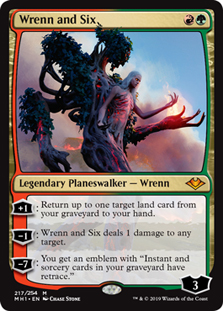
  • Card Kingdom still has foil Wrenn and Six on their hotlist, now with a $200 buy price. I think it peaked above $200 for a short period before falling back down again. That must be the neighborhood where sellers are interested in outing their copies.
  • I noticed Arabian Nights City of Brass and Stronghold Mox Diamond both made their return to Card Kingdom’s hotlist. The former had moved all the way up to $280 before dropping back down to $240 again. I was compelled enough to sell my one extra copy to Card Kingdom when they had a $270 buy price. The latter had been up near $200, then fell way down, and is now on the incline again. Watch that one closely for more upside.
  • Two Dual Lands show up on Card Kingdom’s hotlist this week: Badlands ($160) and Savannah ($100). Those are interesting choices—I’m sure it reflects their stock, but I would not have guessed that these two duals were particularly hot right now. I wonder if others will soon follow.


Colorless Matchup Guide: Hogaak and Dredge

Are you a Quiet Speculation member?

If not, now is a perfect time to join up! Our powerful tools, breaking-news analysis, and exclusive Discord channel will make sure you stay up to date and ahead of the curve.

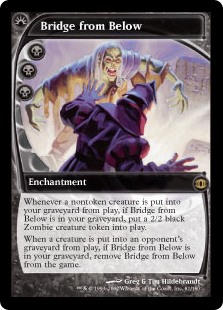
Hogaak has been nerfed by a Bridge from Below ban, but the deck is still out in force. While its apparent volatility may contribute to a plummeting of metagame shares in the near future, I personally know many players who continue to swear by the strategy. And Dredge is also on the upswing, profiting from players' haughty trimming of graveyard hate. These metagame developments have led me to refine my sideboard plans for beating Hogaak and Dredge with Colorless Eldrazi Stompy, my competitive deck of choice.

My list hasn't changed since the recent post-Horizons update. As explained there, I'm still high on both Endless One and Smuggler's Copter, both rare inclusions in the lists I've seen online.

Colorless Eldrazi Stompy, by Jordan Boisvert

Creatures

4 Eldrazi Mimic
4 Eternal Scourge
2 Endless One
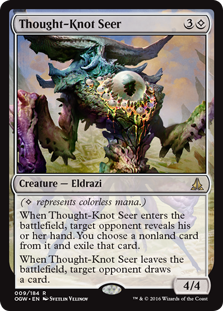
4 Thought-Knot Seer
4 Reality Smasher
4 Simian Spirit Guide

Planeswalkers

2 Karn, the Great Creator

Artifact

4 Serum Powder
4 Chalice of the Void
1 Smuggler's Copter

Instants

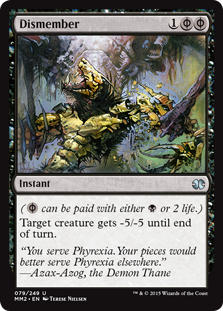
4 Dismember

Lands

4 Eldrazi Temple
2 Gemstone Caverns
4 Zhalfirin Void
3 Mutavault
2 Blinkmoth Nexus
3 Ghost Quarter
3 Blast Zone
2 Wastes

Sideboard

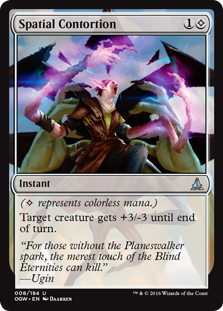
3 Spatial Contortion
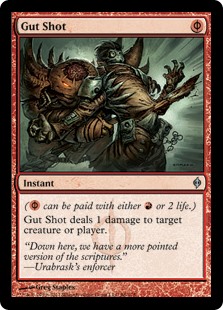
2 Gut Shot
1 Surgical Extraction
4 Relic of Progenitus
1 Ratchet Bomb
1 Sorcerous Spyglass
1 Crucible of Worlds
1 Mystic Forge
1 Mycosynth Lattice

Of special note this article, I still favor Relic of Progenitus as my grave hate of choice. Leyline of the Void can also work, although it has less synergy with Karn, the Great Creator; either way, one should be employed. Relic happens to be far stronger against Jund, which is shaping up to prove a real force with Wrenn and Six in the format.
In my estimation, our Hogaak and Dredge matchups were decent-to-good even before the Bridge ban, so I'd say dipping into something like Ravenous Trap on top of Relic or Leyline is overkill.

Hogaak

Hogaak is back, and with a variety of builds to its name.

Hogaak, by Bobby Colegrove (2nd, SCG Columbus Open)

Creatures

4 Hogaak, Arisen Necropolis
4 Bloodghast
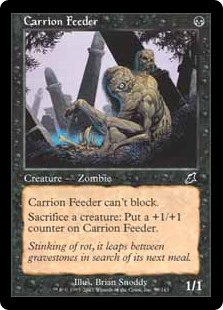
3 Carrion Feeder
3 Golgari Thug
4 Gravecrawler
3 Insolent Neonate
4 Satyr Wayfinder
4 Stitcher's Supplier
4 Vengevine

Instants

1 Darkblast
3 Lightning Axe

Sorceries

1 Claim
4 Faithless Looting

Lands

1 Swamp
3 Blackcleave Cliffs
2 Blood Crypt
2 Bloodstained Mire
2 Gemstone Mine
2 Marsh Flats
2 Overgrown Tomb
2 Polluted Delta
2 Verdant Catacombs

Sideboard

1 Plague Engineer
4 Leyline of the Void
2 Assassin's Trophy
1 Fatal Push
1 Force of Vigor
1 Nature's Claim
1 Shenanigans
4 Thoughtseize

Hogaak is still explosive and resilient, if a little less than before. But it's lost major points in consistency. That's where our fast starts and disruption shine.

Game 1

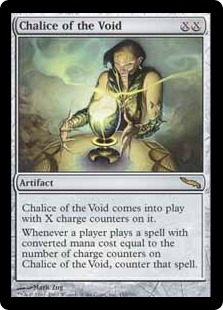
Game 1 sees us lean more heavily on fast starts, as much of our disruption is in the sideboard. Still, we have some to work with; Chalice of the Void on 1 is a major headache for Hogaak, which is full of one-drop enablers, and Dismember can remove a crucial Zombie or blocker. Best of all is Thought-Knot Seer, which foils enemy plans if deployed early enough and also turns sideways.
Eldrazi Mimic is at its best here, outputting massive pressure and making enemy removal unwieldy—Lightning Axe and Assassin's Trophy might be great at removing Thought-Knot seer, but sometimes Mimic is the real threat, and neither spell lines up great against the 2/1. Darkblast is less common, but indeed devastating versus the two-drop.

This game is fast enough that Karn doesn't offer much utility. He only really resolves in games with Chalice. Hogaak's primary threat is the 8/8, which is a pain for us to remove. Dismember and a 3-power creature will do it, though.

Sideboarding

-4 Eldrazi Mimic
-2 Karn, the Great Creator
-1 Smuggler's Copter

+4 Relic of Progenitus
+1 Surgical Extraction
+2 Gut Shot

Just as we tend to remove Eldrazi Mimic against decks with Lightning Bolt or Liliana, the Last Hope, the creature comes out here because of Plague Engineer. I don't think Engineer is especially good against us, but most Hogaak players I've faced have brought in their 1-2 copies to shorten our clock and make trading more manageable. If they see Mimic in Game 1, the odds of encountering Engineer become very high.

Karn is an easy cut; at four mana, it essentially costs the same as Smasher, but we're not looking to loop Relics against Hogaak. We just want to gently disrupt our opponent and then finish them before they can piece their gameplan back together.

Relic and Surgical are obvious bring-ins, with the latter ideally hitting Vengevine or just Hogaak itself. Gut Shot is more subtle, but the card is fantastic in this matchup, hitting just about any blocker opponents produce and sniping early Carrion Feeders, Crypt Breakers, and Lotleth Trolls, build depending. While Stitcher's Supplier dying is generally a plus for opponents, keeping their board clear of Zombies can blank their Gravecrawlers and complicate ever casting Hogaak. Spatial Contortion can also come in alongside Shot, maybe over a couple Smashers; the colorless spell has the benefit of picking off Vengevine, too.
Post-Board

After sideboarding, we become more of a prison deck, as against Storm—between Relic and Chalice, we've got lots of ways to interfere with Hogaak's engines. Without Mimic, though, we're much slower, spending the early turns deploying lock pieces and picking off creatures. Disenchant effects from the other side are clunky against Relic and slow Hogaak down as well, making this game an easier battle than the first.

Takeaways

Our position shifts significantly between games, with a controlling role eventually taking precedence over an aggressive one. Either way, we apply pressure to Hogaak while disrupting them, an ideal gameplan against combo-oriented decks. We're still dead to the most explosive starts the deck has to offer, but so is everyone else; overall, this matchup feels favorable.

Dredge

Big Brother Dredge is still kicking around, too, but fighting this deck is quite different than defeating Hogaak.

Dredge, by SODEQ (2nd, Modern Challenge #11935045)

Creatures

3 Narcomoeba
4 Bloodghast
3 Golgari Thug
2 Hogaak, Arisen Necropolis
3 Narcomoeba
3 Prized Amalgam
4 Stinkweed Imp

Artifacts

4 Shriekhorn

Sorceries

4 Cathartic Reunion
2 Conflagrate
4 Creeping Chill
4 Faithless Looting
4 Life from the Loam

Lands

2 Blood Crypt
4 Copperline Gorge
1 Dryad Arbor
1 Forgotten Cave
1 Gemstone Mine
1 Snow-Covered Mountain
2 Stomping Ground
3 Verdant Catacombs
4 Wooded Foothills

Sideboard

2 Ancient Grudge
2 Assassin's Trophy
1 Blast Zone
1 Darkblast
2 Leyline of the Void
3 Lightning Axe
4 Nature's Claim

The consensus seems to be that Hogaak is better, chiefly due to its resilience in the face of hate cards, but Dredge continues to put up results. Thanks to its faster win rate via Creeping Chill and the utility/value engine of Life from the Loam, Dredge seems to have enough unique aspects to stay afloat despite many players switching to Hogaak. I imagine there's some amount of pet-deck nepotism at play, as when players clung to Jund during Siege Rhino's reign. As the Modern pendulum is always swinging, though, those players can't be so wrong.

Game 1

Colorless Eldrazi Stompy likes to mulligan into turn-one Chalice, a solid plan against most of the format and incidentally against Hogaak. Unfortunately, that plan doesn't do much against Dredge. Many of my losses to this deck have been on the back of a powered-out Chalice that failed to accomplish anything. Stinkweed Imp is another hurdle Dredge throws at us; without removal for the flier, it's free to block and trade with any of our larger beaters. The recurring Prized Amalgam matches our smaller attackers, although it does help that it enters tapped.
These factors combine to make Dredge pretty difficult to beat Game 1. While Karn supposedly offers insurance against recurring blockers by fishing out Relic, it's too slow to be meaningful, and we've already expended enough resources trading by that point that we're just setting ourselves up for failure. Eldrazi's best bet is to open a creature-packed Temple hand and race the opponent, finishing them off with Reality Smasher.

Sideboarding

-2 Karn, The Great Creator
-4 Chalice of the Void
-2 Dismember

+4 Relic of Progenitus
+1 Surgical Extraction
+3 Spatial Contortion

Relic and Surgical of course return, but Gut Shot only hits Narcomoeba out of Dredge. Spatial Contortion gets the nod instead. Its applications range from taking out chump-blockers to executing Stinkweed Imp, Public Enemy #1 against us. Dismember does the same thing in theory, but is more of a liability because of Creeping Chill and Conflagrate.

Post-Board

Our misfortune takes a turn post-board, as grave-based disruption hurts Dredge a lot more than it hurts Hogaak; the new deck routinely delves out its graveyard to pay for the 8/8, whereas Dredge needs the cards there to snowball over the course of a game. Mostly, though, our hands are much better with Chalice out of the equation, and we have more ways to deal with the problems Dredge generates for us.

Takeaways

Dredge is a more polarized matchup than Hogaak, as less of our mainboard is viable; our Game 1 odds are worse, while our Game 2 odds are better. In this way, Dredge-Hogaak mirrors Humans-Affinity, with the former matchup remaining relatively unaffected after siding while the latter changes drastically. All things considered, though, I'd rather run into Dredge at a tournament than Hogaak, simply because an 8/8 is so difficult for Eldrazi to deal with. Hogaak is also the better deck by most accounts, and has more hands that we can never beat; Dredge lets us put up a fight. I prefer to equalize my matchups as much as possible, so the swingier nature of Hogaak lends itself to games I enjoy less.
Kolorless Eldrazi: Hollywood

After enjoying a brief stint as the format's go-to spaghetti deck, Colorless Eldrazi Stompy is something of an underdog in Modern right now. Eldrazi Tron indeed appears stronger, wielding Karn, the Great Creator to far greater effect and boasting more tools to combat Modern's anti-fair strategies. Time will tell if Colorless can claw back into the format's upper echelon, but refining sideboard plans against the top decks is as good a place to start as any. To the Scourge-slingers out there, what are your impressions of the graveyard matchups?

Belch Please: What Is Hogaak?

Are you a Quiet Speculation member?

If not, now is a perfect time to join up! Our powerful tools, breaking-news analysis, and exclusive Discord channel will make sure you stay up to date and ahead of the curve.

In terms of data, it seems Modern is at a crossroads. This is the problem I found myself with last week. Half the data said that Hogaak was a busted, dominate deck. The other said that it was successful, but only as a function of its popularity. The narrative coming out of last weekend is that Hogaak, Arisen Necropolis needs to be banned, which suggests the former interpretation is correct. However, there's data and experience supporting the opposite side.

Sometimes this discrepancy is the result of differing perspectives. Once more data comes in or additional research is done, the source of error is found and corrected. For others, the contradiction was the real answer. I suspect this is the case with Hogaak. It is a very powerful deck, but not necessarily a good one.

No Eldrazi Winter

So what if Hogaak... is actually a bad deck? I realize that this flies in the face of a lot of testimony and evidence, but Hogaak simply doesn't seem on par with what we've come to understand as busted strategies. I've played Modern a long time, and Hogaak isn't in the same ballpark as Eye of Ugin Eldrazi. During Eldrazi Winter, that deck proved itself to be unbeatable for anything that wasn't Eldrazi. They weren't just the majority of the metagame; they also won almost everything. Hogaak didn't win a single event last week. Hyperbole aside, we've seen a lot worse.
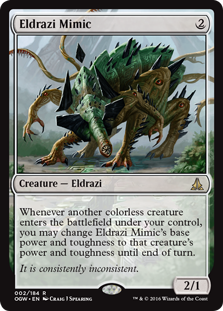
Hogaak's best starts are at best equivalent to Eldrazi's. Hogaak has some permutations to make 18+ power on turn 2 (if it hits well with Stitcher's Supplier), some of which will have haste; probably, though not necessarily, enough to earn a concession. The most busted Eldrazi start called for Eye into four Eldrazi Mimics, then using Eldrazi Temple and Simian Spirit Guide to play Reality Smasher and actually win on turn 2. The problem for Hogaak is that it lacks the same consistency that Eldrazi had.
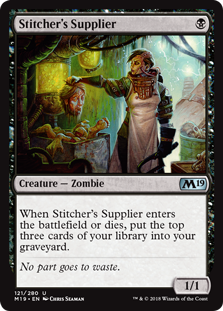
When that busted start didn't come together, Eldrazi was harder to disrupt than Hogaak. Graveyard hate coupled with removal cleans up non-lethal Hogaak boards. There was little hate that hurt Eldrazi effectively, especially when what answers existed would get stripped away by accelerated Thought-Knot Seers. Eldrazi was a pile of individual good threats where Hogaak has a couple key ones and a lot of chaff.

Empirical Data

My experience observing and playing against Hogaak has closely mirrored this video of Gabriel Nassif going 2-3 with the deck. He won a lot of blowouts and a couple squeakers, but more often he dug through most of his deck without accomplishing anything. Hogaak was incredibly powerful when everything came together, but when it didn't, the deck was anemic.
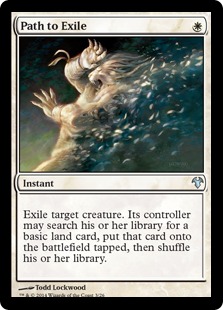
Over the past week, I haven't dropped a match in paper or online to Hogaak. It's not because I've successfully shut them out with normal hate cards, always hit Leyline of the Void, or found other answers. Instead, it's simply been Hogaak stumbling over itself. My game losses have all been utter blowouts on turn 2 or 3. However, I won the matches because that only happened in one game. In all the other games, Hogaak did a lot of stuff, but it didn't amount to much. One game my opponent had all the enablers and dug through 2/3's of their deck without finding Hogaak or Vengevine and lost when I Pathed his only real threat, Carrion Feeder. Hogaak doesn't inspire the same terror as Eldrazi.

Flawed Combo

The problem with Eldrazi was consistency and power. It did something too-good every game. Hogaak can do something utterly absurd some of the time, but other times it just flails around. Hogaak is a critical-piece and a critical-mass deck. It needs to have the right combination of enablers in hand and the right pieces in the top of its deck to flip into its graveyard to have those really busted starts. That's a lot of random chance at play.

If Hogaak doesn't actually hit those busted starts, it can still play a decent secondary game as a medium Zombie aggro deck. Carrion Feeder gets quite big alongside Bloodghast and Gravecrawler, and even if it takes a long time to find Hogaak, an 8/8 with trample is a respectable threat. It's just not game-ending, unlike going infinite with Drowner of Hope and Eldrazi Displacer.

Hogaak is a deck with really busted starts, but struggles if instead it has average starts, and struggles to pull out longer games. It needs specific combinations of enablers and payoff cards. That sounds a lot like Legacy Belcher, but with a viable backup plan.

The Underrated Combo

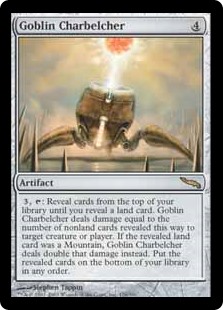
So what if Legacy Belcher... is... not exactly a good deck, but better than its lack of metagame share or impact indicates. Belcher almost never sees serious Legacy play. This is largely because the deck has a reputation for just losing to Force of Will, one of the most played cards in Legacy. However, that's not entirely accurate.
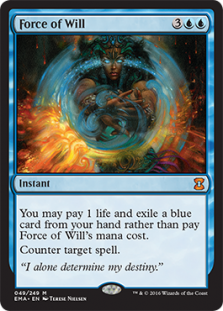
Yes, failing to resolve a payoff card is generally lethal for Belcher. However, Belcher is also able to win turn one, either by actually comboing the opponent out or functionally kill with 14+ Goblin tokens. Given that the odds of having Force and the ability to cast it turn 1 are less than 40%, that's a huge plus in Belcher's favor. The reality is that Belcher has a higher likelihood of going-off turn 1-2 than just losing to Force.

The Catch

While a fear of Force is certainly a huge factor keeping out Belcher, the bigger problem is that Belcher is very high-variance. The deck needs to have a mana source to start comboing, but only plays one land. It also needs a critical mass of mana to do anything. It also needs to hit Burning Wish, Empty the Warrens, or its namesake to win; that means it needs to draw one of eleven cards plus the right six mana sources to go off. If it opens the right hand, that's easy.
However, if any part of the chain is disrupted, Belcher may never have the resouces to go off again. And it has to go off, and the quicker the better. Belcher and similar decks are all-in on their fragile, resource intensive combos. If they fizzle or get disrupted, they're out so many resources that victory is improbable. At least Modern Storm can beat down with Goblin Electromancer. Thus, Belcher strategies is very high-risk and high-reward, and players aren't willing to gamble every round.

Comparative Metrics

Perhaps the reason that Hogaak's data is contradictory is that it is actually a good Belcher deck. It is high variance, high risk (vulnerability to graveyard hate), and high reward (fast kills), but it doesn't need to win fast. If the game goes on long enough, it can still win, even if the opponent has disrupted it a few times.

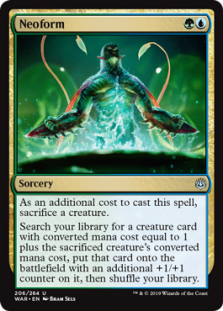
To evaluate this idea, I ran an experiment. I goldfished Hogaak against Belcher and Neoform (Modern's Belcher equivalent) to see how it stacked up. I played 30 games apiece, and each deck was given six turns to functionally or actually win the game. Functional wins are subjective, so I counted any board state that would make me concede if I didn't have an answer in hand.  For example, few decks can beat 14 goblins turn 1, so that counts as a turn 1 win for Belcher.
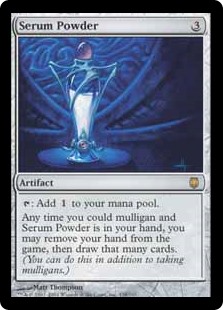
Also, for simplicity's sake, I only mulliganed truly unkeepable hands. Rather than going for the most busted hands, I went for acceptable ones.

Win TurnBelcherNeoformHogaak
1320
21067
36510
4+019

I'm told that Hogaak is able to win turn 1. That never happened for me, I've never seen it before, and I'm skeptical that it ever could in real conditions. However, despite being slower, Hogaak won a lot more than Neoform or Belcher. Hogaak only failed to win in the time frame four times compared to Belcher's 11 and Neoform's 16.

Hogaak's gameplay also felt very similar to the other decks, but better. There were a lot of feel-bad hands for the other decks that needed one piece, but couldn't find it, where Hogaak at least played some creatures each game even if it couldn't combo or fizzled.

A Follow-Up

Out of curiosity, I re-ran that experiment and mulliganed more aggressively, playing 10 games with each deck.

Win TurnBelcherNeoformHogaak
1430
2333
3014
4002

Hogaak mulliganed into oblivion and failed to kill once, while the other two failed three times.

Each deck improved its early game win percentage, with Belcher and Neoform getting more turn 1 wins in this sample than in the first one. Whether the overall win percentage would have been higher is impossible to say, but with early win percentages going up across the board, I argue that the factors impacting the true Belcher deck's early wins plays into Hogaak's too, which I argue makes Hogaak another form of Belcher deck.

Hogaak is Good Belcher

However, unlike its cousin decks, Hogaak doesn't need to Belch you out. It definitely wants to, and based on my experience doing so is Hogaak's best way to win. However, if that doesn't come together right away it's not the end of the world. It can just hard-cast threats.

Belcher and Neoform cannot. If they don't win quickly, disruption will just kill them. As a result, they need to mulligan very aggressively, which often leads to losing to said mulligans. Since Hogaak doesn't need to be broken to win, it avoids this weakness. Thus, Hogaak may not be a good busted deck like Eldrazi was, but it is a better type of Belcher deck.
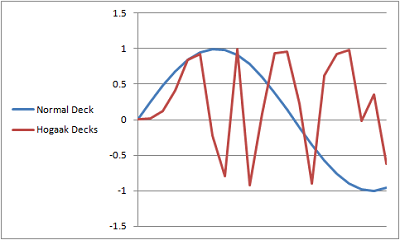
Therefore, the discrepancy in the data is the result of Hogaak's Belcher variance. As mentioned, Hogaak is a notoriously swingy deck. It's looking to do kill very quickly, but even with a nearly ideal opening hand it can't guarantee that it will come together. Unlike its cousin decks, this isn't a death sentence. It will just play the game out and hope things work out for the backup plan. Thus, I hypothesize that where a normal deck's variance graph would look like a sine wave, Hogaak's is more like sin(xÂł).

Thus, given a high starting population, it was certain that Hogaak would hit its best draws far more often that any other deck. That's just the law of large numbers in action. It also makes sense that it had high win percentage since at any given point it was more likely to have that high positive variance than the more normal deck.

As the field starts to dwindle, it becomes harder for the deck to avoid its bad draws and it begins to drop out. Therefore, under this theory, Hogaak dominated Day 2 standings but failed to turn that into Top 8 presence because you can't beat probability forever. Hogaak avoided the bad longer in the MC and Open, and so had a deck in the Top 8. It failed to do so in the GP and Classic, and so didn't appear.

Confounding Factors

The question that I can't really answer is: who's the big offender? I know that many are calling for Hogaak itself to be banned (and Hogaak is A Very Stupid Card that Should Not Be), but I'm not certain that's the real problem with the deck. Hogaak decks aren't actually powerful because of the namesake. Hogaak is a big beater, notable only because it can be played on turn 2. The problem is that the deck is very good at getting Hogaak out alongside lots of other threats and ensuring they recur. Hogaak is a joke against Path to Exile, but Carrion Feeder makes Path a joke. A free 8/8 is powerful, but a swarm of free Vengevines is lethal. Hogaak is the face of the archetype, but I don't think it's the deck's lynchpin.

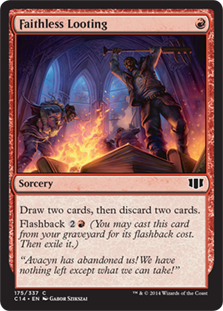
Hogaak and similar set-up-heavy cards sink or swim on the strength of their enablers. Faithless Looting is a fantastic card,  but it's not the best enabler in Hogaak. That honor goes to Stitcher's Supplier and Carrion Feeder. The former represents 4-6 mana for Hogaak and finds the other payoff cards. The later protects everything from exile effects, digs with Supplier, and becomes an overwhelming threat as the game goes on. Wizards tends to ban enablers rather than payoffs, but there are so many enablers that I have to ask if they're willing to sacrifice multiple cards to save Hogaak.
That Elephant Again

There's also a question of whether the problem is the deck or the London mulligan. As is well-established, decks like Hogaak benefit most from the rules change. Neoform wasn't viable without London, and neither was Bridgevine until Modern Horizons and the new mulligan. If Hogaak really is a combo deck, then reducing its consistency would functionally ban the deck. This suggests that the real problem is the London mulligan rule.

I don't know if this is true. My first test didn't allow for power-level mulligans, which London is apparently designed for, and Hogaak did pretty well. The second doesn't have enough data to draw conclusions other than as comparison between the three decks. I hypothesize that the mulligan is boosting Hogaak, but not as much as the deck's inherent swingy power. Actual testing is necessary.

What to Do

This begs the question of what's to be done about Hogaak. The data that I have right now is inconclusive, and I'm not willing to speculate on any potential bans. Belcher-style gameplay isn't fun or healthy for Magic, so I think Wizards will take action, but there's too much uncertainty for me to make predictions right now. There are a number of Modern events between now and August 26, including GP Las Vegas, and the data from there will ultimately determine Hogaak's fate.
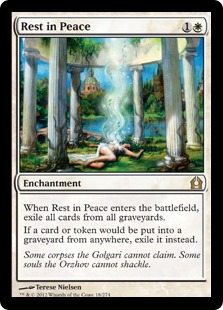
How players should prepare is a difficult question. The odds of seeing any 4-of in an opening hand is only ~40%, so trying to beat Hogaak with Leyline of the Void and/or Surgical Extraction is questionable. Hogaak is equally as likely to have an answer to hate as opponents are to actually have the hate, and the deck's alternate angles of attack further complicate hating it out.

I'm beginning to think that players shouldn't necessarily bother to hate out Hogaak. Leyline is very powerful against Hogaak, but Legacy players don't specifically try to beat Belcher-style decks. They rely on generic answers and Belcher's inherent variance. Given that Hogaak is as likely to have an answer to Leyline as opponents are to having one, and are at least as likely to flame out as win turn two, is it even worth it to try beating Hogaak with hate? Should I care about the best starts or focus on beating the more average ones? A riddle for the ages.

Data Incoming

August will be an interesting month. If I'm right about what Hogaak actually is, we should see it continue to put up enormous populations and win rates but fail to convert into Top 8 slots. You can't dodge the variance forever. If Hogaak is the huge threat that players claim, the data should prove it true. Now we wait.

The Changing Landscape of Foils

Are you a Quiet Speculation member?

If not, now is a perfect time to join up! Our powerful tools, breaking-news analysis, and exclusive Discord channel will make sure you stay up to date and ahead of the curve.

Foils have long been a valued collector item, and as such have commanded prime attention in the finance community, paper and digital alike. This past year has seen several changes to the distribution of foils, and the release of Throne of Eldraine is going to bring even more change on this front as well. This week I'm going to get you up to speed on foils. I'll examine how their prices have already changed, and how they are likely to change going forward.

I. Changes to Boosters

Foil Frequency


Starting with Core 2020, players saw foils in packs at an increased frequency. Not just a little more, mind you - quite a bit more. 50% more in fact, from 8 per box to 12 per box. Naturally, the same increase is seen in mythic rare foils. Formerly you saw 0.14 mythic rare foils per 36 boosters opened, slightly less than one in every six boxes. Now you see 0.21 mythic rare foils per 36 boosters opened, slightly more than one in every five boxes.

The same change to the drop rate of foils in paper has taken place on Magic Online. Do note that this change isn't being retroactively applied to all past boosters, meaning that whatever the foil drop rate was for any given Magic set is still the same as it was before.

Throne of Eldraine Collector Boosters

Throne of Eldraine will not only keep the higher foil frequency found in Core 2020 in its regular booster box product, but will also introduce Collector Boosters which will further increase the number of foils in circulation, both in an absolute sense and as a percentage relative to the amount of product opened. These will be sold between $20 and $25 a pop most likely (more info can be found here in case you missed the announcement last month).

Important to paper and digital financiers, each booster contains 1 rare or mythic rare foil, and that foil has a chance to be extended art (like Mythic Edition planeswalkers). Important to digital financiers, each booster contains 3 common or uncommon foils, likely reducing the value of foil uncommons for redemption purposes on MTGO.

I don't know how many of these Collector Boosters will be opened or the extent to which people (collectors, financiers, Timmys who like shiny objects, etc) will prefer buying them over buying the regular booster boxes. What I do know is that these will shift some money away from traditional booster box product toward products that contain more foils (and more than shifting, likely will tap into new demand as did the Masterpiece series).

All of this should decrease the price of paper foils, as more will be in circulation. In essence, paper Magic will now have two streams supplying a concentrated dose of foils rather than just one, MTGO Redemption and Collector Boosters.

II. How will this affect Redemption Finance?

From those who redeem sets to drafters who sell foils so they can enter their next draft, everyone has noticed that foil prices on MTGO have increased dramatically recently. In the past, foil mythics commanded a premium when it could be redeemed for a paper foil, but usually no more than double the price of its regular non-foil counterpart. Beginning with Guilds of Ravnica and Ravnica Allegiance, foil prices began climbing toward sky-high prices as many drafters moved to Arena; demand for redeemed cards had remained the same, but the supply had gone down.

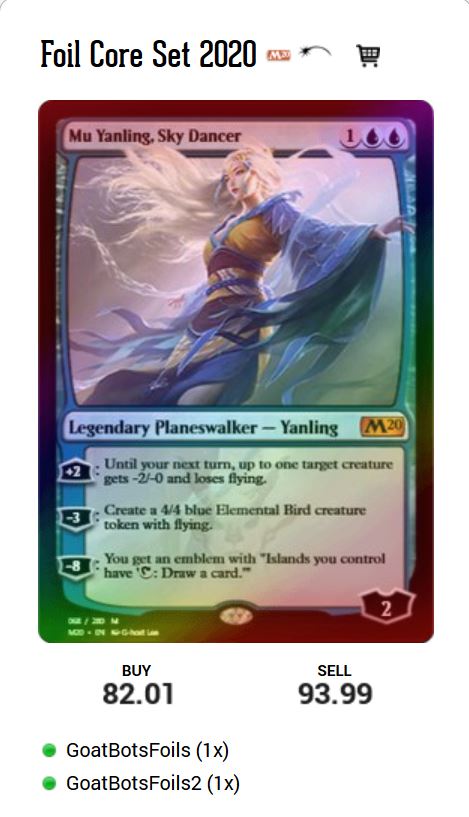
Now, prices for foil mythics usually top 20 tix regardless of playability, and the least opened mythic from any given set on MTGO often tops 90 tix. This is how we get these sorts of messages on Twitter from the most prominent bot chains:


For Core 2020, that card is Mu Yanling, Sky Dancer.

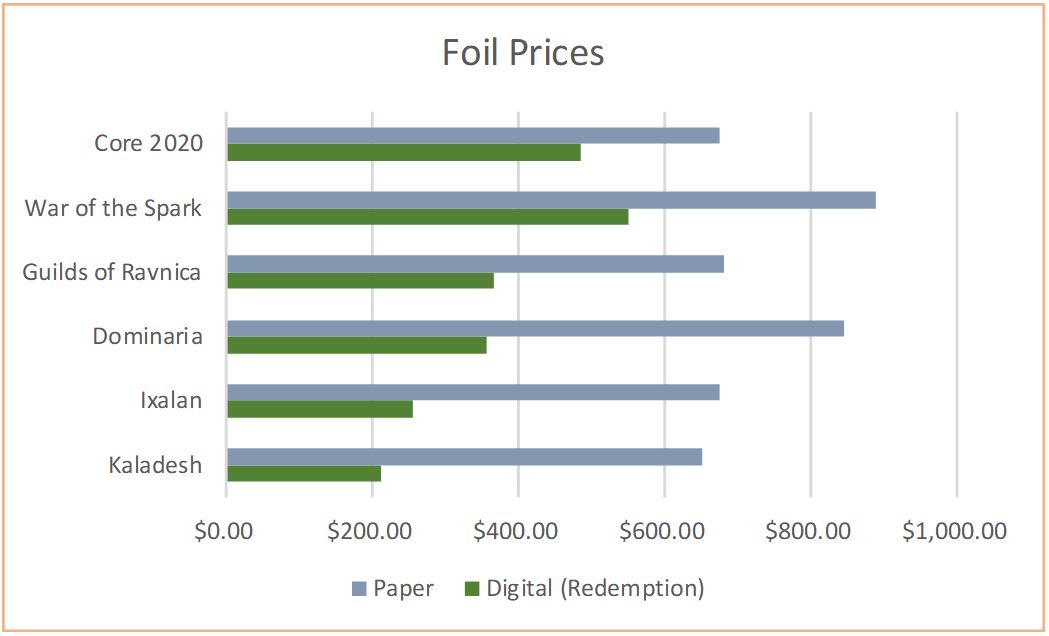
The result is that the overall cost to redeem a set has increased dramatically. The chart below depicts the cost of cards needed to redeem a foil set on MTGO and the value of those cards in paper. The data from Core 2020 comes from now, and all other data comes from two months after that set's release (so generally one month after a set is able to redeemed).

As recently as Kaladesh, the cost to redeem a foil set on MTGO was around $200. A few years later that had risen to $350, and now it costs $550 to redeem a foil set of War of the Spark and $484 to redeem Core 2020. Will foil prices on MTGO continue to climb? Is it still worth it to redeem foils on MTGO? Will the increase in foils printed in paper reduce the cost to redeem on MTGO?

The Profit Margins for Redeeming Foils Has Gone Down

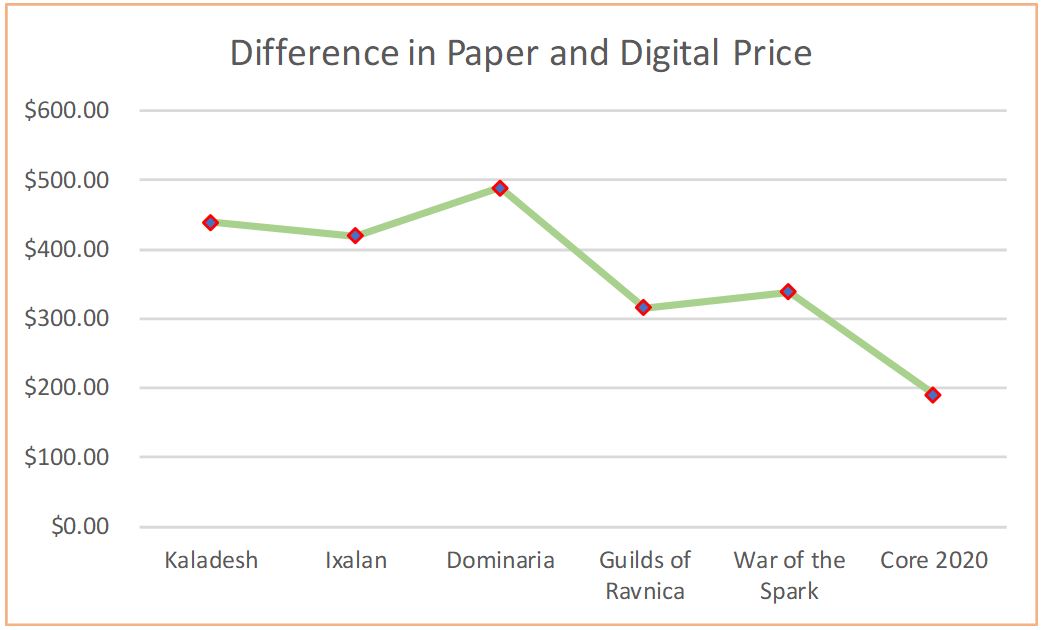
Looking back at data from older sets, it is stunning to me that the MTG Finance community was not on top of this easy and reliable revenue stream. The profit margins were insane two plus years ago. For Kaladesh, for example, you could purchase a foil set for $211 and then convert that into a foil paper set valued at $650, a gain of $439! Over time that difference has gone down, and with it the profitability of redeeming:

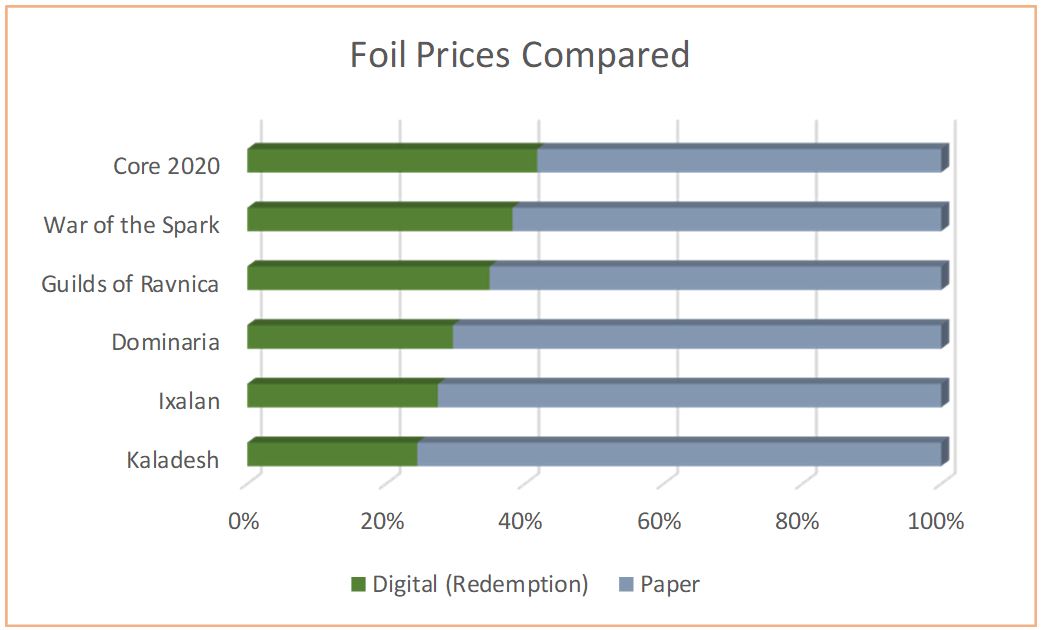
Some of the reason is definitely Magic Arena reducing the amount of product opened on MTGO through drafting. It also seems that more people have become aware of this price disparity and have taken advantage of it by redeeming sets. The cat has slowly gotten out of the bag. As a percentage, the profitability of redemption has steadily declined set by set:

Will Foils Become Cheaper?

Given that collector boosters are being introduced into the Magic ecosystem with the release of Throne of Eldraine, my hunch is that the cost to redeem sets on MTGO has peaked. I doubt we see the value of a foil set be above $800 in paper again, and the value of a foil set on MTGO will track that of paper (minus at least $100 or $200). We will continue to see prices higher than a few years ago, but I expect a 5-10% decrease in the value of individual foil mythics compared to Ravnica Allegiance, War of the Spark, and Core 2020.

The downside though is that the profitability of redeeming foils will likely not go back up. The difference between digital and paper foil prices will likely remain between $150 and $200, though perhaps it could dip to the $100 to $150 range. Redeeming sets is no longer something every Magic player should do automatically without thought, but for the right person, it can still be a means to make a profit or a means to acquire foils for one's paper collection.

III. Parting Thought: Will the Abundance of Premium Products Reduce the Luster of Foils?

There has been a proliferation of the number of premium versions of Magic cards, and the reason is likely because Wizards is monetizing Magic Arena with cosmetics like card styles, sleeves, and alternate art. With Throne of Eldraine, we will have regular cards, foils, extended art rares and mythics, extended art foil rares and mythics, special masterpiece-esque framed versions of cards with Eldraine-specific mechanics, and likely other alternate versions we don't yet know about.

Will traditional foils retain that air of bling and exclusivity even with all these other premium versions of cards floating around? Only time will tell, but paper financiers should keep an eye on how players and collectors value traditional foils relative to these new alternate premium versions.

Are y'all excited about Collector Boosters? How have y'all liked the increased frequency of foils in Core 2020 boosters? Looking forward to Throne of Eldraine? Thanks for reading, and if you have any questions or comments, please feel free to comment down below or hit me up on Discord or Twitter. Until next time!

Insider: Important Tips on Selling Your Collection

Are you a Quiet Speculation member?

If not, now is a perfect time to join up! Our powerful tools, breaking-news analysis, and exclusive Discord channel will make sure you stay up to date and ahead of the curve.

The purpose of this article is to hopefully help anyone looking to finally sell out of the game or sell a large part of their collection off in one single transaction. Before anyone asks, I am not selling out of my collection at this time. However, I've been looking to buy collections recently, and there is an obvious "gap" between what people expect to get and what most collection buyers are going to offer.

While I've written a lot about running an online store throughout my years here, I haven't done anything from the other side of the transaction. My mission here is to help provide those looking to sell with some fundamental things to consider.

There was an error retrieving a chart for Ambition's Cost

The Cost of Selling

When people sell cards on TCGPlayer or any online platform there are fees associated with the transaction. If you were to sell on TCGPlayer, there is at least a 10.25% fee charged by TCGPlayer as well as an additional 2.5% fee charged by PayPal to process the transaction. On top of that, there are additional flat fees like shipping costs and the flat $0.3 fee also charged by PayPal processing. These shipping fees are typically in the $0.62-$0.83 range when you include the cost of a stamp ($0.55), the cost of an envelope ($0.02), the cost of a penny sleeve ($0.01), and the cost of the top loader to protect the card ($0.04-$0.25).

Now, TCGPlayer has recently implemented an additional shipping charge for all orders under $5, which I wrote about last week, so some of these fees are alleviated on the smaller stuff. However, if the buyer is NOT selling on TCGPlayer then they don't get these nice $0.78 additional fee per sale.

There was an error retrieving a chart for Merchant of Secrets

Not all Cards are Worth Buying

Knowing this, most sellers immediately remove all cards under a certain amount from the list under the assumption that these cards are included as "profit boosters" for taking the time to purchase all the cards you are wanting to sell in one single transaction. For the sake of argument, let's peg this value at $3. This is probably the most important point and one that needs to be grasped by the majority of sellers. The TCGPlayer Collection Tracker is a fantastic tool that many of us buyers love.

Having access to a seller's list of cards with up-to-date pricing for those cards is an invaluable asset. However, it adds up EVERYTHING in your list, so if your list includes a large number of sub $3 cards, then the buyer will likely ignore all of those, and that big total you see at the top of your tracker will be a bit inaccurate. This is often one of the biggest reasons transactions fall apart. The seller has one expectation of their collection's value and the buyer has a much different one.

There was an error retrieving a chart for Gwafa Hazid, Profiteer

Profit is not a Bad Word

Profit often gets a pretty bad name nowadays as something that only greedy corporations seek. In this case, it is the sole reason that people are willing to buy your big collection of random cards and without it, your LGS would be non-existent. Realize that person buying your collection is likely not doing it because they just so happen to need all nine copies of Solemnity that you acquired over a couple of years. Rather, they themselves would like to make some money off of reselling your cards then. When you understand this, you'll find it easier to come to an agreed-upon price.

As a small aside, here's another big reason why these kinds of transactions fall apart. Magic players have a tendency to attach sentimental value to their collection as it's likely been a labor of love for them over the years. That effort should be rewarded, right? Sad to say, that special "first mythic rare" you ever pulled is worth exactly the same as every other copy out there.

Unfortunately, there is no agreed-upon profit margin between buyers and sellers, though most buyers often post the rate at which they are buying cards; on Facebook, it's typically between 65-75% of TCGPlayer low for all cards above $5. The reason for this number is as follows:

  1. If you want to sell cards at least somewhat quickly, you need to aggressively price them around TCGLow.
  2. 18-31% of the retail price is eaten up by fees with the higher numbers being for cards slightly above $5.


Most card sales on TCGPlayer will net the seller around 75-80% of the retail price after all fees and shipping are accounted for. This means that if you buy the cards between 65-75%, your profit margin is actually somewhere in the 7%-20% range depending on the various factors. When you think about how much effort selling all of those cards is compared to unloading them in one shot, it doesn't seem like that much of an actual cost to the person selling their collection.

There was an error retrieving a chart for Hazardous Conditions

Condition Matters

Another factor that everyone should understand is that condition is very relevant to the value of a card. All collection tracking apps that I am aware of, including TCGPlayer's collection tracker, assume Near Mint condition for all the cards on a list. If your cards have spent time getting played, there is a fair chance many are not actually NM, which means their value decreases. All major buylists factor in condition on card buy price, and offers can drop dramatically for cards in the Moderate to Heavily Played conditions.

While there is currently no definitive grading metric that accounts for all possible forms of defect or damage, you and your buyer should come to an agreement on which metric to use (most use TCGPlayer's metric). You should also make sure you are in agreement on the buyer's evaluations, especially on the more expensive cards where conditional deductions tend to cost the most.

Conclusion

Think of this article as something like a public service announcement. I've had multiple buys fall apart online because the seller was expecting a lot closer to retail than was viable. Not surprisingly, I often saw them repost the exact same collection a few weeks later having been unable to move it the first time. It can take a significant amount of time for a potential buyer to price out a collection and make an offer and that time is wasted every time a sale falls through.

It's my hope that this article can eventually be shared to non-QS members and some of this information can disseminate into the masses to help reduce the gap between buyer offers and seller expectations.

The Modern Horizons Pullback

Are you a Quiet Speculation member?

If not, now is a perfect time to join up! Our powerful tools, breaking-news analysis, and exclusive Discord channel will make sure you stay up to date and ahead of the curve.

Despite all the hype during Modern Horizons’ release, it appears most prices from the set had not yet bottomed out. This was an incorrect call on my part, and I suspect other speculators were in the same boat. Demand seemed strong enough to keep prices up, but as interest in other products and sets waxes, Modern Horizons demand has waned.

There was an error retrieving a chart for Fiery Islet

While Wrenn and Six’s price remains fairly strong, some of the rares in the set continue to drift lower. Now that prices are a bit lower while demand softens, the big question is: what’s the next action to take? Have we bottomed out now, such that acquiring the playable, underappreciated cards from the set is a wise move? Or is there more downside? Let’s take a look at some of the data!

Card Kingdom’s Stock

Others may have noticed this a long time ago, but it appears that Card Kingdom only stocks eight copies of a new card at a time. Skimming their inventory, I see they have exactly eight Near Mint copies available to purchase of so many key Modern Horizons cards: Wrenn and Six, Force of Negation, Urza, Lord High Artificer, Prismatic Vista, Seasoned Pyromancer, etc. The list goes on and on.

In fact, for every single rare and mythic rare from Modern Horizons, Card Kingdom has exactly eight near mint copies listed for sale. Every. Single. One.

What does this mean? We all know this isn’t the greatest coincidence of all time. Card Kingdom is carefully listing copies for sale so they aren’t subject to a major buyout. By selling just eight copies at a time, they’re able to adapt to sudden shifts in price. But this also means Card Kingdom has more than enough copies of most Modern Horizons non-foils.

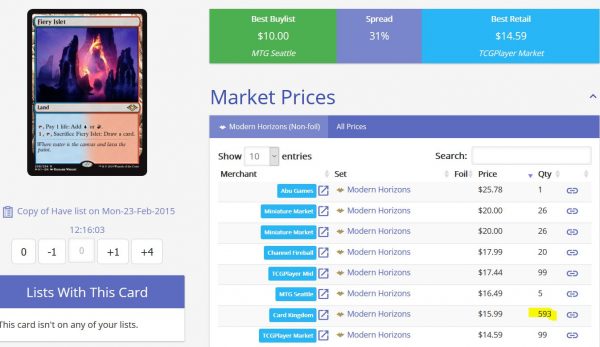
How do I define “more than enough”? This is admittedly a loose, unquantifiable term. In reality, the quantity is going to vary significantly from card to card. But if you check out Quiet Speculation’s Trader Tools website (mtg.gg) you can view the precise quantity Card Kingdom has in stock. For example, it appears they have 593 copies of Fiery Islet in stock.

Meanwhile, they “only” have 249 Urza, Lord High Artificer in stock. I could go on, but I think you get the point: supply is deep. And remember, this is only at one vendor! You also have supply at other major vendors across the globe, as well as TCGPlayer, eBay, etc.

Contrarily, the stock on foils is much more modest. Card Kingdom only shows having ten copies of foil Urza, Lord High Artificer in stock. This is a much easier quantity to sell through versus 249!

There was an error retrieving a chart for Urza, Lord High Artificer

Anticipated Price Trends

With stock running so deep on nonfoil Modern Horizons cards, it appears foil copies are much more likely to rise in price in the near term. Card Kingdom does have reasonable stock of most foil cards from the set, but they have pockets of lacking. For example, Card Kingdom only has one copy of foil Wrenn and Six in stock ($379.99). They are completely out of stock of foil Nurturing Peatland ($59.99) and Plague Engineer ($44.99).

If we still haven’t seen a bottom in Modern Horizons cards, I’d predict the bottom will occur first in foils long before it occurs with nonfoils. And in some cases where demand is particularly strong, the bottom may have already happened when the set was released. Not many could have anticipated Wrenn and Six would have been so popular, and foil prices may never return to pre-order levels again. The same can be said of Plague Engineer.

An advanced search on TCGPlayer further underscores the low stock of some foils versus their nonfoil stock. Dead of Winter is the second most popular seller on TCGPlayer of late (behind Hogaak) and there are 209 listings for the card. Only 27 of those listings are foils. Even sparser is Plague Engineer. There are 157 listings for the card—not a huge amount considering how new the card is—and the foil listings total only 18!

Based on this data, the expectation is clear: foils are the way to play Modern Horizons unless you’re willing to accept a multi-year wait period. Could some non-foil mythic rare spike due to a sudden shift in metagame? Certainly. But until the next round of Modern bannings, the Modern metagame is fairly stuck in place. Given this, my recommendation is to only look at picking up Modern Horizons foils for now, and revisiting non-foils that may jump in popularity once the Modern metagame shifts (possibly upon the next B&R announcement).

Ready to Move On?

What if I’m sitting on Modern Horizons cards because I thought the bottom was already in, and now I’m stuck holding cards with falling prices? What should the move be?

First, a choice needs to be made: is the opportunity cost of sitting on these cards, which may be dead money for quite some time yet, too high? This is a case by case assessment that must be done by each individual. In my case, I despise speculating on cards with the anticipation of easy profit only to be left holding such cards for months with no price appreciation. I’d much rather liquidate immediately and put that money to work elsewhere. I could always revisit these Modern Horizons cards should stock begin to thin and the price starts to bounce.

If you’re in the same boat and you’re ready to cash out and move on, then I have some ideas on how to approach liquidation while minimizing losses.

First, I noticed ABU Games has some pretty decent credit numbers on some Modern Horizons foils. For example, they offer $75 in credit on a near mint Serra the Benevolent.

There was an error retrieving a chart for Serra the Benevolent

I picked one of these up in a brief moment of emotional weakness because I thought they were selling out everywhere. Clearly, my purchase was premature (when you’re early, you’re wrong!) and I’m stuck holding an overpriced copy. I could sit on it and wait for its price to rebound, but I’d rather put this money to work elsewhere where I anticipate better returns. ABU Games may be an attractive out if I can find something reasonable to acquire with the credit.

The same can be said about foil Morophon, the Boundless. This was a pick on a Quiet Speculation podcast and the community (including myself) swarmed in! As it turns out, this wasn’t a spec that could net you immediate gains like I had hoped. Yet again I’m faced with the decision: do I sit on these foils and hope for a catalyst, or do I cash out and free up capital. If I decide upon the latter, I could ship to ABU Games for $70 in credit—this is more attractive than the top cash buy price of $32.24 (also ABU Games).

There was an error retrieving a chart for Morophon, the Boundless

Some nonfoils are better sold to ABU Games for credit as well. Fiery Islet can buylist to $10 cash to MTG Seattle, but this feels like a disappointingly low number considering this was a $20 card not long ago. With ABU Games, you can at least salvage $17.40 worth of store credit for the card. Of course, you won’t get $17.40 worth of cards in return for your credit, but perhaps you can move that credit into something with far more upside?


Wrapping It Up

The call to buy Modern Horizons cards a couple months ago was premature. I was on that bandwagon and I admit my error to this community. Now I’m left holding a smattering of Serra the Benevolents, Morophon, the Boundlesses, and a couple of the Horizon Canopy lands wishing I had their cash equivalents instead.

Those in the same boat as me will have to decide whether they want to hold these cards for longer than initially anticipated or to cash out now to avoid extensive opportunity costs. I’m leaning towards the latter because of my aversion to opportunity cost. Shipping some of this stuff to ABU Games can net me a reasonable pool of credit, though that credit is itself inflated.

Perhaps the best course of action would be to unload nonfoils and keep foils; foil inventory is far lower than nonfoil so the wait time for appreciation may be significantly less. If nonfoil cards can be traded in for credit, which could be used to acquire foils, this would maintain the same level of exposure to Modern Horizons while consolidating into the rarer assets.

Of course, nonfoils won’t get nearly as much store credit as foils—vendors are aware of the large discrepancy and have priced their buylists accordingly.

I’m on the fence with this one: what does the community think is the best move?

…

Sigbits

  • Due to some recent changes that allow more CE/IE cards to be played in Old School events, prices on the square-cut cards have been on the rise. I noticed Card Kingdom placed Collectors’ Edition Mox Jet on their hotlist with a $315 price tag. These cards have been exchanging hands rapidly in the Old School community.
  • Card Kingdom still has foil Wrenn and Six on their hotlist, though the spread between their buy price ($152) and sell price ($379.99) is cavernous. Why the huge buy/sell spread? I wonder if they’re not interested in acquiring very many copies because they’re concerned these won’t sell at such a high price tag and they want the flexibility to drop their price quickly when that happens?
  • Card Kingdom placed Unlimited Lich on their hotlist recently, with a $66 price tag. They pay fairly well on many mid-range Unlimited rares in fact, but condition is so critical due to the low percentages paid on played copies. Keep this in mind while shopping for arbitrage.

Insider: Speculation Opportunities Besides Recent Releases

Are you a Quiet Speculation member?

If not, now is a perfect time to join up! Our powerful tools, breaking-news analysis, and exclusive Discord channel will make sure you stay up to date and ahead of the curve.

Magic releases have come rapid-fire over the past few months, and with War of the Spark, Modern Horizons, and even Core Set 2020 making an impact in every Eternal format and being great for Commander, prices are moving. As if all this wasn’t enough, we just started the spoiler season for Commander 2019, and there has already been speculation around what tidbits we know of Throne of Eldraine this fall.

Attention is limited, and as a consequence, it’s easy to miss other trends occurring below the surface with the entirety of the rest of the market. There are some trends I’ve noticed that have nothing to do with these new sets and could present some alternative spec opportunities. Because these trends seem unrelated to recent releases and the trends du jour, in theory, these should be relatively safe and stable specs for the long term.

Collector's Edition

Image result for collector's edition mtgImage result for collector's edition mtg

One example is Collector’s Edition (and the International Edition version) cards, specifically the highest-end cards like the Power Nine. This week the news that these cards would be legal in unsanctioned Old School events at Grand Prix Vegas made it into the news cycle. It’s actually old news as these have been legal in CFB’s Old School events for some time, but the renewed attention combined with MagicFest Vegas looming could drive demand. There’s some indication it already has, with Collector’s Edition Mox Jet showing up on CardKingdom’s hotlist this week.

Collector’s Edition cards seem to be good budget options for the Power Nine or other expensive cards like dual lands. They are an option for anyone who wants to play with them casually, increasingly so if they are being supported at higher-profile unsanctioned events. They are also desirable for the collectors they were designed for - those that want to own a piece of Magic’s history (at a discount). I don’t expect these are due for any major spikes in price, but they seem like a solid long-term spec.

Promo Lands

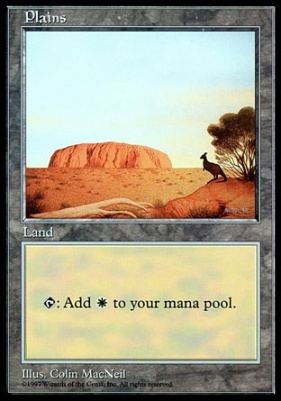
Image result for apac plains mtg

I’m always checking price movements of cards, and one category I’ve noticed moving over the past few weeks is promo lands. Examples include the various APAC lands,  Arena lands, and even the Guru lands. Basic lands seem like one of the safest and most stable specs available, simply because they transcend formats and metagames, rotations and bannings. They are the basic building blocks of the game, and I think most everyone has felt the urge to play with lands they think look cool.

I don’t think you can really go wrong with any of them, because as time goes on and Magic continues on its current trajectory of growth, demand for these will continue to increase and the supply will slowly dry up, which is what I imagine we are seeing with things like these promos now. Another good option is Alpha and Beta lands, which have seen sustained growth for years. 

Portal Three Kingdoms

Anyone following Magic daily price movements recently may have seen massive spikes on cards from Portal Three Kingdoms. If you do a little digging, you can see these movements aren’t necessarily real, as some of these cards have so few copies for sale to begin with. A few sales or small-scale buyouts can leave only the overpriced copies behind, making it look like the price is far higher than it should be. Still, this is a real sign that these cards are being bought, most at lower prices, yes, but demand is there.

With so few copies in circulation and some of the coolest flavor in Magic, these should have a strong future.

Mountain (176), Magic, Portal Three Kingdoms

The rares, many of which are legendaries with Commander applications, seem like the best targets. Everything down to the commons could potentially be valuable, see Forest Bear actually spiking to $39.99 with TCGplayer showing a copy sold at that price, and a current buylist price of $25 in credit at CardKingdom. I especially like buying in on the lands, which have unique artwork and a cool factor. 

I also believe some of the stigmas against white borders are fading. I’ve even encountered competitive players that prefer them because of their ease of identification while using fetchlands and other tutor effects. 

Vanguard

Image result for vanguard magic

An obscure piece of Magic history is Vanguard, a play variant utilizing special side cards (almost like Commander) that gave you special abilities. I was never exposed to them in paper, but they were a ton of fun to play on Magic Online. I’ve long imagined that they could one day become desirable because of the nostalgia and cool factor, and now I’m starting to see movement on them in price lists.

On one hand, they are bulky oversized cards that are competitively useless, but with unique art depicting some of the most iconic characters in Magic, I suspect there is something to them.

Beyond the collecting factor, I can even imagine people trying to make a format around them for the fun factor. I imagine the biggest driver of demand would be if Wizards ever happened to ever revisit the Vanguard idea. Not likely, but always a possibility. 

Looking Ahead

The classes of cards I covered today have been moving not because of recent releases or new spoilers, but for another reason entirely. This movement seems to be a sign of general health and strength in the overall Magic market. They say a rising tide lifts all ships, and I believe the many high-impact releases of 2019 have brought a vigor that has spilled over to the wider market.

I also believe the effect of Magic Arena can not be understated, and that the increase in the player base it's bringing about is being reflected in these price increases. Magic has experienced an unprecedented amount of time in the broader media, specifically the financial press due to the massive success of Hasbro - much on the back of Magic Arena.

With Wall Street showing such confidence in Hasbro and in turn Magic, it seems like a great time to be betting on Magic, and I believe specs like the ones I shared today do just that.

June ’19 Brew Report, Pt. 2: Aria of Brews

Are you a Quiet Speculation member?

If not, now is a perfect time to join up! Our powerful tools, breaking-news analysis, and exclusive Discord channel will make sure you stay up to date and ahead of the curve.

Picking up where we left off last week, today we'll continue unearthing the new tech found in July's MODO dumps. Let's dive right in!

Cutesy Combos

Combo is alive and well in Modern, and probably always will be. Novel ways to win on turn four are in tall supply since the format's card pool is so deep. First up today is a deck revolving around Solemnity.

Mono-White Solemnity, by DRDUB (5-0)

Creatures

4 Lesser Masticore
4 Safehold Elite
4 Kitchen Finks
4 Thraben Inspector
4 Anafenza, Kin-Tree Spirit

Artifacts

4 Altar of Dementia
4 Blasting Station

Enchantments

4 Solemnity

Instants

2 Faith's Shield
4 Path to Exile

Lands

2 Ghost Quarter
20 Plains
60 Cards

Sideboard

4 Phyrexian Unlife
4 Tormod's Crypt
3 Disenchant
2 Oblivion Ring
2 Pithing Needle

Mono-White Solemnity doesn't go the usual route of using Solemnity with Phyrexian Unlife out of a prison shell, although it does boast that combo out of the sideboard to shut down damage-based decks. In Game 1, it's more interested in going off with persist creatures and a sacrifice outlet: Blasting Station for damage, or Altar of Dementia for mill. When a creature with persist dies while Solemnity is on the battlefield, it returns from the graveyard without a counter, letting pilots sacrifice it an arbitrary number of times.
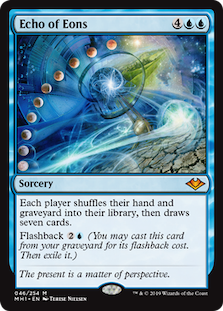
Altar gives any deck looking for it a generic sac outlet, which enables decks like Mono-White Solemnity that already have access to another. But also giving the deck a big boost is Lesser Manticore, the best persist creature this side of Kitchen Finks. Manticore does a solid Grim Lavamancer impression in longer games against creature decks by gunning down enemy forces. Mono-White Solemnity isn't really looking to play fair, but Manticore gives it some semblance of a plan if it needs to.

Bant Snow, by MAYODOMINARIA (5-0)

Creatures

4 Ice-Fang Coatl

Planeswalkers

2 Jace, the Mind Sculptor
4 Narset, Parter of Veils
1 Teferi, Time Raveler

Artifacts

1 Arcum's Astrolabe
1 Teferi's Puzzle Box

Enchantments

1 On Thin Ice
3 Rest in Peace

Instants

2 Cryptic Command
2 Force of Negation
1 Mana Leak
4 Opt
4 Path to Exile
1 Remand
1 Spell Pierce

Sorceries

1 Day's Undoing
2 Supreme Verdict
1 Timely Reinforcements

Lands

1 Breeding Pool
2 Celestial Colonnade
3 Field of Ruin
4 Flooded Strand
2 Hallowed Fountain
2 Misty Rainforest
1 Prismatic Vista
1 Snow-Covered Forest
6 Snow-Covered Island
1 Snow-Covered Plains
1 Temple Garden

Sideboard

1 Timely Reinforcements
1 Ashiok, Dream Render
2 Celestial Purge
1 Disdainful Stroke
1 Dovin's Veto
1 Grafdigger's Cage
1 Lyra Dawnbringer
1 Monastery Mentor
1 Ramunap Excavator
1 Restoration Angel
1 Snapcaster Mage
2 Spell Queller
1 Vendilion Clique

Bant Snow is a deck I brewed up myself some weeks ago, and focusing on the same combo: Teferi or Narset with Day's Undoing. This deck adds some extra tech, chief of all moving the Rest in Peaces to the mainboard. Opt is given the nod over Noble Hierarch, and more expensive cards are added, from Jace, the Mind Sculptor to the miser's Teferi's Puzzle Box.

I feel that most of these fixes make the deck slower in the name of consistency that isn't necessarily needed. But I do like maining Rest in Peace in this climate.

New Takes

Some existing decks have also seen fresh updates lately.

Bridgeless Hogaak, by DOUGH_SHACK (5-0)

Creatures

4 Hogaak, Arisen Necropolis
4 Bloodghast
4 Carrion Feeder
4 Cryptbreaker
4 Gravecrawler
4 Hedron Crab
4 Prized Amalgam
4 Stitcher's Supplier
4 Vengevine

Instants

1 Fatal Push

Sorceries

4 Faithless Looting

Lands

2 Blood Crypt
4 Bloodstained Mire
3 Marsh Flats
4 Polluted Delta
2 Swamp
2 Verdant Catacombs
2 Watery Grave

Sideboard

3 Fatal Push
1 Godless Shrine
1 Shenanigans
2 Thalia, Guardian of Thraben
4 Thoughtseize
4 Wear // Tear

This is just the first Bridgeless Hoggak list that appeared online after the banning, but the deck has by now proven itself a significant force in Modern even without the infamous enchantment. Hedron Crab seems to have been mostly abandoned.

Echo Urza, by FTZZ (5-0)

Creatures

4 Riddlesmith
4 Urza, Lord High Artificer
1 Sai, Master Thopterist
4 Simian Spirit Guide

Planeswalkers

1 Saheeli, Sublime Artificer

Artifacts

4 Chalice of the Void
4 Engineered Explosives
4 Everflowing Chalice
2 Grinding Station
4 Mishra's Bauble
4 Mox Opal
2 Tormod's Crypt

Enchantments

1 Mirrodin Besieged

Sorceries

4 Echo of Eons

Lands

1 Cavern of Souls
4 Darksteel Citadel
1 Fiery Islet
1 Geier Reach Sanitarium
1 Gemstone Caverns
2 Shivan Reef
3 Snow-Covered Island
4 Spire of Industry

Sideboard

2 Tormod's Crypt
1 Abrade
1 Ancient Grudge
1 Arc Trail
1 Ghirapur Aether Grid
1 Hurkyl's Recall
1 Karn, Scion of Urza
1 Narset, Parter of Veils
1 Negate
1 Ray of Revelation
2 Teferi, Time Raveler
1 Welding Jar
1 Whipflare

Echo Urza isn't as much a new take on the Urza, Lord High Artificer decks we've seen at the top tables as a new strategy entirely. It revolves around Riddlesmith, a first-time-in-Modern creature that loots through the deck as pilots deploy artifacts. Crucially, this looting function dumps Echo of Eons into the graveyard so pilots can flash it back. Activating the shiny new Timetwister lets players refill on artifacts to cheaply deploy, keeping the cycle going and looting through the deck.

Simian Spirit Guide greases the wheels here, shortening the clock by resolving a payoff early. Saheeli and Sai are also here as legendary ways to benefit from playing many artifacts in a row.

Seeing Red

Burn may have dominated for much of Modern's history, but now the format is home to a variety of red-based aggro decks, including Skred and Goblins. New ones also continue to poke their heads out of the woodwork.

Rakdos Arcanist, by CHARKATTACK (5-0)

Creatures

4 Dreadhorde Arcanist
4 Young Pyromancer
4 Seasoned Pyromancer
4 Lightning Skelemental
2 Gurmag Angler
1 Goblin Bushwhacker
1 Hazoret the Fervent

Instants

1 Kolaghan's Command
4 Lightning Bolt
1 Rakdos Charm

Sorceries

4 Faithless Looting
2 Reckless Charge
4 Thoughtseize
4 Unearth

Lands

1 Arid Mesa
4 Blackcleave Cliffs
2 Blood Crypt
4 Bloodstained Mire
1 Polluted Delta
1 Prismatic Vista
2 Snow-Covered Mountain
3 Snow-Covered Swamp
1 Sunbaked Canyon
1 Wooded Foothills

Sideboard

2 Collective Brutality
3 Fatal Push
4 Leyline of the Void
2 Magmatic Sinkhole
3 Ravenous Trap
1 Smash to Smithereens

Rakdos Arcanist runs none other than Unearth alongside Dreadhorde Arcanist, recreating a new combo we explored in detail last week. But there are no Elemental synergies here, despite there being plenty of the creature type in the deck between Lightning Skelemental and Seasoned Pyromancer's tokens. Instead, Gurmag Angler makes a rare appearance outside of Grixis Shadow and Hollow One as raw bulk available as early as turn two. Hazoret can't resolve until later, but defeats many decks single-handedly when it does.

Big Phoenix, by PIEGONTI (5-0)

Creatures

4 Arclight Phoenix
4 Bedlam Reveler
4 Seasoned Pyromancer

Enchantments

3 Aria of Flame

Instants

4 Desperate Ritual
2 Gut Shot
3 Lava Dart
4 Lightning Bolt
4 Manamorphose
2 Pyretic Ritual
1 Surgical Extraction

Sorceries

4 Faithless Looting
2 Tormenting Voice

Lands

15 Mountain
4 Sunbaked Canyon

Sideboard

2 Abrade
2 Blood Moon
2 Dragon's Claw
2 Kozilek's Return
2 Lightning Axe
4 Ravenous Trap
1 Shatterstorm

Mono-Red Phoenix evokes blazing starts, powered either by the deck's namesake bird or by 1/2s with prowess. Both Monastery Swiftspear and Soul-Scar Mage are absent from Big Phoenix, the latest spin on the strategy. Card quality is prioritized here over speed, and the non-Phoenix threats serve to refill pilots on cards once they've become low on resources. Mono-Red runs ritual spells to power out its creatures early and improve the synergy with Phoenix, which was perhaps shaky in the prowess builds, decks fundamentally split between two gameplans. Having rituals improves Blood Moon out of the side.

A Grave Future

With Hogaak again rising in Modern, the future is uncertain. Will the deck continue to prove oppressive? How many new decks will break out in the coming months? Let me know your thoughts in the comments. And if you have a lead on any promising tech!

Rotating Cards Part 2: Rivals of Ixalan

Are you a Quiet Speculation member?

If not, now is a perfect time to join up! Our powerful tools, breaking-news analysis, and exclusive Discord channel will make sure you stay up to date and ahead of the curve.

If you grew up in the '80s or '90s, surely you recognized the sights and scenes from the Ixalan block. It is seemingly where Indiana Jones and Jurassic Park collided to create a Mesoamerican-plane where our adventurous appetites can feast.

The Ixalan block ultimately only served the purpose of progressing the Gatewatch story arc, so, unfortunately, we did not get much insight into the dinosaurs or tribes that inhabit the plane. We also did not get much backstory on new characters we met from Ixalan such as Huatli, Warrior Poet and Angrath, the Flame-Chained.

When it was all said and done, I found myself wondering about the history of Magic's dinosaurs, pirates, Huatli's tribe, and Angrath. I can't help but think others may have similar questions and, hopefully, Wizards of the Coast plans to use Ixalan again in a future set.

One of the best things about the Ixalan block is the way the art on the cards depicts the plane. The setting of Ixalan is shown extremely well through the card art to the point where even the faintest imagination could find itself immersed in thoughts.

Additionally, Ixalan was a boon for EDH players. For many reasons, the Ixalan block goes down in my book as the first set to be clearly designed with a heavy dose of Commander in its blood. When looking back at Ixalan's predecessors and then looking forward to its kin, it seems to me that Ixalan was a testing ground for Wizards to create a lot of new cards for Standard while also appealing to the Commander crowd.

Since Ixalan was printed, we have had several Standard sets all with EDH in mind, not to mention Modern Horizons which the MTG community affectionately renamed to "EDHorizons".

All of this EDH love has given me plenty to write about lately. As you may know, last week I evaluated post-rotation Commander cards from Ixalan. This week, I'll be focusing on the second set of the block, Rivals of Ixalan.

The Watch List

There are few ways to get me more excited for a card in EDH than it being a cheaply-costed artifact that enables card-cycling with upside. Enter: Azor's Gateway.

While the card doesn't see much play in Commander to date, it's a card I find exciting to build around and a darn good payoff when it gets transformed. This isn't an urgent card to acquire by any means. I suspect the price should stay low beyond rotation (especially non-foils), but it's a card worth monitoring and adding to your watchlist (especially if you'll play with it eventually).

The reason I am adding it to my watch list is purely based on potential. The "exile" clause specifically piques my interest; if we were ever to get a Commander that enables casting cards from exile, Azor's Gateway would instantly become an engine in that deck.

Furthermore, Azor's Gateway is already garnering a small amount of attention because of Atemsis, All-Seeing. While Atemsis isn't enough to push the price up by itself, it will be enough to raise the floor slightly.

Investment Plan - I

I am keeping a particularly close eye on foils of Azor's Gateway, though I like copies of the non-foil as well. I just think the art is great and the foil looks amazing, but being that this is a flip card with Ixalan flavor, it should be fairly difficult to reprint (aside from maybe a "Return to Ixalan" promo set of some sort).

I'm targeting a price-point on NM foils at $6 and I like LP foils at $5 (I may actually grab one this weekend at GenCon if I find either condition at this price). If you like non-foils because flip cards with Ixalan flavor are going to be hard to reprint, I would suggest picking up copies at or under $1.50.

There was an error retrieving a chart for Timestream Navigator

Did you say "taking turns"?

Timestream Navigator is such an intriguing card primarily because of the combo potential its ability offers - yes, you'd have to give it haste and that is likely Magical Christmasland, but it is interesting to brew around nonetheless. It is also a mythic and a relevant creature type - pirate - so any additional tribal support for them could make this card's price climb.

I've been trapped by purchasing copies of "taking turns" cards before, so this one isn't coming as a card I highly recommend, but add it to your watchlist and you can do worse than grabbing a couple foil copies at bulk pricing in hopes for its day in the sun.

Investment Plan - II

For Timestream Navigator, I'm hoping to get 1-2 foils if they get under $3. Rotation isn't going to be much of a factor for Navigator, but I am banking on a little supply coming into the market and pushing prices down just a touch more. I am more or less staying away from non-foils, though it's not a terrible card to grab if you can find any in bulk mythic bins.

There was an error retrieving a chart for Path of Discovery

Draw power in green has become increasingly available since Path of Discovery was printed. We also received Guardian Project in Ravnica Allegiance, and collectively these two cards create a nice package for green decks running a good number of creatures (roughly 22-25 to be really effective).

Path of Discovery foils are already thin in supply and the non-foil has quietly crept up to $1.50+. Some of this could be from fringe Standard play which makes it the perfect card to watch heading into rotation. If the prices plummet by 25-50%, these will make for a fine long-term acquisition.

Investment Plan - III

I will be watching Path of Discovery closely for about 4-8 weeks after rotation to see how its prices respond. If the card shows any sign of price weakness, I will likely hold off and wait until it bottoms out just above bulk pricing (figure sub-$1 non-foil and sub-$3 foil). It could very well be that the current $1.50 / $4 splits on non-foils and foils is as cheap as this card will be (barring reprint).

There was an error retrieving a chart for Warkite Marauder

Interestingly enough, over the past two weeks covering the Ixalan block, I've mentioned three different pirates I'm adding to my watchlist. Perhaps I need to build a pirate-tribal deck in the near-future and this has been my subconscious just pushing that idea further on me. Regardless, Warkite Marauder is a really fun card in casual play - it is by no means a powerful or broken card, but its triggered ability on attack can be extremely effective in helping break through an opponent's defenses.

Investment Plan - IV

Warkite Marauder is a true penny stock and can be had in bulk pricing for both non-foils and foils. I am considering adding a couple of copies to my inventory and one for personal use in anticipation of building an eventual pirate-tribal deck. This card won't be dropping further at rotation, so I'd only really be considering Warkite Marauder if you think pirates will get more support in the future. I, for one, hope they do!

The Primals

The four Dinos captioned above are some of my favorite cards ever printed. I loved dinosaurs as a kid, so this block appealed to my nostalgia for those reasons. I think Zacama will especially make for a great long-term speculative pick, but first, I believe these have room to fall further at rotation.

Starting with the biggest dinosaur of them all - Zacama, Primal Calamity - I have found Zacama to be an incredibly price-resistant card. I've been watching this card literally since it was spoiled and the price has done nothing but go up. In full transparency, I have needed a copy for my Gishath, Sun's Avatar deck for about nine months now and still haven't bought one because I am unwilling to pay $8-10 for it.

I'm waiting a little longer for rotation now hoping that copies of Zacama will find their way out of binders and into the hands of vendors. It's seen a fringe amount of Standard play and it doubles down as an incredible finisher in EDH decks that use Omniscience or Nahiri, the Harbinger. Knowing this, it is unlikely Standard will dent its price much but I have started to see signs of it decreasing recently. In fact, just this week while continuing my research did I notice it is sub-$10 now (first time that's ever been the case from what I can recall).

Rounding out the big four Primals on my watchlist are Ghalta, Primal Hunger, Etali, Primal Storm, and Nezahal, Primal Tide. All three of these see quite a bit of play in EDH already. For Ghalta and Etali, that play is mostly attributed to Dino tribal whereas Nezahal actually carved out its own niche elsewhere in various blue strategies.

I love acquiring small quantities of foils for all three of these once rotation hits. Dinosaurs actually see play in the current Standard meta, so rotation might impact them more significantly than previously mentioned cards. I also need to remind you that Ghalta, Primal Hunger and Etali, Primal Storm have promo prints which will significantly cap their upside.

That said, if you need copies or want to speculate, I would target the Game Day Promo for Ghalta at $4 post-rotation (NM if possible) and regular pack foils of Nezahal and Etali at $4 and $5 respectively (as an aside, have you seen Nezahal and Etali in foil!? They are stunning!).

It is worth mentioning Zetalpa, Primal Dawn and Tetzimoc, Primal Death as legendaries from the same cycle, though I don't have as much interest in picking these up, save for maybe one foil for my own collection. They became a bit more appealing because Morophon, the Boundless's printing made five-color Dinos possible, but not enough to dive into unless Dinos receive newfound support down the road.

Investment Plan - V

If Zacama, Primal Calamity hits $5-6 I can confidentially say I will be buying more than just the one copy I need. Given the various applications and existing playability in EDH, I predict in as little as six months from rotation Zacama, Primal Calamity non-foils will be back to $10+.

Nezahal, Primal Tide appears to be the most undervalued card of this cycle, given its capabilities in multiple different strategies. I think Nezahal's price could climb into the $6-8 range within 6-12 months. Conversely, I think Ghalta, Primal Hunger and Etali, Primal Storm will be slower gainers. However, I think the Game Day Promo Ghalta and pack foil Etali will still appreciate some because of their aesthetics.

There was an error retrieving a chart for The Immortal Sun

The artifact we were all searching for in Ixalan is also the card I'll be searching for the most after rotation. The Immortal Sun has done nothing but climb since it was initially printed. If you were in on copies during the first few weeks of Rivals being on the market you've likely done very well. Similarly, if you rode the wave of hype when War of the Spark was first announced, you know non-foil copies were selling for as much as $30 at its peak.

Fortunately for us, the hype has faded, and with it so has the price. The Immortal Sun now sells for sub-$15 and dropping. The foils have held onto their $30+ price tag because of the existing presence Sun has in EDH and on various sideboards in Standard, Legacy, and Vintage.

That said, rotation will hit this card as hard as any from the entire Rivals of Ixalan set. I firmly believe that this is going to go to sub-$10 before longer-term ascending back to a mid-teens price-point. The card is simply too flexible and too good not to ultimately be a $15 card (until reprint). Be careful here, as the supply that is going to exit binders here in the next two months will flood the market first (we're already seeing it happen).

Investment Plan - VI

With The Immortal Sun, be patient in acquiring your copies. Add it to your watchlist and wait until the prices completely bottom out. Buylists are already soft on the card which indicates to me the demand has decreased significantly. The Standard meta already shifted away from The Immortal Sun being relevant, so copies have likely already been traded in as players open up their cash flows anticipating Throne of Eldraine. We'll see more of this happen before the bottom finally arrives, but when it does be ready to pick copies up for a long-term climb.

I am aiming very low - maybe it never even gets to these prices - but I'm thinking $6-8 for non-foils and $15-20 for foils. I estimate that within 6-12 months from rotation it will climb back to $15 for non-foils and $30 for foils. Be prepared for rotation and make sure to get your copies when they are cheap!

Wrapping Up

Ixalan is a really cool block that went under the radar for the most part, but it gave us plenty of fantastic role players and it added support for two new tribes to EDH (Dinos and Pirates).

Additionally, it is a new plane that we may get to visit again someday, so for those into MTG lore, let's definitely stay tuned to this. I am hopeful to learn more about what "Primal" means to Ixalan; why there are Dinosaurs in the first place; and why a card called Star of Extinction was printed but not explained in the storyline of Ixalan at all? If you have feedback on any of these questions, please reach out! I'd love to know what I might have missed on the lore side of the story.

This concludes my coverage of the Ixalan block as we approach rotation. Bear in mind that all cards I mentioned are purely for your consideration in an attempt to keep the game as cheap as possible. I am sure I missed some cards on my watchlists, so please feel free to reach out and let me know what I got wrong, right, or simply omitted. Find me on Twitter @ChiStyleGaming or on the QS Discord.

Until next time, cheers!

Insider: QS Cast #129 – Eldraine, and all the News! [Unlocked]

Are you a Quiet Speculation member?

If not, now is a perfect time to join up! Our powerful tools, breaking-news analysis, and exclusive Discord channel will make sure you stay up to date and ahead of the curve.

Welcome to the QS Cast 2019! Our co-hosts Chaz and Tarkan explore the financial aspect of Magic the Gathering – and in this episode they discuss the following:

  • QS Writer and fellow co-host Chris Martin joins the cast!
  • ALL  the news from the past 2 weeks! Eldraine, Historic, Mythic Champ IV, Commander 2019, SDCC Promos and more!
  • Insider Questions!
  • Cards to Consider!


*This Podcast was Recorded on 07/29/2019 for QS Insiders. We unlocked this earlier than normal! If you want live recording sessions and up to date postings before anywhere check out the QS Insider Discord!

Avatar photo

Chaz V

Started playing during Invasion block at the age of 13. Always a competitive person by nature, he continues playing to this day. Got into the financial aspect of the game as a method to pay for the hobby and now writes, Podcasts, and covers all aspects of the game, always trying to contribute to the community and create great content for readers and listeners.

View More By Chaz V

Posted in Free, QS Cast1 Comment on Insider: QS Cast #129 – Eldraine, and all the News! [Unlocked]

Have you joined the Quiet Speculation Discord?

If you haven't, you're leaving value on the table! Join our community of experts, enthusiasts, entertainers, and educators and enjoy exclusive podcasts, questions asked and answered, trades, sales, and everything else Discord has to offer.

Want to create content with Quiet Speculation?

All you need to succeed is a passion for Magic: The Gathering, and the ability to write coherently. Share your knowledge of MTG and how you leverage it to win games, get value from your cards – or even turn a profit.

Insider: QS Cast #128 – Core 2020 and MTG Arena Influence [Unlocked]

Are you a Quiet Speculation member?

If not, now is a perfect time to join up! Our powerful tools, breaking-news analysis, and exclusive Discord channel will make sure you stay up to date and ahead of the curve.

Welcome to the QS Cast 2019! Our co-hosts Chaz and Tarkan explore the financial aspect of Magic the Gathering – and in this episode they discuss the following:

  • Efren and Stu join the cast!
  • Is this our first legitimate case study for MTG Arena effecting paper pricing?
  • Insider Questions!
  • Where is money being spent, if any?


*This Podcast was Recorded on 07/07/2019 for QS Insiders. If you want live recording sessions and up to date postings before anywhere check out the QS Insider Discord!

Avatar photo

Chaz V

Started playing during Invasion block at the age of 13. Always a competitive person by nature, he continues playing to this day. Got into the financial aspect of the game as a method to pay for the hobby and now writes, Podcasts, and covers all aspects of the game, always trying to contribute to the community and create great content for readers and listeners.

View More By Chaz V

Posted in Free, QS CastLeave a Comment on Insider: QS Cast #128 – Core 2020 and MTG Arena Influence [Unlocked]

Have you joined the Quiet Speculation Discord?

If you haven't, you're leaving value on the table! Join our community of experts, enthusiasts, entertainers, and educators and enjoy exclusive podcasts, questions asked and answered, trades, sales, and everything else Discord has to offer.

Want to create content with Quiet Speculation?

All you need to succeed is a passion for Magic: The Gathering, and the ability to write coherently. Share your knowledge of MTG and how you leverage it to win games, get value from your cards – or even turn a profit.

That Which is Not Dead: MC Weekend

Are you a Quiet Speculation member?

If not, now is a perfect time to join up! Our powerful tools, breaking-news analysis, and exclusive Discord channel will make sure you stay up to date and ahead of the curve.

For the first time in quite a while, I have a massive data dump to analyze! The past weekend contained a Modern GP, an SCG Open, and the Mythic Championship. With all the shocks finally wearing off, we can start to get a handle on the new metagame. But not without first noting that this is just the first weekend of data. Metagame formation is a process of players adapting to data as it trickles in, so today's snapshot should be regarded as a starting point rather than the actual metagame.

Additionally, the starting population for each event matters significantly. The Mythic Champtionship is an invitational event with a small population of high-level players who often play team decks. Almost all of Team ChannelFireball and the MPL was on Hogaak, an observation neither random nor necessarily indicative of anything other than player preference. GP Barcelona would normally have been a random sample, but this time it was flooded by players scrubbing out of the Mythic Championship. As a result, the data will be distorted to some degree. The SCG Open and associated Classic results should therefore be given greater weight, since they are the most random and therefore statistically valid results.

MC Barcelona

As it was the most high-profile event, I'll start with the Mythic Championship. As its data is also the most skewed, I'll be treating it lightly. As mentioned, team-think and word of mouth heavily influence deck decisions at this level. There's also the impact of the draft portion. Luis Scott-Vargas only managed two match wins with Hogaak, but still made Day 2 thanks to his draft record. His luck didn't improve. Thus, any player's final placing is not necessarily indicative of their Modern deck's strength.

Top Performers

As a result, I'm discounting the Top 8, and will instead focus on only those decks that earned at least 24 points. It should be noted that Thoralf Severin, the winner of Mythic Championship IV who was playing Tron, is not in this data set. In fact, of the Top 8, only Zhiyang Zhang on Jund and Martin MĂĽller on Hogaak received at least 24 points in constructed. The draft bias is very strong in this event.

Deck NameTotal #
Hogaak9
Hogaak Dredge2
UW Control2
Jund2
UrzaSword2
Mono-Green Tron1
Humans1
Izzet Phoenix1

That is an overwhelming amount of Hogaak. The picture gets worse if you consider the Dredge version just a variant rather than a separate deck. Over half the top decks contained Hogaak, Arisen Necropolis. It certainly looks like the banning of Bridge from Below has not actually released us from the rearisen menace. However, there are caveats. Look beyond the deck title and there is a lot of very high-level talent playing Hogaak, including PVDDR and Reid Duke. I have a hard time believing they wouldn't have done similarly well with another deck. Again, the effect of teams picking the same deck is strong here. Hogaak's prevalence is driving most of the discussion of Modern's metagame as a result, so that's what I will be focusing on today.

Overall Win Percentage

Trying to look at the wider picture muddies the picture further. If you look at the overall win percentages, Hogaak is doing far better than any other well represented deck. It gets even better if you lump the various versions of Hogaak together. This would serve to justify the implication from above that Hogaak is an overperforming deck. However, that assessment is complicated by the starting population. Hogaak was the most popular deck Day 1. It held roughly the same proportion of the field on Day 2. In fact, the overall metagame really didn't change over the tournament. This makes the win percentage numbers somewhat suspect.

Consider this thought experiment. At a Grand Prix, there is a metagame made of three decks: A, B, and C. Deck A beats B 75% of the time, and C 25%. The mirror is 50%. At this GP, A forms 50% of the field, B forms 20%, and C forms 30%. The expected win rate at such a tournament for deck A would be around 48%. If in practice, deck A hit the mirror seven rounds, B three times, and C five, the average win rate would be 47%. If instead it saw B five and C three, the win rate would be 53%. The prevalence of mirror matches skews the data towards the center. This tends to mask the actual strength or weakness of a deck in the actual metagame. Thus, I argue it's not necessarily accurate to say that Hogaak overperformed given it's starting prevalence.

The bottom line is that Hogaak did very well in the constructed portion of MC Barcelona. It should have done well, considering the quantity and quality of players that were running it, regardless of its actual metagame strength. Therefore, I wouldn't draw any conclusions from this chunk of data due to the various biases. As part of a wider context, it may have greater meaning by reinforcing other, more valid data...

GP Barcelona

...such as the Grand Prix that was run parallel to the Mythic Championship. Normally, GP's are the best data source since they're large, open tournaments, giving a very large and random starting population, which is critical for validity. The Barcelona results need to be taken with a grain of salt because it did receive an influx of players from the MC, and thus received some of the bias from that event. I don't expect it was enough to completely swing the results, but it still needs to be acknowledged.

Top 8

Unfortunately, being run in parallel to the MC means that the GP wasn't as well covered. Looking at the Top 8 is not enough data to really mean anything. However, that small set does have a very interesting parallel to the MC, which suggests that all is not what it seems given the data.

Deck NameTotal # in MC Top 8Total # in GP Top 8
Jund22
UrzaSword11
Eldrazi Tron11
Hogaak11
Hardened Scales10
Mono-Red Phoenix10
Mono-Green Tron10
Humans01
Izzet Phoenix01
Esper Control01

Hogaak is just part of the crowd in both Top 8's, and in fact neither one made it past the quarterfinals. Meanwhile, Jund is the best performing deck by Top 8 appearance and won the GP. Hogaak didn't win anything last weekend. If this was the only data to work with, the conclusion would be that Hogaak was just another deck and there's nothing really to see here. Instead, the focus would be on Jund's return to viability after disappearing for over a year. Of course, there's insufficient data to make such a declaration, but the point remains that the GP's final result appears at odds with the MC's data while agreeing with the (biased) Top 8.

Looking further into the GP's Top 16 verifies the (suspect) conclusions from the Top 8. There's no Hogaak in there. There's no Jund, either. Instead, there's Bogles and Neoform combo alongside some more standard decks. This doesn't look like a Hogaak-defined and -dominated metagame. It looks like players just running their normal decks, especially considering there's not a particularly heavy concentration of graveyard hate in the decklists. If the doomsaying was correct, then the lack of hate would have let Hogaak overrun the GP. That it didn't happen is instructive.

Day 2 Metagame

Digging more into the GP would tend to confirm that assessment. Going by the Day 2 metagame, Hogaak underperformed. It was the most popular individual deck by a decent margin (16.7% vs Eldrazi Tron's 11.1%). For being the largest single piece of the metagame, Hogaak didn't convert accordingly. Jund on the other hand started out at only 6.5% but took two slots. Once again, this pushes against the apparent absurd strength of the deck observed by the MC's constructed standings.

SCG Columbus

This brings me to the most random and therefore valid of the events, the SCG Columbus Open. This event, and its associated Modern Classic, are the best indications of last weekend's metagame because they're the least affected by the bias caused by the MC. It should be noted right off the bat that Mono-Green Tron won the Open, just like the MC. Forget Hogaak's numbers; the real story seems to be Tron winning everything.

Top 21

Since there were 21 decks with at least 24 points in my MC Barcelona sample, I'll look at the Top 21 decks from Columbus, too.

Deck TitleTotal #
Hogaak 6
Mono-Green Tron2
Izzet Phoenix2
Grixis Urza2
Humans2
Eldrazi Tron2
Counters Company1
Breachshift1
Gruul Phoenix1
Amulet Titan1
Mono-Red Phoenix1

This table looks surprisingly similar to the top decks from MC Barcelona and a reversal of the GP results. Hogaak is outstripping the field by a decent, though reduced, margin. Everything else is clustered together. The composition is also more varied, though that's not necessarily surprising; pro players tend to gravitate towards known decks where enthusiasts actually create new and interesting decks.

In a further deviation, there's no Jund in this sample. This is shocking considering that it was the fourth most popular deck Day 2. Just like in Barcelona, Hogaak was the most popular individual deck in Columbus, though not by a wide margin. Given its Top 21 numbers, the result would support the Hogaak-as-overperforming narrative, suggesting that it is warping and defining Modern.
However, looking through the decklists convolutes this take. The amount of graveyard hate among the Top 21 decks varies wildly, to the point that there's no real pattern. The winning Tron deck has maindeck Relic of Progenitus and sideboard Leyline of the Void. Fourth place Izzet Phoenix has no graveyard hate. The sixth place Tron has the same maindeck as first place, but only one Grafdigger's Cage and a Tormod's Crypt in the sideboard. The 15th place Eldrazi Tron deck has Leyline of the Void, Grafdigger's Cage, and Tormod's Crypt in its sideboard. The relative success of each non-Hogaak deck doesn't appear to have been influenced by how prepared they were for Hogaak.

The Classic Asterisk

Looking at the parallel event tends to back up this assessment. In another reversal, the Classic data agrees with that of the GP.

Deck TitleTotal #
Four-Color Urza2
Jund2
Gruul Phoenix2
Hogaak2
Amulet Titan1
Humans1
Mono-Green Tron1
Dredge1
Merfolk1
UW Spirits1
UW Control1
Eldrazi Tron1

Again, Hogaak is a good deck, but it's not an exceptional deck; just part of the pack. More than that, Hogaak didn't even Top 8, finishing 14th and 15th. That's not a great result for the supposedly metagame defining deck. Also again, there's not a particularly high amount of hate amongst the decks. Other than Hogaak itself, this appears to be very normal metagame. This just doesn't mesh with the notion that Hogaak is crushing Modern.

A Lingering Question

The implication of the Open and MC are that Hogaak is a busted deck that easily plows through hate, of which there was a particularly high concentration at the Mythic Championship. This is a strong argument that the problem that the last ban was meant to fix hasn't been fixed, Modern is still unhealthy, and another ban is necessary. Conversely, the Classic and GP indicate that it's just another deck in Modern. There wasn't a particularly high amount of hate in the observed data and Hogaak didn't do particularly well. Also worth noting, it was Tron, not Hogaak, that was the big winner of the weekend, with two trophies to none. The results all appear to contradict themselves, and that makes drawing any conclusions a dicey proposition.

Meaning Obscured

I suspect that the actual truth is that the contradiction itself is true: Hogaak is a very powerful deck that will either dominate a tournament or have no real impact. I have a theory about why that is, but I'm still gathering data to verify my thinking. I'll discuss it in detail next week. In the meantime, I've always said that graveyard hate is underplayed in Modern. Regardless of the actual threat of Hogaak, don't skimp.

Want Prices?

Browse thousands of prices with the first and most comprehensive MTG Finance tool around.


Trader Tools lists both buylist and retail prices for every MTG card, going back a decade.

Quiet Speculation