If not, now is a perfect time to join up! Our powerful tools, breaking-news analysis, and exclusive Discord channel will make sure you stay up to date and ahead of the curve.
Welcome to the MTGO Market Report as compiled by Matthew Lewis. The report will cover a range of topics, including a summary of set prices and price changes for redeemable sets, a look at the major trends in various Constructed formats and a "Trade of the Week" section that highlights a particular speculative strategy with an example and accompanying explanation.
As always, speculators should take into account their own budgets, risk tolerance and current portfolios before buying or selling any digital objects. Please send questions via private message or post below in the article comments.
Redemption
Below are the total set prices for all redeemable sets on MTGO. All prices are current as of March 27, 2017. The TCGplayer low and TCGplayer mid prices are the sum of each set's individual card prices on TCGplayer, either the low price or the mid price respectively.
All MTGO set prices this week are taken from GoatBot's website, and all weekly changes are now calculated relative to GoatBot's "full set" prices from the previous week. All monthly changes are also relative to the previous month's prices, taken from GoatBot's website at that time. Occasionally, full set prices are not available, and so estimated set prices are used instead.
Liquidity Crunches in the MTGO Economy
Modern Masters 2017 (MM3) is a huge hit in paper and now that success has been reflected on MTGO. Players are giddily signing up to draft this set, with a profound impact on the MTGO economy. Drafting MM3 has similarities to Cube Draft, another popular online draft format. The big difference between the two is the premium price attached to drafting MM3. You need to pony up 25 tix (or 250 play points) in order to enter the queue. This is more than double the Cube Draft entry of 10 tix.
The high demand for tix quickly drains liquidity from the MTGO market as players use up their available tix and start selling off singles and boosters. The bot chains are set up to offer competitive prices, but once players start aggressively selling off their cards, the bots start lowering prices.
The bots are also looking to buy the MM3 cards that players are opening in draft. For the best bot chains, having cards dependably in stock is a competitive advantage. When any set is released, bots need to keep tix on hand in order to stock the new cards.
There was an error retrieving a chart for Liquid Fire
This all leads to a liquidity crunch in the MTGO economy. Tix are in high demand from players and bots alike. And during a liquidity crunch, the value of assets falls while the value of currency, the most liquid form of money, rises. For MTGO, that means tix become more valuable, and when tix are more valuable, everything else traded in the economy becomes less valuable.
The effect is most obvious when looking at Aether Revolt (AER) and Kaladesh (KLD) boosters. Boosters from the current Standard Draft format are the second-most liquid set of objects in the MTGO economy. Their buy/sell spreads are often less than three percent. With the release of MM3, the price on these dropped by 20 percent over night. AER boosters dropped from 3.7 tix to slightly below 3.0 tix, while KLD dropped from 1.7 tix to 1.3 tix. These have both recovered in price somewhat but are still below the price where they were two weeks ago.
The important thing to realize about liquidity crunches is that they are not a permanent change in prices. Eventually the demand for tix will ease as players get their fill of MM3 draft and they stop selling off their collections. After that, prices will normalize as players start rebuilding their Constructed decks and draft sets other than MM3.
For speculators and players alike, a liquidity crunch is a fantastic time to be a buyer of digital objects. Holding tix is a powerful position to be in when everyone else in the economy wants them. Aggressively deploying tix during a liquidity crunch is a great way to take advantage of temporarily low prices.
Typically we only see a large liquidity crunch when there is a panic sell off and from the combination of a fall set release and Standard rotation. The former is impossible to predict as its usually in response to an unforeseen event. The latter is entirely predictable as it happens like clockwork every year. I think we can add the release of a new Modern Masters set to the list of events that trigger liquidity crunches in the MTGO economy.
If you are sitting on a few tix right now, Standard prices are still depressed relative to where they were two weeks ago. Hunting for deals and buying cards is still a good idea, although the best deals were available on Thursday and Friday of last week.
The other takeaway from all of this is that speculators and players should be prepared well in advance for the next big selloff, which will occur in October and November. Building up your stock of tix in August and September is great preparation to take advantage of the next liquidity crunch.
Modern
Modern staples not reprinted in MM3 are seeing higher prices this week, with some notable all-time highs. Kolaghan's Command from Dragons of Tarkir (DTK) breached the 20 tix level and now sits at 25 tix. Fulminator Mage was reprinted in Modern Masters 2015 (MM2) and it has never been higher than its current price of 30 tix. If you are holding cards like these that are in high demand right now, selling is a good idea in advance of the release of Amonkhet (AKH).
Otherwise, players would do well to target staples reprinted in MM3 while they are being drafted. They are good value at the moment if you are planning on playing Modern. Speculators should steer clear of these for the moment. The popularity of the MM3 Draft Leagues means a substantial amount of product has entered the market. It will take time for it to be digested. My advice is to wait on these and seek out other opportunities.
Trade of the Week
For a complete look at my recent purchases, please check out the portfolio. This week I took advantage of the liquidity crunch in order to deploy tix into KLD and AER boosters. These have very low margins and are one of the more liquid objects in the MTGO economy since they in demand from drafters. Buying boosters on Thursday and Friday has already yielded a 10 percent return.
There was an error retrieving a chart for Saheeli Rai
I think there is some more upside in these, but there will need to be some fatigue from MM3 draft before they go higher. Relative to tix-only entry, using boosters plus 2 tix will cost you about 10 tix if you get these on the secondary market. This is almost a 2 tix discount on tix-only entry, so there is a good reason for expecting these to have demand in the future.
There was an error retrieving a chart for Heart of Kiran
After April 12, there will be a brief window before the release of AKH when KLD Block Draft and Sealed Deck will be the a likely options for Limited players. The best news for this speculative strategy is that boosters have been removed from Treasure Chests as a prize. This means Constructed players will no longer be selling boosters into the market, which will limit their supply. Longer term, I anticipate AER boosters rising to close to 4 tix, while KLD boosters will peak at 2 tix.
If not, now is a perfect time to join up! Our powerful tools, breaking-news analysis, and exclusive Discord channel will make sure you stay up to date and ahead of the curve.
I expect this weekend to be an important one for the Modern format. In particular, I am referring to Grand Prix San Antonio. There are a couple of reasons I'm predicting this weekend will be a big game.
First of all, it is one of the first really big, exciting Modern tournaments since the banning of Gitaxian Probe and Golgari Grave-Troll. Sure, there have been some events leading up to this—but this feels like the real rubber stamp on the new metagame. We've had some Opens and some events to learn about the new Modern metagame, but this is the event that is really going to lock it into stone.
We are about to get a glance at what the format will look like moving forward—I'll get to that in a minute, because I have thoughts about it.
Secondly, we are sort of sitting on a Modern bubble right now on the heels of MM17. People are consuming cards and waiting to see what happens next. Grand Prix San Antonio is a catalyst for change and, based on the success of various cards and decks, I expect that we will see some serious Modern movement this weekend.
Last but not least, this weekend's Grand Prix is also unique in that it is a Team Unified tournament. Team Unified means that players form teams of three individuals and must share a cardpool where no cards can overlap between decks. So, if player one has Lightning Bolt in his or her deck, the other two players are not allowed to also use Lightning Bolt.
I also think that viewers and fans enjoy the team events for a number of reasons. First, they are more fun. There is something special about watching a group of players work together toward a common goal. It's inspiring. It makes you feel good. Secondly, I think people enjoy playing in team events themselves, and will be looking to the results to inform their own deck choices.
Based on the time that's elapsed since the bannings, MM17, the overall interest in the format, and the uniqueness of a Team Unified GP, there is high potential for Modern this weekend. I think we should be expecting card prices to make some gains over the weekend.
Decks to Watch
The first thing that we should account for is that Grand Prix San Antonio is a team event, which means that we will see more different types of decks than usual. When we watch a feature match on camera, instead of just one vs. one, the format is three vs. three. That means more decks every single time!
The best place to look for value are decks that wouldn't typically see as much coverage but which, because of the team format, find themselves well positioned. The fact that none of the decks can overlap creates an interesting situation where viable decks that use mostly unique sets of cards are much, much better positioned than normal.
These decks may not be the new Tier I of Modern. But there is a good chance that they get some serious hype and love in coverage at the team GP, so they are places you might consider looking for some new value.
Bant Eldrazi
I've touched on Bant Eldrazi in my last few articles. There is a reason I keep coming back to it over and over again. I seriously believe it is a good place to look for upcoming value.
First of all, from the perspective of somebody who jumped on the deck late and who has learned to play it—the deck is Tier I. The deck is way better than I gave it credit for. It has a lot of play, even in matchups where I wouldn't have expected it.
With that being said, Bant Eldrazi doesn't see a ton of overlap with many other decks in Modern because it is largely Eldrazi-based. That is going to make it a popular choice among trios next weekend. The deck is the perfect storm: Tier I and doesn't overlap with other decks!
Reality Smasher is poised for an uptick at some point. The card is hanging around the bulk bin and is a format staple in Modern, Legacy, and Vintage! There is no way that trend can hold steady forever.
Drowner of Hope is actually a bulk rare right now. I don't understand it. How is a card that is a staple four-of in Modern basically worthless? Give it time, and that will change. I love picking these out of the random quarter box or taking a playset of them from somebody in a trade.
In general, I think that the Eldrazi are an interesting investment opportunity because they hit a lot of different markets. Obviously, they are good in constructed formats all the way back to Vintage, which is enticing. However, they also have flavor and casual appeal as well. They are Eldrazi and they are unique from a flavor point of view.
If a card is in the Bant Eldrazi deck, I think you could do a lot worse than to consider investing into it.
Ad Nauseam
Another deck that I think is poised to have a big weekend is Ad Nauseam.
There was an error retrieving a chart for Ad Nauseam
Ad Nauseam is a weird deck that's much better than most people give it credit for. It recently won a Modern Open. It is also a fact that the deck overlaps almost zero cards from any other popular or Tier I strategy, which makes it a perfect choice to include in a Modern Unified gauntlet.
There are also weird older cards in the deck that could be nice investment cards. Phyrexian Unlife feels like a good little card to hold and grow over time. It isn't exactly the easiest or most common card to track down, and still has a pretty reasonable price tag.
Living End
Living End is another interesting trio choice because it doesn't overlap much from other decks. As with Ad Nauseam, I also think players typically undervalue its competitive strengths. It's pretty consistent and can attack from a variety of angles. I love that it's secretly a land destruction deck disguised as a combo deck.
There was an error retrieving a chart for Living End
To begin with, the namesake card is a good choice. This card has never been reprinted, so you might think it's due—but the weird mechanic also severely restricts where it could appear. Unless they find a place for this strange suspend spell in a casual or supplemental product, I see it going up over time.
Not specifically a Living End card, but more of a generally great sideboard staple, Fulminator Mage is primed to gain ground in Modern.
First of all, it is great against a wide range of decks. I mean, who doesn't want to have a way of interacting with Eldrazi Temple or Urza's Tower in their sideboard? It appears in a high percentage of decks featuring black and/or red mana. Chances are that if you can cast Fulminator Mage, you should be playing it. It's just that good.
Looking to San Antonio
I'm excited to see how San Antonio shakes out and the resulting price changes. I think the stars are right and people are going to be really tuned into coverage.
Team events are great. Modern is great. People are excited to see where the format is heading and to take the next step forward into a brave new metagame. Stay ahead of the pack and try to be thinking about what they are going to learn and what they are going to want to buy next!
If not, now is a perfect time to join up! Our powerful tools, breaking-news analysis, and exclusive Discord channel will make sure you stay up to date and ahead of the curve.
And so it begins. I want to start with a general thank-you to everyone who helped out. This was an enormous undertaking logistically and took much longer than expected. Even considering the deck I was using for testing purposes. Thank you for putting up with this insanely ambitious project. And please, please, pleeeease be willing to help again next time!!!
Those who remember my last venture into testing a banned card remember that I inherited and then expanded on Sheridan's project. This time I was completely untethered and was able to choose what and how to test the card. Anyone who has ever had complete creative freedom may sympathize, but this actually made things significantly harder for me. It took a not insignificant amount of time to find the right people and the right decks for this project and then actually do the testing. I don't know if you've noticed, but Magic is a very time-intensive game. Even matches that are massive blowouts take 10 minutes to complete, especially in paper. Thus, my answer to "Why didn't you do X?" is simply no time. There is a six month gap between articles in this series for a reason.
Experimental Procedure
The general setup for these tests was described here. I stuck to them for the duration. The only changes that I made were to the tools we used. There was no work done on MTGO this time. I used MTGO for some games last time because the cards that I didn't have my test partners lent to me. That was not the case this time and I wasn't about to shell out for digital Scalding Tarns. I've also gotten increasingly frustrated with MTGO for unrelated reasons and was avoiding it out of principle. As a result, those matches that were not conducted in person were done though a combination of free simulators and video conferences over Skype. This also meant that I didn't have to throw out misclick matches.
Choosing the Test Deck
I mentioned this in a few articles over the winter, but I had a very hard time actually choosing my test deck. My procedure called for using the deck that got the card banned, or an unfair deck. The problem with Jace, the Mind Sculptor (henceforth JtMS to save keystrokes) is that he was banned because of Cawblade in Standard. It really isn't possible to recreate the deck because Stoneforge Mystic, Preordain, and Ponder are also banned. I tried some UW shells and Jace was uninspiring. He wasn't bad per se but the decks really didn't make full use of his power. I also looked at unfair decks but the only one that had the space for him was RUG Scapeshift, and that deck just wasn't good. I started this project in mid-October and Modern was just too fast for the deck. It was great when it could prey on Twin but time has left it behind.
I ended up looking at Legacy for help. JtMS is legal there and sees plenty of play, so I reasoned that they know what decks really want him. I didn't look to Vintage because Vintage. While some Delver and Sneak and Show lists did have Jace, it was overwhelmingly BUG Shardless and Miracles. This meant grindy midrange-control decks. Thus I was basically forced to take the most boring option available and use Jesaki Control. Remember, this was October 2016 and Corey Burkhart had yet to prove that Grixis Control was a thing. So to choose the—no avoiding this, is there?—control deck, I selected a number of successful lists from September through October and aggregated them to create the following "consensus" Jeskai Control deck.
Jeskai Nahiri, Experiment Control Deck
Creatures
4 Snapcaster Mage
1 Vendilion Clique
1 Emrakul, the Aeons Torn
Planeswalkers
4 Nahiri, the Harbinger
Instants
4 Lightning Bolt
4 Path to Exile
3 Lightning Helix
2 Spell Snare
2 Mana Leak
2 Remand
3 Cryptic Command
Sorceries
4 Serum Visions
1 Timely Reinforcements
2 Anger of the Gods
Lands
2 Island
1 Arid Mesa
3 Celestial Colonnade
4 Flooded Strand
1 Ghost Quarter
1 Hallowed Fountain
1 Mountain
1 Plains
1 Sacred Foundry
4 Scalding Tarn
2 Steam Vents
2 Sulfur Falls
Sideboard
1 Celestial Purge
2 Crumble to Dust
2 Dispel
2 Geist of Saint Traft
1 Vendilion Clique
2 Spreading Seas
1 Stony Silence
1 Timely Reinforcements
1 Wear // Tear
2 Negate
I was a little skeptical of the Cryptics over Ancestral Vision but more lists had Cryptic than Vision so that was the pick. Most of the lists were very similar otherwise, usually just a few numbers shifted. The sideboard showed far more variation and nothing seemed to be really established as right. I picked the cards that were most common and adjusted numbers until it all fit.
The Jace Deck
Choosing Jeskai as the control (ugh) deck was secretly a benefit because it made fitting JtMS in easy. I just cut Nahiri and Emrakul and added Jace. The other options required massive adjustments to fit in a four-mana planeswalker as a four-of, and personally I thought it was ruining them, but that was no issue here. Additionally, I got to make a hilarious pun out of the name.
Jacekai Control, Experimental Test Deck
Creatures
4 Snapcaster Mage
2 Vendilion Clique
Planeswalkers
4 Jace, the Mind Sculptor
Instants
4 Path to Exile
4 Lightning Bolt
2 Spell Snare
3 Lightning Helix
3 Mana Leak
2 Blessed Alliance
2 Cryptic Command
Sorceries
4 Serum Visions
2 Anger of the Gods
1 Supreme Verdict
Lands
2 Island
1 Arid Mesa
3 Celestial Colonnade
4 Flooded Strand
1 Ghost Quarter
1 Hallowed Fountain
1 Mountain
1 Plains
1 Sacred Foundry
4 Scalding Tarn
2 Steam Vents
2 Sulfur Falls
Sideboard
4 Spreading Seas
3 Rest in Peace
2 Negate
2 Dispel
1 Stony Silence
1 Supreme Verdict
1 Wear // Tear
1 Anger of the Gods
I am a comedic genius. I also made a number of changes based on having Jace rather than Nahiri and considering the metagame of what was by then late October. Nahiri is more of a slow grind of incremental advantage while Jace is an actual card advantage engine. Thus I wanted cheaper spells so I had more to do every turn, and cut my total number of counterspells.
The sideboard has the most dramatic changes. Despite a lackluster Dredge matchup, Nahiri couldn't play Rest in Peace because sometimes you had to discard Emrakul and then your win condition was useless. I fixed that here. I also really didn't like Crumble to Dust. It is a little slow for Tron and lackluster against Jund, while Spreading Seas is very good against both—so the latter became a four-of. I also put in more sweepers with an additional Verdict main and Anger board.
This meant I had to make cuts to the maindeck, but I didn't like Remand in the metagame or Timely Reinforcements maindeck. I cut them and added in Blessed Alliance, which had impressed me elsewhere against Infect and Burn. With my decks selected, it was time to put together the gauntlet.
The Gauntlet
Four decks from Tier 1 and one from Tier 2 were selected to test the decks. Each one is an aggregated list from successful lists of the time, that being October 2016. If you're wondering why I didn't account for the bannings or Fatal Push, that's why. It all happened before those were things and I was not going to redo two months of work to accommodate the unexpected. Furthermore, I suspect you don't actually want me to do that because the format is much slower now and a card like Jace much more potent without quick kills from Infect to worry about.
Many criticized the fact that I didn't test Stoneforge against Jund, forgetting that I couldn't get a worthy pilot to actually agree to join this mad quest. Begging and pleading failed this time as well, but I did irritate one into agreeing. Gadfly technique works, kids. I wish it hadn't—Jeskai vs. Jund is a miserably long and grindy affair. But here's the deck I used.
Jund (Test Deck)
Creatures
4 Tarmogoyf
4 Dark Confidant
3 Scavenging Ooze
2 Kalitas, Traitor of Ghet
Planeswalkers
4 Liliana of the Veil
Sorceries
4 Inquisition of Kozilek
2 Thoughtseize
1 Maelstrom Pulse
Instants
4 Lightning Bolt
3 Terminate
2 Abrupt Decay
2 Kolaghan's Command
1 Slaughter Pact
Lands
4 Verdant Catacombs
4 Blackcleave Cliffs
3 Raging Ravine
3 Bloodstained Mire
2 Wooded Foothills
2 Forest
2 Swamp
1 Blood Crypt
1 Overgrown Tomb
1 Stomping Ground
1 Twilight Mire
Sideboard
1 Engineered Explosives
1 Night of Souls' Betrayal
1 Pithing Needle
1 Huntmaster of the Fells
2 Painful Truths
2 Anger of the Gods
2 Ancient Grudge
2 Grafdigger's Cage
3 Kitchen Finks
Next we needed the fast decks. Infect was the obvious choice. I actually just reused my list from the Stoneforge test, mostly because this was October and players were still cold on Blossoming Defense. I don't think it affected anything: the number of times that it would have won things for Infect were roughly offset by the more general utility of Spell Pierce.
Infect (Test Deck)
Creatures
4 Glistener Elf
4 Blighted Agent
4 Noble Hierarch
Instants
4 Might of Old Krosa
4 Mutagenic Growth
4 Vines of Vastwood
4 Become Immense
2 Apostle's Blessing
2 Spell Pierce
2 Twisted Image
1 Dismember
1 Distortion Strike
Sorceries
4 Gitaxian Probe
Lands
4 Inkmoth Nexus
4 Misty Rainforest
2 Forest
2 Breeding Pool
2 Verdant Catacombs
2 Windswept Heath
2 Pendelhaven
2 Wooded Foothills
Sideboard
2 Grafdigger's Cage
1 Spellskite
3 Kitchen Finks
2 Dismember
2 Dispel
3 Nature's Claim
1 Twisted Image
1 Dryad Arbor
There really weren't any "normal" agro decks in Tier 1 at the time except Burn, but exploratory testing showed that to be a very good matchup for Jeskai. While the maindeck Timely was a factor, it was far less of one than counterspells and Lightning Helix. Couple that with the test deck packing two Blessed Alliances and Burn was out. I wanted matchups that were close rather than known to be good or bad because the data is more interesting. A neutral matchup becoming good is interesting, a good matchup becoming better isn't. If a bad matchup goes good that is interesting, but going from 30% win rate to 35% is not. I wanted big results. This really just left Affinity.
Affinity (Test Deck)
Creatures
4 Memnite
4 Ornithopter
4 Signal Pest
4 Vault Skirge
4 Arcbound Ravager
4 Steel Overseer
2 Etched Champion
2 Master of Etherium
Artifacts
4 Mox Opal
4 Springleaf Drum
4 Cranial Plating
Instants
4 Galvanic Blast
Lands
4 Darksteel Citadel
4 Inkmoth Nexus
4 Blinkmoth Nexus
3 Glimmervoid
1 Mountain
Sideboard
2 Thoughtseize
2 Wear // Tear
2 Spell Pierce
2 Whipflare
2 Ghirapur Aether Grid
2 Blood Moon
1 Grafdigger's Cage
1 Tormod's Crypt
1 Etched Champion
It was harder than expected to finalize the Affinity list. Most of the deck is set in stone, but the three-drops and the colored spells are open to interpretation. There wasn't a clear winner in my amalgamated sample, so I split the difference on the threes and chose the most aggressive colored spell. There appears to be a consensus on what cards go into an Affinity sideboard but not on the numbers, so I let the pilot pick from the pool.
I wanted another slower deck but my options were extremely limited. Abzan was too close to Jund to yield interesting results, the Tron matchup was still awful, and testing the mirror seemed disingenuous. Mirror matches usually come down to experience, and I'm not a Jeskai player. As a result I was almost certain to do poorly and the data would be skewed. Had Grixis Control been on the radar I would have used it, but since it wasn't I just made do and used a slower aggressive deck.
Bant Eldrazi (Test Deck)
Creatures
4 Noble Hierarch
2 Spellskite
4 Eldrazi Displacer
3 Matter Reshaper
2 Eldrazi Skyspawner
4 Thought-Knot Seer
4 Reality Smasher
3 Drowner of Hope
Artifacts
2 Engineered Explosives
Sorceries
4 Ancient Stirrings
Instants
4 Path to Exile
Lands
4 Eldrazi Temple
4 Cavern of Souls
4 Windswept Heath
3 Brushland
3 Yavimaya Coast
2 Forest
1 Plains
1 Breeding Pool
1 Hallowed Fountain
1 Temple Garden
Sideboard
4 Chalice of the Void
2 Engineered Explosives
2 Grafdigger's Cage
1 Rest in Peace
3 Stony Silence
1 Worship
2 Elspeth, Sun's Champion
While most decks were identical, I had to make a judgment call on the Skyspawners. There wasn't a clear consensus on their inclusion, but the alternatives didn't inspire me. In the end I just followed the lead of BBD's World Championship deck.
For the final deck I knew I wanted a combo deck and the only one available was Ad Naus. There just weren't any other true combo decks putting up results. Again, I just reused the list from my previous test. Ad Naus has not substantively changed in over a year and I missed nothing by doing so.
Ad Nauseam (Test Deck)
Creatures
4 Simian Spirit Guide
1 Laboratory Maniac
Artifacts
4 Lotus Bloom
4 Pentad Prism
Enchantments
4 Phyrexian Unlife
Instants
4 Ad Nauseam
4 Angel's Grace
3 Spoils of the Vault
3 Pact of Negation
1 Lightning Storm
Sorceries
4 Sleight of Hand
4 Serum Visions
Lands
4 Temple of Deceit
4 Gemstone Mine
4 Seachrome Coast
4 Darkslick Shores
2 Temple of Enlightenment
1 Island
1 Plains
Sideboard
3 Spellskite
4 Leyline of Sanctity
1 Echoing Truth
2 Hurkyl's Recall
1 Pact of Negation
1 Slaughter Pact
2 Thoughtseize
1 Boseiju, Who Shelters All
I'll go into the interesting details and sideboarding when I present the hard data next week.
Actually Playing Jace in Modern
The big question hanging over this project was how Jace would function in Modern. The proper sequencing for Jace in this format has never been discovered, so I had to fall back on my experience playing Cawblade in Standard and look at how things were done in Legacy. The latter was oddly unhelpful, since in the streams and Youtubes I watched Jace was mostly pitched to Force of Will. The times that was not true it was the last card played and you just Brainstormed until the opponent gave up.
Cawblade had taught me that against other Jace decks you always wanted to be the first player with Jace in play and you resolved him at any opening. This was so important that, for a time, you'd board in Jace Beleren on the draw to protect against losing that fight. (That plan didn't work long-term, for the record.) Once you resolved Jace, you Brainstormed. You had to be very much in control of the game to start fatesealing and actually win the game. Even when you were behind it was better to dig for answers than Unsummon. The logic was that drawing extra cards is very good and even if your opponent answers Jace they are down a card. If you had a fetchland it was just drawing three cards.
So that's what I did in these tests—I played Jace when the coast was clear and I brainstormed. Once I was safely ahead I went for the win with his +2.
The Qualitatives: What Was It Like?
No beating around the bush here—Jace is still a fantastically powerful card. Even when you didn't have a fetchland to reset your top cards, you still dug two cards deeper each turn. When you really had to, you could interrupt your card advantage and bounce their last threat. His utility and power was incredible.
I didn't find the -1 ability to be particularly useful except in a few cases against Infect, and once against Jund when they were Spread out of enough black to recast Kalitas. As I mentioned above, I mostly just zeroed Jace and pulled ahead on cards, only using the +2 when I had already won the game. Brainstorming once was good, but doing it every turn made it hard to lose. Even when I punted quite badly. On more than one occasion. In the same game. I don't play Jeskai.
On Durability
One of the most pervasive arguments in favor of Jace's unbanning is that he's a four-mana card that, if you Brainstorm, dies to Lightning Bolt. While this is true, it has some problems. The first is that this was true of his time in Standard and it didn't stop him then. I remember Bolt decks existing back then and Cawblade was still the best deck and you still always Brainstormed because it was just better. The other thing to consider is that Bolt just isn't Bolt anymore. When Splinter Twin was legal, Bolt was omnipresent and this argument held quite a bit of weight. Now though? Our current Tier 1 only has one Bolt deck, Burn, with Jund and Grixis in Tier 2. Bolt just isn't ubiquitous enough that Jace's weakness is a factor.
Weirdly, attacking Jace to remove him wasn't much of a factor. My Eldrazi opponent worked on the question for some time and concluded that attacking me was better most of the time. The issue is that creature power is higher than it used to be and it was rare he was attacked for exactly three. He was almost always hit for four or more, even when my opponent knew I couldn't stop their attack. As a result, Jace was not only drawing me cards but gaining me significant chunks of life when he did. Sometimes it was necessary, but given my late game power it was imperative that I died as quickly as possible. If I didn't die soon after Jace hit the field, even if Jace was removed, testing showed that I was highly favored to win. Therefore it was to their benefit to kill me rather than him. This was not a universal thing, particularly in the Jund matchup, but overall the creature decks didn't like attacking Jace.
Jace vs. Nahiri
A lot was initially made of Nahiri, the Harbinger when she was printed. The ability to search up and drop Emrakul, the Aeons Torn is definitely powerful, but that hype didn't translate into a long-term boost. Jeskai was briefly threatening to be a Tier 1 deck but had slid very far down the standings by the time my testing started. It's still lower Tier 2. So, how does Jace compare?
Let's get this out of the way: when Nahiri kills the opponent she does so much, much faster than Jace ever could. It only takes three unmolested turns to swing with Emrakul, while Jace takes six to ultimate. If it's faster kills you want, Nahiri wins handily. Furthermore, the utility of her -2 was great. Exiling creatures was almost always relevant, and was especially powerful against Kolaghan's Command. It was right far more often to use it compared to Jace's Unsummon. It was also nice to have maindeck enchantment removal. It was very important twice against Ad Naus and once against Affinity's Aether Grid.
Another not insignificant factor was that she starts with more loyalty, making her far more durable. Every time my opponent wanted to attack her, they had to use more creatures than against Jace. This was less relevant than you might think, but it is a point in her favor.
The thing is, after playing extensively with both, I would always play JtMS over Nahiri given the choice. His relevant abilities were all stronger than Nahiri's and he was a far more reliable win condition. Why? Look back up at the test decklists. The only one not playing Grafdigger's Cage, which you may remember prevents Nahiri from summoning Emrakul, was Ad Naus. I was testing during a period when Dredge was the boogeyman and everyone was packing the Cage (although it was later replaced by Ravenous Trap). The problem is that Nahiri's ultimate doesn't actually win you the game—it summons something else that wins the game. If Nahiri can't summon something, she cannot win you the game.
In fact, Emrakul was the weak link in the Nahiri deck. She is a dead card anywhere but in the library, and drawing my kill condition instead of a real card cost me several games. This is assuming that an Emrakul attack actually kills the opponent. There were several times where sacrificing six permanents and taking 15 damage was not an outright death sentence and I lost. The most memorable were against Ad Naus where suspended Lotus Blooms allowed a post Emrakul combo. It just isn't a guaranteed kill.
Even if you discount the unguaranteed kill, Nahiri is just less powerful. I don't care how good your draws are, rummaging (discard then draw) will never be as powerful as Brainstorm. My opponents were far more scared of me drawing three than they were of Nahiri drawing one if I discarded first. In fact, they were less scared of Nahiri overall than they were Jace. One said that he felt that Nahiri could be powered through and ignored more easily than JtMS. He put me up several cards where Nahiri was only ever one.
People won't concede to an upticking Nahiri but they will to a Brainstorming JtMS. I'd argue than all the non-Unsummon abilities on Jace are win conditions, as both the +2 and 0 will effectively win the game on their own. Unanswered they will put you so far ahead that there is no hope for your opponent. The kill there is entirely self-contained and not at risk of delay because of a one-mana artifact.
The Results Will Surprise You
To summarize the subjective results, Jace, the Mind Sculptor has more powerful abilities and wins the game more reliably than Nahiri, but is less versatile and slower. I would pick the higher power rather than versatility, but that isn't the full story. Join me next week for all of the numbers. They aren't what I was expecting.
If not, now is a perfect time to join up! Our powerful tools, breaking-news analysis, and exclusive Discord channel will make sure you stay up to date and ahead of the curve.
To my mind, few archetypes exemplify the spirit of Modern better than Eggs. For anyone not already familiar with the deck, just looking at a list is likely to induce head-scratching and incredulity. Just how, exactly, does this utterly insane pile of unplayable chaff win a game of Magic, our hypothetical newcomer to Modern may ask. Many of its cards aren't even playable in draft! And yet, in the synergy-driven Modern format, some intrepid brewer was able to think up the concept, find enough requisite pieces to reach a functioning critical mass, and tune it to (near) perfection. So much so that it even merited a swing of the banhammer, if largely because of its horrendous effect on coverage and round time. Eggs is almost like a microcosm of the entire format's purpose and history, boiled down to one deck.
After the retirement of Second Sunrise, Eggs hasn't exactly put up stellar results. People have messed around with various Krark-Clan Ironworks and/or Open the Vaults shells, but rarely to top finishes. The release of Kaladesh block, with its design focus on artifacts and build-around-mes, was bound to revitalize some crazy combo in Modern, and Eggs is one of the beneficiaries. People have explored Whir of Invention's potential to impact the archetype, including on Nexus, but it might be that Scrap Trawler was the more fateful printing.
Krark-Clan Trawler Eggs, by danabeast7 (5-0, MTGO Competitive League)
Creatures
4 Scrap Trawler
3 Glint-Nest Crane
2 Myr Battlesphere
1 Emrakul, the Aeons Torn
Artifacts
4 Chromatic Sphere
4 Chromatic Star
1 Codex Shredder
3 Everflowing Chalice
3 Ichor Wellspring
4 Krark-Clan Ironworks
4 Mox Opal
3 Prophetic Prism
4 Terrarion
Instants
1 Faith's Reward
Sorceries
4 Ancient Stirrings
Lands
4 Darksteel Citadel
1 Academy Ruins
1 Botanical Sanctum
1 Forest
2 Inventors' Fair
4 Sanctum of Ugin
2 Tendo Ice Bridge
Sideboard
3 Battle at the Bridge
4 Leyline of Sanctity
3 Nature's Claim
2 Pyroclasm
1 Seal of Primordium
2 Surgical Extraction
As with that other pile of unplayable nonsense, Lantern Control, the stamp of Kaladesh block is all over this one. Forgetting Botanical Sanctum (whose cycle was bound to be completed eventually), we see Inventors' Fair, Glint-Nest Crane, and Scrap Trawler as new additions in the maindeck. Other players are still playing around with the potential of Whir of Invention, too. They endeavored to make an entire block to sate Johnny's bizarre desires, and I wouldn't be surprised to see cards from Kaladesh appear in weird combos many more times in the future.
Many of this deck's pieces are the typical Eggs fare, but it's telling that we see only one copy of the Sunrise effects that previously defined the archetype's central strategy. That single Faith's Reward can presumably be used to win the game in the same fashion as before, but it's flanked by no additional copies, nor Open the Vaults. In its place appears a different recursion engine, Scrap Trawler.
In true Eggs fashion, the combo isn't a clean, infinite loop that can be shortcutted, but rather a series of fiddly maneuvers that will vary on the exact order of cards drawn and available in hand. (So you can perish any hope of a coverage-friendly Eggs anytime soon.) Basically, every artifact you sacrifice to Krark-Clan Ironworks will recur one of lower mana cost, usually ending in Mox Opal. Then you replay the Opal, sacrifice it in turn for three mana (two off Ironworks and one off itself) and continue going off. Scrap Trawler can't recur just any artifact off of a given trigger, so careful management of sequencing is pretty important. As you churn through your deck with Spheres, Stars, Prisms, and Baubles, you will likely draw into Myr Battlesphere. Then it's just a matter of making your land drop (Sanctum of Ugin), casting the inimitable battleball, and tutoring up Emrakul, the Aeons Torn.
I had the privilege of goldfishing a few hands with a similar decklist this weekend, and let me tell you: this is way more consistent than it sounds. My friend, who piloted the deck to first place at a local Team Modern event, explained that turn-three kills were routine. That's another check against Mox Opal, mind you, but I wouldn't worry yet. As we all know here at Nexus, the application of the turn-four rule always considers resiliency and metagame share. And this deck looks easy to hate out.
For one, the central combo piece, Scrap Trawler, has several card types that are vulnerable in Modern. As with the matchup against Cheeri0s, any deck that came prepared to answer creatures has a ready-made maindeck solution. Path to Exile, Abrupt Decay, Lightning Bolt, and now Fatal Push—there's no shortage of ways to axe a 3/2 for three if you need to. Add to this any artifact-based hate like Ancient Grudge, and it doesn't seem too hard to disrupt the Krark-Clan deck effectively. That's all to say nothing of the horror that would be a resolved Stony Silence. Ouch!
In my cursory perusal of lists preparing for this article, I discovered little consensus about build, which usually means the community is still figuring it out. Some use Whir of Invention, as I said above, usually paired with Pentad Prism to ease the difficulty of paying for triple-blue. Between Whir and Inventors' Fair, finding any missing piece should be pretty academic, but as my friend who played the deck this weekend explained, it might not be worth the sacrifice in speed. Other builds run Thoughtcast, to complement Ancient Stirrings in its bid to dig through the library rapidly. Some omit Glint-Nest Cranes or Faith's Reward, some play around with Mishra's Bauble.
What nobody is running these days are Lotus Bloom or Reshape. Without the direct reanimation effects of Faith's Reward or Open the Vaults, the value of Lotus Bloom in this archetype has plummeted. It used to be the single-most important piece required to start going off, which is why Reshape was so important. Now that Scrap Trawler is the engine of choice (which can only bring a Bloom back to promptly suspend it in the exile zone), this package has fallen by the wayside.
The Ever Abrew Modern
At this point I imagine it's anyone's guess which version will be the most popular. Either way, it's an exciting new deck that looks like a blast to play, and I'll be interested to see how develops in the coming months. I may even have to sleeve it up myself for an FNM or the like—I'm guilty of enjoying durdly combos like this where I get to solitaire while my hapless opponent looks on...
In other news, I'm working on getting some videos out for next week. At this time I'm not sure how many I'll be able to wrangle from my partner in crime who's making them, but hopefully we can make it a semi-regular feature. In the meantime I'm interested to hear what kind of stuff you want to see on video. Are you more excited by the weird brews like Krark-Clan Eggs getting put through their paces, or would you rather see deeper strategic content involving the Tier 1 known decks?
Let me know in the comments, and I'll see you next week. Thanks for reading.
If not, now is a perfect time to join up! Our powerful tools, breaking-news analysis, and exclusive Discord channel will make sure you stay up to date and ahead of the curve.
Is that it? Is the Modern bloodbath over? I look at the price chart for key staples like Snapcaster Mage and I see a nontrivial bounce in price. Could this really signal the end of the sell-off of all the reprinted cards of the set?
For starters, just take a quick look at how many boxes are in stock on TCG Player.
(Click to expand.)
There are over 20 new booster boxes for under $200. Also, this is just the tip of the iceberg—we’re viewing the first ten results of 100, and already we see nearly 100 boxes listed on the market. If we assume quantities are fairly consistent from one page to the next, we can calculate there are up to 1,000 total boxes available on TCG Player right now.
That’s a lot of product. And that doesn’t count stock on eBay, not to mention the major retailers like Star City Games and Card Kingdom.
So where do I see prices going from here? We’re definitely in for a bumpy ride, but I’ll try to look at some historical trends from Modern Masters 2015 to predict where prices will end up once the dust settles.
Let’s Consider Some Graphs
There was an error retrieving a chart for Noble Hierarch
Here we have the price chart for Modern Masters 2015 Noble Hierarch. I’ve zoomed in on the time period of note: from the card’s release to about eight months later. Observe how the card initially dropped upon release, then bounced a couple weeks later before tapering throughout the summer. After bouncing the card dropped from $39 to about $32, a nearly 20% decline.
Here's a chart for Karn Liberated. This one’s a mythic rare instead of a rare, so let’s see if the trends are different.
There was an error retrieving a chart for Karn Liberated
For this card, there’s a similar trend at first where the card sells off before bouncing. But in Karn’s case, it looks like the bounce wasn’t as transient as Hierarch’s. Instead of bouncing momentarily before dropping another 20%, we actually see Karn bouncing and maintaining its “bounced” price throughout June and July before tapering downward in August. The ensuing drop after the bounce was much more subtle, roughly 10%.
Let’s try an uncommon this time—how about Lightning Bolt.
There was an error retrieving a chart for Lightning Bolt
Once again there’s a momentary bounce after the first week or so of Modern Masters 2015’s release. But in the case of Bolt that bounce lasts no more than a couple of days before dropping in price again. The card bounced to about $2.50 before bottoming near $2 in late august: close to another 20% drop just like Hierarch.
Let’s take a look at one more graph. This time, rather than focusing on a reprinted Modern staple let’s have a look at something that was expensive for reasons other than Modern play. How about Iona, Shield of Emeria, which I’d argue is not a Modern staple.
This chart looks much worse. There’s no post-release bounce whatsoever. The card opens at around $20 and promptly plummets before bottoming out in the $7 range. What’s more, here we are over a year later and the card still sells for around $7. It never really recovered, in other words.
Modern Masters 2017 Breakdown
Using the data presented above, we can begin to make predictions for where Modern Masters 2017 cards will end up. For Modern staples, it looks like we should expect a post-bounce drop of 20% on rares and 10% on mythic rares. If we look back to Snapcaster Mage, we see that the card bounced to around $42.50. It’s already been drifting lower again, and I predict it settles somewhere in the $35 range when it bottoms this summer.
Liliana of the Veil bounced from $65 to $75 in the past week or so. That said, I expect her to follow the same trend as Snapcaster, meaning it should settle in the $65 range when dust settles in a couple months.
After enduring its third reprint in six years, I expect Tarmogoyf to get hit a little harder. This creature is an auto-include in Modern Masters sets it seems, and 2017 was no exception. The card had a weaker bounce than Liliana and Snapcaster, rising from $85 to $90 over the last week or so. I believe this one will drop a little harder since it has now been reprinted three times. My price target is between $75 and $80.
Let’s shift focus to a couple rares in the set. Let’s look at Scalding Tarn as a proxy for the fetches, since I expect them to all behave similarly to one another.
There was an error retrieving a chart for Scalding Tarn
The card recently bottomed at $40 before bouncing to $47. My prediction of a 20% drop based on results from Modern Masters 2015 puts the settled price on this fetch land at around $38. Let’s round up to $40 since Scalding Tarn does see play in other formats and is one of the more popular choices for Modern. The other extreme would probably be Marsh Flats, which bounced from $24 to $26 and will likely end up in the $22 range.
As we move away from fetches and look at other rares in the set, we start to observe behavior that more closely resembles Noble Hierarch of MM15. Goblin Guide, for example, is definitely a Modern staple but it experienced no bounce in March whatsoever. It started trading at $30 and is now $18. I still think another 20% drop is likely, putting my price target for this one at around $15.
Worse still is Abrupt Decay, a Modern staple that holds no hope for keeping its current $4.50 price tag. This should bottom in the $3 range, and I’m not even sure it’s worth acquiring down at that price either.
The hardest hit award for Modern Masters 2017 rares has to go to poor Damnation. I mean, how ugly is this price graph?
There was an error retrieving a chart for Damnation
The card has already gone from $40 to $24 and there’s still a ton of product to be opened. If I compare this to a chart like Iona, Shield of Emeria from MM15, it paints a dire picture for the black sorcery. I definitely anticipate this card dropping below $20, and I think $15 is very possible. We definitely need to stay away from this one, and it may even pay off to sell every copy you open throughout the month of March.
Some Takeaways
I’m not a major Modern speculator anymore. Since its removal from the Pro Tour and the announcement of recurring Masters sets, I don’t think it’s safe to sit on Modern cards for natural growth any longer. There are plenty of opportunities for quick flips and speculation on metagame shifts, for sure, but the concept of “buy-and-hold” in Modern seems like an extinct beast. This is why I’ve personally shifted focus to Old School cards, which can be bought and held for longer time periods with little downside risk.
That said, if you are interested in acquiring some of these reprinted Modern cards, we can try to use the predictions above to determine the right time to buy. Looking at all the charts from MM15, it seemed that August was roughly the timeframe for bottoming prices for all Modern staples. So for Modern Masters 2017, this would include your fetches, Snapcaster, and Liliana.
When you review the price graphs for the new reprints, the larger the “bounce” in price was over the past week, the higher the card’s price will settle this summer. Those would probably be fine to pick up sooner if you desperately needed copies for your deck, but if you can afford to wait I would recommend it. If you open one of these cards in your boxes, you shouldn’t feel like you need to fire-sell them immediately because their downside is relatively painless—especially for the chase mythics.
But if you open a pack with a rare that hasn’t bounced at all—such as Goblin Guide or Damnation—you are probably better off selling right away. Their prices will only drop as the hundreds of boxes on TCG Player are cracked and singles are listed for sale. There will come a time when these will bottom in price too, but the percentage drop that will occur is high enough to justify selling now and re-purchasing in August. If this advice is not heeded, be prepared to watch these prices drop significantly from where they are today.
Wrapping It Up
I’ve seen a bit of buzz lately on Twitter regarding the recent bounce in MM17 prices. Know that these bounces are temporary because supply is artificially low. There are tons of boxes on the open market and these will be opened in force over the next couple weeks. Even as box openings taper, the data from MM15 suggest singles don’t truly bottom in price until late summer. We have a ways to go.
While waiting, I suggest you make a list of cards you need most and calculate some price targets. Perhaps being disciplined and basing strategy on pure data will help you avoid the pitfall of reacting emotionally to short-term trends. Declaring that you won’t pick up Scalding Tarn for more than $40 or Damnation for more than $15 is a good way of holding yourself accountable to making data-based decisions.
Of course, this is always easier said than done. But if you need a little willpower, just check the graphs for Modern Masters 2015 cards and that will surely be a good reminder of how much farther prices can fall. Patience will be your friend this spring and summer!
…
Sigbits
I’m hearing stories of Old School MTG players using Contract from Below as a card to make your opponent buy you a drink during gameplay. While the concept sounds ludicrous at first, I have to say it may be enough to move this card’s price. Don’t believe me? Check how low stock is on this ante card from Beta, specifically. There are hardly any copies anywhere—just a couple on TCG Player and eBay, and a few at ABU Games. Star City is sold out with a $49.99 price tag! If this card was useless, it would be $10 less like Beta Living Artifact and there would be more than zero in stock!
Sticking with the Old School theme, did you see the recent jump in Preacher? I suspect this spike was related to a buyout, and you can clearly see there are plenty of played copies on the market. MTG Stocks just doesn’t take them into account when determining market price since the nicer copies all sold. A better gauge would be Star City’s stock: they have one SP copy and one MP copy for $8.99 and $7.49, respectively. I do believe this will climb higher, though I don’t think it will go straight from $10 to $25 as MTG Stocks currently indicates. The price will probably settle somewhere halfway between these two.
What is going on with Living Plane?? I can believe that the card is playable in Old School, but is it really so in-demand as to fetch a price tag over $100?! The card is nearly sold out everywhere! I found a few on Card Kingdom’s site, but at $90+ for EX I can’t imagine it’s a worthwhile spec. At that point, aren’t there far more interesting cards in that price range worth speculating on? Someone please enlighten me!
If not, now is a perfect time to join up! Our powerful tools, breaking-news analysis, and exclusive Discord channel will make sure you stay up to date and ahead of the curve.
In my past articles, when talking about buying a given card, the concept of "risk" has frequently come up. I've seen some confusion in the comments about my use of this term, which has lead to misinterpretation of the information I'm trying to convey. Some people were under the impression that I was predicting, or even advocating for, a ban of a given card, whereas in reality I was simply weighing the possibility of a financial decision gone wrong. This week I'm going to clarify exactly what I mean by the term—what risk is, how it applies to the Magic market, and how to address it when making purchase decisions. I'll end with some more topical thoughts regarding Modern Masters 2017 pricing and the best time to pick up reprints.
To understand risk, first we need to take some time to outline the biggest major influences on card prices.
Supply, Demand, and Magic
Like anything else, Magic cards follow the basic economic laws of supply and demand. One of the easiest ways to illustrate this is with a reprint. Reprints introduce more copies of a card into the market. A higher supply leads to lower prices (all other things being equal), as sellers with extra stock try to undercut each other to move their excess copies.
Another relatively common event that influences card prices are tournament finishes. When a card under- or overperforms respective to expectations, it will likely cause a price change. If a $2 card everyone thought was unplayable suddenly wins a Grand Prix, the price will increase as players adjust their perception of its value. Conversely, if a much-hyped card (usually from a newly released set) fails to deliver at a major event, players will lower their estimation of the card and it will drop.
It's easy to see how events like these affect supply and demand, but there are some other more indirect influences on a card's price. Sometimes it's as simple as the number of people trying to buy a deck. For example, when Modern Masters 2015 was released, Tarmogoyf and Dark Confidant both became much cheaper. Suddenly, more people could afford to buy the Jund deck, which pushed Blackcleave Cliffs up in price. The same thing happened more recently with Eidolon of the Great Revel in response to the reprint of Goblin Guide. In both cases, one reprint led to another card that dodged reprint to increase.
Sometimes the auxiliary effects can have a surprising impact. Take the first reprinting of Tarmogoyf and Dark Confidant from the original Modern Masters. Despite the extra copies added to supply, this set led to an increase in price in the two staples. As it turned out, Modern as a whole was catching on like wildfire at this time, and Wizards' decision to release a supplemental product galvanized people to pull the trigger and invest in the format. So while supply was increasing, in this case demand was too—and the net effect of the latter outweighed the former.
Risk as a Financial Calculus
As that last example makes clear, sometimes outcomes are unpredictable. If you sold off your playset of Tarmogoyfs in the lead-up to the MMA release, you would have been disappointed to have to rebuy them at higher prices. This despite the conventional wisdom saying that a reprint would lower the price.
Risk is the concept financial advisers and investors use to conceptualize these potential downsides. Basically, you never know when factors outside your control may influence a given investment. Usually risk applies to a new acquisition, not a decision to sell, so perhaps a different example will clarify.
Imagine you have some money to spend on Magic cards. You already have the decks you need/want to play in events with, so you reason that buying something that will increase in price is the best choice. You do your research, talk to players in your local community, and read advice from finance writers. Your conclusion: rare dual lands in Standard-legal sets always increase in price after their block stops being drafted. You purchase several copies of the whole cycle that's in print right now, with the intention of selling in six months.
Two months later, you're hit with a whammy: Wizards is including your speculation targets in the final set of the block, even though they were just printed this year! This exact situation happened several years back with shocklands in Return to Ravnica block. At the time financiers were advising people to buy up as many shocks as they could. Past dual-land cycles like the Scars of Mirrodin fast lands and the Innistrad buddy lands had increased the following year markedly. Shocklands were certain to follow the same trajectory, it was reasoned, and their upside was even higher due to Modern demand!
Except they didn't. Nobody had predicted that Dragon's Maze would flood the market with even more Steam Vents and Overgrown Tombs. In the case of Magic cards, this threat of reprint is one of the perennial risks. Even when it seems quite unlikely, if a reprint does hit, you may be out quite a bit of money. Successfully managing risk essentially boils down to measuring the expected value of a given investment. The savvy investor doesn't just consider the upside, but also the downside. The greater the risk, the more it will mitigate any potential upside. If the risk is too great relative to the gains, the investor will look elsewhere.
Ultimately, risk is an opinion or a feeling and not as much of a calculable fact. You can use logic to an extent, but there will always be guesswork involved. As a result, when I say something is "risky" to keep or buy, I am basically stating my opinion. This opinion is not wholly unfounded—but my interpretation of the data may differ from yours. That doesn't mean either of us is inherently wrong, but it does mean you should be very careful drawing broad conclusions.
The consumer confidence feedback loop
Finally, there is a way that risk itself can turn around and influence prices. When players believe that a card will drop in price, it can become a self-fulfilling prophecy. This usually happens in connection with an announced reprint. Take the price of Liliana of the Veil. After confirmation of her inclusion in MM3, the price began to drop. At this point the supply hasn't changed yet, but players are reacting to a perceived drop in her value.
These perception-based changes can be reversed if they weren't well founded in the first place. In the case of Lili, of course, MM3 is now injecting supply that is lowering the price. But sometimes hype or misinformation can lead the Magic community to misevaluate a card's price. In these cases, the price will usually self-correct later.
Considering Ban Risk
Risk doesn't just apply to cards you're buying with the express purpose of speculating on. There is an inherent risk in any investment. If you intend on holding your Magic collection forever, no matter what it's worth, then this won't matter. But for those of us concerned about resale value, we're skittish at the prospect of our $50 cards tanking to $20 in a weekend. The one event that can make this nightmare scenario a reality is the dreaded ban.
That doesn't mean you shouldn't ever own, or buy, cards that could be banned. It just means, if budget is a concern, that you should consider the possibility. There are two cards in particular that I believe may carry this type of risk at this time. Remember, this doesn't mean I think these cards will, or should, be banned. It just means I acknowledge the possibility that at a future time they could create problems in the Modern format that Wizard deems unacceptable.
Mox Opal
Mox Opal is one of the riskiest cards to keep right now from the standpoint of banning risk. The main reason I believe this is just because of how similar it is to other cards on the ban list, notably Chrome Mox. Both cards generate more mana than they cost. Both require some kind of deckbuilding restriction, but one that can be overcome without too much difficulty.
When it comes down to it, nobody's using Mox Opal in Modern to do fair things, even if the decks it appears in are fair. Right now Affinity and Lantern Control are considered of acceptable power level and metagame share, while other Opal decks are languishing in Tier 3 or lower. But imagine they print some new card that pushes Krark-Clan Ironworks up in playability. Imagine, furthermore, that the new deck is resilient, hard to hate out, and that opening hands with Mox Opal often lead to turn-three kills. Just like that, Mox Opal may end up in Wizards' crosshairs. Remember, we're not saying this will happen, just that it might.
Now what does this risk do to the price of the card? Well, if enough pro players start talking about how unfair Mox Opal is in Modern and decide it's worthy of a ban (much like Gitaxian Probe), it could negatively affect players' outlook on the card. This will cause the price to slip as people decide it's not worth the risk of keeping. In an example of the most extreme case, look at the price graph below of Eye of Ugin earlier last year.
(Click to expand.)
Eye of Ugin peaked in February at about $50. It then fell continuously until its banning in April, losing more than 50% of its peak value. This despite the continuous results it was putting up at the time. Clearly players were under the impression that Eye of Ugin (or something else in the deck) was going to get banned for the sake of format diversity. This example is meant to be an extreme example but it clearly shows how public perception of a card's future impacts its price tag. Eye of Ugin is also an example of what will probably happen if Mox Opal is banned.
Simian Spirit Guide
Simian Spirit Guide is another card I think is particularly risky to hang onto for reasons similar to Mox Opal. For all intents and purposes, Simian Spirit Guide is a lot like an uncounterable Rite of Flame. I understand this is not a perfect analogy, but for the purposes of my argument, it's fast mana that has an extremely low barrier to make good. Seething Song was too efficient and was consequently banned, and Desperate Ritual and Pyretic Ritual are only good enough alongside Goblin Electromancer or Pyromancer Ascension.
Simian Spirit Guide is a Lotus Petal in a format that really shouldn't have Lotus Petal. It currently fuels some of the most back-breaking combo decks and frequently gets included as spice in any deck that needs a little more speed. I have seen Spirit Guide in things as innocuous as Zoo, to decks as degenerate as the colorless Eldrazi deck at Pro Tour Oath of the Gatewatch. Banning Simian Spirit Guide may be like the Gitaxian Probe ban that tries to get at the root of the problem rather than blame the symptoms. Simply put, nobody plays Simian Spirit Guide as a three-mana 2/2—it's used almost exclusively to allow their deck to kill a turn faster than it should. If speed becomes a problem in the eye of Wizards' R&D team, then it could get axed.
The difference between Mox Opal and Simian Spirit Guide is that there's really no demand for the latter outside of Modern. It's a $9 common that would become bulk after a banning. While you probably have more to lose if you have a set of Opals than a set of Spirit Guides (due to the price difference of the cards), I think both are definitely cards you don't want to own if you're not playing with them.
Past these two cards, I don't believe there are any cards at significant risk right now of decreasing greatly in price. Much of that is due to the fact that we just had a massive reprint of Modern staples in Modern Masters 2017. We can and will see more cards shift in price in the future, and as the opportunity arises I will apprise anyone of my thoughts of new risks.
Modern Masters Pricing
Last weekend was the MM3 release and we saw prices plummet pretty much across the board. Sealed product is plentiful, relatively inexpensive, and easy to find. Many players eager to list their cards for top dollar this weekend undercut each other as the weekend progressed. Now we are going to see some prices rebound as the cheapest copies get purchased and people decide they don't want to sell at the "new" prices. Never fear, however—we're not done seeing price reductions. Check out the chart for Noble Hierarch after its reprint in Modern Masters 2015:
(Click to expand.)
We're looking at prices for the MM2 version specifically, so the beginning of the chart represents the first week the card was available in boosters. Notice that little rebound in June shortly after the set release—this isn't rare to see for newly reprinted cards. As you can see, despite that initial rally, Noble Hierarch continued to fall for the rest of the year.
Right now we're witnessing the same thing with MM3. If you're impatient, the best time to buy in was last weekend. If you're not in a rush, however, wait until December for the best prices of the year. I often feel like a broken record repeating the virtues of buying in December, but it really is the best time to get Magic cards. People are often trying to sell their excess to buy gifts, and stores are holding sales to try to get in a few more dollars before the year's end.
Upcoming Coverage
If you're in Orlando this weekend like me, you should pay attention to the buylist boards at the GP. Vendors will be hungry because there was no North American Grand Prix last weekend. These buy prices will likely dictate the next six-plus months of prices for Modern Masters 2017 cards. I will be taking some pictures and posting them on my Twitter if you are interested in the most up-to-date information. Otherwise, I will be including a guide and summary of the Grand Prix in my next article. The main event is sealed so it is unlikely to cause any major stirs in the Modern world. It's also being run by Star City Games, so there will be no SCG Open or Classic to cause drastic shifts in card prices.
After this weekend there is only one premier-level Modern event before the release of Amonkhet: the Team Unified Modern Grand Prix in San Antonio. It will probably be a blast to watch, but I would strongly discourage you from taking too much from the results of this GP. The fact that it's a team format and that you're forced to play with a limited number of cards (i.e. the team can't play three of the same/best deck) means the results will be pretty skewed.
The next wave of premier Modern play
The next couple months don't feature a lot of high-level Modern coverage. The next two SCG Opens are Legacy and Amonkhet Standard. We won't get another premier-level Modern event until the end of May, when SCG Baltimore will take place on the same weekend as two Modern Grands Prix in Kobe and Copenhagen. This will be followed by another Modern Open in Charlotte, and then the following week yet another Modern Grand Prix in Las Vegas.
Suffice it to say, if you're looking to build or finish your deck in the near future, you should probably do it before the Star City Games Open in Baltimore on May 27th and 28th. With a large sequence of Modern coverage coming up after that, there are bound to be cards that see big gains and losses as players are incentivized to innovate weekly.
Final Thoughts
I hope this has best explained how I feel about the risk involved in keeping cards. I know I was not the best at explaining what I was trying to say, which led to many readers thinking I wanted cards banned. If you're still unclear or have any questions, feel free to leave them below!
If not, now is a perfect time to join up! Our powerful tools, breaking-news analysis, and exclusive Discord channel will make sure you stay up to date and ahead of the curve.
Last week, I introduced a new build of Temur Delver that runs black for Death's Shadow, the Avatar's partner-in-crime Thoughtseize, and Modern's shiny new removal spell, Fatal Push. With another week of experience testing under my belt, I have plenty more insights on the deck. This new experience has inspired a few changes to Temur Shadow, and even a new build that forsakes red.
Tuning Temur Shadow
Here's the list I'm currently on:
Temur Shadow, by Jordan Boisvert
Creatures
4 Delver of Secrets
3 Death's Shadow
4 Tarmogoyf
2 Snapcaster Mage
2 Street Wraith
Artifacts
2 Mishra's Bauble
Instants
4 Lightning Bolt
2 Tarfire
2 Fatal Push
2 Mana Leak
2 Stubborn Denial
2 Temur Battle Rage
Sorceries
4 Serum Visions
4 Thoughtseize
3 Traverse the Ulvenwald
Lands
4 Wooded Foothills
4 Misty Rainforest
3 Bloodstained Mire
1 Steam Vents
1 Overgrown Tomb
1 Breeding Pool
1 Blood Crypt
1 Stomping Ground
1 Island
1 Swamp
Sideboard
2 Engineered Explosives
1 Bedlam Reveler
1 Fulminator Mage
1 Izzet Staticaster
2 Terminate
1 Destructive Revelry
1 Ancient Grudge
3 Collective Brutality
1 Kozilek's Return
1 Maelstrom Pulse
1 Forest
For reference, here are the changes I made since last week.
Maindeck (3):
-1 Death's Shadow
-1 Kolaghan's Command -1 Traverse the Ulvenwald
+2 Street Wraith +1 Temur Battle Rage
Sideboard (4):
-1 Threads of Disloyalty
-1 Destructive Revelry -2 Anger of the Gods
The most efficient threats in a given format are often bound to produce some tension. Wider card pools tend to eliminate this tension—Canadian Threshold, Legacy's most iconic protect-the-queen deck, runs an elegant creature suite of Delver of Secrets (which works in a 12-creature deck), Nimble Mongoose (which rewards players for playing Magic), and Tarmogoyf (which does the same). Modern tempo decks don't enjoy such a luxury, as the format's card pool lacks the variety necessary to have a perfect creature suite.
For example, Monkey Grow ran Hooting Mandrills alongside Tarmogoyf and Snapcaster Mage, and the three sparred amongst themselves over the graveyard. Counter-Cat ran Wild Nacatl, a creature at its best alongside many other creatures, together with Delver of Secrets, a creature at its best in a creature-light shell.
Temur Shadow runs Delver alongside Death's Shadow, who comes with his own deckbuilding restrictions. Delver requires pilots to construct decks running 25 or more instants and sorceries. Shadow, on the other hand, functions best alongside certain cards. Thoughtseize happens to work with both Shadow and Delver. Street Wraith complicates matters gravely, limiting the number of creatures Delver pilots can work with. Additionally, if one of the draws to green in Death's Shadow decks is Traverse the Ulvenwald, deckbuilders are incentivized to dip into even more noninstant, nonsorcery cards, like Mishra's Bauble.
The resulting tension between Delver and Shadow manifests itself in a couple of ways.
The Self-Burn Problem
One issue I encountered with Temur Shadow was dealing myself enough damage for Shadow to come online. Against damage-light decks like Ad Nauseam, Tron, and even UW Control, I found myself unable to accelerate into respectable Shadows consistently. I needed to draw three fetchlands, plus a Thoughtseize or a fourth fetch, to turn Shadow into a clock, and by then it was sometimes too late—my opponents had assembled their combo or stabilized, and I hadn't dealt enough damage with creatures to close out the game with reach.
Of course, simply adding a set of Street Wraiths isn't really an option in a deck with Delver of Secrets, especially if we want room for Delver himself and other creatures like Goyf and Snapcaster. But Mutagenic Growth, the only other excusable self-damaging card available to us, does far too little here.
The Delirium Problem
Another issue I ran into was turning on delirium against the same linear decks. Strategies that don't remove our Delver complicate reaching four card types for Traverse the Ulvenwald, to say nothing of games in which we don't draw Delver at all. Nothing feels worse than clunking out on Shadows at 14 life as opponents cycle Chromatic Stars.
Again, we can only add so many Baubles and Wraiths to the deck before going under 25 instants and sorceries for Delver. We could run a third Tarfire, but the card does so little against certain strategies (including these linear decks we're adjusting for in the first place) that it strikes me as an underwhelming fix.
Proposed Solutions
The first fix was to add a second Temur Battle Rage to the main. Rage has a few applications against fair decks, too, like blowing through blockers and providing a pre-board out to Lingering Souls. But its biggest strength is letting us shave a turn off the clock against linear decks, which rarely have ways to interact with our big attacks.
Next, I added Street Wraith to the main. Extra Baubles didn't appeal to me as a delirium enabler because we never want to draw it in multiples. Wraith also helps with the self-burn problem for Death's Shadow. We can even Traverse for it to rush Shadow out, which some game states call for. It's possible we want to run Wraiths over Baubles entirely, but I like making sure my Goyfs can beat Tasigur and Smasher in combat right now.
To make room for these new additions, I cut a Shadow, a Traverse, and Kolaghan's Command from the mainboard. Shadow and Traverse are each clunky sometimes, and Traverse generally serves as another copy of Shadow in the late-game anyway. With Serum Visions, we don't need to lean as heavily on searching. Command was often underwhelming in my testing. I liked the idea of having an out to annoying artifacts in the deck, but that mode very rarely came up pre-board. We grind just fine before siding and have Bedlam Reveler after. Meanwhile, Command is abysmal in linear matchups, generally reading Raven's Crime plus Shock (with entwine 1).
Sideboard Changes
I also streamlined the sideboard. Threads of Disloyalty has a pretty high ceiling but I think it's just too cute. Against non-Goyf decks, it always disappoints; even against Grixis Shadow, we're not always guaranteed to have a target. Tasigur, the Golden Fang and Gurmag Angler avoid Threads entirely, and just the thought of stealing Snapcaster Mage makes me cringe.
Collective Brutality went to 3 for some help against Burn and control, and Anger of the Gods was split into Kozilek's Return and Engineered Explosives. The former is usually just as good and has extra applications against Affinity and Merfolk, while being much easier to cast, and the latter is just incredibly versatile. It wipes fields loaded with tokens, blows up Chalice of the Void for two mana, and sometimes even kills a pair of Shadows or Goyfs. Adding Explosives also lets us cut a Revelry, as we have more outs to problematic artifacts and enchantments.
Ditching Red
Another idea I've been toying with is abandoning red altogether. Doing so makes our mana much better and allows us to focus down certain elements of our gameplan, such as growing Death's Shadow, since we won't have to worry so much about other elements. Losing red means losing Tarfire, so I think it's correct to omit Traverse the Ulvenwald from this kind of build. Taking its place is Sleight of Hand, an underrated, get-it-now cantrip that also enables Disrupting Shoal.
Sultai Delver, by Jordan Boisvert
Creatures
4 Street Wraith
4 Delver of Secrets
4 Death's Shadow
4 Tarmogoyf
1 Snapcaster Mage
Instants
4 Fatal Push
4 Disrupting Shoal
3 Mana Leak
3 Stubborn Denial
Sorceries
4 Thoughtseize
4 Serum Visions
4 Sleight of Hand
Lands
4 Misty Rainforest
4 Polluted Delta
3 Verdant Catacombs
2 Watery Grave
1 Breeding Pool
1 Overgrown Tomb
1 Island
1 Swamp
Sideboard
1 Liliana, the Last Hope
1 Liliana of the Veil
2 Engineered Explosives
1 Nihil Spellbomb
1 Disdainful Stroke
1 Ceremonious Rejection
1 Abrupt Decay
1 Surgical Extraction
1 Maelstrom Pulse
3 Collective Brutality
1 Painful Truths
1 Forest
Sultai Delver plays closer to the original Monkey Grow than Temur Shadow does, even without Lightning Bolt. Fatal Push does a fine impression of the red instant in most matchups, and the plan of cheap fatty plus Disrupting Shoal plus Stubborn Denial still lines up very well against Modern's many linear strategies. Besides, Lightning Bolt is worse in Modern now than it has been in what feels like forever, since it hardly affects the format's best deck. We do miss the reach in racing scenarios, but our ten counterspells come in handy there, too.
Disrupting Shoal is the standout card in this build, serving as an answer to the most-played removal spells in Modern: Fatal Push and Path to Exile. Outside of these answers, few cards can actually remove a huge threat. Since Push and Path only cost one mana, Shoal's practically a lock for hard-cast countering them in the mid-game. Shoal also gives us a notable edge in the mirror. We do run a little low on blue cards here with only 23, but that's still above my proposed cutoff for the card, and it helps that the four Wraiths immediately cycle into the next card. Gitaxian Probe, how we mourn thee!
The last point I'd like to touch on is the inclusion of eight blue cantrips. Naturally, the cantrips help support Disrupting Shoal, but they also give us a level of blanket consistency that Jund, Temur, and Grixis Shadow decks can't lay claim to. Traverse is better at finding specific creatures, but Sleight and Serum allow us to dig for powerful draw spells like Painful Truths or planeswalker bullets like Liliana, the Last Hope. For the record, I don't think Sleight's effect is nearly as powerful as Traverse's. But between how much less effort it requires to benefit from casting a Sleight of Hand, and the upside that it guarantees us the best card in our top two, the spell has impressed me thus far.
A Shadow for Everyone
Michael Majors took to Star City Games last week to outline "The Many, Many Colors of Death's Shadow." There really do seem to be an infinite number of ways to build with the Avatar, as there are many ways to build with Tarmogoyf. To me, Delver of Secrets seems poorly positioned against Death's Shadow Jund (as it turns on their Tarfires) but advantageous against the other Death's Shadow decks, who lack efficient answers to the flier outside of Fatal Push. Time will tell if a Delver variant becomes Modern-viable, despite the tension Delver has with Death's Shadow. Either way, I'll keep trying my own hand at it!
If not, now is a perfect time to join up! Our powerful tools, breaking-news analysis, and exclusive Discord channel will make sure you stay up to date and ahead of the curve.
A confluence of factors has brought the Modern format to the forefront of Magic finance, and the increased trading volume has had positive repercussions on the prices of many cards.
As 2016 came to an end, dwindling interest in a Standard format that many argued was unhealthy drove players to look for an alternate format to focus on. Modern had been plagued by the issue of low supply relative to demand, driving the price of the format to record levels, so many looked to the new player-created Frontier format as their savior and the natural successor to Modern.
Before Frontier could ever really take off, though, the release of a Modern Masters 2017 set jammed full of staples and valuable cards restored much consumer confidence to the Modern format, and by lowering prices it has helped to make Modern more accessible. Combined with Aether Revolt containing multiple cards with an impact on Modern, the format has become exciting again. There’s also the factor of the first-ever Team Unified Modern Grand Prix being held in San Antonio next weekend, holding the attention of pros creating content and driving buzz to the format on social media. Along with the release of Modern Masters 2017 on Magic Online this week, Modern as a whole is as high-profile as it has ever been.
Today I’ll cover some of the key Modern cards that have been on the upward move this past week, and crack some clues to determine what cards might be next to jump.
The biggest price story in Modern this week has been Seismic Assault, which has seen each of its four printings see a series of price increases to its current level of over $8, up from under a dollar. The growth of all the printings, along with the fact that the rise didn’t happen overnight but gradually over the week, leads me to believe this was no buyout but a price correction of a card that was criminally undervalued given its power and historical precedent as a competitive card in a variety of different decks.
The increase in demand this week seems to be mostly driven by the return of the Seismic Swans deck to Modern, which combines the enchantment with Swans of Bryn Argoll to create a card drawing engine that will never run out when supported by an extremely high land count. It’s effectively a true combo deck, and while it had success in an old Standard format, it hasn’t been competitive in Modern. The deck recently increased its profile by winning the TCGplayer Modern State Championships in Utah, which was likely a small event, and with what looks to be a budget deck without Scalding Tarn, but neither of these factors stopped it from catching on over social media, especially with popular content creator and QS alum Corbin Hosler doing a deck tech and spreading it further.
The Seismic Swans deck has caused a massive spike in the Magic Online price of Swans of Bryn Argoll, moving from just 0.1 ticket to over 1.3. The paper version is also trending upwards, with the Modern Masters 2015 version spiking from around $0.60 to $1.50 and the Shadowmoor version slightly increasing to match that price. There is certainly more room to grow if the deck gains any mainstream popularity, and there’s likely very little room to fall going forward.
There was an error retrieving a chart for Treasure Hunt
A very interesting piece of the Seismic Swans puzzle is Treasure Hunt. The deck already needs to be a majority of lands in order for its combo engine to operate consistently, so Treasure Hunt becomes a powerful card advantage engine. It’s especially useful because it fuels Seismic Assault without Swans of Bryn Argoll, potentially killing the opponent but more likely providing the ammo to gun down the opponent’s creatures. Treasure Hunt has been sitting stable at around $0.50, but I expect this Worldwake common could see serious gains up to a couple dollars if interest in the Seismic Swans deck is sustained.
There was an error retrieving a chart for Molten Vortex
The Seismic Swans deck also uses Molten Vortex as a backup to Seismic Assault, and that’s drastically increased demand for a card that otherwise doesn’t see much competitive play. The online price has moved from bulk status at the turn of the month to over 0.5 tix today, and that makes the paper version look like a very attractive pickup at the bottom-of-the-barrel rate of $0.35. It’s now almost two years since it was printed, and barely above its all-time low price, and I think now we’ll start to see the price of this powerful and unique card appreciate as times passes, even without the Seismic Swans deck driving it.
Pact of Negation missed a reprint in Modern Masters 2017, and its price has seen a direct upward turn as a result. The original printing is now sitting above $35, up from under $30 last week, and the Modern Masters printing is approaching $40. A growing trend of Modern decks using the card is likely to bring the price further upwards. It’s a staple in the Ad Nauseam deck, for example, and it’s suddenly in the conversation as a very competitive Modern deck and is quickly growing in popularity. It’s also integral to the Amulet Titan deck, which has moved from obscurity back into the conversation as a competitive option.
There was an error retrieving a chart for All Is Dust
The rise of Eldrazi Tron in Modern has increased demand for its staples, including All Is Dust, which has always been on the fringe of competitive Modern play, but now finds itself included in a top-tier deck. Its price has been impacted accordingly – the Future Sight printing has moved up from $11 at the beginning of the month to $20 now, with half of that increase occurring in the last week, and the Modern Masters 2015 version is up to over $16 from around $10.
Modern Masters 2017 has the effect of making Modern more accessible, so it’s likely to cause a significant increase in the player base, and that increases demand on staples across the format, particularly those not reprinted. A prime example is the shocklands, which are more accessible than ever now that enemy fetchlands were reprinted. Stomping Ground is currently the most popular and important shockland in Modern, and it has the honor of cracking into the top value gainers of the last week, up around 5 percent to over $13. That’s indication that the shocklands, which have laid dormant for years, may finally begin to appreciate.
Modern Masters 2017 Headliners Recover
An interesting trend this week has been the strong price increase in all of the Modern Masters 2017 headliner value cards that fell after they were spoiled. Liliana of the Veil and Snapcaster Mage have been the biggest winners, and all of the fetchlands have also seen strong recovery. There’s indication the previous price decreases of these cards went too far, and the market is now adjusting back to its equilibrium.
What do you make of these Modern market movements? What cards are on your radar?
If not, now is a perfect time to join up! Our powerful tools, breaking-news analysis, and exclusive Discord channel will make sure you stay up to date and ahead of the curve.
Most of my profits on Magic come from two sources: collections and bulk rares. These sources synergise: collections tend to come with a ton of bulk rares while the fancier cards resupply my trade stock – so I can trade for more bulk rares. I don't need to pick up a lot of collections to keep this going, so I tend to be picky on which collections I make a move on. I'm generally looking for those that help me with my own collection or that are particularly well priced. In The Netherlands, we have something similar to Craigslist called Marktplaats ("market place") which is the primary source for collections for most. You get a lot of competition there, though, and bids go crazy high. I tend to keep an eye on it, but it is extremely rare for me to buy a collection using this service.
Instead, I find collections through personal connections, mostly through non-Magic oriented tabletop-game clubs, and through my own Dutch Magic forum for which I have written some guides on collection selling with a standing offer of helping people out if they contact me by email. Obviously, this gives me first pick on whatever comes by, so it's a pretty good setup for me. I'll treat them honestly and fairly, though I don't aim to give them the best possible price: just a price that ranges from fair to good. This brings in somewhere between five and ten collection sellers per year, and I generally end up buying about two or three collections of various sizes. I pretty much buy everything I decide to travel to for a closer look.
Initial Posting
On the 20th of December last year, a guy posted on my forum that he was selling the collection of his deceased son. He didn't know much about Magic himself and offered a reward of 25 percent of the sales price, with a maximum of €500, for someone to help him get the collection ready for a sale. I was the first to respond, offered to help and indicated that I might potentially be interested in buying it myself. After all: that's a 25 percent discount for work I would have to do after buying a collection in any case. I pointed him towards one of my guides, asked some questions and explained a few things about selling his collection.
He estimated that there were about 20,000 cards, a number that turned out to be pretty accurate, and said that the cards are mostly stored in binders sorted by set. According to him, little had been played with, as his son mostly collected. He mentioned that it starts at the "fifth generation," whatever he meant by that (I assume Fifth Edition). I told him a little more about what he could expect, warning him that sets from around the time of Fifth Edition tend to have a few expensive cards and a lot of bulk. I asked for some pictures so that I could get an idea of what he is selling.
There was silence for a while, but he promised to get back to me in January with the pictures I asked for. It remained silent so I eventually followed up, but as I got no response, I ultimately forgot about it.
Picking a Date and Preparations
On March 2nd, I got an email back as he's gotten back to his sale plans. We agree on a date for me to visit and he shares some pictures. I won't show you them all, as I believe the one below gives most of the information in any case.
We see a few things here. On the left there is a sizable stack of Inquests and all 3 Encyclopedias. There is some other literature too. Now you should know that at the time these were printed, I rarely bought magazines because they were fairly expensive on a teenager's budget. This guy apparently bought them regularly and went beyond that, suggesting a fanatical collector. Another thing to note is that these are set-branded binders, something I did not pay a lot of attention to myself, but I have since learned that these tend to go for about €15 to €25 each. Naturally, these weren't cheap at the time either. Finally, observe that the binders look pretty full. The rest of the pictures showed that there are some cards outside of the binders, but relatively few.
We agreed to meet on Saturday the 4th. The Friday night before the meeting, a collector and amateur dealer I know contacted me to ask whether I had plans for the next day. As we were going to get together to trade at some point, I initially assumed that's what he was asking about. Instead, it turned out that my seller put his collection on Marktplaats, and after this guy responded to his ad, the seller asked him whether he knows me, and if so, whether I am trustworthy. I don't mind a reference check and I appreciated the heads up, but I was a little annoyed with the seller for not telling me that he created the ad.
I explained that yes, I was planning to look at the collection the next day and that I meant to help the seller by filtering out interesting cards, giving a value estimate, and if it's interesting for me, making an offer. I also told him that the arrangement I have includes a percentage of the sale price for me. The other collector clearly saw this as an opportunity: he proposed that we try not to get into a bidding war and instead work together so that we don't end up paying more than needed, possibly dividing interesting parts of the collection between us. I stressed that I would be fair with the seller, but that I would not be opposed to seeing if we can work something out if either of us ends up buying it, as we (partially) have different interests when it comes to collecting (he really likes the binders for example, I don't care for them). I promised to share pics of what's in the collection if possible. The next morning I realized that the seller may tell me that he did a reference check, so I asked the collector what he thought I should say in that case, but he didn't respond in time.
The Deal
I arrive and the seller is ready and waiting. He mentions that he placed the collection on Marktplaats and already had someone visit based on that. This potential buyer said he would pay €2000, but ended up offering him €400, which clearly annoyed the seller and made him lose faith in Marktplaats respondents. He also mentioned that he asked somebody who made a bid whether he knows me and that they confirmed that I was trustworthy. At this point I could do one of two things: ask who he spoke with (lie) or tell him I know. What would you do?
I don't lie. I can present all sorts of reasons why going for one option over the other would be better. It's not clear cut, but to me, the choice is obvious simply because I will not lie. So I told him that I know and share that this other guy is a fellow collector who buys collections for resale, just like I do. We didn't discuss it further, though I did mention later that the other guy really likes the binders and that I would likely sell them to him.
The seller started explaining that the situation is a little different from how he presented it online. I don't think it's right to share his story as it's quite personal, so I won't do that here, but suffice to say that it makes sense that he presented it differently. His story explained why many of the more expensive cards I might have expected in the collection were unfortunately gone: they were sold off in the late '90s. After discussing this, I dove in.
I will not bore you with too many details: I basically went through the binders and cards to pull out anything worth showing if you want to sell the collection. Good uncommons, decent and good rares, the three worn Beta commons because they would look interesting, etc. The seller took a picture after every set. It was clear that pretty much everything desirable during the late '90s was sold, so I found a City of Traitors and Lion's Eye Diamond (which were not popularized until years later), but no Morphlings or Serra Avatars. As I went through, I talked with the seller about selling collections, about Magic in general and about his story. I confided that I was not sure on foil prices, but that I would look them up for cards that seem relevant and show him what I found (the foil Academy Rector for example). Unfortunately, the seller never left the room and took his own pictures, so I only had a chance to update the other collector during a toilet visit. I told him most of the high-end stuff was gone, but he didn't really seem to believe me.
Ultimately, I got through the collection and to the point of making an estimate. I gave him both an indication of around €1150 for the higher-end stuff and a total of €1500 for everything (keeping in mind the binders' value too). I also told him that he may possibly get more if a bidding war ensues. He asked what I would bid, and I explained that with the arrangement he proposed, I would be okay paying him €1200 (I felt 25 percent was really high for the work, so I decided to round up rather than down to €1100). He immediately extended his hand, said that that was exactly the price he was looking for and wished me good luck selling it on for a nice profit.
We packed the collection into my car and I drove off. I parked a few blocks down and messaged the collector. He didn't believe many of the higher-end cards were gone; he thought I bought it too cheap and felt cheated out of the collection. After the seller contacted him, he was pissed at me for telling the seller that we had contact, then he blocked me.
I was intending to make him a deal on the binders and to see if we could work something else out for some of the other stuff, but obviously I won't be doing that at this point. I got the impression that he somehow felt entitled to get this collection, even though I was very clear on wanting to provide the seller a fair estimate and on making an offer myself if the collection was interesting to me.
Is it me or is it pretty crazy to expect others to lie for you when you are proposing shady practices?
If not, now is a perfect time to join up! Our powerful tools, breaking-news analysis, and exclusive Discord channel will make sure you stay up to date and ahead of the curve.
The QS Cast has returned: Chaz Volpe, and Tarkan Dospil continue on with where the cast left off and in this episode they discuss the following:
[Note]: We had some technical issues with this cast. Sorry for the inconvenience.
Tarkan’s audio was unfortunately lost, but there’s still great information here.
Kelly Reid re-joins the cast to discuss MM2017. Kelly Reid is the CEO of Quiet Speculation/ION Scanner
Interests
Kelly makes a compelling argument for reprints and Magic as Game Pieces.
How Wizards keeps investing back into the game. How the Standard Format could be revised.
Cards we discussed:
Insider Jedijules pointed out the upcoming release of Commander Anthologies. That may temper expectations for a time, likely less so on Mazirek, Kraul Death Priest.
As always, please comment and leave questions for us to address on the next cast! We will be making QS Insider questions a priority, and we want to know what you want covered.
If not, now is a perfect time to join up! Our powerful tools, breaking-news analysis, and exclusive Discord channel will make sure you stay up to date and ahead of the curve.
If you want to play control in Modern this week, Grixis is not the answer. Corey Burkhart has an excellent list that he’s been using to great success, and if you’ve read my articles over the past couple weeks by now you're familiar with my thoughts on the archetype. Unfortunately the word is out, and MTGO is no longer the welcoming field it once was for the Black, Red, and Blue Crew. Archetypes that were once soft to Grixis have since tightened up, and our favorable matchups have waned, only to be replaced by our worst enemies.
So, given all this information, what’s a control mage to do? You could just plant your head in the sand and try and push through the bad, but I wouldn’t suggest it. After close to ten Modern leagues in a row with nothing but 3-2 results, all with various flavors and builds of Grixis, I’ve done the dirty work. Grixis isn’t great right now. Luckily, hope has arrived, the form of an old ally. Please give a warm welcome (back) to… Esper Control.
Haven’t We Been Here Before?
Look, I get it. I’m control guy, and nobody likes control guy. Control guy sits in a corner, taking forever on his turns, mulling over every decision while mumbling darkly to himself about Mono-Red and the days before Wizards hated blue. Control guy will try and make control work regardless of odds. Control guy should be avoided at all costs.
Hopefully, I’ve done my part to try and explain away my biases, and the information I present can be taken with a significantly smaller grain of salt. Yes, I love Grixis Control and will pick it up every couple of weeks, but I’m not against putting it down if I see the writing on the wall. Control is my favorite macro-archetype to play, but my range extends across all archetypes in Modern. Still, I can see you sitting there, silently scoffing at my words. When will this guy wise up, and just play Tron?
Were a number of factors not present in Modern today, I would be inclined to agree with you. We’ve picked up Esper Control before, and it unfortunately fell short of the mark. Wafo-Tapa can do it, but for mere mortals, Draw-Go is a trap we should avoid at all costs. However, I am of the opinion that conditions for Esper in Modern have changed for the better, at least for the short term. The door might already be closing. Guess we should get to it then!
Esper Control, by Trevor Holmes
Creatures
3 Snapcaster Mage
Instants
4 Esper Charm
2 Mana Leak
2 Fatal Push
2 Logic Knot
3 Path to Exile
4 Cryptic Command
2 Secure the Wastes
2 Sphinx's Revelation
4 Think Twice
Sorceries
4 Serum Visions
3 Supreme Verdict
3 Celestial Colonnade
1 Plains
4 Flooded Strand
1 Swamp
2 Hallowed Fountain
3 Glacial Fortress
3 Drowned Catacomb
4 Polluted Delta
1 Watery Grave
3 Island
Sideboard
1 Elspeth, Sun's Champion
2 Negate
1 Fatal Push
1 Gideon Jura
2 Lingering Souls
1 Engineered Explosives
2 Rest in Peace
3 Thoughtseize
2 Timely Reinforcements
Fatal Push has helped a ton of decks without access to Lightning Bolt and/or Terminate deal with creatures cheaply and effectively, but I would argue that it has helped Esper the most. Without red for Bolt/Terminate, or green for Abrupt Decay, Esper had to resort to weird things like Go for the Throat when it wanted more than four removal spells. Path to Exile was great, but not perfect—giving our opponents extra lands always felt awkward alongside Mana Leak. It even made our Logic Knot and Remand a little worse as it was easier for them to pay or double-spell faster.
Even if we looked past all that, four one-mana removal spells often just weren’t enough to slow down our opponent. In an archetype designed around living to Supreme Verdict and beyond, our spells on turns 1-3 were critical. One slip-up is all it takes to lose, and the inefficiencies that came from not having a spell to play on turn one just set us too far behind. Games on the draw played drastically different compared to games on the play, especially when we factor in the comparative value of two-mana counterspells. There was a time when we were just begging for our Spell Snare to line up with their two-drop.
Enter Fatal Push. You might not notice, but this card is slowly warping Modern around it. Death's Shadow decks are weak to it, while Grixis Shadow flavors are adapting to combat it with stuff like Bloodghast to stretch opposing removal thin. Delver decks are taking advantage of the four-CMC-or-less restriction by packing extra copies of Tasigur, the Golden Fang and Gurmag Angler. The card is still great, but unless you have a foolproof backup plan behind it, relying on it entirely will only get you killed.
Even with Ancestral Vision and a lower land count, Grixis was falling behind too easily. I found that I was leaning on Cryptic Command to hold things together a lot of the time, and Cryptic Command can easily become a liability in post-board games. Card advantage fueling endless removal is a solid strategy, but our cards still need to be high-impact. Lightning Bolt, Serum Visions and Countersquall just don’t get us there.
Our Identity
Esper Control is doing a lot of what the 4x Ancestral Vision Grixis list attempts, just better. Card advantage into removal? Esper Charm and Think Twice offer much higher impact compared to Ancestral Vision and Thought Scour. Swap Lightning Bolt for Supreme Verdict? So far, so good. The big upgrade here, of course, is Secure the Wastes and Sphinx's Revelation as our endgame. Those let us truly bury the hatchet and pull way far ahead, as opposed to grinding constant two-for-ones with the Kolaghan's Command-Snapcaster Mage-Tasigur chain.
Traditionally, Esper has been the slower, plodding, card advantage engine to Grixis’s streamlined, efficient, skin-of-the-teeth machine. Fatal Push changes things, at least slightly, in favor of Esper by giving the archetype a bit more in what it was lacking: efficiency. The basic rules of Magic haven’t changed, and for the most part, if we’re living past turn five, we should be in solid shape. It’s almost impossible to out-value the Esper Charm/Think Twice deck, and Cryptic Command/Supreme Verdict handles just about everything the format can throw at us. Fatal Push is the plug we needed to fill the gap at our low end.
Context
I spoke in the intro about metagame characteristics shifting in favor of Esper. What did I mean by that? For starters, Grixis just can’t claim the number of favorable matchups that Esper can. Most archetypes are shifting to fight reactive strategies, and Grixis (while not the main target) is starting to feel the hate. Fighting off Lingering Souls, Liliana of the Veil, fast combo, Dredge, and Tron is a tall order, to say nothing of the "normal" tough matchups like Burn, Bant Eldrazi and Jund/Abzan. If the field was more aggro or more control, Grixis could thrive, but for now, it seems like basically every matchup is an uphill battle.
Contrast that with Esper Control, where in almost every matchup the onus is on our opponent to do something to take us down before we hit the midgame. Once Cryptic Command or Supreme Verdict comes online, winning through those spells becomes much more difficult. Tron is much more manageable with tons of counterspells at our disposal, to say nothing of Esper Charm’s discard ability. Death’s Shadow Jund's value spells, while worrisome from Grixis’s point of view, are laughable in the face of Esper’s higher-impact spells. Tasigur, the Golden Fang, Tarmogoyf and Death's Shadow all die the same to Verdict.
Finer Points
My main addition to this list is the use of Rest in Peace in the board, which doesn’t hurt us as much as it hurts our opponents when we want it. We can board out Snapcaster Mage and only take a slight hit in the value department, and crippling Dredge or Death’s Shadow Jund's value engine is well worth the price. Death's Shadow and Liliana of the Veil are still threats, but knocking out Lingering Souls, Tarmogoyf, Traverse the Ulvenwald, Tasigur, the Golden Fang, and Kolaghan's Command in one card is beyond excellent.
Esper Charm is excellent against, well, pretty much everyone. Worst case, it’s an instant-speed Divination with the option to be much more. Mind Rotting our opponent’s last two cards in the midgame is a great way to force our opponent into topdeck mode, which, barring horrible luck, we should easily be able to outdraw with Snapcaster Mage, Cryptic Command, and Think Twice. Grixis’s matchup against Jund is a flip, and Abzan is middling to poor, but Esper licks its chops every time it sits down across the table from midrange. This is thanks, in large part, to Esper Charm.
Secure the Wastes should be a two-of if we’re not playing Lingering Souls in the maindeck (which is an option, but definitely at odds with the rest of our draw-go strategy. Playing two lets us fire one off at the earliest opportunity for a few chump blockers in the early turns. Remember, all we’re looking to do is run our opponent out of cards and get to our midrange spells to stabilize us into the later turns. A three-mana Raise the Alarm is perfectly serviceable if it blocks a Death's Shadow for even one turn, or makes our opponent spend mana on removal to clear them away.
Playing 25 land can still go poorly for us, and after a few League events I’ve definitely found my fair share of poor opening sevens. Luckily, the rest of our deck works incredibly well at pulling things together out of seemingly thin air. An opening seven of four land, Think Twice, Esper Charm, Fatal Push can feel unbeatable against an aggressive opponent. Remember that at the right time, Esper Charm can basically force our opponent to be on a mull to five. Still, we can also just draw into more air sometimes. Cast anything you possibly can on every turn before turn four, even if that means flashing in a Snapcaster Mage to save a couple life.
Conclusion
Right now, Esper Control feels to me like what Death's Shadow felt like the week it first came out. Exchange, exchange, clean up, pull ahead is a potent strategy when you can pull it off consistently, and Fatal Push helps those hands come about much more often. Most aggro decks in the format are slowing down to fight through midrange, which plays right into our hands. Midrange decks are picking back up in popularity, and most flavors of combo are still fairly susceptible to discard plus multiple counterspells. When we lose, we lose to ourselves, but beyond that, most matches are relatively formulaic. If you ever wanted to feel what it was like to make your opponent sick from over-exposure to value, now is the time. Jump on it while you can!
If not, now is a perfect time to join up! Our powerful tools, breaking-news analysis, and exclusive Discord channel will make sure you stay up to date and ahead of the curve.
Hey, everyone! I appreciate the replies I got to the article a couple weeks ago, where I answered several of the common questions that I'm asked on Twitter. I was originally planning on using this week to complete the trilogy in DJ's Lotus series, but unfortunately, BGS took a bit longer to grade my card than I was hoping for. It was worth the wait though; wait till next week if you want to see what my Lotus got! (Or just go on my Twitter and spoil it for yourself; up to you.)
During the interim, I'd like to address a question that hopefully serves as a nice complement to the FAQ while being a relatively accessible topic that new will Insiders want to know about. Sometimes I feel like I've written on this topic more than once, but I've also written for three websites in the past four years, so I need to remember that my readerbase isn't static. Let's look at this comment from Aaron Wheeler on collection buying.
Hey Aaron,
I don't think you should feel too bad about making a minimal profit, especially on your first collection. While I don't remember my first "collection," it's perfectly normal to break even or even just lose money altogether on your first time. The experience and reputation you gain for the future will be far more valuable than the extra few dollars you might have lost out on. You've already broken this question down into some pretty easy-to-answer parts, so thanks for that. I'll try to address each question, providing some examples and experiences along the way.
It sounds like the collection was sorted pretty well, and that the seller saved you some time. I'm always appreciative when people separate their stuff by perceived value, even if it's not completely accurate. It saves both you and the other party a lot of time, and that should be conveyed to them. I've bought (and sometimes turned away) unorganized messes of collections where the cards were scattered in a shoebox with no semblance of sorting, trash bags of bulk that Mom said "had some expensive ones in there" and other similar tales.
When you get nicely sorted collections, it's important to tell the seller, "I really appreciate the time and effort you put into organizing this for me. Not everyone is willing to do that, and it helps me help you." If you've been reading my articles for a while, you've probably seen my buy mat. You don't have to get anything fancy; even a blank playmat with a ruler and sharpie can work, but it helps organize and place the valuable stuff in a transparent and efficient method. This mat is how you want to price all of the non-bulk: the shocklands, the fetches and the random $4 EDH staples. The first list of cards goes on this price mat. Card conditions can be carefully examined before being placed on the mat, so you can pay 20 percent less on a MP Blightsteel Colossus versus a NM one, and so on. A discount of 5 to 10 percent is usually a good number for LP stuff, 15 to 20 percent for MP, and so on. I'm still perfectly happy buying played staples, because there's always those people who want the cheapest possible copy for Modern or EDH.
When it comes to the binder of cards that basically amounted to bulk rares, you're going to want to check the condition on those as well. Bulk rares are only worth picking up if they're near mint, so having them hidden away in a binder can be deceptive (although not maliciously so). You're going to want to pull out all those rares from the binder to make sure you're willing to pay 10 cents a piece on them. Don't pick up any of the foreign or beat-up bulk rares, because they'll be nearly impossible to get rid of consistently. I actually have a "played bulk rares" box at my LGS where I try to sell them for 10 cents a piece, and sometimes high school kids with a minuscule budget like to pick through them for their pieced-together EDH decks.
As for the third section, what you dubbed the "leftovers"; I'm going to assume that it was a little more than a thousand bulk commons and uncommons. I always tell people that I'll pay $3 per thousand, as long as all of their bulk is English, NM and facing the same direction/packaged well. Case in point:
Don't ever buy bulk out of a tote like that. It's just... no. Not worth it, at all. You just want to be able to skim through it, pick it, process it, sell it. Do not ever assume that, "There's gotta be good stuff in there," unless you already see a ton of Paradox Haze and Rhystic Study at first glance while knowing that it has literally never ever been picked before. Your bulk rate is your bulk rate, and it has to stay constant. If you're paying more for bulk based on what might be in there, you're practically buying booster packs at that point. The entire point of buying bulk is that it gives the other party a thousand opportunities to make mistakes. Maybe they left some Drana's Emissarys and Monastery Swiftspears in their old Standard bulk? Those are free dollars.
If you're paying more for bulk based on what might be in there, you're practically buying booster packs at that point.
Based on the information you provided, it sounds like you did alright but got caught up by condition. Those three "piles" that the collection was sorted into (relevant stuff, bulk rares, and bulk commons/uncommons) are still how I sort collections of that size to this day. When it comes to large collections (6,000 to 10,000 cards), it gets a bit trickier, especially when they're not sorted by rarity or doing you any favors to make your job easier. If there's only a couple thousand cards, I certainly don't mind doing a quick skim of the entire collection to make sure they didn't miss anything super relevant like a Remand or a Lightning Helix. When it comes to a huge collection, though, I just tell people that they can pull out anything they'd like to sell separately, but I have to buy bulk as bulk. Most are understanding that I can't just gamble on unseen cards, although Craigslist does have its interesting personalities.
This process can also change depending on how well you know the person. Buying out the collection of a good friend is obviously a lot different than that of a stranger on the internet. Even if your friend has 10 to 15k cards with the rares mixed in with the commons and uncommons, it's not too uncomfortable to sit with him on a Saturday with some beers while you do a rough sort out of everything into the three above piles. On the other hand, neither you nor the Craigslist seller want you to be in their house for longer than necessary.
I can't stress enough that you should never pay for what you don't see, even if the other party assures you that "there's probably some Sensei's Tops in there." Pay $3 per thousand on the unseen bulk, and only if it's near mint and English. Buy the staples separately, and offer fair prices (30 to 50 percent of market price depending on the size and scale and condition of the good stuff). Sometimes you have to offer a lower number just based on the sheer man hours it's going to take to buylist everything. If they have several hundred $2 or $3 cards (Glacial Fortress/Boundless Realms kind of stuff), it's really difficult to just throw those on TCGplayer for a profit and call it a day, and you won't make anything paying 50 percent flat then buylisting later. You'll have to make adjustments on the fly based on the information you're presented with, and minimize your own risk as much as possible.
End Step
Well, Aaron (and others like Aaron who didn't comment but had the same general question), I hope this article was able to help answer your question. It sounds like you did pretty well for your first Craigslist collection, so I wouldn't beat yourself up over any mistakes or missed profit. Part of the game is learning from your previous purchases and adjusting based on new information. I find it always helps to be transparent, and never make too much money off a single collection. If I find insane stuff in the bulk, I try to contact them again and give them some more money for the finds. That's a surefire way to make them a repeat customer, and to get them to tell all their old Magic friends to bring their stuff to you.
Thanks for reading, and let me know if you have any other questions or comments in the section below!
If not, now is a perfect time to join up! Our powerful tools, breaking-news analysis, and exclusive Discord channel will make sure you stay up to date and ahead of the curve.
Hello and welcome, everyone, to another edition of the Box Report! I’ve been so excited to write this article because I can’t wait to break down the profit margin for boxes of Modern Masters 2017. When the set was first spoiled, we were all flying high with hopes and dreams about what our boxes could look like. There are fetches and so many amazing mythics this time! I heard this line of reasoning many times, and admittedly, thought the same thing myself. So, my goal today is to break down some actual boxes and see just how awesome (or not) they really are.
Before we get started, I had one concern. Take a look at the price breakdown of the mythics in this set.
Tarmogoyf $90
Liliana of the Veil $70
Snapcaster Mage $38
Cavern of Souls $36
Linvala, Keeper of Silence $14
Voice of Resurgence $11.50
Craterhoof Behemoth $10
Griselbrand $7
Temporal Mastery $3.50
Domri Rade $3
Olivia Voldaren $2.50
Bonfire of the Damned $2.50
Sphinx's Revelation $2.50
Entreat the Angels $2.50
Past in Flames $2
I think you can already see what I’m about to say. There’s a huge gap between the prices of half of the mythics. The top half creates an awesome feeling, while the bottom half is losing you money. Hopefully what we’ll see is that the bomb rares make up for the low-end mythics. Let’s jump into the box break down and see what’s at the bottom of the box.
Box 1
Mythics
Rares
Foils
Uncommons
2 Path to Exile
Box 1 Price: $113
The total mythic price for this box equaled a mere $7, which doesn’t even cover the price of one pack. Despite having only low-end mythics, which hopefully doesn’t happen very often, the box value still crept up to $113. There was only one fetchland as well, so this box seems like the worst combination of cards: terrible mythics and not enough good rares to cover the cost of the box.
Box 2
Mythics
Rares
Foils
Uncommons
2 Serum Visions
2 Terminate
Box 2 Price: $200.50
As you can see here, we only had two mythics, but one was Snapcaster Mage. Another key difference from box 1 is that there were three gleaming fetches to lift the price of the box.
Box 3
Mythics
Rares
Foils
Uncommons
Box 3 Price: $124
We have another mediocre-at-best type of box with this third one. It seems like we need one of two things to happen for our box to hit the level necessary for us to profit. First, opening one of the four high-end mythics drastically helps. Second, multiple fetches or bomb foils will bring your value up as well.
Box 4
Mythics
Rares
Foils
Uncommons
2 Might of Old Krosa
Box 4 Price: $241.50
Box 4 is where it’s at. Obviously you can’t open the two best mythics in every box, but when you do, there’s definitely profit to be made.
Those four boxes were together as my case. So, the total value for my case was $679 and my average box value was $170. That seemed to be quite a low average, so I gathered some more data from my friend’s boxes. Here’s what they opened.
Box 5
Mythics
Rares
Foils
Box 5 Price: $170.50
No good uncommons, or more likely, someone needs to sort better. If you add in the price of the uncommons to the box, you might break $200m but if not, you’ll at least be closer to that number.
Box 6
Mythics
2 Tarmogoyf
Rares
Foils
Box 6 Price: $309
There may have been no good uncommons and all bad rares in this box, but two ‘Goyfs?! I think that’s all I need to say right there. #twogoyfs. Okay, okay, the foil Marsh Flats is sweet too and deserves mention. Foil fetches will still be worth some money, and opening them is sweet too.
Box 7
Mythics
Rares
Foils
Uncommons
2 Terminate
2 Serum Visions
Box 7 Price: $236
There are only two mythics here in this box, but when you only have two mythics, there are more packs to pull the pricey rares. This box showcases that concept pretty well.
Box 8
Mythics
Rares
Foils
Box 8 Price: $228.50
Not counting crazy stuff like what happened in boxes 6 and 7, I think this box 8 is the best you can hope for from this set. You have a couple decent foils, the best mythic, multiple fetches, and also a handful of decent rares. If you are looking to open product for this set, this is your bulls-eye.
Comparing the first four versus the second four boxes, it would seem that I got the smaller portion of value. Using all the data, admittedly a small sample size, we arrive at a total of $1623.5. These box values give is an average box value of rounded off to $203.
To summarize, here is all the data compacted for ease of comparison.
I’m not sure what all the preorder prices were for Modern Masters 2017 or what your local stores are charging for a box right now, but online I see them around $210 for a single box or a little cheaper than that for a case. My box report says that on average you should break even and get some extra cards in the process.
For those of you interested in my calculations, I just used TCGplayer mid prices to calculate the value of these boxes. Because the low and mid values are not far apart, I feel like these numbers create an accurate representation of the value you can look forward to.
One final note. There were cards like Zur the Enchanter, Pyromancer Ascension and Terminus that I figured would add to these boxes, but they are basically dollar rares now, and I only included them to mention them here. Foils like the tri-lands and signets are worth keeping your eye out for, though, because the lands are at least $1 each and the Signets fall between $2.50 and $4.



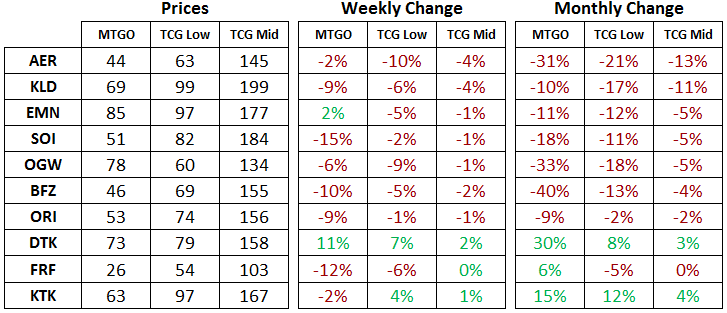

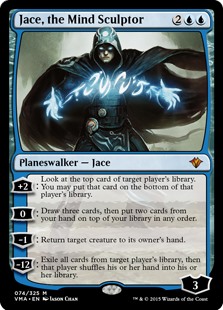 power. I also looked at unfair decks but the only one that had the space for him was RUG Scapeshift, and that deck just wasn't good. I started this project in mid-October and Modern was just too fast for the deck. It was great when it could prey on Twin but time has left it behind.
 Cawblade had taught me that against other Jace decks you always wanted to be the first player with Jace in play and you resolved him at any opening. This was so important that, for a time, you'd board in Jace Beleren on the draw to protect against losing that fight. (That plan didn't work long-term, for the record.) Once you resolved Jace, you Brainstormed. You had to be very much in control of the game to start fatesealing and actually win the game. Even when you were behind it was better to dig for answers than Unsummon. The logic was that drawing extra cards is very good and even if your opponent answers Jace they are down a card. If you had a fetchland it was just drawing three cards.
 Bolt decks existing back then and Cawblade was still the best deck and you still always Brainstormed because it was just better. The other thing to consider is that Bolt just isn't Bolt anymore. When Splinter Twin was legal, Bolt was omnipresent and this argument held quite a bit of weight. Now though? Our
 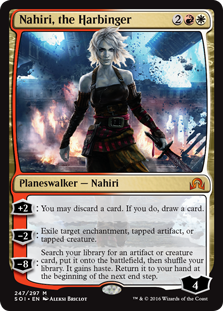 Let's get this out of the way: when Nahiri kills the opponent she does so much, much faster than Jace ever could. It only takes three unmolested turns to swing with Emrakul, while Jace takes six to ultimate. If it's faster kills you want, Nahiri wins handily. Furthermore, the utility of her -2 was great. Exiling creatures was almost always relevant, and was especially powerful against Kolaghan's Command. It was right far more often to use it compared to Jace's Unsummon. It was also nice to have maindeck enchantment removal. It was very important twice against Ad Naus and once against Affinity's Aether Grid.
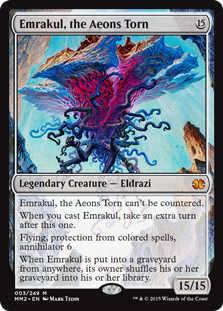 In fact, Emrakul was the weak link in the Nahiri deck. She is a dead card anywhere but in the library, and drawing my kill condition instead of a real card cost me several games. This is assuming that an Emrakul attack actually kills the opponent. There were several times where sacrificing six permanents and taking 15 damage was not an outright death sentence and I lost. The most memorable were against Ad Naus where suspended Lotus Blooms allowed a post Emrakul combo. It just isn't a guaranteed kill.
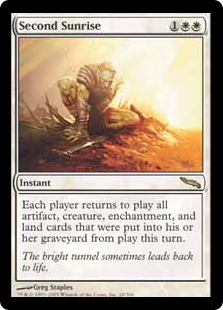 They endeavored to make an entire block to sate Johnny's bizarre desires, and I wouldn't be surprised to see cards from Kaladesh appear in weird combos many more times in the future.
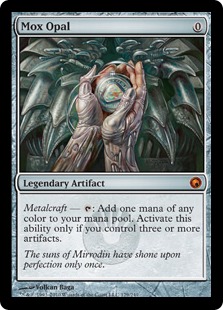 I had the privilege of goldfishing a few hands with a similar decklist this weekend, and let me tell you: this is way more consistent than it sounds. My friend, who piloted the deck to first place at a local Team Modern event, explained that turn-three kills were routine. That's another check against Mox Opal, mind you, but I wouldn't worry yet. As we all know here at Nexus, the
 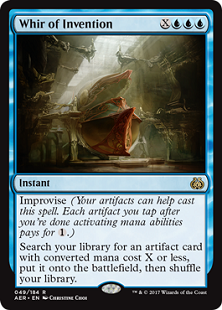 In my cursory perusal of lists preparing for this article, I discovered little consensus about build, which usually means the community is still figuring it out. Some use Whir of Invention, as I said above, usually paired with Pentad Prism to ease the difficulty of paying for triple-blue. Between Whir and Inventors' Fair, finding any missing piece should be pretty academic, but as my friend who played the deck this weekend explained, it might not be worth the sacrifice in speed. Other builds run Thoughtcast, to complement Ancient Stirrings in its bid to dig through the library rapidly. Some omit Glint-Nest Cranes or Faith's Reward, some play around with Mishra's Bauble.


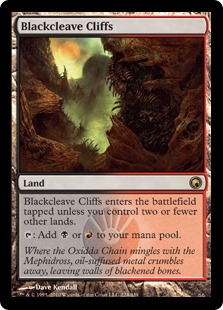 Another relatively common event that influences card prices are tournament finishes. When a card under- or overperforms respective to expectations, it will likely cause a price change. If a $2 card everyone thought was unplayable suddenly wins a Grand Prix, the price will increase as players adjust their perception of its value. Conversely, if a much-hyped card (usually from a newly released set) fails to deliver at a major event, players will lower their estimation of the card and it will drop.
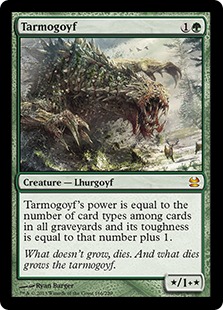 Risk is the concept financial advisers and investors use to conceptualize these potential downsides. Basically, you never know when factors outside your control may influence a given investment. Usually risk applies to a new acquisition, not a decision to sell, so perhaps a different example will clarify.
 Except they didn't. Nobody had predicted that Dragon's Maze would flood the market with even more Steam Vents and Overgrown Tombs. In the case of Magic cards, this threat of reprint is one of the perennial risks. Even when it seems quite unlikely, if a reprint does hit, you may be out quite a bit of money. Successfully managing risk essentially boils down to measuring the expected value of a given investment. The savvy investor doesn't just consider the upside, but also the downside. The greater the risk, the more it will mitigate any potential upside. If the risk is too great relative to the gains, the investor will look elsewhere.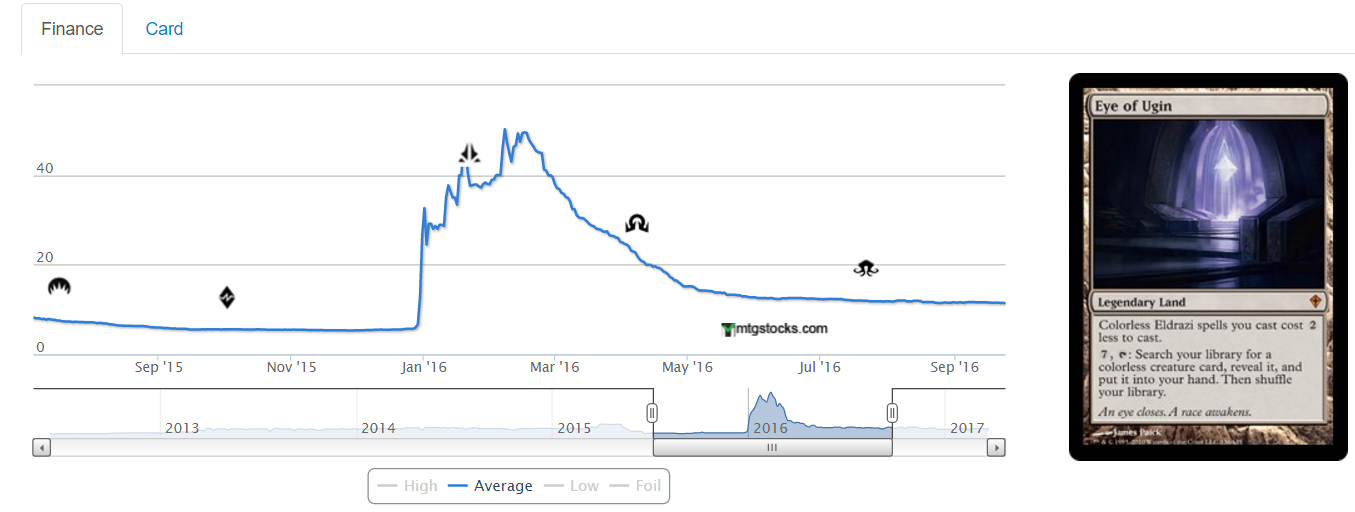
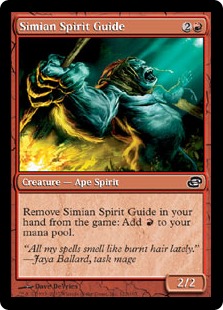 Simian Spirit Guide is a Lotus Petal in a format that really shouldn't have Lotus Petal. It currently fuels some of the most back-breaking combo decks and frequently gets included as spice in any deck that needs a little more speed. I have seen Spirit Guide in things as innocuous as Zoo, to decks as degenerate as the colorless Eldrazi deck at Pro Tour Oath of the Gatewatch. Banning Simian Spirit Guide may be like the Gitaxian Probe ban that tries to get at the root of the problem rather than blame the symptoms. Simply put, nobody plays Simian Spirit Guide as a three-mana 2/2—it's used almost exclusively to allow their deck to kill a turn faster than it should. If speed becomes a problem in the eye of Wizards' R&D team, then it could get axed.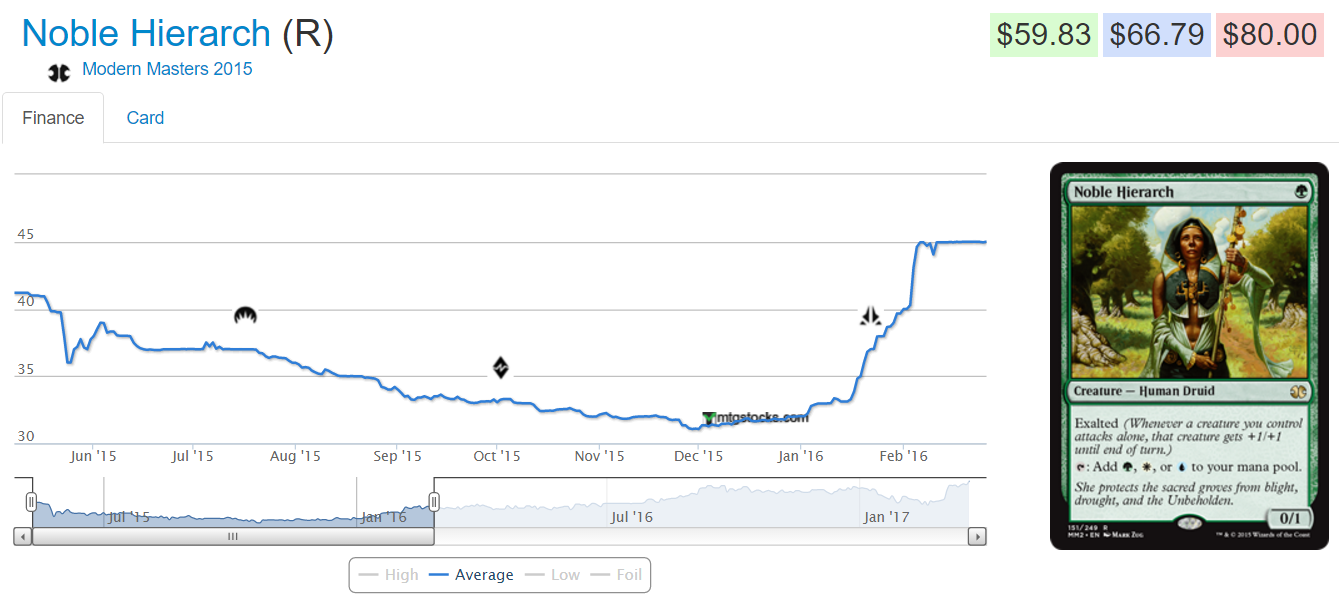

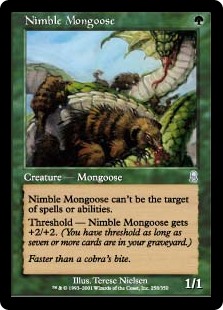 The most efficient threats in a given format are often bound to produce some tension. Wider card pools tend to eliminate this tension—Canadian Threshold, Legacy's most iconic protect-the-queen deck, runs an elegant creature suite of Delver of Secrets (which works in a 12-creature deck), Nimble Mongoose (which rewards players for playing Magic), and Tarmogoyf (which does the same). Modern tempo decks don't enjoy such a luxury, as the format's card pool lacks the variety necessary to have a perfect creature suite.
 Another issue I ran into was turning on delirium against the same linear decks. Strategies that don't remove our Delver complicate reaching four card types for Traverse the Ulvenwald, to say nothing of games in which we don't draw Delver at all. Nothing feels worse than clunking out on Shadows at 14 life as opponents cycle Chromatic Stars.
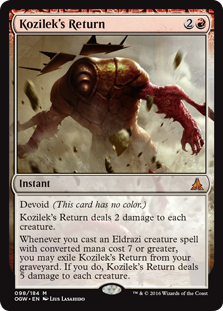 I also streamlined the sideboard. Threads of Disloyalty has a pretty high ceiling but I think it's just too cute. Against non-Goyf decks, it always disappoints; even against Grixis Shadow, we're not always guaranteed to have a target. Tasigur, the Golden Fang and Gurmag Angler avoid Threads entirely, and just the thought of stealing Snapcaster Mage makes me cringe.
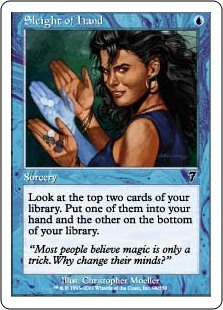 notable edge in the mirror. We do run a little low on blue cards here with only 23, but that's still above


 Without red for Bolt/Terminate, or green for Abrupt Decay, Esper had to resort to weird things like Go for the Throat when it wanted more than four removal spells. Path to Exile was great, but not perfect—giving our opponents extra lands always felt awkward alongside Mana Leak. It even made our Logic Knot and Remand a little worse as it was easier for them to pay or double-spell faster.
 Enter Fatal Push. You might not notice, but this card is slowly warping Modern around it. Death's Shadow decks are weak to it, while Grixis Shadow flavors are adapting to combat it with stuff like Bloodghast to stretch opposing removal thin. Delver decks are taking advantage of the four-CMC-or-less restriction by packing extra copies of Tasigur, the Golden Fang and Gurmag Angler. The card is still great, but unless you have a foolproof backup plan behind it, relying on it entirely will only get you killed.
 The big upgrade here, of course, is Secure the Wastes and Sphinx's Revelation as our endgame. Those let us truly bury the hatchet and pull way far ahead, as opposed to grinding constant two-for-ones with the Kolaghan's Command-Snapcaster Mage-Tasigur chain.
 Fighting off Lingering Souls, Liliana of the Veil, fast combo, Dredge, and Tron is a tall order, to say nothing of the "normal" tough matchups like Burn, Bant Eldrazi and Jund/Abzan. If the field was more aggro or more control, Grixis could thrive, but for now, it seems like basically every matchup is an uphill battle.
 Esper Charm is excellent against, well, pretty much everyone. Worst case, it’s an instant-speed Divination with the option to be much more. Mind Rotting our opponent’s last two cards in the midgame is a great way to force our opponent into topdeck mode, which, barring horrible luck, we should easily be able to outdraw with Snapcaster Mage, Cryptic Command, and Think Twice. Grixis’s matchup against Jund is a flip, and Abzan is middling to poor, but Esper licks its chops every time it sits down across the table from midrange. This is thanks, in large part, to Esper Charm.