menu

From the Heart: Writing on Magic & Modern

Are you a Quiet Speculation member?

If not, now is a perfect time to join up! Our powerful tools, breaking-news analysis, and exclusive Discord channel will make sure you stay up to date and ahead of the curve.

This one isn’t going to have much analysis. You could call it an opinion piece, but really there isn’t an opinion I’m arguing here. Rather, this week is just one unfiltered voice, from one Magic player to another. Call that a disclaimer if you want, but today I’m going to be talking about some of the more ephemeral subjects that rarely get discussed. What it’s like to be a “writer.” How it feels to go through the ups and downs of Magic. What exactly I find enjoyable in this game. At the end, I'll try to tie it all together with a discussion of my goals as a writer. And don't worry—there's a decklist in there for you all too.
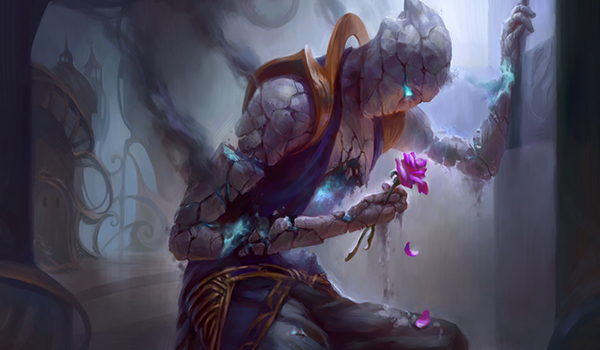
If this article isn’t of interest to you, I hope there's no hard feelings. Enjoy your Thursday, have a good Christmas weekend, and I’ll see you back next week for more usual content. If the tone, topic, and content of this article is of interest to you, let me know in the comments below. I started writing to get better at Magic, to get better at writing, and to get my name out there—but more than any of that I started writing to have meaningful conversations. Hopefully this is one of them.

[wp_ad_camp_1]

Balancing Pressures

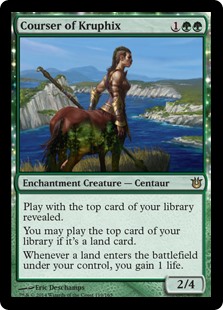
When I joined Modern Nexus last summer, I was at the peak of my Magic career, streaming regularly, qualified for Pro Tour Vancouver, and basically living and breathing Magic: The Gathering. Standard was my addicting grind, Modern my love of choice—the Summer of ’15 was a blur of Lightning Bolt, Thoughtseize, and Courser of Kruphix. Those times were a blast, but realistically unsustainable. Halfway through a demanding degree, I couldn’t sustain the full-time Magic life, and I saw my playing time gradually yet steadily decrease, replaced by textbooks and time clocks.
We've all experienced this, some of us multiple times over. Before my latest lapse, I sold out of my Magic collection three times. Once for bills, once to buy an engagement ring, and once to fix my car. I no longer have that car, or that ring, and I’m still paying for bills. In the six years I’ve been playing this game, I’ve gone from playing in tournaments daily, to playing in them monthly, and then to none at all. I haven’t owned a real paper Magic collection in at least two and half years now. This is the life cycle of your normal Magic competitor.

Perhaps it’s the closet psychologist in me showing through, but how is this aspect of our game rarely discussed? Week in and week out, dozens of MTG strategy sites hawk their wares from every corner, enticing star-struck passersby with their promises of fame of fortune. After each high-profile event, thousands upon thousands of words are spent upon one topic: the edge. We are all looking for that clue, that intangible thing that will elevate us to the stars, looking up to grasp our just-out-of-reach aspirations while right beside us our colleagues are falling away. Imagine a highway, with dozens of cars traveling at breakneck speed, in line with each other, pursuing separate destinations, but for the moment on a shared, collaborative path. One car’s tire blows out, and it pulls off the path while wordlessly, silently, the rest of the group carries on their way.

“You’re quitting?! You’ll be back!”

We’ve all said it, or heard it said. It’s innocent and friendly, but subconsciously a harbinger of a simple truth: we know the curse all too well. Dig through the murky depths of your Facebook friend list, populated by players met once-upon-a-time at FNMs of years past. How many are still playing?

Cultivating Content

As a writer, I bring with me a certain conglomeration of interests, opinions, strengths, and weaknesses. Regardless of topic, these characteristics seep into my writing, twisting and manipulating the inputs into a resulting output that is vastly different from what it would be otherwise. Those that don't write may find it difficult to relate, but the reality is that every individual experiences this on some level—the filtering of incoming information through a lens unique to the recipient. The most basic example of this is the subconscious motivators of political opinion. If you slant conservative, an encountered anti-conservative opinion will be immediately met with confrontation, and vice versa.
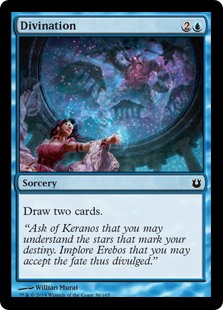
For Magic, this could take the form of archetype bias. Red decks are bad, and at mercy of the shuffler; so losing is the result of bad luck, not the glaringly obvious fact that you are mulliganing too often (or not often enough). Divination isn’t a good Magic card, regardless of the context, and the sub-par control deck you’ve built around it is just anchoring your Magic potential.

If all of this leads anywhere, it’s this: question everything. Why is Jund winning? Why do I feel like control decks are better than aggro decks? Why do I feel like I should mulligan this hand? Why am I interested in Modern? Don’t just search for the answer, but rather why the answer (or what you think is the answer) has come to you in the way that it has. Uncovering your own bias can do more for not just your Magic skill, but for your entire life, than any 1500-word piece on sideboard cards of the week.

Why Am I Interested In Modern?

I love this format. Cards are interesting, we can do powerful things, strategies are focused, archetypes have a distinct character, deck selection brings with it a certain identity. Games are fast, decisions are complex, mana is efficient—a certain mystique exists in playing eternal formats. We are us, and they are them. I know why I play; do you? It might not seem important, but I’ve become convinced that understanding why is vastly more essential to growth—real, significant growth—than endless scouring in the dirt for morsels of information. How can you find the answer if you don’t know the question? 42.
Still, for all its strengths, Modern can be slow sometimes. We’ve gone through a period recently where not much has changed, and it can be difficult (for me at least) to find things of note to talk about. Pulling an entire article out of thin air is downright impossible, and we’re all intelligent adults here. I’ve stopped reading multiple sites because I could tell when some authors started phoning it in.

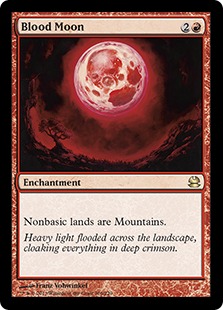
Whether you agree with my opinions or not, like my style or not, hopefully no person could ever claim that I don’t have heart. Most of the time that heart is in Modern, regardless if it’s looking ugly this month or not. But for all those times I love the richness of this format, there are others where I just die to a Blood Moon, or my opponent casts Melira, Sylvok Outcast, or I get an overdose of Lightning Storm one too many times. Still, I have to write about Modern each week, even on occasions when I haven’t had the time to play for a little while. Can I really speak to the manipulations of the format with any confidence in that scenario?

The Fourth Wall

Some readers have suggested that the quality of content on this site has deteriorated in the past few months. I would say that’s possible. I can’t speak to this without bringing along bias, as I am a writer, among colleagues, with an editor to report to and skin in the game—but I have an opinion as well.

I feel like most of the time negative comments are thrown out with the bath water, categorized as "hate" and ignored, when in reality they can be a precursor to something deeper. There’s a danger that comes from biting at every negative line that gets cast, and I’ve seen my fair share of negativity from streaming (most of the time while losing) on Twitch. Still, I love Nexus, and want to be part of something I feel is great, which is why I’m setting the table for a conversation. There is no right way or wrong way to write, in my opinion. Some write to present information, others write to detail accomplishments. I write to promote discussion. Even if the position I take is 100% incorrect, I do so in the hopes that I’m cultivating a discussion that’s valuable.
Every individual that comes to this site brings with them a certain set of expectations, specific things they're looking to get from a Magic article. Thus what one player considers a valuable discussion, another might find tedious, or simply irrelevant.

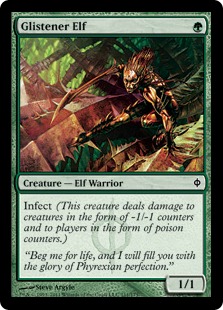
Is number-heavy statistical analysis what you want Modern Nexus to be? Is there a place in that conversation for a writer who chooses hypotheticals and musings over percentages and tables? I love analyzing data, and I would hope that isn’t in question, given that around half my articles have been about metagame and event analysis. Still, I can’t do the same article week after week, and I don’t personally find primers and deck techs interesting. We all come to the table with varying levels of skill and experience, but I know my readers are intelligent, and they don’t need a 2000-word piece explaining Infect to decide if it’s the deck for them. I prefer to learn by picking up a deck myself, seeing how it operates, and experiencing a little discovery—I know many Nexites feel the same. If I'm to hold myself to the standards I set for myself, and those that my readers expect, then my goal is to bring to the table something unique, something thought-provoking, something of worth.

Goals

All I want is to write a weekly column that provides some fresh, exciting insight into Magic: The Gathering. Here in our corner of the internet, nothing we say or read or write will change the world. But if it’s interesting, if it’s different, if it’s something worth remembering, then I consider that a success, and we just might change ourselves. To do that, I need to find the middle ground between my crazy, wandering mind and your very real wants and desires. This weekly article series is nothing if nobody reads it.
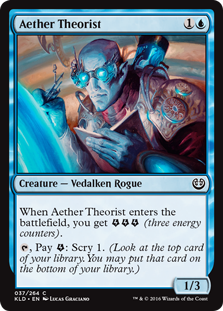
There’s a spectrum with mailbag articles on one end and developed theory pieces on the other. I find myself much more interested in theory (read: tangential thoughts that tie precariously to Magic concepts) and I find that those types of articles are much rarer compared to what is normally found online. The reasons for this are clear: they are unapproachable, unrelatable, and generally just tough to read (especially on the go). But these articles are the ones that stick with me personally, the ones I go back and read years after the author first published them. Whatever I’m trying to say—and I don’t know what that is yet—I’d like to think that each week is another attempt at moving closer to that point. Maybe you can help me get there.

Weekly Update

So, in addition to whatever topic I write on each week, I’ll include a section (of varying length) on my weekly thoughts on Modern—what I’ve been playing, what’s working, what’s on the rise, what to watch out for. Sometimes I’ll have a lot to say, and this will be the whole article for the week. Other weeks (like this one) it'll be small, and I'll spend the rest of the article delving more into the theory end.

With that in mind, here's what I've been playing of late:

Grixis Control, by Trevor Holmes

Creatures

2 Kalitas, Traitor of Ghet
4 Snapcaster Mage
2 Jace, Vryn's Prodigy
1 Tasigur, the Golden Fang
1 Vendilion Clique
1 Grim Lavamancer

Artifacts

1 Engineered Explosives

Instants

4 Terminate
4 Lightning Bolt
2 Kolaghan's Command
2 Thought Scour
1 Slaughter Pact
1 Electrolyze

Planeswalkers

3 Liliana of the Veil

Sorceries

4 Serum Visions
3 Inquisition of Kozilek
1 Rise/Fall
1 Anger of the Gods

Lands

2 Creeping Tar Pit
1 Darkslick Shores
1 Spirebluff Canal
2 Blackcleave Cliffs
3 Bloodstained Mire
3 Polluted Delta
2 Scalding Tarn
2 Steam Vents
1 Blood Crypt
1 Watery Grave
1 Island
1 Mountain
2 Swamp

Sideboard

1 Anger of the Gods
2 Collective Brutality
3 Fulminator Mage
2 Dispel
1 Engineered Explosives
1 Damnation
1 Izzet Staticaster
3 Surgical Extraction
1 Inquisition of Kozilek

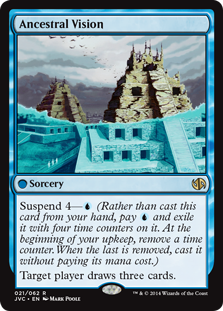
After months away, I’m back to Grixis Control. No, it’s not because I’m uninterested in winning—I believe this deck is close to being good again, based largely on the strength of Surgical Extraction. Yeah, that sentence was a rollercoaster, and I don’t expect you to believe it. In this format, removal is good, discard is better, and as long as you can disrupt cheaply and turn the corner quickly you're in good shape. Jace, Vryn's Prodigy and Liliana of the Veil are at their best right now. As with Ancestral Visions, if you can back them up, you don’t have to do much (or spend much) to win the game.

Kalitas, Traitor of Ghet is in as more maindeck Dredge hate and game-one lifegain against the field, but I’m often cutting him in sideboard games. Vendilion Clique is killing a surprising amount of Death's Shadow decks out of nowhere, and the triggered ability is better now than ever.

While there isn’t a true control deck at the top end to push us around, this archetype can capitalize on the polarized field we find ourselves in, for a little while at least. If this archetype starts to have widespread success (which I’ve given up hope will ever happen) things might start to level off a bit. But for now, play maindeck Anger of the Gods and Rise // Fall while you can still keep a straight face.

As always, thanks for reading.

Trevor Holmes

The_Architect on MTGO

Twitch.tv/Architect_Gaming

Twitter.com/7he4rchitect
Stock Watch- Dig Through Time

Are you a Quiet Speculation member?

If not, now is a perfect time to join up! Our powerful tools, breaking-news analysis, and exclusive Discord channel will make sure you stay up to date and ahead of the curve.

Card prices for Frontier are starting to move, as Jace, Vryn's Prodigy has gained $10 in value recently. People are taking an interest in the format, and popularity sparks demand. For the most part, mythics are going to be the cards to watch, though it is worth noting that Frontier is the only format where you can currently play Dig Through Time.

There was an error retrieving a chart for Dig Through Time

The card has gone from trending towards the bottom of the bulk bin to being about $1.50. There are still over 200 listings on TCGPlayer and plenty of copies around, though if you peruse the decks that people are playing in Frontier, Dig Through Time is seeing plenty of play in the format. Demand will increase as the format gains popularity, assuming that my confidence in Frontier isn't misplace.

Given the fact that you can only play Dig in Frontier, the ceiling on this regular rare is going to be pretty low. I would also caution you that as the format gets larger, delve is one of few degenerate mechanics that is Frontier legal, which gives me pause with regard to the card and a potential ban down the line. At any rate, if you're looking to play Dig in Frontier, now is good time to pick up your set, though I wouldn't advise going too much deeper.

Avatar photo

Ryan Overturf

Ryan has been playing Magic since Legions and playing competitively since Lorwyn. While he fancies himself a Legacy specialist, you'll always find him with strong opinions on every constructed format.

View More By Ryan Overturf

Posted in FreeTagged , 1 Comment on Stock Watch- Dig Through Time

Have you joined the Quiet Speculation Discord?

If you haven't, you're leaving value on the table! Join our community of experts, enthusiasts, entertainers, and educators and enjoy exclusive podcasts, questions asked and answered, trades, sales, and everything else Discord has to offer.

Want to create content with Quiet Speculation?

All you need to succeed is a passion for Magic: The Gathering, and the ability to write coherently. Share your knowledge of MTG and how you leverage it to win games, get value from your cards – or even turn a profit.

Insider: New to Power – Grading 102

Are you a Quiet Speculation member?

If not, now is a perfect time to join up! Our powerful tools, breaking-news analysis, and exclusive Discord channel will make sure you stay up to date and ahead of the curve.

Hey there! I don't deal with high-end cards a lot, so I'm gonna throw a little disclaimer up front before I get going. If you're an experienced vendor, backpack grinder, or someone who frequently deals in high-end Power/duals/Old School stuff, please forgive any ignorance of mine when it comes to $1,000 cards. I'm used to owning 10,000 cards that are worth a dime a piece, not condensing them all into a single piece of cardboard. It's certainly a learning process that I'll get better at as I deal with more high-end cards, even though there's very few in my local area.

There was an error retrieving a chart for High Market

So with that out of the way, let's make a 180-spin away from foil Merciless Evictions and talk about a more interesting card that I picked up tonight.

A Very Interesting Purchase

I received a text this morning from a friend of mine who I deal with frequently, asking, "How much would you pay for a NM Unlimited Mox Sapphire? Literally unplayed." Normally this person brings me "normal" cards, for a lack of a better term – the usual stuff. Bulk rares, Modern cards, the occasional dual land. Neither of us deal in power on a regular basis.

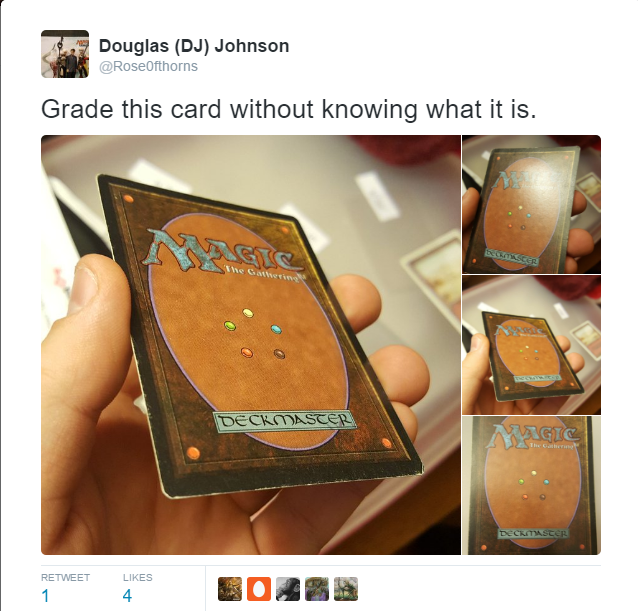
I was interested, albeit skeptical. We all know how incredibly rare NM power is these days, but I would be happy to buy it regardless of condition. I gave him my cash number, and we worked out numbers on a few other Unlimited cards he had picked up (Volcanic Island, Winter Orb, and Badlands). Sounds like a good time. We met up later that night, and the following tweet helps detail what happened next.

saphtweet

saphgraph

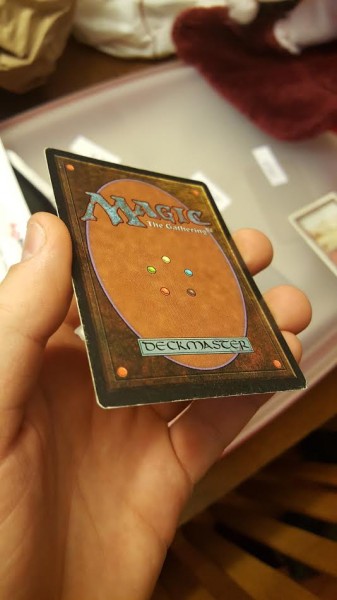
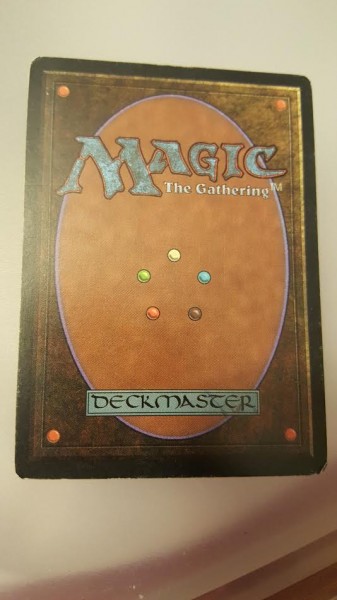
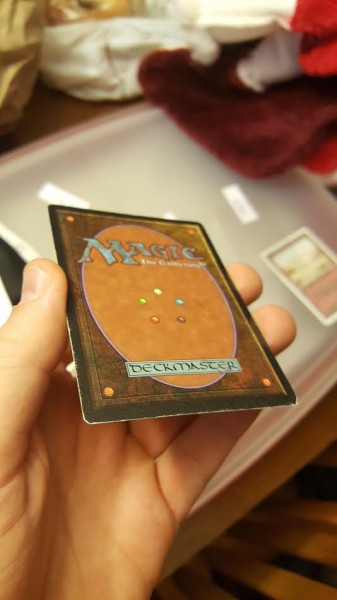
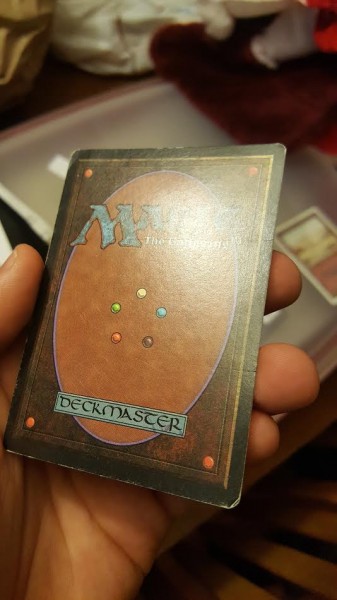
It certainly wasn't NM like I was hoping for, but we had a disagreement on the exact condition other than "not NM." I felt like it was on the razor's edge between MP and HP, and he argued for LP. I posted a quick poll accompanied by these pictures to make sure I wasn't going crazy, and found solace that my grading was reasonably accurate. If the original tweet is unavailable to you, here are the same four images close-up. For those of you who are saying, "I can't grade it until I see the front," I'll just let you know that the front didn't make the condition of the card any worse. It was really nice on the front, which is where the miscommunication as NM came from.

saph1saph2saph3saph4

My friend was selling it on commission for the person whose collection he found, so we had to wait for a text message back from the person to see if the changed numbers were okay. We eventually settled on a number that made both of us happy, and the other UNL goodies were much easier to reach a number on because they were obviously NM or HP.

#HumbleBrags?

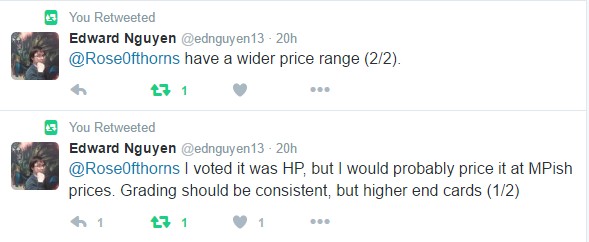
If you're reading this and thinking, "Wow, DJ really just wasted an article to brag about buying one of his first pieces power? What an asshole..." then hold on just a bit longer. There is a point to all of this that we can learn from, and it was brought up by Edward Nguyen, a buyer for Kirwan's Game Store and someone you should absolutely follow on Twitter.

edreply2

edreply

For most of us who deal with medium- to low-end cards, we have a grading structure that firmly attaches to a price percentage difference. What I mean by that is NM cards are obviously worth 100 percent of their true value, other factors aside. LP cards are a 10 to 15 percent discount, MP is 20 to 25 percent, and HP is around 35 percent. Those are really general numbers, but you get my point. We understand that a HP $10 card is going to sell for around $6, maybe $7. When cards get into the $1000 price range, there starts to be more wiggle room. An HP shockland is an HP shockland, no matter how you slice it. The price difference between the "close to MP" HP Sacred Foundry and a "yep this is definitely HP" Sacred Foundry will only be a dollar or so, if that.

There was an error retrieving a chart for Mox Sapphire

The results for my poll were really close to a 50%-50% split between MP and HP. Half of the respondents would be okay getting that Sapphire as MP, and half would be upset and grade it at HP. I was finding it really difficult to toe the line, and it's almost always better to grade down in a situation where you're unsure of what the exact condition is. If I grade it as HP, I have close to a zero percent chance of someone messaging me via Twitter, TCGplayer or eBay and saying, "Hey man. This card is too heavily played, even though I bought it at HP."

The normal downside to doing this, of course, is that I'm pricing my (possibly MP depending on the buyer) card at HP prices. Ed's solution to this is elegantly simple. If I list the Sapphire as a heavily played card at closer to an MP price, it's easier for the buyer to look at it in person and see that it's better than the other HP copies. Granted, Ed is a vendor at Grand Prix, and this method works a lot better when the other party can see all of the heavily played cards in your stock while comparing prices. It's harder for someone on TCGplayer to determine card condition, because they obviously can't see it.

The overall lesson here is that the old staple of NM/LP/MP/HP becomes increasingly less useful as the value of the card increases. When we get $1,000 pieces of cardboard on the table, it's really not very useful to be restricted to a single grade out of four with an automatic percentage point. This might be ancient news to those backpack grinders and vendors out there with stacks of Moxen in their display case, but this was only the third single Magic card worth over $1,000 that I've ever owned personally.

End Step

Has anyone else noticed that Rhystic Study has quietly doubled over the past year? I haven't seen anyone talk about it at all, and I didn't even really give it any consideration until I realized that I was sold out at $6 on TCGplayer. Foils are still running at around $20 for Prophecy and $17 for Commander's Arsenal, and I'm really tempted to pull the trigger on buying a bunch. I'm wondering if the closest spot we can expect to see a reprint is in the upcoming Archenemy set, because it certainly fits a "one versus three" environment, but even then foils will be safe. Hmmm...

Thanks for reading today!


Insider: Aether Revolt Spoiler Presents, Part 2

Are you a Quiet Speculation member?

If not, now is a perfect time to join up! Our powerful tools, breaking-news analysis, and exclusive Discord channel will make sure you stay up to date and ahead of the curve.

Many families share Christmas on not just one day, but over many days throughout the holiday season. My family has our Christmas normally on the 25th at our own homes, but everyone knows that the 26th is the day we all get together at my mom’s house. Today, just like the 26th for my family, is the second day of presents. For us competitive Magic players, our presents are spoilers from the new set, and we got a couple more this week!

Last week, I broke down what I considered the most prominent cards that had been spoiled from the set so far and my opinion of their financial future. Some of the main points I made in that article were that the two Ajani planeswalkers were drastically similar to one another and curiosity about whether the Tezzerets would follow that same pattern. Imagine my surprise when I saw Tezzeret the Schemer spoiled this week! I was ecstatic, at least until I read the card. Let’s break down this planeswalker and see if the sum of the abilities make him greater than the seemingly weak individual abilities on their own.

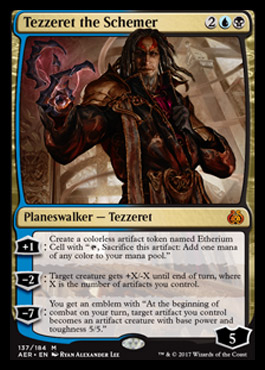
Tezzeret the Schemer

tezzerettheschemer

Tezzeret the Schemer costs 2BU and starts with five loyalty. Just like with creatures, planeswalkers with loyalty greater than or equal to their starting mana cost are generally powerful. Maybe I should say potentially powerful, because this fact alone doesn’t make them good.

+1: Create a colorless artifact token named Etherium Cell with “Tap, Sacrifice this artifact: Add one mana of any color to your mana pool.

To summarize, Tezz’s +1 is to give you a Lotus Petal. This seems nearly identical to an ability like Sarkhan Unbroken’s +1 that just adds a mana for a turn. The difference is that Tezzeret creates an artifact permanent that can stick around for a later turn; you don’t have to utilize the artifact right away. When spelled out like that, it makes it seem much more powerful, especially once we realize there’s a lot we could do with this artifact. We could tap it with another for damage if we had Ghirapur Aether Grid on the battlefield, or use it to help us take an extra turn with Time Sieve, and we could also -2 Daretti, Scrap Savant to bring back a powerful artifact tool from our graveyard. Because our mana from this +1 sticks around if we don’t need it immediately, it opens up a lot of possibilities that wouldn’t normally exist.

-2: Target creature gets +x/-x where x is the number of artifacts you control.

With this -2, Tezz gets an ability that he will be able to protect himself with as long as you have played some artifacts in advance. If we’re playing this ‘walker on curve, the maximum number we could likely give is +3/-3 though. What’s more likely is that we would be able to do +2/-2. With the rate of creatures we’re dealing with in Standard, that might be enough to reliably take out the threats you’re facing. After all, +2/-2 can kill Grim Flayer, Toolcraft Exemplar, and Selfless Spirit. The artifacts that you make with the +1 ability can be used to fuel this ability as well, so that’s a nice little synergy.

Just like with Liliana of the Dark Realms, Tezzeret the Schemer’s -2 can be beneficial and not just because it can help kill your opponents’ creatures. You can just as easily use this ability to buff your own creature. It seems likely that you might have Torrential Gearhulk in a deck with new Tezzeret, and that guy can get pumped up a lot before he dies to the minus side of the ability. The majority of the time you will likely use this effect on your opponents’ creatures, but the hidden option of pumping your own dude can bring you some surprise wins from out of nowhere when it’s least expected.

-7: You get an emblem with “At the beginning of combat on your turn, target artifact you control becomes an artifact creature with base power and toughness 5/5.

I think a lot of the appeal of Tezzeret comes from his ultimate ability. Just like with Nahiri, the Harbinger, Tezz ultimates the third turn he’s in play. A quick ultimate makes any planeswalker a potent threat. The golems that you make each turn don’t go away once your turn is over either. You get to keep and amass your golem army. The first turn with your emblem may seem underwhelming, but the second and third turns of making a new 5/5 will start to showcase the game closing power this ability has.

Financial Value

Tezzeret the Schemer has started off in preorders with a price of around $16. Every site doesn’t have their numbers listed for this card yet because it’s so new, but most stores should follow with where eBay presales have set the numbers for the card. I’m not sure this combination of abilities deserves a price tag this high, and I think it will drop quickly down towards the $10 range. This version of Tezzeret seems more in the vein of the last two planeswalkers, Saheeli Rai and Dovin Baan. I doubt he will drop as low as the two of those did, though.

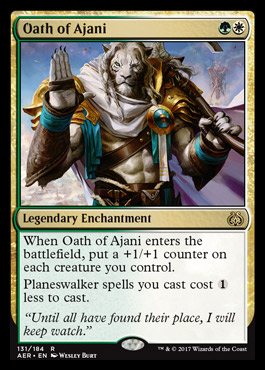
Oath of Ajani

oathofajani

Next up is a card that’s part of a cycle from another block, Oath of Ajani, but maybe we will keep adding to this cycle as we visit other planes. I’m surprised they continued this mechanic into Aether Revolt, but I’m also excited because this is one of my favorite card designs from the past couple of years. Most planeswalkers are cool super heroes that travel the multiverse saving the galaxy. Some are evil super villains that cause the problems that need to be fixed, but there are a lot of epic things happening in the Magic galaxy thanks to what the planeswalkers are doing in the story. If planeswalkers are so great, then making them better is definitely a powerful thing to do. One of my Standard decks right now focuses on this concept as its primary objective.

All of the Oaths have unique abilities that enhance what each planeswalker can do. Oath of Ajani is no different in that regard. The first part of the enchantment is the same as Ajani Goldemane’s ability to put a +1/+1 counter on your whole team. This pump effect can dramatically change how the game is played, especially if you have a lot of guys that can get buffed.

There are two different ways the Oaths have been set up so far. They all have an enters the battlefield ability but also some have a static ability that affects future planeswalkers, like Oath of Nissa, while the others in the cycle have an end-of-turn trigger like Oath of Liliana that goes off if you’ve played a planeswalker that turn. Ajani’s Oath functions similarly to Nissa’s in that they both help you cast your future planeswalkers. Instead of helping fix the mana like Nissa’s, though, Ajani’s Oath reduces the cost of your future ‘walkers by one.

These two abilities don’t exactly work together well. This oath only costs two mana, but I doubt you’d actually benefit much from casting it on turn two. The most you could get out of it is one +1/+1 counter and that’s only if you’ve played a guy. Initially I was fooled by liking both of these abilities, but I think in practice, this enchantment will be awkward instead of helpful. If the buff ability had been an end-of-turn trigger for one of your creatures, then we’d be in business, but needing to play this on turn two to help reduce the cost of your expensive planeswalkers will leave the first ability with no text. If we want this power-increasing ability, we could just play a card like Collective Effort and be much better off with other options than reducing the cost of our future spells. The same goes for the mana-reduction ability. If our goal is to deploy our cards quicker, then we should be utilizing a different card for this purpose like Servant of the Conduit.

Financial Value

At first glance, Oath of Ajani looks great, but the combination of abilities don’t work well together. Because of this as well as the price trajectory of the other Oaths, I think it’s all but certain that this multi-colored enchantment will fall quickly after release. I’d expect to see this in the $1.50 or bulk range shortly after release.

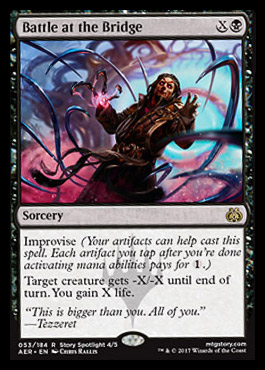
Battle at the Bridge

battleatthebridge

This may seem out of character for me, but I am extremely excited about Battle at the Bridge! Why you might ask, would I be excited about a seemingly small upgrade to Death Wind? I’m so glad you asked! In addition to the life gain added to the Death Wind -X/-X ability, we have to be looking at the improvise key word ability on this card. And yes, gaining a little life from your removal spell is nice, but the real power behind this card is this stealthy new ability.

Hidden within the text of improvise is a lot of power. From my perspective, improvise seems like a toned down version of affinity for artifacts. Instead of your artifacts just reducing the cost and being able to tap for mana on a card like Frogmite, we get a more balanced mechanic. Cards like Woodweaver's Puzzleknot or any vehicle you don’t plan on attacking with can boost the mana investment on Battle at the Bridge or any card with improvise.

Improvise may not be the most potent ability we’ve seen, but any ability that lets you boost your mana in potentially significant ways is worth considering. I doubt that Battle at the Bridge will blow anyone out with its power level, but it could be a solid role player in the format if black gets paired with some artifacts. I’m more excited to see the other cards with this ability, though. There could be some really powerful lines of play depending on what cards actually get to use improvise.

Financial Value

A medium card like this shouldn’t surprise you with its low price tag. After dealing with preorder prices for a while, you should start to get a good feel for what cards should be priced at. It helps if you have to price your own cards as well, like updating your inventory based on the ebb and flow of card values. Battle at the Bridge is sitting at just above bulk right now, and I wouldn’t be looking for it to break out of that mold anytime soon. This card is definitely not of the caliber of Ruinous Path and that card itself is barely above bulk right now.

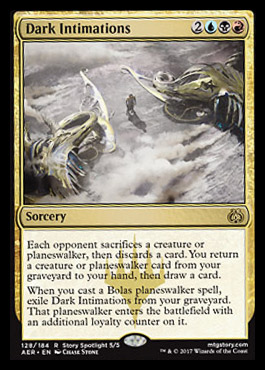
Dark Intimations

darkintimations

If I had to guess, I’d say that tons of players are pumped about Dark Intimations. Cruel Ultimatum is one of the most well-known finishers for its time dominating Llorwyn/Shards Standard with its crazy Vivid land mana bases. Dark Intimations does a great dark imitation of Cruel Ultimatum. Here’s a breakdown of what the differences are on these two lengthy text box cards.

Cruel Ultimatum vs. Dark Intimations

Target opponent sacrifices a creature vs. Each opponent sacrifices a creature or planeswalker

On the first ability, we actually get an upgrade. Most of the other abilities are downgrades but Dark Intimations allows us to get rid of planeswalkers now as well as butchering multiple opponents in Commander.

Discards three cards vs. Discards a card

Here’s where we start to see our mana discount pulling the power level down. Making your opponent discard a card is still strong, but certainly not as powerful as the pseudo Mind Twist that Cruel Ultimatum can basically end the game with.

Loses 5 life, then gain 5 life vs. An additional loyalty counter on a Bolas planeswalker spell (if you have already cast this spell)

These two aren’t really similar at all, but both are powerful. I’d probably take the life swing because it helps you stabilize the game state, but that’s without knowing the potentially new Nicol Bolas, Planeswalker we could be seeing from this set. How exciting is it that the epic Nicol Bolas, Planeswalker should be showing up on this plane to wreak havoc?! I think I might be more pumped about that potential than this card itself, but this card is great so far too.

Return a creature card from your graveyard to your hand vs. Returning a creature or planeswalker from your graveyard to your hand

These two line up pretty well and we get our second upgrade. For five mana we sure are getting a lot of value.

Draw three cards vs. Draw a card

Obviously drawing three cards is much better, as are most of the abilities on Cruel Ultimatum, but we also need to focus on the mana cost reduction as a huge bonus as well.

The Ultimatum cycle all cost seven mana with their mana costs being double, triple, and double of those three colors. In that block, the mana was perfect as long as you accepted all your lands coming into play tapped. With less than perfect mana, like in every other format, we couldn’t handle cards with mana costs like that. Thankfully, Dark Intimations only costs five mana and only one of each of the Grixis colors is in that cost. So, not only do we get to knock off two mana from the total cost, but the final cost itself is extremely more manageable than it was previously.

Financial Value

eBay has this card as bulk right now, but I think there could be a breakout new deck with Aether Revolt featuring this as part of its primary strategy. I’d stock up on any copies you can get your hands on – the cost doesn’t get lower than bulk. I may even preorder a play set or two and sit on them. Assuming some of the Inventions are expensive, there will be a ton of product opened, but that doesn’t mean this card couldn’t go up in price. I think Dark Intimations has the makings of a great spec target.

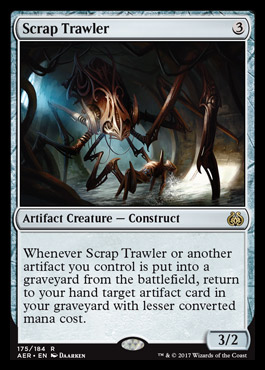
Scrap Trawler

scraptrawler

Scrap Trawler is a hard one to pin down for competitive play. On the surface it seems great. You have a reasonable threat as a 3/2 for three mana with a relevant ability. How often will you have another artifact in your graveyard to return, though? I don’t think the mana cost restriction on your target is relevant because at minimum we have Smuggler's Copter to return, as well as the potential Heart of Kiran provides. My gut tells me this looks like a sideboard card for Copter decks as long as they’re playing some other artifacts to regrow.

Financial Value

Some players are putting their money where their mouth is on Scrap Trawler. With its future uncertain, buyers are keeping the price steady on this artifact creature at around $2. With no immediate impact, look for this rare to drop down more in price, but if an artifact-centered deck pops up utilizing Trawler in the maindeck, it could go up a bit more. Unless you need this immediately, I’d stay away from preorders on this card. I think it’s more likely to go down than up.

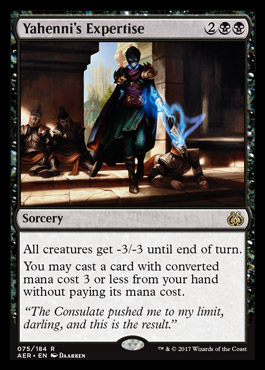
Yahenni's Expertise

yahennisexpertise

Yahenni's Expertise has quite a unique text box. Post rotation we’ve been missing the Languish effect in Standard, and it seems like Wizards is moving more towards black for the four-mana wrath effect based on reducing toughness. I think this is a great direction, because it forces us to build better decks and not just play the four-mana wrath because it’s another version of Wrath of God. Another version of Languish is great, because then deck builders can react and maybe run more four-toughness creatures in their decks or add a pump spell to grow larger than what the card is decreasing. Cards like this make the format more diverse while also providing a necessary utility.

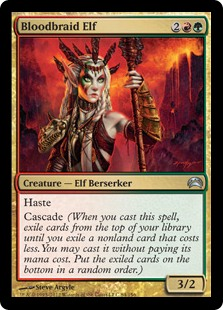
Yahenni's Expertise also has another potent side to it. We don’t just have a new Languish; we also have a new Bloodbraid Elf, a new spell mastery part of Dark Petition, or whatever comparison you consider most apt for this new card. The broken side of the story is that you get to cast two spells for the price of one, and that is always bursting with power creep. The opposing side is that you won’t always have a cheap card you can or want to cast, so if you include this sweeper, you need to be okay casting -3/-3 to the board for four mana without always getting extra value.

Financial Value

This black wrath effect seems to be following the same price model that Languish did. Right now preorders have this placed around the $5.50 mark. If history repeats itself, then we should see a spike on this card once it proves itself in Standard. Aether Revolt already seems be giving us the tools for a control deck to emerge in the format. Control is an archetype that has been noticeably absent from the format as of late, and I think we need a deck to fill this role in order to balance the format out. We can’t just let the same decks continue to dominate the format, and I think Aether Revolt will help us start controlling the flow of games once again.

trophymage

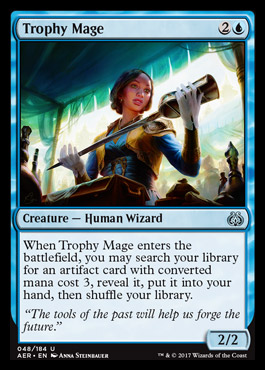
Trophy Mage tutors for exactly and only a three-cost artifact. What artifact fits this description that we would actually want to tutor for? If the card read "three or less," we’d be in the business of doing broken things, but instead we have a more restrictive Trinket Mage variant. Looking over our current potential targets, the only potentials I came up with are Scrap Trawler, Chief of the Foundry, Filigree Familiar, Foundry Inspector, Electrostatic Pummeler and Cultivator's Caravan. All of those cards are reasonable constructed cards, but none of them are powerful enough to warrant a tutor so we can cast them a turn late. There are much better things we can be doing with our mana.

In Commander, we have may more possibilities, and we could use this new tutor to set up tons of combos with cards like Ashnod's Alter, fix our mana with Chromatic Lantern, or just put some pressure on with Sword of War and Peace or any of the swords.

Financial Value

I’m excited about this card for Commander, but I’m hesitant about Trophy Mage's Standard potential. What I would keep my eyes open for are foils. This seems like the perfect card to have an unreasonable discrepancy between the normal printings price and the foils.

Standard Finance Updates

This week I was planning to break down the financial trends of Standard as a big portion of this article, if not the entire thing. The trends are clear, but there isn’t a lot to say about what’s happening. Just like you’d imagine, the majority of cards in Standard continue to fall in price. We know this is due to the excess of packs being opened in search of Masterpiece Series cards. Since this rarity is now a permanent part of the game, I expect this trend to continue so that there are a handful of cards in each set worth looking for, but not more than that. These are things that shouldn’t be surprising, but sometimes it’s nice to have some conformation to what we think will happen.

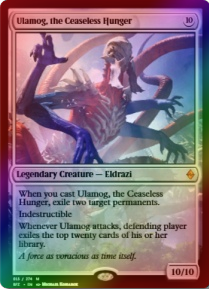
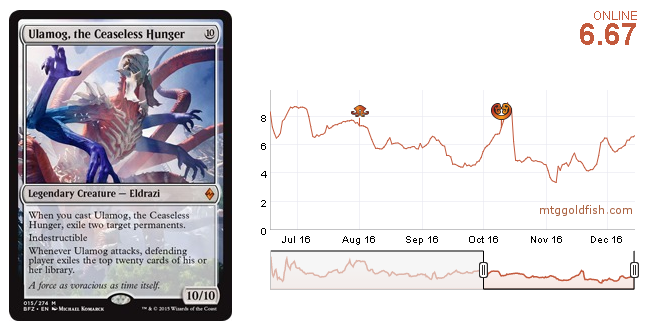
Despite the trends, there will always be a couple cards that spike or fluctuate in price. This week I was surprised by a couple cards that I changed in my inventory. Bunches of Standard singles went down in price, but most only by a small percentage. Let’s focus on the two that made significant gains. The two cards I’m talking about are Panharmonicon and Ulamog, the Ceaseless Hunger. Pahnarmonicaon bumped up to $5 and Ulamog is on his way back up a little as well.

That’s everything I have for you today. Are there any other trends you guys are seeing? What’s going on with Magic finance in your area? Also, let me know what you think of the spoilers above as well. I think there are some promising new cards from Aether Revolt. Hopefully they shake up the metagame and give it a fresh new look.

Until next time,
Unleash the Aether Revolt Force!

Mike Lanigan
MtgJedi on Twitter

The Importance of Identifying Weaknesses

Are you a Quiet Speculation member?

If not, now is a perfect time to join up! Our powerful tools, breaking-news analysis, and exclusive Discord channel will make sure you stay up to date and ahead of the curve.

When you talk to players about their Modern decks, most of them can tell you why they like their deck. Perhaps the play patterns fit their style or they have good things to say about the deck's relative power level. This is good information to have—but identifying a deck's weaknesses is more important when it comes to assessing a deck's position in the metagame. It's also the less popular element to focus on.

At the tail end of Brian Braun-Duin's most recent article on Channel Fireball, he discussed why he likes Bant Eldrazi in Modern. In his estimation, one of the major draws to the archetype is its relatively small number of bad matchups. This approach makes a lot of sense. Having a lot of favorable matchups is nice, but needing to dodge half of the room (or some other major percentage) at any given tournament is a serious problem. Players will frequently oversimplify the Modern format and say they're playing their deck because, for example, they beat Infect, Dredge, and Jund. What they're not saying is what they lose to—and Modern is too diverse to be sold on a few good, if popular, matchups.

I have solidified myself as a Delver player in Modern, and I have a lot to say about the strengths of the deck. But its few weaknesses is what has always mattered most to me. Given the non-rotating nature of Modern, it's important to know a given deck's weaknesses so that you can identify how good that deck is with regard to the current state of Modern. Today I'll break down the three major types of weaknesses that a deck can have and share some strategies for mitigating them.

[wp_ad_camp_1]

Inconsistency: Losing to Yourself

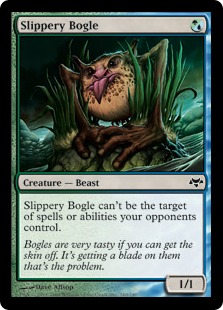
Inconsistency is the fundamental weakness that is typically most damning for a deck. If your deck can't consistently execute its game plan, sometimes you can get crushed in a tournament despite getting supposedly favorable pairings. The best example of a deck like this in Modern is Bogles. The deck does something that is quite powerful and generally difficult to interact with, but it has a considerable fail rate. It has to mulligan more than most decks, and it doesn't mulligan particularly well. When your deck can lose to itself, you have to believe that you'll face almost exclusively positive matchups to like your odds to win a tournament.
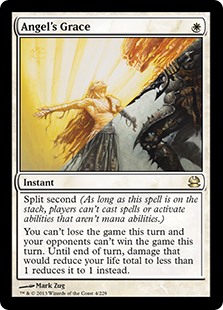
Ad Nauseam is another deck that I would lump into this category. It is more consistent than Bogles. But it still relies on drawing very specific cards, without much in the way of card selection. It also has almost no way to protect its combo or disrupt an opponent. There are plenty of other fringe decks to toss in this category as well, but I would say that Ad Nauseam and Bogles are the two most visible examples of decks of this nature.

Notably, when you evaluate your deck's bad matchups you have to pay a lot less mind to decks of this nature than you do to more consistent decks. If your deck is bad against Bogles, you can take some solace in the fact that they'll just lose more often than most decks. If you have a sideboard slot that's up in the air and you're deciding between a card against an inconsistent deck or against a consistent one, it's almost always better to choose the latter. Bogles is on the bad side of matchups for Grixis Delver—but it also accounts for one of the handful of times that I've mulligained to four and beaten a seven-card hand. Don't overcommit sideboard space to these archetypes.

Bad Matchups

Every deck has some bad matchups, but some a lot more than others. A subdivision here is the matter of whether your deck is weak to categories of decks or specific archetypes. Is your deck bad against all control decks, or is there a particular one that gives it trouble? Do all of the linear aggressive decks beat up your strategy, or only some number of them? For example, Ad Nauseam is weak against Infect while still beating up on the other aggressive strategies, due to the particulars of how Angel's Grace works.
A bad matchup against a whole category of archetypes is a significantly different problem than a bad matchup against one deck. If your deck is bad against linear aggressive decks, then playing some number of removal spells in your sideboard makes sense. If your deck has bad matchups consisting of specific archetypes that attack in different ways, you have to get more creative. Assume that my deck is weak to Dredge, Jund, and Tron. There isn't going to be an elegant way to solve all of these problems with a small number of sideboard cards.

If you're bad against big mana decks, Crumble to Dust is a reasonable sideboard option. If you're good against Valakut, the Molten Pinnacle but weak to Tron specifically, then this slot does a lot less for you. A weakness against a group of general strategies is generally a lot more solvable than a weakness to several different specific decks. Trying to shore up disparate problems will tax your sideboard more, and leave you more vulnerable to general metagame shifts that lead to an increase in specific bad matchups.
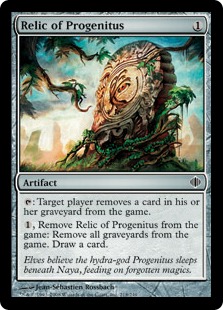
If you look at the evolution of Tron, you'll note it has developed around its characteristic strength against midrange and weakness to the turn-three and turn-four decks. As such, most of the deck is focused on consistently doing its thing (i.e. crushing fair decks), while particular supplemental slots are devoted to evening things up against the fast decks. Path to Exile and Collective Brutality are the most successful tools for this role in the current metagame. Tron is also generally weak to spell-based combo—once upon a time the deck featured four maindeck Relic of Progenitus, partly to hose Pyromancer Ascension. Such decks are virtually non-existent in today's Modern, allowing Tron to focus heavily on beating creature-based combo and beatdown decks. The more linear your deck is, the more this manner of deck-building should inform your approach to the format.

Silver-Bullet Hosers

Some decks don't fold so much to other strategies as to other cards. This sort of weakness also splits into a couple subcategories: namely, maindeck and sideboard hosers. We'll evaluate each separately.

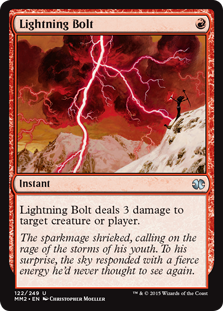
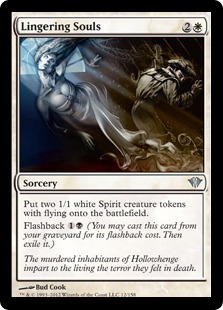
Being bad against maindeckable cards is the worst problem you can have in this regard. Let's say that your deck is bad against Lightning Bolt. That is a pretty serious problem to have, because nearly every red deck will be packing those. Grixis Delver is pretty weak to Lingering Souls, though cards that maindeck that one aren't terribly popular right now. Being weak to popular, singular maindeckable cards is arguably as bad of a problem as a deck losing to itself. For example, Izzet and Temur Delver variants have serious issues with Tarmogoyf, and that is a weakness that I simply cannot abide. If Lingering Souls were suddenly as popular as large efficient creatures, I would probably have to be off Delver. Losing to fringe stuff is much more acceptable.
The other sub-category here is, of course, losing to specific sideboard cards. This is a problem that you run into the more linear your deck becomes, and is generally a bigger problem the better and more represented your deck is. Affinity players know all about this one, and they have an interesting go of determining when their deck is good and how to configure their 75. These specific sideboard hosers can sometimes be answered effectively by counter-sideboarding. Some examples of this include Dredge bringing in Nature's Claim against Leyline of the Void and Affinity bringing in Ghirapur Aether Grid against Stony Silence.

When players are under the impression that your easily-hated-out deck is on a downswing, that's often the best time to play it. This effect gets magnified when other hateable decks are competing for players' sideboard space. With the uptick in graveyard hate to combat Dredge right now, playing a deck like Affinity has become more attractive. On the other side of things, this significantly hurts any fringe deck trying to make use of its graveyard that can't boast the resilience and power of Dredge.

Something to pay mind to is the overlap between a weakness to a specific archetype and a weakness to a maindeckable card. For example, when I say Grixis Delver is weak to Lingering Souls, I could just as easily be saying that the deck is weak to Abzan. All other things being equal, Grixis Delver would have a dramatically better Abzan matchup if Lingering Souls never existed. As such, the difference between Jund and Abzan being the popular BGx deck matters a lot to Delver players.

Knowing Your Weakness

When selecting a deck in Modern, cataloging all of its weaknesses is the best way to determine whether or not that deck is a good choice for the metagame that you expect. For decks that lose to themselves, you want to have few if any other weaknesses. For problematic matchups or cards, you'll want to come up with a plan to defeat the most popular ones that you can reasonably expect to face in most tournaments. For some archetypes this means tinkering with maindeck flex slots, while for others it will largely be a matter of tuning your sideboard for the expected field.

Ultimately, mapping your weaknesses makes it a lot easier to look for areas where your sideboard and flex slots can be used to solve multiple problems, which is going to be a lot more effective than playing generic hosers.

Thanks for reading,

-Ryan Overturf
@RyanOverdrive on Twitter

Insider: Tips for Selling to Dealers

Are you a Quiet Speculation member?

If not, now is a perfect time to join up! Our powerful tools, breaking-news analysis, and exclusive Discord channel will make sure you stay up to date and ahead of the curve.

So, you've been grinding the trade tables pretty hard and have a huge surplus of random "good stuff." It's been an impressive haul. However, we all know the entire point of grinding all of those trades, making those sick specs, and building up our trade stock was to eventually get to the final payoff.

The trade binder endgame varies from person to person. Maybe your goal is to trade into some rare Reserved List treasure like a Mox or Mishra's Workshop. Or, maybe you're into foiling out a favorite Modern or Legacy deck. Perhaps you just want want to turn your extra cards into cold, hard cash money.

There was an error retrieving a chart for Mox Sapphire

No matter which final payoff suits your fancy, there's a good chance that at some point or another you'll sell cards to a dealer at a Grand Prix, convention, or other Magic event. I have extensive experience on both sides of the dealer booth. I've bought, sold, and traded cards from the dealer side, but I've also done tons of trades and sales to other dealers as well.

In today's article I'm going to outline some important do's and don'ts to keep in mind whenever you engage in selling or trading at a dealer booth.

1. A Cut You're Comfortable With

The first thing to keep in mind is that a dealer is always going to take a cut off the top. The store is going to sell your cards at retail price which means in order for them to turn a profit they need to pay a percentage less than retail.

One thing to keep in mind is that as the overall price of the card goes up, the off-the-top percentage that dealers take tends to goes down. The reason is that on high-end cards it's easier and more worthwhile for individuals to just put their card on eBay and sell it themselves.

eBay is a great resource for selling cards, but it takes time and energy in order to get the maximum value out of your cards. You have to list them, wait for them to sell, and then ship them. If you have 500-plus cards to sell, it's a ton of effort and energy.

When you're selling to a dealer, you are basically giving them a cut for the convenience of not having to sell your cards yourself.

On high-end, high-demand cards, dealers should pay you a high percentage of retail because they need to compete with the do-it-yourself option. On cheap singles, however, which are often difficult and tedious to sell, dealers will typically offer a much smaller percentage of retail. For instance, it isn't uncommon for dealers to offer $0.25 or $0.50 on cards that retail for $2-3.00. The percentage is quite bad but the convenience is quite high.

This rising percentage of dealer buy price on more expensive singles is the reason why trading multiple lower-priced singles into more expensive singles is good value in MTG finance.

2. Compare Buylists

If you want to get the absolute best deals possible when selling or trading your cards to a dealer, you'll need to do a little bit of homework beforehand.

One thing you can always do is walk around to the various dealer tables and pick up their buylists. A good number of the dealers will have a "hot buys" or "buylist" printed off on paper that you can literally pick up and take with you. When I have a large sum of cards I'm interested in cashing out, I like to pick up every single buylist I can and compare them for good measure.

Usually one or two dealers will have significantly better buylist prices than the other booths. On most weekends the "hot buys" will be the same across dealers, so it's easy to compare all of the booths against each other. The booth with the best prices will typically be the same or better on nearly everything across the board. Once you single out which booth has the best prices you can make sure to take your cards there.

Not every dealer booth will have a buylist, but the ones that don't tend to have worse buy prices. In a world where advertising that you have the best buy prices will clearly lead to more buys, it says something for a booth not to offer a list for perusal. Typically they don't want to advertise that their buy prices aren't the highest in the room!

Some of the larger retailers like Star City Games and Channel Fireball won't bother with printed-off paper buylists because they already have an online buylist that people can check. In my experience, the stores with great paper buylists are always going to beat the staple SCG or CFB online buylist. Those people are on site because they badly want to buy as many cards as possible and they plan to make their profit on margin.

If you truly want to maximize profit you could go to every single booth and have them quote you prices on every single card, but that is time-consuming to say the least. If you want to get the most bang for your buck without spending the entire GP weekend grinding dealer booths, check the buylists and prioritize selling or trading to the booth with the best paper buylist.

3. Be Polite, Friendly & Assertive

How you act and carry yourself can affect how a dealer treats you, and the offers they make. Some places work strictly off a buylist on a computer, but there is always some amount of wiggle room.

If you sit down and act like a jerk (even if you're not crazy about some of the prices you get offered) the buyer probably isn't going to go out of his or her way to give you the best possible prices. If you treat people badly there is a high chance that they will treat you poorly in return.

Be polite. If you don't want to accept an offer, be cool about it. "I think I'm going to hold onto that one." "No thanks."

Often there's some back and forth between buyer and seller, as each feels the other out to see what kind of prices they'll offer or accept. I don't know about you, but when I'm selling cards I always want to get the most possible. So I'm not going to accept any offers that aren't on the high side of buylist price.

Even if you get offered a price that you don't like, make sure to politely decline. Chances are that the buyer understands the reason you said no is because their price wasn't great, but don't make it personal by acting like the buyer is an idiot for making such a terrible offer. It won't get you better offers down the line.

You also want to be assertive and straightforward, but without being a condescending jerk. Certainly don't say yes to offers you think are mediocre if you're looking to get maximum value. It never hurts to let the buyer know you're informed and knowledgeable about card prices. If they know you're informed, they will be much more likely to make better offers—since they know you're likely to politely decline weaker offers.

In the same vein, making a counteroffer can be effective, but you really need some skill in the polite-but-assertive category. It isn't unreasonable to say, "Another buylist has them for $6.00 and I was going to sell to them—but you can have them for $6.00 if you want."

Buyers want to acquire your cards. They don't want to sit and be told, "No thanks," for a half hour. If they realize it might take a slightly higher margin to get a yes from you, there's a good chance they'll give it to you.

4. Don't Get Wrecked on "Condition"

One thing that drives me absolutely nuts is when dealers hound players about the condition of their cards. Obviously, if your cards are disgusting and messed up, they're worth less than nice copies. But sometimes dealers get super picky and go overboard on downgrading cards.

This weekend I had an experience selling cards where a dealer had Voice of Resurgence on their buylist for $15. The buyer saw three copies in my binder and said, "$15 on Voice?" I said, "Sure." So, he pulled out the three Voices, inspected condition and said, "I can do $15 on these two, and $12 on the other one because of condition."

I asked to see the one he offered $12 on and it was actually in great condition. I asked the buyer what was wrong with it and he pointed out that there was a small smudge on the front and explained that he wouldn't be able to list it at NM condition. So, obviously I declined the offer of $12.

The point is that some buyers will take liberties with you on condition if you let them. In fact, it's something I've noticed getting more and more obnoxious over the past year or so. I understand that online sellers have higher condition standards, but I'm not going to accept 20% less money because a buyer wants to put a card under a microscope and find even the tiniest flaw.

My advice is never to give in and take less on condition unless your cards are obviously flawed. If the buyer is able to constantly offer you one price, and then pull out the cards and lower it, I guarantee they'll look for opportunities to pay you less.

When I can tell a buyer is being super picky about condition, I've found it's helpful to decline any offer lower than 100%. Dealers want to buy your cards. Ideally, they'd like to pay less if you let them. However, if they see that you're not going to bite and accept less on slightly-played cards, they have two choices—either buy your cards or not. On close calls, dealers would rather buy your cards than not.

5. Check Prices on Your Phone

I've always found it helpful to have a phone or iPad out to check the prices you're being offered against another online buylist. For starters, it keeps the buyer honest. If they know you're checking their prices, there's almost no chance they'll try to lowball you on any offers, since they know you'll decline.

It also helps you avoid taking bad offers on cards where you might not be 100% up to date on current prices. Maybe you didn't know that Aetherworks Marvel spiked up during the week, but if you have your phone open to check offers you'll know when the buyer lowballs you (or is also unaware of the change).

There was an error retrieving a chart for Aetherworks Marvel

Buylist Away!

Selling cards to dealers is a great tool to have in your speculation arsenal. It makes turning trade stock into cash or better high-end cards a possibility. The key is to take the basic steps toward getting the best possible deal with the minimal amount of effort.

As you begin to follow the steps I outlined above, they'll start to become second nature. Building a good rapport with dealers will also pay dividends down the line—just don't forget to be assertive and protect your own interests.

Best of luck!

Insider: MTGO Market Report for December 21st, 2016

Are you a Quiet Speculation member?

If not, now is a perfect time to join up! Our powerful tools, breaking-news analysis, and exclusive Discord channel will make sure you stay up to date and ahead of the curve.

Welcome to the MTGO Market Report as compiled by Matthew Lewis. The report will cover a range of topics, including a summary of set prices and price changes for redeemable sets, a look at the major trends in various Constructed formats and a "Trade of the Week" section that highlights a particular speculative strategy with an example and accompanying explanation.

As always, speculators should take into account their own budgets, risk tolerance and current portfolios before buying or selling any digital objects. Please send questions via private message or post below in the article comments.

Redemption

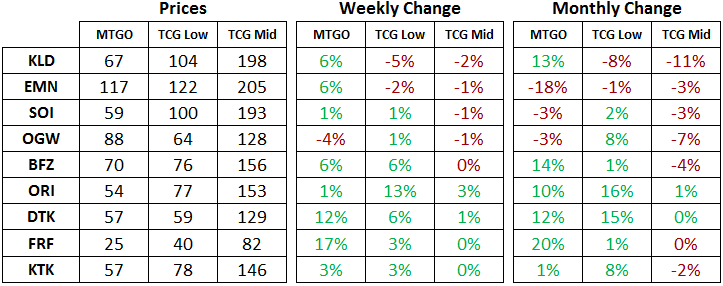
Below are the total set prices for all redeemable sets on MTGO. All prices are current as of December 19, 2016. The TCGplayer low and TCGplayer mid prices are the sum of each set's individual card prices on TCGplayer, either the low price or the mid price respectively.

All MTGO set prices this week are taken from GoatBot's website, and all weekly changes are now calculated relative to GoatBot's "full set" prices from the previous week. All monthly changes are also relative to the previous month's prices, taken from GoatBot's website at that time. Occasionally, full set prices are not available, and so estimated set prices are used instead.

dec19

Flashback Draft of the Week

This is the last week of flashback drafts for 2016, and things are wrapping up with triple Magic 2014 (M14) draft. M14 features only one mythic rare over 10 tix in Archangel of Thune. This card has been as high as 39 tix in the past year; it combines with Spike Feeder for infinite life in Modern, so it was recruited to combat the Eldrazi decks that rose to dominance after Oath of the Gatewatch (OGW) was printed but before the Eye of Ugin ban. It's been resting at around 10 tix in the past few months, so it should be a fine time to add a few of these to your binder.

Scavenging Ooze is a staple of Modern, and it clocks in as the priciest rare in the set at close to 8 tix. Mutavault sees occasional play, mostly in Merflok lists. Merfolk tends to shine when combo decks are dominant, so it's definitely a niche deck at the moment in Modern. As such, Mutavault shouldn't be a major target for speculators, though picking a few of the cheapest ones off of the market is a fine long-term play.

There was an error retrieving a chart for Scavenging Ooze

In other flashback news, WotC has announced two weeks of flashback drafts for 2017. They are titled "Flashback Favorites" and you can read the full announcement here. They will be run as draft leagues, and the first two are triple Zendikar (ZEN) in January and Invasion-Planeshift-Apocalypse (IPA) in April.

This has a few ramifications for players and speculators. First of all, the ZEN fetchlands have fallen in price in response. This is very normal. The flashback draft queues back in August introduced a significant amount of product enter the system. However, this time the draft queues are not discounted. They are the full 12 tix to enter, or boosters plus 2 tix, which will mean there will be no extra incentive to enter these leagues. If there's no discount relative to other queues, then players will enter the ones that they are most interested in.

There was an error retrieving a chart for Scalding Tarn

The other implication of this change is that boosters of the drafts in question will have a different equilibrium price. Instead of being around 2.7 tix, they will drift to 3.3 tix, since three boosters plus 2 tix equals 12 tix. Although ZEN boosters were already above the equilibrium price, and thus not subject to this effect, IPA were priced at a discount and were thus good value for those willing to sit on these for a few months. Prices for a draft set of IPA are now close to 10 tix, so there is no opportunity left here, but it's worth remembering for the next time a Flashback Favorite is announced.

Standard

There has been some early price movement in Standard due to some recent Aether Revolt (AER) spoilers. Oath of Ajani is covered here by Ryan Overturf. Players are remembering the power of the G/W tokens strategy from earlier this year, and as a result Nissa, Voice of Zendikar has bumped back up to 6 tix. The market looks set to stabilize in the 6 to 8 tix range, so if you have already missed out on this move, I would not recommend buying at this time. It will take some concrete results for this to push over 10 tix.

There was an error retrieving a chart for Nissa, Voice of Zendikar

Two other cards from a possible cycle of rares are Quicksmith Rebel and Quicksmith Spy. Both of these cards grant one of your artifacts an ability to tap for an effect. These cards are not obviously constructed standouts, but as Pat Chapin pointed out on his Top Level podcast, Key to the City from Kaladesh (KLD) combines well here since you get the untap ability as a bonus. It's an interaction to keep in mind and the market price of this artifact has increased as a result.

Modern

Prices on the last four sets to have rotated out of Standard, in both paper and on MTGO, have all moved higher in the past week. Higher prices in paper are an excellent signal for gains to materialize on MTGO for the same set through redemption. If you've been a buyer in the fall of Dragons of Tarkir (DTK) or Magic Origins (ORI), the next month should present an excellent opportunity to harvest the gains on these sets. It's much easier to sell into a rising market, and these sets look ready to continue higher.

There was an error retrieving a chart for Surgical Extraction

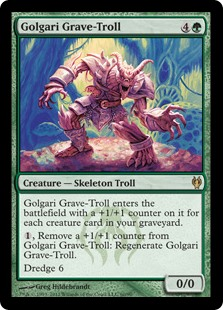
Golgari Grave-Troll has rebounded this week and sits at the 20 tix level after dipping briefly below 14 tix. Dredge is a player in Modern, and this card could very well be an excellent speculative vehicle as it cycles up and down in price. Keep an eye on this one, but a card like Surgical Extraction is also a very good speculative candidate. Since any deck can play it, whenever someone is in the market for Dredge hate, they will have to consider this card. At close to 20 tix, this card is near an all-time high and it looks poised to head higher.

Trade of the Week

As usual, the portfolio is available at this link. The next month is the right time to be building up your supply of tix. The best buying opportunities tend to crop up around a new set release, so it's prudent to be paring down your positions and getting liquid in advance of the AER set release.

Ulamog, the Ceasless Hunger is a card that has bumped up into the 6 to 7 tix range. It's doubtful at this point that it's going to see much more play in Standard than it does currently, so I'm willing to sell these in order to build up some tix. It's got some applications in Modern, but this is primarily a Standard card at the moment.

There was an error retrieving a chart for Ulamog, the Ceasless Hunger

Take the time over the next few weeks to examine all your positions. If there are some that have been languishing and are not looking like they might get a shot in the arm in Standard from the release of AER, then consider selling. When the new set is released, it will be harder to get top dollar for your cards, so you'll want to have a few tix saved up in advance to take advantage of any opportunities that may present themselves.

Insider: Tempering Expectations

Are you a Quiet Speculation member?

If not, now is a perfect time to join up! Our powerful tools, breaking-news analysis, and exclusive Discord channel will make sure you stay up to date and ahead of the curve.

Welcome back, readers!

We're in full-blown Christmas season here in the US. In honor of that, I'll start today's article with a little anecdote about a trip I took on Saturday the 17th.

There's a tradition in McAdenville, NC where people flock to the city to see displays of Christmas lights put up by the local residents. They have cameras up in the town so people can live-stream, and even a little app for your phone so you can get updates about the show. Having dubbed themselves "Christmastown, USA," the city draws in tons of visitors every year.

mcadenville_christmastownusas

This year my girlfriend really wanted to see it, so we decided to go. I can tell you her expectations were really high and she was very excited. I expected it would be one of those crazy light displays synced to music just stretching the length of the town, and that it wouldn't take that long to go through everything. If I was lucky, I might even be able to get back early enough to catch the last showing of Rogue One.

So we drove the hour to get there and then spent two and a half hours waiting to get into the town. Two and a half hours. She loved the lights and displays people had set up; I couldn't believe that my entire Saturday night was being wasted doing this. That mindset kept me from enjoying anything there. (For those wondering, it's not synced up to music like those houses you see on some of the YouTube videos.)

The point of this little story was that both her and I had expectations, but different ones. She was unhappy about the wait but wants to return anyway, because she enjoyed it and wonders what they'll do next year. I wouldn't voluntarily return there if at the end they gave me a choice between a PS4 and an Xbox One. We both had expectations. Hers were mostly met, mine were not.

We often fall into this same situation when it comes to Magic speculation. To complicate things, a lot of us have been through some significant boon times, thanks in large part to Modern's surge in popularity and the massive bull market we had with Modern staples for a couple years. Our expectations are so jaded by such success that we view a normalized market as unimpressive.

There was an error retrieving a chart for Snapcaster Mage
There was an error retrieving a chart for Liliana of the Veil

Looking at both these cards, we can see years when they saw massive rises in price, followed by the current plateau (or in some instances declines). Now let's compare those graphs to a stock that a lot of people probably recognize.

cocacola-stock
(Click to expand.)

There are still a lot of investors who advise buying stock in Coca-Cola as it's been a relatively steady stock for a while now. Even Warren Buffet's Berkshire Hathaway owns a large share in Coca-Cola.

We as Magic speculators might look at this as unimpressive gains. In about five years Coca-Cola stocks went up about $6, or about 16%. That's equivalent to your $1 card going up to $1.16. Many wouldn't invest in a Magic card if they expected a 16% increase over a five-year period, despite the fact that it's healthy growth for a stock.

The Difference Between Cards and Stocks

Now, I will cede that there is a huge difference between Magic cards and stocks. If I had purchased shares of Coca-Cola back in 2012, I could sell all of them almost instantaneously and pocket my profit, regardless of whether I owned five shares or 5,000. On the other hand, if I had purchased a Magic card back in 2012 and wanted to cash out, my ability to liquidate those copies would be severely hindered by the number of buyers paying the new price.

I could probably unload five copies without a huge hassle. But if I had 5000 copies, it would be significantly difficult to do so—if not impossible at any sort of profit.

But the point is that we have dramatically different expectations for stocks and Magic cards, and while this is merited (due to the aforementioned liquidity challenge), our Magic expectations still need to be grounded in reality.

Before you go and buy into a speculation target, you should always know the minimum price that you'd sell out of it at. This is critical because, as my fellow writers have stated numerous times, you can't "time the market." It's very easy to get caught up in constant growth to the point that greed overtakes smart decisions and you end up holding onto something too long until it crashes back down.

Magic card values are dictated by several factors that us speculators have little to no control over. Not only are these factors beyond our control, they are also notoriously difficult to predict in many cases:

  1. Scarcity - How many copies are available? Save the Reserved List, Wizards can reprint anything at any time. Additional copies in the supply will cause a price drop (barring some instant demand increase matching it).
  2. Playability - Is there a lot of demand for the card due to its value in a current archetype? A card's usefulness can change with metagame shifts or new printings, and demand can go from red hot to ice cold in a matter of days.

The Cost of Outing

Another important thing to consider before going into a target is what your outs are. We in the Magic community may look at a card like Tarmogoyf and say, "Clearly there's a strong demand for this card; look at it's price." But if we could somehow determine how many copies were bought and sold each week, that number would pale in comparison to the number of trades that even most minor stocks see in a given day.

There was an error retrieving a chart for Tarmogoyf

The Magic community is still a very small part of the overall population, and as print runs increase in size, the existing playerbase's demands can only absorb so many copies. So if you stockpile a large number of copies, you're far less likely to be able to unload them without watching the price drop as you do.

The other common option is to sell to a buylist (which typically does allow you to move a larger number of copies than you would selling to a single player). However, with that route you aren't going to get the retail price of the card you're looking to move. If we assume a typical buylist price of 65% on a $1 card, then in order to make a 16% profit, the price would have to go to around $1.78. That's a 78% increase in value in order to make just 16% profit.

So before buying a large number of copies of a card, you need to run these numbers to get a feel for what kind of price increase is necessary to turn a profit.

Take a Step Back

It also helps to take a step back and look at each speculation target a bit more analytically. For each card I'm considering speccing on, I like to ask myself a series of questions.

  1. What events would need to occur for this target to see significant enough gains for me to make a decent profit? What is the likelihood that these events occur?
  2. What could happen that would make this target a dud? Can I mitigate any of these risks myself?
  3. How confident am I in this target?
    • How much am I willing to bet on this confidence?
    • What will happen if I'm wrong?
    • What will happen if I'm right?
  4. How will I track this target's gains/losses? How often will I check?
  5. What price would it have to drop to for me to bail on it? How much would I lose if I did bail?
  6. Are there similar cards whose prices I can review to see how they performed?
    • If so, does their price record concur with my assumptions?
    • If not, what makes me think this card will not follow a similar trend?

Conclusion

I've tried to remain relatively upbeat in Magic speculation recently, as I've seen a lot of writers and MTG speculators (some here on QS, some not) show a lot of concern about the Magic finance market.

However, I am a risk-averse individual by nature. This is why I'm more hesitant to invest in new formats like Frontier (especially after getting burned by Tiny Leaders speculation). It's also why I'm hesitant to invest in formats with a constantly shifting metagame—not that I don't have Standard specs in my portfolio, but I have much less Standard than other formats.

This also means I put more emphasis on my method, and the reasons behind each speculation target, than I do on "gut feeling" or emotional response. That isn't to say that gut feeling or your excitement about playing a new card aren't viable factors to consider when picking a speculation target. But they shouldn't be the only factors, and they shouldn't be the driving force behind your expectations.

Testing Bloodbraid Elf: An Exercise in Futility

Are you a Quiet Speculation member?

If not, now is a perfect time to join up! Our powerful tools, breaking-news analysis, and exclusive Discord channel will make sure you stay up to date and ahead of the curve.

As the year, for better or worse depending on your perspective, draws to a close, I find that I have unfinished business. Or rather, I have business I thought was finished but others disagree. Specifically, players just won't accept that Bloodbraid Elf is not a serious consideration for unbanning. Despite addressing the issue several times, including in my article about banlist testing, the question just won't die. I'll be unequivocal: I believe Bloodbraid Elf should never have existed, and should not now return. At all. And I will illustrate why, first by answering the common arguments for unbanning and then showing an actual demonstration of its current power.

Now, I get why people think that BBE is okay to unban. I really do. I think they're wrong and I have evidence to back it up, but I do understand. It sucks not being able to play with your cards. It especially sucks when you can't play with a longtime favorite. BBE was a staple in every format since the moment it was printed. It was powerful, and that made it very popular. However, that is not a good reason to unban a card. There are arguments as to why it should be unbanned, but I think they're weak compared to the reasons to keep it banned. Looking at initial logic behind the Bloodbraid Elf ban and the later anti-Jund ban, I find the reasoning still valid.

[wp_ad_camp_1]

A Miscarriage of Justice

By far the most common argument is that Bloodbraid Elf was wrongly banned on January 28, 2013. Adherents point to Jund's continued dominance following that date, which ended in the banning of Deathrite Shaman a year later. The argument goes that BBE was unfairly targeted in January of 2013 and paid for the sins of Shaman. With Shaman out of the picture, BBE should be uncaged for great justice.

This argument does make a certain amount of sense. Power cards are just powerful, but enablers supercharge everything. This is normally why Wizards leaves payoff cards alone and only axes the enablers. Deathrite Shaman was far too powerful an enabler to stay in Modern. Acceleration coupled with reach is good enough to be a Legacy staple. Bloodbraid, on the other hand, is a fringe card. Yes, it's good at what it does but it costs four mana, and that is very late for a non-rotating format. Bloodbraid Elf is much less powerful on turn four than it was on three. Tron is dropping Karn on three and Infect wins by then. Bloodbraid just isn't as impressive in comparison.

Mistimed, Not Miscarried

I will freely concede that the real problem in January 2013 was Deathrite Shaman. One-mana planeswalkers that double as accelerants are way too powerful. I thought, like other researchers, that was the reason it got the ax. Instead, it was banned for diversity. Wizards wanted to improve the diversity of synergy decks and so removed the biggest barrier to their viability. In light of that, let me ask you this: if Deathrite had been banned first, do you really think that Bloodbraid Elf wouldn't have been banned for diversity later?

Consider this: in a world before Siege Rhino, would there have been any reason to play Junk over Jund? What about Jeskai? Did any other fair deck have any tool remotely on par with Bloodbraid Elf? No. If you wanted to play a fair deck you would have always played Jund—it was just better than every other option because Bloodbraid Elf really was that good. The Elf might not have been the real problem in 2013 (emphasis on might), but it was a real threat to diversity prior to 2015 and would have ended up banned anyway. It was never the case that BBE didn't deserve to be banned, it just was banned earlier than it really needed to be.

Note that the existence of alternatives does not make unbanning Elf now okay. It's still more powerful than any other option. If Siege Rhino was really comparable to Bloodbraid, Junk would actually see top tier play. Instead Jund is consistently the deck of choice (except when particular metagame circumstances favor Path to Exile). This should tell you something.

The Diversity Question

On that subject, I've heard it argued that Bloodbraid Elf would end up being positive for diversity because other green-red strategies could use it. Elf was not exclusive to Jund, and letting her roam freely would allow more decks to sprout.

Frankly I think this argument misses the boat entirely. Certainly Naya and Temur players could choose to put Bloodbraid in their decks, but they will still be outclassed by Jund. In every format where Bloodbraid was legal, Jund was always the best home for the card. Experience has shown that BBE works best in "a pile of good cards" decks, and Jund has always had the most good cards to support the Elf. You might get a boost, but it will never be as big as Jund's. It's the way it has always been, and I see no reason it wouldn't continue to be.

I can hear the Temur players screaming now that they have a great prize for her in Ancestral Vision. This is technically true, but Wizards directly cited the lack of Elf as a specific reason why they were able to unban Vision. Assuming the logic behind this principle doesn't change, Wizards will only let you have one or the other. And without Vision to cascade into, Bloodbraid Elf will always have a far greater impact on Jund than it will on any other deck. Since that deck is consistently Tier 1 already, all that can happen is that it gets stronger. You cannot compete.

Times Have Changed

The other argument I hear a lot is that BBE wouldn't see that much play in Modern. Times have changed and a four-mana spell is nearly unplayable now. The speed of Infect and Death's Shadow coupled with the improvements to Tron and Burn mean that BBE has lost a lot of her impact. The game is very likely to be over before she gets played anyway. What's the harm in unbanning an unplayable card?

On a technical level, this argument is correct. The speed of Modern has increased since BBE got axed. Become Immense and Cathartic Reunion have supercharged "fair" aggressive strategies to the point that the format really isn't a turn four format anymore. In that formulation, yes, a four-mana card is safe because it is too slow.

…But Not That Much

I honestly wonder if the players making this argument mean it or are being disingenuous. If BBE really isn't good in Modern anymore, why are you so adamant about getting to play her? Might it be that she really is good and you're trying to hide that fact? Since I can't actually see inside your heads, I will pretend that I trust your motivations for the sake of argument.

Yes, right now Modern is much faster than 2013. However, arguing that this is the reason to unban BBE only makes sense if you think that it will stay this way. In that world, yes I think BBE is likely too slow. But it is very unlikely that Wizards wants the format to stay this fast. They cited the turn-four rule when they banned Splinter Twin, and I doubt anything has changed. I'm not willing to speculate on what will actually be banned, but I cannot image that Wizards is okay with the current speed of Modern.

When Modern slows down again, BBE is going to be played. A lot. And her power will be right back to where it was in 2013. Consider this: right now many Jund lists play Kalitas and/or Huntmaster of the Fells despite their costing four mana. Would you play Kalitas, Traitor of Ghet over BBE? Incremental advantage over immediate board presence and card advantage is not a fair fight. If Jund is willing right now to run four-mana creatures, then a better one would definitely see play. Saying that BBE would not see play is not a serious argument.

A Practical Example

I bring this up because I've started testing Jace, the Mind Sculptor against Jund and my designated pilot kept asking about testing Bloodbraid against Jace. This is another common argument in favor of unbanning both, because Jace was initially kept in check by BBE (mostly by cascading into Blightning). Now, I normally brush this off by asking if mutually assured destruction is an acceptable policy or if he's fine with forcing everyone to play BBE or JTMS so they don't lose to the other one, but he was persistent enough that I indulged him. I would play GW Tron, a known bad matchup for Jund. We'd play ten games without BBE and then he'd get to make his version of Bloodbraid Jund and we'd play another ten games to see what happened. For reference, the Tron deck:

"GW Tron, by Max Olszack (2nd, SCG Atlanta Classic)"

Creatures

2 Wurmcoil Engine
2 World Breaker
2 Ulamog, the Ceaseless Hunger
1 Spellskite

Artifacts

4 Chromatic Star
4 Chromatic Sphere
4 Expedition Map
3 Oblivion Stone
2 Relic of Progenitus

Instants

3 Path to Exile

Planeswalkers

4 Karn Liberated
2 Ugin, the Spirit Dragon

Sorceries

4 Ancient Stirrings
4 Sylvan Scrying

Lands

4 Urza's Mine
4 Urza's Tower
4 Urza's Power Plant
2 Razorverge Thicket
2 Brushland
1 Forest
1 Ghost Quarter
1 Sanctum of Ugin

We would not be sideboarding. In the first ten games Tron was favored, winning 6-4. The first two losses came from failing to hit Tron at all, one because I kept a hand I should have mulliganed (I leaned on the cantrips too hard). The last two were when Jund successfully stripped my hand of business and raced me with Tarmogoyfs. With our baseline established he went off to build the following Jund list:

Bloodbraid Jund, Test Deck

Creatures

3 Dark Confidant
4 Bloodbraid Elf
2 Grim Flayer
4 Tarmogoyf

Instants

4 Lightning Bolt
3 Terminate
2 Kolaghan's Command
2 Abrupt Decay

Planeswalkers

4 Liliana of the Veil

Sorceries

3 Inquisition of Kozilek
3 Thoughtseize
2 Maelstrom Pulse

Lands

4 Blackcleave Cliffs
4 Verdant Catacombs
3 Bloodstained Mire
3 Raging Ravine
2 Overgrown Tomb
2 Forest
2 Swamp
1 Blood Crypt
1 Stomping Ground
1 Twilight Mire
1 Wooded Foothills

The tables turned. Jund won decisively 7-3. Tron still won games when I hit Karn on turn three, exiled a land, and they had no pressure. But in all other cases BBE pulled Jund farther and farther ahead. In a number of games I had to use Karn to answer a Grim Flayer or Tarmogoyf instead of exiling a land—allowing my opponent the opportunity to follow up with BBE and another spell to finish Karn with some extra value. Kolaghan's Command also proved a beating. To drive the point home, let me relay an actual test game, which is typical of the games we played.

The Game

On the Play: GW Tron

Opening Hand: Urza's Tower, Urza's Power Plant, Chromatic Star, Ancient Stirrings x2, Karn Liberated, World Breaker. Keep.

Jund: Keeps seven.

Turn One GW: Urza's Power Plant, play Chromatic Star, say go.

Jund: Overgrown Tomb untapped (18), Inquisition of Kozilek taking Stirrings, go.

Turn Two GW: Draw Relic of Progenitus, crack Star for green, draw Brushland, play Ancient Stirrings finding Urza's Mine, play Tower, go.

Jund: Play Wooded Foothills, fetch Stomping Ground (15), play Tarmogoyf (3/4), go.

Turn Three GW: Draw Chromatic Star, play Mine, play Karn, exile Tarmogoyf (3 loyalty), go.

Jund: Play Blackcleave Cliffs, Thoughtseize taking World Breaker (13), Grim Flayer (4/4), go.

Turn Four GW: Draw Expedition Map, play Star with Mine, use floating mana to crack for green, draw another Mine, play Relic with Plant, use floating mana to crack, drawing Relic. Play Mine, play Expedition Map, exile a card from Jund's hand (Blackcleave Cliffs, 7 loyalty), go.

Jund: Play Twilight Mire, play Bloodbraid Elf, cascade hits Kolaghan's Command (bypassing 3 lands), discard and two damage redirected to Karn (5 loyalty), discard Relic, attack with all creatures at Karn (dies). End of Turn, GW uses Tower to pay for World Breaker's ability, sacrificing the extra Mine.

Turn Five GW: Draw Urza's Tower, play Brushland, play World Breaker exiling Blackcleave Cliffs (19), go.

Jund: Play Liliana of the Veil, make GW sacrifice World Breaker, attack for 7 (12), Blackcleave Cliffs, Inquisition of Kozilek, and Abrupt Decay hit the graveyard, go.

Turn Six GW: Draw Path to Exile, play Tower, say go.

Jund: Play Verdant Catacombs, fetch Forest (12), play Bloodbraid Elf, cascade past one land, hit Inquisition of Kozilek. Path to Exile Grim Flayer in response, get Swamp, uptick Liliana, attack for 6 (5), go. End of Turn GW cracks Expedition Map for another Tower.

Turn Seven GW: Draw Expedition Map, concede.

Was my draw a little poor as GW in that game? Yes, and I really should have played out the Relic instead of the Map and saved myself some damage from Flayer. The key here is that if those Bloodbraid Elfs had been any other Jund card my opponent would have had a worse draw! They cascaded past three lands in a row when they were otherwise out of gas on turn four. Playing that creature provided pressure and increased the likelihood that they would continue to draw gas! The second one got two cards that my opponent didn't want to draw out of the way. This is the true power of Bloodbraid Elf. Even when you miss, you still gain value by improving your future draws.

After our ten game set was complete, my opponent conceded my point that BBE is too good and we got back to testing JTMS. It was driven home when he realized that Grim Flayer could set up BBE. That was when things got stupid.

Recontextualize

Let me put this another way. Ponder and Preordain are banned for enabling degeneracy. These cantrips allow you to draw only the cards you want, which reduces variance and greatly increases deck power. These cards let you look at two to three cards and draw one. If you want to cast a spell that you drew you have to pay mana for it. Bloodbraid Elf lets you look at as many lands or other Elves as are on top of your deck until you hit an eligible spell. Which you then get to cast for free.

In terms of reducing land flood this is a massive improvement over the blue cantrips. Furthermore, you get a free spell. Yes the spell won't necessarily be good, but it doesn't matter. By cascading to it you ensure that you don't draw it! Never underestimate the power of improving your draw steps. Bloodbraid Elf is a powerful card because the ability to eliminate chaff from your draw step is incredibly potent. Getting a 3/2 with haste is a bonus.

So hopefully that explains why I think testing Bloodbraid Elf is largely a waste of time. I believe it's clearly too good for Modern and should stay banned indefinitely. Incidentally, this really makes me question why we still tolerate Ancient Stirrings, but that's a subject for another time.

Insider: Finding the Buyers’ Markets

Are you a Quiet Speculation member?

If not, now is a perfect time to join up! Our powerful tools, breaking-news analysis, and exclusive Discord channel will make sure you stay up to date and ahead of the curve.

Before I jump into this week’s topic, I first want to provide live up-to-the-minute data on the U.S. dollar. Since writing the article two weeks ago, something momentous happened in the country: the Fed decided to increase interest rates for the second time in a decade. Not only that, but they also increased their forecast for the number of interest rates we can expect to see in 2017 and 2018.

The move caused another spike in the U.S. dollar, sending it to multi-year highs!

(Click to expand.)


Thus, if there was arbitrage to be made buying from abroad and importing cards to the U.S., the opportunities are even greater now. I strongly encourage you to investigate it further as I’m sure this will continue.

Just be careful—more cards will be funneling to the United States as a result of this dollar strength, and it will eventually increase supply of cards stateside, which could reduce values over the long term. For now, just enjoy the ride!

Regularly Scheduled Program

The strength of the U.S. dollar is one factor in what makes this a buyers’ market. But while I’ve been eager to sell out of certain positions to rebalance my portfolio, a compelling case can be built which suggests this is a prime time to add to MTG positions. I’m not at all saying that I'm suddenly changing my tune—I merely think it’s fair to present data from the “other” side so people can develop their own strategy knowing all factors.

For example, the recent sell-off in some key Modern staples may present a great buying opportunity as players seek to unload copies on the cheap. You often hear people throw around the phrase, “Be fearful when others are greedy and greedy when others are fearful.” In reality, this could very well be the greatest opportunity to acquire Modern staples since 2014.

If you believe you have a list of cards that are probable to dodge reprint in Modern Masters 2017, then you have compelling reason to buy. Cards like Inkmoth Nexus, Snapcaster Mage and Liliana of the Veil are highly likely to see a reprint. Therefore, I cannot advocate buying those despite their recent plummet in price.

But how about something like Golgari Grave-Troll?

There was an error retrieving a chart for Golgari Grave-Troll

This critical Dredge piece is a bit trickier to reprint given the presence of the dredge mechanic. Would you put just one dredge card in Modern Masters 2017? I don’t think a dredge theme is merited for Limited play, especially given the need for so many other more significant reprints.

The very recent weakness in Golgari Grave-Troll could be a prime opportunity to buy. For similar reasons, I also think Bridge from Below is unlikely to be reprinted again.

There was an error retrieving a chart for Bridge from Below

Casual and Commander: The Real Profit Centers

If you asked me one year ago what the hottest format for speculation was I would have said Old School. Now that the most nostalgic cards have already exploded in price, prices have really stagnated while the new levels are digested by the market.

So if you ask me this same question today, my answer would be different: casual and Commander. The recently released Commander 2016 decks appear to be huge hits, spawning interest in the format anew. This surely explains the recent explosion in Shards of Alara artifact Scourglass, thanks to the popularity of Breya, Etherium Shaper.

There was an error retrieving a chart for Scourglass

Unless Wizards feels the need to include this card in Modern Masters 2017 (highly unlikely), I’d wager that Scourglass is bound to surge higher in price. This is one card you definitely want to acquire as soon as possible while it’s still a sub-$5 card—that won’t last much longer.

Time Sieve is another card showing significant price traction lately. Checking MTG Stocks, I see other hot cards this past week include Bastion Protector, Avatar of Slaughter, Bloom Tender, and Thieves' Auction.

These cards all have something big in common: they don’t show up in any winning Modern, Legacy or Vintage decks. They all likely see most of their play in 100-card formats or during casual kitchen table battles. This is exactly where money is being made right now, and I don’t see this trend slowing down.

This brings us back to identifying buying opportunities where people least expect them. How about poor old Lotus Cobra, which has sold off from $16 to $12 since early spring 2016? This creature seems primed to be clutch given the rampant popularity of four-colored Commander decks. We know the card has upside potential at $12 given where it came from price-wise, and a quick turnaround seems very possible.

There was an error retrieving a chart for Lotus Cobra

Better yet, why not consider picking up some copies of the original four-colored cards, the nephilim? They’re all still very inexpensive, but they slot into the new Commander decks so naturally that casual players everywhere won’t be able to resist playing these creatures. Just avoid Glint-Eye Nephilim, which was sadly the only one that failed to dodge reprint in the new Commander 2016 decks. Still, that leaves four worthwhile pick-ups out of the five.

Lastly, don’t forget all the “rainbow lands”—those lands that can produce all five colors of mana. They will surely rise in popularity given the widespread adoption of four-colored Commander decks.

City of Brass and Mana Confluence certainly come to mind readily. But Gemstone Mine isn’t awful, and while Thawing Glaciers may be a bit slow it can certainly help you obtain all your colors reliably. Both of these lands are definitely worth consideration.

There was an error retrieving a chart for Thawing Glaciers

Whatever you do, don't speculate on Thawing Glaciers in the hopes it will be unbanned in Ice Age block. That is not very likely to happen.

Frontier: A Miscellaneous Thought

The last bucket of cards I want to mention briefly are tools likely to be useful in the hyped-up (but yet unproven) Frontier format. Before I identify the obvious, first I need to provide a disclaimer: I have zero interest in this format. It’s not for me. Given that I’ve burnt out on Modern, playing a format that’s even younger than Modern sounds horrendous to me. Therefore I will not advocate a ton of Frontier speculation.

That said, we can’t deny the recent movement in Jace, Vryn's Prodigy.

There was an error retrieving a chart for Jace, Vryn's Prodigy

Supposedly, this recent movement is driven by Frontier play. After all, the card isn’t showing up a ton in competitive Modern events. Here’s what I’ll say: investing in Jace isn’t the worst idea, because he’s difficult to reprint and he could break out in Modern some day.

But if you don’t want to buy into Frontier hype, you could always pick up Origins booster boxes instead. Even though new sets are overprinted when it comes to booster box investing, Origins sold less than other contemporary sets and thus is in lower supply. With Origins, you also gain exposure to all the other flip planeswalkers.

This way, if Frontier does take off but becomes a format about Liliana, Heretical Healer instead, then you are still covered. You won’t get explosive growth, but at this stage I think it’s premature to buy into Frontier in the hopes of explosive growth anyway. There’s just too much risk while the unofficial format is in its infancy.

Wrapping It Up

The strengthening U.S. dollar isn’t the only reason this is a buyers’ market in the United States. The recent release of Commander 2016 has truly catalyzed growth in a number of staples, and there are many others that will rally in the future. Fortunately it’s fairly straightforward to predict these all-stars—anything that supports four-colored decks will surely gain in strength.

Beyond Commander, there is still a great deal of weakness. But perhaps even this weakness is a signal that it's time to buy. I wish I could advocate purchasing something like Snapcaster Mage, but the threat of reprint is far too real.

Still, there are plenty of Modern staples worth taking a stab at despite the risk of reprint, simply because some cards are trickier to reprint than others or have already been reprinted recently. Picking up something like Golgari Grave-Troll or Living End may not be a terrible move.

Personally, I’m not going to get too aggressive with my Modern buying yet. I’ve seen the devastating impact reprints can have on a card’s value, and this is a risk I’m simply not willing to take. I’d much rather sit on the sidelines in Modern, wait for Modern Masters 2017 spoilers to begin, and then start picking up cards that were left out. I may not be buying at the absolute bottom, but with enough agility I think there will be opportunity for plenty of upside once Modern interest is rekindled by the supplemental set.

In the meantime, I have my Origins booster boxes—great for indirect exposure to Frontier—and I have my Vintage and Old School cards. These blue chips of MTG are much more my speed. While I did admittedly pick up a couple Scourglass, I don’t think you’ll see a ton of intense buying from me over the next few months. My acquisitions will be much more deliberate and targeted.

This will ensure I keep risk to a minimum and reduce the amount of time I’ll need to sink into MTG finance while managing a new addition to our family. In the meantime, I look forward to some excellent selling opportunities at Grand Prix Louisville! Hope to see you all there!

Sigbits

  • Star City Games is down to exactly one English, non-foil copy of Jace, Vryn's Prodigy with a price tag of $27.99. This is right around TCG mid, and it is almost guaranteed that SCG will up their price to $30 or $35 in the next couple weeks. If you want copies to play with, I’d encourage you to buy in sooner rather than later.
  • I’m somewhat impressed by the recent jump in Reanimate. The original copy from Tempest just recently notched an all-time high. Star City Games has just two copies in stock: an Archenemy copy for $13.99 and an FNM foil copy for $19.99. I can’t honestly say I know what is driving this card higher, though I hear it’s being combined with Chancellor of the Annex in Legacy Reanimator. Still, reanimation decks have been a mainstay of Legacy for many years, so I’m not sure this quite explains the recent movement.
  • Beta Gloom just hit an all-time high over the weekend. Star City Games is sold out at $29.99. Did I call that or what? It may be worth picking up their Alpha copies at this point, since the prices are just a couple bucks over Beta. This can’t be right, can it?

Insider: High Stakes MTGO – Dec 11th to Dec 17th

Are you a Quiet Speculation member?

If not, now is a perfect time to join up! Our powerful tools, breaking-news analysis, and exclusive Discord channel will make sure you stay up to date and ahead of the curve.

Hello and welcome back for another High Stakes MTGO article!

Unlike last week, this week was very calm for my portfolio—I barely made a half dozen purchases and sales all combined. Modern hasn't picked up as much as I wanted in December, so even in this sector things have more or less come to a standstill for me. With more triple Zendikar flashback drafts scheduled for early January, all of my ZEN positions have pushed back. I might be waiting another three or four weeks to find a better spot to sell those at high risk of a reprint in Modern Masters 2017.

Besides this, I'm still looking for good targets in the event Frontier breaks out in paper and/or MTGO. Rally the Ancestors has already spiked by 500%! At 0.03 tix there was really zero risk of jumping into this spec, but make no mistake—these 500-plus percentage gains are only a speculative smoke screen that will have no support until the format is at least recognized and supported on MTGO.

With two more weeks to go before 2017, let's review how this quiet past week went for me. The live portfolio is always accessible here.

Buys This Week

rttr

Again this past week I was trying to acquire cards that could potentially see big gains in the long-run if Frontier catches up as a popular format. I'm still trying to accumulate the cheaper cards, and as with Return to the Ranks, if those targets' sets have past the redemption window—which only concerns M15 at this point—even better.

Return to the Ranks is fairly versatile and can be played in different shells, including aggro and combo decks. Its price is currently sitting around 0.5 tix, and has already fluctuated several times between 0.5 and 1.5 tix. In a nutshell, a great entry price for a card with enough long-term potential in my opinion.

sv

This one is a little bit of a gamble as Supreme Verdict could totally be in MM3. However, an uncounterable wrath for four mana may not be what Wizards wants to put in MM3. In addition, both MMA and MM2 don't have any Wrath of God-like sweepers, and Damnation is the much more obvious inclusion for MM3.

Finally, Supreme Verdict is still rather cheap in both paper and online versions, so the card isn't begging for a reprint either. All in all I think the chance of a reprint in MM3 are low overall.

The recent Return to Ravnica block flashback drafts dragged the price of Supreme Verdict below 1 tix. Assuming you find the gamble acceptable, now is a decent opportunity to buy a board sweeper that sees play in all eternal formats. Although I was watching this card for several days, I was too distracted to pull the trigger earlier and was only able to buy eight playsets, under 1.2 tix on average.

Sales This Week

Serum Visions didn’t make it into MM2, receiving a nice price boost when its absence was confirmed and reaching a surreal 12 tix in June 2015. After a crazy summer, the price settled down between 2 and 3 tix as we entered 2016.

Despite this blue cantrip being played in a myriad of Modern decks from aggro, to control, to combo, the price never took off again. My bet was that Serum Visions could see 5 tix again and even after Fifth Dawn flashback drafts it never happened. With a most recent peak at 3.4 tix, this is the best it has been in all of 2016.

This is the best and probably only opportunity I have to sell my Visions before a more-than-likely reprint in MM3. Gambling for a non-reprint in MM3 is too risky in my opinion. I'm closing this position with some profit, but it's not the easy double or triple I had envisioned.

This BFZ land is among several positions I'm looking to close with no or very minimal losses whenever possible, rather than holding them into the dark. So there you go—15 copies sold for a whooping 5.4% profit.

Since this past summer, the Glade was fluctuating between 1 and 2 tix. After the release of Kaladesh, the price rose to fluctuations between 2 and 3 tix. Even with the comeback of the red-green Aetherworks Marvel deck, this land doesn't seem to be heading higher. I'd rather try to sell a few copies now.

I had a good run with Prairie Stream and Smoldering Marsh, and not all lands of a cycle can be profitable—just ask my Magic Origins painland spec. However it is often necessary to buy into the full basket of five different lands to make profit overall. The ORI painlands are again an illustration of this principle.

futch

Ulamog, the Ceaseless Hunger is the only foil mythic from BFZ that has rebounded from the slow price drop half of the BFZ foil mythics have been experiencing since this past summer. The other half of the BFZ foil mythics barely maintained their price.

I had banked on a little more stability, and even a slow and steady increase in price. So now that one BFZ foil mythic is in selling range again, I'm not going to stay undecided too long—especially since moving this type of card at a good price is difficult, considering the narrow demand.

On My Radar

Almost nothing new here for me. The one thing I'm monitoring closely these days is the evolution of the value of a full set of both Magic Origins and Dragons of Tarkir. While the value of a full set of ORI has barely taken off since I bought them, the value of a full set of DTK, on the other hand, is currently up by about 35%.

That's already a good number for a full set spec. While this may be only the beginning of a nice upward trend, I'm very cautious about expecting too much of a full set spec, even if DTK has a lot of to offer in terms of rares and mythics.

As for ORI, I'm expecting some upward movements now that the paper version of Jace, Vryn's Prodigy has grown by 25% over the past two weeks. With Frontier probably adding to the demand, this version of Jace may quickly get more and more expensive, in turn driving the value of online ORI full sets. That's just what I would need to sell my spec here.


Thank you for reading,

Sylvain

Financial Deck Tech: Dredge

Are you a Quiet Speculation member?

If not, now is a perfect time to join up! Our powerful tools, breaking-news analysis, and exclusive Discord channel will make sure you stay up to date and ahead of the curve.

I've come up with a new idea on how to present some information about decks when the amount of actionable information for the finance side of Modern Magic is low. Once in a while I'm planning to write, what I'm going to call, a "Financial Deck Tech." In these articles I'll discuss the costs of buying and maintaining a specific deck, as well as the best strategies to acquire it over time. I'm going to start with Dredge because it recently won the Star City Games Modern Classic and Invitational in Atlanta.

amalgam

Overview

To begin, here's Jacob Baugh's winning decklist from the Invitational for reference:

Dredge, by Jacob Baugh (1st, SCG Atlanta Invitational)

Creatures

4 Bloodghast
4 Golgari Grave-Troll
1 Haunted Dead
4 Insolent Neonate
4 Narcomoeba
4 Prized Amalgam
1 Scourge Devil
4 Stinkweed Imp

Instants

1 Darkblast

Sorceries

4 Cathartic Reunion
3 Conflagrate
4 Faithless Looting
2 Life from the Loam

Lands

2 Mountain
4 Blackcleave Cliffs
4 Copperline Gorge
2 Dakmor Salvage
4 Gemstone Mine
4 Mana Confluence

Sideboard

2 Abrupt Decay
1 Ancient Grudge
1 Gnaw to the Bone
2 Golgari Charm
1 Lightning Axe
1 Nature's Claim
1 Surgical Extraction
2 Collective Brutality
4 Thoughtseize

[wp_ad_camp_1]

Who is Dredge for?

Dredge is definitely a veteran's deck. It's operates on a very unorthodox axis and has a lot of complexity in its operations. As a result, I generally think it's a poor choice for someone newer to Modern, or Magic in general. It's also one of the few decks that has pretty egregious physical dexterity requirements. There is a huge difference between a player with a reasonably organized graveyard and a messy pile.

Dredge is also a deck that can be fairly easily hated out via sideboard cards. If your plan is to play this at a local card shop for months at a time, you will have probably have to get used to a wide range of graveyard-hosing sideboard cards. Dredge is similar to Affinity in the ways that it operates after sideboards are introduced—but the best anti-Affinity sideboard cards are colored and thus unavailable to every deck.

The Future of Dredge

Dredge has a lot of people complaining about its speed and low amount of interaction. I wouldn't be surprised to see it brought down a notch via a banning in the next six to twelve months. As far as new cards in the pipeline, we only know that the next block coming out is a new plane. Amonkhet has a Nicol Bolas dynasty overlaid on an Egyptian theme. Due to the fact that mummification and the dead are such a big part of pop-culture Egypt, I would not be surprised to see some new cards that interact with the graveyard and bring more power to Dredge.

With that in mind, please don't assume we will get some insane graveyard cards to make Dredge unstoppable. Kaladesh is an artifact-themed set where the best cards from Modern were a red sorcery and a green pump spell. On the other hand, Dredge is unlikely to get much worse than it is now, unless a lot more maindeckable graveyard hate cards get printed, or something weird happens like Deathrite Shaman getting unbanned.

The Core

The core of a deck are those cards you absolutely need to play, where substitutions are likely impossible and copies of these cards are included almost universally across decklists. For example, the cards that are most definitely part of the core of Dredge are Insolent Neonate, Bloodghast, Prized Amalgam, Narcomoeba, Golgari Grave-Troll, Stinkweed Imp, Conflagrate, Faithless Looting, and Cathartic Reunion.

There are many other cards that will usually make the cut in lists that are of less interest to us here. First of all, different players may be drawn to different versions, and second of all these non-core cards can change in response to metagame shifts, new printings, and more. For our purposes, this includes sideboard cards.

The core of Dredge is relatively inexpensive compared to other Modern decks. The 35 most important cards in the deck come to approximately $192.50, which includes 4 Bloodghast ($25/each) at the top. That's pretty good for a Modern deck, which can often be bogged down by a few extremely expensive cards. For less than the cost of just the Noble Hierarchs in Infect, you can finish almost half of the maindeck of Dredge. In fact, most of the rest of the deck's cost is in building an optimal manabase, which can be substituted with less expensive versions. At a minimum, you want to purchase the entire core of Dredge before going forward. Incremental upgrades can be made after that.

Which Purchases to Prioritize

Far and away the best thing to buy first is Bloodghast. It's on the harder side of things to reprint, due to a fairly unique mechanic, and it's also played in a lot more brews than Golgari Grave-Troll. Granted, anything on this list could be reprinted at any time, but I think it's not likely to. We could get it as a promo (like the Inkmoth Nexus in the pipeline) but those are also particularly difficult to predict.
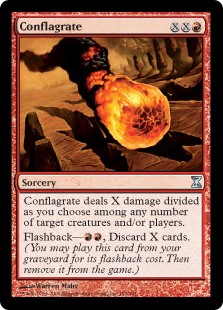
After that, I would recommend making sure you have the cheap commons and uncommons. If you or your friends have played Standard or drafted in the last six months, somebody probably has some Insolent Neonates and Cathartic Reunions. Faithless Looting was reprinted in Eternal Masters, which is getting another printing to end the year. If you're just sitting around your LGS, don't be afraid to ask people drafting Eternal Masters if you can thumb through their bulk for a few Lootings. Stinkweed Imp is also pretty cheap despite being fairly old. I'd recommend getting those when you see them.

Conflagrate is a difficult card to evaluate because we don't know the mechanics in Modern Masters 2017 yet. It's probable that they put in flashback because it's a popular draft mechanic and presumably they want to reprint Snapcaster Mage. But that doesn't guarantee that they noticed Conflagrate as a weird Time Spiral block uncommon that needed a reprint. I wouldn't buy them until I was done with the rest of the core.
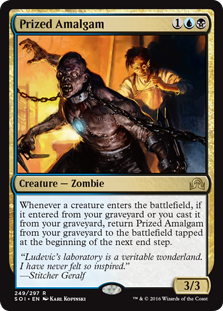
Golgari Grave-Troll is the second most expensive card in the deck and was already reprinted once in the Izzet vs. Golgari duel deck. That being said, I can't see a place where it gets reprinted in the near future. The dredge mechanic was already used in the first Modern Masters set, and it's not terribly loved in Limited. My gut says the chances that Grave-Troll gets printed again are low and it's a pretty integral part of the deck.

Narcomoeba is a weird card (man, a lot of this deck is really odd, huh?) that also probably won't be reprinted unless it's alongside the dredge mechanic. It's pretty abysmal in draft as a two-mana 1/1 flyer. At $3 you can wait for Modern Masters or get them now. It is unlikely to matter.
The last card is Prized Amalgam. I'm not sure how much of this card's price is due to Standard (where it's playable, if not very good in my opinion) and how much of it is due to Modern. Standard prices are pretty volatile, so I would say the latest I would wait to buy them is right before spoiler season for Amonkhet. If they spoil any insane Zombie (Mummy) thing that can come back from the graveyard, it could cause a run on Amalgams for Standard play.

Subsequent Upgrades

While the Dredge manabase is not particularly expensive since it doesn't need access to Zendikar fetchlands, it still comprises about half of the cost of the deck. Blackcleave Cliffs and Copperline Gorge are the easiest lands to replace with cheaper, less optimal versions. Blood Crypt ($7), Stomping Ground ($12), Sulfurous Springs ($4), and Karplusan Forest ($2) are reasonable replacements, and for the most part the extra life lost won't cost you too many games. While it's not standard in every Dredge list, you can also substitute some cheap Mountain fetchlands—Wooded Foothills ($15) and Bloodstained Mire ($13)—to make your Bloodghasts better.
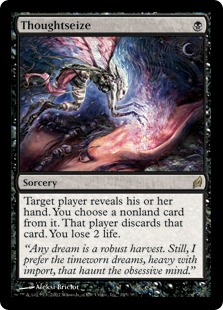
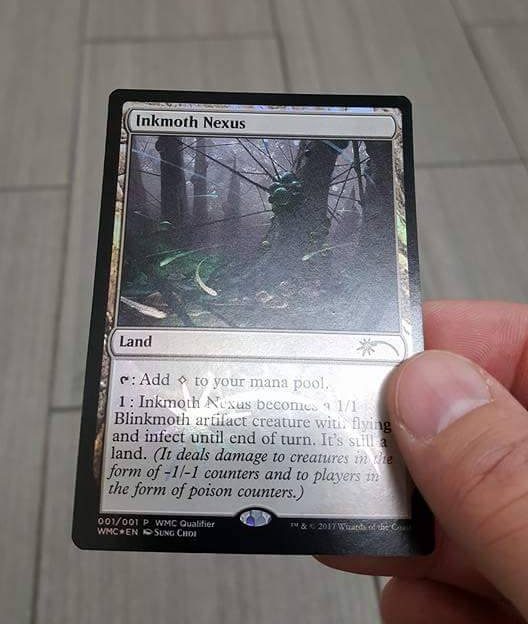
Past these more expensive fast lands, Gemstone Mine and Mana Confluence are typically played. While they're not that expensive, if you want to save a few more bucks you can play City of Brass ($3) instead. I wouldn't recommend it, however, since they're only a few dollars cheaper than Confluence and Mine ($2 and $5 less, respectively), and City of Brass isn't really played in any other Modern deck.

The last land I want to talk about is Dakmor Salvage. If you've never played Dredge before you might think that land is optional, but it's really not. It's not particularly expensive and I would have included it in the core of the deck, but the reality is that it's not strictly necessary. In my experience, however, you probably shouldn't cut it.

After Assembling the First 60

If you've managed to avoid picking up the fast lands from Scars of Mirrodin, I would continue to wait until we start to see spoilers from Modern Masters 2017. We haven't seen a ton of dual lands in Masters sets yet, but the fast lands might just be a small enough cycle to sneak in. Blackcleave Cliffs in particular had a large price spike when Modern Masters 2015 was released, making it likely on radar for a reprint.

I would not recommend purchasing any of the expensive sideboard cards until you figure out what your local metagame looks like. Even though you can use our metagame analysis to predict some amount of what to expect, nothing is better than actually going to your LGS and playing. It's possible you don't need the Thoughtseizes that are in the sideboard of Baugh and Scherer's decklist from the Invitational weekend if there aren't a lot of combo decks.

A Note on Inkmoth Nexus

Before closing, I'd like to touch on Inkmoth Nexus. It was recently spoiled by an unofficial source as the promo card for the WMCQs (World Magic Cup Qualifiers) next year. These promos are not typically released in large quantities, and past ones started out pretty expensive. Last year's promo was Abrupt Decay, which can now be found for about $35 on TCGPlayer.

Normally there isn't a lot of information to glean from promos, but in this case it seems almost impossible that Wizards would undercut the excitement generated by such a high-profile promo with a reprint right beforehand. A lot of people have pointed to the recent Judge promos in Eternal Masters, but the difference is that those came out before the set release. Modern Masters 2017 will be released in March of next year; the WMCQ dates haven't been announced yet, but this year they were in June, July, and September. Putting a reprint of Inkmoth Nexus in Modern Masters 2017 seems almost against the very idea of the promo.

Another point against Inkmoth Nexus being reprinted in Modern Masters 2017 is the number of draft slots they need to support an infect strategy. Given the fact that the most popular cards with the mechanic are both $1 commons (Blighted Agent and Glistener Elf), there's not a lot of incentive to squeeze infect into Modern Masters 2017. My final judgment, given the evidence presented, is that I'm fairly certain we won't see Inkmoth Nexus appear in Modern Masters 2017.

Final Thoughts

I hope you enjoyed this "financial deck tech," as I'm calling it. If you are interested in seeing more, which decks would you like me to cover? Please leave a comment below and I'll try to get one of these done every couple weeks. If you didn't like it, also let me know below. I'm interested in knowing your questions and opinions on what you would like to read from my column.

Insider: MTGO Cards to Buy, Sell or Hold – Episode 21

Are you a Quiet Speculation member?

If not, now is a perfect time to join up! Our powerful tools, breaking-news analysis, and exclusive Discord channel will make sure you stay up to date and ahead of the curve.

Welcome back, investors!

On Thursday, Wizards announced the schedule for the first part of 2017. The most relevant news for MTGO finance is the return of Invasion block flashback drafts. By the time I'm writing this, it's already late to buy the boosters, but it opens the possibility for other old draft sets being profitable, so pay attention and move fast when Wizards announces them.  For now, only Invasion block is confirmed.

The other important information is the return of triple Zendikar draft for a week of flashback queues. This is no surprise for me. I lost interest in speculation on Modern, or basically any older formats, on MTGO, at least until Wizards started showing they were committed to lowering singles prices. If you were holding some fetchlands or other ZEN goodies from before the treasure chest announcement, as I was, waiting for a miracle rebound to close them in positive is unfortunately passed. I sold my ZEN cards at a loss.

Regarding the Standard format: nothing relevant happened after the Grand Prix tournaments, but prices are more volatile than in previous weeks and players are still digesting the new decks in the format.

Let's see the most exciting cards of this week:

Thalia's Lieutenant

thalias-lieutenant

Some of the most interesting decks at the GP were White Weenie with Shambling Vents and the WG Humans. The problem with those decks is that they didn't make top eight. Those decks were around in the metagame for a few days and players are aware of them, but the number of players hasn't increased much. I think Thalia's Lieutenant reached a short-term high and selling is the best move. Holding them is also an option, but a slightly worse one, because if those decks don't prove to be strong enough in the current metagame, the price will go back to it lowest level.

Verdict: SELL

Elder Deep-Fiend

elder-deep-fiend

Elder Deep-Fiend's appearance rate decreased drastically after the Temur Emerge deck from Pro Tour Eldritch Moon fell off the radar. Some cards, in Standard in particular, don't see play for a long period of time even if they are powerful; they just sit there waiting for the right moment to return to the fields. With the release of Aether Revolt one month away, Elder Deep-Fiend has great potential to rebound in the new metagame. The card went from 0.75 to slightly over 1 tix overnight previously, proving it has a strong 1-tix support level. I recommend grabbing as many copies as you want for up to 1 tix.
Verdict: BUY

Thought-Knot Seer

thought-knot-seer
The UW Panharmonicon deck's potential didn't match the number of players in the metagame, even though it should have good matchups against the most-played decks. It might not be as strong as it appeared without the surprise factor, or players might not be interested in trying new decks with Aether Revolt's release in mind and no big Standard tournaments coming up. Reasons aside, what matters is that if you bought Seers at a high buy-in price during the GP coverage for a super short-term spec, we don't have a wide selling window nor enough time to wait for a metagame shift, so I recommend selling them as soon as possible and avoid a bigger price drop.
Verdict: SELL

Fortified Village

fortified-village
With only a handful of Aether Revolt spoilers, one thing is certain: the WG combination seems strong in the set. After the recent ephemeral popularity of white aggo decks in Standard, hitting 0.80 tix, Fortified Village's price went back to near it lowest price level. It is just a matter of time for it to rebound for speculative reasons.
Verdict: BUY

Ulamog, the Ceaseless Hunger

ulamog-the-ceaseless-hunger
The RG Aetherworks Marvel helped Ulamog's price to rise, changing the direction of it bearish trend. I think it has reached a high price and will likely go down in the following days as we are closer to a new set release.
Verdict: SELL
That's all for today, see you next week!

Want Prices?

Browse thousands of prices with the first and most comprehensive MTG Finance tool around.


Trader Tools lists both buylist and retail prices for every MTG card, going back a decade.

Quiet Speculation