Are you a Quiet Speculation member?
If not, now is a perfect time to join up! Our powerful tools, breaking-news analysis, and exclusive Discord channel will make sure you stay up to date and ahead of the curve.
With no SCG events to analyze, and the next Modern Grand Prix in Dallas still almost a month away, I’m left with a “free” topic of sorts this week. Unchained of the duty of analyzing set impact, as Kaladesh appears to be making only a minor impression in Modern, the sky’s the limit as to what I can talk about! While I must admit I’m feeling the urge to discuss our current political landscape, how exactly the Tampa Bay Buccaneers are going to clinch the division, and the proper way to cook excellent Kraft Mac & Cheese, luckily my standing-order Modern topic restriction is keeping all these thoughts at bay.
That being said, I’m going back to my roots. Grixis Control has been absent from the top tables for weeks now, and for me, that has to be the most depressing thing I’ve heard since Nickelback’s All The Right Reasons album. It’s about time we took a fresh look at the archetype, so this week I’ll be highlighting my process for creating my latest list. For those not interested in Grixis Control, I’ll be using general deckbuilding advice and metagame information to frame my decisions every step of the way, so stick around! Let’s get to it.
[wp_ad_camp_1]
Framing the Narrative
By sleeving up Grixis Control, we’re already making a statement about our assumptions on where the metagame is at currently. Traditionally, Grixis Control has fared well in concentrated metagames where the enemies are known and few. Additionally, our color identity supports a strategy focused on card advantage and reactive elements, as we boast some of the best card draw and removal in the format. While we’re treading dangerously close to a generalization, for the most part Grixis Control plays best when we have a bunch of creature decks and spell-based combo archetypes to beat up on.
So, that being said, what does the current Modern landscape look like? While Nexus has metagame info for August, for this article I’m going to look at MTGGoldfish’s metagame page. Their info is much more current, and for the next couple weeks until GP Dallas most of the Modern events will be taking place online. Keep in mind all these data reflect MTGO results specifically---the paper metagame may present any number of differences. So my conclusions should be seen as applying specifically to the online context.
| Deck | Percentage of Metagame |
|---|---|
| Affinity | 9% |
| Infect | 6.7% |
| Jund | 6.3% |
| Burn | 6.2% |
| Bant Eldrazi | 6% |
| Dredge | 4.8% |
| Titan Shift | 4% |
| Abzan | 3.3% |
| Death's Shadow Zoo | 2.5% |
Looking at this information at a general level, we can see a distinct top tier of five decks, followed by a gradual decrease in representation among those outside the top tier. While the top five decks only own around 35% of the overall share of the metagame, these are still the "best" decks in the format as far as representation is concerned. We should plan on having a solid matchup against each of these (or at least a plan) if we hope to do well. It’s important to keep in mind that even if we build a "metagame deck" that crushes the top decks in the format, we still have to expect to run into random pairings about 65% of the time. By acknowledging this characteristic in our deckbuilding process we can potentially avoid some classic pitfalls, including situational answers like Dispel, or maindeck Blood Moon in a format where it only hurts a handful of strategies.
| Archetype | Metagame Percentage Among Top Decks |
|---|---|
| Linear Aggro | 25% |
| Combo | 9% |
| Midrange | 12% |
Another way to look at this information is to combine like archetypes into macro-categories, which can give us another angle of analysis when looking at the format as a whole. While there are some inherent inaccuracies with this strategy, like the fact that Infect and Burn could could be classified as either combo or aggro, for the most part they help in communicating some overarching characteristics of the format that we can use to influence further decisions.
 As we’ve talked about for the past couple weeks, Modern is currently at a point on the interactivity spectrum many call goldfishy. To define this unhelpful caricature of a term, goldfishy basically describes a general approach to the format many archetypes employ, where they abandon most forms of interaction except for the bare minimum in an attempt to increase the speed and consistency of their own strategies. Living End and Ad Nauseam are two clear examples of this strategy in practice, but even decks that toe the line like Scapeshift can move further down this spectrum by cutting back on removal and upping their threat and ramp count.
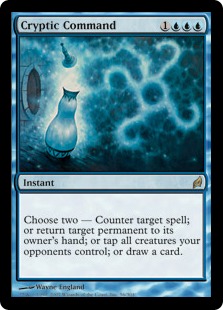
For us, this suggests that to combat the general conditions of the format, we should plan to be a bit faster and more disruptive than Grixis Control strategies of the past. Cryptic Command is an excellent spell, but in a format where Splinter Twin and control strategies have been replaced by Dredge and Affinity, it’s not really where we want to be. Taking this one step further, the plethora of one-cost creatures in the format has me really considering Terminate. Long considered an automatic four-of in every black-red list, Terminate just doesn’t excite me against Goblin Guide, Glistener Elf, and Signal Pest.
The Current List
That being said, here’s my test list for Grixis Control 2.0.
Post-Kaladesh Grixis Control, by Trevor Holmes
The maindeck will look pretty different to anyone familiar with Grixis Control’s evolution over the past 18 months, since Patrick Chapin first put the archetype on the map with his finish at GP Charlotte in 2015. While most of the cards might look the same, even changing around a few numbers and pairing up a couple different spells can completely change the identity of the list. I won’t break things down card by card, as most of the reasons for these spells’ inclusions are pretty self-explanatory, but I will highlight my thinking in a few areas as it relates to specific choices.
Updating the Answer Suite
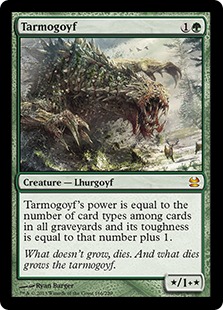
As we said earlier, Terminate isn’t really where I want to be against a bunch of free/cheap creatures. Most of the top decks have creatures that either cost less than what we’re spending to kill it, or work to nullify our advantage in some other way (Bloodghast, Kitchen Finks). 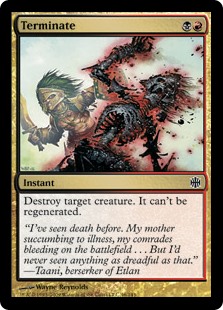 Terminate is still the best option for us to just kill a creature, no questions asked, so I don’t think it can be cut entirely at this point, and probably never will be as long as Tarmogoyf remains in the format. For now, I’m playing two in the maindeck, and a third in the board.
In its place, I’m much more excited to be casting spells like Anger of the Gods and Pillar of Flame. A fifth Lightning Bolt is exactly what I want against most of the cheap creatures in the format, and the ability to handle both halves of a Kitchen Finks or Voice of Resurgence with one card shores up a big weakness of this deck. It’s well known by now that one of the best ways to fight through removal-heavy decks is with creatures that punish our one-for-one removal, and besides creatures like Thrun, the Last Troll that blank removal entirely, playing threats like Kitchen Finks and Fulminator Mage is a common strategy against us.
Anger of the Gods’ strength in the format is one of the primary reasons why I’m considering Grixis Control in the first place. Affinity, Infect, Dredge, Suicide Zoo, Merfolk, and even some Burn draws are answered pretty handily by just one Anger of the Gods---and with Dredge picking back up in popularity, some maindeck hate for that matchup is very welcome. Anger of the Gods has always been a great spell for Grixis Control, but the 1RR cost has been awkward enough to encourage Grixis Control players not to stretch their mana bases to play it. 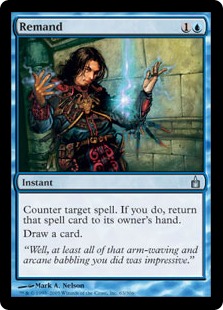 With Spirebluff Canal giving us a potential second source of red early without necessitating a fetch-shock play, casting Anger of the Gods just got a whole lot easier.
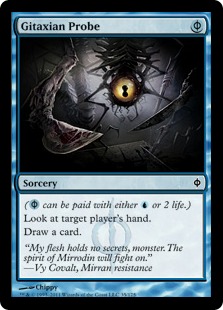
The lack of counterspells in this list (besides two Remand) is an indicator that countering things is not where I want to be in the format. When half of the metagame is made up of linear aggro, Mana Leak looks downright horrible, and Remand not much better. Still, other strategies in the format exist, and the ability to generally answer a wide variety of threats is useful, especially in Game 1s when we don’t know what we’ll be facing. Sure, Remand is going to get boarded out in a lot of matchups, but the ability to buy time on an opposing Liliana of the Veil (for example) so we can untap and Snapcaster-Inquisition it away can be lifesaving, especially considering we’re no longer playing Dreadbore.
Delving Again
Another big move in this list is my reembracing of delve creatures, and with them a return to Thought Scour. Thought Scour’s demise has been attributed to the rise of Ancestral Vision in Modern, but really most Grixis players cut Scour when they started moving away from delve creatures towards grindy threats like Pia and Kiran Nalaar and Kalitas, Traitor of Ghet. While both of those threats have their merit, for me I’ve never found them to be worth the mana investment, much like Goblin Dark-Dwellers.
While it’s true that there were games we were running low on resources and topdecking one of these threats put us back in the driver's seat or saved us from a losing board, most of the time they just rotted in our hand while we dug desperately for as much cheap interaction as we could find. 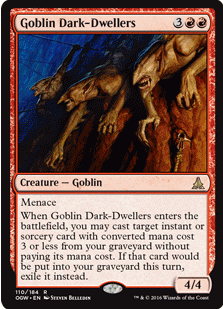 There is a line between too much cheap interaction and going too "over the top" with flashy card advantage spells, but luckily our built-in Snapcaster Mage/Kolaghan's Command engine lets us load up on cheap reactive spells without the risk of burning out too quickly.
Maxed Out on K-Command
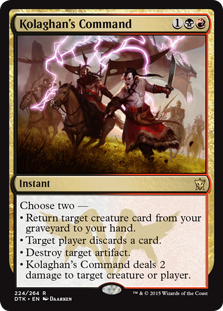
Speaking of Kolaghan's Command, the time has never been better to play the full playset. Jund is just now returning to the stage, based in large part on the format’s growing weakness to discard that came about from its absence. A full playset of Kolaghan's Command is excellent for that matchup, and solid against most of the other top decks. When paired with Inquisition of Kozilek, the untargeted discard effect gets much stronger, especially when we can follow it up with Snapcaster Mage the turn later. Affinity is the most popular deck in the format right now, and stacking our maindeck to fight that matchup will let us win more Game 1s (against a deck with the highest Game 1 percentage in Magic) and tweak our sideboard to help fight other matchups. I’m happy to be casting Kolaghan's Command against every deck in the format, provided I have enough cheap removal that the three-mana investment doesn’t feel too clunky. In this list, Kolaghan's Command is our true top end.
The Role of Jace
Jace, Vryn's Prodigy is a pet card of mine, but his strength has admittedly waned in recent months. On one hand, we are not excited to cast a two-mana 0/2 against most of the aggressive strategies in the format. On the other hand, when he flips (which is fairly often, and more than detractors would like to admit) his effect on the game can be huge. He gains us pseudo-life (in a strategy with few options for lifegain) and rebuys our best spell for the situation: another Anger of the Gods against aggro, another Inquisition of Kozilek against combo. 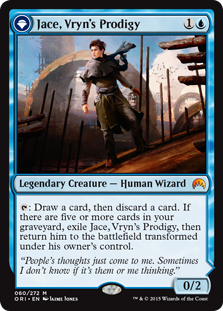 Jace, Vryn's Prodigy gives us built-in resilience to what I call the “Jund Effect”; the possibility of drawing the wrong half of our reactive elements against the wrong opponent. Jace, Vryn's Prodigy can be our second Lightning Bolt, second discard spell, or second cantrip, while providing a variable effect and increasing consistency---all in one card.
I probably wouldn’t be playing Jace, Vryn's Prodigy if I didn’t intend to play Vendilion Clique. Clique is another card I haven't been fond of in the past, but even my bias isn’t strong enough to deny how powerful Clique is in this list currently. When our plan is to present a quick clock to pressure our opponent while we disrupt their gameplan, Vendilion Clique is exactly where I want to be. A couple hits from Clique make incidental damage from Lightning Bolts and Kolaghan's Command much scarier, and make Tasigur, the Golden Fang and Gurmag Angler into stronger threats as well. When we only have to do 12-14 damage with our delve creature compared to 20 thanks to a couple hits from Clique, we can "burn" our opponent out from seemingly safe situations much faster. Even in the worst-case scenarios where Clique can’t grab anything of value or gets killed immediately, we were still able to clear out one removal spell that could have targeted Jace or Tasigur instead.
The Sideboard
As for the sideboard, I will admit that the numbers are rough and will end up being tweaked a bit, but I have a pretty good idea about which spells I want to include. First, Yixlid Jailer is a great option for Dredge should we want it, and is much better than Leyline of the Void as far as contributing to our Plan A goes. I haven’t run across the scenario yet, but I’m interested to see if I’ll have room for this post-board against Burn and similar matchups as just another guy that can attack and block. 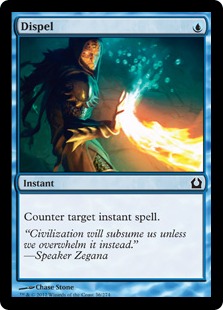 More copies of Anger of the Gods and Terminate are here for when those are good, and all-star Dispel is of course present as the whole reason I want to be blue in the first place (besides Snapcaster Mage). I’ve spoken on this before, but putting our opponent in the squeeze by forcing them to dilute their strategy by keeping in removal for our Gurmag Angler, all the while playing right into our discard and Dispel, is exactly what I want to be doing with this archetype.
It remains to be seen whether I want counterspells in the board for some of the combo and control matchups I’m likely to face here and there, or if Thoughtseize solves those issues cleanly. Once I’m able to do some serious testing I’ll be able to answer some nagging questions more confidently. For one, I'm wondering whether Grim Lavamancer is overkill, or a surprise workhouse, for what I’m trying to do. For two, I'm deciding whether to move back towards a Blood Moon manabase of my own, or possibly play Fulminator Mage/Stone Rain instead.
Solving Problems
Hopefully this article gave some insight into my thought process for how I go about putting together a list to solve a specific problem or constraint. Grixis Control is a pet deck of mine that I admittedly harbor a bias for, but that doesn’t necessarily mean I’m incorrect in assuming the time is right for a well-built Grixis list to do well. For those who aren’t interested in Grixis Control, I hope I was able to communicate my thought process in such a way that you could take my analysis of the format conditions as a separate entity and apply them to your own deck of choice! Let me know what you think in the comments below, and I’ll see you next week!
Trevor Holmes
The_Architect on MTGO
twitch.tv/Architect_Gaming
twitter.com/7he4rchitect

 These are the types of cards that could easily make it into a supplemental booster set like Eternal Masters or Conspiracy. The risk of a reprint rendering them basically worthless is high. Overall, I think this is a pretty poor place to put your money.
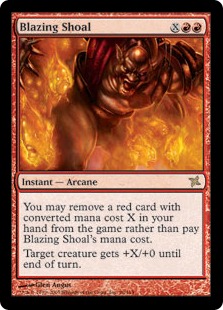 It functions very similar to Become Immense, which continues to flourish. I think this is a fine card to buy if you would like to play with it, but if Become Immense gets banned I would throw in the towel. The reprint risk is pretty low (weird mechanic) and since they're only about $1.50 each right now I think they're a reasonable investment.
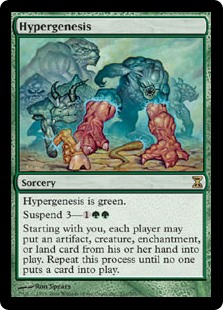 Lumping all of these cards together for a failing grade might seem like it's a little weird but they all cheat the same way. Cards that do things for significantly less than they cost are very difficult to interact with. I think all of these cards will stay on the banlist as long as Modern exists. As such, they all receive an F grade because there is just no reason to buy them.
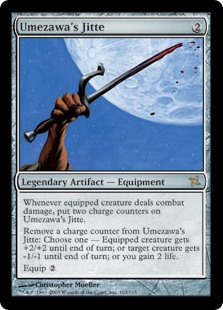 Overall I think this is a medium spec if you want to buy some. They're cheap, they should tick up slowly, and they'll explode if unbanned.
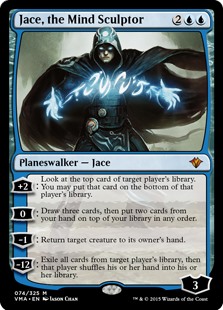 The quality of newer cards allows for older banned cards to come off with more ease.
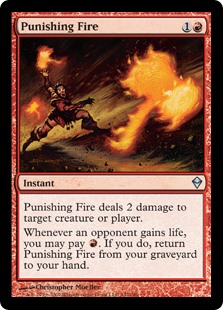 The supply of Punishing Fires will greatly outpace the available Groves so you're better off owning those than actual copies of Punishing Fire. If Grove of the Burnwillows got a Standard reprint, however, then I would consider buying Punishing Fire.
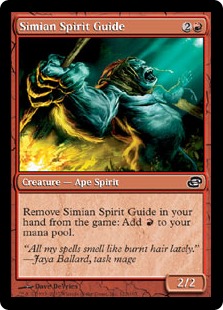 Simian Spirit Guide
 If the hoops to jump through to get Shoal working aren't worth it, is Become Immense just better? I would pay attention to the results of Death's Shadow Zoo and Infect to see if there may be more eyes on Become Immense. Due to the fact that it's pretty new and cheap it's unlikely to have a serious financial impact if banned.

 The truth is that most matchups aren't as clear-cut as Infect vs. Valakut. To tackle something from the opposite end of the spectrum, abstract knowledge won't get you very far when playing Burn vs. Death's Shadow Zoo. If you can't properly envision what the game looks like at least two turns out, you will be in serious trouble in that matchup.


 Jund doesn't necessarily kill very quickly, though it does present turn-two Tarmogoyf and turn-three Liliana to attempt to put Grixis Delver on the back foot early on. When both players are trying to assume the control, there is a tension in the matchup that revolves around who can do nothing longer. If they start casting counterable Nahiris, I can start using Snapcaster Mages to both react and apply pressure. If I start casting early Delvers, they can leverage their Snapcasters and Nahiris in much the same way.
 Similar to the way that having a slower fundamental turn means that I can't be the aggro, if your deck is able to play a longer game than my deck I will be in trouble if I try to play the control.
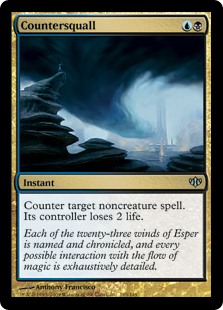 gains life and has a sticky ability is likewise solid at executing both controlling and aggressive gameplans.
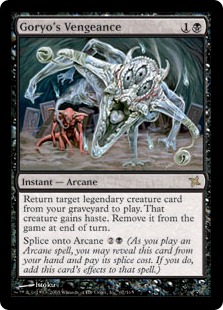
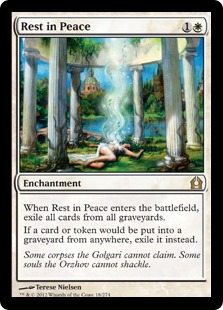 I have never been convinced that a Burn player with Rest in Peace in their sideboard is doing it right. When I think of the graveyard decks in the format that demand hate, Dredge and Goryo's Vengeance are what come to mind. Against Dredge RiP doesn't work for a couple reasons. The first is that they can often recur multiple creatures from their graveyard on turn two, and indeed the deck mulligans to hands that are capable of this whenever possible. The other is that Burn is just advantaged with regard to the fundamental turn, and realistically the only games that Dredge is winning before that point involve hands that go under Rest in Peace in the first place!
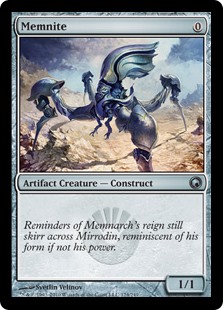 Another common sideboarding mistake I see is from newer Affinity players. Affinity will usually be facing down some manner of hate card that it needs to counter-sideboard against, but the worst thing you can do as an Affinity player is over-sideboard. Your list should be mapped to bring in approximately three cards in any given matchup, because there is no way that your Signal Pest/Memnite deck is going to be playing the control very often. You bring in enough stuff so that your opening hand is either just a nut Affinity opener or a hand with one piece of solid disruption. Sideboarding too much makes it more likely to fan out a controlling opener that topdecks Ornithopters.