Are you a Quiet Speculation member?
If not, now is a perfect time to join up! Our powerful tools, breaking-news analysis, and exclusive Discord channel will make sure you stay up to date and ahead of the curve.
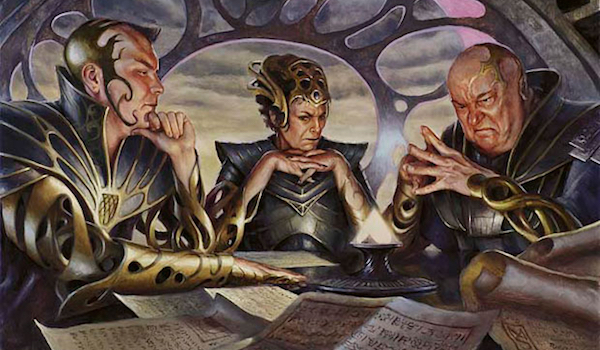
In my early experiments with delirium, I found Tarfire invaluable as a card that efficiently stocked the graveyard with card types. Its especially Modern-relevant effect soon made the card an obvious include in most of my Traverse the Ulvenwald brews. Another card I tried, Architects of Will, also guaranteed two types in the graveyard for a one-mana investment. But its inability to directly affect the board caused me to prematurely abandon Architects, favoring Mishra's Bauble in decks that wanted an artifact type. Today, the four-mana 3/3 gets a second chance.
Is There a Doctor Architect In the House?
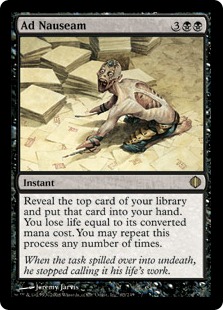
Tron, Ad Nauseam, Grishoalbrand, and other noninteractive archetypes rarely kill Noble Hierarch or Delver of Secrets, making it tough to acquire delirium when we're counting on a creature to hit the grave quickly. Jund and Jeskai are packed with removal, but it can prove difficult for delirium decks to place a creature in the graveyard against linear strategies, which skimp on removal to sharpen their own proactive gameplans. I had ignored this issue before, figuring that if Hierarch or Delver lived, my opponents would be dead before they could realize their synergies. 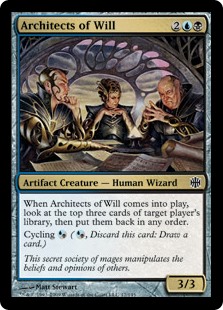 But the last couple weeks of testing have led me to miss that early delirium for matchups where sticking Magus of the Moon or finding a crucial Snapcaster Mage could mean life or death.
When Nexus reader Thorston K reminded me about Architects of Will in the comments of my article last week, I rushed to re-sleeve the homely Wizards. Inspired by the comments section as I was, the first shell I tried Architects in was Sultai Faeries. I experienced many of the problems I assumed I would with that shell: between 22 blue cards for early action in Disrupting Shoal (or red for a set of Lightning Bolts, which I didn't try but can't imagine ends very well---more on the necessity of Bolt, Path, or Shoal in interactive combat decks here), Architects for delirium, a bullet package (however small) for Traverse, and a couple of Mutavaults to buff Spellstutter Sprite, the deck had too much going on to stay focused and survive early or close later. The list I landed on ended up not running Architects at all, but I still wasn't convinced Traverse had much over Inquisition of Kozilek, Spell Snare, and more than one Tasigur.
[wp_ad_camp_1]
Architects in Sultai Tempo
I was looking to employ Architects of Will, so I put Spellstutter back on the bench and got back to tweaking German Thresh. With an incoming of one-mana cantrips that happened to be blue four-drops, my first order of business was to cut Lightning Bolt for Disrupting Shoal, which surprisingly wasn't too difficult. Four isn't exactly Modern's magic number (depending on your metric, of course), so I neglected to count Architects towards Shoal's 22 blue cards, giving us a total of 26. But hey, if Shoal happens to nab a Nahiri or a Scapeshift, I definitely won't complain.
Stubborn Sultai, by Jordan Boisvert
Creatures
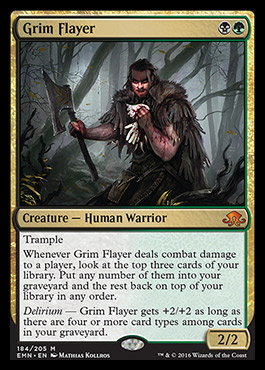
4 Grim Flayer
4 Tarmogoyf
4 Snapcaster Mage
1 Vendilion Clique
1 Tasigur, the Golden Fang
4 Architects of Will
Instants
4 Disrupting Shoal
4 Stubborn Denial
3 Abrupt Decay
3 Mana Leak
2 Spell Snare
Sorceries
4 Serum Visions
4 Traverse the Ulvenwald
Lands
2 Darkslick Shores
4 Misty Rainforest
2 Polluted Delta
2 Verdant Catacombs
2 Breeding Pool
2 Overgrown Tomb
1 Watery Grave
1 Swamp
1 Island
1 Forest
Sideboard
1 Darkblast
2 Natural State
3 Disdainful Stroke
2 Go for the Throat
2 Feed the Clan
2 Dispel
3 Inquisition of Kozilek
This Sultai Tempo deck adopts a similar philosophy to my Faeries build, but doubles down on proactivity with Grim Flayer and Tarmogoyf, counting on a full set of Stubborn Denials to protect its nasty beaters. The 8-Goyf approach can severely punish a Modern format increasingly low on Abrupt Decays, the only non-Verdict Goyf killer Stubborn doesn't handle.
Micro-Synergies
Besides neutering strong starts from blistering aggro and combo decks, Disrupting Shoal lets us tap out on turn two for a four-power threat before untapping with a grip full of Denials. My early testing with Grim Flayer showed me the power of his undervalued combat damage ability, which allows us to set up Stubborn Denial protection almost every turn in this deck. 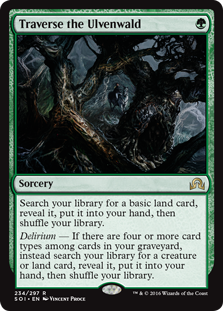 Between Denial, Snapcaster Mage for Denial, and Traverse for Snapcaster for Denial, most mid-games leave us with about ten functional copies of the instant in our deck. Flayer's "gravescry 3" effect lets us dump anything that doesn't keep us ahead, and following combat with a Serum Visions lets us dig seven cards deep to find adequate disruption for our opponent's next turn. Some context: that's a Dig Through Time's-worth of new cards seen.
Scry also synergizes with cantrips. If we attack with Flayer and leave Stubborn Denial on top, we can cast Serum to have it on-hand for the next turn cycle in addition to setting up our next draw. Architects of Will might not scry, but it also cantrips into cards seen with Flayer or Visions.
Metagame Positioning
I've never been keen on Sultai in Modern because of its difficulty interacting with the format's faster decks. Both Sultai lists packed with nerfed interaction like Disfigure and "bigger" ones leaning on Thragtusk to recover later also struggled in the face of Modern's reigning midrange murderer, UrzaTron. Stubborn Sultai covers some ground in addressing both of these issues.
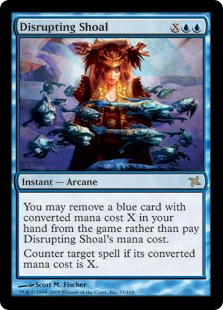 Disrupting Shoal shines against every linear Modern deck outside of big mana strategies like Tron and Valakut, but I've already discussed it at length elsewhere. It also fulfills a role similar to Lightning Bolt's in this deck. This section will instead focus on Stubborn Sultai's other methods of beating a Modern gauntlet.
Against faster creature decks, beefy two-mana threats like Grim Flayer and Tarmogoyf pull a ton of weight by locking down the ground and becoming clocks after we dismantle an enemy's offensive. You'd be hard-pressed to find a Burn or Zoo player who likes facing down a Lhurgoyf, and since Architects turns on delirium so efficiently, Flayer functionally doubles our copies in these matchups.
Speedy spell-based decks could care less about our red-zone defense, but 4/4s still pressure them admirably. Some combo archetypes, like Storm, run Lightning Bolt to take care of pesky attackers while they set up; notably, that card doesn't do much against a bigger creature. But the real edge Stubborn Sultai has against spell-based linear strategies is its playset of namesake counterspells. Bring to Light, Through the Breach, and Chord of Calling are easy enough to nab with a non-ferocious Stubborn Denial, but having a cheap, easily recurrable hard-counter in the late-game gives us a distinct advantage over other blue decks against spell-powered linear strategies.
The immense flexibility of Tarmogoyf, Stubborn Denial, Disrupting Shoal, and Traverse the Ulvenwald give us plenty of game against other fair decks like Jund. But Stubborn Sultai's ability to turn the corner promptly, combined with its blueness, positions it better against big mana than its BGx cousins. 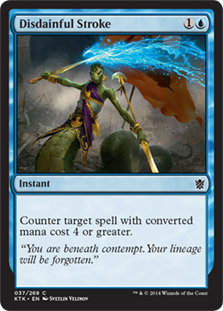 Denial and Mana Leak can usually handle Tron's payoff cards in time for Flayer, Goyf, and Snapcaster to squeeze in 20 points of damage, although we do miss Simic Charm sometimes against a resolved 6/6.
Disdainful Stroke surprises me daily and is becoming one of my go-to sideboard choices for blue decks in this format. It stops every threat in Tron, Valakut, and Scapeshift, as well as key cards in Jund, Jeskai, and many combo decks. Importantly, it counters spells even after Tron opponents deploy an additional Urza's Tower to dodge Mana Leak.
Our counter suite can also halt Tron's mana development, preventing it from ever hitting six mana in the first place. Disrupting Shoal shines during this phase of a game, hitting Expedition Map and Sylvan Scrying while we land Goyf or Flayer and set up a Leak/Denial stream with Serum, Snapcaster, Traverse, and Flayer's ability.
Architects in TarmoDrazi
I like big Goyfs and I cannot lie. This build of TarmoDrazi grows the Lhurgoyf to 6/7 at breakneck speed, using both Architects of Will and Tarfire to rapidly stock the graveyard. All that grave-buffing also gets us maximum mileage out of Traverse the Ulvenwald. If any deck can use a one-mana Sylvan Scrying/Eladamri's Call hybrid, it's the one packed with terrifying creatures and sol lands to cast them.
Temur Eldrazi, by Jordan Boisvert
Creatures
4 Noble Hierarch
4 Tarmogoyf
4 Matter Reshaper
4 Thought-Knot Seer
4 Reality Smasher
4 Architects of Will
Instants
4 Tarfire
2 Dismember
2 Stubborn Denial
Sorceries
4 Ancient Stirrings
4 Traverse the Ulvenwald
Lands
4 Eldrazi Temple
3 Grove of the Burnwillows
1 Cavern of Souls
4 Misty Rainforest
2 Wooded Foothills
1 Stomping Ground
1 Breeding Pool
1 Steam Vents
1 Island
1 Forest
1 Wastes
Sideboard
1 Magus of the Moon
2 Pithing Needle
2 Grafdigger's Cage
2 Engineered Explosives
3 Kozilek's Return
2 Stubborn Denial
2 Ancient Grudge
1 Seal of Primordium
Improving Traverse
TarmoDrazi games where I led by killing a creature with Tarfire, Traversing into Eldrazi Temple, and slamming a bunch of 5/5s were my best. But I sometimes struggled to turn on delirium early enough for Traverse to search up the Temple, reducing the sorcery to a late-game bomb and ridding it of earlier utility. This problem mainly arose against linear combo decks, since I lacked targets for Tarfire and would have to burn "nothing" to make a Sol Ring out of Traverse. The resulting Sylvan Scrying ended up costing me two cards; if I'd had a Tarfire in these matchups that simply cantripped, they would have gone much smoother.
Enter Architects of Will. With eight superb delirium enablers in Game 1, Traversing for early Temples becomes par for the course. Even without other card types, Tarfire and Architects combine to instantly turn on Traverse the Ulvenwald. My strategy with this deck has been to board out the less useful delirium enablers most of the time---against Tron, Ad Nauseam, Grishoalbrand, etc. Tarfire comes out, and against Zoo, Burn, Delver, etc. Architects comes out.
Filling Out the Disruption Slots
I sacrificed Lightning Bolt to fit four Tarfires, but so far, I haven't missed three damage much. Reshaper, Thought-Knot, and Tarmogoyf do a fine job against Nacatl decks, where Tarfire also happens to shine. The extra point on our Goyfs from tribal compensates in a damage race, although Bolt is usually preferable in these situations. Either way, I think the compromise of maxing out on Tarfire and abandoning Bolt is worth the consistency boost to Traverse in a deck that wants to find Eldrazi Temple so quickly.
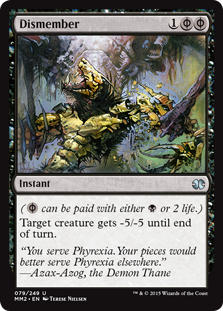 Four slots still needed filling. I started with a full set of Stubborn Denial, reasoning that if Traverse was live more often, I could dig up Temple or Thought-Knot reliably enough to fully benefit from a one-mana Negate. But some initial tests revealed that the deck wanted more ways to interact with creatures, especially ones that lived through Tarfire. TarmoDrazi needs to interact with opponents as it sets up its lands and hand with cantrips and search effects. If it can "start playing" at the same time as a lightly disrupted opponent, Thought-Knot and Smasher will trump Kitchen Finks and Lingering Souls any day of the week. Dismember was my go-to choice here, and it hasn't disappointed me yet. Even against aggro decks, Dismember usually loses us less life than a few hits from whatever threat they would have, and costing only one is a huge deal in a deck with so many cantrips.
It's also possible that 1-4 Lightning Bolts would perform well in these slots, but I haven't tested them yet.
Metagame Positioning
Temur Eldrazi beats up on other midrange decks, since its creatures and kill spells are more mana-efficient, it plays far fewer lands, and it can search up bullets as needed. Stubborn Denial profitably stops problematic spells like Liliana of the Veil and Nahiri, the Harbinger, and Matter Reshaper provides a surprisingly relevant clock (especially with exalted) that punishes opponents for interacting.
Midrange mirrors are frequently toss-ups in Modern, and interactive opponents can still beat us. Opposing Tarmogoyfs can wall our attacks and keep us at bay as Liliana plusses up to a million. Dismember (usually used during combat) and the sideboard Engineered Explosives address this concern. The instant also kills Restoration Angel, a monster threat against us if opponents can contain our board.
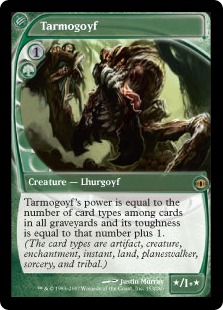 During Eldrazi Winter, I often joked (seriously) that Eldrazi was such a powerful deck because it ran 20 Tarmogoyfs.* Indeed, unhindered access to so many efficient threats did break the deck. While no Eye of Ugin slows us down a little, we still play those same creatures, and aggro decks like Zoo and Burn struggle immensely against a wall of 4/4s. These decks can come out from under us if we don't turn the corner aggressively, but we still enjoy positive matchups against Modern's swarms of linear aggro strategies. Our removal suite, buffered by Kozilek's Return from the sideboard, hassles synergy-based aggro decks like Chord, Affinity, Merfolk, and Elves.
*Aside: People sometimes ask me if I think Tarmogoyf would be playable at three mana. That Eldrazi still puts up results despite Wizards's nerf last ban cycle indicates that it would.
Tron still annoys this deck, as it does most midrange archetypes. Thought-Knot, Denial, Smasher, and the searchable Magus of the Moon all help out here, but I've still posted a negative record versus the big mana menace.
Building a Better Traverse
Little is known about architects, a mysterious class of humans responsible for the design of most buildings (I think). Many sleepless nights of Googling have led me to the conclusion that they build things. In Modern, Architects of Will has historically been used to power Living End. But even architects must get promotions. I think the humble plotters have a bright future ahead of them: building delirious graveyards.







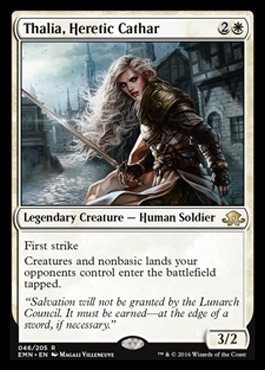
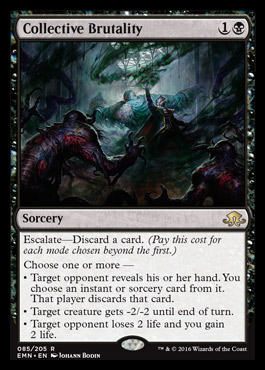

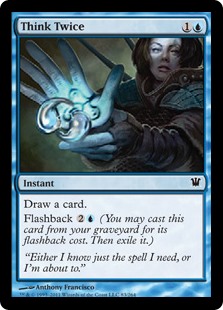
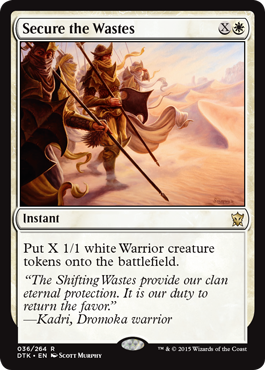




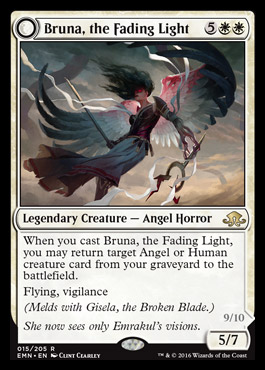
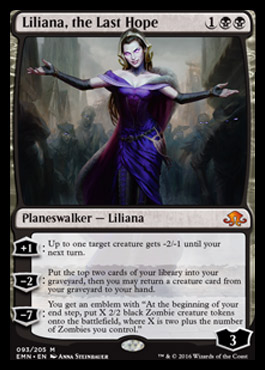
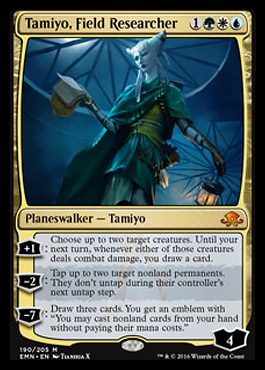
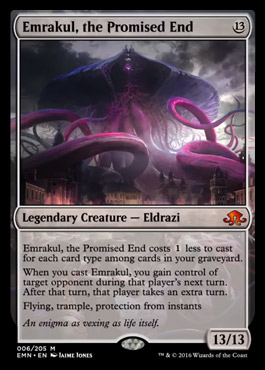


 When beginning any statistical or scientific inquiry, it is essential to have a known baseline to compare your results to. Reaching an interesting result is all well and good but if you can't prove that it is something new and valuable compared to the status quo then you're just wasting time. And grant money. And good luck getting more money if that's all your research is doing.
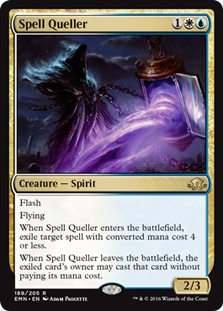
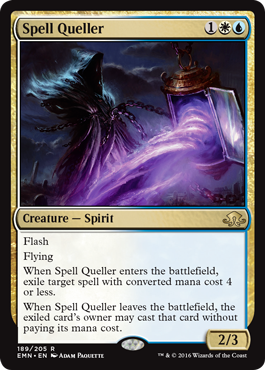
 Not a bad creature to start off with. Pestermite was a format staple for years at that cost and had worse stats, though it was easier to cast. 2U may not be that much more difficult than 1WU with Modern's fetch/shock manabase, but I think it will be a barrier in this case. UW is typically a control color in Modern, and this is pretty obviously a tempo/aggro card which will limit the decks that can play it. Vendilion Clique is also very playable as a 3/1 with a double blue cost, which indicates that color commitment isn't that big a barrier to playability when the stats are right. Call it even with a slight edge for Queller since better stats make up for the harder casting cost and worse deck flexibility.
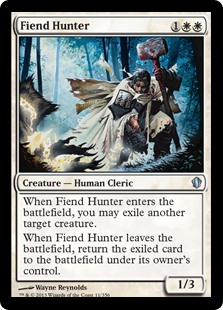
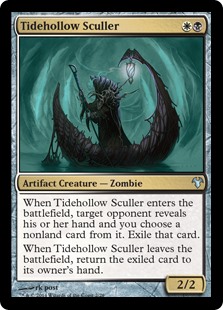 This is Fiend Hunter and Tidehollow Sculler's ability but for spells. Both have seen some play over Modern's history, but have always been limited by their narrowness. Sculler is good against combo and control decks and fairly bad against aggressive decks, whereas Hunter has the opposite problem, and even then is only good against removal-light aggro. Sculler mostly sees play in Eldrazi and Taxes where its ability is abused with Eldrazi Displacer, while Hunter is a Chord target. Since both see some play, I'll argue that the ability regardless of the target is Modern-playable, and thus so is Queller.
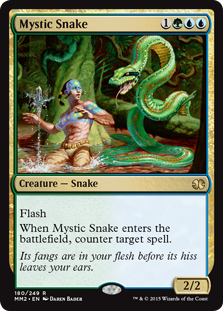
 an extra payment. Mystic Snake on the other hand just counters the spell. No muss, no fuss, no restrictions based on CMC. Just Counterspell. I think that on average this is better than the Nightmare ability by the same standard that Sculler is usually left on the bench in favor of Inquisition of Kozilek---When you want something gone, you want it to stay gone. The only time that Queller's ability is better is against uncounterable spells, which are few but not so few that it is irrelevant. On that basis I think that Queller is merely good. It has better stats than other cards with the same ability, but it doesn't have the same flexibility or power as Mystic Snake.
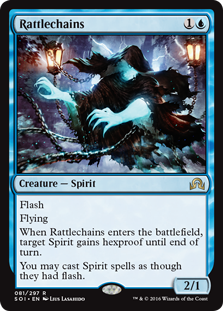 The clock was too slow to make great use of the tempo that Queller gained you, and so its performance was lackluster and disappointing.