Are you a Quiet Speculation member?
If not, now is a perfect time to join up! Our powerful tools, breaking-news analysis, and exclusive Discord channel will make sure you stay up to date and ahead of the curve.
Last weekend was a big victory for me at SCG Indy with Atarka Red. In the first week of the format, I got paid off pretty hard for sticking to an aggressive, linear strategy with good mana.
Prior to the tournament, I put in hours playtesting at my local game store, RIW Hobbies. I had been on the same train of "abuse the free mana bases" as everyone else, and was currently on a hybrid Bant-Abzan midrange deck. Overall, I was happy with it and felt like it had a lot of positive match-ups.
For two weeks running, one of the RIW guys, Devon Paynter, had been telling me he broke the format with an Atarka Red build featuring the combo finish of pump spells and Temur Battle Rage. I believed his deck was good but it wasn't until I actually squared off against him that I understood his deck was the truth.
I got convincingly beat in a ten-game pre- and post-sideboard set. I think I went something like 8-2. The last game, when he killed me on turn three, was the nail in the coffin. I knew this was a deck I could get behind.
Tuning the List
He shipped me his list and over the next day and a half I goldfished roughly 100 games. The biggest change I made was cutting a Windswept Heath and adding three basic Mountains to the maindeck, which brought the land count up to 21. This not only improved my consistency, but also gave me more wiggle room in the sideboard.
The other innovation was to add Thunderbreak Regents to the board, with the intention of bringing them in in every single match-up. I told the RIW guys about my changes before the tournament, but they opted to stay on the low mana count that didn't utilize Thunderbreaks.
It seemed like every close game three in the tournament came down to a Thunderbreak Regent closing the door. If I had to name a best card in my 75 I would have to go with the dragon. I cannot understate how excellently it performed.
Part of Thunderbreak's strength came from my opponents' lack of ways to kill it post-sideboard. People were boarding out their Abzan Charms and Valorous Stances in favor of Arashin Cleric, and Thunderbreak Regent really punishes people who can't kill a fatty.
Here's what I registered:
Atarka Red by Brian DeMars
Diverse Lines of Attack
Atarka Red is not your typical mindless red deck. It provides tons of play and opportunities to outmaneuver the opponent. The cool thing is how the aggressive creature package forces your opponent to tap out, which then gives you the perfect opportunity to combo off with a flurry of pump spells.
The "combo" is basically a pump spell on a prowess creature plus Temur Battle Rage. The mini version of Titan's Strength, Swiftspear and Battle Rage is good enough for 12 damage, whereas the full-on combo of Battle Rage, prowess guy and Become Immense deals a whopping 18! On top of this "break through" combo the deck has an effective "go wide" combo in Dragon Fodder plus Atarka's Command.
For instance, assume you're on the play and they elect not to block. Turn 1 Swiftspear, turn two Dragon Fodder, and turn three Atarka's Command is already 13 damage. A blocker on that turn can only soak up three of the damage.
If each of the deck's attack plans is capable of generating a quick kill, together they provide for flexibility and resilience. If the opponent leaves mana up representing removal, you can just take your free damage and pass the turn. Eventually they will have to act to stay above water.
My approach to playing Atarka Red was similar to piloting Vintage TPS against a bunch of slow control decks. Every turn, no matter what my opponent did, I could progress my agenda somehow--by casting another threat, winning in combat with a trick, or casting a removal spell. Whenever my opponent put his or her shields down I made my big move to end the game.
The sideboard was amazing, and I brought in every card multiple times. The key to sideboarding with a deck like this is to understand that your opponent's sideboard plans will be very static. They will board out their top end for life gain, cheap removal and efficient blockers, depending on the deck. It's pretty predictable, and allows you to adapt your plan of attack in response.
Against Radiant Flames and extra spot removal I can bring in Hangarback Walkers and simply outgrind them. Against decks that overload on cheap creatures I can bring in tons of red burn to clear away blockers.
The Arc Lightnings are partly a hedge against Arashin Clerics. I can attack my team into a blocking board and then spread around Arc Lightning damage to finish off all the high-toughness creatures. It's also a nice way to mop up Hangarback Walker tokens generated during blocking.
Between games I was also attentive to the number of cards my opponent boarded out. If I see them bring in 11 cards, I'm more likely to switch up my plan.
The key to the sideboard is to visualize their defense plan, and then alter your approach so as to make that plan awkward. Are they going to be weenie-heavy? Bring in efficient removal. Are they going to be removal-heavy? Bring in the high-quality creatures like Hangarback and Thunderbreak that two-for-one removal spells.
The different dimensions of attack generate an information deficit as well. Opponents who guess incorrectly which line you're on can get seriously punished. I saw this play out repeatedly over the course of the tournament.
Beating Atarka Red
The biggest strength of Atarka Red is its brutal efficiency. The combos of Dragon Fodder plus Atarka's Command, and Become Immense plus Temur Battle Rage, are the two cheapest ways to deal a bucket-load of damage in Standard. But the deck is not unbeatable.
Here is what is bad against Atarka Red: inefficient threats and answers that require tapping out in the mid-game. If you tap out, you die.
But if you can afford to leave mana open and still make plays, things get complicated for the red player fast. The key is to keep your curve tight and play lands that enter the battlefield untapped.
The other important element of playing against Atarka Red is that you have to kill them quickly. The longer games go, the more time you give them to assemble a combo finish. Don't forget that Atarka Red has many avenues to win the lategame.
Arashin Cleric is a fine card, but it needs to be used in a context where you can turn the corner and become aggressive. If you can't exploit the tempo swing of three life and a blocker to put the red deck on the back foot, the card is essentially a mulligan. An Arashin Cleric with no follow-up can't answer the double strike combo, or a double Hangarback Walker draw, or a Thunderbreak Regent, or a big Atarka's Command.
The best decks against me by far were the Jeskai decks. Mantis Rider puts you on a clock and creates situations where you have to make unprofitable attacks. Jeskai also has access to 1cc removal spells that make combat tricks extremely risky.
Here's what you need to keep in mind to combat Atarka Red effectively:
1. Turn the corner and go on the attack as soon as possible. The key is being able to develop your board while leaving up removal. Cheap removal is best for this. Radiant Flames, Ultimate Price, or one-mana burn spells all get the job done.
2. Don't tap out. Once the shields are down, the combo will kill from most board states and life totals. You need to be aware that at a certain point in the game, failing to at least represent removal will result in instant death. On the draw, it may be the case that Siege Rhino is a 6cc spell.
3. Mantis Rider. This is the epitome of a threat that lets you keep the shields up. It attacks and blocks and will always give the red player headaches if you can untap and protect it.
4. Deflecting Palm. In an aggressive deck this card is absolutely unbeatable for Atarka Red. Granted you only get to redirect half of a double-striker's damage, but it should still be enough to flip the script and end the game.
5. Good mana. Don't listen to the people who tell you the fourth and fifth colors are free. Nothing is ever free. The cleaner you can keep your curve, the better your odds of staying at parity in the early game.
6. Test and understand the match-up. It's difficult to play against this deck without actually putting the games in. I made a lot of good players look silly because they simply didn't know how to react to the ways I was pressuring them. Playing against combat tricks in Constructed is not intuitive. Get the games under your belt so you know what matters when it counts.
~
I'm not sure what else I can say about Atarka Red. It's easily one of the best decks I've ever played in a tournament. It was consistent and capable of busted things. I won a game on turn three on the play... That is Modern power level, not Standard.
The deck loses some of its appeal now that people know what it can do. Nonetheless, I haven't seen a deck that's objectively better than Atarka Red thus far. Keep in mind I was able to cut through the Top 8 against strong players who had a plan for beating red decks, who got to see my entire deck list and who were on the play every match...
Until somebody shows me a deck that can consistently go toe to toe with it, I think this is the deck to beat going into the PT. The other upside is you don't have to buy Jace!


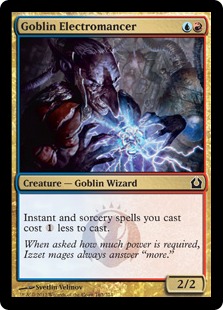 Before you dust off your Goblin Electromancers, let's get some perspective on SCG Atlanta. Premier IQs are not Grand Prix tournaments. They aren't even SCG Modern Opens. With a mere 139 players, SCG Atlanta is large enough to draw our attention, but too small to inform broader metagame trends. This puts observers in a weird position where we want to draw conclusions from the results but also want to respect its smaller attendance. To be sure, 139 players isn't a "small" event. Looking over attendance data collected on our
 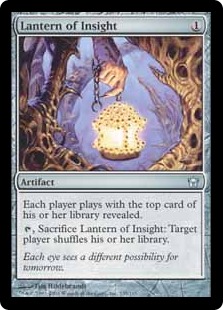 Off-seasons only exacerbate these difficulties. With lower stakes and fewer top-tier frontrunners, players are more likely to brew new decks or at least try new configurations of older builds. To some extent, you'll also see this at the largest events: Lantern Control is a pronounced example of this. Ad Nauseam and Grishoalbrand are more modest ones. It's more common in events like SCG Atlanta, where the payout is big enough to incentivize a serious stab at the Top 8 but the stakes are low enough that you aren't wasting a once-a-year opportunity by bringing Gruul Zoo instead of Burn. Perhaps more importantly, these smaller events are generally more open than larger ones, with fewer players, less defined metagames, and lower tier 1/tier 2 representation. All of this creates an environment that sees a mix of familiar tier 1 decks and innovative tier 2 or lower finishers.
 With the exception of Infect, all our tier 1 decks from the
 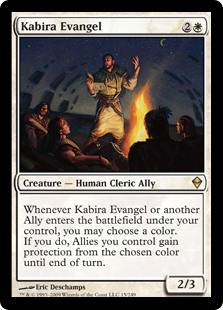 Both
Both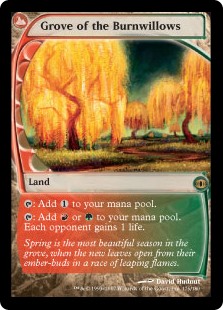 Robert Livingston rocked a Karplusan Forest playset instead of the traditional Grove of the Burnwillows copies. Don't be afraid to go for budget alternatives at tournaments, especially mid-size ones! Robert certainly wasn't and he has the 3rd place finish to legitimize his decision. Of course, this could also speak to the lower competition at the event.
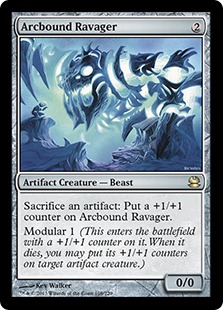
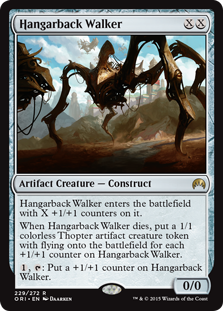 Two of the three Affinity lists packed Hangarback Walker into their 75. Incidentally, these were the two highest-performing lists: Patrick Paris's
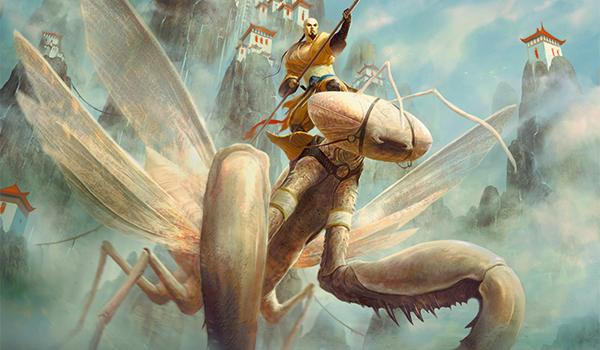
 But during those dark months of Abzan Menace dominance, a huge segment of former Standard-format staples that have never seen Modern play continued to not see Modern play. I'm talking about unfortunately statted creatures like Vampire Nighthawk, Shadowmage Infiltrator, and Mantis Rider.
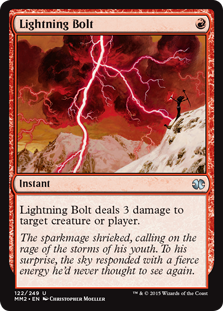
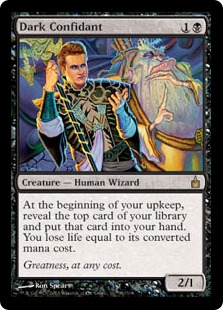 Dark Confidant, Delver of Secrets, and Pestermite get Bolted on-sight in Modern, and nobody whines about two points of "wasted" damage. It's almost always correct to trade a one-mana removal spell for these creatures, which see play in Modern for this reason.
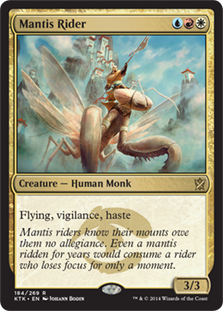 Jeskai Haste, with its lack of Serum Visions, instead hopes to have the properly-costed card in hand when opponents tap out for something, and with the deck's great variety of casting costs - ranging from one to four - Shoal often feels like a lottery (oh, Liliana of the Veil? Good thing I have this extra Mantis Rider handy!). Still, with 24 lands, Gooch can often afford to just hardcast Shoal against cards like Path to Exile and Terminate, the latter of which represents a class of catchall removal already covered by Spell Snare. In Jeskai Haste, Disrupting Shoal mainly throws opponents off and "steals" their mana, Time Walk-ing bigger plays a Remand does without costing any mana itself. Its freeness shines when the deck taps out in precombat main for a winged attacker.
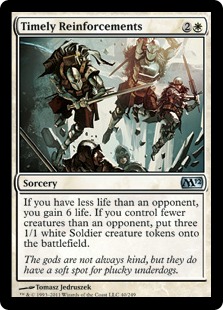 In aggro mirrors, it's frequently Siege Rhino, combining with Honor of the Pure to provide six points of power and a six-point life swing. The card obviously excels against Burn, but in testing also showed immense utility against Grixis decks, which have no reasonable way of dealing with the tokens and spend multiple removal spells on them as Path to Exile clears their board of delving blockers. Such a scene allows us to amass Riders and other threats in hand.
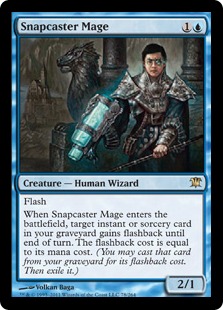 Mage proves to be invaluable to the deck, since he keeps opponents at bay long enough for us to get the enchantment online. A related issue I encountered in testing was an inability to keep up with Modern decks when I couldn't find Honor of the Pure, or when my enlightened opponents countered or removed the enchantment. Their doing so effectively blanks Stubborn Denial and Mantis Rider, while making any amount of Monk tokens much less impressive. My next brew, below, directly addresses this problem.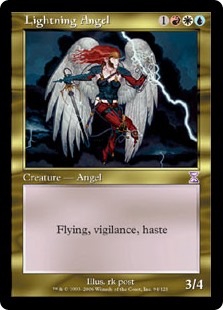



 Exactly how "tempo" Grixis actually is a matter for
 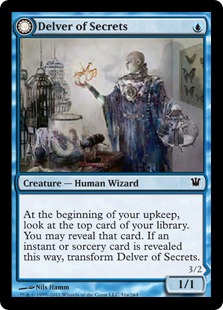 For all its strengths, Grixis Delver struggles in a few areas. Heavy mana requirements lead to substantial incidental damage from lands over the course of a game, severely hurting the Burn and Affinity matchup. If Jund can draw its Lightning Bolts or pick apart a shaky hand with Thoughtseize/Liliana of the Veil, that matchup can also be a nightmare. Delver of Secrets/Young Pyromancer line up poorly against Pyroclasm vs. Tron, and that matchup can vary wildly depending on how many counterspells we draw. On top of all of that, Delvers can sometimes not flip, though this only happens when I’m playing the deck, and never when playing against it!
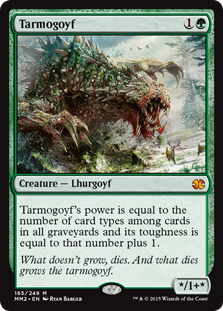
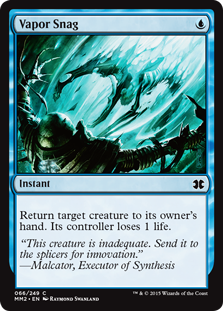 As it currently exists, this version of Temur Prowess looks to take advantage of cheap but powerful creatures in the same way as Grixis Delver, capitalizing on that advantage with tempo-generating spells like Vapor Snag and Remand. In exchange for built-in resiliency to discard from Kolaghan's Command and Tasigur, the Golden Fang we gain consistency and a smoother manabase against aggressive strategies. Without having to spend precious early mana Thought Scour’ing to set up Tasigur, the Golden Fang, we can just drop a Tarmogoyf and push our mana-efficiency to the maximum. Abbot of Keral Keep and Snapcaster Mage with Vapor Snag generate more of whatever effect we need, giving us some play in the mid- to late-game. Our early creatures put the opponent on the back foot consistently and work to keep them there. From my experience, our Jund matchup is worse compared to Grixis Delver's, while our matchups against Burn and Affinity (and any other deck looking to race) are all significantly better.
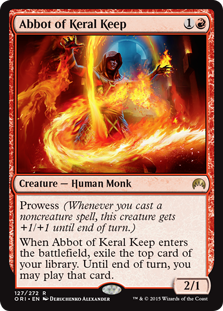 in combination with Vapor Snag gives us a lot of resiliency going late. Normally tempo strategies like this are at the mercy of their land to spell ratio, and drawing too much air can “spell” doom (see what I did there?). I’ve found that we have a strong infrastructure in place in the form of these three cards that work to gain double and even triple value out of some spells.
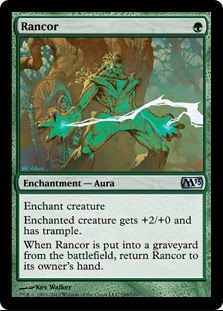 Moving further down this line, Rancor usually acts as another Shock that threatens repeat damage and lets our Tarmogoyf punch through Lingering Souls tokens and opposing Tarmogoyfs/Rhinos/Tasigurs. I’m much more hesitant to cut this one, as its floor is usually Lava Spike and its ceiling is incredible. I have yet to face Lingering Souls online, but if I ever run into it, this is the exact card I would want in the matchup.
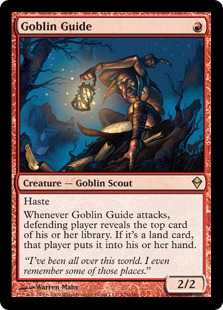 The maindeck is pretty tight and we can’t change many slots (unless we’re looking to give up on Mishra's Bauble) but I think Goblin Guide can work towards what we were discussing earlier: starting games with a haste creature hitting on turn one consistently. If Goblin Guide can hit twice we’re significantly ahead, and we don’t necessarily care about giving our opponent’s free lands as we were putting ourselves behind on cards but ahead on tempo already with Vapor Snag. In addition, while Goblin Guide is a one-drop he essentially gives us more turn two plays, as we can go Guide into Swiftspear/Visions on turn two to set up Abbot of Keral Keep + free spell on turn three. The goal here is not to flood the board per se, but rather to provide a certain relevant board presence that can take advantage of Vapor Snag and Remand keeping the opponent on the back foot.
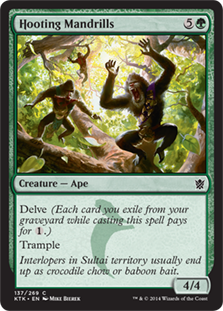 Some commentators on Pat’s original article last month were discussing the inclusion of Hooting Mandrills, as currently we are casting eight free spells with no way to take advantage of our plump graveyard early. This discussion has merit, as delve really is a busted mechanic, but there is a certain tension between wanting to take advantage of our graveyard and wanting to leave it alone for Tarmogoyf and Grim Lavamancer. On top of that, I’m not sure Hooting Mandrills is the answer, as a 4/4 is pretty unimpressive against opposing x/5’s (including opposing Tarmogoyfs, which are difficult for this deck to handle). Hooting Mandrills has been described as a “worse Tarmogoyf”, which I can understand, but that doesn’t really apply as Tarmogoyf is pretty busted. Casting a 4/4 trample creature for one or two mana shouldn’t feel bad because you could have had a 6/7 for two. We’re already playing four Goyf, so that shouldn’t even be a part of the conversation. I’m more interested in what the spell can actually provide our strategy, and right now I don’t think he’s what we’re after.
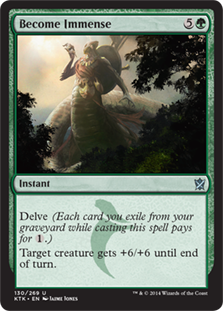 Become Immense, on the other hand, could be exactly what we are looking for. Often speeding up our clock by a full turn or more, Become Immense can take advantage of our graveyard in a big way. Acting as a huge source of burst damage, Become Immense can either end the game quickly or push our opponent into Lightning Bolt range. Again, I’m hesitant to add another spell that doesn’t do much on its own, but I think our deck can use one delve spell and Become Immense might just be good enough.
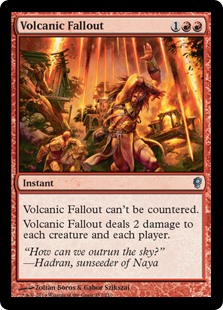 Volcanic Fallout is great against Affinity, Elves and Abzan Company, and even did work against Geist of Saint Traft in one match. Our delve guys live through it (Swiftspear by itself, Abbot needs a little help) which makes it a one-sided sweeper most of the time. Izzet Staticaster is excellent against Affinity, Infect, and Lingering Souls, and can even combine with Volcanic Fallout to actually kill a solid board against Merfolk.


 If you're unhappy with Affinity's September rise, you have no one to blame but yourself and Kolaghan's Command. As we've hopefully learned this time, when you cut all your Stony Silences, Ancient Grudges, and other anti-Affinity hallmarks,
  One of those "new" entrants was RG Tron. The last time we saw Tron in tier 1 was
 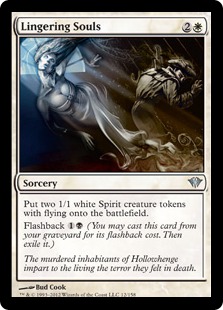 Abzan also benefited from this context, emerging from the pile of grinding decks as the grindiest of them all. If you're going to try and beat Grixis and Jund decks on value, it doesn't get any better than Lingering Souls. A single copy of Souls clogs up the board against Angler and Tasigur for four turns. It's also perfect pitch-bait for enemy Kolaghan's Command, and lets you get more mileage out of the midrange mistress herself, Liliana of the Veil. Abzan also has access to Path to Exile, which, unlike the venerable Bolt, lets you blow up enemy delve creatures for just a single card. I don't think we'll see Abzan surpass Jund anytime soon (Bolt is still too good as the format quickly shifts back to decks like Infect, Affinity, and Burn), but I do expect Abzan to stick around in tier 1 for at least a few more months. As an added bonus, Abzan can actually bring Stony Silence to bear in the Affinity matchup: I'm not convinced that's better than having game 1 Bolts, but it is a strong incentive for many players.
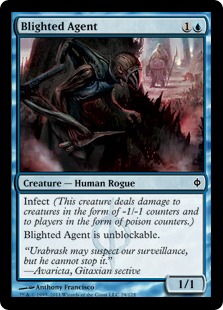 The other big tier 1 winner is, of course, Infect. Since June, Infect has slowly crept up from the low 3% shares to its present prevalence of around 4.5%. The stars really aligned for Blighted Agent and his elite team, with almost every other metagame change directly benefiting Infect players. RG Tron up? Thanks for the great matchup. Abzan on the rise? Thanks for yet another great matchup. Twin falling into tier 2? Thanks for eliminating one of the deck's worst matchups. Infect rose to notoriety back in early 2015 following Become Immense's introduction to Modern and the Abzan glut of February: we are seeing similar metagame conditions now and, so long as they persist, Infect is likely to remain a tier 1 player.
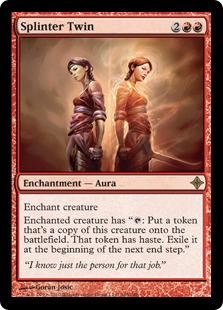 Then there's Twin. Unless I end up writing a banlist article for next week, there's a good chance I'll be doing a piece solely about Twin's metagame-wide decline. As someone who has been tracking metagame data since late 2012 and playing the format since 2011, Twin's absence from tier 1 is alarming in the same way we would all turn heads if the Patriots suddenly missed the NFL playoffs. Or, to use my hometown of Chicago as an example, if the Bears actually made the playoffs. For years, Twin decks seemed as eternal as Burn, Affinity, and BGx. I always refer to these four decks as the pillars of Modern, and although these recent metagame updates haven't changed that definition, it has me asking questions. After all, Twin's decline appears to be central to most of the other metagame changes in the format, and I'm just as curious as most readers about where this is coming from.
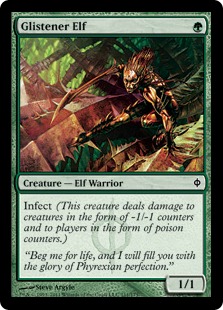 Infect will climb to tier 1? Yes!
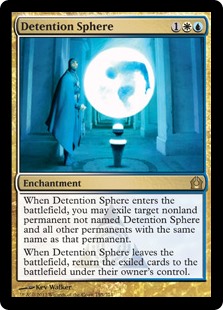 UW Control will move up to tier 2? Yes!
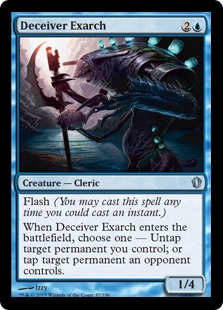 UR Twin returns to tier 1