menu

Insider: Artful Maneuvers – The Three Basics

Are you a Quiet Speculation member?

If not, now is a perfect time to join up! Our powerful tools, breaking-news analysis, and exclusive Discord channel will make sure you stay up to date and ahead of the curve.

At its base every business needs two things: A product to sell and people to buy the product. I've written a lot about a product that can be efficiently created and sold. While I will continue to write about altered cards in the future, I want to shift my focus to the business side of Magic: The Gathering finance.

I know that many of you are financial pros, expert traders or even shop owners. Some of you may be newer players with a burgeoning interest in becoming a financier. Everybody with an interest in making money with Magic cards needs a solid understanding of what I call "The Basics" to reach and build on their goals. The Basics are the three concepts that you must understand before dealing with your customers.

The First Basic: Basic Idea

This is the concept of what you are selling and who you are selling to. The easy answer for most of us is "Magic cards to Magic players." That is too vague. You need to have a firm grasp of which Magic cards you are selling.

Do you specialize in Legacy cards? Are you pushing casual staples? Do you have enough stock to run the gamut of Magic and provide an ample selection of all formats and genres?

You must also pay attention to who is buying these cards. Are there a lot of cutting edge competitive players looking for the hottest new tech? Do you see a lot of oddity collectors looking for misprints? Once you have an understanding of your product and your customer base you can answer the following question. Does your product match your customer base? If the answer is no then you may want to reconsider one or both.

By knowing your local player base and what they need you can target cards that are more likely to be relevant to them. This will not only keep your binder fluid but it will also allow you to focus on the formats and cards that matter in your area. Spending time learning the ins and outs of the Standard metagame may be a waste of time if your local player base is solely into Modern.

The Second Basic: Basic Understanding

This is perhaps the most crucial and it is also what this and all other finance sites are about. Information will always benefit a person. We build off of our basic idea with more information. So we study. We watch trends and a tournament reports. We listen to podcasts and exchange ideas online.

We do all of this to increase our understanding of what people want and why they want it. It isn't enough to know that Doubling Season is $28, we need to understand why. We also need to make educated guesses on whether it will stay at that price or move.

There was an error retrieving a chart for Doubling Season

Information like this allows us not only to take advantage of price changes but also to anticipate the needs of our customer base. We can offer up ideas about which cards are underplayed but might be useful in a match-up. We can up-sell our customers on something that they need before they know they need it. If you can offer what your customer needs, your target market will target you.

The Third Basic: Basic Vernacular

There is always a way to connect to individuals. If you make that connection you can increase the probability of repeat business. Keep in mind that I'm not speaking of cutting a new customer a deal. Simple, positive interactions are the best way to impress a person in our people driven world. This can be done by using positive language to appeal to their personal views.

For example, I have always enjoyed playing huge, expensive creatures. Selling dragons to like-minded people comes naturally to me because I have an innate understanding of why my customer enjoys giant flame-breathing lizards. This view can also be used to sell the opposite type of card to someone with a different mindset. All you need is a positive spin on things. Take a look at these potential trade negotiations:

Trader Steve - "Anything for trade?"

Trader Carl - "Always! What are you looking for?"

Trader Steve - "I need a Dragonlord Ojutai for my Blue-Black Dragons deck and I'm always looking for cards for my EDH deck."

Trader Carl - "I hate control decks. Anyway, Ojutai is worth $25, would you trade those two fetch lands for it?"

Trader Steve - "I guess."

--Or--

Trader Steve - "Do you have a trade binder?"

Trader Burt - "Totally! What do you need?"

Steve - "I need a Dragonlord Ojutai for my Blue-Black Dragons deck and I'm always looking for cards for my EDH deck."

Burt - "Do you prefer control decks, then?"

Steve - "Yep! They are the best!"

Burt - "Well I have this Desertion that just wrecks my favorite dragons in EDH, so I hate it. You may want to try it out though, it seems to fit your play style. It also makes up the difference in price between Ojutai and the two Windswept Heaths that I want from you."

Steve - "Groovy, thanks!"

The first conversation is what I hear at trade tables most often. Both traders are concerned with the deal at hand and nothing more. The overall tone is negative even though both parties involved got exactly what they wanted. This is the type of interaction you might experience at a cheap fast food place.

The second conversation has a more positive tone that is capable of building a connection. Burt asked one simple question about Steve's play style and was able to suggest a card that is both beneficial in closing the deal and in Steve's EDH deck. Burt also expressed his disdain for countermagic in a way that validated Steve's enjoyment of it. Which person do you think Steve will seek out for his next trade?

Taking steps to identify the Basics will help you in many aspects of your business. Your basic idea will help you trade more efficiently by focusing on what sells the best. Basic understanding of the cards your customers want will help you trade and sell more profitably. Basic vernacular will make the difference between just another sale and a source of repeat business.

In the coming weeks I will dig deeper into each of these concepts so stay tuned. In the meantime, happy trading!

Piledriving Modern Prices

Are you a Quiet Speculation member?

If not, now is a perfect time to join up! Our powerful tools, breaking-news analysis, and exclusive Discord channel will make sure you stay up to date and ahead of the curve.

Ready for some exciting news, Readers?

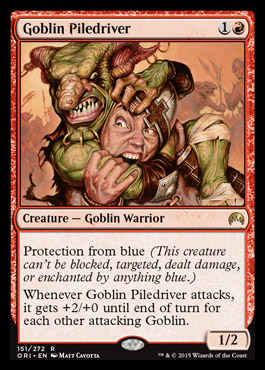
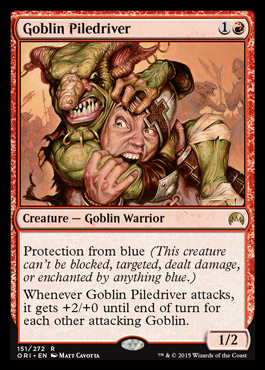
He’s back! Prepare to be piledrived. This was a big announcement today that Goblin Piledriver was included in Magic Origins. There’s already a buzz around the community as a whole because this now makes it Modern Legal. Deck brewers, tournament grinders and financial minds are scrambling to see if this could be the return of Goblins as a viable archetype.

No doubt this has started some market movement, in which we have seen foil copies of Warren Instigator all but gone from internet vendors. As players begin to put together the most viable decklist for Goblins, be on the lookout for upcoming Goblin-related cards disappear from the market in this frenzy.

Cards to watch out for in the near future:

Goblins!

Here's Douglas Linn on Legion Loyalist, per the Insider forums:

$1.55 or so right now. I've seen 4x Loyalist in every Goblins deck I looked at. It's cheap and it gives three really absurd abilities. If you want Piledriver to get through, this is the card to lean on."

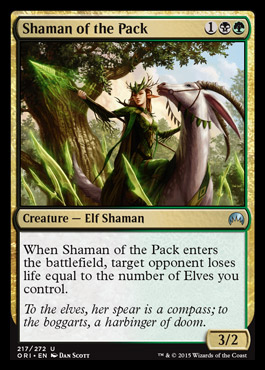
Goblins aren't the only tribe getting some extremely good tools either. This was also spoiled, and it’s making Elves players salivate to play their favorite tribe in Modern.

That is just really potent, and aggressively costed. No doubt foils of this uncommon will command a premium should this card become the crux of an Elves decklist. We have already witnessed (pun!) success with Elves on the back of Collected Company, so this card seems like a shoe-in.

It’s also potent enough to cause speculators to move in on foil copies of Gilt-Leaf Palace--it seems they are gone from the internet entirely.

Looking to the Future

There was an error retrieving a chart for Mutavault

With the recent success of Merfolk and all the price movement that went along with that, it only seems plausible that tribal cards will start trending upward across the board. Magic Origins provides some great tools to the various tribes, and I for one will be eagerly awaiting what happens in Modern.

I think opening the format up to more tribes is only going to help the longevity of the format and make it more accessible. A card like Mutavault will probably be a centerpiece of those various archetypes, and it's at an all-time low. Look to this card in the future as a potential strong gainer.

That’s all for this update everyone, Origins is pile-driving it’s way into the market. Stay on your toes everyone!

Don’t let yourself get thrown against the ropes and have the People’s Elbow dropped on your potential investment opportunities!

-Chaz

Insider: Investing in Magic Origins – Part 1

Are you a Quiet Speculation member?

If not, now is a perfect time to join up! Our powerful tools, breaking-news analysis, and exclusive Discord channel will make sure you stay up to date and ahead of the curve.

Hello readers!

So, it’s an exciting time. Magic Origins spoilers are in full swing, and there has been a plethora of interesting and potentially powerful cards revealed in this set. I will be doing the very best that I can to take you all through this set and highlight a select few cards. Take this as my very first impression of the set, as the first wave of spoilers come in.

Fellow QS writer Mike Lanigan touched on some Origins spoilers already, and wrote a great piece on the set thus far. Ryan Overturf evaluated the flip walkers in another Insider article. I’m here to continue the conversation and find value within this set.

I’m going to start by admitting I’ve been hard pressed to find anything worth investing in during this pre-order period. I have looked at various vendors, and have taken my time analyzing each and every card as best I could. I’m just not coming up with many cards that are lucrative at these vendors' initial price tags.

Now, that’s not to say I’m not excited for the set, because I am. At the same time, I just get this overwhelming feeling many vendors are pricing cards extremely conservatively to not have this set end up as Dragons of Tarkir. I can’t say I blame them--we wouldn’t want a $5.99 Dragonlord Ojutai. Well, we would, but I don’t think they’re going to let that happen with this set.

So, right now all I can really do is highlight cards I would like to pick up sometime after the prerelease hype settles down, when prices drop for a brief time before people actually start utilizing the Origins cards in winning decklists. I suspect pre-order prices still have a chance to fluctuate, so maybe there will be some chance for investment during this brief time.

Cards to Watch

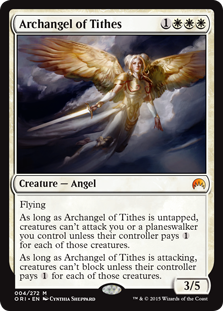
Archangel of Tithes

archangeloftithes

Commanding a $19.99 price tag, I would be extremely hesitant to invest in this card. Most sets don’t have many cards that drastically increase after being released, and I would discern that the EV of this set should be “normal” at this point. Like I mentioned, most vendors are being conservative and slapping on high price tags like we see here. In doing so, they normalize EV calculations (can’t be fully calculated without the entire set) and really make it hard for a majority of the cards to “break out”.

Now, this angel is quite the card indeed. I’m not denying its potency in any way, but I would not be bold enough to invest 19.99 in the hopes that this increased by 50-100% in the future. At the same time, I would suspect that if any card could do it, it would be one of the mythics. Since this is one of the more viable mythics in the set, this increasing over a few months' time wouldn’t be surprising.

I suspect the heavy casting cost of 1WWW will limit its potential inclusion in a wide array of decklists. At the same time, it will be extremely effective in the decks it is included in. Playing an interesting role on both ends of the battlefield, and having a highly coveted five toughness makes me believe that this could be viable in the current Standard. In what is seemingly becoming a format ruled by five toughness, this angel doesn’t come up short of possessing very lucrative stats.

I also have heard some rumblings that this could have an outside shot in Modern. Due to Aether Vial, this could find itself in “Hatebears” and “Death and Taxes” strategies.

Considering Wilt-Leaf Liege having a 4CMC didn’t hold it back, I don't’ suspect that it will be an issue for Archangel of Tithes either. Using Vial to stop a potential blowout against Twin decks could be reason enough to see this crop up in some capacity outside of Standard.

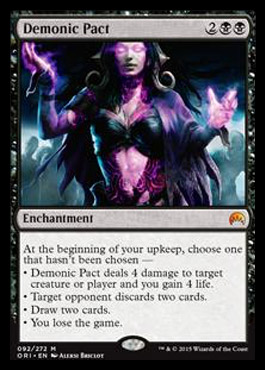
Demonic Pact

demonicpact

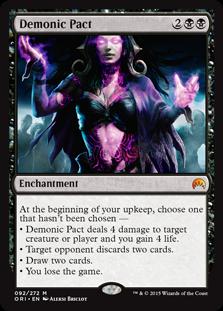
Demonic Pact is a really interesting Magic card. I’ve just never seen a Magic card do what this card does all wrapped into one card. There’s a slight draw-back--you lose the game after you sign on the dotted line of this Pact. Will that deter me from trying to play this card effectively? Absolutely not. Just not currently at a $7.99 pre-order price.

I really think a card of this nature is powerful enough to see the light of day in a Constructed setting. The first three abilities are so lucrative, and removing it before it’s time to kick the bucket seems easy enough in Standard.

There was an error retrieving a chart for Dromoka's Command

Cards like Dromoka's Command and Reclamation Sage already have slots in maindecks in Standard. I think utilizing them to remove one’s own Demonic Pact wouldn’t seem like a huge waste to me. These cards are already in the deck, and using them as inadvertent ways to remove Pact, doesn’t seem you’re losing incremental value than say packing copies of Erase into one’s deck. What I’m trying to say is, you’re already playing the cards that could remove it, and not trying to be “cute” and play potentially bad cards just to utilize Demonic Pact.

The downside I see to Demonic Pact is, does it actually make any existing deck better? It’s hard to tell currently, and I don’t want to invest into a card just for the “Summer Meta” where the landscape changes drastically within a few months. I’m sure Abzan strategies may just be content casting a herd of Siege Rhinos and the recently spoiled Languish.

Until then, I may just wait for these to fall to (or below) the $3 mark, where I would be more inclined to pick them up “just in case”. It is a potentially powerful card, and while a Dissolve countering a Dromoka’s Command trying to remove Demonic Pact would be simply a horrible feeling, it might just be worth taking the risk.

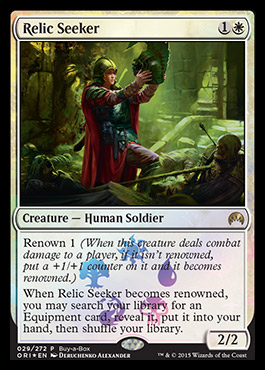
Relic Seeker

relicseeker

Buy-a-Box promos have been very good as of late. Each of them always fins a home in Standard and becomes a key role-player. I think that’s what we have in Relic Seeker, and I think this card telegraphs that there may be some extremely viable equipment coming down the pipeline.

As it is right now, I talked about this card on the podcast I host. Just simply grabbing a Hero's Blade might actually be enough right now. It was in jest at first, but then I realized that it actually could work.

Here’s the making of one such deck:

Seeking Heroes

Creatures

4 Brimaz, King of Oreskos
4 Anafenza, the Foremost
4 Kytheon, Hero of Akros
4 Relic Seeker
4 Surrak, the Hunt Caller
4 Yasova Dragonclaw

Spells

4 Hero's Blade

*decklist numbers not final*

That’s just the tip of the iceberg with Relic Seeker, and without knowing what’s coming I would be inclined to have some money waiting to invest into this card. Like I said, Wizards has been pretty good about making Buy-a-Box promos viable cards. So, I wouldn’t be surprised if this card’s price drops come release time and is suddenly spiking somewhere down the line.

The same thing happened with Goblin Rabblemaster, but I think Magic Origins may end up being opened just a bit more than its core set predecessors. So, temper expectations.

As it is, I’m going to hold off until after release date on these, and/or trade for them aggressively at pre-releases at my target price of 2$. I think that’s a good enough entry point to have them if they spike, and not lose a great amount if this card doesn’t pan out. Which I think is unlikely.

Dollar Bin Rares

On the off-chance any of these end up in the “dollar bin” or less category (which I’m confident in) I think they may be decent “buy and stash” for sometime in the future.

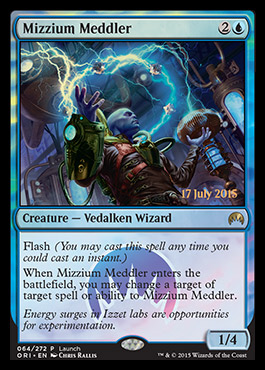
Mizzium Meddler

mizziummeddlerpromo

Of all of these I think Mizzium Meddler has the best shot of making a name for itself. It could potentially be included in decklists outside of Standard if only as a way to steal opposing Splinter Twin at instant speed. Do note that this card is the Game Day promo, and that could keep its price depressed.

I understand I’m scraping at the bottom with these dollar bin rares, and opportunity cost to me speaks volumes. Just something to think about with the Meddler.

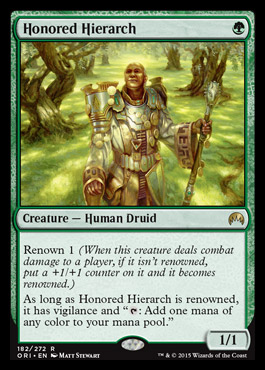
Honored Hierarch

honoredhierarch

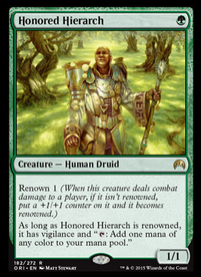
I know Honored Hierarch has been getting some flack over on the Insider forums, and rightly so. I don’t think this is a good card after analyzing and re-analyzing it. It’s really a do-nothing card until at least turn three, and even then it would have had to attack past a plethora of cards that easily could have killed it. Zurgo Bellstriker, Satyr Wayfinder and Sylvan Caryatid to name a few.

That being said, this is Wizards' new “normal” for 1CMC mana creatures. It’s really disheartening, I know, but whether one likes the card or not, we’re stuck with it. Between this and Rattleclaw Mystic and whatever is revealed in Battle for Zendikar (BFZ) (I really hope something better) we just may need this card in ramp strategies. So, demand could be there for the card just for the simple fact that there may not be any other options. Let’s wait and see though.

Evaluating cards has to be an art form during pre-order periods, and financiers have to be swift and effective at evaluation. Knowing which cards are underpriced before they quickly increase on the back of hype is invaluable information. It takes a lot of snap decisions and having intimate knowledge of the game.

As is, the only card I’m invested in now is Nissa, Vastwood Seer. Since then the Top Level Podcast has deemed it a “Top 10 card in Standard,” so I think things are looking good for my investment.

Current Pre-sale Purchases

12x Nissa, Vastwood Seer @ 11.25 per card

That’s all for today everyone! I’ll be back with part 2 and 3, and I think by then we’ll have the complete spoiler. Expect a more in-depth review of the set with Mythics/Rares.

If anyone wants to talk about anything I covered in the article feel free to find me on Twitter, or comment below!

-Chaz

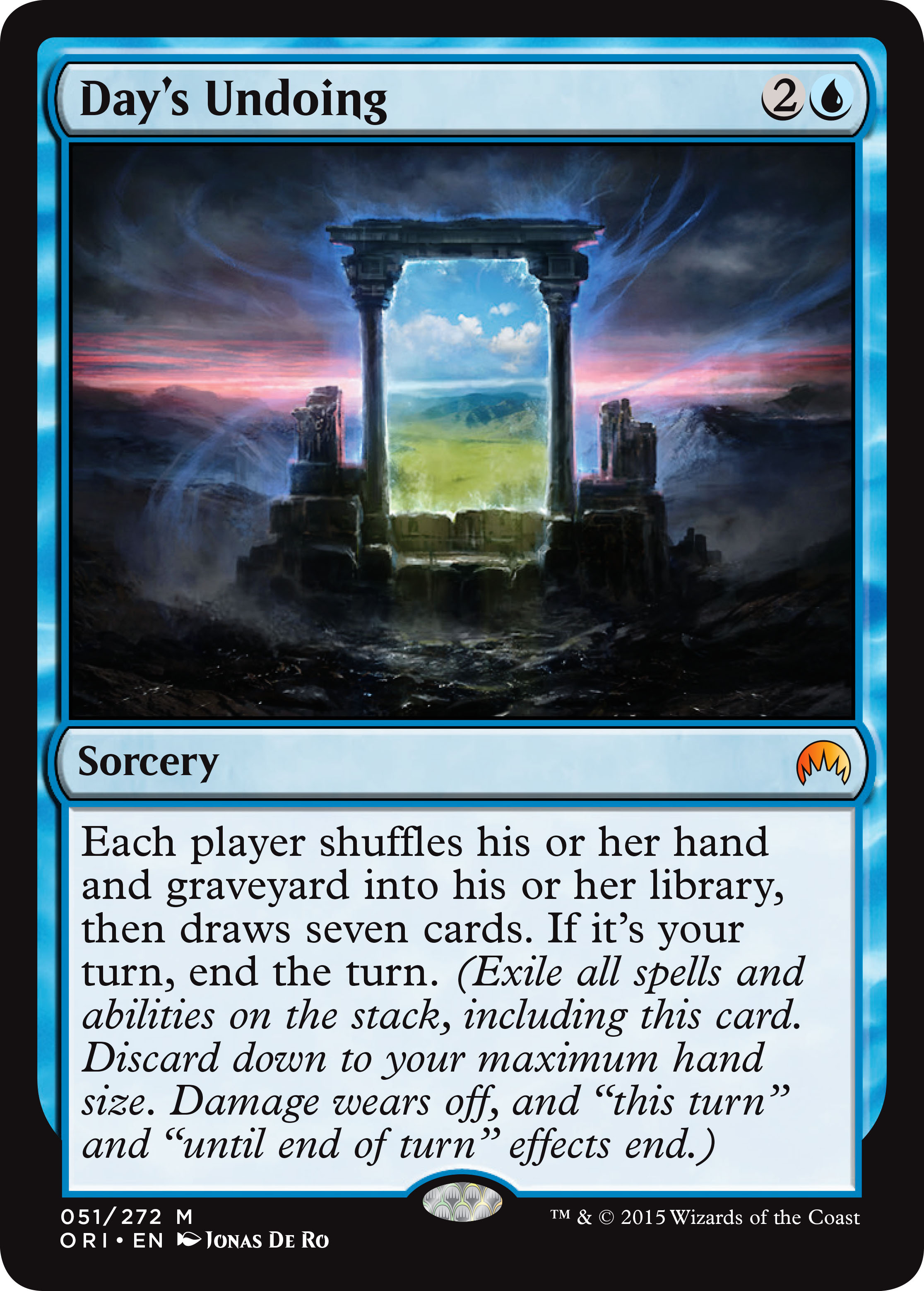
Twister, Go: Day’s Undoing in Modern

Are you a Quiet Speculation member?

If not, now is a perfect time to join up! Our powerful tools, breaking-news analysis, and exclusive Discord channel will make sure you stay up to date and ahead of the curve.

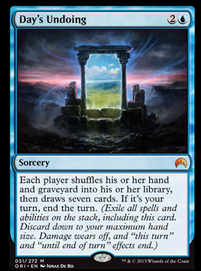
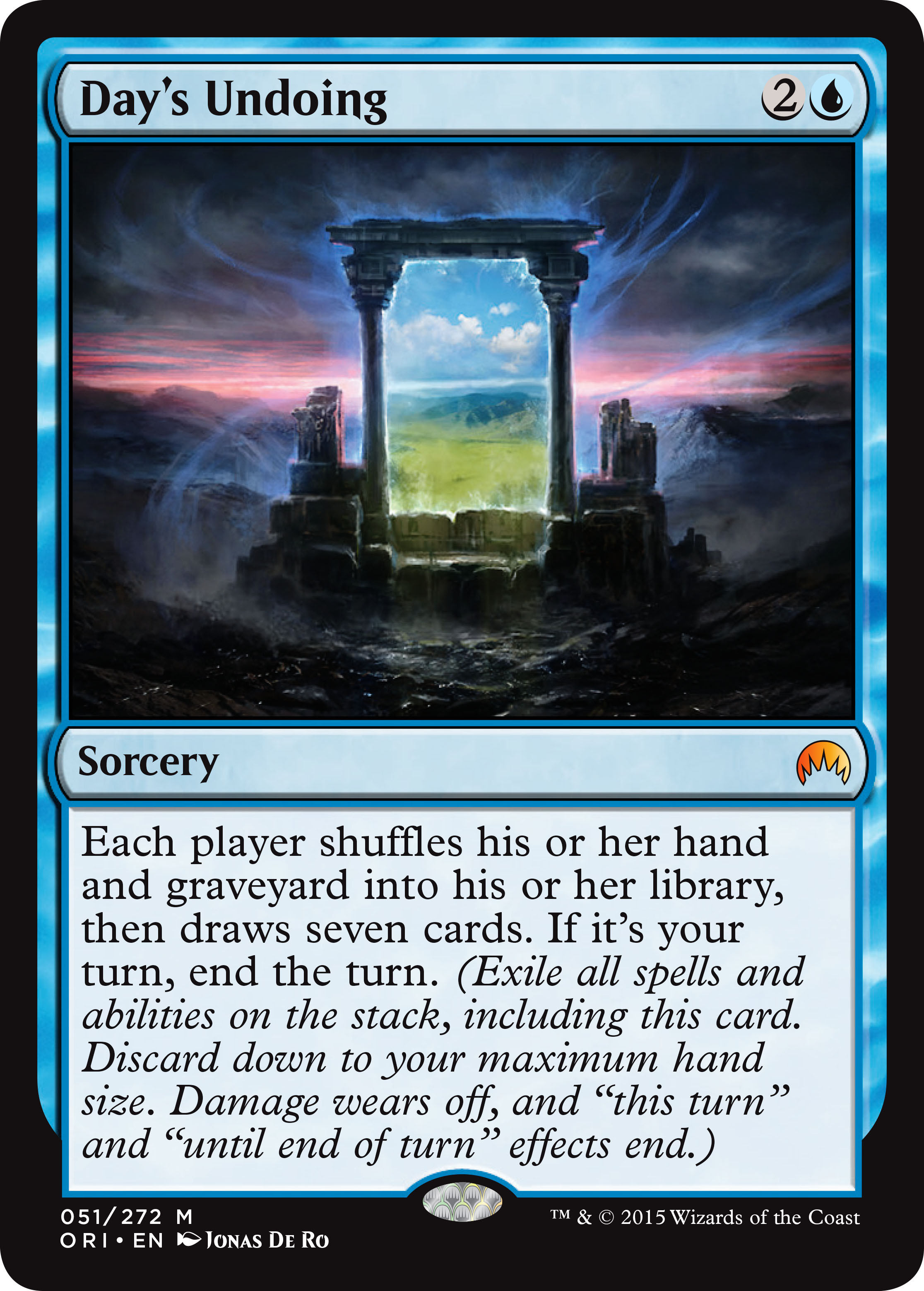
Day's Undoing LargeSometimes, Wizards spoils a card that seems potentially powerful if a game operates in an unconventional way. When they do, Magic players often hit the forums to discuss its implications. Day’s Undoing is reaching Treasure Cruise-esque levels of hype, which makes perfect sense – like Cruise, the card provides a game-breaking effect (literally power) for a steep cost. “How steep?” creates the buzz. No other spell asks you to end your turn on resolution. The same could be said of Cruise; while we had threshold abilities in Nimble Mongoose, we never had threshold abilities that asked you to get threshold again. As we now know, “delve 7” is a laughably minor cost for such a tremendous effect. So what about “End the turn?”

[wp_ad_camp_1]

Cost Misevaluation

I cherry-picked these posts, but I didn’t look far; a quick skim through the first couple pages of MTGSalvation’s Treasure Cruise thread yielded these reactions to the spoiler:
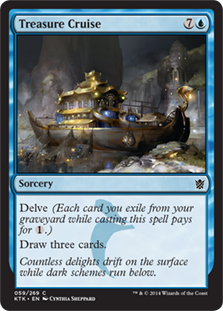
Treasure Cruise“Well, it's fine for a common I guess. I just hope we get a better draw spell with constructed purposes.”

“This card is so awful in your opening hand in modern it’s offensive. You'll be dead before you can play it. Thirst for knowledge is always 3 for 3 at instant speed.”

“This is either unplayable jank or one of the most broken cards ever printed.”

The last sentiment is one more widely felt with Day’s Undoing. Treasure Cruise Winter left a bitter taste in the mouths of those who ate their words, causing many MTGS users to issue a disclaimer with their dismissal of Day’s Undoing. But we still get comments like these in the Day's Undoing discussion:

“Better than Time Reversal but still bulk Mythic.”

Day's Undoing is Broken

Obviously, we won’t know exactly how good Day’s Undoing is until it descends upon Modern on July 17th. But after some admittedly limited testing (I put in about 15 hours since the card was spoiled four days ago), I’ve come to the conclusion that Undoing will indeed Undo Modern, pushing the format even deeper into streamlined aggressive strategies and away from interactive ones that patiently accumulate incremental advantages.

When Treasure Cruise was legal, BGx and slower blue decks became all but unplayable. Why spend mana (read: time) to Thoughtseize pieces from your opponent’s hand when he can tap an Island and draw three cards? Or try inching out value with Electrolyze when your opponent, for the same amount of mana, can play a threat, counter a spell, and draw three cards? Day’s Undoing poses the same questions, except its symmetrical nature erases any card advantage gained by other means. Not only is Undoing hands down the most efficient card advantage machine in Modern, but players looking to draw cards in a non-Day’s Undoing way will just get trumped by Day’s Undoing. Consider a Twin pilot casting Snapcaster Mage to recycle a binned Lightning Bolt. The player paid 1UR for a body, a Bolt, and a card (the in-hand Bolt he didn’t need to cast). His opponent untaps, plays out whatever’s left of his hand, and casts Day’s Undoing. The extra card provided by Snapcaster Mage is gone as both players restock to 7. The Twin player would have been better served casting the Bolt in his hand and doing something more impactful with the remaining mana – I can think of many two-drop creatures with better stats than Snapcaster.

(A quick aside: Tarmogoyf isn’t one of them. A resolved Undoing empties both graveyards, setting Tarmogoyf to 0/1 and killing him if he has even a single damage marked before any player receives priority. That makes the Lhurgoyf a pretty bad blocker if you want him to stick around – eat even a 1/1 and Day’s Undoing eats the Tarmogoyf.)

“Symmetrical” effects rarely are. Smallpox is only symmetrical if both players have the same number of creatures, lands, and cards. Day’s Undoing is only symmetrical if both players have the same amount of cards in hand. Either way, these cards slot into decks that take full advantage of the effect. Day’s Undoing in particular is very tempo-centric, favoring the player down on cards and up on board presence. In other words, Undoing rewards players for throwing away cards as quickly as possible.

Sound familiar?

Finding a Home: Affinity

While “Draw 7 cards” best fits into linear decks, “end the turn” is mostly risky against… other linear decks. Your opponent could untap and slam a good deal of those new cards on the table to overcome whatever board presence you’ve established. Undoing decks must either be able to stop opponents from casting anything (e.g. Silence), match opposing board presence (e.g. Aether Vial, one-drop threats), or ignore that board presence entirely (evasion, reach). I started with an Affinity shell, since it boasts plenty of low-cost evasive threats, packs strictly-better Lightning Bolts, and can consistently power out Day’s Undoing on turn two, netting upwards of four cards against opponents while “forcing” a mull to seven they have no control over.

Undoing Affinity, by Jordan Boisvert

Creatures

4 Arcbound Ravager
4 Ornithopter
4 Memnite
4 Signal Pest

Sorceries

4 Day's Undoing
4 Thoughtcast

Instants

4 Lightning Bolt
4 Galvanic Blast

Other

4 Mox Opal
4 Springleaf Drum
4 Cranial Plating

Lands

4 Glimmervoid
4 Darksteel Citadel
4 Blinkmoth Nexus
4 Inkmoth Nexus

Sideboard

4 Wear // Tear
4 Vault Skirge
4 Whipflare
3 Blood Moon

With eight high-power draw spells, Undoing Affinity finds Cranial Plating with frightening accuracy. Memnite, Ornithopter, and frequently Signal Pest are mostly mana dorks that turn into huge piles of damage with a Plating or a Ravager, while Pest helps Blinkmoth dole out non-negligible damage increments (i.e. 3) if opponents want to play the waiting game to counter our bombs. A single Cranial connection usually ends the game; the board gets so developed that the equipment pumps for lethal by itself. Otherwise, we transform into a Burn deck after landing a hit. Between eight Bolts, four Draw 2s, and four Draw 7s, burning opponents out even from 20 proves entirely manageable. Bolts have added utility against the other aggressive strategies sure to dominate Modern post-Origins.

Previously, Affinity only ran 2-3 Memnite, since spending a card on a measly 1/1 body wasn’t exactly where the deck wanted to be. But with Days Undoing, we’re not spending anything. The sorcery incentivizes us to cast as many spells as possible.
Steel OverseerThe cards absent from my list represent how deeply Day’s Undoing will alter the format. Only the most efficient cards remain playable. Besides Ravager, Plating, and Undoing, every spell in the deck costs one or zero. For a two-drop to earn its place, it must win us games the turn it comes down. Unlike Ravager and Plating, Steel Overseer doesn’t deal 12 damage after we cast him. For a three-drop to merit inclusion here, it has to be the best card in the deck. Unlike Undoing, Etched Champion doesn’t draw us 7 cards. Since we’re so fast, the lifegain from Vault Skirge is irrelevant in enough matchups that I’m fine with them in the sideboard.

Sideboarding Undoing Affinity

Disclaimer: my sideboards for each of these decks are pretty half-baked since I’ve yet to get any “real” testing in. While I sunk maybe seven hours into Undoing Affinity, I only tested it against existing decks. After Origins reshapes the metagame, we’ll have a better idea of what to include.
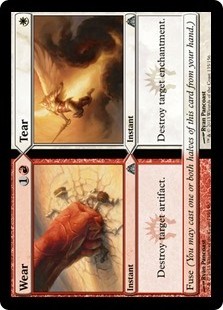
wear tearWear // Tear seems like the best option against Stony Silence, which causes huge issues for the deck. My plan against Stony has always been to hope opponents don’t draw it, since it turns off many colored sources (which cast Tear). Alternatively, relying on opening with Thoughtseize while my opponent opens with the enchantment has always seemed really bad to me. That said, we do need an answer to the card since Affinity will skyrocket in metagame shares after Origins and many players will pack a handful of Stony Silence to deal with us. Wear // Tear’s application against the mirror makes it an obvious choice. Ancient Grudge gets shuffled right back into the deck via Day’s Undoing, so flashback doesn’t make it much better in this matchup than Shatter. Wear // Tear also messes with Bogles, another linear poised to profit from Day’s Undoing.

Vault Skirge goes over aggressive decks that attack our life total. This includes Burn and possibly the mirror, especially if other Affinity decks end up running as many Bolts as I do. It also comes in against the low-to-the-ground tempo strategies like Treasure Cruise Delver I expect to Whipflareshow up in some number (more on these decks below).
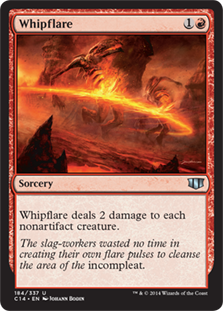
Day’s Undoing will force aggro decks into the most efficient creatures around, making Whipflare a stellar choice for nonartifact swarm strategies. It kills Delver of Secrets, Goblin Guide, Monastery Swiftspear, and mana dorks for only two mana. The best part: against the decks it hoses, we get it over and over again, since Day’s Undoing repeatedly shuffles our four copies back into the deck.

Blood Moon might prove a little slow for the coming meta, but I expect some decks to get greedy with their mana and prioritize aggression. Affinity is the only existing deck capable of consistently powering out turn-two Blood Moons, which devastate even resilient manabases.

Finding a Home: Burn

The next logical step was to jam Day’s Undoing into Modern’s most linear deck. In Burn, we cast it on turn 3 or 4 after spending all our spells for a new grip. We don’t care so much about giving opponents another hand – fair decks will be drawing creatures, which usually don’t start attacking until the turn after they resolve. Most of the time I cast Day’s Undoing, I’m out of cards and opponents are already under 10 life. The odds of drawing them into something that can deal with three more Bolts are very slim. Here's the list:

Undoing Burn, by Jordan Boisvert

Creatures

4 Goblin Guide
4 Monastery Swiftspear
4 Eidolon of the Great Revel
2 Grim Lavamancer

Sorceries

4 Lava Spike
4 Faithless Looting
4 Day's Undoing

Instants

4 Lightning Bolt
4 Searing Blaze
4 Skullcrack
2 Lightning Helix

Lands

4 Arid Mesa
4 Bloodstained Mire
4 Wooded Foothills
2 Steam Vents
2 Sacred Foundry
1 Stomping Ground
3 Mountain

Sideboard

4 Destructive Revelry
4 Deflecting Palm
2 Lightning Helix
1 Hallow
2 Rending Volley
2 Stony Silence

Grim Lavamancer already earns a place in most (good) Burn lists, but he plays a second role in this deck. The drawback of delving out cards for damage can be used to our advantage if we eat lands instead of spells before casting Day’s Undoing, since it increases our chances of drawing business later. (The same can be said of delve creatures like Hooting Mandrills).
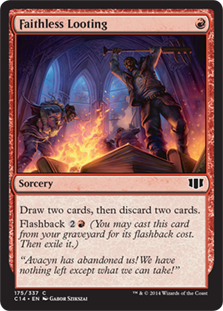
Faithless LootingFaithless Looting is the weirdo card here. It does a few interesting things for the deck: firstly, it finds lands early in exchange for slower burn spells or extra copies of Day’s Undoing (we only need one). Making the first three land drops is crucial to taking advantage of an Undoing in hand. It also pumps Monastery Swiftspear, sometimes while drawing us into another one-mana spell we can cast before attacks. I’ve even flashed it back a couple times for the extra point of damage. Similarly, Looting can stock the Graveyard for Grim Lavamancer. But most importantly, it turns an “unkeepable” seven drawn off Day’s Undoing into a goldmine. By the time we cast Undoing, we have 3+ lands on the battlefield, so any extras we draw are basically dead. Faithless chucks them immediately for a shot at more fire, and can be flashed back easily with mana up after an Undoing.

Sideboarding Undoing Burn

To combat aggressive decks, the mainboard already packs Lightning Helix and a full set of Searing Blaze. But even coupled with these removal spells, 4 Destructive Revelry from the sideboard does little to pacify Affinity. In testing I found it best to add a couple of Stony Silence and run 4 Deflecting Palm, which blows out Cranial Plating attacks.
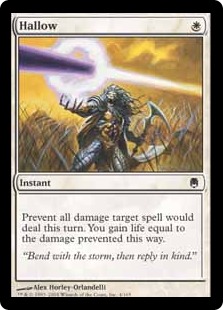
HallowI’m also worried about the mirror. After boarding, 4 Helix, 4 Palm, 4 Blaze, and 4 Skullcrack should help the matchup enormously. Just to make sure we have the edge, I ran a Hallow in the board. The card won me a ton of games against Burn when I played Counter-Cat in the Treasure Cruise era, and I expect it to do the same next season. For those of you doubting this innocuous common, I’ll just say you haven’t lived until you’ve Hallowed a Searing Blaze.

In the Burn mirror, nobody wants to cast Day’s Undoing; whoever does will probably lose to his opponent next turn. Both players board them out and the game revolves around lifegain and board presence. Elsewhere, Burn takes perhaps better advantage of the spell than anybody, since the cards drawn can go straight to the opponent’s head.

Rending Volley was a concession to the Twin decks in my playtest group. I was happy to have it, but I don’t see Twin sticking around once Day’s Undoing becomes legal. In practice, I did cast Undoing with a mana up and draw into Rending Volley for the blowout twice.

Finding a Home: Counter-Cat

Since I brewed the deck this afternoon, it’s untested and has a lot of room to grow. I still wanted to include it to show some other applications for Day’s Undoing. Here's my Counter-Cat take on Day's Undoing:

Undoing Counter-Cat, by Jordan Boisvert

Creatures

4 Wild Nacatl
4 Delver of Secrets
4 Monastery Swiftspear
2 Hooting Mandrills

Sorceries

4 Serum Visions
4 Gitaxian Probe
4 Day's Undoing
1 Faithless Looting

Instants

4 Mutagenic Growth
4 Lightning Bolt
4 Vapor Snag
4 Silence

Lands

4 Arid Mesa
3 Misty Rainforest
2 Flooded Strand
2 Scalding Tarn
1 Temple Garden
1 Steam Vents
1 Hallowed Fountain
1 Stomping Ground
1 Sacred Foundry
1 Island

Sideboard

4 Hallow
3 Remand
2 Lightning Helix
3 Stony Silence
3 Pyroclasm

Since I brewed the deck this afternoon, it’s untested and has a lot of room to grow. I still wanted to include it to show some other applications for Day’s Undoing. I miss Tarmogoyf dearly, but one-drops might even be better than the Lhurgoyf in this shell. Undoing Counter-Cat is an exercise in mana efficiency, though it does heavily tax the life total. It operates under the premise that opposing decks aren’t as fast, so life doesn’t matter much.

Serum Visions, Gitaxian Probe, and Faithless Looting find Day’s Undoing while pumping up Monastery Swiftspear. Vapor Snag keeps the board clear and basically becomes a one-mana Terminate (plus damage!) with Day’s Undoing. Mutagenic Growth saves our beaters from Searing Blaze and Lightning Bolt, helps them run over bigger blockers, and turns into reach with an unblocked attacker. Swiftspear makes Growth a 0-mana Lava Spike. And Day’s Undoing turns Silence into Time Walk.
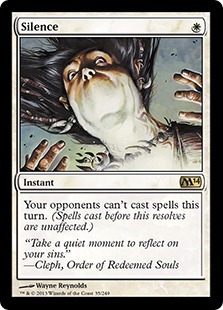
SilenceSilence has never seen serious play because it costs you a card. But nothing costs you a card anymore. With threats on the board, we can cast it on our opponent’s upkeep as a one-mana, pre-emptive Remand. They pass the turn right back and we attack again for more damage. Silence makes it harder for opponents to spend their cards as fast as we spend ours, making Undoing even more one-sided. It can also clear the way for lethal burn spells (including a flurry of Mutagenic Growths) or for Day’s Undoing itself. If opponents Negate the Silence, we simply pass the turn. If they don’t, Undoing resolves, stealing the Negate anyway. After Undoing, an upkeep Silence ensures opponents won’t use their new cards before we get to ours.

Sideboarding Undoing Counter-Cat

Rest for the Weary may do more work, but Hallow seems like the best anti-Burn technology here. Lightning Helix also comes in against them, as well as against decks we want to beat with reach or decks with lots of targets. Remand creams slower decks and Stony Silence hoses Affinity. The most interesting card in the sideboard is Pyroclasm, which only kills one of our creatures (Delver of Secrets). I don’t expect many creatures in the new meta to be x/3 or higher, meaning Pyroclasm can do the same heavy lifting it did for me when Treasure Cruise was legal.

A Linear Future

Day’s Undoing doesn’t only slot into Burn and Affinity. All the aggressive linear decks want this card. Bogles and Infect definitely want it. Even Merfolk and Taking Turns want it. Of these, I can only see Bogles sticking around. Aether Vial is just too slow. Taking Turns is way too slow.

If every linear deck benefits greatly from running the card, it’s possible that some won’t run it at all, opting instead to profit from their opponents’ copies. The Undoing-less decks would give up some game against slower interactive strategies, but I don’t think those strategies will be viable at all given the sheer number of linear decks that will run Day’s Undoing. The card is so powerful because it gives the caster choice over when to fire it off. If an opponent manages to drop his hand before I drop mine, the Day’s Undoing will just sit in my hand. If not, it will punish my opponent. It punishes hard enough to probably merit inclusion in the main even in linear mirrors, where it shines on the play (à la Eidolon of the Great Revel).

The worst fate Day’s Undoing can suffer in Modern is a relegation to the linear deck’s sideboard, mostly to avoid restocking other linear decks. But considering the card’s insane applications against interactive strategies – namely, BGx and Twin – I don’t see this happening. I see a format full of linear decks and Chalices.

Wizards’ initiative to produce maybe-too-good cards greatly appeals to me. The powerful cards that end up okay in a format shake things up and add new dimensions of play. But Day’s Undoing is too strong for Modern. We’re in for a twisted few months.


Jordan Boisvert

Jordan is Assistant Director of Content at Quiet Speculation and a longtime contributor to Modern Nexus. Best known for his innovations in Temur Delver and Colorless Eldrazi, Jordan favors highly reversible aggro-control decks and is always striving to embrace his biases when playing or brewing.

View More By Jordan Boisvert

Posted in Modern, TechTagged , , , 19 Comments on Twister, Go: Day’s Undoing in Modern

Have you joined the Quiet Speculation Discord?

If you haven't, you're leaving value on the table! Join our community of experts, enthusiasts, entertainers, and educators and enjoy exclusive podcasts, questions asked and answered, trades, sales, and everything else Discord has to offer.

Want to create content with Quiet Speculation?

All you need to succeed is a passion for Magic: The Gathering, and the ability to write coherently. Share your knowledge of MTG and how you leverage it to win games, get value from your cards – or even turn a profit.

Origins Spoiler- Demonic Pact

Are you a Quiet Speculation member?

If not, now is a perfect time to join up! Our powerful tools, breaking-news analysis, and exclusive Discord channel will make sure you stay up to date and ahead of the curve.

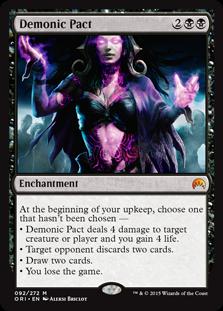
WotC loves throwing a card in now and again with a huge drawback and non-obvious power level. A card that to some looks completely terrible, and to others totally busted... somehow. It used to be more common that cards had outright downside, but these days when you see a downside it usually intentionally pushes a specific deckbuilding direction. Demonic Pact is exactly such a card.

Demonic Pact

If you can survive three turns of activating this card (and stop the fourth from happening) then you get some pretty good value for your four mana. It's a little slow, but the power is there and the interaction with current all-star Dromoka's Command is worth considering.

There was an error retrieving a chart for Dromoka's Command

When I look at Demonic Pact, I'm immediately reminded of Abyssal Persecutor. It was a card that saw fringe success, though even in the occasions when it was winning was avoided by most players, likely due to the commonality of risk aversion.

Demonic Pact looks to have constructed potential, but we'll have to wait and see. Do you think it will make splashes, or are the downsides too great?

Avatar photo

Ryan Overturf

Ryan has been playing Magic since Legions and playing competitively since Lorwyn. While he fancies himself a Legacy specialist, you'll always find him with strong opinions on every constructed format.

View More By Ryan Overturf

Posted in Free, SpoilerTagged , , 3 Comments on Origins Spoiler- Demonic Pact

Have you joined the Quiet Speculation Discord?

If you haven't, you're leaving value on the table! Join our community of experts, enthusiasts, entertainers, and educators and enjoy exclusive podcasts, questions asked and answered, trades, sales, and everything else Discord has to offer.

Want to create content with Quiet Speculation?

All you need to succeed is a passion for Magic: The Gathering, and the ability to write coherently. Share your knowledge of MTG and how you leverage it to win games, get value from your cards – or even turn a profit.

Insider: Going Pro

Are you a Quiet Speculation member?

If not, now is a perfect time to join up! Our powerful tools, breaking-news analysis, and exclusive Discord channel will make sure you stay up to date and ahead of the curve.

My column is generally dedicated to strategy, with financial advice based on cards I believe are worth buying into for their Constructed potential. The chief reason for me to be interested in Magic finance was to make my hobby affordable. A couple months ago a friend of mine reached out to me with the opportunity to invest in making Magic my livelihood.

With hindsight to pull examples from, we can easily see that if we took all of our money a couple years ago and threw it into Snapcaster Mage and Blood Moon that it would be rather academic to turn large profits. It might take you a little time to move them, but these cards were available for $6-10 not all that long ago. Even buying them at market value was a good move for a very long time.

There was an error retrieving a chart for Snapcaster Mage

There was an error retrieving a chart for Blood Moon

Even making calls like this though, it's difficult to make your way as a backpack speculator. You have to tie up a lot of money in specific cards, and lord knows that we've all missed on a spec. If you want to invest in Magic professionally, then as I'm sure you're aware, you'll want to be selling cards from a booth or a store. Buying at buylist price and selling at market price is always profitable. If you have to work for your money, just getting a store overnight isn't realistic, so you'll probably have to start off by vending events.

In order to be successful vending you'll need some mix of all of the things that you need in order to be successful at anything--skill, discipline, luck, etc... But on top of these things you'll need a team, a bankroll, an inventory, and a place to put your table.

Inventory and Bankroll

These two things go hand in hand. You need money to buy cards, and you need cards to make money. Furthermore, the best way to get people to sell you cards is by having things in your case that they want. Even by offering a bonus on trade-ins, you're just growing your inventory with every transaction, and they get a little extra value by trading over taking cash, so everybody wins.

There was an error retrieving a chart for Trash for Treasure

My first outing as a vendor featured two cases with a few Standard chase rares and some random cards worth money that we used to fill space. We weren't exactly ready to go. People are going to ask you for commons and uncommons. People are going to ask you for rares you wouldn't think to bring if you had to inventory everything before you left for a tournament.

The way to be the most profitable in a booth is to have as many sorted cards as you can reasonably get your hands on. You'll be able to get by with only chase cards, but the best rates you'll ever get on buying cards is when somebody unloads their collection to you. If you pick it for high-end cards and sell them it's pretty easy to make money. You'll make more money and gain more notoriety for sorting out cards that are above bulk and having them in your booth though. You want to be the people who have everything.

Make no mistake, utilizing every part of a collection is a lot more work that just picking it for $1+ cards, but trust me when I say the long-term effects will be a net positive. If you can get past your living room table looking like this sometimes:

Let's be real- it probably already does.
Let's be real--it probably already does.

While the principle idea of vending is to buy cards more than to sell cards, you'll be able to turn a much higher profit selling things like Lingering Souls in person than you will paying fees and postage moving them online. You'll certainly make more on them at a booth then you would moving them as bulk to some other store. You'll also make a higher premium selling high-end cards at a booth than online, but making money on the high-end cards is easy and obvious. The idea is to maximize profits.

Over time you'll find that you're taking in a good amount of cash at events in addition to paying out more credit than cash, but for your first few events you'll want to have a good chunk of change with which to buy cards. Depending on the attendance that you expect, you'll want to have at least $1-2,000 available. You won't necessarily or even likely spend it all, but you'll definitely want to be able to buy everything that people bring you to sell.

Keep in mind that there's going to be an indeterminate amount of time that you'll have your money tied up in growing your inventory and your business. I can tell you now that I have a good chunk of change tied up in my business, and while our inventory is growing at a great rate we're only now getting to the point where we would consider starting to take money out. The transition won't happen overnight. It's an investment of both time and money, and it's important to understand that from the onset.

Building a Good Team

Currently, I'm working with Mike Hawthorne and Forrest Ryan, both of whom you might recognize from older QS articles. Forrest is great with price trends and keeping everything organized, Mike is great at customer service and building our brand, and I help.

Obviously you'll want to work with people who are skilled, but more importantly you need to work with people you can trust. I've been traveling with Mike and Forrest for years now, and we all recognize what the others bring to the table and know that none of us are looking to scum the others. I've been playing Magic for a long time and over that course of time I've seen and heard a lot of stories about both people managing their business poorly and going into business with people whom they shouldn't have trusted.

There was an error retrieving a chart for Starke of Rath

As of now, the three of us all own a percentage of our business based on how much we invested. The three of us are the only ones who work in our booth, with the rare exception when we need to ask a friend for help. Since we're all invested and don't want to screw things up for the other guys either, we do quality work for one another.

I don't have a ton of specific advice with regard to the type of people that you should and should not go into business with, because I think that a lot of what goes into a decision like that is obvious, yet people still partner up with losers every day. If you're ready to make Magic your job, don't rush it if you don't have the right people to build your business with.

Finding a Place to Put Your Table

The fact that we are all ambassadors of the game gets reiterated a lot in Magic articles. Hopefully you were all already taking this into account with regard to your behavior at your LGS, but it becomes even more important when you're trying to forge business partnerships.

There was an error retrieving a chart for Ambassador Oak

Mike and I were working on growing our TCGPlayer store when we first started talking about getting a booth. We figured that nothing would happen overnight in the finding-a-place-to-get-a-table department, so we put some feelers out before we were necessarily ready to set up shop.

The long and short of trying to find a place to vend, is that some store owners just have no interest in renting out their space to "competitors" and others would be interested if and only if they had any idea who you were and liked you.

If I like a store, I usually end up having a good rapport with the people who work there. Ultimately, it was an existing friendship with a store employee that landed us our first booth. Once there, we were respectful to the store and started promoting their events via social media and by designing fliers for them--it's important to offer as much as you can to the stores gracious enough to host you. Vendors come and go, but mutually beneficial business partnerships are something else entirely.

In the age of PPTQs, you'll either need to find a number of stores willing to host you for their larger events or one or two stores that will host you often and have good turnouts. We were lucky to forge a partnership with a store that hosts large FNMs and a ton of SCG IQs regularly, making our schedule easy to manage, but this won't be the case for everyone. No matter how many stores you need to reach out to, you'll only ever be successful by being professional.

~

There's a ton that goes into launching and maintaining a successful vending business. This article was a little unfocused, but I wanted to talk about some of the more general principles and needs of getting started, and there's just a lot going on in that department. Going forward I'll be publishing some more focused pieces on specific aspects of managing the business, but this is a good starting point for anybody interesting in starting to vend.

Thanks for reading.

-Ryan Overturf
@RyanOverdrive on Twitter

Insider: Preparing for the New Rotation

Are you a Quiet Speculation member?

If not, now is a perfect time to join up! Our powerful tools, breaking-news analysis, and exclusive Discord channel will make sure you stay up to date and ahead of the curve.

For a long time in Magic: The Gathering history, we have seen a rotation once a year. After Magic Origins, the last core set, we will begin seeing two rotations a year. I'm sure many of you are excited to see the effects of the new rotation system--I know I am.

So, what exactly does it mean for those of us who run a store, or just buy and sell a lot of cards? Having a large portion of your Standard inventory drop 90% in a few weeks is pretty taxing. This process in the past has happened a bit slowly, but with two rotations a year, I think the market will take a bit of a different turn. We will see fewer cards rotate, so we will see quicker and more sudden price drops.

When I speak with local players, especially casual players, many of them don’t understand rotation. I’ll sometimes have someone ask me about every Standard set, “How long is this in Standard?” They realize there is a regular rotation, but it is often far away, and they aren’t too worried. With a rotation every six months, and for fewer sets, this will constantly come as a surprise. This could lead to people suddenly finding themselves with illegal decks, and needing cards fast.

So, what can we do to prepare? In this article, I take a look at what issues and opportunities rotation has brought us in the past, and how this will change with the new system coming in.

The Dead Week

There was an error retrieving a chart for Sarkhan, the Dragonspeaker

Standard FNM tends to launch every week, as one of the most popular events. However, the week after rotation, everyone needs cards–and no one has a deck built. The few who do have decks built can’t get a pod of eight to launch. Now, this may be different in your area, but in Columbus we have a lot of stores running FNM, so it can be hard to get eight immediately following rotation.

This may change with the new system. With Standard only shrinking a little bit, it will disrupt but not destroy the metagame. Your control deck needs to replace two cards. Your manabase needs work. You can fix those things, usually, with some simple spells or basic lands. In my mind, a two set rotation will not cause entire decks to die unless they are based around a specific card. With the recent rotation, suddenly everyone needed Sarkhan, the Dragonspeaker and Dig Through Time. There wasn't enough to go around, so we didn't launch that week.

For those of us who speculate/trade/sell, this is huge. People will be clamoring for cards harder than ever before. If you only need eight cards to remake your deck, instead of the usual 20-30 at rotation, you may be able to get them. This may mean opening more boxes at release, or buying more aggressively.

The Spike Season

There was an error retrieving a chart for Sphinx's Revelation

Spike season is a term I’ve seen rarely used, but it seems a succinct description of the month or two following rotation. Suddenly, speculators either hide in a corner or shout, “I told you so!” as cards wildly fluctuate in price. We romanticize this time so much because it tends to make those of us who pay attention a lot of money. We all remember Sphinx's Revelation and Jace, Architect of Thought. Those cards made those of us who saw them early quite a bit of money.

With the new system, we will see mini spike seasons every six months. Since more blocks will be staying in the format, there are more speculation opportunities, more keywords, more set themes. Not only will there be more deck archetypes that pop up, we will also see sudden changes to decks more often.

We can capitalize on this in a huge way, but it can also hurt a bit. Since Standard never shrinks, we lose the “small format” specs. That does give us less chance for flops, but also less opportunity to trade bulk rares for "penny stocks". We do get the chance to hold on to cards for an archetype that is “almost there” without having to give up as easily.

Dead Archetypes

There was an error retrieving a chart for Gray Merchant of Asphodel

During rotation, we see a complete metagame shift. We see decks quickly disappear as their entire core was in the rotating block, or the support was in the last core set. I played Mono-Black Devotion, and I tried very hard to bring it into the new Standard format. Unfortunately, it wasn’t possible, and it felt like Wizards wanted it that way.

Well, it turns out that they do want it that way. According to Wizards’ announcement article, one of their intentions was to make Standard shake up more quickly, to make it harder to solve. This has always been their intention. Wizards tests the new sets, tries to figure out the big decks, and tries to disable them in future blocks. They also recently have started shaking up the “obvious” cards, beginning with the removal of four-mana board wipes.

With a 5-6 set Standard format instead of 5-8 sets, we not only have fewer cards to work with, but also lose fewer cards at each rotation. Sure, losing just Gray Merchant of Asphodel would kill Mono-Black Devotion, but if you aren’t losing the core cards, most archetypes will be able to persist. This can be a good and bad thing for us–fewer deck changes means less trading, buying and selling, but there is a lot of opportunity in new card choices for a particular archetype.

We can gain a lot of new information in the format. Instead of the usual question of what archetypes will exist, we will have the question of which will persist. If a mid-tier deck seems like it will be overpowered in the new format, we can pick up copies of the cards in that deck as they quickly increase in demand.

Draft Supply

There was an error retrieving a chart for Stoke the Flames

Standard is often fueled by cards from the current draft format. Unlike Khans of Tarkir block, most sets are drafted throughout a period of nine months. Since a set will be drafted now for six months, we will see less stock from the second set. My assumption is that the sets will be drafted with three packs from the first set, then two from the first set and one from the second. Instead of the first set having as much as three times the packs opened, we will see as much as five times.

In this situation, every second set will be Dark Ascension. Dark Ascension was a small set with a few specific outliers. The commons and uncommons had the opportunity to hit higher values, and the rares tended to spike easily. Lingering Souls is a great example here–with its huge amount of play in Standard, and seeing play in Modern’s top tier decks, it was able to hit nearly $2.

We can start speculating on any heavily played second set uncommon or common, especially if it sees play in Modern or Legacy. We could start seeing many more cards like Stoke the Flames in Standard, four-ofs that aren’t that easy to pick up. This also means that the first-set cards will be extremely unlikely to spike hard, due to huge supply.

Rotation provides many opportunities and challenges for stores, speculators, and traders alike. We can push through those challenges and take advantage of the opportunities–we just have to keep paying close attention. You may also have different experiences than I have during rotation–if you do, let me know in the comments.

Insider: Making the Most of Woodland Bellower in Standard

Are you a Quiet Speculation member?

If not, now is a perfect time to join up! Our powerful tools, breaking-news analysis, and exclusive Discord channel will make sure you stay up to date and ahead of the curve.

woodlandbellower

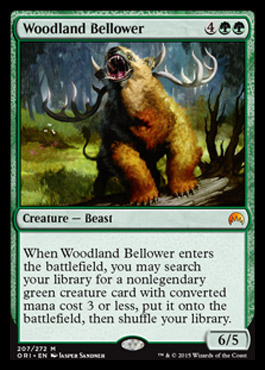
Magic Origins mythic Woodland Bellower is destined to be a Standard powerhouse. As a six-mana, six-power creature with a come-into-play ability, I can't help but reminisce about the cycle of powerful Titan creatures, like Primeval Titan, which defined Standard for as long as they were in the format.

The 6/5 body of Woodland Bellower is impressive, and its come-into-play ability is a creature tutor that digs deep into the deck and generates selective card advantage. Putting the creature into play develops the board and thus generates tempo advantage as well.

Woodland Bellower is only as good as the green creatures it can search for, so today I'll take a look at the best of what Standard has to offer. On the back of Woodland Bellower, these creatures will become a larger part of the metagame, and their stock will rise.

One of the best times to search for specs is when new cards are printed, because the relative value of other cards in the format may change, which comes with potential for significant appreciation.

There was an error retrieving a chart for Reclamation Sage

The creature-searching ability of Woodland Bellower has excellent silver bullet toolbox potential, and Reclamation Sage is a powerful and versatile addition to the arsenal. Destroying an artifact or enchantment is card advantage and a tempo play that will turn the tide of a game.

Access to this sort of effect is quite powerful in nearly every matchup, but it's too narrow to warrant much space in a deck. Woodland Bellower provides situational access to this effect without having to play multiple copies of the card.

There was an error retrieving a chart for Reverent Hunter

Woodland Bellower searching for Reverent Hunter has the potential to generate significant board presence, an aggressive tempo play that is likely to prove itself as one of the finest tutor options. It's not flashy, but it's effective, and producing a creature as large or larger than Woodland Bellower will be common.

There was an error retrieving a chart for Deathmist Raptor

Deathmist Raptor will surely be a common card searched for by Woodland Bellower. The Den Protector-Deathmist Raptor package is core to many green decks, and in the future it will often accompany Woodland Bellower. Tutoring for Deathmist Raptor is an investment into the future, and will help to win any attrition battle.

There was an error retrieving a chart for Satyr Wayfinder

Woodland Bellower can search for Satyr Wayfinder. Along with the 1/1 body, this is likely to provide an extra land, along with extra fuel in the graveyard.

There was an error retrieving a chart for Elvish Visionary

For an immediate card draw, Elvish Visionary is a very reasonable target card for Woodland Bellower's search ability. It's not the most powerful or flashy target, but in situations where no other target would be beneficial, taking one's chances with a fresh card off of Elvish Visionary will be the first step of a game-winning plan.

There was an error retrieving a chart for Courser of Kruphix

Courser of Kruphix may be the best three-mana green creature in Standard, and as long as it's in the format with Woodland Bellower, the two will be played alongside each other. Courser of Kruphix has value even into the late game, where it plays lands from the top of the deck, clearing them away to provide fresh draw steps.

There was an error retrieving a chart for Shaman of Forgotten Ways

Woodland Bellower can also search out a mana acceleration creature to set up a future play. It is able to access typical green mana acceleration creatures like Elvish Mystic, Voyaging Satyr, and Rattleclaw Mystic. But it can also find more specialty acceleration, specifically Shaman of Forgotten Ways, which is not only a power piece of mana acceleration, but an alternative win-condition.

There was an error retrieving a chart for Fleecemane Lion
There was an error retrieving a chart for Rakshasa Deathdealer

Woodland Bellower can also search for quality pieces of board presence, including powerful gold creatures.

Fleecemane Lion and Rakshasa Deathdealer are two options with potential to solidify a board state and pressure the opponent's position. More exotic options include Fanatic of Xenagos, Nyx Weaver, and Savage Knuckleblade.

There was an error retrieving a chart for Hornet Nest

While Woodland Bellower into Hornet Nest isn't the most aggressive line, it's a great way to lock up the ground and buy time for more expensive cards to take over the game.

There was an error retrieving a chart for Invasive Species

Invasive Species is interesting for its ability to bounce Woodland Bellower, allowing it to be re-cast for more value. It's not efficient, but it's worth noting. Invasive Species has potential to bounce another creature in play, so there are other ways to find value from the effect.

There was an error retrieving a chart for Abzan Beastmaster

For those with a longer-term focus, Abzan Beastmaster has potential to generate card advantage over a series of turns, and in any given situation Woodland Bellower is likely to be the largest creature in play.

Getting to Six Mana

Maximizing Woodland Bellower involves more than just identifying the best targets, it also requires discussing the best ways to get the card into play. Mana acceleration is the obvious first choice.

There was an error retrieving a chart for Nykthos, Shrine to Nyx

Nykthos, Shrine to Nyx is a great way to accelerate into Woodland Bellower.

There was an error retrieving a chart for Explosive Vegetation

Explosive Vegetation and Shaman of Forgotten Ways are also promising.

There's also the matter of cheating Woodland Bellower into play via less savory means, including Chord of Calling and Genesis Hydra.

However it finds itself in play, Woodland Bellower is slated for Standard success and will change the way green decks are built into the coming year. What are your thoughts on the card?

-Adam

Life As a Resource: GP Copenhagen and Suicide Zoo

Are you a Quiet Speculation member?

If not, now is a perfect time to join up! Our powerful tools, breaking-news analysis, and exclusive Discord channel will make sure you stay up to date and ahead of the curve.

deaths shadow art

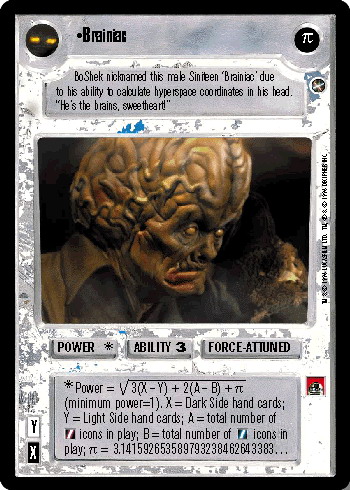
I grew up around collectible card games. My dad played Star Wars CCG, an incredibly complex, infinitely customizable card game from Decipher. It was the greatest game I never played: I was too young to grasp the game during its heyday. By the time I was old enough to play, Decipher had sadly moved on to brainiacother concepts (Young Jedi, Lord of the Rings, WARS), but I will always remember standing on my toes at the end of the kitchen table, straining to read and understand the cards my dad and his friends were playing. SWCCG’s main concept, (besides probably confusing its players as much as possible: I’m looking at you Brainiac) was… resource management! Well, that sounds familiar! We talked about Mana as a Resource last week, so this week I thought we’d focus on Life as a Resource. Today, I’ll talk a little bit more about SWCCG, give a refresher on the principle of using life as a resource in Magic, take a broad look at the latest results from GP Copenhagen, and then dive into to Fabrizio Anteri’s 14th place Suicide Zoo list. Let’s begin!
[wp_ad_camp_1]

Life as a Resource

Life. Mana. Card advantage. In SWCCG, these resources were one and the same, interchangeable and pulled from the same source. From the Reserve Deck (library), cards could be added to the Force Pile (mana), which could be used to play cards from hand. Spent "mana" would be recycled back through the deck to be used again. A player’s "life total" was equal to the cards in his Reserve Deck, and cards could be drawn into hand from the Force Pile (instead of spending mana, you could draw a card into your hand). In SWCCG, cards in the library represented both total life points and potential mana. Available mana could either be used as such, or drawn for card advantage, thus decreasing both “life” and potential "mana" sources. In my mind, the brilliance of SWCCG was the fact that three separate resources (life, mana, card advantage) could all be self-contained in the Reserve Deck, one continuously cycling system.

SWCCG is dead. Long live Magic! The point, please…

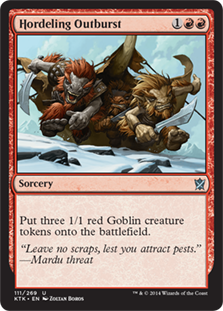
I say all this to introduce you poor souls to SWCCG, also known as Heaven-In-Cardboard-Form. Also, to explain my preoccupation towards what some refer to as "linear strategies", but I call "optimized decks", Hordeling Outburstdecks that take a particular concept or technique and execute that concept or technique to the best of its potential. Linear decks, in my mind, are relatively simple. They can be focused on attacking, with small to medium-sized creatures, and maybe with access to a small number of interactive spells for furthering its goals. Abzan Aggro in current Standard comes to mind, along with Mono-Red. But while these strategies are definitely "linear", I wouldn’t consider them "optimized". Optimized strategies are pushed to the limit, where almost every non-land card (and sometimes even lands) work towards the execution of a single goal. This is seen most often in combo decks like Living End and Storm, where every piece of the deck fits together perfectly. It can also exist in aggro decks, where cards work to generate an advantage and execute the deck's gameplan.

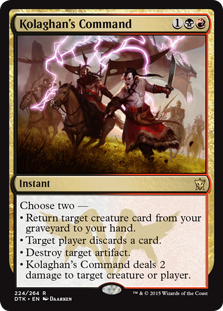
Let’s take a step back to Magic Fundamentals Day One. We have a Snapcaster Mage in play and a healthy 14 life. Our opponent is at 7 with a Gurmag Angler. We have a Lightning Bolt and lands in hand, while our opponent has a Kolaghan's Command we know of and some other cards. It’s unlikely we are going to be able to fight our opponent with the limited resources we have available Kolaghans Command(read: cards that do things). Our opponent tanks for a minute, then attacks us with Angler, giving us two options. Option one: we block, finish off the Angler with a Bolt in hand, and hope to draw a Terminate for Angler 2.0 once our opponent recurs him with Kolaghan's Command. Option two: we take the hit, looking to crack back for two and put our opponent to a virtual 2 with the Bolt we have in hand. Our opponent attacked into our Snapcaster when he could have killed it, which suggests he wants to save his Kolaghan's Command in case we kill his Angler. At this point, every Lightning Bolt, Snapcaster Mage, and Kolaghan's Command left in our deck becomes an out with our opponent at two. We increased our outs from 2-3 (the Terminates left in our deck) to probably 7-9 (Snaps + Bolt + Kolaghan's Command). How did we do this? By using our life as a resource! Life points, just like mana and card advantage, can be exchanged for gains in other areas. In this scenario, we used 5 life points to essentially tap our opponent’s creature, allowing us to swing in with our significantly weaker creature without fear of being blocked to put our opponent into burn range.
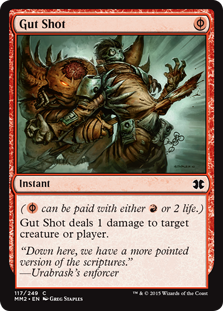
Gut ShotOne of my favorite cards ever in Magic is Gut Shot. I started getting into competitive Magic around Scars of Mirrodin block, and New Phyrexia introduced Phyrexian mana; the principle of Life as a Resource in one mechanic. At that time, the main decks were big-mana Titan ramp strategies, Delver tempo decks, and Birthing Pod (the king of midrange). Delver decks in Standard were focused on a specific sequence of plays in the early game: turn one Delver, turn two flip and protect with Mana Leak. As a result, Delver could sometimes have difficulties with opponents that went turn one Birds of Paradise, turn two Birthing Pod. Delver decks were tempo decks first and foremost, which meant they weren’t interested in card advantage, but rather putting the opponent on the back foot and keeping them there. Gavin Verhey wrote one of my favorite articles ever on the Mothership almost three years ago about Delver, which you can read here. His own UW Delver list from the article is below:

UW Delver, by Gavin Verhey

Creatures

4 Delver of Secrets
4 Snapcaster Mage
4 Geist of Saint Traft
3 Hero of Bladehold

Sorceries

4 Ponder
4 Gitaxian Probe

Instants

4 Vapor Snag
3 Gut Shot
2 Mental Misstep
2 Mana Leak
2 Thought Scour
1 Divine Offering

Artifacts

2 Sword of Feast and Famine

Lands

4 Glacial Fortress
4 Seachrome Coast
2 Moorland Haunt
2 Cavern of Souls
7 Island
2 Plains

Sideboard

2 Dismember
3 Augur of Bolas
4 Knight of Glory
3 Talrand, Sky Summoner
2 Negate
1 Restoration Angel

In the article, Gavin explains how Delver decks effectively used Life as a Resource with cards like Gut Shot and Mental Misstep to slow opponents down while they worked to execute their gameplan. My inner red mage loved playing Delver, controlling the pace of the game, and killing my opponent while they sat with a full grip of cards they never had time to cast.

Turning to GP Copenhagen

Last weekend 1,345 players descended upon Copenhagen, each searching for fame and glory through Magic cards. Coming off of Grand Prix Charlotte, Collected Company Elves and Goryo's Vengeance combo were at the forefront of everyone’s mind, with big-mana decks like Tron and Amulet Bloom slightly behind. While I did not personally play in the recent GP (my walking legs don’t reach Copenhagen), those that did and wanted to succeed would have to keep in mind the top performers from Charlotte and the SCG Season Two Invitational if they intended to place well.

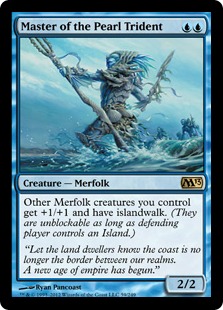
Master of the Pearl TridentA full 14 different archetypes finished in the Top 16 of GP Copenhagen, with Merfolk occupying both the top spot and another Top 8 performance. Grixis also did well, placing two copies in Top 8: one with Delvers, one without. Tron and Goryo's Vengeance both placed a copy within the Top 16, though were held out of Top 8. The best Amulet Bloom deck finished at 22nd, while Elf Company doesn’t even seem to have made Day 2. One detail of note from Copenhagen is the prevalence of big-mana hate, with almost every deck packing tech like Blood Moon, Fulminator Mage, Ghost Quarter, and Cosi's Trickster. To me, the biggest takeaway from GP Copenhagen is that almost every deck in the format is susceptible to hate, except perhaps Twin. Twin's many varieties placed 25 copies into Day 2, almost 16% of the metagame. Twin has been the consensus top deck of Modern for a while now and consistently puts up numbers despite having a target on its head.
Suicide Zoo at the Grand Prix

One piece of tech to come out of GP Copenhagen was Fabrizio Anteri’s 14th place finish with Suicide Zoo. Anteri went 8-1 on Day 1, missing Top 8 on breakers with this innovative rogue deck that’s been popping up in MTGO Dailies here and there since February. Frank Karsten poked around a little with this deck on ChannelFireball, and I played this deck for a while on stream (Twitch.tv/Architect_Gaming!). I also wrote a full deck-breakdown on my own blog to a slightly smaller audience. Here's Anteri's decklist from the GP:

Suicide Zoo, by Fabrizio Anteri (GP Charlotte 2015, 14th place)

Creatures

4 Death's Shadow
4 Wild Nacatl
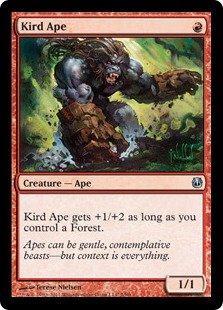
4 Kird Ape
4 Monastery Swiftspear
4 Street Wraith

Sorceries

4 Thoughtseize
4 Gitaxian Probe

Instants

4 Become Immense
3 Temur Battle Rage
3 Mutagenic Growth
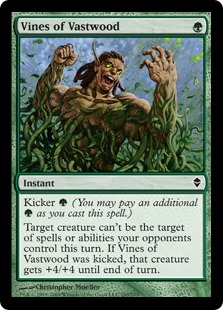
2 Vines of Vastwood

Artifacts

4 Mishra's Bauble

Lands

4 Verdant Catacombs
3 Bloodstained Mire
2 Wooded Foothills
2 Windswept Heath
1 Stomping Ground
1 Godless Shrine
1 Overgrown Tomb
1 Blood Crypt
1 Temple Garden

Sideboard

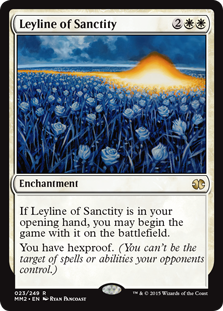
4 Leyline of Sanctity
3 Stone Silence
2 Nihil Spellbomb
2 Ancient Grudge
2 Spellskite
2 Dismember

Decks like this are what I love the most about Magic. Every card works to accomplish a specific objective, and the strategy as a whole pushes one of the fundamental principles of Magic (Life as a Resource) to its fullest, riding the literal edge of what is possible. Similar to the Delver decks of New Phyrexia Standard, Suicide Zoo takes advantage of free spells and uses its life total as a resource to generate an advantage and pull ahead of the opponent, keeping them on the back foot and off of their primary gameplan.

Fabrizio received a well-earned deck tech for his efforts at Copenhagen and I want to talk about Anteri’s innovations to the list and some finer points of the deck. The main changes include swapping Steppe Lynx for Kird Ape, moving Thoughtseize to the main, and abandoning Nourishing Shoal for Leyline of Sanctity.  One final thing before we jump in: I won’t give a full primer on the deck again, so for anyone unfamiliar with the deck or how it operates, I highly suggest reading my primer for a brushup.

Kird ApeKird Ape for Steppe Lynx – Steppe Lynx is a powerful beater, but only on turn one. We only play 16 lands, and while sometimes we cantrip into additional lands and flood out, other times we only see one or two lands all game. This often leaves Lynx as a 0/1 past the third turn. Also, while the goal of our deck is to actively cause pain primarily through our manabase, supporting four different color one drops (Death's Shadow, Wild Nacatl, Monastery Swiftspear, Steppe Lynx) is difficult, especially with one-land hands. Dropping Lynx means we only need white in the maindeck to pump Wild Nacatl, and playing Kird Ape makes Stomping Ground the “best” turn one land for most hands.
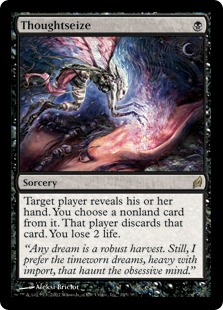
ThoughtseizeThoughtseize over Lightning Bolt – Lightning Bolt is synergistic with the deck in the sense it is cheap and causes damage, but it often doesn’t do enough to warrant its slot. In our deck, Bolt is at its best when going to the face and pumping a Monastery Swiftspear, but even then Mutagenic Growth does almost the same thing for “free”. At its worst, we have to use Bolt to remove creatures, which we normally don’t care about as our creatures are usually bigger than x/3. The creatures we really care about killing (Deceiver Exarch, Gurmag Angler, huge Tarmogoys) are out of Bolt range, which makes Bolt inefficient and inconsistent removal in our deck. Think about that for a second: Lightning Bolt is inefficient and inconsistent in our deck. Thoughtseize, on the other hand, does exactly what we want. It removes Tarmogoyf and Terminate. It functions as removal and protection. It even Shocks us for two! Cheap, flexible, fuels delve and taxes our life total, Thoughtseize is quietly one of the best cards in our deck.

Leyline of Sanctity MM2015Leyline of Sanctity over Nourishing Shoal – Nourishing Shoal did good things for us when we played it. Alongside Become Immense and Hooting Mandrills, Shoal was a “free” six life against strategies like Affinity and Burn. The issue here is that two cards and six life wasn’t enough; Burn really is that horrible of a matchup. Leyline of Sanctity is an all-star against them in our deck, more so than other decks, because by the time they can find and remove it with Destructive Revelry, we are usually too far ahead. Just disrupting them for a turn or two is all we really need to develop a board and start hitting hard. Leyline also helps in the Jund matchup, which can sometimes be a breeze but can also be quite difficult for us. If they draw the Dark Confidant/value half of their deck, we run them over, but if they go discard into removal into Liliana we can’t even compete. Leyline is a solid card that can invalidate their best draws and leave them dead in the water when we attack their hand with Thoughtseizes of our own.

vines of vastwoodVines of Vastwood - Vines works as an Apostle's Blessing that also pumps. With Vines of Vastwood, we should usually be sequencing our lands as such – Stomping Ground/Overgrown Tomb/Temple Garden if we have three fetches - Stomping Ground/Godless Shrine if we two. The great thing about Vines is that we can usually get the pump from it as well, as most opponents will wait to use removal on our turn in an attempt to snag creatures after we Immense/Rage. Similar to how Infect opponents should be removing creatures during their own main phase, our opponents are punished by waiting for our combat to use removal by Vines and Thoughtseize.

Suicide Zoo is a powerful strategy that does something unique. While most decks are looking to goldfish, and some are messing around with Kolaghan's Command, we just get to bash face and power out huge threats. Some view Suicide Zoo as a glass cannon. It really isn't. Infect suffers from weak creatures, a low creature count, and dies to things like Izzet Staticaster and Night of Soul's Betrayal. Affinity can’t fight through hate if people decide to prepare for it. If we want, we don’t even need to assemble our two piece combo, as we can just aggro with Wild Nacatl and Death's Shadow the normal way. Suicide Zoo even benefits from the fact that both halves of our “combo” are perfectly serviceable on their own, which can’t be said about Deceiver Exarch and Splinter Twin.

Final Thoughts on Brews

There's a contingent among Magic players that dismisses decks until they are “proven”, whether this means winning an event or making Top 8. Brian Kibler spoke a bit on this topic in his recent SCG Premium article here, which I will quote below:

People piece together information to fit whatever narrative already exists in their head. If someone plays a deck like Splinter Twin, Jund, Affinity or Amulet Bloom and go 0-3, people will generally assume they got particularly unlucky, because that's an explanation that fits what they already believe. But if someone plays an unusual or unknown deck and has the exact same result, the focus will generally instead be on the quality of the deck rather than on the player's misfortune - again, because it fits their narrative most effectively.

I think in many cases, players make decisions about what decks to play based on these factors. They feel like as long as they play a known - and thus "safe" - deck, their choice can't really be called into question. If they have a poor finish playing Splinter Twin, at least they don't have to worry about it being because they picked the wrong deck. But if they do poorly with a deck of their own design, or something similarly off the radar, they may feel foolish for making that decision in the first place.

No one has ever built a good deck without building a bad deck first, and many of the best decks have sprung from ideas that others thought were foolish.

Second SunriseThis narrative can also be flipped. Often, a gimmick deck or new strategy pops up to widespread derision and dismissal, and a few brave souls pick it up and start working on it. Then it eventually wins a Pro Tour and becomes so oppressive it must be banned. This is not to say I believe that Suicide Zoo is “best-deck capable” (which it very well could be: I just don’t know). I am saying that dismissing a deck because it isn’t “proven” or “Tier 1” only restricts our thinking and hinders us as competitive players. When viewers to my stream ask me “Why are we playing this deck”, partly as friendly trolling but also because they think the deck is “bad”, I usually respond “To learn.” Which is why I read, write, and play Magic in the first place.

What do you think? Does Suicide Zoo have what it takes to put up consistent results in Modern? If not, why not? What do you think about my thoughts on using Life as a Resource? Do you remember SWCCG? Let me know in the comments below!

Thanks for reading!

Trevor Holmes
The_Architect on MTGO
Twitch.tv/Architect_Gaming
Twitter.com/7he4rchitect

For next week, I plan to do a video on either Grixis Control or Suicide Zoo where I give a Deck Tech and run it through a Magic Online Daily event. Which deck would you rather see me play? Let me know in the comments!

Oblivion Ring Loop Fixed on MTGO

Are you a Quiet Speculation member?

If not, now is a perfect time to join up! Our powerful tools, breaking-news analysis, and exclusive Discord channel will make sure you stay up to date and ahead of the curve.

As you're all well aware, there are lot of things that MTGO could stand to improve. There are bugs, strange features, and a very weak pack economy. They fixed the Oblivion Ring loop though!

There was an error retrieving a chart for Oblivion Ring

If you weren't aware, there used to be problems with empty boards and Oblivion Rings, as evidenced by LSV in this hilarious video. This video shows that the issue has now been fixed.

It's good to see that they're working on improving functionality, though this is hardly the most impactful update that could have been made. As financiers, I'm sure we'd all much rather see the issues pointed out in Henry Druschel's piece on the MTGO economy fixed. For now, we can only hope that this level of exposure will help.

Avatar photo

Ryan Overturf

Ryan has been playing Magic since Legions and playing competitively since Lorwyn. While he fancies himself a Legacy specialist, you'll always find him with strong opinions on every constructed format.

View More By Ryan Overturf

Posted in FreeTagged 4 Comments on Oblivion Ring Loop Fixed on MTGO

Have you joined the Quiet Speculation Discord?

If you haven't, you're leaving value on the table! Join our community of experts, enthusiasts, entertainers, and educators and enjoy exclusive podcasts, questions asked and answered, trades, sales, and everything else Discord has to offer.

Want to create content with Quiet Speculation?

All you need to succeed is a passion for Magic: The Gathering, and the ability to write coherently. Share your knowledge of MTG and how you leverage it to win games, get value from your cards – or even turn a profit.

Insider: Magic Origins Old-School Inspirations

Are you a Quiet Speculation member?

If not, now is a perfect time to join up! Our powerful tools, breaking-news analysis, and exclusive Discord channel will make sure you stay up to date and ahead of the curve.

The era of the core set is ending with fireworks. Our first volley was the flip planeswalkers. Wizards is bringing us on a journey. This journey starts before our beloved characters were epic travelers of the multiverse.

These game changers, in the vein of Garruk Relentless, are the epitome of flavor. Building the experience of becoming a planeswalker into five sweet cards is certainly my favorite part of the game since the introduction of this card type. Last week, I detailed my analysis of these new cards and I’m hopeful that some of them will see play in Standard. Witnessing their transformation during game play will help us dive into the game with a sense of realism like we’ve never experienced before.

In the second burst of explosions Wizards is bringing us the flavor of some old-school Magic cards updated with new tweaks and balanced for our current formats. First up in this group is Dark Petition. Although it has to compete with Sidisi, Undead Vizier, this Diabolic Tutor with an attached Dark Ritual provides an interesting tweak to our expectations from a tutor. Take a look at the card for yourself.

Dark_Petition

Dark Petition may see some play, but I think it seems too slow. I like Sidisi because she can help you stabilize a board. Dark Petition can arguably do the same thing though if you are tutoring for a card like Hero's Downfall.

It’s intriguing that we will have multiple tutors available for us to brew with at the same time though. I’m not sure of the last time that happened but with both cards costing five mana, I think we’re safe this time from a broken combo deck.

Honored_Hierarch

Honored Hierarch is a pseudo-Birds of Paradise/Steward of Valeron hybrid card. Many players are entranced by the allure of playing this creature turn one into an empty board from your opponent.

Despite presales for this card starting around $7, I’ll happily play the skeptic on this one. There will be times when your dream scenario happens and you get to attack and give your dude some renown, but will that happen often enough to make this creature a staple? That is the question on everyone’s mind and I’m still the skeptic.

Regardless of how often you can sequence ideally, there will be many more times when you draw this creature after turn one. Unlike any of its predecessors, Honored Hierarch will only be a one mana 1/1 when he’s played later in the game. This is not the type of card I’m interested in playing because it’s too situational.

Languish

Sometimes even when you know what a word means, it’s hard to formalize a definition in your mind, so let me spell it out for all of us. Languish means to lose or lack vitality; grow weak or feeble; to suffer from being forced to remain in an unpleasant place or situation. These definitions seem like perfect fit sleeves on a foil Snapcaster Mage because with this shout-out to old school Wrath of God effects, I am heading over to the corner to hide.

The card Languish fills me with terror at its existence. I’m thinking about starting a petition with the other aggro players out there to send to Wizards about their oppressive printing of cards to keep us down.

Kidding aside, this card is as close to Damnation as we are likely to get, but just like Crux of Fate, you can build your deck with this sweeper in mind so that your creatures will live through the spell. The saving grace is that because there are so many strong creatures with five toughness, I’m not sure that this spell is playable maindeck. It certainly isn’t going to be viable to play four maindeck like you would with a normal wrath effect, but maybe having a couple of them would work.

Either way, this is a card whose existence will shape the very nature of the format.

Starfield_of_Nyx

Even though I’m a bit salty that this card is being printed as Theros block is nearing rotation, the callback to old school cards is enough for me to reorient myself with a positive attitude. We don’t often see spells like this printed these days. Wizards’ focus has been on pushing the creature envelope nearly to the breaking point.

Think about a creature that sees virtually no play but is extremely powerful. The one in my mind is Savage Knuckleblade. You may have thought of a completely different card because there are many that fit this mold. Knucks is so powerful that if it were printed in the past, it may have been one of the defining cards of that era. Now, it sits on the sidelines most of the time which is crazy for how potent and all-purpose that threat is.

Despite focusing on making creatures interesting and epic, we occasionally get a gem like Starfield of Nyx. Cards like this were created for the brewers to get their gears turning. Even at first glance, I was immediately drawn to this card for how intriguing it is. Although I never got to play with the cards personally, I always thought that the Opalescence-Replenish deck looked like a blast to play. With this new card we have the two of those cards all in one card!

Another interesting feature of this enchantment is that we have access to creatures that are also enchantments. That was not the case back when this strategy was first printed, but it adds an interesting dimension to the possibilities in Standard.

Decks like G/B Constellation have seen some play at various times while Theros block has been legal. It’s possible that the Starfield is the next evolution of that deck, but I think what’s more likely is that a completely new deck will emerge that uses this sweet new card.

Pia_and_Kiran_Nalaar

Of the cards spoiled thus far, my favorite by a mile is Chandra’s parents. Pia and Kiran Nalaar is the type of card that immediately gets my attention. I’ve played Siege-Gang Commander at every opportunity and these new parental figures are the closest thing we’ve seen to this effect in a long time.

When I think of this card, I align it with many different cards that have previously been printed. Yes it resembles Siege-Gang Commander, but if it were just Beetleback Chief, I would probably still be interested in playing the card.

Also, I can’t help but think back to M15 Limited. When I drafted M15, one of the archetypes that I tried to draft many times was U/R Artifacts. Take a look at the type of cards this strategy played.

UR Artifacts

Possible Cards for the Deck

I’m not sure if you ever tried to draft this deck, but often it didn’t work out very well. You had to balance drafting artifacts to enable these interesting cards, but most of them weren’t worth the eventual payoff. Nevertheless, I was enamored at the prospect of drafting this harmonious contraption.

The reason I bring up M15 Limited is because not only have players tried to draft these interactions, but I’ve seen sincere efforts to build these synergies into constructed decks. Pia and Kiran seem like an essential part of the puzzle. Not only do they offer a reward for playing other artifacts, but they also provide artifacts to enable the strategy.

There are plenty of applications for this token maker. We could try to develop a deck similar to U/R Artifacts or we could insert this card into any number of preexisting decks with access to red mana. Pia and Kiran could help us enlist a horde of tokens to overwhelm our opponents, combo with Purphoros, God of the Forge, or just present a solid midrange threat similar to the way that Jund used Siege-Gang Commander. My head is swirling with various applications for this new card and I'm excited to cast it in Standard.

Day's_Undoing

Lastly, the inspiration for this card, Timetwister! Cough, cough, excuse me, I mean Day's Undoing. The comparison is obvious but still important. Timetwister is a member of the Power 9 and for good reason. This card provides a potent effect on the game and we have not seen a card this close to one of the Power 9 ever been printed. Admittedly, Timetwister is the least powerful of the Power 9, but it doesn't take much for a card to be less powerful than Black Lotus, the Moxes, and Ancestral Recall.

There have been plenty of draw-sevens over the years, but most of them are expensive cards like Reforge the Soul or Temporal Cascade. Once we were even given a four-cost spell with this effect in Colfenor's Plans. Despite their mana intensity, players have still tried to find applications for these cards because they provide a potent effect on the game that can be set up to benefit one player more than the other.

This combo enabler is so great because you can take advantage of it in the early game, whereas the other printings of this effect are too expensive to fully utilize. Standard is likely a fine place for this card because there aren't many ways to abuse it. It may see play in Standard and be a solid card, but just like Treasure Cruise, I doubt it will be a problem.

When I start thinking about possible applications in Modern, most of my conclusions end up resulting in preemptive bannings because the card is too good for the format to handle.

Step one for my brain, couldn't that card be sweet in Scapeshift and revitalize that deck the way Dig Through Time did? You could cast it in the mid-game and draw Remand, Cryptic Command, or Lightning Bolt to interact with your opponent on their turn, then untap and hopefully combo them.

Step two was to combine it with Burn the same way Treasure Cruise did. Cast all your burn spells then get a new hand and do it all over again.

Those two situations are just the tip of the iceberg. The bulk of the applications are below the surface, but luckily players like Craig Wescoe are happily sharing their thoughts with us.

That's terrifying.
Well, that's terrifying.

Yesterday Craig posted this on Twitter. I believe he did so not to actually ask the question of whether or not this is a keepable hand but rather to show us how broken this new card is. Take a look at Chaz's write up of the situation for a deeper analysis of this tweet.

There's a long list of possibilities for this card, but one thing's for sure, this is no Time Reversal. I've almost pulled the trigger on preorders for this card. Even at $23 that seems low if this card is half as broken as it seems.

How long will it last in Modern? Surely Wizards won't let Modern devolve into quick combo decks. They have proven in the past that their goal is a slower format, yet they continue to print cards that quickly and thoroughly wrap the rest of the format around themselves. The rest of the cards seem reasonably priced but this mythic rare could easily double in value if it sees as much play as Treasure Cruise did.

What are your thoughts about Day's Undoing or any other card I've talked about today? Will Day's Undoing be the undoing of Modern? Will these other cards impact Standard and shake things up? Let me know in the comments below.

Until next time,
Unleash the Force!

Mike Lanigan
MtgJedi on Twitter
Jedicouncilman23@gmail.com

Holiday Cube Updates Announced

Are you a Quiet Speculation member?

If not, now is a perfect time to join up! Our powerful tools, breaking-news analysis, and exclusive Discord channel will make sure you stay up to date and ahead of the curve.

When Randy Buehler threw a bunch of vampires into the Legacy Cube, people weren't too excited. Even if I'm not big on the vampires, I approved of his methodology. Now, Randy has been charged with updating the Holiday Cube, and has approached the task with the same methods.

There was an error retrieving a chart for Time Vault

Cutting Time Vault definitely makes sense with how boring it made a lot of drafts, and indeed most of the cards moving around are obvious improvements. I'm definitely happy to see Gurmag Angler getting the respect that it deserves.

There are only really two changes to the Cube that bother me. I'm 100% against cutting Plow Under, as it's one of my Cube darlings. It's been great in every green deck I ever drafted, and it's definitely not oppressive the way that other cards in the cube are. I absolutely welcome the inclusion of Whisperwood Elemental, but there has to be something worse that can be cut.

The other change that I just don't understand is bringing in Gitaxian Probe and Mental Misstep while cutting Talrand, Sky Summoner. Misstep is just kind of blah overall and I don't grok the concept of cutting Talrand while bringing in support for a Talrand deck. Outside of that though, I still very much approve of the direction MTGO Cubes are going.

Day’s Undoing: Magic Origins Spoiler

Are you a Quiet Speculation member?

If not, now is a perfect time to join up! Our powerful tools, breaking-news analysis, and exclusive Discord channel will make sure you stay up to date and ahead of the curve.

What a difference a Day makes, huh?

Today I’ll be highlighting a very intriguing card that will be printed in the upcoming set Magic Origins. I wanted to highlight Day's Undoing, because of all the cards in the Magic Origins spoiler coverage, thus far, it seemed to generate the most buzz on the various social media outlets.

DAcpJdprACmqnPPG2

Rather than explain why drawing seven cards is good, I wanted to take the time to demonstrate some very early price movement in direct reaction to this card. This card is obviously powerful in it’s own right, and when cards resemble “Power 9” predecessors, they should always draw one’s attention. In this case, since presale prices are approaching $30, let's look at some other cards that have been moving as a result of this spoiler.


There was an error retrieving a chart for Quicken
There was an error retrieving a chart for Leyline of Anticipation

These were the first of what could be many cards that will be affected by Day’s Undoing in an attempt to try and maximize the card’s power. Now, is there any validity to these? Possibly. The coming days will only tell. The only positive here to this kind of hysteria-induced investment is that the initial cost of these cards was fairly inexpensive.

Now, we have seen these types of investments before, and we have seen these types of cards spoiled before--remember Time Reversal? Yeah, those were the days, right? Pre-ordering for obscene amounts to only fade into obscurity.

Investment of this type is extremely bold, but the upside is a great ROI should this card end up being completely overpowered. Card evaluation has to be swift and as accurate as possible to reap the rewards of investments of this nature during pre-order time, considering none of the player base has actually played with this card before. So, opportunity cost comes into play more so than it does on most “regular” investing and speculation.

Risking $30 on a card that hasn't hit players' hands seems rough, so if you're long on Day's Undoing but don't want to play pre-order roulette, these other cards (and cards like them) represent alternatives.

So, are Quicken and Leyline of Anticipation the first of many? Or could we see this trend continue in the quest to utilize a potentially powerful card? My vote is the trend could continue. If there's one thing I’ve learned in this market, it's that just about anything is possible, but I try to heed caution at every turn. It doesn’t take too much to nudge the market in the right direction, so investors have to pick and choose what’s really worth their time and money.

Like I said earlier, the initial investment in these secondary cards isn’t that high, which covers some of the risk involved, but just keep in mind that it may not always be the case. If you were one of the few people who were bold and pulled the trigger already, then hopefully this pans out for you. Usually it’s an ill-advised type of spending, but that doesn’t mean it couldn’t work out for the better.

These specific cards may just end up being “cute” and not end up maximizing the card's potential.  End-step casting of Timetwister is surely brutal, for sure, but is it as brutal as this Affinity opener, as presented by well-known Pro Tour competitor Craig Wescoe:

That's terrifying.
That's terrifying.


I asked my fellow QS team what they thought of the card, and was met with Kelly’s response.


Kelly’s Pick:

There was an error retrieving a chart for Alchemist's Refuge

"When Chaz told me about the price spikes from Quicken and Leyline of Anticipation, a thought immediately sprang to mind. I've been trolling MTGO for good long-term, bulk rare specs, and I had come upon the Innistrad block utility lands. I was a big fan of Nephalia Drownyard, but Alchemist's Refuge caught my eye after seeing Day's Undoing printed. I think I'd rather have the land in my deck than the Leyline; Leyline is a dead draw after turn zero and the land doesn't even occupy a true slot in your deck. It's also uncounterable (but regrettably takes some collateral damage from Blood Moon). I figured it was worth the gamble, and burned a bunch of MTGO Bot Credit to add a significant quantity of the land to my bulk rare portfolio."

Another extremely good card to pair with this potentially powerful card. This will be the talk of Origins for sure, as people clamor to use and break this “fair” Power 9 card.

 Just another Day in the finance world! Have a great Day, don’t let it get Undone!

Want Prices?

Browse thousands of prices with the first and most comprehensive MTG Finance tool around.


Trader Tools lists both buylist and retail prices for every MTG card, going back a decade.

Quiet Speculation