menu

Insider: Delve(r)ing in Columbus

Are you a Quiet Speculation member?

If not, now is a perfect time to join up! Our powerful tools, breaking-news analysis, and exclusive Discord channel will make sure you stay up to date and ahead of the curve.

With the Columbus Invitational in the books, we now know a lot more about Modern than we did last week.

If you were skeptical about the ability of Amulet Bloom to win long games, Chris VanMeter has shown you the truth. If you weren't into Kolaghan's Command, you have now seen its power demonstrated. If you thought Kolaghan's Command would push Affinity out of the format, you have seen the resilience of that deck as well. And, at the end of the day, we have seen that Tron can beat anything.

There was an error retrieving a chart for Karn Liberated

Many players like to speculate on what will be banned next in Modern, and with the historically volatile nature of the format this behavior is typically justified. That said, the results of this weekend showcased a lot of different powerful strategies all performing quite well, leading to varied Top 8s.

I like where the format is sitting currently. It actually looks like there are a lot of powerful options instead of one deck on the verge of being banned and a bunch of medium decks that are probably just worse choices.

Collected Company and Grixis have emerged as powerful new strategies while a number of older decks have remained entirely viable. For this reason, a banning of anything wouldn't make much sense to me. I'd entertain the idea of some number of cards coming off the banlist, but for now I see it as a more valuable exercise to not speculate too aggressively on such matters.

There was an error retrieving a chart for Punishing Fire

For Columbus, there was no way that I'd have enough time to convince myself not to play Grixis Delver. After winning a PPTQ with the deck, I concluded that Delver is sort of a weak link in the deck, but I couldn't find a way to cut it without compromising the matchup against decks like Tron and Amulet Bloom. I made some minor changes to the list and registered the following for Columbus:

Grixis Delver

Creatures

4 Delver of Secrets
1 Gurmag Angler
4 Snapcaster Mage
3 Tasigur, the Golden Fang

Spells

1 Electrolyze
2 Kolaghan's Command
4 Lightning Bolt
4 Mana Leak
1 Remand
4 Spell Snare
4 Terminate
4 Thought Scour
4 Serum Visions

Lands

2 Island
1 Mountain
1 Swamp
1 Blood Crypt
2 Bloodstained Mire
1 Darkslick Shores
1 Flooded Strand
4 Polluted Delta
4 Scalding Tarn
2 Steam Vents
1 Watery Grave

Sideboard

2 Engineered Explosives
1 Combust
2 Countersquall
1 Deprive
1 Dismember
1 Dispel
2 Electrolyze
1 Hibernation
2 Magma Spray
2 Spell Pierce

I ended up piloting the deck to a 7-1 record at the Invitational, with my one loss consisting of my keeping two six-card one-land hands and bricking into oblivion. The deck is very powerful, if a little confused by the inclusion of the Delvers.

There was an error retrieving a chart for Delver of Secrets

The way that the deck plays out is rather strange. The best way to try to generalize what the deck is doing is by calling it an aggro-control deck with a tempo skeleton. Many of the deck's slots are capable of committing to the tempo strategy of just doing things more efficiently than your opponent and closing the game out quickly, but the deck is fully capable of going long.

Spell Snare is currently better positioned now than it has ever been, and it is a key element in allowing this deck to play the aggressor against certain decks while still being able to play the control against even the most grindy forms of opposition.

Modern is flush with relevant two-drops, the most notable being Tarmogoyf and Snapcaster Mage. When the late game of so many decks can be countered by the same tool that helps you dominate the early game, you gain some serious percentage across the board by jamming the full set of Spell Snares.

There was an error retrieving a chart for Spell Snare

On the other end of the spectrum, your spells that cost one measure up very well against other spells that cost one, while Mana Leak and Terminate shine against almost everything that costs three or more.

One of the more obscure elements of this deck that I would like to highlight is the sideboard Countersqualls.

I've recognized Snapcaster Mage as the best card in Modern many times. One of the reasons that the card is so great is that its inclusion in any deck with four Lightning Bolts makes that deck capable of winning games as a burn deck. Countersquall amplifies this element in any matchup defined by non-creature spells, and gives you more avenues to take chip shots and really pressure your opponent's life total.

There was an error retrieving a chart for Countersquall

The two things that I'm most worried about when playing this deck are Lingering Souls and hexproof, and you can see that fear evidenced in the construction of my sideboard.

Electrolyze is objectively weaker than Kolaghan's Command, but you have to do something to stop from losing to a four-for-one. Engineered Explosives can be used to clean up spirits and hexproof creatures alike, though it doesn't exactly work against umbras. That's where the miser's Hibernation stands out, which also has splash damage against Collected Company Elves.

Going Forward With the Deck

The big question remains--should this deck continue to play Delver of Secrets? The answer is still unclear to me, but I've come up with what I consider to be the strongest alternatives.

Before we explore cutting Delver, it's important to understand why that's something we'd want to do.

The answer is that Delver is the odd man out when you are trying to play a control game. I was the only Delver player to post a 7-1 or better record in Columbus, with the other Grixis decks being more controlling. The decks generally shifted to Blood Moon and Cryptic Command over Delver, or Splinter Twin in the case of Kyle Boggemes.

There was an error retrieving a chart for Splinter Twin

These cards are great for stealing games, but they're very easy for an experienced player to prepare for and defeat. I like the other Grixis lists from the Invitational, but at the end of the day what they make up in grindy matchups they lose against decks like Amulet Bloom and Tron, and I believe that they hurt the bad matchups more than they improve the good ones.

The change that I'm considering is cutting Delver for Lingering Souls. The extra color isn't ideal, but Souls fits perfectly in our Thought Scour deck if we ignore the fact that the mana isn't free. This inclusion would make us much better against the other Grixis decks in addition to being great against Affinity and other Lingering Souls decks.

There was an error retrieving a chart for Lingering Souls

The major questions about making Souls work are how to configure the manabase and what, if anything, we need to change to be positive against Amulet Blood and Tron.

The manabase solution involves more Flooded Strands and just more lands in general, while the Bloom and Tron solution likely involves a very hateful sideboard. The change would be dramatic and any list I could post would be so rough, I would rather wait to see if I can make this work before posting a list.

It seems pretty likely to me that this build of the deck would likely need Blood Moon for Tron and Amulet Bloom, which may sound silly when you're splashing a fourth color, but you'd be boarding out the Lingering Souls in those matchups anyway.

As far as changes for the deck if you decide to leave Delver in, I would play my exact 75 again in a heartbeat.

You might be tempted to run Gitaxian Probe. Don't. You have the tools to beat everything. There is a cost to running four Terminate in that drawing multiples in certain matchups sucks, but having the full four will help in the matchups where it's good much more often than getting Terminate-flooded will cost you games. This is very much a three-game deck, and the more Probes you play the more tools you'll have to remove.

There was an error retrieving a chart for Gitaxian Probe

~

I really like the state of Modern right now, and I believe that fears of bannings are unwarranted currently. Tron and Amulet Bloom would be the two potential decks on the chopping block, but neither have demonstrated any breaking of the rules in a way that wouldn't have already led to them being banned.

Infect is every bit as capable of turn two or three kills as Amulet Bloom, and neither deck seems to be oppressively pushing things out. When Cloudpost was banned, it was because it pushed all of the other slow decks out of the format, which Tron is in no way guilty of, even if it does put pressure on them. Some pressure is totally fine.

If you have any ideas for how to cut the Delvers without costing the deck too many percentage points against Tron and Bloom, I'm very interested to read them in the comments.

Thanks for reading.

-Ryan Overturf
@RyanOverdrive on Twitter

Dear QS, Welcome to 2015.

Are you a Quiet Speculation member?

If not, now is a perfect time to join up! Our powerful tools, breaking-news analysis, and exclusive Discord channel will make sure you stay up to date and ahead of the curve.

You might have noticed a few changes around here lately.  And by lately, I mean about 10 minutes ago.  You might also have noticed that there hadn't been many changes around here lately;  I'll be the first to admit that our old theme looked a bit dated, and it was long overdue for a face lift.

Before I get into the bits and pieces of what we did (beyond, you know, modernizing everything), let me show you where we came from.  This is what QS looked like circa July 2009, a about 6 weeks after its unceremonious launch as a one-man blog.

Screenshot 2015-06-11 09.37.12
QS 2009


...and 2010.  You can see we've evolved...a bit.

QS, 20
QS, 2010.  Still ugly.


In 2011, we took things to the next level, as you can see below.  We got some professional UI help, installed software to let us take on subscribers, and started to take this whole "mtg finance" thing seriously.

In 2011, we started growing up.


2012 brought another evolution to the home page.


Now we're talkin'!
Now we're talkin'!


Logging in just a few months later, however, you'd see something that's starting to look familiar.

Having flashbacks already?


At the end of 2012, we debuted Trader Tools for the first time.  If you ever needed a dictionary definition of "Butt Ugly", here you go.  It worked, and it did its job admirably, but it was a far cry from what it needed to be.

Hey, it still told you prices!

The next version of Trader Tools, v2, looked much like the v3 version you were using until about 9am this morning. We were proud of v2 when it launched (and v3, which was largely a back-end update); it was our first attempt to use responsive design, Bootstrap, jQuery and many other modern web technologies. For its time, and considering the expertise of the builders (e.g. Tyler and I), it was damned good. For its time. And its time has finally passed.

Today, we're proud to unveil the 2015 QS Theme. We've put many hundreds of man-hours into it, at the expense of many pounds of coffee and tea. There have been late nights, early mornings, and lots of friendly disagreements on HipChat. (Tyler Tyssedal, our front-end dev and managing editor, has strong opinions, which is good because he's almost always right).

There are too many changes, upgrades, improvements and tweaks to list here, right now. Over the coming weeks, we'll be releasing a series of videos demonstrating the power of the new Trader Tools (which is version 4, if you're counting, but we've decided to end the versioning of TT as of this release and just call it Trader Tools). But above all, what we finally have is one unifying style across the entire site.

Until now, the home page has looked different from the forums, which looked different than Trader Tools.  It was a fragmented mess, a product of growing too quickly.  Now, it looks like one site.  One product.  And we're really proud of it.  It isn't perfect; nothing ever is, so please report any bugs, weirdness, or comments without hesitation.  We built this for you, our readers (whether you're an Insider or not), and we will work tirelessly to ensure that it remains the best experience possible.

None of this would have happened without the work and support of a phenomenal team.

Thanks to Tyler Tyssedal, who led the project and guided the overall vision of the new theme.  Without Tyler, QS would still look like something from 2010 (which, as you've seen above, is not gonna cut it), and I'd have no idea how to spend my development time every day.  Now I know that the answer is always "fix some padding CSS somewhere".

Thanks to Doug Linn, my co-founder and legal eagle, for slaving away on our marketing material and a lot of the behind-the-scenes drudgery that comes with running a business, and for keeping our Insiders up to speed with what happens every tournament weekend.

Thanks to Chaz Volpe (that's master of fine arts Chaz to you!) and Diego Fumagalli for lending their artistic eyes to our work and being obnoxiously picky about how every corner and edge lines up.

Thanks to Jason Schouseboe for taking the reins on content management and editing while Tyler was knee-deep in DIVs and curly-brackets.  We're nothing without our loyal and absurdly talented content team (seriously, have you seen their resumes lately?), so thank you to all of them.  In no particular order, thank you to Adam Yurchick, Brian deMars, Sylvain Leyhoux, Matthew Lewis, Mike Bajorek, Ryan Overturf, David Schumann & Mike Lanigan.

Thank you to our forum moderators, pi, Coopes and WeQu, mirageOfHope, Yossarian and David Schumann (again). You keep our forum tight-knit, civil, and professional. Without you guys, I suspect we'd have devolved into chaos by now.

An extra thanks to pi, who was instrumental in shaping the forum layout. Your many hours of time on HipChat, viewing our work with a critical eye, helped us really figure out what mattered to our forum users. It is wonderful to have someone on the team who is willing to be blunt and speak the truth, especially someone with your skills and training. Your emphasis on usability above everything helped us form our ideas on what the new forum was meant to look like and how it was meant to work, and we hope we did justice to your vision.

I also owe a huge thank-you to Ross Allen,who lent his enormous depth of development experience to building an industry-leading data warehouse that can render graphs at instant speed. Ross, I'm not sure how you find time to work as a Facebook developer, maintain our APIs, and still keep the party going in SFO.  The Black Lotus Project lives on in Trader Tools.

To our Secret Database Ninja (who has asked to remain nameless), thanks for spending dozens of hours on the phone at ungodly hours from London.  We literally could not have build this without your guidance.

Thank you to the lovely and talented Anna Edgren, without whom I'd have no one to ask me "when are you releasing it?" five times a day.  Your advice on project management, goal tracking and accountability was crucial in ensuring that we all did what we said we were gonna do.

Finally, thank you to the thousands of Insider subscribers, past, present and future, who have helped our rag-tag team of gamers turn a one-man blog into MTG's most prolific finance site.  We owe it all to you.  Thank you, thank you, thank you.   If you're not an Insider yet, you can enjoy QS for free, forever.  We think we kept enough of the site's tools and content open and available to be a useful resource even if you never pay us a dime.  That said, I hope you take a moment to look at what Insiders can do that guests cannot.

Enjoy the new QS, share your thoughts with us, and thank you (again).

--Kelly

p.s. Doug just put together a video tour of the new theme, check it out!

Visualizing Magic – Some Numbers on Modern Masters Weekend

Are you a Quiet Speculation member?

If not, now is a perfect time to join up! Our powerful tools, breaking-news analysis, and exclusive Discord channel will make sure you stay up to date and ahead of the curve.

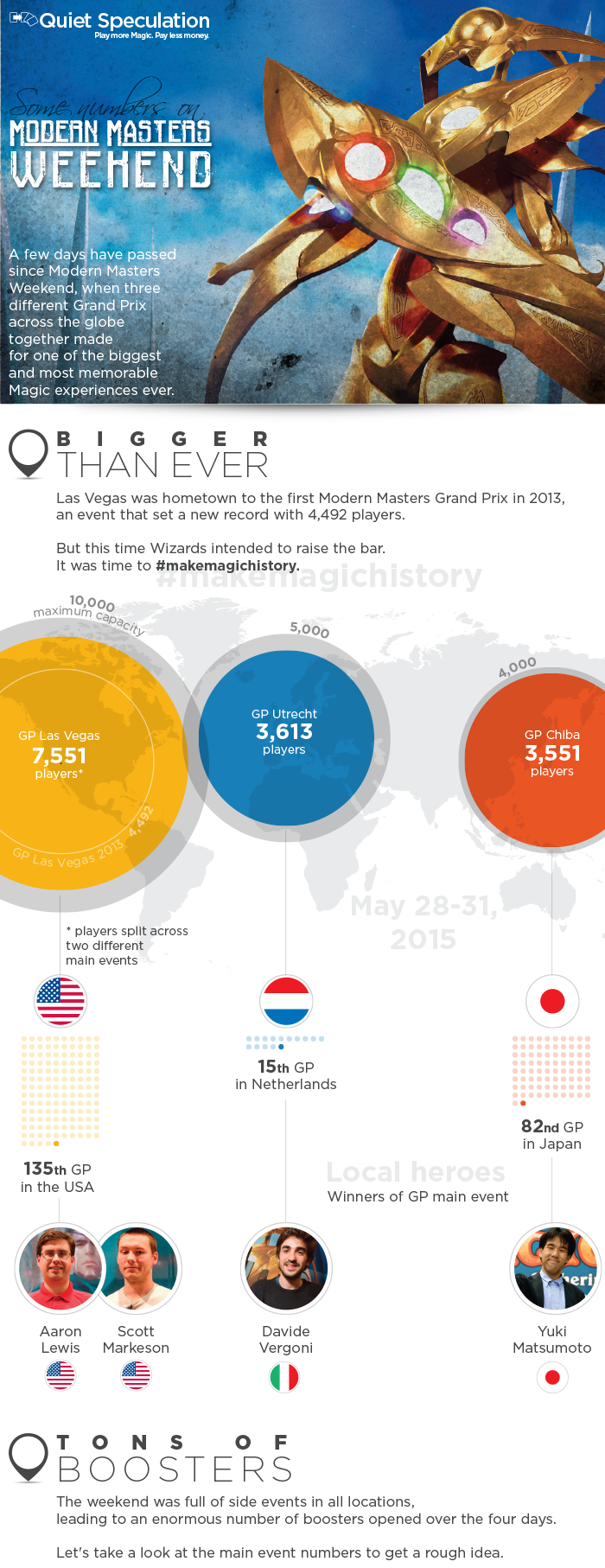
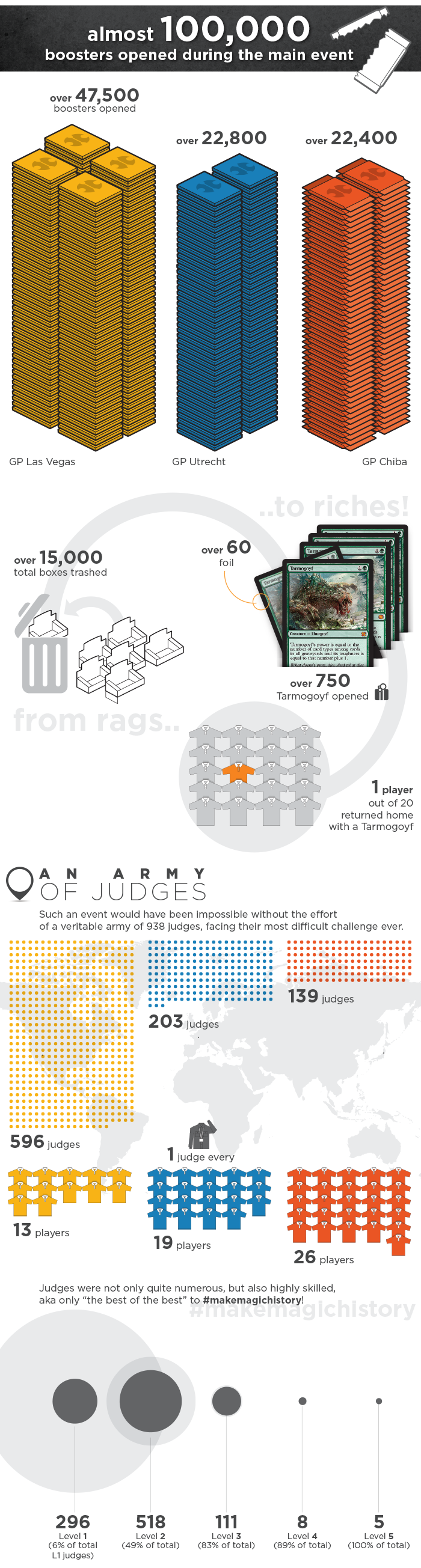
A few days have passed since Modern Masters Weekend, when three different Grand Prix across the globe together made for one of the biggest and most memorable Magic experiences ever. QS_infographicMM2_02 QS_infographicMM2_03

Insider: The Story of a Lovely Format

Are you a Quiet Speculation member?

If not, now is a perfect time to join up! Our powerful tools, breaking-news analysis, and exclusive Discord channel will make sure you stay up to date and ahead of the curve.

I played more than a Brady Bunch worth of different decks this weekend. Even with over 900 competitors in the SCG Columbus Open at Origins, I expected to play against a lot of what I thought were the best decks. Of course I thought I’d face off against Burn because too many players bring it to battle, but I figured there would also be a lot of Abzan Company, Grixis Twin, G/R Tron, Jund, and Delver too with a little Affinity mixed in as well.

One fact that I sometimes forget is that players bring what they have and what they like to play. That means that there will be lots of different decks regardless of their positioning in the metagame. My best advice about Modern is to plan for the best decks but be prepared to play against anything.

No matter your preparation, sometimes players will bring something from outer space that throws you for a loop. This is how I like to attack formats and the deck I played is wildly exciting. There were so many stories from the weekend where my opponent had no idea what I was playing. I hid colors of my deck from my opponents’ only to spring a trap in game two or three of some card that I “shouldn’t have had.”

We will talk more about that later on in the article, but first, you need to see the beautiful manabase and experience for yourself: Kiki’s Revenge.

Kiki’s Revenge by Mike Lanigan (30th place SCG Columbus)

Creatures

4 Birds of Paradise
2 Noble Hierarch
3 Wall of Roots
3 Voice of Resurgence
3 Blade Splicer
2 Courser of Kruphix
3 Siege Rhino
4 Restoration Angel
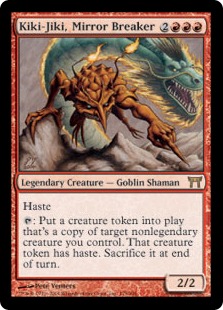
2 Kiki-Jiki, Mirror Breaker
1 Spellskite
1 Eternal Witness
1 Orzhov Pontiff
1 Reclamation Sage
1 Sin Collector
1 Linvala, Keeper of Silence
1 Avalanche Riders

Spells

4 Chord of Calling

Lands

4 Arid Mesa
4 Wooded Foothills
2 Windswept Heath
1 Godless Shrine
1 Overgrown Tomb
1 Sacred Foundry
1 Stomping Ground
1 Temple Garden
1 Fire-Lit Thicket
1 Rugged Prairie
1 Wooded Bastion
2 Gavony Township
1 Forest
1 Mountain
1 Plains

Sideboard

2 Kor Firewalker
1 Sin Collector
1 Abrupt Decay
2 Ancient Grudge
1 Back to Nature
2 Krosan Grip
2 Path to Exile
1 Kataki, War's Wage
2 Domri Rade
1 Sorin, Solemn Visitor

What I’ve been telling players is that this is an Abzan deck splashing for Kiki-Jiki, Mirror Breaker. In truth, it’s more a green-white deck with three black cards and two red cards in the main deck.

Upon examining the mana though, you find that it is a true four-color deck. You will always need green and white, sometimes double of them, and then you can tailor your fetch land searches for the other colors you need. Typically, you need to keep in mind the ability to hardcast Kiki-Jiki with all of your land drops, but the filter lands help tremendously with that task.

Kiki’s Revenge comes from the same line of thinking as the Abzan Company decks. When Birthing Pod was banned, we were left with a lot of solid creatures and no engine to run with. Collected Company was the route that Abzan took to help them fit back into the metagame.

My goal here was to not only create a sweet deck where Restoration Angel would gain you lots of advantage, but then also be able to create an infinite army of angels with Kiki-Jiki. Despite Birthing Pod being removed, Chord of Calling is still an extremely powerful tutor that functions to find bullets or combo pieces.

With the shift in the metagame towards Collected Company, players were not expecting me to cast four-cost creatures. Siege Rhino and Restoration Angel were more than enough to overcome some opponents. The great part about this deck is that it presents a more aggressive and robust line of attack that is good enough to defeat your opponent. With the old Pod version, your most likely route to victory was pulling off the combo. This deck presents either route as a viable option to defeat anyone standing in your way.

Speaking of opponents, if you haven’t heard yet, I had a lot of different ones this past weekend in Columbus.

There was an error retrieving a chart for Collected Company

Day 1

Round 1 - The Naya Company Zoo

The first match of the day started out with a bang. Not only was my opponent playing a sweet deck, but I won the first game with an unexpected Kiki-Jiki copying my Siege Rhino. That is a sick sequence that few opponents are prepared for.

Games two and three did not go so well though. I thought I was going to win the second game because I got an early start ticking off some of my opponent’s life points, but he caught up by chaining two Collected Companys together for things like Loxodon Smiter, Knight of the Reliquary, and Tarmogoyf.

Game three was a similar affair except my opponent also killed my mana creatures to prevent me from playing my spells when I should have been able to. Just like that I lost the first round. Remember though, “Never give up. Never surrender.”

Record 0-1

Round 2 - B/W Tokens

Round two went much better for me. Not only was my opponent playing a weaker deck, but he also had no idea what I was doing. Despite seeing my hand four times in game one with Thoughtseize and Inquisition of Kozilek, he still was befuddled at the cards I drew. No one can blame him though. Not many players are crazy enough to sleeve up the deck I played.

Game two was three hand hate spells rather than four, but in both of the games, my opponent was unable to beat me before I started casting my high-impact four-mana creatures. It was looking like I was going to lose game two, but I was able to set up a Chord of Calling after my Restoration Angel was in play to defeat my opponent who was at a much higher life total than I was.

Record 1-1

Round 3 - UWR Control

Next up is a deck that I do not give much credit to but players still battle with, UWR Control. It seems as if I have to play against this deck in every Modern event I go to even though it never puts up good results. Decks I typically play tend to be weak to this deck though so beating it is always a struggle. Luckily I came prepared this time around.

Game one was a drawn-out affair where I used every resource at my disposal to squeak out life points from my opponent. I did not have many resources other than lands and mana creatures to utilize, so the game did not go very well. I ended the game with two or three lands in hand after playing one every turn. Flood happens sometimes. It wouldn’t have been that bad if my opponent drew less counterspells, but I still had a solid sideboard plan so I was confidant I could win the match.

For this match and any other midrange deck, I included Domri Rade to be able to keep up with the card advantage my opponent had. Domri is so threatening they are forced to do things like Lightning Bolt it or bounce it with Cryptic Command in order to not lose to his ultimate. Both of those things happened in games two and three.

Post-board, my deck becomes very threat-dense which taxes the control deck's answers. Eternal Witness helps get back any threats that they do remove and you can Chord of Calling when they tap out for things.

Kiki combo almost never comes up because of all of their removal, but sometimes you can force them into countering something on their turn so that you can untap and complete the combo. Standard's Sorin, Solemn Visitor is fine to bring in from the board and Sin Collector is an all-star.

Record 2-1

There was an error retrieving a chart for Voice of Resurgence

Round 4 - UWR Control

After almost going to time in round three, I immediately had to play another player on the same team with most likely the same deck list. The match ended up going very similarly to how the previous one went. Game one I lost but this time to Gideon Jura.

In the second and third games, I used the same sideboard plan of planeswalkers plus additional hand disruption. Sin Collector is amazing on its own, but when you can blink it with Restoration Angel, it can be back breaking. Although I was not able to utilize that sequence, it’s always something I’m thinking about in matchups like this.

There is another creature that can be used in similar fashion to punish your opponent though and that is Avalanche Riders. Not very many players are used to playing against this timeshifted card and they are definitely not prepared for it.

Often my sequence is to play the Riders and blow up a land, then with the echo trigger on the stack, cast Restoration Angel, or use Chord of Calling to find one, and blow up another land. I’ve even had times where I’ve run that sequence more than two times. In this case, two lands was enough to win game two.

Game three, I was able to get my opponent to tap out dealing with a late Voice of Resurgence on his turn so that I could combo on mine. This is an extremely difficult matchup but sometimes you can outplay your opponent.

Record 3-1

Round 5 - Naya Burn

If you are not giving credit to the Burn players yet, your options are to start taking the matchup more serious or keep losing to the deck. Burn was everywhere on day one. I only had to play against it once, but some players were paired against it three or four times. Many of these players made day two of the event as well.

Game one of this match highlights how strong this deck typically is against burn spells. I started on Wall of Roots, which is an amazing blocker in the format, even blocking Tarmogoyf or Tasigur, the Golden Fang. I followed that up with a Siege Rhino and then a Restoration Angel to trigger it again. That was enough for my opponent.

My plan for game two was to repeat that process, but it was not to be. Even with easier mana bases, you still have problems sometimes and that is true of this deck as well. For the most part, the mana is good as long as you get the right lands. In this game though, I never drew a fetch land, Birds of Paradise, or any of the black sources. So, my double Rhino stampede never got started.

For the conclusion of our match, we had a nail biter. It was like a down-to-the-wire, last-second-shot type of situation. My opponent and I were chipping away at each other’s life totals, him with burn spells and me with creatures, but I couldn’t find any of my life gain cards. So all of a sudden I was at two with lethal on the board and he had one draw step to finish me off. Luckily my land light opponent drew mana and I was able to seal the deal on my turn.

This match feels in my favor, but it’s much closer if all of the life gain cards hide in your deck.

Record 4-1

Round 6 - Jund Midrange

Without much testing with the updated version, I was unsure how this match would play out. Previously, it was rough and not a good matchup. What I found here is that this version is much stronger against this type of deck.

I think it is due in part to the switch from Kitchen Finks to Blade Splicer. I haven’t talked much about that card yet, but it was good for me all weekend. Just playing the card felt good, but blinking it is even better. Also, since it is two creatures, it synergizes well with Chord of Calling.

Blade Splicer helped me get my opponent’s life total down, and paired with his Angel counterpart, the two of them were enough that even though my opponent dealt with all my threats, he still died to his own Dark Confidant. When you spend all your time removing threats and not adding them to the board, you don’t have a reasonable clock to defeat your opponent.

Game two, I kept a land light hand and got punished for it. It’s true that I didn’t draw a third land through four draw steps, but my opponent also bolted my Birds and then used Fulminator Mage to take out my only green source. I couldn’t do much other than watch my opponent slowly amass threats to defeat me.

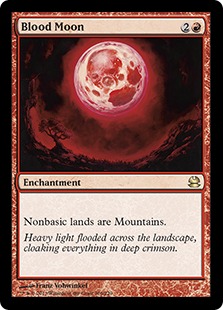
Game three was going poorly until my opponent cast Blood Moon. The great thing about Blood Moon is that not only does it hurt your opponent too, but it also helps you cast Kiki-Jiki.

This ironic turn of events lead me to Avalanche Riders taking out his only basic land and then assemble the combo of two Angels to fly over his blockers. It would have been fitting for me to draw Kiki, but as it turns out, I didn’t need him to win.

Record 5-1

There was an error retrieving a chart for Blood Moon

Round 7 – Tron

Tron is a phenomenal match for this deck and I never mind playing against it. In the same way that Splinter Twin has a high win percentage against Tron, so does Kiki’s Revenge. Both decks win in a similar fashion and in game one, Tron has no way to stop your game plan other than getting lucky. The game one win percentage is astoundingly high.

In this particular game one, I took a different route to victory though. I was able to use Reclamation Sage and blink it with Resto to take out some key artifacts. That way, my opponent was unable to search for the Urza Tron pieces he was missing.

Game two was well within my grasp but for some reason I played like I was going first instead of second. I had both Voice and Wall in my opener along with Avalanche Riders. Even though I need threats in play in order to win the game, you must stop them from doing broken things early in the game. It’s fine if they assemble their mana as long as it takes them a couple turns to do so.

In this game, he got Karn Liberated on board on turn three and we all know how that turns out. This misplay in sequencing definitely cost me the game.

Game three I turned it right around though. Post-board games tend to be more grindy because instead of assembling Tron, sometimes they spend some time killing your guys. They have access to cards like Rending Volley for Twin, and so you get some splash damage since the card works multiple places.

So, even with the combo in hand, I couldn’t go for it because I knew my opponent was likely holding that spell. Instead I was able to play another Resto and beat down until my opponent used all his mana, then go for the combo. This deck requires a lot of patience at times and it’s better to play around your opponent having removal most of the time.

Record 6-1

Round 8 - Grixis Delver

The first game this round wasn’t much of a game. My Delver opponent kept a land light hand with Serum Visions and got punished by not finding a land with his filtering. It lead to an easy win on my part, but I tried to play conservatively and not give my opponent too much information.

If you have a solid board presence, sometimes it’s better to not add more threats to the board and just protect the ones you have. You can do this with Chord, Resto, as well as just holding back threats and then in the event they are running Anger of the Gods, or something similar, you can reload. Siege Rhino helps with this plan a lot because sometimes all you need is one Rhino to win the game.

Game two was extremely close but my opponent killed my early mana creatures and kept tempo for too long. I almost caught up, but at that point he had too many elemental tokens from Young Pyromancer for me to stabilize.

The third game in this match was the most epic of the day by far. There were many close calls throughout the day, but this one was by far the most thrilling.

The opening of the game played out normally with me playing mana creatures and him trying to prevent me from flooding the board with creatures. Then in the mid-game he started killing a lot of my creatures. I had been holding Kiki the whole game in order to set up a situation where I get him to tap out while I have Resto in play so I can untap and combo-kill him.

He cast a bunch of removal spells on his turn to force damage in and to make sure I didn’t have anything used the discard mode on Kolaghan's Command to get my last card, the Kiki. My Chord for four was on the stack and eventually resolved to get what he thought was a Siege Rhino, but was actually Resto.

My plan was revealed though when I discarded the Kiki and all of a sudden all my preparation was for naught because I was out of cards and my opponent was further ahead on the board thanks to some removal spells. One of the threats I forced him to remove was a Voice, so he had to do that on his own turn.

As an aside, against control decks, Voice is often your key to success. Either you force them to spend a removal spell on it and you get your token, or they have to use Path to Exile and you get an extra land. Otherwise, it creates huge problems for them because they can’t afford to cast spells on your turn. It’s the same awesome creature that it was in Standard, but more opponents have instants and spells they want to be casting on your turn.

Alright, back to the action. So I had just discarded my last card and the board state was looking grim. I slowly drew my next card and then slammed it to the table. For once, luck was on my side and I played the other copy of Kiki-Jiki, Mirror Breaker to win the game. My opponent was astounded but still smiling from the epic play. My friends and I were high-fiving from the amazing event. And, just like that, I was locked for Day 2!

Record 7-1

Round 9 - Amulet Combo

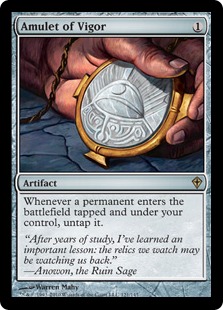
I knew going into this round that Amulet of Vigor decks were the ones I was trying to dodge. It’s not that popular of a deck but it certainly is potent. There are very few ways I can interact with this deck. The main way to beat them is for them to beat themselves. This does happen, which is why the deck doesn’t win every event, but it doesn’t happen often enough for this to be a relevant game plan.

In the first game, he had a turn two Titan, which I could do nothing against. If I were on the play, I would have been able to blink my Avalanche Riders into victory, but that plan was too slow in this game.

The second game was better. I kept a slower hand with a Path to Exile. Unfortunately, he not only had double Amulet, but also had a second Primeval Titan as well as a Summoner's Pact to get his third. Three Primeval Titans on turn three isn’t too broken is it?

I’d like to take this time to call a meeting about banning this bad boy. There is no reason this deck should be legal in a format where they want us to be battling with midrange decks. Anyway, I am fine with having one really bad matchup against this deck. It’s hard to interact with them when you aren’t countering their spells.

Record 7-2

There was an error retrieving a chart for Amulet of Vigor

So, even though I didn’t make my goal of entering a two-day event at better than 7-2, I was still glad to be battling my way through the second day of competition.

Day 2

Round 10 - Naya Burn

One of the main strengths of this deck is its maindeck resilience to Burn. Lots of players are going to continue to try to burn the competition and we need to be prepared.

I never relied on my sideboard cards to defeat these burn decks and most of the time I didn’t draw them anyway. In this case, I beat this deck in two games. The first I sequenced Sin Collector, into Siege Rhino, into Restoration Angel to blink the Rhino. That was more than enough to beat my opponent.

Game two was more of a struggle but I was able to stabilize with double Courser of Kruphix. I used my fetch land on his turn because he had stopped the lifegain on my turn with his Skullcrack. By doing that I was able to be at five life and live through his top-decked Boros Charm so that I could untap and combo for the win.

Record 8-2

Round 11 - Grixis Delver

For the second time this tournament, I had to play against Grixis Delver. This can be a tough match but it’s very winnable. The hardest games are when they stick a turn two or three Tasigur. My opponent this round did this multiple times, one of which was in game one. He also had a Delver active on turn three to attack with both creatures. I didn’t put up much of a fight though because I couldn’t draw my third land literally to save my life this game.

Game two was much better for me. I was able to use Sin Collector and blink it to remove his only removal spells to clear the way for my creatures. By doing this, his delve creatures were too slow to make an impact in the game.

The third game he also had an early Tasigur, but this time it was backed up by double Delver. Luckily it took a couple turns to flip them. When he did flip them, it was with Dismember which he used in combination with Snapcaster Mage to not only kill my Wall of Roots which was making his attacks bad, but also my fresh Restoration Angel that I was going to try to win the game with. His sequence was next to unbeatable and I was left with another round loss.

Record 8-3

Round 12 - Abzan Company

While many players are starting to fear this deck again, as long as I’m playing Kiki’s Revenge, I won’t be one of them. Just like Tron, Abzan Company should feel out-matched against my deck game one because they have little interaction to stop me from pulling off the combo.

This particular game, I was able to use Sin Collector and Resto to get two copies of Collected Company from my opponent’s hand before he could cast them. By doing this, he didn’t really have much going on for him and I was able to assemble a team to beat him down with. Game two he mulliganed to five and didn’t put up much of a fight before I beat him.

Record 9-3

There was an error retrieving a chart for Restoration Angel

Round 13 - Naya Burn

Burn, burn, burning everyone in the format. If I wasn’t prepared for this deck, my tournament would have been a flop. Game one was not an issue, my maindeck life gain left me far ahead. Game two however showcased how amazing the burn deck can be.

Despite being at ten life with lethal on board next turn, my opponent was able to Charm end of turn and double Bolt me on his turn to end the game quickly. I should have conserved my life total a bit better in this game and got punished by my opponent’s perfect hand.

In the third installment of my third Burn matchup, I didn’t quite come out ahead in this one. I kept a questionable hand of Spellskite, Sin Collector, and five lands. I think I would probably still keep this hand again because both of these cards are great against this deck, but you need more than those two to defeat them. I drew a lot more lands over the course of the quick game and they didn’t help me at all.

Record 9-4

Round 14 - Mardu Burn

The burning didn’t stop with the last round, though, it continued again for the fourth time. This round was against Mardu Burn instead of Naya though. Our decks being checked made the round last a bit longer and that always does weird things to the consistency of decks. Usually I am on the losing side of that lack of randomness, but this time it was my opponent.

He drew a bunch of creatures that didn’t help him against the blockers I had to get in the way. He did get me to six with the early rush plus couple of spells he did draw, but that wasn’t enough due to the Blade Splicer army I had assembled.

In the second game, he showed me the dark side of his deck by kicking off his second turn with a Self-Inflicted Wound. That was not a card I had ever seen before in Modern and when I asked my opponent, he said it wasn’t very good except in this situation. He followed that up with Tasigur and I was starting to get worried.

Luckily I had enough blockers to hold him back. Then, I was able to cast Sorin for the first time this event and man was he amazing. It stopped my opponent from attacking me on his turn and it allowed me to gain some much needed life back. My opponent couldn’t handle Sorin and I won the game shortly after.

Record 10-4

Round 15 – Zoo

The last round of the day was fittingly against Zoo. I started my tournament out by playing a Zoo deck featuring Collected Company and now I was ending my day against a more traditional Zoo deck.

In this match, my opponent spent a lot of time calculating damage because he had Mutagenic Growth to go with his Monastery Swiftspears as well as the normal compliment of burn spells. It felt like I was playing yet another match against a burn deck but this time they had good creatures in Wild Nacatl and Kird Ape.

Game one, I thought I had control of the game, but my opponent was able to use a pump spell on his unblocked creature in conjunction with burn to finish me off from ten life.

The second game went much better for me. My opponent mulliganned to five and didn’t put up much of a fight as I played some creatures and attacked him. The third game was all about positioning. My opponent thought he had me on a reasonable clock, but I forced him into acting on his turn so that I could flash in Resto and untap to combo. He was left surprised. Many newer players don’t know the available card pool and despite us playing deep into day two, I was able to use this to my advantage.

So at the end of the event, I ended up with a final record of 11-4, which I hoped would get me into the top 16. Unfortunately, my tie breakers were not very good and I got knocked all the way down to 30th, but all of the players from 14th-30 all had the same 33 pts.

It’s unfortunate but not the end of the world. I fought hard and the deck was amazing. Many of my opponents had no idea what I was playing and that worked to my advantage over and over again.

Let me know what you think about the deck in the comments.

Until next time,
Unleash the Force!

Mike Lanigan
MtgJedi on Twitter
Jedicouncilman23@gmail.com

P.S. Take a look at this

There was an error retrieving a chart for Oblivion Stone

Expectations and Predictions for GP Charlotte

Are you a Quiet Speculation member?

If not, now is a perfect time to join up! Our powerful tools, breaking-news analysis, and exclusive Discord channel will make sure you stay up to date and ahead of the curve.

If someone told right now that my weekend had suddenly freed up, I'd snag airplane tickets and be down in Charlotte faster than the average Infect game. But it's probably for the best. The world isn't ready to feel the wrath of Puresteel Paladin or Griselbrand+Blood Moon just yet. Which is really another way of saying that I'm not quite ready to go 0-3 drop with my decks, but I guess we'll have to wait for another event to know for sure. No matter whether you are going to the GP or watching it online, the weekend promises to be a formative one for Modern and one of our biggest events since GP Richmond. With so many viable decks, hot new cards, and interesting tech, it's a brave new world for Modern. Charlotte will be at its center.

hierarch art

Ever since we finished the Modern events in February, the metagame has been leading to this point. Modern players from across the world are all asking the same questions. Jund or Abzan? Is Infect really dead? Is Amulet Bloom really the best deck? Which Grixis version is optimal? Is the Company deck going to blow up or scrub out? What card prices are going to spike after the first deck tech on Saturday? Although we can't answer all of those questions now, we can use metagame data and our experiences to figure out what GP Charlotte might look like. This article will give you some important expectations for the tournament and some predictions on how the event will end.

[wp_ad_camp_1]

Expectation #1: Jund and Grixis

Guessing a GP metagame is always challenging, and it's much harder in open formats. We are coming off a 2-3 month offseason, a set release full of Modern playables, and two huge bannings. Formats don't get much more open than this. But despite these uncertainties, I am confident that two decks are going to be out in force. Based on metagame context, powerful cards, community hype, and a collective desire to do something different (i.e. something that isn't Burn, UR Twin, or Abzan), Jund and Grixis are going to be everywhere at the GP.

Lightning BoltLet's start with Jund. Going into June, this was easily the most-hyped deck in Modern. Abzan was (supposedly) dying. Bolt and red spells were (supposedly) king. The metagame was (supposedly) vulnerable to Jund. All this led authors to rave about Jund and its positioning. Then came SCG Columbus. Jund didn't quite fail at the event (it still sent the second-most players to the Open and Invitational T8/T32 after just Amulet Bloom), but it also didn't quite have the impact many expected. And if you learn anything about Modern, it's that underperformance is often equated with failure in our format. It didn't win the event and wasn't as omnipresent as Abzan had been at PT FRF. Following this modest performance, and the reaction to that performance, it has been tempting to write off Jund as a hype-fueled flash in the pan. Players have been particularly hard on Lightning Bolt, which has lost a lot of relevance as creatures shift to higher toughness. Some have even suggested that Abzan remains the better deck. All these circumstances might suggest that Jund won't be the BGx deck of choice at the GP. Or rather, they might suggest that if it weren't for Kolaghan's Command and Blood Moon.

Kolaghans CommandI raved about Command in my article earlier this week, and I believe GP Charlotte is going to prove this card's power to anyone who still doubts it. Command is just too much value and card advantage to pass up. It's basically the best thing to happen to BGx since Abrupt Decay and yes, that includes even  Siege Rhino. One of the biggest challenges in preparing for Modern is the sheer range of matchups. Command lets you preboard answers to some of the rare-but-serious threats while also guaranteeing value in other more common matchups. It's the unique package that is strong against aggro, combo, control, and midrange, all for just 3 mana. Command is the main reason I think Jund remains the better BGx deck and, by extension, will have a big GP. Perhaps just as important as the card's power is the community reaction to Command. People love this card. It's received a ton of positive press, and everyone wants to use it. Given the choice between two decks that are about equally viable, many players will flock to the deck that uses the hot new tech. Abzan is stuck on the snorefest of Rhino and Souls. Jund gets Command. And speaking of hot new tech, Jund also gets 2 Blood Moons in the board. Moon might not be new like Command but it is still sizzling hot, and players will go out of their way to run it. Jund is a great home for Moon. Along with Command, this makes Jund the BGx deck of choice for GP Charlotte.

Snapcaster MageWhat about Grixis? In essence, all the factors at play in Jund are also at play in Grixis. Like Jund, Grixis lets you play Command and Moon along with the other red staple effects like Bolt, Terminate, Anger of the Gods, etc. Also like Jund, Grixis has considerable hype around it, with many authors and players discussing how strong the color pairing is at the upcoming event. A large part of this strength is in the Grixis foundations: blue-red. Grixis is the natural evolution of the already strong UR shell. Players want to play Snapcaster Mage, Remand, and Serum Visions in Modern (especially Visions: card selection is super valuable in formats where you need to find specific cards). People also desperately want to live the dream of turn 1 Thought Scour into turn 2 Tasigur, the Golden Fang, and that's only possible in Grixis (and Sultai, but good luck playing Command or Moon there). All of this points players to Grixis in the same way the hype train has steamed towards Jund.

TasigurBut an even bigger reason to play Grixis isn't just hype or individual card power. It's the novelty. Grixis has never been a legitimately viable pairing in Modern (sorry Cruel Ultimatum). Tasigur changed that and many players haven't looked back since. Gone were the days where you played $150+ Tarmogoyfs or didn't play midrange/tempo. Now you could play $8 "Goyf" alongside new colors and in a deck that felt much more like a control deck. Indeed, Modern players always complain about the lack of traditional control, and Tasigur and company offered a lot of possibilities in that regard. Grixis is also the natural evolution of Twin, a deck that many players have invested in or rely on. Everyone wants to be on the new format-defining deck, and Grixis fits that role perfectly. Of course, players have still not decided which Grixis archetypes are the best (Delver? Twin? Moon? Midrange?), so expect to see all of them at the GP. But the unifying thread in all those decks will be the Grixis colors.

The format may be open, but Jund and Grixis are some of the safest bets going into the event, both from the perspective of picking your own deck and (more importantly) the perspective of anticipating matchups. Players would be wise to prepare for them. Don't play decks that fold to Moon (unless that deck is Amulet Bloom). Don't rely on artifacts that get blown out in game 1 by Command. Don't play 1 or 2 toughness creatures unless you are doing something really fast. Be careful of synergy-based strategies that get shredded by discard. These decisions will be critical as you advance through a Jund and Grixis-packed GP.

Expectation #2: Amulet Bloom

amuletI've said it before and I'll say it again: Amulet Bloom is the "best" deck in Modern. I'll point to all the usual datapoints here. It had the highest win-rate at the Pro Tour and the best representation in the 18+ points decks. It had a similar representation at GP Vancouver and the best showing in the T8 (cheating allegations aside). It blew the competition away at SCG Columbus, has the highest win rate on MTGO by a massive (and statistically significant) margin, and is consistently described as the best deck in dozens of anecdotal reports from players and pros. This is the kind of mixed-method analysis that overwhelmingly suggests Amulet Bloom really is the "best" deck in the format. There was a time when this wasn't widely known and players would have avoided the deck, either due to ignorance of the archetype or just inexperience with its gameplay. But with format knowledge expanding, this is much less likely at GP Charlotte than it was at SCG Baltimore in February. Amulet Bloom k is going to be huge at the GP, both in the sheer number of players (easily over 6%-8% of the event will be on this) and in its finishes.

bloomSo if Amulet Bloom is so good, why the quotation marks in "best" deck? Although Amulet is a legitimately powerful pile of cards (more on that later), a big part of why it does so well is the experience gap between Amulet players and Amulet opponents. To put it bluntly, people suck at playing against Amulet. They don't know what to discard (kill Summer Blooms), they don't know what lands to blow up or when to blow them up (hint: respond to bounceland triggers), they don't know what sideboard cards to use (don't overcommit to killing Amulet of Vigor or you are going to lose to a Hornet Queen), and they don't know what spells to counter (letting Summoner's Pact resolve is generally not a good idea). To be fair, Amulet is fairly resilient to a lot of those interaction points, so it's not all inexperience at play. But I've seen enough Amulet players fumble on camera and in replay to know how big a problem this is. It will be even worse at the GP where many of the best players are on Amulet, further widening the experience gap. Don't be that guy who doesn't understand the Amulet Bloom transition from combo to over-the-top beatdown in games 2 and 3, or the dude who mulligans to 5 looking for the perfect Amulet answer because you think this deck always wins on turn 2. Watch replays (anything from PT FRF, GP Vancouver, or SCG Columbus will work here). Research decklists. Goldfish the lists at least a dozen times so you can see where the deck is strong and where it might be weak.

Blood MoonOf course, don't expect Amulet to suddenly become easy even if you obtain an encyclopedic knowledge of its ins-and-outs. This is still a very strong strategy with limited interaction points, a ton of topdeck power, and extensive resilience to traditional hatred like artifact removal, discard, land destruction, and countermagic. If you really want to beat Amulet, you need to be running Blood Moon. Moon alone might end the game on the spot, and Moon backed up by something like Dispel is basically unbeatable. In short, if you can play Moon, you need to be playing Moon: see my Wednesday article for more details on that. Can't run Moon? Stick with Spellskite, Aven Mindcensor, Leonin Arbiter, etc. But in all honesty, you are going to struggle against Amulet if you aren't either playing Moon or playing a deck fast enough to ignore what Amulet is doing (e.g. Affinity with something like Stubborn Denial in the maindeck, or Infect with Dispel/Spellskite). Also, note you can't just run Moon. You need to run varied disruption and keep up pressure. Do this and you should be more or less fine against the Bloom players that are likely to descend on the GP this weekend.

Expectation #3: Weird Decks

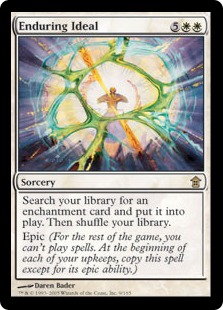
enduring idealTwo things are certain in an open metagame. The first is that people are going to fall back on staples like Affinity, Twin, BGx, etc. The second is that other people are going to find the weirdest and wackiest deck from some random MTGO daily and try to run it under the metagame radar. Chances are this deck will be as linear and unfair as possible, or pack in some super-obscure throwback technology. When your opponent windmill slams his Enduring Ideal into Dovescape, you are going to want to jump across the table and smother him with your Noble Hierarch playmat. Same thing when he drops the Stronghold edition Ensnaring Bridge and the judge informs you that no, the card isn't illegal and yes, you should have been playing Kolaghan's Command. Weird decks are more common in unknown metagames than known ones, because known metagames tend to favor a few "best" decks. Unknown ones are wide open, which means people are too busy preparing for "real" decks like Affinity and Burn and have no idea what your turn 1 Legion Loyalist means.

As a quick test of your knowledge and Modern preparedness, here's a list of nine different decks you might run into in round 4 of your GP experience. I'll also give a a typical turn 1 play for them and some cards you need to be aware of in this matchup. If any of the play lines or cards are unfamiliar to you, stop what you are doing and google that deck. You need to know it and you don't want your x-2 record destroyed because some joker thought it would be cute to dust off the old Mill deck (if I was at the GP, chances are greater than zero that I could be such a joker).

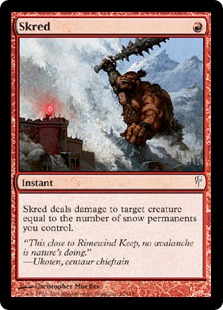
  • SkredSkred Red: Turn 1 Snow-Covered Mountain, pass the turn
    Skred, Blood Moon
  • Norin the Wary: Turn 1 Cavern of Souls (Human) into Champion of the Parish
    Soul Warden, Genesis Chamber
  • GW/Mono W Death and Taxes: Turn 1 Plains into Aether Vial
    Ghost Quarter, Leonin Arbiter
  • Ad Nauseam: Turn 1 suspend Lotus Bloom followed by Gemstone Mine.
    Angel's Grace, Phyrexian Unlife
  • Griselbrand Reanimator: Turn 1 Blackcleave Cliffs into Faithless Looting, pitching Swamp and Pentad Prism
    Fury of the Horde, Izzet Charm
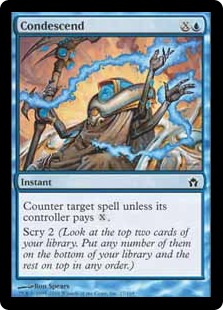
  • condescendMono U Tron: Turn 1 Island into Expedition Map
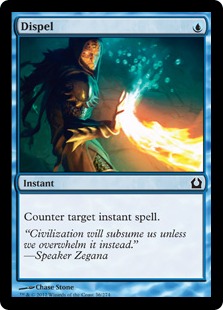
    Condescend, Repeal
  • UW Tron: Turn 1 Flooded Strand into Island and Expedition Map
    Supreme Verdict, Iona, Shield of Emeria
  • Mill (you saw this coming): Turn 1 Darkslick Shores into Thought Scour targeting you
    Archive Trap, Crypt Incursion
  • Suicide Shadow: Turn 1 Mishra's Bauble on self, Bloodstained Mire for untapped Blood Crypt, Gitaxian Probe
    Become Immense, Temur Battle Rage

And this doesn't even include the less weird but still uncommon decks like Abzan Liege, Storm, Elves, Temur Delver, and basically every deck you would find in a metagame graph. I could have written an entire article on this kind of identification strategy, but this is a good starting place to get you thinking about all the weird decks that might show up at the GP. As long as you have a basic understanding of what they are trying to do and you understand how your sideboard interacts with that strategy, you should be fine. Just beware misidentifications. For instance, Mono U Tron is very light on sweepers. UW Tron is not. Confusing the two off a misread land can easily cost you the game if you overextend into one or don't pressure enough into the other. Remember: the key is not knowing every Modern deck, although it doesn't hurt if you do. The key is knowing their general gameplan, a few of their important threads, and (most importantly) how your sideboard interacts with their gameplans.

Prediction #1: Collected Company in the Top 8

collected companyI promised some GP Charlotte predictions in my metagame article last week, so here are two on the bolder side of things to keep people pumped for the weekend. Collected Company has been conspicuously absent from my GP analysis and many readers are probably wondering why. After all, Company decks have done quite well in the pre-June metagame, with Elves at about 5.5% of MTGO and Abzan Company at over 7% of paper. Unfortunately, most of these lists are relatively unoptimized, with lots of subpar card choices and strange card ratios. Many of the better deckbuilders in the format are too excited with the shiny Jund and Grixis technology to focus too much on Company decks, which makes these lists much weaker going into Charlotte. But no matter who is building the decks, Company is still an extremely powerful card that Modern players are only starting to understand. And I believe there will be at least one player at Charlotte who can figure out the best way to use this card and take it to the top.

It's not immediately clear to me which Company deck will prevail. Abzan Company has a lot of the pieces for success but lacks a coherent list. Elves passes the linearity test but struggles against a lot of other established decks in the format (notably Twin variants). Naya Company is interesting but still feels a bit too fair when compared to aggro decks like Affinity. So where does that leave us? I feel like there's something here with Magus of the Moon, Fulminator Mage, Thalia, Guardian of Thraben, and some of the other more hateful creatures that can slot into a proactive Company strategy while also wrecking other decks. Or maybe it's just Elves that blasts its way to victory. Regardless of what form it takes, Company feels like a good bet for the T8 (and definitely for the T16).

Prediction #2: Grixis Twin Takes the Gold

TwinTo be honest, I'd rather not pick any deck for the top prize because there are just too many factors at play. Anything from bad luck to barely-missed breakers can keep a good deck and player out of the T8, and this prediction is at the mercy of all those factors. That said, UR Twin has enjoyed more tournament success in the last few months (and also the last year, if you adjust for banned decks) than any other deck in Modern. Given the inherent strengths in the Twin shell and the newfound power of Grixis, this seems like the best bet for GP Charlotte's winning deck. Between Moon, Command. Terminate, Inquisition, Tasigur, and the Twin combo package, Grixis Twin is just running so many strong cards that it's hard to see anything else winning. Or rather, it's hard to talk myself into anything else winning. With all the factors at play here, the Grixis Twin advantage is very slight over other decks like Jund, Amulet, Abzan, etc.

Get Excited!

Many of us might not be at GP Charlotte this weekend, but you can be sure we will be glued to our computer screens watching the coverage (and raging about it online). Join me next week as we process all the exciting metagame data and deck technology that is sure to come out Charlotte, and as we prepare for two more GPs on the horizon. This is by far the most exciting Modern month I have experienced in years (holy crap, Origins previews start soon too??), and I'm looking forward to see how it all turns out.

How to Catch a Card Thief

Are you a Quiet Speculation member?

If not, now is a perfect time to join up! Our powerful tools, breaking-news analysis, and exclusive Discord channel will make sure you stay up to date and ahead of the curve.

We've all had cards stolen from us, or know somebody who has. I'd like to believe that people are good, but even if that's generally true there are plenty of scum out there. When somebody has a deck or a binder stolen, the typical protocol involves reaching out to the local community and shops and letting them know if there are any uniquely identifiable aspects of the stolen cards.

For most of us, we never see our stolen possessions again. For Kemper Pogue, he had the opportunity to bring his collection's thieves to justice. You can read Kemper's story at The Washington Post.

There was an error retrieving a chart for Swift Justice

The story is a good read if you're interested in the rare evidence of justice in this world, but there are also some good tips here if you find yourself in the unfortunate circumstance of having your cards stolen. Partner with the community, local stores, and law enforcement. If you work at a store, be vigilant about catching people selling stolen property. The sting operation here is impressive, but I'm inclined to believe that it could be executed more often than it has been in the past.

Avatar photo

Ryan Overturf

Ryan has been playing Magic since Legions and playing competitively since Lorwyn. While he fancies himself a Legacy specialist, you'll always find him with strong opinions on every constructed format.

View More By Ryan Overturf

Posted in FreeTagged 1 Comment on How to Catch a Card Thief

Have you joined the Quiet Speculation Discord?

If you haven't, you're leaving value on the table! Join our community of experts, enthusiasts, entertainers, and educators and enjoy exclusive podcasts, questions asked and answered, trades, sales, and everything else Discord has to offer.

Want to create content with Quiet Speculation?

All you need to succeed is a passion for Magic: The Gathering, and the ability to write coherently. Share your knowledge of MTG and how you leverage it to win games, get value from your cards – or even turn a profit.

Blood Moon Rising Over GP Charlotte

Are you a Quiet Speculation member?

If not, now is a perfect time to join up! Our powerful tools, breaking-news analysis, and exclusive Discord channel will make sure you stay up to date and ahead of the curve.

I'm not going to Grand Prix Charlotte this weekend, but if I were, I'd be playing Blood Moon. Moon is one of those bizarre 8th and 9th Edition holdouts from an earlier era of design: unique, powerful, and totally out of line with contemporary development principles. It's in the same category as Choke, Ensnaring Bridge, Storage Matrix, and a variety of other oddball effects. Blood Moon is the strongest of the lot, standing in a league of its own as one of the best sideboard cards in Modern. With GP Charlotte on the horizon, Moon is looking like one of the most powerful cards you can bring, both in the maindeck and the sideboard. In this article, I discuss different ways you can put your opponents under the Moon's glare.

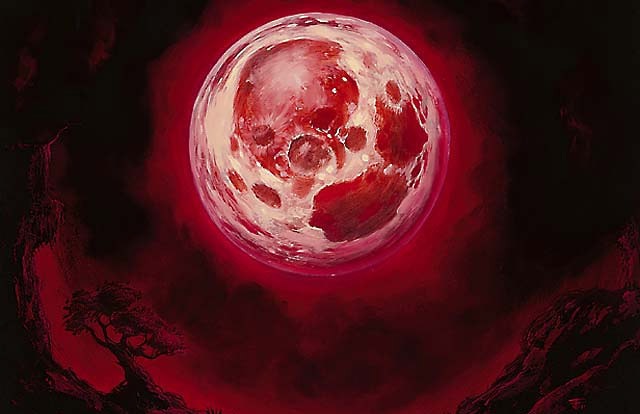
Blood Moon Art

Because Moon is such a compact threat, it's an easy fit for most two-colored red decks, or even three-colored red decks under the right circumstances. But Moon isn't just something you can jam into your 75 and hope for the best. This article gives you a few examples of decks that put Moon to good use in either the sideboard or maindeck. I start with a quick assessment of Moon's impact on Modern, looking over metagame data to ensure that Moon really is as good as it seems. Then we'll look at the lists. In the end, this will arm players with the knowledge they need to wield (or prepare for) Moon at the GP.

[wp_ad_camp_1]

Assessing Moon's Relevance

Blood MoonBack in April, I wrote about a data-driven framework players could use to evaluate Lightning Bolt's relevance in any given metagame. At some point in time, it would be interesting to conduct a similar analysis for Moon, developing matchup criteria in which Moon shines and then weighing the subsequent "Moon index" for each deck in the format. But for now, we don't need to go into that level of detail. Just looking at metagame stats from the last 4-5 weeks, we already have more than enough datapoints to support Moon. Modern has a number of top-tier decks and strategies that make Moon strong and those matchups alone warrant its inclusion.

amuletBy far the most important reason to run Moon is the Amulet Bloom deck. We've been tracking this deck for months now and I've already used MTGO data (part 1 and part 2) to show it's the deck with the highest win rate in the format. It's the only deck with a match win percentage that is significantly (statistically speaking) higher than the average Modern deck. Everyone else has a win percentage hovering around 47%-53%. Amulet Bloom? 60%, with a P value of .02, suggesting that this deck is truly above average by every statistical standard. In many respects, SCG Columbus affirmed these findings. Bloom was the most-played deck between the Last Chance Qualifiers and the Invitational 7-1 or better decks. It was also the only deck besides the metagame-specific RG Tron to send two representatives to the Top 8. This is yet another chapter in Bloom's format-breaking history, following its stunning overperformance at Pro Tour Fate Reforged and again at GP Vancouver (although the latter finish was marred by later cheating allegations towards a noteworthy Bloom pilot). Couple that with the deck's win rate at the PT and we have a consistent picture of Bloom being Modern's best deck.

bloomIt's impossible to talk about Amulet Bloom without attracting hordes of concerned Modern citizens who either clamor for a Bloom ban or rage against one. So none of this is to weigh in on that debate (seriously: at least wait until the end of June). It's only to say that Amulet is a very good deck that you must be able to beat at GP Charlotte. Indeed, a big part of Bloom's strength is in players not knowing how to beat it. Watching people play against Amulet, even on camera and even among pros, is like watching a Dredge matchup in a middle school cafeteria. People just have no idea how to beat it, what it's capable of, or where its weaknesses lie. So this is definitely at play in Amulet Bloom's high win rate. But then again, the deck is also just very strong. It's resilient to disruption, presents limited interaction points, and is linear enough to ignore most gameplans and stick to its own thing. Even if you know all the ins-and-outs of the deck, you will still need firepower to beat it. That's where Moon comes in. If you land it against Bloom, the game will virtually end on the spot, especially if Moon is backed up by even a modicum of pressure. Given Bloom's metagame share and win rate, you need to be prepared for the deck and Moon is the best answer we have.

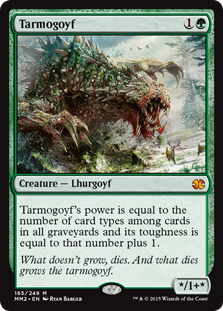
TarmogoyfThe second reason to play Moon is BGx. SCG Columbus and the other early June events showed that the Jund vs. Abzan debate is by no means decided. Although I still believe Jund has the metagame edge, I have also tried to explain that it's not a cut and dry issue of one deck supplanting the other. We have already seen the two decks coexist for months now, and that doesn't look like it's stopping anytime soon. Be prepared for both. But no matter where you stand in the debate, you still have to admit that Moon is a great card against these decks. It's gamebreaking against Abzan and strong against Jund, which is exactly where you want to be against a combined archetype share of 15%+ of the metagame. If you go to Charlotte, you will face Jund and Abzan. It's hard to say which of the two decks will be more prevalent: Jund just surpassed Abzan online, but Abzan still has a 2%-3% lead in paper. No matter which deck emerges on top, Moon will be a strong card here (especially if players on Abzan, a softer deck to Moon, think they can retake the metagame into this Grixis heavy field).

Finally, Moon is a big red wrecking ball against a lot of random Modern decks. This is exactly the type of card you want to play in a diverse format at a large event, much like Spellskite, Dispel, Thoughtseize, and the other bullets of Modern. Moon is relevant against RG Tron (land destruction is better but Moon isn't the absolute worst thing you can do), Zoo variants, UWR variants that fetch poorly, Infect, anyone still playing Scapeshift, and even Grixis decks if you get the initiative in playing it first. Catchall cards are incredibly valuable in Modern, a format filled with strong decks demanding narrow answers. Moon picks up a lot of slack in this metagame. Just looking at the decks listed above, both in this paragraph and including BGx and Amulet decks, you're looking at a solid 40% of the format (and about 60% of the tier 1 and tier 2 format). That's a lot of matchups where Moon is strong, and good incentive to use the card in some capacity.

Blood in the Board

The sideboard is Moon's most obvious home. If you run Moon out of the board, you don't have to worry about drawing it in game 1 against the numerous Modern decks where you don't want to see it. In fact, this is an important followup point from the above discussion of Moon's relevance. When Moon is good, it's really good. But when Moon is bad in game 1, it's really bad. This is not a card you ever want to draw in your opening 7 (or, Urza forbid, mulliganing into it on 6) against Affinity, Merfolk, Burn, Abzan Company, Elves, or UR Twin. Although these matchups don't detract from Moon's metagame strength, they do detract from its maindeckability. They also punish those decks who try to hedge bets too heavily on Moon. Given that these above decks make up a combined 28%-30% of the format, Moon's safest place is off in the sideboard where you can use it only if you need it.

Here are two decks you want to take as examples for effective Moon sideboarding. Although other decks use Moon in the board, these two are notable in their radically different gameplans and in how Moon interacts with those plans. First, let's look at Brandon Pascal's Affinity sideboard from the SCG Invitational.

1 Dragon's Claw
1 Torpor Orb
1 Etched Champion
1 Spellskite
2 Blood Moon
2 Ancient Grudge
2 Spell Pierce
1 Wear // Tear
2 Thoughtseize
2 Whipflare

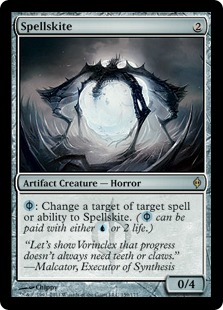
If you are playing an aggressive deck like Affinity, this is the way you want to run Moon. Generally speaking, Moon doesn't play nice in multiples, which is one reason most lists run no Spellskitemore than 2 copies for games 2 and 3. On the one hand, you want to draw this card by turn 2-3. On the other hand, you don't want to see two of these in a game, especially if the opponent hasn't addressed the first one and your gameplan is so linear that a drawn Moon will disrupt your momentum. That's where the rest of Pascal's board comes into play, giving you overlapping answers in matchups where you also want Moon. Against Amulet, you have Thoughtseize, Spellskite, and Grudge. Against BGx, you have Champion and Spellskite. Control decks fall to Thoughtseize and Pierce. This kind of mixed hate is common in most current Modern sideboards, but it's particularly important with Moon. If you don't have Moon in key matchups, those other cards need to keep the game going until you get it online. All of this is to say that Moon can't be your only card for certain matchups (nor can you just go all-in on 4 Moons). You need those other slots to remain flexible.

While Pascal was at the Open, Rudy Briksza piloted a Grixis Twin list to a 2nd place finish at the Invitational side of the event. Here's how Briksza fit Moon into his own sideboard:

2 Dragon's Claw
1 Spellskite
1 Grim Lavamancer
1 Izzet Staticaster
2 Blood Moon
1 Dispel
1 Flashfreeze
1 Rending Volley
1 Olivia Voldaren
1 Keranos, God of Storms
1 Ashiok, Nightmare Weaver
1 Anger of the Gods
1 Thoughtseize

Grixis Twin plays a totally different game from Affinity, but its sideboard structure is similar to the aggro deck's. We see a pair of Moons along with a variety of singleton bullets. Some cards are the same ones we saw in Affinity, or at least filling the same role (e.g. Spellskite, Thoughtseize, Anger). Others fill different gaps in the Grixis Twin gameplan that Affinity wouldn't need to worry about (e.g. Keranos, Olivia, Claw). But again, the key takeaway is that you don't create a sideboard with 4 Moons and call it a day. Those 4 Moons won't necessarily be effective in your targeted matchup, and they eat 2 slots that could be put into preparing for a more diverse array of decks. As long as your other sideboard cards pick up the slack of a missed Moon, you won't notice the missing copies.

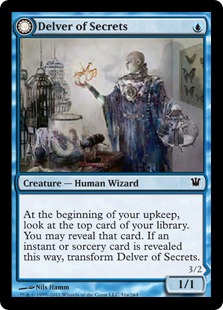
DelverIs there ever a situation where you want to run 3 Moons in the sideboard? Yes and no. There are definitely times where you will run 2 Moons in the maindeck and have a 3rd in the board (see the next section for more on this configuration). And there are also times where you will straight up run 3 Moons without a single one maindecked, even though this is definitely the exception. The only instances where I think this is fine is if you are running fast mana to drop the Moon on turn 2 (the earlier Moon lands, the better), or if you are playing a deck that has such an awful BGx and Amulet matchup that you need an early Moon. Grixis Delver might be in this latter category: its Amulet matchup isn't amazing and it's BGx matchup goes from bad (Jund) to unwinnable (Abzan). Delver gains a lot from Moon in certain matchups and can afford the sideboard slot to shore those up. But outside of these cases, you really want to stick with 2 copies of the enchantment.

Maindecking Moon

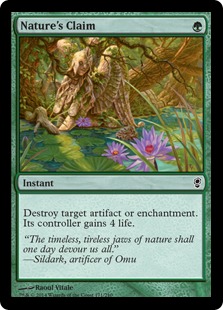
In a metagame with so much Jund, Abzan, RG Tron, Amulet Bloom, etc., Blood Moon starts to look like an attractive maindeck option. As i said at the start of this article, Natures Claimalthough I'm not going to GP Charlotte, I would be playing Moon if I could attend. And if I played Moon at Charlotte, it would be in my maindeck. There are several advantages to running a game 1 Moon that you lose in the sideboard. The big one is the very reason we are running Moon in the first place: Modern is defined by high-impact cards that provide narrow answers to important matchups. When you bring in those cards (e.g. Moon, Stony Silence, Leyline of the Void, etc.) in games 2 and 3, you are often bringing them directly into their answers. Savvy players will be ready with Nature's Claim, Wear // Tear, Thoughtseize, and other ways to handle these threats and continue their gameplan. But if you get ahead of the curve in game 1, your Moon will get a full game to shine without worrying about the hatred lurking in the board. Just as decks like Affinity and UW Tron excel in game 1, so too does Moon: the answers just aren't ready yet.

If you want to maindeck Moon in Modern, look no further than Grixis Moon, aka Grixis Control, aka Not-Your-Parents'-Cruel-Control. Blue Moon strategies, and Temur Moon to a lesser extent, have been Modern staples for years. Straight UR control decks are natural fits for Moon, as UR Twin's performances at PT Fate Reforged and GP Vancouver attested. But the Grixis Moon concept appears, by its very nature, to be riskier. Fetchlands and shocklands are required for Grixis to work at all, and the deck makes extensive use of black spells (unlike Temur Moon which really just splashes for Goyf). This makes Moon seem like an odd inclusion. But as Gerard Fabiano proved en route to his 11th place finish, maindeck Moon is just as strong in Grixis Moon as it was in the Blue Moon predecessors.

Grixis Moon, by Gerard Fabiano (11th, SCG Invitational Columbus 2015)

Creatures

4 Snapcaster Mage
3 Tasigur, the Golden Fang
2 Vendilion Clique
1 Keranos, God of Storms

Enchantments

2 Blood Moon

Instants

2 Cryptic Command
1 Electrolyze
2 Kolaghan's Command
4 Lightning Bolt
2 Mana Leak
3 Murderous Cut
1 Remand
2 Spell Snare
2 Thought Scour

Sorceries

3 Inquisition of Kozilek
4 Serum Visions

Lands

6 Island
1 Mountain
1 Swamp
1 Blood Crypt
1 Cascade Bluffs
4 Polluted Delta
4 Scalding Tarn
2 Steam Vents
2 Watery Grave

Sideboard

2 Spellskite
1 Blood Moon
1 Counterflux
3 Dispel
1 Rending Volley
1 Slay
1 Olivia Voldaren
1 Ashiok, Nightmare Weaver
2 Jace, Architect of Thought
2 Anger of the Gods

Desolate LighthouseMatt Costa also ran a similar list to Fabiano's, but I prefer the above 75. Fabiano's finished higher, maindecks Inquisition, and doesn't have any nonsense with Vedalken Shackles in a metagame where Kolaghan's Command is probably in 30% of decks. Looking at this above list, we see a number of deckbuilding decisions made to accommodate maindecked Moons. The first is in the manabase. Fabiano is up to 6Islands and zero manlands or utility lands. That means no Desolate Lighthouse or Creeping Tar Pit, which isn't the end of the world but is still a loss you might feel as games drag on. But those cards don't play nice with Moon so out they must go. 6 islands is also mandatory here if you ever want to cast those Cryptic Commands or flashback stuff with Snapcaster.

Murderous CutThe second deckbuilding parameter involves two-colored cards. Some Grixis lists run extra copies of Electrolyze, in addition to the almighty Terminate. Fabiano avoids those cards as much as possible. It's not realistic to go turn 1 Scour/Visions into turn 2 Terminate and turn 3 Moon. That mana configuration is too specific to rely on. To adjust for this, Fabiano runs a full 3 Cuts, which you typically don't see in Grixis decks that aren't running Moon. A more traditional split is 2-1 on Terminate-Cut, but that just doesn't work when you also have 2 Moon. I don't think Cut is actually better than Terminate here: it's just the price you have to pay to maindeck Moons and keep removal. But even if Cut is worse than Terminate, Cut plus Moons is probably better than Terminate and no maindeck Moons. This is the kind of calculus you need when building around the enchantment.

Ultimately, if you include Blood Moon in a three-colored deck, Fabiano's list is a good starting point to give you deckbuilding guidelines. Go heavy on the basics, ditch manlands and utility lands, and adjust spells to accommodate an active Moon. Although this might mean playing subpar options (e.g. Cut instead of Terminate), these other cards aren't often that much worse than the regular choice. Besides, anything you lose from running Cut over Terminate or 1 Electrolyze over 2 is more than compensated for in the maindeck Moon.

Going Rogue

Confession time: I'm not the biggest fan of established tier 1 and tier 2 decks. Although there are some I can get behind and play, I much prefer to run something a bit less mainstream and a lot more unexpected. Moon is right at home in such a strategy, because your opponent both has to respond to your unconventional gameplan and play around the Moon. Most players (even pros) struggle to just do the first, so adding Moon on top of this can be a recipe for success.

Generally speaking, there are two ways I like to go rogue with Blood Moon. The first is to take a deck that is already doing something powerful and jam Moon into it. This is very much in line with the UR Twin and UR Delver approaches we have seen in past metagames (or, in the case of Twin, the contemporary lists). Bonus points if you can use the deck's existing strategy to accelerate into a turn 1 or 2 Moon: the quicker you get this card on the board, the more it screws up your opponent. So what decks have powerful, preferably linear, strategies and also have acceleration? Griselbrand wants a word. Here's a modified Griselbrand Reanimator deck, taking Tatsushi Tsukamoto's 2014 GP Kobe list as a template:

Griselmoon, by Sheridan Lardner

Creatures

4 Griselbrand
4 Emrakul, the Aeons Torn
3 Simian Spirit Guide

Enchantments/Artifacts

3 Blood Moon
3 Pentad Prism

Instants

4 Goryo's Vengeance
4 Through the Breach
2 Izzet Charm

Sorceries

3 Thoughtseize
4 Faithless Looting
4 Fury of the Horde

Lands

5 Swamp
1 Island
1 Mountain
4 Bloodstained Mire
2 Blood Crypt
1 Steam Vents
1 Watery Grave
3 Blackcleave Cliffs
4 Scalding Tarn

Sideboard

2 Inquisition of Kozilek
3 Leyline of the Void
2 Liliana of the Veil
1 Anger of the Gods
2 Rending Volley
1 Quicksilver Amulet
1 Duress
1 Shatterstorm
2 Echoing Truth

This would have been a frontrunner deck for me if I headed to Charlotte this weekend (with some more testing and tweaks, of course). The Griselbrand/Emrakul and Vengeance/Breach package is one of the strongest things you can do in game 1 in Modern, especially against decks that aren't interacting with you. BGx decks have been a historic weakness for Griselbrand, both due to the spot discard ripping apart your hand on turns 1 and 2, and later Ooze keeping cards out of your graveyard. But adding the threat of a turn 2-3 Moon makes this matchup a lot better, giving you more early game threats and topdeck power. As I said earlier, there are a number of slots you can play with here (I'm not sold on the 3 Prisms, even if they do make Breach a lot more reliable), but this is a great starting point for the deck. It's also an effective way to illustrate how you would integrate Moon into rogue maindeck shells.

Kiki JikiThe second way to go rogue with Moon is to build a deck around the card. Looking at this site alone, Sean posted an RW Kiki Control list that used Moon as one of its many disruption pieces. You could also do something cute with a 6-8 Moon list, using Magus of the Moon to add more nonbasic hosing to the maindeck and all but ensure active Moons by turn 3. I'm generally not a fan of this approach because it's hard to get the rest of the deck working even with Moon. It's much easier to take an existing tier 3 deck and improve it with Moon than it is to try something new around an enchantment that might not even carry enough games: remember that a good chunk of the metagame is basically Moon-proof. But it's still a viable option if you have enough time to test and tune.

Bringing the Blood Moon to Charlotte

It's no coincidence that Moon's price keeps rising with its metagame relevance. As I'm writing this article, the card is already over $50, a 100% price spike we've been riding since Moon was confirmed out of MM2015. If Moon does well this weekend (which I'm betting it will), expect for this to keep rising (but hope for it to fall, because this is an absurd pricetag for this kind of card). Overall, the metagame is ripe and ready for a Blood Moon takeover and hopefully this article gave you some new ideas for using the card to take down the competition. So sleeve up those Moons, put down some pressure, and show those Bloom and BGx mages that trouble is on the way.

Information on Origins Trickles In

Are you a Quiet Speculation member?

If not, now is a perfect time to join up! Our powerful tools, breaking-news analysis, and exclusive Discord channel will make sure you stay up to date and ahead of the curve.

Typically, when sets get spoiled we see some really sweet cards, a few limited goodies that suggest themes, some random good cards scattered in and then all the chaff at the end. If you check out the cards spoiled so far for Magic Origins, it looks like we're seeing all of the filler first.

There was an error retrieving a chart for Yoked Ox

On top of a grip of commons and uncommons, Mark Rosewater has offered some insight on some changes to design that will be reflected in origins. I recommend reading his article on the matter here.

I'm happy to see prowess and scry become evergreen mechanics. Prowess is a little more out there as evergreen, but it really makes sense as something that you want to have around if you want blue creatures to be relevant without just making blue play the same kind of creature decks as everybody else. The bad news that comes along with the return of scry is that Serum Visions has been confirmed to not be in Origins. Worse news still if you're a fan of red decks, is that this card has been confirmed...

lightning javelin

I'm probably asking too much when I say I want Lightning Bolt to be in Origins, but I know that I'm getting too little when I look at Lightning Javelin.

Insider: MTGO Market Report for June 10th, 2015

Are you a Quiet Speculation member?

If not, now is a perfect time to join up! Our powerful tools, breaking-news analysis, and exclusive Discord channel will make sure you stay up to date and ahead of the curve.

Welcome to the MTGO Market Report as compiled by Sylvain Lehoux and Matthew Lewis. The report is loosely broken down into two perspectives. A broader perspective will be written by Matthew and will focus on recent trends in set prices, taking into account how paper prices and MTGO prices interact. Sylvain will take a closer look at particular opportunities based on various factors such as (but not limited to) set releases, flashback drafts and banned/restricted announcements.

There will be some overlap between the two sections. As always, speculators should take into account their own budget, risk tolerance and current portfolio before taking on any recommended positions.

Redemption

Below are the total set prices for all redeemable sets on MTGO. All prices are current as of June 8th, 2015. The TCG Low and TCG Mid prices are the sum of each set’s individual card prices on TCG Player, either the low price or the mid-price respectively.

All MTGO set prices this week are taken from Goatbot’s website, and all weekly changes are now calculated relative to Goatbot’s ‘Full Set’ prices from the previous week. All monthly changes are also relative to the previous month prices, taken from Goatbot’s website at that time. Occasionally ‘Full Set’ prices are not available, and so estimated set prices are used instead.

Return to Ravnica Block & M14

RTR and GTC have seen a bump in their set price in the past week on MTGO and the uptrend in paper is continuing. Modern continues to attract a ton of attention and the shocklands anchor the price of these sets. As outlined in previous reports though, the gains are not evenly distributed in these sets. Modern-playable cards continue to appreciate in price, while the junk mythic rares have been largely flat.

Speculators holding Modern-playable cards from these sets should consider the recent surge of interest as a good exit point. With the Magic Origins (ORI) previews that were released on the mothership today, it's a good time to consider the next speculative opportunity on MTGO. Getting liquid by selling down positions over the next six weeks will be crucial in advance of the release of the last core set.

Junk mythic rares have little downside at this point, but the upside is uncertain and would only appear after the conclusion of the Modern Festival.

Value can flow between the individual cards of redeemable sets on MTGO depending on players' interests, but the overall value of the set is anchored to the much more stable paper prices through redemption. If players decide to sell off their Modern cards, then demand from redeemers will kick in and elevate the price of the junk mythic rares as value flows from cards like the shocklands to cards like Vraska the Unseen.

Theros Block & M15

These sets continue to head lower in price as bots and paper dealers liquidate inventory in advance of Standard rotation. The vast majority of cards from these sets will settle into financial oblivion after they leave Standard, so the trend is undeniable.

The currently actionable items in these sets remain cards that are priced at or near bulk. Buying cards at bulk prices helps to limit downside and as long as there's expected future demand for the card in question, then buying at bulk prices ensures safe, if unspectacular profits.

At the moment, Underworld Cerberus is the only junk mythic rare worth pursuing. It's from a redeemable set and is priced below 0.4 tix at Goatbot. If speculators are willing to hold this card for six-plus months, then prices higher than 0.6 tix are anticipated. Buying at 0.4 tix is a low-risk speculative bet with the potential for 100% gains.

Tarkir Block

The sets of Tarkir block stabilized this week after the initial hype around the release of MM2 drove down prices on these sets. With the release of Magic Origins now on the horizon, the bottom on DTK and FRF is near.

Putting away playsets of the mythics and rares at current prices will have limited downside, although the ultimate bottom will occur during ORI release events. With KTK a couple of months removed from being a part of the most current draft format, KTK will not dip back to its set low of 65 tix until it gets closer to rotating out of Standard.

Prowess has been revealed this week as an evergreen mechanic in Magic Origins so speculators should consider prowess enablers and other related cards such as Ojutai Exemplars as speculative targets. This DTK mythic in particular is priced above junk at over 1 tix--taking a modest position in that card is warranted as it's already priced at a relatively low level.

Modern

Modern continues to be the format to pay attention to. As evident by the Modern Staples Price Index, Modern prices are again this week maintaining their upward trend.

The ranks of Modern staples breaking their previous record high get bigger every day, with Steel Overseer, Sulfur Falls, Oblivion Stone, Serra Ascendant, Horizon Canopy and Celestial Colonnade among the latest examples these days. If the bear market in constructed cards was ushered in by the switchover to V4, the latest broad price surge signals that the bear market is officially over.

Speculators should be particularly attentive to the cards breaking new records at unprecedented speed. Such increases are unlikely to sustain and may precede rapid price falls. For example, Heritage Druid, Blackcleave Cliffs and Darkslick Shores have recently risen rapidly to extreme heights and are about to break. The red-black SOM dual land has already lost ~50% of its value in less than a week.

Speculators holding on to positions following similar patterns should consider selling now to avoid the inevitable subsequent price fall. Cards in this category include Amulet of Vigor, Deceiver Exarch, Grove of the Burnwillows, Steel Overseer and Sulfur Falls.

Reinvigorated by Ali Aintrazi's win at the SGC Invitational this past weekend, G/R Tron finally took home a major trophy. This finish greatly benefited the already-pumped-up key cards of the deck. Oblivion Stone, Grove of the Burnwillows and Wurmcoil Engine are now at an all-time highs, and Sylvan Scrying, a bulk uncommon three weeks ago, is now valued at over 2 tix.

Due to its reprint in MM2, Karn Liberated hasn't really taken off yet. Speculators should strongly consider taking a position in this mythic, currently priced at about 17 tix but previously up to 50 tix less than four months ago.

There are still cards being ignored by the market, below their long-term price. Vengevine has typically held a price range of 8 to 12 tix but is currently priced at about 5 tix. The low price is a 'hangover' from the fear of being reprinted in MM2, which afflicted the price of almost every card in Modern.

It will only take one Woo brew featuring this card for the price to double overnight. Be sure to stock a few of these away for just such an occasion. A reprint in ORI is possible, but that would be just as much of a short-term boon for this card as getting featured in a brewer's deck. There is very little downside to speculating on Vengevine at current prices.

Two weeks into the release of Modern Masters 2015, prices seem to have stabilized, at least from the whole set value perspective. Individually, MM2 prices of the most demanded cards are still fluctuating quite a lot. However prices of the most coveted mythics and rares are unlikely to see further significant price drops and speculators should consider acquiring these positions now.

The majority of the current top 20-25 most expensive MM2 cards would fit this category and represent as many good speculative targets. If MMA price trajectories are any indication, these top 20-25 cards are likely to see their prices rise until the release of the next fall set. Less in-demand rares and uncommons will still see some price weakness for the immediate future as the market digests the incoming supply.

Legacy & Vintage

Nothing new has occurred to disrupt the unshakeable flat line of prices of these two formats. The vast majority of prices remain in stasis and only isolated variations or small price adjustments from Tempest Remastered cards have been observed this week. Although rather active for the past four weeks, Wasteland seems to have halted its growth and is stabilizing in the 65-70 tix range.

Dack Fayden is one of the very few cards on the rise for the past two months. It's a moderate trend, but supply for this planeswalker is rather limited.

As the card has made its way into the top Vintage decklists, the price should keep rising as long as the card is not reprinted in a new set or in VMA flashback drafts. If it is any indication, Dack's supply on Goatbots, MtgoTraders and Mtgo Library bots is quite low and is often out of stock. Dack Fayden is the only VMA card with such low stocks for several weeks now.

Pauper

Pauper positions continues to show all signs of a cyclical format in terms of price fluctuations. After Mental Note a few weeks ago, Accumulated Knowledge, Snuff Out and Moment's Peace all bumped up by ~40% this past week. This kind of unexpected price increases are what Pauper speculators should take advantage of.

On the other side, Seat of the Synod, Quirion Ranger, Nettle Sentinel and Ninja of the Deep Hours, to name a few, appear to be at a low point these days. They may represent as many buying opportunities for speculators interested in Pauper speculations.

Although price variations appear wide and in the magnitude of several tens of percentage points, the spread of Pauper cards is generally higher than Standard or Modern positions. Nonetheless, and even with restricted margins, these speculations should easily generate decent profits for small bankrolls.

Targeted Speculative Buying Opportunities

Standard

Ojutai Exemplars

Modern

Vengevine

EDIT: Since this article was submitted for publication, Lee Sharpe has announced the extension of MM2 draft queues through July 8th. This means that downside risk is higher, and upside potential is lower. Although the targets do not change, be sure not to over pay and to spread out purchases when establishing speculative positions in cards from MM2. Also, waiting until the end of June to target playable Modern uncommons is recommended.
Karn Liberated
Noble Hierarch
Cryptic Command
Dark Confidant
Mox Opal
Fulminator Mage
Splinter Twin
Vendilion Clique
Primeval Titan

Besides Vengevine, our selection here only includes the top Modern-playable cards reprinted in Modern Masters 2015. These are, for the most part, played as four-ofs in current Tier 1 decks and are therefore more likely to rise, or to rise faster, compared to any other potential MM2 positions. We think that these positions are unlikely to lose further value and should only increase between now and the release of the next fall set.

Targeted Speculative Selling Opportunities

Modern

Arcbound Ravager
Kataki, War's Wage
Inquisition of Kozilek
Aven Mindcensor
Grove of the Burnwillows
Horizon Canopy
Tectonic Edge
Lightning Helix
Figure of Destiny
Ethersworn Canonist
Restoration Angel

We think that these positions have matured enough and shown tremendous profit in a very short period of time (for most of them). This is the right time to close these positions and to move on to MM2 opportunities with better growth expectations.

Restoration Angel is a slightly different case. After the initial price increase following the MM2 list announcement, the price dropped by ~1.3 Tix and has now been flat for the past two weeks.

Jeskai Midrange and Jeskai Control, the two main decks likely to play the Angel, are not well positioned in the current Modern metagame. This will prevent further price growth for the Angel. Moving to cards from MM2 will yield better short- to mid-term profit.

Pauper

Moment's Peace

The Odyssey common crossed the 1.5 Tix mark earlier this week and is at a 15-month high. Its price has quadrupled since we recommended buying it and this is the perfect exit opportunity.

Insider: Modern Gems

Are you a Quiet Speculation member?

If not, now is a perfect time to join up! Our powerful tools, breaking-news analysis, and exclusive Discord channel will make sure you stay up to date and ahead of the curve.

Last weekend and this upcoming weekend are huge moments for establishing what Modern will look like moving forward. The SCG Invitational, SCG Open and Grand Prix Charlotte are three gigantic Modern tournaments all running back to back to back.

With two of the three big tournaments in the bag already and the biggest one on the horizon I think that there is a pretty clear portrait being painted of certain decks and strategies separating themselves from the pack. Once we know which decks are going to be the tier-one mainstays for the foreseeable future it is possible to identify solid speculative pick ups in the short term.

Generally speaking, I like to win small and consistent when it comes to MTG finance. In today's article I'm going to focus in on a few cards from each of the tier one decks from last weekend and explain why I like them as pickups in the next week or so.

Beyond the specific reasons for each card, I also like the cards discussed below because even if they don't spike they are unlikely to decrease in price, and they will be trading hotly no matter what.

There was an error retrieving a chart for Kolaghan's Command

The new black-red command was all over the place in Modern this past weekend, featured in three of the best decks in the format: Grixis Control, Grixis Delver, and Jund. In fact, this card all by itself basically catapulted all of these archetypes into the limelight.

In short, Kolaghan's Command is the new hotness in Modern.

The card is pure value and will almost always be a straight two-for-one. Between Shock, Raise Dead, and discard a card the spell already gets you advantage. The icing on the cake is the prospect of a free shatter to take out a Spellskite, Cranial Plating, Vedalken Shackles, or Wurmcoil Engine, which really pushes the card over the top.

In a format where drawing extra cards is quite challenging because everybody’s spells need to be hyper-efficient, a three-mana instant that can interact with the board in various ways and generate card advantage is too good to pass up.

The card has already gone up in value substantially in the past week and as I’m writing this it sits at about $6. I actually think the card is a solid pick up at $6 just because of how good it is in Modern. I don’t typically love picking up regular rares that are Standard legal as Modern specs but this card is just so impactful in Modern that I think it will be very popular card for a long time to come.

There was an error retrieving a chart for Inquisition of Kozilek

Inquisition of Kozilek was all over the place this past weekend. Basically, all of the decks that play the black-red command are also making use of this powerful discard spell.

The biggest upside of this card compared to Thoughtseize (which is generally considered a more powerful card) is that a lot of Modern decks don’t play a ton of 3+ cc spells, and not having to pay two life is pretty significant with so many Burn decks and Lightning Bolts floating around.

There are so many powerful things going on in Modern but a lot of those things end up costing life as a resource: Ravnica shock lands, fetch lands, Dark Confidant, and Phyrexian mana all come to mind. There are so many awesome ways to gain an edge on mana by paying life, but at the same time you’ve got to draw the line somewhere! Inquisition is good because it gives you a lot of the Thoughtseize power without the life loss.

Inquisition of Kozilek was reprinted in a deck which suppresses the value somewhat but considering how popular the card has been the past week I think that demand will simply outweigh even the reprinted supply. At the very least, I think there will continue to be a growing demand for the card as more players clamor to build various Kolaghan's Command decks.

Personally, I think that if before the MM2 reprint Remand was a $15+ card, Inquisition of Kozilek is twice the card and deserves the same kind of tag. Both have the parallel of the random deck reprint and I see Inquisition in the same range. They are also fantastic trade bait, pretty much flying out of a binder if you feel like moving them.

There was an error retrieving a chart for Olivia Voldaren

Olivia sees play in a lot of these BRx sideboards as a trump for creature mirror matches. I like this card a pickup because it has not been reprinted and is a mythic rare from a set that has been a couple of years removed from Standard.

Even if this card was not seeing a ton of new Modern play because of the popularity of Jund, I would still be in on picking it up. In fact, I’ve been hording up Olivias for a while now. The card is an awesome commander and just an amazing casual kitchen table card.

When you consider all of that and the fact that it is seeing a bunch of Modern play, I simply like the card better than the $7 price tag that it commands as I’m writing this article.

My thought on this card is that a lot of people will be looking for this card in the next few weeks to finish off their sideboards. Newfound interest from Modern players when combined with consistent casual appeal is the formula for a winner. Olivia just has nowhere to go but up.

There was an error retrieving a chart for Oblivion Stone

G/R Tron won both the SCG Open and the SCG Invitational this past weekend so it seems only fitting to speculate on something from that deck. People tend to follow and jump on whichever bandwagon is doing well and it is hard to argue with two wins in a row.

I like Oblivion Stone as a speculation target for the same reason as Olivia. It is also a fantastic commander and casual card. Not only is Oblivion Stone one of the most powerful cards in the Tron deck but O Stone is also arguably the best Commander wrath variant ever printed.

It was reprinted in Commander 2011 which puts a little bit of a ceiling on the card but I was happy to trade for them at $12-13 all weekend long. I could see this card making some money in the short term but I also think that it is a solid long term investment because it also has the casual angle working for it.

There was an error retrieving a chart for Sylvan Scrying

My other pick from the Tron deck has to be Scrying. It wasn't reprinted in MM2 which seems kind of weird to me. I've been making a point of trying to trade for these the past month and they are kind of tough to find in trade binders. I guess some people don't realize that it is a solid $4 uncommon.

Mirrodin and 10th Edition haven't seen print in a long, long time and the card just isn't very easy to find.

Sylvan Scrying also does have the competitive casual appeal of going into a bunch of different Commander decks. I do think that the card is very likely to be reprinted at some point in time. It just feels like the kind of card that gets reprinted... So, it may lose some value in the long term as a card to hold onto but I think there is a pretty solid chance that it will be a short-term gainer.

Tutors are really good and this one is no exception.

There was an error retrieving a chart for Hive Mind

There has been a ton of chatter on Facebook and Twitter over the weekend about the Amulet Bloom deck being too fast and too powerful, and speculating that something (Summer Bloom?) should get banned. CVM lost in the finals of the Invitational with Bloom last weekend and the deck just seems absolutely awesome.

While it is true that there is a good chance that something will get banned, I also think the allure of the fast, banworthy combo deck will lure a lot of players to buy into Amulet Combo.

The card I like the most out of the deck as a speculative target is Hive Mind because the card is relatively cheap ($6 at time of writing) and it's often difficult to find random rares from older M sets. I’d trade for basically every copy that I could get my hands on and be looking to flip them when and if they pick up some value in the next week or two.

Even if Summer Bloom were to get banned in July, I still think that Hive Mind is a solid card to own. As “unfun” as Hive Mind + Pacts is, the actual card Hive Mind is a pretty crazy casual multiplayer spell--never a bad thing to have on your side when you are speculating on cards.

There was an error retrieving a chart for Slaughter Games

It's time for this card to go up. Return to Ravnica has been out of Standard for almost two years now and it's time that some of those cards start to creep up in price.

Slaughter Games is a great one because it does see quite a bit of Modern Constructed play and it is really, really good at what it does. It is an anti-combo card that the decks that don't play blue can actually play. The uncounterable clause also makes it awesome against blue-based combo decks that pack permission to protect their combo.

The Tron deck that won the Invitational was packing three copies of the card and as more and more people copy that list, the demand will go up. I think it is pretty safe to say that this is better than a $0.50 card.

~

Modern is an interesting format and Khans of Tarkir block has certainly left its mark on it. The delve spells have been huge players and the ones that didn't get banned are starting to make their presence felt. The Kolaghan's Command has also left its mark, giving a strong card advantage spell to a color combination not typically know for that kind of effect.

The format is really exciting right now and picking up the best, most underrated cards before the hype wagon starts looking for singles is key to making a nice gain on investment.

And that black-red command is the real deal! Wow, is that card effective.

Stock Watch: Deceiver Exarch

Are you a Quiet Speculation member?

If not, now is a perfect time to join up! Our powerful tools, breaking-news analysis, and exclusive Discord channel will make sure you stay up to date and ahead of the curve.

Hello readers!

I’m here again to offer some great free-side content with another Stock Watch! On our agenda today is a centerpiece of the Modern Twin decks. What could this card be?

...It’s none other than Deceiver Exarch!

There was an error retrieving a chart for Deceiver Exarch

I have been monitoring this card along with a slew of other uncommons since Heritage Druid's recent spike. In light of this event, it seems that even uncommons in Modern can command a premium! I have reiterated many times that viable Modern stables that don't get reprinted may end up increasing across the board. Turns out this uncommon is primed for a comeback since its recent reprint.

Let’s look further as to why this card could be a great investment right now.

Parameters: NM
Parameters: "NM"

Now, TCGPlayer isn’t the end-all-be-all of shopping online, but it’s usually a great way to purchase cards, and offers the nifty option to search for “4 or more”. When stocking up on inventory there’s usually no better place to shop than here, or Star City Games.

You can see in the yellow highlights above that there are fewer than 100 sellers between the two printings, and most vendors only have one copy in stock with absurd shipping.

What's happening here is that sellers could capitalize on making a “new” price by simply listing more than one copy. After all, no buyer is really going to want to pay 1.99 shipping on a .50c card. This could start a domino effect because all of these “one-of” sellers could end up pulling the one card in inventory, and suddenly the new price on the card could stick.

The card seems to have a new price on MODO, that’s for sure:

Online prices
Online prices

Dissecting the graph we can see this spike on MODO is very recent, and with the popularity of Twin in the online metagame, it seems like a frenzy trying to grab these uncommons. Since the Commander product is rarely opened on there.

We know that trends from MODO often end up transferring to paper prices down the line. Added to that fact, with the recent SCG Invitational results and the success of Bloom Titan and R/G Tron, many believe it would be a great time for Twin decks to rise to combat those strategies.

Finally, we take a look at the spread:

Deceiverexarchspread

Admittedly the spread isn’t that attractive for now. That could soon change once many players start sleeving up Twin archetypes (U/R, Grixis or RUG) and the overall supply on websites continues to dwindle. Buylists prices have fluctuated slightly, but nothing to indicate vendors really wanting many copies of this card. So, for now we may hold off, but as for myself, I will be looking for extras very aggressively here shortly.

It’s increasingly hard to order more than one copy, and truthfully so many one-of vendors essentially make the card already up to 3-4$ already. Blame the TCGPlayer algorithm for not taking into account the massive shipping on each of these vendors. Once these vendors start moving these cards or pull them, we could easily see paper prices start to mimic online copies.

So, that’s the little update on this card. I urge everyone to keep an eye on such a prime uncommon in the format, as well as many others. It’s really starting to become the Wild West out there, now that so many key cards have been excluded from Modern Masters 2015.

Hope this creates great opportunities for you financiers out there!

-Chaz

Avatar photo

Chaz V

Started playing during Invasion block at the age of 13. Always a competitive person by nature, he continues playing to this day. Got into the financial aspect of the game as a method to pay for the hobby and now writes, Podcasts, and covers all aspects of the game, always trying to contribute to the community and create great content for readers and listeners.

View More By Chaz V

Posted in Finance, Free, Stock WatchTagged , 1 Comment on Stock Watch: Deceiver Exarch

Have you joined the Quiet Speculation Discord?

If you haven't, you're leaving value on the table! Join our community of experts, enthusiasts, entertainers, and educators and enjoy exclusive podcasts, questions asked and answered, trades, sales, and everything else Discord has to offer.

Want to create content with Quiet Speculation?

All you need to succeed is a passion for Magic: The Gathering, and the ability to write coherently. Share your knowledge of MTG and how you leverage it to win games, get value from your cards – or even turn a profit.

Countermagic in Grixis Twin

Are you a Quiet Speculation member?

If not, now is a perfect time to join up! Our powerful tools, breaking-news analysis, and exclusive Discord channel will make sure you stay up to date and ahead of the curve.

Every format has its pillars. These decks might not always be the most-played or even the best lists in their respective formats, but they are ones you have to expect and respect going into any serious tournaments. Recent Standard seasons have seen Abzan Midrange and Mono Black Devotion fill these slots, just as Legacy continues to be defined by pillars like Delver variants, Miracles, Show and Tell, and Death and Taxes. Modern also has its defining decks, notably the midrange policemen of Abzan and Jund and the aggro core of Burn and Affinity. But there is perhaps no deck in Modern that has given more definition to the format than Splinter Twin combo. Twin has been embodying both the turn 4 rule and blue-based control since the format's inception. But it was only recently that a new version of Twin roared onto the Modern scene to supplement (even supplant!) its UR and Temur predecessors.

Exarch art

Based on the strength of cards from Khans block, many Modern players have now recognized Grixis Twin's relevance. But few have reached a consensus on the best way to build the deck, or even the most important considerations that go into the deckbuilding process. In this article, I look over past results and overall metagame cues to identify a number of important concepts that Grixis Twin deckbuilders need to understand. In that spirit, the article is less about defining a single "best" list for the archetype and more about giving a framework for Grixis Twin players to optimize their deck. I'm going to focus on one of the most important decisions in that regard: selecting countermagic. This may seem like a nuanced points, but it is a critical decisions for determining your success, and also important as a concept for Grixis Twin opponents.

[wp_ad_camp_1]

Recent History and Finishes

TasigurTasigur, the Golden Fang and, to a lesser extent, Kolaghan's Command forever altered the Modern landscape by powering up a number of otherwise underpowered decks. Grixis Twin is a direct result of their impact. Without Tasigur, Twin players would still be stuck on Tarmogoyf and the traditionally Temur colors that accompanied Tarmo-Twin. In the post-Tasigur world, however, Grixis Twin players are able to leverage powerful removal like Terminate alongside relevant interaction like Inquisition of Kozilek, all while still getting to run a "black Goyf". This shores up a lot of historic weaknesses in Twin decks while keeping many of the strengths of both the UR and the Temur versions of the deck.

Metagame changes reflect the deck's newfound prominence. Looking at the period between May 1 and June 1 on our Top Decks page, we see Grixis Twin was tracking a 2.8% format share even before June. This was evenly balanced between MTGO (2.8%) and paper (2.6%) and although those are hardly Grixis Delver numbers, they are still respectable indicators of success. Indeed, Grixis Twin has been around since Pro Tour Fate Reforged back in February, when a number of pros (notably Todd Anderson) piloted Grixis variants to 18+ point records. The deck saw some scattered successes since then, including a 1st place finish at the 208-player Arcanis Deluxe in March and a finish in 4th and 5th respectively at SCG Cleveland and SCG Dallas.

The recent SCG Open and Invitational at Columbus showed further indicators that this archetype will be a successful one as the summer progresses. Looking over the results, we see a total of four Grixis Twin lists in the publishes lists. Following those finishes, here are the two highest placing Grixis Twin lists from both events. The first is Rudy Briksza's build from the Open, which finished 2nd in the 15-round event.

Grixis Twin, by Rudy Briksza (2nd, SCG Open Columbus 2015)

Enchantments

4 Splinter Twin

Creatures

4 Deceiver Exarch
2 Pestermite
4 Snapcaster Mage
2 Tasigur, the Golden Fang
1 Vendilion Clique

Instants

2 Cryptic Command
1 Dispel
1 Electrolyze
2 Kolaghan's Command
4 Lightning Bolt
2 Remand
1 Spell Snare
2 Terminate

Sorceries

1 Inquisition of Kozilek
4 Serum Visions

Lands

4 Island
1 Mountain
1 Swamp
1 Blood Crypt
1 Bloodstained Mire
1 Cascade Bluffs
1 Desolate Lighthouse
4 Polluted Delta
4 Scalding Tarn
2 Steam Vents
2 Sulfur Falls
1 Watery Grave

Sideboard

2 Dragon's Claw
1 Spellskite
1 Grim Lavamancer
1 Izzet Staticaster
2 Blood Moon
1 Dispel
1 Flashfreeze
1 Rending Volley
1 Olivia Voldaren
1 Keranos, God of Storms
1 Ashiok, Nightmare Weaver
1 Anger of the Gods
1 Thoughtseize

The second Grixis Twin representative is from Kyle Boggemes, who brought his Twin list to an 8th place finish at the Invitational. Although Standard results also helped bring Kyle to that point, the Twin list was a strong performer throughout the tournament.

Grixis Twin, by Kyle Boggemes (8th, SCG Invitational Columbus 2015)

Creatures

4 Deceiver Exarch
2 Pestermite
4 Snapcaster Mage
2 Tasigur, the Golden Fang

Enchantments

4 Splinter Twin

Instants

1 Cryptic Command
2 Kolaghan's Command
4 Lightning Bolt
4 Remand
1 Spell Snare
2 Terminate

Sorceries

3 Inquisition of Kozilek
4 Serum Visions

Lands

4 Island
1 Mountain
1 Swamp
1 Blood Crypt
4 Polluted Delta
4 Scalding Tarn
2 Steam Vents
4 Sulfur Falls
2 Watery Grave

Sideboard

1 Engineered Explosives
2 Spellskite
2 Sower of Temptation
2 Blood Moon
1 Dismember
2 Dispel
1 Kolaghan's Command
1 Spell Snare
1 Vendilion Clique
2 Pyroclasm

The Open also saw a 6th place Grixis Twin list and another in 20th. You should see a lot of similarities in looking over all these versions. Indeed, in many cases, chunks of the deck are essentially identical. This includes the creature grouping of 4 Exarch, 2 Mite, 4 Snapcaster, and 2 Tasigur. It also includes usual suspects like 4 each of Twin, Bolt, and Visions. I wouldn't go so far as to call these inalienable cores of the deck, but they are definitely strong starting points. They also aren't necessarily the most important deckbuilding choices in Twin, specifically because they are so binary the more you look at lists. That's why I want us to focus on the differences between the lists and where deckbuilders need to focus when preparing their own Grixis Twin builds for tournament success.

Selecting Countermagic

Most Grixis Twin lists range between about 6-9 countermagic slots, split between some combination of Cryptic Command, Spell Snare, Remand, Dispel, and/or Mana Leak. If you are just netdecking, perhaps because you don't have the time or interest to prepare your own Grixis Twin lists, it's easy to overlook the nuances in those 6-9 slots and what cards comprise them. But this is exactly the sort of decision you need to think about if you want to succeed at 16 rounds of Grand Prix Modern. This will even be relevant in events as small as your three-round Modern weekends, especially if you are using those to prepare for bigger tournaments.

Slots are necessarily a function of the cards filling them and how many different roles they can occupy. One need only look at Abrupt Decay or Kolaghan's Command to see slot economy in action. Countermagic slots work the same way, especially given Modern's lack of a true Counterspell that is categorically relevant in almost all scenarios past turn 2. And if we are talking about slot economy with respect to countermagic, we have to start with Cryptic.

Cryptic Command

Cryptic CommandIn a format full of Summer Bloom, Tarmogoyf, and Become Immense, it seems odd that the humble 4-mana Cryptic Command would remain so relevant. But this is still probably the best (or second-best after Remand) counterspell in Modern and one that finds a perfect home in Twin. Snapcaster Mage into Command remains one of the best fair plays in Modern, and the card is almost always relevant in even some faster matchups. Of course, in grindy contests with Abzan, Jund, Grixis mirrors, etc., Command is an all-star. But that said,, Command is also not where you want to be on turn 1 or 2 against Amulet Bloom, Burn, or Elves. All of this plays into your final Command count. Barring huge metagame shifts, you will never want 0 copies of this in your deck. It's just too good and too relevant in such a large metagame subset. By a similar token, there are enough matchups you are likely to encounter (particularly at a 7-8 or 16 round event) where Command is not something you want to see in your opening seven, which means 3-4 copies is also off-limits. That leaves 1-2 slots to negotiate. Generally speaking, you almost always want 2 Commands. We just aren't in a metagame where there are so many bad matchups that you need to cut down to 1. But such a metagame might one day exist, which is why Grixis Twin pilots need to be aware of the flex between those 1-2 slots.
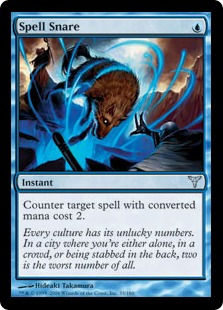
Spell Snare

Spell SnareLike Command, Spell Snare has some internal tensions which complicate our deckbuilding with the card. On the one hand, Snare is relevant in almost all matchups. Just looking at tier 1 decks, it hits multiple cards in all of them. This includes Goyf and Ooze in BGx, Confidant and Terminate in Jund, Ravager and Plating in Affinity, Eidolon and Command in Burn, and Snapcaster and Remand in Twin. Not only do all decks have Snare-bait, but these are important cards in each of their respective decks. But on the other hand, Snare is a card you don't necessarily want to see past the early turns, and rarely in multiples. No one complains about chaining Commands in the mid-to-late game. Topdecking Snare on a problematic boardstate, however, will make you wish you had zero. This tension bring us back to the 1-2 split we saw with Command. Snare is too relevant to not use at all but too limited to go past 1-2 copies.

How do we negotiate this? When I look over the metagame, I see enough matchups where Snare is important to justify 2 copies of the card. 2 is also the sweet spot where you are unlikely to get Snare flooded when you don't want it, but still maximize the likelihood of having this in your opening hand (especially on the draw). The only thing that would make me drop down to 1 to free slots for other cards is an Affinity and Burn decline. These decks overcommit earlygame resources, especially in the two-drop slot, which makes early Snare very strong. If those decks decline, Snare loses two of its most important matchups. This might bring me down to 1 copy, especially if the decks were replaced with grindier control builds. But even there, if those grindy decks are rocking Terminate, Leak, or Remand, I'd still keep 2 Snares: going turn 3 Tas with Snare backup is just too important. Indeed, this is the core consideration of Snare. You use the card both to interact with an opponent (something independent of Twin's color composition) but also to protect your own threats (something much more important in Grixis Twin, where you want to defend your high-value Tasigur). Given the dangers posed by Remand and Terminate, you really can't leave home without 2 of these.

Remand vs. Mana Leak

RemandThat brings us to Twin's arguably most iconic counterspell: Remand. Historically, Twin lists always run the full Remand playset. This has been true of both successful UR Twin lists, as in the winning builds at PT Fate Reforged and GP Vancouver, and the same is true of most Grixis Twin lists we've seen these past months. But other lists go down to 2 Remand, freeing slots for more removal, discard, or to use other countermagic in its place. Mana Leak is a big player here, which is a decision Jordan Boisvert discussed in his Temur Delver article last week. Remand has the tempo advantage here, wasting an opponent's turn and replacing itself in the process. Leak is a more permanent answer, removing the problem spell completely (at least, over the first 4-5 turns of the game). As with Snare and Command, the Leak and Remand split is a metagame context call. Remand is at its absolute worst against aggressive decks with lots of cheap spells. In those situations, Leak is basically a hard Counterspell. Similarly, Remand is at its best when countering 3+ mana threats, or in the early game when you are setting up a combo. Remand is particularly unfair against delve spells: catching Tas or Angler is a massive resource swing. By extension, Remand is bad in a metagame full of stuff like Burn, Affinity, Merfolk, etc., and Leak is bad in a metagame where games go late, e.g. against Grixis Moon, Jund, Abzan, etc.

Mana LeakThis might suggest we should operate on some 2-2 or 3-2 split between Remand-Leak, especially in a diverse metagame with unknown opponents. Jelger Wiegersma ran a similar split in his UR Twin list at the Pro Tour. But to me, this seems like a miscalculation. For one, there are just too many decks trying to abuse delve spells. Remand is to valuable in those situations to pass up, and with about 25%-30% of the format trying to do something with Tasigur or Angler, you want to be able to ensure that blowout. Remanding a turn 3 Tasigur doesn't just stop him for a turn. It probably stops him for at least two, while the opponent refills their yard. And even then, he's still probably more expensive than when you first countered him. Leak is much less consistent here: indeed, it's outright bad against delve spells because it's much easier to pay the extra 3. The second reason I don't like Leak here is that the metagame is increasingly shifting to longer games or to decks trying to go over the top of fair ones. In both these cases (e.g. the Grixis Twin mirror or the RG Tron/Amulet matchup), Leak is not something you want past turn 3-4 in a game that is all but guaranteed to go past turn 6. This isn't the February metagame where everyone is playing Abzan or playing decks that try to go under Abzan with burn spells, robots, or infect critters. Games and decks are trending slower (see the delve spells), and that's where Remand is going to shine. All of this points to a full playset of Remands and leaving the Leaks at home, although if the metagame shifts away from these points, the 3-2 or 2-2 split becomes more feasible.

Additional Countermagic Options

DispelThe final thing we need to consider is singleton countermagic (e.g. Dispel), and non-traditional countermagic more common in sideboards (e.g. Counterflux). Assuming a 2-2 split between Command and Snare, as well as a full playset of Remands, that leaves 1 or maybe 2 more slots for different bullets. Dispel is the obvious contender here, a must-have for the sideboard that is often strong in the maindeck. There's no more efficient way to defend your combo or protect Tasigur, and Dispel picks up bonus points for utility in the Burn and Infect matchups. For me, this comes down to one card and one card only: Path to Exile. If your metagame has lots of Path decks, then +1 maindecked Dispel is a good decision. This is the only commonly-used removal spell that kills Exarch and Tasigur (both cards are Bolt-proof) and isn't also picked up by Spell Snare. So if you are expecting lots of UWR decks, Abzan, and Abzan Liege, Dispel becomes very valuable. Otherwise, leave Dispel at home and free up the slot for an additional cantrip or Inquisition of Kozilek.

Other options might include Negate, Countersquall, Counterflux, or even something techy like Izzet Charm. Generally speaking, these are all going to be inferior to either the main countermagic options discussed above, or the other cards that could go into these last slots. For every time you catch something with Negate, you are going to have a half dozen situations where you will wish that was just Kolaghan's Command or Inquisition. Remember that every countermagic slot you add is a slot taken away from some other card role. That's fine with the heavy hitters like Cryptic, Snare, and Remand, but becomes much riskier with less important options.

Grixis Twin and GP Charlotte

If this last weekend is any indication, expect to see a solid Grixis Twin showing at the upcoming GP. After the late Pod, Twin is the deck with the most recent GP wins in Modern, and I wouldn't bet against it at Charlotte. The Grixis color pairings are a big part of this, shoring up old weaknesses and giving the deck new reach. Expect to see lots of it at the event, and expect to see lots of countermagic backing it up. Whether you are playing the deck or plan to beat it, I hope this article has given you some nuances and details to help you take games. At its core, Grixis Twin is as much a control deck as it is a tempo or combo one, and countermagic is the heart of that gameplan. Understanding that countermagic will give you the tools you need to win with it or win against it at upcoming events.

Write for Modern Nexus

Are you a Quiet Speculation member?

If not, now is a perfect time to join up! Our powerful tools, breaking-news analysis, and exclusive Discord channel will make sure you stay up to date and ahead of the curve.

modern_nexus_lg

Hello again to all you Nexus readers and Modern players!

In our announcement last week, I talked about some changes to the site and our short and long-term goals moving ahead. A big part of this is continuing to provide you quality Modern content, which means bringing on writers to ensure regular articles and diverse viewpoints. That's why we've released our Join the Team page. You can also get there from the top menu link. This new page goes over all the steps you can go through to start writing for Modern Nexus. This is a great opportunity for both more experienced Magic writers and players who want to make a meaningful contribution to the Modern community, and also to players who want to start off their Magic-related writing journey.

[wp_ad_camp_1]


In this first phase of adding writers to the site, here are some important points for all candidates to consider.

  • Our primary goal is to add writers with tournament experience. You won't be instantly disqualified if you don't have it, but the rest of your application should be very strong. If you do have Trade Routes arttournament experience, definitely showcase that in your application.


  • If you get through the first round of the application process you will be placed on a 4-6 week review period. Only after that review period will you be a staff writer for the site.
  • As mentioned earlier, writing for the Nexus is a great opportunity for anyone who wants to either break into or return to the Magic content scene. If you've ever wanted to contribute to the broader community and make a lasting mark on Modern, this is the place to do it.

Although the Join the Team page will eventually be updated to include other openings and opportunities, for now we are really focused on adding writers to keep the articles flowing. You can read more information, especially about the application process itself, by clicking on the link. If you have any questions, feel free to email me at sheridan@quietspeculation.com and I'll be sure to get back to you.

I'm looking forward to hearing from all the awesome writers out there and adding some more Modern enthusiasts to our team.

Get excited for GP Charlotte!

-Sheridan Lardner
Modern Nexus Editor in Chief

Want Prices?

Browse thousands of prices with the first and most comprehensive MTG Finance tool around.


Trader Tools lists both buylist and retail prices for every MTG card, going back a decade.

Quiet Speculation