menu

More Magic Gore. WARNING! NSFL

Are you a Quiet Speculation member?

If not, now is a perfect time to join up! Our powerful tools, breaking-news analysis, and exclusive Discord channel will make sure you stay up to date and ahead of the curve.

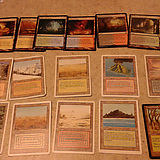
A friend of mine, Perry Stewart, is responsible for this sinking feeling in the pit of my stomach. He shared an Imgur gallery with reddit and Facebook last night and I think you should all see it. Before you click the link, be warned that you may scream involuntarily and these pictures are shocking and disturbing and may trigger the vomit reflex.

Imgur Gallery

So what happened?

On my way home from GP Cleveland this weekend I was playing mental magic with my cube in the back seat of the car. Around midnight we had to pull over on the shoulder and after a while I set the cube down on the top of the car. Needless to say we drove off and I did not notice it was missing until I got home.

Well, today a couple of friends were nice enough to go "geocaching" for it on the highway at the border of Indiana and Ohio (we live in western Michigan - 3 hours away).

When we found it there wasn't a single card left in the box and we went on the most profitable Easter Egg hunt in history. The cards were in a ditch just off the shoulder in about a quarter mile stretch.

All in all, we found 311/360 cards and (probably) all of the basic lands. Notable cards lost to the elements are: Tundra Flooded strand Hallowed fountain Sacred Foundry Stomping ground (will update as I think of them)

The pictures in the link are as follows:

  1. Notable expensive cards that came out completely undamaged - I'd say I got relatively lucky here.
  2. The notable cards that are no longer sleeve playable - May they rest in peace.
  3. Everything we gathered at the site of the accident - The sleeves are dragon shield and held up really nicely. Countless sleeves were noticeably scraped or run over without any damage to the cards themselves. The lid to the box was run over and unsalvageable.
  4. Expensive real estate that was recovered - I got extremely lucky in this department. They're all MP at best now, but it's mostly just minimal corner damage. Unfortunately, the volcanic and tropical islands were gem mint before it happened.
  5. Ratio of cards that are still sleeve playable to those that are not - While the importance obviously lies in what is in each pile, I'd say that this more that acceptable. The pile on the right is 57 cards while the one on the left is ~250. Keep in mind there is an invisible 50 card pile representing the cards that were not recovered.
  6. This is just an overhead view of the cube after it was desleeved and laid out.
  7. The three piles of lands represent those that are in great condition, those that are probably sleeve playable, and those that are not sleeve playable (left, right, top respectively).

Needless to say, the last 24 hours have been a roller coaster. I would have liked to have gotten footage or a picture of all the cards lying in the grassy ditch, but the cards were still blowing in the wind as each car passed and time was of the essence. I hope you all appreciate my story and didn't cringe too much.


Perry is lucky the cards were there when he went back and that the sleeves took most of the brunt of the damage. Don't leave anything on top of your car, coffee cups, babies, or Magic cubes. Newton's pretty clear about what happens when the difference between the vehicle's velocity and the box's velocity is enough to overcome the coefficient of static friction. Or whatever the correct science words are.

Avatar photo

Jason Alt

Jason Alt is a value trader and writer. He is Quiet Speculation's self-appointed web content archivist and co-captain of the interdepartmental dodgeball team. He enjoys craft microbrews and doing things ironically. You may have seen him at magic events; he wears black t-shirts and has a beard and a backpack so he's pretty easy to spot. You can hear him as co-host on the Brainstorm Brewery podcast or catch his articles on Gatheringmagic.com. He is also the Community Manager at BrainstormBrewery.com and writes the odd article there, too. Follow him on Twitter @JasonEAlt unless you don't like having your mind blown.

View More By Jason Alt

Posted in FreeLeave a Comment on More Magic Gore. WARNING! NSFL

Have you joined the Quiet Speculation Discord?

If you haven't, you're leaving value on the table! Join our community of experts, enthusiasts, entertainers, and educators and enjoy exclusive podcasts, questions asked and answered, trades, sales, and everything else Discord has to offer.

Want to create content with Quiet Speculation?

All you need to succeed is a passion for Magic: The Gathering, and the ability to write coherently. Share your knowledge of MTG and how you leverage it to win games, get value from your cards – or even turn a profit.

Dragons of Tarkir Limited Set Review – Blue

Are you a Quiet Speculation member?

If not, now is a perfect time to join up! Our powerful tools, breaking-news analysis, and exclusive Discord channel will make sure you stay up to date and ahead of the curve.

LSV is back at it today, bringing you his blue Limited set review. This is a short post, but valuable so make sure you read all of his article and I'll hit you with another one so you don't wind up feeling ripped off. Hopefully you read all of these thoroughly before the prerelease and you can spend time building when everyone else is reading.

Blue Limited Review 

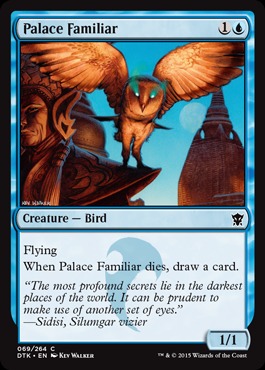
In general, blue looks pretty weak compared to other colors, but it will be a great supplementary color to solid creatures and removal in other colors. The fliers at common are absurd, and Zephyr Scribe may be the best Looter variant we've seen. I'm excited to jam some blue, especially in draft where you will end up with like 6 Palace Familiars if you want them!

Avatar photo

Jason Alt

Jason Alt is a value trader and writer. He is Quiet Speculation's self-appointed web content archivist and co-captain of the interdepartmental dodgeball team. He enjoys craft microbrews and doing things ironically. You may have seen him at magic events; he wears black t-shirts and has a beard and a backpack so he's pretty easy to spot. You can hear him as co-host on the Brainstorm Brewery podcast or catch his articles on Gatheringmagic.com. He is also the Community Manager at BrainstormBrewery.com and writes the odd article there, too. Follow him on Twitter @JasonEAlt unless you don't like having your mind blown.

View More By Jason Alt

Posted in FreeLeave a Comment on Dragons of Tarkir Limited Set Review – Blue

Have you joined the Quiet Speculation Discord?

If you haven't, you're leaving value on the table! Join our community of experts, enthusiasts, entertainers, and educators and enjoy exclusive podcasts, questions asked and answered, trades, sales, and everything else Discord has to offer.

Want to create content with Quiet Speculation?

All you need to succeed is a passion for Magic: The Gathering, and the ability to write coherently. Share your knowledge of MTG and how you leverage it to win games, get value from your cards – or even turn a profit.

No Tarmogoyf? No Problem!

Are you a Quiet Speculation member?

If not, now is a perfect time to join up! Our powerful tools, breaking-news analysis, and exclusive Discord channel will make sure you stay up to date and ahead of the curve.

I know a guy who calcuates deck prices in Tarmogoyfs. Affinity? That will be 2-3 Goyfs. RG Tron? 3 Goyfs flat. Burn? Whoa there, down to 1-2 Goyfs! When the moderately played version of a card is running for $165 with shipping included, you know you are either playing Legacy or you are talking about Tarmogoyf.
Tarmogoyf_640

Tarmogoyf is one of the most iconic creatures of Modern, if not competitive Magic as a whole. It’s also one of the biggest financial barriers to entry in Modern, especially if you have your eyes set on certain decks. Abzan, Jund, Zoo, and Temur Twin are some of the big representatives in this category. Although there are plenty of Modern decks that don’t run the guy in green, if you want to play something like Abzan or Jund, then Goyf feels like a non-negotiable. Modern Masters 2 is likely to cut this pricetag, but that will only be temporary if format popularity grows alongside MM2’s release. In that case, Goyf might be right back where it is now by the end of the year. That’s rough if you just want to try out the format or a new deck and don’t want to shell out about $750 for four cards. Even for older players with steady jobs and salaries, that can be a tough sell ($750 for four pieces of cardboard? Or for a few nights with your spouse in a hotel. Hmmm…)

This article is designed to give some perspective on the Goyf “issue” in Modern. There’s a bigger question here about whether or not Goyf really is an issue pricewise, but I’ll save that for another time. For now, we are just seeing how we can approach Goyf for budget-minded players. For those players who already have your Goyf playset, this article can give you some ideas about how to attack decks that rely too much on Magic’s most efficient beater.

[wp_ad_camp_1]

Tarmogoyf prevalence in Modern
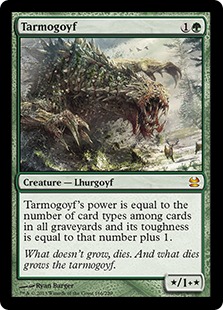
Tarmogoyf cardBefore we start trying to figure out ways not to use the $170+ beatstick, let’s ask this: just how common is Goyf in the format? How many decks really use it? How many green decks use it? How many top tier decks use it? Breaking down this question into these different pieces is a great way to put Goyf in perspective. If you hang out with the same Magic players that I do, you probably hear stuff like this all the time: “PLAY GOYF OR DON’T PLAY GREEN.” Or “If you want to win tournaments with creature decks, you must play Goyf.” These kinds of statements are rampant in Modern circles, and I want to put them to the test.

In analyzing these questions, I will reference data from our Top Decks page. This will ensure accurate data from the last month of Modern, and guarantee we are all looking at the same dataset.

Let’s start with a big format picture. What percentage of decks in Modern actually use Goyf? I’m actually going to modify that to “What percentage of competitive decks in Modern actually use Goyf?”, just because I think that most players actually mean the latter when they ask the former. As much as I love me some Five Color Humans, Kill Mill, Treefolk, and Slivers, these probably aren’t the best way to take down tournaments. So for now, let’s stick with competitive stuff. I’m going to define “competitive” as any deck that is classified as Tier 1 or Tier 2 in Top Decks. We could also include decks that have 1 point, but Tier 1 and 2 account for enough of the metagame (73%) that this should be sufficient.

Looking at those top decks, here are the shares for decks that do run Goyf and decks that do not. Total percentages are for Goyf/Goyfless decks relative to the entire format, and then just as a percentage of the Tier 1/Tier 2 decks.

Decks without
Tarmogoyf
Metagame %Decks with
Tarmogoyf
Metagame %
UR Twin12.3%Abzan13.4%
Burn10.6%Jund2.3%
Affinity7.8%
Infect7%
Merfolk3.3%
Abzan Liege3.2%
RG Tron2.8%
Amulet Bloom2.8%
Scapeshift2.5%
BW Tokens1.9%
Bogles1.8%
UWR Control1.4%
TOTAL %
OF FORMAT
57.4%TOTAL15.6%
TOTAL % OF
TOP DECKS
79%TOTAL % OF
TOP DECKS
21%

Wow. Where did Goyf go? It turns out only 21% of the Tier 1 and Tier 2 decks are playing Goyf. Looking at the entire format, at least 57% of the format isn't rocking the Goyf at all, and that doesn't even consider all the lower tier decks. In fact, we can bet an overwhelming majority of those aren't either (Storm, Mono U Tron, UW Control, etc.). So Goyf is by no means "necessary" for success in Modern.

What about for green decks? This is another common complaint I hear about Goyf, one that is sure to make all Scapeshift and Tron mages very sad. Just to expand our range to capture more green decks, I'll consider any deck that has 1+ point on the Top Decks page.

Green decks:
No Goyf
Green decks:
No Goyf %
Green decks:
With Goyf
Green decks:
With Goyf %
Infect7%Abzan13.4%
Abzan Liege3.2%Jund2.3%
RG Tron2.8%RUG Twin1.3%
Amulet Bloom2.8%Sultai Control.4%
Scapeshift2.5%
Bogles1.8%
4C Gifts1%
Nykthos Green.8%
TOTAL %
OF GREEN DECKS
56%TOTAL %
OF GREEN DECKS
44%

Goyf is certainly more common in green than it is in Tier 1 and Tier 2 decks, but way less common than most people probably predicted. Even narrowing to just green decks, the majority of competitive and semi-competitive strategies are still not using Goyf at all! 56% are doing something else. Only 44% of them are using Goyf. Moreover, the sheer range of green decks that don't use Goyf is much more impressive than those that do. Goyf decks are really all midrangey kind of decks. Goyfless decks, all 56% of them, are combo, aggro, control, ramp, and a ton of other strategies.
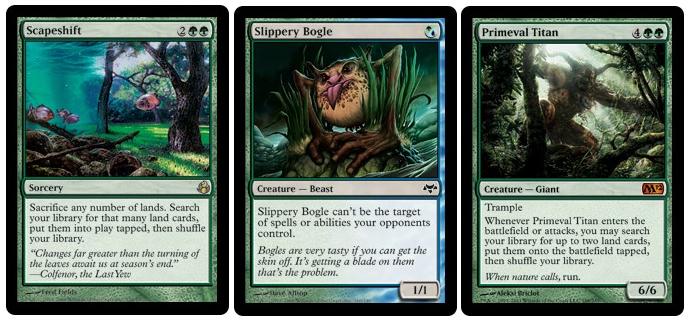
green cards

All of this is to show you don't need Goyf to enjoy Modern. You can play competitive decks without Goyf, and you can even play competitive green decks without Goyf. So the next time someone tries to get you down about how critical Goyf is for Modern, just slam down a turn 3 Karn Liberated to show them who's boss.

Budget replacements

Unfortunately for the budget-minded player, some decks definitely do need Goyf. Abzan, Jund, Sultai Control, and Temur Twin are decks that really do require the baddest Lhurgoyf on the block. If you pilot these decks without Goyf, you run a real risk of playing at a disadvantage, especially if you don't know the best cards to put in its place.

This next section is about identifying the best budget replacements for Goyf in your decks. If you already have your Goyfs sleeved up and ready for the next PPTQ, this section can still give you insights on ways to beat enemy Goyfs. But if you've been spending those hard-earned Benjamins elsewhere, then read on for some great substitutes to Mr. Green himself. These are listed roughly in order of how good a Goyf impression they do. I'll also list their lowest NM price from TCGplayer's card store.

Tasigur, the Golden Fang: $7.25
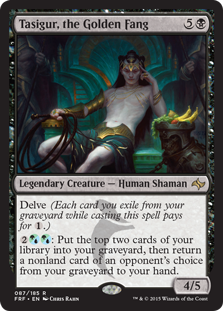
TasigurWhen you look at this card, I want you to pretend that Tasigur doesn't even have that second ability. Why not? Because you would play this guy as a 2 or even 1 mana 4/5 on its own. At that point, the recursion is just gravy. Tas does the best Goyf impression because he's the closest you get to a true 2 mana 4/5, which is exactly what the average Goyf is itself. Tas is even better at times, such as when you play him for just one mana, or when the graveyards are volatile. Goyf shrinks. Tas is always 4/5 of shirtless manboychild. Also, immunity to Abrupt Decay and Inquisition of Kozilek is invaluable in a format that is about 15% BGx of some kind.

Once you add the ability to the mix, Tas becomes a real all star. We saw Tas's recursion in action at both PT Fate Reforged and GP Vancouver, when Abzan players used his ability to stay in the game and keep the value coming. There's a tiny bit of anti-synergy here when Tas starts growing opposing Goyfs, but that can just as easily be true synergy if you are running your own, or if you are just running delve cards like Murderous Cut, flashing some Spirits back into play, etc.

Of the main green decks that run Goyf (Abzan, Jund, Temur Twin, and Sultai Control), all but three of those can just run Tas instead. In fact, even the non-budget versions of those decks are running Tas alongside Goyf. Don't got the Goyfs? Just run more Tas. Chances are good you will lose at least one of them to something, so going up to 3 won't often hurt. As for Twin, your best bet with Tas is either to switch to Grixis Twin, or to use one of the other substitutes I'm about to cover.

Scavenging Ooze: $3.45
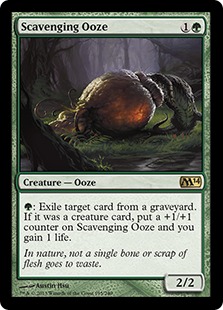
Scavenging OozeIf you can't beat 'em, eat 'em. Ooze is not only a super solid replacement for Goyf in your own deck, it's also a powerful anti-Goyf card in its own right. Heck, in a format full of Snapcaster Mage and Lingering Souls, it's just a good card period.

The bad news is that Ooze will rarely land as big as Goyf. It can get bigger, sure, but that is going to take time and mana. Your average turn 2-3 Goyf is about a 4/5, and Ooze needs 3 more mana invested to even be able to block or attack profitably into enemy Goyfs. You also need a respectable green manabase to support Ooze; no one wants to get stuck on just one green mana that you need to save for enemy Snapcasters. Thankfully, that's where the bad news ends. Even though Ooze requires a bit of upfront investment to get big, that exile effect can actually shrink opposing Goyfs if targeted correctly. Add to that the value gained from stopping a Souls flashback, and Ooze becomes much more attractive. Don't forget the synergy between Ooze and Tas if you are trying to get more selection in your recursion.

Ooze is an excellent one-to-one replacement for Goyf in a lot of decks. It plays a grindy game, shrinks opposing Goyfs, and does wonders handling Snappy/Souls (both of which are hallmarks of value-driven strategies that will seek to gain an edge in the mid and lategame). It also gives you some valuable life points against the varied aggro decks of the format. Think of just subbing in Ooze for all your Goyf slots in any of the main green decks.

Gurmag Angler: $1.00 (FOR A FOIL!)
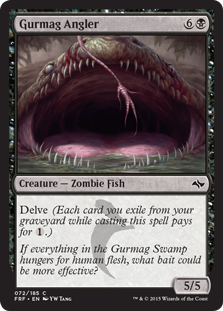
Gurmag AnglerA 4/5 Tas will stare down a 4/5 Goyf all day, but a 5/5 Angler will just swallow it. Not to mention swallowing other Tas' and Rhinos on the other side of the field. It turns out that 5/5 is just massive in this format. Few creatures can profitably tangle with the Zombie Fish, and even when it dies it will almost always be in two-for-one exchanges. Angler's big downside is that you can't reliably cast this card on turn 2. There will even be games where you won't get it down on turn 3. But assuming you go a reasonable opening of 2 fetchlands and 2 spells, Angler will be a realistic turn 3 play for most decks. And if you get more fetchlands and/or hit with an opposing discard spell, then you can actually get down Angler on turn 3 with discard or Path to Exile/Lightning Bolt backup.

A weird budgetary tension with Angler, not to mention Tas and the upcoming Mandrills, is that it works best with the not-so-budget fetchlands. In fact, without fetchlands, the delve replacements for Goyf aren't nearly as viable. Thankfully, fetchlands are cheaper now than ever before, so if you are serious about Modern then this is the time to buy them. Or even if you aren't serious, make an investment and get those now. But assuming you do have the fetchlands, Angler is an easy inclusion in any of the big green decks that play Goyf. It's a little worse in aggressive metagames where you really need that body on turn 2, but in slightly grindier ones, the 5/5 will give you a board presence that Goyf can't match. Of course, this isn't really a viable option in Temur Twin. But that's where you have Ooze, or even our next card on the list...

Hooting Mandrills: $.75 (FOR A FOIL!)
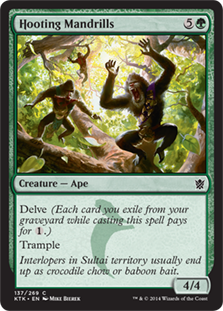
Hooting MandrillsAt first glance, there might not seem like many reasons to play Mandrills over Tas or Angler. It doesn't have that magical 5 toughness like its competition, nor does it have Tas's upside. It also isn't big enough to block and kill those magical 4/5s unlike Angler. So why play Mandrills at all?

The monkey squad has three key advantages over those cards that can easily outweigh their disadvantages in the right deck. To start, it's actually green, unlike Angler and Tas. This is a big boon for decks like Temur Twin or the currently underplayed Temur Delver -- decks that want to play Goyf but don't want to switch from Temur to their Grixis alter-ego. Second, Mandrills is much easier to cast than Angler on turns 2 or 3. You will almost never see turn 2 Anglers unless you are going all-in with, Chapin-style Mishra's Bauble style strategies. Even turn 3 Anglers won't happen all the time, and when they do you won't always have mana up. Mandrills doesn't have that issue. Like Tas, it's an easy turn 3 play with 1 or even 2 mana open, and a possible turn 2 play in the right matchup. That brings us to the third reason to play Mandrills, which is something not even Tas can boast: Trample. Why is trample good? Lingering Souls says hi. Hi, hi, hi, hi -- once for every Spirit that chumps your Goyf, Tas, Angler, and Scooze for four obnoxious turns. Even without Souls, trample is still a great ability to force more conservative blocks by an opponent, especially if you are on the attack.

Mandrills is one of the more versatile Goyf replacements. It goes into midrange strategies that need to punch through opposing Spirits; it goes into aggro strategies that didn't like their Goyfs being chumped by Sakura-Tribe Elders; it goes into tempo strategies that want to just land a threat and protect it without worrying about smaller blockers. And if you have any cards at all in your deck that pump things, even just little Noble Hierarch, you'll get even more mileage out of trample. Consider as a replacement in Zoo, more aggressive Abzan decks, and Jund.

Jotun Grunt: $.50 (regular), $5.00 (foil it up)
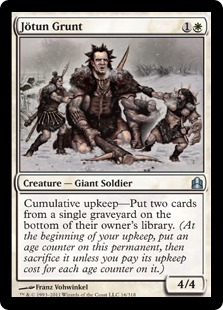
Jotun GruntWhat would a budget and tech article be without your one weird, outside-the-box suggestion? Grunt fills our quota for the day, but also gives us a very strong and functional creature in this current Modern metagame. Between Snapcaster, Souls, delve, Goyf, and all the other graveyard-dependent cards (and strategies) of Modern, it's great to use cards that attack that resource. Grunt does this in a big-impact, low-cost way. On the front end, you get a solid 4/4 for 2. But as you keep Grunt around, you get to blast through your opponent's graveyard to keep their graveyard-reliant threats out of play. And your own graveyard, to make sure those enemy Goyfs stay puny.

Grunt is the only white card on this budget list, which feels a bit odd when most of the top Goyf deck aren't really white decks. Abzan is, but at the point where you are playing Grunt to pillage graveyards, you probably just want to switch to the Goyfless Abzan Liege in the first place. But one place where Grunt is more useful is in the aggro decks that play Goyf, such as Zoo. Although probably not a one-to-one replacement with all 4 Goyfs, throwing in 1-2 Grunts as a bullet strategy is an interesting way to both solve your own Goyf woes and to make your graveyard-reliant opponent have a bad day. Other white strategies (Mono W Hatebears and Death and Taxes) can also consider the Grunt as a way to put pressure on an opponent and attack their resources.

This is by no means an exhaustive list of Goyf substitutes. Here are a half dozen other replacements you can consider if you want to go Goyfless, along with some quick notes on their strengths/weaknesses.

Tombstalker: Super big and super bad. Closes games fast. 8 CMC, even with Delve, means that this isn't landing until turn 4 however. Weaker in decks that need to apply pressure early, but a great closer.

Knight of the Reliquary: A Kibler specialty. Knight typically hits play as a 4/4 or larger and can easily outpace Goyf over just 1-2 turns. On slower starts, KotR can be Bolt-bait, and she doesn't apply pressure as early as Goyf does. But in decks that have a midgame plan, she's very tough and closes games even faster than Goyf can.

Quirion Dryad: Old school Miracle Gro lives! Temur Delver style decks can try out Dryad, pumping her with Gitaxian probe, Gut Shot, and other effects. Smaller than Goyf at first, which is bad if you are on the defensive. But as a closer, she can get out of control fast.

Leatherback Baloth: If you are heavy in green, Baloth gives you the 4/5 Goyf body without any drawbacks and at just one more mana. A turn slower, can't get bigger, but also can't get smaller.

Putrid Leech: Dangerous in this current Burn-filled metagame, but if you want an aggressive replacement for Goyf, Leech doesn't do a bad impression. Stay ahead in life and watch Leech do work.

Although Goyf will often be stronger than all these cards, there are still plenty of examples where these cards can pull Goyf's weight. Or even pull more weight, depending on the situation.

Exploiting decks that rely on Goyf

Some players want to run decks that don't use Goyf at all. Other players want to run those Goyf decks, but just substitute something in place of the million-dollar-man monster. And other players want to run cards and strategies that take advantage of those players who do rely on Goyfs. Because if you already can't afford Goyfs yourself, or are playing a strategy that doesn't count on them, why not go after those people who do? This is a great way to attack the metagame, save money, and vary your gameplan against a range of decks that rely on Goyf and similar cards.

Here are three cards to get you thinking about different ways to exploit decks that rely too heavily on Goyf. These kinds of cards are not feasible if you are running Goyf yourself, but once you aren't, they open up a whole new world of hateful options.

Dryad Militant
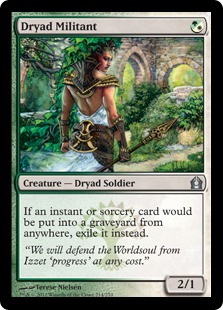
Dryad MilitantPoor Savannah Lions. There was a time when Lions was considered aggressive, but this bad lady puts them to shame. Militant is by far one of the scariest one drops in Modern for many decks. On the surface, she looks like an innocuous beater that dies to every removal in the format and doesn't directly affect the board state. But once she gets going, she wreaks havoc on opposing game plans. Just looking at the Goyf issue, it's pretty hard to have an average 4/5 Goyf without sorceries and instants in the graveyard; Militant on her own all but assures a 2/3 Goyf in most scenarios. She totally shuts down Snapcaster, turns Souls into a bad Raise the Alarm, makes Delve much harder, and randomly messes with all kinds of Modern decks like Storm, UW Tron, 4C Gifts, Assault Loam, etc. Goyf decks can't play her, but if you run something like Mono G Stompy or certain Hatebear/Death and Taxes variants, Militant will be happy to fight for you. Even if she dies in the early turns, she takes the spell with her to the afterlife, and that's one less removal spell your big guns need to worry about. And left unchecked, she turns off so many value cards on your opponent's side.

Relic of Progenitus
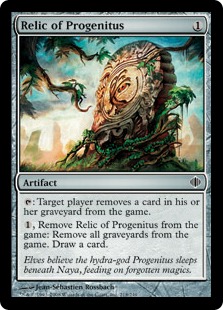
relic of progenitusA mainstay of Tron decks and even Merfolk decks, it's time that more Modern players start using Relic in their 60. Like with Militant, Relic just wrecks decks that rely on the graveyard. Unlike with Militant, Relic just wrecks a lot more decks. Even decks that don't care as much about instants and sorceries will have serious trouble with an active Relic: Griselbrand, Dredgevine, Living End, etc. That's on top of all the Goyfs, delves, Snapcasters, and Souls you are already ruining. Also unlike with Militant, Relic is not a card your opponent is ever going to kill unless they are so desperate that they are probably losing anyway. Even then, you can almost always convert it back into a card. Besides, until they do kill it and/or you sacrifice it, Relic is going to ping away the opponent's graveyard one valuable card at a time. Because the card is so cheap, there are lots of decks that can use this. It's a viable 1-2 inclusion in numerous control decks and even some more midrangey ones, depending on the number of graveyard-reliant decks they need to worry about.

Engineered Explosives
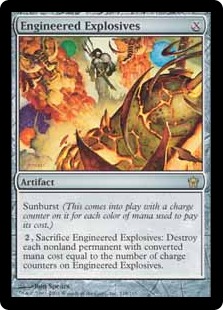
Engineered ExplosivesModern players have been using EE for a long time, but the card got some special coverage at GP Vancouver as a UR Twin bullet for handling Infect; it's one of the most cost-efficient ways to get around a Spellskite, and even to kill the Skite itself. Explosives is also very versatile if used in 2-3 colored decks that don't rely on their own 2-3 CMC threats. Just looking at Abzan, EE will destroy not only enemy Goyfs and Scoozes, but also Souls tokens at almost no investment, and even Lily as she hides behind a wall of blockers on high loyalty. EE is also strong against all those aggro decks that rely on a 1-2 CMC curve, like Bogles, Infect, Burn, Zoo, Merfolk, and others. Although you can run the card in decks that use Goyf, it's a much more effective strategy to run it alongside cards that don't matter as much if they get blown to pieces. This is exactly the sort of strategy that a deck like UB Tezzeret can take advantage of in this current metagame, and I encourage you to look for other ways to abuse a card like EE in a Goyfless deck.

With all these different card options, strategies, and deck options, your opponents will probably be keeping those Goyfs in the trade binder for a while. Although Goyf is certainly one of the best cards in Modern and an indispensable piece to many decks, especially top tier ones, it isn't nearly as essential or irreplaceable as many would have you believe. So keep thinking on budget and creative ways to get around your lack of Goyfs and even turn that to your advantage. Or we can all just pray for an MM3 where Goyf decides to jump down to rare?


Magic is not for Everyone

Are you a Quiet Speculation member?

If not, now is a perfect time to join up! Our powerful tools, breaking-news analysis, and exclusive Discord channel will make sure you stay up to date and ahead of the curve.

I'm not familiar with James Fazzolari, save for the fact that he is now a known cheater. There's no redemption for cheating. Even if you're one of the best of all time like Tomaharu Saito, that stuff sticks with you. It's hard to consider any of your achievements completely legitimate, even if we know that you have the talent.

That said, I was relieved for once to see a cheater not pretending like they were the victim, or trying to use the circumstance to spend more time in the limelight. Fazzolari owned up to his actions on the reddit thread about the incidnet, without an single disparaging word towards the keyboard cage fighters of the world, or whatever nonsense cheaters spout these days.

Reddit isn't known for its ability to spawn interesting discussion, but I was intrigued by this post by Fazzolari:

Fazzolari

Nothing in this statement makes anything about what Fazzolari did okay. He does have a point about the community at large- there is definitely a lot of confirmation bias when readers evaluate ideas, but that doesn't justify cheating.

Would I like to see more ideas evaluated on their conceptual merits instead of tournament wins? Sure. What I'd rather see though, is people realizing that in a world where results are what matters in a game largely defined by variance that careers in Magic are going to be exceptionally rare, and should not be pursued by most. If you're not winning enough to get what you want out of the game no matter how hard you try, then suck it up and get a day job. I've always desired to make Magic my career, but in reality I'm lucky that I'm turning a profit on my hobby.

Avatar photo

Ryan Overturf

Ryan has been playing Magic since Legions and playing competitively since Lorwyn. While he fancies himself a Legacy specialist, you'll always find him with strong opinions on every constructed format.

View More By Ryan Overturf

Posted in Free1 Comment on Magic is not for Everyone

Have you joined the Quiet Speculation Discord?

If you haven't, you're leaving value on the table! Join our community of experts, enthusiasts, entertainers, and educators and enjoy exclusive podcasts, questions asked and answered, trades, sales, and everything else Discord has to offer.

Want to create content with Quiet Speculation?

All you need to succeed is a passion for Magic: The Gathering, and the ability to write coherently. Share your knowledge of MTG and how you leverage it to win games, get value from your cards – or even turn a profit.

A Quick-and-Dirty Guide for Legacy Cube Beginners (White, Black, and Everything Else)

Are you a Quiet Speculation member?

If not, now is a perfect time to join up! Our powerful tools, breaking-news analysis, and exclusive Discord channel will make sure you stay up to date and ahead of the curve.

Yesterday we covered blue, green, and red. Today we'll be covering everything else. Let's get going!

White

White has some of the best cards in the Legacy Cube but also some of the most frequently last-picked cards. It's an interesting dilemma, to be sure. Most of white's creatures are efficient beaters that fit well in a white weenie deck. If that's the strategy you're going for, picking up tons of one-drops and anthems is the best way to go, but it's hard to pinpoint an individual card that leads into that strategy, other than arguably Hero of Bladehold or Brimaz, King of Oreskos. If that is a strategy you're interested in drafting: you're in luck! It's almost always open.

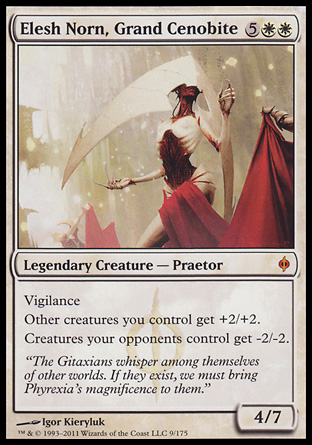
eleshnorn

This is probably white's best creature in the Legacy Cube (remember that Stoneforge Mystic isn't here anymore, and even it was, WOTC apparently hates equipment). Elesh Norn can go in control decks, reanimator decks, midrange decks, etc. It can even go in white weenie decks, though that's not totally recommended, given its seven-drop status.

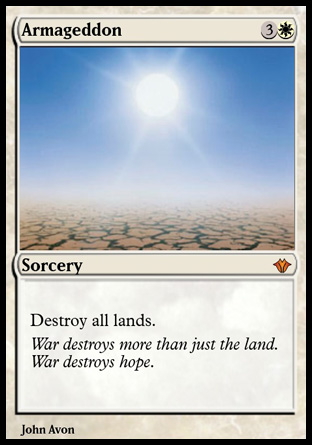
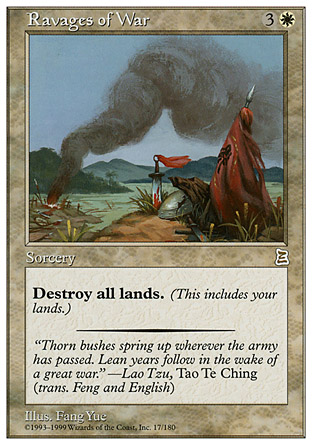
armageddon ravagesofwar

Okay, maybe I lied. These are cards that could reasonably lead you into being a white weenie deck, although something this powerful can go in a lot of different lists. Not every deck type wants this effect—control would prefer to keep its lands, thank you—but those that do really want it.

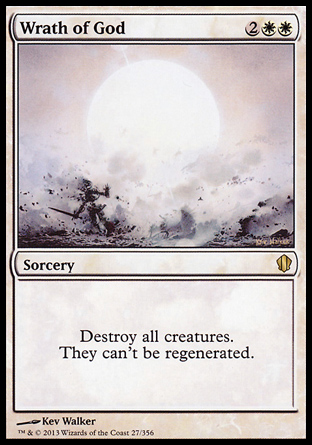
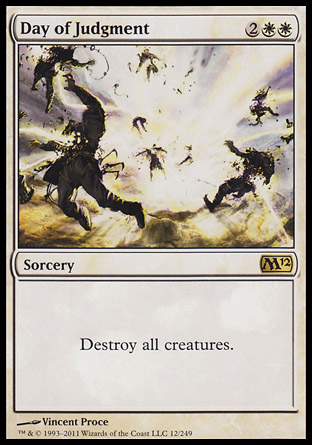
wrathofgod dayofjudgment

Classic control cards are classic. If you're playing minimal creatures, these belong in your deck. Period.

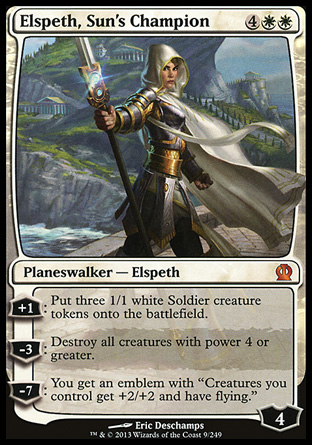
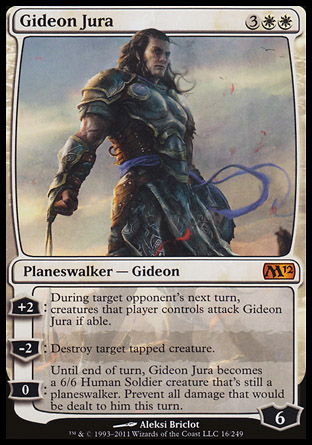
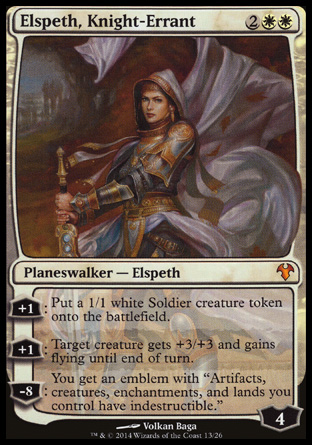
elspethsunschampion gideonjura elspethknighterrant

To be perfectly honest, I'm kind of averse to playing white in the Legacy Cube, and none of the cards discussed so far will really push me into white unless there's just nothing else available. The big exception are these three planeswalkers, which are some of the best options for this card type in the format. These are all absolutely reasonable first-picks.

Black

Black is my least favorite color in the Legacy Cube, and my initial impression of the recent changes to the color are that it's gotten even worse. What cards might possibly lead me into this color?

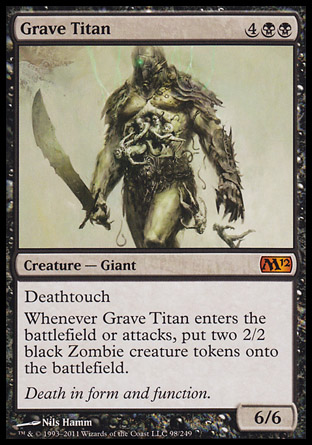
Grave Titan

As far as creatures go, it's hard to get more value than this. Sheoldred, Whispering One and Griselbrand are also excellent black fatties, but the ways to cheat them out in the Legacy Cube are minimal. In other cubes, Griselbrand is arguably one of the best cards, but I don't think that's true here.

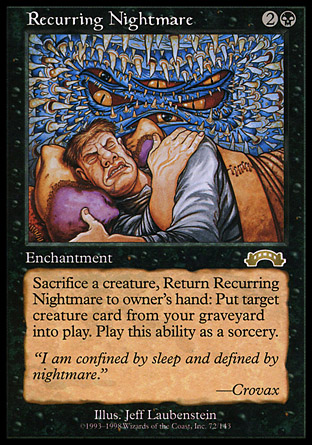
recurringnightmare

If you've never had the pleasure of playing with this card (or the displeasure of playing against it), you need to get on that right away. There are ways to optimize Recurring Nightmare, to be sure, but I'd be hard-pressed to find a deck with creatures and black mana where I would not play it just as a value inclusion.

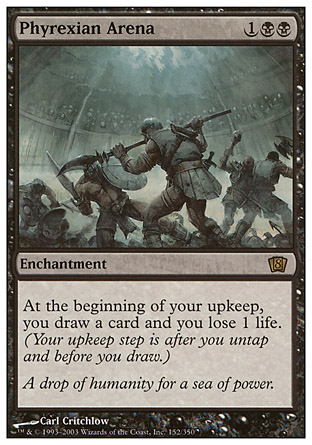
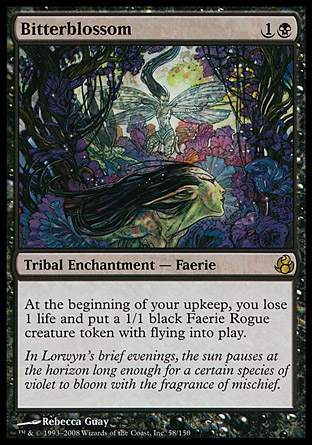
phyrexianarenaBitterblossom

These enchantments are straight-up engines and should be picked early and built around. Black may not have the best cards in the cube, but with these in play, you can just out-card-advantage your opponents with your worse cards.

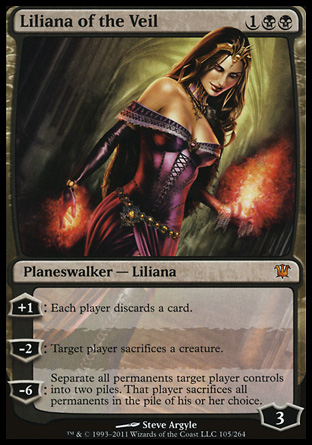
lilianaoftheveil

Finally, good ol' Lily takes us home. If you've got a reanimation sub-theme, she gets even better—stripping a card from your opponent while putting a fatty in the graveyard is big game.

Gold Cards

Gold cards, in general, tend to wheel. Even the really good ones! Unless there's someone in exactly those two colors or playing a many-color deck, folks tend to stick to the more reliable one-color picks. If you were going to commit yourself early to a two-color card, it would probably be because there just wasn't anything else in the pack worth grabbing.

I looked down the list to pick out the best two-color cards that I might consider first-picking, and the most likely is probably Ajani Vengeant. That being said, I wouldn't feel very good about first-picking any of the gold cards in the Legacy Cube—staying open is that important.

During the draft, unless I can 1) easily play and 2) absolutely need a particular gold card, I will choose a mono-color card over a gold one 99 percent of the time. Again: they usually wheel.

Artifacts

Usually I'd be starting with jittes and swords here, but that's not the world the Legacy Cube lives in. We do still have some great stabilizers in the list:

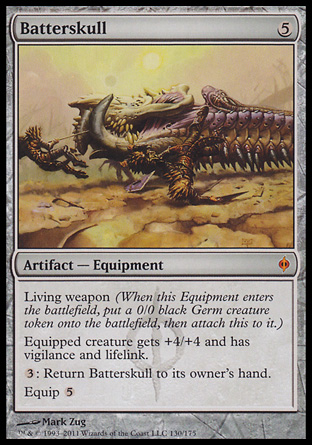
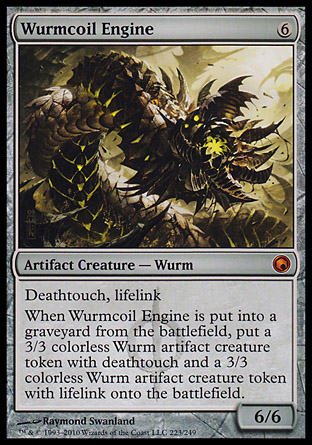
batterskull  wurmcoilengine

These cards can single-handedly win games and are especially good against aggro. You would have to have a really good reason to justify passing these early in favor of anything.

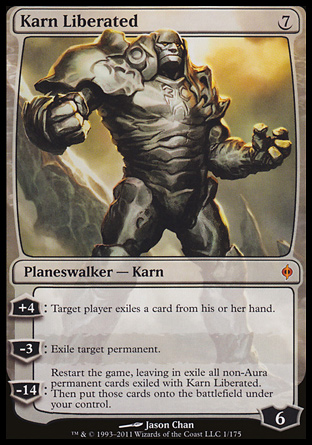
karnliberated

Not every deck can support a seven-drop, but if your deck can, then Karn should be in it. This is one of the most powerful cards in the whole cube if you can support it, not just the colorless section. Ugin, the Spirit Dragon could very well be in the same boat, but I have not played with or against the card yet, so I can't be sure.

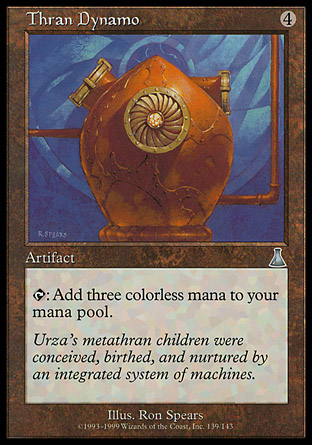
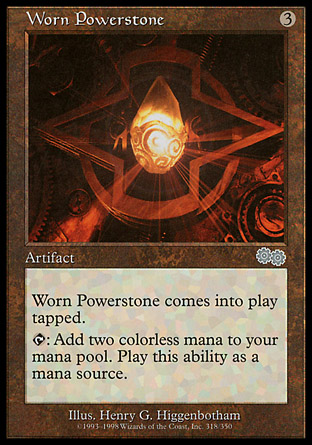
thrandynamo wornpowerstone

Ramp cards are really good, and even though there's like literally only one hand full of mana rocks in the Legacy Cube, they remain good here. You could argue, in fact, that they're even higher picks in the Legacy Cube, because without signets, monoliths, and other traditional brown ramp, there's just not a lot of choice available (good luck drafting a non-Simic Upheaval deck is what I'm saying).

Lands

Finally, we have lands. It's hard to argue for first-picking lands for a drafter new to Cube (but trust me, you'll get there if you stick with the format). In general, these are the tiers for lands in Legacy Cube:

  1. Fetch lands (Scalding Tarn)
  2. Dual lands (Volcanic Island)
  3. Shock lands (Steam Vents)
  4. Buddy lands (Sulfur Falls)
  5. Pain lands (Shivan Reef)

One through three are pretty firm, but you could argue that four and five could be switched depending on a number of factors. Just remember: fetches can get duals and shocks, which makes them five-color fixers in many situations. Whenever I'm in doubt, I first-pick fetch lands.

I hope this brief breakdown was helpful for new Cubists out there! Let me know if I omitted anything crucial from today's article. Thanks for reading!

Insider: Signals

Are you a Quiet Speculation member?

If not, now is a perfect time to join up! Our powerful tools, breaking-news analysis, and exclusive Discord channel will make sure you stay up to date and ahead of the curve.

Greetings, Instigators!

Last week I wrote what was, apparently, one of my most contentious articles to date. You've probably read it, but go back real quickly and do so now if not.

The thesis was all about being aware of the difference between low volume of a card on a particular site due to demand and a low volume due to novelty or rarity. If a card goes from 200 copies to 5 in a week, pay attention. If a card goes from 5 copies to 5 copies in 6 months, maybe there being "only" 5 copies is much less significant.

We covered how to not buy cards in those sorts of situations, a very, very useful MTG finance technique that goes overlooked in a lot of situations. Some people will accuse you of being overly risk-averse, but others will applaud you for using your brain and not following the rest of the lemmings over the cliff, so it's a wash.

The thing about MTG finance is there are so many buy opportunities that missing one is usually not as bad as tying your finite resources up in one that is a struggle to profit from. I don't think it's overly cautious to take a little bit of time to evaluate your situation. If you're refreshing the page and watching the number of copies drop every minute, then maybe you want to take a risk and buy in. If you have no idea how many copies there were yesterday, take a breather. Buying when you're panicked is silly, buying when you're the one who created the panic is even sillier.

Still, I could see why some might think the advice of "Don't buy in this situation" taken to its logical conclusion would be a column titled, "Avoid losing money in MTG finance by not buying anything, ever". I mean, they're wrong but I can absolutely see why someone would think that.

There's wisdom in discussing when not to buy. However, there's no reason we can't talk about how we should buy in those situations. We do this by following my rules of MTG finance.

Jason's Rule of MTG Finance

  1. Don't $@^% Magic up
  2. Only send Near Mint cards to Strike Zone's buylist

That's pretty much it. Follow those two rules and 90% of the heavy lifting is done. Rule #2 is very, very easy for most of us to follow, but Rule #1 is a little trickier. Should we listen to my advice on Rule #1? Maybe. Sigmund and I are in the process of breaking Rule #1 forever.

So, I wrote my article about a tweet and Sigmund wrote a tweet about that article which inspired this article on Monday which inspired the article you're reading now. Is this article going to make things worse? I don't think so. We're going to avoid breaking Rule #1 from now on.

Sigmund's article inspired an interesting comment from Greeno.

"Why does everyone assume that financial players ONLY increase price discovery in the situations where the price is going up? They completely ignore the fact that the most successful financiers are pulling copies out of their stock, selling into the ‘hype’ and assisting the Invisible Hand find the right price. They’re able to do this, not because they are dirtbags who hoard all the cards, but because they evaluated the fundamental factors around that particular card, and decided that it was more likely to increase in price than to decrease in price.

I believe the biggest factor that can be blamed for the precipitous spikes that have been occurring recently is basic psychology. People hate to miss out on the next big thing, this is what is causing these divergences from what economists call “rational action.” For most of us, it is clear that the marginal cost of $50 Judge Foil Command Towers exceeds the marginal benefit of owning the card. But, to the average MTG player with little-to-no understanding of economics, all they are worried about is claiming ownership of a card before it’s “gone” or “too expensive.” When they don’t understand why a card increases or decreases normally, they don’t understand how to identify when a rapidly spiking price is a result of true demand instead of just hype.

So many more people fall victim to the ‘post hoc ergo propter hoc’ fallacy that all they can see is that you tweeted first, and the price rose after that. Trying to convince these people that other factors exist has been, in my experience, painful and hopeless. I have my own theories as to why that is the case, but they don’t advance the discussion and are really just my own musings on social psychology, backed up with absolutely no data, so I’ll leave them out."

Is he right? He's right insofar as Sigmund isn't to "blame" for a sarcastic tweet that caused someone to spend a relatively small amount of money, and a lot of people (especially outside of finance) to complain.

Tweet4

Anthony is one of the interweb's best finance writers in the humble opinion of the guy who hired him to write finance articles. He understands how to not break Rule #1, but he also understands how things that are perceived as "buyouts" are going to make some people outside of finance feel kind of fwowny.

And why not? If they want a foil Command Tower, they have to pay $50 now (now meaning "for now'') and they see a tweet about a low supply, then they see the supply drop to 0, then they see the price go up. That's going to make some people pretty sad.

The thing is, whoever bought those five copies didn't actually make out as well as they think, and they certainly didn't make out as well as they could have. Even if they bought in at $20 and got out at $50, they only have five copies. There has to be a better way to do things. You made a small amount of money after fees relative to the tumult you caused in pricing.

What exactly was the wrong play, here? Buying on TCG Player was the wrong move, clearly. Lots of websites sell cards. Lots. There are eBay merchants, Amazon merchants, countless retail websites and obscure sites like CardShark.
Seriously, CardShark vendors haven't changed their prices since like 2007. You can find good deals on cards at CardShark, but no one ever does because they look for copies there after they or someone else buys all of the copies on TCG Player. What's the difference between buying out CardShark and buying out TCG Player? Only one of those actions will signal the market.

Don't Tip Your Hand

TCG Player gets a lot of eyeballs on it. People can all agree that the open marketplace pricing based on multiple vendors competing for sales makes TCG Player the best and most fair rubric for pricing and the TCG Player price is used as the fair market value. This is fine with me, but it's also not without liabilities.

Pretend there are 500 copies of a card evenly distributed across the internet. Buying 495 copies will make a few people notice as dealers talk to each other about how someone bought them out of all but five copies of their card. Buying the last five copies on TCG Player will alert the entire internet and the price will go up on those other sites even if you didn't buy their copies.

If you believe in a card and think that there are only five copies on TCG Player because the card is the real deal, don't break Rule #1. If you really want to be in a position to benefit from the upward price correction you believe the price is due, get more copies. Buy from other sites, the more obscure the better. Avoid high-traffic sites with lots of eyeballs on them where your buying behavior will get more scrutiny.

Is this scumbaggy? I put it to you that it's more scumbaggy to conspicuously buy out TCG Player and make everyone pay attention. No one has time to differentiate between an orchestrated "buyout" (I hate that word and how it's misapplied more often than used appropriately) and real, sustainable demand; everyone has to act with a window shrinking.

Some people will go into binders and boxes and list copies they had sitting around. The stores that people didn't buy from will be notified and raise their prices and make more money on the cards when people come looking for them. Even if they aren't quick enough to change their prices, most stores have demonstrated a willingness to cancel orders and restock at the new price.

Would these stores have cancelled the order if it seemed to come out of nowhere and TCG Player still had copies of the card? Doubtful. Either way, they're not selling for the old price. A card that may have trended upward slowly, getting the correction you correctly believed it was due will suddenly shoot up then trend down to settle at its new price once the furor has died down. It may go down even farther if the demand isn't real.

Meanwhile, not signalling the market means you can amass copies and the market will be signalled by actual demand. If Tiny Leaders raises demand for foil Command Tower, you can be reasonably sure that Tiny Leaders players will buy those copies and the price will go up. Who has copies for them? This guy; the guy who bought the other 495 copies and left the 5 copies attached to the mousetrap alone.

Is it unfair to ascribe this much sway over the market to TCG Player? No, because they don't have any sort of power, just lots of eyes on them. There are some sites where your buys will be noticed and some sites where your buys will go largely unnoticed. When you buy from a site where the buy will be noticed, you can signal the market.

The whole point is to not do this. You obscure the actual amount of demand, rob yourself of the opportunity to get more copies as other people scour the internet and stores cancel your orders--and you make the price go up a lot faster than it would have ordinarily, possibly past where it should have.

Rule #1

If you're not actively trying to wreck the price of a card artificially, avoiding buying out TCG Player and tweeting about the low supply should be relatively easy. Remember, MTG finance isn't about creating unsustainable demand by signalling more demand than exists and trying to profiteer. What we do is we get ahead of trends that are coming and we sell into hype. We make a lot more money when the demand is real and sustainable.

So when demand is real, those copies on TCG Player are going to sell without us buying them or tweeting about them. Buy quietly, give yourself time for the copies to show up and don't signal the market. QS Insiders are good judges of demand, so when we buy cards there is a good chance the cards will get there on their own. Eventually, someone else will buy the copies on TCG Player (or another prominent site like Star City which has its own tendency to signal the market) or someone else will tweet about how many requests for a card there are on Pucatrade.

Noticing low supply on TCG Player and buying somewhere else is the best possible play. We're trying to make money, not make the people who see the price shoot up on TCG Player hate financiers. There's no reason why we can't have both.

Avatar photo

Jason Alt

Jason Alt is a value trader and writer. He is Quiet Speculation's self-appointed web content archivist and co-captain of the interdepartmental dodgeball team. He enjoys craft microbrews and doing things ironically. You may have seen him at magic events; he wears black t-shirts and has a beard and a backpack so he's pretty easy to spot. You can hear him as co-host on the Brainstorm Brewery podcast or catch his articles on Gatheringmagic.com. He is also the Community Manager at BrainstormBrewery.com and writes the odd article there, too. Follow him on Twitter @JasonEAlt unless you don't like having your mind blown.

View More By Jason Alt

Posted in Buying, Finance, Free Insider11 Comments on Insider: Signals

Have you joined the Quiet Speculation Discord?

If you haven't, you're leaving value on the table! Join our community of experts, enthusiasts, entertainers, and educators and enjoy exclusive podcasts, questions asked and answered, trades, sales, and everything else Discord has to offer.

Want to create content with Quiet Speculation?

All you need to succeed is a passion for Magic: The Gathering, and the ability to write coherently. Share your knowledge of MTG and how you leverage it to win games, get value from your cards – or even turn a profit.

Finance 101: Managing the Banlist

Are you a Quiet Speculation member?

If not, now is a perfect time to join up! Our powerful tools, breaking-news analysis, and exclusive Discord channel will make sure you stay up to date and ahead of the curve.

This is cross-posted in a partnership with www.empeopled.com.

batterskull

Spoilers upfront: I don’t expect any bans or unbans when Dragons of Tarkir officially releases next week. Modern seems healthy-ish if not perfect, and Standard and Legacy seem to be in okay places as well.

But you never know what could happen, and today I want to talk about how to manage the Banned and Restricted list from a financial perspective. After all, it’s not that long ago that a bomb was dropped on the Modern format, and it will almost assuredly happen again in the future.

You can find the full post here.

Avatar photo

Corbin Hosler

Corbin Hosler is a journalist living in Norman, Oklahoma (also known as the hotbed of Magic). He started playing in Shadowmoor and chased the Pro Tour dream for a few years, culminating in a Star City Games Legacy Open finals appearance in 2011 before deciding to turn to trading and speculation full-time. He writes weekly at QuietSpeculation.com and biweekly for LegitMTG. He also cohosts Brainstorm Brewery, the only financial podcast on the net. He can best be reached @Chosler88 on Twitter.

View More By Corbin Hosler

Posted in Feature, FreeLeave a Comment on Finance 101: Managing the Banlist

Have you joined the Quiet Speculation Discord?

If you haven't, you're leaving value on the table! Join our community of experts, enthusiasts, entertainers, and educators and enjoy exclusive podcasts, questions asked and answered, trades, sales, and everything else Discord has to offer.

Want to create content with Quiet Speculation?

All you need to succeed is a passion for Magic: The Gathering, and the ability to write coherently. Share your knowledge of MTG and how you leverage it to win games, get value from your cards – or even turn a profit.

Gavin Verhey’s Prerelease Primer

Are you a Quiet Speculation member?

If not, now is a perfect time to join up! Our powerful tools, breaking-news analysis, and exclusive Discord channel will make sure you stay up to date and ahead of the curve.

The Dragons of Tarkir prerelease is almost upon us, and Gavin Verhey at the mothership has you ready to go. There's the usual info and deck-building tips, but there's also info about the promotion that is happening at this particular Prerelease.

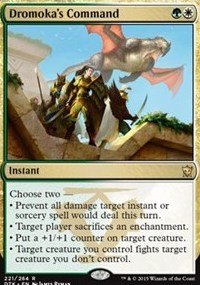
Dromoka's Command

Dargons destroy things!

That's it in a nutshell. With successes come prizes, and the ability to progress throughout the prerelease. Doing so earns you new cards as rewards, a pretty cool idea if it's executed well. You can find the full details here.

Avatar photo

Corbin Hosler

Corbin Hosler is a journalist living in Norman, Oklahoma (also known as the hotbed of Magic). He started playing in Shadowmoor and chased the Pro Tour dream for a few years, culminating in a Star City Games Legacy Open finals appearance in 2011 before deciding to turn to trading and speculation full-time. He writes weekly at QuietSpeculation.com and biweekly for LegitMTG. He also cohosts Brainstorm Brewery, the only financial podcast on the net. He can best be reached @Chosler88 on Twitter.

View More By Corbin Hosler

Posted in Feature, FreeLeave a Comment on Gavin Verhey’s Prerelease Primer

Have you joined the Quiet Speculation Discord?

If you haven't, you're leaving value on the table! Join our community of experts, enthusiasts, entertainers, and educators and enjoy exclusive podcasts, questions asked and answered, trades, sales, and everything else Discord has to offer.

Want to create content with Quiet Speculation?

All you need to succeed is a passion for Magic: The Gathering, and the ability to write coherently. Share your knowledge of MTG and how you leverage it to win games, get value from your cards – or even turn a profit.

Dragons of Tarkir Limited Set Review – White

Are you a Quiet Speculation member?

If not, now is a perfect time to join up! Our powerful tools, breaking-news analysis, and exclusive Discord channel will make sure you stay up to date and ahead of the curve.

I'm no Limited expert. I am what I would call "competent" - my Limited rating was above 1900 at one point before they abolished the point system if memory serves. Still, when someone wants advice about limited picks, I am no one's first phone call. Fortunately for you, while I feel like my analysis regarding the rares and mythics in Dragons of Tarkir was something I am proud of, I think I will leave Limited to the Pros.

LSV, as always, is doing Limited pick set reviews for every color. Today's is white. We will be posting one a day until the prerelease this weekend, so make sure you fully peruse LSV's picks. When Marshall begins posting his, I will include those as well.

Here is LSV's White Limited pick review. 

As always, we encourage dissent, so if you think he's wrong about something, let's get into it below in the comments.

Avatar photo

Jason Alt

Jason Alt is a value trader and writer. He is Quiet Speculation's self-appointed web content archivist and co-captain of the interdepartmental dodgeball team. He enjoys craft microbrews and doing things ironically. You may have seen him at magic events; he wears black t-shirts and has a beard and a backpack so he's pretty easy to spot. You can hear him as co-host on the Brainstorm Brewery podcast or catch his articles on Gatheringmagic.com. He is also the Community Manager at BrainstormBrewery.com and writes the odd article there, too. Follow him on Twitter @JasonEAlt unless you don't like having your mind blown.

View More By Jason Alt

Posted in FreeLeave a Comment on Dragons of Tarkir Limited Set Review – White

Have you joined the Quiet Speculation Discord?

If you haven't, you're leaving value on the table! Join our community of experts, enthusiasts, entertainers, and educators and enjoy exclusive podcasts, questions asked and answered, trades, sales, and everything else Discord has to offer.

Want to create content with Quiet Speculation?

All you need to succeed is a passion for Magic: The Gathering, and the ability to write coherently. Share your knowledge of MTG and how you leverage it to win games, get value from your cards – or even turn a profit.

Deck Overview: Pauper Grixis Torch

Are you a Quiet Speculation member?

If not, now is a perfect time to join up! Our powerful tools, breaking-news analysis, and exclusive Discord channel will make sure you stay up to date and ahead of the curve.

I spent a good amount of time looking at Standard, Modern and Legacy decks looking for something sweet and new to write about. This week, I ended up feeling a lot like Mr. Garrison on the episode of South Park in which all of the kids get prescriptions for Ritalin.

And then all go and see a Phil Collins concert.

What I'm saying is, decklists from this week were pretty boring. Dragons of Tarkir will be here to shake things up before long, but for now there's a pretty neat Pauper innovation that I found while doing my weekly decklist research. User 420Dragon posted a 3-1 result in a Pauper Daily with this list, showing slightly more creativity in deckbuilding than in screen name selecting:

Grixis Torch

spells

4 Cloud of Faeries
3 Mnemonic Wall
4 Mulldrifter
3 Nightscape Familiar
4 Sea Gate Oracle
4 Compulsive Research
1 Kaervek's Torch
1 Ponder
4 Preordain
4 Treasure Cruise
2 Ghostly Flicker
2 Lightning Bolt
4 Snap

lands

2 Dimir Aqueduct
4 Evolving Wilds
7 Island
3 Izzet Boilerworks
2 Mountain
2 Swamp

sideboard

1 Nightscape Familiar
2 Lightning Bolt
2 Dispel
1 Doom Blade
2 Duress
2 Electrickery
1 Gitaxian Probe
2 Negate
2 Smelt

The combo here isn't anything new. The deck targets Cloud of Faeries while controlling either two bouncelands or a Nightscape Familiar and Mnemonic Wall with a Ghostly Flicker to buy back the Flicker, untap some lands and slowly net an arbitrarily large quantity of mana. These combo is usually featured in an Esper shell, using Sage's Row Denizen to mill your opponent to death, while this list uses Kaervek's Torch to just burn them out.

What I like about this take is that Kaervek's Torch is so much more of a card than Sage's Row Denizen is before you assemble your combo. Your combo can even rebuy your spent Torch on its last iteration with Mnemonic Wall to boot. I also like having access to Lightning Bolt as a way to better interact with other decks, including Bolting your opponent's Denizen in the "mirror". The ability to just burn opponents out in games when all you can muster is Mulldrifter beatdowns is definitely a non-zero upside.

A Quick-and-Dirty Guide for Legacy Cube Beginners (Blue, Green, and Red)

Are you a Quiet Speculation member?

If not, now is a perfect time to join up! Our powerful tools, breaking-news analysis, and exclusive Discord channel will make sure you stay up to date and ahead of the curve.

Cube is my favorite format by far, but sometimes I forget how daunting it can be for a new player. With the Legacy Cube returning to MTGO this Wednesday, this seems like a perfect time to go through some of the top cards in each color. A large part of drafting is recognizing what colors one should be in, and nobody wants to embarrass themselves by passing something nuts. So, without further ado:

Blue

Blue is indisputably the best and deepest color in Cube. As a result, lots of players draft it, but because it's so deep, it can usually support a good number of drafters. This being the case, I'm going to mention more blue cards than any other color.

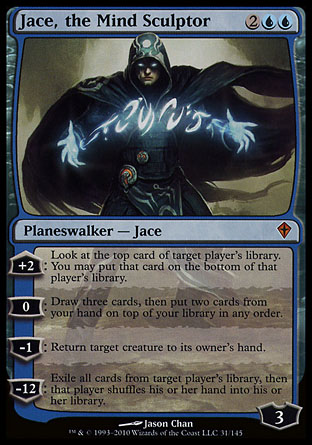
jacetms

This is the best card in the Legacy Cube, and you should never pass it. The end. (Yes, arguments for passing it late in the draft can be made. They're wrong, and you should never pass this.)

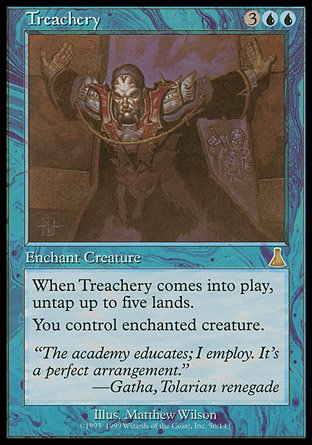
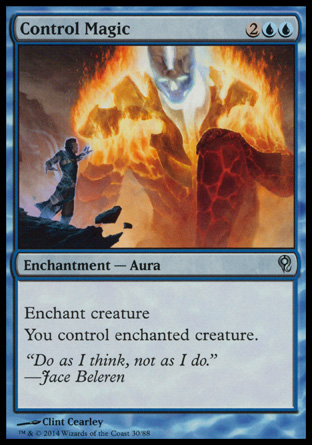
treachery controlmagic

Control Magic effects give you a creature and takes one away from your opponent—a built-in two-for-one. These two cards are the best of the best when it comes to this type of effect, and any deck that can support UU wants them.

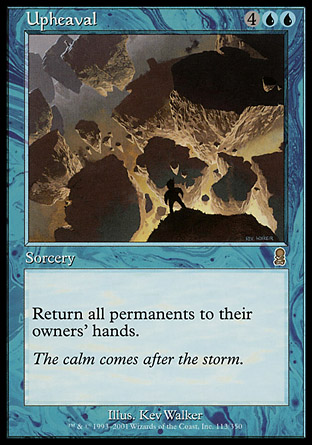
upheaval

Upheaval isn't at its best in Legacy Cube, but if you get to pick it early and build around it, it can still be dominating. Check out my primer for drafting it in this format here.

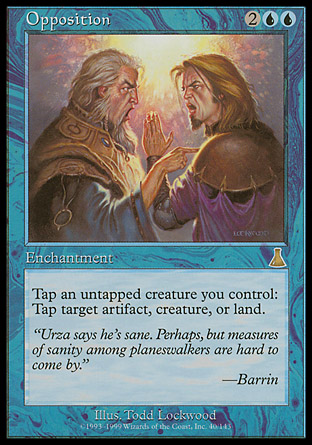
opposition

Like Upheaval (and conveniently fitting in the same Simic decks), this card doesn't seem all that special at first glance, but once you've experienced locking down all your opponent's lands during each of his upkeeps, you'll understand.

consecratedsphinx

With Aetherling not making the cut, this is the control finisher of choice in this format.

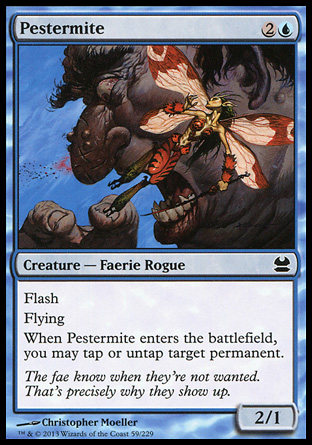
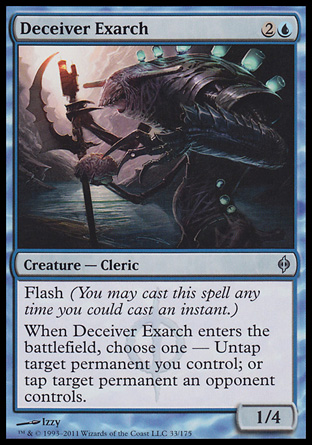
pestermite deceiverexarch

These are slightly embarrassing first picks, but if you've been forcing Splinter Twin combo like I have, you won't hesitate to snap these up when given the chance.

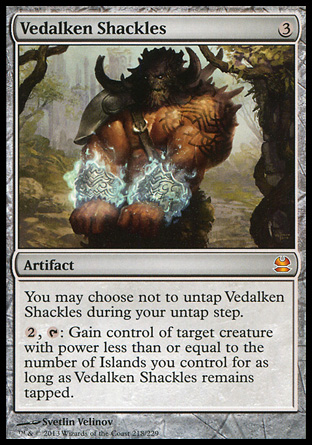
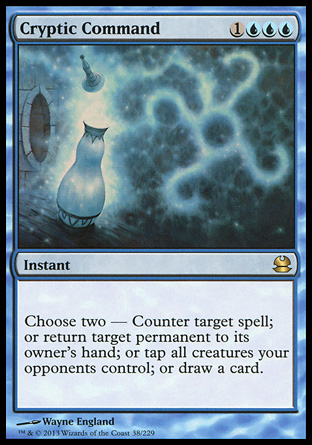
vedalkenshackles crypticcommand

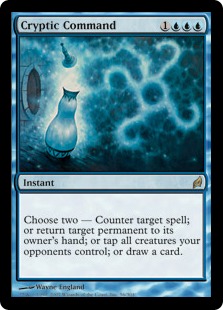
Finally, I would be remiss not to mention these two cards. They are so blue-intensive that they are essentially like picking gold cards (because they're narrow and go in fewer decks). However, they're so powerful that they warrant early picks and building around, especially if you lean toward blue.

Green

Green is my pick for the second-best color in Legacy Cube.

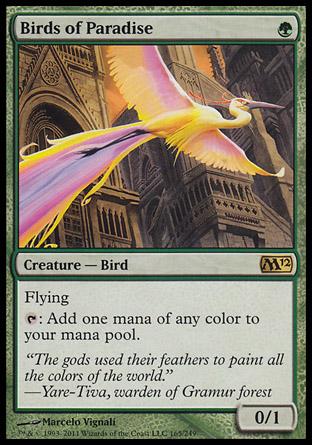
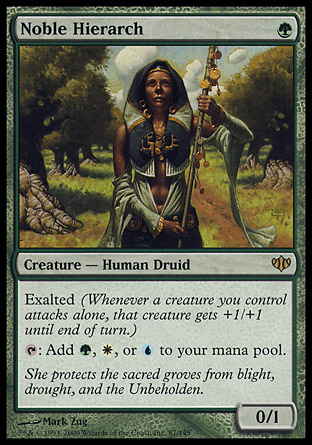
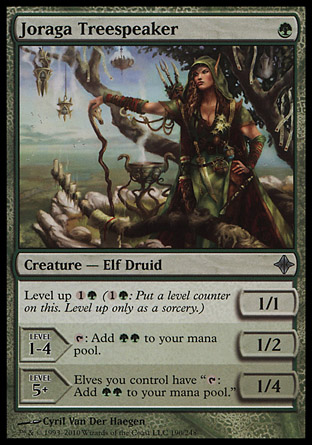
birdsofparadise noblehierarch joragatreespeaker

Part of the reason green is so good is because this is an unpowered environment, meaning green gets all the best ramp. It's hard to stress enough how important a handful of one-cost mana producers is. Pick them early and pick them often.

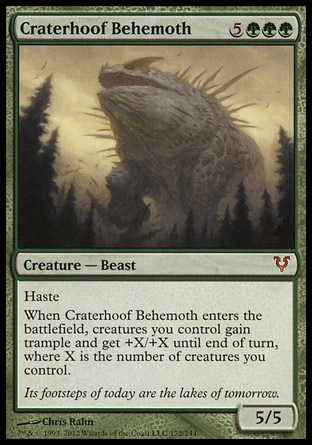
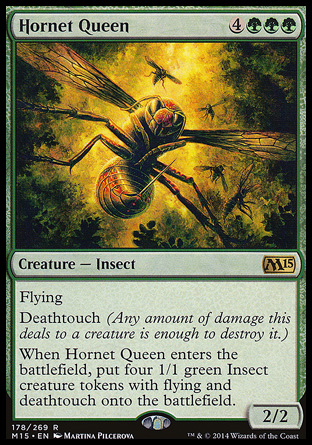
craterhoofbehemoth hornetqueen'The Boss

You need something to do with all that mana, of course, and green has plenty of fatties to choose from. These are some of the best, but there are more, and they're all basically redundant.

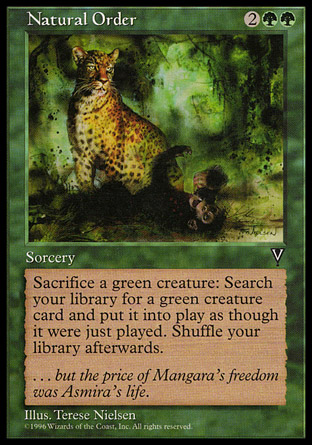
naturalorder

This is one of the most broken things mono-green can be doing, and if you have been following along so far, you have plenty of mana dorks and fatties to combo this with. Nice job. It should be noted that this is not a card for decks merely splashing green.

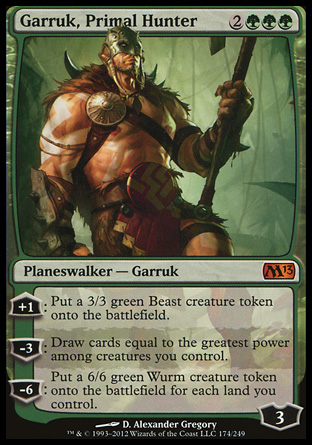
garrukprimalhunter

And neither is this. Garruk, Primal Hunter, in particular, is one of my favorite planeswalkers in archetypes from aggro to control, but only if you can support the GGG in the casting cost.

Red(?)

I'm pretty confident in saying blue and green are the two best colors in the Legacy Cube, but with so many changes to black and red, I'm not sure how the last three colors line up. Red has lost some its traditional best picks, like Sulfuric Vortex and Shrine of Burning Rage, but some powerhouses still remain.

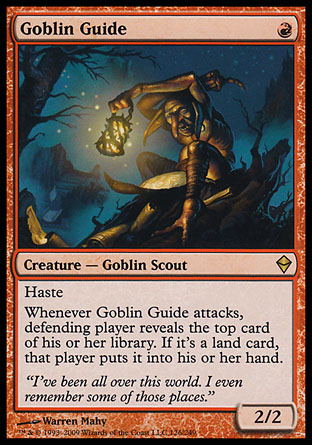
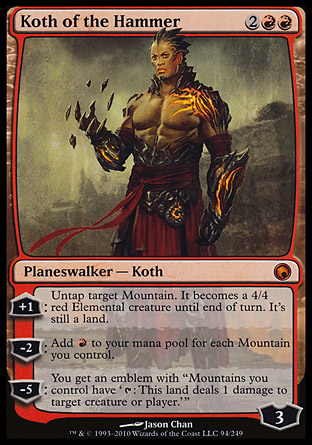
goblinguide  kothofthehamme

These are the two heavy-hitters that should be pushing you into red aggro. One- and two-drops and lots of burn is important in these decks, but also fairly interchangeable. As far as strong individual signals go, these are your best bet in this brave new world.

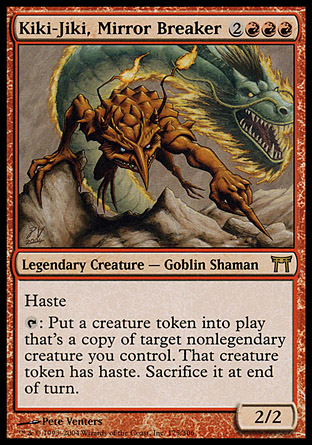
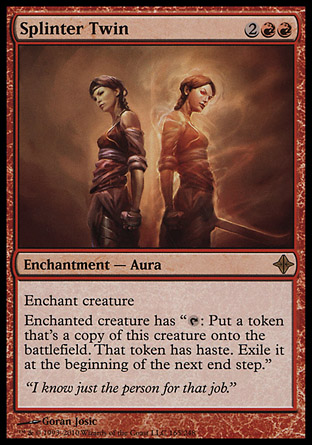
kiki-jiki splintertwin

These are much less embarrassing first-picks than Pestermite and Deceiver Exarch, as they can do a bunch of cool stuff without infinite combos. Note that Zealous Conscripts allows for these to provide a combo finish in a mono-red deck.

Red got nerfed pretty hard with this update, and though there's lots of playable burn and redundant creatures, there's nothing that really sticks out  past these cards that should dictate a draft direction.

Check in tomorrow for a continuation of this exercise. Feel like I left a must-mention blue, green, or red out of this list? Let me know below!

Metagame Breakdown: 2/16 – 3/16

Are you a Quiet Speculation member?

If not, now is a perfect time to join up! Our powerful tools, breaking-news analysis, and exclusive Discord channel will make sure you stay up to date and ahead of the curve.

The January 2015 bannings of Treasure Cruise, Dig Through Time, and Birthing Pod changed Modern as we knew it; Delver was sure to fade away; BGx attrition strategies were likely to return; Burn would have to stop splashing blue, and blue-based combo was going to suffer. Oh, and Pod was dead. Whether you loved the bannings, burned your Modern collection because of them, or were somewhere in the middle, you had to admit Modern was going to look a lot different by February than it had at the beginning of January.

Pro Tour Fate Reforged set the stage for the new Modern, one without the Delver and Pod decks of Fall 2014, but one where both Siege Rhino and Monastery Swiftspear were still defining forces. Splinter Twin returned from its Delver-induced vacation; Blighted Agent reminded us that if you can't beat fast decks, just race them, and Cryptic Command looked sad without its old friend DTT. In short, it was a new Modern world.

[wp_ad_camp_1]

 
Below is the Modern metagame from 2/16 through 3/16, including data from almost 30 MTGO Dailies and 85 paper events.

DeckOverall
Rank
Overall
Metagame %
MTGO %Paper %Major Event
Day 2 %
Abzan113.4%10.9%11.3%18%
UR Twin212.3%10.1%11.9%14.8%
Burn310.6%11.2%10.2%10.4%
Affinity47.8%6.4%8.7%8.2%
Infect57%4.6%8.2%8.2%
Abzan Liege63.3%4.2%2.4%3.3%
Merfolk73.3%3.4%3.7%2.7%
RG Tron82.9%2.5%4.8%1.1%
Amulet Bloom92.7%2.9%3.5%3.3%
Scapeshift102.5%2.4%3%2.2%

Note: Data is taken from the Masters of Modern metagame spreadsheet, which you can find on the Top Decks Page. Top Decks and its data are discussed in more detail at the end of the article. Data includes MTGO and paper events in the date range, gathered from a variety of sources and tabulated in the spreadsheet.

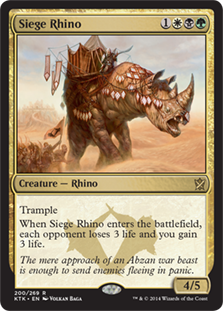
Siege RhinoSurprising absolutely no one who saw the results at PT FRF, Abzan is still public enemy number one. But perhaps much more surprising is the relatively small lead it has over the next top decks. PT FRF saw a day 2 metagame that was almost 25% Abzan (with another 3-4% on the Abzan Liege variant). GP Vancouver saw that share drop to 18%, and SCG Baltimore saw the same. But expanding our scope to include MTGO and smaller paper events, Abzan falls off even further to just over 13% of the overall metagame. This probably came as a relief to anyone who was looking at those scary PT statistics. True, Abzan is still the top deck in the format, but it doesn't have the Modern-wide dominance that we saw in decks like Pod, Delver, and Burn between October and January.

After Abzan comes the usual Modern suspects:Splinter Twin Twin and Affinity. Although other Twin builds have been making an impact in the format (RUG Twin at about 1.5%, Grixis Twin at .75%, Jeskai Twin just below at .6%), good old UR Twin still remains the premiere combo/control deck of Modern. Its victory at PT FRF and GP Vancouver, not to mention 2nd at SCG Baltimore, has solidified its status as a great deck, and the rest of the format reflects those successes. The same is also true of Affinity, a deck that has been around since Modern's beginning and has continued to put up results. Have Stony Silence-powered Abzan decks tried to stop this? Absolutely, but Affinity has soldiered on and remained a top 4 deck in Modern.

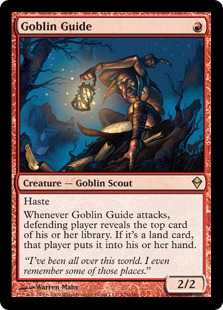
Goblin GuideBut wait: What about Burn, which is actually ahead of Affinity in the overall metagame? Both Burn and the #5 deck, Infect, represent a kind of metagame adaptation to all the Abzan and, to a lesser extent, Twin. Both decks feature fast, linear, and hyper-redundant strategies that are very resilient against the efficient one-for-one removal of Abzan. Abrupt Decay that Goblin Guide? Have a Swiftspear in return! Thoughtseize the Might of Old Krosa? Thanks for fueling my Become Immense! If you can't play fair against the Abzan triumvirate of Goyf/Tas/Rhino, then just race it. As the metagame stats show, this has been a fairly successful game plan over the last month.
Rounding out the overall metagame is Abzan Liege (the anti-Abzan Abzan deck), along with a bunch of old-school Modern staples: RG Tron, Scapeshift, Merfolk, and Jund. You can look more closely at the numbers to see that some of these decks have an even distribution between MTGO and paper (Merfolk and Scapeshift), and others that were carried based on their performance in one venue (Jund with day 2 performances, RG Tron with paper).

Here are some key takeaways from the overall metagame apart from those listed above:

  • Modern has a lot of aggro. Burn, Infect, Affinity, and Merfolk represent just under 30% of the overall metagame. There is a bit of disagreement about whether to consider Infect as aggro, combo, or an aggro/combo hybrid (I tend to lean towards the latter). Even if you don't count Infect, aggro is still about 20% of the format. And that's just the top decks! Adding in Zoo variants, Bogles, BW Tokens, and a variety of other decks, it's still at least 25-30%.
  • Cryptic Command"Traditional" control is nowhere to be seen. I'll leave the debate about "true" control versus combo/control hybrids for another article, but those classic draw-go strategies are not making waves in Modern. Sultai Control may have won SCG Baltimore, but looking over the metagame as a whole, control is not replicating that success. UWR Control is about 1.4% of the metagame with Mono U Tron at 1.1% and Blue Moon at .8%. UW Control has enjoyed some MTGO success recently with 1.75% of that metagame, but its lack of paper performances still shows that traditional control is struggling. As a whole, the archetype is at about 5% of the overall metagame by even the most generous definitions.
  • Lightning Bolt is more matchup dependent than ever. Metagame analysis is only as good as the deck and card choices it informs. And when I look at this metagame, I see one where Bolt is highly variable from matchup to matchup. Why focus on Bolt? For one, Modern players always discuss the "Bolt test" as a metric for creature playability. Bolt has also defined Modern since PT Philly back in 2011, and many Modern players build their deck with Bolt in mind. But this current metagame is not always a Bolt-friendly one.Bolt Abzan's main critters have too much toughness for Bolt to handle, and zapping Spirit tokens isn't exactly profitable; Twin has been favoring Deceiver Exarch over Pestermite; Infect maindecks Spellskite, not to mention their pump and protection. And RG Tron and Scapeshift are about as Bolt-proof as they get. So these are matchups where Bolt is a lot worse now than it was a while ago. But then again, Bolt remains an excellent choice against Burn, Merfolk, Affinity, Abzan Liege, and even against Infect if used properly. It's cost-effective, catch-all removal that will get you through the early turns until you can get better stuff. In fact, one reason for the success of these aggro decks recently is the lack of Bolt in some of the top decks. So when you are preparing for this metagame, take a hard look at your use of Bolt and your vulnerability to Bolt. There was a time where you couldn't leave home without 4+ toughness or your playset of Bolts, but that time is not necessarily today. Then again, if you decide not to pack your Bolts, prepare for some rough turns 1-3 against some of the format's fastest decks.

Predictions for the next update (3/1 - 4/1)

With a second metagame update around the corner in just a few weeks, it's hard to make meaningful, long-running predictions. There aren't even any major events in that time period, although there is a banlist update on 3/22. Even so, that update won't actually go live until after that banlist update, which means the metagame isn't likely to change much in that time. But if you still want to get ahead of the curve, here are some predictions for that next update.

  • Abzan, Twin, and Burn aren't going anywhere. If your deck can't beat these decks, you are in big trouble. The Big Three are here to stay for the foreseeable future. In fact, expect Burn to go up a bit (and Abzan to drop proportionately) with the upcoming Atarka's Command hitting Modern at the end of March.
  • Merfolk and Affinity will be on the rise. These are linear, fast, and resilient aggro decks that also have solid Burn matchups. Decks like Zoo, Abzan, and even Infect can struggle against Burn because of their painful manabase and/or their Phyrexian mana spells like Mutagenic Growth and others. Affinity loses at most 2 life from Vault Skirge...right before Skirge gains most of that back next turn (or more). And Merfolk loses no life period. This keeps these decks well-positioned in this current metagame.
  • ROGUE DECK ALERT - Esper Midrange! Modern players have been trying to find a home for Monastery Mentor since he came out a few months ago. Then came the 214 player Japanese tournament on 2/22 that saw Esper Midrange take the gold. That should have been it for Esper Midrange, but the deck has been appearing day-after-day in MTGO events since that time. It already has 10 showings in the last few weeks alone, and is sure to just get better with time. Expect this to become a real contender by the beginning of April, with a metagame share of at least 1.5%.

We'll check back in with these predictions next time and see how the metagame looks then. Until 4/1, keep up the great finishes and keep pushing the metagame forward!

About the metagame project

When I first started playing Modern, I was always asking what the overall metagame looked like. There was no shortage of sites to look at for these metagame statistics, but all of them were saying something different. Some would only do 4-0 MTGO dailies but not 3-1 finishes. Others would have events from one part of the world but none from another. Decks were misclassified, events were double counted or missed, and I never got that clear metagame picture I was looking everywhere for.

frantic_searchBIG
If you’re like me and are searching for that comprehensive Modern metagame picture, then you’ve come to the right place: the Masters of Modern Metagame Breakdown.

To get you the most accurate picture of the Modern metagame, we tally up decks and events from across the Magic community. This includes MTGO finishes, Top 8s, and Top 16s from local and regional events, and data from major events like Pro Tours and Grand Prix tournaments. We then summarize all those results in a monthly article on the Modern metagame. This article is our first installment in the series.

Look forward to a Metagame Update article on the first Tuesday of every month (we are launching this one early just to kick off our new site). You can also check out the homepage for the “Current Metagame Statistics” sidebar, which will give a metagame snapshot that is updated every two weeks. Finally, you can always check in on the Top Decks Page itself, which is where we tabulate all the data and calculate the different metagames. Feel free to browse the spreadsheet and all of its different events, decks, and metagame statistics.

How to Beat Burn

Are you a Quiet Speculation member?

If not, now is a perfect time to join up! Our powerful tools, breaking-news analysis, and exclusive Discord channel will make sure you stay up to date and ahead of the curve.

Get used to it: Burn is Modern’s premiere aggro deck. Although Affinity will always be Modern’s oldest and most consistently successful aggro strategy, Burn has actually raced ahead of Affinity as the aggro deck to beat in our format. As of today, Burn is the most-played deck on MTGO and the third most-played deck in paper. Burn has it all. Speed? Check. Redundancy? Check. Maindeck answers to anti-aggro bullets? Double check, especially with the addition of Atarka's Command in DTK. It also doesn’t hurt that this is by far the cheapest tier 1 deck in the format -- no Goyfs required!

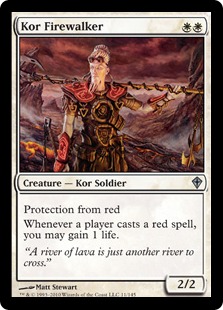
Kor Firewalker Art

To cool down those Burn mages, we are going to tackle their game plan from a few different angles. First, we will talk about what makes a good anti-Burn card. Then we will apply those criteria to a few sideboard and maindeck card choices. Next, we'll think about ways to actually build our deck to make Burn's job harder. Finally, we’ll end with a more comprehensive list of anti-Burn staples, broken down by color. This will make sure your deck will have the tools it needs to beat Burn, whether it’s combo or aggro, a top-tier netdeck, or a kitchen-table brew.

[wp_ad_camp_1]

What makes anti-Burn cards good?

Before we get started, I want to discuss a few criteria that make a good anti-Burn card. Like with all criteria, there are plenty of exceptions and complications to them, so we shouldn’t be afraid to think outside of their boundaries. With that in mind, here are some general guidelines for picking good cards in the Burn matchup.

  • Casting cost: Burn wins fast. You want to minimize your vulnerability to Skullcrack and Command, which means playing your lifegain cards before turn 3. You also don't want to get too far in the hole or Burn can take you apart with topdecks. That means your ideal anti-Burn card is going to have a CMC of 1 or 2, with higher costs only acceptable if the card has a game-breaking effect.
  • Incremental lifegain vs. Burst lifegain: Gaining lots of life is great! That is, unless Skullcrack or Command ruins your day. Gaining life gradually is a lot better, but only if the gains are sizable or frequent enough to turn the game around. If you use bursty lifegain (like Feed the Clan, be sure to pair it with disruption to ensure it resolves. If you use incremental lifegain (like Dragon's Claw, be sure it's gaining enough life to matter.
  • The Two-for-One: Burn is designed to get you from 20 to 0 life in as few turns as possible. Every turn you can prolong the game is another turn you are wasting Burn resources and putting them behind. But because Burn is built with so many damage effects, one-for-one trades only prolong the the eventual loss. But two-for-one trades are much better. Blowing up an enemy Guide and gaining some life effectively stops two cards: the creature itself and the burn spell you gained life after. Cards that make these exchanges (like Harm's Way) can be very strong against Burn.

With these criteria in mind, let's start chilling out those Burn players.

Sideboard ideas

Destructive REvelryThe sideboard is the most obvious entry point to handling any problematic deck, and a lot of Burn answers fit nicely into your average Modern sideboard.  The bad news is many of the cards that are traditionally considered as good in this matchup (e.g. Leyline of Sanctity or Timely Reinforcements) are actually weaker than people think they are. Why? Because Burn’s gameplan is more evolved than many give it credit. This isn't the Burn deck of 2008! Burn mages run at least 4 Destructive Revelry style effects in their board, and the brunt of their damage will come from creatures anyway. Skullcrack and Command will stop lifegain if you use it recklessly, and the Burn deck is so efficient that it can often just count on topdecking damage spell after damage spell.

Does this make Burn unbeatable? No way. It just means we need to play even better sideboard cards to overcome the next-level-threats that we see in Burn. Here are five sideboard cards that fit our criteria and work nicely against the Modern Burn decks we see today. They still have weaknesses, but in the right deck they will give you a huge edge over your Bolt-slinging opponents.

Kor Firewalker

Kor FirewalkerThe Burn killer himself, Firewalker is a monster against Burn. The overwhelming majority of Burn decks these days have no way to kill this card, at least nothing more than Skullcrack to turn off its damage prevention and then hoping you block with it. Left unchecked, however, Firewalker takes over the game. He turns Bolts into Shocks. He blocks and kills Guides and Eidolons and chumps MS indefinitely. He can also switch to beatdown mode after things get stabilized to close the game. Just be careful for those Skullcracks when running Firewalker and you will walk all over the enemy.

What kind of decks can use Firewalker? Abzan, Abzan Liege, UWR Control, UWR Midrange, UW Control, Hatebears, Death and Taxes, Zoo, and an enormous range of other Modern mainstays. Heck, even Burn players run this to help out the mirror! In fact, Firewalker is especially potent in decks that are running red themselves, because he will trigger for your own spells.

Dragon’s Claw

Dragon's ClawCan’t support Firewalker’s double white? Dragon Claw has you covered. The colorless, noncreature Firewalker isn’t quite as strong as the Kor himself, but it does a great impression for those decks that can’t run Firewalker. Unfortunately, almost every Burn deck is running either 4 Revelry or some number of Wear // Tear in the board, and you can be sure to see those cards in games 2/3. But if backed up by countermagic (like UR Delver did it back in the KTK days), hand disruption, or good old fashioned pressure, Claw will soften Burn spells enough that you don’t need to worry about an immediate Revelry.

The beauty of Claw is that any deck can run it. Mono U Tron? Have some Dragon’s Claw! Nykthos Green? Dragon Claw might be the card for you. Skred Red? Like Kor, Dragon’s Claw triggers for BOTH players! So when in doubt and if you are worried about colors, Claw is an excellent go-to answer.

Refraction Trap

Refraction TrapWeird tech incoming. Let’s get some of the negatives out of the way. Yes, Trap is a bit narrow. Yes, there will be situations where the opponent is just beating you down with creatures and they aren’t “springing” the trap. And yes, Skullcrack ruins Trap’s day. But when it works, the two for one blowout for just a single white mana is too insane to pass up. Trap not only “counters” a Burn spell, it also melts any creature in Burn’s deck, including Grim Lavamancers sitting on the sidelines, and Swiftspears with 3 toughness. It’s just brutal if cast in response to a Searing Blood or similar effect, where it can prevent just enough of the damage to save your creature, prevent any leftover damage to you, and still blast a Burn critter to pieces. Oh, and that pesky new Atarka’s Command, unlike Skullcrack, doesn’t stop the Trap prevention.

Because Trap is a little narrow, you might not want to put more than 2 copies in your board. But remember that the card also has a lot of applications in the Gruul/Naya/Domain Zoo matchups, as well as Delver games. And if you are worried about Trap’s clause being triggered, Harm's Way is another passable replacement that is alive in way more aggro matchups.

Flashfreeze

FlashfreezeBurn answers are typically white, which makes other players feel like they often have to choose between splashing, relying on Dragon’s Claw, or just trying to race/ignore the Burn player. Flashfreeze gives you another option. On the one hand, it’s just a Counterspell in the Burn matchup, except costing 1U instead of UU. On the other hand, it’s a sideboard card that’s totally live in many other matchups. Basically every top deck in the format runs green or red, so Flashfreeze is a great way to maximize your valuable sideboard slots. Just remember that countermagic alone won't win you the game. Pair Flashfreeze with some kind of pressure for maximum effect.

Feed the Clan

Feed the ClanIf you want bursty lifegain, it doesn’t get better than Feed the Clan. 2 mana for 10 life is as good as it gets in Modern. Even if you need to cast Feed without fulfilling Ferocious, 5 life is still nothing to sneeze at. When it works, Feed is going to be a 2 mana investment to “counter” or otherwise invalidate 3 Bolt effects. Burn typically can’t recover from that kind of blowout. But be careful when you try to feed your clan, because Burn will often have 4+ ways to handle this card in the maindeck alone. The best way around the dangerous Skullcrack/Command is to pair Feed with hand disruption (Inqusition of Kozilek is great, Thoughtseize is a bit worse) or countermagic (Dispel, Spell Pierce, etc.).

Because of Feed’s vulnerability to Crack and Command, it’s important to only use Feed in a deck that can guarantee it resolves. Abzan, Hatebears, RUG Delver/Twin, and similar decks come to mind. Alternately, you can run it in decks where you are also trying to race Burn yourself and you just need the card as a backup plan to help Burn waste resources or play conservatively. Zoo or Stompy are great examples of that approach.

Maindeck options

Modern is a diverse format, which means your maindeck can’t always be too custom-tailored to beating any one kind of deck. Maindeck Kor Firewalker might be a great way of hedging your bets in the Burn matchup, but your Infect, Amulet Bloom, and Abzan opponents are just going to laugh their way to the next round. Of course, it’s fine to make maindeck decisions that are influenced by a certain matchup (like Burn), so long as those decisions don’t also hamstring you in other matchups. Or, better yet, if those decisions end up being just as relevant in those matchups as they are in Burn. The prime example of this would be a Twin deck that maindecks Dispel, which is effectively a 1 mana hard counter against many Burn spells, but is also useful against tons of other decks when the Twin pilot is protecting their combo.

Following that philosophy, here are three maindeck card choices that can give you an edge in a Burn-heavy metagame.

Lightning Helix

Lightning HelixIf you are playing red and white, I can’t think of many good reasons not to play this card. It’s a two for one against almost any aggro deck. It’s even better against Burn because so many of Burn’s resources are spells and not creatures, so it’s much harder for Burn to keep up a consistent damage output if they lose a beater. Compare this with Merfolk or Affinity, decks that can keep pushing through a Helix with all their lords or with a Plating. Helix is nasty either in decks that apply pressure to race Burn, or in decks that try to stabilize until bigger threats hit the battlefield.

In fact, Helix is such a strong card against both Burn and the other aggro decks that it is almost worth playing white/red just for the card. We have seen some UWR Twin and UWR Delver strategies in paper and MTGO events subscribe to this approach in recent weeks. I also expect to see more of this if Burn and the other linear aggro decks continue to be such a big part of the metagame.

Sorin, Solemn Visitor

Sorin Solemn VisitorCan a 4 mana card really answer a deck that tries to win by turn 4 itself? If paired with even just a little disruption, the answer is yes: Sorin will just win you the game on his own. Even backed up by a lone Tarmogoyf, Sorin threatens an immediate 10+ point life swing (assuming an average 4/5 Goyf). Add in a turn 3 Souls on the turn before and you are looking at gaining as much a 16+ swing. This assumes you don’t even block, which Sorin’s long-lasting lifelink clause allows you to do if you have to.

Sorin is also all but impossible for Burn to deal with. Assuming you lifelink after he hits play (and why wouldn’t you?), the Burn player has to commit 5 damage to kill him. More if you save a blocker. Add to that the 5+ lifegain you benefit from because of your Goyf/Souls/Tas, and Burn is now at least four cards behind, double time walked, and totally out of the game.

We are starting to see Sorin show up in Abzan lists, and I’m surprised that more decks aren’t running them. Christopher Juliano ran Sorin in Abzan to a 15th place finish at SCG Baltimore, and we see it pretty regularly on MTGO (where Burn is admittedly more rampant than in paper). But for all decks running white, black, and creatures, Sorin is an awesome 1-2 of inclusion in your maindeck.

Spell Snare

Spell SnareWhat do the following Burn spells have in common? Eidolon, Skullcrack, Atarka’s Command, Boros Charm, Lightning Helix, and Searing Blaze. Modern players are always asking when Spell Snare is a good metagame choice, and now is one of the best times for the counterspell to see some serious play. Snare stops a number of important Burn spells cold, including the new Command, which is sure to increase the amount of maindecked 2 CMC spells that Burn is using. Although Snare doesn’t stop the Guides and Swiftspears, it is often more important to stop the bomby 2 CMC cards like that nasty Eidolon or Crack/Command. When you add to that all the other matchups where Snare is useful, you have a great case for running this card in the maindeck.

The key with Snare is not to think of it as a catchall answer for your Burn woes. It’s just one more bullet that screws with Burn while also retaining relevance in other matchups. Snare has always been a strong Modern card, but it has only gotten stronger in recent months. Burn is a big factor that contributes to this newfound strength.

Deck choices and Burn

Sometimes the best way to beat Burn isn't to play anti-Burn cards. It's just to make different decisions in how you build your deck. Whether this means playing a less painful manabase, playing a strategy that can race Burn, or building your deck with game 1 anti-Burn effects, there are lots of higher-level ways of attacking the Burn matchup. In that spirit, here are a few ways that you can go after Burn without necessarily using techy maindeck and sideboard cards.

Painless manabases

basics

Crack out those basics! Lots of Modern players take our fetchland and shockland manabase as a given. But if you are trying to succeed in a metagame with 12%+ Burn, then that is no longer an assumption you want to make. Giving the opponent a free Shock is bad enough. Giving them two free Bolts will often be game over on its own. When building your deck, think of ways to go mono or two-colored instead of going greedy with 3+ color goodstuff approaches. Use fastlands and checklands (e.g. Blackcleave Cliffs and Dragonskull Summit) instead of shocks and fetches. Use basics. Do what you have to do to minimize the damage and make Burn's job harder.

Speed things up

fast cards

If Burn is trying to win on turn 4, then why not try to win on turn 4 yourself? Or, better yet, on turn 2 or 3? This is how Infect, Amulet Bloom, and Twin approach the Burn matchup (not to mention decks like Storm, Griselbrand, and Affinity). If you can go faster than Burn then you can probably beat them. Burn isn't exactly designed for that much interaction, so if your non-interactive game plan can exploit that, you will have a good chance of winning. There is a larger question here as to whether or not this kind of hare vs. hare speed is good for the format, but that question will be the last thing on your mind when you go 2-0 against Burn on the back of Primeval Titan or Blighted Agent.

"Pre-board" for Burn

martyr of sandsDecks like Soul Sisters, Martyr Proc, and Enchantress might be on the fringe of playability, but they get a lot better in metagames that are packed with Burn. Nothing frustrates a Burn player like a turn 0 Leyline in game 1, or a turn 2 Martyr of Sands with no chance to Skullcrack in response. Using these kind of swingy lifegain cards before the sideboard is a great way to steal game 1 and get an edge in the matchup. Of course, you don't want to do this just to beat Burn. Maindeck Leyline will feel great against Burn, fine against Abzan, but it's almost totally useless against Twin. That is, unless your deck is designed to abuse that card on its own. For instance, the blitzy Death's Shadow that sometimes appears on MTGO, going down to perilously low life totals behind Leyline protection. Another example of this is the maindeck Spellskite we see in many Infect and some Twin lists, a card that runs double-duty protecting their win conditions and staving off Burn.

These are just a few high-level strategies that you can use to get a Burn edge before the game even starts. With so much Burn around, it's also very reasonable to play a deck that has good Burn matchups, or to modify your deck to give it a slight advantage against Burn players. As long as you aren't compromising your deck too much in doing so, this can be a winning strategy.

The anti-Burn arsenal

With a card pool as big as Modern’s, there are seriously hundreds of cards that can improve the Burn matchup. These lists below will give you a rough top five list for anti-Burn tech, broken down by color. All of them fit at least a few of the criteria given earlier in this article, and/or are the best option in that color for what they do. I'll also give one "It's a trap!" card, along with a quick note, to illustrate some cards that try to trick you into thinking they are good for the Burn matchup.

White

  • Leyline of Sanctity
  • Kor Firewalker
  • Timely Reinforcements
  • Circle of Protection: Red
  • Sanctimony
  • Honorable mention: Auriok Champion
  • It's a trap!: Rest for the Weary (Not a great topdeck because it relies on both landfall and on the opponent not having Crack/Command)

Blue

  • Flashfreeze
  • Spell Snare
  • Spell Pierce
  • Dispel
  • Negate
  • Honorable mention: Repeal
  • It's a trap!: Aetherize (Too much mana for a relatively small effect. By the time you cast this, Burn has already gotten enough mileage from its creatures)

Black

  • Inquisition of Kozilek
  • Disfigure
  • Smallpox
  • Bile Blight
  • Vault Skirge
  • Honorable mention: Pharika's Cure
  • It's a trap!: Thoughtseize (Not nearly as bad against Burn as some people think, but use it wisely. TSing an Eidolon is probably good. TSing a Bolt is not)

Red

  • Pyroclasm
  • Grim Lavamancer
  • Lightning Bolt
  • Whipflare
  • Honorable mention: Honestly, if you are playing Red, your goal is to race Burn, not answer it.
  • It's a trap!: Anger of the Gods (Expensive sweeper that comes online too late. Strong against more creature-oriented strategies, but Burn plays around it)

Green

  • Feed the Clan
  • Scavenging Ooze
  • Courser of Kruphix
  • Thragtusk
  • Gnaw to the Bone
  • Honorable mention: Obstinate Baloth
  • It's a trap!: Bow of Nylea (Vulnerable to both Crack/Command and Revelry. Too much mana investment for such a small and fragile effect)

Multicolored/Hybrid

  • Lightning Helix
  • Kitchen Finks
  • Sorin, Solemn Visitor
  • Huntmaster of the Fells
  • Siege Rhino
  • Honorable mention: Boros Reckoner
  • It's a trap!: Ajani Vengeant (Often just a 4 mana Helix. Compare with Sorin who actually ends the game)

Colorless

  • Dragon's Claw
  • Chalice of the Void
  • Spellskite
  • Wurmcoil Engine
  • Radiant Fountain
  • Honorable mention: Sun Droplet
  • It's a trap!: Engineered Explosives (Easy to play around. 3 mana to blow up 2 creatures is not worth it, and if it eats a Revelry you wasted the card to begin with)

That wraps up our deep dive on how to beat Burn. Whether through sideboard bullets, maindeck tweaks, or just different ways of approaching your deck choices, you will hopefully have the different tools you need to prevail in the Burn matchup.

Join me next time when I look at the next Modern bigshot and the different ways we can bring it down: Abzan.

Want Prices?

Browse thousands of prices with the first and most comprehensive MTG Finance tool around.


Trader Tools lists both buylist and retail prices for every MTG card, going back a decade.

Quiet Speculation