Are you a Quiet Speculation member?
If not, now is a perfect time to join up! Our powerful tools, breaking-news analysis, and exclusive Discord channel will make sure you stay up to date and ahead of the curve.
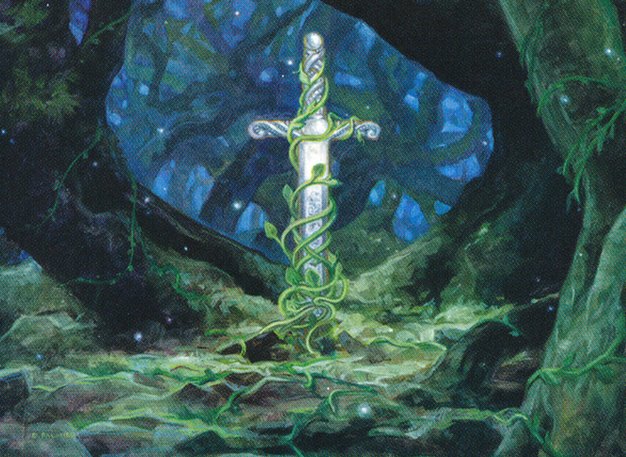
Adopt the character of the twisting octopus, which
Theognis
takes on the appearance of the nearby rock. Now
follow in this direction, now turn a different hue.
Unless you were already playing in 1994 – or unless you are especially keen on Greek elegies – you might have never read this quote before, as the Magic card it's on is not precisely a modern-day staple. It is, however, the first example of a classical-world author’s quotation within Magic: The Gathering flavor text. As we saw in the first installment of this series, flavor text is about spicing cards up. Cards don’t need any particular power level in order to obtain great flavor text.
Classical Quotations as a Whole
Throughout the whole of Magic history, Wizards printed only 15 unique cards with a Greek or Latin author quoted in their flavor text. This doesn’t mean there are no references to the classical world (in fact they are uncountable). Let’s focus on flavor, and suspend other matters for the moment.
A short premise – I’m oriented to consider Greek and Latin quotations together because they have many similarities and can be meant as two halves of the bigger category called "classical world." Since we are talking about 15 cards, however, we are going to split them into two groups: nine Greek cards and six Latin cards.
In this article, we will focus on Greek quotations, and keep the discussion mostly about literary genres and what they have in common. Next time, we will move to Latin authors and shift the focus towards the single choices – and perhaps some missed opportunities.
The Nine Archons
Let’s start with a brief overview since nine is a small enough number to allow for a card-by-card analysis. This could be useful mostly for a quick glance at how Greek authors' quotations were distributed among the years and editions of Magic: The Gathering. It will also contain links to the full text (in English translation) so that you can read more about the context. In order of publication, we have:
- Dream Coat (Legends) Theognis, Elegies 1, 215-217
- Fissure (The Dark) Plato, Phaedo 72d
- Energy Flux (Fifth Edition) Heraclitus, On Nature (fragment)
- Righteousness (Fifth Edition) Homer, The Iliad XVIII vv. 120s.
- Royal Trooper (Portal) Sophocles, Phaedra (fragment)
- White Knight (FNM) Euripides, Temenidae (fragment)
- Dauthi Slayer (Arena League Promo) Homer, The Iliad XXIII vv. 103s.
- Fleeting Image (Eighth Edition) Aesop, Fables (The Dog and the Shadow)
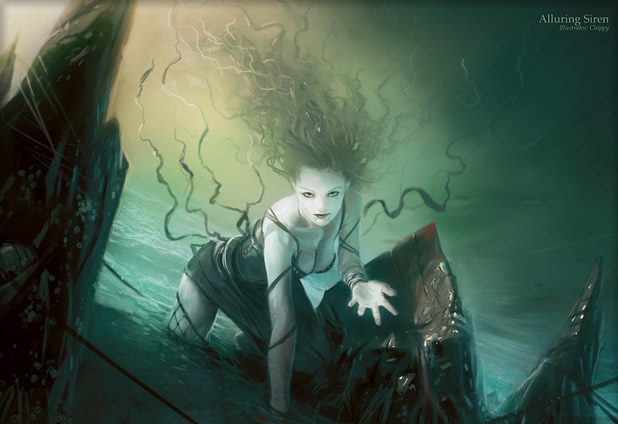
- Alluring Siren (Magic 2010) Homer, The Odyssey XII vv. 45-49
A Surprising Variety of Literary Forms and Genres
Nine cards then, but only seven authors, as the almighty Homer appears on three different flavor texts. Despite the small number, it is quite an interesting selection, as it covers many genres and literary forms. We have an elegiac poem (Theognis), a philosophical dialogue (Plato), a fable (Aesop), a philosophical treatise (Heraclitus), an epic poem (Homer), and two tragedies (Sophocles and Euripides).
Such variety grows even bigger if we also take into account Latin quotations since they add to the mix epistle, satire, and comedy, but we’ll be back on that next week. So, what do all these different genres have in common, and why did they all end up in Magic flavor text? We will try and answer this question at the end of this piece. For the moment, let’s see in more detail what cards and what authors we are talking about, while also adding some background to the texts.
Dream Coat
This uncommon Aura from Legends allows you to change the color of the enchanted creature at any time, although just once per turn. The quotation is: "Adopt the character of the twisting octopus, which takes on the appearance of the nearby rock. Now follow in this direction, now turn a different hue". I find this passage from Theognis really spot on, as it conveys the idea of ever-changing creatures such as octopuses, which makes perfect sense on a card that lets you change colors again and again.
Particularly interesting, in my opinion, is the choice of cutting the quotation. In fact, the original is a little longer, having a few words before and a few words after what we read on Dream Coat. The point is, those words are what give context, and since context must be avoided when you are trying to extract a passage and put it on a Magic card, they decided to cut it and only keep the central part.
Let's see what I mean. The poet's voice is talking to himself by addressing his own heart. The original text begins with: “Turn, my heart, towards all friends a changeful habit, mingling thy disposition to be like unto each.” This is the context that we lost: the poet is telling his audience how to behave with friends! Then, after the actual quotation that we find as the flavor text, here comes the conclusion – “Surely skill is better than unchangeableness” – to sum up, the meaning of the text.
Fissure
Let’s move to The Dark, the last “expert-level” set to contain any real-world quotations: after that, as we have seen, they were confined to core sets, until eventually disappearing for good after Magic 2014. Fissure is a red common that lets you destroy a creature or a land for five mana. Not precisely a bargain, compared to the current power level, but for the time it was not terrible. The point of the quotation is basic: death is the ultimate fate, no matter the nature of the subject. Be it a land or a creature, it will be destroyed by this instant spell.
But let’s focus on the quotation: "Must not all things at the last be swallowed up in death?" The dialogue this is taken from is Phaedo, possibly the most renowned of all Plato’s works, where the Athenian philosopher Socrates reasons about the immortality of the soul. What I find funny is that this choice makes perfect sense if we consider the way Plato uses to portray Socrates' character. He keeps asking more and more questions to the unfortunate person he’s discussing with until they succumb to his overwhelming display of rhetoric. This small question here might seem negligible on its own, but when it comes with dozens and dozens more it is sure to submerge any opponent. In fact, just to give an example of how things work when you decide to confront Socrates, the other person (called Cebes) can’t help answering: “There is no escape from that, Socrates […]; and I think that what you say is entirely true”. We feel you, Cebes.
More interestingly, though, is what hides behind that sentence, which is actually a full dialogue. This very sentence, in addition to being a rhetoric question, is also what we call a “proof by contradiction”. The philosopher does not think at all that death is the ultimate fate. In fact, he is trying to demonstrate just the opposite. If you read the dialogue, you will find that Socrates wants his opponent to admit that there must be something else! The magic of out-of-context quotations strikes again, and it won’t be the last time.
Energy Flux
This is an exception to what we have seen so far since the first printing of Energy Flux does not contain any flavor text at all. It is only with the Fifth Edition’s reprint that we find this quotation from Heraclitus. That was granted by progressive simplification of Magic rules text: in the Antiquities printing, there was simply no room on the card for flavor text.
An uncommon Enchantment, Energy Flux is a blue sideboard card useful against artifact decks. The quotation is a passage from Heraclitus’ treatise On Nature, but it’s not an actual quotation, since we don’t possess the original work. What we have are just several short passages, called fragments, from the texts of other authors (in this case, it is Diogenes Laertius’ Lives of Eminent Philosophers). This is the most famous quote by Heraclitus, anyway: "Nothing endures but change". It is normally (and incorrectly) summarized with the expression panta rhei, meaning “everything flows”. Heraclitus never wrote such words, and it is just a way to encapsulate the whole meaning of his philosophy in a catchy phrase.
Personally, I find this one a bit weak, compared to the two we've already discussed, because this Enchantment is not really “changing” artifacts, but rather destroying them. We know very little of Heraclitus, and he is considered a tough author even in the world of classical scholars, so let’s move to the next one.
Royal Trooper
Here comes a rather spot-on flavor text. The point is this white soldier is really brave, and as such he gets aided by Fortune. When he has the courage to block another creature, no matter their strength, he gets pumped and is thus able to tackle bigger enemies, despite his original size. "Fortune does not side with the faint-hearted": pretty straightforward, right?
Things get more complicated when you consider the fact that we don't have the original Phaedra, the tragedy by Sophocles. What we have is just a few fragments, and one of these is apparently what Starter 1999's creative lead decided to use as flavor text. It sounds like a particularly fit choice since it's already an isolated extract.
Sophocles wrote no less than 123 tragedies, but we only have seven of them, so the case of Phaedra is certainly not unique. This quotation is still very famous. It has been declined in several different ways, and the most renowned is probably "Fortune favours the bold", even though in this specific case it would actually be a translation from Vergil's Aeneid: "Audentes Fortuna iuvat".
White Knight
Here's another Promo card, this time from FNM. It's also our second example of Greek tragedy, although from a different author. Royal Trooper's flavor text came from Sophocles, White Knight's comes from Euripides. Another thing they have in common is that both tragedies are lost: just as Sophocles' Phaedra, Euripides' Temenidae has not been transmitted to us by ancient scholars. Euripides wrote 92 tragedies, and we only have 19. Again, not uncommon to lose most tragedies.
The quotation appearing on the card is: "When good men die their goodness does not perish, / But lives though they are gone". Just to add some insight, let's say that it would end with a couple more lines: "As for the bad, all that was theirs dies and is buried with them". There's not much more to be said: it's a decent quotation, but we have definitely seen better ones on White Knight.
Fleeting Image
This is an interesting piece of writing, and arguably among the most appropriate usages of classical literature in Magic. The quotation was born as a proverb, a saying, and thus needed no adaptation before being ready for flavor text. It was already a short sentence with moral purpose, and thus a perfect one to quote. The saying goes: "Beware lest you lose the substance by grasping at the shadow," from the fable known as The Dog and the Shadow.
As the fable is told, a dog with a piece of meat in his mouth sees his own shadow in the water and mistakes it as another dog with a bigger piece of meat. He tries to get the bigger piece but ends up losing his own. It's a short fable with the usual moral at the end: it's unwise to be greedy. As you see, the quotation is not exactly the whole fable, but it surely is the point of the fable.
Righteousness, Dauthi Slayer, & Alluring Siren
We are getting to the end of this journey through Greek literature, but it is going to be an impressive one. I have left for the grand finale the most famous of Greek authors and the father of the whole of Greek literature. Homer is quoted on three different cards. Among the three cards, two contain extracts from The Iliad, and one from The Odyssey.
Righteousness
Let's start with Righteousness, from Fifth Edition. The quote is: "I too shall be brought low by death, but until then let me win glory". This comes from the 18th Book of The Iliad, when Achilles learns of Patroclus' death and cries for his beloved partner. It's the explosion of Achilles' second wrath: the first one was directed against Agamemnon, this one against Hector, whom he swears to kill in order to avenge Patroclus. An emotional moment, full of pathos. The actual quotation should also include a short parenthetical element, which I would translate as "if a similar fate awaits me". Again, the issue with that element is it would require more context, since the "similar" fate refers to the destiny of another hero, Heracles. Not very impressive, and I totally get why it got excluded from our flavor text. One last consideration, before moving to the second card, is that this is similar in essence to Royal Trooper's concept. Both cards get or give a strength-and-toughness boost, and both refer to courage, success, and in general an impressive final effort.
Dauthi Slayer
Next is Dauthi Slayer, a black creature printed as an Arena League Promo. The quotation goes: “A wisp of life remains in the undergloom of Death: a visible form, though no heart beats within it.” This is a second extract from The Iliad but from the 23rd book. Achilles is speaking again, and if possible, this moment is even more heartbreaking than the previous one. The Achaean hero has just woken up after dreaming of Patroclus (some 50 verses are dedicated to this vision, do take a look). The dream ends abruptly, with Achilles trying to hug Patroclus in vain: he is no more than a shadow and fades away, leaving him no chance for a last contact. Achilles wakes up and realizes that it was just a dream. His mate is gone and there is no return. I find this a strong excerpt, but I must also admit that it's not the best of card-quotation matches. The only point I can see is that Dauthi Slayer is a Soldier with the ability Shadow, but the card's image slightly contrasts the intensity of the quote and it looks misplaced.
Alluring Siren
Last, but not least, is a great example of an obvious-but-great quotation: Alluring Siren is a Siren, so why not mention the original passage where Sirens were first brought up in western literature? I'm speaking of Homer, again, but this time we are talking of his second poem, The Odyssey. The text is: "The ground polluted floats with human gore, / And human carnage taints the dreadful shore / Fly swift the dangerous coast: let every ear / Be stopp'd against the song! 'tis death to hear!" A pretty long one, this time, fully covering four lines of the original poem. The action takes place in the Twelfth Book: Odysseus and his crew have just descended into the World of the Dead, and now the enchantress Circe is warning them of what awaits them. The first danger is that of Sirens, and in these few lines, Circe advises them against listening to their songs. We all know everything about Sirens, so let's just remember that the original way they were portrayed in Greek mythology was in the form of half-woman, half-bird creatures. Creepy, even if we ignore their killer chant...
So Many Genres, so Little Space
Now, back to the original question: what do these excerpts have in common? The answer might be obvious, but nevertheless, let's state it. All these texts are short extracts, and the only thing they share is precisely their brevity. In other words, it is not about the works they are taken from (which as you have seen couldn't be more diverse), but rather the purpose for which they are taken.
This demonstrates how, regardless of the genre, it is always possible to take a passage from literally any kind of text and make it a text of its own. In the next article, we'll analyze the Latin quotations and see that context really is what gives meaning. As we'll see, there is certainly a preference towards a particular quality. What quality? Let's just say that any kind of flavor texts, and not just those coming from a classical author, may have something in common with a specific genre that was very common in Ancient Greece. Stay tuned!
 pandemic Mythic had space for around 70, but they took away all the tables during lockdown and don't want to overcrowd the store now. Which again, makes perfect sense. We hit the cap, but only 47 actually showed up. I'm not sure why, but it might be a case of players double-booking stores to ensure they get a space. I say this because most of the players actually there were people I'd never seen before, not at Mythic Games nor pre-pandemic. I'm guessing that a general changing of the guard is happening. On that note, Wizards provided Arbor Elf promos for each store, but for some reason only sent Mythic 40. So to make up the deficit they handed out FNM foil promo packs because Mythic basically swims in the things. I got one of the packs and it more than paid for my entry. Thank you, Commander players and your love of foil mythics.
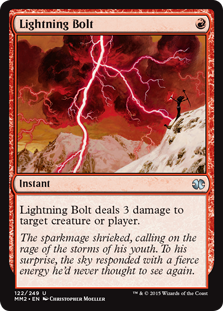 turns after getting my opponent to 3 with no means to stop a burn spell. In my second and third matches I kept reasonable one-land hands that become phenomenal with a land. And I didn't draw one until far too late. It especially hurt in the match against Titanshift since I died with my opponent on 1 life.
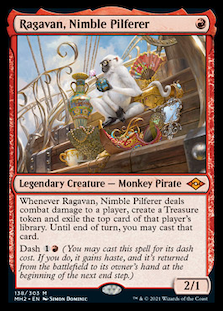 That's just how it is. However, for Ragavan decks and particularly Jund Saga to be so omnipresent is notable, particularly in light of what didn't show up.
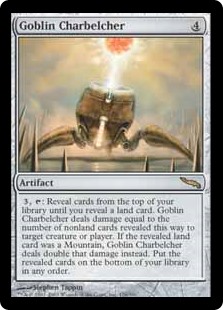 I don't know how the Top 8 shook out. Or who exactly made it. I didn't stick around to find out. However, thanks to the Companion app, I do know who the best-placed player was, and I know they were on Belcher. Well done to them! And given what I said above, it isn't surprising. The room was primed for exactly this to happen. The metagame was extremely
  it does become necessary, most decks just don't have much to fight combo. Even Jund Saga has been cutting targeted discard recently, and lacks Liliana of the Veil to maintain pressure on combo hands.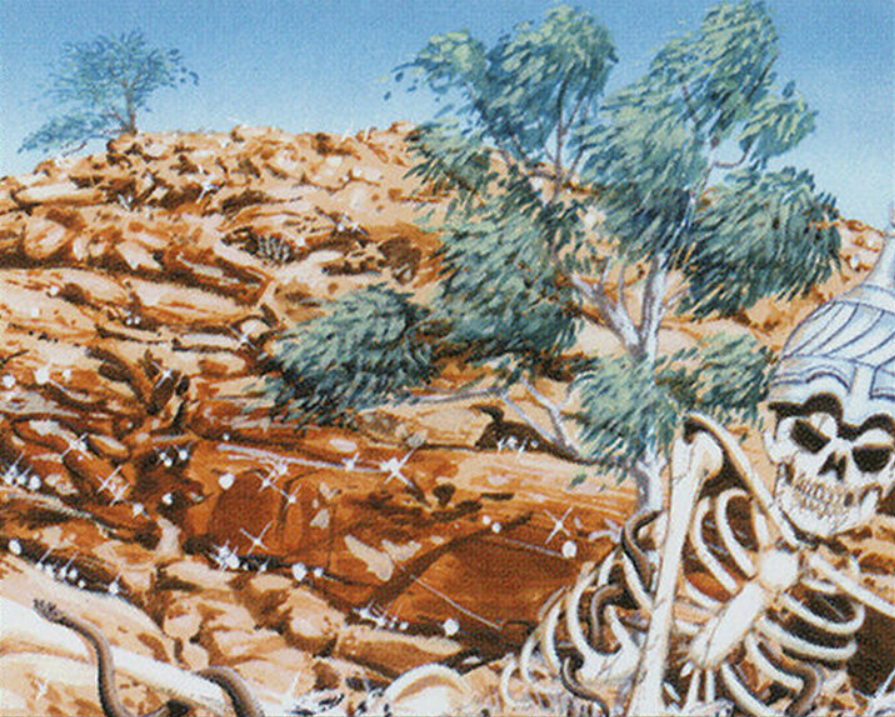


 way too nit-picky for my taste. Therefore, a deck needs 6 results to make Tier 3.
 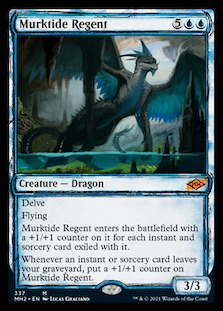 lone outlier last time but this time both UR Murktide and Hammer Time are being excluded. Every month I check for outliers and am sometimes surprised when I don't have any. I really thought Hammer Time and Murktide were outliers
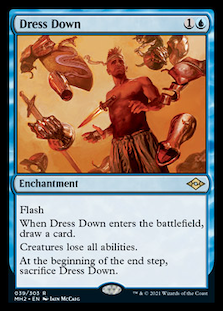
 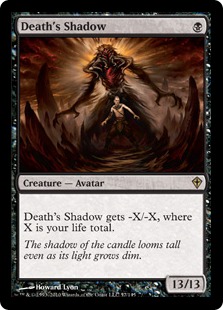 hasn't been a Tiered deck in months. There has always been a pilot or two sticking to the old warhorse, but even in good months GDS has been at the bottom Tier 3. And yet it's surged into Tier 1, apparently all thanks to Death's Shadow comboing with Dress Down. More surprisingly, it was a very sudden surge. GDS didn't cross the Tier 3 threshold until (roughly) November 19. And I don't know why.
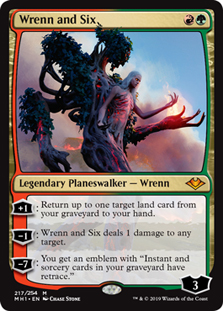
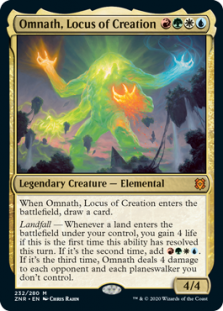 same core of Prismatic Ending, Wrenn and Six, Teferi, Time Raveler, Omnath, Locus of Creation, and Solitude. It's just a question of the support spells around the core, with Blink being more midrange. The
  that consistently just squeaks into Top 32 the same weight as one that Top 8’s. Using a power ranking rewards good results and moves the winningest decks to the top of the pile and better reflects its metagame potential.
 strength vs. popularity. Measuring deck strength is hard. There is no
  And there's the main reason that Hammer Time and UR Murktide shouldn't be considered Tier 0: they're both under the baseline stat. Murktide is just below, which means it's effectively tied and thus performing in accordance with what I'd expect from a popular deck. Hammer Time slightly underperformed. That's a sign that Hammer is very popular online, but also very beatable. More than it's given credit for. Meanwhile, the best performing high-tier deck and thus the deck of November is UW Control. Nobody tell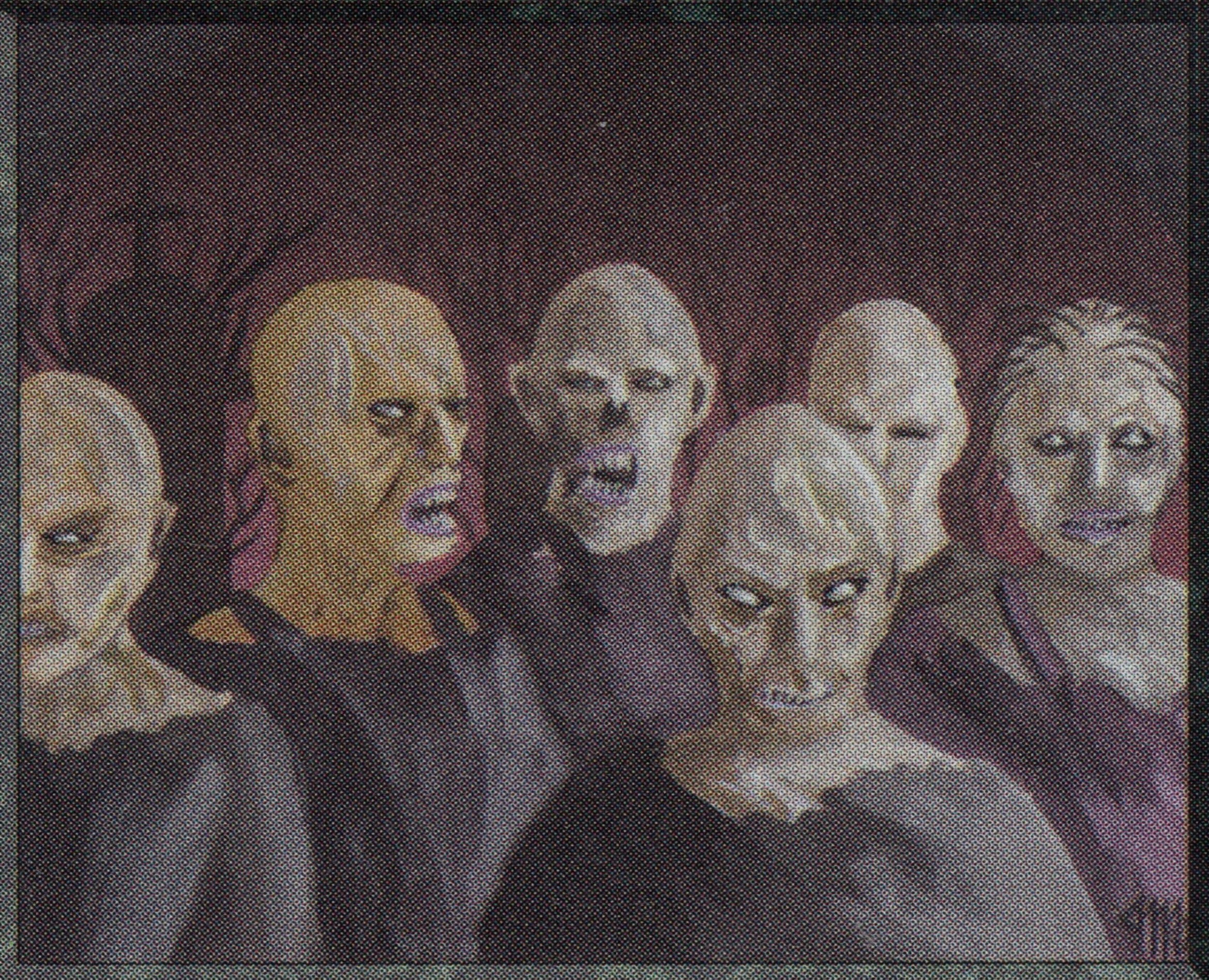

 I realize that everyone has complained about this already, but it's critical to keep up the pressure. There was no official coverage of MTG Las Vegas. At all. The closest thing was twitter updates from
  Now, I don't entirely blame ChannelFireball for the lack of coverage. Commentators everywhere were complaining that lack of streaming or video coverage is unacceptable in 2021. And I understand where that's coming from given how omnipresent cameras and YouTube are today. However, I know from friends in filmmaking that professional setups are ruinously expensive. The equipment to pull off the coverage Wizards used for Grand Prix and Pro Tours cost thousands to purchase, the bandwidth isn't free, and there's also paying the broadcasters. But the silent killer is that all of that also needs to be insured. No matter how thoroughly everything is secured after every shoot, how organized the crew is, how vigilant the producers are, or aggressively threatened the interns are, equipment disappears every time a film crew films. And what doesn't disappear eventually breaks. Filming just isn't profitable.
 And I'm not just annoyed about this in an "I want to know, feed my endless curiosity" way (though it certainly is a factor). From a data analytics perspective, a Top 8 means nothing in a vacuum. In Magic, any deck has the potential to win a given tournament. The odds depend heavily on the metagame and the deck's inherent strength, but luck and variance also play huge roles. Without additional data about the tournament, there's no way of knowing whether a player won because theirs was the best deck period, the best positioned, or the Random Number God simply chose them. This is annoying generally, but especially so in this case, as it was the first chance to see how paper Magic differs from MTGO in 18 months. But with only a Top 8, the whole event is a waste for research and analysis.
 Titan is technically off-meta, though it put the most decks into Top 8. Only Jund Saga and 4-Color Control are expected meta decks. It is interesting that Scales was able to Top 8 despite all the splash damage from Hammer Time sideboarding.
 Paper vs. Digital