
If not, now is a perfect time to join up! Our powerful tools, breaking-news analysis, and exclusive Discord channel will make sure you stay up to date and ahead of the curve.
In today’s video, I’m stepping a bit out of my comfort zone to play an awesome new version of an established powerhouse in Pioneer: Lotus Combo. So far I've played one league with this deck on Magic: Online (finishing 3-2), and a four-round weekly at my local game store (LGS). I lost in the finals in a mirror match where my opponent outplayed me thanks to their better familiarity with the deck.
I'm still learning the deck and working to finish building it in paper, but I'm having a ton of fun playing. If you like heart-pounding games and piloting decks with a ton of decisions and a high ceiling this may be an amazing choice for you at your next RCQ.
Chandra, You're Our Only Hope
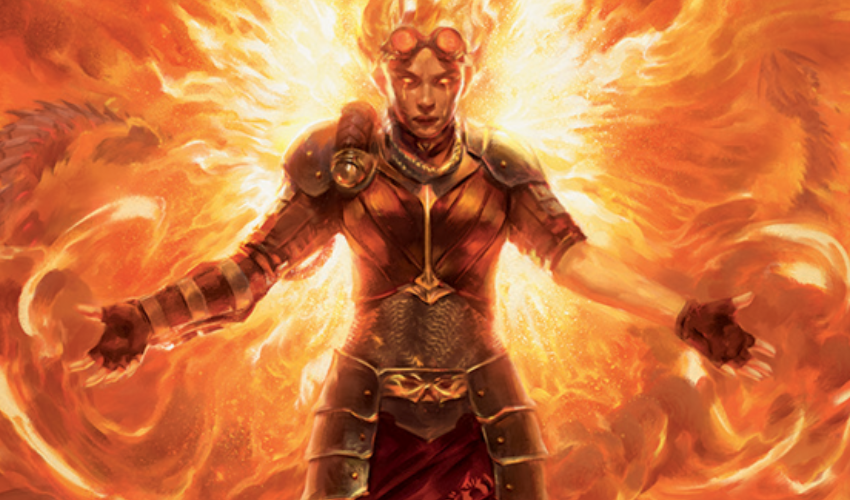
Chandra, Hope's Beacon is the new hotness for this deck. She allows you to play as few win conditions as possible, which as an Azorius Control player at heart I really appreciate. You may be looking at the deck and asking yourself "How in the world does this deck actually win?" The answer: looping Chandra, Hope's Beacons with Bala Ged Recoverys over and over until your opponent's life hits zero.
Let's assume that we already have two Lotus Fields in play. To combo off, we need at least two Bala Ged Recoverys and a Chandra, Hope's Beacon in our hand and/or graveyard.
Let's say we have all three in our hand. First, we play Chandra, Hope's Beacon followed by a Bala Ged Recovery. This triggers Chandra, Hope's Beacon's passive ability, which copies the first instant or sorcery we cast with her on the battlefield. It is important to note that it's the first instant or sorcery that we cast with her on the battlefield, not the first of the turn. If it only copied the first of the turn the combo wouldn't work.
With the first Bala Ged Recovery, we want to return something in our graveyard that untaps lands, typically a Hidden Strings or a Pore Over the Pages. That way we can untap our Lotus Field and continue our combo.
Ok, once we have a card that can untap our Lotus Fields, we can grab literally anything with our second copy. Next, we minus X for five on Chandra, Hope's Beacon's ultimate ability, targeting our opponent. Then we can cast the other Bala Ged Recovery in our hand to return Chandra, Hope's Beacon to hand.
There was an error retrieving a chart for Lotus Field
From there we just repeat the process until our opponent is dead and we win the game. Easy peasy, right? Maybe not, but I promise that once you see it in action you will get the idea quickly. The combo becomes even less convoluted when we get to cast Emergent Ultimatum.
Emergent Piles
The easiest path to victory is by having multiple Lotus Field's in play untapping them and casting Emergent Ultimatum. That's the simple part. The question then becomes what cards do we get after it resolves?
My Favorite Emergent Pile
The answer can be nuanced and contextual, but generally, the best pile is Chandra, Hope's Beacon, Behold the Beyond, and Omniscience. The reason is that no matter what they give us, we can typically win with only one untap effect. Say they give us Chandra, Hope's Beacon and Behold the Beyond—which is typical when you present these three cards, because who wants to make their opponent's spells free? Assuming they give us these two, we can put Behold the Beyond on the stack after Chandra, Hope's Beacon that way Chandra resolves last. Trust me, we don't want to copy Behold the Beyond.
From there we can get Hidden Strings, Pore Over the Pages, and Dark Petition. We Strings the Lotus Fields, cast Pore Over the Pages, and then depending on what we draw off of Pour, go get Bala Ged Recovery. Sometimes we can just grab Omniscience from the Dark Petition because we have so much mana. From there all our spells from hand are free.
Another Pile we can get is Chandra, Hope's Beacon, Behold the Beyond and Lier, Disciple of the Drowned. This is best when we have a graveyard stacked full of untap spells. It allows us to resolve Chandra, Hope's Beacon and Lier, Disciple of the Drowned and from there go off with all the Pore Over the Pages and/or Hidden Strings in our graveyard. Otherwise, we just go get our three best cards with Behold the Beyond and win from there.
Something to keep in mind is that if we play Lier and Omniscience, the cards we cast from the graveyard via Lier aren’t free. We must be mindful of that when making decisions based on Omniscience and Lier.
The amazing thing about this deck is that there are seemingly countless piles we can grab depending on the situation. The deck is extremely flexible on how it sets up wins. Even if the main board win condition is always looping Chandra, Hope's Beacon over and over again with Bala Ged Recovery.
The Decklist
Lotus Combo, Pioneer
Instants
4 Hidden Strings
4 Impulse
Sorceries
3 Bala Ged Recovery // Bala Ged Sanctuary
1 Behold the Beyond
2 Dark Petition
3 Emergent Ultimatum
4 Pore Over the Pages
2 Shimmer of Possibility
4 Sylvan Scrying
Planeswalkers
1 Chandra, Hope's Beacon
Creatures
4 Arboreal Grazer
4 Vizier of Tumbling Sands
1 Lier, Disciple of the Drowned
Enchantments
1 Omniscience
Lands
3 Boseiju, Who Endures
4 Botanical Sanctum
1 Breeding Pool
1 Forest
1 Lair of the Hydra
4 Lotus Field
2 Otawara, Soaring City
2 Temple of Mystery
4 Thespian's Stage
Sideboard
1 Depopulate
3 Leyline of Sanctity
2 Pithing Needle
1 Ritual of Soot
4 Silence
2 Supreme Verdict
2 Zacama, Primal Calamity
Don't Miss the Video!
Now that you know some of the lines and why I like this version of Lotus Combo it's time to go and watch the video! If you are anticipating a midrange meta full of Rakdos Mid and Fires at your next RCQ this is a great option that has game in many different scenarios! Go check out the gameplay video and don't forget to Like and Subscribe to the Quiet Speculation YouTube Channel!
If not, now is a perfect time to join up! Our powerful tools, breaking-news analysis, and exclusive Discord channel will make sure you stay up to date and ahead of the curve.
Last weekend something amazing happened: my son and I met up with a new friend and his brother, and the four of us enjoyed a couple of games of Commander! Not only that, but we also seemed to strike the perfect balance across our four decks in terms of power level—not one of our decks ran away with the game. It was beautiful, and I hope to meet up again soon to play some more.
This is important to me because I enjoy playing the format only when I can sleeve up some older, oddball cards for the kicks without getting run over in early turns. Some competitive Commander players tend to do this, but I was fortunate in that my friends were patient and played for fun as well.
Which oddball cards am I referring to? I thought you’d never ask! I currently have three Commander decks built, and this week I’ll share a few fun, lesser-known pet cards I include in them in order to spice up my games without doubling down on power level. Who knows? You may find something quirky enough to try yourself!
Deck 1: Teferi, Mage of Zhalfir (mono blue) Deck 2: Judith, the Scourge Diva (black-red) Deck 3: Saheeli, the Gifted (blue red precon with some modifications)
Pet Commander Cards – Teferi
When I first discovered Commander, sometime around 2008, it was still referred to as Elder Dragon Highlander (EDH). My first build was a goofy one that championed Johan as general—it was more for the sake of having a Commander deck built than anything I took all that seriously.
The second deck I built was a mono-red deck that I didn’t really enjoy playing. It has since been taken apart, leaving my third Commander deck ever, Teferi, Mage of Zhalfir, as my oldest intact deck.
One-colored decks can lose their luster and replay value at times because they tend to be fairly one-dimensional. In order to keep things interesting, I’ve decided to keep some quirky cards sprinkled throughout the deck to create interesting (or, at least bizarre) in-game situations.
On top of the list is one of my favorites, Psychic Battle. Have you ever seen this card in play before? Before there was a battle card type, there was the OG battle! Personally, I think it’s criminally underplayed.
There was an error retrieving a chart for Psychic Battle
If you really wanted to exploit this card to the fullest, you could play cards like Soothsaying to manipulate the top of your library at instant speed. If you just want to insert a random mini-game into your Commander games, though, I wouldn’t bother. Just slam the card on the table and enjoy reminding your friends repeatedly about the card’s trigger. You’d be surprised how many times something is targeted in a single game!
While I’m on the theme of enchantments, I’ll throw in Precognition, Sunken Hope, and Shimmer as honorable mentions—all three are in my deck. Precognition gives you some control over what your opponents draw, Sunken Hope creates some interesting interactions with creatures that have "enters the battlefield" (ETB) effects, and Shimmer can really slow down one- or two-colored decks. It's also on the Reserved List and is worth a little bit as a result.
None of them help you much with winning, mind you, but I smile each time I cast them.
Shifting gears, I have two fun artifacts worth considering: Portcullis and Booby Trap. I include Portcullis in multiple Commander decks, and I still think it’s criminally underplayed. In multiplayer games especially, the card creates an interesting tension as players debate destroying the gate or leaving it there to earn more time stabilizing their game plan.
Booby Trap has never been a particularly good card, but it’s a card I remember trying to break in my childhood. Including it is a nod to that memory, but it also combos very well with Precognition!
Legerdemain is another worthwhile inclusion that lets you interfere with opponents’ game plans. Lastly, if you want a way of dealing with other players’ generals without obnoxiously countering them over and over again, you could try playing Ixidron, another one of my favorites.
I laugh each time my opponents inevitably ask, “How do I flip them back over?” I will answer sarcastically, “You pay their morph cost.” Until then, enjoy those 2/2 creatures!
Pet Commander Cards – Judith
This is my most recently built deck, and it’s the first and only deck I’ve ever built with a unified, synergistic strategy in mind. This is a sacrifice-themed deck, modeled after my favorite deck to play in Explorer on Arena. Witch's Oven, Cauldron Familiar, and Mayhem Devil all on the battlefield at once creates my “happy place”.
Because it’s more finely tuned, I don’t have as many pet cards within. Rest assured, however, that the couple I do have in the deck are really strange!
First, I’ll mention one of the strangest enchant worlds I’ve ever seen (and arguably one of the strangest accompanying arts to boot): Elkin Lair.
There was an error retrieving a chart for Elkin Lair
Have you ever seen this card before? It’s a red enchant world from Visions, and believe it or not, it is on the Reserved List! That’s right. We’ll never see this card reprinted again. A real tragedy.
I like this card because it forces action. Players have to play a random card from their hand each turn, or else that card is discarded. The card is particularly adept at neutralizing counterspells, and I always find its effect offbeat and interesting.
The other pet card I play in this deck is the sorcery Illicit Auction.
This card has exactly two printings: Mirage and Sixth Edition; it remains obscure and underappreciated. In a one-on-one match, I’m less excited about the card. Creating a bidding war amongst a pod of four players, however, can make for a fun subgame.
Pet Commander Cards – Saheeli
I acquired the Exquisite Invention Commander deck from a friend last year and decided to make it my third deck. As built, the list didn’t have any personal touches—this is one of my issues with preconstructed Commander decks. Without throwing in some quirky cards, they just don’t sufficiently reflect me as a player.
To save a few bucks, I ended up selling the most expensive cards from this precon and replaced them with less powerful, but (in my opinion) more interesting cards.
Right off the bat, I added Portcullis—it remains one of my favorites. After that, I went through my anemic trade binder and pulled out red and blue cards that looked at least remotely interesting.
For example, Jhoira, Ageless Innovator seems playable in a deck themed around artifacts, so why not give it a shot? I also had a copy of Chaos Dragon sitting in my binder, seeing no play whatsoever. The requirement to attack combined with the d20 roll to identify who can be attacked strikes a chord with my style. It’s akin to another mini-subgame dynamic within a broader match of Commander.
I opened a copy of Fire // Ice recently from a pack of Modern Horizons 2. Rather than wallow in frustration for opening a bulk rare in my $6 booster pack, I decided to make use of the card—what better place than a blue-red Commander deck? The same goes for Kairi, the Swirling Sky. I opened this mythic rare from a pack of Kamigawa: Neon Dynasty and decided to give it a shuffle in the deck. It’s basically a bulk mythic, so I might as well try playing it!
Last, but not least, I have one throwback card from when I was a casual player through and through. I remember reading about this card back in 2007 and getting really excited about it. My two closest friends (at the time) and I each cracked open a booster box of Planar Chaos the weekend the set came out, and when we each opened our copy of this card we considered it a win!
The card I refer to is none other than Torchling.
There was an error retrieving a chart for Torchling
It turned out this card was not in the same galaxy as its predecessor, Morphling, but that didn’t matter to us. The throwback of the card, the familiar artwork, and the iconic nature of the card all contributed to what we loved so much about Planar Chaos.
For the past few years, the card had been sitting in my trade binder—no one wants the card, it has no real value anymore, and it’s not good enough to see competitive play. I’m excited to give it a home again.
Wrapping It Up
If your number one goal is to win a game of Commander when you play, we probably won’t be evenly matched. My decks do things, and they can win, but they aren’t optimized to do so. Instead, I love to leverage Commander as the format that allows me to play quirky, off-the-beaten-path cards that resonate with me as a player. These usually aren’t great cards, but they're the ones I have the most fun playing with.
In all honesty, this is what attracted me to Magic as a game over 25 years ago. The fact that each player can find the style of gameplay that mirrors their personality most, and then build decks tailored to experience that style of gameplay, is one of the best characteristics of this game. It’s what got me excited about playing Magic back in 1997, and it is what continues to excite me about the Commander format in 2023.
Many Commander players take things to the next level and play a finely tuned deck geared to win quickly and definitively. Fortunately, this doesn’t define every Commander player, and I’m blessed to have found a new friend who is willing to play games for fun’s sake. Hopefully, we can battle again soon, because this could inspire me to build new quirky decks, giving me a reason to remain engaged in this hobby for years to come.
If not, now is a perfect time to join up! Our powerful tools, breaking-news analysis, and exclusive Discord channel will make sure you stay up to date and ahead of the curve.
As Draft formats go, March of the Machine (MOM) is considered by some to be the GOAT. Despite being labeled a Prince Format, it offers depth and gameplay. Initially, this format was defined by its bombs, but evolved into a complex and deep environment with plenty of niche decks and new archetypes that seemed to emerge on a weekly basis.
Because of the Multiverse Legend and Battle slots, each pack was loaded with power. The fears about power levels, however, eventually dissipated. With so many build-arounds, drafters tinkered to their heart's content.
This week, we'll put a bow on our MOM coverage in traditional manner, and review the format with rankings and awards.
Archetype Power Rankings
UB Value - The format's most potent combination held a smorgasbord of value plays. The blue commons are exceptionally deep. Both Halo Forager and Invasion of Amonkhet // Lazotep Convert play like rares. Card draw and removal is a timeless combination, but it gets a leg-up in a slower format dominated by additional rares and uncommons from the Battle and Multiverse Legends slots in each pack. When games go long, players amass lands and find their bombs.
UW Tempo - While UW Knights was probably the best version of this deck, Hopper Aggro was also a force to be reckoned with. These decks leveraged aggressive starts and discounts on convoke cards to out-tempo the slower, multi-colored decks in the format.
RB Sacrifice - MOM offered one of the most interesting versions of this archetype in recent memory. It certainly could play a more aggressive gameplan, but it also lent itself well to a slower, more value-oriented approach. This made drafting the deck a more nuanced experience, but also provided options like splashing a third color off of treasure, or even just leaning into powerful three-color options.
Blighted Burgeoning Green - The impact of extra rares and softened aggro was felt most prominently in the success of this archetype. This format offered a cycle of common dual lands, land cyclers, and both green and colorless fixing. If we are able to collect those pieces and enough powerful payoffs to make it worthwhile, then this deck had the potential to drag opponents through the mud.
GW and RW Aggro - Both of these decks were dependent on their signpost uncommons, but when able to get multiple copies of Botanical Brawler or Mirror-Shield Hoplite, their power was insurmountable. GW had a little more depth in the form of uncommon payoffs, while RW leveraged aggression better.
Brews - This format provided opportunities to brew. Whether combining Raff, Weatherlight Stalwart and Tiller of Flesh to grind out opponents with removal or pairing backup creatures and Trailblazing Historian with Horobi, Death's Wail, players could approach the format with creativity. While these decks didn't come together often, they were plenty powerful.
Abzan Phyrexians - The Abzan colors had powerful cards, but struggled to generate potent engines. Still, with strong one-for-one removal and the right threats, these decks could get there.
Color Rankings
Blue - Blue felt similar to red in Phyrexia: All Will Be One (ONE). It wasn't as aggressive, but it was just as deep. Any deck that was mostly comprised of blue cards was fine. Blue's flexibility was a defining characteristic. It played an aggressive tempo-based game, as well as being a dominant card advantage color.
Black - Removal, removal, removal. This color answered the rares in the format better than any other. Deadly Derision and Final Flourish were two of the formats best answers. Unseal the Necropolis provided a great way to grind out games.
White - There's a steep drop off after black. I have white ranked slightly higher than green on personal preference. It was the most aggressive color, and cards like Aerial Boost and Bola Slinger proved easy-to-get, potent role players in aggressive strategies.
Green - My least favorite color in the format still deserves some credit for being the best splash enabler.
Red - There was a lot of play to red in this format. Volcanic Spite is universally strong, but many of the commons shift in value in different archetypes. Ral's Reinforcements can range from excellent role-player to sub-par two drop in the wrong deck. Beamtown Beatstick and Wrenn's Resolve have a similar tension to them. Either way, red had some cards that truly did flop. Thrashing Frontliner, Searing Barb, and Pyretic Prankster // Glistening Goremonger in particular did not live up to expectations.
Preening Champion is a silly card. We start off with a Wind Drake, throw in a 1/1 that can actually fix our mana through convoke, and slot it into the most supported creature type: Knights. Because of cards like Artistic Refusal and Halo Hopper, the bird was even better than presumed.
This card was probably the only common in the format I was genuinely happy to first-pick. While many commons performed well, and the overall card quality in the set is high, Preening Champion stood alone at the top of the mountain.
The Gust Walker Trophy
Awarded each set to the format's best common two-drop, I personally consider The Gustwalker Trophy our most prestigious award. Yet MOM had no obvious taker. My first consideration were the three flip creatures. I predicted they would be top commons in their colors, but all three of them fell flat.
Swordsworn Cavalier is the most threatening two-drop in the format. When supported with knights, it can seem unblockable in the early game. Paired with Tetsuko Umezawa, Fugitive, it actually is. And it's the only card in the format that synergizes with Kwende, Pride of Femeref. However, its nomination was denounced, as its credentials are a little too narrow. Similarly, Ral's Reinforcements is very strong in some decks. Again, though, its overall power level was a little too low, and in many decks it felt out of place.
The truth is, gameplay in MOM is not really about the common two-drops. In fact, the best two-drops are cards that trade with more relavant cards. Saiba Cryptomancer boasts the highest GIH WR%, while Nezumi Informant has the format's best IWD. This basically tells us that it's more important that a two-drop trades with a card (via discard or countering a removal spell). Emotionally speaking, I feel as though this fails to live up to the spirit of the award. However, I would not be honoring the legacy of Gust Walker by ignoring the results.
Ultimately, the award goes to Saiba Cryptomancer. While it's a little bit more finicky than Nezumi Informant, its versatility as blue's best combat trick and a counterspell that leaves behind material makes it one of the more frustrating cards to play against.
The Scourge of the Format
Most of the groan-inducing cards in this format are rare. I'm not sure this format had a true scourge. Rares like Boon-Bringer Valkyrie, Chrome Host Seedshark and Sunfall might be more deserving of this award. But complaining about rares? What are we, the internet?
So the winner of the award goes to one of UB's premium uncommons. It's one of the best battles, and it's in the best colors.
Sometimes you get got by the discard. Sometimes the card advantage swing is gamebreaking. And sometimes the feel of searching through both players' graveyards and finding multiple targets you can't beat is what hurts us most. When opponents flip this card, it's either bad or really bad. There are so many targets that get even scarier as 4/4s.
This card doesn't play like a Hazardous Blast which just wrecks games. But this format didn't really have cards like that. In MOM, games played out as slugfests, and this card, which might just be the best uncommon, was one of the strongest punches.
Common Removal Power Rankings
Deadly Derision - Kill anything and make a treasure. Instant-speed Grim Bounty is a great way to deal with the format's biggest threats and the treasure could help ramp or splash. Answers don't usually put you ahead, but this one could.
Volcanic Spite - Basically a better Fire Prophecy. I thought hitting battles would be a bigger deal. Still, it's a great piece of interaction that helps develop our hand.
Final Flourish - Cheap interaction that can scale to hit bigger threats. Sacrificing a real card is a cost, though. We want to build with this card in mind to get full value, but for decks that did, this might be the best card on the list.
Temporal Cleansing - Bounce may not be removal, but Time Ebb certainly is. The convoke cards overperformed, and being able to double spell with this card was exactly how the tempo decks wanted to close out games.
Cosmic Hunger - Instant-speed two-mana fight spell is a good way to leverage a big board.
Realmbreaker's Grasp - While this format had plenty of ways to punish Pacifism effects, this was still the better white removal spell because of how good it is against blockers. White was the format's most aggressive color. Grasp capitalized on that.
Cut Short - White has the flexibility to play defensively. When it does, this is a great option.
Vanquish the Weak - I've won way too many games by casting Zhalfirin Shapecraft in response to Vanquish. This card frequently trades down on mana and can be clunky to hold up. Not a huge fan, but I play it more often than I'd like to admit.
Shatter the Source - I really want to like this card, but at six mana, even with convoke, it was often awkward. It plays well with Aegar, the Freezing Flame, but why bother?
Stasis Field - This card overperformed in the closing weeks of the format. As blue value decks became contested, this was a decent late pick that did most of the job.
The Myron Larabee Award
Named after Jingle All the Way's iconic antagonist, played by the incomparable Sinbad, this award goes to the card that makes us feel smarter than we actually are. Typically this card looks great in good situations, but more often than not ends up disappointing. The winner of this award was a card that demanded way too much work, despite promising an incredible upside.
I love a good Bone Splinters, and this card promised to be that and more. Putting counters on a team of Phyrexians seems like a worthy pay off as well, and when it works, this card really can dominate a game. But more often than not, this card is a removal spell that's too expensive, and a bull's eye attacks never quite hit. Sacrificing a resource to get value off of it entering the battle, and then sacrificing more resources to attack it down to zero, left very little material to "go wide" with.
However, in games where you can sacrifice Ichor Drinker to destroy a bomb, and then attack it down with an Attentive Skywarden, you will feel like a complete genius. You get the best tan flying a bit too close to the sun.
Final Words and Format Rating
This format was praised from all corners of the internet. It certainly had some great qualities. MOM had a depth of archetypes and a number of powerful build-arounds. It led to some complicated game states and between convoke and flip cards, players often had a ton of options. Building around uncommons properly made them feel like rares.
Power was the calling card of the format. Many decks would boast five or six rares as they stormed the trophy room. For me, however, that was a knock against MOM. Often times our curves would start, in earnest, at three. I found the biggest problem to be the lack of a consistent aggressive presence, primarily in red, which ended up the weakest color. Without aggression, the bomb-ing felt a little out of control. This led to more controlling, card-advantage-based games, which in Limited can be a litmus test of a deck's power level.
Now, by no means do I think these criticisms erase all the excitement. I enjoyed playing the format quite a bit. Personally, I prefer more aggressive gameplay. Trying to calculate lethal over multiple turns was one aspect of the format, but felt relegated to a second-tier strategy.
Overall, I'd give the format a B-. MOM's strengths come in the form of interesting archetypes and unique deck-building. The gameplay was impressive, though I prefer formats that lean a little more aggressive. Still, this is no doubt an excellent format with a ton of replay value. I enjoyed playing it, but am looking forward to switching gears as we enter the Shire in Magic's next set.
The Lord of The Rings: Tales of Middle Earth Early Access
Next week, I'll be previewing the new set, The Lord of The Rings: Tales of Middle Earth (LOTR). For the first time ever, the good people at Wizards of the Coast have granted me entry to the early access event. To get a jump on the competition and an early glimpse of the format, join me on Twitch at merman_munster to see what this new set has in store. The event starts Thursday, 6/15 at 1:00 EST. Thanks for the support from all my readers, who have helped to push me through this exciting milestone. See you then!
If not, now is a perfect time to join up! Our powerful tools, breaking-news analysis, and exclusive Discord channel will make sure you stay up to date and ahead of the curve.
May's data overall looks fairly similar to April's, continuing the trend from March. There's been no major shakeup in Modern's metagame's composition, though many decks have exchanged places on the list. That is a worrying cherry atop a pile of worrying data. Modern is trending towards concentration, perhaps even stagnation.
The Pattern Repeats
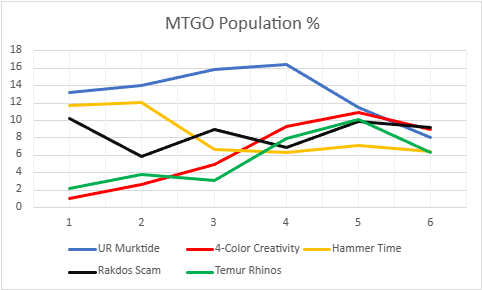
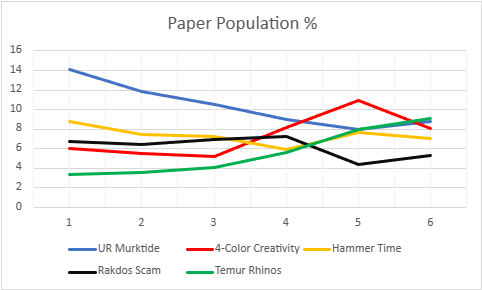
As in April, Murktide has fallen from the top position it occupied for over a year. However, once again, that doesn't tell the full story. Murktide steadily rose up the charts after being down at the end of week one to almost reclaim the top position. I don't know why it fell off, but the past two months have aptly demonstrated the comeback power that propelled Murktide to the top in the first place.
Of course, Murktide didn't actually completely come back in May, though the paper gap is so narrow as to be statistically meaningless. This was entirely thanks to late-month explosions by the top-placed decks. As I mentioned in the data article, Rhinos beat Murktide in paper thanks to a single event. Rakdos Scam winning Magic Online(MTGO) was the result of an entire weekend of Challenge dominance.
This kind of fluctuation is very common, so there's nothing to read into here. What it happened to is interesting. Scam is the most volatile (consistently) Tier 1 deck on MTGO, regularly seeing swings of 3% or more each month. There may be nothing to this latest surge, but it could also point to a change of fortune. Rhinos has been on a strong upward trend since January in paper, so this is just a culmination.
Impressive Result
I'd be remiss at this point not to specifically mention Murktide's position on the average power tiers. For most of its run as Modern's top deck, Murktide placed near Baseline. Not usually right on it, but a bit above or below was typical. It helped feed the narrative that Murktide wasn't that impressive of a deck, but was just really popular.
However, the drop in popularity coupled with improved average stats undermines that narrative. It suggests that the weaker players have finally moved on from Murktide and are no longer dragging down its stats. Popular decks will necessarily have a worse win/loss record than they "should" have due to weak players picking up the "best deck" for easy wins.
Now that they're gone, the stats will be more reflective of the good Murktide players. Murktide is therefore unlikely to be the top deck by the same margins but should instead have a better win/loss record. The next month's data will prove or disprove this hypothesis.
The Wider Picture
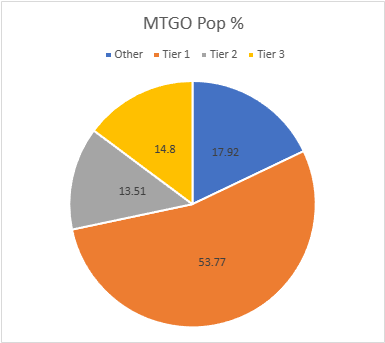
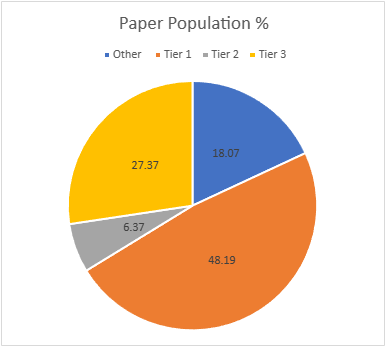
On that note, the overall picture of the metagame is changing. As I noted back in March, Modern's metagame has been getting concentrated around a small number of effects. In April, I noted that Modern is concentrating around a small number of decks in a way that it hadn't done since the early days. This continues to be the case, but the waters are muddier.
Thanks (I suspect) to Living End's huge push on MTGO and Amulet Titan always putting up numbers in paper, the 5-Deck Concentration ratios fell in May. MTGO had a concentration of 49.63% in April which fell to 39.08 in May.
Overall concentration fell, but all the decks a coalescing.
Paper's ratio also fell, but not dramatically. In purely statistical terms, it really didn't fall thanks to error margins. April's ratio was 38.85 and May's was 38.37.
Statistically, with no change in concentration, the losses balance the gains.
On that basis, one might conclude that Modern is moving away from concentration toward a more competitive field. One might be right, but one could also be wrong. There's more to the situation than these numbers indicate.
Uneven Distribution
The way competitive Magic data works, Tier 1 will always represent more of the results percentagewise than the other tiers. The data is always going to be extremely skewed, with most of the results concentrated on the high end. The distribution looks like a smashed raindrop with a long tail. Somewhere between 25%-60% of all the unique decks are singletons every month. The tiers are drawn from only the top quartile of decks.
Thus, when I note how large a percent of the results Tier 1 takes up, that's not really news. It's like that for every format and across time. The concern is whether there's still room for Tiers 2 and 3 to survive, compete and thrive. When the format is less concentrated, results are more evenly distributed and the format is more competitive, which is good and healthy. Highly concentrated formats are solved and stagnated.
A Worrying Trend
My April article on Murktide noted that Modern's concentration looks more like pre-2016 Modern than recent years. This was done on the basis of concentration ratios because I don't have a way to compare the tier composition over the years. I wasn't doing the data for most of those years and therefore can't assign tier-rankings. The statistical method I'm using doesn't work for just percentage numbers.
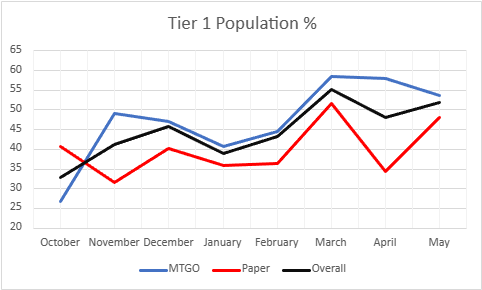
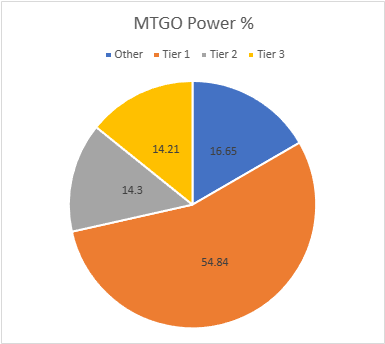
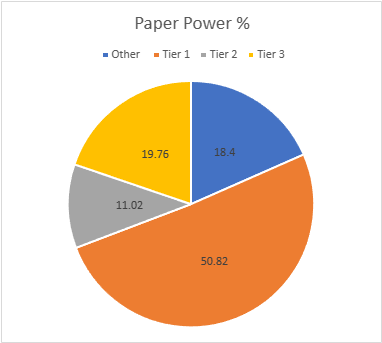
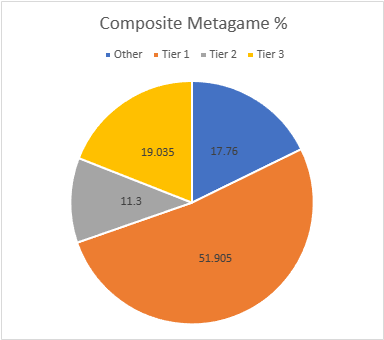
However, when we look at what's happening in the data I have collected about Tier 1's concentration, a worrying trend is emerging.
The black line is the most important one.
Since Yorion, Sky Nomad was banned and our current metagame was initialized, there's been a steady and strong upward trend for Tier 1's metagame percentage. I'm focusing on population because it's the important one in this discussion, but power's metagame has the same trend. This overall increase in Tier 1's representation is primarily at the expense of Tier 2.
The metagame is zero-sum; as Tier 1 takes up more space, there's necessarily less room for anything else. This indicates that the ability of other decks to win is decreasing. Decreasing diversity means the metagame is solved, and players generally hate solved metagames and stop playing. Modern isn't there yet, but the trend is worrying.
Confounding Variable
One thing to note about the fall off from March is that the size of the data set is a factor. March was the largest dataset I've ever worked with, and was also when concentration was highest. The fall off in April's population was accompanied by the fall in concentration. The two events may or may not be linked. That May was smaller than April and more concentrated is a point for not, but there's no way to be certain. There's too much that goes into tournament participation and event reporting to be definitive.
Elsewhere in Modern
In other news, after spending most of the past few years in Modern's basement, Tron has made it back to Tier 1 on MTGO and Tier 2 in paper. It's been through some tweaks to help its competitiveness, but overall Tron remains Tron. Arguably the least-changed deck in Modern's history is still alive and kicking. Time to remember this and be prepared.
There was an error retrieving a chart for Karn Liberated
Tron is back this month largely thanks to 4-Color Creativity. While it has all the trappings of a Tinker-style combo deck, Creativity mostly plays like a midrange deck. Tron has always been the deck for eating midrange, and Creativity is no exception. Creativity doesn't play many counters and fewer still that Tron cares about, and can't reliably disrupt Tron's lands. That's a great way to lose.
Whether this will continue remains to be seen. There's plenty of Tron hate available to all decks these days, so there's no excuse for just losing to Tron anymore. The question is whether or not players will adjust and plan for this problem.
The Classic Foil
This also might explain why Counter-Cat has seen a resurgence in May after falling in April. Big, chunky threats backed up by counters has always been a great strategy against Tinker decks and also Tron. The fact that Territorial Kavu resists the most common removal and can ensure Unholy Heat can't kill it is gravy. Again, this might be a blip or an actual metagame shift. Time will tell.
Financial Corner
As per tradition, it's time to gaze into the crystal ball to see if any of these shifts will impact the card sale market. As the metagame is remaining relatively stable and the competitive focus is on Pioneer, I would expect the Modern market to be in a downward trend. Non-Pioneer staples are in less demand right now and show slight price decreases. Pioneer staples have some upward pressure, but it doesn't seem strong.
Thus, I continue to forecast a buyers' market. Players are looking for the best deals in a colder market and stocking up ahead of the Modern RCQ season later this year. I'd look to Pioneer for making a quick buck and investing in Modern for the longer haul.
New Set Bounce
The Lord of the Rings: Tales of Middle-Earth will be releasing in the next few weeks, which will be the first time a set like this is coming to Modern as well as Legacy. While there is potential for some cards to find homes in Modern, I'm not convinced that there's anything metagame-shaking. I'll be going into this more next week, but the set's power level is more appropriate for Pioneer than Modern.
For those looking to sell sealed product, there should be huge demand initially. If the allure of finding the one The One Ring isn't enough to drive sales, the flavor and art of the set will. Never mind how powerful the pull of The Lord of the Rings is in general. The new cards should sell well initially, but I wouldn't expect them to drive sales of existing cards.
Stability Reigns
There's nothing wrong with a more stable metagame. Modern spent years constantly and violently churning, so it's nice to have a breather. However, the concern I have is that Modern is moving towards high concentration, and that sounds suspiciously like it's been solved. That's a poor omen, and we'll be watching.
If not, now is a perfect time to join up! Our powerful tools, breaking-news analysis, and exclusive Discord channel will make sure you stay up to date and ahead of the curve.
The hobby gaming industry, and the greater collectibles world at large, have been eagerly awaiting the release of Ravensburger's Disney Lorcana, the first TCG making extensive use of Disney's characters and IP. But now, a surprise lawsuit threatens to hold up the game's release, carrying potential ramifications for the entire hobby gaming industry.
The Lawsuit
Attorneys for The Upper Deck Company (UDC) filed suit on Wednesday against Ravensburger North America, Inc. and designer Ryan Miller over the design of their forthcoming TCG, Disney Lorcana. In the suit, UDC alleges multiple charges, among them premeditated theft of the game's design on Miller's part—they claim Lorcana bears "uncanny similarities" to work Miller did as a freelance game designer on Upper Deck's previously unannounced game Rush of Ikorr. UDC also alleges that:
"Miller’s acts in pilfering the game design Upper Deck paid him to create and using those designs to develop a competing trading card game for a competitor were aided and encouraged by Ravensburger, who now seeks to profit from the stolen intellectual property."
What Is Lorcana?
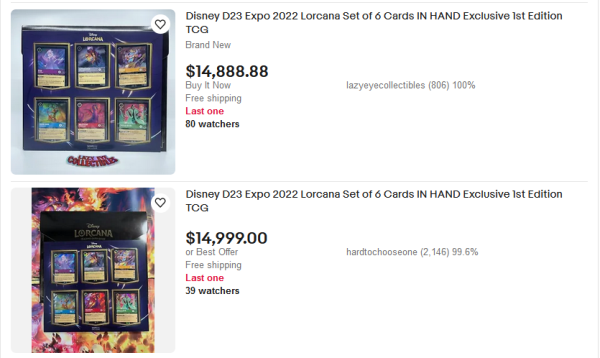
Revealed at Disney's D23 fan convention in 2022 and slated for a September 1st, 2023 release, Disney Lorcana is one of the most anticipated game releases of 2023. The use of Disney characters and other brand IP gives Disney Lorcana broad, mass appeal, with the potential to disrupt the status quo of the trading card game market. Limited edition six-card collectors sets of Disney Lorcana cards sold out on release at D23 and now have secondary market prices on sites like eBay in the tens of thousands of dollars.
What Upper Deck Wants
In its prayer for relief, the lawsuit by UDC seeks general, special, and punitive damages, legal fees, and other relief including those as seen fit by the courts. The most important among these requests for relief, from a market perspective, is the request for "injunctive relief enjoining Ravensburger from publicly releasing Lorcana."
Why It Matters
Such an injunction, if granted, could cause disruptions up and down the market supply chain, especially for any retailers or distributors who may have already submitted preorders for product in anticipation of an August 18th soft release in hobby stores. Tying up money that could be spent on other products is not what any retailer on a narrow budget wants to find themselves doing.
It's also important to consider the potential business lost not just by Ravensburger, but by the gaming hobby industry as a whole. Disney Lorcana has the potential to draw swaths of new collectors and players into the hobby gaming market on the strength of their connection to the Disney IP alone: the recognizability of Disney names and characters could provide the kind of pull Magic, Pokémon, and Yu-Gi-Oh! can't even dream of having. That's potentially thousands of new customers who might not have ever set foot in a hobby gaming store before.
A Developing Story
This is a developing story, and we will update it as new info becomes available in the coming days. Quiet Speculation has reached out to Ravensburger for comment but has yet to hear a reply.
In the meantime, what are your thoughts on the lawsuit? Are you excited about Disney Lorcana? Let us know in the comments or on Twitter.
Updates
On June 9th Ravensburger North America's Twitter account had the following responses:
In the meantime our focus continues to be on developing and launching a fantastic game in August.
— Ravensburger North America (@RavensburgerNA) June 9, 2023
A full PDF of the Upper Deck court filing is below.
If not, now is a perfect time to join up! Our powerful tools, breaking-news analysis, and exclusive Discord channel will make sure you stay up to date and ahead of the curve.
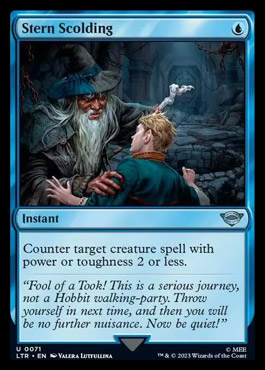
Stern Scolding, from the upcoming expansion The Lord of the Rings: Tales of Middle-Earth, is primed to become Modern's next Fatal Push. No, it won't outright replace one-mana removal spells, but it may have a lasting effect on which creatures are favored by deckbuilders. That's what Push did, for the reason that when it was printed, the card lined up so well against most of the format's top threats (then hitting 86% of the format's top 50 creatures according to MTGGoldfish, compared with the gold standard Lightning Bolt's 78%).
Scolding boasts a similarly impressive "matchup" against the current top 50, a list that has by now long since warped around Push. Going forward, either the top 50 list will adjust around Scolding as players prioritize creatures that skirt its condition, or Scolding will immediately become and then remain a very solid pick in the format for the decks that want it.
We're likely to see a combination of these outcomes, but things will definitely lean in the latter direction. Modern is just too efficient for players to swear off "creature spells with power or toughness 2 or less," just as it couldn't up and start favoring five-drops when Push was announced.
Today, we'll consider the removal-counterspell conundrum, weigh the question of tempo, and assess the top 50 to measure just how good Stern Scolding looks to be in Modern.
Wherever, Whenever: The Joy of Removal
We can't really compare Push and Scolding without first unpacking the differences between removal and counterspells. While the two can fill similar roles in Limited decks, they tend to perform distinct functions in Constructed, where players can pick the best cards for each task. That's why Push isn't at risk of being replaced by Scolding.
There was an error retrieving a chart for Fatal Push
Removal's chief benefit is that it enjoys a wide casting window. You can tap out for a threat, and opponents can tap out for theirs, and you can untap and Push whatever they've cast. Or you can topdeck Push for that nefarious, growing Ledger Shredder and claw your way right back into a game. That's many situations, and turns, where removal can be cast to deal with a given threat. By contrast, any blue mage can tell you how useless Counterspell feels while behind on the board; it does nothing to a resolved permanent.
But the most devastating use for this wide window is disrupting on-board combinations of game pieces. Pushing at the right time yields a two-for-one, as opponents lose both their creature and the pump spell that targets it. It can also blow out double blocks. The prevalence of removal in competitive Magic is the reason "auras are bad."
No Means No: Don't Count Out Counters
While black was imagined as the color that "kills" creatures, blue prefers to stop them from materializing altogether. Indeed, while red can damage creatures to death, green fights them, and white also gets destroy in addition to exile effects, only blue consistently "counters" threats. Doing so has its pros and cons.
There was an error retrieving a chart for Counterspell
Compared with removal, counterspells suffer from a narrow casting window. Players must cast their counterspell while the target spell is being cast. Once it's left the stack, the window has closed. This strike against permission is the main reason removal will always have a place in Magic.
It's mostly upside from there. Preventing a creature from resolving means the entire spell is undone. The creature in question doesn't get a chance to activate its abilities before priority is passed, nor does it trigger any enters-the-battlefield abilities.
Involving Tempo
Black wasn't doomed from the get-go to toil and moan in the face of enters-the-battlefield triggers. Targeted discard like Thoughtseize lets the color snipe threats before they resolve and "cast their spells." But discard has its own problem: it comes with a baked-in tempo loss.
You spend one mana to trade your Thoughtseize for their Stoneforge Mystic. A totally reasonable trade, and one you're likely happy about. But the exchange still cost you something, and your opponent nothing. Or you could Counterspell the Mystic instead. Now it's a tempo wash; your two mana for theirs.
Believe it or not, there used to be a popular way to come out ahead on tempo in this sort of exchange:
There was an error retrieving a chart for Spell Snare
All my old heads remember the great feeling of Snaring the Mystic, or an Arcbound Ravager (once upon a time), or of course Tarmogoyf. Now imagine Snaring the Grief, or a Risen Reef, or Yawgmoth, Thran Physician. Imagine Super-Snare. I've long fantasized about a "Spell Pierce for creatures" to experience just that.
Snare fell out of favor pretty much the moment Push was printed. The black spell offers the same tempo-positive trade without the strict window or stringent requirement. We'll see now that Scolding is much more flexible, interacting with a huge swath of Modern's top creatures. Like Snare, it does so in a decisive way removal spells cannot hope to. But the tempo gains possible often trump Snare's +1, leaning more in the direction of Pierce's +2-3.
Well, since Fatal Push redefined Modern, the format's top creatures have warped to account for every part of the card: its restrictions, but also its limitations as a piece of removal. To wit, today's best creatures are expecting removal, but not permission.
We'll start the list by omitting a few special cases.
Weirdos (7): The six Living End creatures, which are not to be cast nor interacted with through conventional means, are Street Wraith, Foundation Breaker, Curator of Mysteries, Striped Riverwinder, Architects of Will, and Waker of Waves. And then there's Orvar, the All-Form, which is not meant to be cast or put onto the battlefield.
Immunity (9): Here are the nine exceptional creatures who completely sidestep both Push and Scolding: cost-reducers Fury and Murktide Regent; Indomitable Creativity combo payoffs Emrakul, the Aeons Torn and Archon of Cruelty; Tron payoffs Sundering Titan, Ulamog, the Ceaseless Hunger, and Kozilek, Butcher of Truths; five-drop fatties Jegantha, the Wellspring, a freebie companion, and Elesh Norn, Mother of Machines, which as far as I can tell is largely played because it's a floodgate immune to pretty much every played removal spell.
That's 16 creatures more or less disqualified from our exercise, leaving 34. Why so many out? My take is that in the wake of efficient removal spells like Push, Prismatic Ending, and Leyline Binding, the format has become more spell-centric in general. (Spell Pierce, a card barely playable back when Push was printed, is now the 5th-most popular card in the format, with the creature-inclusive Counterspell scraping by at number 50 on the days it even makes the list; big bro was notably absent when I checked yesterday).
Creatures, too, have become more like spells, a shift that allows them to beat all that great removal by leaving value behind when they're sniped. This transition makes Scolding uniquely positioned to exploit the Push-aware environment it's arriving in. Let's assess how today's top creatures line up against Fatal Push and other removal spells.
Clean trades (7/34): Of the remaining 34 creatures, only seven of them trade cleanly with Fatal Push (or any other removal spell).
They are Giver of Runes, Ragavan, Nimble Pilferer, Dauthi Voidwalker, Soulless Jailer, Drannith Magistrate, Ornithopter, and Memnite. Giver, Ragavan, and Dauthi are must-answers for most interactive decks; the other two-drops are sideboard bullets, and not part of any specific strategy. The artifacts are throwaway bodies you'd hope to never Push, in part because they cost less than one mana and thus render the instant a parity loss. All seven can be Scolded.
Semi-clean trades (7/34): These more or less trade cleanly with Push, but extracting a bit of value from each before opponents get priority is possible. It's therefore better to counter them, but not necessarily by much.
Dragon's Rage Channeler and Ledger Shredder (who can lock in surveils or loots before being targeted)
Monastery Swiftspear, Gingerbrute, and Sheoldred, the Apocalypse (who lock in damage unless opponents have Push up when they resolve)
Wall of Roots (which can produce G after resolving)
Bad trades (18/34): Here's where things get interesting. Most remaining creatures will die to Fatal Push, but leave something behind in their wake. Often, the body is just a formality; most of the card's value lies in its "front half."
Endurance (revolt needed)
Seasoned Pyromancer (revolt needed)
Brazen Borrower (revolt needed)
Subtlety (revolt needed)
Grief (revolt needed)
Haywire Mite
Shardless Agent (revolt needed)
Walking Ballista
Stoneforge Mystic
Esper Sentinel
Tourach, Dread Cantor
Arboreal Grazer
Kroxa, Titan of Death's Hunger
Omnath, Locus of Creation (revolt needed)
Magus of the Moon (revolt needed)
Yawgmoth, Thran Physician (revolt needed)
Young Wolf
Strangleroot Geist
While coughing up Doom Blade money to murder Sentinel is worlds less painful than being Hymned by Tourach, a bad trade is just that all the same. Scolding shares bad trades with Push for two creatures, Borrower (which casts its front half through either interactive spell) and Agent (who gets the cascade regardless what happens to its 2/2 body). Any Modern dabbler will be quick to assert that the rest are best countered.
However, Scolding trades cleanly with all but five of the 32 creatures mentioned so far: Endurance, Subtlety, Sheoldred, Kroxa, and Omnath. Its "2 or less" condition is thus not much more limiting than Push's "4 or less." Nor is it strictly worse in terms of coverage, as Scolding itself trades cleanly with a couple of staples who boast total immunity to Fatal Push (numbers 33 and 34): Solitude and Sanctifier en-Vec.
There was an error retrieving a chart for Solitude
Again, though, coverage is but one of two questions, the other being effectiveness. The bulk of Modern's playable creatures owe that status to the value they provide through removal. The one-mana Scolding, being a counter and not removal, ignores this consideration and stops them in their tracks.
Coverage
Push (revolt) hits 64% of the top 50
Scolding hits 56% of the top 50
Takeaway: Scolding's range among the top 50 is 88% that of Push's (56/64)
Effectiveness
Push (revolt) trades cleanly with 14% of the top 50 (14/64 = 22% of its range)
Scolding trades cleanly with 52% of the top 50 (52/56 = 93% of its range)
Takeaway: Scolding is fully effective over four times as often as Push (trading cleanly with 93% vs. 22%)
Naturally, both spells have their pros and cons. But establishing effectiveness within the range of a removal spell, or how completely it answers what it hits, is key to understanding Scolding's power relative to that of existing interactive options. To reiterate each above takeaway, Push interacts in some capacity with 12% more of the top 50, while Scolding provides a fully effective answer over four times as often.
Bonus: Unholy Heat
I chose Push for this comparison for two reasons. First, I'd call Push's arrival to Modern the biggest-ever upheaval in terms of benchmark creature playability, and feel the card represents the format's shift towards normalized efficient kill spells and creatures that somewhat withstand them. It's exactly this shift that positions Scolding so well against today's top creatures.
Second, I felt Push was the least conditional one-mana removal spell in the format; it can be cast as of the first turn, and revolt remains easily accessible throughout the game thanks to fetch lands. In this way, it's similar to Scolding, which asks nothing of the caster and costs just one mana. The same cannot be said of other one-mana options like Binding, which requires domain, and Unholy Heat, which needs delirium; both conditions demand additional setup.
There was an error retrieving a chart for Unholy Heat
I'll still grant that Heat would also be a fine contender for the comparison. It too asks one mana to conditionally interact with many Modern creatures, all while promising tempo swings under the right circumstances. The difference? Assuming delirium, Heat removes four more creatures than Push at the "bad trade" rate: Fury, Jegantha, the Wellspring, Archon of Cruelty, and Solitude. Do keep in mind that its higher hit rate is tied to delirium, which is a good deal harder to achieve than revolt.
Heat (delirium) hits 72% of the top 50
Heat (delirium) trades cleanly with 14% of the top 50 (14/72 = 19% of its range)
These minor differences don't diffuse the reality that Modern's creatures possess a built-in resilience to removal that Scolding happily ignores.
Return of the King
We've lived with that understanding of premier creatures for long enough that it's become second nature; we are used to an opponent's kicked Tourach, Dread Cantor having a huge effect we can't stop for one mana, and taking a minor L in Pushing its 4/3 frame after it rips our cards. This isn't Legacy, where reigning king blue has access to tempo-positive powerhouses like Daze. Until now, breaking even on cards and going up on tempo against creatures like Tourach has always been a lot less achievable in Modern.
I pity the fools...
As such, while I expect Scolding to make a splash results-wise, I bet it will also wow players anecdotally. We take the card for granted now, but Fatal Push wowed us, too: I still remember that sinking feeling I got the first time my 3/4 was executed for a single black mana. Back then, Goyf was public enemy #1. Which filthy hobbitses are you most excited to Scold?
If not, now is a perfect time to join up! Our powerful tools, breaking-news analysis, and exclusive Discord channel will make sure you stay up to date and ahead of the curve.
As regular as the inexorable advance of time, the Modern Metagame Update is here. Modern is on a bit of a downswing in May, thanks to the RCQ season being Pioneer. Again. Hopefully this fall's Modern RCQ season will see more interest and with that more data.
Here We Are Again
As has become normal in these Updates, we have statistical outliers in both datasets. However, as April established, they've changed in both scale and form from the previous normal. It used to be that UR Murktide outstripped everything else by such a wide margin that outliers were obvious, but the metagame has coalesced, and more decks are in the running.
Magic Online (MTGO) has three outliers in May: Rakdos Scam, 4-Color Creativity, and UR Murktide. As in April, the tests didn't agree with each other, but it wasn't as bad as last time. All the tests agreed that Scam was an outlier and Creativity and Murktide were right at the line. Some put only Creativity over, some had both. I have both as outliers so I can put more decks on the tier list, which is now my policy.
As for the paper results, Temur Rhinos and Murktide are the outliers this time. Both were firmly placed as oultiers by the Interquartile Range (IQR) tests, but the z-Score tests only had Rhinos, and not by much. Again, as long as one test puts a deck as an outlier, I'll count it, but even if they had to agree, the difference between the decks is so small I'd have included Murktide anyway.
As always, outliers are removed from the tier calculations, resulting in adjusted averages and standard deviations (STDevs). The decks remain in their correct place on the tier list.
May Population Metagame
To make the tier list, a given deck has to beat the overall average population for the month. The average is my estimate for how many results a given deck "should” produce in a given month. Being a tiered deck requires being better than “good enough.” Every deck that posts at least the average number of results is "good enough" and makes the tier list.
Then we go one standard deviation (STdev) above average to set the limit of Tier 3 and the cutoff for Tier 2. This mathematically defines Tier 3 as those decks clustered near the average. Tier 2 goes from the cutoff to the next standard deviation. These are decks that perform well above average. Tier 1 consists of those decks at least two standard deviations above the mean result, encompassing the truly exceptional performing decks.
The MTGO data nearly exclusively comes from official Preliminary and Challenge results. Leagues are excluded, as they are curated lists and thus invalid. The paper data comes from any sourceI can find, with all reported events being counted.
The MTGO Population Data
In May, the adjusted average population for MTGO was 7.19, setting the Tier 3 cutoff at seven decks. I always round down if the decimal is less than .20. Tier 3, therefore, begins with decks posting seven results. The adjusted STdev was 11.20, so add 12 and that means Tier 3 runs to 19 results. Again, it's the starting point to the cutoff, then the next whole number for the next Tier. Therefore Tier 2 starts with 20 results and runs to 32. Subsequently, to make Tier 1, 33 decks are required.
May continues the population trend from April, and was in fact far worse. January 2023 had 840 decks, February had 876, and March had a staggering 1,003 decks, April fell to 949 decks and May has plummeted to 770 decks, the lowest point of 2023. There weren't many big Preliminaries and no extra events in May thanks to the competitive focus being on Pioneer.
That said, diversity hasn't suffered. January had 74 unique decks, February had 84, and March mustered 88. April hit 82, and so did May. When the focus is away, the rogue decks come out to play, it would seem. They couldn't sustain that diversity into the tier list, though. Of the 82 decks, only 22 made the population tier, down from April's 29 and even March's 25.
Deck Name
Total #
Total %
Tier 1
Rakdos Scam
71
9.22
4-Color Creativity
69
8.96
UR Murktide
62
8.05
Hammer Time
50
6.49
Temur Rhinos
49
6.36
Living End
45
5.84
Mono-Green Tron
35
4.54
Burn
33
4.29
Tier 2
Yawgmoth
31
4.03
Hardened Scales
27
3.51
Jeskai Value Breach
26
3.38
Counter Cat
20
2.60
Tier 3
Jund Creativity
17
2.21
Amulet Titan
16
2.08
4-Color Control
13
1.69
UW Control
12
1.56
Temur Creativity
11
1.43
Coffers
11
1.43
Izzet Prowess
11
1.43
Affinity
9
1.17
Mill
7
0.91
4-Color Elementals
7
0.91
Scam sits atop the list for I think the first time ever. Creativity was leading for most of the month, but Scam enjoyed a strong push at the end of the May, sending it over the top. Murktide again had to make up a lot of ground after the first week, and almost did it again, but Scam's push apparently derailed it.
Living End being the 6th-place deck is slightly misleading. It achieved that position thanks primarily to an incredible first week of May, and then steadily lost ground as the month wore on. I suspect that it took advantage of players forgetting their graveyard hate one weekend, and once everyone remembered, it lost its moment.
The Paper Population Data
The paper tiers are calculated the same way as the MTGO tiers, just with different data. In most months there are far more reported paper events than online, but paper also tends to report fewer results per event. It's quite annoying, but paper events rarely report more than the Top 8, and far too often for my purposes, only the Top 4. This makes the paper data far more variable than MTGO.
January saw 667 decks, February is up to 807, March hit 962, April plunged to 551, and May was slightly up to 581. There were about the same number of events as April, but they reported more complete data and it was also uploaded in a timelier manner. Kudos, tournament organizers!
Paper events often report the actual records alongside decklists. Thus, I've decided to change how I record decks when win rates are available. For smaller events, I take any winning record which sometimes means I don't include the full Top 8. For larger events, I'm taking the Top 32 and all the decks with the same record as 32nd place. Tiebreakers are a strange and mysterious alchemy, after all, and may benefit or screw players on a whim.
With more results came a more diverse data set. January had 101 decks, February 108, March just 103, April down to 89, and May was up to 102. 29 decks made the tier list, which is what I expect from paper. The adjusted average population was 4.92, so five decks make Tier 3. The adjusted STDev was 8.22, so the increment is 9. Therefore, Tier 3 runs from 5 to 14, Tier 2 is 15 to 24, and Tier 1 is 25 and over.
Deck Name
Total #
Total %
Tier 1
Temur Rhinos
53
9.12
UR Murktide
51
8.78
4-Color Creativity
47
8.09
Hammer Time
41
7.06
Amulet Titan
32
5.51
Rakdos Scam
31
5.34
Living End
25
4.30
Tier 2
Burn
21
3.61
Mono-Green Tron
16
2.76
Tier 3
Merfolk
13
2.24
Yawgmoth
13
2.24
4-Color Elementals
13
2.24
Hardened Scales
12
2.06
UW Control
10
1.72
Counter Cat
10
1.72
Mill
8
1.38
Jeskai Value Breach
8
1.38
Izzet Prowess
7
1.20
Mono-Blue Tron
7
1.20
Goryo's Kitchen
7
1.20
Affinity
7
1.20
4-Color Blink
7
1.20
Jeskai Combo Breach
6
1.03
Goblins
6
1.03
Coffers
5
0.86
Jund Saga
5
0.86
Tameshi Bloom
5
0.86
4-Color Control
5
0.86
Jeskai Storm Breach
5
0.86
Temur Rhinos is on top thanks to a single event. Rhinos was ridiculously overrepresented at the NRG 5K Trial, with roughly a quarter of the total decks I collected being Rhinos. That shot it up from the middle of the pack to the top where it just barely held off Murktide's consistency to win.
Note: the lack of an appreciable Tier 2 is a bad sign for the metagame's health.
March Power Metagame
Tracking the metagame in terms of population is standard practice. But how do results actually factor in? Better decks should also have better results. In an effort to measure this, I use a power ranking system in addition to the prevalence list. By doing so, I measure the relative strengths of each deck within the metagame.
The population method gives a deck that consistently just squeaks into the Top 32 the same weight as one that Top 8's. Using a power ranking rewards good results and moves the winningest decks to the top of the pile and better reflects their metagame potential.
The MTGO Power Tiers
For the MTGO data, points are awarded based on the population of the event. Preliminaries award points based on record (1 for 3 wins, 2 for 4 wins, 3 for 5), and Challenges are scored 3 points for the Top 8, 2 for Top 16, and 1 for Top 32. If I can find them, non-Wizards events will be awarded points the same as Challenges or Preliminaries depending on what the event in question reports/behaves like. Super Qualifiers and similar higher-level events get an extra point and so do other events if they’re over 200 players, with a fifth point for going over 400 players. No event awarded more than 3 points in May.
Total points fell just like the population, from 1477 to 1189. The adjusted average points were 10.97, therefore 11 points made Tier 3. The adjusted STDev was 17.79. Add 18 to the starting point and Tier 3 runs to 29 points. Tier 2 starts with 30 points and runs to 48. Tier 1 requires at least 49 points.
Mill fell off the tier list and was not replaced. The MTGO metagame is a narrow and unforgiving place.
Deck Name
Total Points
Total %
Tier 1
Rakdos Scam
109
9.17
4-Color Creativity
109
9.17
UR Murktide
104
8.75
Temur Rhinos
80
6.73
Hammer Time
72
6.06
Living End
72
6.06
Mono-Green Tron
55
4.63
Burn
51
4.29
Tier 2
Hardened Scales
48
4.04
Yawgmoth
46
3.87
Jeskai Value Breach
43
3.62
Counter Cat
33
2.77
Tier 3
Jund Creativity
28
2.35
Amulet Titan
25
2.10
4-Color Control
24
2.02
Coffers
20
1.68
Temur Creativity
19
1.60
UW Control
15
1.26
Izzet Prowess
15
1.26
Affinity
12
1.01
4-Color Elementals
11
0.92
There's some minor reshuffling within the tiers, but other than that no movement. That's just how MTGO does it.
The Paper Power Tiers
Due to paper reporting being inconsistent compared to MTGO, I have to adapt how the points work. Applying the MTGO point system just doesn't work when I don't know how many points to award and there are data gaps. Thus, I award points based on the size of the tournament rather than placement. That way, I'm being internally consistent with the paper results.
For events with no reported starting population and those up to 32 players, one point is awarded. Events with 33 players up to 128 players gets two points. From 129 players up to 512 players gets three. Above 512 is four points, and five points will be reserved for Modern Pro Tours if they ever happen again.
Thanks to the aforementioned reporting improvement, May's points are up. January had 1178 points, February hit 1316, and March shot to 1890, April fell to 964, and May is up to 1098. The adjusted average points were 9.03, setting the cutoff at 9 decks. The STDev was 16.01, thus adding 16 to the starting point and Tier 3 runs to 25 points. Tier 2 starts with 26 points and runs to 42. Tier 1 requires at least 43 points. The total decks fell to 26, though a number of decks fell off while Jund Creativity and Humans made it in.
Deck Name
Total Points
Total %
Tier 1
Temur Rhinos
108
9.84
UR Murktide
108
9.84
4-Color Creativity
94
8.56
Hammer Time
76
6.92
Amulet Titan
59
5.37
Rakdos Scam
57
5.19
Living End
56
5.10
Tier 2
Burn
38
3.46
Mono-Green Tron
31
2.82
Yawgmoth
26
2.37
4-Color Elementals
26
2.37
Tier 3
Counter Cat
23
2.09
Merfolk
21
1.91
Hardened Scales
21
1.91
UW Control
20
1.82
4-Color Blink
17
1.55
Jeskai Value Breach
16
1.46
Mill
15
1.37
Izzet Prowess
13
1.18
Goryo's Kitchen
11
1.00
Affinity
11
1.00
Tameshi Bloom
11
1.00
Mono-Blue Tron
10
0.91
Jund Creativity
10
0.91
4-Color Control
9
0.82
Humans
9
0.82
Tier 2 looks a bit better here, but it's still not a great distribution. Murktide and Rhinos are tied for first. I left them in the same position so that I can say that Tier 1 is completely unchanged.
Average Power Rankings
Finally, we come to the average power rankings. These are found by taking the total points earned and dividing them by total decks, to measure points per deck. I use this to measure strength vs. popularity. Measuring deck strength is hard. There is no Wins-Above-Replacement metric for Magic, and I'm not certain that one could be credibly devised. The game is too complex, and even then, power is very contextual.
Using the power rankings certainly helps and serves to show how justified a deck’s popularity is. However, more popular decks will still necessarily earn a lot of points. Therefore, the top tier doesn't move much between population and power, and obscures whether its decks really earned their position.
This is where the averaging comes in. Decks that earn a lot of points because they get a lot of results will do worse than decks that win more events, indicating which deck actually performs better.
A higher average indicates lots of high finishes, whereas low averages result from mediocre performances and a high population. Lower-tier decks typically do very well here, likely due to their pilots being enthusiasts. Bear this in mind and be careful about reading too much into these results. However, as a general rule, decks which place above the baseline average are over-performing, and vice versa.
How far above or below that average a deck sits justifies its position on the power tiers. Decks well above baseline are undervalued, while decks well below baseline are very popular, but aren't necessarily good.
The Real Story
When considering the average points, the key is looking at how far off a deck is from the Baseline stat (the overall average of points/population). The closer a deck’s performance to the Baseline, the more likely it is to be performing close to its “true” potential.
A deck that is exactly average would therefore perform exactly as well as expected. The greater the deviation from the average, the more a deck under or over-performs. On the low end, a deck’s placing was mainly due to population rather than power, which suggests it’s overrated. A high-scoring deck is the opposite of this.
I'll begin with the averages for MTGO:
Deck Name
Average Points
Power Tier
4-Color Control
1.84
3
Coffers
1.82
3
Hardened Scales
1.78
2
Temur Creativity
1.72
3
UR Murktide
1.68
1
Jeskai Value Breach
1.65
2
Counter Cat
1.65
2
Jund Creativity
1.65
3
Temur Rhinos
1.63
1
Living End
1.60
1
4-Color Creativity
1.58
1
Mono-Green Tron
1.57
1
4-Color Elementals
1.57
3
Amulet Titan
1.56
3
Burn
1.55
1
Rakdos Scam
1.53
1
Yawgmoth
1.48
2
Hammer Time
1.44
1
Baseline
1.42
Izzet Prowess
1.36
3
Affinity
1.33
3
UW Control
1.25
3
Congratulation to Murktide. As the highest placing Tier 1 deck, you're May's MTGO Deck of the Month! Apparently, you being an outlier really is correct.
Now the paper averages:
Deck Name
Average Points
Power Tier
Jund Creativity
2.50
3
4-Color Blink
2.43
3
Counter Cat
2.30
3
Humans
2.25
3
Living End
2.24
1
Tameshi Bloom
2.20
3
UR Murktide
2.11
1
Temur Rhinos
2.04
1
4-Color Creativity
2.00
1
Yawgmoth
2.00
2
4-Color Elementals
2.00
2
UW Control
2.00
3
Jeskai Value Breach
2.00
3
Mono-Green Tron
1.94
2
Mill
1.88
3
Izzet Prowess
1.86
3
Hammer Time
1.85
1
Amulet Titan
1.84
1
Rakdos Scam
1.84
1
Burn
1.81
2
4-Color Control
1.80
3
Hardened Scales
1.75
3
Baseline
1.74
Merfolk
1.61
3
Goryo's Kitchen
1.57
3
Affinity
1.57
3
Mono-Blue Tron
1.43
3
Alright, Living End. You seem to be Deck of the Month every time you make Tier 1. Players need to be better about consistently answering you.
Composite Metagame
That's a lot of data, but what does it all mean? When Modern Nexus was first started, we had a statistical method to combine the MTGO and paper data, but the math of that system doesn't work without big paper events. I tried. Instead, I'm using an averaging system to combine the data. I take the MTGO results and average the tier, then separately average the paper results, then average the paper and MTGO results together for final tier placement.
This generates a lot of partial Tiers. That's not a bug, but a feature. The nuance separates the solidly Tiered decks from the more flexible ones and shows the true relative power differences between the decks. Every deck in the paper and MTGO results is on the table, and when they don't appear in a given category, they're marked N/A. This is treated as a 4 for averaging purposes.
Deck Name
MTGO Pop Tier
MTGO Power Tier
MTGO AverageTier
Paper Pop Tier
Paper Power Tier
Paper Average Tier
Composite Tier
Rakdos Scam
1
1
1
1
1
1
1.00
4-Color Creativity
1
1
1
1
1
1
1.00
UR Murktide
1
1
1
1
1
1
1.00
Hammer Time
1
1
1
1
1
1
1.00
Temur Rhinos
1
1
1
1
1
1
1.00
Living End
1
1
1
1
1
1
1.00
Mono-Green Tron
1
1
1
2
2
2
1.50
Burn
1
1
1
2
2
2
1.50
Amulet Titan
3
3
3
1
1
1
2.00
Yawgmoth
2
2
2
3
2
2.5
2.25
Hardened Scales
2
2
2
3
3
3
2.50/strong>
Counter Cat
2
2
2
3
3
3
2.50/strong>
Jeskai Value Breach
2
2
2
3
3
3
2.50
4-Color Elementals
3
3
3
3
2
2.5
2.75
4-Color Control
3
3
3
3
3
3
3.00
UW Control
3
3
3
3
3
3
3.00
Izzet Prowess
3
3
3
3
3
3
3.00
Affinity
3
3
3
3
3
3
3.00
Jund Creativity
3
3
3
N/A
3
3.5
3.25
Coffers
3
3
3
3
N/A
3.5
3.25
Mill
3
N/A
3.5
3
3
3
3.25
Temur Creativity
3
3
3
N/A
N/A
N/A
3.50
Merfolk
N/A
N/A
N/A
3
3
3
3.50
Mono-Blue Tron
N/A
N/A
N/A
3
3
3
3.50
Goryo's Kitchen
N/A
N/A
N/A
3
3
3
3.50
4-Color Blink
N/A
N/A
N/A
3
3
3
3.50
Tameshi Bloom
N/A
N/A
N/A
3
3
3
3.50
Jeskai Storm Breach
N/A
N/A
N/A
3
N/A
3.5
3.75/strong>
Jeskai Combo Breach
N/A
N/A
N/A
3
N/A
3.5
3.75
Goblins
N/A
N/A
N/A
3
N/A
3.5
3.75
Jund Saga
N/A
N/A
N/A
3
N/A
3.5
3.75
Humans
N/A
N/A
N/A
N/A
3
3.5
3.75
Overall concentration in Tier 1 is up by almost 4%. I'll have a lot to say about this situation in the analysis article Friday.
Keeping On, Keeping On
As the Lord of the Rings set looks to have a minimal impact on Modern, the status quo will almost certainly sustain itself in June. It's looking like the only chance for a major shakeup will be the August 7 potential ban(s). However, there's always a chance for surprises.
If not, now is a perfect time to join up! Our powerful tools, breaking-news analysis, and exclusive Discord channel will make sure you stay up to date and ahead of the curve.
In today's video, I'm playing my favorite deck in the game: Azorius Control in Explorer/Pioneer. This is a deck that I'm currently 13-4 with. That includes this video, a weekly tournament, playing on Arena, and going 4-2 in a 66-player RCQ (good enough for tenth place). Let's get go through the deck and break down the card selections.
Spot Removal and Sweepers
The hallmark of any good control deck is its removal suite. Our only spot removal spell other than Teferi, Hero of Dominaria is March of Otherworldly Light an excellent way to deal with Tokens as well as a way to get Fable of the Mirror Breaker's that slip through the cracks.
Supreme Verdict is the gold standard of sweepers in any Pioneer/Explorer Azorius Control deck. It is the best Wrath of God in the format. Honestly, this is one of those kinds of cards that doesn't need much explanation.
Farewell is an amazing sweeper because it can exile all Creatures, Artifacts, Enchantments, and Graveyards. It's Excellent against Rakdos Midrange and Mono-Green Devotion—the two most popular decks in the format. It's the kind of card you want to top deck to slam the door and win the game.
There was an error retrieving a chart for Farewell
On Temporary Lockdown
The newest inclusion in this deck is Temporary Lockdown. It's a sweeper that allows for so much flexibility. Against Rakdos Midrange, it hits a ton of permanents including Reckoner Bankbuster, Bloodtithe Harvester, Blood Tokens, Treasure Tokens, and Goblin Shaman Tokens created off of Fable of the Mirror Breaker. Needless to say, it's sensational against Rakdos but it's good in other matchups as well.
Against Rona Combo it hits almost every relevant permanent including Mox Amber, Rona, Herald of Invasion, Jace, Vryn's Prodigy, and Kinnan, Bonder Prodigy. In fact, in my RCQ I absolutely demolished my buddy Ben who was on Rona Combo. I cast Temporary Lockdown against him five times. Sorry, Ben... Additionally, it's incredible against Mono-White Humans. It hits nearly all of their creatures. It only misses Adeline, Resplendent Cathar and Brutal Cathar.
Lastly, and possibly most importantly right now, it is a slam dunk against the newest hot deck in Pioneer, Boros Convoke. It legitimately gets rid of every permanent other than their two big payoffs, Knight-Errant of Eos and Venerated Loxodon. This is the whole reason I switched to this version of Azorius Control.
Absorb is a card frequently mocked and ridiculed by Pioneer players. Yes, it's a Cancel but gaining three life isn't nothing. Not to mention it's an actual hard counter, which late game is invaluable.
Dovin's Veto is great against all the blue decks including the mirror and Izzet Creativity. It also has game against the most popular decks hitting Fable of the Mirror Breaker // Reflection of Kiki-Jiki in Rakdos Midrange and the Storm the Festivals and Planeswalkers of Mono-Green Devotion.
There was an error retrieving a chart for Dovin's Veto
Lastly, Make Disappear is a card that is excellent early game and has some great synergies with Shark Typhoon and The Wandering Emperor. Being able to use the Casualty ability can make this a 'better' Mana Leak, and give it more use in the late game. You trim these on the draw but they certainly serve their purpose.
There was an error retrieving a chart for Make Disappear
The Draw Spells
Every Azorius Control Deck needs to have draw spells and typically card advantage spells. In this deck, we have four Memory Deluges this card is one of the best four mana 'draw' two cards we've seen in quite some time. It can catch us up when we're behind and it can slam the door if we're ahead. If you ever get to use the Flashback on it you get to look at the top seven cards. At that point, it almost always finds you what you need to stabilize or end the game. This is in my opinion the best option in the card advantage slot in the format.
There was an error retrieving a chart for Memory Deluge
Shark Typhoon is as good as it looks. Ever since this card was printed it has been a staple in not only Pioneer but also in Modern so you know this card is pushed. If you get to resolve it against a Rakdos Midrange opponent you are so far ahead...assuming you can cast a few non-creature spells that is. Typically though, this is a card that bridges you from the early to late game. Ultimately, it's a powerhouse and I could see the argument for adding another one to the main deck.
There was an error retrieving a chart for Shark Typhoon
The Planeswalkers
The Wandering Emporer is a card that from the day it was previewed I was excited to play in Azorius Control. Turns out I was right because this card does everything you want a white planeswalker to do in Control. It pressures opposing Planeswalkers, protects our life total while gaining us life, and does it all at instant speed. Absolute perfection!
Last, but certainly not least, is the face that runs the place—the best five-mana planeswalker ever printed: Teferi, Hero of Dominaria! Simply put this card is the reason to play the deck. It is the one card that opponents don't want to see resolve more than any other. Pairing this with a two-mana counterspell on turn five is exactly where you want to be in most cases. If you ever get to untap with it on the Battlefield you feel as if the hypothetical advantage bar slams in your favor. It's great in every match-up and one of my favorite cards of all time.
If you're looking to play a deck that rewards tight gameplay, knowledge of the format, and has amazing upside if you practice and learn your deck I couldn't recommend this Azorius Control deck in Pioneer or Explorer more. If you tune your sideboard for the anticipated meta I think this deck is a contender for the best deck in the format! Check out the gameplay video and don't forget to Like and Subscribe to the Quiet Speculation YouTube Channel!
If not, now is a perfect time to join up! Our powerful tools, breaking-news analysis, and exclusive Discord channel will make sure you stay up to date and ahead of the curve.
The hammer has dropped, and Standard will never again be the same. Good riddance, I say.
It would appear Kamigawa: Neon Dynasty was a touch too powerful, resulting in a clean sweep—all three newly banned cards are from this beloved set. Obviously, the announcement will have far-reaching effects on the Standard metagame. There will be a measurable impact on card prices as well. In fact, some of these moves have already begun…
Early Data Suggests You Should Sell the News
Before the banning, these three cards were dominant (and/or unfun to play against) in Standard. Reckoner Bankbuster was the most played card in Standard according to MTGStocks. Fable of the Mirror-Breaker // Reflection of Kiki-Jiki and Invoke Despair were number three and number eleven, respectively, on the list. Clearly, these cards were everywhere in Standard.
Just like that (*snaps fingers*), demand for these cards has dropped considerably. While Fable of the Mirror-Breaker // Reflection of Kiki-Jiki and Reckoner Bankbuster still see play in other formats like Pioneer and Modern, I still suspect there will be a measurable price decline for these three cards.
There was an error retrieving a chart for Invoke Despair
The decline in the price of Invoke Despair won’t be that significant, because its price was already low. The same cannot be said for the other two cards. Their price decline, especially Fable's will be more substantial.
Had you owned these cards on the day of the banning, the best course of action in the short term would have been to sell them immediately. Granted, that’s not easy to do right after a banning announcement because it's what everyone is trying to do. Card Kingdom still doesn’t have Fable on their buylist, and ABUGames dropped their buy price all the way to just a few bucks.
There’s little that can be done in this case. Unless you want to gamble and sell cards the day before a B&R announcement, at the risk of having to buy cards back that aren’t banned, you’re kind of stuck holding the bag. Even still, I suspect the price on these three cards will be even lower in another couple of weeks. At that point, we’ll see how much Pioneer and Modern demand hold up the prices of these competitive cards.
Neon Dynasty Ripple Effects
Fable of the Mirror Breaker // Reflection of Kiki-Jiki was one of the best cards to pull out of a booster pack of Neon Dynasty. I suspect it’ll remain one of the more popular pulls, but the EV will take a small hit from this banning. Reckoner Bankbuster’s decline will have a smaller impact, but it will also bring down the set’s EV a tad.
According to the EV calculations over at Dawnglare, the EV for Neon Dynasty was already dropping before the announcement.
The set’s expected value peaked around $111 back in mid-May and then started to decline. Could this decline reflect people selling cards in anticipation of them getting banned in Standard? It’s possible. Now the EV is down around $103, a 7.2% decline. $8 may not seem like a lot, but a 7% decline in EV over the course of just a few weeks is a noteworthy move.
Speaking of noteworthy moves, sealed booster boxes of Neon Dynasty have also retreated in price. These peaked at over $100 for a moment before dropping back down into the $90s. Beginning May 31st, however, booster boxes became available on TCGplayer for under $90. I don’t remember them ever being this cheap.
As a major fan of the Neon Dynasty Draft format, I welcome the chance to acquire another box or two at this discounted price. However, I am admittedly a little nervous that the sell-off isn’t over yet. I’ll be watching these listings closely to see what direction the price goes from here.
B&R Announcement Winners
The price moves above come as no surprise to the seasoned Magic player. Cards have been banned in sixty-card formats many times over the years. Every time it happens we see a short-term shock to the market as players react. Bannings spawn a boatload of selling as players race to unload their now-unplayable cards (in the given format they were banned in), leading to price declines (as seen above).
However, not every card is a loser when a banning announcement is made. Opportunity lies in the ability to anticipate which direction the Standard metagame will go next and to speculate on the staples of those decks accordingly.
I’m not going to boast any expertise in this area—once upon a time I was a mythic player on Arena and battled with the best of them, but this hasn’t been the case for a couple of years now.
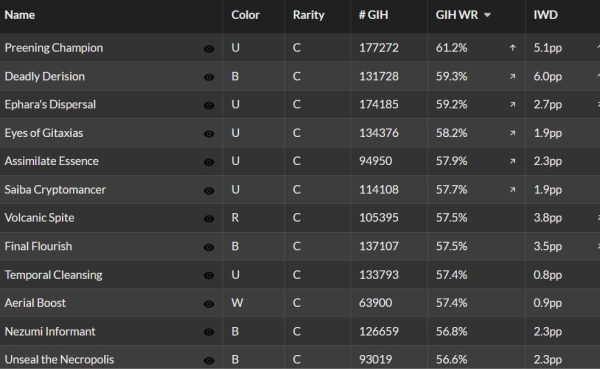
One obvious winner is Sheoldred, the Apocalypse. At $65, however, it’s hard to see much upside for the card.
It doesn’t help that, while she dodged the ban hammer, Sheoldred lost a couple of good friends in Invoke Despair and Fable of the Mirror-Breaker // Reflection of Kiki-Jiki. I don’t know if Rakdos, or black-based strategies in general, will be as dominant going forward. It’s hard to recommend buying copies of the most expensive card in Standard.
Scrolling through the lower portion of the most played cards list, you eventually get past the Rakdos cards and see some other possible contenders.
Atraxa, Grand Unifier was a popular choice at the last Pro Tour. The strategy paled in comparison to Rakdos, but perhaps the deck will become more popular going forward.
Leyline Binding may see more play if players eschew Rakdos for other colors, including white. If ramp strategies become more popular, Topiary Stomper could see more play. At just over a buck, these have little downside, to say the least. With the new, slower rotation schedule, the card will have more chances to impact Standard and climb in price.
Perhaps the best strategy would be to trade out of Blackcleave Cliffs and pick up other reprinted fast lands, such as Darkslick Shores or Seachrome Coast. These will all be playable in Standard for a couple of years now and may get harder to find when Phyrexia: All Will Be One packs aren’t opened as much.
Lands are often a safe play—their upside may be capped, but so is their downside. While we’re at it, all the tri-lands (e.g. Spara's Headquarters et al.) are also worth keeping an eye on.
My Feelings On Bannings
People have conflicting feelings about Standard bannings. On the one hand, it’s a reflection of some oversights made by Wizards of the Coast. It also likely represents an imbalance in the format. I for one believe we've been in a rather stale Standard environment for a while.
On the other hand, a shakeup of Standard leads to hope and excitement that things will be better going forward. We can all hope for greater diversity in the metagame, leading to a more enjoyable play experience overall.
Since I do play Standard on Arena on occasion, I would be lying if I said I didn’t care about these impacts. What I can say, however, is that the financial implications of a banning often excites me even more than the gameplay implications. With such a significant shakeup as the recent banning—three cards being banned simultaneously—the door has been opened for a shift in the metagame. This shift in the metagame will naturally lead to a shift in prices.
Shifting prices means an opportunity for financial gain.
While those who were holding the three banned cards into the announcement may have seen some depreciation, hopefully, that can be balanced by an increase in prices for other cards. For those who are intimately familiar with the Standard format, I suspect they’re the best people to follow for speculation suggestions.
Wrapping It Up
Transparently, the best I can do is review the most played cards list on MTGStocks and identify those that aren’t in Rakdos colors for their potential to climb in popularity. The tri-lands and the fast lands are probably the easiest targets for their low-risk / moderate reward potential. If I were to speculate on Standard (which I do very little these days), I’d start with those lands and then closely watch the metagame unfold for other potential ideas.
Things are about to get really dynamic for the next couple of weeks—no matter what happens, at least Standard will be interesting again!
If not, now is a perfect time to join up! Our powerful tools, breaking-news analysis, and exclusive Discord channel will make sure you stay up to date and ahead of the curve.
My last article focused on the financial ramifications of Wizards of the Coast extending the life of Standard sets by an additional year. While digging for potential speculation targets I noticed many Innistrad: Midnight Hunt mythics were selling at bulk prices (defined as less than $1). This led me to look at all the Standard-legal sets and the price values of their mythics. Here's what I found:
Breakdown Of Mythic Value of Standard Sets
Mythic Valued Between
Set
Total # Of Mythics
$0-$1
$1.01-$2
$2.01-$3
$3.01-$4
$4.01-$5
$5+
Innistrad : Midnight Hunt
20
11
1
1
3
1
3
Innistrad : Crimson Vow
20
6
3
3
0
1
7
Kamigawa : Neon Dynasty
18
5
6
2
0
2
3
Streets of New Capenna
20
5
4
3
2
2
4
Dominaria United
20
6
4
2
1
1
6
The Brother's War
23
9
3
0
0
0
11
Phyrexia : All Will Be One
20
3
0
0
1
3
13
March of the Machine
20
3
2
1
2
0
12
This breakdown shows us that for all but the two latest sets, the majority of the mythics in each set are worth less than $5—in many cases, over half of a set's mythics are less than $3.
Mythic Valuations vs Expected Value
Now that we have broken down the Mythic valuations for each set, one would expect each set's estimated Return on Investment (ROI) to parallel this evaluation—given that mythics often carry the most value due to being a higher scarcity and higher power level. This means that if you have one set's mythics averaging $3 and another set's mythics averaging $15, it's logical to assume that the ROI for the first set would be lower than that of the second, (Note that none of this takes into account the fact that pull rates of a specific mythic are low).
Interestingly, the mythic valuations of each set do not correlate with the set's ROI. In fact, the boxes with the highest ROI are from Kamigawa: Neon Dynasty (of which 72% of its mythics are $3 or less). So what's going on here? Here's the expected value (EV) for every set currently in Standard:
Standard Set EV Breakdown (data taken from Dawnglare)
Set
Set EV
Innistrad : Crimson Vow
$68.84
Streets of New Capenna
$69.69
Innistrad : Midnight Hunt
$71.14
Dominaria United
$76.22
The Brother's War
$76.43
Phyrexia : All Will Be One
$77.53
March of the Machine
$104.12
Kamigawa : Neon Dynasty
$111.08
These Set EV calculations were done at TCGMarket pricing, incorporating the probability of each card opened in a given box of cards, and are not the cumulative valuation of the set as a whole. If mythic values are not what is determining set ROI, what is?
Breaking Down Standard
To figure out what is determining set ROI, I decided to take a look at the top six decks in Standard, and see which sets have the most played rares and mythics in the format. For this breakdown, I looked at the Standard Metagame breakdown for the top six decks in the format which account for 78.3% of the overall metagame off of MTG Goldfish. these decks are:
Rakdos Midrange
Grixis Midrange
Azorius Soldiers
4c Ramp
Mono-Red Aggro
Orzhov Midrange
I counted the number of rares and mythics from each deck per set and kept a cumulative tally. For the last two columns, I took the total number of rares from each set one could play; i.e. the total number of rares or mythics in the set multiplied by 4, and then divided that number by the rares or mythics that were shown in the first few columns. Here's the full breakdown of the rares and mythics in the top six decks in Standard:
Standard Metagame Breakdown
% Of Possible Played in Format
Set
Rares
Mythics
Total
Rares
Mythics
Innistrad : Crimson Vow
8
2
10
3.13%
2.50%
Streets of New Capenna
26
0
26
10.83%
0.00%
Innistrad : Midnight Hunt
24
4
28
9.38%
5.00%
Dominaria United
29
9
38
12.08%
11.25%
Phyrexia : All Will Be One
27
6
33
11.25%
7.50%
March of the Machine
18
4
22
7.50%
5.00%
Kamigawa : Neon Dynasty
48
4
52
20.34%
5.56%
The Brother's War
31
0
31
12.30%
0.00%
An interesting takeaway from this breakdown is the relatively small number of mythics being heavily played. I remember a lot of past Standard formats with a much higher mythic count in the top decks than this. Given the higher scarcity of mythics, those decks tended to cost more.
The number of rares in this breakdown which are mana-fixing lands, many of them reprints, is also interesting. Even including new lands like the SNC tri-lands, only a small handful have prices above $7. while this allows players the flexibility of playing top-tier decks without breaking the bank, which is a goal of Wizards of the Coast, I'm not sure that's the entire story. It's likely that part of the reason the cost is low is the lack of demand for staples due to the player base's limited interest in playing the format in paper. Whatever the reason, it is something else to take into account as we look at what sets are worth buying.
Set By Set Analysis
Now that we've looked at Standard as a whole, let's look at each of the Standard sets individually, and anything of note that might influence the decision to crack packs of the set.
Innistrad: Crimson Vow
This set has one of the lowest set EVs of any in Standard right now and the most valuable mythic is Toxrill, the Corrosive whose value is heavily tied to Commander. Toxrill aside, the set's only other valuable rare is Wedding Invitation. This is a set to avoid picking up packs or boxes of unless I desperately need to lose money quickly. This set has almost no representation in Standard. The only three rares I found in the top decks were Howlpack Pipers, a speculation target I called out a while ago, but that was only in the sideboard of the Naya Ramp deck.
SNC sports a whopping four mythics valued above $5. Despite this, the set's EV is only slightly better than Innstrad: Crimson Vow. It's another set I'm hesitant to pick up any sealed product from. The saving grace is that it completes the tri-land cycle, all of which are valued above $6.50 currently. If we look at the Ikoria: Lair of Behemoth triomes, all of those have a market price of over $12, which bodes well for the SNC Tri-land price floor.
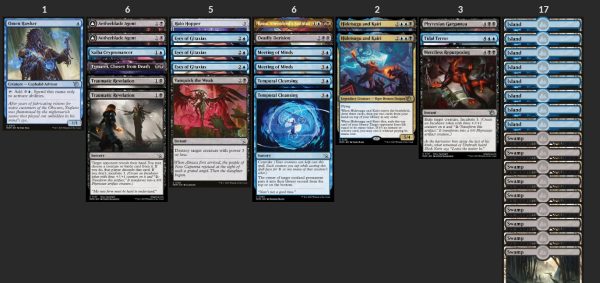
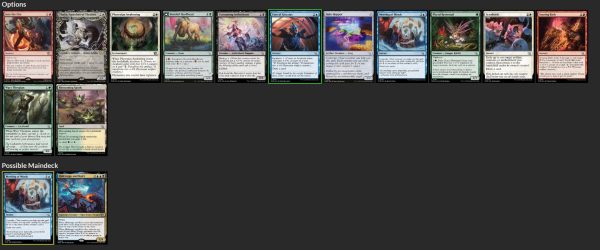
Innistrad: Midnight Hunt
Of the two, Innistrad-based sets, this one has by far the most representation in Standard. That said, it has the lowest set EV currently in Standard and many bulk mythics. The slow land cycle is about the only thing propping up the value. Apart from the slow lands, Few cards in the set have found a home in Standard. There are some good Commander cards like Unnatural Growth, but all in all, I'm steering clear of picking up any of this set moving forward.
Dominaria United
Dominaria United only has two rares worth more than $5, Leyline Binding and Plaza of Heroes. Normally, I'd expect a set that has a lot of low-value mythics but a middle-of-the-pack set EV to include a few valuable rares. Obviously, this set does not. Instead, it looks like Sheoldred, the Apocalypse is unfortunately single-handedly carrying the value of the set. Any box we open with her in it is a good box—any without her is atrocious. The set's rares and mythics are quite playable, and DMU has the highest representation of mythics in the Standard format. To be fair though, a good number of those were just copies of Sheoldred.
I'll be honest I almost forgot this set even existed until I got to the Standard Metagame breakdown. There is little of note outside of a few big splashy mythics like Portal to Phyrexia. The set EV is tied heavily to the mythics which are about 50/50 when it comes to being worth the price of the pack. There are very few rares of note from this set and many bulk rares. I'm not risking playing this pack lottery.
This set demonstrates the importance of having value in the regular rare slot. 65% of Phyrexia: All Will Be One's mythics are valued above $5, with two above $25 and two above $15. Despite these numbers, the Set EV is still under $80. This means that opening ONE packs is quite a gamble. You have to hit a high-value mythic or rarer variant to "make your money back." The set is well represented in playability, but it doesn't translate into value. Set EV-wise ONE compares well with Dominaria United which ironically has the inverse problem, with 70% of its mythics valued under $5.
March of the Machine
I think it's worth noting that while MOM has the second-highest set EV on this list and a substantial number of mythics above $5 in value, it is also very recent. It's the set that is currently part of a lot of local game store (LGS) drafts, meaning a lot of product will continue to flood the market over the next few months. This means the values of almost everything in the set will trend downward. MOM also has few cards in the current top decks, which doesn't bode well for long-term value.
Kamigawa: Neon Dynasty
As mentioned earlier, this set has the highest set EV of any in Standard while also having a very low average mythic value. This shouldn't come as a surprise to anyone given this set brought us Fable of the Mirror-Breaker and the channel lands like Boseiju, Who Endures. In fact, if choosing packs to buy or pick up as prize support, I'm taking NEO. It's the set most likely to give me bang for my buck. Given what's been said it isn't that surprising to see that NEO has a significant amount of rares showing up in Standard but was tied for third regarding mythics. The only one of note was The Wandering Emperor.
Conclusions
I am never one to promote "cracking packs," as it is almost always a losing strategy. That said, if one were determined to buy packs to do so or had prize support packs to choose, the only set in Standard I would touch is Kamigawa: Neon Dynasty. The set has a number of decent value rares, and the chances of getting something worth money are a lot higher than in every other set currently in Standard. I wouldn't fault anyone for buying up boxes of it at the current rate. There is a lot of value in the set and most of those valuable cards are playable in eternal formats. Kamigawa: Neon Dynasty feels like it's going to be one of those sets whose boxes go for $150+ a year or two after it rotates out of Standard.
NEO aside, it's important to note the other big takeaway of this exploration, which is just how bad the value is in most Standard boxes. Even stores that can likely get boxes between $76-$86 each can't justify cracking Standard-legal set boxes for single card inventory. I've been playing for a long time and I am having a hard time remembering a time when this many sets had EV values this low.
If not, now is a perfect time to join up! Our powerful tools, breaking-news analysis, and exclusive Discord channel will make sure you stay up to date and ahead of the curve.
Blue and UB can be a great place to navigate our draft. When we start there, however, it is tempting to ignore other paths. A first pick is often hard to cast away, when it's a first pick in the best color, we're not just worried about losing the early rare, but the powerful commons we might see later.
While March of the Machine (MOM) has generally been kind to me, I have not been immune to one of Limited's most insidious traps: clinging to the best color.
Because there are so many good blue cards, we can tell ourselves that blue is open when really we're just seeing the debris breaking off from a good color. Pivoting is an essential skill for navigating draft, and pivoting off of the format's best color or archetype intensifies that struggle.
Best Red Deck vs. Decent Blue Deck
There's a case to be made that it's better to be one of the many blue decks than the open red (or non-blue) deck. The top commons seem to support this idea.
However, this doesn't take into account the context for this data. These cards contribute to winning decks. These numbers are averages, not promises of performance. This means that when players are picking these cards, there's a good chance they're playing them side by side with powerful rares and uncommons that help boost the overall win rates of the decks. If the color is overcrowded, we won't have access to those higher powered cards. So no, we shouldn't take Saiba Cryptomancer over Volcanic Spite and Final Flourish simply on the merits of GIH WR%.
Conversely, there might be good reasons to fight for a color. Say we're having success with a given archetype, particularly in the opening weeks of a format. If we know something they don't know, we'd be wise to leverage that advantage. Still, formats evolve because players learn, either from experience or other resources.
In the early days of MOM, we could collect Ephara's Dispersal and Invasion of Amonkhet // Lazotep Convert in multiples. Those days have mostly come and gone. If I'm drafting blue in MOM today, I'm expecting to fight over the color. So how do we know whether the fight is worth it?
The Reach and the Pull
In my most recent draft, I first-picked Hidetsugu and Kairi. It's a powerful card in the best color combination. What could go wrong? Second pick I took a Meeting of Minds. Third pick I took Eyes of Gitaxias. I wanted to stay in UB, so I tried to corner the market.
While both of these cards have a suitable win rate, they're not really cards I want to draft this early. I wasn't being pulled into blue; I was reaching. I wasn't responding to the signals of the draft. This was an attempt to protect my rare. Because blue is so deep, there's plenty to hold onto, but I wasn't building a strong deck. I was taking pieces and hoping things would open up later on.
The pieces I ended up takng weren't ideal. Had I seen strong uncommons or premium commons like Preening Champion, Ephara's Dispersal, or Deadly Derision, then staying in UB would make sense. Instead, I took second-tier commons. While all these cards have good win rates, the drop off between them is real. Meeting of Minds and Temporal Cleansing are a far cry from the actual best commons in the set.
Early Game and Synergy
It's hard to develop a clear plan when we're scrounging for scraps. When we look at a pack and see an abundance of options, we have the privilege of identifying the one that best fits our needs. Contested colors don't provide those options. You get what you get, and you (hopefully) don't get upset.
I drafted a lot of convoke early on. I hoped to see Ichor Drinker, Omen Hawker, and Captive Weird // Compleated Conjurer. But hope is hardly a plan. I ended up playing a reasonable, but clunky, UB deck with a middling power level.
UB "Mid"-range (5-3)
Creatures
1 Omen Hawker
1 Saiba Cryptomancer
2 Aetherblade Agent // Gitaxian Mindstinger
1 Tymaret, Chosen from Death
1 Halo Hopper
1 Rona, Sheoldred's Faithful
2 Hidetsugu and Kairi
1 Phyrexian Gargantua
1 Tidal Terror
Instants
1 Vanquish the Weak
2 Meeting of Minds
1 Deadly Derision
1 Merciless Repurposing
Sorceries
2 Traumatic Revelation
3 Eyes of Gitaxias
2 Temporal Cleansing
Lands
8 Island
9 Swamp
Because of the inherent strength of the color pair, and because I opened an on-color bomb in pack three, I was able to build a competent deck. Still, it was clear that the colors weren't open. I needed to make adjustments based on some of the early data seen, and didn't because I was too eager to be UB.
Ambition the Angel?
When it comes to draft, we always have three options. We can stay the course, we can pivot, or we can absorb. The first major decision point I saw in the draft was an unconventional one. It came in pack three.
Phyrexian Awakening is a card that has played very well for me. A 4/4 vigilance is an extremely powerful body, and spreading that vigilance lets us pressure our opponents while still looking to play a long game. Instead of snapping up the enchantment,, I stayed the course with a good but not great blue card, Eyes of Gitaxias.
Even after that pick, I felt challenged by an even less conventional choice.
Alabaster Host Intercessor is a fine card. It's not as good as the card I selected, Eyes of Gitaxias, but it represents something much greater. While black had yet to yield a realistic option, white had shown multiple reasonable selections in picks three and four. Had I taken the Alabaster Host Intercessor, I would have given myself a chance to remain blue, but with more flexibility to incorporate the seemingly open white cards later on. While UW is primarily seen as a tempo archetype in this format, it can certainly play a more controlling strategy with counterspells, Cut Short, answers, and bigger threats.
While the white cards wouldn't have been committal it would have given me more flexibility. Hopefully I could still splash the bomb, but if not I'd at least be in an open color.
Sight Beyond Sight
Part of navigating drafts late in a format involves knowing the possibilities. The slower UW deck is not a common off-road, but UR Convoke is. Pack two offered us something I missed in the moment.
I was overjoyed to see my first premium black card, Deadly Derision, here in pack two. This would give me the support I needed to continue my dream of building a functional UB deck. Good ol' four-drops. Nothing beats four-drops.
But what else do we see? (Hint: It's another four-drop... sort of). In retrospect, I wish I'd considered Stoke the Flames. It's an off-color card, but it's not off-plan.
At this point, we already have three convoke cards. We haven't seen any premium blue cards, so it's unlikely we'll get Captive Weird; Ichor Drinker has been, thus far, MIA. Pivoting into UR opens up the possibility of leveraging Ral's Reinforcements as a high-value card available late in packs two and three. While we currently have little to support these convoke cards, red gives us the best option to do so. We can still try to splash our rare, but we don't have any real reason to be black besides the first pick.
Conclusions
Hindsight is 20/20. While I think staying blue in my seat may have been justifiable, staying black was clearly wrong. While I potentially could have splashed the rare, which I was lucky enough to open a second copy of, I should have been more ambitious and open-minded when it comes to navigating this draft. However, that can be a big ask when the winds of fate blow you towards the best archetype.
I could have supplemented the deck with a third color or pivoted into a different archetype had I not failed to read the signs. As my mediocre deck got to five wins, I think this represents an above-average outcome based on the controllable factors. I don't think it's a disaster to be UB. It's a powerful archetype for a reason. Both colors are deep, and though neither seemed particularly open, this pair offers a puncher's chance. Still, I wish I had been more ambitious. I think I could have done better.
I wanted to end with a note on the following graph. Noted MTG data analyst Sierkovitz tracked the changes in win percentages over each week. While UB has been the boogeyman of the format, in recent weeks it has experienced a severe drop-off.
The color has not gotten less powerful. The format has just evolved. The word is out on UB, and while the color is deep, it's a known quantity. People want these cards. The archetype has fallen closer to the rest of the pack as players fight over its pieces. So, make sure to read the draft, and not just assume that the deep colors will provide. The format is still evolving. Are you?
If not, now is a perfect time to join up! Our powerful tools, breaking-news analysis, and exclusive Discord channel will make sure you stay up to date and ahead of the curve.
Writer’s Note: According to my count, this week’s column marks my 600thMagic article! I can’t believe I’ve been doing this for nearly 12 years. Thank you all for continuing to read and appreciate my weekly content at Quiet Speculation!
“There’s no such thing as too much of a good thing.”
This quote must be pinned up all over Wizards of the Coast’s office, because they tend to create a brilliant, new product, sell through it, and then repeat the process numerous times over.
Remember when a masters set like Modern Masters was limited print run, difficult to find, and expensive to purchase? Holding booster boxes of the original set was easy money… until we saw a printing of Modern Masters 2, Modern Masters 3, Eternal Masters, Masters 25, etc. The concept of Masterpieces in sets helped fuel booster box sales... until they became a little too commonplace.
This week, I want to talk briefly about another concept that was hugely successful upon launch, but has since been done to excess: the Secret Lair series.
How many of these things actually exist? Are there any that grip my interest, and are possibly worth holding onto? Let’s dive in and find out!
Wait…There are How Many?!
The first thing I did as I began researching the Secret Lair series was looked up how many have been printed so far. My jaw dropped as I saw the final count, now totaling over 1000 cards!
By TCGplayer’s count, there are in fact over 1200 cards printed as part of a Secret Lair series of some kind. This is astronomically high—I was expecting the number to be like 100, but apparently there are many more of these than I could have possibly imagined!
Inspired by the Unhinged card R&D's Secret Lair, these products are Wizards’s foray into selling individual cards directly to consumers, thus enabling them to tap into the secondary market. I know there’s significant cost involved in developing these—they must pay artists to generate (gorgeous) artwork, develop the artwork files, and print the cards. However, once all this is said and done, they are left with minimal operating costs as they churn the printing presses and sell just a few individual cards for upwards of $30-$40.
In other words, their margins on these must be fantastic, a takeaway consistent with the fact that they continue to make so many of them!
I made an amusing observation about the collector card numbers associated with this product. It looks like when the earlier Secret Lairs came out (e.g., Bitterblossom Dreams and Eldraine Wonderland, in 2019), the collector numbers were three digits. Just three years later, however, a fourth digit had to be introduced, as Wizards of the Coast knew they would be exceeding the 1,000 mark.
By the end of the decade, I bet these have five digits.
Finding the Most Valuable Drops
Much like previously overdone product themes, the Secret Lair drop series has proliferated beyond what would be considered “rare.” At this point, with a few noteworthy exceptions, these products are fairly easy to track down on the secondary market.
At first, the special nature of this product may have commanded a hefty premium. But nowadays a particular Secret Lair’s price point depends on the contents within. I tried to search through TCGplayer and eBay to identify the most valuable Secret Lair drops, but the reality is the numbers are all over the place, and the product is so spread out that it’s difficult to be sure I’ve got all the data I need.
For example, a sort by price on TCGplayer indicates the OMG KITTIES! product is the most expensive, regularly selling for north of $200.
Okay, that seems reasonable; everyone loves a cute kitten.
Then I sorted by sold price on eBay and discovered there are other products, such as the From Cute to Brute Commander deck and The World’s Bundliest Bundle, that sell for even more.
Part of my confusion, I think, is that there is a difference between the traditional Secret Lair Drop and the Secret Lair Commander Series. This makes it even more complicated to search for particular sets or cards from this series, and I’m thoroughly confused by all the variants. To stay on top of all these products, you really have to be a major Secret Lair fan!
As for individual singles, MTG Stocks (a reflection of TCGplayer) shows the serial numbered Shivan Dragon Secret Lair drop to be the most valuable, with a market price of $2400! EBay corroborates this data point.
This Secret Lair product isn’t the same as the others, though—I believe this Shivan Dragon special was only given out at the large convention in Philadelphia some months ago. I don’t think this was a product that could be purchased directly from Wizards of the Coast’s website like their other Secret Lair drops.
That's just another layer mystifying the product lineup.
Majority vs. Minority
Navigating to the Secret Lair page on MTG Stocks and sorting by price will sort every card from most to least expensive. Doing this reveals the same result as observed above: the numbered Shivan Dragon rises to the top.
Following this card, the Secret Lair printing of Jace, the Mind Sculptor appears to be second-most expensive, with a market price of over $600. Number three on the list hits a paltry 10% of that, the Kodama's Reach card selling for around $60.
Talk about a steep drop!
Granted, there are some foil-only Secret Lair drops that can only be found when sorting by foil market price. Shadowborn Apostle falls into this category, with some variants (that’s right, there are multiple) selling for $100-$200. Even including these foils, only a couple are worth significant money.
In fact, as far as individual singles go, the vast majority are relatively inexpensive. Sure, there are plenty over $30 and still even more north of $20. Then there are pages and pages of Secret Lair cards worth $3-$20. Consider, for instance, the Secret Lair printing of Goblin Settler.
This card launched at a $10 price point, which is not too surprising. When brand new, these cards all carry a certain allure to them for their special artwork and exclusive nature. Once the secondary market gets ahold of them, however, market forces of supply and demand take over, and prices adjust rapidly. These can now be purchased for just a couple bucks.
Many of the Secret Lair singles follow a similar price trajectory. They may start strong at first, but if a card has lower demand and a lower power level, it’s very difficult for it to maintain the higher price point. Since there are tons of these “special” Secret Lair printings, any individual one isn’t really all that unique.
Again, it seems Wizards of the Coast may have printed too much of a good thing.
Wrapping It Up
What started out as a rarified group of cards, obtainable only for a limited time and from a certain website, has once again been overdone. I know I’m not the target audience for these cards, so my opinion is biased. (I do appreciate some of the creative artwork that accompanies some of these Secret Lair printings.)
Unfortunately, the novelty has lost its luster. Much like other special cards printed by Wizards of the Coast, these Secret Lair drops have become so numerous that it’s become impossible to keep track of them all. This means that many will be lost in the shuffle, leading to abysmal prices on those deemed most underwhelming.
If you’re in the market for such cards, then perhaps this excess is a boon—many such cards will become dirt cheap. For example, die-hard Rebecca Guay fans may rejoice that her beautifully done Muddle the Mixture has plummeted from $20 at release to a mere $2 on the secondary market.
It’s unlikely these fall much further, and at some point, they could gradually climb in price. But when it comes to speculating, my recommendation is to focus on the Secret Lair cards that resonate with you most, and ignore the financial side of the equation. As long as you’re focusing on some of the less-powerful cards, you can probably take your time and pick these up after their price settles lower, just like in the graph above.
I want to believe that these will become more collectible (read: valuable) in time. It may be worth dabbling here or there, but you’ll have to pick your spots very carefully. I suspect the vast majority of these cards will remain worth just a couple bucks for years to come. With how frequently new Secret Lair sets are printed, there will likely be many more of these over the coming years.
Do you have an all-time favorite Secret Lair drop? Or maybe one of those great artworks? Let me know in the comments!
If not, now is a perfect time to join up! Our powerful tools, breaking-news analysis, and exclusive Discord channel will make sure you stay up to date and ahead of the curve.
Normally, I don't pay attention to bannings outside Pioneer and Modern. I've got a brand to maintain. However, Monday's Standard ban is special because it comes with policy changes. Abandoning its current, highly flexible system, Wizards has decided to move to a structured system for its Banned and Restricted Announcements. This change carries huge implications for every format, and I'm not certain it will work as intended. The worst-case scenario looks like months on end of being stuck in formats as bad as... well, Standard.
Before diving into that, here's a Public Service Announcement: MTGO is having an All-Access Pass event for the next two weeks. $25 gets you access to almost every card in Magic until June 14. This is the best tool available for testing new decks or playing formats you'd otherwise never consider. I'm not being paid for this announcement; I just want more players to know so they can try Vintage. That room really needs some new blood.
The Context
This is not the first time Wizards has changed the timing on bannings. To the best of my knowledge, from the first banlist until 2017, there were four ban windows per year, one for each financial quarter. Then came Eldrazi Winter, where the problem cards were printed just after the winter window and Wizards had to wait until spring.
There was an error retrieving a chart for Eye of Ugin
To avoid this problem, in January 2017, Wizards added a ban window after each set expansion and each Pro Tour. This was quickly revised that June, after Wizards had to emergency ban Felidar Guardian in April. For the next two years, Wizards's bannings could happen every few months as needed. By December 2019, the system was untenable, and Wizards went to bans happening whenever necessary.
The policy as of Monday is that there is one and only one officially scheduled ban announcement per year. It will be in early August, before the fall set's previews start. The intention is to have a big splash before the Standard rotation. There will also be emergency ban windows the third Monday after each set release. All of this is framed with Standard in mind, but affects all formats.
Why Now? Why Standard?
There was nothing inherently wrong with the fully flexible schedule that led to this change. I never heard anyone complain about it unless it was their deck getting banned unexpectedly. For some reason, some announcements were telegraphed in advance, and some weren't. I never knew why. No, Wizards is changing the ban timings to try and save Standard.
For those that don't know, paper Standard has been drying up for some time now. Once upon a time, Standard was the format for Friday Night Magic. Today, if I wanted to play Standard, there's only one Standard FNM in the entire Denver Metro Area. Aaron Forsythe asked Twitter about this problem back in November, and my response was typical of those given:
Standard's been dying at my LGS since 2018. Most common reasons are: 1. Why play in person when I can play Arena? 2. Standard is significantly more expensive over time than Modern or Pioneer. 3. Standard's gameplay has been mediocre at best for a while now.
Wizards can't just jettison Arena (even if it was the #1 reason respondents gave Aaron), and improving gameplay is always their goal, so they're working on problem #2. To address this, they've lengthened Standard's lifespan from two years to three and will be using regular ban data in place of rotation to refresh Standard every year. Now, the experiment begins.
Everyone Else
Wizards didn't address anything for non-Standard formats beyond this brief section:
Our goal is to make most of our format changes once a year for greater consistency. This announcement will happen annually before fall previews begin. This will not only include Standard but also Modern, Pioneer, Legacy, and Vintage.
In short, this is all being done with Standard in mind, and every other format Wizards manages (hi, Pauper) is just along for the ride. Wizards talked extensively about wanted to use the fall banning to get rid of strategies that dominate Standard for two years, to have a kind of soft rotation in addition to the actual rotation each fall. Whether that kind of philosophical change applies to other formats was left unsaid. We'll have to wait for the first of these scheduled ban days, August 7, to find out.
Gut Reaction
Standard isn't my specialty. I don't even play it anymore, so my opinion about the impact of those changes isn't really valid. Those more attuned to that world have been mostly positive about the changes. What's not being talked about are the impacts on the non-rotating formats. Most of that is Wizards being tight-lipped about any change in philosophy.
All of this could change once Wizards specifies how these changes impact not-Standard. However, given the stated policy change, I don't think this will work out as expected. It won't work out badly, necessarily, but there are problems with the stated plan that will have unexpected consequences should something happen outside of Standard. Non-rotating formats are quite complicated, and problems might not always be obvious in the planned timeframe.
The Pros
As with all new things, the pros and cons should be assessed. The biggest pro is the predictability of the new system. As I always have to stress in my Ban Watchlist articles, under the fully flexible system there was no way to know when or if a ban would happen. Sometimes, Wizards would give notice that a ban was incoming, but frequently we would just wake up to a ban on Monday.
Now, everyone knows or should know that nothing is planned to happen before August. Thus, players can have confidence that their cards will be playable and hold value for a certain period of time. This should increase both player confidence and investor confidence in the secondary market, which translates into more sales and interest in formats, which are good things.
The biggest effect will be on August 7. Under the current system, a card escaping an unannounced banning was no guarantee it wouldn't be banned in a month or two. Now, if a deck isn't banned in August, it's (presumably) safe for a whole year. That would cause more sales and deck building, so I'd have inventory ready well in advance for some big sales.
Mostly Normal
The other positive is that for the most part, this change in timing doesn't impact the cards that will actually be banned. For most of Modern's, Pioneer's, and Legacy's history, it has been obvious that cards will need to be banned. The only question was when. Think of Uro, Titan of Nature's Wrath, Expressive Iteration, Lurrus of the Dream-Den, or Golgari Grave-Troll, all cards that had established themselves as clear problems well before the actual hammer dropped.
This also isn't going to affect the power-level bans. These are the cards that aren't exactly problems, but have been on top the metagame long enough to start feeling oppressive. The sort of ban that's Wizards saying, "You've had a good run, let someone else have a turn." The Splinter Twin, Birthing Pod, and Inverter of Truth bans. These tended to happen on a schedule anyway (for Modern it was January/February), so the day has moved, but not the run-up.
The Cons
The biggest con that I can see is that the inflexibility will lead to Wizards having to rush decisions. Contrary to what some online communities think, Wizards never wants to ban cards. The tale of their ban announcements has always been the desire to affect as few decks as possible and ban as few cards as possible. To accomplish this, Wizards has always had a "wait and see" approach while they gathered data and didn't act until the final hour.
Now, we run the risk of Wizards getting trigger happy (or gun-shy, depending) on the timing. If a problem emerges in late July, Wizards only has a few weeks to decide on a ban. If they don't, they'll either have to wait a year to ban it or use the emergency window, that they stated is for new cards causing problems on the level of Felidar. If it's not that level, but more like Arcum's Astrolabe, do they make us suffer longer take early, perhaps premature, action?
For example, Pioneer saw Boros Convoke explode last weekend. The deck is explosive and powerful and capable of building absurd boards on turn two. The comparisons to Hogaak, Arisen Necropolis were immediate and loud. Had this happened right before ban day, there'd have been enormous pressure to ban the deck, even though things are cooling off now. We've seen a similar spike and decline cycle with Death's Shadow in Modern, which became a healthy part of the metagame as soon as players learned how to deal with it.
The Emergency Window
The stated goal with the post-release window is to see if anything really broke Standard. They didn't say anything about other formats, so we have to assume that the philosophy will remain the same. The problem is that it takes longer for problems to emerge in non-Standard formats than in Standard because of the larger cardpool.
To continue my example, the card that made Convoke possible is Knight-Errant of Eos, printed in March of the Machines. It was released on April 21, almost exactly a whole month before Convoke emerged, and outside the emergency window. Had it been as dangerous as the initial takes suggested, would Wizards have simply waited and made Pioneer suffer because of their rigid policy?
Then there's the issue of cards emerging as problems after Ban Day. Is Wizards going to pull the trigger on a problem or just wait and see? They have a whole year to wait, and corporate culture tends to push towards waiting over action. Would Wizards wait a year on an Astrolabe-type problem card because it emerged as a problem in September and isn't Guardian-level busted?
For example, Krark-Clan Ironworks got the final piece of its puzzle with Aether Revolt in January 2017. The deck that would eventually get it banned didn't show up until April 2018 at GP Hartford. It wouldn't actually be banned until January 2019. That there was a problem was never clear thanks to lack of player adoption, not the usual data. How does the new system handle an Ironworks scenario?
Hogaak: A Case Study
Since Hogaak gets thrown around a lot, let's use the experience with that card to test how well the new system would have worked back then. Modern Horizons released on June 14, 2019. The first action taken against it was on July 8, when Bridge From Below was banned. Wizards didn't want to ban the new card, but the ridiculous combo had to go.
Initially, it looked like that was enough, and that Hogaak had died without Bridge. However, two weeks later, the beatdown version arrived and started taking over. For the rest of the summer, Modern players had to endure Hogaak, which wasn't banned until August 26.
The initial Bridge ban was three weeks and three days after Horizons released, or just outside the stated ban window. Whether Wizards would have acted earlier given the new system is unknowable. The final nail in the coffin wasn't delivered until well after the stated window for Ban Day. They waited that long to gather more data. The question Wizards needs to answer, therefore, is how their new policy will affect their predilection for waiting for data.
Bottom Line
I understand why Wizards is making this move. They need to do something to rescue paper Standard, and this might work. It certainly ticks all the boxes for a Standard-specific solution. However, they've left all the questions about non-Standard formats unanswered. If they have a different vision in mind for those formats, then all may be well. However, if they intend to treat them the same as Standard, there will be problems. As illustrated above, there are just too many possible fail cases for the new system in larger formats, and indeed examples of each from recent years jump to mind.
It's not that the change is inherently bad. Rather, it creates a lot of odd pressure on Wizards regarding ban timings. The structured emergency windows are targeted towards previous Standard problems, which tend to emerge quickly. In older formats, that isn't the case, and problems can easily, and frequently do, arise outside the intended windows. One size does not fit all.
The New Era
Wizards is choosing to end the era of uncertainty around banning windows for Standard's sake. That's fine, but it opens up the possibility of harming the non-Standard formats. Unless this new policy is accompanied by new policies and attitudes within Wizards, things could get complicated and ugly quickly. Hopefully, they've already thought this through and have a plan.
Want Prices?
Browse thousands of prices with the first and most comprehensive MTG Finance tool around.
Trader Tools lists both buylist and retail prices for every MTG card, going back a decade.