menu

Why You Shouldn’t Invest in Your Favorite Cards

Are you a Quiet Speculation member?

If not, now is a perfect time to join up! Our powerful tools, breaking-news analysis, and exclusive Discord channel will make sure you stay up to date and ahead of the curve.

Everyone has cards they especially like. For some people, it's for flavor reasons, others sentimentality, while some don't really know why they like a card. Personally, I collect the ubiquitous  Shivan Dragon. When I first started playing, I was told it was a crap rare, so naturally, I took a liking to it. I have around 40 copies lying in a binder, from almost every printing since Fourth Edition. I would never expect this card to rise in price, save for the earliest printings. Whenever I find a pile of Shivan Dragons, I buy the whole pile. This is not an investment, I just like the card, and I treat my purchases as such.

The Purpose of Purchasing

When you buy cards. they serve one of three purposes, Sentimental/Emotional value, Investment Value, or Playing Value. I will only be talking about two of these archetypes, as buying as a player does not affect this analysis. However, as an investor, you will take into account the other two. Not only should you know the difference between the two, but you should truly understand how these mentalities play into your financial decisions. This will help you gain better self-control and a better understanding of not only your decisions but the decisions of others.

Sentimental/Emotional Value

When you buy a card you like, that is an emotional purchase. You spent money on that card because it simply feels good to own that card. That is not necessarily a bad thing. Depending on the funds you have available to you, and the purpose those funds are allocated for, this could be great. These purchases have intangible value, like providing a feel-good moment when you are flipping through your binder or a good conversation piece at FNM. These are arguably great purchases, but should never be grouped with your investments.

I've made the mistake of purchasing something because I like it, with the self-justification of "It'll go up eventually, it has to". A great example is some of the Mythic Edition Planeswalkers. I picked up Ral, Izzet Viceroy, and Sarkhan Unbroken, both in their foil borderless frame. I bought these under the guise of investment; however, I really just liked the look of the Mythic Edition cards. The price has stayed flat for a very decent portion of time, and I decided it was a ship I could sail another day.

To my dismay, the price was not nearly as good as I hoped it would be, despite my speculation on the limited supply on the secondary market.

Investment Value

As you go to checkout on an online retailer, after spending a sizable amount of time analyzing Reserved List speculations or looking at promising Standard brews, you are making an investment in an asset. The whole point is that you will make money on the sale of that investment. When you do this, you want to reduce the risk of loss to a minimum and spend time making sure your hopeful speculation is realistic.

If you don't make money on this investment, it is dead. You lost money, and likely won't get all of it back if any at all. After all, with how volatile the MTG market is, a dead asset lying in inventory could be detrimental. If you have limited resources, one bad speculation can mark the beginning of the end.

How to Tell if Your Investment Is Emotionally Fueled

The short answer is: you can't. Not consistently anyway. You can narrow it down, however.

If you like a card, that doesn't mean it can't be a smart investment. If you have data to back up your claims and predictions, it doesn't particularly matter if you like the card. You just have to make sure that you are separating those lines of thinking, and acting according to logical reasoning, which sounds straightforward and easy, but I have seen many amateur investors fall, become disinterested, or run out of funds, simply because they did not form a clear barrier between emotions and business. You will blur that line, but minimizing that risk is crucial when every dollar counts. Making one right decision can make the difference between a successful, or a failing business.

The Takeaway

Everyone here is human, and humans make mistakes. They are flawed and imperfect compared to high-powered analytical computers used to analyze market trends. The one advantage we have is also our greatest weakness. We associate ideas or values with certain things, and it is incredible, and beyond what any fancy supercomputer is able to achieve (at the moment). This provides us with an ability to find connections that may not make sense to a computer, the most important of these connections is human psychology.

People act on instinct and emotions. Primal feelings still drive us every day. Human objective thoughts, while relatively objective, still are influenced by these instincts. If one can understand even a one-millionth of how your fellow humans think and feel, then you may just have a leg up on the competition. If you don't, you may just fall victim to your own human psychology. Everyone has their forte, and analyzing the psyche of the market may be the path to success for some; others might rely on objective financial data, everyone will interpret that data differently.

Even if psychological analysis isn't your thing, it's good to have a rudimentary understanding. Ultimately, do what feels good. Whether that be acting on pure instinct alone, or analyzing every small movement of the market. Most of the time, you will reap what you sow. But if you get lucky, you might just have the right seed to succeed. Be careful, make good decisions, and invest in cardboard game cards.


Insider: Bubble of Baubles

Are you a Quiet Speculation member?

If not, now is a perfect time to join up! Our powerful tools, breaking-news analysis, and exclusive Discord channel will make sure you stay up to date and ahead of the curve.

There is a well-known correlation between fear in the stock market and the price of gold. As fear in stocks goes up, so does the price of gold as people try to find a safe haven for investing. We at Quiet Speculation have been beating the Reserved List drum for years and not surprisingly those who jumped in at that time have done well. Of course, we have reached a new level of Reserved List hype as cards that see no play in anything are being bought out.

Several QS members on discord have repeatedly brought up that a lot of non-Magic players have started investing in Magic cards which would partially explain this phenomenon. After all, if you only know that the Reserved List means a card won't ever be reprinted, but you don't understand what makes one card better than another, it makes sense to just buy the cheap cards that won't ever be reprinted. In a similar fashion, as you begin buying all the cheapest copies the average price of the remaining copies goes up and it gets noticed on MTGStocks. This can easily lead to confirmation bias as you now think you've made money.

But as my father always tells me when we talk about stock market gains and losses; You haven't made or lost any money until you sell. I expect that people buying out terrible RL cards are going to have a hard time unloading any significant amount, given if people weren't buying them when they were $0.5 why would they suddenly start buying them at $3? Sure, there will be some people who fear missing out and will simply buy to alleviate that fear, but that number won't be enough to sell all the copies being purchased in this hype train.

When I first started trading for bulk rares and buying collections I knew that any Reserved List card had more potential than other bulk rares, so I began to set them aside in a box. Now I'm happily listing them in small quantities which I refill at a higher price if/when they sell. I am a firm believer in taking my profits and moving on when it comes to any speculation.

I see a lot of people with RL blinders on right now. Many think that the cards can only go up in value and thus it's stupid to sell now. I'm in the opposite camp. I've been combing through my RL bulk rares and putting up any extra copies I have at these new prices. The only ones I haven't added to my store inventory are ones that haven't popped yet.

There was an error retrieving a chart for Black Lotus

Here's a fun fact; according to MTGStocks the market price for an Unlimited Black Lotus from July 7th, 2018 until February 5th, 2020 was $3999. The market price is developed from actual sales prices, not asking prices. So for 19 months, it remained the same, despite some rather wild average price listings. This is why eBay sold listings and TCG Market price are so important. One can manipulate the TCGPlayer Average price rather easily on cards where the stock is minimal, but the market price doesn't move until an actual sale takes place. The point in this is that one needs to do a bit of research before jumping into any speculation, especially on higher dollar cards.

While these buyouts have been occurring somewhat consistently for the past few months, I don't expect them to stop anytime soon. Here in the US, we have another expected stimulus check going out to most of the population, and tax returns will start hitting bank accounts in the next month or two. This means people will have another windfall of money they may or may not have really been counting on and thus may be likely to spend all or some of it on discretionary items such as Magic cards.

I will also be the first to admit that I'm more bearish on a lot of the sudden surges we have seen in various stocks and cryptocurrencies recently. It is my personal opinion that these are all bubbles and I fully expect them to burst, which is why I have avoided investing in them. I think it necessary to mention upfront because it affects my overall take on Reserved List speculation. I feel that many of these Reserved List buyouts are part of a bubble, which is why I'm a seller right now and not a buyer.

I already mentioned my argument that a bad card is a bad card and if people weren't willing to pay $0.5 on it 6 months ago, they aren't likely to be willing to pay 6-10x that price now. The only time we typically see a legitimate spike in a card is when there is a lot of actual demand in the marketplace; perhaps it combos with a card just spoiled or there is renewed interest because it feels like an auto-include in some new deck. These types of spikes are the ones I like to invest in early, but outside of people looking to collect a complete set; many of the recent jumps have seen no demand from the existing player base for years if ever. This means that the new price is simply a bubble and it will pop.

Conclusion

It isn't that I don't believe that people can make money with all these buyouts, even if they don't own the cards themselves; it's that I think it will be very difficult to actually move out of any position one gets into as I've seen numerous prices jump; added my copies below the lowest price; and seen those prices come crashing down and having acquired 0 sales of said cards. If this were one instance, I wouldn't be as concerned, but this has happened 8 times in the past 2 weeks. So this article simply serves as a reminder to not get caught up in the bubble and to invest wisely.

Testing Hypergenesis: Experimental Setup

Are you a Quiet Speculation member?

If not, now is a perfect time to join up! Our powerful tools, breaking-news analysis, and exclusive Discord channel will make sure you stay up to date and ahead of the curve.

It's been quite a while, but your eyes do not deceive: this is another full banlist test series! It's been almost two years since I did one of these. Not for lack of trying, mind you, but there are only so many viable test subjects in the first place, and I've done a few already. Plus, it's really hard to get a crew together and commit to test these things. But I persevered and finally got another one done. And unexpectedly, it's one I never thought I'd need to test.

For those new to this series, I take a card from the Modern Banned and Restricted List, slot it into the current version of the deck that got it banned in the first place (if possible), then run it through a gauntlet of decks alongside a stock list (serving as the experimental control) to see what impact it might have on Modern if legalized. The intention is to see if the reasons for it being banned are still valid, and what its power level could be in an updated model. I have previously tested Stoneforge Mystic, Jace, the Mind Sculptor, Preordain, Bloodbraid Elf, Green Sun's Zenith, and Punishing Fire. This time, I tested Hypergenesis.

Umezawa's Prelude

I attempted to test Umezawa's Jitte last year, but failed due to logistical issues. It turns out that having nothing to do really eats into people's time. Everything involving lockdown made scheduling testing time so complicated that the test dragged on far too long. It took five months to get to the 1/3 mark; the data was by then hopelessly out of date. That's the problem of testing an interactive card in a slower deck: it takes a long time to finish games.

Jitte is also a more complicated card to fit into a deck than I appreciated. I thought I could cheat by playing a singleton as part of a Stoneforge Mystic package, but it didn't work. I was warping my play around Jitte in order to get the data, but that wasn't the same as Jitte actually being warping. Was my play based on Jitte being good, or because I had to test it? I have no answer. Tutoring for the test card made the whole situation muddier than expected. As a result, I scrapped the test and tried to start over.

However, I still haven't fixed the problems of Jitte. Modern's metagame was such that the most natural home for Jitte was still DnT, and the time commitment was still prohibitive. In other words, time had not fixed all wounds. However, it did provide an outlet. Around the end of October/early November, I started seeing chatter about streamers testing banned cards. And then they starting coming out with their conclusions about Hypergenesis.

They're all up in my house, trying to eat my lunch, and not even bothering to put in half the effort! That could not stand. So I took up the gauntlet. And then wielded my righteous indignation to light a fire under my semi-willing assistants to get the test done. (Which, in retrospect, would prove unnecessary.)

An Odd History

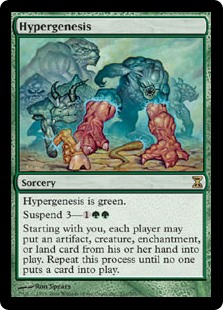
Hypergenesis is one of the strangest cards on Modern's banned list. Not that it looks out of place (Mycosynth Lattice) or requires a lot of context (Second Sunrise), but due to its history and impact on the format. Despite never being officially part of Modern, Hypergenesis had a huge impact on its development. Hypergenesis had some Extended success, but it never made much impact.

When Modern was first invented, Hypergenesis wasn't banned. However, Hypergenesis never saw sanctioned tournament play before being banned. If this appears paradoxical, it's because you don't remember that Wizards beta-tested Modern for the 2011 Community Cup. Which was a good thing, as the Cup proved that the initial banlist was too small. Combo Elves and Dread Return-fueled Dredge killed turn 3, and Hypergenesis could win turn 1. These decks, and Hypergenesis in particular, were so powerful and yet so unfun that it tainted the Cup. So they were all banned as part of Modern's official release. Naturally, PT Philadelphia was busted enough to warrant another massive ban wave.

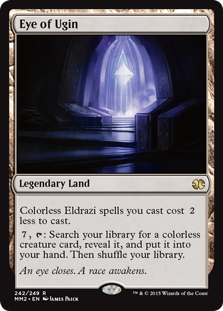
Since then, Hypergenesis keeps lurking around unbanning discussions, but never seriously. When No Banned List Modern was proposed, it was the presumptive most-busted (and therefore best) deck. The absurdity of Eye of Ugin-powered Eldrazi put rest to that notion, and there hasn't been much on NBL Modern since 2018 for that very reason. As a result, a lot of players are unaware of this history or the potential threat. New players look at Hypergenesis, then back at Living End, and ask themselves: huh?

I strongly suspect that the events of the past month have stifled all such thinking. However, that certainly wasn't the case back in November, when this all got started.

For the Record

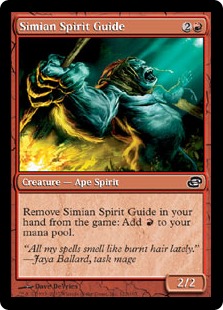
I had no foreknowledge about all this Tibalt nonsense. Which should be obvious, but the timing is such that I want there to be no confusion. I started all this in November. I told Jordan back in January I planned to spend February rolling out this test, well before everything blew up. [Editor's note: he did indeed.] I've actually pushed back my schedule because of this dumpster fire. There are a lot of parallels to what I found in this test and what everyone's seen in the past two weeks. I even alluded to that fact already. It is completely coincidental, though it will certainly color everyone's opinion on the matter. Banning Simian Spirit Guide has also impacted things, though not as much as I expected.

Testing Procedure

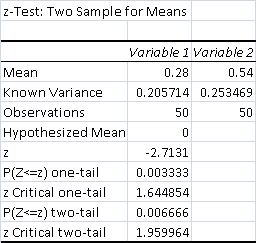
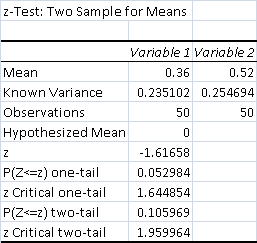
For those new to this series, the premise is to test banned cards in as close to scientific conditions as are feasible. Speculation is worthless, and small scale testing doesn't generate reliable data. So I take a banned card, fit it into an existing deck that is as close to the deck that got it banned as possible, and run both that and a non-altered deck through a gauntlet of stock decks from the current metagame. I play 50 full matches apiece against each gauntlet deck, record the results, and then statistically analyze the results to see if adding the tested card made a statistically significant change. I also record the overall gameplay experience and any interesting details that come up during testing, because raw data doesn't tell the full story.
This is intended to provide a clear picture of what could happen if the tested card was unbanned. It's not perfect, and a larger sample size would be better. However, such sampling is prohibitive, because I don't farm out the work: I play all the matches as the test and control deck, with various other players I know playing the gauntlet decks. Having other people do it for me means I don't get any insight into the matches. And it's unforgivably lazy. It's also why these tests typically take months to perform, though this time it went incredibly quickly. However, it's worth it to ensure that differing skill levels don't affect the results. Every player is unique; changing out players will affect how matchups play out, and thus the data. Science is about removing variables, not adding them.

Test Deck

All that said, everything I just said about deck selection doesn't apply to Hypergenesis. There is no deck in Modern that I could just slide it into and have a valid deck. It's the first flagship card I've ever tested, which means it's the first deck I've had to build entirely from scratch. I cheated a bit on Green Sun's Zenith because while it was banned for prevalence, Zoo was clearly the deck which benefitted most, and that style of Zoo isn't good anymore... but that was the only exception.  So to Google I went, hoping that whatever's left of the No Banned List crowd would have a deck for me.

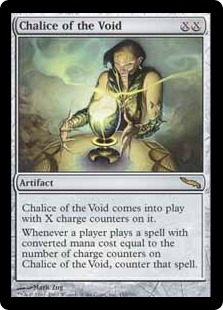
I didn't find much. I don't know what I was expecting, really. NBL Modern didn't exactly set Magic on fire, and Hypergenesis is a dog to Chalice of the Void, which is a four-of in NBL Eldrazi. There hadn't been much innovation since the original lists, and 2018 decks looked the same as 2020 ones. While I could have left it there and just grabbed a deck, some quick Googling suggested that the lack of change was due to a lack of interest and success thanks to aforementioned doghood rather than a tuned, solved list existing. Hypergenesis loses to Chalice for zero; Chalice is everywhere, so why bother tuning? I had no choice but to re-work the deck myself:

Hypergenesis, Test Deck

Creatures

4 Chancellor of the Annex
4 Chancellor of the Tangle
4 Simian Spirit Guide
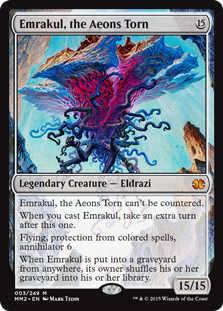
3 Emrakul, The Aeons Torn
3 Progenitus
2 Terastodon
2 Dragonlord Kolaghan
2 Urabrask the Hidden
1 Ashen Rider

Enchantments

4 Ardent Plea

Sorceries

4 Demonic Dread
3 Hypergenesis

Instants

4 Violent Outburst

Lands

4 City of Brass
4 Forbidden Orchard
4 Reflecting Pool
4 Tendo Ice Bridge
3 Gemstone Mine
1 Gemstone Caverns

Sideboard

3 Anger of the Gods
4 Leyline of Sanctity
4 Ricochet Trap
4 Ingot Chewer

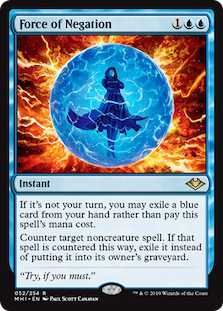
The idea was to maximize the chance of a turn 1 combo, so Chancellor of the Tangle and Simian Spirit Guide were necessary. Chancellor of the Annex is a Legacy Reanimator staple for protection against Force of Will. I wanted it against Force of Negation specifically, but also to generally slow my opponents down. I anticipated having to mulligan a lot, which also meant a lot of doing nothing, and enforcing some of that on my opponents at no cost seemed good. Plus, this deck was never not going to be a frustrating experience to play against, I might as well maximize that aspect.

Most lists ran a full set of Terastodon and several Ashen Riders, and I'm not sure why. They didn't do much in exploratory testing, so they were cut down to make room for Annex. I cut back on legends generally because I had multiple copies too often. This despite Emrakul and Progenitus being the main threats. It's also responsible for the split between Urabrask and Dragonlord Kolaghan. Both are mainly there to give everything haste, and having the split meant that I could have both out and protect against Path to Exile.

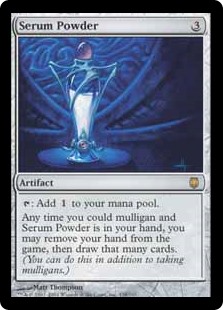
The sideboard was me spitballing. I took the common cards Living End used to play, maxed them out, and was done. They also happened to be the only common cards in NBL lists, though the numbers were all over the place, but the alternatives seemed too targeted for NBL to consider. And this board worked fine. Not great, but fine. Ingot Chewer didn't end up mattering at all, but I'm not sure what I could have played that would have been better. Sideboarding with a combo deck is an exercise in doing as little as possible, and the other three cards did enough work that the wasted slot wasn't relevant.

Control Deck

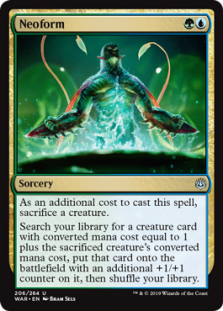
Then, I had to choose the comparison deck, a much bigger problem. Again, I couldn't just make a Hypergenesis list and replace Hypergenesis. There is no replacement card, so I had to use an entirely different deck. Which meant replicating the gameplay as closely as possible. Hypergenesis is an all-in, glass cannon, win-early-or-lose combo deck. The only deck that came to mind, or that I could find after poking around the internet, was Neoform.

Neoform, Test Deck

Creatures

1 Wild Cantor
4 Simian Spirit Guide
1 Lab Maniac
4 Chancellor of the Tangle
4 Allosaurus Rider
2 Griselbrand
2 Autochthon Wurm

Sorceries

4 Serum Visions
4 Neoform
4 Eldritch Evolution
4 Turntimber Symbiosis

Instants

4 Summoner's Pact
1 Noxious Revival
1 Veil of Summer
4 Manamorphose
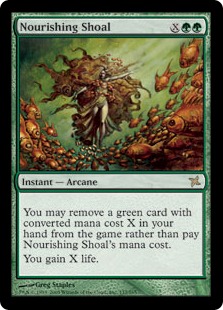
4 Nourishing Shoal

Lands

4 Botanical Sanctum
4 Waterlogged Grove
3 Gemstone Mine
1 Island

Sideboard

4 Pact of Negation
2 Slaughter Pact
3 Repeal
1 Spell Pierce
3 Veil of Summer
2 Firespout

Belcher was also a consideration, but oddly, it was too good. Hypergenesis can only win by resolving the namesake early. Belcher likes that too, but it can also win via Storm or Blood Moon. It also can simply wait, survive aggro thanks to all the incidental burn it plays, and look for the opportune moment. Thus, it has options and can adapt to the opponent, and doesn't have to mulligan aggressively. This is not true of Hypergenesis or Neoform, so the latter was picked.

The Gauntlet

As always, the gauntlet decks are high tiered decks from as wide a range of archetypes as possible. And that I can find willing pilots. Sometimes, I just have to make do, but this time I did get a good selection of highly tiered decks to test against.

4-Color Omnath, Test Deck

Creatures

4 Uro, Titan of Nature's Wrath
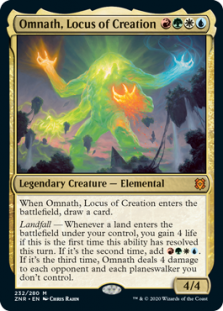
3 Omnath, Locus of Creation

Planeswalkers

3 Wrenn and Six
2 Teferi, Time Raveler
1 Jace, the Mind Sculptor

Sorceries

1 Hour of Promise

Instants

4 Path to Exile
3 Lightning Bolt
2 Growth Spiral
2 Mana Leak
3 Force of Negation
3 Cryptic Command

Lands

4 Misty Rainforest
4 Scalding Tarn
2 Flooded Strand
2 Field of Ruin
2 Field of the Dead
1 Breeding Pool
1 Hallowed Fountain
1 Ketria Triome
1 Lonely Sandbar
1 Mystic Sanctuary
1 Raugrin Triome
1 Steam Vents
1 Stomping Ground
1 Temple Garden
1 Vesuva
1 Forest
1 Island
1 Snow-Covered Forest
1 Snow-Covered Island
1 Snow-Covered Plains

Sideboard

2 Engineered Explosives
1 Veil of Summer
2 Aether Gust
1 Celestial Purge
3 Cleansing Wildfire
1 Deflecting Palm
1 Gaea's Blessing
1 Ashiok, Nightmare Render
1 Mystical Dispute
1 Timely Reinforcements
1 Supreme Verdict

It was actually a fight to get this deck. It was The Deck in October/November, but my control guy (who had the deck and was doing well with it online, by the way) didn't actually want to play it. He's been part of every test and wanted to help again, but he wanted to play his pet UW Control deck. Because, in his own words, "I can't show up to MTGO with UW and be taken seriously. Or win." I turned that around on him with "Then I can't use UW in the test and have it taken seriously either, can I?" He relented, whining the entire test about having his arm twisted. I'm retaliating by publicly calling him out.

Death and Taxes. Test Deck

Creatures

4 Giver of Runes
4 Thalia, Guardian of Thraben
4 Leonin Arbiter
4 Stoneforge Mystic
4 Flickerwisp
4 Skyclave Apparition
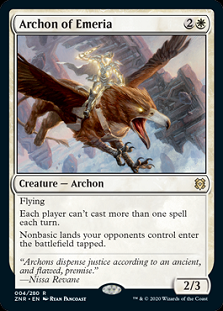
2 Archon of Emeria

Artifacts

4 Aether Vial
1 Maul of the Skyclaves
1 Sword of Fire and Ice
1 Batterskull

Instants

4 Path to Exile

Lands

4 Field of Ruin
4 Ghost Quarter
4 Horizon Canopy
11 Plains

Sideboard

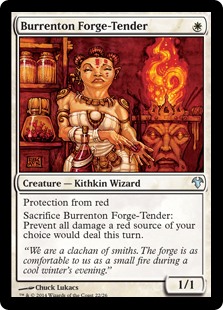
3 Burrenton Forge-Tender
2 Auriok Champion
2 Phyrexian Revoker
2 Rest in Peace
2 Winds of Abandon
2 Aven Mindcensor
2 Mirran Crusader

I was expecting a fight with this one, as my DnT pilot usually takes great pride in making his own decks. However, he was playing a stock list and was very happy about DnT actually being good.

Scourge Shadow, Test Deck

Creatures

4 Bomat Courier
4 Monastery Swiftspear
4 Death's Shadow
4 Scourge of the Skyclaves

Artifacts

4 Mishra's Bauble

Enchantments

2 Seal of Fire

Sorceries

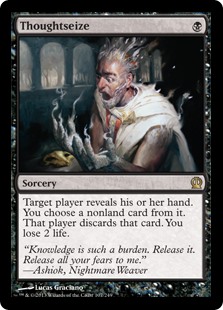
4 Thoughtseize
3 Inquisition of Kozilek
1 Agadeem's Awakening

Instants

4 Fatal Push
4 Lightning Bolt
2 Temur Battle Rage
2 Dismember

Lands

4 Bloodstained Mire
4 Verdant Catacombs
4 Blood Crypt
2 Polluted Delta
1 Silent Clearing
1 Sunbaked Canyon
1 Mountain
1 Swamp

Sideboard

1 Lurrus of the Dream-Den
3 Soul-Guide Lantern
2 Abrade
2 Kroxa, Titan of Death's Hunger
1 Dreadbore
3 Blood Moon
1 Kolaghan's Command
2 Kozilek's Return

While my usual Death's Shadow guy was happily playing Scourge Shadow at the time, by the end, he wished he'd played Grixis instead. The data will make it clear why.

Amulet Titan, Test Deck

Creatures

4 Arboreal Grazer
4 Dryad of the Ilysian Grove
2 Azusa, Lost but Seeking
4 Primeval Titan

Artifacts

4 Amulet of Vigor
1 Engineered Explosives

Sorceries

3 Explore
3 Turntimber Symbiosis

Instants

4 Summoner's Pact

Lands

4 Gruul Turf
4 Simic Growth Chamber
2 Castle Garenbrig
2 Cavern of Souls
2 Tolaria West
2 Valakut, the Molten Pinnacle
1 Bojuka Bog
1 Breeding Pool
1 Crumbling Vestige
1 Field of the Dead
1 Ghost Quarter
1 Golgari Rot Farm
1 Hanweir Battlements
1 Radiant Fountain
1 Stomping Ground
1 Vesuva
1 Wooded Foothills
2 Forest
2 Snow-Covered Forest

Sideboard

1 Engineered Explosives
1 Field of the Dead
1 Pact of Negation
2 Relic of Progenitus
2 Firespout
1 Reclamation Sage
1 Tireless Tracker
2 Boil
1 Force of Vigor
3 Mystical Dispute

Usually I have Tron for the ramp deck. The Tron player wasn't available, and I didn't know any other regular ramp players. Amulet was going through a weird period in November and there were players willing to test their deck. I randomly found one on Cockatrice willing to fill in and commit to the test. Thank you S3quoia-Ult1ma for the help, whoever you were in December 2020.

Oops, All Spells, Test Deck

Creatures

2 Narcomoeba
4 Simian Spirit Guide
4 Undercity Informer
4 Balustrade Spy
4 Vengevine
1 Salvage Titan
1 Phantasmagorian

Artifacts

4 Pentad Prism
3 Sword of the Meek
4 Talisman of Resilience

Enchantments

3 Leyline of Sanctity

Sorceries

4 Agadeem's Awakening
4 Creeping Chill
4 Emeria's Call
4 Sea Gate Restoration
4 Turntimber Symbiosis
1 Shatterskull Smashing

Instants

4 Hagara Mauling
1 Nexus of Fate

Sideboard

2 Pact of Negation
1 Slaughter Pact
4 Natural State
1 Nature's Claim
3 Thoughtseize
3 Vendetta
1 Leyline of Sanctity

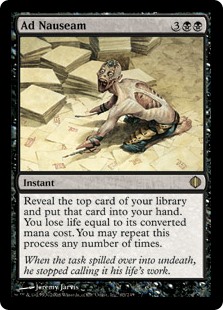
I couldn't get a Storm or Ad Nauseam player for the combo slot. However, a Dredge player I knew offered to run Oops, and it's close enough.

Stage Is Set

Thus, the decks were chosen, and the test was set. Join me next week as I reveal the hard data from the test.

Alien Zoo: Colorless Eldrazi Stompy Post-SSG Ban

Are you a Quiet Speculation member?

If not, now is a perfect time to join up! Our powerful tools, breaking-news analysis, and exclusive Discord channel will make sure you stay up to date and ahead of the curve.

On February 15, 2021, Wizards banned a card near and dear to my heart: Simian Spirit Guide. The Asking-for-It Ape was featured prominently in my go-to Modern deck, Colorless Eldrazi Stompy, which must mutate dramatically if it is to keep pace in the format. With a week of testing under my belt, I'm ready to unveil what that new form may resemble.

What Is Was Colorless Eldrazi Stompy?

Along with the now totally extinct (RIP Gitaxian Probe) Monkey Grow, Colorless Eldrazi Stompy is the deck I'm best known for, and the one I've enjoyed the most success with.

My exploits with the deck include an SCG Classic win, 4th- and 9th-place finishes at SCG Regionals, and an undefeated Modern run at the SCG Invitiational. The decklists I used between events changed very little, adhering to the deck's strict core and always—always—featuring 4 Simian Spirit Guide.

There's little question that even if I manage to piece together a competent 75 from the rubble, as I will spend most of this article attempting, Colorless Eldrazi Stompy (hereafter: CES) as I knew and loved it is gone. Besides tournament reports, I've churned out tons of content on the deck since its humble beginnings, including a comprehensive mini-primer series covering mulligans, sideboarding, and play tips; a side-by-side comparison to Modern's other Eldrazi decks; and deep-dive exposĂ©s on key cards like Smuggler's Copter, Zhalfirin Void, and Karn the Great Creator. Some of that content may remain useful to archetype newcomers or obsessive historians. For the most part, though, the world... is very different now.

Pour Out a Little Liquor

Here's the list I'd been on leading up to the ban:

Colorless Eldrazi Stompy, Jordan Boisvert

Creatures

4 Eldrazi Mimic
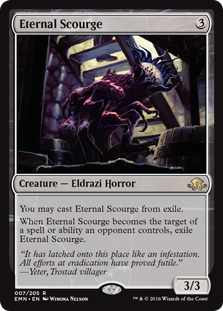
4 Eternal Scourge
4 Thought-Knot Seer
4 Reality Smasher
4 Simian Spirit Guide

Artifacts

4 Serum Powder
4 Chalice of the Void
2 Smuggler's Copter

Instants

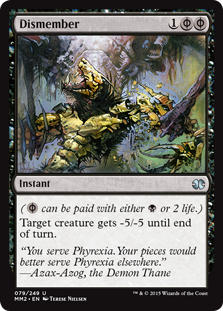
4 Dismember

Lands

4 Eldrazi Temple
3 Gemstone Caverns
4 Zhalfirin Void
3 Mutavault
2 Blinkmoth Nexus
2 Ghost Quarter
4 Blast Zone
2 Wastes
2 Scavenger Grounds

Sideboard

4 Relic of Progenitus
4 Sorcerous Spyglass
1 Crucible of Worlds
2 Damping Sphere
1 Emrakul, the Aeons Torn
2 Gut Shot
1 Surgical Extraction

I actually had an article planned going into the choices here in detail. While the deck looks different without Guide, I think it will be useful to review my recent modifications as a jumping-off point.

Eye on the Pry

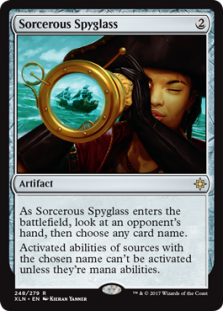
The sideboard features a key difference from previous builds in its bid to run a full set of Sorcerous Spyglass. Previously, I'd bounced between employing Spyglass (which gets around Chalice and offers a bit of extra information) and Pithing Needle (which is importantly one mana cheaper) in CES depending on the metagame. Either way, though, the effect never merited more than 2 slots in the sideboard. Things changed with Kaldheim. Suddenly, every deck and its grandmother seemed to feature the power-play of Oko-plus by cascading on turn two or three into Tibalt, Cosmic Imposter.
I soon found that maxing out on Spyglass was the best defense against this new breed of cascade deck. With Tibalt gone, I'm returning to 1-2 copies as a catch-all against decks that happen to have multiple high-value targets like manlands, planeswalkers, utility creatures, and equipment. Similarly, Damping Sphere has game against a heap of Modern decks, but none that we find particularly tough to beat. Except, that is, for Tibalt's Trickery, yet another Kaldheim deck targeted by the recent bannings.

Land Me a Hend

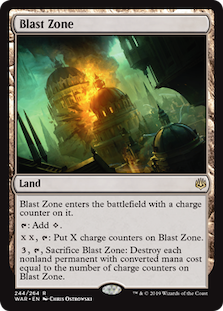
Biggest of all changes here is my move to 26 lands. I abandoned Endless One and Matter Reshaper, cards I long swore by as flex options, when I realized I wanted to be seeing Blast Zone as much as possible. Go-wide creature decks have always been problematic for us to deal with, as have strategies employing tricky permanents like Ensnaring Bridge; against the former, we needed a high density of removal spells, while the latter forced us into freaky sideboard bullets like Ratchet Bomb and for a long time convinced me we needed Karn, the Great Creator in the main 60 so we could fish it out. But Zone deals with both of these.
While previously I'd carefully rationed the number of Zones to maximize mana spent each turn, increase the diversity of effects on board, and avoid clunking out, I've come to see that in the creature matchups we want all the Zones we can get, and in the Bridge-esque matchups we want to maximize the odds of seeing at least one. After testing with the full set, I ditched both Karn and Bomb, which is where the extra sideboard slots came from.

26 lands did strike me as a lot initially, as I tend to go as low as I can with land counts for the decks I design. But I simply didn't want any spells over the lands I was running. With no Karn to find Relic in game 1, I needed Scavenger Grounds back, and none of the other land counts were negotiable: Temple and Void are absolute 4-ofs; 3 Gemstone is the maximum we can run comfortably; 5 manlands has felt like the sweet spot for years; Ghost and Grounds are great at 2 apiece so we can see them a reasonable amount of the time; gotta have them Wastes for Path, Trophy, Quarter, Field, etc. from the other side... and that's 26!

Running so many lands had another positive effect on the deck that I hadn't anticipated, although in hindsight it makes perfect sense. We often get low on cards in the mulligan stage, and having many "spell-lands" in the deck rather than actual spells reduces the pressure on those leaner hands. At 26, we can keep more hands that are light on mana and feel confident the deck will deliver what we need. Plus, there are some matchups where more lands—any lands—are preferred over other cards such as Copter or Dismember (Burn, for instance), and we lack the sideboard space to optimize a plan (these matchups tend to be favorable already).
Of course, right when I was sold on the high land count and beginning to feel great about the deck's positioning, Wizards banned one of its main components.

A Dirge for Simian

I get that Simian Spirit Guide wasn't banned for pumping out 3/3s a turn ahead of schedule, even if that's what the card often did for CES. In fact, Guide formed an integral part of this deck's strategic core, playing multiple roles throughout the game and across different matchups.

This Is What He Does

As has become tradition when Wizards kicks my low-tier pet deck in the 'nads, let's review what the card in question actually did for the archetype.

  • Power out Chalice of the Void: The main reason to run Simian Spirit Guide, on account of turn one Chalice single-handedly beating many Modern decks pre-board.
  • Ramp into TKS or Smasher: Firing off that Thoughtseize effect or swinging for tons a turn early could net us close victories against linear decks. Opened or drawn Smashers became a lot more exciting with 4 Guide in the deck, as at any time we could pluck an Ape from the top and suddenly turn the corner; without Guide, plays like slamming Chalice on 2 would have been out of reach against faster combo decks that demanded it, like Storm.
  • Provide general curve fixing: Guide's least exciting function on paper, but a critical one in games, was to plug holes in our mana curve. I've won countless games by simply following Temple, Guide, three-drop into land, three-drop with the usual Eldrazi fanfare.
  • Create blowouts with interactive cards: Some combo decks require us to hold up a Relic pop (Storm, Griselbrand, etc.) or removal spell (Counters Company, CopyCat, etc.) after a certain number of turns have elapsed, lest we tap out and lose to the assembled combo. With Guide in hand, we could spend all our mana each turn, slamming as many threats as possible to put the game away fearlessly. In fact, doing so often gave opponents the go-ahead to try the combo, which almost always led to blowouts: they'd sink their precious resources into what looked like a sure thing only for us to pitch the monkey and dismantle their gameplan. I've even created blowouts by pairing Guide with two untapped mana sources and a Blast Zone!

Having Guide in the deck was, in many situations, as useful as finding it in an opener. Those bursts of free mana certainly added up over the course of a match.

If a Monkey Could Do Your Job...

With Guide's praises good and sung, it's time to focus on the task at hand: replacing it. Naturally, Modern contains no free-mana cards as generically splashable as Simian Spirit Guide, which is exactly why the creature was axed. And it's not like we can keep running Chalice of the Void; there are some decks a Chalice on 1 doesn't beat, and even in the matchups where it shines, the artifact can sometimes be too slow if played on turn two. It's a game 1 liability without Guide. Our only hope is to alter the gameplan and deck makeup.
To be fair, I wasn't totally stabbing around in the dark: I'd actually proposed a Guide-less build in the past, back when Eternal Scourge was released and I rebooted this deck from its storied origins. In those days, Dredge was running around at full power, and the deck's first draft omitted the Guides and Chalices it would come to be known for in exchange for full sets of Relic of Progenitus and Endless One. It made sense to start with those swaps and a little re-tooling to see what might happen. Additional tweaks led me to the list below.

We Are Not the Simian, I Am a Martian

On the surface, CES undergoes some very simple switches to account for the Ape ban: 4 Simian Spirit Guide becomes 4 Endless One, and 4 Chalice of the Void becomes 4 Relic of Progenitus. I've also modified the land base a bit. The reasoning for these switches is more involved, and the implications it has on how CES plays and matches up against Modern's gauntlet even deeper.

Alien Zoo, Jordan Boisvert

Creatures

4 Endless One
4 Eldrazi Mimic
4 Eternal Scourge
4 Thought-Knot Seer
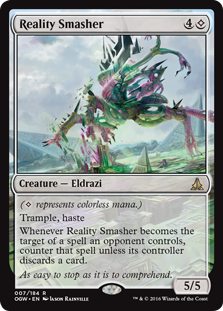
4 Reality Smasher

Artifacts

4 Relic of Progenitus
4 Serum Powder
3 Smuggler's Copter

Instants

4 Dismember

Lands

4 Eldrazi Temple
3 Gemstone Caverns
4 Zhalfirin Void
4 Blast Zone
4 Mutavault
2 Blinkmoth Nexus
2 Ghost Quarter
2 Wastes

Sideboard

4 Chalice of the Void
2 Sorcerous Spyglass
1 Crucible of Worlds
4 Spatial Contortion
2 Gut Shot
1 Surgical Extraction
1 Emrakul, the Aeons Torn

Aggrophobia

The most obvious change in how CES played: it was suddenly much more aggressive. The deck used to insistently mulligan for openers that featured a fast lock piece or a dreamy curve, and then chase that turn one Chalice with big bodies to put away the game quickly. Now, those big bodies follow not a Chalice, but... littler bodies.

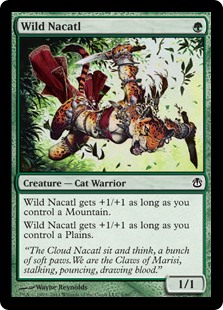
Lacking a dedicated "lock piece" per se, CES becomes less of a stompy deck and more of a pure aggro deck, cf. Zoo. While it can do so, the disruptive artifact that replaces Chalice doesn't tend to lock opponents out of the game nearly as often as it generates additional pressure, looping Scourge into an endless stream of Wild Nacatls. As I wrote about Relic in an antiquity evinced by the deck names:

Relic is less of a lock piece and more a very efficient, self-replacing disruptive permanent. But it’s important to remember that combined with Scourge, it can make combat nightmarish for opponents, which is more desirable than Chalice against certain decks (CoCo/Chord, Zoo, Little Kid Abzan, etc.). That’s in addition to butchering Grixis/Jund/Jeskai/Abzan midrange decks and hosing certain strategies (Goryo’s, Dredge) on its own.

To boot, the card that replaced Guide, Endless One, is yet another aggressive body, dropping as a 2/2 on turn one and a fatty down the road. One is fantastic in this build, plugging curve holes in the Temple hands while resolving for as low as one mana to crew Copter in a pinch.
Zoo decks deal themselves plenty of fetch-shock damage and run a mana-centric land base to enable Wild Nacatl, Akoum Hellhound, and the like as reliable, above-rate Stage 1 creatures. Our re-adoption of Endless One sits us closer to Zoo on the aggressiveness spectrum. But imagine: how bonkers would Zoo specifically be if instead of running all those Temple Gardens and Arid Mesas, it could run 4 Mutavault? I haven't looked back since maxing out on the land, a move which further supports our now emphasized aggro bent.

Copping a 'Tude

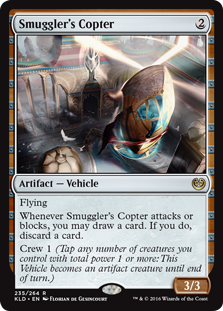
Another switch I made was to run 3 Smuggler's Copter. (4 can still clog, although I'm not totally opposed to retrying a full set.) The card I once eulogized as a flex spot sees its stock rise significantly sans Simian.

CES always had two kinds of openers to find with its mulligans: nutty Temple hands and turn one Chalice hands. Scourge represented our third "free win" element, but seldom rendered openers keepable by itself; more often, its distinguished presence in exile would simply excuse our mulling to four or below. On the other hand, Copter did wonders for our openers, possessing the unique ability to jump-start our curve without a Temple in sight. For example, a hand with Temple and Scourge access would cast the 3/3 on turn two and swing 3 the following turn; from there, the deals kept coming. The same hand minus Temple can still make Copter on turn two, then pay full price for Scourge, crew the Vehicle, and swing 3 as though Temple was always in the picture.
In other words, running Copter in high numbers gives us back the "second plan" we lost with the removal of turn one Chalice. Demanding Eldrazi Temple from every otherwise balanced opener is unreasonable, even with 4 Serum Powder. But Temple or Copter? Fine. Just like Temple or turn one Chalice was fine. And Temple or Eye of Ugin, for those of you old enough to remember the good ol' days. And while turn one Chalice was more impactful, it required two cards to actually come online: Chalice and Simian. Copter is stand-alone, further reducing pressure on our openers.

That's not to downplay the fact that turn one Chalice put away games by itself. And Smuggler's Copter is no turn one Chalice. But with that out of the way, Smuggler's Copter is nonetheless phenomenal against basically everything. Removal-heavy midrange decks? Bask in the tempo-sucking warmth of the Splinter Twin effect. Tap-out control? Good luck creaming us with a sweeper, let alone sticking a planeswalker. Creature combo? Excuse me while I soar over the board stall and keep the removal flowing. Burn? Uh... okay, Copter still sucks against Burn (we need the blockers). But everywhere else, it's so high-impact that if they're not straight-up losing to it, opponents find themselves awkwardly sinking resources into removing it, spending valuable tools like Abrade or Assassin's Trophy on our end step only for us to stick another one the following turn. We run three, after all!
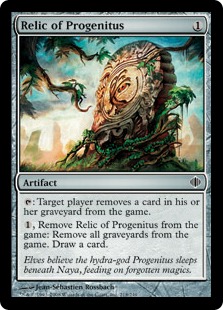
Another neat thing about Copter is the Eternal Scourge micro-synergy. Pre-Guide ban, this interaction did come up occasionally, but very rarely; now, it's a feasible card advantage engine to get online in certain matchups, even in game 1. How it works: creature crews Copter, Copter discards Scourge, Relic exiles Scourge, Scourge crawls out of exile to crew Copter, and the cycle continues. More commonly, though, the artifact just loots us past extra Gemstones, Powders, and the like so we can draw into business all game.

To Land on Both Feet

I'd also like to touch on the lands and sideboard for this new configuration.

Besides 4 Blast Zone and 4 Mutavault, other changes to the manabase include cutting Scavenger Grounds entirely (we play 4 Relic now) and maintaining Gemstone Caverns at 3. I did try 4, both with a sided copy and a mainboarded one, but found that it was overkill; the legend clause can really bite us with that many (or else I'd max it fa sho), and there are some matchups where starting "on the play" at the cost of a card isn't even worth it unless we happen to have Scourge (e.g. against attrition decks such as Rakdos Midrange). Caverns is at its best against linear combo and aggro decks, where the speed boosts from Simian are most sorely missed.
...With a Side of Hate

The sideboard is always subject to change, but here's a down-and-dirty for the above list:

Chalice takes the place of Relic in the sideboard, still coming in for the matchups that it dominates like Infect, Hammertime, Burn, etc. I also like a couple copies against interactive decks, where it can set up unfadeable Copter attacks but risks clashing with Relic. Crucible has lots of different applications depending on the matchup, and is the main "Karn target" I've decided to keep around, while Spyglass is fine at 2 to hassle combo and the odd Tron deck (between Smasher, Copter, and Muta, planeswalkers are less cumbersome than ever before). And our Mill matchup is indeed favorable, but it's not 100%. I feel like any deck with some breathing room in the sideboard should consider a copy of Emrakul, the Aeons Torn when Mill is a tiered deck.

Reality Check

Simian Spirit Guide powered Colorless Eldrazi Stompy's most impressive openers, leading to utter nonsense like turn one Chalice (common) and turn two Reality Smasher (with some luck). Heck, I've even turn one'd a Smasher!


Those days may be past, but color me optimistic about Colorless Eldrazi. First, this new form closely resembles some of our optimal configurations, such as vs. Jund (we'd board out Chalice and Simian for that matchup). Second, reactive decks cannot and will not ever be comfortable sitting across from Eternal Scourge. And finally, Wizards ain't done printing cards that slot right into this deck. Zhalfirin Void and Blast Zone were major upgrades for us, and the relatively recent Smuggler's Copter makes this build possible at all. Mark my words, there are pushed colorless lands and utility artifacts galore on the horizon. I, for one, am not throwing the spaghetti out with the pasta water!

Financal Considerations When Selling High End Cards

Are you a Quiet Speculation member?

If not, now is a perfect time to join up! Our powerful tools, breaking-news analysis, and exclusive Discord channel will make sure you stay up to date and ahead of the curve.

I’ve talked at length now about how any and all Reserved List cards are being targeted left and right. In addition, non-Reserved List cards from the 1993-1994 time period are all climbing now—this past weekend I saw Sea King's Blessing jumped and I couldn’t help but scratch my head.

There was an error retrieving a chart for Sea Kings' Blessing

Rather than dwell further on these silly cards, I’m going to focus on the opposite: high end cards. But my intent isn’t to tout the merits of owning cards like the Power 9, Library of Alexandria, and The Tabernacle at Pendrell Vale. I don’t think an article needs to be written to communicate how stellar those have been as investments.

Instead, I want to talk about a rising complication that comes along with the explosion of high-end card prices.

Let’s start by looking at a hypothetical example…

Case Study: Selling a Timetwister

Let’s imagine that you’ve been playing Commander for a decade now, and are tempted more and more by the climb in price of an Unlimited Timetwister. A decade ago, this card sold for under $300—it was, by far, the least desirable piece of Power. All the legendary creatures that abused Timetwister probably hadn’t been printed yet, but I’m sure the card still interested at least some players back then.

Now you look at TCGplayer and observe that the lowest card’s price is $8499.99. That’s a 2700% gain if you can actually fetch that price! Even if you undercut the lowest seller, selling this card for $7000 would be a nice windfall, especially in trying times such as a pandemic.

There was an error retrieving a chart for Timetwister

Understanding you won’t necessarily be able to sell the card at TCG low (often times these numbers are inflated), you begin doing your research.

A quick search on eBay reveals that recently sold played copies of Unlimited Timetwister went for $3500 to $5500. While not impossible, that $8499.99 price tag suddenly seems like wishful thinking. Perhaps we’ll get there soon, but the true price of a moderately played Timetwister isn’t that high just yet. Consistently, the last sold MP Timetwister on TCGplayer was $4500.

Let’s say you decide $4500 is the right price to sell at—hey, that’s still a far cry above the $300ish you hypothetically spent in this case study. That’s a very solid 10-year return!

The big question I have now, the crux of this article, is what do you do next? How are you going to actually net $4500 selling this card? I don’t think it’s so easy…

Hidden Costs

First of all, selling this card on eBay or TCGplayer will incur roughly 10% in fees. That’s a $450 haircut right off the bat. (NOTE: TCGplayer caps fees at $50 per product sold in some cases. Check their website for more specific details). If you receive payment via PayPal, it’ll be another $100 or so taken out. Now your $4500 Timetwister is going to net you at $3950.

You could try to avoid these fees by selling directly via Facebook or Discord. This is a viable strategy—only, buyers on those sites know you’d be incurring these fees and expect you to discount your asking price by nearly the same amount. Why pay an individual $4500 for a card when they can purchase it from a reputable online seller with 10,000’s feedback for a similar price? (Granted, none are readily available at the moment.)

Maybe you get lucky, and an eager buyer happens to come along and scoop up your copy at a price closer to $4500 than $4000. You could always give it a try—it costs nothing to post. But you may be waiting a while, and could have to deal with numerous DM’s with lowball offers. This is one disadvantage selling privately versus using a site like eBay and TCGplayer: with the former, you have wishy washy buyers, lowballers, and people who post comments with no intent of purchasing. With the latter, all of that is removed and you either make the sale or don’t. Quite simple.

If you’re impatient and want a sale sooner, you could always pursue a buylist. But unless you’re in Japan, you aren’t going to get nearly as much for your moderately played Unlimited Timetwister by going this route.

For example, Card Kingdom pays just $2,340 for “Very Good” copies. Star City Games is even lower, offering $2250 for played copies. Your best bet currently appears to be ABUGames, who will pay you $3213 for a played copy of the card ($6650 if you want to try your luck at the store credit game). That’s not completely unreasonable in terms of buylist, but of course you could get more selling it yourself.

No matter which route you decide on, there’s one nearly certain thing you’ll have to deal with. Unless you have a friend looking to buy or you get lucky posting to Craig’s List, you’re going to have to ship the card…

Shipping Costs and Beyond

Have you ever shipped a $4000 Magic card before? I haven’t! I know this is done frequently, but if you’re not used to the practice (like me), then the prospect could be stressful.

First of all, there’s the overall cost of shipping the card. Maybe some folks are comfortable throwing a $4000 card in a plain white envelope and making a sacrifice to the “Mail Gods”, but that doesn’t jive well with me. If I sell a four-figure card, you’d better believe I’m at least shipping it via priority mail, adding signature confirmation, and at least considering adding some insurance.

Unfortunately for me, that all comes with incremental cost. To ship Priority mail, with signature confirmation alone costs about $10. Then if you want beyond $50 insurance, it’s another $59 to fully cover the cost of a $4000 card. So in total, your shipping cost could be as high as $70 if you want to minimize risk. You could pursue a private shipping service such as UPS or DHL; you may get that cost down a little bit, but I’m sure it still won’t be cheap.

“But Sig, shipping insurance is a sucker’s bet.”

This is a fair pushback—I’ll admit I almost never add insurance when I mail Magic cards. But given the current challenges the US Postal System is having, how comfortable should we be taking on the risk? How often have you checked the tracking number on a package recently and seen this?

This is the current status on a $300 buylist I shipped to Card Kingdom eight days ago, and even this is giving me anxiety. I wouldn’t want to even imagine a scenario where a $4000 shipment I mail out gets trapped in the USPS ether, displaying nothing but “arriving late” status. Between the pandemic, budget challenges, and the polar vortex throughout the country, I’ve heard of more shipping delays and issues now than ever before.

Let’s assume for now that insurance is applied, but not for the full $4000. After all, the odds of the USPS losing a $500-insured package is probably the same as the odds they lose a $4000 package. Let’s use an estimate of $20 shipping cost for this reason. That brings your net down to around $3900 after fees, shipping, shipping supplies, and your time.

If you paid $300 and netted $3900, you’re still banking $3600 in profits, right?

Well…let’s talk very briefly about our friend Uncle Sam: the taxman.

There was an error retrieving a chart for Tariff

I am NOT a tax expert. I start by saying you should talk to your financial adviser before making any decisions here. All I did was Google “collectible gains tax” and found an Investopedia article that states the following:

So with my case study numbers, if you bought for $300 and netted $3900 after sales, you’d have to pay 28% tax on your profit, or 28% of $3600. That’s $1008! Say what?! You sell this card for $4500 and nearly one-fourth of the proceeds go to the U.S. government?!

Again, I’m not an expert here. Consult with your financial adviser with questions. Back when we were buying cards for $300, this wasn’t a consideration—the numbers were small and inconsequential. But now that these high-end cards regularly fetch mid-four figure numbers, suddenly this situation becomes a whole lot more complex. This is a hidden cost no one talks about.

Imagine if you were trying to sell a Black Lotus?! Someone commissioned PWCC to sell their PSA 10 Alpha Black Lotus recently and it sold for over $500,000.

Of that half-a-million-dollar check, how much do you think the seller will actually get to keep? I shudder to consider all the fees, commissions, taxes, shipping costs associated with such a transaction. I’m sure the fine art field deals with this all the time. But again, in the world of a collectible card game, a lot of this is unprecedented.

Wrapping It Up

It has been fascinating to watch the boom in prices on Old School cards. The high end stuff—cards north of $1000—have been particularly hot lately, probably because savvy players are cashing out of their smaller stuff to move into the blue chips of Magic.

As our collection values grow in paper, the implications of selling become more and more profound. Fees, shipping, risk of lost packages, and taxes are all implications that were less relevant when transactions were only in the $10’s and $100’s. But transactions in the $1000’s and $10,000’s may need to be treated with a new level of care. As crazy as it seems, such transactions are more and more common nowadays.

So as you begin thinking about cashing out of some high-end cards for other real-life expenses, keep all of these factors in mind. It’s almost like hitting the lottery—you are making so much money, but the number you actually receive is much, much less than what was posted publicly. This isn’t meant to discourage folks from selling, of course. Mainly, I just want to emphasize the complexity that now comes with selling Magic cards as they reach unprecedented numbers.

Nuked From Orbit: The February ’21 Banning

Are you a Quiet Speculation member?

If not, now is a perfect time to join up! Our powerful tools, breaking-news analysis, and exclusive Discord channel will make sure you stay up to date and ahead of the curve.

Wow. There are bannings, and then there are bannings. This was definitely the latter. Wizards looked at non-Standard Constructed, saw that it was poor, and nuked it. All of it, Historic, Pioneer, Legacy, and most importantly, Modern. Vintage also saw an unbanning. Because somebody had to get thrown a bone. Monday morning, Wizards dropped the largest Modern banning since 2011. It's also the largest single announcement since 2004, possibly the largest that didn't involve a format being created. 15 bans across four formats with 14 unique cards with five Modern bans is an unprecedented banning. And that's not even getting into the second power-related rules change in the past year.

For those somehow insulated from the wider community, Field of the Dead, Mystic Sanctuary, Simian Spirit Guide, Uro, Titan of Nature's Wrath, and Tibalt's Trickery are now banned in Modern. Tibalt, Cosmic Imposter was also functionally banned due to a change to cascade's rules text. This announcement will have far-reaching consequences, the least of which being that there will be no metagame update for February. Over half the data is for a format that no longer exists. And the rules change doesn't go into effect until tomorrow. We'll all just have to wait for March's update to show how the metagame is developing.

A Subtle Alteration

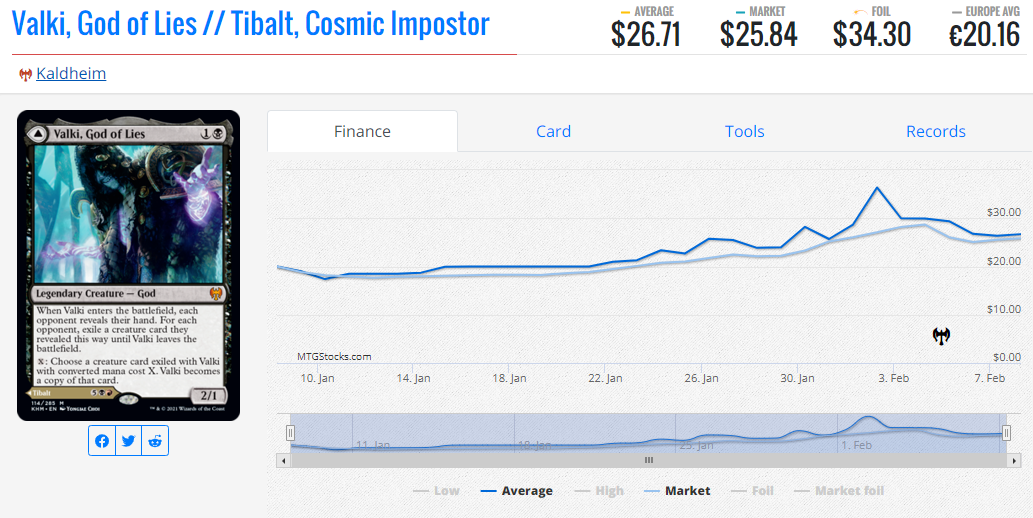
I'll begin with the most welcome, but surprising, announcement. It was universally agreed that a change to the rules was the correct solution to the ridiculous dominance of cascade decks over the past two weeks. Being able to cascade into Valki, God of Lies but cast Tibalt, Cosmic Imposter just feels like an exploit, despite being exactly how the rules work. I agreed, but was uncertain whether Wizards had the time to decide on and test such a fix. Apparently, I needn't have worried, as Wizards has rolled out a very subtle tweak, which I'll highlight for emphasis:

Here is the new cascade rule:

702.84a. Cascade is a triggered ability that functions only while the spell with cascade is on the stack. "Cascade" means "When you cast this spell, exile cards from the top of your library until you exile a nonland card whose converted mana cost is less than this spell's converted mana cost. You may cast that spell without paying its mana cost if its converted mana cost is less than this spell's converted mana cost. Then put all cards exiled this way that weren't cast on the bottom of your library in a random order."

Look at the original wording on Bloodbraid Elf; now, look at this new rule. All Wizards did was add a clause. This clause adds another check for legality once the found spell is cast and disqualifies it if anything's changed between cascade and cast. Thus a player could still cascade into Valki, and then decide they want to cast Tibalt instead (which is how MDFC's are supposed to work), but Tibalt would just be shuffled to the bottom of their library. The tweak restores the original intent of cascade and preserves MDFC functionality, which is important since Strixhaven will have more of those. Credit to Wizards' rules team for a simple, elegant fix to a horribly busted interaction. Rejoice; the menace dies! (Tomorrow, after the MTGO downtime.)

Broader Implications

I need to note before moving on that MDFC's are not the only card category affected by this change. Any non-traditional modal card is affected, though this really isn't relevant to Modern (yet, anyway). The split cards are also affected, but that's not relevant anymore. As previously mentioned, split cards were the topic of a similar reworking to make their CMC's make sense almost four years ago. Seeing as none have a CMC below three (as far as I could find), this was never going to be a problem anyway. What is affected, and perhaps relevantly, are Adventures.

This change isn't limited to double-faced cards. It also changes the way cascade works with anything that has a "dominant" set of characteristics, like the Adventurer cards from Throne of Eldraine. For example, if Bloodbraid Elf causes you to exile Fae of Wishes, you may cast Fae of Wishes, but you may not cast Granted.

I don't recall seeing this come up anywhere ever, but it was apparently a thing that could happen. And now it can't. Sorry to whoever was brewing this deck out on the fringe. However, that corner case aside, this is as targeted a solution as it gets without just banning Valki.

Uro & Friends

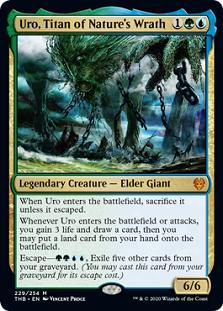
With that, onto the banned cards. Uro, Titan of Nature's Wrath getting axed is not at all surprising. It's been incredibly dominant for months, a major player for a year, and is simply an overpowered card. It's no surprise that it was banned, though it happened sooner than I thought. What is surprising are the circumstances, as this is the first time I remember Wizards committing to banning a card publicly prior to the announcement. See, Wizards is hawking another set of Secret Lairs for Valentines Day. One of those sets contains Uro, and in the larger-than-fine print, Wizards mentioned that Uro was to be banned in Historic, Pioneer, and Modern. Nice of them to disclose (and dodge potential lawsuits for deceptive sales practices), but it is an unprecedented situation.
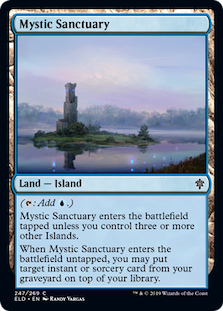
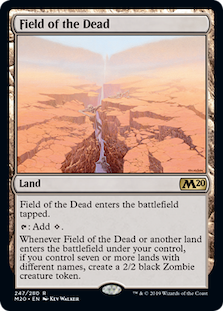
However, Uro isn't going down quietly. Two of its best friends, Field of the Dead and Mystic Sanctuary, were also banned. Even in death, Uro just can't stop generating extra value, can it? This was actually quite shocking. As I explained in the comments of the watchlist article, both cards were heavily tied to Uro for their power and playability. I didn't see a way for either to be banned before Uro, and while Field particularly may have warranted a ban, it would come well after Uro. For both to go down with the flagship card warrants digging deeper.
We Lost Our Land

Wizards explanation is very telling, not just about why the lands were banned, but the philosophy of this entire announcement:

Along with Uro, we're also addressing two land cards frequently used by ramp and control strategies that we feel are decreasing diversity of gameplay patterns: Field of the Dead and Mystic Sanctuary. Both lands create repetitive and noninteractive game states in the late game for relatively low deck-building cost. To promote more back and forth gameplay and interaction over win conditions, we're choosing to remove them.

Unlike Field's Standard ban, this wasn't a power-level ban. Field and Sanctuary never represented too much of Modern's metagame and their individual power was probably fine, though always being played alongside the clearly stifling Uro does muddy the waters. Instead, they were banned for being unfun.  And I get it. Losing to Field tokens feels bad, even though you usually only lose to Field after the game was actually lost. And the Cryptic lock is beyond obnoxious, though again you only lose to it once you're not going to win. Both get old very quickly. However, answers to both exist, and I'd have expected Wizards to just ban Uro and then see if anything else had to be done.

Which is where you have to read the subtext. The announcement says "To promote more back and forth gameplay and interaction over win conditions, we're choosing to remove them." This is significant, as it signals that Wizards was not looking to remove a problem from Modern with this ban. This is a hard reset. Wizards, probably seeing a general drop in online tournament attendance, wants to shake everything up significantly. And this means completely eliminating certain decks so that the format can breathe again.

What Now?

4-Color Omnath, which has been the top placing deck in the metagame rankings since October, is gone. It lost its best enabler in Uro, and its late-game power with Field and Sanctuary. The rest of the deck is still potent, but without Uro to forgive all its structural weaknesses while greasing the wheels, I don't think it can function. And even if it could, sans Field, there's no built-in benefit to the high land count. Omnath, Locus of Creation is very powerful, but it can't carry the archetype. There's a reason it was rarely more than a 2-of compared to Uro's locked-in four slots. There will still be multicolored control (if only because the Sultai crowd are persistent), but it will be very different looking.

The effect on the metagame is much harder to say. As the saying goes, "When the cat is away, the mice will play," and I do expect that midrange and control options pushed out by Uro will make a comeback. However, I have to once again mention that the best overall deck of 2020 was Rakdos aggro, which remains a top deck... and one that was completely untouched by the bannings. My a priori assumption is that Scourge Shadow is the new top deck in Modern. Given recent trends, I anticipate Izzet Prowess to be right up there with Shadow. Whether an almost certainly resurgent Jund can hold them down remains to be seen, but I don't think that Modern will simply become the Wild West. Starting Thursday, I'd be ready for a field of red decks.

Bewildered Ape

Alphabetically next, there's the strange case of Simian Spirit Guide being banned. SSG has been so innocuous for so long that I definitely didn't see this coming. And the explanation comes off more as Wizards being vindictive than anything:

Simian Spirit Guide is a card we've had our eye on for some time as an enabler that speeds up fast combo decks.

To slow down that category of combo decks as a whole and give opponents more time to set up interactive plays in the early game, Simian Spirit Guide is banned.

On the surface, this is a fine explanation. Modern's banlist is a fast-mana graveyard, and SSG was the final reliable turn 1 source. It could have been banned purely for consistency's sake, with the justification that Modern shouldn't have fast mana before turn 2. That's a point a lot of players could have gotten behind and would have finally given us some idea of Wizards vision for Modern. And it's not like anyone ever used SSG for anything unequivocally fair.

However, that's not how Wizards justified the ban. Wizards is wrong about SSG. Their justification for banning is that SSG enables too many fast combos. However, that's a very recent phenomena, mostly tied to the cascade disaster. Prior to the MDFCs, the only good deck that ran SSG was Ad Nauseam, and not as an accelerant: Ad Naus needed SSG to pay for the win condition, Lightning Storm, after it had comboed off. Achieving that required six mana and the deck could only spare one SSG, primarily relying on artifact mana. Outside that, SSG only saw play in really fringe combo or prison decks. And SSG was the only reason they were slightly viable.

The Fallout

As a result, this feels like SSG was simply on the chopping block and Wizards finally had an excuse. Maybe it did deserve it from a banlist consistency or format vision perspective, but that's not the reason Wizards gave. Despite hysteria over SSG-powered Neoform combo, there's never been any evidence that fast combo was at all a problem for Modern, the last two weeks notwithstanding. As a result, Wizards is going to kill a lot of decks without substantially slowing anything down.

Ad Naus and Neoform as we knew them are dead. The traditional kill required a minimum of five mana on the kill turn, with a three mana investment in Phyrexian Unlife, and then three mana to cast Storm on turn four. While it's not impossible for Ad Naus to adapt and play more artifact mana, it will make the Storm kill far harder. The alternate kill of Spoils of the Vault into Thassa's Oracle is still intact, so perhaps the deck will rebuild around them and drop the namesake. Neoform has been driven out already, but it had no way to make mana besides SSG, so I don't think it will survive in recognizable form.
Ironically, the deck that seems like it would be harmed most by SSG's ban will probably benefit. SSG was a key part of Belcher, and without it, the turn 1 kill is impossible. However, the turn 2 kill is still viable, because Belcher plays all legal rituals. With Ad Naus at least temporarily gone, Belcher's main competition is Oops, All Spells, which needed SSG more than Belcher. Without SSG, Oops kills turn three at the earliest, because it doesn't run rituals. Oops has seen more play because its more reliable than Belcher, but now that Belcher is the speed king, its stock will rise. And this could potentially lead to a general increase in format speed.

One for the Road

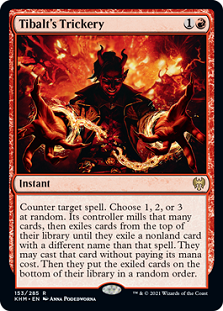
The final ban was Tibalt's Trickery. And that's so much whatever. The card is clearly a mistake, but the deck was harmless. Consistency and power-wise, it was no different than Neoform or Belcher. And wasn't putting up many results, though how much of that is on its own merits and how much is because Valki was busted is unanswerable. It's not the most fun gameplay, but Modern has plenty of innocent high-variance decks. And Wizards acknowledges this fact:
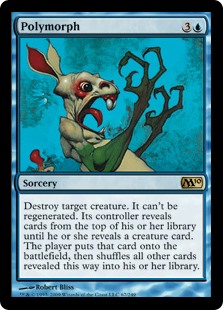
While the overall win rate of the deck hasn't shown to be problematic, we believe it contributes to non-games that make Modern less fun to play. As the goal of this update is to shake up the metagame into a more fun spot, we're concerned that a continued metagame presence of Tibalt's Trickery decks would work against that goal.

Trickery is getting axed out of an abundance of caution and that aforementioned desire to hard-reset Modern. It isn't a problem, but Wizards isn't willing to take the chance it could become one. Which, for the record, there's little reason to think would happen, especially with SSG getting banned. Without SSG around, the turn 1 kill is extremely unlikely, requiring players to open Gemstone Caverns and Chancellor of the Tangle while being on the draw and not getting Thoughtseized or Spell Pierced. The likelihood of that coming together enough to have any metagame impact is remote, but Wizards is worried about the optics of having to ban another Tibalt card in a few months. They're being needlessly cautious.

However, I don't begrudge Wizards. I don't think the ban is necessary, but nothing of value's being lost either. Either Trickery did nothing or was busted, and maybe valuing back-and-forth gameplay over "oops, I win" is good. The first irony of it is that all it takes for Trickery to be an interesting Polymorph variant rather than bannable is to change "Counter target spell" to "Counter target spell an opponent controls." The second, with the reasons given, is that banning Trickery probably obviates the need to ban SSG and vice versa.

A New Modern?

And with that, sometime after tomorrow's MTGO downtime, the new Modern will start to take shape. Or possibly it will just be the old one, minus Uro. Hard to tell. We'll all have to wait and see, and I'll be sure to have that data for the March metagame update.

February 15, 2021 Banned and Restricted Announcement Thoughts and Analysis

Are you a Quiet Speculation member?

If not, now is a perfect time to join up! Our powerful tools, breaking-news analysis, and exclusive Discord channel will make sure you stay up to date and ahead of the curve.

Last week, Wizards mentioned in their latest Secret Lair description that there was a Banned and Restricted Announcement headed our way and that Uro, Titan of Nature's Wrath would be hit in multiple formats. The announcement hit the web this morning and besides just Uro, there was a swath of cards banned in multiple formats.

There was an error retrieving a chart for Uro, Titan of Nature's Wrath

Historic

In Historic, Omnath, Locus of Creation was moved from the suspended list to a full-on banning, and Uro, Titan of Nature's Wrath was moved straight to the ban list. They cited that Uro decks were the most played decks in Historic and had been for some time, which will sound familiar to all of the Arena players out there. Personally, I'm stoked to be rid of Uro in the format (you're going to hear me say that about a lot of the cards brought up today) and am thinking about finally returning to Historic for some of my streams!

There was an error retrieving a chart for Omnath, Locus of Creation

Pioneer

I haven't taken the time to get into Pioneer, but after the bannings today I'm strongly considering it! Balustrade Spy, Teferi, Time Raveler, Undercity Informer, Uro, Titan of Nature's Wrath, and Wilderness Reclamation were all banned. Uro, unsurprisingly, was becoming one of the most played creatures in the format and needed to go. Teferi and Wilderness Reclamation were both cards that "overstayed their welcome in Standard" and banning them should help promote diversity in the format, which sounds awesome. Apparently, Oops! All Spells! decks were quickly starting to become a problem, so that's why Balustrade Spy and Undercity Informant got hit today.

There was an error retrieving a chart for Teferi, Time Raveler

Modern

Modern has always been one of my absolute favorite formats, but since the Pandemic and the rise of Uro, I haven't been able to put a lot of time into it. However, after all of the announced bans today I'm itching to get back to it! Field of the Dead, Mystic Sanctuary, Simian Spirit Guide, Tibalt's Trickery, and Uro, Titan of Nature's Wrath were all added to the ban list today! Uro seems like an obvious ban, and the two lands were banned because they were "decreasing diversity of gameplay patterns." I'm also not super surprised about Tibalt's Trickery getting banned so quickly, seeing as it's interaction with cascade was quickly becoming the boogeyman of the format. Honestly, I'm a little surprised about Simian Spirit Guide catching a ban. In their announcement, they stated that Simian Spirit Guide enables fast combo decks too well and they wanted to hit it to "slow down" that category of deck. I guess this explanation makes sense to me, but it's kind of a bummer that decks like Ad Nauseum are basically done for.

There was an error retrieving a chart for Tibalt's Trickery

Legacy

Now we're to my favorite category of the B&R - Legacy! Many people, Chroberry and myself included, have been begging the universe for an Oko, Thief of Crowns ban in our favorite format, and I am pleased to announce that "ding dong, the witch is dead!" Oko, Thief of Crowns, Dreadhorde Arcanist, and Arcum's Astrolabe have all been banned in Legacy. Oko warped the entire format around it, and honestly, I am so glad to see it go! Good riddance! Arcum's Astrolabe is another big piece that has contributed to the scourge of Snowko decks in the format, and I'm glad to see it booted along with Oko. I was a little surprised about Dreadhorde Arcanist catching a ban today as well, but their reasoning makes a lot of sense to me. Basically, without Oko running the format they suspect that Dreadhorde Arcanist will enable too many of the oppressively powerful decks to remain oppressively powerful. Surprisingly, no ban on Uro in Legacy to go along with the other formats, but Legacy might just be the format that is powerful enough to contain the titan.

There was an error retrieving a chart for Oko, Thief of Crowns

Vintage

Before the companion change, Lurrus of the Dream-Den was deemed too powerful to exist in the Vintage format. However, after the rules change for the mechanic, they have decided to allow Lurrus back into the format for now while they keep an eye on it.

There was an error retrieving a chart for Lurrus of the Dream-Den

Cascade Rules Change

As I mentioned last week, Valki, God of Lies has been making quite the splash in conjunction with the Cascade mechanic. Such a big splash, apparently, that Wizards had to revisit exactly how the mechanic functions. Now, instead of being able to cast either side of a card with impunity, the mechanic is being tweaked "such that the spell you cast off the triggered ability must also have lesser converted mana cost than the spell with cascade." The exact rules change is listed in the announcement, as are several examples:

For example, if you cast Bloodbraid Elf and exile Valki, God of Lies from your library, you'll be able to cast Valki but not Tibalt, Cosmic Impostor. On the other hand, if you exile Cosima, God of the Voyage, you may cast either Cosima or The Omenkeel, as each face has a lesser converted mana cost than Bloodbraid Elf.

I've always thought being able to cascade into things like the backside of Valki was a little silly, and I thnk the rules change is going to be better for the game overall!

There was an error retrieving a chart for Bloodbraid Elf

What Does This Mean for the MTG Finance Crowd?

Usually, when a card is banned, its price is going to plummet and I think that will be the case with most of the cards listed in the ban announcement (those that haven't already seen big price decreases.) If you've been sitting on piles of Uro for a while now, you'll likely be pretty disappointed in the short term. However, Uro is still legal in Commander and Legacy, and it's still an amazing card. Commander players are still going to want copies, and if there's a huge price dip for Uro picking up copies to hold onto until Commander drives the price back up doesn't seem like a bad idea. Also, with Pioneer being freed up for more innovation, I'd be taking a look at the cards that are likely going to fill the top competitive slots now that the top contenders are leaving. Perhaps I'll be able to take a look at the format again next week and see if we can't identify any potential spikes!

Well, friends, that's it for me this week! What about you – how do you feel about the latest bannings? Are you going to be sleeving up (digitally, for those of us in the US) any of your old favorite Legacy decks? Did any of your favorite decks take a particularly bad hit? Feel free to let me know your thoughts in the comments or in the QS Discord, or if you want to chat about the bannings live feel free to stop by my Twitch stream! I hope you’ve had a good week. Take care out there, and I’ll see you next time!

Strategic Buylisting to Card Kingdom

Are you a Quiet Speculation member?

If not, now is a perfect time to join up! Our powerful tools, breaking-news analysis, and exclusive Discord channel will make sure you stay up to date and ahead of the curve.

I may sound like a broken record by beginning this article with yet another comment about how the Reserved List market remains hot. But prices are so dynamic, and numbers are so high, that I can’t help but pay exclusive attention to these trends.

The attention paid off—I’ve noticed a couple subtle shifts, primarily in Card Kingdom’s buy prices and inventory. After steady, non-stop price increases on both the buy and sell side, I have observed a few cards that Card Kingdom managed to restock, dropping their buy prices.

I don’t believe for a second this means the entire market has peaked. Rather, I believe it’s an indication that Card Kingdom overextended a bit on their buylist with the intent of restoring some inventory. But how quickly are some of these cards going to move at these newly inflated, retail prices? Should we be trying to take advantage when we see a seemingly aggressive buy price as an opportunity to cash out?

Many people, including myself, are itching to take some profits and perhaps Card Kingdom is giving us a nice opportunity to do so. This week I’m going to dive into some specifics on Card Kingdom’s pricing, summarizing the cards I am looking to sell to them and which I am holding in anticipation of further price appreciation. Most importantly, I’ll share the how: I’ll explain the calculations I’m making when determining if a buy price is perhaps overextended or not.

A Very Recent Card Kingdom Buylist Order

“Be fearful when others are greedy and greedy when others are fearful.”

The classic Warren Buffett quote resonates now more than ever as I sit here examining the wild prices on some of my cards. Of course, I had hoped for further price appreciation over time, but I could never have predicted that a year-long pandemic would create a massive acceleration in asset appreciation.

Day in and day out I’m browsing Card Kingdom’s buylist—one I consider to be a gold standard in keeping up with market trends—and marveling at the numbers offered on Reserved List cards. As prices climb, the temptation to trim my collection grows. Finally, after noticing a few particularly attractive numbers, I decided to make a first move.

I buylisted a smattering of cards to Card Kingdom this past weekend, with three primary highlights in the mix (numbers are before condition downgrading):

1x Ifh-BĂ­ff Efreet - $195
1x Khabál Ghoul - $100
1x Alchor's Tomb - $22

There was an error retrieving a chart for Ifh-BĂ­ff Efreet

Now the key question that may come to the reader’s mind is, “Why these cards in particular?” The thought process was nontrivial, and consisted of four steps.

Step 1: Observing a sudden increase in buy price. This means that in my daily checking of the buylist, I saw a time when Card Kingdom’s increase to a buy price was significant. The amount offered seemed very aggressive relative to its “old price”, giving me reason to investigate further.

Step 2: Double checking condition of the card to get the best guess at how much I will actually receive from Card Kingdom.

Step 3: Calculating the amount I’d actually get after condition downgrade, and comparing against what I paid. Granted what I paid should be irrelevant when determining whether or not I should sell a card. But there’s an additional motivation to cash out if I’ve profited on a card knowing I can put the proceeds to work elsewhere in the market.

Step 4: Comparing the amount I’d get against the amount I would net if I sold the card on TCGplayer or eBay. This is the most important step—if I’m getting close to the same amount by buylisting to Card Kingdom as I would selling it myself on eBay, then shipping to the vendor is very attractive. There’s no wait time, no negotiations (as there would be on Facebook, Discord, or eBay), and no risk of negative feedback.

As a corollary to Step 4, comparing buylist price to TCG low is a way of determining if I can actually sell my copy of a card and re-buy one for less money. Given how aggressive Card Kingdom has been lately, this is not so far-fetched an idea!

A Short Case Study

Let’s use Ifh-Bíff Efreet as a case study. When I shipped my [likely VG condition] copy to Card Kingdom, they were paying $195 on NM. This means the amount I expect to receive for my copy is 80% of that, or $156.

This card was worth well under $100 just a couple months ago, so an offer of $156 is very difficult to resist. Then I checked TCGplayer and I made up my mind. There are a smattering of HP and one MP copy of the card under $156. Granted, there aren’t many, but that’s not the point. The point is, I don’t think I’d be able to sell my copy for $156 in a private sale. A prospective buyer would correctly point out they could just buy one for less elsewhere.

Seeing that, I made the difficult decision to cut ties with the card. I say “difficult” because I know it’s highly unlikely I’ll own another copy for quite some time. I am a bit of a collector, so this is always a struggle of mine, but I’m not a completionist. At the end of the day, I can be happy with my collection despite not owning an Ifh-Bíff Efreet.

The other card I want to touch on is Khabál Ghoul.

There was an error retrieving a chart for Khabál Ghoul

My copy was probably heavily played, and I expect to get 70% of Card Kingdom’s buylist, or $70. While that is a little more than TCG low (ignoring the damaged copies), the difference was very small. Again, it would have been very difficult to sell my copy for $70 on a different platform. Additionally, I may be able to rebuy the copy from eBay, where I see some recently completed listings in that $70 price range.

Finally, there’s the third card I mentioned, Alchor's Tomb.

There was an error retrieving a chart for Alchor's Tomb

This is a pretty goofy card. Historically, cards that change the color of another card have been largely irrelevant, with few exceptions (Celestial Dawn comes to mind). The only funny application I could think of is using this artifact to put a counter on a creature in response to someone’s Heartless Act…pretty random, I know. There’s also a story about the artist thinking the card was Alchor's Tomb instead of Alchor’s Tome, permanently changing Magic lore.

Otherwise, the card is useless. I bought a copy opportunistically not long ago in order to mitigate shipping costs. Seeing the reasonable buy price, I decided it was a fine time to cash out.

Other Cards for Consideration

Now, onto the most actionable part: I’m going to identify a list of cards that I believe Card Kingdom has overextended a bit on, at least in the short term. I’ll also highlight a few cards that I’m not shipping them because I think they may be increasing their number at least once more.

Cards I’d Consider Shipping Soon:

  • Tolarian Academy: Buy price is $140 and this is a card that sees very little play given it’s banned in nearly everything.
  • Low-end, non-Reserved List, not-really-playable Arabian Nights cards: Ebony Horse, Mijae Djinn, Jandor's Saddlebags, Sindbad.
  • Low-end The Dark cards: Grave Robbers, Sorrow's Path, Elves of Deep Shadow, Cleansing.
  • Any garbage Reserved List rare that sees a buylist bump after being bought out. I’m not sure if buylists have actually reacted on all of these or not, but it’s definitely worth checking. Cards such as Aku Djinn, Catacomb Dragon, Anaba Spirit Crafter, and Serra Aviary.
  • Mid-tier and low-tier Revised and Unlimited rares/uncommons: cards like Blaze of Glory, Force of Nature, Copper Tablet, Kudzu. Exception: If you have a truly near mint Unlimited copy, you may be better served keeping it or selling to a collector.

Cards I’d Hold In Anticipation of Higher Buy Prices:

  • The high-end Legends cards: The Abyss, Chains of Mephistopheles, Moat, Nether Void, Eureka
  • The high-end Arabian Nights cards: Bazaar of Baghdad, Library of Alexandria, Juzam Djinn, Drop of Honey, Guardian Beast
  • Power, Alpha and Beta

Wrapping It Up

It’s possible that we’re in for yet another round of buyouts and price increases. Between tax refunds and government stimulus, many players may suddenly have another cash infusion. At least some folks will surely put that money into the collectibles market. With a pandemic, what else is there really?

As this trend continues, I’m paying very close attention to buylists. I am not advocating complete liquidation—far from it. But some buy prices are just getting too attractive to ignore. Some cards with very limited playability are suddenly selling for triple their previous price. When such greed enters the market, I look for opportunities to trim back a bit.

That’s precisely what I’ve begun last weekend by completing a buylist to Card Kingdom. I started relatively modest, shipping them just a handful of mid-tier Reserved List cards. As numbers climb, I’ll be forced to scrutinize my collection even more closely to identify other areas I could trim. We’re not quite there yet, but when I can sell Card Kingdom a card for the same amount as I’d get selling on eBay or Facebook, it becomes very tempting.

It is especially tempting when the card in question is not in a deck, isn’t very useful, and isn’t all that special (to me). These are the perfect candidates to sell, raising some cash for alternate endeavors. After all, at some point as these prices climb, the opportunity cost to holding them becomes steeper and steeper!

Imagine selling some cards to fund a significant upgrade to your home. Or using the proceeds in pursuit of another passion area (e.g. buying a high-end DSLR camera, a nice set of golf clubs, etc.). At some point, these comparisons become a reality. And while Magic cards have historically been attractive because they carried a prospect of price appreciation, at some point you’ve realized that expected appreciation and it’s time to consider selling.

Yes, I think prices five years from now will be higher than they are today, but not without some bumps along the way. I fully expect a cool-down period, and it would be a true surprise if I never had the chance to rebuy the cards I buylisted last weekend for less than I’ll receive for them. The long-term prospect for Magic is rosy, so I’m definitely not advocating complete liquidation. But if people and vendors are willing to pay so much more for cards now, I can’t resist obliging them…at least a little bit.

The Trouble with Tibalt: A Case Study

Are you a Quiet Speculation member?

If not, now is a perfect time to join up! Our powerful tools, breaking-news analysis, and exclusive Discord channel will make sure you stay up to date and ahead of the curve.

It's always interesting to see how spoiler predictions play out. You can have all the experience in the world with which to judge a card, but miss some corner interaction that just blows up. Or there's an application that you never considered. The only constant is that predictions will be off and there will be surprises. The only question is whether they'll be pleasant.

Kaldheim is proving to have quite an effect on Modern. And it's all down to Tibalt. His cards have proved unexpectedly disruptive and dangerous. Which is a major flavor win considering his character. However, it is playing havoc with MTGO's metagame, to increasing discontent. Of course, any time that anything happens on MTGO it spawns discontent, so that's not a reason to get involved. However, there is enough evidence that something's off for a deep dive. And I think that there may be something to the rage.

Tibalt's Trickery's Trials

To start, Tibalt's Trickery has been blowing up recently. This isn't totally surprising, since in my previews I mentioned it as the card to keep an eye on. The initial decks with Shadowborn Apostle have given way to cascade decks, which makes perfect sense. The former had to mulligan into Trickery to have a chance while the latter can find any cascade spell and simply contort themselves so Trickery is the only target, just like Living End used to do. The combo works by playing the cascade spell, hitting Trickery, choosing said cascade spell as Tibalt's target, and then... Spin the Wheel of Emrakul! Hit an Eldrazi, win the game! Hit anything else and... likely lose! The deck takes two forms, as we'll now see.

The Straight Combo

The most straight forward version of Trickery seeks to maximize its odds of hitting something. Emrakul, the Aeons Torn is as always the ideal, but it can also hit various Titans or try again to hit Emrakul with Brilliant Ultimatum. Omniscience is another option to empty a hand full of titans. What I'd consider the definitive version of this strategy comes from Reid Duke, who posted a video of the deck a few days ago. If you have CFBPro, he summarized his thoughts from said video in an article, too. And I agree with his evaluation.

Tibalt's Trickery, Reid Duke

Creatures

4 Ulamog, the Ceaseless Hunger
4 Ulamog, the Infinite Gyre
4 Emrakul, the Aeons Torn
4 Simian Spirit Guide

Sorceries

4 Brilliant Ultimatum

Instants

3 Tibalt's Trickery
4 Violent Outburst

Enchantments

4 Ardent Plea
4 Omniscience

Land

4 Aether Hub
4 Gemstone Caverns
4 Gemstone Mine
4 Mana Confluence
4 Reflecting Pool
4 Tendo Ice Bridge
1 City of Brass

Sideboard

4 Chancellor of the Annex
4 Mindbreak Trap
4 Throes of Chaos
2 Emrakul, the Promised End
1 Forest

Is the deck good? I point to Reid's video and say... "kinda?" When things come together, it is a blistering and hard-to-beat deck. If not? His first game has a turn 2 combo that fizzles by hitting another Trickery. A few games later, he gets a turn 2 Ulamog, the Ceaseless Hunger and loses to Path to Exile. The deck certainly has busted games. However, the totality of possibilities leaves much to be desired.

Then there's the issue of disruption. While discard is of limited utility thanks to redundancy, every other form of spell or hand disruption is quite effective. This quote (which I'm struggling to source) perfectly explains how to beat Trickery: "Remember Living End? It traded losing to graveyard hate for losing to Mindbreak Trap." And it's totally accurate. Counters are potent, but the best answers are permanent-based. Teferi, Time Raveler stops any cascade shenanigans cold, while Damping Sphere also works (backed up by a clock) by charging extra mana for the payoff.

The Artful Dodger

However, at least some pilots are cognizant of this vulnerability, and are trying to dodge. And their solution is very smart. For game 1, they lean heavily into the combo. After sideboard, they transform into a weaker version of Amulet Titan, which is a classic way to avoid hate.

Tibalt's Trickery, avb (Modern Challenge, 16th)

Creatures

4 Emrakul, the Aeons Torn

Instants

1 Tibalt's Trickery
4 Violent Outburst

Lands

4 Scalding Tarn
4 Breeding Pool
4 Castle Garenbrig
4 Steam Vents
4 Stomping Ground
3 Cavern of Souls
3 Field of the Dead
3 Mystic Sanctuary
2 Blast Zone
2 Flooded Strand
2 Forest
2 Polluted Delta
2 Radiant Fountain
2 Snow-Covered Forest
2 Valakut, the Molten Pinnacle
2 Wooded Foothills
1 Bojuka Bog
1 Ghost Quarter
1 Island
1 Khalni Garden
1 Tolaria West
1 Vesuva

Sideboard

4 Summoner's Pact
3 Sakura-Tribe Scout
4 Dryad of the Illysian Grove
4 Primeval Titan

The plan for game 1 is to mulligan into Violent Outburst. If that doesn't happen, the only remaining option is to try and be a Field of the Dead deck but without any of the enablers that make that strategy good. Or wait and hardcast Emrakul, but that will only work if the opponent is dedicated to not winning themselves. Once the deck has Outburst, it casts it to find the only Trickery, which is guaranteed to find Emrakul. That should be enough to win.

However, that is a true all-or-nothing shot. Thus, in the face of counterspells, the plan for game 2 is to transform, taking out the combo package and some lands for the creatures from Amulet Titan to win via Field and Valakut. It's a clever move, but I'm skeptical of how effective it really is. I have seen this version far less than Reid's, and I suspect it's because a transformational sideboard works brilliantly once, and then never again. The lands should make it abundantly clear which version of Trickery you're up against. Against the former, go all in on anti-combo answers. Against the latter, prepare to fight Titan. Once the secret's out, transformations are a huge risk.

The Trouble with Trickery

Kaldheim has been legal online for about a week and a half now, and opinions are already turning against Trickery. Apparently, the Leagues are absolutely flooded with Trickery. I wouldn't know; I haven't seen it in an anomalous amount, and Trickery isn't appearing in the Prelim or Challenge data a worrying amount. Still, the existence of the interaction has hit a nerve. It wins quickly and bypasses a lot of interaction, so there are already calls for a ban.

However, let's have a reality check. Does anyone else remember how everyone reacted when Neoform came out? How the new turn 1 win deck was super busted and could and possibly should be banned? Do you also remember how it just went away? And has completely disappeared now that Oops, All Spells and Belcher are Modern decks? Trickery may well be on a similar trajectory.

Reid noted both in his video and article that Trickery combo is very vulnerable to disruption. These decks are very all-in on their combo, and with no library manipulation, there's a high likelihood there will only be one chance to combo. If it misses the shot, there's nothing left. A successful Force of Negation on the lone Trickery actually beats the second version. Both can theoretically keep making land drops and cast the big bombs, but no opponent who wants to win should ever give combo that much time. And Mindbreak Trap is available to anyone, which is probably why it had a huge price spike last week.
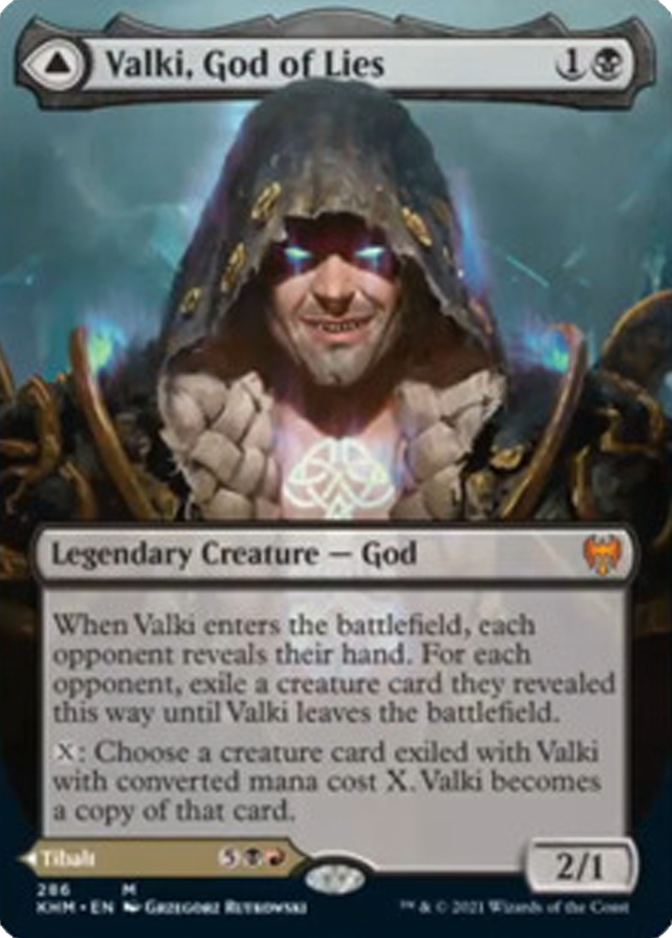
It's not like Trickery can just beat all the hate with sideboard cards. There's very little room to change the deck without making the combo too inconsistent. Reid says you should try to avoid sideboarding as much as possible, which is probably why traditional Living End anti-counter card Ricochet Trap isn't seeing much play. It's a terrible hit for Trickery, despite hitting everything including Mindbreak Trap. As a result, I'd evaluate Trickery as a slightly better Neoform. It's fast and decently consistent, but has a fail rate and can't survive disruption. There's no significant problem here.

The Power of Lies

The same can not be said of Valki, God of Lies. Or rather, Tibalt, Cosmic Imposter. I didn't cover these cards in my previews because there wasn't much chatter surrounding them at the time, and there's only so many cards I can hit per article. Also, at the time, Valki looked fairly innocuous. That appears to have been wrong. Not because the power of the card is different than expected, but because I didn't think that players would take things as far as they have.

Bob's Replacement

It looked initially like Valki was another Jund card which may or may not pan out. Traditionally, Jund relied on Dark Confidant for card advantage. However, the rise of Wrenn and Six has made Bob too vulnerable. Valki looked like a potential replacement. For the same stats, Valki nets at least some value by looking at opposing hands before getting removed. If Valki takes a creature and isn't killed, best-case scenario is Valki becomes a turn 3 Uro. Which is a huge upside when it happens, though mostly it's just a Peek.
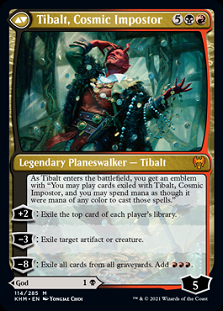
However, the real appeal was Tibalt. Tibalt's cost and abilities are very similar to those of Karn Liberated, a Modern staple. However, Tibalt also creates an emblem when it hits play, and that emblem lets you cast anything exiled by Tibalt. Does anyone else remember the Shared Fate deck from a while ago? Tibalt's emblem lets it emulate Fate, but better, because it draws two cards a turn and the emblem never leaves. However, that alone isn't good enough to make it in Modern. Just like Karn, Tibalt's cost is prohibitive and abilities are weak unless accelerated out.
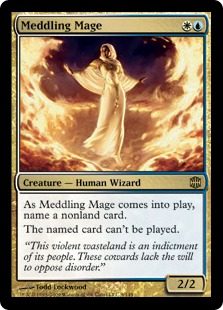
Rules oddity to the rescue! Cascade looks at the CMC of a spell once it's found to see if it can be cast. If the answer at that time is yes, the spell goes onto the stack. When a MDFC is cast for free, the controller gets to decide which side to cast. So choose Tibalt after cascading into Valki and profit! This is the rules working as intended. When that was limited to Bloodbraid Elf in Jund, it all seemed fine. Valki Jund didn't do very much and seemed too inconsistent and slow to be a worry. However, over the past week, all that changed. Because it turns out, getting to draw extra cards every turn is really good.

Taking it Up a Notch

Take the Trickery combo decks from earlier. Now make Valki the target, not Trickery. Add in split cards and adventures so that Valki has protection, and suddenly you have the deck that started gaining traction. I will take a stand here and say that without an early Tibalt, these decks are quite bad in Modern. They're Standard decks, and I'm not sure how good they'd be there either. They're medium midrange decks whose interaction all costs two or more and the threats cost three or more. The only reason it can work is by contorting itself to maximize the chance of an early Tibalt. But it does appear to be working.

Counter Valki, Bayesta_93 (Modern Challenge 2/6 3rd Place)

Creatures

4 Brazen Borrower
4 Valki, God of Lies
4 Simian Spirit Guide
1 Bonecrusher Giant

Planeswalkers

4 Teferi, Time Raveler

Sorceries

3 Supreme Verdict
2 Warrant // Warden

Enchantments

4 Ardent Plea

Instant

3 Commandeer
2 Far // Away
2 Force of Negation
4 Violent Outburst

Lands

4 Flooded Strand
4 Polluted Delta
2 Gemstone Caverns
2 Mana Confluence
1 Breeding Pool
1 Hallowed Fountain
1 Ketria Triome
1 Raugrin Triome
1 Reflecting Pool
1 Savai Triome
1 Snow-Covered Island
1 Snow-Covered Plains
1 Steam Vents
1 Watery Grave
1 Zagoth Triome

Sideboard

4 Leyline of the Void
4 Leyline of Sanctity
3 Mystical Dispute
2 Threads of Disloyalty
1 Commandeer
1 Mindbreak Trap

Maindeck Commandeer is an interesting choice. This particular version appears to be metagamed against a cascade-heavy field, as Commandeer stealing control of Trickery's target is a huge swing. It also protects against a lot of potential answers. However, outside of a particularly warped field, this deck is very all-in on Tibalt. Brazen Borrower is just not going to win the game on its own unless the opponent has no chance of winning. The control elements other than Supreme Verdict are lacking. This particular deck and its ilk are meant to get Tibalt into play and ride him, and if that doesn't happen it's going to really struggle.

The advice I'm giving then is to target Tibalt. Particularly, don't let Tibalt resolve, as the value it might (some hits may be worthless) generate from one activation goes a very long way. Given the number of free counters this deck runs and the trend towards a full set of Teferi, I don't think counters are the way to go. Permanent-based answers are a little risky as they can be bounced, but a diverse suite of answers is very effective. They can't answer everything. For example, going Pithing Needle into Damping Sphere followed by Teferi will completely stop the combo and lead to a lengthy fight to keep all the hate safe from bounce effects.
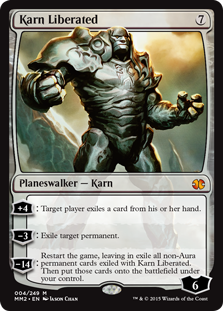
That said, the actual best way to beat these Turbo-Tibalt decks, regardless of their answer suit, is to just win. Burn in particular has a big advantage in that it just flings its hand at the opponent's face and none of the cards are really good enough to steal. Tibalt is aware of the weakness, hence the full set of Leylines, but the strategy seems effective.

An Escalation

I thought that would be the end of it. However, the data for Sunday's Challenge has thrown it all out the window.

5-Color Cascade, Do0mswitch (Modern Challenge 2/7 1st Place)

Creatures

2 Omnath, Locus of Creation
3 Valki, God of Lies
4 Simian Spirit Guide
4 Uro, Titan of Nature's Wrath
2 Brazen Borrower

Planeswalkers

4 Teferi, Time Raveler

Enchantments

4 Ardent Plea

Instants

4 Force of Negation
4 Violent Outburst
1 Dismember
2 Cryptic Command

Lands

4 Flooded Strand
4 Misty Rainforest
4 Scalding Tarn
2 Mystic Sanctuary
1 Breeding Pool
1 Field of the Dead
1 Gemstone Caverns
1 Hallowed Fountain
1 Ketria Triome
1 Raugrin Triome
1 Snow-Covered Forest
1 Snow-Covered Island
1 Snow-Covered Plains
1 Steam Vents
1 Temple Garden
1 Watery Grave

Sideboard

4 Mystical Dispute
3 Kor Firewalker
2 Ravenous Trap
2 Firespout
1Brazen Borrower
1 Supreme Verdict
1 Dismember
1 Timely Reinforcements

So, yeah. What we have here is a proven, crushing value engine in Uro/Omnath stapled to the new and good-enough-to-warp-a-deck-around engine of Tibalt, Cosmic Imposter. And this appears to be the way things are headed. And, ah... I got nothing. Seriously.

The deck pulls in two directions that require very different answers. If you go after the cascade combo, Uro will just ignore all that, do its thing and get all the value for the win. Targeting Uro hasn't proven to be too effective so far, and if you do go that direction the combo will sneak past. A preponderance of counters appeared to be the most effective answer, but that still wasn't enough. Blood Moon also looks effective given the manabase and mana requirements, but that doesn't appear to have worked.

Maybe I'm missing something because this is my first experience with these decks, but the combination of value engines that require too different answers to fight and just overwhelms overstretched decks seems like A Very Bad Thing.

What's to Be Done

Which begs the question of whether anything is likely to happen. And the answer is that it's too early to tell. Maybe there's a solution that hasn't been found because the Valki decks are too new. However, the discussion is moving toward Wizards taking action, so I'll toss my read into the discussion.

Trickery's Fine

As noted above, it's frustrating to lose to a turbo-Emrakul. However, the evidence for that deck being an actual problem is severely lacking. This isn't the first time someone's cheated out Emrakul, and it won't be the last. There's nothing suggesting anything other than a Neoform-like trajectory for Trickery. Anyone can play Mindbreak Trap, and white aggro decks have lots of relevant cheap disruption (Thalia, Meddling Mage, Archon of Emeria, etc.) to keep the deck in check. There's nothing wrong with having unfair combo decks in Modern, and the deck has enough of a failure rate to justify its fast wins. Leave Tibalt's Trickery alone; you can beat it if you want to.

Tibalt Really Isn't

The cheap value engine is another story. If Tibalt's emblem came from his ultimate, then there wouldn't be a problem. Then he'd just be a color-shifted Karn Liberated. However, that isn't how it works, and as a result Tibalt, Cosmic Imposter draws two cards a turn from the moment he hits the board. We've already had this problem with Oko and Uro; adding another ridiculous cheap engine is not okay.
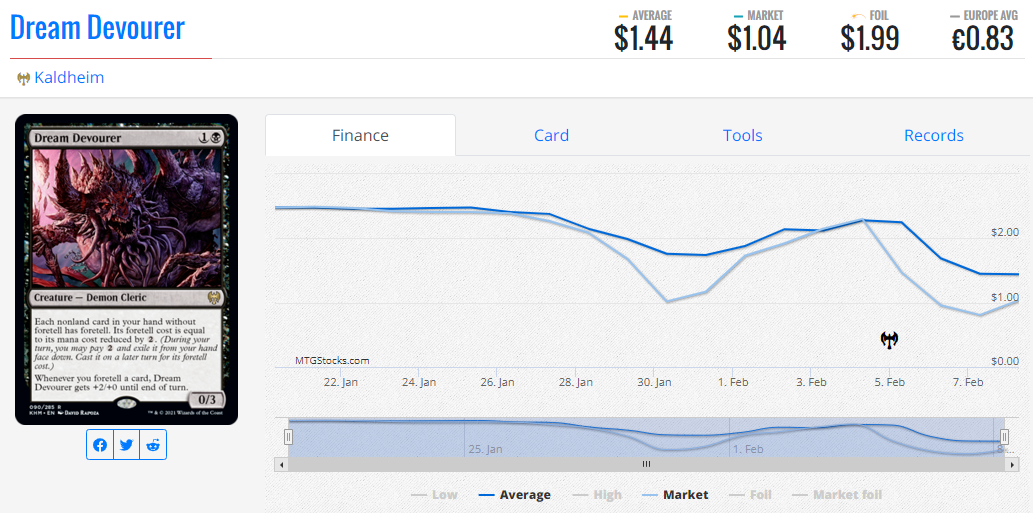
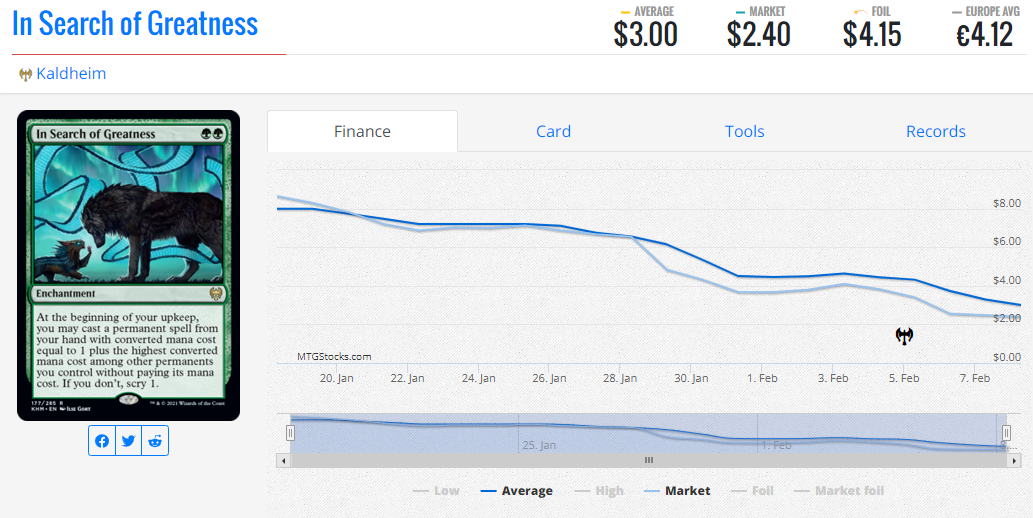
The most obvious solution is to just change the rules so that cascade can only find the front side of MDFC's. Without that, Tibalt can't be cheated into play early, so problem solved. However, I suspect this is actually the most difficult solution for Wizards. They'll have to decide which rule (cascade or MDFC) to change, then how to change it so that this problem is fixed but no new problems are created, including issues of maintaining their functionality. The split cards underwent a similar rules change once their CMC weirdness started causing problems, but only after 17 years of being simultaneously three different CMC's. Wizards should fix the rules for long-term safety, but I wouldn't be surprised by a banning instead. If only Tibalt is a problem, why make extra work for themselves?

Don't Hate the Ape

I've also heard rumblings of banning Simian Spirit Guide. The logic is that the real problem is that the decks are too fast rather than too powerful, and SSG is the culprit. And they're not wrong; turn 1 kills in Modern aren't really possible without SSG. However, in my opinion, banning SSG is just putting a band-aid on the problem. Cascading into Valki is the problem, and SSG only amplifies that slightly. The number of answers doesn't increase dramatically when the combo turn moves from two to three. As the second deck I mentioned showed, these decks would function the same with or without SSG. At best I see a Bridge from Below situation, so if the decks require bannings, better to just ban the problem cards and be done.

The Waiting Game

However, we have to wait and see. Wizards is finding out about the problem at the same time as us, so it may be a while before they take action. By then, maybe the shock will have worn off and there will be no need for action.

MTGJoeD’s Top Three Kaldheim Singles

Are you a Quiet Speculation member?

If not, now is a perfect time to join up! Our powerful tools, breaking-news analysis, and exclusive Discord channel will make sure you stay up to date and ahead of the curve.

Hello, friends! I hope you are all doing well out there in the wide world and that this article finds you safe and healthy. At the time I'm writing this, it's been three days since Kaldheim officially released in paper. I know I say this about new sets a lot, but holy cow am I hyped about this set! This has to be the most excited about a set I've been since the original Innistrad. The lore, the art direction, the story, the cards... it's all a home run for me.

I've been playing with a ton of Kaldheim in Arena since the Early Access event and have gotten to open a set booster (which you can see in the video below if you're into that sort of thing) and my brain is awash with all of the deck possibilities these new Kaldheim cards can bring us, as well as thinking about singles and which ones have potential to be big financial winners in the future.

With that in mind, this week I wanted to talk about some of the stand out singles I've come across in my Kaldheim journey thus far that I think will make for good additions to your speculation box.

Dream Devourer

Out of all the awesome cards to be excited about in Kaldheim, I think Dream Devourer is the one I'm currently most pumped about. When I was looking over spoilers, I didn't initially grasp the potential of this gnarly looking demon cleric. Foretell is a cool mechanic, but I didn't realize that it basically meant that Dream Devourer acts as a ramp spell in black (until someone pointed it out on Twitter. I can't find the original Tweet for the life of me, but I'll update this article if I come across it again!)

Each card you foretell with Dream Devourer is going to cost two less mana, effectively acting as a way to ramp into big spells later. I'm not sure what the best application for this demon is going to be, but I believe in the possibilities enough to be picking up copies of this at its current price. I'm personally targeting the extended art versions, which will run you a little over a dollar for the non-foil and a little over three dollars for the foil, and I think both of those price points are worth getting into them at. Dream Devourer hasn't shown up in any 5-0 lists that I could find in a MTGO league yet, but I think it's just a matter of time before we see this weird-bearded cleric in one.

In Search of Greatness

I was pretty excited when In Search of Greatness when I saw it spoiled, and after getting to play with it in Standard mono-green I am convinced that this is going to be one of the best green cards in recent years. The scry effect is good on its own, but the times you hit with it and get to cast a card for free can lead to very satisfying blowouts on the battlefield.

I've been seeing the mono-green list featuring this new enchantment all over the standard ladder on Arena, and it's already starting to 5-0 MTGO leagues. The list ElYallo used to 5-0 a league on 2/8/21 makes use of In Search of Greatness to dig for big threats and play them early like the new Old-Growth Troll, Vorinclex, Monstrous Raider, and Eldraine standby Questing Beast.

I think this is a powerful card that will continue to see play in Standard and eventually make its way into older formats as well. Trading into extended art copies at around the four dollar mark seems fine right now, and if the price falls below that I'll be snapping up a good amount of these to sit in my speculation box for sure.

Valki, God of Lies / Tibalt, Cosmic Imposter

Besides the meme-y Tibalt's Trickery decks, I think it's safe to say that Valki, God of Lies is currently the Kaldheim card making the most waves in constructed formats. Tibalt is back in a big way, and after years of being maligned for his not very competitive planeswalker printing in Avacyn Restored (Tibalt, the Fiend-Blooded) Valki/Tibalt is making up for it in a big way.

In Standard, Valki is showing up in a few different archetypes, like the Yorion, Sky Nomad-based Sultai Control list pargen 5-0ed an MTGO Standard league with on 2/8/21, or the Grixis value deck that zyxwvutsrqpon took to a 5-0 finish in the same league that featured four copies of Valki as well as four copies of Kaldheim notable Goldspan Dragon. I've personally been laddering on Arena with a Mardu Winota, Joiner of Forces list that features Valki as a great early disruptive card that also triggers Winota later, and it's been the most fun I've had in Standard since running the Pupnota list.

Valki has also been making quite the splash in Modern, showing off in lists focused on abusing the Cascade mechanic to get an early Tibalt, Cosmic Impostor like the Jund list that SmokinBacon27 took to a 6-1 finish in a Modern Challenge on MTGO on 2/7/21, and those ever-present Uro, Titan of Nature's Wrath/Omnath, Locus of Creation value piles like the list that yuyan piloted to a 6-1 finish in a later Modern Challenge on MTGO (these decks have also pivoted strategy-wise to run Violent Outburst to abuse Cascade.)

Valki is even popping up in Legacy in various lists, such as the UBRG list jacetmsst took to a 6-0 finish in a Legacy Challenge on MTGO on 2/8/21 that featured three copies of the card (and also four copies of Violent Outburst.)

Investing in Valki right now might not be the best idea - it's pretty hyped right now and tons of people are looking to pick copies up due to its massive success. There's a lot of different art versions, all running for between $20-$40 for non-foil copies. However, if you can trade into them for a good deal or have opened copies, I'd hold onto them and see where the price goes. If Wizards decides that cascading into Tibalt isn't ban-worthy, Valki is going to remain a big player in eternal formats.

Until Next Time - Stay frosty!

There was an error retrieving a chart for Snow-Covered Mountain

Well friends, that's it for this week! These are just three of the notable cards I'm especially excited about from Kaldheim and I'm sure I'll have more to talk about come next week! What about you - what are you most excited about from the new set? Which cards do you think are sleeper hits primed for a price explosion once we return to paper play? Feel free to let me know your thoughts in the comments or in the QS Discord, or if you want to chat about Kaldheim live feel free to stop by my Twitch stream! I hope you've had a good week. Take care out there, and I'll see you next time!

Why Prices May Not Be Done Climbing

Are you a Quiet Speculation member?

If not, now is a perfect time to join up! Our powerful tools, breaking-news analysis, and exclusive Discord channel will make sure you stay up to date and ahead of the curve.

With the rampant buyouts and crazy price spikes taking place on a daily basis, I’ve been distracted by the less-than-playable cards. It’s for good reason: these are the cards I’m most inclined to sell / flip for a quick buck.

Despite this focus, I haven’t lost sight of what’s going on in the broader market. I’ve started getting questions on Twitter about the time to sell and how they should sell older cards. As prices continue to climb on Dual Lands and the like, the opportunity to cash out to pay for “real life” necessities becomes all the more tempting to folks.

But I wouldn’t rush to sell out just yet. This week I’m going to touch on a couple factors that highlight why selling now could still be “too early”, and that there still remains a decent amount of upside.

The Buylist Wars

Here’s a challenge for you: what is the highest buy price you can find on the internet for a near mint Revised Underground Sea?

There was an error retrieving a chart for Underground Sea

This is a bit of a loaded question, because it feels like the number changes on a daily basis. As of February 7th at 7:50AM EST (I tend to write these articles pretty early in the morning), here are the buy prices from a few major online vendors:

Card Kingdom: $730
Star City Games: $750
ABUGames: $673.20 ($1045 in store credit though)
Channel Fireball: $730

These are all aggressive buy numbers, and such competitive buylists will likely provide a floor for the card’s price in the coming weeks. If the rise in price on Underground Sea was a short-term, market manipulation type event I don’t know if vendors would be offering such high numbers on the card. This is a bullish sign.

Then there’s the international component, something I haven’t discussed in quite a while. International arbitrage still exists, but it’s much more challenging in a COVID environment. At one point in time, Americans could not order cards from some Japanese vendors due to shipping restrictions. That certainly puts up a major barrier.

Perhaps that’s what’s driving some ludicrous buy prices in Japan. This list was posted three weeks ago, well in advance of some of the price increases within the U.S.

For reference, a USD is worth about 105 Yen. A simple rule of thumb is to cut off two zeroes and round down a little bit to determine prices in US Dollars. Therefore, a buy price of 120,000 Yen for a near mint Revised Underground Sea equates to something in the neighborhood of $1,100! Their Volcanic Island buy price is equally strong, and Tropical Island’s is nothing to sneeze at.

Strong numbers out of Japan could definitely be influencing pricing within the U.S. That, and the fact that vendors appear to be competing somewhat aggressively to buy old cards. Buy prices are being adjusted frequently to try and stay competitive.

Beyond the Dual Lands, stores are also scrambling to buy your high-end, Old School cards. Card Kingdom is now paying $1040 on Moat, $1105 on Chains of Mephistopheles, and a whopping $1625 on Library of Alexandria!!

There was an error retrieving a chart for Library of Alexandria

ABUGames has reacted by upping the store credit numbers they offer on such cards, though selling them anything for cash seems bad. Star City Games lags in some areas (they’re only paying $650 on Moat, for example) but they are ahead of the game in others! For starters, SCG pays an impressive $1750 for a near mint Library of Alexandria! Even their HP buy price of $1250 is attractively strong. Heavily played Libraries sold for $700 - $750 just a month or two ago!

Lastly, let’s touch briefly upon cards from Unlimited. It took a while, but in sudden, drastic moves the buy prices on Unlimited cards have exploded. A Black Lotus can be sold for $12,000—I think this number is still a bit low, though, because I don’t think heavily played copies can be found for under $10,000 anymore. After a temporary period where vendors paid more for Revised Duals than Unlimited Duals, the trend was finally corrected. Now Unlimited Duals are much more expensive; Underground Sea buylist is up to $1380 at Card Kingdom, Volcanic Island at $1100, and Tundra / Tropical Island are at $1200!

Even non-Reserved List, playable Unlimited cards have much higher prices. Card Kingdom is paying $250 for near mint Unlimited Birds of Paradise, for example, and $210 for Shivan Dragon.

There was an error retrieving a chart for Shivan Dragon

These cards are not just climbing in price on MTG Stocks and TCGplayer. Vendors are following suit and this is a very good sign that higher prices will be around for a while.

Other Economic Factors

When vendors pay aggressively for cards, it instills confidence in the market. I don’t expect vendors take losing money lightly, so I suspect they will not be so quick to drop prices should the market soften (though they will eventually drop buy prices once they get some actual inventory!).

But the reality is, there are other economic factors at play here that will likely prop up this market for at least a little while longer.

First of all, we’re entering tax season. I honestly have no clue where my tax refund will stand this year after a wild 2020. However, it’s safe to assume many people, on average, will receive a refund. Every year during tax season, we see a strengthening in demand for Commander/Legacy/RL staples as players spend their refunds on Magic. This year offers no reason to expect an exception.

In fact, since everyone is still stuck at home in the pandemic, there’s less competition for tax refund dollars. Not many people will be choosing between a couple Dual Lands, a vacation, or tickets to a high-level sporting event. For the most part, we are all kind of…stuck.

There was an error retrieving a chart for Journey to Nowhere

Secondly, the U.S. government is actively pursuing another round of fiscal COVID relief, especially targeting working-class families. While fewer people may qualify, the amount of money issued per person is expected to be the highest amount yet. There will certainly be at least some folks who will put that money to use in their hobbies, including Magic.

Lastly, everything the fed is doing regarding monetary policy remains dovish. In other words, they’re doing everything they can to maintain liquidity for companies, leading to a steady flow of cash and a propped-up stock market. This may cause problematic inflation in the long term, but for now, it’s all gravy. Expect asset prices to remain frothy as long as this environment is unperturbed.

Others Chiming In

I’m not the only one who feels these elevated prices are here to stay, for at least a little while longer. I’ve outlined all the factors that are driving this market and will continue to drive prices higher. But don’t just take my word for it.

Paul Feudo is a frequent booth buyer at large Magic events, and he’s intimately familiar with Magic market dynamics. Therefore, I trust his views on all things MTG finance without question. Recently in response to a tweet of mine, Paul replied with the following dialogue:

Paul emphasized each of the points I made above, listing the catalysts that could drive prices even higher. Then Paul posted a fascinating Twitter poll…

Considering the buy price on a NM Revised Underground Sea is $700-$799 today, over 80% of respondents believe the buy price will be higher on June 1st of this year. Liz (@DevotedDruid), another highly respected booth buyer, chimed in with a more specific target:

There’s the other factor I mentioned: the international arbitrage. It has slowed, but has not halted. Long term, prices will equilibrate across region. And it’s more likely that prices in the U.S. increase rather than prices in Japan decreasing.

Don’t just take my word for it. Large vendors are buying aggressively and people who live and breathe Magic transaction week in and week out are also seeing higher prices. There’s a lot to unpack here, but the long of the short of it is, I think prices on the most desirable stuff goes up from here.

Wrapping It Up

If you message me on Twitter and ask when you should sell, don’t expect a direct answer. Especially as prices continue their relentless climb, there are so many personal factors that should go into the decision to sell. What debts do you currently maintain? Do you have robust health insurance? Do you have a 401k? What are your long term goals? Do you use the cards in decks?

All these questions and more are relevant when deciding whether or not to sell, especially as we’re easily talking about 4- or 5-figure collections.

Also, I should mention I have no crystal ball. I can’t time the market any more than anyone can.

What I will say, with all the support mentioned above, that I think we haven’t seen the “top” yet for card prices. As some of the less interesting, less useful cards in my collection spike in price, I will be strategically looking to trim back. I recently sold a Su-chi to a friend on Twitter because I had no use for the card and could offer an attractive price. Likewise, I didn’t mind selling my spare Force of Will, since it appears out of scope for all the rampant buying going on.

But as for my Underground Seas and the like? I have no plans to sell anytime soon. These cards are in decks, and I don’t want to make those decks worse at this point. If there was a sudden major expense in my life, of course I would not hesitate from liquidating. But as long as I don’t need the money, I’m not going to liquidate. Not yet, anyway.

When asked what Underground Sea would have to be before I’d consider selling, my answer is surprisingly direct: $2500-$3000 (for my heavily played, Unlimited copies mind you). That gives you a frame of reference for where I’m at. Do I think we’ll actually get there? Not in 2021. But someday, it seems very possible—now more than ever.

Magic is Going Mainstream in 2021

Are you a Quiet Speculation member?

If not, now is a perfect time to join up! Our powerful tools, breaking-news analysis, and exclusive Discord channel will make sure you stay up to date and ahead of the curve.

2020 was a big year for Magic. It rode the rising popularity of games in general as people were stuck bored at home hiding from COVID-19. The market tagged along with the collectible market and things like sports and Pokémon cards hitting record prices. We also saw The Walking Dead Secret Lair cross Magic into the wider pop culture landscape. But this all pales in comparison to what’s happening this year. 2021 is the year that Magic goes mainstream, and both the playerbase and the market are set to go positively hyperbolic.

In just the final week of January, we saw: a Magic card sell for over half a million dollars, by far the most expensive ever; Elon Musk - the richest person in the world - tweet about Magic, sharing a custom card featuring his dog; an update about the upcoming Magic Legends video game; and Magic Arena hitting the Android operating system, and potentially 2.5 billion devices around the world.

Magic Arena is on Android

For over 20 years, playing digital Magic meant playing on a Windows PC. Now, Magic Arena has finally come to the Android operating system, putting it into the palm of players hands on their phone, anywhere and everywhere they go. Here's the Press Release from WotC.

Free to play, Magic Arena is now accessible to an enormous portion of the world, and the impact that could have on the popularity of the game is hard to truly comprehend. Whether it’s more players, more people buying cards, more consumers of Magic content, or just more people talking about Magic, it’s going to bring the game to the next level.

Hearthstone was available on Android very early on, and it helped Hearthstone quickly dwarf Magic’s digital playerbase. Magic finally being widely accessible evens the playing field, so it’s only a matter of time before Magic surpasses it in popularity on things like Twitch and YouTube. This increase in popularity clearly will have some spillover effect on the market, as new players means new potential buyers. The prices of old cards like Reserved List will reflect this as cards dry up even further.

Magic Legends Video Game

This year will also mark the release of a Magic-themed video game, Magic Legends. It will be available on the PC and all the major game consoles, in the homes of millions. This RPG-style game (akin to Diablo) will help bring Magic into the wider cultural consciousness and will expose the Magic world to more people. Some will use it as a stepping stone into Magic Arena and/or paper Magic. Magic Legends won’t directly increase the price of any cards, but its existence certainly is a good thing for the game and in turn the market. This helps strengthen Magic in 2021 and beyond as its roots spread deeper and wider beyond the cards themselves.

The open Beta test begins 3/23, sign up here.

Elon Musks Tweets About Magic

If exposure is good for Magic, then it’s hard to imagine better marketing than Elon Musk, the richest and perhaps the most divisive person in the world, tweeting about Magic to his over 43 MILLION Twitter followers this week. The Tweet in question was a custom card mockup of his dog, garnering over 45,000 likes and 2,000 retweets.

Make of it what you will, but both the exposure of the game to Elon’s followers, and the fact he knows enough of and likes Magic enough to tweet that image, is simply wild. Maybe he became the proud owner of…

The $500,000 Black Lotus

Magic broke a new record this week, and in a big way, with a perfect 10 graded Alpha Black Lotus selling on eBay for $511,100, smashing the old record of $250,000 for another perfect 10 Alpha Lotus, sold last July. The signature of famed artist Christopher Rush outside the case certainly added some value, but doesn’t account for the price more than doubling over the past 6 months, which reflects the massive growth we’ve seen in overall Magic prices.

I remember when a Black Lotus selling for over $100,000 was incredible, but at this point I didn’t bat an eyelash at the half-a-million-dollar card. At this price, it’s truly in the level of fine artwork and reflects the price of Magic artwork itself also skyrocketing in price.

Magic Goes Moon?

There has never been a better time to be involved in Magic, and especially in the market. Prices have been going wild, and anyone holding any cards has seen their investment increase significantly. I saw someone point out that the price of Revised dual lands, which have seen a big spike, are now about as expensive as the Power 9 was something like 6 years ago. For one comparison, a Near-Mint Revised Underground Sea is now selling for $1,000 on TCGplayer, which is about what I paid for my beat Mox Pearl in 2018.

The Power Nine themselves have been rising steadily as well - at this point the cheapest Timetwister I can find on the internet is nearly $6,000. Related cards like Bazaar of Baghdad and Mishra's Workshop are also seeing tremendous gains, with copies hard to find under $3,000

Reserved list cards of all sorts have been going crazy this month, with buyouts hitting cards that were already expensive and sending their price to the moon, and formerly near-bulk cards selling for massive gains. I don’t know exactly what the future brings for Magic, but it looks brighter than ever.

Avatar photo

Adam Yurchick

Adam started playing Magic in 1999 at age 12, and soon afterwards he was working his trade binder at school, the mall food court, FNM, and the Junior Super Series circuit. He's a long-time Pro Tour gravy-trainer who has competed in 26 Pro Tours, a former US National Team member, Grand Prix champion, and magic.tcgplayer.com columnist. Follow him at: http://twitter.com/adamyurchick

View More By Adam Yurchick

Posted in Feature, FreeTagged , , , , , 1 Comment on Magic is Going Mainstream in 2021

Have you joined the Quiet Speculation Discord?

If you haven't, you're leaving value on the table! Join our community of experts, enthusiasts, entertainers, and educators and enjoy exclusive podcasts, questions asked and answered, trades, sales, and everything else Discord has to offer.

Want to create content with Quiet Speculation?

All you need to succeed is a passion for Magic: The Gathering, and the ability to write coherently. Share your knowledge of MTG and how you leverage it to win games, get value from your cards – or even turn a profit.

Challenge Accepted: January ’21 Metagame Update

Are you a Quiet Speculation member?

If not, now is a perfect time to join up! Our powerful tools, breaking-news analysis, and exclusive Discord channel will make sure you stay up to date and ahead of the curve.

Hot on the heels of my practical examination last week, it's time to formally close the books on the old metagame. Or at least that expression of the old metagame. Who knows how Kaldheim will actually affect Modern, but regardless, the old metagame will see turmoil and change. I expect whatever emerges from Kaldheim to be similar to the old one, but there's no way to know. So, the only thing I can do is take one last look at the old meta with the January metagame update.

January's data is a little odd. The total decks are down from December, but not by much: January has 552 decks to December's 558. Statistically, that's probably equivalent, but runs counter to my expectations. January included All-Access week and more Premier events than December, so I thought that would bring in more players. It looks like I was wrong. However, the early Preliminaries were especially small, most likely thanks to holiday hangover. A packed last week could have made up for sparse early results. I didn't check; this article requires more than enough data entry as is.

December Metagame

To make the tier list, a given deck has to beat the overall average population for the month. The average is my estimate for how many results a given deck “should” produce on MTGO. To be a tiered deck requires being better than “good enough;” in January the average population was 6.90, meaning a deck needed 7 results to beat the average and make Tier 3. I'll note that this is the lowest threshold I've had so far. Then we go one standard deviation above average to set the limit of Tier 3 and cutoff to Tier 2. The STdev was 11.21, so that means Tier 3 runs to 18, and Tier 2 starts with 19 results and runs to 30. Subsequently, to make Tier 1, 31 decks are required.

It's interesting that the lowest threshold is paired with one of the higher STDev's I've had on this project. I'll tip my hand about what's happening in the data by saying that it does make perfect sense. January's data is polarizing, both in terms of its composition and (I predict) how all of you will react. An above-average number of singleton decks placed in January, which dragged down the average. The top placing deck's stats compared to everything else, then pulled the STDev up. And definitely skewed the data.

The Tier List

As mentioned, there were a lot of singletons in the sample, which means that despite the total population being slightly lower than December, January actually recorded more decks. Ten more, to be precise. Of those 80 decks, 22 beat the threshold to make the Tier list. Which is one fewer deck than in December. Which is a little odd, taken together. Again, it makes sense to me since I can see the entire data set and can see all the singletons. That said, it will make more sense to all the readers when I stop stalling and let them read the metagame table already.

Deck NameTotal # Total %
Tier 1
4-C Omnath6912.50
Hammer Time437.79
Izzet Prowess407.25
Scourge Shadow376.70
Tier 2
Heliod Company285.07
Burn264.71
Tier 3
Spirits162.90
Death and Taxes162.90
Amulet Titan162.90
8-Crab152.72
Rakdos Rock152.72
Ad Nauseam132.36
Sultai Uro122.17
Mono-Red Prowess122.17
Reclaimer Titan111.99
Sultai Rec101.81
Oops, All Spells91.63
Mono-Green Tron91.63
Jund Shadow91.63
Infect91.63
Dredge81.45
Humans81.45

So, yeah. 4-Color Omnath was the best deck. Again. And by a lot. It's up four results from even October, but at least then, Rakdos Prowess was keeping up. This is the largest disparity between the top performing deck and runner up since I started doing these regularly. Considering that it's four STDev's over the Tier 1 threshold, it might be fair to consider it Tier 0, but there's an equal chance that this is an outlier result. Remember, there were All-Access Passes available, and 4-C Omnath is an expensive deck. It is probable that a lot of players that couldn't normally play Omnath jumped at the temporary opportunity. The data recorded an uptick in 4-C Omnath results right after the passes were available, though how much of that is attributable to said passes versus there being more big events (where Omnath always shows up in high numbers) is impossible to say.

However, All-Access may go a long way to explaining why Mono-Red Prowess, a very cheap deck, managed to drop from the middle of Tier 1 to mid Tier 3. Regardless of metagame position, players can play the cheap decks anytime. Playing Money Tribal for only $25 won't happen again (maybe)!

A Consistent Narrative

However, there is one thread that I haven't discussed much, and really need to. Only one deck has been Tier 1 in every full-month update: Rakdos Monastery Swiftspear. Initially, it was Rakdos Prowess, but then in October it became Scourge Shadow. However, the central strategy of discard, burn, and Lurrus of the Dream-Den remains unchanged. It was a high performer before the companion nerf came down too. While Uro, Titan of Nature's Wrath has been getting all the press, rage, and general attention, Rakdos decks have performed better over a longer period. To the point that I'm willing to say that they're the real Best Deck in Modern. 4-C Omnath performs better, but it's clearly being helped by broken cards, and will likely see a ban at some point.

What Rakdos' quiet dominance means for Modern is unclear. This is an eminently beatable deck, and it's never been at the top of the population or power tiers. Nor does it consistently overperform on the average power ranking. But it just hangs in there. In my watchlist, I mentioned that Lurrus/Mishra's Bauble was potentially a problem, and should be scrutinized. The combo is very widespread and was the defining aspect of Modern's metagame in 2020. I don't think that Scourge Shadow warrants a ban any more than Grixis Death's Shadow ever did. However, the fact that it really was the defining deck of 2020 and is continuing to hang in Tier 1 despite 4-C Omnath's power is saying something. Is it too much?

Old Friends Return

On that note, January also saw a lot of decks return. And for no perceivable reason. Izzet Prowess had fallen off massively, going from the top deck of August to mid-Tier 3 in December. Now, it's the third-most played deck in Modern. I can't explain any of that variation. The overall format doesn't look more inviting now than December or August, so maybe players just starting remembering it existed?

Which may also explain why Burn came back. Burn's been banging around the bottom of Tier 3 since the companion nerf, before which it was one of the best decks. And most Burn lists look just like their pre-companion configurations, which is more perplexing. Some do have Lurrus, but only as a free-roll companion. No Baubles, only one Seal of Fire that I've seen. So unless Eidolon of the Great Revel and Skullcrack are suddenly better than they were a month ago (unlikely; the metagame composition is too similar), then I have no idea how it shot up to Tier 2.

Power Rankings

Tracking the metagame in terms of population is standard practice. However, how do results actually factor in? Better decks should also have better results. In an effort to measure this, I use a power ranking system in addition to the prevalence list. By doing so I measure the relative strengths of each deck within the metagame. The population method gives a decks that consistently just squeaks into Top 32 the same weight as one that Top 8's. Using a power ranking rewards good results and moves the winningest decks to the top of the pile.

One problem that's been lingering over the power system finally came to a head in January. I've been almost exclusively working with two event types so far, Preliminaries and Challenges. The system of points for preliminary record and placement for challenges worked well for those events. However, I had to confront all the Super Qualifiers and other Premier events in January. Technically, I've had some before in November, but what nobody clued me into was the size disparity between Challenges and Super Qualifiers. A Challenge rarely has more than 200 players, with under 100 being more typical. The Super Qualifiers were all over 300, and the Showcase events were similar. Saying that Challenges are worth the same as a Super Qualifier is facetious, and I had that driven home by participating in one. So, I've revised the power system.

Starting this month, and with an eye to how I'll make it all work once paper comes back, I'm adding more points to larger events. Preliminaries will still award points for record (1 for 3 wins, 2 for 4 wins) and Challenges will be scored 3 points for Top 8, 2 for Top 16, 1 for Top 32. However, Super Qualifiers and similar events get an extra point if they're over 200 players, and another one for over 400. Thus, we had one event this month award five points and several award 4. This system is entirely provisional, so if you have any suggestions, I'm open to feedback!

The Power Tiers

The first result of this change is that the data looks more like it did in November before Wizards (apparently arbitrarily) cut a round from Preliminaries. The average points in January were up thanks more to extra events happening than the new scoring system, from 873 to 1017. The average points were 12.71, so 13 makes Tier 3. The STDev was 22.37, the highest it's ever been, so Tier 3 runs to 25 points. Tier 2 starts with 26 points and runs to 48. Tier 1 requires at least 49 points. The number of decks expanded from 22 to 24, and that was a true expansion because no deck fell off from the population list.

Deck NameTotal # Total %
Tier 1
4-C Omnath14514.26
Hammer Time848.26
Izzet Prowess807.87
Scourge Shadow686.69
Tier 2
Heliod Company464.52
Burn454.42
Spirits353.44
Amulet Titan302.95
8-Crab302.95
DnT292.85
Ad Nauseam272.65
Tier 3
Mono-Red Prowess212.06
Rakdos Rock201.97
Sultai Uro191.87
Reclaimer Titan191.87
Sultai Rec181.77
Oops, All Spells171.67
Mono-Green Tron161.57
Dredge161.57
Humans161.57
Jund151.47
Jund Shadow141.38
Infect131.28
Belcher131.28

So, yeah. 4-C Omnath absolutely crushed January. It earned far more points than in November, which had more total points, decks, and events. And beat its nearest competition by 61 points, an absurdly large margin. That's a really bad sign for 4-C Omnath's Modern longevity because it reflects 4-C Omnath soaking up all high finishes.

On a more positive note, the overall distribution of points is more level. This means that Tier 2 has tripled in size, and thus reflects the overall picture far better than population did. It also tends to demonstrate that Modern is in a fairly decent place except for that big outlier sitting on top.

Average Power Rankings

Finally, we come to the average power rankings. These are found by taking total points earned and dividing it by total decks, which measures points per deck. I use this to measure strength vs. popularity. Measuring deck strength is hard. Using the power rankings certainly helps, and serves to show how justified a deck’s popularity is.

However, more popular decks will still necessarily earn a lot of points. This is where the averaging comes in. Decks that earn a lot of points because they get a lot of results will do worse than decks that win more events, indicating which deck actually performs better. A higher average indicates lots of high finishes, where low averages result from mediocre performances and high population. Lower-tier decks typically do very well here, likely due to their pilots being enthusiasts. So be careful about reading too much into the results.

The Real Story

When considering the average points, the key is looking at how far-off a deck is from the Baseline stat (the overall average of points/population). The closer a deck’s performance to the Baseline, the more likely it is to be performing close to its “true” potential. A deck that is exactly average would therefore perform exactly as well as expected. The further away the greater the deviation from average, the more a deck under- or over-performs. On the low end, the deck’s placing was mainly due to population rather than power, which suggests it’s overrated. A high-scoring deck is the opposite.

Deck NameAverage PowerPower Tier
Jund2.503
Spirits2.192
Belcher2.173
4-C Omnath2.101
Ad Nauseam2.082
Izzet Prowess2.001
8-Crab2.002
Dredge2.003
Humans2.003
Hammer Time1.951
Oops, All Spells1.893
Amulet Titan1.882
Scourge Shadow1.841
DnT1.812
Sultai Rec1.803
Mono-Green Tron1.783
Mono-Red Prowess1.753
Burn1.732
Reclaimer Titan1.733
Baseline1.71
Heliod Company1.642
Sultai Uro1.583
Jund Shadow1.563
Infect1.443
Rakdos Rock1.333

Baseline was pretty low this time, but that's again a function of the huge number of singleton decks that only showed up as Prelim 3-1s. The addition of extra points pulled everyone up as well. But on that note, Jund and UW Spirits did better than everyone else! And then there's 4-C Omnath hitting a very high mark, thanks to very good results in the Super Qualifiers. Much higher than Tier 1 decks usually do on this chart. And that's troubling.

I keep meaning to mention, but always forget to, that Heliod Company never does well in terms of average power. It's been popular enough to hang onto Tier 1 until now, but it always underperforms. The best it ever did was its first month in Modern, and even then it was just barely above Baseline. It's a very popular deck, but more than any other deck I've dealt with, that doesn't make it a good deck. I think the popularity is a combination of the allure of its combos and ease of play. Because when I've faced it online, my losses feel like I lost, not that my opponent won. And I've beaten Company far more than I've lost. Its fall to Tier 2 may indicate other players catching onto the deck's secret weakness.

On to the New

And now we wait to see how the metagame will shift with Kaldheim. While the set became legal on MTGO last week, Kaldheim cards only starting appearing in the last two events, and thus was never going to have much of an impact. I'm aware of chatter about Tibalt's Trickery being busted, but I haven't seen it yet. I'll determine that with certainty next month. I will say that Trickery being a thing right now is coincidentally very timely, as you'll all see next week.

Want Prices?

Browse thousands of prices with the first and most comprehensive MTG Finance tool around.


Trader Tools lists both buylist and retail prices for every MTG card, going back a decade.

Quiet Speculation