menu

Daily Stock Watch – Darkslick Shores

Are you a Quiet Speculation member?

If not, now is a perfect time to join up! Our powerful tools, breaking-news analysis, and exclusive Discord channel will make sure you stay up to date and ahead of the curve.

Hello, everyone and welcome to a new week of the Daily Stock Watch! The world of Modern has been chaotic, to say at the very least, as people have started to brew their decks with Jace, the Mind Sculptor and Bloodbraid Elf back in tow. Prices have gone bananas for both cards, and a lot of movement has happened towards other cards that support these colors or concepts as well. Today, I'll talk about a card that plays a key role in the top dog of the format prior to the unbannings, and will most likely benefit as well from JtMS' return to Modern.

There was an error retrieving a chart for Darkslick Shores

It's like almost anything with blue is due for a breakout, as people have started incorporating JtMS to their Titanshift, UWx Control, and Blue Moon decks. Darkslick Shores is one of the important lands in Lantern Control, and it should only be a matter of time before we see a new Esper variant in the format (or just a plain UB control deck). Today, it reached its all-time high of $13.89, and it should continue to trend upwards as players start exploring the best possible deck for the format today.

One problem I have when assessing which lands could probably see a significant price increase is their ability to be relevant in new brews. I would have wanted to go all in with Darkslick Shores, but I've always thought of Creeping Tar Pit and fetchlands in favor of this card in a more controllish shell. However, the mother of all control decks (before JtMS returned, that is) pretty much likes to run a full playset of Darkslick Shores.

Lantern Control by Sam Black

Instants and Sorceries

1 Abrupt Decay
4 Ancient Stirrings
4 Inquisition of Kozilek
3 Thoughtseize
4 Whir of Invention

Other Spells

4 Codex Shredder
3 Ensnaring Bridge
1 Grafdigger's Cage
4 Lantern of Insight
4 Mishra's Bauble
4 Mox Opal
2 Pithing Needle
1 Pyrite Spellbomb
2 Pyxis of Pandemonium
1 Witchbane Orb

Lands

1 Academy Ruins
3 Botanical Sanctum
4 Darkslick Shores
4 Glimmervoid
2 Island
4 Spire of Industry

Sideboard

2 Abrupt Decay
1 Ancient Grudge
1 Grafdigger's Cage
2 Leyline of Sanctity
1 Nature's Claim
1 Pithing Needle
1 Porphyry Nodes
1 Pyroclasm
1 Search for Azcanta
2 Tezzeret, Agent of Bolas
2 Welding Jar

Lantern Control doesn't need a manland or fetchlands to facilitate what it wants to do. It starts out quickly with miniature artifacts and hand disruption that work in perfect harmony to ruin your opponent's day. This requires the ability of Darkslick Shores to provide that early boost, and it doesn't hurt its cause in the midgame if it comes in late. The same could be said in future control decks with a UB shell that would love to do a turn one Serum Visions, or in a tempo deck (ala Delver) that could use an Opt or Thought Scour. People would love to experiment in the early parts of this transition, and there will be lots of rooms (but not that many cards) for growth and loss as the meta tries to find the best deck in the format for now.

Blue Fast Lands

This bunch is all due for more movement in the coming days, as we'll get to see more and more of decks that has JtMS in it. I'm not really sure how bullish we could get in considering these cards as spec targets, but I really like how they are all positioned in the market right now. I'm considering the notion to pick up copies of these lands for now, and just move them around in the coming days until Masters 25 is out. I'm not gonna shy away and admit that I belong to that crowd of skeptic people that thinks that JtMS will get the axe again come April. That guy is just too good of a Magic card to see play in Modern.

At the moment, you could still get some copies of Darkslick Shores via StarCityGames, Card Kingdom, and TCGPlayer for anywhere between $11.95 (played copies) up to $14.24. I'd like to pick them up at below $10, and start shifting them around in the $15-$20 range once they shoot up. I wouldn't be so high on foils right now but if it's your thing and this JtMS craze continues, now would be the window for you to get these cards. Things will start to get crazier once new decklists start popping up, and everyone becomes a blue mage once again.

And that’s it for today's edition of the Daily Stock Watch! See you again next time, as we check out a new card that should be on the go, or good enough for speculating. As always, feel free to share your opinion in the comments section below. And if you want to keep up with all the market movement, be sure to check in with the QS Discord Channel for real time market information, and stay ahead of the hottest specs!

Insider: Midsize Mythics, Part II

Are you a Quiet Speculation member?

If not, now is a perfect time to join up! Our powerful tools, breaking-news analysis, and exclusive Discord channel will make sure you stay up to date and ahead of the curve.

Welcome back to my series on investing in mythic rares on MTGO. For part one of this mini-series, click here. This week we're going to conclude our discussion of four- and five-mana cost mythics (hereafter referred to as "midsize mythics"). Scroll down to the bottom if you want to look at my picks for Ixalan and Rivals of Ixalan midsize mythics.

There are three major takeaways I wanted you to get from last week's article:

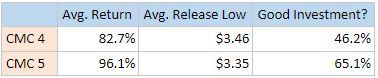
1) There is virtually no difference between mythics that cost four and mythics that cost five. Both behave in roughly the same way, both have similar expected returns, and both have roughly the same prices. This means that mythics that cost four and five have functioned in largely the same way, and fulfilled largely the same roles, in Standard over the past five years.

2) Mythic rares whose post-release values stabilize north of $10 more often than not turn out to be good investments. While this is more of an absolute rule for lower converted mana cost mythics, the trend still applies here and offers a relatively safe investment strategy. Your average rate of return for the past five years would have been about 65 to 75 percent.

3) In general, sell windows for these cards are significantly smaller than for mythics with converted mana costs of one, two or three. That means that it will be generally wise to invest in fewer copies per card, especially for the less expensive cards with less Standard demand.

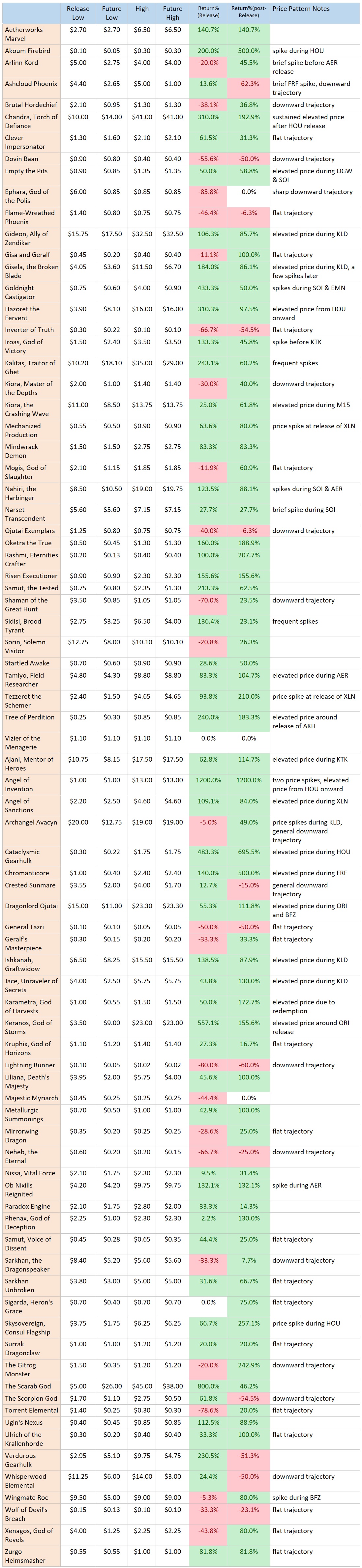
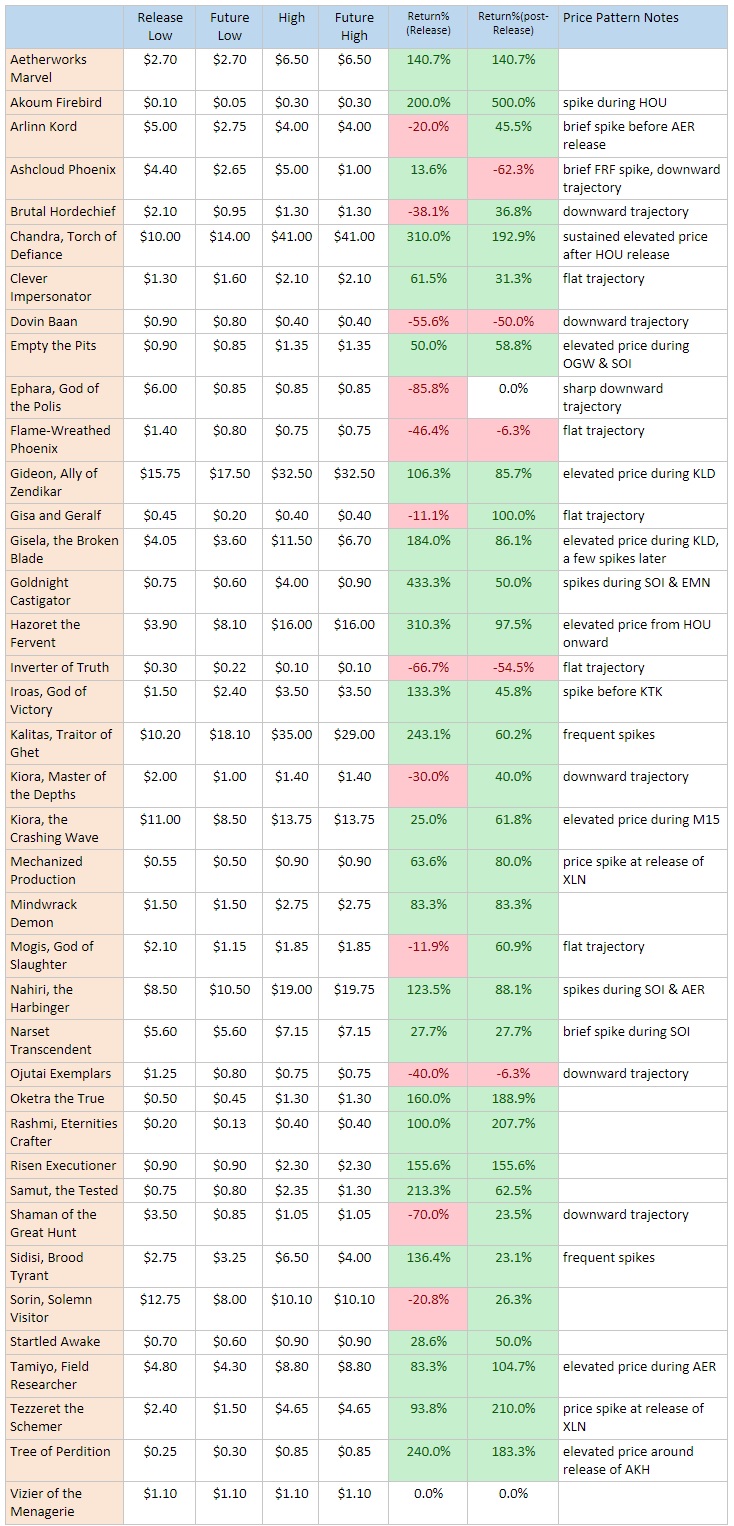
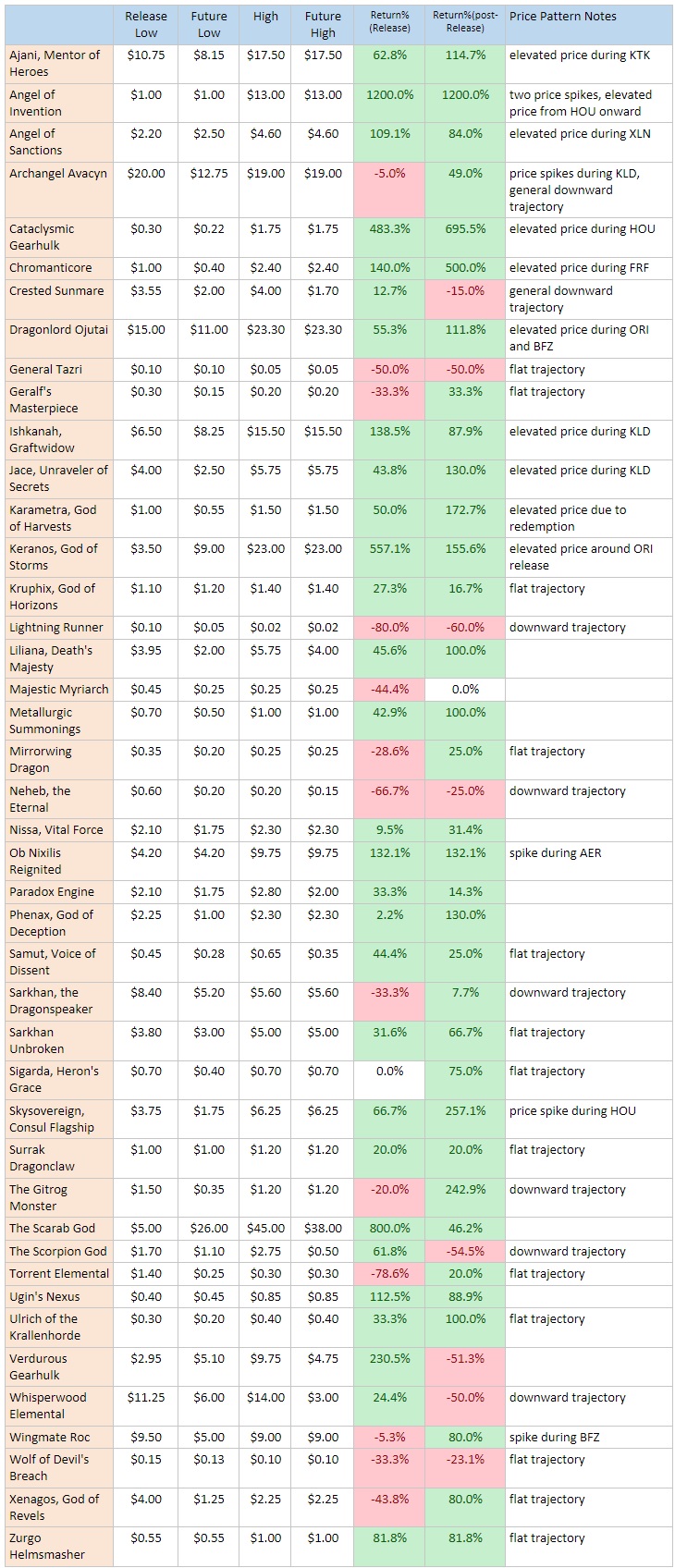
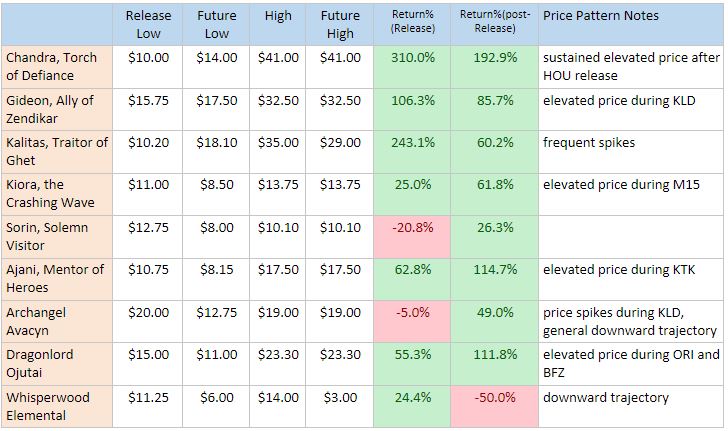
This week, I will offer more insights into what we can glean from this data. To view the whole data sheet, click the spoiler below. All dollar values listed are the values a frequent (but casual) MTGO user could be expected to buy and sell a reasonably high number of copies of the card in question. It's a lot of data, but we'll break it down in more manageable chunks.

I. Generally Avoid the Cheap Mythics

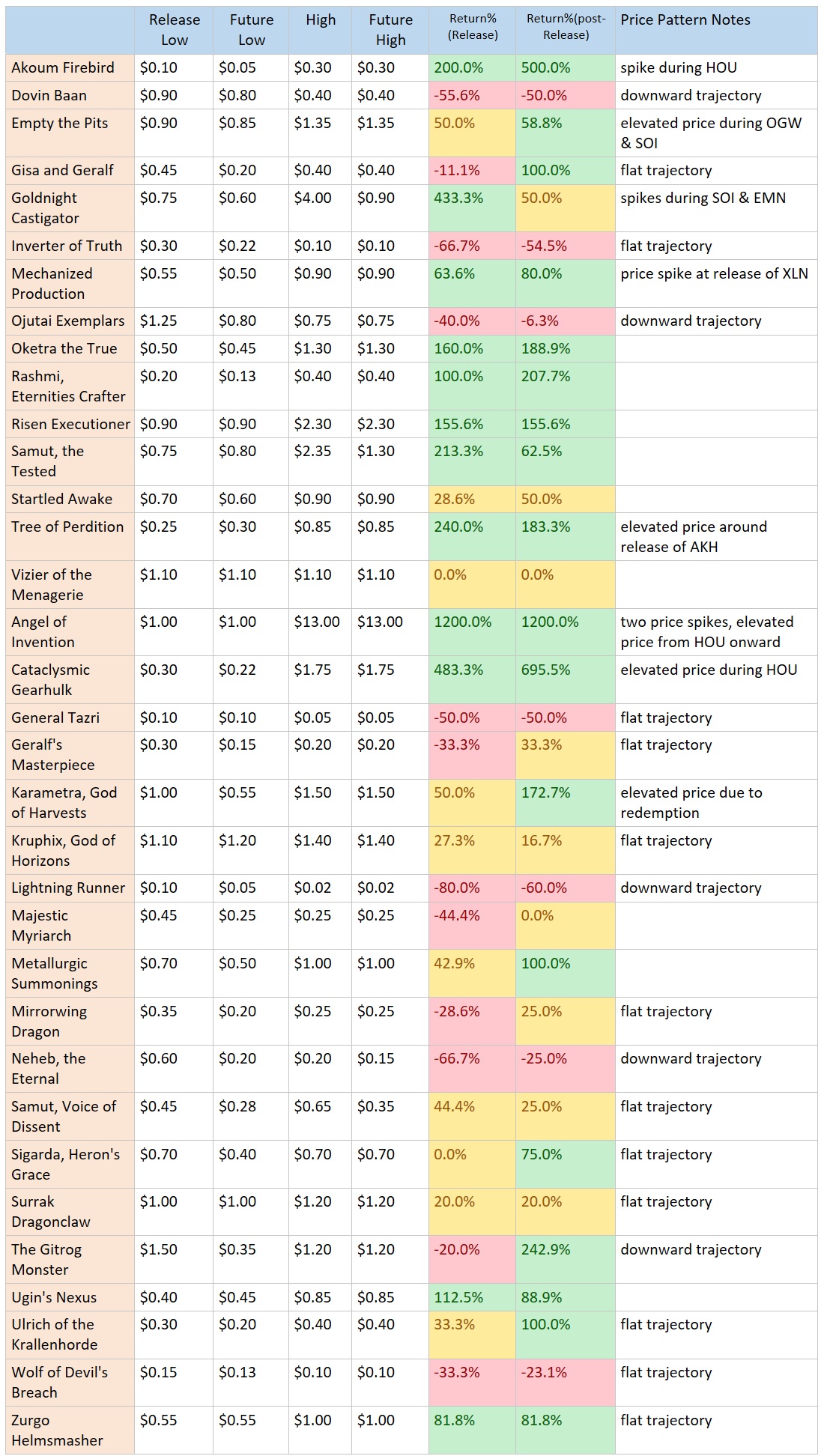
With mythics in this class, you really have to choose your spots carefully. The majority of these cards would have proven to be bad investments. We have to remember too that some of these cards saw bumps solely due to end-of-rotation redemption: cards like Zurgo Helmsmasher and Akoum Firebird would not have seen any such gains if printed today.

You should only invest in unproven mythics if you believe they have a real shot at seeing Standard (or Modern) play in the future. We have to remember that a mythic rare needs to achieve virtually no play in order to see a valuation below $1, especially mythic rares from small sets. Thus, when you invest in these cards, you are buying entirely on the potential of the card to see play due to a rotation or due to the introduction of new cards that work well with it in future sets.

In general, then, a smart idea is to identify cards that would make a major impact in a style of deck not currently seeing play in the present Standard.

These four cards, I believe, stand out from the rest in one significant way - each is a potent piece in a certain style of deck that is easy for all of us to identify. It is probably no accident that three of these would have made for good investments, and two for incredible investments. Angel of Invention is simply a powerful token maker and token lord. Risen Executioner cares about Zombie tribal. Goldnight Castigator is a unique evasive thread for Red Deck Wins. The easier it is for you to envision that a certain card could anchor a certain deck archetype, the more likely it is that that card could rise from the ashes of the bulk bins.

One bad habit I've had in the past is investing in the generically powerful cards that aren't seeing play in the hopes that they will see play in the future. Some examples include:

These cards just aren't worth your time because they are simply incapable of seeing the sort of astronomical gains that makes tracking them worth it. Value cards that might see play as a one of or two of just won't rise beyond $1.00-$2.00., and usually will just remain flat and sit in your collection accumulating virtual dust.  With bulk bin mythics, you need to ask yourself whether a card can become part of the core fabric of Standard. Think big, or go home.

(II) Should I invest in Planeswalkers?

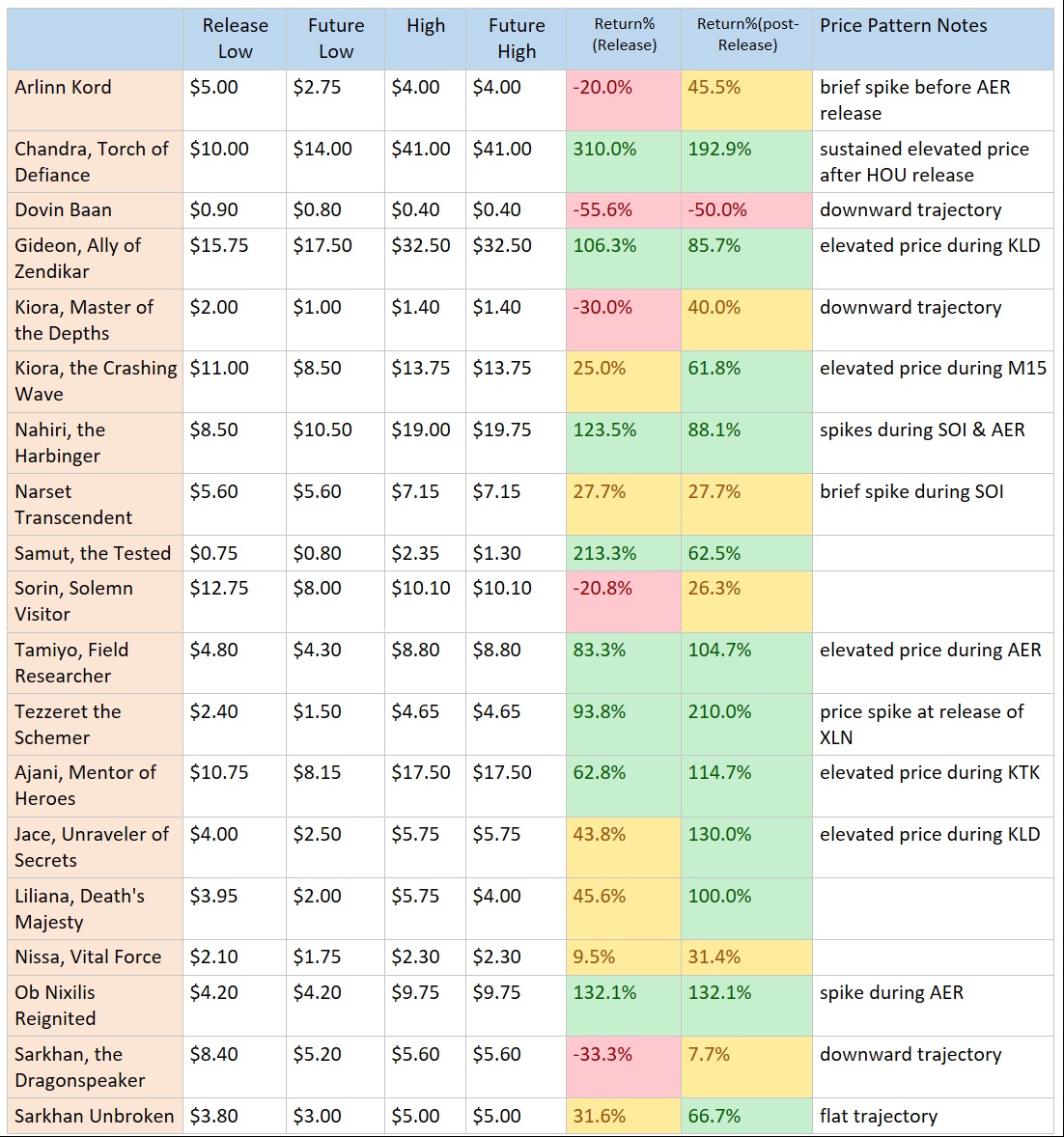
The data for midsize mythics of card is very noisy, but there is one type of card I noticed that kept having positive returns - the Planeswalkers. If invested in three to six months after release, these planeswalkers almost always see a positive return (poor Dovin Baan!), and 67 percent of them would have been successful investments (percent increases over 75 percent colored green in the chart above). The difficulty with investing in these cards is knowing the price point at which to invest. My advice is that if you believe you've identified what will become a format all-star, invest immediately. If you see a potential format role-player, wait a few months. By and large, though, these cards are safe investments. The average rate of return if invested in one to two months after release is 61 percent, and 78 percent if invested in three to six months after release.

(III) Signing Off: What about Ixalan and Rivals of Ixalan mythics?

The Ixalan Block crop of midsize mythics is fairly representative of the class at large  Most seem that they are unworthy of your investment dollars, but some have potential and are likely ones I will invest in. The two that I suspect many will be interested in that I will likely avoidf are Elenda, the Dusk Rose and Twilight Prophet. I think these cards are just not quite good enough for Constructed. One can envision a deck in which Elenda would be good, but you have to put in a ton of work to make her a better option than other fours in the format.

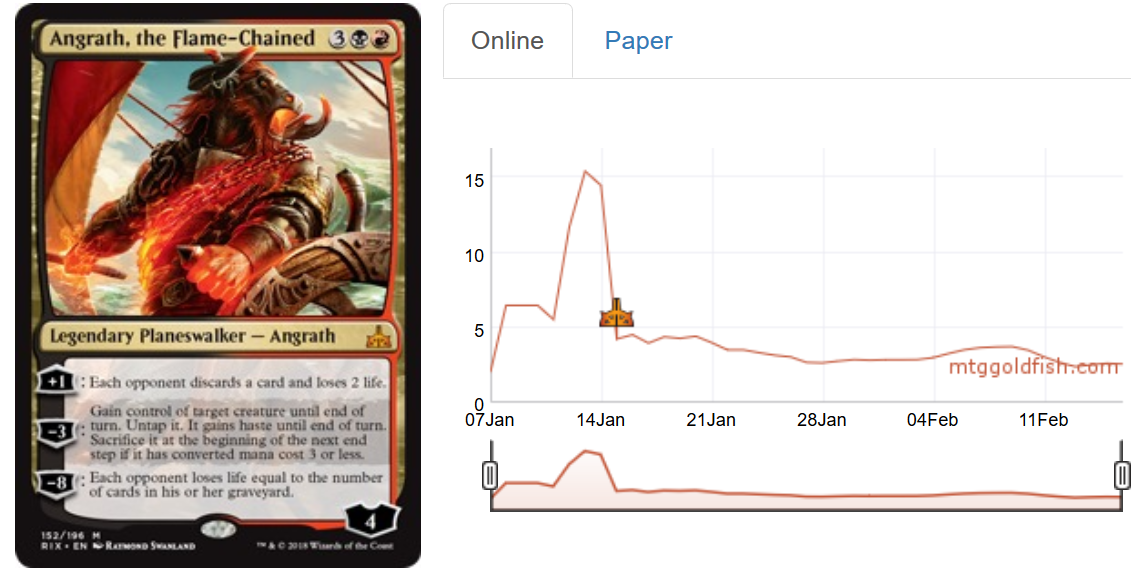
The cards I'm most interested in in this list are Rekindling Phoenix, Angrath, the Flame-Chained, and Huatli, Radiant Champion. Angrath, in particular, is my favorite and looks like a Planeswalker card that usually spends time between $4-$5. Currently sitting at 2.58 tix, I will likely buy any copies I can find below 2.00 tix. Rekindling Phoenix caught fire too quickly for us to invest in right out of the gate, but over the coming months I think we can expect its price to dip back into the low twenties or upper teens. At that price point, so long as Lee Sharpe sets its treasure chest value at 6 and not at 12 or 20 or 24, I think I'll be a buyer. Huatli is the type of "swing for the fences" card I mentioned earlier - it has a clear home and can be quite potent in that home. I'll only buy her at bulk prices, but I likely will be an enthusiastic buyer at bulk prices.

I liked Rowdy Crew before the printing of Rekindling Phoenix. Now not even the rotation of Chandra will save it. If you have been hoarding copies of Rowdy Crew I'd look to be a seller in the coming months.

I look forward to reading your questions and comments down below. Till next time!

Insider: Cashing in on Random Rare Buyouts

Are you a Quiet Speculation member?

If not, now is a perfect time to join up! Our powerful tools, breaking-news analysis, and exclusive Discord channel will make sure you stay up to date and ahead of the curve.

In 2017 there was a significant run on Reserved List cards from Magic’s first four expansions: Arabian Nights, Antiquities, Legends, and The Dark. Even the most unplayable of cards saw their prices jump by hundreds of percent in a short period of time.

There was an error retrieving a chart for Merchant Ship

These buyouts were quite the boon, as they helped our Insiders make significant, low-risk money in a very short period of time. Indeed I cannot remember a time prior when I had so many sales on eBay over a thirty day span. In short, it was a fun time.

Then the hype quieted down: fewer and fewer of these cards showed up on MTG Stocks’ Interests page, buylists calmed down, and supply gradually dripped back into the market. All good things must end, I guess.

Now, over the past couple weeks we’ve had a remarkably similar type of move. But this time instead of Reserved List cards being targeted, it’s the non-Reserved List cards from Magic’s early sets that are going crazy.

There was an error retrieving a chart for Shapeshifter

Once again sales are picking up, buylists are starting to move and significant profits are available for the taking. I’ve already had some success moving cards like Bronze Horse and Coral Helm. But we know these spikes won’t last. This week I’ll share my strategy for outing these now-overpriced cards to try and maximize gains before prices calm back down again.

Option 1: eBay / TCGplayer

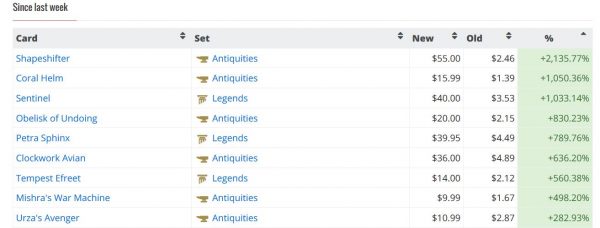
As supply drops on TCGplayer these cards start to show up on MTG Stocks. Then a distinct line is crossed when the only remaining copies are at silly-high prices (e.g. Shapeshifter at $55). This creates the 1000-percent-plus gain on MTG Stocks and the card suddenly leaps on everyone’s radar. A few uninformed speculators may scramble the internet to try to find copies as close to the “old price” as they can. Separately the people coordinating these buyouts (I truly believe this is coordinated) are looking across the internet to mop up copies that may have made it through the first pass.

This yields a very narrow window of opportunity. If you can list your copies for sale at 2-3 times the old price (still well below the silly price), you may set yourself up for a chance to make sizable gains. This is always my plan A. I don’t get greedy and list my card at a crazy price; instead, I list at a conceivable price.

For example, I saw Bronze Horse inventory was dropping quickly on TCGplayer. I picked up two copies at a couple bucks each. Then when the buyout occurred, the card spiked to $44 or so on MTG Stocks. Now you and I both know no one is purchasing this card for $44 unless it’s sporting a 9.5-10 grade. The price isn’t real. But that doesn’t mean this can’t be exploited.

I listed my first copy in the mid teens and it sold within a couple days. Then I listed my second one for a little higher and once again it sold. This is the ideal scenario. I didn’t try to list my copies at just under $44 because I knew no sale would be made. Instead, I listed the copy well above my purchase price but just low enough to give someone a reason to pick it up if they were experiencing some “fear of missing out.” For reference, here are some other recently sold prices. These can give you a guide on how I priced my cards relative to the old price and the silly new price that isn’t real.

Urza's Avenger: $9.25
Coral Helm: $5, $6
Tempest Efreet: $5
Horn of Deafening: $8
Brass Man: $10.25
Rebirth: $6, $9.25
Psionic Entity: $16

None of these sales are life-changing. But considering my buy-in on these ranged from $0.50 to $3, you can see how profitable this endeavor becomes. You just have to price things realistically.

Option 2: Buylists

I’ve noticed a really convenient dynamic with these older cards over the years. As supply drops on eBay and TCGplayer and the prices jump, all major vendors of these cards get wiped out in the process. Then, some vendors react by adjusting their buylists. After all, they don’t want to be left with no copies in stock when so many people are visiting their site looking for a certain card.

In this way, buylists tend to lag the market and this leads to a favorable scenario. In case you fail to sell your recently spiked cards on eBay and TCGplayer, you have a viable backup plan in buylists. Now don’t expect to get $16 for a slightly played Psionic Entity from a buylist. That kind of price is not likely to be offered by even the most eager of vendors.

There was an error retrieving a chart for Psionic Entity

That’s why this is option two. Only after you come to the realization that flipping a card on TCGplayer/eBay may be difficult should you consider the buylist plan. I did this recently with Spring Mishra's Factory. I managed to sell a few copies on eBay into the buyout as it was happening. But once past, supply started to come back into the market. I was stuck holding one extra copy I didn’t want to keep. Sadly the price had already dropped back down and I had to price my copy at $28 just to be competitive. After no sales for a couple days, I started browsing buylists. That’s when I found it: Card Kingdom was paying $24.50 for NM copies. My copy wasn’t NM, but I suddenly had an out that made me money even after fees and shipping.

My margin is going to be very tiny on this card, but it sure beats a loss. If I really wanted to, I could have taken the store credit option. This would have netted me a 30% bonus, and I suspect I would have been able to find something favorable to buy with the credit. But in this case I took the cash and moved on. I did the same recently with an Ayesha Tanaka because after fees and shipping, I did not expect to get much more from eBay than I could have from Card Kingdom.

Any time the buyout passes and prices start to drop while you’re still holding copies, I recommend looking at buylists as a possible out. Card Kingdom and ABU Games are my favorite vendors to sell to for this endeavor.

Option 3: Hold Them or Fold Them

What happens if the TCGplayer price drops so quickly that buylists don’t even react? Then you are in a sticky situation and you have just two options. You can hold the cards and hope a speculator or market manipulator doubles back and buys out the card again. Or you could just dump the cards to the best buylist anyway, taking a small loss if applicable.

In my experiences, I have generally found that cashing out is a fine approach. It’s easy to convince yourself “these are all classic cards, they will go up eventually.” But the opportunity cost associated with this plan of action is fairly large. Perhaps not monetarily, but the time it may take for an unplayable card like Rebirth to jump all over again could be fairly lengthy. Best to cash out and move on.

There was an error retrieving a chart for Rebirth

As long as you didn’t way overpay when you made your purchase, you should be able to at least break even by requesting store credit. With 30 percent trade-in bonus from Card Kingdom and 50 percent from ABU Games, it’s even likely you can come out ahead with store credit. Then you can sit on the credit and use it to pick up the next hot pick, whether it be an EDH foil or a Pauper card. By putting money to work elsewhere you maintain liquidity and ensure you are betting on cards you have highest confidence in. This is important because when dealing in useless ante cards like Tempest Efreet, you can’t even play with the cards while you wait. They are literally useless. So cash out and move on. It’s unlikely you’ll regret it. This isn’t necessarily the best play with Reserved List cards, which collectors will gradually drive up in value over time. But with reprinted unplayables, I have no doubt that cashing out is a fine play.

Wrapping It Up

After hitting all the Reserved List cards from Magic’s earliest expansions, the speculators have moved on reprinted rares from these sets. Last year’s run on Reserved List cards helped me to a record year for sales, and 2018 is off to a strong start thanks to the most recent buyouts. But things are a little different this time.

With these targeted cards not on the Reserved List, I don’t particularly like the long-term view of investing. Instead, I’d highly recommend flipping these cards to the first buyer willing to offer you more than you paid. TCGplayer and eBay are optimal ways to out cards, but buylists can offer a fallback plan if you can’t find a buyer desperate enough. Just remember you won’t get the silly $50 price tags currently listed for this stuff. Your best bet is to price 2-3 times above what you paid, likely in the $5-$15 range, and accept offers that net you a profit. Don’t be greedy and remain anxious to sell, and you will book profits.

If there’s not much traction on your listings, then don’t hesitate to pursue buylists. While the profits won’t be as juicy, you should still be able to net modest returns when shipping to vendors—especially when taking store credit. This is a sound backup plan that I activate time and again because I don’t want to be left holding the bag on these cards. Opportunities to sell Tempest Efreet and Rebirth for $5-plus come rarely. There’s no sense trying to hold. Cash out and move onto the next spec. If nothing else you can use proceeds to try and anticipate the next buyout (my money’s still on Kei Takahashi and Voodoo Doll.

There was an error retrieving a chart for Voodoo Doll

With these cards it’s all about liquidity, and making sure you’re selling out at the first opportunity for profit will help ensure you are successfully riding this speculation wave.

…

Sigbits

  • Card Kingdom dropped their buylist on Juzam Djinn from $980 to $780 over the past week. One look at their stock for the card reveals why: they have seven total copies for sale! Ranging from $910 (good) to $1300 (near mint), their price point seems a little higher than what the market is willing to bear. I suspect the price will drift a little lower before finding equilibrium and climbing again.
  • I’m focusing on Erhnam Djinn now because Card Kingdom continues to raise their buy price but remain out of stock on the card. Currently they’re offering $210 for near mint copies and they’re sold out at $300. My hope is they continue to increase buy price aggressively until they restock the card—a buy price of $250/copy would be an attractive exit point for anyone holding copies they want to sell.
  • Another card I’m watching closely is Angus Mackenzie. Card Kingdom is sold out at $165 and their buy price is at an all time high, $120. There are a couple other Legends creatures also on the move. Pretty soon there will be a couple more that buylist for triple digits, and I really like holding these for the long haul because of their uniqueness and collectibility.


Play Ball: Temur Brewing with Jace and Elf

Are you a Quiet Speculation member?

If not, now is a perfect time to join up! Our powerful tools, breaking-news analysis, and exclusive Discord channel will make sure you stay up to date and ahead of the curve.

Last weekend's unbans were met with mixed reactions from the Magic community. I found myself a little conflicted, as well; I generally like shake-ups and "fresh meat," but the back-to-back Pro Tour and GP weekends, which featured incredibly diverse metagames, had just proven Modern to be a format smack in the middle of its golden age.
Not one to mope for long, I set out to see just how good the format's new toys really were. But not in their obvious shells, although Kelsey's adoption of Jund some months ago has indeed caused me to get uncomfortably close to Liliana of the Veil. Rather, my head went to the most obvious Johnny shell: a Temur midrange deck featuring Jace, the Mind Sculptor, Bloodbraid Elf, and the recently-unbanned Ancestral Vision. This article sees where the thought experiment brought me and unveils an initial build.

Thinking "Big-Picture"
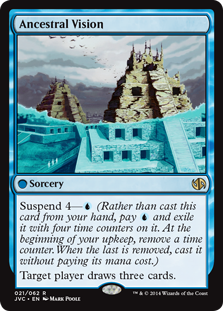
So we want to play Jace, the Mind Sculptor, Bloodbraid Elf, and Ancestral Vision in the same deck. What next? My first step was to think about what these cards do in a typical game of Magic—their effects individually and together, the matchups they shine against, and their respective (or shared) blind spots.

Strengths

Perhaps obviously, Jace, Elf, and Vision all represent two-for-ones, commonly known as card advantage. Jace draws an extra card each turn; Elf finds and casts one; Vision nets us two. Of the three, only Elf provides a tempo gain. Jace incurs the heaviest tempo loss, since it costs four mana and rarely impacts the board to any significant degree. Rather, it's the best spell to cast on an empty or stabilized board.

Synergies

Elf cascading into Vision has never been possible in Modern: the suspend card was banned at the format's outset to prevent Faeries, of all decks, from dominating the competitive scene. But Ancestral Vision does appear to offer the "best" cascade in the format, at least since the rule change that eliminated Elf's once-relevant interaction with Boom // Bust. If that wasn't exciting enough, Jace's Brainstorm ability can put Vision from our hand on top of our deck (perhaps even with an unneeded land above it) for us to cascade into deliberately.

Realistically, though, setting up "draw 3" cascades with Jace rarely comes up. When it does, we're far ahead enough for it not to matter. As such, the three cards in fact offer each other very little. There's no grinding engine inherent to them as with Elf, Liliana, the Last Hope, and Kolaghan's Command, and no major stacking payoff for Brainstorming like Terminus. In fact, Jace's neutral loyalty ability has palpable tension with Blood Moon, a natural compliment to Elf and mana dorks that I think we'd be wrong not to try in this shell; since Moon turns off fetchlands, Brainstorm itself becomes a lame spell to emulate.

Weaknesses
Jace, Elf, and Vision all share one glaring weakness: their speed. All of these cards are turn-four plays. Granted, we can cast Jace or Elf as early as turn three in this deck, but that's not much of a bump; Visions, for its part, won't resolve early unless a fast Elf cascades into it.

A prevailing narrative among those afraid of this unban claims that despite Jace and Elf being "interactive" cards, or ones that are likely to succeed in decks packed with disruption, they hammer other fair decks so hard that the best way to beat them is to cheat the game: go under the midrange decks with linear creature decks like Affinity and Humans, or over them with ramp and combo like Tron and Ad Nauseam. The data David accumulated on both Bloodbraid and Jace somewhat supports this hypothesis. In any case, though, opponents who can afford to ignore "value" are bound to have a better time against the infamous four-drops.

Incidentally, they also enjoy beating up on Ancestral Vision. Modern's linear decks generally want to win on or by turn four, which is when Vision resolves. So the sorcery finds itself with the same trouble as the four-drops: it's really slow.

Plugging the Hole

I don't think the slowness of these three cards is a death knell for our (literally) mythical Temur deck. But we'll have to build it with them firmly in mind. In other words, despite containing Jace, Elf, and Vision, our deck will have to be geared to fight fast creature decks and linear combo, since we've already got game in midrange mirrors by virtue of our powerful top-end.

Here's the build I settled on testing:

Temur Cobra, by Jordan Boisvert

Creatures

4 Lotus Cobra
4 Noble Hierarch
4 Tarmogoyf
1 Scavenging Ooze
1 Courser of Kruphix
4 Bloodbraid Elf

Planeswalkers

2 Jace, the Mind Sculptor

Enchantments

2 Blood Moon

Instants

4 Lightning Bolt
2 Supreme Will
2 Izzet Charm
2 Electrolyze

Sorceries

3 Serum Visions
4 Ancestral Vision

Lands

4 Misty Rainforest
4 Scalding Tarn
3 Wooded Foothills
2 Raging Ravine
2 Steam Vents
1 Breeding Pool
1 Stomping Ground
2 Island
1 Forest
1 Mountain

Sideboard

1 Grafdigger's Cage
1 Izzet Staticaster
2 Spreading Seas
1 Thrun, the Last Troll
3 Unified Will
2 Ancient Grudge
1 Feed the Clan
1 Dismember
1 Roast
2 Pyroclasm

Include Overview

Some of my choices are no doubt a bit surprising, so I'll outline them here.

Fast Mana

The obvious eyebrow-raising card in this deck is Lotus Cobra. The snake's usually used to ramp into five- and six-drops; in this deck, our curve stops at four. So what gives?
Cobra's a way for us to play Jace or Elf a turn early despite having had our mana dork destroyed on turn one. Especially in the early stages of the coming metagame, I expect spot removal to be at record highs to deal with Elf-featuring midrange decks, like Jund, and go-wide aggro decks that want to get under Jace, like Humans. That means our dorks need life insurance beyond just Tarmogoyf. In a sense, the snake's our Dark Confidant; if it survives a turn, Cobra turns our fetchlands into Black Lotus. We don't even need a fetch to ramp into a four-drop; any mana-producing land will do.

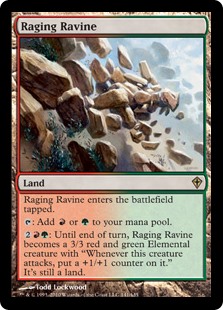
We also have uses for the extra mana. Cobra lets us cast Izzet Charm on our opponent's turn off a single, innocuous fetchland, and makes it easier to cast haymakers through permission. Brainstorm gives us more spells to cast, so Cobra helps double up and ensure our hand doesn't become clogged with top-end threats. Scavenging Ooze makes for a fine mana dump in many matchups, and Raging Ravine fills out the suite by costing an essential five mana to activate and attack.

Between Hierarch and Cobra, this deck packs eight creatures opponents must answer on sight. Failing to deal with Hierarch could mean a turn two Blood Moon, or an equally debilitating play like Bolt-plus-Goyf; meanwhile, turn two Cobra represents up to five mana on turn three. If Hierarch lives and we follow it with Cobra and a fetchland, we can even cast Blood Moon on turn two as well. All these high-priority removal targets make Temur Cobra an ideal home for Tarmogoyf.

Haymakers
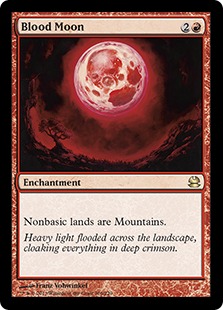
In the mainboard, our primary haymaker is Blood Moon, although Jace and even Goyf count as haymakers in the right matchup. I've found in testing against [mtg_card]Jace, the Mind Sculptor[mtg_card] decks that it's crucial to have a way to punish opponents tapping down for the planeswalker. Against color-heavy Jace shells like Jeskai, Moon fills this role perfectly.

After siding, we gain access to game-breakers like Thrun, the Last Troll, Izzet Staticaster, and Grafdigger's Cage to hate out opponents doing certain things.

Disruption

One major issue with Temur value shells featuring Bloodbraid Elf is their strange relationship with permission. Countermagic is all but necessary in blue-based midrange decks; Karn Liberated outdoes Tarmogoyf every time. We can't always have Blood Moon, after all. But Mana Leak & co. yield dead cascades, a big liability pre-board.

Cryptic Command offers a potential solution, but it doesn't work under Moon and crowds our packed four-drop slot. Besides, we're looking for cheaper options. I've settled on a split between Supreme Will and Izzet Charm, both of which employ a non-permission mode when flipped to cascade. Neither is an exciting cascade hit, of course, but at least they do something. Charm is the better hit of the two since it deals with a small creature across the table, or loots away extra fetchlands. But Will's the preferred counterspell.

Electrolyze joins Izzet Charm as removal for small creature decks. Aggro-combo is immeasurably easier to hate out sans countermagic than spell-based combo, and Electrolyze is a beating for many flavors. It's also a fine cascade hit no matter the board, netting us a card and always doing something else.

Role Players
  • Serum Visions: Serum's a Temur staple that's in kind of a weird spot here. It's a crummy cascade hit, although not truly a "miss," but can also set up cascades in the late-game. I still think it's necessary in some number to smooth our our early-game and grow Goyf past Lightning Bolt, something likely to become more relevant as Jund goes back to 4 Bolt for Elf (besides, Bolt's just great right now in general).
  • Raging Ravine: I love this card's current positioning. After one attack, it threatens to kill any resolved and ticked-up Jace; in the meantime, it forces Jace to tick up on cast or immediately bite it to the counterless manland. Manlands are also less of a liability with Blood Moon thanks to the Ixalan rules change that lets them enter untapped under the enchantment. It's also nice to have a threat that ignores sweepers like Supreme Verdict; combined with reach, Ravine lets us faux-over-commit to the board only to punish opponents for tapping down to kill all our creatures.
  • Scavenging Ooze: Incidental lifegain and graveyard hate, plus a way to hose enemy Goyfs? Sign me up!
  • Courser of Kruphix: This card may very well prove too cute in the long run, but I wanted to play it alongside Jace, the Mind Sculptor. It curves into Jace, too, and effectively lets us re-draw the lands in our hand. Courser's a happy cascade hit and grows Goyf in the 'yard. Very possibly, I'll go back to the second Ooze in this slot, but I'll wait to see what Courser's made of first.

Notable Omissions

A couple of otherwise auto-includes for Temur didn't make the cut.

Snapcaster Mage
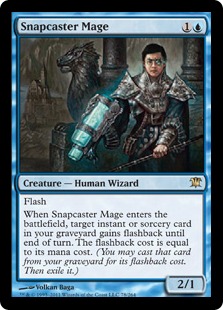
Snapcaster Mage has long been a mainstay in URx strategies, and certainly offers the colors something special: it's a huge end-step play that gives decks extra reach and vastly improves sideboard bullets. Beyond that, Snap's one of the best cards the wedge has when playing from behind on the board.

Unfortunately, Snapcaster Mage has too much overlap with some other cards in this deck. Bloodbraid Elf is also quite good in a bad spot, if less surgical. The Wizard is also pretty mana-intensive, and less impressive with permission when we're running such clunky counterspells. Perhaps most obviously, since Elf so often requires a tap-out, Snapcaster Mage makes for a frequently awkward cascade hit. To make the most of the 2/1, we'd want to play him alongside enablers like Thought Scour, which also hurt the overall power level of cascade. As it stands, Temur Cobra doesn't play enough instants and sorceries to benefit much from Snap's inclusion.

Huntmaster of the Fells
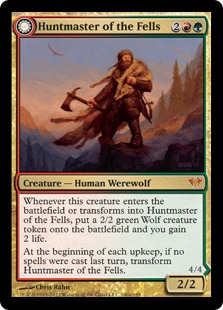
Another major omission from the deck is Huntmaster of the Fells. I've advocated for this card in Temur colors for virtually forever now. It's an engine that wins the game in a matter of turns if opponents fail to answer it, and leaves behind some value if they do. Beyond that, Hunt's one of the few haymakers in Modern that hoses not just attrition strategies, but creature decks—I've won many a game against Collected Company with just the Werewolf. The creature's also eminently castable under Blood Moon and provides incidental lifegain.

It's true that small creature decks are the type likely to harass Jace, the Mind Sculptor decks. But we're not your average Jace, the Mind Sculptor deck. Since we've already got heaps of value built into our primary strategy, there are simply more efficient cards to run in our 75 than Huntmaster when it comes to gunning down weenies, such as Pyroclasm.

Bonus Deck: Temur Delver

To be honest, I haven't jammed much with the above Temur Cobra deck. But that's where I'd start with my testing. Some of the deck's issues I encountered in my early testing included removing big threats, especially other Goyfs; this problem can call into question the strength of our value plans and sold me on a Roast in the sideboard. Another fault is the deck sometimes failed to capitalize properly on Blood Moon, which rewards pilots for fronting a lot of pressure.

The other deck these unbans has spurred me to return to is my beloved Temur Delver. Jace, the Mind Sculptor gives it a novel attack plan against the midrange decks that hassle us, and has wowed me in practice. I also just love Moon in this metagame, and Temur Delver wields the card expertly. Here's where I'm at with a list:

Temur Delver, by Jordan Boisvert

Creatures

4 Delver of Secrets
4 Tarmogoyf
4 Hooting Mandrills
2 Snapcaster Mage

Artifacts

1 Mishra's Bauble

Enchantments

1 Curious Obsession

Instants

4 Thought Scour
4 Lightning Bolt
1 Tarfire
1 Dismember
1 Simic Charm
4 Disrupting Shoal
3 Mana Leak
3 Stubborn Denial

Sorceries

4 Serum Visions
2 Sleight of Hand

Lands

4 Misty Rainforest
4 Scalding Tarn
1 Wooded Foothills
2 Steam Vents
1 Breeding Pool
1 Stomping Ground
3 Island
1 Forest

Sideboard

1 Engineered Explosives
1 Basilisk Collar
2 Huntmaster of the Fells
3 Blood Moon
1 Surgical Extraction
2 Ancient Grudge
1 Mountain
2 Jace, the Mind Sculptor
2 Pyroclasm

This deck's got some new tech in it, too. Basilisk Collar is disgusting with Huntmaster of the Fells and turns all of our creatures into must-remove threats against midrange. Dismember gives us a much-needed mainboard answer to fatties, while Curious Obsession critically grows Mandrills and lets a flipped Delver spot us ferocious. And I've yet to max out Tarmogoyf with this build, but in many post-board games, I do run all eight card types!

Still Chuggin'

The sky might not be falling, after all. If the beautiful, incredibly diverse Modern we had before last weekend's unbans really does get messed up, we can count on Wizards to fix it. They've always released cards from the list during periods of relative stability, and I'm glad they're still experimenting with the format. Now, I'm off for more experimentation of my own!


Insider: Biggest Winners from the Modern Unbannings

Are you a Quiet Speculation member?

If not, now is a perfect time to join up! Our powerful tools, breaking-news analysis, and exclusive Discord channel will make sure you stay up to date and ahead of the curve.

The unbanning of Bloodbraid Elf and Jace, the Mind Sculptor are going to make a huge impact in Modern. The financial impact will be huge, which can already be observed given the hype surrounding the cards and the many market movements that have occurred as a result, none more apparent than the massive rise in the price of the unbanned cards themselves. It has also increased demand for cards that are obvious choices for supporting these broken cards, many of which David Schumann explored earlier this week. Today, I’ll tap into my competitive background to share my thoughts on what other cards are prime targets for growth.

Jace, the Mind Sculptor will find a home in decks of all styles, but it’s set to benefit control decks most of all. There’s already significant hype around the card enabling a Legacy-style Miracles deck, which explains why David suggested Hallowed Fountain and Flooded Strand as buys, and explains the rise that Celestial Colonnade is already seeing. These will be great in all style of blue-white decks, even if Jace is just added to the existing White-Blue Control or Jeskai decks – but Terminus is a buy specifically for the Miracles strategy.

A card that has up to this point been underappreciated in Modern, but may now find its time to shine, is Telling Time, which is a perfect way to set up the top of the deck for a miracle.

There was an error retrieving a chart for Telling Time

Three printings of Telling Time have kept its price under $0.50, and even under a quarter for the Modern Masters 2015 printing, but becoming a Modern staple will certainly bring this toward a dollar and beyond. Where bigger profits may be had is the foils. If the price of other foil blue Modern staples is any indication, its current foil prices, which sit under $5 for the original two printings, seem like a bargain, and the sub-$1 MM15 price looks like a steal.

There was an error retrieving a chart for Temporal Mastery

A more unique Miracles card that isn’t used in the Legacy version but was a key part of the original Innistrad block version is Temporal Mastery. It has seen a big spike online, doubling in the past week, but the paper price stagnated down to $5 before seeing a small rise this week to $5.50. If it catches on in Modern Miracles decks, it’s going to see big gains, potentially breaking its previous high of around $10.

There was an error retrieving a chart for Monastery Mentor

Another card that could see significant gains based on a Miracles-style deck is Monastery Mentor, which is used in the archetype in Legacy, and would do work in Modern alongside cantrips like Opt, Serum Visions and Telling Time. It gives Miracles an efficient threat that could see maindeck play or be used in sideboards to change gears, and because it is relatively resistant to opposing Jaces, could help win the Jace wars that these decks will inevitably find themselves in against other control decks. Its price is also at a bargain level in the long-term, currently at an all-time low price under $9, but its upwards price trajectory online is a good sign.

There was an error retrieving a chart for Creeping Tar Pit

Jace is also set to find a home in blue control decks besides white-blue, so I’m eyeing Creeping Tar Pit as another buy. It’s at home alongside Jace in Grixis, while it’s also historically one of the better ways to pressure Jace, so it should see a general uptick in play in any decks that can support it.

There was an error retrieving a chart for Disrupting Shoal

A card that has been mentioned by some pros as a potentially excellent card with Jace is Disrupting Shoal, which can protect Jace in a way similar to how Force of Will protects it in Modern. Disrupting Shoal has seen very minor play in Modern, but Jace has never been legal in the format, so now it could finally be time for the card to rise to the level of blue staple. Its price has already moved up from from $9 towards $15 on the hype, but this card that saw print almost thirteen years ago would head significantly higher if its proves itself.

There was an error retrieving a chart for Damnation

White-blue won't be the only deck to use Jace, and one of the best candidates for the card is Grixis Control, which was already competitive in Modern, but may rise to the very best Modern control deck because of how well the colors and its wealth of removal can protect the planeswalker. One component of that removal is Damnation, which is currently used in small numbers in Grixis, but will likely see even more play as the deck becomes more controlling and able to dominate the late game with Jace.

On the Bloodbraid Elf side of things, the obvious winner is Jund, which explains why David pointed out Kolaghan's Command as one of the biggest winners. There’s a host of cards in the archetype that win from the unbanning, including staples Dark Confidant and Liliana of the Veil.

There was an error retrieving a chart for Raging Ravine

The card that I see as one of the very biggest winners from the rise of Bloodbraid Elf is Raging Ravine, which sagged to under $10 since spiking to a high of nearly $20 two years ago. It’s up to almost $11 now after the announcement, but that leaves plenty of room left to grow.

There was an error retrieving a chart for Grim Flayer

Grim Flayer is a relatively new arrival to Modern that hasn’t had the chance to play with Bloodbraid Elf, but now is its time, which explains its big rise online since Monday, and should finally bring some growth to its stagnated paper price.

The unbanned cards demand that decks respect them, which will also bring price increases to an entire class of cards that will be used to hose them. David mentioned Dreadbore, which has spiked hard online and is moving up in paper as well, now at $2.40 from $2, with more room to grow. Some other cards to pay attention to are Hero's Downfall, which does the job at instant speed, along with Modern staples Maelstrom Pulse and Detention Sphere, which are now more important than ever because they answer Jace.

There was an error retrieving a chart for Goblin Rabblemaster

Jund has struggled in Modern over the past couple years, but the most successful lists in 2017 included Goblin Rabblemaster, which helped the deck apply pressure to its opponents. It's going to be a fantastic card to cascade into, so I see nothing but upside for its price in 2018.

There was an error retrieving a chart for Congregation

Bloodbraid Elf will see play in a lot more decks than just Jund, and one clear home is Zoo. A version of this deck that was successful in the past combined Bloodbraid Elf with Congregation at Dawn, which can dig for it on-curve and set up a cascade along with a third creature, potentially another Bloodbraid Elf. It's a borderline combo that also has great toolbox potential, so I see big things for it over the coming months.

There was an error retrieving a chart for Gaddock Teeg

A creative solution to Jace is Gaddock Teeg, which prevents it from being cast, along with cards that go along with it like Cryptic Command, and cards in Miracles like Terminus and Supreme Verdict.

There was an error retrieving a chart for Ethersworn Canonist

One of the best ways to handle Bloodbraid Elf is to turn off cascade, which could bring about a rise in Ethersworn Canonist, and in its counterpart Eidolon of Rhetoric.

What cards do you predict will rise because of the unbannings?

–Adam

Insider: Jace, Bloodbraid & The Cards They Make Better

Are you a Quiet Speculation member?

If not, now is a perfect time to join up! Our powerful tools, breaking-news analysis, and exclusive Discord channel will make sure you stay up to date and ahead of the curve.

I cannot overstate how big of a deal the unbanning of both Bloodbraid Elf and Jace, the Mind Sculptor was on Monday morning. It is likely the most significant unbanning announcement ever. I simply cannot think of another example when such a monumental change occurred as a result of DCI intervention. If you can think of one that tops this (or even comes close, for that matter) drop it into the comments because I am at a loss for examples!

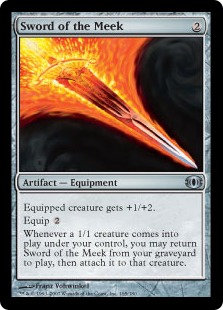
I think both of these cards are going to be major players in Modern. This wasn't like unbanning Bitterblossom or Sword of the Meek, where they are sort of "meh," niche cards. These cards are going to be fixtures in decks that consistently battle for trophies.

Seriously, what blue deck isn't going to play at least one or two JTMS? Maybe Storm?

Are people going to bother playing BGx decks that don't play Bloodbraid Elf? Especially in a world where Jace is large and in charge? Doubtful.

These are both game changers.

As a result of the game being significantly changed by virtue of two titanesque threats being dropped on the format, the metagame is going to change. I can't tell you how, but I can tell you why. These cards are both insanely powerful threats. They are the kind of cards that enable new decks. They are the kinds of cards that make preexisting decks better. They are the kind of cards that shake things up.

The easiest and safest place to invest is into cards that are directly impacted by these unbannings. Cards that are either directly good against these strategies, or cards that nicely port into shells designed with the new unbannings in mind.

I'm going to break cards down into a few categories of similar types. Obviously, you should be thinking about other cards that can nicely port into these camps. Feel free to drop your own picks into the comments section. It's a great way to gain some street credit and also help out your fellow investors.

Jace Synergies

Jace is certainly the flashiest unbanning. The DCI really dropped a $150 bomb on the format and his name is Jace.

But what are we going to do with this busted mythic? The most obvious choice is just to splash him into Grixis Shadow, UW Control, or Jeskai Tempo shells. In fact, this is a very good thing to do with him. He obviously improves these decks by simply being one of the most powerful spells in the format!

There was an error retrieving a chart for Thoughtseize

We may well see an uptick in Thoughtseize in Modern as opposed to the more traditional 4-2 split favoring Inquisition of Kozilek. It is pretty relevant that Thoughtseize can hit opposing Jaces from the hand, as well as Bloodbraid Elf, which are sure to be out in numbers in the coming weeks.

I'm more interested in cards that could be part of powerful new Jace decks. How about this Pauper all-star...

There was an error retrieving a chart for Squadron Hawk

Do you remember Caw Blade? Yeah, me too. The key is that you can use the Squadron Hawks as a hard draw engine. You tutor for three Hawks and brainstorm two away with Jace. You replay the extra Hawk and get the other two that were shuffled back. It is a great way to turn Jace's "virtual card advantage" into "actual raw card advantage."

There was an error retrieving a chart for Lightning Bolt

Bolt also got a lot better. Obviously cheap removal of all kinds is good when you are brainstorming at will. Bolt is particularly good because it doubles as removal against opposing JTMS.

There was an error retrieving a chart for Bitterblossom

I've certainly played a lot of Bitterblossoms and JTMS side by side over the years. These were my go-to threats back in Extended. I'm not going to lie, the Faeries shell looks really strong having also gained Fatal Push. Are we destined for a rematch of Extended from a decade ago? Fae vs. Jund? Could be a matchup that comes up often. Either way, Bitterblossom is extremely effective at attacking a Jace.

There was an error retrieving a chart for Gideon Jura

Another Classic Jace team-up! Gideon is great against creature decks because he has so much loyalty and can draw the fire away from the Mind Sculptor. It is very difficult to get a Jace off the board when Gideon is helping to prop the Mind Sculptor up.

There was an error retrieving a chart for Elspeth, Sun's Champion

Basically, everything that applies to Gideon also applies to Elspeth. Both of these powerful walkers are great finishers and have the added utility of making it difficult for an opponent to make profitable attacks against JTMS.

There was an error retrieving a chart for Wall of Omens
There was an error retrieving a chart for Restoration Angel

Yet another classic pairing that we should not forget about. Both of these cards are inherently good. They have synergy. They are good at buffering for Jace. And, they are extremely effective at defending against Bloodbraid Elf. I wonder if these will be good again. Spoiler alert, yes.

There was an error retrieving a chart for Blade Splicer

Let's throw Blade Splicer into that camp while we are at it. Hmm, I'm noticing that Jace makes a lot of cards seem a lot better...

Jace Synergies Part II: Miracles

I've actually been buying up cheap miracles in hopes that something will stick to the wall.

There was an error retrieving a chart for Terminus

Obviously, Terminus is the crème de la crème of the miracle cards. It just answers everything and now we have Jace's brainstorm to help set it up.

The addition of Opt into Modern in Ixalan gives the deck another great way to Miracle on an opponent's turn which will be crucial for these types of decks to protect Jace from BBE.

I expect Miracles to be a deck that people will try to build; whether or not it is actually good won't necessarily matter in terms of creating interest in Miracles cards. The hype alone will likely be worth some positive equity.

There was an error retrieving a chart for Bonfire of the Damned

I was pretty lucky to have snagged a playset of Japanese Bonfire of the Damned from a two-for-$1 box at the last Grand Prix I attended. I'm glad that I have them now, as I'm actually interested in trying it out!

The card has been fringe Modern-playable for a while in Ponza, but with Jace around to actually set it up, the card starts looking like a real option for the first time ever. There is a reason this card was $75 when it was in Standard—it's very difficult to recover from an opponent miracling this spell at basically any point in the game!

There was an error retrieving a chart for Entreat the Angels

Basically, if it has the miracle keyword, it is a potential target. I would guess this is the kind of finisher that control decks might play one copy of. It was a lot better in Legacy Miracles because it was one of the few ways to break through Counterbalance lock. It's potent; I give it a chance.

There was an error retrieving a chart for Temporal Mastery

Another random good miracle. It is powerful. It seems pretty busted to take extra turns with a Jace in play. This is my dark horse pick.

Bloodbraid Elf Synergies

There was an error retrieving a chart for Liliana of the Veil
There was an error retrieving a chart for Liliana, the Last Hope

The first place people will try Bloodbraid Elf is in a Jund shell. The most powerful spin of the wheel with a BBE is often to hit a three-cost Liliana planeswalker. So much value to be had! I know that everybody is ranting and raving about Jace, but don't forget that Liliana also got a lot better thanks to BBE.

Expect more Lilianas in Modern and expect demand and price to rise.

There was an error retrieving a chart for Maelstrom Pulse

Another card that plays nice with Bloodbraid Elf in Modern is Maelstrom Pulse. People tend to get tunnel vision about how games play out. Opponent taps out for Jace and brainstorms, then the Jund player casts BBE and kills Jace. It doesn't play out that way all the time. What if you don't have an Elf? What if they tick Jace up? Jace is very good against Jund once it hits that board assuming it can't be quickly removed.

Maelstrom Pulse is a card that takes out Jace which is important. Pulse has already been a good Modern card that has gotten a little pricey despite Masters reprints and it just got a lot better!

There was an error retrieving a chart for Dreadbore

Speaking of efficient answers to the Mind Sculptor that can be played by Jund, how about Dreadbore? It's good removal that increases dramatically in value when there are good planeswalkers to kill. If Jace and Gideon start teaming up, look for Dreadbore to be an important player in the metagame, since Gideon has a ton of loyalty and is difficult to attack and burn out.

Anti-Jace and -Bloodbraid Technology

While it is true that cards that pair well with these new powerful spells are likely to see a surge in play, the same can be said about spells that are profitable counters to them.

There was an error retrieving a chart for Pithing Needle
There was an error retrieving a chart for Sorcerous Spyglass

If you want all the Jaces or Lilianas shut down, this is the card. You get a lot of tactical value for just one or two mana out of these spells, especially in a metagame that is likely moving more toward planeswalkers. I expect these popular but somewhat niche sideboard options to become more widely adopted with Jace and Liliana on the rise.

There was an error retrieving a chart for Thrun, the Last Troll

Can't counter it. Can't target it. And, it regenerates. If the Jace decks are not packing Terminus there are very few clean answers to a Thrun. It's a great way to pressure Jace that is difficult to interact with.

It's also pretty decent in the Jund mirror. It obviously stands up and blocks opposing Bloodbraids but the regeneration makes it good against opposing Tarmogoyfs on defense. It's always sweet when you can trade a BBE and a regen shield on Thrun for a big Tarmogoyf.

Thrun has dropped out of popularity because it doesn't size up well against Gurmag Angler or Tasigur. Keep in mind that both of these cards suddenly become much worse when Jace can minus-one to bounce them. It's easy to cast a delve-five or -six creature once or twice but casting the third or fourth time is a real pain.

The Modern Life

If you're investing in Modern, life is easy right now:

Does it play well with Jace? Gold.

Does it play well with Bloodbraid Elf? Gold.

Does it play well against Bloodbraid Elf and/or Jace? Also, Gold.

Did you think of it before everybody else did? Super Gold.

It's a big moment in Magic. I've never seen an unbanning like this one before. Truly momentous. Enjoy the moment and make some smart trades in anticipation of where things are headed. Personally, I believe that Jace and BBE are the truth and I'm catering my trades and buys to reflect that belief.

Insider: MTGO Market Report for February 14th, 2018

Are you a Quiet Speculation member?

If not, now is a perfect time to join up! Our powerful tools, breaking-news analysis, and exclusive Discord channel will make sure you stay up to date and ahead of the curve.

Welcome to the MTGO Market Report as compiled by Matthew Lewis. The report will cover a range of topics, including a summary of set prices and price changes for redeemable sets, a look at the major trends in various Constructed formats and a "Trade of the Week" section that highlights a particular speculative strategy with an example and accompanying explanation.

As always, speculators should take into account their own budgets, risk tolerances and current portfolios before buying or selling any digital objects. Please send questions via private message or post below in the article comments.

Redemption

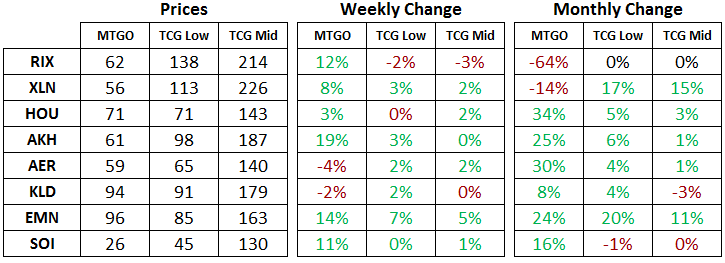
Below are the total set prices for all redeemable sets on MTGO. All prices are current as of February 12, 2018. The TCGplayer low and TCGplayer mid prices are the sum of each set's individual card prices on TCGplayer, either the low price or the mid price respectively.

All MTGO set prices this week are taken from GoatBot's website, and all weekly changes are now calculated relative to GoatBot's "full set" prices from the previous week. All monthly changes are also relative to the previous month's prices, taken from GoatBot's website at that time. Occasionally, full set prices are not available, and so estimated set prices are used instead. Although Hour of Devastation (HOU), Amonkhet (AKH), Aether Revolt (AER), and Kaladesh (KLD) are no longer available for redemption, their prices will continue to be tracked while they are in Standard.

Modern

There was an error retrieving a chart for Jace, The Mind Sculptor

I'd be remiss if I didn't start with Modern, the format that is receiving the lion's share of attention in the past month, in particular with the recent addition of two powerful cards: Jace, the Mind Sculptor and Bloodbraid Elf. If you didn't catch the news this week, these cards were removed from the banned list on Monday. Bloodbraid Elf was widely expected to be unbanned at some point, but the first-time addition of the most powerful version of Jace to the Modern format took me by surprise. With a very successful Modern Pro Tour event just in the books and a diverse and popular format, changes to the banned list seemed like a low-probability event.

Regardless of what has happened and whether or not it was predictable, it's up to savvy speculators and players to adjust their expectations going forward. Fortunately, the shakeup of Modern is going to put card valuations in a large state of flux, which is a great environment to be a speculator in. A more static environment is one where the drip of supply from Treasure Chests will overwhelm any short-term price move, making it difficult to speculate on. On the other hand, a format in a state of flux will generate rapid shifts in card valuation as players explore the new metagame.

There was an error retrieving a chart for Raging Ravine

Right out of the gate, some obvious cards are benefiting, such as the creature lands from Worldwake (WWK). With no ability to interact with in-play creature lands, they are a natural and low cost threat to Jace. As a result, Raging Ravine has tripled in price this week, aided no doubt by the return of Bloodbraid Elf and visions of Jund decks. Celestial Colonnade and Creeping Tar Pit have also jumped in price, with the U/W land piercing the 40 tix level for the first time in three years and the U/B land breaking its downtrend and now sitting at over 8 tix.

Classic Jund decks are looking to reemerge from the wilderness on the back of Bloodbraid Elf, and Tarmogoyf and Dark Confidant have jumped as a result. If that turns out to be the case, then decks that Jund has trouble with, like Tron and Titan-Shift, will benefit. A resurgence in Tarmogoyf and Jund decks also means that Threads of Disloyalty will start showing up in sideboards again. This card briefly spiked to over 4 tix last year as a potential answer to Death's Shadow, but in practice it didn't work out and its price has suffered ever since. At less than 1 tix, Threads of Disloyalty is a great prospect to double or triple in price, and I have been buying a bunch.

There was an error retrieving a chart for Tarmogoyf

Keeping an eye on emerging trends will be useful, but it's also good to remember what has happened in the past. Just before it was banned, players were tinkering with Bloodbraid Elf and Boom // Bust to some success. Unfortunately, the rules update to split cards in 2017 means that Boom // Bust has a converted mana cost of eight and thus Bloodbraid Elf cannot cascade into it. With this interaction now gone due to a rules change, there is very little upside to Boom // Bust so skip over this one if you are thinking about speculating on it.

On the more speculative front, Huntmaster of the Fells and Domri Rade are two cards that have seen play in Modern in the past, but have been largely absent more recently. Sharing the same colours as Bloodbraid Elf is a good start to possibly seeing more play, and Domri Rade in particular has a nice interactions with Jace, The Mind Sculptor and Tarmogoyf. In terms of opposition, Huntmaster of the Fells has some play against Jace with its extra 2/2 wolf when it comes into play and its ability to do damage to opponents when it flips. I have also been buying these two cards for the portfolio.

There was an error retrieving a chart for Domri Rade

On a more subtle note, both of the unbanned cards are four casting cost, which means that Inquisition of Kozilek gets worse and Thoughtseize gets better. I don't think this type of information is actionable, but it's worth thinking about how a cards valuation and utility changes as a result of the format upheaval.

Standard

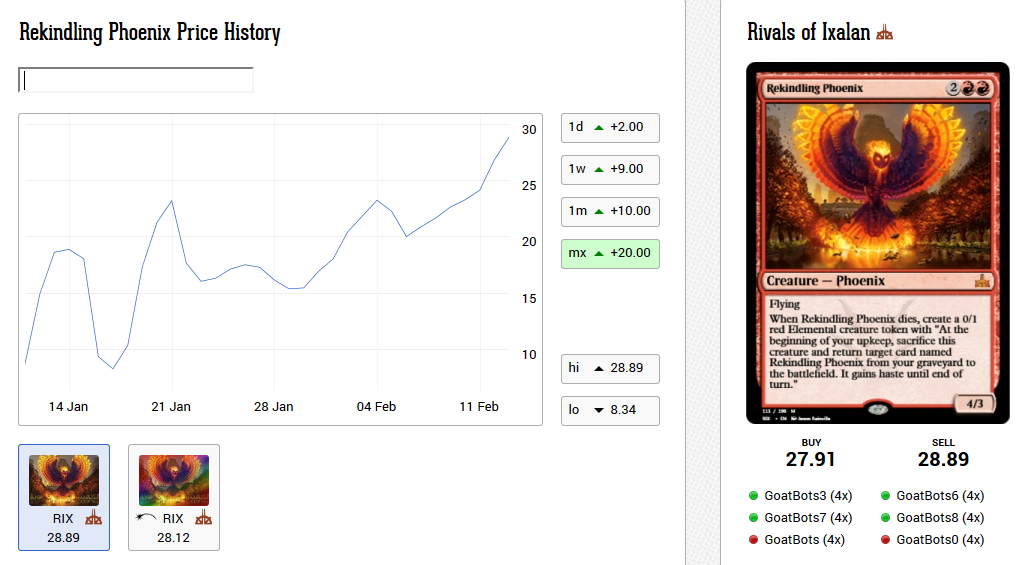
This week in the Standard format, Rekindling Phoenix has caught my eye. Although Kumena, Tyrant of Orazca was initially the most expensive card in Rivals of Ixalan (RIX), the four-casting-cost red mythic quickly took the top spot. Its recent price trend higher is continuing, and I expect that strength to continue. Here's the price chart courtesy of GoatBots.

The market is currently going through the process of price discovery on this card, trying to figure out how valuable it is and what its price should be. But the nature of the MTGO market is that prices tend to shoot much higher than what might be a "fair" value. Thinking deeply about how bots and players interact in the MTGO market will reveal why this is true.

First of all, the bots operate in a competitive landscape where buy and sell prices on individual cards don't have a lot of variation. Bots compete with one another, but really they are setting prices by the change in supply they are observing in their systems. As players buy up cards, if there is no incoming supply to offset the purchases then bots will have to raise prices in order to compensate. The big bot chains like MTGO Traders want to have a complete selection of cards available, and if they don't increase prices in the face of rising demand, then they will rapidly deplete their stock of cards. On the flip side, if players are selling cards, then the bot chains have to start lowering prices to avoid building up their inventory too much. Although there is some difference in how quickly the bots adjust their buy and sell prices, the principle of why they adjust prices is the same. All the bots are interested in doing is maintaining their level of inventory while serving their customers – and collecting the difference between the buy and sell prices of individual cards, otherwise known as the spread.

When this is how you operate, there is no objective fair value price on an individual card that you can point to. All prices are a result of market forces, so it's impossible to set a price that's different from what the market decides the price to be. Even if you think you know that a card is worth 10 tix and should be priced accordingly, prices can fluctuate up and down quite rapidly as the market tries to figure out the price through thousands of individual buy and sell decisions.

There was an error retrieving a chart for Illusion of Choice

With all that in mind, the other feature of the MTGO market that contributes to prices overshooting on the high side is the lack of short selling. In the regular stock market, one has the ability to short a stock by borrowing that company's shares, and then selling those shares on the open market. This is a way that market participants can seek to find the true worth of a company. If people think a stock is priced too high, then they can sell short that stock. On MTGO, there is no way to do this, so even if I ultimately think that Rekindling Phoenix is a 15-tix card, there's no way for me to make that bet.

The only way that a card starts coming down in price is if players and speculators start selling more copies of card than are being bought. Right now, players are still getting their copies of Rekindling Phoenix in order to play Standard. A rising price indicates that the number of buyers is exceeding the number of sellers. And since this card is new, this initial push of demand is the one big push that will cause the price to shoot too high. Looking at the price chart above, we see the price has basically been rising since Rivals of Ixalan (RIX) was released in January. At this point, I doubt we've seen the peak on this card, and I've been a buyer as a result.

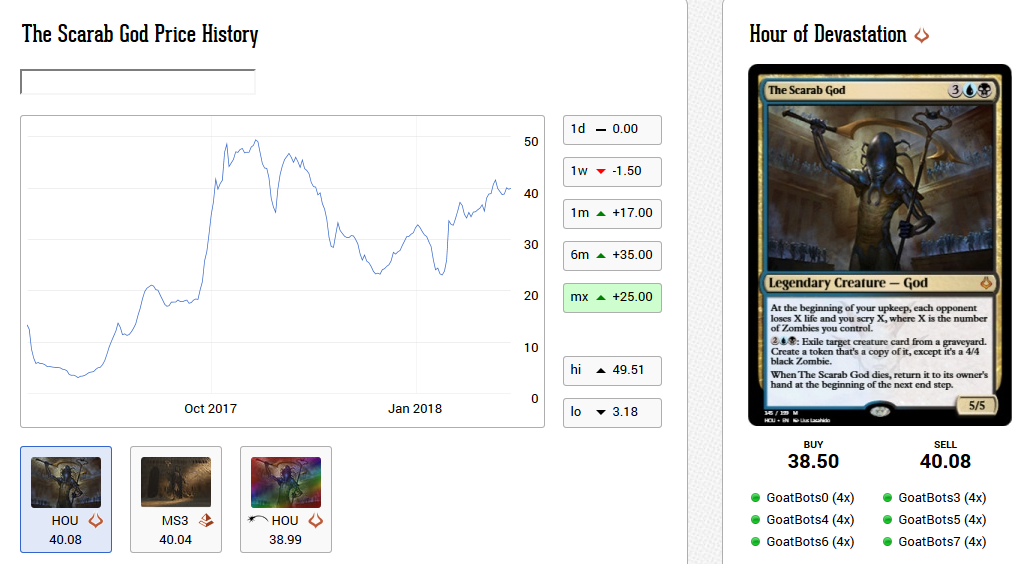
We saw a similar effect last year with The Scarab God. The timing was a little different, as the big push of buyers came after Standard rotated, but the impact on price was similar. Have a look at the chart below, courtesy of GoatBots, to see what I mean. Although this card did rise to just under 20 tix by the end of September, the price really took off in early October as Standard rotated, almost hitting 50 tix.

Since almost hitting 50 tix in the fall, the price has been down into the low 20-tix range before more recently recovering to the 40-tix level. If you can point to the true, fair value of this card on the chart, I'd love to hear what price that is. All I can do is surmise that when buyers exceed sellers, the price will rise, which is what is happening right now to Rekindling Phoenix.

Trade of the Week

For a complete look at my recent trades, please check out the portfolio. This week I've been making many transactions in the portfolio, selling off some Modern positions and establishing some new positions in fringe Modern cards. But I have also been looking at the Standard format with the ascendant Rekindling Phoenix in particular catching my eye. I've been buying a few foil copies and a bunch of regular versions. The price looks set to rise into the mid-30-tix range at least. Once the price increases slow down or stop, I will be a seller.

Systematic and Practical Testing Guidelines

Are you a Quiet Speculation member?

If not, now is a perfect time to join up! Our powerful tools, breaking-news analysis, and exclusive Discord channel will make sure you stay up to date and ahead of the curve.

Thanks to Wizards' bombshell unban announcement, Modern is on the cusp of a great age of experimentation. Established and rogue archetypes alike will be examining their 75s in efforts to either combat or incorporate the format's latest newcomers, and I fully expect some new archetypes to appear in the wake of these powerful additions to the card pool. As any prospective deckbuilder knows, the first thing one must do after crafting a new list is to test it, which brings some questions with it. How long should I test before I trust my results? How do I know whether the cards I am testing are helping me win? Having done my fair share of testing and tweaking over the years, I'd like to open a discussion on this topic.

This article will offer some general thoughts on the deck testing process. These include setting guidelines by which to determine the length of the testing period, how to evaluate your results, and how to decide when your data is applicable.

Sample Size

As David has shown in his exhaustive testing of a variety of banned (and formerly banned) cards in Modern, it's rather difficult to collect enough matches of Magic for a deck comparison analysis to stand up to the results of a student's t-test at high confidence intervals, thanks to the often-minute differences an individual card makes in a deck's winrate along with the inherent variance of the game. This means that most experimentation that falls short of that threshold will involve some qualitative aspects. Chief among these is deciding how much data is good enough to be considered a reasonable sample.

Deciding what to define as a reasonable sample can seem somewhat arbitrary at first; after all, what is the real difference between two datasets if running a statistical test on both results in the acceptance of the null hypothesis? My definition of a reasonable sample is one that approximates a statistically valid sample while still being practical for the tester to achieve. This obviously varies with the particulars of the tester, but in the interest of providing a guideline, I would be somewhat skeptical of any conclusions made regarding a card's effectiveness that are backed by a sample of fewer than 75 individual matches, and I would prefer the number to be 100 or greater.

Given the advent of Magic Online as well as several other online platforms which enable easy access to testing, I believe that these sample sizes are relatively accessible, and they result in more stringently collected data. I would also err in favor of a larger sample for a relatively new or previously untested deck, as opposed to a small tweak in an established list. Say you're stoked for the return of Bloodbraid Elf and Jace, the Mind Sculptor, and want to test out a Temur Moon list that jams them both, like this one:

Temur Moon, by Roland F. Rivera Santiago

Creatures

4 Bloodbraid Elf
4 Snapcaster Mage
4 Tarmogoyf
2 Tireless Tracker

Enchantments

2 Blood Moon

Planeswalkers

2 Jace, the Mind Sculptor

Instants

4 Lightning Bolt
2 Tarfire
2 Mana Leak
2 Electrolyze

Sorceries

4 Serum Visions
4 Ancestral Vision
2 Roast

Lands

2 Breeding Pool
2 Forest
4 Island
4 Misty Rainforest
2 Raging Ravine
4 Scalding Tarn
2 Steam Vents
2 Stomping Ground

Sideboard

1 Ancient Grudge
2 Anger of the Gods
2 Dispel
2 Engineered Explosives
2 Disdainful Stroke
4 Huntmaster of the Fells
2 Relic of Progenitus

The rationale behind this 75 is to craft a deck that is well-suited to win the midrange mirror thanks to its ability to generate card advantage, while still holding up against aggro or big mana with removal and land disruption, respectively. Following the guidelines mentioned above, I would look to get 100 matches in before making any major changes to the list.

Data Evaluation

After deciding on a deck to test and a trial period, there are a few things to keep in mind.

  1. Don't leap to early conclusions. While it is rather natural to notice a card you're interested in testing when you draw it, and make a note of how it performed for you in that game, resist the temptation to make conclusions on it as you go along. Giving in could result in the creation of an internal narrative, which might make it harder to objectively interpret your results. Instead, write down detailed notes on how the card performed, and take a holistic view of those notes at the end of your trial.
  2. Keep detailed notes: Note-keeping was alluded to in the earlier point, but I would suggest expanding the notes beyond the cards that are being tested. Some good data to keep for pretty much any type of testing are factors such as the opposing player's deck archetype, being on the play or on the draw, any mulligans that have occurred, mana flood and screw, decisions you regretted after matches, and whether the sideboard was appropriate for the matchup. Other parameters can be annotated, but I would consider these to be the essentials.
  3. Choose a standard of success. People play Magic for a variety of reasons. While I assume that someone interested in documenting their testing in a detailed manner is looking for some degree of "competitive success," there are several ways to define even that.
    For example, the requisite winrate for a deck to break even in Magic Online leagues at the time of this writing is 50%, according to this expected value calculator.

    However, chances are the winrate will have to be quite a bit higher if you want to recoup your investment, consistently post 5-0 results that can be features on Wizards' database, or have a chance of making Top 8 in a format challenge. Higher still would be the winrate for a deck capable of taking down large paper events such as SCG Opens, Grand Prix, and Pro Tour Qualifiers. In the case of edits to an existing list, the standard of success may be relative; can this configuration of the deck perform better than the previous one against the field?

    To throw a number out there, I consider a 60% winrate in Magic Online leagues to be a good benchmark of success for any prospective brew, and would definitely be looking for the proposed Temur Moon list to meet or exceed that standard. My standard of success for any changes to the Merfolk list I piloted to a Top 16 finish at the SCG Classic in Philadelphia are a bit higher, namely because that deck has consistently exceeded that threshold in the past.

  4. Evaluate the quality of competition. It also matters who you're testing against. Obviously, there is only so much control one can exert over what opponents one faces when testing, especially if you choose to do so online. However, certain venues offer stiffer competition than others on average, and you can choose which ones you frequent depending on the standard of success you have set for the deck. Outside of a dedicated testing groups of high-level players (such as pro teams), I'd say Magic Online competitive leagues provide the best competition available to the average player, followed by the friendly leagues or local events with a disproportionate number of successful players. Next, I'd rank league efforts on other online platforms or your typical local FNM-level event. I'd honestly avoid making major testing conclusions on data taken from kitchen-table magic, two-man queues or the Tournament Practice room on Magic Online, or free play on other online platforms; the lack of stakes involved usually means opponents' skill levels vary wildly, and it becomes more difficult to separate the deck's performance from that of the players involved.

How to Move Forward

After collecting a reasonable sample and deciding on a standard of success, it's time to peruse the data and figure out how testing went. Some major questions and follow-ups to ask:

  1. How did the testing go? Did the test deck meet or exceed the established standard of success? How did the cards in question figure into the deck's meeting (or failing to meet) this standard? This is one of the points where the notes come in handy. One potential conclusion you may come to is that your deck failed to meet the standard because of mana issues, which could point to the manabase needing some reworking or the need for a larger sample to try and account for some bad variance. Alternatively, the supporting elements for the strategy may be somewhat lacking.

    For instance, let's say the Temur Moon list above doesn't quite meet our standard of success, and the chief reason why is that our Bloodbraid Elf hits were somewhat lackluster. Having detailed notes on your cascade hits can help you come to that conclusion, and address it in future configurations by incorporating cards like Vendilion Clique or Savage Knuckleblade at the expense of poor cascade hits like Mana Leak.

  2. Will the tested changes be kept or abandoned? In the case of a new archetype, this is when you should decide whether you want to tweak it further, or drop the deck altogether. If you do decide to drop the deck, will you abandon the idea? Or move forward with a new take on it?
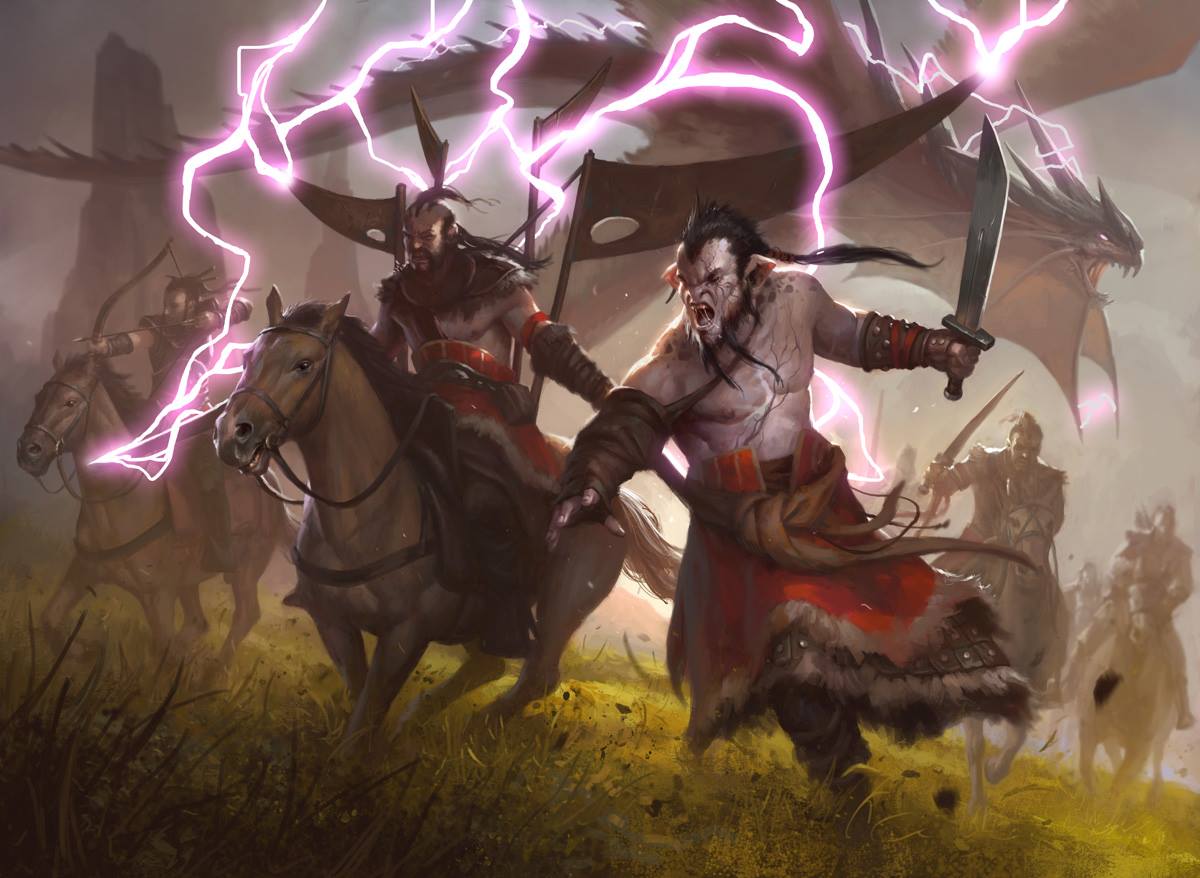

    Going back to Temur Moon, let's say Huntmaster of the Fells is underachieving as a sideboard card, and that is causing our winrate to suffer in matchups that it is supposed to address, such as Burn. Chances are that including a more cost-efficient method to address the matchup (like Courser of Kruphix) could address the problem. On the other hand, if testing reveals that the deck isn't as strong in the midrange mirror as cards like Ancestral Vision would have led you to believe, chances are that you're better off going back to the drawing board and coming up with a new concept.

  3. Will further changes be made? In the event of a deck that met or exceeded the standard of success, you should decide whether you want to continue riding the proverbial wave of good results, or if you want to tweak it further in an effort to keep climbing. For a deck that failed to meet your preestablished standard, this is when you should decide the extensiveness of revisions you feel it needs. I would lean heavily on my notes here, as changing even a few cards can have far-reaching consequences on a deck's performance.

    For example, if the Temur Moon list described above was found to be somewhat poor at fending off artifact-based decks such as Affinity and Lantern Control, and that has either kept it from reaching my standard of success or I would like to make further changes in order to chase a higher standard of success, I would have to decide how much of my 75 I would like to change in order to shore up those matchups. Some potential bits of wiggle room are to consider Abrade in spots currently occupied by Roast, adding artifact-based sweepers such as Creeping Corrosion or Shatterstorm to the board, or whether relevant spot removal like Destructive Revelry would help shore up post-board games.

Conclusion

I have used this method several times to evaluate changes made for my decks, and I have been satisfied at the thoroughness of my conclusions, and the improvement they have resulted in. Additionally, I honestly haven't found them to be overly time-consuming, which is an important factor when considering that I have a finite amount of time to dedicate to the game. If you have any comments on this testing method or a method of your own that you'd like to share, feel free to drop me a line in the comments.

Insider: A Whole New Modern Format

Are you a Quiet Speculation member?

If not, now is a perfect time to join up! Our powerful tools, breaking-news analysis, and exclusive Discord channel will make sure you stay up to date and ahead of the curve.

Welcome back readers!

For those who somehow haven't heard...we had some changes to modern on Monday... Jace, the Mind Sculptor makes his modern debut and his Alara Reborn nemesis Bloodbraid Elf makes his triumphant return to the format. Both of these are pretty big announcements, though arguably adding a card so powerful it was banned in standard to the format for the first time is bigger.
There was an error retrieving a chart for Jace, the Mindsculptor

We saw Jace's price increase by almost 40% the week leading up the the announcement based on a questionable image from the beta of Magic Online Beta, this same image showed Ensaring Bridge as banned so it seems that it's likely a hoax that happened to be half right. Jace's price has already spiked hard after the announcement with people scooping up copies in the $70-$80 range and relisting for $120+.

There was definitely some quick money to be made on this one, but the market has already reacted to Jace, specifically so rather than try to scrap out the last bit of value from that well I'd rather dig a new one and look at the cards that will get an ancillary boost thanks to Jace's addition to the format.

There was an error retrieving a chart for Snapcaster Mage

Likely the most obvious pal for Jace, Snapcaster Mage has already moved up considerably in the past year based on finding a home in Grixis Shadow and Grixis/Jeskai Control decks. Depending on when this gets printed the market may have already reacted to the announcement. I can easily see Snap becoming the second most valuable card in modern (right behind JTMS), especially since demand has already been on the rise. The big risk here is whether or not we see Snapcaster Mage in the A25 set (as we know Jace is in it)

There was an error retrieving a chart for Vendilion Clique

Another staple in legacy blue based control decks, Vendilion Clique has been a modern staple since the format's inception (though with the waning of blue based control decks in the format, Clique's price has deteriorated a good bit) from it's high and now could see a decent rise as control players look to push a blue based control deck to tier 1 status in modern.

There was an error retrieving a chart for Ancestral Vision

Ancestral Vision was unbanned back in 2016 and spiked in price before collapsing back down (and then continuing down thanks to a reprint in Iconic Masters). It seems that drawing 3 cards for 1 blue mana after waiting 4 turns doesn't cut it in a format in which many decks can kill you on turn 4 (or before)

But these were pretty easy picks to be fair. They are all obviously good cards in blue based control decks. So let's go down another level.

There was an error retrieving a chart for Thing in the Ice

Thing in the Ice has typically only found a home in some of the U/R Pyromancer decks as it serves a nice board clear and a decent threat that can come down early and block early aggression. I've actually thought that JTMS would be fine in modern for quite some time as the format is just too fast to play him on turn 4 and just not leave yourself open to dying. Thing serves as a great way to block small aggressive creatures and a mana free Evacuation that triggers off casting spells that blue based control decks already tend to cast a lot of.

There was an error retrieving a chart for Terminus

There was an error retrieving a chart for Bonfire of the Damned

There was an error retrieving a chart for Entreat the Angels

The miracle mechanic proved to be extremely powerful while in standard and even more so in legacy spawning arguably the format's most dominant deck (that didn't see a quick ban to neuter it). Terminus was a 4 of in pretty much every Legacy Miracles build since the deck's inception and if a modern miracles deck develops, I expect we'll see a good number of Terminus in the 75. Entreat the Angels was one of legacy miracles win conditions (as it was almost always a 1 of as you didn't want to try it that often before actually casting it) and would likely find a home in any Modern Miracles builds, though likely as only a 1 or 2 of.

Luckily, it's always been a mythic when printed, though it does have 3 printings (just like Terminus) so the ceiling is kept somewhat low due to abundance of supply. Lastly we have Bonfire of the Damned the best miracle card when it was in standard that has never really found a home since leaving standard.

It's often a 1 sided wrath effect that can kill a player or planeswalker as well. The biggest problem in the past has been that it just wasn't really necessary in the legacy miracles builds despite the fact that many versions included a red splash. Modern, though is a different animal and we've seen that Jeskai control has tended to be the control color combination of choice so it likely has a better chance in modern.

There was an error retrieving a chart for Flooded Strand
There was an error retrieving a chart for Hallowed Fountain

Blue based control has often leaned on white as the pairing color of choice thanks to white having good mass removal and good pinpoint removal. If this trend continues then it makes sense that the on color fetches and shocks would see movement. It also helps that these are both some of the cheapest in either category on the market so the buy in isn't as high. This is especially true if a miracles deck develops as 2 of the best cards with the miracle mechanic are white.

There was an error retrieving a chart for Thoughtseize

Lastly, we have a card that pairs decently with JTMS, but is also a great foil to him. A lot of not Death's Shadow decks have been shifting more towards Inqusition of Kozilek as the discard spell of choice to save on life, however, Inquisition can't hit JTMS and if he does prove to change the format we can expect more Thoughtseize's finding homes in decklists.

There was an error retrieving a chart for

While the announcement of BBE returning to modern didn't lead to the same kind of awe that JTMS's addition did, it's very important to remember that Bloodbraid Elf has been in modern before and proved to be too powerful (according to WoTC though many argue and rightfully so that the real culprit was Deathrite Shaman powering out BBE on turn 3).

Still Bloodbraid will provide the Jund archetype a real shot in the arm which is nice for a deck that was once tier 1 but has fallen down to tier 2-2.5 status thanks to the dominance of Death's Shadow decks (which quite honestly do the same thing as Jund, but more mana efficiently). With Bloodbraid requiring both red and green though, it's a harder card to splash and thanks to the randomness of cascade typically requires decks to be built with the cascade trigger in mind (look at the Living End decks for example).

I could see BBE potentially leading to a return towards the Jund Shadow builds (assuming he's worth the shift away from Grixis and Stubborn Denial). There's also the obvious power level of BBE cascading into Liliana of the Veil, however, with A25 releasing in a month (with a lot of spoilers to go) and a high buy in price I'm not a big fan of this one. She's already one of the most expensive cards in the format (right up until JTMS was just added) and I don't think she'll go that much higher.

There was an error retrieving a chart for

I can also see BBE causing Jund decks to shift to playing more copies of Kolaghan's Command as BBE rewards decks that have more 3 drops (as you're saving the maximum amount of mana that way) and BBE into K-Command, kill your small creature and return a BBE from the graveyard to hand seems pretty disgusting.

There was an error retrieving a chart for Dreadbore

Another solid hit off of BBE that also happens to be a great answer to JTMS (in case your opponent happened to fateseal you instead of brainstorm after they cast him) as well as a solid and versatile 2 drop removal spell. It has only 1 mass printing (in RTR) and an ancillary product printing (Archenemy: Nicol Bolas) so there is plenty of potential upside here.

Those are my calls for this unbanning announcement. Let me know what you think below!

Insider: QS Cast #87: PTRIX Aftermath, Custom Emojis

Are you a Quiet Speculation member?

If not, now is a perfect time to join up! Our powerful tools, breaking-news analysis, and exclusive Discord channel will make sure you stay up to date and ahead of the curve.

Play

[editor's note]: Apologies for the late publish of this Episode. We make it up for a Flash Cast publishing tomorrow and another QS Cast later this week!

The QS Cast returns! Chaz, and Tarkan come together as the new panel – and in this episode they discuss the following:

  • Recapping the PT
  • Normal Cast structure - business as usual.
  • Interests
  • Future of Modern/Digital IP and MOBA Mobile game
  • Questions from Insiders

Cards We Discussed

Enjoy!


Avatar photo

Chaz V

Started playing during Invasion block at the age of 13. Always a competitive person by nature, he continues playing to this day. Got into the financial aspect of the game as a method to pay for the hobby and now writes, Podcasts, and covers all aspects of the game, always trying to contribute to the community and create great content for readers and listeners.

View More By Chaz V

Posted in Free Insider, QS CastTagged , , , Leave a Comment on Insider: QS Cast #87: PTRIX Aftermath, Custom Emojis

Have you joined the Quiet Speculation Discord?

If you haven't, you're leaving value on the table! Join our community of experts, enthusiasts, entertainers, and educators and enjoy exclusive podcasts, questions asked and answered, trades, sales, and everything else Discord has to offer.

Want to create content with Quiet Speculation?

All you need to succeed is a passion for Magic: The Gathering, and the ability to write coherently. Share your knowledge of MTG and how you leverage it to win games, get value from your cards – or even turn a profit.

Daily Stock Watch: Quarter Review

Are you a Quiet Speculation member?

If not, now is a perfect time to join up! Our powerful tools, breaking-news analysis, and exclusive Discord channel will make sure you stay up to date and ahead of the curve.

Hello, everyone and welcome to a new week of the Daily Stock Watch! I'm pretty sure that everyone's stoked over the unbanning announcement that just occurred, and there will be some crazy market movement over these coming days. Before things get a shake up, let's do a review of some cards that I've already covered in this segment from November up to late December of last year.

The Good and the Bad

Tarmogoyf - Back in November when I wrote about it, this card was at its record low of $48.95 for the Masters version (MM2 and MM3) and I encouraged you to buy a few copies if you could. It hasn't recovered that well since, but it's now at $52.84 for the low tier. Hopefully, it benefits from Bloodbraid Elf's return to Modern.

Bloodbraid Elf - This one is smoking hot right now. It was at the $0.52-$1 range when I wrote about it, and I'm not going to deny the fact that I'm skeptic about getting copies of this card back then. I changed my stance about this getting unbanned later here, and the unthinkable just happened. Now this card's sitting north of $9.99 again as the hype train begins. A lot of cards will see movement thanks to this.

Aether Hub - I was bullish on letting go of this card as early as November when big online stores like Card Kingdom was still buying them for $1.15-$1.30, and the ban on Attune with Aether completed the meltdown. Now, its low price has reached an unprecedented low of $0.25, so job well done if you were able to dispose your spare copies before it dipped.

Ancestral Vision - With BBE getting freed, this card will be tried a lot by players who would love to abuse its power with the cascade mechanic. It was a $17 card when I featured it, and it is still in the same range today as of writing. It might be the best time to pick up the Iconic Masters copies before they start moving upwards again. There's very little room for error here even if it doesn't get broken in Modern again.

Grove of the Burnwillows - Punishing Fire wasn't unbanned in Modern, so this one falls off the radar. The low price when I wrote about it was $14.95 for IMA copies, and it barely moved up to $16.50 as of writing. It shouldn't go any further than that unless a new BBE deck goes off with four copies of this card (which is very unlikely, sadly).

Logic Knot - It was slowly moving up when I talked about the card last time, and they were available for a dollar each via Card Kingdom. Now, this card is available somewhere north of $3, and some exposure alongside Jace, the Mind Sculptor should make it the $5 card that I intended it to be.

Geist of Saint Traft - It was out of stock in most online stores last November, and it still is in some of them for $13.99. This is another one of those cards that could gain some momentum from the JtMS unbanning, so keep a close eye on this in the coming days. Uxx control decks should start popping up soon, and this card will be everywhere when it does.

Tezzeret, Agent of Bolas - Sam Black just Lantern Controlled his way to a good SCG Open run with copies of this in the sideboard, and that same deck just won Pro Tour Rivals of Ixalan under Luis Salvatto's guidance. Tezzeret, AoB was a key cog in both runs, and what was once a $12.99 card when I wrote about it is now up to sub-$20 range. Could the presence of JtMS hurt its market value? I'm not pretty sure about that. All I know is that we shouldn't fix what's not broken.

Supreme Verdict - This card was at $2.99 when I talked about it a few months back, and it should see significant gains now that JtMS is back. Every blue mage would love to clear the board to protect Jace, and this card does it with relative ease. Expect some positive movement in the coming days.

As Foretold - It was down to $4 when I featured it, and it gained some steam a few days later (thanks to the new Living End deck for the assist) due to an online deck that performed well. JtMS, As Foretold, and Ancestral Vision in one deck is absolutely nuts, but it's also a bit dreamy. Living End should still relevant, thanks to BBE cascading into it, but I'm not so sure if As Foretold will still be needed in a new list.

Magus of the Moon - Blood Moon is everywhere, and this card has slowly slipped into oblivion. I was high on this card back then when it was at a low of $5, and it is still sadly at that range today. It probably is best to stay away from it first.

Celestial Colonnade - I suggested that you stay away from this card at $54.99, but JtMS just got unleashed and this should continue to rise unless it gets spoiled in Masters 25. If you're into the control hype, you should get your playset soon. Just don't tell me I didn't warn you about the reprint!

There will be more movement in the coming days, and it should involve RUG colors. Lands such as Blackcleave Cliffs has already spiked, and everything else should follow suit. BBE and JtMS will be legal for paper play come the 19th, so place your bet on the cards that you think will see some significant gains during this phase.

And that’s it for the first Qarter Review of the Daily Stock Watch! See you again tomorrow, as we check out a new card that should be on the go, or good enough for speculating. As always, feel free to share your opinion in the comments section below. And if you want to keep up with all the market movement, be sure to check in with the QS Discord Channel for real time market information, and stay ahead of the hottest specs!


The Four-Drops Are Coming! Unban Reaction

Are you a Quiet Speculation member?

If not, now is a perfect time to join up! Our powerful tools, breaking-news analysis, and exclusive Discord channel will make sure you stay up to date and ahead of the curve.

Wizards really dropped a bombshell on us Monday morning. Jace, the Mind Sculptor AND Bloodbraid Elf unbanned? Oof, didn't see that one coming. I'd been outlining articles for the various cards that I could see getting banned or unbanned, but these two together were not on the list. Never even considered it. However, it happened. I'll be examining Wizards' reasoning and then providing my own take based on my history testing the cards.

The Announcement

For those that haven't read the announcement, you can do so here. To summarize:

  • There's plenty of time before the next Modern Pro Tour to let the format adapt
  • The decks Jace and Elf would fit into don't seem to be too powerful
  • We are reprinting Jace, the Mind Sculptor so he will be attainable
  • Sorcery-speed four-drops don't see much play outside of Eldrazi and Tron
  • Neither card wins the game on the spot
  • By unbanning both cards, we give multiple color combinations options for curve-toppers

As a side note, nothing was banned.

To editorialize, these seem more like excuses than justifications. Just because there's plenty of time before the next Modern Pro Tour doesn't make a decision right. It still impacts everyone playing, and will have a huge impact on the upcoming SCG events and Modern Grand Prix. Furthermore, I'm really disappointed. The four-drop arguments could be copy-pastes from any internet discussion about the cards. Open any forum or subreddit thread on unbanning Jace or Bloodbraid, you will see them there. It is possible that they genuinely believe this, but I expect more from Wizards. Their previous announcements have shown far more nuance and non-public insight compared to this one.

The Cynical Reading

If you're feeling a bit cynical about this unban, you're certainly not the only one. And I can't fault you for thinking that way. I'm not saying you're right, but I can't fault you, because the unbanning of Jace specifically and unequivocally looks like a cash grab by Wizards. He was one of two cards featured in the announcement of the Masters 25 set. Wizards even cited this fact in the announcement:

  • The reprint of Jace in Masters 25 will provide greater availability for our player base.

Honestly, how else is anyone supposed to see this? Now, I'm not saying that it actually is just a move to sell packs; only the mysterious cabal that controls the banned list knows for certain. However, perception matters, and if everybody thinks this is what happened, that's all that will matter. As I'm typing this all the big sites have Jace, the Mind Sculptor listed as "out of stock" (despite having had plenty on Sunday), so the idea that money drove the decision is definitely plausible.

Don't Be Hasty

Wizards isn't necessarily being greedy and/or evil. It is equally possible and indeed equally plausible that the link goes the other way. Wizards may have decided that they were going to unban Jace at the first safe opportunity some time ago, and that opportunity just happened to coincide with the decision to reprint Jace in Masters 25. They did reprint him in Eternal Masters, so they might have wanted to release Jace for a while. 2016 saw the unbanning of Ancestral Vision and Sword of the Meek, and they've been slowly releasing cards from the original banned list since 2012 to test the waters. I'm speculating, but I'll bet that they didn't unban anything in 2017 because of uncertainty about Death's Shadow requiring action, and because they'd just re-banned Golgari Grave-Troll. I can't blame them being a bit gun-shy.
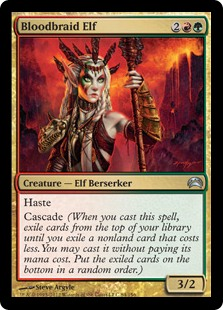
This suggests that Wizards has been priming the proverbial pump with reprints so that when the time was right, they could take the action they'd decided to take and the price wouldn't skyrocket. Tarmogoyf used to be ~$200, but thanks to constant reprints it's down to ~$90. If this is a long-coming move then now is the perfect time. With this third printing, the price will drop, so it will not be comparatively burdensome to acquire the mythic rare.

What About Bloodbraid?

The money-driven reading doesn't work for Bloodbraid Elf because it's an uncommon. Those don't tend to drive pack sales or the secondary market, current price spike notwithstanding. In a month or two, that spike will die down. Instead, the cynic would say that Bloodbraid is being released as a balance, both for the format and for perception. It's a bone thrown to the non-blue fair decks so they don't disappear, damping the reaction. This is not an unreasonable reading, considering Wizards says as much:

Adding attractive options at the same mana cost in different color combinations at the same time mitigates the risk that one or the other could pull too many decks toward it at once.

It seems pretty clear that the decision to unban Bloodbraid alongside Jace is motivated more by balancing a Jace unban than for the merits of Elf itself. Wizards' justification focused more on the diversification of BGx decks rather than on specific ideas about Bloodbraid, also lumping it into the "four-drops have to win the game" argument with Jace. I have a hard time refuting this cynical view as a result.

The Data

I'll take this opportunity to remind everyone that I have generated plenty of hard data about the impact of Jace and Bloodbraid in Modern. I spent all of January discussingBloodbraid Elf. I have clear results which show that both significantly improved their test decks. Both had strong the strongest impacts against fair decks and a weaker impact against combo. Aggro was a bit muddy; Jeskai with Jace did better against Affinity and Bant Eldrazi than without, but not statistically significantly. The only true aggro deck Jund with Elf faced was Affinity, and there was no change there. This strongly suggests that there was incentive to run those boosted versions over the alternative. It also suggests that they would be favored over large swaths of the greater metagame.

Their History

Of course, I never tested them against each other. There was no reason to; besides, it's scientifically invalid to test more than one variable under most circumstances. However, it has long been held that Bloodbraid and Jace counter each other. Wizards acknowledged this belief in the ban announcement, though that's not the justification they give for the simultaneous unban.

While there is something poetic to the age-old enemies of Standard's past both being reintroduced to Modern together, it isn't our intent that these cards balance one another out directly. It is true that Bloodbraid Elf is effective at killing Jace, but our reasoning behind the simultaneity of their unbanning is more subtle.

I will agree that Bloodbraid was good at killing Jace in Standard. However, Bloodbraid into Blightning was great at killing any planeswalker and control decks in general. The fact is that Jace and Bloodbraid have never had a chance to compete. Their overlap in Standard was less than a year long, and Jund was so pervasive it wasn't an even fight. Legacy doesn't count: the format is so blue heavy because Force of Will is so important against combo that Jund never had a chance.

The evidence available suggests that Bloodbraid is better than Jace because she answers the planeswalker and gains additional value. That's what happened in Standard. Whether this will be true outside of Standard is yet to be seen, but given the history of Jund being better than blue control in Modern, it is reasonable to believe that Bloodbraid will win this fight.

My Take

I think this has been coming for a long time. Jace and Bloodbraid have dedicated advocates who have been petitioning Wizards for years. Wizards does listen to feedback and has shown a desire to give the original banned list have a chance to be vindicated. After years of pressure and evidence that appeared to back up what they were hearing about the cards, they took their shot to enact a decision they'd made some time ago. I assumed it was going to happen eventually when I rebought Jace just over a year ago.

But I don't agree. I've said it before, I'll say it again: almost everything they said in the announcement could have come from a forum post. That's really disappointing and concerning given these cards' histories. It sounds like they didn't do any testing which suggests that they're just blowing smoke. If nothing else, Jace and Bloodbraid provide enormous pulls into Jund and blue control, which will negatively impact diversity and flies in the face of their justifications. Why would you play any other variation of BGx when you could have Bloodbraid? According to my testing, which showed both decks received statistically significant boosts across the board, it doesn't make any sense. Now, maybe they did do a lot of work and just aren't elaborating for whatever reason. I don't know that they're just spitballing about this unban. However, the way they presented their decision doesn't inspire confidence in me.

I strongly believe that we will see reduction in diversity in the midrange and control decks as the result of this unban. You will be playing Bloodbraid or Jace, and I believe that a "correct" shell for each will be found. That's what happened last time each was played. Whether the rest of the format can cope is hard to say. My data showed that their impact was weaker against unfair or aggressive decks. Maybe they will adapt, or it might be right to simply plan to go over or under the four-drops.

What Happens Now?

Well, I can say with certainty that Jeskai Tempo is ded. D-E-D, ded. As if Bloodbraid wasn't killer enough, there is absolutely no reason not to run Jace in Jeskai. This changes the fundamental nature of the deck, so the old system won't work. Exactly what the new deck will look like I can't say, but I'll definitely start with my test build, Jacekai. As for Jund, the early decks filtering out look like my test deck, so again I'd start there. Either way, you should assume that your local metagame will be full of players rocking the playsets of Jace and Bloodbraid they've been sitting on for years, hoping for this opportunity.

Maybe the metagame has matured to the point that the addition of Bloodbraid and Jace will be fine. Maybe this will be a disaster. It's too early to say. What I do know is that Todd Anderson said somewhere (I think it was an article comment) that if Jace was ever unbanned he would make it his mission to make Wizards regret their decision. The gauntlet has been laid down.

Insider: Midsize Mythics on MTGO, Part I

Are you a Quiet Speculation member?

If not, now is a perfect time to join up! Our powerful tools, breaking-news analysis, and exclusive Discord channel will make sure you stay up to date and ahead of the curve.

Welcome back. Our deep dive into mythics on MTGO continues! For these next two weeks, we will be focused on mythics with converted mana costs of four and five (hereafter referred to as "midsize" mythics). This article is especially important because a plurality of mythics are printed in this range. How will they differ from those mythics lower on the curve? Do we need to evaluate them differently? Are there any patterns we can discern that can help us make smart investment decisions moving forward? After all, Ixalan and Rivals of Ixalan have a whole bunch of cards in this category.

Compiling this data took a lot longer than the previous weeks' data because there are so many mythics in this category. Since Born of the Gods, a whopping 93 mythics with converted mana cost of four or five have been printed. Click the spoiler below to view the whole data chart.

(1) On average, cheap mythics perform better than midsize mythics.

Data is the perfect corrective to anecdote. While cheap duds like Undergrowth Champion and Drana, Liberator of Malakir stick in our minds, so too do the hallmark midsize mythics that tend to define and dominate Standard, cards like Gideon, Ally of Zendikar, Chandra, Torch of Defiance, and The Scarab God. The average return for a midsize mythic was about 90 percent, compared to about 160 percent for cheap mythics.

I want to call attention to one other way that midsize mythics compare unfavorably to their cheaper brethren: Their sell windows are noticeably smaller, which means that you may consider limiting the scale of your investments into mythics in this category. When doing the research for the cheap mythics, I generally felt like I would not have a difficult time moving between 50 and 100 copies of most of the relevant cards. In the case of the midsize mythics, however, in many instances it seemed like moving more than 20 or 30 copies would result in a significant decrease in the return on my investment. Of note is that only sixteen of the 82 mythics analyzed exhibited a period of price elevation ("elevated" in the chart), meaning that a price equilibrium higher than a previously settled price equilibrium was reached. Ten of 35 of cheap mythics exhibited sustained periods of price elevation. This means that you are more likely relying on price spikes for midsize mythics.

(2) Mythics that cost four mana do not perform better than those that cost five.

At first, I was worried that combining four- and five-mana cards into one data group would be problematic. Four mana is considered the heart of the curve for Standard, and I thought that price behavior for the two would be different. It turns out that these cards can best be understood within the same category. If you define a good investment as one for which a card's value increases by at least 50 percent, five-mana mythics have outperformed four-mana mythics over the past five years.

This chart suggests why I'm skeptical of devising an investment strategy based around cards in this category – only about half of these cards would be good investments. I think it is best to treat each of these on a case-by-case basis.

(3) Midsize mythics that prove to be Standard all-stars out of the gate tend to go up in value.

We saw this with cheap mythics, and it is noteworthy that the same is true here. Cards whose investment lows don't go below $10 tend to have proven themselves as Standard all-stars, and their status as such doesn't change. This fact sets them up for future price spikes that you can capitalize on. An average return of 89 percent is very good. The only thing that worries me is the relatively high number of duds, further indicating that a discerning eye capable of accurately discerning the potential of these cards will help when investing in midsize mythics. Investing in Chandra, Gideon, Avacyn, and Ojutai would have yielded a rate of return of 116 percent, and being patient enough to allow Avacyn and Ojutai to bottom out before investing in them would have given you a rate of return of 144 percent.

(4) State of the Portfolio

As one might expect, now is a time for selling, and for the past month I have been doing a decent amount of it. You can see a copy of my portfolio, along with the specific transaction done, here.

Now that my Kaladesh and Amonkhet season investments are both winding down, it is easier to predict how well I will have done. Assuming that Voice of Resurgence doesn't get back into the $10 to $15 range, my Kaladesh season performance will end up at about 90 percent, which is excellent and something I'm quite happy with. My Amonkhet season performance pales in comparison, and I expect it to end up at 35 percent when all is said and done.

I aim to always have a minimum of a 50-percent return per season, and the only way I think I'll reach there with Amonkhet is if Earthshaker Khenra continues to go up, and if Censor and Doomfall pick up steam. It finally looks like the market is no longer drowning in Hour of Devastation uncommons anymore, but the same cannot yet be said about Amonkhet uncommons. I believe that Treasure Chests have dramatically increased the supply of uncommons, and it will make uncommons less of a surefire investment moving forward.

(5) Signing Off

I look forward to reading your comments down below, and if you want to ask me any questions about the data I presented in this article, please do so, and I'll try to address it in my next article. Does anything jump out at you? Did anything surprise you?

This week I have a new god design to share that seems to be a fan favorite. Meet Dakthos!


Want Prices?

Browse thousands of prices with the first and most comprehensive MTG Finance tool around.


Trader Tools lists both buylist and retail prices for every MTG card, going back a decade.

Quiet Speculation