menu

Assessing the Commander 2017 Leaks

Are you a Quiet Speculation member?

If not, now is a perfect time to join up! Our powerful tools, breaking-news analysis, and exclusive Discord channel will make sure you stay up to date and ahead of the curve.

On Wednesday and Thursday, an Instagram account named “Turn1Thoughtseize” leaked images of new cards from the Commander 2017 decks slated to be released on August 25, 2017. Whether or not you agree with the leaks on a moral or ethical level, having access to this knowledge three months ahead of time means there is likely some money to be made by staying ahead of the market.

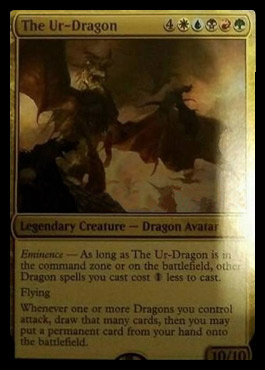
The main theme of the leaks is Dragons, with four new legendary Dragons and potential commanders being revealed, along with reprints. It’s presumed that all of these Dragons are included in the same Dragon deck, headlined by its commander: The Ur-Dragon.

The Ur-Dragon
theurdragon

The Ur-Dragon brings a new ability to the command zone, eminence, which in this card's case reduces the cost of all other Dragons played by one. This five-color Dragon will be a fantastic commander for Dragon decks and a replacement for Scion of the Ur-Dragon, which has seen its god finally arrive. Once in play, it’s a huge threat with a triggered ability that creates a massive advantage between the card draw and putting permanents into play for free. Some have noted that decks including it need not play all five colors – it would be a functional but uncastable commander for a Dragon deck with fewer colors simply because its eminence ability will be so useful.

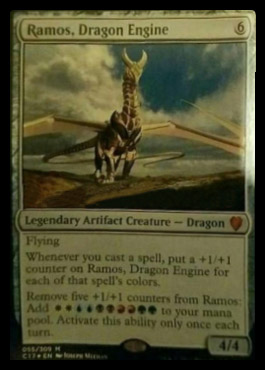
Ramos, Dragon Engine
ramosdragonengine

Also included in the deck is Ramos, Dragon Engine, which offers a potent five-color ability that both grows its size and generates mana. It’s a fitting homage to Mercadian Masques block, which included a cycle of mana-producing artifacts made of this Dragon's body parts, like Eye of Ramos. Growing after every spell is quite powerful and will lead to wins, but I expect even more useful will be the mana ability, which will generate a significant advantage and help to cast the next spell, which will generate mana for the next spell the following turn, and so on, allowing one to deploy threats much more quickly than normal.

It’s also the sort of effect that looks like it could become degenerate and create an endless amount of mana with the right combination of cards. EDIT: It has been pointed out that the text "use this ability only once per turn" ensures the card can't go infinite.

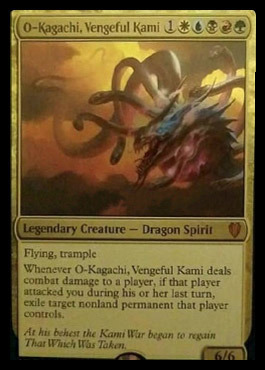
O-Kagachi, Vengeful Kami
okagachivengefulkami

Another new five-color Dragon is O-Kagachi, Vengeful Kami, which beyond its large size comes with the ability to exile a permanent from a player if they attacked you on their last turn. It certainly adds a fun dynamic to multiplayer games and is definitely a powerful effect. It’s also a Spirit, which gives it fun interactions with cards from Champions of Kamigawa block and Innistrad block.

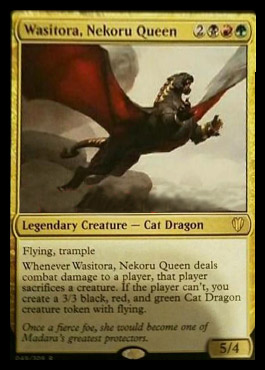
Wasitora, Nekoru Queen
wasitoranekoruqueen (1)

Wasitora, Nekoru Queen is a Jund-colored dragon with a very Jund-like ability which either kills an opponent's creature or puts one into play on your side. It’s accompanied by a Cat Dragon token, which has the internet very excited. The dragon itself is also a Cat, so there are fun tribal implications here.

All of these new Dragons are sure to increase demand for the full range of Dragon cards in Magic’s history, and identifying the right ones could lead to profit.

That said, the deck is also going to include reprints of many dragons, some likely iconic, so tread carefully. The leaks contain a look at some of these previous dragons that are slated to be reprinted.

The spoilers also show a Sandsteppe Citadel, which could mean the rest of the the Khans of Tarkir wedge lands will be reprinted too.

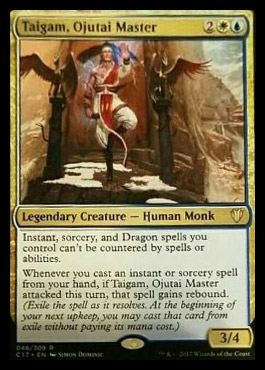
Taigam, Ojutai Master
taigamojutaimaster

Another leak features a potential new commander in Taigam, Ojutai Master. This Monk comes with the very powerful ability of giving rebound to a spell – if Taigam attacked that turn. The possibilities are endless, and it’s certainly extremely powerful with Time Warp-style effects that will lead to extra turns, more attacks and even more rebounded spells. The card also comes with a passive ability that prevents said instants and sorceries, along with Dragons, from being countered.

There are applications here for any spell-heavy white-blue deck, but the Dragon clause is certainly very interesting and sheds some light onto what the rest of this summer’s Commander product has in store. It’s possible it is included in the Dragon deck, but it’s much more likely the Commander of its own deck, which may have some Dragons included. It’s possible this paves the way for other Dragon-themed commanders being released alongside it.

On Leaks

The reality of leaks like these is that on they are bad for Magic. Leaks undermine WotC’s official spoiler process and marketing plan. This also eliminates the ability for websites and content producers to share preview pieces. Leaks serve as a blemish on the credibility of WotC and Magic, and this sort of negative press erodes confidence. Being a good Magic citizen means not widely sharing and perpetuating these leaks. That said, it’s simply our human nature to be drawn to new things, especially illicit things we weren’t supposed to see or know about. Secrets are alluring, and so can be sharing them. As long as someone can claim their moment by leaking cards, it will happen, and players are going to flock to them to get a look for themselves. On the bright side, new cards are always going to generate excitement and buzz in the community, even if it wasn’t according to WotC's schedule.

The market simply doesn’t care if leaks are right or wrong, so if you are invested into Magic’s financial world, it’s important to be informed of them so you can assess the information and potentially take action. The leaker is reported to have said they will continue to release more cards, but they have since closed their social media accounts, likely in fear of prosecution after the community went into an uproar. There may be more cards coming, but the leaks are likely to have ceased for now.

There was an error retrieving a chart for Zirilan of the Claw

The market is already reacting to these leaks. Zirilan of the Claw has seen a spike from $3 to $9 in anticipation of a further increase in demand, and likely a price correction for a unique reserved list card that seemed very undervalued.

What do you make of these leaks and their impact on Commander and the market?

--Adam

Meditations on Format Health

Are you a Quiet Speculation member?

If not, now is a perfect time to join up! Our powerful tools, breaking-news analysis, and exclusive Discord channel will make sure you stay up to date and ahead of the curve.

Since the Golgari Grave-Troll banning, the Modern banlist hasn't been updated. But the format has changed dramatically, welcoming Fatal Push into its upper crust and appropriating Death's Shadow for a Probeless era. Of course, the format's recent stability hasn't stopped detractors from clamoring for bans or unbans. Today, we'll explore what makes a format healthy, and why the notion of metagame health is so emblematic of Modern.

The Meaning of Health

Many discussions about format health are rife with miscommunication. The reason? Everyone has their own definition of "health." For many, health relates directly to one's own preconceptions regarding deck diversity, archetype balance, fairness, and fun. Since each player is bound to hold unique opinions on such topics, I'm skeptical of discussions based around them. Rather, grasping and dissecting Wizards of the Coast's understanding of "health" stands to yield far more productive results, as that understanding allows us to accurately predict banlist announcements.

Modern Health

Fortunately, we know quite a bit about Wizards's views on the subject. In a game-changing mothership article last year, Sam Stoddard outlined some guidelines for Modern metagame health. He claimed that Modern should:

  1. Have a diverse top-tier metagame featuring over a dozen archetypes.
  2. Not be dominated by fast, non-interactive decks (consistent kills before turn four are a red flag).
  3. Be at a power level that allows some newly printed Standard cards to affect the format (we don't have other ways to introduce cards into the format, and we like it when cards or decks can transition).
  4. Have as small a banned list as possible that accomplishes all the previous goals.

Let's break down these points one by one.

It shouldn't come as a surprise that first on the list is diversity. Since there are only so many strategic archetypes (control, combo, tempo, etc.), I think it's safe to assume Stoddard is using the word to refer to broad labels for unique strategies (i.e. Death's Shadow Aggro, BGx Midrange, etc.). Modern can't be diverse if one deck consumes too much metagame share, so it makes sense to ban cards from decks that fit that description. Based on Wizards's Jund bans, it seems that the cut-off for over-dominance hovers between 12% and 20%—decks this popular should set off alarms. The number gets lower for decks that violate Wizards's format guidelines in other ways (see: Twin).

Next up is the Turn Four Rule. This one is pretty straightforward, so long as the meaning of the Turn Four Rule isn't lost in the fact that it contains the words "turn" and "four" (faulty grounds for confused players to claim any deck that can win before turn four should crumble under the hammer).

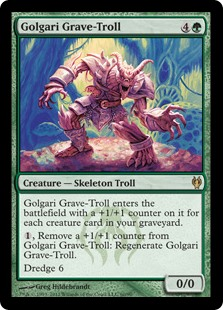
Third, Wizards wants Standard cards to enter Modern with relative frequency. An example of how this goal might apply to a banlist decision: having cards like Jace, the Mind Sculptor legal sets the bar very high for planeswalker viability, and might keep otherwise fine walkers from seeing Modern play. And a less controversial one: having Golgari Grave-Troll legal makes Dredge so consistent that it becomes incorrect to play other graveyard decks, invalidating delirium and many other graveyard-based mechanics Wizards might roll out through Standard.
The final point is more about "banlist health" than format health, so we'll table it for now.

More recently, and absent from this list of bullet points, is another guideline: Wizards has expressed interest in improving Modern's color diversity (presumably by throwing a bone to either blue or white decks).

When considering Wizards's views of the format, it becomes imperative to refer to the above points. Whether a card, deck, or decision is "healthy" for the format, according to Wizards, depends on its adherence to these values.

The Eternal Double Standard

The above guidelines refer to Modern, and to Modern only. I often see players comparing Modern to Legacy, either to annoyedly wonder why Wizards doesn't let Modern self-regulate in a similar way or to admire Legacy's wealth of viable decks. Besides the fact that Modern lacks self-regulation tools like Force of Will and Wasteland, and therefore needs banlist assistance to address issues like Eye of Ugin Eldrazi or Grave-Troll Dredge, Wizards clearly has very different goals for that format. Miracles took up 20% of the metagame for over a year before Sensei's Divining Top was finally banned. That would never happen in Modern.

As for viable decks, how many can there really be if the top decks are allowed to hold such large share portions? I think Legacy is so "diverse" because people play with the decks they've had forever and the cards they like, no matter how good or bad they are. There's more on the line when it comes to Modern, a format supported by Wizards and other tournament organizers at high levels of competition. I think it's best to keep the Legacy comparisons out of discussions on Modern's health.

Modern's Divisive Nature

More than any other non-rotating format, Modern frequently inspires heated debates about format health. We're currently coming out of Modern's infancy, a period in which Wizards guided the format's evolution with a steady hand. Now that Modern has caught on with the players, the company will recommit to Standard, its primary cash cow. But the effects of the company's diligent Modern-shaping linger on, inciting ban-mania whenever the format shifts.

This ban-mania is invariably linked to one of two recurring player gripes with Modern: the abundance of linear decks, and the distinct lack of a top-tier Weissman deck.

Lots of Linear

It seems whenever a new deck breaks out at a streamed tournament, ban-mania consumes the online Modern community. Or does it? When Bant Eldrazi, Death's Shadow Jund, or, most recently, the Vizier of Remedies-featuring Abzan Company enjoyed a string of favorable results, the ban-mania crowd proved mostly silent. Indeed, it seems this crowd only rears its ugly head when linear decks have good tournaments.
If Cheeri0s, Grishoalbrand, Lantern Control, and other such linear decks reliably inspire a knee-jerk descent into ban-mania after an impressive game on stream, we'd do well to know why. I think a few factors are at play here.

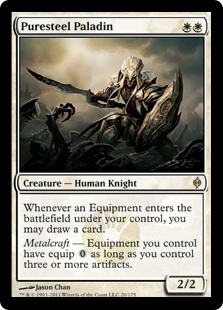
First, these decks simply do more broken-looking things than most interactive decks can muster. Tarmogoyf will never kill on turn two; Puresteel Palladin will. Pundits imprudently cite Modern's notoriously perplexing Turn Four Rule to defend calls to axe Sram, Senior Edificer, Nourishing Shoal, or any other key component of a linear deck that doesn't come close to having enough of a meta share to actually deserve a banning.

Realistically though, these decks give up interactivity and consistency points to achieve their occasional explosiveness. If they didn't, they'd be stronger decks; more people would play them, and they'd put up the kinds of numbers that might actually spur Wizards into action.

Second, Modern is a format principally defined by proactivity. Some players, especially ones that favor reactive strategies, take issue with this predicament. For them, decks that exemplify that proactivity-first credo—combo decks—represent fundamental issues with the format.

Now, think back to Death's Shadow Jund. Here's a deck that had a phenomenal breakout weekend, was heralded as the "best deck in Modern" by pros who gushed about it for weeks, handed an Open win to Austin Bursavich, who hadn't played constructed Magic in years and missed several Bauble triggers, and continues to put up impressive numbers by any standard. And yet, no ban-mania! Death's Shadow strategies are chock-full of interaction, and despite their reversibility, are about as fair as aggro decks can get in Modern. It's the format's linear decks that create ban-mania.

Muh Serra Angel

Another recurring theme with banlist discussion is players' fixation on having a Weissman, or "pure control" deck in Modern's top tier. Modern has plenty of control hybrids available, ranging from tempo to midrange to prison. But for some reason, a small, vocal subset of players won't settle for anything less than a style of deck that hardly even exists in other formats anymore.

To these players, I ask: why should Weissman be a top-tier Modern deck? One could make the argument that it provides yet another archetype, and therefore increases diversity. But the hoops Weissman has to jump through to become a major player in Modern are enormous, which explains why it hasn't done well in years, despite Modern shifting often and deeply. Wizards would need to somehow sneak less-conditional countermagic, more efficient card draw, and a reliable way to beat ramp decks (question mark) into the format without ruining Standard, and it seems they're yellow to.

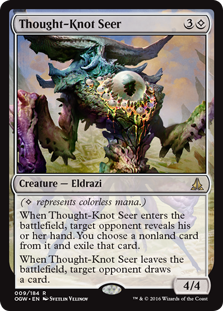
Also of note: for all the doomsaying, Snapcaster Mage is currently Modern's fifth-most-played creature, beating out Thought-Knot Seer and even Death's Shadow.

The State of the Format

So, how's Modern doing? From here, the format looks great. Not one deck even cracks 8% on MTGGgoldfish; the format's best deck is firmly midrange, not combo; and Standard cards as innocuous as Vizier of Remedies continue to pop up and make waves. Blue and white do continue to struggle relative to the other three colors, making me think now's perhaps as good a time as any for an unban. Wizards has always waited for periods of relative stability and health (in their eyes—in other words, the kind of health we just spent the article defining) to release cards back into Modern, and I wouldn't be surprised if something like Stoneforge Mystic came off this time around.

Jordan Boisvert

Jordan is Assistant Director of Content at Quiet Speculation and a longtime contributor to Modern Nexus. Best known for his innovations in Temur Delver and Colorless Eldrazi, Jordan favors highly reversible aggro-control decks and is always striving to embrace his biases when playing or brewing.

View More By Jordan Boisvert

Posted in Metagame, Modern, OpinionTagged , , , , , , , , 2 Comments on Meditations on Format Health

Have you joined the Quiet Speculation Discord?

If you haven't, you're leaving value on the table! Join our community of experts, enthusiasts, entertainers, and educators and enjoy exclusive podcasts, questions asked and answered, trades, sales, and everything else Discord has to offer.

Want to create content with Quiet Speculation?

All you need to succeed is a passion for Magic: The Gathering, and the ability to write coherently. Share your knowledge of MTG and how you leverage it to win games, get value from your cards – or even turn a profit.

Insider: How I Made Almost $1000 Buylisting Bulk

Are you a Quiet Speculation member?

If not, now is a perfect time to join up! Our powerful tools, breaking-news analysis, and exclusive Discord channel will make sure you stay up to date and ahead of the curve.

Hello there! I hope everyone's having a great week. I've mentioned on here that my fiancée and I were planning on moving recently, and we're pretty much all settled in at this point. With school finished and my responsibilities at work complete, I've had a lot more time on my hands to work on Magic-related projects.

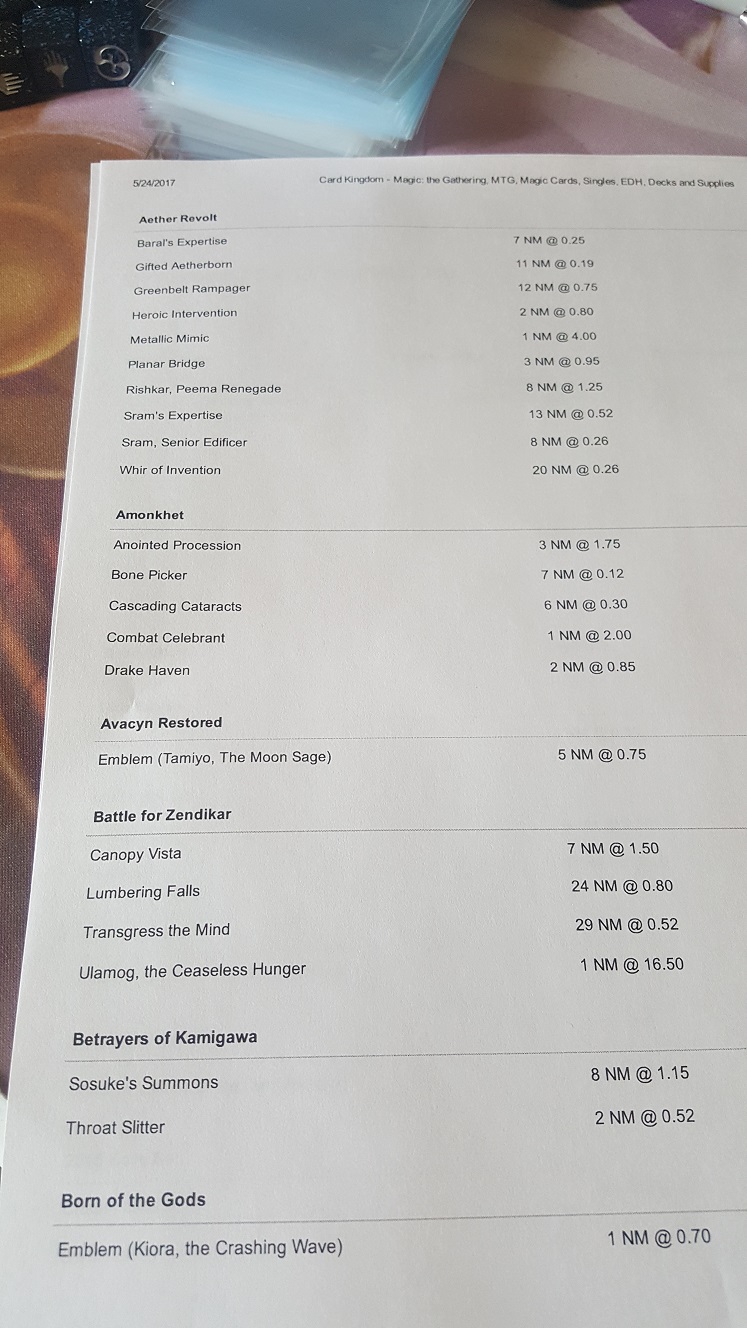
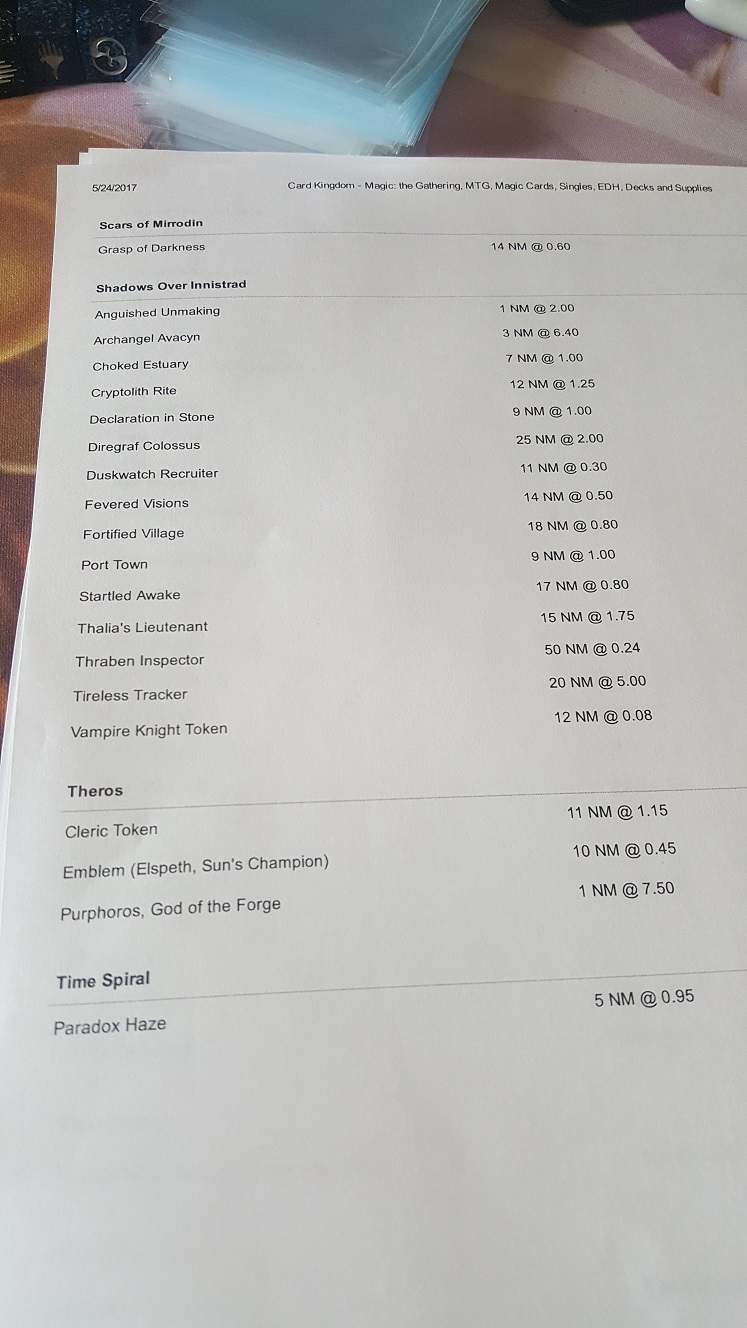
One of those more immediate projects that I wanted to work on was trying out Card Kingdom's new buylist. Well, I say "new," but only because it's been a while since I last shipped cards to them. Their updated user interface for their buylist was really smooth, and it was a great experience. so what did I sell?

CK

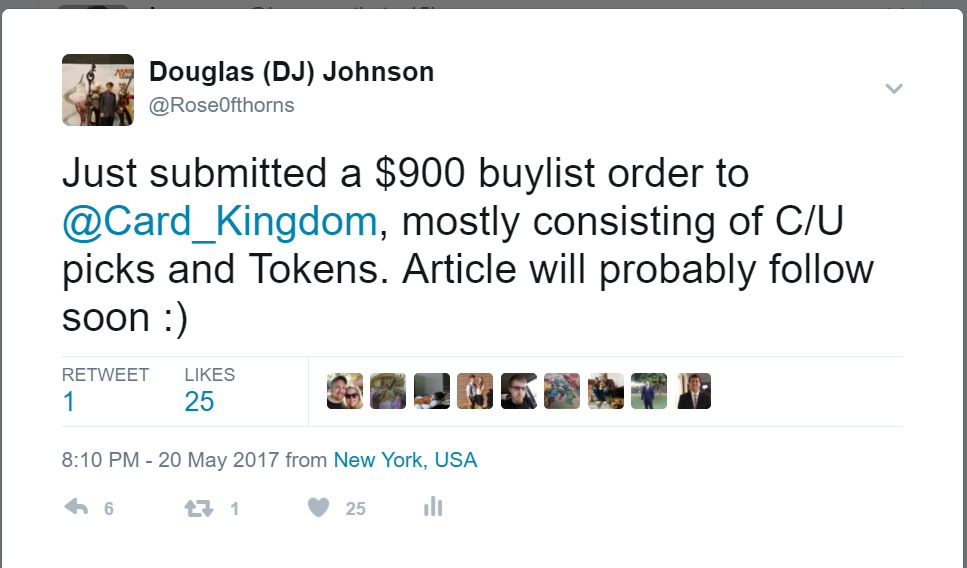
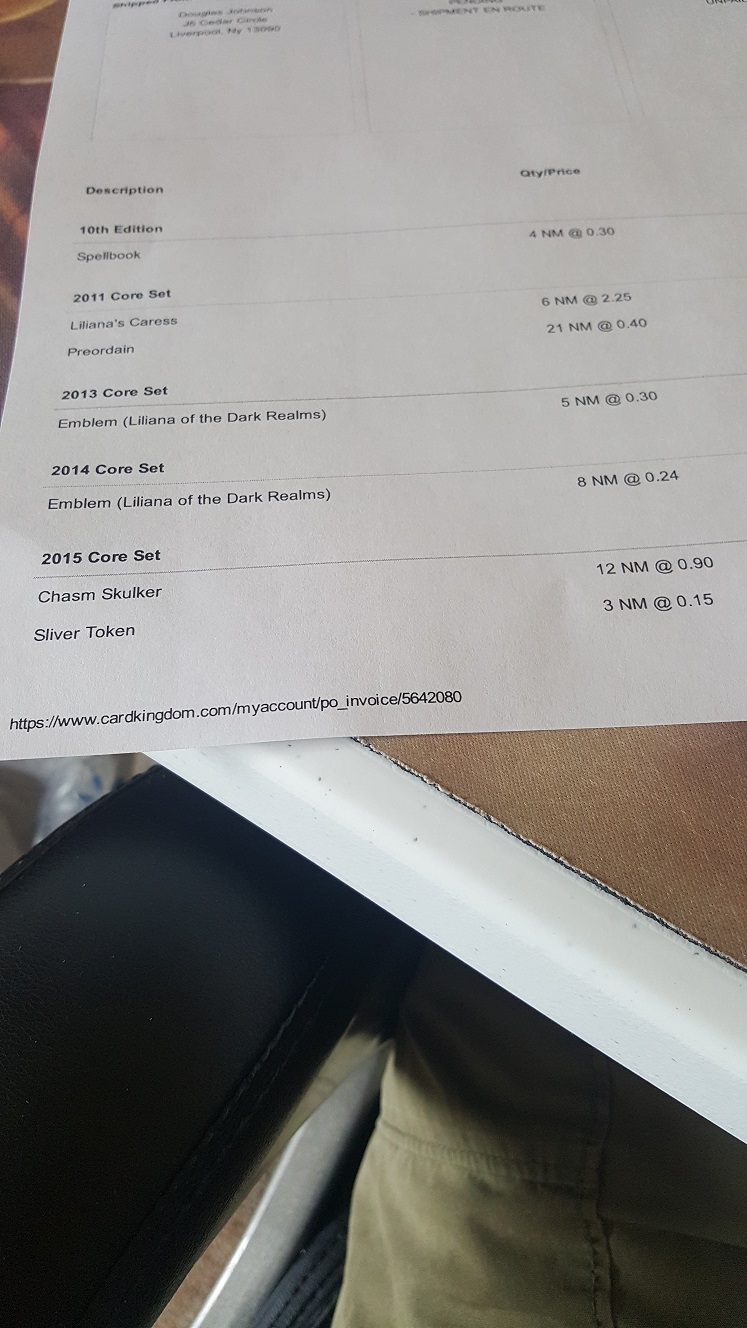
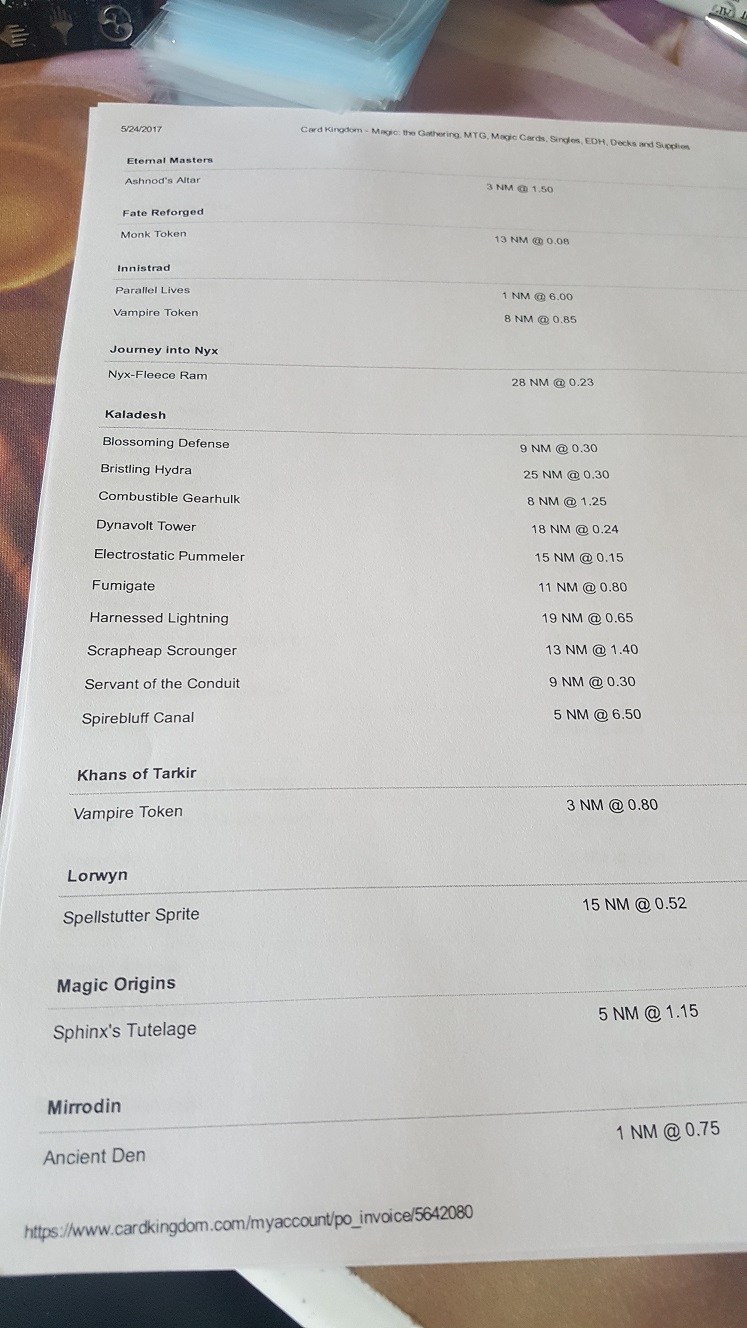
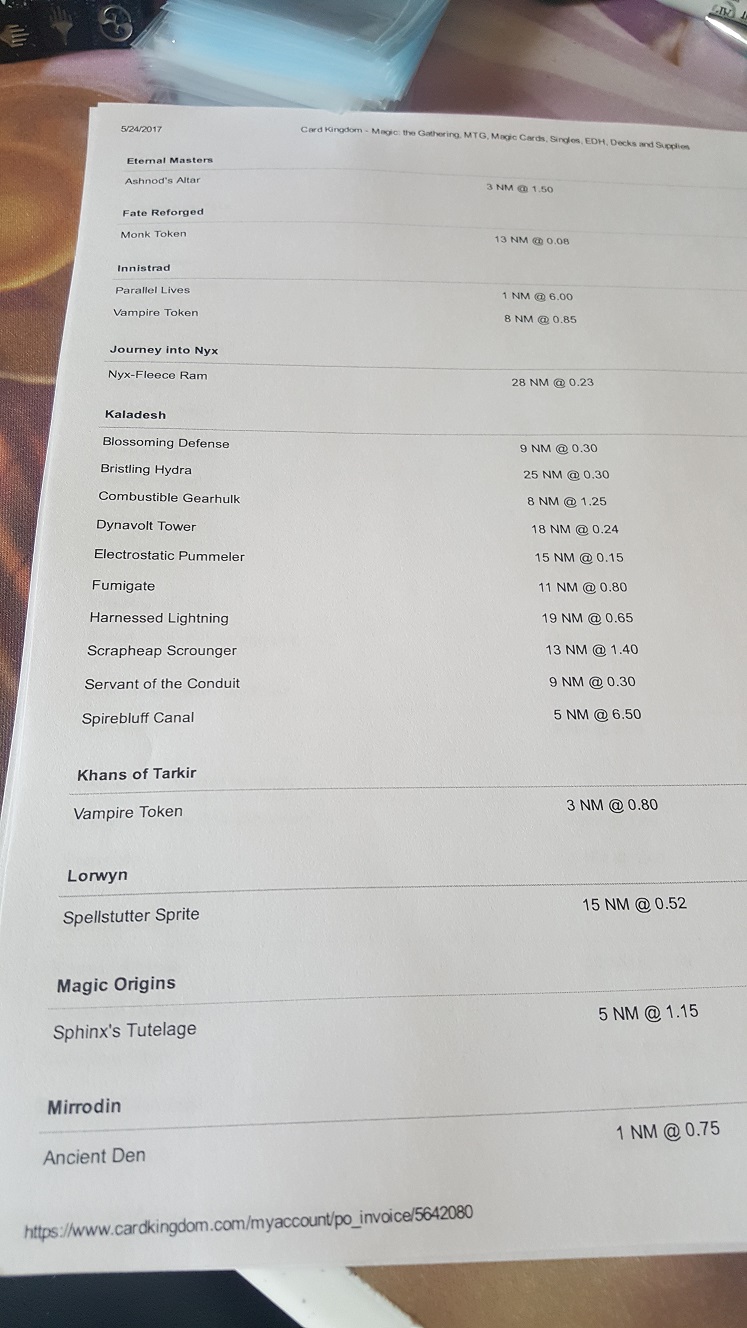
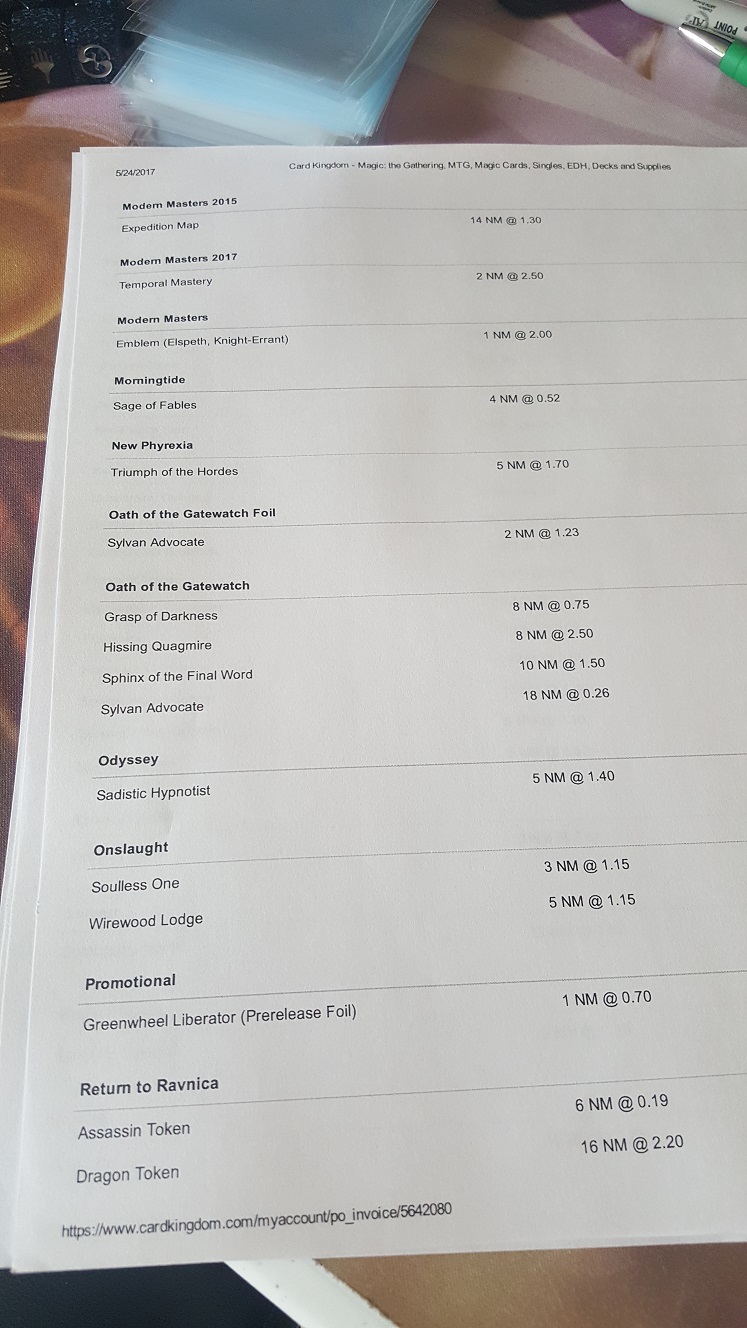
This was smaller than what I originally intended my order to be, because I wanted to lock in some of these buylist numbers before they changed. I wasn't 100-percent successful in that aspect (I missed out on getting $3.65 for each of my Diregraf Colossuses by a couple hours), but I managed to lock in some juicy buy prices. I couldn't resist a lot of their Shadows over Innistrad offers, as you'll see in the images below. Also, I didn't realize how many bulk rares and near-bulk rares that I had shipped to Card Kingdom until after I wrote that tweet. I guess "mostly" C/U and tokens is a bit of a misstatement, but I'll let you see for yourself some of the numbers that they're going to pay me on this stuff.

There was an error retrieving a chart for Diregraf Colossus
There was an error retrieving a chart for Tireless Tracker

20170524_094823

CK2

CK3

CK4

CK5

CK6

As someone who normally sells at TCGplayer low out of my display case (or TCG low minus 10 percent on Twitter), getting a buylist price of $5.00 a piece on Tireless Tracker when I normally sell it for $6 was crazy. There are a couple of other obvious cards on here: Purphoros, God of the Forge at $7.50, Thalia's Lieutenant for almost $2 a piece, etc. If we get those out of the way, though, the rest of the buylist order ends up being "stuff I found in bulk commons and uncommons." Remember that I paid less than a third of a penny on stuff like Sage of Fables, Sphinx's Tutelage and the emblem from Elspeth, Knight-Errant.

Shipping

When all was said and done with this buylist order, it ended up being around 900 cards. I packed them up in an 800-count BCW box, and filled the remainder of the empty space with bulk basic lands, then used packing tape to seal the box. For those of you who are shipping from inside the USA and using USPS to mail cards, I highly recommend shipping with the flat rate boxes instead of just going by weight.

This might be old news to some of you, but it's worth noting that you can usually get at least four 800-count BCW boxes into a medium flat rate box. I missed out on some amount of profit because I wanted to lock in a smaller buylist order quickly and take advantage of some of the ever-shifting prices before they updated further. I just couldn't stall on offers of 80 cents for Fumigate, 50 cents for  Fevered Visions, and 30 cents for Bristling Hydra, when each had been sitting in my display case for less that that over a long period of time. As long as you can accumulate a decent quantity of picks, you can also use the smaller 400-count BCW boxes.

usps

Grading

Unfortunately, my lovely little $900 package is still in transit at the time of this writing, so I can't yet say how much I'm going to lose to grading. According to my previous experiences with Card Kingdom a few years ago, I can expect to lose at least 10 or 15 percent of my total number. Card Kingdom is up there on the Star City Games level of grading, so I can expect some of my NM cards to get nicked down to "EX", or Excellent, as they label LP cards. Even so, I'm fine with getting 90 cents for a bunch of extra Port Towns that have been in the case forever, and 20 cents for Nyx-Fleece Ram. I'll likely update my next article with the grading results.

"Bulk"

However, the real insane margins were in the "bulk" commons, uncommons, rares, and tokens that I was shipping to Card Kingdom. Many of these rares were scooped up en masse at 10 cents a piece, or traded for when the player wanted to pick up a Heart of Kiran or Wooded Foothills. I'm used to trying to immediately flip stuff like Bristling Hydra, Whir of Invention and Electrostatic Pummeler at 25 cents each to less competitive players building budget Standard decks.

I've written a couple of articles about token finance before, and this really exemplifies the financial power of these cards that so many others toss aside or leave in bulk. You don't need to be pulling out ancient Sliver tokens or Unhinged tokens to be making money here. You'll notice that those Dragons from Return to Ravnica ended up being worth a huge chunk of money; more than enough to cover the cost of shipping the box that I mailed this buylist order out in, and those were free. I cannot emphasize that enough. I'm sure that you have some number of players at your local store who have extra tokens, basic lands, or commons and uncommons in bulk.

That being said, there are a couple of trends in #mtgemblemfinance that I noticed while doing this little project. The first and most important rule is that the emblems with the new post-M15 border are much less expensive than the pre-M15 border. You'll notice that I was paid 70 cents on my emblem for the old Kiora, but they didn't even want my emblems for Battle for Zendikar's Kiora, Master of the Depths. Even though both cards are pretty bad....

Breaking Bulk

Alright, so let's wrap this up with some of the more obscure #breakingbulks from my buylisting adventures this week. This way, I get to explain my picking logic on some of the weirder casual cards that you might not be aware of, and have proof that you can get money out of them; not just in theory.

There was an error retrieving a chart for Bone Picker

I was surprised that I would be able to buylist commons and uncommons for anything from Amonkhet, but here we are. CK paid me 8 cents each on a dozen of them. I got a free $1 by picking some very recent bulk for a card that, granted, was a four-of in a top-eight decklist at the Pro Tour, but it was also one of the least popular versions of Zombies at the event. I haven't had anyone asking me for Bone Pickers recently, but find solace in the fact that you can dime these out to buylists even if the Censors and Cast Outs have been picked dry.

Image result for assassin token

I always see Assassin tokens left in bulk, and it's one of the few highlights of picking Return to Ravnica. I'm getting almost two bulk rares for every NM Assassin I pawn off to CK, and even the Duel Deck Assassins are worth 10 cents a piece sometimes. I know Vraska the Unseen gets a bad reputation for playability, but she's still easily a $4.50 sale on a TCGplayer store, or a $3 buylist to an eager vendor. Those vendors also need tokens, so here we are.

There was an error retrieving a chart for Spellstutter Sprite

For some reason, I always see these in Modern Masters bulk right up there with Mulldrifter. I got 50 cents each for my Lorwyn copies, which I'm always happy to see. Those two sets are so full of pickable cards that I think Spellstutter gets a bad reputation for being worthless immediately after the reprint. It's climbed to $1 retail since then on the back of casual Faeries, so be on the lookout for either version.

End Step

So I've got an idea; hear me out. Would you guys be interested in a video series where you I pick bulk and commentate on it? I'd be going through and showing some of the bulk commons and uncommons, explaining my thought process while I dig through bulk. This would be another benefit to your Insider subscription, and I could even turn it into a series if there's enough interest.

You could watch me experience bulk commons and uncommons as I'm seeing them for the first time, and discuss price points on buylists while I sort them into their respective categories. There are also some cards that even I have to look up with the help of the ION Scanner (I had to check Summon the School and Kithkin Harbinger recently, and only the latter is buylistable). If you're interested, let me know in the comments below and I'll get started on figuring out the logistics of that.

Insider: Where Does the Zombie Archetype Go From Here – Competitively and Financially?

Are you a Quiet Speculation member?

If not, now is a perfect time to join up! Our powerful tools, breaking-news analysis, and exclusive Discord channel will make sure you stay up to date and ahead of the curve.

Last week, I wrote about the Pro Tour and all of the competitive and financial implications from that event. If you missed it, be sure to check it out. At this point, everyone knows that the biggest deck to emerge from that event was Zombies. Both versions are great, so whether you like the black-white version or the mono-black version, you will be choosing a competitive deck.

Today, I want to highlight the version I’ve been playing, as well as go over each card that has significant financial implications. First, let’s see the list.

Mono Black Zombies by Gerry Thompson (1st place Pro Tour AKH)

Creatures

4 Cryptbreaker
4 Dread Wanderer
4 Metallic Mimic
4 Relentless Dead
4 Diregraf Colossus
4 Lord of the Accursed

Spells

2 Fatal Push
3 Grasp of Darkness
3 Liliana's Mastery
4 Dark Salvation

Lands

2 Westvale Abbey
22 Swamp

Sideboard

2 Aethersphere Harvester
2 Gonti, Lord of Luxury
1 Grasp of Darkness
3 Liliana, the Last Hope
2 Lost Legacy
3 Scrapheap Scrounger
2 Transgress the Mind

The first thing I want to mention was my skepticism before building and playing this deck. The main reason I put Zombies together was to get a feel for why the deck was so successful at the event and whether it seemed like a deck that would stay at the forefront of the metagame or wane in popularity.

After playing with the deck, I will say that the strategy is much stronger than it appears on paper. When looking over the list, it seems like a weak tribal strategy to me and not one that would stick around. After playing with it, though, it’s clear that the format is ripe for being overtaken by the Zombie horde.

The numbers overall might be down for the deck, but I still think the strategy is strong, so don’t underestimate this tribe. Let’s start off by breaking down the creatures and then we’ll get into the spells and sideboard cards.

Main Deck

There was an error retrieving a chart for Cryptbreaker

First up is Cryptbreaker, which might be the best card in the deck. Many cards let you create multiple Zombies in one turn. With Cryptbreaker, you can take advantage of those summoning-sick creatures and draw an extra card. The life loss is minimal, while the extra card is incredibly valuable. There have been games where Cryptbreaker acted like Phyrexian Arena. Sometimes it is correct to not attack and instead draw the extra card, and often when you do attack, you still treat Cryptbreaker more like an enchantment than a dude.

Although this one-drop has descended a little, he’s still holding strong at $4. As long as Zombies is a deck, he will be worth something – because he’s essential to this strategy.

There was an error retrieving a chart for Dread Wanderer

Dread Wander is the aggressive part of this deck; you are looking to open on this Zombie as frequently as possible. Oddly enough, the format is ripe for a one mana 2/1. Depending on what other cards are in your hand, you may want to trade with their creatures, but often it’s better to save him as he will be bigger and better in a turn or two. You can regrow him later in the game, though, so don’t be too afraid to trade.

Financially, he is one of the most stable cards on this list. At $6, he doesn’t seem to be moving much up or down. He preordered for $3 or under, so some players made money on this one. Even if Zombies stops being tier one, Dread Wanderer will still be good in any aggressive black deck, so even in the worst-case scenario, the price shouldn’t drop too much.

There was an error retrieving a chart for Relentless Dead

Initially, I had a very low opinion on Relentless Dead, but even though it often is only a 2/2 for two with menace, it's still a powerhouse. Having menace is in fact extremely relevant, and your opponent never wants to trade with it. The issue is that balancing playing your lords versus keeping your mana open to utilize his ability is a tight rope to walk. Where he shines is in the super late game when you can do both. Against controlling strategies, if they don’t have Magma Spray or Declaration in Stone to remove him, Relentless Dead will haunt them until they are defeated.

Unfortunately, the biggest gainer of this deck is also the biggest loser as well.

As soon as Zombies started being spoiled, I picked up my copies of this card, and if you did so as well, you could have made a ton of money. I wish I had gotten more than my playset, because it popped all the way up to $25!

Now it's on the way back down. Today, I lowered its price to $18 in my store. That’s still a very respectable price, but just not quite as amazing as its hyped-up peak. I think it has a bit more to drop too, especially until we see a new version updated to fight better against Aetherworks Marvel decks.

There was an error retrieving a chart for Diregraf Colossus

Diregraf Colossus is an insane Magic card, and if you untap with it, you are likely to win the game. Since there isn’t a ton of removal, and your other threats are important as well, you can usually sandbag the Colossus as your one of your last threats, slamming it down with some extra counters. Then if you untap with it, you can usually play another zombie or two and have a huge army once again. Diregraf is a great way to refuel after a wrath effect as well.

It seems like $6 is the price maximum for this synergistic Zombie. Two different times now we have reached that price point and both times he has slipped down afterward. I think this time he should stick around the $4 mark, because he is so good in this tribal strategy.

There was an error retrieving a chart for Lord of the Accursed

There’s not much to say here. When you are playing a tribal strategy, lords are the best reason to stick with the tribe and Lord of the Accursed is no different. Its second ability is bonkers too: alpha striking by giving all your guys menace ends games. What I’ve found, though, is that usually just attacking with him alongside your other creatures is enough to win most games.

Surprisingly, Lord of the Accursed isn’t the most expensive uncommon in the set, but it makes sense that Censor would be worth a bit more. Players love those counters, especially when you can get them with Force Spike or cycle it for another card! Get your hands on all the copies of this guy you can, though, because he’s a great long-term investment. We’ll be excitedly pulling these from bulk in a couple years for sure.

There was an error retrieving a chart for Fatal Push

Fatal Push is the best removal spell since Path to Exile. And just like Path, Fatal Push is now getting a promo as well. The announcement of the promo has left the original printing unaffected so far, but the impact will come. Never fear, though, this tier-one removal spell is still a great investment. Everyone needs this to fight Zombies and Heart of Kiran.

There was an error retrieving a chart for Liliana's Mastery

Liliana's Mastery is a five-mana enchantment that is absolutely awesome. When was the last time that was a relevant sentence in Standard? I think my brain initially didn’t put together that by playing this you were getting two 3/3s. Not only that, though: it pumps your entire team! I have four in my version and I love all of them.

Liliana's Mastery is holding strong around $4, but I think that soon enough we’re going to see this dip down to $3 or even $2, because every version of the deck isn’t playing this card. With less demand, the price should fall a bit.

There was an error retrieving a chart for Dark Salvation

The only thing holding back Dark Salvation from being ridiculous is the fact that it’s a sorcery. Don’t forget that you don’t deal your negative counters based on your X mana, you deal them based on how many zombies you have in play. That makes a huge difference! Besides Ulamog, the Ceaseless Hunger and Heart of Kiran, Dark Salvation basically removes every other threat in Standard, which is pretty amazing. You also get guys by playing it too!

Sadly, this interesting removal spell/token generator might be one of the first slots to see a cut. This deck needs to make room for Heart of Kiran removal like more Fatal Push as well as some interaction with Aetherworks Marvel. I think it may be time for main deck Transgress the Mind again.

Dark Salvation has dipped a little, and I think it will continue to fall down to $2. It should stay above bulk, though.

There was an error retrieving a chart for Westvale Abbey

We can’t wish we’d unloaded all of our Westvale Abbeys at $18 forever, so let’s take what we can get. Abbey is a great Commander card as well as Standard role player. So as long as it’s legal, we will see it continue to pop up. I think $3 to $4 is as low as it will drop, though, so we should be close to it bottoming out.

Sideboard Cards

There was an error retrieving a chart for Aethersphere Harvester

Primarily a sideboard card, Aethersphere Harvester should be able to start being found in bulk bins.

There was an error retrieving a chart for Gonti, Lord of Luxury

Why is Gonti, Lord of Luxury, one of the best sideboard cards in Standard, under $1? I still don’t know the answer to this question, but get yours while you can, because I doubt he will stay there forever.

There was an error retrieving a chart for Liliana, the Last Hope

Liliana, the Last Hope is relegated to the sideboard because she doesn’t really fit with the maindeck strategy. I may even cut her for Never // Return because I’ve been super impressed with that card.

There was an error retrieving a chart for Lost Legacy

Here’s another bulk box find that is an amazing sideboard card. I love bringing Lost Legacy in against Aetherworks Marvel to hit the deck’s namesake card. If it’s already in play, you can even choose Ulamog, the Ceaseless Hunger and remove most of that deck's win conditions too.

There was an error retrieving a chart for Scrapheap Scrounger

As a recursive threat, Scrapheap Scrounger should be seeing play in Standard for a long time. I wish it could have fit main deck, but it’s still great as a sideboard card. Since there aren’t many strict control decks in the format, though, we could cut this to make room for something else.

There was an error retrieving a chart for Transgress the Mind

As I said earlier, Transgress the Mind may need to be moved to the maindeck depending on what your meta looks like. Dealers are buying these too, because we have a hard time keeping them in stock.

To sum it up, Zombies is great, but it needs to be updated for the current meta. Many of the cards are too good to cut, but there is some room to brew up new ideas. If you have any other questions about Zombies or the deck's financial implications, let me know in the comments. I’ll try to do a deck tech on my YouTube channel too, so check out the link below.

Until next time,
Unleash the Zombie Force!

Mike Lanigan
MtgJedi on Twitter
MtgJedi on YouTube

Baltimore Prep, Part Two: Everything Has Changed

Are you a Quiet Speculation member?

If not, now is a perfect time to join up! Our powerful tools, breaking-news analysis, and exclusive Discord channel will make sure you stay up to date and ahead of the curve.

A lot can change in a week. I was all set for SCG Baltimore this weekend, and then two things happened. First, some family issues came up that would unfortunately prevent me from traveling to play Magic. Second, Devoted Druid and Vizier of Remedies spawned a new(ish) archetype that, well, changed everything. What was good last week is suddenly obsolete. Welcome to the frontier of Wild West Modern. Hope your reflexes are sharp.

My article this week will continue my preparation for Baltimore that I began last week, and talk about what I was planning on bringing to battle on Saturday. I’ll hold off on the Vizier Company discussion until next week at least, as even though I won’t be playing, I still have a ton of work and outlook on the format that I’d like to discuss.

What I Would Have Played

Prior to Vizier of Remedies turning the format on its head, Modern was for the most part a known entity, and I was confident I had found a decent angle with which to attack the format. Affinity, Eldrazi Tron, Death’s Shadow, Dredge, and UR Storm were the top decks to beat, with midrange decks, Burn, Ad Nauseam and Knightfall waiting in the wings. This is what I planned on taking to Baltimore:

Grixis Death’s Shadow, by Trevor Holmes

Creatures

4 Death's Shadow
4 Snapcaster Mage
4 Street Wraith
2 Tasigur, the Golden Fang
1 Gurmag Angler
1 Vendilion Clique

Sorceries

4 Thoughtseize
2 Inquisition of Kozilek
4 Serum Visions

Instants

4 Fatal Push
3 Lightning Bolt
1 Terminate
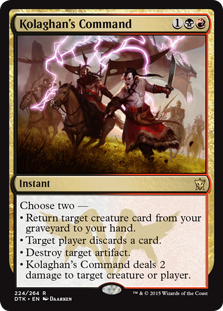
2 Kolaghan's Command
4 Thought Scour
1 Stubborn Denial

Lands

2 Blood Crypt
2 Watery Grave
1 Steam Vents
1 Swamp
1 Island
4 Polluted Delta
4 Bloodstained Mire
4 Scalding Tarn

Sideboard

2 Stubborn Denial
2 Liliana of the Veil
1 Kolaghan's Command
1 Kozilek's Return
2 Collective Brutality
2 Fulminator Mage
1 Terminate
2 Surgical Extraction
2 Ceremonious Rejection

If you read last week’s article, then it’s possible that my eventual deck choice doesn’t come as a huge surprise. I didn’t have a ton of time to test, but I did have enough time to explore a few options, such as Eldrazi Tron, Burn, and UR Storm. Before delving into Grixis Death’s Shadow, here are some quick hits on what I thought about these archetypes and why I eventually moved on.

The Rejects

Eldrazi Tron’s identity in this format is less ramp-combo and more midrange, which is the primary reason I wanted to test it as a potential option for Baltimore this weekend. RG Tron always leaned a little too heavily for me on having the right mix of ramp/lands/payoffs, and if it's opponent wanted to beat it, they could succeed with a conscious sideboard.
Eldrazi Tron operates differently in basically every way. Unlike RG Ramp, they have a ton of things they can do before seven mana, and don’t need to hit their top end or assemble their combo to win the game. Where RG Tron had a ton of dead draws late (assuming their initial threats were dealt with), Eldrazi Tron keeps the threats coming well into the lategame.

I abandoned the deck due to a combination of card availability issues, personal bias, and in-game negatives that I just couldn’t get over. I had a feeling that UR Storm would be popular on Saturday, and was worried too many Blood Moons and not enough early interaction from me would complicate the matchup. Burn and Affinity are also just a little too fast for my liking, even though both matchups are winnable.

I liked a lot of what Eldrazi Tron was doing, but I didn’t feel like I was leveraging my preparation and knowledge of the format into an archetype that would properly reward me for my work. Again, I definitely acknowledge some bias in this conclusion, and wouldn’t fault anyone for playing Eldrazi Tron, as the deck is clearly strong.

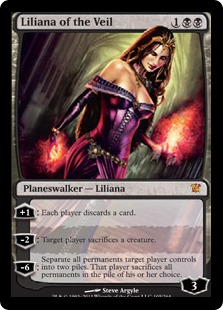
Burn was another deck that I wanted to try. I already had some experience with the archetype, and felt it was positioned fairly well for the weekend. What do Affinity, Eldrazi Tron, Dredge, and UR Storm all have in common? No white! Lifegain is (was) currently at an all-time low, with no real control deck putting up results, and Abzan showing diminished numbers as well. With people also trimming Lightning Bolt, I felt Goblin Guide would often manage to stick around for a few hits.
In the end, I just couldn’t pull the trigger on bringing Burn to a large event. I know that stigma has been disproven before, but I really wanted a great sideboard, don’t get to play paper Magic that often, and was hoping to enjoy my rounds—I don't love playing Burn.

By the time I got around to UR Storm, I was almost out of time, and I knew I would do myself a disservice by sleeving up the complicated combo deck without putting in the requisite reps.

The Victor

And that brings us to Grixis Death’s Shadow.

This deck checked a lot of boxes for me. I was intimately familiar with the color combination, having played pretty much every Grixis deck viable (and not viable) over the past few years, so I already had a lot of the groundwork done when it came to numbers and the sideboard. I had recently played the deck for a two-week period, so once I had my sights set on where I wanted to be, I only had to test the updated list to get reacquainted with the deck's sequencing and roles. And, well, I really wanted to do well with a deck I enjoy playing. I am what I am.

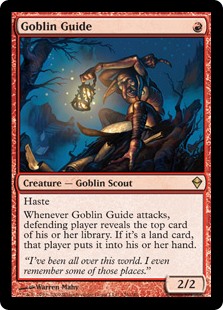
So, the list. I knew pretty early that I wanted to go down to three delve creatures. After a couple weeks of testing I was getting double delve creatures in my opener a little too often for comfort, and I felt like the graveyard hate would be a little too plentiful with Dredge still lurking around in people’s minds. I was prepared to transition from a classic Death’s Shadow Aggro deck in game one into a more reactive shell postboard, and I knew that if I expected graveyard hate to be out in some number, Liliana, the Last Hope is not where I wanted to be. Liliana of the Veil, on the other hand, is more than capable of winning games by herself, and is better than Liliana, the Last Hope could ever try to be against decks like Burn, Eldrazi Tron, and UR Storm.

If the subgame were all about value, and replaying creatures as much as possible, I'd find a way to play three Kolaghan's Command in the maindeck and I definitely wouldn’t be trimming on delve threats. But as it stands with the stock build, the deck is a little too one-dimensional for my tastes. There’s a difference between graveyard synergies and relying on your graveyard to win, and if we're in the latter camp, why not just play Dredge? I’m not saying that Grixis Death’s Shadow can’t win without the graveyard, but I definitely want to be above just a couple threats once my opponent sticks a Rest in Peace or something.
Vendilion Clique is a powerful alternative threat that can help shore up some of the points lost against combo, since I’m making room in the maindeck for a third Lightning Bolt in place of Stubborn Denial. I’ve found that in game one, when I’m losing, it’s not to spell decks, thanks to my six discard spells. I’m getting run over by creatures, and Stubborn Denial is far from ideal against Etched Champion. Vendilion Clique and Lightning Bolt over Gurmag Angler and Stubborn Denial might seem like a big change, but in practice, it just trades a bit of value in one area to regain it in the form of another card. Same number of threats, same amount of disruption.

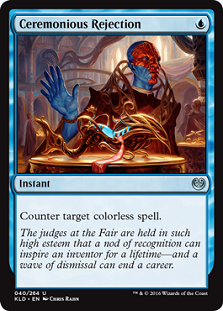
Based on what I was seeing in the MTGO metagame, my high-priority targets were Eldrazi Tron, Burn, and UR Storm. Ceremonious Rejection is a nice bit of spice that, while narrow, handles every single spell Eldrazi Tron can throw at us for one mana. I debated for a while about the numbers between Fulminator Mage and Ceremonious Rejection, eventually settling on two of each, but I could definitely see cutting both the Fulminator Mages for a third Rejection and an Izzet Staticaster. With this list, I’m going all-in on my bet that white won’t be showing up in large numbers, thanks to Eldrazi Tron, but a little hedge can't hurt.

With this list, what I’m most proud of is my post-board configuration against Burn. Nobody likes losing to that deck, and I believe I’ve found a solid configuration that gives me an edge in the matchup without diluting my sideboard too much against other matchups.

Collective Brutality, Stubborn Denial, Kolaghan's Command, and Liliana of the Veil combine to provide a ton of discard and countermagic, especially when added to our maindeck spells. Our goal is to run Burn out of cards as quickly as possible and sneak in a quick threat. We don’t have much to board out after Street Wraith, and I end up keeping a couple Thoughtseize in; Deflecting Palm is popular, and even turning Bolt into Shock can be the difference between winning and losing sometimes. Thoughtseize is by no means a great plan, but it is definitely serviceable in many situations.


Conclusion

When I was still planning to attend SCG Baltimore, I was pretty confident in this list. I felt certain that I had done the appropriate amount of work, avoided common preparation pitfalls, and put myself in a solid position to control my own destiny. Vizier Company has turned the format on its head, though, taking advantage of a lack of one-mana removal and counterspells. Will Spell Snare be the best card of the weekend? Lightning Bolt doesn’t solve everything, but it certainly helps. It will be interesting to see how everyone reacts to this new development, only a week before SCG Baltimore. I’ll see you on the other side.

Video Series with Ryland: 4-Color Saheeli Evolution

Are you a Quiet Speculation member?

If not, now is a perfect time to join up! Our powerful tools, breaking-news analysis, and exclusive Discord channel will make sure you stay up to date and ahead of the curve.

Greetings, everyone! I'm back for more action here at Modern Nexus, this time with the debut of my video series. I tend to cast a pretty wide net in Modern, which means I have experience playing a large range of different archetypes. In my videos I'll be exploring these decks and trying to shed some light on how I see individual matchups and archetypes across the Modern metagame.

Today's featured deck is a four-color combo deck built around the Saheeli Rai/Felidar Guardian combo that was recently banned in Standard. The deck has much in common with Kiki-Chord, relying on mana dorks and Eldritch Evolution and employing a midrange value strategy for its Plan B. But instead of Kiki as our top-end combo finish, we have Saheeli and Felidar, both of which combo with much of the deck's other pieces. The full decklist can be found below the videos.

I intend to develop the video series further as the weeks go on, so let me know your thoughts on the formatting, presentation, or any other concerns in the comments. Also be sure to check out my Twitch channel for more live content.

Deck Tech

[youtube https://www.youtube.com/watch?v=zeUqsHH-oNA&w=560&h=315]

Round 1 vs. Affinity

[youtube https://www.youtube.com/watch?v=ZUn9upPFHE0&w=560&h=315]

Round 2 vs. Knightfall

[youtube https://www.youtube.com/watch?v=Gi3wGTcAqaU&w=560&h=315]

Round 3 vs. Knightfall

[youtube https://www.youtube.com/watch?v=bQ37FekodRo&w=560&h=315]

Round 4 vs. Dredge

[youtube https://www.youtube.com/watch?v=rcJh8CPmi7s&w=560&h=315]

Round 5 vs. Elves

[youtube https://www.youtube.com/watch?v=BACCPlSMI6Q&w=560&h=315]

4-Color Saheeli Evolution, by Ryland Taliaferro

Creatures

3 Birds of Paradise
3 Noble Hierarch
2 Wall of Omens
2 Scavenging Ooze
4 Voice of Resurgence
2 Renegade Rallier
1 Kitchen Finks
1 Eternal Witness
4 Felidar Guardian
1 Thragtusk
1 Sun Titan

Enchantments

4 Oath of Nissa

Instants

3 Path to Exile

Planeswalkers

4 Saheeli Rai

Sorceries

3 Eldritch Evolution

Lands

4 Wooded Foothills
4 Windswept Heath
1 Misty Rainforest
1 Temple Garden
1 Stomping Ground
1 Breeding Pool
1 Hallowed Fountain
1 Sacred Foundry
2 Razorverge Thicket
1 Scattered Groves
1 Gavony Township
3 Forest
1 Plains

Sideboard

1 Path to Exile
1 Gaddock Teeg
2 Unified Will
1 Negate
2 Rest in Peace
1 Kataki, War's Wage
1 Izzet Staticaster
1 Reclamation Sage
1 Magus of the Moon
1 Eidolon of Rhetoric
1 Obstinate Baloth
1 Linvala, Keeper of Silence
1 Eldritch Evolution

Insider: MTGO Market Report for May 24th, 2017

Are you a Quiet Speculation member?

If not, now is a perfect time to join up! Our powerful tools, breaking-news analysis, and exclusive Discord channel will make sure you stay up to date and ahead of the curve.

Welcome to the MTGO Market Report as compiled by Matthew Lewis. The report will cover a range of topics, including a summary of set prices and price changes for redeemable sets, a look at the major trends in various Constructed formats and a "Trade of the Week" section that highlights a particular speculative strategy with an example and accompanying explanation.

As always, speculators should take into account their own budgets, risk tolerances and current portfolios before buying or selling any digital objects. Please send questions via private message or post below in the article comments.

Redemption

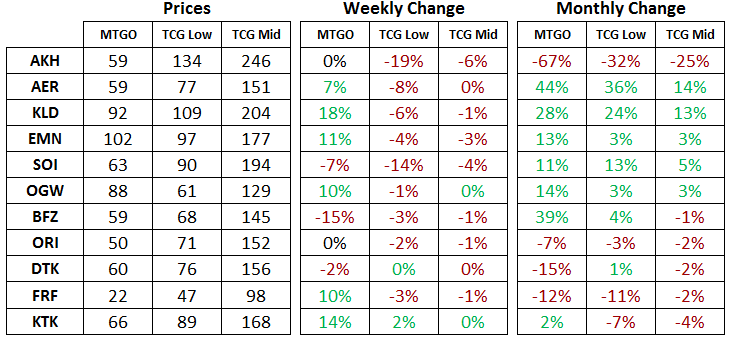
Below are the total set prices for all redeemable sets on MTGO. All prices are current as of May 23, 2017. The TCGplayer low and TCGplayer mid prices are the sum of each set's individual card prices on TCGplayer, either the low price or the mid price respectively.

All MTGO set prices this week are taken from GoatBot's website, and all weekly changes are now calculated relative to GoatBot's "full set" prices from the previous week. All monthly changes are also relative to the previous month's prices, taken from GoatBot's website at that time. Occasionally, full set prices are not available, and so estimated set prices are used instead.

apr23

Standard

Standard Constructed was on display again this weekend at Grand Prix Montreal and Grand Prix Santiago. Energy-based decks featuring Aetherworks Marvel and Ulamog, the Ceaseless Hunger took the top prize in both events. From a financial perspective, this is the top of the mountain for cards from this archetype. After making a strong showing at Pro Tour Amonkhet in Nashville, the 18 Marvel-based decks in Montreal's top 32 and 15 in Santiago's is confirmation that there is a best deck in the format. At this point, cards from this archetype have no further upside and should be avoided by speculators.

Chandra, Flamecaller saw further adoption by the top deck this week in order to combat low-to-the-ground creature decks. It's reached a near term peak of over 10 tix and now sits below that price with the ebbing of the Zombie threat.

Shaun McLaren piloted a BG deck into the top eight of Montreal, packing four maindeck Dissenter's Deliverance to help with the battle against Aetherworks Marvel. Having a cycling cost of one green mana allowed McLaren to include a narrow answer in the main deck without being severely hamstrung against non-Marvel decks. Look for decks to move in this direction if Marvel decks continue to post strong results.

With multiple cards now banned in Standard, there's going to be a lot of people clamoring for another ban if Marvel decks keep dominating. In general, I am not a fan of speculating on Standard as we head into summer, but another round of bans would generate a bout of volatility in Standard prices. It's something to keep in mind, but I would not be betting on another ban at this point.

Modern

At the Star City Games Modern Classic event in Louisville, Collected Company decks came out in force, taking three out of the top four spots. Powering up the deck is the new infinite mana combo of Devoted Druid and Vizier of Remedies. Although it's useless while the druid has summoning sickness, Collected Company and Chord of Calling both do great work at putting creatures into play at instant speed, thereby getting around that particular drawback.

This deck looks like the heir apparent to the old Birthing Pod archetype, and I would expect to see continued strong results from this new iteration. A card like Linvala, Keeper of Silence will see increased demand as mirror matches become more important.

Trade of the Week

For a complete look at my recent purchases, please check out the portfolio. This week I went deep on a staple of Modern in Noble Hierarch. I'll explain the thought process behind this decision, but it should be no surprise that it begins with noticing the new archetype in the 5-0 results from the Modern Constructed leagues and the strong finish the Counters Company deck posted in Louisville.

noble

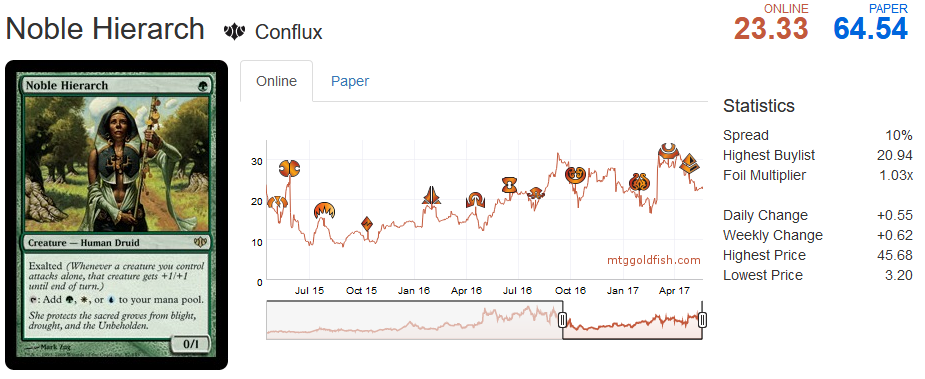
Examining the price chart, this card took a big price hit from its reprint in Modern Masters 2015 (MM2). But since the release of Shadows over Innistrad (SOI), it's been in a rising trend where both the highs and the lows are rising. In other words, the peaks are higher and the troughs are higher. The one exception might be just prior to the release of Modern Masters 2017 (MM3).

There's no doubt the fear of a reprint in that set contributed to a very pessimistic period for this card, but that came on top of the Gitaxian Probe ban in January, which had all but removed Infect from being a legitimate threat in Modern. Once Noble Hierarch was confirmed not in MM3, the price took off like a rocket back to about 30 tix, before stumbling down to 23 tix more recently.

That's the overall setting for this purchase. With the ban of Gitaxian Probe firmly in the rear-view mirror, I would not expect much supply to enter the market from players moving out of the Infect archetype. And as a one-casting-cost mana dork, there's no need to worry about a reprint in Standard. The next possible reprint for this card would be in Iconic Masters, but that won't be something to worry about until the end of the summer, and I'd be skeptical of anyone who thinks Noble Hierarch has a good chance at a reprint in that set.

The reasons to be bullish on this card are numerous. The potential emergence of a new deck in Modern starts the list, but there's also the fact that it presently anchors a number of different strategies. There's no pending reprint and the recent addition of the weekend challenges will spur demand for all Modern staples. The stage was set for a good speculative target. The one final check I had to make before pulling the trigger on this trade was on the overall supply of this card. When I peaked at the available supply on MTGOTraders, they had six copies of the Conflux (CON) version, and a single copy of the MM2 version.

This told me all that I needed to know, that the market was not well supplied at the current price. If there were forty to sixty copies available, then I would be more cautious. With significantly fewer than that, any strong result at a big event could push this card firmly into the spotlight and raise its price.

My first step in starting to buy these cards was to scour MTGO Library. The bots that use this service often have prices set below the prevailing rates charged by the larger operators like MTGOTraders or GoatBots. After picking off a few play sets from the MTGO Library bots, I moved onto ordering playsets of both versions of the card through the MTGOTraders and Cardhoarder delivery services. If you have not started using the service, it's a very convenient way to order and receive cards. Although you still have to interact with the bots in the client, you do not have to hunt them down in the classifieds as they message you when they are ready to deliver. All you have to do is have your tix ready in exchange.

With the bulk of my position already purchased, the last step is to do a search on the classifieds and to buy any copies that I could find at a reasonable price. Most of the purchases I had made were in the 22 to 23 tix range, so anything at 23 tix or less would be a fine target to round out this strategy.

I am confident this card will get back to the 30-tix level at some point in the next twelve months. It could very well return to that level by September, which would be the next selling window for Modern staples. Keep in mind, though, that Grand Prix Vegas is coming up in June, and this could drive a lot of near-term interest in Modern and Legacy. Noble Hierarch is well positioned to benefit from both.

Insider: Turning Attention to Modern

Are you a Quiet Speculation member?

If not, now is a perfect time to join up! Our powerful tools, breaking-news analysis, and exclusive Discord channel will make sure you stay up to date and ahead of the curve.

Everybody is talking about Standard. Marvel this and Marvel that. Zombies this and Zombies that. Mardu this and Mardu that... If you are into MTG finance, like I am, the boat has already sailed on Standard specs and you've already been working to cash out while the getting is good. Who doesn't enjoy cashing out on their Ulamogs and Marvels for three times what they were going for a few weeks ago?

The game is always the same. We spec on Standard before the Pro Tour and look to push those specs off once they hit or miss. Standard is always all about spikes and steady declines in the aftermath. There isn't a lot of Standard work to be done in the middle of the season since most cards will be trickling down toward their final resting place in the bulk bin or as a casual standout.

Modern is different for a couple of reasons. First of all, the cards don't rotate which means their shelf life is infinite (or until they are made obsolete via a better printing or a banning). We don't need to move out of these cards within a two-week window or risk losing all value. That means we have more luxury when it comes to holding onto cards for a long period of time and waiting for something to happen.

Modern also evolves a lot slower than Standard does. First of all, fewer people are working to break it out of the gate (Standard season comes first) and second of all the format is much, much bigger and harder to break. In Standard, there are only so many available options at any given time and most of the good ones are found after a few weeks or so. In Modern, however, things take longer to "break out" since there are so many options available.

Information spreads more slowly and there is more information to sift through. It also lends investors more time to figure things out and make a move before the market adjusts. Look at the PT as an example. The majority of the price movement happened on Standard singles before the event had even concluded. It is easier to look at the picture being painted, solve it, and make an investment move. The downside is that the window to get in or out is much, much smaller.

Looking for Value in Modern

Today, I'd like to talk about a few Modern staples that I think have a nice window at the moment to get in on. Obviously, the nature of this game is speculative but I feel like these are the kind of bets on the metagame that are likely to be rewarded moving forward.

There was an error retrieving a chart for Collected Company

Collected Company: what can I say, they don't make 'em like this anymore. Speaking of which, I don't even really understand why they made one like this in the first place!

The card is busted in half and extremely unique. It seems likely that such a card will be around as the centerpiece of decks for a decade or more. Basically, the card is completely insane and broken and only gets better every time a new creature gets printed.

I think that Collected Company is a great speculative target right now because it seems very likely to only go up in the foreseeable future. The Vizier of Remedies plus Devoted Druid combo has come out of nowhere to be another great CoCo deck. I'm a buy on these right now and want to hold onto them for the future.

There was an error retrieving a chart for Eternal Witness

Another card that slides nicely into any Collected Company shell is Eternal Witness. First of all, Witness is a completely busted-in-half card no matter how you shake it. It's another good example of, "They don't make 'em like this anymore," and with good reason—the card is obnoxiously powerful and abusable.

E Wit has been reprinted quite a bit in the past few years and has a pretty large price range depending on who you are trying to buy it from. Copies can be acquired for between $2-$6 right now. That spread is unreal and tells me a couple of things.

The first thing is that a lot of online dealers value the card highly and are willing to wait for bigger value down the road. They see the future coming. The other is that a lot of people currently undervalue the card because they have supply they want to dump, i.e., reprints.

I want to pick up the cheap copies of this card and hold onto them. The best-case scenario is that Witness doesn't see a reprint for a year or so and the value goes up significantly in that time.

It is also worth noting that Witness is seeing more and more play in the Company lists (particularly Vizier) which is increasing demand for the card. We're all adults, we know how supply and demand works. Picking up those undervalued copies is likely to yield a nice return down the road.

There was an error retrieving a chart for Spire of Industry

Spire of Industry is a cheap Standard Mardu Vehicles land that also slots nicely into a range of Modern artifact decks as a mana fixer. I prefer the card to Glimmervoid by a wide margin. I'll gladly take a few points of damage rather than risk my house of cards falling apart on the first turn to a Lightning Bolt, or having to mulligan.

Vehicles doesn't appear to be the hot dog of Standard like it was last season, so I think these will continue to dip as players change Standard decks. These are a good pick-up for the future. Easily one of the best Modern cards in Aether Revolt for the long term.

There was an error retrieving a chart for Inventors' Fair

Junk rare? Not a chance!

Inventors' Fair may hold a bulk rare price but this card is going to be gold for value in the future. It is a Modern card already (Krark-Clan Ironworks combo, Lantern Control) and sees Vintage and Legacy play in various Workshop-style decks. It is also worth noting that the card is an auto-include in most Commander decks.

I will literally trade for every copy of this card that comes across the trade table and stash these away for the future. I feel like this card being worth something down the line is almost a foregone conclusion. It's good in a ton of formats and a Commander staple. You could do a lot worse than having 50-100 copies of this card floating around in a box two years from now!

There was an error retrieving a chart for Vengeful Pharaoh

Dredge is kind of a known commodity right now. It's not great, but a solid deck nonetheless. I don't anticipate that it will be going anywhere in the foreseeable future.

I actually looked through the lists for something to spec on from the archetype, but it felt like most of the cards were at fair prices and didn't have a ton of room to move around. However, Vengeful Pharaoh could be a nice dark-horse pick. It's pretty cheap right now and doesn't feel like the kind of card that is super likely to see a reprinting anytime soon.

It's also a generically good Magic card. All of these factors make me think it is a potentially nice card to pick up a few copies of to store away for a rainy day in the future. It probably won't be a card likely to spike hard, but it seems likely to become more valuable than its current market price. It only takes a GP weekend where Dredge "breaks out" again for a card like this to see increased demand and a price jump.

There was an error retrieving a chart for Supreme Verdict

Supreme Verdict is a great Magic card. It is so unique and awesome and I doubt we'll every see another card that does something like this. It's also very good against the Company and Bant Eldrazi decks that are popular in Modern.

I do think we will eventually see reprints on Verdict but I also think the card is likely to go up before that day rolls around. I've been picking these up for a while and noticed they continue to trickle upward, week after week. It's probably a really nice card to have some spare copies of hidden away just in case.

Always Grinding

We are kind of in a lull period of MTG finance but there are still specs to be made. Standard is being solved and we don't have new spoilers to bet on yet. However, the work of a Quiet Spec'r is never done. Grinding out those mid-season trade targets does provide value down the line.

The Prophecy Is… Ambiguous 

Are you a Quiet Speculation member?

If not, now is a perfect time to join up! Our powerful tools, breaking-news analysis, and exclusive Discord channel will make sure you stay up to date and ahead of the curve.

The Oracle at Delphi was always correct. Every ancient Greek source confirms this truth. No matter what you asked the Oracle, the answer would accurately foretell the future. However, thanks to surviving prophecies, we now know she owes this accuracy to vagueness. The Oracle answered questions in ways that could mean anything. When asked about the outcome of a battle, her answer might be, "A great kingdom will fall." That kingdom could be yours or your opponent's, but whose became clear only after the fact. Hence, the Oracle was never wrong. For the skeptics of the ancient world, this must have been frustrating to the point of infuriating.

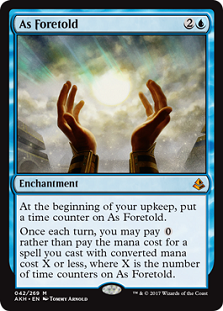
This is equally true of As Foretold. I have been quietly experimenting with this card since Amonkhet was released and I still cannot tell if it is good. Every time I play the card I feel like I'm rolling dice. It might be good, it might be mana wasted. I never know until after the game whether the card was good. Sometimes, even then it gets messy. My gut tells me it's a win-more card, but I keep seeing just enough potential to stop me from dismissing As Foretold. I just can't tell if it's the real deal or if it's just...oh, what's the word?

Seeking the Oracle

It's always best to start at the beginning. As Foretold has generated a lot of hype and speculation. Everyone should know what it does by now, but as a reminder, it's an Aether Vial for any spell with converted mana cost less than or equal to its number of time counters. Rather than tap, it allows players to cast a free spell once each turn, or twice each turn cycle. Essentially, it's a mana generator.

I was pretty down on the card in my preview article. I could not determine where the card belonged, and it looked too much like a win-more card for me to seriously investigate. However, Jordan was much more open to the card. He noted how busted free mana has been and how control decks could leverage the free spell effectively. I can see the point, but to me the problems with the card—chiefly, its durdliness and slowness—outweighed any advantage. I just didn't see how it could be worthwhile.

The thing is, it appears I was in the minority on As Foretold, at least among online writers. Sean McLaren went on about it at length the day after I was dismissive. Ben Friedman thinks it is broken. Frank Lepore tried it and had fun. Then again, playing less-than-competitive decks and having fun doing so is his thing, so it's hard to draw serious conclusions from Lepore. My point is that there was enough evidence that the card was reasonable that I began to soften.

All that was coupled with pressure from players at my LGS who really liked the card. I'm a fast player who normally plays fast decks, so I have a lot of free time to talk shop. Once again, I proved to have the minority opinion, as most players thought Foretold at least deserved a try. Some were all over the card and desperately wanted to break it. When I consistently find myself in the minority, I like to carefully reexamine my position in case I'm one who's wrong. I decided to reevaluate my position and give As Foretold another look.

Hearing Her Wisdom

I started playing around with Foretold towards the end of April, and I wasn't having any success. Everyone agreed with my assessment that Foretold belonged either in control or in a dedicated combo shell, so I conducted my tests with UW Control. I felt that just jamming the card into any existing combo deck was a recipe for clunk, and I was skeptical of other control decks succeeding in this metagame. I started McLaren's suggested list, and then brewed and tuned based on my experience. I didn't really have any success.

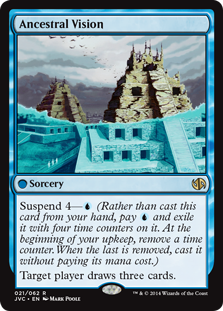
Of course, the build may just have been unrefined. However, I was also not impressed by Foretold itself. I never felt like it did anything. Yes, I cast free spells when it was in play, and yes, getting to play Ancestral Vision right away felt good. I just never felt that it was winning me games I would otherwise have lost.
My testing in control shells ended up with a decklist very similar to the one that Ross Merriam highlighted. Not exactly the same, but close enough that I won't post the decklist. What I want to highlight is that Merriam's on-camera experience very closely mirrored my own. As Foretold's most relevant use is accelerating Ancestral Visions, which may not even be good, because on turn three you may have to discard. That's not the worst, but it's also nothing special. After several weeks of having "nothing special" as my results, I put the Foretold's away. I don't have the evidence to say that they are worthwhile in control.

Seeking Guidance from Others

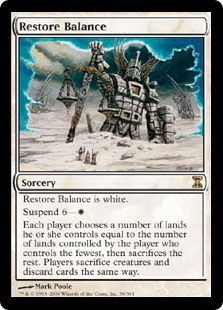
However, control isn't Foretold's only possible shell. A number of players that I've run into online and at my LGS have tried to build around the card more centrally. I don't think there's any collusion between them, and it would be anomalously coincidental to the point of paranoid conspiracy if the paper players were also the online players, but they've all arrived at Jeskai Restore Balance decks. I don't have their lists, but each one is built around Greater Gargadon, Restore Balance, As Foretold, and Nahiri, the Harbinger. In addition, they have a number of cheap interactive cards, Ancestral Vision, and sometimes Wheel of Fate. I've never actually seen them cast Wheel, but they are trying it. Their idea is that you are Jeskai Control but get to play a prison-style game with Restore Balance enabled by Gargadon. To my knowledge none of these decks have won any events, but they've done reasonably well for the past week.
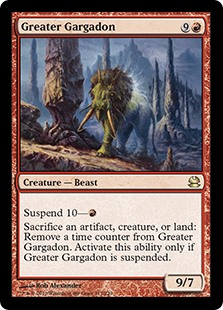
When they assemble their pieces, the decks I've seen are very potent. There's just not much you can do when you have no lands against a Greater Gargadon, a full grip of cards, and free spells every turn. However, the operative word in the first sentence is when. More than other decks, these Balance decks need to draw the right cards at the right time to have any chance of victory. Failing to draw Balance can prove fatal. Not setting Balance up with Gargadon can spell doom. Failure to draw Foretold may cause the deck to do nothing. I've played a number of games against the deck where Foretold never resolved and I won with lots of my opponent's scary suspended spells several turns away from resolving. There is power there, and where there is power there is potential, but as far as I'm concerned, these decks are unforgivably fragile.
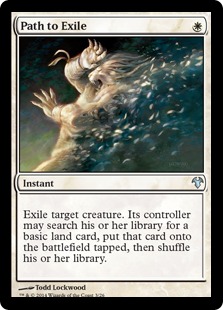
My final problem is that Restore Balance already exists as a deck. A deck that, while it isn't very good in the overall metagame, is very good at enabling Restore Balance. As a Balance deck, the Foretold version is noticeably worse than the older versions. From what I've seen so far, I don't think they do anything else enough better to justify deviation.

Pondering the Meaning

I still have serious doubts about As Foretold in Modern. It's durdly and slow, but that really isn't the problem. The problem is impact. Of course, enablers are only as powerful as the things they enable, and there are some very powerful things that you can do with Foretold. But what happens when you don't? What if you don't have Ancestral Vision when you play Foretold, or it's incorrect to play Balance then? Foretold won't always enable anything you want to do. And this is the fatal flaw of the card.
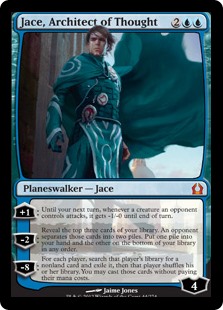
During testing, I found that in UW Control, the card didn't do that much. In normal builds, I rarely feel that I lose because I couldn't cast enough spells. I often have mana constraints, but that's not why I lose. By itself, Foretold doesn't solve that problem, although it improves drawing Vision late. Of course, most UW decks have solved that problem already by replacing Vision with Think Twice or other cantrips. I didn't find that I needed extra mana very often as long as I hit my land drops. Control rarely struggles with playing the spells in its hand. It struggles with having the right spells at the right time. Foretell helps with the former and not with the latter.

What you want to be doing with Foretold in control decks is using the free spells to do things other than answering your opponent. The problem is that most of your deck is cheap answers. As a result, I found that I was in fact wasting mana because of Foretold. Where I really wanted the mana was when I got over four counters, because that's when it enables sweepers and planeswalkers with protection. Of course, the best-case scenario occurs around turn seven, by which time control is either dead or stabilized anyway.
I just never really needed more mana in most of my test games. Control decks are already built to leverage a mana advantage over time and play more powerful spells later in the game. At best, Foretold reinforces that trait. At worst, it forces you to drop your shields at sorcery speed to generate an incremental advantage down the line. There are plenty of decks that can either functionally or actually win the game in that window. Foretold asks us to justify cutting control cards for a ramp spell... in a control deck.

Pondering My Conclusions

However, despite all of this, I have found enough upside in Foretold that I can't just dismiss its potential. There are times when you are constrained on mana or outright mana screwed, and in those situations, Foretold is a lifesaver. That's when you actually need the extra mana, and in those situations, the benefit actually does balloon over time.
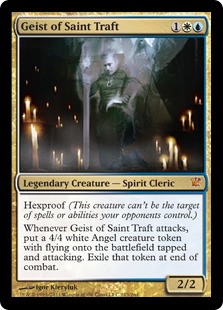
Furthermore, that extra mana really had an impact when I tried a Foretold Control deck against a normal UW deck. Now, it didn't resolve very often, and on a few occasions I got really punished for tapping out turn three, but those times when I did resolve Foretold, the mana advantage it generated provided the leverage I needed to grind out my opponent. I was left wondering if Foretold isn't actually an engine card but the new Geist of Saint Traft: a way to break control mirrors. It may be too slow compared to Geist, but an enchantment is also less vulnerable. Perhaps something to circle back to down the line.

The Prophecy... Fulfilled?

There is still the possibility that there exists a deck to really abuse As Foretold lurking somewhere out there. Modern's cardpool is a vast and unexplored jungle, after all. I've seen enough to prevent me from outright dismissing the card, but I am getting close.

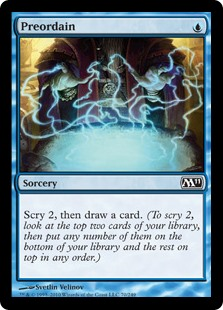
Anyway, it's now time for what everyone is really here for: the voting results! By a vote of 21 to 12, the winner is Preordain!

Frankly, I'm relieved. I not only wanted Preordain to win, I assumed it would before I put the issue to a vote. It would have been embarrassing to redo the preparations I'd already done if Dig had won instead. So I'll be getting started on that and should have results... eventually. Late summer/early fall, probably.

A number of readers have expressed interest in helping with this project. I want to thank you for the offers, but I have a crew that is more-or-less willing to help already, and I know when and where to find them. I will keep those who have expressed interest in mind, and I may have a request for you soon. Stay tuned.

Insider: My Version of “Pick of the Week”

Are you a Quiet Speculation member?

If not, now is a perfect time to join up! Our powerful tools, breaking-news analysis, and exclusive Discord channel will make sure you stay up to date and ahead of the curve.

I have been a walking embalmment of the strategy I depicted in last week’s article. Rather than buy deeply into high-dollar targets, I’ve been picking up some lower-end cards and flipping them on eBay for modest profit. I made good money on a few targets already, including foil Dusk Urchins (in at $2, out at $8-$10.50), Conqueror's Flail (in at $3, out at $6-$8), and Debt of Loyalty (in at $2.50, out at $7).

The process has gone so well that I think this strategy will be one I stick with for a while longer. Again, this doesn’t mean I will ignore all other opportunities. But I believe there are still a number of lower-end cards with limited stock online, coiled like a spring and ready to jump.

This week I’ll share some of those buys, along with a couple that are on my radar which I haven’t bought yet. I don’t normally write straightforward recommendation articles, but I feel pretty good about these picks so I really wanted to share them broadly. After listening to multiple MTG finance podcasts with a "pick of the week" segment, I feel inspired to share some ideas of my own.

Cards In Hand

There was an error retrieving a chart for Necroskitter

I’m sitting on a handful of foil Modern Masters 2015 Necroskitters. While the returns haven’t come as quickly as I’d hoped, I still believe in the profitable potential for this card—even with the suboptimal foiling in MM15.

Haptra remains one of the more popular Commander generals, and the number-one card in the deck according to EDH REC is Necroskitter. The synergies are very strong with the card and I expect it to be a Hapatra mainstay for quite some time. Perhaps we’ll get even more -1/-1 counter cards in Hour of Devasation which will rekindle demand for this strategy and create more upside.

There was an error retrieving a chart for Didgeridoo

Yes, I still believe in this card. Yes, I understand there aren’t enough good Minotaurs yet to really break it. You have to remember this is an extremely old Reserved List card that suddenly has some relevance in Magic—perhaps for the first time ever. If you print a legendary creature Commander decks will follow, and Neheb, the Worthy is no exception. If we get more Minotaurs—in Hour of Devastation or any other future set—Didgeridoo will gradually get better and better.

It already has a presence on EDH REC and this will not go away. With supply so thin on TCGPlayer, this is bound to pop. If you can still track down $2-$3 copies, I’d suggest buying a few.

There was an error retrieving a chart for Nix

Here’s a cheaper one I’m sitting on. As Wizards prints more ways to cast spells for free, Nix steadily improves. It’s not so farfetched to imagine a Modern deck that takes advantage of free spells with As Foretold and becomes a Tier 1 deck. Should that be the case, Nix could very well slot into the sideboard of any blue deck. In the meantime, there really aren’t that many copies in stock and there are only 16 sellers on TCGPlayer with at least a playset for sale.

There was an error retrieving a chart for Temple Bell

Pop Quiz: how many foil Temple Bells do you think are in stock on TCGPlayer right now? Well, as of Sunday morning, the answer was four (excluding the two damaged copies and one MP copy). Oh, and one of those copies is listed at $20. Turns out I have more stock of this card than TCGPlayer! I think people are overlooking this card in foil. It only has the one foil printing, and occurs in over 4,000 decks on EDH REC. It’s only a matter of time.

Cards on My Radar

I want to repeat the full disclaimer that all cards mentioned above are in my inventory at this point in time. While I am testing the market on foil Necroskitter, I haven’t sold any copies yet. The other cards I mentioned above I own but are not for sale yet. I’m waiting for more upside.

Now I want to shift focus to cards I’m tempted to buy but haven’t pulled the trigger on yet. Perhaps that will change by the time this article goes live. But in the interim, these are ideas I’m presenting for your consideration.

There was an error retrieving a chart for Meditate

I mentioned this one recently, but I wanted to make sure I included it here as well. This is a Reserved List rare with occasional Legacy playability. It also has spiked in the past so there is some precedent for a higher price. One of these days a speculator will get trigger-happy and pick up a bunch of copies. There are not many other ways to draw four cards for three mana, after all.

There was an error retrieving a chart for Assemble the Legion

This Gatecrash rare is a signature card in the Queen Marchesa Commander deck. It has excellent synergy with Amonkhet rare Anointed Procession. But its utility doesn’t stop there. According to EDH REC, Assemble the Legion appears in nearly 5,000 lists, ranging from Queen Marchesa to Hazezon Tamar.

I anticipate this card’s popularity will continue to rise, and as such I have my eye on picking up some copies. I much prefer foils, which are extremely low in stock online and offer the most upside.

There was an error retrieving a chart for Black Sun's Zenith

Technically I do own a few copies of this card, so it really belongs in the previous section. But I included it here because I’m looking to acquire more copies in the future. This is a cheap alternative to Damnation that offers synergy with the new Hapatra Commander decks. But the recent printing of Hapatra is just a cherry on top of the cake.

Black Sun's Zenith is played in over 8,000 decks on EDH REC, likely due to its inclusion in the prepackaged Commander decks. The fact that this card’s top Commander is Atraxa makes me even more interested in its long-term trajectory, especially if Wizards takes a year off from reprinting it. Stock is low on TCGPlayer, and we’ve seen how quickly these Commander staples can move. I’m definitely a buyer.

There was an error retrieving a chart for Jihad

I had to include at least one Old School card, and this one is particularly interesting to me. It’s already fairly expensive, so it doesn’t really fall in the “$2 to $5” category. But White Weenie is an ever-present strategy in Old School that’s not likely to disappear. Jihad is a powerful card in the right matchups, and being a Reserved List card from Arabian Nights means you aren’t likely to lose money on this one.

The buy/sell spread is pretty low too, given that Card Kingdom pays $28 on their buylist for NM and $21 for VG copies. MP copies are in the $23 range now, but once a few are bought the price rapidly becomes $30-plus.

There was an error retrieving a chart for Astral Cornucopia

There are hundreds of this card in stock. Between its printing in Born of the Gods and Commander 2016, it’s no surprise that this is virtually bulk. But when was the last time you looked for foils of this Atraxa staple? I did a quick search on TCGPlayer and I see only 15 sellers with foils in stock. Given Atraxa’s popularity, there’s no way this doesn’t climb higher in the coming months. Stock will dry up and suddenly someone will realize they can invest $80 to make this a $10 foil. It’s a matter of when, not if.

There was an error retrieving a chart for Myr Battlesphere

There’s no shortage of Myr Battlespheres for sale. After being reprinted in Commander 2013, Commander 2014, and Commander 2016, this card will never again be worth more than a quarter. There are simply too many copies in existence, and there’s a likelihood it gets reprinted again and again going forward.

However, there has only been a foil printing once: the original Scars of Mirrodin printing. As a result, these foils are up near $8 and there are not many in stock on TCGPlayer. I definitely have my eye on this one, though it may take a long time for these to really move profitably. It may be a better card to pick up in trade.

Wrapping It Up

My daily commute to and from work is roughly 45 minutes. During this time, I am able to catch up on a number of podcasts I follow, including multiple MTG finance casts. One of my favorite components of these casts is the famous “pick of the week.” The ideas inspire me to shop around and speculate in areas I would normally ignore.

In this same vein, I consider this article a summary of “picks” that are on my radar. Some of them I’ve already made a move on (in fact I purchased a foil Assemble the Legion while I was writing this article). Others are interesting to me, but I’m not sure I want to pull the trigger. The latter are merely ideas for you to investigate further for yourself. If you believe in the opportunity, by all means make your purchase. If there are others that don’t interest you, feel free to ignore them.

In reality, there are bull markets all over MTG finance. Commander staples are supreme right now and have a lot of my attention, but there are other opportunities out there. It’s impossible to chase every single idea, so hopefully my research can be a valuable guide as you look to make your investments. At the end of the day, that’s the name of the game: buy low, sell high, help each other find the right targets. It’s what I love about MTG finance podcasts and it keeps me involved in the hobby!

…

Sigbits

  • Star City Games is completely sold out of Jihad with a $59.99 price tag. I really think this card can climb higher, which is why I mention it a second time. Also, I forgot to point out the connotation the name of this card carries—even if the Reserved List were to disappear one day in the distant future I can pretty much guarantee this card will never be printed again. I place it in the “Wizards wishes this card didn’t exist” category given the religious undertones.
  • Thanks to some hype from MTG financiers, along with a sudden disappearance from store shelves, Breya, Etherium Shaper has spiked drastically. Star City Games is completely sold out, with a $14.99 price tag. Without new supply entering the market, it’s hard to see this card coming back down in price any time soon. I would say you could buy Invent Superiority Commander 2016 decks as an alternate approach, but these are also sold out on SCG at $39.99!
  • Star City Games has many Jandor's Saddlebags in stock, but none from the original Arabian Nights. I’ve noticed this card on MTG Stocks lately, and I suspect it will continue to climb in price despite not being on the Reserved List. The fact that SCG has a $7.99 price tag whereas the market price is much lower tells me they see this card climbing higher over time. Keep an eye on this one, as it’s another card that may be worth picking up for long-term growth.

Insider: Applying Statistical Tools to Speculation

Are you a Quiet Speculation member?

If not, now is a perfect time to join up! Our powerful tools, breaking-news analysis, and exclusive Discord channel will make sure you stay up to date and ahead of the curve.

Welcome back, readers! The inspiration for this week is owed to Sigmund Ausfresser and his article from last week. For those who didn't read it (and I suggest you do), he analyzes the various Commander products using statistical tools. It dawned on me that we have readers with all sorts of backgrounds (some with a lot of math, some without) and it might be helpful to have a thorough article discussing these types of analytical tools.

While there are some people who speculate purely by "feel," I know I personally am not one of them. I am an engineer by trade and I prefer quantitative reasoning for decision making (this isn't a slight against those who just use gut feelings, but more of a personal preference). I never advocate investing in a speculation target that you yourself don't believe in, and one's "gut feeling" isn't transferable to others—however, data-backed decisions are. So now that you understand the reason behind the article let's dig a bit deeper.

Step 1: Data Preparation

Before you can use any sort of analytical tool you need a data set to work with. Luckily we have lots of resources for these (including, of course, good old Trader Tools). The reason we gather data is to do comparisons and determine trends, so it's important to think a bit ahead and determine what types of trends we are going to look for.

For example, say I want to look at the top 10 most played commanders of all time (according to EDHREC), and look for cards in those decks that see a lot of play and are under $3. Knowing this, I'll likely want to focus on artifacts, lands, and mono-colored cards, which allow for the most playability due to the color restriction requirements of the format.

Step 2: Gather Data

The next step is obviously to gather the data we've decided to analyze. According to EDHREC, the following are the top 10 commanders with the most submitted decklists of all time. (Note that doesn't actually guarantee they are the most played, however, there is a logically strong correlation between a lot of decklist submissions and a lot of play.)

top 10 commanders

Before we go any further, it is interesting to note that 80% of these came from the Commander products, with only two from a Standard-legal set. All of them were also printed within the last four years. This implies that WoTC is actively focused on appeasing the Commander community, and their latest efforts have borne fruit. It also means that the commanders designed around their Commander products are clearly beloved.

But let's dig into the good stuff. Below are pictures of the top 10 most commonly played cards alongside each respective commander. It's important to keep in mind that all of these commanders vary across the color spectrum, and almost all have very different play styles, so we should expect a lot of different cards.

Atraxa, Praetor's Voice

atraxa

Breya, Etherium Shaper

breya

Meren of Clan Nel Toth

meren

Oloro, Ageless Ascetic

oloro

Nekusar, the Mindrazer

nekusar

Yidris, the Maelstrom Wielder

yidris

Prossh, Skyraider of Kher

prossh

Alesha, Who Smiles at Death

alesha

Kaalia of the Vast

kaalia

Omnath, Locus of Rage

omnath

Step 3: Filter Data

That is a whole lot of cards, and a prime example of why we had additional criteria to focus in on; otherwise, it's very easy to get lost in the woods. Ignoring the cards that don't meet our initial criteria (under $3), we shrink our list down by 34 cards. But that still leaves a pretty big list.

The filtering step is one that can easily make or break your analysis. If you filter too much, you may have too few data that lead to skewed results. If you don't filter it enough, your trends can get obfuscated simply due to all the data points.

For this example, I'm going to filter out the uncommons less than $0.50 that have been reprinted. So from a little under 100 cards (as there were some duplicates), we are down to the following:

Card Price View Count Rank
Astral Cornucopia 0.35 672
Exotic Orchard* 0.35 650
Inexorable Tide 1.75 348
Daretti, Scrap Savant 2.49 68
Myr Battlesphere 0.49 462
High Market 0.79 1048
Shriekmaw 0.59 791
Skullclamp* 2.29 14
Grim Backwoods 0.25 943
Aetherflux Reservoir 1.29 34
Jace's Archivist 0.35 604
Fate Unraveler 0.35 1115
Windfall 0.79 606
Psychosis Crawler 0.35 198
Reforge the Soul 1.99 392
Goblin Bombardment 1.49 750
Zulaport Cutthroat 0.59 119
Kher Keep 0.69 802
Beastmaster Ascension 0.99 66
Blood Artist 1.79 96
Karmic Guide 2.49 99
Mentor of the Meek 0.99 108
Yahenni, Undying Partisan 1.49 118
Anafenza, Kin-Tree Spirit 0.99 304
Key to the City 0.79 1568
Exquisite Archangel 1.49 915
Warstorm Surge 0.39 279
Rishkar's Expertise 0.69 85

Asterisks indicate that a card appeared under two commanders. The third column refers to a metric tracked by EDHREC that ranks how often cards are viewed on their site. They tally the number of views and then rank each card in descending order. Lower numbers mean larger view counts. In theory, we can presume that a larger view count is correlated with inclusion in more decks.

Editor's note: An earlier version of this article incorrectly stated that higher numbers corresponded to larger view counts.

Step 4: Analyze the Data

Data in graph form

Next we get to the actual analysis. Here we have graphed the cost of each card against the view count rank. The red quadrant shows the cards with the highest ranking (regardless of cost), whereas the black quadrant focuses in on the cards with both a high ranking and a low cost (i.e. the ones with the most promise for growth). The black quadrant includes cards with a ranking of 400 or less that also cost less than $1.

You can obviously set your ranges however small or large you want, but when you run a graph like this your best targets are always in the bottom left-hand corner because they represent the lowest cost and highest rank. You don't need to create a graph to gather this data, but if you are a visual person (like I am) it helps isolate the good targets from the bad.

Looking at the black quadrant, we find seven cards that fit the bill. Interestingly enough, the only uncommon in the group is Zulaport Cutthroat. The rest are rares. The list is below, along with the number of printings for each card.

  • Beastmaster Ascension (4 printings)
  • Rishkar's Expertise (1 printing)
  • Mentor of the Meek (3 printings)
  • Zulaport Cutthroat (1 printing)
  • Psychosis Crawler (4 printings)
  • Warstorm Surge (5 printings)
  • Anafenza, Kin-Tree Spirit (1 printing)

Only three of these cards have one printing—two are currently legal in Standard and the third rotated out with the last rotation. Note that the multiple printings of the other cards likely does have an influence on why some fall within this price range, and the recent printings are likely reasons for the others.

Anafenza, Kin-Tree Spirit is probably the most interesting card here, since she's played in some Collected Company decks, so there is additional demand from Modern players. So one could conclude from this analysis that Anafenza, Kin-Tree Spirit might very well be a good card to pick up and speculate on.

Trend Line (Regression Line)

This is only one way to look at the data graphically. When you have a decently sized set of data, you can look for trends (which Sigmund shows in his article) by calculating a regression line for the data.

EDH Rec vs. Price

This is one of the graphs Sigmund showed in his article. The dotted line is the "trend line," which is the computer software attempting to apply a linear equation that best explains the data. The R2 value, otherwise known as the coefficient of determination, is the computational results of how close the actual data was to the expected results of the trendline (using the sum of the squares method).

A low R2 value doesn't always mean the data is wrong or bad, but in many cases it does mean that the trendline does not accurately predict the results.

It's critical to understand that the trendline can be heavily swayed by outliers. If you remove the outliers you can often get a much more accurate trendline (and a higher R2 value). This is often critical with large sets of data (where one would expect outliers to be prevalent). For a simple example, see the graph below that I completely made up which includes an outlier and a trendline.

outliers

Notice the low R2 value. Now look what happens when we remove the two biggest outliers.

no outliers

You'll notice this trendline very accurately predicts our data set. The difference lay in correctly recognizing the outliers.

Extrapolation Outside the Range

A word of warning (which was hammered into me during my freshmen and sophomore years studying engineering in college): You can always interpolate from your data set, but never extrapolate.

Interpolation means you are drawing conclusions about possible results from within the range of your data set (in this case the numbers 1 through 10). Extrapolation is when you try to draw a conclusion from outside of your data range. You don't want to do that because you are always operating with limited data and you may have only captured a small part of the actual trend.

I've always found this particular aspect best explained visually. If you had a decent-size data set you may get a relatively good regression line that covers your data nicely. However, much further out it might look nothing like your initial trend. Imagine if you decided to graph the amount of water (in mL) per day that you gave a plant vs. its growth height. If you started at, say, 10 mL, and took a bunch of data all the way up to 1L, you might get a regression line like the one below.

don't extrapolate

Extrapolating this data out, you would say the plant would grow to tremendous heights if I poured a tanker truck worth of water onto it... But in reality, it would just be very, very dead plant, as there are (not surprisingly) diminishing returns on water provisions to plant growth once you reach a certain point.

Conclusion

I really enjoyed Sigmund's analysis from last week, but I realized some people might not exactly have known where he was coming from with some of his tools. I hope that by providing an actual Magic-related example, along with a more clear definition of the statistical tools one can use to analyze data, I've made it easier to take the analytical approach to speculation.

Mana Heals All Wounds: Exploring Vizier Company

Are you a Quiet Speculation member?

If not, now is a perfect time to join up! Our powerful tools, breaking-news analysis, and exclusive Discord channel will make sure you stay up to date and ahead of the curve.

When Amonkhet spoiled, Vizier of Remedies sparked interest among Modern players as a possible redundancy boost to Abzan Company, the grandchild of beloved Modern archetype pillar Birthing Pod. It's been nearly a month now since the set was released to Modern, and Vizier seems to have succeeded in improving Abzan Company... as well as in spawning some Company variants of its own! Today, we'll check in on Vizier's progress and go over the decks it fits into.

Vizier's Appeal

Together, Vizier of Remedies and Devoted Druid make infinite mana. That's an interaction I wrongly glossed over as superfluous in my set review—after all, it doesn't even win without a way to spend the mana. But Vizier-Druid has been putting up interesting results online in different shells, so I decided to figure out what the combo has that Abzan Company doesn't.

Beating the Hate

Grafdigger's Cage, one of Modern's most splashable sideboard cards, is the bane of Abzan Company. Not only can Company no longer use their namesake card or Chord of Calling with Cage in play, but should they assemble the combo naturally, Cage stops Kitchen Finks from ever persisting. Surgical Extraction, too, has been gaining steam as a super-flexible way to combat strategies like Dredge, Company, and even Death's Shadow; this card blows out the combo while opponents are tapped out by exiling all copies of Finks in response to its persist trigger.
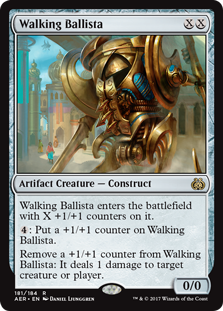
If Vizier-Druid has one huge draw, it's that these cards don't affect it. The new combo doesn't care about the graveyard at all, allowing it even to defeat hosers like Leyline of the Void.

As a cost for this immunity, players must include in their decks a number of ways to win after assembling infinite mana, and none of them are quite as useful on their own as Viscera Seer. That load is lightened by the fact that Chord and CoCo can now be cast for free.

Attacking from Unique Angles

Decks that attack from multiple angles have a good time in Modern. Take Splinter Twin, a deck in part banned for its flexibility, or Knightfall, a Company deck gaining momentum online.

Abzan Company has always had a fair plan and a combo plan, but Vizier lets the deck split that combo plan into two directions. Traditional Abzan Company lists are still enjoying some success, too; both decks benefit from opponents never knowing which combo to playing around until later in the match.

The Decks

Now we'll look at four different Vizier builds. I'll rate each, in relation to one another, on a scale of 1-3 (with 1 being awful, 3 being great) using the three metrics I consider integral to Modern success: proactivity, interactivity, and consistency.

Turbo Vizier

Our first deck marks Vizier's breakout success in its own shell. Kevin Page took a deck singularly focused on the Vizier-Druid interaction to 19th place at the Atlanta Classic last month.

Turbo Vizier by Kevin Page (19th, SCG Classic Atlanta)

Creatures

4 Simian Spirit Guide
4 Noble Hierarch
1 Llanowar Elves
4 Devoted Druid
4 Vizier of Remedies
4 Duskwatch Recruiter
1 Eternal Witness
1 Spellskite
1 Anafenza, Kin-Tree Spirit
4 Walking Ballista
1 Rhonas the Indomitable

Instants

4 Chord of Calling
4 Collected Company
4 Path to Exile

Lands

4 Windswept Heath
2 Misty Rainforest
2 Razorverge Thicket
1 Gavony Township
4 Temple Garden
3 Forest
3 Plains

Sideboard

3 Surgical Extraction
2 Heroic Intervention
2 Stony Silence
2 Reclamation Sage
2 Rhonas the Indomitable
4 Leyline of Sanctity

Kevin has a few interesting things going on in this list. Most arresting is his full set of Simian Spirit Guide, which accelerates the combo by a full turn. I have long touted Guide's power and splashability in a format so tempo-focused, so the card's showings in strategies as diverse as Zoo and now Company doesn't surprise me. Modern's most explosive combo decks, including Grishoalbrand, Blazing Infect, and Amulet Bloom, are known for their ability to produce turn-two kills; Guide gives this deck the same dimension, powering out a combo piece on turn one and letting pilots do the rest next turn.

Notably, Guide isn't only useful here when it enables a turn-two kill. Threatening to drop Collected Company a turn early, or even on turn two with a mana dork, allows the deck to invalidate carefully-planned disruption from across the board for a tempo-netting "Splinter Twin effect."

Walking Ballista, Rhonas the Indomitable, and Duskwatch Recruiter make up the deck's win conditions. Ballista provides the most immediate kill, as infinite mana makes it arbitrarily large and deals as much damage as pilots want. Rhonas serves as a Chordable win condition that doesn't care about hate cards like Stony Silence, a Pithing Needle that named Ballista, or a Surgical Extraction that removed the artifact. Recruiter allows pilots to dig through their deck until they find one of these creatures.



Although it doesn't go infinite, Anafenza, Kin-Tree Spirit certainly improves the deck's four Ballistas. Ballista is best in high numbers here since it can't be Chorded for or put into play with a Company without immediately dying to state-based actions, and I like having a way to make it better.

Lastly, Kevin included a set of Path to Exile in his deck. The Abzan Company decks of old rarely had room for mainboard Paths, which already bodes well for the Vizier decks.

Proactivity: 3
Interactivity: 2
Consistency: 1
Total: 6

Abzan Company

Speaking of Abzan Company, up next we have a relatively traditional build of the deck that pushes around some moving parts to incorporate an unadulterated Vizier package. Dispencer 5-0'd a MODO league with this deck a week ago today.

Abzan Company by Dispencer (5-0)

Creatures

4 Viscera Seer
4 Birds of Paradise
4 Devoted Druid
4 Vizier of Remedies
4 Duskwatch Recruiter
4 Kitchen Finks
2 Eternal Witness
1 Murderous Redcap
1 Walking Ballista

Instants

4 Chord of Calling
4 Collected Company
3 Fatal Push

Lands

4 Windswept Heath
2 Marsh Flats
2 Misty Rainforest
4 Blooming Marsh
1 Razorverge Thicket
1 Gavony Township
1 Horizon Canopy
1 Godless Shrine
1 Temple Garden
1 Overgrown Tomb
1 Forest
1 Swamp
1 Plains

Sideboard

1 Burrenton Forge-Tender
2 Kataki, War's Wage
1 Big Game Hunter
1 Eidolon of Rhetoric
1 Loaming Shaman
1 Orzhov Pontiff
1 Reclamation Sage
1 Condemn
4 Thoughtseize
2 Collective Brutality

Dispencer doesn't play more dorks than Kevin, but he does omit the Guides. That means he's willing to give up some explosiveness—but for what? Well, including both the traditional Abzan Company lifegain combo and the new Vizier combo makes Collected Company significantly more dangerous.

The odds of hitting one of the two combos with a Company skyrocket with so many enablers, especially since Vizier of Remedies itself plays double-duty as a Melira effect for Kitchen Finks and as the other half of the Devoted Druid combo. Finks is a decent card on its own in many matchups, and the same can be said for Viscera Seer, which gives adding the traditional combo extra appeal.

As for disruption, Dispencer opts for Fatal Push over Path to Exile in his list. I think the change is pretty much a strict upgrade in this metagame and one of the big draws to splashing black (the others being a second combo, thanks to Viscera Seer, and Collective Brutality in the sideboard).

Proactivity: 1
Interactivity: 2
Consistency: 3
Total: 6

WG Vizier

Three days after Dispencer's finish, Madsutzo went 5-0 with a more streamlined Vizier deck. His cuts Kevin's Guides for six more mana dorks, giving it similarly explosive starts and superior mulligans.

WG Vizier by Madsutzo (5-0)

Creatures

4 Renegade Rallier
4 Birds of Paradise
4 Noble Hierarch
2 Avacyn's Pilgrim
4 Devoted Druid
4 Vizier of Remedies
4 Duskwatch Recruiter
2 Thalia, Guardian of Thraben
4 Eternal Witness
1 Rhonas the Indomitable

Instants

4 Chord of Calling
4 Collected Company

Lands

4 Windswept Heath
4 Verdant Catacombs
1 Razorverge Thicket
4 Horizon Canopy
2 Temple Garden
3 Forest
1 Plains

Sideboard

3 Burrenton Forge-Tender
1 Caustic Caterpillar
4 Stony Silence
4 Path to Exile
1 Selfless Spirit
1 Eidolon of Rhetoric
1 Linvala, Keeper of Silence

There are two big factors to talk about with this list. For one, the whopping ten dorks all but ensure Madsutzo opens on one. But winning on turn two requires four mana, not three, so what gives? This deck uses its frequent three mana to cast Renegade Rallier on turn two, getting back a land to offer up to five mana on the following turn. Madsutzo's deck is therefore very focused on turn three, which is when it goes for the kill. Renegade Rallier also notably reanimates any combo piece with revolt activated—Druid, Vizier, and even Recruiter. In longer games, it becomes a one-card win-condition and pressures opponents to keep the board totally clear.

Second, Madsutzo's build includes an interesting tech choice for Company decks: Thalia, Guardian of Thraben. Nothing puts the hurt on an opponent's cheap answers like a Sphere of Resistance effect, and Thalia can bring the beats when she needs to. I especially like her in conjunction with Renegade Rallier, another card with a relevant effect. Combined, the two form a four-turn clock, letting Madsutzo's deck play fair better than Kevin's.

It's a shame this deck can't fit any hard removal in its mainboard, but Madsutzo does have his requisite set of Paths in the side.

Proactivity: 2
Interactivity: 1
Consistency: 2
Total: 5

Eldritch Vizier

The last deck we'll look at today abuses the snubbed Eldritch Evolution, and re-introduces to Modern one of the format's most archetypal riches-to-rags stories: Spellskite.

Eldritch Vizier by syounennAattyan (5-0)

Creatures

4 Spellskite
4 Birds of Paradise
4 Noble Hierarch
1 Llanowar Elves
4 Devoted Druid
4 Vizier of Remedies
3 Duskwatch Recruiter
4 Eternal Witness
1 Walking Ballista

Instants

4 Chord of Calling
4 Collected Company

Sorceries

4 Eldritch Evolution

Lands

4 Windswept Heath
4 Wooded Foothills
4 Misty Rainforest
2 Razorverge Thicket
2 Temple Garden
3 Forest

Sideboard

1 Burrenton Forge-Tender
1 Caustic Caterpillar
1 Qasali Pridemage
1 Scavenging Ooze
1 Aven Mindcensor
1 Fairgrounds Warden
1 Fiend Hunter
1 Reclamation Sage
1 Selfless Spirit
2 Sigarda, Host of Herons
4 Leyline of Sanctity

Proactivity: 1
Interactivity: 1
Consistency: 2
Total: 4

syounennAattyan's WG deck plays plenty of dorks, like Madsutzo's, and similarly foregoes removal in the main. It's built to take advantage of Eldritch Evolution by turning those dorks into combo pieces or Spellskites with which to protect combo pieces. There's nothing flossy going on here; syounennAattyan's spiciest Evolution payoff is Eternal Witness, whose primary purpose here is likely to retrieve Companies.

To be honest, I doubt this build has much over Madsutzo's. There's a reason nobody plays Eldritch Evolution: it's freaking expensive! By the time syounennAattyan casts the sorcery, Kevin Page may have already won. Besides, Renegade Rallier seems like a superior turn-two play, since it doesn't eat a creature and has more utility in the late-game.

The reason to play syounennAattyan's build, if any, is access to a post-board toolbox. But if I wanted to toolbox, I would just go with a more classic Abzan Company variant.

An Apple a Day Keeps the Bolts Away

With Lightning Bolt seeing play at all-time-low numbers, Company decks are poised for a resurgence. I think the introduction of Vizier of Remedies to Modern gives them exactly the kind of juice they need to enjoy breakout performances at the coming Modern GPs. Whether you love or hate Company, such an outcome would at least yield a stock list; the first two presented in this article look the best to me, but to know which builds end up most successful, we'll have to wait and see.

Insider: Legacy After Sensei’s Divining Top

Are you a Quiet Speculation member?

If not, now is a perfect time to join up! Our powerful tools, breaking-news analysis, and exclusive Discord channel will make sure you stay up to date and ahead of the curve.

The banning of Sensei's Divining Top in Legacy eliminated the dominant Miracles deck from the metagame and completely opened up the field. The change has been in effect for a few weeks now, and there is an ever-growing body of tournament data and decklists from Magic Online and paper events, so a picture of the new metagame is beginning to develop. These results provide some insight into where Legacy now stands, and what the future of major events like Grand Prix Las Vegas will hold. There’s been uncertainty in the Legacy market, but the fog is clearing and the path forward is becoming clear.

Delver

The clear leader after the gutting of Miracles is Delver of Secrets, which traditionally found all its deck variants disadvantaged in the matchup. Now they lack a natural predator to keep them contained, so they are proliferating through the metagame in a variety of forms, including Grixis, Sultai, a combination of the two in Four-Color, and a more aggressive Blue-Red build. All forms of the deck apply pressure with cheap, threatening creatures like their namesake, all while while disrupting the opponent, which makes them ideal for combating combo decks including Sneak and Show and Storm. So with Miracles gone, Delver decks now bear the brunt of the burden of containing the unfair decks in the metagame.

There was an error retrieving a chart for Deathrite Shaman

For potential specs, both the Sultai and Grixis version use Deathrite Shaman, which many say is now the best card in Legacy. Its price is still a bargain after being reprinted in Eternal Masters, but it has been slowly recovering, and increased demand in the metagame will strengthen this trend.

Storm

The banning of Sensei's Divining Top has all but killed Counterbalance, which was the single biggest and most common obstacle facing Storm decks. Cutting it from the metagame unbinds the shackles holding back Storm decks, and it’s vaulted to the second-most popular archetype in the format online.

There was an error retrieving a chart for Lion's Eye Diamond

I have my eyes on Lion's Eye Diamond, a Reserved List card with a price that was stagnant but is now on the rise. Reserved List cards seem to have nowhere to go but up, so this sort of old and iconic card seems like a good buy in general, beyond any format considerations. That said, if Storm suddenly becomes the new deck-to-beat in Legacy, I have to imagine the price will head up sooner rather than later.

There was an error retrieving a chart for Infernal Tutor

Early last year, the price of the then-$13 Infernal Tutor started growing, and by the middle of the year it was nearly doubled in price to $23. After a long period of slow and gradual decline by a few dollars, the price has been slowly moving upwards over the past couple of months. If last year is any indication, then I see the price continuing to grow, and a rise in Storm would accelerate the process.

There was an error retrieving a chart for Lotus Petal

Lotus Petal is not only a staple of Storm decks, but also of the Sneak and Show decks that rival Storm in popularity and in the metagame. Regardless of what the combo landscape of Legacy looks like, Lotus Petal will always be a part of it. Its price is now just shy of $7, which represents nearly doubling in price since the beginning of last year. Its trajectory doesn’t show any signs of changing, and if anything looks to be accelerating, so I see them being $10 before long.

Sneak and Show

Sneak and Show has been a Legacy stalwart for many years, and it continues to show its raw power by being a major force in the metagame. It also took the spotlight by winning the first major tournament after the banning, the MKM Series event in Frankfurt that drew out over 400 players. This high-profile win is a testament to its strength and is sure to increase its popularity as players turn to it as a reliable and powerful choice in any metagame.

There was an error retrieving a chart for Show and Tell
There was an error retrieving a chart for Sneak Attack

Its namesake cards are the most high-profile cards in the deck, and they look to be strong specs in a world where it sits in the top-tier of the metagame.

There was an error retrieving a chart for Emrakul, the Aeons Torn

Emrakul, the Aeons Torn seems to always be slowly on the rise, and demand from decks like Sneak and Show are a part of reason why.

Elves

Elves have always been susceptible to the potent combination of Counterbalance stopping their cheap spells and Terminus clearing what does get through, but now there’s really nothing stopping them. Elves is sure to see a surge in popularity, and it’s already demonstrated success in the new metagame with finishes like a top eight by Elves specialist Julian Knab in the MKM event.

There was an error retrieving a chart for Gaea's Cradle

Gaea's Cradle has huge casual demand and is a four-of staple in Elves, so an increase in the popularity of the deck is going to bring its price up.

There was an error retrieving a chart for Glimpse of Nature

The price of Glimpse of Nature has been flat for ages, but the recent banning could be the impetus it needs to start appreciating.

Eldrazi

Eldrazi Aggro decks haven’t been a dominant force in Legacy, but they have definitely made their presence felt. They could see a resurgence in the role of “fun-police” with cards like Chalice of the Void and Thorn of Amethyst to fill the niche of Miracles and keep the format honest should it stray too far off the straight-and-narrow path with decks like Storm.

There was an error retrieving a chart for Ancient Tomb

There was an error retrieving a chart for City of Traitors

A key factor to the strength of Eldrazi decks is the manabase, and Ancient Tomb and the Reserved List City of Traitors are integral to that. Further demand from decks like Sneak and Show mean good things for the future of the deck's price.

Death and Taxes

Death and Taxes is another deck capable of playing the role of fun police against unfair decks, but it’s also known for boasting a strong matchup against Delver decks, which makes it a frontrunner for one of the best decks in a new metagame featuring a faceoff between Delver decks and combo decks, and it can avoid the Elf decks that give it nightmares.

There was an error retrieving a chart for Recruiter of the Guard

Recruiter of the Guard is a very unique card with plenty of casual and other Legacy applications, like in Aluren decks. It became an immediate staple in Death and Taxes, and a rise in its popularity will send the price of this card in relatively low supply upwards.

Stoneblade Variants

There was an error retrieving a chart for Stoneforge Mystic

With the death of Sensei's Divining Top and Miracles means Terminus is no longer a real part of the metagame. That moves white decks into a new direction, and Stoneforge Mystic is their future. It comes in many forms, from the classic White-Blue Stoneblade to Esper Stoneblade to the most popular, Bant Deathblade, which uses Deathrite Shaman and Noble Hierarch to accelerate out Stoneforge Mystic and other threats, specifically True-Name Nemesis and Leovold, Emissary of Trest.

There was an error retrieving a chart for True-Name Nemesis
There was an error retrieving a chart for Leovold, Emissary of Trest

These cards are very unique, in high demand with low supply, and their prices are heading upwards online as they become more relevant in the metagame. The paper prices are likely to follow.

Reanimator

A dark horse in the metagame is Reanimator. Classic Blue-Black has potential, but showing the most results is a Red-Black version that finished second in the MKM Series event. I’m a fan of Reanimate, which covers all the bases, and is trending upwards.

There was an error retrieving a chart for Reanimate

Where do you see the Legacy metagame headed?

--Adam

Want Prices?

Browse thousands of prices with the first and most comprehensive MTG Finance tool around.


Trader Tools lists both buylist and retail prices for every MTG card, going back a decade.

Quiet Speculation