Are you a Quiet Speculation member?
If not, now is a perfect time to join up! Our powerful tools, breaking-news analysis, and exclusive Discord channel will make sure you stay up to date and ahead of the curve.
If you’ve been reading my article series on Amonkhet, you know that I love this set. Before dismissing many of them, there were 44 cards that I considered for this top 10 list. That’s the most out of any set since I’ve been writing.
Everything is just so cool. We all love the card advantage of cycling, embalm is like giving your creatures flashback, the -1/-1 counters approach is an interesting take on this concept, and exert is interesting and challenging to decide when to use. The flavor of the set is also a home run in my opinion. The zombies are more like mummies, but being a zombie is way better than being a mummy, so it still synergizes well with other sets. The gods are all super cool too. Do you guys love this set as much as I do?!
My goal is to keep these choice descriptions short and to the point. Let’s dive into the top 10!
10. Vizier of the Menagerie
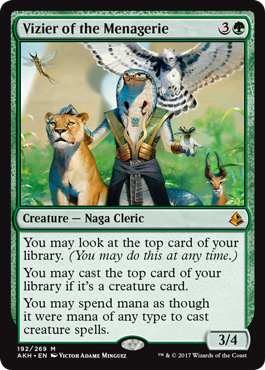
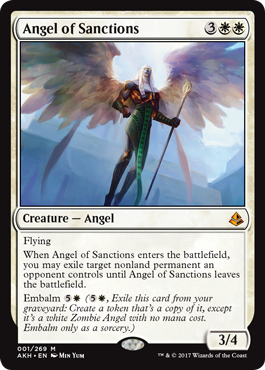
Wow! What a cool card. Garruk's Horde is awesome but costs seven mana. Vizier of the Menagerie has basically the same effect except it is costed for competitive play. Just like Oracle of Mul Daya, this Vizier could fuel a midrange creature strategy. Maybe this is the home for Angel of Sanctions? Either way, foils will be crazy high due to Commander demand. This should be a staple, included in every green deck.
9. Samut, Voice of Dissent
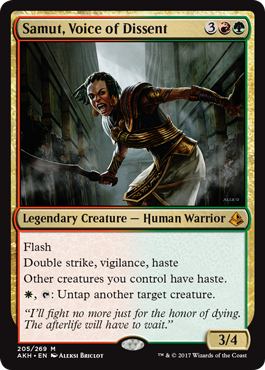
In my second prerelease deck, I got to play with Samut, Voice of Dissent. He is even crazier than he seems. You can ambush attacking creatures, use the flash ability to have your mana open for instants or just cast and attack on turn five. Any way you run it, this Gruul dude is like a Baneslayer Angel-quality mythic.
I know this is a five mana creature in red green, but he has to be worth more than the $3.50 he’s sitting at right now. I’m buying this guy aggressively at my store and I think you guys should be too.
8. Hazoret the Fervent
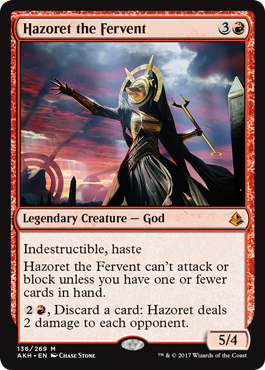
Hazoret the Fervent is looking pretty great for Standard and casual players. Dealing with the gods isn’t something most decks in Standard will be prepared to handle, especially with haste. Running your hand size down is a natural progression of the game for red decks and we can make it quicker with discard outlets too. I think the red god might show up in multiple strategies, which could bump his price up a bit.
7. Irrigated Farmland and cycle duals
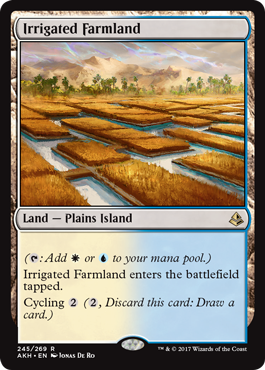
Originally I was going to have Zombies as one of the slots in the top 10, because Wayward Servant is a powerful card. After thinking on it, though, I think Servant is only contextually powerful, and so it slipped out of the top 10.
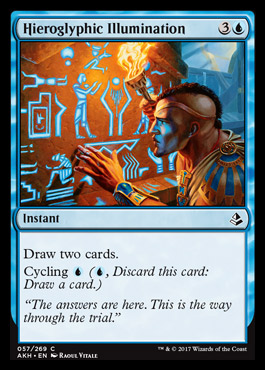
Instead, I decided on the cycle duals. These lands should show up in many strategies in multiple formats. Turning your lands into other cards in the late game is a powerful concept that every deck should want. Even if you only include two of these lands in your deck, you’ll be better off than not playing the lands at all.
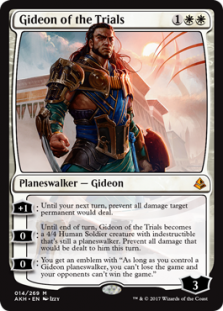
6. Gideon of the Trials
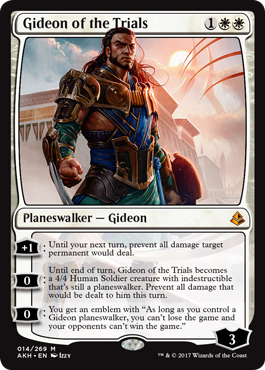
A lot of players I talked with thought that because we have this three-mana Gideon, Wizards was going to ban Gideon, Ally of Zendikar. That didn’t happen, so we get to play with them together.
My thought process is that if you are already playing four Ally Gideon, Gideon of the Trials makes a fine one- or two-of to pair with him. You might also not want to pay four mana for your white planeswalker, and then Gideon of the Trials is looking a lot more appealing because of the discounted mana cost.
I still think Ally Gideon is much better than Trial Gideon, but both should see play in the format. A price of $24 is still too much to be paying for this new three-mana ‘walker, though, so unless you need them for a tournament right after release, hold off until they drop to the $15 range. That should happen within the first few weeks, I think.
5. Manglehorn
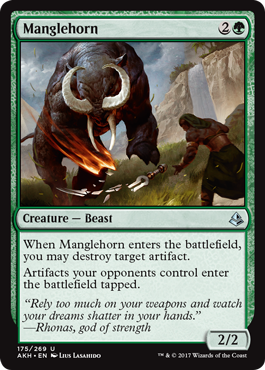
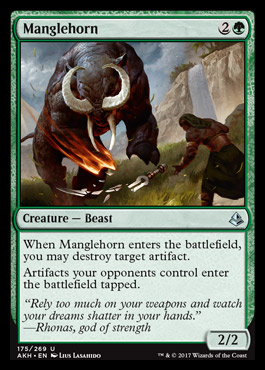
First there was Uktabi Orangutan, then came Viridian Shaman, and now we get a huge upgrade to this card template with Manglehorn. Not only do we get the artifact destruction, but future artifacts enter the field tapped. This is huge for not only Standard but Modern as well. Get ready to mangle some vehicles and Steel Overseers, because Manglehorn is coming. Foils will be money as well.
4. Rhonas the Indomitable
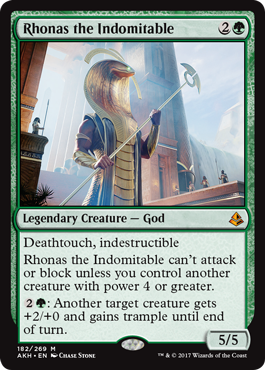
The most played god from this cycle should be Rhonas the Indomitable. He is the easiest to turn on for sure, especially with the creatures we currently have access to. Actually playing with him is enlightening as well: he’s just so hard to stop. We even have Blossoming Defense to protect him from the few removal spells that can deal with him. In Sealed, I was able to pair Rhonas with Cartouche of Strength – and giving him trample is sick. The green enchantment could see play alongside Rhonas because it pairs so well with him. I think he should sustain every bit of the $17 he already is priced at.
3. Nissa, Steward of Elements
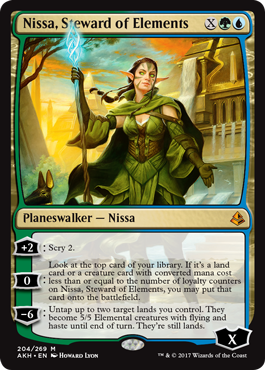
There has been a ton of hype around Nissa, Steward of Elements for Modern and Standard. She has one huge weakness, though, and that’s why I bumped her to number three on the list. She dies to three-damage burn spells, which are the core of any burn players’ strategy. If you are playing her, make sure to wait a turn until you have four mana so she doesn’t die right away. When we think of her costing four mana instead of three, I think her power level drops quite a bit. Simic Nissa is still amazing, and I wouldn’t be surprised if she gains some value from her $15 current price point. The invocations will definitely keep her price down, though, so don’t get too many copies.
2. As Foretold
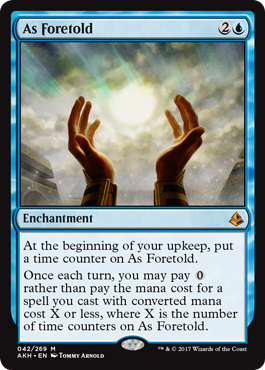
How many broken things can we do with As Foretold? The list is probably going to be long. I think this enchantment will form a new deck or different version of a deck in Modern, because casting your suspend spells for free is busted. We need some innovators to work with this card and break it, but it seems poised to be broken. Hold onto any copies you get of this card until we see what might happen with it.
1. Harsh Mentor
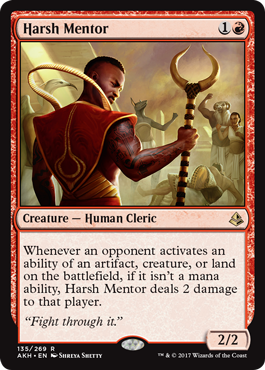
Not too often do I pick a rare as the number-one spot on a top 10, but this time around we have Harsh Mentor. This red two-drop is so efficient in dealing with so many strategies. He harshly taxes many strategies in Standard, Modern and Legacy, and his $30 foil price indicates that players in Eternal formats agree with me. I think he’s all-encompassing enough to be played main deck in Burn, Zoo or even Death and Taxes. In Modern, he might slide to the sideboard, but it’s certain he will see play in these formats because of how punishing he is towards certain strategies.
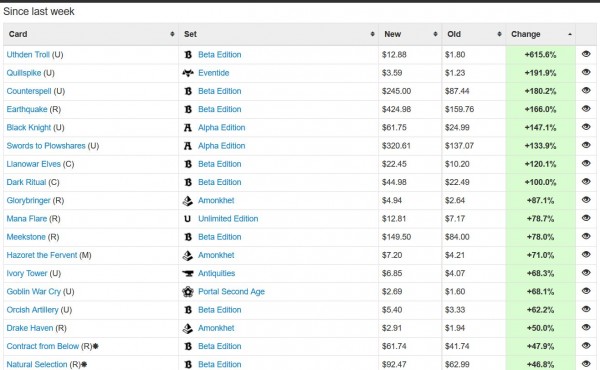
Not every player will get their copies of Harsh Mentor right away, so I think this guy could follow the same type of price model as cards like Stony Silence or Rest in Peace. The difference, though, is that he’s a creature, whereas those are enchantments. That could make all the difference in how much play he sees main deck as opposed to being in sideboards. I definitely don’t think he will go down in value though.
Alright, well that’s all the words I have space for today. Next week, I’ll be breaking down some boxes and providing you some card distribution data and analysis for this set in my latest Box Report article, so stay tuned.
Also, I started a YouTube channel using my twitter name MtgJedi, and I will probably record the box openings as well and upload those. So, check out the channel and watch some prerelease vlogs as well as other future content. There will be some videos about Star Wars: X-Wing and playing Pokemon Go with my kids, so if you’re into those games as well, content will be there. There will be fun videos for three different games, so check out the channel and let me know what you think.

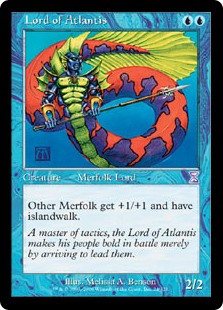 It's not a typical blue deck from Modern because it eschews a lot of the trickery that usually comes with the color. There are no Snapcaster Mages, not a ton of counter spells, and a significant lack of big ways to recoup card advantage. Instead it tries to beat the snot out of your opponent with large creatures sometimes affectionately called "fishies." It can also sometimes end up playing a tempo game similar to a Delver of Secrets deck, but rather than fighting with instants and protecting a 3/2 flyer, it beats down with a growing number of creatures that support each other and disrupts the opponent with Spreading Seas and Cursecatcher.
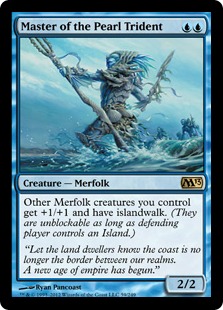 As far as legality of the deck is concerned, I don't view Merfolk as a potentially game-breaking deck that could see a ban coming in the future. Generally, small creature decks are not at the mercy of a banning announcement. Merfolk doesn't have the dominance numbers necessary even for a conversation about bannings.
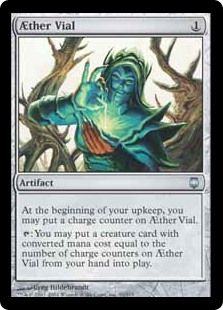 I decided this was a good time to write about Merfolk because we recently got some news that should give you pause if you're considering buying the deck. Wizards of the Coast recently announced some change-up to the product release schedule, including
  Past this, I would probably look to get Mutavaults squared away. While we are getting a tribal Commander set, where they could appear, we've seen other under-printed cards seeing heavy play increase in price after a reprint. The last Commander product had four-color decks, and only one of the five included a Chromatic Lantern. Chromatic Lantern dipped to about $5, but when everyone else realized they still needed one it went back up to $9.50. If there is only one deck with a Mutavault, we might have the same problem. Assuming the other tribal decks might want one too (like Elves or Goblins) then we could see a big rise in the card's cost. As for the Modern deck, Mutavault is too integral to the Merfolk plan to avoid playing them in your deck.
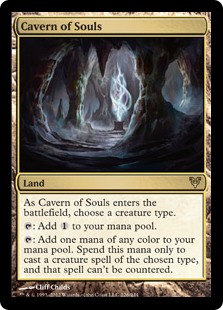 Some of the lands in this deck can be pretty easily substituted for basic Islands. Oboro, Palace in the Clouds, Minamo, School at Water's Edge, and Cavern of Souls are not integral to playing your game. They matter a ton when people are playing Choke but that card has mostly fallen out of sideboards at this point. If you know your LGS has a lot of people playing Choke, you can play Wanderwine Hub as $6 Islands instead of the $18, $19, and $45 Islands (the price tag of Minamo, Oboro, Cavern, respectively). Outside of the mana, however, there are not a lot of short-term compromises that you can make without sacrificing a ton of power.
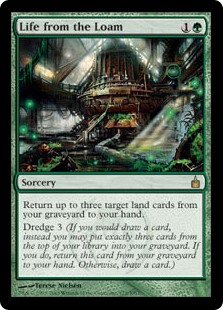 Yes, another one. The only way I can explain my earlier statement, and ultimately why Sheltered Thicket and company aren't good enough, is by examining the history of Life from the Loam. As far as I'm aware, it never made much impact on Standard but proved a force in Extended. Loam decks were the Jund of their day, and more—combined with Forgotten Cave and Tranquil Thicket, these decks generated as much card advantage as pilots had mana, allowing them to crush other fair strategies. And this was a time when the best hoser available was Leyline of the Void!
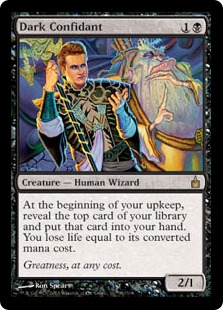 As a result, it was very popular with the pro community, though few others, until decks adapted and invalidated Solitary as a protection spell.
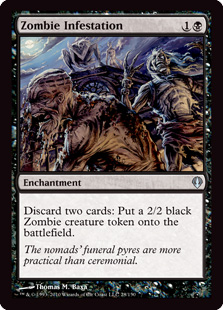 No, Dredge doesn't count. It uses Loam, but it doesn't abuse it. Loam's just another dredger there, and not an engine the deck is built around.
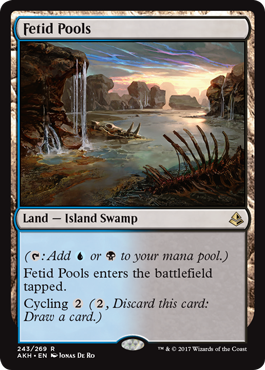
 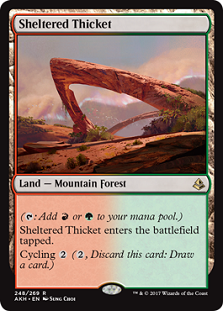 The results of my experiments say that the new cycling lands boosted my test decks over their previous iterations. Not by much, but by enough to notice. The data's clear on the spreadsheet. There is a slight uptick in consistency and win percentage, attributable to cycling finding me business more often than before. The problem is that actually playing the decks tells a different story. While the overall win rate went up by a small amount, I was losing more close games than before, and my long-game win rate was unchanged.
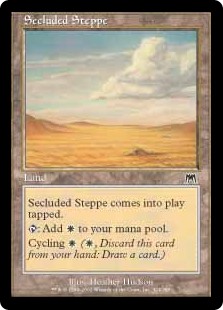 However, I don't think that is necessarily optimal. The problem I had was that playing the Loam engine encouraged me to slow down, and I'm not sure it was correct to do so. Without Thicket and Slough, Jund Loam felt like a grindy aggro deck. With them, I was encouraged to try and play a longer game. And this made the deck clunkier somehow. Maybe it was because I just made the mana worse, but having the cycling lands meant that you could do less in a turn if you were trying to make the engine work. It made little difference if you didn't try to actually use the Loam engine and just played the deck as if it didn't exist. This leads me to believe that the new cycling lands are considerably worse than the old Onslaught cycle.
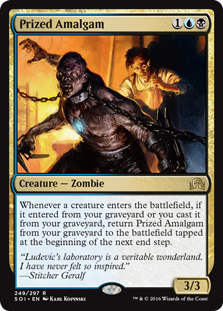 This will never happen in Loam. You will always have to work for your wins. This means that you are giving your opponent the opportunity to play Magic. The more you let your opponent play the game, the more likely it is that you will lose. Loam doesn't let opponents play much Magic, but it lets them play considerably more than Dredge does. When your deck has vulnerabilities, like I detail below, this is a problem.
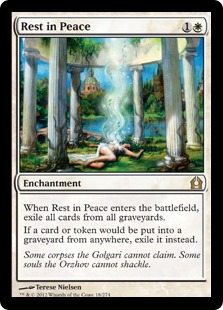 Dredge demands that you play these cards, and all other graveyard decks get caught in the net. Given this fact, I just don't see Loam making a comeback.


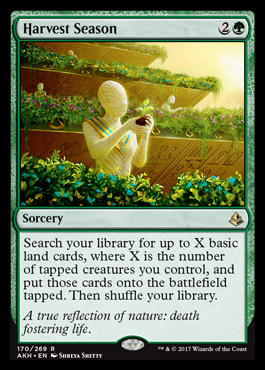

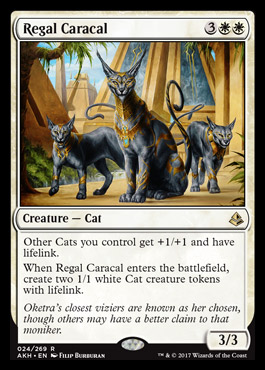
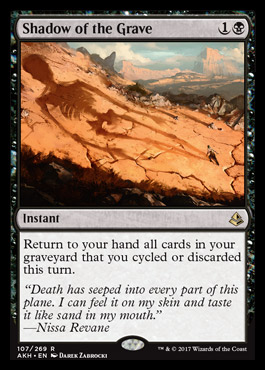
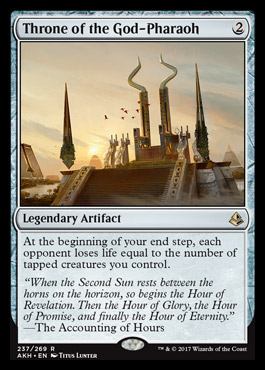
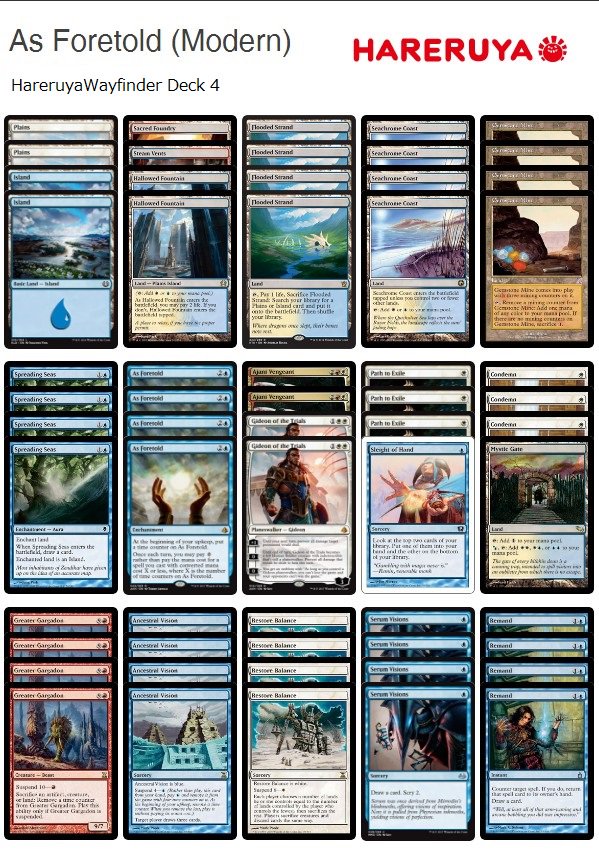
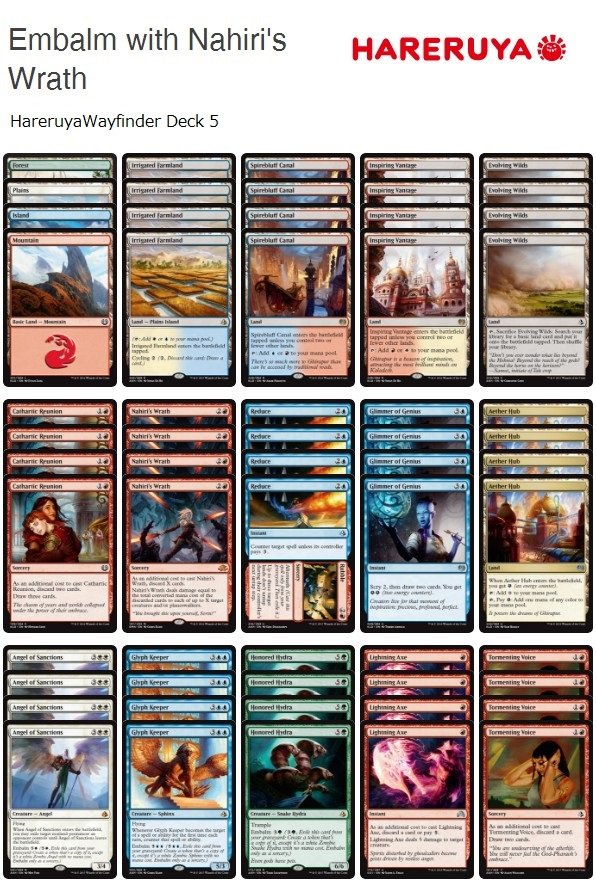
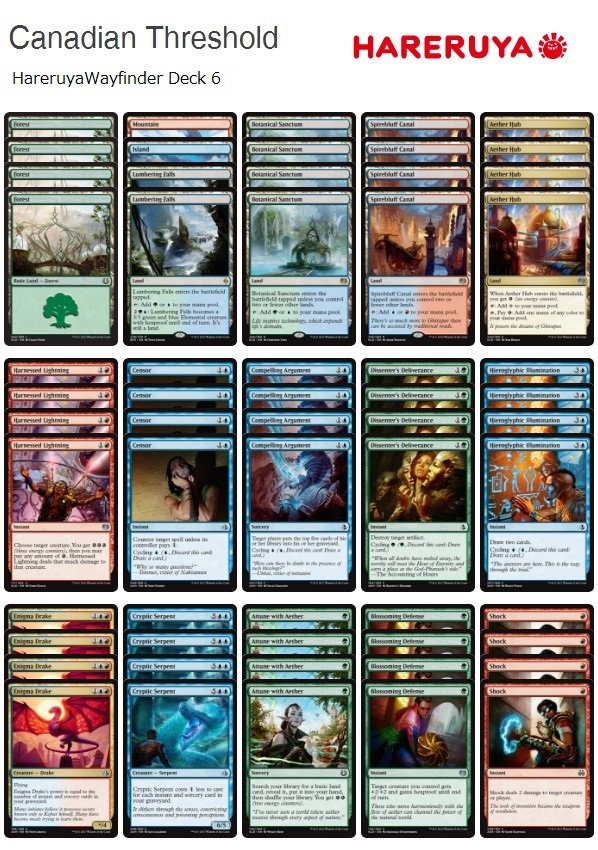
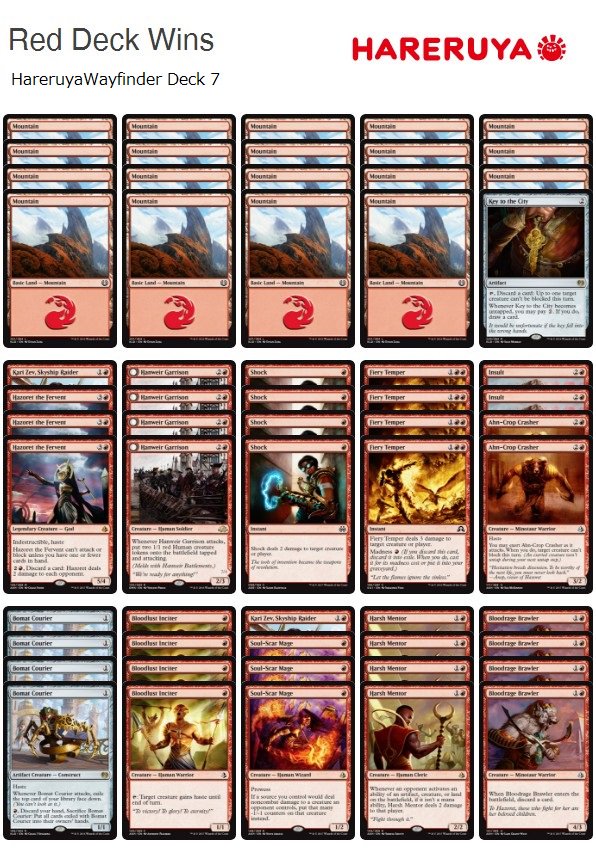
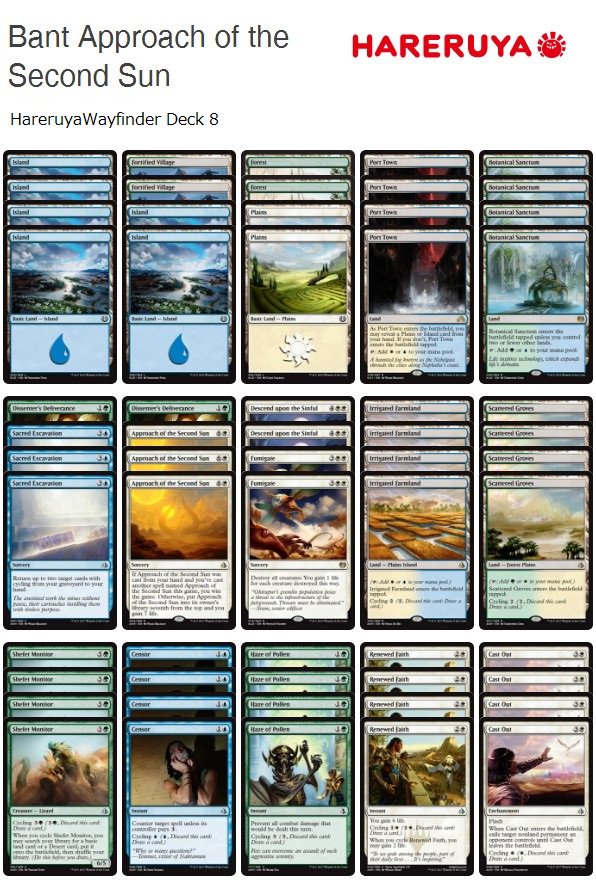
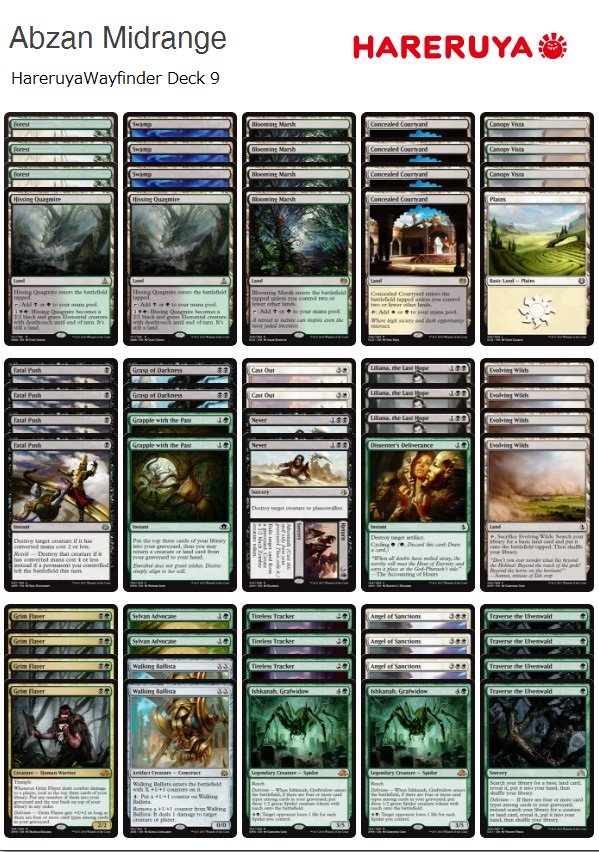
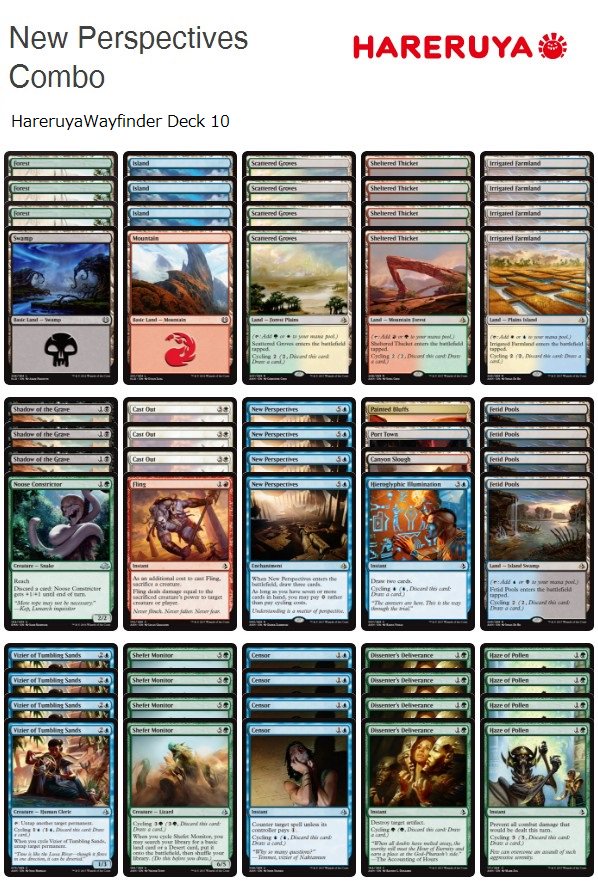
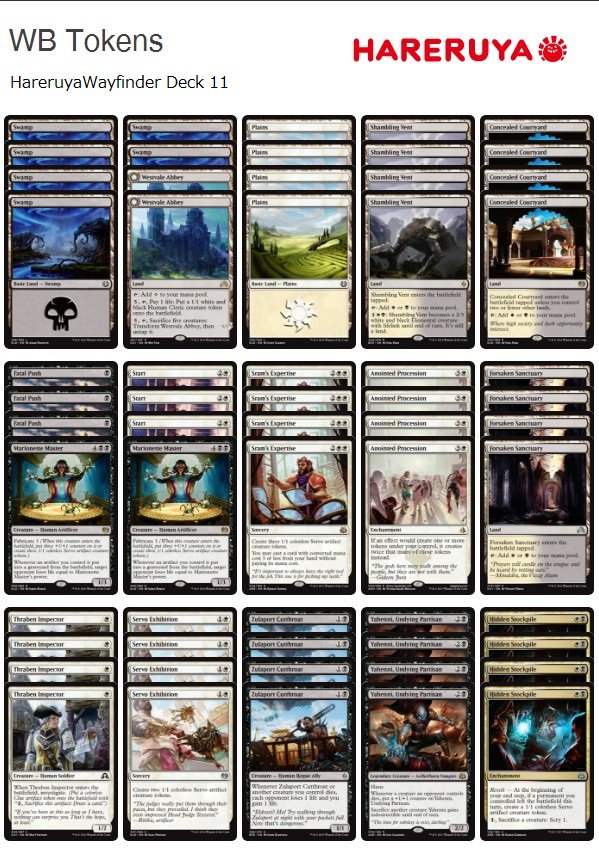
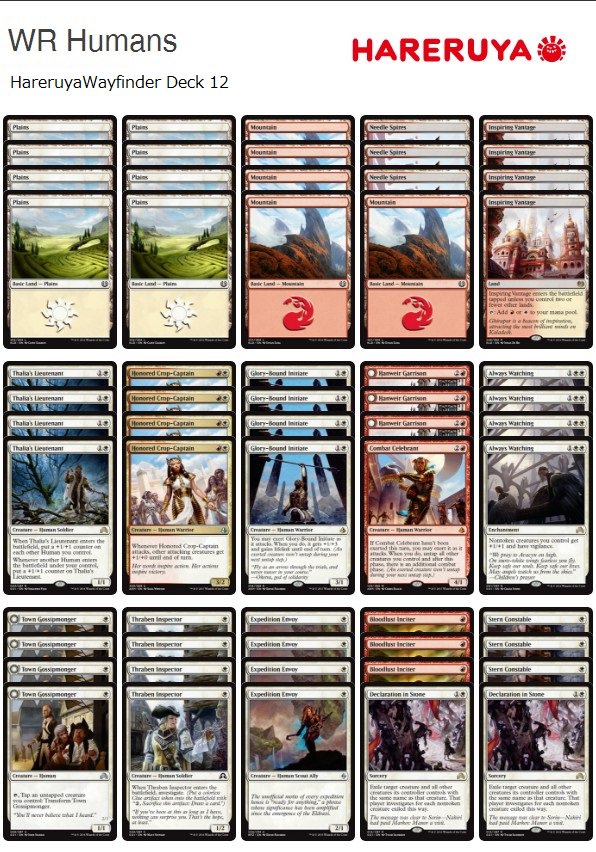
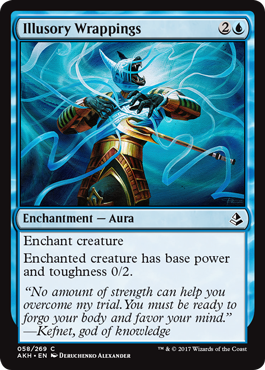
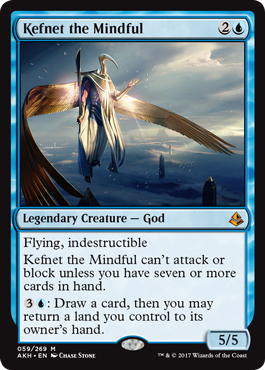
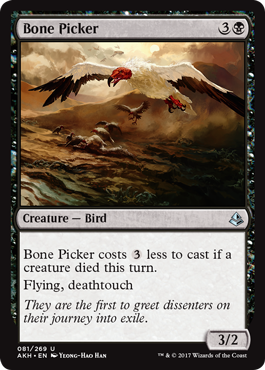
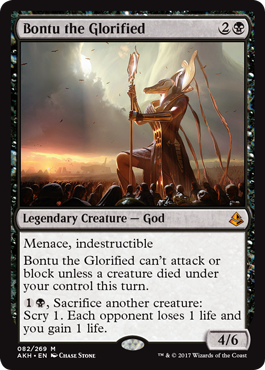
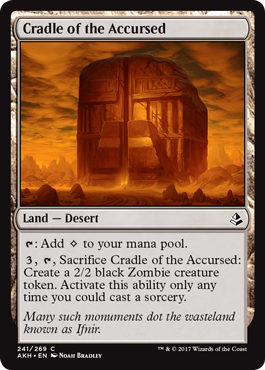

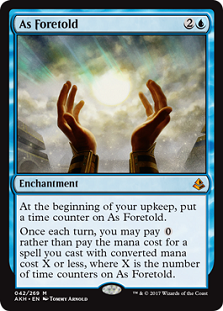 To succeed, As Foretold decks must benefit immensely from resolving the enchantment, but not auto-lose when they fail to find one. After all, Modern's a format known for Thoughtseize, Inquisition of Kozilek, and Surgical Extraction; with a little resolve, keeping an As Foretold player off their namesake card can prove just as easy as attacking a linear deck. Perhaps fortunately, there are few enough worthwhile payoff cards in Modern (read: highly impactful, manaless suspend cards) that stuffing our deck full of the best As Foretold enablers still leaves plenty of room to win in other ways.
 Serum Visions is Modern's king cantrip, so it's an easy include at 4. Sleight of Hand is a little more questionable, but I have found it to be terrific in these decks. Playing the full 8 blue cantrips makes our As Foretolds much more consistent, in addition to helping with land drops and disruption. Getting the card right away also works well with an active As Foretold.
 Black comes next. Liliana of the Veil is the scariest planeswalker in Modern, and a nightmare for fair creature decks and critical-mass combo decks alike. Unfortunately, she won't end the game on her own—if only she had Liliana, the Last Hope's ultimate, instead!
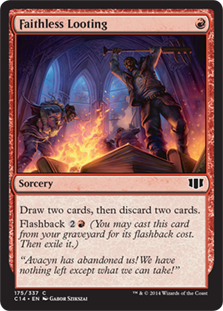
 To make room for the pair of Leaks, I had to cut a Sleight of Hand. Looting is usually better in this deck, although we rarely want to draw three copies thanks to flashback (which is why I kept it below 4). Its cycling effect ends up psuedo-drawing us more than two cards most of the time, as we can drop extra Moons, Guides, or As Foretolds to it. Running lock pieces that do nothing in multiples make our discard-as-drawback spells much better.
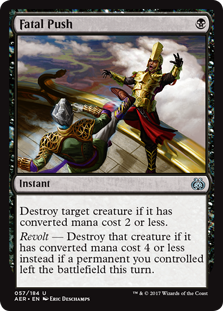
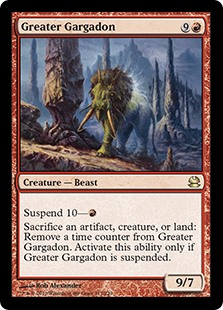
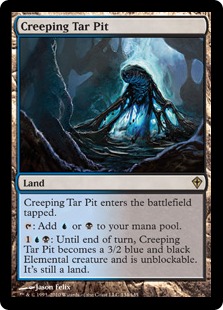 With Push in the mix, we have enough juicy targets to want to max out on Snapcaster Mage. 4 Snap, 4 Bolt is a real plan, and complemented by Chandra and Brutality, it becomes even better. This Moon-less deck gets Creeping Tar Pit, which deals plenty of damage and is very tough to stop when we strip an opponent's hand with Brutality and Restore Balance. Greater Gargadon also goes to two copies in this build, giving us yet another way to win the game.