
Are you a Quiet Speculation member?
If not, now is a perfect time to join up! Our powerful tools, breaking-news analysis, and exclusive Discord channel will make sure you stay up to date and ahead of the curve.
With every set there are hundreds of new cards just waiting to break into a variety of formats. Modern is a set where the barrier to entry is pretty high, unfortunately. While not every set delivers multiple top-tier Modern staples, most sets have some. This set definitely has some standouts but there are a lot of factors involved here that could save you a ton of money. I'm going to use this article to outline my Kaladesh buying plan.
Introducing Masterpieces
As you have probably seen already, Kaladesh and every Standard-legal set going forward will contain a sub-set called Masterpieces within it, modeled after the Zendikar Expeditions from last year. These will have serious implications for many different aspects of Magic pricing going forward.
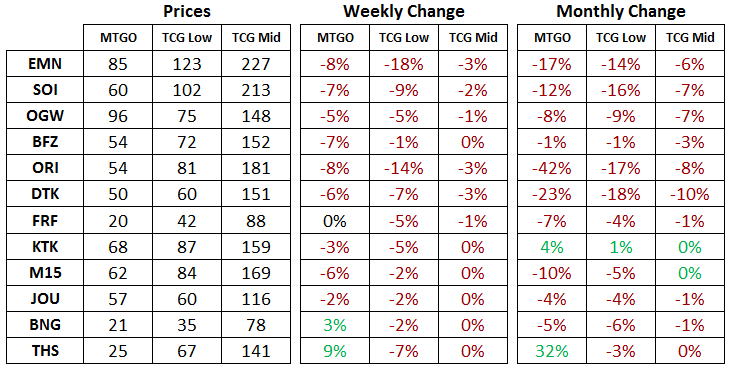
We can look at Battle for Zendikar block to see how these cards impact the price of singles directly. In the chart below, you can see that even with the amount of dominance Gideon, Ally of Zendikar enjoys in Standard, he still can't sustain a price tag above $20.
[wp_ad_camp_1]
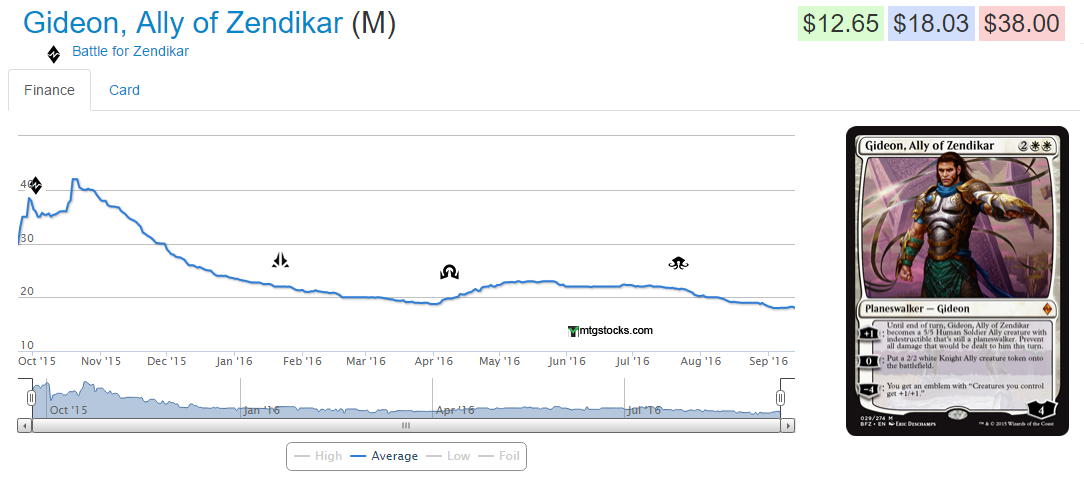
This is directly a result of Zendikar Expeditions eating so much of the expected value of the set. This is obviously great for Standard players looking to play their format for cheaper, but it helps Modern players just the same. Check out the chart on Thought-Knot Seer:

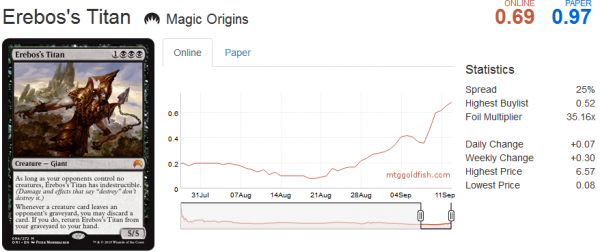
If you weren't able to buy Thought-Knot Seer during the Eldrazi Winter that led to the banning of Eye of Ugin, waiting until Eldritch Moon to buy your playset would have saved you $36. If you also waited until now to buy Reality Smasher you could have saved an additional $24. The total savings basically gives you a free Noble Hierarch toward your Bant Eldrazi deck. That's some pretty serious savings for waiting six months. While it's not always practical to wait, it definitely pays off the longer you decide to. It's almost impossible due to the supply of these cards for anything to really spike and make waiting a bad proposition.
The real key here is that the price of Expedition-style cards put a cap on the cost of the rest of the set. When the set is new and barely opened, the cards are sky high. The only way they reach equilibrium is when the cost of a box at wholesale is greater than the expected value of the contents of a box.
Estimating the Expected Value
There are resources available to see what the expected value of a box is at any given time. I like to use Dawnglare. So taking a look at Dawnglare at the time of this writing, a box of Battle for Zendikar has an expected value of $32. That seems insanely low for how many great cards are in it, right? Well Dawnglare has a few stipulations. Among them is that the value of Zendikar Expeditions is not included in the EV of a box. 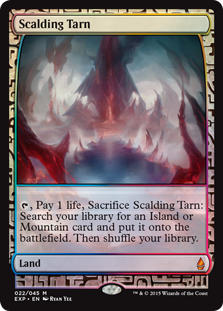 You can see how the average price of an Expedition can influence the EV of a box. The average cost of an Expedition from Battle for Zendikar is approximately $112. This is in stark contrast to the average value of an Oath of the Gatewatch Expedition which is a much less impressive $65. With half as much of the value of the set tied to Expeditions, Oath of the Gatewatch has an EV of $55. While the numbers aren't exact, you can see the relationship.
While I don't have a ton of information about the eventual prices of the Kaladesh Masterpieces, we can glean some information from their pre-order prices on Star City Games. The average pre-order price of the 30 Masterpieces is $84.67. With the information from Mark Rosewater's article, we know they appear at approximately 1 in every 144 booster packs (or 4 boxes). This would add approximately $21.17 to the EV of Kaladesh boxes. That's a lot of value that will come out of the staples of the set until boxes reach their equilibrium. Either the prices of Masterpieces will fall very quickly or the price of the cards in the Kaladesh set will fall quickly. Waiting is the most profitable thing you can do.
Cards to Keep an Eye On
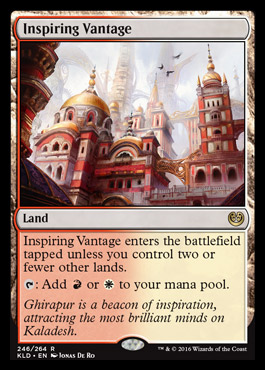
To begin with, plenty of writers have already talked about the new fastlands. While I expect to begin playing Inspiring Vantage almost immediately, I'm not going to rush out and get my copies unless I need them for a tournament.
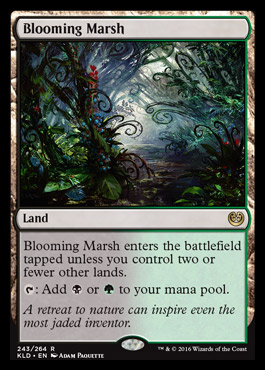
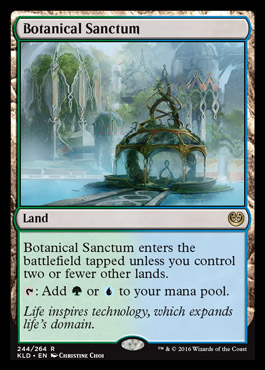
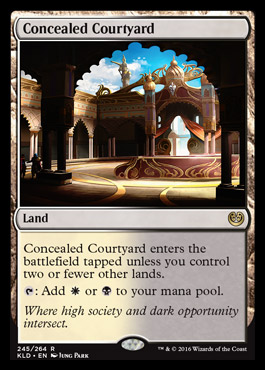
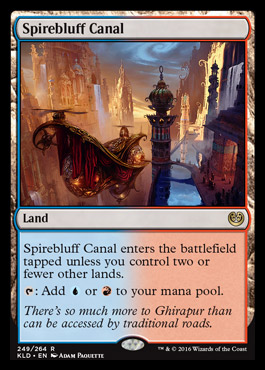
All of the fastlands (Inspiring Vantage, Botanical Sanctum, Blooming Marsh, Concealed Courtyard, and Spirebluff Canal) have the potential to join Modern manabases, but their prices right now are just too high. At $5 to $6 each I can't imagine a world where they can stay this expensive. Kaladesh will most likely be one of the most opened sets of all time and most cards can't maintain this price tag. Pretty much every card in Kaladesh will go down in the first month.
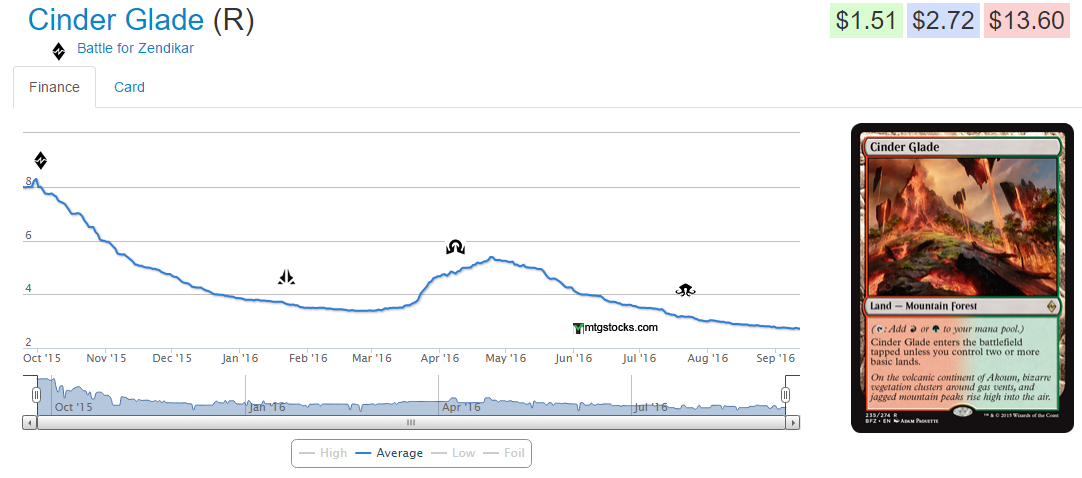
Cinder Glade is a played land in Modern---and look at its price. It's almost half of the price of these new lands. There is no way they can stay this expensive for more than a few months. 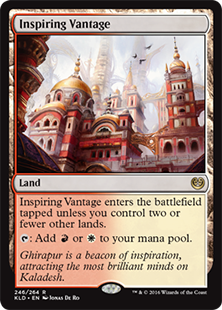 It's easy to see the parallels to the Scars of Mirrodin versions, but the comparison just isn't fair when there are so many less in existence because of their age. My target time to pick up the new fastlands is in December, or just before the spoilers for Aether Revolt. I will be surprised if you can't get them for $3 or less by then.
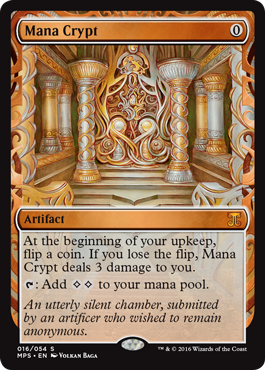
In the market for the exciting new Masterpieces as the coolest and most exclusive cards for your deck? You could also probably wait a little bit. I think the Masterpieces that will see the most upward movement (if any of them do) are the Legacy and Commander mana rocks. There's a little more room for Mana Vault to grow, as this is the first foil copy available. For its part, Mana Crypt will likely stay close to $200---the judge foil is holding at $180 even after the recent Eternal Masters printing. It's possible that the thrill of Mana Crypt will finally vanish and it will start to tumble, but I wouldn't bet on it. Sol Ring could also stay pretty high and carry a lot of the other Masterpieces because there are only two other foil versions. The FTV version is $25 and the judge promo is $160 (more than the pre-order price of the new Sol Ring).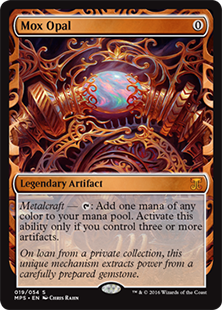
But what about Modern cards? Mox Opal is painfully expensive. I don't know how it could justify an additional price increase. You can buy Modern Masters 2015 foil Mox Opals for $50 or Scars of Mirrodin foil Mox Opals for $85 on TCGPlayer right now. The price right now seems very steep and I wouldn't be surprised if the Masterpiece version fell to about $100.
Steel Overseer is another one that might fall a little. At $70 pre-order price, it's more than the only other foil (M11) by $40. I think some of these listings might be people panic-selling in expectation that the pack foil will go down, but I wouldn't be surprised if Steel Overseer fell into the $40-50 range. It's a niche card that is only really good in a few decks so I don't think widespread appeal will keep the price this high.
Aether Vial is really the only popular Modern card I might recommend picking up early. 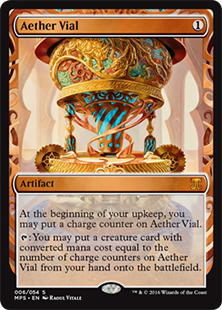 The art is fairly unique and it's a four-of in every deck that plays it. It's popular in Legacy as well which draws more people to it and helps sustain a higher price. Aether Vial sold out multiple times yesterday at $120 and I'm not sure they weren't listed a little too cheaply.
We can see with the Expedition fetchlands that extremely popular cards can command some pretty consistently high prices. This printing is also pretty unique because it's the first time Aether Vial will appear without the old-school "Æ" ligature. If you're a Merfolk or Death and Taxes player considering trying to pinch some pennies here, you might be one of the few who ends up losing by waiting.
Brewmaster's Paradise
While I won't go into great detail on the cards I think will be good in Modern, I can say there are plenty of people I know who love to brew. The decks might be bad but they just love taking new cards and jamming them with old cards to make "cute" decks. 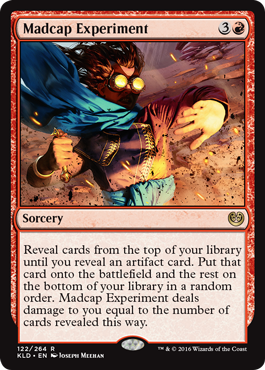 If you're eyeing Madcap Experiment waiting to pre-order your copies, you should also remember to get the combo pieces you need to go with it.
In almost every situation where a new deck gets popular, the oldest cards become the most expensive the quickest. If you want to flip over some Platinum Emperions or negate the drawback with Soulfire Grand Master, get those cards now. Don't wait for the set to come out. Plenty of other people will come to the same conclusion as you and decide they need those cards.
This phenomenon is most noticeable with Commander products. Older cards like Teferi's Puzzlebox and Forced Fruition got much more expensive when Nekusar, the Mindrazer was released, but not before. That said, the same thing can happen in Modern when new decks break out, even if they ultimately prove less than viable.
Pickups for the Future
We haven't seen the whole set yet but we can still think to the future of this block. It's pretty clear there is an emphasis on artifacts as a central theme. If there aren't any Modern-defining cards in this set they may be in Aether Revolt. 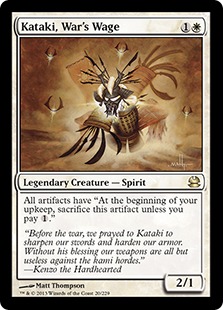 Much like Battle for Zendikar brought back the Eldrazi but saved the more thrilling ones for Act 2, we may see the spicier artifacts in the second set.
I am very much looking to make sure I have the sideboard cards I need to beat artifact decks. If you don't own Stony Silence, Kataki, War's Wage, Fracturing Gust, Shatterstorm, etc., I would keep them in mind to acquire before Aether Revolt spoilers in January.
It's very hard to predict what synergy cards will be good with new cards before they're spoiled, but it's much easier to figure out how to break them up. We won't know if the next great artifact fits into Affinity or Tron but we know how to beat those decks if they become too powerful. Being prepared for the worst can be a great money saver if it does happen.
Final Thoughts
So far I'm not seeing a ton of spoilers that look likely to make a big impact on Modern. What are you guys most excited about? Any Kaladesh cards I might have overlooked?
And how about those Masterpieces in every set moving forward? I know a lot of my money will be invested in foils in December, but I will probably try to get some Masterpieces once they've bottomed out.

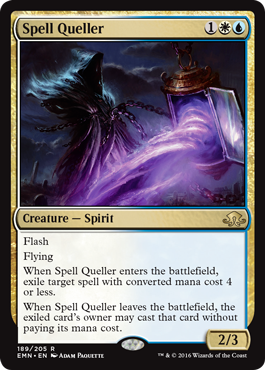 What I find particularly intriguing about Spell Queller is that it doesn't counter the spell, it just exiles it. This gives the card a unique edge against both Lingering Souls and Cavern of Souls. I knew going into brewing Spell Queller Delver that I was making myself weaker against Jund, though I was making myself stronger in at least a few other matchups.
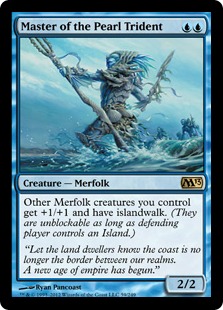 The two matchups I would really like to highlight in this section are the two matchups most commenters seem concerned about: Merfolk and Burn.
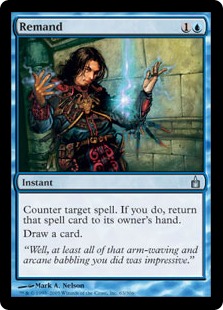 Beyond that, this deck will be better against basically all of the linear decks. Spell Queller is both a clock and a counterspell, and a phenomenal supplement to Snapcaster Mage[mtg_card] in these matchups. You lose some game one points with [mtg_card]Remand over Mana Leak, in particular against Titan Shift, though with the Mana Leaks coming in post-board I believe you gain considerable percentages in all of these matchups in three-game sets.
 Losing Kolaghan's Command is also significant, as it technically gave you more access to Snapcaster Mages, which is far and away the best card in the matchup.
 You're a bit slower (or more accurately, have access to a lower percentage of aggressive starts), which means Tron will have more time to set up. Once they do they're just playing a different game. This is the reason that I sideboard Crumble to Dust in the Jeskai build. You need a hammer here because you are at a fundamental disadvantage. I don't have a ton of experience with Jeskai against Tron, but I have enough to say that Grixis is better positioned here.
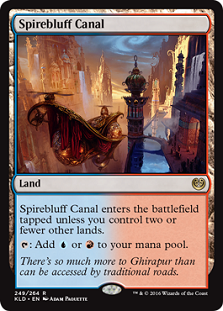 The last thing I would like to point out is that this manabase will definitely change with the release of Kaladesh, and probably isn't even correct right now. Grixis Delver doubled up on the fetchable blue duals in part because you could Thought Scour one away, but this deck probably doesn't need a second Hallowed Fountain. Beyond that, this deck cares a lot more about Spirebluff Canal than Grixis does. Grixis is trying to fuel delve, so fetchlands matter, whereas the manabase for Jeskai will need to be re-imagined in a few weeks.
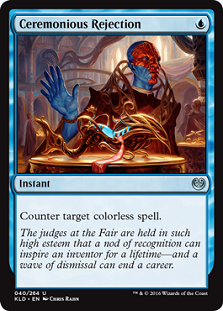 This is the best Modern card that may never see play. I'm serious. Ceremonious Rejection fills a huge hole in Modern blue by providing an effective and extremely cheap answer against a lot of troublesome decks. This counters every relevant card in Tron, Eldrazi, Affinity, and Lantern Control for one blue. That is insane, and insanely valuable.
 If you plan to use it against Affinity then you need it in your opening hand. This means that you need to play three at minimum, probably a full set. Unless something goes wrong again you'll never maindeck it, so can you afford the sideboard slots?
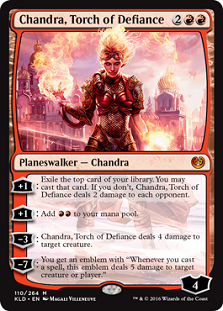 Everyone is losing their mind over this Chandra. A four-mana planeswalker with four abilities reminds everyone of Jace, the Mind Sculptor. Chandra, Torch of Defiance is not Jace. Where Jace is oppressive, Chandra will either be mediocre or broken.
 It's the second ability that will decide Chandra's place in Magic history. She effectively costs two generic mana to cast. Free mana is the most consistently broken mechanic in Modern, so I firmly believe that Chandra has the potential to be degenerate. It's just a question of how.
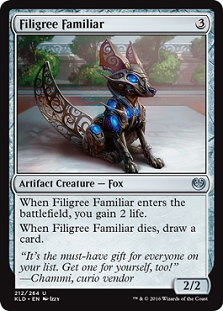 This is the best card so far in Kaladesh. Seriously. How? It's a Kitchen Finks for every deck. Grixis will love this card. They finally have a maindeckable way to gain life that isn't dead against Jund. Combine with Kolaghan's Command for ridiculous value. Or simply sacrifice it to Eldritch Evolution to get Reveillark and more.
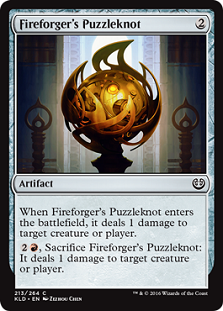 Eggs has some new toys. Of the cycle the Jeskai-affiliated are the most interesting for Modern. Fireforger's is a decent way for Eggs to kill their opponent as they're going off, rather than waiting to draw the Demonfire or fizzle. At minimum it kills mana dorks. Not the flashiest card, but it does a solid job.
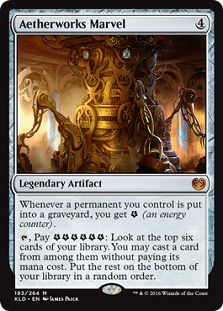
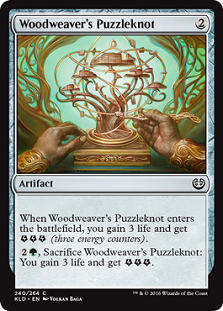 One knot is enough to activate the Aetherworks. You play a combo deck for the payoff spells, but the deck works because of good enablers. If these are the enablers we can expect, a justifiable payoff will be found to break energy. And my bias will remain intact.

 First, our patented Modern Nexus Caveat About Methods: the World Championship presents a highly idiosyncratic metagame puzzle to its competitors, and this in no way represents future predictions of metagame share. We're talking about a split format (with two other formats, both Booster Draft and Standard), but also a strange environment regarding the opposition competitors face. With only 24 players total, and the overwhelming majority of them among the best in the world, you're sure to encounter some odd data. The competitors obviously identified BGx as a good choice for this event, but this kind of careful, predictive metagaming is not generally possible in "live" Modern events with larger attendance.
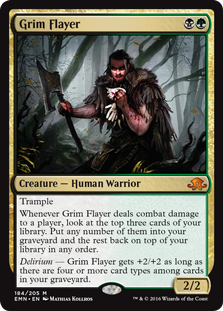
 BGx has never been about high-synergy combos so much as pound-for-pound excellent individual cards, so it's nice to leverage Grim Flayer's ability with cards we were already running. Mishra's Bauble does make an appearance (as it has been wont to of late), but largely this is just an old-fashioned Abzan deck with Grim Flayer tacked on for good measure.
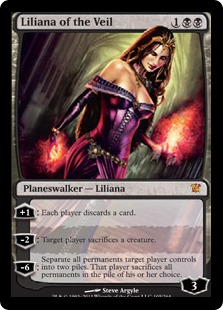
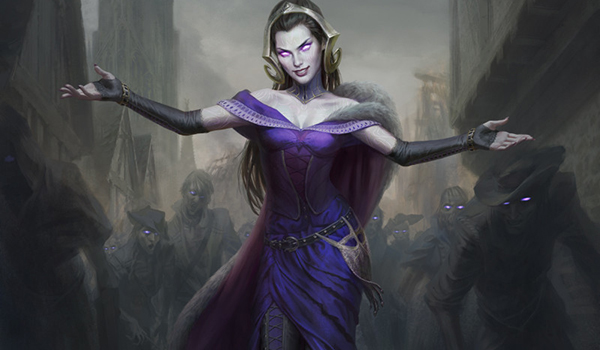
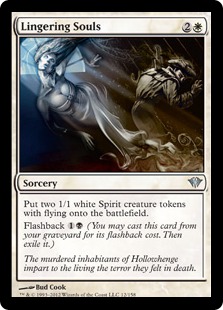
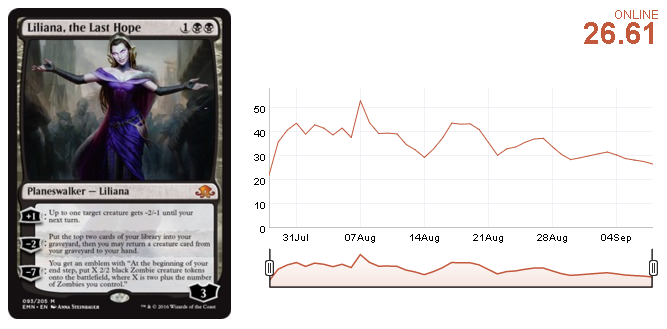 The other significant contribution Eldritch Moon makes to this deck is Liliana, the Last Hope. It was a more prominent part of other competitors' Abzan lists, appearing as a one- or two-of in the maindeck, but LSV's team decided to relegate it to the sideboard. In this field specifically Lili's newest version seems light-years ahead of her "of the Veil" incarnation, murdering Souls tokens with aplomb rather than enabling them for your opponent. Liliana, the Last Hope seems better against aggressive fields in general, killing infecters or robots pretty easily and frequently blanking an attacker if the -2/-1 isn't enough to finish anything off. Obviously when we're facing down combo or control we much prefer the attrition-based hand shredder Liliana of the Veil, and nobody at the World Championship trimmed down to fewer than 3 copies of the classic Modern staple.
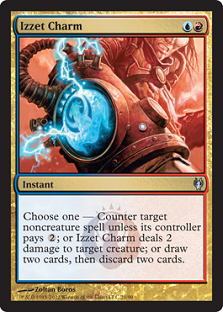 In the proactive and tempo-oriented wilderness of Modern this is nothing to sneeze at, and we get to run it right alongside the other hyper-efficient interaction like Lightning Bolt, Path to Exile, or Thoughtseize.




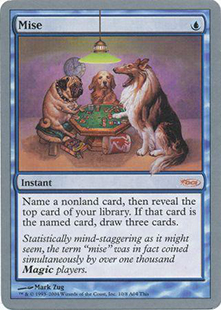 I've noticed in discussions on our forums, on Facebook, on Twitter, and in articles, that many of you in the finance community are not like me. Many financiers are regular attendees of FNM, if not larger tournaments, and tend to apply the competitive mindset to their MTG finance activities. I got my DCI number at the Unhinged prerelease---eight years after I started playing---and have only attended a handful of tournaments since.
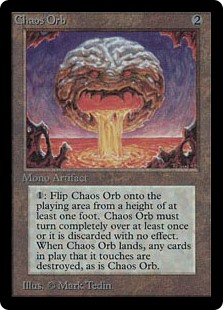 Admittedly casual is different for different people, however what I will be referring to in this article are games played for fun with nothing but bragging rights on the line. Some of the people playing this way will only have a couple hundred cards, while others may have hundreds of thousands. This includes both one-on-one and multiplayer games, though in my experience most casual players take a "more the merrier" approach to Magic, so multiplayer games are more common.
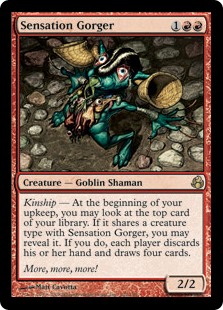 Different players like different things. There certainly isn't one mold that will fit every casual player. However, certain aspects, especially when combined, make a card much more likely to draw a casual player's attention:
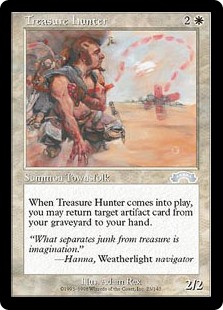 This will likely be your biggest challenge. As mentioned before, we don't tend to show up at tournaments. We do visit the local game store (LGS), but many of us browse around a bit, perhaps buy some stuff, and then leave again. We'll play anywhere, but usually at people's homes. In all honesty, we are difficult to find.
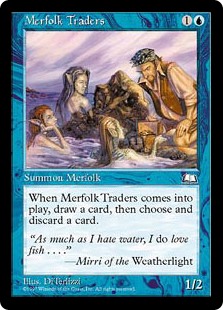 This is where your new friends will shine. Casual players are likely to be interested in a different subset of cards than the typical competitive fare.
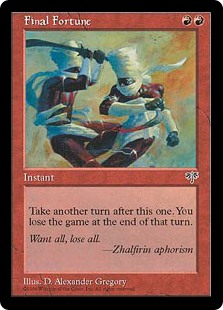 Don't expect miracles from casual players. They will not (frequently) turn your bulk into gold. Most are aware that competitive Magic exists and that card prices have a relation to it. However, they do tend to be easy to trade with and good company.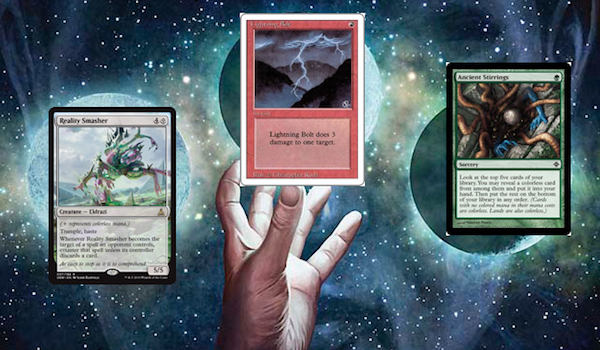
 since they lose to Tron. Decks that skimp on removal don't get past Infect. Those relying too heavily on creature synergies struggle against Jund.
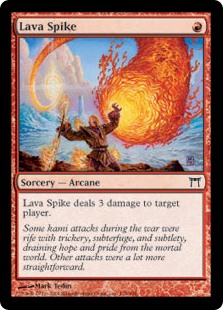 This ability to suddenly turn the corner was also integral to Splinter Twin's success in the format. Twin's out-of-nothing wincon was two turns faster than Nahiri's, and yielded immense success.
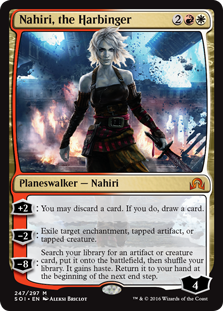 sacrifices consistency, hoping to draw its bombs off the top and preserving the ability to play proactive games against linear opponents with its two-drop threats. Jeskai Nahiri turns the corner much later, but makes up for this loss of proactivity with added consistency from Serum Visions and other draw spells.
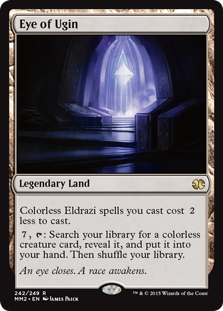 Eldrazi decks used to get their dreaded consistency through redundancy by playing eight Sol lands (or more, if we count Urborg, Tomb of Yawgmoth). Post-Eye of Ugin ban, it gets it by cantripping with Ancient Stirrings, but also by splashing Noble Hierarch. Playing four mini-Dig Through Times isn't enough to ensure an early Thought-Knot Seer. The addition of mana dorks makes the deck's mana development far more consistent.
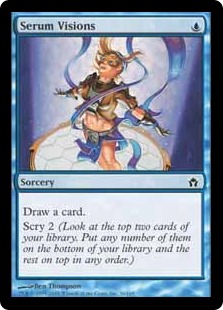 Not every strategy has access to eight Slippery Bogles and 10 Spider Umbras. The next best way to achieve consistency is to add digging spells.
 stay closer to the top of the lists than others. Jund is a highly interactive, relatively proactive, relatively consistent deck. Bant Eldrazi is a highly proactive, relatively interactive, relatively consistent deck. These two decks specialize in a component each (respectively, interaction and proactivity), but don’t do so at the cost of giving up too much of the other two. The ability to maintain all components while perfecting one makes them some of the best decks in the format.