
menu

July ’22 Metagame Update: Izzet Over Yet?

Are you a Quiet Speculation member?

If not, now is a perfect time to join up! Our powerful tools, breaking-news analysis, and exclusive Discord channel will make sure you stay up to date and ahead of the curve.

Welcome to August. While those of us in the education field look with a mix of trepidation and anticipation toward the upcoming return of school, the Magic world is looking forward to the remaining RCQs of the season. This is having a substantial impact on my metagame update as paper Magic is having its best month by far. In fact, paper Magic has been steadily increasing across platforms since January and it is looking like the old times are back. Now if only there were Grands Prix again.

Guess What?

Yes, there are still outliers in the data. UR Murktide is still an absurdly overrepresented deck despite an overall mediocre win rate without many high-level wins. I still say it isn't Tier 0 as a result.

I saw a Twitter thread a week or so ago of players complaining about the deck and not for the reason I expected. They weren't upset to be playing against it, they were frustrated Murktide players. Turns out the ostensible best deck in Modern is quite hard to actually win with and they weren't having much success. I wish I'd archived the thread, I found their complaining hilarious.

There was an error retrieving a chart for Murktide Regent

The overall outlier situation is both better and worse. It's better since there are fewer outliers. Hammer Time continues to be a Magic: Online (MTGO) only outlier, but it is also the only other outlier. 4-Color Blink crashed rather hard this month. It's worse in that the scale of Murktide's outlier status is getting more extreme, as will become clear from the data tables. Particularly on MTGO.

As always, the outliers are excluded from the actual statistical analysis. They’re reported in their correct place on the metagame chart.

July Population Metagame

To make the tier list, a given deck has to beat the overall average population for the month. The average is my estimate for how many results a given deck “should” produce in a given month. Being a tiered deck requires being better than “good enough.” Every deck that posts at least the average number of results is "good enough" and makes the tier list. Then we go one standard deviation (STdev) above average to set the limit of Tier 3 and cutoff for Tier 2. This mathematically defines Tier 3 as those decks clustered near the average. Tier 2 goes from the cutoff to the next standard deviation. These are decks that perform well above average. Tier 1 consists of those decks at least 2 standard deviations above the mean result, encompassing the truly exceptional performing decks. 

The MTGO Population Data

In July the adjusted average population was 6.38 setting the Tier 3 cutoff at 7 decks. It's trending back towards the average in the Lurrus of the Dream-Den era. Tier 3, therefore, begins with decks posting 7 results. The STdev was 8.58, which means that Tier 3 runs to 16 results. Again, it's the starting point to the cutoff, then the next whole number for the next Tier. Therefore Tier 2 starts with 17 results and runs to 26. Subsequently, to make Tier 1, 27 decks are required.

There was an error retrieving a chart for Ledger Shredder

To recap, January had 502 decks, February had 436 decks, March only hit 356, April was up to 437, May had 419, and June had 481 total decks on MTGO, a local high. July nearly matched June with 478 decks, which is statistically tied. That's clearly within the margin of error and down to natural fluctuations. I also didn't find any non-Wizards online events to include. There may have been some, but I didn't see them.

Deck NameTotal #Total %
Tier 1
UR Murktide9319.46
Hammer Time5311.09
Grixis Shadow347.11
Yawgmoth326.69
Living end306.28
Tier 2
Amulet Titan255.23
Burn224.60
4-Color Blink183.77
Tier 3
Glimpse Combo163.35
Temur Creativity163.35
4-Color Control122.51
Mono-Green Tron112.30
Cascade Crashers102.09
UW Urza102.09
UW Control102.09
4-Color Creativity71.46

So, yeah. Murktide is nearly 20% of the MTGO metagame, up 5% from June. Again, I have no idea why except that players want to play Murktide. It can't be for strategic advantage or it being clearly better than other decks.

A consequence of this appears to be that the field is shrinking. I only recorded 54 unique decks in July compared to June's 66. Similarly, there are only 16 decks on the Tier list compared to 23. That's a substantial fall-off and may be the biggest problem with current Modern. There's just no physical room for innovation to thrive.

The Paper Population Data

The paper tiers are calculated the same way as the MTGO tiers, just with different data. More paper events are reported each month, but they rarely report more than the Top 8 (sometimes less). However, that doesn't mean that the overall population is lower. Indeed, paper Modern is far more popular than online, and the data reflects this fact. There are 783 decks in July compared to June's 640 decks. I recorded 105 unique decks, up from 89 in June. The RCQs and SCG Cons helped, but it is clear that paper Magic is far more open and engaging than MTGO.

There was an error retrieving a chart for Omnath, Locus of Creation

Paper's adjusted average decks were 6.95, meaning the starting point is 7 decks. It increasingly looks like paper will always have a higher average than MTGO. The STDev is 11.98, so Tier 3 runs from 7 to 19 decks. Tier 2 begins with 20 decks and runs to 32, and Tier 1 requires 33 decks. It will take most of the year to know whether these are indicative of what paper Modern "should" look like. 22 decks made the paper population tier, which is down from June's total. The reason this happened is clear in the data, but not why.

Deck NameTotal #Total %
Tier 1
UR Murktide10213.02
4-Color Blink506.39
Cascade Crashers496,26
Yawgmoth486.13
Hammer Time486.13
Burn405.11
Amulet Titan394.98
Living end354.47
Tier 2
Grixis Shadow324.09
UW Control303.83
4-Color Control253.19
Tier 3
Affinity192.43
Mono-Green Tron182.30
Rakdos Rock172.17
Temur Creativity151.92
Glimpse Combo131.66
Merfolk111.40
Eldrazi Tron91.15
Manufactor Combo91.15
Jund91.15
Wishshift70.89
UW Urza70.89

Murktide is still absurdly overrepresented, but the overall picture is better. The gap between Murktide and Blink is much smaller and Murktide represents far less of the overall metagame. However, there is a massive gap in the middle of the metagame. The data is clustered near the top and bottom of the scale with only one deck getting results in the 20s. This is a sign (but not proof of) polarization in the Modern metagame.

July Power Metagame

Tracking the metagame in terms of population is standard practice. But how do results actually factor in? Better decks should also have better results. In an effort to measure this, I use a power ranking system in addition to the prevalence list. By doing so, I measure the relative strengths of each deck within the metagame. The population method gives a deck that consistently just squeaks into the Top 32 the same weight as one that Top 8's. Using a power ranking rewards good results and moves the winningest decks to the top of the pile and better reflects their metagame potential. 

The MTGO Power Tiers

For the MTGO data, points are awarded based on the population of the event. Preliminaries award points for record (1 for 3 wins, 2 for 4 wins, 3 for 5), and Challenges are scored 3 points for Top 8, 2 for Top 16, and 1 for Top 32. If I can find them, non-Wizards events will be awarded points the same as Challenges or Preliminaries depending on what the event in question reports/behaves like. Super Qualifiers and similar higher-level events get an extra point and so do other events if they’re over 200 players, with a fifth point for going over 400 players. There was only one 4-point event in May and one 5-pointer. Both were Showcase Challenges. 

There was an error retrieving a chart for Death's Shadow

Thanks to the larger Showcase, total points are up to 871 from 787. The adjusted average points were 11.60. Therefore 12 points makes Tier 3. The STDev was 16.47, which is relatively normal. Thus add 17 to the starting point and Tier 3 runs to 29 points. Tier 2 starts with 30 points and runs to 47. Tier 1 requires at least 48 points. There was some movement between tiers, but the composition is the same as for the population.

Deck NameTotal PointsTotal %
Tier 1
UR Murktide17019.52
Hammer Time9811.25
Yawgmoth647.35
Living end606.89
Grixis Shadow525.97
Amulet Titan485.51
Tier 2
Burn445.05
4-Color Blink424.82
Tier 3
Temur Creativity273.10
Glimpse Combo262.99
4-Color Control262.99
Cascade Crashers232.64
Mono-Green Tron222.53
UW Urza182.07
UW Control151.72
4-Color Creativity141.61

In a twist, the outlier gap is basically the same in paper as MTGO. For once, Murktide and Hammer showed up more in Preliminaries than they did in the Challenge data. They were still heavily involved in the Challenges, but not quite as much as in previous months. Whether this means anything is unclear.

The Paper Power Tiers

Unlike with population, the paper power data works differently than the equivalent MTGO data. The data reported is usually limited to Top 8 lists, even for big events. Not that I know how big most events are, that number doesn't always get reported. In other cases, decks are missing. Applying the MTGO point system just doesn't work when I don't know how many points to award and there are data gaps. 

There was an error retrieving a chart for Living End

Thus, I award points based on the size of the tournament rather than placement. That way I'm being internally consistent with the paper results. Based on what I've seen actually reported and what I can expect to be reported in the foreseeable future, I'm updating how points are awarded. For events that don't report their starting populations or are under 50 players, I'm giving out 1 point. 51-300 players get 2 points. 301 and above will get 3 points. I chose these levels based on the rarity of events over 300 compared to 100-200 and the fact that events under 300 tend to be local events in large cities. It feels like it should be 300 for truly unique events, despite there being no Grand Prix yet. I am open to reevaluating the point awards as paper Magic play evolves.

There was an error retrieving a chart for Fury

There were a huge number of events awarding 2 points in July and several 3-point events as well. All together there's a total of 1122 points in July. 

The adjusted average points were 9.99. This sets the cutoff at 10 decks. The STDev was 17.83, thus adding 18 to the starting point and Tier 3 runs to 28 points. Tier 2 starts with 29 points and runs to 47. Tier 1 requires at least 48 points. This is quite high, but then again there's never been this many points awarded.

Deck NameTotal #Total %
Tier 1
UR Murktide14212.66
4-Color Blink817.22
Hammer Time716.33
Cascade Crashers706,24
Yawgmoth665.88
Amulet Titan625.53
Burn615.44
Living end504.46
Tier 2
UW Control464.10
Grixis Shadow413.65
4-Color Control373.30
Tier 3
Affinity282.49
Mono-Green Tron242.14
Temur Creativity242.14
Rakdos Rock211.87
Glimpse Combo191.69
Merfolk151.34
Eldrazi Tron141.25
Manufactor Combo131.16
UW Urza131.16
Jund121.07

Again, there are weird gaps all over the place. I don't know why they keep happening, but it is what it is.

Average Power Rankings

Finally, we come to the average power rankings. These are found by taking the total points earned and dividing it by total decks, to measure points per deck. I use this to measure strength vs. popularity. Measuring deck strength is hard. There is no Wins-Above-Replacement metric for Magic, and I'm not certain that one could be credibly devised. The game is too complex, and even then, power is very contextual. Using the power rankings certainly helps and serves to show how justified a deck’s popularity is. However, more popular decks will still necessarily earn a lot of points. Which tracks, but also means that the top tier doesn't move much between population and power, and obscures whether they really earned their position. 

There was an error retrieving a chart for Goblin Guide

This is where the averaging comes in. Decks that earn a lot of points because they get a lot of results will do worse than decks that win more events, indicating which deck actually performs better. A higher average indicates lots of high finishes, whereas low averages result from mediocre performances and a high population. Lower-tier decks typically do very well here, likely due to their pilots being enthusiasts. Bear this in mind, and be careful about reading too much into these results. However, as a general rule, decks which place above the baseline average are overperforming and vice versa. How far above or below that average determines how "justified" a deck's position is on the power tiers. Decks well above baseline are therefore undervalued while decks well below baseline are very popular but aren't necessarily good. 

The Real Story

When considering the average points, the key is looking at how far-off a deck is from the Baseline stat (the overall average of points/population). The closer a deck’s performance to the Baseline, the more likely it is to be performing close to its “true” potential. A deck that is exactly average would therefore perform exactly as well as expected. The greater the deviation from average, the more a deck under- or over-performs. On the low end, a deck’s placing was mainly due to population rather than power, which suggests it’s overrated. A high-scoring deck is the opposite of this. 

I'll begin with the average for MTGO

Deck NameAverage PointsPower Tier
4-Color Blink2.332
Cascade Crashers2.303
4-Color Control2.173
Yawgmoth2.001
Living end2.001
Burn2.002
Mono-Green Tron2.003
4-Color Creativity2.003
Amulet Titan1.921
Hammer Time1.851
UR Murktide1.831
UW Urza1.803
Baseline1.73
Temur Creativity1.693
Glimpse Combo1.633
Grixis Shadow1.531
UW Control1.503

Congratulations to Yawgmoth pile and Living End, you're tied for the best-performing deck online. Worth noting that Murktide's performance was on the relatively low end of the scale.

Then the average for paper:

Deck NameTotal #Power Tier
UW Urza1.863
4-Color Blink1.621
Temur Creativity1.603
Amulet Titan1.591
Eldrazi Tron1.553
UW Control1.532
Burn1.521
Hammer Time1.481
4-Color Control1.482
Affinity1.473
Glimpse Combo1.463
Manufactor Combo1.443
Cascade Crashers1.431
Living end1.431
UR Murktide1.391
Yawgmoth1.371
Baseline1.36
Merfolk1.363
Mono-Green Tron1.333
Jund1.333
Grixis Shadow1.282
Rakdos Rock1.243

4-Color Blink is the deck of the month for the second month in a row in paper. It's an easier pill to swallow now that it's not an outlier.

Composite Metagame

That's a lot of data, but what does it all mean? When Modern Nexus first started, we had a statistical method to combine the MTGO and paper data, but the math of that system doesn't work without big paper events. I tried. So, I'm using an averaging system to combine the data. I take the MTGO results and average the tier, then separately average the paper results, then average the paper and MTGO results together for final tier placement. 

There was an error retrieving a chart for Colossus Hammer

This generates a lot of partial Tiers. That's not a bug; it's a feature. The nuance separates the solidly Tiered decks from the more flexible ones and shows the true relative power differences between the decks. Every deck in the paper and MTGO results is on the table, and when they don't appear in a given category they're marked N/A. This is treated as a 4 for averaging purposes. 

Deck NameMTGO Pop TierMTGO Power TierMTGO Average TierPaper Pop TierPaper Power TierPaper Average TierComposite Tier
UR Murktide1111111.00
Hammer Time1111111.00
Yawgmoth1111111.00
Living end1111111.00
Amulet Titan211.51111.25
Grixis Shadow1112221.50
Burn2221111.50
4-Color Blink2221111.50
Cascade Crashers3331112.00
4-Color Control3332222.50
UW Control3332222.50
Glimpse Combo3333333.00
Temur Creativity3333333.00
Mono-Green Tron3333333.00
UW Urza3333333.00
4-Color Creativity333N/AN/AN/A3.50
AffinityN/AN/AN/A3333.50
Rakdos RockN/AN/AN/A3333.50
MerfolkN/AN/AN/A3333.50
Eldrazi TronN/AN/AN/A3333.50
Manufactor ComboN/AN/AN/A3333.50
UW UrzaN/AN/AN/A3333.50
WishshiftN/AN/AN/A3N/A3.53.75

Tier 1 does get slightly shaken up in July with Blink falling into Tier 1.5. However, the overall stability of Modern is maintained.

It Continues

Modern remains relatively stable. Th format appears quite a diverse, and people seem to enjoy it. On the other hand though, when one deck represents about 20% of the metagame, that indicates something is clearly wrong. We'll have to wait and see if Wizards thinks the same.

Top 4 RCQ Finish: Modern 4c Creativity

Are you a Quiet Speculation member?

If not, now is a perfect time to join up! Our powerful tools, breaking-news analysis, and exclusive Discord channel will make sure you stay up to date and ahead of the curve.

Another weekend and another top finish, this time with Indomitable Creativity combo at the Untapped Games RCQ! I've been a big fan of this archetype lately and think it's a strong contender in the current metagame. In fact, there were three Creativity decks in the top eight of this event, and one player on Esper Reanimator. That makes a total of 16 copies of Archon of Cruelty cashing this event, so it was clearly a good day to go big.

What Does It Do?

The Creativity deck utilizes token producers such as Dwarven Mine and Hard Evidence to cheat out (often multiple) Archon of Cruelty, wreaking havoc on the opponent's hand, board, and life total.

With cards like Prismari Command and Fable of the Mirror-Breaker // Reflection of Kiki-Jiki, the deck has enough treasures and loot effects to reliably cast drawn Archons, or reanimate them with Persist. Ultimately, this makes for a speedy combo deck with grindy, late-game appeal.

What I Like

Flexibility

As I mentioned above, the Creativity deck is surprisingly flexible, despite being based around a four-mana, sorcery speed combo. Creativity targets both artifacts and creatures and has the potential to target more than one permanent. This makes it easy to play around removal spells like Lightning Bolt or Force of Vigor from the opponent by targeting diverse token types.

Indomitable Creativity is also not limited to permanents controlled by the caster. With enough mana, the Creativity player can tutor out their Archons and destroy an opposing Ensnaring Bridge or Grafdigger's Cage in the process.

There was an error retrieving a chart for Archon of Cruelty

Grindiness

There are also multiple grindy elements to the deck that both help to fill out the curve and threaten to snowball, forcing the opponent to go shields down to deal with them. Wrenn and Six and Fable of the Mirror-Breaker // Reflection of Kiki-Jiki both fall into this category.

Wrenn ensures her controller never misses a land drop. With every land in the deck being a mountain, it guarantees Dwarven Mine is online starting turn four. This churns out combo fodder and instant speed chump blockers that can protect Wrenn while advancing to her emblem. These tokens also pressure opposing planeswalkers like Teferi, Time Raveler without going down on cards. Late game, Wrenn can cycle a tri-land and pick it back up from the graveyard to draw additional cards and improve card quality.

Fable of the Mirror Breaker puts two bodies into play that can't be answered profitably, fixes draws, creates a mana advantage, and takes over the game if left alone. Every resource used to answer either of these cards is one that's not pointed at the Archons.

And, although Solitude is one of the most played removal spells in Modern and can remove an Archon, it's often cast at card disadvantage through its evoke cost. If an opponent wants to spend two cards to kill my creature that has drawn me a card, made them discard, and sacrifice a creature or planeswalker, I'll gladly take a five-for-one, then line up the combo again for the following turn.

There was an error retrieving a chart for Indomitable Creativity

Sideboard

The sideboard mostly amounts to saying "don't touch me". It hosts eight functional counterspells in the form of Mystical Dispute, Flusterstorm, Veil of Summer, and Tamiyo's Safekeeping. Each of these works on a slightly different axis and protects from opposing interaction. The remaining cards are boilerplate interaction for fast decks that try to go under the combo like Hammer Time. Ancient Grudge, Boseiju, Who Endures, and Dress Down provide a critical mass of interaction while Leyline of the Void can high roll Living End opponents.

What I Don't Like

The interaction in the deck is fairly bare-bones. Two Spell Pierce, four Lightning Bolt, and a few copies of Prismari Command is all there is. Any deck with a fast clock that fights on an axis where these cards aren't meaningful poses a threat. Amulet Titan is perhaps one of the biggest concerns in this regard. Burn typically also presents lethal a turn before the combo is ready to go off, and can reliably kill creature tokens to disrupt the combo.

Incidentally, Mill is another concern. This build only has Archon as the combo target, so a well-timed Surgical Extraction is going to end the game without much of a fight.

The deck relies on the power of Archon of Cruelty in its near-entirety to win. If Archon isn't a concern for the opponent's strategy, it may be a rough match.

The Deck

4C Creativity Combo-Adam Cohen

Creatures

4 Archon of Cruelty

Spells

4 Indomitable Creativity
2 Transmogrify
4 Explore
4 Lightning Bolt
4 Hard Evidence
1 Persist
3 Prismari Command
2 Spell Pierce

Planeswalkers

4 Wrenn and Six

Enchantments

4 Fable of the Mirror Breaker

Lands

1 Blood Crypt
2 Stomping Ground
2 Steam Vents
1 Scalding Tarn
2 Bloodstained Mire
4 Arid Mesa
4 Wooded Foothills
4 Dwarven Mine
1 Mountain
1 Ketria Triome
1 Ziatora's Proving Ground
1 Boseiju, Who Endures

Sideboard

1 Ancient Grudge
1 Dress Down
2 Leyline of the Void
3 Veil of Summer
1 Boseiju, Who Endures
2 Force of Vigor
2 Mystical Dispute
2 Flusterstorm
1 Tamiyo's Safekeeping

End Step

I think the shell of this deck is extremely potent, but I don't think the list I played was entirely perfect. I found that there weren't enough green spells in the deck to warrant Force of Vigor in the board. Instead, a third Flusterstorm to combat the cascade decks and Nature's Claim might be the better option.

Some lists are playing Emrakul, the Aeons Torn as another Creativity hit, but I'm not convinced it's necessary. In fact, Progenitus may be the better option as it doesn't get answered by Solitude or Teferi Time Raveler. Alternatively, Sundering Titan can also be a lights-out threat against decks like 4C Control.

I'm also interested in finding room in the main deck for a few copies of Strike it Rich as another cheap token generator that fixes mana from under a Blood Moon while also bumping up the clock to beat the faster decks.

I plan to keep tinkering with the archetype and I'll post my updates on Twitter at @AdamECohen. Be sure to follow me there to stay up to date with any changes during this RCQ season. Catch you all next week!

Good Times and Valuable Reflections from a Home-Made GP

Are you a Quiet Speculation member?

If not, now is a perfect time to join up! Our powerful tools, breaking-news analysis, and exclusive Discord channel will make sure you stay up to date and ahead of the curve.

Earlier this summer, I hosted a homemade tournament with seven friends. Grand Prix Bristol, as it was dubbed, consisted of three different draft formats: Modern Masters 1 (MMA), Time Spiral Remastered (TSR), and Kamigawa Neon Dynasty (NEO). We selected the formats democratically, drawing from the reserves of draft sets we had accumulated over the years. Excitement bristled as we counted down the days to the event.

The play was competitive, the attitudes were positive and respectful, and merriment was had by all. Overall, the event was a blast and is destined to become an annual tradition. It united old friends and even had a hint of high-stakes, as a "trophy" was purchased to crown the GP Champion.

If you take one thing away from this article, it should be that events like this are worth having. They can be difficult to organize, but they are worth that investment. Moreover, the event brought up a number of lessons that I was able to use to navigate these three formats. Every draft has a story and there were several to learn from throughout the course of the day.

Draft #1: Modern Masters

MMA is a format driven by ten streamlined archetypes but littered with powerful individual cards. Regrettably, I didn't open a bomb, but I had the wherewithal to navigate the format with patience. My first five picks spanned all five colors. By collecting a number of good cards, I felt prepared for whatever pathway opened up before me.

Equilibrium Theory

I have a theory about draft, but it's largely untested.

Oftentimes, I feel like there is a disconnect between the perception of decks being good and/or bad and the actual success rates of these decks. Additionally, I believe that this discrepancy emerges far more often when players play in pods.

There are multiple reasons why someone might believe they have a strong deck, but the most common one is that the colors were open. When our colors are open, that leads to passing good cards of other colors to players who are clearly not drafting the same colors, synergies, or strategies we are. We get the cards we want, but our opponents get the cards they want as well.

In short, if our colors are open, it is very likely that our neighbors are enjoying the same experience from their seats. If we find ourselves battling it out over an archetype, we also send mixed signals for our neighbors to decipher. It's rare for a draft to have one player with a great deck, surrounded by multiple bad ones. While the outcome will never be perfectly equitable, it's good to keep in mind that if the draft was hard, it was probably hard for everyone else at the table as well.

Five picks into my first draft, I didn't know my colors, but I heard voices from around the table echoing a similar sentiment. In the first few picks of pack two, I started moving towards a white/black deck, and I committed by the start of pack three. Judging by the table talk, the rest of the table also appeared to settle in by this point.

Know the Archetypes, Find the Archetypes, and When Necessary, Blend the Archetypes

I intentionally avoided red-white Giants, passing multiple Thundercloud Shaman. I have a vague memory of this archetype, being one of the weakest in the format. If I was supposed to be in the deck, I would determine that by evidence found later in the pack.

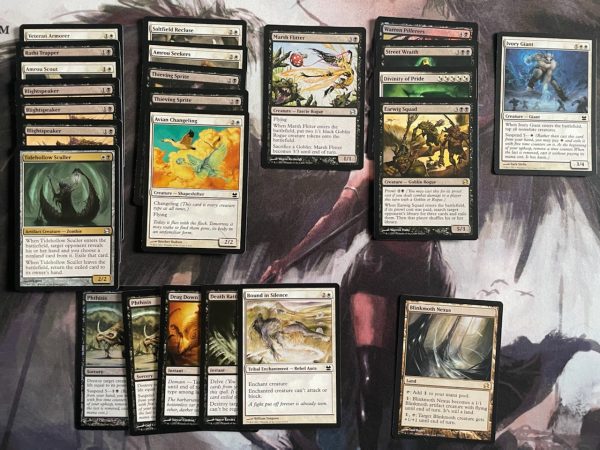
The strongest card I saw was Divinity of Pride. In pack one, I surrounded it with some mediocre removal and Rogues, though black-white really wants to be in Rebels, and Divinity of Pride really wants to be in black-white. Those colors were contested, but nothing else seemed particularly open. Packs two and three yielded more Rebels, and my deck ended up something of a hybrid. It had a small Rebel package, decent removal, some powerful Rogues, and a single Avian Changeling to tie the room together.

The Deck

BW Rebel-Rogues

BW Rebel-Rogues

Creatures

1 Veteran Armorer
1 Rathi Trapper
1 Amrou Scout
3 Blightspeaker
1 Tidehollow Sculler
1 Saltfield Recluse
1 Amrou Seekers
2 Thieving Sprite
1 Avian Changeling
1 Marsh Flitter
1 Warren Pilferer
1 Street Wraith
1 Divinity of Pride
1 Earwig Squad
1 Ivory Giant

Sorcery

2 Phthisis

Instants

1 Death Rattle
1 Drag Down

Enchantment

1 Bound in Silence

Land

1 Blinkmoth Nexus
8 Swamp
8 Plains

My deck was solid but not great. Avian Changeling was the MVP, as it was an evasive creature that I could tutor out with my Rebels, and a Rogue that could activate the prowl on Earwig Squad. More Rebels would have been nice, but I went 3-0 in the draft, miraculously beating a Sword of Light and Shadow in the finals (which my opponent played all three games).

Though I eventually found an open archetype, I had to get very creative to complete the deck. It wasn't truly a Rebel deck, it wasn't truly a Rogue deck, but it utilized overlapping synergies well enough to 3-0.

Draft #2: Time Spiral Remastered

After going 3-0 in MMA, I fixed my sights squarely on the trophy. I've never drafted Time Spiral Remastered (TSR) though, so I was headed into the format completely blind. My first pick was difficult, but I settled on Arch of Orazca. This card kept me open and could be a source of card advantage. Because the original Time Spiral format was so dated, I assumed having a resource of this nature would be valuable. My second pick was a Dismember which further kept me open, though I was looking to be in a more controlling shell.

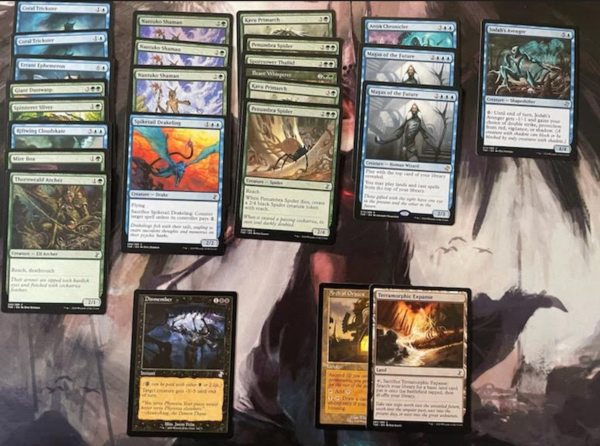
I found very good green cards to pair with my first picks and this provided a direction. Blue was clearly open towards the end of the pack, so I paired the two colors and began building a strong deck. While I wasn't sure of the format's nature, the deck I was building had a direction. Simply put, the plan was to overrun my opponent with an onslaught of value creatures. This archetype found some payoffs in Beast Whisperer, Aeon Chronicler, and two copies of Magus of the Future. I assembled a pile of above-rate creatures capable of drawing my entire deck.

G/U Creatures ft. Dismember

Creatures

2 Coral Trickster
1 Errant Ephemeron
1 Giant Dustwasp
1 Spinneret Sliver
1 Riftwing Cloudskate
1 Mire Boa
1 Thornweald Archer
3 Nantuko Shaman
1 Spiketail Hatchling
2 Kavu Primarch
2 Penumbra Spider
1 Sporesower Thallid
1 Beast Whisperer
2 Magus of the Future
1 Aeon Chronicler
1 Jodah's Avenger

Non-Creatures

1 Dismember

Lands

1 Arch of Orazca
1 Terramorphic Expanse
8 Island
7 Forest

Rely On Macro-Archetypes In Unfamiliar Metas...

This deck looked like a success. Not only was I in open colors, but the table opened really strong green and blue cards in packs two and three. One of the first rules of Draft is to always have a plan. Each format provides its own premium archetypes and rules of engagement. We've talked about formats where control decks are unreliable and ones where certain colors should be heavily prioritized. However, the absence of this information should never equate to the absence of a plan.

Building an aggressive deck, relying on card advantage and removal, or ramping into powerful endgames are all examples of macro-archetypes. Usually, the cards that make them work will be available in a given draft format. This framework can help you find a deck that makes sense, though if you find two open colors with strong card quality, you will probably thrive regardless.

...But Knowing the Format is a Real Advantage

My first loss was a decisive one. It came in the second round of the second draft and ended in a swift 2-0 against an awesome black-white aggressive deck. Even though I specifically stocked my main deck with two-drops to interact on this level, my ignorance of the format was exposed. My opponent's flanking creatures made light work of my Mire Boa and Coral Tricksters. Knight of the Holy Nimbus and Benalish Cavalry paired with well-timed removal spells to knock me out. When I thought I stabilized in game two a Crovax, Ascendant Hero came out of nowhere to decimate my blocks. Tough beats, but you can't win them all.

My opponent had a better understanding of the format than most of the table. He had brought the packs and drafted the format previously. While I had a fine strategy and good cards to execute it, knowing the way interaction stacks up in the format and the over-performing cards and archetypes proved to be very valuable.

I Salvaged a 2-1 out of this draft after sideboarding in a Crookclaw Transmuter to help me get through a Stuffy Doll in my third round opponent's Sliver deck. Still, at 5-1 on the day, I needed to 2-1 the next draft to guarantee the trophy. A 1-2 finish could lead to a tie. This is where things took a turn for worse.

Draft #3 Kamigawa Neon Dynasty

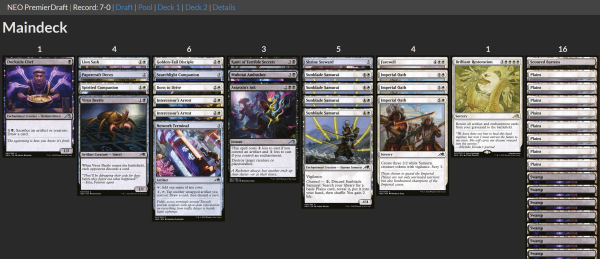
Of all the day's formats, this was the one I knew best. I'm familiar with all the archetypes and am happy to play any of them. When I saw my first pick I was ecstatic. Brilliant Restoration is a card that I wanted to draft around when I first saw the set. On Arena, I had gotten a chance, and I pieced together one for the ages.

A thing of beauty

Recreating this deck to lock up the trophy became my one and only goal. Nothing could be more perfect, so I moved forward with my plan. Unfortunately, my desperation to recreate the past led me astray.

Brilliant Restoration Might Not Be The Bomb I Thought It Was

Creatures

1 Automated Artificer
1 Papercraft Decoy
1 Nezumi Bladeblesser
1 Mukotai Ambusher
1 Moonsnare Specialist
2 Shrine Steward
1 Saiba Trespassers
1 Sunblade Samurai
1 Mirrorshell Crab

Enchantments

1 The Modern Age
1 Clawing Torment
1 Born to Drive
1 Twisted Embrace
1 The Long Reach of Night
1 Inventive Iteration

Artifacts

1 Ecologist's Terrarium
1 Network Terminal
1 Prodigy's Prototype

Instants

2 Wanderer's Intervention
1 Repel the Vile

Sorcery

1 Brilliant Restoration

Lands

1 Tranquil Cove
5 Swamp
4 Island
7 Plains

Past Performance Does Not Guarantee Future Outcomes

These two things are not the same.

Over-committing to my first pick was a huge mistake. I should have been in a UR artifacts deck, which was very clear when I tabled an Enthusiastic Mechanaut pack three. I felt the error of my ways in round one. My first opponent also played a black/white deck, however, his featured a much stronger and more aggressive card pool. Soundly defeated, I was unsure how my deck could win a single game in the ultimate draft. I had few creatures and my strategy was extremely inconsistent.

Be Clear, Focused, and Purposeful

After a grueling day of Draft, my brain was fried. Conversely, my next opponent, piloting a very unique green/blue ninjas deck, was exceptionally sharp. He communicated his actions clearly and played purposefully. A long day had taken its toll and I was struggling to even keep track of my land drops. When I did take my time, I felt lost in the permutations of each individual play, struggling to find the right line. I would be lying if I said I never felt this way in the closing rounds of a real GP.

Game two against the ninjas player was a slog that I was able to win because of my two most powerful cards. Brilliant Restoration and Inventive Iteration took over and I was able to ride them to force game three. In our final game, I was able to take a controlling position, and my opponent flooded out. I did not play particularly well in this round but was lucky to come away with the win.

However, in round three I did my best to emulate my previous opponent's professionalism. Stealing that win reinvigorated me for this final battle. Against my final opponent's aggressive red/white deck, Wanderer's Intervention bought me the time I needed and I was able to draw the best parts of my deck to win in two straight games.

While I don't like to dwell on softer skills in my articles, I'm compelled to recognize this one. Communicating your actions clearly helps organize the minutia of the game. Magic: the Gathering is a complicated game. Deliberate communication helps us navigate and process those complications. I salvaged this draft because of what I learned in round two. Had I continued to play on auto-pilot, I would not have been able to walk away as the champion.

To Make A Long Story Short, I Bought Myself a Playmat

Worthy of a Champion

Winning my own trophy felt wonderful but not nearly as wonderful as spending a day with good friends playing great games. Furthermore, jumping feet-first into a bunch of random formats for a (sort of) legitimate prize was a great experience. I hope you find these reflections valuable as you strengthen your own game. If you have the space and a group of friends I strongly recommend hosting an event like this. It was one of the highlights of my summer and I look forward to doing it again.

To Unfinity and Beyond

Are you a Quiet Speculation member?

If not, now is a perfect time to join up! Our powerful tools, breaking-news analysis, and exclusive Discord channel will make sure you stay up to date and ahead of the curve.

Well, Mark Rosewater has done it again. He somehow managed to convince Wizards of the Coast to release a new “Un-set”, Unfinity, the fourth set of outlandish, goofy, and entertaining cards.

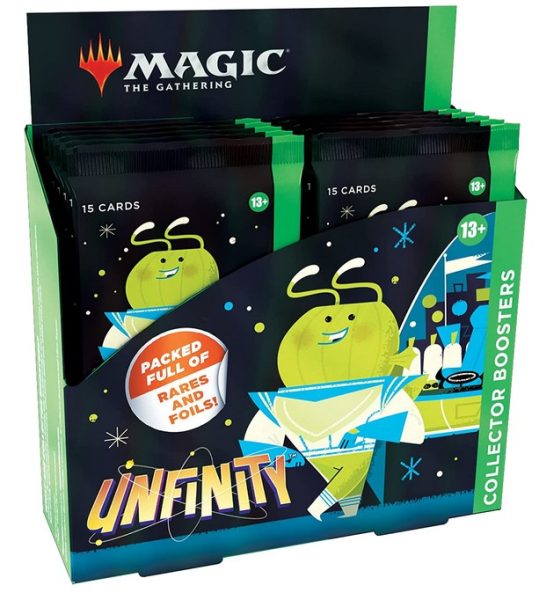
When I say “outlandish”, I mean this both figuratively and literally—the new set is partially themed around outer space! At least, that’s my impression after seeing an alien and stars in the collector booster artwork.

This set will be different from past “Un-sets” in one key way: it will contain many eternal tournament-legal cards! In releases past, with the exception of Steamflogger Boss, the only tournament legal cards from Un-sets were the basic lands. That’s changing completely with Unfinity, where slightly more than half the set’s cards will be legal in Commander, Legacy, and Vintage. To account for this, all cards in the set will be black-bordered and the non-legal cards will have little acorn holograms on the bottom instead of the usual oval shape.

In honor of this upcoming set release, I wanted to take a look back at the previous three un-sets to mine which cards maintain the most value. Perhaps there are a couple of themes to help us identify the best pick-ups from Unfinity for potential price appreciation.

Unglued

This is where it all started. Unglued was released on August 11, 1998, nearly 24 years ago. I can’t believe this set has been around for so many years!

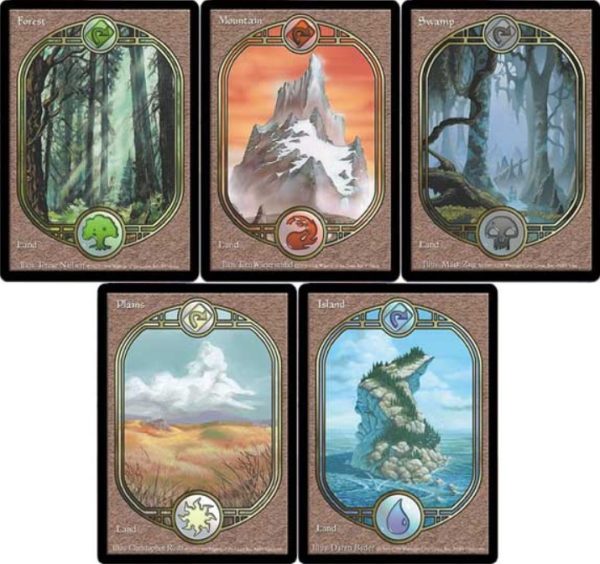
The set was relatively small, containing only 83 silver-bordered cards and the five basic lands. Perhaps the most significant feature of Unglued was its introduction of full-art basic land cards. This was the first time basic lands without a text box were printed, and for a while, these were premier chase cards for their aesthetic. No matter what else you opened in an Unglued booster, you were likely to recoup your initial investment because of the basic land.

What are the most valuable cards from Unglued today? Since Wizards has begun printing full-art basic lands in many new sets, the original Unglued lands have lost some of their pull. They just aren’t all that unique anymore. So while the basics still maintain some modest value (a few bucks or so each), there are a few other collectible cards worth more.

The most valuable card from the set today is Blacker Lotus, an entertaining spin on Black Lotus that requires its owner to tear up the card and remove pieces from the game to add four mana to the mana pool. I can’t help but wonder if some players actually did this to their cards, and that’s why this one is worth around $20 now, or if it’s simply valuable due to its association with the OG Black Lotus. We’ll have to keep a watch out for any theme around this idea.

There was an error retrieving a chart for Blacker Lotus

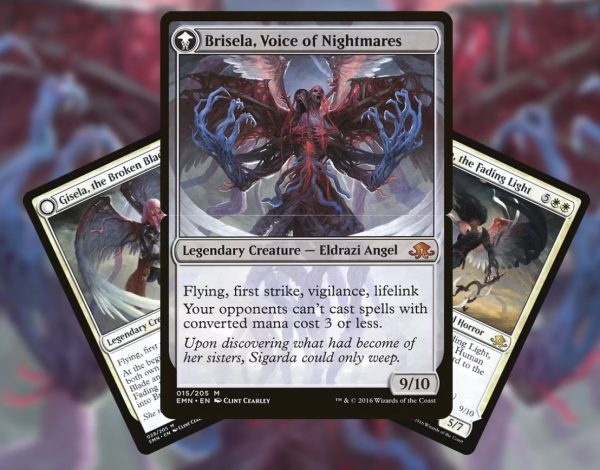
The next most valuable cards are the two halves of Big Furry Monster, an unstoppable 99/99 creature that costs 15 black mana. You need to have both halves in play in order to use the creature, which was a novel idea at the time. It was a precursor to cards like Eldritch Moon’s Brisela, Voice of Nightmares, where two cards flipped over to form one mega-card.

There was an error retrieving a chart for B.F.M. (Big Furry Monster)

Another Unglued favorite is Ashnod's Coupon, a $10 card that does absolutely nothing as far as Magic is concerned. Rather, the card forces an opponent to get you target drink. I’m not sure why this card, in particular, is so valuable but it’s quirky and unique, to say the least.

There was an error retrieving a chart for Ashnod's Coupon

Jack-in-the-Mox at least does something in a game and is worth a couple of bucks. It's a zero-mana artifact modeled after the five Moxen with the drawback of having to sacrifice it if you roll a one on your six-sided die. The art for this one is particularly entertaining.

There was an error retrieving a chart for Jack-in-the-Mox

Lastly, I would be remiss if I left out the Unglued tokens, which are also worth a few bucks (especially the squirrels and zombies). The art on these tokens is incredible, and they were yet another pioneer for Magic—since Unglued, we’ve seen tokens show up in countless booster packs from modern sets. Tokens that look like Magic cards, with real artwork, added a significant aesthetic to the game. Before tokens, most players were using pennies, chips, or face-down cards to represent these generic creatures. I like the fully artworked, on-theme tokens much more.

Looking back, Unglued introduced a couple of fantastic features that have since become key parts of Magic. It was entertaining while also being a pioneer for the game.

Unhinged

Unhinged was the second Un-set, released in November 2004. That’s right, it took over six years for Mark Rosewater to push through Magic’s second Un-set. I am so glad he finally managed it. Unhinged is my favorite of the bunch!

What makes Unhinged so special? The best part about the set is its inclusion of foils! If you haven’t had a chance to see them in person, silver-bordered foils look absolutely beautiful. When reflecting light, you see the colors of the rainbow staring back at you around the full border of the card. It is this effect, along with the fun introductions in the set, that makes some Unhinged cards exceptionally valuable. For this reason, as I review the top money cards from the set I will be focusing solely on the foil versions, which all command a significant premium to their non-foil counterparts.

Before starting with the most expensive, I want to start with Super Secret Tech, a card that gives a boost in power to all your other foil cards in play. What makes this card super secret? When the set was spoiled, this artifact wasn’t even included and its collector number is 141/140!

It wasn’t until people started opening boosters that people realized the card existed. Card Kingdom is completely sold out of this card—expect to pay north of $30 to acquire a near mint copy.

There was an error retrieving a chart for Super Secret Tech

While Super Secret Tech is unique in how it was introduced in the set, its price pales in comparison to the most expensive foils of the set. Here are the top cards, along with their Card Kingdom near mint price:

  • Richard Garfield, Ph.D.: $999.99
  • Mox Lotus: $679.99
  • City of Ass: $429.99
  • Gleemax: $129.99
  • Johnny, Combo Player: $129.99
  • Old Fogey: $129.99
  • Who // What // When // Where // Why: $99.99

The list goes on and on. In fact, there are 34 Unhinged foils that retail for $19.99 or more. Clearly, foils are where the money is at in the set. It’s not just the rares that have value, either. Little Girl and Carnivorous Death-Parrot are both commons that sell for double digits, with the former in the $20 range.

There was an error retrieving a chart for Little Girl

Before moving on, I just want to point out that this set contained another Lotus-like card in Mox Lotus, which happens to be one of the most valuable from the set. Even non-foils are worth nearly $20.

Unstable

The third and most recent un-set to have been released is Unstable, which came out December 8, 2017. The set contained about 216 (“216-ish”) cards, more than twice as many as Unglued. This was the first un-set to be built as a limited, stand-alone experience. As such, the set had a cohesive vision and “modern design sensibilities” reminiscent of a modern-day Limited set.

But enough about the history—let’s dig into the valuable cards of the set!

Actually, it’s more like the lack of valuable cards in the set. I suspect that, because this set came out so recently, its print run was much greater than the previous Un-sets. Perhaps it’ll take some time for the most desirable cards of the set to climb further in price.

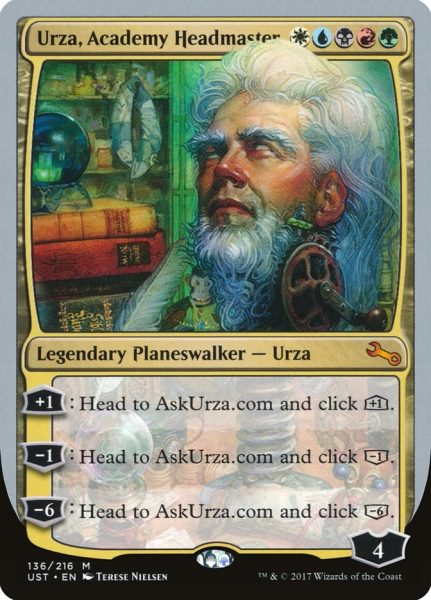
The basic lands are of course worth a few bucks each. The most valuable non-foil from the set is Everythingamajig, which retails for $6.49. Urza, Academy Headmaster is another favorite from the set (an Un-set planeswalker is sure to be a hit), and non-foils are worth a few bucks.

But enough of this non-foil discussion. Let’s shift to where all the money is, yet again: the foils! There's obviously a premium for the foil basic lands, which range in price from $74.99 for the Island to $39.99 for the Plains. Other cards with prices similar to Island include:

  • Garbage Elemental ‘D’: $74.99
  • Knight of the Kitchen Sink ‘A’: $74.99
  • Steamflogger Boss: $74.99
  • Urza, Academy Headmaster: $64.99
  • Sword of Dungeons & Dragons: $44.99

It seems there is a recurring theme for valuable cards in Unstable. You see, the set included cards with multiple versions and slight perturbations. Garbage Elemental and Knight of the Kitchen Sink were two such cards. Because of all the variations, collectors have been paying up to obtain one of each for their complete sets, and each version of the given card is likely rarer than their rarity symbol indicates.

There’s no Lotus derivative card in this set—if there was, I'd expect to see it towards the top of the price list. In any event, the name of the finance game with Unstable is much like that of Unhinged: the money is in the foils.

Wrapping It Up

Before we go, I want to touch on two more points.

First, there is technically another un-set called Unsanctioned. This set wasn’t sold in boosters like the others, however. It was released as a box set with many reprints of previous Un-sets. Only sixteen new Un-cards are in Unsanctioned. The lands are really the only noteworthy cards from the set (so far).

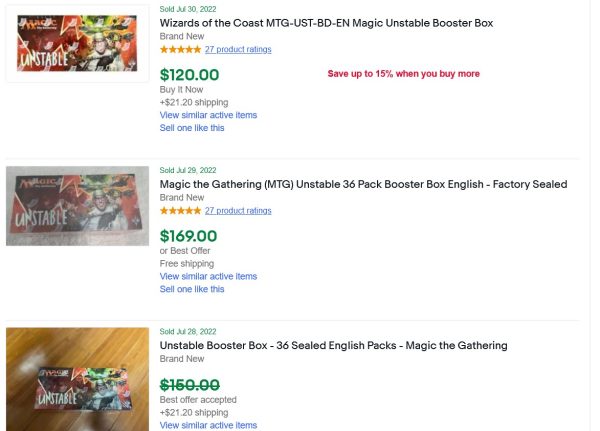
Second, sealed booster boxes of Un-sets have a history of starting off inexpensive and then exploding in price years later. For example, one Unglued booster box sold on TCGplayer a couple of weeks ago for a whopping $1509.98! The only box listed for sale right now is $5000, which is probably too high to sell any time soon. Unhinged booster boxes start in the mid $600’s. I’ll never forget the time I went to a local hobby shop circa 2007 and they offered to sell my friends and me all their Unhinged booster boxes for dirt cheap (I want to say $40-$50 each) and we declined. Talk about a missed opportunity.  

Unstable booster boxes are much more affordable given the set is not as old—they sell for somewhere in the $150 range. I wonder, though, if these will climb over the next decade or so like Unhinged and Unglued boxes have done. It’s definitely worth keeping an eye on them.

This brings me to Unfinity. Sealed product of this set may also be worth acquiring and holding onto for the long run—especially if the Limited experience is fun. If there’s replay value to drafting Unfinity, it could give players yet another reason to buy booster boxes for years to come… that is, on top of the fact that foils tend to sell for a pretty penny! I expect Unfinity will follow the same trend. With so many tournament legal cards (including Shock Lands) in the set, it could make Unfinity the most desirable Un-set of them all. Time will tell, but picking up foil copies of any iconic cards, along with any cards that reference Moxen or Lotuses, could be a smart long-term play on Magic’s latest joke set.

Generational Magic: Tossing about with Old Friends

Are you a Quiet Speculation member?

If not, now is a perfect time to join up! Our powerful tools, breaking-news analysis, and exclusive Discord channel will make sure you stay up to date and ahead of the curve.

A Flippin' Good Time

My youngest, Jarod has been playing Canadian Highlander for about a year now. This past spring, Mavericks had an April Fool's-themed event. They encouraged players to build goofy fun decks for it. Initially, Jarod had an idea for something else, but I mentioned a coin flip deck would be very thematic. He loved it.

We put it together, and he played and lost quickly. Unfortunately, everyone else either didn't get the memo or chose not to switch decks. He still had a good night overall, hanging around with everyone. This is one of the main reasons why Magic is a great game.

After he was finished with the deck, I saved it and converted it into a Commander deck for myself. I wanted to keep it blue, black, and red, but there isn't a good tri-color coin flip commander, so I threw Obeka, Brute Chronologist in and got busy flippin'!

There was an error retrieving a chart for Obeka, Brute Chronologist

Coin Flip Commander Deck

Creatures

1 Obeka, Brute Chronologist
1 Chaotic Goo
1 Crazed Firecat
1 Creepy Doll
1 Dualcaster Mage
1 Goblin Archaeologist
1 Goblin Assassin
1 Goblin Bangchuckers
1 Goblin Kaboomist
1 Goblin Traprunner
1 Frenetic Sliver
1 Imperial Recruiter
1 Krark, the Thumbless
1 Okaun, Eye of Chaos
1 Rakdos, the Showstopper
1 Spark Double
1 Tavern Scoundrel
1 Tavern Swindler
1 Tribute Mage
1 Yusri, Fortune's Flame
1 Zndrsplt, Eye of Wisdom

Artifacts

1 Boompile
1 Elixir of Immortality
1 Hazoret's Monument
1 Izzet Signet
1 Krark's Thumb
1 Lightning Greaves
1 Mana Crypt
1 Mind Stone
1 Sol Ring
1 Sorcerer's Strongbox
1 Talisman of Creativity
1 Wirefly Hive

Enchantments

1 Chance Encounter
1 Goblin Bomb
1 Goblin Festival
1 Mirror March
1 Planar Chaos
1 Propaganda

Instants

1 Consider
1 Counterspell
1 Cyclonic Rift
1 Electrodominance
1 Invoke Calamity
1 Mystical Tutor
1 Odds // Ends
1 Opt
1 Puppet's Verdict
1 Seething Song
1 Unsubstantiate
1 Whir of Invention

Sorceries

1 Blasphemous Act
1 Dreadbore
1 Feed the Swarm
1 Fiery Gambit
1 Gamble
1 Game of Chaos
1 Meltdown
1 Molten Birth
1 Preordain
1 Squee's Revenge
1 Stitch in Time

Planeswalkers

1 Daretti, Scrap Savant
1 Ral Zarek
1 Saheeli Rai

Lands

6 Mountain
4 Island
1 Ancient Tomb
1 Badlands
1 Blood Crypt
1 Bloodstained Mire
1 Boseiju, Who Shelters All
1 Buried Ruin
1 Cascade Bluffs
1 Cavern of Souls
1 Clearwater Pathway
1 Desolate Lighthouse
1 Fiery Islet
1 Karn's Bastion
1 Maze of Ith
1 Otawara, Soaring City
1 Riverglide Pathway
1 Scalding Tarn
1 Shivan Reef
1 Steam Vents
1 Sulfurous Springs
1 Takenuma, Abandoned Mire
1 Temple of Epiphany
1 Temple of Malice
1 Underground Sea
1 Volcanic Island
1 Watery Grave

Contemplating Player Familiarity and Interaction

Jarod wanted to hang out with a few of his old high school friends last Friday, so he stayed at home instead of getting his card fix. There wasn't any good drafting going on since everyone is done with Commander Legends: Battle for Baldur's Gate and you can only play so many Double Masters 2022 drafts before you have to get a loan. I didn't have any non-Commander constructed decks put together, so this presented me with an opportunity to flip the coin!

On the way over to Mavericks, I thought about how people interact with each other. Can a game be better or worse depending on how well you know the people you play with? There are plenty of variables and opinions for this, but I wanted to make the effort to explore the question, and hopefully have some fun games in the process.

To test the theory a little and flip that coin, I figured I'd start with people I know well at a place I'm familiar with, and a little later, I'd stop over at Gaming Goat to see if I could join in a game there. Gaming Goat is maybe a few hundred yards from Mavericks, so it would be easy to get to both places. Can you have fun anywhere with anyone? Sure can!

Introducing the Familiar Faces

So, before we head into the gameplay highlights, I'd like to introduce my Magic-playing friends at the table. I've known Peter for a little more than a year, Dewey a couple of years, and I've battled with Clayton many times across the draft table. We all have an affinity for drafting, but we'll play just about anything that might interest us.

Dewey

How old are you?
Thirty-one.

How long have you played or what Magic set did you start with?
I first was introduced to the game back in 2013, but really started playing in 2019.

How did you start playing?
My cousin taught me. When I moved into the area, I wanted to meet people and I figured this was a fun way to do that.

What's one thing you enjoy about Magic?
The people. Meeting new people and observing everyone's personalities through what decks they play.

Who's your Commander for this game?
Wasitora, Nekoru Queen

There was an error retrieving a chart for Wasitora, Nekoru Queen

What's one of your favorite memories of Magic?
I was playing a Commander game headlining Blim, Comedic Genius. I made a deal with my first opponent to not attack him with the creature of his I was in the process of stealing. I don't recall the details of the creature, but it was a 3/3 and had menace.

I attacked my second opponent with the creature, then proceeded to give the creature to them. My second opponent then attacked the first opponent with it. So, enjoyably, I was able to keep my promise to not attack the first opponent. It was definitely a 'Blim' moment.

That's awesome! What's one of your favorite Magic cards?
Blim, Comedic Genius.

Peter

How old are you?
Twenty-six.

How long have you played or what Magic set did you start with?
My first product was the Strixhaven Commander decks, so early 2021.

Pretty recent, then. How did you start playing?
I've always played various card games throughout my life and was attracted to the game through Magic: Arena. After playing that for a little bit, I picked up playing the real thing and have been enjoying it immensely.

What's one thing you enjoy about Magic?
Definitely the social aspect of the game. I love coming out and picking up a Commander game with multiple people.

Who's your Commander for this game?
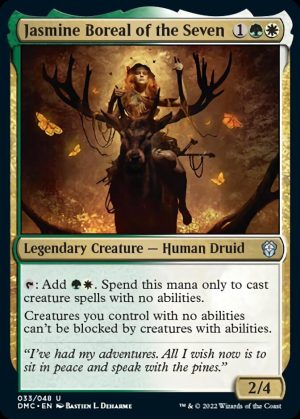
With agreement from the table, I'm testing out a Dominaria United commander, Jasmine Boreal of the Seven.

What's one of your favorite memories of Magic?
Probably my first (or second) Game Day. I was losing horribly in the first round, but my opponent wanted to get into the Modern tournament that was about to start, so they conceded to me. I continued on, fought through, and ended up winning that Game Day event!

What's one of your favorite Magic cards?
Osgir, the Reconstructor. He was my first Commander.

Clayton

How old are you?
Twenty-eight.

How long have you played or what Magic set did you start with?
Return to Ravnica was technically when I started, but that was only with Duals of the Planeswalkers. My first paper sets were drafting Magic 2014 and Theros.

How did you start playing?
A buddy of mine shared it with me.

What's one thing you enjoy about Magic?
Drafting. Every player starts on a pretty even playing field. It takes skill to build a good deck on the fly. To me, drafting is a fundamental part of what makes Magic a great game!

Who's your Commander for this game?
Evelyn, the Covetous

There was an error retrieving a chart for Evelyn, the Covetous

What's one of your favorite memories of Magic?
I have a couple of them. One was the first time I cast a Gonti, Lord of Luxury. Not only did I steal my opponent's Dig Through Time and cast it, but I copied it with Mirrorpool. Yea, he wasn't too pleased.

The other one was a reminder to never give up. I was playing Pioneer and the deck I was playing had four Fatal Pushes. Generally a good thing, but for this game, they were ineffective against my opponent who was playing Esper Control, and I drew all four. I eventually won by running them out of win conditions. My opponent no longer had a way to win the game and decked out before me. I still had all four Fatal Pushes in hand at the end.

What's one of your favorite Magic cards?
Scholar of Athreos. For me, it was a memorable and fun way to win in that draft format.

Get Ready To Rumble!

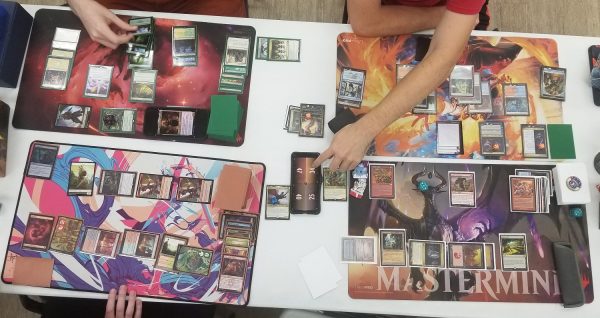
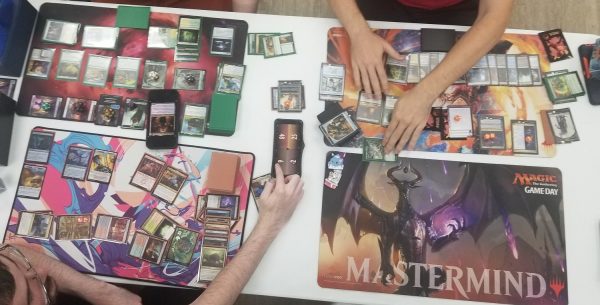
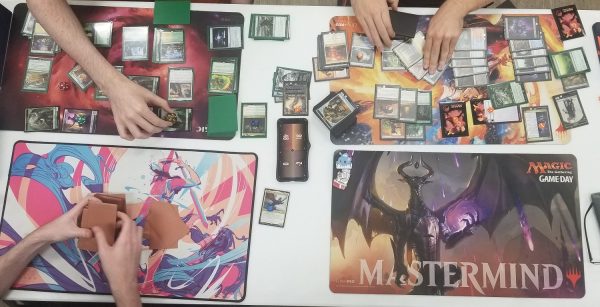
So, how did the game progress? Did yours truly test fate and beat the odds or did my coin come up tails? Here's a look at the board while we were all still fighting the good fight, and yes, Planar Chaos is great fun! Well, at least for me it was.

Mini-Boss Level

Yep, I flipped tails one too many times calling out heads on Yusri, Fortune's Flame and with one final flip of Clayton's top card, due to Twilight Prophet's trigger, I was out.

Major Boss Level

Dewey was the next to fall to Pete's massive token army. Board wipes were never to be found in time.

Final Boss Level

Clayton put up an awesome fight and lasted quite a bit longer, but once Pete's Avenger of Zendikar hit the battlefield the writing was on the wall.

Game Over, Man...Game Over!

So, how did my follow-up game over at Gaming Goat go? Tune in next week for the details, and more thoughts on player familiarity and player interaction.

I want to thank the guys for taking the time to share about themselves and hope that you've enjoyed this trip. Feel free to share your fun Commander experience in the comments or on Twitter.

When You Are The Problem Player, Evaluating Power Level

Are you a Quiet Speculation member?

If not, now is a perfect time to join up! Our powerful tools, breaking-news analysis, and exclusive Discord channel will make sure you stay up to date and ahead of the curve.

Deck power level is an ambiguous and intriguing aspect of playing Commander casually. While one person's five may be another's eight there is much to be said for understanding the approximate power level at a local venue. This is a unique challenge for me in particular. I regularly play at two different local venues and also against players all over the world via SpellTable. On top of that, I also play a few games on my own kitchen table. Power level expectations are extremely different at each table. Finding one deck that meets every level is tough.

What Makes You Hated At One Table Is Normal At Another

When playing with strangers, consider starting out low power and gradually easing into a range that makes sense. This method seems to result in fewer "non-games" than starting with a higher-powered deck and ratcheting down. However, there is a human factor to consider. How many games and how much time is it worth spending playing underpowered decks knowing the odds of winning are very low?

I'm willing to take one for the team to fine-tune where my power level should be. I can lose a few now to "win" on a different level later. How many games can anyone tolerate losing though? How about one game? A night's worth of games? A week or two in a row? Surprise! It turns out I'm not a huge fan of losing. and neither are many other players. For the last couple of months, though, I have been playing mostly with"kid gloves" on while meeting new players. I can tell you, it felt good to take them off! But was it the right thing to do? Turns out, yes it was. Allow me to explain.

That Week My First Goal Was Winning

This was a casual Commander game night and I was not there to have fun. While some venues toss a few promo packs into pods, there were no stakes here. I was, frankly, tired of losing and did not want to hold back. Let the shellacking begin!

The Play By Play

I planned on playing decks one to two steps above my normal range. To put it numerically, I generally play fives or sixes but tonight I was going to play decks that were at least sevens or eights. As a reference, I rate fives around the pre-constructed level. Sixes are, therefore, slightly modified pre-cons. Once you've changed, upgraded, or otherwise altered about ten cards or more out of a pre-con you're past the point of modification, you're optimizing and moving towards a seven.

My Edric, Spymaster of Trest deck is at least an eight. It hovers just under cEDH power levels. It's effectively 30 evasive, cheap creatures, 20 counterspells, and 20 utility spells. The entire deck's engine hinges on a turn two or three Edric plus something to protect him. Generally, I'm drawing extra cards every single turn until the game ends. We ended up with a three-person pod. Winning a one versus two is much more manageable than a one versus three. My opponents? The first was on Noyan Dar, Roil Shaper, a deck that I'm familiar with as I traded with them to build it. It's a casual deck, a five or six. The other player had a Grist, the Hunger Tide deck which was still being refined, but was probably a six.

Lucky me, going first I had a great hand! I played turn one land and Triton Shorestalker with Mental Misstep in hand. Noyan tried to play a turn one Esper Sentinel. Not in my house, eat a Mental Misstep. Grist played their land and passed. I played a land and passed. Next, Noyan played land and cast Sol Ring. Not in my house! I countered it with a Spellstutter Sprite. Turns cycled around and I quickly assembled Edric and a few creatures. By turn four I was drawing four or more cards a turn and countering anything relevant my opponents played for the rest of the game.

Are You Proud Of Yourself?

On the contrary, I felt bad for absolutely molly whopping my opponents. They played much more casual and lower-powered decks in this game. On top of that, luck was also against the other players. The Noyan player got a bit land screwed and the Grist player never hit a double mill trigger. This made the game feel even worse. I've played many games with the Noyan player. I asked them after the game if they noticed anything different about my deck than what I usually play. They said, effectively, that it was a world of difference playing against me when I use a "real deck" versus the "pile of cards" I normally bring. When I asked them if I should play stronger decks more often the expression on their face told me everything I needed to know.

Mono Black Oona

Oona, Queen of the fae is my longest-running, oldest Commander deck. I've played different variations with Geth, Lord of the Vault and Xiahou Dun, the One-Eyed as former commanders, but Oona offers better build options and a secondary win condition. The deck is highly optimized at cEDH levels of power. It has multiple infinite combos, piles of tutors, huge ramp, and excellent answers.

Sitting down I had the same Noyan player, with a different deck, and another player with their Raffine, Scheming Seer deck full of Secret Lair prints and various good cards. Our last player was a young lad of 10 or 11 who usually plays alongside their father but was going it alone with a Sisay, Weatherlight Captain deck. I knew ahead of time the Raffine player always comes in too strong so I decided to match that.

It was a funny game because I had both Candelabra of Tawnos and Mishra's Helix in play. Half of my mana tapped down the Raffine player so they could not play Magic. The rest was used on Candelabra to ramp the other two players who fought each other. The Raffine player was looking for a Disenchant effect but I had an Imp's Mischief waiting.

Eventually, I put down Ensnaring Bridge and got down to one card in hand so almost no one could attack. Oona started making 1/1 Faeries, and the game ended in short order. The table experienced the power of my fully armed and operational battle station.

The end result was a game that was a lot less fun than it could have been. In this game and the previous example, I removed the other players' agency until the games became effectively solitaire. What did I learn?

These Games Confirmed My Estimation

For one, I now know I have a firm grasp on relative power levels at this venue. Everyone is playing decks that are safely in the six to eight range. Almost no deck strays from that range, and, if so, I would be the player to do so. One important thing to grasp is that by starting with lower-powered decks I developed a very good idea of what the power floor is for a deck. Now that I've brought more powerful decks as well, I have a good idea of the power ceiling. Now "five" and "eight" matter less. I know the line from first being below it, and then above it. I can adjust accordingly and bring decks that better fit the environment.

Finding the Right Power Level, or the Right Answers?

I try my best not to bully a table. Sitting back and casting cards while chatting is how I like my casual games of Commander. Yes, it gets frustrating to lose what seems like every time. The reality of a multiplayer game, though, is that you should be losing far more often than winning. In retrospect, for me, it was less about losing and more about the feeling of never winning. With my lower-powered decks, games tended to end before I could pull off a cool play or demonstrate a unique aspect of my deck. The reason? Many cards these days are so incredibly high-powered that anything left unchecked gets out of control quickly. This is true even of cards in otherwise lower power decks. Is this the part where I mention that everyone needs to play more removal? It is, it is that part! Please play more removal. I'm going to work on adding more "fun" removal to my casual decks. Wizards, please print more fun removal!

What About Other Tables?

SpellTable is a very, very mixed bag. While practically no one makes games using decks at the one through four or ten levels, the band of five through nine is actually much wider than it would seem. There are gulfs between five, six, and seven. Power levels are definitely relative. I find it helpful to establish my own definitions and try the best I can to have a good rule-zero conversation before playing. I recommend asking about the EDREC salt score of everyone's deck when playing casually as these are widely accepted as the most unfun cards on the receiving end.

One nice part about playing competitive games on SpellTable is that there are fewer social issues because everyone is there for the same reason. The social experience is a distant third in priority behind winning and deck testing. Paradoxically enough this can sometimes make the social experience better. It's simply harder to find a casual table where everyone wants the same thing. The best bet there is to network. Anytime I find players I enjoyed playing with, I save their contacts. Discord is great for this. That way it's easier to build tables full of like-minded players from all across the world instead of going back into the vast, unknown, ocean of random players hoping to pair up with equally casual or competitive players.

It's The Same At Home

At my kitchen table, it was Kraken versus Spirit! On one side, was my boat deck, where every single card must have a boat somewhere in the artwork. This meme deck has grown from its conception—when I had to utilize cards like Dandan—but it is far less powerful than most precons. I rate it as a three or four. Facing off against it was the Millicent precon Spirit Squadron deck. Millicent seems like it weighs in at about a five. It has a few too many themes vying for space in the deck, and not enough cards to make all the themes useful.

Playing the boat deck against new players who have one year or less of experience playing Magic, I figured this would be a fair battle. While not perfect, Millicent at least has some deck synergy. It has Swords to plowshares and Sol Ring! The boat deck just has... boats. On the surface, the formula appeared to be boats > ghosts. Realistically though, the more correct formula was boats+30 years experience > ghosts. Capsize had the highest salt score in these home games, which forced me to remove it from the deck.

Unlike the previous examples, here I genuinely knew my deck was inferior to what I was up against. There were different problems at hand. Here, my superior threat assessment was what was at issue. It was easy for me to simply bide my time and remove the correct things, typically Millicent, making the spirits deck not function. Because of that, practically every game went the same way: Millicent got bounced, killed, or countered the first time it was played. I correctly hit the weak point of the deck with everything I had. Turns out, because that deck was only a bit more powerful than mine (like a five versus a four) if I hit its weak spot, it stopped being an even match.

A New Challenger Sets Sail

So how did we compensate? I tuned and streamlined the Millicent deck. I removed dead synergies and added more Spirits. After boosting Millicent up to a six or seven, I could no longer win a single game against it with the boat deck. Even in games where I messed with Millicent or board-wiped multiple times, it did not matter. If the goal was to make 50/50 match odds, I may have gone a little overboard. That doesn't bother me though. I've been patiently waiting for a reason to start optimizing the boats. Tuning it to fight Millicent was just the sign I needed. Enter the new captain at the helm:

I hope that the Pirate Horror versus Spirit matchup is a close and more exciting one going forward. In any case, this example just reinforces how power levels can be relative. The upgraded boat deck with Captain N'ghathrod in command will be a perfect fit for my kitchen table games as well as for one of my local venues. It will definitely be a bit less powerful than other decks in my SpellTable games though.

Is The Heart Of Commander About Power?

No. The heart of Commander is having fun during the social experience of playing Magic. Understanding deck power levels, and how relative they can be though, is important when trying to tune for a specific table of players and their expectations. Hopefully the experiences I shared resonate and point others in the right direction to make their Commander games more interactive, social, and fun! Remember, every once in a while it's okay to test the waters and not just with lower-powered offerings. Sometimes playing a higher-powered deck can reveal a clearer picture of the power level of a group.

What's the power level of your most fun Commander deck if it's not a seven? Let me know in the comments.
Magical Creatures: Brushwagg and Viashino

Are you a Quiet Speculation member?

If not, now is a perfect time to join up! Our powerful tools, breaking-news analysis, and exclusive Discord channel will make sure you stay up to date and ahead of the curve.

Welcome back to Magical Creatures, a series dealing with the unique living beings invented for this game. Last time, we discussed the birth and evolution of two creature types designed specifically for Magic: Lhurgoyf and Phelddagrif. And Graveborn, a token-specific creature type.

While 264 different creature types exist so far, only a small fraction of them meets our criteria. According to MTG Wiki, that number is 45, and since I generally agree with their choices I have decided to borrow that list. We began about a month ago with the very first set to introduce creature types designed for Magic: Antiquities, which yielded Atog and Tetravite. Since then, we have proceeded chronologically, tackling a few new creatures every week.

Mirage and Its Many Records

Today, we leave behind Ice Age and Alliances to foray into Mirage. Released in October 1996, it was the last set of the year, and the ninth expansion of Magic overall. It also was the first set in the Mirage block, which in turn was the first block to be designed as a whole. And the first to be consistently playtested with a focus on Limited, too. Talk about primacy!

So which new creatures did Mirage introduce? With that release, Magic gained 16 new creature types, including gems such as Mantis, Pirate, and Wyvern. And as is often the case, most of those types didn't survive the Grand Creature Type Update. Regardless, just two creature types were created specifically for Magic: Brushwagg and Viashino.

What Is a Brushwagg?

Let's start with what is probably the more confusing and elusive of all Magic creatures: the Brushwagg. We really don't know much about this weird creature, but darned if we won't do our best.

First of all, only two creatures with this type exist, one from Mirage and one from Ikoria, and they are both green. If you really want a third Brushwagg, an honorary mention goes to Interplanar Brushwagg, although it's just a test card from the Mystery Booster set and thus illegal in any Constructed format.

Famous Brushwaggs (more like: every Brushwagg ever printed)

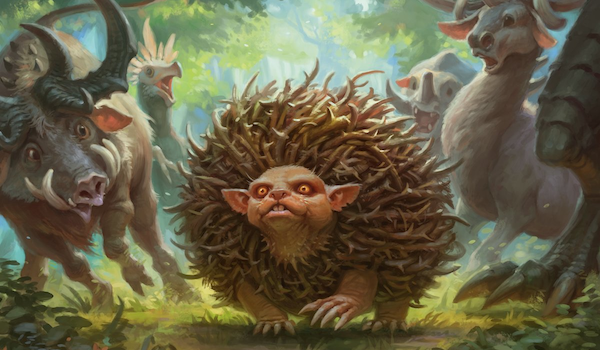
The only things we know for sure: brushwaggs are animals with bodies resembling a ball of briars, and Brushwagg somehow survived the Grand Creature Type Update. It's not much, but after all, even Mark Rosewater hasn't really helped to unravel the mystery. It has been suggested that the creature might be in fact a rodent (or hedgehog) "whose elongated spiny body can inflate itself with air to form a globe".

The Brushwagg's Deception

This theory about self-inflation may hold weight, as both Brushwagg and Almighty Brushwagg have abilities allowing them to change their stats under certain circumstances. The former, for instance, gets -2/+2 when it blocks or is blocked. The latter looks like a 1/1, but gains +3/+3 when its ability is activated. I'm not saying this is unusual for a green creature (think Basking Rootwalla), but at least it's something that our two Brushwaggs have in common...

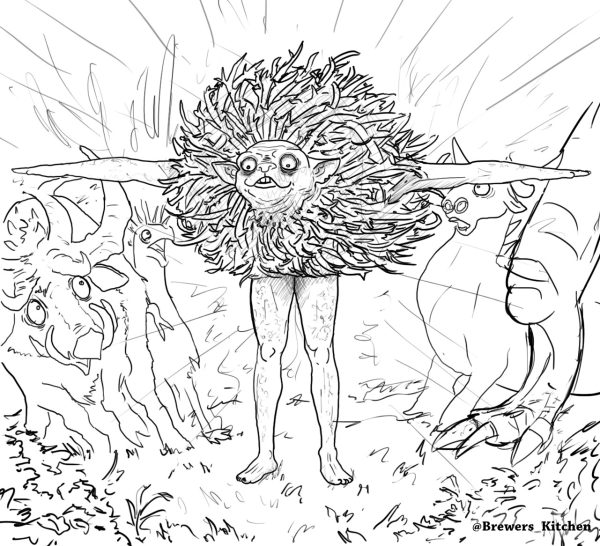
"Two minutes into laughing at the Brushwagg and it gives you this look" (from Reddit)

One last characteristic we can deduce is their deceptive nature, hinted at by the ability to grow unexpectedly. Such a trait also manifests in the flavor text of both creatures. Brushwagg's flavor text is among my favorites, and I think it deserves a full quote:

Defiantly, the young cyclops popped the brushwagg into his mouth. His cheeks suddenly puffed, his eye bulged, and he was forced to agree with his elder.

Afari, Tales

It's particularly spot-on if you think that Cyclops is another creature type introduced with the advent of Mirage, although obviously not unique to Magic. The flavor text of Almighty Brushwagg flavor defines the idiom "Laughed at the brushwagg" as a hunters' expression meaning “died unexpectedly.”

Brushwagg original sketch by Ian Miller, pen and ink.

To wit, brushwaggs remain mysterious creatures, and we can only try to glimpse its unthinkable secrets. What is certain is that Magic's makers had fun designing them, as they might look good in an Un-set, too. The original sketch by Magic artist Ian Miller, where the Brushwagg has a hallucinating gaze, reminds me of John Tenniel's Mock Turtle.

And What Is a Viashino?

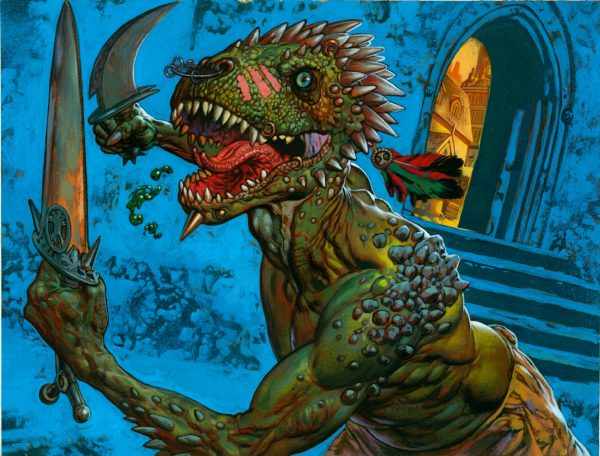
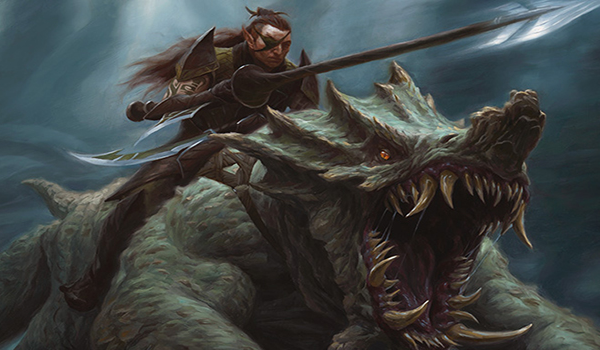
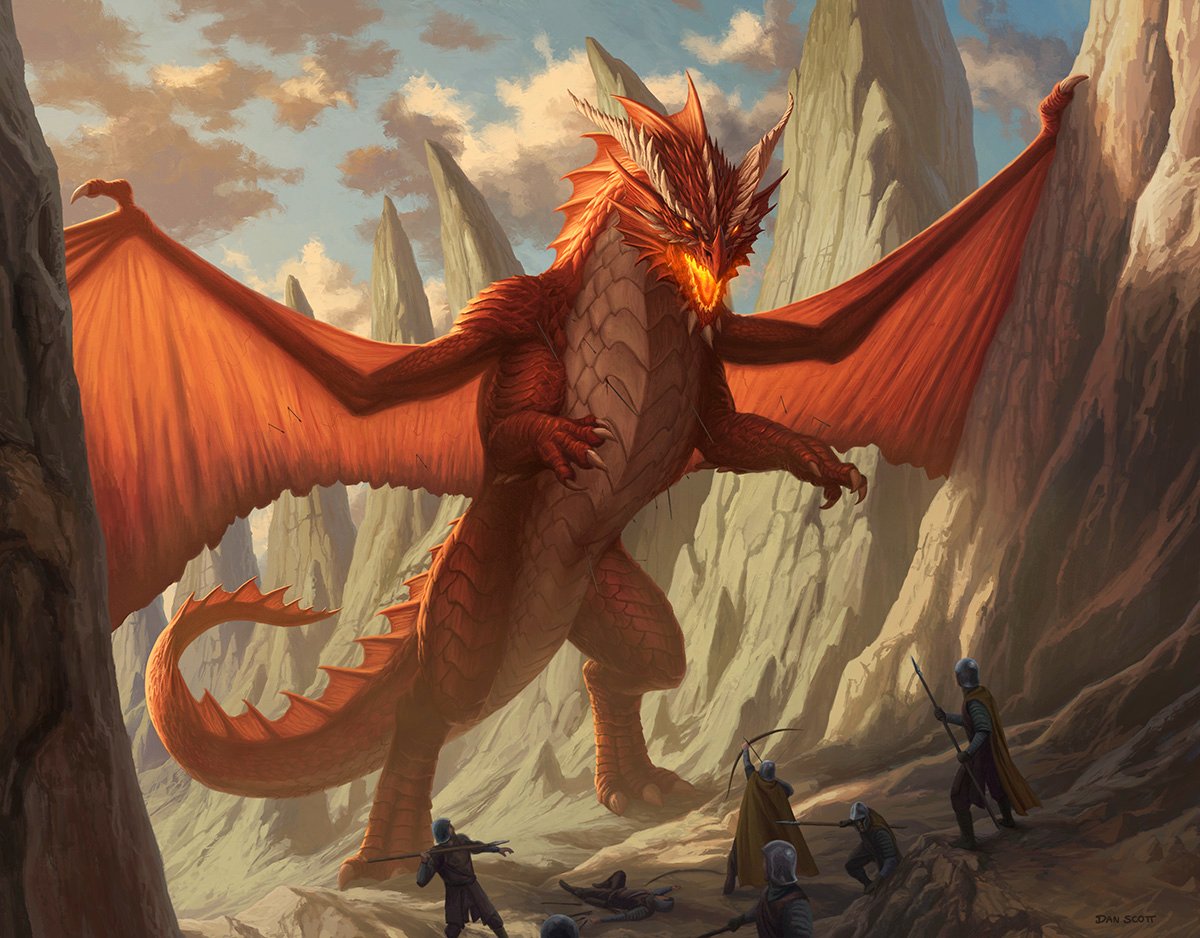
And now, forget about brushwaggs (although we could always use some more)... it's time for Viashino! The second creature type invented for Mirage had a very different fate, and today over 50 creatures exist with its type. Viashino are mostly red, and represent a sentient, humanoid lizard-folk descending from Dragons.

They tend to be aggressive creatures, being aligned with red, and normally have higher power than toughness. Mirage alone had three different creatures with the type Viashino, and two of them were legendary! So, let's see how it all started...

The three original Viashino creatures

What do they have in common? Not much, really. Especially Viashino Warrior, which is just a vanilla 4/2 for four mana, a variation on Hill Giant with slightly altered power and toughness.

With the two legendary Viashino, things get more interesting. They are both 3/4 for five mana, illustrated by Andrew Robinson, and seem to exert some sort of control over Dragons. The first gains control of opposing Dragons, while the second searches the library for a Dragon and puts it onto the battlefield.

Viashino After Mirage

What next? Viashino came back a few months later, with Visions (Viashino Sandstalker). And kept on coming in Urza's Saga (Retromancer, Viashino Outrider, and more). Many other Viashino came out in the original Ravnica block (2005-2006). Other blocks containing Viashino creatures were Time Spiral, Alara, and more recently the expansion Streets of New Capenna.

My favorite Viashino art: Viashino Slasher

Not much has changed in the course of the last 25 years of Viashino's development. Of course, these creatures have become more powerful, but so have they all. Again, we had a decent pinger for the Ravnica block (Viashino Fangtail). And we had some Viashino showing off the typical mechanics of new sets, such as devour on Thunder-Thrash Elder or blitz on Plasma Jockey. Although none of them were good enough for Constructed, many Viashino have proved fairly playable in Limited, suggesting Wizards sees them as a safe creature type to experiment on with new abilities.

Sentient Lizards vs. Bramble Cats

What's the biggest difference between the two creature types we analyzed today? As far as I'm concerned, Brushwagg is definitely among the most memorable types ever, while Viashino is not that remarkable. Although the latter has over 50 cards dedicated, and the former only has a couple, the pure genius of a feline-like beast covered in briars is tough to match.

What do you think? Let me know in the comments or on Twitter, and stay tuned for the next piece. We are going to tackle a new set with no less than six creature types unique to Magic!

Adam Plays Magic: Mono-Green Stompy

Are you a Quiet Speculation member?

If not, now is a perfect time to join up! Our powerful tools, breaking-news analysis, and exclusive Discord channel will make sure you stay up to date and ahead of the curve.

Welcome back for another installment of Adam Plays Magic. This week, we're crashing in with Mono-Green Stompy in Explorer. This archetype takes advantage of an all-green mana base to play otherwise hard-to-cast three drops like Steel Leaf Champion and Old-Growth Troll. The strength of these evasive stat beasts rests in their ability to come down on curve, which a typical deck of two or more colors will struggle to do. Since this devotion to green allows for high-powered cards other decks can't easily access, it's essentially splashing the same color for an added bonus!

What I Like

One of the top incentives to play green in Explorer is access to Llanowar Elves, which is currently the only unconditional one-drop mana dork in the format. While cards like Jaspera Sentinel and Gilded Goose have the ability to tap for mana, Elves consistently does so without any stipulations. Even though it doesn't fix for colors the way the other dorks do, Elves is the best at ensuring access to the payoffs described above.

Notably, Elves pushes up the clock and enables its controller to deploy threats while the opponent is futzing with their early mana. There's even the option to next-level them by playing a two drop like Werewolf Pack Leader to dodge Censor.

But the glue that holds the deck together is Collected Company. This spell is the deck's primary form of card advantage and the only instant-speed play in its arsenal. Company can deploy multiple bodies after a board wipe, accelerate a clock even further, or generate surprise blockers as a combat trick. Company is unquestionably a versatile powerhouse.

There was an error retrieving a chart for Collected Company

Another element that I've been impressed with has been Kraul Harpooner, which typically spikes commonly-played flying threats like Ledger Shredder and sometimes Raffiene, Scheming Seer and live to tell the tale. At its base level, it's still a 3/2 for two mana that pairs well with Pack Leader to trigger pack tactics if it lives, or grow Scavenging Ooze if it trades with an opposing creature.

While a much smaller component to the deck, I love the flexible utility lands in the mana base. Boseiju, Who Endures is a free include that can kill creature lands and pesky token makers like Fable of the Mirror Breaker and Oni-Cult Anvil. Hashep Oasis often pushes through the final points of damage and Lair of the Hydra is excellent flood protection. All of these lands tapping for colored mana and coming in untapped is a lot of added value for virtually zero cost.

What I Don't Like

A deck like Mono-Green doesn't have much agency over what's going on. There aren't counterspells or reliable card draw engines. The pilot needs to hope the opponent doesn't just "have it" at all times. Sometimes that plan works out and you smash them before their plan comes together. Sometimes Greasefang, Okiba Boss sends a flying bus (Parhelion II) filled with angels at your face on turn three.

The deck also runs the risk of some clunky draws. A hand full of three-drops is great with Llanowar Elves, but if the dork dies, good luck finding the third land and playing one spell per turn for the rest of the game.

The Deck

Explorer Mono-Green Stompy

Creatures

4 Llanowar Elves
4 Pelt Collector
2 Kraul Harpooner
1 Resilient Khenra
4 Scavenging Ooze
4 Werewolf Pack Leader
2 Rhonas the Indomitable
4 Old-Growth Troll
4 Steel Leaf Champion

Spells

4 Primal Might
4 Collected Company

Lands

2 Boseiju, Who Endures
17 Forest
1 Hashep Oasis
3 Lair of the Hydra

Sideboard

2 Tamiyo's Safekeeping
2 Destiny Spinner
1 Outland Liberator
3 Ram Through
2 Unlicensed Hearse
3 Shifting Ceratops
2 The Great Henge

End Step

Overall, I think Mono-Green is a solid tier two contender in the format, and it's great at punishing anyone that stumbles or is a bit too slow out of the gate. Games tend to be over pretty fast, making it a great choice to grind the Arena ladder.

The sideboard is surprisingly rich with options for an archetype with minimal spread on the color pie as well. Tamiyo's Safekeeping is a versatile spell that can punish removal heavy decks or board wipes. Shifting Ceratops is lights out against the Mono-Blue Spirits deck that's been gaining traction and is a great way to punish counterspells. The Great Henge outgrinds midrange decks like RB while getting a hefty discount from most of the deck's creatures.

And that's a wrap on this week's Adam Plays Magic! Don't forget to drop a like on the video and leave a comment letting me know what you want to see for next week. If you have any questions, as always, shoot me a message on Twitter at @AdamECohen. I'll catch you all next time.

An Enchanting Tune: Modern Song of Creation

Are you a Quiet Speculation member?

If not, now is a perfect time to join up! Our powerful tools, breaking-news analysis, and exclusive Discord channel will make sure you stay up to date and ahead of the curve.

It's quite rare for a deck to suddenly appear fully formed. In fact, I don't think it happens except when Wizards makes a mistake. Most decks spend years wallowing in non-viability before the right combination of players, cards, and metagame arrive. Just go poking around the dark corners of Magic Discords and forums if you don't believe me.

Today I'll be highlighting just such a deck. While it is likely to remain fringe for the time being, it could become a solid player in Modern. Don't sleep on it.

The Forgotten Set

I don't know if anyone remembers, but Ikoria, Lair of Behemoths was a pretty wild set. It was filled with so many new ideas and interesting mechanics that nobody really discusses because the only part that mattered were the companions. I can't specifically remember any cards from Ikoria seeing play in Modern beyond the triomes and companions. Which I know isn't true because I frequently exclaim "wait, that came from Ikoria?" The companions were sufficiently warping that I still forget Shark Typhoon and Winota, Joiner of Forces shared a release date with Lurrus of the Dream-Den.

There was an error retrieving a chart for Song of Creation

One such forgotten card is Song of Creation. I have vague memories of certain players getting excited for Song's potential before being smothered by Lurrus. And then for two years, there was silence. I'm sure that development was ongoing, but I heard nothing. I'm not privy to everything happening in obscure Discords and forums, after all. Then in July, I suddenly started seeing results. And streamers picking up the deck, including Gabriel Nassif. When a Hall of Famer is playing a deck, it's hard not to take notice.

An Odd Deck

I don't remember where the Song deck started out, nor do I want to spend the time necessary to find out. I do know that I was not ready the first time I saw the deck in action on Nassif's above linked video. To be honest, as I'm writing this article, I still feel like this deck shouldn't work. But does it ever.

Song of Creation Combo, bobthedog (31st Place, Modern Challenge)

Creatures

1 Wild Cantor
2 Endurance

Artifacts

2 Engineered Explosives
1 Everflowing Chalice
4 Mishra's Bauble

Enchantments

3 Utopia Sprawl
3 Song of Creation

Instants

4 Pact of Negation
4 Summoner's Pact
4 An Offer You Can't Refuse
2 Gut Shot
2 Veil of Summer

Sorceries

4 Strike It Rich
4 Glittering Wish
1 Grapeshot

Lands

1 Boseiju, Who Endures
1 Breeding Pool
2 Forest
2 Gemstone Mine
1 Hallowed Fountain
4 Misty Rainforest
2 Stomping Ground
1 Temple Garden
4 Windswept Heath
1 Yavimaya, Cradle of Growth

Sideboard

1 Guttural Response
1 Lightning Bolt
1 Nature's Claim
2 Veil of Summer
1 Wild Cantor
1 Sterling Grove
1 Firespout
1 Teferi, Time Raveler
1 Wear // Tear
1 Mine Collapse
2 Omnath, Locus of Creation
1 Song of Creation
1 Master the Way

bobthedog is Gabriel Nassif's MTGO handle, for those unaware.

So that sure is a pile of cards. It's very weird to see Summoner's Pact without Primeval Titan. And the last time I saw anyone play Wild Cantor, they were setting up to kill with Laboratory Maniac. And what's with the singleton Everflowing Chalice? Sideboard Omnath, Locus of Creation just seems wrong; that's a maindeck card!

There was an error retrieving a chart for Summoner's Pact

Essentially, this is a storm-combo kill that doesn't play rituals. Or an engine that makes mana. It's a combo deck built entirely around a single card that just provides an extra land-drop and lots of cards you can't keep. The mind simply reels and wants me to reject the deck out-of-hand.

Deceptively Strong

However, that's all just misdirection and misinterpretation. This deck is surprisingly genius. A true "the whole is greater than the sum of its parts" situation. Enough that I'm quite high on the deck and hope that it has staying power in Modern.

There are some barriers to that right now, but the future holds endless possibilities. I have some experience with Gifts Storm and I prefer Song of Creation to Storm. I'm not saying that it's a superior deck, but I think it's much better in the typical Modern metagame and for the typical player.

How to Sing the Song

As mentioned, Song of Creation is a storm combo deck in that it intends to kill with a massive Grapeshot. If that fails, it can Glittering Wish for Master the Way. To make either happen requires resolving the titular card. With that done, all the zero-mana spells become Pot of Greed. Simply play as many free spells as possible, draw as many cards as possible to find Grapeshot, cast it, and win. A straightforward storm kill.

The Song of Creation Kill

Playing the Chorus...

Of course, observant readers are already asking what happens when that doesn't come together. This is a non-deterministic combo after all, and resolving the key spell definitely doesn't translate directly into a win. More analytical readers may also wonder about the odds of actually finding the Grapeshot and more importantly how to cast it. Song only provides one additional land drop, so unless the plan is to go off with five mana, it's not going to work out.

There was an error retrieving a chart for An Offer You Can't Refuse

That's where the genius comes in. An Offer You Can't Refuse and Strike It Rich are the mana-makers. With Song out, Strike is mana-neutral card advantage in a deck where Manamorphose is too expensive. While Offer can be used to protect the combo, its main purpose is to fulfill its predicted destiny. The only card that absolutely has to resolve is Song (though Strike is close to necessary), so countering all the cheap chaff for treasure is a good deal when it makes the mana needed to keep the storm building.

... and the Bridge

A very important sequence is to play Summoner's Pact, counter it with your own Pact of Negation, then counter that with Offer for six new cards and two treasures. Then, resolve the original Pact. While Cantor is a decent target, that's mostly for when there aren't enough treasures to get or keep going. More often, Endurance should be chosen. It's not only a free spell, but it recycles all the spent cards back into the library.

There was an error retrieving a chart for Endurance

Churning through 60 cards is more than enough storm to kill with and if it isn't, there are bigger problems. The problem is decking. The draw trigger on Song is not optional, and sometimes Grapeshot will be on the bottom of the deck. In other words, by the time the kill can happen, it actually can't without the pilot dying first. Endurance therefore provides the space needed to keep going while also powering towards that endgame.

Meet the Backing Band

Alternatively, Wishing for Master is an option. However, it's harder to pull off than I like. The sequence requires seven mana, which isn't nothing. In testing I frequently found it difficult to keep treasure around between paying for Strike, Offer, and Utopia Sprawl. I felt like I had to really plan to go for Master rather than just trusting the deck to find the Grapeshot.

There was an error retrieving a chart for Glittering Wish

However, win condition weirdness aside, Glittering Wish is essential to the deck and arguably as important as Song itself. There's a full Wishboard here, with some very essential targets. Obviously, Guttural Response and Teferi, Time Raveler are great against Counterspell decks, but I grabbed Wear // Tear more often. I'll explain why down the page.

There was an error retrieving a chart for Omnath, Locus of Creation

I know that Nassif often boarded in both Omnaths in matchups he didn't expect to successfully combo, but I found that just bringing one in was correct. I wanted that Wish target and needed it often. Song combo can't always get all the way there, and Omnath is pretty good as far as fair backup plans go. Though you never want to be in that position, as it is significantly harder to win via beatdown.

Deck Evaluation

As previously stated, I think that Song is a good deck in Modern. I've often said that Modern is seriously lacking in combo decks despite there being ample room in the metagame for them. Indeed, in a metagame dominated by grindy fair decks, an unfair combo should be well positioned for success, especially with maindeck Veil of Summer. Belcher has tried to fill that niche, but just can't quite cut it. The aforementioned straightforward combo kill coupled with the Wishboard utility should make Song a solid player in Modern.

Weaknesses

In terms of internal weaknesses, there is a small chance of the combo fizzling. Drawing two cards per spell goes a very long way towards preventing fizzles, but sometimes only lands are drawn. Other times, it takes all the treasure and extra land drop to get into the combo, and there's no mana to cast Grapeshot. Fortunately, the risk of fizzle due to sequencing errors mid-combo is very low. Just keep playing spells and counter them as necessary; the order doesn't matter very much.

There was an error retrieving a chart for Grapeshot

Of course, a fizzle is probably fatal. Song won't go away, so there will be more chances to combo. However, because of that the enchantment's final clause, starting over means doing so from scratch. It is possible to draw really well and go from zero to victory. But it is much harder. Flashing back Strikes might do the job but I wouldn't rely on that.

This is also why players shouldn't be afraid of playing their Pacts. The upkeep trigger is unlikely to matter, and failing to pay probably won't change anything.

What About Storm?

Which may be a shock to Storm players, since Song is very similar strategically, but I've also said that I wouldn't play Storm seriously again. The reason is simple: Storm is too complicated. Especially in the current metagame. I lack the dedication to Storm required to succeed with Storm. Song doesn't require total and complete devotion, making it easier to put down and pick up when appropriate as the metagame shifts.

There was an error retrieving a chart for Gifts Ungiven

Winning with Storm requires solving dozens of puzzles of escalating complexity continuously. The standard line of playing cost reducers then playing Gifts Ungiven to set up the kill only works if the opponent has no interaction. Usually, Storm has to carefully plan out many turns ahead how it will play through interaction, exactly how it will tutor and when, whether it has to go for an alternative kill, how long it can spend sculpting with cantrips, etc., etc., etc. It is incredibly difficult to manage.

There was an error retrieving a chart for Goblin Electromancer

Storm is also vulnerable to many types of disruption. In addition to obvious anti-combo hate, graveyard hate shuts off all the easy Storm kills. The compensation is that with so many lines available, a good Storm player can outplay almost anyone and any deck. Given time, good Storm players can put on a ballet that makes everyone look like they're playing Go-Fish. However, getting to that point requires so much work that it's prohibitive.

In Comparison

Song gets points on Storm for being significantly more straightforward. Cast and protect Song, play lots of spells, find a win. There's no working around the creatures dying, worrying about the correct sequence of plays to get the right outcome, no long tutor chains. Cast spells, draw cards, make treasure. A solid plan.

There was an error retrieving a chart for Rest in Peace

Additionally, graveyard hate isn't effective at preventing Song's combo. In the face of Rest in Peace, Storm must plan out how to win without Past in Flames or find an answer. Song just needs to avoid decking themself. Given that graveyard hate is essential in Modern, this is a huge advantage.

There was an error retrieving a chart for Narset, Parter of Veils

It is balanced by Song having some weaknesses Storm doesn't, but they're less likely to matter. The first is that Song is an enchantment and the combo doesn't work without it. Thus, enchantment removal can shut down a combo turn. However, it isn't so bad. No Song on the field means no discard trigger. Also, Song plays eight counters to answer said removal, and enchantment removal is pretty sparse these days. More troublesome is Narset, Parter of Veils. The combo can't happen against a Narset. She doesn't see much play in Modern, fortunately, but remains something to be aware of.

The Catch

That said, Song's reliance on zero-mana spells is a problem right now. All the anti-cascade cards also hit Song. Chalice of the Void on zero not only answers the combo but bricks a chunk of the deck. Void Mirror is even worse. Engineered Explosives is only a two-of and can't deal with everything.

My Advice

I think that Song is a good Modern deck coming up at an unfortunate time. There's a lot of splash damage thanks to Shardless Agent. Players will be put off by this and won't pick up Song, not only because of that combo stigma but the very plausible fear of being hated out.

There was an error retrieving a chart for Chalice of the Void

However, this is an opportunity. This is the sort of deck that can very easily spike a tournament against an unprepared field. I'm keeping this in my back pocket for the RCQ's. There will be an event where players assume that cascade won't be a factor. Song will enjoy not only the lack of hate but the unfair combo advantage over the grindy fair decks. Practice a lot with this deck in private, but don't play it in weekly events, and they'll never see it coming.

There was an error retrieving a chart for Pact of Negation

Subsequently, I'd advise anyone with even a passing interest to buy now. The critical cards are fairly cheap while the deck is new and unproven. Nothing in it is likely to be hit with a ban, so holding for the right metagame is a safe move. The manabase and Endurance are Modern staples and should be on the acquisition list anyway. Buy now, master it, sit on it, and wait for the opportunity to strike. There will be a window to shock an event.

Liner Notes

I don't think that Song of Creation is in the running for Tier 1. There's too much hate available if it really starts to take off. Narset is the worst, but a simple Thalia, Guardian of Thraben also proves crushing. However, as a long-term Tier 3 deck with spike potential, it fills the niche far better than Storm. It may even have more staying power than Belcher thanks to the Wishboard. Once again, don't sleep on this deck!

Embracing Our New Alchemy Overlords

Are you a Quiet Speculation member?

If not, now is a perfect time to join up! Our powerful tools, breaking-news analysis, and exclusive Discord channel will make sure you stay up to date and ahead of the curve.

Amidst the groaning over digital-only products, a new format emerged earlier this month. I delayed writing this article before realizing the inevitable: these changes are here to stay. While Alchemy cards may lack the elegance of traditional Magic the Gathering design, this set provides a new Limited environment on Arena. Changes like these might seem difficult to reconcile. However, just like the introduction of Planeswalkers and dual-sided cards, we will find room to appreciate these as part of the game's landscape.

If you plan on drafting on Arena this summer, you will most likely be playing Alchemy Horizons: Baldur's Gate (HBG). With it comes new abilities, a deluge of digital-only keywords, and brand-new strategies to help give you the edge as you battle it out for seven (or three) wins.

Double-Team Warps the Format

Two new keywords, double-team and specialize, define HBG. The double-team ability makes curving out exceedingly easy, especially when written on cheap creatures like Genasi Rabble-Rouser and Soldiers of the Watch. As previously discussed, the ideal two-drop trades off and leaves something over. These cards don't just provide a resource, they generate a completely new copy of themselves. This means that if you and your opponent are trading two-drops and only yours has double-team, you are way ahead.

Double-team is very strong and aggressive in nature. When an aggressive keyword generates card advantage, you need to have a compelling reason to play a controlling strategy. Blitz incentivized aggression in Streets of New Capenna (SNC), but double-team really punishes slower decks in HBG.

Seven double-team creatures meant never running out of action

My first foray into HBG yielded a 7-2 finish. While this deck did have some strong rares (Fiendlash and Wrathful Red Dragon are both very powerful), double-team made me feel very confident from the early stages. The format has a decent amount of interaction, but it can't keep pace with the card advantage that comes from these creatures. They play out similar to the adventure mechanic, where each card feels like two. The gameplay reminds me a lot of SNC because your early aggression naturally provides more action down the road. The biggest difference I've noticed is that it's far easier to stabilize in HBG, whereas in SNC starting off behind felt like a death sentence.

Winning With, and Losing To, Specialize Creatures

Specialize creatures delivered the only two blemishes on my trophy run. Admittedly, that can happen when you're short on removal. Treat these creatures as bombs. They have a lot of text on them, so in the draft, you should be cycling through the colors that you have access to and skipping the others. They are all pretty good and should be high picks, though I would avoid the blue ones (more on this later).

My first loss came against Skanos Dragon Vassal. I expected to race the dragon until it was cloned with Irenicus's Vile Duplication. I lost soon after. Viconia, Nightsinger's Disciple delivered my second loss after stealing a Genasi Rabble-Rouser from my graveyard and pairing it with a few of my opponent's copies. The specialize creatures demand removal and I did not have enough to fend them off in those two games.

Ambergris, Citadel Agent was game-breaking every time it was activated. Its red-white side can easily generate +4/+4 to each attacker and ends games very quickly. Though I haven't played with every specialize creature, each seems to be a game-warping experience.

It's Not Easy Being Blue

We started with Adventures in the Forgotten Realms (AFR), a format where blue was nearly unplayable and maybe the only controlling color in the format. They added double-team to further punish controlling decks. They removed the best blue cards (which weren't even that good) and then added specialize, giving blue the worst of the bunch. How did we get here? Well, let's look at where we started.

Removing Djinni Windseer and Scion of Stygia from the format slowed down blue's ability to play a tempo game. While Wizened Githzerai is a promising addition to that gameplan, the support is not there. The truth is blue is just bad. If you find a blue card you need to play, I would strongly advise only including it as a splash. Because as bad as the data was in AFR, it's only gotten worse in HBG.

If those data points aren't convincing enough, I'd like to show you the list of top commons in the format. The first blue card appears as the thirty-fifth best common in the format. The second one comes in at thirty-eight.

Even if you can't read the font, it still tells the whole story.

This was the largest font I could use to demonstrate the highest ranking blue commons in relation to the rest of the format's commons. In short, blue is unplayable. The creatures are too small. The gameplay can't keep up with the format. Its best cards should be splashed. I understand that draft is self-correcting, but even if you're the only player taking blue cards at the entire table, I still advise looking in a different direction.

What the Other Colors Do

Alchemy is an aggressive format and the Mardu colors (White, Red, and Black) do that better than the other two colors. Early on in the format, white seems to be the best option. It is deep at common with Blessed Hippogriff, Priest of Ancient Lore and Patriar's Humiliation ranking as the top three commons currently. The Humiliation is a brilliant removal spell and I would consider taking that over the other two because it is so easy to splash.

Both red and black provide an aggressive curve and removal. Currently, the data supports black as the second best color, but it's close and between the two it is unclear to me which is better. Any combination of the Mardu colors should be a powerful, aggressive deck assuming the colors are open.

Green plays a little differently. It offers tools for ramp in Undercellar Myconid and Scaled Nurturer, as well as larger threats to capitalize on this advantage. Owlbear and Hill Giant Herdgorger return and are joined by Dread Linnorm, providing powerful curve toppers at common. Band Together is a reasonable removal spell and Gnoll Hunter is probably your best two-drop.

As for blue...

So Alchemy is a Disaster?

I have some issues with the Alchemy cards in general. However, Draft is basically fun no matter what. With SNC currently removed from Arena, Wizards of the Coast is not-so-subtly encouraging us to give this set a try. Yes, it has its flaws but it's still an enjoyable format. This is a new frontier for the design team and while it's easy to nitpick, it's probably just objectively better to jump in and enjoy the new format. Remember that in the early days of Magic: The Gathering design they thought Ancestral Recall and Healing Salve were part of a balanced cycle. These things have a learning curve.

You do, however, need to know the rules of engagement.

  • Expect aggression and the double-team creatures do this better than anyone.
  • Specialize cards are generally very strong.
  • Interaction is valuable, as the high volume of specialize creatures demand answers.
  • Green can ramp, but have a plan against aggression.
  • The odds are against you if you want to be a control deck.
  • Avoid blue like the plague. Although not like Sewer Plague which is a premium removal spell and should be taken highly.

Make sure that you're the one casting the double-team creatures early. It's hard to lose with that kind of a start. The specialize cards finish the job, but you can just beat opponents with a strong curve and some well-timed removal spells. Hopefully, this guide helps you Gatecrash your way to the top. Let me know in the comments what cards have over-performed for you!

Lost Legends: A Deep Dive

Are you a Quiet Speculation member?

If not, now is a perfect time to join up! Our powerful tools, breaking-news analysis, and exclusive Discord channel will make sure you stay up to date and ahead of the curve.

I started playing Magic in 1997—this was unfortunately far too late to enjoy the opportunity to purchase and crack open booster packs of Legends. Though that set came out just three years earlier, it was sold out at any of the local hobby shops I could get to with my bicycle (I was only 13, after all). For over a decade, the set remained mysterious and out of reach.

Fast forward ten years, to the late 2000s. I learned that a co-worker of mine had collected Magic cards when he was younger. Through some negotiations, I managed to purchase his collection, which was a haystack within which many valuable needles were hidden. I found a few Dual Lands, some Force of Wills, and a stack of Legends cards (though none of the big dollar cards). One of the most interesting components of that collection was an Italian Legends booster pack.

I kept this treasure sealed for a while, but finally gave in to temptation (and a little peer pressure) and cracked open the pack—no Mana Drain, and the rare was a Telekinesis.

There was an error retrieving a chart for Telekinesis

Despite the underwhelming contents inside, I recognize the experience as a once-in-a-lifetime opportunity: to open pack fresh Legends cards in the modern age.

Until Now…

Dominaria United is scheduled for worldwide release on September 9, 2022, a little over two months from the time of this writing. The set is likely to include many throwback references to cards I used to enjoy playing as a kid. Naturally, this is boosting my hype for the set, and I hope it has more resonance with history than the last Dominaria set (old card frames please?!).

Last week, Wizards of the Coast announced the most exciting component of Dominaria United yet: the concept of Lost Legends.

If you missed the announcement, here’s the synopsis: cases of Legends were allegedly lost in a warehouse somewhere isolated in Washington state. This product was recently found, cracked open, and the singles were spread throughout sealed Dominaria United Collector Boosters. Pretty amazing, right? Imagine, the chance of opening up any beloved, classic card from one of Magic’s earliest expansion sets! It’s a chance for newer players to acquire cards they never could have found and/or afforded otherwise!

There was an error retrieving a chart for The Tabernacle at Pendrell Vale

With all the product that was found and opened, there’s a three percent chance a given Collector Booster will contain one of these sweet Legends cards.

What’s In and What’s Out

While the previous section provides a high-level synopsis of these Lost Legends, the reality is there are a number of nuances of which everyone should be aware.

First, when Legends was printed 28 years ago, printing and collation technology were not exactly state of the art, and there were collation problems. Because of this, many booster boxes only contained one portion of the possible uncommon cards—they were either from set “A” or set “B”. A booster box from set “A” would not contain any uncommons from set “B”, and vice versa.

This was so frustrating to players, in fact, that Wizards of the Coast initiated a Legends Exchange Program, which gave consumers the opportunity to trade in up to 100 cards from one group of uncommons for an equal number of cards from the other group. Pretty wild, right?

Legends Exchange Program from Duelist #2

What does that mean for Dominaria United’s Lost Legends? Well, true to history, the cases that Wizards cracked open for this promotion only came from one of the print run batches. In other words, some uncommons won’t be appearing in this product at all, despite being popular cards from Legends. Fifty cards, to be exact.

While most people probably won’t care that their Collector Boosters won’t contain unplayable uncommons like Wall of Dust or Undertow, there are some noteworthy omissions. First and foremost on many players' minds, you won’t be able to crack open any copies of Mana Drain or Land Tax. There’s no Underworld Dreams either. If you were hoping to pull the infamous Albert Einstein printing of Presence of the Master, you will be disappointed yet again—it’s not included, either.

There was an error retrieving a chart for Presence of the Master

That’s not so bad, though, because there are still plenty of valuable cards that will be included, right?

Yes. Absolutely. You’ll still find gems like Moat, The Tabernacle at Pendrell Vale, and Nether Void.

No, wait a second, Nether Void’s not in there either. It turns out that Wizards also purposefully removed sixteen additional cards. It’s obvious that cards they had previously banned due to racist undertones (or overtones, in the case of Invoke Prejudice), are not included. In addition, all cards by controversial artist Harold McNeill (Nether Void, Sylvan Library, etc.) are out, and a few others are also sidelined. This includes some high-dollar collectibles like Gwendlyn Di Corci, which isn't too surprising. I don’t think bondage is something Wizards wants their game associated with.

There was an error retrieving a chart for Gwendlyn Di Corci

At the end of the day, Legends has 310 unique cards in the set. 244 of those cards will be included in Lost Legends and will appear in Dominaria United Collector Boosters.

Impact on the Legends Market

I cannot say definitively, but I don’t expect this small increase in the supply of Legends cards will move prices all that much. Any downside pressure from more copies hitting the market is likely to be cancelled out by a small increase in demand and newfound interest in the set. It should be a wash, especially on the rares.

On the other hand though, cards excluded from the Lost Legends set may get some additional attention. By calling out certain cards like Barbary Apes and Pyrotechnics, it draws attention to these cards. The last time Wizards called out such cards, it drove buyouts on them. This is occurring again, though it isn’t really hitting the radar yet.

Here are recently completed sales on TCGplayer for Barbary Apes and Pyrotechnics, respectively.

People seem to be buying these up, but the reality is there are many copies of these cards on the market. It would take a lot of repeated buyouts to get these to stick at a higher price point. Honestly, why bother? If you really wanted to make a play in this space, you’d be better off buying Gwendlyn Di Corci. At least that’s a rare card, on the Reserved List, and has a cool history.

Other than that card, I wouldn’t bother much with the rest. I’d treat this Lost Legends release as a non-event in the grand scheme of Magic finance. The market forces at play involving currency fluctuations, rampant inflation, and economy weakness are much more likely to influence card prices going forward. The best I can hope for is a broader population’s kindled interest in one of my all-time favorite sets.

Wrapping It Up

Will I be purchasing any Dominaria United Collector Boosters in the hope of pulling one of these Legends cards? The novelty makes the idea tempting, and we all have a small gambling streak within us. That being said, when you crunch the numbers, the odds look fairly abysmal.

There’s been a lot of chatter about the set in the Old School Discord. I don’t know who Robert Vincent is, but he did some calculations that I wanted to share here:

The fact that you’d have to spend over $12,000 to pull a full pack (15 cards) of Legends is pretty telling. Also, at $24 a pack and just 3% odds, it doesn’t seem like a great idea to try and expand your Legends collection this way. Don’t forget that, when you do open a Legends card in one out of every 33ish boosters you open, chances are it’ll be some garbage unplayable common. Do I really need to pay $24 for a bunch of new cards I won’t care about and a shot at a Glyph of Destruction? Nah, I’m good.

For the money we’re talking, I’d rather just purchase the real thing. Card Kingdom has a few English Legends booster packs in stock currently at $999.99. If I want a piece of history, I could trade in some cards to their online shop for store credit to pick one of these up. That would definitely be more exciting than trying to pull one card out of 33 Collector Boosters.

At the end of the day, I hope these Lost Legends cards drive greater interest in Magic’s history. A little light shined on one of the Four Horsemen sets can be a small boost in interest from the broader community, and this gets me excited. As for gambling on the Collector Boosters—that’s not the angle I intend to play. If I purchase a few, it’ll be to open some cool throwback cards that remind me of the game back in 1997 when I started playing. Nothing more.

Universes Beyond, FOMO, And You

Are you a Quiet Speculation member?

If not, now is a perfect time to join up! Our powerful tools, breaking-news analysis, and exclusive Discord channel will make sure you stay up to date and ahead of the curve.

I have a confession; I'm a big fan of a few things that are not Magic: The Gathering. In particular, I am a big fan of Warhammer 40k, and I'm anxiously awaiting the Warhammer 40k Commander release in August. However, I believe I have noticed a trend that I want to share. A disturbingly low amount of Secret Lair Universes Beyond product seems to be making its way to what I call "actual gameplay tables." Where did all these cards go? To Magic players and collectors? Maybe not.

A Tale of Street Fighter and Stranger Things

A lot of the Secret Lair product line is not for me. There are many reprints of cards I already own and I'm not interested in most of the new artwork. However, when the Stranger Things cards were spoiled one caught my eye, Mind Flayer, The Shadow. I have played mono-black Commander decks often, I love theft effects and, I happened to love the artwork too. My hesitance to immediately pre-order for $40 or $50 was based on the fact that I knew the cards would be re-printed as "ordinary" MTG cards in the future and it was a pretty steep price to pay for the single card I wanted. I decided to hold off. How did that go for me?

There was an error retrieving a chart for Arvinox, the Mind Flail

Let's compare this to the regular Magic Card.

There was an error retrieving a chart for Arvinox, the Mind Flail

To me, I could not legitimize spending so much money for just one card and I was willing to hold off until the reprint. Arvinox quickly dropped in price. I recently purchased mine for 99 cents with another order. The rest of the Universes Within (SLX) prints are all under a dollar each bringing the entire set with tax and shipping to around $10. Is it worth it to spend quadruple for the same cards just because you're a Stranger Things fan? Definitely not for me and, it appears, not for most Magic players either.

Do You Have A Source For That?

Here, I fully state that this is empirical data from my observations at two local game stores (LGSs) and from many hundreds of games on SpellTable. With the sole exception of a Rick, Steadfast Leader in a Winota, Joiner of Forces deck on SpellTable, I have not seen any Secret Lair Universes Beyond cards in play. On the opposite end, I have seen plenty of Universes Within versions of the same cards. Commander is where you expect people to show off their cards and it's telling to not see them.

I have a second data point though, courtesy of TCGplayer, Cardkingdom, and Starcitygames. Each of these vendors or their sellers has many copies of each card available. It stands to reason, then, that a lot of this product was purchased for resale. eBay completed auctions agree with my assessment.

Finally, reading the Wizards FAQ has led me to this gem. "Quantity limits vary by drop, though usually, customers can purchase up to 60 of each drop." Does this sound like a "limited" product to you?

So What About Street Fighter?

There was an error retrieving a chart for Chun-Li, Countless Kicks

Here, I had the same decision to make. I was not impressed with the artwork or power of the Street Fighter cards except for Chun-Li, Countless Kicks. I'm significantly more of a Street Fighter fan than a Stranger Things fan and I think this is the stand-out card from the set in exactly the same way as The Shadow. Am I willing to pay $40 for a single card? I cannot legitimize it. I'm just not a big enough fan to pay a forty times markup when a Universes Within card is on the way.

But You Get More Than One Card!

Sure I get other cards but few of them are desirable or valuable. Based on my ratings of the Stranger Things cards I have made a similar value judgment for the Street Fighter set. In my estimation, none of the cards are uniquely powerful enough to be deck-defining commanders outside of Chun-Li (Ken, Burning Brawler comes close but no cigar.) The actual Stranger Things prices rapidly decreased and, outside of The Shadow, are worth less than what you paid per card. This means you could have waited, purchased the couple of cards you wanted from the secondary market, and saved money. Or, you could have waited even longer for when these cards were reprinted and picked them up for pennies.

Overpaying Now Or Overpaying Later Is Still Overpaying

Patience is a virtue. Even so, just a tiny bit of patience saved potential Secret Lair buyers up to $30. For me that $30 represents more Magic cards I can buy later.

The 500 Pound Zombie In The Room

There was an error retrieving a chart for Rick, steadfast leader

Does this same strategy apply to the first Universes Beyond set, The Walking Dead? Rick has blown it out of the park in value. Daryl, Hunter of Walkers? Not so much. The same goes for Glenn, the Voice of Calm and Michonne, Ruthless Survivor. Negan, the Cold-Blooded and Lucille are more valuable than the others but not by much. So yes, this is exactly the same. One card is a tremendous overperformer. The rest? Bulk, near bulk, and soon to be bulk. In five years I wonder which Walking Dead card will be more valuable?

Didn't You Mention Warhammer 40K?

Yes, I did and that is where I am in trouble. I'm a much bigger fan of 40K than all of the other crossover releases and they are selling entire Commander decks. Buying a handful of cards is entirely different than purchasing a unique gameplay experience. I know several people local to me have already pre-ordered their decks. Unlike Arcane or Fortnight which I have absolutely zero interest in, I really do want to possess the complete Warhammer decks. By the time the inevitable reprints come I will have already enjoyed playing many games with the in-universe cards.

FOMO, Fun, Or Funds? You Be The Judge

It could be that FOMO is driving my pre-order decision. The facts show that ordering these cards is likely a poor long-term investment. The exception? You can definitely make money on sealed Secret Lair products. Singles? A bit more difficult there. It takes a long time to sell every individual card and if it takes too long you will get hosed by reprints. One vendor has dozens of copies of The Shadow for sale right now. There is zero chance they will sell that many in a year, let alone sell all of them at full price. They have a commensurate number of the other cards as well which are all losing value.

So Keep It Sealed

For me, holding on to this type of sealed product for too long represents a bit of risk because of the reprint clock. There's also a significant opportunity cost to holding too much of one type of product. Right now especially there is a lot of economic uncertainty. I want to profit off of that uncertainty by buying at bargain prices. It's hard to do that with cash tied up in products printed in the last year. Buying some Secret Lairs and keeping them sealed is a pretty surefire way to make a decent but not stratospheric profit. Getting a huge number and cracking them? A verifiably terrible idea.

The Inevitable Conclusion

If you are a super fan of course you should pre-order a single Secret Lair drop from your favorite universe. But that must mean you want every single card even if, functionally, they are not very powerful. If you are a more discerning player, it's better to purchase only the singles you want. For those who are even more patient, holding out offers maximum savings. This is the key. There are, simply put, very few newly minted fans of Magic that absolutely must go back and purchase an entire Secret Lair without considering less expensive options. They do exist, they will exist, but it's not many.

On the reverse side of the equation, sellers need to be extremely wary of losing value by cracking open sealed product and taking too long selling the singles. Data is your best defense against FOMO, don't get caught up in emotional exuberance on either side of the equation.

Generational Magic: Store Spotlight—Pack Fresh Hobbies

Are you a Quiet Speculation member?

If not, now is a perfect time to join up! Our powerful tools, breaking-news analysis, and exclusive Discord channel will make sure you stay up to date and ahead of the curve.

Along with sharing my own Magic: the Gathering journey, I want to share what's going on with others in the community. Not just the players, but the people that provide a place to gather. The Greater Cincinnati/Dayton area is fortunate to have a lot of options when it comes to Magic and gaming in general. Here's a glimpse into one of them.

Come On Down!

What's your name, the name of your store, and where are you located?
I'm Mike Degaro and I'm the owner of Pack Fresh Hobbies and We Buy Games in Amelia, OH.

Mike, Owner of Pack Fresh and We Buy Games

When are you open?
We're open every day except for the major holidays.

What gaming experiences and events do you offer?
Magic: the Gathering, Pokémon, and Flesh and Blood are our main games. We do sell Dungeons and Dragons, Yu-Gi-Oh!, DragonBall, and Digimon, but don't have a large following for them. On our non-gaming side, we delve heavily into sports cards.

Pack Fresh Hobbies

How do you connect with your customers?
Facebook is our main connection for both Pack Fresh and We Buy Games.

How did Pack Fresh start for you?
I used to work for a couple of different game stores in the area sometime before I got involved, so that helped. About five years ago, I was a driver for Donato's Pizza when We Buy Games opened up nearby. They sold mainly video games, but I noticed they had packs of Ixalan and other Magic paraphernalia in a small area.

After coming in a few times as a customer, I thought to ask an employee if they had thought of expanding that part of the store. He expressed that they didn't know much about Trading Card Games (TCGs), so I offered to help and to let me know if they had any questions. The employee spoke with the owner, we talked, he made an offer, and we became business partners.

One of the first things I did was increase our stock. I pulled together some cash, took some of the cards from my personal collection, and we traveled to Columbus. We bought thousands of dollars in singles and sealed product. We started advertising for Commander and Modern events and eventually, it took off.

So, Pack Fresh Hobbies started as We Buy Games?
Pack Fresh started very recently, within the last six months. Next door to We Buy Games was an old insurance company that had closed. They still had their name on the lease, so we couldn't get the space for some time. Our original space only had room for maybe 20 people...definitely a tight fit.

Fortunately for us, their lease expired and we were able to get the space. The owner of the building installed a connecting door between the stores and that gave us the room to provide each business its own separate area, along with doubling the playing area.

Pack Fresh Hobbies and We Buy Games

How did you come up with the name 'Pack Fresh'?
For the last couple of years, we've been working hard to take the sports card part of the business to a national level. For us, sports cards have been an enormous boon and have actually strengthened in popularity through the last few years. We wanted something that would not only express TCGs but sports cards as well. Our thinking is that one of the best moments is when you first open that pack and so: Pack Fresh.

Very nice! What Magic experiences do you provide?
Before the pandemic, we ran events seven days a week. Magic was played on most of them. Standard, Modern, Commander, Legacy, and Pauper. Covid hit us pretty hard. Since things started opening up it's been difficult.

We tried to start up events early in the process. Not too early, of course, but enough to hopefully get a jump on things. Unfortunately, all events were hit pretty hard, except for Commander. Our Thursday Commander events are running very well along with the normal Pre-release events.

What are your hot sellers for Magic?
Specific cards from the Commander pre-constructed decks. Fierce Guardianship and Wedding Ring are good examples. The essential Commander artifacts; Sol Ring, Mana Crypt, Mana Vault, etc.

There was an error retrieving a chart for Fierce Guardianship

How did you get started with Magic?
I was 13 playing Yu-Gi-Oh! and went into a local store that my friends and I happened to find through Google. I continued to play and started working at that store sometime afterward. Six months into my employment, I started learning more about Magic to better help our customers.

As I kept learning about the game, it looked amazing, and I couldn't believe I wasn't playing already. It was right after Zendikar when my epiphany began, and I jumped in with both feet. I got really into competitive play around the time of the original Innistrad. Because I had a large trade binder stocked with Yu-Gi-Oh!, I was able to get into a lot of the higher-end Magic cards before their prices went sky-high. That's when I started playing my first Legacy deck, Elves.

What do you personally enjoy playing?
I've enjoyed Legacy the most. My favorite deck was Gerry Thompson's Shardless BUG, I believe during the 2014/15 timeframe. I was known as 'the BUG guy' around the area at that time, it was all I played. After that, Modern started coming into its own, so I tried my hand at that. I actually tried to build a Modern BUG deck, but it never seemed to really work. These days, with the requirements of the business, I don't have a lot of time to play. When I do, I have a Yarok, the Desecrated Commander deck that I play. I've enjoyed playing Flesh and Blood as well.

Since the pandemic, Flesh and Blood has been our largest competitive format and Commander our largest non-competitive. Recently, it has started to shift where Flesh and Blood attendance is smoothing out somewhat and our Commander pods are increasing in number.

Nicol Bolas says, "Enter If You Dare!"

What's one of your favorite Magic cards?
Fastbond. I was able to get into Vintage for a short time and really enjoyed the card. It helped me win a lot of games back in the day. The artwork really appeals to me, especially since Mark Poole is my favorite Magic artist. I'm good friends with his manager, so I talk with him every now and then. He's also painted various Flesh and Blood cards, so I'm always on the lookout for his work. Huge fan here. With my love for BUG, Shardless Agent is a close second.

To finish up, is there anything else you'd like to share?
Sports cards have become a larger part of our business and we pay attention to what's been working for us. The margins are quite different between sports and gaming, and we're fortunate to be able to use some of the profits from the former to support the latter.

We're looking forward to hopefully running more Magic events and potentially getting another person to assist in that area. We're getting out into the community more often for various card shows, and doing more traveling, so people will be seeing and hearing about Pack Fresh more often.

It has been great to see more people coming back out. Not just for the business, but to see people we haven't seen in a while is great. To make those connections and share in the fun. We're always happy to support our players and customers and give them a good experience.

LGS Is Where the Heart Is

I want to thank Mike for providing us a glimpse into Pack Fresh's Magic life. I hope you enjoyed the visit and look forward to the next! Do you know the story behind your own LGS? Feel free to share in the comments. And if not, maybe now's a good time to get up to speed...

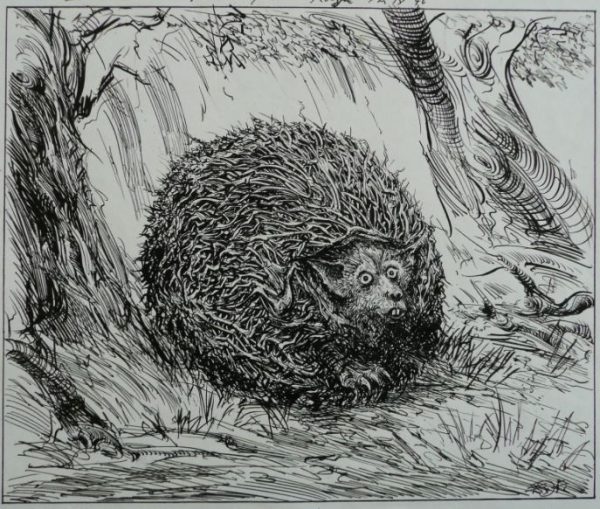
Want Prices?

Browse thousands of prices with the first and most comprehensive MTG Finance tool around.


Trader Tools lists both buylist and retail prices for every MTG card, going back a decade.

Quiet Speculation