menu

Power Calls: iGrow and Broken Tempo

Are you a Quiet Speculation member?

If not, now is a perfect time to join up! Our powerful tools, breaking-news analysis, and exclusive Discord channel will make sure you stay up to date and ahead of the curve.

There’s an easy way to break tempo; the archetype just requires ways to turn a previously unused resource into something it craves and has little of. Tempo has no shortage of spare land drops or excess cards in the graveyard that we would gladly trade for more tools to win games with. Cards that offer these trades include Gush, which turns land drops into cards in hand; Treasure Cruise, which turns cards in the graveyard into cards in hand; Become Immense, which turns cards in the graveyard into damage; and Hooting Mandrills, which turns cards in the graveyard into an optimal threat. In Legacy, Threshold was tier 2 at best until Delver of Secrets saw print. The Insect perfectly exemplifies this principle; he rewards the deck for running a large volume of instants and sorceries, something it was going to do anyway.

Depending on the card pool of a format, some of these enablers can exist safely. Become Immense and Hooting Mandrills, for instance, don’t break Modern, in part because the format’s lack of a hyper-efficient, one-mana cantrip (Brainstorm, Ponder) and versatile, “free” permission (Daze, Force of Will) already makes tempo decks under-powered there. Treasure Cruise, on the other hand, broke the archetype not only in Modern, but in Legacy and Vintage, suggesting that cards are much more valuable a reward than either damage or big threats, defining cards as the only resource that truly makes tempo unbeatable.
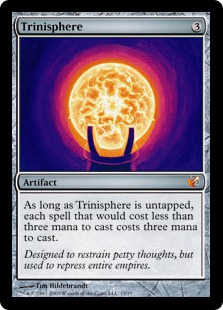
Trinisphere

Years before Khans of Tarkir, Tombstalker was a staple of legacy’s BUG Delver decks, but it never reached oppressive levels of representation. The spells that break the tempo deck always give it a way to refuel on cards without deviating from its gameplan. The only deck to have ever policed “broken tempo” decks with any kind of success is Vintage Stax, a deck designed to destroy Gush Aggro with insane plays like turn-1 Trinisphere. Historically, “broken tempo” has proven so difficult to interact with that Wizards has needed to ban or restrict key enablers (Gush, Treasure Cruise, Ponder, etc.). Modern is entering another era of “broken tempo,” this time fueled by Day's Undoing, which transforms an unused resource in tempo decks – the lack of cards in hand – into its dream prize: more cards.

After some games with UR Delver, I came to three conclusions that helped me establish iGrow’s core.

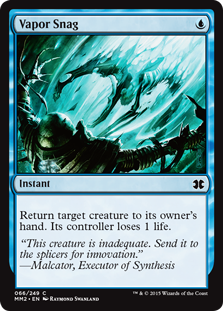
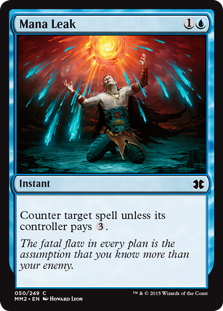
  • Remand is already lackluster, and I can’t imagine how bad it will be in a faster metagame. It’s nice to have something to pitch to Shoal to counter CC 2 spells, but Shoal’s primary function is to counter one-drops. Vapor Snag handles the dangerous creatures (Goyf, Scooze) and Day's Undoing minimizes losses sustained from Terminate effects. Remand is only better than Mana Leak after multiple Undoings (in which case I’ve already won) or when I’m about to follow the counterspell with an Undoing (in which case I’m also about to win). Leak at least provides a hard answer to tricky permanents like Siege Rhino when I don’t have the sorcery handy.
  • Two Faithless Lootings is too many. This card shines in grindy games; I had success with it in Counter-Cat last winter as “Treasure Cruise #5,” but drawing multiples in this deck hurts too much to justify a pair.
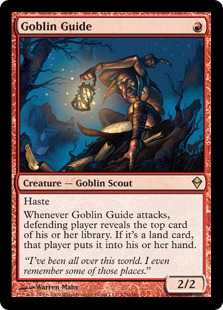
  • 12 threats is too few. While Treasure Cruise Delver had no trouble treading water until it could Cruise into pressure, Undoing resets both hands symmetrically, punishing players who don’t impact the board before resolution. Hands without threats are basically as unkeepable as hands without lands, and I wouldnt run only 12 lands. I tried Goblin Guide, but he was often too small for me. Missing the bulk of Monkey Grow’s beaters, I splashed green for a trio of Hooting Mandrills, and the deck immediately improved. However, without Thought Scour, they’d sometimes clog up my hand. Mandrills were also especially soft to Vapor Snag, which I expect a lot of in the coming meta.

I realized Tarmogoyf might not be bad in this deck. All of our threats die to Lightning Bolt anyway, so having one in the deck that only dies to Lightning Bolt some of the time seemed okay. I kept a single Mandrills (which consistently overperformed as a one-off) and settled on this list to begin my testing:

Untitled Deck

Creatures

4 Delver of Secrets
4 Monastery Swiftspear
4 Tarmogoyf
4 Young Pyromancer
1 Hooting Mandrills

Sorceries

4 Serum Visions
4 Gitaxian Probe
4 Day's Undoing
1 Faithless Looting

Instants

4 Lightning Bolt
4 Vapor Snag
4 Disrupting Shoal

Lands

4 Scalding Tarn
4 Misty Rainforest
1 Wooded Foothills
2 Steam Vents
1 Breeding Pool
1 Stomping Ground
1 Sulfur Falls
3 Island
1 Mountain

Sideboard

3 Forked Bolt
3 Feed the Clan
2 Mutagenic Growth
2 Snapback
2 Mana Leak
2 Threads of Disloyalty
1 Ancient Grudge

I won’t specifically discuss the “core” of the deck, because it’s basically the whole deck. The only two flex spots are Faithless Looting and Hooting Mandrills, which I tinkered with throughout my testing.

A quick note on the testing process before we dive into the game reports: I played 12 games against each deck, for a total of 36. Matthew Zielinski and I did three games each on the play and draw, both pre- and post-board. Twin, Burn, and Jund are all decks he’s comfortable with. Despite my experience with modern tempo decks, iGrow does play differently than Monkey Grow or Treasure Cruise Delver, and I’m sure I unknowingly made some crucial mistakes that ended up costing me games. (It may very well have more to do with the matchups, but my win percentages increased as we trudged through the gauntlet.) Regardless, I’m now convinced of this deck’s power. My record against Matt, in games, is 25-11.

UR Twin (60/40)
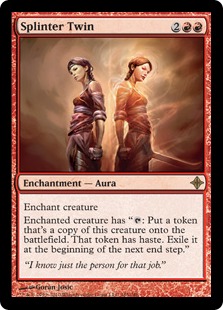
Twin

Day's Undoing not only restocks my resources against Twin’s attrition plan, it messes up any incremental advantage or library manipulation opponents gain with Snapcaster Mage, Electrolyze, Cryptic Command, or Serum Visions. Since Twin has such a high curve, I empty my hand much faster than my opponents, meaning Day's Undoing nets me many more cards. Twin’s high land count also gives its pilots “unkeepable openers” after certain Undoings, while I frequently end up with hands full of business.

Post-board, Twin becomes harder to beat, especially versions with red sweepers.
Tarmogoyf does some heavy lifting here, while the combination of Vapor Snag and Snapback (Gotcha!) makes it tough for Twin to combo off. That reduces the deck to its Keranos plan, which can’t keep up with Day's Undoing.

Twin does win when it draws ample removal, Spell Snare for Tarmogoyf, and permission for Day's Undoing. I lost one game to mana screw, and the others to attrition. In hindsight, it’s probably better to keep Day's Undoing mainboard regardless of whether I’m on the play.

"UR Twin Test Deck, by Matthew Zielinski"

Creatures

4 Snapcaster Mage
4 Deceiver Exarch
2 Pestermite
2 Grim Lavamancer
1 Vendilion Clique
1 Kiki-Jiki, Mirror Breaker

Sorceries

4 Serum Visions
2 Gitaxian Probe

Instants

4 Lightning Bolt
4 Remand
2 Elecrolyze
2 Cryptic Command
1 Dispel

Other

4 Splinter Twin

Lands

4 Misty Rainforest
4 Scalding Tarn
3 Steam Vents
1 Stomping Ground
3 Sulfur Falls
1 Tectonic Edge
1 Cascade Bluffs
1 Desolate Lighthouse
4 Island
1 Mountain

Sideboard

2 Anger of the Gods
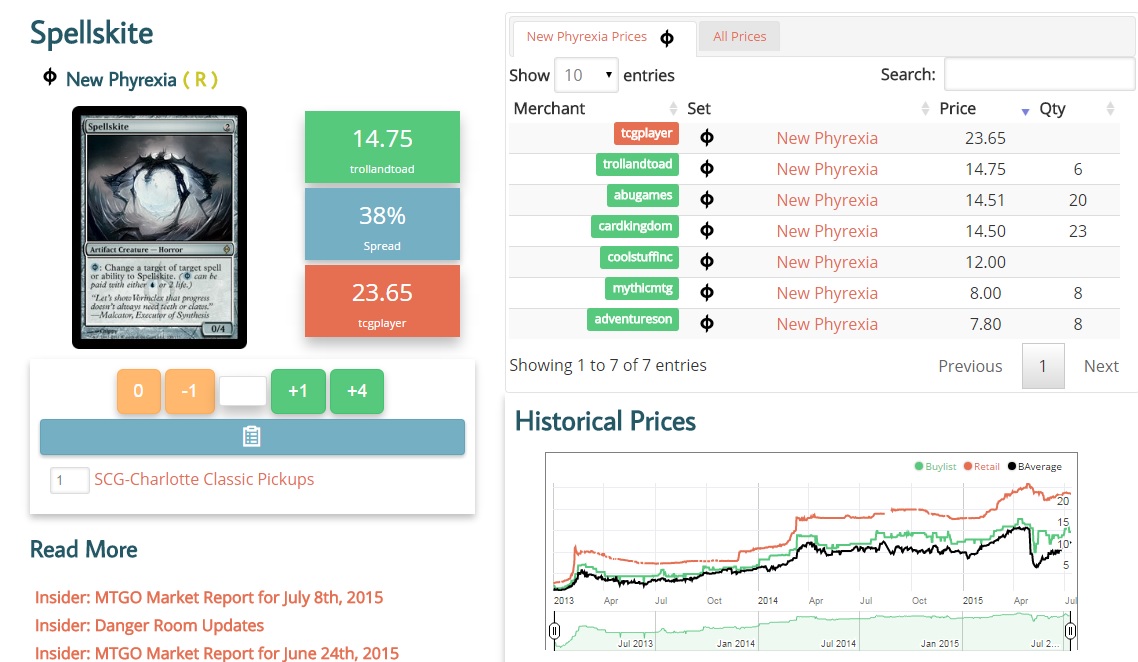
2 Spellskite
2 Sower of Temptation
2 Blood Moon
1 Keranos, God of Storms
1 Echoing Truth
1 Combust
1 Batterskull
1 Swan Song
1 Shatterstorm
1 Ancient Grudge

Pre-board, on the play (3-0) 

Game 1 (win): Matt goes to 11 from an early Delver and I throw a Lightning Bolt at his End Step. Anther Bolt puts him to five, he fetches and then Electrolyzes the Delver. I Vapor Snag a Lavamancer but it resolves again and is joined by Pestermite in an attack on my own life total. I draw Lightning Bolt for exactly lethal.
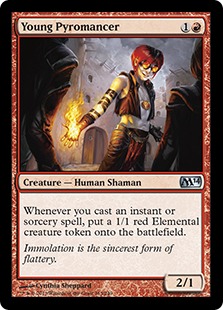
Young Pyromancer

Game 2 (win): Turn 2 Pyromancer into turn 3 Pyromancer. Matt Bolts my first in response to the second, but I exile a Probe to Shoal. I cast another Probe and a Bolt to end up with five Elementals. On turn four, I resolve Day’s Undoing with only a Tarmogoyf in hand to Matt’s 6 cards after he had cast Serum Visions. Matt untaps and casts Visions and a main phase Pestermite to get around Leak. I Snag it on my own main phase and play a 3/4 Tarmogoyf and Hooting Mandrills. Snagging Mite on my turn against a tapped out opponent is generally correct since it gets around Twin + Dispel. I don’t care so much about the “blowout” of my opponent losing a Splinter Twin; Day’s Undoing gets better when he has more cards in hand, and there’s no reason to risk a game already swung so deeply in my favor. Matt plays Lavamancer and is forced to Bolt a Token to survive the next turn, but I draw Swiftspear for exact damage.

Game 3 (win): (Matt mulligans.) I cast Swiftspear into Mandrills (after fetching, cantripping, and Probing) and both resolve. Matt tries to cast Pestermite to tap down Mandrills before attacks, but I Shoal it, exiling Day's Undoing. I attack and cast Tarmogoyf. Matt plays a Grim Lavamancer, which I Vapor Snag before attacking him down from 8 to 1. He tries to triple Bolt me with a Snapcaster Mage (I’m at 9 life) but I respond to the third Bolt by Snagging the Mage for that lethal point of damage.

Pre-board, on the draw (1-2) 
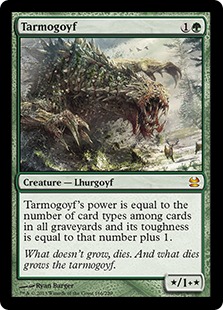
Tarmogoyf

Game 1 (loss): (I mulligan.) I play Swiftspear after exiling Delver to Shoal a Lavamancer, but Matt has Bolts for Swiftspear and my turn-2 Pyromancer. I struggle to get another threat after exhausting those three. I eventually land a Tarmogoyf  but, it's too late; Matt combos off at 3 life.

Game 2 (win): (Matt mulligans.) Matt leads with a Visions, which I Shoal by exiling my own. He never drops another land and I take the game with Swiftspear into Pyromancer into double Bolt.

Game 3 (loss): (I mulligan.) We grind and interact. I get Matt to 4 life after resolving Day's Undoing. My 5/6 Tarmogoyf almost gets there, but Matt topdecks double Visions into Splinter Twin for his Exarch.

Post-board, on the play (1-2)

-1 Tarmogoyf
-1 Faithless Looting
+2 Snapback
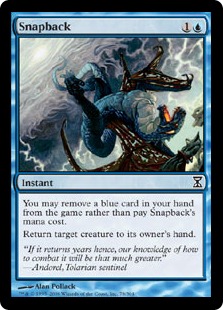
Snapback

Game 1 (win): (I mulligan.) I keep a hand of two Shoal, two land, Snapback, and Serum Visions. Visions finds me Pyromancer, which survives Bolt via Shoal, then Tarmogoyf and Delver. Matt Electrolyzes Pyromancer and Delver. I Snapback the Pyromancer in response, since I’ve drawn another Snapback to disrupt the combo. Matt then casts Exarch and I sneak in two damage with a pair of Elementals (bluffing a Bolt for his 1/4). At this point I have two cards in hand, but Matt only knows the Young Pyromancer. He taps out for Splinter Twin, and I Snapback his Exarch before untapping, attacking, and passing. Matt resolves Batterskull, but I Snag the token and attack for lethal.

Game 2 (loss): (I mulligan twice.) I’m stuck on a single Island with two Delvers and a Serum that never finds more land. I have no disruption and Matt gets the combo.

Game 3 (loss): Swiftspear and Pyromancer bring Matt down to 4 life. Anger of the Gods kills them. I have two lands in hand and slow-roll them to bluff any of my six bounce spells. Matt’s at four lands and goes for the combo anyway, which wins him the game. Turns out he had two more Twins in-hand and wasn’t under any pressure from my end, so I do agree with his play.

Post-board, on the draw (2-1)

-4 Day's Undoing
-1 Disrupting Shoal
-1 Faithless Looting
+2 Mutagenic Growth
+2 Snapback
+2 Mana Leak
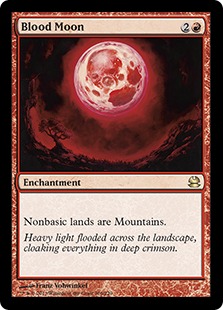
Blood Moon

Game 1 (win): Neither of us do anything for a couple turns. I Bolt a Pestermite, then Mana Leak an end step Exarch and then resolve Hooting Mandrills. After the Monkey draws first blood, I slam Tarmogoyf, and Matt raises me a Keranos. The God flips a Remand, which puts 3 damage on the 4/5 Lhurgoyf. I respond to an actual Lightning Bolt with Mutagenic Growth, growing him to 6/7. Matt taps out for Cryptic Command to counter the Growth and bounce Mandrills, and I tap out for Mana Leak. I attack him down from 9 to 1 and show Bolt and Snag for the concession.

Game 2 (loss): Matt curves out into Blood Moon and I don’t have any answers. (My current list includes a sideboard Forest, since fetching around Blood Moon proves simple enough should I expect the enchantment.) I still have two Swiftspears and a Pyromancer to apply pressure, not to mention Snapback for the combo, but Matt protects the combo with Dispel and goes off.

Game 3 (win): Delver flips off a Lightning Bolt and attacks into Matt’s own Lightning Bolt. Mutagenic Growth saves him and the Insect connects for five damage. I Leak an Exarch and cast Tarmogoyf. Another Exarch begets a Splinter Twin, but I Snag it and come in for exactly lethal with Snapback in hand.

Burn (65/35)
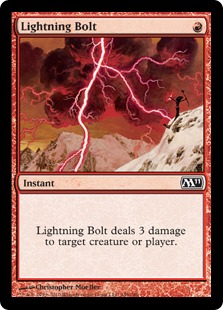
Bolt

Pre-board games are tougher, since Gitaxian Probe can deal me some serious damage. Day's Undoing is mostly just dead (though I did exile it to Shoal for a Rift Bolt at some point); refilling Burn’s hand for them seems pretty bad to me. I expect Burn to run Undoing next season, meaning my mainboard Undoings will have added utility as Shoal food to counter my opponents’. I tested against Matt’s more-or-less stock Naya Burn list for this report, since an optimized Undoing build doesn’t exist yet.

Post-board, however, the matchup becomes laughable. The only game I lost was to mana screw on the draw. Feed the Clan, Forked Bolt, Tarmogoyf, and Young Pyromancer are all insane in this matchup. It helps that we don’t take much damage from our lands.

"Naya Burn Test Deck, by Matthew Zielinski"

Creatures

4 Eidolon of the Great Revel
4 Goblin Guide
4 Monastery Swiftspear
2 Grim Lavamancer

Sorceries

4 Lava Spike
4 Rift Bolt

Instants

4 Lightning Bolt
4 Boros Charm
4 Atarka's Command
3 Searing Blaze
2 Lightning Helix
2 Shard Volley

Lands

4 Copperline Gorge
4 Bloodstained Mire
4 Wooded Foothills
3 Sacred Foundry
1 Stomping Ground
3 Mountain

Sideboard

4 Destructive Revelry
3 Kor Firewalker
2 Molten Rain
2 Skullcrack
2 Deflecting Palm
1 Torpor Orb
1 Rending Volley

Pre-board, on the play (1-2)

Game 1 (win): Delver into Pyromancer into Swiftspear with double Lighting Bolt out-aggresses my opponent. Matt gets me to 5 life, but then floods out and I kill him.

Game 2 (loss): I keep a one-lander with Shoal, Bolt, and two Goyfs. I manage to kill two Swiftspears, but then draw three Probes in a row instead of lands and lose to a stream of Lava Spikes.

Game 3 (loss): Double Pyromancer into double Swiftspear makes me pretty confident. I Snag an Eidolon and a Grim Lavamancer and get Matt to 1 life, scrying a Bolt to the top of my library. His last two cards, a Boros Charm and a Lava Spike, take me from 7 to 0.

Pre-board, on the draw (2-1)
Goblin Guide

Game 1 (win): (I mulligan.) Matt draws a lot of lands and no removal for Pyromancer or Tarmogoyf. He Spikes me down to 4 but I hardcast a Shoal on Atarka's Command when his Goblin Guide attacks before swinging for the kill.

Game 2 (win): Matt has all “Bolts” (mostly Atarka's Commands), but can’t find enough lands to cast them all. I lead with Delver and Pyromancer and draw Tarmogoyf to round out the offense. An alpha strike and a Lightning Bolt win me the game.

Game 3 (loss): My opponent can’t find white mana and keeps passing the turn back. I eventually get a Goyf into play and take Matt to 4 life but a Lavamancer ends up pinging me one time too many.

Post-board, on the play (3-0)

-4 Day's Undoing
-4 Gitaxian Probe
-3 Vapor Snag
+1 Mana Leak
+2 Mutagenic Growth
+3 Feed the Clan
+3 Forked Bolt
+2 Threads of Disloyalty
Feed the Clan

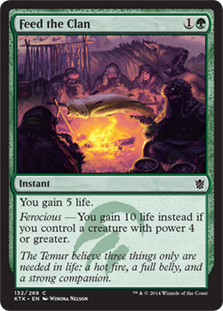
Game 1 (win): I have a ton of threats this game: two Swiftspears, a Pyromancer, and a Tarmogoyf. I manage to kill two Lavamancers and my Elemental tokens double block a Goblin Guide. Feed the Clan during combat gives me lethal Prowess.

Game 2 (win): Delver eats Searing Blaze, but Young Pyromancer and Hooting Mandrills follow unscathed. Mandrills survives Volcanic Fallout then attacks for lethal over two turns.

Game 3 (win): I Forked Bolt a Lavamancer and cast Tarmogoyf. Matt plays Eidolon, which eventually blocks my beater. I cast Feed the Clan, then Hooting Mandrills, and Matt concedes with three cards in hand while I’m at 22 life.

Pre-board, on the draw (2-1)

(Same plan as for on the play)
monastery swiftspear

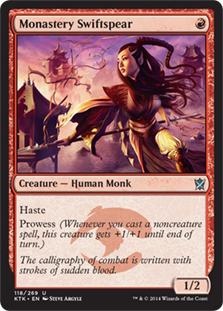
Game 1 (win): Matt lands a Swiftspear, but then finds himself mana screwed. I have a pair of Swiftspears myself, and compliment them with a Pyromancer. Goyf and Feed the Clan sit in my hand since Goyf would only be a 3/4, but I don’t end up needing either card. Swiftspear blocks my Pyromancer; I Bolt the Swiftspear, Matt tries to save it with Atarka's Command, and I Mana Leak for the game.

Game 2 (win): I Forked Bolt a Goblin Guide and Matt rips three straight Eidolons. I Bolt the first one, Forked Bolt the second, and Threads the third while beating down with a Hooting Mandrills. Matt can’t cast much under my new Eidolon and Mandrills kills him.

Game 3 (loss): (I mulligan twice.) I keep Island, Delver x2, and Bolt x2. I draw Forked Bolt and Tarmogoyf while Matt has the dream: Swiftspear into Eidolon into Atarka's Command. Delver never flips and I never find a second land.

Build Tweaks - Part 1
Mana Leak

I ran Faithless Looting to cycle lands after an Undoing, but I’d already be so ahead in those cases that it wouldn’t matter. Additionally, I often found myself making 4-6 land drops before casting the sorcery, drastically reducing the chances of drawing into too many lands with my new seven. When I drew Looting off an Undoing, I generally didn’t want to cycle any of the stuff I had in-hand. I cut it for a mainboard Mana Leak, since the card was sweet when I brought it in and I liked the idea of having a mainboard “no” for two mana.

I tried replacing Sulfur Falls with a Forest so I didn’t auto lose to Blood Moon, but the card was ultra bad in the mainboard, forcing a bunch of mulligans and creating some awkward draws. I moved it to the SB, adding a Blood Moon since I may as well run one if I can support it. Since the Burn matchup proved so favorable, I also cut a Feed the Clan for a Negate, which answers spells like Karn, Languish, and Ad Nauseam that can otherwise be tricky to Shoal.

-1 Faithless Looting
+1 Mana Leak

SB:

-1 Feed the Clan
-2 Mana Leak
+1 Forest
+1 Blood Moon
+1 Negate

Here's the updated list:

Untitled Deck

Creatures

4 Delver of Secrets
4 Monastery Swiftspear
4 Tarmogoyf
4 Young Pyromancer
1 Hooting Mandrills

Sorceries

4 Serum Visions
4 Gitaxian Probe
4 Day's Undoing

Instants

4 Lightning Bolt
4 Vapor Snag
4 Disrupting Shoal
1 Mana Leak

Lands

4 Scalding Tarn
4 Misty Rainforest
1 Wooded Foothills
2 Steam Vents
1 Breeding Pool
1 Stomping Ground
1 Sulfur Falls
3 Island
1 Mountain

Sideboard

3 Forked Bolt
2 Feed the Clan
2 Mutagenic Growth
2 Snapback
2 Threads of Disloyalty
1 Forest
1 Blood Moon
1 Ancient Grudge
1 Negate

Jund (75/25)

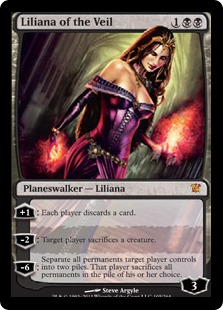
Just as Treasure Cruise made a joke of modern’s infamous BGx decks, Day's Undoing morphs Jund from Delver’s worst matchup into one of its best. I want to say this deck won’t even exist a month from now because the card is such a beating. I do expect Abzan to rise meteorically in popularity as BGx pilots realize they need Siege Rhino, Lingering Souls, and Stony Silence to deal with Undoing-powered linear strategies. For this reason, the matchup proved bittersweet; when Shoaling Lilianas made me over-euphoric, nightmarish flashes of the Rhino promptly sobered me up.

"Jund Test Deck, by Matthew Zielinski"

Creatures

4 Tarmogoyf
3 Dark Confidant
3 Scavenging Ooze
2 Huntmaster of the Fells
1 Olivia Voldaren
1 Tasigur, the Golden Fang

Sorceries

4 Inquisition of Kozilek
2 Thoughtseize

Instants

4 Lightning Bolt
3 Terminate
2 Abrupt Decay
2 Kolaghan's Command

Other

4 Liliana of the Veil
1 Sword of Light and Shadow

Land

4 Blackcleave Cliffs
4 Bloodstained Mire
4 Verdant Catacombs
2 Wooded Foothills
3 Raging Ravine
2 Overgrown Tomb
1 Blood Crypt
1 Stomping Ground
2 Swamp
1 Forest

Sideboard

3 Fulminator Mage
2 Ancient Grudge
2 Feed the Clan
2 Jund Charm
2 Obstinate Baloth
1 Golgari Charm
1 Grafdigger's Cage
1 Maelstrom Pulse
1 Choke

Pre-board, on the play (2-1)

Liliana of the Veil

Game 1 (win): I play a Delver, and Matt Thoughtseizes my Tarmogoyf. I flip Delver with a Day's Undoing and play Swiftspear, two Probes, and a Bolt for 10 total damage. Matt plays a Goyf. I attack with my team and he blocks the Swiftspear, then I cast Undoing and state-based actions kill Tarmogoyf. Matt’s at 5 life now; he plays Scavenging Ooze and kills my Delver. I win on turn four with a new hand of Swiftspear, Snag, Bolt, Serum Visions, Undoing, and lands.

Game 2 (win): (Matt mulligans.) My two Goyfs and a Pyromancer bring Matt to 10 life before he resolves Olivia Voldaren and kills the Shaman. I attack with my Goyfs to put Matt at 6, and cast Day's Undoing to dig for two Lighting Bolts, both of which I find.

Game 3 (lose): Matt’s surprise Sword of Light and Shadow ends up killing me as I fail to find a second Undoing after my first one gets IoK’ed. 

Pre-board, on the draw (2-1)

Game 1 (lose): I keep a one-lander with two Goyfs and two Visions. I don’t make my second drop until turn five, by which time Matt has a Tasigur to kill me with.

Game 2 (win): Swiftspear and Tarmogoyf beat Matt up, and I exile an Undoing to Shoal his turn-three Liliana. He Terminates the Goyf next turn, but I have more, plus enough reach to kill him in two turns.

Game 3 (win): I land Delver and Mandrills before casting Day's Undoing to take away Matt’s Olivia. He Terminates the Ape in response, then taps out for a freshly drawn Huntmaster. I Vapor Snag it on the end step, cast a Lightning Bolt, attack, and Day's Undoing again. This one draws me two Bolts, a Swiftspear, and a Goyf, which prove more than enough to kill my opponent with.

Post-board, on the play (3-0)

-4 Delver of Secrets
+2 Threads of Disloyalty
+2 Snapback
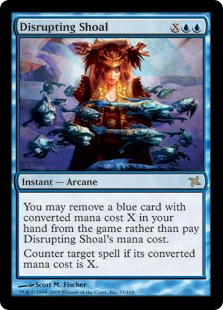
Disrupting Shoal

Game 1 (win): I have two Swiftspears and Probe to pump them. Matt Bolts one in response to the prowess trigger, but I Shoal and attack for six. He finds himself at 10 life somehow and I rip my second land for a Tarmogoyf. Not wanting to risk an in-combat Kolaghan's Command taking the one card in my hand, I cast a pre-combat Day's Undoing, since Matt’s down to only 2 life. I Shoal his Inquisition, but a second one takes my Bolt; I still cast Goyf and Mandrills, which obviously get there.

Game 2 (win): I open with three Tarmogoyfs and draw the fourth with a first-turn Serum Visions. I start casting them and attacking. Matt tries to stop the onslaught with Goyf+Bolt, Abrupt Decay, and Liliana, but of course nobody beats that many Tarmogoyfs. Close to death, he resolves a Huntmaster, and I Threads the Wolf token to attack for lethal after chump blocks.

Game 3 (win): A slow start from both of us. I Mana Leak a Thoughtseize to play out a Bolt-proof Tarmogoyf and Matt plays a Scooze. I Threads it, but Golgari Charm eats my enchantment. I Vapor Snag the Scooze before it does too much damage to my Lhurgoyf, but after it eats all of the creatures. I drop Swiftspear, Bolt Matt’s face, and attack. I draw into two more Goyfs and Matt resorts to chumping before I kill him.

Post-board, on the draw (2-1)

(Same plan as on the play)
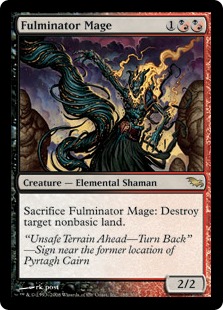
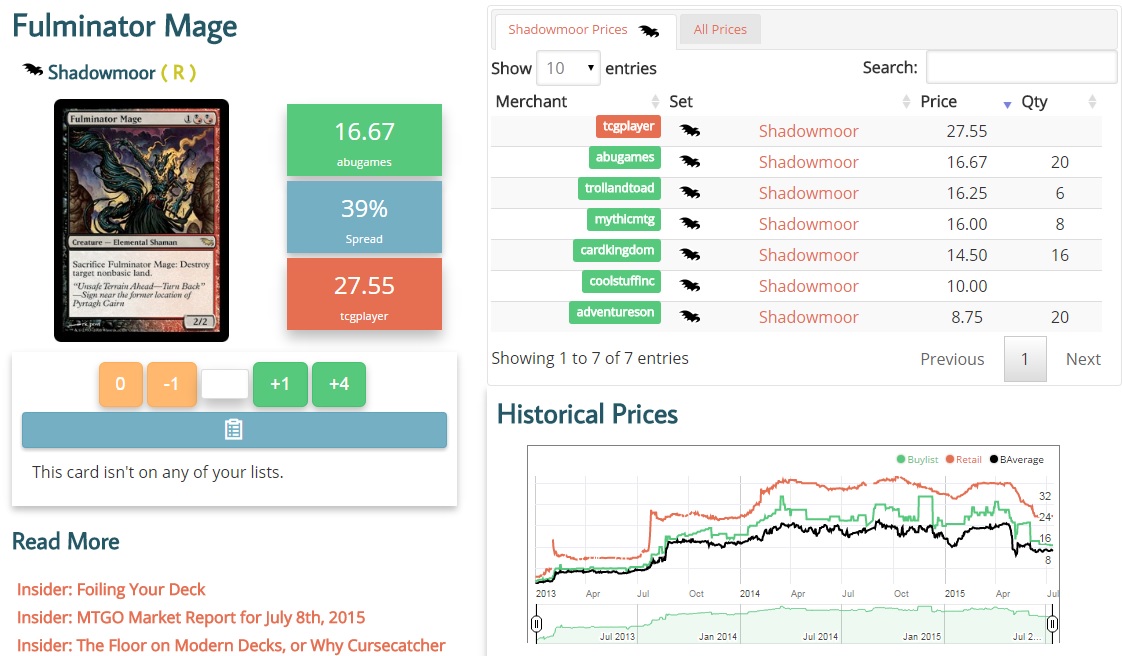
Fulminator Mage

Game 1 (win): Matt’s Liliana has me sacrifice a Pyromancer, but I have another and a Tarmogoyf to continue the beats. My opponent has Goyf in play and resolves a Fulminator Mage after I attack him directly. I attack again with my Goyf, and Matt blocks with Fulminator, sacrificing it before damage to destroy my Steam Vents. I respond by tapping the Vents to Snag Matt’s Goyf, and play a post-combat Day's Undoing. Matt plays Jund Charm and sacrifices Liliana to wipe my board, but he’s at just 6 life. I play a Pyromancer and cast Undoing again, which draws me Lightning Bolts.

Game 2 (loss): With two Goyfs in hand, I attack into Matt’s Goyf with my Swiftspear and Bolt the Lhurgoyf before damage and after blocks. Matt blows me out with Abrupt Decay, putting me on the back foot before I can stabilize. I foolishly block his Goyf two turns later with my own, even though I’m at 15 life; Matt has Kolaghan's Command to destroy my creature after damage and follows his play with a Huntmaster of the Fells. We fight over it – Threads, Decay, Threads – but Matt controls the flips better than I and the Werewolf kills me. I never see an Undoing.

Game 3 (win): (Matt mulligans.) My opponent plays a tapped Ravine, and I play a tapped Vents. He plays another Ravine; I cast Pyromancer and pass the turn, saving my Probe for Disrupting Shoal. Sure enough, Matt tries to Bolt on my end step and is met with the counterspell. He tries a main phase Kolaghan's Command, but I Shoal again, this time exiling Day's Undoing. I untap, attack for 4, and play a Tarmogoyf. Matt casts a Tasigur, but I Snag it. He eventually resolves Jund Charm to wipe the board, but my huge Goyf survives and destroys him.

Build tweaks - Part 2
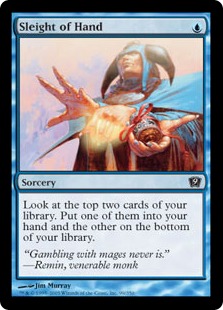
Sleight of hand

While I liked Hooting Mandrills and Mana Leak in my mainboard, I felt there could be better options. I remembered losing games if I didn't draw Day's Undoing and wishing I had more consistency tools. I also lamented the games I lost to mana screw. I figured I’d have to cut Leak (weaker than Mandrills) for a 19th land, but that would push my instant/sorcery count down to just 24, a number that didn’t appeal to me. Then, while re-reading a Menendian article on Vintage Grow, my attention was drawn to an old favorite of mine: Sleight of Hand. I’ve done some undocumented testing against less popular decks since Tuesday (Elves, Infect, UW Control, etc.), and Sleight pulls its weight. Early on, it finds my second land, while later in the game, it’s the greatest topdeck.

The sideboard also underwent some changes. Mutagenic Growth isn’t a card I want even against Lightning Bolt decks like Jund, so I cut them entirely. Destructive Revelry seems better than Grudge if my graveyard gets shuffled back into my deck often enough, and its damage bonus adds up fast if I’m playing them over and over. Besides hosing Affinity and Bogles, it provides a flexible answer to random midrange cards like (Vedalken Shackles and Choke). I also elected to try a Staticaster, who hasn’t disappointed me yet. In an Undoing game, having a free, repeatable source of damage to wipe Elemental tokens, Lingering Souls Spirits, Llanowar Elves and other dorks, or even Signal Pest greatly appeals to me.

-1 Hooting Mandrills
-1 Mana Leak
+2 Sleight of Hand

Sideboard:

-1 Ancient Grudge
-2 Mutagenic Growth
+1 Izzet Staticaster
+2 Destructive Revelry

Here's the newest version:

Untitled Deck

Creatures

4 Delver of Secrets
4 Monastery Swiftspear
4 Tarmogoyf
4 Young Pyromancer

Sorceries

4 Serum Visions
4 Gitaxian Probe
4 Day's Undoing
2 Sleight of Hand

Instants

4 Lightning Bolt
4 Vapor Snag
4 Disrupting Shoal

Lands

4 Scalding Tarn
4 Misty Rainforest
1 Wooded Foothills
2 Steam Vents
1 Breeding Pool
1 Stomping Ground
1 Sulfur Falls
3 Island
1 Mountain

Sideboard

3 Forked Bolt
2 Feed the Clan
2 Snapback
2 Destructive Revelry
2 Threads of Disloyalty
1 Blood Moon
1 Izzet Staticaster
1 Forest
1 Negate

After reading my recent Nexus articles, many players at the local game store are annoyingly hoarding their copies of Day's Undoing. Assuming I can find a fourth copy for the upcoming double-PPTQ weekend, I’ll be back next Friday with some tournament reports.

Jordan Boisvert

Jordan is Assistant Director of Content at Quiet Speculation and a longtime contributor to Modern Nexus. Best known for his innovations in Temur Delver and Colorless Eldrazi, Jordan favors highly reversible aggro-control decks and is always striving to embrace his biases when playing or brewing.

View More By Jordan Boisvert

Posted in Modern, TechTagged , , , 41 Comments on Power Calls: iGrow and Broken Tempo

Have you joined the Quiet Speculation Discord?

If you haven't, you're leaving value on the table! Join our community of experts, enthusiasts, entertainers, and educators and enjoy exclusive podcasts, questions asked and answered, trades, sales, and everything else Discord has to offer.

Want to create content with Quiet Speculation?

All you need to succeed is a passion for Magic: The Gathering, and the ability to write coherently. Share your knowledge of MTG and how you leverage it to win games, get value from your cards – or even turn a profit.

Insider: Adventures in Vending – Magic Origins Prerelease Weekend

Are you a Quiet Speculation member?

If not, now is a perfect time to join up! Our powerful tools, breaking-news analysis, and exclusive Discord channel will make sure you stay up to date and ahead of the curve.

Last weekend I attended my first prerelease as a vendor, which I was pretty excited for. I wasn't exactly sure what to expect, but it was something new and would be a learning experience one way or the other.

We were at the store that we vend for every Friday night for FNM, and for prerelease weekend we planned on staying a round in to the midnight event and then being back all day Saturday and Sunday. Additionally, we had made contact with another store a few hours out to vend their prerelease, so we would be at two places at once for our first weekend ever.

Our Prerelease Experience

Part of the idea of vending a pre-release was to get our hands on some Origins cards early. We weren't terribly successful at this. There's a lot of sentimental value given by many players to cards that they open, and a number of players didn't want to part with their first Nissa. It was also problematic that most cards on players want lists tended to be from Origins, and since you can't sell cards from the new set at the prerelease, they weren't in a rush to sell off the ones that they opened.

Alternatively, a number of people were willing to sell cards that they wouldn't normally, in order to pay their entry fee for sealed flights. Off the top of my head, there was a player who sold us a Berserk that he had been sitting on because he'd rather use cards to pay for tournaments than pour more money into the game.

There was an error retrieving a chart for Berserk

While people didn't line up to sell their prerelease rares, I did have some success on Sunday with a more proactive approach. When people were trying to split their rares from their Two-Headed Giant flights I asked if they'd be interested in selling, and made offers on some pools. I picked up a couple pools this way, but for the most part the prerelease wasn't a very fruitful way to get new cards.

Release weekends, alternatively, are great for getting new cards. This is largely because people can, you know, buy product. While this was our first prerelease, we were able to vend the Modern Masters 2015 release weekend and it was gas.

More players than you would think just crack packs and immediately sell off the rares, save for a few specific ones they might be looking for. Or maybe they're even just playing packs like the lottery and sell them all--either way, you take in a lot of inventory when people start purchasing product.

On the More Successful Part

While we didn't end up with a lot of Origins product, we did do a good amount of business last weekend. The second store that we were vending for is a couple hours out from the metro area, and as such the card pool there is a bit smaller.

Living near Minneapolis in 2015 has given me a biased view that card availability is a thing of the past, but this is simply not the case. The further you remove yourself from active Magic scenes, the more you'll run into people who are excited to browse your inventory and to trade their cards for yours. I don't fully understand this in the age of the internet, but nevertheless, it's just a fact.

There was a good amount of work involved in vending for two stores on the same weekend, the most time-consuming being splitting and re-merging our inventory. I don't think this sort of thing is anybody's favorite thing to do, but you have to have your cards with you to sell them, and at the end of the day the venture was a success.

The types of sales that we made were interesting, if not surprising in hindsight. At the second store the player base had purchased Modern Masters 2015 product, but hadn't really had a means to either complete sets or move any of their cards. As such, we were moving Tarmogoyfs in both directions, with some people flushing out their sets and others selling off the one that they won the lottery with.

There was an error retrieving a chart for Tarmogoyf

Something that Mike reported when he returned was that a couple stores near the one he worked at didn't run events and were closed on the weekends. While I don't understand the business model, I am actively excited to go out there sometime and browse their inventory. Random shops that aren't very invested in Magic but carry singles generally have one thing in common--a lot of gold mixed in with their bulk.

Quiet Speculation's own Kelly Reid passed through Minnesota a little while ago, and found a shop that was literally within ten minutes of my apartment that I had never heard of because they don't run events. He spent 10+ hours picking their "bulk". As one might imagine, if he was spending that kind of time perusing unsorted "junk", he certainly found things that made it worth his while.

Specifically, Kelly mentioned that he finds a lot of Firestorms in random piles for dimes and quarters. And if you think about it, it makes a lot of sense. If you weren't very invested in Magic and got maybe some of the basics down, would you be able to discern that Firestorm was anything other than bulk?

There was an error retrieving a chart for Firestorm

In sum, prereleases are medium, covering more physical space is still relevant in 2015, and release weekends are gas.

Thanks for reading.

-Ryan Overturf
@RyanOverdrive on Twitter

My New Favorite Illustrated Magic Blog

Are you a Quiet Speculation member?

If not, now is a perfect time to join up! Our powerful tools, breaking-news analysis, and exclusive Discord channel will make sure you stay up to date and ahead of the curve.

One of my favorite things about playing Magic is the wide range of people brought together by the game. You really never know what careers or passions the people at your LGS will have. This week I came across a delightful illustrated blog centered around the experience of Simon Cottee, an Australian animator who recently moved to Montreal.

The blog uses some adult language, so be warned if your sensitive to that type of thing, but the content produced so far has been a fun read for me. You can find Wizards of Montreal here.

Wizards of Montreal

Avatar photo

Ryan Overturf

Ryan has been playing Magic since Legions and playing competitively since Lorwyn. While he fancies himself a Legacy specialist, you'll always find him with strong opinions on every constructed format.

View More By Ryan Overturf

Posted in Free3 Comments on My New Favorite Illustrated Magic Blog

Have you joined the Quiet Speculation Discord?

If you haven't, you're leaving value on the table! Join our community of experts, enthusiasts, entertainers, and educators and enjoy exclusive podcasts, questions asked and answered, trades, sales, and everything else Discord has to offer.

Want to create content with Quiet Speculation?

All you need to succeed is a passion for Magic: The Gathering, and the ability to write coherently. Share your knowledge of MTG and how you leverage it to win games, get value from your cards – or even turn a profit.

Testing for the Little Man: A Guide to Getting Better

Are you a Quiet Speculation member?

If not, now is a perfect time to join up! Our powerful tools, breaking-news analysis, and exclusive Discord channel will make sure you stay up to date and ahead of the curve.

Hey guys! This week, I figured we’d take a step back from individual deck discussion/format analysis and discuss a topic that applies to anyone looking to improve their game: testing!

uncovered clues - large

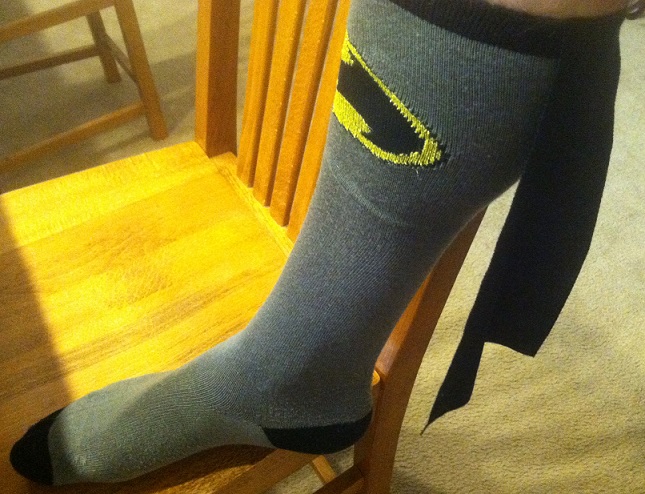
With my recent move and the approach of Pro Tour: Magic Origins in Vancouver, I’ve been focused primarily on two things: Standard, and where my socks are. While I eventually found said socks, I’ve also learned quite a lot about the upcoming Standard format. I imagine that information regarding either of those topics is of little importance to you fine readers, so instead, I figured I’d give an overview of my experiences regarding testing and card evaluation for Pro Tour: Magic Origins. I hope that you can take this information and apply it to your own testing process. (If you would rather hear me wax eloquent on Standard or discuss my super sweet Batman socks, let me know in the comments.) Let’s go!

Batman Socks smaller

Large event testing is generally approached in different ways, depending on a few situational/environmental factors going in. Every Pro Tour season I look forward to retrospective articles by pro players regarding their testing process, informational tidbits, and humble brags about their week-long testing vacations, complete with pictures of delicious food and copious amounts of name-dropping. These articles are always fun reads, giving we regular humans a peek behind-the-scenes at the work pros put in to generate their results. We also get to live a little vicariously through their tournament reports. While these articles are definitely informational as far as detailing how testing can be done, I’ve found that a lot of the tactics and techniques large teams employ to figure out a format end up being impossible when attempted by smaller groups. Thus, I’ve come to present an alternative - Testing for the Little Man: An Aspiring Player’s Guide to Getting Better!

[wp_ad_camp_1]

Preface: How Do You Learn?

One thing we need to keep in mind regarding testing is the goal: pursuing knowledge. In the end, we all learn differently, which seems simple, but is essential to remember when giving an overview of testing techniques. For example, I am a visual learner, and tend to zone out when looking at a computer screen. As a result, I usually print out card images and decklists and write handwritten notes for details I need to keep in mind. Other players are auditory learners: they discuss ideas, listen to SCG coverage and tune into podcasts for information. Almost all of us are physical learners to some extent; we need to actually put our hands on the cards and play through games to gain information. How we learn, combined with the tools we have available to us, greatly influences our individual testing process.

From this point forward, I will be detailing the process I use to prepare for events. Remember, this is all from my perspective: a combination of what works best for me and the resources I have available to use.

Step 1: Analyze Level 0 – Form a Foundation

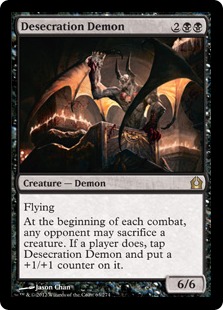
IDesecration Demonn Magic, everything is context. Level 0 can be anything, from the previous week’s results to the dying breaths of a stale format. Analyzing the context to determine not only what is good/bad, but why is, in my opinion, the best way to gain an entry-level understanding of things as they exist now (Level 0).
For example, Desecration Demon in a world of Lingering Souls is downright embarrassing. Remove Thragtusk and the like from the equation, and the “relative worth” of a card like Desecration Demon drastically changes. Shifts like this in the metagame, both on an individual card level and an archetype level, are often surprising and unexpected, but they don’t have to be. Careful evaluation of what is played, what is not, and especially why can help us find those diamonds in the rough, waiting to burst from the shadows when the proper conditions are met.

Step 2: Play Stock Lists

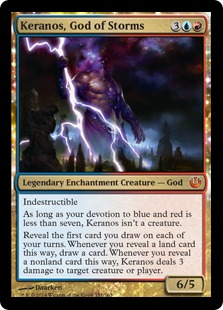
KeranosIt’s easy for me to get caught up in theory and forget all about what is arguably the best way to learn: playing games! Playing stock lists of Level 0 decks not only gives us experience with the current top decks in the format, it allows us to build on our foundation of understanding about how things operate. Playing various archetypes and matchups (on both sides) provides an understanding about how games play out, general archetype-specific strengths, their weaknesses, and matchup-specific intricacies. Theorycrafting is useful to an extent, but until you actually draw that one-of Keranos, God of Storms floating around in Twin sideboards, you’ll never know if it is better or worse than Bitterblossom, Jace, Architect of Thought, or Olivia Voldaren.

Step 3: What Changes?

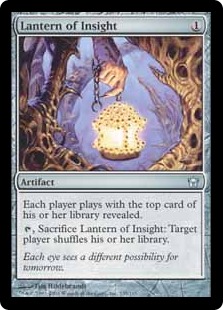
Lantern of InsightWhat is done in this stage depends more on environmental factors than anything else. What is happening in the world of Magic: The Gathering at this point? Are you preparing for a Pro Tour? A Grand Prix? FNM? Has a new set just been released? A new B+R announcement? Were there any recent high-profile events? Or, just as importantly, how long has it been since a major event? Answers to these questions influence what needs to be done next, and our testing process will vary wildly depending on these environmental factors. Pro Tours always follow a set release, and as a result, are almost always unexplored formats. For Standard Pro Tours, there is usually one relatively high-profile event preceding the Pro Tour, often an SCG Open. For Grand Prix events, Level 0 could be a week ago or months ago, depending on the format. FNM’s are a different topic entirely, and vary from shop to shop, but generally most players at that level stick to the same two-three decks, with a couple individuals bouncing around from list to list. Measure the volatility, and proceed from there.
Step 3b: Analyzing New Sets

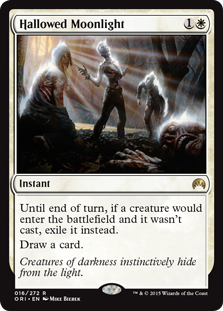
The echo chamber around set releases can be constructive or destructive, depending entirely on what type of learner you are. Thanks to Twitter, we can get thousands of opinions on every spoiled Hallowed Moonlightcard. Writers for every content site under the sun are tasked to give their take, complete with flashy decklists to feed the spoiler frenzy. For those looking to evaluate new cards and strategies, the road can be dangerous, littered with questions and uncertainty. Should I be trusting this pro’s decklist? What if they suggest 18 of them! How much time went into studying the format? The whole set isn’t even spoiled yet! Where is the context?!? For me, I take it all in, but with a grain of salt.
As for my own process, I evaluate cards first on rate, then again on context. Hallowed Moonlight is a strong card; a cantrip that provides a powerful effect and can cycle if not needed. As far as context though, what deck in Modern would want this card? Abzan or Jeskai Control? Against Twin, both of these decks have much better options for stopping that angle of attack. Against Living End, Abzan could just play Leyline of the Void, and Jeskai doesn’t need the help. I’m not saying it won’t be good, I’m just saying that every card has two values; what it is capable of, and how it stacks up in the environment.

Step 4: Tactics for Gaining Information

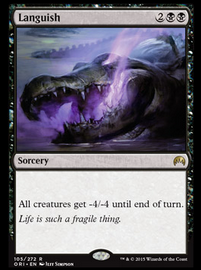
LanguishResources such as product to build/draft from, and physical location can have an impact on what type of testing can be done. Despite these limitations, opportunities to learn are everywhere. When playtesting games, keep a notepad handy to jot down information as you discover it (ex: Frenzied Goblin vs. Zurgo Bellstriker, or Languish sucks vs. Whisperwood Elemental plus a developed board). Little bullet-points will contribute more towards learning how a matchup works than just recording win/loss statistics. Grab a group of friends that are all equally invested in testing and start talking things over. Testing teams can vary in size from a large group of players, a small group of friends or a lone wolf preparing alone.

For me, I don’t have access to a physical collection of cards, nor an established group of what kids these days call “friends”. As a result, my testing process involves a combination of note-taking, article-reading, and decklist analysis. I also play as many random games with proxied cards as I can find against unfortunate victims at my local store. While I currently lack a testing team to work with, my unique situation as a streamer does provide the advantage of discussing topics with a couple hundred viewers at a time. All of these factors combined can lead to a sort of haphazard collection of information, where decklists, notes, and other details are spread around between my streaming computer, laptop, notebook and random notes on my phone or index cards. This leads me to my next point, which is:

Step 5: Stay Organized!

In the end, the great equalizer regarding testing for events is time. Regardless of situation or resources, we only have a finite amount of time to prepare for events. This means prioritizing time spent testing is the most important thing we can do. Whether you have a week to test or a couple of hours, staying organized reduces the amount of time spent combining and reviewing information/angrily throwing things across the room. I have found that three Word documents tend to do the trick:

  • One- A macro-level list of all the decks in the format with major cards/themes, divided into tiers.
  • Two- A list of most major decks in the format (basically whatever I’m considering playing) with a sample decklist and detailed notes regarding role, matchup, sideboarding, and problem cards/easily handled cards in the format)
  • Three – List of notes, bullet-style, about both the format in general and specific details. Ex: Ashiok, Nightmare Weaver is great vs. a format full of midrange decks and fewer Hero's Downfall, Fulminator Mage is better than Blood Moon when people are sideboarding Nature's Claim or Chromatic Lantern, Tasigur is good vs. Languish and Stoke the Flames.

No BoglesThese documents combined help keep me organized and focused as I’m evaluating cards or analyzing the format.

It’s easy to go “too deep” with analysis and forget the context of the format. For example, during the
Modern Festival Finals I briefly considered Bogles as a deck I might be interested in playing; one of the best decks (Grixis) just died to it, and the rest of the format seemed to be weak to enchantments in general. Eventually, I remembered the context that Bogles has huge difficulties against Abzan and Jund, and is actually just a bad deck to begin with. By keeping focused and remembering the context, I played Grixis Control and avoided disaster (and everything else that comes with sleeving up Bogels for an event).

Conclusion

While we all learn differently, and there are many different ways to approach testing, it remains true that “you get out what you put in”. However you test, stay organized, remember context, and don’t be afraid to pursue a lead just because it’s not the most popular option. Everyone says Mizzium Meddler is unplayable, but you’ll never know for sure until you sleeve it up and try it out.

For anyone that’s been watching my stream recently, you know that I just partnered with Twitch. It’s been hectic lately between my move and preparations for the Pro Tour, so I wanted to say thanks for all of your support with the stream! I truly couldn’t have achieved my goal without your help. For those that haven’t stopped by yet, head over to twitch.tv/Architect_Gaming! While I’m spending most of my time off-stream preparing for Pro Tour Magic Origins, we are still playing Modern on stream and looking around for new decks to play.

Next week, I figured I’d try a mailbag-style article; shoot some questions at me in the comments and on Twitter! If you have any opinions/ideas on testing that you think I should know, send me those too! After the Pro Tour, we can get back to Modern discussion. Thanks for reading!

Trevor Holmes
The_Architect on MTGO
Twitch.tv/Architect_Gaming
Twitter.com/7he4rchitect

Insider: Brewing Origins

Are you a Quiet Speculation member?

If not, now is a perfect time to join up! Our powerful tools, breaking-news analysis, and exclusive Discord channel will make sure you stay up to date and ahead of the curve.

The sun is shining today for the first time in a while, the animals are out and going about their business, and the fresh air is blowing through your hair. Summer may have greeted us already, but the summer fun is just about to begin.

We were given a brilliant gift this past weekend with Magic Origins and it surpassed my highest expectations. The Limited format can be brutally fast but it’s a ton of fun. There are so many interesting things you can do in the format and many mouth-watering new treats to try.

Last week I detailed my Top 10 list for the set and after playing with and against some of the cards on the list, I can’t wait to see them impact Standard. My main focus this week will be on decks you will almost certainly see at your events this weekend.

First up is the G/B Elves deck that I mentioned in last week’s article, with some key changes.

G/B Elves by Mike Lanigan

Creatures

4 Elvish Mystic
4 Gnarlroot Trapper
4 Elvish Visionary
4 Dwynen's Elite
4 Shaman of the Pack
3 Dwynen, Gilt-Leaf Daen
3 Sylvan Messenger
1 Nissa, Vastwood Seer
1 Reclamation Sage
1 Gilt-Leaf Winnower

Spells

3 Hero's Downfall
4 Chord of Calling

Lands

4 Llanowar Wastes
4 Temple of Malady
6 Forest
6 Swamp

First of all, it’s important to note that no matter what version of this deck you are playing, there isn’t a list of possible options. The majority of elves legal in Standard came from Magic Origins so we don’t have a huge list of possibilities like we do with some decks, like Jeskai Aggro for example. So, we will need to examine each successful deck carefully because while the changes may seem minimal, they can allow the deck to play dramatically different. That is certainly the case with the changes I’ll be suggesting today.

After spending some time with the new cards, I don’t think that Thornbow Archer is the type of threat we are looking for. With eight one-cost mana accelerants, we are looking to accelerate rather than start attacking quickly. If we get more elves in future sets, we may need to revisit the amazing elven archer, but as for now, I think he’s best on the sidelines.

The other major change is the exclusion of Collected Company. For many, I think this direction will be met with skepticism, but I think it’s essential for the deck to be a real contender.

There are many reasons that our green card advantage spell doesn’t belong in this deck. The first is to make room for Chord of Calling. Even though these two powerful green spells aren’t at odds with each other, there isn’t really enough room in this deck for both strategies. Without the other reasons on this list, we could probably find room for both cards in this list, but let’s move on and talk more about why it doesn’t belong.

Magic Origins has given us a whole competitive deck within this one set, but we do have to abide by the constraints it has given us as well. One of those constraints is that some of the most powerful cards in the archetype cost four mana. Both of these four costs are essential to success in my eyes. Dwynen, Gilt-Leaf Daen and Sylvan Messenger offer extremely important things to this deck. The elves are in dire need of a power boost and we do need card advantage to survive against the proficient removal spells legal in the format.

We can’t have both of these cards in the deck while we are playing Collected Company though. They don’t work well together because you can’t grab them when you cast Company and there’s no way a deck with tons of four-drops will work out well.

For Elves to be successful, I think we need to focus on Chord of Calling rather than Collected Company. This allows us to run some silver bullets, but more importantly, it helps us find Shaman of the Pack more reliably. As our most threatening weapon, we want to get as many Shamans into play every game as possible. Occasionally Company will help with this, but Chord can always assist with this line of play.

I’m still not certain that Hero's Downfall belongs in this deck and that spot is my biggest uncertainty moving forward, but I’m excited to try out this version. It’s explosive, has lots of card advantage, tutor spells, and a potency that is rarely seen with tribal decks in Standard. Let me know in the comments what you think of Collected Company vs. Chord of Calling.

U/g Devotion by Mike Lanigan

Creatures

4 Faerie Miscreant
4 Harbinger of the Tides
4 Kiora's Follower
2 Stratus Dancer
3 Bounding Krasis
4 Shorecrasher Elemental
3 Thassa, God of the Sea
4 Master of Waves

Spells

4 Clash of Wills
4 Collected Company

Lands

4 Temple of Mystery
4 Thornwood Falls
4 Yavimaya Coast
1 Mana Confluence
11 Island

Up next we have another deck where making any small changes has a huge impact on how the deck plays. One change that is huge for this deck is the addition of Collected Company. By this point, everyone knows that green mana is typically found splashing around these islands, but not enough spotlight shines on this addition.

Unlike with Elves, Collected Company is at its best in this deck. One of the most important cards in the deck is Shorecrasher Elemental. The triple blue spell wasn’t enough on its own to revitalize the archetype, but it is still one of your ideal hits from Company. To add to that, we now have two other cards that are amazing when you get them with Company. Both Harbinger of the Tides and Bounding Krasis are new additions to the deck from Magic Origins and they are excellent cards for your Company.

I couldn’t have asked for anything better than Harbinger of the Tides. Not only is the double blue critical for our devotion strategy, but its ability is exactly what I’ve thought the deck needed to make its comeback. Mono-Blue Devotion is like Rocky. He’s never out and even when he seems like he’s down, he gets back up and keeps fighting. This version of the deck does exactly that.

I love that even if this deck falls behind, it has tools to help it get back into the game and these two new creatures are a huge part of that. In one of my sealed pools, I was lucky enough to have both of these cards and they over-performed all event for me. I expect that to be the same in Standard.

One of the biggest traps this deck has fallen into is Silumgar Sorcerer. This comment may catch a lot of flak, but I feel strongly about this topic. I agree that the card is good, but this deck is not its home. The last thing you want to be doing with this deck is sacrificing your own resources to slow your opponent down. This deck wins by snowballing and flooding the board with threats your opponent can’t deal with. Sorcerer is the opposite of that strategy.

The part about this creature countering something your opponent is trying to do is important though and luckily we have a new card to play from Origins.

Unlike Silumgar Sorcerer, our innocent looking Clash of Wills can counter anything our opponent is trying to do to disrupt our strategy. Sorcerer only prevents creatures from hitting the board and while that is helpful, Clash of Wills is the real truth and in the future we will likely look back fondly on a time before it was in the format.

When a two-mana counter exists in the format, it puts a constraint on the format that many players are unprepared for. Now we have two. As long as you are playing dragons, you can play Silumgar's Scorn as well as our new X counter. This counter fits perfectly into the latest iteration of our friendly blue aggro deck because we have so many things to do at instant speed, our opponents won’t know what to play around. You could be leaving mana open for a number of different effects and they can’t anticipate them all. This makes Clash of Wills a potent tool for this deck.

Finally, our last innocent hero that needs mention is Faerie Miscreant. In the past, we have played a long list of unassuming one-cost flyers in this deck to enable the devotion strategy. I’ve come to terms with the fact that we will never get a card like Cloudfin Raptor to add powerful aggressive lines to the deck. The need for some number of one-costs exists though.

With the inclusion of green mana into the deck, we don’t have room for Nykthos, Shrine to Nyx and that makes Hypnotic Siren much worse. Another reason to play Faerie Miscreant is because occasionally they will allow us to draw additional cards. This may seem like a small change, swapping one-mana flyers, but again, little changes like this optimize the deck and help make it the sharpest weapon to defeat our foes.

Goblins by Mike Lanigan

Creatures

4 Goblin Glory Chaser
4 Foundry Street Denizen
2 Frenzied Goblin
4 Goblin Piledriver
4 Subterranean Scout
4 Goblin Rabblemaster

Spells

3 Lightning Strike
4 Dragon Fodder
4 Hordeling Outburst
3 Stoke the Flames
3 Obelisk of Urd

Lands

20 Mountain

The last deck I want to discuss is close to a version that recently ended in 6th place at SCG Baltimore. Even before Origins, this Goblins deck was able to be successful. Now that we have Goblin Piledriver, I think this deck can really take off. I’m not convinced that this is the best version of the deck, but I think it’s close.

I removed Monastery Swiftspear from the original version for the differently powerful Goblin Glory Chaser. After seeing this card in action, I remembered how great the menace ability was on Stormblood Berserker. The difference between two and three power is enormous but I think two power is strong enough that we will be chasing glory in Standard.

My largest alteration to the deck is cutting down on the spell count to make room for one of my favorite cards for the archetype, Subterranean Scout. Everything about this card is amazing in this tribal deck. You can play it on turn two to trigger renown, which is great. More goblins is never a bad thing and having every creature in the deck synergizing with the tribal strategy is marvelous.

The hidden gem with this card is in its ability to make your Goblin Rabblemaster and Goblin Piledriver into ninjas that sneak over and destroy any unsuspecting opponent. No more throwing pawns in the way of our powerful warriors because with the Subterranean Scout, we can sneak right under their defenses for maximum damage. This doesn’t work if you have an Obelisk of Urd in play, but if that’s the case, you are likely winning that game anyway.

Wrap Up

What else are we likely to see in week one of the Origins metagame? It seems likely that players will be bringing a lot of new cards to battle, but typically players go with what works. That means Abzan Aggro and Abzan Midrange will still be all over the place, as well as all the various Megamorph decks.

I think we are likely to see players adopt Nissa, Vastwood Seer into any and all of these decks. She plays well with all of these green midrange strategies and provides another way to take over the late game. Our new green planeswalker seems innocent at first, but seeing her in action once is all you’ll need to adopt her into your green deck.

Uncertainty surrounds Languish. Players need to decide if that card is maindeck-worthy or not. The unique four-mana sweeper is excellent against the three decks I have suggested as new additions to the metagame, however playing it maindeck will leave you with a dead card in some matchups. Results will tell us how this situation pans out, but my inclination is that it will become a potent sideboard card and a one- or two-of in Siege Rhino decks so their finishers can live through it.

There are two other decks that are a big question mark for me. The main issue in my mind is that although I’ve spent some time brewing decks focused on artifacts and enchantments, I haven’t ended up with any decks worthy of playtesting. There are lots of versions written down in my notebook but none of them seemed good enough to test out.

My initial theory based on this work is that these decks don’t have enough tools to impact the metagame. This is almost certainly the case with U/R Artifacts. It seems like we are missing one or two cards to make that deck work.

As far as where enchantments stand, I really thought the dynamic duo of Sigil of the Empty Throne and Starfield of Nyx would be such a great team that they would force their way into the meta. That is still possible, but I’m not sure what that deck would look like. We could definitely slip a couple copies of each card into Abzan Constellation and that would probably be alright, but there may be a more dedicated enchantment deck out there too.

Unlike the past couple of sets, Magic Origins looks to have tons of impactful cards for Standard. There are plenty of cards I didn’t talk about that could impact the format as well. Although I won’t be able to play Magic this weekend, I’m excited to watch some coverage and break down the results next week.

Until next time,
Unleash the Origins Force!

Mike Lanigan
MtgJedi on Twitter
Jedicouncilman23@gmail.com

SDCC 2015 Planeswalkers Available July, 28th

Are you a Quiet Speculation member?

If not, now is a perfect time to join up! Our powerful tools, breaking-news analysis, and exclusive Discord channel will make sure you stay up to date and ahead of the curve.

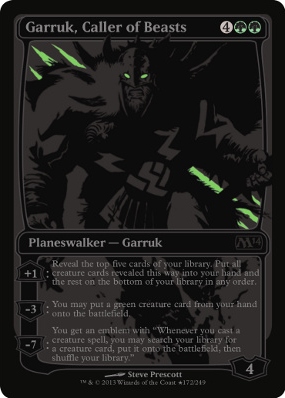
If you're not familiar with the exclusive Comic Con all black planeswalkers, then you're about to learn something pretty sweet. For starters, they look awesome:

CC Garruk

If that doesn't do it for you, then you should know what they cost.

In 2013 and 2014 they released the cycle of planeswalkers from the core set in this style at the Sand Diego Comic Con, and this year they will releasing the planeswalkers from Origins in the same fashion. If you were in attendance at Comic Con, you could purchase all five for $120, and if you have internet access and a credit card you'll be able to purchase all five online for $120 on July 28. These cards are going to sell for much more than this on the secondary market, and will sell out quickly.

If you're able to free up the time to shop and sell and some money to turn into more money, then I recommend vying for your chance to purchase these when they go live on Hasbro's website.

Avatar photo

Ryan Overturf

Ryan has been playing Magic since Legions and playing competitively since Lorwyn. While he fancies himself a Legacy specialist, you'll always find him with strong opinions on every constructed format.

View More By Ryan Overturf

Posted in Free6 Comments on SDCC 2015 Planeswalkers Available July, 28th

Have you joined the Quiet Speculation Discord?

If you haven't, you're leaving value on the table! Join our community of experts, enthusiasts, entertainers, and educators and enjoy exclusive podcasts, questions asked and answered, trades, sales, and everything else Discord has to offer.

Want to create content with Quiet Speculation?

All you need to succeed is a passion for Magic: The Gathering, and the ability to write coherently. Share your knowledge of MTG and how you leverage it to win games, get value from your cards – or even turn a profit.

Insider: MTGO Market Report for July 15th, 2015

Are you a Quiet Speculation member?

If not, now is a perfect time to join up! Our powerful tools, breaking-news analysis, and exclusive Discord channel will make sure you stay up to date and ahead of the curve.

Welcome to the MTGO Market Report as compiled by Sylvain Lehoux and Matthew Lewis. The report is loosely broken down into two perspectives. A broader perspective will be written by Matthew and will focus on recent trends in set prices, taking into account how paper prices and MTGO prices interact. Sylvain will take a closer look at particular opportunities based on various factors such as (but not limited to) set releases, flashback drafts and banned/restricted announcements.

There will be some overlap between the two sections. As always, speculators should take into account their own budget, risk tolerance and current portfolio before taking on any recommended positions.

Redemption

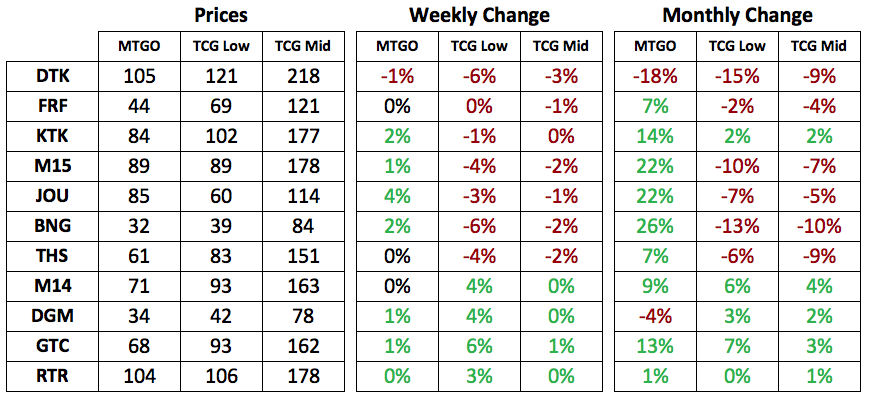
Below are the total set prices for all redeemable sets on MTGO. All prices are current as of July 13th, 2015. The TCG Low and TCG Mid prices are the sum of each set’s individual card prices on TCG Player, either the low price or the mid-price respectively.

All MTGO set prices this week are taken from Goatbot’s website, and all weekly changes are now calculated relative to Goatbot’s ‘Full Set’ prices from the previous week. All monthly changes are also relative to the previous month prices, taken from Goatbot’s website at that time. Occasionally ‘Full Set’ prices are not available, and so estimated set prices are used instead.

MTGOPRICE

Return to Ravnica Block & M14

With RTR sets going out of stock in the MTGO store at the end of June, the price floor provided by redemption has been removed for this set.

The best example to demonstrate this effect on the price of junk mythic rares is Utvara Hellkite. In the last week of June it was 5.5 tix but it is now available for 4 tix or less. This recent weakness can only be explained by the end of redemption for this set. Expect to see prices on this card and other junk mythic rares from RTR to continue to head lower over time.

GTC continues to be available for redemption, and with TCG Mid prices on this set up by over 3% over the last month, redeemers are finding this set attractively priced. With no Modern staples in the mythic rare slot, a downturn in interest for that format will be felt primarily in the price of the five shocklands. Lower prices on these staples will shift value to the mythic rares. Although speculators should be getting liquid in preparation for the release of ORI, higher prices on cards like Lazav, Dimir Mastermind and Lord of the Void are anticipated.

M14 is in a small holding pattern at the moment until results from Modern with ORI start trickling in. The pending addition of Goblin Piledriver to Modern has sparked interest in Mutavault in both paper and on MTGO, but the proof of the efficacy of a goblin tribal deck in that format is not yet evident. It doesn't have to be a Tier 1 deck, but if goblins ends up being playable, look for further price increases in M14 mythic rares.

The one interesting card from DGM is Voice of Resurgence, and it's back up into the mid 20s in the last two weeks. Current prices are not attractive for a re-entry into this card, but if it fell down into the low 20s it would be time to establish a position in this mythic two-drop. Let the price be the guide on when to buy this card, but for the moment the price is not saying anything of note.

Theros Block & M15

The story for these sets is not changed and will not change in the near term. The pending Standard rotation in the fall is steadily eroding value from these sets. Short-term gains can occur on Modern or Legacy playable cards, but the overall trend is down. August is the prime month for targeting junk mythic rares that have some casual appeal, such as the planeswalkers of M15 and the mono-colour gods of THS.

Magic Origins presents an interesting event for speculators related to M15. The reprinting of the opposing-colour pain lands is going to have a substantial effect on the price of M15 sets. Currently all of the M15 versions of this land cycle are 1.5 tix or more, with Caves of Koilos and Llanowar Wastes both currently over 4 tix due to Standard playability. Once release events start for ORI, the price of these lands will come down due to the flood of supply coming in from Limited events.

As a result, value in M15 will bleed from the pain lands into the mythic rares of this set. Although this is not a currently actionable item due to the pending rotation of this set, watch for a strengthening of junk mythic rares prices from M15 as ORI release events wind down in August.

Tarkir Block

FRF and DTK are respectively flat and slightly down in price this week as drafting continues and the lure of powered Cube draft drains tix from MTGO player's accounts. Two rares from FRF are presenting interesting price trends at the moment. Tasigur, the Golden Fang is trending down, and as a staple of Modern, this is a card to keep an eye on. Its previous low was 3 tix, so if it revisits this price during ORI release events, don't be afraid to start buying.

Crux of Fate is a Standard-only card, but it has dipped below 1 tix in the last month. Although the spoiling of Languish has eaten into the price of Crux of Fate, the modal sweeper occupies a different strategic space than the ORI rare. At current prices, Crux of Fate represents a good bet.

KTK continues its slow but steady upward trend initiated early June. ORI release events may give a little break to the trend, similar to what was seen for Modern Masters 2015, but nothing major is expected to disrupt this price hike until next October.

Modern

Last week's end to MM2 drafts have significantly pushed prices all across the set. The whole set is up by about 15% compared to last week and by more than 25% compared to late June. Players and speculators have definitely taken their positions in the past week or so, and with no more incoming supply MM2 prices are very likely to keep trending up for a little while.

With this sudden but nonetheless anticipated take off in prices the very next concern for speculators is the selling point. The answer to this question might vary a lot depending on the card in question. As discussed last week, most of the selling action will probably take place late September and before the release of BFZ. However, speculators should also not lose track of their own positions and should pay attention to price variations.

Established and expensive Modern staples reprinted in MM2 such as Splinter Twin, Fulminator Mage and Mox Opal are very likely to steadily increase until October. Cheaper cards such as Wilt-Leaf Liege, Hurkyl's Recall and Dismember may, however, rapidly double or triple in price as early as August or September.

Although there might be room for more growth, these cards might also flatten and dip several weeks before the expected peak around the release of BFZ. Selling a position with a triple-digit percentage point benefit is always a good move, especially knowing that prices are very likely to dip a couple of weeks later.

No changes were announced in this Monday's B&R list. Some key cards of the Amulet Bloom and Grishoalbrand decks may have been presumed to receive the ban hammer. Amulet of Vigor instantly jumped from 3 Tix to 6 Tix in a matter of hours. Despite a ceiling of 14 Tix it may be too late to reasonably speculate on the Worldwake artifact, particularly in regards to other speculation lining up with ORI.

However, because of its reprint in MM2, Primeval Titan looks now a little bit better now that it can safely be played along Amulet of Vigor. If you didn't pick up some Titans two or three weeks ago they are probably worth a shot now.

The situation is not as obvious for potential speculative targets of the Grishoalbrand deck, Through the Breach, Nourishing Shoal and Night's Whisper. Goryo's Vengeance deck variants have existed for a while now and are not known to be very stable in addition to being sensitive to sideboard hate. The Shoal version however seems to be a little more resilient to disruption and has posted strong GP finishes recently.

It's too early to say if Grishoalbrand will be a recurrent Modern deck or not at this point. If Goryo's Vengeance, Worldspine Wurm and Blackcleave Cliffs are currently too high to justify being good speculative targets, Night's Whisper, and to a lesser degree Nourishing Shoal and Through the Breach, could be good buying opportunities provided the deck maintains its appeal.

Legacy & Vintage

The B&R list announcement didn't affect Legacy either. This mean that Miracles, one of the most performant Legacy deck of the moment, should continue to be omnipresent. Counterbalance will maintain its price, Terminus will probably keep climbing until the Legacy MOCS in November and Monastery Mentor's price will still be slightly supported by some Legacy demand since Miracles is the main Legacy deck playing it currently.

In Vintage, Vintage Masters Mythics and P9 indices as well as the total VMA set index have been very stable since May. Only one card has been on a constant declining trend since it's release: Black Lotus. At this pace, Black Lotus will likely fall below the symbolic mark of 100 Tix by the end of the month during ORI release events. The Lotus was priced at 103 Tix on Goatbots yesterday.

Pauper

Nothing new impacted the Pauper market this week and price swings continue to fluctuate cyclically. As a reminder, and since Pauper doesn't have its own Movers and & Shakers on Mtggoldfish.com a good way to keep speculators up to date with Pauper price variations is to combine the information observed in the Legacy Movers & Shakers and in the Pauper Metagame stats.

Targeted Speculative Buying Opportunities

None

Targeted Speculative Selling Opportunities

Modern

Verdant Catacombs
Spell Snare
Obstinate Baloth

These three positions have generated decent profits since we recommended them last April and May. Although the peak may have been missed for Verdant Catacombs and Spell Snare, we think it's a good time to sell these profitable Modern positions before a potential return to lower prices during ORI release events.

Undying Pongify Tempo

Are you a Quiet Speculation member?

If not, now is a perfect time to join up! Our powerful tools, breaking-news analysis, and exclusive Discord channel will make sure you stay up to date and ahead of the curve.

I'm out on vacation this week, so with the exception of my banlist article yesterday (I couldn't even have left the house without writing that!), I'll be doing some shorter tech-oriented articles for this week. You can expect more discussion and processing of the banlist next week, as well as some metagame discussion as we move into July. For today and tomorrow, I'll be focusing on some interesting technology and brews that have cropped up over the weekend. Although it's unclear how competitive the decks and cards are, they illustrate some interesting brewing and Modern principles and are great starting points for aspiring brewers. Also, we get to play Pongify.

Pongify Art

NogiNamecon piloted this deck to a 3-1 finish during a 7/11 Daily. The deck combines the undercosted spot-removal transform spells of Pongify and Rapid Hybridization with undying creatures like Young Wolf and Strangleroot Geist. And that's just the beginning of the different synergies in this interesting list.

[wp_ad_camp_1]


Undying Pongify, by NogiNamecon

Instants

4 Rapid Hybridization
4 Pongify
4 Mana Leak
4 Vapor Snag
3 Remand
1 Become Immense

Creatures

2 Boon Satyr
4 Cloudfin Raptor
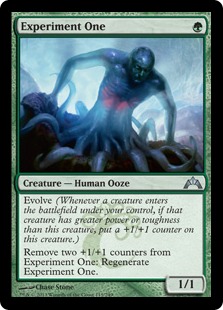
4 Experiment One
4 Strangleroot Geist
4 Young Wolf

Sorcery

4 Gitaxian Probe

Lands

4 Breeding Pool
2 Flooded Strand
4 Forest
1 Island
2 Polluted Delta
1 Windswept Heath
4 Yavimaya Coast

Sideboard

1 Boon Satyr
2 Essence Scatter
2 Rancor
3 Dispel
3 Fog
4 Vines of Vastwood

I'm not going to oversell this deck too much because a lot of your initial criticisms are probably accurate: it's a bad Delver deck, it's budget-minded more than competitive, and there are lots of strange card choices. But despite these very real issues with Undying Pongify, the deck illustrates some interesting principles that will be useful for both brewers looking to get their deck to the next level, and tuners looking to improve an existing top-tier deck.

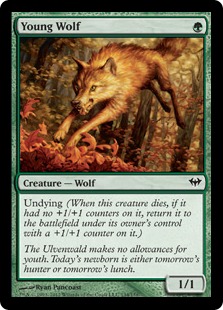
  • Young WolfRely on redundant micro-synergy
    Synergy can be risky in a format where Thoughtseize and Inquisition of Kozilek decks are the most-played in the format. But synergy gets much better when you aren't looking at capital S Synergies like Warren Instigator and Siege-Gang Commander. Instead, look to the micro-synergies that we see in decks like this (or just play Twin). Cards like Pongify are good as removal spells or blowing up your own undying creatures to increase your army. Going turn one Young Wolf into turn two Experiment One and Pongify on the Wolf leaves you with a 3/3 Experiment, a 2/2 Wolf, and a 3/3 Monkey. And if your opponent disrupts that, you still have creatures and a removal spell. If not, you have a big army ready to attack. These kind of micro-synergies, especially when involving redundant pieces, such as Pongify/Hybridization and Experiment/Raptor, can be very strong in Modern.
  • Vapor SnagUse catchall answers
    Modern is a diverse format, and if you can combine your gameplan and micro-synergies with catchall answers, you will be well-prepared to handle a diverse field. Remand and Mana Leak hit almost any spell that lands on turns 2-5. Vapor Snag, Pongify, and Rapid Hybridization are catchall "removal" spells that screw with basically every creature-combo in the format, not to mention aggressive decks like Affinity and Infect. The key here is not to be purely interactive and reactive, which isn't what you want to do in Modern anyway. The key is to combine your aggressive gameplan with the answers. Or to just be faster. This deck took the former approach, which is the classic tempo gameplan that we have seen in Delver decks throughout the format's history.
  • Experiment OneBe aggressive
    When in doubt, go aggressive in Modern. This format doesn't generally reward durdling, and if your deck can put on early pressure and sustain that pressure through turn 4-5, it will probably enjoy some success. Undying Pongify does this with cheap creatures and the potential for explosive starts. It can play an interactive game with its catchall answers, which is a nice option to keep open in unfair mathcups. Or it can just beat faces in with Experiment One and Monkey/Frog tokens.

I suspect this deck could be improved with a lot of Jordan Boisvert's Temur Delver tech: Simic Charm, Disrupting Shoal, etc. But as a case study for some brewing principles, this deck is still interesting. If you follow the above concepts, you won't always take down a PPTQ or a SCG IQ. But you should be able to consistently create semi-competitive brews at the FNM, Daily, or local level. Until next time, keep up the brewing, keep the banlist talk sane and reasonable, and keep enjoying this summer of Modern!


Insider: Meta Watch 7/12/15

Are you a Quiet Speculation member?

If not, now is a perfect time to join up! Our powerful tools, breaking-news analysis, and exclusive Discord channel will make sure you stay up to date and ahead of the curve.

Welcome back, readers and fellow speculators!

I've written a lot of "MTG Stock Watch" articles in which I've given you guys a bird's eye view of all the changes to the sub-$5 cards as well as the Legacy staples (and occasionally sealed product price changes). It dawned on me that as interesting as I find writing these articles is, they provide "reactive information," by which I mean the cards have already moved/jumped.

While this is awesome for the players with big collections who can now go pull the cards I bring to light out of their binders/boxes it doesn't really help the player with a smaller collection because by the time they read about the price changes it may be too late to gain anything financially. That thought led me to ask myself how I can provide "proactive information" to my readers, so they can get ahead of these jumps.

I've previously done articles breaking down the Modern metagame, which got a lot of positive feedback. Thanks to the power of the internet, I am able to review previous metagames thanks to this site.

Modern Metagame

modern metagame breakdown

Looking over the Modern deck archetype breakdowns, we can see the top 5 decks are:

  1. Twin Exarch (14%)
  2. Affinity (10%)
  3. Jund (8%)
  4. Red Deck Wins (7%)
  5. Urzatron (6%)

Now it is important to note that these percentages include MTGO events, and card prices on MTGO have been known to warp the metagame (hence so much RDW). However, it does seem foolish to discount this factor when considering deck archetypal makeup for smaller events (local PPTQ's, FNMs, etc) as the cost barrier is still a very real thing and while the people who travel great distances to play are unlikely to play subpar decks due to cost, the ones who only travel locally are very much driven by said cost barrier.

It's also important to note that these five decks make up 45% of the expected metagame, so there's a very high likelihood that if you were to play in a bigger event you'd play against at least one if not several of these decks. Below we can see the most played Modern cards:

modern most played cards


If you remove lands from the list we have one red card and four blue cards. As many have noticed Lightning Bolt is by far the most common card played in Modern so this one isn't a surprise. It's also not surprising to see the other four spells as blue cards that are all (typically) played in Twin Exarch.

What is interesting is that while Twin Exarch only makes up about 14% of the field, even the lowest card on the list is seen 26% of the time. In fact, Twin Exarch and Grixis Control are the two main decks of Modern that play all five of the top 5 most played spells.

Modern Recommendations

Looking over the top 5 archetypes of Modern we actually have very little overlap (save the Lightning Bolts). I'm also having trouble thinking of cards that fit in one of those archetypes that hasn't already spiked. However, it is useful to look at the less represented decks to see if there are any that seem to have a good matchup against the top 5. To help with that we need to look at the top 5 decks by their win conditions.

  1. Twin Exarch -> Deceiver Exarch + Splinter Twin
  2. Affinity -> Cranial Plating + Etched Champion/Arcbound Ravager
  3. Jund -> Tasigur, the Golden Fang/Tarmogoyf
  4. Red Deck Wins -> Burn spells
  5. Urzatron -> Assembling Tron ASAP + Wurmcoil Engine/Karn Liberated

Now let's consider what the best way to get around these win conditions is:

  1. Twin Exarch -> Stopping ETB abilities and/or preventing the ability to target Exarch.
  2. Affinity -> Destroying artifacts and/or stopping their abilities (a la Pithing Needle).
  3. Jund -> Removing/controlling their graveyard and/or controlling their manabase.
  4. Red Deck Wins -> Making yourself untargetable and/or gaining lots of life.
  5. Urzatron -> Controlling their manabase and/or eliminating their ability to play big spells.

Again, sadly there's not a whole lot of crossover there. We get some in the fact that Jund plays a pretty greedy manabase and no mana dorks and Urzatron really needs to set up Tron quickly (if facing off against an aggressive deck) in order to control the game properly. A good card against both decks is Fulminator Mage, which once sat around $50 before plummeting with the MM2015 reprint to around $25 (and $20 for said reprint).

fulminator mage

The other obvious pick is good ol' Spellskite, which works well against Twin Exarch (by stopping them from being able to target the Exarch with Splinter Twin) and RDW by redirecting to itself spells that would deal 3 damage to you (instead you might take 2 to pay for the redirect, but hey it's still a 33% damage reduction).

spellskite

Standard Metagame

standard metagame breakdown

Looking over the Standard archetypes we see that it almost looks like we're back to a Rock/Paper/Scissors format again (hopefully the introduction of Origins increases the diversity of the metagame). The top 3 decks of the format are:

  1. Abzan Midrange (30%)
  2. Red Deck Wins (24%)
  3. Mono-Green Devotion (19%)

I didn't even bother to go to top 5 on this one because the jump from 3 to 4 is -14% and 4th and 5th are both tied at 5%. Now, what can we glean from this bit of information:

  • Green makes up 49% of the metagame. Which means any green cards shared by both decks will be seeing a lot of play (if you look at the Most Played cards below, you'll notice that outside of lands, every card is at least green (and a creature).
  • Blue is nowhere to be found, which means that powerful/good blue cards are likely in lower demand (and thus might be underpriced).
  • Anytime RDW is popular then cards that gain life and/or cheap sweepers pick up demand to combat the deck.

standard most played cards

Standard Recommendations

Reviewing the most played cards and top 3 archetypes (which make up 73% of the metagame), I can't help but notice all three are weak to Anger of the Gods (as well as every creature on the "most played" list, save Courser of Kruphix).

Unfortunately, Anger is in Theros block and people are already wary of trading for anything from Theros, which you could put to use. Looking at its graph it's near its all-time low again. It's also important to notice that it's the three-mana wrath of choice in Modern thanks to being so good against Kitchen Finks and Voice of Resurgence.

Now because it's in Theros and rotating soon, I wouldn't go out and buy them unless you can get them around buylist price, but if you're trading Theros cards for other Theros cards this one is likely a good long-term hold, and if it picks up play again in Standard it could get one last bump.

The most powerful blue card in Standard is arguably Dig Through Time, which has already proven its power in Legacy as well. The fact that it's in Khans and won't rotate also means that it has more time for a price rebound in Standard. The one concern is the potential for a banning in Legacy (and while I don't think it will occur, it is possible given the card's power level and the recent dominance of decks utilizing it).

dig through time

July 13th B&R Announcement

Are you a Quiet Speculation member?

If not, now is a perfect time to join up! Our powerful tools, breaking-news analysis, and exclusive Discord channel will make sure you stay up to date and ahead of the curve.

No changes!

Many were fearful, or anticipatory, of bans on things like Amulet of Vigor, Urza's Tower, and even Blood Moon. I was personally hoping for some unbans, but we'll probably see anything like that closer to the Modern Pro Tour just to mix things up.

There was an error retrieving a chart for Dread Return

Financiers looks forward to B&R announcements largely because changes to formats means changes to prices. That said, a "no change" announcement doesn't have a null change on the market. Specifically, this announcement will likely lead to an increase in market confidence in the short term. Positions like foil tron lands were already paying off, but Amulet of Vigor isn't quite at the price that I would expect if people thought that the deck was long for Modern. In particular, I was shocked to see that foil copies were barely above $10. There are fewer than 50 foil copies on TCGPlayer, and I won't be surprised when we see a spike there.

Avatar photo

Ryan Overturf

Ryan has been playing Magic since Legions and playing competitively since Lorwyn. While he fancies himself a Legacy specialist, you'll always find him with strong opinions on every constructed format.

View More By Ryan Overturf

Posted in FreeTagged , , , Leave a Comment on July 13th B&R Announcement

Have you joined the Quiet Speculation Discord?

If you haven't, you're leaving value on the table! Join our community of experts, enthusiasts, entertainers, and educators and enjoy exclusive podcasts, questions asked and answered, trades, sales, and everything else Discord has to offer.

Want to create content with Quiet Speculation?

All you need to succeed is a passion for Magic: The Gathering, and the ability to write coherently. Share your knowledge of MTG and how you leverage it to win games, get value from your cards – or even turn a profit.

Insider: Investing in Magic Origins – Part 3 (Rares)

Are you a Quiet Speculation member?

If not, now is a perfect time to join up! Our powerful tools, breaking-news analysis, and exclusive Discord channel will make sure you stay up to date and ahead of the curve.

Welcome back for the final installment of the Magic Origins set review, where I'll cover the rares. If you missed Part 1 or Part 2, be sure to check those out first.

Here's a reminder of the categories I'll use:

  • Top Tier is reserved for the cards that will most likely hold the majority of the value in the set. Or most commonly known as the “chase cards.”
  • Middle Tier is reserved for the cards that aren’t necessarily bad but may be overshadowed at this current point. These could easily jump to top tier in the future, or vise versa.
  • Low Tier is reserved for the cards that will most likely be near bulk. Like Middle Tier these cards could easily jump up to higher tiers but the road traveled will most likely be harder. Again, I don’t think these cards are necessarily bad but my analysis is that these will be the cheapest cards in the set.

Top Tier Rares

Evolutionary Leap

There was an error retrieving a chart for Evolutionary Leap

This card quickly climbed to top tier and I would be hard pressed to not have it in this tier. I would surely not disrespect a card as even a “fair” version of the powerhouse Survival of the Fittest.

Once I had the entire spoiler in front of me, this was an easy evaluation and I would give my seal of approval to invest in this card. While pre-order pricing has fluctuated and put this card around the 5$ range, it might be misevaluated. There is certainly hype behind this card, and many eagerly await what this card is capable of.

When it comes to Evolutionary Leap, I’m okay with the “better safe than sorry” approach. The only thing I could compare this to is an engine card like Collected Company, which in hindsight was grossly underpriced at one point. For those of you out there (some on the Insider forums) that were able to snag this at the initial 1.99$ pre-order, bravo. This is one of those cards that could have a rollercoaster-like stock, but sooner or later this will be all over article and video coverage.

Pre order Price - $5

Abbot of Keral Keep

Seems like this one might have been grossly underpriced when it first opened at 1.49$ pre-orders on StarCityGames. I don’t know how good this rare will be, but when evaluating the other rares in the entire set I think is among the best.

Certainly could be better than 1.49$, that’s for sure. An efficient creature with a competitive casting cost, and pseudo-card advantage in red? What’s not to like? When I hear “Modern” and this card in the same sentence one can certainly be optimistic.

The potential card advantage might not be noticed right away, and I don’t think it’s there right on the surface--but it is a good card and I think worthy of being in this tier simply because there really isn’t much better in the set.

There will probably be many people who compare this to Ire Shaman, which seems reasonable, but I don’t think the comparison goes further than a similar ability. Abbot costs less for a more desired evergreen keyword in prowess. I don’t think Ire Shaman would ever see the light of day in Modern; with a significantly less up-front cost I think Abbot may be a tad bit undervalued.

Pre order Price: $2.99

Languish

Languish is just all around good value for a sweeper at four mana. Black just got a whole lot scarier in Standard. I don’t think this will have many other applications outside of Standard (or casual) for it to be a sound investment though. It’s still in the top tier as of now, but I don’t think it will last long-term.

Board wipe spells don’t usually command a premium, and I doubt this will either. Akin to Supreme Verdict, Languish also will have a second promo printing. Not nearly the same amount of supply as a buy-a-box promo, but I think enough to keep the price similar to a Crux of Fate type price tag.

Goblin Piledriver

Piledriver becoming Modern legal was a big deal. There has been plenty of hype and residual stock movement across many Goblin staples like Goblin Chieftain and Auntie's Hovel.

I wrote a free side article about this card, and fully well know the power of this card from even way back during Onslaught Standard. I think the hype might be pushing Onslaught copies a bit higher than expected, and don’t think it will sustain. It’s not really comparable to Thoughtseize, which is a fair bit more ubiquitous and had new card art.

While powerful, and likely to remain a sought-after card in the set, I do think Piledriver's price will drop. Unless it’s an absolute dominant force in Modern, which remains to be seen. I think the investment strategy here is “wait and see,” and I see no reason to pay 10$ extra on the ONS version (unless old borders are your thing?).

Pre order Price: $13

Mid Tier Rares

Herald of the Pantheon

Where was this during Theros block? I think it’s a great card, don’t get me wrong, but wow did this need to be in Theros block. Well, Summer Magic will be interesting, and I think this card could make some fun things happen for a while.

As a financial target, I think there will be some time where this could get hyped initially, and then fall off the radar during the Summer lull. Much like Starfield of Nyx (which plays well with Herald), I think this card’s future is vested in what is revealed to us in October. As it is, if it’s something that one wants to enjoy for the rest of Theros block and Summer Magic, I think it’s cheap enough at this point to grab them.

I don’t see these going under 1$, if they did it would be a great purchase either way. I think it deserves to be in the middle tier as such, and certainly good enough not to be a bulk rare.

Pre order price: $2.70

Graveblade Marauder

I will try and be as unbiased on this card as I can. I am investing in this card, as I highlight later in the article, but this just seems better than a 1$ rare. I understand for the past sets these warrior cards largely go unnoticed and don’t command a premium price. The difference here is that I don’t think this is specifically pigeonholed to just a warrior-based strategy.

On paper, this really is an efficient creature, which gets better as the game goes on. Deathtouch makes it rough to deal with in combat, so it could even be viable on a board filled with Siege Rhino and Dragonlord Ojutai. It has a small color commitment, and is really just a good bang for your buck.

Which is why I think it probably should be more than a buck! Either way, while this card could end up being near-bulk, I still think it deserves to be in Middle Tier at this point. It’s a multi-role card that isn’t committed to just one strategy. At the same time, it does compete with a lot of good three-mana creatures currently in certain strategies, namely Deathmist Raptor or Courser of Kruphix.

I’m fine with this under 1$ pre-orders, but fully well know the risk involved with this card's stock.

Pre order Price: $.99

Harbinger of the Tides

I’ve talked about this via podcast, and I think it deserves to be in this tier. While Tidebinder Mage isn’t really commanding a premium these days, I think this could maintain a “middle of the road” price. It’s still better in more situations than Tidebinder, and could lead to serious blowouts in Modern by returning that freshly delved Tasigur, the Golden Fang or stopping a Splinter Twin.

I don’t expect this to maintain current pre-order prices, but it’s certainly better than a low-end near-bulk rare. Financially, I just think there are better cards worth investing it, especially with its current pre-order pricing.

Pre order Price: $4.50

Gilt-Leaf Winnower

The more I looked at this card the more I liked it. I think it could maintain some semblance of above-bulk, but wouldn’t be surprised if it fell from this tier and didn’t command a significant price tag. Mostly it’s in this tier to err on the side of caution of labeling it a “bulk rare.”

From a card design standpoint I think it’s more useful than some of the other cards I placed in the Low Tier bracket, which is why I placed this accordingly. Could be a potential curve-topper in an elf deck should it be viable--if not it seems like a great one- or two-of in a midrange style decklist. Takes care of a lot of things in the format, but doesn’t take care of everything.

I like the “wait and see” approach here, from a financial perspective.

Pre order Price: $1.75

Infinite Obliteration

I understand there’s some hype behind this card, and pre-order prices have fluctuated quite a bit since it first opened. Historically spells with this type of effect have not seen competitive play since Cranial Extraction back in Kamigawa Standard. Maybe for the first time it would be worth playing, with it costing one less mana than spells have costed in the past, but I’m not seeing it.

As it is, the best case would be a sideboard role-player in Standard or Modern and it could command a few dollars from that alone. I think it’s better than being thrown into Low Tier with some of the garbage that’s in there. I wouldn’t personally invest in this card just because Magic history is not on the side of this card, so for now I won’t either. Still deserves to be in this tier though.

Pre order Price: $2.99

Animist's Awakening

I don’t know where this fits in right now, but I know it’s going to at some point. With Battle for Zendikar right around the corner, there remains some optimism for this card going forward. I don’t know if this spell will ultimately command a premium price even if all the circumstances pan out, but it’s certainly worthy of being in this Tier, and the dialogue could change very quickly on such a potentially powerful spell.

I don’t think this is a card worth investing during pre-orders, but I would monitor this card closely as we near a block just teeming to bring us landfall into the fold again. Success will also be piggybacked on if we’re presented some large ridiculous Eldrazi monster worth ramping into.

Pre order Price: $4.00

Hallowed Moonlight

This card has been talked about all over social media, and also on the QS Insider forums alongside many other cards. This card’s pre-order price has fluctuated a great deal. Ultimately I don’t know where this will end up; I really can’t say much about this card other than that it’s a role-player and can hose certain strategies while replacing itself.

If the effect is greatly desired in any format, then perhaps this will command a premium price. I really like foil versions of this card, but I think there will be a better time to grab them once supply starts entering the market. I know in particular Sam Black was not very high on this card, but time will certainly tell. Maybe if Collected Company becomes an extreme dominate force in Modern, this will start showing up in multiple decklists.

Pre order Price: $3.99

Hangarback Walker

I've seen some buzz about this card as a potential inclusion in Affinity. As someone who plays Affinity in Modern, I'm just not seeing it.

Now, this doesn't mean Hangarback is a bad card, because it's not. I do think it actually could see play somewhere should some build of a "thopter" deck become viable in Standard. I think Standard would be this card's only application, and I really couldn't see Affinity paying 2 for a 1/1 that could "maybe" get some extra counters and produce a new army of flying thopters. That sounds like way too much work for a deck trying to win by turn 4-5 at the latest.

I put it in this tier for now, on the stipulation of this card becoming worthwhile in Standard. If it's not played in Standard, and not included in Affinity (again unlikely) I don't think the card has upside in the future. Again, for now, it can remain here.

Pre order Price: $1.50

Low Tier Rares

Instead of going through each of these rares and discussing why they’re going to end up as bulk rares, I’d rather do the opposite and talk about a few cards with potential.

Despoiler of Souls

I don’t think this is completely horrible, but the stipulations for its recursion are fairly steep. While this could bump in price due to extreme hype with Mono-B Devotion, there would have to be a strong case for this to be a dominant force in Standard or any other format. If there’s some sort of black-based aggro list, I could see this being a part of that.

I’m personally staying away, but of the low tier rares this has a shot. Maybe there’s a strong argument out there I’m just not analyzing correctly, but sitting down and reviewing this card leads me to put it in this tier but with potential upside.

Sword of the Animist

I don’t really understand the hype around this card, or why its pre-order price is absurd. I’m highlighting this card because I do think it could hold some value going forward, and maybe somewhere down the line foils could be a great pickup for EDH/Casual purposes.

As it is though, Equipment needs to be extremely good to warrant any sort of play in constructed formats. When cards like Sword of Fire and Ice and Sword of Feast and Famine aren’t being included on a regular basis, I don’t think this has any outside shot. Other than strictly Standard (even then, a strong maybe) and casual formats, I’m not seeing this hold it’s current price tag.

Again, this could be a different discussion down the line, and could be lucrative as foils, but I don’t think this will even be a prime target for a Relic Seeker in Standard. I wouldn’t purchase this now, but I do think it deserves highlighting and for us financiers to revisit sometime in the future.

Dark Petition

This is either going to be extremely good, or extremely bad. For now, I want to leave this in the low tier of the rares in this set. Perhaps it could spark a combo-based decklist and will be included as such, but as a financier I don’t like buying this right now.

I don’t know if it’s viable in casual formats--there might be just better cards to play. I leave this to more skilled deckbuilders than I, to somehow figure out if this is the combo piece that is finally needed in various formats. Best case scenario in Standard is using this to find a Liliana, Heretical Healer, but I think if players are turning to tutor spells I like Sidisi, Undead Vizier much better.

~

Well, that about does it for my full analysis of Magic Origins, and dissecting its financial value. I really hope that parts 1,2, and 3 will help you all going forward and keep this list and specific cards in mind going forward. It’s always fun taking on a new set, but sometimes it’s tough to evaluate something without really seeing any of the cards in action. Which is why I elected to write about sets this way starting with Magic Origins, and going forward.

Also, for the sake of transparency here is my full pre-order activity for Magic Origins:

  • Nissa, Vastwood Seer x 8 @ $11.25
  • Graveblade Marauder x 24 @ $0.99
  • Abbot of Keral Keep x 20 @ $1.49
  • Thopter Spy Network x 30 @ $0.49

So, there you have it all in the open and I won't blatantly hype any of the cards that I have chosen to invest in. I will let the chips fall as they may, and will not impose anything to create unnecessary hype.

I’m curious to see and read what everyone else has decided to purchase for this pre-order period. Admittedly I haven’t been short-selling that long--it’s really a different experience for me and until I feel I’m better at it I will refrain from writing anything on the subject. Until that time, I am relying on card evaluation and experience in the game alone, coupled with what I feel are underpriced cards.

In the instance of Thopter Spy Network I just felt it was worth more than $0.49 and should probably be priced higher than Alhammarret, High Arbiter when I was ordering these. Other than that, I don’t have a really good defense for the card. Sorry! Consider this my very farfetched “rags to riches” type investments, knowing full well that it probably won’t pan out. Again, I just felt that was just a tad bit better than actual bulk.

That’s all for Magic Origins! Do any of you have your own Thopter Spy Network? Comments? Questions? Concerns? I always try to be available to answer any and all questions and discuss things further.

Until next time!

-Chaz

Deck Overview- Standard Warden Aggro

Are you a Quiet Speculation member?

If not, now is a perfect time to join up! Our powerful tools, breaking-news analysis, and exclusive Discord channel will make sure you stay up to date and ahead of the curve.

A couple weeks ago Andrew Boswell won the Standard Open in Baltimore with his trusty Abzan Aggro deck with Warden of the First Tree. He's been on Warden since it was printed, though most people have eschewed the card, or only adopted one copy for their Abzan decks, Boswell continues to jam four.

Boswell Abzan Aggro

creatures

4 Anafenza, the Foremost
4 Warden of the First Tree
4 Siege Rhino
4 Rakshasa Deathdealer
4 Fleecemane Lion
3 Brimaz, King of Oreskos
2 Herald of Torment
1 Surrak, the Hunt Caller

spells

4 Dromoka's Command
3 Ultimate Price
3 Valorous Stance

lands

4 Llanowar Wastes
4 Mana Confluence
4 Sandsteppe Citadel
3 Windswept Heath
2 Caves of Koilos
2 Forest
2 Temple of Silence
1 Urborg, Tomb of Yawgmoth
1 Plains
1 Temple of Plenty

sideboard

1 Ultimate Price
1 Valorous Stance
1 Herald of Torment
1 Gods Willing
1 Tasigur, the Golden Fang
3 Hunt the Hunter
3 Self-Inflicted Wound
4 Thoughtseize

MTGO player "Fastfake" won the Dragons of Tarkir Constructed Championship with a very similar list. While he's not on the full four Wardens, three is a deviation from the norm in winning lists.

Fastfake Abzan Aggro

creatures

3 Warden of the First Tree
4 Anafenza, the Foremost
4 Fleecemane Lion
4 Rakshasa Deathdealer
4 Siege Rhino
1 Wingmate Roc

spells

4 Thoughtseize
4 Abzan Charm
3 Dromoka's Command
4 Hero's Downfall

lands

3 Forest
3 Llanowar Wastes
2 Mana Confluence
1 Plains
4 Sandsteppe Citadel
2 Temple of Malady
4 Temple of Silence
2 Urborg, Tomb of Yawgmoth
4 Windswept Heath

sideboard

1 Dromoka's Command
3 Arashin Cleric
3 Drown in Sorrow
4 Self-Inflicted Wound
4 Ultimate Price

Warden is a card that I've been saying will see a modest price bump when Fleecemain Lion rotates, and and if Warden can see play now, I see no reason it won't see even more play when Rotation happens. For a mythic rare, Warden is really cheap right now, and I like it as a spec, or minimally as a trade target.

There was an error retrieving a chart for Warden of the First Tree

Modern Banlist Update (7/13): No Changes

Are you a Quiet Speculation member?

If not, now is a perfect time to join up! Our powerful tools, breaking-news analysis, and exclusive Discord channel will make sure you stay up to date and ahead of the curve.

An hour ago, Wizards released their 7/13 Banned and Restricted Announcement to an eagerly awaiting Modern community. I'd been refreshing pages for about two hours by that point, so I hope you join me in taking our collective hats off to Wizards as we applaud them for the Announcement's decision: no changes. I'm not just happy about this because it fit my banlist prediction article from last Wednesday, although it's great to see that our banlist analysis is on the right track. The real reason to be excited is that this announcement shows Wizards is able to rise above ban-mania, analyze the format objectively, consider the datapoints for what they are, and reach a fair decision in the face of a divided community.

Plains

In light (calm, peaceful light!) of today's announcement, I want to touch on a few points related to this recent decision and how it should affect our format analysis going ahead. This includes a recap of why nothing needed to be banned, a reemphasis of why nothing needed to be unbanned, and a reaffirmation of why this decision is so important for Modern's future. I'm going to focus on the banning piece because that was by far the biggest factor leading up to the 7/13 announcement.

[wp_ad_camp_1]

No Bans: Guiltless Offenders

Simian Spirit GuideJune might have been one of my favorite months for Modern coverage and gameplay, but it was one of the worst for banlist discussion. It felt like every other Modern article on most sites, and most commentary by top players, was unusually ban-centric. There was talk about banning Summer Bloom, Goryo's Vengeance, Simian Spirit Guide, Splinter Twin, Snapcaster Mage, and what felt like every card from a top-tier deck (and almost literally every card from a top-tier combo deck). GP Charlotte was a low-point in this discussion, with SCG commentators loudly asking players about what they wanted banned from Amulet Bloom, or even what Modern banlist changes they expected for the format.

The core failure behind this discussion was a fundamental misunderstanding of both Wizards' ban policy as a whole, and specific elements of that ban policy like the turn four rule. To be clear, I definitely don't claim special inside knowledge of either of those things. But I do try and base my own banlist predictions around both the broader Modern metagame context, and the historical context and examples of previous ban decisions. Both of these were conspicuously absent from most banlist discussion. This is why a lot of commentators and community members were so far off-base in their calling for Bloom, Vengeance, Shoal, Twin, and other bans: they just weren't situating their ban-mania in the broader Modern context.

Instead of discussing those different contexts on their own, I want to focus on them with respect to three different decks. These decks exemplify different Modern banlist considerations that, when misunderstood, can lead players to making inaccurate assessments of format health and card bannability. In analyzing these three case studies, hopefully we can all make more accurate and less alarmist ban assessments in the future.

  • bloomAmulet Bloom: the turn four rule and format self-regulation
    I'll be the first to admit that I was worried about Amulet Bloom back in May and early June. We had a ton of results, including some scary win-percentage statistics from MTGO, suggesting this really was the best deck in the format. Although Amulet Bloom players were defending their deck, these weren't exactly the most objective judges of Bloom's health in the format. By most quantitative and qualitative metrics, Amulet Bloom looked like it was going to be a monster during the June GP circuit. And then came the Blood Moon over GP Charlotte. As I wrote in my GP Charlotte retrospective, GP Charlotte (and the rest of the GPs throughout the month) showed the world that Modern is capable of some degree of self-regulation. Between tech like Moon, an increased reliance on catchalls like Cursecatcher and Spell Snare, and just improved deck/matchup knowledge, Modern players are able to police their own format. Before GP Charlotte, there was always some chance that Amulet Bloom was the format's best deck, or that its relative novelty just made it an unexpected deck people weren't ready for. Once the GP rolled around, it became clear it was the latter case: this deck was eminently policeable if people were prepared. This was reflected in the deck's metagame shares, which never crept over 5% in MTGO and was well under 4% in paper. When past combo decks got banned, such as Storm, their metagame shares were much larger and were sustained for longer periods of time. The 7/13 announcement strongly suggests Wizards views Amulet the same way and prefers internal self-policing to external bans.
  • GriselbrandGrishoalbrand: the turn four rule and top-tier decks
    No sooner had the Amulet Bloom ban-mania died down than the Griselbrand and Nourishing Shoal ban-mania take its place. Following Zach Jesse's Top 8 finish with the deck at Charlotte, the combo deck exploded onto the radar of every ban-minded Modern player. It was billed as the most broken deck in the format with strong matchups across the board, a challenging axis of interaction, and extremely frequent turn two and three wins. All of this appeared to make it an ideal candidate for banning under Wizards' oft-misunderstood turn four rule. But there was just one problem: people had forgotten the most important part of the turn four rule, which is the "top-tier" status of the deck in question. Amulet Bloom had threatened to reach tier 1 a few times before June, but Grishoalbrand was never even close. By the end of June, the deck was still under 2% of the collective metagame, seeing the most play at GP Day 2s where it comprised only 2.8% of the field. The deck also completely flubbed out of the Modern Festival, sending no one to the Top 32 and making up just over 2% of the Preliminaries. So when the ban announcement rolled around on 7/13, no one should have been surprised that nothing from Grishoalbrand was on the chopping block: the deck was never even close to top-tier status for its limited time in Modern. Will this deck eventually get there? We need to wait and see. But the point, and the lesson learned, is that the deck was not top-tier during June and thus should never have been under consideration for a banning.
  • Splinter TwinSplinter Twin: metagame dominance and metagame shares
    When there's nothing else to talk about in Modern, I can always count on ban discussion shifting to Splinter Twin, Deceiver Exarch, and/or Snapcaster Mage. To some extent, it's fair to voice concerns about what is probably Modern's "best" tier 1 deck, or at least its most consistent. Birthing Pod is still fresh on our minds and Twin has some (but not all) the trappings of the Pod scenario we faced back in January 2015. But it is in the Pod example itself that the comparison, and by extension the Twin ban-talk, breaks down. When decks get banned for reducing format diversity or being too dominant, this is exclusively a metagame share argument. Pod's metagame share had been at 10%-12% for a while, and although they crashed down to sub-5% for the first part of the Treasure Cruise era, they catapulted up to 15%-20% on the back of Siege Rhino and other metagame contexts. This was on top of an excessive number of GP wins and Top 8/16 appearances. Twin isn't even close to that degree of prevalence. Even combining all the Twin decks into one collective group (which I'm not even convinced we can do fairly), we still see a deck that is less than 13% of the metagame. We also see a lot of differences between those Twin decks, and pretty wide variation in their performance (e.g. Twin decks aren't even winning every event). All of this suggests it's okay to have strong tier 1 decks in the format, or even a most-played deck. It's just not okay if that deck reaches Pod, Delver, or Deathrite Shaman-era Jund levels. So long as Twin stays in its current metagame prevalence band, it will remain safe.

In all these assessments, the key ban factors are a) metagame prevalence and b) ban decision history. Whenever we forget both of those elements, it's incredibly easy to misevaluate the format's health and the safety of cards that might appear dangerous. But if we use these three examples to inform our future predictions, not to mention this banlist announcement itself, we will be much more likely to make accurate assessments and stay away from ban-mania. Metagame breakdowns, like my 6/1 - 7/1 discussion from last week, are helpful in this regard. So is an in-depth understanding of banlist dynamics, as in my analysis of the turn four rule from the most recent banlist prediction.

No Unbans: Don't Fix What Isn't Broken

In fairness to the Modern community, many players won't be upset at this banlist announcement because nothing was banned. They will just be disappointed that nothing was unbanned. Common swordsuggestions in this category include Sword of the Meek (reasonable!), Ancestral Vision (risky...), Bloodbraid Elf (insane, given Jund's current prevalence), and Stoneforge Mystic (people who didn't play Magic in 2011). As with the banning suggestions, the problem with the unbanning camps is one of context. When considering an unban, Wizards likely weighs two overlapping (and occasionally competing) criterion. First is the criterion most people acknowledge: the individual power level of the card. Something like Sword isn't necessarily a fair card, but it also doesn't feel nearly as broken as things already happening in Modern. For instance, it's a stretch to think Sword of the Meek and Thopter Foundry would be significantly better than the existing Twin combos (especially with all the Kolaghan's Command running around). But this consideration is at odds with the second consideration, which is the one most people forget: metagame context.

Ancestral VisionAs Wizards has shown time and time again, unbans are unlikely in diverse and stable formats. Although the 2012 Valakut unbanning is a bit of an exception to this, ("Recent Modern tournaments have been diverse, with no deck dominating the metagame... The DCI is unbanning a card to see how that affects the format."), this is mostly how Wizards has treated the rest of their unbans (Nacatl, Bitterblossom, Troll). Moreover, the metagame in which Valakut was unbanned was very different from our current one. We are going through a period of big changes, with Grixis Control recently rising to prominence as a legitimate top-tier control deck, cards like Collected Company still looking to find their optimal home, and a big new set just released with possible Modern implications (Day's Undoing is big here). With no deck at more than 10% of the metagame, there's just no good reason to unban a card right now. The metagame has enough diversity and options without adding anything else. Could Ancestral Vision benefit control decks? Maybe, but maybe those decks don't need help. Maybe Grixis Control is able to rise to the top without any help from Vision. Indeed, maybe Vision throws the balanced format out of alignment when there's no reason to take that risk. We are likely to see unbans in either stagnant metagames with no deck movement, or in metagames recently gutted by bans. This most recent announcement confirms our thinking on this matter, and will serve as a useful datapoint in future predictions.

The Modern Banlist and Wizards

The real winners here are not Amulet Bloom or Grishoalbrand players (and certainly not the clowns who bought out all the foil Sword of the Meeks over the weekend). The real winners are the women and men of the Modern community who rely on Wizards for fair, objective, and consistent management of their format. If nothing else, this ban announcement signals that we are all on the same page with assessing Modern's health. I talked about this in my banlist prediction article, and it's important to restate here after the 7/13 announcement is in the books. If Wizards had banned something today, or even unbanned something, it would signal that our understanding of the format is radically different from Wizards'. But because they did nothing, it suggests many of us are in agreement about what makes a stable format, what makes a healthy deck, and what Wizards' responsibility is in such a situation. This should give us great confidence going forward: Wizards has proven they can remain reasonable and objective despite lots of commentary to the contrary. This is great news for players who are worried about investing in Modern for fear of bans, and worried about playing Modern for fear of instability.

I'll be on vacation this week, so expect some significantly shorter articles on Tuesday and Wednesday before Trevor and Jordan release their longer pieces at the end of the week. How do you all feel about the banlist update? Anything you would have done differently if you were part of Wizards? How do you think this informs ban decisions going ahead? Looking forward to hearing from you in the comments and to continuing to play in our format where no banlist changes are needed.

Want Prices?

Browse thousands of prices with the first and most comprehensive MTG Finance tool around.


Trader Tools lists both buylist and retail prices for every MTG card, going back a decade.

Quiet Speculation