menu

Crash and Burn: Meta Limits and The Fringe Effect

Are you a Quiet Speculation member?

If not, now is a perfect time to join up! Our powerful tools, breaking-news analysis, and exclusive Discord channel will make sure you stay up to date and ahead of the curve.

I put a lot of work into gathering data for the monthly Modern metagame update. Finding non-Wizards data can be tricky and frustrating, and organizing it for analysis and creating the tiers is quite time-consuming. In the end, the work is worthwhile to provide as complete a picture as possible for the benefit of the entire Modern community. Well done, me! But it also leaves me acutely aware of its limitations. And that makes it hurt that little bit more when I'm on the receiving end of said limitations. Such was the case this weekend. Here is my story.

Getting Back the Competitive Edge

I am, and have been for nearly two decades, a Spikey tournament grinder. Magic is a competitive game and being the best drives me. I am not without success, but the desire to advance and grow as a player is constantly gnawing at me... even more during a pandemic. I was used to going to multiple local tournaments a week with monthly cash tournaments available in multiple locations around the Denver area. It fed my drive and forced me keep my play-skill and format knowledge high. It was great!

There was an error retrieving a chart for Death's Shadow

And it all came to an end on March 7, 2020. On the 6th, I played Humans to middling results in a Modern cash tournament. On the 7th, my LGS announced they were cancelling all scheduled events due to orders from the county's health board. By the end of March, all in-person Magic events would be cancelled. Lockdown was on. And my Magic playing and ability began to plummet. Drafting on Arena was... okay, though Standard was poor. I enjoyed 2020 Legacy and played a lot, but it...just wasn't the same. And so I found myself drifting away from the game.

There was an error retrieving a chart for Champion of the Parish

Tournament play was my main connection to the game. I need in-person tournament play to stay connected. Good news: on a local level at least, it is coming back. Bad news: I'm struggling to win in bigger tournaments. I've degraded sufficiently, and I'm just not competitive as I used to be. I needed a solution.

MTGO to the Rescue

Conveniently, now is the right time to have that realization. Right now on MTGO, Mythic Event Tokens are available until April 6. For those that don't know, for $25 you get access to (almost) every card on MTGO. Meaning you can play any deck conceivable. Including in formats such as Vintage, something the vast majority of us will never do otherwise. An incredible deal and anyone with a vague interest in MTGO should take advantage of. (Please? The Vintage room is always so empty....)

There was an error retrieving a chart for Ancestral Recall

Anyway, back to Modern. In addition to getting a Vintage preview, I've been playing a lot of Modern. Partially because it's my specialty format and partially to try as many decks as possible. Both to get a better feel for the metagame and each deck's place within it and also to get more material for articles. The content well doesn't always refill itself, you know?

This has gone a long way to getting me back in practice and also got me feeling confidently competitive enough to enter the Premier events again. Which is the first time in over a year I've done that on MTGO. On far less sleep and far less tournament-specific preparation than I should have. However, when the mood and opportunity strike, you just have to go for it sometimes. I played in several events over the past weekend, and my experience in the Challenge is instructive of how it all went.

Deck Choice

I am familiar with a lot of Modern decks. It happens when you've been playing forever. The problem is that a lot of them weren't going to be optimal choices. Aether Vial decks are my preferred strategy, but I wouldn't consider them right now. Fury does nasty things to small creature decks. As I mentioned last week, I'm familiar with Storm, but not sufficiently committed to the deck to expect to do well. I'm also decent with UW Control, but not enough that I'm confidant about winning the mirror. That left me with one choice.

Burn, David Ernenwein (MTGO Modern Challenge)

Creatures

4 Goblin Guide

4 Monastery Swiftspear

4 Eidolon of the Great Revel

Sorceries

4 Lava Spike

4 Rift Bolt

2 Skewer the Critics

Instants

4 Lightning Bolt

4 Lightning Helix

4 Boros Charm

2 Skullcrack

Lands

4 Arid Mesa

2 Scalding Tarn

4 Inspiring Vantage

4 Sunbaked Canyon

3 Mountain

3 Sacred Foundry

Sideboard

3 Deflecting Palm

3 Sanctifier en-Vec

3 Roiling Vortec

3 Path to Exile

3 Smash to Smithereens

The advantage of having Burn in your back pocket is that it's a very strong Modern deck that's also easy enough to play while sleep deprived. I play a slightly less than stock maindeck because I've often been frustrated by Skewer the Critics getting stuck in my hand. Playing Lightning Helix is something of a gamble when Ragavan, Nimble Pilferer is legal, as having Helix stolen is devastating. I consider it a worthwhile gamble since it gives me a pre-board advantage in the mirror.

The Tournament

As mentioned in the introduction, the Challenge didn't go well for me. I dropped at 2-3 after three straight losses. Which sucks, but accepting that it happens is key to being a tournament player. As is understanding why the losing happened.

It started auspiciously enough with a handy win over Storm. Burn is favored mostly because its clock is as fast as Storm's, but more consistent. Bolt and Searing Blaze being effective disruption is also good. Most importantly, Storm cannot go off if Eidolon of the Great Revel is in play. I played Eidolon on turn 2 of both games.

There was an error retrieving a chart for Eidolon of the Great Revel

Second round, I hit Grixis Shadow. Which I thought was actually Rakdos Rock because game 1 my opponent is stuck on two lands with only red and black mana. Turned out to be Grixis, but my turn 2 Sanctifier ensured that all the Drown in the Lochs my opponent had were useless. I'm never in danger and get another 2-0. Things were looking up.

Fate Intervenes

Round 3 I'm devastated when my opponent plays and cracks Martyr of Sands for 18 life on turn 2. I'm never actually in that game because two Auriok Champion were in the revealed cards. I actually steal game 2 thanks to Deflecting Palm on a massive Ajani's Pridemate two attack steps in a row, but game 3 my opponent plays around that by flooding the board and has Skyclave Apparition for my Roiling Vortex. Which sucks but Soul Sisters is basically unwinnable for Burn anyway.

There was an error retrieving a chart for Martyr of Sands

No matter, shake it off and play the next round. Which happens to be Ad Nauseam. Another nearly unwinnable matchup. Angel's Grace and Phyrexian Unlife are pretty devastating, as is the speed of the combo. I lose game 1 to the turn 3 combo and in game 2 runner-runner Graces into Unlife buy the time to combo off.

There was an error retrieving a chart for Collected Company

Things do not improve for the final round. Which is against Counters Company. Not Heliod Company; 2019 style Counters Company. With maindeck Kitchen Finks and Shalai, Voice of Plenty. Game 1 lose to Chord for Shalai. Game 2 I lose to double Finks off Company, then two Viscera Seer into Vizier of Remedies to gain 200 life through my Searing Blaze on Vizier. Including scrying into the rest of the combo to actually kill me. I'm too frustrated, disgusted, and tired to continue.

Learning from Defeat

Losing happens. Bad luck is a thing. The importance is learning from mistakes and improving. After a nap and a mental reset, I checked the playback from my matches. And there really wasn't much I could have done differently. Round 3 I had to successfully tempt my opponent into going all-in on the Pridemate not once, but twice. I had no other way to win, and managed that despite not being able to directly bluff my opponent. There was no room to win game 3 given my opponent's draw. Round 4 was similar.

There was an error retrieving a chart for Deflecting Palm

I might have survived a few more turns round 5 with a different line game 2, but it wouldn't have changed the end result. I could have sequenced my spells differently and had Blaze and Bolt available on the combo turn to prevent the combo off. However, at that point I'd have had a Swiftspear, three lands, a Boros Charm in hand, and my opponent on 16 life. Said opponent had 2 persistent Finks on the board along with the Seers and several mana dorks, an Eternal Witness and three other cards in hand, plus whatever the scry's found. I'm severely behind and need my opponent to not only draw badly, I have to draw amazingly. It's extremely unlikely I'm going to win, and that assumes the foresight to change my sequencing to deal with that specific combo attempt.

Sometimes, There Is Nothing to Learn

Did I play perfectly? No. Did it matter? Not really. My three losses were against some of Burn's worst matches. One is about the worst matchup possible. I started each game at such massive disadvantage I needed everything to go my way. That's plausible to expect in one match. Three in a row? Forget it, implausibly unlikely. That's just what happens when the Pairings God determines that today is not your day.

The Fringe Effect

Which brings me to the point I made in the introduction. There was no way to predict that I would hit these decks. They do not appear in my metagame updates. I rarely see Ad Nauseam in the data. I haven't seen old-school company in (at least) months and I can't remember seeing Soul Sisters ever. Not saying I haven't actually, just that I can't remember. And this is not a fluke or simply bad luck. This is a fact of Modern that players need to be reminded about.

There was an error retrieving a chart for Thassa's Oracle

The Tier list does not account for every deck in Modern. In a given month it only represents ~60-80% of decks played by population. A substantial portion of what actually sees play in Modern is untiered. And many of those untiered decks appear as singletons. Modern is a format where much of the actual metagame is inherently unpredictable. In a larger open tournament, the likelihood of only seeing known, tiered decks is pretty small. It gets better the longer the tournament goes (fringe decks are fringe for a reason), but that's not a guarantee.

There Are Advantages...

Did I make a mistake in deck selection? Given what I faced, certainly. There was no way to know that going in. Burn has actively good to winnable matchups against most of the known decks in Modern, especially the top tiers. Given the spread of decks that I had an expectation of actually seeing, I made a good choice. In that sense, I just got unlucky.

However, it is also worth noting that my opponents had a big advantage over me and likely all their other opponents given that they too had 2 wins too. Being a fringe deck means that opponents won't have boarding plans against you, but you can still tailor your board against all the known decks. More importantly, they're less likely to know which cards matter, and consequently will misplay more often.

...and Opportunities

All of which has been known for a very long time. But something that rarely gets talked about is that fringe decks tend to have far more extreme matchups than mainstream, tiered decks. The tiered decks abide by certain rules of engagement. Look at current Modern's emphasis on red spells, card flow, and mana efficiency. The top decks stick to these rules and are tailored to thrive in this metagame. This means preparing against each other and having plans to reduce the impact of bad matchups and maintain good ones. This moderates every deck's advantages to a degree.

There was an error retrieving a chart for Ragavan, Nimble Pilferer

The fringe decks don't have to play by the rules. Nobody's thinking about them or preparing against them in the first place, plus they're doing something unique. This means that they can really lean into whatever strength they have and really leverage it without worrying about counterplay. This means that their good matchups can be made much better without worrying about making the bad matchups worse. A Tiered deck will have far more 55/45% matchups while the fringe will trend toward 75/25% on the good end and 25/75% on the bad. This is great when the right metagame is hit. It's hopeless otherwise.

Playing the Odds

Thus has always been the appeal and the risk of rogue decks since the dawn of competitive Magic. This weekend, I was on the receiving end. Next time I may be the benefactor. Modern is so wide open that this is just what will happen sometimes. Fringe decks are fringe for a reason. The odds of hitting one in a tournament are pretty good. The odds of hitting one that your deck specifically is just dead to is pretty low... but evidently not zero!

Since When Were Rares So Common?

Are you a Quiet Speculation member?

If not, now is a perfect time to join up! Our powerful tools, breaking-news analysis, and exclusive Discord channel will make sure you stay up to date and ahead of the curve.

My family made a trip to the local game shop the other day. My 10-year-old son had a stack of PokĂ©mon cards, and we were wondering if any of them were valuable. Hours of preparation were placed into organizing the collection—sorting by rarity, pulling aside the energy, and ensuring none of my son’s favorites were left in the pile. At the end, there was a relatively impressive stack of about 30 rares on top of everything else in the collection, with cards that dated back to the late 1990’s.

We arrive at the LGS, show them the stack of cards and hand them the rares first, to see if there was anything of value. It took the shop’s buyer all of about 1 minute to scan through the cards and tell us they were worth about $10-$20. For everything. That included the rares, the 100’s of bulk cards, the energies, etc.

When we were informed there were no diamonds in our rough, I asked the buyer what to look for in a valuable PokĂ©mon card. The answer: you can largely tell a PokĂ©mon card is valuable because it’ll look flashy. It doesn’t matter how powerful the card is, or that it’s a “rare”—if it has rainbow effects and full-frame art, then you know you have something desirable.

A Pack of Magic Cards

Let’s fast-forward to last weekend. Recently my son had been asking to “draft” with me at home, so I purchased a few recent booster packs to do a small pack wars competition. We would shuffle up 2 of each basic lands with a freshly opened, un-searched booster, and proceed to battle.

The games were entertaining enough, though newer cards are awfully complex and really give me a significant advantage over my ten-year-old. But it was generally fun, and as long as my son got to cast his rare, he didn’t mind losing.

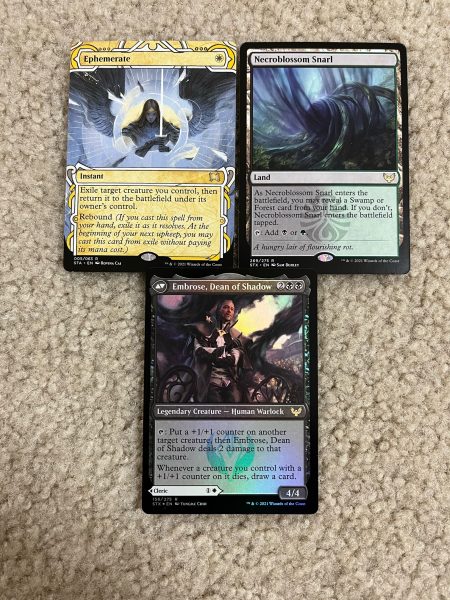
When I opened my Strixhaven pack and started playing, I had a borderless copy of Ephemerate in my hand. Now keep in mind, I never drafted this set and this is the first time ever looking closely at cards from Strixhaven. Other than the theme around a school for mages, and that there are lessons that can be “learned,” I knew virtually nothing about it.

There was an error retrieving a chart for Ephemerate

“Neat,” I thought. “This must be a special printing of this rare. Maybe it’ll be worth something.” The game unfolded and I proceeded to draw a Necroblossom Snarl. Another rare?

There was an error retrieving a chart for Necroblossom Snarl

Then the real kicker happened. We were playing without sleeves, and during a shuffle I noticed I had a foil double-faced card in the same pack. Upon closer scrutiny, I saw it was a rare: Shaile, Dean of Radiance.

There was an error retrieving a chart for Shaile, Dean of Radiance

Besides the jealousy my son felt at my having three rares in my pack, we were both baffled at this occurrence. Since when did a draft booster pack contain three rares? I thought they were supposed to contain three uncommons, making rares in this set somewhat common, if you will.

I was starting to get pretty excited about my good fortune, and being the MTG finance guy that I am, I immediately looked up the Card Kingdom buy prices for each of these cards to see if my booster pack purchase (about $40 worth) was just paid for with this one lucky pack! As you can tell from the graphs above, I had no such luck. Here’s the rundown as of last Sunday morning:

Ephemerate: $1.00 (Apparently borderless is the base printing of the card in this set?)
Necroblossom Snarl: $1.30
Foil Shaile, Dean of Radiance: Not on buylist

Three rares, one of them foil, one of them doesn’t look like a traditional Magic card, and I can’t even buylist them to pay for the booster pack they came in. I have to wonder just how rare these cards truly are if they’re barely worth a bottle of soda? My ten-year-old would have loved opening this booster pack for himself, but as a seasoned player and collector, I’m not wowed by the flashiness of multiple rares and printing styles. The experience fell flat, as a result.

A Brief History Lesson

I started playing Magic back in 1997 or so. The first booster packs I ever opened were from Visions and Fifth Edition. I also remember discovering Weatherlight for the first time at my local hobby shop, and the thrill I experienced opening packs with cards I had never seen before.

Booster packs back then didn’t denote rarity on the cards themselves. Unless you knew how boosters were collated (at the time, I did not), you had no idea which card was rare, uncommon, and common. When I opened a new booster pack, I didn’t immediately hunt for a rare. I read through every single card and treated them all equally, and evaluated them based on their potential utility in my decks. If a common really impressed me (e.g. Dark Banishing), I would treasure that card as the most valuable I opened.

The day I opened a Scaled Wurm from an Ice Age booster pack was really special.

There was an error retrieving a chart for Scaled Wurm

If you were able to identify the rare, you could be confident in its utility—either as a staple in a deck, or else as valuable trade fodder. After all, a rare was an even trade for another rare, right? Thank goodness for InQuest Magazine, which gave us the rarity information we needed to facilitate such trades.

When Wizards of the Coast introduced the gold, silver, and black set symbols to denote rarity in Exodus (June 1998), my friends and I found it quirky at first but we swiftly got used to it. Then Wizards of the Coast introduced the first foils in Urza’s Legacy (February 1999), and we were a bit more aggravated. In our humble opinions, Magic didn’t need premium printings of cards because the game itself was so amazing and cards could be rare and valuable without adding another layer of rarity.

We tolerated the foils for a time, and eventually they faded into the background. If we opened a foil, cool it was again useful trade fodder. Fortunately, nonfoil rares could still be quite valuable and worth opening in a booster pack.

Fast forward to October 2008, almost a decade later, and Wizards of the Coast introduced the first mythic rare in Shards of Alara. Now there was a card that was even harder to open than a rare! Add on the fact that mythic rares could also have foils, and you began to sense the rarity dilution going on. No longer were rares the super-hard-to-find chase thing. At least the booster packs still only had one rare or one mythic rare per pack, so there was a limited occurrence of both ensuring card values didn’t plummet. Stoneforge Mystic and Noble Hierarch were both quite valuable during their time in Standard despite being printed at rare instead of mythic rare. Don’t forget Fetch Lands, which were also always worth at least $8-$10 as rares.

Skipping Ahead

Even throughout the early 2010’s, the addition of rarity indicators, foils, and mythic rares didn’t dilute card values too badly. But something happened over the past few years that really destroyed new card values. Suddenly, it feels like so many versions of a card exist that just having a base printing of a given rare isn’t special anymore. I am reminded of what that PokĂ©mon card buyer told us the other day, as it also pertains to new Magic sets. [With very few exceptions] a Magic card needs to look valuable to truly be valuable.

Could you open a Boseiju, Who Endures and have a $20 card on your hand?

There was an error retrieving a chart for Boseiju, Who Endures

Yes, I’ll concede this point. But it is the exception and not the rule. Out of the 59 base rares in the set, only 4 of them can be sold to Card Kingdom to cover the price of the booster pack they’re opened within ($4). That 7% hit rate is hardly inspiring, and this is a brand new set where card prices are still a little inflated. The most valuable rare you can open from Strixhaven is Wandering Archaic—with a $4.70 buy price, it’s the only non-foil, non-special rare you can open from this set that will pay for the booster pack. Prismari Command is close, at $3.70.

No, opening a normal-looking, boring regular rare isn’t worth what it used to be. You really need to find that special looking, alternate art, foil, borderless, etched or whatever special printing of a card to know if you have something special.

Since when did Magic become Pokémon?

Wrapping It Up

The tone of this article may be a touch on the negative side, and I’ll admit this is partly due to the underwhelming nature of my pulls during last weekend’s pack wars. When I open three rares in a set, I expect to have a little more value amongst the cards—no such luck.

I’ll end on a positive note. While these cards may not all look like Magic cards, at least they still play like them. My son and I had a lot of fun shuffling up unknown cards from Magic’s most recent sets to battle. Even though the mechanics were foreign to me, they were intuitive enough to facilitate enjoyable gameplay (although I did get tired of rolling D-20’s over and over again when I played with Adventures of the Forgotten Realms). Foretell was a little bit too advanced a concept for my son, as well, but I am sure he would have picked it up the second time he saw the ability.

My conclusion after last weekend’s experience: if you like buying scratch-off tickets in the hopes of winning some real money, then modern day Magic booster packs are just the thing for you. They’re like modern day Pokemon packs, in that opening a flashy, special looking rare is your best bet to open something of value. The majority of base, normal printings of rares just can't compete anymore.

If, on the other hand, you’re into Magic for the game, then forego the paper stuff and stick to playing digitally. There’s no pack wars (yet) on Arena, but it’d be simple enough to facilitate and could be a good deal of fun. Other than that, as long as you’re looking for a weekend of casual play, nothing beats the price of free. No shuffling or manual rolling of D-20’s required.

Speculating on Hinata, Dawn-Crowned

Are you a Quiet Speculation member?

If not, now is a perfect time to join up! Our powerful tools, breaking-news analysis, and exclusive Discord channel will make sure you stay up to date and ahead of the curve.

It's actually been awhile since WoTC printed a commander I was personally excited for. Hinata, Dawn-Crowned looks to be a fun "build around me" commander, as opposed to an overtly powerful one, which fits perfectly with my play style. Its ability reduces the cost of targeting spells by 1 for each target they have, which can get crazy with a few older cards.

There was an error retrieving a chart for Hinata, Dawn-Crowned

To be 100% honest, I hadn't really followed the new Kamigawa set spoilers that much, so I was surprised when some cards I had listed for sale were suddenly bought out. That card was my foil Aurelia's Fury, which were a failed spec back from the days of Gatecrash. Fury had been targeted as a potential spec thanks to the spoiling of Hinata. Luckily, I hadn't listed all my copies and found one more to list at a higher price. I also started pulling the non-foils I had accumulated as bulk mythics, and they have been selling somewhat steadily for me.

Then I saw Reality Spasm pop up on MTGStocks and started looking into possible causes, which is what eventually led me to want to build around Hinata. With Hinata in play, the costly X spell enjoys a drastic turnaround, tapping down every opposing permanent while untapping each of yours for a paltry UU!

Hinata has the potential to set off a few more cards that work well with it, which we'll cover today. Don't be caught with your pants down if you're looking to sleeve up the Spirit.

The Specs

There was an error retrieving a chart for Distorting Wake

It amazes me that we can see Reality Spasm, an uncommon from Rise of the Eldrazi, hit $4, yet this rare from Invasion whose only reprint was in Commander 2014 is sitting at half the price. Cyclonic Rift is a Commander staple, and its effect is so powerful that it often wins games upon resolution.

Distorting Wake does the same thing but for 3 blue mana (as long as Hinata is out). This is the first card I am putting in my Hinata deck and it just feels like this card is due for a price correction, as it is easily a $7+ card. Foils are already $38+, which given how rare they were at the time isn't that crazy of a price. Looking at the price graph you can see that it has already been trending upward since February, and I would expect that to continue for the foreseeable future.

There was an error retrieving a chart for Mass Manipulation

This one is a bit tougher of a call. It was printed recently and is still an expensive play. That being said, the fact that it steals both creatures and planeswalkers en masse is extremely powerful. Hinata essentially changes the CMC to UUUUX, which is substantial in a format where 10 mana to cast a spell isn't out of the ordinary.

There was an error retrieving a chart for Mystic Confluence

Despite having a recent reprint in Time Spiral Remastered, this card still has significant potential. The ability to mana leak a spell, bounce a creature, and draw a card for Cancel mana seems absurd. While the other cards on this list have already seen at least a small rise in price since Hinata was spoiled, Mystic Confluence has remained stagnant. I will admit that due to having multiple printings I believe the ceiling for this card is lower than the others mentioned; still, $5-$6 seems attainable and represents a double up from its current price.

There was an error retrieving a chart for Zaffai, Thunder Conductor

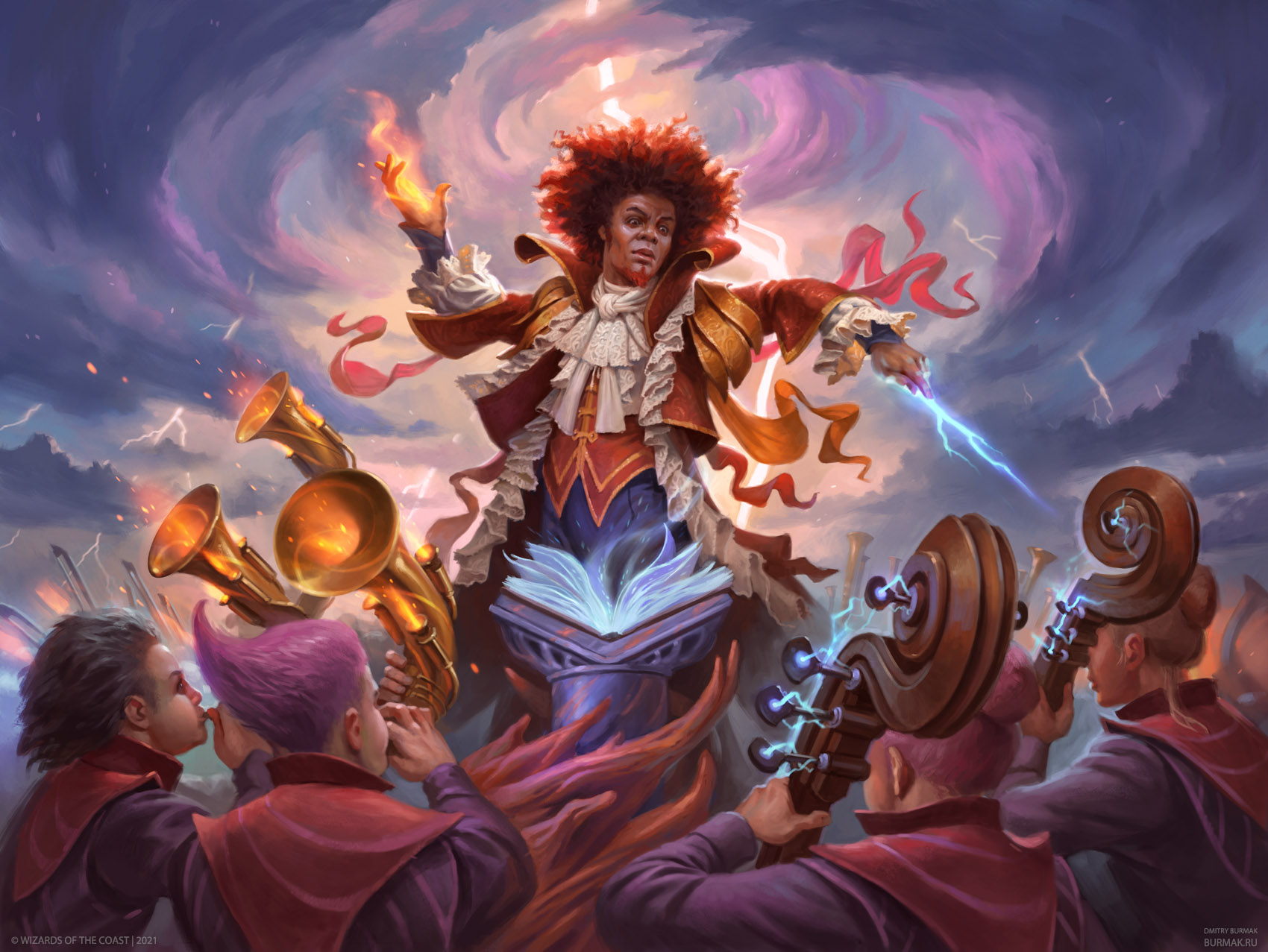
This is my bulk-to-bucks pick. Copies were only available in the Strixhaven commander deck Prismari Performance, and it provides repeated bonuses with Hinata. It is very important to understand that Hinata's cost reduction does not reduce the mana value of the spell, thus you are likely to get a lot of benefits from Zaffai very cheaply. I honestly like Zaffai as an overall fun card that is powerful, but not so much that it demands an immediate answer like some other creatures in the format. As a fun aside, if you hadn't noticed, Zaffai looks exactly like Samuel L. Jackson.

There was an error retrieving a chart for Karn's Temporal Sundering

I picked up a good number of these as standard specs and things never panned out. The requiring a legendary creature to cast was enough of a hinderance to keep the card from dominating standard like Alrund's Epiphany did. That being said, taking an extra turn is extremely powerful in Commander and the fact that you target both a player and a nonland permanent means that you can cast it for 4 mana with Hinata out.

There was an error retrieving a chart for Elementalist's Palette

Looking over the typical Hinata decks on EDHREC, one will see a lot of X-cost spells. While 3 mana for a mana rock isn't anything to write home about, the fact that each X spell you cast will help every future X spell. The fact that it utilizes charge counters also means that numerous other cards in Magics history work well with it.

Crowning Achievement

While this list is by no means exhaustive, it covers the cards I feel have the most confidence in regarding financial growth with regards to Hinata, Dawn-Crowned. I want to note that I have seen time and time again random cards printed exclusively in a Commander deck series pop off simply due to people overestimating the supply. As you only ever get 1 in a deck, a good many Commander players will keep the first copy they get for personal use, meaning fewer copies of these cards enter the marketplace. If you can think of any more great pickups for Hinata fans, drop them below or reach out on the QS Discord!

From the First Pro Tour to the Future of Organized Play

Are you a Quiet Speculation member?

If not, now is a perfect time to join up! Our powerful tools, breaking-news analysis, and exclusive Discord channel will make sure you stay up to date and ahead of the curve.

The Showdown In New York

"The place: New York City. The time: February 17th and 18th of 1996. The Event: The very first tournament of the Magic: The Gathering Professional Tour." These sentences are the opening narration to Showdown In New York a promotional video made by Wizards of the Coast covering the players, stories, and action of the first Magic Pro Tour. Released on VHS tape in the '90s, and now on YouTube, the video interviews and follows a number of early Magic personalities through the events of the tournament.

In addition to the interviews and stories, Showdown in New York presents highlights of some of the first high-level Magic played on camera, with commentary. 25 years later, it's an interesting snapshot not just of Pro play, and the then brand new Standard format (called Type 2 at the time), but of the nascent Organized Play program generally.

The Origins of Magic Organized Play

Major Magic tournaments, including the first Magic World Championships, happened as early as 1994. In 1996, seeking to capitalize on the massive interest in the game, and prevent it from being just another fad of the '90s, Wizards launched an Organized Play program seeking to retain players. The brainchild of Wizards Lead Events Designer Skaff Elias, it began with a series of professional tournaments, of which the Showdown in New York was the first of four for the year.

While the first Pro Tour (PT) was open to a limited number of players who called Wizards on the phone to register, invites to future PTs were handled through a qualification system. To qualify, players either needed a good finish in a previous PT or to have won a Pro Tour Qualifier (PTQ) tournament.

Wizards Advertisement with PTQ calendar from the back page of InQuest 24, April 1997

The Pro Tour was as much a promotional tool as it was an arena for the best players in the game to slug it out over the table. This led some to jokingly refer to it as the "Promotional Tour." Competitive play would be the focus for most of Wizard's marketing and OP efforts throughout the '90s and into the 2000s. It was quickly apparent though that with the advent of the Pro Tour, another type of event structure was needed to bring players from the kitchen table to the tournament hall.

From Casual to Competitive

Seeking to bridge the gap between casual play and the competitive play of the Pro Tour, Wizards unveiled the Arena League at the 1996 Origins game convention in July. Played primarily at the local game store (LGS) level, Arena League offered competition, but in a more relaxed setting and with lower stakes. As interest in Magic and the demand for more events continued growing, Wizards quickly added more events to the calendar.

Grand Prix

In March 1997, the first Grand Prix was held in Amsterdam, Netherlands. Grand Prix are professional-level events, but open to all players. In addition to cash prizes, the perks of doing well at a Grand Prix include invites to the Pro Tour for the Top 8 finishers. There were ten Grand Prix held in 1997, five associated with the 1996-'97 Pro Tour season, and the remainder associated with the '97-'98 season. The number of Grand Prix would increase over time to 50-60 at the peak of Magic Organized Play, as did the attendance numbers. The largest Magic: The Gathering tournament ever held, was Grand Prix Las Vegas in 2015, with a record 7,551 players in attendance.

Friday Night Magic

In 2000, Wizards launched one of their longest-running and most successful OP initiatives: Friday Night Magic. Taking place every Friday at the LGS, Friday Night Magic offered regular local competition, and prizes in the form of promo cards. The formats allowed for FNM have varied over the years, but the two most common FNM formats are Standard and Draft. Thanks in part to the overwhelming success of FNM, Arena League was phased out in 2007. Today FNM remains a core part of Magic OP and a driver of support for local game stores.

The Evolution of Organized Play

Updates to the PTQ system

As Magic has grown and evolved, Organized Play has evolved with it. By the 2010s, Pro Tour Qualifier tournament attendance had grown so large that PTQs became all-day events. To streamline the system and bring LGSs into the action, Wizards introduced a new system in 2015. LGSs now had the ability to run Preliminary Pro Tour Qualifier tournaments (PPTQs). The winners of those events gained invites to Regional Pro Tour Qualifiers (RPTQs). In many ways, RPTQs were the equivalent of the old PTQs, but the invite-only system, in theory, shrank attendance numbers to make running the events more manageable.

MagicFests

Like the PTQ system, Grand Prix events also received a makeover in 2018. Rebranded as MagicFests, these weekends still played host to the Grand Prix main event, but now placed extra emphasis on side events and other qualifier events. Pro Tour events, rebranded as Mythic Championships, would also take place on certain MagicFest weekends.

The Growth of Commander and Casual Play

In the 2000s, the casual format Elder Dragon Highlander took off in popularity. Even the staff at Wizards got hooked on the format. Sensing something big, the company quickly collaborated with the EDH Rules committee, who oversaw the format, to make EDH an official Magic format, rebranded as Commander. In addition to making the format official, Wizards began releasing products meant specifically for the format starting in 2011. Today, Commander is by far the most popular Magic format. In 2019, the popularity of the format led Wizards to introduce CommandFests. These were Commander-specific Magic events similar in scale to MagicFests. The introduction of CommandFests was not the only change to Magic OP in 2019.

eSports and Organized Play

In 2019, Wizards of the Coast upended their entire Organized Play system with the introduction of the Magic Pro League, which included a Wizards-paid salary for participating. This new competitive-OP system put an emphasis on eSports revolving around their new Magic Arena platform. In 2020 they added a new league below the MPL called Rivals League for players competing to rank up to MPL status. This new system drew ire from the community in part because the path to qualify for these leagues was more convoluted than the old system.

There was also a decided lack of communication from the company. Magic fans couldn't figure out when & how to watch these pro leagues, never mind qualifying to play in them. The push to eSports was also a strange move for a company whose software lacked basic functions like a spectator mode. That situation was short-lived, as the pandemic and lockdown brought all OP to a grinding halt.

Organized Play and the Pandemic

The fumbled push into eSports combined with the pandemic shutdown meant no OP. As players sheltered at home though, many turned to Magic Arena to satisfy their gaming needs or continued to play casually otherwise. Despite the shutdown, and no events happening, 2020 and 2021 were two of Magic's biggest-selling years. Magic's popularity is clearly huge, so what does this mean for the future of Organized Play?

The Future of Organized Play: Back to "The Gathering"

As lockdowns ended, and in-person play slowly resumed in parts of the world, the future of Magic OP was in the back of many players' minds. In a May 2021 Article on Magic.gg "Esports: Transitions and Getting Back to Gathering," we got a hint of what the future of Magic OP may look like. The introduction to that article read:

"As the world looks to a post-COVID future, so too are we looking toward the next iteration of Magic's competitive play system—one that recaptures the magic of the gathering we've all missed so dearly while expanding play opportunities to a wider audience."

They elaborated on what they meant in that opening by providing these points for what a future OP system might look like:

  • In-person play is a unique strength for Magic, and we need to lean into that. That means local tournaments, large regional tournaments, and high-level in-person events.
  • Digital play is here to stay but is only part of the equation. We've seen great players rise from the digital ranks, and we've seen what's possible with digital events. Expect the future to hold a mix of digital and in-person events.
  • Accessibility is important, and that means broader access to play. We're looking at everything, from local events and the success of CommandFests to creating even more levels of play that are open to a broader swath of players. A larger audience means more types of events.

Those all sound like reasonable points, but how could that play out in practice?

Theories on What Future Organized Play Will Look Like

Wizards will be unveiling their new Organized Play program on March 31st with an article and subsequent stream on WeeklyMTG. These are my expectations for that new program:

  • Competitive-play program with qualifiers at the LGS level leading to larger regional and/or national events.
  • Strong ties between competitive-play and digital.
  • More Commander and other casual-focused events at the LGS level.
  • CommandFest/MagicFest hybrid events, but Commander is the primary focus, and other formats are secondary.
  • Introduction of a new casual format, or a split of Commander into sub-formats.
  • Competitive Commander as a new bridge between casual and competitive.

As much as it bums me out to say, I think the glory days of competitive Magic, at least as organized directly by Wizards, are firmly behind us. Now that they've realized that competitive play is not the driving force of sales, if it ever was at all, I think we will see an increase in OP events aimed at a casual audience. This will include events like the recent Commander Party events back in January. It's also possible we will see new casual events and potentially new formats added to the mix.

Competitive events will still exist. The model will likely have less emphasis on any kind of professional league or circuit. Instead, it will likely be more of a series of regional and national championships potentially feeding the world championship event at the end of the year. There will likely be a digital component to the process involving Arena play. Unconnected to this, I think there's the possibility that competitive Commander (cEDH) could see some OP support.

What Do You Want Organized Play to Look Like?

Magic means different things to different people. I played the game for several years before I got into competitive play. The competitive aspects are what drive me today, at least when it comes to constructed. As a primarily limited player, I love competitive sealed and draft but enjoy casual Cube and heads-up drafts like Winston and Winchester just as much. I recognize that limited in general is not really for everyone, but it's where I get the most enjoyment from the game. I hope whatever OP looks like, Limited will have support in the system.

How do you prefer to play Magic? How would you want OP to reflect your play preferences? What types of events would you like to see in the new OP system? Let me know in the comments or on Twitter.

Mana, Mana Value, And Mana Cost

Are you a Quiet Speculation member?

If not, now is a perfect time to join up! Our powerful tools, breaking-news analysis, and exclusive Discord channel will make sure you stay up to date and ahead of the curve.

Tapping In

Welcome back to another installment of rules stuff. This week we're looking at mana, mana values, and mana costs. Mana is the lifeblood of the game, so I figured it'd be a nice thing to talk a bit about.

This article is sponsored, in part, by Urza's Saga, as I'll explain later.

What's the Mana With You?

Mana is Magic's primary resource, most commonly used to cast spells or activate abilities. If an effect mentions "colors" of mana, it means white, blue, black, red, or green. On the other hand, if an effect mentions "types" of mana, it means any of the colors or colorless. Something like Reflecting Pool could add colorless mana with its ability since it makes "one mana of any type." However, City of Brass could not, since its ability makes "one mana of any color."

Mana Manipulation

Sometimes mana comes with restrictions or riders, like mana produced by Ancient Ziggurat or Cavern of Souls. If I activate Cavern of Souls while I control Mana Reflection, I'll get two mana of the chosen color. Each of them has the rider.

If, on the other hand, I activate Cavern of Souls and then activate Doubling Cube, the mana added from Doubling Cube will not have the rider. This is because Doubling Cube only doubles the type of unspent mana I have available.

If I activate Cavern of Souls while I control Kruphix, God of Horizons, and would lose that mana, it becomes colorless but still has the rider. Kruphix doesn't completely "blank" the mana, it just changes its type to colorless. Any other effects that mana might have still apply.

Mana Value

Magic changed the term "converted mana cost" to "mana value" with the release of Strixhaven: School of Mages. Basically, an object's mana value is the total amount of mana in its mana cost, regardless of color, represented as a whole number. For instance, the mana value of Grizzly Bears is 2. Every object in the game has a mana value.

If something has no mana cost, like Living End or Ancestral Vision, its mana value is 0.

Generally, the back face of a transforming double-faced card has the same mana value as its front face. That is, Thing in the Ice's mana value is 2, and Brine Comber's mana value is 3, no matter which face is up. However, if something is a copy of the back face of a TDFC, its mana value is 0. This is true even in weird situations where a double-faced card becomes a copy of another.

A melded permanent has the total mana value of the front faces of the cards that make it up. For instance, Brisela, Voice of Nightmares' mana value is 11 because it's made up of Gisela, the Broken Blade with mana value 4 and Bruna, the Fading Light with mana value 7.

{X} in a cost only contributes to mana value while the spell is on the stack. If it's not a spell, {X} is 0.

Welcome to Splitsville

A split card's mana value is determined based on where it is. If I cast it, it has the mana value of whichever half I cast (or the sum of its halves, if I cast a fused spell). Anywhere else but the stack, it has the mana value of the sum of its halves. For example, if I cast Alive of Alive, its mana value is 4. If I cast Well, its mana value is 1. If the card is just sitting in my hand or graveyard, its mana value is 5.

Mana Cost

Mana cost actually matters a lot more now than it has in the past thanks to Urza's Saga and Jegantha, the Wellspring. In fact, these two cards made me choose this as my subject this week.

A card's "mana cost" is what's printed in the top right corner of the card. As mentioned earlier, Living End has no mana cost. Generally speaking, if a card has no mana cost, it has what's known as an unpayable cost. We'll double back to what that phrase means in a bit.

Someone asks me something like "Why can't Urza's Saga find Engineered Explosives?" at least once a day. While Engineered Explosives does have a mana value of 0, that's not what Urza's Saga cares about. Instead, it's looking specifically for the card's mana cost. The mana cost must be printed {0} like Lotus Petal or {1} like Colossus Hammer. Any other mana cost won't work.

...So This Is Strange

At first blush, Jegantha, the Wellspring and Embodiment of Agonies look similar. They both care about a card's mana cost, right? Well... yes, kind of, but there's a slight difference.

709.4b The mana cost of a split card is the combined mana costs of its two halves. A split card’s colors and mana value are determined from its combined mana cost. An effect that refers specifically to the symbols in a split card’s mana cost sees the separate symbols rather than the whole mana cost.

Magic Comrepehensive Rules

This means that a Jegantha deck can't play Fire // Ice, because it has the {1} symbol twice. However, as far as Embodiment of Agonies is concerned, Fire // Ice has a mana cost of {2}{U}{R}, which is the same mana cost as Steam Augury.

Luckily, Jegantha is unique in caring about unique mana symbols, so it should be an easy enough weird thing to remember.

Mana Value and Mana Cost Commonalities

Effects that somehow modify what a card costs to cast don't affect the card's mana value or mana cost at all. A Lotus Petal cast while an opponent controls Thalia, Guardian of Thraben still has mana value 0 and mana cost {0}. Similarly, Altar of Dementia still has mana value 2 and mana cost {2} if I control a Blood Funnel. Kicker and any other additional costs also don't affect mana value or mana cost.

That brings me back to those unpayable costs I mentioned earlier. An unpayable cost remains an unpayable cost even if it has some cost-increasing effect. That is, it's not possible to cast Ancestral Vision for {1} while an opponent controls Thalia, Guardian of Thraben. The cost is effectively {1} + unpayable, which is still unpayable.

You can only cast these kinds of spells if you have an alternate cost to do so. The most common way, as many modern players are aware, is to cascade into them with something like Violent Outburst (or Bloodbraid Elf for the boomers out there).

Cleanup

At this point, the word "mana" doesn't mean anything to me anymore because I've typed and read it so many times. This phenomenon is called "semantic satiation."

Go forth, then, and experience fewer judge calls involving Urza's Saga. Please, I'm begging!

That's all until next week. Same great time, same great channel website.

Question of the week: What's the most expensive (in mana, not in dollars) spell you've ever cast?

Real-World Flavor: More Dual Quotations

Are you a Quiet Speculation member?

If not, now is a perfect time to join up! Our powerful tools, breaking-news analysis, and exclusive Discord channel will make sure you stay up to date and ahead of the curve.

In the last installment, we introduced six cards printed with two different real-world flavor quotations and analyzed three of them. A seventh, Sacred Nectar also fits this list, but we've previously covered both versions of it here and here. This week we'll cover the last three cards in this category: Dark Banishing, Archivist and Mind Stone. How does the flavor on these cards hold up?

Dark Banishing

When Dark Banishing was first printed in 1995, real-world quotations had already been banished from expansion sets and relegated to core sets. For this reason, it does not have a real-world quotation in its first three printings. Instead, all of them are heavily focused on Magic's own IP, which had been slowly developed from the very beginning of the game. The Ice Age version quotes Leshrac, "Walker of Night"; the Mirage version shows a sentence from Hakim, "Loreweaver"; and the Tempest one is from none other than Hanna, Ship's Navigator of the Weatherlight.

Seventh Edition (2001)

Hence ‘banishùd’ is banished from the world,
And the world’s exile is death.

William Shakespeare, Romeo and Juliet (1597)

As soon as it was reprinted in a core set, it received a real-world voice in the person of Shakespeare's Romeo and Juliet. What's even more interesting, is both the Seventh Edition and the Eighth Edition reprints received a different quotation from the same play. In this version, from Seventh Edition, a scene from the third act is quoted.

Romeo has just learned from Friar Lawrence that he has been banished from Verona, his hometown. Lawrence is trying to comfort him, saying that "The world is broad and wide", but Romeo is not of the same opinion. "There is no world without Verona walls," he says. He feels like he has been sentenced to death. A bit dramatic, but it is Shakespeare after all.

Eighth Edition (2003)

There was an error retrieving a chart for Dark Banishing

Ha, banishment? Be merciful, say ‘death,’
For exile hath more terror in his look,
Much more than death.

William Shakespeare, Romeo and Juliet (1597)

This is the second Shakespearean quotation on Dark Banishing, again from Romeo and Juliet. The scene is the same, too, just a few lines earlier. Romeo is speaking to Friar Lawrence, moments before learning he will be banished from Verona. It's not that different from the Seventh Edition quote, but I think this works a bit better here for flavor text since it's more generic. We are now speaking of exile in broad terms, and we feel Romeo's horror for his sentence.

In both cases, the obvious connection between the quotation and the card is the concept of banishing. It's not too complicated, and any player will get the link even without knowledge of Shakespeare. I find this particular example quite fascinating, as the same scene has been used twice, with slightly different nuances of meaning delivered.

Archivist

Archivist is a blue creature, and it displays some very in-color characteristics. First, it's a fragile and costly creature, a 1/1 for four mana. Second, it has a strong ability, allowing you to draw a card by simply tapping it. While definitely too slow and not nearly impactful enough nowadays, it was a fine card when printed.

The first printing, and the only one in an expansion set, was Urza's Legacy, where the flavor was great: "Some do. Some teach. The rest look it up". In Seventh Edition it appeared with a different flavor text, again with no real-world references. Finally, in Eighth Edition and Ninth Edition, it received two different quotations, which we will analyze.

Eighth Edition (2003)

There was an error retrieving a chart for Archivist

Words — so innocent and powerless are they, as standing in a dictionary;
how potent for good and evil they become to one who knows how to combine them!

Nathaniel Hawthorne, The American Notebooks (1835 - 1853)

With Eighth Edition, the flavor text became this quotation by Nathaniel Hawthorne, an American novelist from the 19th century. The focus is centered around words, in both their apparent innocence and actual power. It's typical flavor text for a blue creature of this kind. The power of blue creatures lies not in their stats, but rather in their abilities. Thus, the concept of combining words in the right way makes perfect sense on a blue card. Don't forget, in Magic a player's deck is called their "library," therefore drawing cards or manipulating the order of cards in the deck has something to do with words and knowledge.

Ninth Edition (2005)

There was an error retrieving a chart for Archivist

Sit down and read. Educate yourself for the coming conflicts.

Mary Harris "Mother" Jones, Speech to railroad workers (1880s)

With Ninth Edition, the focus shifts to knowledge and the value of a good education. Mary Harris Jones was an American schoolteacher and dressmaker, mostly famous for her activism in defense of industrial workers. She coordinated many strikes, and this is one of her most famous quotations. Personally, I find it a strong suggestion. On the other hand, I can also see how this sort of flavor text mistakingly led people to think of Magic as "edutainment", and eventually led to Wizards limiting and then ending the use of real-world quotations.

Mind Stone

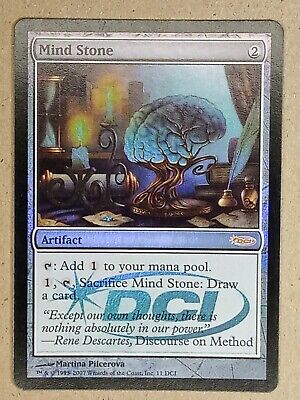
Mind Stone is a cheap artifact that sees a lot of action in Commander. As you might remember, we discussed the flavor text from the Tenth Edition reprint in our piece dedicated to Latin quotations.

Tenth Edition (2007)

Not by age but by capacity is wisdom gained.

Titus Maccius Plautus, Trinummus (II sec. BC)

This quote is from Plautus' Trinummus. It is one of his last works and certainly not the most humorous of his plays. As we said when we discussed it originally, it's a bit too smart and proverb-like to be appreciated by casual readers. That is particularly the case on a Magic card, out of context and with no connection with the work and characters of the play.

Gateway Card (2007)

Except our own thoughts, there is nothing absolutely in our power.

Rene Descartes, Discourse on Method (1637)

This promo card is from the same year as the Tenth Edition version, 2007. The art is also quite similar, but it's from Martina Pilcerova. The new quotation is from the celebrated work, Discourse on Method by French philosopher Rene Descartes. The work is most famous for being the origin of the quote "I think, therefore I am".

Luckily, we didn't get that borderline cliché quote on a Magic card, as it would have really been too much. What we have instead is a reflection on the process of thinking. Actually, I don't think all our thoughts are within our own power, but we certainly have a bit more control over them than over many other things.

Conclusions

We have now seen all seven of the cards with double quotations from the real world. Some received better flavor text with their second quote, while others did not. Some had great Magic IP flavor in their original printings before receiving equally great real-world flavor when printed in core sets. Overall, these cards show us some of the potential greatness of using real-world quotations. But what do you think? Should Wizards try giving real-world quotations a chance again? What real-world quotations would you want to see on Magic cards? What cards? Let me know in the comments or on Twitter.

Writers, Unblock! 10 Proven Topics for Quality Magic Articles

Are you a Quiet Speculation member?

If not, now is a perfect time to join up! Our powerful tools, breaking-news analysis, and exclusive Discord channel will make sure you stay up to date and ahead of the curve.

To the casual observer, and I will emphasize that I do not mean your parents, writing Magic content for money may appear a noble and glamorous career. How wrong they are, those observers, and how cursed this life of mine! Okay, fine, so it is pretty great. But for me, a big part of rendering weekly article crunches sustainable came down to identifying the types of content that resonate with readers.

When it comes to pumping out the goods, I've found the most success in putting together lists of go-to topics to consult during a bout of writer's block. Now, with my own editorial responsibilities growing, I've increasingly felt the need to redraft and consolidate those lists into a handy document for anyone else interested in the challenging and rewarding field of Magic writing.

There was an error retrieving a chart for Manic Scribe

Without further ado, here are ten tried-and-true subjects generic enough to slip into but juicy enough to yield a great article. Whether you're a prospective content creator, an embattled scribe like ya boy, or just a lover of great Magic writing who's itching for an inside look, I hope they can prove useful. Each comes with a short description, some helpful tips, and an example article from my annals (complete with an excerpt for context). I've split all the topics into three categories depending on where a writer's head is at. Quills out!

Play More, Say More

Nothing gets my writing gears spinning like putting my nose to the Grindstone. The more I play, the more I've got to share. Talk about a virtuous cycle! Playing a ton of Magic? Start here.

Tournament Report

Into the thrill of slinging spells under the pressure of a packed room? Bring a notebook to your next event, spend 5 minutes jotting down some notes after each match, and end up with more than just an article—I’d say my own play has improved substantially since I took up this tournament habit.

There was an error retrieving a chart for Spike, Tournament Grinder

You don’t need a Top 8 finish to muster a piece full of valuable information, and it’s good fun for many of us too busy for trips out of town to live vicariously through a food-truck-raiding tournament grinder.

Include sideboarding decisions and explanations, matchup analyses, sick plays, and of course your own mistakes: not only do these imbue your piece with a crucial humility, acknowledging them directly contributes to your next finish!

After a lengthy hiatus from playing the deck, I brought Colorless Eldrazi Stompy to SCG Regionals last weekend, and duked it out with around 250 players over nine rounds of Modern. I ended up finishing in 9th place. Despite my Top 8 miss, it was exhilarating to again play Colorless at this level. This report seeks to give an idea of how the deck performs in the current Modern metagame and my thoughts on the list going forward.

Brew a Deck

Spot a unique interaction between cards, or come up with a great idea for the potential Next Best Thing? There's no time like the present to put that hypothesis to the ultimate test! Include decklists, deck development, matchups analysis, testing results, the pros and cons of this build over other strategies, or more, and you’ll hit that word count in no time.

Noah Walker's breakout Legacy performance with post-ban Grixis Delver at SCG Worcester inspired me to reach out and pick his brain about the Construct, a conspicuous 4-of in the build. I spent the following week obsessively testing Bomat Courier in Modern Delver shells. This article explains my choices and offers insight into how Courier plays alongside the format's most efficient combat creatures.

Strategy Share

If you write Magic content, chances are you possess some type of strategic expertise. Be you a limited buff, a competitive brewer, or the guy who loves wowing the local Commander pod with nutty combos, there’s bound to be some type of mastery you can share with the world. Zone in on that with a deep dive on the intricacies of how it all works.

Primers often feature a little list of helpful tips at their closure. It turns out my list is 4,000 words long. Today, we'll look closely at the individual roles played by Stompy's more challenging cards, as well as the interactions between them that must be learned to succeed with the deck.

Theory-Oh!

Playing a lot of Magic can lead to flashes of insight about game dynamics. Think you’ve made a cool connection? Hit up the big sites (including Quiet Speculation itself) to see if anyone else has come up with something similar, and bake that research into your own piece.

There was an error retrieving a chart for Aether Theorist

Where can you take the idea next? What did other writers miss? Which of their points bear reiteration? The research phase is key with theory, as you don’t want to end up producing redundant content.

I’ve touched on archetype theory before (a few times, in fact), and have since crystallized my vision. The aggro-control archetype in particular merits further discussion, and even a comprehensive text of its own. As I see it, tempo is one of two subsets of aggro-control... in addition to being a mostly-unrelated in-game mechanic! Confused yet? In this article, I'll do my best to clear the smoke hanging over the murky waters of tempo and midrange.

Reading Reporter Rainbow

Of course, we're not always jet-setting around the tourney circuit. I've had dry spells of not playing Magic for months. Getting away with murder and holding down a gig as a content creator regardless? Take my advice and read, read, READ those new articles! If you're scrolling QS over TikTok at least some of the time, inspiration is just one point of damage away from Lightning Striking. It turns out the best newscaster is also the spiniest Bookwurm.

News & Spoilers

Today’s Magic is chock-full of spoilers, but why stop there? We’ve also got rules changes, banlists, and Wizards’ wacky ideas for the future of the game to cover.

The latest banlist announcement did a number on Modern's top decks, decimating the Uro piles which week and again would claim top of the heap as well as the new bullies on the block, cascade-powered decks abusing the latest Tibalt cards. In order to solve for these displays of power, though, Wizards took an unconventional route in extending their ban hammer the likes of which we've never seen. The nuke included hits to Simian Spirit Guide, Field of the Dead, and Mystic Sanctuary, all key players in the aforementioned powerhouses. And all ones employed by far tamer tamer decks.

Tracing Trends

Take a gander at top-performing decks, most-played cards, or another source of data. Try to identify trends in the data, then figure out why those trends are underway. Surprised by your findings? Us readers will be, too!

To me, the breakout Modern development of 2019 wasn't the long-awaited Stoneforge Mystic unban, the rise and fall of Arclight Phoenix, or the frightening flash of Hogaak, Arisen Necropolis. Rather, it was the introduction of cheap planeswalkers on a massive scale. Beginning with War of the Spark, Wizards unleashed on the format gameplay the likes of which we'd never seen: matches decided by hard-to-answer value machines with relevant static abilities resolving, sticking, and grinding opponents to a halt.

Tech Exposé

Plunder the decklist dumps of MTGTop8 or Wizards’ own site to find new and exciting decks, or novel tech being adopted by existing strategies. Explain why it has a place in the format
 or doesn’t! For instance, my Brew Report series does a quick-and-dirty recap of recent format innovations; Spell Spotlight tackles virgin ground broken by specific cards. (Side note: coming up with an article series like these is a great way to ensure a stream of content, so keep that in mind while writing in case you end up with a piece you can repurpose into handy templates!)

When it was first spoiled, Prismari Command wasn't particularly exciting to Modern players. But this month, we're seeing the card on a noticeable uptick, with players registering two to even the full four copies in archetypes as strategically diverse as value, combo, and control. Clearly there's something to this three-mana instant! Today, we'll take a look at the various roles Prismari Command can play for different decks, how it compares to sister spell Kolaghan's Command, and some of the lists that are taking advantage of the Strixhaven newcomer.

Think Before You Type

Sometimes, a nagging idea just won't stop popping into your head. Or you encounter something that really knocks you sideways. Just as Magic is a thinkin' man's game, sitting with your thoughts is a great way to get those creative juices flowing.

Get Nostalgic

Remember back in the day? Revisiting old content in light of new developments is ideal for writers with deep format knowledge or a pool of articles to cull from. Heck, you can even grab a piece by someone else if it resonates with your experience
 or really doesn't!

There was an error retrieving a chart for When We Were Young

Some tried-and-true nostalgia prompts: how have recent shifts changed what used to be true? Alternatively, the more things change, the more they stay the same
 does the exception really prove the rule? Oftentimes, digging up and reading through an old article is all it takes to bring the taken-for-granted world of today into sharp relief.

In "What's in a Goyf? Benchmark Creature Playability in Modern," I considered the bar creatures must meet to make the cut in this format. Aether Revolt gave us Fatal Push, and that bar has since changed—but no creature has felt the shift like Tarmogoyf. Today, we'll zone in on Goyf's fall from lofty heights and examine the creature's current applications.

How Do You Respond?

Everybody wants to be a content creator these days, and the glorious internet makes that possible. Of course, you can’t believe, let alone agree with, everything you read online. Have a bone to pick with a popular discourse or train of thought? Perhaps something to add on a hot topic? This one’s great for those who consume a lot of Magic content, as they’ll have tons to talk about.

Yesterday, Brian Braun-Duin published "When Playing to Win Is a Loss," an article detailing the dangers of getting caught up in the competitive spirit. It admonishes angle shooting and makes a case for sportsmanship in a gaming environment. Brian's thoughts resonated with some of my own, especially as relates to the place of ethics in Magic and the virtues of refining one's own tastes. Today's article responds to some of the points he made, examining the balance between ethics and ruling ambiguities and stressing the worth of self-knowledge.

Listicle

We might agree that the virulent Buzzfeed dumps circulating aggressively during my college years exemplify lazy content. But they're also undeniably popular. So what if we made them not-lazy? Introduce a numbered metric to give sense to your rankings, or sort its entries into groups, and voila! I always go top-down with these, deciding what kind of list I want to make or cards I want to talk about before establishing a category or metric that will help me rank them.

Today's article owes its existence to the fact that, for the second-ever time I can remember outside of a Tier 0 ModernMTGGoldfish lists Lightning Bolt as displaced from the number one spot for most-played card in the format... and by a bullet card, no less! This development illustrates just how inextricable bullets have become from our contemporary Modern landscape.

The Words Less Travelled

When I'm really stuck on what to write, playing a couple games of Magic or heading over to one of the big sites to down some content puts me back into the headspace needed to write a great article. More often than not, I'm soon workshopping topics in line with the ten above. To the writers reading, I wish you all the success putting a pen to this game we love.

There was an error retrieving a chart for Imperial Recruiter

Feeling inspired? Quiet Speculation is always looking for new team members who share our vision for producing engaging content. Shoot us a writing sample and show us your passion!

Storm, Forlorn: Why Isn’t Modern Combo Succeeding?

Are you a Quiet Speculation member?

If not, now is a perfect time to join up! Our powerful tools, breaking-news analysis, and exclusive Discord channel will make sure you stay up to date and ahead of the curve.

Modern is still in flux as players try to sort out the consequences of Lurrus of the Dream-Den being banned. While it is unequivocal that the low-curve decks have taken a hit, the impact has apparently been felt most by the fairest deck. Grixis Shadow has not been doing well and will likely fall down to Tier 3 next update unless things turn around quickly. Meanwhile, Hammer Time still putting up results. However, it's UR Murktide that is dominating the data so far.

Which some players may point to as the answer to the question which entitles this article. The deck runs 8 maindeck counters and can sideboard in more. That should be enough to shut down any typical combo deck. However, I disagree. Combo decks have no problem thriving in Legacy, a format far more counterspell-heavy than Modern. Most of the tools that said combo decks use to fight through counters are also legal in Modern. Thus, it's slightly perplexing that true combo decks aren't making themselves known in Modern given that a major combo predator is now gone.

Some Context

When I say "combo deck," I don't mean fair decks that have some instant-win combo in them. Modern has lots of those, with BG Yawgmoth serving as headliner. It can play the beatdown and value games or just win with Yawgmoth, Thran Physician and persist creatures if circumstances permit. Hammer Time can kill turn 3 with Inkmoth Nexus, Sigarda's Aid, and Colossus Hammer, but that's an aberration from its normal kills. Amulet Titan falls under the same category. Do these decks sometimes feel very unfair and combo-y? Absolutely. However, their combos are incidental, not integral.

There was an error retrieving a chart for Colossus Hammer

What's missing from Modern are combo decks that have to combo off. Think Storm or Ad Nauseam. There have been moments in Modern history when those decks were more prevalent, most recently in 2020 when Oops, All Spells and Belcher made it onto the tier list for a few months before disappearing. Which was a lot better than most combo decks have managed since Krark-Clan Ironworks was banned. Both decks (as well as Ad Nauseam) do show up in the data from time to time, but neither consistently enough to have any metagame impact.

An Opportunity Squandered

But it seems like they should. Partially because the metagame is tilted sufficiently towards fair-on-fair matchups that you'd think unfair decks could skate through. It's happened before. More importantly, Grixis Shadow is and has always been a terrible matchup for any true combo deck. It ticks all the boxes for defeating combo decks: it has a fast clock, it has a lot of disruption of several different types, and it's consistent. The only Modern deck with a better matchup against combo is Humans.

There was an error retrieving a chart for Death's Shadow

This metagame seems primed for unfair combo to take over. No deck is particularly focused on it and a bad matchup is largely missing. Consequently, it seems like combo players have a golden opportunity to make their mark on Modern, rack up some wins, and gain some converts to their decks. However, that hasn't been happening. It feels like a squandered opportunity.

Storming Off

In fairness, it looks like combo players are trying. And in at least one case, succeeding. Last weekend's MTGO Super Qualifier surprised me because Storm made the top 8. While Storm does show up in my data every few weeks, I can't remember the last time that it did so in a Challenge, let alone a bigger event. And it has definitely been years since it Top 8'd anything like this, so very well done, Sunbird17!

Storm, Sunbird17 (7th Place, Modern Super Qualifier)

Creatures

4 Baral, Chief of Compliance

3 Goblin Electromancer

Sorceries

4 Serum Visions

1 Grapeshot

2 Wish

2 Past in Flames

Instants

3 Consider

4 Remand

4 Desperate Ritual

2 Discover the Impossible

4 Pyretic Ritual

4 Manamorphose

4 Gifts Ungiven

Lands

4 Steam Vents

4 Spirebluff Canal

1 Snow-Covered Island

2 Shivan Reef

2 Riverglide Pathway

1 Mountain

2 Otawara, Soaring City

2 Island

1 Fiery Islet

Sideboard

3 Lightning Bolt

1 Shattering Spree

1 Abrade

1 Grapeshot

2 Galvanic Relay

2 Mystical Dispute

3 Pieces of the Puzzle

1 Past in Flames

1 Empty the Warrens

It's nice to see that Wish actually does belong in the deck that everyone thought it did when it was spoiled. It hasn't really changed the deck's place in Modern, contrary to common opinion, but that's not its fault. The card provides a lot of flexibility by letting Storm move most of the win conditions to the sideboard. Or the wishboard, rather, as there are a lot of bullets available.

There was an error retrieving a chart for Wish

I'm more surprised to see Discover the Impossible here. The card is mana negative without a cost-reducer out unless a ritual is hit. I'd be less surprised to see Peer Through Depths or more Wishes. However, when the combo is in danger of fizzling from tight mana, I can see that Discover finding Grapeshot or more rituals could be useful. It's certainly something to keep an eye on.

That said, how did Storm manage to make it through? There are only 2 Shadow decks in the event, but there is a lot of Counterspell and Hammer. The former should stop the combo and the latter is as fast or faster than Storm. And there's tons of removal for the cost-reducers. Conventional wisdom would say that this field is quite unfavorable.

Planning Ahead

While I have no idea who Sunbird17 is, I suspect they were aware of and compensated for the prevalence of counters. They're running 4 Remand maindeck, and that card wins counter battles. Obviously, countering the opposing counter to get a spell through is very good. However, it's often a better plan to bait out a counter, then use Remand on your own spell to fizzle the counter. There's also the option to Remand Grapeshot to recast it for the win.

There was an error retrieving a chart for Remand

The sideboard contains more evidence of metagame awareness. There are [car]Lightning Bolt[/card]s to slow down Hammer Time and additional counters, but that's the obvious route. Less conventional is Galvanic Relay. This is a brilliant choice, as it allows Storm a second chance at going off.

Typically, Storm and similar combo decks only get one chance to go off. Each attempt uses a lot of resources that are difficult to get back. Relay flips the script, as it doesn't provide resources now, but next turn. Thus, it can be used to set up for a big turn or Wished for after fizzling to help Storm come back.

The Key to Storm

There are other possibilities that are at least as crucial, but aren't evident from the decklist. Play skill is critical for the deck, and it's possible that Sunbird17 outplayed their opponents all tournament. I've some experience playing Storm, and the fact is that counterspells aren't that big of a problem for the experienced Storm player. It's always best to wait until the last possible moment (unless the opponent taps out) to combo off. However, the opponent doesn't need to know when that is, or that it's your intention to wait. Offering bait spells to tempt out counters is a key tactic, and a very good Storm player can trick opponents into countering the wrong thing, creating openings out of thin air.

There was an error retrieving a chart for Baral, Chief of Compliance

Furthermore, so long as Storm has cards in hand, there's a risk for the opponent that it will just win out of (seemingly) nowhere. Storm's usual line to victory is set up with Gifts Ungiven, cast a lot of spells, recast them with Past in Flames, and then Grapeshot for the win.

However, that's the obvious and most easily disrupted route to victory. Storm has a lot of different ways to count to 20. Going for an alternative route is perfectly viable, as is convincing the opponent to protect against a route that's in fact unsuable. This gets them to waste resources which can't save them from your actual plan. It's all about knowing the deck.

The Problem Reveals Itself

All of which probably makes it sound like I'm recommending Storm and that I will be playing it myself in the near future. I'm not, and I won't be. The key to Storm is also why it isn't more popular. And also why there wasn't a rush of new Storm decks showing up in the data despite being the norm after an unexpected deck does well at a big event.

Storm requires commitment to be good. There are so many possible lines, so many routes to victory through all forms of disruption, that it takes a lot of practice to win with Storm. Without complete commitment to learning every line, players will struggle with Storm and ultimately drop the deck.

There was an error retrieving a chart for Gifts Ungiven

Which, ultimately, is the answer to my title question. Regardless of the metagame positioning or power of a deck, it can't do well if nobody is playing it. The biggest problem with combo in Modern is that its playerbase is small compared to the fairer decks and therefore they cannot put up the numbers to make an impact on the metagame.

While the above problem is certainly a factor, there is a certain stigma and fear associated with playing Modern combo deck. It feels bad playing all the Magic while the opponent does nothing, and that leads to a lot of salt that most players don't want to deal with. Combo is also (perceived as) the most frequently banned archetype and the fear of losing a deck plays into many players decisions to shy away. This is not factually correct, especially in recent years, but convincing players is difficult.

Fearing Fear Itself

Another problem for combo is that players are extremely afraid of getting their combo answered and just losing the game. Or worse, getting completely locked out of the game. This in spite of certain answers seeing less than expected play and/or the circumstances of said interaction mattering are mathematically unlikely. Fear is insidious and can't be easily answered with rational explanations. Or even reality.

There was an error retrieving a chart for Goblin Charbelcher

For example, right now I'm hearing chatter that Belcher players are abandoning the deck. This in spite of an acknowledged strong position in the metagame and proven ability to shred its way through fair metagames. It's also significantly easier to pilot well than Storm. The problem is that Boseiju, Who Endures exists and it is a better Stone Rain because Belcher doesn't play any real lands. Players are afraid of getting repeatedly Strip Mined out of the game as Wrenn and Six recycles Boseiju.

There was an error retrieving a chart for Boseiju, Who Endures

This is a ridiculous fear, and not a reason to abandon a deck. Most decks run at most 2 Boseiju, so odds aren't great of ever seeing one in the early game, where repeated land destruction would matter. Secondly, Blecher only needs 2 mana to go off, which it can get from treasures thanks to Strike it Rich. If a Wrenn player has enough time to durdle around destroying all your lands, you were never winning that game in the first place. But the moral is that a fear of the worst-case scenario is putting pilots off their deck despite all its acknowledged advantages.

Winning the Hard Way

Overcoming this preconceived bias against combo is something that will take a long time. But it's a switch in mentality that I think is worthwhile. A lot of dangerous fair decks have appallingly bad matchups against combo, and if players want to avoid bannings in the future, accepting combo into the metagame is a great start.

As for actually making it happen, I'll propose a financial argument. Combo decks are cheaper on average than fair deks in Modern. Storm is only about $300, while the far more popular UR Murktide Regent is sitting around $1,200. And control decks frequently run much higher. Get new players playing the combo decks, and encourage them to cultivate their skill; then, watch Modern's metagame even itself out.

Invoking Value with RB Midrange | Adam Plays Magic

Are you a Quiet Speculation member?

If not, now is a perfect time to join up! Our powerful tools, breaking-news analysis, and exclusive Discord channel will make sure you stay up to date and ahead of the curve.

Intro

Hey there friends, today we're serving up RB Midrange in Alchemy. This build was designed by fellow streamer @Crokeyz and is a close spiritual successor to last week's deck of choice. It drops the main deck blue splash in favor of some of the newly-released Alchemy: Kamigawa cards, Painful Bond, and Undercity Plunder. Both of these spells are cheap sources of card advantage that showcase Arena's digital-only mechanics. One is an instant speed draw two with a negligible downside, and the other is a discard spell that potentially also draws you a random card from your opponent's deck.

These spells are especially potent when combined with Bloodthirsty Adversary which rebuys the cards from your graveyard for additional value. This core is further supported by a handful of efficient removal spells like Bloodchief's Thirst and powerful two-for-ones like Fable of the Mirror-Breaker. Toss in your Alchemy staple, Citystalker Connoisseur, and your late-game bomb Invoke Despair and your opponents will be begging for mercy!

The Metagame

Let's talk about the elephant in the room. It's no secret that Red and Black have received the lion's share of competitively viable cards from the Alchemy releases. In fact, RB decks accounted for 46 of the 99 decks in this weekend's Hooglandia Open. That number grows to 59 if we count RB(x) decks that utilize the same shells with minor splashes. RB(x) locked down the top 10 spots in the event as well. These are the best colors to be playing in this format, and it's not especially close. While grindy RB decks are what I personally gravitate toward, I would not be surprised to see many of these cards show up in the next round of nerfs for the format. Frankly, I'd welcome it for the sake of deck diversity.

My hope is that the Alchemy development team finds designs that can sit comfortably within a quasi-Standard environment. These cards are simply too far above rate and have homogenized the range of viable decks in the format. At the very least, if you're looking for the best bang for your wild card buck, start with Haunted Ridge and build out from there.

The Deck

RB Midrange-Crokeyz

Creatures

3 Bloodthirsty Adversary
2 Graveyard Trespasser
4 Citystalker Connoisseur

Spells

1 Abrade
1 Bloodchief's Thirst
1 Hagra Mauling
2 Spikefield Hazard
4 Painful Bond
4 Undercity Plunder
3 Molten Impact
1 Go Blank
1 Flame-Blessed Bolt
4 Invoke Despair

Enchantments

2 The Meathook Massacre
4 Fable of the Mirror-Breaker

Lands

4 Haunted Ridge
2 Swamp
3 Hive of the Eye Tyrant
4 Clearwater Pathway
4 Blightstep Pathway
1 Sokenzan, Crucible of Defiance
1 Takenuma, Abandoned Mire
4 Forsaken Crossroads

Sideboard

1 Abrade
1 Bloodchief's Thirst
2 Graveyard Trespasser
1 Infernal Grasp
2 Flame-Blessed Bolt
3 Orvar, the All-Form
1 Go Blank
2 The Meathook Massacre
2 A-Cosmos Elixir

End Step

And that's a wrap! If there was anything you think I did particularly right (or wrong) drop a comment! Don't forget to like the video and subscribe to the Quiet Speculation YouTube channel so you stay up to date with all of my shenanigans. See you all next week!

Reserved List Cards Headline SCGCON Hotlists

Are you a Quiet Speculation member?

If not, now is a perfect time to join up! Our powerful tools, breaking-news analysis, and exclusive Discord channel will make sure you stay up to date and ahead of the curve.

I’m definitely starting to see some signs of softness in the Magic market. At least, that’s my relatively narrow perspective as I focus mostly on cards printed in the 1990’s. Cards that derive most their value from their collectability—particularly such cards from the Four Horsemen sets—have seen some modest price corrections lately.

This is natural, and nothing to be concerned about. It’s part of the regular cycle of hype and buyouts, price spikes, followed by gradual pullback and stabilization.

What’s interesting, however, is that there are certain older cards that remain strong. So strong, in fact, that they topped some vendor hotlists at last weekend’s Star City Games event in Indianapolis, one of the first major in-person events to take place since COVID’s onset.

I wasn’t able to attend, but that didn’t stop me from making some noteworthy observations


Record Setting Event?

I doubt this was the largest SCGCON ever, but it very well could be one of the largest. Ben Bleiweiss, General Manager of Sales over at Star City Games, was certainly bullish on the turnout!

I’ll get to the hotlist in just a bit. But first, I want to highlight the hype I read about this event all weekend in my Twitter feed. People were flying in from all around the country for this in-person event—both for Magic and Flesh and Blood tournaments. Can you blame them? It’s been a long two years of this pandemic, and people are itching to get out and do things in person like they used to before March 2020.

If Star City Games and Wizards of the Coast are paying attention (and I’m sure they are), they’ll observe the tremendous pent-up demand for such in-person events. The Grand Prix and MagicFest circuits are a thing of the past, for now. But maybe there will be a return of such events in the future as COVID numbers continue to improve and people strive to return to a sense of normalcy. Until then, the MagicFest schedule looks rather depressing.

Hotlists: A Closer Look

There were probably more than two vendors on site at SCGCON last weekend, but only two bothered to share their hotlist on Twitter with the #SCGCON tag. As a result, I could find just the two—but there is still a lot worth discussing between these two lists!

First, let’s take a look at Star City Games’ hotlist, which is quite lengthy and diverse!

As an avid collector of older Magic cards, naturally my eyes move straight towards the most valuable and noteworthy cards on this list. The first one to grab my attention: Gaea's Cradle. Star City Games was offering a record-setting $850 for near mint copies! Holy Reserved List, Batman!

There was an error retrieving a chart for Gaea's Cradle

Card Kingdom currently boasts the highest buy price for Gaea's Cradle online, at $720. Star City Games’ in person buy price was a full 18% higher! Being a Commander staple on the Reserved List, I fully expect to see this card continue an inevitable climb higher. But I must admit that I didn’t expect to see an $850 buy price so soon, especially given the aforementioned softness in Magic prices lately. Clearly Gaea's Cradle didn’t get the memo.

The next highest card on SCG’s hotlist was Tropical Island, at $600. I thought Dual Lands had finally calmed down, but judging by the appearance of them on both Star City’s and Ninety-Five’s hotlists last weekend, perhaps these are as liquid as ever. In addition to the blue/green Dual Land, Star City Games had Badlands ($400) and Taiga ($300) on their hotlist. It’s interesting they didn’t post Underground Sea or Volcanic Island, the two most valuable Dual Lands, on their hotlist. I guess they haven’t seen the same demand for those two relative to the others lately.

The other two noteworthy Reserved List cards I see on Star City’s hotlist include City of Traitors ($225) and Sliver Queen ($200). While these buy prices may not be as shocking as that of Gaea's Cradle, they’re still competitive with the best online buy prices (and nothing beats the thrill of being paid immediately in cash when selling in person).

There was an error retrieving a chart for City of Traitors

Shifting gears, let’s take a look at Ninety-Five’s iconic hotlist board, recognizable from afar and following the same template at all major events they attend.

While Star City Games’ hotlist is easy to navigate with its alphabetical ordering, I rather like Ninety-Five’s approach of listing in price order. This makes it easy to find the most notable cards.

The top of the list? Surprise surprise, it’s Gaea's Cradle (again), though *only* at $800 in this case. I wonder how many copies they bought last weekend with Star City Games offering $50 next door. Either way, one thing is clear: Gaea's Cradle is one hot Magic card!

Next on the list are four Dual Lands: Underground Sea ($750), Volcanic Island ($750), Tropical Island ($550), and Tundra ($470). In other words, unlike Star City Games who were looking for some of the less expensive Dual Lands, Ninety-Five was on the hunt for all four blue duals, with very attractive buy prices!

There was an error retrieving a chart for Underground Sea

Oh, they also have Badlands on their hotlist with a $350 buy price. I almost missed that one!

The other popular Reserved List cards they’re buying aggressively are City of Traitors (again) at $230 and Lion's Eye Diamond at $400. We’ve already established that this is a very competitive number on City of Traitors. But how does Ninety-Five’s number for Lion's Eye Diamond compare with online buylists?

There was an error retrieving a chart for Lion's Eye Diamond

As of Sunday morning, Card Kingdom boasted the best online buy price for LED at $390. So the prospect of receiving $400, immediately in person, for a nice copy of Lion's Eye Diamond is very attractive. It wouldn’t surprise me if Ninety-Five took in a fair amount of this card over the weekend, relatively speaking. I doubt many players have stacks of these lying around that they’re itching to sell.

Oh the Things that Walk in the Door

Maybe I shouldn’t assume no player would show up at SCGCON Indianapolis with a stack of Lion's Eye Diamonds. I was watching Tales of Adventure’s Twitter feed over the weekend and while they didn’t post a hotlist, I saw the vendor pick up some very impressive cards!

First, I saw them post a BGS 8.0 Summer Hurricane for sale with a $7,000 price tag.

This misprint card from 1994 has got to be one of the most famous, iconic misprints from Magic’s history. I can’t imagine there’s a long line of buyers eager to pick one of these up, but any collector would be thrilled to have one of these at a fair price. I don't know much about the Summer Magic market, but this price tag doesn’t surprise me one bit.

More my speed, someone walked in with a nice, complete set of Italian Legends. This probably doesn’t happen all that often.

Sticking to the foreign Old School theme, Tales of Adventure also brought in a complete set of foreign black bordered (FBB) Dual Lands!

The prices on these still amaze me for being relatively reasonable. I mean, these FBB Dual Land prices are lower than Unlimited prices in most cases! I don’t know how their print run compares to Unlimited, but it is surprising to see black bordered Dual Lands at numbers that don’t make me want to run the other direction. I wonder if FBB duals are relatively underpriced as compared to their English counterparts?

All in all, it was an impressive selection of cards to have been acquired by Tales of Adventure over the weekend, and I really enjoyed their pseudo-live sharing of acquisitions throughout the weekend.

Wrapping It Up

It’s only Sunday morning, but I’m going to go out on a limb and declare SCGCON Indianapolis a roaring success! I’d be curious to hear others’ opinions on the event after the weekend’s completion. Just being one of the first major, in-person events to take place since March 2020 makes this one quite special. I truly regret missing out on this one, as Indianapolis is only about 2.5 hours away from my home.

Alas, I’ve been so out of the loop on in-person events that this one completely skipped my radar. I’ll have to watch the schedules more closely to see if another event comes to the Midwest any time soon. It looks like it’ll have to be a Star City Games event, since Channel Fireball and Wizards of the Coast don’t have any MagicFests scheduled for 2022. Not yet, anyways. Maybe after they witness the success of this event, they’ll begin warming up to the idea of rescheduling in-person Magic events.

Until then, Star City Games has a bit of a monopoly on significantly sized in-person events. My unsolicited advice to them: run with it for as long as possible. While there’s tremendous pent-up demand for in-person events after two years of sheltering in place, any event is likely to draw a huge crowd and significant hype. And as long as that’s the case, there should be some good card buying and selling that takes place all weekend long.

The Good, The Bad, and The Ugly of This Week’s Arena Announcements

Are you a Quiet Speculation member?

If not, now is a perfect time to join up! Our powerful tools, breaking-news analysis, and exclusive Discord channel will make sure you stay up to date and ahead of the curve.

Weekly MTG Revealed Changes Coming to Arena

On this week's Weekly MTG show, Arena Executive Producer Chris Kiritz joined host Blake Rasmussen for a conversation on the Arena economy. You can find a video of that live broadcast, and the accompanying article on DailyMTG.com. Rasmussen described their talk as "The start of a conversation," implying that there will be more down the line. The big takeaway is that there is change coming to Arena, but nothing truly transformative from the formula it's followed since day one of its release. Let's unpack that formula so we can better understand today's announcements.

Arena Founding Principles

According to Kiritz, Arena is "Fun, fast Magic for anyone anywhere," and has been built from the ground up with that as its guiding principle. This puts an emphasis on what Kiritz describes as "Frontlist Magic" ie, current releases, Standard play, etc. These two points, the emphasis on "Fun, fast Magic," and "Frontlist Magic" are the philosophical baseline on which the Arena economy is based.

What is the Arena Economy?

The economy of Arena is all the ways players interact with the game client, including Packs, Gold, Gems, Wildcards, Individual Card Rewards (ICRs), and time. Of all of these, the lynchpin on which the entire Arena economy spins is the opening of packs.

Opening packs provides players with:

  • Cards to add to their collections.
  • Chances of opening Wildcards
  • Credit towards Vault progress (a bonus system for earning additional Wildcards).
  • If a player's collection is robust enough, it can provide Gems for rares and mythics which they already have four of.

In addition to the two founding principles we discussed, there are two assumptions Wizards has made in basing the Arena economy around opening packs. The first is that the goal of a player in the Arena economy is to build a large collection. Opening packs is the most direct way to do that. The second assumption is that opening packs is fun.

With all of these things in mind, let's look at this week's announcements.

The Good

Let's bullet list these items, because frankly there are not that many that matter compared to the other categories, and we'll unpack a few that are particularly relevant.

  • A non-rotating format for tabletop/non-digital-only cards is "coming very soon." The format is a bridge to Pioneer but is not actually Pioneer.
  • Ability to set your favorite basic lands as default
  • An "All Access" mode of some variety is in the process of development to allow players to test decks before committing their wild cards.
  • Constructed Event payouts will be more in line with Limited rewards later this spring (April/May).
  • Constructed Events will have more relevance soon (Tied to Organized Play announcements, which we will know more about on March 31st).
  • Improving Direct challenge features, including allowing friends to share decks to play against each other (no timeline or specifics yet).
  • More Historic Anthologies in the future (no timeline for this).

These are all welcome features and improvements. Of all of them, the most impactful ones feel like the introduction of a new non-rotating format, and the improvements to Constructed events. With Historic moving to be an extension of Alchemy, it's nice to have a new non-rotating format more in line with paper play. We don't have a lot of details yet about Constructed event improvements, but there's room for optimism. So let's talk about the bad parts.

The Bad

No Pioneer

The biggest feel bad here to me is not making the new non-rotating format Pioneer. Even if we don't have all the cards for it on the client, and won't for some time, just making the format everything that's currently legal in Pioneer would be a step towards that. I'm not sure adding another format to keep track of is really what players want.

No Best-of-Three Ranked Drafts

It wasn't brought up on the stream, but one of my personal gripes against Arena is that there is still no Best-of Three (Bo3) Ranked drafting on the platform. The Traditional Draft mode is great, don't get me wrong. However, I do feel like there should be Bo3 that counts towards the ladder though.

Small gripes aside, it's time to look at the concerns on the minds of most Arena players, and Wizards' response (or lack thereof) to them.

The Ugly

For a stream purported to be about addressing player concerns over the Arena economy, the stream brought very little to the table in terms of actually addressing player concerns. Instead, it repeated what many of us already understood about the nature of the economy, and doubled down on not making substantive changes to the formula.

The biggest change request from players which I've heard has been the introduction of a dusting system to allow players to convert unwanted cards in their collection into Wildcards, or other resources they can use to acquire the cards they want for their collections. When asked about the possibility of Arena introducing a dusting system, Kiritz had this to say:

"The wildcard system is effectively the dust system. But rather than tie it to things that are unfun, destroying cards, we tied it to something that is more fun, opening packs. ... Instead of forcing you to destroy the cards, we give it to you upfront." It's clear from this quote that the lack of dusting is an intentional decision on the part of the developers, and that we should not expect that to change.

So if dusting cards from our collections is not an option, what about uptrading Wildcards or allowing some sort of currency conversions between Wildcards, Gems, and Gold? According to Kiritz, that is also not a consideration, as the allotment of wildcards is an intentional part of the economy.

So no dusting or currency conversions, but will players at least get reimbursements if their cards get Nerfed in Historic?

"We don't do refunds."

So What's the Solution?

Having shot down all of the requests from the playerbase about economic improvements, what is Wizards' solution? The introduction of two new products: "mythic guaranteed" booster packs to help players finish collections, and a wildcard bundle with 12 rares and 4 mythics for $49.99. According to Kiritz, this price for wildcards was set based on "the normal rate of opening packs."

Members of the community quickly pointed out that this math doesn't quite check out. Just buying $50 worth of packs may actually be a better value:

Implementing changes to the Arena economy is not an easy task. That said, the solutions presented here feel inadequate at best.

Back in December of last year, in response to the Alchemy announcement, I wrote an article partly addressing the Arena economy. In that article, I proposed three improvements that addressed player concerns and were in line with other digital-first TCGs. These included:

  • Allowing the purchase of wildcards through in-game currency
  • Establishing the ability to dust cards for gold or gems
  • Introducing an exchange rate between gold and gems

Even if the rates for each of these changes were heavily lopsided, I imagine they'd still be highly popular with players. Perhaps unsurprisingly, today's announcement revealed that Wizards is adamantly opposed to these types of structural changes. So where does this leave players? That remains to be seen.

Thoughts on the "Fun Factor" of Opening Packs

I think my biggest problem with the philosophy behind the Arena economy, and with Project Booster Fun in paper Magic, is the assumption that opening booster packs is an enjoyable experience. I might be alone, but outside of Limited play, I just don't think this is the case. To me, opening booster packs on their own is the equivalent of punching out all the pieces to play a board game. It's a requirement to play the game. Do I enjoy opening cool cards? Sure. And I love that new card smell as much as the next person. But they are not the essence of Magic in the same way as the compelling gameplay of the game itself.

What do you think? Is opening packs for the sake of opening packs a fun experience? What do you think about the state of the Arena economy? About today's announcements? Let me know in the comments or on Twitter.

Avatar photo

Paul Comeau

Paul is Quiet Speculation's Director of Content. He first started playing Magic in 1994 when he cracked open his first Revised packs. He got interested in Magic Finance in 2000 after being swindled on a trade. As a budget-minded competitive player, he's always looking to improve his knowledge of the metagame and the market to stay competitive and to share that knowledge with those around him so we can all make better decisions. An avid Limited player, his favorite Cube card is Shahrazad. A freelance content creator by day, he is currently writing a book on the ‘90s TCG boom. You can find him on Twitter and LinkedIn.

View More By Paul Comeau

Posted in Analysis, Arena, Free, Magic: The Gathering Arena, NewsLeave a Comment on The Good, The Bad, and The Ugly of This Week’s Arena Announcements

Have you joined the Quiet Speculation Discord?

If you haven't, you're leaving value on the table! Join our community of experts, enthusiasts, entertainers, and educators and enjoy exclusive podcasts, questions asked and answered, trades, sales, and everything else Discord has to offer.

Want to create content with Quiet Speculation?

All you need to succeed is a passion for Magic: The Gathering, and the ability to write coherently. Share your knowledge of MTG and how you leverage it to win games, get value from your cards – or even turn a profit.

Math Is For Blockers: Combat In Magic

Are you a Quiet Speculation member?

If not, now is a perfect time to join up! Our powerful tools, breaking-news analysis, and exclusive Discord channel will make sure you stay up to date and ahead of the curve.

Let's Get Ready to Rumble

This week we're going to take a close look at the combat phase and some weird or tricky things that can happen in it. Personally, I'm not a big fan of combat. I'm a firm believer that the best win condition is a hideous Rube Goldberg contraption consisting of multiple cards and, ideally, some obscure rules interaction.

But on rare occasions, yeah, I want to turn some creatures sideways. And anybody in the business of turning creatures sideways should understand just how that whole thing works. Let's go!

What's "Combat"?

Combat specifically refers to things that happen in the combat phase of a turn. The combat phase consists of five steps normally: beginning of combat, declare attackers, declare blockers, combat damage, and end of combat. As the term suggests, "combat damage" only refers to damage dealt by attacking or blocking creatures in the combat damage step. Other things that have a creature deal damage, like Rabid Bite or Clash of Titans, are never combat damage.

Beginning of Combat Step

507.1. First, if the game being played is a multiplayer game in which the active player’s opponents don’t all automatically become defending players, the active player chooses one of their opponents. That player becomes the defending player. This turn-based action doesn’t use the stack. (See rule 506.2.)

Magic Comprehensive Rules

Obviously, in a 2-player game of Magic, the only other player is automatically the defending player. However, most people who play multiplayer formats like Commander technically use an optional rule without even knowing it. While this rule says I need to choose one opponent to attack, that basically doesn't happen in the vast majority of Commander pods. Instead, they use the Attack Multiple Players Option, covered in section 802. Basically, every opponent becomes a defending player. Anything that cares about the "defending player" is applied on a case-by-case basis.

Let's say I'm playing a game with Billy, Chris, and Danielle. I attack Billy with Avalanche Tusker and Chris with Armix, Filigree Thrasher. I can only force one of Billy's creatures to block, and I can only give one of Chris's creatures -X/-X.

Declare Attackers Step

The active player decides which of their creatures, if any, will attack. To be a legal attack, the declared set of creatures has to meet as many requirements as possible without violating any restrictions.

A restriction says a creature can't do something - Bonded Construct can't attack alone. Conversely, a requirement says that a creature must do something if able. An effect that refers to "all creatures" like Thantis, the Warweaver's gives a requirement to each individual creature.

Once a creature has been successfully declared as an attacker, it is an "attacking creature" until it's removed from combat, an effect says otherwise, or the combat phase ends. If no attackers are declared and nothing is put onto the battlefield attacking, the game skips the declare blockers and combat damage steps.

Go For the Goad

Goad creates two requirements, which can trip people up. Goad makes the creature attack if able and attack someone other than the person that goaded it if able. This can lead to some not-great situations for the goading player, usually because of something like Ghostly Prison.

It's Combat. What Could It Cost? Ten Dollars?

Effects like Ghostly Prison's that impose a cost to attack a player work opposite any requirements. The attacking player is never forced to pay the mana, even if doing so would increase the number of requirements met. For instance, if I control Ruhan of the Fomori and randomly choose an opponent who controls Ghostly Prison, I'm not forced to pay {2} to attack them. I can pay it if I want to, but I can also attack another player or planeswalker. I can even not attack at all (but if I'm playing Ruhan, what kind of choice is that?).

So what does that mean for a goaded creature? Let's say I goad Billy's creature, but Chris and Danielle each control a Ghostly Prison. Well, the goaded creature still has to attack if able! If Billy doesn't want to pay the {2} to attack either of them, then attacking me with the goaded creature meets the most requirements.

Declare Blockers Step

This step works almost the same as declaring attackers. The defending player(s) choose which creatures block and how. They again have to meet as many requirements as possible without violating any restrictions. Once blockers have been declared, a creature either becomes "blocked" if something is assigned to block it or "unblocked" if not. This is especially relevant for ninjutsu. I can't ninjutsu in my Yuriko, the Tiger's Shadow before this step. A creature remains "blocked" or "unblocked" until it's removed from combat, an effect says otherwise, or the combat phase ends.

Immediately after blockers are assigned, the active player decides the damage assignment order for each of their blocked attacking creatures. Then the defending player does the same for their blocking creatures. It's hugely important to note that damage does not happen yet. So why does damage assignment order matter?

Let's say I attack my opponent with a 3/3 and they block it with Grizzly Bears and Willow Elf. I declare my damage assignment order as Grizzly Bears first, then Willow Elf. Once my opponent gets priority in this step, they can cast Giant Growth on their Grizzly Bears and save both of their creatures from death.

Combat Damage Step

510.1. First, the active player announces how each attacking creature assigns its combat damage, then the defending player announces how each blocking creature assigns its combat damage. This turn-based action doesn’t use the stack. A player assigns a creature’s combat damage according to the following rules:

Magic Comprehensive Rules

Yeah. Damage. That's the good stuff.

The attacking player assigns damage to blockers based on the damage assignment order. They have to assign at least lethal damage to each creature in order before moving on to the next. "Lethal damage" considers damage that's already marked on the creature or damage that's being assigned simultaneously. However, it does not consider any damage amplification effects like Furnace of Rath.

As an example, let's say I control Furnace of Rath and attack with Arrogant Wurm. My opponent blocks it with Durkwood Boars. I have to assign 4 damage to Boars, even though that damage will be doubled when the game processes it. I can't assign 2 to Boars with 2 trampling over to my opponent.

The defending player assigns damage to blocked creatures following the same rules.

Notice that I have to assign at least lethal damage. I can over-assign damage if I want to. This can matter in Modern if the opponent blocks with Death's Shadow.

Immediately after damage assignment, the game processes damage. Nobody gets priority in between "I'll deal 3 to your guy" and the damage actually being dealt.

The First Strike Is the Deepest

If any attacking or blocking creatures have first strike or double strike when the combat damage step begins, only those creatures assign damage. After they do their thing, the game creates another combat damage step. Note that players get priority in both combat damage steps.

End of Combat Step

The end of combat step has no turn-based actions. It exists mostly to clean up any lingering stuff that expires "at end of combat," such as Geist of Saint Traft's token. However, we can still be tricky here.

The game still considers a creature "attacking" or "unblocked" until this step ends. As such, I can activate Reconnaissance targeting each of my attacking creatures to untap them as a weird pseudo-vigilance. Despite what the reminder text says, the game definitely can't go back in time and undo the damage they've already dealt.

I could also ninjutsu something into play in this step.

Cleanup

...No, combat doesn't have a cleanup step. But this article does! For any other burning questions about how to get over with some combat tricks, find me on Twitter or our Insider Discord.

Question of the week: What's the most damage you've dealt in a single combat step?

Getting The Most Out Of Your Commander “Rule 0” Conversation

Are you a Quiet Speculation member?

If not, now is a perfect time to join up! Our powerful tools, breaking-news analysis, and exclusive Discord channel will make sure you stay up to date and ahead of the curve.

Commander is a great format in its emphasis on the fundamental qualities that make Magic a fun game. Interaction, themes, history, and variety are all aspects of The Heart of Commander, my own guide to the social contract of Commander. However, each group has their own take on exactly what makes a game special, social, fun, and sometimes competitive. This is where a Rule 0 Conversation is essential to ensuring the entire table is ready to have an enjoyable time. Let's go over some incredibly simple, easy steps that will quickly identify what players need from their Commander games, and, what else can be changed to allow for more fun.

One note is that if your entire table wants to play an ultra-competitive CEDH game, I generally refer to that as "tournament practice." Obviously, if that is what everyone wants, there's nothing else to discuss; winning is all that matters in such a scenario. I will continue to encourage players to change their terminology from "competitive" to "tournament practice" to emphasize the distinction between that type of game experience and all others (i.e. NOT tournament practice).

The Rule 0 of Rule 0

The absolute most important point that all players need to agree upon is not something amorphous like "power level" or how "casual" they consider their deck to be. Numerous Commander players have expressed how many Magic players tend to severely underestimate the capabilities of their own decks.

There's a relatively simple question with a very simple answer I find to be the single greatest determining factor for correct deck selection pre-game.

"What turn does the game end on?" No matter how competitive or casual your deck is, if you cannot win the game on turn four, you don't have a turn four deck. Further, if everyone has settled on turn six decks, if the game continues into turn seven, all players have an equal expectation that at any moment from this point on, the game might end. Expectations set are expectations met, leaving no one disappointed with their experience.

While you must still trust players to understand how their decks work and you must also trust players to give you truthful answers, there's very little to be gained by being anything other than honest. If a group of four all play decks that seek to combo out and win by turn six, no one should be disappointed if the game ends on turn five, six or seven. Meanwhile, another group can be playing significantly more competitive decks that all focus on turn four wins, with turn three potential wins. Each of these groups would have a significantly worse time if they swapped some players and/or decks with the other group.

Further, if someone claims their deck is a turn eight deck and then proceeds to win on turn four, everyone else at the table is likely to become suspicious. Now, there is room for circumstance. If it's obvious that a player ripped a series of perfect draws or that their deck cannot do what they did without help from the table, that's not on said player. Great luck and outside factors are part of the game. You chalk this off to variance and play another game. But if this continues to happen with the same player making the same poor estimation of their deck, then the table should change their decks to match what that player is doing.

What if I genuinely don't know when my deck wins? If your deck truly has no "win condition," then casting and attacking with your Commander can give you a baseline. A regular 5/5 Commander for, say, five mana can definitely win on turn ten without any help. So, typically, you are doing significantly better than that. Consider the same situation with several cards that grant double-strike or double damage or additional attack steps or a power increase, and you are looking at turn seven or eight. As you can see, very few Commander decks are going to take much longer than seven or eight turns before going for the win. If you can accurately evaluate when the game ends, it sets up very reasonable expectations for all the players to give them time to prepare their defenses or go for their own wins that line up with the table.

Still unsure? The solution lies in playing games to see. As you refine your deck, it should become clearer where you fall. Let the other players know that, for instance, you just built the deck, or it is experimental and you are trying to get a feel for it. Most of the time, groups won't mind even if the deck is too powerful, as long as you give everyone a heads up pre-match and offer to play a different deck instead.

Finally, what if your deck revolves around making the game impossible to play, such as a typical stax deck or a heavy control deck? I would suggest that decks that are devoted to these ideas are not right for the typical Commander table. This is *definitely* a Rule 0 conversation to be had.

Okay, We Know When The Game Can End. Now What?

With the hard part out of the way, the main things left to identify are what amplifies your enjoyment of a game and what sucks the fun right out.

First, the Bad

According to EDREC, these cards are some of the cards that many players find vastly frustrating to play against. You can see a clear theme for most of the saltiest cards in land/resource denial. There are also many extra turn cards and "free" counterspells, with the rest often ending games on the spot. If your deck contains one or many of the cards on this list, make it known to the table. You don't have to necessarily let the table know what the EXACT cards are, but the more of them you run, the more the impetus is on you to find out if you're going to make everyone miserable.

These cards also give you good guidelines for what types of cards are generally responsible for players having a bad time. Just because Zur's Weirding is not on the top 100 saltiest cards list does not mean it is a fair or fun card, and it's a severe resource denial card much of the time.

In the same vein, one Counterspell is likely a non-issue for the vast majority of players, but when a deck has twenty or more counters, many players tune out. If you know your deck has bothered other play groups due to any element that stops players from playing, make sure to caution your table ahead of time.

The Good

For every type of card restriction or unfun thing you don't want to see in your games, you should try and let the table know what you DO enjoy. Like tribal decks? Let the table know! Do you enjoy Rube Goldberg combo decks with five-card interactions? Let the table know! A lot of the time, Rule 0 conversations dwell on what not to play and what can't be allowed, but an equal amount of time should be spent encouraging players to choose decks you want to interact with! Did I mention that playing Commander for Points can oftentimes encourage a variety of different decks to see play by giving creative players a reason to include different strategies?

The Ugly

I love old cards that can have paragraphs of confusing text referencing old terms or abilities that might not even exist in modern Magic. Not every Commander player is like me. I have to accept that my deck full of cards exactly like that might not be fun for many other players. This is not a "power level" thing; it's purely an enjoyment thing. Many players don't want to have to read and re-read every single obscure card that hits the table and it's just a boring game for them. In that case, I try and play something else.

If you know that certain types of cards, effects, decks or Commanders make the game awful for you, let the table know. Tired of extra or infinite turns? Let the table know! Bored playing against Krenko, Mob Boss and Goblin tokens? Let the table know! Again, it's not necessarily a power thing, it can just be an enjoyment thing or a lack there of. Most Commander players have multiple decks and don't mind switching, so assert your preferences.

Practice Makes Perfect

No single Rule 0 discussion can address all of the potential fun or problem cards for a local group. Not everyone is seeking the exact same gameplay experience. The suggestions here are what I have found to be the absolute most important and baseline questions that establish clear and succinct guidelines to get to playing in just a few minutes with complete strangers. If the table has the time and desire to discuss everything in more detail that's great; by all means, discuss away. But if you want to play in just a few minutes, find common ground on when the game is supposed to end, if there are any problem cards or strategies to getting to that end, and if there's anything that's a fun eraser.

Don't forget, though, to mention what you like and could do with seeing more of especially after the game! If you encourage deck building in that direction you will see that, gradually, groups will build into much more interactive and interesting pods.

Are you used to having these conversations with new playgroups? What are your go-to questions for your Commander Rule 0 conversations? Let me know down below!

Avatar photo

Joe Mauri

Joe has been an avid MTG player and collector since the summer of 1994 when he started his collection with a booster box of Revised. Millions of cards later he still enjoys tapping lands and slinging spells at the kitchen table, LGS, or digital Arena. Commander followed by Draft are his favorite formats, but, he absolutely loves tournaments with unique build restrictions and alternate rules. A lover of all things feline, he currently resides with no less than five majestic creatures who are never allowed anywhere near his cards. When not Gathering the Magic, Joe loves streaming a variety of games on Twitch(https://www.twitch.tv/beardymagics) both card and other.

View More By Joe Mauri

Posted in Commander, Free, RulesTagged , , , , , , , , , Leave a Comment on Getting The Most Out Of Your Commander “Rule 0” Conversation

Have you joined the Quiet Speculation Discord?

If you haven't, you're leaving value on the table! Join our community of experts, enthusiasts, entertainers, and educators and enjoy exclusive podcasts, questions asked and answered, trades, sales, and everything else Discord has to offer.

Want to create content with Quiet Speculation?

All you need to succeed is a passion for Magic: The Gathering, and the ability to write coherently. Share your knowledge of MTG and how you leverage it to win games, get value from your cards – or even turn a profit.

Want Prices?

Browse thousands of prices with the first and most comprehensive MTG Finance tool around.


Trader Tools lists both buylist and retail prices for every MTG card, going back a decade.

Quiet Speculation